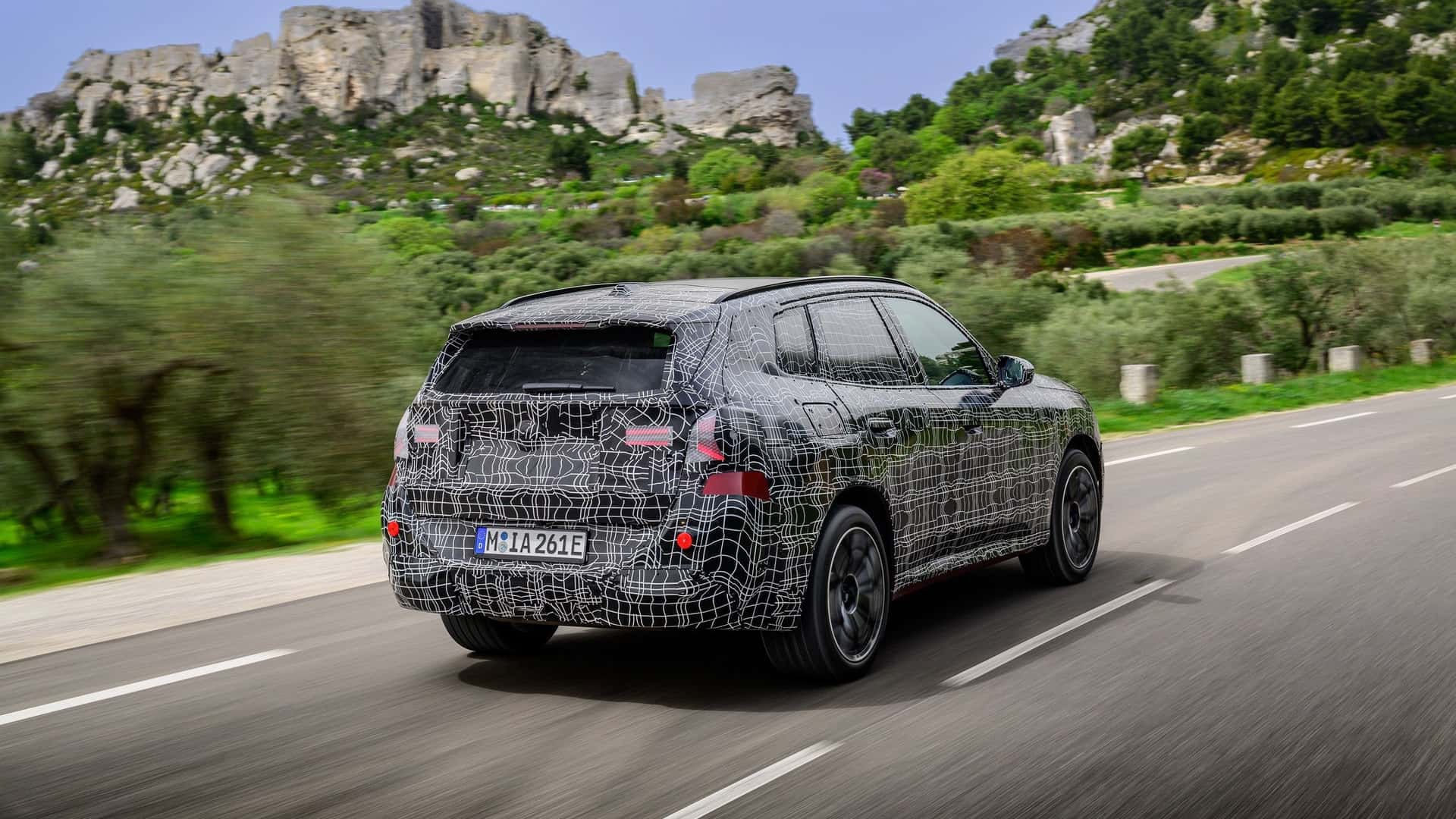
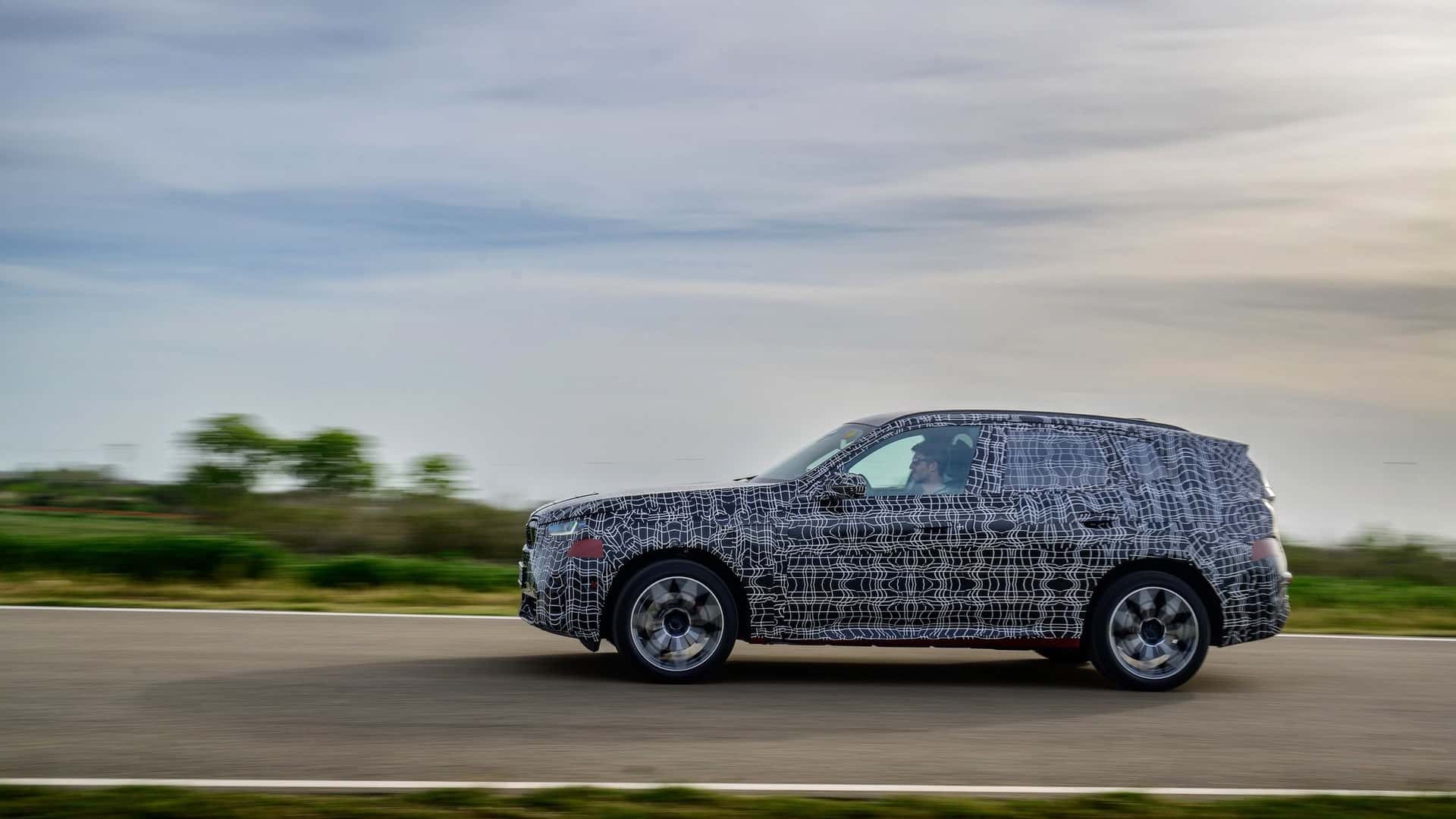
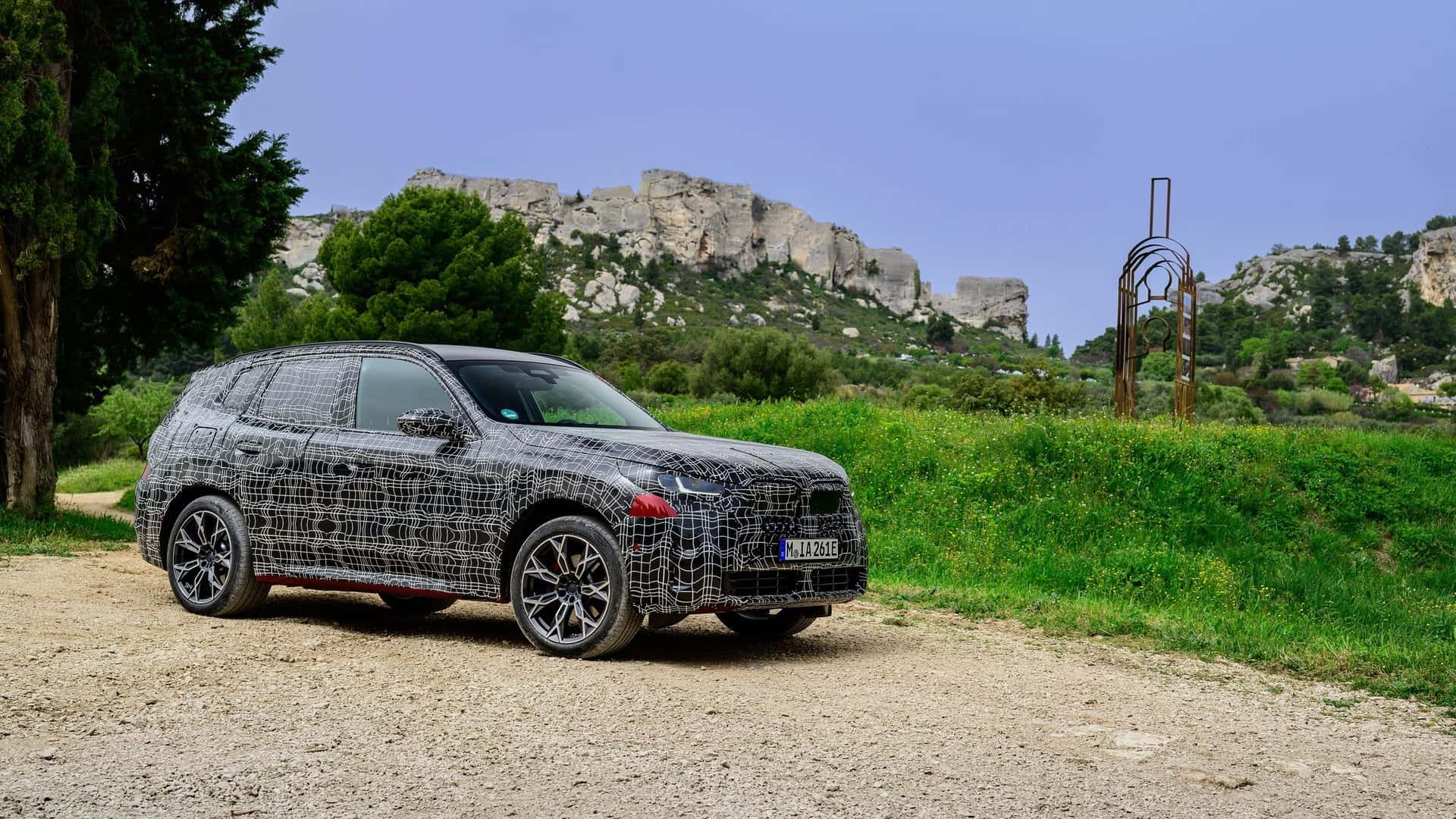
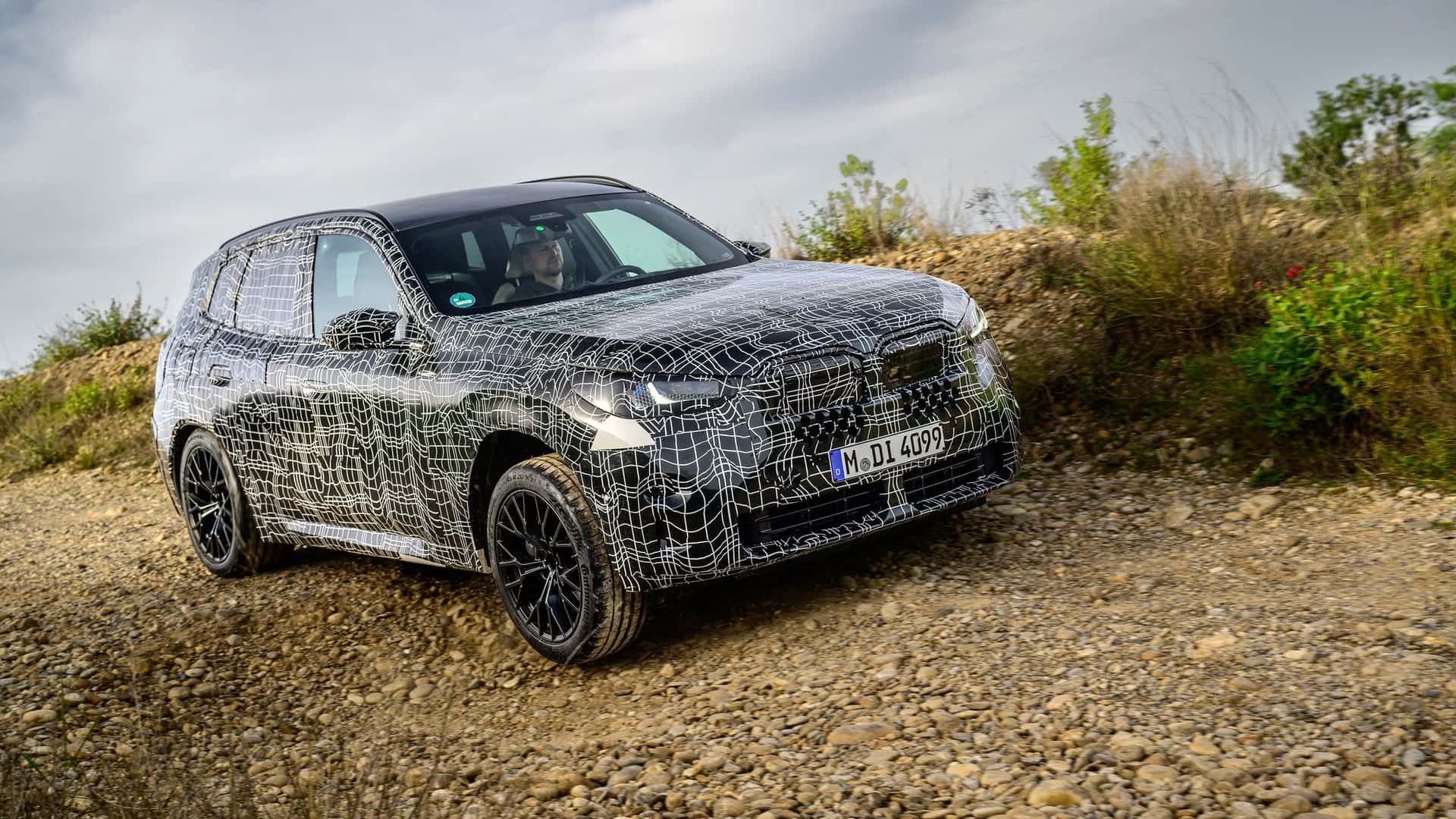
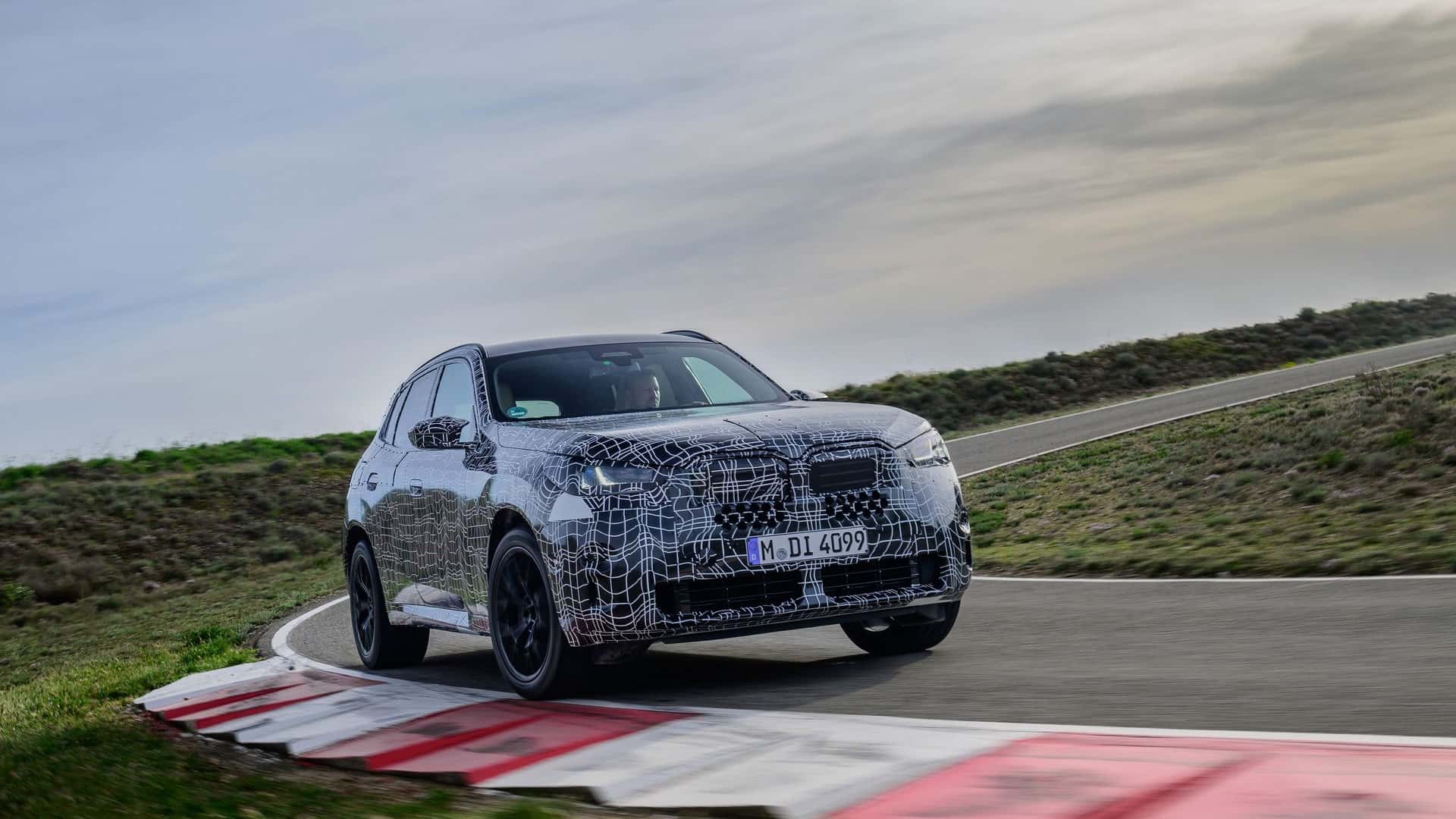
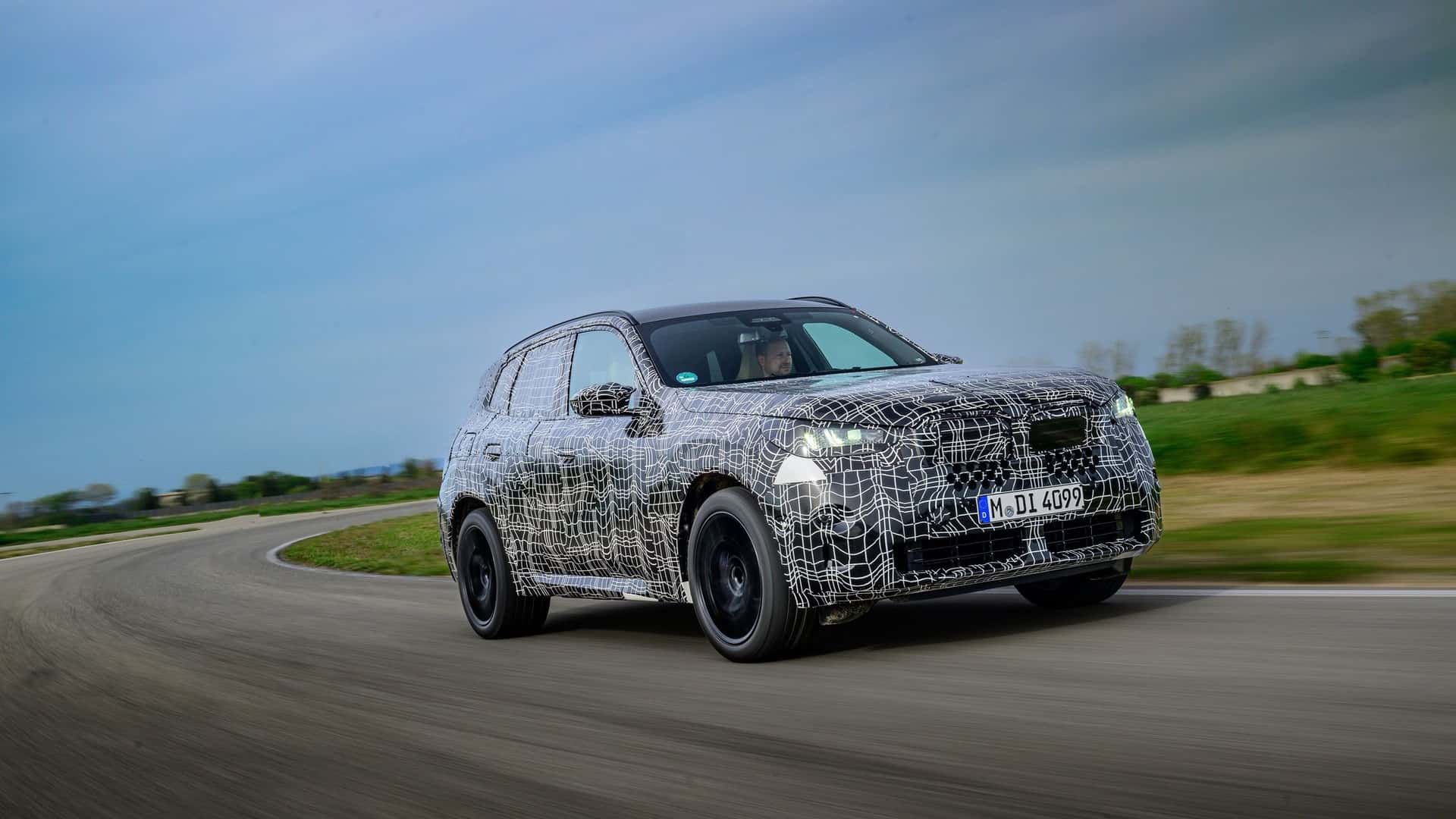
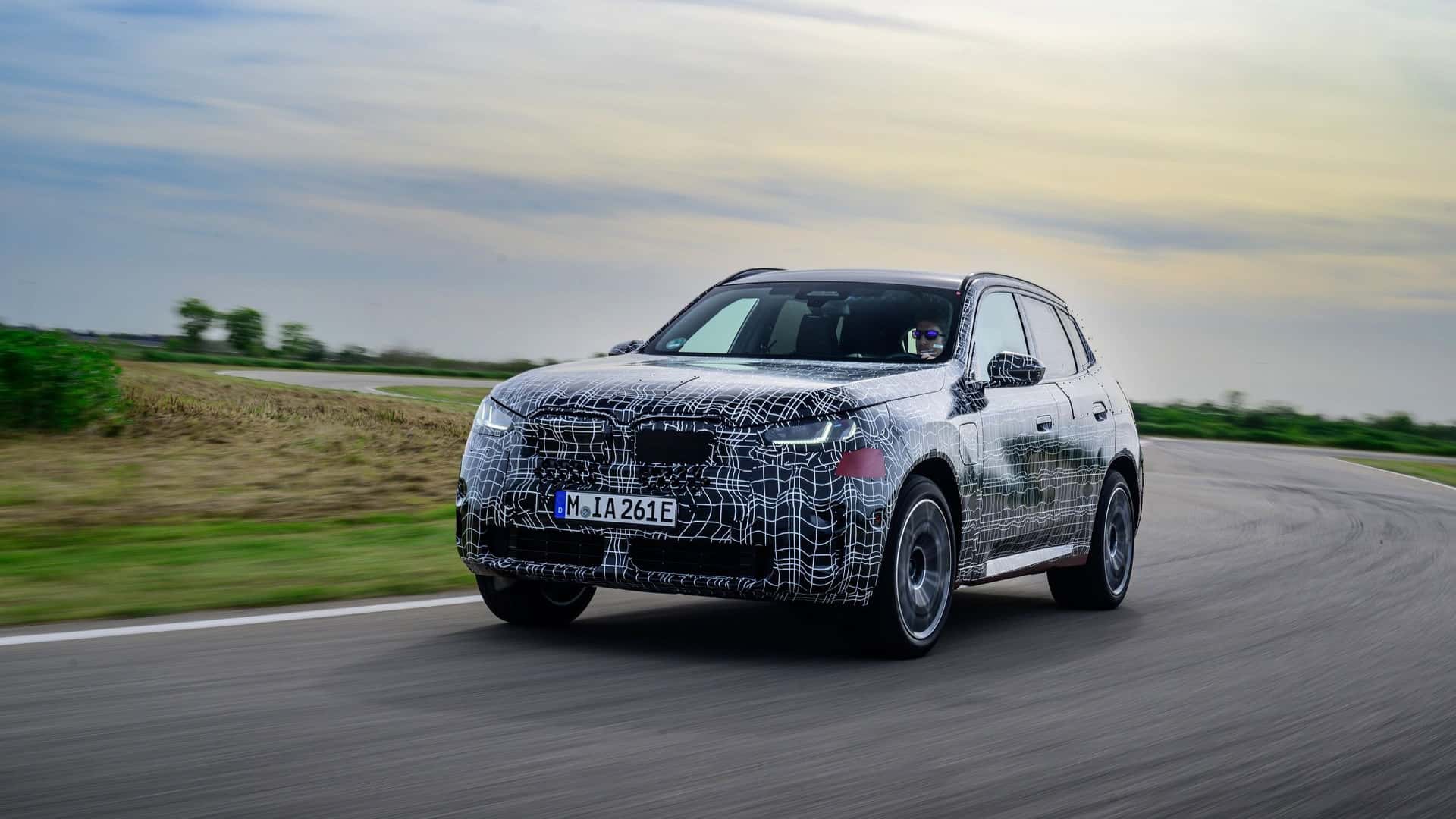
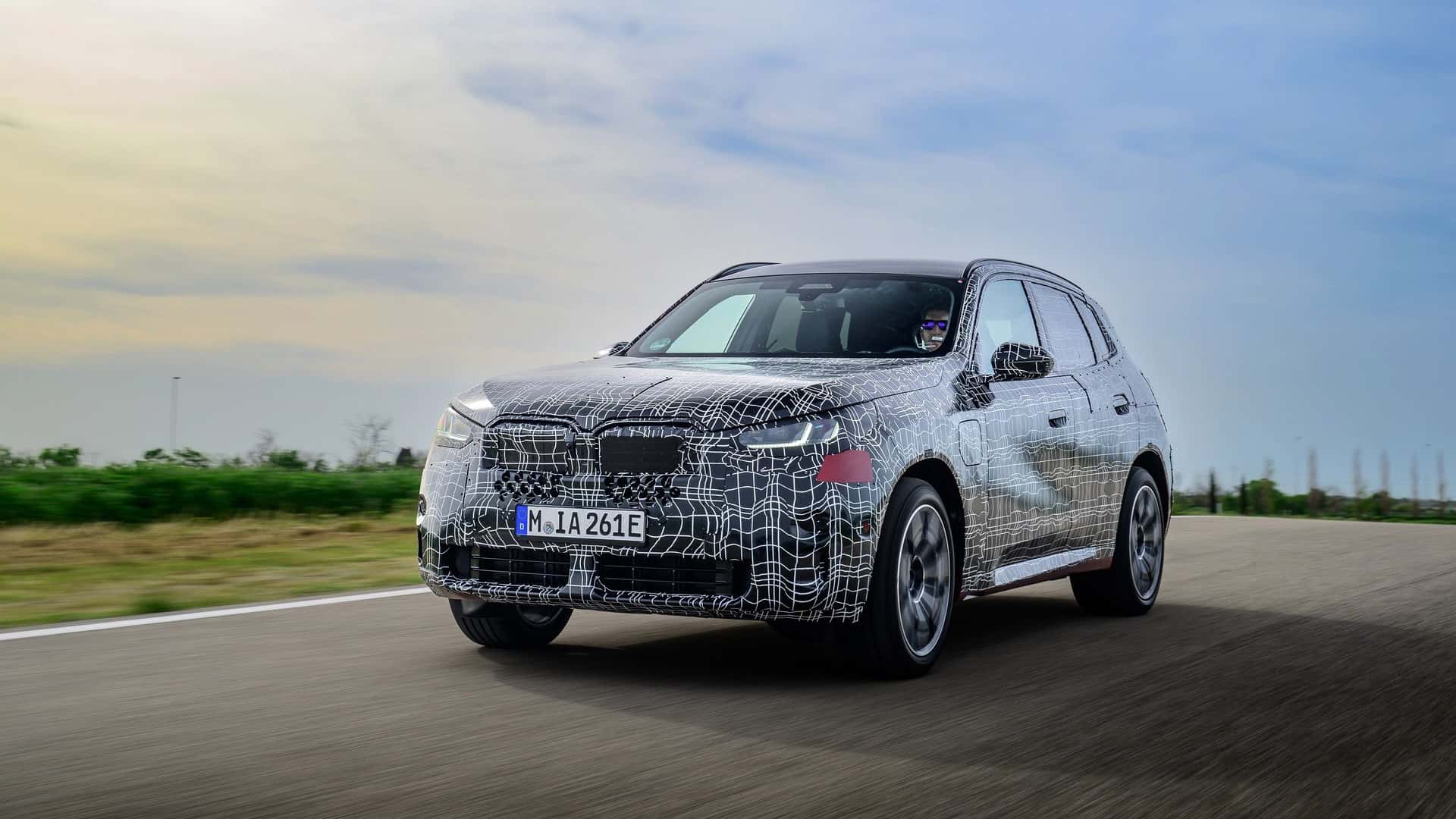
Ahead of its upcoming debut, the new BMW X3 undergoes rigorous final tuning at the BMW Group test centre in Miramas, southern France. The fourth generation of this Sports Activity Vehicle (SAV) in the premium mid-range segment promises highly efficient combustion engines and an advanced plug-in hybrid drive. Engineers meticulously fine-tune all chassis control and driver assistance systems to ensure superior handling across all model variants.
Extensive testing in various conditions, including snow, ice, extreme heat, and off-road terrain, has validated the BMW X3’s versatility and performance. From urban traffic to winding roads and highways, every aspect of its suitability for daily use and travel has been refined to deliver an exceptional driving experience.
At the Miramas test track, engineers focus on analysing and optimising the BMW X3’s acceleration, suspension, steering, and braking behaviour. The vehicle’s intelligent lightweight construction and aerodynamic design, boasting a drag coefficient of 0.27, contribute to its driving dynamics and efficiency.
Compared to its predecessor, the new BMW X3 features a wider track, reduced rear axle lift, and increased body and chassis rigidity. Enhanced steering comfort and cornering dynamics are achieved through modifications to kinematics, elastokinematics, and steering ratios. Optional Adaptive Chassis with electronically controlled shock absorbers offers customisable driving modes for added comfort or sportiness.
The latest BMW iDrive system, based on the BMW Operating System 9, elevates the X3’s automated driving and parking capabilities. With standard equipment exceeding Euro NCAP safety standards, the X3 integrates seamlessly with driver assistance systems, providing precise control and harmonious interaction between driver and vehicle.
State-of-the-art sensor and software technology powers the X3’s assistance systems, enabling features like the Active Lane Change Assistant and Parking and Manoeuvre Assistant, which allows remote control of maneuvers via smartphone.
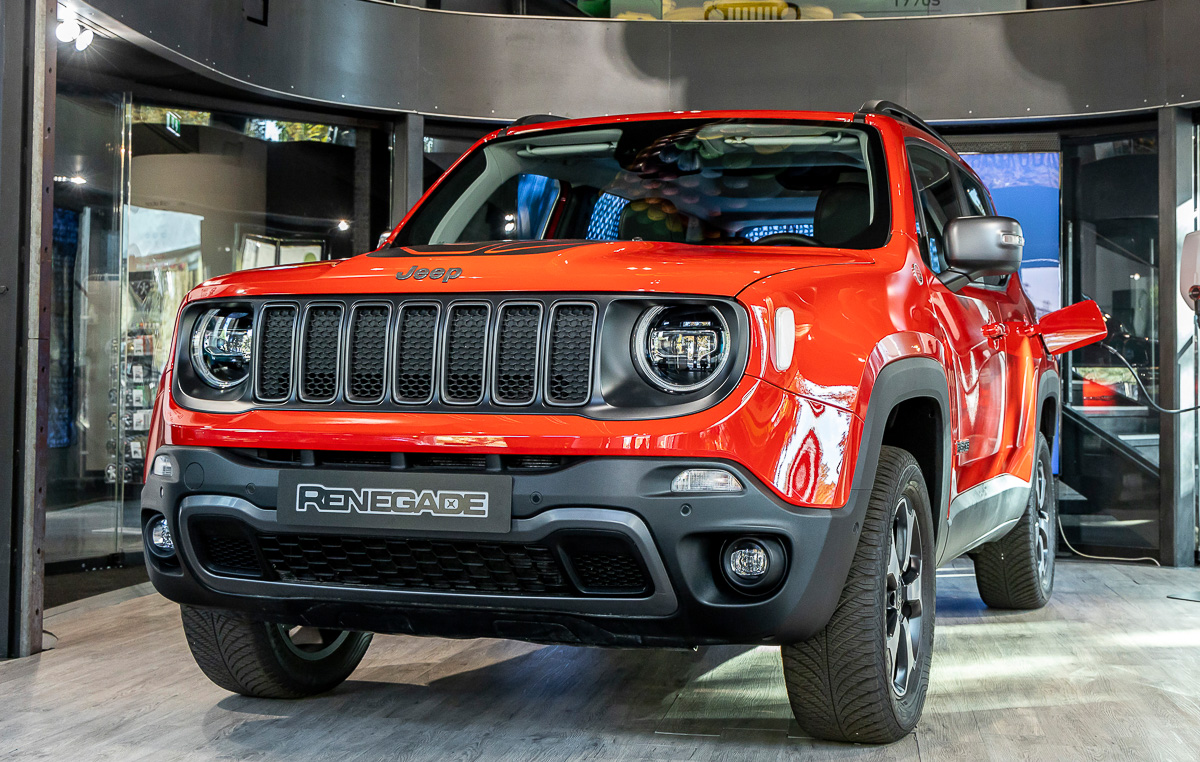
In defiance of forecasts heralding the end of the internal combustion engine (ICE) era, major automotive conglomerate Stellantis is intensifying its focus on piston-powered vehicles. With ownership of 14 brands under its umbrella, Stellantis is funnelling a staggering $6 billion investment into South America, earmarked for the development of new ICE technology and vehicles.
This mammoth investment, touted as the largest in South America’s automotive realm, is set to underpin the introduction of over 40 new vehicle models and the advancement of flex-fuel engines capable of running on both petrol and ethanol. In addition, Stellantis is charting the course for the rollout of hybrid-flex and plug-in hybrid-flex configurations to enhance efficiency, with plans for at least one fully electric vehicle slated to debut in the region between 2025 and 2030.
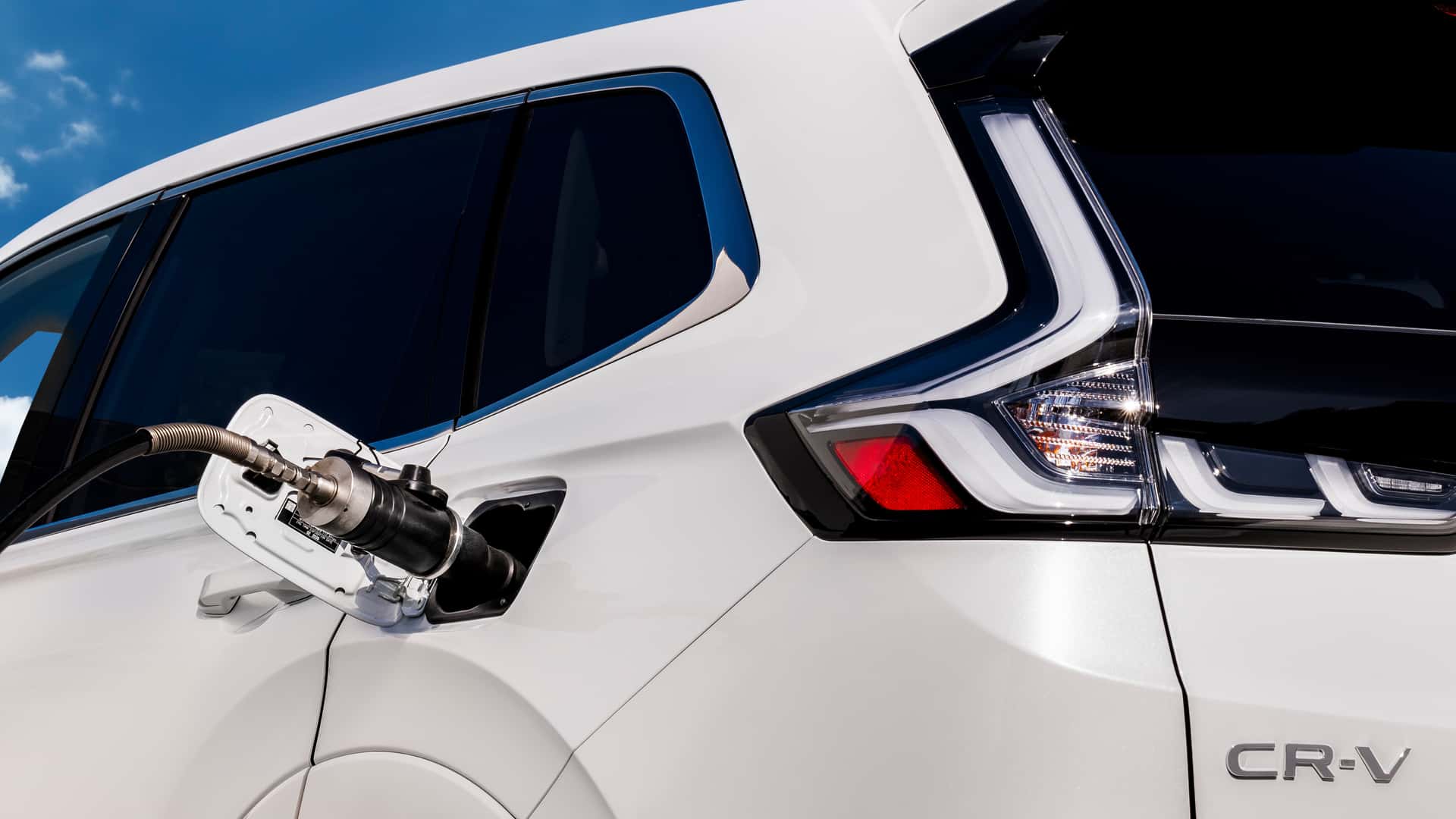
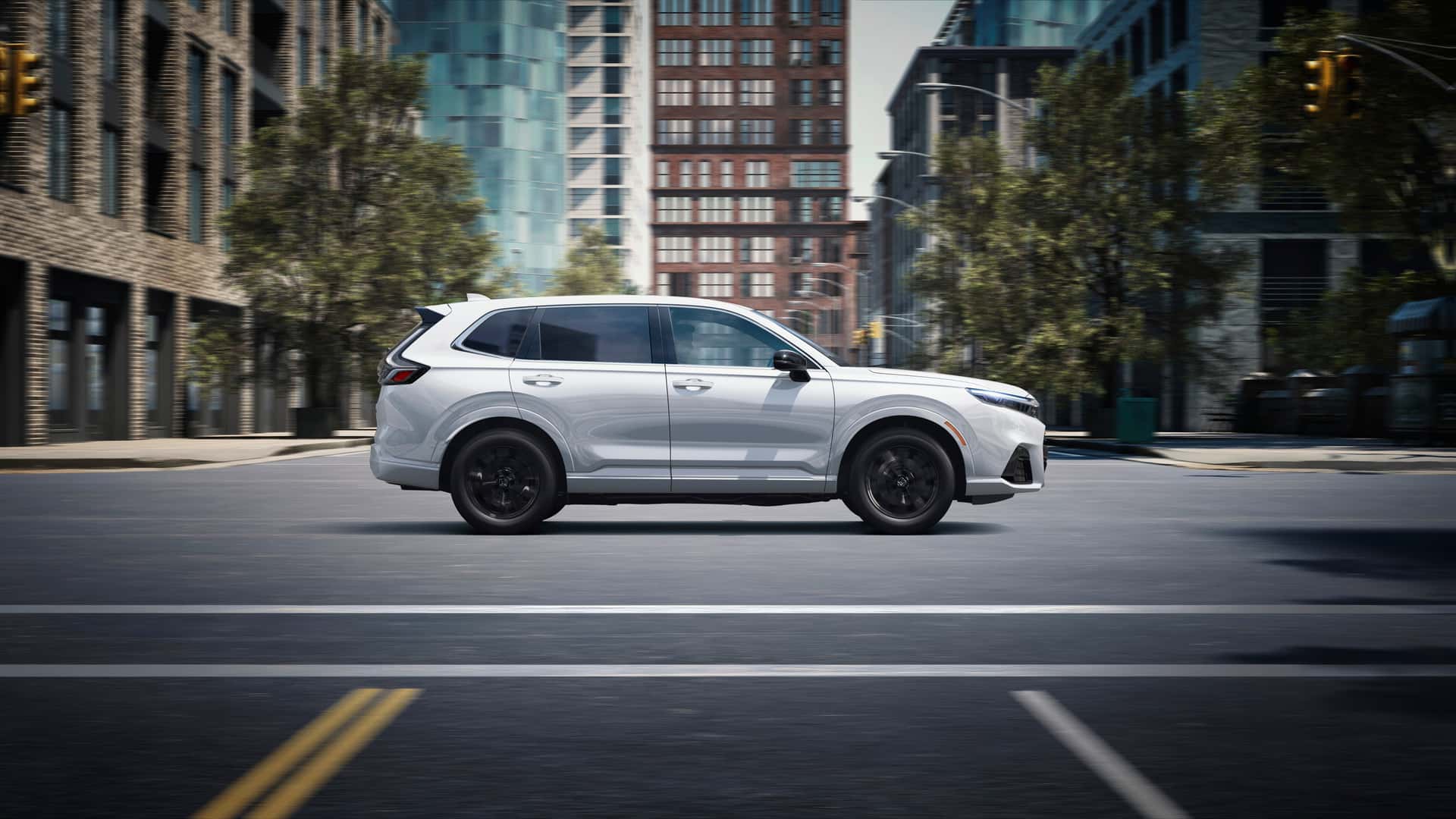
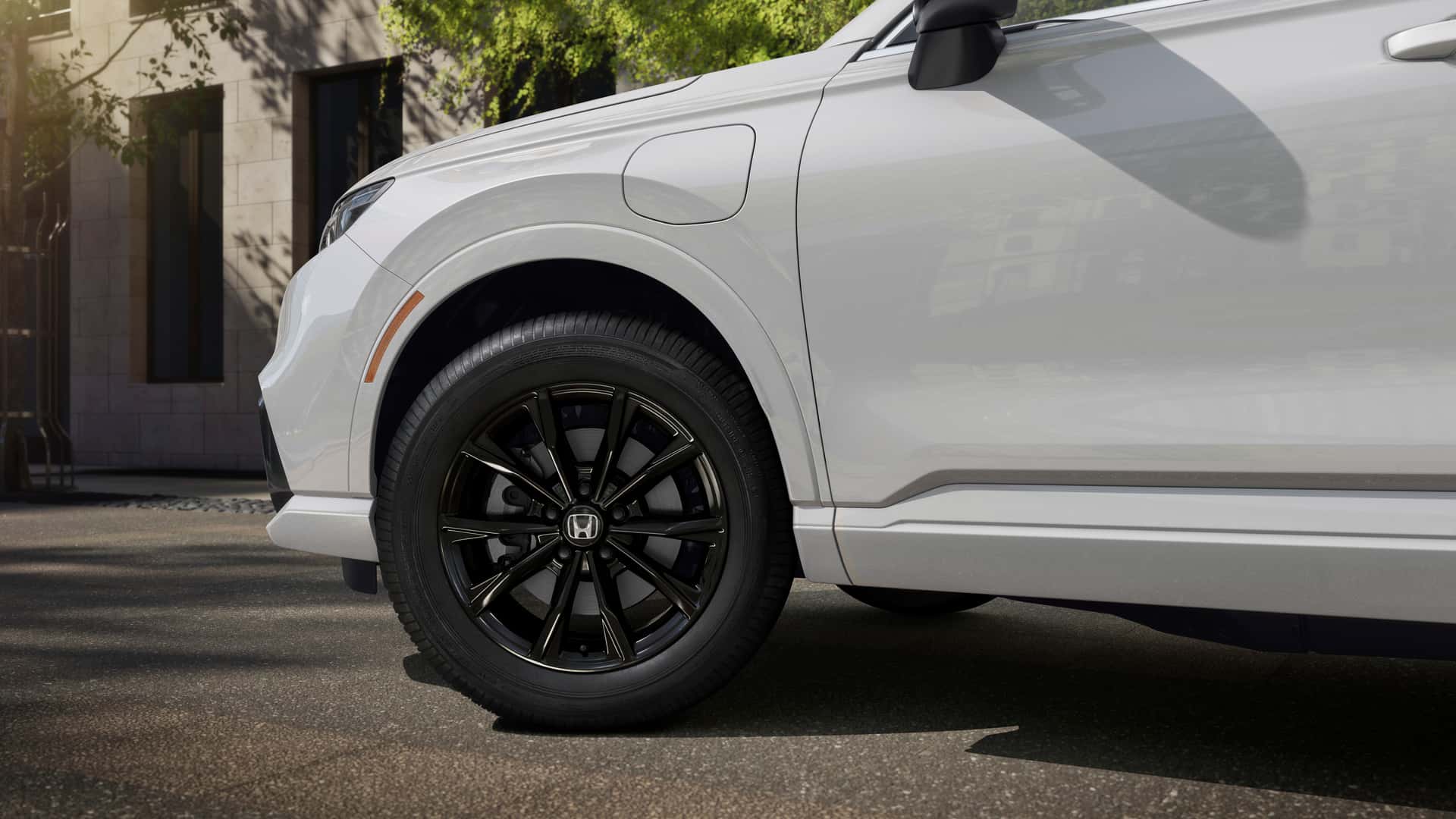
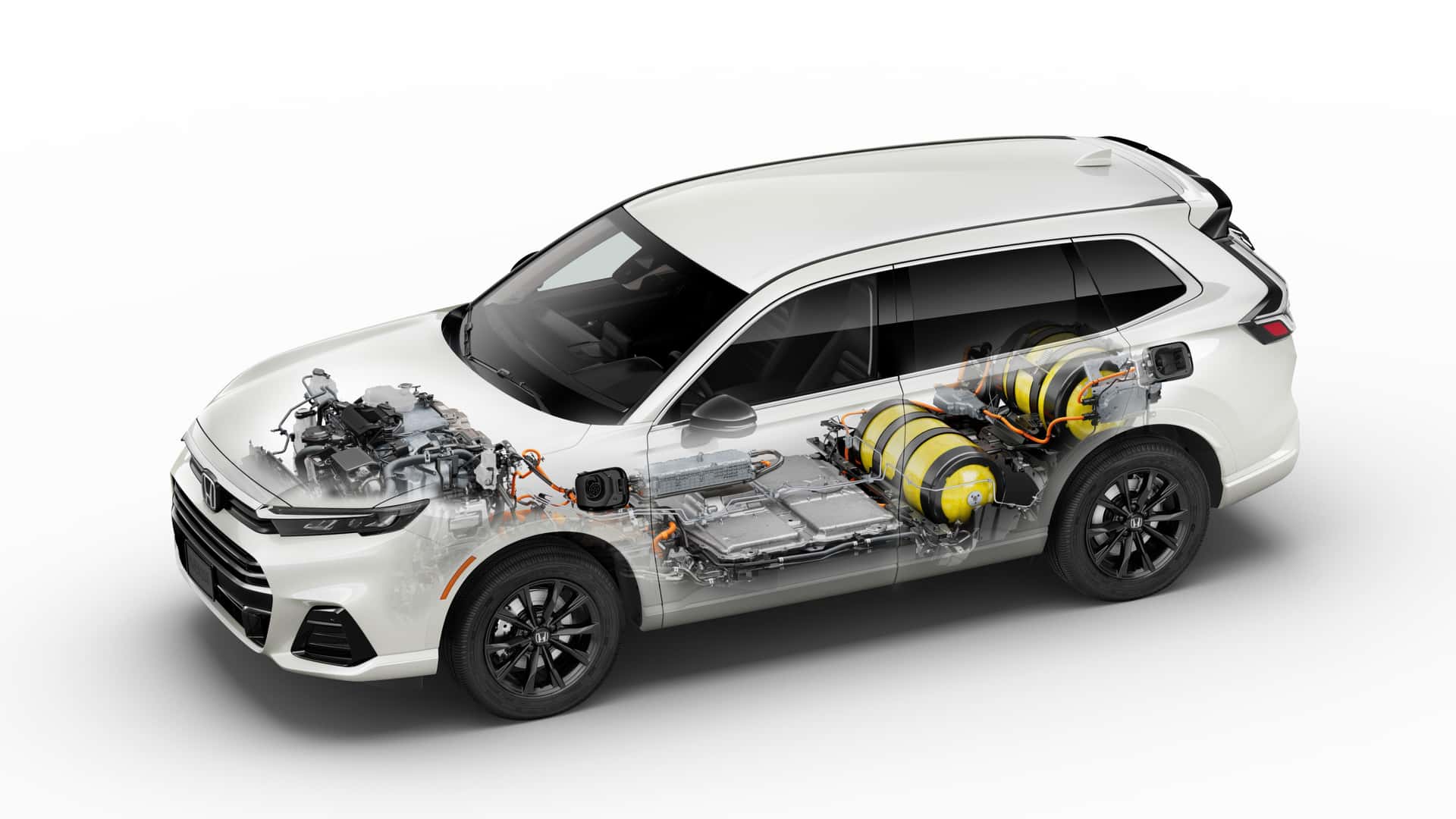
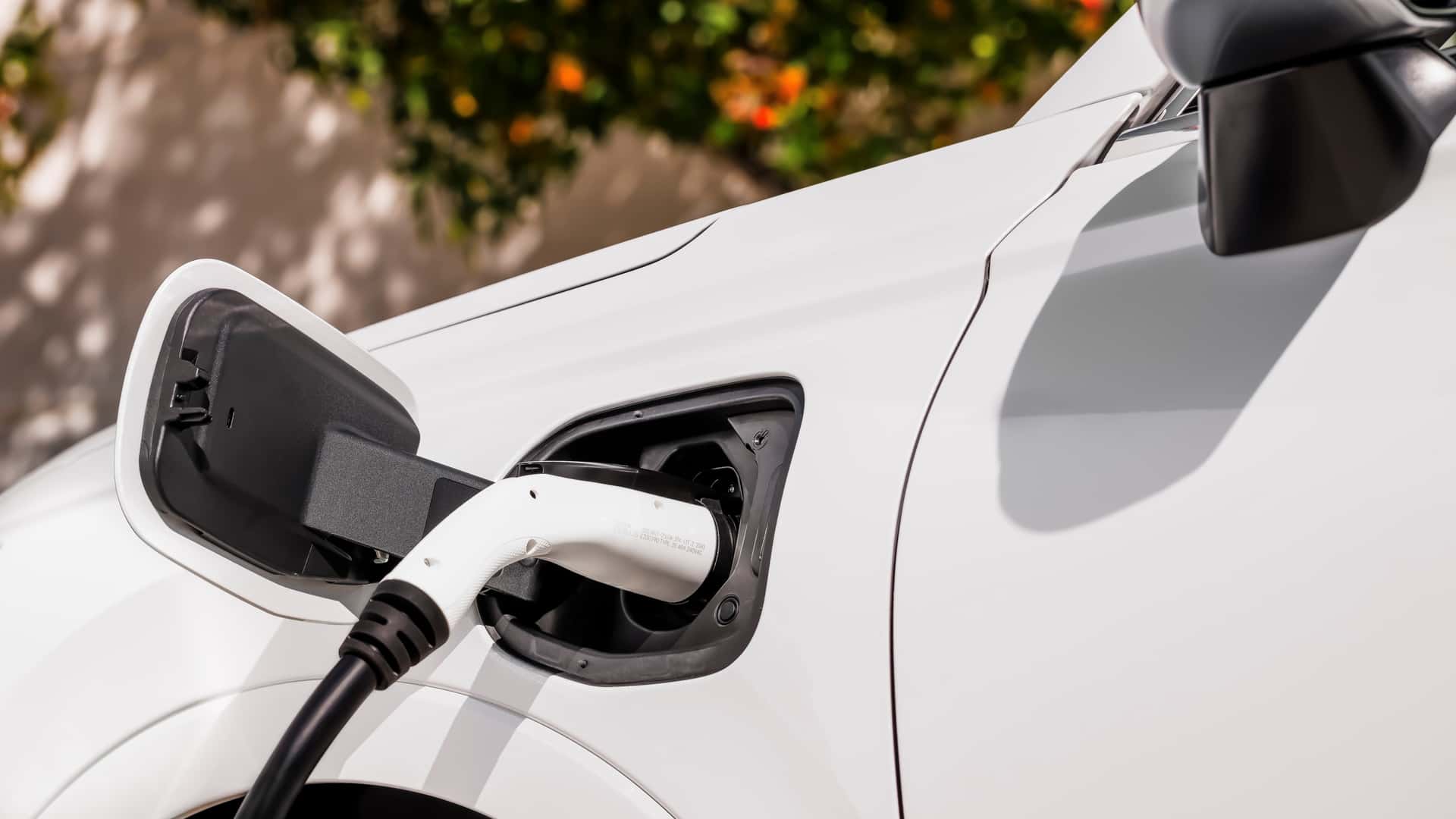
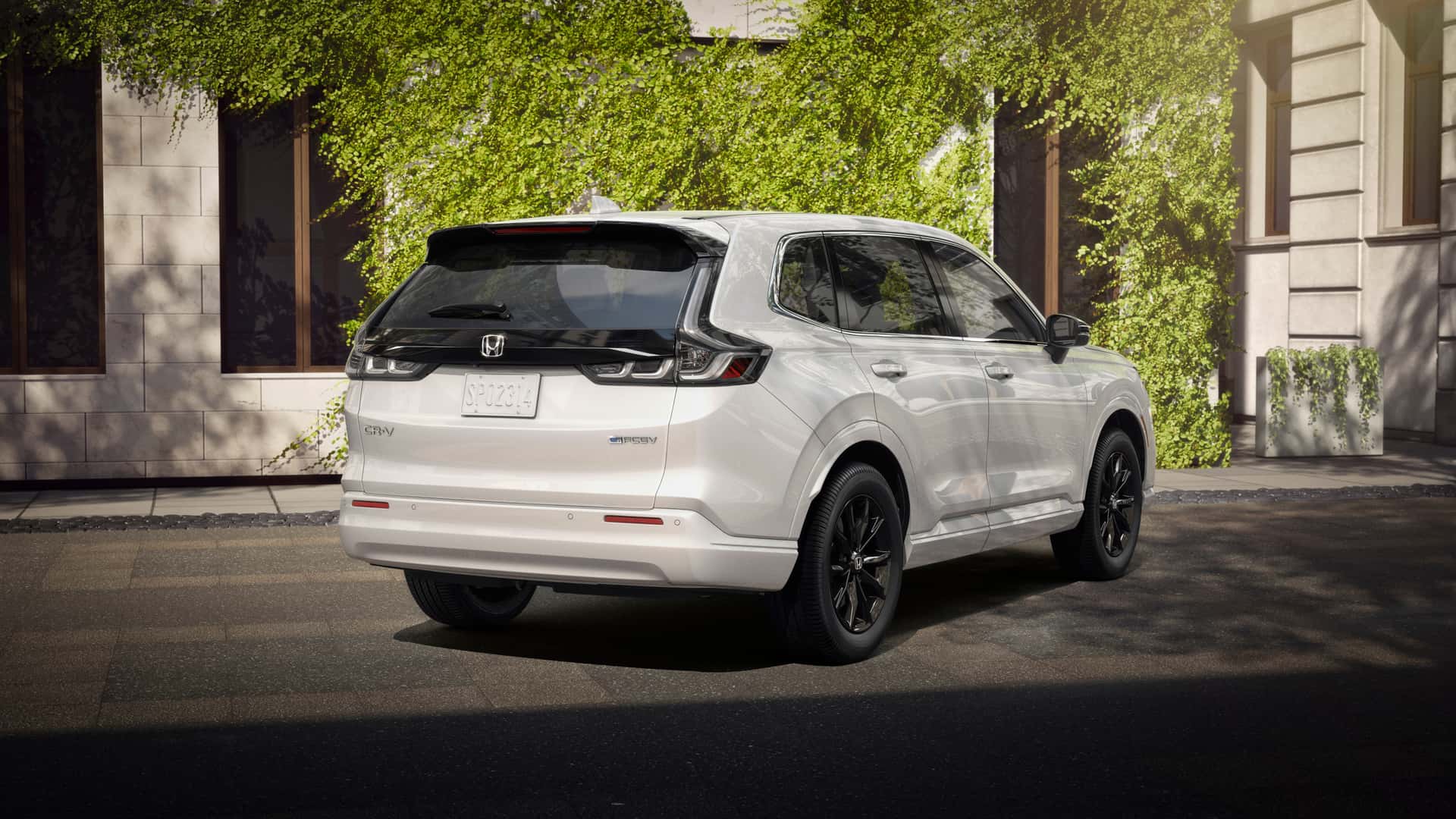
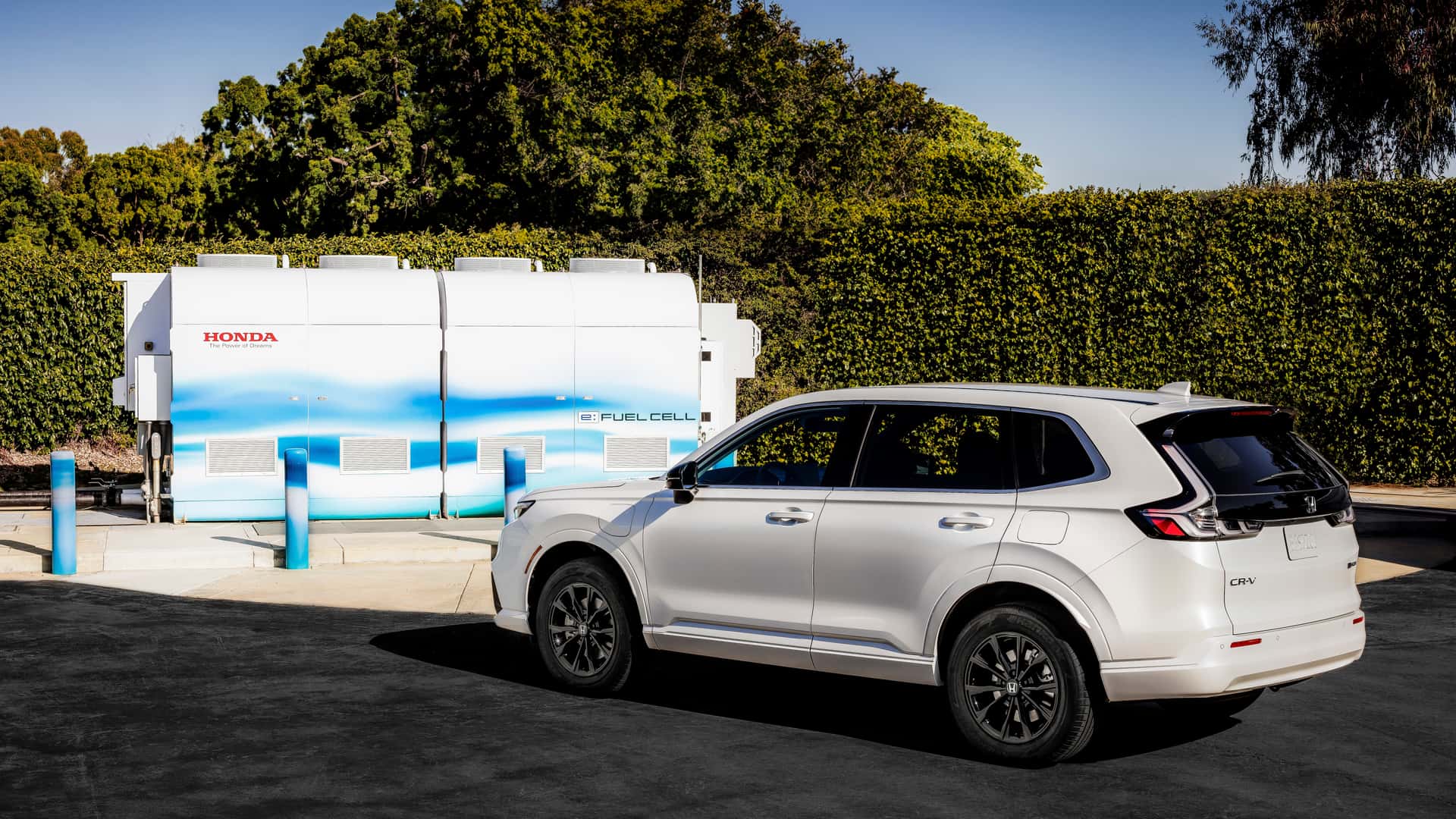
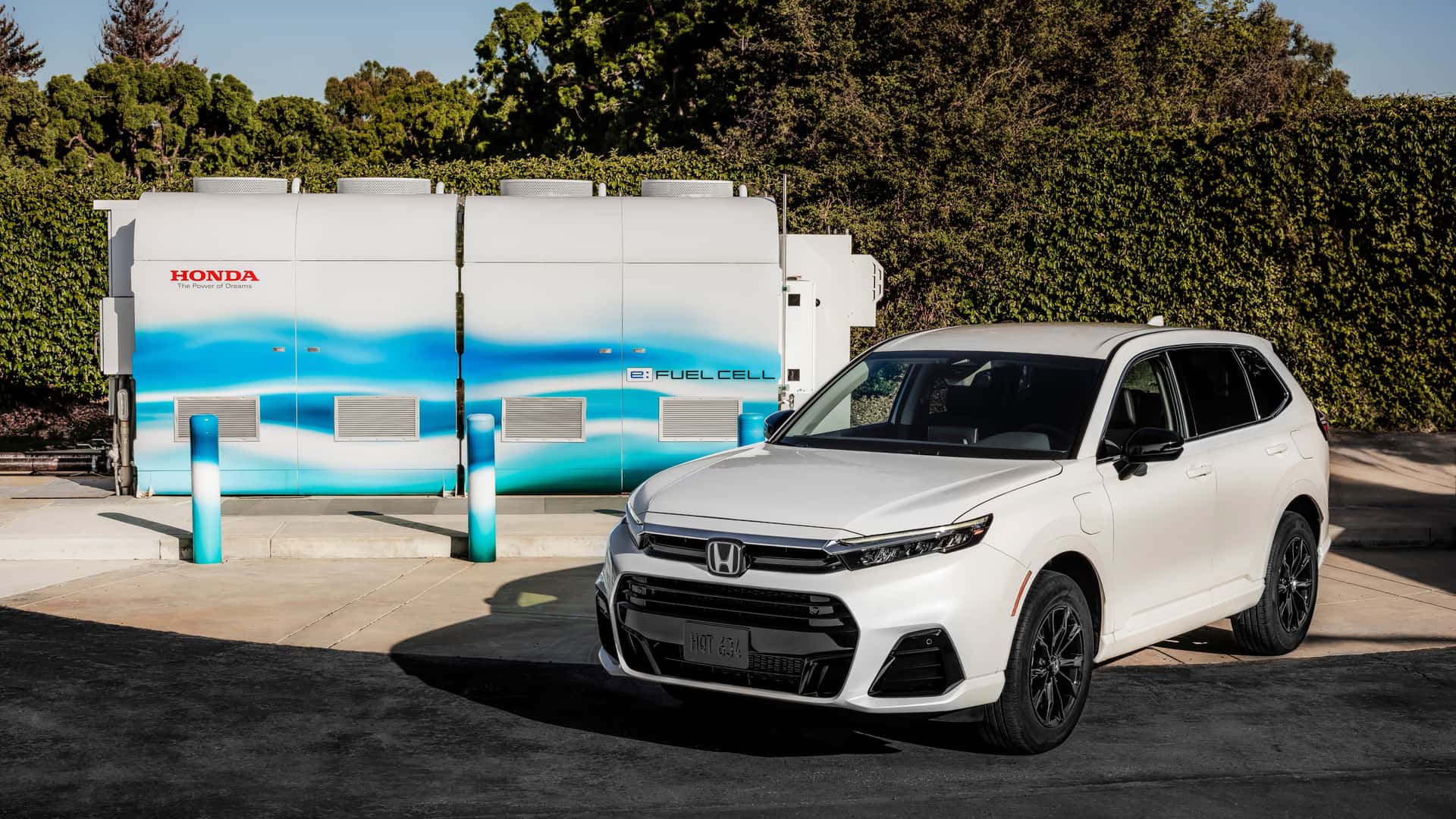
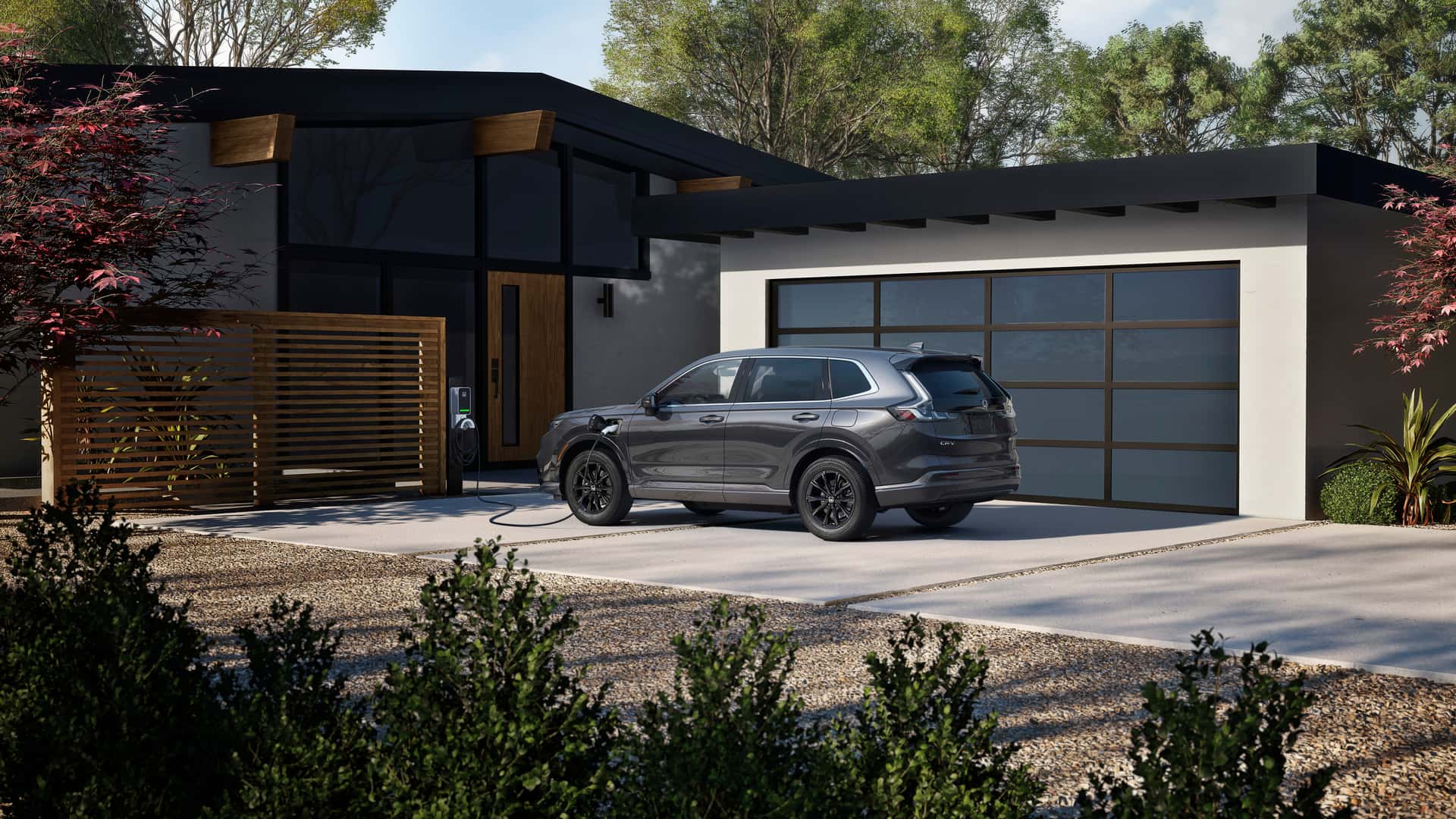
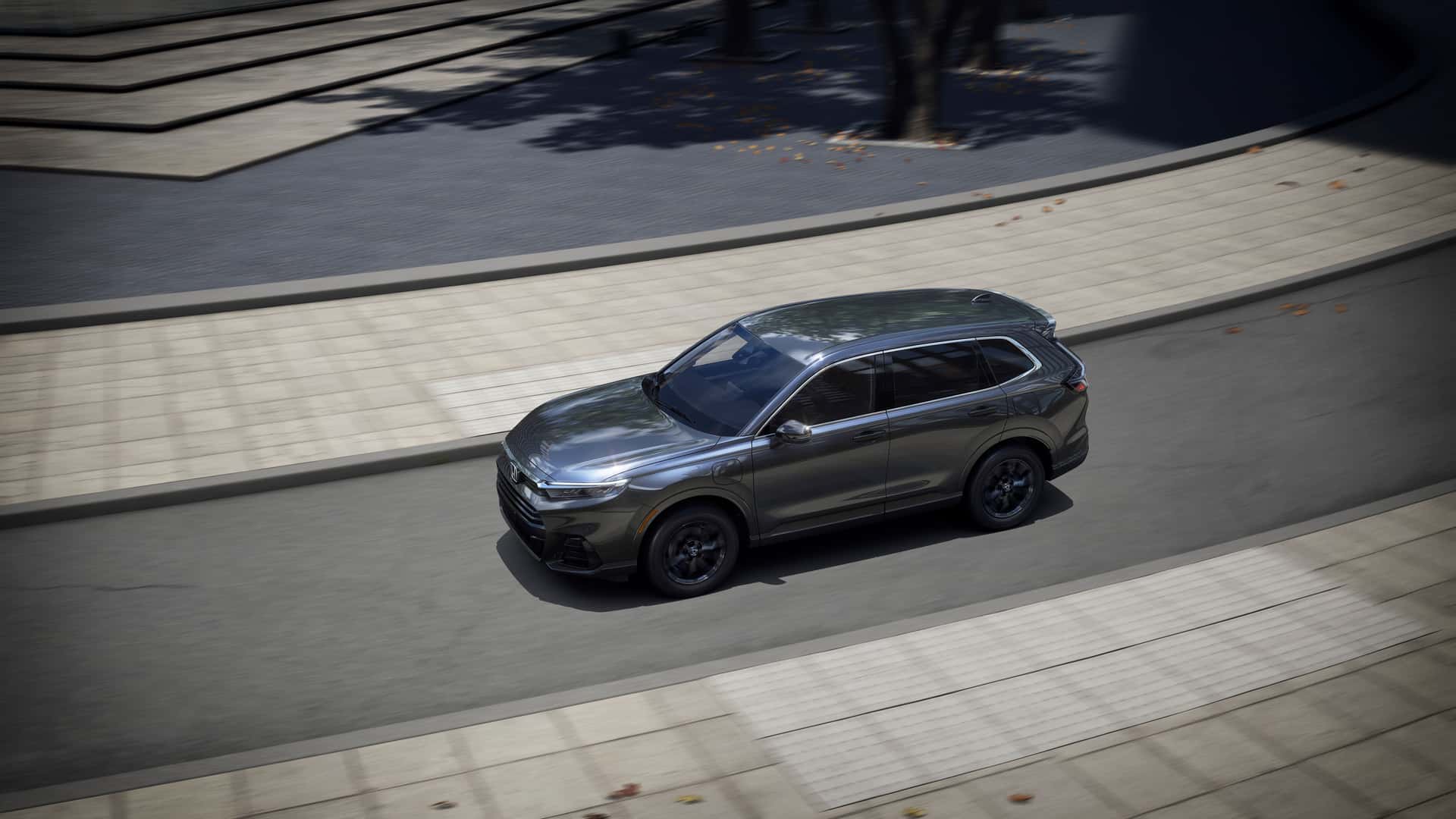
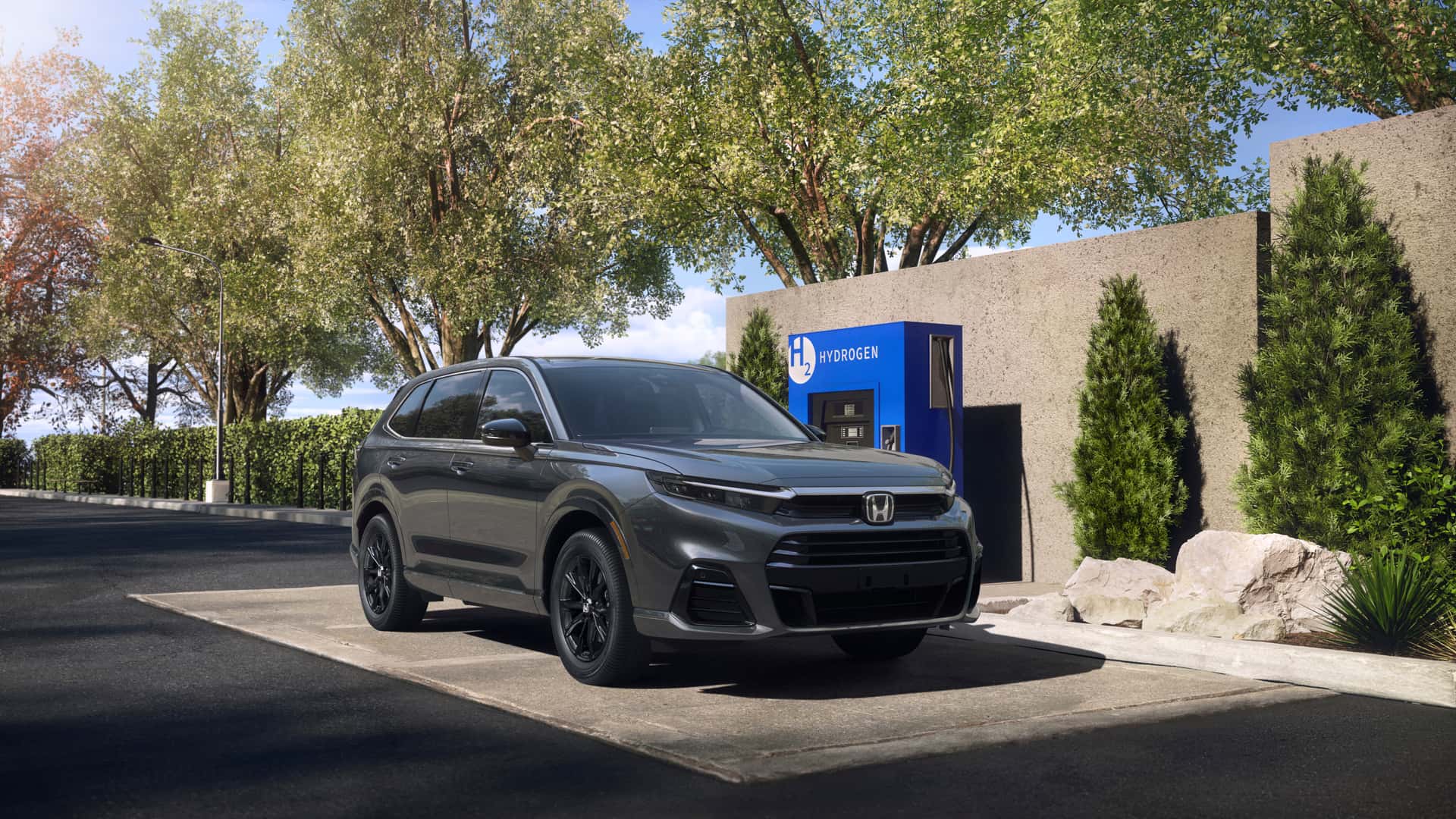
The 2025 Honda CR-V e:FCEV may appear similar to its conventional counterparts, but its distinguishing feature lies in its plug-in hydrogen setup, as indicated by the two fuel caps. Unlike traditional plug-in hybrids, this CR-V combines a fuel cell setup with a battery pack, making it a unique offering in the market.
Referred to as the only fuel-cell electric passenger vehicle made in America, the compact SUV boasts a sophisticated powertrain configuration. It features a front-mounted electric motor generating 174hp and 310Nm of torque. The compressed hydrogen gas tank, with a capacity of 4.3 kilograms, provides an EPA-certified driving range of 434km. Additionally, the separate 17.7-kilowatt-hour battery pack offers an EPA-estimated 46km of electric range.
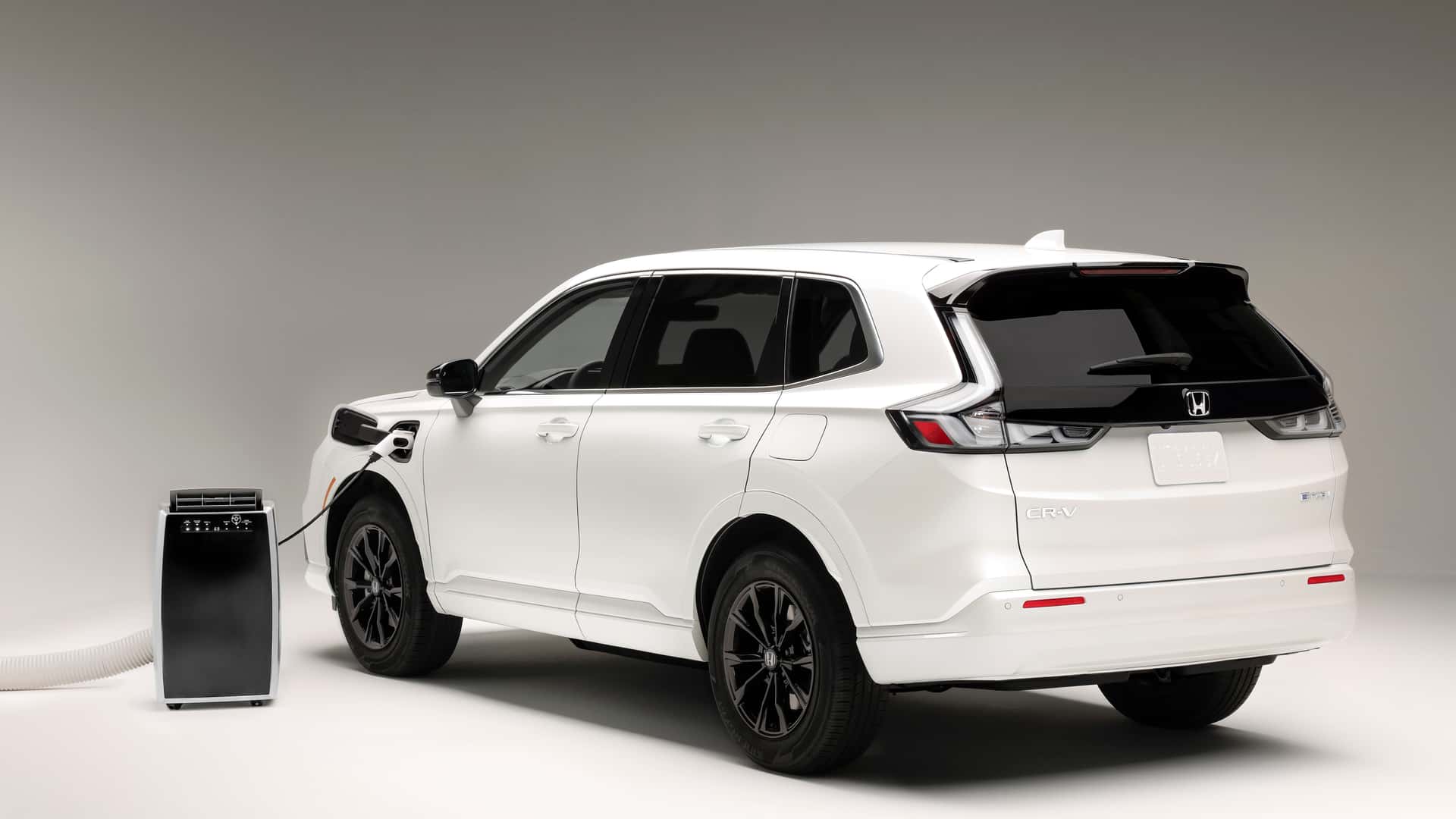
Incorporating bidirectional charging capabilities akin to conventional plug-in hybrids and battery EVs, the CR-V e:FCEV includes a power supply connector that can deliver up to 1,500 watts of power through a standard 110-volt outlet. This feature enables users to power various appliances, camping equipment, tools, and even portable air conditioners.
Given the unique weight distribution of the SUV, Honda has completely re-tuned the suspension system at both the front and rear axles. The CR-V e:FCEV utilises a MacPherson strut front and a multi-link rear suspension setup. Improvements in rear lateral and torsional rigidity, up by 10 percent and 9 percent, respectively, over combustion engine models, are achieved through the implementation of new stabiliser bars, dampers, and springs.
This model marks Honda’s debut of the second generation of its fuel cell module, co-developed with General Motors and manufactured in Michigan. Notable enhancements include increased efficiency, durability, refinement, and cost-effectiveness compared to its predecessor. Production costs for the fuel cell have been substantially reduced by two-thirds compared to the discontinued Clarity Fuel Cell.
Visually, the CR-V e:FCEV features distinct design elements to set it apart from its non-hydrogen counterparts. Changes to the front fenders, bumper, partially black tailgate, clear taillights, and 18-inch black alloy wheels with a 10-spoke design contribute to its unique aesthetic. Underneath the SUV, a fully closed underfloor improves airflow for enhanced efficiency.
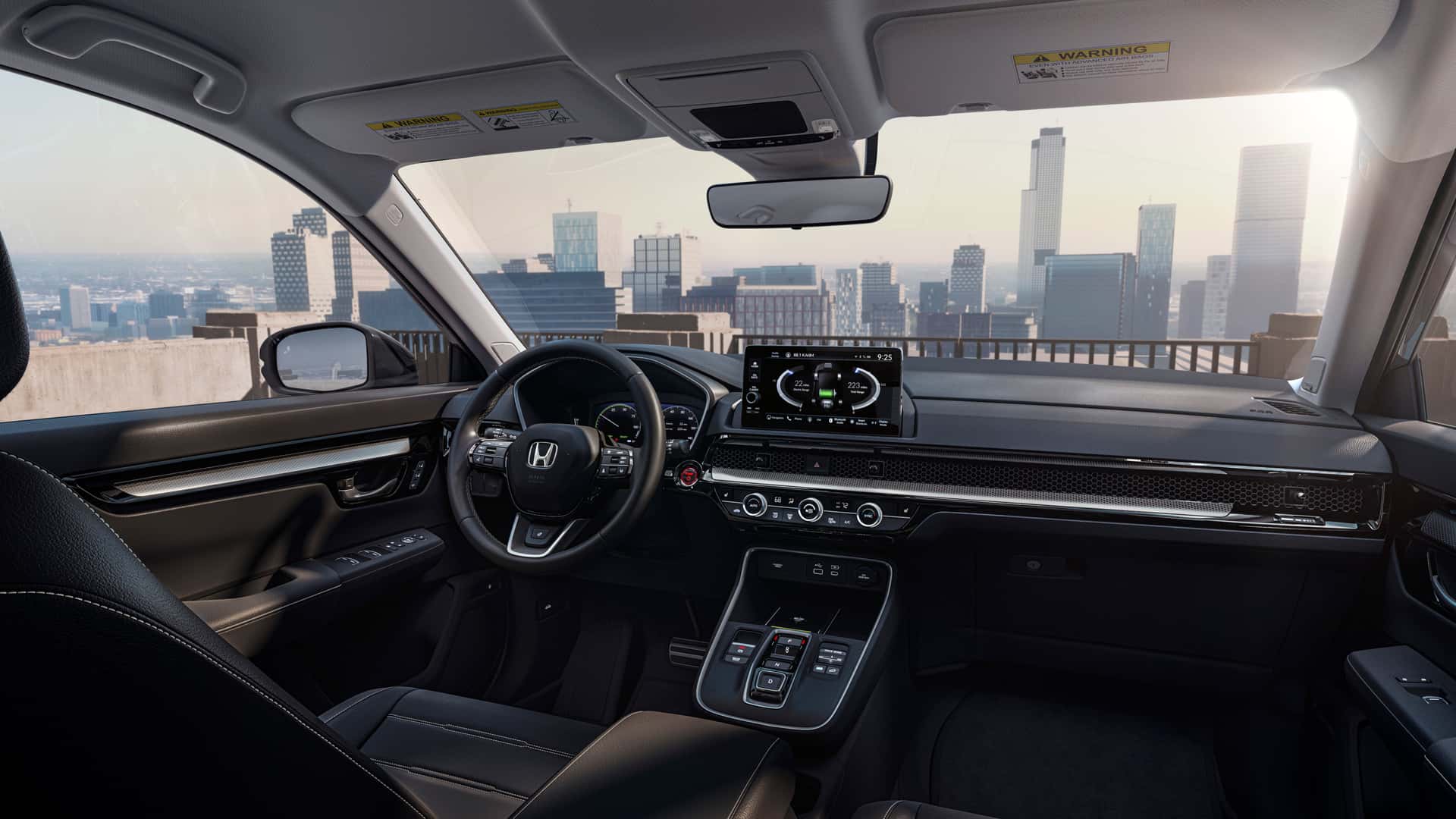
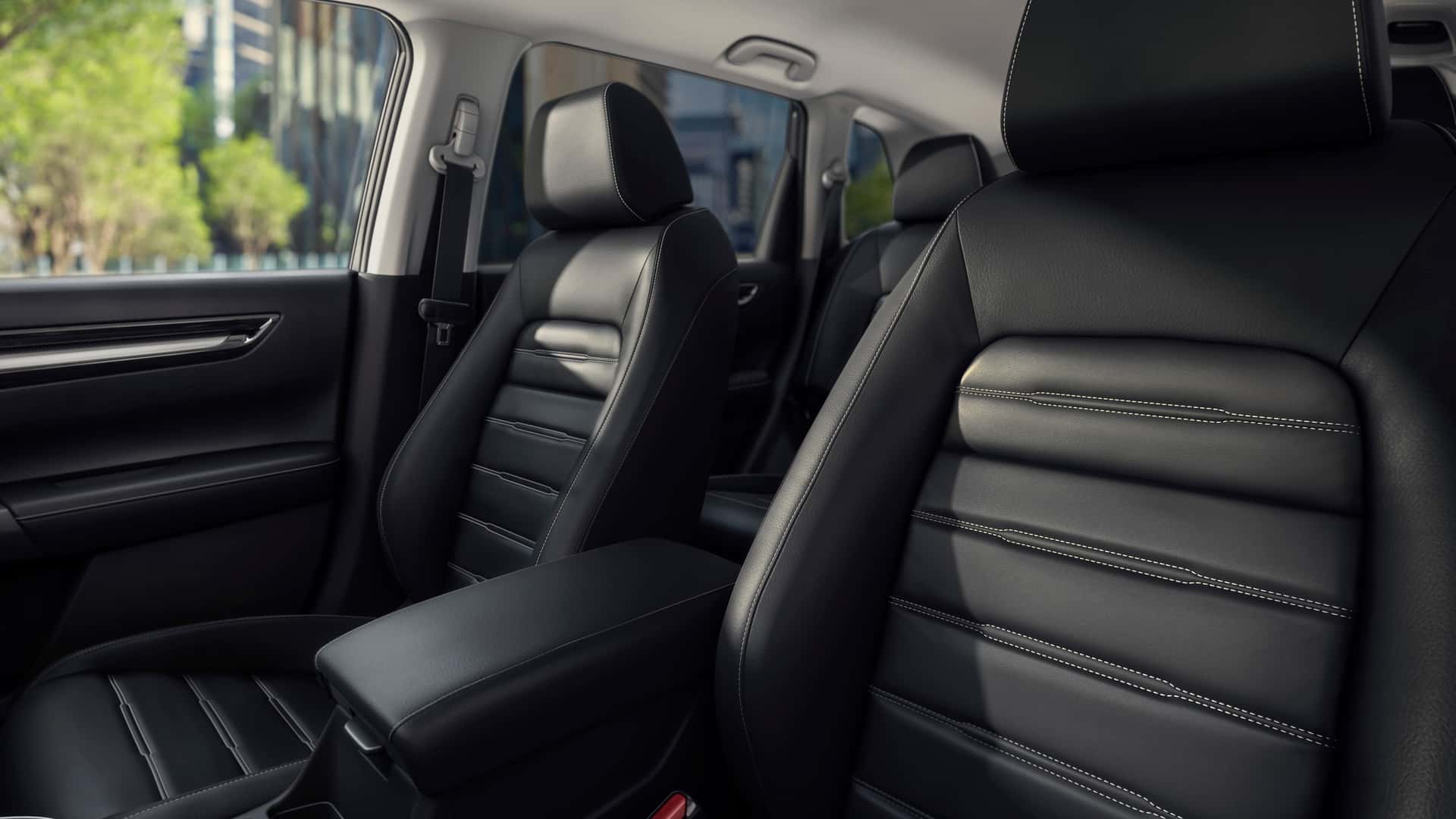
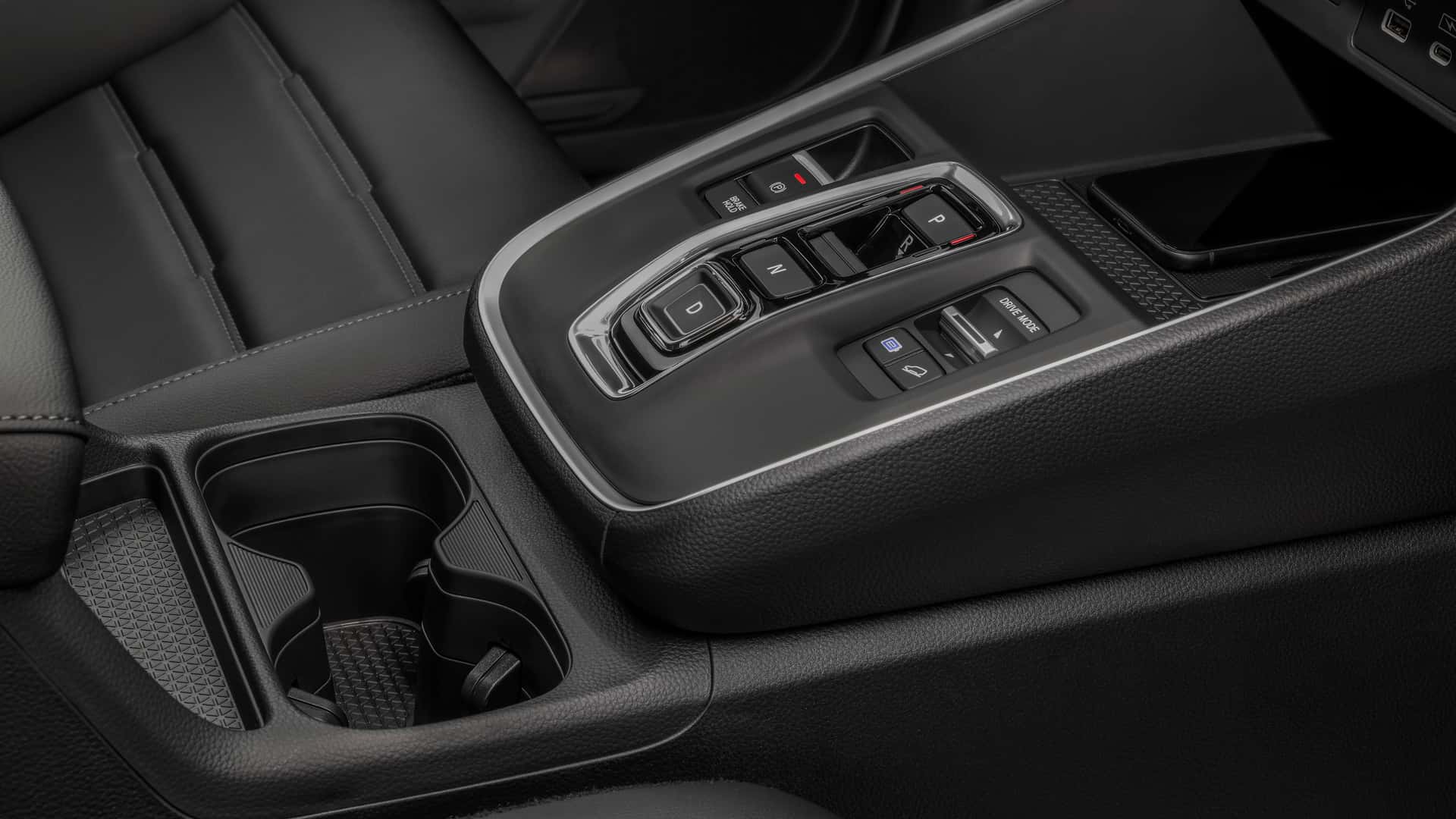
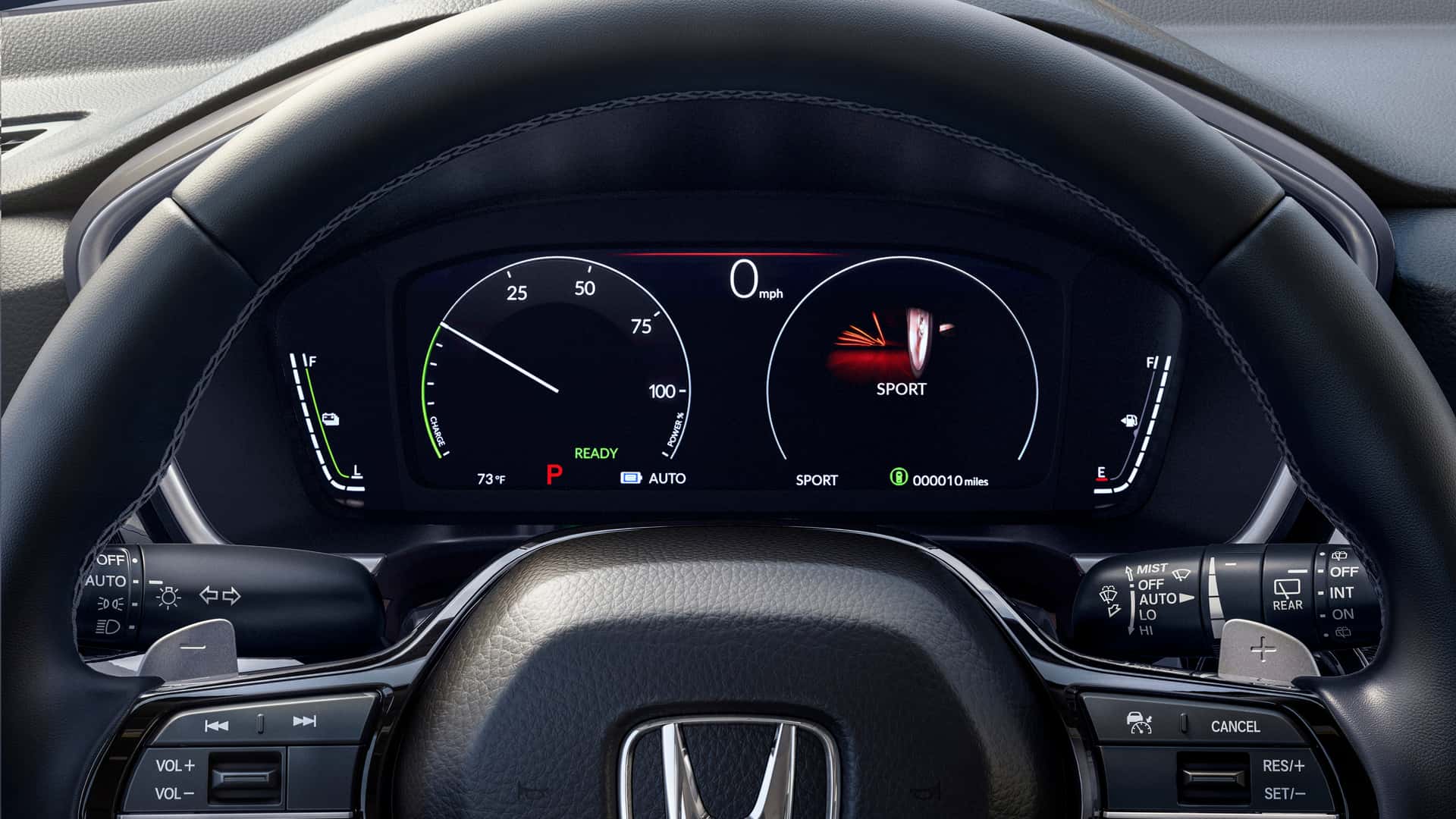
For the 2025 model year, the CR-V e:FCEV will be exclusively offered as a Touring trim level, boasting a comprehensive list of standard features. From electrically adjustable heated front seats to a 12-speaker Bose sound system, the Touring trim includes luxurious amenities such as dual-zone climate control, a heated steering wheel, a power tailgate, and a wireless charging pad. Standard technology features include a 9-inch touchscreen, a 10.2-inch digital instrument cluster, and wireless compatibility with Apple CarPlay and Android Auto.
Scheduled for lease availability in California later this year, the 2025 Honda CR-V e:FCEV represents a significant step forward in Honda’s commitment to sustainable mobility and innovative technology.
In 2024, BYD is set to achieve a significant milestone with the launch of its first utility vehicle (ute), which has been spotted in near-production form during testing in Australia. The BYD ute has been designed to meet the demands of the rugged Australian terrain, with collaborative efforts between Australian and BYD engineers.
Images from testing by Autospy reveal an exterior that combines sleekness with robustness. The interior is expected to feature technological advancements, including a digital instrument cluster and a large, portrait-oriented infotainment touchscreen that can rotate.
While specific details about the plug-in hybrid powertrain are yet to be disclosed, industry speculations suggest a 1.5-litre turbocharged engine paired with two electric motors, providing a total output of 489hp. There is also consideration for a fully electric version, although high battery costs pose a challenge.
The pricing for the BYD ute is unknown, but the company is committed to maintaining competitiveness in the segment. EVDirect CEO Luke Todd highlighted BYD’s dedication to affordability, drawing parallels with the pricing strategy for other electric models. As BYD enters the ute market, industry observers are keen to see how it will compete with established contenders, given its focus on technological innovation and tailored design for specific markets.
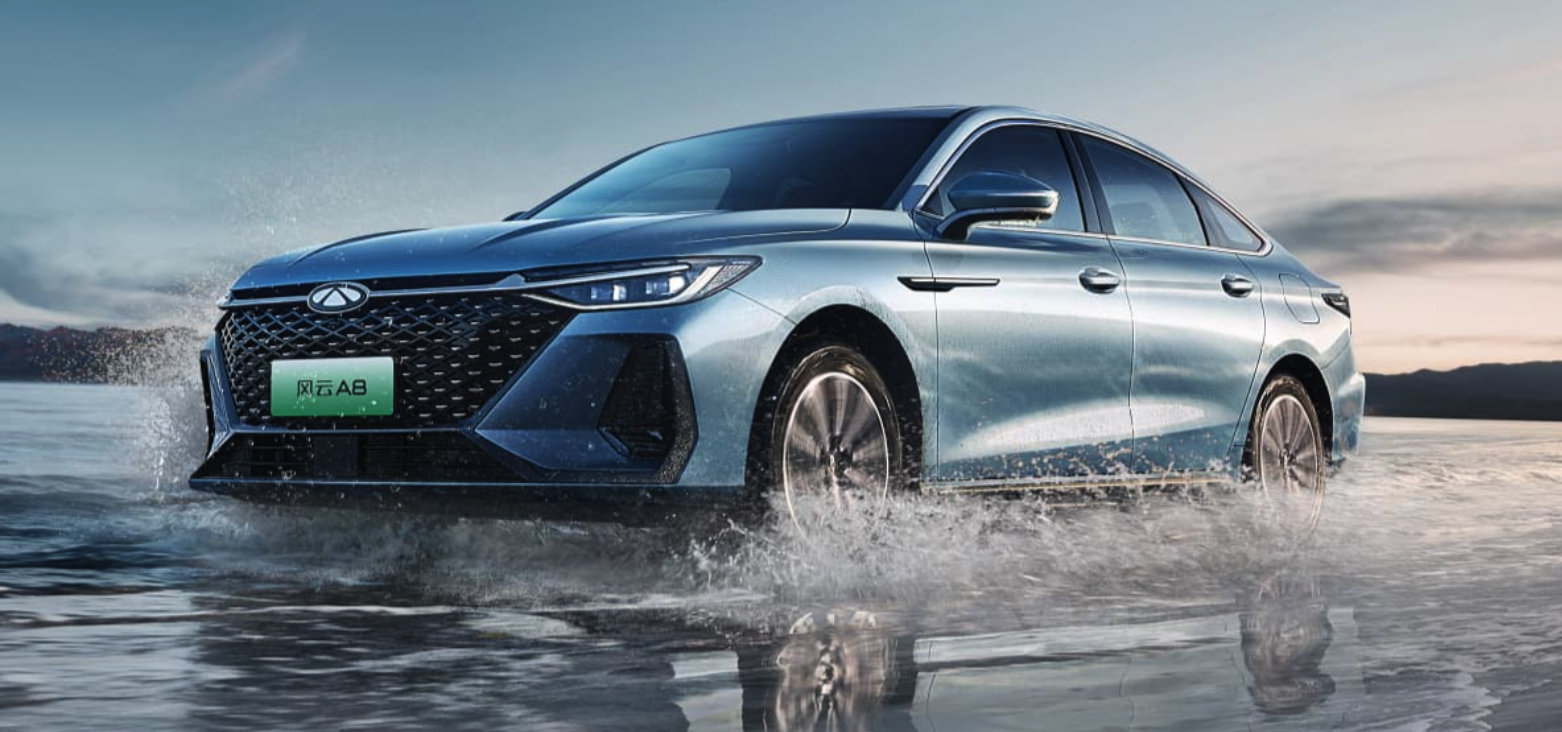
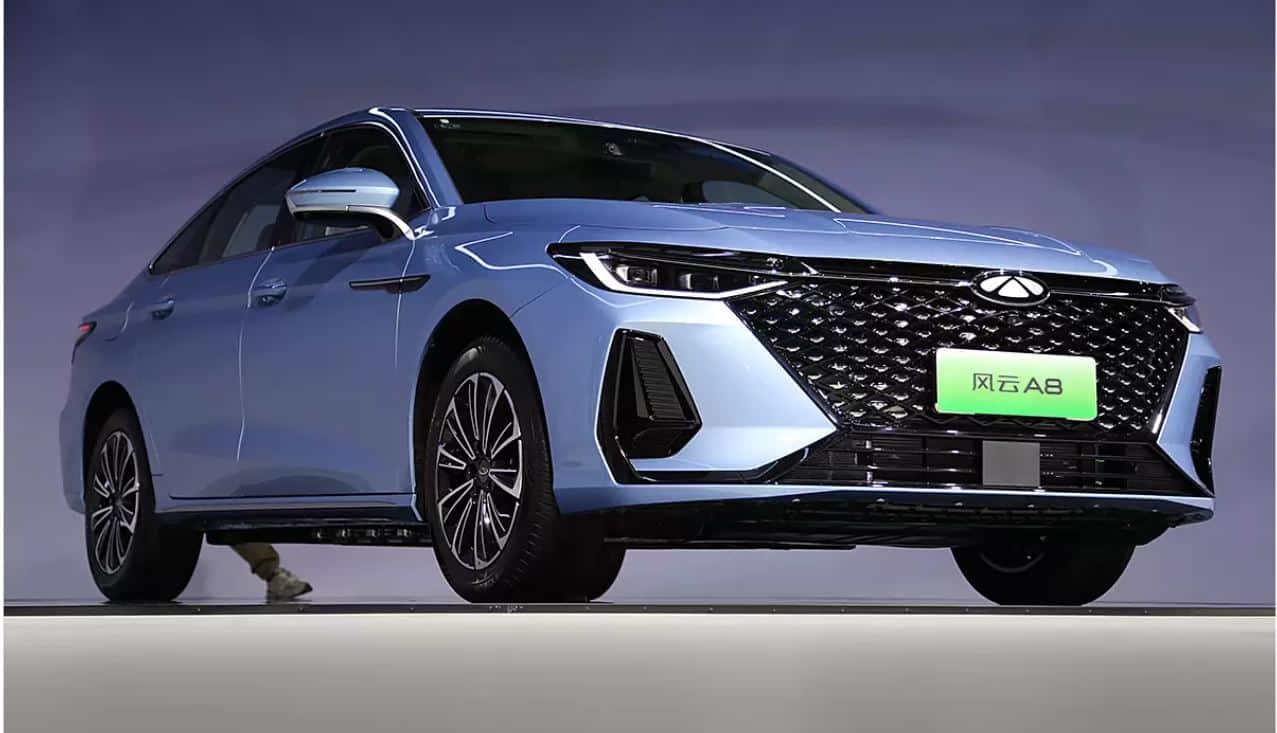
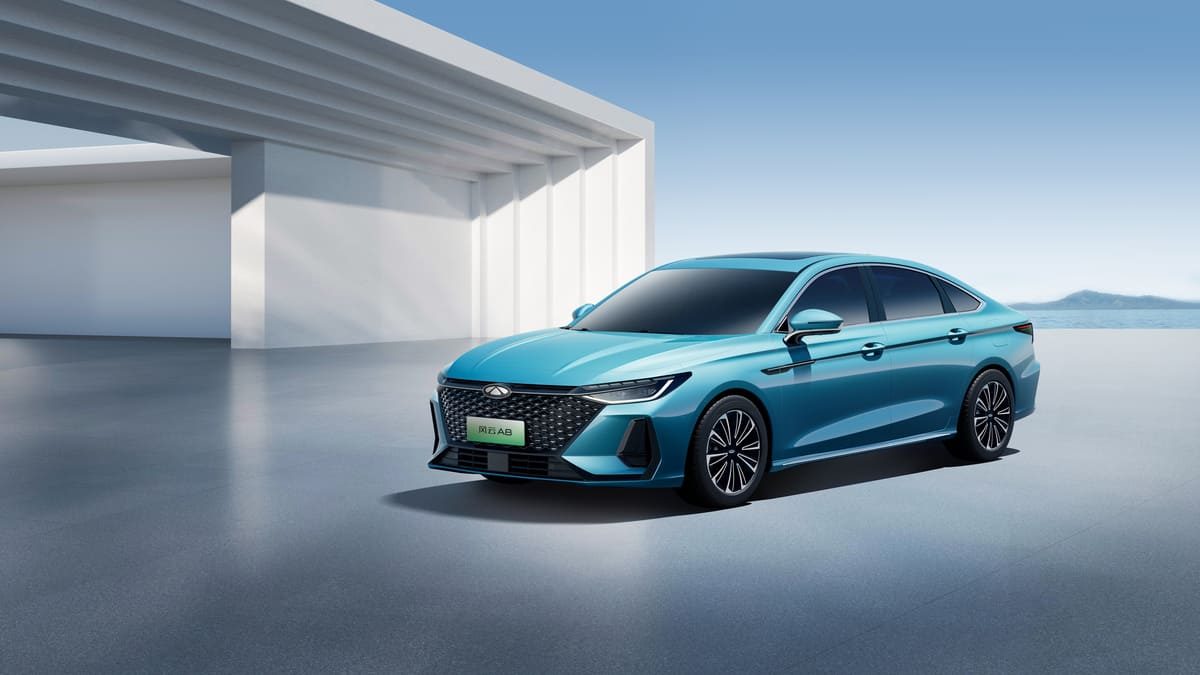
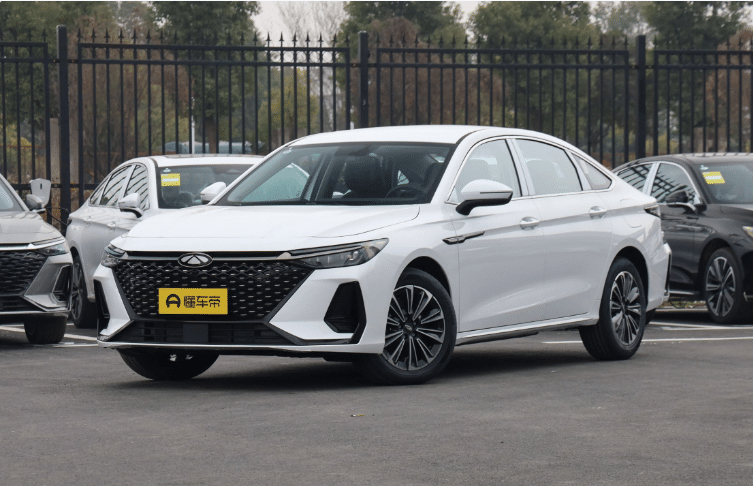
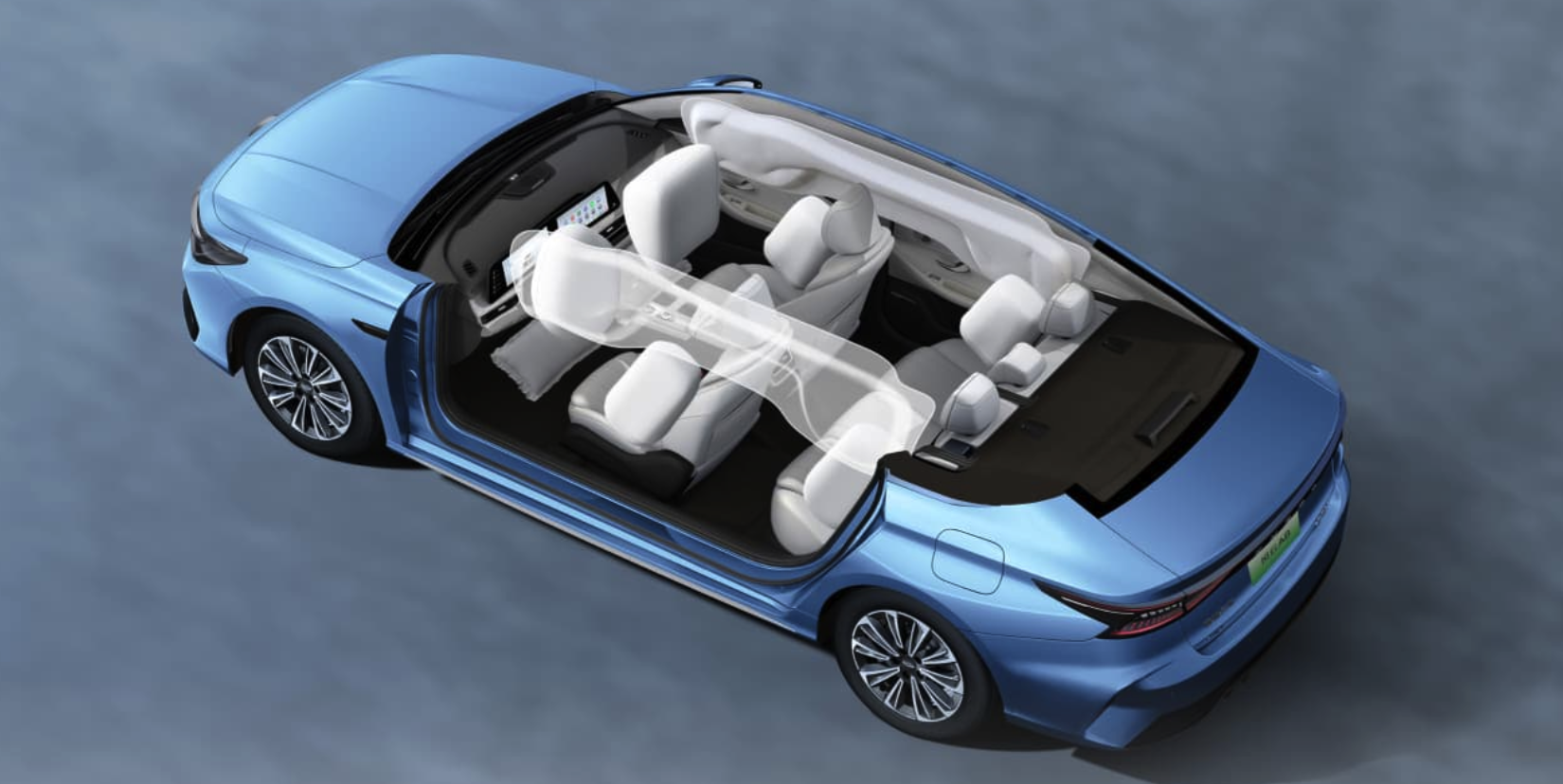
Chery secara rasmi telah melancarkan sedan plug-in hibrid Fengyun A8 di China. Dijual pada harga antara 119,900 hingga 149,900 yuan (kira-kira RM78 ribu hingga RM97 ribu), Fengyun A8 adalah sebahagian daripada siri kenderaan tenaga baru Chery. Diposisikan sebagai sedan kompak, ia menawarkan empat pilihan model kepada pengguna.
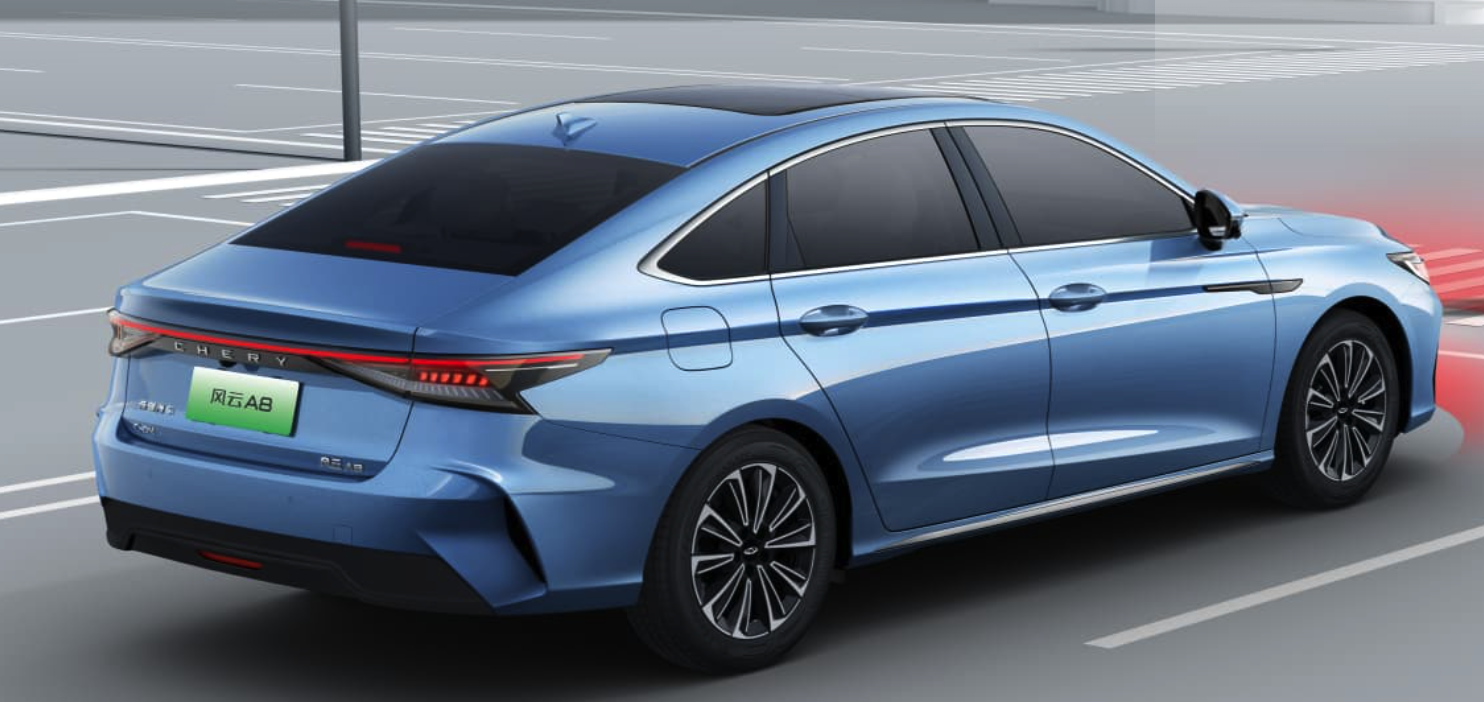
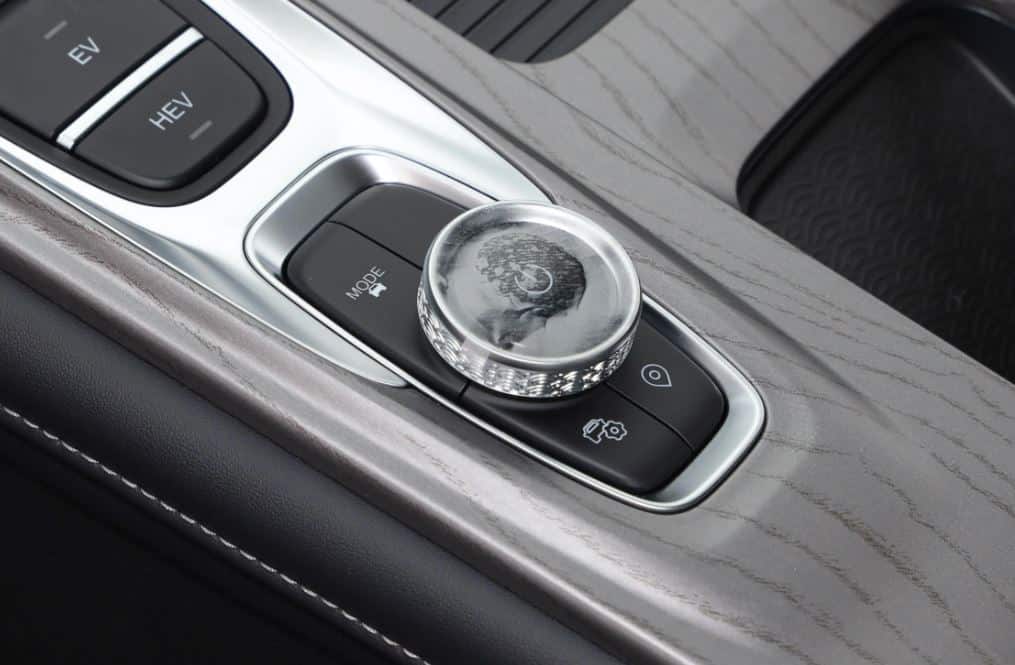
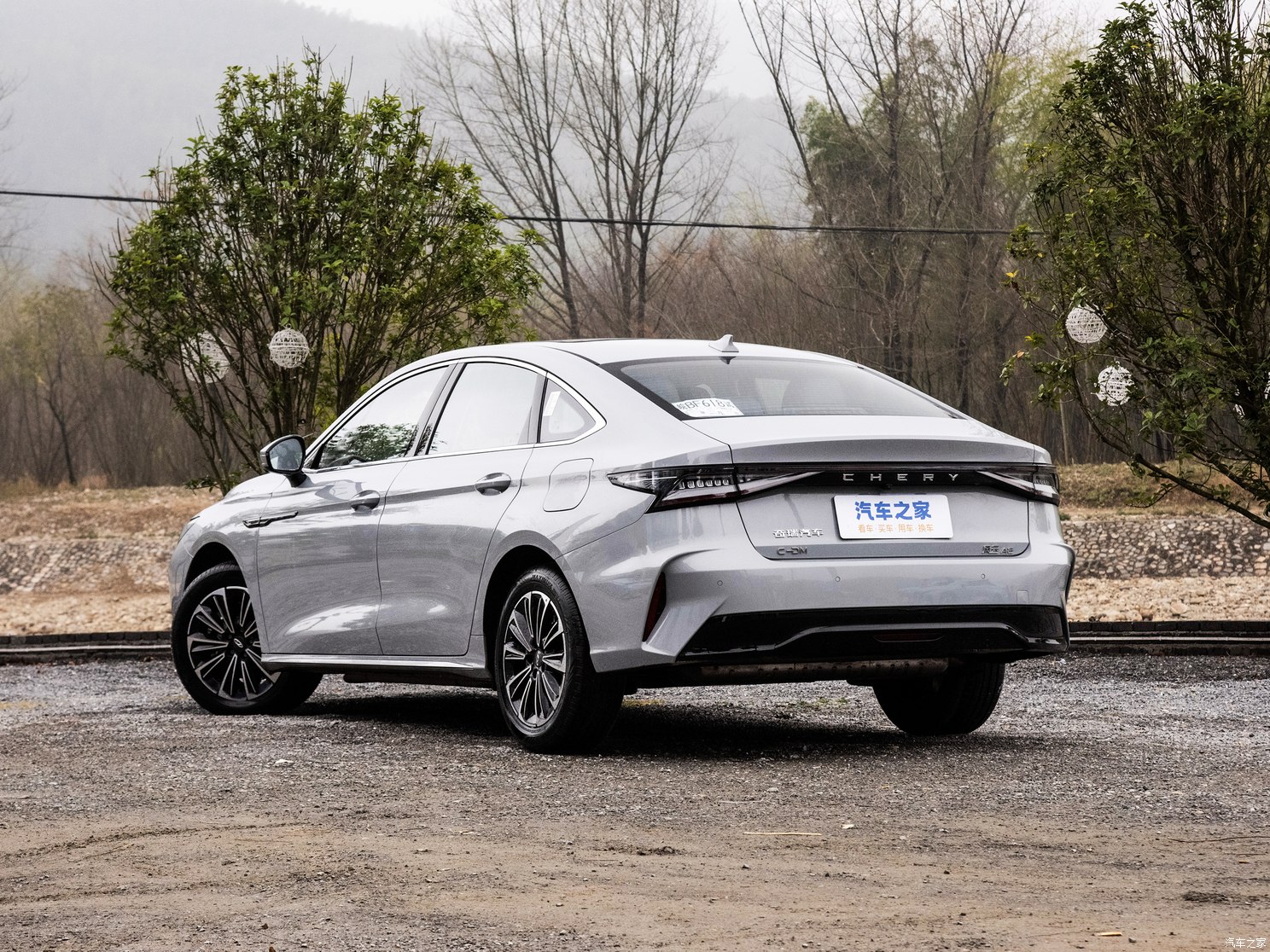
Ciri-ciri utama Chery Fengyun A8 termasuk gril trapezoid besar yang bersambung dengan lampu hadapan di bahagian depan dan rekabentuk lampu belakang terangkat di atas bonet pada bahagian belakang yang menyerupai Audi A8. Interior mempunyai papan instrumen 12.3 inci, skrin kawalan pusat 12.3 inci, dan stereng four-spoke flat-bottom. Kabin dikuasakan oleh sistem pengendalian Lion 5.0 milik Chery, dan varian tinggi dilengkapi dengan cip Qualcomm Snapdragon 8155.
Chery Fengyun A8 dikuasakan oleh sistem hibrid elektrik pengecasan tinggi Kunpeng Super Performance C-DM milik Chery. Ia terdiri daripada enjin hibrid ACTECO 1.5TGDI generasi kelima dan motor sinkronan kekal. Output kuasa keseluruhan adalah 355hp dan tork 530Nm, dengan masa pecutan dari 0 hingga 100km/j dalam 7 saat.
Pek bateri lithium 18.3 kWh kenderaan ini memberikan jarak memandu elektrik sejauh 127km (CLTC) dan jarak jumlah lebih dari 1,400km (WLTC). Kebolehan pengecasan pantas membolehkan bateri dicas sepenuhnya dari 30% hingga 80% dalam 19 minit, manakala pengecasan perlahan mengambil sekurang-kurangnya tiga jam.
Barisan ini dilengkapi dengan navigasi, OTA, Bluetooth, kawalan jauh melalui aplikasi, dan fungsi karaoke. Sistem bantuan pemanduan canggih, hanya tersedia dalam varian tinggi, termasuk ciri-ciri seperti amaran perlanggaran hadapan dan belakang, brek kecemasan automatik, kawalan memandu adaptif full-speed penuh, dan bantuan gabungan lorong.
Chery has officially launched its Fengyun A8 plug-in hybrid sedan in China. Priced between 119,900 to 149,900 yuan (approximately RM78k to RM97k), the Fengyun A8 is part of Chery’s new energy vehicle series. Positioned as a compact sedan, it offers consumers four model options.
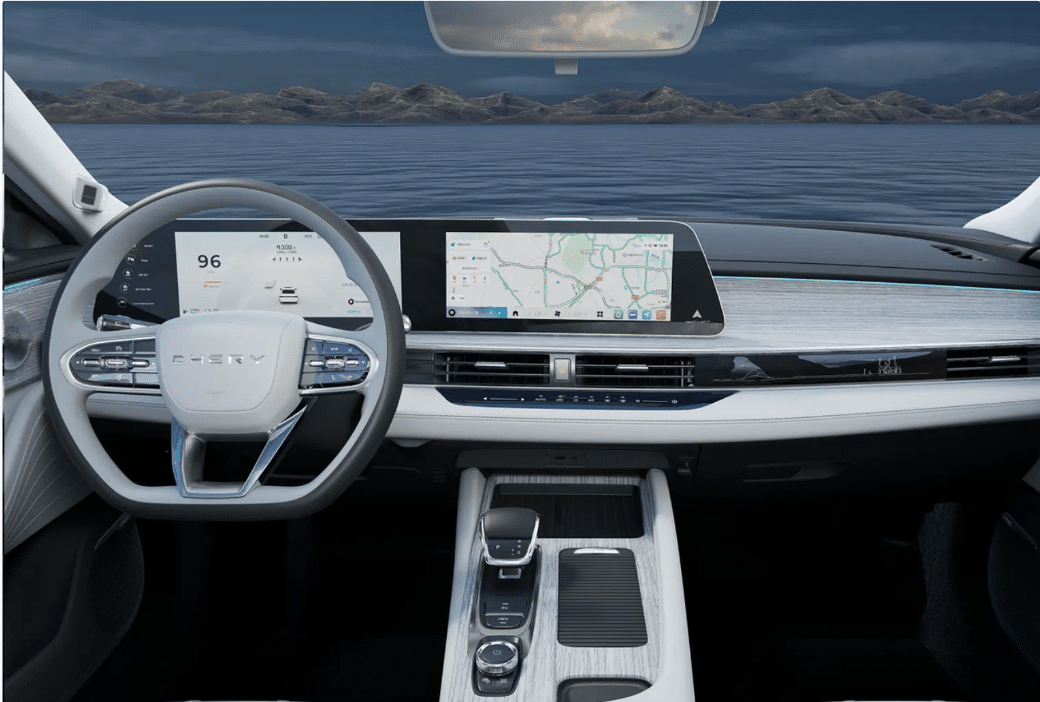
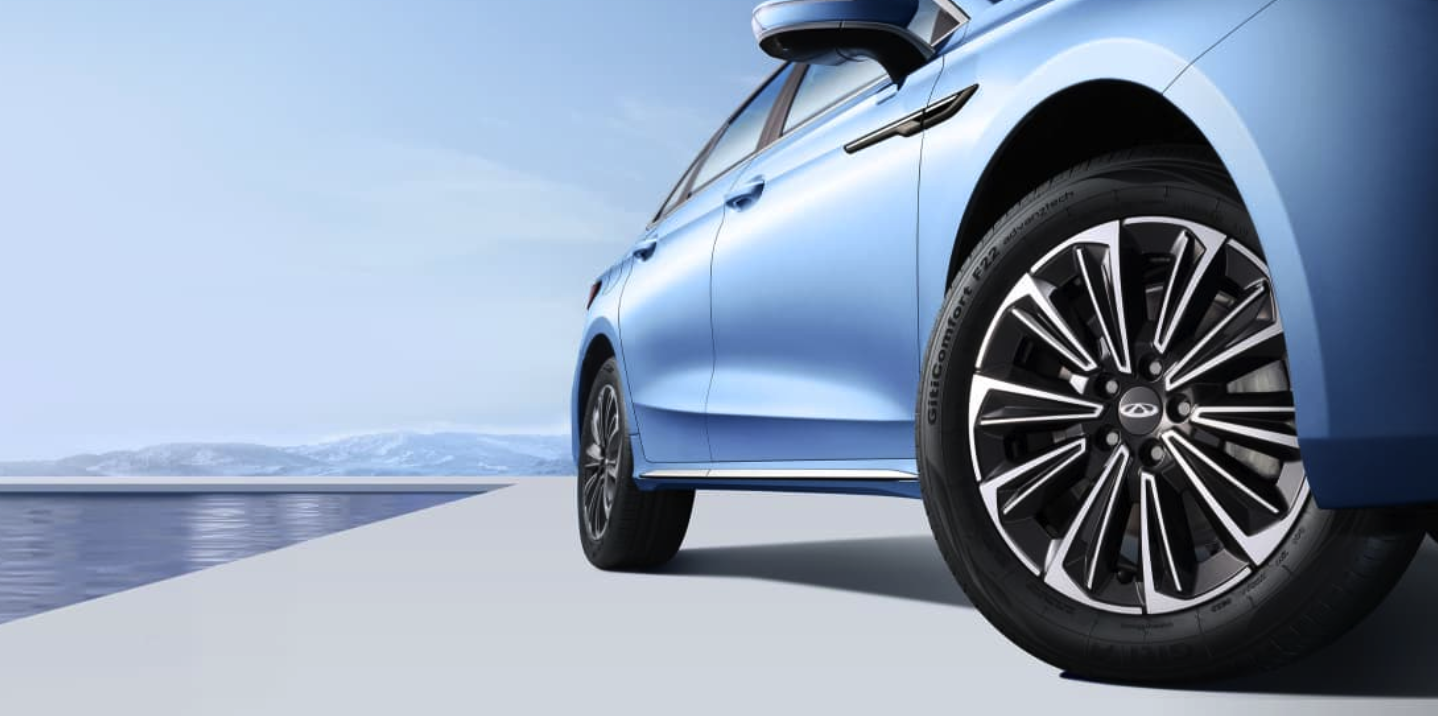
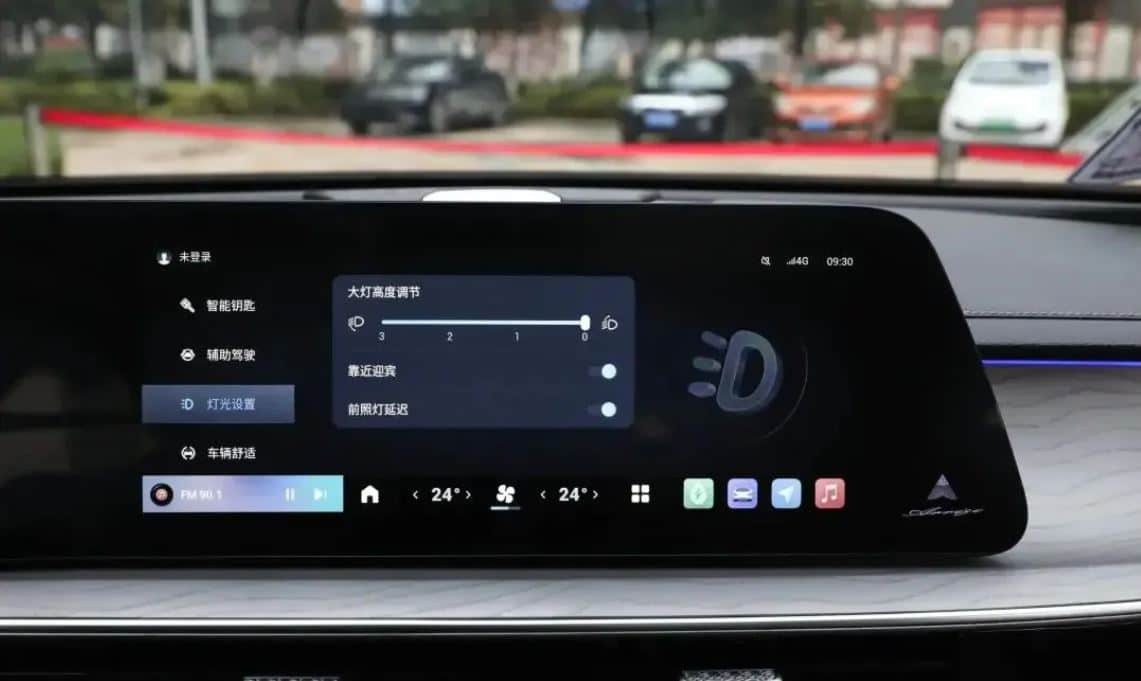
Key features of the Chery Fengyun A8 include a large trapezoidal grille connected to the headlights in the front and an upturned tail design above the trunk at the rear that has a resemblance to the Audi A8. The interior boasts a 12.3-inch instrument panel, a 12.3-inch central control screen, and a four-spoke flat-bottom steering wheel. The cockpit is powered by Chery’s Lion 5.0 operating system, with high-end models equipped with the Qualcomm Snapdragon 8155 chip.
Powering the Chery Fengyun A8 is Chery’s Kunpeng Super Performance Electric Hybrid C-DM system, comprising a fifth-generation ACTECO 1.5TGDI hybrid engine and a permanent magnet synchronous motor. The total power output is 355hp and 530Nm of torque, with an acceleration time from 0 to 100km/h in 7 seconds.
The car’s 18.3 kWh lithium battery pack provides a pure electric cruising range of 127km (CLTC) and a total range of over 1,400km (WLTC). The fast-charging capability allows the battery to be fully charged from 30% to 80% in 19 minutes, while slow charging takes at least three hours.
The lineup comes standard with navigation, OTA updates, Bluetooth, remote control through the app, and karaoke functions. Both CarPlay and HiCar are supported. The advanced driving assistance system, available only in high-end models, includes features such as front and rear collision warning, automatic emergency braking, full-speed range adaptive cruise control, and lane merge assist.
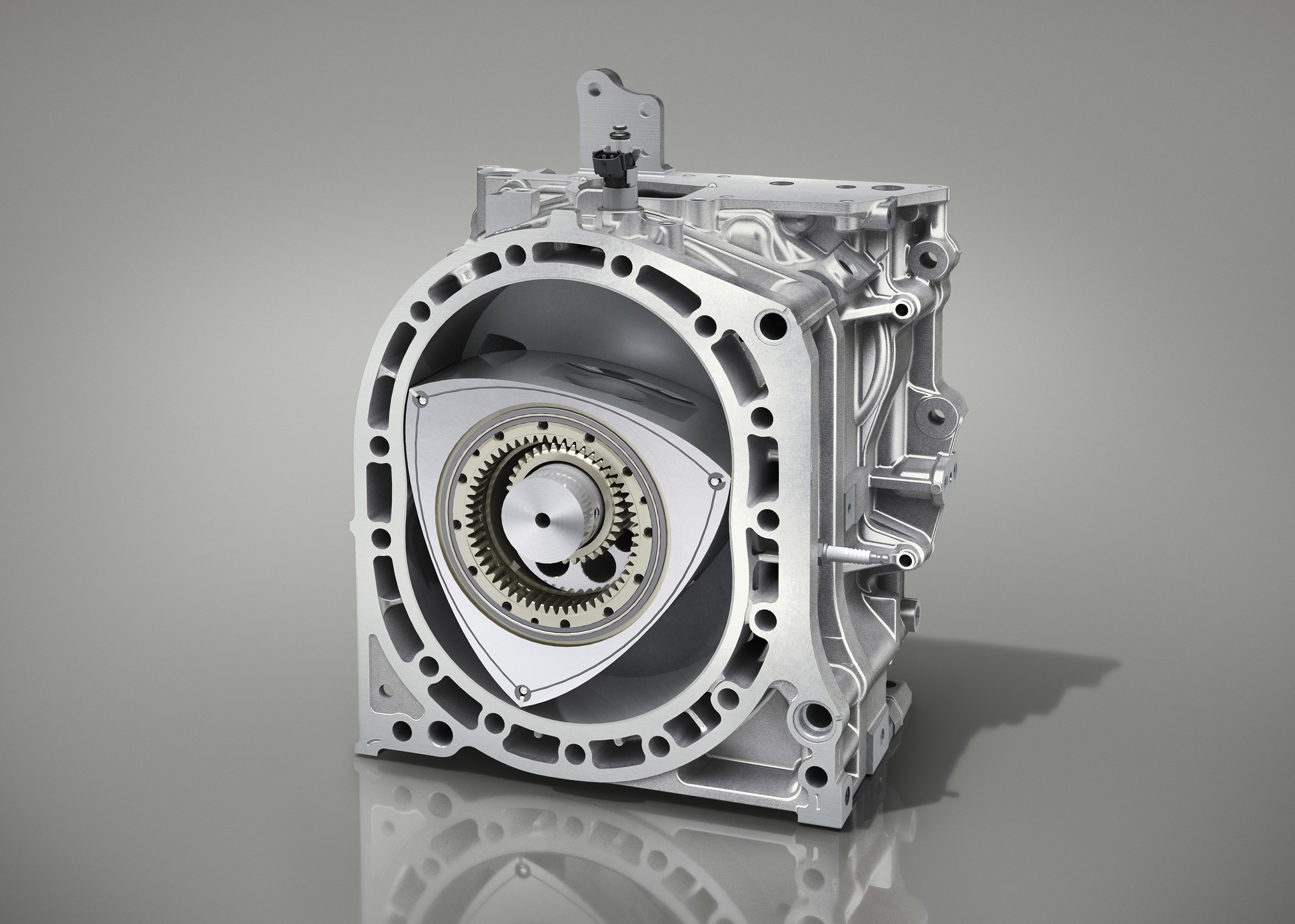
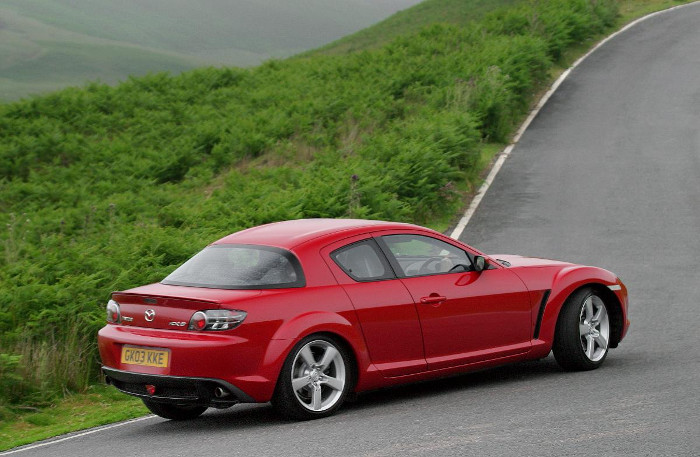
In 1967, Mazda became the first carmaker to mass-produce rotary engines. These lightweight yet powerful engines aided the firm, which was producing 300,000 automobiles per year at the time, in gaining admirers all over the world.
The Mazda RX-8 was the last model that featured a 13B rotary engine, and manufacturing ended in 2012. However, for the first time in 11 years, the legendary rotary engine has found fresh life as a generator for a new plug-in hybrid car.
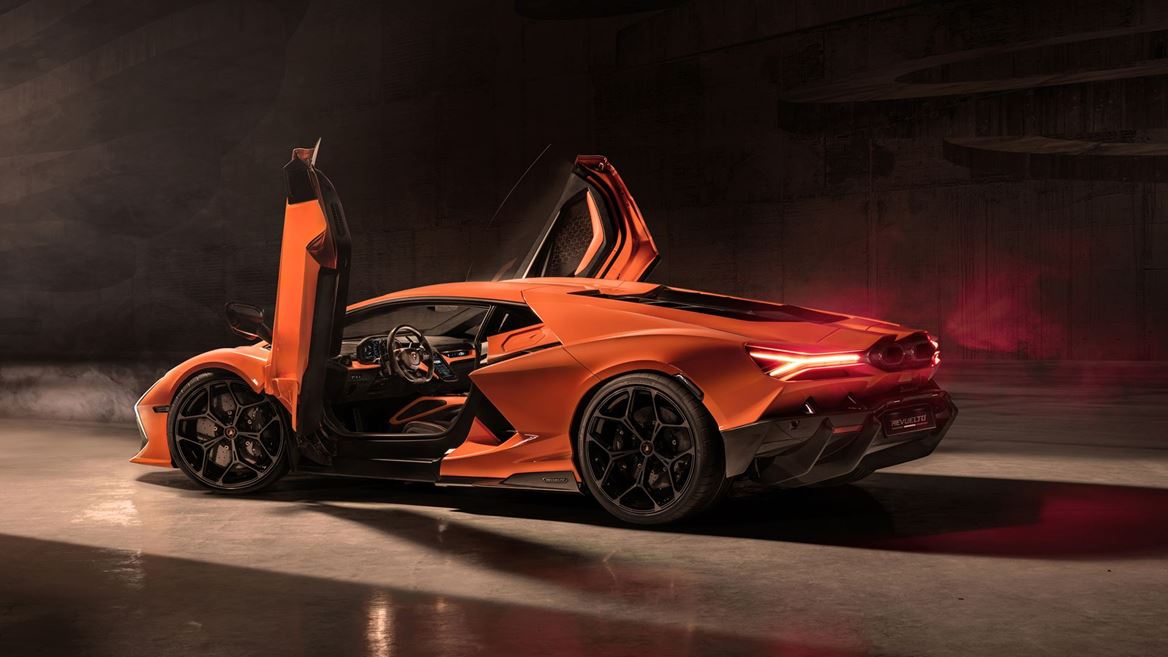
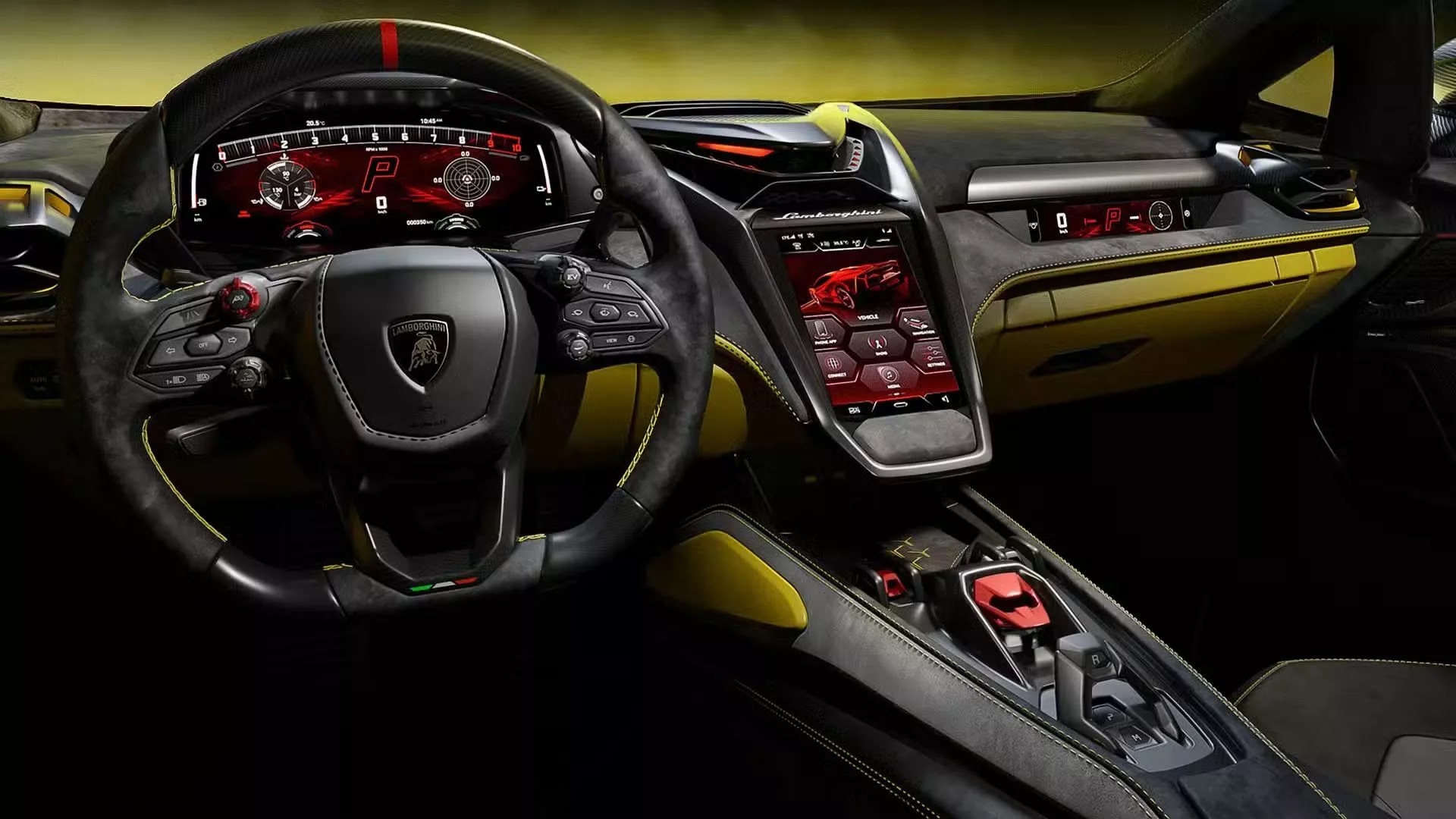
Lamborghini has apparently combined thunder and lightning for its first HPEV (High-Performance Electrified Vehicle) hybrid super sports car, the Revuelto.
The word “Revuelto”, translated to English means “scrambled” or “mixed-up” and was actually a fighting bull, a celebrity in the arenas of Barcelona in the 1880s.
The Wankel rotary engine was first used in a car in 1964 and it seemed like a revolutionary concept that many carmakers licensed it to use for their models. However, virtually all found it to have issues which they didn’t want to waste time and money trying to address and gave up. Only Mazda worked hard to commercialize the rotary engine and succeeded in doing so from 1967.
Unfortunately, some of the characteristics of the rotary engine – high emissions and consumption – were unacceptable as the world grew more environment conscious. By 2012, Mazda had no choice but to stop using the rotary engine and it seemed that it was gone forever. From time to time, there would be rumours of its return and Mazda insiders would say ‘we are working on it but still need time…’. The last time the rumour was strong was with the Vision Study Coupe concept.
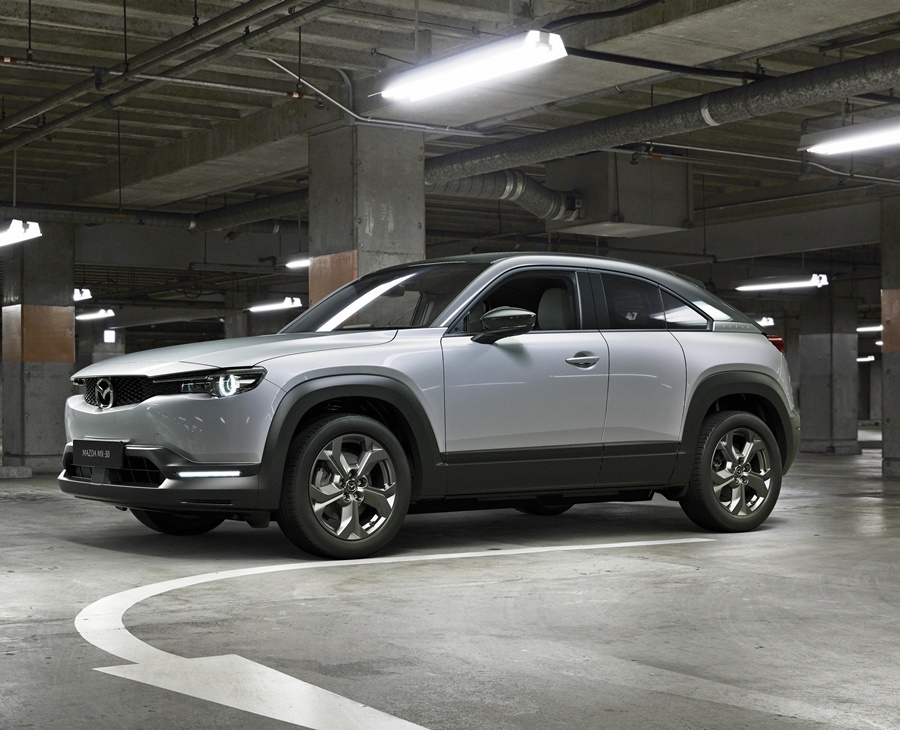
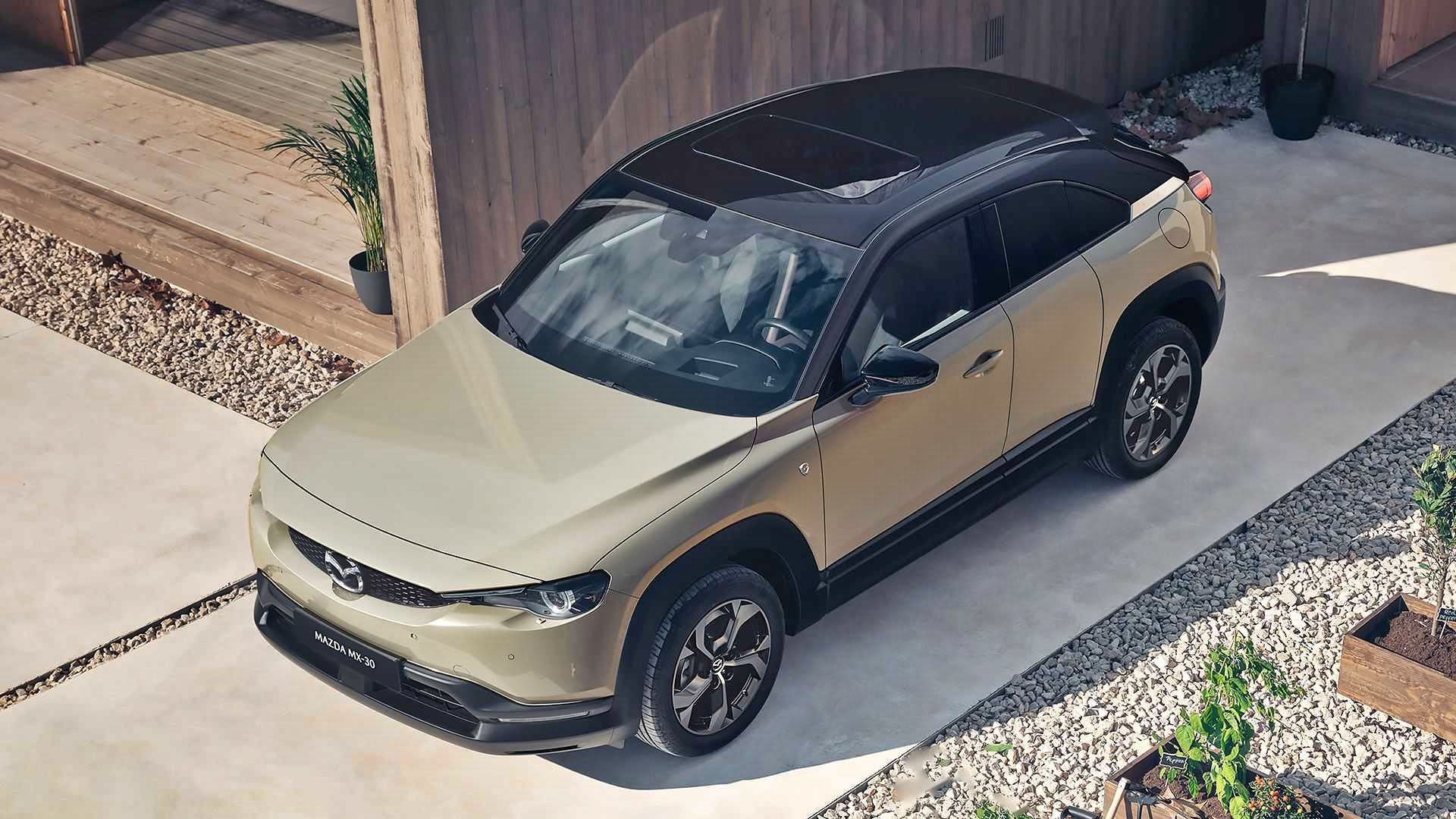
Today, the rotary engine returns but not in the way enthusiasts would expect it. It is not used as a primary propulsion system but is instead adapted for use more as a power generator in the plug-in hybrid (PHEV) powertrain of the new MX-30 e-Skyactiv R-EV model.
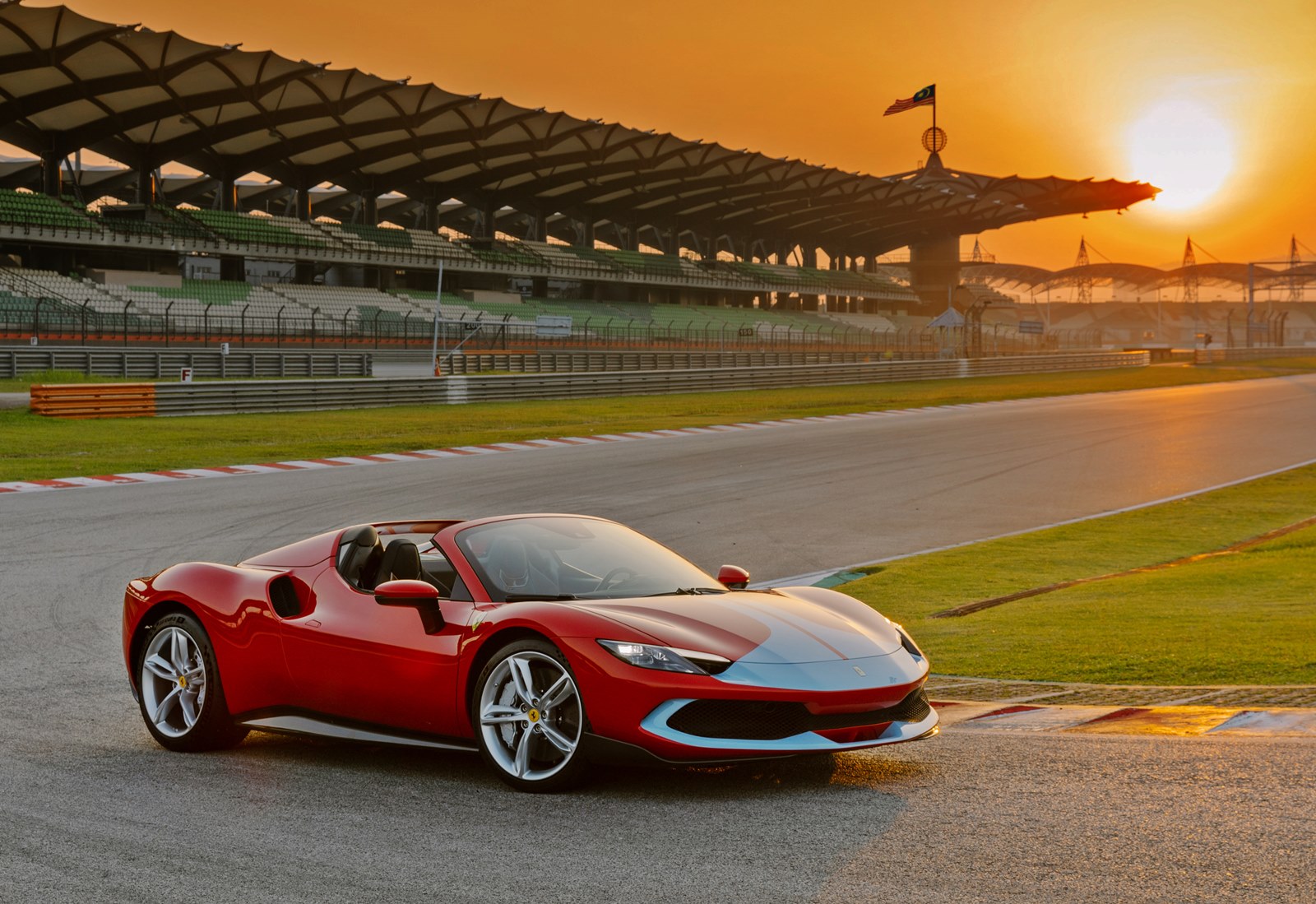
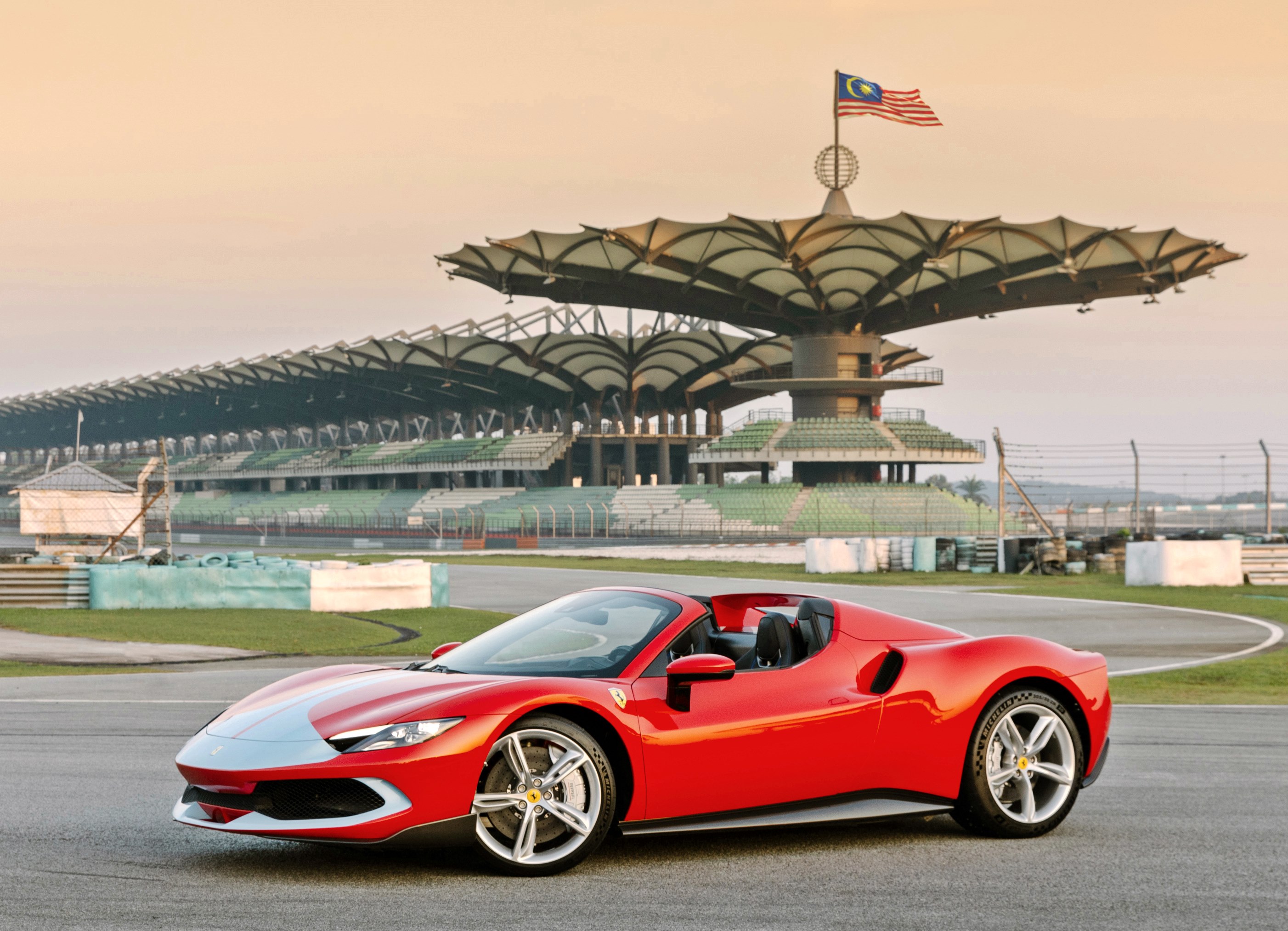
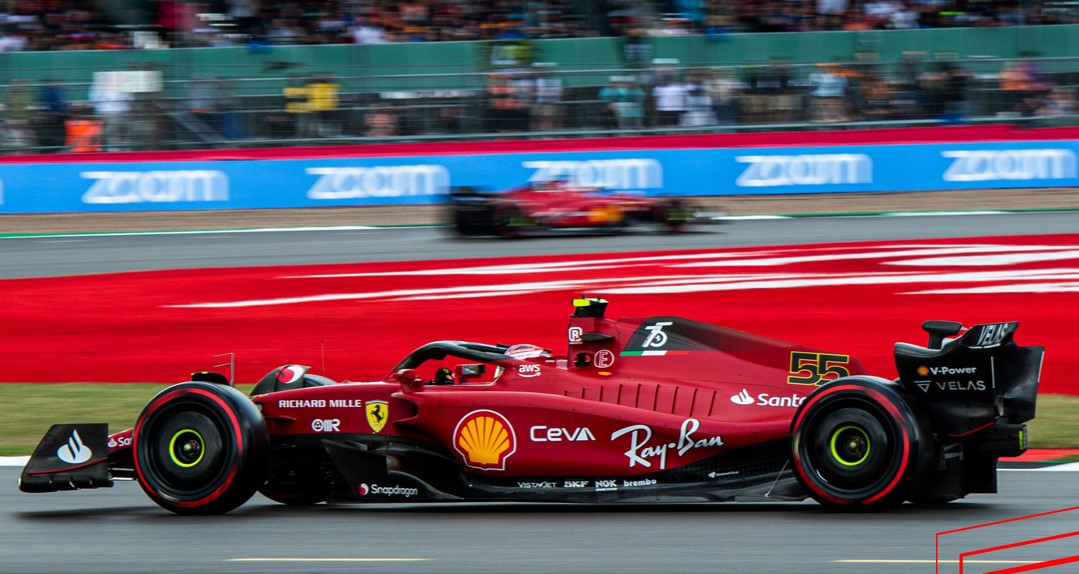
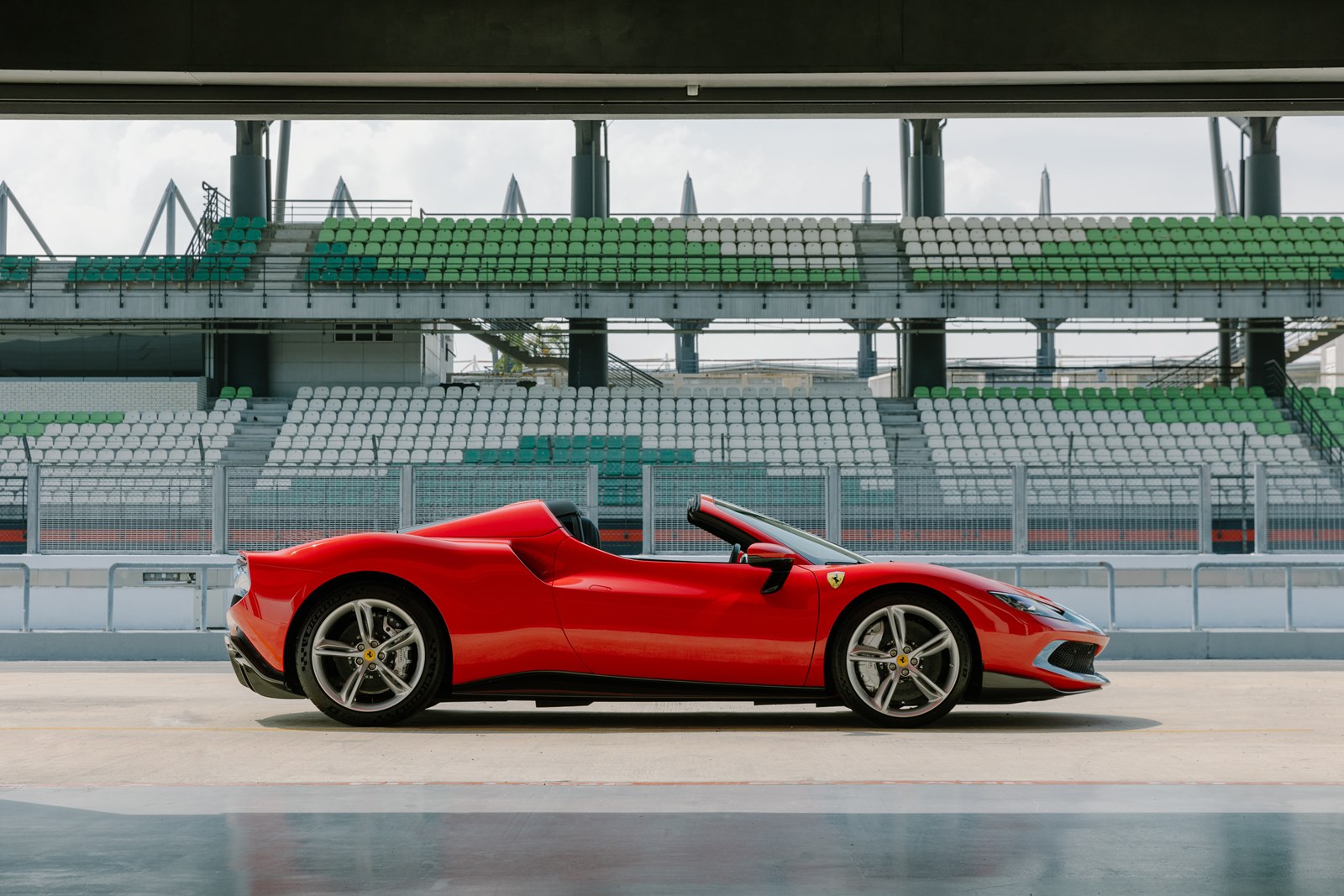
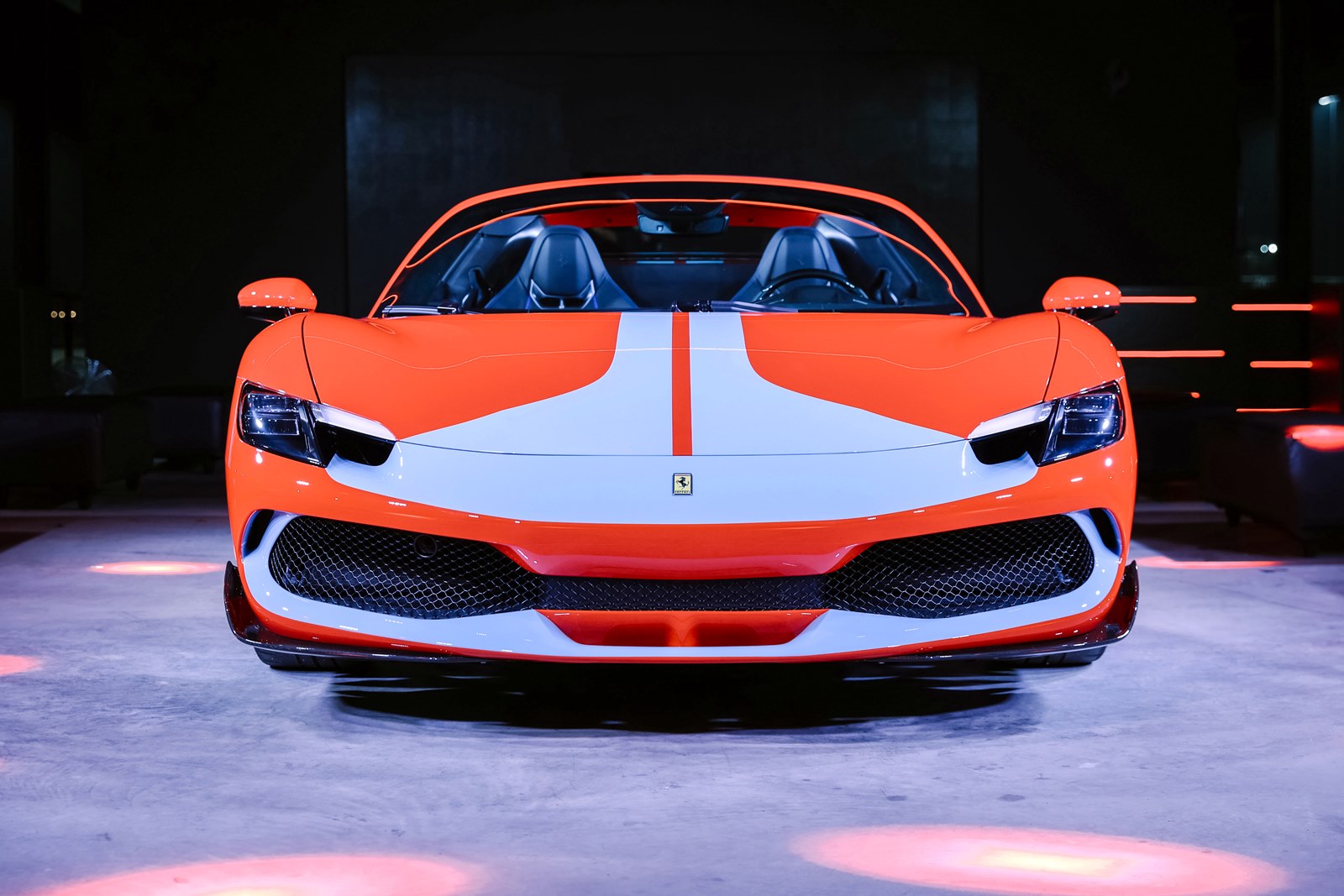
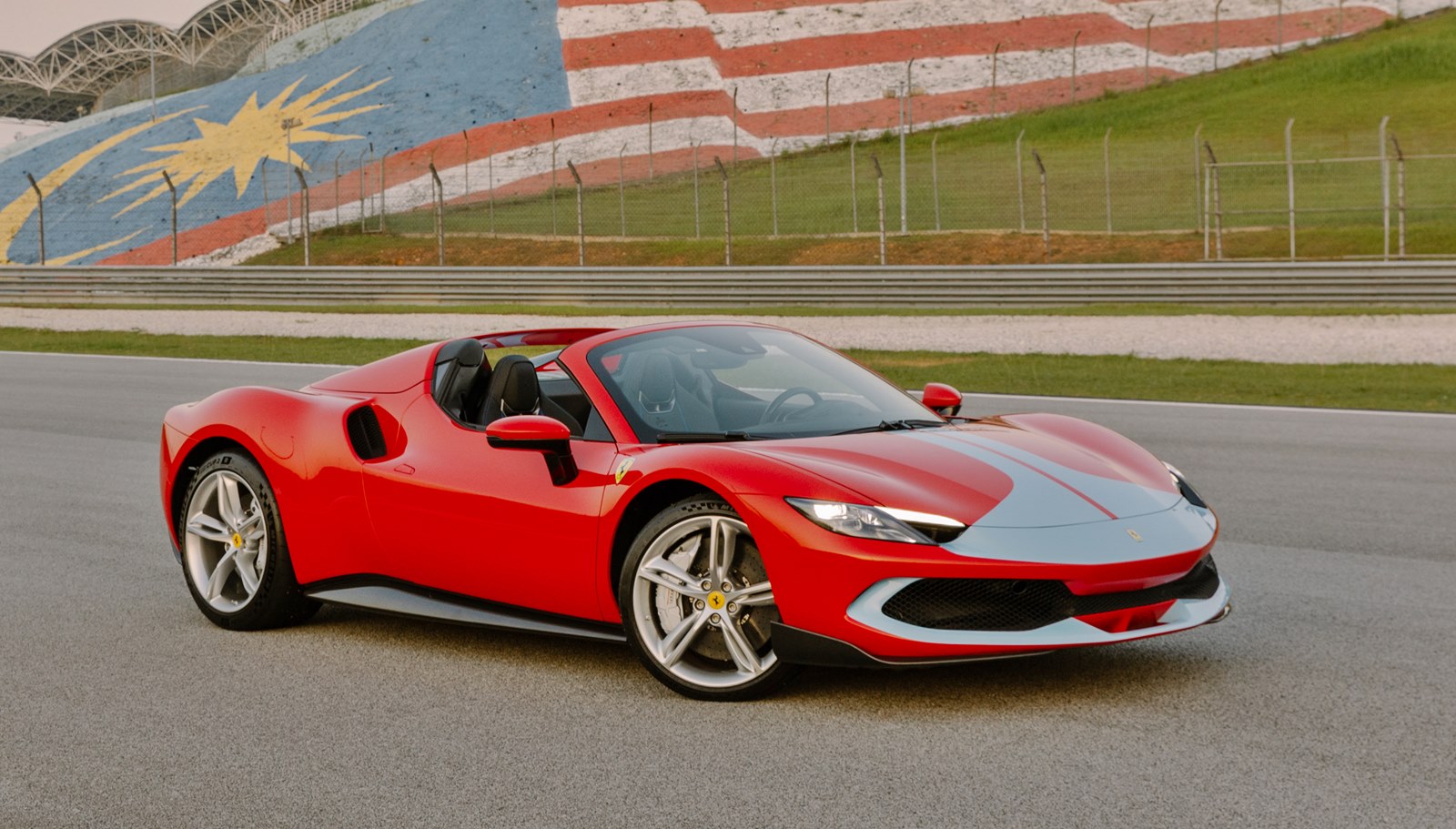
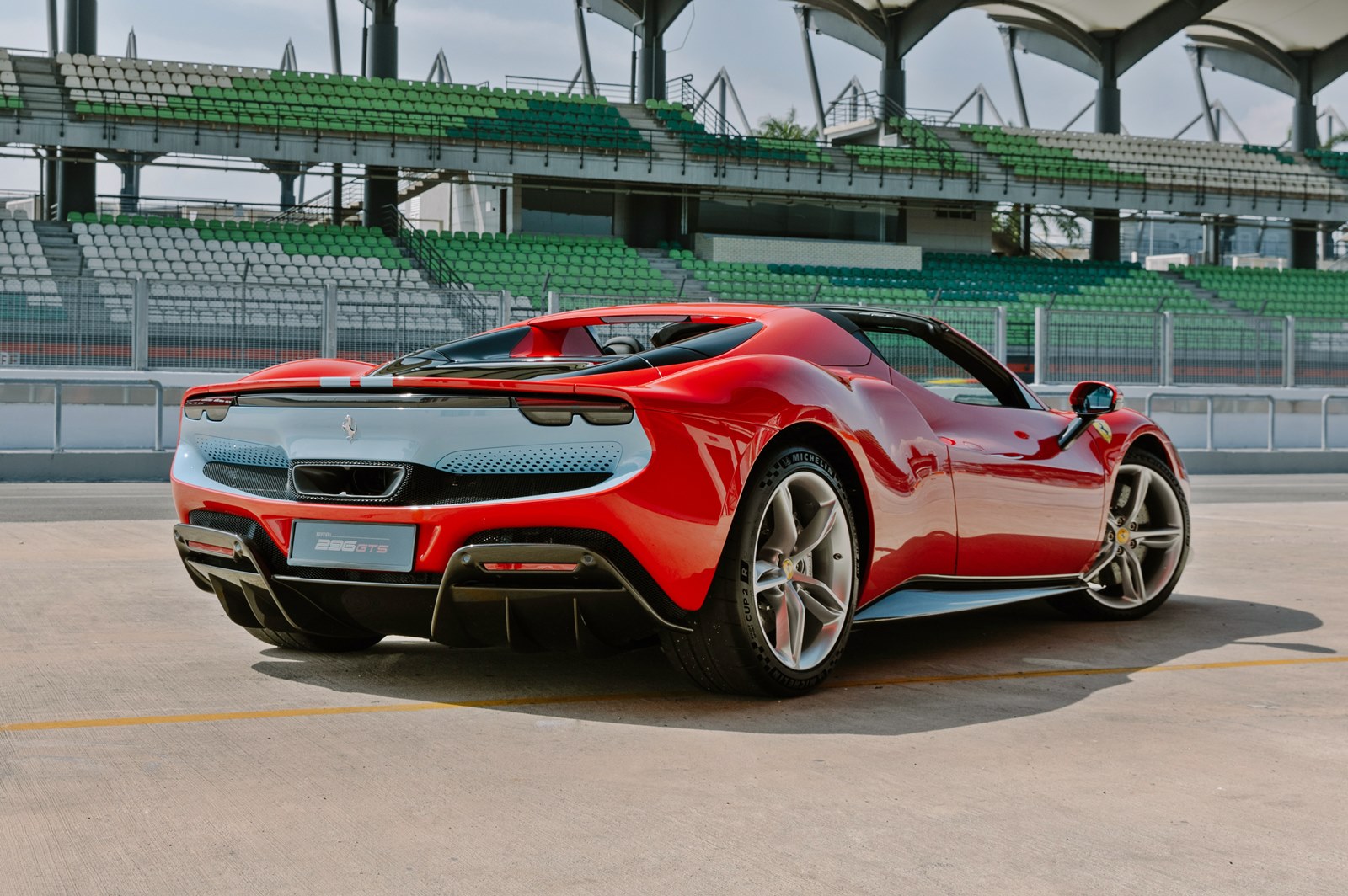
Just a few months after its global debut, the Ferrari 296 GTS – the ‘topless’ version of the 296 GTB – is in Malaysia, with its Southeast Asian premiere held at the Sepang International Circuit recently. Apart from the allure of being a berlinetta spider, this is the first ever Ferrari spider with a rear-wheel drive-only PHEV (plug-in hybrid electric vehicle) architecture in which the engine is integrated with a rear-mounted electric motor. The hybrid drivetrain is derived from Ferrari’s Formula 1 racing cars and another example of racing technology being transferred to road cars.
Plug-in hybrid powertrain
The 296 GTS uses the new 663 ps 120° 2992 cc V6 coupled with an electric motor capable of delivering a further 167 ps, the same unit found in the 296 GTB. With the additional power generated by the electric motor, total system output from the powertrain is 830 ps/740 Nm, of which 165 ps comes from the electric motor. This allows it to achieve a new specific power output record for a production car of 221 ps/litre.
Hybrid powertrain technology used in Ferrari’s Formula 1 racing cars has been brought to the 296 road car.
The powertrain assembly comprises the engine that powers the rear wheels via the 8-speed DCT and E-Diff, and the MGU-K located between the engine and the gearbox. A clutch is set between the engine and the electric motor to decouple them when in electric-only eDrive mode.
Sound-wise, the V6 engine rewrites the rulebook by harmoniously combining two characteristics that are normally diametrically opposed: the force of the turbos and the harmony of the high-frequency notes of a naturally-aspirated V12. Even at low revs, inside the cabin, the soundtrack features the pure V12 orders of harmonics; at higher revs, there is that typical high-frequency treble. This Ferrari’s soundtrack matches its performance, creating a sense of unprecedented involvement even with the top down.
Power with efficiency
Being a PHEV gives the 296 GTS the best of both worlds – lighting quick performance and also zero emissions motoring which can be up to 25 kms in all-electric eDrive mode. As was the case with the SF90 Stradale, customers who want to take the car further, especially on the track, can specify the Assetto Fiorano package which includes lightweight features and aero modifications.
The innovative top
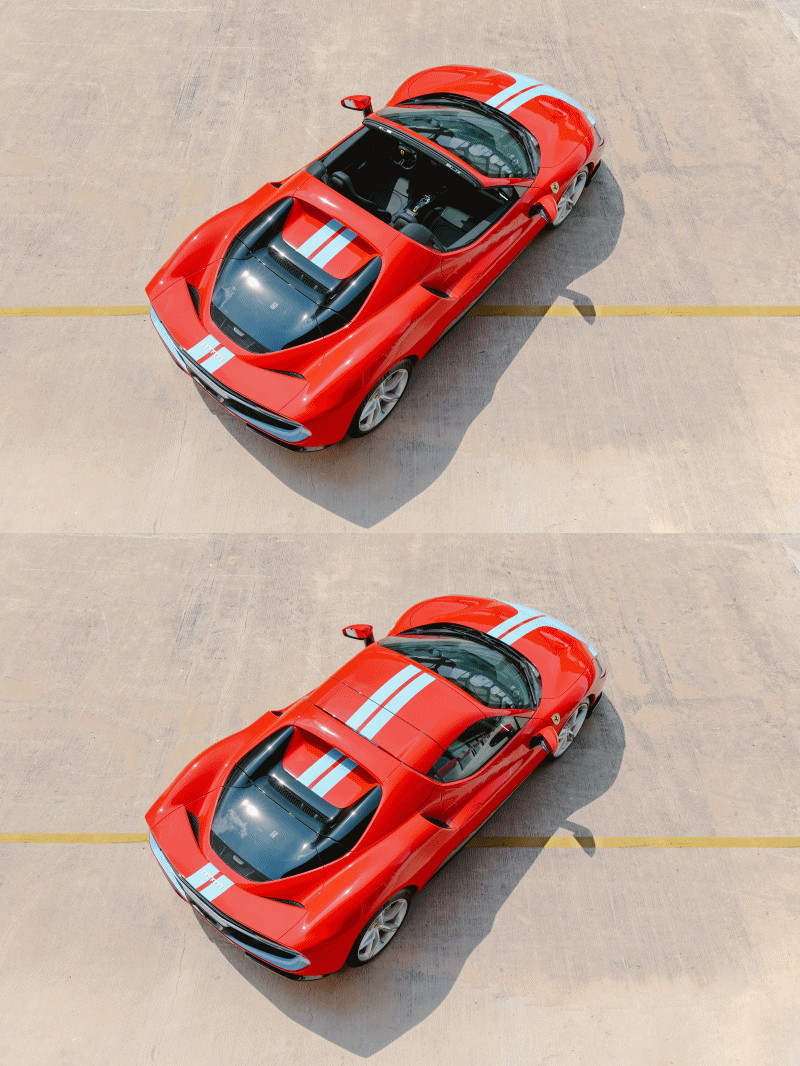
With the RHT (retractable hard top) in use, the silhouette remains very similar to that of the 296 GTB. When it is stowed away, a sleek, sporty design is created. The lightweight RHT takes 14 seconds to retract or deploy at speeds of up to 45 km/h.
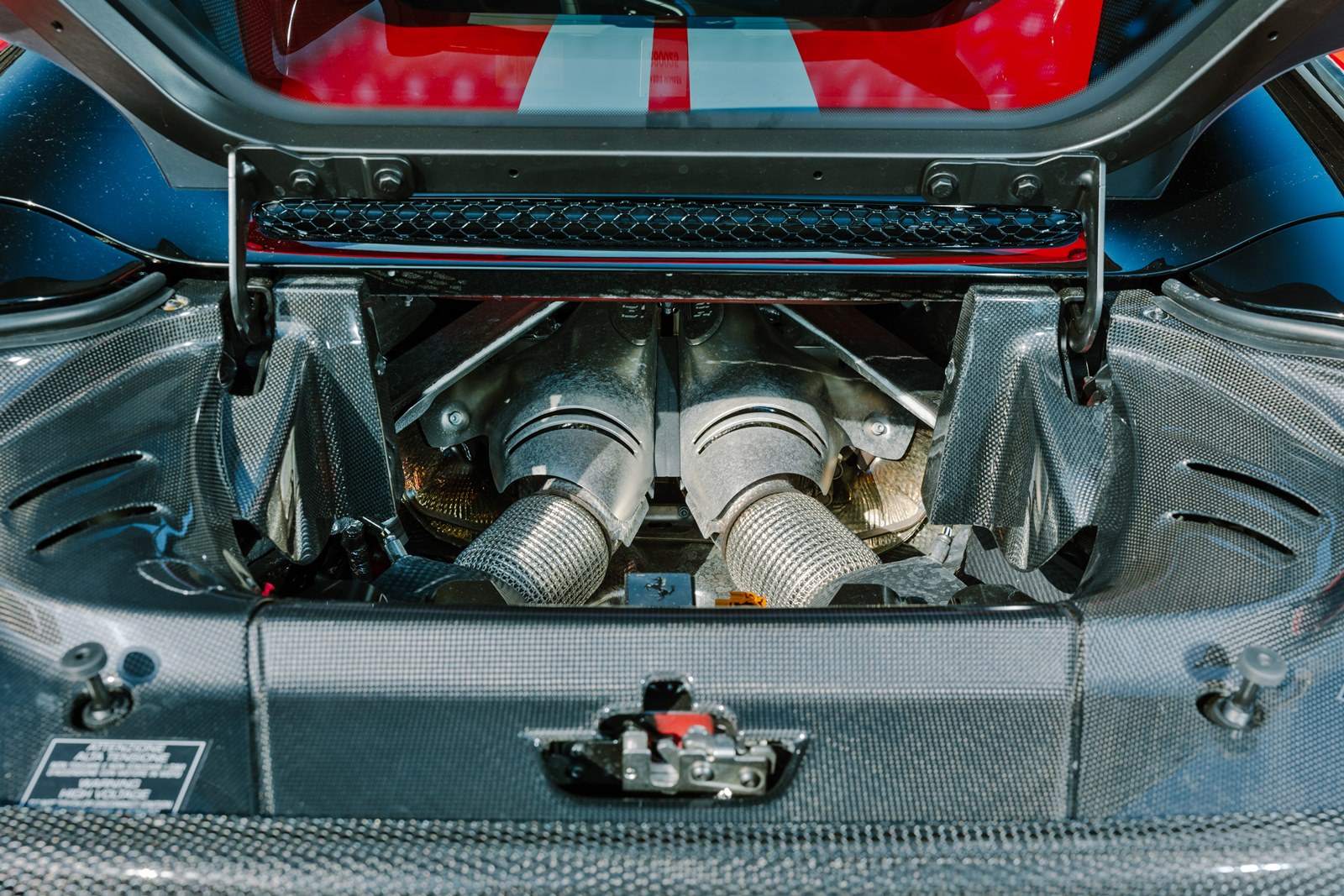
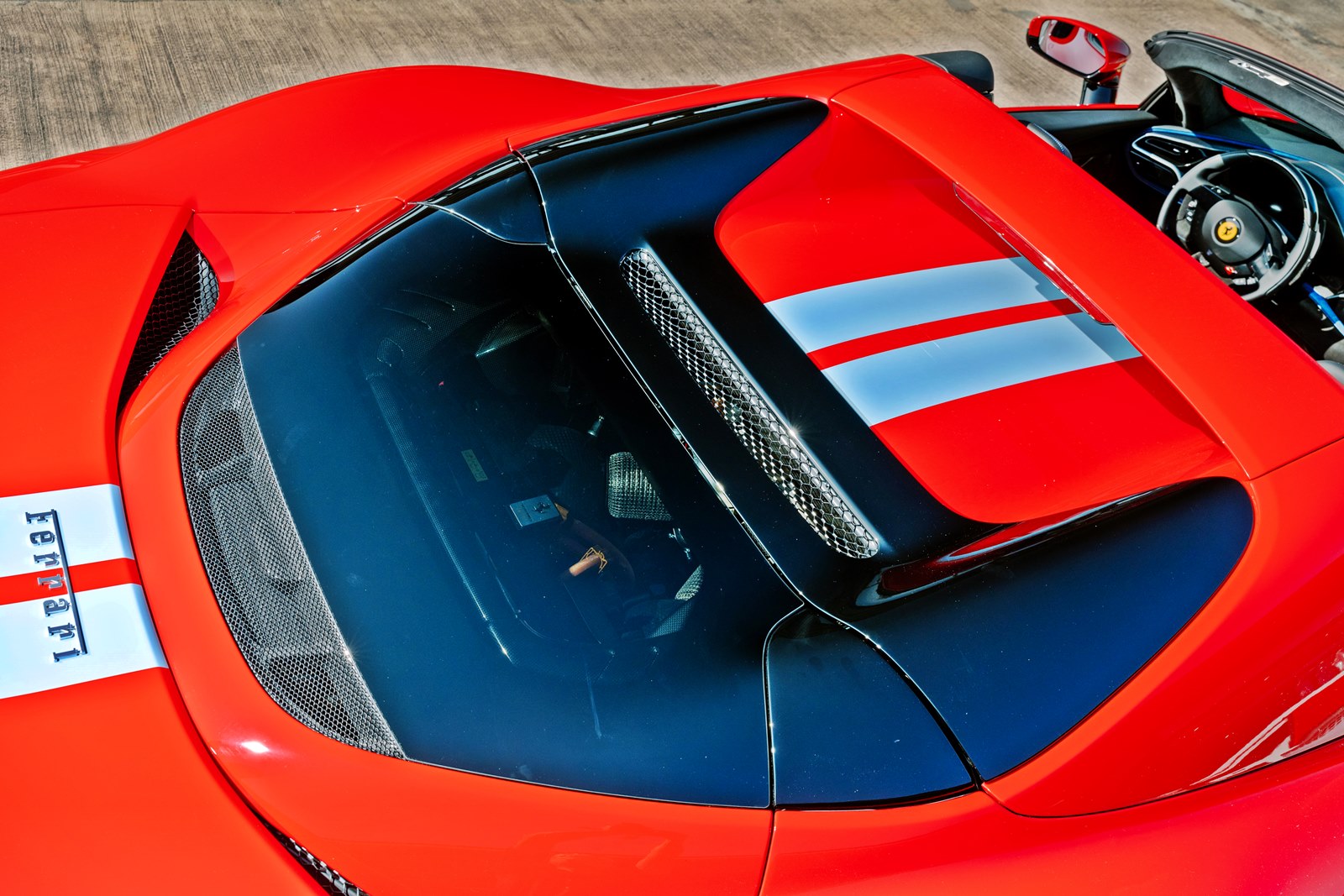
The need to stow the RHT inside the engine compartment required the creation of a new tonneau cover design. As a result, the folding roof splits into two sections that fold flush over the front of the engine, thus maintaining the engine bay’s thermal dissipation characteristics and the balance of the overall design. This also allowed the designers to introduce a window in the rear section of the engine cover through which the new V6 is clearly visible.
When the top is retracted, the cabin and the rear deck are separated by a height-adjustable glass rear screen which guarantees optimal passenger comfort even at high speeds. The separation line between the car’s body and the roof is above the B post.
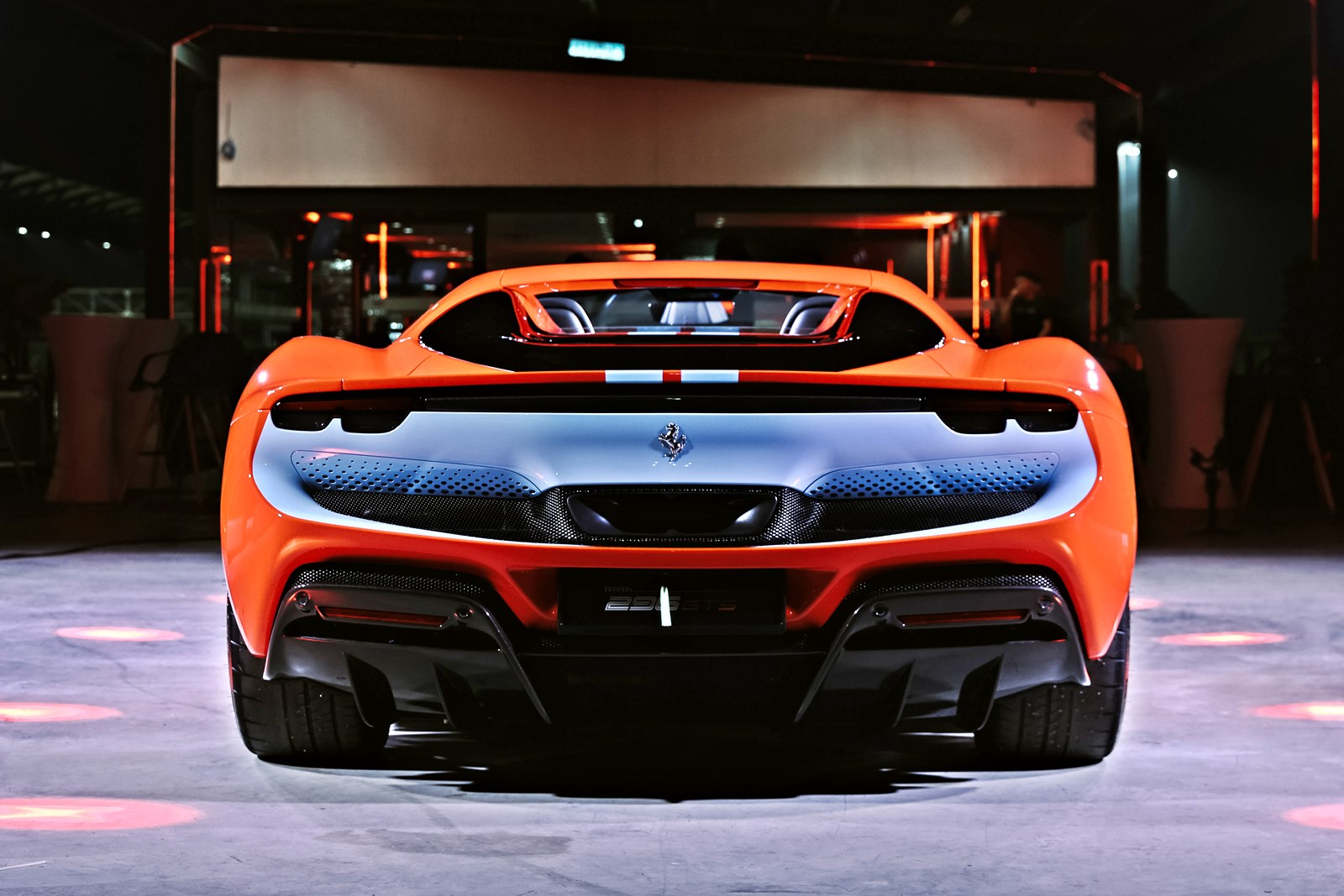
Redesigning the 296 GTS’s engine bay to seamlessly integrate the RHT means that the engine has the same rich tone and intensity as the 296 GTB when the roof is up. The exhaust resonator system (Hot-Tube) has been optimised for the new cockpit geometry. The dropping of the top creates a direct, completely unobstructed connection between the cockpit and the sound produced by the single tailpipe exhaust line.
Radical aerodynamic solutions
The 296 GTS adopts several radical and innovative solutions in aerodynamics. The aero choices have turned the active aero paradigm, introduced from the 458 Speciale onwards, on its head. On the 296 GTS, an active device is being used not to manage drag but to generate extra downforce. The LaFerrari-inspired active spoiler integrated into the rear bumper allows the 296 GTS to generate a high level of rear downforce when required – up to a maximum of 360 kgs at 250 km/h.
The aero development work done on the 296 GTS means that even in low-drag configuration, the car can deliver more downforce than previous applications. In high-downforce configuration, there is an additional 100 kgs in downforce, thanks to the active spoiler.
The brake cooling system was developed around the Aero calipers that debuted on the SF90 Stradale, with ventilation ducts integrated into their castings. This cooling concept requires a dedicated duct to correctly channel cool air coming in through the air intakes on the front bumper through the wheelarch. In the case of the 296 GTS, the intake has been integrated into the headlight design.
This made it possible to push the design of the car’s underbody to new extremes, increasing the cooling capacity of the underbody without having to adopt any active front aero mechanisms. The signature aerodynamic element at the front of the 296 GTS is the ‘tea-tray’, a concept widely applied to single-seater racing cars. The rear surface of the bumper works in synergy with the upper surface of the tea tray to create a high overpressure field, which counteracts the depression field that characterises the underbody.
High levels of driver engagement
The car’s dynamic development focused around boosting pure performance and delivering class-leading levels of driver engagement. The targets were achieved by honing the architecture and keeping all the main vehicle components as compact as possible, as well as managing energy flows and their integration with the car’s vehicle dynamic controls.
The 296 GTB’s chassis was redesigned and optimised to improve torsional rigidity and bending stiffness compared to previous spider applications. From a chassis perspective, at 2600mm, the wheelbase is 50 mm shorter than previous Ferrari mid-rear-engined berlinettas to the benefit of the car’s dynamic agility. Other solutions that enhance the car’s handling and performance include the brake-by-wire system, the ‘Aero’ brake callipers, electric power steering, the rear active aero device and SCM-Frs magnetorheological dampers.
Meticulous attention was paid to reducing weight to ensure the car’s balance and delicacy of handling. The added weight of the hybrid system was offset by a number of different solutions, including the new V6 which weighs 30 kgs less than the V8 unit used on previous berlinettas.
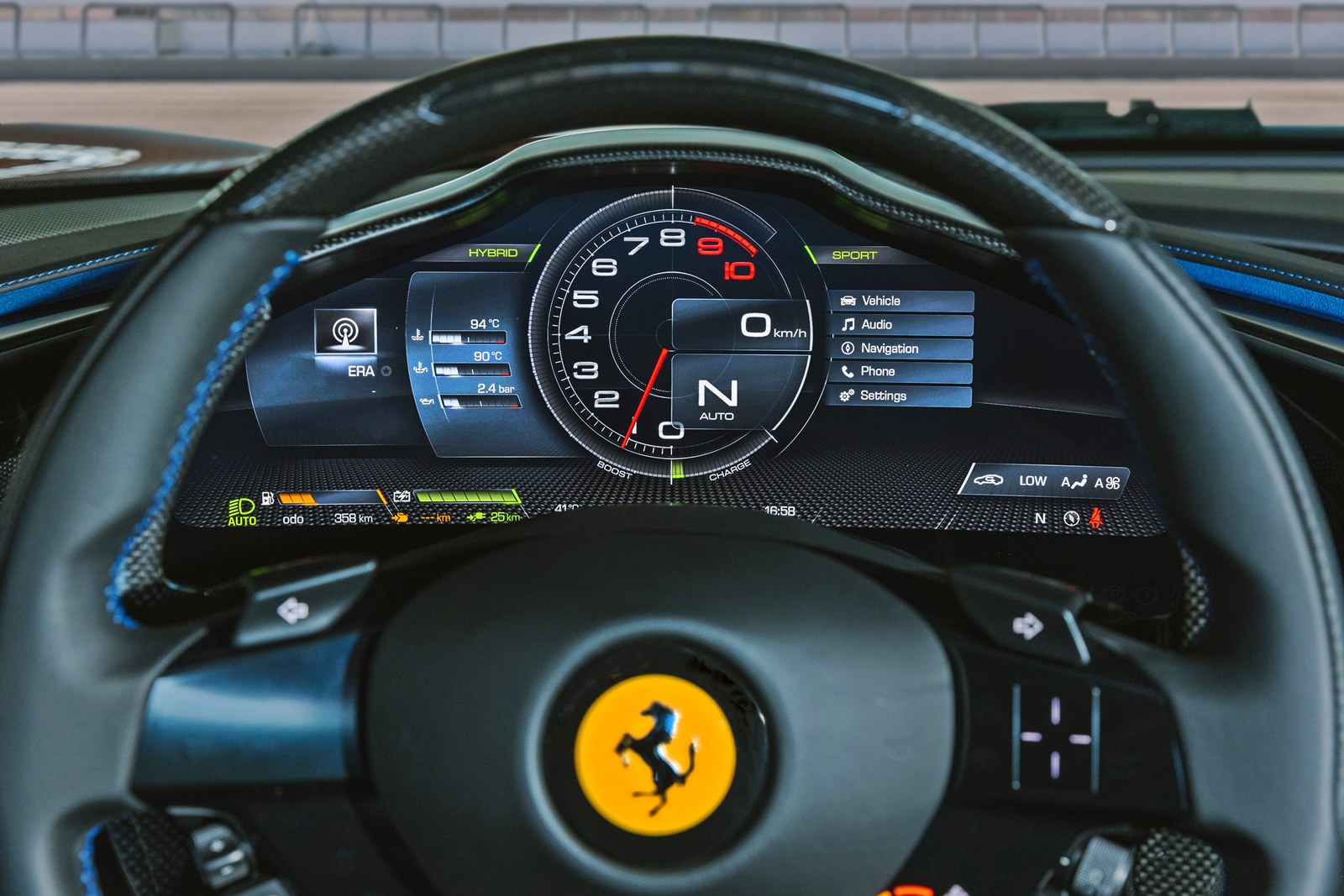
Digital interface for cockpit
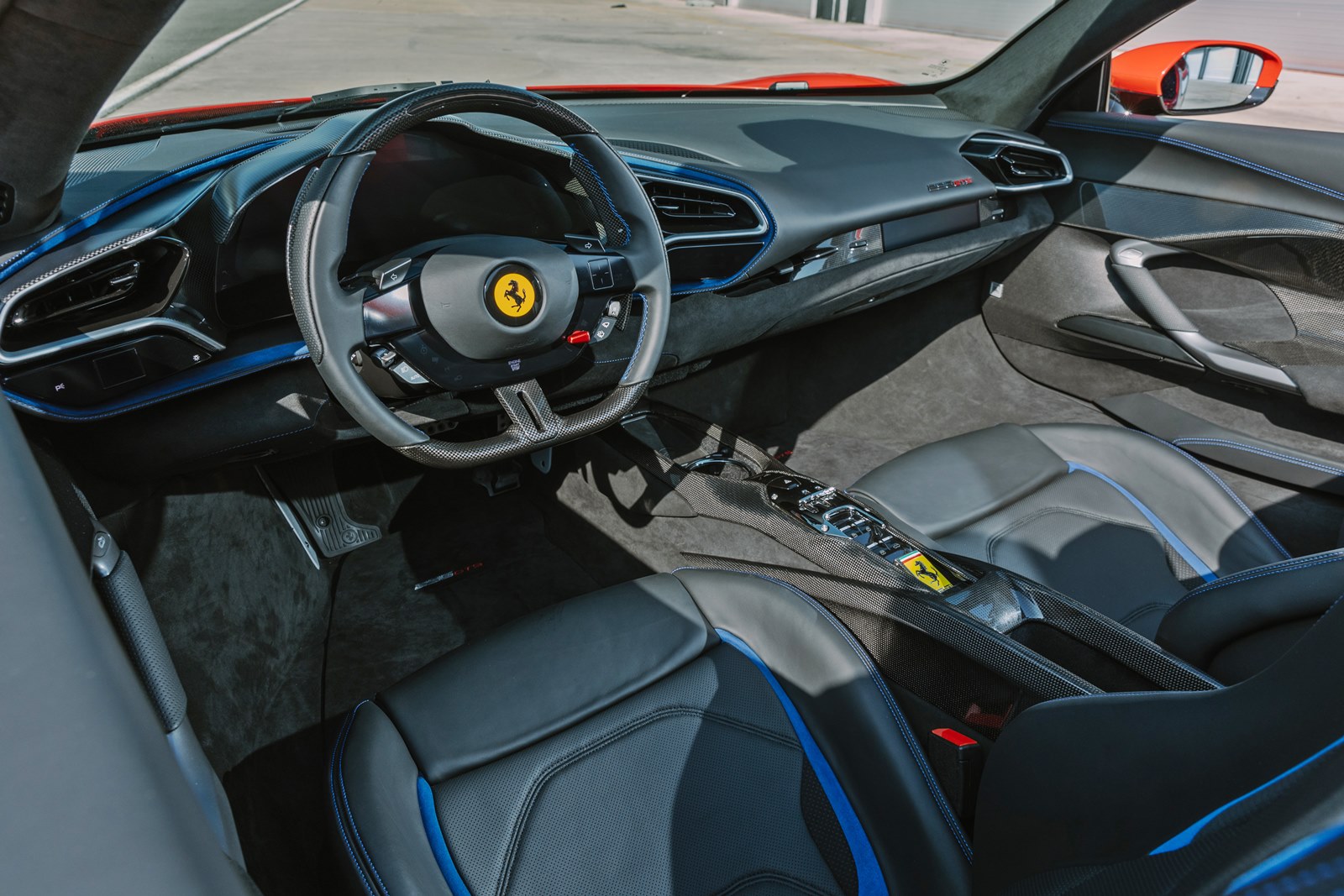
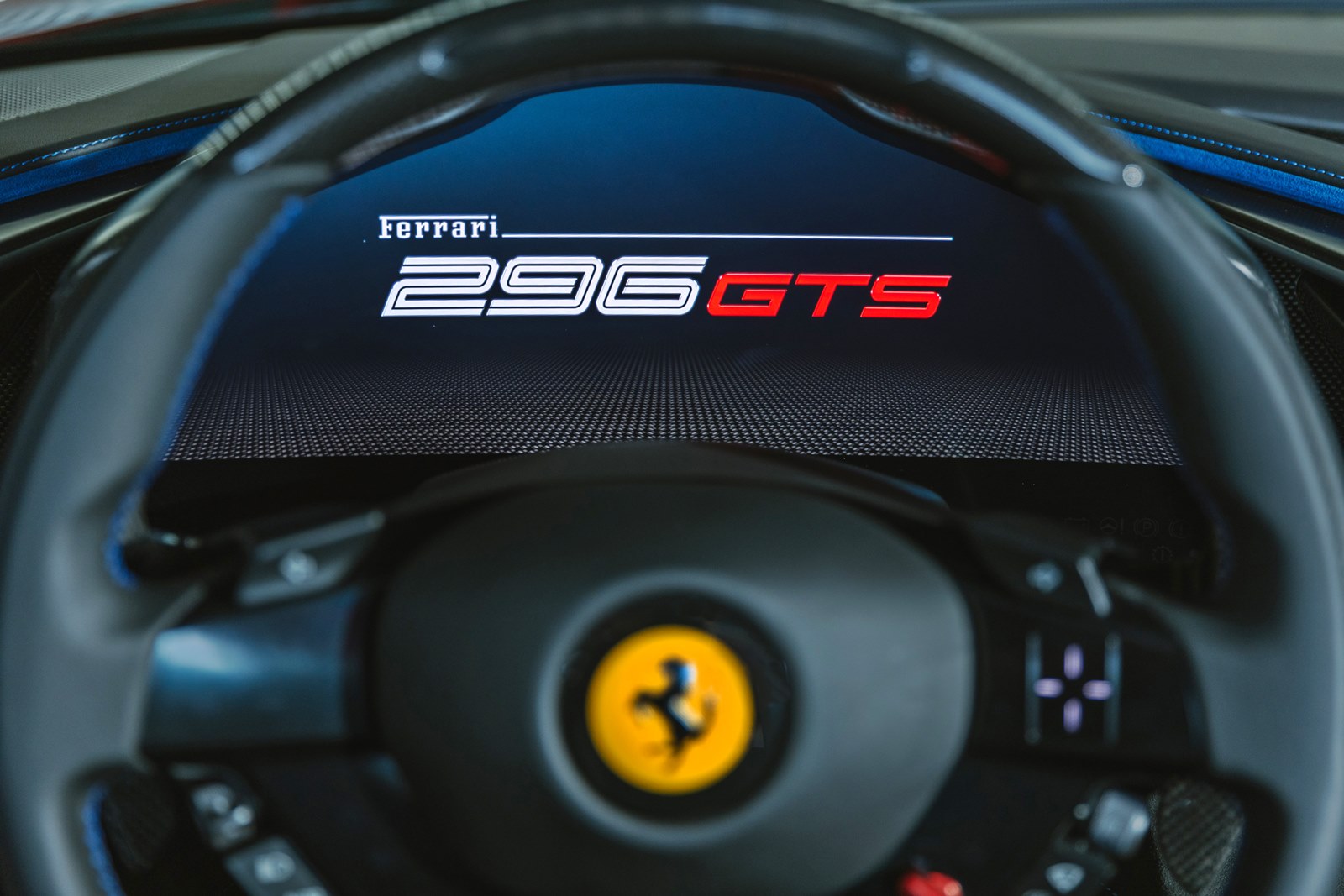
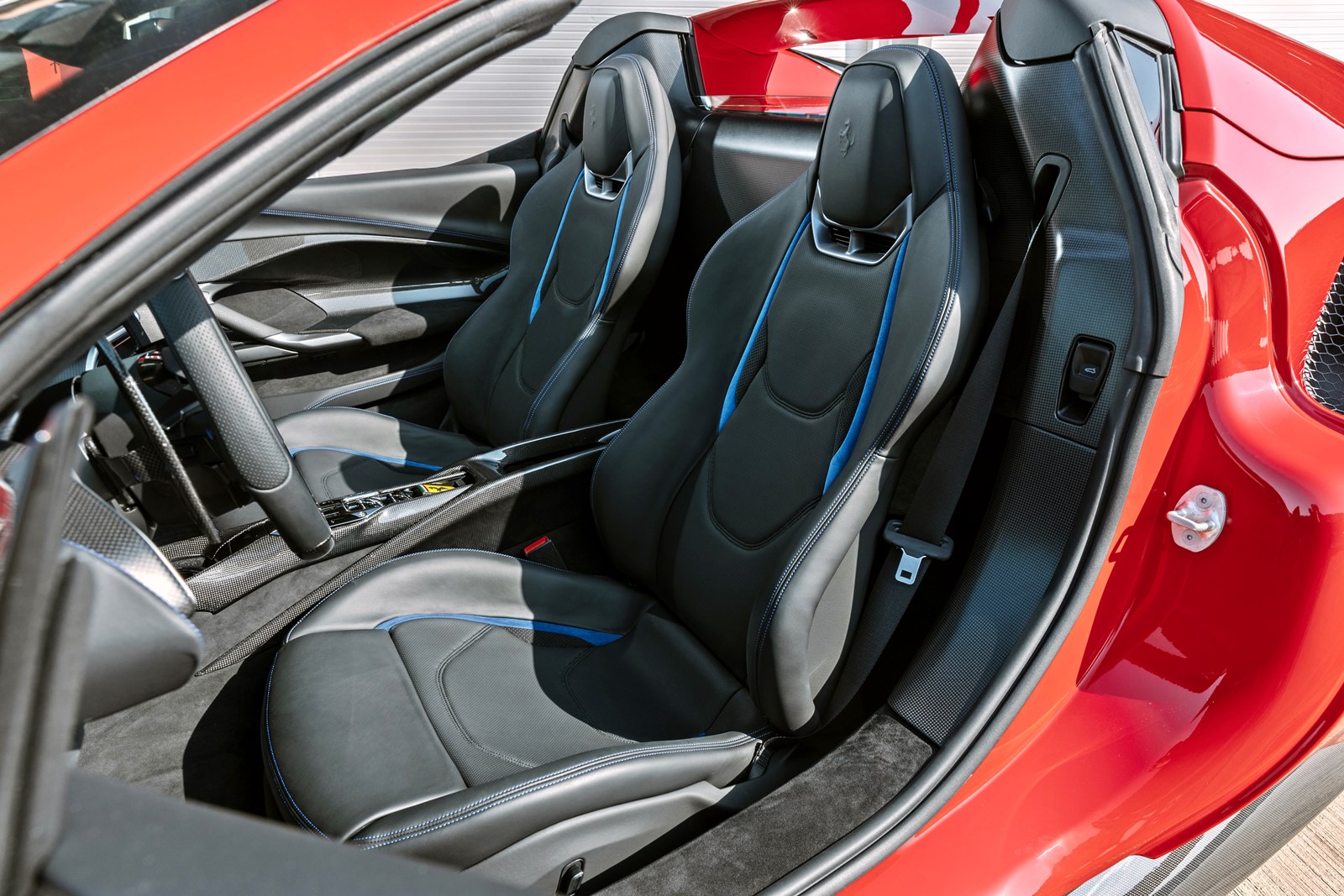
The 296 GTS’s cockpit was developed around the new concept of an entirely digital interface. This interior layout draws on the latter’s stylistic coherence for its forms. While with the SF90 Stradale the designers wanted to highlight the presence of the advanced technology and underscore a clear break with the past, in the case of the 296 GTS, the idea was to clothe that technology to sophisticated effect.
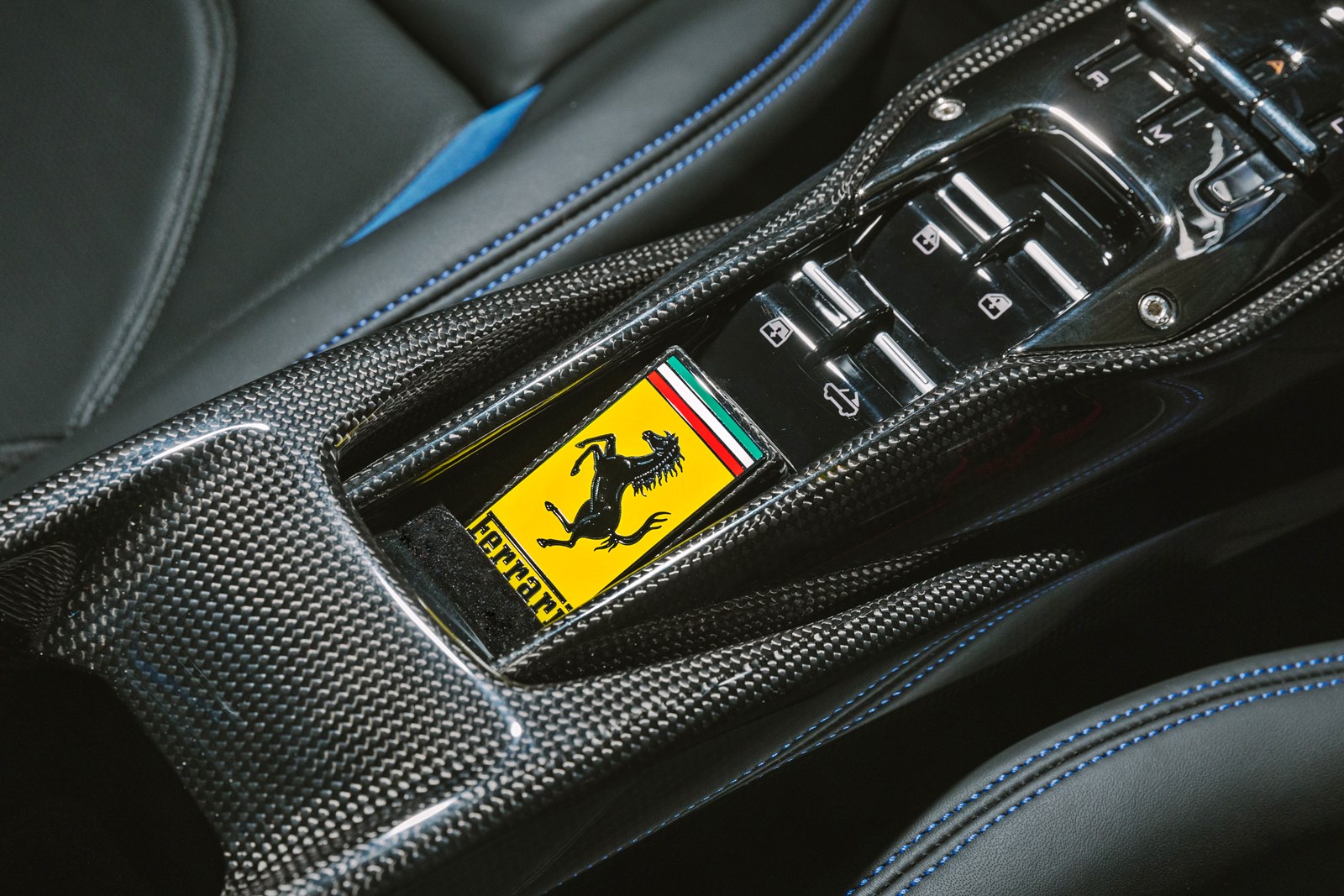
The cabin has the concept of the formal purity of the functional elements. When the engine is off, the onboard instruments go black, underscoring the minimalist look of the cabin. Exclusive Italian leather trim to the seats and trim is further enhanced by the noble technical materials used on the functional components. Aerodynamic flaps have been integrated into the rear trim structure to reduce buffeting and increase comfort in open-top driving.
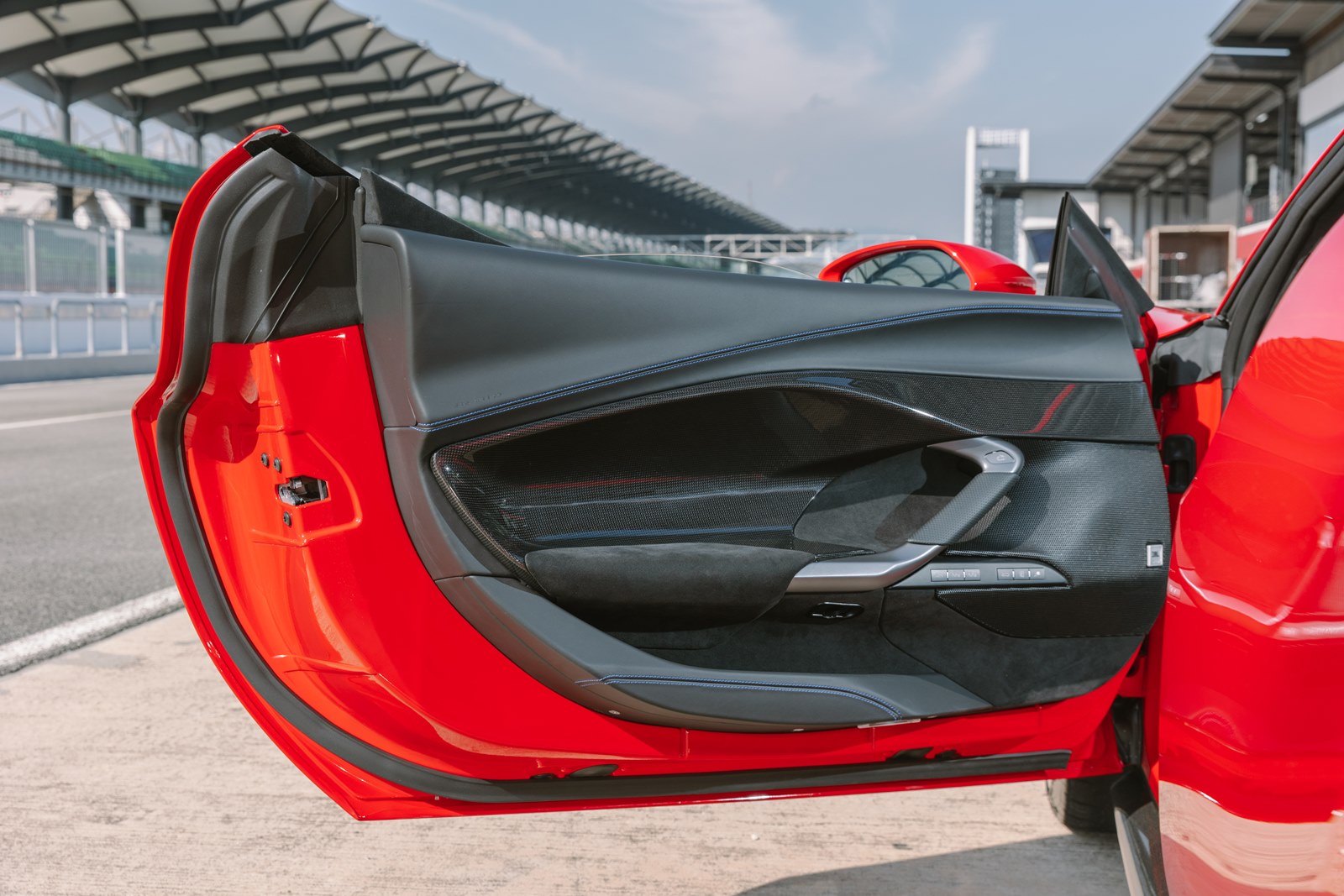
The sculptural door panel is a seamless continuation of the dashboard in terms of both materials and colour. On the central medallion, the styling cue is a deep lozenge-shaped scoop, a three-dimensional element. This type of architecture makes the entire door panel look extremely light and integrates the theme that connects it to the rear trim.
“The convertible version of Ferrari’s first 6-cylinder road-going car takes driving thrills to new heights. Subtly restyled to accommodate the open top, the Ferrari 296 GTS adds a sense of freedom to the fun of every journey. At the wheel of the 296 GTS, you get to enjoy the result of Ferrari’s exploration into electric technology and also have the ability to make the most of the weather and your mood, maximising driving pleasure,” said Damien Woo, General Manager, Ferrari Malaysia, Naza Italia Sdn Bhd.
With Ferrari’s 7-Year Genuine Maintenance programme, the 296 GTS is priced from RM1,448,000 (before duties, customization options, taxes and insurance) from Ferrari Malaysia.