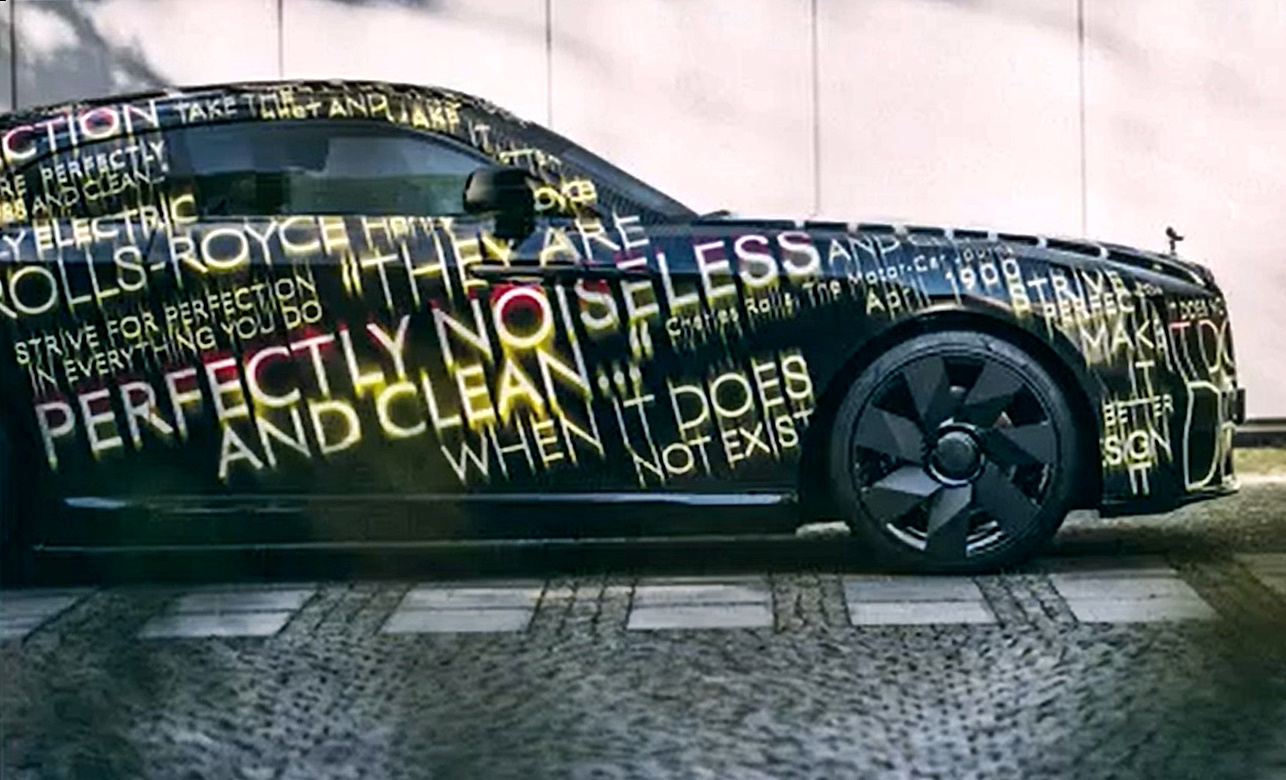
Next year, Rolls-Royce will unveil Spectre, its fully electric limousine that will go on sale in 2024. The final form that the car will have would have been approved so much work would have been done in the wind tunnel to make it as aerodynamically efficient as possible. For electric cars, this is vital to minimise the power used to overcome wind resistance and achieve high performance.
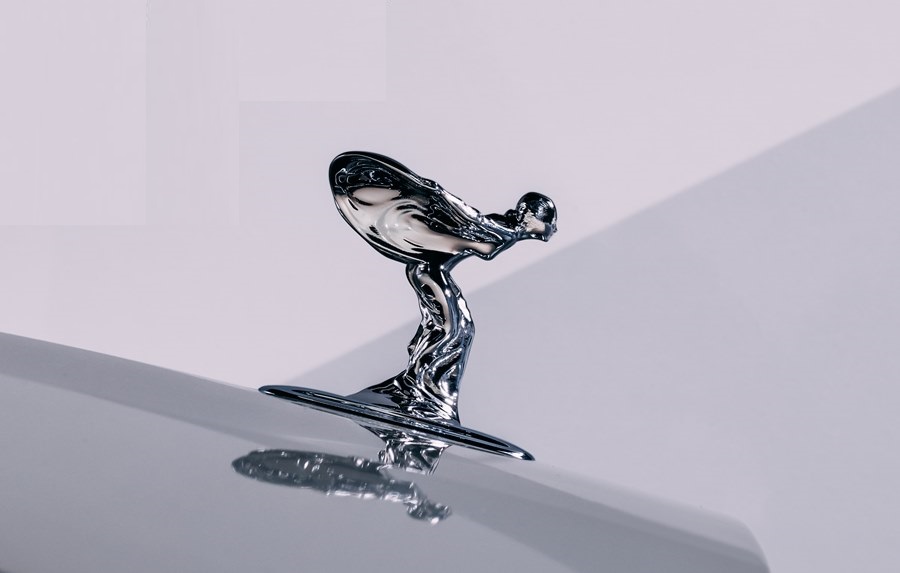
Wind tunnel studies cover every centimetre of the bodywork and even the tiniest details need to be shaped correctly for minimum wind resistance. This includes the iconic Spirit of Ecstasy figurine that stands on the edge of the bonnet. She will also grace the bonnet of the Spectre and after 111 years since being registered as intellectual property of Rolls-Royce, the Spirit of Ecstasy is being remodelled again.
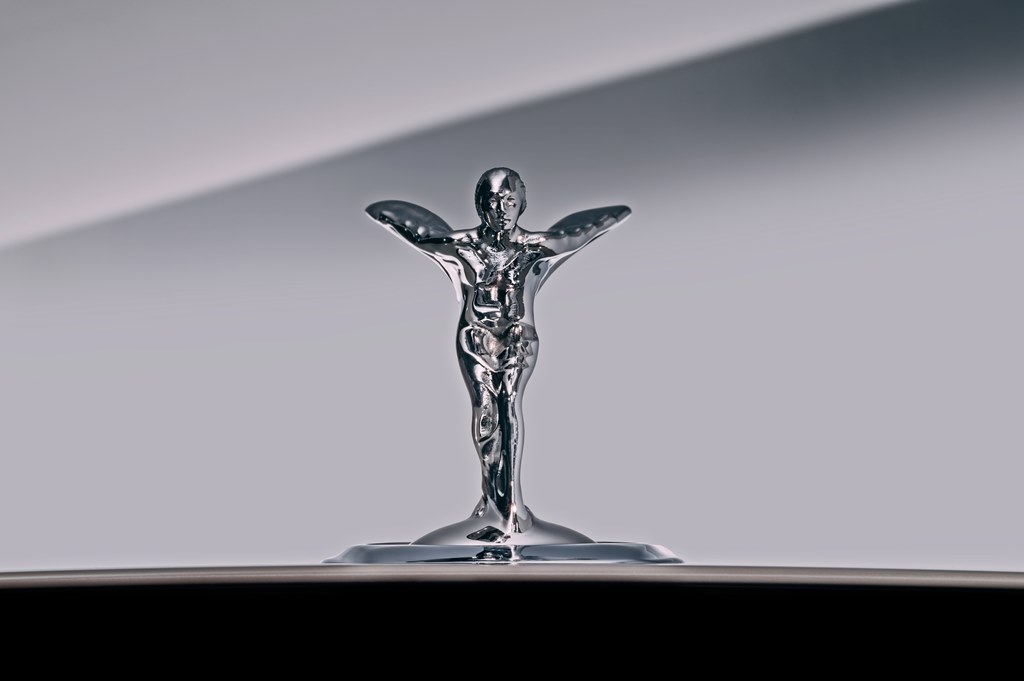
The figurine has been remodelled with a lower, more dynamic stance that brings her much closer to the drawings made by her original creator, the illustrator and sculptor Charles Sykes, in the early years of the 20th century. It also sees her physical form represent ‘The Expression’, a visual device that forms part of the marque’s new visual language.
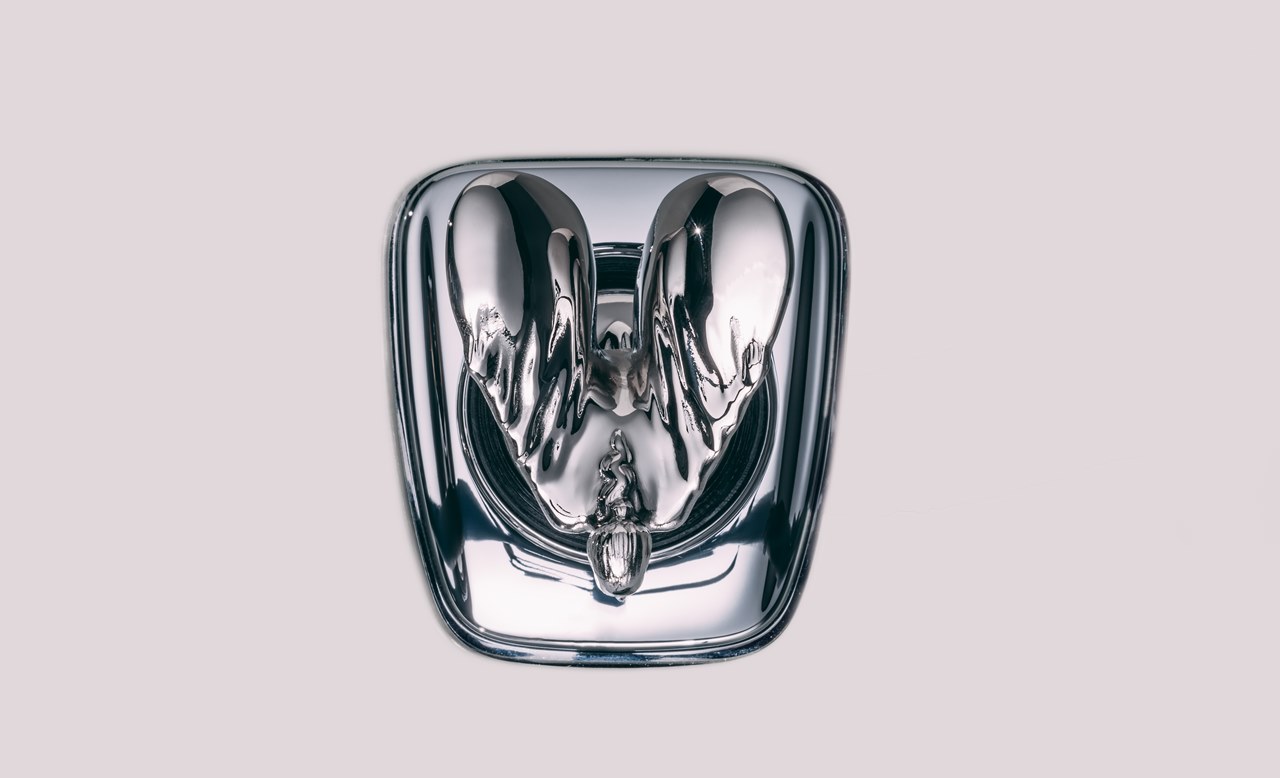
The new Spirit of Ecstasy stands 82.73 mm tall, compared to her predecessor’s 100.01 mm. Her robes, which flow behind her in the slipstream (often but incorrectly characterised as ‘wings’) have been subtly reshaped to make them more aerodynamic and realistic.
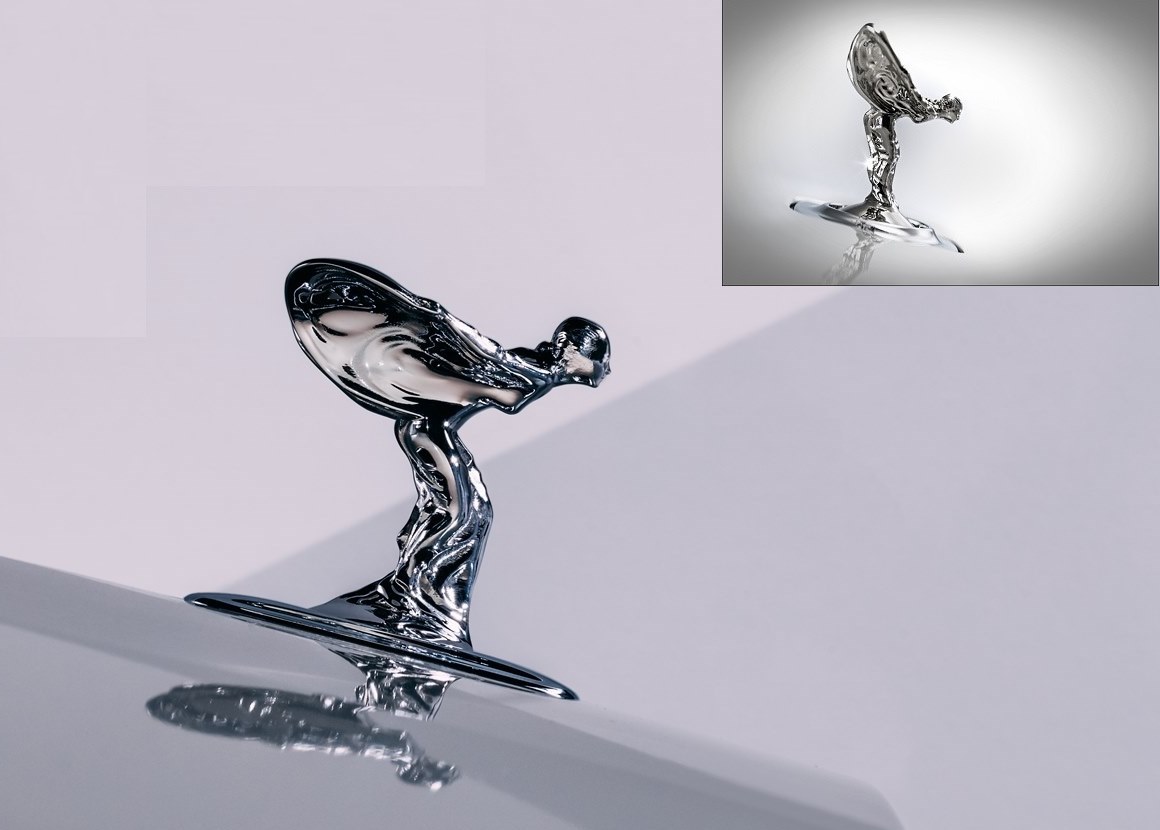
The most visible change is her stance. Previously, she has stood with her feet together, legs straight and tilting at the waist. Now, she is a true goddess of speed, braced for the wind, one leg forward, body tucked low, her eyes focused eagerly ahead.
The new stance of the Spirit of Ecstasy and the one (inset) seen on current Rolls-Royce models.
These changes have both practical and stylistic benefits, contributing to the Spectre’s aerodynamic properties which Rolls-Royce says will be remarkable. The earliest Spectre prototypes have already shown a drag coefficient of just 0.26 Cd, making it the most aerodynamic Rolls-Royce ever created. The figure is expected to improve during the product’s exhaustive testing protocols undertaken in the course of this year.
This new expression captures the essence of Charles Sykes’ original drawings, but rather than simply being ‘redrawn’ or ‘redesigned’, her new shape has been digitally sculpted by a computer modeller working at the Rolls-Royce, who has a passion for life drawing and sculpture. Their experience in this field was invaluable in developing the figurine’s elegant lifelike facial features as well as her expression, which deftly combines focus and serenity.
The designers also consulted stylists at Roll-Royce for their perspective on her hair, clothes, posture, and expression, adding an authentically contemporary aura to her dynamism and commanding presence.
While all figurines are made using one of the oldest known casting techniques, named ‘lost wax casting’ or ‘cire-perdue’, each is individually finished by hand, so will be minutely different from figurine to figurine. As well as continuing a long Rolls-Royce tradition – until 1939, the mascots were made and polished by Charles Sykes himself – this subtle, ephemeral human element creates an intriguing contrast to the precise, highly engineered motor car she sits atop.
Though relatively rare in the modern era, changes to the Spirit of Ecstasy have been made throughout her 111-year lifespan. She has been rendered in various sizes and materials and, briefly, in a kneeling position. The new version created for the Spectre will appear on all future models. The current design will still be used on Phantom, Ghost, Wraith, Dawn and Cullinan and their Black Badge alter egos where applicable.
The fully electric Spectre will make its debut in 2023 and it will be the most aerodynamic Roll-Royce ever designed for sale.
“The Spirit of Ecstasy is the most famous and desirable automotive mascot in the world. More than just a symbol, she is the embodiment of our brand, and a constant source of inspiration and pride for the marque and its clients. Like our brand, she has always moved with the times while staying true to her nature and character. In her new form she is more streamlined and graceful than ever before – the perfect emblem for the most aerodynamic Rolls-Royce ever created, and for gracing the prow of our bold electric future,” said Torsten Muller-Otvos, CEO of Rolls-Royce Motor Cars.
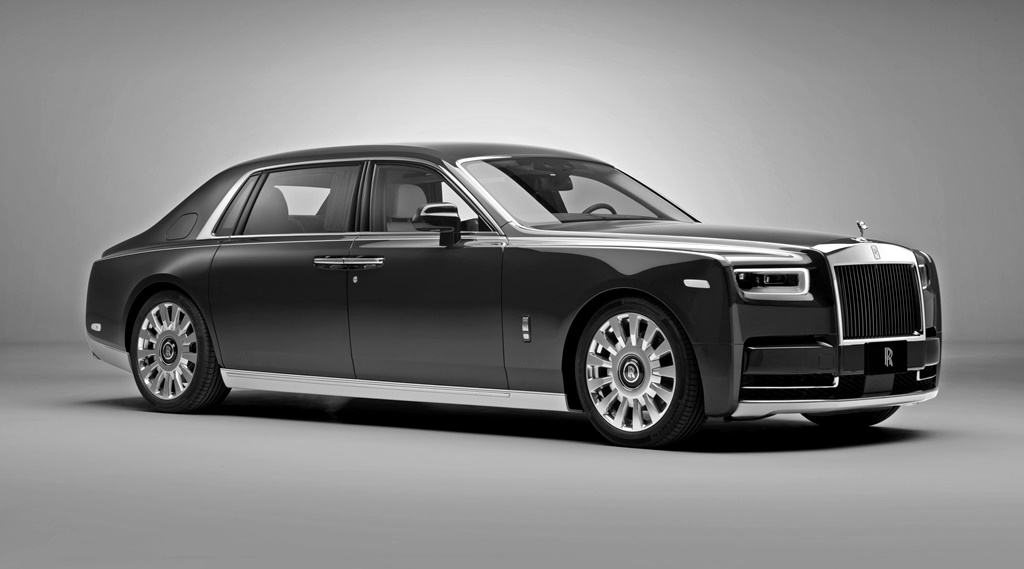
The Rolls-Royce Bespoke Collective – an elite team of engineers, designers and craftspeople based at the Home of Rolls-Royce in England – provides Rolls-Royce customers with the ultimate in personalisation of their cars. Almost every Rolls-Royce sold nowadays has some involvement from the Bespoke Collective – after all, when you pay over a million ringgit, why not spend a bit more to make your car truly unique.
Most of the cars created by the Bespoke Collective are not publicised as their owners may prefer not to do so but some allow Rolls-Royce to show them to the world. The latest one is for a customer in Singapore, and appropriately, this customer wanted the orchid as the theme. The beautiful flower is especially close to the hearts of Singaporean as it is their country’s national flower.
Pioneering Bespoke work
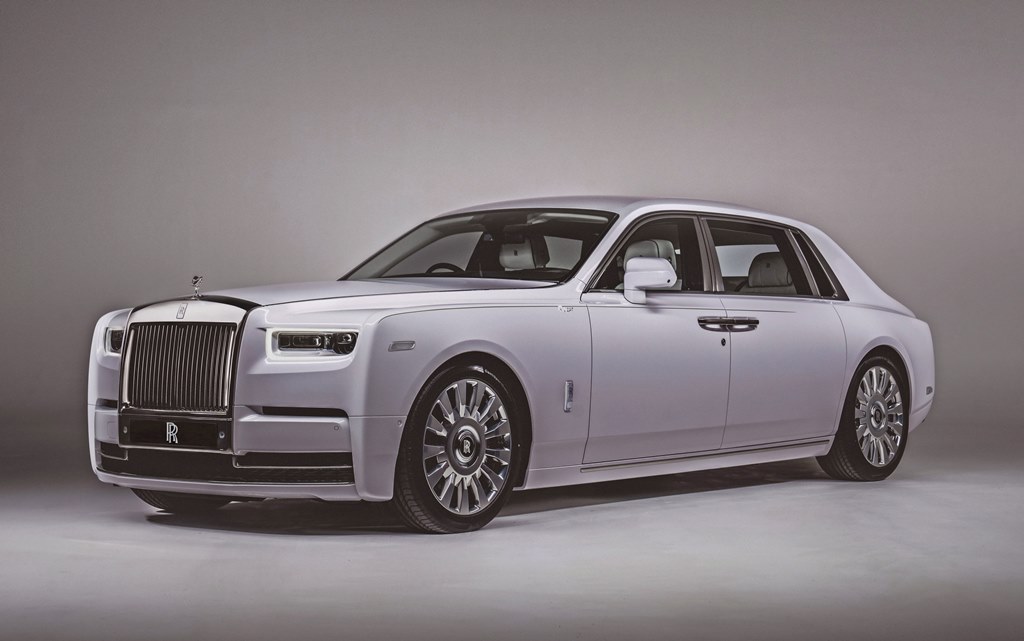
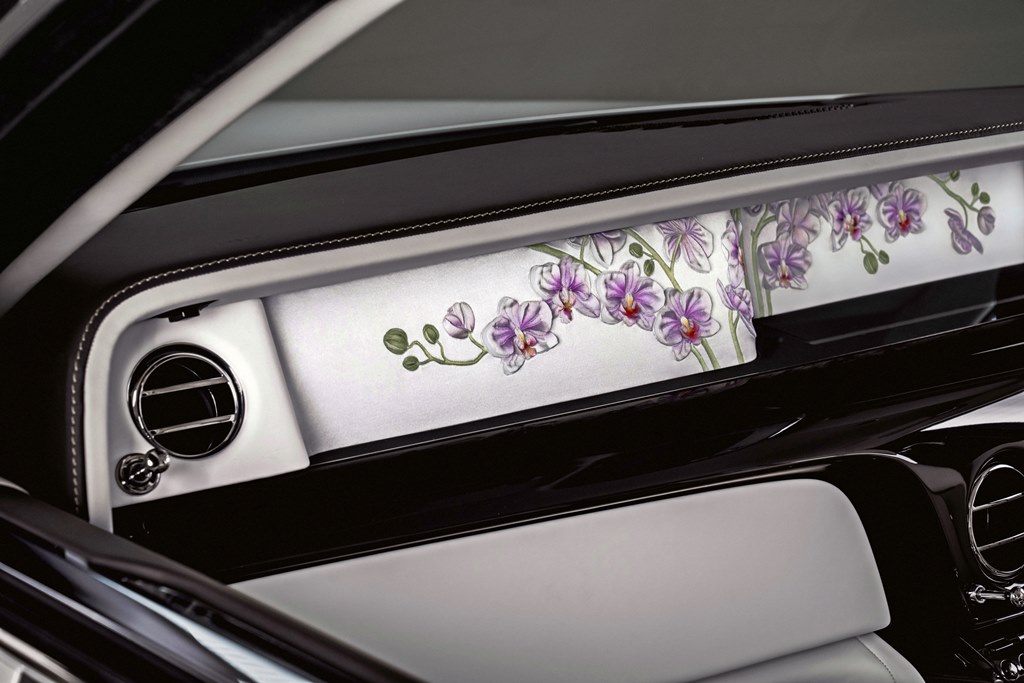
Designers, craftspeople and artisans collaborated with artist Helen Murray over a period of 2 years to create this ‘one of one’ Rolls-Royce known as the Phantom Orchid. Helen and her team have undertaken pioneering bespoke work with Phantom’s Gallery – a wholly contemporary and luxury reinterpretation of a motor car’s fascia and instrument panel area.
She was inspired by several kinds of orchids, including the Singapore Orchid, spending over 200 hours relentlessly refining her design and artwork with her team. “I started by focusing on the actual orchids, which promptly led me to realise that colour was key to capturing the essence of the species. I have created artworks featuring orchids in the past, but my idea for the Gallery was to create something in realistic full colour, which pushed us to refine our digital printing skills,” explained the UK-based artist and textile designer.
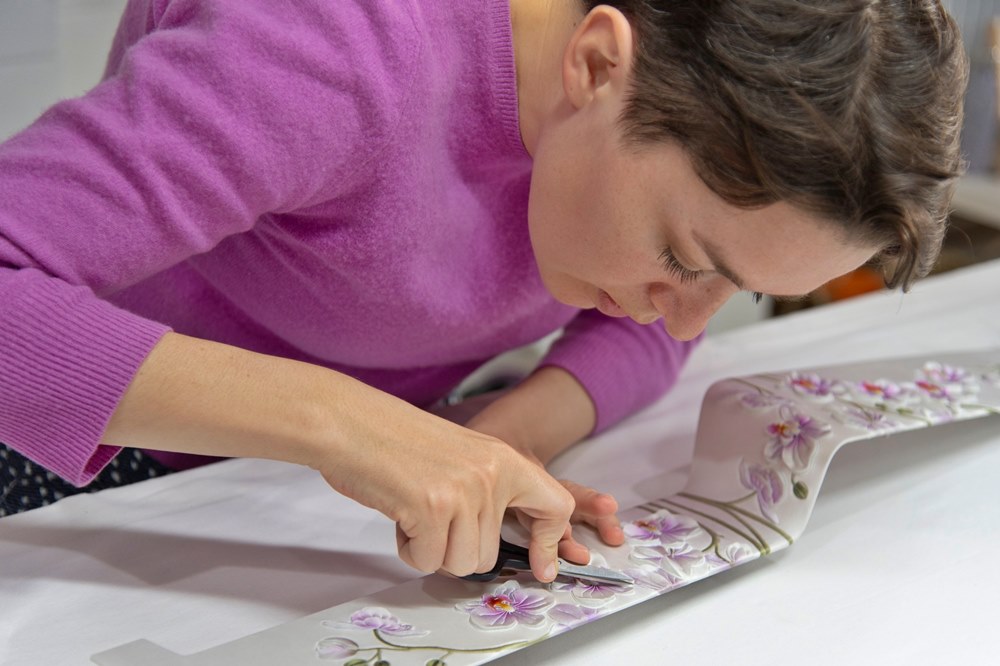
Murray started by illustrating the design by hand before creating a digital version that she could print directly onto the silk crepe satin. The final part of the process involved a meticulous hand-sculpting of the flowers, releasing layers of fabric to create a 3D effect.
Orchid Sanctuary
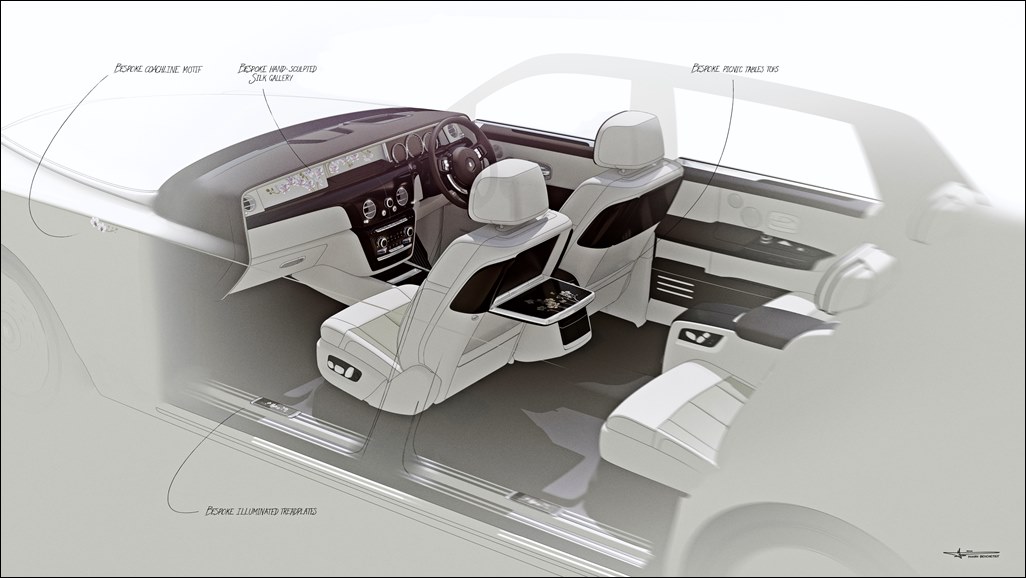
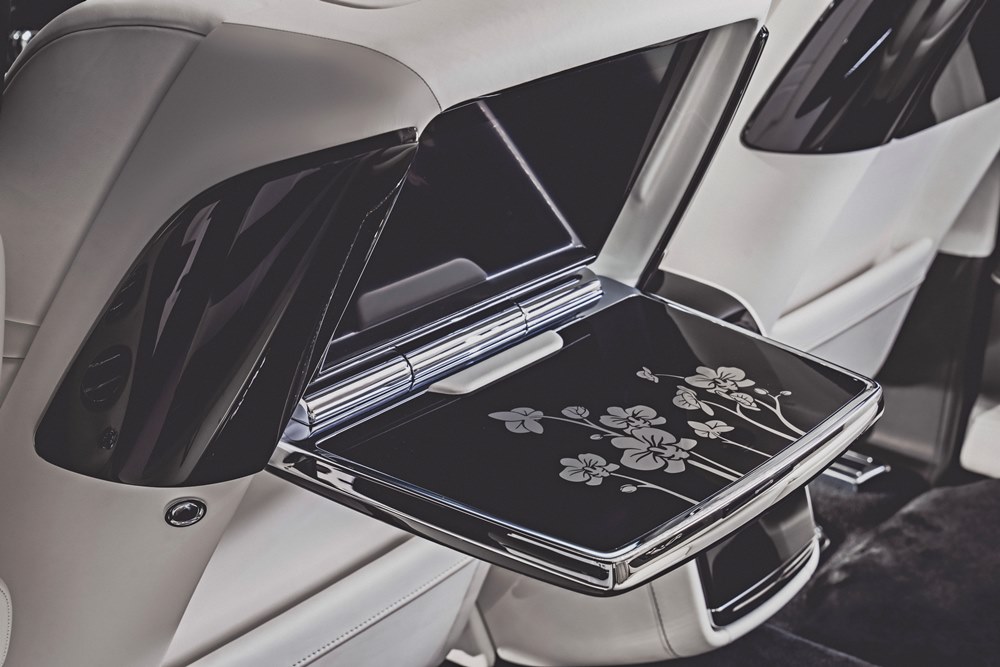
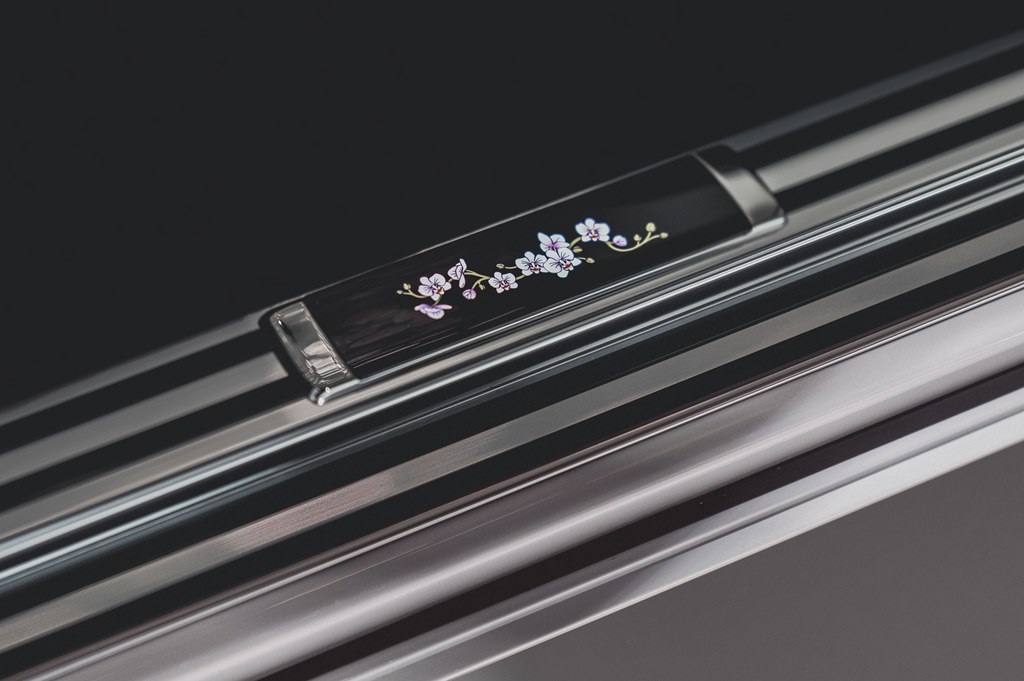
Within the interior, Rolls-Royce Bespoke Designer Yohan Benchetrit applied his talent to the Bespoke orchid-inspired Picnic Table inlays in the rear of the suite which, when opened, gracefully reveal a beautiful layer of orchids set into Piano Black veneer. He added Bespoke treadplates emanating a similar theme sans text to welcome the owner and passengers into the motor car. The interior suite meanwhile was furnished with elegant, natural colours which provide a soothing ambience akin to an Orchid Sanctuary.
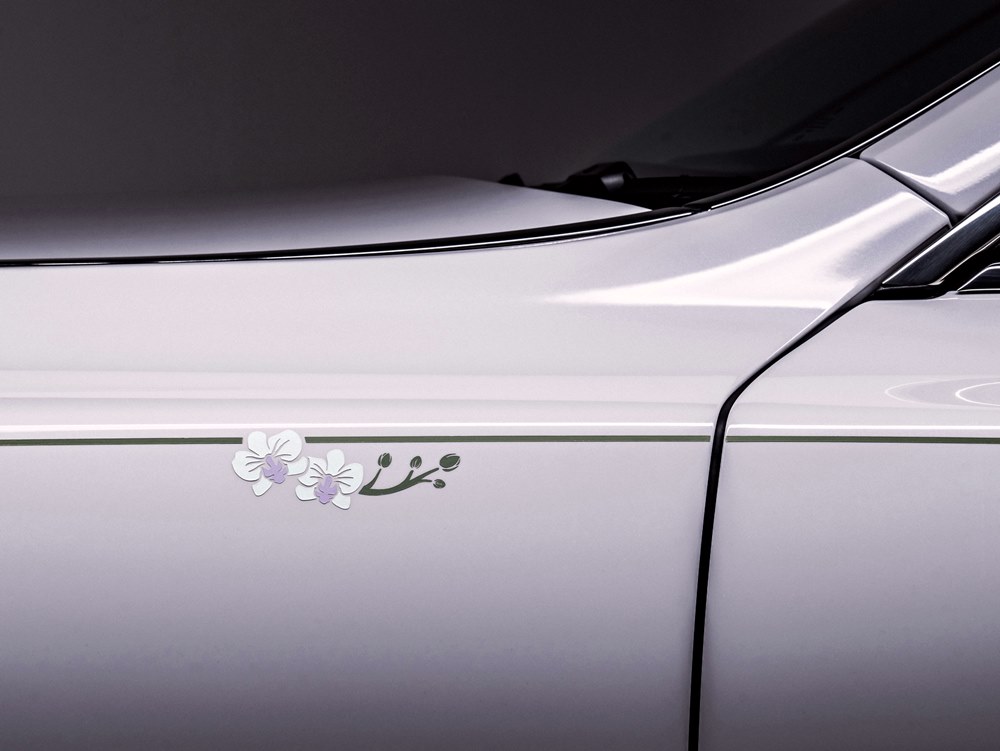
To complete this special Phantom, a unique paint was specially created using the latest paint technology. Arctic White was chosen as the base colour, while a tint of violet was added, inspired by orchids. Combined with fine glass particles through a special process, the result is a stunning pearlescent appearance. Under bright light, the paint technology creates a shimmering effect like no other, changing as an observer views the motor car from different angles. An eye-catching single coachline on either side of Phantom incorporates a Bespoke motif, inspired by an orchid, completing the theme.
Parallels with the Garden City
“It draws parallels with the Singapore I know; a thoroughly modern garden city merging nature and technology effortlessly in its make-up,” said Michael Bryden, Lead Designer, Rolls-Royce Bespoke, who has not only spent time in Singapore but designed the now famous, ‘one of one’ ‘SG50 Bespoke Ghost’, created to celebrate the country’s 50th Anniversary.
“It was the first time we had produced a motorcar to celebrate such an occasion, so I am again delighted to have participated with Yohan and the Bespoke Collective to create another masterpiece for Singapore,” he said.
He explained that the concept envisaged a balanced yet progressive design which echoes the values of the Singapore region. “The orchid is seen in many facets of Asian life, a reminder that the resilient adapt and thrive regardless of the evolving environment. Phantom is the only motorcar in the world to feature the Gallery, a space that enables one to exhibit art, sculptures, or objects of self-expression in the sanctuary of Phantom’s interior,” said Bryden.
Today, ‘disruptor’ has become the popular label for those who refuse to adhere to established conventions. This attribute has made fortunes, slain great institutions and even challenged the very notion of currency. Had the term existed in the early 20th century, Rolls and Royce would have been among the era’s arch-disruptors. Through their pursuit of perfection, they proved that a car could credibly replace the horse and carriage.
In the new era following the relaunch of the Rolls-Royce brand in 2003, a new generation of customers desired a less formal expression of brand. These clients in this new era were from new industries and geographies. Their success was defined on their own terms and Bespoke allowed them to have cars that countered the expected codes of luxury. Bespoke would come to even subvert Rolls-Royce – respectfully, of course. This was confirmed following a chance meeting between Rolls-Royce Motor Cars CEO, Torsten Muller-Otvos and a customer who had asked an outside tuning house to give his Wraith a finish of black chrome with darkened wheels.
A permanent Bespoke series
‘Darker’ Rolls-Royces were in fashion but those who desired them did not believe Rolls-Royce would agree to their wishes. However, they were misinformed because the brand’s contemporary success is defined by a willingness to listen, participate and define changing cultures and norms. And so Black Badge was born as the marque’s first permanent Bespoke series.
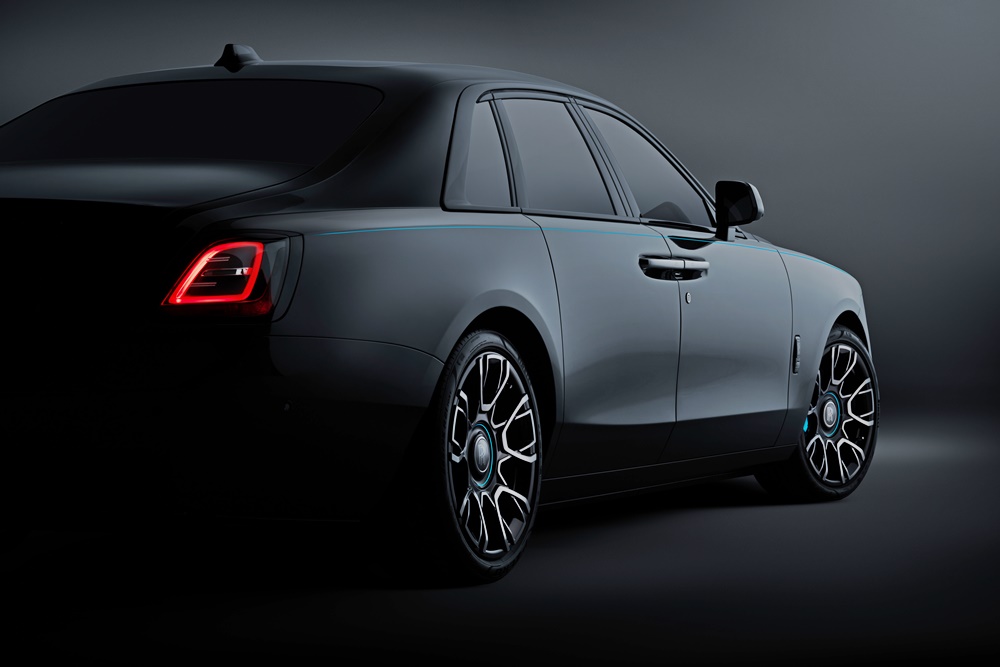
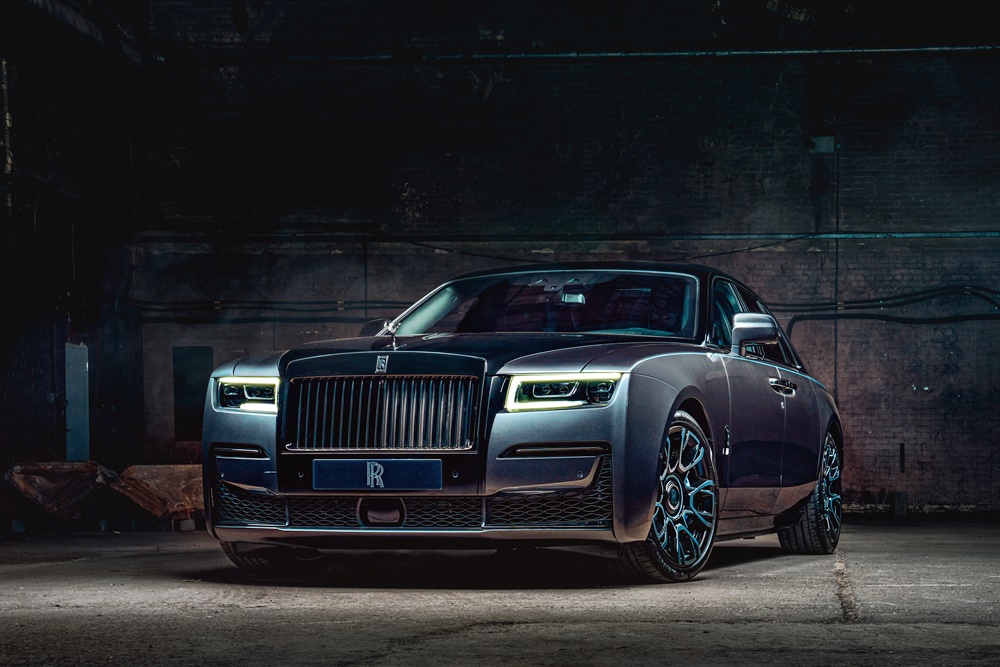
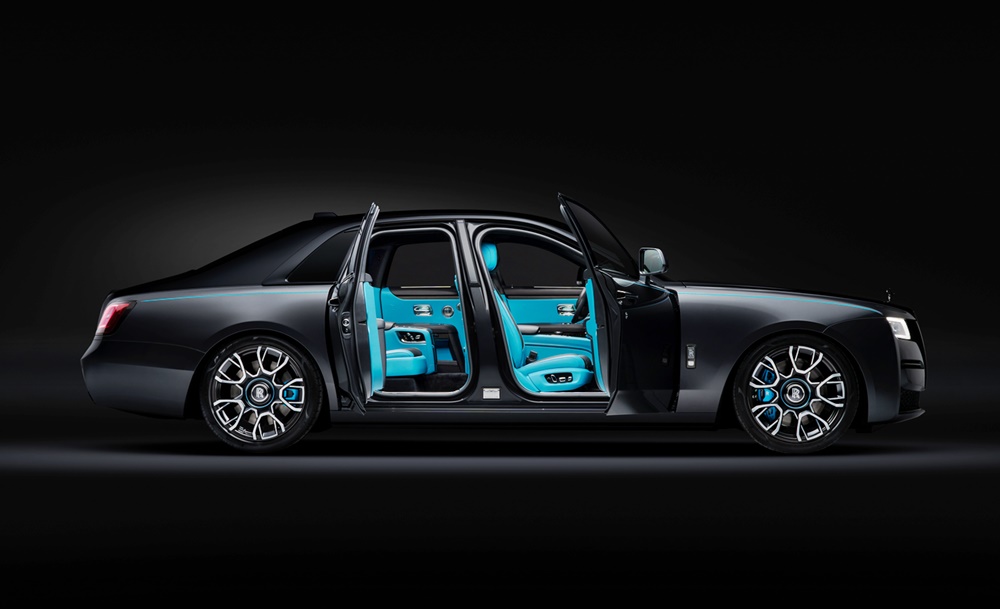
Last year, 27% of new Rolls-Royce cars delivered worldwide were Black Badge editions, the number having grown since the first such edition was introduced for the Wraith and Ghost in 2016. Today, the carmaker introduces the purest and most technologically advanced Black Badge model yet – the new Black Badge Ghost.
Black is the most favoured colour
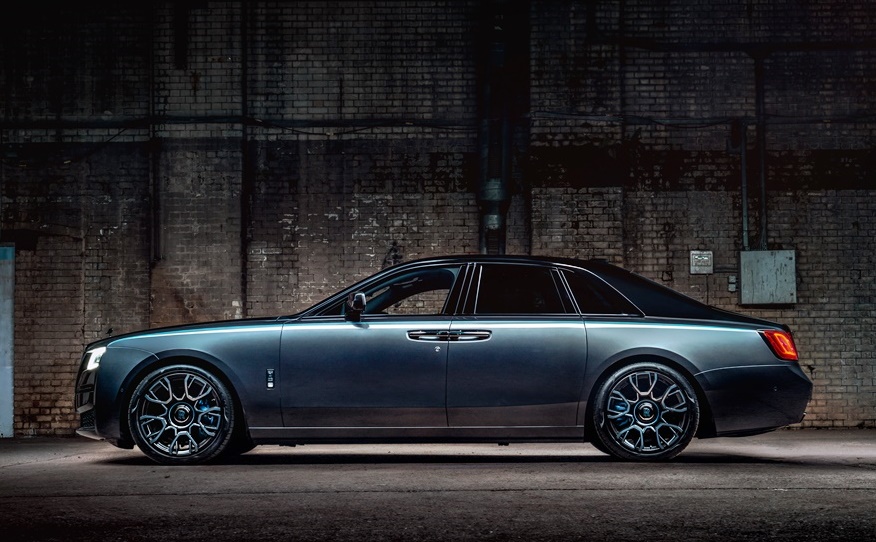
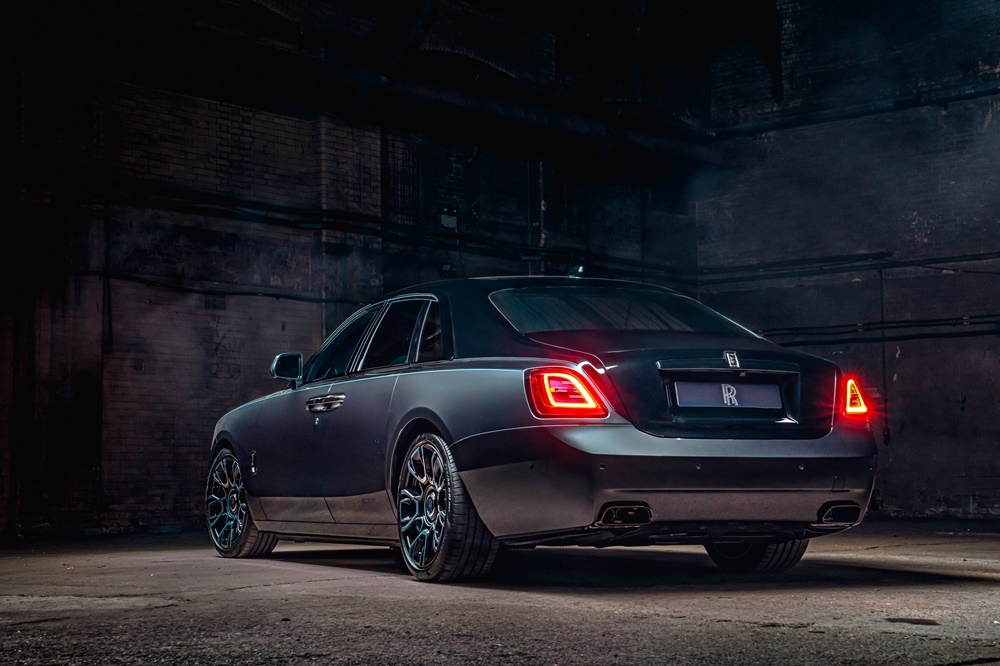
Although customers are free to select any of the 44,000 ‘ready-to-wear’ colours or even create their own entirely unique colour, the overwhelming majority of women and men who requested this darker expression of Ghost have selected the signature Black. To create what is the auto industry’s darkest black, 45 kgs of paint is atomised and applied to an electrostatically-charged bare bodyshell before being oven dried. The car then receives two layers of clear coat before being hand-polished to produce the signature high-gloss piano finish.
At between three and five hours in duration, this operation is entirely unknown in mass production, creating an intensity simply unattainable elsewhere in the automotive industry. It is this depth of darkness that customers can also add a high-contrast, hand-painted Coachline, which has done much to create the Black Badge ‘black and neon’ aesthetic that has come to characterise this vivid family of Rolls-Royce cars.
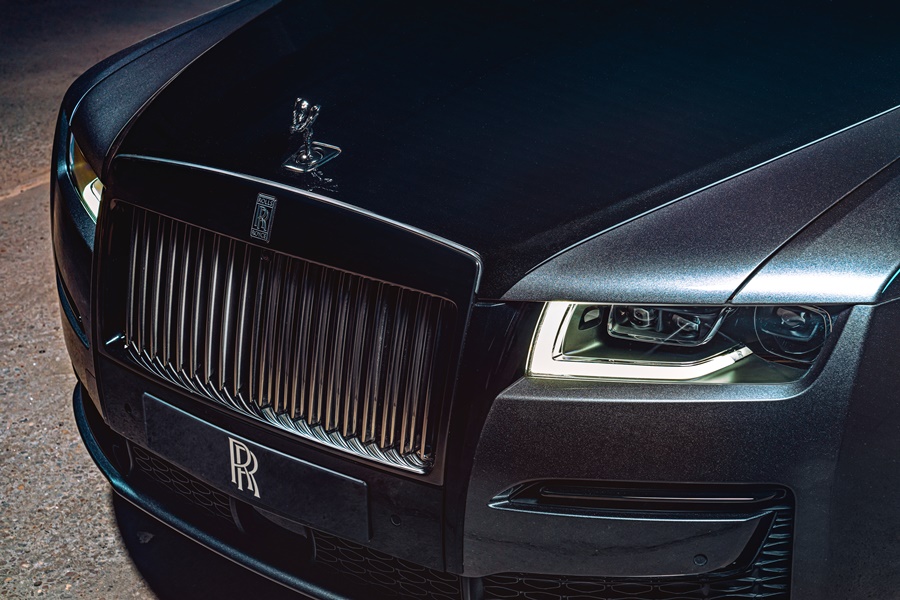
To complement the exterior finish, an entirely customisable process was created that allows Rolls-Royce hallmarks such as the high-polished Spirit of Ecstasy and Pantheon Grille to be ‘subverted’. Instead of simply painting these components, a specific chrome electrolyte is introduced to the traditional chrome plating process that is co-deposited on the stainless-steel substrate, darkening the finish. Its final thickness is just one micrometre – around one hundredth of the width of a human hair. Each of these components is precision-polished by hand to achieve a mirror-black chrome finish before being installed.
Special wheel with carbonfibre
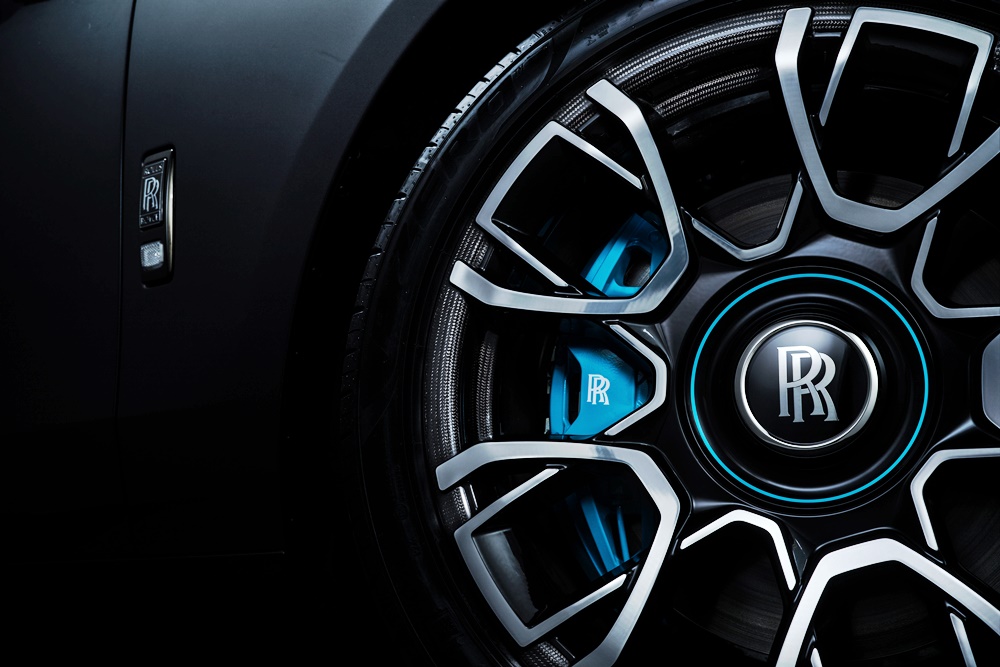
The Bespoke 21-inch composite wheelset is also something special. Designed in the Black Badge house style and reserved for Black Badge Ghost, the barrel of each wheel is made up of 22 layers of carbonfibre laid on three axes, then folded back on themselves at the outer edges of the rim, forming a total of 44 layers of carbonfibre for greater strength.
A 3D-forged aluminium hub is bonded to the rim using aerospace-grade titanium fasteners and finished with the marque’s hallmark Floating Hubcap, ensuring the Double R monogram remains upright at all times. To celebrate the material substance and remarkable surface effect, a lightly tinted lacquer protects the finish but still allows the technical complexity of the unique carbonfibre construction to be visible.
Advanced luxury materials
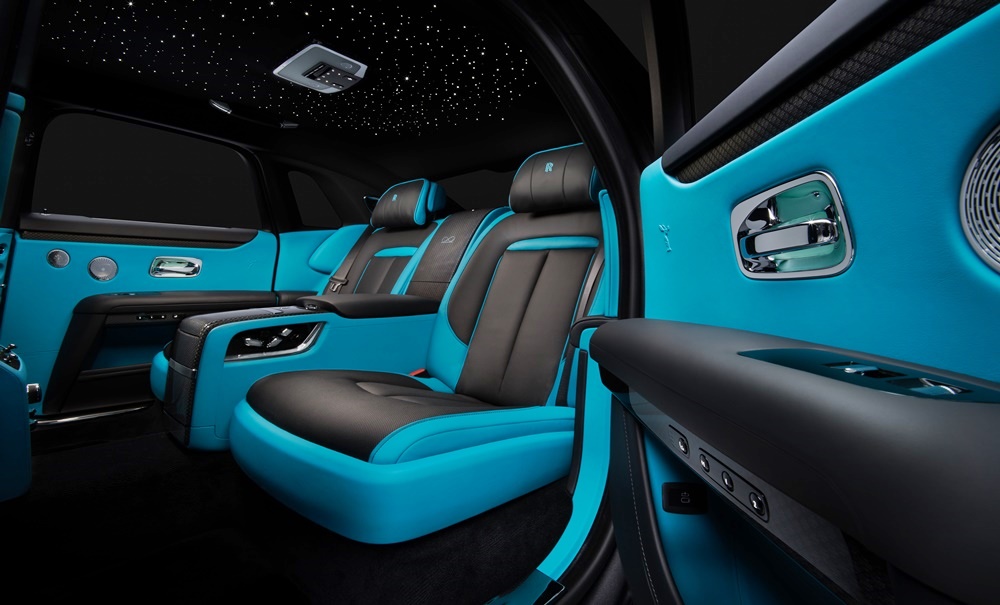
Advanced luxury materials created and crafted for a unique ambience within are defined by authenticity and material substance rather than overt statement. In this spirit, a complex but subtle weave that incorporates a deep diamond pattern rendered in carbon and metallic fibres has been created by the craftspeople.
Multiple wood layers are pressed onto the interior component substrates, using black Bolivar veneer for the uppermost base layer. This forms a dark foundation for the Technical Fibre layers that follow. Leaves woven from resin-coated carbon and contrasting metal-coated thread laid in a diamond pattern are applied by hand to the components in perfect alignment, creating a three-dimensional effect. To secure this extraordinary veneer, each component is cured for one hour under pressure at 100°C. This is then sand-blasted to create a keyed surface for 6 layers of lacquer, which is hand-sanded and polished before being incorporated into the car.
If specified, the Technical Fibre ‘Waterfall’ section of the individual rear seats receives the Black Badge family motif: the mathematical symbol that represents potential infinity known as a ‘Lemniscate’. Rendered in aerospace-grade aluminium on the lid of Black Badge Ghost’s Champagne cooler, it is applied between the third and fourth layer of a total of six layers of subtly tinted lacquer, creating the illusion that the symbol is floating above the Technical Fibre veneer.
By its very name, virtually all brightwork is subdued. The air vent surrounds on the dashboard and in the rear cabin are darkened using physical vapour deposition, one of the few methods of colouring metal that ensures parts will not discolour or tarnish over time or through repeated use.
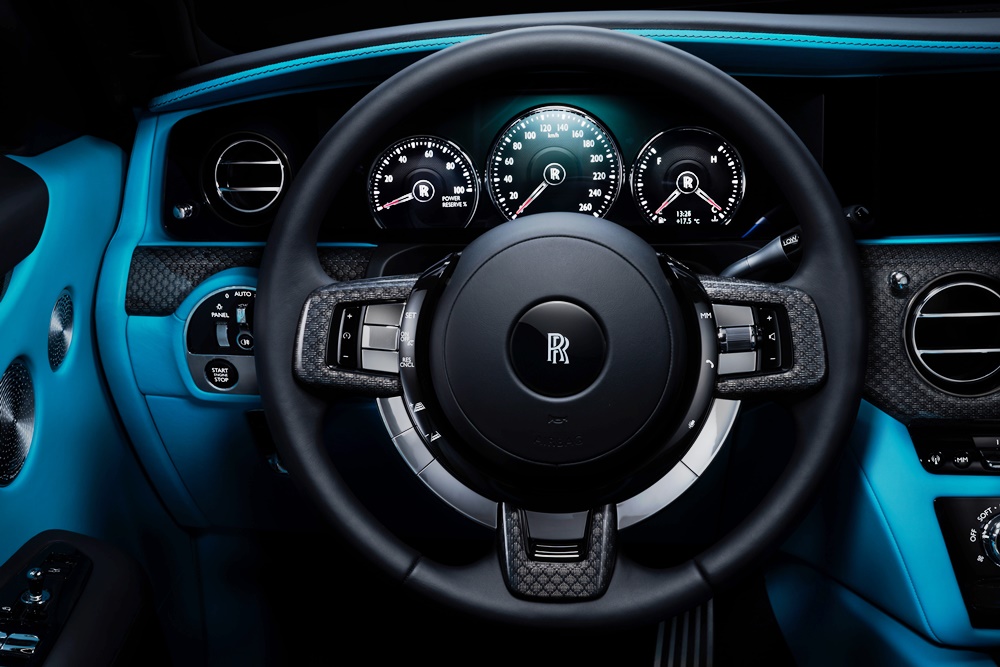
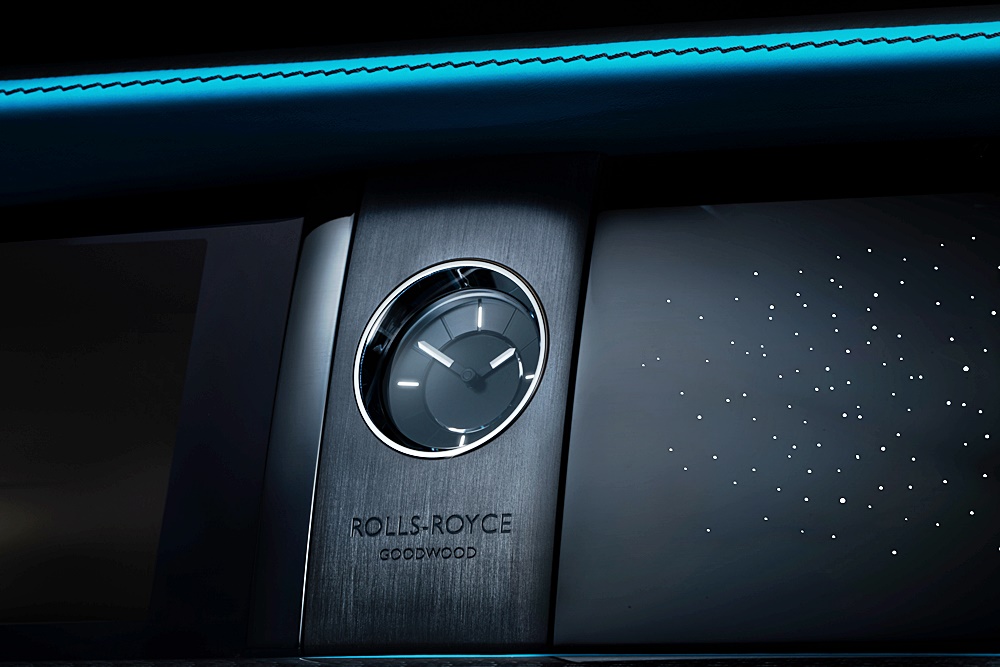
For the Black Badge Ghost timepiece design, only the tips of the hands and the 12, 3, 6 and 9 o’clock markers are picked out, in a subdued chrome finish, creating a remarkably minimal clock. The timepiece is flanked by a world-first Bespoke innovation that debuted with Ghost: the Illuminated Fascia, which displays an ethereal glowing Lemniscate, surrounded by more than 850 stars.
Located on the passenger side of the dashboard, the constellation and motif are completely invisible when the interior lights are not in operation. As in Ghost, the Lemniscate motif is illuminated via 152 LEDs mounted above and beneath the fascia, each colour-matched to the clock and instrument dial lighting. To ensure the Lemniscate is lit evenly, a 2 mm-thick light guide is used, featuring more than 90,000 laser-etched dots across the surface. This not only disperses the light evenly but creates a twinkling effect as the eye moves across the fascia, echoing the subtle sparkle of the Shooting Star Starlight Headliner.
Increased engine output
From the engineering point of view, there is a general similarity to the standard Ghost model and key to its potent character is the Architecture of Luxury. This is Rolls-Royce’s proprietary all-aluminium spaceframe architecture that debuted with Phantom. This sub-structure not only delivers extraordinary body stiffness, but its flexibility and scalability allowed Ghost to be equipped with all-wheel drive, 4-wheel steering and the Planar Suspension system. For Black Badge, these engineering qualities have been comprehensively re-engineered, including the fitting of more voluminous air springs to alleviate body roll under more assertive cornering.
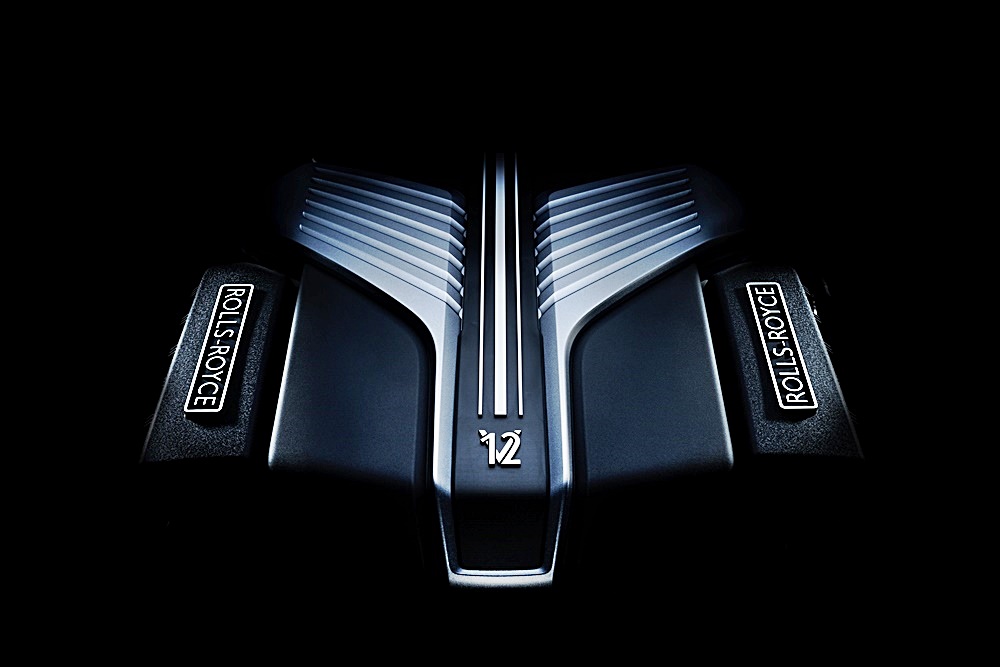
Under the long bonnet, the Rolls-Royce twin-turbocharged 6.75-litre V12 engine has 29 ps more, increasing total output to exactly 600 ps, while the addition of another 50 Nm of torque boost the output to exactly 900 Nm. The powertrain also has Bespoke transmission and throttle treatments to further enhance the engine’s increased power reserves. The ZF 8-speed transmission box and both front and rear-steered axles work collaboratively to adjust the levels of feedback to the driver, depending on throttle and steering inputs.
As with all products in the marque’s Black Badge portfolio, the ‘Low’ button situated on the gear selection stalk unlocks Black Badge Ghost’s full suite of technologies. This is asserted by the amplification of the engine through an entirely new exhaust system, subtly announcing its potency. All 900 Nm of torque is available from just 1,700rpm and, once underway in Low Mode, gearshift speeds are increased by 50% when the throttle is depressed to 90%, delivering the abundant power reserves almost instantly.
“In the 5 years since Black Badge became publicly available, this bold family of motor cars has come to symbolise the pinnacle of a new type of super-luxury product, setting in motion a shift across the wider luxury industry. Subsequently, nearly all luxury makers create products that seek to capture the Black Badge spirit,” said the CEO of Rolls-Royce.
Vaccination does not make you immune to COVID-19 infection. You can still get infected but may not show symptoms and still spread the coronavirus to others. Do not stop taking protective measures such as wearing a facemask, washing hands frequently and social distancing.
Just as SUVs eventually reached the highest levels of the car market with the Rolls-Royce Cullinan being Introduced, the process of electrification will also ascend to the ‘summit’ of the industry before this decade ends. Rolls-Royce has already indicated on various occasions that it will offer an electrically-powered car in future and it confirms that this will be fully electric, without a hybrid powertrain.
The company is not intending to rush into launching the new product and says it will do so ‘when the time is right’. In the meantime, its engineers and designers are ensuring that every element meets Rolls-Royce’s technical, aesthetic and performance superlative standards.
Understanding that there is considerable interest and speculation surrounding the development of a totally different type of Rolls-Royce for the future, the company offers some perspectives in its transition to electric power.
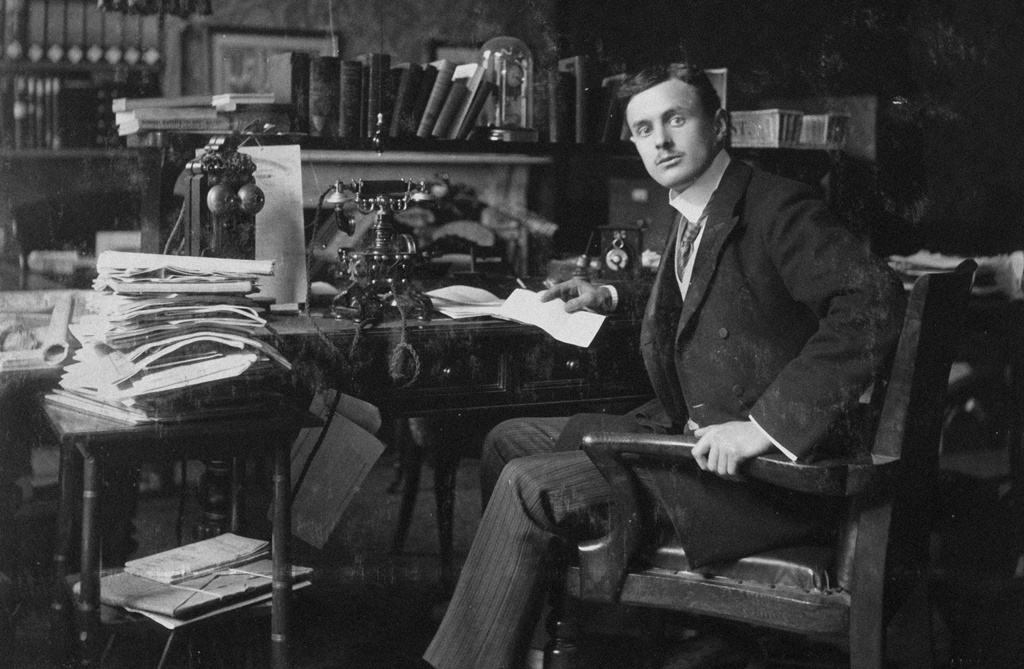
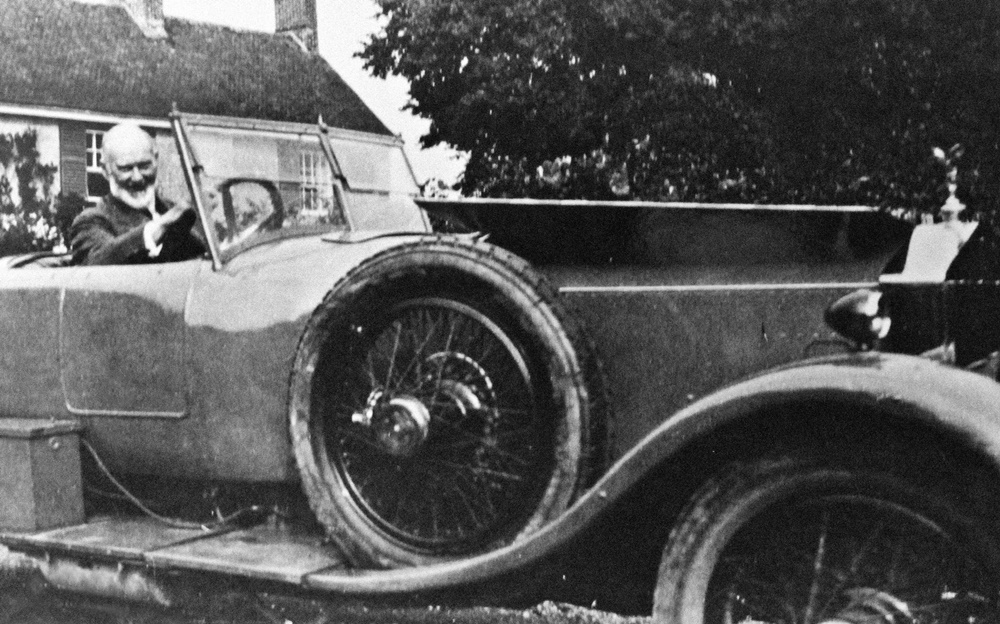
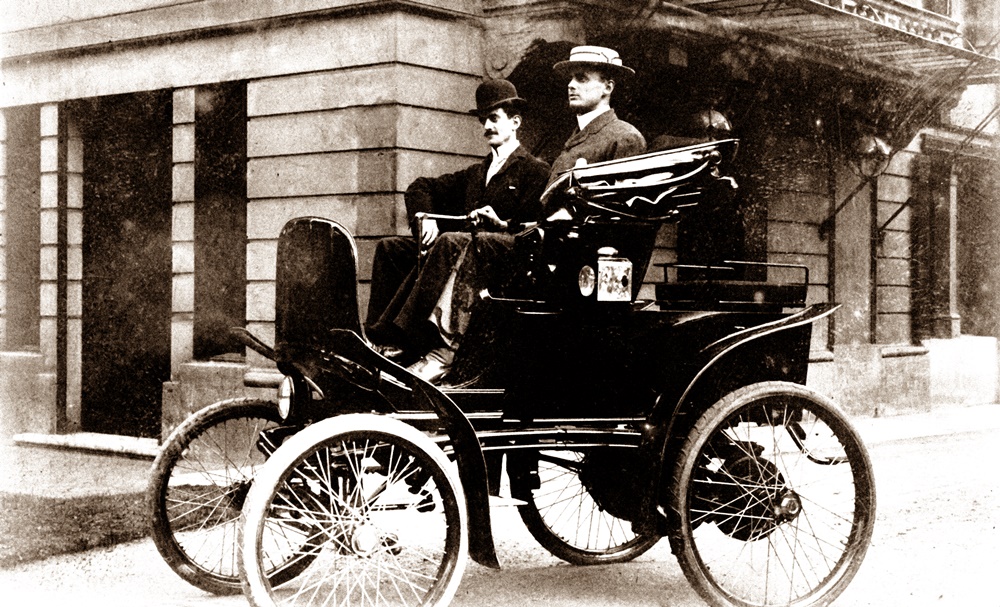
Both founders of Rolls-Royce – Charles Rolls (above) and Henry Royce (below) – had personal experiences of using electrically-powered cars in the early 20th century.
Henry Royce was an electrical engineer
Interestingly, Henry Royce, one of the founders of the company, was one of the world’s first electrical engineers. Having developed an interest in electrical power, he joined the Electric Light & Power Generating Company (EL&PG) in Southwark, London. Eventually, he was made Chief Electrician at one of the company’s subsidiaries but when the company closed down, Royce chose his own path forward.
He established F. H. Royce & Co, initially producing small electrical appliances such as doorbells, lamps, fuses and switches. The business thrived, and was soon producing larger, more complex devices such as dynamos, electric motors and winches. In 1902, Royce supplied electric motors for Pritchett & Gold, a London-based battery-maker that had diversified into building electric cars (yes, there were already electric cars over 100 years ago).
Though Royce himself never built or owned an electric car, he created internal combustion engines with strong torque, silent running and smoothness… qualities which can also be found in electric powertrains.
Electrically-powered cars existed alongside cars with internal combustion engines during the early part of the 20th century. However, their extremely limited range and the absence of a charging infrastructure, as well as bulky batteries, made them less popular as time went on and the petrol and diesel engines became the default powerplants.
Charles Rolls owned an electric car
The other founder of Rolls-Royce, Charles Rolls, acquired an electric-powered car while still an engineering student at Cambridge. It was an American-made vehicle called The Columbia Electric Carriage, and described as a ‘City & Suburban’ car. That car made a strong impression on Rolls who said: “The electric car is perfectly noiseless and clean. There is no smell or vibration, and they should become very useful when fixed charging stations can be arranged. But for now, I do not anticipate that they will be very serviceable – at least for many years to come.”
Rolls made his own small contribution to solving the problem, by providing a battery-charging station at his car showroom for the private or rentable electric Broughams that were popular in London at the time. In 1904, he was to have become an agent for the Contal Electromobile electric car but after meeting Royce and seeing his new car, he didn’t go ahead with that venture.
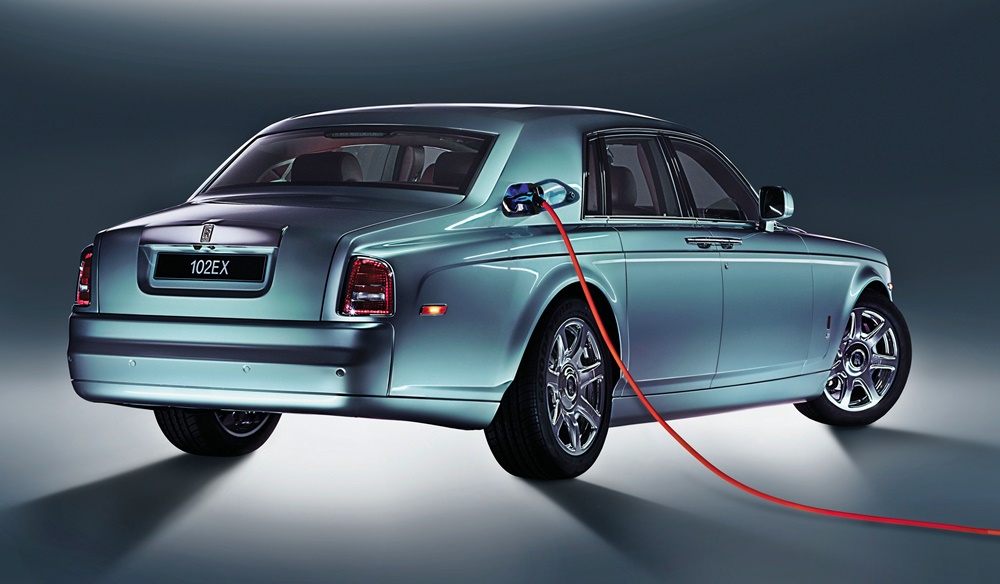
Phantom Experimental Electric (102EX)
In the spirit of the founding figures, Rolls-Royce Motor Cars aims to be an electrification pioneer in the years to come. It has already been hard at work carrying out research and development for the new model. Some of its Ideas have already been shown to the world in concept models such as the Phantom Experimental Electric (EE), codenamed 102EX, of 2011. This was a fully operational and road-legal battery-electric car – never intended for production – but serving as a working test-bed for clients, VIPs, the media and enthusiasts to experience electric propulsion. Rolls-Royce designers and engineers spoke to all who tried the Phantom EE to help them in their work and understand Issues as well as expectations.
The car’s 6.75-litre V12 petrol engine and gearbox were replaced with a lithium-ion battery pack and two electric motors mounted on the rear subframe, connected to a single-speed transmission with integrated differential. This system gave a maximum power output of 290 kW and torque of 800 Nm, compared to 338 kW and maximum torque of 720 Nm for the V12 Phantom of the time.
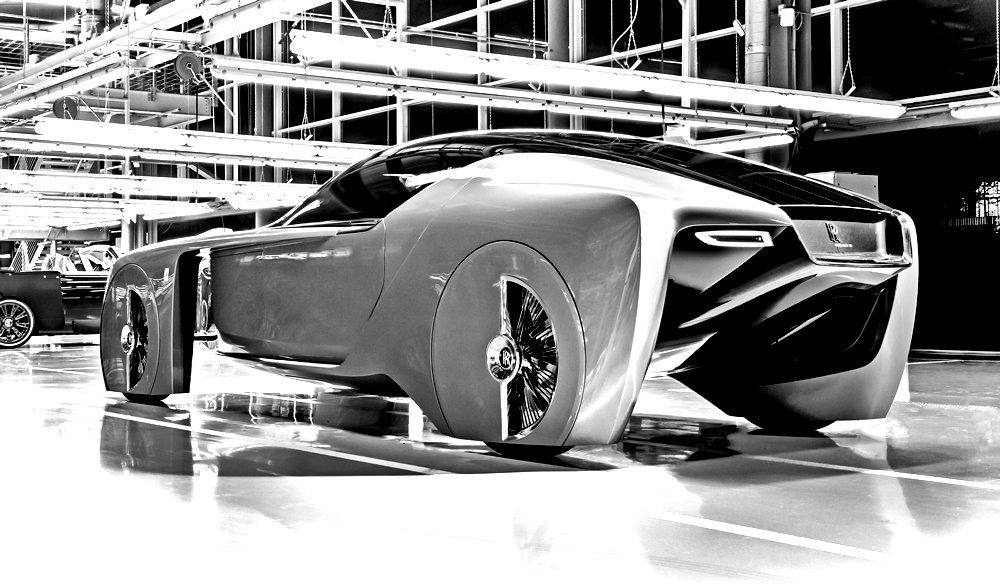
VISION NEXT 100 (103EX)
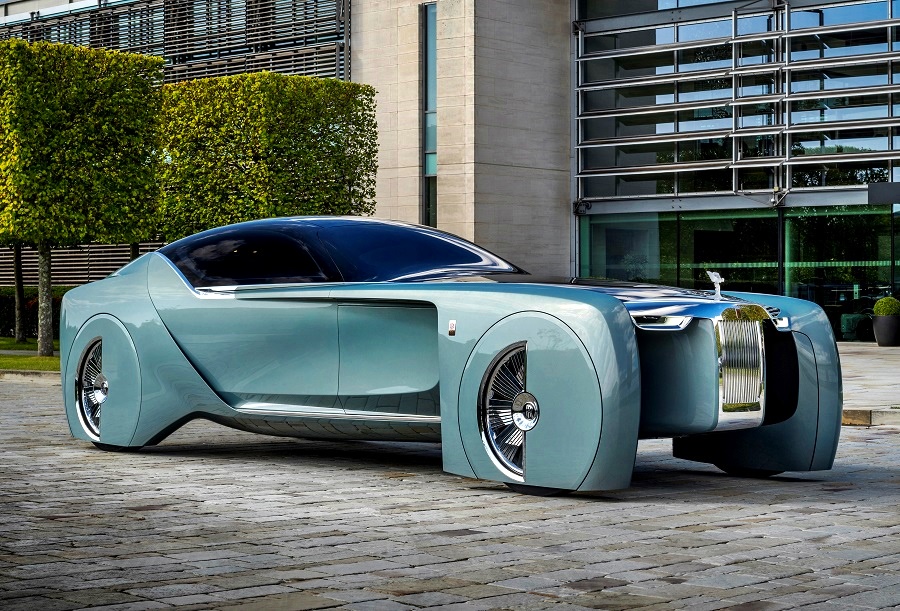
The VISION NEXT 100 (103EX), presented in 2016, was a radically innovative concept car set out to define the marque’s long-term vision of luxury mobility. Its coachbuilt bodywork allowed clients to commission a car reflecting their personal vision and its size and scale – 5.9 metres long and 1.6 metres high – the car ensured a Grand Arrival on reaching its destination. The EX-suffix confirmed that 103EX was a purely experimental electric car. Following its debut in London, the car embarked on a 3-year world tour, returning to the factory in 2019.
Vaccination does not make you immune to COVID-19 infection. You can still get infected and although you may not show symptoms, you could still spread the coronavirus. Do not stop taking protective measures such as wearing a facemask, washing hands frequently and social distancing.
Today, a drive from London to Edinburgh, a distance of 650+ kms, takes between 7 and 8 hours (according to Google Maps). That’s on smooth and mostly straight motorway and keeping to the speed limit which is 70 mph (113 km/h). But 110 years ago, a drive would have certainly taken longer without motorways and with a different level of performance.
In the 1911 London-Edinburgh Trial, a Rolls-Royce Silver Ghost 1701 won the event. Given the primitive state of Britain’s Edwardian roads, its average speed of 19.59 mph (31.5 km/h) was very impressive and furthermore, its fuel consumption was over 24 mpg (8.5 kms/litre). To prove that the car had not been modified in any way, it achieved 78.2 mph (126 km/h) on a half-mile speed test conducted immediately after the Trial.
The car, designed as an ‘Experimental Speed Car’, also became the first Rolls-Royce to exceed 100 mph (160 km/h) in a later test at the Brooklands circuit in England. It had been given the name of ‘Silver Ghost’ to emphasise its ‘ghost-like quietness’ but more importantly, the participation in such a long-distance run was intended to show that Rolls-Royce cars were reliable and durable.
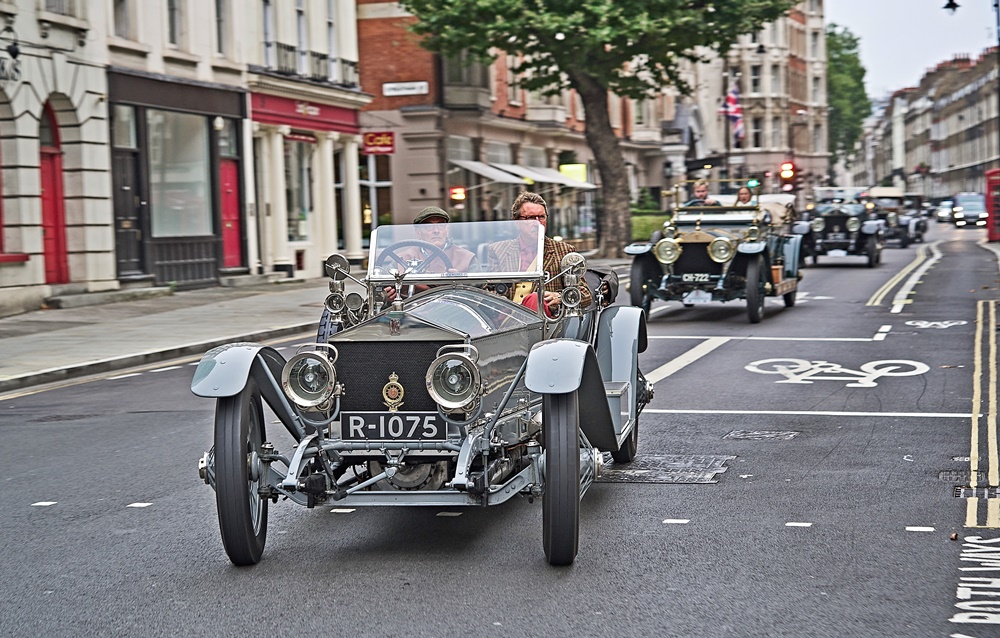
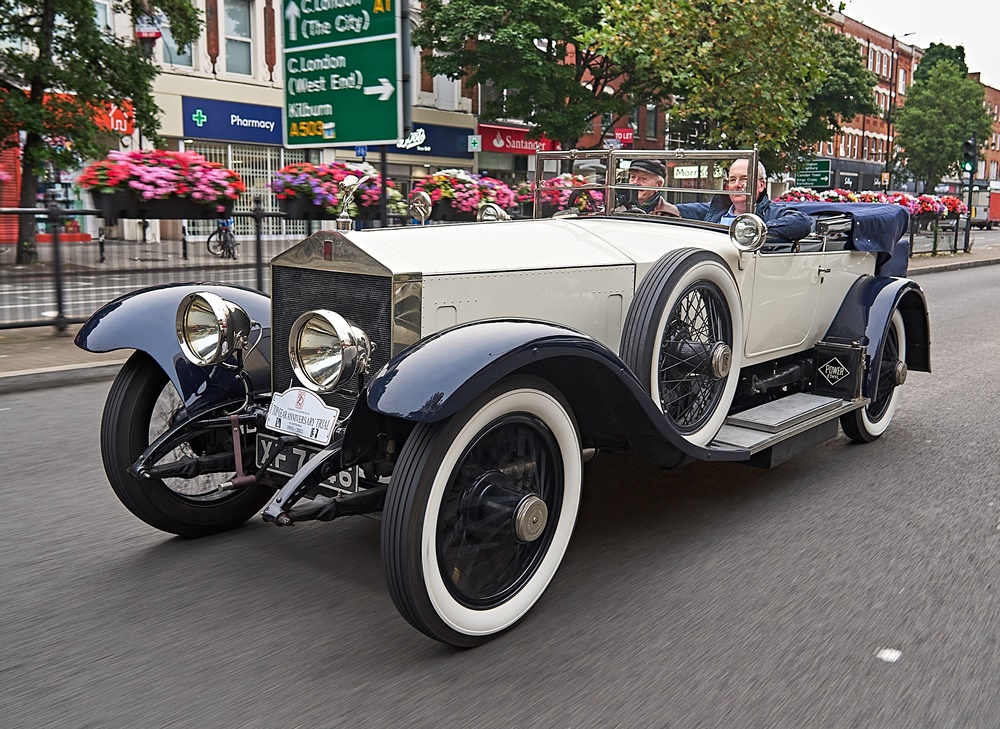
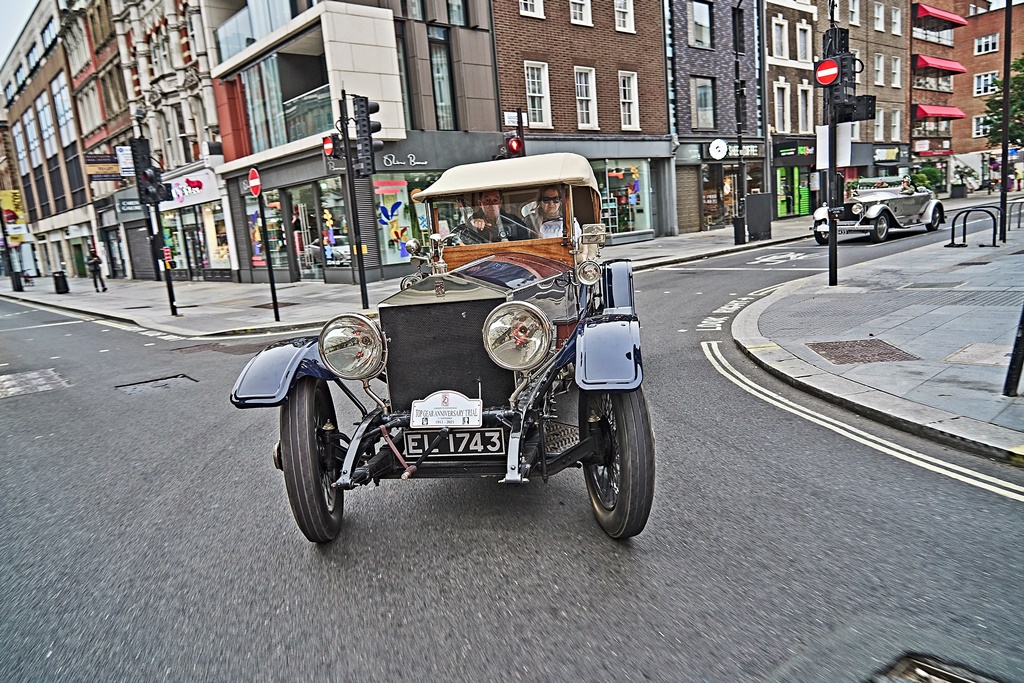
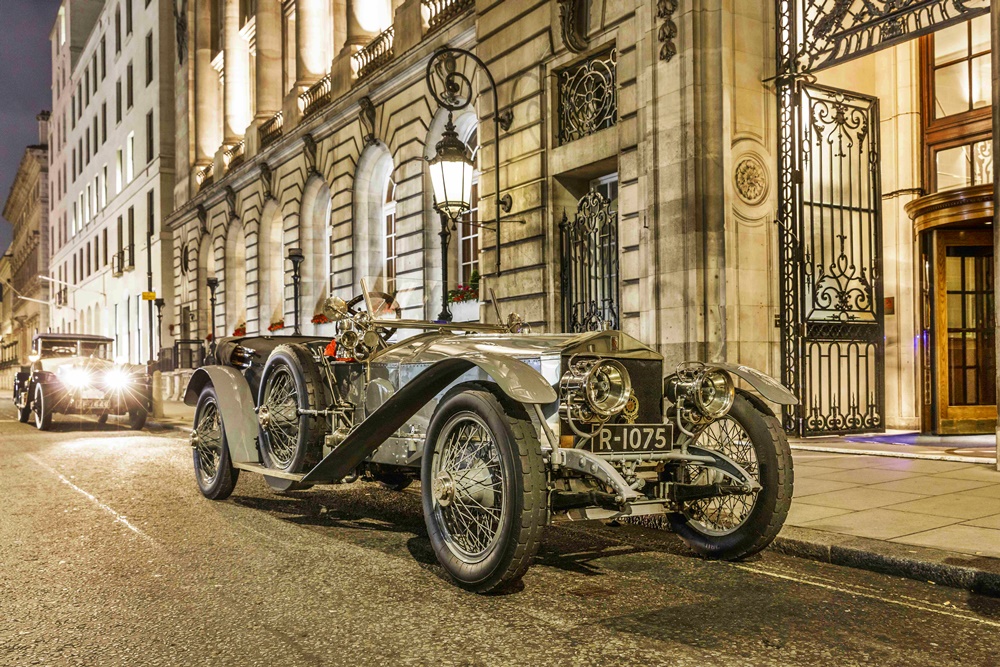
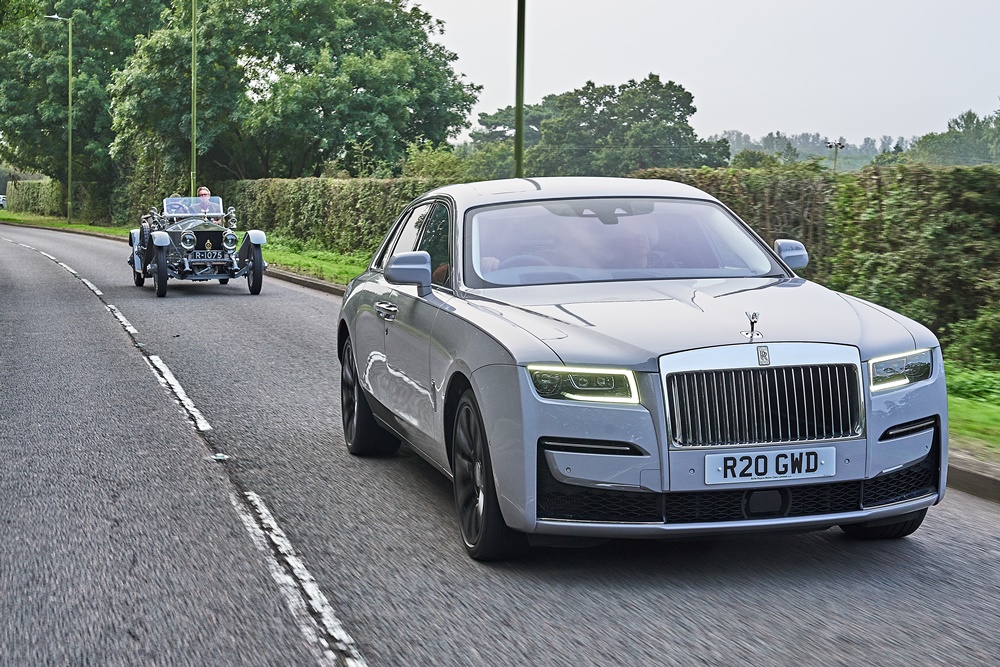
Recently, history literally repeated itself as Rolls-Royce Silver Ghost 1701 re-enacted its 1911 run. The re-enactment was as faithful to the original event as possible. The car, now a priceless collector’s item with registration plate R-1075, departed from the headquarters of the Royal Automobile Club in London at 6 am on Sunday, September 5. It then travelled to Edinburgh on a route that followed the old Great North Road as closely as practicable – and it was locked in top gear just as it was 110 years before.
This scene, taken in 2021, could have looked the same 110 years ago with the very same car.
The 1701 was accompanied on the 2-day run by another 9 Silver Ghosts, all of a similar age and in equally fine condition, from the 20-Ghost Club. Also part of the historic cavalcade was the latest Ghost which made its debut in 2009. The occupants, of course, enjoyed far greater comfort within the enclosed cabin which the original Silver Ghost did not have, not to mention that more than two persons could be accommodated.
“Silver Ghost 1701 has a unique and special place in the marque’s history and affections. It’s difficult to think of many machines that can still perform exactly as they did 110 years ago. This extraordinary car is a remarkable tribute to our predecessors who designed, engineered and built it. We’re proud to continue their work and uphold their values in today’s Rolls-Royce motorcars – which are still the best in the world,” declared Andrew Ball, Head of Corporate Relations at Rolls-Royce Motor Cars.
Rolls-Royce has been associated with world speed records on both land and water for more than a century. But while the exploits of people like Sir Malcolm Campbell are well documented and widely known, there is one British hero who set records using Rolls-Royce engines who has been largely overlooked by history. Captain George Eyston was his name and his extraordinary car, called Thunderbolt, set 3 world land-speed records at the Bonnevile Salt Flats in the American state of Utah.
Eyston was among the first British racers to travel to the Bonneville Salt Flats when he first went there in 1935. He set new 24-hour and 48-hour endurance speed records, and subsequently received the Segrave Trophy, awarded to ‘the British national who demonstrates Outstanding Skill, Courage and Initiative on Land, Water and in the Air’.
7-tonne record-breaker
In 1937, he returned to the Flats and went on to set the 3 world land-speed records with the Thunderbolt. This extraordinary machine had 3 axles, 8 wheels and weighed 7 tonnes, earning it monikers such as ‘behemoth’ and ‘leviathan’ in contemporary reports. And that was even with the body being made from aluminium and, in its original form, had a blunt, heavyset profile topped with a large triangular tailfin.
The Thunderbolt was powered by a pair of Rolls-Royce R supercharged 37-litre, V-12 aero engines, each producing well over 2,000 horsepower. Less than 20 of these engines were ever made; so rare were they that the Thunderbolt’s engines had actually been used earlier in the Schneider Trophy-winning Supermarine S6.B seaplane that would lay the foundations for the legendary Spitfire fighter aircraft of World War II.
Celebrating the dauntless, fearless, pioneering spirit
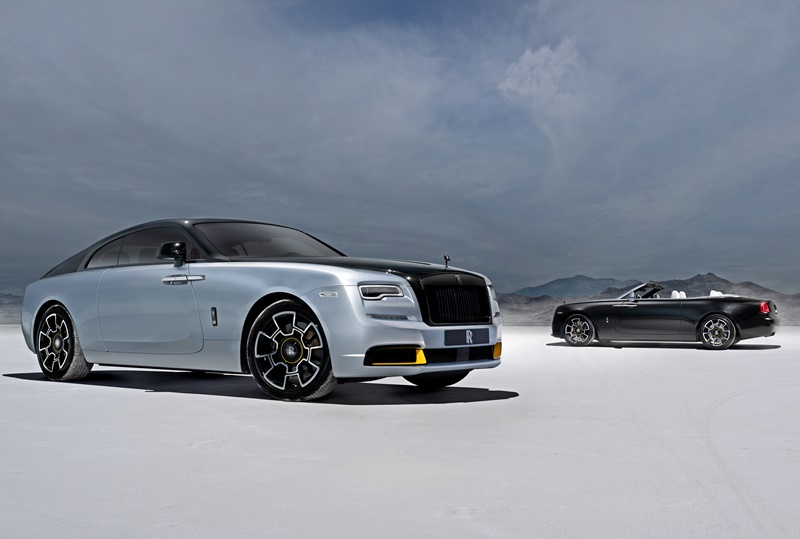
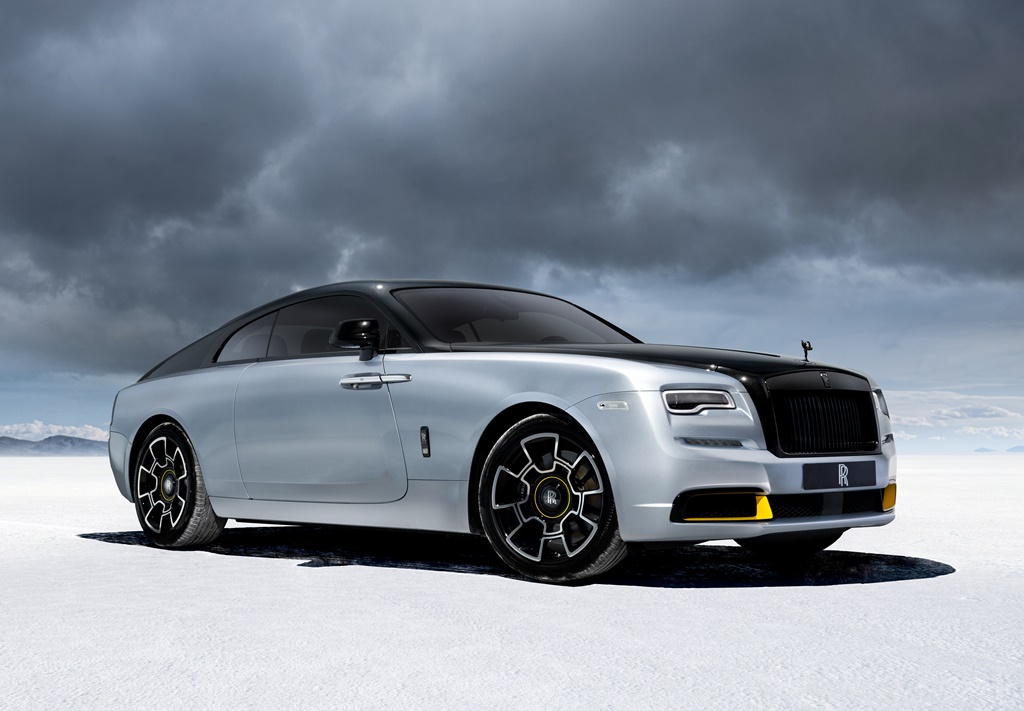
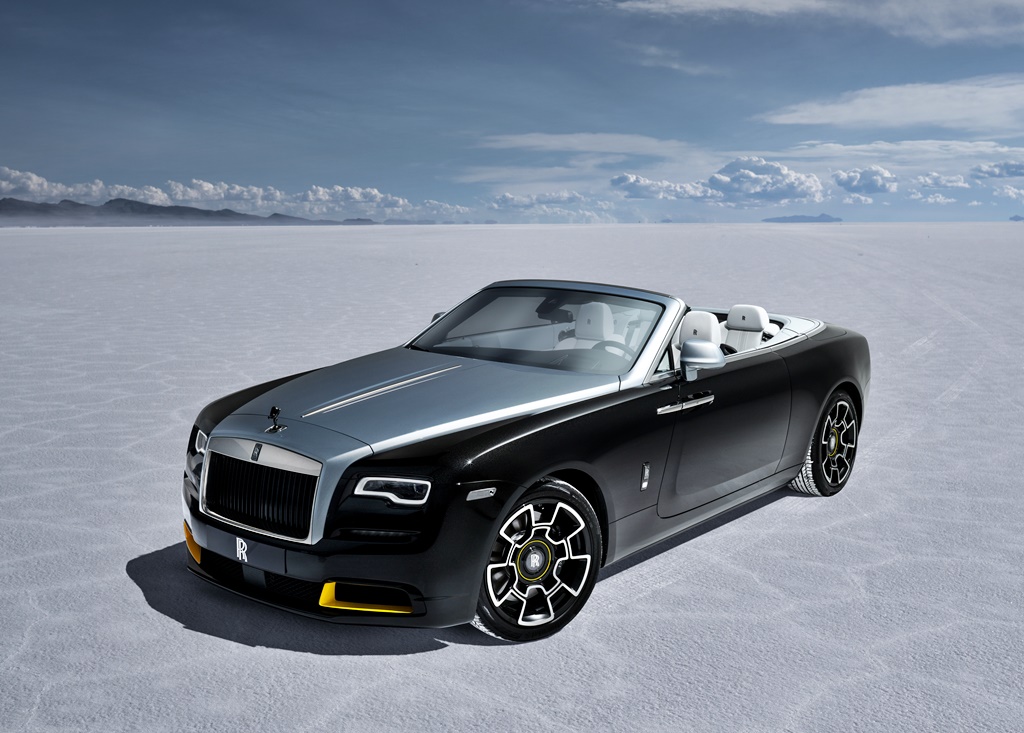
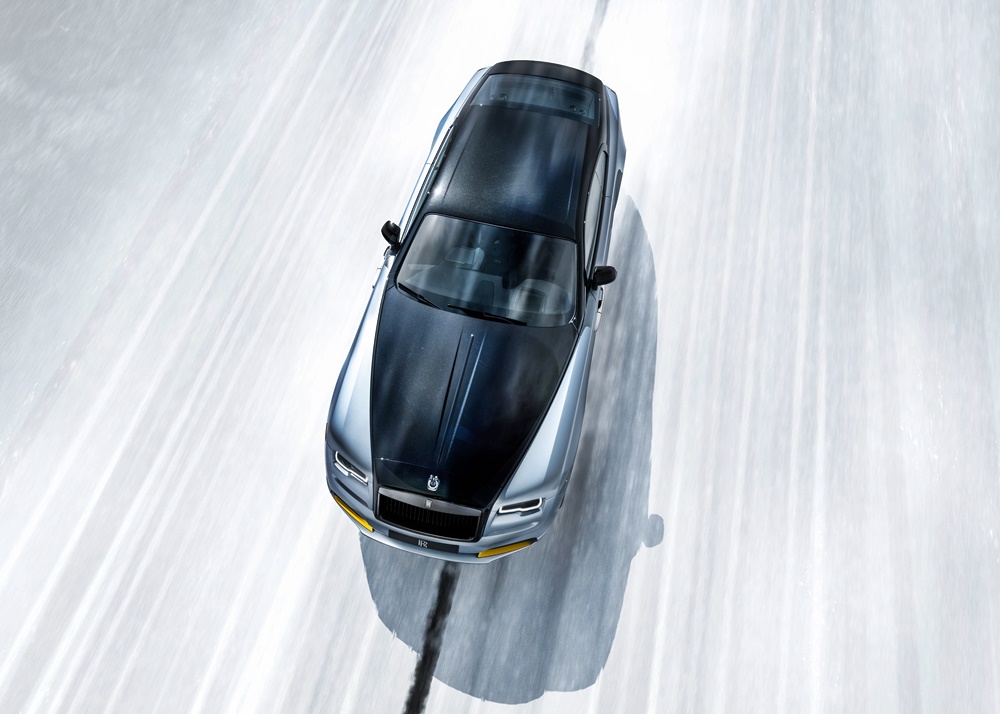
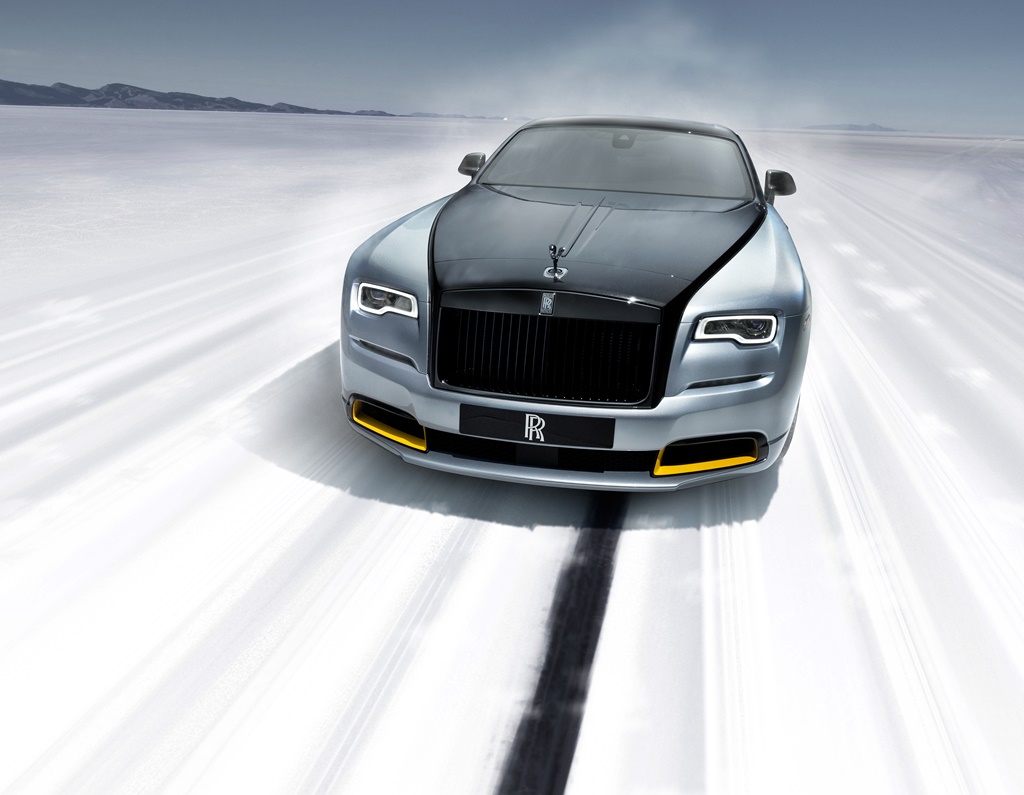
In 2021, Rolls-Royce Motor Cars has created The Landspeed Collection, consisting of both the Wraith and Dawn Black Badge, to celebrate that dauntless, fearless, pioneering spirit of Captain Eyston. It also has strong aesthetic links to the unique, otherworldly landscape of the Bonneville Salt Flats where the Thunderbolt made him, albeit briefly, the fastest man on Earth.
The Collection Car duo is presented in a specially created two-tone finish, which marries Black Diamond Metallic with a new Bespoke colour, Bonneville Blue. This specially developed hue bears particular significance to the Collection, with a colour that transitions under sunlight from light blue to silver, illustrating the reflections of both the vast sky over Bonneville and the crisp salt flats on the Thunderbolt’s aluminium body.
While rocketing over the Flats, Eyston had to hold the car on a very precise course – to deviate even slightly would be disastrous at the extreme speeds. To help him guide the car, his team painted darkened track lines on the salt surface for Eyston to follow – effectively his sole means of keeping the Thunderbolt straight at over 560 km/h.
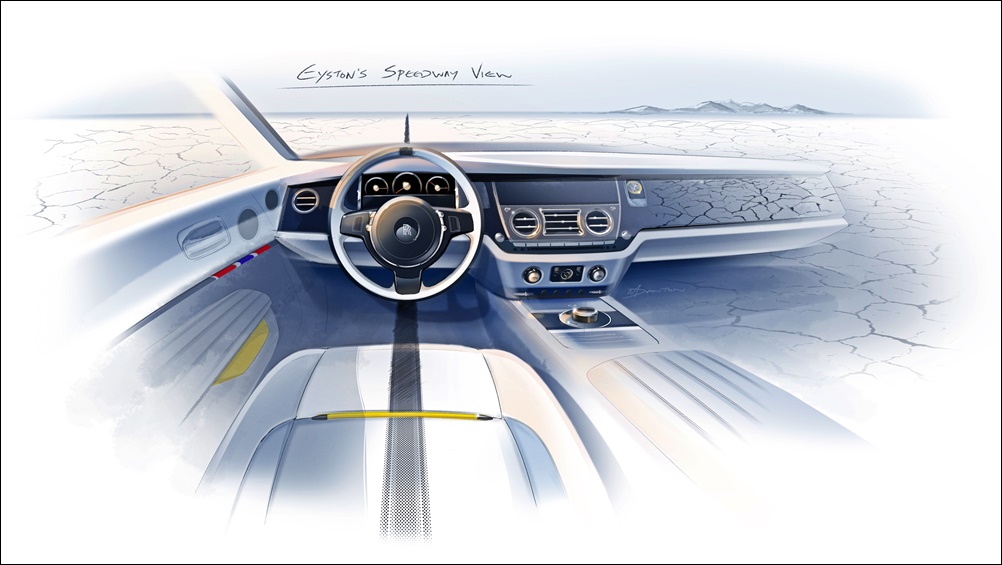
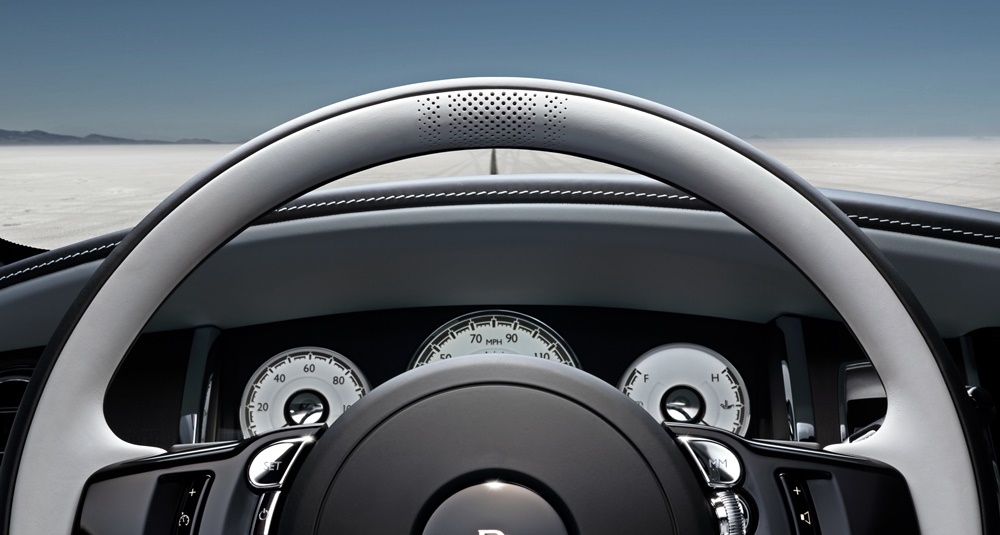
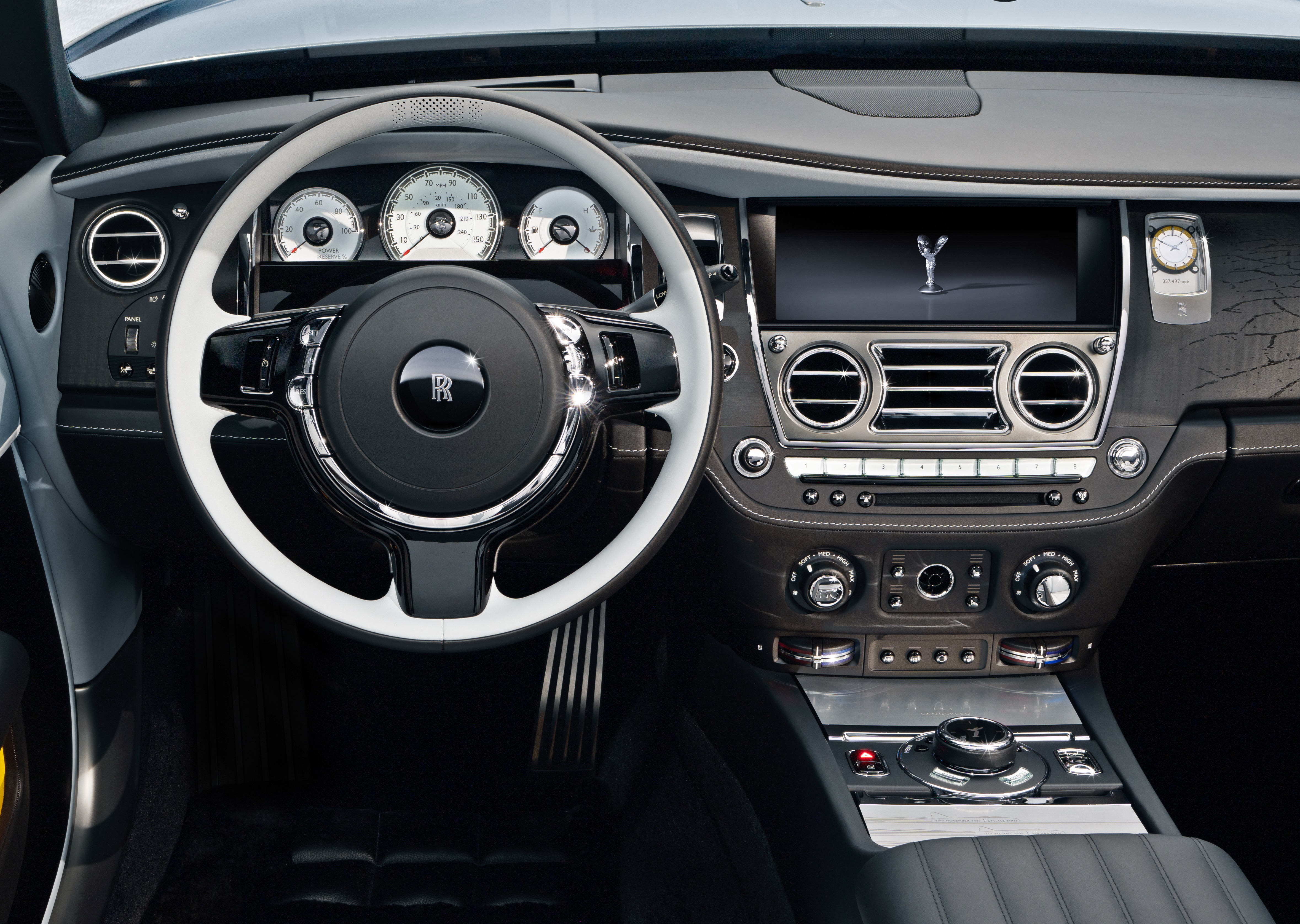
This simple yet ingenious idea is recalled in the Landspeed Collection by a subtly perforated dark detail in the upper-centre of the steering wheel, which continues through the centre-line of the driver’s seat, accentuating the driver-focused appeal of the two cars.
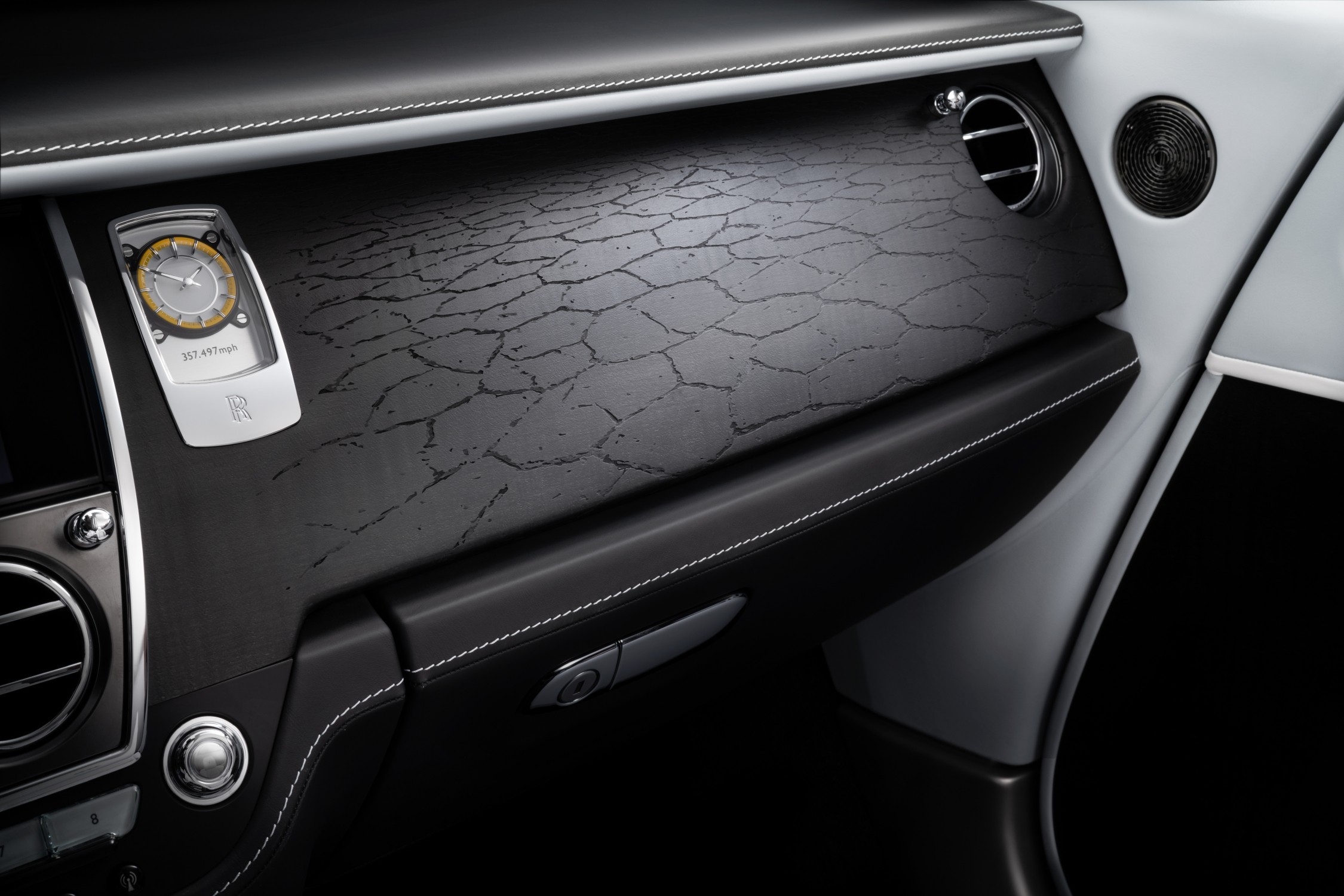
The Bonneville Salt Flats may appear smooth but, in fact, they’re seamed with tiny fissures. This distinctive texture is perfectly reproduced, digitally retraced from the surface itself, in the wooden veneer of Landspeed Collection’s fascia and console lids.
Environmental references in the cabin
The interior references continue with the Thunderbolt’s unique silhouette, and the records it achieved, depicted on the polished, anodised aluminium surface of the Landspeed Collection’s front tunnel. The Dawn Landspeed additionally celebrates Eyston’s vision with the outline of the Silver Island mountains, which dominate the Bonneville horizon, engraved on the upper ‘waterfall’ between the rear seats.
According to the history books, Eyston’s third and final land-speed record of 357.497 mph (575.57 km/h) stood for 341 days. In the new Collection Cars, it is commemorated for all time, engraved into the housing of the dashboard clock alongside the name ‘Bonneville’, in homage to where the record was set.
Clock recalls a solution for visibility
The Thunderbolt was originally left unpainted, which caused an unexpected problem. During the first record attempts, the photo-electric timing equipment was unable to detect the polished aluminium body against the searing white of the Salt Flats’ surface, making accurate timing impossible. Eyston’s brilliantly simple solution was to paint a large black arrow with a yellow circle on the side, to heighten visibility when travelling at great speed.
Bright yellow accents throughout the Landspeed Collection, including two-tone yellow and black bumper inserts, pay tribute to this vision. The clock’s design recounts this theme. Based on the instrument dials from the Thunderbolt, with yellow and black details, black-tipped hands are inspired by the arrows painted on the original car’s exterior.
The night sky on on September 16, 1938
The allure of the Bonneville Salt Flats draws not only record-breakers, but astronomers, too. Stargazers prize this vast, unpopulated wilderness for its exceptionally dark night skies, which create perfect conditions unspoiled by artificial light.
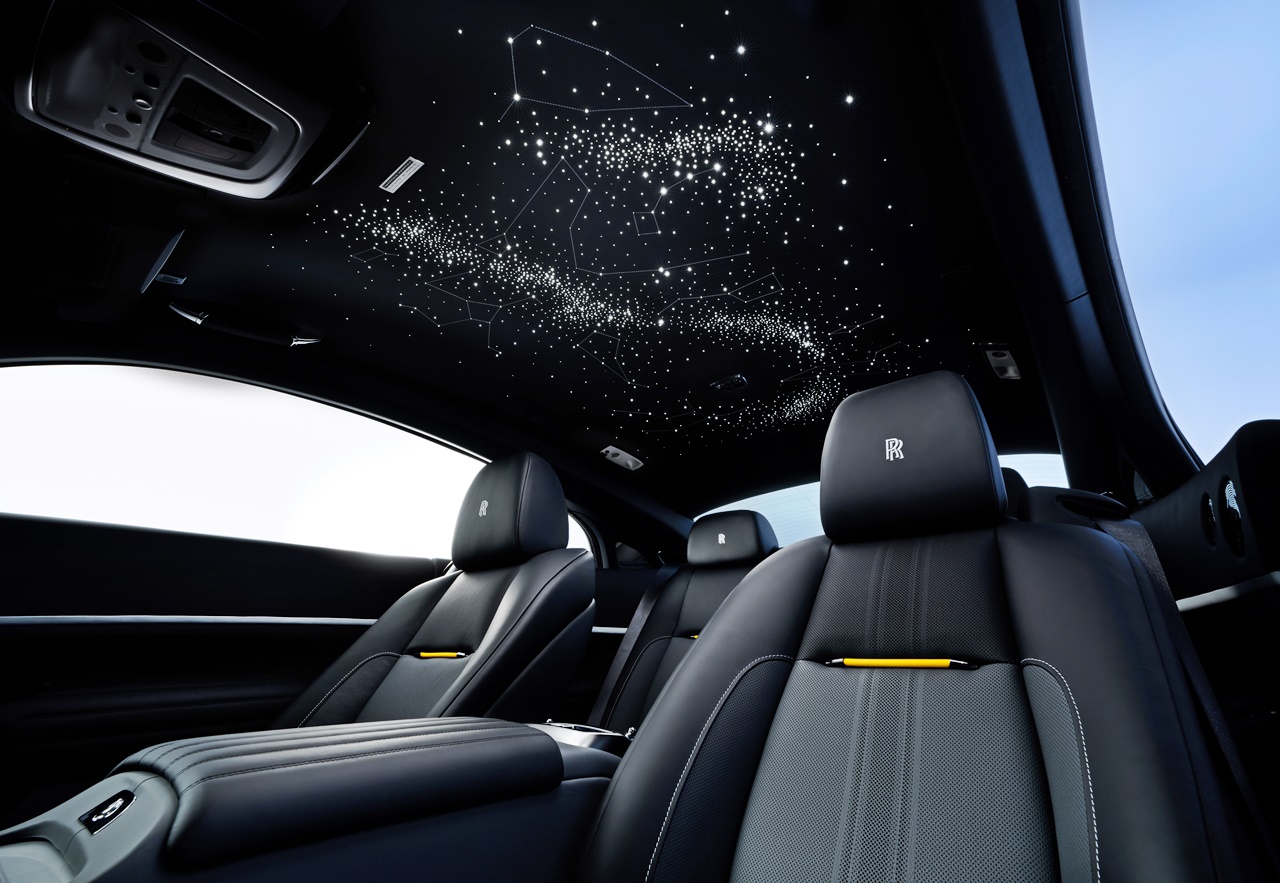
In the Wraith Landspeed, the Starlight Headliner perfectly recreates the heavens as they appeared over the Flats on September 16, 1938, the date on which Eyston and his Thunderbolt set their third and final world land-speed record. The constellations are precisely marked using 2,117 individually placed fibreoptic ‘stars’, the largest number of stars in a Rolls-Royce Wraith Starlight Headliner ever featured.
Eyston’s military honours are marked in both the Wraith and Dawn Landspeed with a subtle detail in the driver’s door, made in the same Grosgrain weave silk and colours to match the original medal ribbons. The armrests on both the passenger side and below the ribbon detail are specially padded to give them the comfortable ‘club armchair’ quality that Eyston favoured in his driving seats, much to the amusement of his fellow racers.
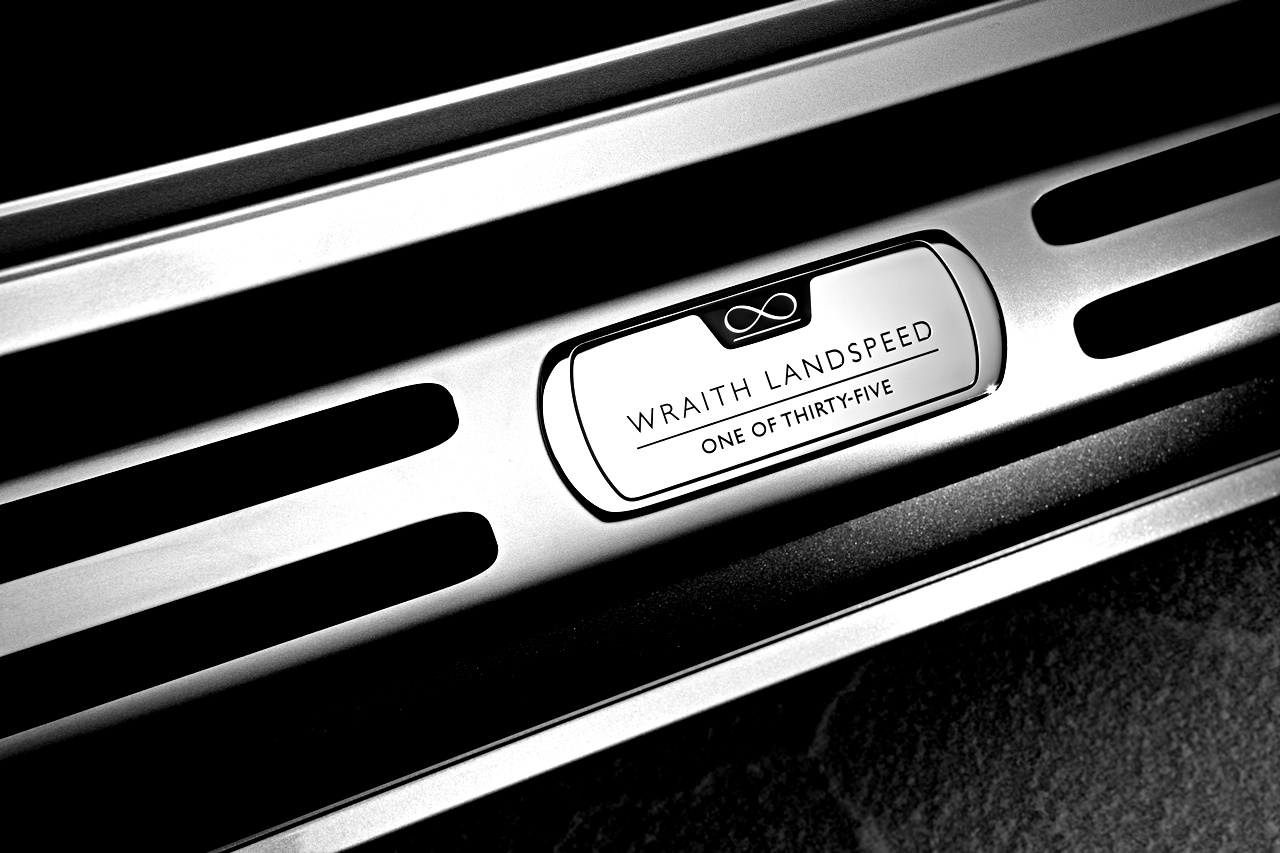
Production of Landspeed Collection cars is strictly limited to just 25 units of the Dawn and 35 of the Wraith, all of which have already been reserved by customers.
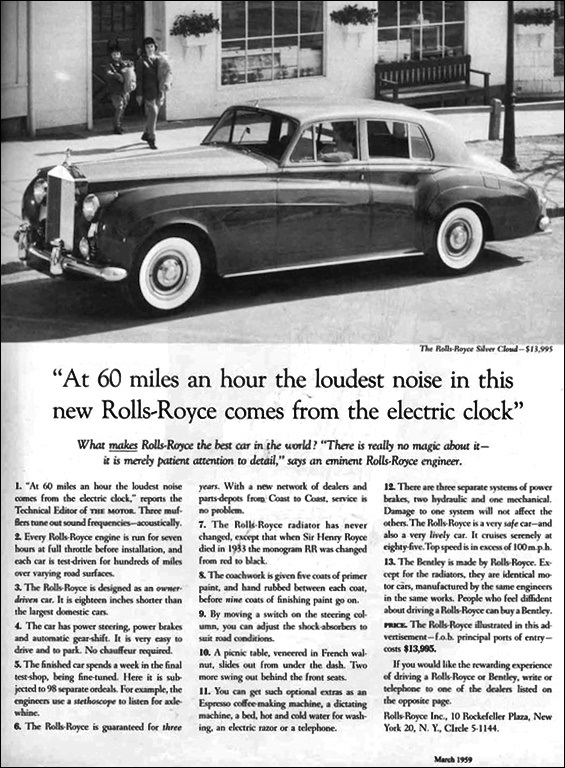
When there is mention of clocks in cars, one famous advertisement will often be remembered. It is the one where David Ogilvy (regarded as the ‘Father of Advertising’) used the comment of the Technical Editor from The Motor magazine to create a memorable headline. It said: “At 60 miles an hour, the loudest noise in this new Rolls-Royce comes from its electric clock.”
In the years that followed 1958, the year that advertisement came out, the clocks in Rolls-Royce cars have remained one of the notable elegant features. And with Bespoke commissioning, many clocks have been uniquely designed to their owners’ specifications and with modern technology, they no longer click.
The famous Rolls-Royce adbvertisement.
New technical and aesthetic heights
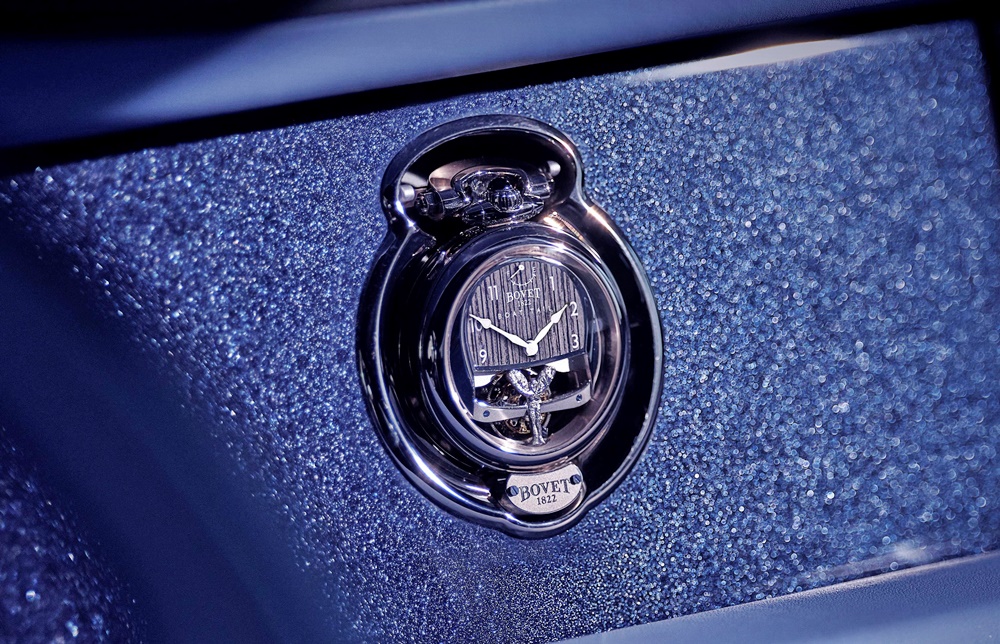
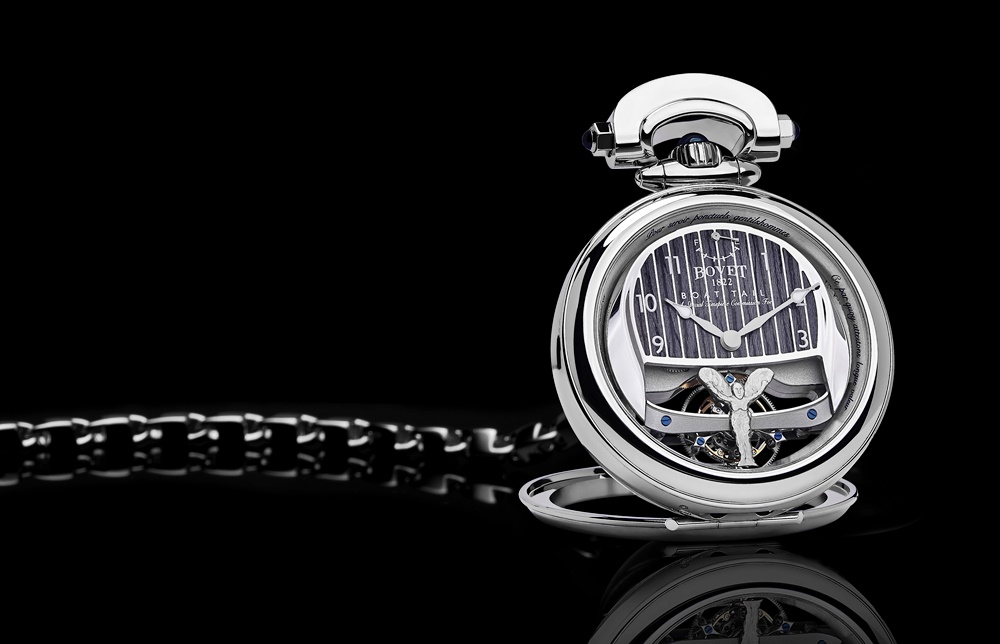
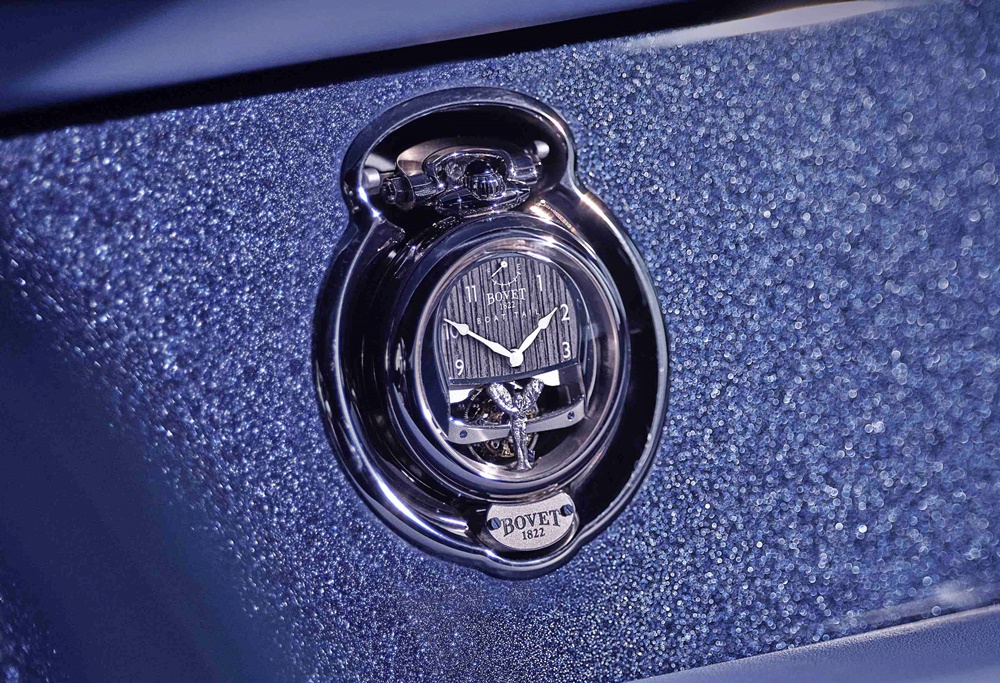
Epitomising this significant item of detail, precision, and beauty is the pair of timepieces for first Boat Tail coachbuilt commission done by Rolls-Royce. They have been created with BOVET 1822, a Swiss specialist in tourbillion timepieces, to be iconic centrepieces elevated to new technical and aesthetic heights.
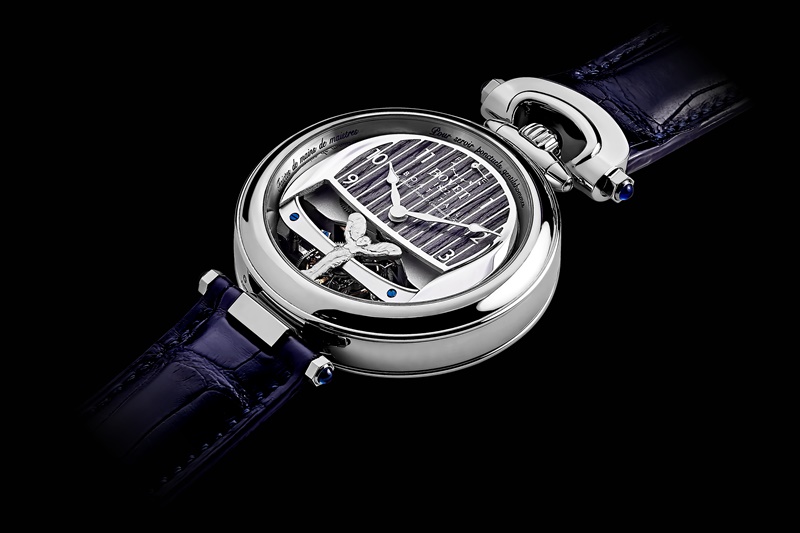
The timepieces are unique to both the horological and automotive worlds. Made as a pair – in lady’s and gentleman’s versions – they are reversible, and housed in BOVET 1822’s patented Amadeo case, which allows them to be worn on the wrist, or used as a table clock, pendant or pocket-watch, as well as being placed front and centre in Boat Tail’s fascia as the car’s own timepiece. Both are fitted with tourbillon mechanisms to ensure perfect accuracy.
His and hers, and the car’s
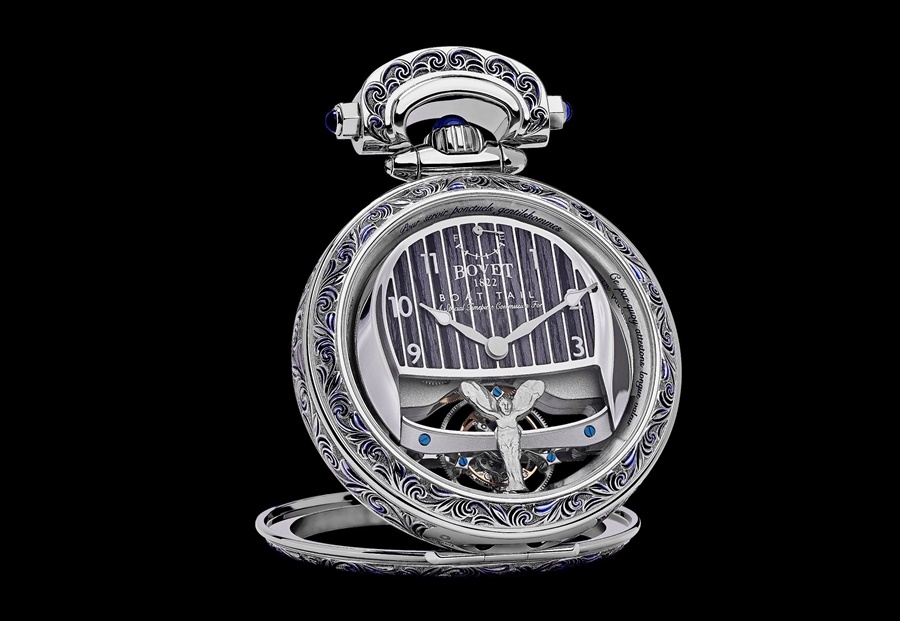
The timepieces have specially designed 18K white gold cases and feature matching front dials with the same Caleidolegno veneer found on the aft deck of Boat Tail itself, and are finished with the owner-couples’ names. The gentleman’s timepiece is highly polished; the lady’s is ornately engraved then filled with blue lacquer.
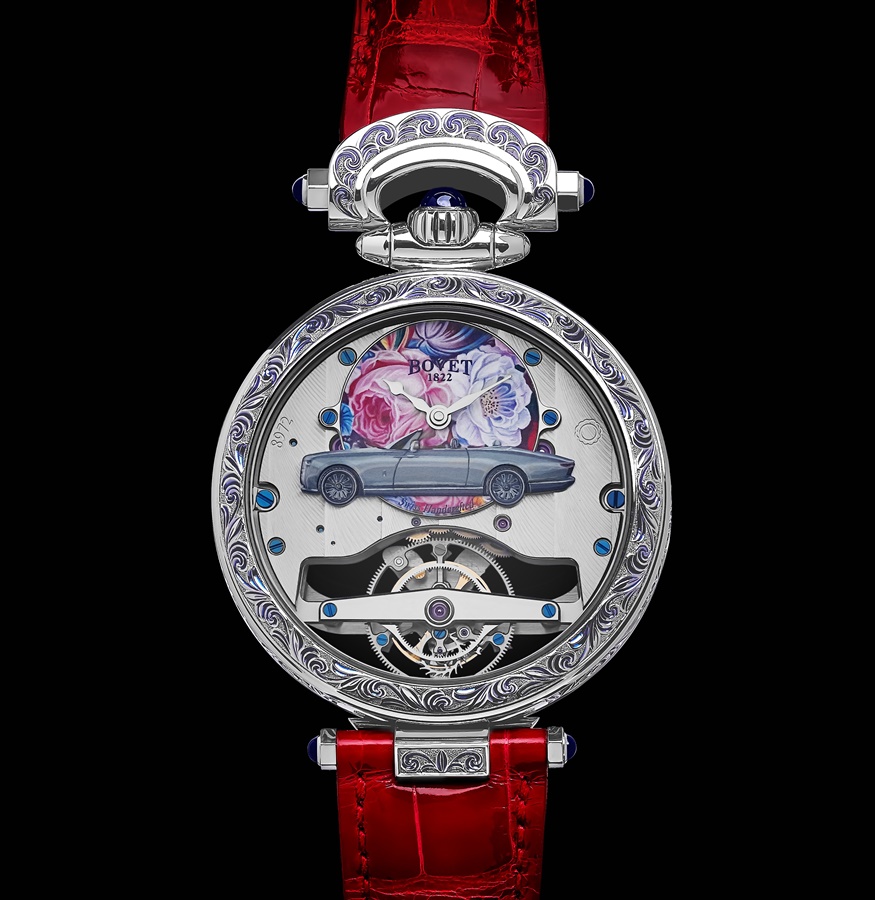
On the reverse side, the dials are more individual. The gentleman’s features an aventurine dial with the celestial arrangement of the night sky over the place of his birth on his birthdate; the lady’s is decorated with an ornate miniature painting of a flower bouquet on a mother-of-pearl dial. This design is a traditional BOVET 1822 motif, chosen by and personalised for the owner.
Both reverse dials have hand-engraved Bespoke sculptures of Boat Tail, complete with wheels, door handle, mirrors and other fine details. By working closely together, the teams at Rolls-Royce and BOVET 1822 were able to achieve a precise colour match between the lacquer on this tiny work of art and the very exclusive car.
Tested to auto industry standards
Further close cooperation was required to ensure the timepieces conformed to the demands of their unique role as clocks for use in a car. In watchmaking, weight is rarely an issue for a complex timepiece but in this instance, there was a limit on the combined permissible weight of the timepieces and their holders.
BOVET 1822 met this requirement by creating an entirely new 44 mm white gold case. In addition, the timepieces and holders also had to be tested to automotive industry standards for vibration and crash safety – something never previously undertaken on mechanisms of this kind.
At a conservative estimate, the timepieces’ design, engineering, sculptures, miniature painting, marquetry, bespoke movements and cases took a total of 3,000 hours to complete.
BOVET 1822 holds a number of patents and has received many industry awards, and is also one of the only companies in the watch industry to manufacture its own spirals and regulating organs. To reduce potential impact from the vibration from the car, the tourbillon has pivots rather than the traditional ball bearings; a heavier balance wheel and an increased oscillation rate to aid precision. Finally, the tourbillon bridge is finished with a miniaturised Spirit of Ecstasy handcrafted in gold. The timepieces have an astonishing 5-day power reserve, rather than the 42 – 48 hours of a ‘standard’ watch, to allow for their role as car clocks.
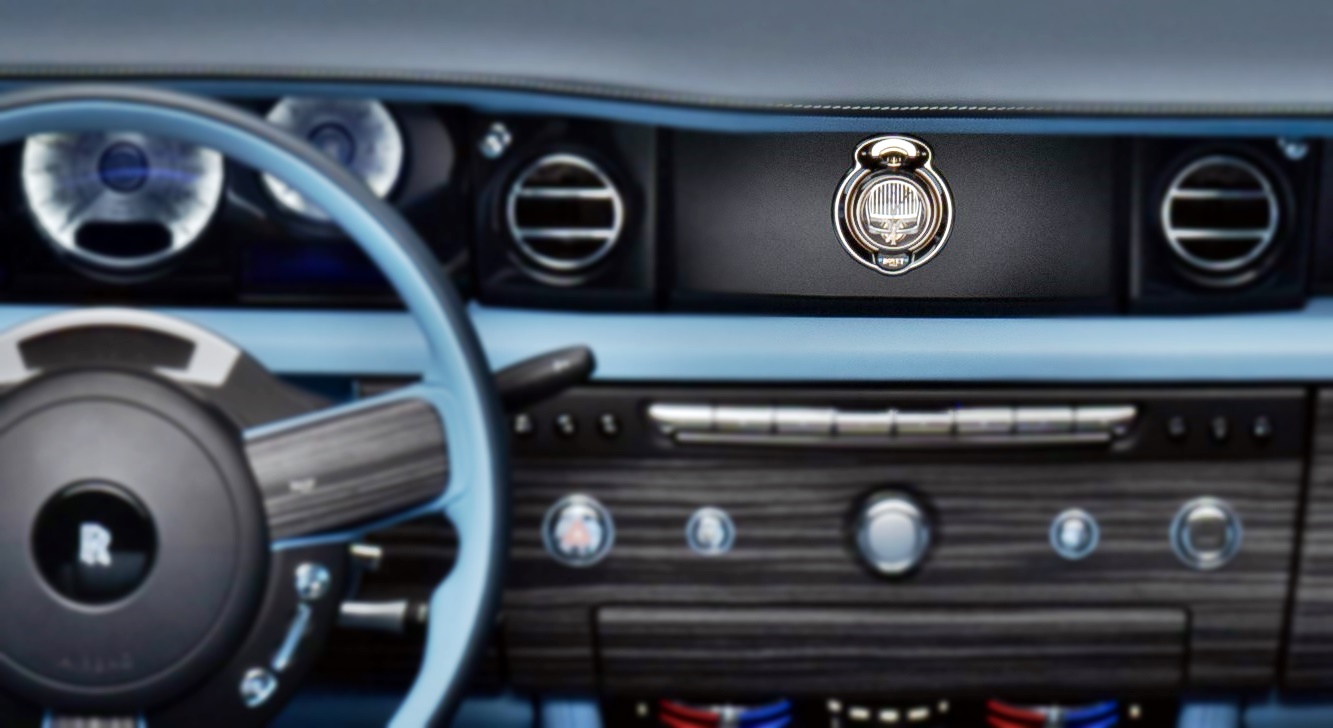
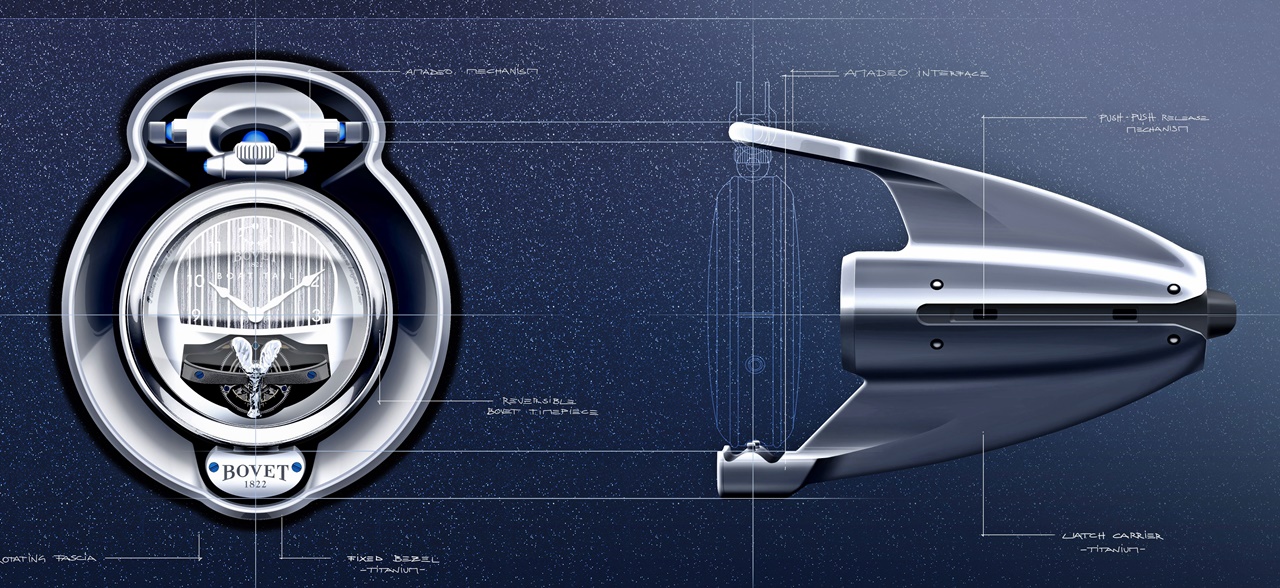
The holder mechanism is unique to Rolls-Royce Boat Tail and was designed by BOVET 1822 engineers and the Rolls-Royce Coachbuild design team from a blank sheet of paper. Although in a Rolls-Royce, vibration is naturally reduced to an absolute minimum, undetectable vibrations are inevitably still present. This highly complex mounting assembly serves to isolate the timepieces from these micro-vibrations. It also ensures they operate silently, are easy to mount and remove from the dashboard and, above all, remain safe and secure.
These challenges were unlike any normally encountered in watchmaking and car manufacture. From the start, BOVET 1822 was determined to follow a purely mechanical approach in keeping with its tradition of Swiss handcrafted production. The engineers’ innovative solution was to keep all the system’s moving parts external, with the dashboard providing a solid setting for the aluminium and titanium holder.
The Coachbuilt 2021 Rolls-Royce Boat Tail
Finally, Rolls-Royce ensured that when the holder is not housing one of the timepieces, it can be covered with a beautiful engraved and lacquered display plaque. Below the clock, the dashboard is fitted with a special drawer, lined with the same leather as Boat Tail’s seats, which serves as a safekeeping receptacle to house the timepieces, straps, chain and pendant when not in use.
Recently, Rolls-Royce announced that it has re-established its Coachbuild department which will offer customers a totally exclusive car of their own, well beyond the personalisation available from its Bespoke services. The Coachbuild department brings back a lost art and science of making cars which goes back to the earliest years of the motorcar, before mass production began in factories.
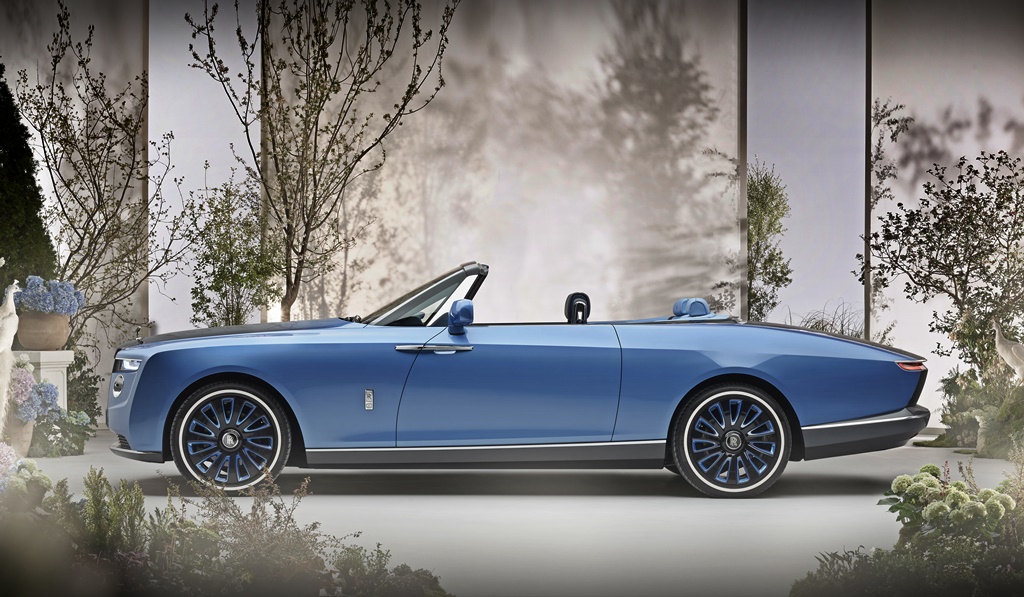
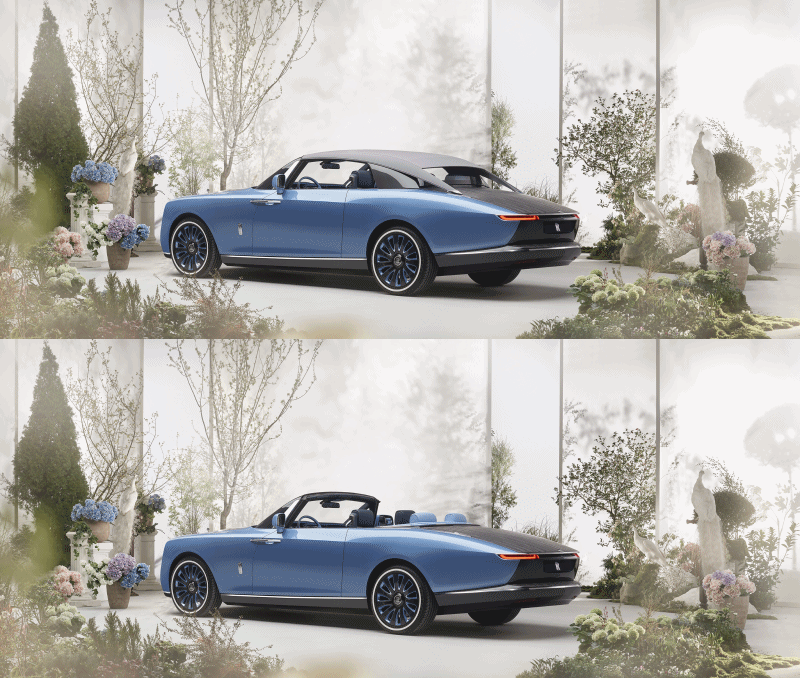
The carmaker must have been talking to some customers about this new development for some time as they already have a coachbuilt model to show. It has been commissioned by a customer and is known as the ‘Boat Tail’.
“Today marks a seminal moment for the House of Rolls-Royce. We are proud to unveil Rolls-Royce Boat Tail to the world, and with it, the confirmation of coachbuilding as a permanent fixture within our future portfolio. Historically, coachbuilding had been an integral part of the Rolls-Royce story. In the contemporary Rolls-Royce narrative, it has informed our guiding philosophy of Bespoke. But it is so much more. Rolls-Royce Coachbuild is a return to the very roots of our brand. It represents an opportunity for the select few to participate in the creation of utterly unique and truly personal commissions of future historical significance. This is authentic luxury. This is contemporary patronage in its truest form. This is Rolls-Royce Coachbuild,” said Torsten Muller-Otvos, Chief Executive of Rolls-Royce, at the presentation this afternoon in England.
Sweptail demonstrated coachbuilding expertise
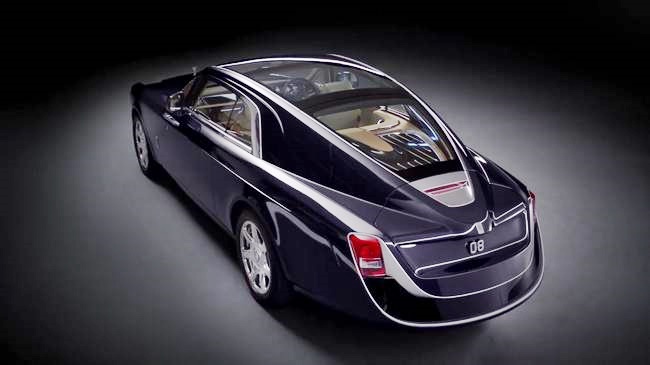
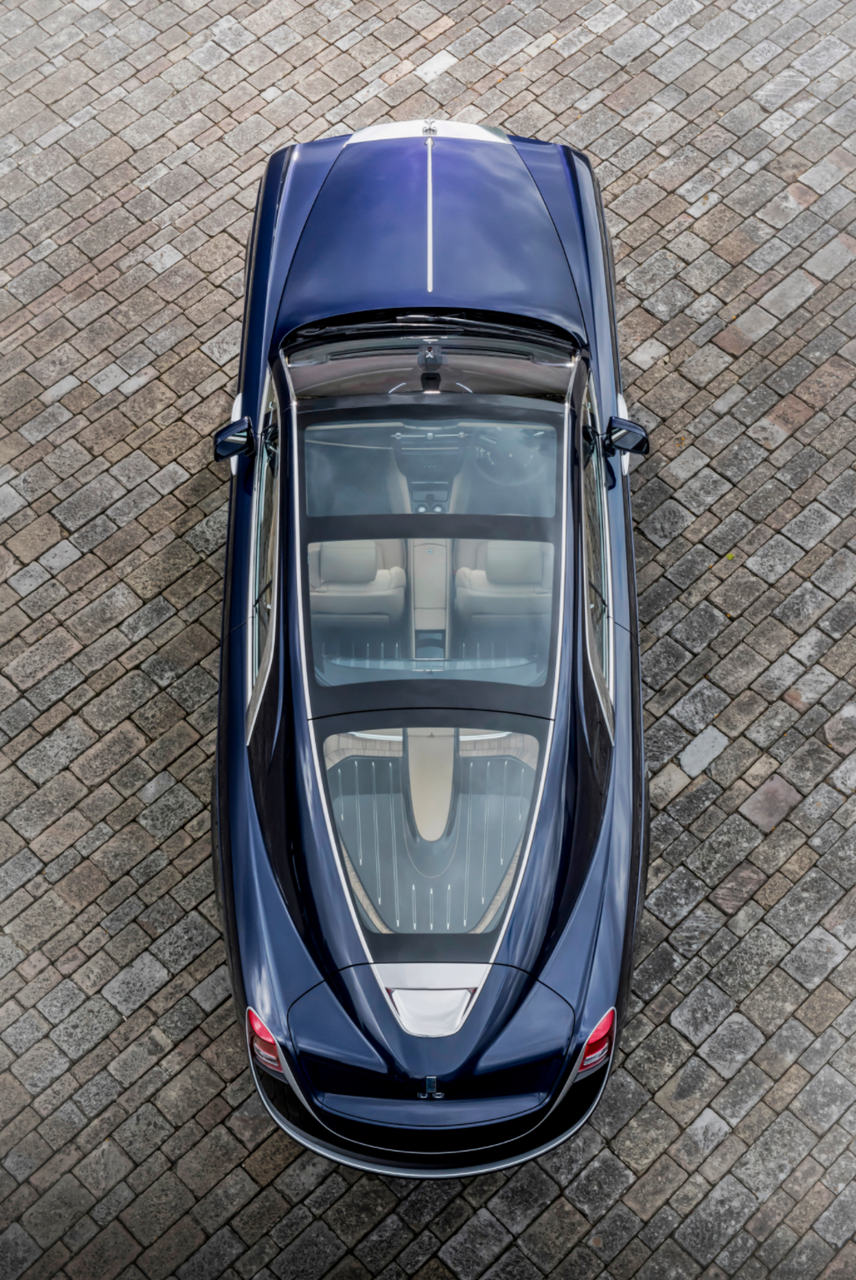
The Sweptail, presented in 2017 as a demonstration of the coachbuilding expertise of Rolls-Royce attracted the attention of a number of customers. They approached the company to discover if they too could collaborate on a unique commission. The company was agreeable and this was the genesis of a permanent contemporary Coachbuild department at Rolls-Royce.
2017 Rolls-Royce Sweptail
Within this group, it emerged that three potential customers shared a deep appreciation of contemporary nautical design. J-Class yachts were often referenced as points of inspiration, both for their purity of form and their requirement for hand-craftsmanship at the highest level to bring them into existence.
Customer-led creative expression
This customer-led creative expression established the contemporary expression of the Boat Tail typology, where coachbuilders would graft the hull forms of sailing boats onto the rolling chassis of a Rolls-Royce. When the idea of this design direction was proposed, the three customers made a single demand: “Show me something that I have never seen before.”
In consultation with the customers concerned, an agreement was reached whereby three cars would share a common body, but each would then be individually, highly personalised, reflecting the confluence between vision, capability and ambition of the marque and each of the individual commissioning patrons.
New realms of design opportunity
The manual techniques of coachbuilding offer new realms of design opportunity. Once the preliminary design proposal is penned by hand, the discovery of the form is enabled with a full-sized sculpture in clay, allowing hand-crafted manipulation of the expansive surfaces to perfect its shape.
Employing age-old individual hand skills and craft, a living canvas is created from metal–honing and optimising the aluminium body, creating a clarity of surface and continuation of line that is unable to be achieved by machine alone. The process is akin to yacht building with the process of hand-refinement repeated almost endlessly, without the pressure of time.
Who are the customers?
The first Rolls-Royce Boat Tail, unveiled today, is a curation of exceptional thoughts, concepts and items, which culminate to form the customer’s perfect experience. The commissioning customers of this unit are a globally successful couple and their desire was to create a response to a life of hard work, success achieved, and celebration required.
Their fascination of the Boat Tail form was furthered by a motorcar in their private collection – a 1932 Rolls-Royce Boat Tail, lovingly restored by them, in time for their modern Boat Tail’s completion. Thus this creation tells the romantic tale of Rolls-Royce’s history, echoing a Boat Tail design but not explicitly mimicking it, fusing an historical body type with a thoroughly contemporary design.
The visual connection to boats
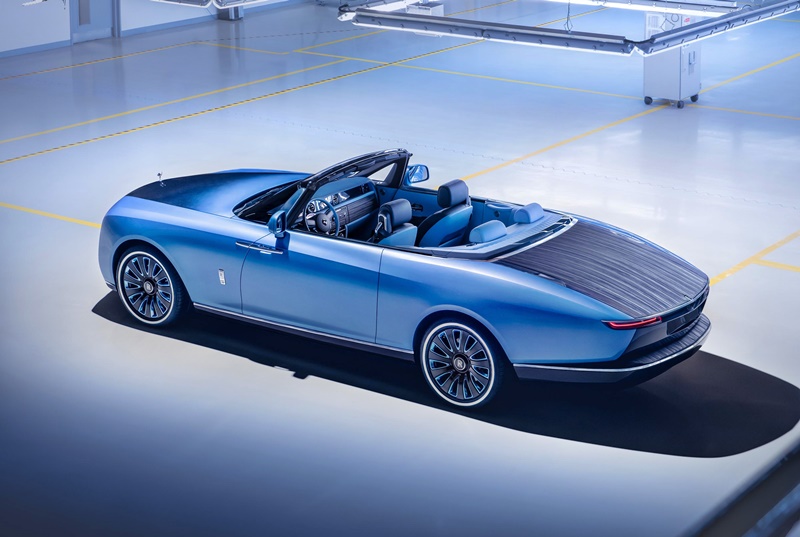
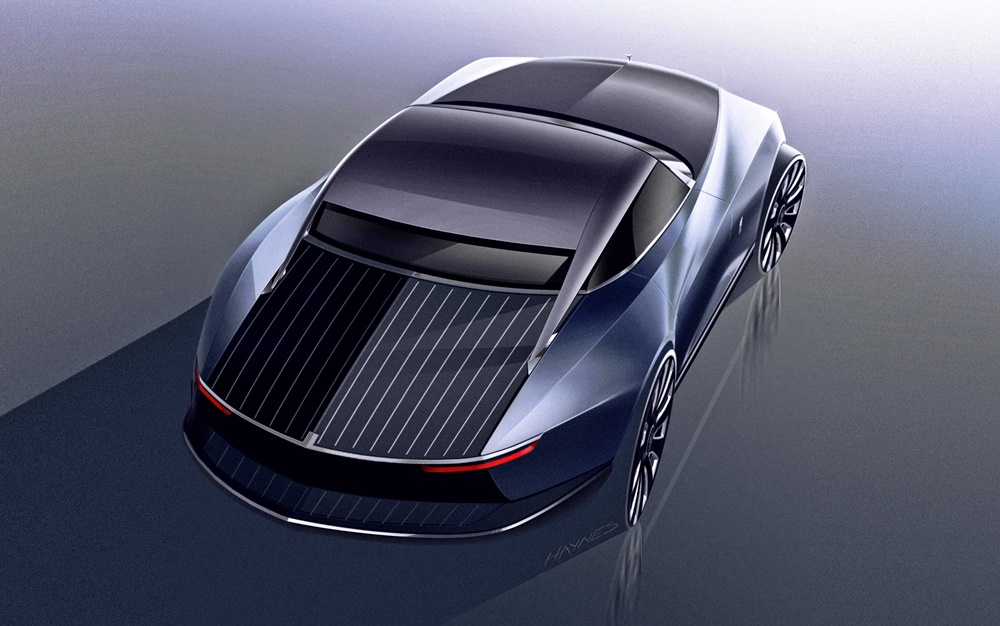
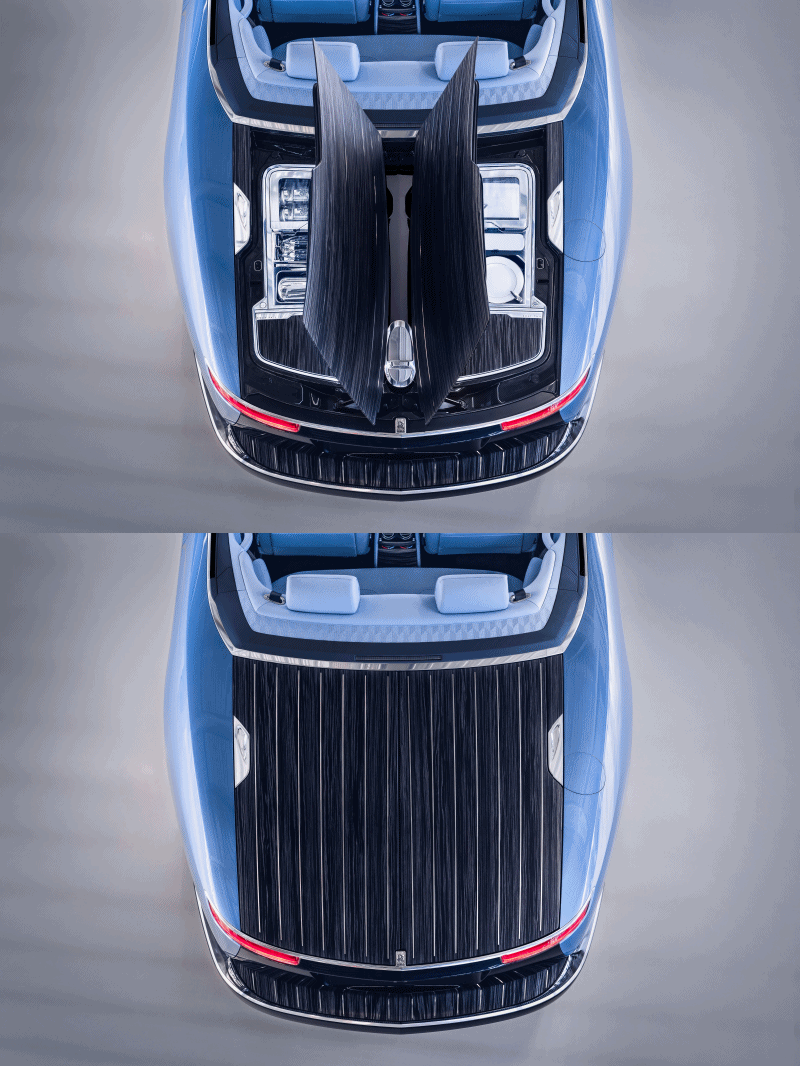
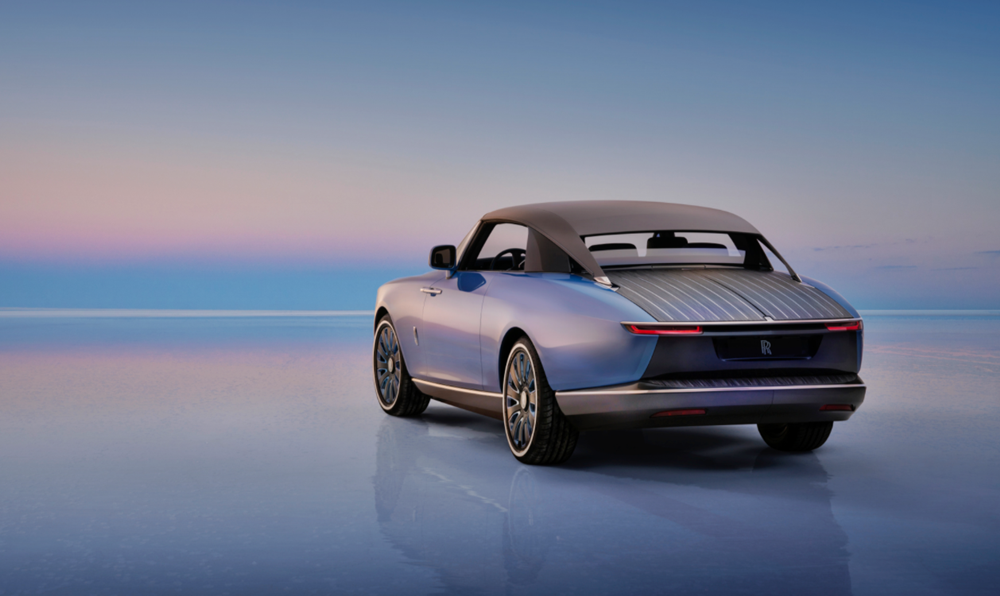
While much of the car, almost 5.9 metres long, has all the elements of a modern Rolls-Royce, it is at the rear where the nautical references are apparent. The ‘aft deck’, a modern interpretation of the wooden rear decks of historical Boat Tails, incorporates large swathes of wood. Caleidolegno veneer is applied in a feat of Rolls-Royce engineering; the grey and black material which is typically housed in the interior, has been specially adapted to be used on the exterior, with no compromise to the aesthetic.
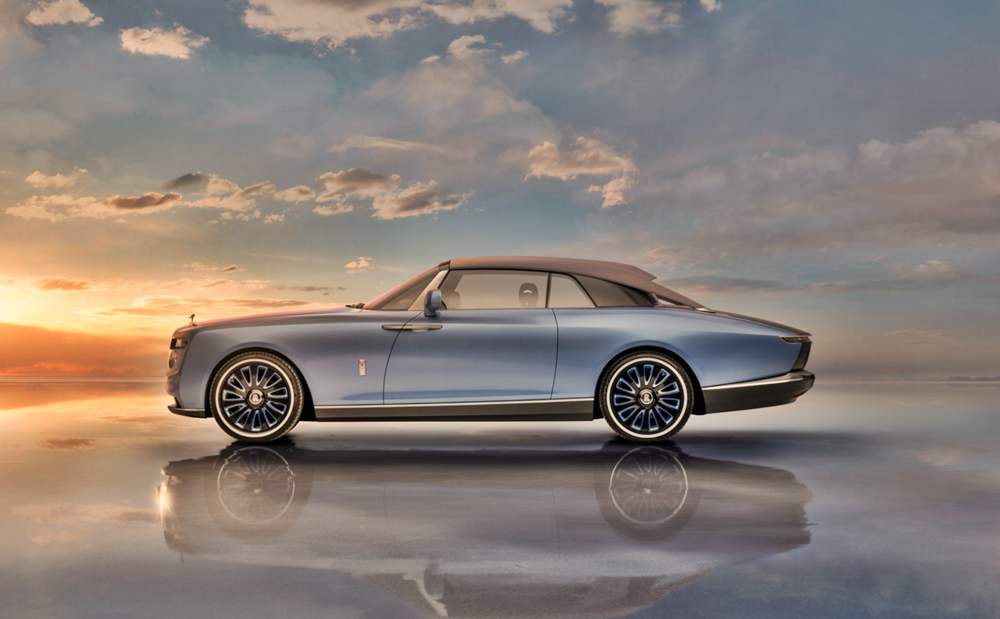
From the rear, one perceives a strong graphical composition marked by further horizontal emphasis, accentuating Boat Tail’s great width. An explicit architectural influence is discovered in the Boat Tail’s unconventional fixed-canopy roof. Adding to the sculptural form, the sweeping roofline concludes in delicate structural elements that touch down on the rear, redolent of flying buttresses. Of course, if rainy weather is encountered while the roof is removed, a temporary tonneau is stowed for static transitory shelter.
Blue bodywork and elements
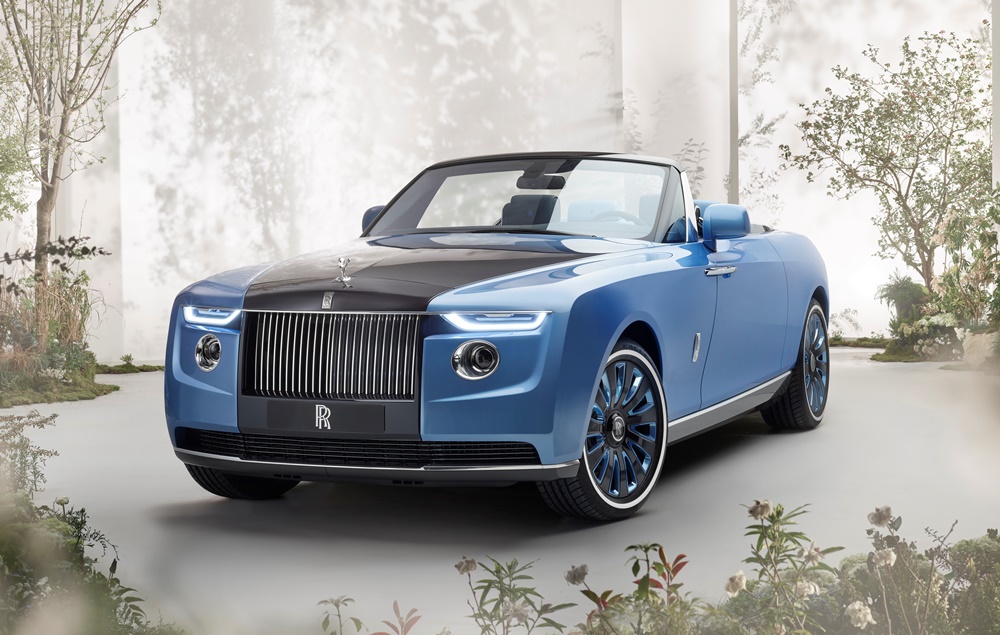
The exterior of Rolls-Royce Boat Tail is swathed in a rich and complex tone of the customers’ favourite colour – blue. The hue, with an overt nautical connotation, is subtle when in shadows but in sunlight, embedded metallic and crystal flakes bring a vibrant and energetic aura to the finish. To ensure the smoothest possible application when rendering the exterior, a finger was run over the definitive body line before the paint had fully dried to soften its edges.
The wheels are also finished in bright blue, highly polished and clear coated to add to the Boat Tail’s celebratory character. A hand-painted, gradated bonnet, a first for Rolls-Royce, rises from a comparatively subdued deeper blue which cascades onto the grille, providing a progressive but informal aesthetic and a solidity of overall volume when viewed from the front.
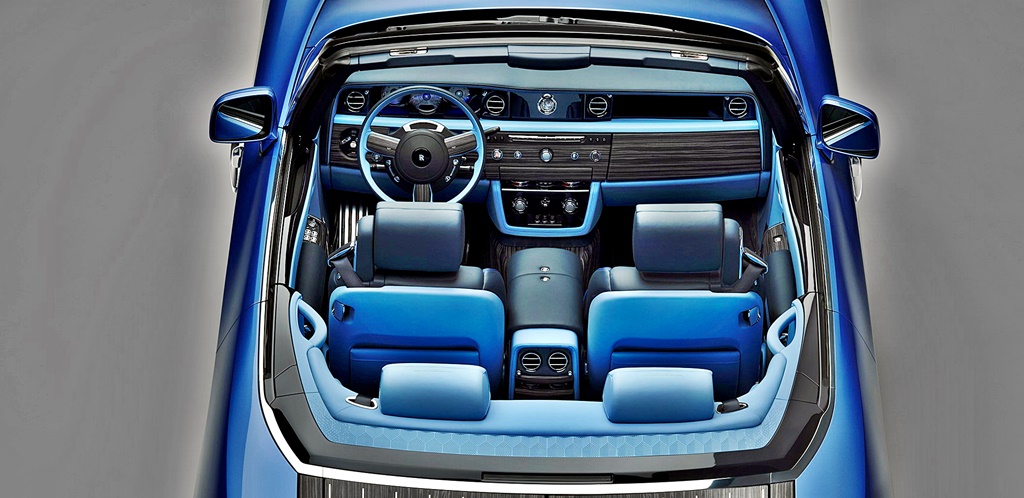
The interior leather reflects the bonnet’s colour tone transition with the front seats swathed in the darker blue hue, recognising the Boat Tail’s driver focused intent, while the rear seats are finished in the lighter tone. A soft metallic sheen is applied to the leather to accentuate its pairing with the painted exterior while detailed stitching and piping is applied in a more intense blue inspired by the hands of the car’s timepieces.
The fascia is distilled in its appearance, purposefully reduced to provide a modern aesthetic. This minimalist canvas accentuates the jewel like features of the completely unique BOVET 1822 timepieces specifically commissioned by the customer for the Boat Tail. As collecting pens is another of the customers’ great passions, a particularly cherished Montblanc pen will reside in a discretely placed, hand-crafted, case of aluminium and leather, in the glovebox.
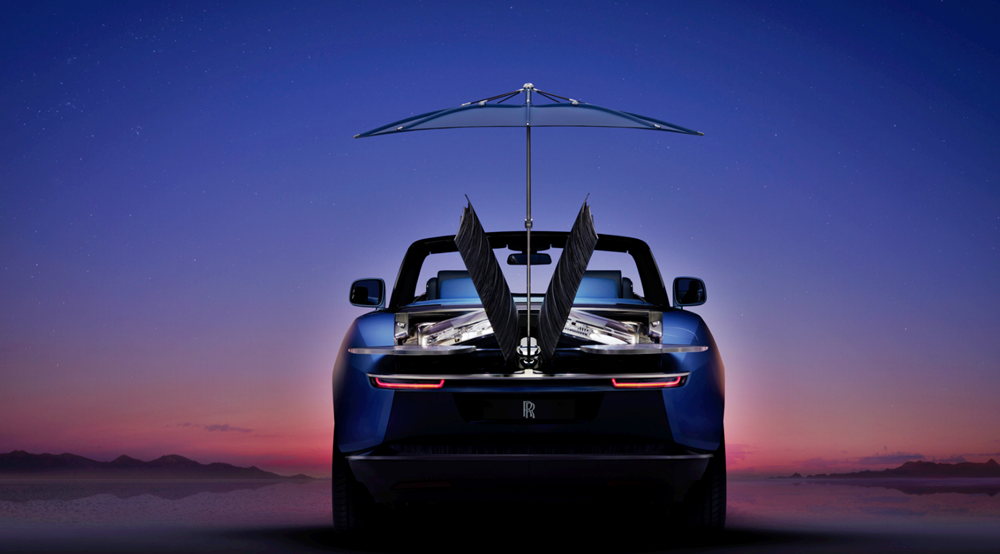
“This car should mark a sense of occasion and serve that occasion like nothing else”. Such was the brief of the customers. In response and in reflection of their character, the rear deck inconspicuously houses a highly ambitious concept never seen before in the automotive world. At the press of a button, the deck opens in a sweeping butterfly gesture, to reveal an intricate and generous hosting suite. Its complex movement was inspired by cantilever concepts explored by renowned architect Santiago Calatrava.
Unique rear compartment
The chest contains all that is required for a true Rolls-Royce al fresco dining experience – one side dedicated to aperitifs, the other, cuisine, complete with cutlery engraved with the name ‘Boat Tail’. A double refrigerator has been developed to house the customers’ favourite champagne, with elegant cradles created to stow the specific bottle size within the refrigerator, the surrounds are highly polished and colour matched to the bottle.
A classic design element of contemporary Rolls-Royce motor cars is the stowage of Rolls-Royce umbrellas in the doors, in anticipation of possible bad weather. In a delightful twist and to heighten the languid experience of the Boat Tail, a unique parasol is housed beneath the rear centreline in anticipation of fine weather. A telescopic movement opens this beautiful and whimsical canopy inversely, ensuring effortless deployment.
Cocktail tables, which elegantly rotate to mimic the offering of an attendant, open on either side of the hosting suite providing access to two highly contemporary minimalist stools, which are discretely stowed below. Designed by Rolls-Royce and created by Italian furniture-maker Promemoria, the slim-line interlocking stools are formed from the same technical fibre found on the exterior of the car.
“Boat Tail is the culmination of collaboration, ambition, endeavour, and time. It was born from a desire to celebrate success and create a lasting legacy. In its remarkable realisation, Rolls-Royce Boat Tail forges a pivotal moment in our marque’s history and in the contemporary luxury landscape,” said Muller-Otvos.
‘Coachbuilding’ may sound like an old or outdated term and it is indeed old – as old as the motorcar itself – but it is not outdated as it refers to the art and science of creating bespoke (custom-made) bodywork on a pre-assembled chassis. It was actually how cars were made before Henry Ford introduced mass production and that virtually ended coachbuilding – except at a few manufacturers, among them Rolls-Royce.
More than a century of coachbuilding experience has given Rolls-Royce its unique Bespoke capabilities which have developed in the modern era. This has made it possible for those who buy a Rolls-Royce to personalise virtually every aspect of their cars’ appearance and specification.
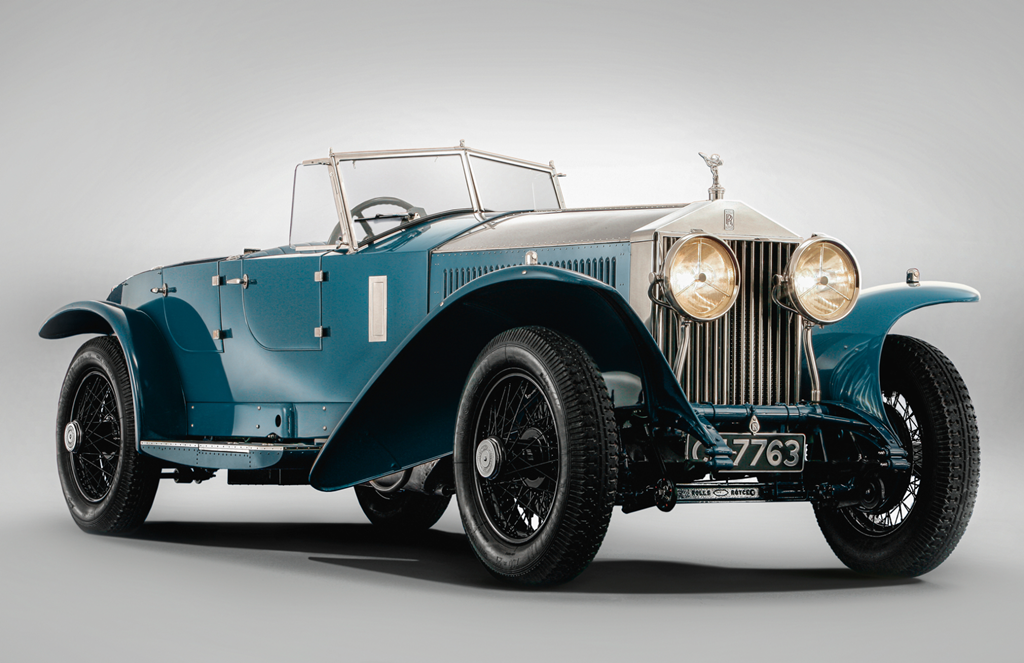
17EX (1928)
Constraints still existed
Although, in theory, a coachbuilt Rolls-Royce could be any shape the customer desired, in practice there were constraints. Rolls-Royce cars were designed on proven technical principles that were, in the minds of the company’s founders, unarguable and inviolable. By insisting on fixed dimensions for the bulkhead behind the radiator, they were able to ensure the bodywork maintained the essential proportions that visually identified it as a ‘true’ Rolls-Royce.
Those proportions remain enshrined in the marque’s design tenets to this day. Examine any contemporary Rolls-Royce and it exhibits the 2:1 ratio of body height to wheel diameter first established with the Silver Ghost in 1907. The body shape is defined by three fluid lines running the length of the car: the ‘waft line’ that gives the car its sense of movement; the ‘waist line’ that lends it purpose and presence; and the silhouette, which expresses its individual character.
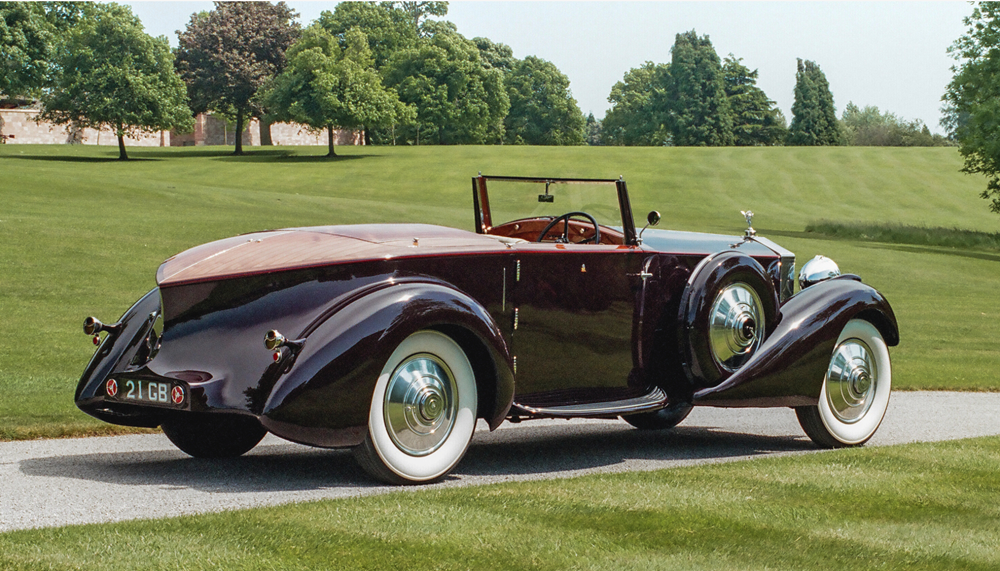
Phantom II CDC (1934)
Considerable scope
These basic principles allow considerable scope, as evidenced by the highly distinctive forms of Phantom, Ghost, Wraith, Dawn and Cullinan. Patrons and designers therefore enjoy considerable creative freedom in a coachbuilding project, within these fundamental design parameters. It will, after all, bear the Spirit of Ecstasy figurine above the grille – another immutable principle – so must be a genuine Rolls-Royce worthy of the name, and recognisably so.
However, while customers have always been able to personalise their car’s appearance in numerous different ways – beginning with a choice of 44,000 paint colours – their options for altering its overall outline have historically been limited by the underlying structure. For this reason, fully coachbuilt Rolls-Royce cars have been rarities in the modern era and much of the sensation around Sweptail arose precisely because it was such a unique event.
It was made possible by a seismic change in the marque’s manufacturing process, which was first deployed to great effect and global acclaim with the eighth and current generation of the Phantom. This Phantom was the first car to be built on the marque’s proprietary structure – an all-aluminium spaceframe chassis, designed and engineered from the ground up to be scalable for a range of different models.
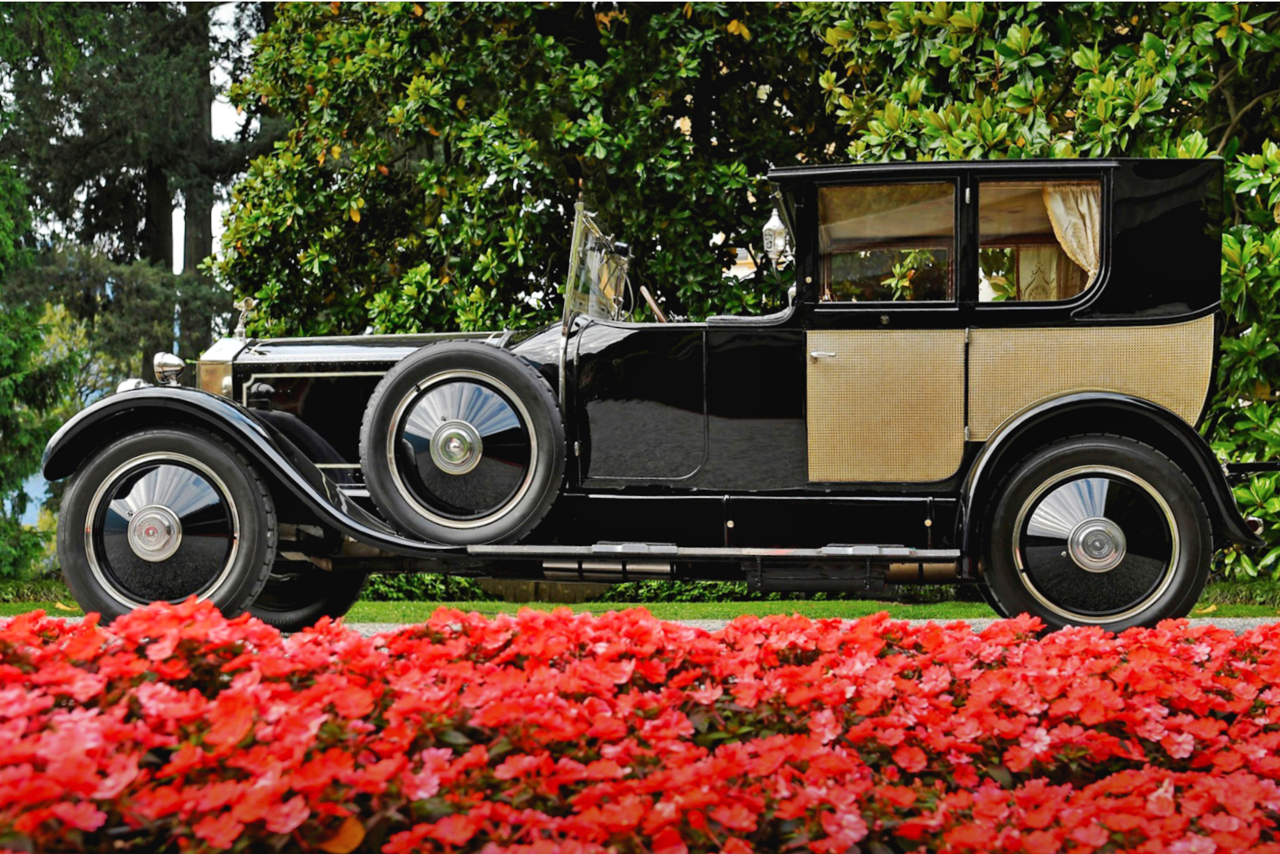
4050HP Phantom (1926)
In essence, it creates four fixed points at each corner of the car. The distance between them can be whatever the designers and engineers want it to be: bulkhead, floor, crossmember and sill panels can all be stretched or shrunk or increased in height as the design requires. The concept has proved brilliantly successful, forming the basis for the Cullinan SUV launched in 2019, and in 2020, the new Ghost.
New possibilities for coachbuilding
This flexibility opens up new possibilities for coachbuilding. By moving away from monocoque construction to something closer to a traditional rolling chassis, Rolls-Royce has reacquired the freedom to construct almost any body shape its customers can imagine, constrained only by fundamental design and engineering requirements.
The Sweptail (2017)
This means that Rolls-Royce and its customers can now look beyond merely Bespoke and build the car itself, to personal requirements. In this way, it is perfectly aligned with a lifestyle in which the customer’s investments in luxury – property, clothing and jewellery to works of art, yachts or private aircraft – are personal, individual and unique.
Evolutionary and revolutionary
With the Architecture of Luxury, the marque has ushered in a new coachbuilding movement that encompasses both highly sophisticated 21st Century technology and materials, and a tradition extending back more than 100 years. It is both evolutionary and revolutionary.
“The ability to personalise almost every aspect of their motor car is one of the main reasons our patrons come to us. But we know some wish to go further still. In 2017, we stunned the world with our first fully coachbuilt motor car of the modern era – the spectacular Rolls-Royce Sweptail. This was, by definition, an entirely unique commission; but in our minds, it was the start of a journey,” said Torsten Muller-Otvos, CEO of Rolls-Royce Motor Cars
“We have formally re-established our Coachbuild department for those patrons who wish to go beyond the existing restraints, and explore the almost limitless possibilities this opens up for them. We are able to offer our customers the opportunity to create a motor car in which every single element is hand-built to their precise individual requirements, as befits our status as a true luxury house.”
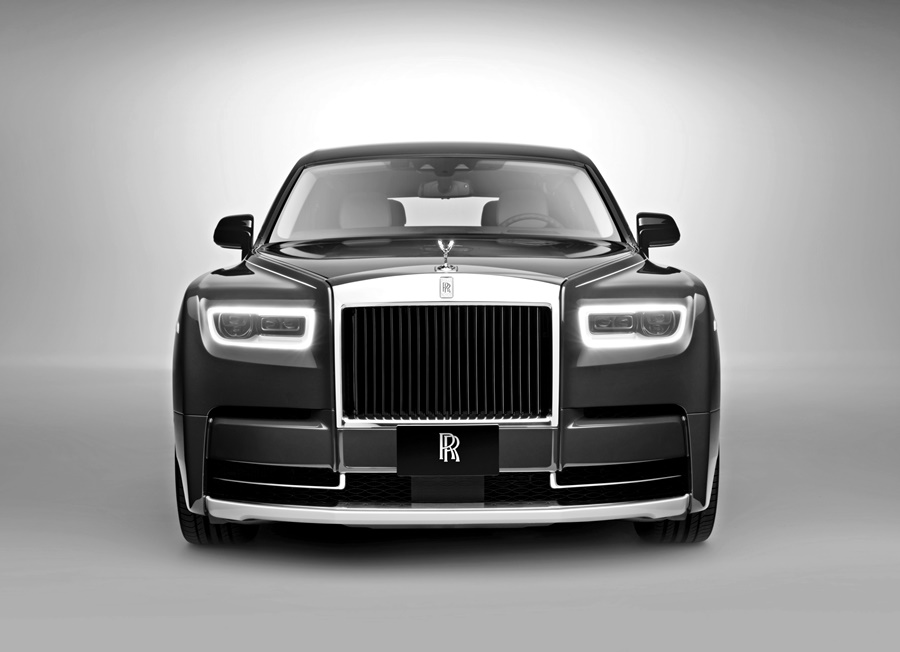
The Bespoke division at Rolls-Royce Motor Cars will create an exclusive car to a customer’s requirements whatever they may be (as long as safety is not compromised). For many years now, Bespoke’s business has been growing as virtually every person who buys a Rolls-Royce will want it personalised in some way. Some may be simple requirements while others may be quite sophisticated – like the Bespoke Phantom conceived in a unique collaboration with Hermès, the French luxury goods company.
Over 3 centuries of combined experience
This is one of the examples of Bespoke’s work which the world gets to see as not all of the models they prepare are publicised if their owners do not agree to do so. “This magnificent expression of our pinnacle product represents a landmark for Rolls-Royce Motor Cars, bringing together two houses with more than three centuries’ combined experience and heritage. It is the result of a deep, genuine collaboration between the Houses of Rolls-Royce and Hermès, in which designers, materials specialists and skilled craftspeople worked side by side to create a truly one-of-a-kind Phantom. It has been an extraordinary privilege to unite on such a creatively challenging, technically demanding commission and bring our client’s remarkable vision so beautifully to life,” said Torsten Muller-Otvos, CEO of Rolls-Royce Motor Cars.
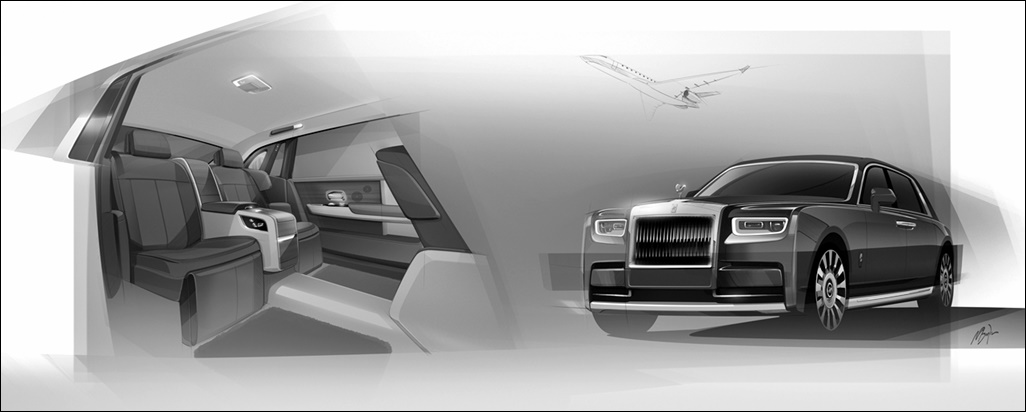
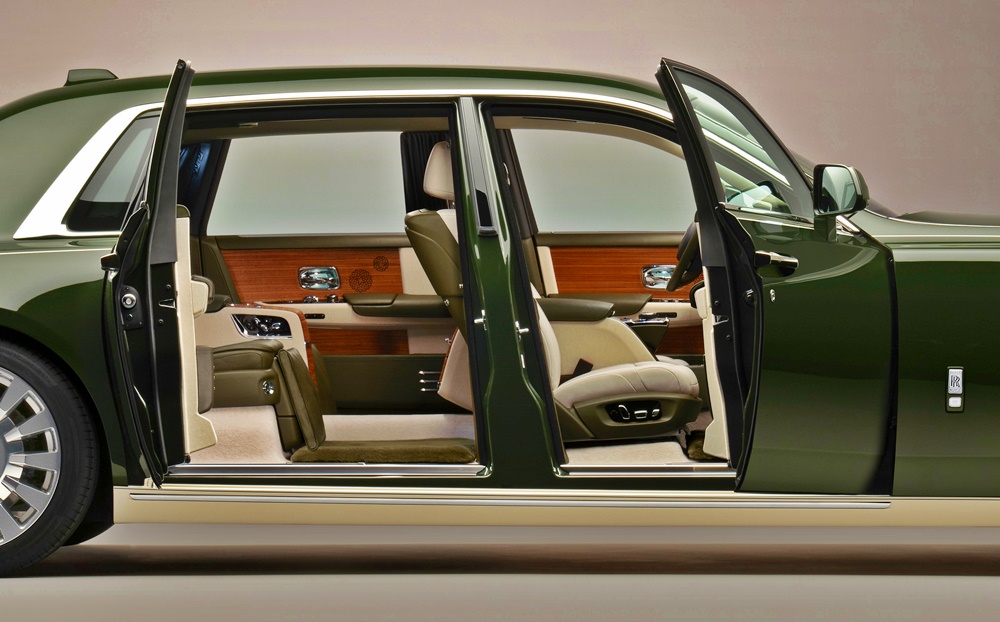
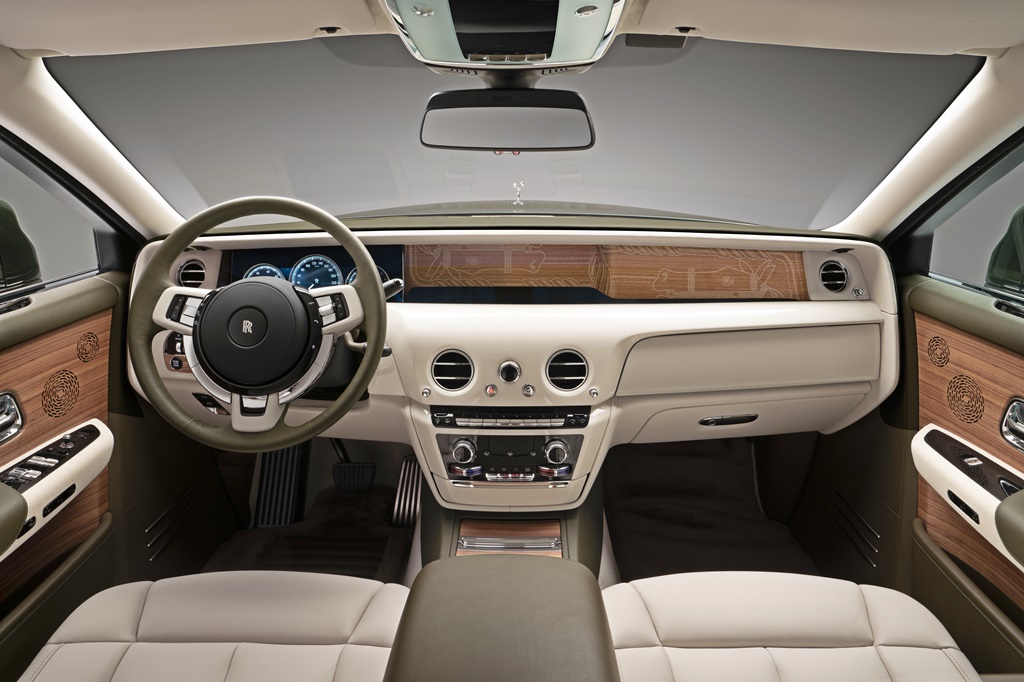
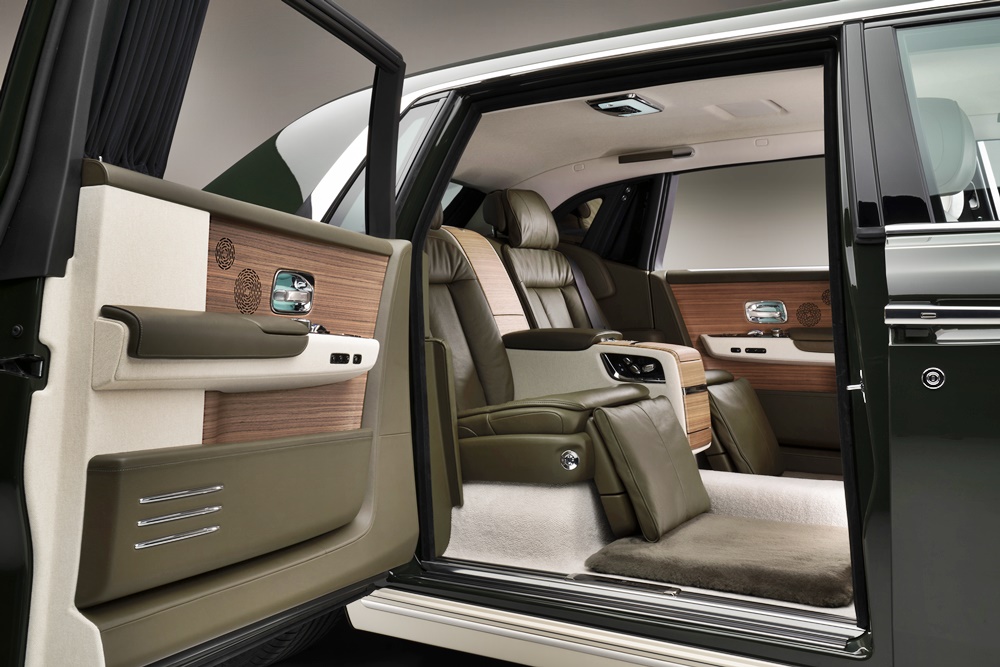
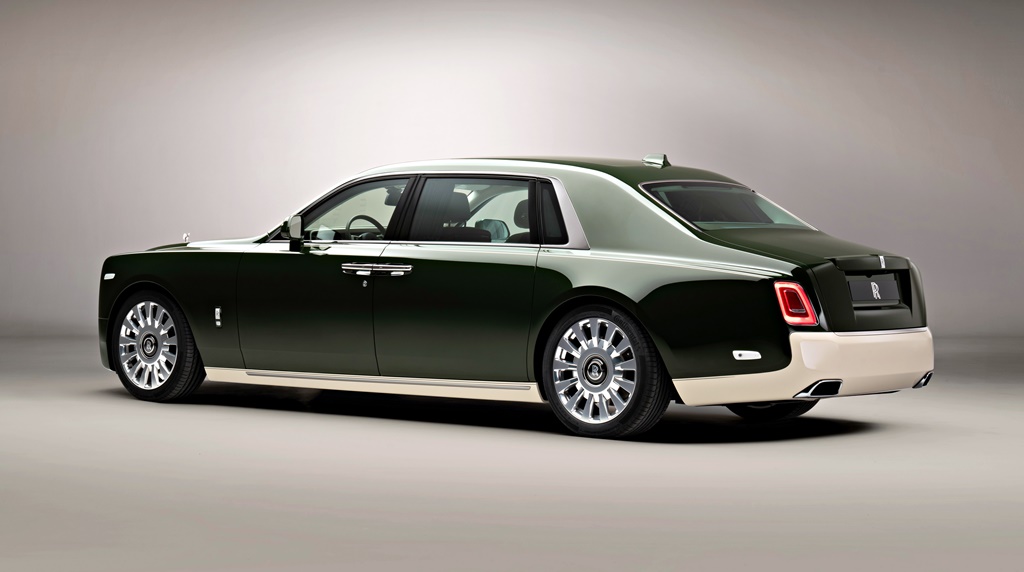
The one-of-a-kind Phantom Oribe reflects the personality and passions of its owner, Japanese entrepreneur Yusaku Maezawa, who envisioned the car as a ‘land jet’, bringing the serene exclusivity of private air travel to the road. ‘Oribe’ comes from antique Japanese Oribe ware, which Maezawa-san collects.
Matching the glazes of Oribe ware
The car’s striking two-tone exterior matches the characteristic green and cream glazes of Oribe ware. The upper part is finished in Oribe Green, a fully Bespoke colour created exclusively for the client; in an unusual move, Rolls-Royce has made the paint available for use on the client’s private jet the Phantom will be paired with. Developed over many months by specialists in the Surface Finish Centre at Goodwood, it perfectly captures the lustrous, deep-green glaze that characterises these 16th century ceramics. The effect is beautifully completed by the cream-white lower section.
The Oribe ware-inspired colourway harmoniously continues through the interior, created and realised through a true meeting of minds between Hermès designers and craftspeople and the Rolls-Royce Bespoke Collective of designers, engineers and craftspeople. Together, they applied their shared expertise and ingenuity to ensure every individual component embodies the finest traditions of both companies.
Hermès leather
The interior is finished predominantly in Hermès Enea Green leather, extending to details that include the immediate touch-points of the client (eg the steering wheel, duchess handles, gear selector and controls for the climate settings). The leather flows around the upper instrument panel, interior pillars and parcel shelf. It also enrobes less visible surfaces including the glove compartment and luggage compartment lining, centre console, decanter stowage compartment and Champagne cooler.
Delicate Hermès piping adorns the headrest cushions and calf supports of the rear seats, while soft Seashell White accents and matching lambswool floor mats create a sense of light and space throughout.
Equestrian heritage of Hermès
The interior is also replete with examples of Rolls-Royce Bespoke design and handcraftsmanship. Wooden speaker frets, for example, are formed by meticulously perforating the Open Pore Royal Walnut veneer applied to the doors, creating a seamless, textured aesthetic and delicate haptics. Open Pore Royal Walnut is additionally applied to the centre and rear consoles and picnic table backs; in another first for Rolls-Royce, the interior features Hermès ‘Toile H’ canvas on the door armrests, centre and rear consoles and, most notably, the signature headliner.
Hermès brings its distinctive equestrian heritage and innovative craftsmanship know-how to the car, with the leather upholstery created using stitching and edge-painting techniques originally employed by master saddlers.
For the Phantom’s Gallery, a feature unique to Rolls-Royce, that runs the length of the motor car’s fascia, Hermès commissioned an artwork based on a design by the celebrated French artist and illustrator Pierre Peron who created many of the House’s iconic scarves. The work, inspired by the famous Hermès horse motif, is hand-painted on Open Pore Royal Walnut and is presented as though staged in an art gallery, behind glass.
“This unique Phantom is a fusion of East and West, ancient and modern, serenity and exhilaration. It was a great creative and cultural exchange working with Hermès; we learned a great deal from each other. It is always a pleasure when a client brings us a bold, clear and imaginative vision, and a great thrill to see it realised so perfectly,” said Michael Bryden, Lead Designer at Rolls-Royce Bespoke Collective.