100 years is a special milestone in any history and for Mazda, it is of course especially significant. To celebrate this 100-year anniversary, the carmaker has many activities, among them, a 100th Anniversary Special Edition series of models. Unfortunately, yjpugh they are offered in Japan and selected markets, they will not be available in Malaysia.
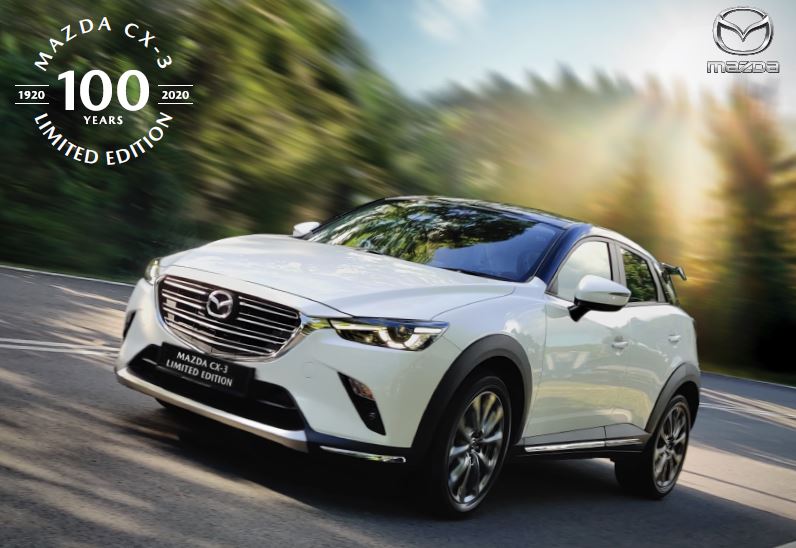
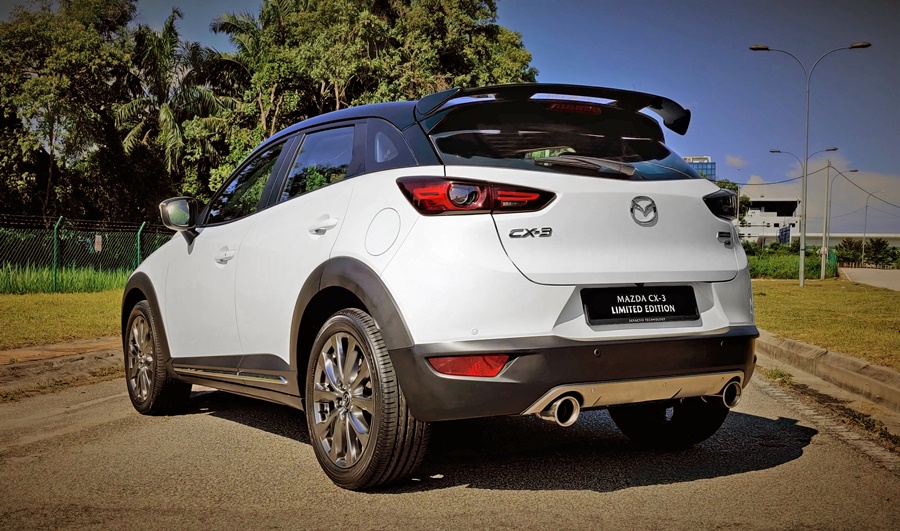
Nevertheless, Bermaz Motor, which handles the Mazda brand in Malaysia has created a special limited edition Mazda CX-3 to commemorate the occasion. Developed by the company’s MazdaSports Division, the limited edition crossover SUV features various enhancements that gives the car a unique styling and design with a high sense of sophistication.
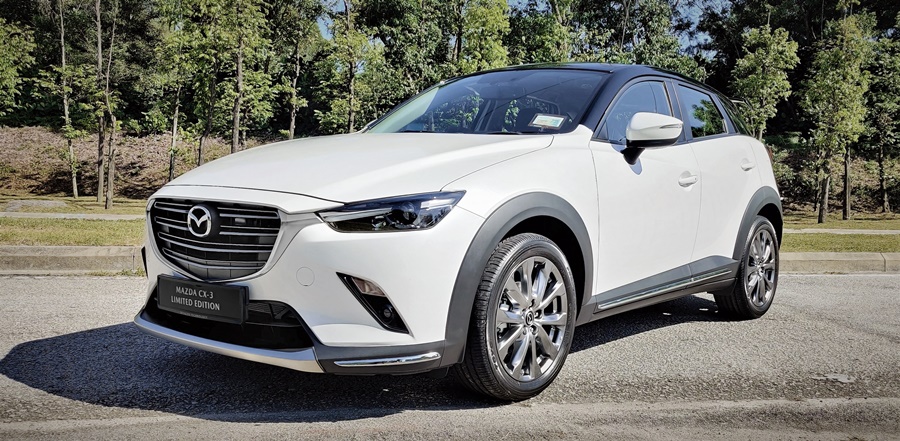
Exlusive Snowflake White Pearl finish
For a distinctive sportier look, the limited edition CX-3 is fitted with a Front Lip Spoiler & Rear Bumper Diffuser. The body features a two-tone finish with a Piano Black Roof and matching rear boot spoiler. Only a Snowflake White Pearl colour is available.
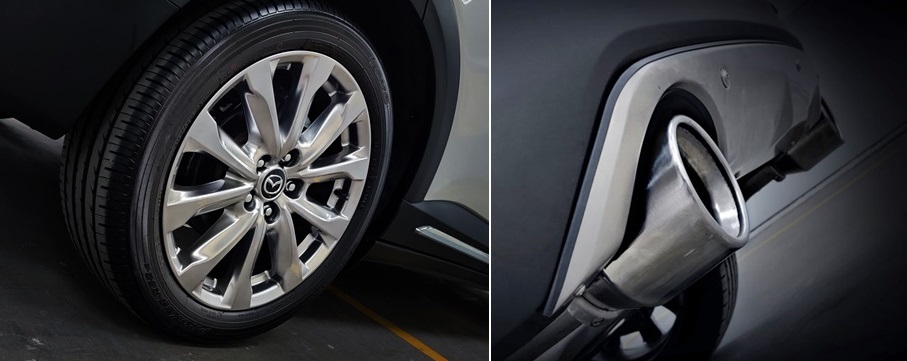
The 18-inch alloy rims are finished in gunmetal while the rear exhaust tips have a brushed aluminium finish.
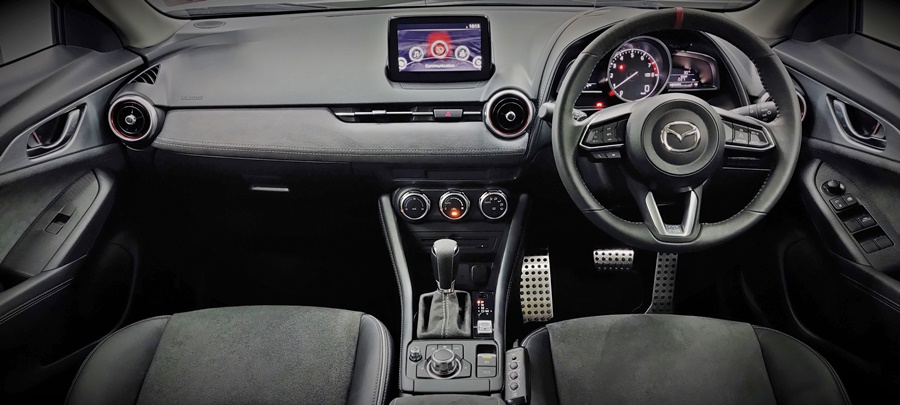
Within the SUV, the styling enhancements added to the seats, steering wheel, armrest and gearknob are in the form of a dark gray suede finish to match the dashboard and door trims. There are also brushed aluminium sports pedals and scuff plates. Black carpet mats are also provided, exclusive to this limited edition. A JBL Basspro Hub 11-inch Subwoofer is included and this delivers fast and tight, deep bass with low distortion.
Sharper driving experience
Other functional enhancements include a front strut tower brace that covers the engine as well as lower front, mid and rear chassis bars for a sportier, sharper driving experience.
The CX-3 Limited Edition is priced from RM14,500 and bookings can be placed at any authorised Mazda outlet. The accessories fitted have a 1-Year Mazda Genuine Accessory Warranty based on the period of fitment at the time of new vehicle purchase. Deliveries will start from the end of July 2020.
Visit www.mazda.com.my to locate an authorised Mazda outlet or to know more about Mazda models available in Malaysia.
Ever since businesses resumed their operations, they seem to be catching up with lost time and new models are being quickly launched. Now they can do it faster since there is no need to find a venue and organise all the ‘song and dance’ routine because they can do it online.
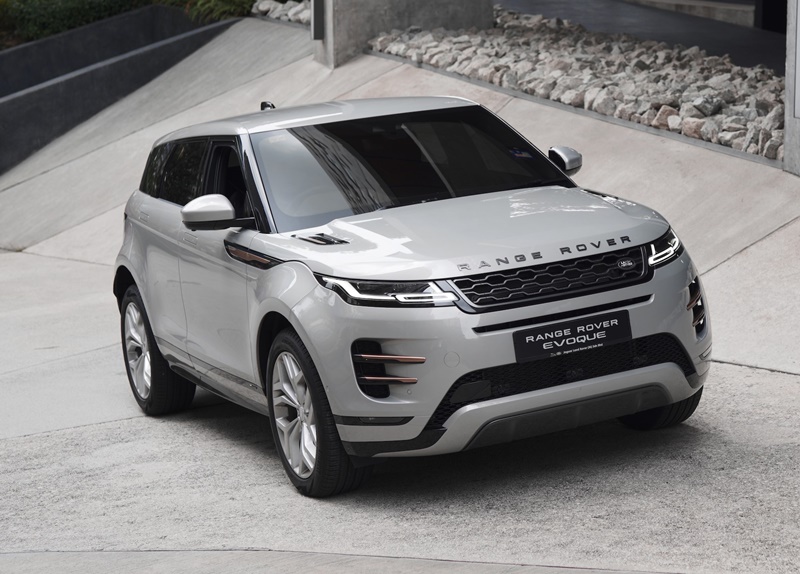
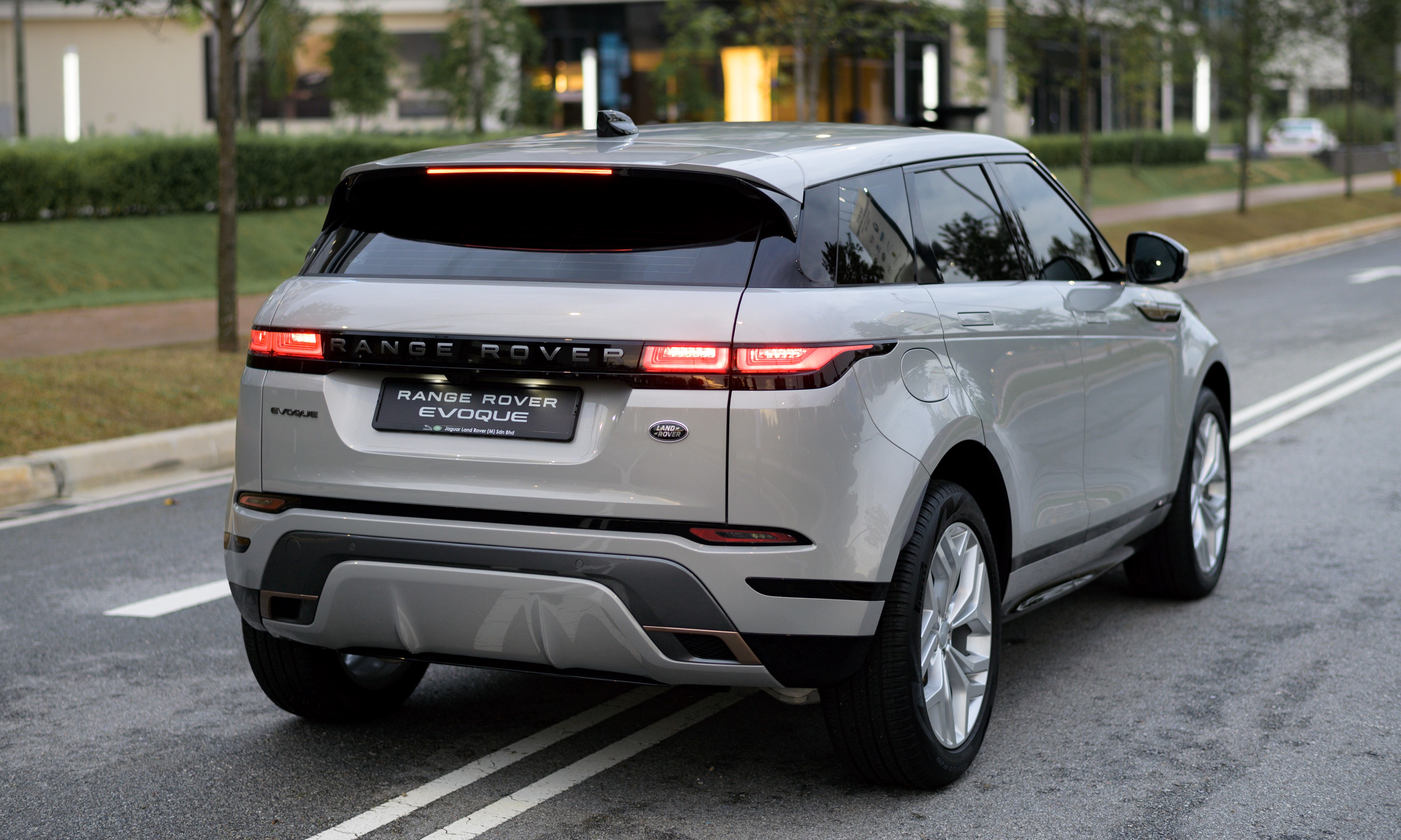
The latest to use the online channel for launching a new model is Jaguar Land Rover Malaysia (JLRM) which today officially launched the new 2020 Range Rover Evoque. Two variants of the luxury compact SUV are available – Evoque and Evoque R-Dynamic – with prices from RM426,828 and RM475,398, respectively (inclusive of 5% sales tax exemption but excluding registration fees, insurance premium and roadtax).
In conjunction with the Malaysian launch, JLRM is also offering RM3,000 worth of accessory vouchers (for a limited time only) that can be used to purchase original Evoque accessories. The accessories come with a 5-year warranty.
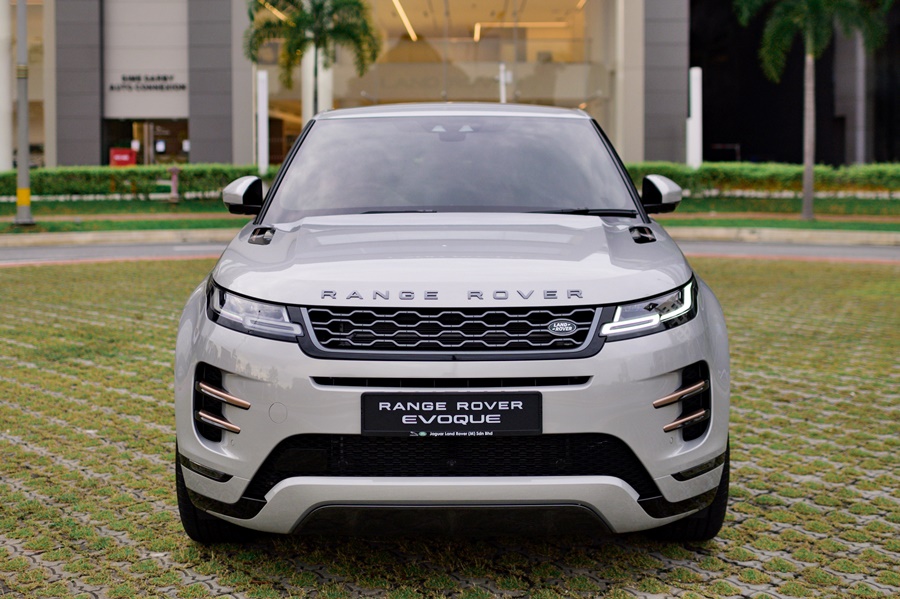
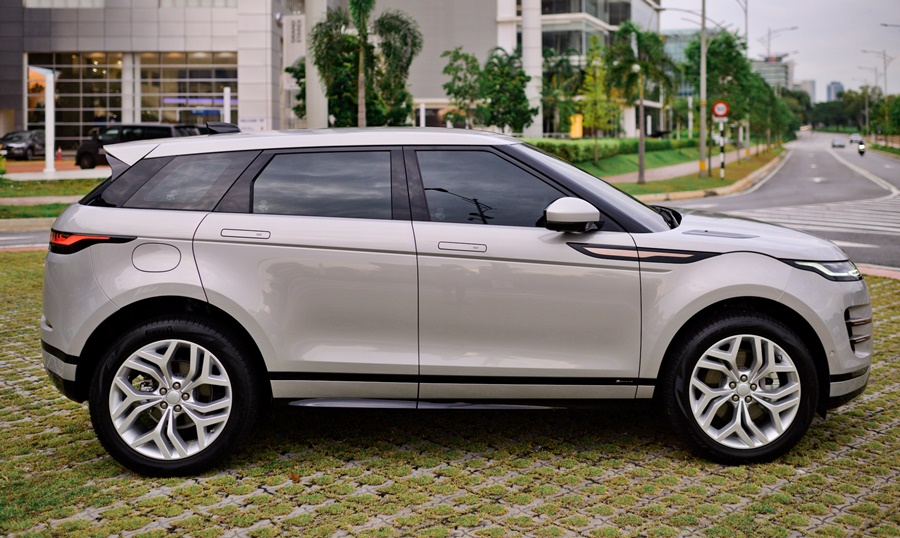
The Evoque is in its second generation which was launched in 2018 and the latest one has received cosmetic and functional updates. The design remains instantly recognisable, a sophisticated evolution of the original’s distinctive coupe-like silhouette.
The R-Dynamic variant features more exterior enhancements such as burnished copper accents on the front and rear bumpers, as well as front fender inserts.
Both variants come with a new 2- litre Ingenium turbocharged petrol engine and a 9-speed automatic transmission. The twin scroll turbocharged engine comes in two states of tune: for the Evoque, the output is 200 ps/320 Nm while for the R-Dynamic variant, it’s 249 ps/365 Nm.
The technical updates
Most of the updates are on the technical aspects, starting with the All-Wheel Drive (AWD) system having Driveline Disconnect technology. Standard for both variants, the system allows the driver to fully disengage drive to the rear wheels when cruising to reduce frictional losses. When conditions require additional traction or stability, the system will seamlessly re-engage in a fraction of a second.
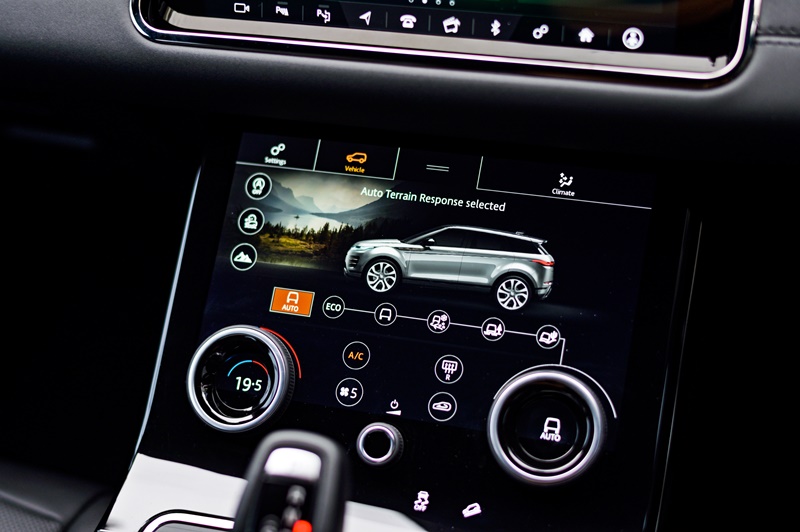
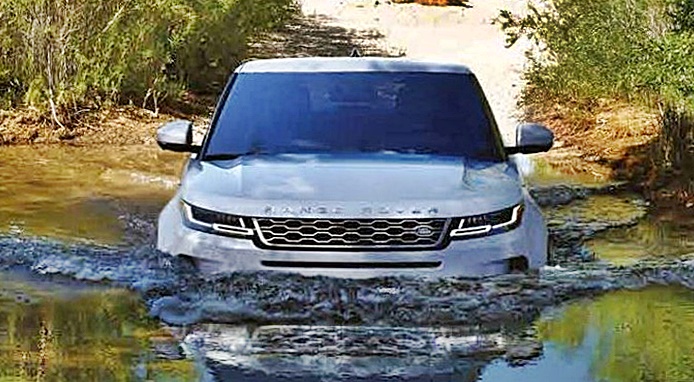
For more challenging conditions, the Terrain Response 2 system (standard as well) is engaged to automatically adjust the vehicle’s driving characteristics to match surface conditions. Flooded roads won’t stop the Evoque either as it is claimed to have the best-in-class wading depth of 600 mm.
Advanced visibility technologies
With the R-Dynamic variant, there is the segment’s first ‘ClearSight Rear View Mirror’ that transforms into a high-definition (HD) video screen when activated. If rear visibility is compromised by passengers or bulky items, the driver can flip a switch located on the underside of the mirror to activate a camera feed from the top of the car to display the back end of the vehicle in crisp high definition. The camera has a 50-degree field of vision and superior visibility in low light.
Also exclusive for the R-Dynamic variant is the world’s first ‘ClearSight Ground View’ technology allows the driver to virtually see through the bonnet and under the front end of the vehicle. The driver can see, on the dashboard display, a 180-degree view of the ground ahead, which should be very useful on rough ground.
The new Evoque is also the first Land Rover model to feature Smart Settings, a system which uses artificial intelligence algorithms to learn the driver’s preference. The system applies the driver’s preference to automate comfort and driver-specific media settings throughout the drive.
The vehicle ‘recognises’ the driver from their key fob and smartphone with the use of ‘self-learning’ technology, enabling specific seat and steering column position set up upon approach. Up to 8 driver profiles can be registered. After a few journeys, the Evoque remembers the driver’s preferred temperature settings, media preference and commonly dialled numbers, depending on the time or day of the week.
Intelligent infotainment system
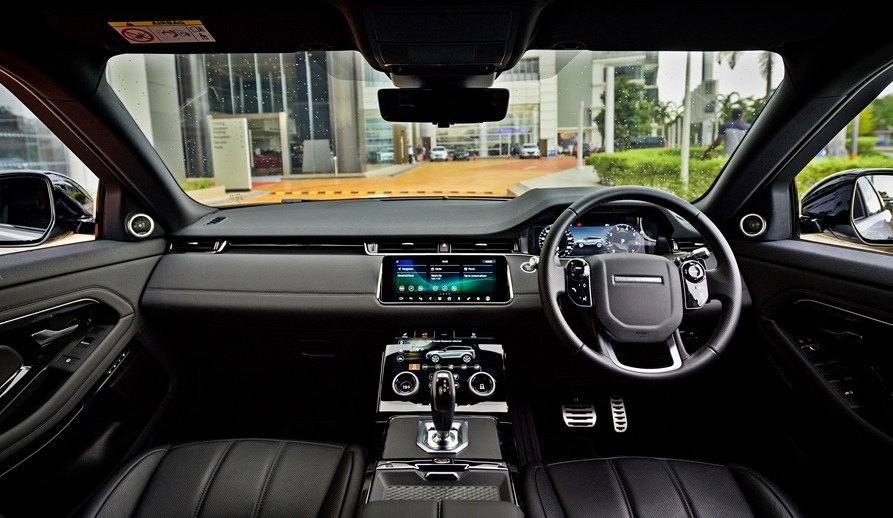
Land Rover’s InControl Touch Pro Duo infotainment system is central to the vehicle’s digital interior experience. This combines two sleek 10-inch high-definition glass touchscreens and a 12.3-inch driver display panel on the instrument panel. To minimise distractions, the ‘hidden until lit’ interior is used for the state-of-the-art digital interface. A Meridian Sound System is installed in the new Evoque and this has no less than 11 speakers including a subwoofer.
According to Nick Rogers, Executive Director, Product Engineering of Jaguar Land Rover, the Evoque is now smarter than ever. The software that sits behind the infotainment system has been refined to provide a more intuitive customer experience. “On top of that, we’ve added Apple CarPlay and Android Auto for seamless smartphone integration. Apple CarPlay connects you to your smartphone while the 4G wifi hotspot connects you to the internet,” he explained.
Additional safety systems
Lane Keep Assist is a new safety feature which helps the driver to stay in their lane by adding a necessary steering correction feature. It initiates a gentle steering input to return the vehicle to its intended position
Also added is Driver Condition Monitor technology, a safety feature that is based on the driver’s steering inputs. Jerky, non-linear movements that are typical symptoms of a fatigued (or drunk) driver will automatically trigger an audible and visual warning from the instrument cluster.
All Land Rover vehicles distributed by JLRM come with Land Rover Care, which entitles owners to 5 years (or maximum of 65,000 kms) of free scheduled servicing, 5 years (or maximum of 150,000 kms) warranty coverage and 3 years of roadside assistance.
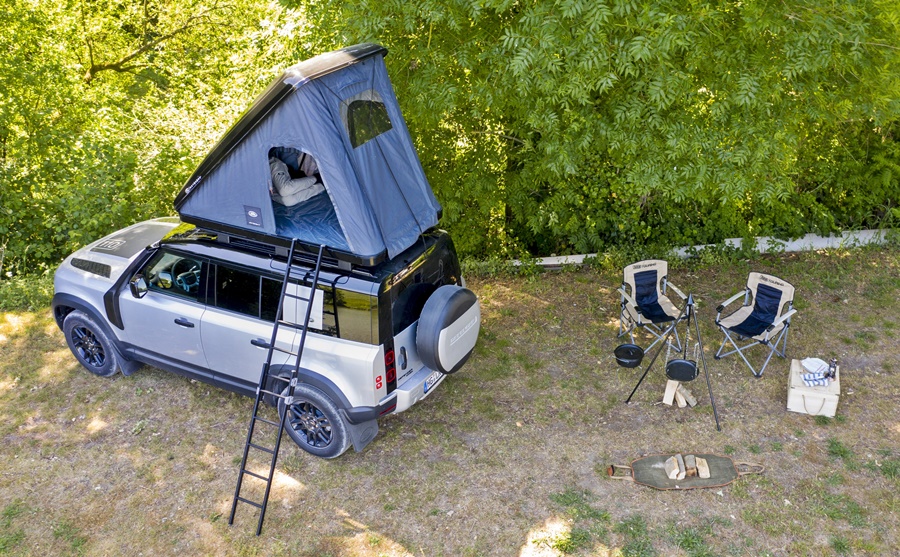
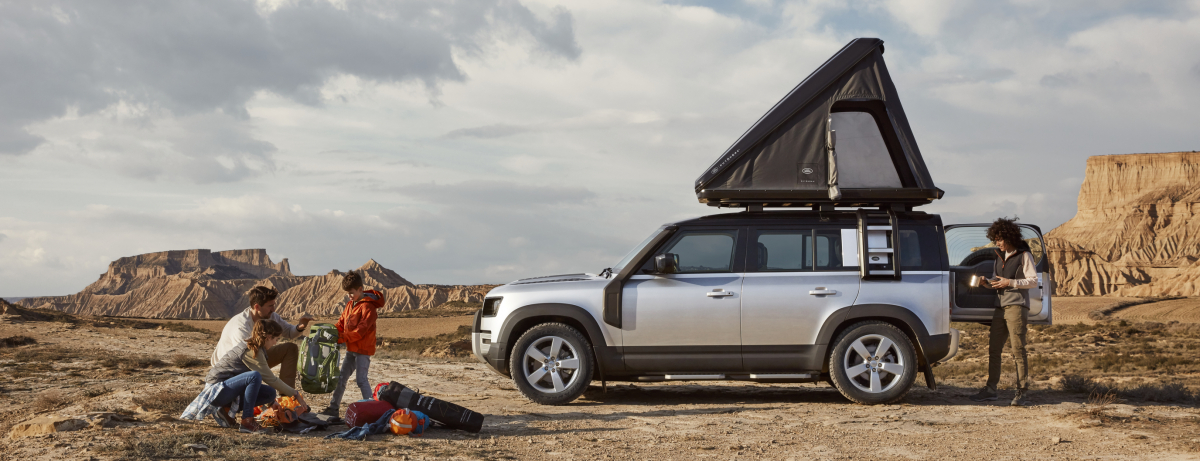
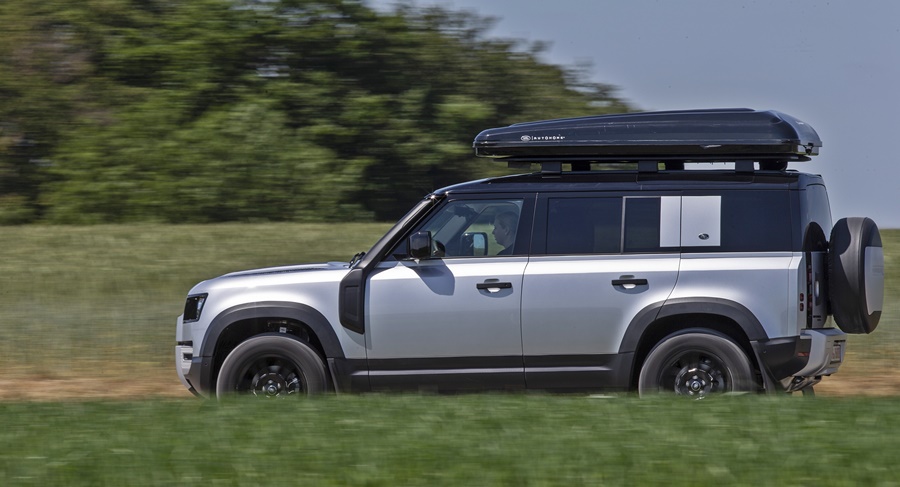
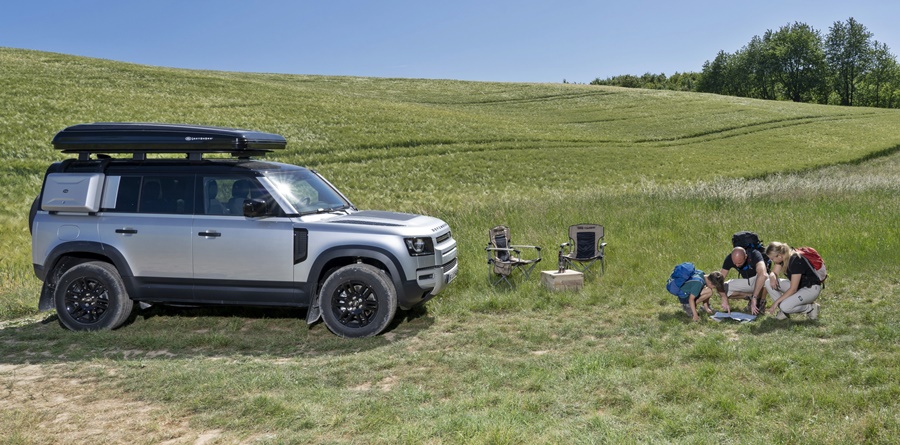
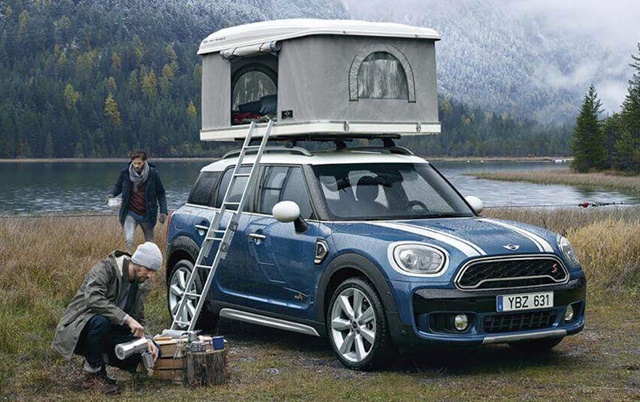
The new Land Rover Defender 110 is spacious and comfortable enough to sleep in but for those who still want that camping experience, the carmaker now offers a roof tent package with an intuitive design and premium quality materials.
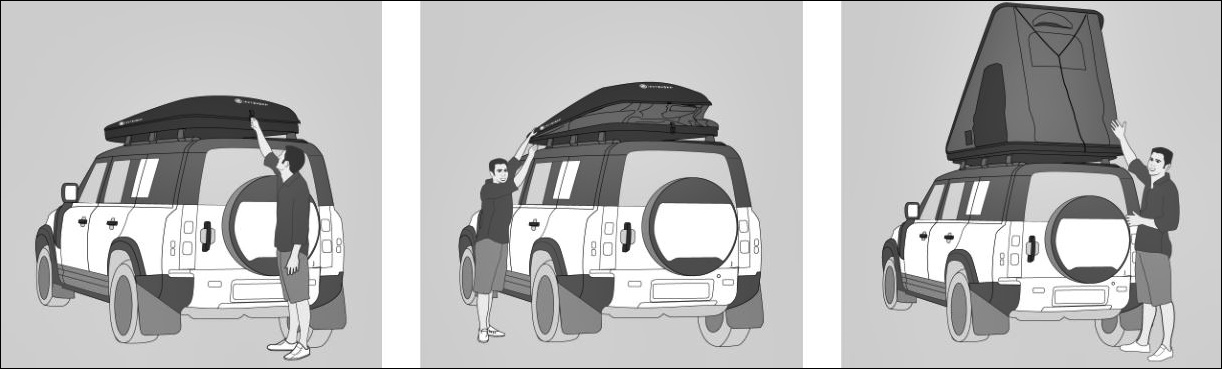
Developed in collaboration with specialist Autohome, the roof tent has a lightweight fibreglass shell which protects the tent when not in use and allows it to be erected singlehandedly in seconds. Unclipping the fastening at the rear lifts the shell slightly for the integral gas struts to take over and fully open the carbon grey fabric sides.
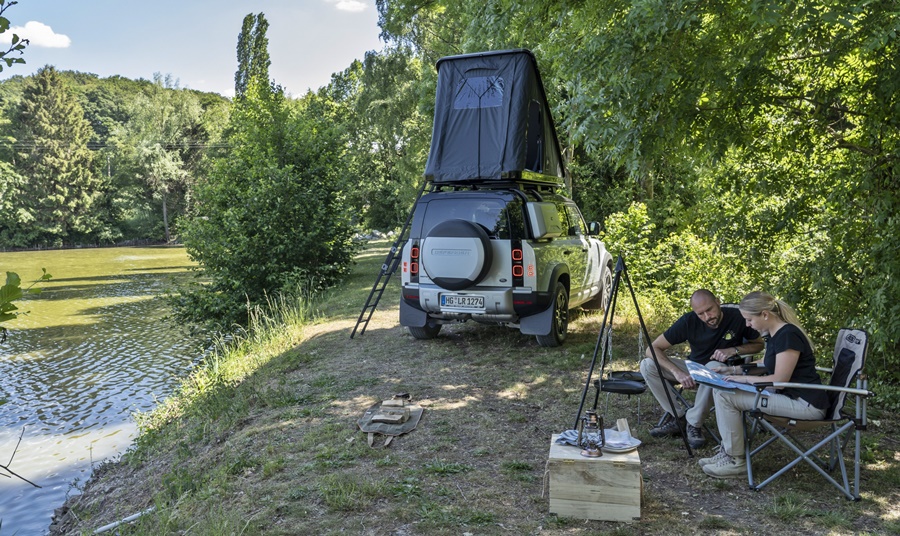
Designed for those with adventurous hearts and curious minds, the tent accommodates two adults. It even comes with a full-size luxury cotton mattress and pillows, an interior LED light and a stowage net.
The tent can be easily accessed from either side of the vehicle and comes with an extendable aluminium access ladder which can be stored in the stowage bag inside the tent when not in use. On the move, it is stowed flat for maximum stability and aerodynamic efficiency. When erected, it measures 2.3 metres long, 1.3 metres wide and 1.5 metres high.
Joe Sinclair, Land Rover Director of Branded Goods and Licencing, said: “The New Land Rover Defender is the ideal vehicle to reach remote destinations comfortably both on and off road. This roof tent will enable Defender drivers to continue their adventure above and beyond their journey; it’s perfect for the modern-day explorer.”
The roof tent, priced in the UK at €3,081.96 (almost RM15,000) is an addition to the 170 individual accessories already available for the Defender – the largest range ever produced for a Land Rover – and works in conjunction with the official Land Rover Expedition Roof Rack and Roof Rails, which come fitted as standard with the Adventure Pack.
The Adventure Pack is one of four accessory packs available for New Defender – alongside the Explorer, Country and Urban Packs – each designed to give the vehicle a distinct character. Over half of all Defender 110 models specified online have been fitted with one of the packs.
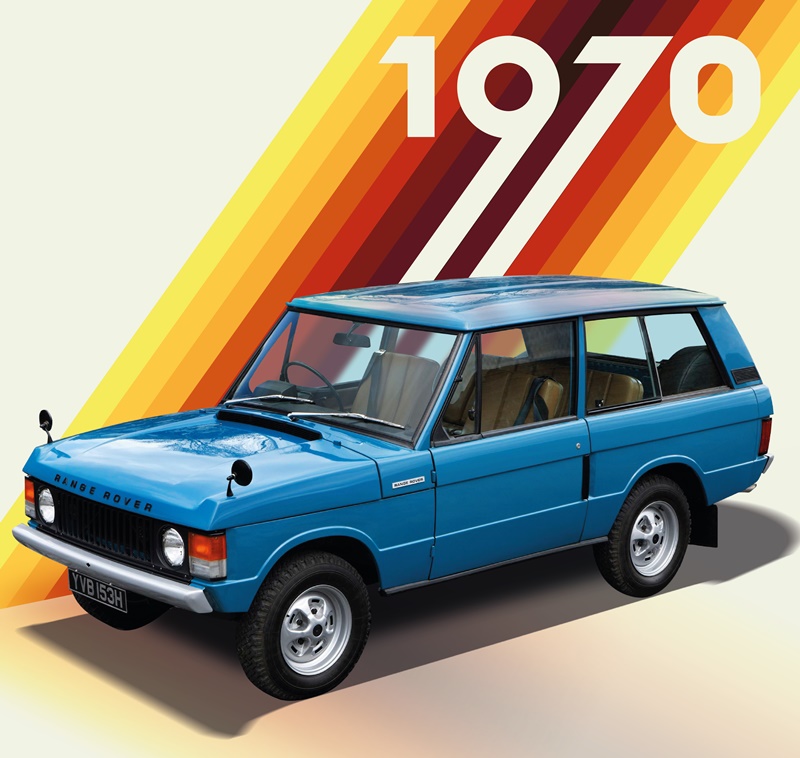
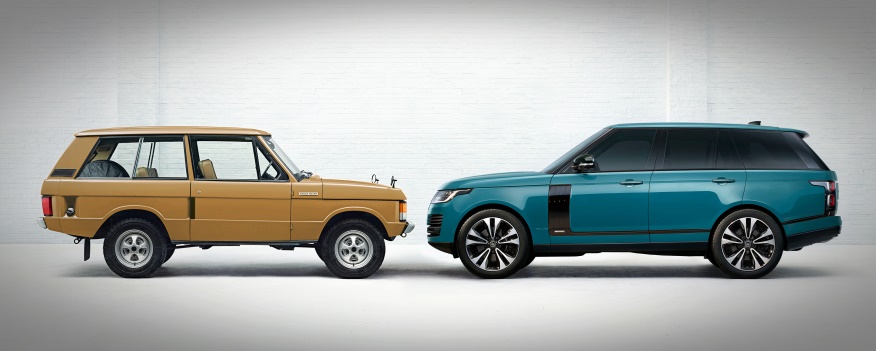
Long before the luxury SUVs of today appeared in showrooms, there was just the Range Rover in the segment that had yet to be created. It was introduced 50 years ago in June 1970, a product at the top of the Land Rover Range which even the Queen of England appreciated.
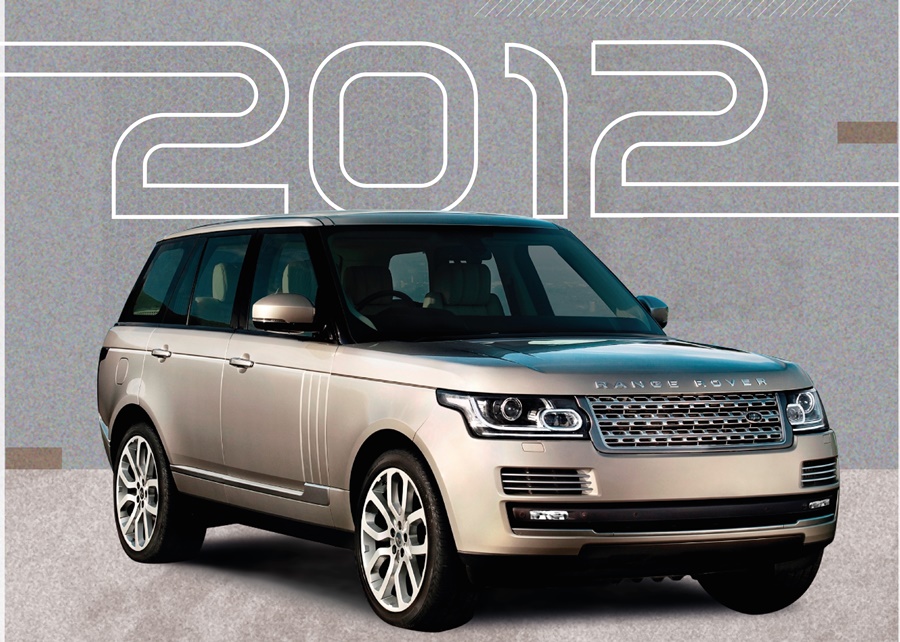
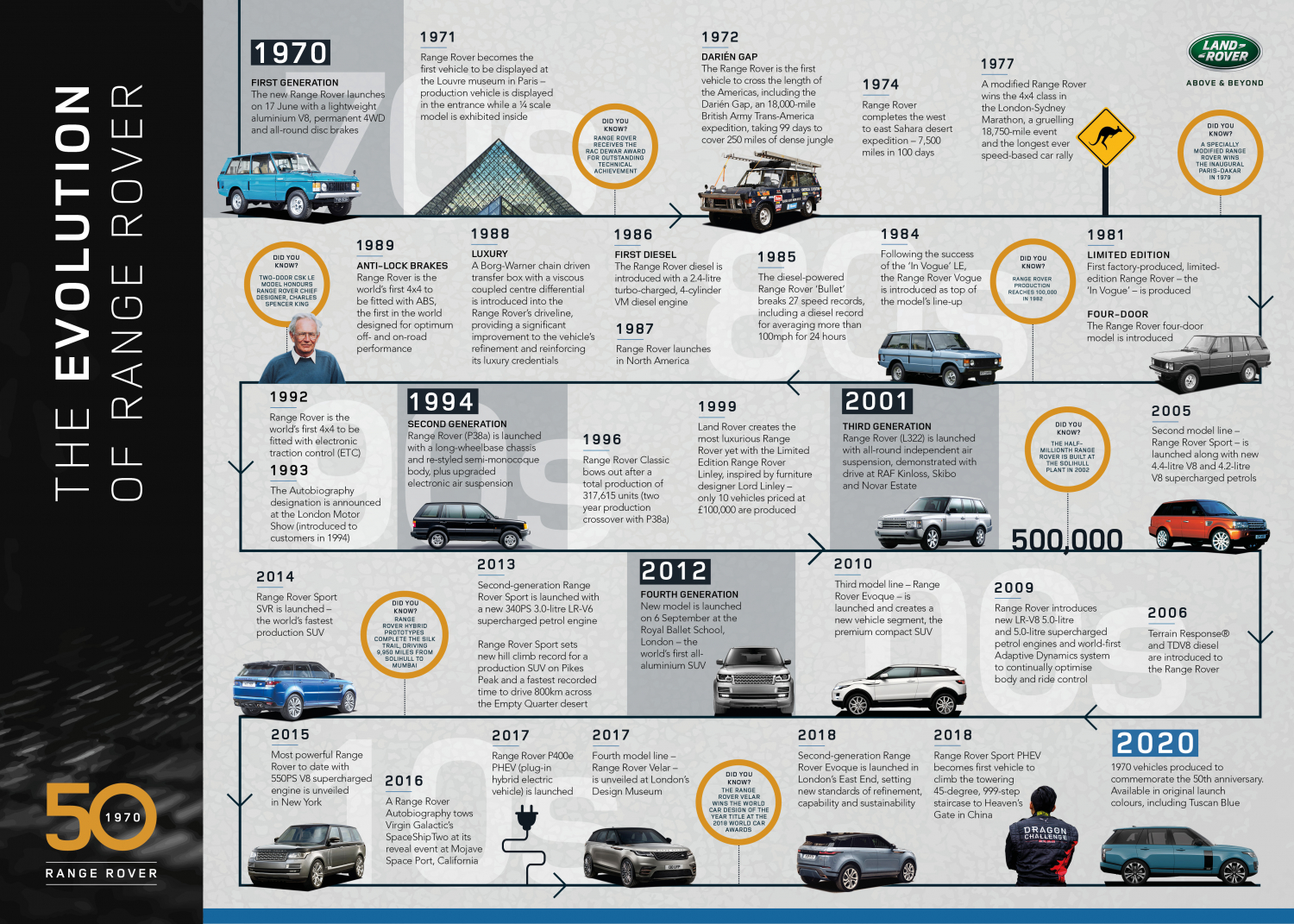
Over five decades, the Range Rover has been a pioneer of all-wheel drive technologies, achieved many world firsts and completed numerous impressive feats. It was the first SUV to feature a permanent 4WD system when it was launched and, in 1989, was the world’s first 4×4 to be fitted with ABS. Three years later, it became the world’s first 4×4 to be fitted with electronic traction control and automatic electronic air suspension. In 2012, the latest generation Range Rover became the world’s first SUV to feature an all-aluminium lightweight construction, making it lighter, stronger and more efficient.
A must-have in the garages of many rich and famous owners, the Range Rover has also made a name for itself as a very capable all-terrain vehicle. It has crossed the notoriously impassable ‘Darien Gap,’ a remote and dangerous area between Panama and Colombia. It has been used by adventurers to explore new territory on the planet and has even been a winner in the Paris-Dakar rally – twice. And it was the first vehicle to ever be displayed at the Louvre Museum in Paris.
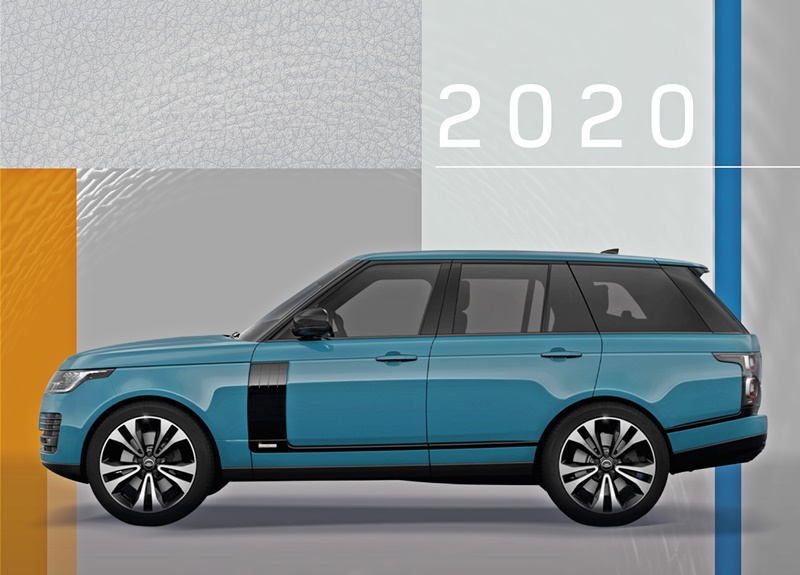
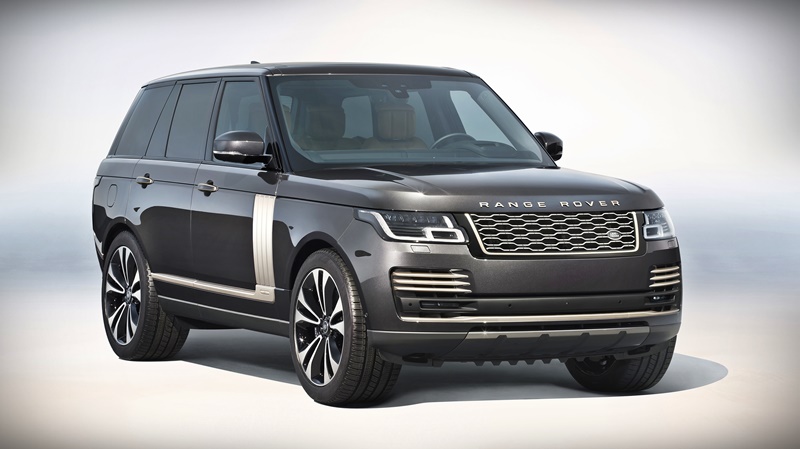
To celebrate 50 years of a motoring icon, a Range Rover Fifty edition of the fourth generation has been created, restricted to just 1,970 vehicles globally, in recognition of the year the original Range Rover was launched. Building on the luxuriously appointed Autobiography, the Range Rover Fifty features a number of bespoke exterior accents in Auric Atlas as well as two unique 22-inch wheel designs.
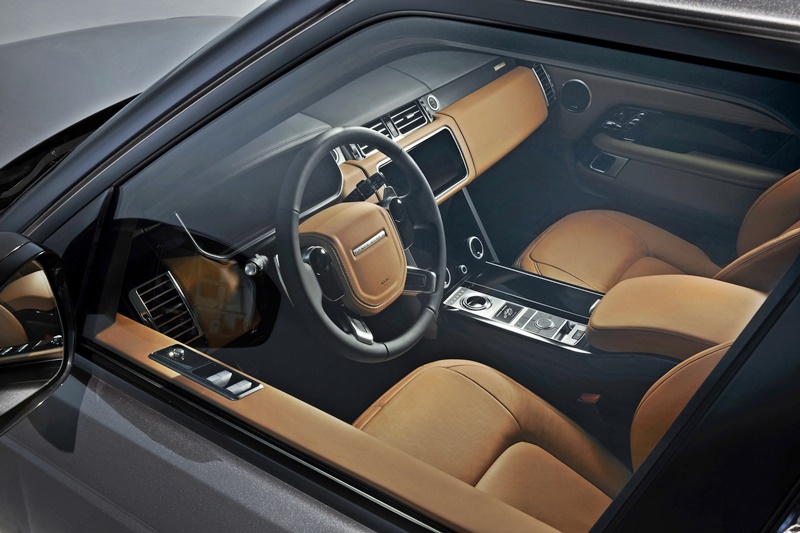
The badging features a ‘Fifty’ script created personally by the ‘Guardian of Land Rover DNA’, Professor Gerry McGovern, Land Rover Chief Creative Officer, which will appear on the exterior of the vehicle and throughout the interior on the unique ‘1 of 1970’ centre console commissioning plaque, headrests, dashboard and illuminated treadplates.
“In the world of luxury vehicles, the Range Rover has always stood apart as peerless and enduring,” said Prof. McGovern. “Its unique and pioneering sensibilities, together with an unrivalled engineering approach, have been the intrinsic values which our customers have admired since the first of the breed was revealed in 1970.”
The Range Rover Fifty will be available in both standard and long wheelbase body designs with customers able to choose from four carefully curated exterior colours. Land Rover Special Vehicle Operations is also offering the Range Rover Fifty in one of three Heritage exterior solid paints reproduced from the original Range Rover paint palette of Tuscan Blue, Bahama Gold and Davos White.
A range of powertrain options will be available – petrol, diesel and even a plug-in hybrid P400e version. For customers in North America, each example will be fitted with a 518 bhp 5-litre supercharged V8 powertrain.
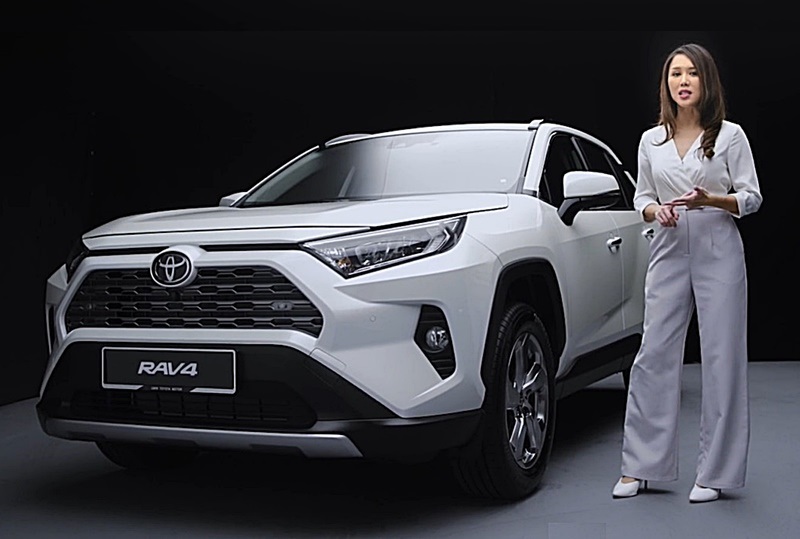
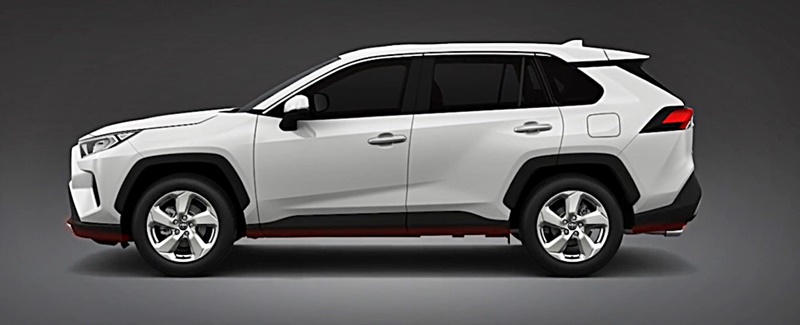
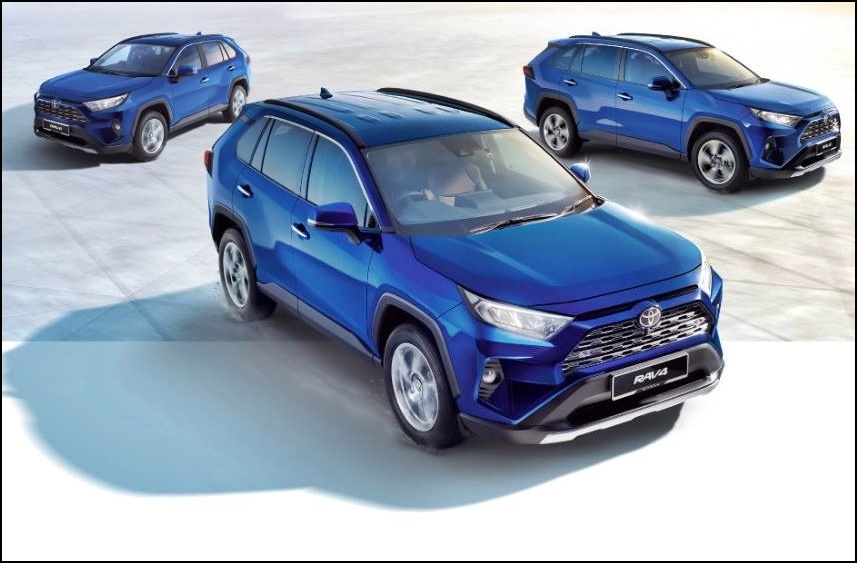
The Toyota RAV4 is a historically significant model in Toyota’s line-up. Introduced in 1994, it came at a time when motorists were beginning to appreciate SUVs and created a new segment in the car market almost overnight.
While the earlier SUVs (which were also rather big) were traditionally based on chassis-on-frame construction, Toyota designed the RAV4 with a monocoque bodyshell – the same as a passenger car. So it handled like a car and was also almost as comfortable; for many making the switch to the RAV4, the transition was easy as it felt like a passenger car when driven.
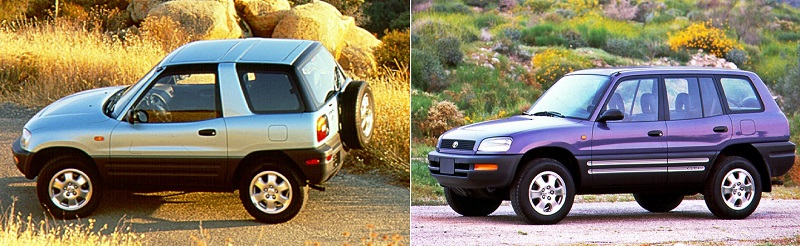
First generation of the RAV4 which created a new market segment almost overnight from the mid-1990s.
The RAV4 set off an ‘explosion’ in the SUV segment and in the years that followed, virtually every manufacturer would introduce a SUV (if it didn’t have one) or expand its SUV range. Demand kept growing and even the luxury segment began to have SUVs.
In 2019, the RAV4 was the world’s best-selling SUV and to date, over 10 million units have been sold worldwide. Now comes the fifth generation of the model which got off to a good start by being voted Japan’s Car of the Year 2019-2020.
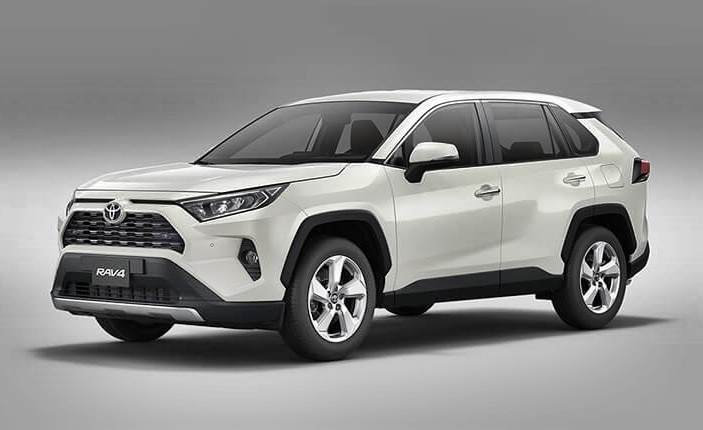
The all-new RAV4 imported by UMW Toyota Motor is available in two variants with 2.0-litre and 2.5-litre engines, priced at RM196,436 and RM219,664.50 (Peninsular Malaysia price, excluding insurance premium). The vehicles are imported as Completely Built-Up (CBU) units from Japan and come with a 5-year/unlimited mileage warranty. [Click here for price list]
The prices are higher than the popular rivals in the local market but bear in mind that the RAV4 is imported as CBU from Japan whereas competitors in the same class such as the Honda CR-V and Mazda CX-5 are assembled locally with lower tax imposed on them (apart from getting incentives from the government for investments in local assembly). And the strength of the ringgit (or lack of it) these days also has an impact on pricing.
Evolving with trends
Over the years, the RAV4 has grown in size from the original design. The latest generation, with an overall length of 4600 mm, it is 445 mm longer than the first generation, while the overall width of 1855 mm is 160 mm wider. The wheelbase of 2690 mm is 280 mm longer. This moved the RAV4 up a notch is size categorisation and Toyota filled its place with the more compact C-HR.
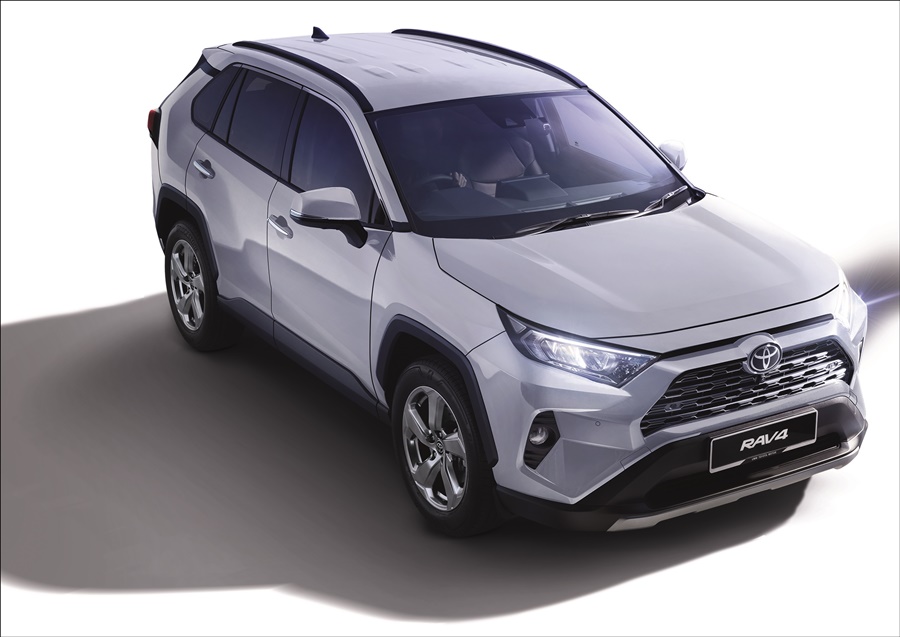
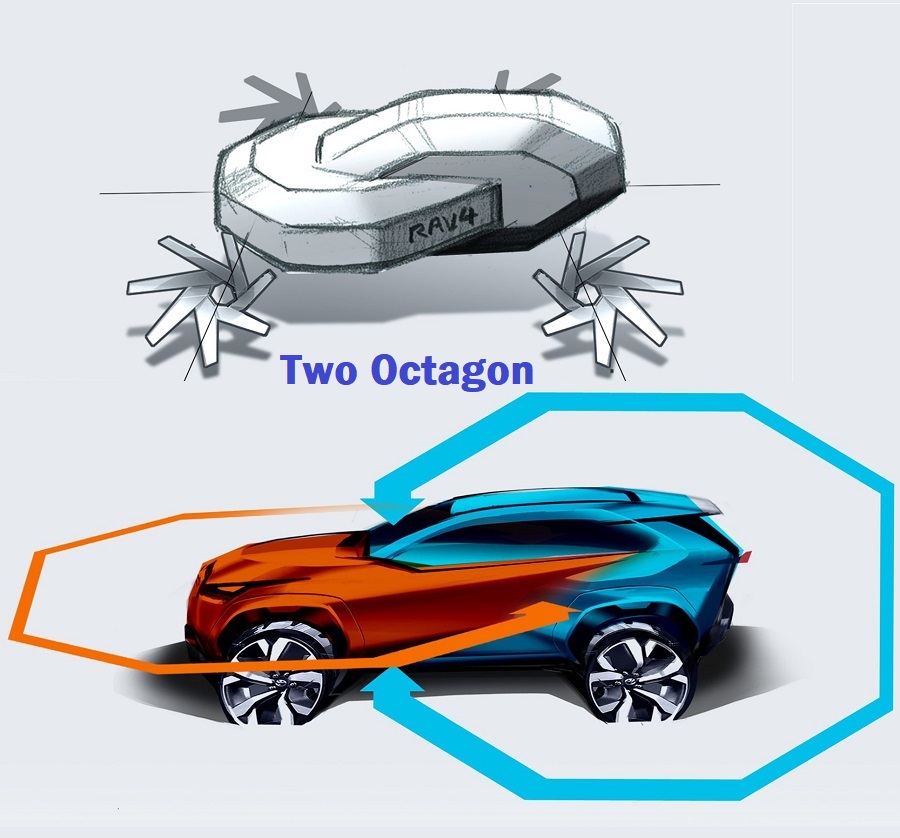
The styling also evolved with trends although even the first generation was stylish in its own way. The latest fifth generation has an octagonal theme giving a chiseled appearance with a front end that is bolder.
The door mirrors have been repositioned from the window panel to the door panel, increasing forward visibility around the A-pillars and contributing to a general increase in all-round visibility for better situational awareness.
Concept sketch for the new RAV4 shows how the octagonal theme was adopted, giving the model a chiselled appearance.
The RAV4 rides on 18-inch alloy wheels, wrapped with 225/60R18 dual-purpose tyres. Unlike the earlier RAV4s, the spare wheel is no longer on the rear door – which used to be a must for the SUV image. These days, apart from a few models, the spare wheel is carried on board and in the case of the RAV4, it’s a space-saver type for emergency use only. Thankfully, it isn’t hung under the vehicle like the traditional SUVs.
Joining the TNGA era
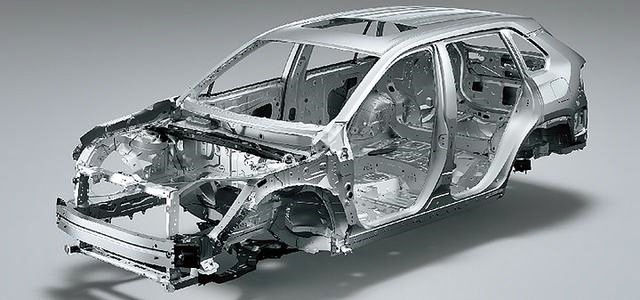
While the original RAV4 departed from traditional SUV construction by having a unitary monocoque structure, the latest model has TNGA, which stands for Toyota New Global Architecture. This is the brand new platform developed for use in a wide range of new Toyota models.
The TNGA structure is also monocoque and is 57% more rigid. With the adoption of a ring structure, the torsional rigidity of the body has increased. Contributing to the rigidity is the reinforcement in many areas, strengthening the structure. This enhances agility while also providing a smoother, quieter ride.
Adopting the TNGA platform allowed the engineers to position the powertrain lower down which means a lower centre of gravity for better stability. Using high-strength hot-stamped steel and aluminium have also reduced weight in the upper body, again helping to shift the centre of gravity downwards. A new saddle-style fuel tank distributes weight of the fuel evenly side-to-side.
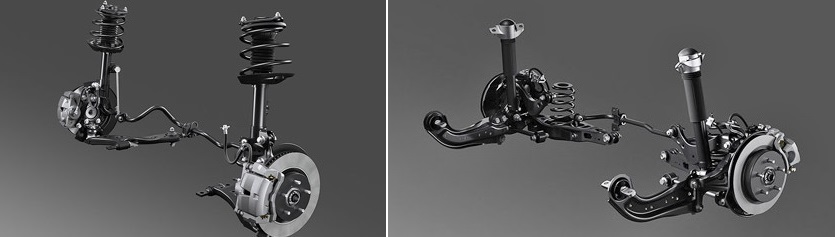
The suspension consists of MacPherson struts at the front and trailing wishbones, a straightforward layout which is clearly oriented towards on-road driving rather than off-road motoring. Handling and comfort were the priorities and a select group of takumi (highly trained master craftsmen) helped to refine the ride comfort, focusing on tuning details.
A new steering system is installed in the RAV4. The new parallel-type electric power steering system is rack-mounted rather than column-mounted, unlike the previous model. The new design helps enhance turning response and gives a natural feel that can help reduce fatigue on long drives.
The engineers also gave a lot of attention to reducing noise levels in the cabin, this aspect being important to the perception of quality. The reinforcements in the structure help, along with low noise features like integrating the floor silencer and expanding the surface area of damping materials.
Practical interior with car ambience
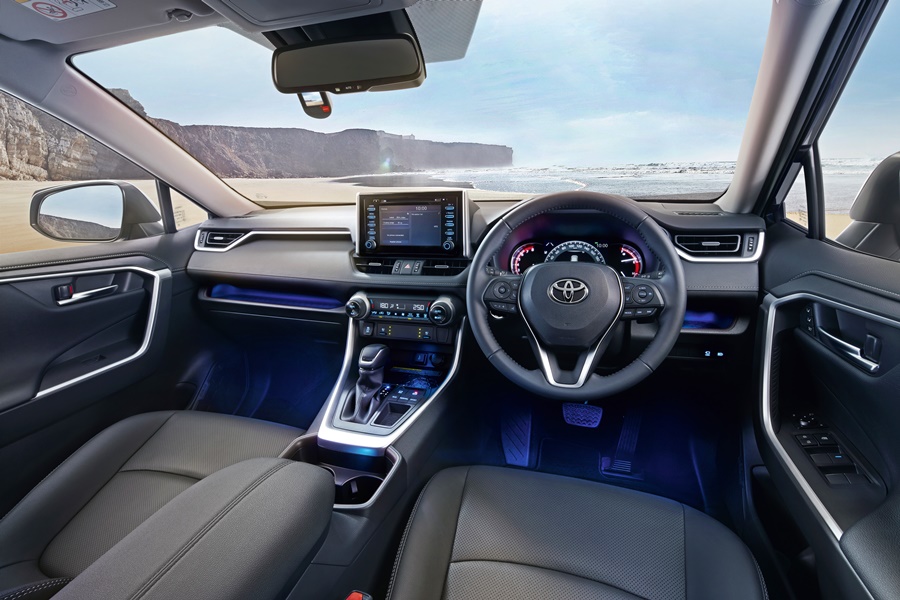
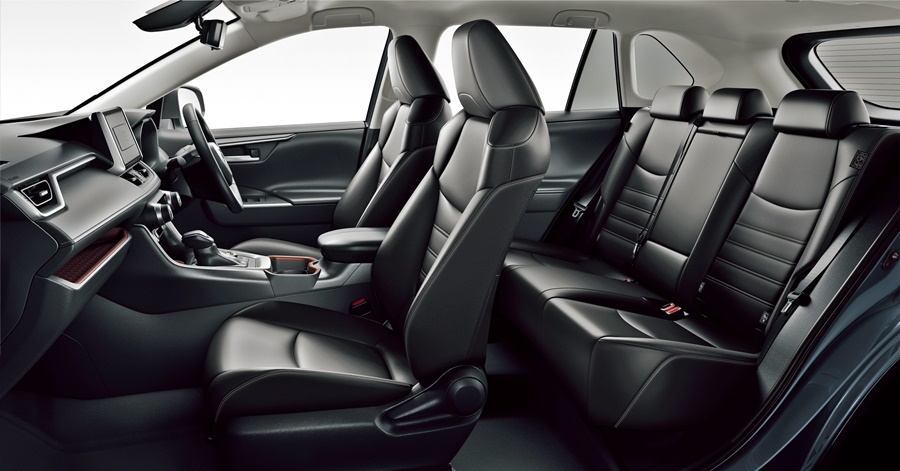
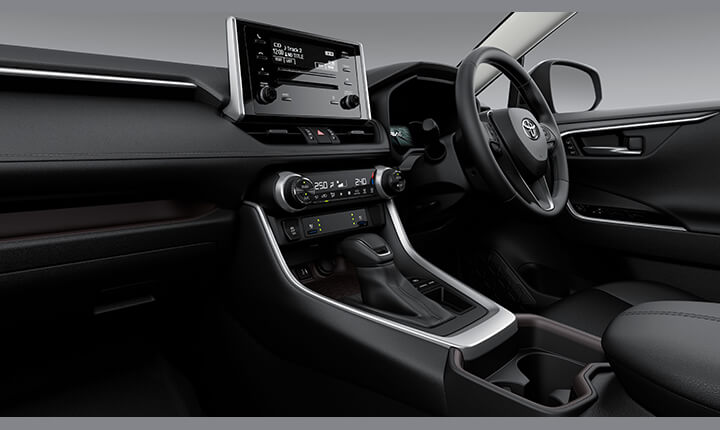
With the new platform, the interior designers took the opportunity to do a complete redesign of the cabin. As with earlier RAV4s, the interior concept focusses on practicality but blends in modern passenger car ambience with many convenience features.
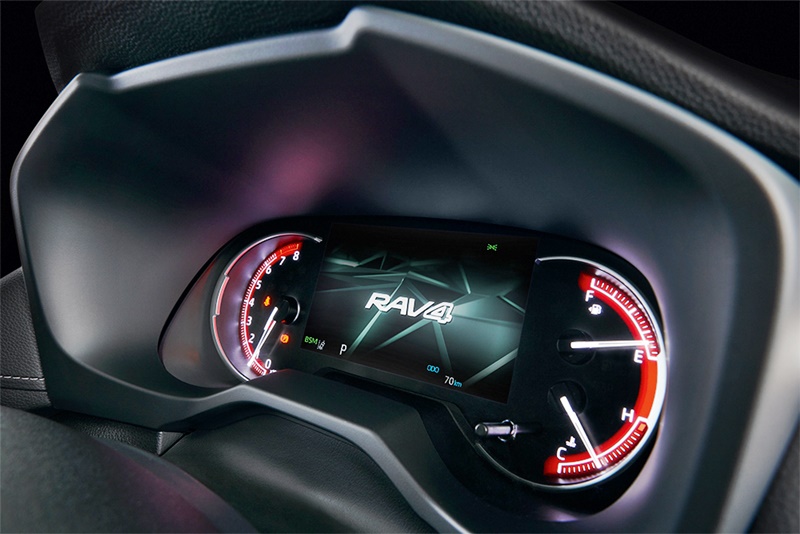
The new dashboard layout incorporates a slimmed-down instrument panel which is installed low, giving the driver better visibility. Bright and clear Optitron meters (originally developed for the Lexus luxury models) are used on the instrument panel. The TFT Combination Meter can be switched between analog and digital displays.
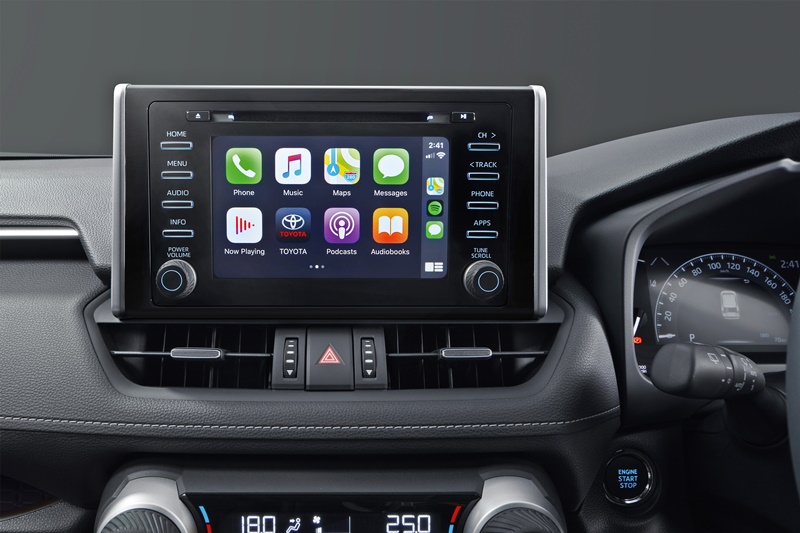
Infotainment is right up to date with a 7-inch display and a range of connectivity options such as Mirrorlink, Miracast, AUX and Bluetooth. AppleCarPlay and Android Auto are also available so occupants can connect their compatible smartphone and access apps from the dashboard. There’s also voice command which enables management of certain features or handsfree telephony.
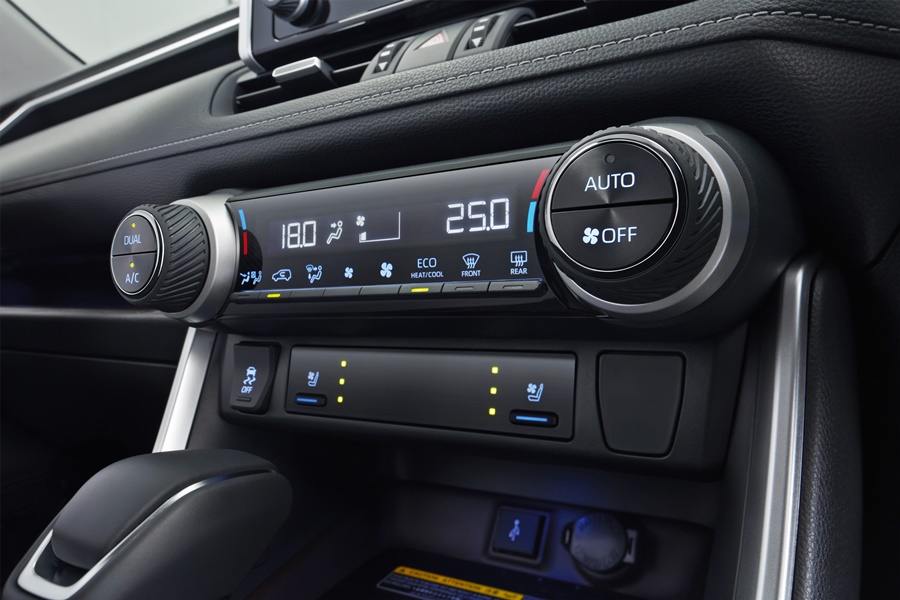
Seating comfort is improved with thicker cushions and enlarged lumbar support pads and there’s also a Seat Ventilation System installed – something which you usually find on luxury models.
Large cargo space with auto-opening door
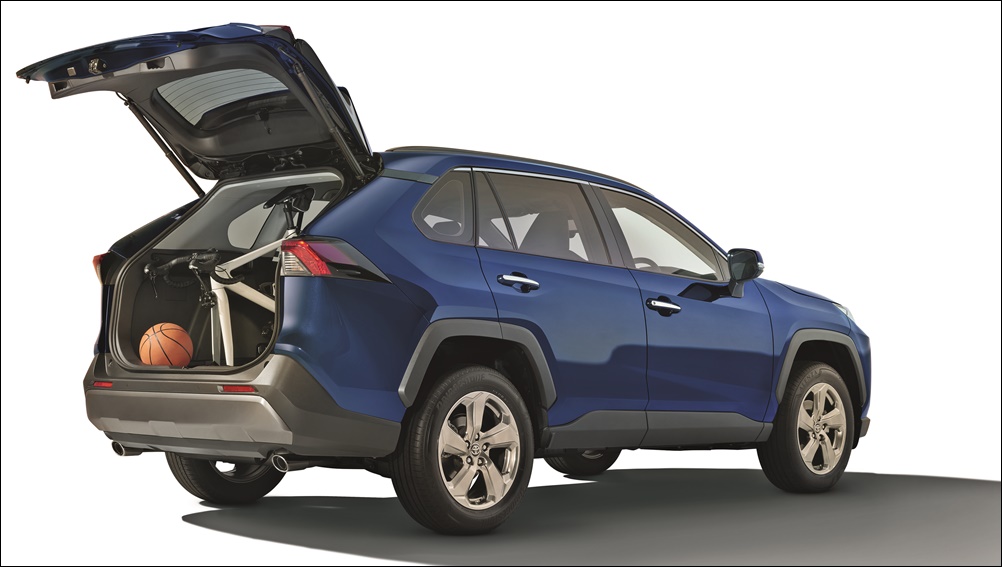
The RAV4 is a 5-seater with two rows of seats, and the back row can be folded flat to increase the cargo floor length for more cargo volume. The cargo area is large enough to even accommodate a 62-inch bicycle with the front wheels having to be removed.
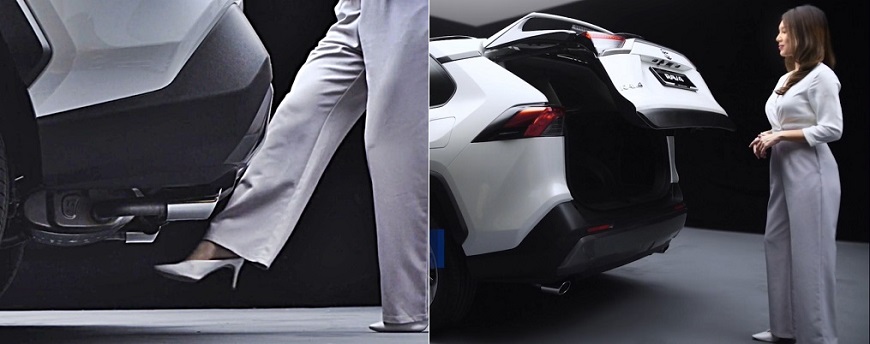
Where the earliest RAV4s had side-hinged rear doors, the door for latest one is top-hinged. There are pros and cons to this as a top-hinged door requires extra space behind the vehicle to open whereas you can open a side-hinged door a bit to put things in. But what will be greatly appreciate is not just powered operation for opening and closing but also a handsfree operation. Placing a foot under the rear bumper will unlatch the door and it raises automatically – a great feature to have when both your hands are full.
Feedback from owners of earlier generations told the new RAV4 development team that many owners have outdoor activities. This led them to come up with useful features to support such activities. For example, the inside handle of the rear door can be used for clothes hangers or camping lights. The wide and long ceiling can be used as a storage area with a nylon strap strung across the passenger grips. Numerous hooks are available to secure irregular-sized luggage as well.
A new engine family
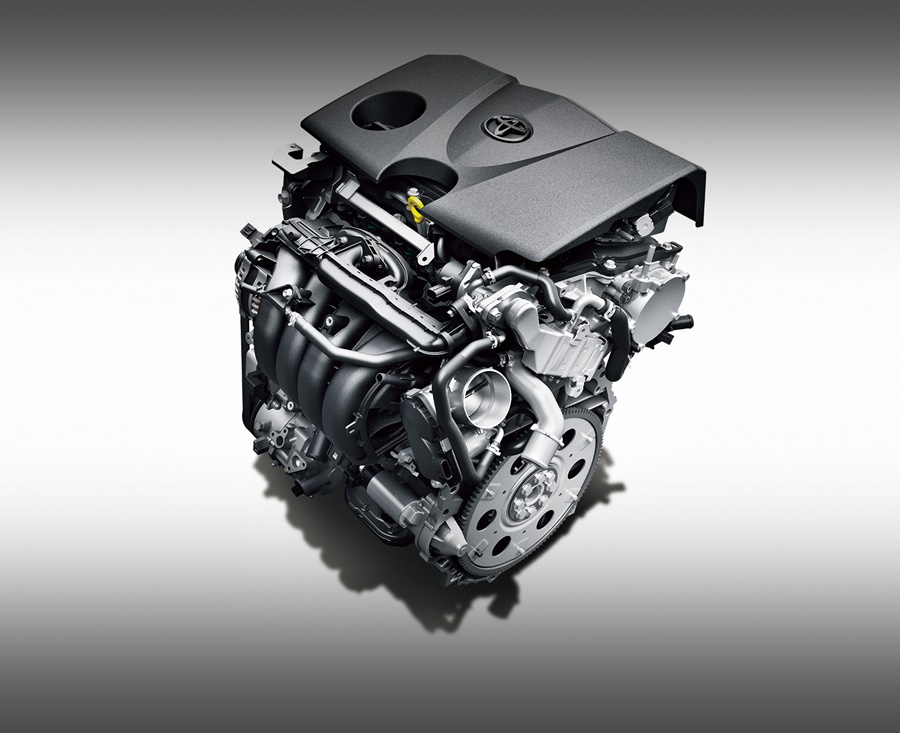
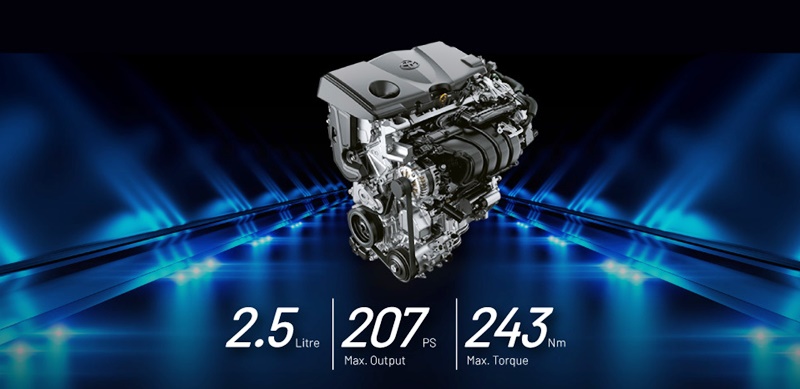
With this new generation, the RAV4 gets an entirely new powertrain with Dynamic Force engines. Lighter and more powerful, these 4-cylinder petrol engines have a combination of a very high compression ratio (13:1), advanced D4-S fuel injection (combining direct and secondary port injectors), high-speed combustion technologies, VVT-iE intelligent variable valve-timing (both sides), and ultra-low internal friction. The thermal efficiencies are as high as 40%, double the average of most internal combustion engines.
The 2.5-litre version produces up to 207 ps/243 Nm of torque while the 2.0-litre engine produces up to 173 ps/207 Nm. The bigger engine is mated to an 8-speed automatic transmission (Direct Shift 8-AT) but for the 2-litre unit, there’s a CVT with Sequential Shiftmatic.
For both transmissions, the driver can choose from Eco, Normal and Sport modes to suit driving preference or conditions. Selection of the preferred mode is done by pressing switches on the centre console. Paddle shifters are also provided (both variants), allowing the driver to make manual selections without removing the hands from the steering wheel.
Both variants have front-wheel drive rather than 4-wheel drive. When the RAV4 was first introduced, SUVs all had 4-wheel drive although there were also 2-wheel drive variants available, especially for the flatter regions of the US market. But as time went on, manufacturers found that the new generation of SUV buyers didn’t seem to care much for 4WD. Omitting 4WD meant weight reduction, with cost savings which could be used to provide more features. Those who had to have 4WD could still get it in more expensive variants but the majority were satisfied with 2WD.
Integrated active safety systems
Like most of the latest Toyota models, active safety systems are no longer independent elements but integrated to work together to help the driver avoid accidents and maintain better control of the vehicle. Besides the now-standard provision of systems such as ABS, Traction Control and Vehicle Stability Control, Toyota has developed an integrated package known as Toyota Safety Sense (TSS) which is used in the RAV4 and many of the Toyota’s latest models.
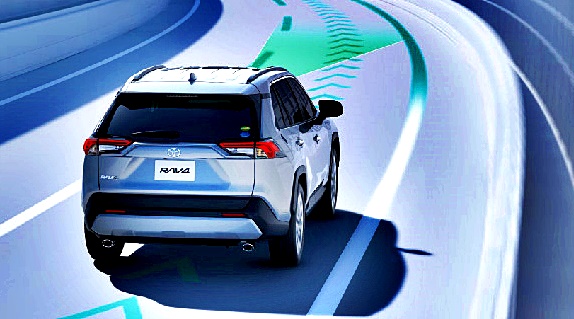
TSS consists of four driver-assistance systems – Pre-Collision System, Lane Departure Alert with Lane Tracing Assist, Dynamic Radar Cruise Control at All Speeds (DRCC), and Automatic High Beam (AHB). Lane Tracing Assist operates using the camera and radar to recognize lane markers or the preceding vehicle’s driving path. It estimates the vehicle’s position in the lane and then implements steering assist to remain in the lane, even on roads with curves.
Lane Tracing Assist guides the RAV4 along curves.
DRCC is a more advanced form of cruise control which can vary the cruising speed depending on conditions, while AHB detects the headlights of an oncoming vehicle or tail lights of a vehicle ahead and automatically switches to low beams.
Other safety features and systems in the RAV4 include Blind Spot Monitor with Rear Cross Traffic Alert both of which alert the driver when other vehicles are in the blind spot during changing lanes and reversing.
Besides the camera used for the TSS, there are also six other cameras around the vehicle. The first two are the Driving Video Recorders (DVR) mounted in the front and rear positions inside the cabin and the other four cameras are tiny one installed around the body for 360-degree coverage. The driver can view the surrounding areas next to the vehicle while parking, a great benefit in narrow or tight parking spaces.
Apart from the engine immobilizer and alarm system, UMWT also installs a Vehicle Telematics System (VTS) in the RAV4. This system uses GPS/GSM for tracking so if the vehicle is stolen, its location can be identified quickly and the authorities informed to recover the vehicle. The service provider for the VTS can also provide emergency assistance from its 24-hour command centre.
Visit www.toyota.com.my to find out more about the new RAV4 and where to view it.
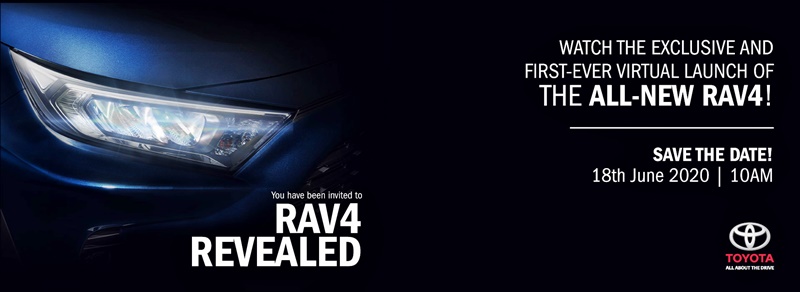
The Toyota RAV4, which was the bestselling SUV in 2019 and ‘Car of the Year’ in Japan, will soon be in showrooms in Malaysia. Following a teaser campaign to let the Malaysian market know of its launch to take place online on June 18 at 10 am, UMW Toyota Motor (UMWT) is now accepting orders from ‘early bird’ customers.
Two variants imported from Japan
Two variants will be available, with 2.5-litre and 2.0-litre petrol engines, and pricing is RM223,880 and RM203,880, respectively. However, these prices still include Sales Tax which will be exempted from June 15 until the end of the year as part of the government’s economic recovery initiative for the auto industry.
Being a completely built-up (CBU) import from Japan, 50% of the 10% Sales Tax can be exempted which will therefore be 5%. UMWT estimates that after the tax deduction, the price will be RM215,700 for the RAV4 2.5 and RM196,500 for the 2.0-litre variant (without insurance premium included).
This is the fifth generation of the model which created a new market segment when it was first launched in the mid-1990s. Cumulative figures for the SUV passed 10 million at the end of February this year.
One of the two Dynamic Force Engines available for the new RAV4.
TNGA and Dynamic Force Engine
The new RAV4 sits on Toyota’s New Global Architecture (TNGA) platform like many of the latest models. It also comes with a Dynamic Force Engine which is the latest Toyota engine family and features advanced technology for high efficiency and performance.
Besides moving towards a more premium image, the RAV4 also comes with Toyota Safety Sense, a suite of safety systems which help the driver to avoid accidents and make motoring safer. These include Pre-Collision System, Lane Departure Alert with Steering Assist, Lane Tracing Assist, and Dynamic Radar Cruise Control for All Speeds as well as Automatic High Beam.
Customers can expect a comprehensive list of convenience features which will include a Kick Sensor Powered Back Door. This feature enables opening of the rear door by just positioning one foot under the rear bumper and the door will automatically open.
More information on the new Toyota RAV4 can also be found at toyota.com.my.
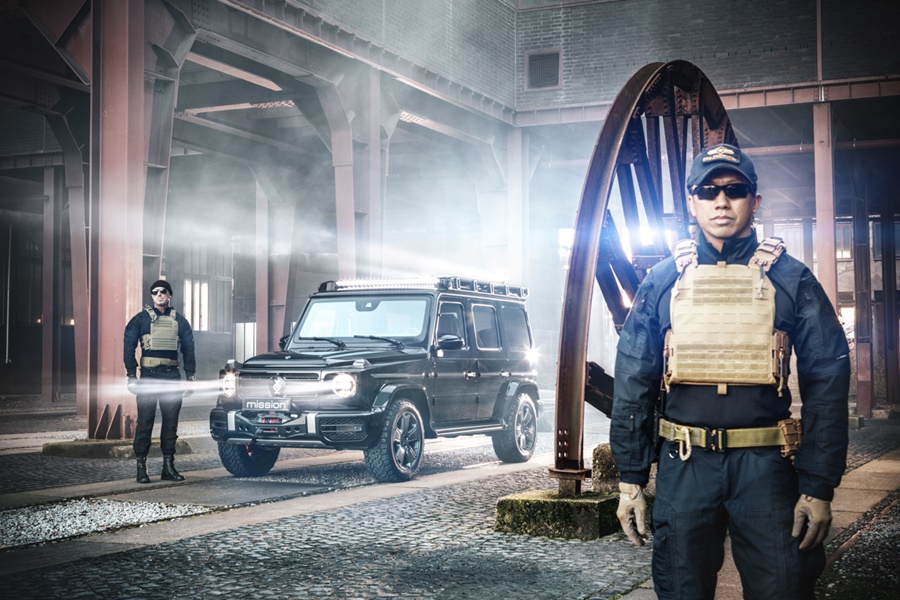
BRABUS is well known for its high-performance upgrades to Mercedes-Benz models and while that forms the bulk of its business, the company can also do special protection vehicles for customers who need protection from more than just accidents.
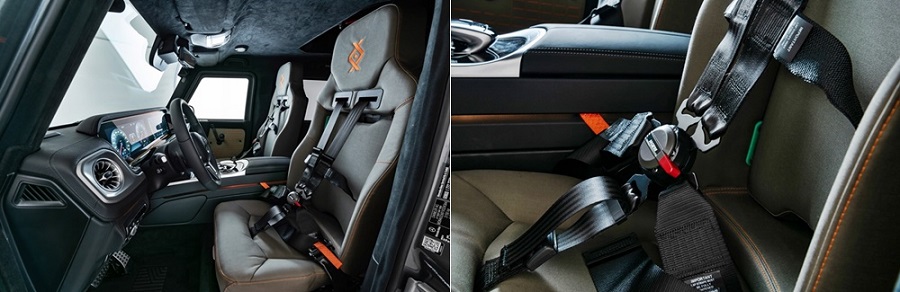
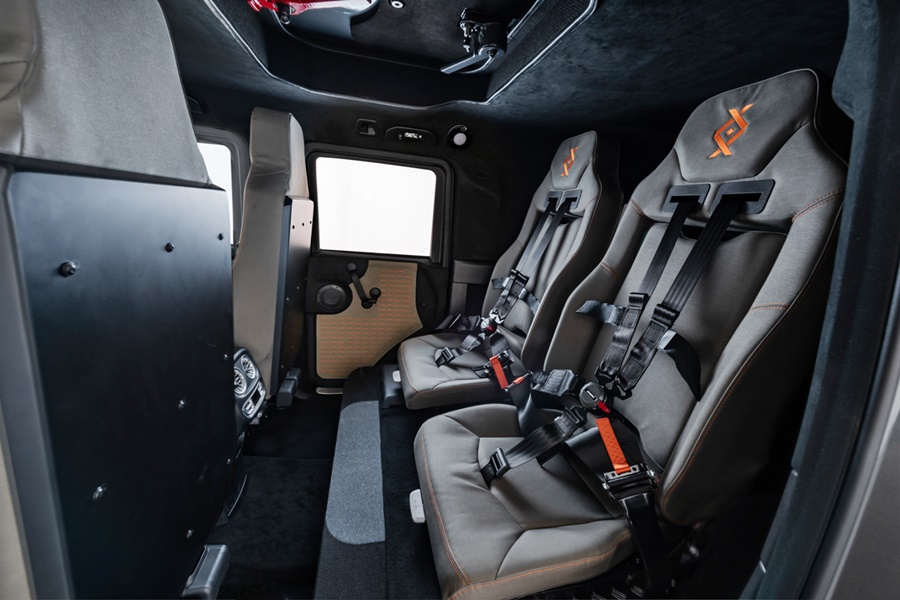
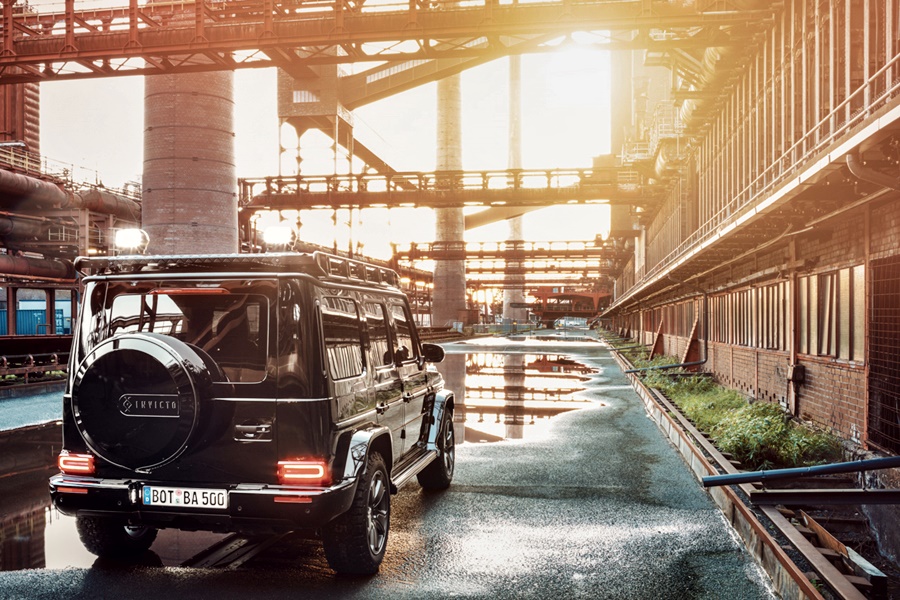
The company produces an innovative variant of the current Mercedes-Benz G-Class armoured in accordance with the VR6 Plus ERV standard, known as the INVICTO. The all-terrain vehicle comes in three different versions: PURE, LUXURY and MISSION.
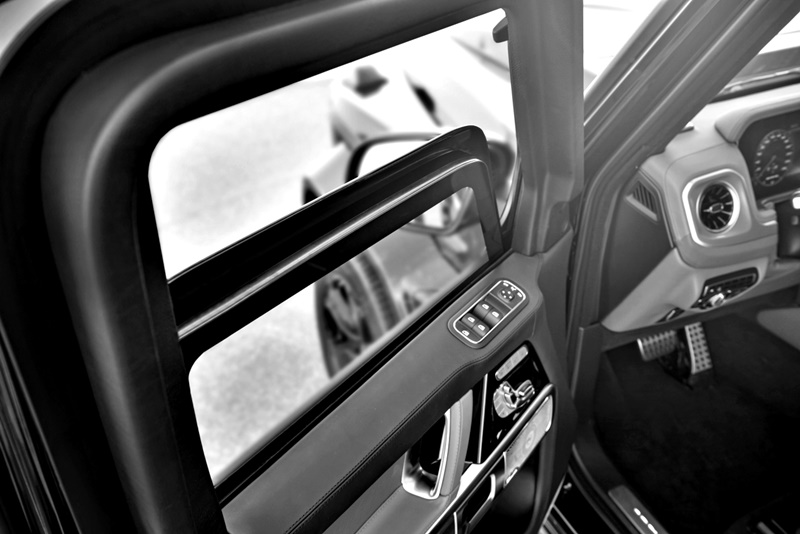
In order to provide the occupants with maximum protection against small arms fire and explosives, the engineers from BRABUS developed the ‘INVICTO Shelter Cell’, a self-contained, self-supporting and bolted-down protective cell. In addition, there are further protective elements that are in part produced using a special 3D printing process and, of course, all-around extremely tough bulletproof glass.
After extensive ballistics and explosives testing, the protection levels of the INVICTO are confirmed to meet high industry standards. The armoured SUV can resist not only 7.62 x 39 calibre rounds (used in automatic weapons such as the AK-47), but also hand grenades and 12.5-kg explosive charges.
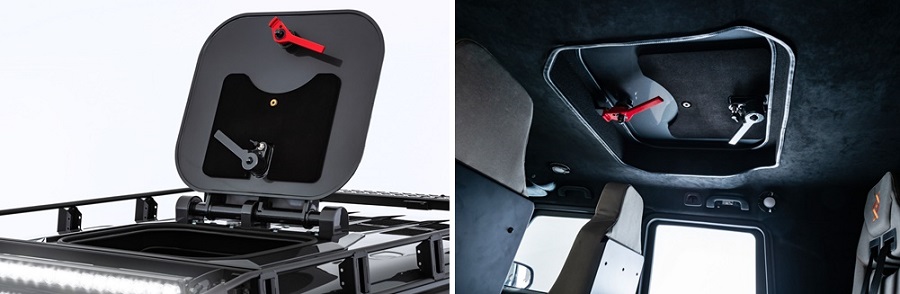
However, the high level of protection remains largely unseen from the outside. It’s all ‘under the skin’ with high-tech materials used. A common feature of all three INVICTO models is the innovative special protection package developed specifically for the body of the G-Class. The doors and the hatch are fitted with newly developed protective elements, including extremely tough bulletproof glass.
In order to fit them into the body of the G-Class, the engineers developed an innovative structure for the upper windshield frame. It is the first time anywhere in the world that protective elements are used which are made in a 3D printer using additive manufacturing processes.“ .
”
Unlike vehicles where the armour is retrofitted, the individual elements of the protection system by BRABUS is not welded separately into the bodyshell of the vehicle. Everything is bolted-down as a unit. To this end, the company manufactures precise-fit, hot-rolled steel armour plates and additional protective elements made from materials such as carefully selected fabric and fibre structures as well as from ceramic and metal composite materials.
Among the many special constructive features of the INVICTO Shelter Cell is the fact that there is no narrowing of the door openings whatsoever. Getting in and out of the vehicle comfortably is crucial for many owners of a G-Class. In addition, the protective cell has a zero-gap design. This means that the individual components of the armour are installed without any gaps between them. This is of elementary importance for providing maximum security under small arms fire or an explosive attack.
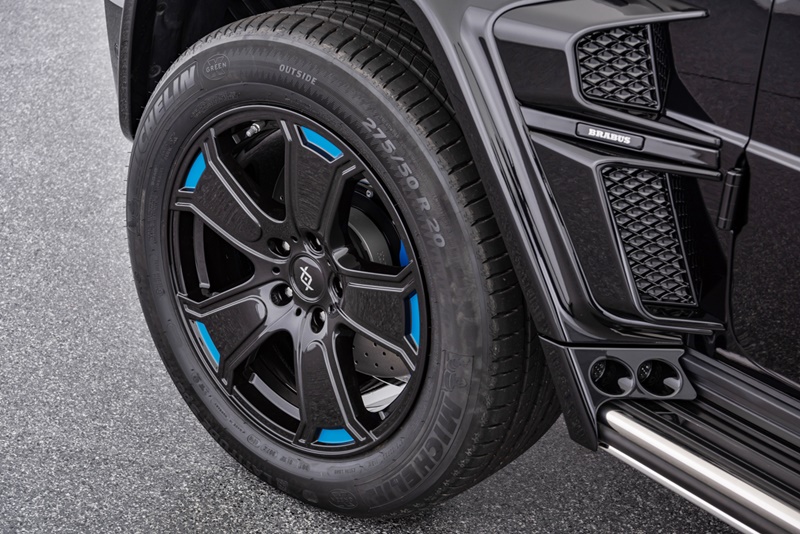
But active safety is not overlooked either and the engineers revise suspension settings and also components to match the increased weight as well as maintain safe handling. There’s also a high-performance braking system and 20-inch INVICTO wheels with special run-flat tyres.
In addition, the vehicle frame was reinforced in the area of the side members and the strut towers were reinforced as well. Despite the outstanding level of protection added, the weight increase is only about 1,000 kgs, which is relatively little in comparison.
The INVICTO can be ordered with various petrol engines available for the current G-Class models. The cost of the protection packages start at 354,600 euros, which is equivalent to about RM1.7 million. If you are someone who needs such protection, chances are the cost will not be an issue!
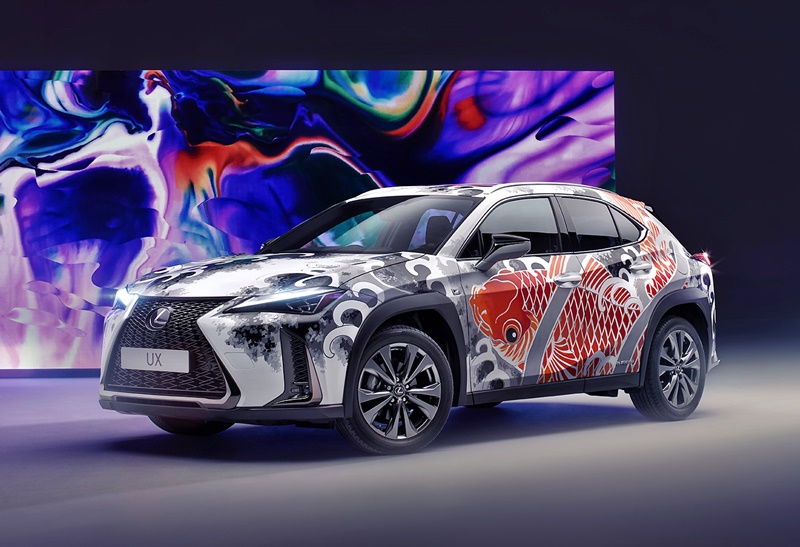
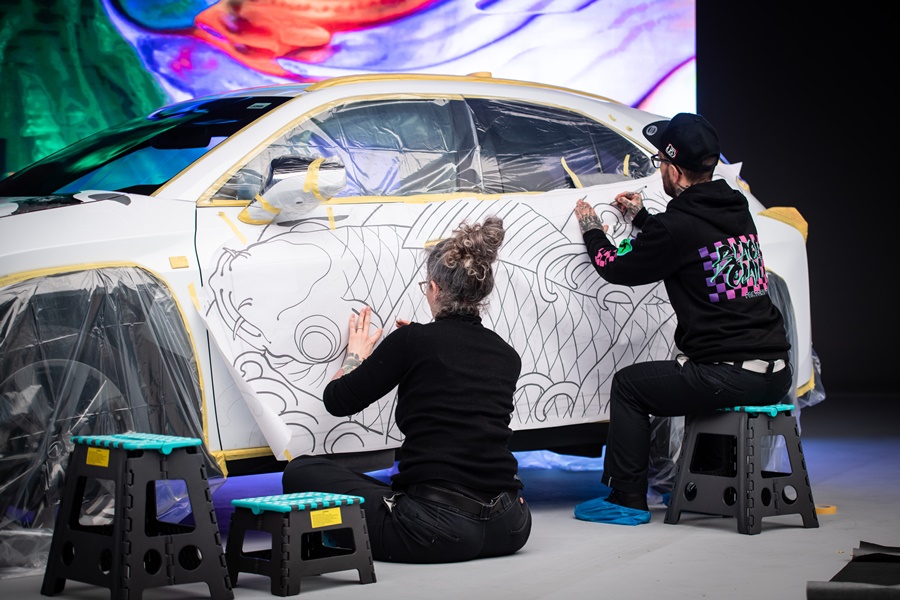
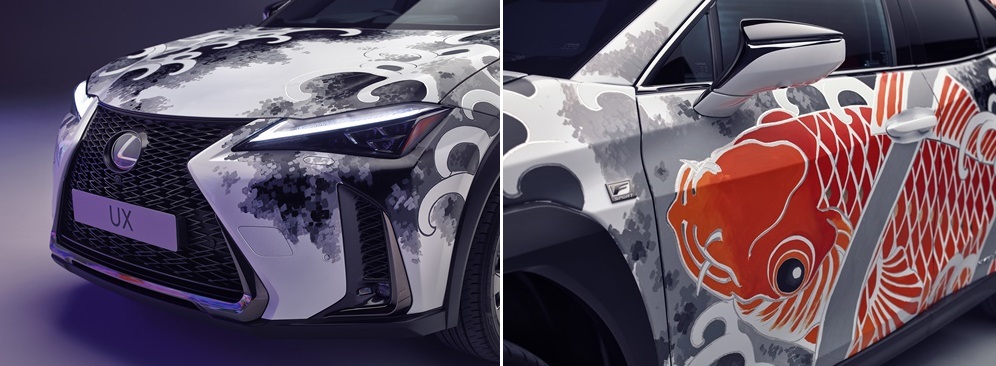
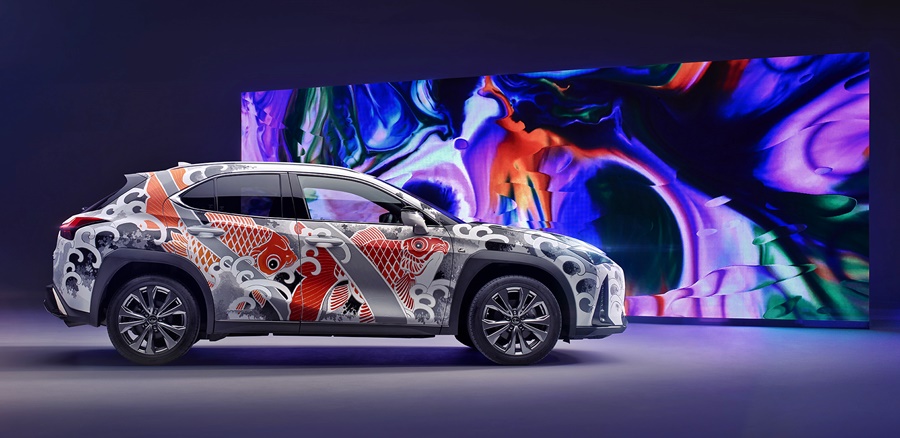
With high quality adhesive films available today, you can put just about any image onto the exterior of a car. But Lexus went one step further by actually tattooing images onto its Lexus UX model. It has created the world’s first tattooed car, a strictly one-of-a-kind interpretation compact SUV by leading London tattoo artist Claudia De Sabe.
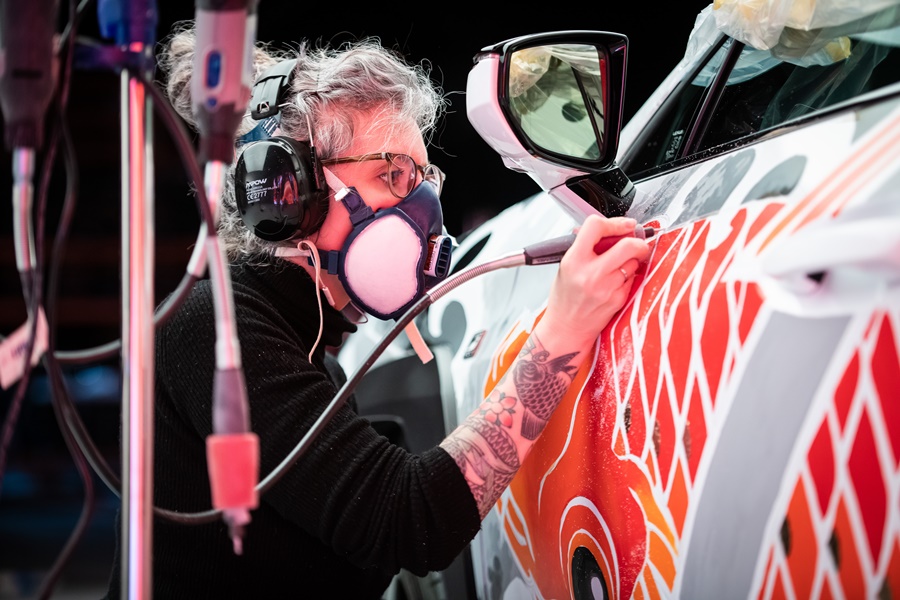
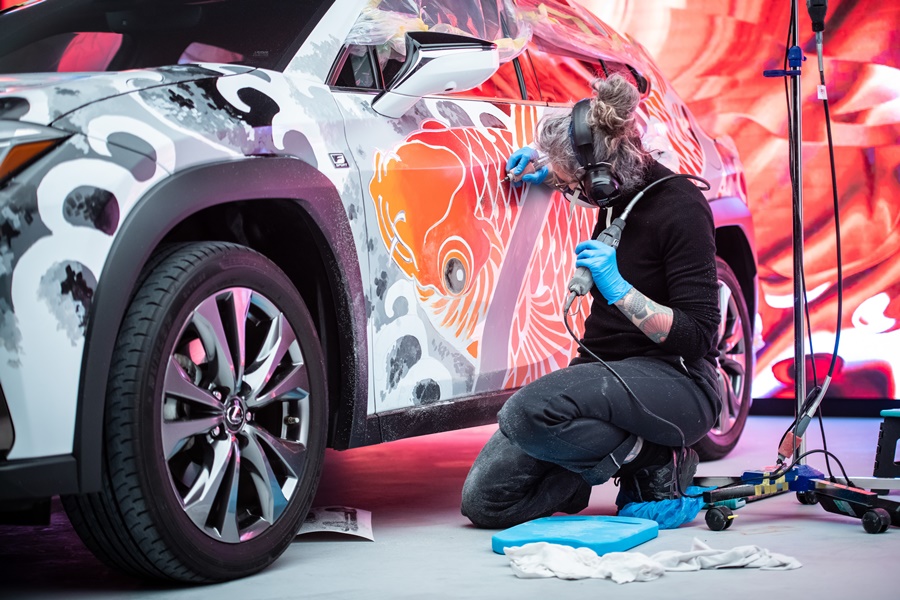
Using a pure white SUV as her ‘canvas’ and a Dremel drill tool in place of a fine tattooing needle, Claudia produced a sweeping design featuring koi carp along the entire length of the vehicle. The koi is a motif familiar from traditional Japanese art, representing qualities of good fortune and perseverance.
She used the Dremel tool to drill away the surface paint and expose the metal underneath to create the complex pattern, and then applied 5 litres of high-quality car paint by hand to bring out the details.
The process took 6 months to complete from the initial drawings, with the ‘tattooing’ accomplished over five 8-hour days of intensive work. As a finishing touch, she used gold leaf to create highlights and give the design a stronger 3D effect, before the whole vehicle was given a protective lacquer coating so that it can be driven on the road.
No mistakes permitted!
It was clearly a physically demanding project, with the vibration of the drill and working with an object that, unlike a human customer, couldn’t be moved into a comfortable position as the design progressed. Where any small slips in a human tattoo can quite easily be worked or coloured into the pattern, the ‘engraving’ with the drill required absolute precision.
It was the first time Claudia had applied her skills to metal rather than human skin and she found both similarities and new challenges in the unique commission. “When you tattoo a person, you have to think about the muscles and tissue beneath the skin. With the car, it was about the way the bodywork changes shape over the framework,” said Claudia, who was assisted in her work by her Japanese husband Yutaro.
“The best thing about tattooing the Lexus UX, and the reason why this car was ideal for the project, is its streamlined shape. Everything from the lines on the side of the body to the shape of the windows, everything is just so dynamic and beautiful. It was a perfect fit for the design and the concept itself,” said Claudia, a co-founder of the Red Point tattoo studio in Islington, London.
Tribute to takumi craftsmanship
The project stands as a tribute to the takumi craftsmanship that is applied to every Lexus, witnessed in design details and flawless finishes achieved with human skills perfected through years of dedicated training.
Similarly, Lexus embraces traditional Japanese aesthetics in its vehicle designs, in elements such as the UX’s washi paper-grain cabin trims and the seamless merging of the interior and exterior through the front screen, echoing the engawa architectural features of Japanese homes.
Lexus doesn’t plan to offer tattooed versions of the UX for sale but it’s estimated that the unique work done by Claudia and her husband would cost upwards of £120,000 (equivalent to about RM649,000).
The Lexus UX has been introduced in many countries, including Malaysia where it is priced from RM243,888. To find out more, visit www.lexus.com.my.
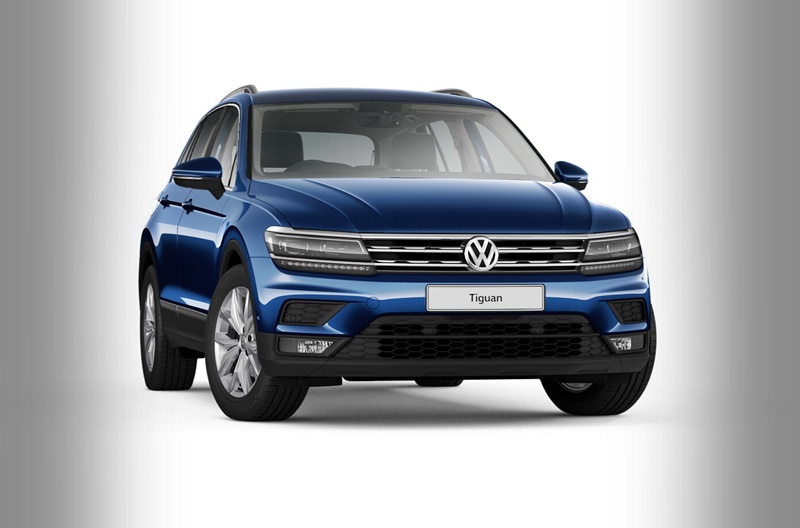
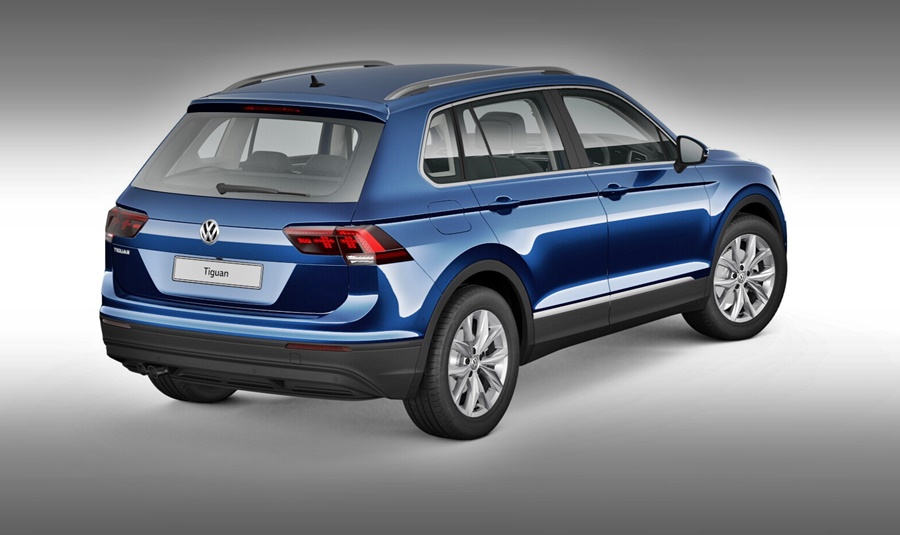
Looking for a new SUV? If you choose the latest Volkswagen Tiguan, you can save money on the purchase provided you book and register it by June 30, 2020. For the first six months after your loan term commences, you will not have to pay any monthly instalment as Volkswagen Passenger Cars Malaysia (VPCM) will cover that amount for you.
Of course, how much you actually save depends on the financing you need (which must be taken from the recommended financial institutions) but on the assumption of a monthly instalment of RM1,630, you will save RM9,780.
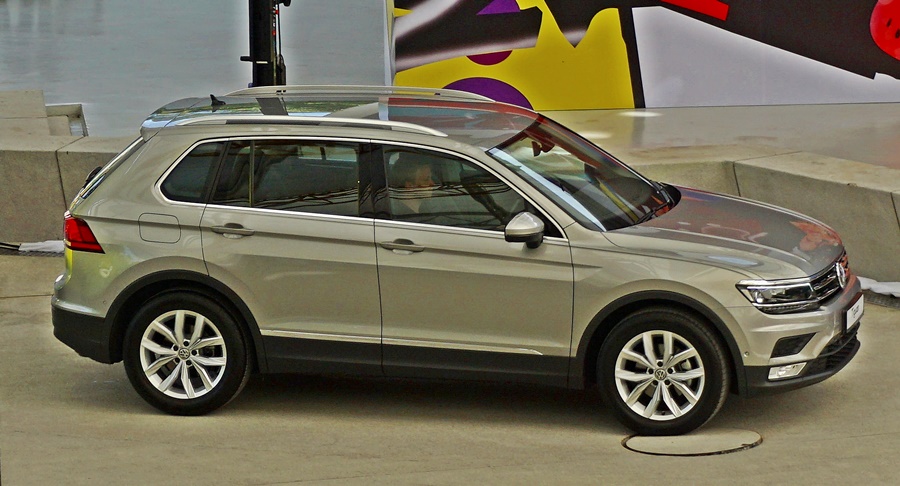
The Tiguan is available with a choice of four exterior colours.
Save another RM4,000 more!
Do the booking online at the Volkswagen eShowroom and you’ll get an additional RM4,000 rebate, lowering the amount of financing you need to take on the H-P loan (terms and conditions apply).
But whether you choose to book online or directly with an authorised Volkswagen dealer, you still won’t need to pay any instalment in the first 6 months. That’s great in these times as your first payment would then be in January 2021.
For added convenience, the new vehicle can be delivered right your home with the free Volkswagen Home Delivery service, available to new owners located within 20 kms from dealerships.
Global bestseller
The Tiguan is Volkswagen’ global bestseller and is also one of the top three most popular SUVs in the world. It is currently in its second generation since the model was first introduced in 2007. For the Malaysian market, the SUV has a 150 ps/250 Nm 1.4-litre TSI turbocharged direct injection petrol engine with a 6-speed direct shift gearbox (DSG).
Despite its brisk performance, thanks to having a smaller engine displacement, the Tiguan can also be economical to run, and Volkswagen says it can travel up to 800 kms on a full tank of fuel.
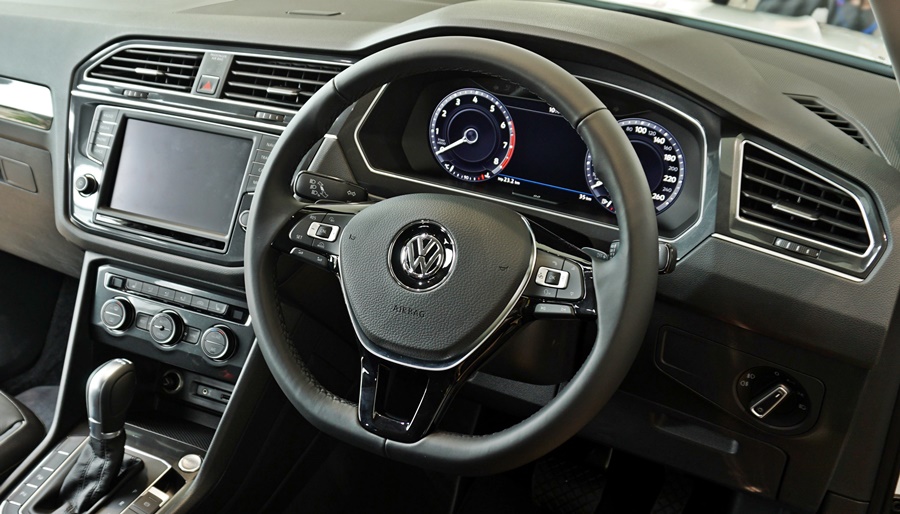
A highlight is the Digital Cockpit which features a high-resolution display with a three-view customizable screen via the infotainment with over 30 combination options. The infotainment system has App-Connect which can use MirrorLink, Android Auto and Apple Carplay to bring apps on smartphones to the dashboard.
Safety features are also extensive with 6 airbags, Electronic Stability Control, Multi-collision brakes, Intelligent Crash Response System, Electronic Parking Brake as well as hill-hold control.