


Piston.my

Volvo

BHPetrol RON95 Euro4M

For those who want premium air quality in the premium cars they travel in, Volvo’s new Advanced Air Cleaner technology can satisfy that expectation. The technology is a world-first premium to provide Volvo drivers with clean and healthy air inside their cars and also clean the air of their cabin ahead of their journey.

While it may seem like the Swedish company is focusing on air cleanliness in view of global concerns brought on by the COVID-19 pandemic, Volvo has given attention to air quality in the cabin for decades. It was among the early carmakers to provide pollen filters and of course, it has continuously developed technologies to ensure that its exhaust emissions from its engines are as clean as possible.
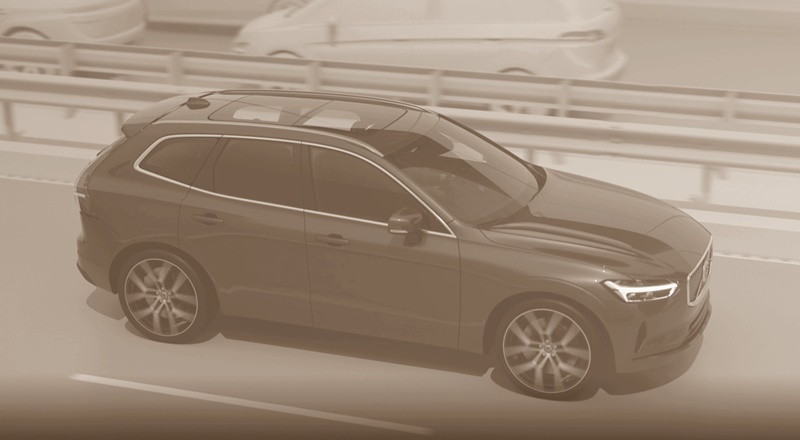
Volvo can’t do much about outside air quality (although it helps by ensuring its engine exhaust emissions are clean), but it can offer very clean air inside the car.

Measuring and cleaning
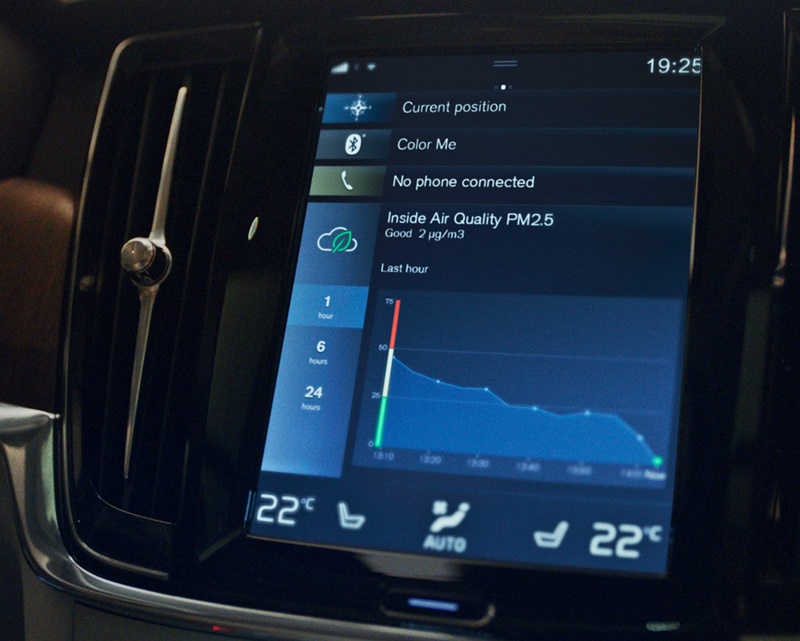
The system has a sensor that measures PM 2.5 levels inside the cabin, creating a feature not available in any other car currently on the market. Indicating the amount of fine particulate matter in the air, PM 2.5 is a widely used measure for air quality. Globally, many urban areas suffer from PM 2.5 values that exceed recommended levels by the World Health Organisation, underlining the need to minimize their impact.

In China, where PM 2.5 measurements and related information services are well established, Volvo drivers can also compare air quality inside the cabin to that outside the car.

Available on all 60-series and 90-series Volvo models based on the Scalable Product Architecture (SPA) since early this year, the Advanced Air Cleaner uses a synthetic fibre-based filter and ionization to clean the air. Up to 95% of all PM 2.5 particles can be removed with these two methods.

Volvo’s Advanced Air Cleaner can remove up to 95% of all PM 2.5 particles using a synthetic fibre-based filter and ionization.

Healthier air means safer driving
With the greater air filtration, air quality inside the car is much healthier, limiting the adverse health effects that are associated with air pollution and fine particulates. Cleaner air inside the car also helps make driving safer as healthy and fresh air can help boost driver concentration.

Stale air tends to make a driver sleepy too, which is why the air inside needs to be refreshed periodically by opening the windows or switching to fresh air mode for the ventilation system. However, as external air quality is not clean, this is where Volvo’s Advanced Air Cleaner technology is very useful to clean it as it enters the cabin.

Drivers of certain Volvo models can also use the Volvo On Call smartphone app (where available) to easily schedule an extra cleaning of the cabin air ahead of their journey. The app then tells drivers about the actual PM 2.5 levels inside the cabin after cleaning.

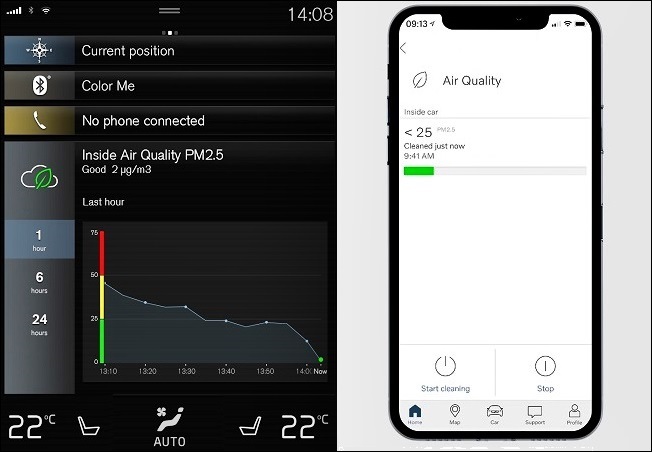
Volvo owners can also check on air quality in the cabin and then activate the cleaning process from their home or office.

“With our Advanced Air Cleaner technology, you can rest assured that the air you breathe inside your Volvo is cleaner and healthier,” said Anders Lofvendahl, Senior Technical Expert on Cabin Air Quality at Volvo Cars. “We believe that clean air is good for you, both from a health and from a safety perspective, and we will continue to push the envelope in this area.”

Apart from the Advanced Air Cleaner technology, Volvo Cars also works on creating a healthy environment inside its cars in other ways. Its engineers have a long-standing focus on removing emissions from organic substances in the car. They also aim to minimize the amount of allergy-causing materials from its interiors as well as generation and emission of odours from parts and materials used inside the cabin.

Geely Auto looks at ‘passenger safety’ from a different perspective, aims to make cars ‘healthier’


PISTON.MY

BHPetrol RON95 Euro4M

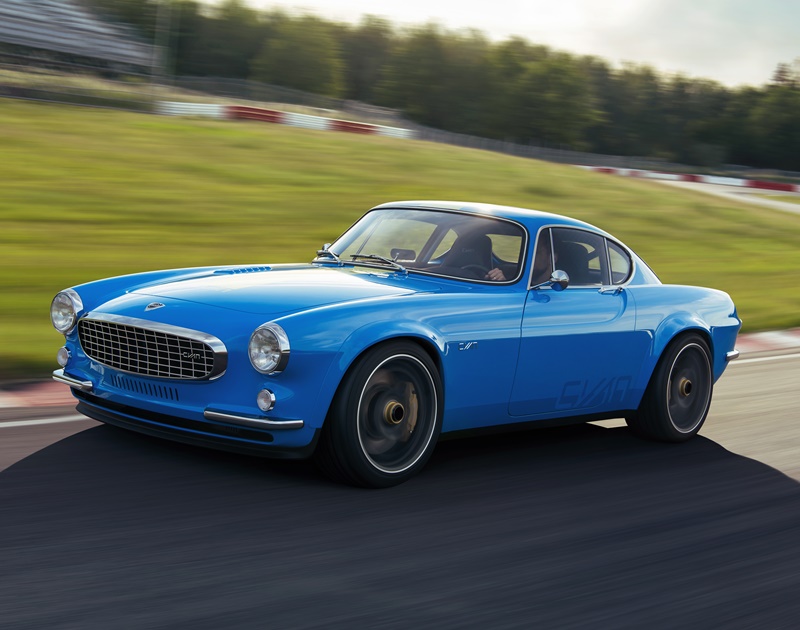
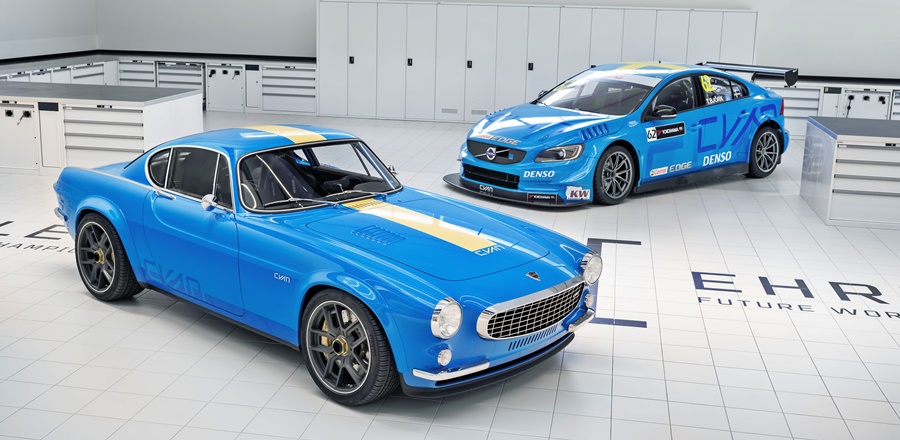
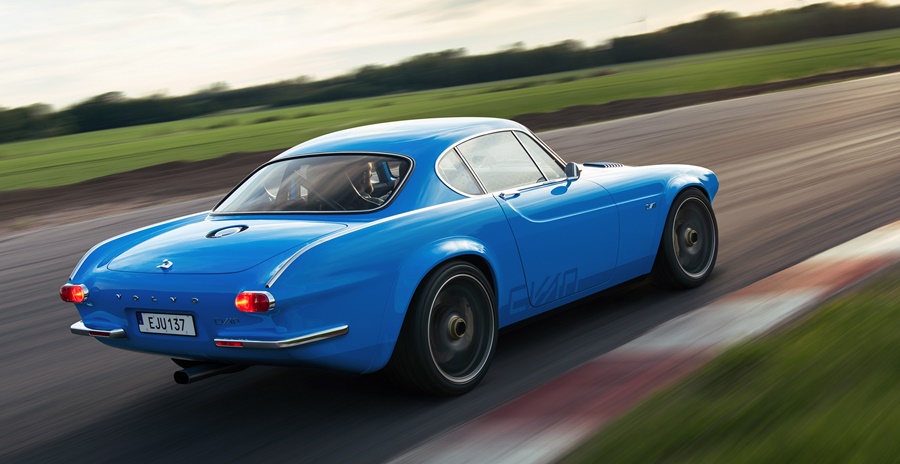
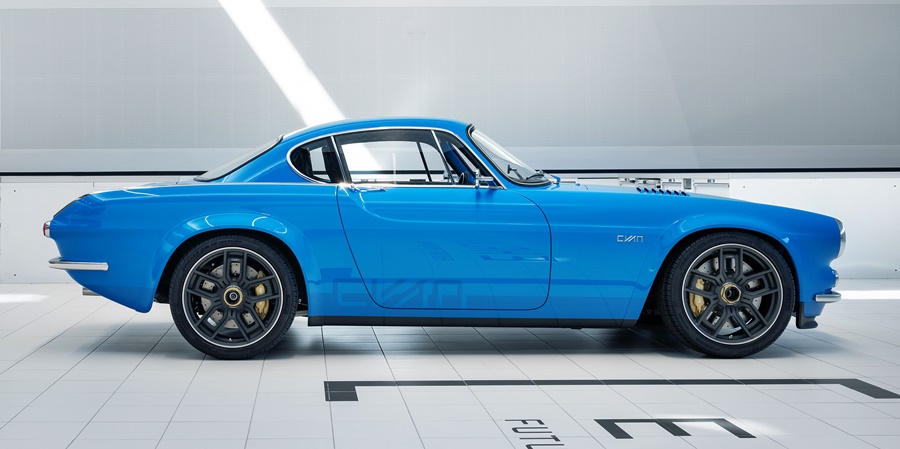
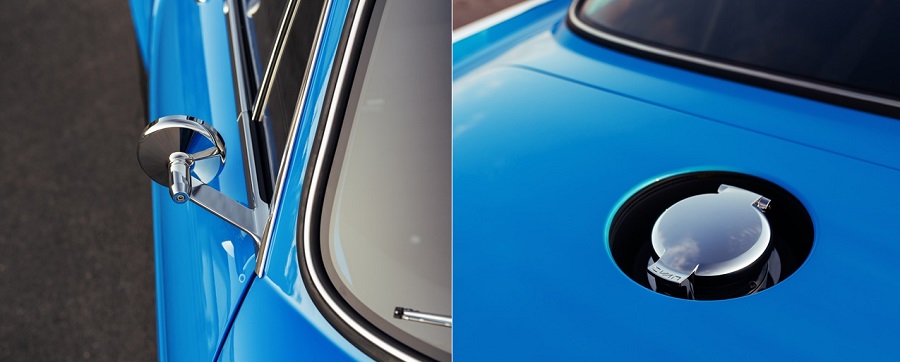
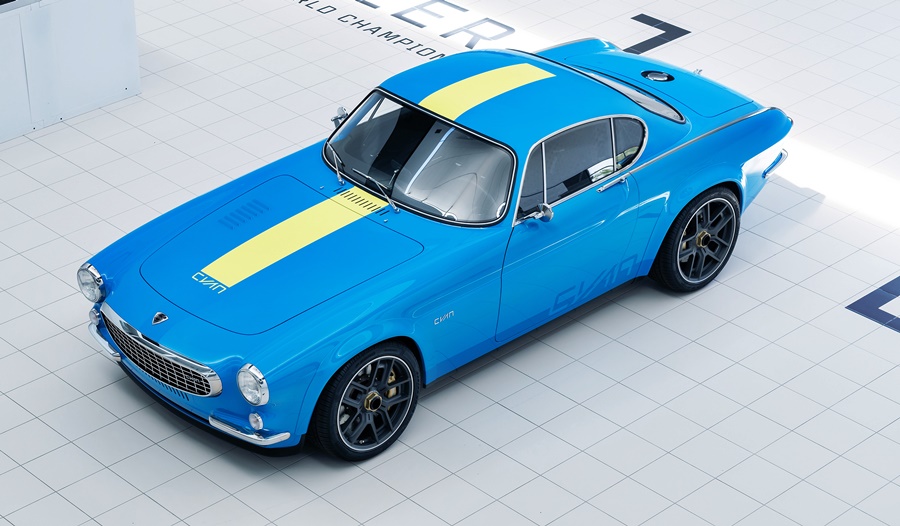
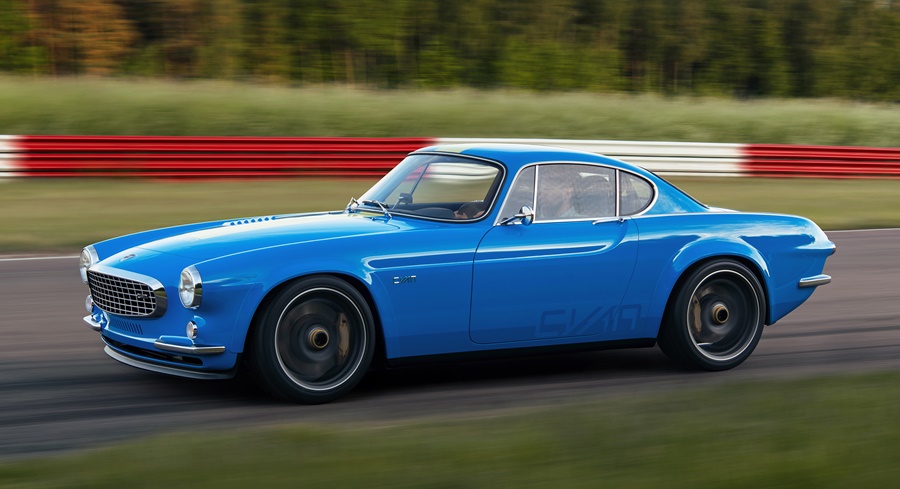
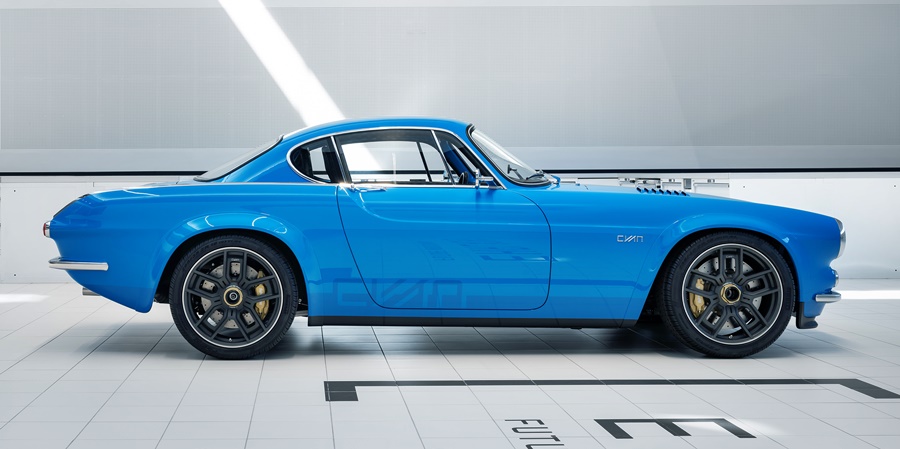
We recently wrote about the Volvo P1800, an iconic sports model from the 1960s which also came to be known as ‘The Saint’s Car’. Now Cyan Racing, the reigning triple World Touring Car Champions, has revealed an interpretation of that car – the Volvo P1800 Cyan.

The original P1800 was unveiled in 1960, a year before the Jaguar E-Type, two years before the Ferrari 250 GTO and three years before the Porsche 911. “The Jaguar, the Ferrari and the Porsche are all cars with a continuation,” said Christian Dahl, CEO and founder of Cyan Racing. “That left us with inspiration to create what could have been if we, as a race team, had been there during the Sixties, racing the P1800, and got to design a road version of our race car.”

Volvo P1800 Cyan 2020

What could have been
In the age of autonomous driving, electrification and connectivity, Cyan Racing decided it was time to capture what has been and to make it timeless. “Obviously we could have built an electric Volvo P1800 filled with all the latest technology, comfort and luxury. But that was not what we wanted,” Dahl said. “Amid this paradigm shift, we decided to slow down time and freeze a part of it in our own time capsule. To take the best from the Golden Sixties and combine it with our capabilities of today, keeping a pure yet refined driving experience.”

Tailored to deliver genuine driving pleasure
While creating the P1800 Cyan, the team behind it decided to treat the design and engineering of the sixties with care, moving it forward in a delicate way. They applied their expertise in engine, aero and chassis design to make a car that delivers on the Cyan engineering philosophy in terms of predictability and intuitive driver control.

Volvo P1800 Cyan 2020

But it would also be lightweight and offer the analogue driving experience of the Sixties. “There are no driver aids to distort the driving experience, meaning no stability control, ABS or brake booster,” said Mattias Evensson, Project Manager and Head of Engineering at Cyan Racing.

“The Volvo P1800 Cyan is about clearing away anything disturbing the direct connection between driver, tyres and the road. Our objective has been to keep that undisturbed sensation whilst refining it with the best technology of today,” explained Evensson.

Carbonfibre and steel body
The bodywork has been altered to accommodate a wider track, larger wheels and repositioned greenhouse, among a long list of redesigns. “To put together an interpretation of an iconic design is a challenge. I think we succeeded in merging new technology without losing the character of the original Volvo P1800,” said Ola Granlund, Head of Design at Cyan Racing.

Volvo P1800 Cyan 2020

The P1800 Cyan which started life as one of the units produced in 1964 has been refined and reinforced utilizing high-strength steel and carbonfibre. “The basis for a precise and intuitive driving experience is a solid body structure. Cars from the Sixties are far from ideal when it comes to this due to weak points and steel quality that allow for flex,” said Evensson.

“We have redesigned the structure of the original shape and strengthened weak points in the chassis through triangulation, using high-strength steel and integrated the carbonfibre body with the chassis structure. The carbonfibre is not just a fine shell of separate panels, but rather structural components joined with high-strength adhesive to the steel. All parts of the carbonfibre are adding to the structural rigidity,” he said, adding that the car weighs just 990 kgs (lighter than a Perodua Myvi 1.5).

Volvo P1800 Cyan 2020

Powertrain from racing car
The 2-litre turbocharged 4-cylinder engine is based on the same engine as used in the world title-winning Volvo S60 TC1 race car, producing 420 bhp/455 Nm, with a redline at 7700 rpm. Although the engine is turbocharged, it is developed to deliver a linear power and torque curve with the characteristics of a normally aspirated engine. The engine character is designed to deliver a driving experience as in the Sixties but with increased performance and precision.

Volvo P1800 Cyan 2020

“While evaluating engines for the Volvo P1800 Cyan, we considered a wide range of Volvo engines, including the original B18, the ‘Red Block’ B230, the 5-cylinder ‘White Block’, the short inline 6-cylinder and the 4-cylinder VEA engine that power Volvos of today,” said Evensson.

“The efficient and lightweight VEA (Volvo Engine Architecture) gave us the best base, also allowing us to transfer our experience from the different versions of the VEA that we have designed for our race and performance cars of the past decade,” he said.

“We have adapted it to suit the Volvo P1800 Cyan with the power output increasing through the entire powerband. The power peaks late. It is designed for high revs a lot, with the torque intuitively linear to the pedal. We have learnt from racing where the drivers want perfect control of the torque, increasing precision and driving pleasure at the same time,” Evensson added.

Volvo P1800 Cyan 2020

A 5-speed bespoke Holinger gearbox has been selected to carry the mechanical feeling of the original Volvo P1800, but with greater gear change precision and capability of handling the increased torque. The live rear axle of the original car is replaced with a Cyan-designed independent rear suspension.

A key part to the engaging rear-wheel drive experience is the torque-biasing limited slip differential. The differential is mounted in a Holinger housing with unique gears in order to combine capable performance on a circuit with civilized behaviour for road use.

Pure driver focussed chassis
The fully adjustable front and rear suspension features bespoke lightweight components, including aluminium uprights, double wishbones and two-way adjustable dampers with Cyan hydraulics.

Volvo P1800 Cyan 2020

“The settings of the car are not aimed at fast lap times but rather to deliver an enjoyable and exciting driving experience. I feel my smile widening each time that I control the drift angle of the car through a long turn. The car goes where you point it. You can be brutal going into a corner and still find your apex and exit within millimetres,” said Thed Bjork, development driver and 2017 touring car world champion for Cyan Racing.

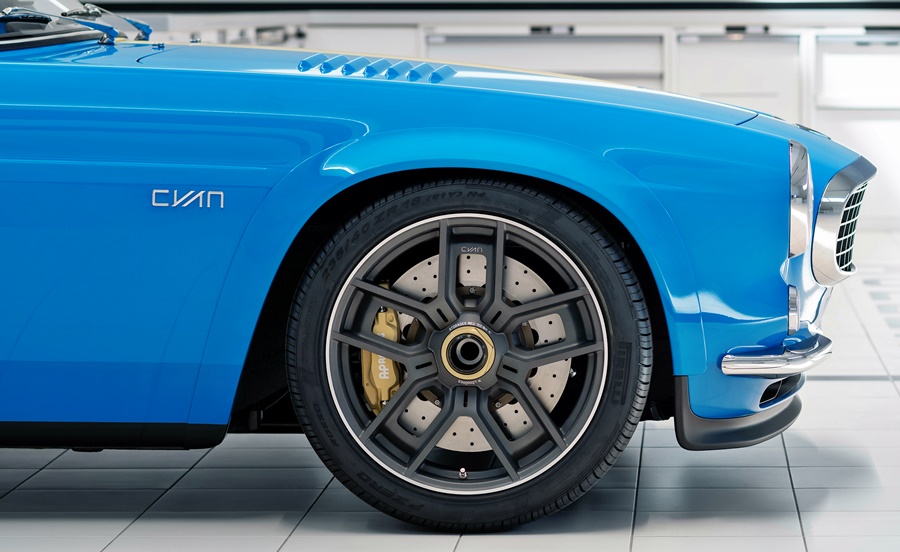
The carbonfibre-reinforced chassis is connected to the road with 18-inch forged rims with Pirelli P Zero 235/40 tyres at the front and 265/35 at the rear. Each wheel has 4-piston calipers with 362×32 mm steel discs with a ‘genuine feeling’ as no brake booster or ABS is there to interfere.

Volvo P1800 Cyan 2020

“The Volvo P1800 Cyan is the result of an advanced engineering process, involving many of the same talents who designed, built and developed our world title winning Volvo S60 TC1 Cyan,” said Dahl, adding that pricing and individual specification is available for those who want one.

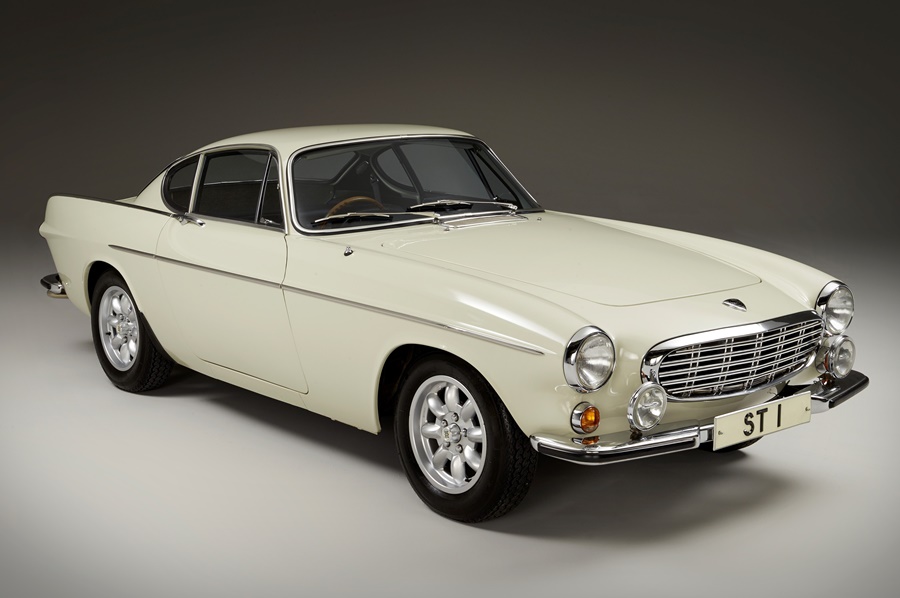
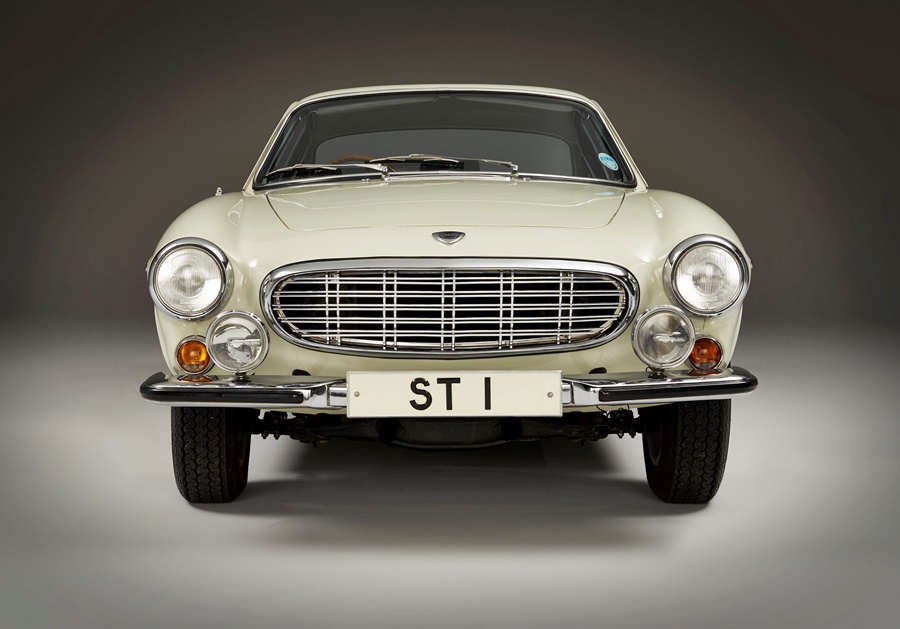
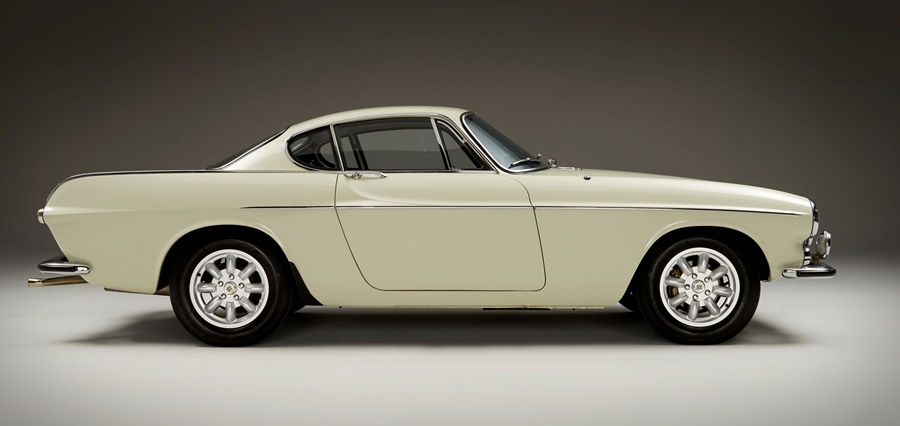
LOOKING BACK: The Volvo P1800 aka ‘The Saint’s Car’

PISTON.MY

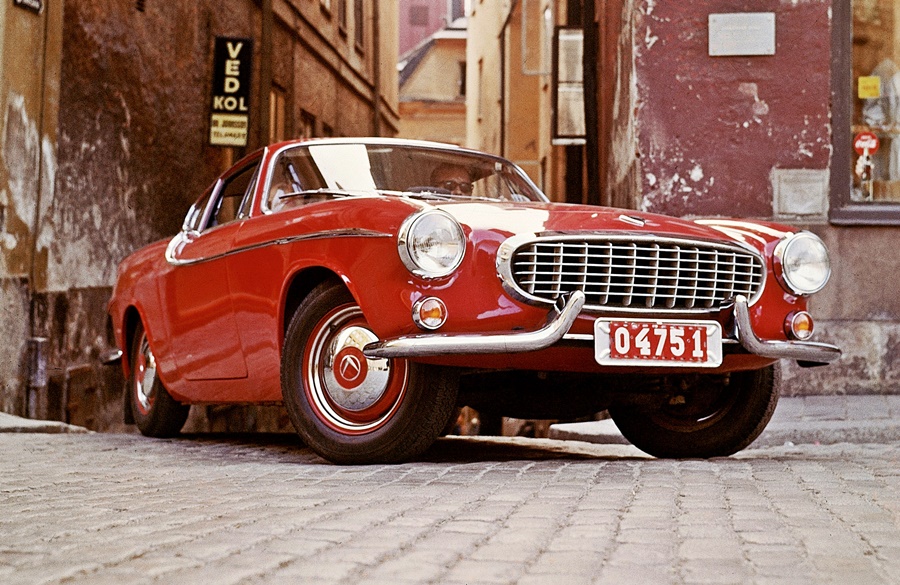
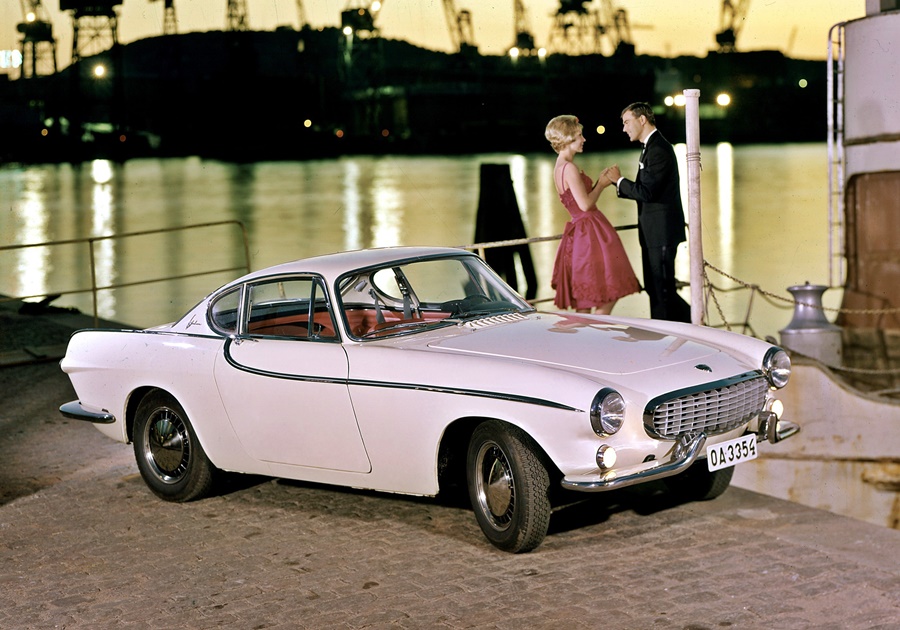
When ‘Volvo’ is mentioned, many models come to mind and it depends on which generation is responding. Older people will think of the 122 Amazon and 244 while a generation later would remember the 850R. But everyone is likely to remember the P1800, perhaps Volvo’s most internationally renowned model ever and the one that arouses most emotions.

Planned in Sweden, designed in Italy, unveiled at a car show in Brussels, built in Britain and a huge success in the USA, production of the P1800 took place between 1961 and 1972. It had reached showrooms after 4 years of careful planning and development and while sales numbers were not spectacular, the image viewpoint it played was far bigger role than any previous Volvo model.

A ‘halo model’
The Volvo P1800 was born for that very reason – to attract the attention of passers-by to Volvo’s showrooms and to increase what today is known as ‘floor traffic’. Once ‘captured’, it was up to the sales advisors to do whatever they could so that people who entered the showroom left it after placing an order for a new Volvo.

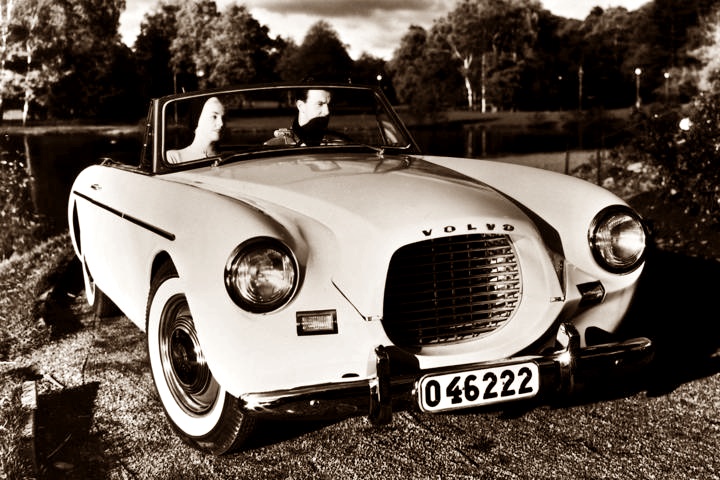
The P1800 wasn’t Volvo’s first go at making a sportscar. Back in the early 1950s, it had produced the open 2-seater plastic-bodied Volvo Sport between 1955 and 1957. Only 67 cars were ever made and the production ended rather abruptly because the company’s President then, Gunnar Engellau, was disappointed with the quality. “Not a bad car… but a bad Volvo” was the way he put it when he gave the order to stop production.

1956 Volvo P1900 Sport
Volvo’s first attempt at a sportscar was in 1956 with the P1900 Sport, but poor quality doomed it to a short production life.

However, he recognised the importance of having a prestigious and exciting model to boost overall sales, and Volvo dealers were desperate for just such a car. This led to another go at making a sportscar and design proposals were ordered from Italy. Volvo consultant Helmer Petterson – who was deeply involved in the planning of the new car – had got his son, Pelle, a job at Pietro Frua, thanks to Pelle’s fresh degree in industrial design from the Pratt Institute in New York.

Designed in Italy… by a Swede
When the time came to unveil the 4 proposals to Volvo’s board members in 1957, Helmer sneaked in his son’s design as a fifth possibility – and that was the one that everyone picked! Engellau, in particular, liked it since he had very definite views about wanting an Italian-designed car. That of course is precisely what he did get – except that it was actually the work of a 25-year old native of Goteborg, Volvo’s home city!

Eventually, however, the truth behind the winning design proposal emerged. Engellau was furious as he felt he had been tricked and promised that Pelle would never be acknowledged as the car’s designer. And indeed, many years went by before the truth was made known and Pelle Petterson received the credit he was due for designing one of the world’s most attractive sports coupes.

The new sportscar had a fixed roof, steel body, with a lot of the mechanical components taken straight from the 122 Amazon. It was powered by the newly developed B18 engine in its 100 bhp sports version when it eventually arrived in the showrooms.

Initially made overseas
At this time, Volvo found itself in a hugely expansive phase and the company realized from the outset that it did not have sufficient in-house capacity to manufacture the new model – not for pressing of body panels, nor for painting or assembly, not even on a small scale. The hunt for a suitable partner got under way and after much deliberation, a decision was taken to use two British companies to build the car: Pressed Steel would build the bodies and Jensen Motors would paint and assemble the cars.

Production started but this was a far from friction-free method. Constant problems with personnel, working methods, quality, suppliers and logistics along with an unwillingness to deal with these issues meant that as soon as it was possible, Volvo transferred production home to Sweden.

By early 1963 – after Jensen had completed 6,000 cars – production of the 1800 started up in Volvo’s Lundby factory. But it was not until 1969 that body pressings were transferred from Pressed Steel in Scotland to Volvo’s own press shop in Olofstrom. The move home also coincided with a change of name for the P1800. At first, it was badged the ‘P1800 S’; later in 1963, it was known simply as the ‘1800 S’, the alphabet standing for Sweden.

During the car’s long life, no radical changes were made to the successful exterior lines. Only details such as the grille, trim mouldings, wheels and colours differentiate the various model years. From the technical viewpoint, the 1800 shadowed the development of Volvo’s other models and was continuously upgraded. Disc brakes all round, more powerful engines and electronic fuel injection were the most noticeable changes.

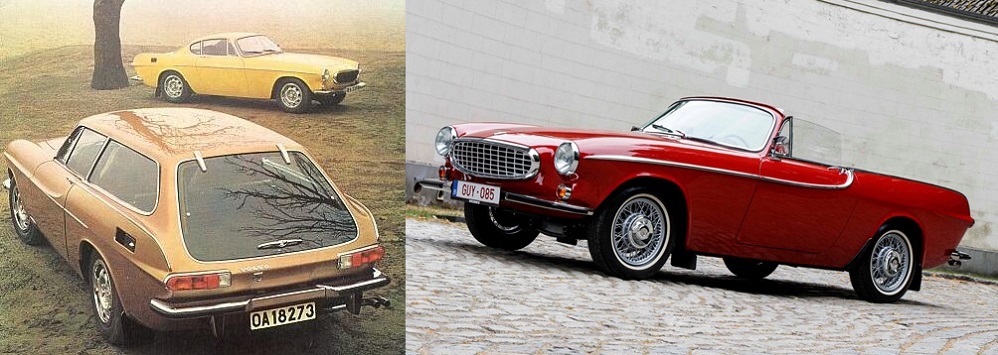
The P1800 ES (left) and the Convertible (right).

During its production life, two other body variants were also available. One was a convertible (only 30 units) and the other was the 1800 ES, with an extended roofline and an estate car rear featuring a large glass tailgate. The variants were designed in in-house this time and attracted considerable attention too.

Becoming The Saint’s car
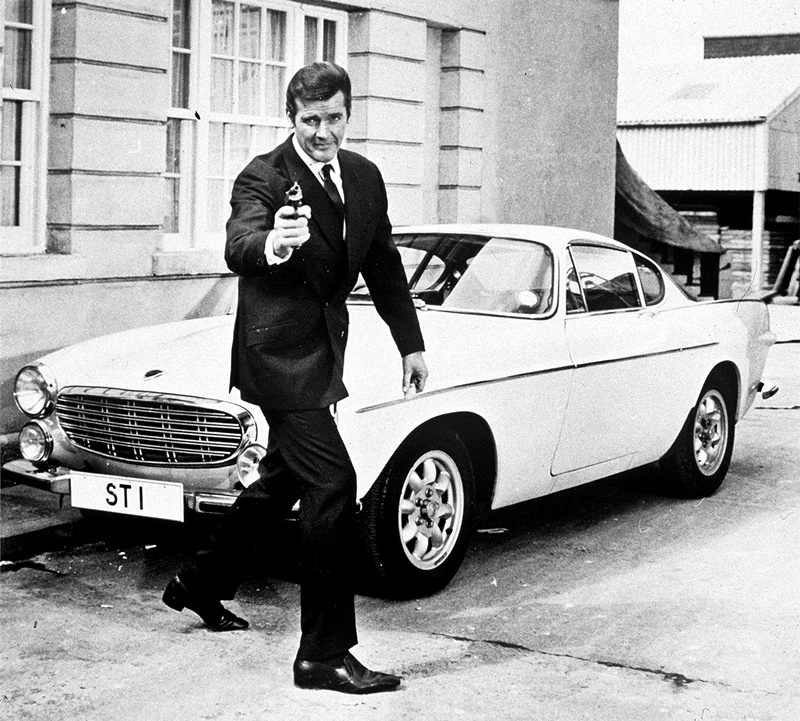
Roger Moore was fortunate enough to drive a P1800 in his role as crime-fighter Simon Templar in the British TV series, ‘The Saint’. The TV production company had been looking for an attractive sportscar that would suit a gentleman of independent means and, after being turned down by Jaguar, approached Volvo to ask for the P1800. Volvo was, of course, quick to oblige as it would be a brilliant PR move for the new model. Every week, it appeared in the living rooms of TV viewers,  becoming so firmly etched in minds that it came to be referred to as ‘The Saint’s car’.

The P1800 gained worldwide publicity every week on TV as ‘The Saint’s Car’, driven by Roger Moore who played the part of Simon Templar.

The P1800 was never intended to be a mass-produced car. As mentioned earlier, it was planned as a niche product or what is today referred to as a ‘halo model’. Yet it was viable enough to be within the reach of most people who wanted a car that looked like a Ferrari but cost and functioned like a Volvo – pleasant, reliable and economical.

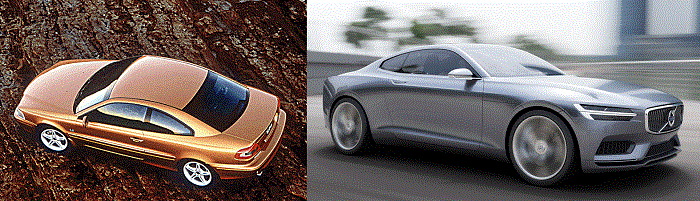
In 1997, Volvo produced a coupe designated the C70 (left) and it was also used in a remake of ‘The Saint’. Its designers have been looking at a coupe for the 21st century as well, and their ideas were shown in the Concept Coupe in 2013 (right).

LOOKING BACK: The forgotten Volvo P1900 sportscar with a fibreglass body

COVID-19

Social distance

PISTON.MY

BHPetrol RON95 Euro4M

Volvo Car Malaysia’s Merdeka Campaign this year pays homage to the country’s 63rd National Day with the belief that good things come in three. And so it will centre upon three Volvo sedans – the S60 T8 R-Design, S90 T8 Inscription Plus and S90 T8 Special Edition – with three special deals – free first-year insurance, free Polestar optimisation package and free 5-year service maintenance (VSA5+).

“Coming off the back of our most successful month since the inception of Volvo Car Malaysia in 1999, with 286 units sold in July, we hope that our Volvo 2020 Merdeka Campaign will spur Malaysians to consider the additional benefits of having a car that is powerful yet safe. As an automotive brand, we are committed to making the roads safer for both drivers and passengers through leading safety features and innovation that have been carefully engineered into our cars. Together with our legacy in Malaysia and our Swedish heritage, we want to continue to provide safer, more sustainable and premium experiences for more generations of Malaysians to come,” said Nalin Jain, MD of Volvo Car Malaysia (VCM).

Besides the special deals, VCM is also adding extra deals for buyers of the S90 Inscription Plus and S90 T8 Special Edition. For the former, there’s a RM15,000 voucher to purchase accessories while those who buy the latter will get a complimentary exterior styling kit and a 20-inch rim and tyre package worth RM35,000.

Volvo

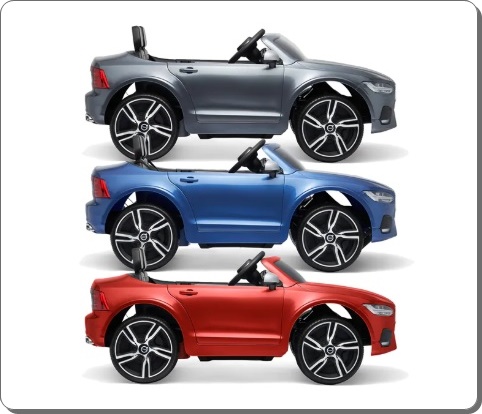
Through this campaign, Volvo Car Malaysia is also offering everyone a chance to own exclusive Volvo merchandise such as watches, sunglasses, electric ride-on cars for children and more, at a special bundled price of RM1,957. There is a bundle deal for men, women and children, with each category consisting of specific lifestyle items.

Volvo
A Volvo for the little ones.

Finally, in collaboration with Thule Malaysia, Volvo Car owners who present their car key when purchasing any Thule Crossover 2 luggage bags and backpacks will be given a Thule Subterra PowerShuttle Organiser worth RM119. They will also receive a 15% discount on all Thule items until the end of December 2020.

Full Volvo pricelist with Sales Tax exemption

PISTON.MY


BHPetrol RON95 Euro4M

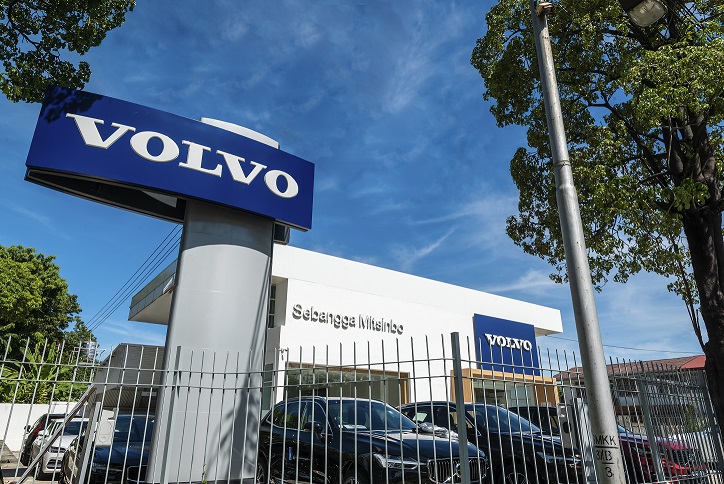
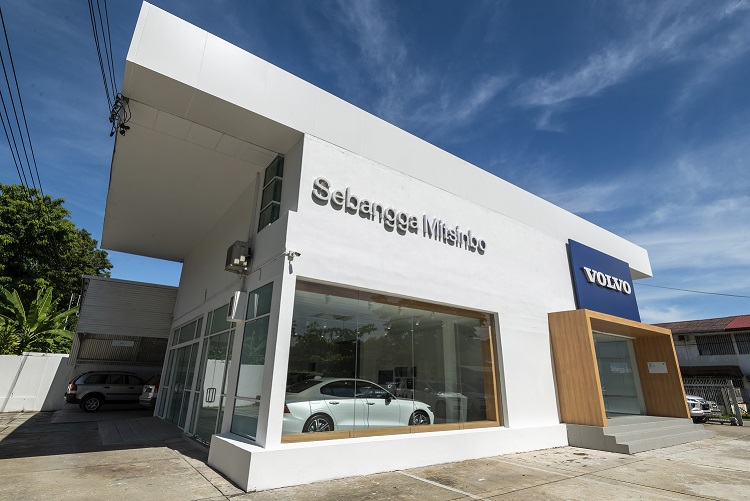
In its aim to increase its presence in the country, Volvo Car Malaysia has not forgotten East Malaysia. Last November, it appointed Sebangga Mitsinbo Sdn. Bhd as a dealer-partner in Sabah and recently, the same business partner opened a new 3S (Sales, Service & Spare Parts) centre in Kota Kinabalu, Sabah.

Sebangga Mitsinbo Sdn. Bhd. (part of the Sebangga Group and formerly known as Sebangga Auto) joins Volvo Car Malaysia’s network of 13 dealers across the country. It is the sole authorised Volvo car dealer for the state of Sabah.

“Volvo Car Malaysia and the Sebangga Group share the same vision of protecting what is important, which is why we are honoured to have Sebangga Mitsinbo as our 14th 3S centre in Malaysia. As a brand, we want to enable a dynamic driving experience for our Sabahan customers, as they journey on the road, in life and with the brand, while also caring for the planet through a more sustainable drive with Volvo Cars,” said Nalin Jain, MD of Volvo Car Malaysia.

“With the establishment of a 3S centre in Kota Kinabalu, it reinforces our commitment to make roads safer – our vision is that no one should be seriously injured or killed in a new Volvo car.  With this partnership, our hope for this new dealership is to make premium, safe and quality vehicles accessible to the Sabahan community and from there, spur a movement of being safe on the road,” he added.

Volvo in Sabah

Volvo Retail Experience
Inspired by the brand’s Scandinavian-inspired ideals and heritage, the Sebangga Mitsinbo 3S Centre adheres to Volvo Car’s retail standard – the Volvo Retail Experience (VRE). The open space and minimalistic-but-functional furniture are part of the Volvo design language which creates a contemporary luxury experience.

The two-storey space features a showroom at the ground floor, a service centre, a Volvo Car Lifestyle Collection and an Accessories showcase. Volvo’s latest models will be on display and visitors can request for test drives of the XC40, XC60, XC90, S60 and S90.

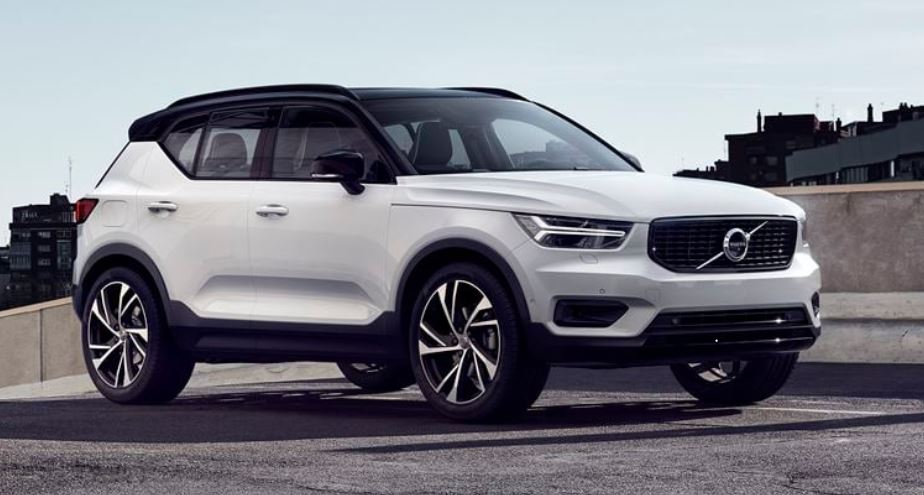
Volvo XC40
XC40 – one of the Volvo models in the current range.

“This partnership with Volvo resonates well with our vision, in that we, too, value life above all. With Volvo being the pioneers in automotive safety, we are proud to carry the brand under our group and continue to strengthen their position as well as our mutual goal in protecting what is important. The addition of this 3S centre here in Sabah is part of our journey together with Volvo to help make roads safer for passengers and vehicles,” said Dato’ Arif Ambrose Ng, Chairman of Sebangga Group.

“At Volvo Cars, we understand that the value, quality and accessibility of services are just as important as the car, which is why we remain committed to ensuring that all of our customers experience a seamless and premium journey of acquiring and owning a Volvo car,” said Mr. Nalin.

Volvo Car Malaysia introduces Volvo SELEKT for those who want pre-owned Volvos

PISTON.MY

BHPetrol RON95 Euro4M

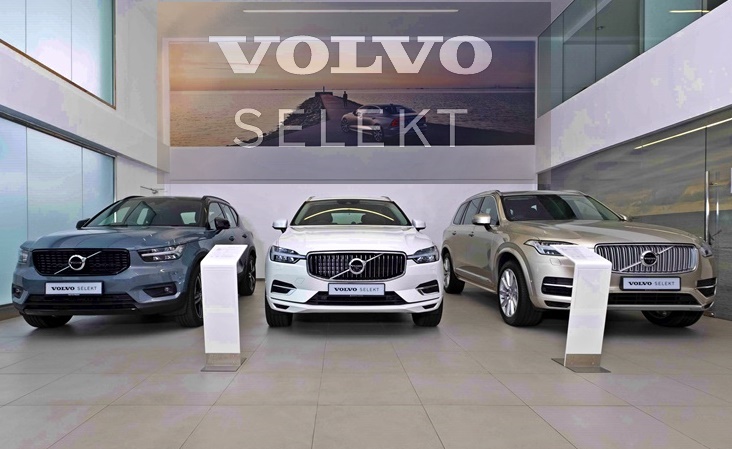
Volvo Car Malaysia (VCM) has joined other distributors of premium brands in offering pre-owned Volvo cars with its used car programme known as Volvo SELEKT. The sale of pre-owned Volvos by the Volvo distributor is not new as Federal Auto, which was the first distributor for the Swedish brand, set up its own used car subsidiary in the 1960s which was quite successful.

The new programme, also available in other countries, by promises a premium experience for customers through dedicated service and assurance of quality. Each pre-owned Volvo car offered under the Volvo SELEKT programme is guaranteed to be under 5 years old and has less than 100,000 kms cumulative mileage.

Volvo SELEKT

Once qualified for the programme, the car will receive a 125-point inspection and have its software upgraded to the latest versions so the engine will function optimally. Genuine Volvo parts will be used for any parts that need to be replaced. Most importantly, all the services and upgrades will be conducted by trained Volvo technicians who would know the cars best.

“Through Volvo SELEKT, we hope to give customers the choice of an alternative option while maintaining all the criteria of excellence, reliability and performance of a premium luxury car. Moreover, we are committed to ensuring that all of our customers experience a seamless and premium journey of acquiring and owning a Volvo car. Volvo SELEKT thereon guarantees that customers will receive the same level of quality and service as that of a new Volvo car, but at a package that fulfils their financing needs,” said Nalin Jain, MD Volvo Car Malaysia.

Volvo SELEKT
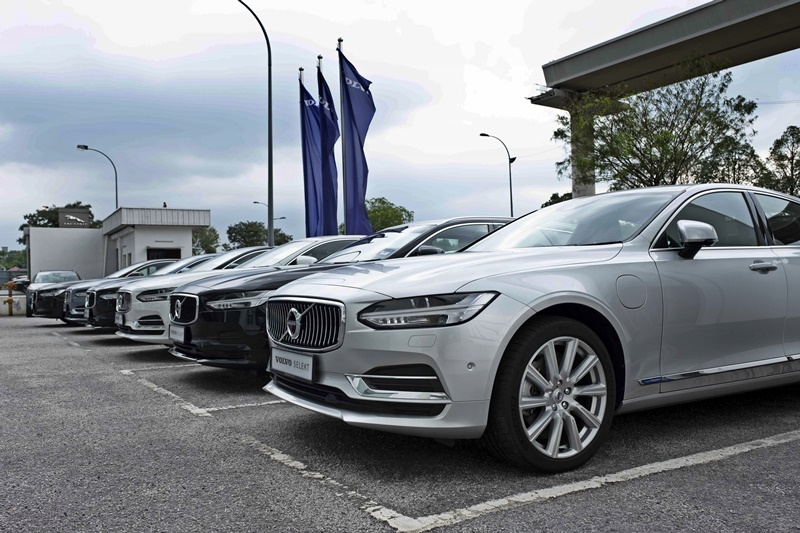
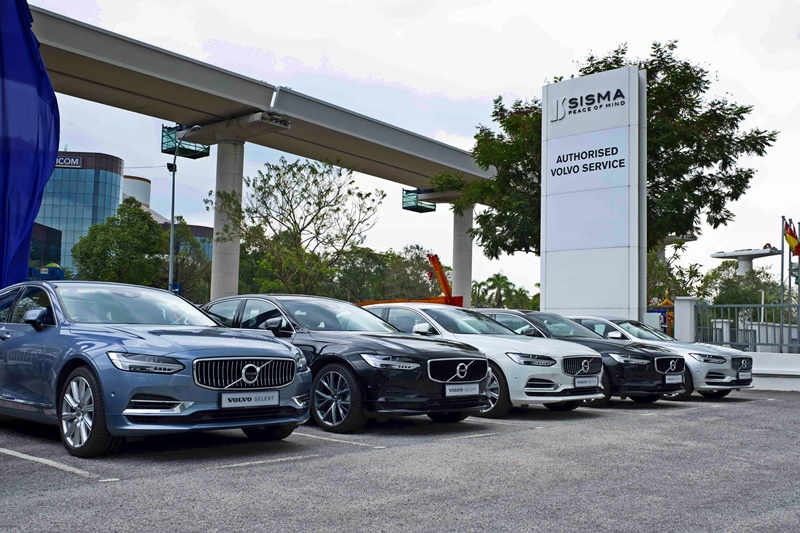
A selection of pre-owned Volvos at a dealership.

While Volvo SELEKT owners won’t get the 5-year warranty that comes with brand new cars, there is still a minimum of 12 months of warranty coverage as well as complimentary 12-month maintenance service package (VSA 1), and 12 months of Roadside Assistance.

There is also the option of including Volvo accessories, including a Polestar optimisation package as an optional add-on for selected models.

“At Volvo, we put our heart and soul into every car, devoting hours of expertise and attention to detail so that it leaves a lasting impression. Pre-owned Volvo cars under the Volvo SELEKT Programme bear the same markings of excellent Swedish craftsmanship, dedication to perfection and above all, our commitment to safety. We hope that through Volvo SELEKT, more Malaysians can experience first-hand our pioneering safety features and innovation that has been engineered into each of these cars, making them some of the safest options in the market,” Mr. Nalin said.

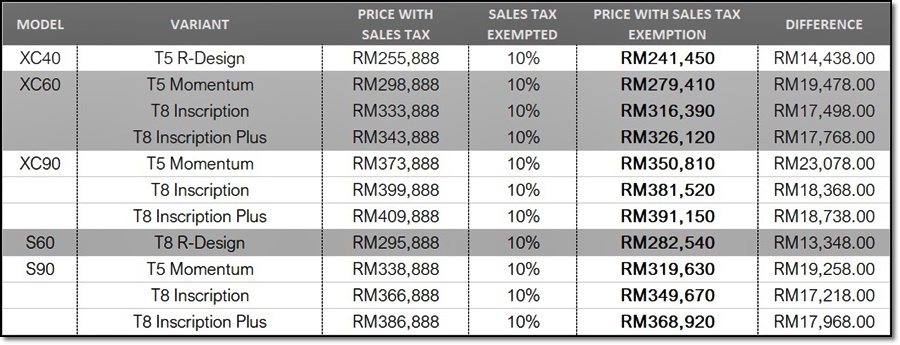
Full Volvo pricelist with Sales Tax exemption

PISTON.MY

2020 Volvo prices x Sales Tax
Note: Prices are on-the-road but do not include insurance premiums. Tax exemption is only valid for 2020 models between June 15 and December, 2020.
New Volvo S60
Locally-assembled version of the S60 T8 R-Design which was launched in Malaysia last month will be RM13,348 cheaper from Monday.

Click here for other new and articles about Volvo.

PISTON.MY

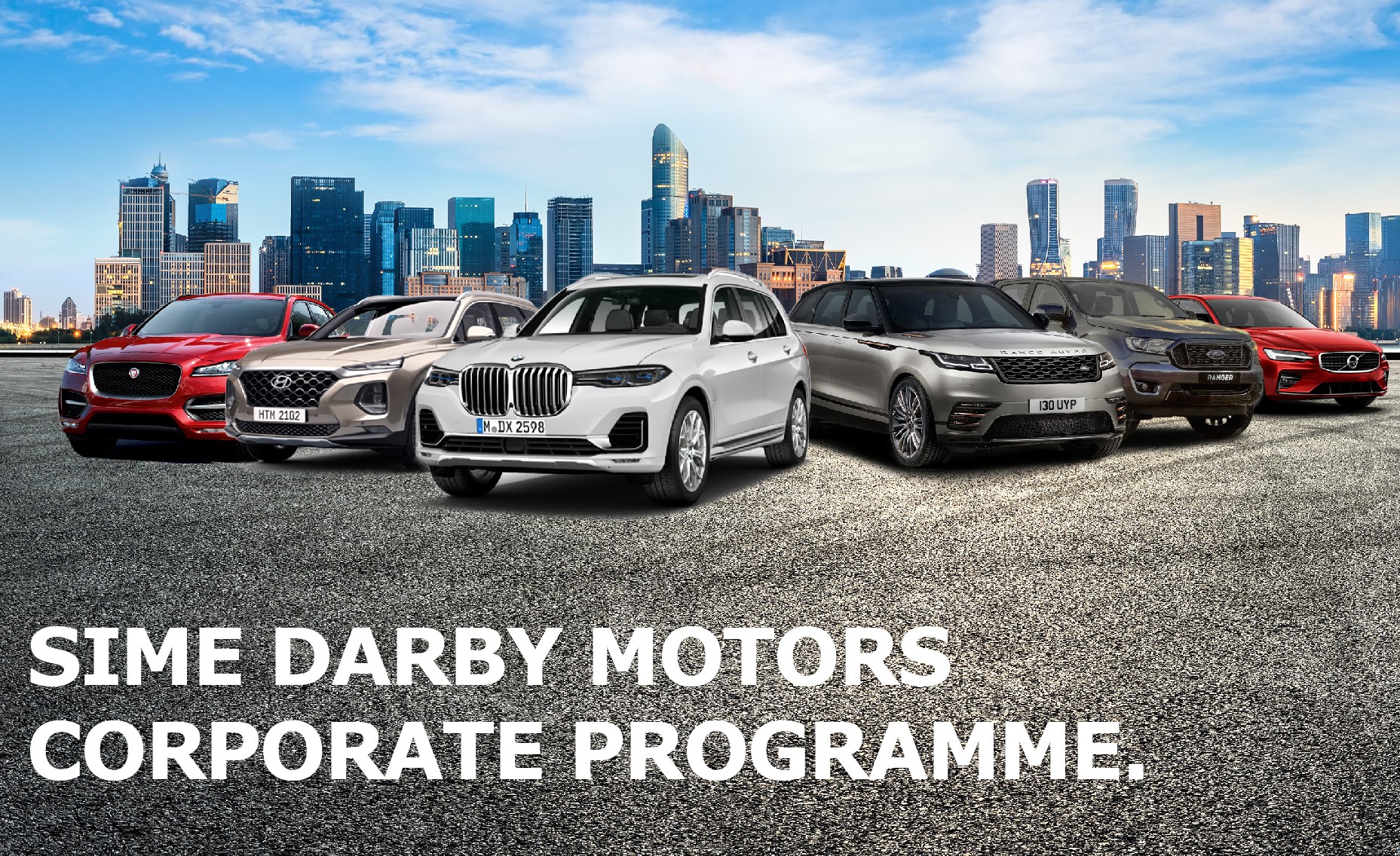
Sime Darby Motors has a wide range of brands in its retail and distribution portfolio for the Malaysian market. These Ford, Jaguar, Land Rover, Hyundai, BMW, MINI, Motorrad and Volvo. To cater to the needs of corporate clients, the company is having an ‘Unbelievable Deals’ campaign. a corporate programme providing special privileges with very attractive cost of ownership and exceptional benefits.

This campaign is applicable across all the brands to suit different requirements. “This programme is specially curated to reward our loyal customers across Sime Darby Motors Malaysia. As exhilarating as it is rewarding, we aim to offer our customers with irresistible deals whilst ensuring their sales and aftersales needs are cared for by our passionate professionals who are dedicated in providing world-class services that exceed expectations,” said Jeffrey Gan, MD of Retail & Distribution, Malaysia.

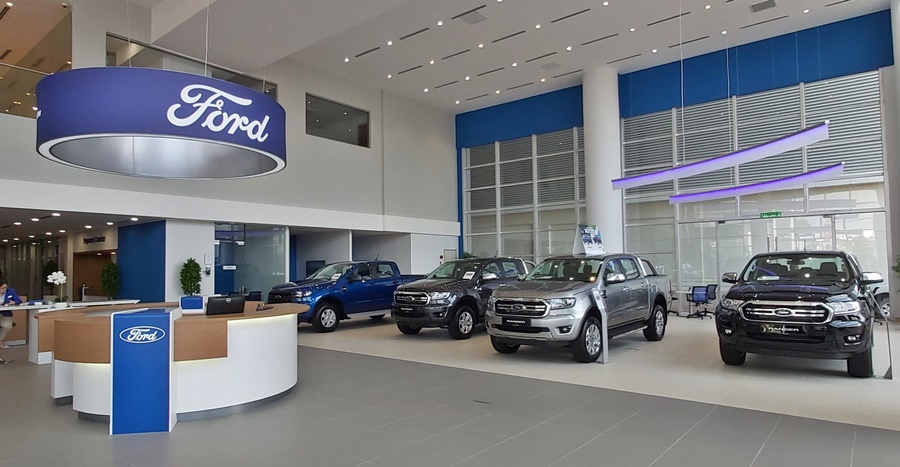
Ford showroom
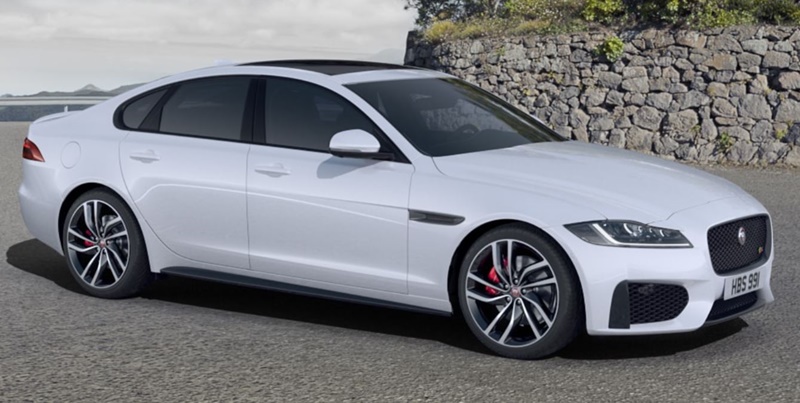
The different brands represented by Sime Darby Motors offer a variety of vehicle types from Ford pick-ups to premium sedans like the Jaguar XF (below)

Jaguar XF

“The automotive industry is moving towards a more digital environment to fit with the needs of our consumers. Our operating units are continuously innovating to find new ways of digitalising the car-buying process; from digital showrooms and door-step test drives to contactless servicing and eventually delivering customers’ cars to their doorsteps. The digital transformation in the automotive industry is certainly opening up new opportunities for us,” he explained.

On the impact of the COVID-19 pandemic, Mr. Gan said the company takes the current situation very seriously. “We stand guided by the government’s policy, with the safety and health of our employees, customers and business partners being our utmost priority,” he explained.

More information on the corporate programme is available at the individual websites of the respective brands.

PISTON.MY

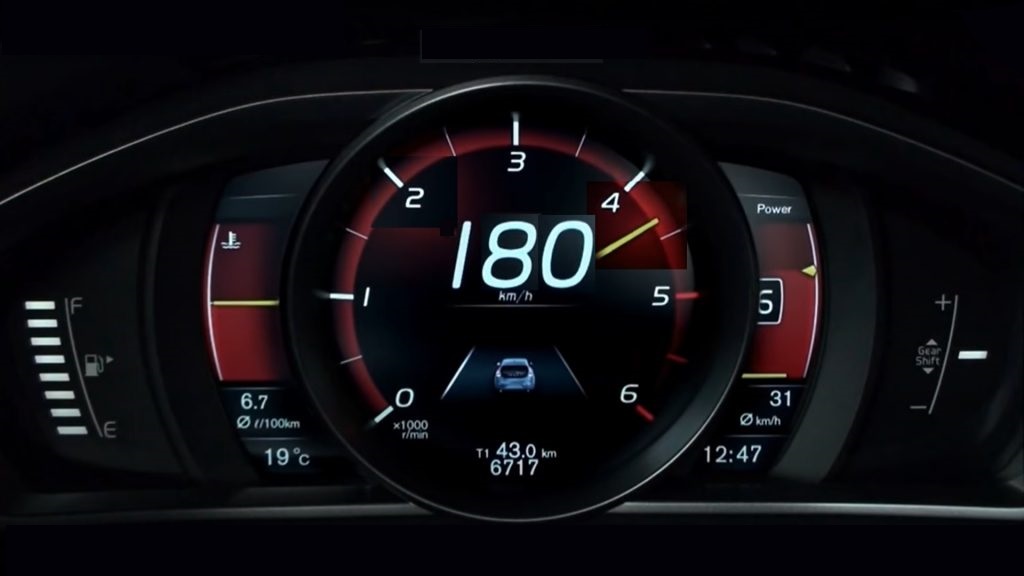
Volvo’s reputation for safety has been built up over decades to the extent that it is recognised as a pioneer in the field. It therefore has a lot of credibility with its actions, even if they may be controversial. Like the announcement that it will limit all its vehicles to a maximum speed of 180 km/h which was made last year.

That decision has now been executed with the company saying it will have a maximum speed of 180 km/h for every new model from now on. The limitation is said to go beyond regulation and legislation to help close the remaining gap to zero serious injuries and fatalities in traffic.

“We believe that a carmaker has a responsibility to help improve traffic safety,” said Malin Ekholm, Head of the Volvo Cars Safety Centre. “Our speed-limiting technology, and the dialogue that it initiated, fits that thinking. The speed cap helps people reflect and realise that speeding is dangerous, while also providing extra peace of mind and supporting better driver behaviour.”

Volvo

Some question whether a carmaker – rather than authorities – has the right to impose speed limits. The answer would be ‘yes’ as the cars are products bearing their brand name and they can take action that can ultimately save lives. Perhaps this means losing potential customers but that’s a decision the company has to make itself.

In Volvo’s case, apart from the direct effect of lower maximum speeds reducing fatalities in accidents, the carmaker has already identified that the problem with speeding is that above certain speeds, in-car safety technology and smart infrastructure design are no longer enough to avoid severe injuries and fatalities in the event of an accident.

ABS VSC warning lights

The laws of physics still remain as a car travels along a road. Tyres may have better grip but at some point, that grip will still be lost if the speed is too high. Same with active safety systems like electronic stability control; at excessively high speeds, the systems will not be able to act fast enough to prevent the car from spinning out of control.

Incidentally, regarding speed limits, Volvo is believed to have purposely set the speedometer reading on some of its powerful models (like the 850 T5R) to ‘over-read’. This was mentioned to this writer by a Volvo engineer in the 1980s and the explanation was to help drivers avoid a speeding ticket.

Actually, limiting top speeds is not a new idea as sometime in the 1970s, some German carmakers agreed to set a limit of 250 km/h for their cars, even if the actual maximum speed was higher. The ‘gentleman’s agreement’ was an understanding which was partly to avoid forcing the German government to set speed limits on the Autobahn, which has many sections that are speed limit-free. It was to demonstrate a position of responsibility on the part of the carmakers in addressing the issue of safety.

However, by 2005, there was an inclination to stop the ‘informal’ agreement and while 250 km/h was still a limit for some models, high-performance versions went beyond that. Perhaps the belief was that people who buy high-performance cars – which are not cheap – will either not go too fast because they don’t want to crash or they would be skilled drivers.

110 km/h sign

In any case, there are few places in the civilised world where you can drive without worrying about speed limits. Other than on the Autobahn, highways in almost all developed countries have speed limits, the maximum being 110 km/h or 120 km/h. Apparently, there is are two highways in Abu Dhabi which have a speed limit of 160 km/h – the  highest in the world. Perhaps that’s why the police forces of Abu Dhabi (and Dubai) have supercars – including a Lykan hypercar (US$4.5 million!) – as patrol cars.

Volvo’s 180 km/h limit will apply to all its new models all over the world so those sold in Malaysia will be having them in due course. Unlike earlier speed-limiters which could be bypassed or removed, it is believed that Volvo will make sure that owners cannot do so. Anyway, the highest speed limit is 110 km/h so unless you choose to break the law, the fact that there is a speed limit imposed by Volvo is irrelevant for most people.

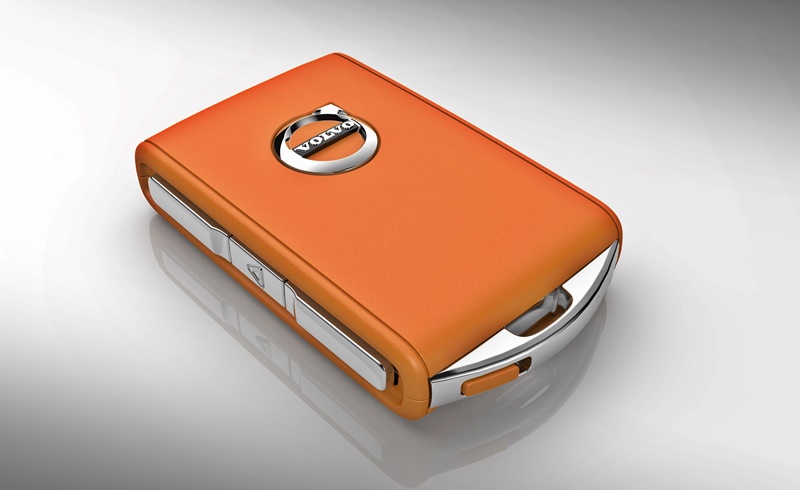
Volvo Care Key
Volvo Care Key for safer car sharing

Apart from the speed limit, every Volvo will also come with a Care Key. This is a special key which allows drivers (or owners) to set additional limitations on the car’s top speed. Parents may want to do so when letting younger or inexperienced children use their cars.

This sounds similar to Ford’s MyKey technology which has been around for some time. The Ford system allows setting of  the maximum speed limit as well as a seatbelt reminder and even control the volume of the audio system.

Volvo Cars working with China Unicom to develop 5G technology for automotive applications

Social distance

PISTON.MY

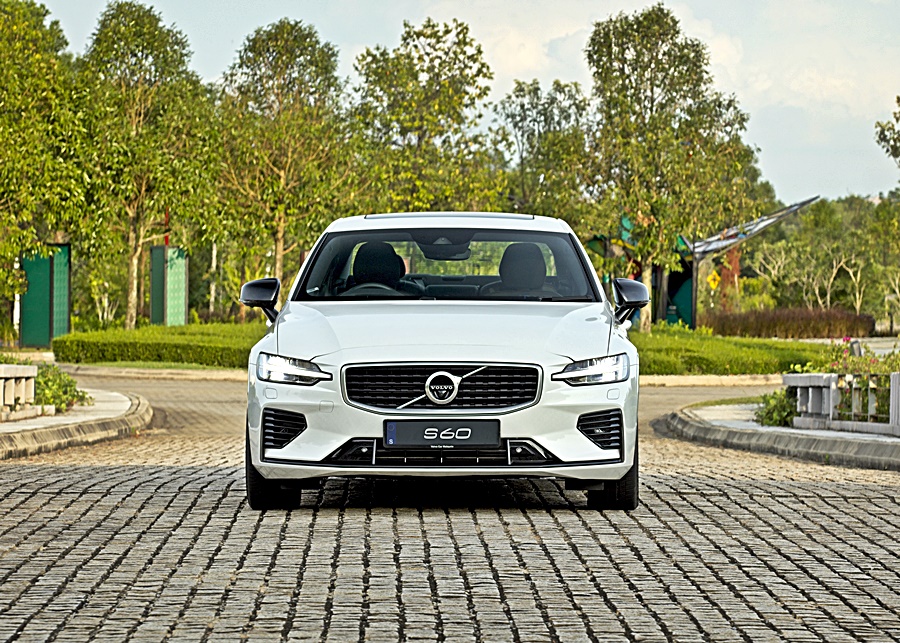
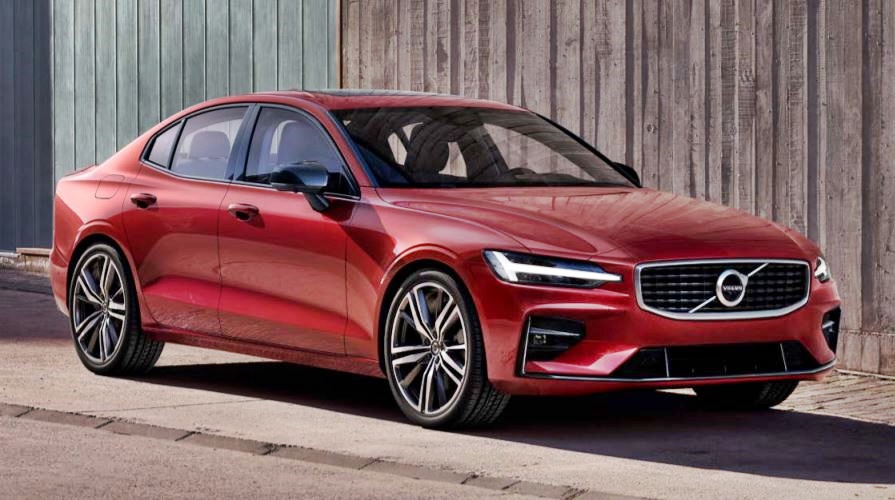
In view of the Conditional Movement Control Order limiting gatherings, Volvo Car Malaysia (VCM) today launched the locally-assembled (CKD) version of the Volvo S60 T8 online. This is essentially a follow-up from the earlier launch in October last year of the CBU (imported completely built-up) model which is now in its third generation.

The model is assembled at Volvo’s own plant in Shah Alam, Selangor, the first vehicle assembly plant in Malaysia. Rather surprisingly, even though the car is assembled locally, the price of RM295,888 (without insurance) is not lower than that of the CBU model (which was said to be ‘under-priced). Normally, the CKD model can be cheaper due to the different taxation rate applied which favours locally-assembled vehicles and the car companies pass on the savings to customers.

2020 Volvo S60 T8 CKD

For exterior colour choices are available (one less than the CBU model) – Fusion Red (Metallic), Onyx Black (Metallic), Pebble Grey (Metallic) and Crystal White (Pearl). This is one less than what was available with the CBU model, the missing colour being Metallic Birch. A 5-year warranty comes with the car while service intervals are set at 20,000 kms.

The 2020 S60 T8 is pretty much the same as the CBU model, specs-wise, and as assured by VCM, the quality is also similarly high. After all, the plant has also been a regional hub for the Swedish carmaker for some time. It has received investments to upgrade its manufacturing capabilities, including laser welding equipment.

Volvo SPA (S60)

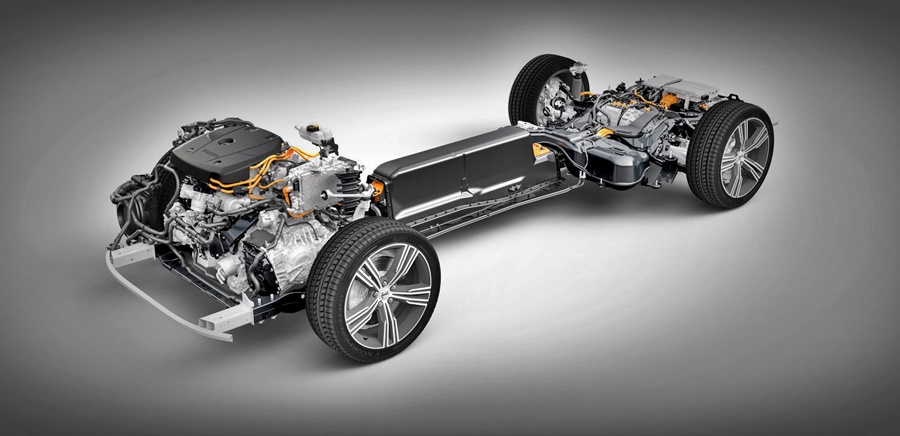
The S60 rides on the Scalable Product Architecture (SPA) platform which is used across the current Volvo range. Being modular in concept, SPA allows the engineers to develop a variety of models on the same platform, which saves R&D costs. In the case of the S60 T8, the powertrain is a plug-in hybrid electric vehicle (PHEV) which consists of a 2-litre twin-charged (turbocharger + supercharger) 4-cylinder petrol engine and an electric motor.

The latter is powered by an 11.6 kWh lithium-ion battery pack and total system output is 407 bhp/640 Nm, with maximum torque available from 1,200 rpm. Engine power goes to the front wheels through an 8-speed automatic transmission by Aisin while the rear wheels are powered by the electric drive so the S60 has all-wheel drive.

The output numbers suggest brisk performance and indeed, this Volvo has a claimed 0 – 100 km/h time of 4.4 seconds with a top speed of 250 km/h (probably limited). However, because of the PHEV capability, it also uses less fuel and Volvo claims 50 kms/litre which is really quite amazing when you consider the performance. With a 60-litre fuel tank, that means the S60 should be good for 3,000 kms before going empty!

Like other PHEVs, the S60 T8 can run on just the electric motor alone and in this zero emissions mode, it should be able to travel up to 49 kms. Depending on the charging outlet available, recharging the battery pack to full takes around 3 hours.

2020 Volvo S60 T8 CKD

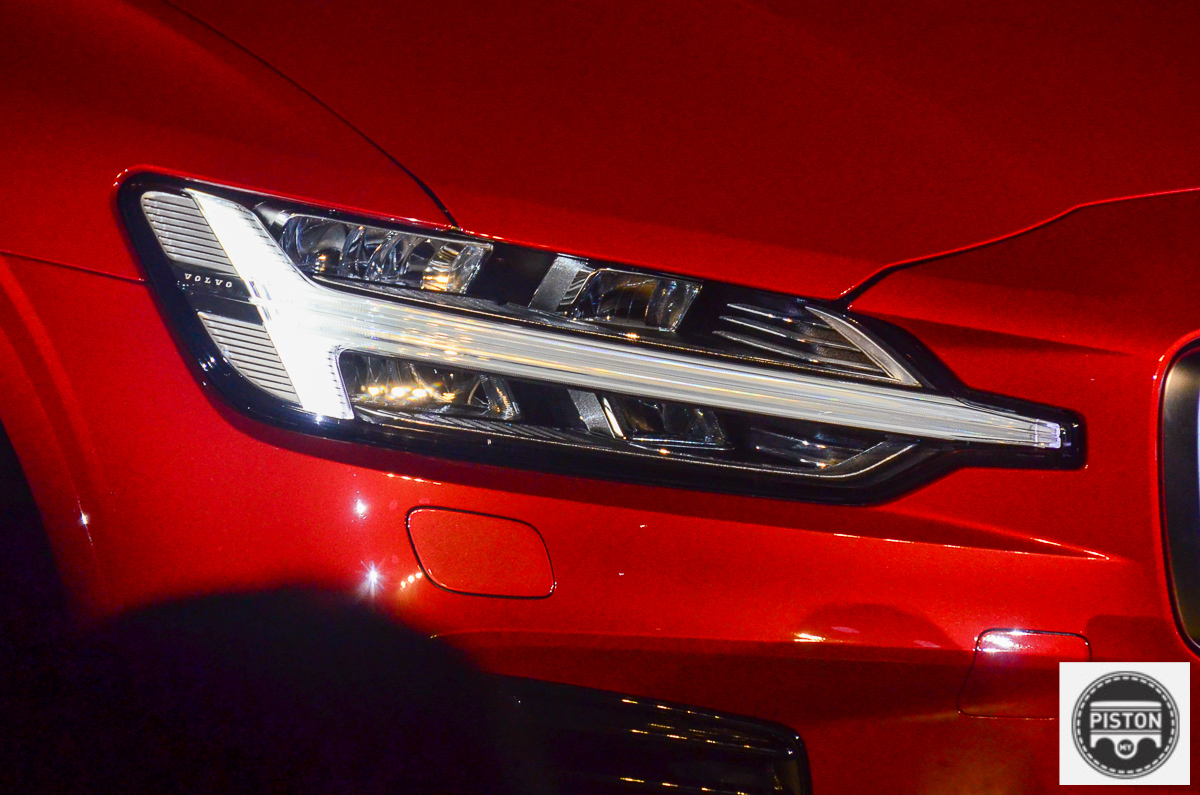
For the Malaysian market, VCM includes R-Design styling features and accessories to give a sportier image to the S60. The looks are more aggressive with black-out treatment for various elements and dual tailpipes. Like all the latest Volvos, the distinctive ‘Thor’s Hammer’ graphic in the headlights provides instant identification.
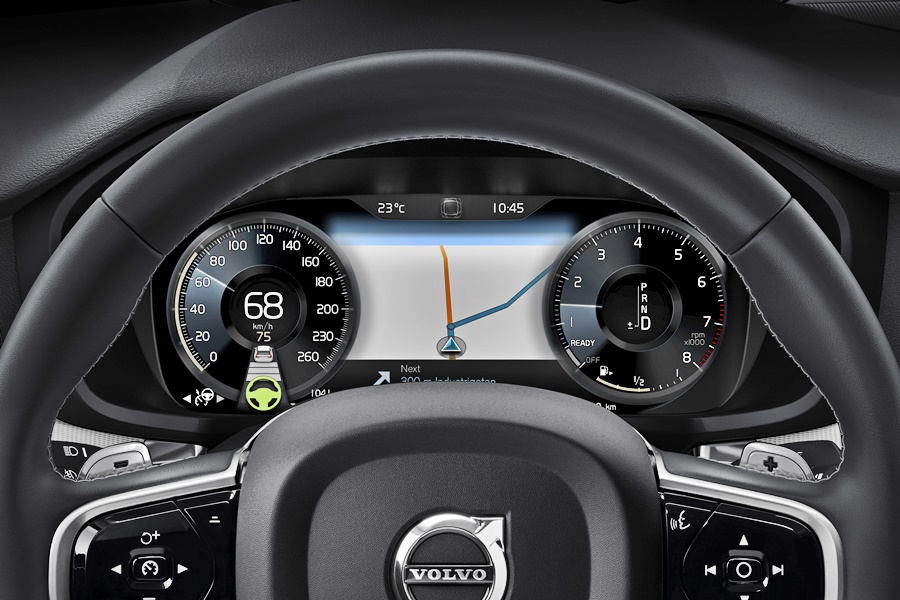
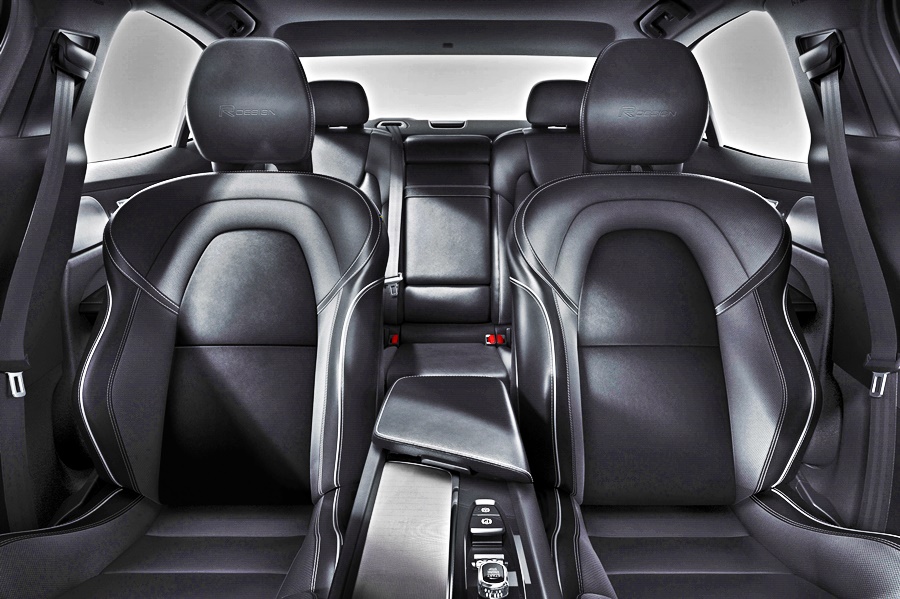
The cabin has the typical Scandinavian ambience that Volvo is noted for although the interior colour theme is not light-coloured but dark. The contoured seats are wrapped in exclusive Charcoal Fine Nappa Leather with Open Grid Textile upholstery. The Digital Instrument Cluster with 12.3-inch TFT Adaptive Digital Display is complemented by a Head-Up Display (HUD) which shows important running information on the windscreen ahead of the steering wheel.

2020 Volvo S60 T8

2020 Volvo S60 T8 CKD

An immersive 14-speaker audio system powered by Harman Kardon is part of the Sensus Connect infotainment system. This system includes Apple CarPlay and Android Auto so smartphones can be easily linked.

An additional feature for the CKD model is the handsfree operation to open the bootlid. This is a nice feature to have and once you have a car with it, you don’t want to not have it in the next car.

Volvo has been a leader in safety and its Intellisafe suite of integrated high-tech systems is adopted in the S60. This includes City Safety with Autobrake technology, which assists the driver in avoiding potential collisions and is the only system in the market to recognise pedestrians, cyclists and large animals. In a world-first for the mid-size sedan segment. City Safety now also engages auto braking to mitigate oncoming collisions.

Volvo S60 safety
The S60 has Volvo’s Intellisafe suite of driver-assistance systems.

The Pilot Assist system – which supports the driver with steering, acceleration and braking on well-marked roads up to 130 km/h – has been upgraded with improved cornering performance. There’s also Run-off Road Mitigation, Oncoming Lane Mitigation and other driver assistance systems, now including Park Assist to make positioning the car in a parking bay much easier.

Click here for other news and articles about Volvo.

Social distancePISTON.MY


Archive

Follow us on Facebook

Follow us on YouTube