Piston.my

English

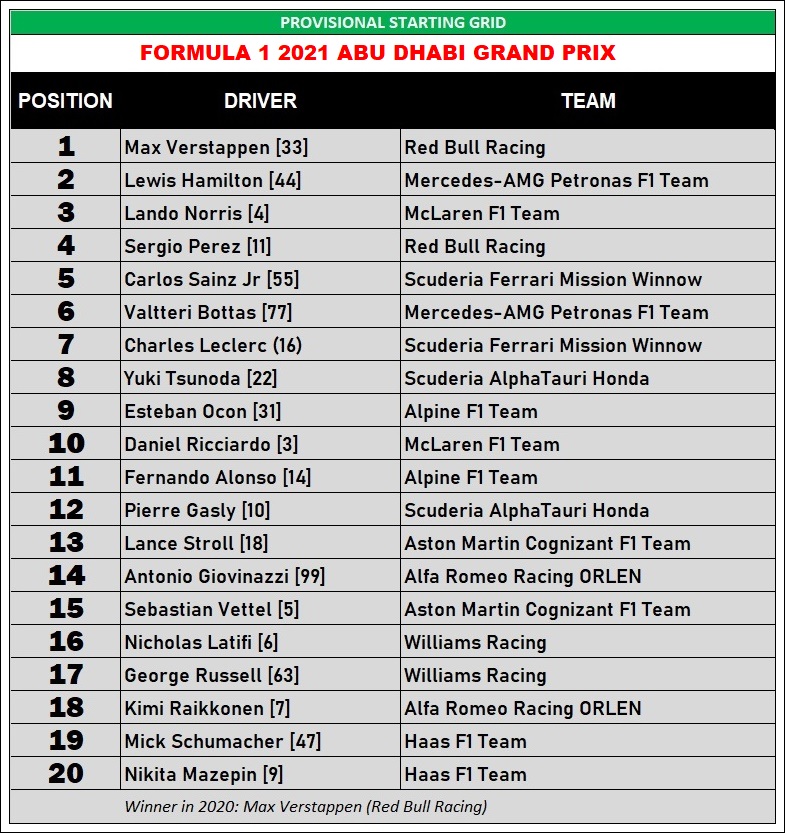
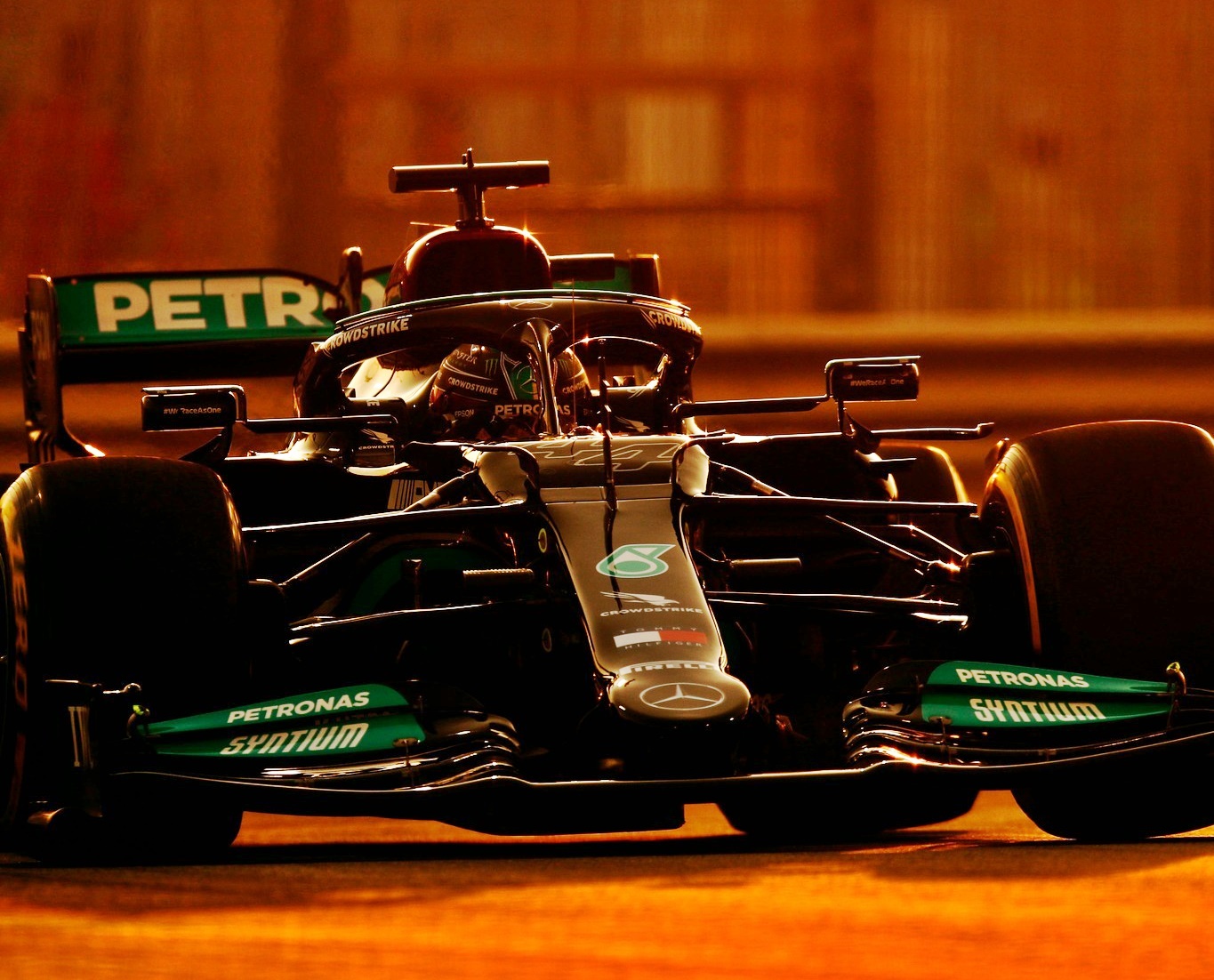
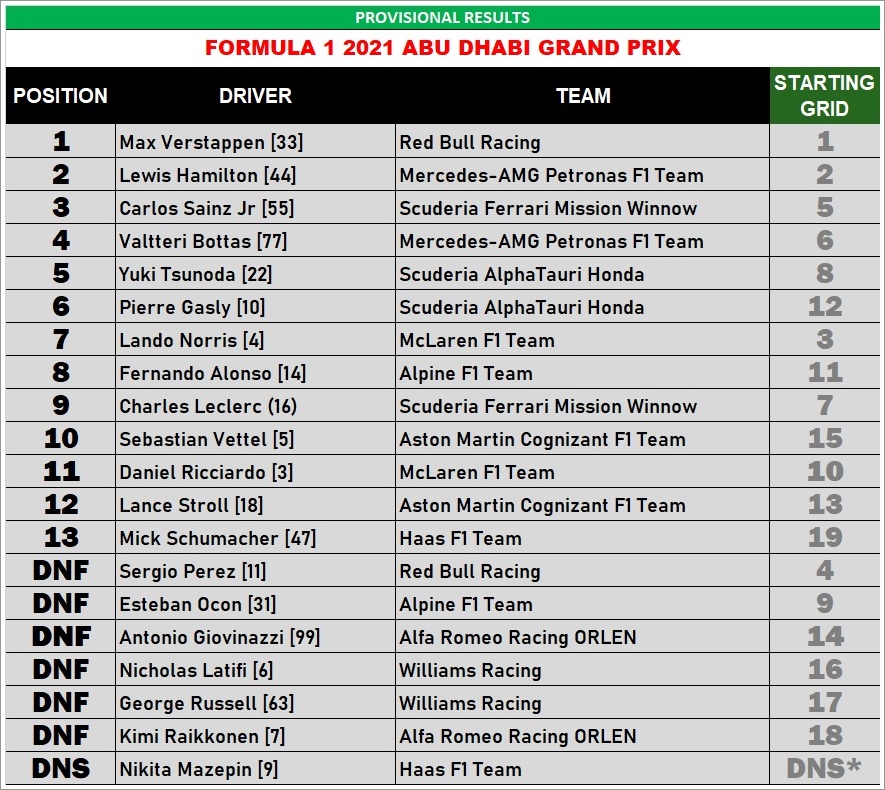
As the 19 cars (Haas F1’s Nikita Mazepin could not start due to COVID-19 infection) slowly took their places on the starting grid for the final round of the 2021 Formula 1 World Championship, the air was full of tension. Tonight’s result would decide who the new champion would be. It could well be the race of the century.

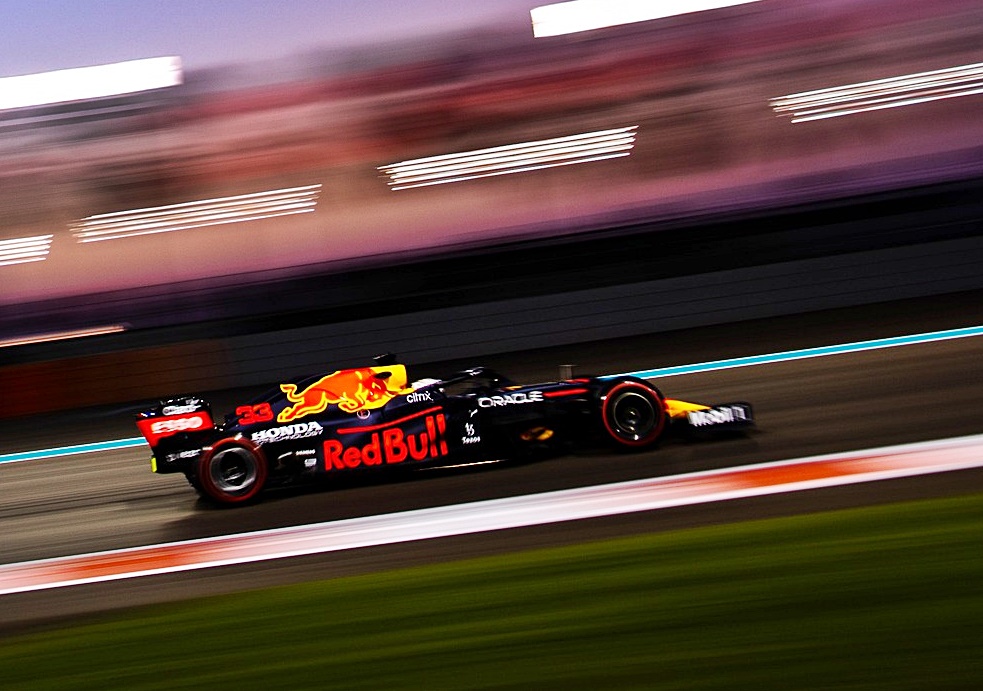
As the lights went out, the Red Bull driver got a good start but was not quick enough to outrun Lewis Hamilton to the first turn and coming out on the other side was the Mercedes-AMG. But the first controversy started by Turn 6 as Hamilton ran wide and Verstappen alleged that he had been pushed off the track. However, the Stewards did not see anything wrong and decided not to investigate… much to Christian Horner’s frustration again.

While McLaren Lando Norris slipped back and was overtaken by Ferrari’s Carlos Sainz, it was Verstappen’s team mate, Sergio Perez, who managed to slip into third place about 4 seconds behind Hamilton. It was a good position to be where he could take over when the two leaders headed into the pits.
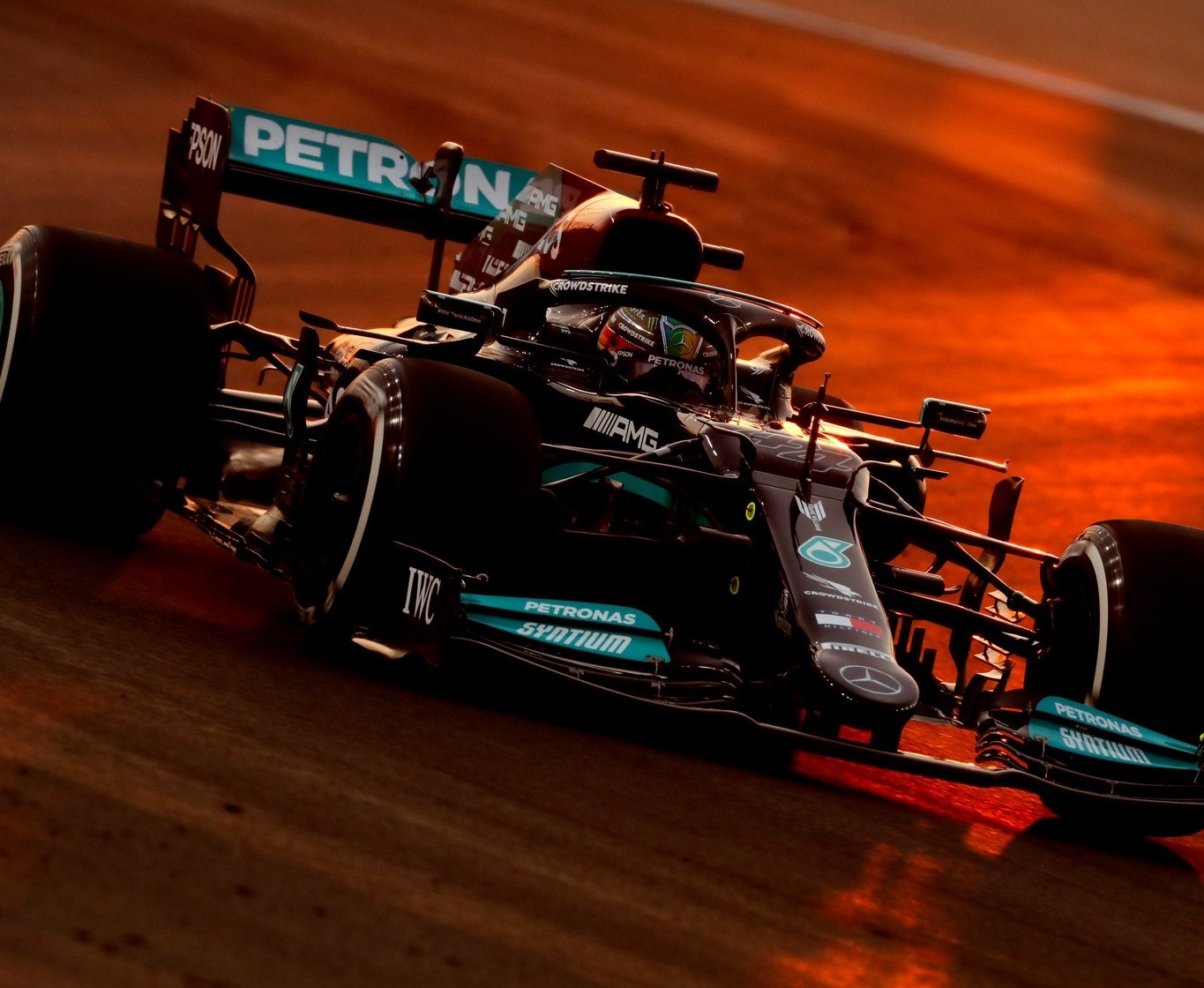
By lap 11, Hamilton was 3,5 seconds ahead but coming in was something that would need to be carefully considered as there was a risk in giving up the place too soon. Meanwhile, Verstappen was beginning to struggle with the soft tyres he started with, as opposed to Hamilton who had mediums from the start.

On lap 14, Verstappen had to come in and took on hard tyres. As usual, Mercedes-AMG followed next and when Hamilton rejoined, he was ahead enough to be in second place behind Perez who had taken over. However, Verstappen was further down and rejoined as Norris passed by. He had a 9-seconds gap from Hamilton who was ahead of Sainz.
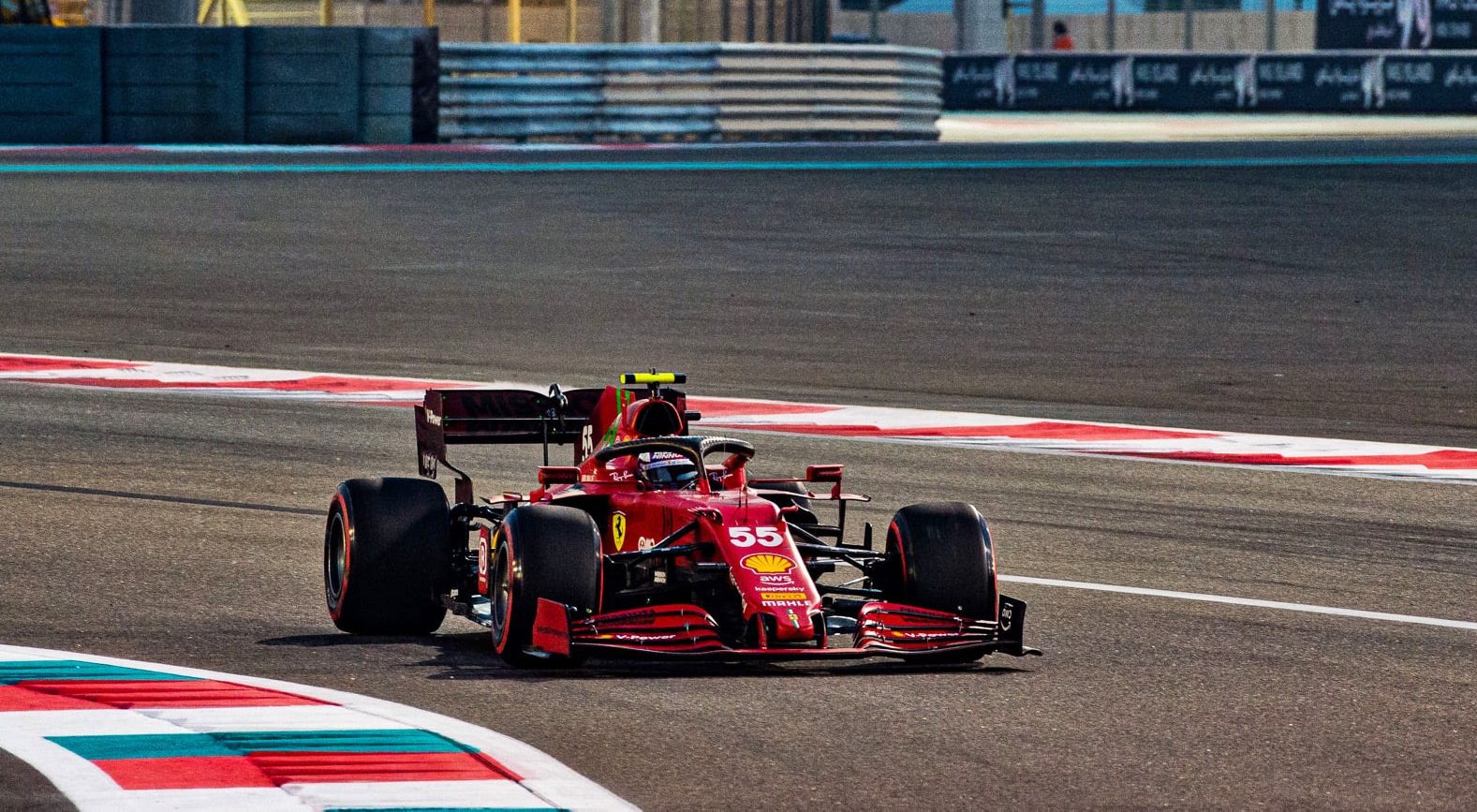
With everyone more careful not to be the cause of any incident that could impact either of the championship leaders, Sainz didn’t put up a fight when the Red Bull was about to pass. Verstappen was up into third place but Hamilton had been pushing harder to reach Perez, and the gap was still 8 seconds.

On lap 20, Hamilton began to dice with Perez who had been instructed to delay the Mercedes-AMG driver enough so that Verstappen could close in. And as Hamilton had to be careful, he lost out as Verstappen shot forward unimpeded by his team mate who was ready to head for the pits. This put the Dutchman in second position and ready to fight for the title.
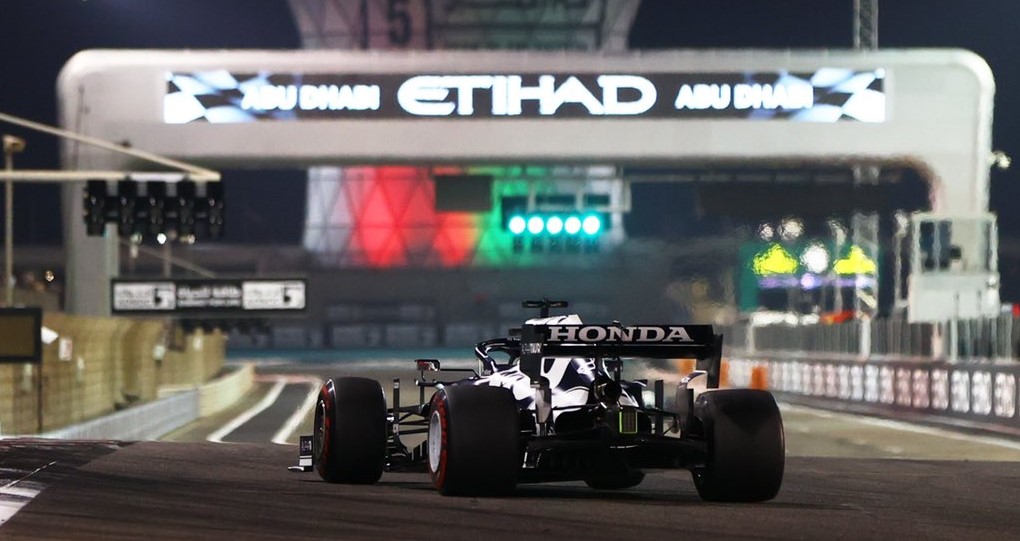
16 seconds behind Verstappen was Tsunoda, pursued by Bottas, while Perez slotted into fifth place after getting his fresh tyres. However, the Japanese drivers position was lost when he pitted, dropping him to tenth.

Alfa Romeo ORLEN’s Kimi Raikkonen did not get to finish his final F1 race as his car had braking problems around lap 26 and he had to limp back to the pits. Fans of the Finn, who was among the senior drivers, were saddened that the 20-year career had to end on a low note.
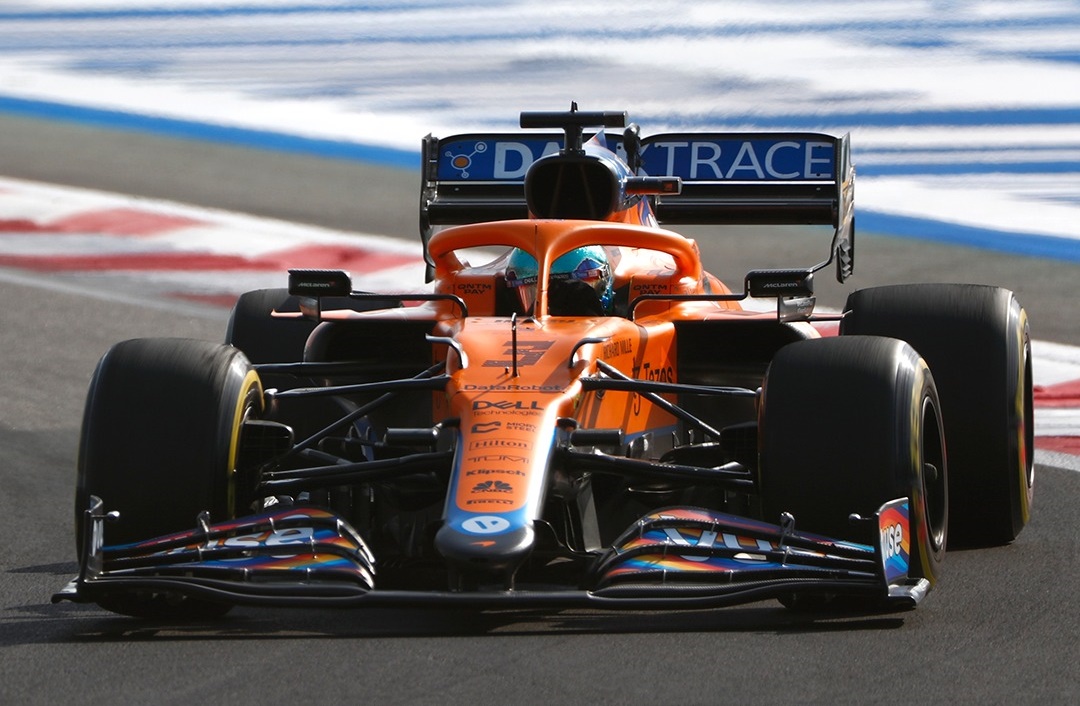
At the halfway point of the 58-lap race, Hamilton was still in the lead, 4 seconds ahead of Verstappen but without the security of having Bottas near enough. Though his team mate was in third, he was some 20 seconds behind. In any case, he had to come in for a tyre change and rejoined in tenth. His place was taken over by Perez who had a comfortable gap from Alpine F1’s Fernando Alonso, so he could focus on staying in the race.

Raikkonen’s team mate, Antonio Giovinazzi, also had an unhappy ending with the team as his car came to a stop on lap 36, triggering the Virtual Safety Car to enable clearing. Verstappen came in for hard tyres and rejoined still in second place as Hamilton did not want to lose his top spot. Twenty laps remained and Hamilton looked like he would keep the hard tyres till the end and take another world championship.

The Virtual Safety Car had given Verstappen a chance to close in on Hamilton and by lap 43, he had gained 4 seconds, though the gap was still over 12 seconds. His steady progress to close the gap meant that it was going to be a thrilling finish. And with 12 laps remaining, Hamilton was also getting close to backmarkers which could make things tricky.
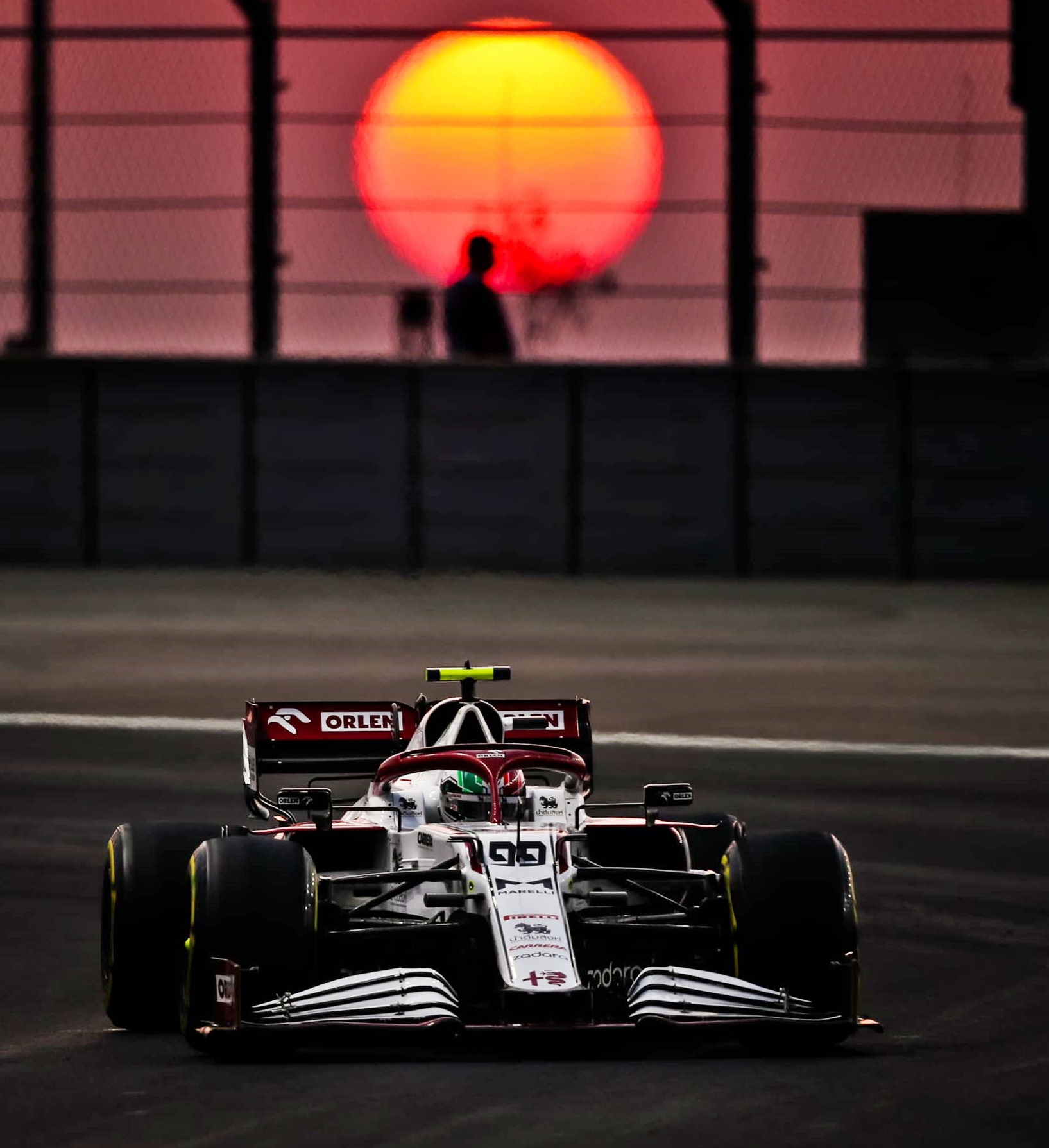
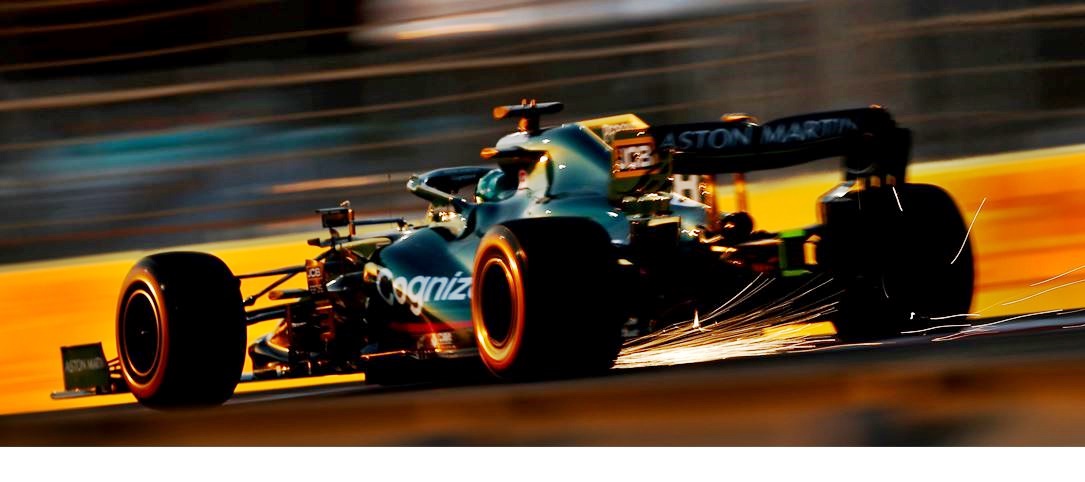
With his tyres having been in use for over 37 laps, the team was warning Hamilton to be careful on the kerbs. A puncture would be disastrous at this point with the remaining laps.

7 laps from the end, Hamilton finally got past the traffic but Verstappen still had to carefully find his way past at least 5 cars, some of whom were also battling each other. The delay kept the gap at around 12 seconds.

And then Williams Racing’s Nicholas Latifi crashed at Turn 14 while duelling with Haas F1’s Mick Schumacher, and the Safety Car had to come out. Just 6 laps remained and with the cars unable to race, the release of the Safety Car would certainly be a dramatic moment as the two leaders tried to sprint to the finish. Verstappen decided to come into the pits to get fresh tyres – certainly the last time in the race – but Hamilton was unwilling to take any risk of losing his position right at the front.
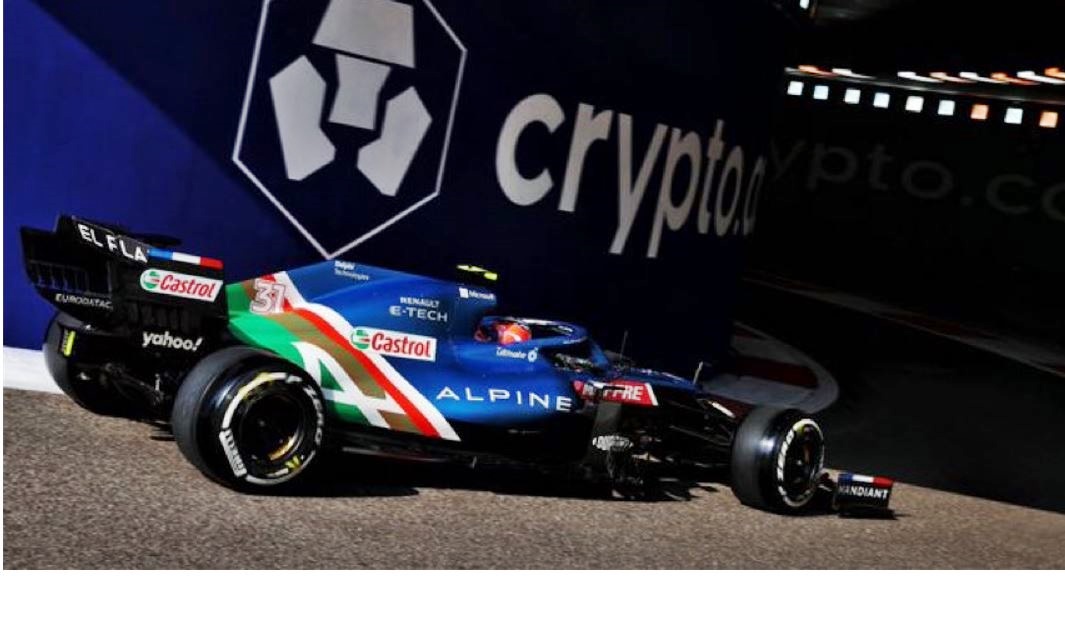
With 3 laps remaining, the gap was just 3 seconds between Hamilton and Verstappen. Everyone was biting their nails as the outcome was going to be very tight. Verstappen still had 5 slower cars in front of him.

On the 57th lap, the cars were still  behind the Safety Car so it seemed like a real shoot-put to the finish line. Then race control told the 5 cars between Hamilton and Verstappen to overtake the Safety Car as it was about to leave the track – and it would be Hamilton and Verstappen going for it as they were side by side. An incredible setting to the end of the season!

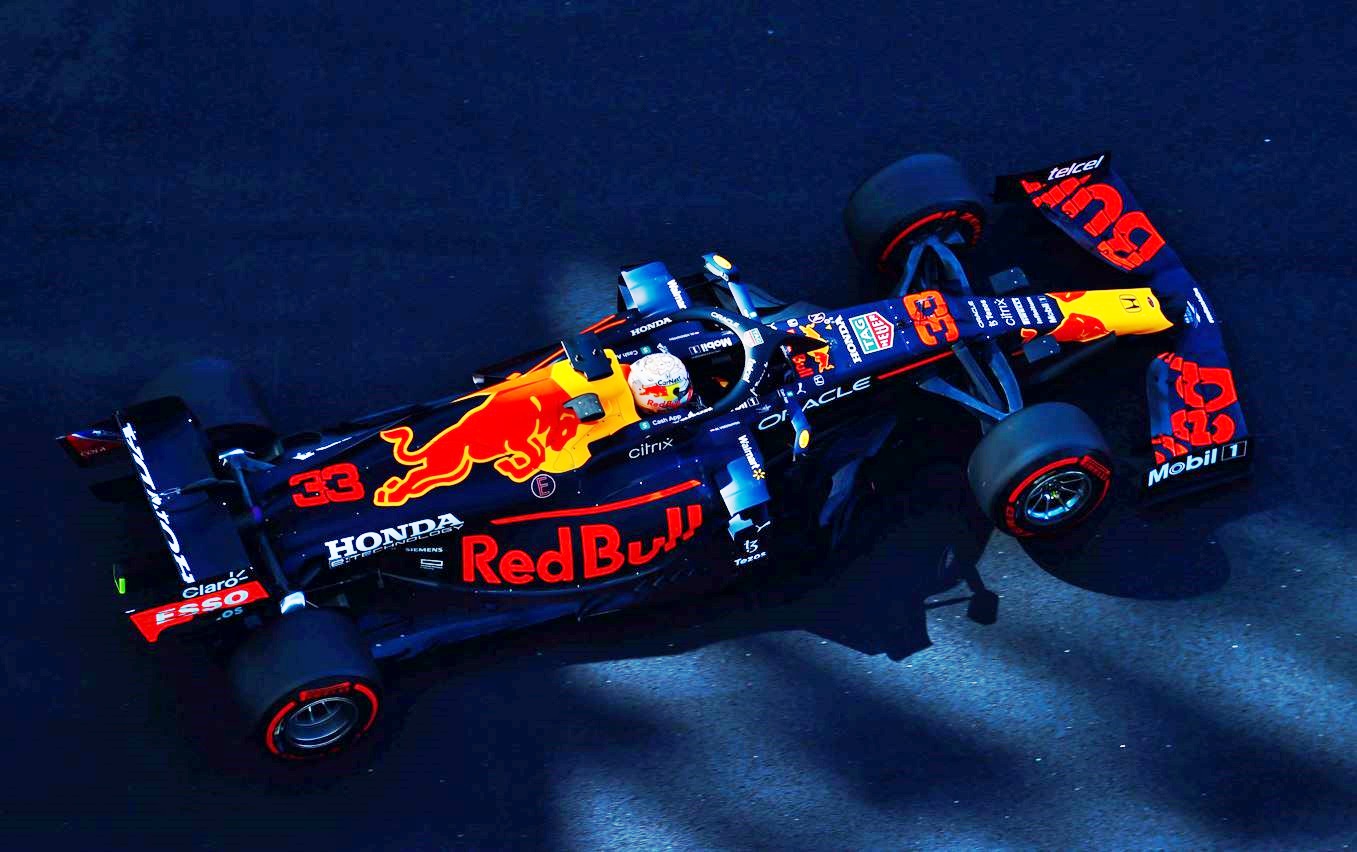
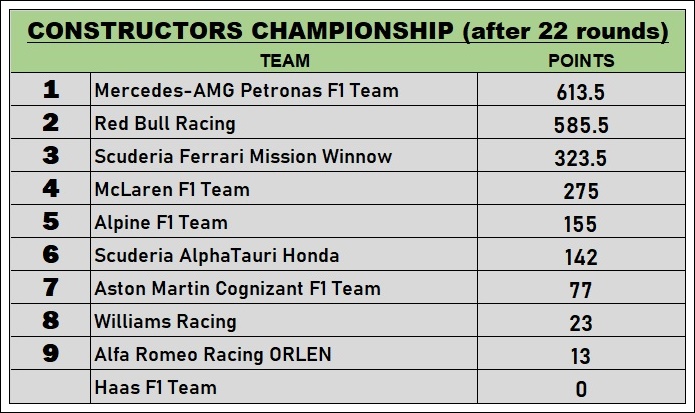
The moment racing resumed, Hamilton had a slight edge but Verstappen grabbed the lead – and held it to the chequered flag to become the new World Champion. Crossing the line, the Dutchman was about 2 seconds ahead of the Mercedes-AMG driver, whose boss was unhappy at the circumstances. But his team does win the Constructors Championship again, which makes it 8 times in a row. But for the Red Bull Racing team, the hard work finally paid off and for Honda, their engine supplier, it was a great way to end F1 involvement.

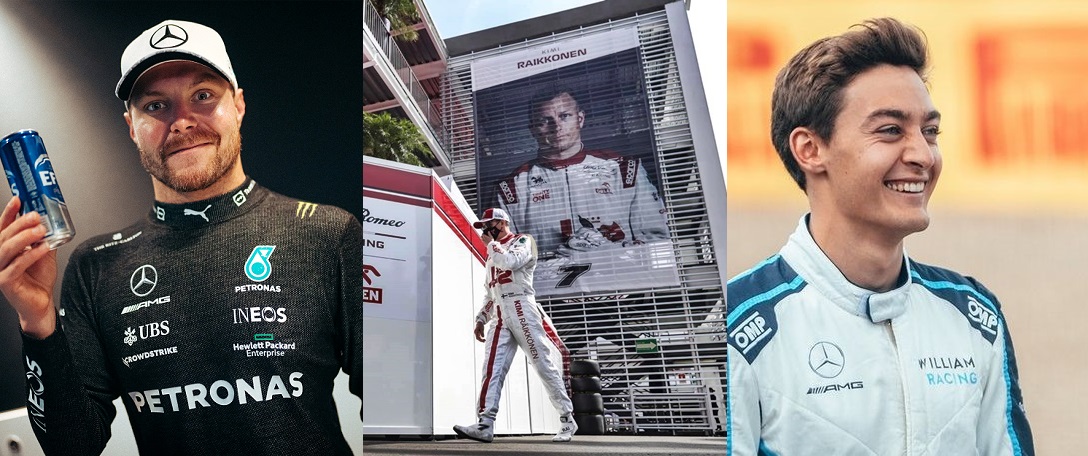
Valtteri Bottas leaves the Mercedes-AMG PETRONAS team to take over the spot vacated by Kimi Raikkonen, while Williams Racing’s George Russell will become Lewis Hamilton’s team mate in 2022.
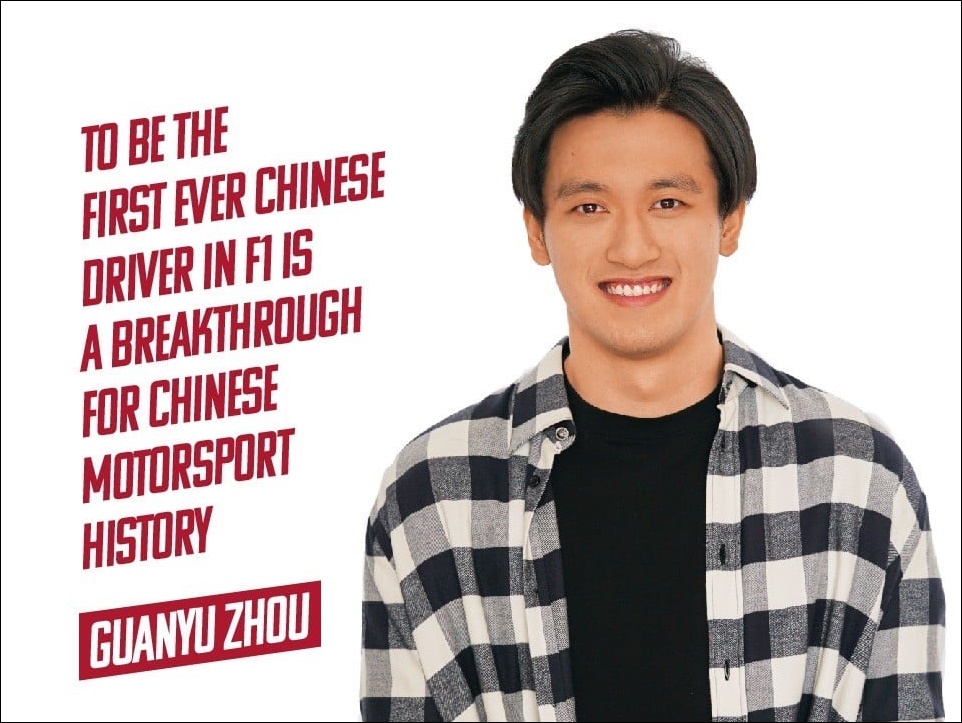
Guanyu Zhou 2022 F1 Alfa Romeo Racing ORLEN
Guanyu Zhou will join Alfa Romeo Racing ORLEN in 2022 to partner with Bottas.

COVID-19


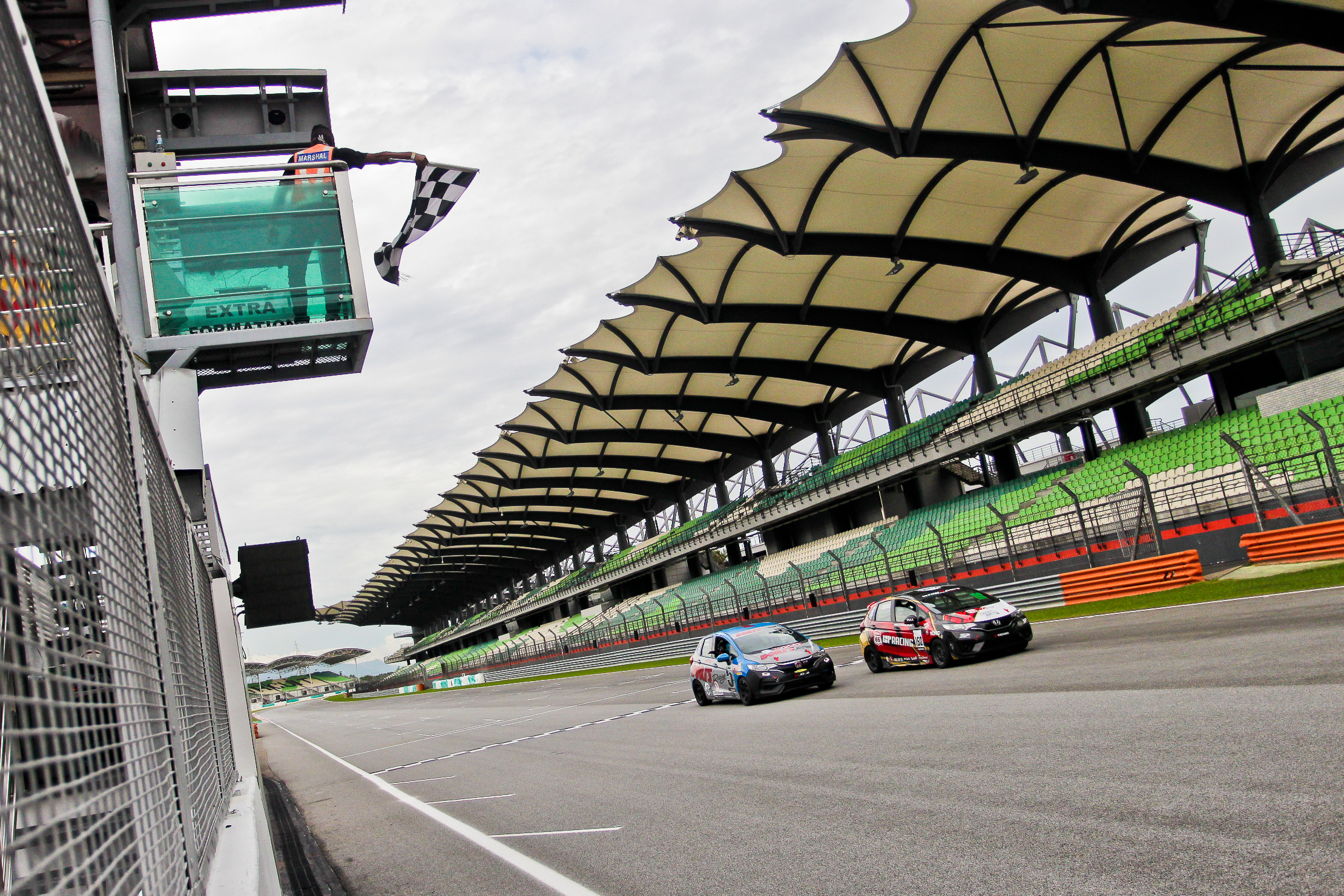
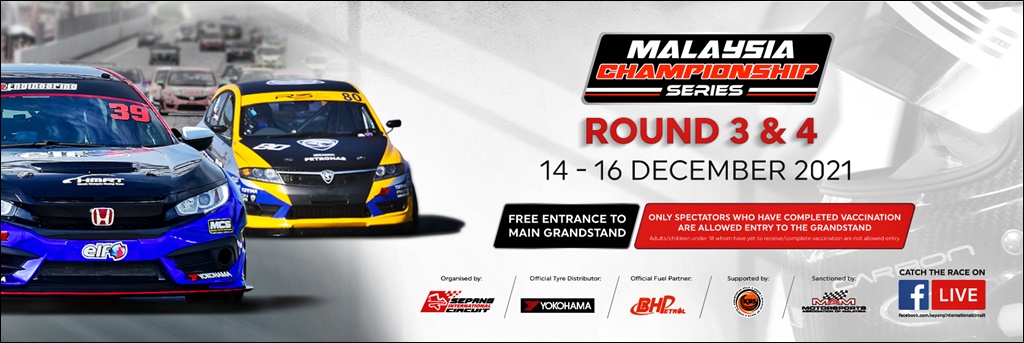
The Malaysian Championship Series (MCS) 2021 heads into its final double-header with Round 3 and Round 4 to be run on December 15 and 16. It’s been a challenging year for the drivers and teams, not to mention the disruption caused by the extended suspension of activities due to the pandemic. The MCS 2021 will be the last action from 4-wheel racers to conclude the National  Championship calendar for 2021.

For Race 1 and 2 in Round 3 (Wednesday), the drivers will be competing for a total of 22 laps.  Race 1 starts at 10:30 am, while Race 2 will be from 3:30 pm. The next day will see Round 4 starting at 11:15 am with the competitors racing 54 laps around the 5.543 km Sepang International Circuit.

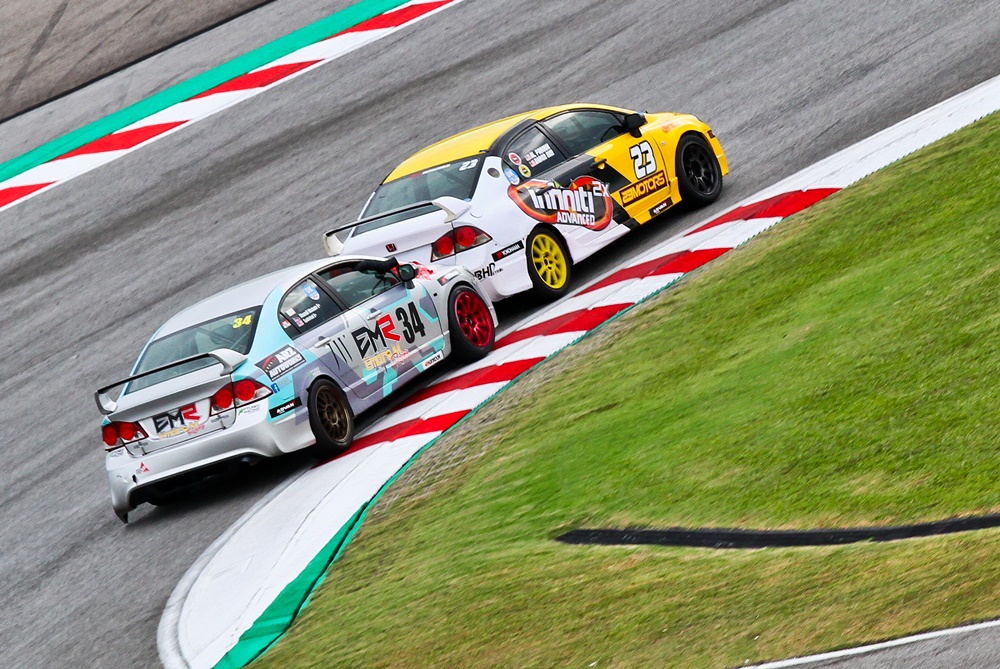
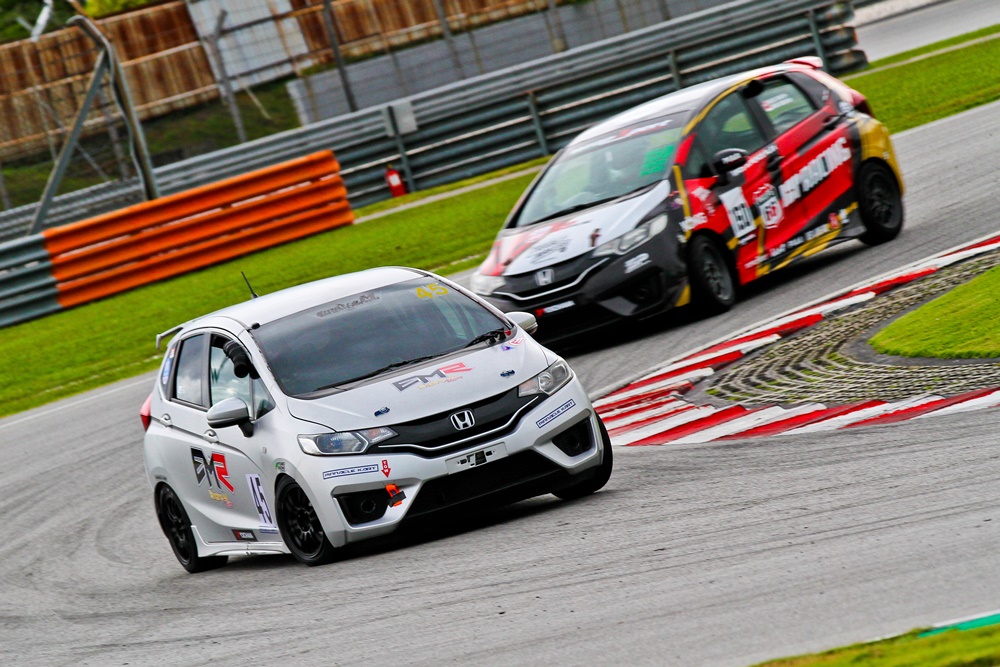
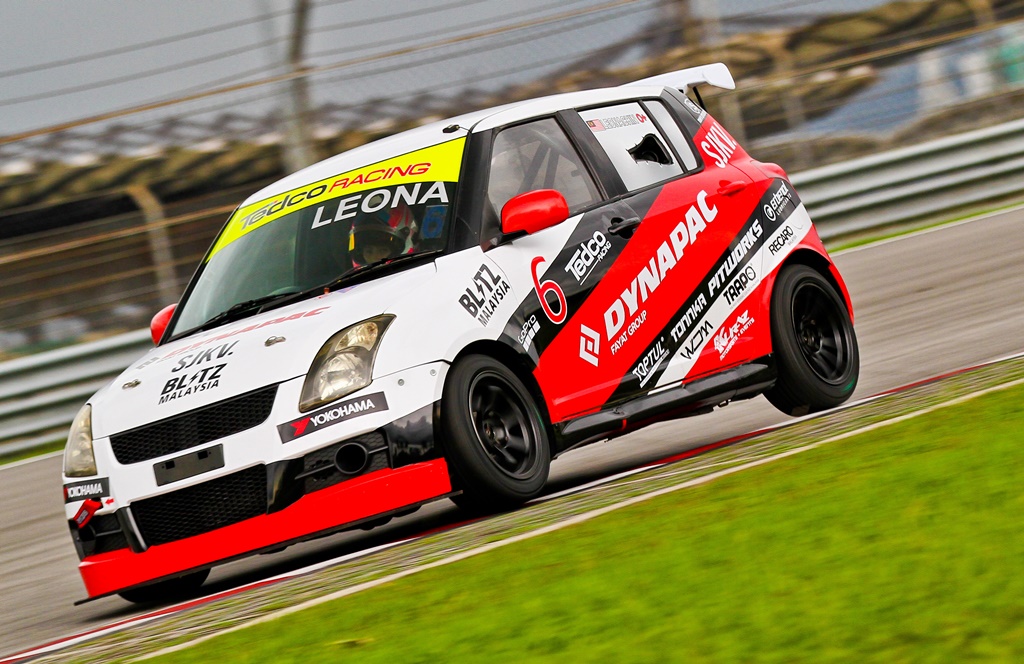
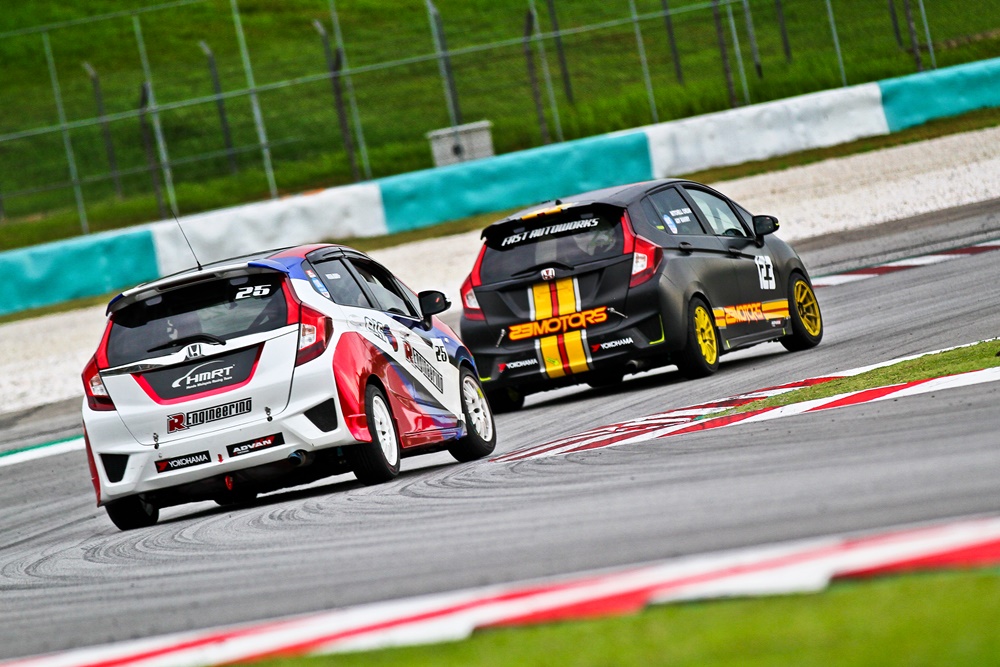
After Round 2, Alif Hamdan and Lai Wee Sing from R Engineering HMRT remain unbeaten as they are the only entry in the Touring (T) Production category. Leona Chin from the Tedco Racing team spearheaded the Malaysian Touring Car (MTC) Production, leaving Muhammad Roni Risman and his partner, Shaifulnizam from Dori’s Racing team in second place and the pairing, Natasha Seatter and Nurul Husna from Niza Racing team finished in third place.

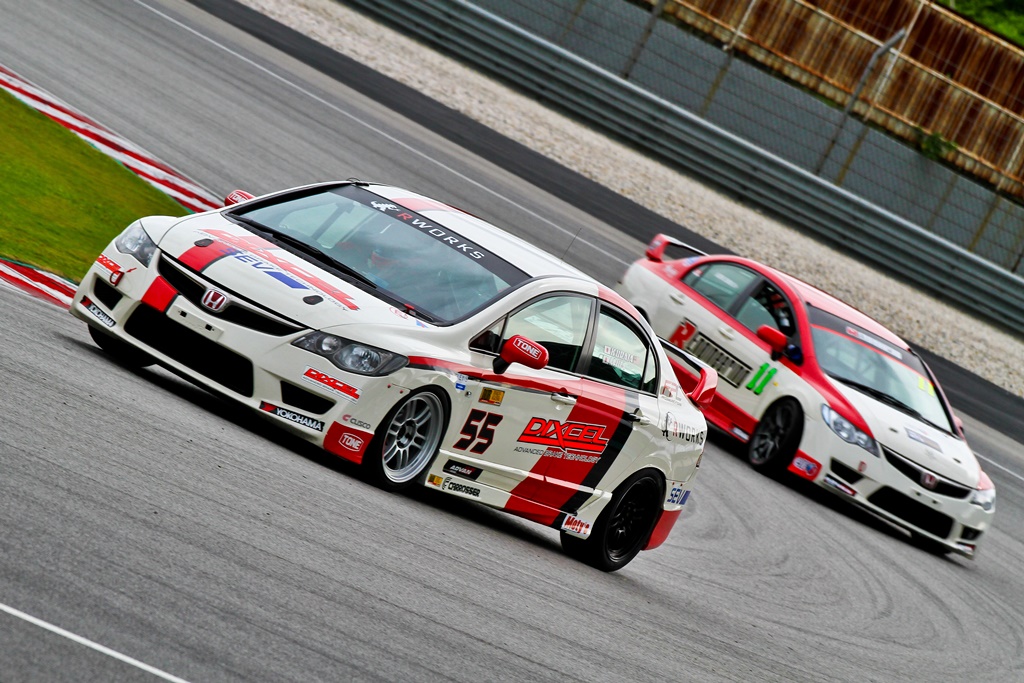
In Stock Production 1 (SP1), Shazull Hisham and Mohd Syahrizan, from the Empire M Racing team  took the chequered flag, with Ken Urata from Rworks in second position. Chiow  Teck Song from R Engineering HMRT team finished in third place to join them on the podium.

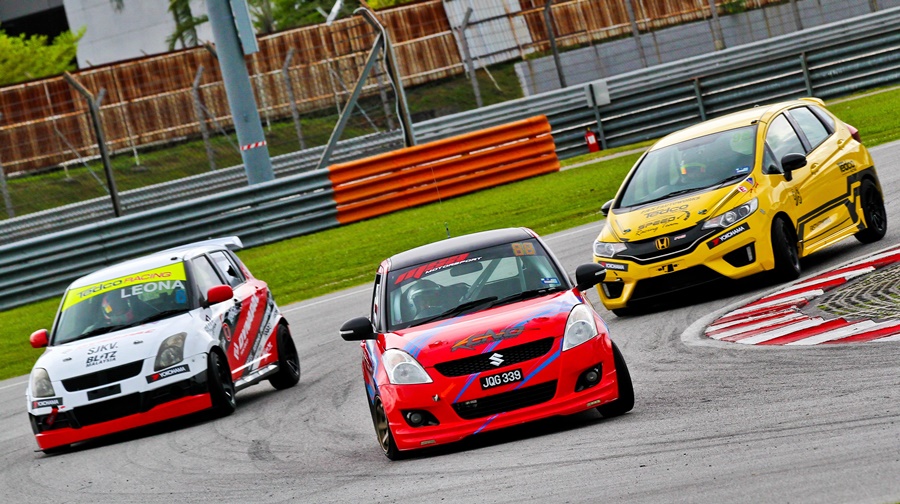
As for Stock Production 2 (SP2), the perfect combination of Hayden Haikal and Adam Khalid in the Honda Fit GK5 throughout the 22 laps of the race earned them the class victory. Putera Adam from R Engineering HMRT finished in second position, while Eddie Lew Kar Wai and William Ho from the Tedco Racing team were in third place.

The MCS 2021 is organised by Sepang International Circuit (SIC), supported by the Ministry of Youth  and Sports, sanctioned by the Motorsports Association of Malaysia (MAM). The Official Tyre Distributor is Yokohama while BHPetrol is the Official Fuel Partner.

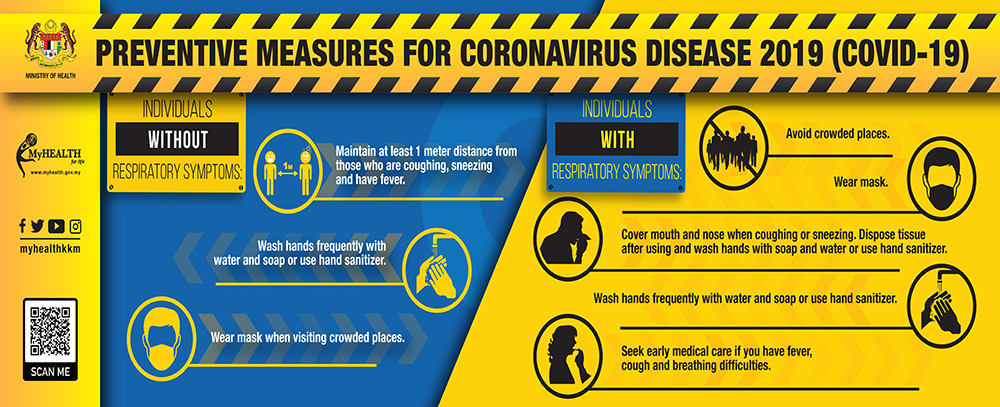
Spectators (18 years old and above) are permitted to watch the races and can gain free entrance at the SIC Main Grandstand. As per government regulations, they must be fully vaccinated and show their certificates. SIC reminds everyone that they must adhere to all Standard Operating Procedures and guidelines imposed by the National Security Council to curb the spread of COVID-19. Facemasks should be worn at all times and social  distancing (minimum 1 metre apart) must be maintained.

If you cannot go to the track, you can still watch the last battles of MCS 2021 live on SIC’s Facebook page.

Strong start for Leona Chin in Malaysia Championship Series

Race starts at 5 pm in Abu Dhabi/9 pm in Malaysia

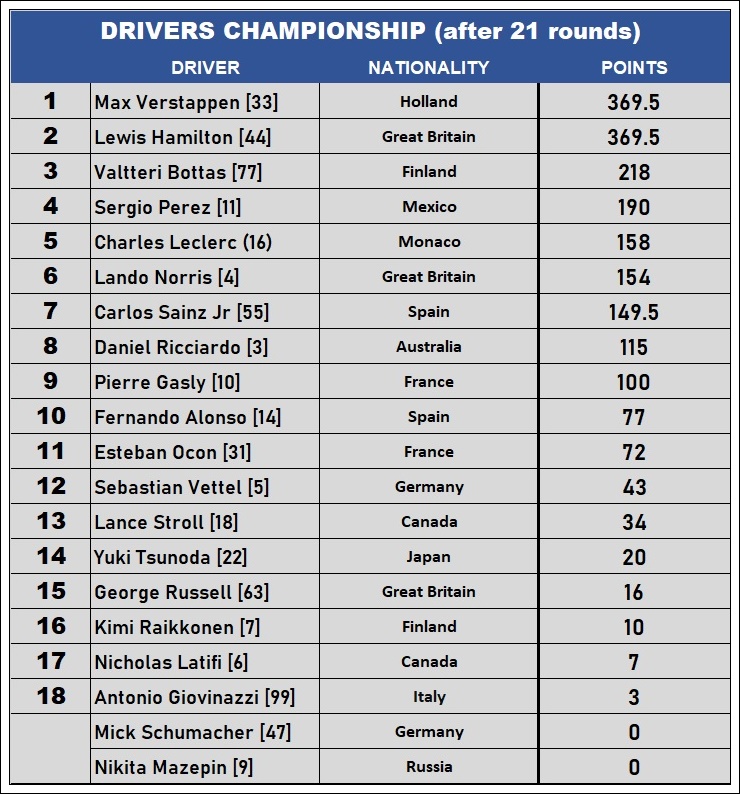
And so its down to the final round of the 2021 Formula 1 World Championship which takes place at the Yas Marina Circuit in Abu Dhabi. It’s been a dramatic year with the two leaders – Max Verstappen and Lewis Hamilton – having a battle between themselves only. And now, as they face each other for the final time this year, their points are tied so this is a crucial race to decide who takes the crown. Tensions are so high that the Race Director has warned both drivers not to indulge in any unsporting behaviour otherwise the winner could be decided by the Stewards – which no one wants.

Last time was 1974
The last time two drivers were tied for the title was in 1974, when Emerson Fittipaldi of Lotus and Clay Regazzoni of Ferrari had 52 points each. But it was a different era too, with faster and more powerful cars, and the business of the sport also far more intense. Hamilton already has a string of 7 titles going back to 2008 and would certainly like to add another. But there are also some who would like to see a new champion although Verstappen has gained a ‘bad boy’ image of late.

“The final race will be intense… the fact that both championships will be decided at the season finale proves just how hard both sides have been challenging each other and pushing each other forward. It’s all or nothing for the season finale and that’s amazing for the sport, amazing for the fans and amazing for all of us, too,” said Mercedes-AMG’s Toto Wolff.

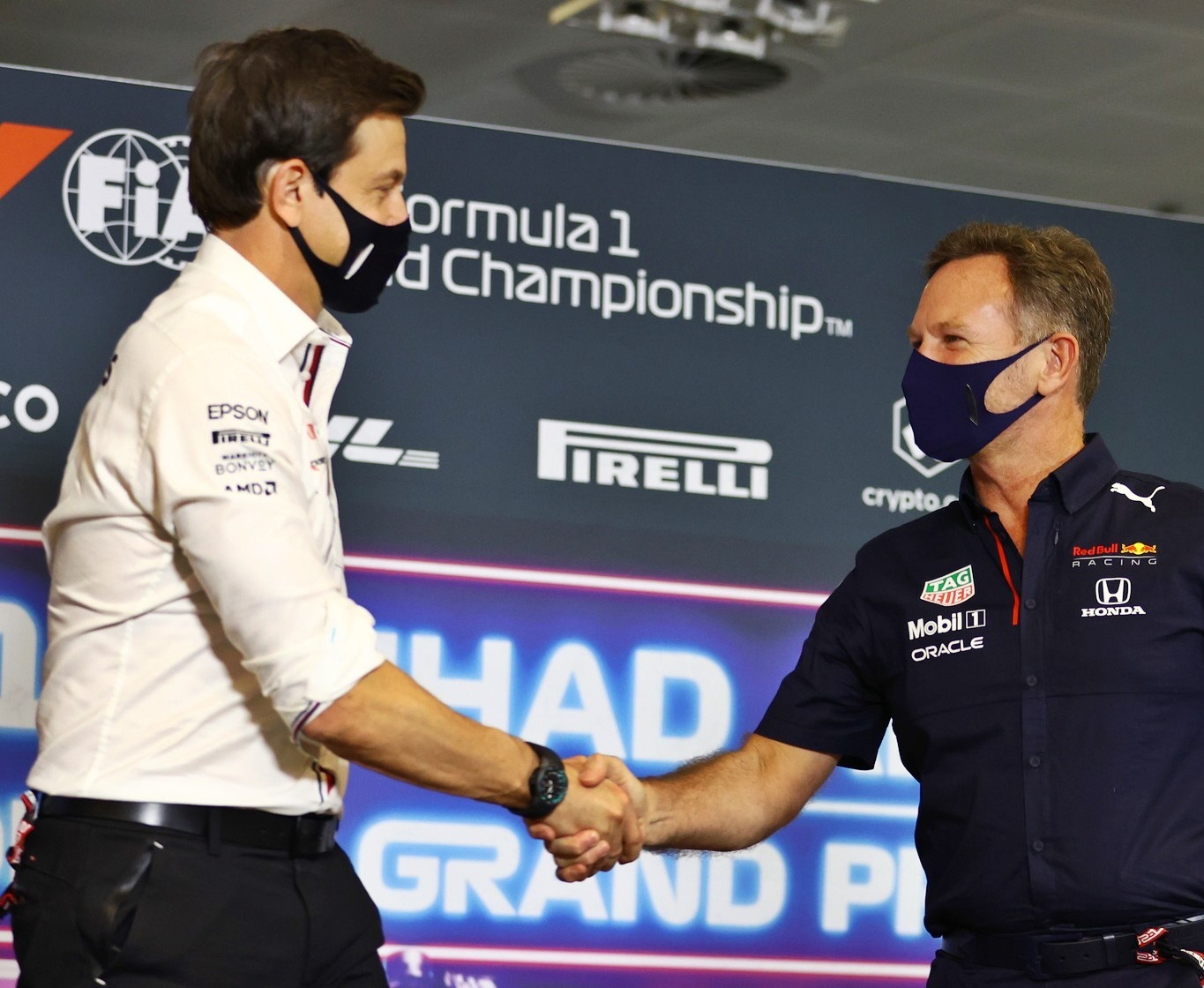
‘May the best man win’ as the team bosses of Mercedes-AMG and Red Bull Racing shake hands before the race.

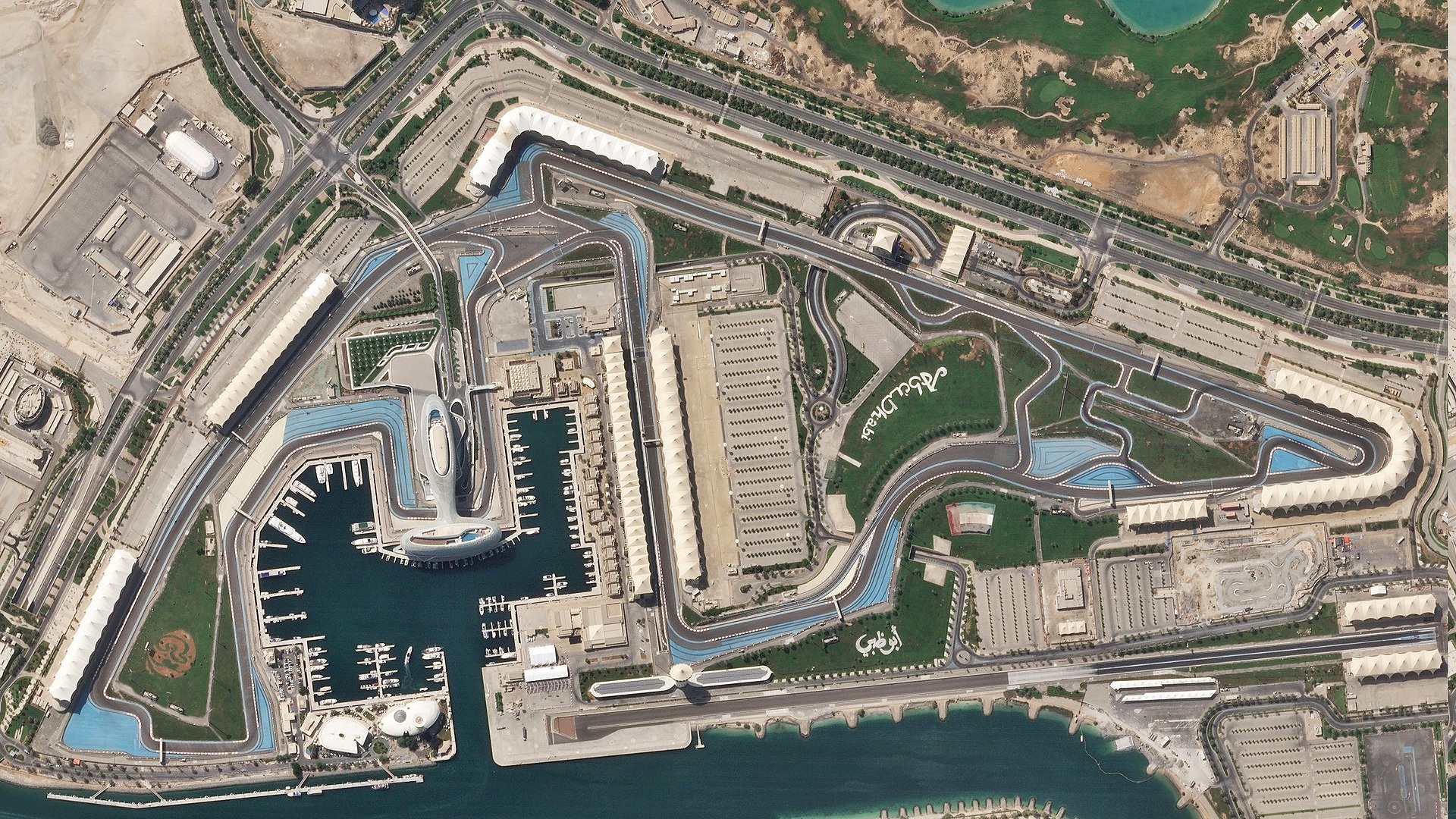
Image by Planet Labs Inc.

Circuit substantially altered
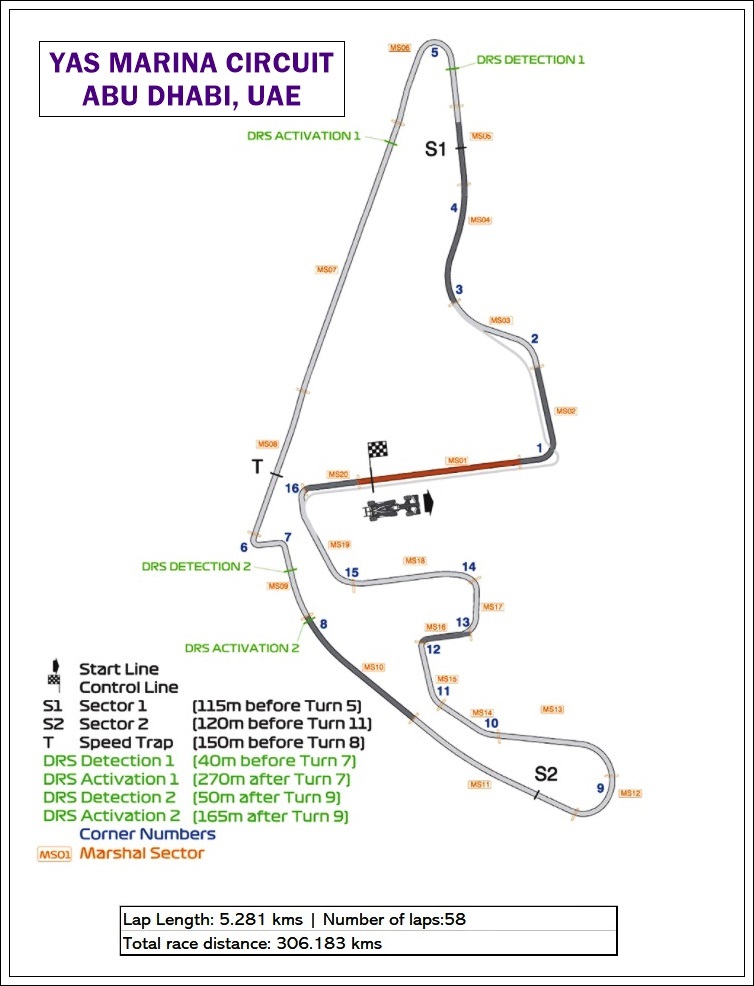
The Yas Marina Circuit has, for some time, held the season-closing race. In fact, 9 of the 12 times it has had a F1 race, it has been the finale round. The cumulative data the teams have gained over the years will not be so applicable as the circuit has also been substantially altered for this year’s race. For one thing, it has 5 less corners – 16 instead of the 21 in last year’s layout. The hairpin complex from Turns 5 to 7 has been replaced with a wider hairpin bend at Turn 5, with the aim of promoting overtaking.

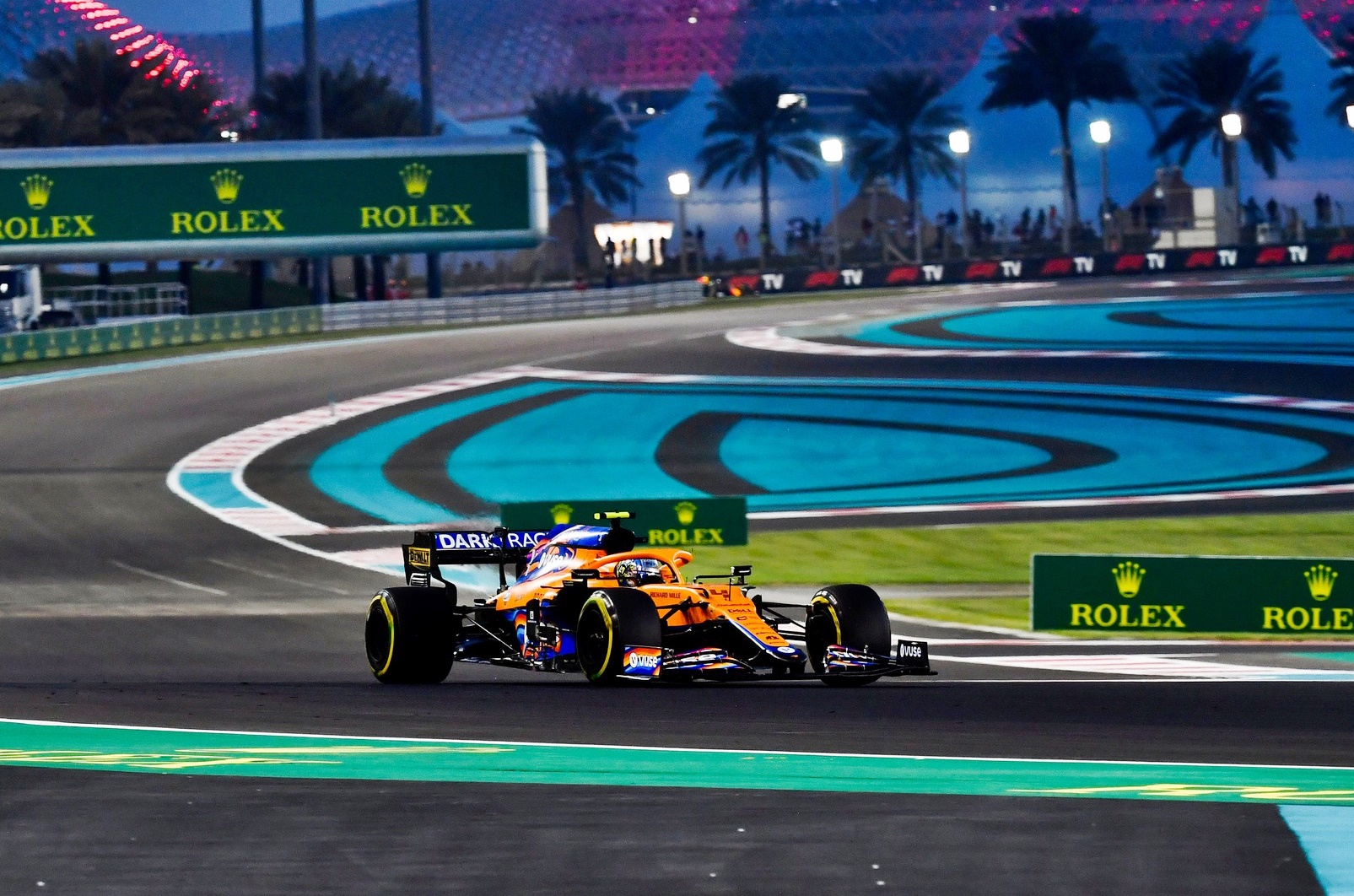
The changes have shortened a lap by 273 metres, which sees the number of laps increased from 55 to 58, all run after sunset. The changes to the track will also increase speeds and loads through some corners. However, as the circuit will still be smooth, with average stress on the tyres in terms of wear and degradation, the three softest compounds in the P Zero range remain a suitable choice, according to Pirelli.

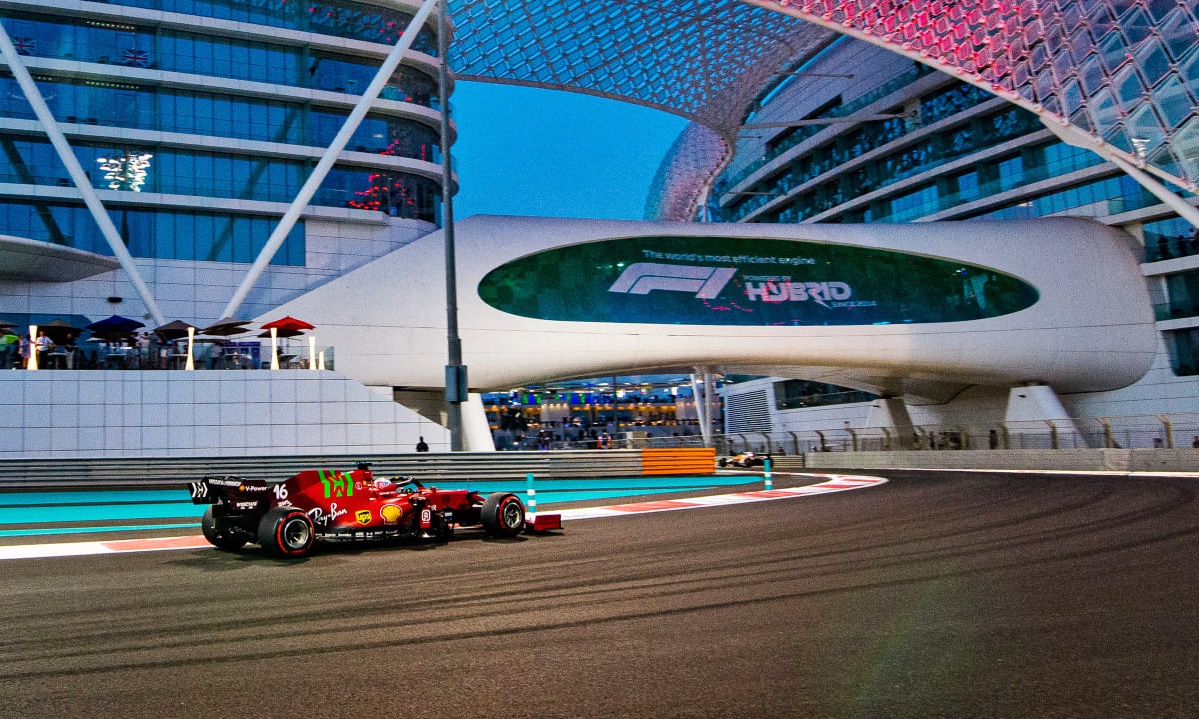
The pitlane is the only one in F1 to feature a tunnel, with drivers passing under the circuit at the pit exit and re-joining on the left-hand side of Turn 2. It can prove tricky to see other cars when feeding back onto the track mid-corner.

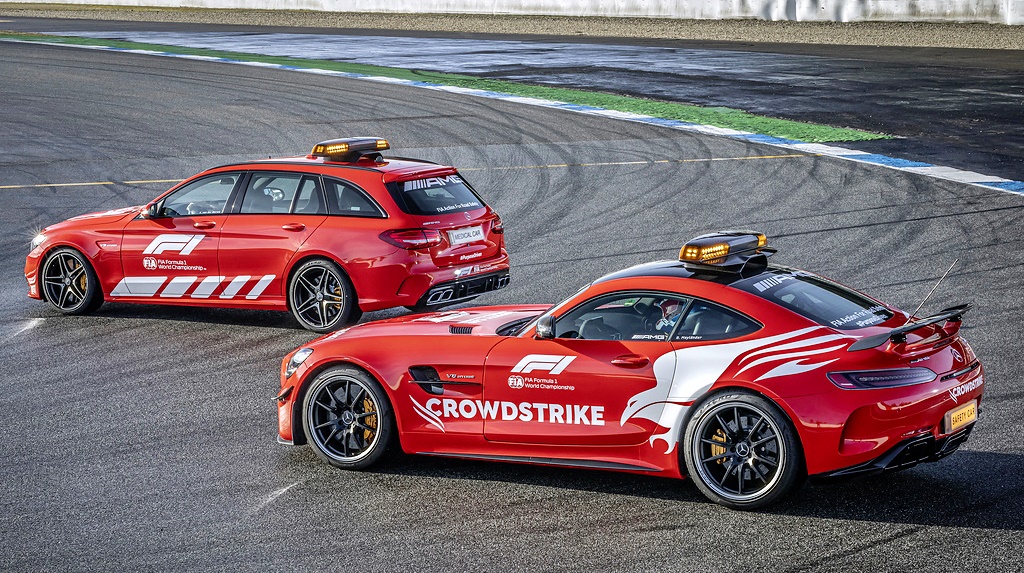
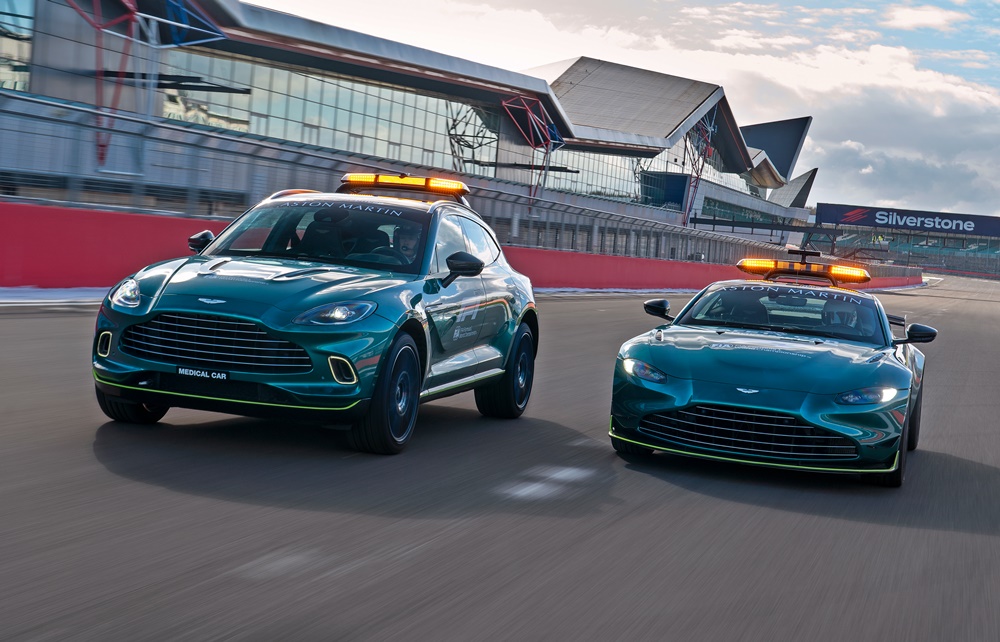
The last outing for the F1 Safety and Medical Cars which have been supplied by Mercedes-AMG (above) and Aston Martin (below) and used in different races.


After a period of obscurity, Kia is ready to move forward with great determination and has formulated a plan to grow its volume in the ASEAN region. Having established a new business operation in April this year, the Korean carmaker has a partner – Bermaz Auto – which took over the brand from Naza (along with Peugeot as well). Bermaz Auto and Kia have formed a joint-venture company called Kia Malaysia which will manage the brand’s activities in the country. Distribution and retail operations will be handled by Dinamikjaya Sdn Bhd, a subsidiary of Bermaz Auto.

Kia Malaysia’s operations will include local assembly, the first time the carmaker is making a direct investment for assembly operations. It considers this to be a key factor for growth as it will enable Kia vehicles to be sold around the ASEAN region at competitive prices. This is because they can be assembled in Malaysia and exported to other markets without import duties imposed by those countries, a privilege accorded by the ASEAN Free Trade Area (AFTA) agreement.
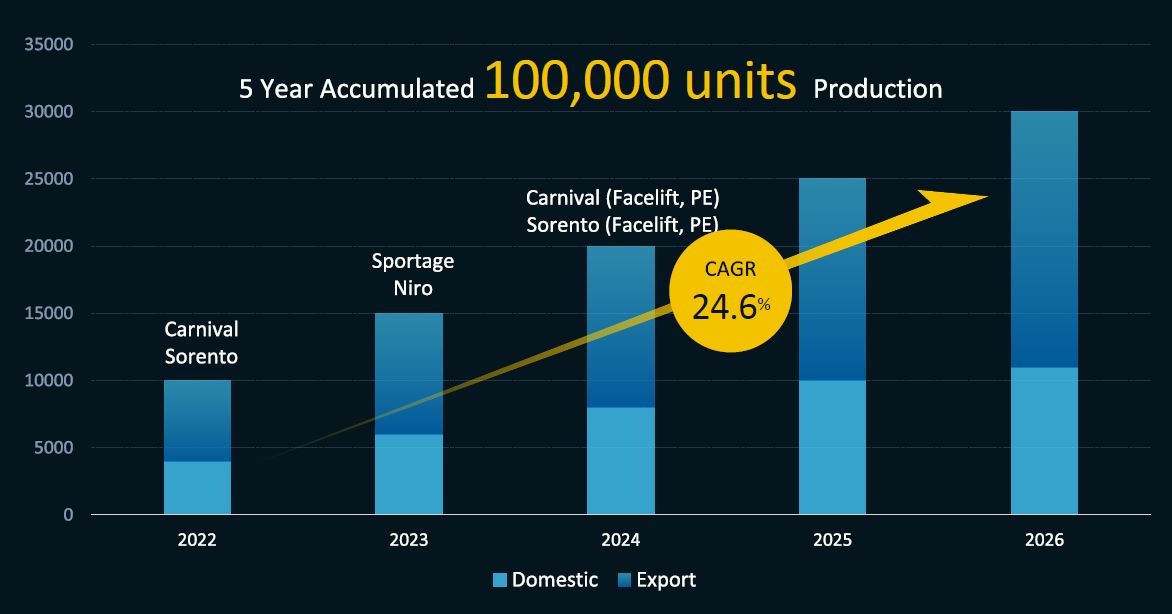
Previously, there were some Kia models assembled locally but the volume was small and therefore not efficient. Now, Kia has set a target of 100,000 units in total from 2022 to 2026. The vehicles will be for the Malaysian market as well as export. The export plans are ambitious and will account for more than 50% of annual production each year. By 2026, the company expects to export up to 19,000 units from the 30,000 units targeted for that year.
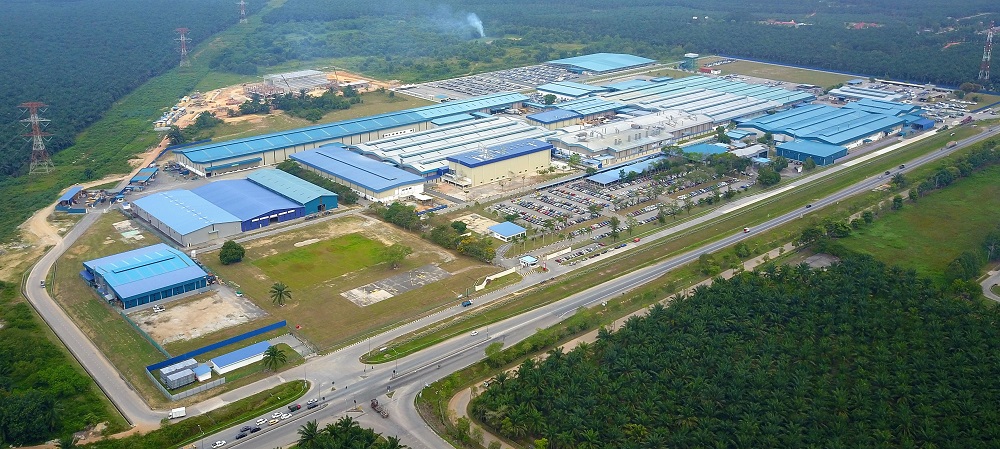
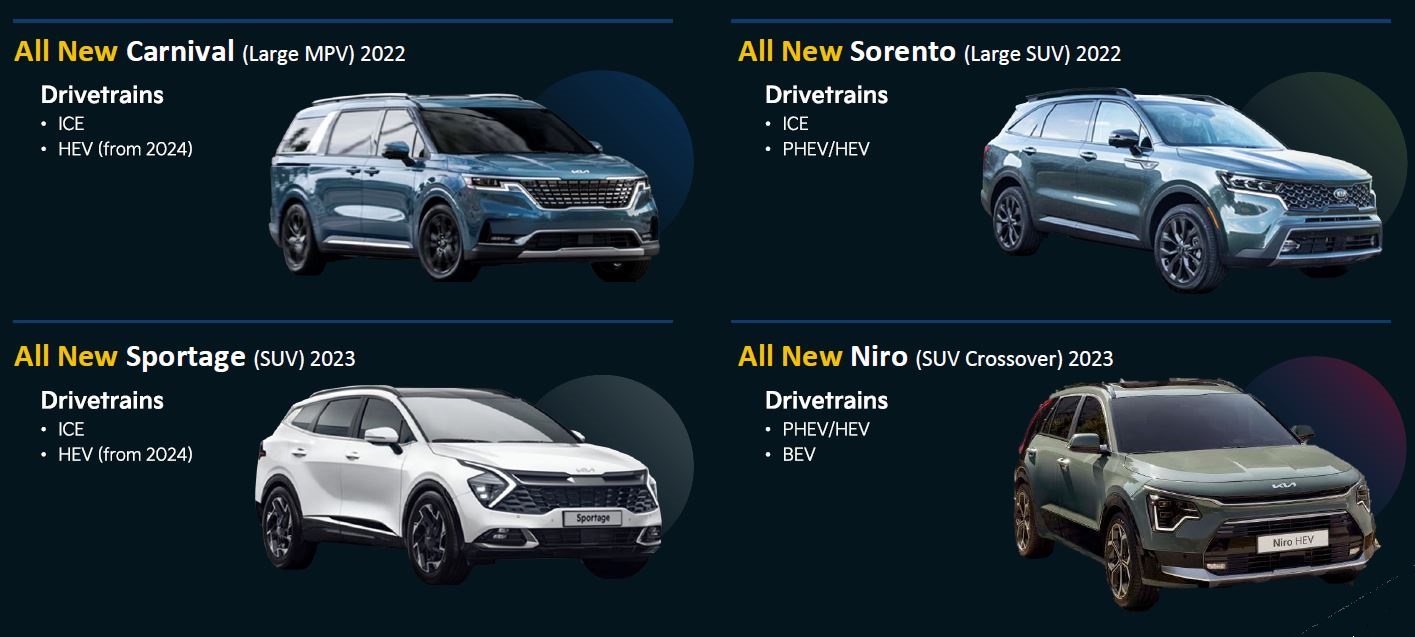
The vehicles – comprising new generations of the Carnival, Sorento, Sportage and Niro – will be assembled at the Inokom plant in Kedah. This plant, which began operations in the 1990s, assembles for brands such as Mazda, BMW and MINI. Incidentally, among the plant’s shareholder’s is Hyundai Motor Company, which is affiliated with Kia in the Hyundai Motor Group. Hyundai’s share is 15% and it has been a shareholder since the plant started in 1997.

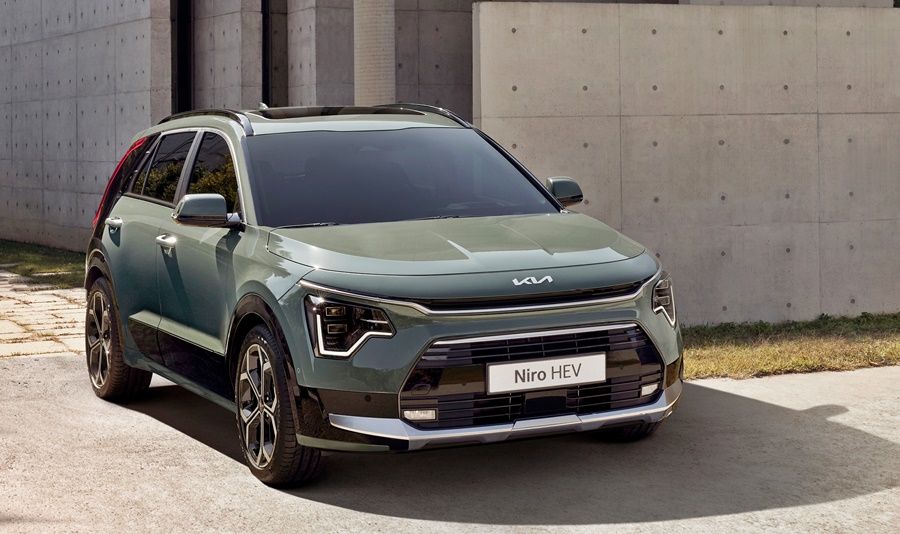
From what Kia Malaysia has revealed of the coming products, all four models will be produced with combustion engines as well as electrified powertrains. The Carnival and Sportage will be hybrid electric while the Sorento and Niro will also have plug-in hybrid (PHEV) powertrains. A fully-electric version of the Niro will also be produced, and this would enjoy attractive incentives offered by the government for battery-electric vehicles.

ICE: Internal Combustion Engine | HEV: Hybrid Electric Vehicle | PHEV: Plug-In Hybrid Electric Vehicle | BEV: Battery Electric Vehicle
The Inokom factory in Kedah which will assemble Kia vehicles. It began operations in 1997 assembling Hyundai and Renault vehicles.

Omitting passenger cars may not be a disadvantage as Kia’s past models have enjoyed limited success. Their SUVs have met with good response and the new Carnival is also a big leap from the previous generation. Now the task for Dinamikjaya will be to assure customers that it will offer the best aftersales support to those who buy a Kia. The company will examine all past promises to customers and see how to best move forward with existing owners.

Teaming up with Bermaz Auto is advantageous for Kia as the team in this company have long experience in all aspects of the auto industry. They are led by Dato’ Seri Ben Yeoh, whose career spans 5 decades, during which time he has been involved in brands like Mercedes-Benz, Toyota, Daihatsu, Proton, Mazda, Skoda and Hyundai. Senior members of his team were even involved in setting up and running the Inokom factory before it was acquired by Sime Darby Motors.

Bermaz Auto takes over Kia business in Malaysia, with local assembly to commence in 2022.

Toyota’s ultimate goal is to reduce fatalities from traffic accidents to zero, and to realize this, the company has been developing its vehicles with safer systems to help drivers avoid accidents and also to protect the occupants if an accident does occur. This has been ongoing for decades, and numerous advances in automotive safety have been developed to make vehicles in the Toyota Group as safe as possible – even to other road-users.

4 awards to Toyota
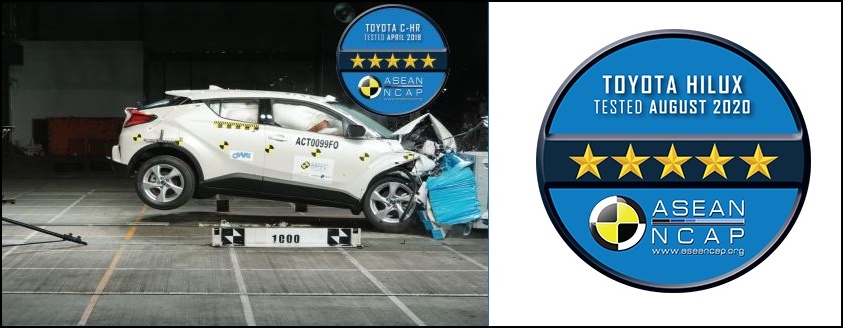
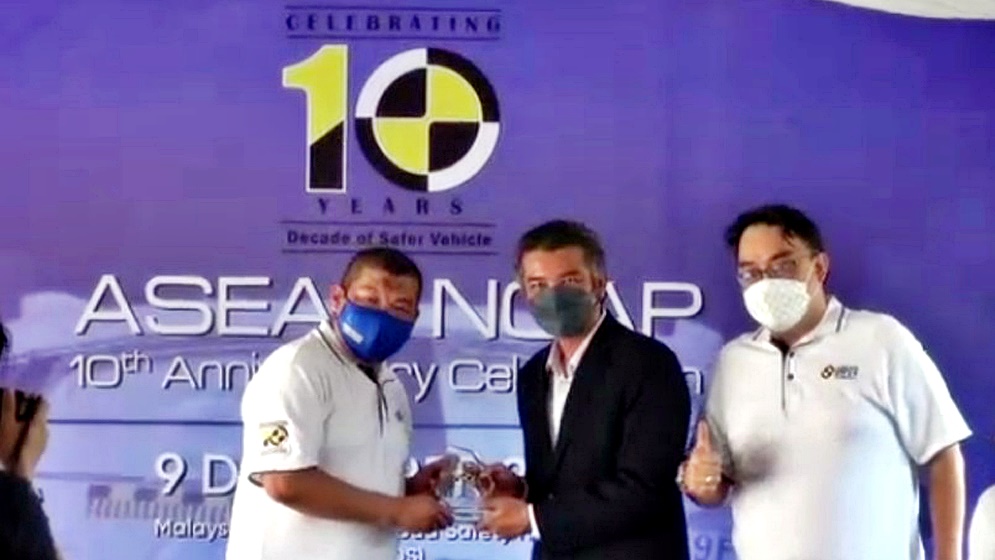
The efforts have been recognised by ASEAN NCAP – the New Car Assessment Program for Southeast Asian Countries – which has evaluated many new vehicles from the safety point of view. At its 10th anniversary celebration, the Toyota Brand received 4 awards including two for ‘THE MOST 5-STAR CARS 2012-2020’. The other awards were for ‘BEST ADULT OCCUPANT PROTECTION 2017-2020’ (for the C-HR crossover), ‘BEST SAFETY ASSIST 2019’ (for the Majesty and Granvia). The awards were among those presented by ASEAN NCAP under the ‘Decade of Safer Vehicle Awards’.

The awards were given to Toyota Daihatsu Engineering & Manufacturing (TDEM), which is Toyota’s regional headquarters for engineering and manufacturing functions for Southeast and South Asia. TDEM was originally established in 2003 as the Toyota Technical Centre Asia Pacific and was then integrated with Toyota Motor Asia Pacific Engineering & Manufacturing Co., Ltd. in 2007. From April 2017, the company was renamed Toyota Daihatsu Engineering & Manufacturing Co., Ltd. And based in Thailand (separate from Toyota Thailand).

Toyota has received the most 5-star ratings over the past 10 years, with the maximum rating even given to models like the Hilux pick-up truck.

“Toyota has a long history in Asia, wherein we have been recognized by our customers as the foremost brand for QDR – Quality, Reliability and Durability – and safety. We started production activities in countries such as Thailand and Malaysia as early as the 1960s and over the last 6 decades, we have strived to develop the best products not only to suit our ASEAN customers’ needs, but also to improve and adopt safety technologies as part of our fundamental responsibility as a mobility company, prioritizing the improvement of road and traffic safety in this region,” said  Prasanna Ganesh, Executive Vice-President of TDEM. “We are very honoured and humbled to be recognized across various categories on the occasion of ASEAN NCAP’s 10th Anniversary, and are committed to make our products and technologies ‘ever better and ever safer’ when compared to the past.”

Focus on ASEAN models
ASEAN NCAP is the ninth new car assessment program in the world that performs independent assessment on the safety performance of new passenger car models released in the market. Its main objective is to promote and enhance vehicle safety standards and rating system in the ASEAN region.

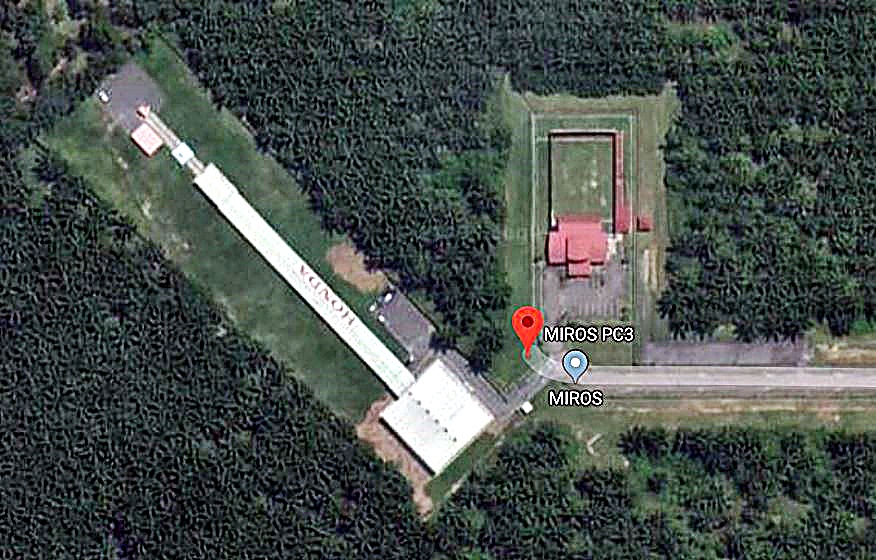
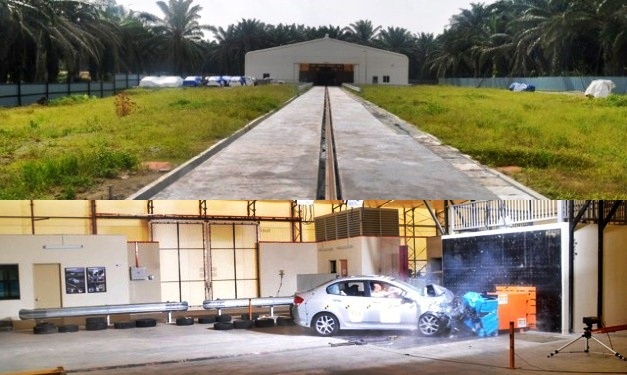
MIROS PC3
ASEAN NCAP has its own crash test facility in Melaka and has tested some 110 models and variants over a period of 10 years. Additionally, it also collaborates with safety organisations in some other Asian countries to test certain models.

The safety assessment initially began with test phases in which the first phase of the assessment, comprising 8 models, was funded by Global NCAP. After 10 years, the organisation has tested some 110 models and variants and has produced 137 ratings. During this period, ASEAN NCAP has also developed three roadmaps (for the periods 2012 – 2016, 2017 – 2020 and 2021 – 2025) to provide the industry with guidance for development of vehicle safety systems.

In 2012, the Honda City was the first car tested by ASEAN NCAP at its crash-test facility.

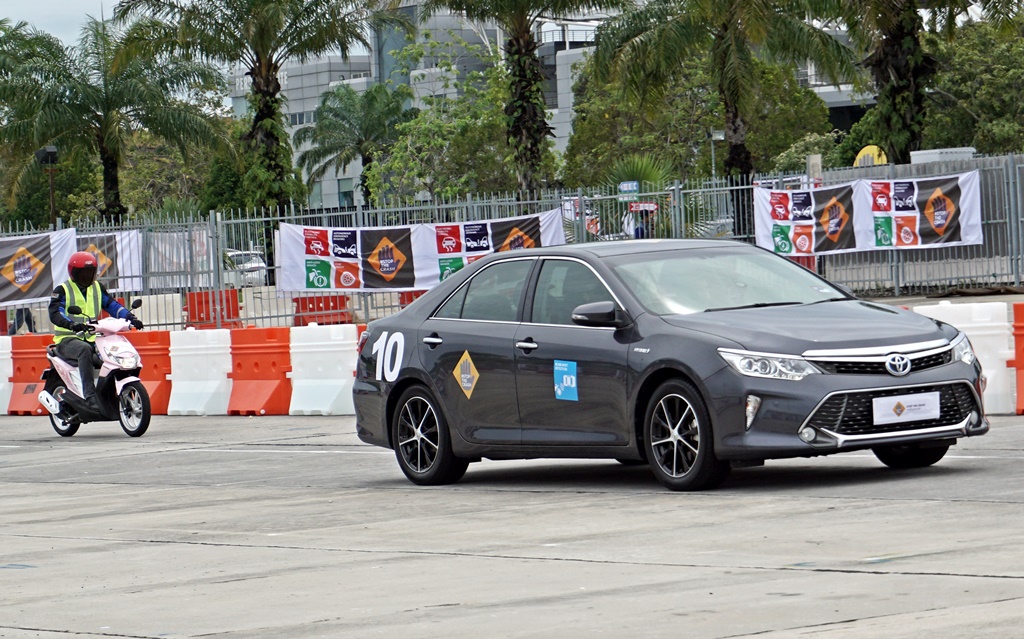
Under the current roadmap for 2021 – 2025, there are 4 assessment domains comprising Adult Occupant Protection, Child Occupant Protection, Safety Assist and Motorcyclist Safety. This roadmap marks a significant milestone for ASEAN NCAP in which there was the development of an assessment pillar that ensures the assessed vehicle avoids collision with vulnerable road-users, particularly motorcyclists.

Helping make cars safer
“When we first began our work in 2011, there were not many people who had such high confidence in us. We heard people say that we will only last for 3 months. Because of this assumption, we were determined to go against all odds to prove them wrong. I was blessed with a group of dedicated young people who were eager to learn about crash testing and, of course, their perseverance towards road safety research, which was a fairly new area at the time. Now I’m proud to see all our hard work have resulted in astounding achievements and we are making significant impact to the automotive industry with consumers safety is being placed huge importance in vehicle development,” said MIROS Director-General who is also ASEAN NCAP Secretary-General and Acting Chairman, Hon. Assistant Commissioner (CD) Adjunct Prof. Ir. Ts. Dr. Khairil Anwar Abu Kassim.

With a large number of accidents involving motorcyclists, ASEAN NCAP’s roadmap has given greater attention to protecting this group of road-users.

“The ‘Decade of Safer of Vehicle Award’ is our way of giving credit where it is due and also provide recognition to manufacturers who have consistently adhering to our protocol to ensure that their vehicles obtained 5-Star ratings. My wish is that the Award serves as a catalyst to encourage other manufacturers to continuously research and improve their respective vehicles by putting safety first in the development of the cars,” he added.

ASEAN NCAP’s efforts recognised at 2019 Prince Michael International Road Safety Awards

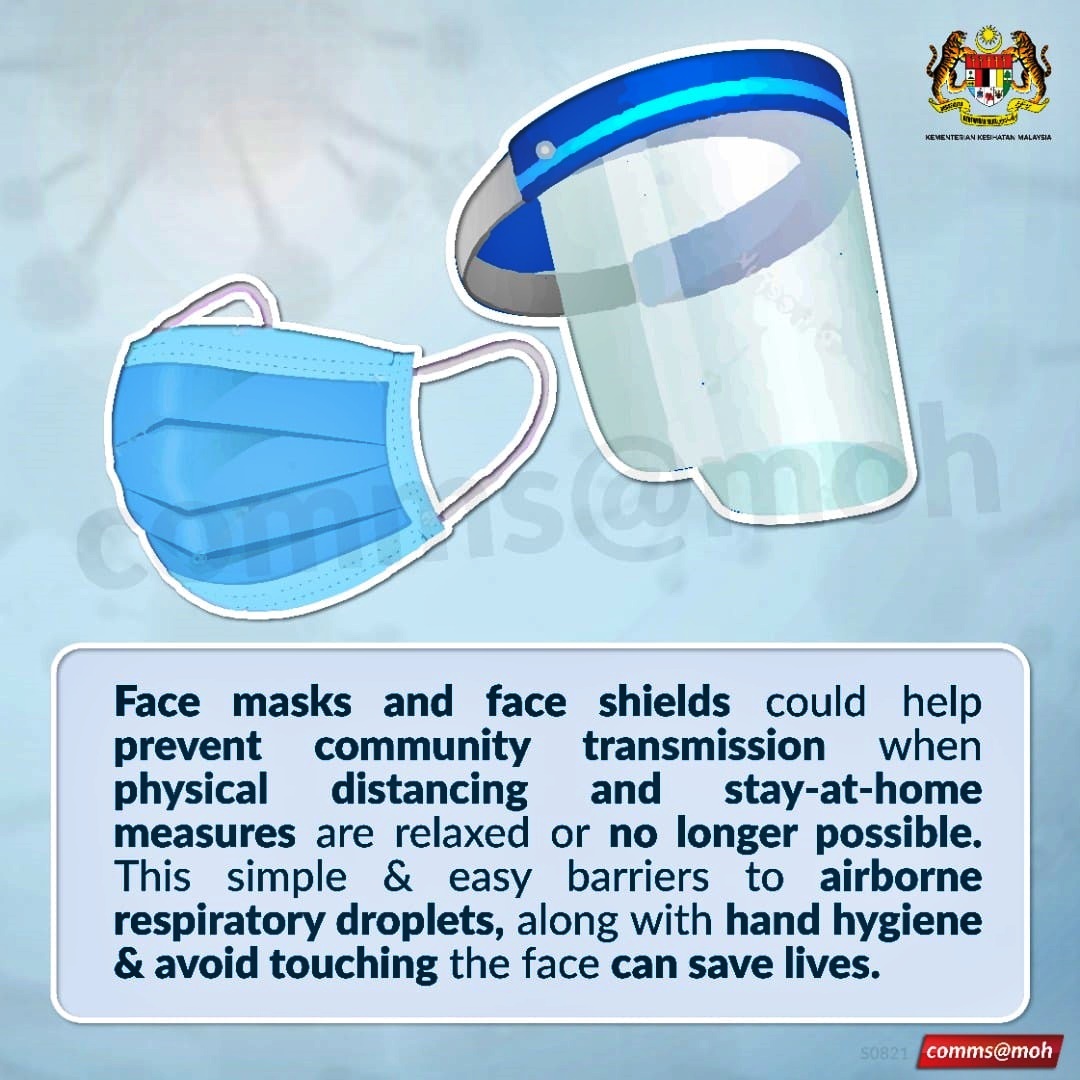
Vaccination does not make you immune to COVID-19 infection. You can still get infected and although you may not show symptoms, you could spread the coronavirus to others. Do not stop taking protective measures such as wearing a facemask, washing hands frequently and social distancing.

n a year that was characterized by the ongoing pandemic and superconductor and component supply issues that led to the delay of some model launches, most manufacturers managed to plan and still execute their new car introductions. This enabled the jurors of the annual ‘Japan Car of the Year’ event to carry out their assessments of over 30 contenders.

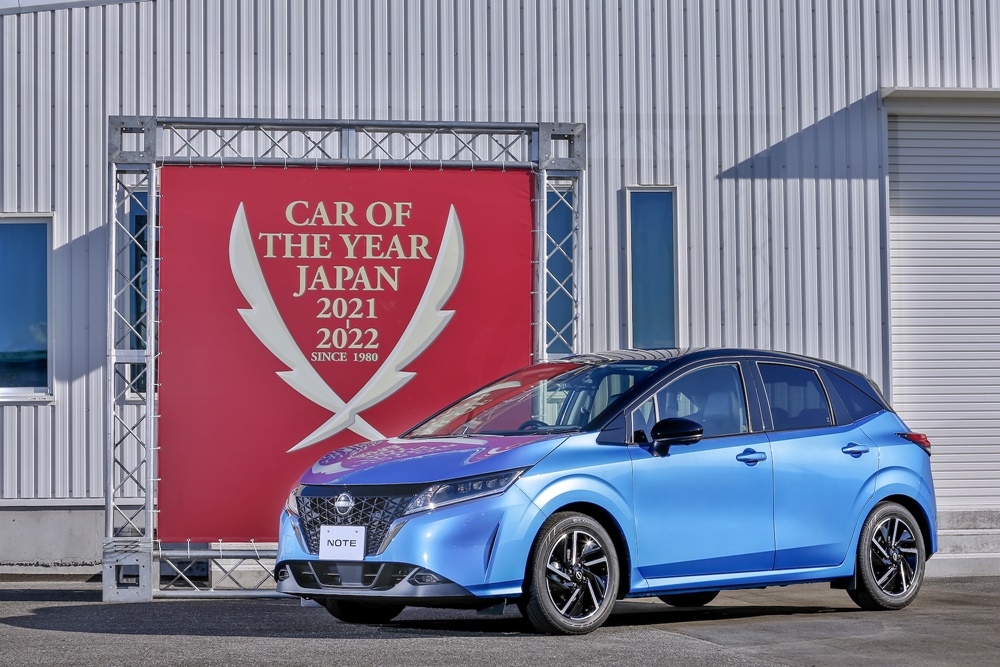
In the first of two voting procedures, the award’s 60 jurors selected the ’10 Best vehicles’ of the year in late November. Following this, they then voted a second time to select the year’s best car as well as the winners of 4 special awards. When counting was completed at an online award ceremony on today, it was the Nissan Note e-Power series which was pronounced ‘Japan Car of the Year 2021-2022’.

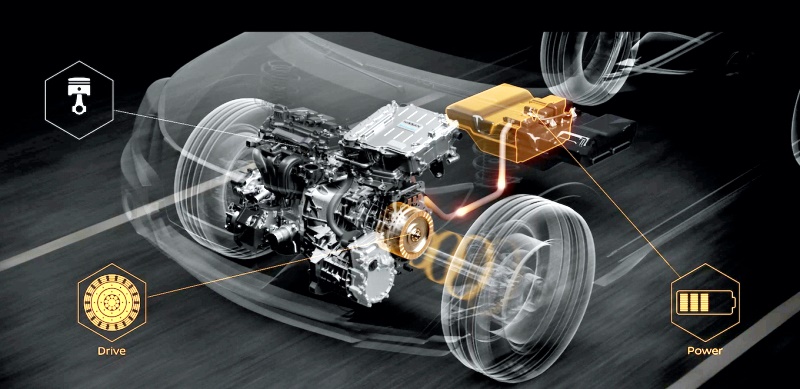
Hybrid powertrain of the Nissan Note e-Power.

With 335 votes, the Nissan hatchback beat the Toyota GR86/Subaru BRZ pair which scored 264 votes, and the Honda Vezel (HR-V) with 227 votes. The new Note e-Power range, with its 1.2-litre hybrid powertrain, is currently on sale in Japan but the carmaker has plans to launch the e-Power drivetrain in European and US markets in the near future.

According to the COTY committee, the Note e-Power’s win was due to its hybrid powertrain, excellent fuel economy and handling, keen pricing and stylish design.

The other finalists finished in the following order:
4th – Mitsubishi Outlander PHEV (206 votes)
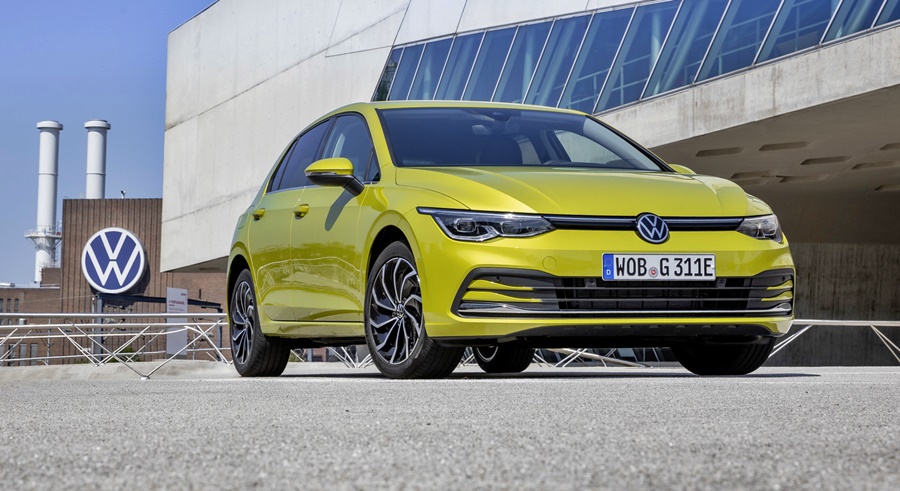
5th – Volkswagen Golf 8 (168 votes)/also Import Car of the Year
6th – Toyota Mirai FCEV (104 votes)
7th – Chevrolet Corvette (81 votes)
8th – Mercedes-Benz C-Class (51 votes)
9th – Toyota Land Cruiser (45 votes)
10th – BMW 4-Series (19 votes)

This year’s title is the fifth one for Nissan while the Volkswagen Golf’s popularity with the Japanese is evident by it collecting another title for the latest generation after the Golf 7 in 2013 (when it was also overall ‘Japan Car of the Year’).

Volkswagen Golf wins the Import Car of the Year title again.

PAST WINNERS
1980-1981: Mazda Familia (323)
1981-1982: Toyota Soarer
1982-1983: Mazda Capella (626)
1983-1984: Honda Civic
1984-1985: Toyota MR2
1985-1986: Honda Accord
1986-1987: Nissan Pulsar
1987-1988: Mitsubishi Galant
1988-1989: Nissan Silvia SX
1989-1990: Toyota Celsior (Lexus LS)
1990-1991: Mitsubishi Galant
1991-1992: Honda Civic
1992-1993: Nissan March
1993-1994: Honda Accord
1994-1995: Mitsubishi FTO
1995-1996: Honda Civic
1996-1997: Mitsubishi Galant
1997-1998: Toyota Prius
1998-1999: Toyota Altezza (Lexus IS250)
1999-2000: Toyota Vitz (Yaris)
2000-2001: Honda Civic
2001-2002: Honda Fit (Jazz)
2002-2003: Honda Accord
2003-2004: Subaru Legacy
2004-2005: Honda Legend
2005-2006: Mazda MX-5
2006-2007: Lexus LS460
2007-2008: Honda Fit (Jazz)
2008-2009: Toyota iQ
2009-2010: Toyota Prius
2010-2011: Honda CR-Z
2011-2012: Nissan LEAF
2012-2013: Mazda CX-5
2013-2014: Volkswagen Golf 7
2014-2015: Mazda2/Demio
2015-2016: Mazda MX5
2016-2017: Subaru Impreza
2017-2018: Volvo XC60
2018-2019: Volvo XC40
2019-2020: Toyota RAV4
2020-2021: Subaru Levorg


Some day, people will travel in cars that can operate without human control. All that will be needed is to get in, state the destination, sit back and the car will drive itself there. Whether we can then use the term ‘driving’ is debatable if a human is not involved, but it will be a revolution in mobility. Such capabilities will be in what are called autonomous vehicles, and over the past decade, they have been development by many companies (some of which are not the global carmakers).

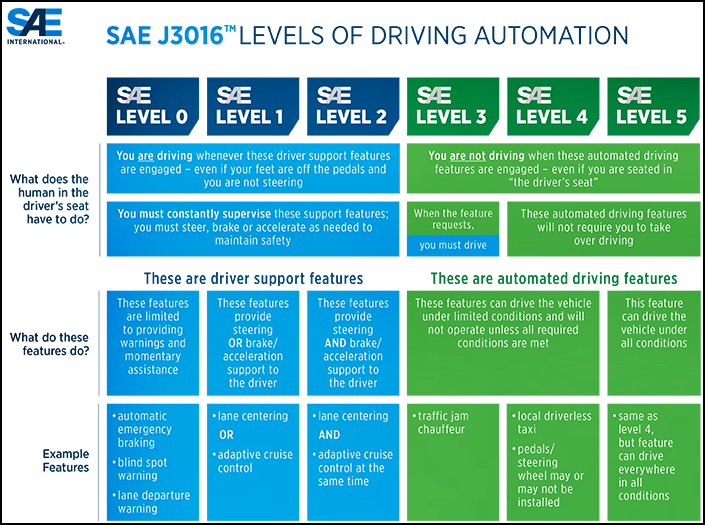
The American Society of Automotive Engineers (SAE) formulated a list of different levels of autonomy in 2014 which has been accepted by the industry. The document – SAE J3016 Recommended Practice: Taxonomy and Definitions for Terms Related to Driving Automation Systems for On-Road Motor Vehicles – is commonly referred to as the ‘SAE Levels of Driving Automation’ and also has the involvement of the International Organization for Standardization (ISO).

Many vehicles now at Level 2
SAE J3016 defines the 6 levels of automation for a vehicle, from Level 0 (no driving automation) to Level 5 (full driving automation) in the context of motor vehicles and their operation on roadways. Many vehicles with advanced driver assistance systems (ADAS) using radar or cameras are considered as having Level 2 autonomy. Even the Perodua Ativa (AV version) is able to meet Level 2 requirements.

Level 2 driving automation allows the computer to take over steering, acceleration, and braking but the driver must still pay attention to what is happening and be ready to take over control when necessary. In most cases, the systems help the driver rather than take over, thus reducing fatigue. In most systems, there is automatic emergency braking where the system can detect a possible collision and if the driver does not respond correctly, the brakes will be engaged automatically.

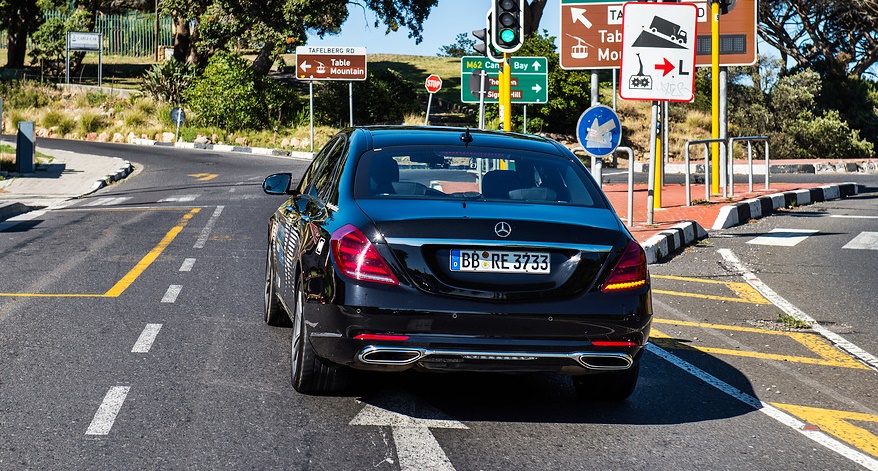
Autonomous systems must be able to not only direct a car to its destination but also keep it safely within its lane on the journey.

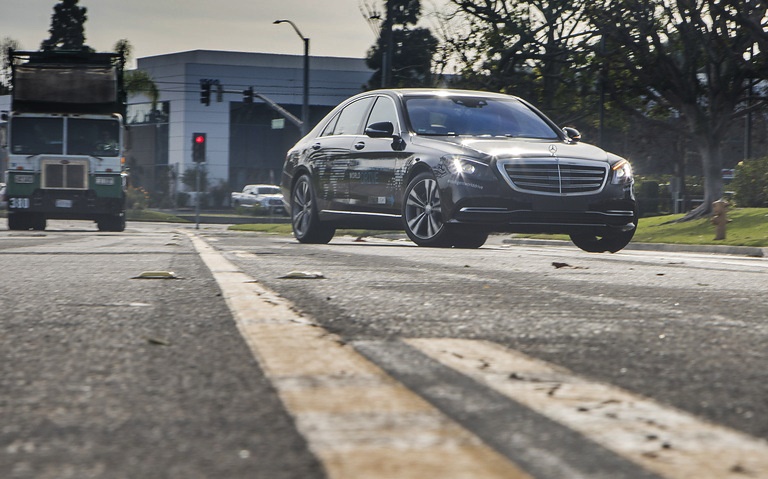
Moving to higher levels becomes more and more challenging as more autonomy is given the vehicle. This means that the environment around it must also be suitable for safe autonomous operation. For example, road lines must be clear for the camera to scan and use as lane references to guide the vehicle, and traffic control systems must be standardised. If the system is unable to recognise a red light and stop accordingly, then it would be very dangerous!

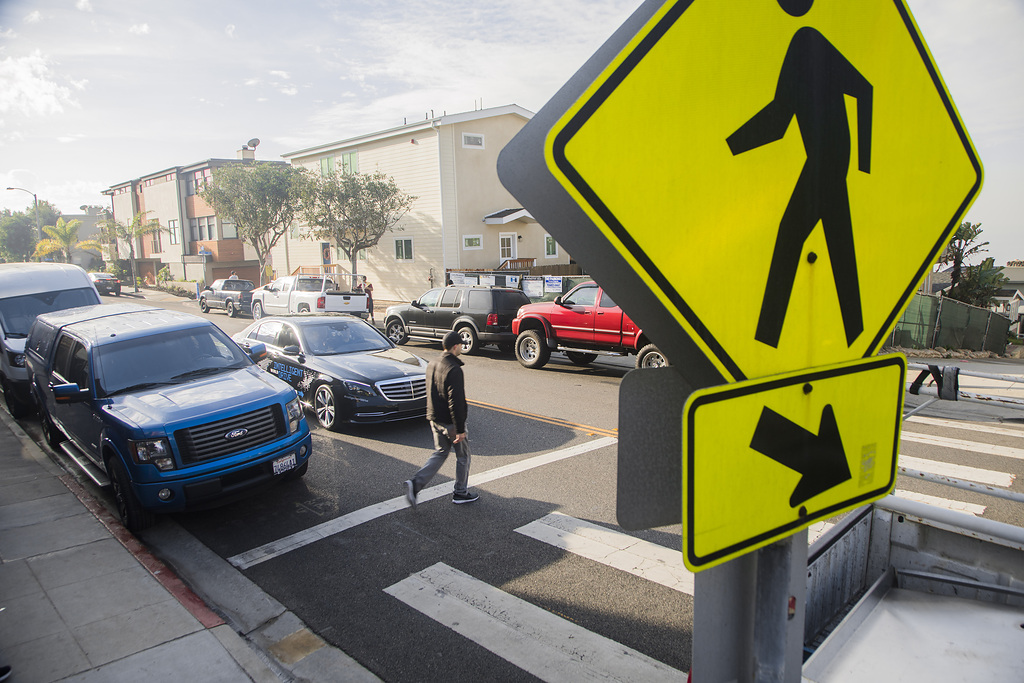
Recognising not just pedestrians and other vehicles is important but also being able to identify signs and traffic lights.

First approval for Level 3
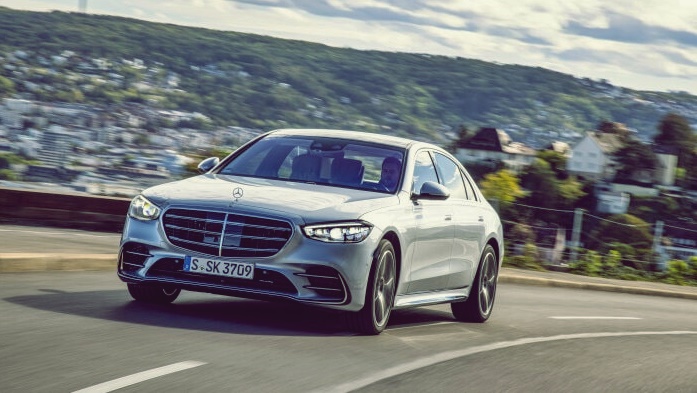
For this reason, authorities in most countries are permitting autonomous vehicles only on specific sections of highways. While the manufacturers can develop their vehicles further, there is still a need to ensure safety for road-users so for now, Level 3 is still not common. Only Mercedes-Benz has met the demanding legal requirements for a Level 3 system, the first carmaker in the world to get approval. The German Federal Motor Transport Authority recently granted system approval for this on the basis of the technical approval regulation UN-R157, thus paving the way for offering such a system internationally.

In order for this to be done, the traffic laws had first to be revised for Level 3 systems and this was done in 2017. Other countries will also have to do likewise first before Level 3 autonomous vehicles can be allowed on their roads.

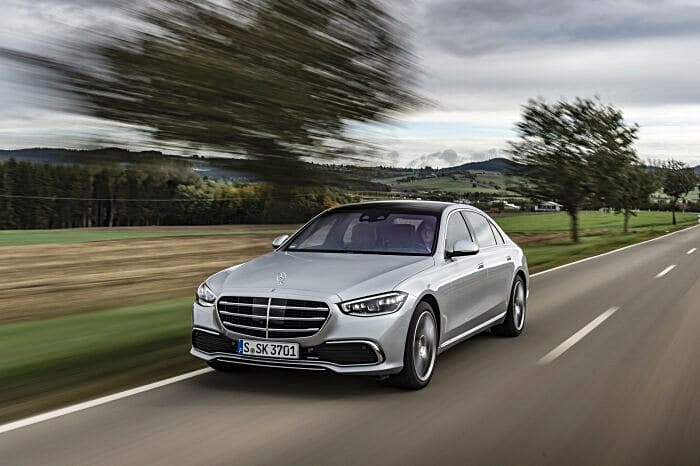
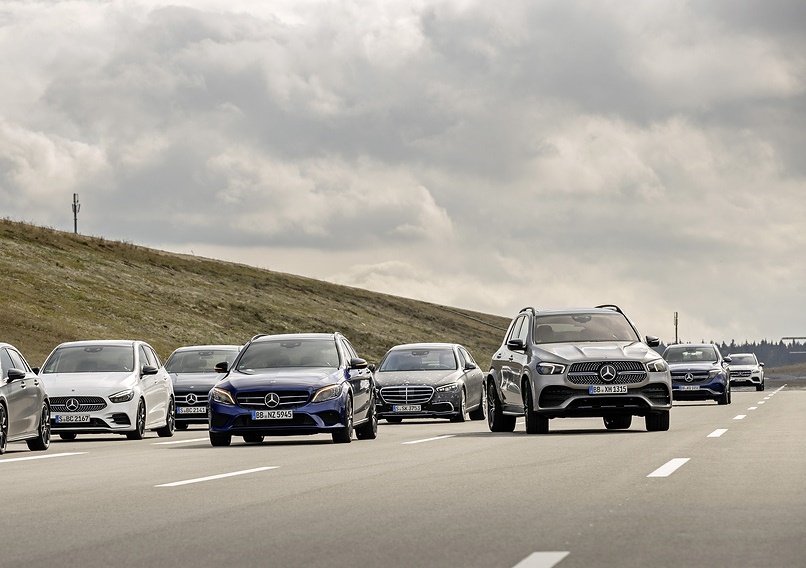
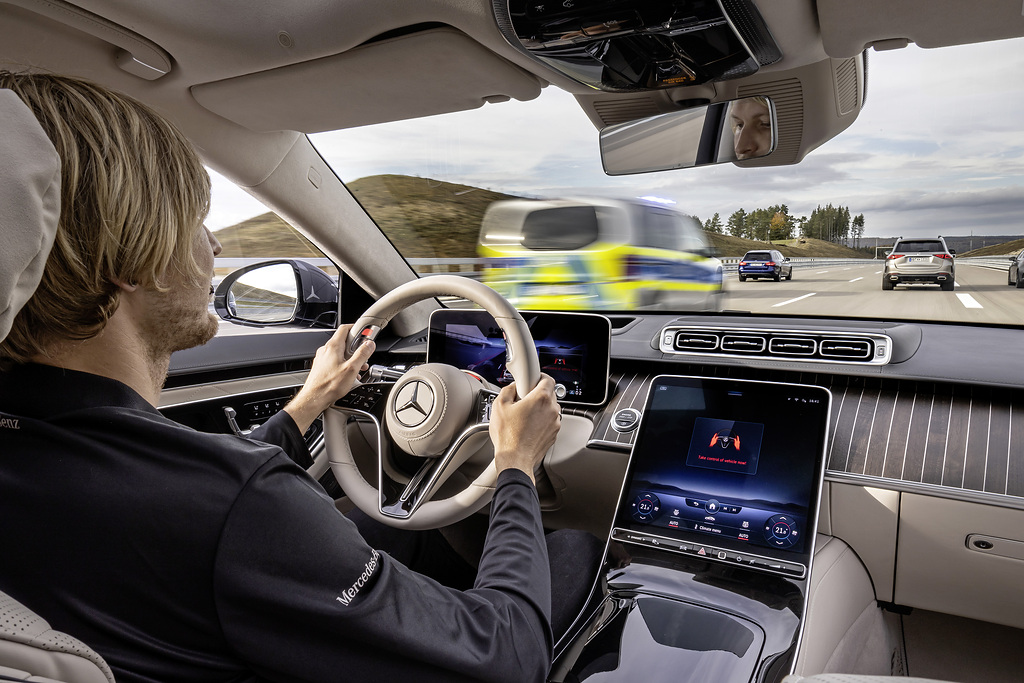
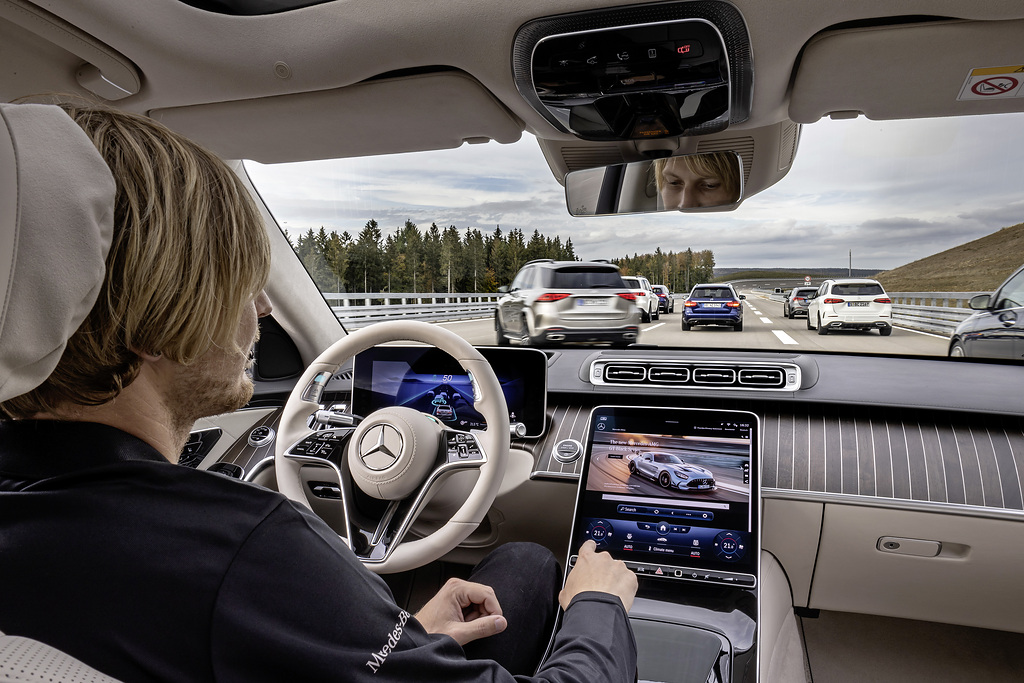
In Germany, the first customers of the latest S-Class with DRIVE PILOT will be able to enjoy Level 3 automation in the first half of 2022. This means they can drive in a conditionally automated mode at speeds of up to 60 km/h in heavy traffic or congested situations on certain stretches of the autobahn in Germany. The special DRIVE PILOT can take over the driving almost entirely so he or she can carry out tasks on the central display such as online shopping or processing e-mails in the in-car office. The system approval also applies to the EQS.

“For many years, we have been working to realise our vision of automated driving. With this LiDAR-based system, we have developed an innovative technology for our vehicles that offers customers a unique, luxurious driving experience and gives them what matters most: time. With the approval of the authorities, we have now achieved a breakthrough: We are the first manufacturer to put conditionally automated driving into series production in Germany,” said Markus Schafer, Member of the Board of Management of Daimler AG and Mercedes-Benz AG, Chief Technology Officer responsible for Development and Purchasing.

The technical approval regulation with which such a system can be certified did not come into force until the beginning of 2021. Since then, it can be implemented in Europe – an opportunity that Mercedes-Benz was quick and the first manufacturer to seize. With the revision of the Road Traffic Act for Level 3 systems, Germany was the first country to create a legal basis for the use of these systems.

On specific sections of autobahn
Mercedes-Benz is initially offering DRIVE PILOT on 13,191 kilometres of autobahn in Germany. Extensive test drives for this system are already underway in the USA and China. As soon as legal provisions are in place, for conditionally automated operation, the technology will be offered to customers.

On specified autobahn sections and where traffic density is high, DRIVE PILOT can offer to take over the driving, initially up to the legally permitted speed of 60 km/h. When the driver activates DRIVE PILOT, the system controls the speed and distance, and guides the vehicle within its lane. The route profile, events occurring on the route and traffic signs are taken into consideration. The system also reacts to unexpected traffic situations and handles them independently, eg by evasive manoeuvres within the lane or by braking manoeuvres.

Redundant systems for extra safety
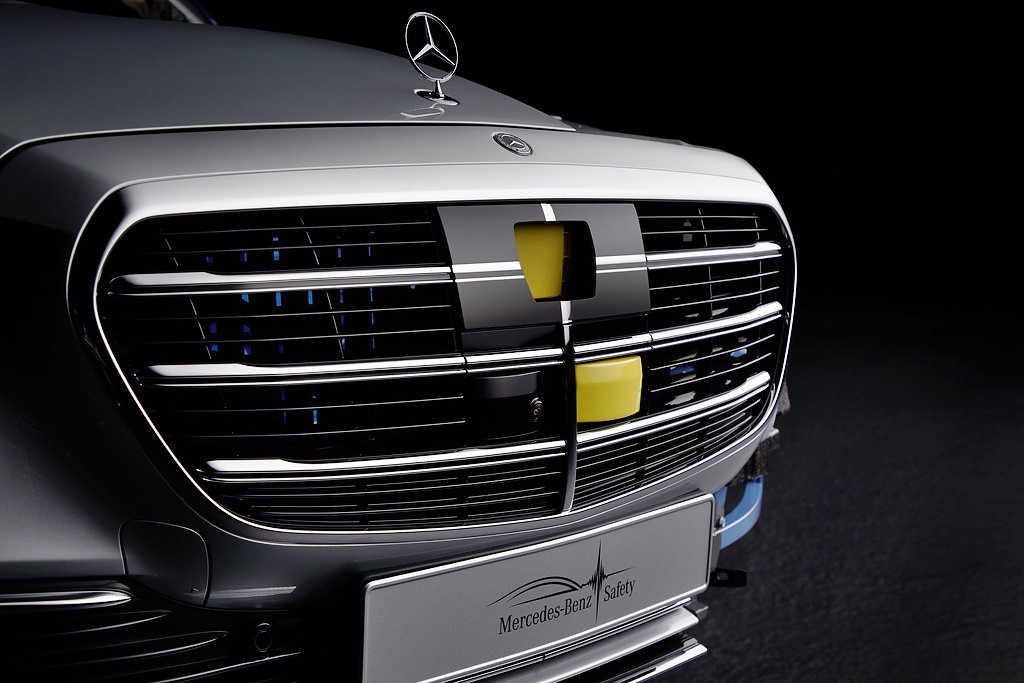
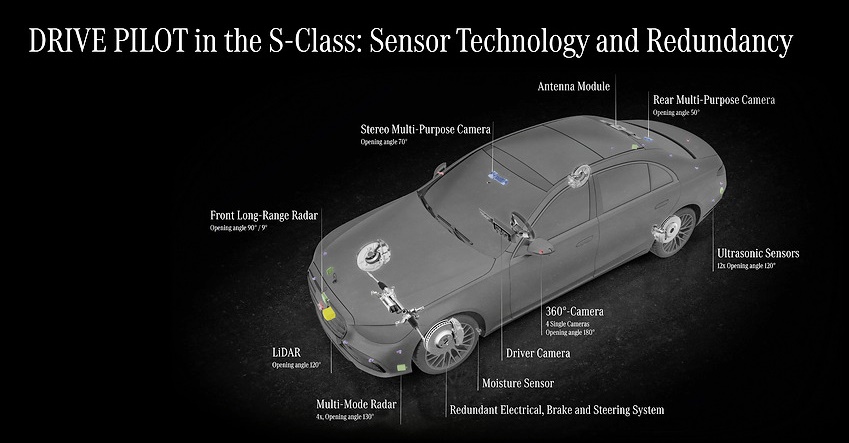
DRIVE PILOT builds on the surround sensors of the Driving Assistance Package and comprises additional sensors that Mercedes-Benz considers indispensable for safe conditionally automated driving. These include LiDAR, as well as a camera in the rear window and microphones, especially for detecting blue lights and other special signals from emergency vehicles. There is also a wetness sensor in the wheel well.

Mercedes-Benz Level 3 autonomy 2022

As well as the sensor data, the DRIVE PILOT receives information about the road geometry, route profile, traffic signs and unusual traffic events (accidents or roadworks) from a digital HD map. This is made available and updated via a backend connection. The S-Class with the optional DRIVE PILOT also has redundant steering and braking systems and a redundant on-board electrical system, so that it remains manoeuvrable even if one of these systems fails and the safe handover to the driver can be ensured.

If the driver fails to take back control even after increasingly urgent prompting and expiry of the takeover time, eg due to a severe health problem, the system brakes the vehicle to a standstill in a controlled manner and with suitable deceleration. At the same time, the hazard warning lights and, once the vehicle has come to a standstill, the Mercedes-Benz emergency call system is activated and the doors and windows are unlocked, to make access easier for anyone offering assistance.

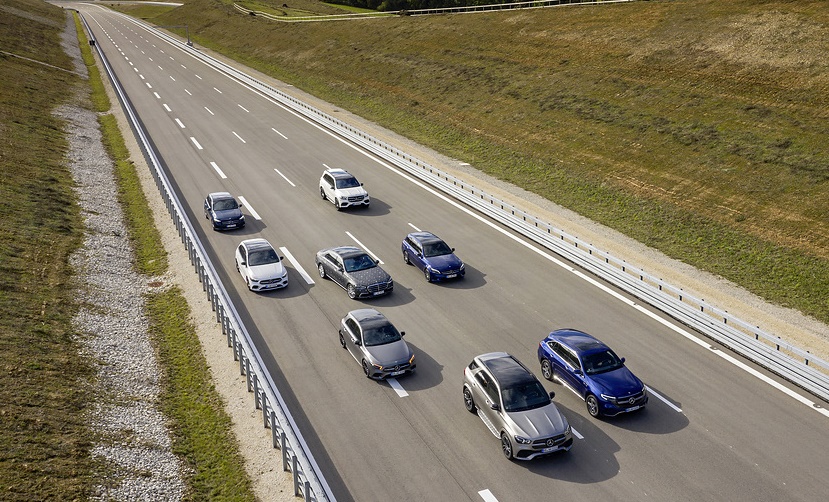
At the moment, there are many vehicles with Level 2 autonomous capability where the driver must maintain some degree of control and pay attention to the road and conditions ahead. However, with Level 3 (below), he will not need to pay attention (though he must be ready to take control) and can check messages or even watch a movie on the display.

During the conditionally automated journey, DRIVE PILOT allows the driver to take their mind off the traffic and focus on certain secondary activities. This is the major difference between Level 2 and Level 3 where, for the former, the driver must keep looking ahead and around at all times (no checking messages on the phone). With Level 3 (and above), the driver can do messaging via In-Car Office, surf the internet or even watch TikTok clip. In DRIVE PILOT mode, applications can be enabled on the integrated central display that are otherwise blocked while driving.

Better than GPS
The top priority for Mercedes-Benz when introducing such a system is safety, which includes high demands on operational reliability. The exact location of the car is determined using a highly accurate positioning system said to be much more powerful than conventional GPS systems. In addition, data obtained from satellite navigation are matched with sensor data and data from an HD map. Sensor data collected by LiDAR, camera, radar and ultrasonic sensors can be, for example, information on road geometry, route characteristics, landmarks or traffic signs.

The HD map provides a 3-dimensional street and environment image. The map data are stored in back- end data centres and updated constantly. Each vehicle also stores an image of this map information on board, constantly compares it with the backend data and updates the local data set if necessary. The HD map thus offers stable positioning through a representation of the surroundings independent of  shadowing effects or a covered sensor. This high-precision map differs from maps for navigation devices by its higher accuracy in the centimetre rather than metre range and its detailed intersection and track model.

Level 3 autonomous motoring will be available as an option in the new S-Class from 2022, but it can only be used in Germany until laws in other countries permit such systems to be used on public roads.

Mercedes-Benz puts a ‘Home Theatre’ in the car cabin

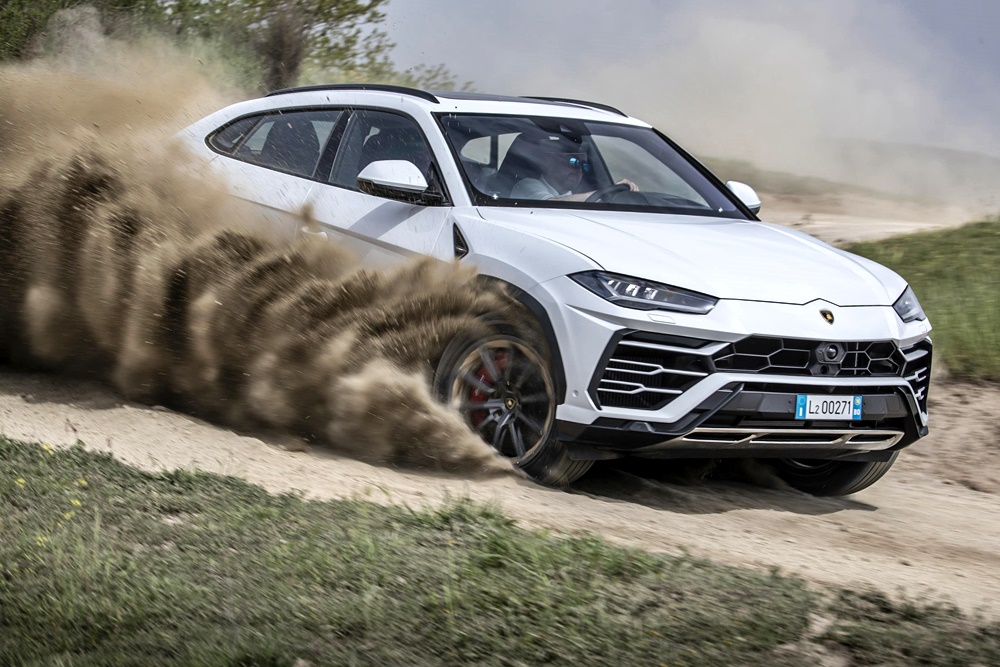
The Lamborghini Urus is celebrating 4 years since its launch in December 2017, during which time 16,000 units have been delivered worldwide. With 650 bhp, the Super SUV has supercar performance for the road but it has also shown an ability to face extreme challenges. On Lake Baikal in Russia, the Urus set a speed record on ice with a top speed of 298 km/h and an average speed from a standing start of 114 km/h over 1,000 metres. It also reached the highest motorable road in the world at the top of the Umling La Pass in the Himalayan part of India, more than 5,800 metres above sea level.

The Urus has been Lamborghini’s best-selling model since its launch 4 years ago, with 16,000 units delivered worldwide.

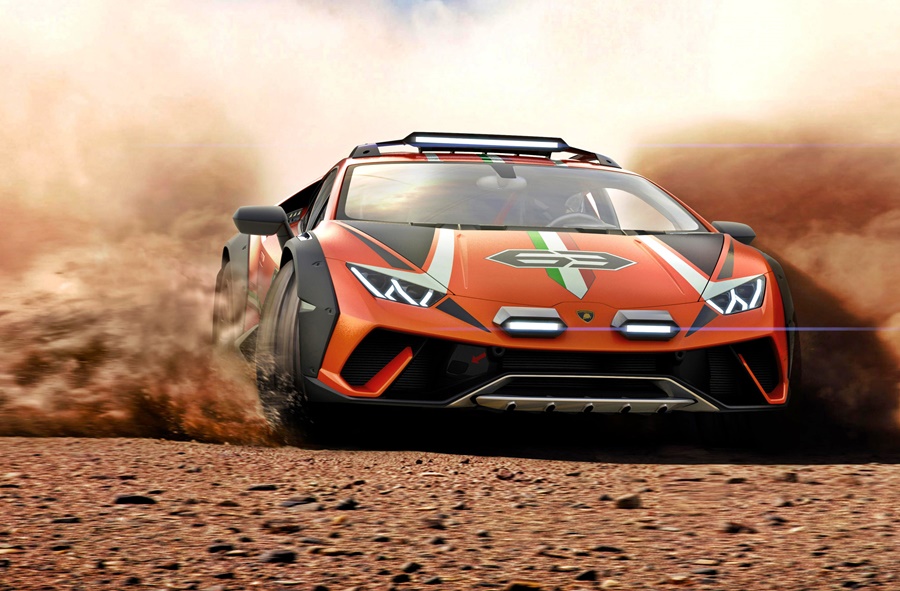
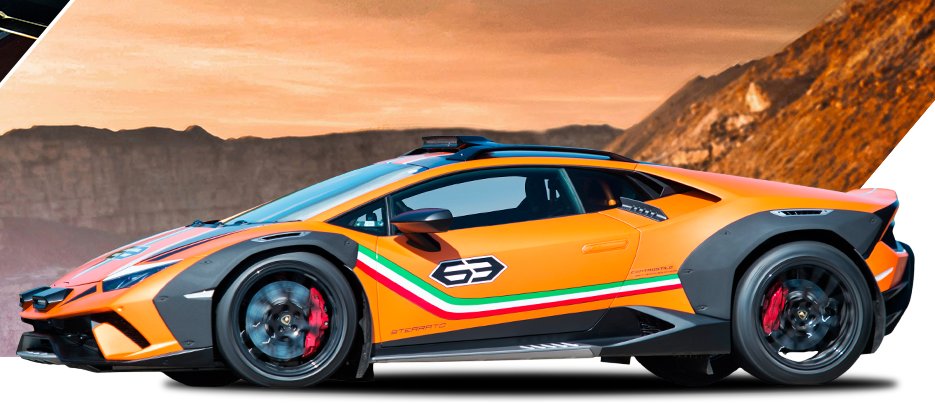
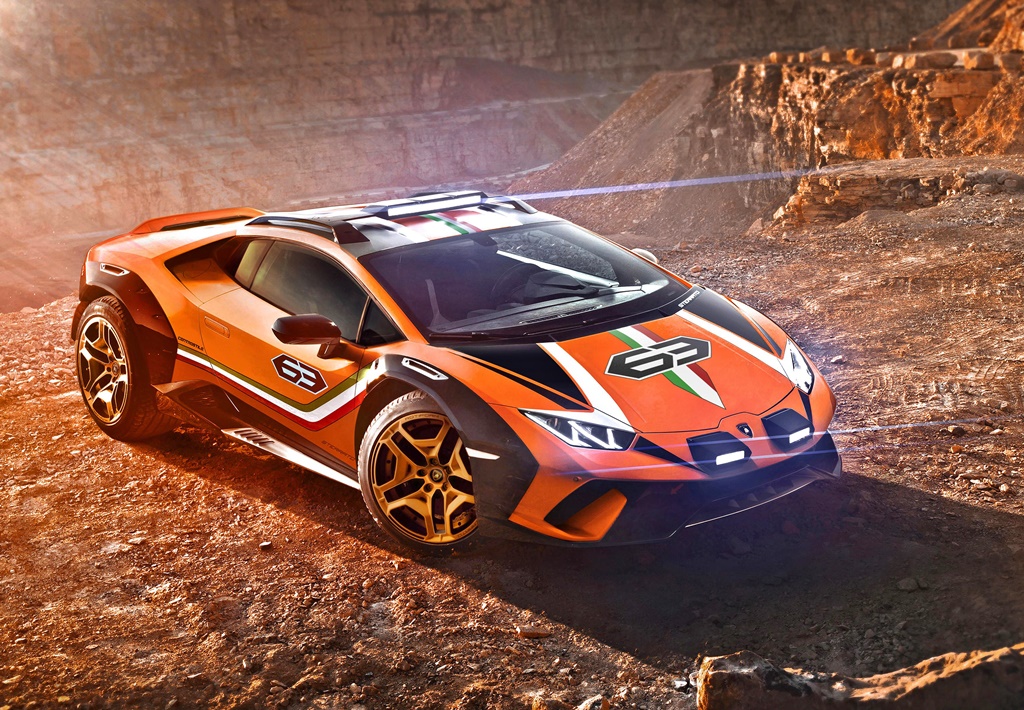
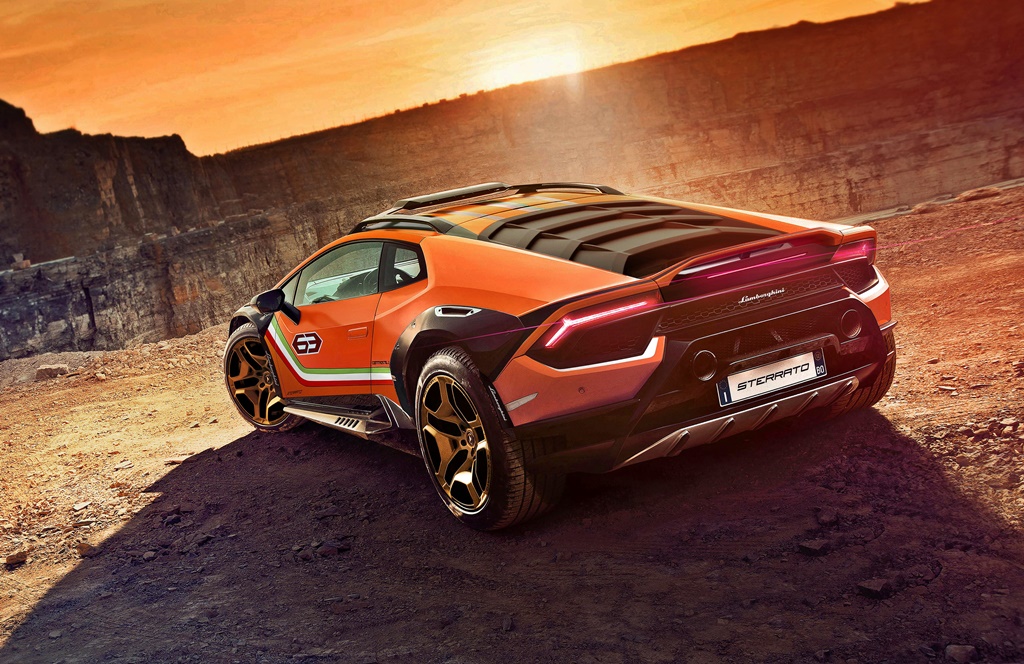
The capability of the Urus inspired Lamborghini’s designers to explore new possibilities for off-road super sportscars and in 2019, they came out with the Huracan Sterrato, a concept car based on the V10 Huracan which drew on off-road expertise developed with the Urus.

It was not the first time that Lamborghini’s designers explored high performance and off-road capabilities. In the 1970s, Lamborghini’s test driver Bob Wallace modified two models to create desert-going high performance sportscars – the  Jarama Rally and the Urraco Rally.

2019 Lamborghini Sterrato concept

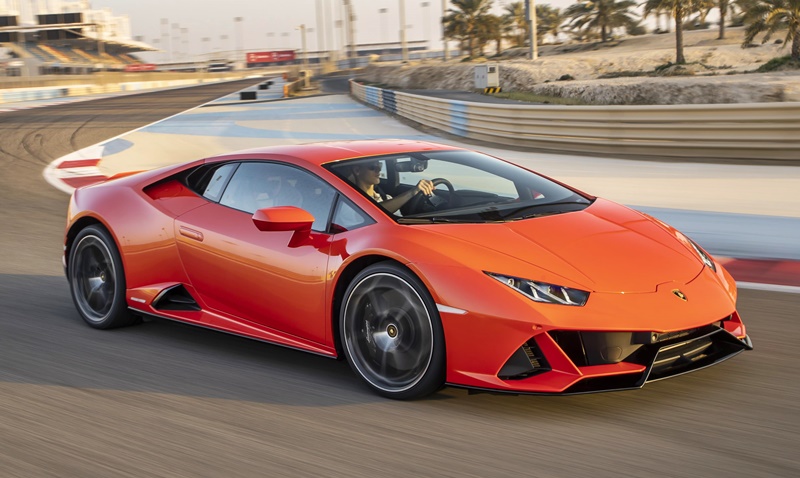
The Sterrato concept is based on the Huracan EVO with the same 5.2-litre naturally-aspirated engine producing 640 bhp. The Huracan EVO’s LDVI (Lamborghini Dinamica Veicolo Integrata) with predictive logic, controls the Sterrato’s systems including 4-wheel drive, 4-wheel steering, modified suspension and torque vectoring, anticipating the next moves of the driver to ensure perfect driving dynamics.

Calibrated for off-road driving (including low-grip surfaces) and tuned to maximize traction and acceleration, the LDVI system in the Sterrato provides enhanced rear-wheel drive behaviour, producing more torque together with additional stabilization in oversteering manoeuvres.

2019 Lamborghini Sterrato concept

Huracan EVO

The Sterrato is intended for rough and demanding environments and its appearance illustrates this.  More ground clearance is necessary in rough terrain so 47 mm is added, with the car’s front approach sharpened by 1% and the departure angle enhanced by 6.5%.

The wheel track is enhanced front and rear by 30 mm, with 20-inch wheels on balloon tyres set into widebody wheelarches with integrated air intakes. The larger tyres have been specially developed with increased sidewalls to improve the absorption of bumps and also provide good grip. Wide, rugged, open shoulder blocks with self-cleaning qualities provide excellent off-road surface adherence with improved traction and braking and are highly damage-resistant.

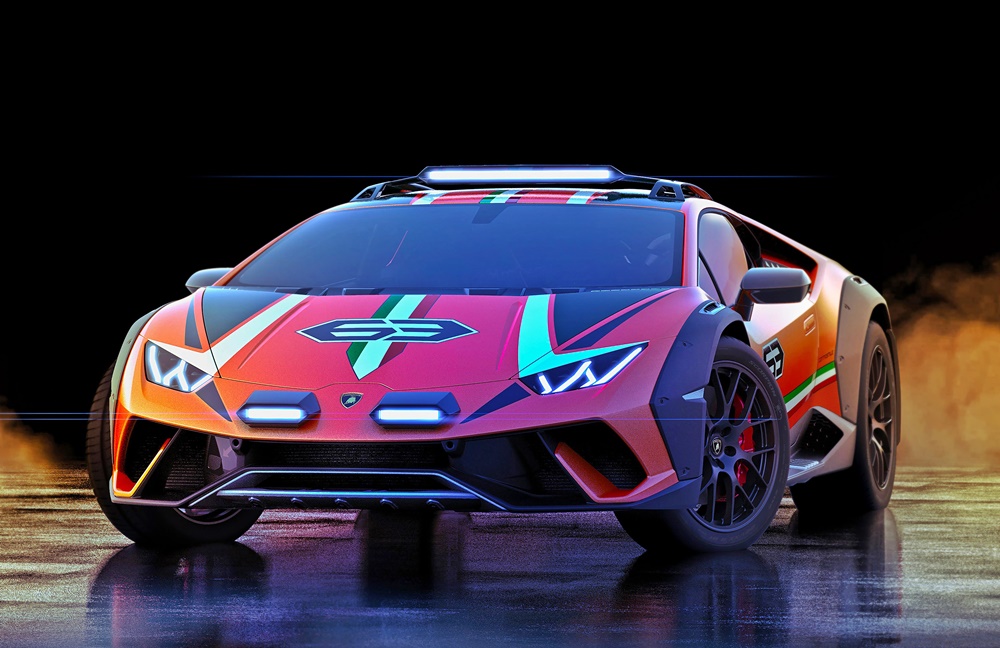
2019 Lamborghini Sterrato concept

When driving over rough terrain with rocks and loose stones, the underside is at risk of being damaged. To prevent this, the Sterrato is fitted with underbody reinforcements and body protection, including a rear skidplate that acts as a diffuser. Aluminium reinforcements are integrated within the front frame and covered with an aluminium skidplate, with aluminium-reinforced sideskirts.

The bodywork’s special protective composite material includes stone-deflecting protection around the engine and air intakes and mud guards in hybrid materials of carbonfibre and elastomeric resin. An off-road LED light package puts a LED light bar on the roof and LED lights with flood function on the bumper.

A specially-designed interior trim reflects the sporty off-road character of the Sterrato, featuring a new lightweight titanium roll-cage, 4-point seatbelts to the new carbonfibre bi-shell sports seats, and aluminium floor panels.

2019 Lamborghini Sterrato concept

Lamborghini Countach in ‘The Cannonball Run’ listed in US National Historic Vehicle Register

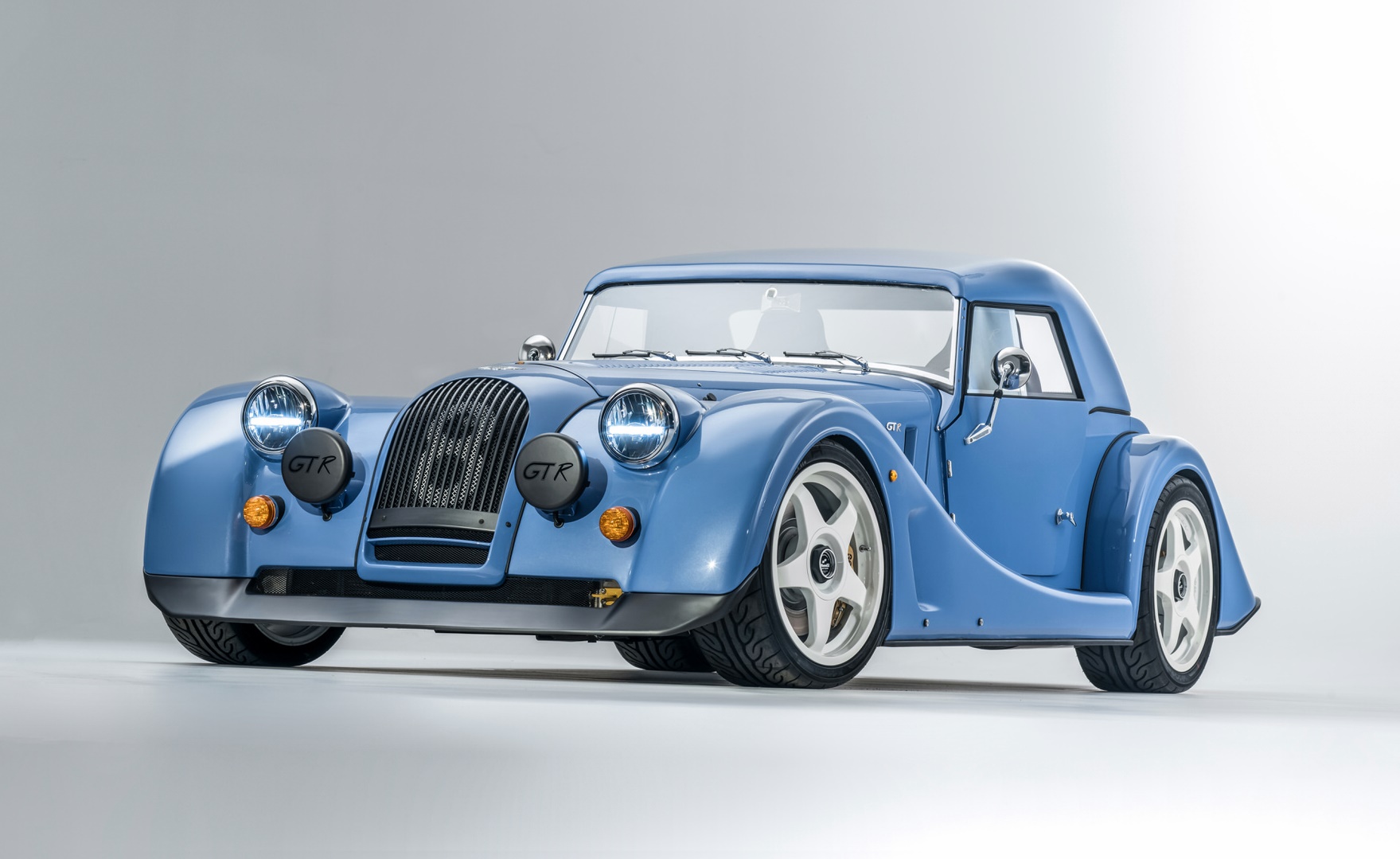
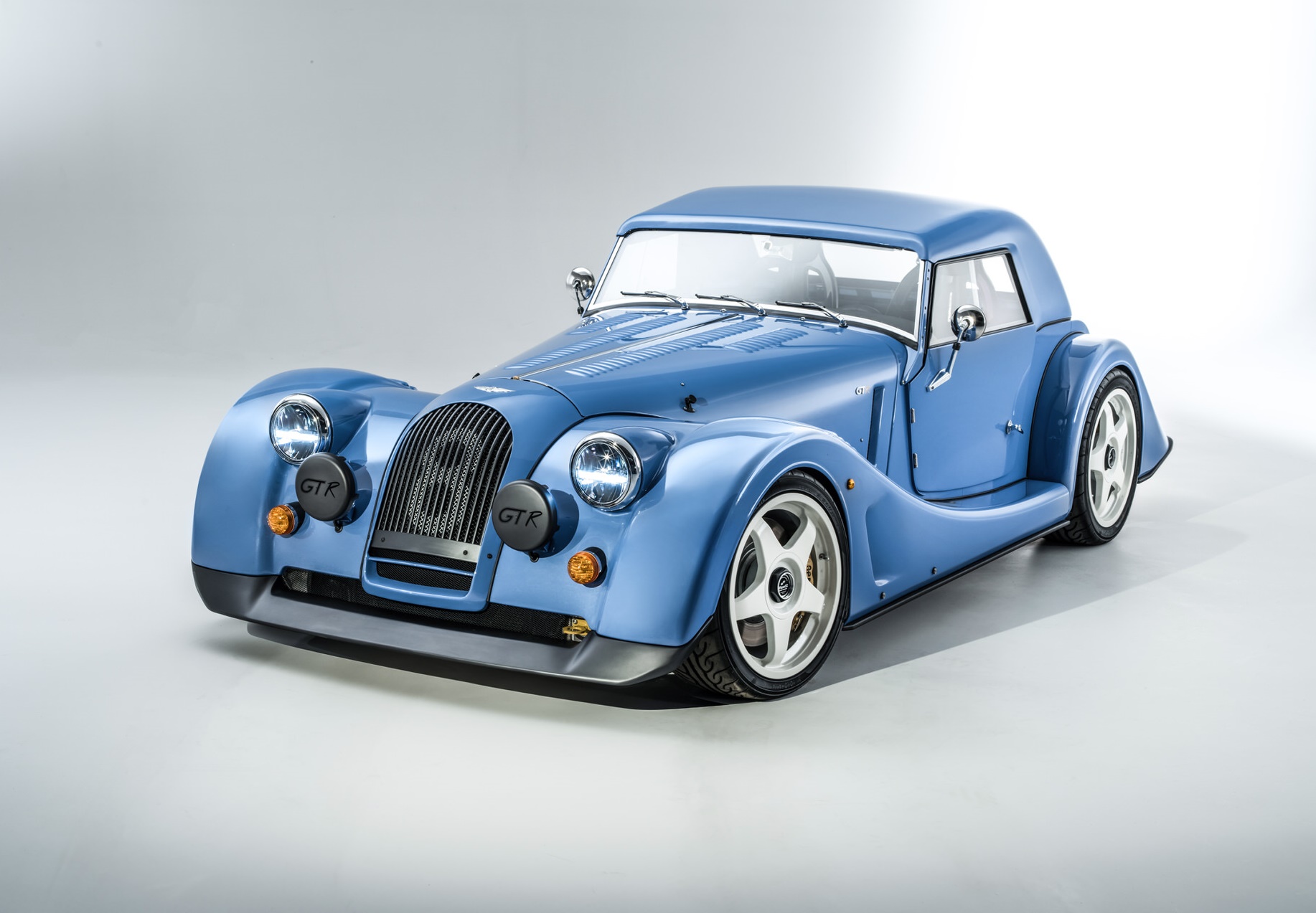
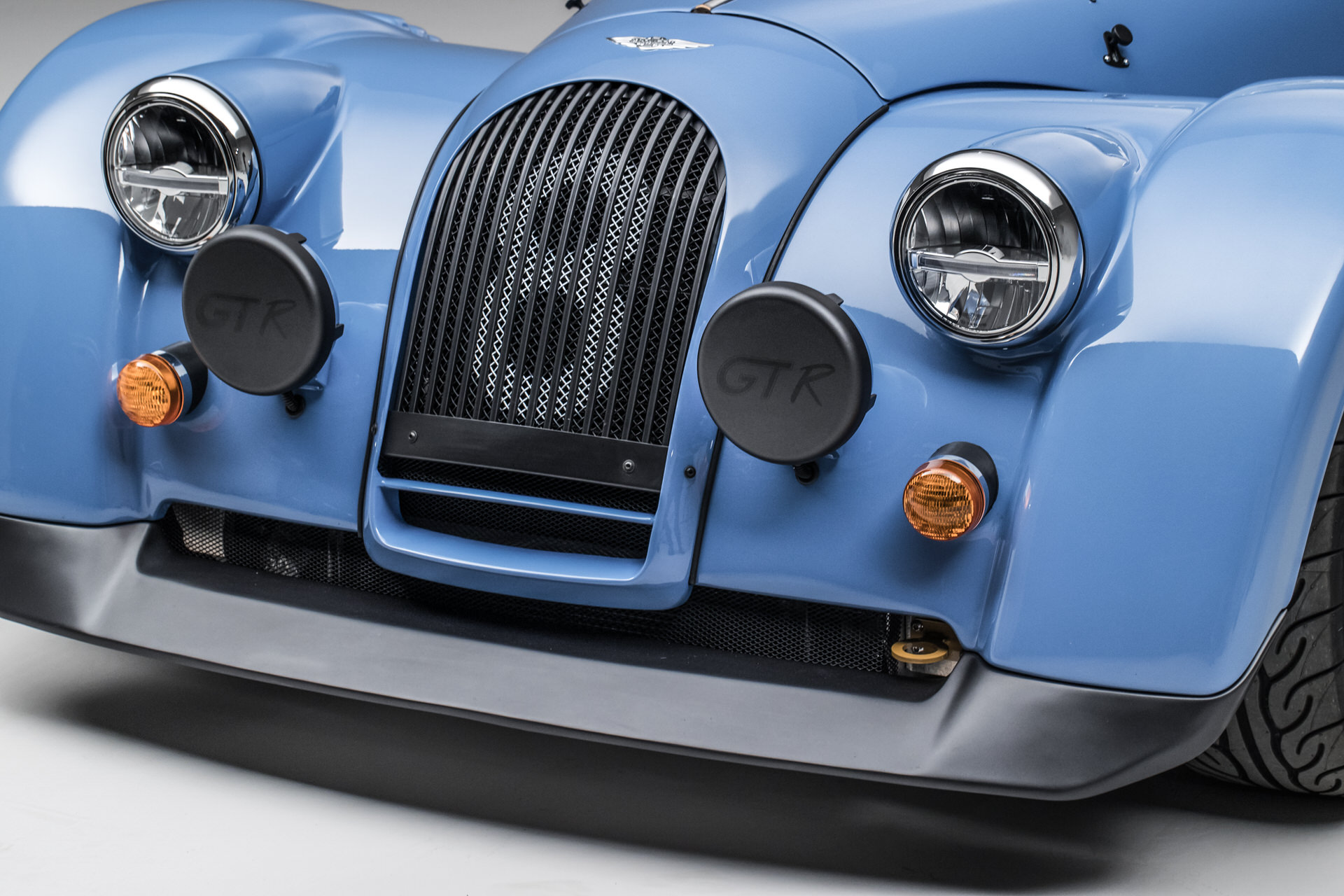
With an output of 375 bhp from its BMW-sourced 4.8-litre V8 (N62) engine, the Morgan Plus 8 GTR is the most powerful car in the company’s history. Only 9 cars will be built – all having customers waiting – and following the first unit which has been completed today, the rest will be finished by the first quarter of 2022.

Each customer has worked closely with Morgan’s design team to commission their own bespoke example. The 9 cars are built in varying configurations of transmission and drive side according to customer requirements, with 5 to be exported from the factory in England. Pricing has not been revealed although it is not expected to be more than £250,000 (about RM1.39 million).

2021 Morgan Plus 8 GTR

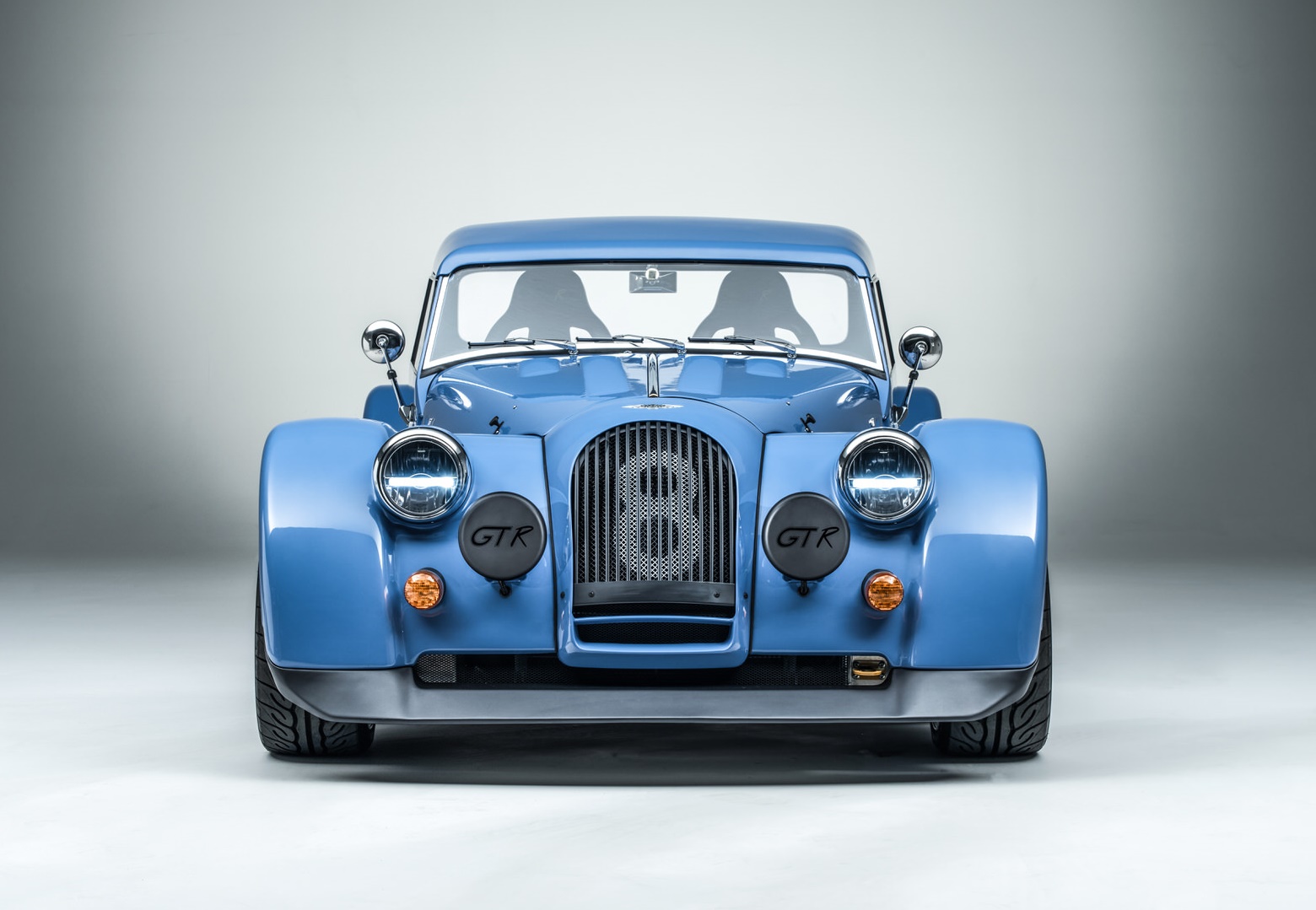
2021 Morgan Plus 8 GTR

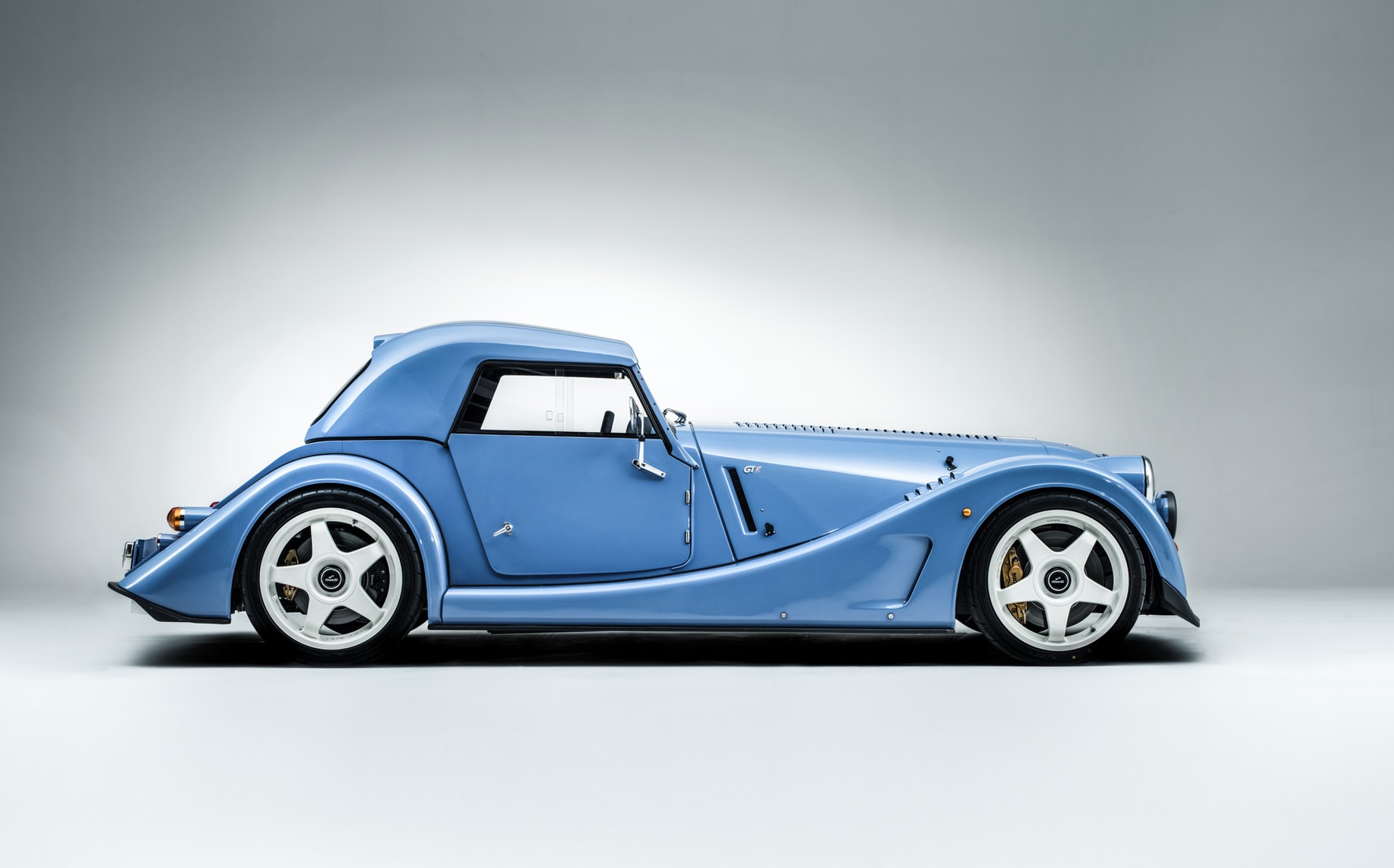
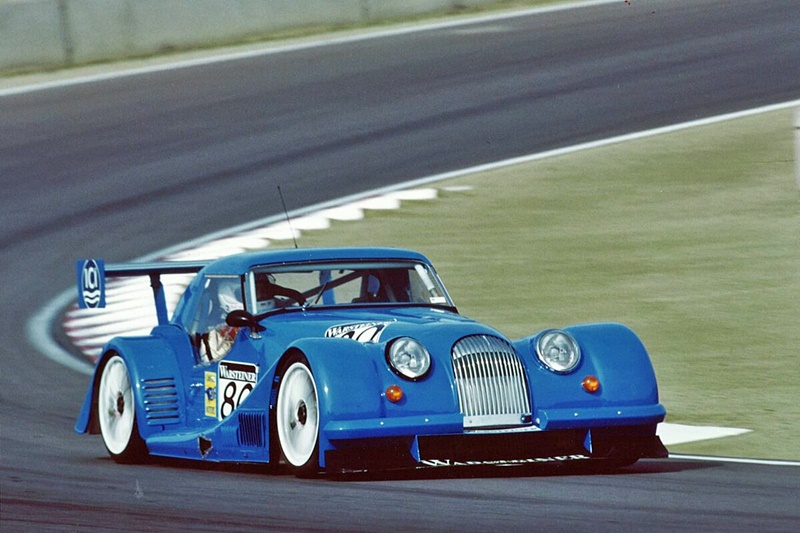
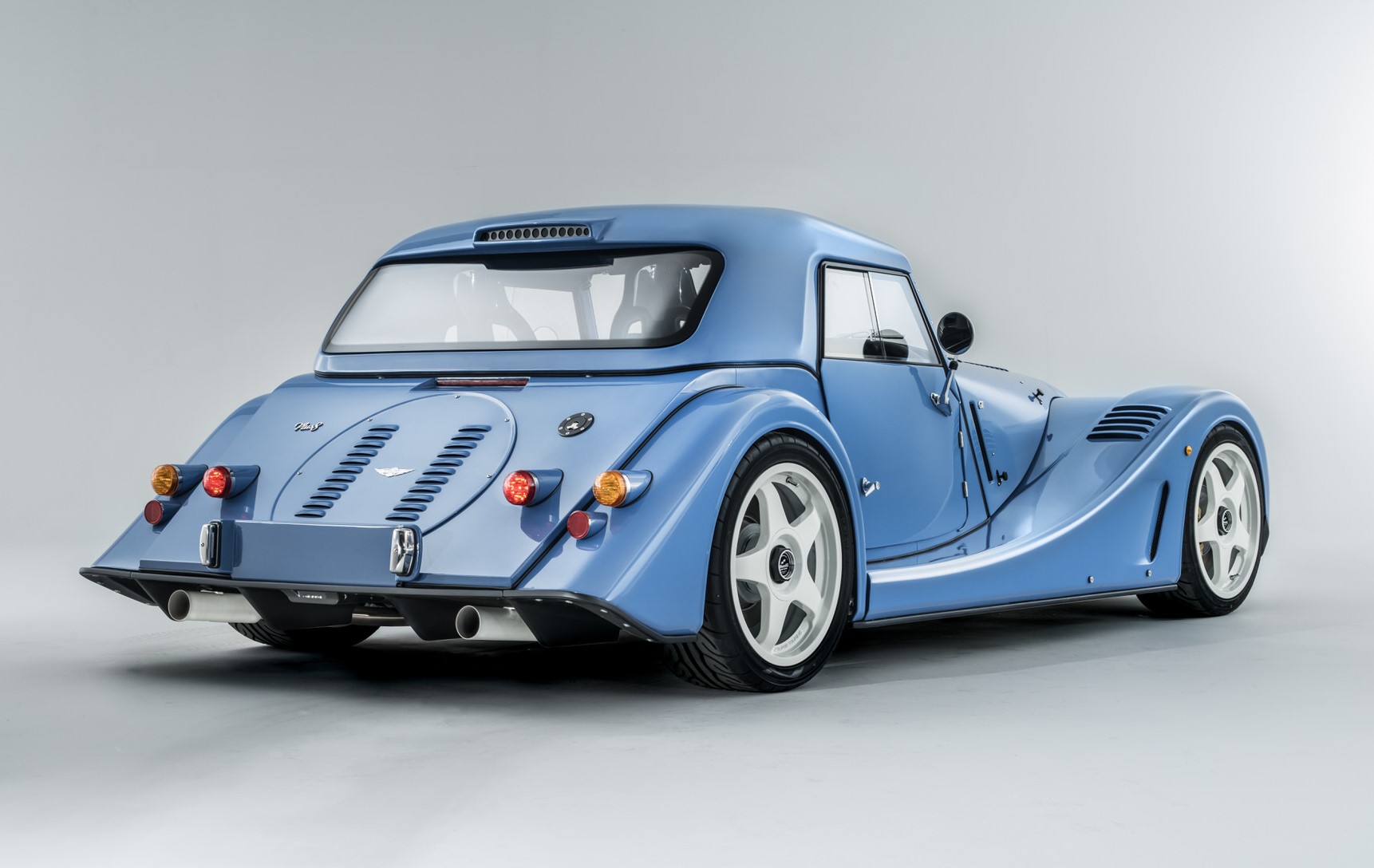
The first Plus 8 GTR is finished in a striking Yas Marina Blue, similar to the original design sketches which pay homage to prominent nineties Plus 8 racing car ‘Big Blue’. The Plus 8 GTR explores design themes such as the high shoulder line, not seen on a traditional Morgan body for decades. Its 5-spoke centre-lock wheels are reminiscent of Morgan’s 1990s Plus 8 racing cars, framed perfectly by subtly re-sculpted wheel arches.

The ‘Big Blue’ racing car of the 1990s.

2021 Morgan Plus 8 GTR

Further design elements include a revised rear end, front wings, and front splitter, all of which are hand crafted using aluminium. Fitment of a hard top with cockpit vent completes the race-inspired aesthetic.

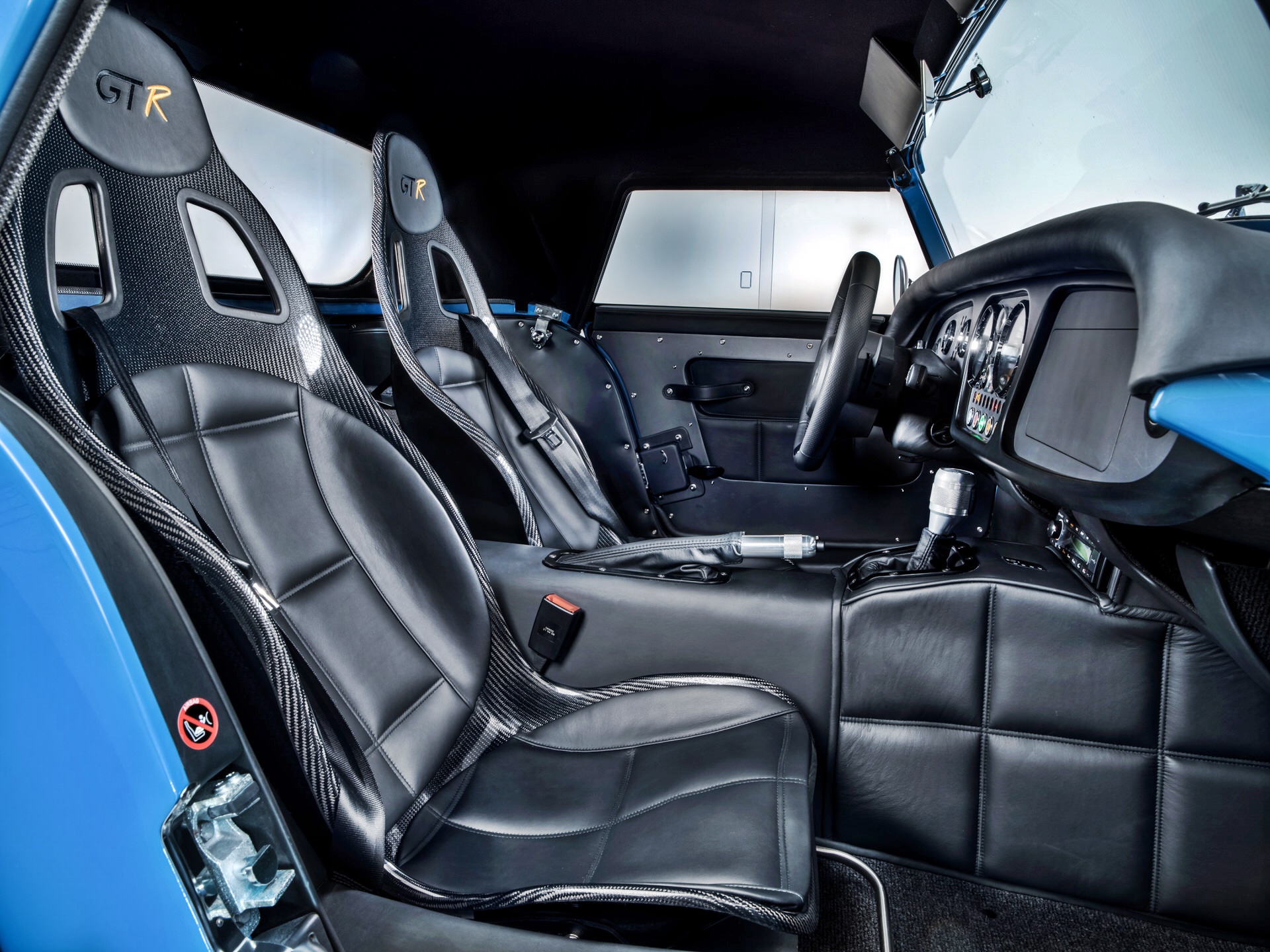
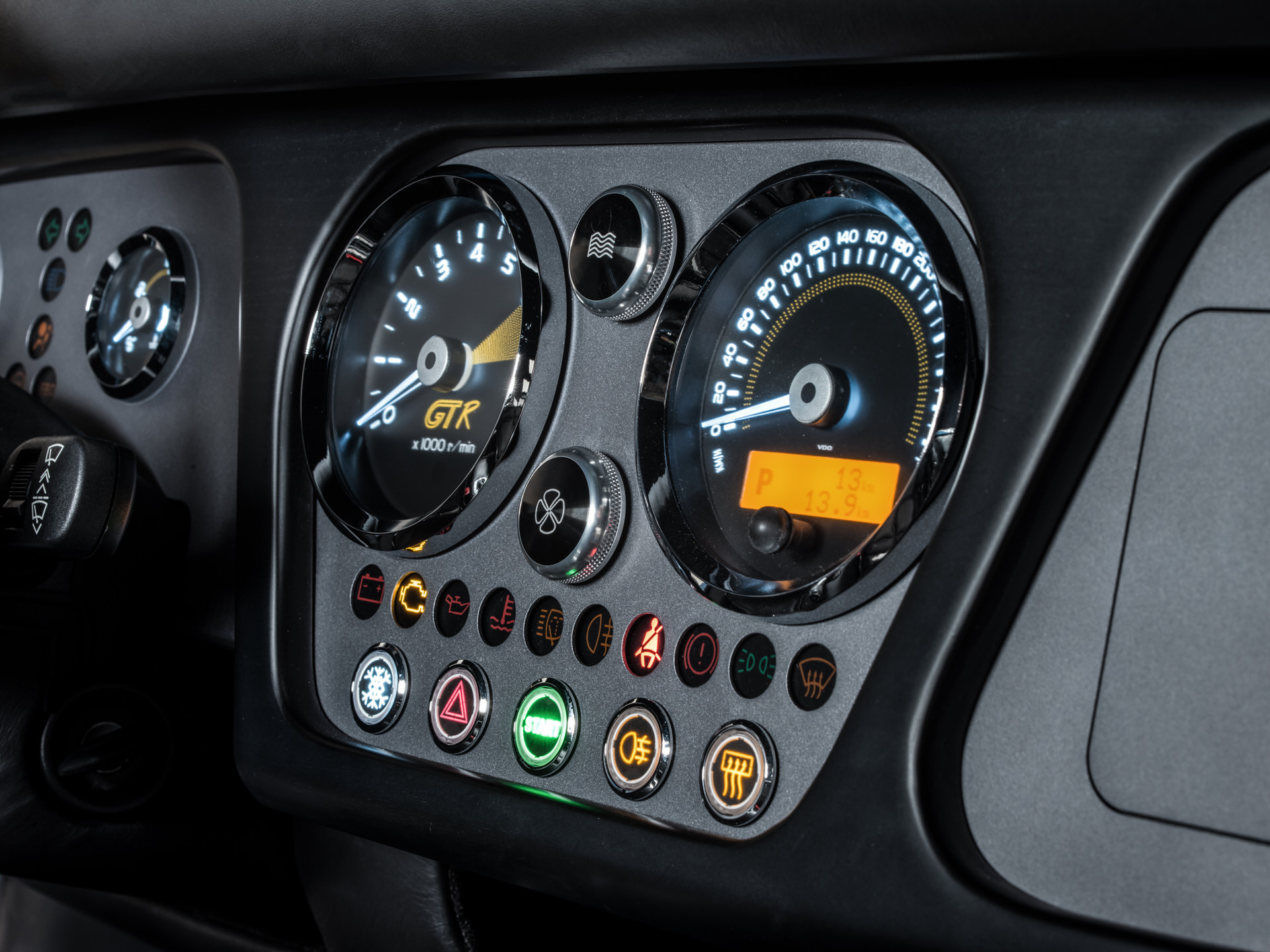
The interior features new door cards to fit with the high door tops, bespoke GTR dials and the option of carbonfibre racing seats and harnesses. Unique graphics feature throughout and each GTR is fitted with a plaque denoting its number in the build sequence.

2021 Morgan Plus 8 GTR

2021 Morgan Plus 8 GTR

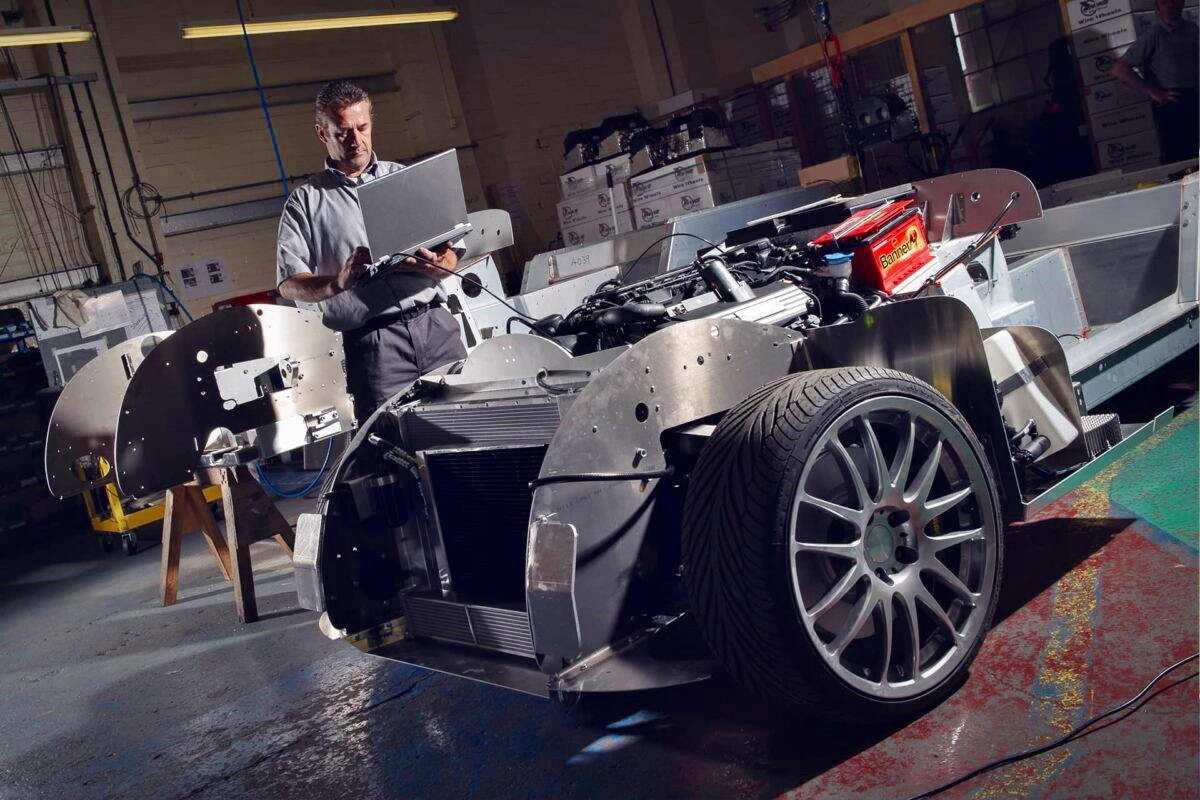
The Plus 8 GTR project has only been possible due to the recent availability of a number of Plus 8 rolling chassis. Performance upgrades include a new engine tune and cannon-style twin-exit sports exhausts. These enhancements improve throttle response and increase the power output over the previous production Plus 8.

One design inspiration was the Plus 8 race car that competed in the GT series throughout the late 1990s, more commonly known as ‘Big Blue’. This car served as the testbed for Morgan’s first bonded-aluminium chassis, which would go on to underpin the Aero 8 and ‘Aero-chassis’ Plus 8 models. It seemed fitting, following the more recent launch of Morgan’s CX-Generation bonded-aluminium platform, to use this opportunity to pay tribute to the car that pioneered Morgan’s use of aluminium structures.

2021 Morgan Plus 8 GTR

“We are excited to release the first images of the Plus 8 GTR following the design sketches published earlier this year. The Plus 8 GTR represents an opportunity for Morgan to celebrate the V8 engine once again, something we did not expect to do since finishing the Plus 8 and Aero 8 models in 2018. Striking design, the finest craftsmanship, and an exhilarating sports car to drive, the Plus 8 GTR is the perfect swansong to the Morgan V8. We have been delighted to work alongside customers from around the world during the design and build process, and we look forward to sharing the final examples over the coming month,” said Steve Morris, Chairman & CEO of Morgan Motor Company.

The Plus 8 GTR is the second Morgan special project of the year, following the Plus Four CX-T. Whilst different in their function and appearance, both models demonstrate the flexibility of the Morgan brand and, as with every Morgan, each Plus 8 GTR is handcrafted using traditional coachbuilding techniques.

2021 Morgan Plus 8 GTR

Morgan reveals Plus Four CX-T for off-road adventures

At different periods, manufacturers have different strategies which require investments in different parts of the world. In the 1990s, Ford decided that it must ‘control its own destiny’ in the ASEAN region and was attracted by the ASEAN Free Trade Area (AFTA). This would be a single trading region and those who made their products in any country in the region could export to another ASEAN country with no import duties imposed. For a mass producer like Ford (and the company was the one that introduced mass production to the auto industry), this was ideal as it meant that a mega-factory could be set up in one country to supply to other countries. Great for cost efficiencies which would also mean more competitive prices in the markets.

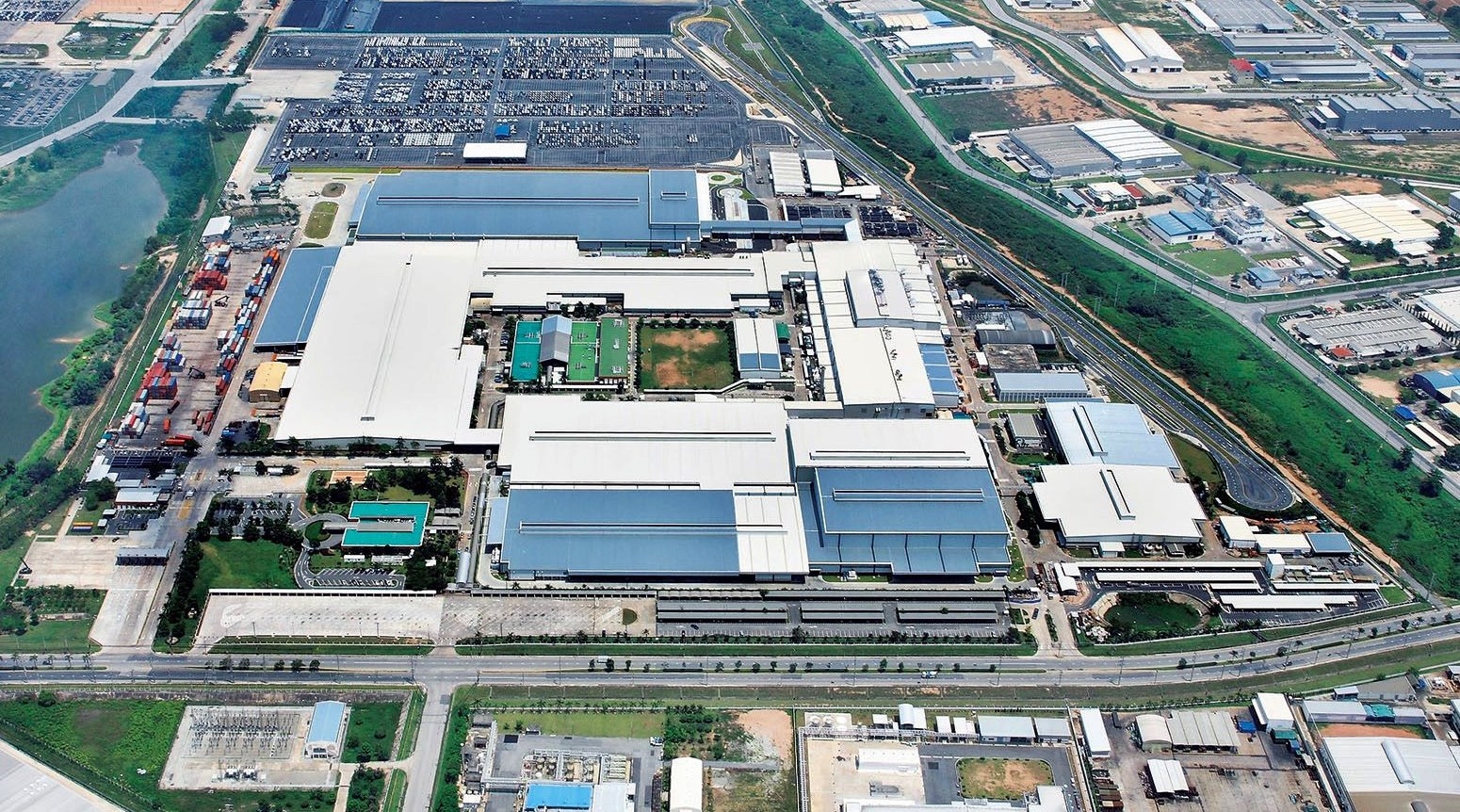
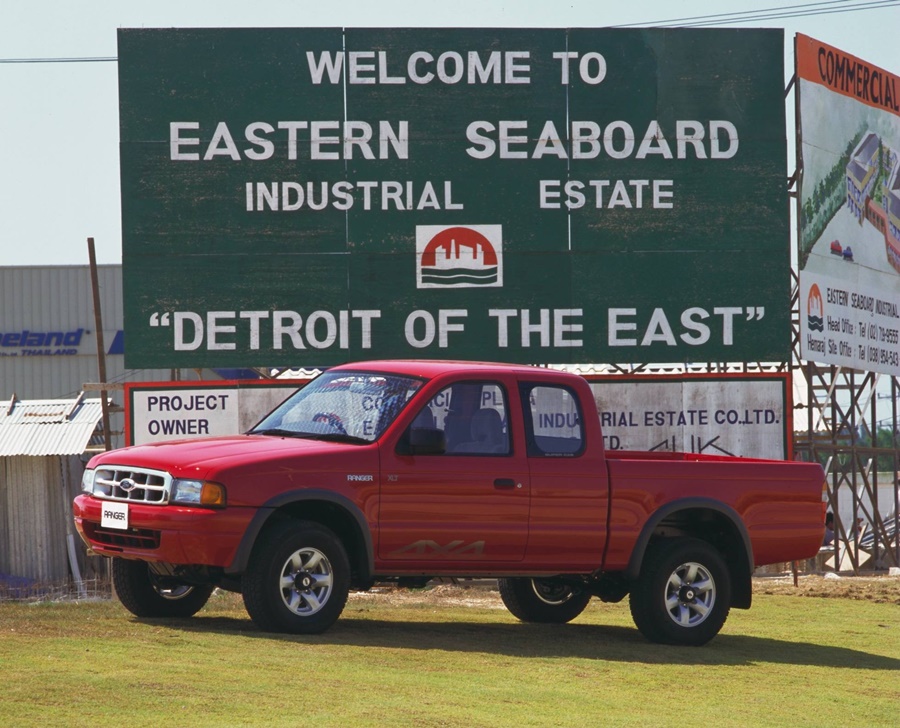
So Ford invested US$500 million (RM2.107 billion) to establish a brand new factory in Rayong, on the Eastern Seaboard of Thailand. The factory, called Auto Alliance Thailand (AAT), was a joint-venture with Mazda, which was then an affiliate. Its main product would be the new Ford Ranger truck and Mazda equivalent, the BT-50, with the Everest SUV being added later. Besides supplying the Asian market, the factory also supplied to other global markets which was helpful during the regional downturn when the Asian Financial Crisis hit.
Auto Alliance Thailand, the factory set up in the mid-1990s as a joint-venture between Ford and Mazda. Its first product was the Ranger (below) which was exported around the ASEAN region as well as globally.
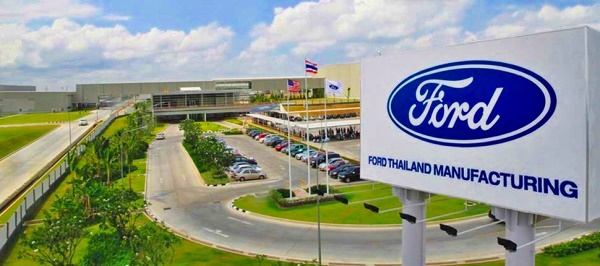
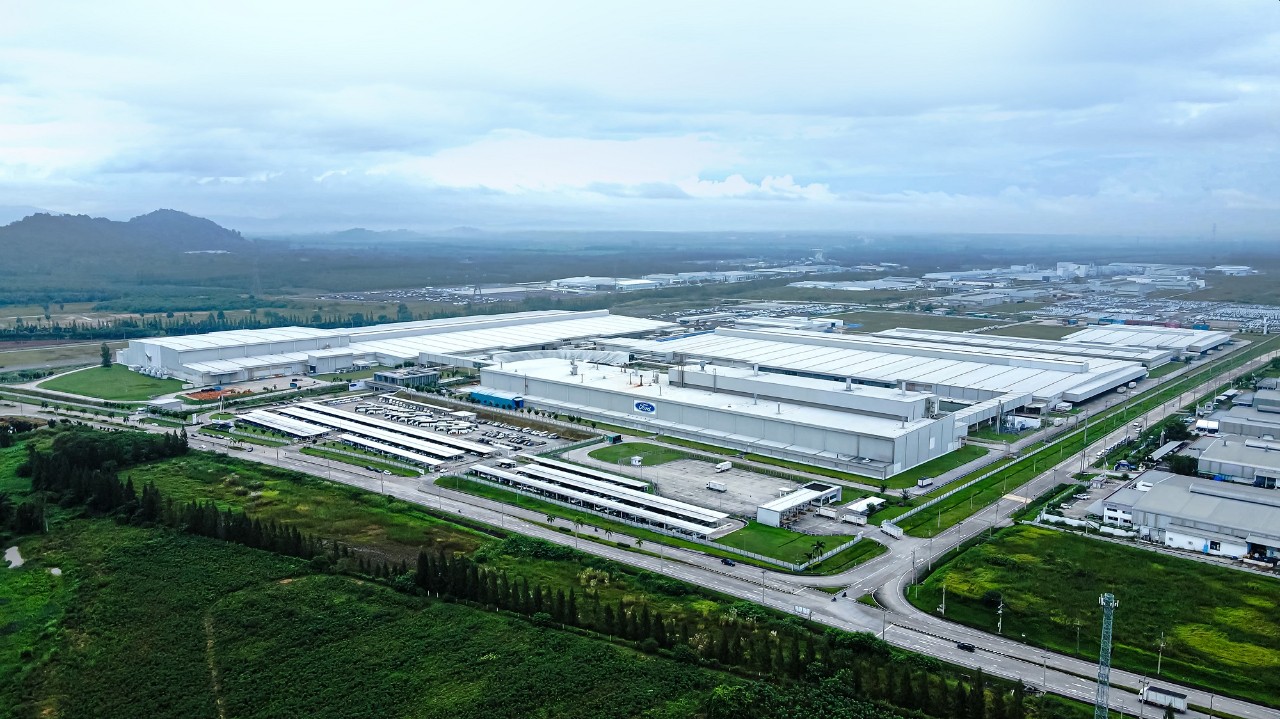
17 years after AAT began operations, Ford set up another factory in the same area with an investment of US$450 million (about RM1.9 billion) and it was wholly owned by the carmaker. Known as Ford Thailand Manufacturing (FTM), it was initially producing passenger car models like the Fiesta and Focus but when Ford decided to change strategies in the Asian region and focus on trucks, the factory switched to making only Rangers.

Ford built the second factory as demand for the Ranger grew. This was necessary as the 270,000-unit output from AAT was strictly fixed at 50:50 for each of the brands. This meant that Ford could get no more than 135,000 vehicles a year, even if Mazda did not use up its full allocation. Mazda too would have experienced the same frustration as the popularity of its models grew and one solution has been that its new BT-50 truck is now being produced at Isuzu’s factory (also in Thailand). In order to raise its output, Ford moved some production of the Ranger to FTM in 2016.

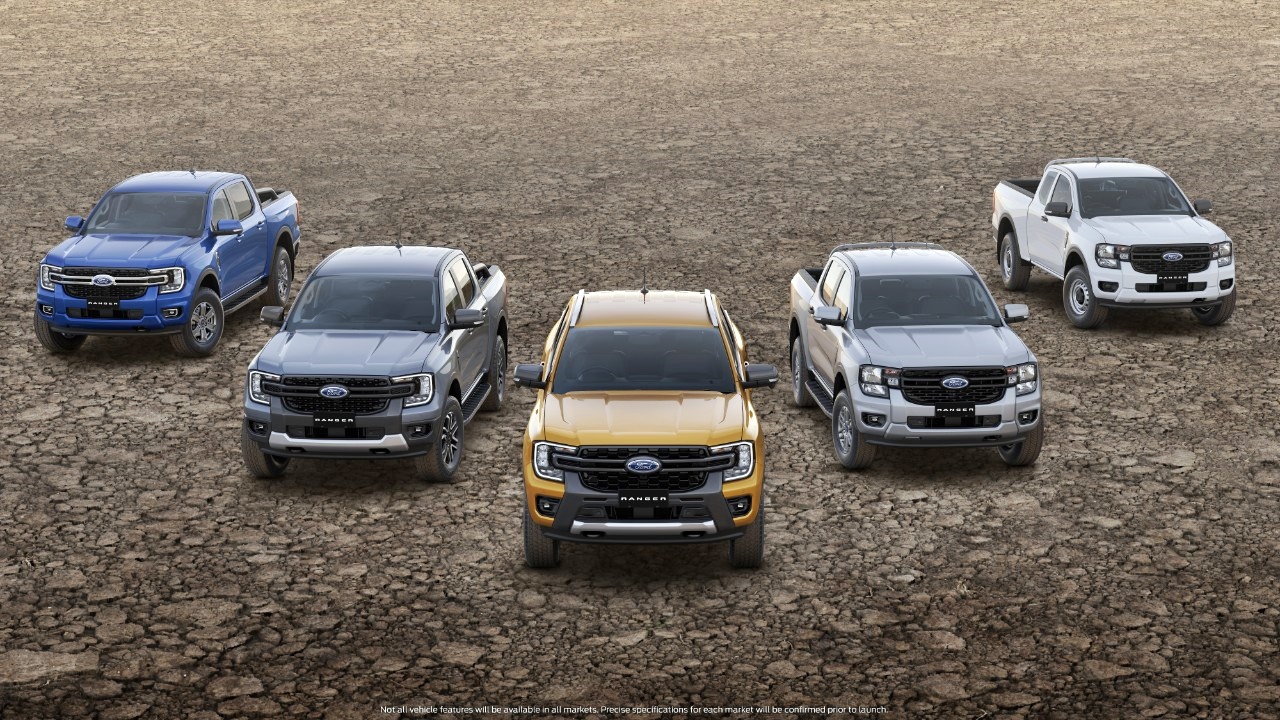
Next year will see the new generation of the Ranger entering the market and Ford expects demand to be even higher. Since its output from AAT remains capped, it is expanding FTM and is spending another US$900 million (about RM3.8 billion) on upgrading its manufacturing facilities and capabilities in Thailand, at both FTM and AAT. Over 44% of the investment is in the supply chain network to provide opportunities for local supply chain partners.

Ford Thailand Manufacturing, located 14 kms from AAT, began operations in 2012. It produced the Fiesta, Focus and EcoSport models but now only does the Ranger, and has been upgraded to produce the new Ranger (below) next year.

This is the largest-ever single investment in Ford’s 25-year history in Thailand and is recognition of the importance of the country as a global export production base for the company. “This is an important milestone to build on our quarter-century of commitment to producing vehicles in Thailand, enabling us to further modernize and upgrade our local operations, and support production for the exciting upcoming launch of the next-gen Ranger, one of Ford’s highest volume and most successful vehicles anywhere in the world, and the next-gen Everest SUV,” said Yukontorn ‘Vickie’ Wisadkosin, President, Ford ASEAN and Asia Pacific Distributors Markets.

Besides adding a second shift at FTM which provides over 1,200 new jobs, the overall investment also brings Ford’s manufacturing facilities in Thailand in line with the latest global efficiency, flexibility, and quality processes through extensive upgrades and new state-of-the-art manufacturing technologies.

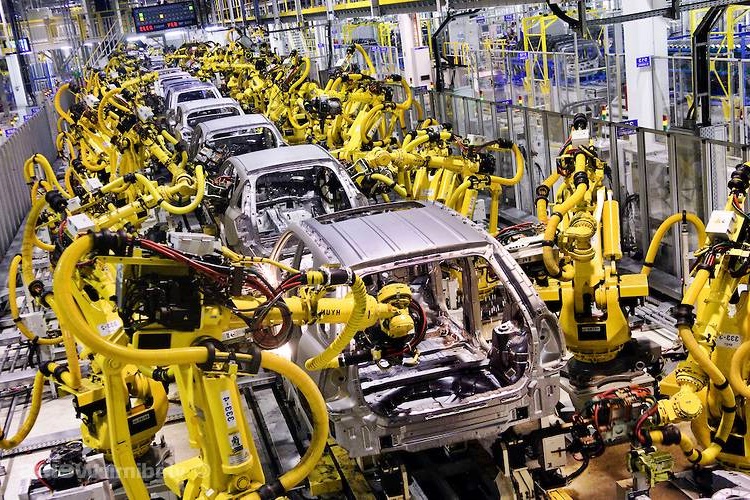
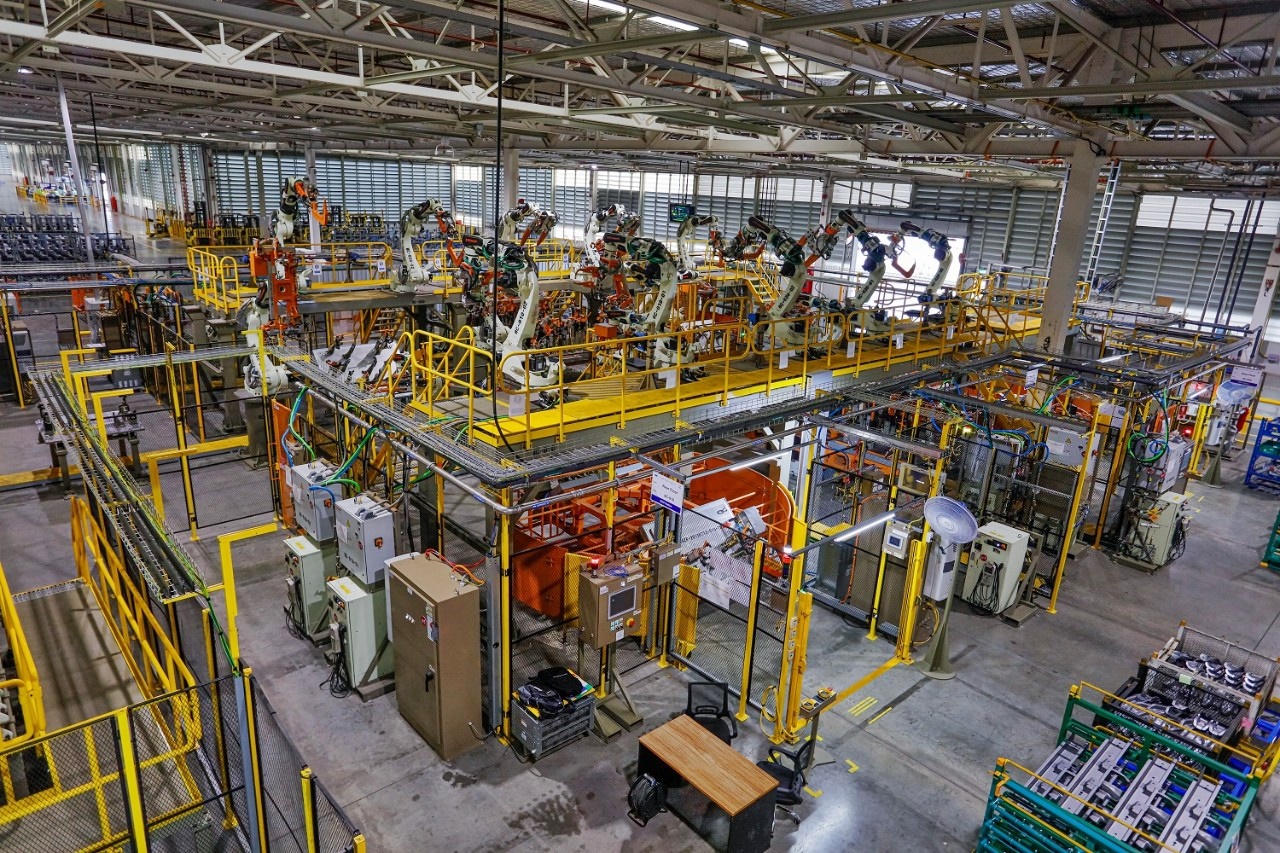
The company is almost doubling the number of robots at both FTM and AAT, with the addition of 356 robots at the body shop and paint shop. This brings the level of automation at the body shop at FTM and AAT from 34% to 80% and 69%, respectively.

Ford also has increased its production capability for multi-variant truck production in FTM. By increasing model flexibility, the plant can produce multiple cab styles – single cab, open cab and double cab – on the same production line. This allows more flexibility in planning and scheduling so the plant can react more quickly to customer demand and reduce customer waiting time for a new vehicle.

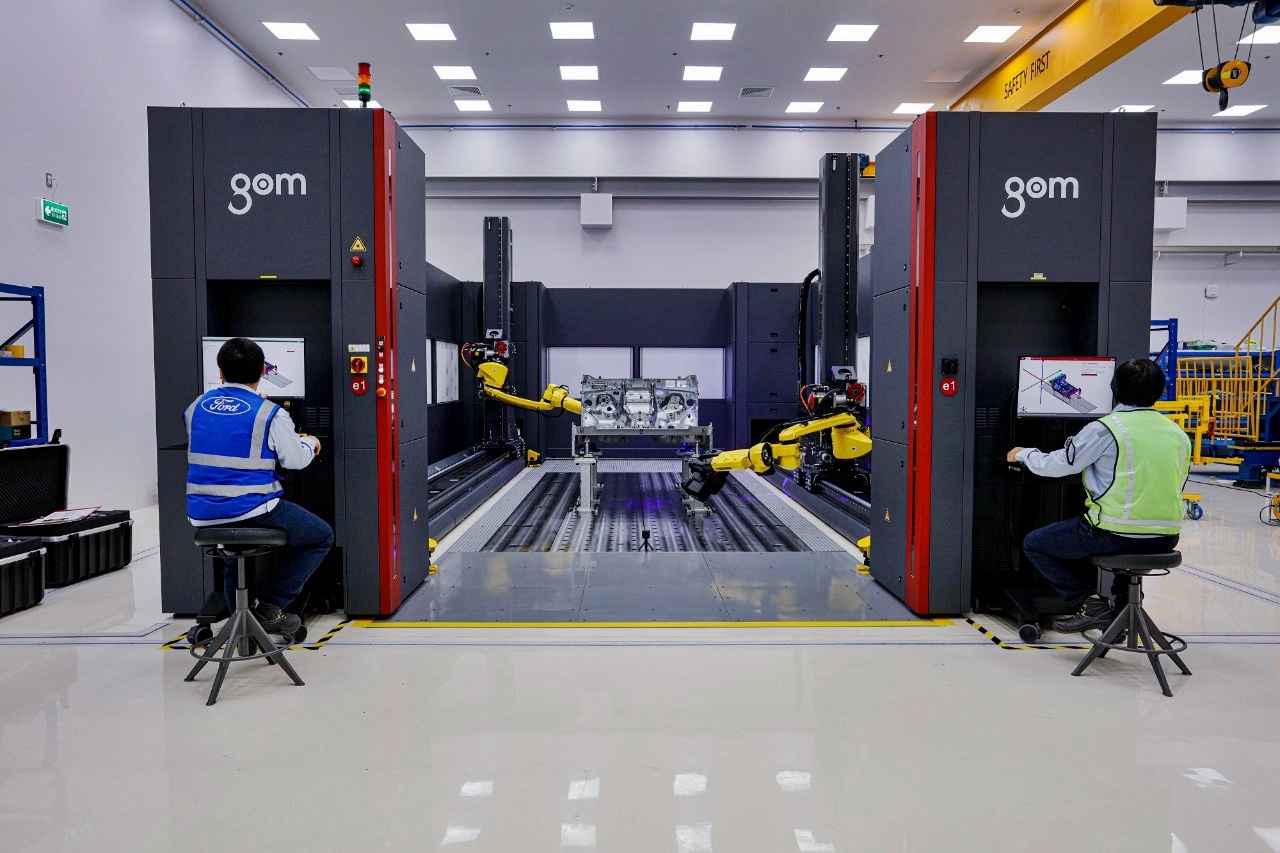
As part of the investment, Ford is the first auto manufacturer to implement ScanBox technology in Southeast Asia. This latest surface scan capability improves the time used to accurately measure the whole vehicle by 5 times during the assembly process, helping Ford to increase efficiency in problem solving for better quality control.

In addition, FTM and AAT are making significant efforts to support environmentally friendly initiatives, including using renewable energy, reducing CO2 emissions, and practicing zero waste to landfill.

Exporting vehicles is a significant part of Ford’s manufacturing business in Thailand, with the Ranger going to over 180 markets around the world. AAT will be the lead production hub for the upcoming next-gen Everest SUV which would almost certainly be based on the new Ranger.

Global debut of 4th generation Ford Ranger

Archive

Follow us on Facebook

Follow us on YouTube