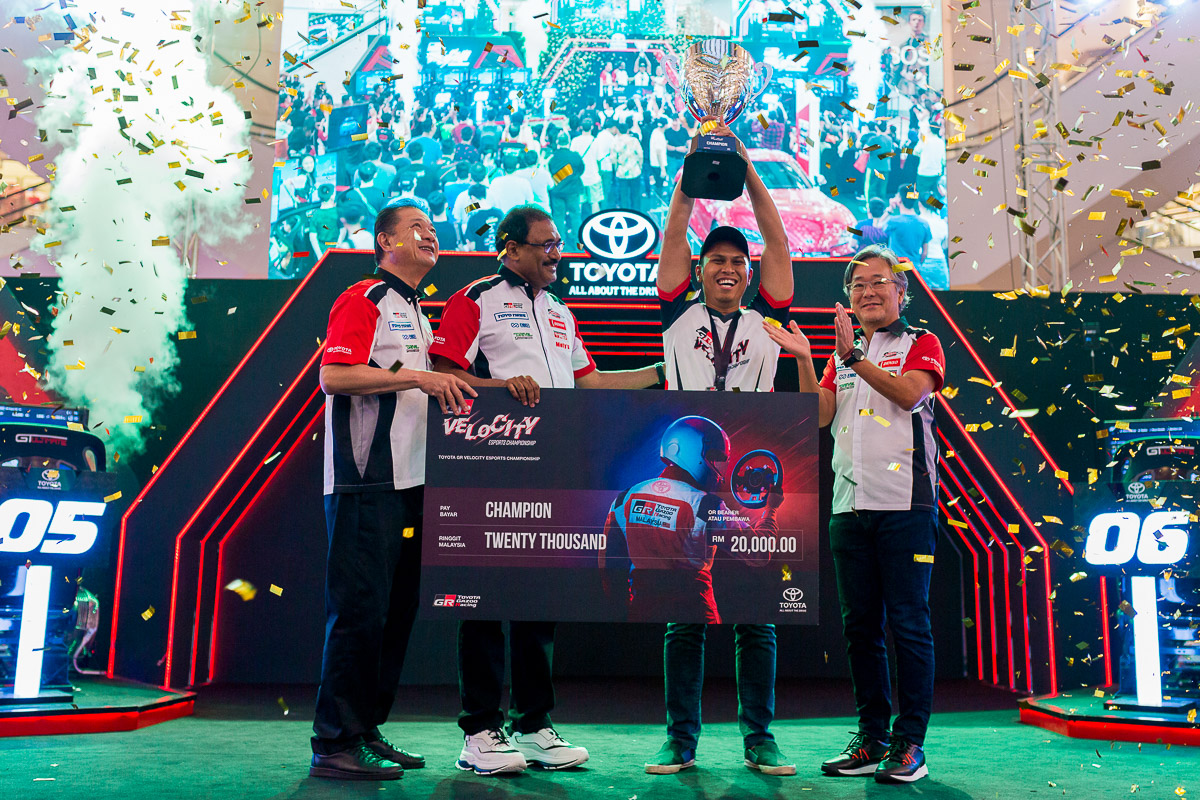
The grand finals of the Toyota Gazoo Racing Velocity Esports Championship concluded its epic weekend here in the heart of Kuala Lumpur. Regarded as Malaysia’s biggest national Esports racing event, spectators at Pavilion KL witnessed champions being crowned in this new era of motorsports. (more…)
The F1 races in Malaysia and Singapore have always been physically the toughest due to the high temperatures and high humidity. This year, the drivers must also cope with the haze though it does not seem to have been mentioned as much of a problem.
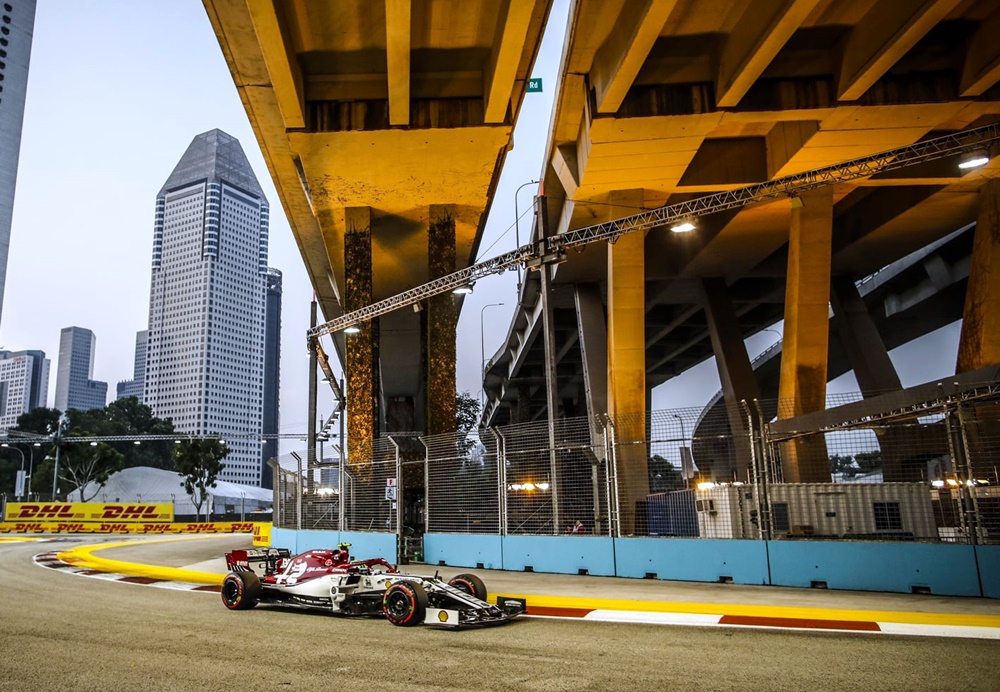
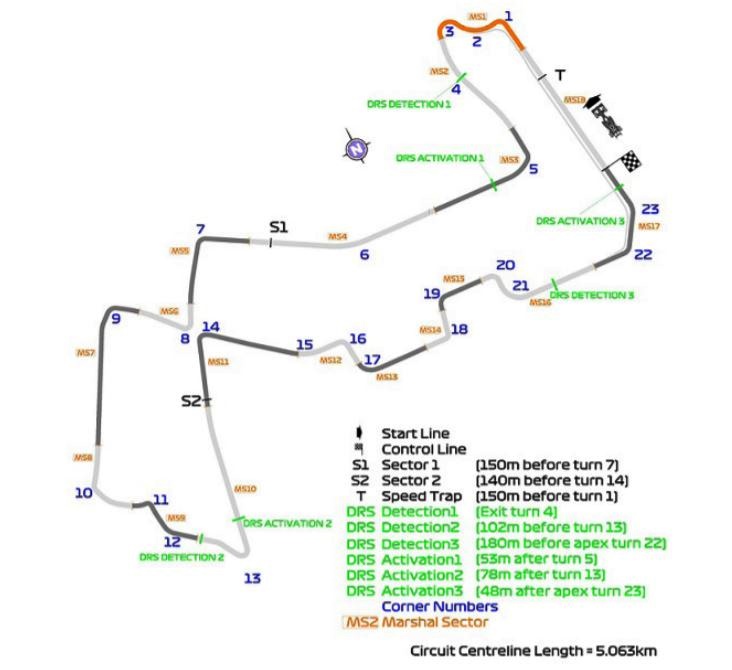
The steel beams underpinning the concrete of the Esplanade Bridge are magnetised and the magnetic fields created are strong enough to interfere with some sensors on the cars. Therefore, teams replace some sensors with special sensors that are less susceptible to interference. In order to prevent the magnetic field impacting the hydraulic valves in the gearbox, they are shielded with what’s called ‘mu metal’ (a special nickel alloy which is effective against magnetic fields) – only used in Singapore.
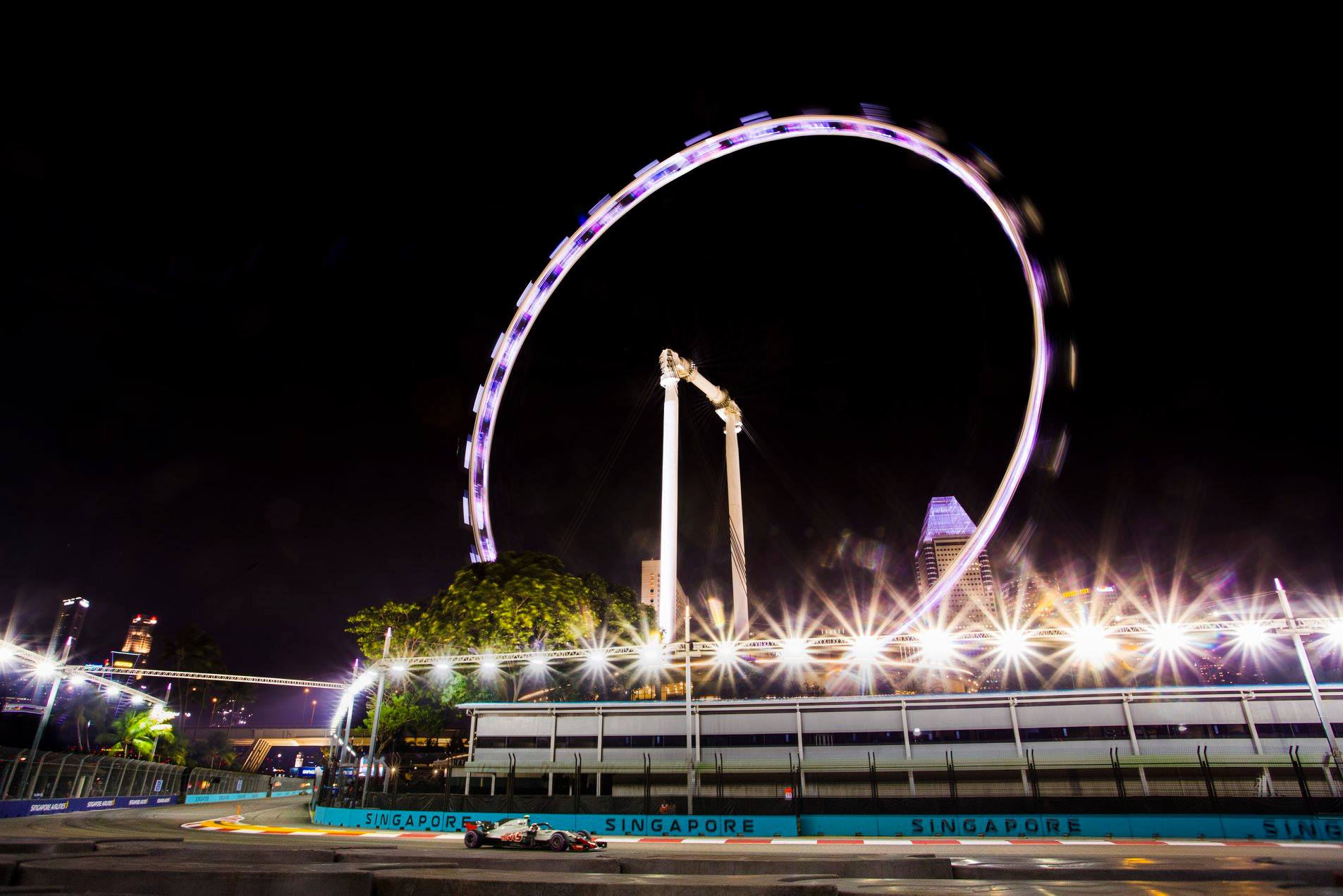
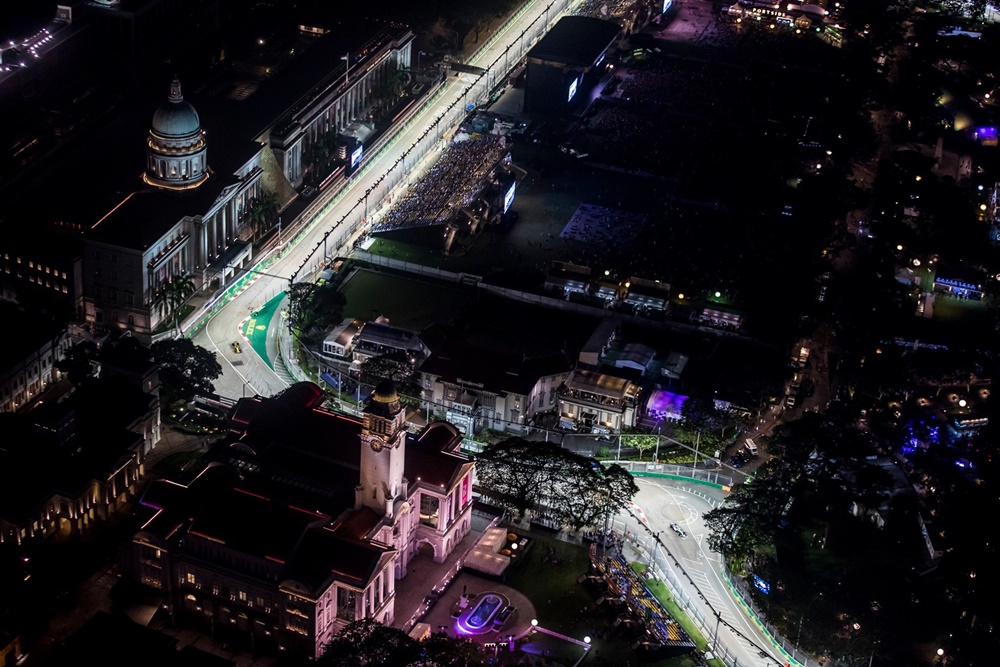
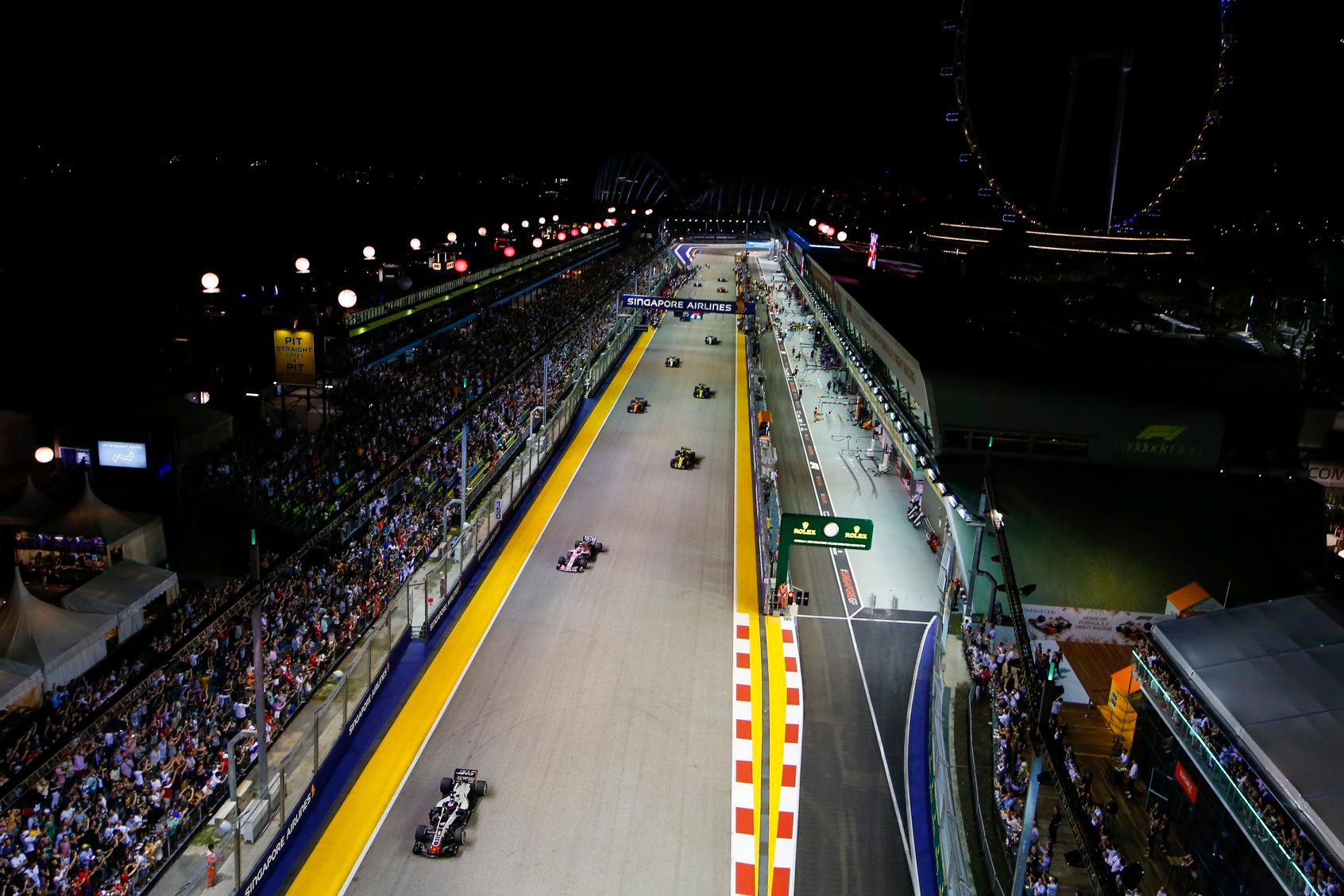
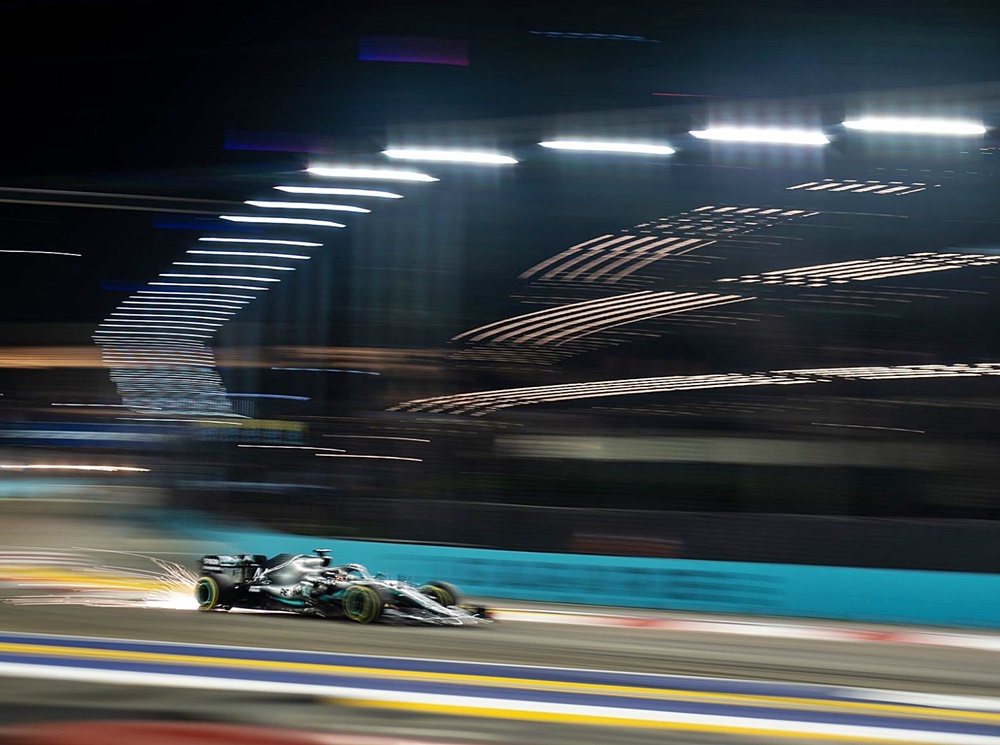
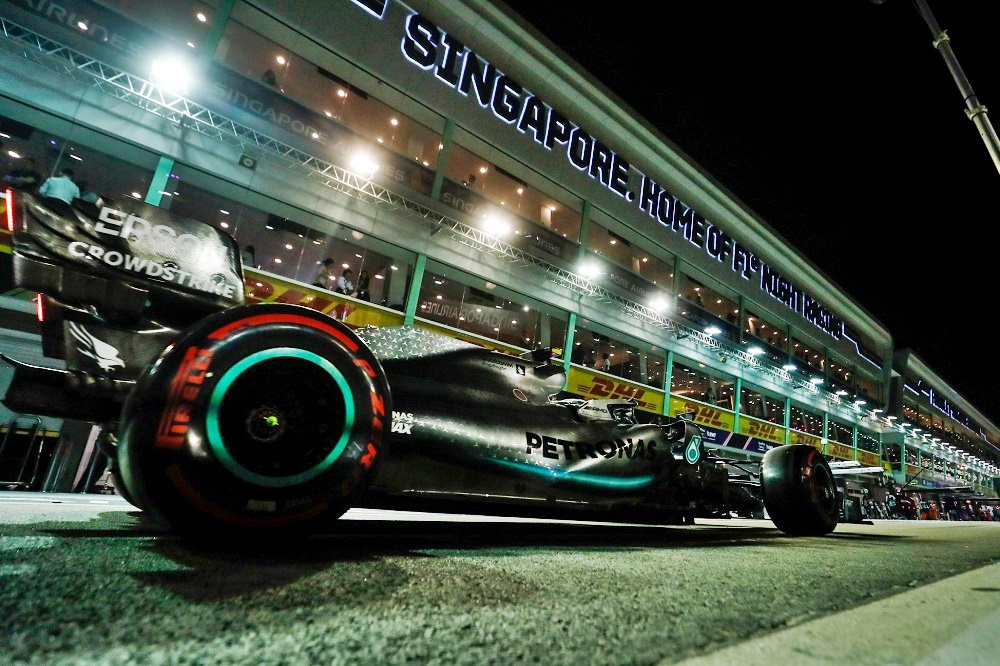
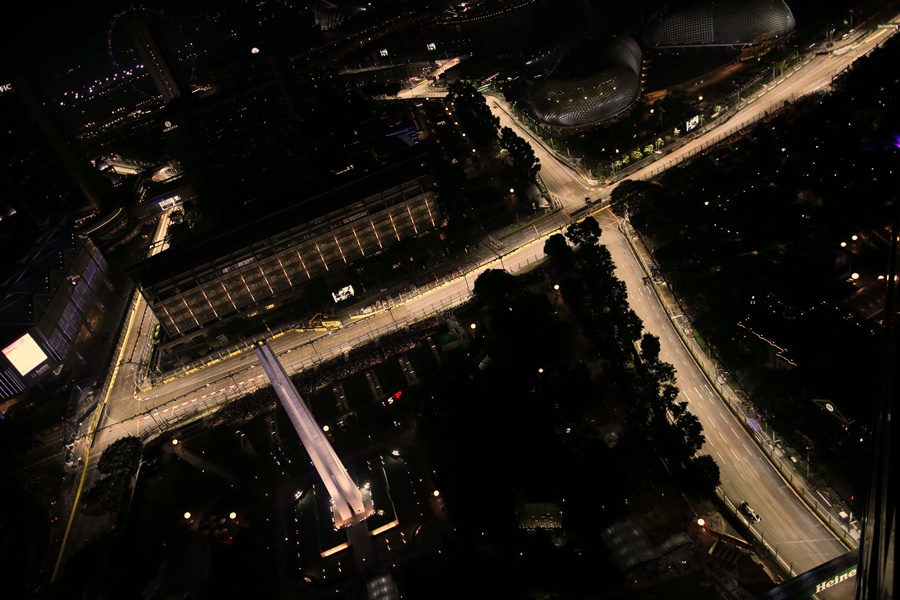
The first ever F1 race at night was run at the Marina Bay Circuit in 2008. There were concerns about whether the lighting conditions would be good enough to ensure safety, especially on a narrow street circuit. The organisers installed 1,600 lighting projectors around the circuit and no one has ever complained of conditions being unsafe due to inadequate illumination.
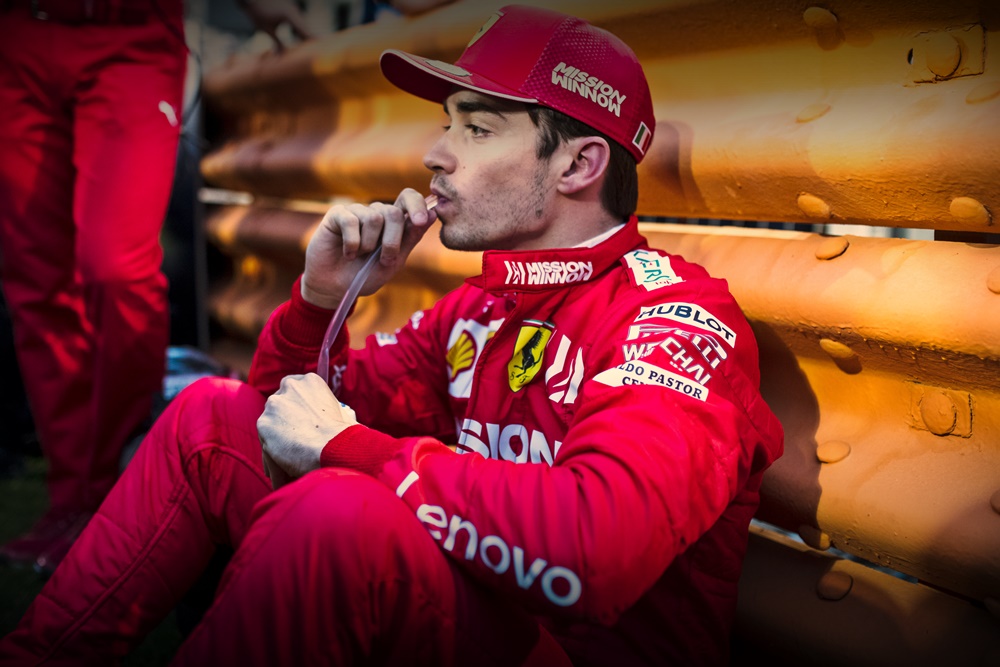
Drivers can lose around 3 kgs of weight through sweating over the course of the race, due to the incredibly high temperatures and humidity. Fluid loss is also a factor for team members, so keeping hydrated is crucial. The recommended amount of fluid intake on a hot day ranges from three to five litres.
Drivers change gear about 62 times during one lap of the Singapore circuit, the second most number among current circuits. In the 2018 race, Lewis Hamilton completed 3,100 gear changes and Valtteri 4,140.
The drivers and crews do not change their ‘body clock’ to Singapore time, which means that when the race starts in the evening, it will be like their usual afternoon timing in European events. Therefore they stick to European time and routines, having breakfast at midday and lunch around 6 pm. Dinner times vary depending on the day and workload but are usually from 1 am onwards. The drivers will go to bed around 6 am to get 8 hours of sleep.
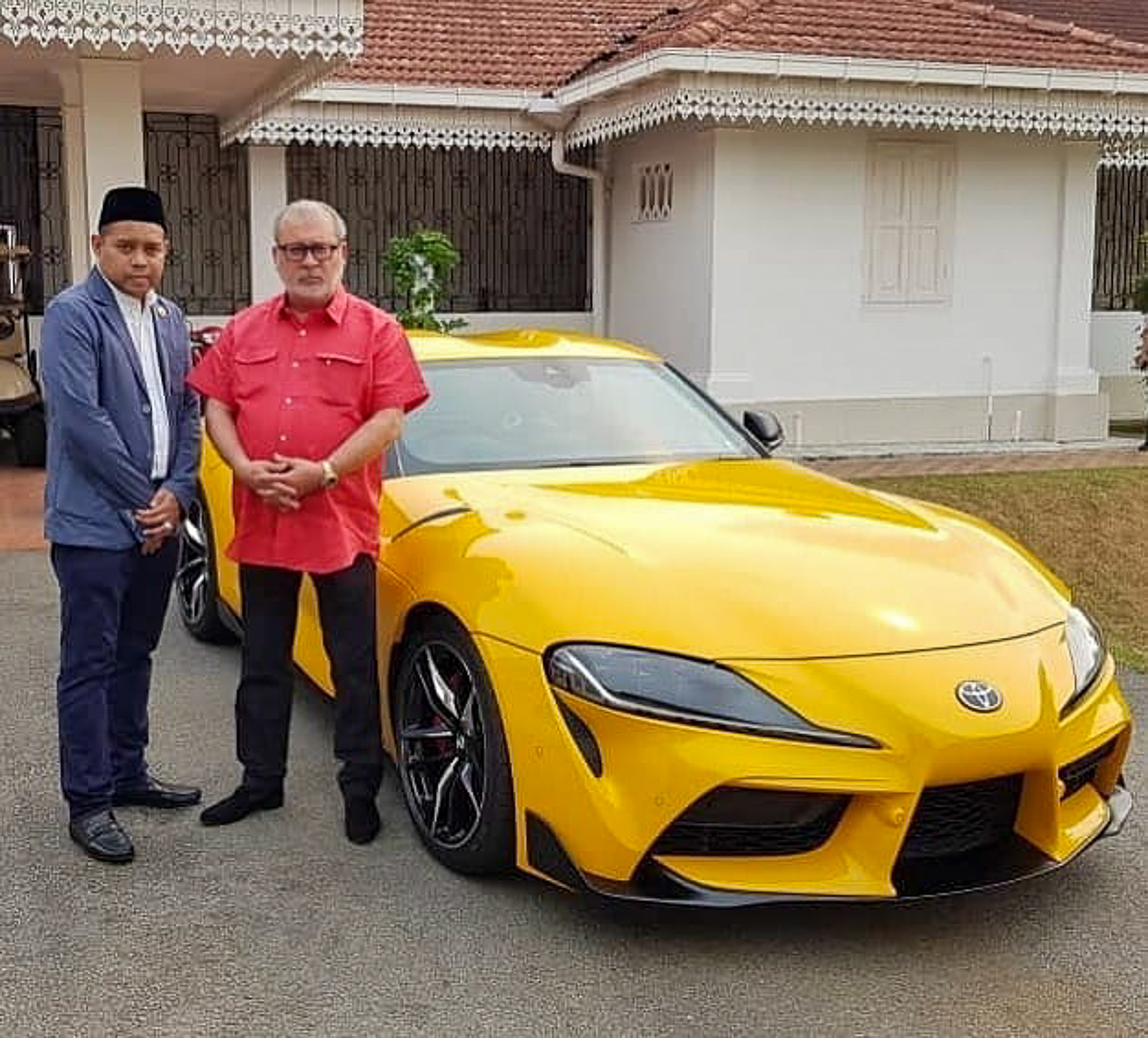
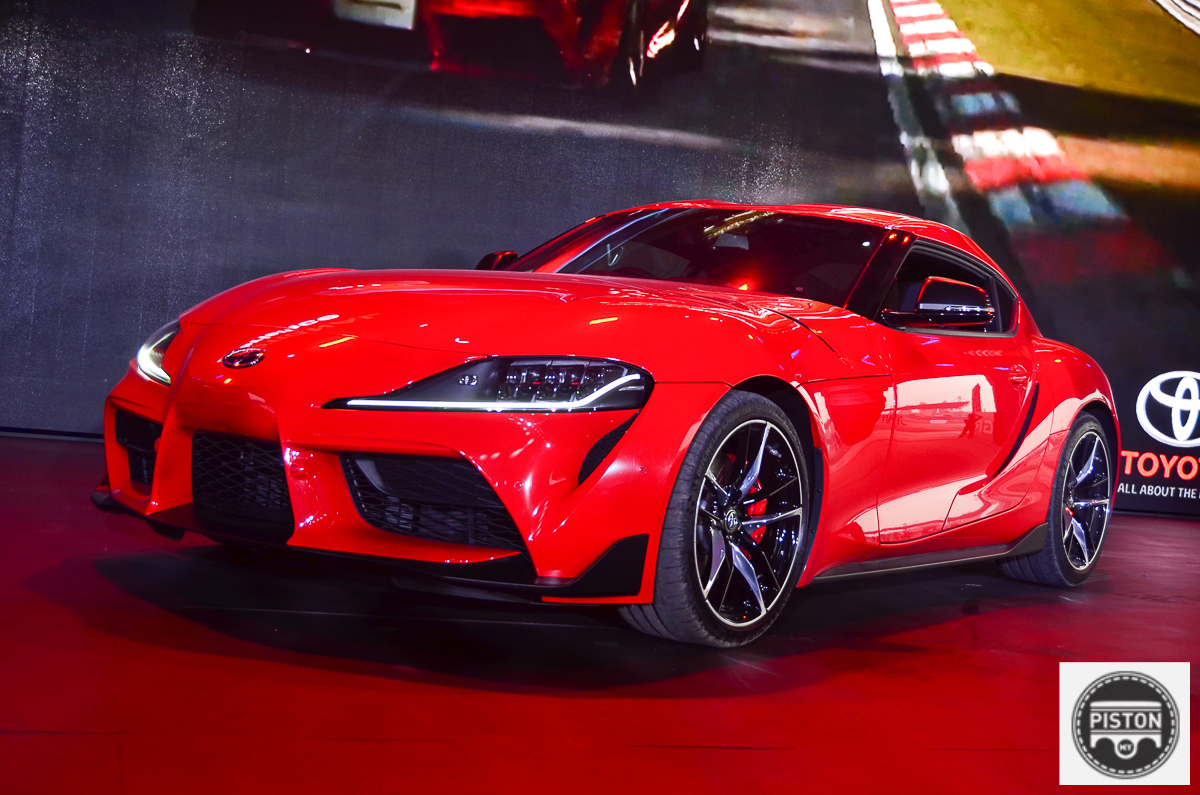
It was only a couple of days back when UMW Toyota launched their most exciting model to date, the 2020 Toyota GR Supra. In pure awesomeness, the Sultan of Johor, Sultan Ibrahim ibni Almarhum Sultan Iskandar, took delivery of Malaysia’s first Toyota GR Supra on the same evening the car was launched! How cool is that? (more…)
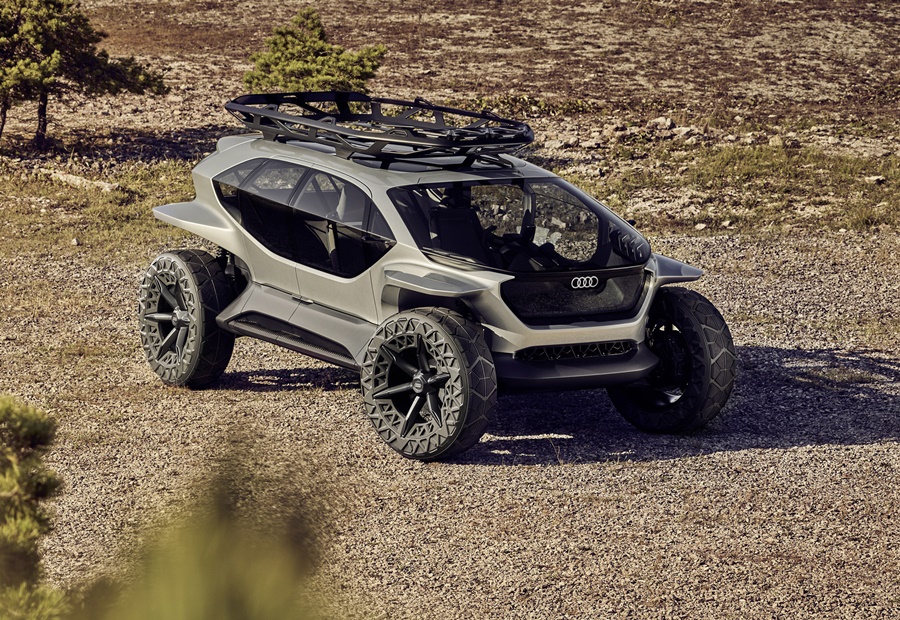
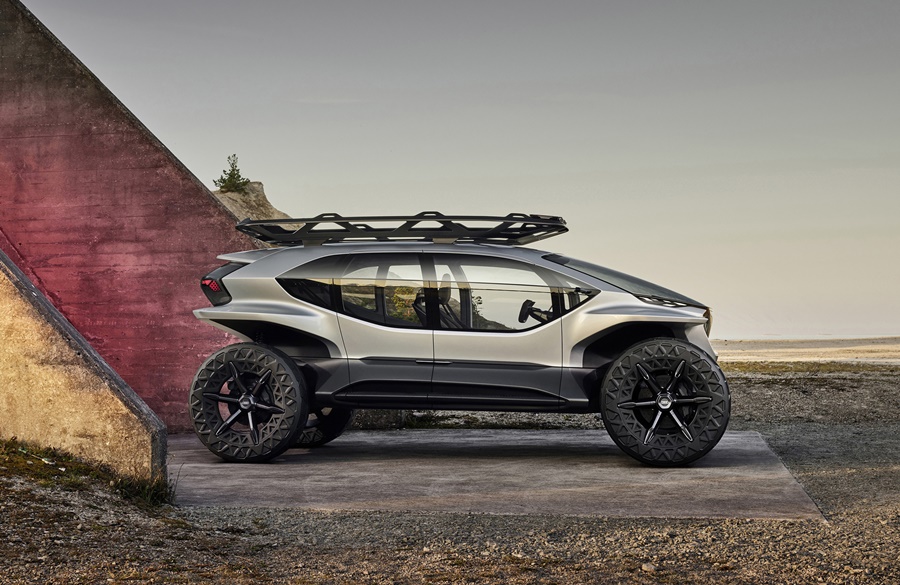
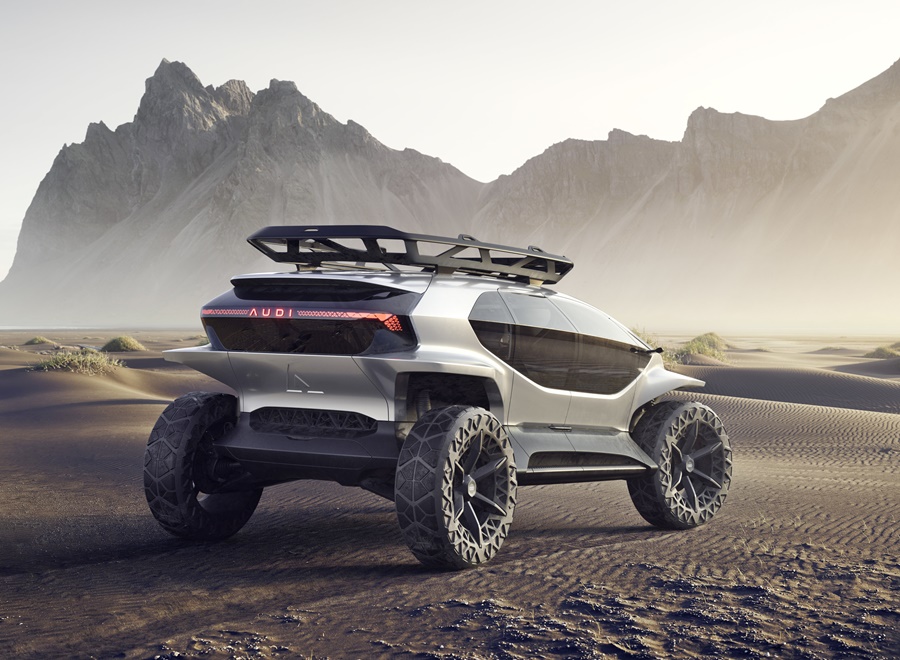
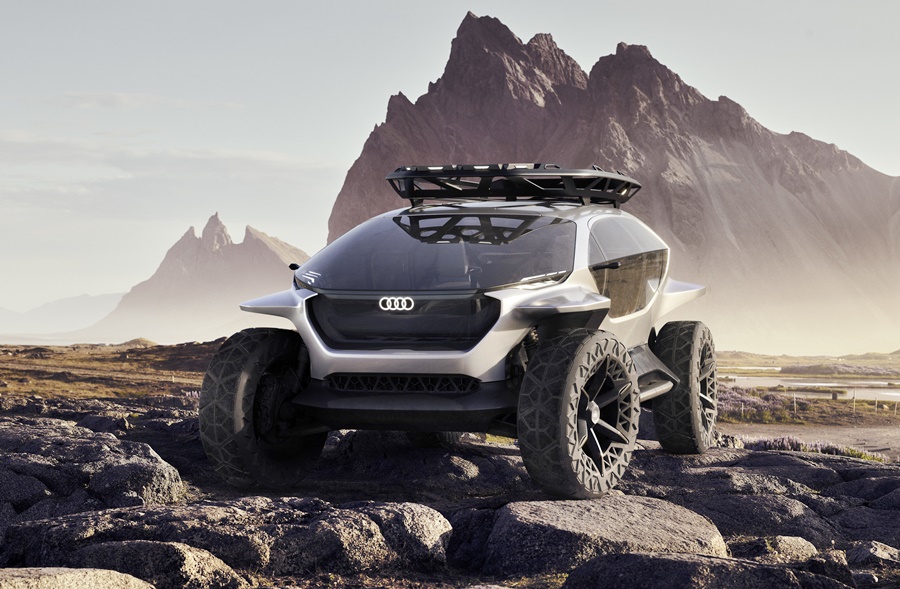
Audi has completed its quartet of visionary vehicles with an electric off-roader for the future of road transport with the AI:TRAIL quattro. The 4-seater concept car, which combines automated driving capability with competent off-road capabilities, joins the Aicon, AI:ME, AI:RACE concepts shown earlier.
With the AI:TRAIL, Audi is now opening up the potential applications for its visionary vehicles to include off-road terrain. The car is equipped with 4 electric motors, systems for assisted and automated driving and, of course, quattro permanent all-wheel drive.
There’s more than just the concept of sustainable drive systems and a body line that will run far into the future. The car also embodies an entirely new mobility concept for Audi. Unlike the cars of the present, such vehicles will no longer have to compromise between a wide range of uses and scenarios. Instead, it will be possible to design tomorrow’s cars for much more specific use cases. In the future, customers will be able to order any of these specialist Audi models from an Audi on demand vehicle pool to suit their personal preferences and requirements and to lease them for a limited period.
Technology that’s plain to see
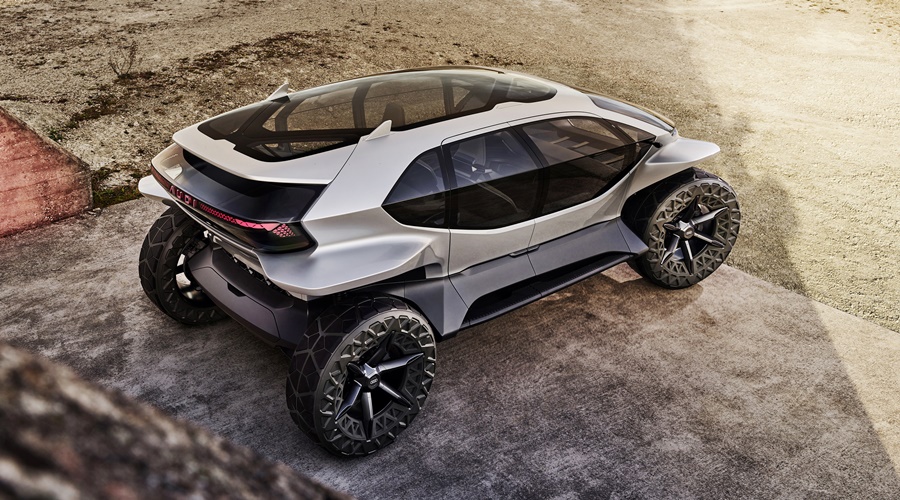
With an exterior length of 4.15 metres and a width of 2.15 metres, the AI:TRAIL’s potential away from paved roads is immediately apparent. The roof height of 1.67 metres and the enormous 22-inch wheels with 850 mm tyres already hint at its superior off-road capabilities. With a ground clearance of an impressive 340 mm, it can drive across water more than half a metre deep.
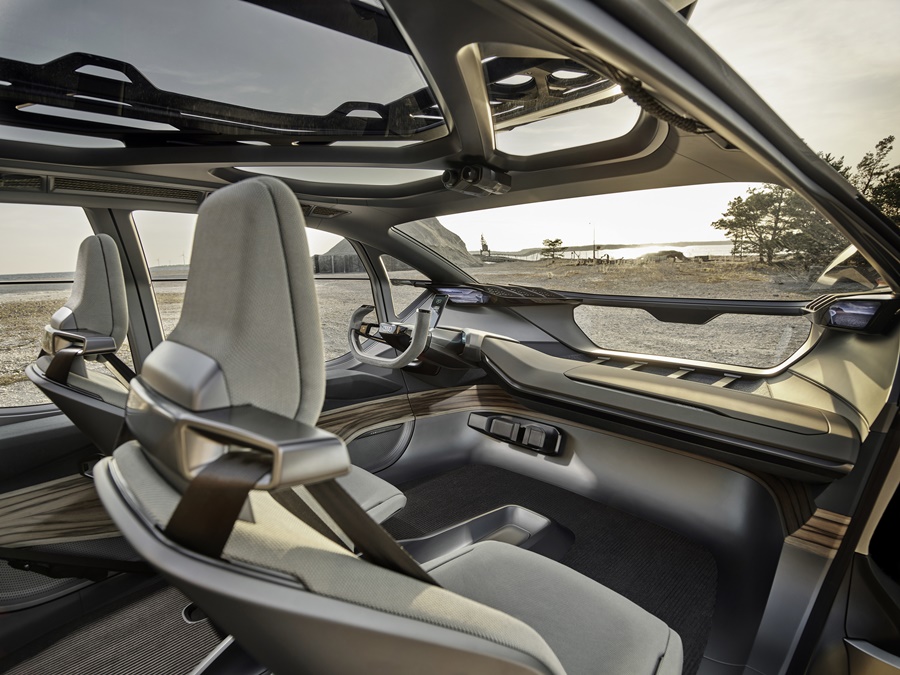
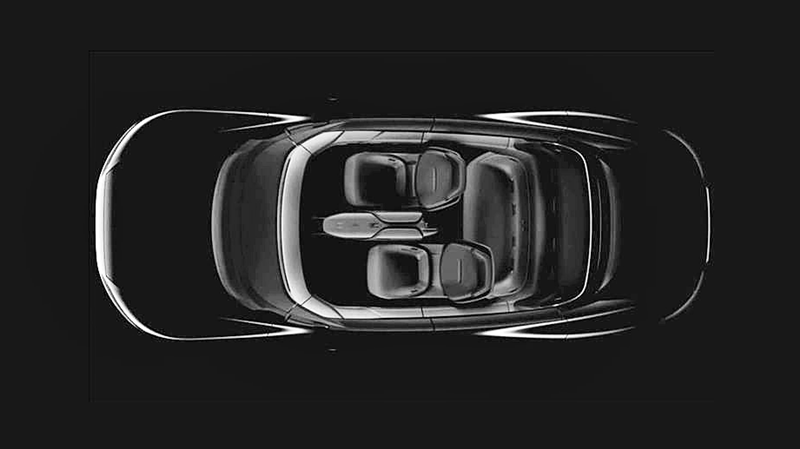
The cabin itself is an extensively glazed space surrounded by polygonal shapes, with room for up to 4 people. With the electric drive system arranged around the axles and the battery in the floor, there is no need for overhanging sections or separate attachments for the motor or batteries.
Light weight and maximum body stiffness are, of course, important technical objectives for off-roaders in particular. That is why the body of the AI:TRAIL is made of a mixture of high-tech steel, aluminium and carbonfibre. As a result, it weighs just 1,750 kgs despite carrying a high-capacity battery.
Helicopter-style all-round visibility
The windshield wraps around the front of the vehicle like the cockpit of a helicopter. Passengers have an unobstructed view of the road or trail both in front and to the sides. Nor is it just the front and sides that are transparent and covered in glass. Almost the entire roof, from the top of the windshield to the rear spoiler, allows a clear view of the sky and the landscape. Even the vertical Singleframe is glazed, with only the four rings of the badge sitting in their customary position in what is otherwise a glass octagon.
Mobility and multifunctionality are features of the AI:TRAIL’s light sources as well. Instead of conventional headlights, self-contained light sources sit below the A-pillars and can shine both outward and inward. These LED elements are dimmable and adjustable and can be used as interior lighting as well as for lighting the vehicle’s path.
Audi Light Pathfinders
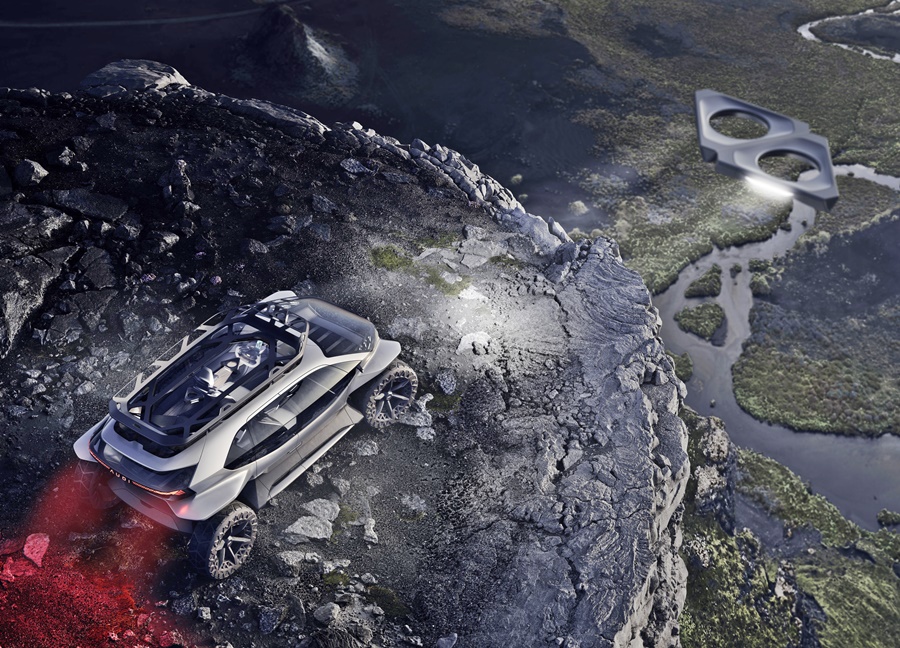
Instead of conventional low beams and high beams, the Audi AI:TRAIL is equipped with a total of five rotorless, triangular, electrically operated drones with integrated matrix LED elements. They are capable of landing on a roof rack or directly on the roof of the vehicle and docking onto the inductive charging elements.
The flying objects are Audi Light Pathfinders, which generate their lift in the same way as bladeless fans produce their air flow. Thanks to their markedly lightweight design, they can fly ahead of the AI:TRAIL, consuming comparably little energy in the process, and illuminate the path ahead, thereby replacing headlights entirely. If desired, the on-board cameras generate a video image that can be transmitted to the display in front of the driver via wifi, turning the Pathfinders into eyes in the sky.
“With the AI:TRAIL, we are showing an off-road concept with an emissions-free electric drive for an innovative driving experience away from paved roads. Consistent with this, we designed a monolithic basic vehicle body with maximum glazing to create an intense connection to the surroundings. A concept for sustainable mobility on demand,” said Marc Lichte, Audi’s Head of Design.
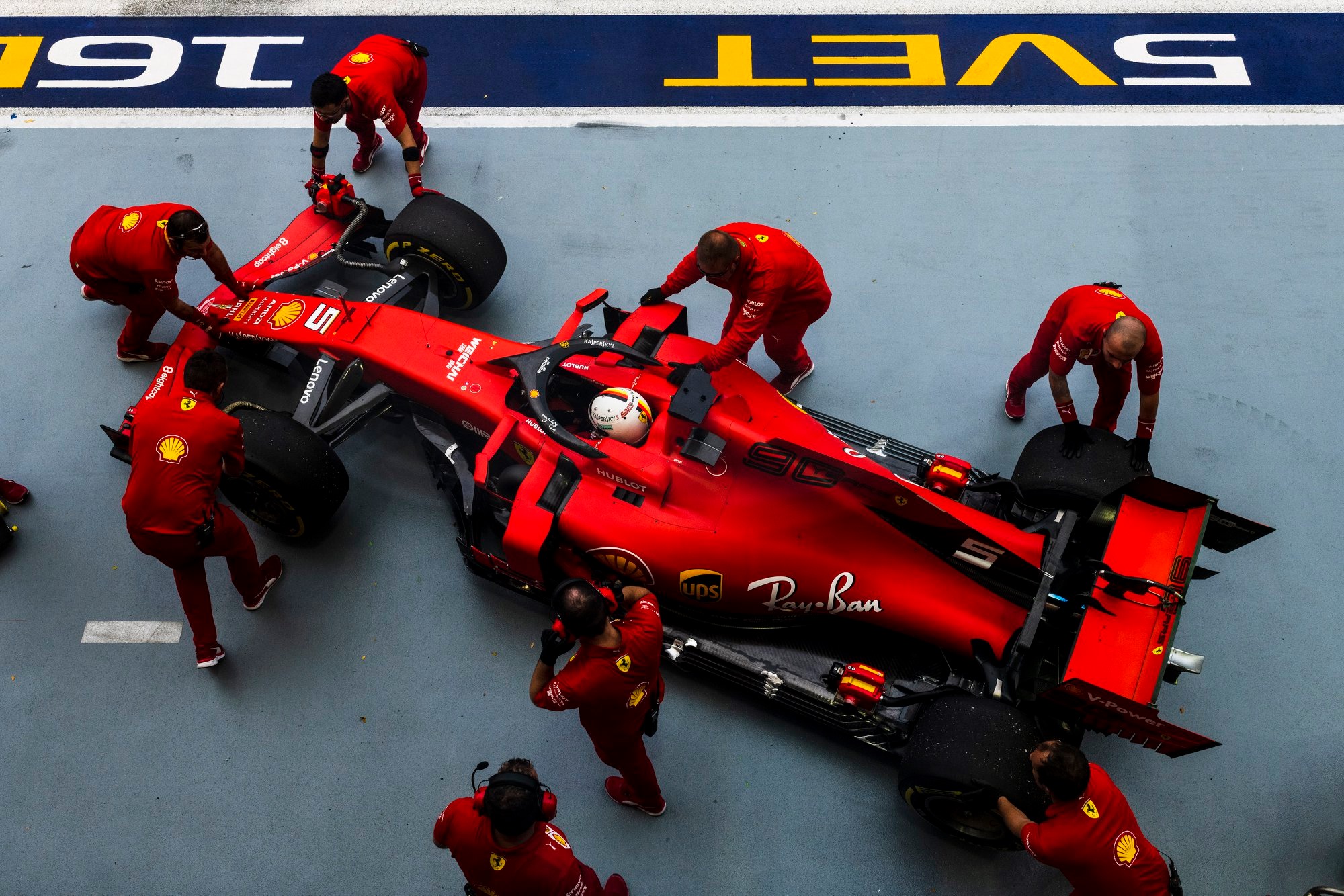
Race starts at 8:10 pm Singapore/Malaysia time on Sunday
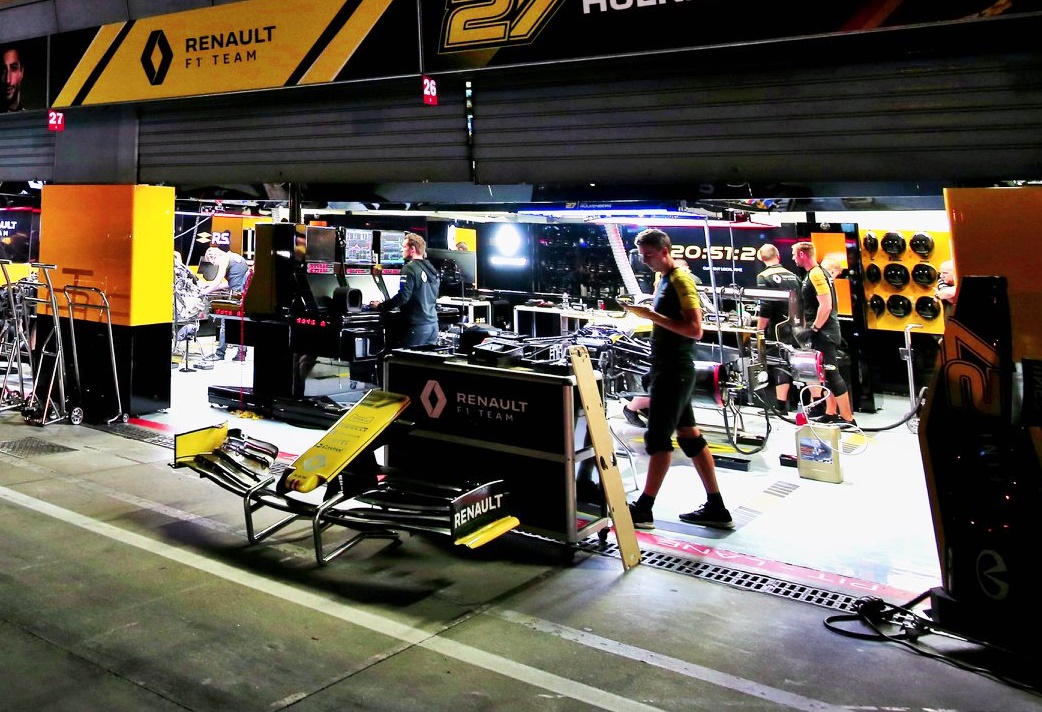
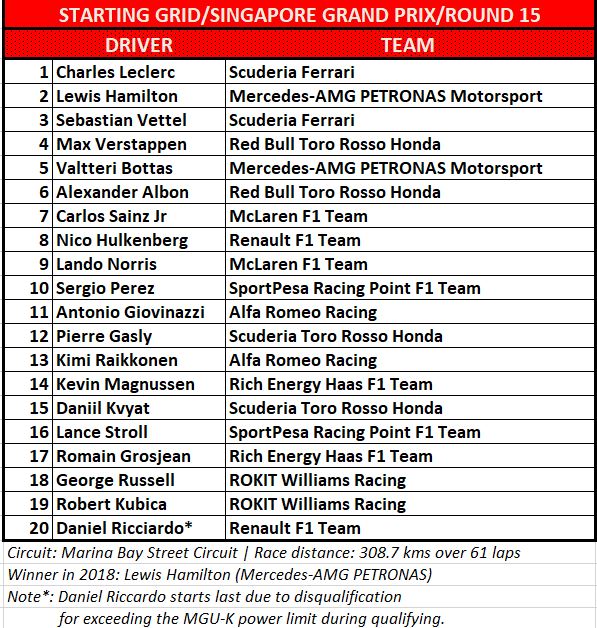
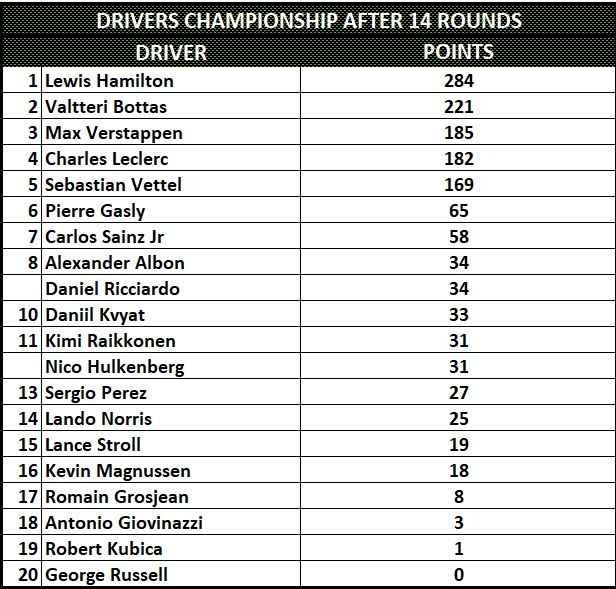
UPDATE FOR STARTING GRID: Daniel Ricciardo starts from last position due to disqualification for exceeding the MGU-K power limit during qualifying.
Previous Winners Of The Singapore Grand Prix
2008: Fernando Alonso (Renault)
2009: Lewis Hamilton (McLaren Mercedes)
2010: Fernando Alonso (Ferrari)
2011: Sebastian Vettel (Red Bull Renault)
2012: Sebastian Vettel (Red Bull Renault)
2013: Sebastian Vettel (Red Bull Renault)
2014: Lewis Hamilton (Mercedes-AMG)
2015: Sebastian Vettel (Ferrari)
2016: Nico Rosberg (Mercedes-AMG)
2017: Lewis Hamilton (Mercedes-AMG)
2018: Lewis Hamilton (Mercedes-AMG)
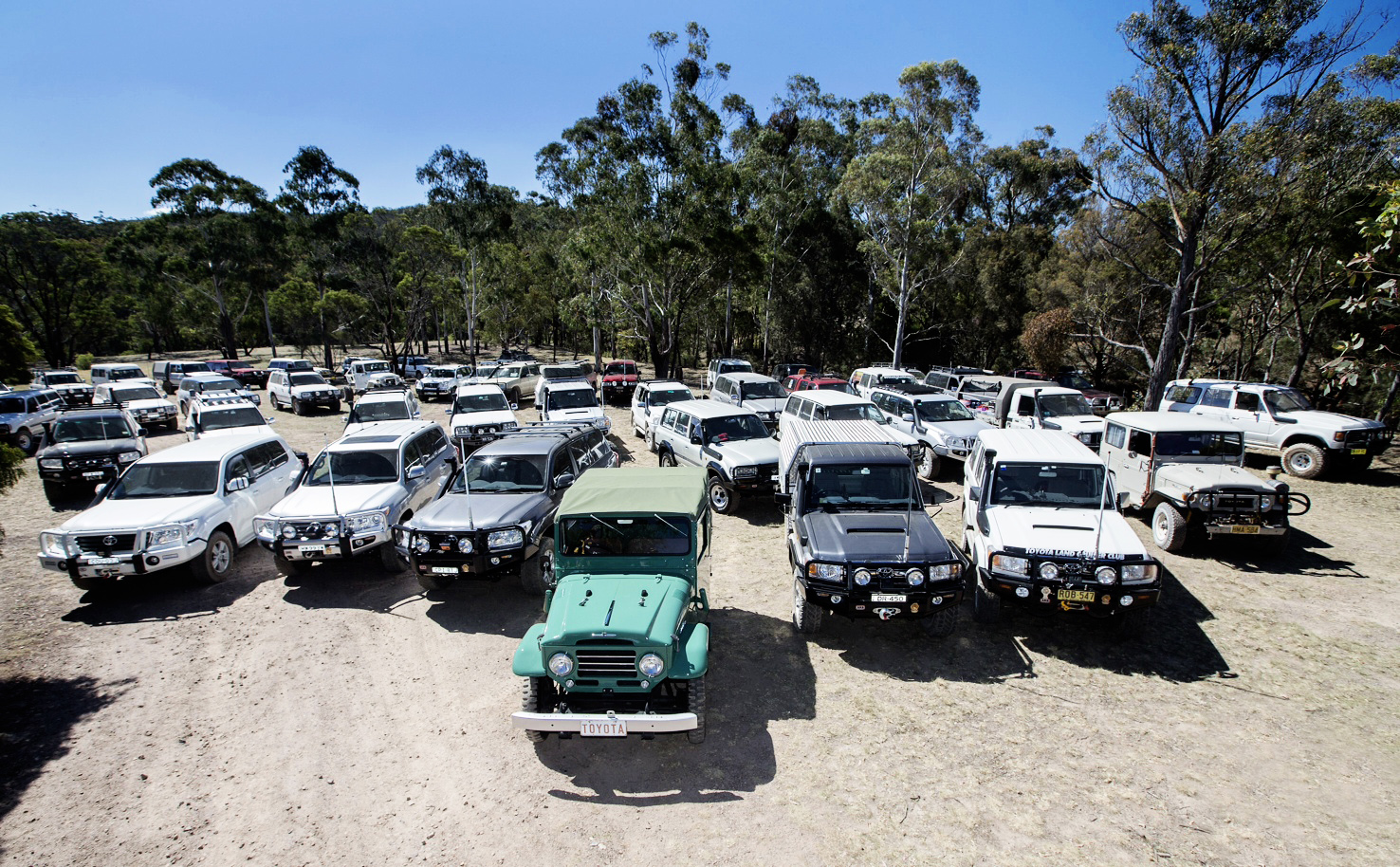
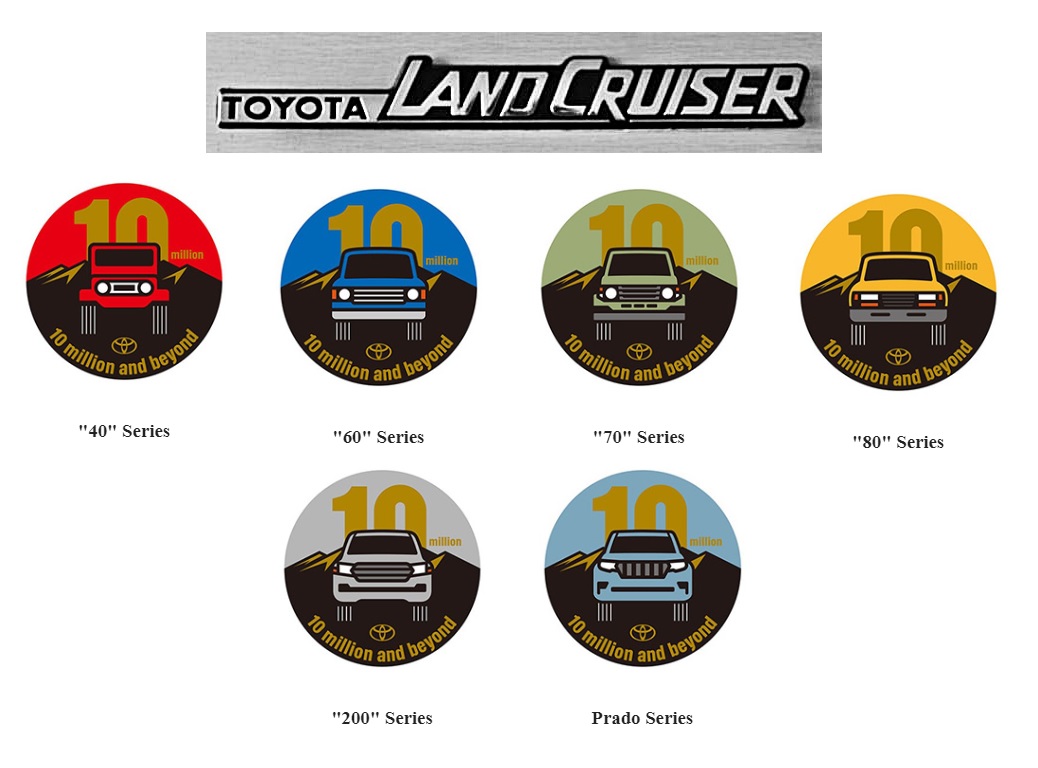
While the Jeep and Land Rover usually come to mind when thinking of 4×4 vehicles, Toyota’s Land Cruiser also has a place in the history of such vehicles. And according to the latest data released by Toyota, cumulative sales of the Land Cruiser – the company’s longest-selling model – passed the 10 million mark at the end of August 2019.
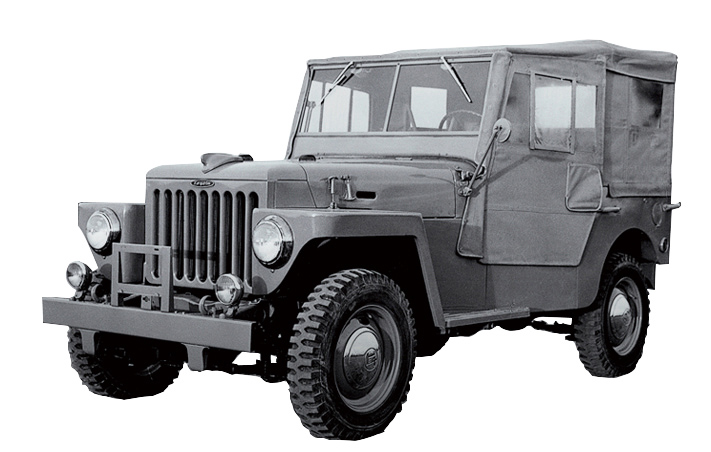
The Land Cruiser went on sale in August 1951 and initially, it was called the Toyota ‘Jeep BJ’, the ‘Land Cruiser’ name coming into use in 1954. It would remain in production in the following decades, providing durable and reliable transport on all kinds of terrain around the world.
The first Land Cruiser
Land Cruiser introduced Toyota brand
In many markets, the Land Cruiser was the first Toyota model to be sold and the company was not shy starting with small numbers. In fact, in the early years, fewer than 100 units were exported annually. However, by 1965, 10 years after full-scale exports commenced, that figure rose to 10,000 units each year as more and more customers discovered the toughness of the Land Cruiser.
At present, the Land Cruiser is sold in approximately 170 countries and regions worldwide, with annual global sales standing at approximately 400,000 units. The majority of vehicles are produced in Japan, with local assembly also done in Kenya and Portugal.
The Land Cruiser contributed significantly to increased trust in the Toyota brand around the world and created a foothold for the company to expand its exports. Although Toyota wanted to sell passenger cars in the USA in the late 1950s, it found that the Land Cruiser was a more appealing product to American customers and focussed on marketing the 4×4 vehicle.
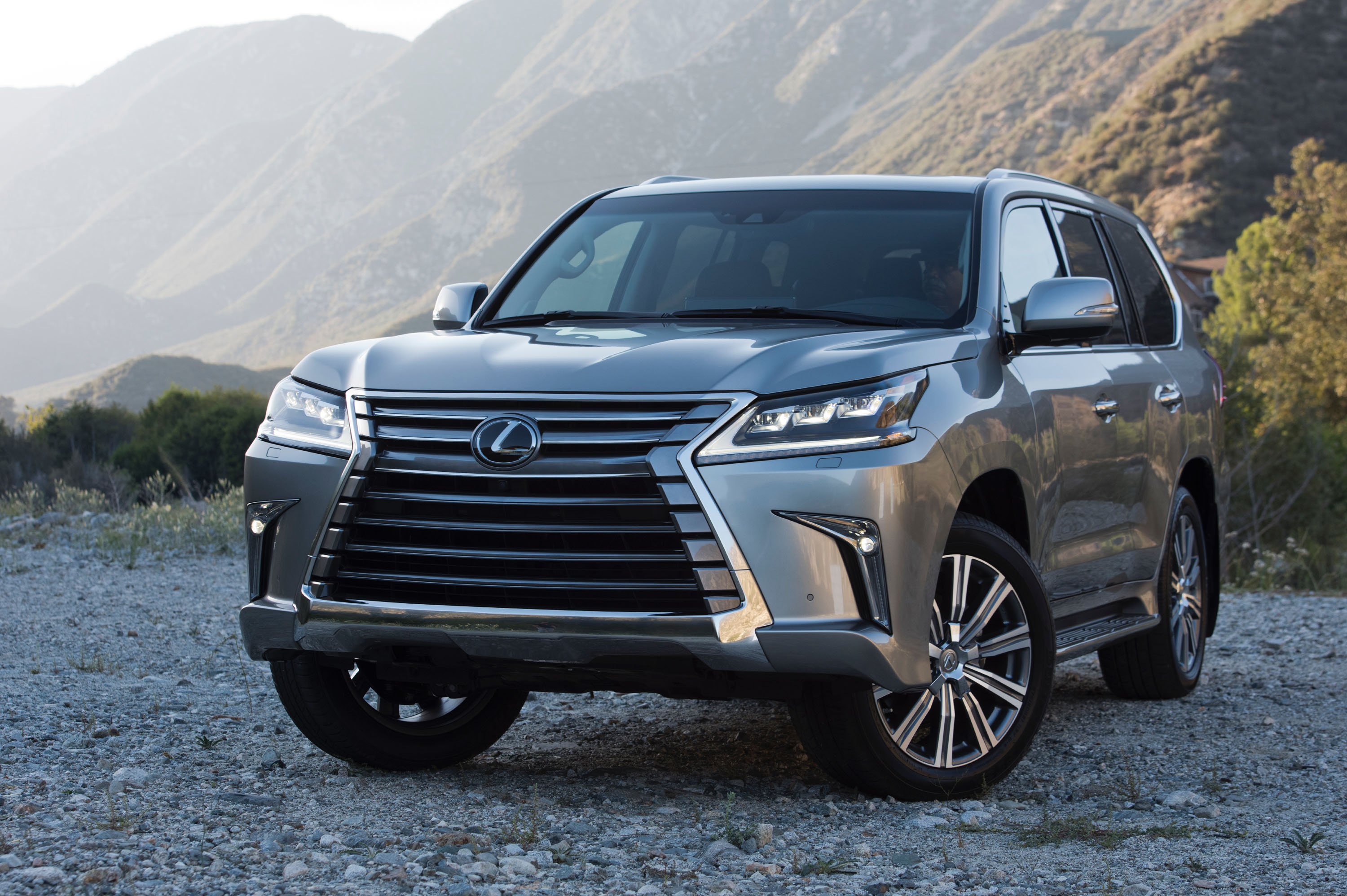
Lexus has also adapted the Land Cruiser to be a luxury model in its range for customers who want a more capable off-road vehicle than the RX.
First Toyota model sold in Malaysia
The Land Cruiser was also the first Toyota model to be sold in Malaysia (although East Malaysians will argue that there was no ‘Malaysia’ then). In 1956, North Borneo (Sabah) Trading had obtained distribution rights for Toyota vehicles and imported a batch of Land Cruisers to sell. The first customer was in Tanjung Aru, Sabah, who is believed to have paid RM8,600 for a unit with a 3.9-litre engine.
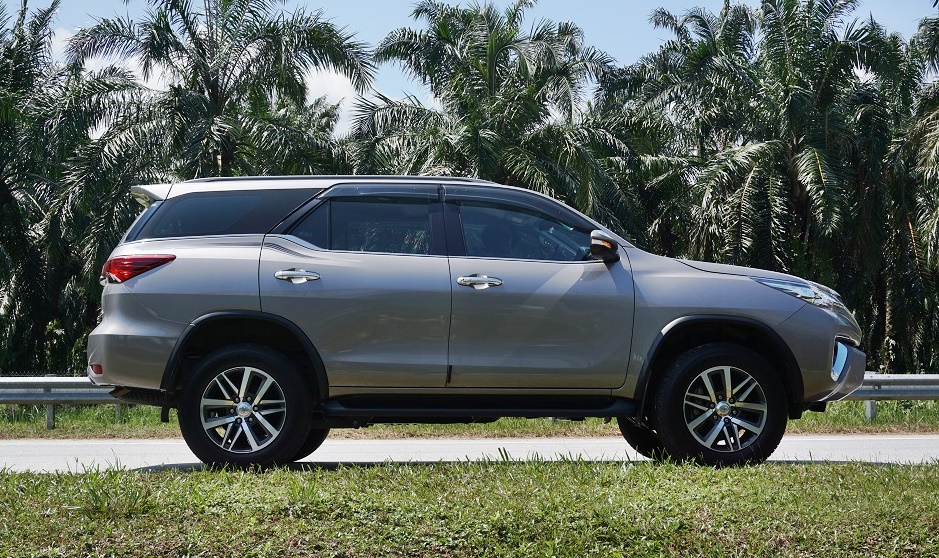
In 1956, the first Toyota model sold in Malaysia was a Land Cruiser 20 Series like the one shown above.Local assembly of Land Cruisers ceased in the early 2000s as demand for large SUVs declined. However, Toyota’s IMV project replaced the model in the segment with a new one called the Fortuner.
Some 20 years later, the Land Cruiser would be assembled at Sarawak Motor Industries in Kuching and shipped to Peninsular Malaysia as well. The Land Cruiser, together with the Hilux, strengthened Toyota’s image in East Malaysia as they proved to be very reliable vehicles. In the mid-1980s, after UMW Toyota Motor took over Toyota distribution, assembly of the Land Cruiser was moved to its own plant in Shah Alam, Selangor. Local assembly of the model would continue into the early 2000s and then cease as demand for large 4×4 vehicles began to decline.
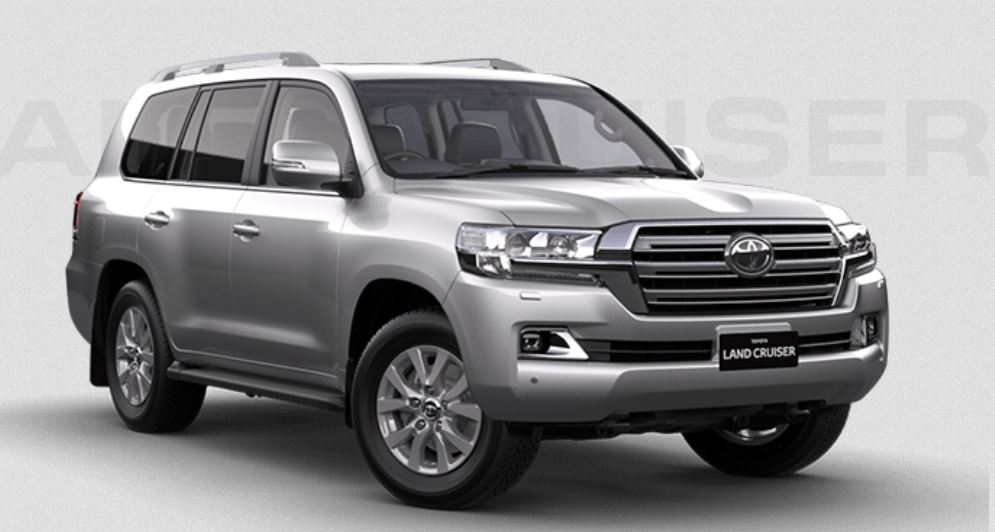
Like other Toyota models, the Land Cruiser has also gone through generational changes since 1951. Each generation has been referred to as a ‘series’ and the current one is the 200 Series which is the eighth series. Interestingly, while most markets would sell the latest series, there are regions where the 40 Series vehicles continue to be used – some 50 years after they were manufactured.
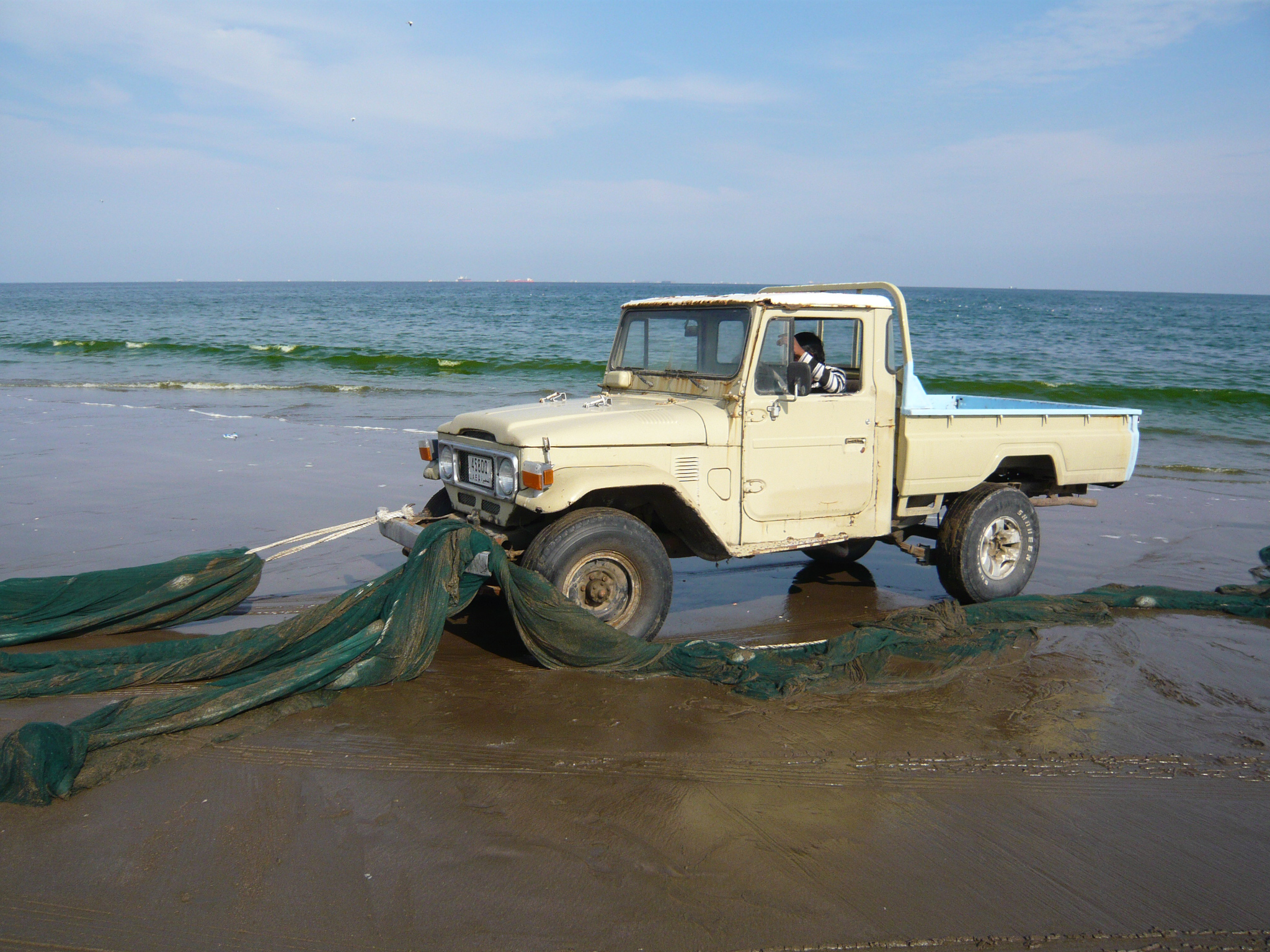
Land Cruisers last a long time and this 40 Series unit is still in use 50 years after it was manufactured.Current generation of the Land Cruiser
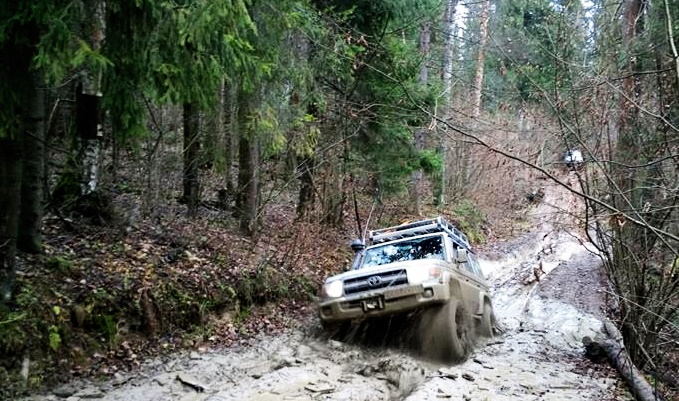
The Land Cruiser continues to be a popular vehicle for off-road transportation. While the older models have a following among enthusiasts, the modern ones are favourites of armed forces and various organisations involved in humanitarian assistance.
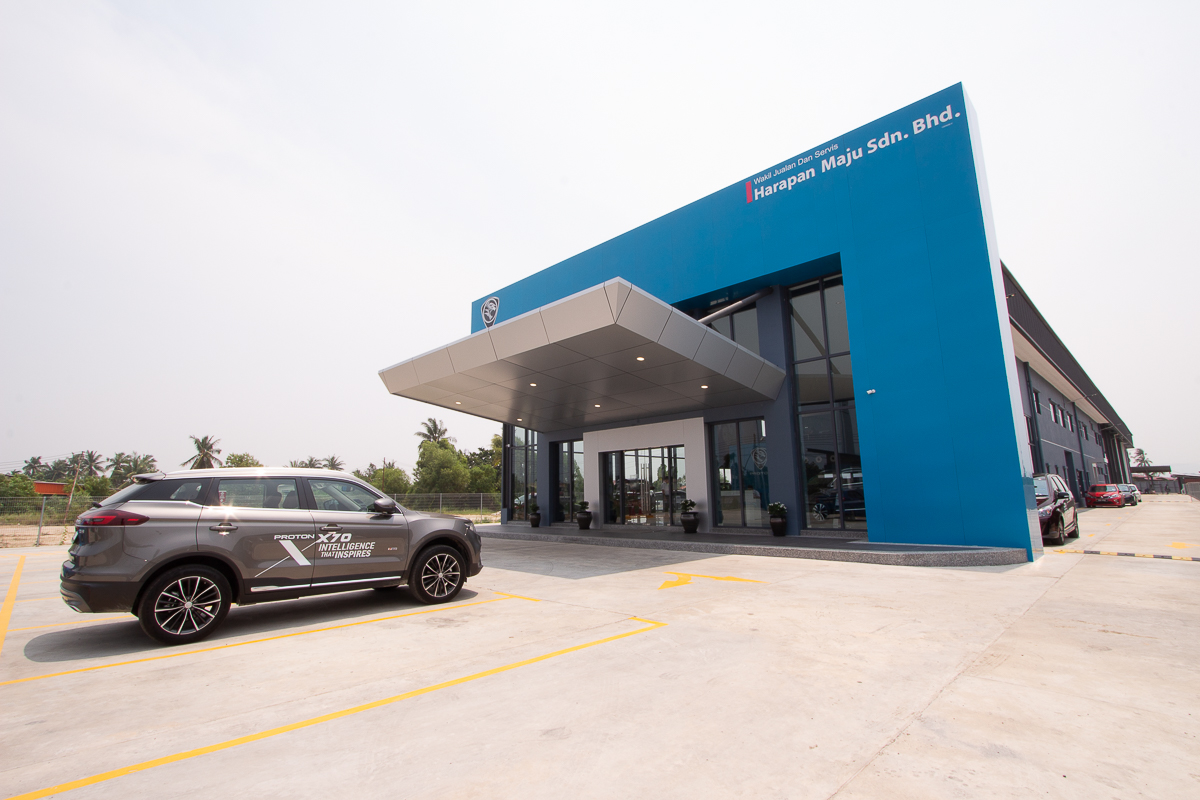
Harapan Maju Sdn Bhd has opened a new Proton 3S Centre in Kota Kinabalu, Sabah yesterday. This is the second dealer outlet to be opened in the city with Proton’s new corporate identity and to make things even more special, it was officiated by the Minister of Youth and Sports Sabah, YB Phoong Jin Zhe. (more…)
After months of patience and anticipation, UMW Toyota Motor (UMWT) has finally graced the Malaysian market with their latest and most iconic model to date, the 2020 Toyota GR Supra. Officially launched globally earlier this year, UMWT kept their promise and delivered their masterpiece today during its grand unveiling in Kuala Lumpur. (more…)
When Perodua started making cars over 25 years ago, its mission was to offer Malaysians low-priced personal transportation, besides helping in the development of the domestic auto industry. Learning from its technical partner, Daihatsu Motor, and then slowly building up its own in-house capabilities, it has done well and ascended to being the No.1 carmaker in the country.
The products which Perodua has been selling are at the entry-level end of the motor vehicle spectrum. In other countries, entry-level models are the cheapest and come with a minimum of equipment and features. Their cost is kept as low as possible so they can be sold cheaply. Some manufacturers may make little or nothing on such models but hope that once they have drawn new customers to own and experience their brand, they will be able to retain these customers in the years to follow.
Malaysian consumers expect a lot
The situation in Malaysia is somewhat different, perhaps because consumers regard the prices of cars as being too high – and this has been the perception for a long time. The tax structure is largely the reason but the government has always found it hard to lower taxes on new vehicles as the revenue is significant. To give it up means that another source of revenue must be found and that’s difficult in these times. The only way has been to provide incentives to those companies that assemble locally and make investments, enabling them to offset their production costs and set lower retail prices.
Even then, Perodua still has a big challenge because its customers expect even entry-level cars to have features and equipment that the more expensive models have. Fortunately, the carmaker has reached a very high volume today and has economies of scale to moderate production costs and give more to its customers than would be the case in other countries.
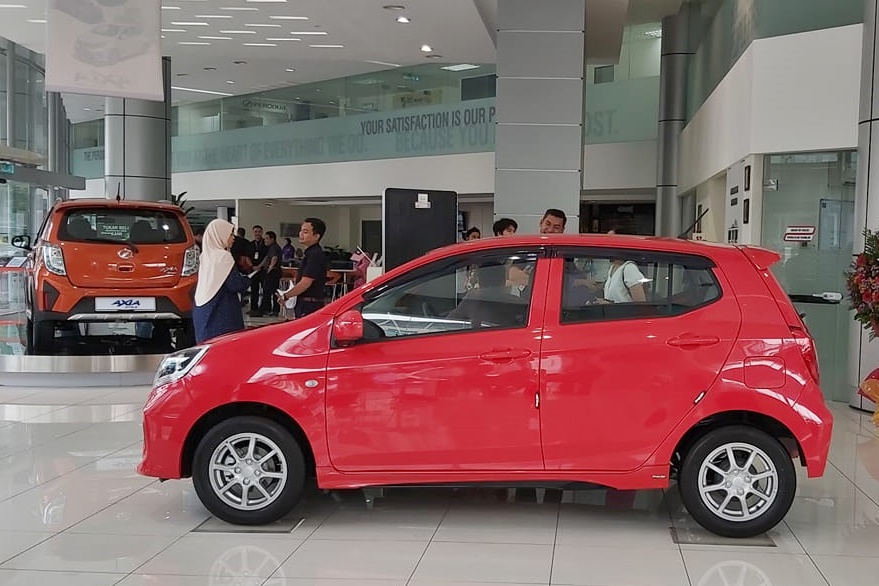
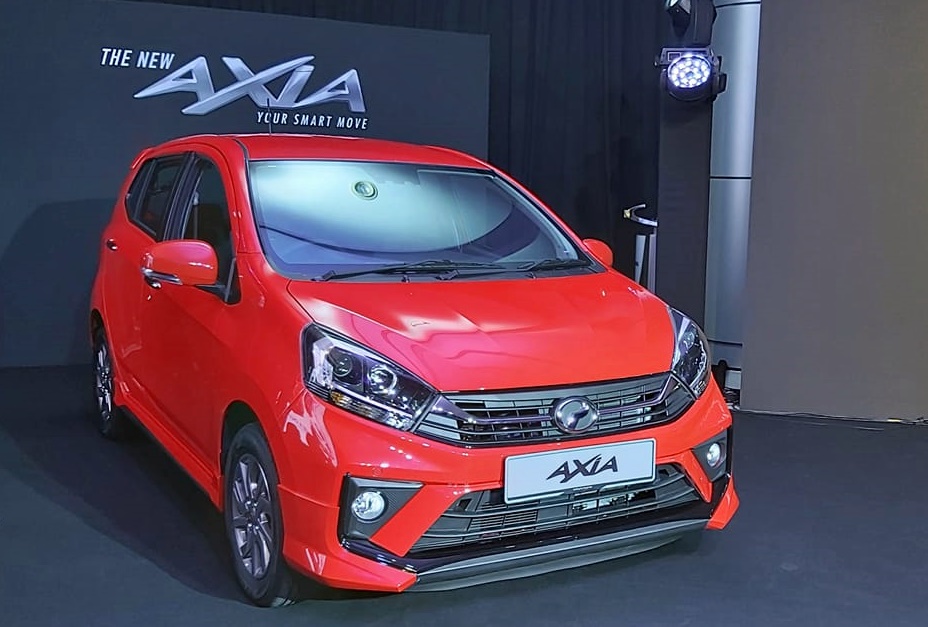
Which brings us to the 2019 Perodua Axia range launched today. The smallest model in Perodua’s range, the Axia has been in the market since September 2014 and with over 400,000 units on the road, it is the bestselling model in its class. In 2017, an updated model was launched and helped to maintain interest to keep sales high.
The ideal first car
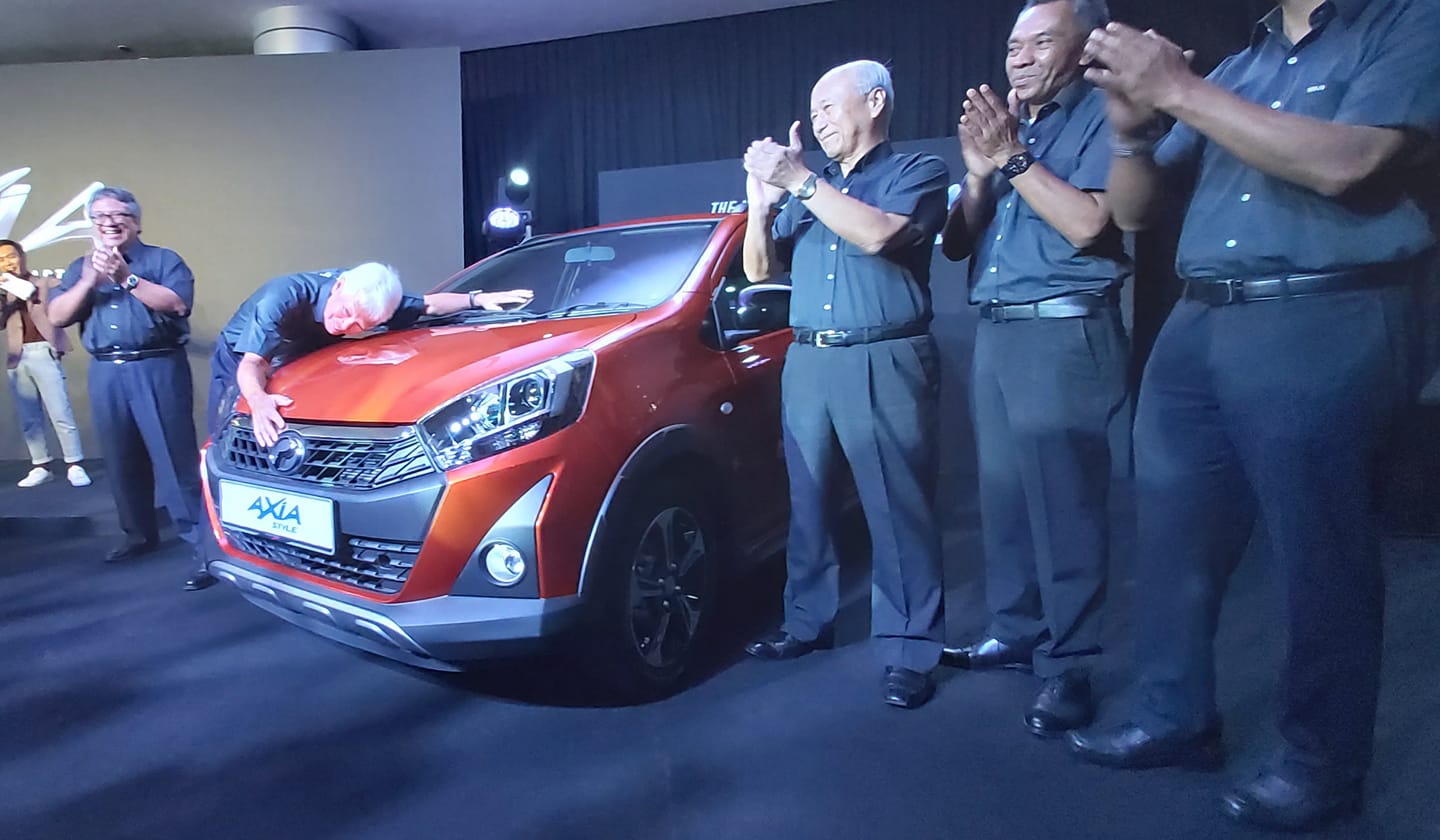
Like the Kancil and Viva earlier, the Axia has been popular among younger customers which is not surprising, of course. It is ideal as a first car for many just starting to work. At the same time, there is also a segment of buyers who want a simple, economical small car just for daily transportation. The Axia also serves such people well and in fact, Perodua’s Chairman, Tan Sri Asmat Kamaludin, says that he enjoys driving his Axia more than the Lexus that the company provides.
“For over a quarter of a century, Perodua has mobilised Malaysia with quality compact vehicles that offer practicality, dependability, ease to drive and low overall ownership costs. For these reasons and more, the Kancil and Viva were popular choices for an entire generation of Malaysians buying their first cars,” said Perodua’s President & CEO, Dato’ Zainal Abidin Ahmad.
“The 2019 Perodua Axia carries on that spirit while offering Malaysians much more in an entry-level model than ever thought possible. It offers major advances in safety and style never seen before in this segment and yet retains its affordability,” he added.
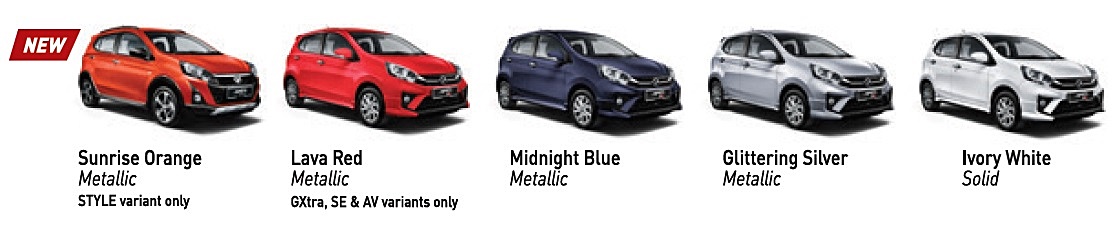
2019 Perodua Axia colours
Enhanced safety (in top variant)
The range-topping AV variant (pictured above) now has Advanced Safety Assist (ASA) 2.0, which is one generation ahead of the one that was introduced in the current Myvi. ASA 2.0 has extended capability and comprises Pedestrian Detection (up to 50 km/h), Pre-Collision Warning (up to 100 km/h), Pre-Collision Braking (up to 80 km/h), Front Departure Alert and Pedal Misoperation Control functions to mitigate collisions. The video shown below refers to the Aruz SUV but the A.S.A. 2.0 system is identical in functions and capabilities.
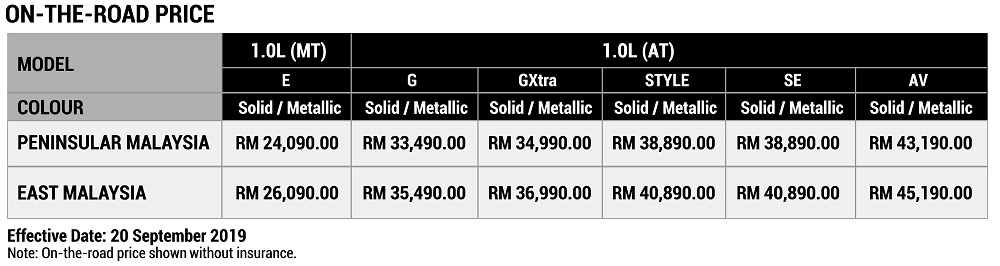
Also, all variants from GXtra and above come with Vehicle Stability Control (VSC) and traction control, and all variants except the cheapest Axia E have ABS with Electronic Brakeforce Distribution as standard. ISOFIX is standard across the range for those who have to install childseats, while SE and AV variants get solar and security window film.
The Axia STYLE
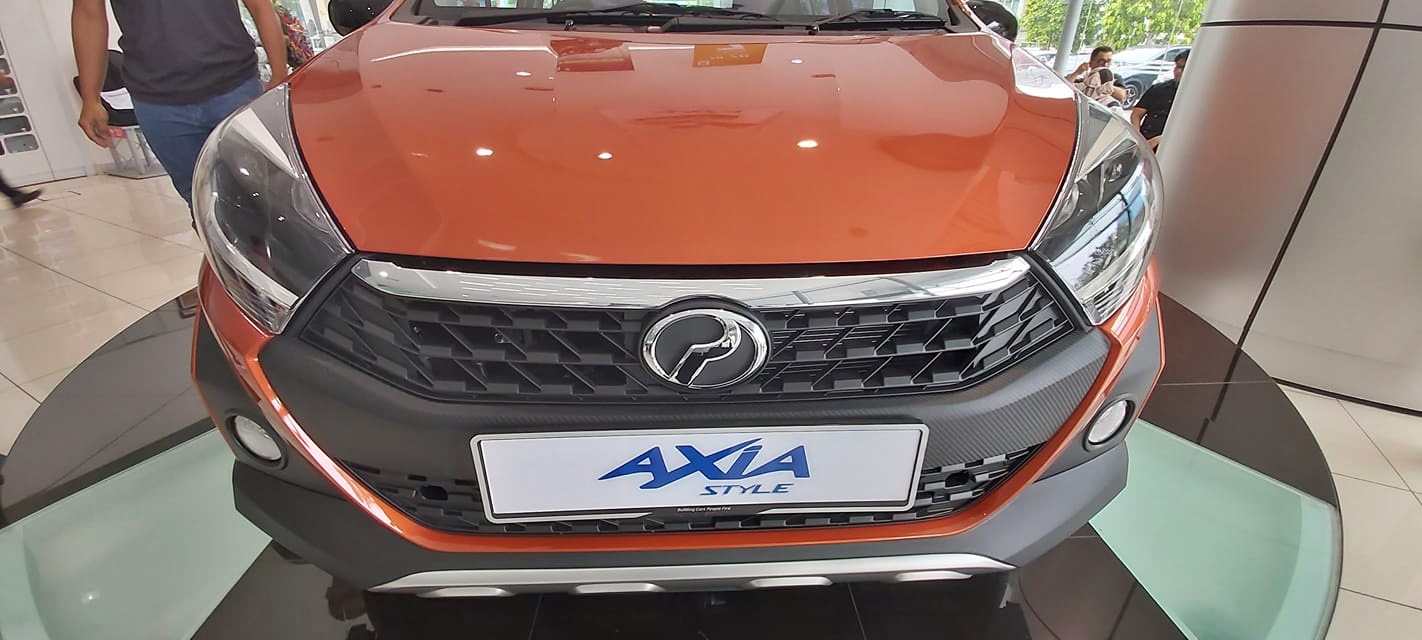
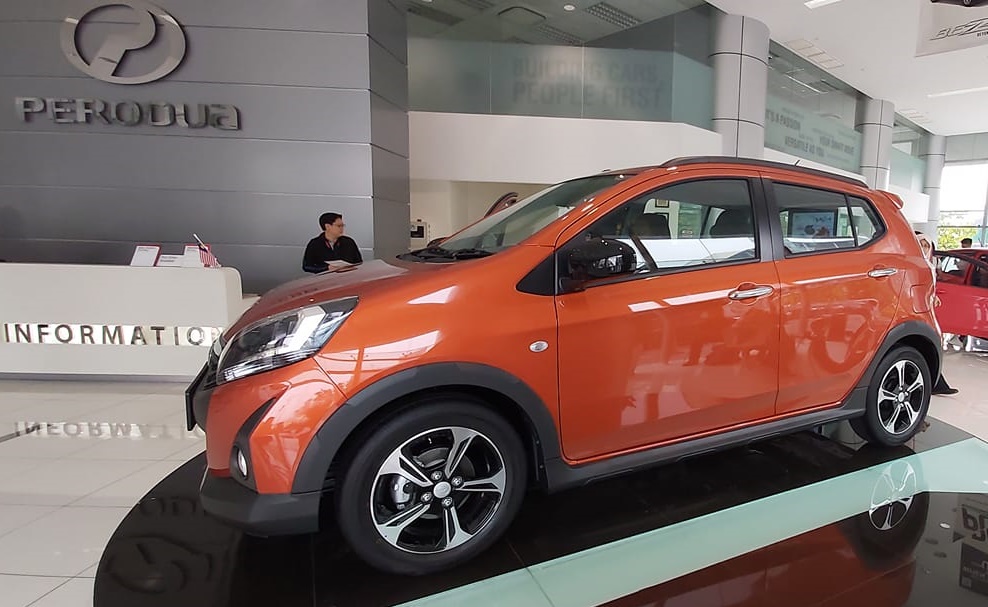
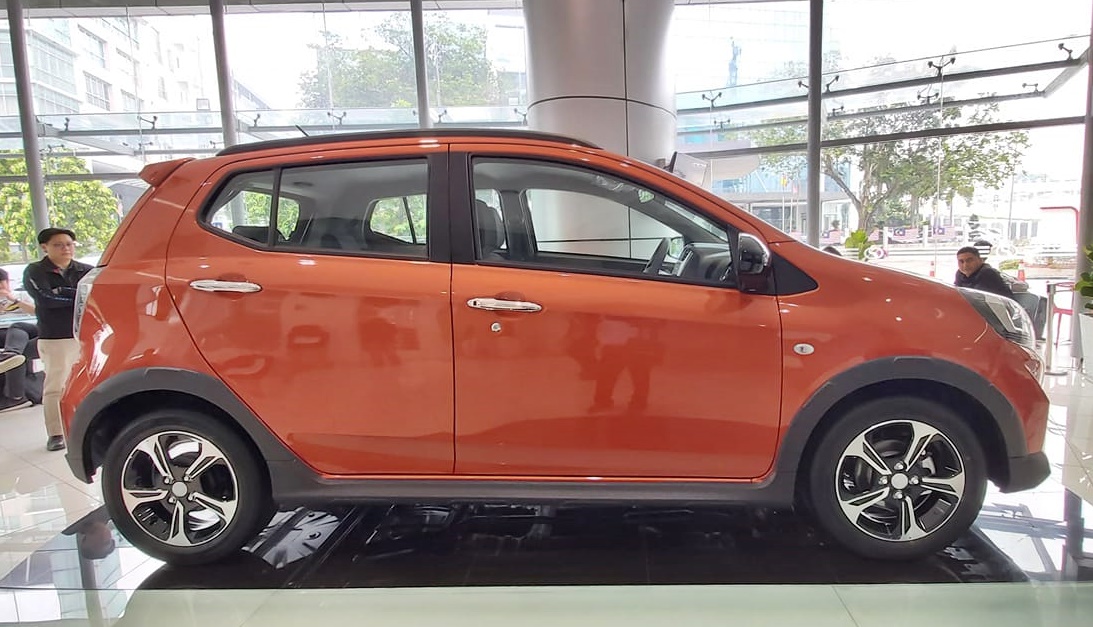
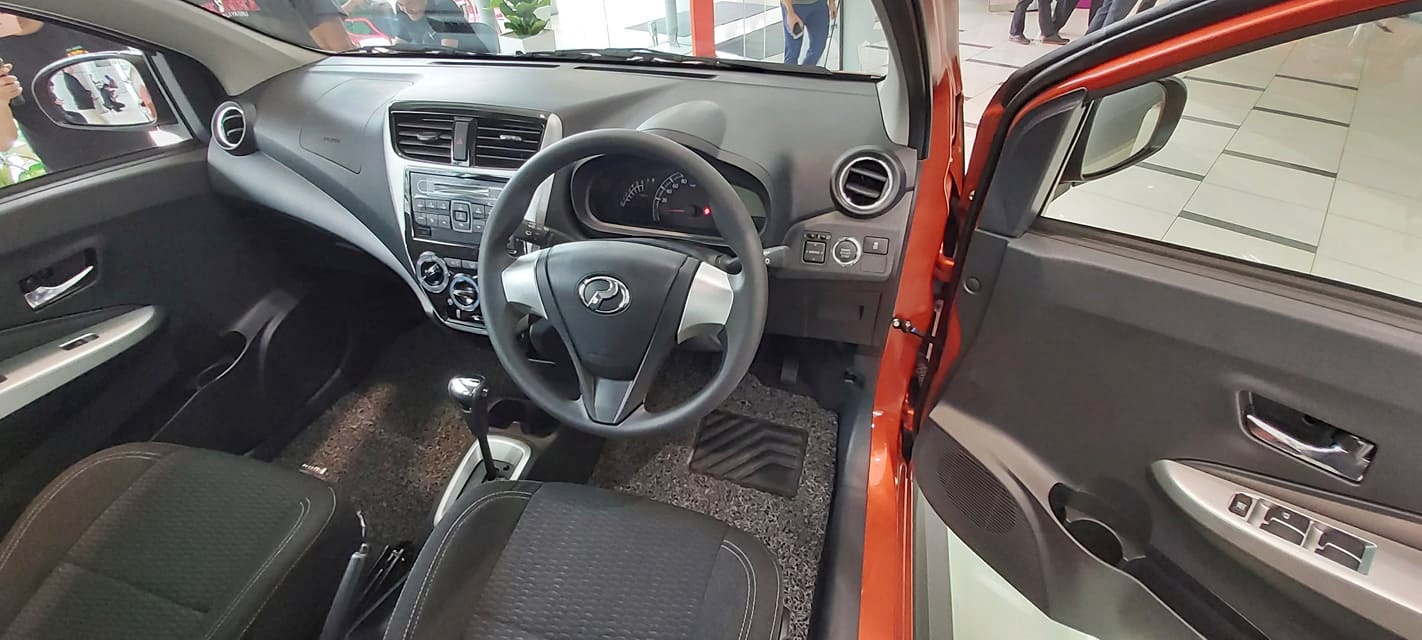
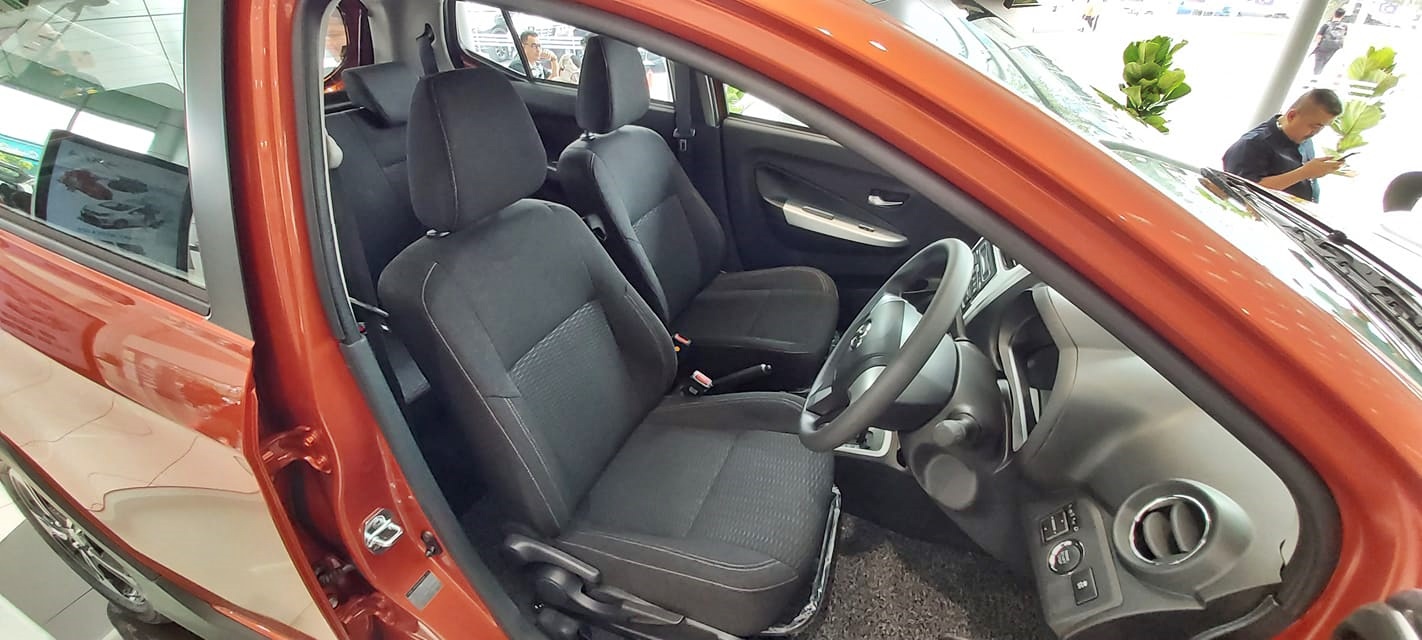
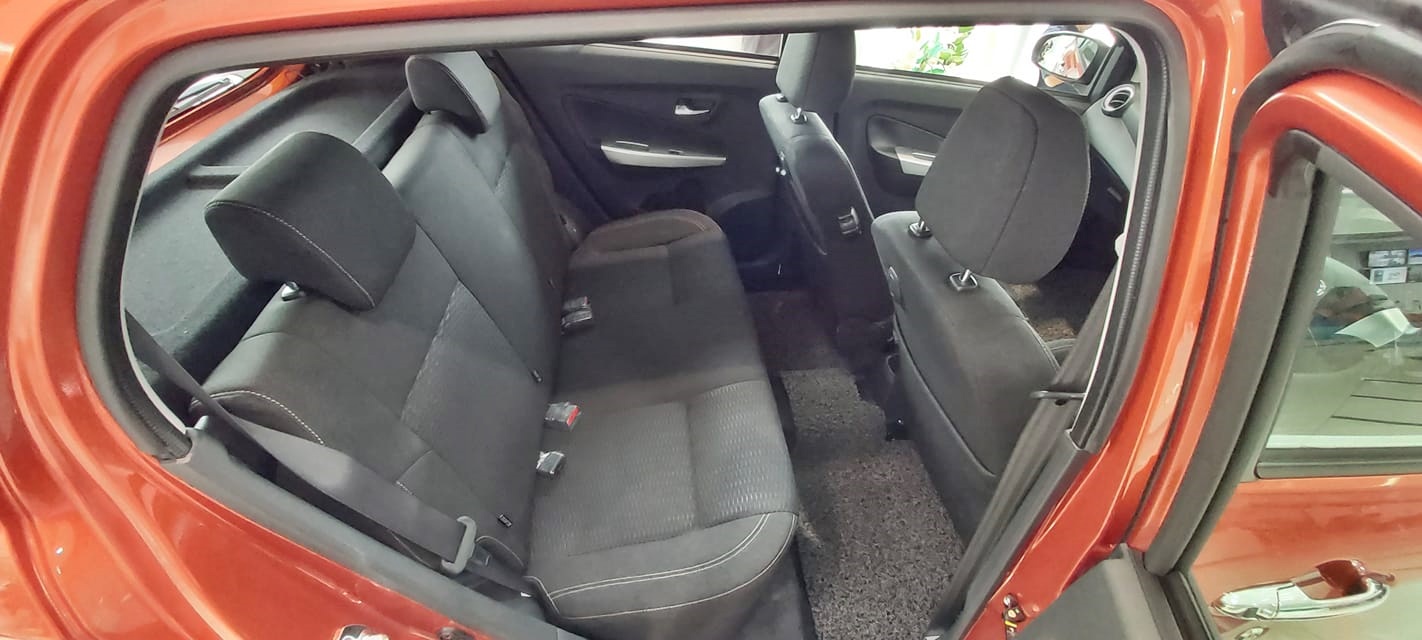
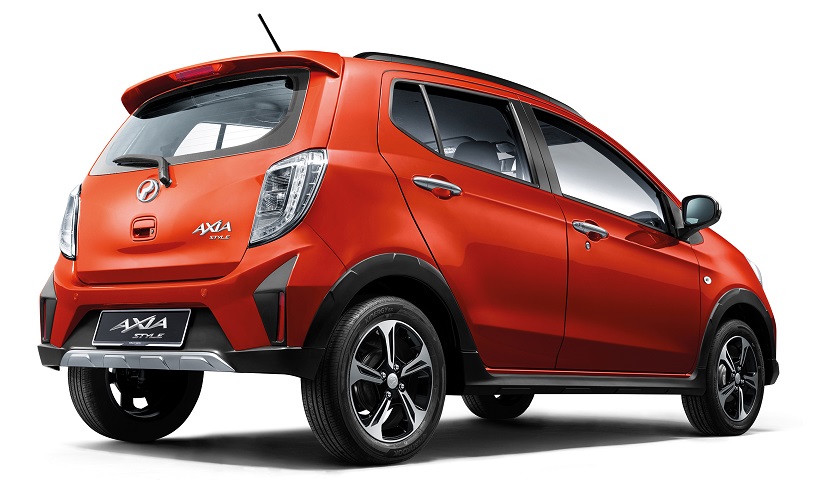
The big news for the 2019 range is the addition of the STYLE variant. At a glance, this looks like a different model but it is just like the other Axia variants except that the designers have given it a bolder appearance. The looks have been inspired by the current popularity of crossover vehicles which are more rugged-looking. To achieve such a look, there are different front and rear bumpers with a skid plate being made a visual element, all-round body cladding, clear-lens tail lamps, roof mouldings, and a rear spoiler. The slightly raised body is the result of installing 15-inch alloy wheels. A new variant-exclusive Sunrise Orange body colour completes the trendy crossover-inspired look.
“The new Perodua Axia STYLE embodies the desire to be different; to unleash the fun and active side that exists in all of us. It is upbeat and trendy and, at the same time, retains all the hallmark Axia qualities of practicality, spaciousness, clever design and ease to drive,” Dato’ Zainal explained.
The STYLE variant is partly an experiment by Perodua to gauge consumer reaction to more ‘adventurous’ styling ideas. The problem is often that such variants might not stay in fashion for too long as tastes change. In the past, Perodua had some success with the two-tone Kelisa and that might be something to consider for the Axia STYLE too. In any case, for those who want additional personalization, there are already new GearUp accessories specially designed for the 2019 model.
The Axia is powered by a proven 1KR-VE engine with a 998 cc displacement, 12 valves and Variable Valve Timing. Power output is 68 ps/90 Nm and with a 4-speed electronic automatic transmission (4E-AT), the claimed fuel consumption is 21.6 kms/litre (20.8 kms/litre for the STYLE variant). The Axia E with a 5-speed manual transmission can go up to 22.5 kms/litre, it is claimed. This variant is popular with driving schools, we’re told.
The new Axia range can be viewed at Perodua showroom’s nationwide from today. Over 5,000 people have already booked one so if you already like what you see, don’t waste time and place your order quickly. You can find the locations of authorised Perodua dealers at www.perodua.com.my.