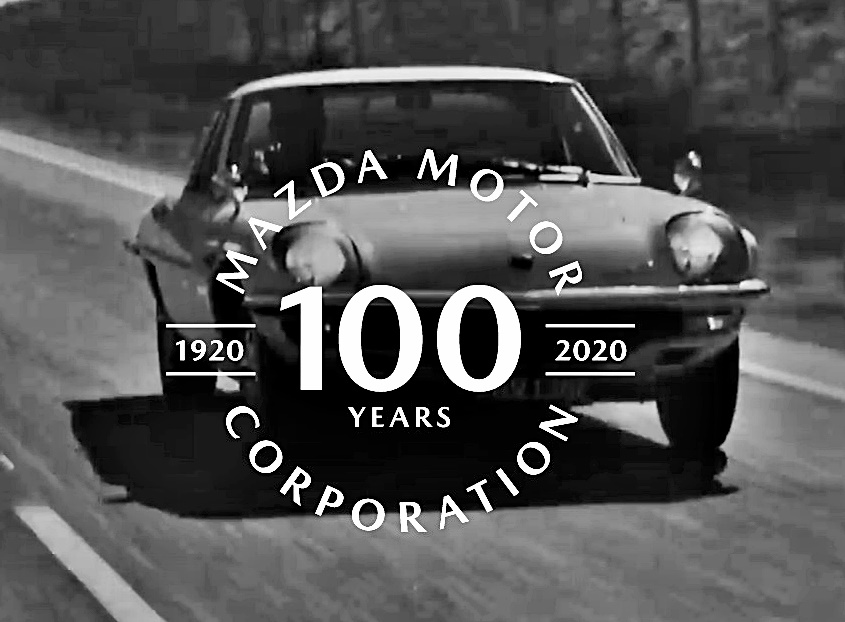
Mazda today celebrated its 100th anniversary with a ceremony at its Hiroshima headquarters that starts a year of events during which the company will remember its past and look to the future. 100 years ago, Mazda was not a car-producer but was a producer of cork in Hiroshima. It was when Jujiro Matsuda, an industrialist, took charge of Toyo Cork Kogyo Co. Ltd. in 1921 that the business transformed first into a machine tool producer and then a manufacturer of motor vehicles.
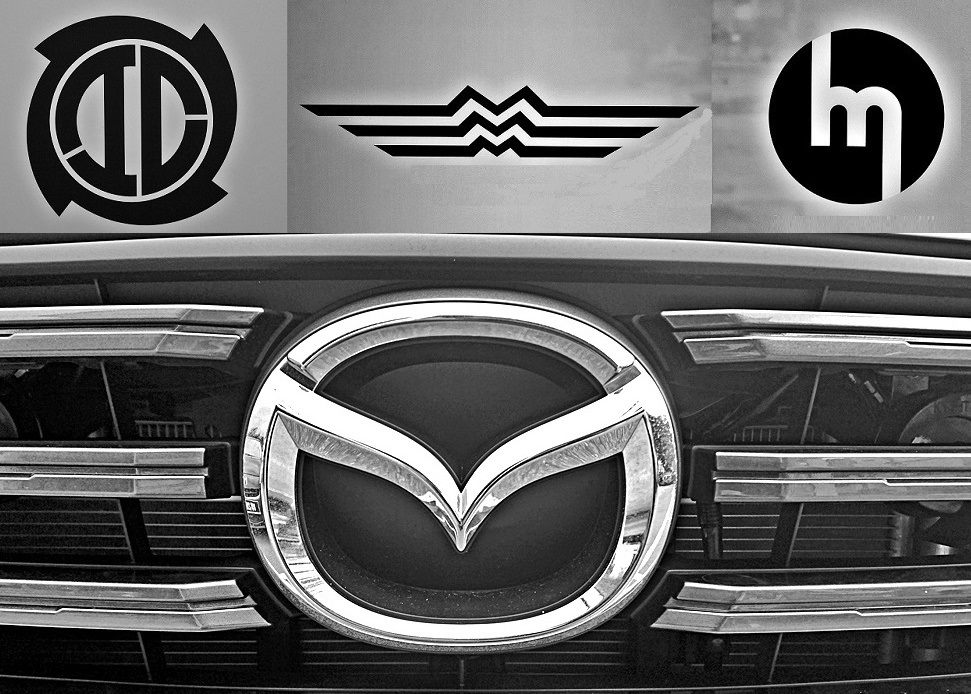
Evolution of the Mazda logo from the original one used by the Toyo Cork Kogyo Co. Ltd. 100 years ago (top left) and then changed during the 1940s to follow the emblem of Hiroshima (centre) and again in the 1960s (there were also other emblems used for short periods). Today’s logo, adopted in 1998, symbolizes the brand’s flight toward the future. The “V” in the centre represents creativity, vitality, flexibility and passion. The dynamic circle symbolises readiness to spread its wings as the company begins the 21st century.
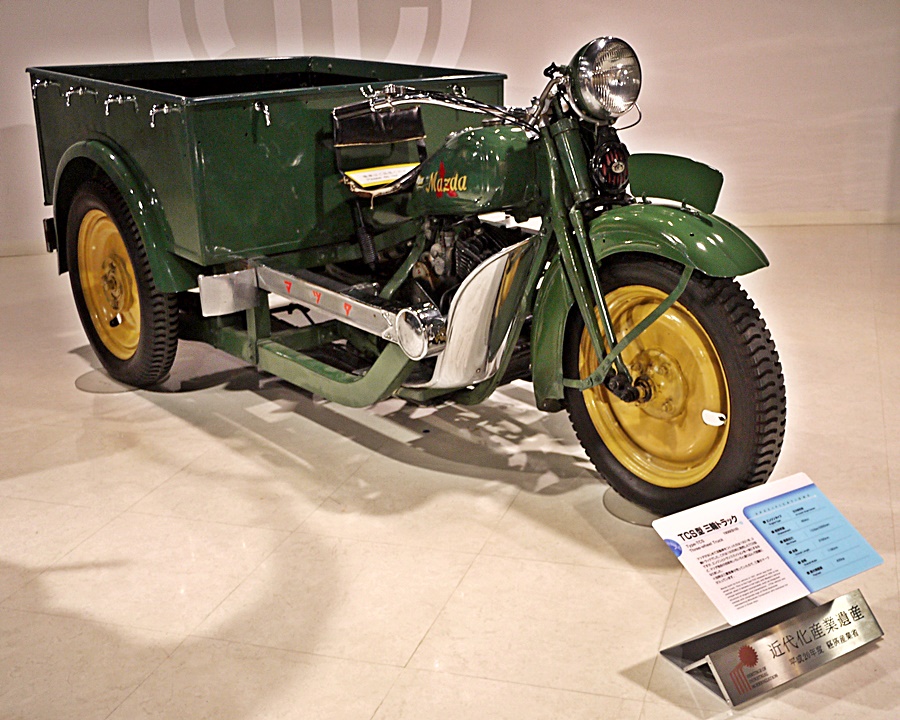
The first model was a 3-wheeled truck – the Mazda-Go – that went on sale in 1931. It proved popular and underwent continual improvement with innovations such as a 4-speed transmission in 1938 that reduced fuel consumption by 20%. Hiroshima was targeted by an atomic bomb during World War II and Mazda, like virtually every business in the city, suffered greatly. But a strong spirit persevered and truck manufacturing resumed only a few months after the destruction.
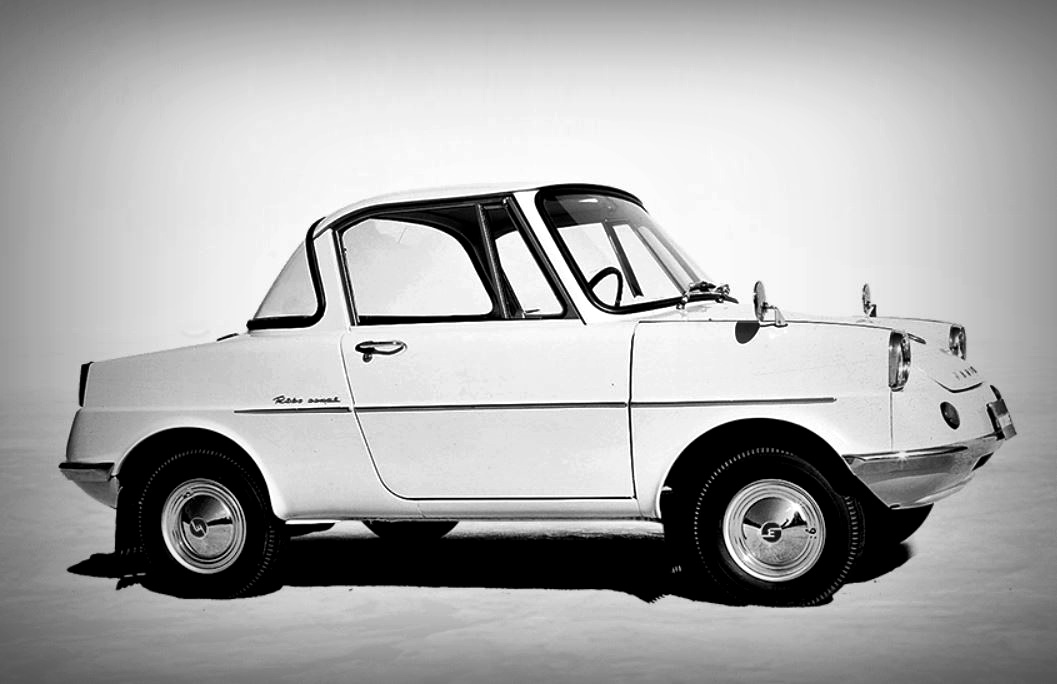
Mazda’s first motorised vehicle was a 3-wheeler introduced in 1931 (above), and it produced its first car – the R360 – in 1960 (below)
Commercial vehicles remained in the focus after the war and the first passenger car arrived in 1960 with the Mazda R360. The car was a hit in Japan’s popular kei-car segment, contributing to the motorisation of Japan and starting the path to the successful line-up of Mazda models that we see today.
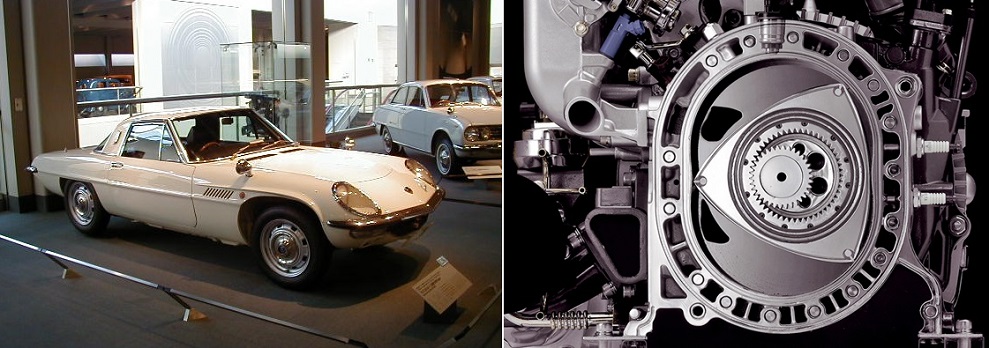
Mazda is closely associated with the rotary engine, having successfully commercialised it when others thought it was not feasible. In 1961, the company signed a licensing deal with German carmaker NSU to develop and produce its new compact, lightweight Wankel rotary engines. The determined Japanese engineers finally came out with the futuristic Mazda Cosmo Sport 110S in 1967, the world’s first production model with a rotary engine.
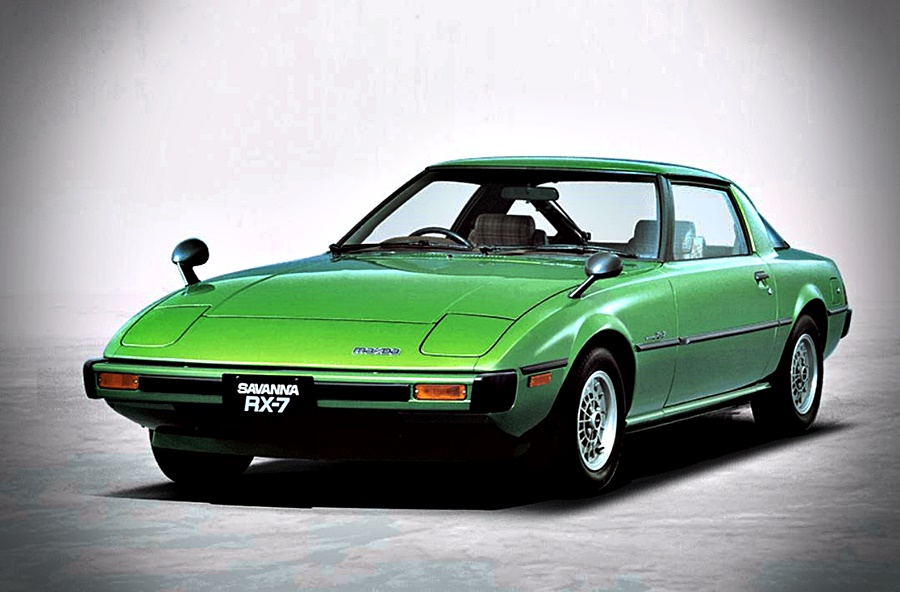
The Mazda Cosmo Sport 110S had the world’s first production rotary engine.Mazda RX-7 was among the almost 2 million rotary engine-powered cars sold by Mazda.
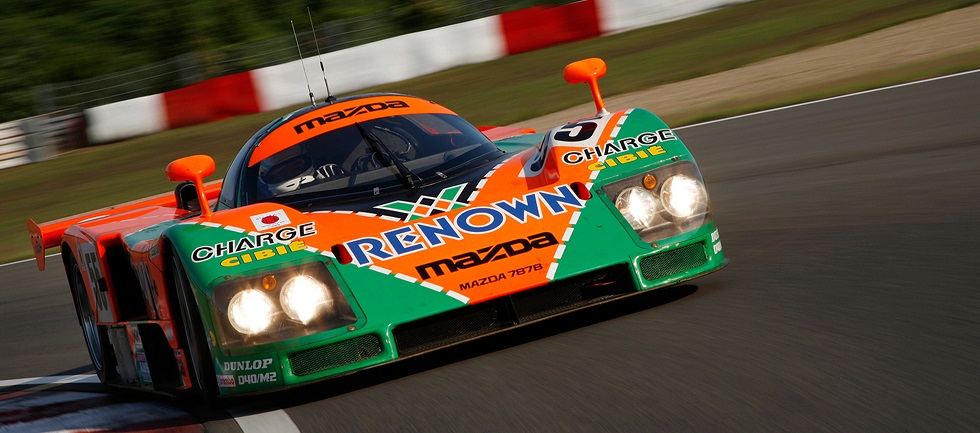
It was the start of a remarkable success story that would see the brand launch numerous models with the unique engine including the RX-7 and over time, almost two million rotary-powered cars were sold. The 4-rotor Mazda 787B won the Le Mans 24 Hours in 1991, the first Asian manufacturer to do so – and the only victorious car with a non-piston engine – and proving Mazda’s technological prowess on the track.
In 1991, Mazda was the first Asian manufacturer to win the Le Mans 24 Hour race with the 787B that had a 4-rotor rotary engine.
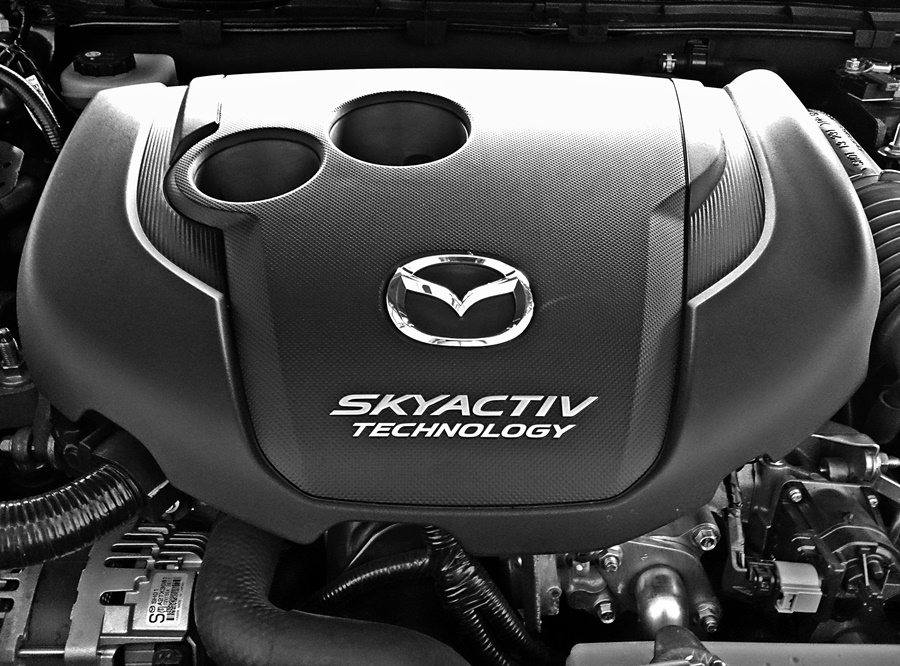
The courage to question common practices and forge new paths in engineering and design that others considered unfeasible has driven the team at Mazda since the beginning. Besides the rotary engine, Mazda also created the world’s best-selling 2-seat roadster – the Mazda MX-5 – which has sold over one million cars since its launch in 1989. Its SKYACTIV Technology has optimised vehicle design and engineering while Jinba Ittai provides the strong connection between car and driver in all Mazda models today.
The next 100 years
Mazda’s superior engineering is complemented by its design excellence that currently uses the KODO – Soul of Motion design language. The emphasis on design is so strong at the company that the designers have the fullest support from the manufacturing side which sees it as a challenge to reproduce the design features that may be omitted in other companies due to production constraints.
“Mazda originated as a company producing cork and then took the path to manufacturing automobiles. Now, our cars have found friends with many customers from over 130 countries and regions. As we look ahead to the next 100 years, we will continue to put people first and cherish our ‘uniqueness of co-creating with others.’ As we strengthen co-creation and cooperation with all those connected with the company, we will continue to challenge ourselves to create unique products, technologies, and experiences that our customers love,” said President & CEO, Akira Marumoto.
During the 1960s, as traffic volumes began to increase, it became necessary for their movement to be managed so that jams did not form at junctions. Policemen did the job initially but eventually, traffic lights took over the task and provided management for 24 hours, rain or shine. However, along some roads like Jalan Mountbatten (Jalan Tun Perak today) in Kuala Lumpur, there were a number of junctions so traffic would move forward and then have to stop after a short distance. Then someone did some calculations and synchronised the green lights to occur at specific intervals so that if a car travelled along at a moderate speed, the driver would not have to stop as the lights would be green. Thus was born the ‘Green Wave’ system which was used on some Malaysia roads.
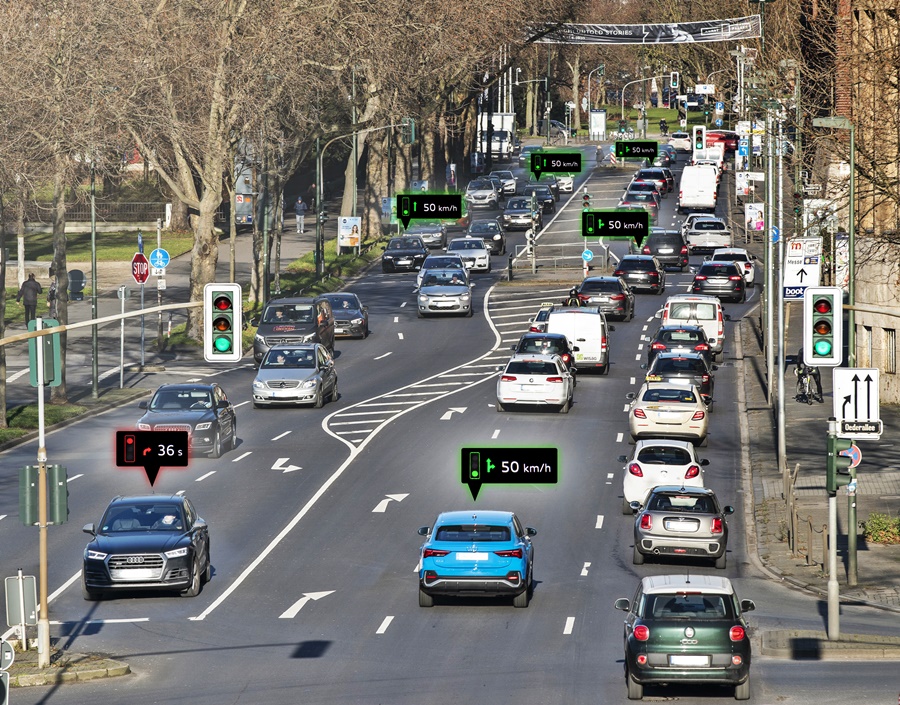
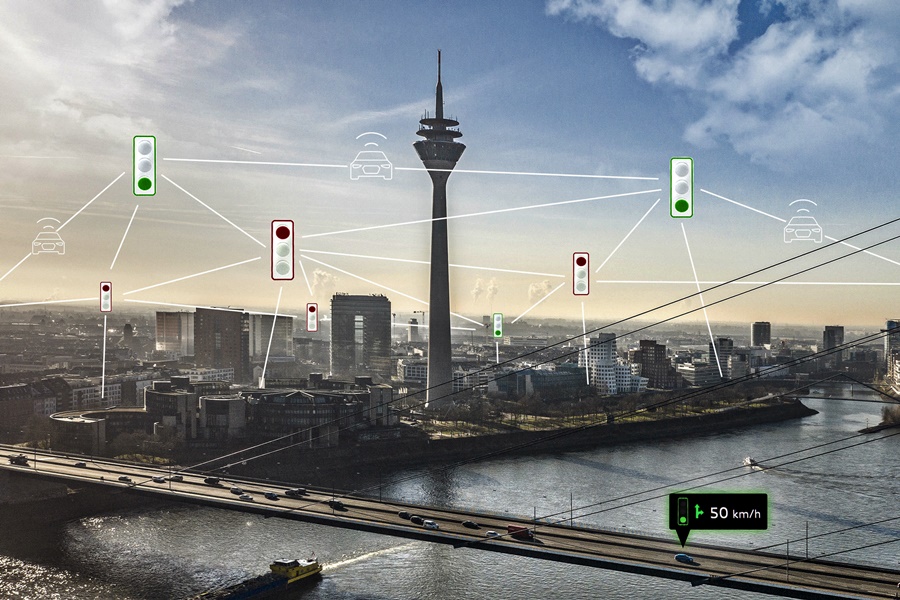
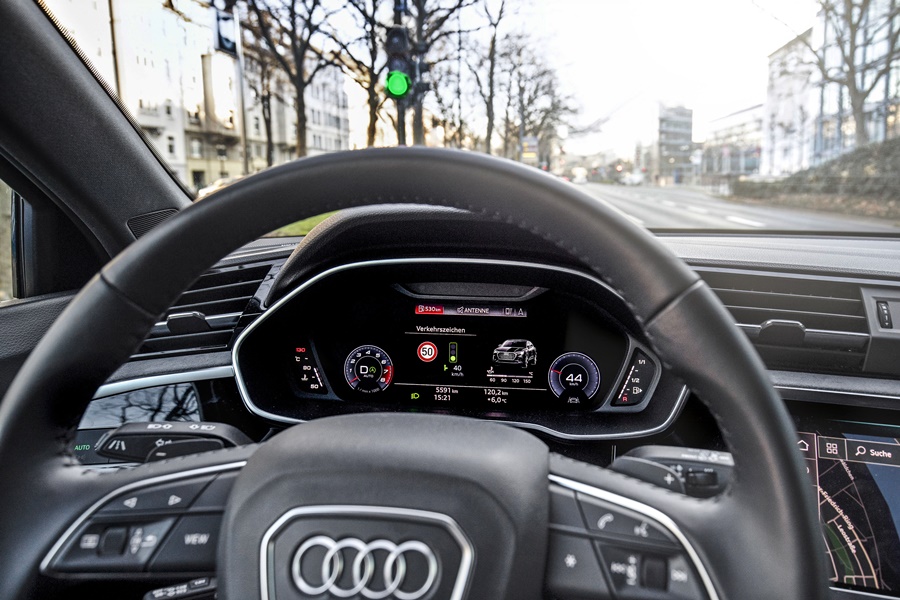
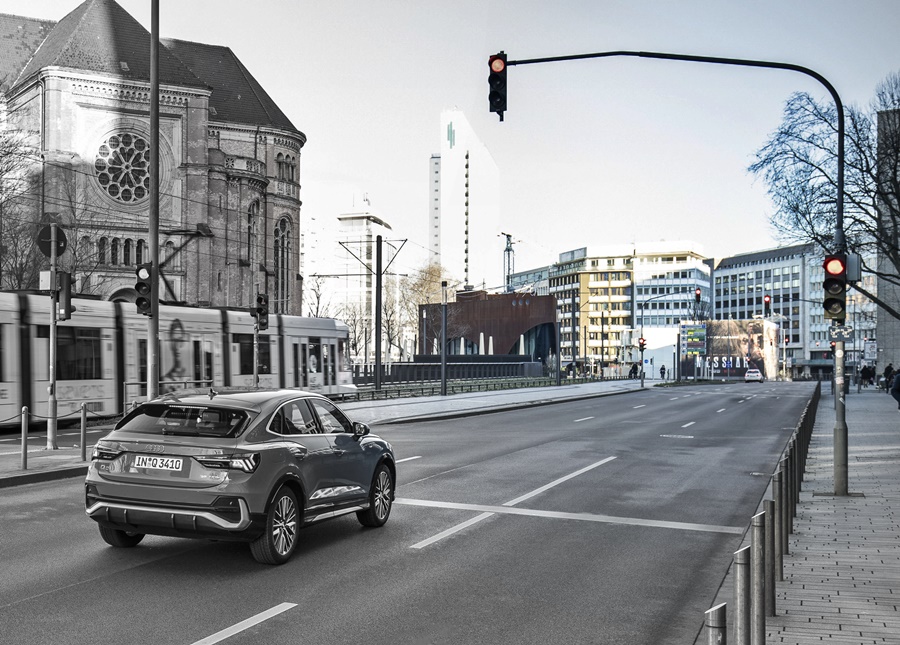
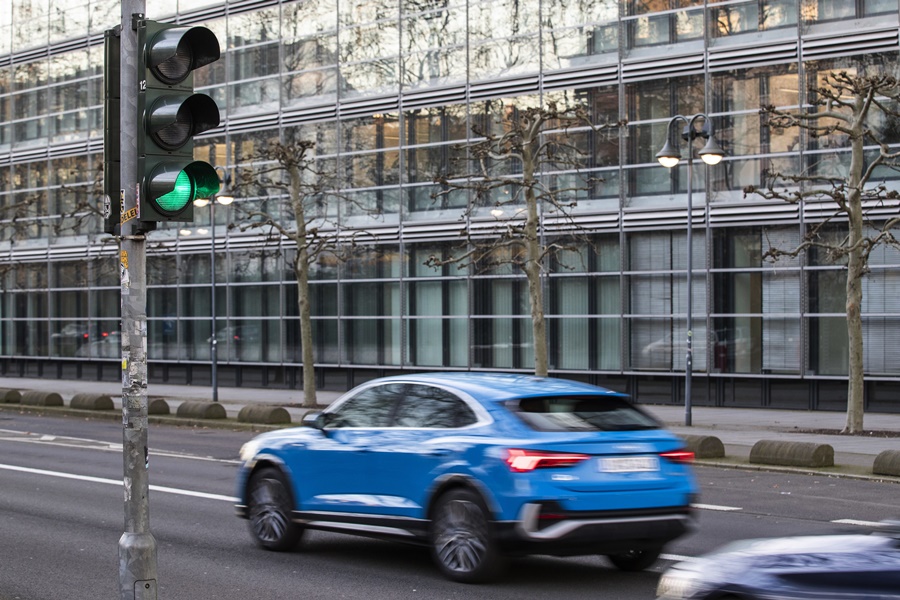
That system was a very simple one of just synchronising the traffic lights and today, with the availability of networked communications, a ‘Green Wave’ is possible on certain roads in two German cities. At Ingolstadt and Dusseldorf, Audi’s Traffic Light Information enables Audi drivers to see information from around 150 traffic lights in their cockpit, thus increasing their chance of catching a “green wave”.
By the middle of this year, most of the intersections in Dusseldorf – approximately 450 out of a total of some 600 installations – will be networked. Vehicle-to-infrastructure (V2I) services like Audi Traffic Light Information will help increase efficiency, convenience and safety on the roads.
Audi Traffic Light Information consists of two functions: Green Light Optimized Speed Advisory (GLOSA) and Time-to-Green. GLOSA calculates the ideal speed for getting a ‘green wave’. For example, if the function indicates the applicable speed limit, the next traffic light will be reached when it is at green.
Drivers do not have to accelerate unnecessarily, they are not stressed, and they drive more safely. GLOSA can also suggest reducing speed gradually about 250 metres ahead of the traffic lights so that the driver and the cars behind reach the intersection when the lights turn to green. This reduces uneconomical stop-and-go traffic.
If stopping at a red light is unavoidable, a countdown displays the seconds remaining until the next green phase begins (Time-to-Green). Drivers can relax, take their foot off the pedal and save fuel. A number of studies conclude that drivers will be able to move through cities more efficiently with networked traffic lights. In a pilot project, Audi vehicles had reduced fuel consumption by 15%.
“With Audi Traffic Light Information, we wish to improve convenience for drivers, increase traffic safety and encourage an economical style of driving that looks ahead,” said Andre Hainzlmaier, Head of Development for Apps, Connected Services and Smart City at Audi.
“To do this, we have to predict precisely how traffic lights will behave in the next two minutes. At the same time, exact forecasts are the biggest challenge. Most signals react variably to traffic volume and continuously adapt the intervals at which they switch between red and green,” he said.
Audi and its project partner, Traffic Technology Services, have developed a complex analytical algorithm that calculates exact predictions from three sources: from the control program of the traffic signals; from the real-time data of the traffic computer, a combination of road-occupation cameras, detector strips in the road surface, data on approaching buses and trams, and buttons that pedestrians press; as well as from historical data. The forecast algorithm improves itself continuously and learns how, for example, the traffic volume changes in morning commuter traffic or at midday when children leave nurseries and schools.
The Audi fleet plays a decisive part in optimizing the traffic light forecasts. “The cars send anonymized data when traffic lights are crossed to an Audi backend, which checks whether the actual crossings of traffic lights correspond to the forecast data. Only after this are the traffic lights cleared for the display in the car,” Hainzlmaier explained.
Audi Traffic Light Information premiered in 2016 in Las Vegas. Today, this V2I service is available at more than 10,000 intersections in North America. The carmaker is also the world’s first automotive manufacturer to network its series-production models with city traffic lights. Its system, available only in a few countries at this time, operates in all Audi e-tron, A4, A6, A7, A8, Q3, Q7 and Q8 models produced since mid-July 2019.
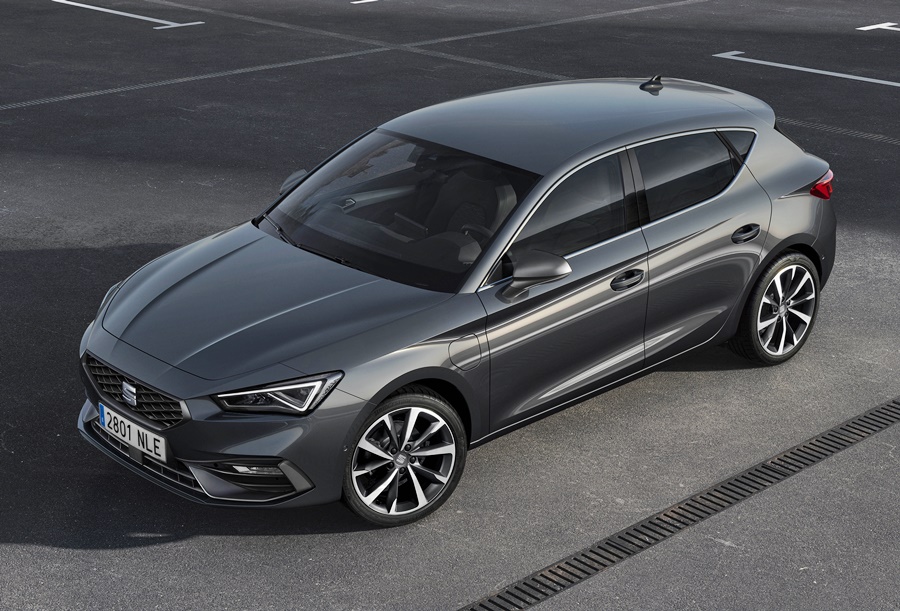
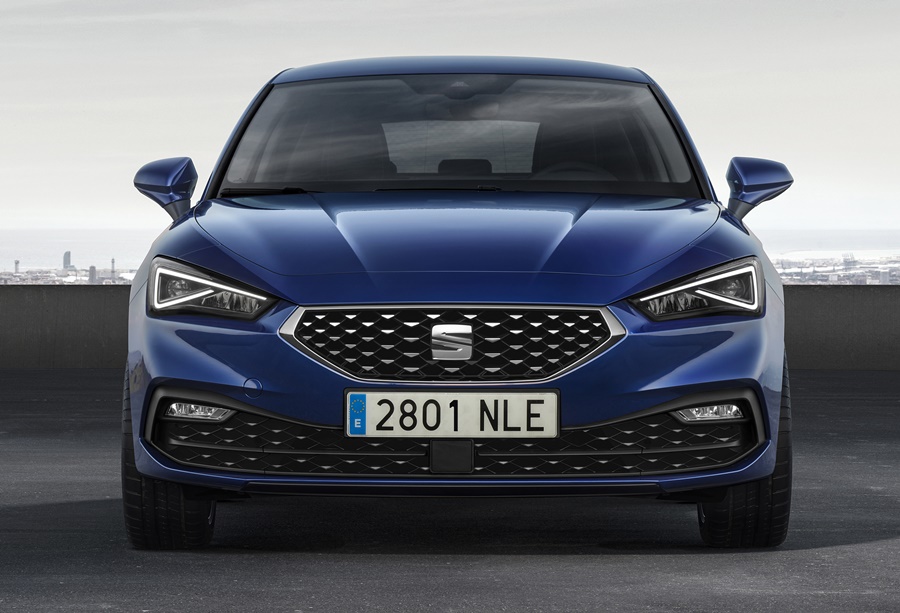
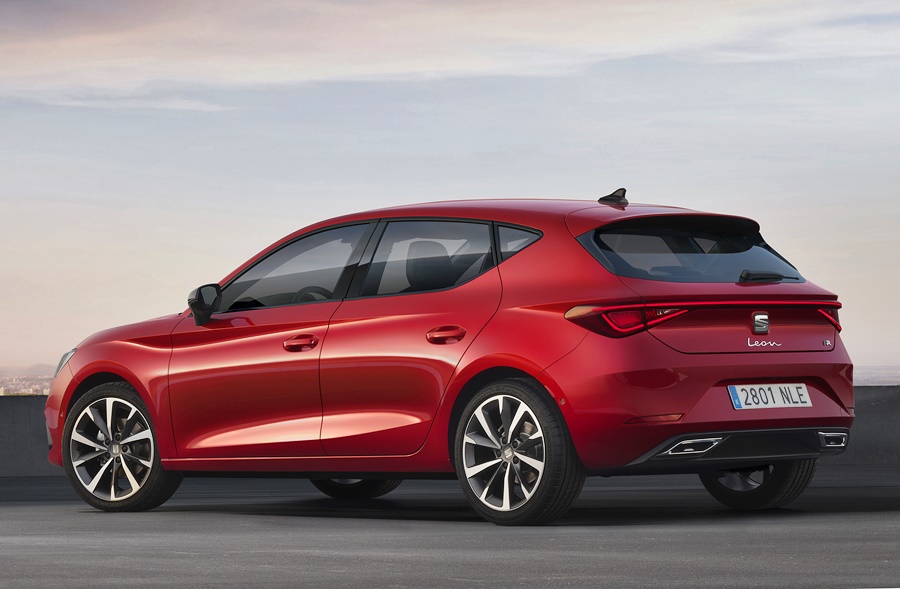
SEAT, the Spanish carmaker that is part of the Volkswagen Group, has unveiled the all-new Leon which will have its public launching in Geneva in March. Over 2.2 million units have been sold since it was added to the SEAT range in 1999 and, like the latest Volkswagen Golf 8 and Skoda Octavia 4, it sits on the Volkswagen Group’s MQB Evo platform.
“The SEAT Leon has been improving generation after generation being able to conquer new customers. In 2019, the Leon was the best-selling car for SEAT with more than 150,900 vehicles delivered, as well as being the best-selling car in Spain during the past 5 years,” said SEAT’s Executive Vice-President for Sales & Marketing and CUPRA CEO, Wayne Griffiths. “We have now created the best Leon ever. The new Leon has been designed keeping the ‘created in Barcelona’ spirit and at the same time being the safest, most connected and with the widest range of engines the brand has ever seen. We believe we have all the ingredients to make of the new Leon a great choice not only for private customers but also for corporate fleets.”
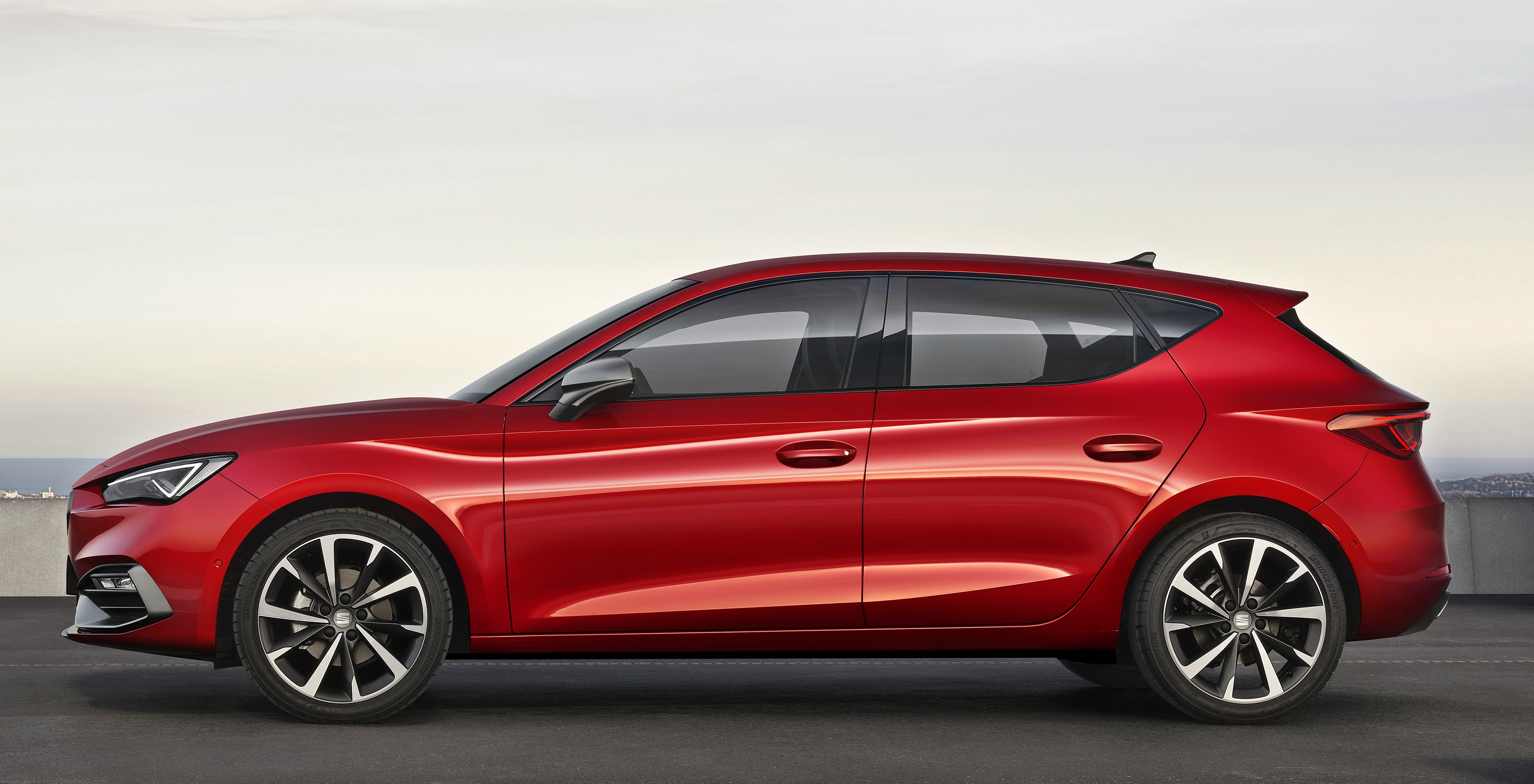
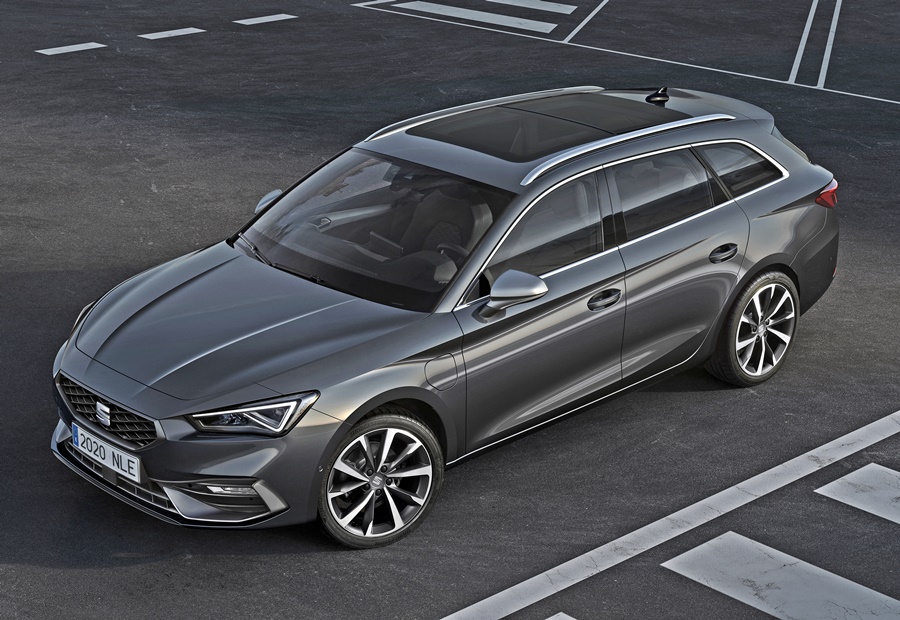
The new Leon is available in 5-door hatchback and estate (below) bodystyles.
Evolutionary approach to design
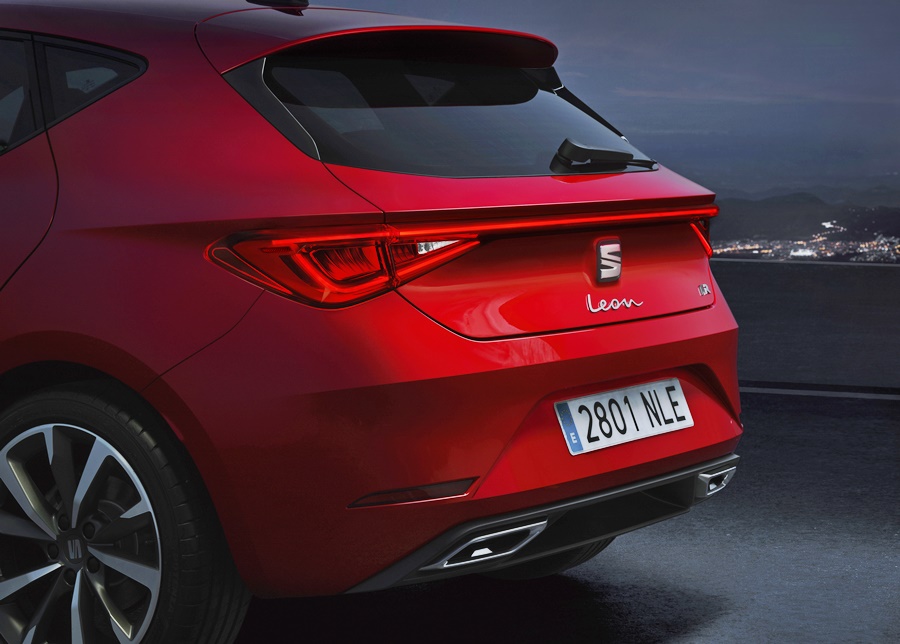
The exterior design takes an evolutionary approach that enhances the volume and proportions of the vehicle, with the increased wheelbase which translates to 49 mm extra legroom for rear occupants, and length for both the 5-door and the Estate. The form was specifically developed to enhance overall efficiency with improved aerodynamics that have the drag coefficient (Cd) lowered by around 8% compared to the previous generation.
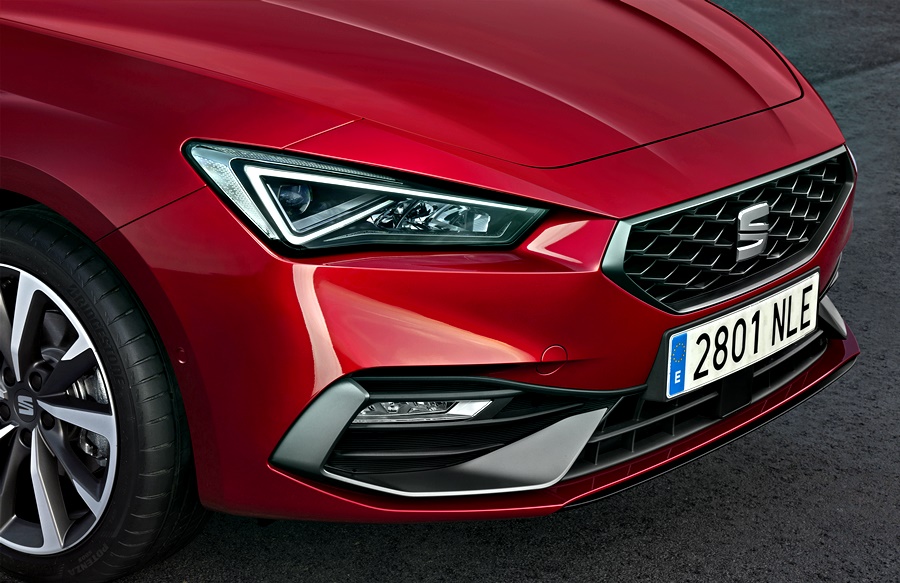
Typical of Spanish design philosophy, the car’s appearance has a lot of personality, with a stronger three-dimensional connection between the grille and headlights together. The headlights are set back, giving it deeper focus while making it instantly recognisable. The body surfaces have evolved, with stronger shapes creating more shift in the light and colour tone across the body, which together create a more elegant design.
The new Leon gets the latest in lighting technology, with the cold white light colour of the LEDs provide superior luminosity of up to 900 lumens, (standard LEDS provide up to 550 lumens), thanks to the packing of 22 LEDs per module. There is integration of all the dipped beam, high beam and daytime running lights. Dynamic indicators more clearly show car’s intended direction of travel when turning, apart from being eye-catching features.
Functionality, minimalism and sleekness
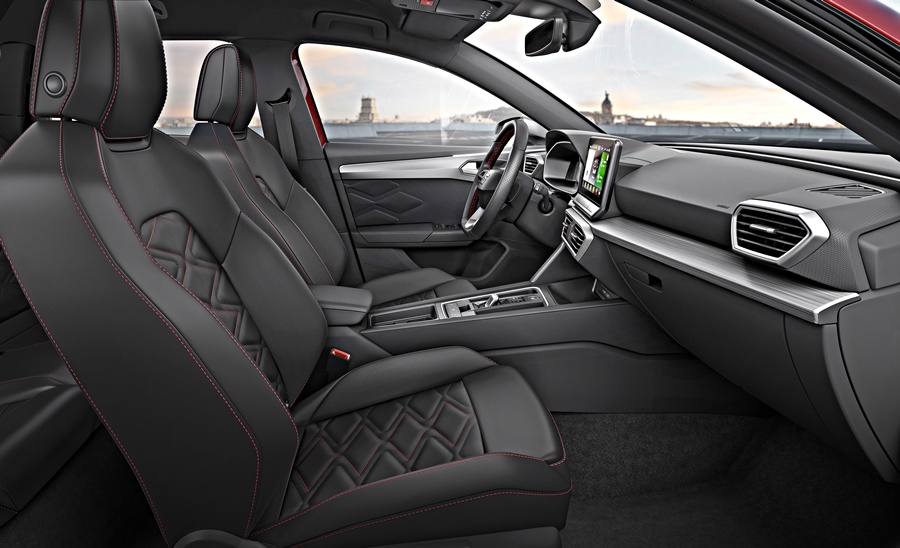
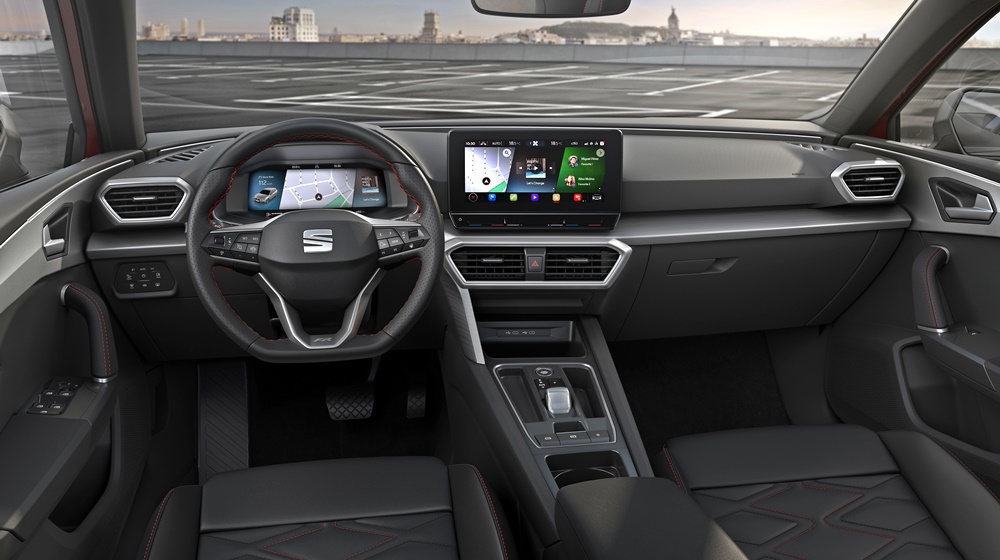
Inside, the evolutionary theme continues with a clear emphasis on functionality, minimalism and sleekness. The smooth-surfaced, slim yet wide dashboard gives the appearance of lightness and appears to float. The effect is created with the help of the decorative mouldings that surround the dashboard and continue through into the front doors.
The cabin has been ergonomically designed to increase comfort, with everything within decluttered, reducing the number of physical buttons to a minimum, with a focus on the main infotainment screen, which includes gesture recognition, providing all key interaction and commands from the occupants.
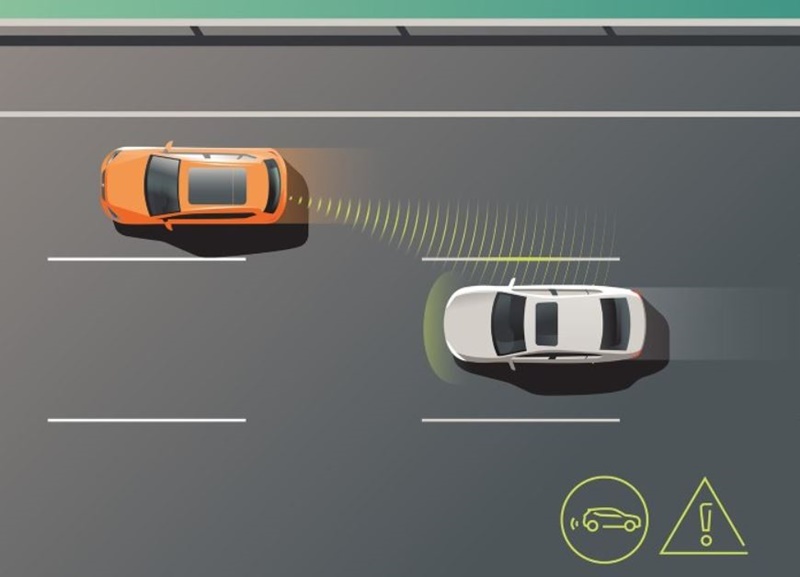
Interior light is an important feature of the all-new Leon. It includes a wraparound dashboard light that covers its entire width and continues through the doors. It’s not only an ambient decorative light, but it also provides a number of key functions including blind spot detection.
A fully connected car
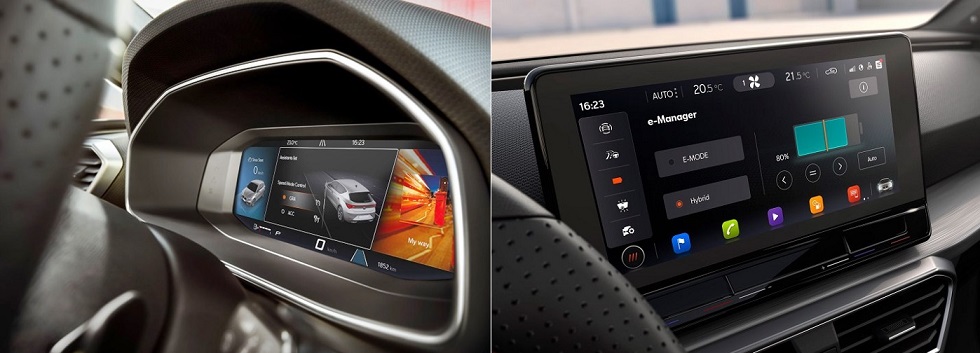
The Leon is declared as the brand’s first fully connected car, interfacing extensively with the more digitalised world. At the heart of the interior is the SEAT Digital Cockpit which brings together a high-resolution 10.25-inch configurable driver instrument cluster and 10-inch infotainment system. Its ‘diagonal’ graphic design positioning gets inspiration from the Diagonal avenue of Barcelona, the home city of the company. It’s also the first time that the design interface has been created at the new SEAT Digital Lab.
A new voice recognition system enables a natural understanding of language to allow the user to interact with the infotainment system using natural commands, making corrections and referencing previous commands. With the Full Link system, the occupants can connect their smartphones and access their digital data no matter what device they use – either wireless Apple CarPlay (based on Bluetooth or WLAN) or Android Auto using a cabled connection.
The built-in eSIM delivers the eCall service which has been required on all new cars since April 2018. This service directly contacts emergency services should an incident occur. At the same time, the system transmits vital data to the emergency services such as the car’s location (based on GPS data), engine type, and number of passengers.
Car2X connectivity is a cloud-based technology that enables drivers to receive advanced warning on the status of upcoming traffic lights or an incident on a motorway further up the road, with traffic information appearing in real-time on the screen.
Wide range of powertrains
Besides petrol (TSI) and diesel (TDI) engines, customers can also have mild-hybrid (eTSI) and plug-in hybrid (eHybrid) powertrains. Transmissions available are both 6-speed manual or a 7-speed DSG (direct shift gearbox) transmission. The DSG automatic transmission now benefits from shift-by-wire technology. The system is designed so that the gear selector is no longer mechanically connected to the gearbox, instead using electronic signals to indicate a shift.
The petrol engines are all direct-injection, turbocharged units with outputs between 110 ps and 190 ps. These include a 1.0-litre 3-cylinder unit as well as a 1.5-litre TSI 4-cylinder unit. Both engines use a Miller-cycle combustion process and variable geometry turbocharger to ensure performance and efficiency, as does the integrated Active Cylinder Management.
There are 2 diesel powertrain options, both 2.0 litre TDI units, with outputs of 115 ps and 150 ps. The turbodiesel engines introduce a new Selective Catalytic Reduction system that includes dual AdBlue injectors to significantly reduce NOx emissions compared to previous generation diesel engines.
As for the Mild Hybrid (eTSI) powertrains, these employ the 1.0 TSI and 1.5 litre TSI petrol engines which are mated to a 48V starter-generator, with energy from a lithium-ion battery pack. The car can coast (no pedal input from the driver) with the engine switched off (while retaining all key electric functions, such as power steering), harvest energy under deceleration and provide electrical torque assistance during acceleration.
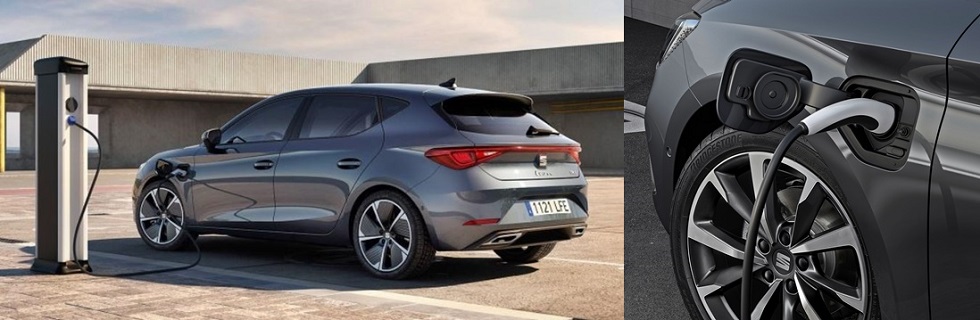
The eHybrid variant is a plug-in hybrid (PHEV) and this uses a 1.4-litre TSI petrol engine with the electric motor, a 13-kWh lithium-ion battery pack and 6-speed DSG transmission. The system output is 204 ps and recharging a totally empty battery pack to 100% is said to take less than 3.5 hours. The PHEV Leon can run on electric power only with a claimed range of 60 kms.
Highly-developed assistance systems
The latest Leon is the safest vehicle the brand has ever developed, the carmaker declares. The safety systems see more of its surroundings and react to obstacles on the road or sudden movements by other drivers, thanks to the integration of a suite of updated and completely new advanced driver assistance systems (ADAS). The new technologies continually sense the environment to offer the optimum protection whatever the scenario.
Predictive Adaptive Cruise Control (PACC) and Emergency Assist 3.0 protect the vehicle and its occupants while driving or stationary. PACC uses feeds from GPS data delivered from the navigation system and input from the front-mounted camera and Traffic Sign Recognition, allowing it to proactively adjust the cruising speed depending on the road layout ahead (bends, roundabouts, junctions, changes in speed limits and built-up areas). This reduces the requirement for driver input and also sudden speed changes and manoeuvres.
Production of the new model has started at the SEAT factory but prices are unlikely to be announced till March. However, like Skoda, SEAT products would be slightly cheaper than equivalent Volkswagen models.
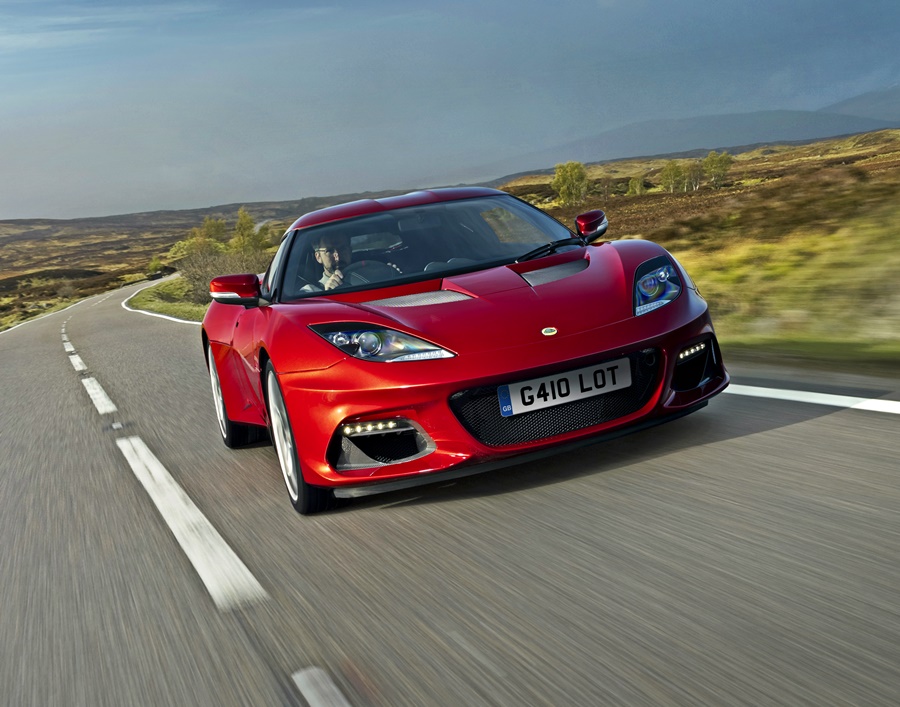
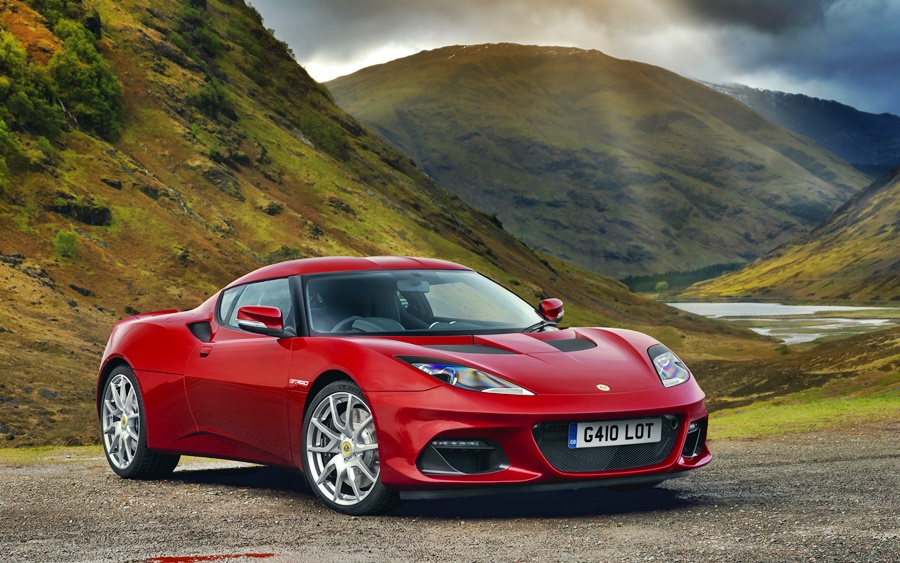
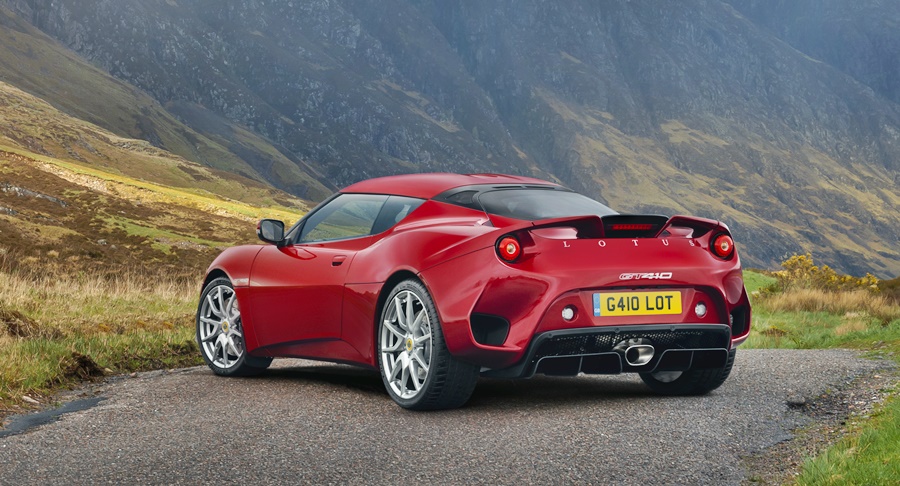
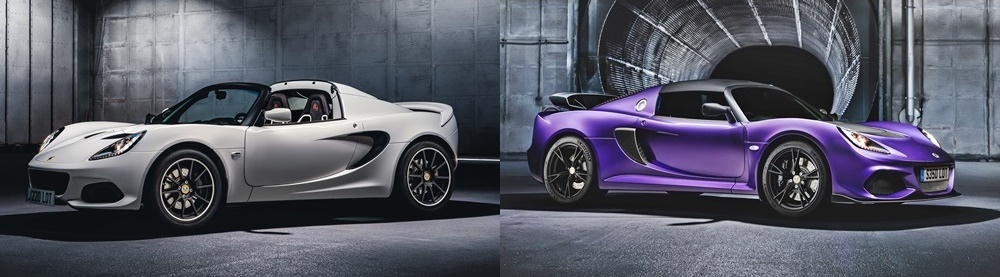
It’s been a while since we heard from Lotus after all the excitement about the Evija electric hypercar. But Lotus isn’t just about the Evija and today, the company has launched a new version of the Evora – the GT410. As a second model in the range, it sells alongside the Evora GT410 Sport, which also benefits from a revised specification.
At £82,900 (about RM440,000) in the UK, the GT410 is £3,000 (around RM16,000) less than the GT410 Sport. It features an enhanced standard spec over the GT410 Sport, providing owners with improved usability and a new level of driving comfort. Numerous features have moved from the Evora options list to become part of its standard specification. Exterior paint colour choices have been revised to include new options, including some historic shades from Lotus’ past.
A more usable ‘daily car’
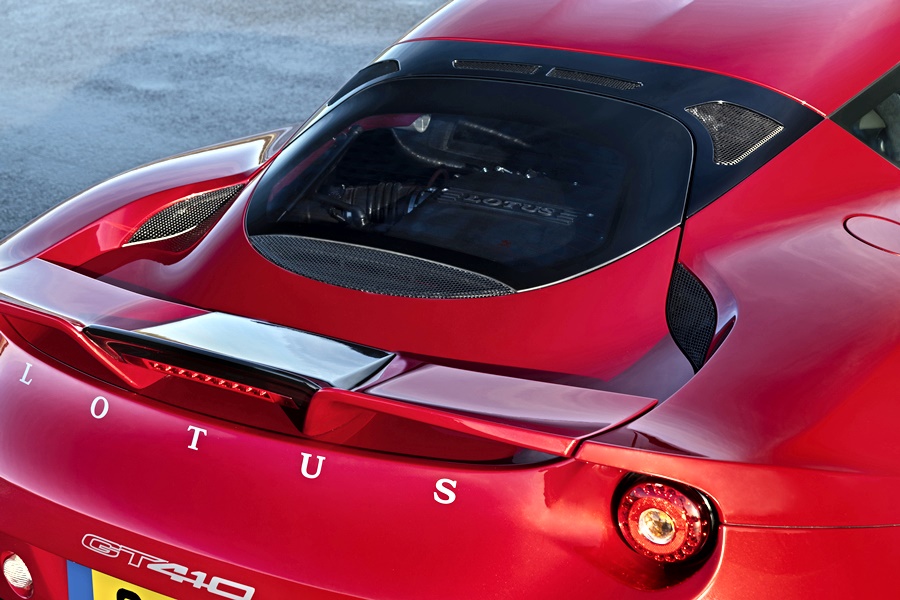
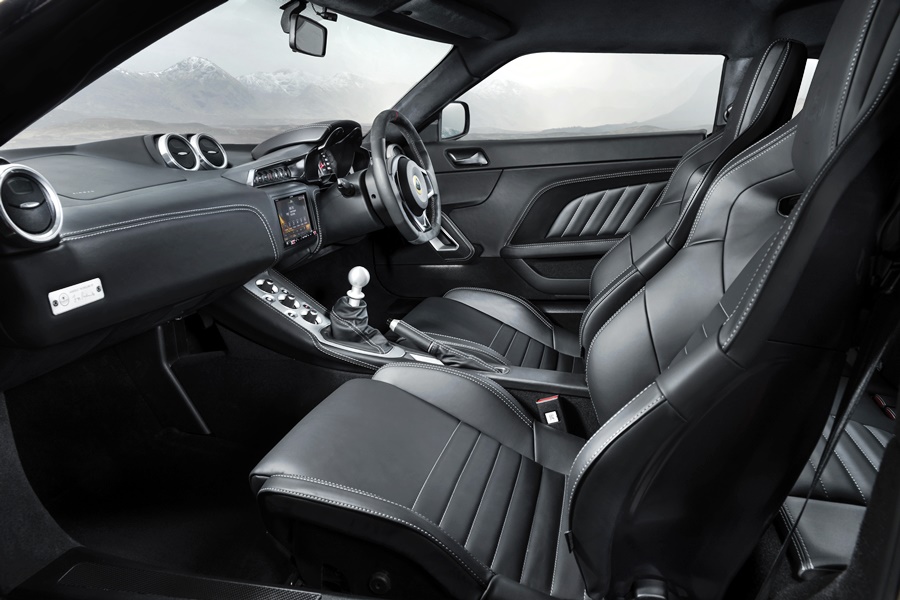
The product planners set out to make the GT410 a more usable ‘daily car’. Sparco sport seats are installed with air-conditioning creating a more comfortable environment for occupants, while a camera at the back improves reversing safety. This is complemented by a new rear tailgate with a large glass section for improved rear visibility.
A premium infotainment system with sat-nav and Apple CarPlay is now standard and includes Digital Audio Broadcasting (DAB) radio is available for the first time. This conforms to the digital radio standard for broadcasting digital audio radio services. It gives the driver a wider range of choices of stations, compared to FM radio.
The occupants will be able to enjoy the entertainment system more with the increased cabin sound insulation. The GT410’s door trims now feature integrated armrests and storage bins for greater comfort and practicality.
The new car has a revised damper rate compared with the GT410 Sport. While it still delivers an impressive performance-oriented experience, the revision creates a more compliant ride for improved real-world comfort. The use of Michelin Pilot Sport 4S all-weather tyres also means better all-year usability.
While the upgrades mentioned enhance value for money, the Evora has already had high level of standard equipment. These include a body-coloured roof, side sills, tailgate, front access panel and mirror backs, red AP Racing brake callipers and silver or gloss black V-spoke cast alloy wheels, 19-inch at the front and 20-inch at the rear. Interior equipment includes cruise control, heated seats, rear parking sensors.
Power continues to be supplied by a supercharged 3.5-litre V6 which develops 416 ps/410 Nm, with a choice of a 6-speed manual or automatic transmission. The claimed 0 to 100 km/h time is the same at 4.2 second for both transmissions but those who opt for the manual transmission can hit a claimed 298 km/h, 20 km/h faster than with the automatic transmission.
New options for Elise and Exige owners
Lotus has also announced new ways for customers to enhance the specifications of the Elise and Exige, including the reintroduction of the optional Touring and Sport packs. Touring enables the customer to add in comfort and convenience options to create a more desirable ‘road spec’ car, while Sport is based on the more driver-focused features that appeal to those who want to drive in a more spirited way, such as at track days.
The automotive industry is changing faster than at any time in its history, with a convergence of trends and developments shaping the face of the sector beyond all recognition. Honda predicts that by 2030, the development of automobiles will be centred around electrification, automation and services. Environmental issues, such as climate change, are driving demand for cleaner mobility and accelerating the electrification of automobiles.
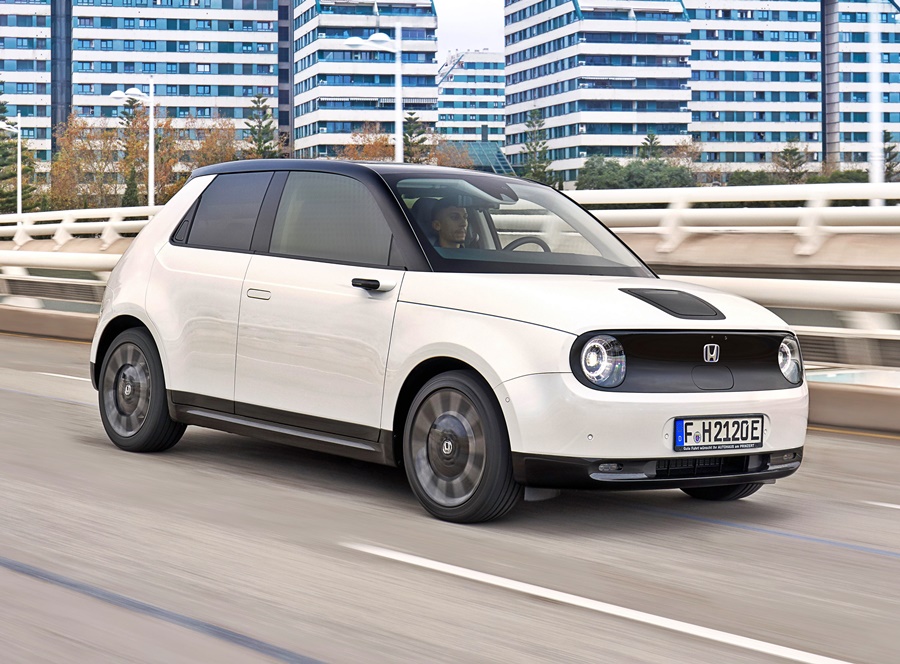
The new fully-electric Honda e is inspired by this 2030 prediction, engineered from the ground up to deliver a package perfect for the modern urban environment. It first appeared in concept form in 2017 as the ‘Urban EV’, followed by an almost production-ready prototype at the 2019 Geneva Motor Show.
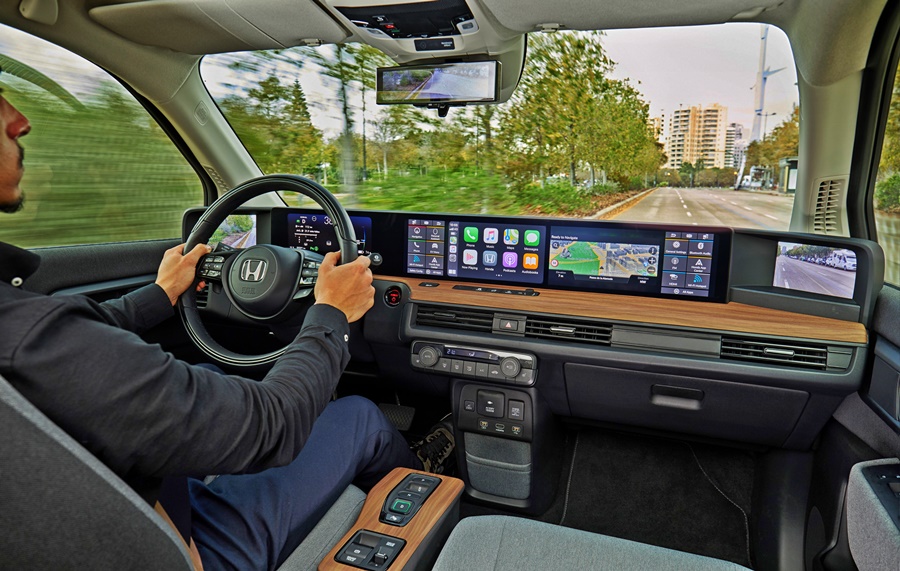
Finally having its global debut in Frankfurt last year, the compact EV features cutting-edge technology and advanced intelligent connectivity to keep owners in sync with everyday life. The Honda e sets new technology benchmarks in the compact EV segment, with intuitive infotainment services and connected apps that seamlessly integrate with the owner’s modern lifestyle, accessed via the dual touchscreen displays, Honda Personal Assistant artificial intelligence or via the My Honda+ smartphone app.
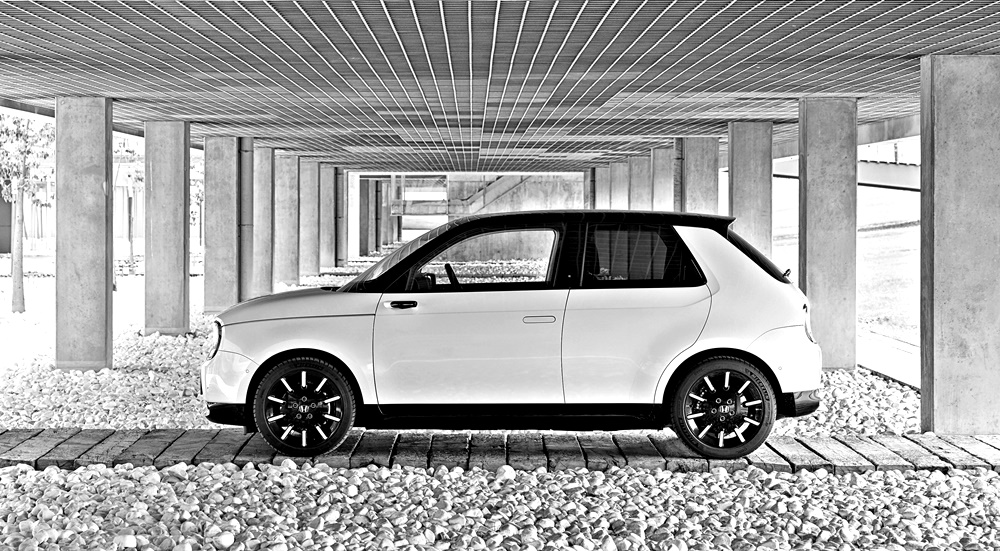
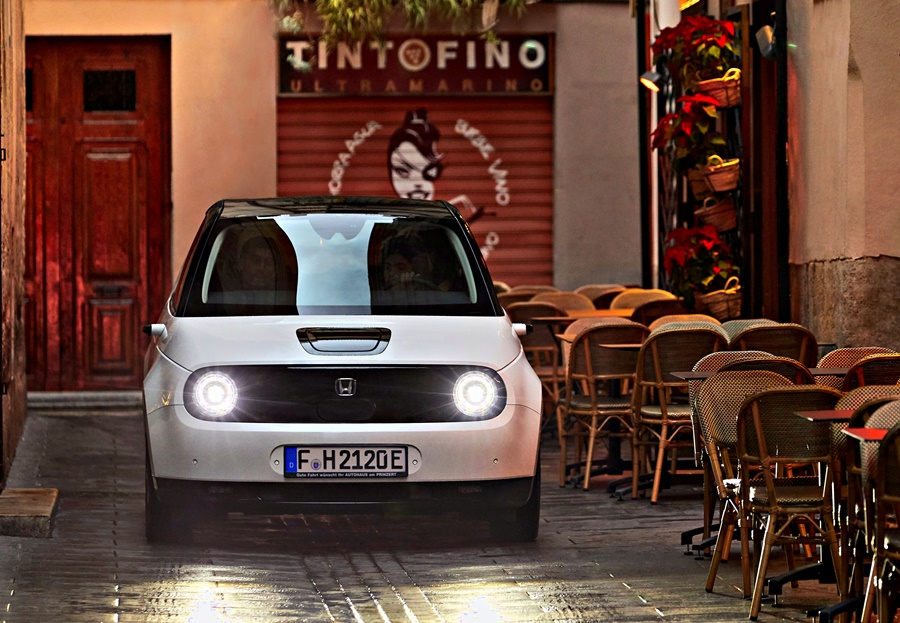
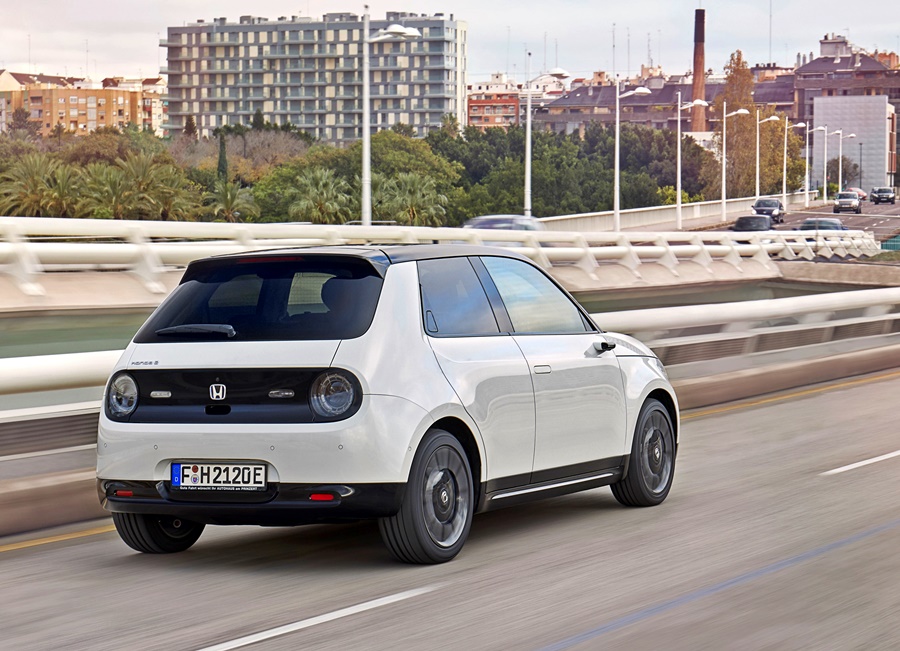
Design-wise, the Honda e has a simple and clean modern appearance which somehow also brings to mind the original Civic. That Civic was a model of innovation in its time and the Honda e reimagines the identity of a small Honda for the next era of urban mobility.
Exemplifying such design philosophy is the Side Camera Mirror System (SCMS) that replaces conventional side view mirrors, with compact cameras that provide live images to two 6-inch screens inside the vehicle. The camera technology, a first in the compact segment, brings significant benefits for safety, aerodynamics and packaging.
The interior uses subtle, contemporary materials to create a relaxing lounge-like. The generous wheelbase allows passenger space comparable with that of cars in the segment above, with step-through access contributing to the spacious interior environment.
The Honda e also offers Single Pedal Control System to improve driving efficiency in urban environments. When activated, the system enables the driver to seamlessly accelerate, slow and stop the car using only the accelerator pedal. The Single Pedal Control System provides linear deceleration control that gives the car a more agile response. By decreasing in frequency the need to use both accelerator and brake pedals, it helps the driver feel more comfortable in stop/start congested city traffic.
The wide rear bench seat provides sofa-like seating, adding further to the ambience of a modern living space. Ceiling spot lamps above the occupants’ heads and out of direct eyesight contribute further to the comfortable and sophisticated feel, like you are switching on your living room light, and are activated by a button on the B-pillar.
The Honda e provides the most comprehensive range of driver aids in its class, addressing the demand for more safety provisions that is topping consumer expectations today. An enhanced suite of safety features sees the addition of three new safety technologies. These are Collision Mitigation Throttle Control, preventing sudden acceleration in either reverse or drive upon starting the car when there is an obstacle in the way; Low Speed Brake Function which applies emergency braking while driving at low speed, and Lead Car Departure Notification System which notifies the driver when the car in front has started moving.
Providing additional support to drivers is the Honda Parking Pilot, which continues the theme of user-focused technology. The system assists the driver in locating an appropriate space and then manoeuvring the car efficiently into it. It does this through the use of 4 cameras and 12 sonar sensors. A multi-view camera detects the white line of a parking spot, while the sensors recognise the actual parking space. The system can execute up to 5 parking patterns which covers virtually all parking scenarios.
The all-new EV-specific platform (with rear-wheel drive) has been engineered to deliver fun and effortless electric performance (154 ps/315 Nm) with exceptional driving characteristics in urban environments. The claimed acceleration time from 0 to 100 km/h is 8.3 seconds, with a 136 ps variant doing it in 9 seconds.
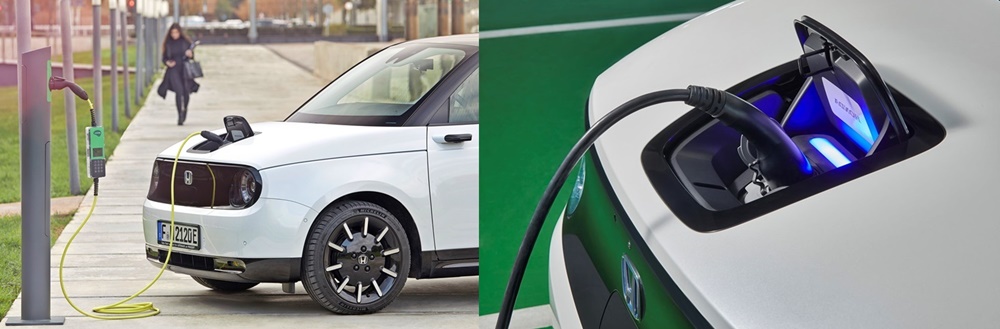
The 35.5 kWh lithium-ion battery pack provides a claimed range of 222 kms, and 80% of charge can be ‘refuelled’ within 30 minutes in rapid charging mode. Reinforcing the function-led design approach, the car’s advanced charging port is integrated centrally in the bonnet for ease of use from either side of the car. The lid is made of high-strength glass and operated via the key fob or My Honda+ app. LED lighting visible through the sleek cover welcomes the driver upon approach to the car, and communicates by illuminating blue when charging, or red if the charging system detects an error.
In the UK market, the Honda E with the more powerful powertrain will cost £28,660 (about RM152,000) while the lowered powered on will be around 9% cheaper. The prices are after a rebate is given as an incentive for purchases of EVs. The Nissan LEAF, which is the world’s most widely sold EV, costs around £32,500 (RM173,000) even with a rebate but it has a higher-capacity 62-kWh battery pack.
The Honda e is the start of the carmaker’s electrification offensive in Europe. Over the next 36 months, there will be all-new hybrid-only Jazz, a SUV and an additional battery electric vehicle. Honda’s new ‘e: Technology’ branding will unify all its electrified products under the same global name. Ahead of its European 2022 electrification goal, Honda will expand the application of its e:HEV dual-motor hybrid system to the entire line-up of Honda vehicles in Europe, starting with the next-generation Jazz, available from the middle of 2020.
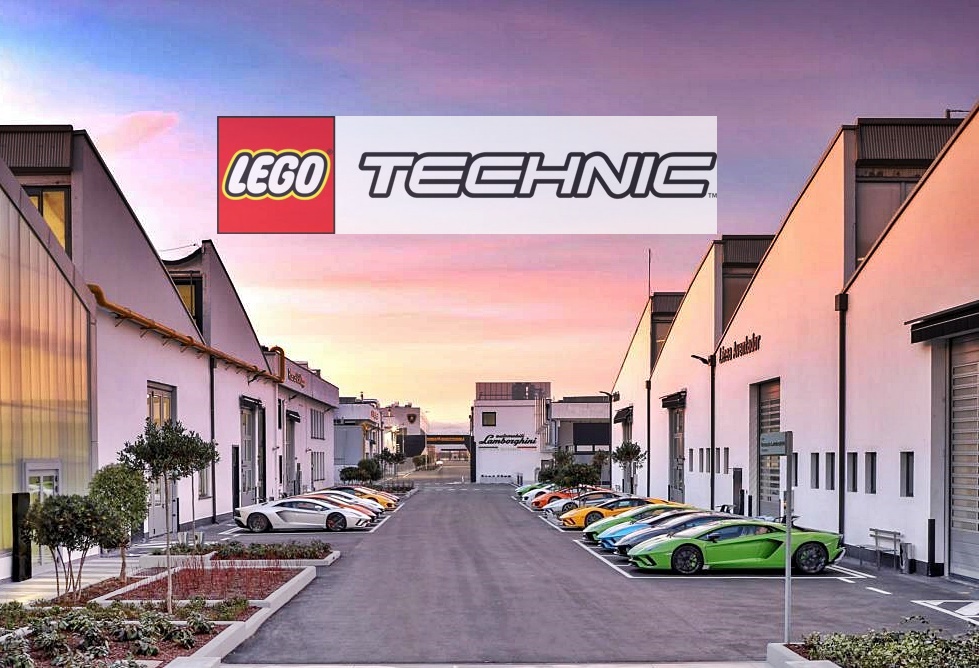
Automobili Lamborghini and The LEGO Group have announced a new partnership that will introduce the first ever Lamborghini super sportscar in the LEGO Technic range. This new partnership will see Lamborghini and LEGO Technic joining forces to deliver the engineering excellence and design flair that both companies have become famous for.
While having the same building system concept using small ‘bricks‘ since 1958, the Technic models are for older kids (and also adults) as they are more advanced and complex. With the possibility of constructing transmissions, differentials and gearing systems, LEGO Technic is an advanced building experience that many fans find challenging yet rewarding.
The new 1:8 scale set will be in LEGO Brand Retail shops and its Online Store from June 2020 and will be the third model in the LEGO Technic Ultimate series, following on from its hugely popular predecessors.
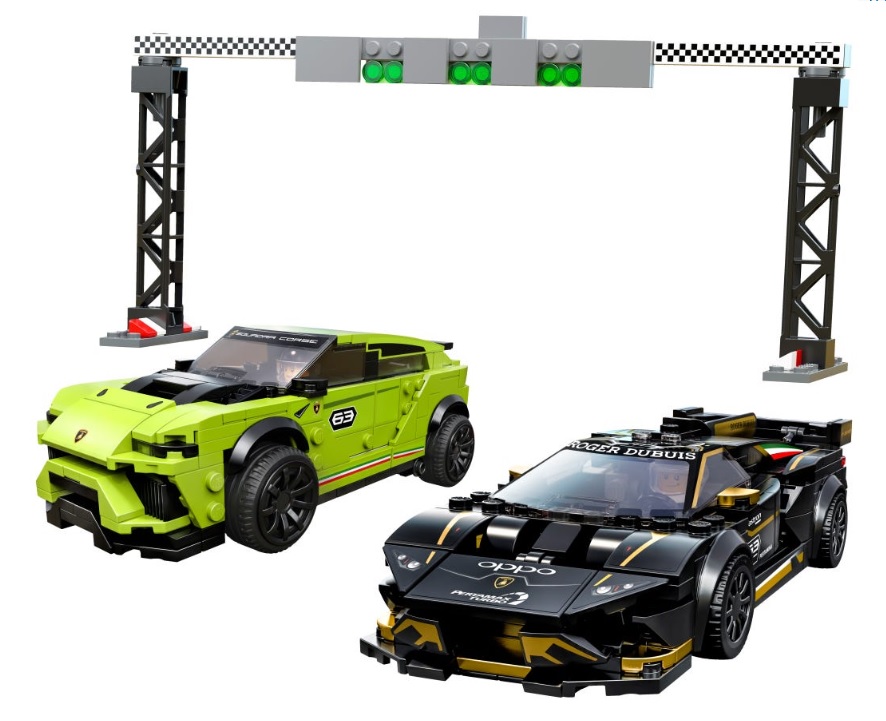
Currently, the Lamborghini Urus ST-X and Huracán Super Trofeo EVO are available in the LEGO Speed Champions range.
“The LEGO group has amazed entire generations with beautifully simple or extremely complex constructions. In the digital age, where entertainment is often via a screen, our collaboration with The LEGO Group allows enthusiasts to live a real experience, reproducing a Lamborghini super sportscar in every detail to create an outstanding model, just like the real car,” said Katia Bassi, Automobili Lamborghini Chief Marketing & Communication Officer.
For Niels Henrik Horsted, LEGO Technic Marketing Director, partnering with a company like Automobili Lamborghini is an ideal choice: “Following the success of the former Ultimate models, it was crucial for us to find a new partner with an iconic vehicle, an unmistakable design DNA and ground-breaking use of technology.”
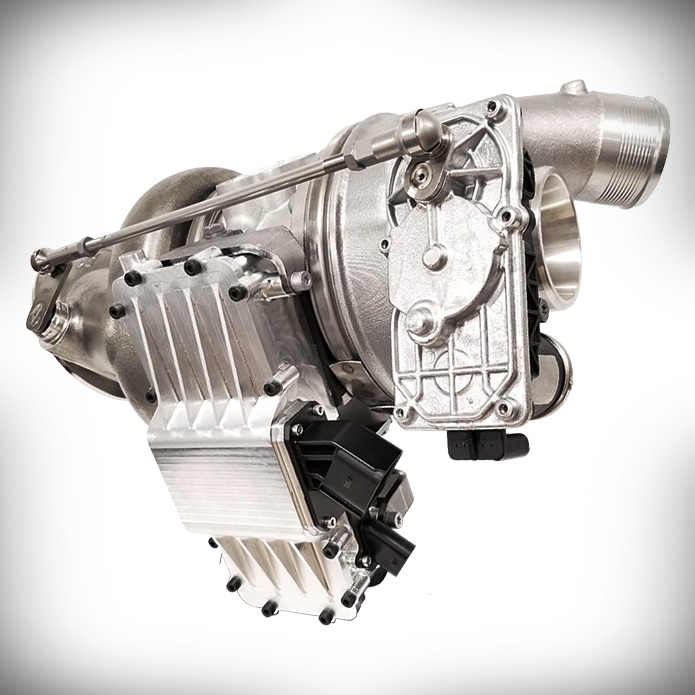
Within 2 years, a major European carmaker will offer an innovative eTurbo which is said to have reduced turbo lag; better low rpm engine torque and faster time-to-torque. BorgWarner, which developed and will produce the eTurbo, said it recently secured the supply contract for the high-performance turbocharger. While the carmaker’s name cannot be revealed at this time, it is confirmed that its passenger vehicle model will be the first mass-market eTurbo Application when it appears in 2022.
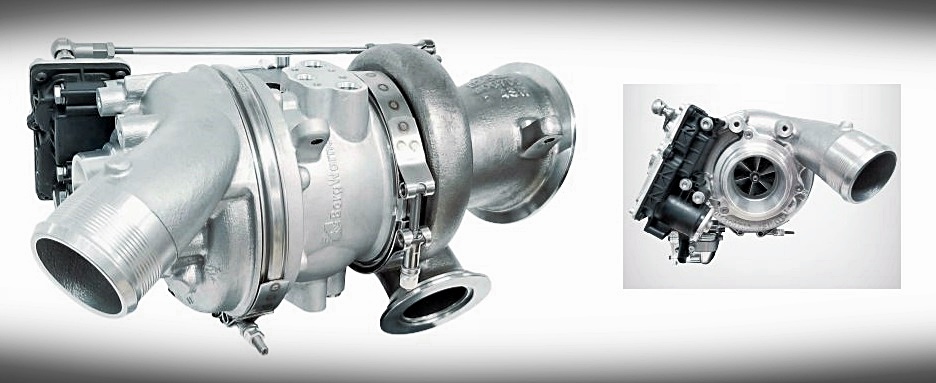
The eTurbo consists of a mechanical turbocharger with an electric motor directly coupled to the shaft which can serve as either a motor or a generator. The integrated solution delivers the traditional benefits of a standard turbocharger with the added advantage of electrified boost assistance for superior response.
Additional benefits include reduced emissions through after-treatment management and precise air/fuel ratio control. The electrical function can be deactivated to return it to normal turbocharger function, and EGR (Exhaust Gas Recirculation) can be driven on demand due to intentional back pressuring of the engine.
The eTurbo is claimed to deliver a more than 200% improvement in transient boost response along with steady state torque improvement. This enables further engine downsizing – an ongoing trend in the industry – resulting in better fuel economy and reduced emissions with no loss of performance.
BorgWarner says it is especially suited for Miller Cycle engines and can also improve performance for new combustion concepts due to electrical assist over complete engine speed range.
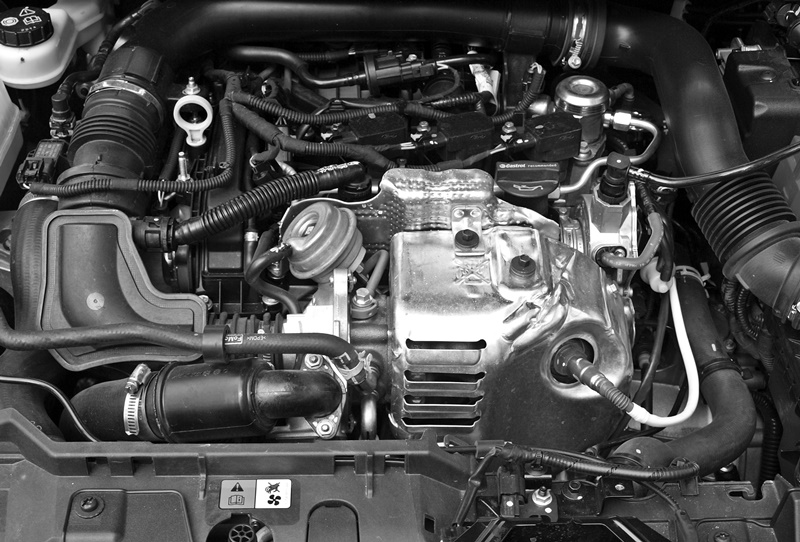
The industry is downsizing engines to improve fuel efficiency and using turbochargers to boost performance at the same time. Ford’s EcoBoost engine (pictured) in the Fiesta is one example.
Beyond the vehicle performance aspects, the eTurbo can harvest excess exhaust energy and directly convert it to electrical energy to be used for accessory power or charging the battery. This has implications on the battery pack, which can be reduced in size and therefore have less weight.
While the eTurbo will be used first on a passenger vehicle, BorgWarner anticipates opportunities for future adoption in the commercial vehicle sector as well. The company has a range of eTurbo offerings, including full-performance 48-volt and high voltage compliant architectures. Additionally, customers have the choice of integrated or semi-integrated power electronics.
“BorgWarner’s eTurbo is a powerful and efficient solution, capable of delivering crucial benefits for our customers, including improved performance, better fuel economy, reduced emissions and more efficient energy usage,” said Joe Fadool, President & General Manager BorgWarner Emissions, Thermal and Turbo Systems. “We believe this is the largest industry award to date for this type of technology and is an important milestone for our company.”
The origin of the camouflage comes from a military tactic used on ships during World War I, known as the ‘Dazzle Camouflage’. It consisted of painting ships with black and white geometric patterns to blur their shapes and confuse the enemy. “The story goes that the artists who designed these camouflage patterns drew inspiration from Cubist paintings,” explained Edgar Aneas, an expert in vehicle camouflage.
Since the 1980s, carmakers have also used the same principle to camouflage their prototypes, especially when the vehicles need to be driven on public roads. Initially, the camouflage was simple – just black film taped onto the vehicle to conceal special styling elements. Sometimes, extra panels might be added to alter the shape and mislead competitors as to the actual design of the new model.
Over time, there was a need to make the camouflage more effective because computer software was becoming sophisticated and the design under the simple camouflage could be made more visible. This led to the patchy type of camouflage, not unlike that used for military clothing to reduce visibility of a soldier in the jungle or desert. Each brand uses its own camouflage and some even patent the design.
Inspired by Modernism and Barcelona
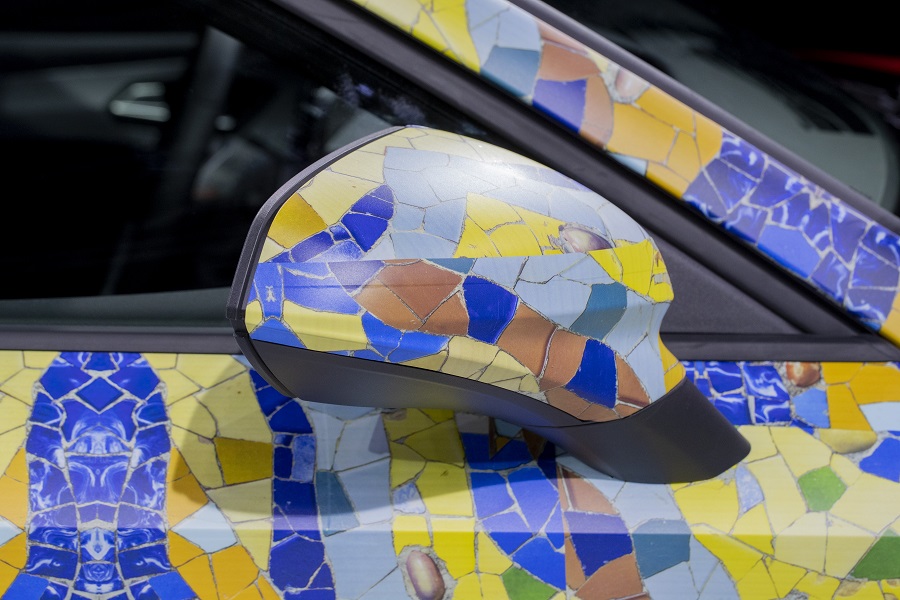
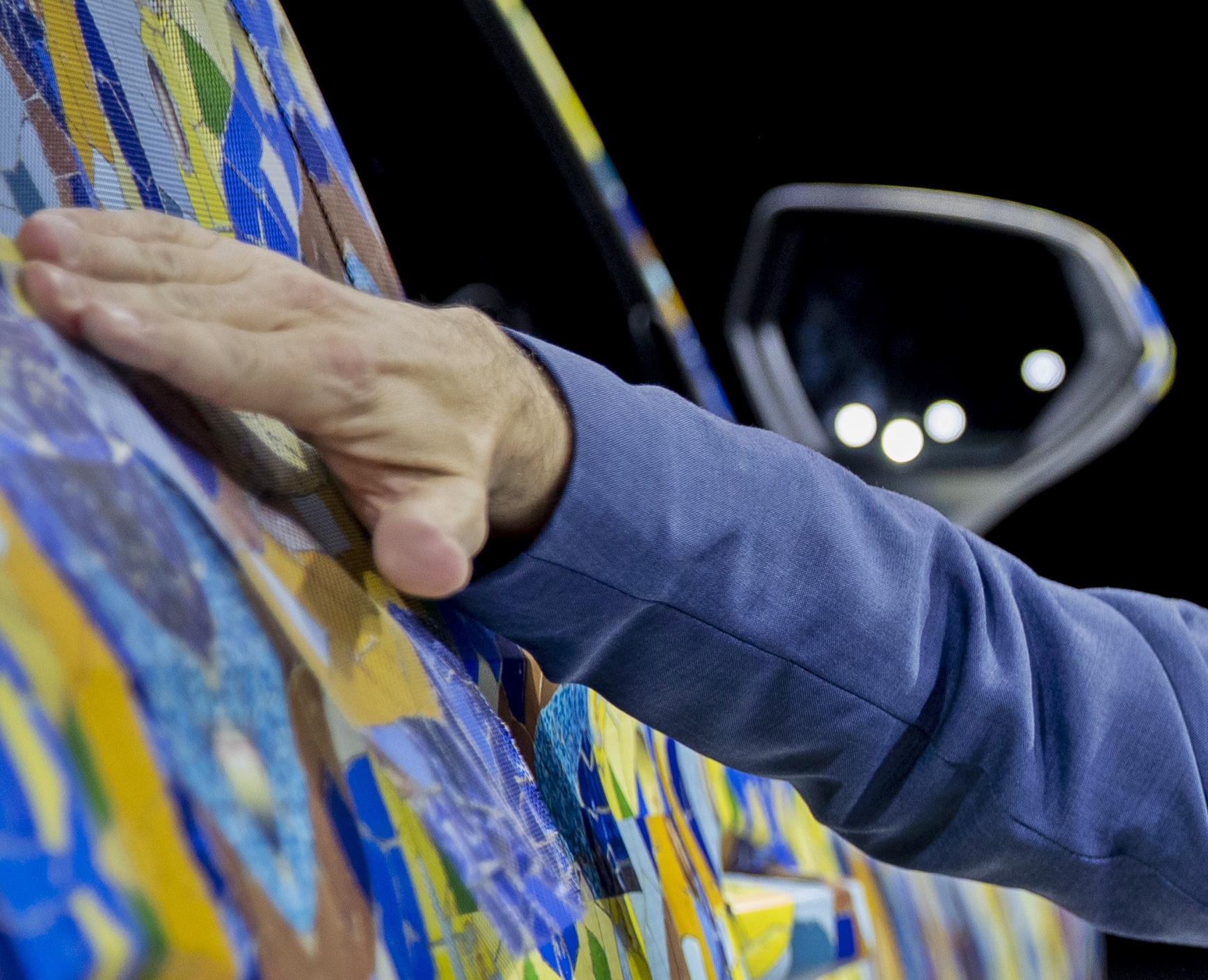
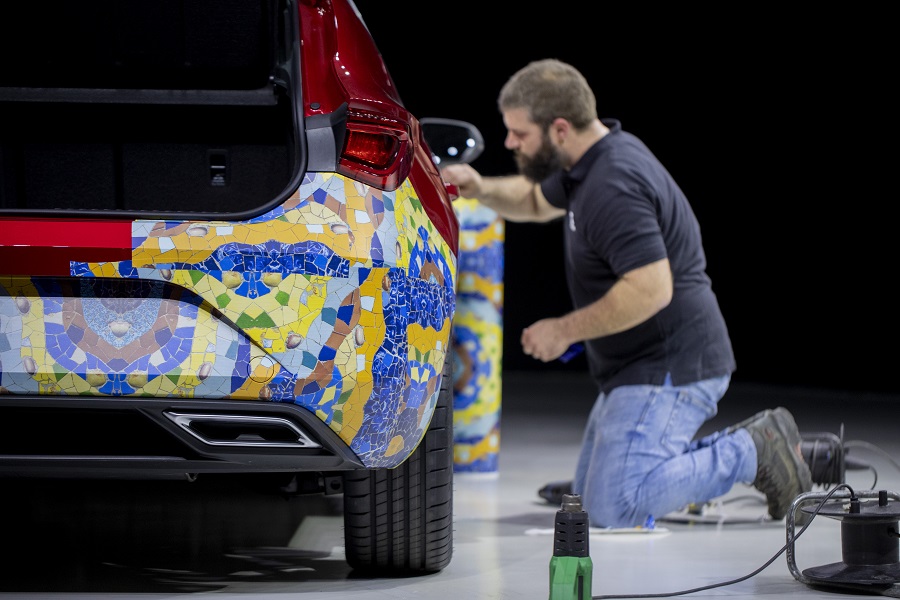
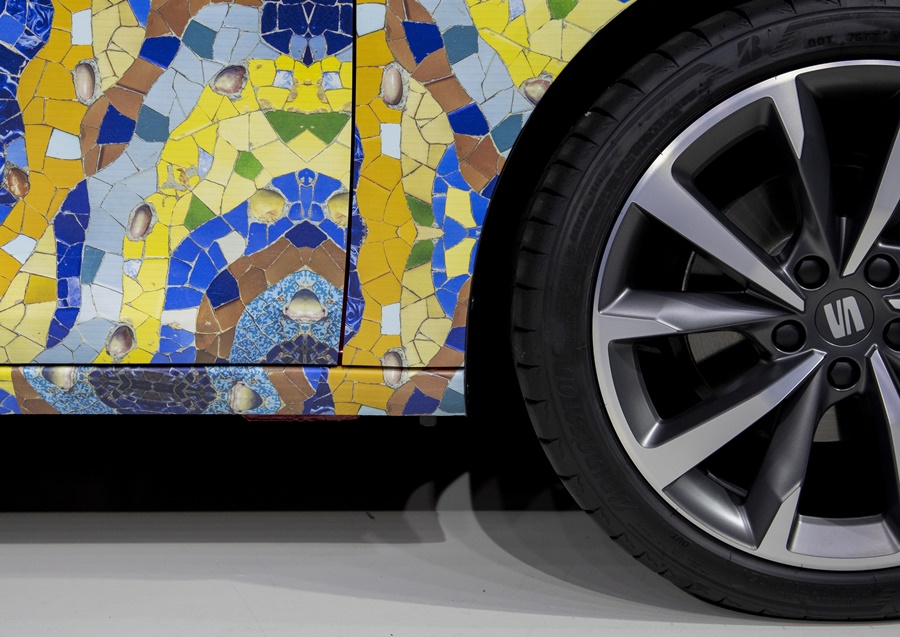
SEAT, the Spanish carmaker in the Volkswagen Group, has been using a unique camouflage for its all-new Leon model which will have its global premiere today. Official and unofficial pictures have shown the car wrapped in a broken tile vinyl inspired by Modernism and the city of Barcelona, the home of SEAT.
“The new SEAT Leon has a lot of personality and is very difficult to camouflage because it’s a sculpture on wheels that expresses SEAT’s emotional nature. The Leon was born here and because of the special relationship we have with Barcelona, we looked to the city for inspiration,” explained Jordi Font, head of SEAT’s Colour & Trim Development.
Developing a new design – the challenge
“This is the first time we didn’t use conventional camouflage. It was a challenge, because the main goal is to distort the shapes of the car. We worked on several versions to blur the lines but send a clear message – that we are Barcelona, that we are Mediterranean, and that we are colourful. We want to give meaning to our sculpture,” he said.
Not only does the camouflage have an aesthetic function but it must also withstand extreme weather and driving conditions. The material used is a special cast vinyl that resists these conditions.
“The cars are camouflaged so that they can be tested in different weather situations, sub-zero temperatures, long exposure to the elements, rain and desert heat. This vinyl is made with a very durable material and has special characteristics that prevent it from peeling off or deteriorating,” noted Aneas, the camouflage expert.
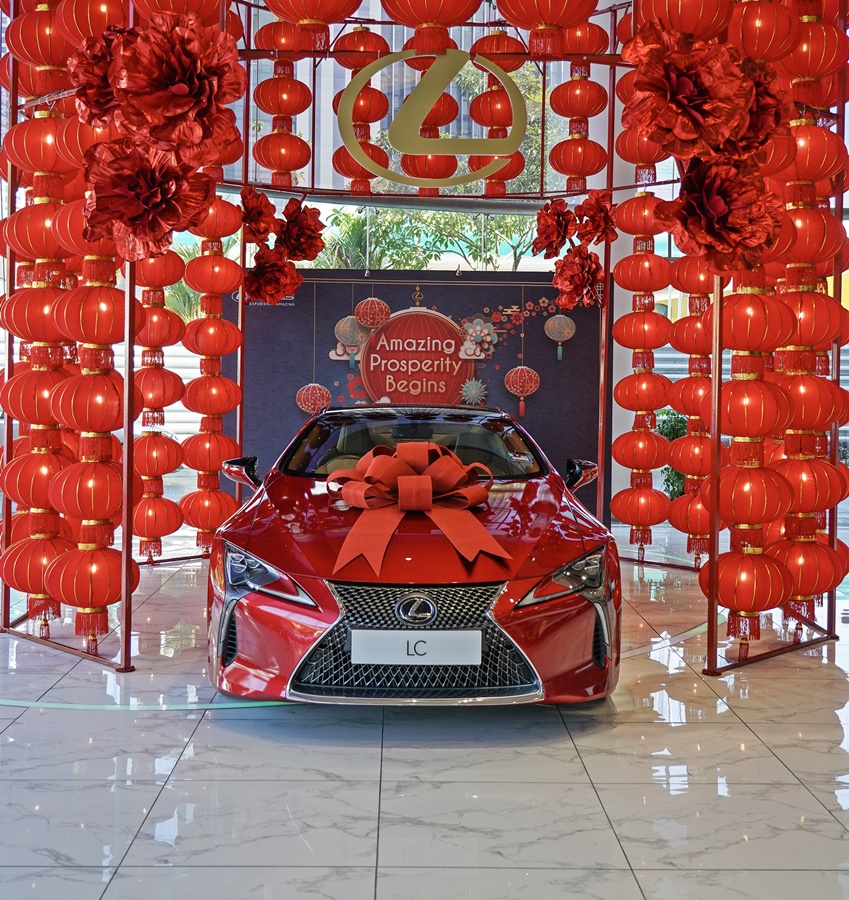
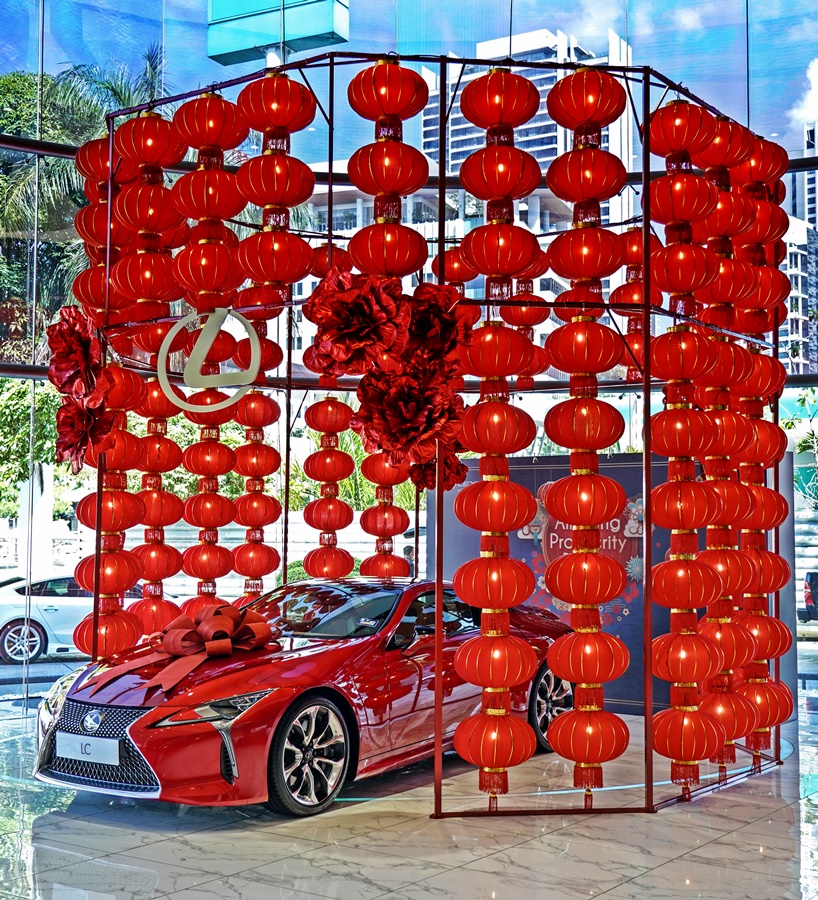
Chinese New Year is a time when many homes have an Open House, welcoming visitors to celebrate the beginning of a new year together. This forms an important fabric of Malaysia’s multi-racial culture which is enjoyed by everyone.
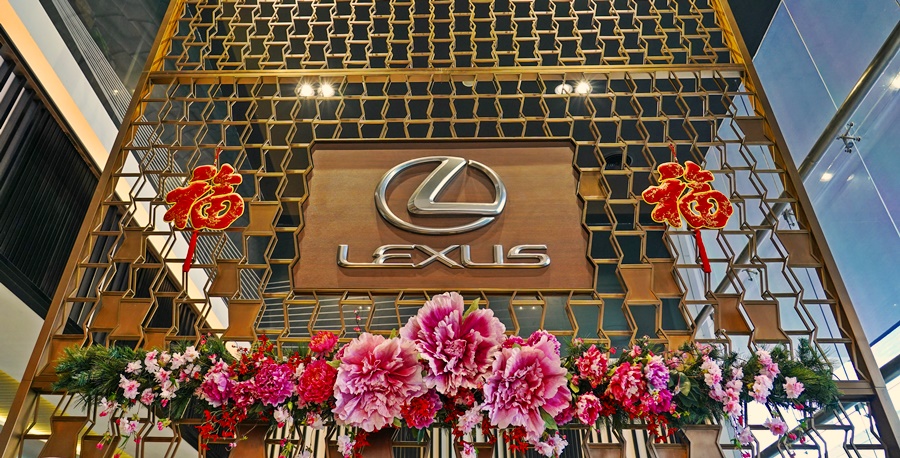
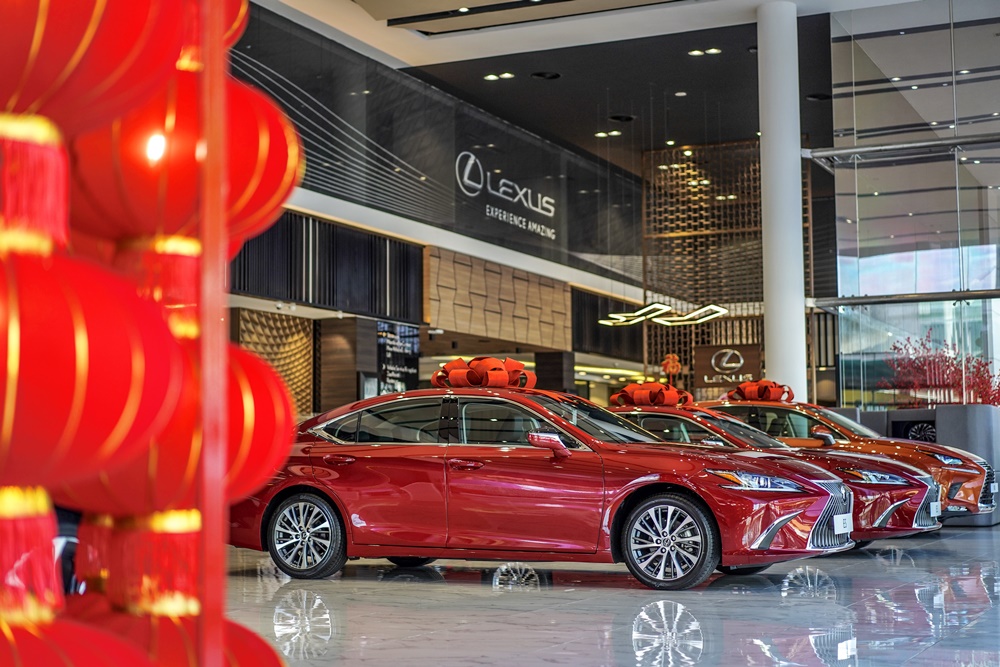
At Lexus Malaysia too, there will be an Open House this weekend (February 1 & 2) with all Lexus Centres nationwide welcoming visitors to their showrooms from 10 am to 4 pm. Omotenashi (hospitality) is a dominant element in Lexus culture and visitors will experience it as they are invited to partake in the merriment, fun and festive activities prepared exclusively for them.
All visitors to Lexus CNY Open House celebrations will also receive an exclusive door gift and be treated to a Lion Dance performance.
While at the Lexus Centre, it would be a good opportunity to also find out more about the Lexus models available and even experience them on a test-drive. The Lexus range today offers premium sedans, SUVs and sports coupes, all engineered to the superlative standards that have defined the brand for 30 years.
Those who take test drives will receive a gift as a token of appreciation from Lexus Malaysia. Should they be convinced that they want to own a Lexus, there are exclusive deals throughout the duration of the event.
All the new models sold by Lexus Malaysia come with a comprehensive warranty 5 years with no limit on mileage travelled after registration. Complete aftersales support is available at authorised Lexus dealerships across Malaysia with professional technicians having received extensive training by Lexus at the service centres.
For more information and to locate a Lexus Centre in Malaysia, visit www.lexus.com.my.
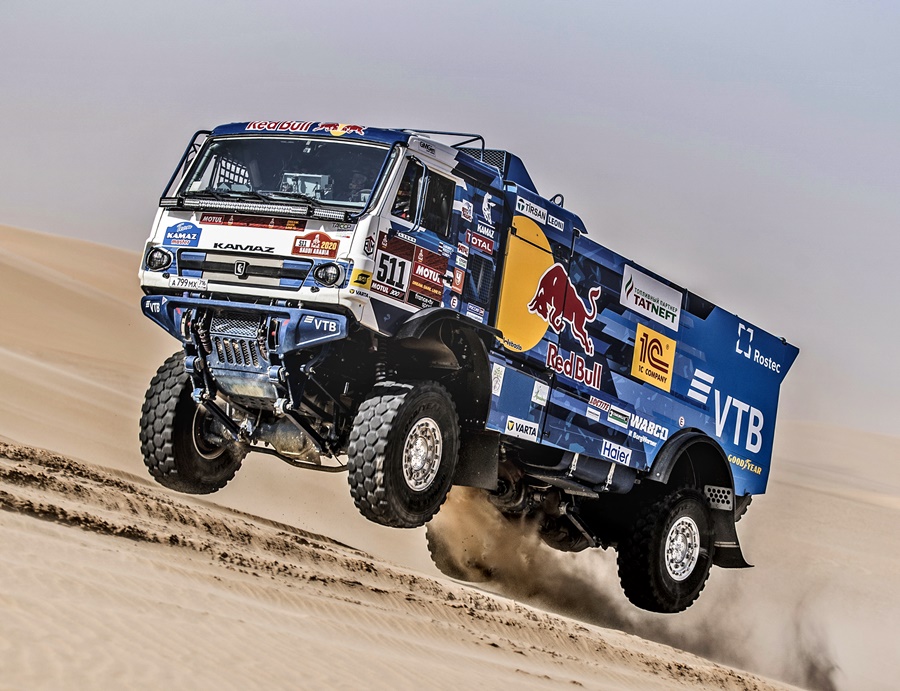
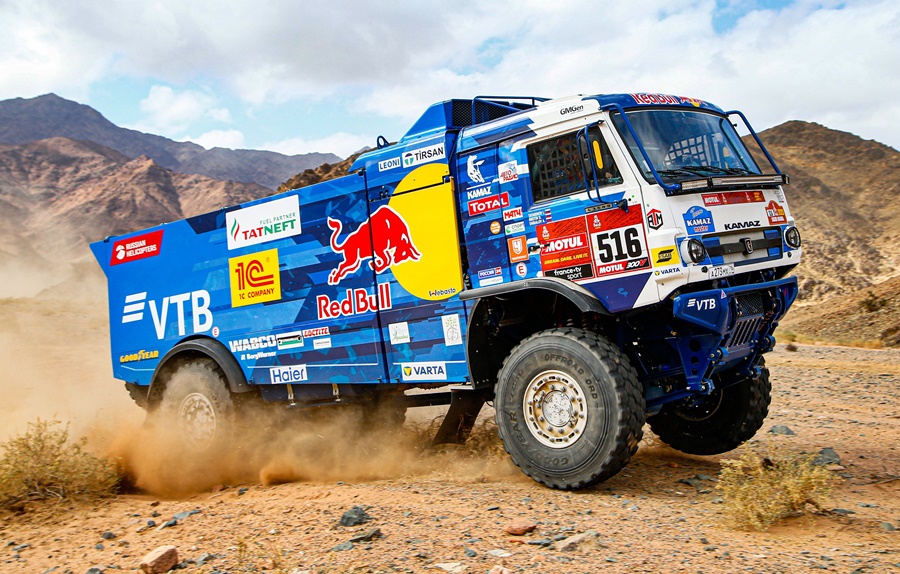
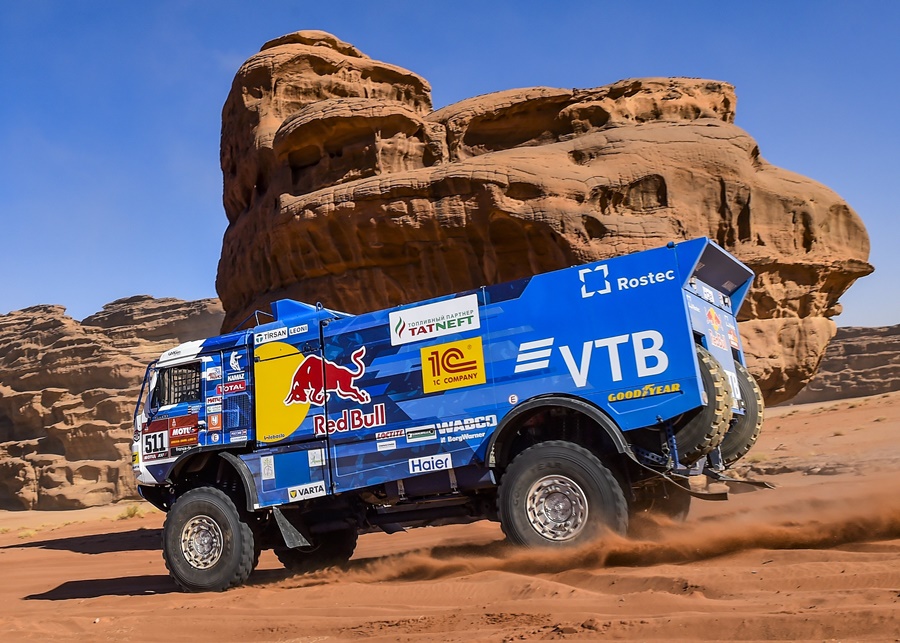
Reports of the Dakar Rally usually highlight the achievements of the competing teams in cars and motorcycles but there is also a category for big trucks which weigh more than 3,500 kgs. In this category, the trucks can be entered to compete or as support vehicles for the teams. Like the competing cars, the huge trucks are also prepared for extreme conditions and terrain which this year, was in Saudi Arabia.
An optimum set-up of the truck is vital and over the past years, the Dakar has been seen teams finishing less than one hour apart after 12 full days of close racing. KAMAZ, a Russian manufacturer, holds the greatest number of wins in the Dakar – 17. Over the years, the team has built up a lot of technical know-how which was not totally advantageous this year as the environment was entirely new. Nevertheless, they quickly got familiar with the conditions and could hit full throttle up to 140 km/h on the straights.
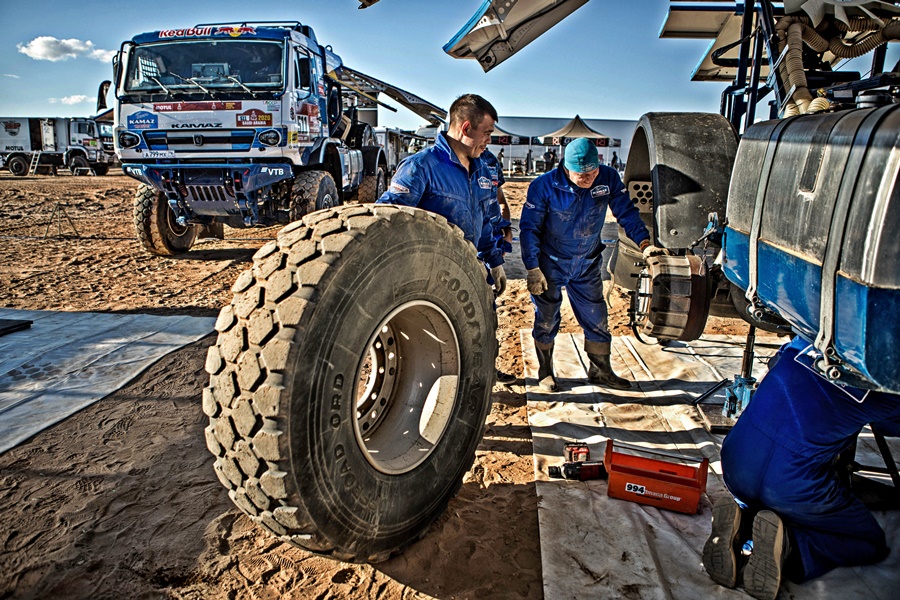
While the trucks can be modified in many ways, the rules require the use of only standard tyres developed for normal daily operations and available commercially. The Goodyear OFFROAD ORD tyres selected by the winning KAMAZ-master team are normally used by trucks in tough off-road operations such as mining at quarries. Their tread pattern with massive blocks, along with the optimized compound, provides high resistance to tearing and cutting, keeping uptime at an optimum.
From the start in Jeddah and at each stage of the rally-raid, the trucks encountered a large variety of challenges from tricky desert tracks with hidden stones to rocky canyons and riverbeds with sharp objects. In these conditions, it was crucial to monitor the heat in the tyres. The cabin crews made smart choices to keep up the speed and managed to keep the tyres intact in order to finish. The tyre pressure needed to give a good balance between grip/traction, speed and durability.
“On the outside, the scenery was magnificent, however inside the truck we had to stay focused every second and work hard,” recalled Andrey Karginov, driver of the winning truck. “This year’s race included hazardous sandy dune stages and misleading labyrinths covered with sharp stones. We encountered many risky situations, but the Goodyear tyres kept us going and were extremely robust.”
Goodyear tyres are also used by competitors in the FIA European Truck Racing Championship. This is enabling the company to take its development process to the next level. Extreme testing conditions stress the carcass to cope with deformation and extreme forces on the tyre caused by jumps like in the Dakar as well as cornering at high speeds. The result is the advanced Goodyear carcass technology offering enhanced durability and robustness, ultimately having a positive effect on fuel efficiency across the full portfolio including on-road long-haul and regional haul, mixed-services, off-road as well as bus and coach tyres.