
Piston.my

Latest News

BHPetrol RON95 Euro4M

In the automotive world, advances in technology are continuous. R&D keeps pushing towards the edge of the envelope in all aspects of car design to provide motorists with a better, safer and more enjoyable drive. However, it takes time for some new technologies to reach the consumer because they need to be thoroughly tested, especially in different and extreme conditions, to ensure that they are reliable and durable for the many years that a vehicle will be in use.

One example of the development of a technology advancement is the ClearSight Ground View in the latest Range Rover Evoque launched in Malaysia recently. This technology, known as the ‘Transparent Bonnet’,  was first shown to the public as a feature on the Land Rover Discovery Vision Concept at the 2014 New York Auto Show. It was among the pioneering technologies from Jaguar Land Rover’s advanced research division.
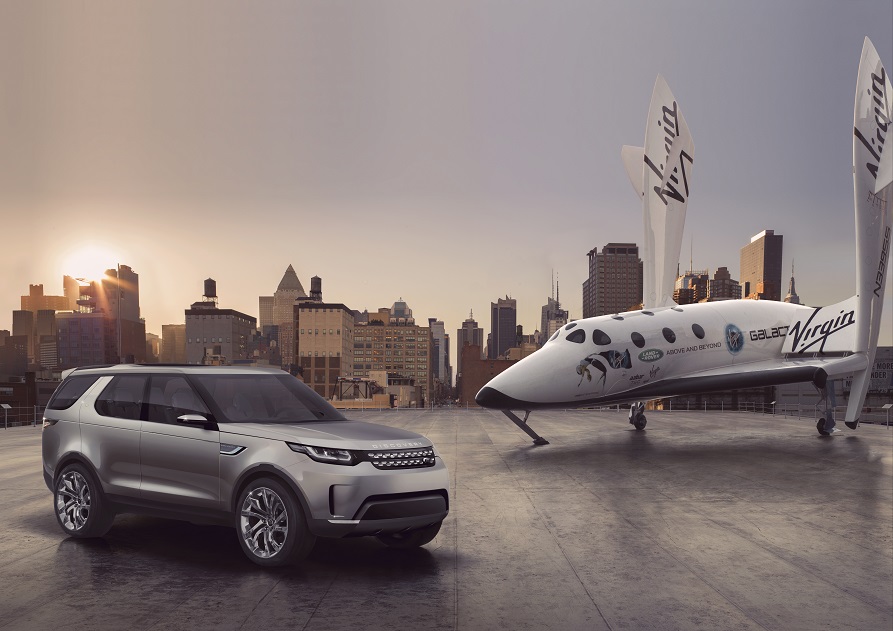
2014 Discovery Vision Concept
The Discovery Vision Concept displayed in 2014 gave a preview of technologies that Land Rover and Jaguar were developing.

The idea behind the ClearSight Ground View was to make the bonnet ‘invisible’ so that the driver would see the ground ahead – certainly something useful in off-road driving.  At that time, it seemed like just ‘concept car stuff’… something fantastic to wow the visitors with but perhaps not really possible to commercialise.
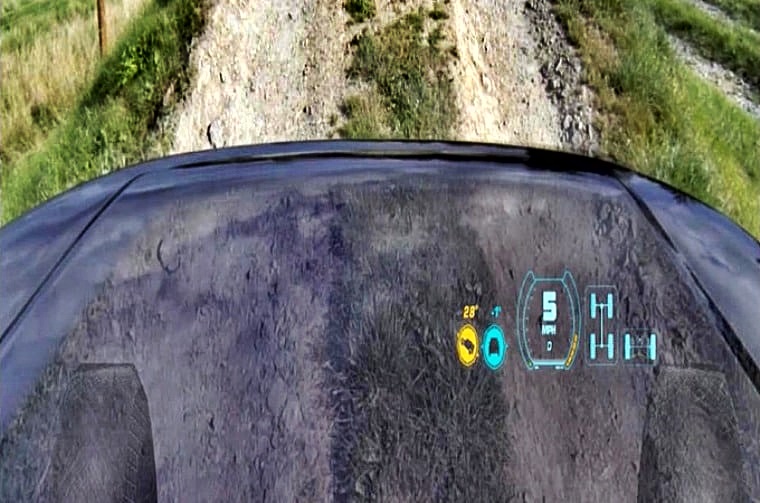
Original Transparent Bonnet image
The original concept had image projected on the windscreen like a Head-Up Display but this approach was probably too expensive.

But Land Rover was actually going to offer such a technology in its vehicles, starting with the Range Rover Evoque. It would be a world-first technology that would make driving over difficult terrain safer. Tree stumps, rocks, potholes and other hazards on the ground ahead under the vehicle would be visible so avoiding action could be taken earlier.
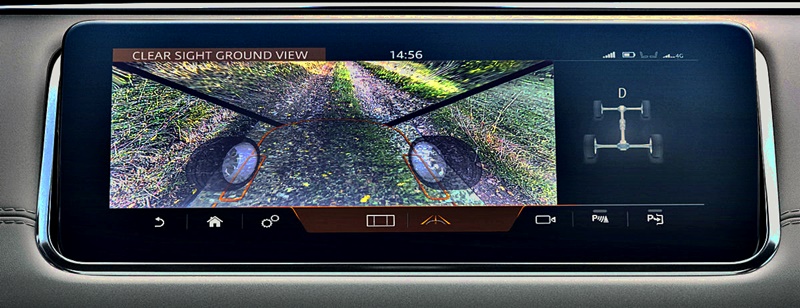
ClearSight Ground View

How it works
ClearSight Ground View uses cameras in the front grille and on the door mirrors for real-time imagery of the ground ahead. The coverage by the cameras is1 80 degrees forward at speeds up to 30 km/h.

A computer program creates a virtual representation of the terrain ahead, an augmented view of reality to help the driver tackle anything from the toughest off-road route to the tight confines of an urban car park.
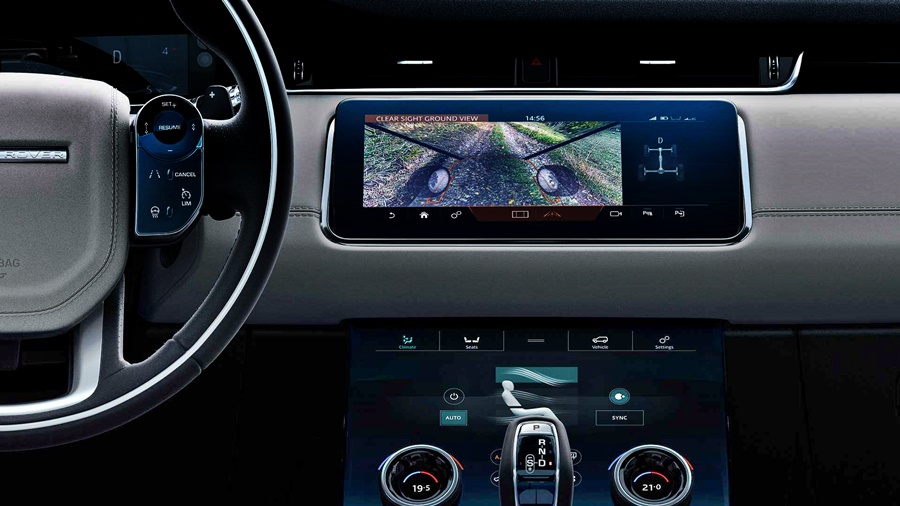
ClearSight Ground View

The original concept of the Transparent Bonnet had the image projected onto the windscreen ahead of the driver, the same way as a Head-Up Display is projected. However, that would be a more expensive approach so to moderate costs, the image is shown on the large centre Touchscreen.

For better situational awareness
ClearSight Ground View is complemented by the 360° Surround Camera and ClearSight Rearview Mirror to greatly expand the driver’s situation awareness of what’s around the vehicle. The 360° Surround Camera gives a digitally created image from directly above the vehicle using four tiny cameras around the vehicle body The images are stitched together by a computer program to create the view that is like what might be seen from a drone hovering a few metres above.

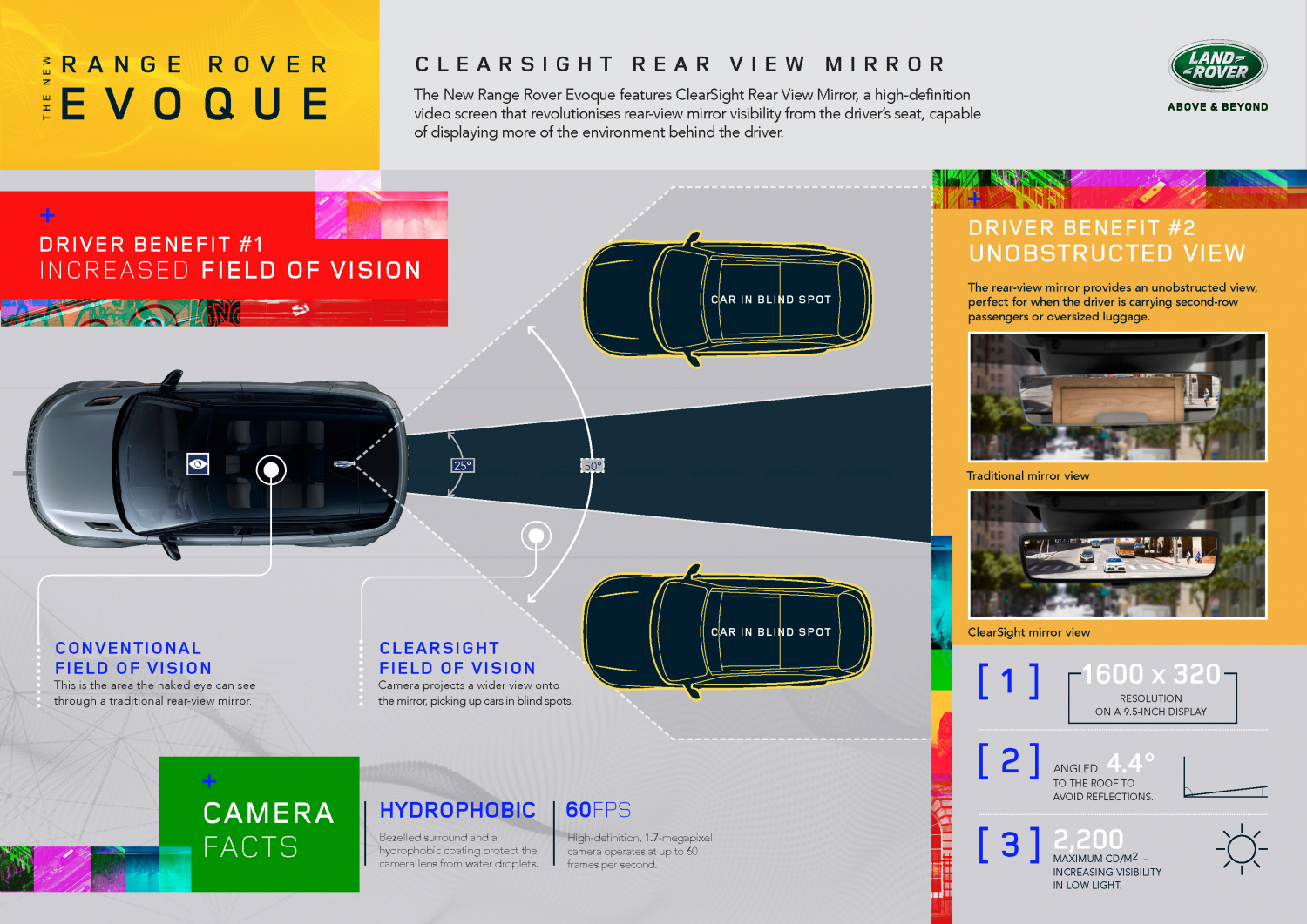
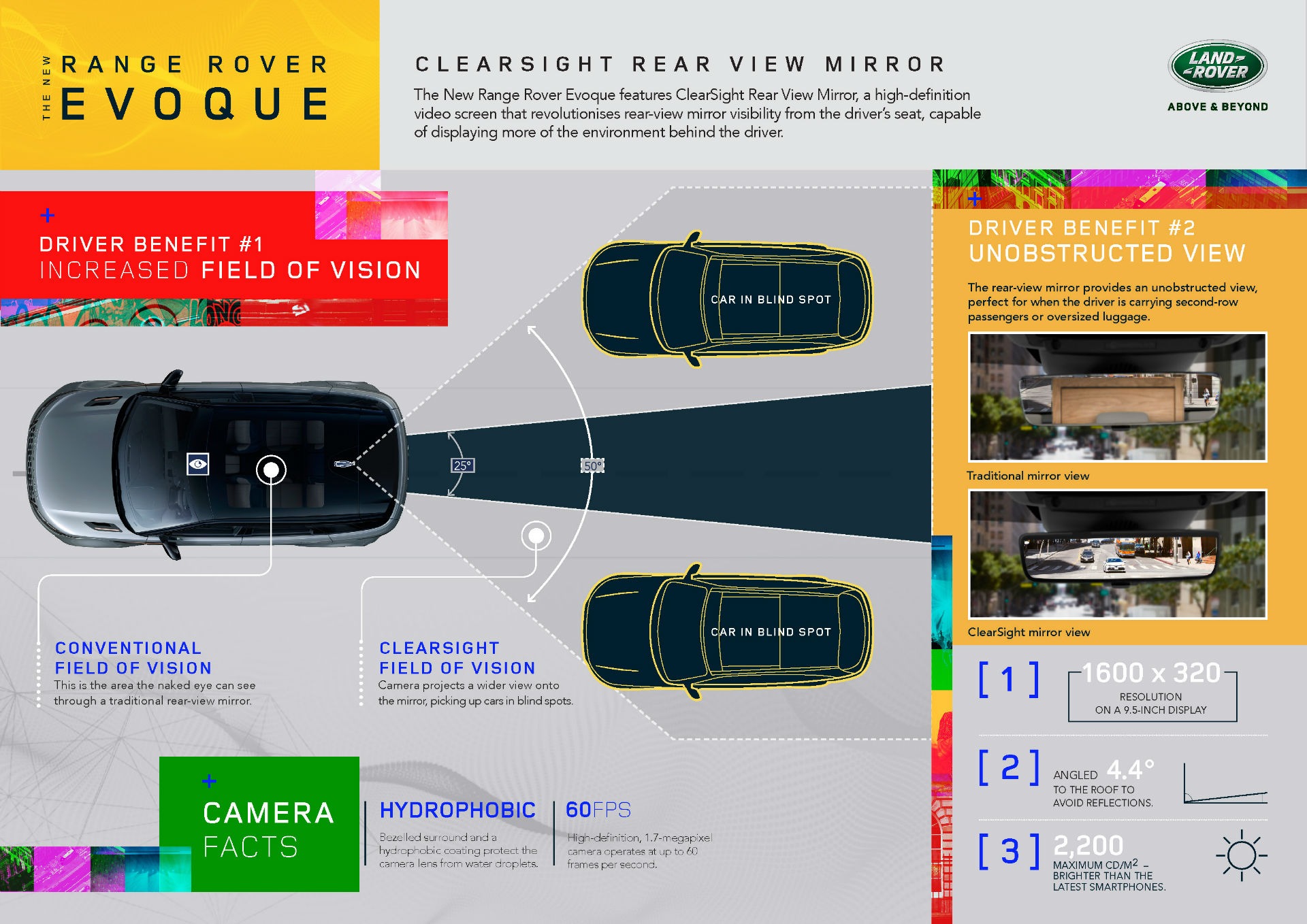
ClearSight Rearview Mirror is a more versatile rearview mirror which incorporates HD imagery. In normal use, it operates like a conventional rearview mirror, providing a clear and dazzle-free view of the back of the vehicle. When required, a flip of a switch on the underside changes  its view to that of a digital image from a camera in the rear door with a wider field of vision.
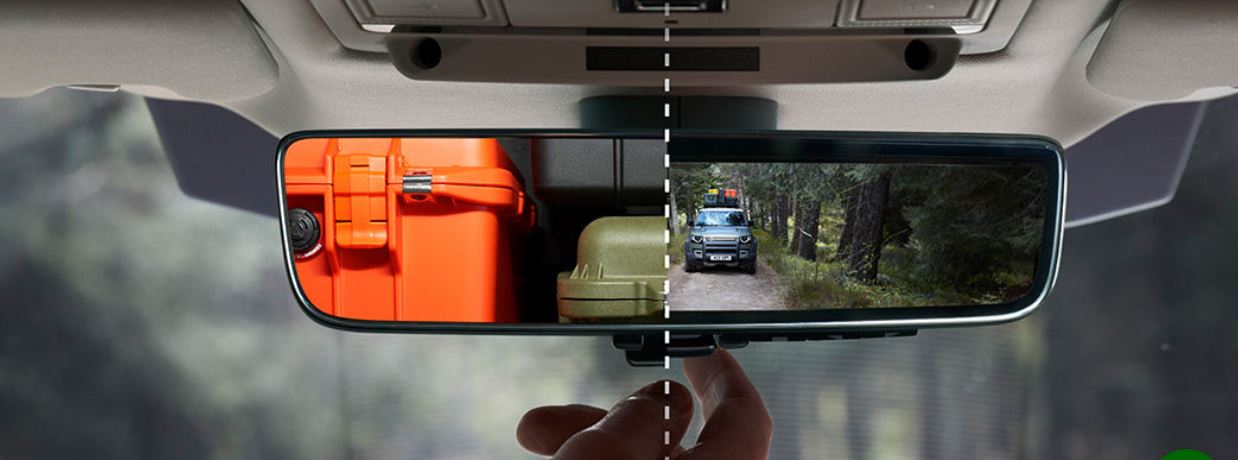
ClearSight Rearview Mirror (2)

ClearSight Rearview Mirror

Most rearview camera systems mounted on the rear door often use a fish-eye lens to get the widest possible coverage. However, in many cases, the image is distorted which can make judging distances difficult.

The ClearSight Rearview Mirror image has a proportional and undistorted view and besides being also capable in low light conditions, its brightness can also be adjusted. Furthermore, by displaying a rear-facing camera feed onto the mirror, the driver’s view remains unrestricted by passengers or large items in the back.

2020 Range Rover Evoque launched with two variants, priced from RM426,828

COVID-19

PISTON.MY

BHPetrol RON95 Euro4M

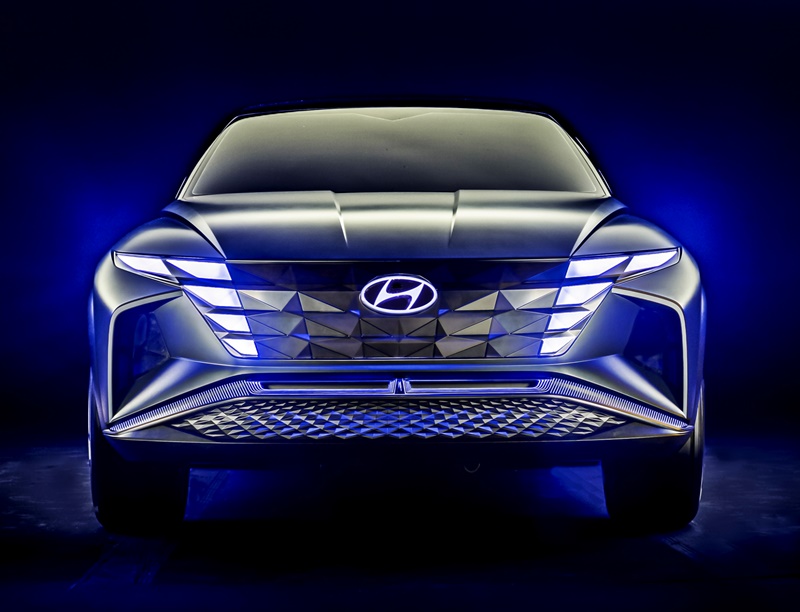
In the fourth quarter of year, Hyundai Motor displayed the Vision T concept, first revealed at the Los Angeles International Auto Show. The model gave a preview of some of the styling ideas that the Korean carmaker is exploring and recently, the Head of Hyundai Design, SangYup Lee, presented a deeper look at the concept.

In the video, he explains the key characteristics of the car’s design: dynamic architecture, sharp edges and straight lines, and geometric design features called ‘parametric dynamics’.

2019 Hyundai Vision T

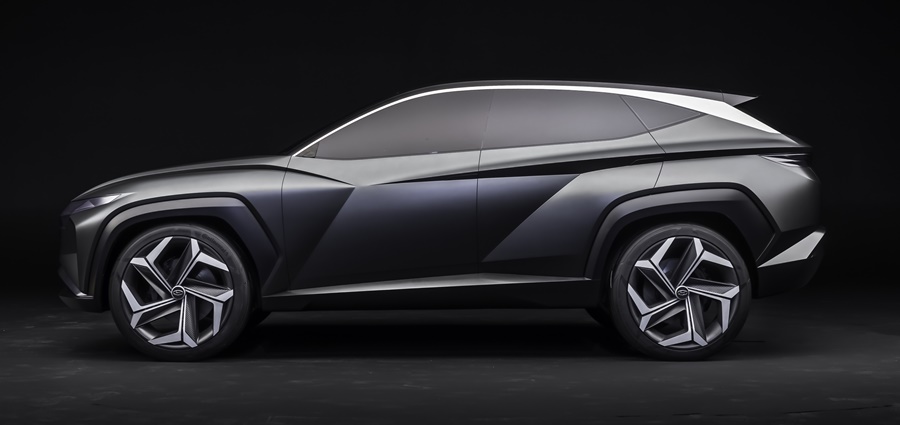
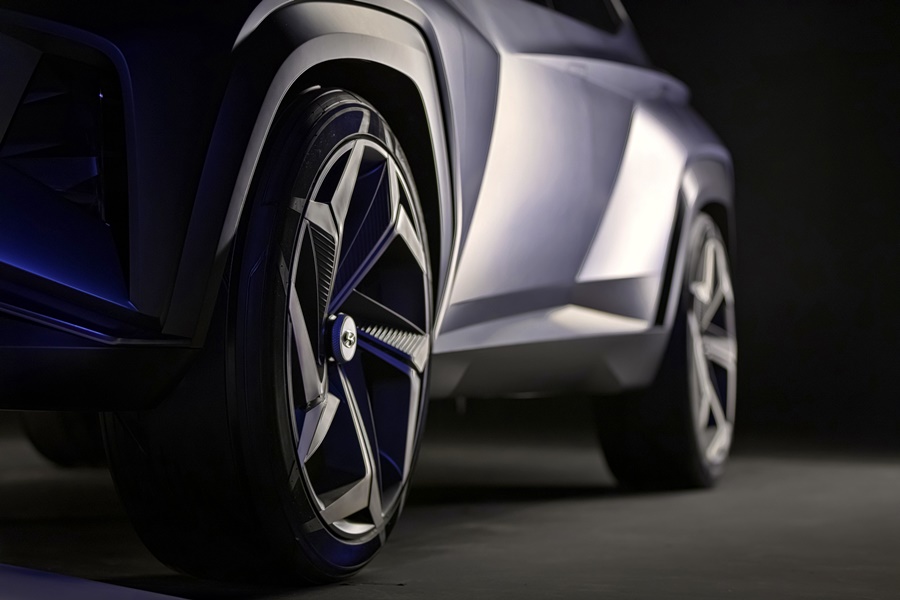
He first draws attention to Vision T’s sporty stance, which can be seen in its low bonnet, short front overhang and wide wheelbase. He then goes on to explain the parametric dynamics: a chiselled surface, a combination of soft surfaces and hard lines, and sharp, geometric edges. The car’s architecture is compared to a mineral or a crystal which has been struck by a hard object and then shattered.

Geometric patterns in the front grille, including hidden headlamps, give a jewel-like quality. When the car is in motion, the air intake flaps actually move, so the vehicle almost seems more like a living animal rather than a static machine.

The integrated architecture ensures a continuity throughout all elements of the vehicle, such as the hidden headlamp design which is repeated in the taillights.

“We really wanted to create Vision T as the most avant-garde, the sportiest, freshest CUV. The most dynamic CUV as a vision that we wanted to introduce,” he says.

2019 Hyundai Vision T

Vision T represents one step in the evolution of Sensuous Sportiness, Hyundai’s signature design identity. Hyundai concept cars do not stand alone – they inform the design direction of future Hyundai models, which encompasses both concept and production cars.

Aspects of Vision T such as the sharp angles and straight lines can clearly be seen in 45, an earlier  concept car. While the connection to Prophecy, the company’s most recent concept car, is less apparent, all three models are united under the Sensuous Sportiness design identity.

7th Generation Hyundai Elantra makes its global debut online from Hollywood

COVID-19

PISTON.MY

BHPetrol RON95 Euro4M

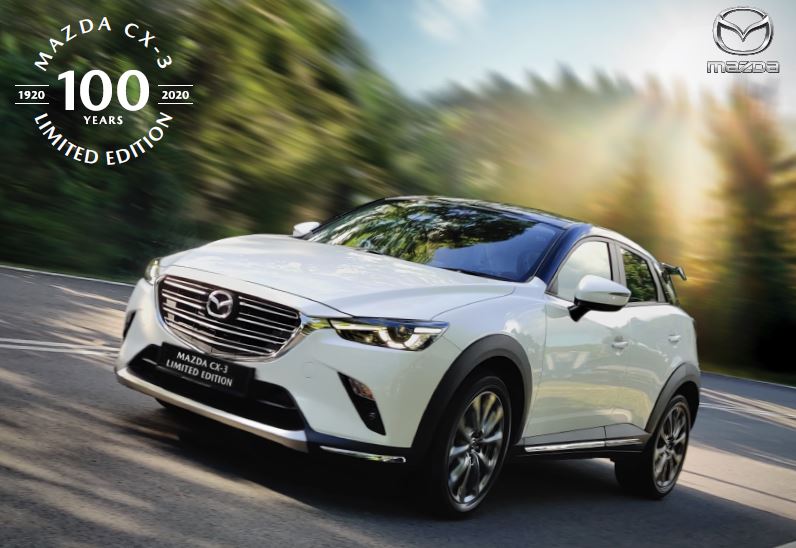
100 years is a special milestone in any history and for Mazda, it is of course especially significant. To celebrate this 100-year anniversary, the carmaker has many activities, among them, a 100th Anniversary Special Edition series of models. Unfortunately, yjpugh they are offered in Japan and selected markets, they will not be available in Malaysia.

Nevertheless, Bermaz Motor, which handles the Mazda brand in Malaysia has created a special limited edition Mazda CX-3 to commemorate the occasion. Developed by the company’s MazdaSports Division, the limited edition crossover SUV features various enhancements that gives the car a unique styling and design with a high sense of sophistication.

Mazda CX-3 Ltd Edition 100th anniversary

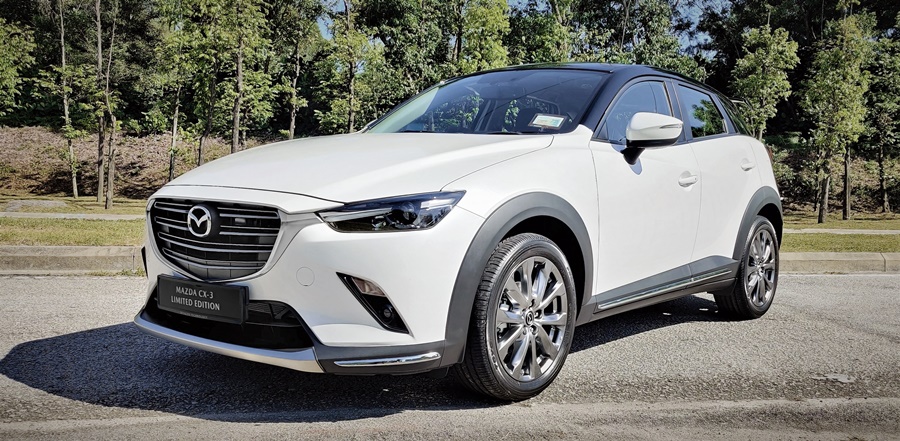
Exlusive Snowflake White Pearl finish
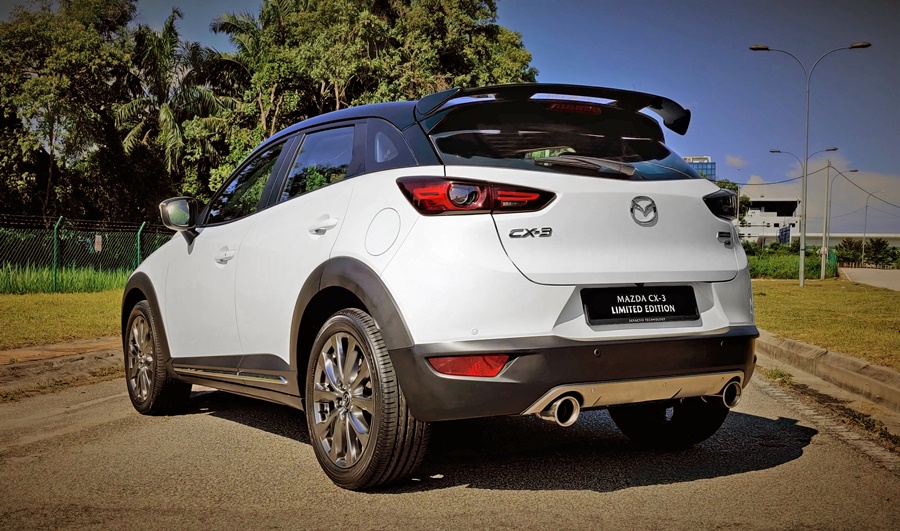
For a distinctive sportier look, the limited edition CX-3 is fitted with a Front Lip Spoiler & Rear Bumper Diffuser. The body features a two-tone finish with a Piano Black Roof and matching rear boot spoiler. Only a Snowflake White Pearl colour is available.

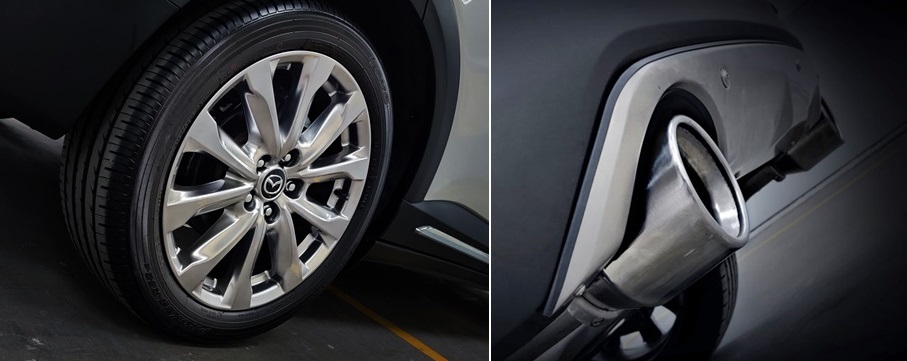
The 18-inch alloy rims are finished in gunmetal while the rear exhaust tips have a brushed aluminium finish.

Mazda CX-3 Ltd Edition 100th anniversary

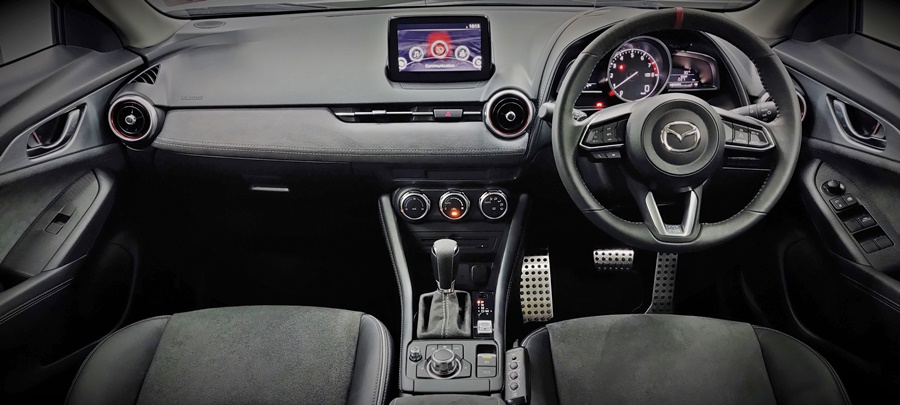
Within the SUV, the styling enhancements added to the seats, steering wheel, armrest and gearknob are in the form of a dark gray suede finish to match the dashboard and door trims. There are also brushed aluminium sports pedals and scuff plates. Black carpet mats are also provided, exclusive to this limited edition. A JBL Basspro Hub 11-inch Subwoofer is included and this delivers fast and tight, deep bass with low distortion.

Mazda CX-3 Ltd Edition 100th anniversary

Sharper driving experience
Other functional enhancements include a front strut tower brace that covers the engine as well as lower front, mid and rear chassis bars for a sportier, sharper driving experience.

The CX-3 Limited Edition is priced from RM14,500 and bookings can be placed at any authorised Mazda outlet. The accessories fitted have a 1-Year Mazda Genuine Accessory Warranty based on the period of fitment at the time of new vehicle purchase. Deliveries will start from the end of July 2020.

Mazda CX-3 Ltd Edition 100th anniversary

Visit www.mazda.com.my to locate an authorised Mazda outlet or to know more about Mazda models available in Malaysia.

Unusual, little known Mazda vehicles you may never have heard of

PISTON.MY

BHPetrol RON95 Euro4M

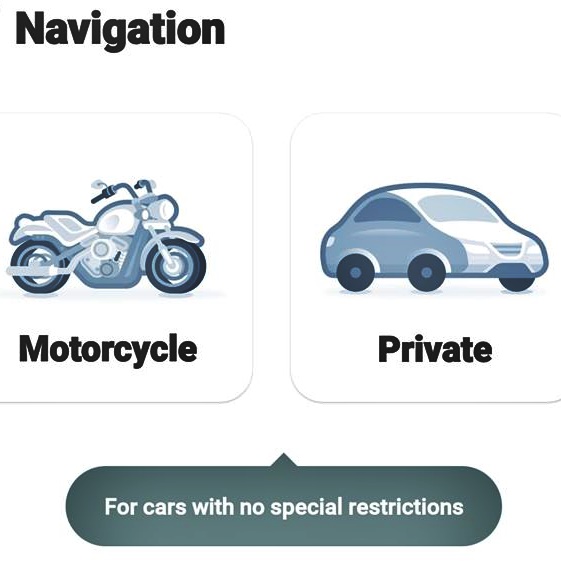
Remember the recent case of the motorist driving along the motorcycle lane by the side of the highway? The police managed to identify the owner of the Volvo XC90 and after investigation, they said that he explained that his Waze GPS route navigation service was set on MOTORCYCLE mode. As a result, the route which he had wanted included travelling along a motorcycle lane next to the highway.

Some people were skeptical about this excuse and suggested that GPS is not so accurate that it can separate the motorcycle lane from the highway that a different route can be shown. They felt he gave a lame excuse.

Waze
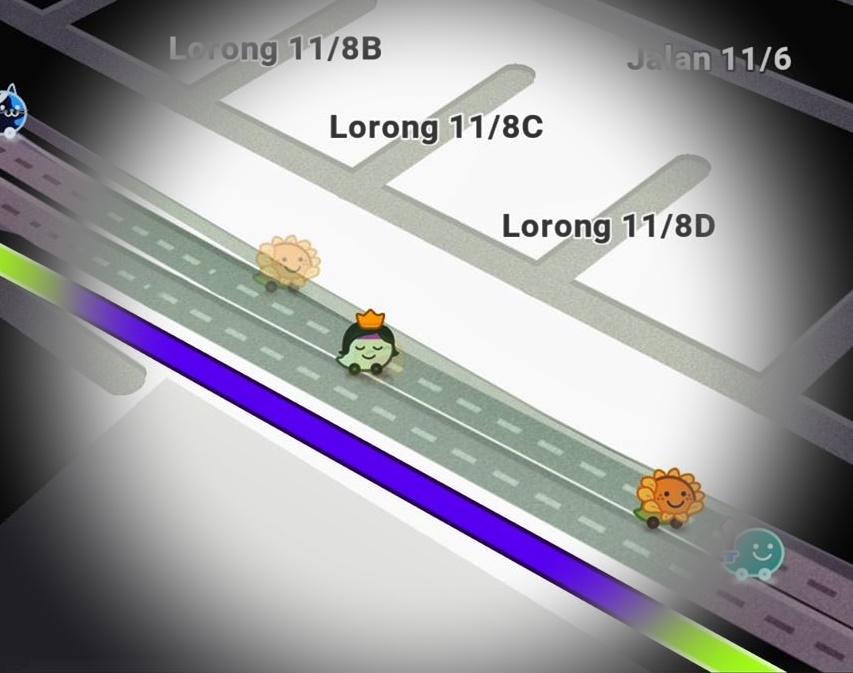
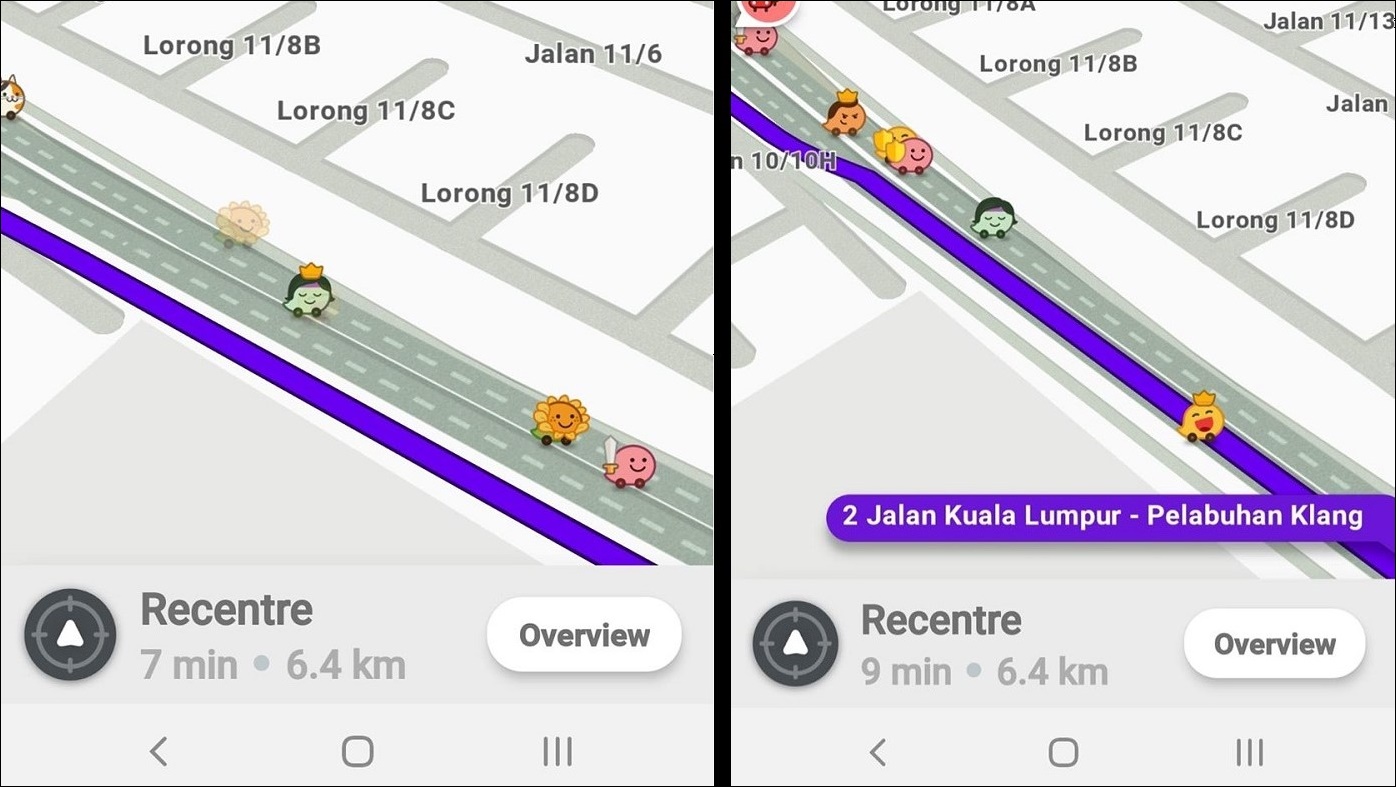
The left image shows a route that goes along the Federal Highway in MOTORCYCLE mode and the recommended route is the lane next to the hghway. On the right, the same route when set in CAR mode shows that the highway is used.

We tested his explanation by asking Waze to provide a route from one location to another, first in PRIVATE CAR mode and then in MOTORCYCLE MODE. For most of the route, the route used the same road as cars but in areas where the was a motorcycle lane – eg alongside the federal Highway in Petaling Jaya, Selangor – the route for MOTORCYCLE mode went along the motorcycle lane. This was clearly indicated on the map with the two sides of the highway shown and the route going along another road just next to it.

Of course, any motorist should have realized he or she was on a motorcycle lane (and with that SUV he was driving, he could have just crossed over to the right and onto the highway) but it could be that the driver did not drive much and was not familiar with the roads. Or the phone he was using was his son’s who is a Grab rider. That is no excuse, of course, as there would be signs to indicate the motorcycle lane and motorists should be aware.

Waze users can select different types of vehicles before they ask for route navigation.

There have been similar cases in the past of motorists driving along the motorcycle lanes. These have been known to be deliberate and either the drivers were doing it ‘for fun’ or they were trying to jump queue to get ahead of a jam. Not nice for motorcyclists, not to mention a danger to them too.

As for the GPS system, this shows how accurate it is these days. Back in the 1990s, when the US allowed civilian devices to receive GPS signals from its satellites, it was not as accurate for the civilian devices compared to those used by the military. The US deliberately made the signal less accurate  with ‘Selective Availability’ to prevent civilian devices from being used for targeting weapons.

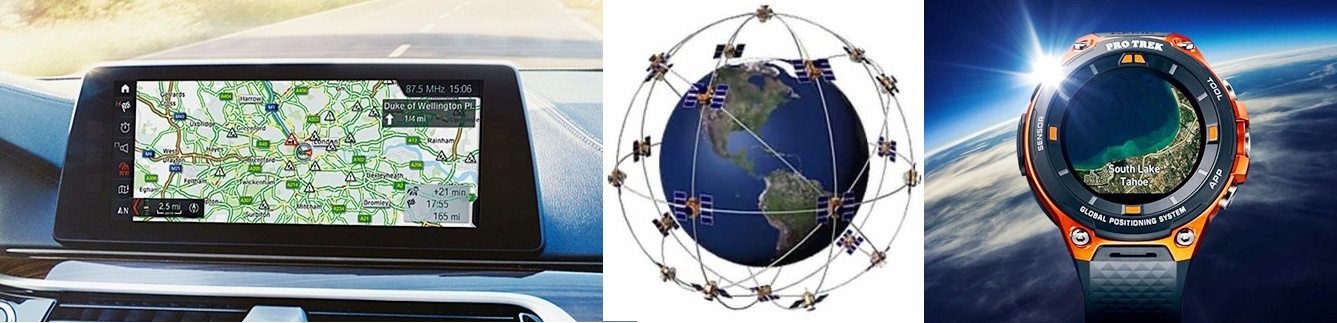
GPS devices
Route navigation systems for vehicles get signals from the GPS network around the planet. They can be received by built-in systems in cars as well as portable devices like watches.

‘Selective Availability’ was stopped by President Clinton in May 2000 and at that time, it was still 5 metres accuracy. This meant that if two points were less than 5 metres apart, the separation could not be shown. Over time, the accuracy improved and since 2018, accuracy is said to be possible to 30 cm. That means you can show individual lanes on the road whereas 20 years ago, you could only show the whole width of the highway.

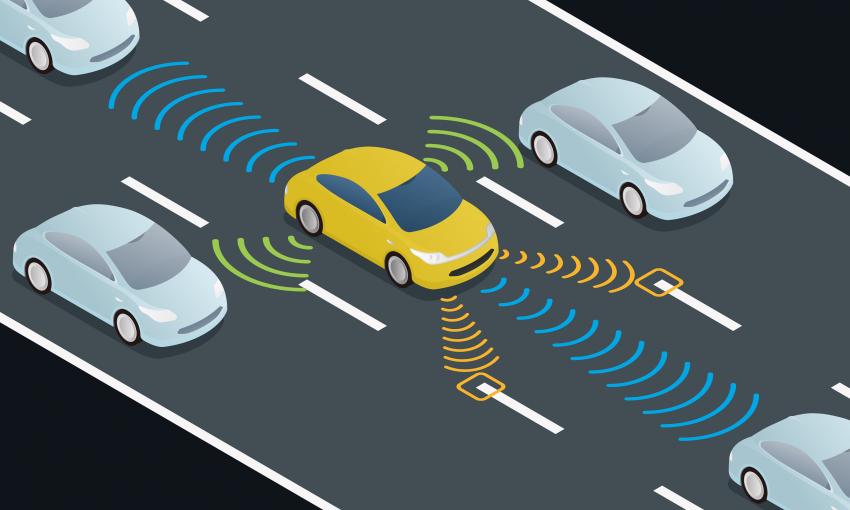
The accuracy will be very important when autonomous vehicles start to be used widely. Their on-board navigation systems will need to be able to pinpoint junctions and other turning points very accurately to avoid accidents.

Autonomous cars
Future cars that operate autonomously will require very accurate data on their location on the road to ensure they are guided safely.

Anyway, back to the case of the motorist who was on the motorcycle lane. It is best to not completely rely on Waze or other GPS navigation as you drive. There are funny incidents of people who somehow trusted their route guidance so much that they ended up on a river! Use your common sense and pay attention to signs.

BHPetrol RON95 Euro4M

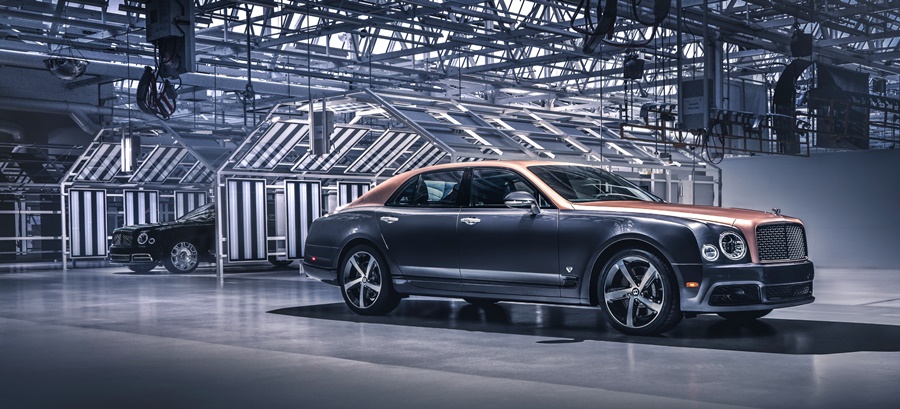
After more than a decade in production, the final Bentley Mulsanne has been completed. During that time, more than 7,300 handcrafted units have been produced of what is undoubtedly the ultimate luxury sedan.

The Mulsanne’s lineage, which comes to an end,  can be traced back through Bentley’s history, from the original 8 Litre of 1930 – the last car designed and developed by W.O. Bentley himself – as the most luxurious, coach-built Bentley of its time.
Last Bentley Mulsanne

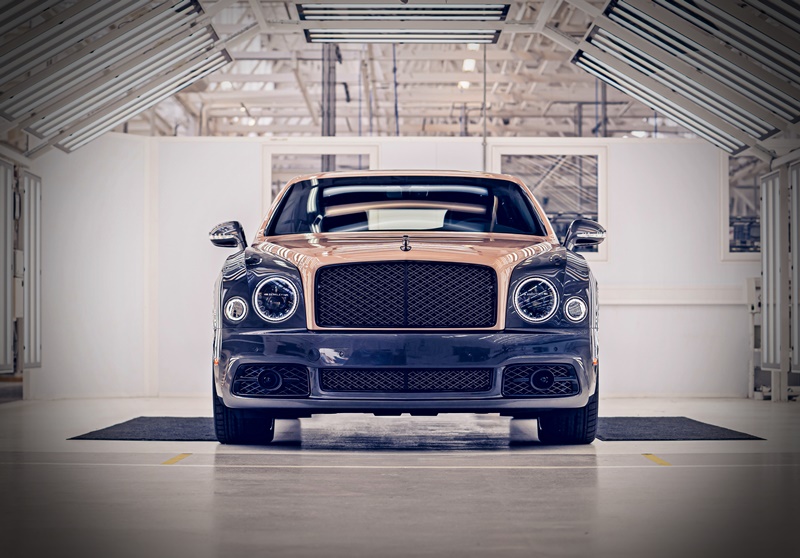
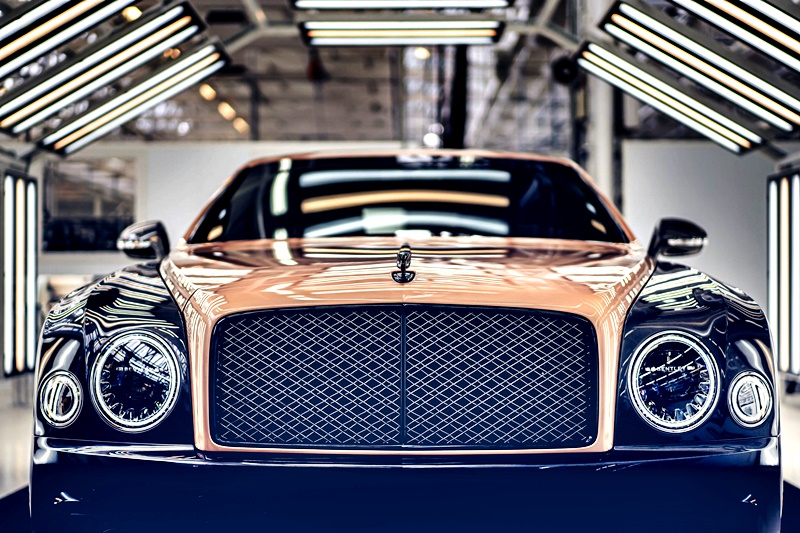
The final unit is a Mulsanne Speed ‘6.75 Edition by Mulliner’ finished in Rose Gold over Tungsten. It will soon be on its way to a lucky customer in the USA. However, it has also been revealed that there is one extremely special unit, a final Mulsanne but its future home remains a closely guarded secret.

Last Bentley Mulsanne

A true icon
“The Mulsanne is the culmination of all that we at Bentley have learnt during our first 100 years in producing the finest luxury cars in the world. As the flagship of our model range for over a decade, the Mulsanne has firmly solidified its place in the history of Bentley as nothing less than a true icon,“ said Bentley Chairman & Chief Executive, Adrian Hallmark.

“ I am immensely proud of the hundreds of designers, engineers and craftspeople that brought the Mulsanne to life over the last ten years. Now, as we begin Bentley’s journey to define the future of sustainable luxury mobility through our Beyond100 strategy, the role of Bentley flagship is passed to the new Flying Spur.”

Last Bentley Mulsanne

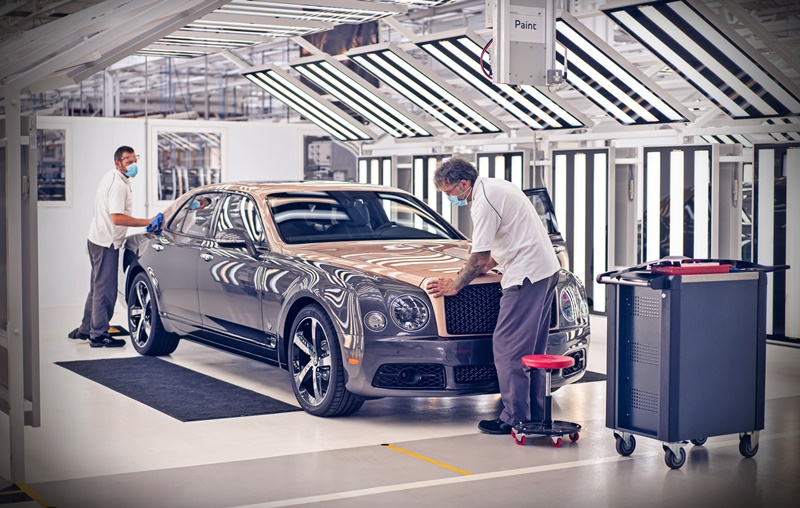
In the last 11 years, over 700 people have invested nearly three million hours crafting Bentley’s ultra-luxury sedan. Producing the Mulsanne bodies required approximately 42 million spot welds, and creating the sumptuous leather interiors took more than a million hours alone. Nearly 90,000 hours have been spent polishing cars, before a total of over four million individual quality checkpoints.

Mulsanne 6.75 Edition by Mulliner
In 2020, the final series production cars formed the unique ‘6.75 Edition by Mulliner’ signifying the end of Mulsanne’s reign. Taking its name from the legendary 6.75-litre engine which, this year, also came to the end of production after more than 60 years, the ‘6.75 Edition’ was limited to only 30 units.

How Bentley ensures the highest quality for its cars

PISTON.MY

Archive

Follow us on Facebook

Follow us on YouTube