Toyota is known to be cautious in venturing into new segments, watching competition start first and seeing the shortcomings – and then coming in with products that are often better. With electrification, the company has had dominance in the hybrid segment but seemed to be slow to get into full electrification. This is not to say that it was not developing models, but commercialising them was something that was slower.
Now, however, the company is starting its big push into full electrification, which is part of its commitment to contribute to reducing CO2 emissions. To achieve this. Toyota is establishing a full line-up of electrified vehicles which will reach around 70 by 2025; at least 15 models will be launched by 2025.
Starting with SUV BEV
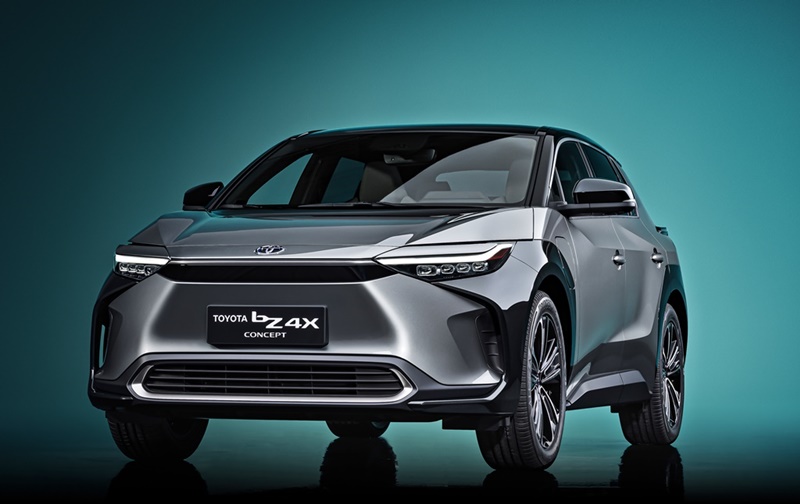
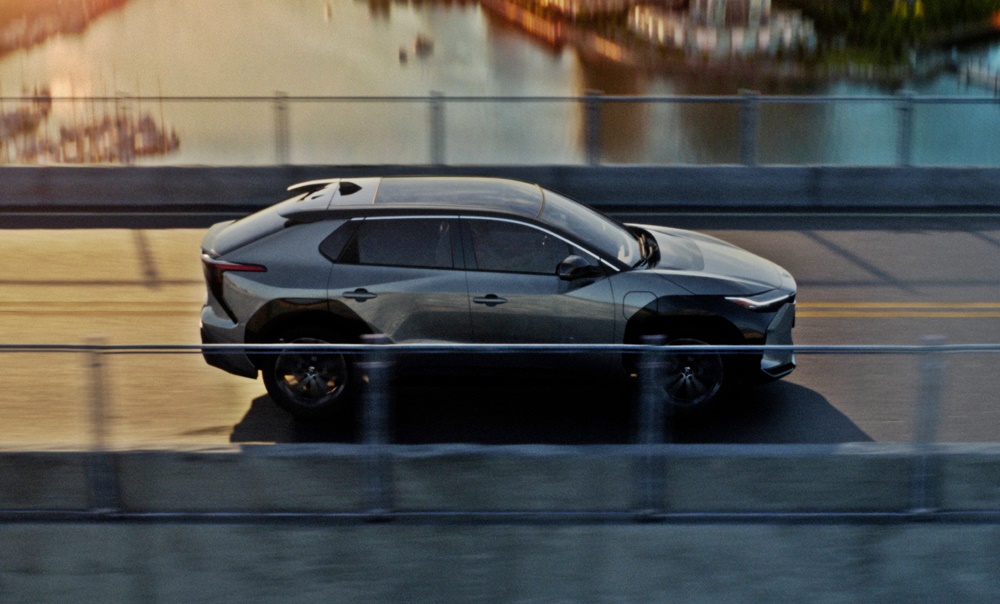
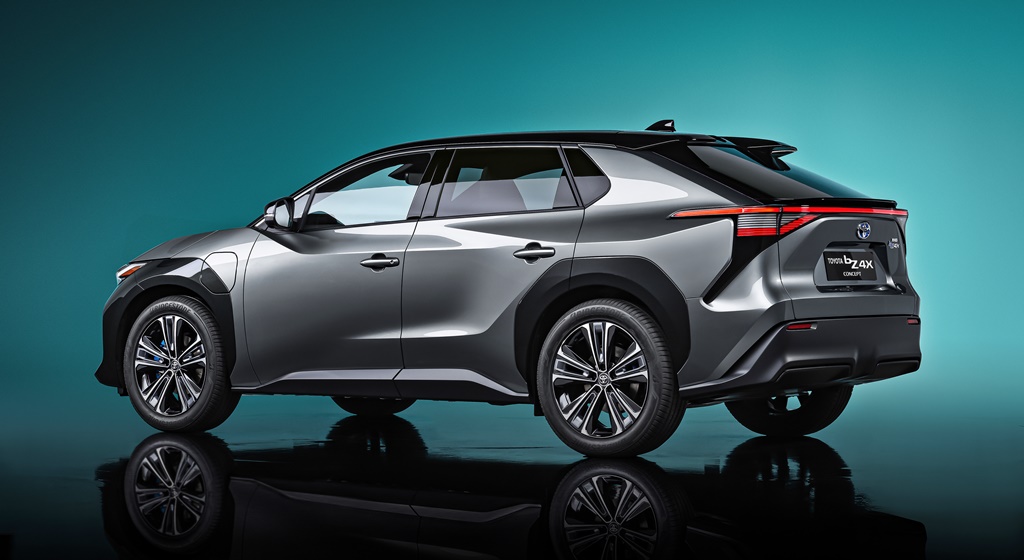
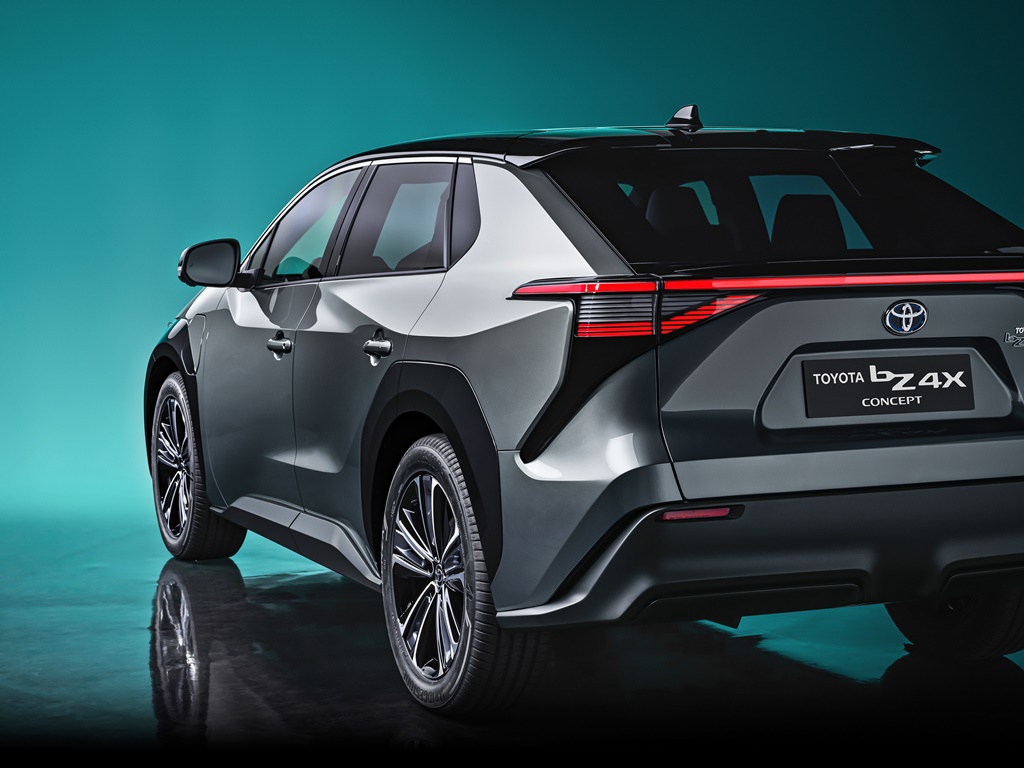
At Auto Shanghai, which is on this week, the Japanese carmaker has announced its new BEV (Battery Electric Vehicle) series to start off and is displaying a concept car, the Toyota bZ4X, as a preview of the first model of this series. To be made in China and Japan, worldwide sales of the production version of the new SUV BEV is expected to start by the middle of 2022.
Development of the bZ series (‘bZ’ stands for ‘beyond Zero’) is based on BEV-dedicated platforms that can be used with multiple variations in terms of size and design. Since it is difficult for Toyota to prepare such a wide range of choices by itself, it is jointly developing the series with partners who have the appropriate expertise in various fields. In the case of the bZ4X, Subaru is involved as a partner.
e-TNGA platform
The new vehicle will adopt the e-TNGA BEV-dedicated platform that was jointly developed by the two companies. It takes advantage of the strength of Toyota, which boasts expertise in vehicle electrification, and Subaru, which possesses AWD technologies. The bZ4X combines a long wheelbase with a short overhang which allows both a distinctive design and interior space comparable to a D-segment sedan.
The bZ series BEVs will have a human-centered approach aimed at widespread use in regions such as China, the USA and Europe, where there is significant demand for BEVs, and where there is a large supply of renewable electricity.
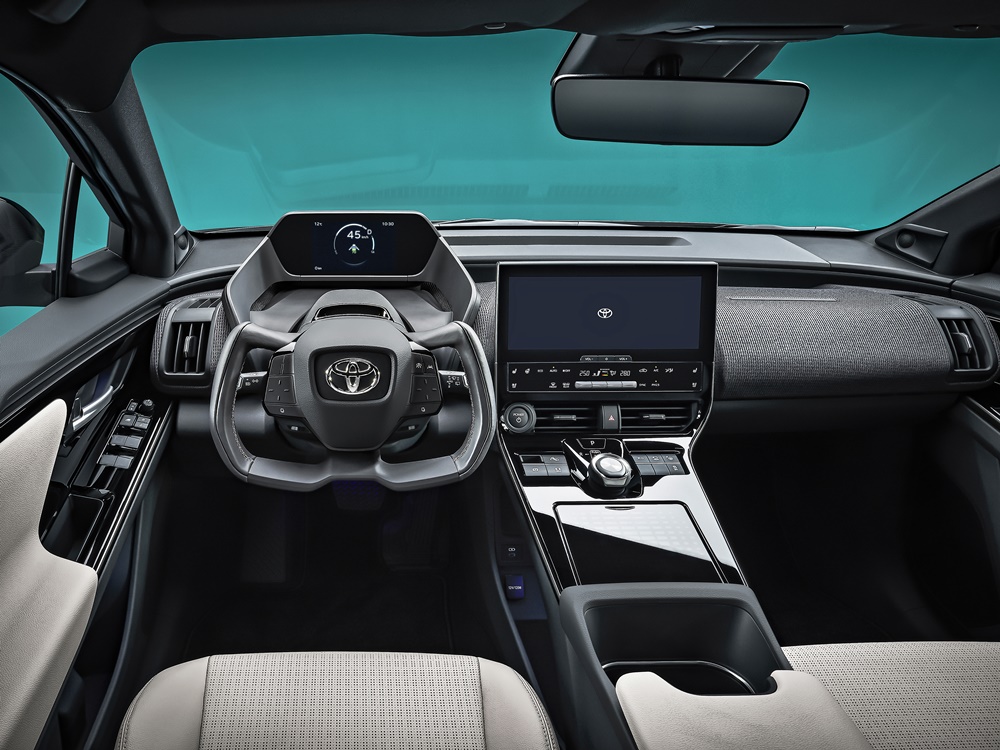
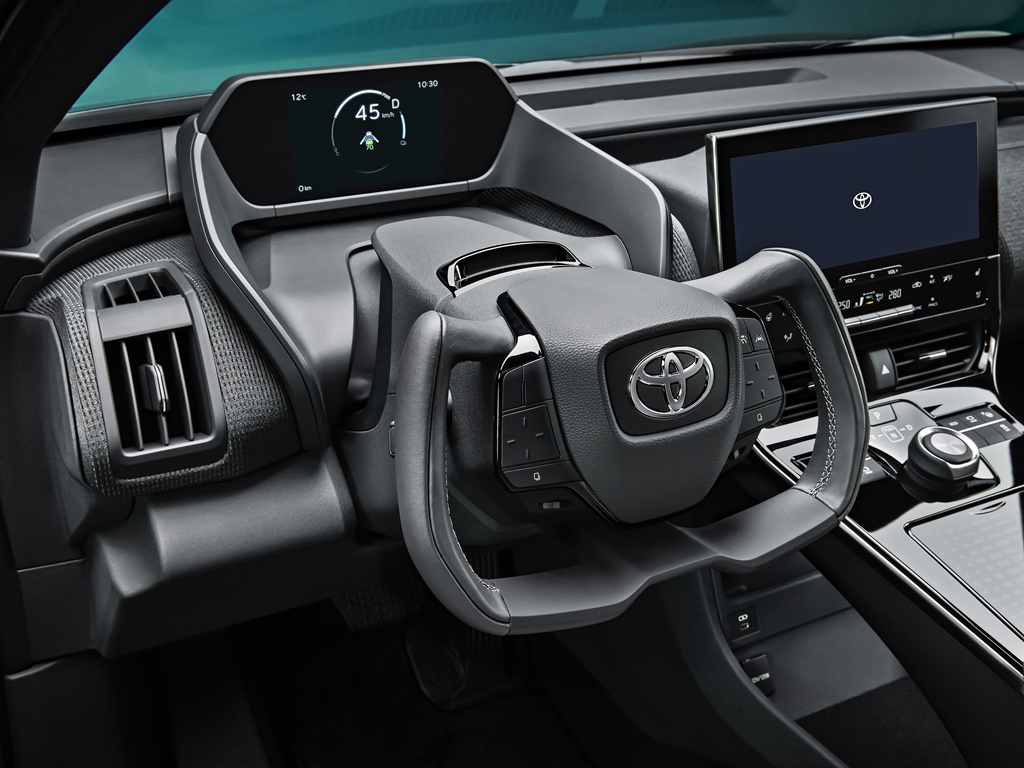
A uniquely shaped steering wheel eliminates the need to change grip when steering, and also contributes to a spacious interior. The vehicle will have a steer-by-wire system that provides a smooth driving feel aligned with the driver’s intentions. The low position of the instrument panel and the location of the meters above the steering wheel serve not only to enhance the vehicle’s sense of space, but also improve visibility and contribute to safe and secure driving.
The bZ4X has a new AWD system jointly developed by Toyota and Subaru. In addition to the use of regenerative energy systems, the vehicle also adopts a solar recharging system that recharges the battery while stationary.
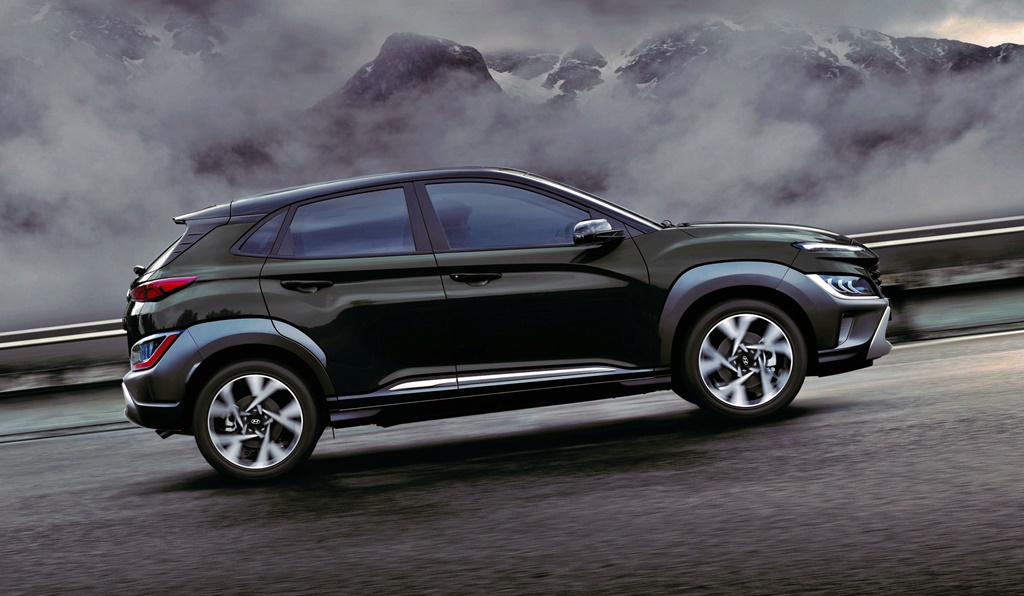
The Hyundai Kona made its global debut in 2017 but it was only in late October 2020 that the small SUV finally appeared in Malaysia. Now, just five months later, an updated version is being launched with a new powertrain and cosmetic changes for the 2021 model year.
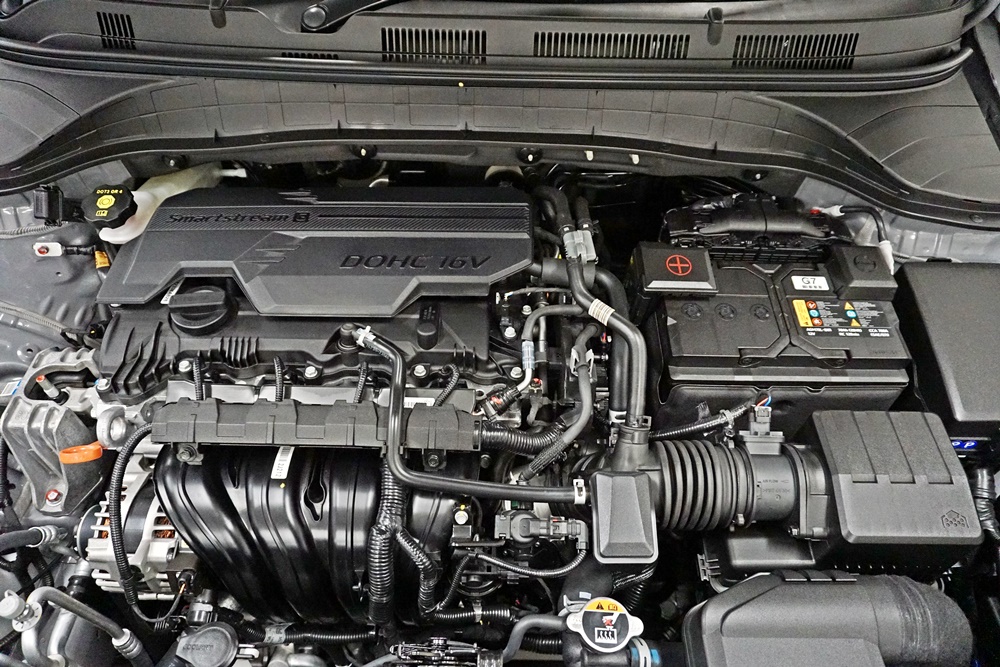
The new powertrain is from the Smartstream family and is a bigger version of the engine found in the latest Elantra that was launched in Malaysia in December last year. The Smartstream G2.0 Atkinson 4-cylinder engine replaces the Nu 2.0 and Gamma 1.6 engines (the latter being turbocharged) that powered the 2020 Kona. Without turbocharging but with advanced technology that promotes efficiency, the output is 149 ps/180 Nm.
There are other powertrain choices (hybrid and full electric) but it could be that the high demand for the Kona, especially in Europe, makes it hard for Hyundai Sime Darby Motors (HSDM) to get allocation at this time.
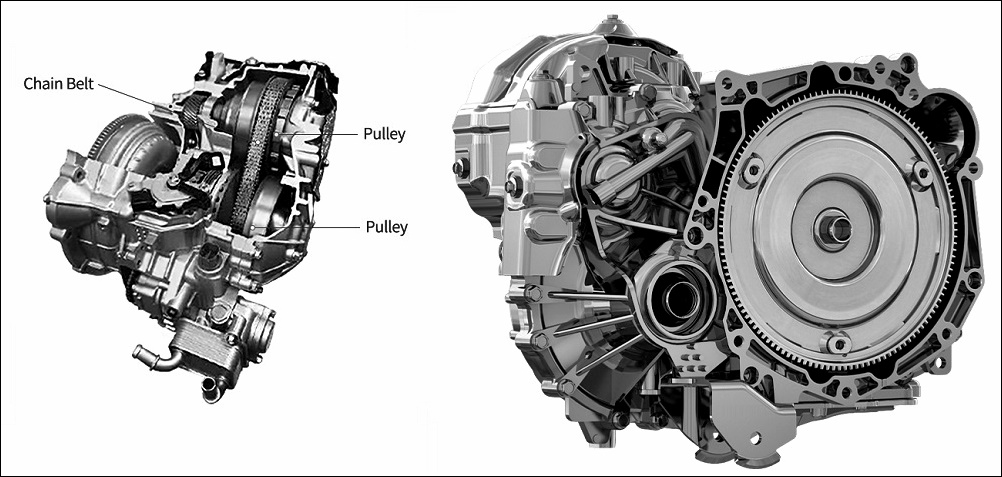
Hyundai Smartstream G2.0 engine and Smartstream, IVT (below).
Power goes only to the front wheels via a Smartstream IVT which was developed by the Hyundai Motor Group. It’s said to be better than a CVT while having the benefits of the CVT. The shifting patterns is more like a conventional transmission’s and the engineers have managed to eliminate the ‘rubber band feel’ of CVTs. Rather than having no set gear speed (as in CVTs), the driver can also take advantage of the virtual gear speeds generated by the IVT as needed, which do a great job in approximating the fun feel of the manual transmission.
Active and Standard versions, one engine only
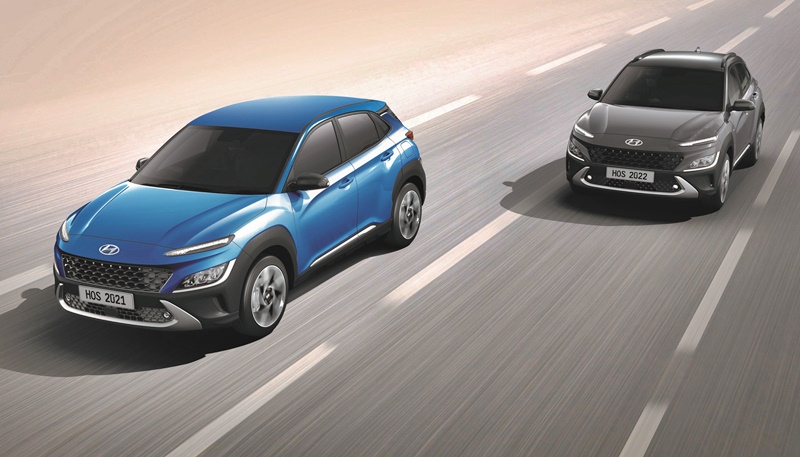
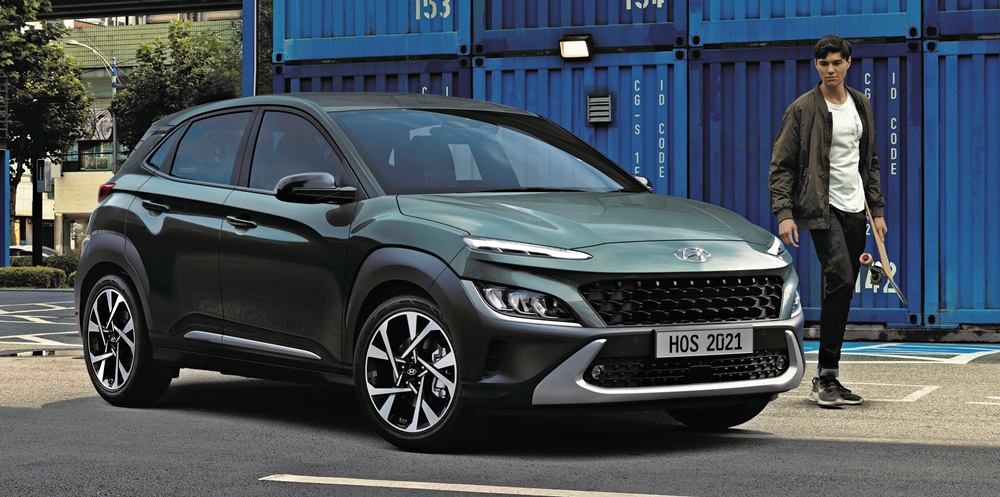
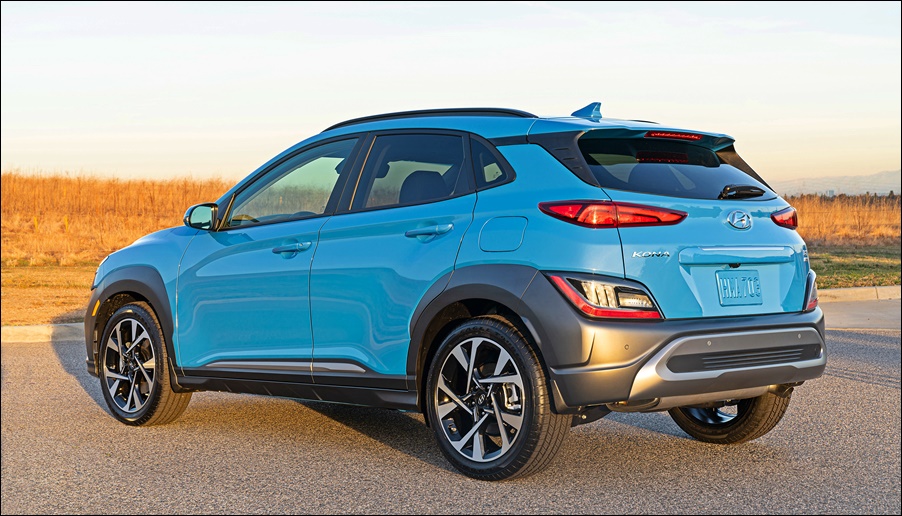
HSDM is importing the Kona in Standard and Active versions, priced (without insurance) at RM119,888 and RM136,888, respectively, with 50% of sales tax exempted until June 30, 2021. The 2021 model has restyled front and rear ends which sharpen the profile, making it visually sleeker, especially with the extra 40 mm of overall length.
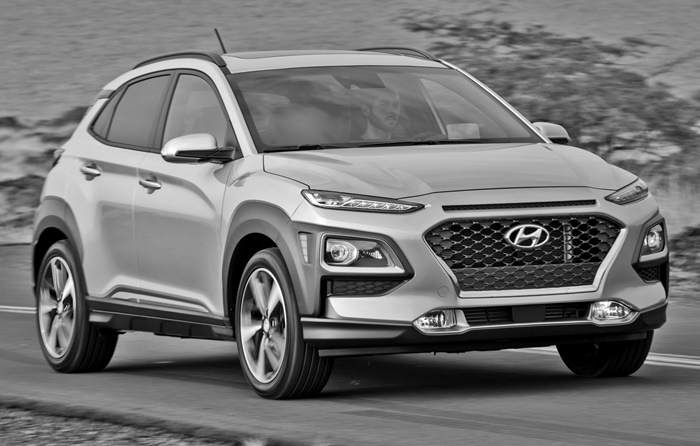
The 2021 Kona, which is 40 mm longer, has noticeable changes to the front end when compared to the 2020 model (below).
Stronger visual features
The Cascading Grille is a strong visual feature which extends to both corners, while the same LED lighting units are maintained (the slim lights at the top of each corner are the signal lights). To emphasise the SUV image are protective panels and a skid plate on the lower bumper. Integrated into the bumper corners are vertically oriented aerodynamic inlets that improve airflow.
At the rear, the new taillights feature horizontally stretched graphics. These mirror the front-end lighting theme. The new rear bumper, which continues the protective armour concept of the front and sides, also uses a contrasting coloured material. Depending on the variant, the alloy wheels are 17 inches or 18-inches in diameter with new designs.
Colour choices for the Kona Standard are Chalk White, Galactic Grey, Surfy Blue and Pulse Red, while those who buy the Kona Active variant have the option of Surfy Blue, Dive in Jeju, Ignite Flame, Dark Knight, and Misty Jungle.
Upscale and progressive interior
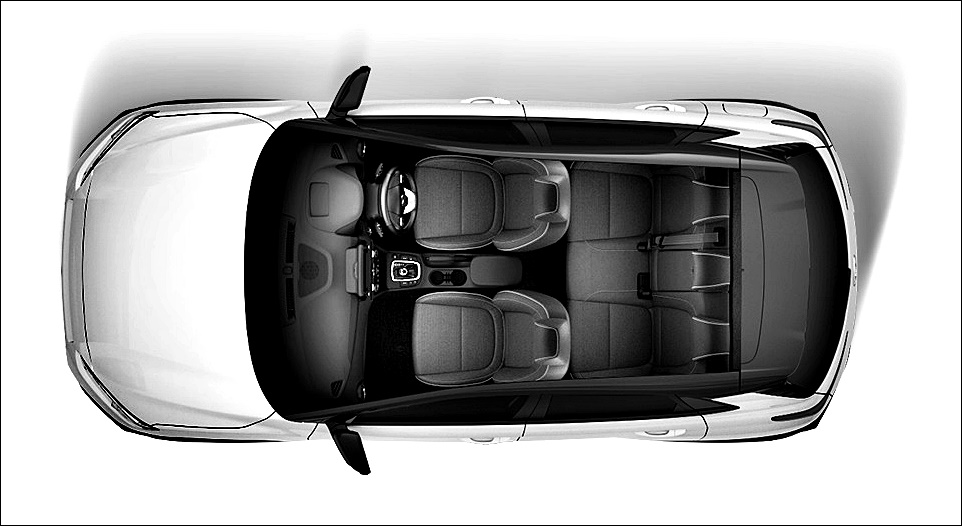
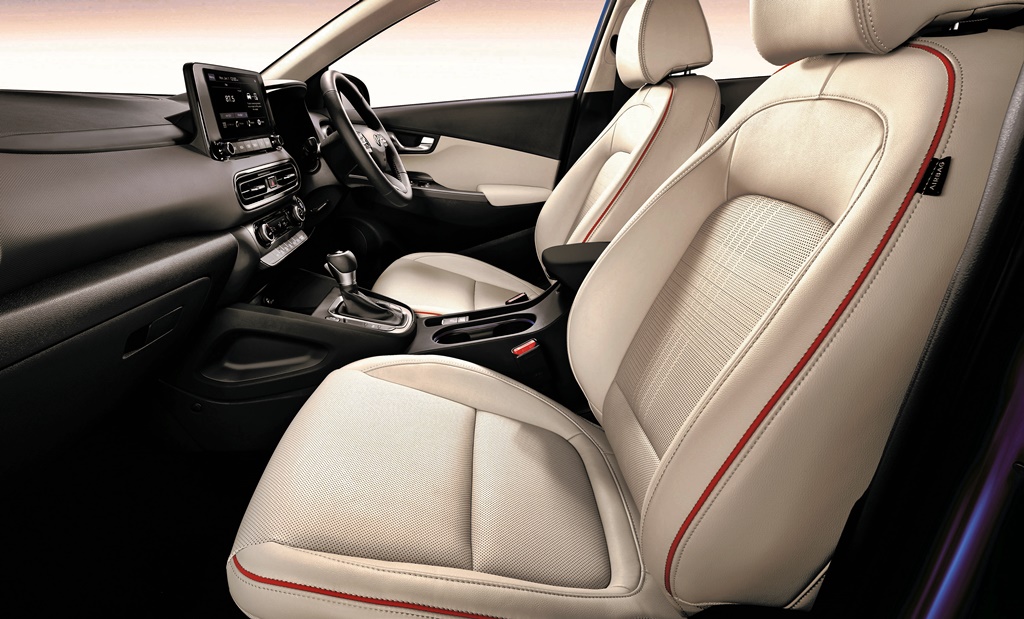
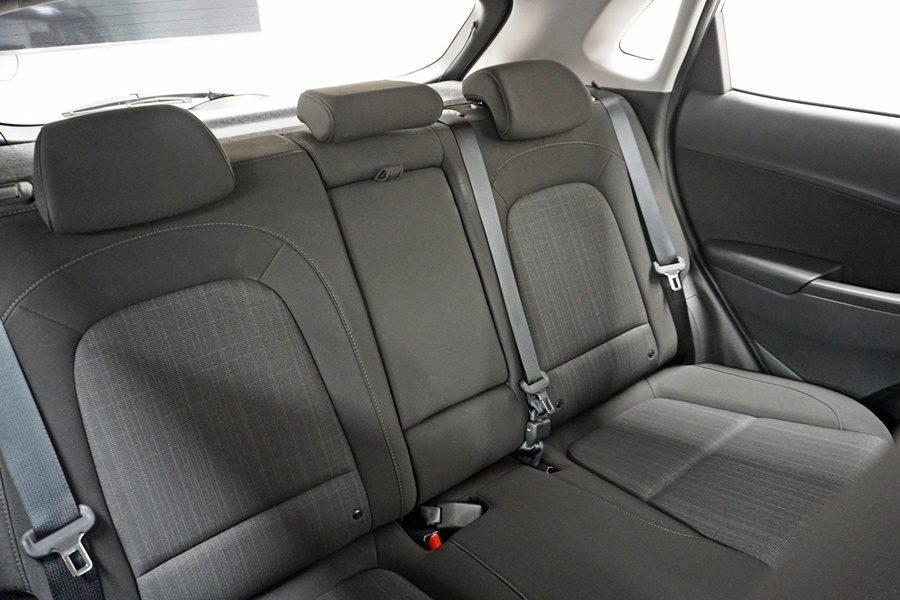
Packaging of a small SUV can be challenging for the interior designers as spaciousness is expected, being a SUV. Nevertheless, intelligent use of space provides the space and for the latest model, a number of revisions give a more upscale and progressive look. There are new colours and materials with seat cover options that include a black woven houndstooth design, cloth seats with black and grey embossing or perforated leather seats in black or beige.
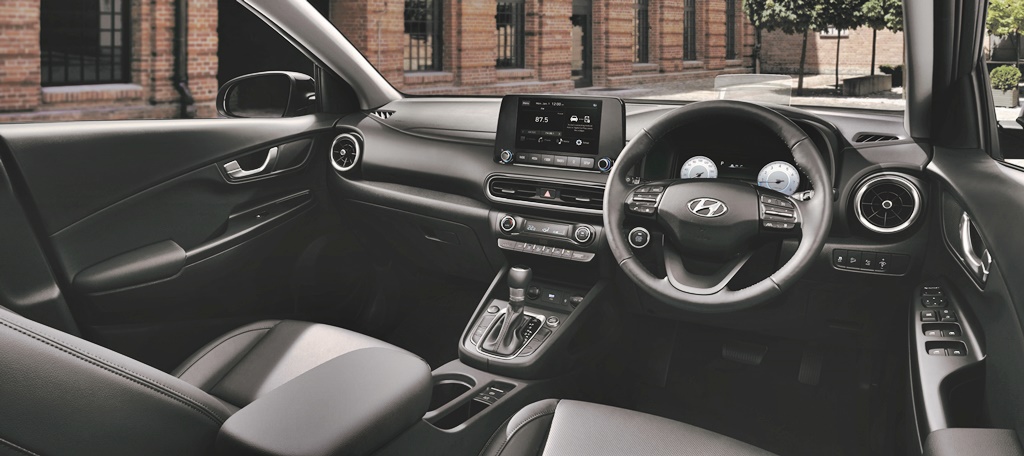
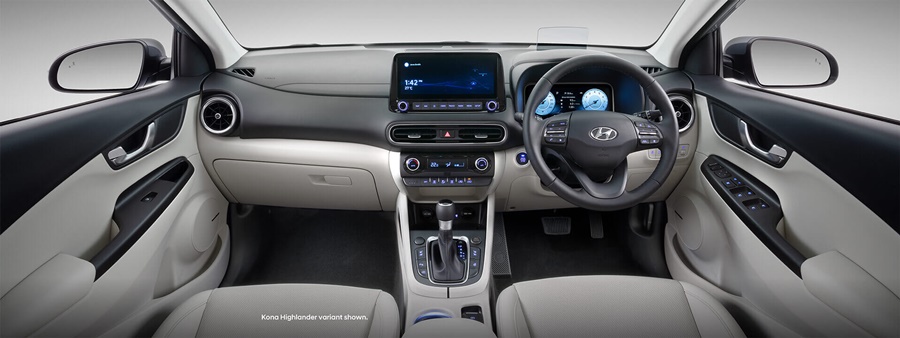
The redesigned console area is separated from the instrument panel to emphasize the horizontal layout. The dashboard appears wide and airy, contributing to the spacious ambience. New for the Kona Active is a 10.25-inch digital cluster, in addition to an 8-inch AVN screen with multiple connectivity options. Wireless Android Auto and Apple are also available allowing apps like Waze and Spotify to be embedded in the infotainment system.
For convenience and space-saving, the parking brake is now electrically-actuated and has an auto-hold function. demand. Additionally, the new Kona now has a remote engine start function from the smart key.
Hyundai Smartsense
Like other models in the market, the best safety features are only available in the most expensive version, in the case the Kona Active. This gets a range of SmartSense driver assistance systems such as Blind-Spot Collision-Avoidance Assist and Rear Cross Traffic Collision-Avoidance Assist with Safe Exit Warning. The latter is particularly valuable not only to detect (and warn the driver) vehicles approaching from either side when reversing out but also detects oncoming vehicles from the rear and then displays a visual and audio warning to alert the passenger exiting the vehicle.
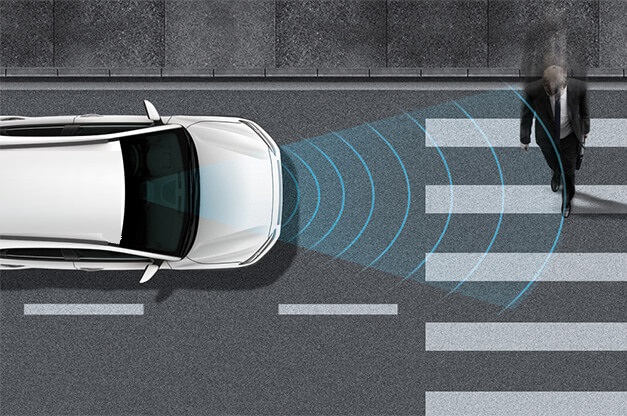
Other safety features include Lane Keeping Assist, Lane Following Assist, Driver Attention Warning with Leading Vehicle Departure Alert, Rear Occupant Alert and High Beam Assist. The Forward Collision-Avoidance Assist (FCA) has also been upgraded with pedestrian and vehicle detection, and will activate Automatic Emergency Braking if the driver does not act correctly or in time to prevent an accident.
HSDM sells the new Kona with a 5-year or 300,000 km (whichever comes first) warranty and during the first 3 years (or maximum of 50,000 kms), the customer won’t have to pay anything for scheduled maintenance services.
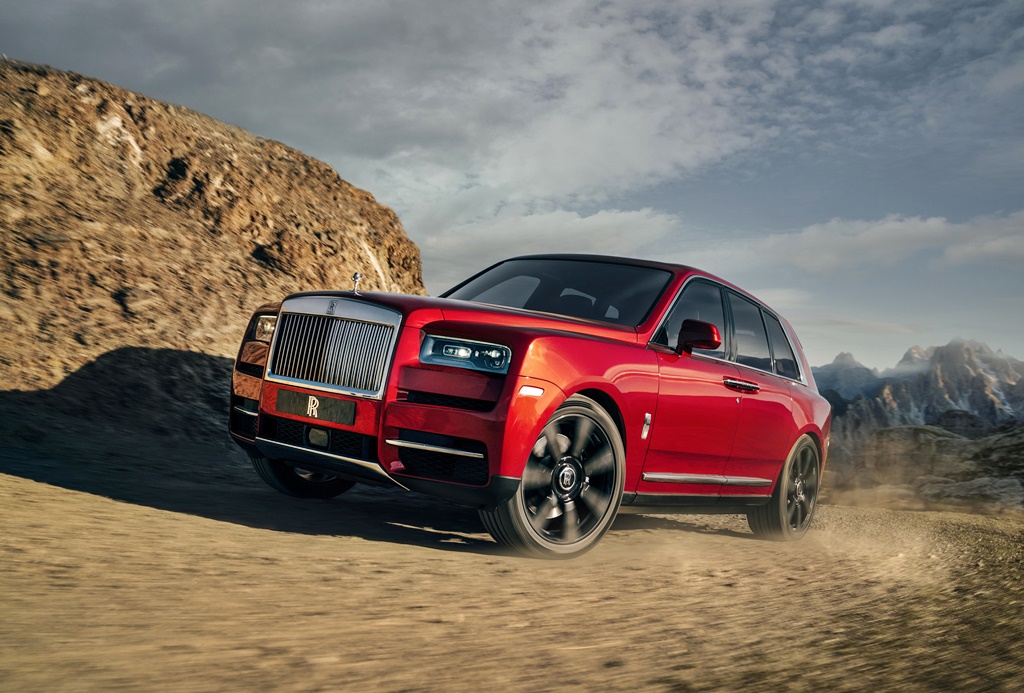
Even the wealthiest people will enjoy a drive into the countryside where they can have a picnic and enjoy the fresh air and natural environment. For Rolls-Royce owners, until recent times, this would have meant using a vehicle other than their Rolls-Royce (perhaps a Range Rover) which could comfortably go off-road. With the addition of the Cullinan to the range in 2018, they no longer need to use another brand as they can now enjoy ‘Effortless, Everywhere’ motoring with the SUV.
In addition to conveying its occupants to their destination with the same comfort and serenity as, say a Ghost or Phantom, the Cullinan offers two unique Bespoke features to ensure that, on arrival, they are equipped with everything required for their outing.
Designed as an original feature
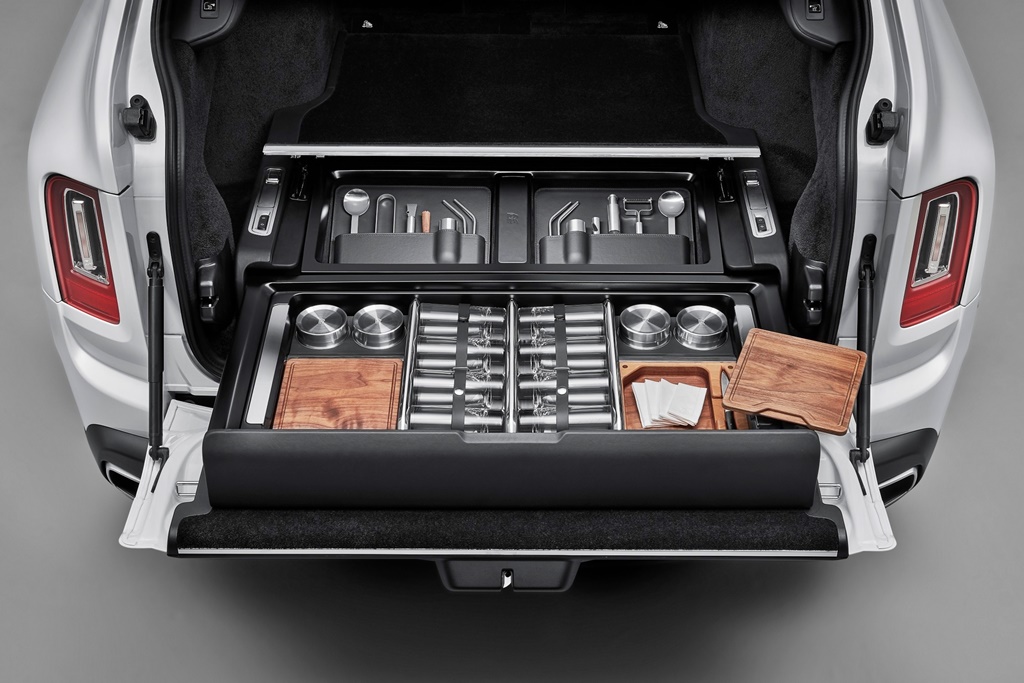
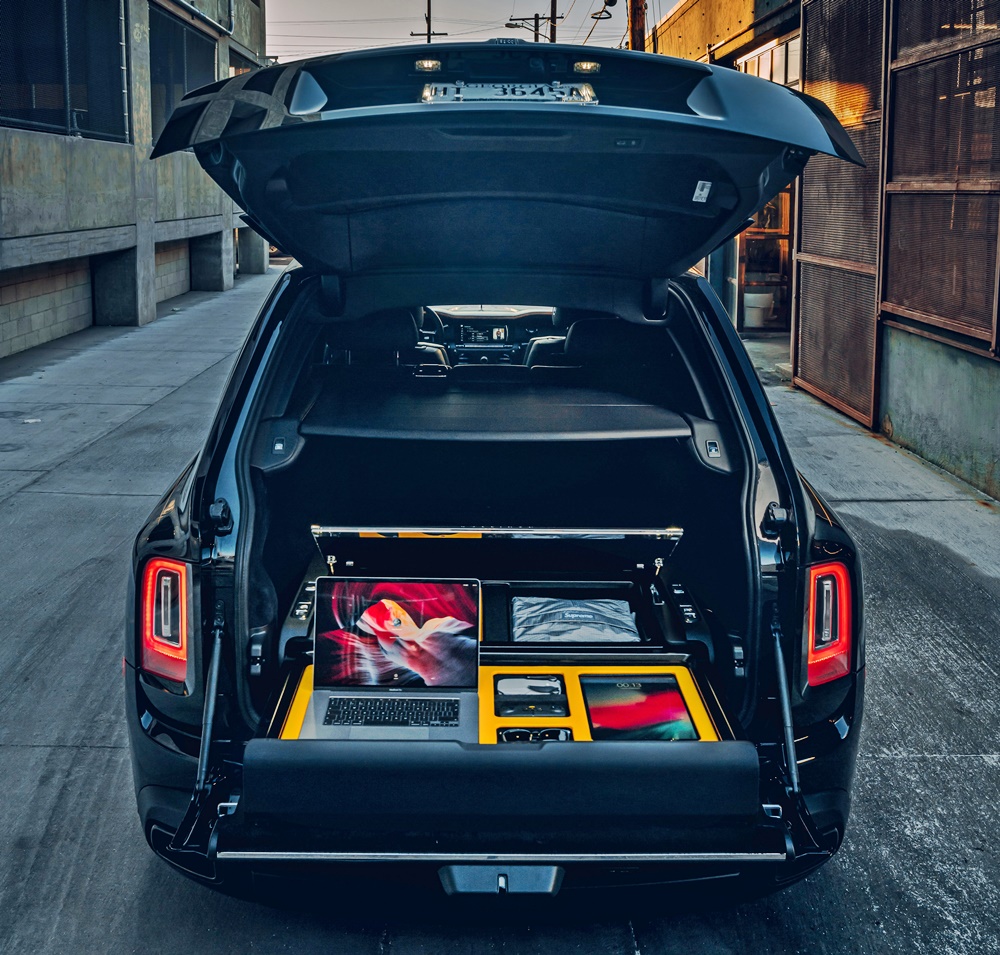
The first is the Recreation Module, a motorised drawer cassette designed to fit securely and invisibly into the luggage compartment floor of the Cullinan. The idea for such a feature was originally included in the development of the model, the first SUV in Rolls-Royce history. While the Recreation Module adds to the Cullinan’s versatility and individuality, it does so without compromising the car’s spacious 2245 mm loading length and boot capacity of up to 1930 litres.
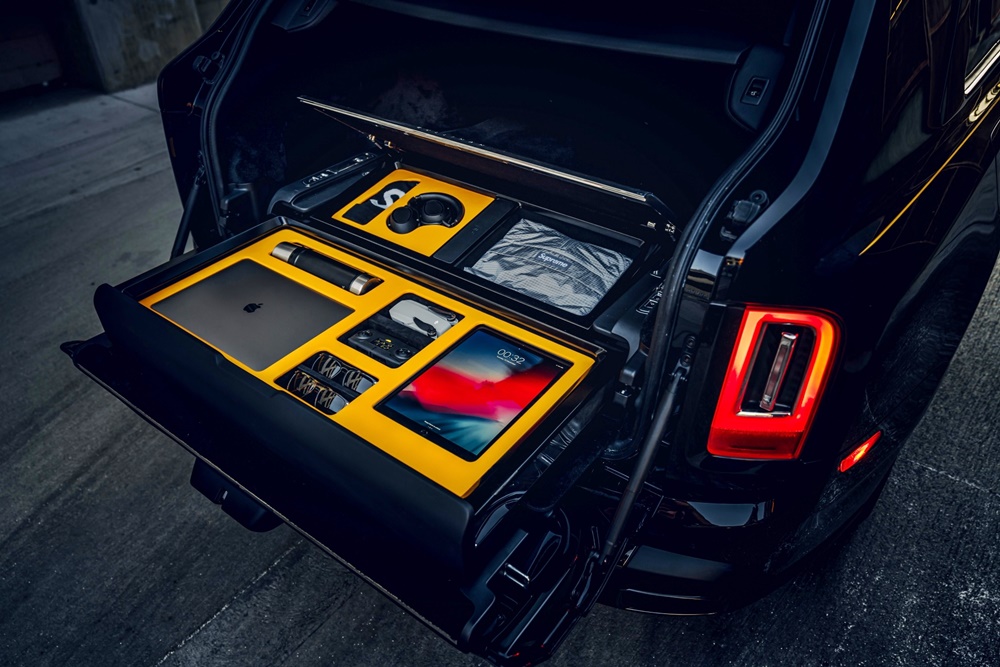
At the touch of a button, the Recreation Module slides open to reveal equipment, accessories and other items which can be personally selected by the owner. Whatever shape and size, the Bespoke department will create an individually tailored container for the item. The Recreation Module can be trimmed to match or contrast with the car’s interior and exterior colourway according to the owner’s preference.
Modular approach for different purposes
The Recreation Module provides up to 48 litres of space and the entire assembly can be removed and stored separately. The modular approach means that the owner can have different modules for specific hobbies and applications. For example, one Recreation Modules could accommodate guns for shooting, while another could be filled with equipment to fly a drone. A third could be all the necessary gear for a weekend of fishing.
One example was a personalised Urban Photography Recreation Module for use by photographer Mark Riccioni who, in 2019, was commissioned by the company to create a series of innovative and subversive images featuring Black Badge Cullinan, under the cover of darkness, among the distinctive automotive subcultures of Greater Los Angeles.
To support the project, a module was developed incorporating specialist equipment including a DJI drone, 12.9-inch Apple iPad Pro and 16-inch Apple MacBook Pro for image capture and editing on location. The Bespoke Collective of Designers, Engineers and Craftspeople also found room for his noise-cancelling headphones, sunglasses and outerwear.
Hosting Service for picnics
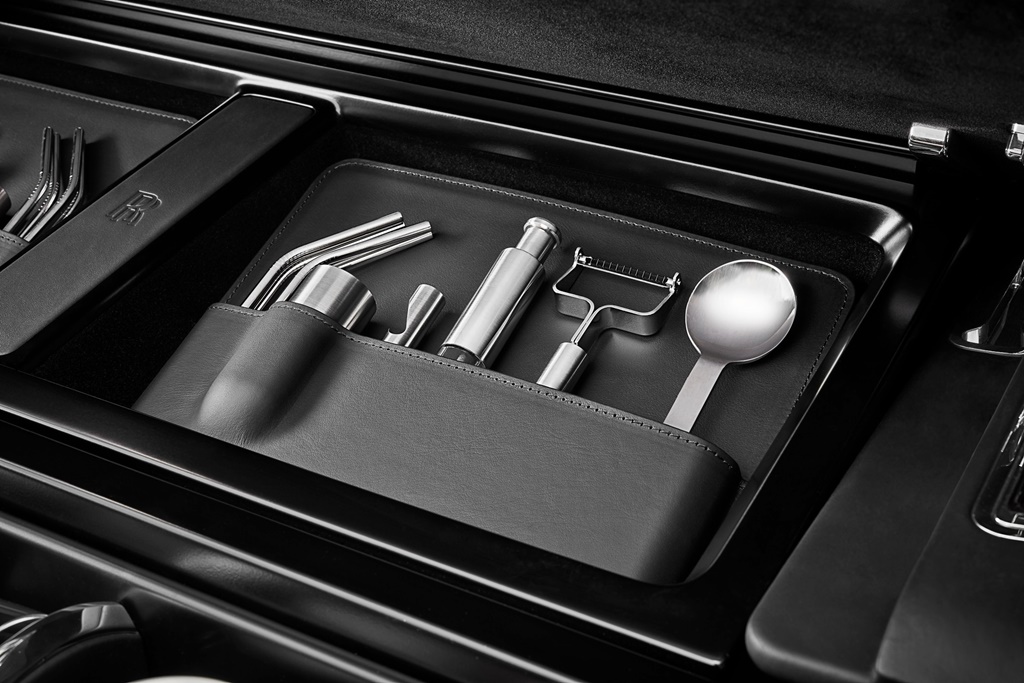
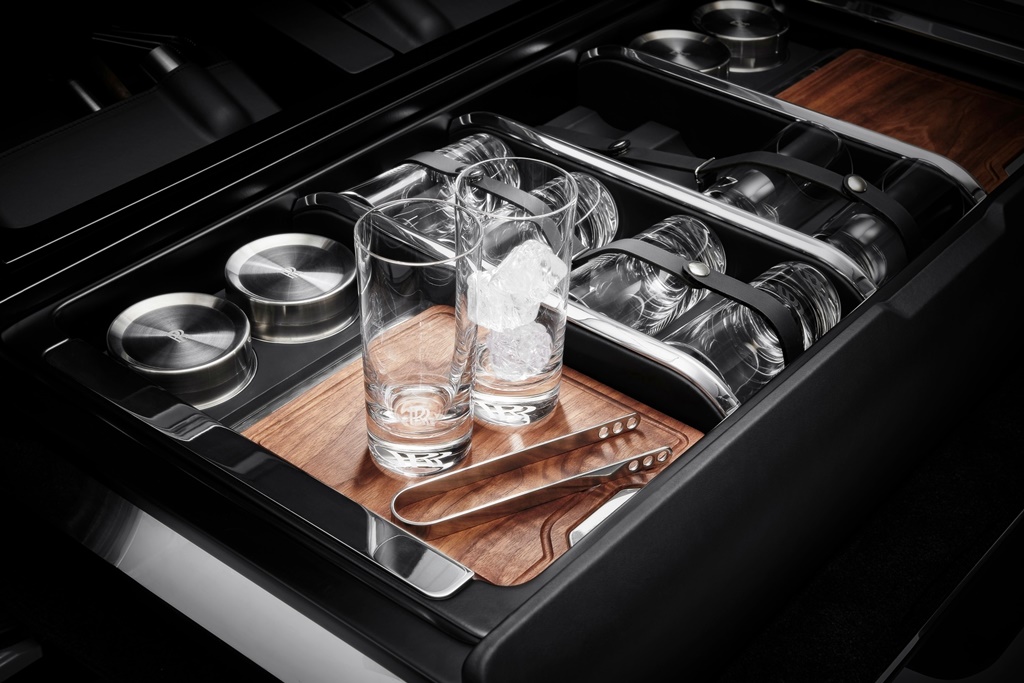
The second feature is a permanent Bespoke feature for the Cullinan named the Hosting Service. This marries design, craftsmanship and engineering to offer a range of accessories to create the perfect beverage while enjoying beautiful vistas. Suited to hosting up to 8 adults, the Hosting Service comes complete with glassware and the utensils for creating a fresh cocktail or gin and tonic.
Elegant highball glasses are adorned with discreet Rolls-Royce monograms whilst wooden chopping boards are made of the highest quality American walnut. Additionally, space is provisioned for a light snack service.
A Viewing Suite
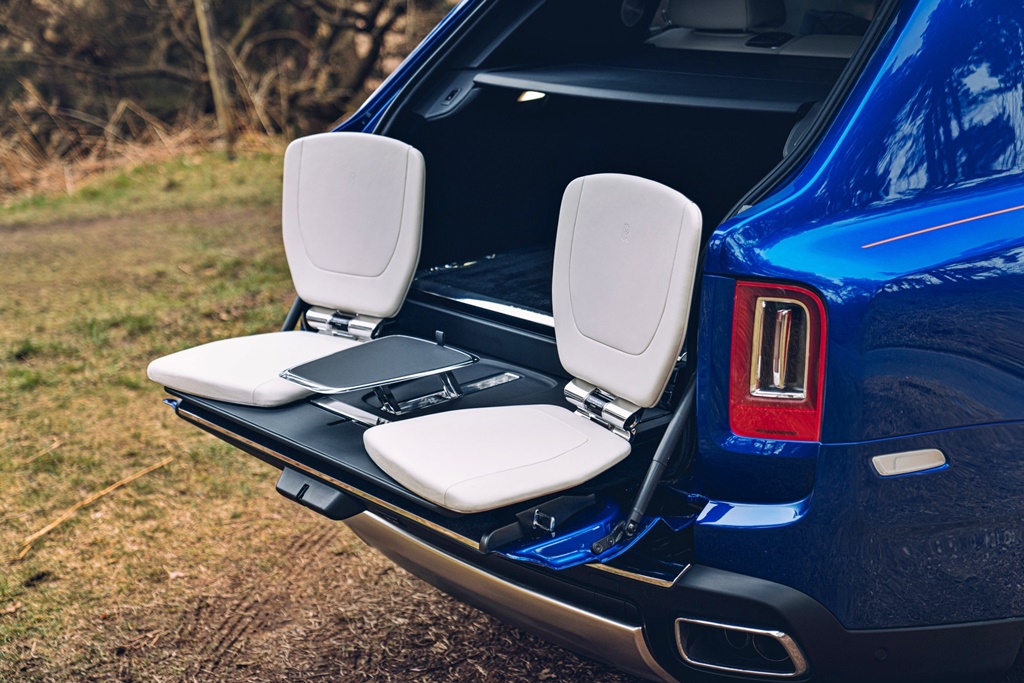
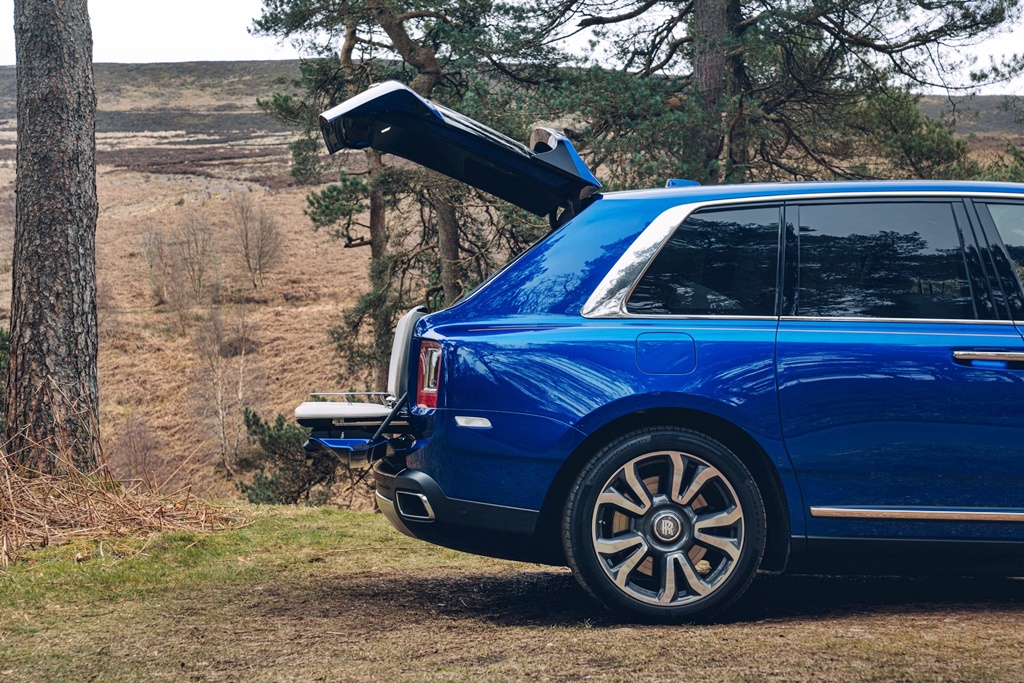
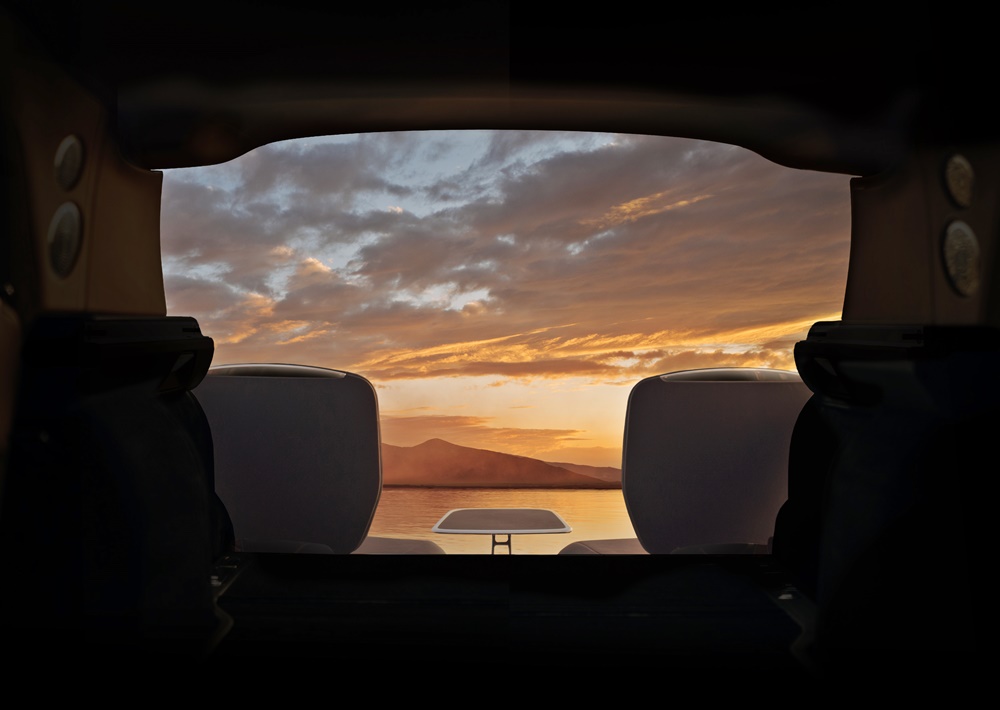
As well as the Recreation Module, the rear compartment can accommodate another Bespoke feature which is unique to the Cullinan. It offers seating looking rearwards which, in other SUVs, would be on the fold-down tailgate or boot floor. Rolls-Royce, however, provides a Viewing Suite with two seats. With the tailgate open, a touch of a button deploys the rear-facing seats sociably arranged on either side of a retractable cocktail table.
The price of a Cullinan, which has a 6.75 litre twin-turbo V12 engine, starts from RM1.5 million (excluding taxes) but it is unlikely that anyone pays that amount. Virtually every owner would specify some degree of personalisation and items like the Recreation Module and Viewing Suite would add to the final price.
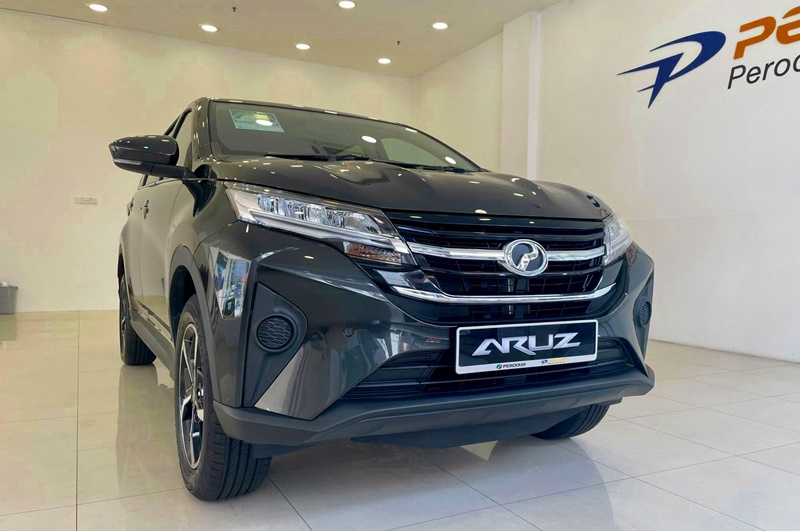
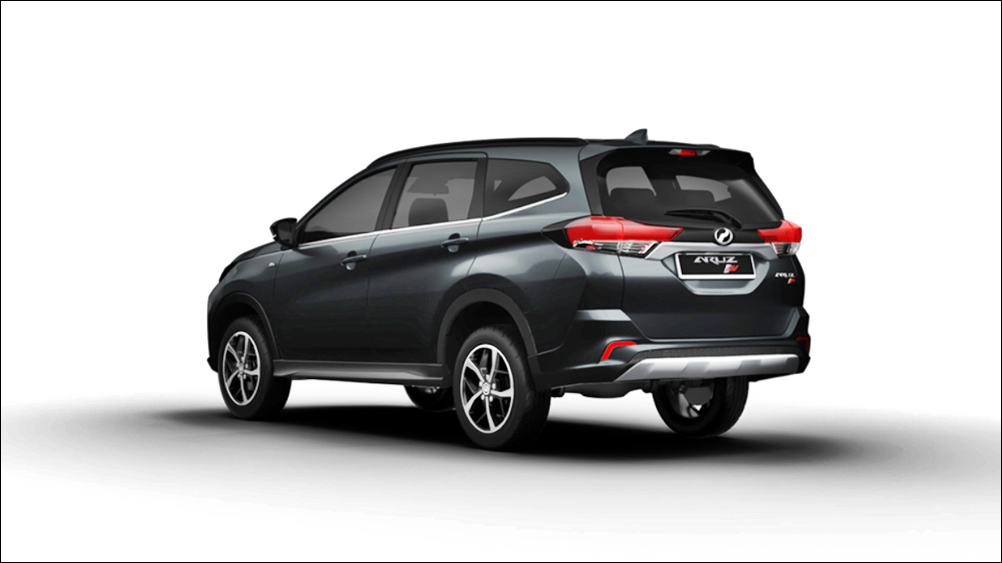
Singapore is the first export market for the Perodua Aruz, joining the Myvi and the Bezza in the island republic. Imported and sold by Perocom Auto Pte, Ltd., Perodua’s distributor since 1997, the Aruz is priced at S$92,999 (equivalent to RM286,409), inclusive of Goods and Services Tax and a Certificate of Entitlement (COE).
First Perodua 7-seater in Singapore
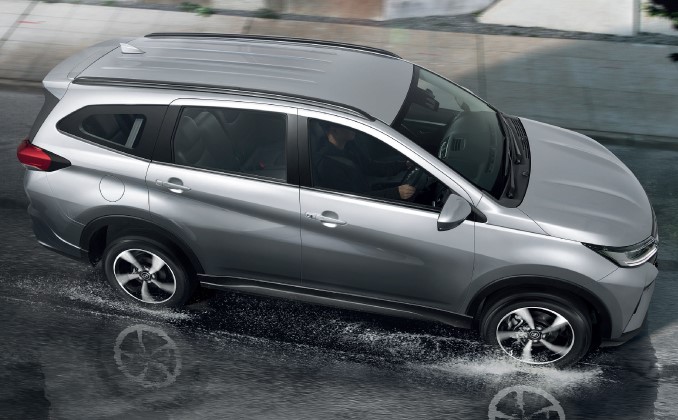
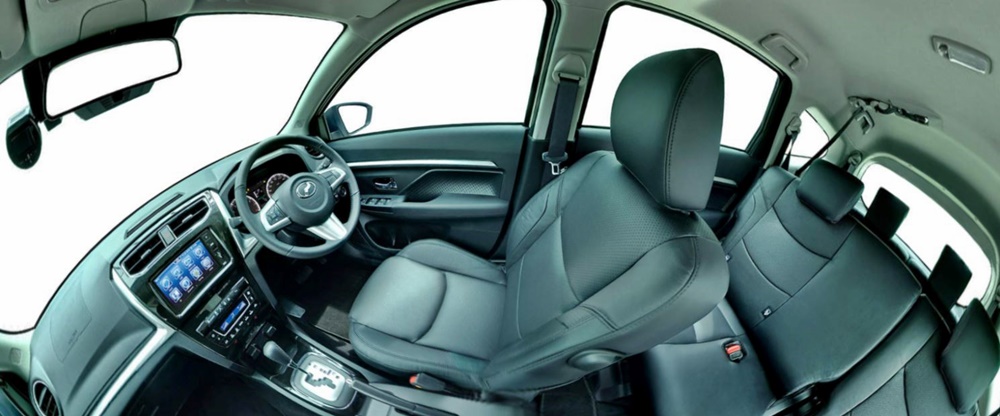
As the first 7-seater offered by Perodua in Singapore (the Alza has not been sold there), the Aruz offers three rows of seats and the second and third rows can be folded and set in various configurations. This will provide extra flexibility in carrying cargo and people.
Standard equipment for the version exported to Singapore (Aruz X) includes LED headlamps, 17-inch 2-tone alloy wheels, keyless entry and pushbutton engine start, and an infotainment system with a touchscreen which also doubles up as a display for the rearview camera.
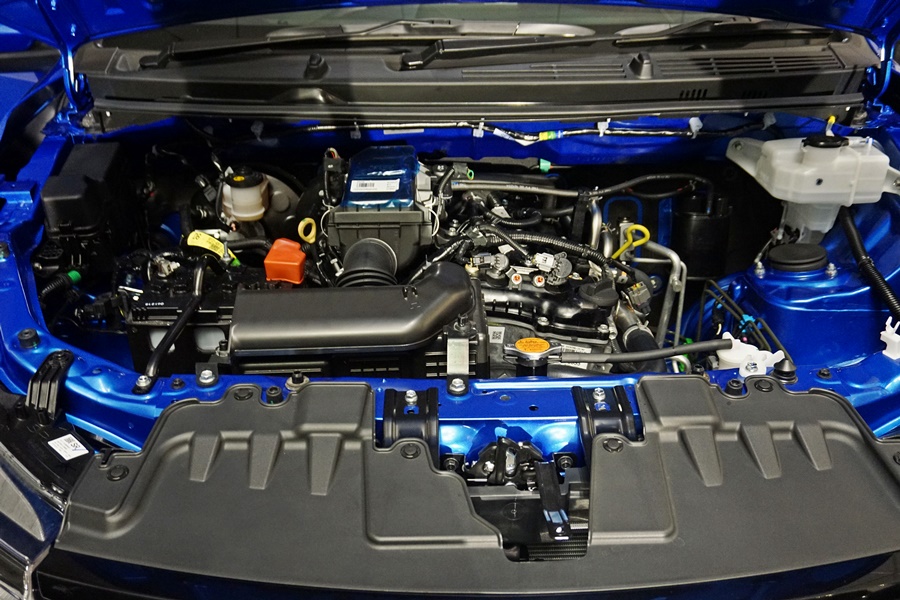
As in Malaysia, the Aruz sold in Singapore has an all-aluminium 4-cylinder engine with a 1.5-litre displacement and Dual VVT-i in the 16-valve cylinder head. With Eco Idle and a 4-speed electronic automatic transmission, the fuel consumption is claimed to be up to 15.6 kms/litre.
“The arrival of the Aruz in Singapore marks the first 7-seater offered by Perodua in the island nation,” said Perodua President & CEO, Dato’ Zainal Abidin Ahmad. “With nearly 58,000 units sold in Malaysia since its debut in 2019, the Perodua Aruz was Malaysia’s best-selling SUV overall in 2019 and 2020. We are looking forward to sharing the Aruz’s space, safety, versatility, durability, practicality and fuel efficiency with our southern neighbours.”
Perocom Auto also imports the Myvi and Bezza and previously sold models such as the Kancil, Kembara, Kelisa, Viva, Axia and earlier generations of the Myvi.
Perodua’s export markets
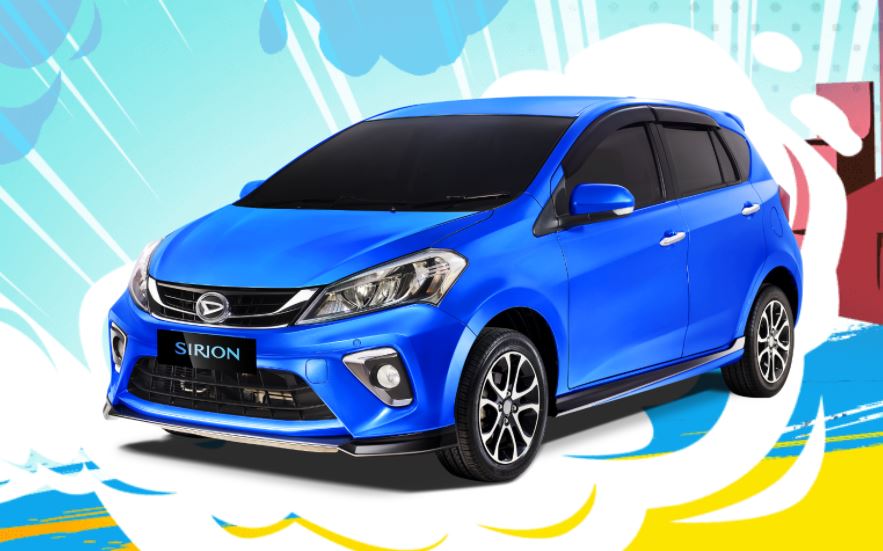
Besides Singapore, Perodua also exports to Brunei, Sri Lanka, Mauritius, the Seychelles, and Fiji. Its vehicles are also exported to Indonesia where they are sold under the Daihatsu brand and the model name of Sirion. This is significant as it means that the Japanese carmaker considers Malaysian-made quality as being of a standard high enough to put its own badge on the car.
The Myvi made in Malaysia is sold as a Daihatsu Sirion in Indonesia.
To know more about the Aruz and other Perodua models in Malaysia, visit www.perodua.com.my.
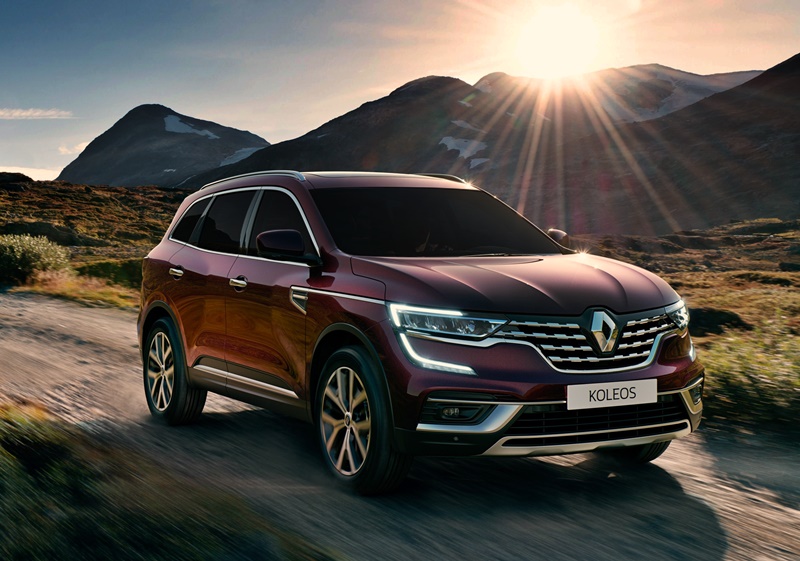
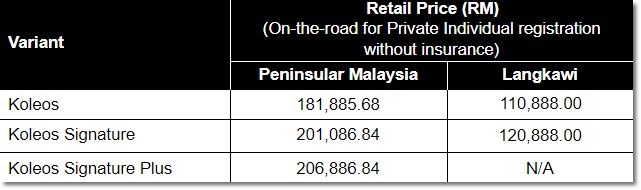
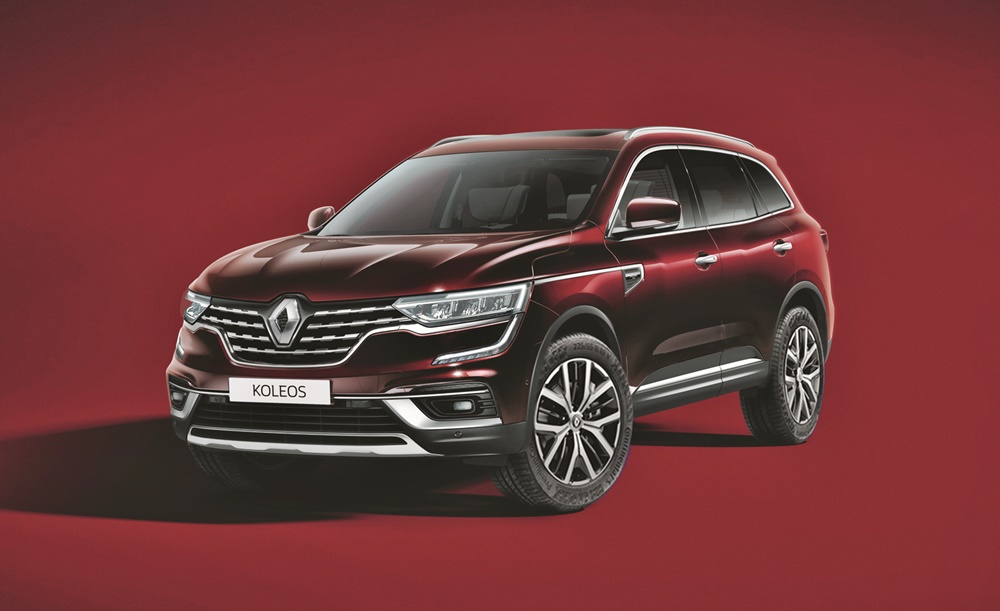
The 2021 Renault Koleos is now available from TC Euro Cars (TCEC), with a choice of three variants – Koleos, Koleos Signature and Koleos Signature Plus. All have improvements in many areas including exterior styling and interior comfort.
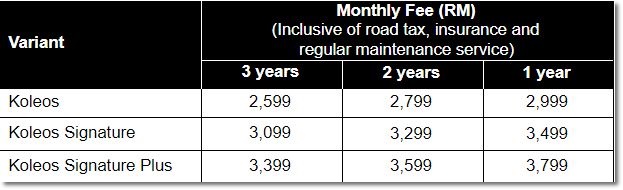
Excluding insurance (Peninsular Malaysia registration), the prices range start from RM181,885.68 for outright purchase but customers can also opt for a subscription plan from 1 – 3 years. The monthly instalments of the subscription plan cover roadtax, insurance and regular maintenance services but at the end of the subscription period, the vehicle has to be returned or can be negotiated for purchase at a depreciated value.
Regardless of whether a purchase or subscription plans is chosen, the Koleos comes with a 5-year manufacturer warranty or maximum of 150,000 kms travelled after registration.
PureVision LED headlights
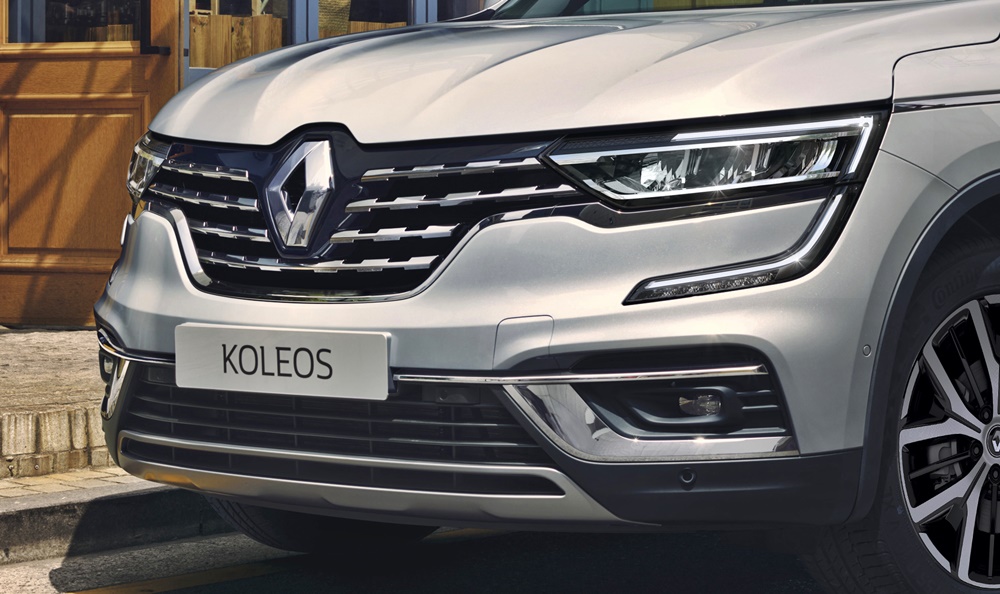
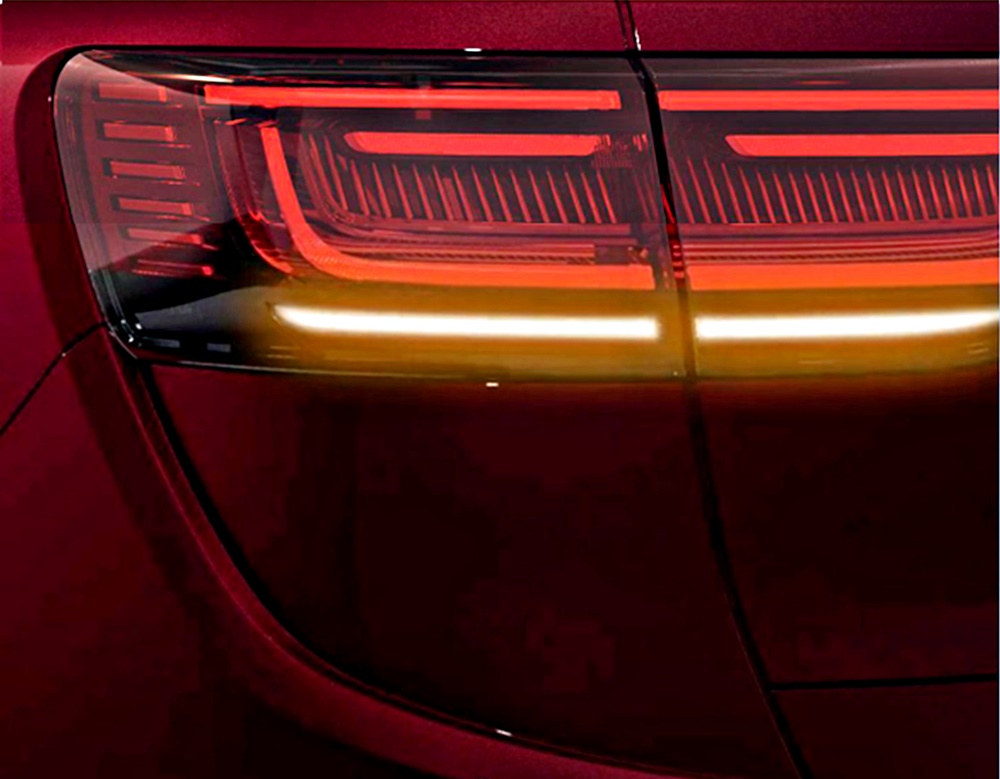
The obvious update in styling is in the headlights, which now have a new lighting signature with PureVision full LED units that are standard for all the variants. Renault’s PureVision LED technology provides strong and clear illumination and at the same time, reduces energy requirements by 10% (compared to the previous headlamps used). At the rear, dynamic turn indicators are incorporated in the redesigned 3D-style cluster, giving a strong visual signal when making a turn or lane change.
Five exterior colour choices are available, with Highland Silver replacing the previous Ultra Silver.
2.5-litre engine with X-Tronic CVT
All variants use the proven 2.5-litre petrol engine which delivers up to 171 ps/226 Nm for strong performance. All that output flows to the front wheels through an efficient X-Tronic CVT which can operate automatically or the driver can manually select gears.
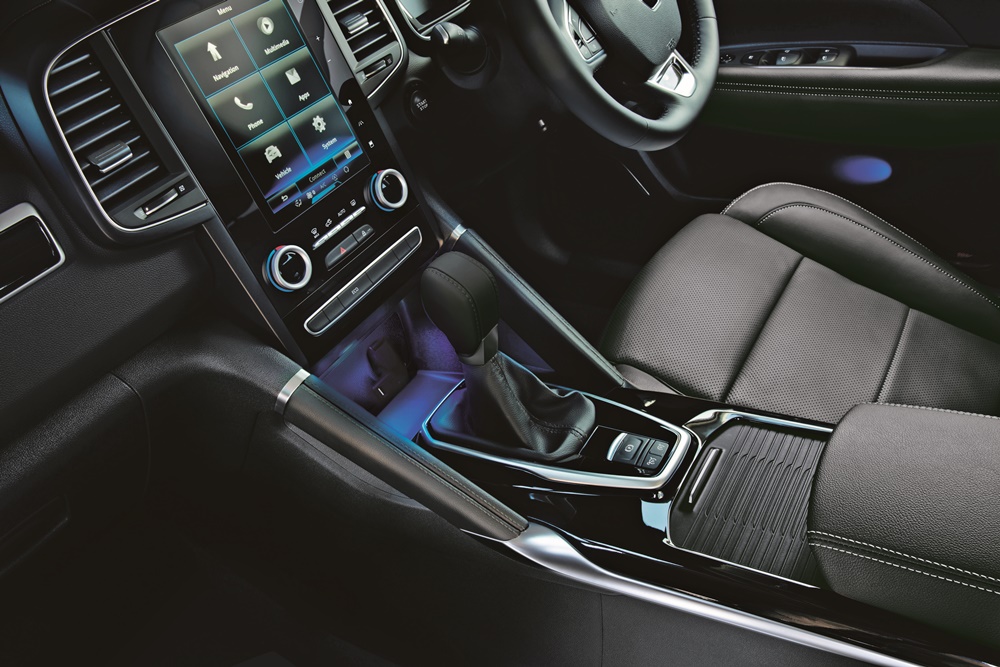
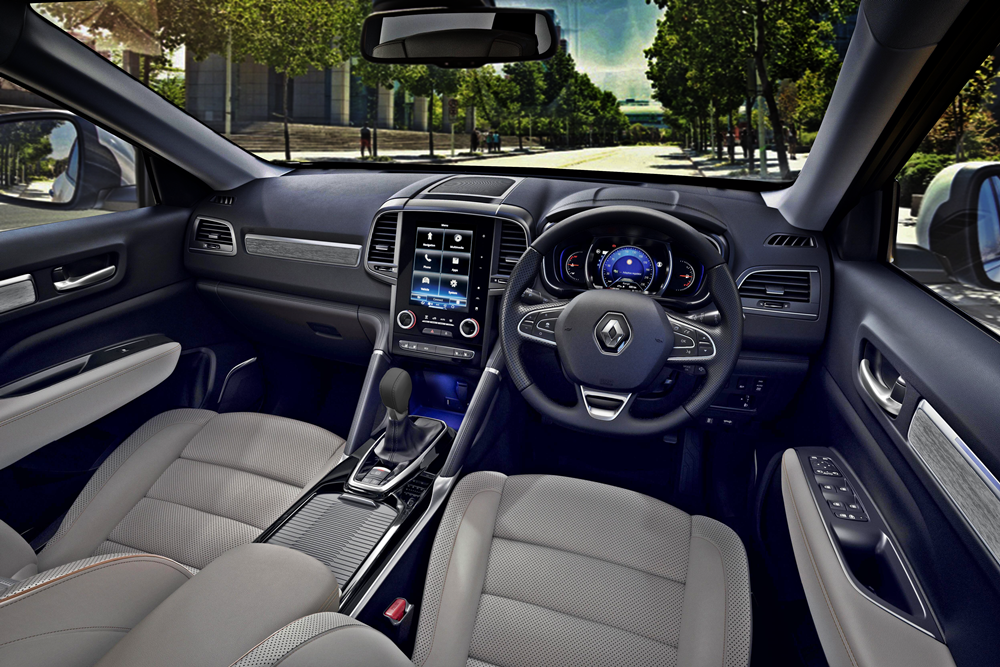
The spacious interior space has been refreshed for the 2021 models. There are two interior styles available – the Koleos comes with an elegant black Riviera leather upholstery with dark striped wood trim, while the Signature and Signature Plus come with luxurious new Sand Grey Nappa leather upholstery with natural grain Grey wood trim.
The luxurious front seats of the Signature and Signature Plus variants have ventilation as an adjustable length for the seat. This provides additional support that can reduce fatigue on long journeys. The wide Relax headrests also give more support for the head and neck while the driver’s seat has massage and memory functions.
#EasyLife technologies
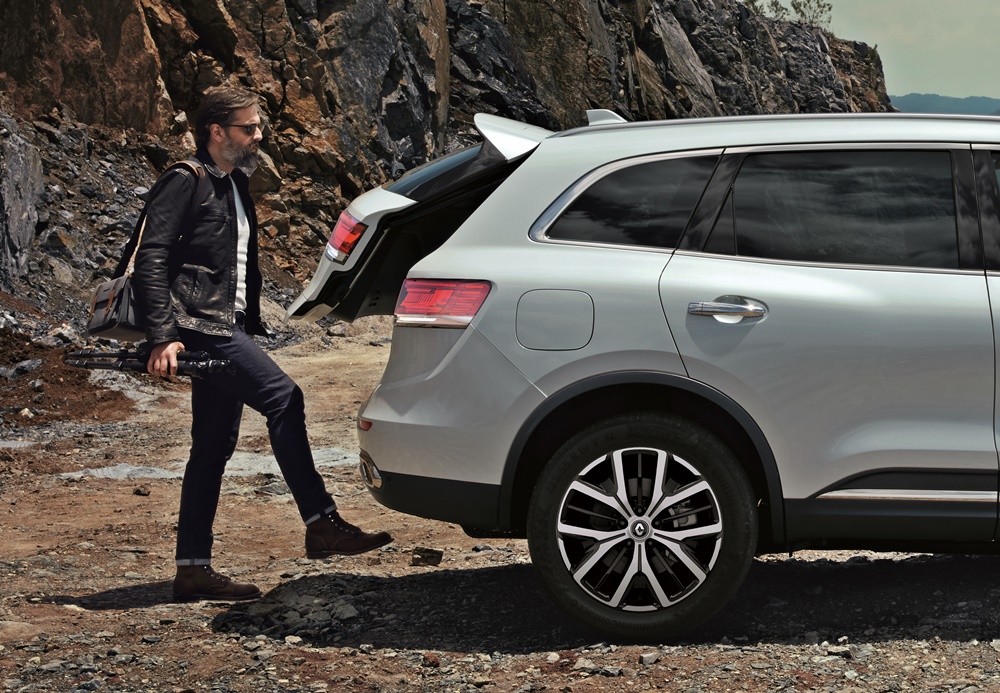
The Koleos has #EasyLife technologies which include a powered rear door that can open on its own without requiring the press of a button. Just placing a foot under the rear bumper will set the opening and closing motion in action. This feature is standard for all variants.
Other examples of #EasyLife technologies are the Easy Folding System where the seats fold completely to provide a flat floor. R-LINK2 navigation and multimedia is presented in a customisable 8.7-inch portrait touchscreen with Apple CarPlay and Android Auto making it easy to connect and transfer apps from compatible smartphones.
Additionally, the Signature and Signature Plus variants have an electric panoramic sunroof to let skylight in. Of course, in our hot sunshine, that may not always be desirable but it would certainly be nice to have the night sky overhead while driving.
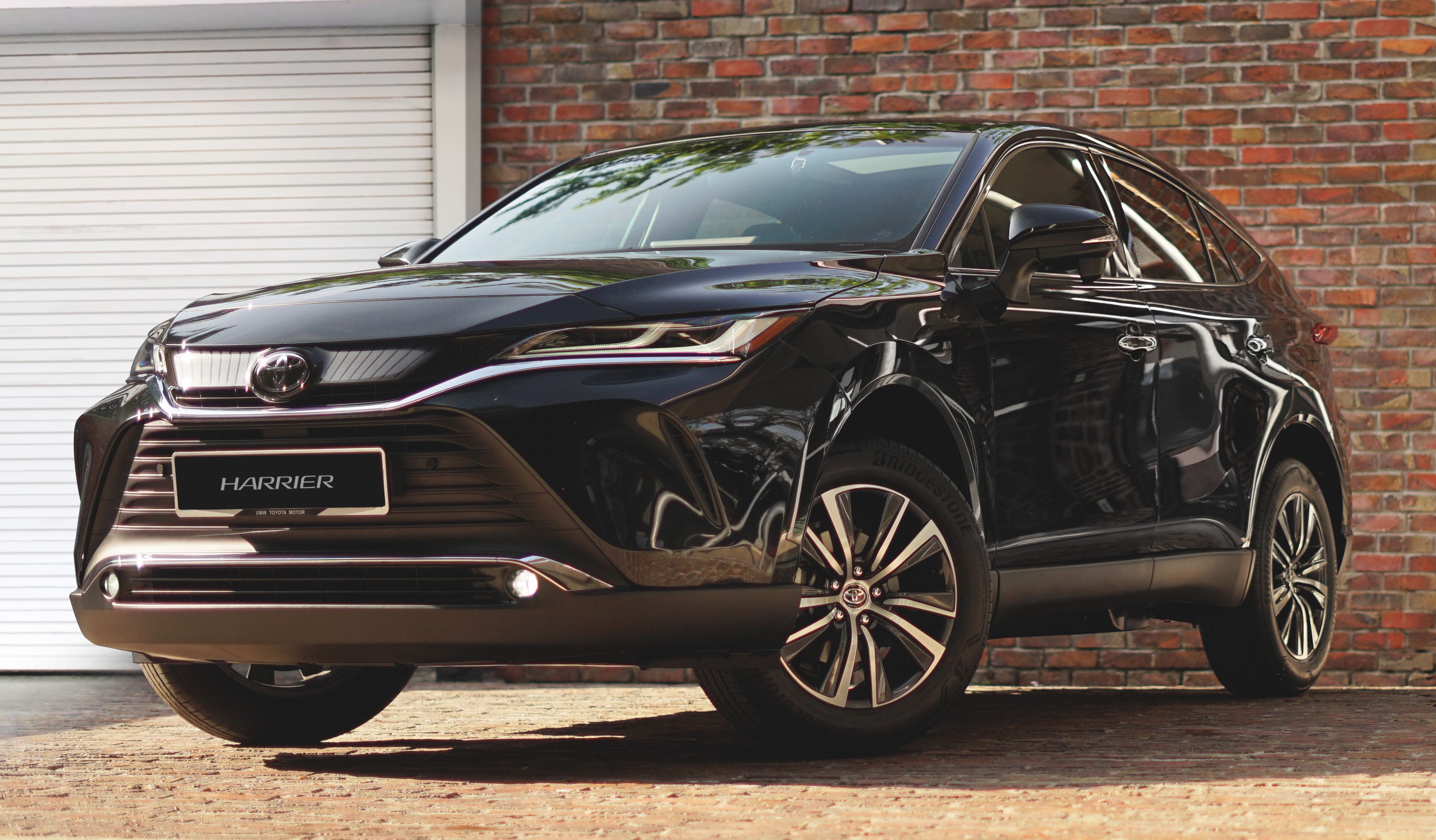
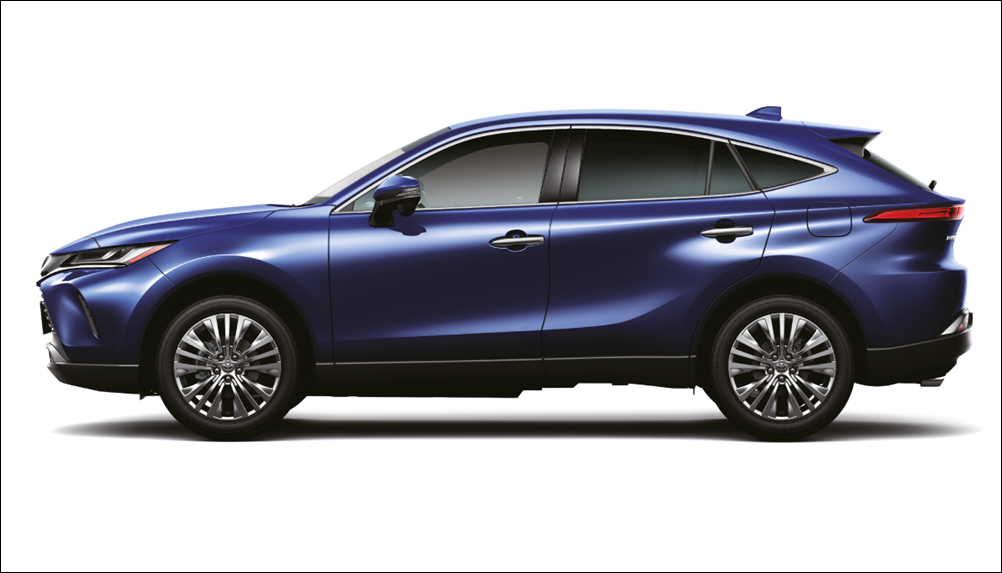
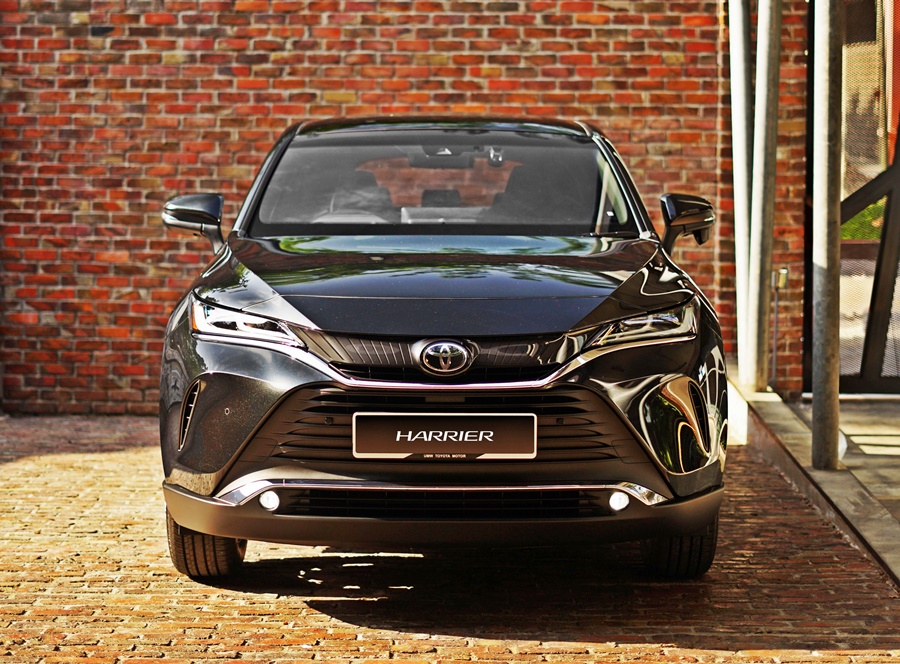
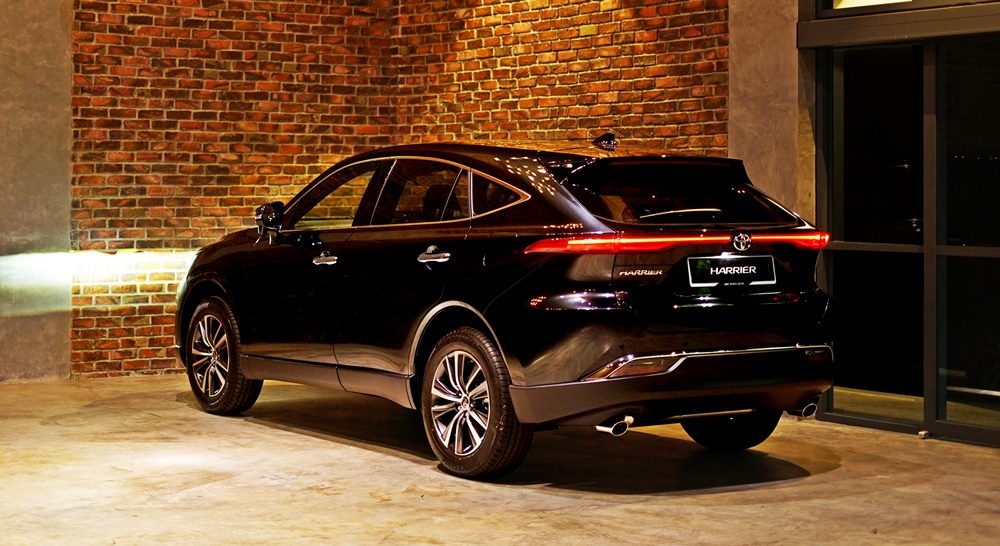
While the Lexus RX is often regarded as the model that took SUVs into the premium segment, its sister model, the Toyota Harrier, also did the same. The only thing was that while the RX was marketed globally, the Harrier was primarily for the Japanese domestic market as the Lexus brand was not introduced there in 1997 when the RX was launched. However, in a number of places, including Malaysia, the Harrier was brought in by private importers and became very popular. It was never officially sold by UMW Toyota Motor (UMWT) until 2018 and with the popularity built up over 20 years, it met with strong response with initial shipments from Japan quickly sold out.
First three generations of the Harrier.
Today, the all-new fourth generation is officially launched with a price of RM249,706.50, excluding insurance for registration in Peninsular Malaysia. Only the 2.0 Luxury version is available, and customers can choose from 5 exterior colours (extra charge for White Pearl CS and Precious Black colours).
5-year warranty and aftersales support assured
According to UMWT, Malaysia is one of only two countries outside Japan where the new Harrier is sold officially with full warranty and aftersales support. The 5-year unlimited mileage warranty and assurance of parts and service are something that were not available from private importers which has been a strong selling point for the model. Furthermore, the company also provides owners with Toyota 24 Seven Road Assist for peace of mind.
Like other recent Toyota models, the new generation (incidentally, Lexus no longer shared the model since the previous generation and the Harrier is an independent development), is designed around Toyota’s New Global Architecture (TNGA) with the GA-K platform. TNGA’s versatility and flexibility allows it to be used for sedans like the Corolla and also SUVs like the RAV4 and Harrier, and even electrified models like the Prius. Besides creating a highly rigid body structure, the centre of gravity is also lower which enhances stability, handling, agility and ride comfort.
Wider but lower body
The overall size of the new Harrier is almost the same as before but the width has gained 20 mm while an extra 30 mm has been added to the wheelbase, both increases obviously benefitting interior space. Although there is still good ground clearance, as would be expected of a SUV, the overall height is now 30 mm lower.
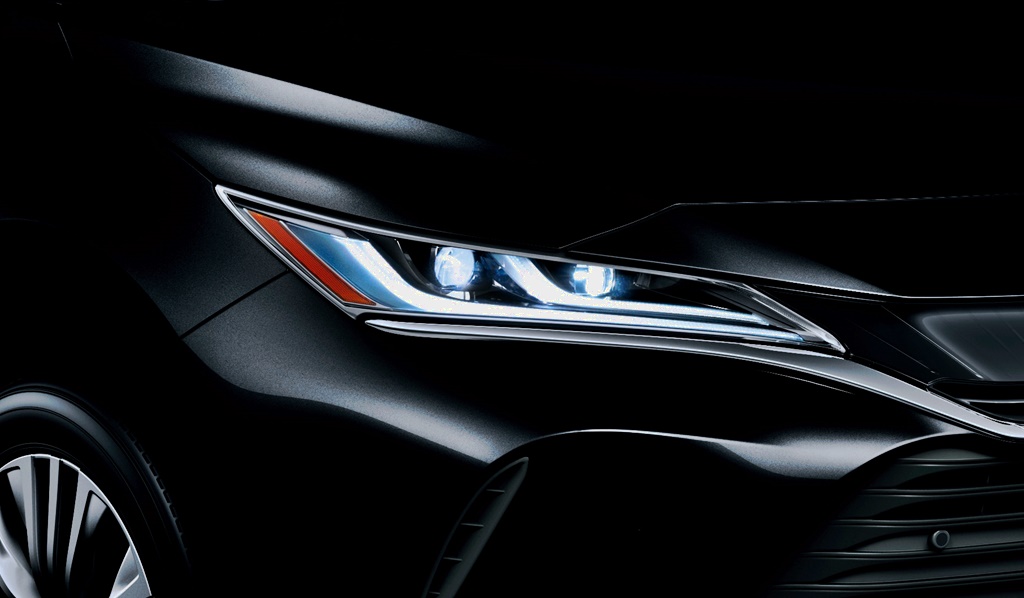
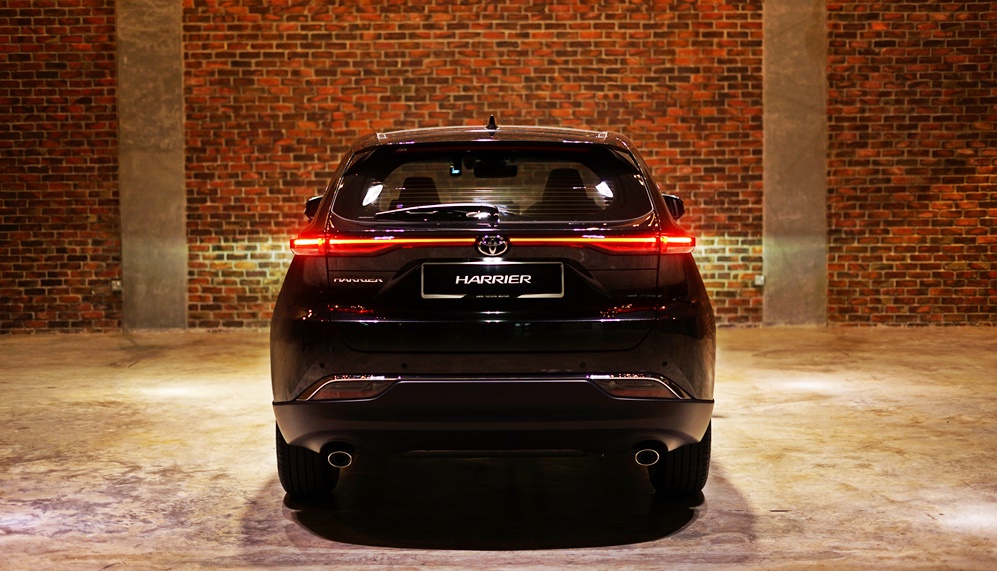
The profile follows the same coupe-like form with a design concept Toyota calls ‘Dignified Elegance’. The front end has a sharper appearance with the eye-catching slim Bi-LED headlamps on either side. The L-shaped Daytime Running Lights (DRLs) also provide a strong and distinctive visual signature apart from enhancing daytime visibility. The rear has a clean design, defined by a thin LED strip for the full width, while twin exhaust pipes with oval baffles add a sporty touch.
‘Dignified Elegance’
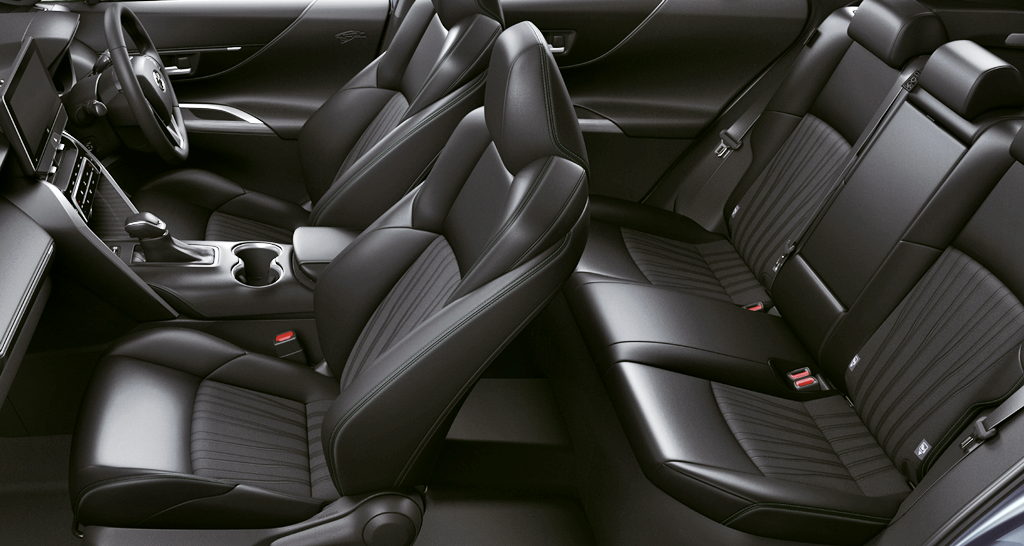
The ‘Dignified Elegance’ concept is also adopted for the interior which gets a more premium feel. The occupants are welcomed with the Illuminated Entry System at the front door sills which is complemented by blue LED illumination inside. Premium materials used include thick black leather with woodgrain and silver ornamentation.
Any driver should be able to get the right and comfortable seating position with 12-way power adjustment for the seat, and for ease of getting in and out, the steering wheel automatically rises out of the way when the engine is switched off and the door opened.
The Automatic Dual-Zone Air Conditioning system has nanoeX technology which generates ions. First introduced with a previous generation of the Camry, nanoeX technology is known to deactivate viruses which is, of course, a very welcome feature in these times. It also keeps the air fresh and clean.
High-tech features
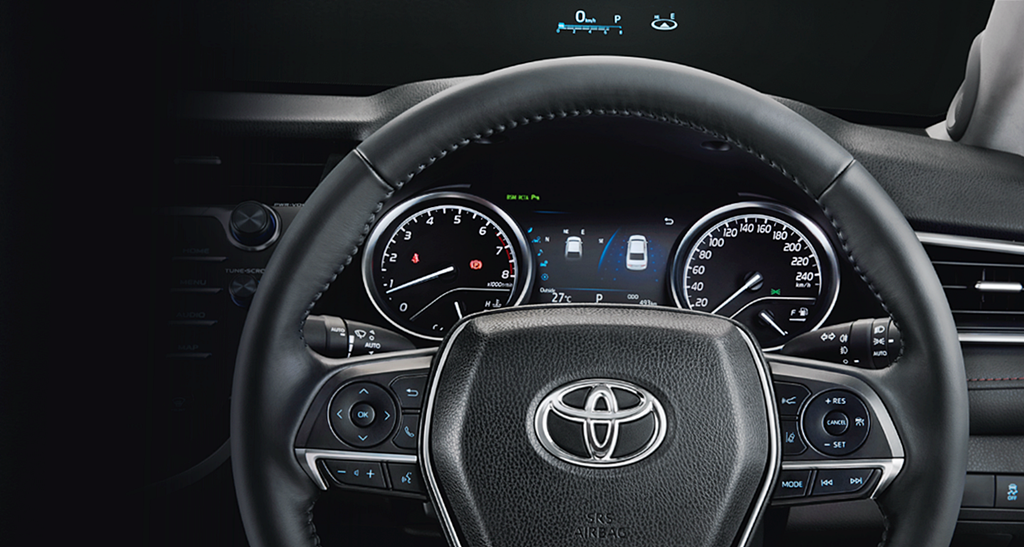
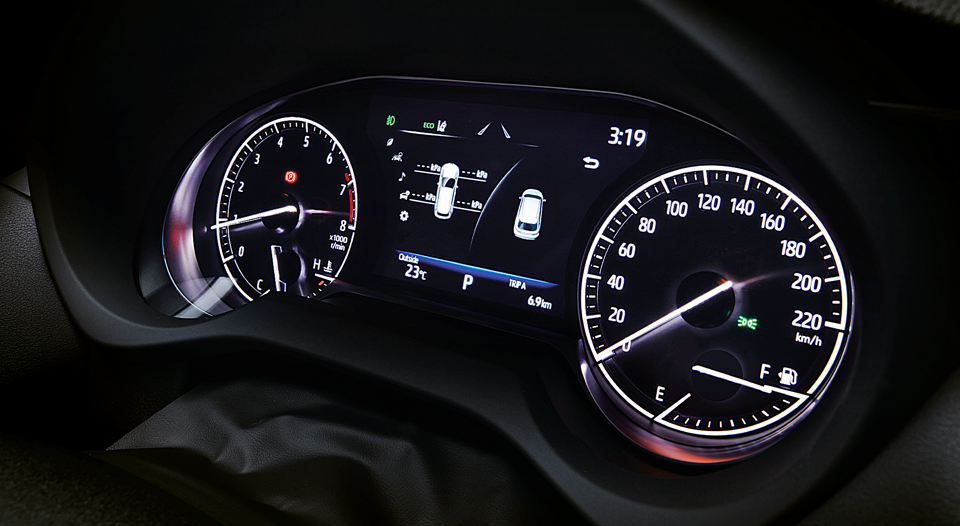
Besides the bright and clear Optitron instrument panel, the driver can also refer to the standard Head-Up Display (HUD) which is projected on the windscreen. Information show includes road speed, gear position, Driving Support System (directions, ACC display, LDA Display, Parking Sensor), audio mode with song titles, and warning alerts. That’s certainly a lot more than the early HUDs which showed only the speed.
The new Harrier has Panoramic Sunroof with electrochromatic glass which can alter the intensity of light passing through at the touch of a switch. The effect is like that of traditional paper windows found in Japan, enhancing comfort. The glass panels cover almost the entire length of the roof so a lot of light can be allowed in when sunlight conditions are not too harsh or at night.
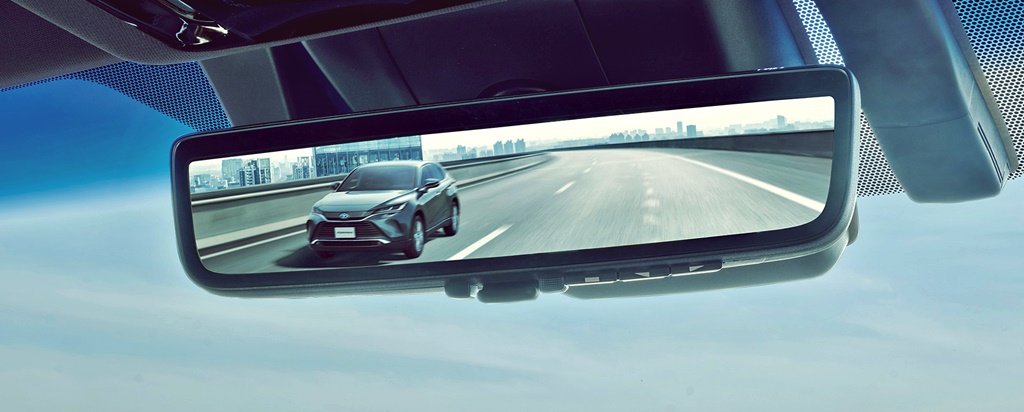
The other high-tech feature is the new Digital Display Rear View Mirror. This shows live images from a wide-angle high-definition camera at the back to give greater night-driving clarity and eliminates glare from oncoming headlights.
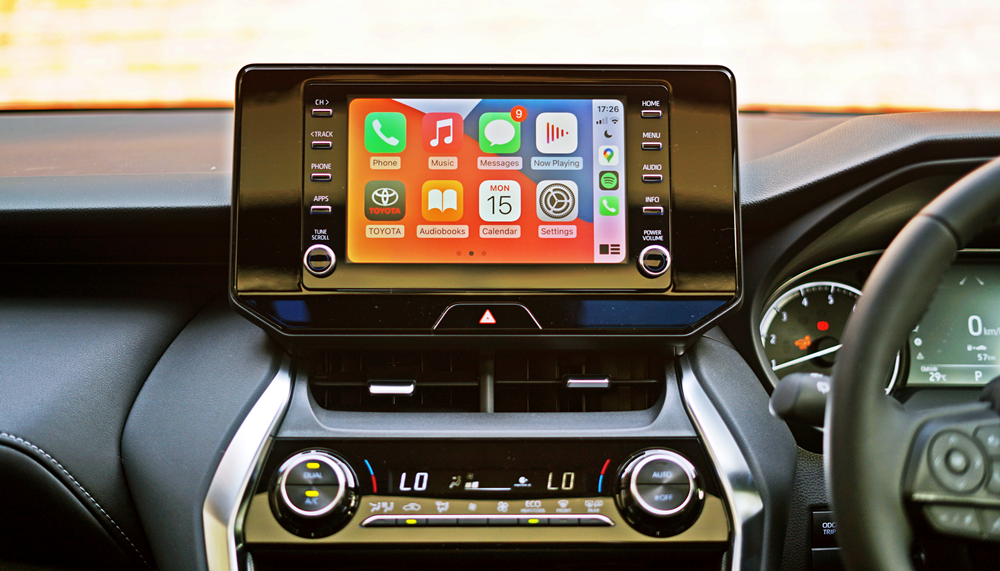
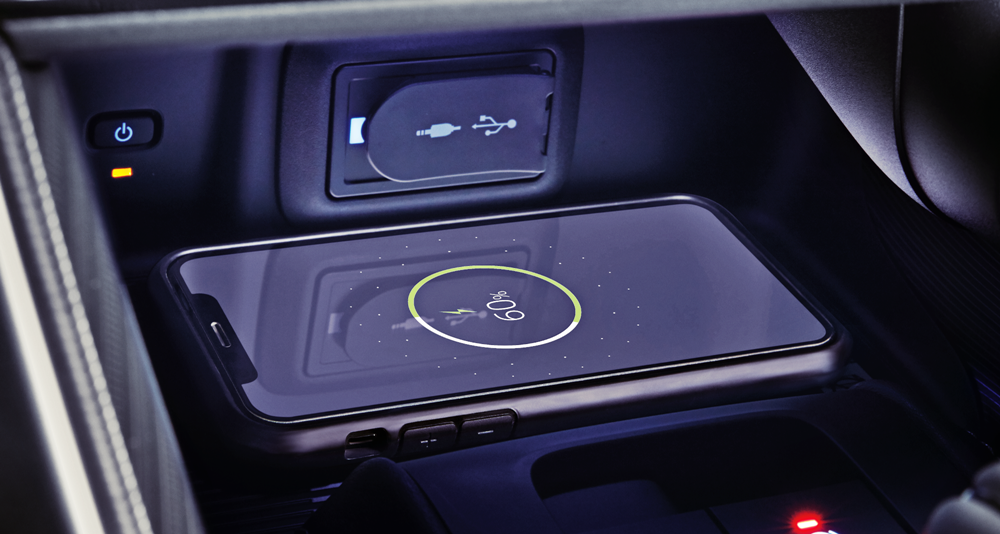
Other standard features include a wireless charging pad, USB ports, Kick Sensor Powered Back Door, Electric Parking Brake, and an advanced infotainment system with Apple CarPlay and Android Auto connectivity. The 8-inch capacitive touchscreen serves the infotainment system as well as shows the images from the rearview camera. Front and rear digital video cameras are also fitted while a Vehicle Telematics System can keep track of the vehicle’s location at all times.
One area that Toyota engineers paid special attention to was reduction of Noise, Vibration and Harshness (NVH). The new Harrier is claimed to be much quieter than before, thanks to the use of highly-efficient sound-absorbing glass on the windows. Sound-absorbing materials and their placement were optimized to lower NVH as well while sealing at the doors is improved to stop wind noise from seeping in.
New Dynamic Force engine
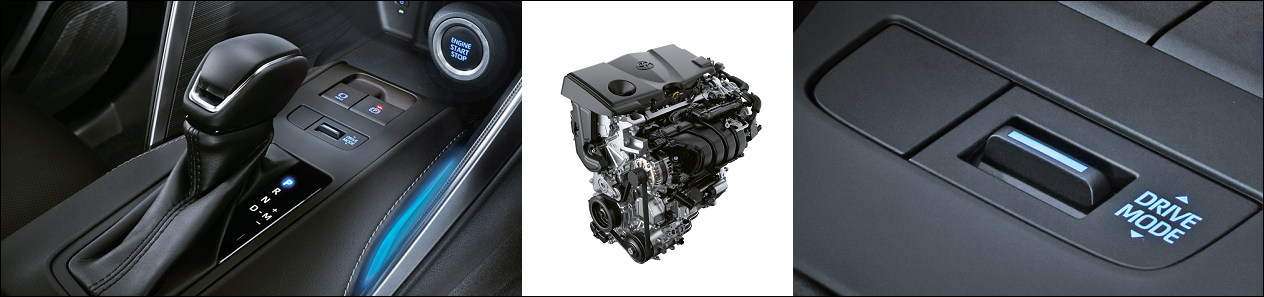
The Harrier is powered by Toyota’s latest Dynamic Force (M20A-FKS) 4-cylinder DOHC engine with Dual VVT-i (Variable Valve Timing with intelligence) that operates electronically for quicker response. As before, it is a 2-litre engine but now has improved output of 173 ps/203 Nm without turbocharging.
A Direct Shift Continuously Variable Transmission (CVT) with Sequential Shiftmatic, allows the seamless shifting of gears. The driver can choose from three modes – ECO, Normal and Sport – to suit driving conditions or personal preference. ECO and Sport modes will prioritise fuel economy or acceleration, respectively, while the Normal mode offers a good balance of performance and fuel efficiency.
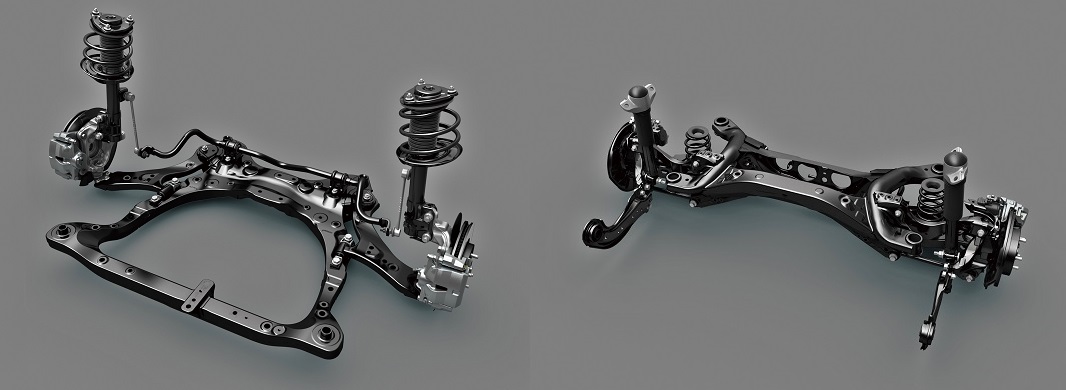
The TNGA chassis has front MacPherson struts with trailing wishbones at the rear, with optimized suspension geometry for balanced and predictable handling, while maintaining a high standard of ride comfort. The 18-inch alloy wheels at each corner are fitted with 225/60 tyres.
Toyota Safety Sense
Toyota Safety Sense (TSS) is the suite of integrated active systems that help the driver to avoid an accident, especially front collisions. Most of the latest Toyota models have TSS but the systems vary depending on the model. In the case of the new Harrier, there is a Pre-Crash System, Lane Departure Alert, Dynamic Radar Cruise Control and Adaptive Highbeam System. These use a camera and radar to scan the road ahead and identify vehicles and the data is analysed by a computer to determine if there is any danger of a collision. The Pre-Crash system has autonomous capability, meaning that it will activate the brakes if the driver does not take corrective action if a possible collision is detected.
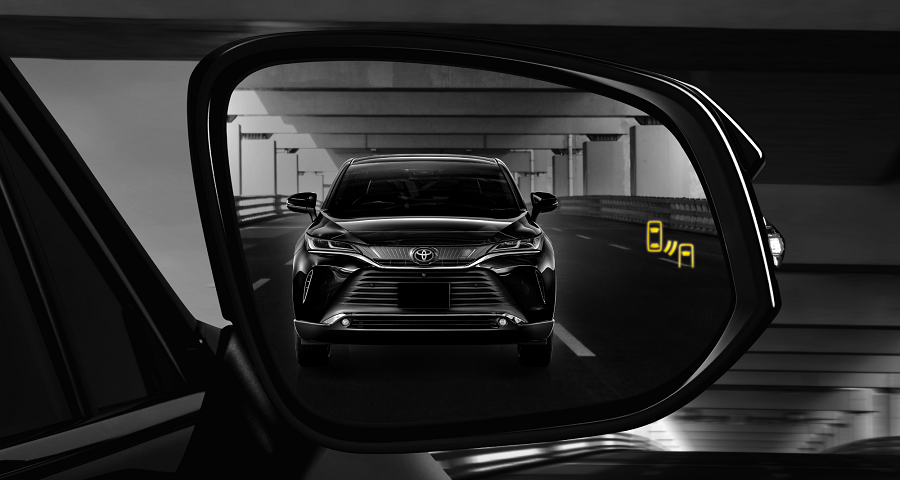
Additionally, there’s a Blind Spot Monitor with Rear Cross Traffic Braking, and a Tyre Pressure Monitoring System. The 4-wheel disc brake system is managed by ABS with Electronic Brake-force Distribution and Brake Assist, while Vehicle Stability Control and Traction Control will help stabilize the vehicle on slippery surfaces.
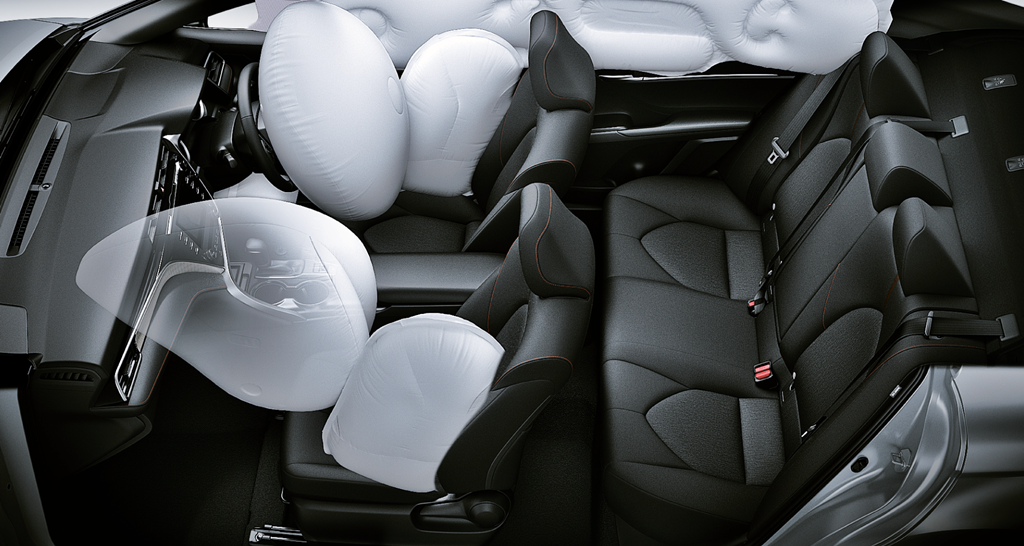
Even with the best active safety systems, an accident can still occur and to minimize injuries, there are 7 SRS airbags around the cabin (one for the driver’s knees). These include curtain airbags which deploy downwards over the windows and besides providing cushioning, they also reduce the chance of ejection from the cabin during violent crashes. ISOFIX points are provided in the rear seats for compatible childseats which are now required by law.
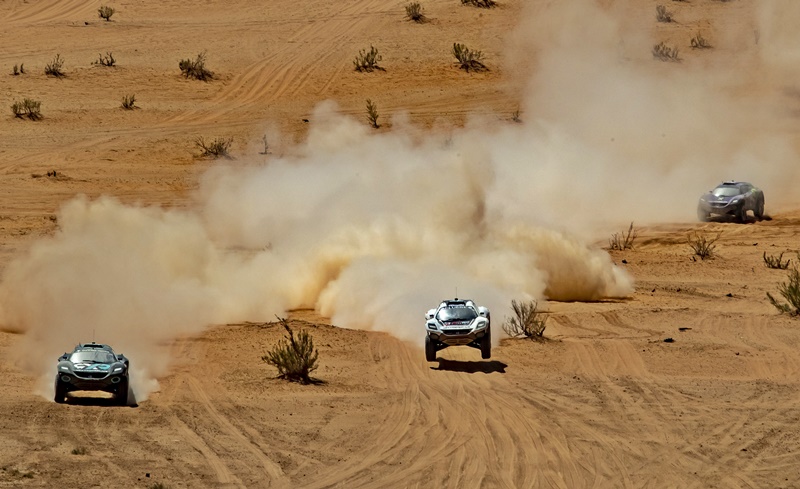
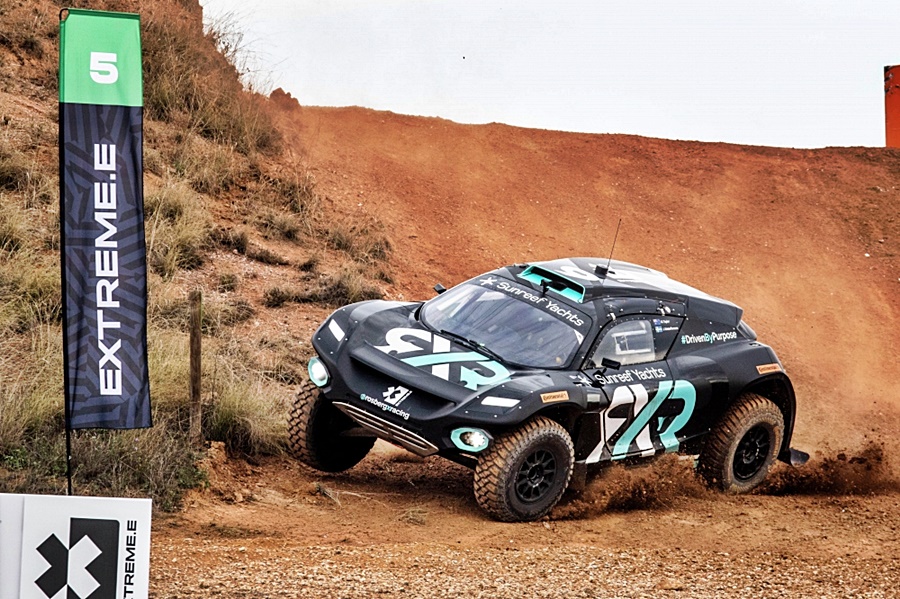
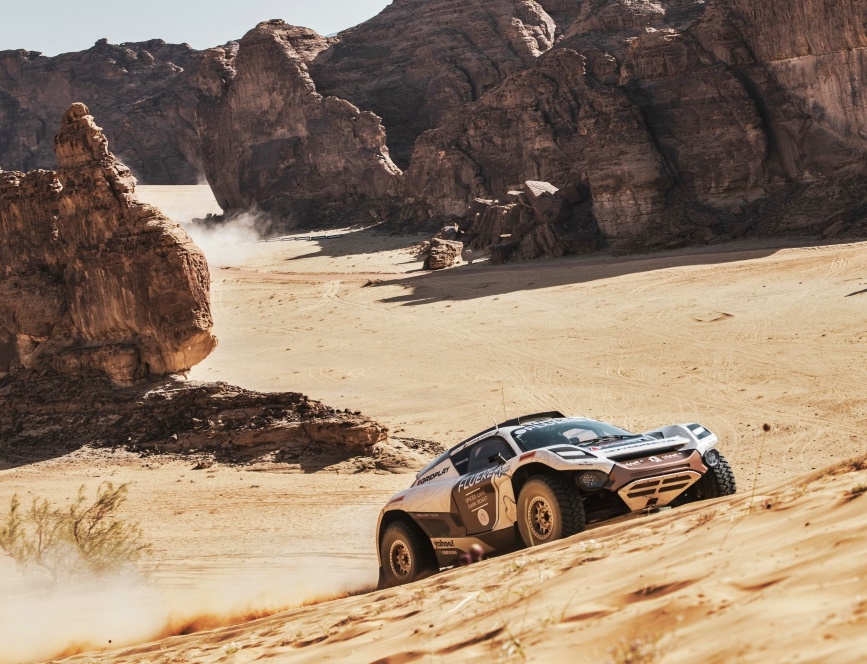
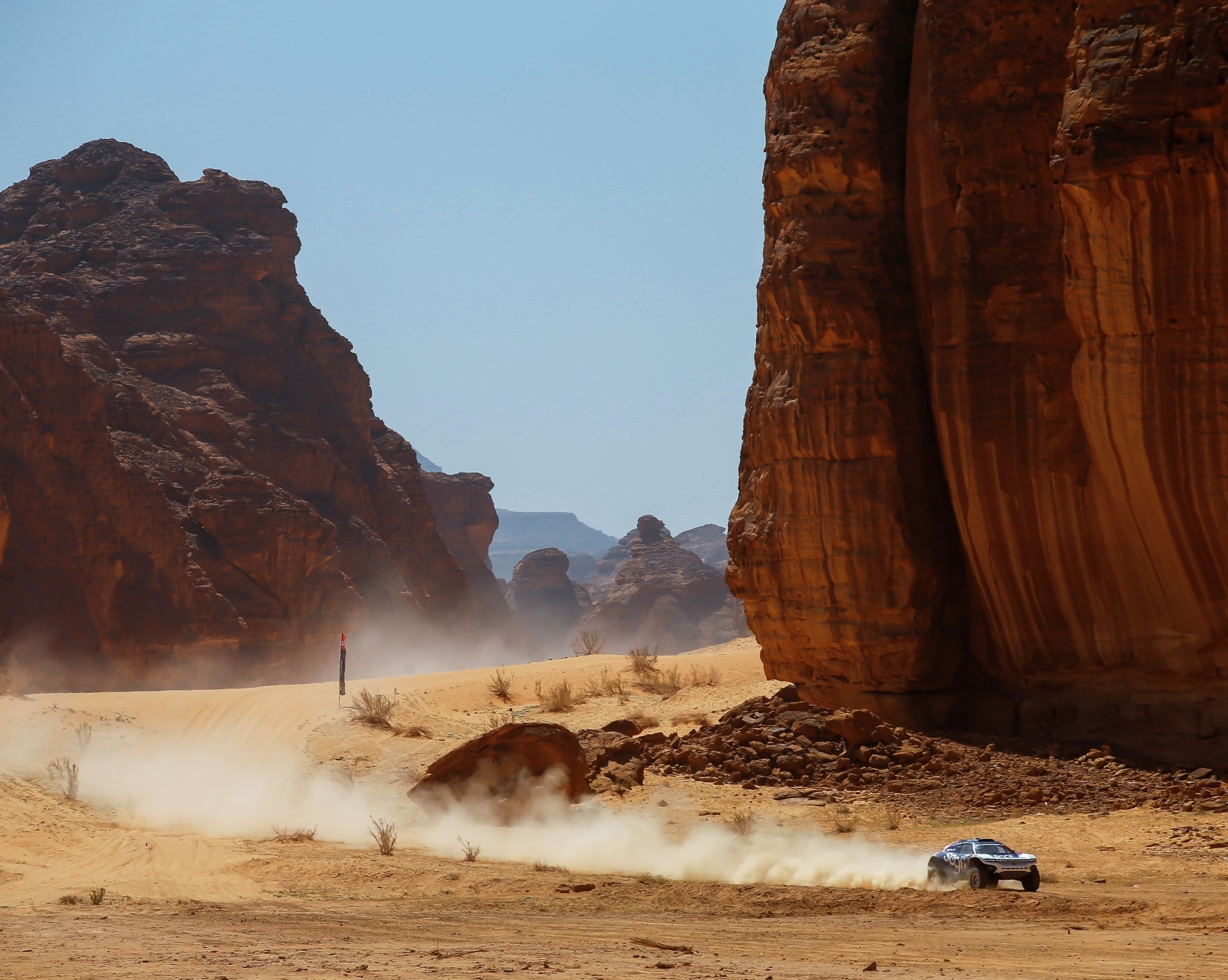
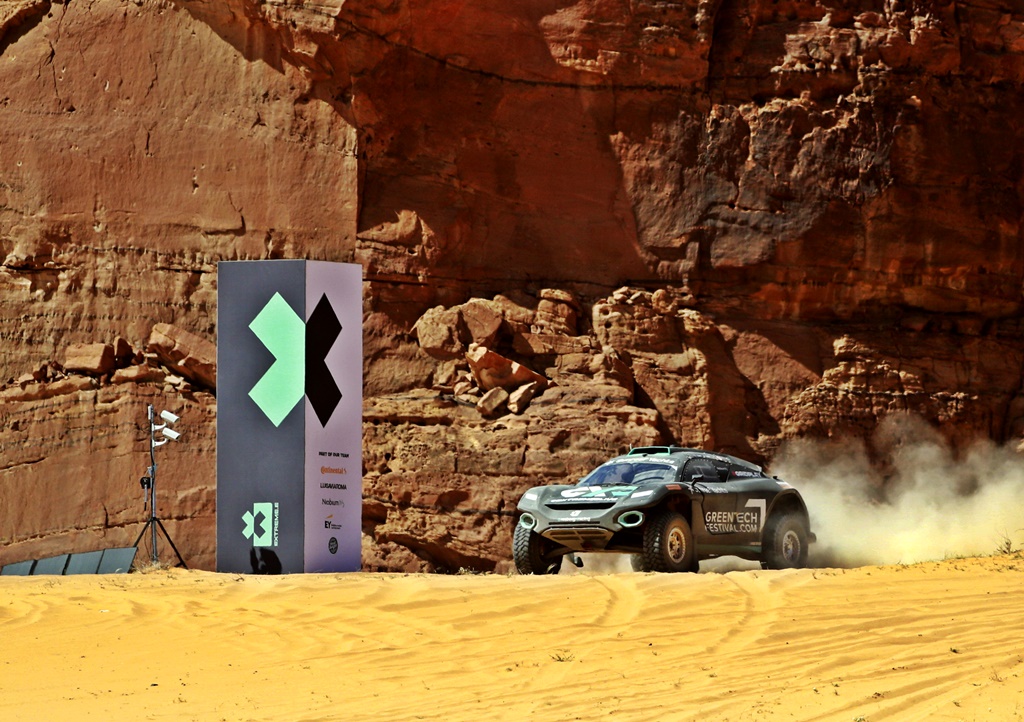
There had been feverish anticipation in the build-up to the weekend’s first Extreme E round – the Desert X Prix held in the remote Al-‘Ula region of Saudi Arabia. The new series, for electrically-powered SUVs, has the off-road challenges of the Dakar Rally but also uses the event to create awareness of environment issues at locations where it will be run.
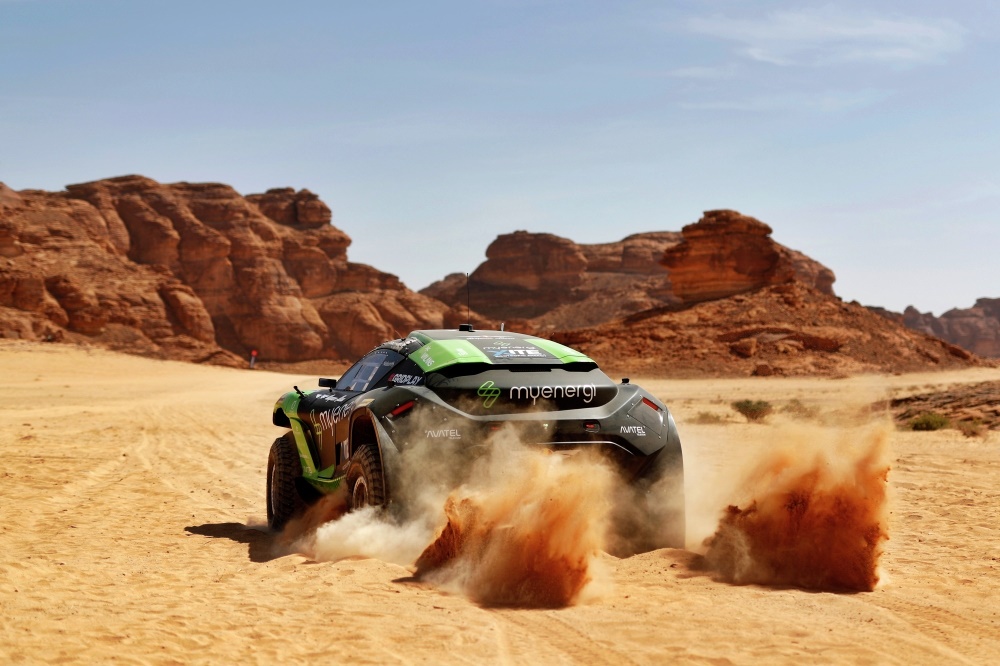
Following the Qualifying time trials on Saturday, the teams – consisting of one male and one female driver – went wheel-to-wheel for the first time, generating some of the most spectacular images ever seen in the sport and drawing widespread acclaim from competitors and fans alike.
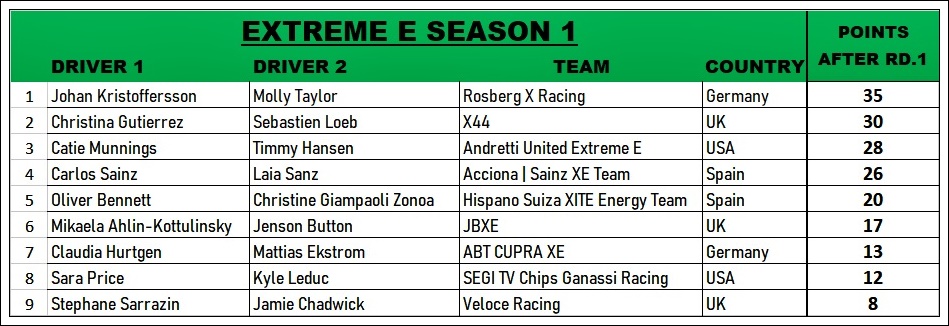
Rosberg X Racing duo Johan Kristoffersson and Molly Taylor were the pace-setters from the outset in, but the pair still had to dig deep in the desert to battle their way to victory and carve themselves out a piece of motorsport history.
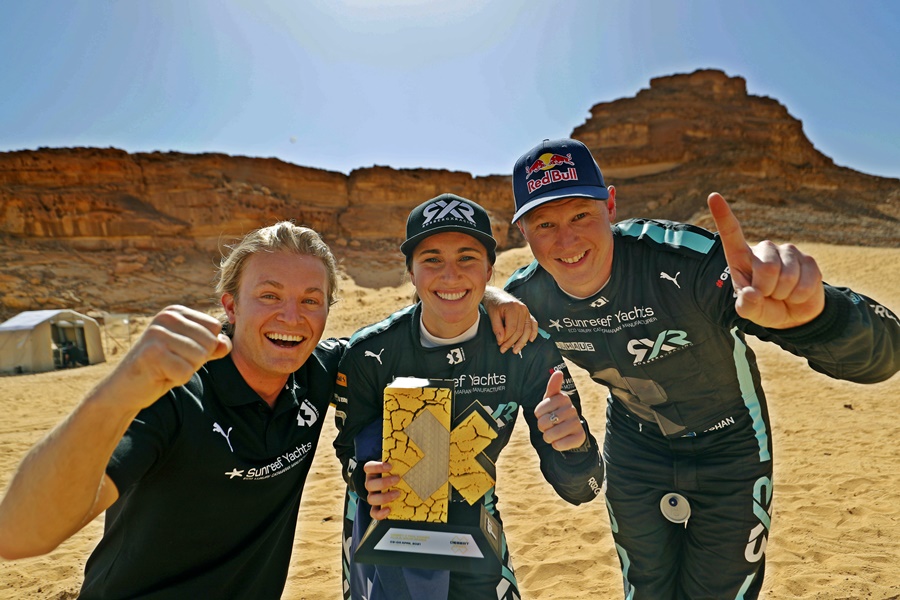
Former F1 driver Nico Rosberg (left) with his winning drivers Molly Taylor and Johan Kristoffersson.
But, ultimately, nothing could stop the duo from storming to the top step of the podium – not a 60-second penalty for exceeding the 30 km/h limit in the driver switch zone yesterday, nor less favourable grid slots in both the Semi-Final and Final today. It was a virtuoso display of speed, skill and superhuman car control in the most challenging of conditions.
“This is insane. I’m so thankful to the whole team for the effort put in this weekend, which has been intense and really on-the-edge. Everything has come together so well and everybody has worked together so well,” said Nico Rosberg, Rosberg X Racing’s Founder and CEO, who is the son of Keke Rosberg, former F1 driver. Their car had No.6 on it, which pays homage to the senior’s racing number when he was in Formula 1.
“We have a fantastic team of engineers and mechanics, who prepared perfectly for this first weekend with so many unknowns, and Molly and Johan produced some phenomenal driving. Neither of them put a foot wrong in really tough conditions, and they both showed unbelievable speed out there – their performance was really inspiring and I felt really proud watching them. To come back to claim victory after a 60-second penalty caused by a technical problem is just awesome, and they are definitely deserving winners. For the championship as a whole, it’s really been a good start,” he said.
Shoot Out
The duel for seventh place in the overall classification was fought out between Segi TV Chip Ganassi Racing (Kyle LeDuc/Sara Price) and ABT CUPRA XE (Mattias Ekstrom/Claudia Hurtgen), both of whom endured difficult Qualifying runs. Price initially pulled ahead by using her Hyperdrive power boost, before Ekstrom repaid the favour on the exit of Turn One to snatch the lead.
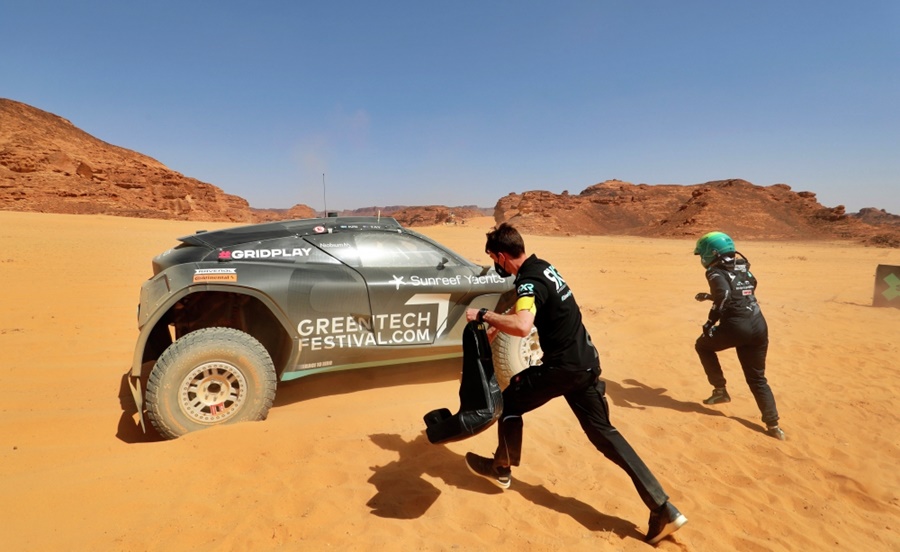
Once the driver switch was complete, LeDuc set about chasing down Hurtgen, but almost within sight of the finish line, the American – unsighted by the dust – made contact with his German rival and the pair both ended their weekend beached in the desert.
Crazy Race
With just one spot up for grabs in the Final, the stakes were high for the three Crazy Race competitors – Andretti United’s Timmy Hansen/Catie Munnings, Hispano Suiza XITE Energy Team pairing Oliver Bennett/Christine Giampaoli Zonca and JBXE duo Jenson Button/Mikaela Ahlin-Kottulinsky.
A wild start by 2019 FIA World Rallycross Champion Hansen saw the Swede already clear of his adversaries before the trio arrived at the first gate, with Bennett narrowly sneaking in front of former F1 World Champion Button to snatch second.
Hansen opened up a 30-second margin before Munnings took over; after which, the 2016 European Rally Championship Ladies’ Trophy winner artfully managed the gap to safely bring the Andretti United car home. Giampaoli Zonca did a good job to peg her British rival throughout, with Ahlin-Kottulinsky similarly showing a strong turn-of-speed on her way to the finish line in third.
Semi-Final
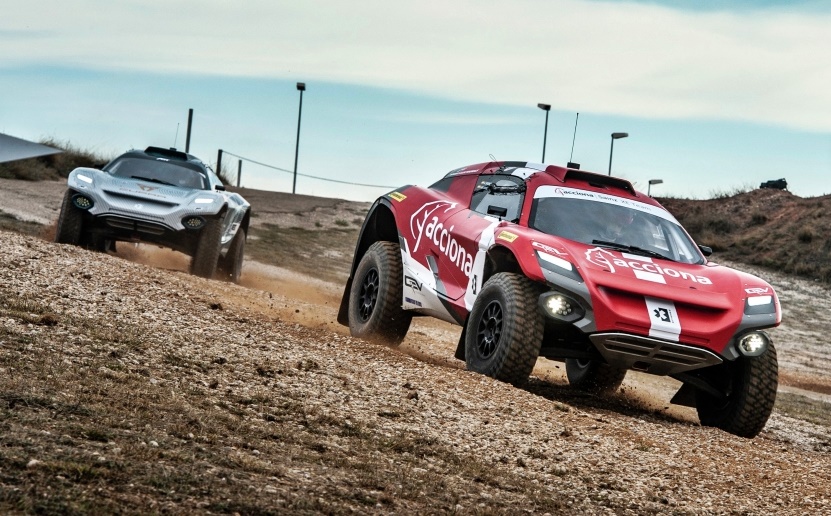
As top qualifiers yesterday, the X44 crew of Sebastien Loeb and Cristina Gutierrez opted to start from the right-hand side of the grid for the Semi-Final – giving them the theoretical inside line for ‘Turn One’. ACCIONA | Sainz XE Team duo Carlos Sainz and Laia Sanz chose the middle slot, with Rosberg X Racing (Kristoffersson/Taylor) taking up position on the left.
When the action got underway, Sainz got the best launch to edge fellow multiple FIA World Rally Champion Loeb away from the line, with the pole-sitter briefly slipping back to third. Loeb then regained the advantage as the battling Sainz and Kristoffersson both drifted wide, but the Swede was not done yet and neatly undercut both of his adversaries on the exit of the first gate to seize the initiative.
Kicking up a sandstorm in his wake, Kristoffersson rapidly made his escape as his pursuers found themselves driving blindly through the dust – and by the time he arrived at the switch zone to hand over to team-mate Taylor, the Rosberg X Racing car was almost 13 seconds to the good.
Thereafter, the former Australian Rally Champion continued to extend the gap, crossing the finish line just under half-a-minute ahead of Gutiérrez, as both teams successfully booked their places in the all-important Final. Another 38 seconds in arrears, ACCIONA | Sainz XE Team wound up third to slip out of contention.
The Final Duel
As winners of the fan-led GridPlay vote, Andretti United had the luxury of choosing their starting spot for the Final. Hansen duly plumped for pole position on the right, with Kristoffersson lining up in the middle for Rosberg X Racing and X44’s Loeb taking up the third grid slot on the left.
Hansen replicated his lightning launch from the Crazy Race as Kristoffersson focussed his efforts on fending off Loeb for second, before employing the same tactic that had served him so well in the Semi-Final to sweep wide going into Turn One and undercut compatriot Hansen on the exit in a sensational switchback move.
The 3-time FIA World Rallycross Champion then wasted no time at all in stretching his lead, as Hansen settled into second and Loeb – grappling with power steering problems – trailed behind the pair in third. Kristoffersson handed the car over to Taylor with a half-minute advantage, and whilst Munnings would go on to narrow the deficit slightly over the course of the second lap, the Australian always had the situation under control and wound up just over 23 seconds clear at the finish.
Alejandro Agag, Founder and CEO of Extreme E, said: “We’ve worked so hard on this for many years, and finally everything has come together this weekend. It really has been beyond my wildest expectations. If I had written a script for the perfect weekend, I could not have come up with anything better than what we have witnessed these past two days – I’ve never seen such extreme racing in my life!”
About Extreme E
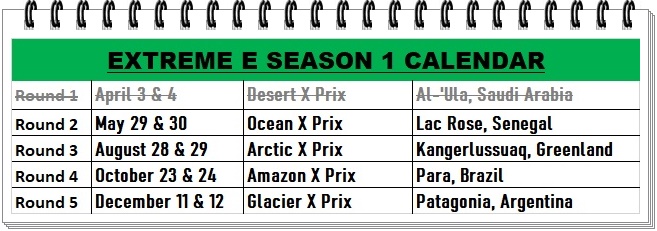
Extreme E is a totally new racing series which will see electric SUVs competing in extreme environments around the world which have already been damaged or affected by climate and environmental issues. During the 5 races at different locations, the impact of climate change and human interference in some of the world’s most remote locations will be highlighted. Extreme E also aims to promote the adoption of electric vehicles in the quest for a lower carbon future for the planet.
The first round was held in Saudi Arabia where desertification and water resources are serious environmental issues.
To minimize local impact, Extreme E races will not be open to spectators, with fans instead invited to follow the action through live TV broadcast, and on social media. Additionally, to minimize carbon emissions, a cargo ship – the St. Helena – transports the freight and infrastructure, including vehicles, to the nearest port for the round. Besides serving as Extreme E’s operations hub, the ship will used to facilitate scientific research through its on-board laboratory.
All the 9 teams use the same specially-developed SUV, including the powertrain.
Extreme E is also pioneering hydrogen fuel cell technology which will enable its race fleet to be charged using zero emission energy. This innovative solution from AFC Energy uses water and sun to generate hydrogen power. Not only will this process emit no greenhouse emissions, but its only by-product will be water, which will be utilized elsewhere on-site.
Jeep has had a lot of different models since its first vehicle came out of the factory in 1945. During the early years, Jeeps were pretty much utilitarian vehicles, especially those which were used by the armed forces. Other companies like Ford and even Toyota began promoting 4×4 vehicles for recreational purposes and configured them for such use.
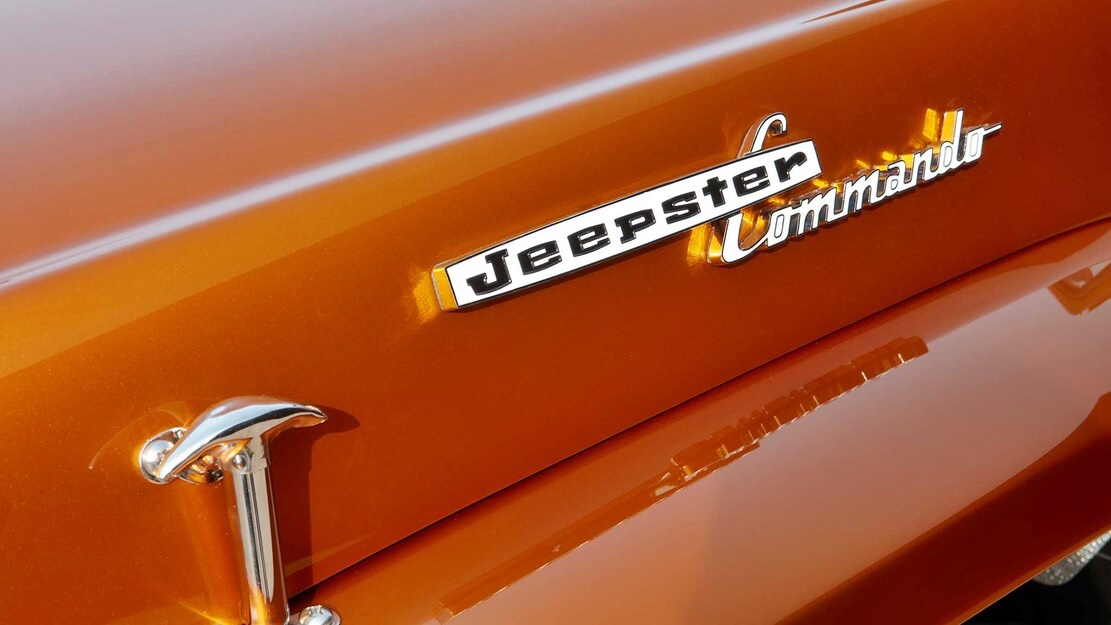
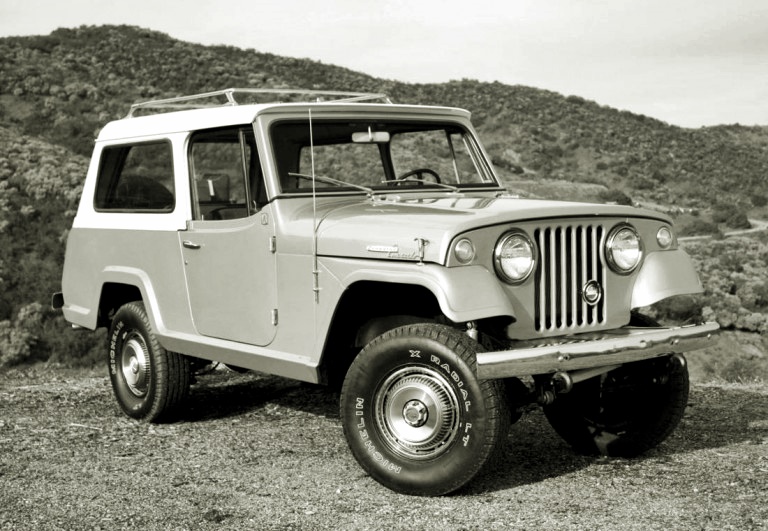
Jeep decided to also compete in the segment which would only take off in the 1990s. It came out with a model called the Jeepster Commando which catered to growing interest in leisure time use of 4×4 vehicles. It was the first compact 4×4 vehicle with an automatic transmission and, unlike the Jeep CJs of its day, it boasted modern amenities such as doors, roll-up side glass, a heater and roof, as standard equipment.
‘Resto-Mod’ project
The Jeepster made an impact in its early years but a change of engine caused a decline in the early 1970s. However, like many classics, it gained cult status years after it was discontinued. This year, the designers at Jeep picked the 1968 Jeepster for their ‘Resto-Mod’ project, seamlessly blending it with a 2020 Jeep Wrangler Rubicon.
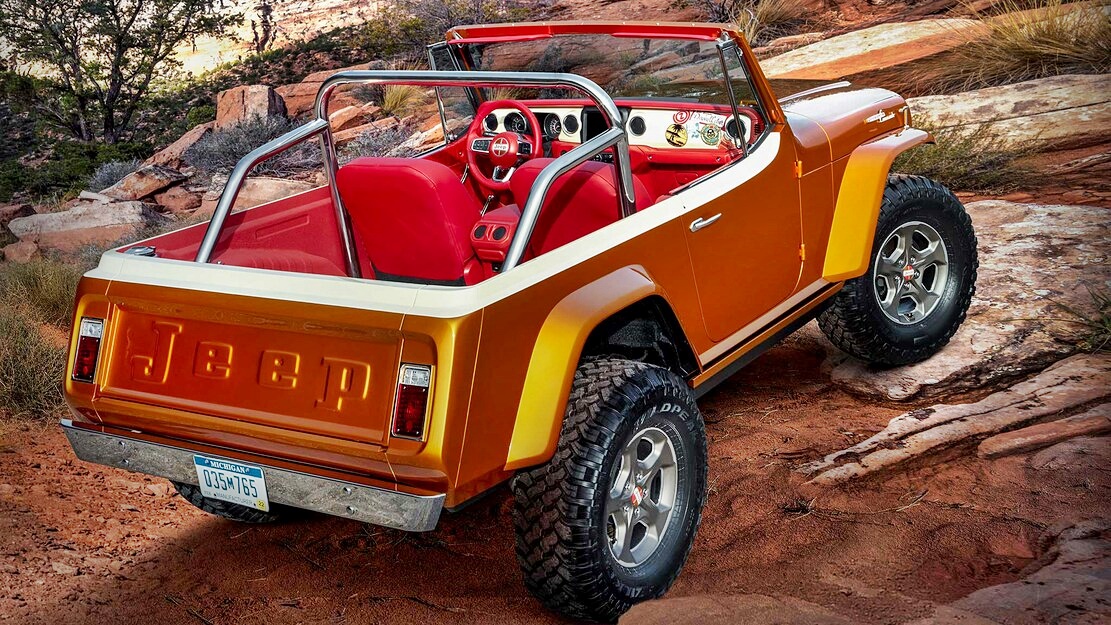
The Jeepster Beach concept, like the original, is made for fun in the sun, and this ultimate beach-themed cruiser continues that tradition by embodying a spirited, carefree attitude. The body was modified and the exterior fuses original chrome trim with an updated, brightly coloured two-tone paint scheme of Hazy IPA and Zinc Oxide.
Vintage looks, modern mechanicals
While the Jeepster Beach concept maintains the outward appearance of a vintage Jeepster, it commands peak performance both on and off-road delivered by the modern-day Wrangler. Under the bonnet lives a high-tech 2-litre 4-cylinder engine pushing out 270 bhp/400 Nm. It has direct-injection and uses a twin-scroll, low-inertia turbocharger mounted directly to the cylinder head, along with a dedicated cooling circuit for the turbocharger, intake air and throttle body for exceptional responsiveness, performance and fuel efficiency. An 8-speed automatic transmission mated to a 4:1 transfer case delivers power to all four 35-inch tyres.
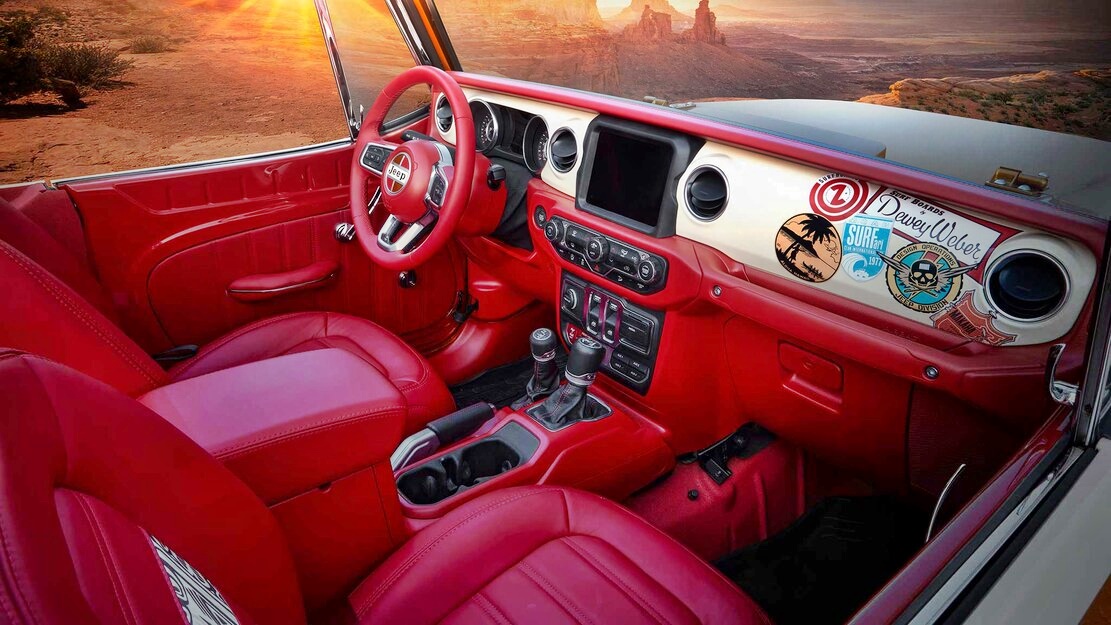
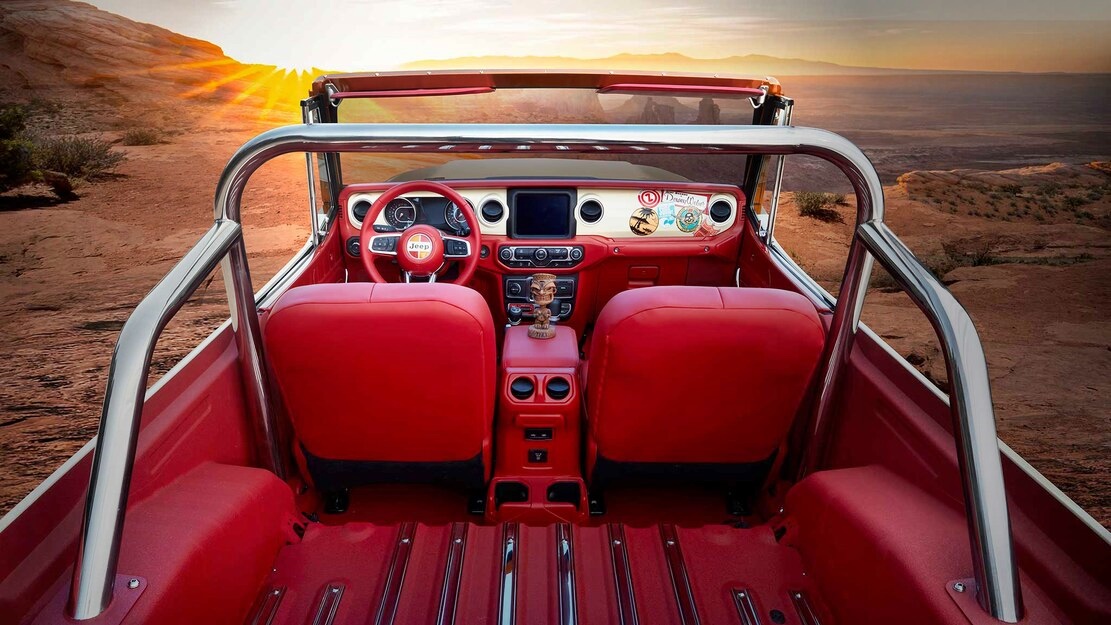
The custom interior features low-back bucket seats trimmed in red leather. The rear seat was replaced with a chrome, 4-point safety cage and the carpets were removed to make cleaning out sand a breeze.
The original Jeepster Commando was produced by Kaiser Jeep in 1966. There were four bodystyles – roadster, wagon, pick-up truck and convertible. Even after American Motors acquired Jeep in 1970, the Jeepster remained in production. In 1972, it gained extra length in the wheelbase and was also re-engineered to use AMC engines. However, these engines were not suitably matched to the Jeepster and customer numbers began to fall, leading to the model being discontinued in 1973. By then, AMC had a new Cherokee to attract customers to showrooms.
In the early years of the Toyota Corolla, which was introduced in 1966, there were many bodystyles available. Besides the sedan (which was in 2-door and 4-door versions), there was a coupe, hardtop, liftback, stationwagon and even a MPV (in the 1990s). But after the 1990s, the number of variants diminished as volume became important and models that didn’t have sufficient demand had to be discontinued.
Back then in the 1990s, the SUV trend was just starting and MPVs were in great demand too, hence the MPV variant of the Corolla (called the Spacio) which was produced for a while. But in recent times, as the SUV trend continued going upwards, manufacturers began to look at how to offer such models without the high cost of developing new models. The solution lay in having a common platform and having a bodystyle with an SUV image and the requisite extra ground clearance.
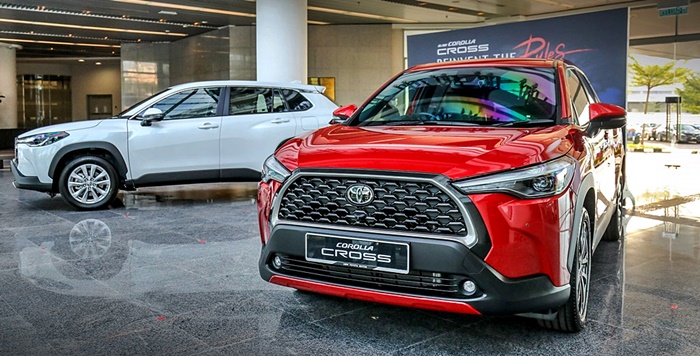
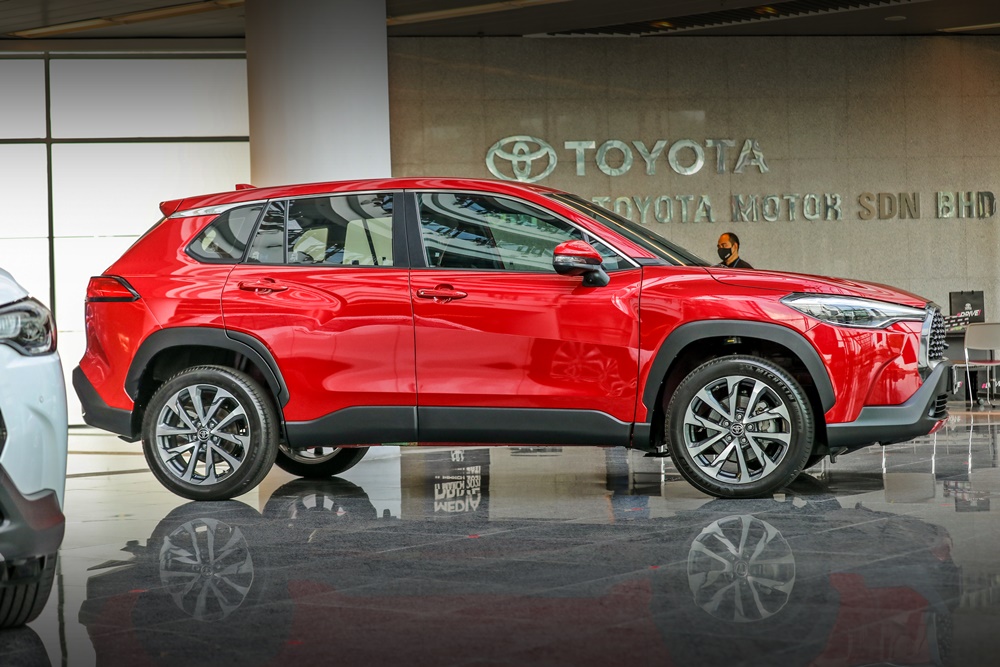
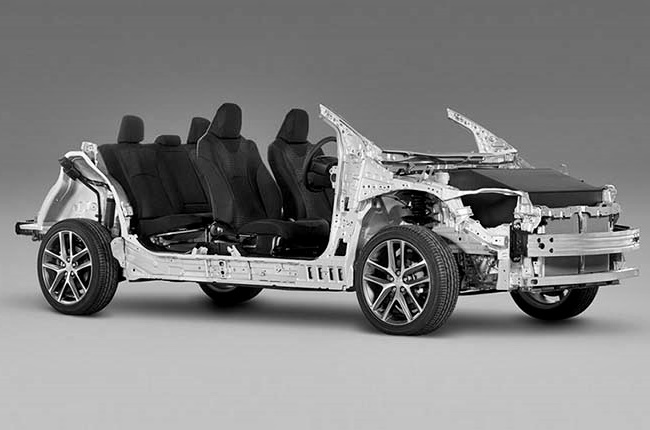
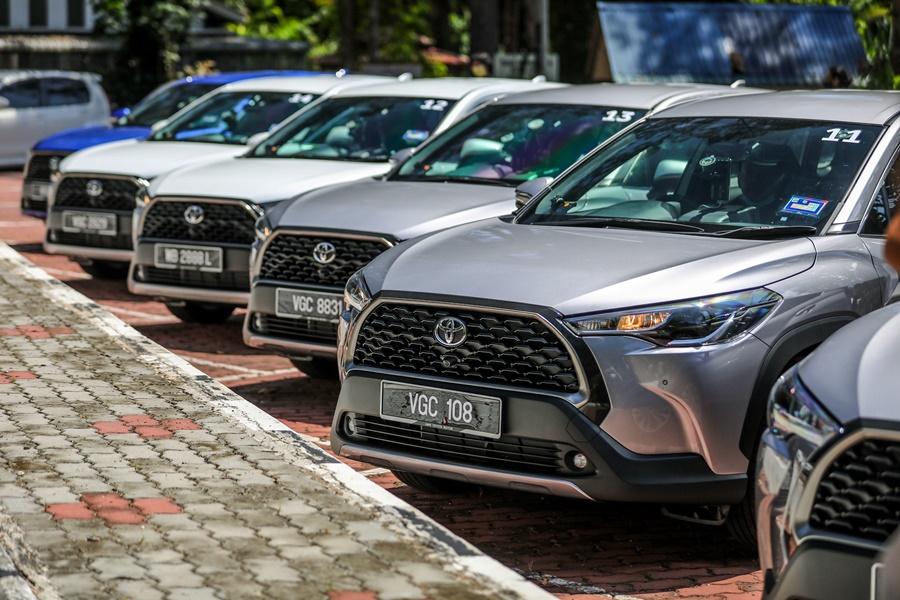
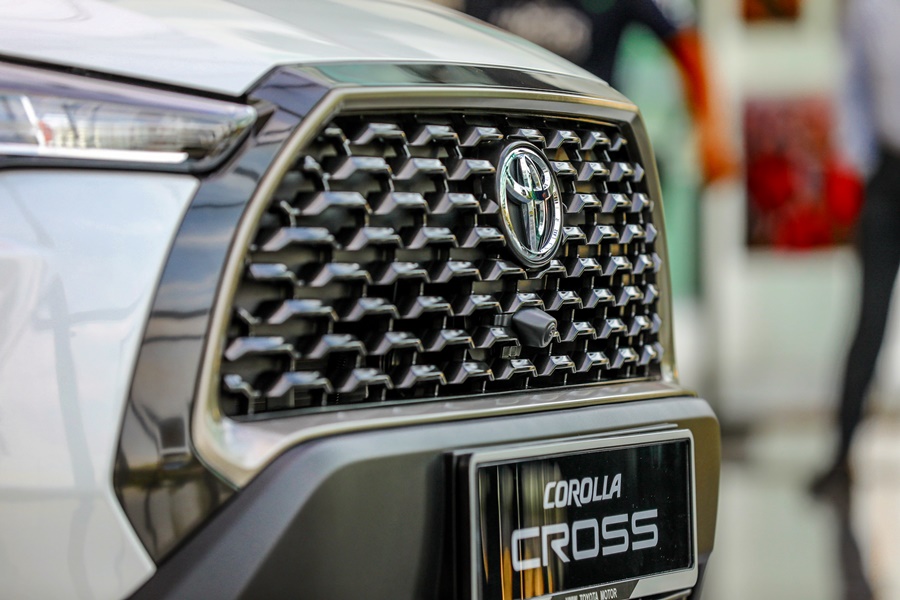
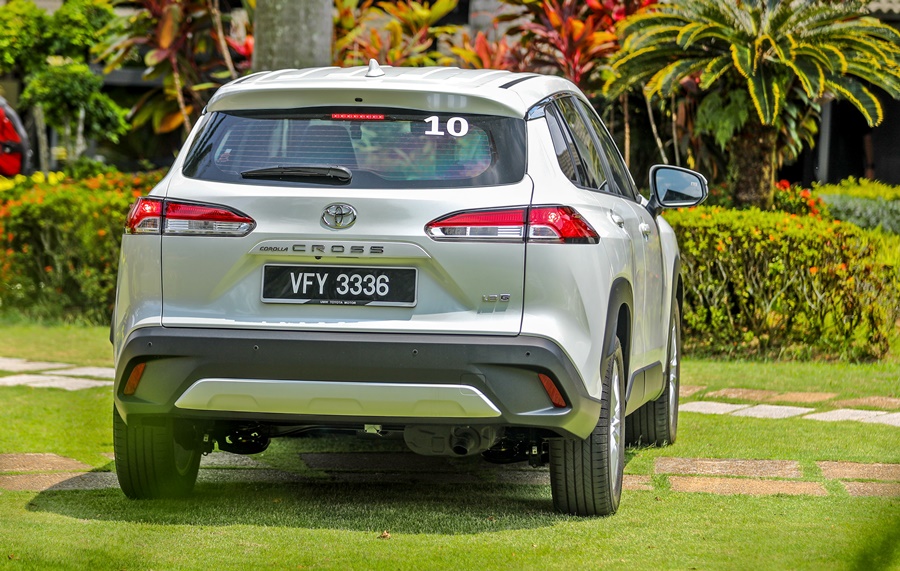
Toyota decided that the Corolla family would get a totally new SUV variant which it has called the Corolla Cross. Like many recent new models, it also sits on the TNGA (Toyota New Global Architecture) which has a lot of variability so engineers can put different model types on it. That saves Toyota a lot of money compared to the old days when a different platform had to be developed for each model.
In the case of the Corolla Cross, the TNGA platform has been configured for a higher ride height – which is expected of SUVs – but it has an inherently low centre of gravity too. This means that even though the car has extra ground clearance, its stability is still good and the highly rigid body enhances agility and ride comfort.
Toyota New Global Architecture (TNGA) platform
CBU import from Thailand
The Corolla Cross for Malaysia is imported from Thailand in CBU (Completely Built-Up) form but seeing how response has been even before it was launched, UMW Toyota Motor (UMWT) has already started discussions with Toyota about having the model assembled locally as well. That might not be so soon as the plant near Klang, Selangor, has also to be prepared, and with local assembly, there is also a need to source some of the parts locally. So it may only be in 2022 that we see a locally-assembled Corolla Cross.
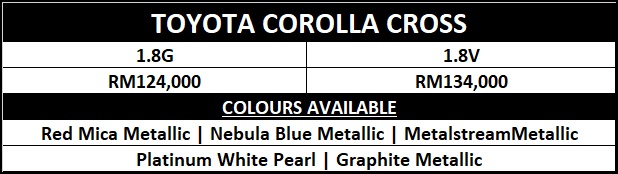
There are two variants being imported – the 1.8V and 1.8G, with the former being the better equipped variant. The price difference is RM10,000 but the standard items that come with the 1.8V are certainly more high-tech. We understand, however, that the 1.8V is not immediately available but bookings are accepted at dealerships.
Prices are for private registration in Peninsular Malaysia and do not include insurance premiums. 50% of sales tax is exempted until June 30, 2021.
Not just a taller Corolla
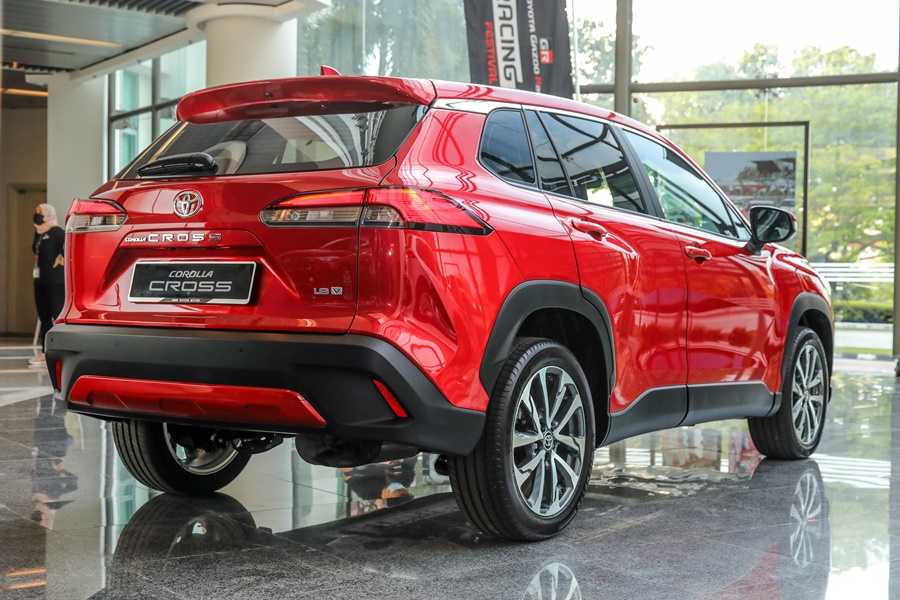
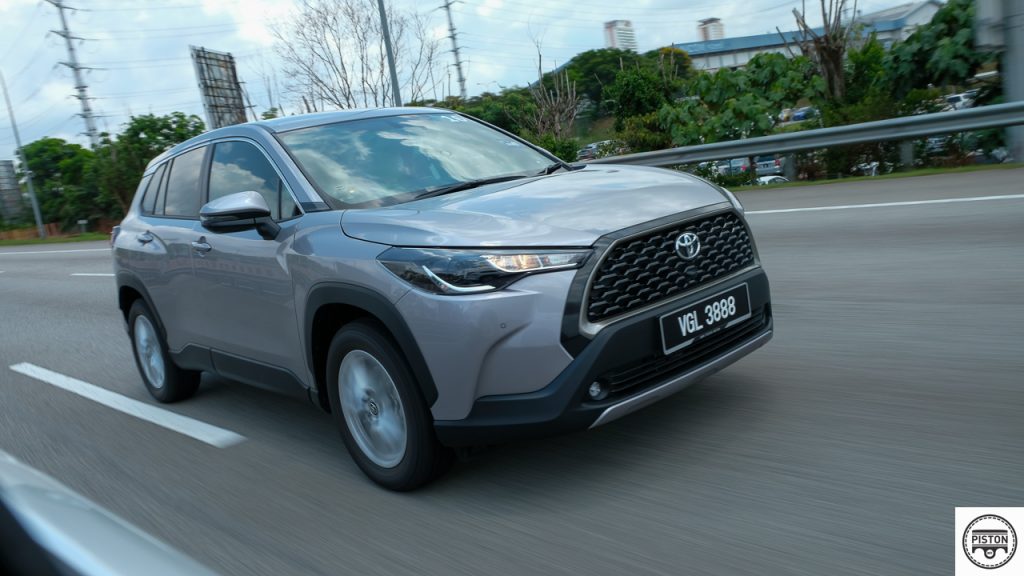
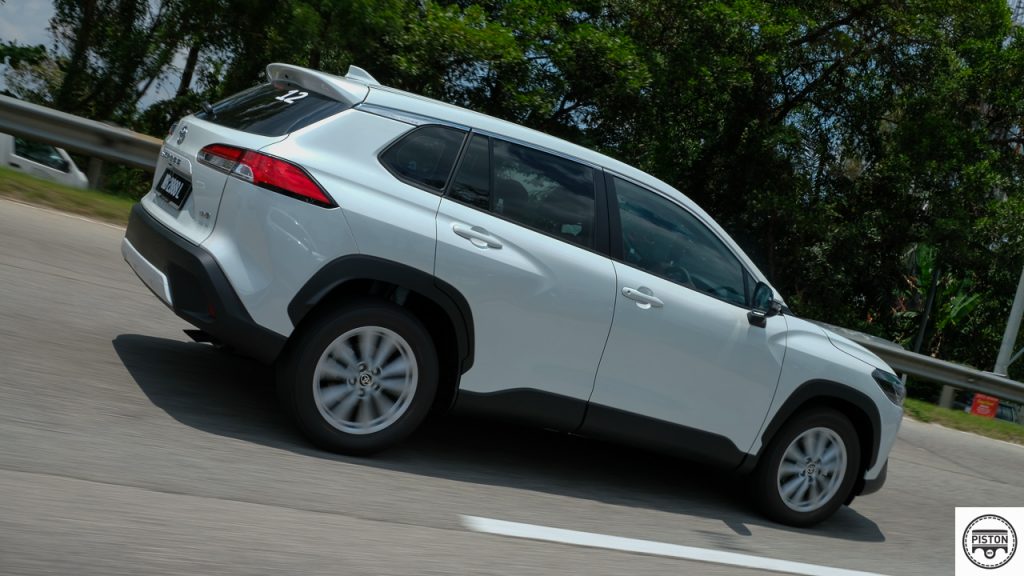
The design of the Corolla Cross is very different from that of the sedan and if you put the two cars next to each other, you won’t see similarities. This is probably the right approach as people buy a SUV for its image and just raising the ground clearance and adding cladding for the ‘rugged’ effect would be a mediocre effort.
Though it is shorter than the sedan (by 170 mm), the Corolla Cross has a wider (+ 45 mm) and taller (+ 185 mm) body. The wheelbase is also slightly shorter by 60 mm which does not seem to have impacted the cabin space noticeably. Ground clearance is, of course, more with a distance of 161 mm (+ 33 mm) from the underside to the road. However, that increase is well ‘camouflaged’, so the car doesn’t look like it is just ‘jacked up’. Additionally, with an 18° approach angle, it can also travel over rough terrain and steep inclines, as well as easily cross over taller speedbumps and mildly flooded stretches.
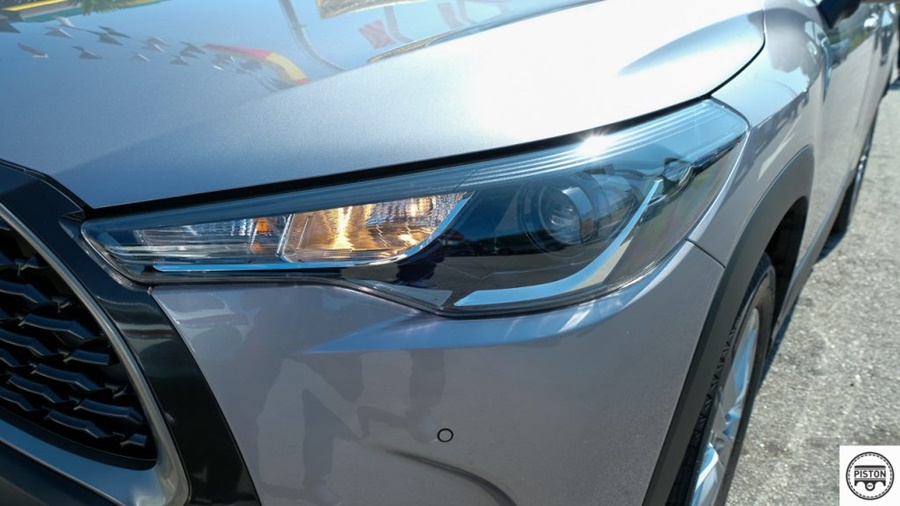
While the Corolla Cross 1.8G uses projector-type halogen headlamps, the 1.8V variant has Bi-LED units that give better illumination. The integrated Day Running Lights (DRLs)/clearance lamps of the 1.8V feature an intricate ‘light curtain’ graining which is also featured on the rear lighting units.
Both variants use LEDs for most of the lighting units, including the third brake light. Besides being energy-efficient, LEDs have advantages such as producing light that is closest to daylight, quicker light-up times, and having a much longer service life because they are more durable and resistant to vibrations.
Proven engine and CVT
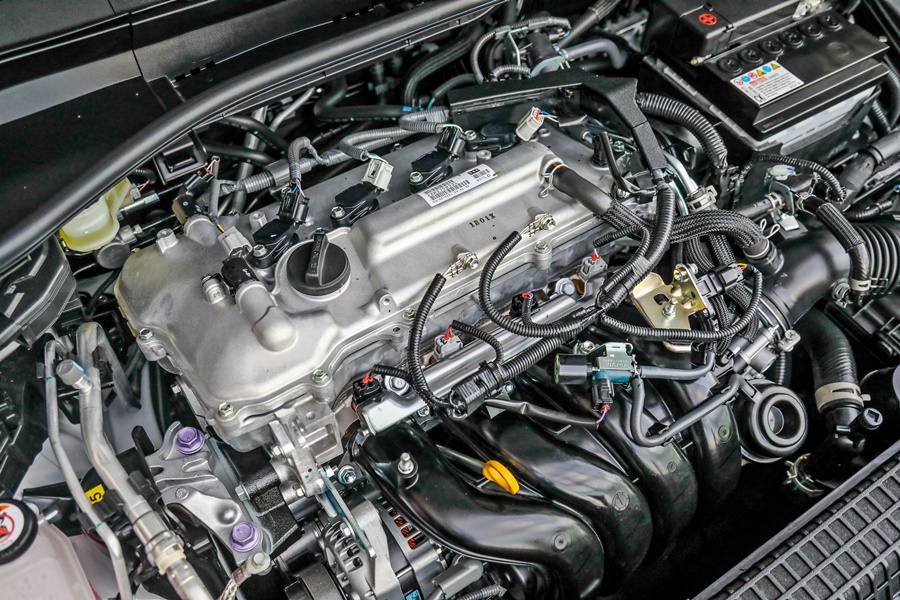
The Corolla Cross uses the same engine type as the sedan, ie the proven 2ZR-FE 1.8-litre petrol DOHC 16-valve engine with Dual VVT-i. This engine produces 139 ps/172 Nm which goes through a 7-speed Sequential Shiftmatic (CVT) only to the front wheels. There is no all-wheel drive (AWD) but most people don’t really care anyway. And for those who like to have AWD for enhanced grip and stability, systems such as traction control and vehicle stability control (both of which the Corolla Cross has) provide that.
Without AWD, the suspension layout is simple with the universal MacPherson struts at the front and a torsion beam at the rear. From extensive testing in ASEAN conditions, the engineers decided that large, highly durable rubber bushings would be better to allow the suspension to effectively cope with large undulations on the road surface, enhancing comfort.
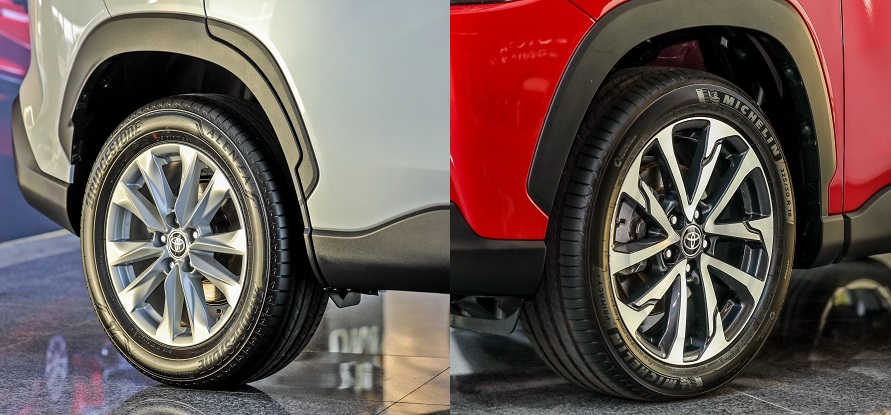
The Corolla Cross 1.8G has 17-inch wheels with Bridgestone tyres (left), while the 1.8V has 18-inch wheels with Michelin tyres.
Toyota Safety Sense
Where active safety systems used to operate independently, many are now integrated and function cooperatively. Most manufacturers have adopted this approach and Toyota’s is called Toyota Safety Sense (TSS) which helps the driver avoid accidents. This has been introduced in some models already and the 2.0 version is installed in the Corolla Cross 1.8V.
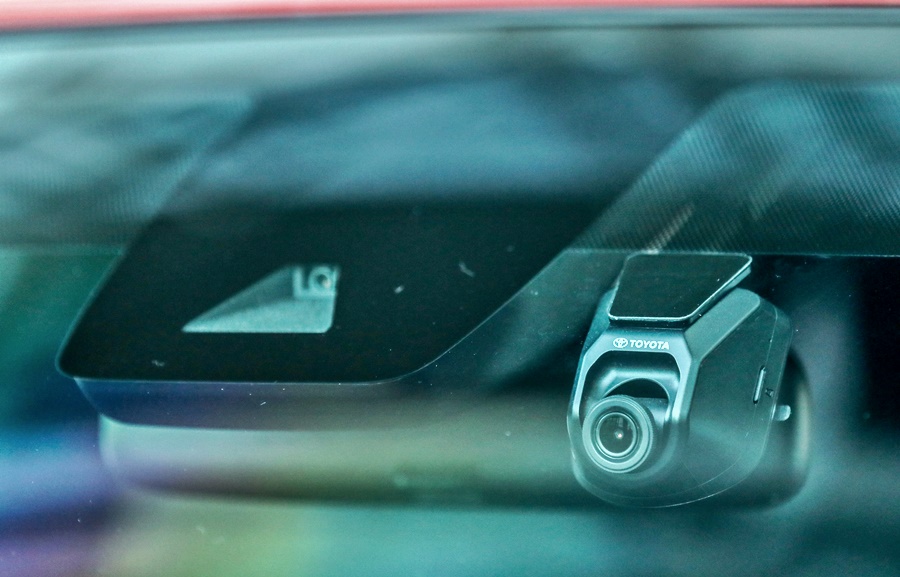
TSS 2.0 makes use of a camera installed in the windscreen to scan the road ahead. the imagery is sent to a computer to analyse and determine if there is a dangerous situation. Additionally, a millimetre-wave radar signal from the grille is also used to monitor the road ahead.
Lightning-quick analysis of the data and imagery will determine if a collision with a vehicle or pedestrian (or other road-users) might occur. If the driver does not take appropriate action, the brakes will be activated automatically to reduce the vehicle’s speed and bring it to a quick stop. This is known as Automatic Emergency Braking (AEB) and even if it does not fully prevent a collision (due to road conditions or the speed), AEB could still save you expensive repairs because the car would be slowed down earlier, reducing the force of the impact.
Radar transmitter in the grille (above) and camera at the top of the windscreen (left side in the picture below) constantly scan the road ahead and send data and imagery for Toyota Safety Sense to analyze. The lens to the right is for the Digital Video Recorder.
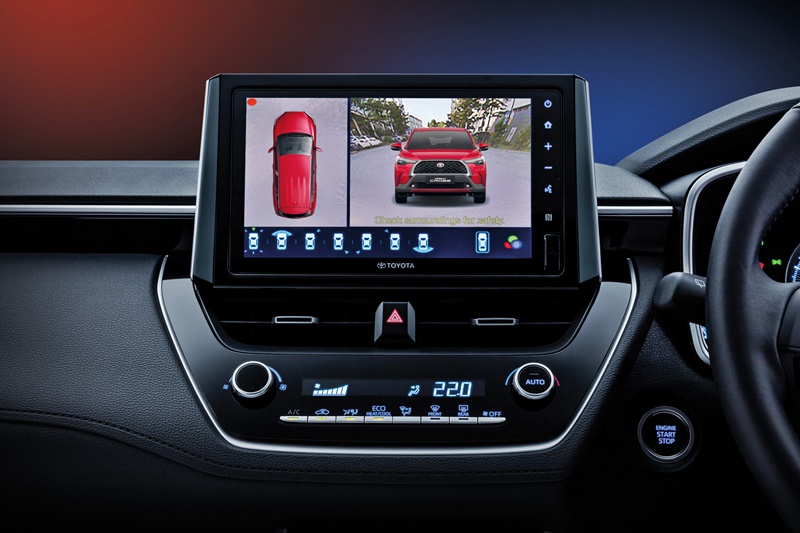
Besides the Pre-Crash System just explained, TSS also has Lane Departure Alert (LDA), Dynamic Radar Cruise Control (DRCC) and Automatic High Beam (AHB). These core technologies are complemented by other safety technologies such as Blind Spot Monitor (BSM) with Rear Cross Traffic Alert (RCTA), Tyre Pressure Warning System (TPWS) and a 3D Panoramic View Monitor which helps in situational awareness all around the car.
The LDA system includes Lane Tracing Assist (LTA) which implements steering assistance to remain in the lane. The function can also operate on sharp curves and helps reduce vehicle swaying during straight line driving.
DRCC introduces drivers to semi-autonomous motoring as a safe gap will be maintained with a vehicle ahead at all times. This is done by automatically adjusting the speed, lowering it from the set cruising speed if necessary. With DRCC, long-distance motoring can be more enjoyable with less fatigue experienced. The system in the Corolla Cross doesn’t operate at very low speeds and that would be good to have in future.
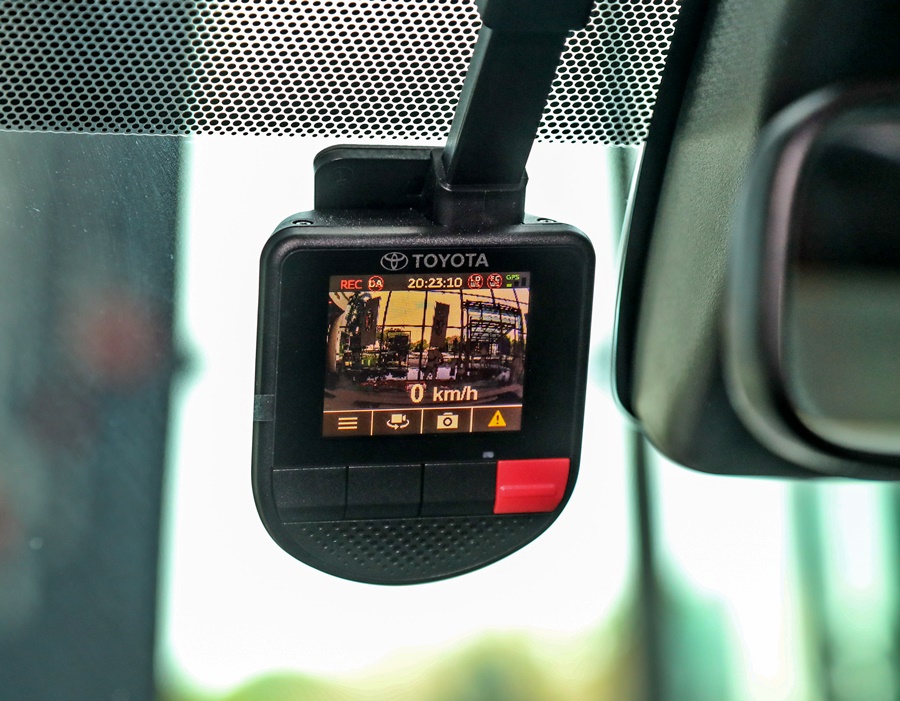
Front Digital Video Recorder is a standard fitment.
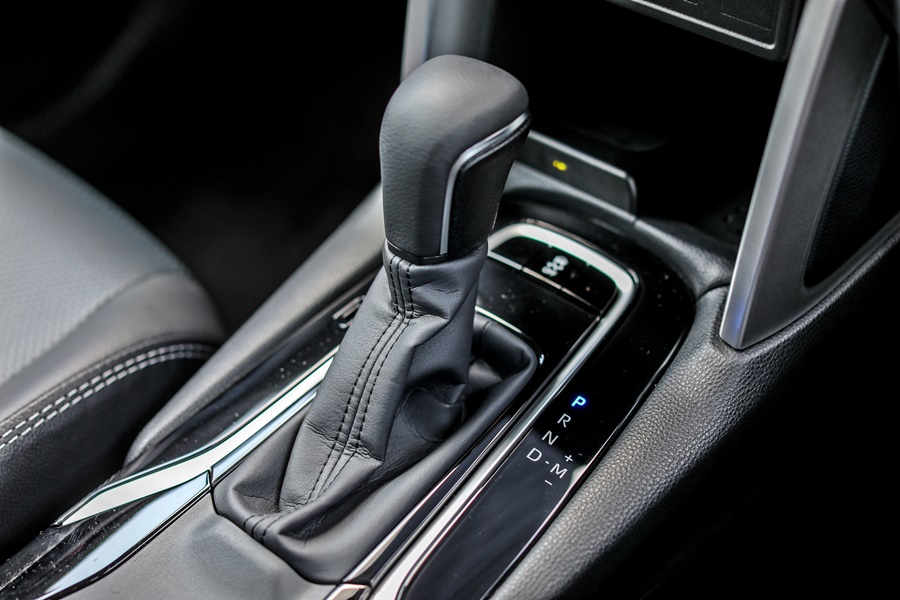
For additional safety, Drive-Start Control is included to prevent sudden starting or unintended acceleration. This can occur if the wrong gear has been selected from PARK while the driver is pressing hard on the accelerator pedal. When such a condition is detected, a warning is flashed on the dashboard and engine output is immediately reduced to avoid an accident.
The other safety systems are present for both variants, such as ABS with EBD and Brake Assist, Vehicle Stability Control and Traction Control and Hill-start Assist Control (HAC). There is also an Emergency Stop Signal (ESS) which activated the hazard warning lights automatically if sudden or strong braking occurs due to an emergency. The flashing lights will alert drivers behind so that they can take their own action to avoid a collision.
Besides the protection from the high-strength TNGA platform and structure, there are 7 airbags around the cabin (including one of the driver’s knees) and the seatbelts have pre-tensioners and force-limiters to maximise restraint. ISOFIX points are also available in the rear outer seats for installation of compatible childseats, which are now required by law.
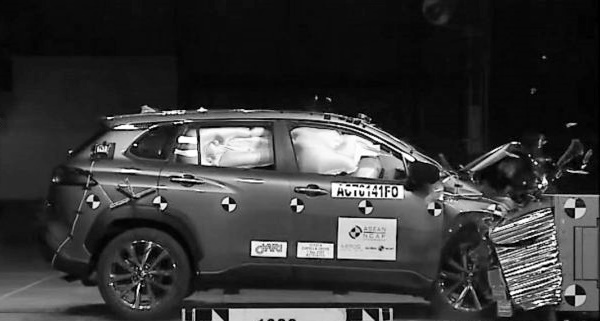
ASEAN NCAP crash test
With such high safety standards, it’s not surprising that the Corolla Cross, as with many other Toyota models sold today, has achieved a maximum 5-star rating from ASEAN NCAP which evaluated the model with crash testing.
SUV outside, passenger car inside
While the exterior looks bear no resemblance to the sedan, the interior of the Corolla Cross is certainly more like a passenger car than the traditional SUV. It’s something which was pioneered by the original RAV4 25 years ago and got people interested in driving a SUV as it was just as easy and comfortable as their sedan.
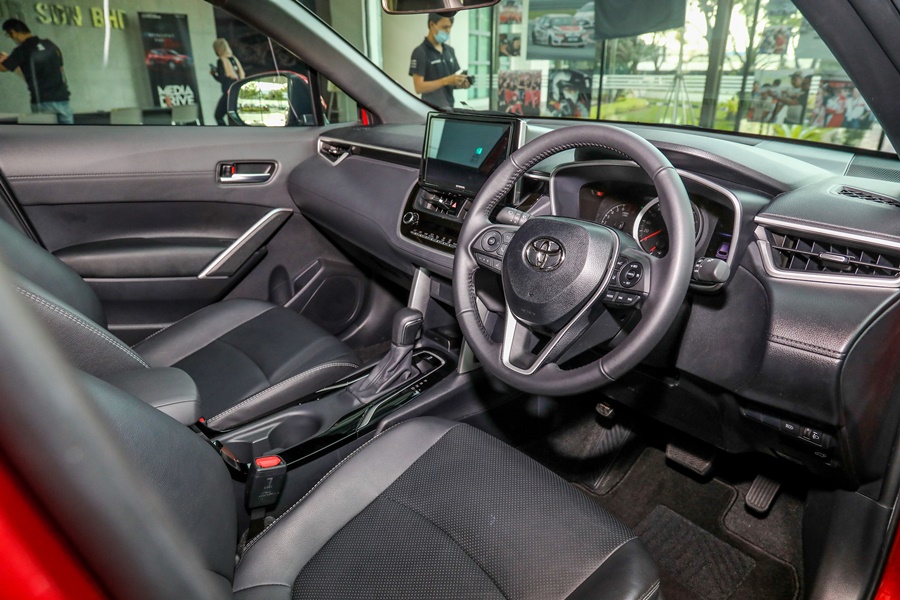
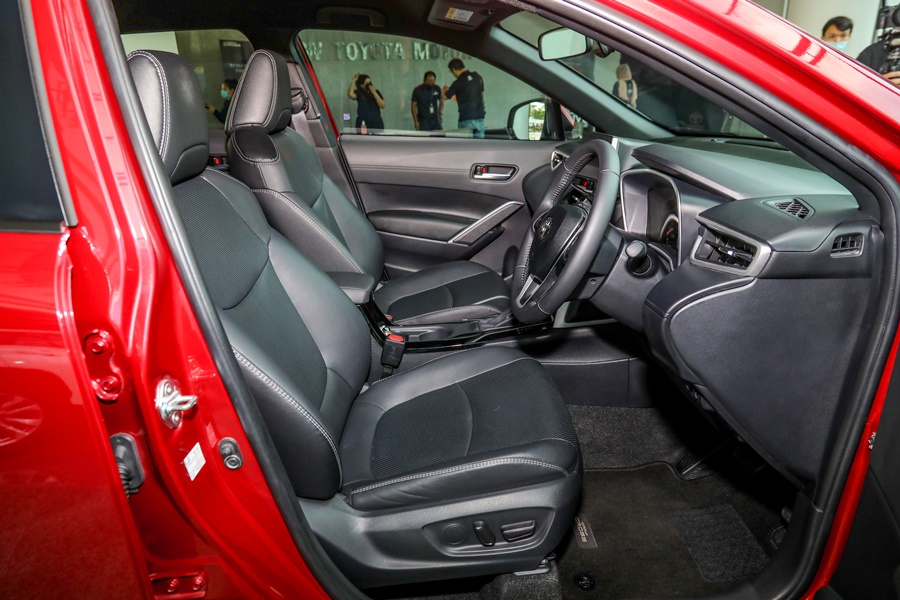
The Corolla Cross continues with this concept and the extra height of the vehicle is not only used for ground clearance but also interior space, providing significantly better headroom than other competitor SUV models in the same class. The driver’s eyes are also higher up, giving a more commanding view which many like a SUV for.
The overall colour theme for the cabin is black with black leather upholstery for the seats. The driver’s seat for the 1.8V has power adjustment, which is convenient. At the rear, the backrest recline angle of 6° from the normal position makes for a more comfortable posture.
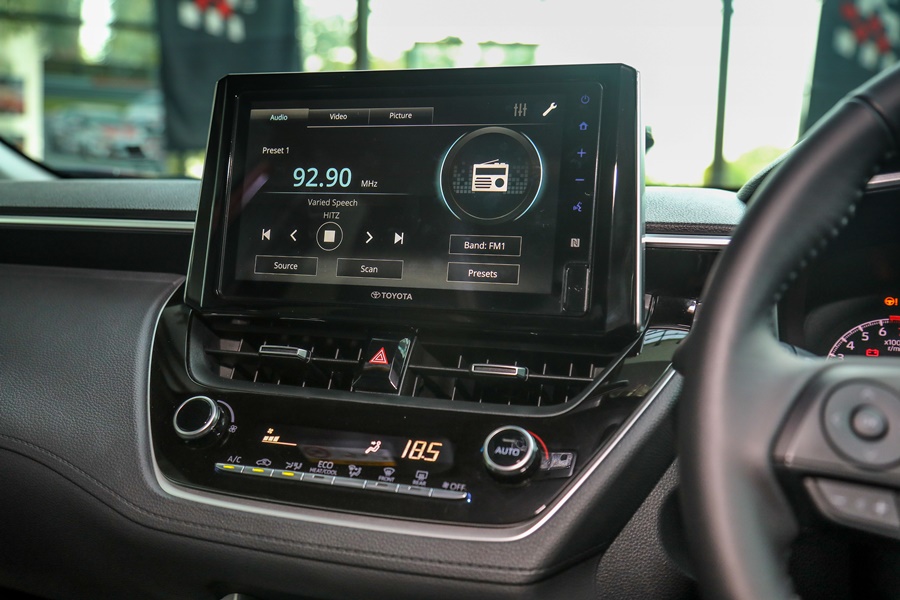
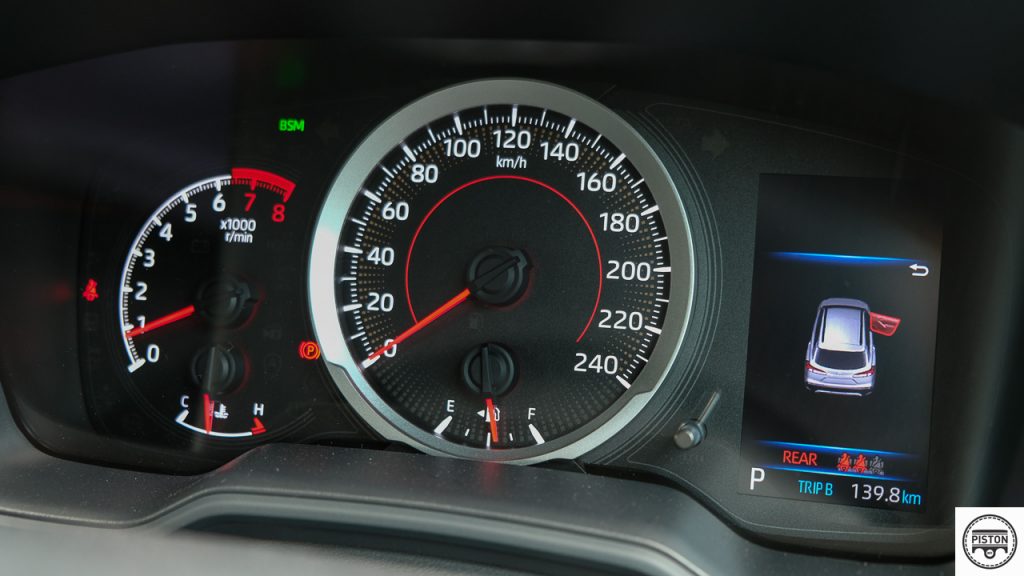
Instrumentation and infotainment are quite standard nowadays with a 4.2-inch colour Multi-Information Display between the meters providing the driver with travel information. The large 9-inch panel in the middle of the dashboard serves as the display for the audio and infotainment system, as well as the image from the rearview camera.
The system is Apple CarPlay and Android Auto ready so compatible smartphone apps can easily be transferred and accessed from the dashboard. Management of some functions can be done using switches on the steering wheel.
These days, most cars have keyless entry and pushbutton starting/stopping and the Corolla Cross is now exception. But a standout feature is the Power Back Door which has handsfree operation – by placing a foot under the rear bumper, the door will open and close automatically. It wasn’t that long ago when this feature was only found on much more expensive models, and now it is moving downwards. It’s also possible to open the rear door from inside the car.
Other equipment and features include automatic air-conditioning, USB ports, lots of cupholders and an extra-cost wireless charging pad option which can be specified at the time of purchase. The car comes with one Digital Video Recorder at the front and the owner can add a second one at the rear as well.
Over the past few years, UMWT has been including a Vehicle Telematics System (VTS) in its new models to enhance security. VTS tracks the vehicle’s position using GSM/GPS signals so if it is stolen, its location can be determined by a 24/7 Command Centre will locate it which will then inform relevant authorities to recover it. In the event there is an impact detected (suggesting an accident), the centre will inform emergency services to provide assistance at the vehicle’s location.
FIRST DRIVE IMPRESSIONS (by Chips Yap)
As mentioned earlier, the 1.8V is not available at this time so all the vehicles for our media drive were the 1.8G. Generally, the performance would be the same since both variants use the same engine. However, while the car we drove was fairly quiet already, the 1.8V should be even quieter because it has acoustic glass for the windscreen which cuts out a lot of external noise.
The cabin obviously has an open airy feel with sweeping dashboard line having the 9-inch display as the dominant centrepiece. It can accept apps from an iOS or Android device which expands its functionality.
The 3D Panoramic View Monitor is an interesting system that has different views of the vehicle which can be selected. The virtual images created from the cameras around the bodywork give the impression of seeing the Corolla Cross while standing on the outside. It’s a bit more sophisticated than the usual top-down views in other systems and will take a bit of getting used to. But once the driver becomes familiar with the imagery, he or she will find it to be quite useful during parking.
I really like the Power-Operated Boot Door with what I call a ‘Kick the Bumper’ system of operation. It’s a feature which you will want in every car you get after the Corolla Cross. Not so long ago, only luxury SUVs had this convenience and Toyota has somehow managed to bring the cost down to be able to offer it in a Corolla-class model as well.
The ride quality was very good, with the suspension soaks up the bumps easily without making the car feel unstable. The taller stance was virtually not perceived although I think that in my case, I am already used to it as I drive a SUV daily. But what matters is that even along twisty roads, like the one we went along around the Semenyih dam, the car remained stable and responded well to sudden manoeuvres.
While the engine is a familiar unit and its performance is similar to the one in the sedan with a smooth power flow and some punchiness when you push it hard, it is the CVT that has impressed me all along. Somehow, the Toyota engineers have been able to programme the characteristics to give a feel more like a conventional automatic transmission without the ‘rubber band’ behaviour. Response is good and supposed to be improved with some internal improvements.
I owned a number of Corollas before and I also had the first RAV4, which converted me to SUVs forever. The RAV4 provided an easy transition to the SUV world and the Corolla Cross is doing the same thing again. It’s actually the best of both worlds and I would say it has many of the good things of a SUV with the comfort and space of a sedan. The Corolla has for a long time been seen as ‘just another sedan’ but now, the Corolla Cross brings new interest to the family and clearly, it is the right type of car for these times.
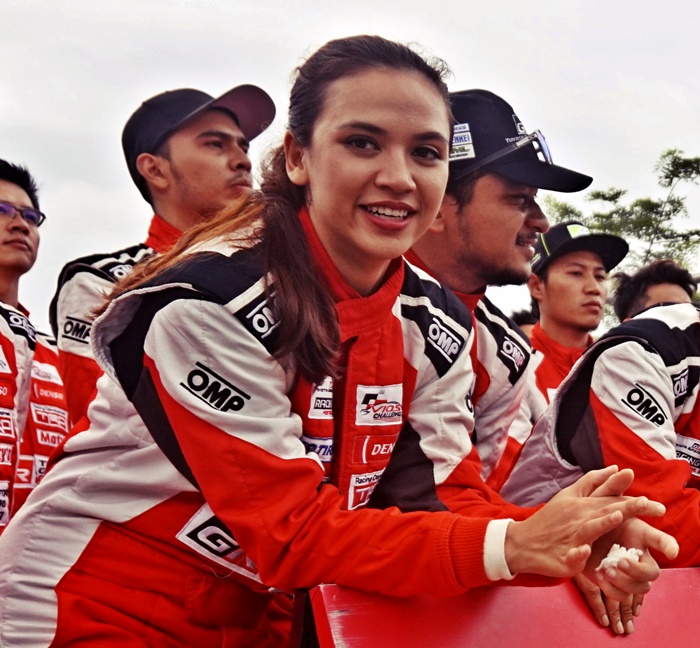
Diana Danielle (above) and Danny Koo are the Toyota Corolla Cross Ambassadors and will be closely associated with the new SUV model in advertising and promotional activities. Both are former racers in the Vios Challenge One-Make Series, and lead active lives that the Corolla Cross has been designed to support. “Diana and Danny are celebrities well known to the Malaysian public,” said Ravindran K., President of UMW Toyota Motor. “We are happy to have them associated with the Corolla Cross. Diana has a bold personality and constantly breaks boundaries, which matches the Corolla Cross perfectly, while Danny reinvents his perspectives to go beyond his limitations – just like the way the Corolla Cross Reinvents the Rules.”
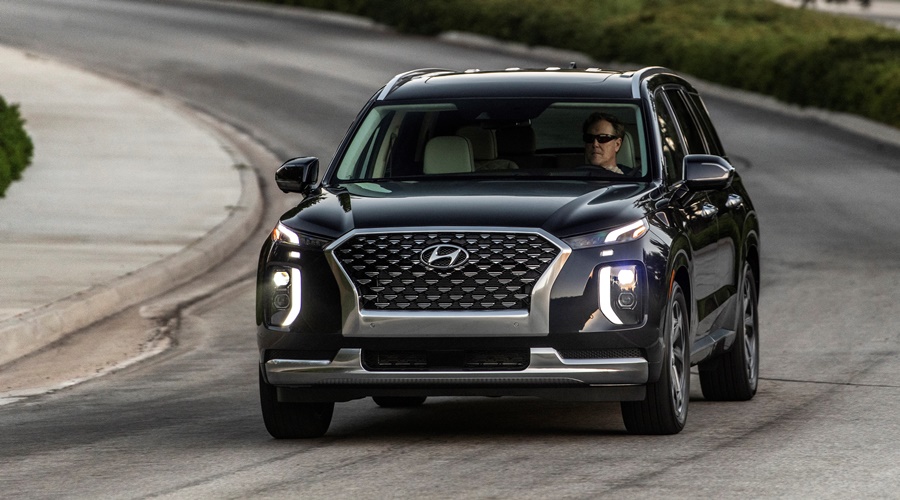
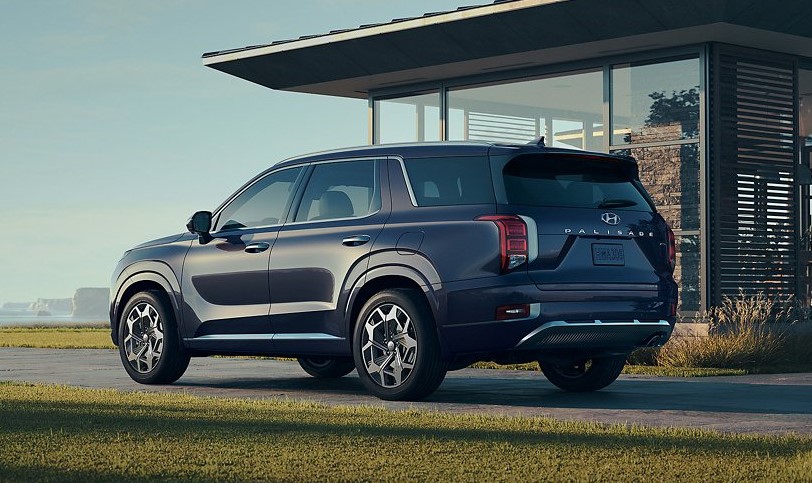
Hyundai-Sime Darby Motors (HSDM), the sole distributor of Hyundai vehicles, has announced that it will be launching two SUVs during 2021. One is the large-sized Palisade while the other is an updated version of the compact Kona model which was introduced in the Malaysian market last October.
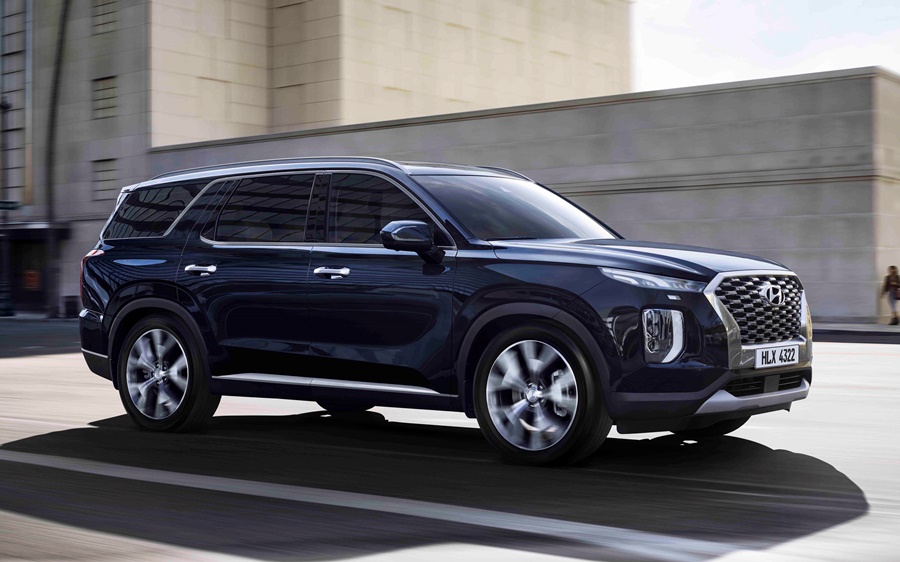
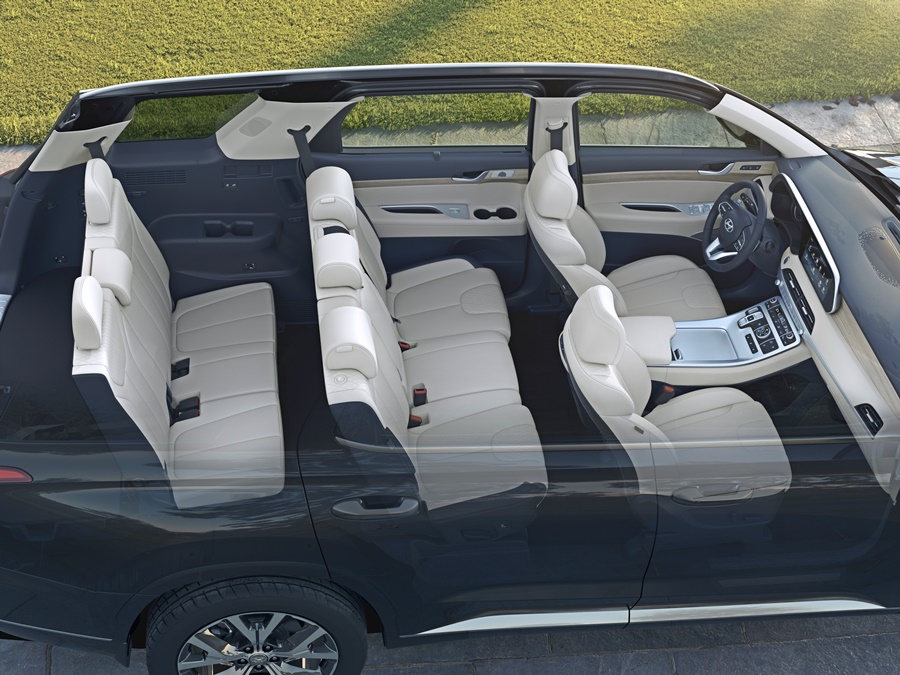
The Palisade, which is 4980 mm long, is Hyundai’s flagship SUV with accommodation for up to 7 people on three rows of seats. Those who do not require the third row will find a generous extra volume of space available in the back with the row folded down.
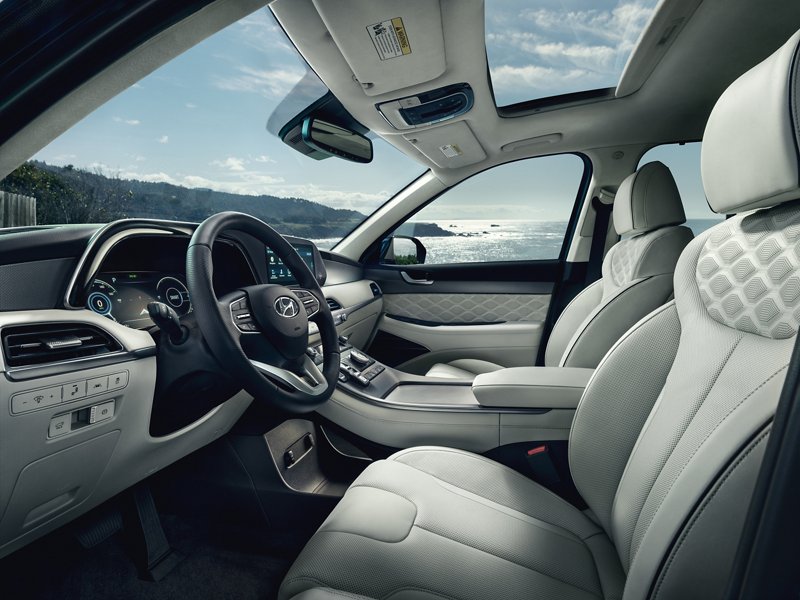
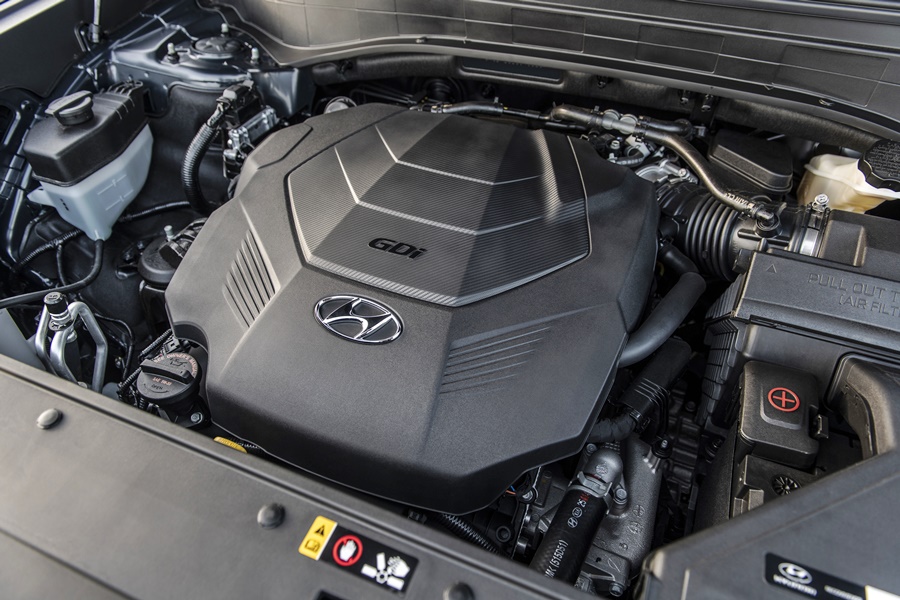
Note: Images shown are of US version. The Palisade sold in Malaysia may have differences in features.
The version of the Palisade imported will have an Atkinson-cycle 3.8-litre V6 with dual CVVT in the cylinder head and direct fuel-injection This petrol engine has around 291 bhp of power with up to 355 Nm of torque.
Aviation-inspired features
Taking inspiration from aviation technology, the Palisade’s features include a Head-Up Display (HUD) that projects operating information onto the windscreen in front of the driver. The display is generated as a reflection of a full-colour TFT LCD panel inside the top of the dashboard. The displayed information is said to be visible in all lighting conditions, even our bright tropical sunshine.
An industry-first is the innovative diffusers design for the ceiling vents. This provides a focused, partially-diffused or fully-diffused stream of air to the rear passengers. It reduces airflow noise and is draft-free while giving more uniform distribution of air as well as being able to direct cool air in specific areas.
Pricing for the Palisade is not known yet although it will be fairly high. The last time HSDM sold a model with a big engine was the 3.8-litre Genesis about 6 years ago and that cost almost RM400,000. The tax structure hasn’t changed and the only savings you could get would be on sales tax (and that too would only be until June 30, 2021).
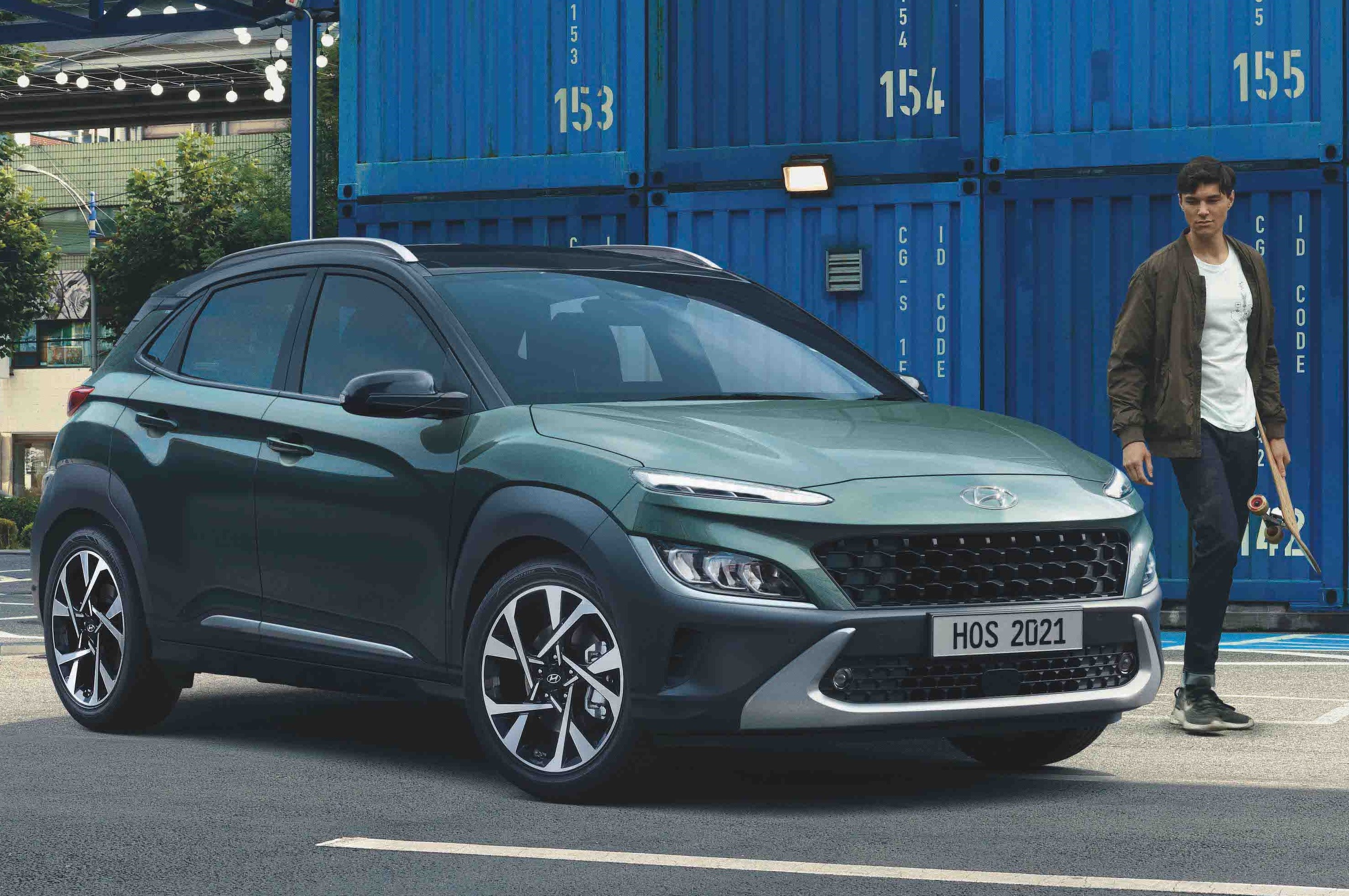
Visit www.bhpetrol.com.my for more information.Note: Images of Kona are of the European version and the one sold in Malaysia be have some differences.
New engine for Kona
As for the 2021 Kona, the new Smartstream G2.0 petrol engine with 149 ps/180 Nm will be introduced. The 4-cylinder engine is mated to a CVT transmission which delivers power to the front wheels; all-wheel drive will still not be available.
Updates for the 2021 model include a more refined front fascia design, new 17-inch and 18-inch wheels, an enhanced SmartSense state-of-the-art safety package and a remote starting function. The new console area of the cabin now has a horizontal layout while the air vents and speakers also get new rings with aluminium finish.
Also included in the new version is upgraded ambient lighting technology that illuminates the cupholder and foot lamps on the front passenger and driver side. New interior colour options, materials and trims are also to be expected.
The Koan is presently priced between RM116,000 and RM144,000, and it’s likely that the 2021 model will be around the same range. There are currently two engines, one being a 1.6-litre Gamma turbo and the other is the old Nu engine which will be replaced.
The Palisade and updated Kona will be followed by other new models during the year, hinted Low Yuan Lung, HSDM’s Managing Director. “Other new models are also in the pipeline and bound to excite the market,” he said.