Piston.my

Latest News

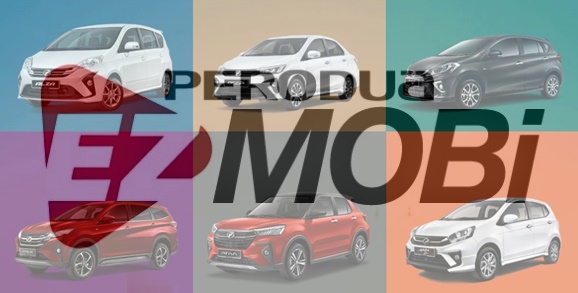
Perodua has introduced a new approach to purchasing vehicles – EZ MOBi – which is an all-inclusive vehicle subscription service. Currently available in the Klang Valley and only for business entities and government agencies, EZ MOBi simplifies management of vehicle fleets (Perodua, of course) throughout the period of use.

“The value offering of this service is that Perodua EZ MOBi provides end-to-end convenience to our customers as various packages are available to fit each client’s mobility needs,” explained Perodua President & CEO, Dato’ Zainal Abidin Ahmad.

Single monthly rate
With EZ MOBi, all costs of owning and operating vehicles are covered by a single monthly rate. These include roadtax and comprehensive insurance coverage, scheduled servicing and maintenance, as well as replacement of normal wear and tear items. In fact, the only thing not included is fuel!

Additionally, each vehicle is supported by a 24/7 Auto Assist service when needed and a free telematics system is installed so the vehicle’s location can be tracked. This will be useful for fleet managers who may wish to know the movements of their vehicles or when it is stolen.

Perodua Tweckbot 2020
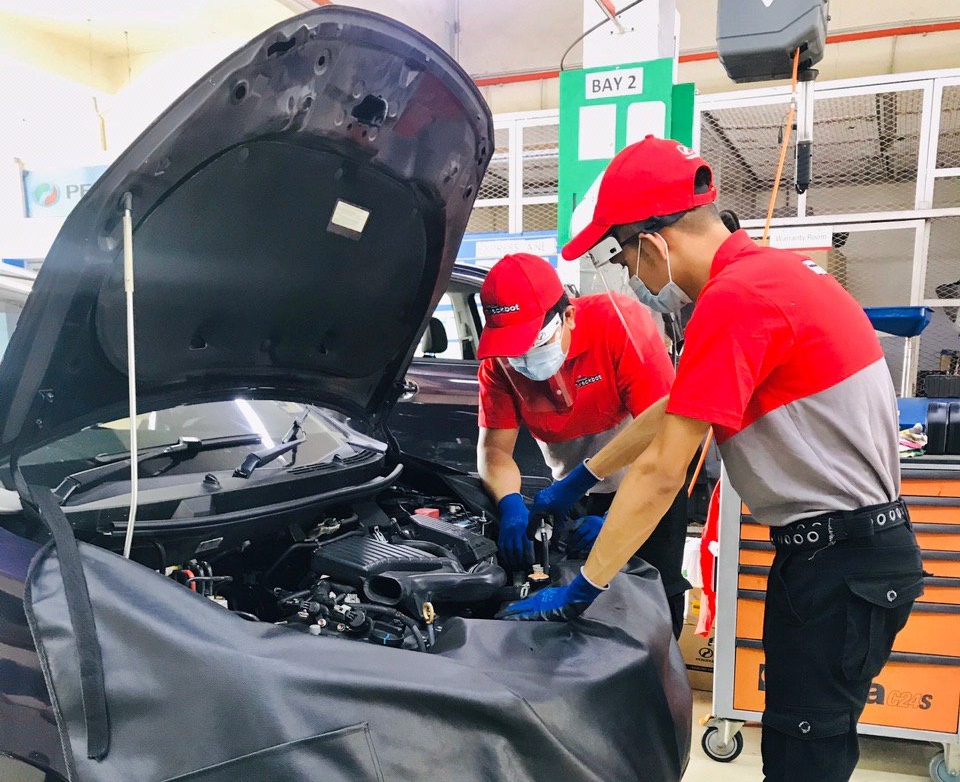
All costs related to scheduled servicing and maintenance are included in the subscription rate.

“In essence, EZ MOBi represents Perodua’s value contribution towards its customers’ growing mobility needs. The overall package includes vehicle registration, insurance renewal, servicing cost, parts replacement cost, courtesy car, vehicle disposal and replacement under one subscription plan,” Dato’ Zainal said.

Value-added features
Other valued-added features of EZ MOBi include a concierge service to provide assistance and a courtesy car, should the customer’s vehicle be kept in the service centre for a longer period than necessary. And those who choose EZ MOBi can also get their vehicle faster, which is often important for busy businesses.

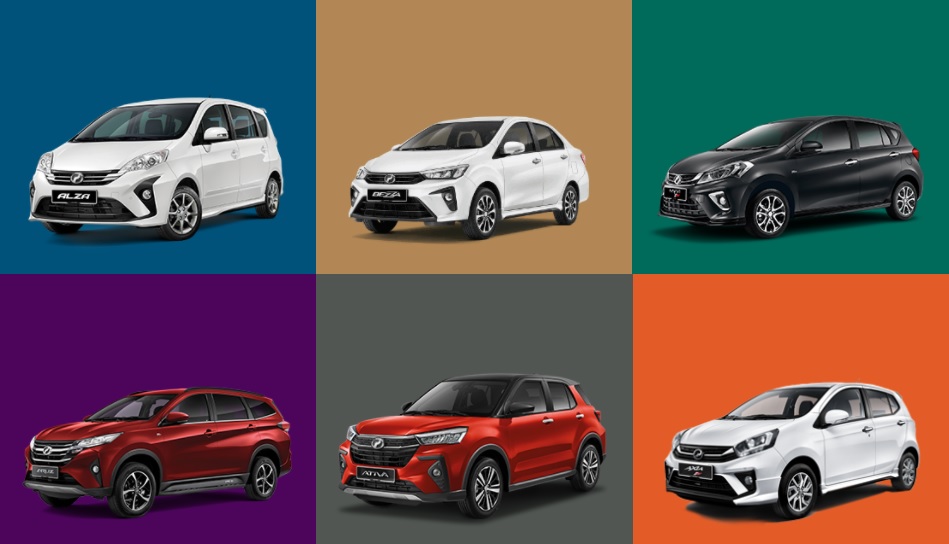
All the latest Perodua models are available with the EX MOBi subscription plans.

Flexible plans
Customers enjoy a lower downpayment as well as lower overall cost. The subscription periods can be from 3 to 7 years with mileage options of 30,000 kms or 40,000 kms each year. Customers can also upgrade their vehicles, but this is subject to a minimum subscription period. At the end of the subscription period, disposal of the vehicle is hassle-free, with depreciation not having to be factored in.

Click here to find out more about Perodua EX MOBi or call 1-800-88600.

Lower-priced childseat now offered by Perodua

Hyundai Sime Darby Motors (HSDM) has certainly been quick to start the EV (electric vehicle) ball rolling. Of course, this is not the first EV to be sold in Malaysia. Mitsubishi Motors Malaysia sold the i-MiEV in 2008 and Edaran Tan Chong Motor has already sold two generations of the Nissan LEAF, while Porsche, BMW and MINI have also introduced EV models in recent years.

However, this time things are different as there is exemption of all taxes for such vehicles which was announced during the proposed Budget 2022. Battery electric vehicles (BEVs), ie fully electric and not hybrids, will be allowed to be imported and sold duty-free for a limited period and then those that start assembling them will also enjoy the duty-free incentive a bit longer. Exemption from paying roadtax has also been include in the proposed Budget 2022.
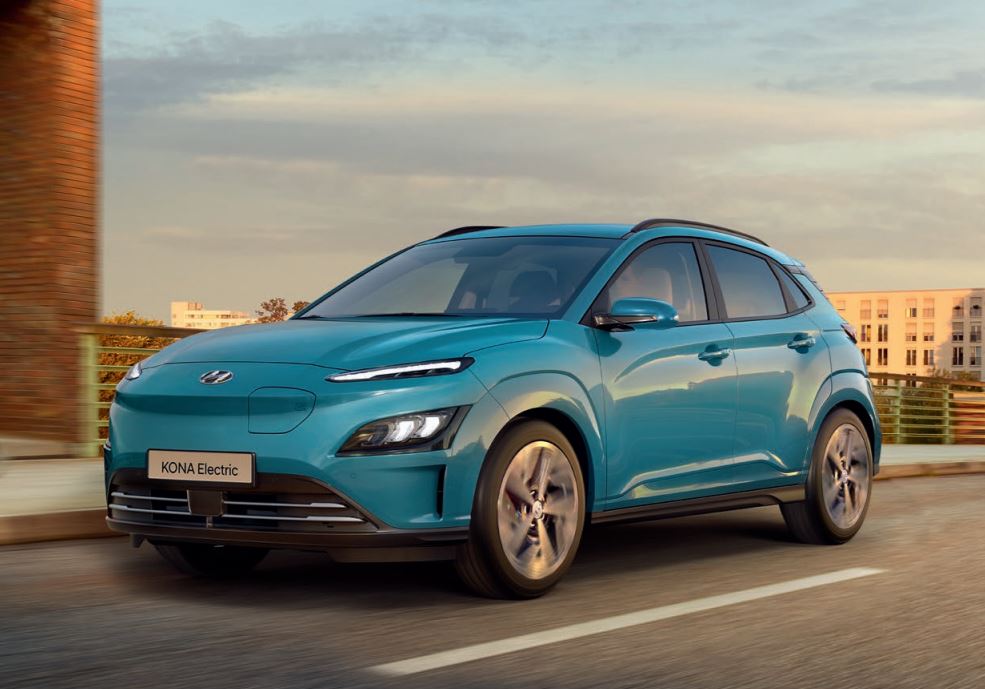
As Malaysians have long complained about taxes bumping up prices and making cars too expensive, the thought of not having to pay any tax would be exciting. Lower prices would be expected, and this was the case when the government gave the same exemption 10 years ago for hybrids and EVs.

However, the new Kona Electric is not exactly within the ‘affordable’ bracket for most people as even the cheapest of the three variants has prices (excluding insurance) starting from RM149,888. That’s for the e-Lite version and for the better equipped Kona Electric e-Plus, it will be RM169,888. A third variant is the e-Max which is priced at RM199,888.

In the UK, prices of the Kona Electric start from £27,950 which is about RM157,000 at today’s rates. Of course, those are retail prices which include applicable taxes over there. However, like many governments, the UK government also provides incentives to those who buy EVs and currently, purchasers can get a grant up to £2,500 (about RM14,000) on vehicles costing up to £35,000 to offset the cost. Additionally, EV owners can also get a grant of up to 75% (or maximum of £350) to pay for installing a charging point at their home.
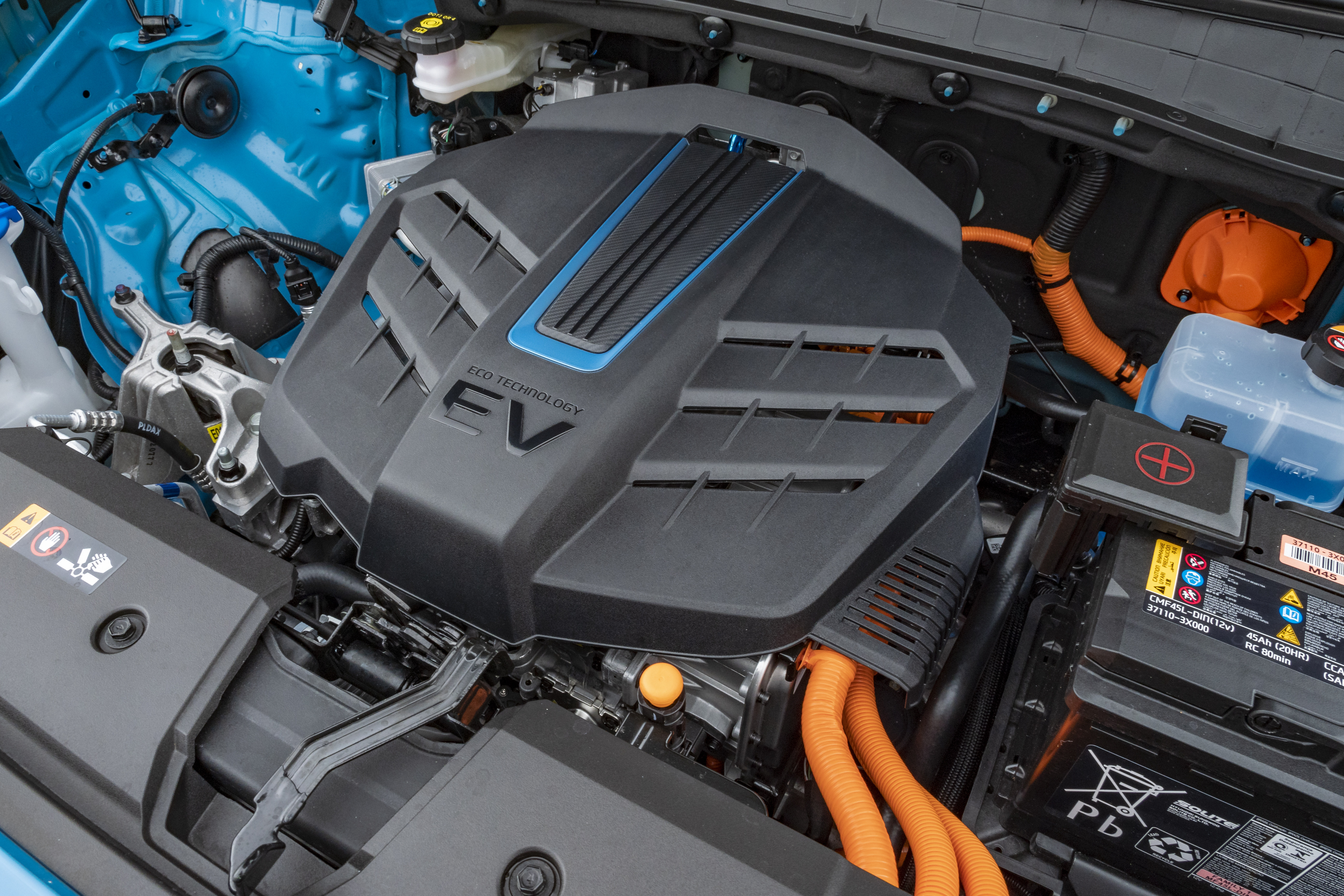
The point here to note here is that EVs are not cheap at this time, so don’t expect ‘duty-free’ to bring prices down to the levels of models sold by the Malaysian brands. Wherever they are sold, EVS have high pricetags and manufacturers hope that governments will provide incentives to offset the high cost of purchase and help accelerate increase in numbers sold. The technology is still expensive but if volumes can quickly rise, then economies of scale will kick in and production costs can start to drop, with retail prices also being reduced.

Anyway, back to the Kona Electric in Malaysia which was officially launched today (but deliveries will only be in 2022). The difference in the prices of the three variants are largely related to their battery pack capacities and equipment levels. The e-LIte and e-Plus share similar lithium-ion polymer battery packs which have a capacity of 39.2 kWh whereas the e-Max at the top of the range has a battery pack with a greater 64 kWh.
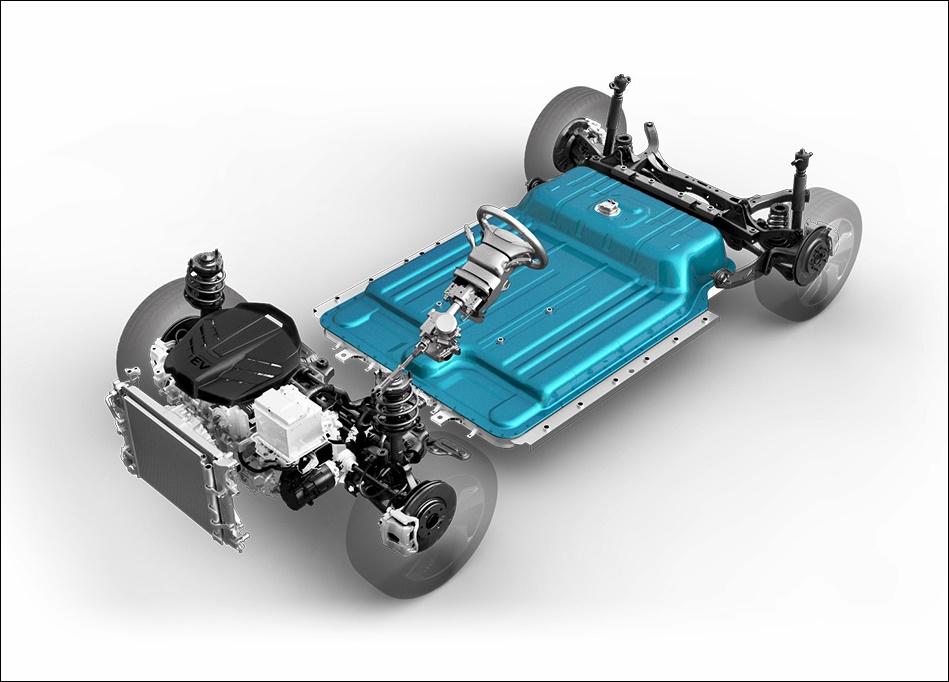
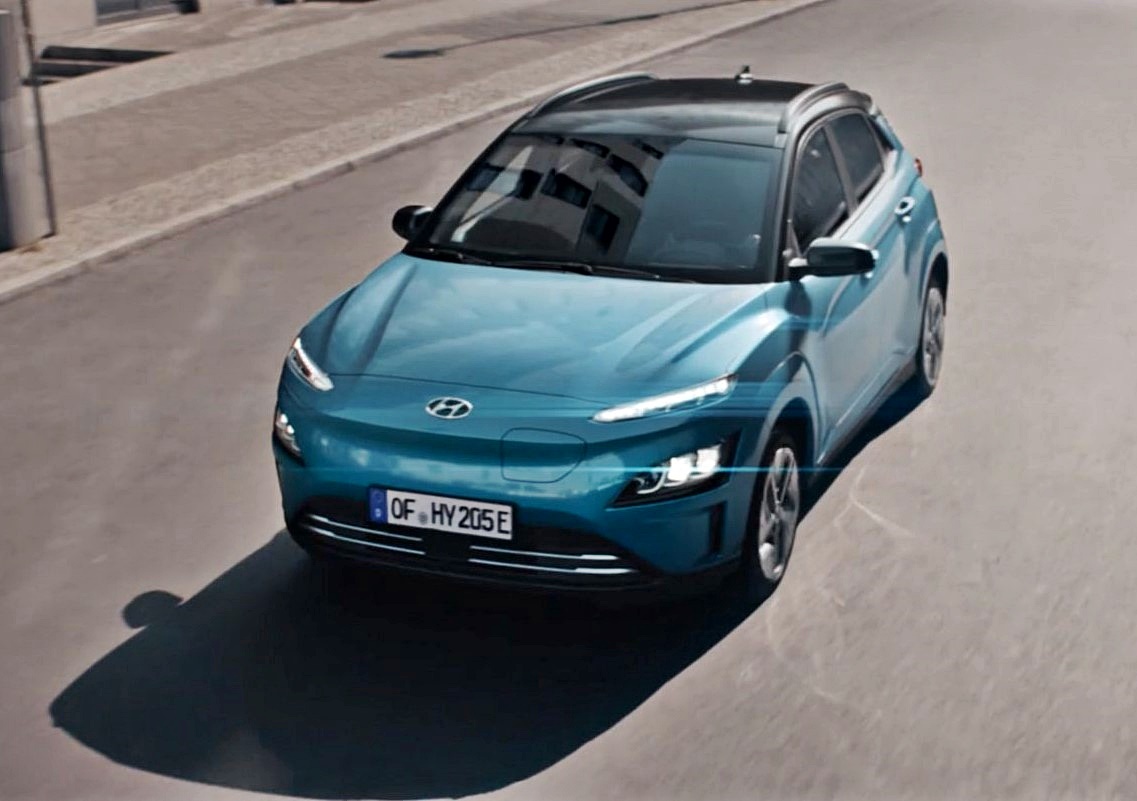
2021 Hyundai Kona Electric EV

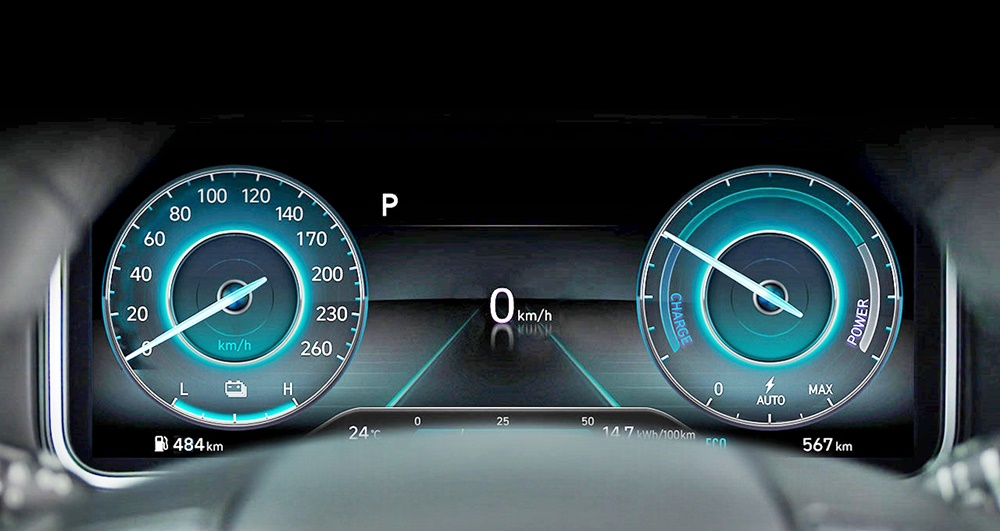
The different battery capacities have implications on range with the lower-capacity pack having a range of up to 305 kms while having more energy on board can take the e-Max up to 484 kms. Like fuel consumption, range figures depend on driving style and conditions. Faster speeds will draw more electricity faster as the motor needs more power. Regenerative braking helps to reclaim some wasted energy during braking which goes to the battery pack.

Besides range, the other thing that those planning to own an EV would want to know is the time it takes to recharge a battery pack. At this time, it is not as quick as refuelling petrol in a car though continuously advancing technology has been bringing the times down. But having to recharge will be something you need to get used to, just like recharging your phone every night.
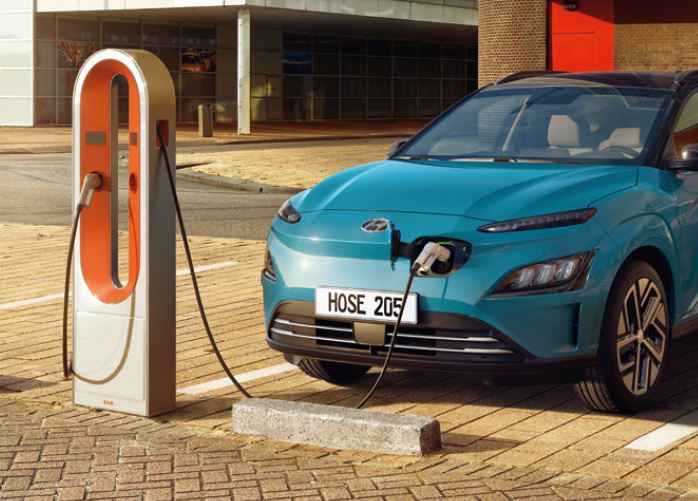
In the case of the Kona Electric, the recharging time can take between 4.5 hours and 7.5 hours, depending on the type of charging outlet used. You can use the standard outlet at home but it will be slow (up to 31 hours) but if you have access to a high-powered DC fast-charging station, then the time to ‘refuel’ from 0% to 80% can be less than an hour. HSDM offers charging station installations for customers who have homes where a charging station can be installed.

There are differences in power output from the motors in the different variants. The e-Lite and e-Plus, with the 39.2 kWh packs, generate 136 ps/395 Nm to give a claimed 0 to 100 km/h time of 9.9 seconds and top speed of 155 km/h. Th e-Max has a more powerful motor generating 204 ps but also 395 Nm and this variant can go from standstill to 100 km/h in 7.9 seconds and on to a top speed of 167 km/h.
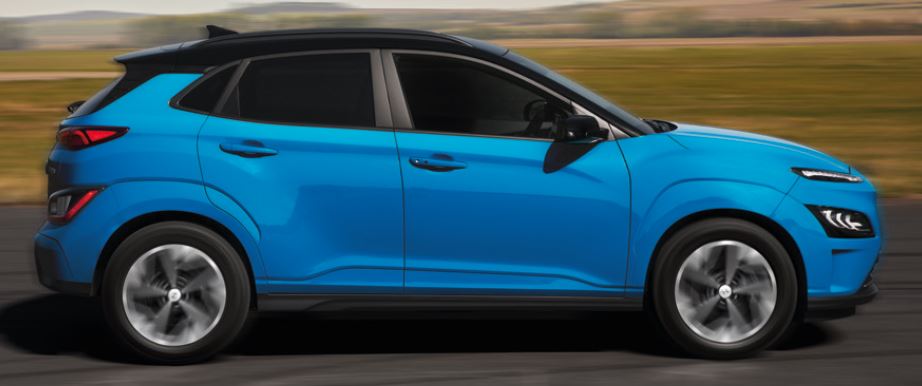
The nice thing about electric motors is that maximum torque is available from standstill so the car accelerates strongly off the line. However, deceleration characteristics are different as there is no conventional gearbox. To enhance braking, it is also possible to use the paddle on the steering wheel to slow down.

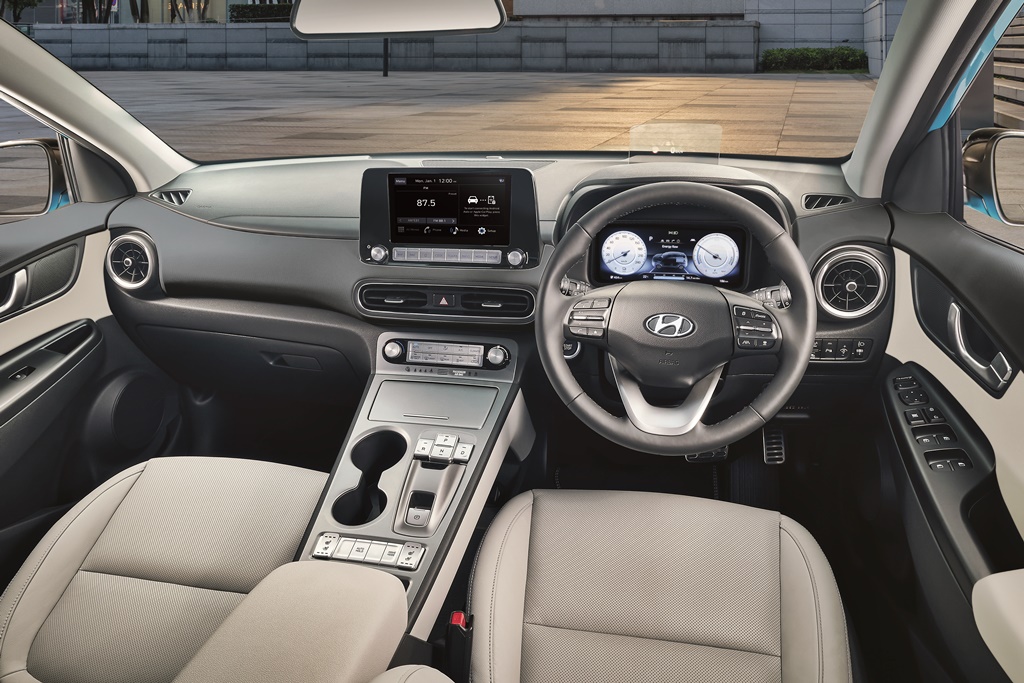
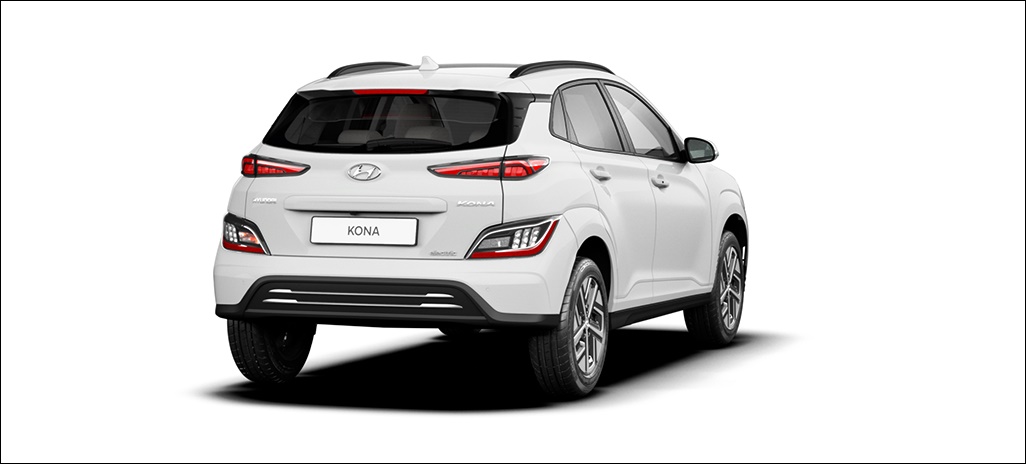
The other aspects of the Kona Electric are generally like the Kona with a petrol engine. But the Kona Electric also stands out with its EV-specific elements. The bumper, wheel and headlight designs are different and with no need for a traditional grille for cooling purposes, the front end is ‘sealed’.

The interior has a similar horizontal layout as the other versions with new ambient lighting. The instrumentation reflects the EV-nature of the vehicle, with the tachometer space occupied by a meter showing the battery charge and power levels. There’s also a gauge to let the driver know how much range is left with the energy in the battery pack.
2021 Hyundai Kona Electric EV

For the money asked, it’s only to be expected that HSDM will provide a comprehensive safety features as standard. The e-Lite has a few less systems (hence the lower prices) while the e-Plus and e-Max are similar. Hyundai’s active safety systems are packaged as the Smartsense suite which helps the driver to avoid accidents or reduce the severity when accidents (mainly collisions) do happen.

Besides a 2-year/50,000-km warranty on the vehicle, there is also a separate warranty of 8 years/160,000 kms for the battery pack. This is to give owners peace of mind as the battery packs are expensive – much more expensive than those small black ones in the engine bay of your car. HSDM also offers optional warranty extension for another RM10,000. This will extend coverage to 5 years or a maximum of 100,000 kms and they even include free service maintenance for 3 years or a maximum of 50,000 kms.
Older Hyundai models can now be covered under HSDM’s Extended Warranty programme

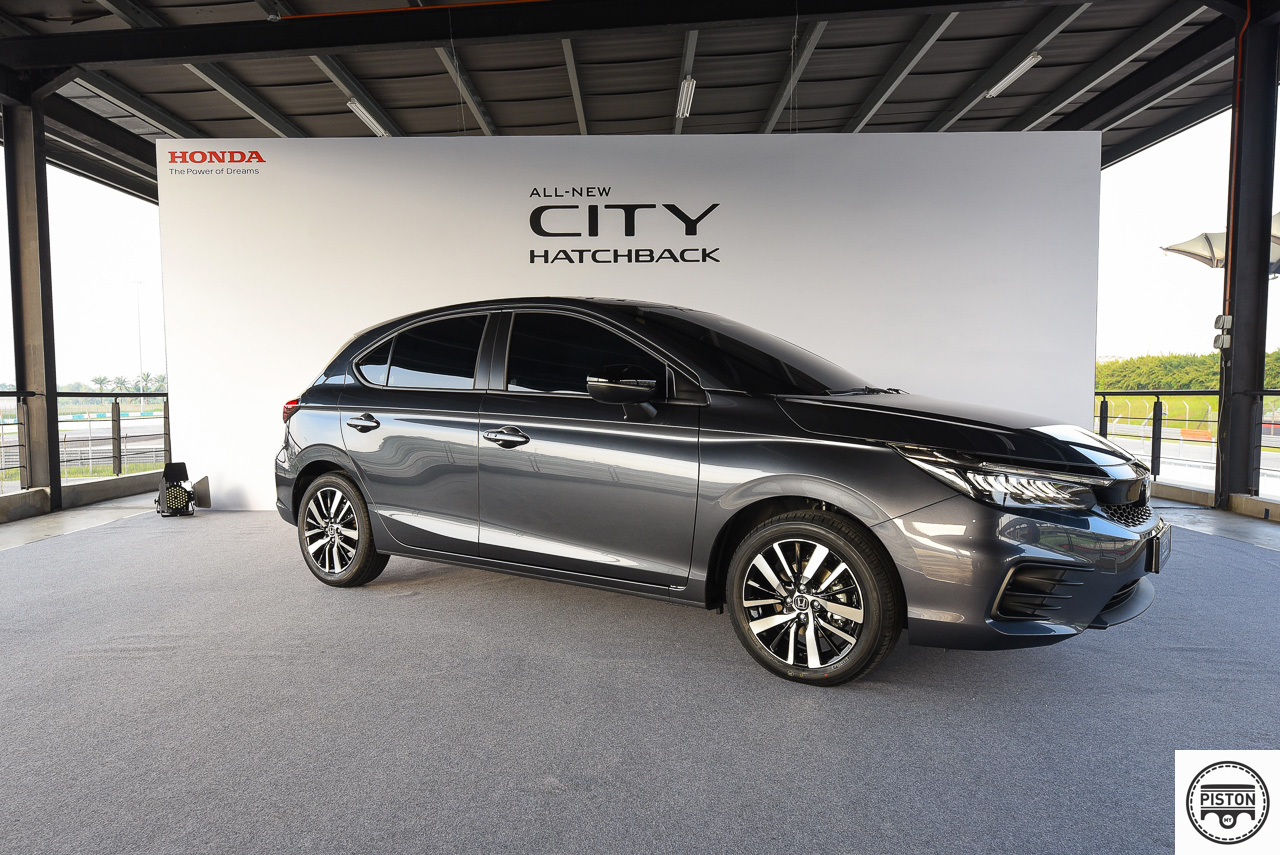
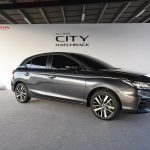
When Honda Malaysia announced the flagship model for the new Honda City, mouths were left agape with the torque figures and good looks of the City RS e:HEV.

No surprises there because that’s what a flagship model is all about – a showmanship of what’s possible for a particular model by the manufacturer.

But more often than not, the second model in the line up would be equally as good, but with a different set of features and a watered down design. And a cheaper price tag.

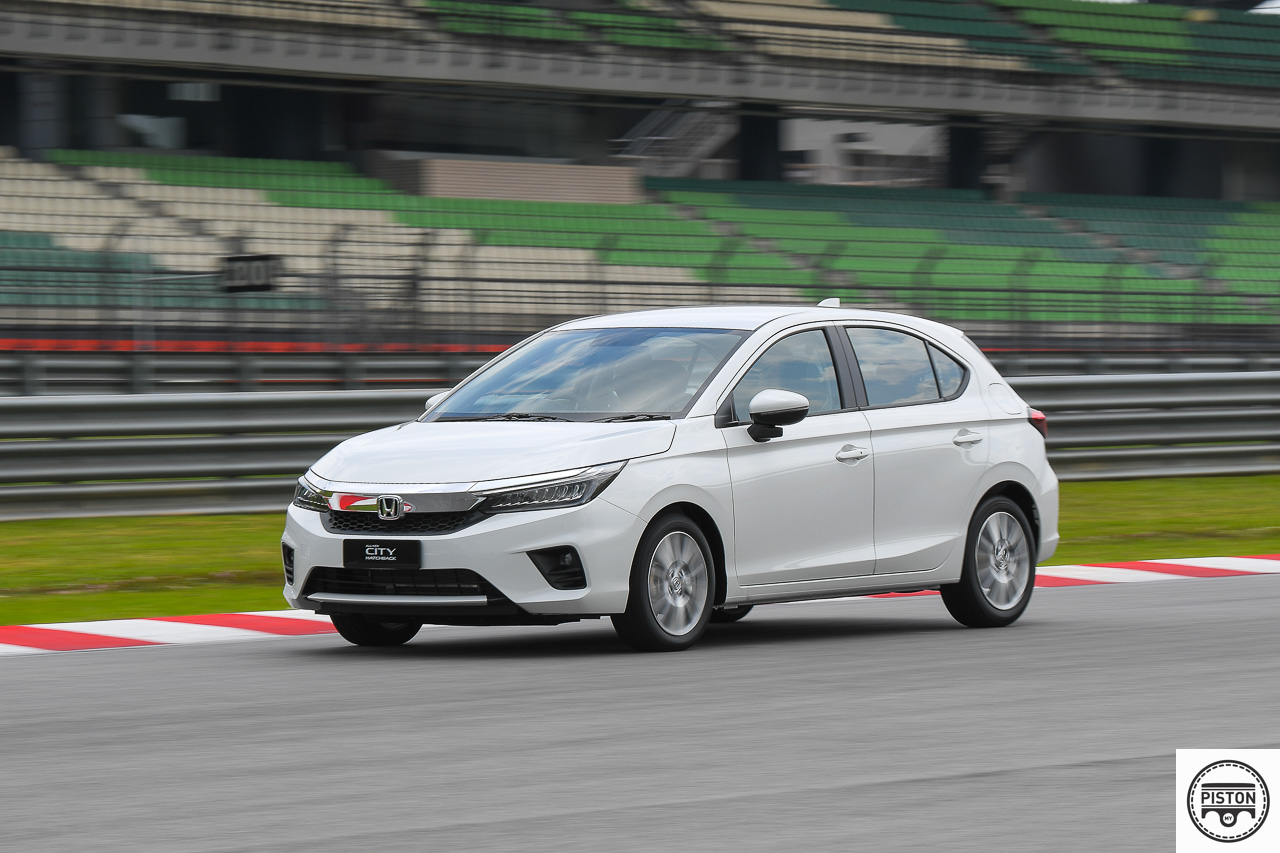
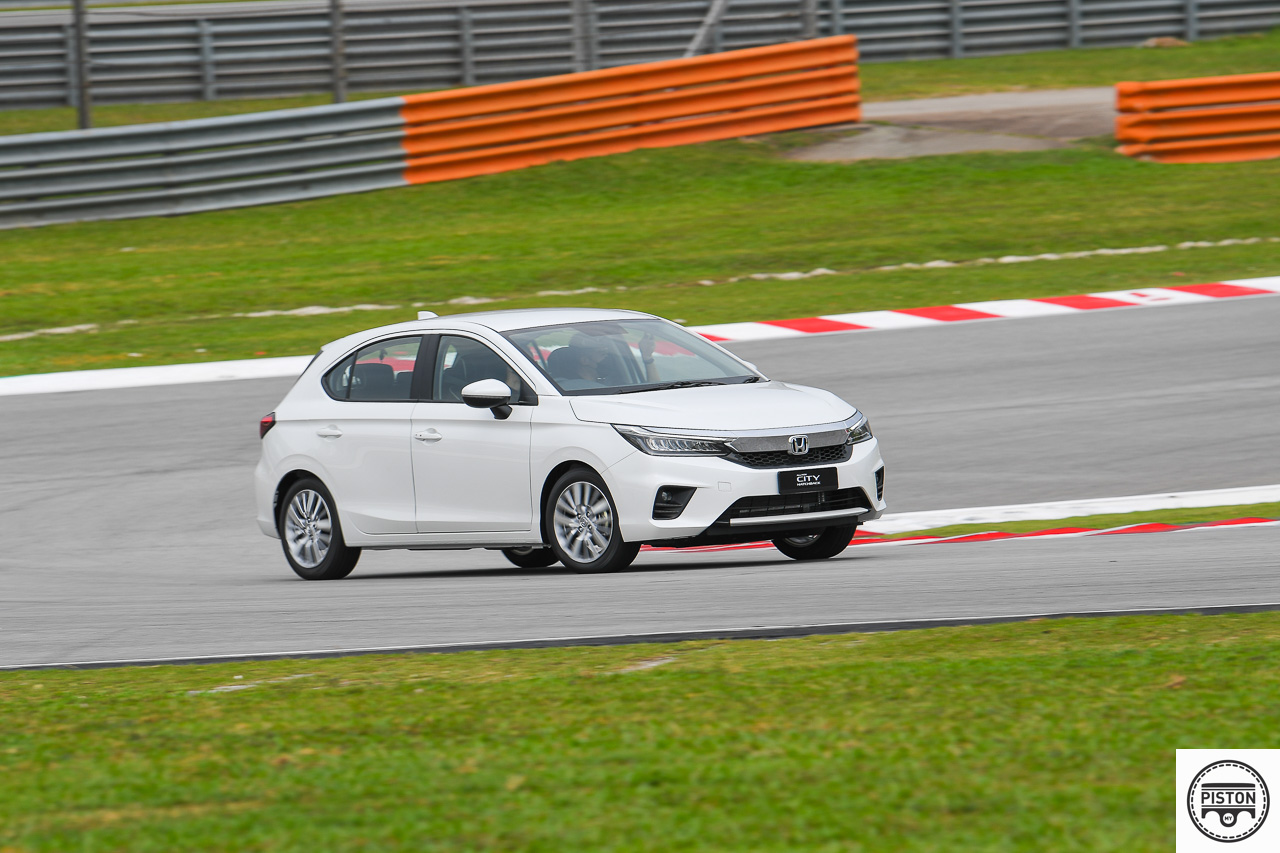
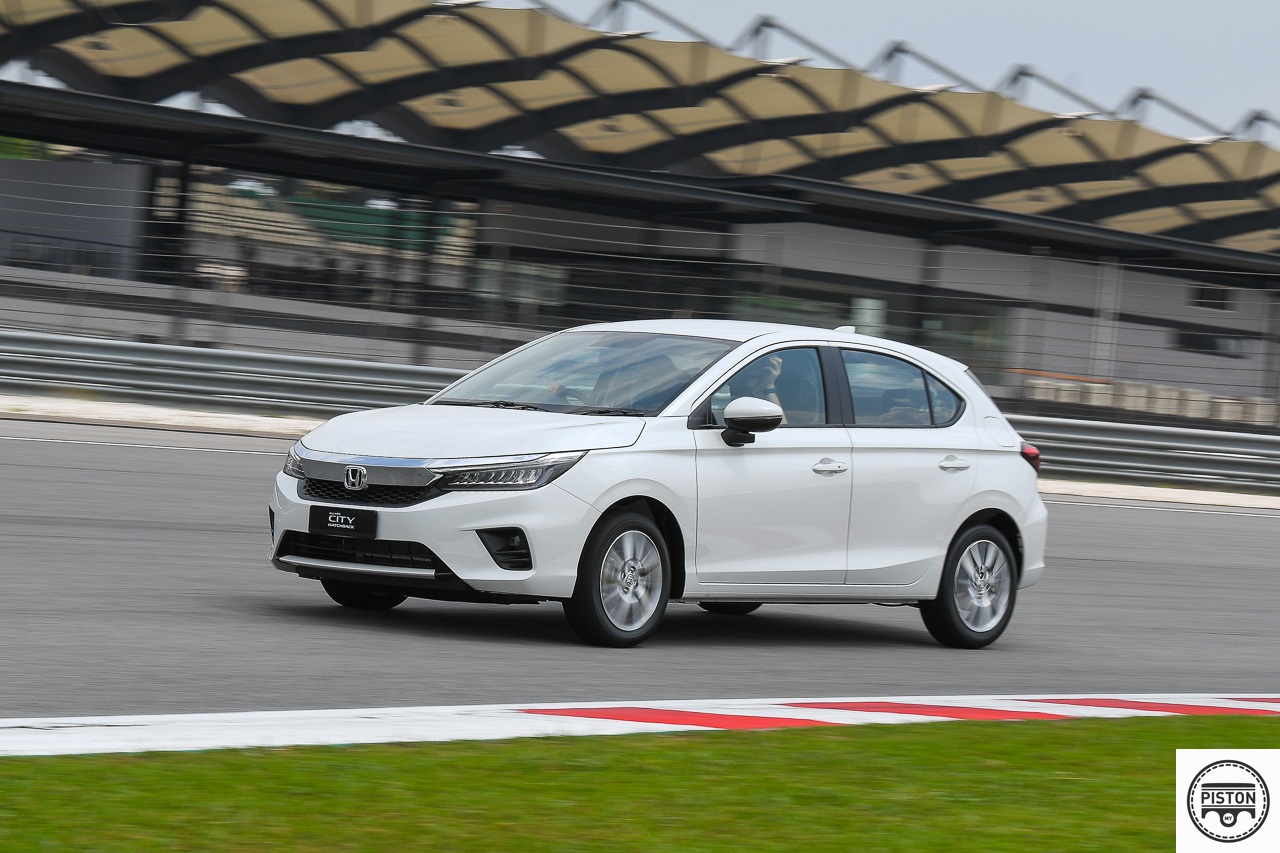
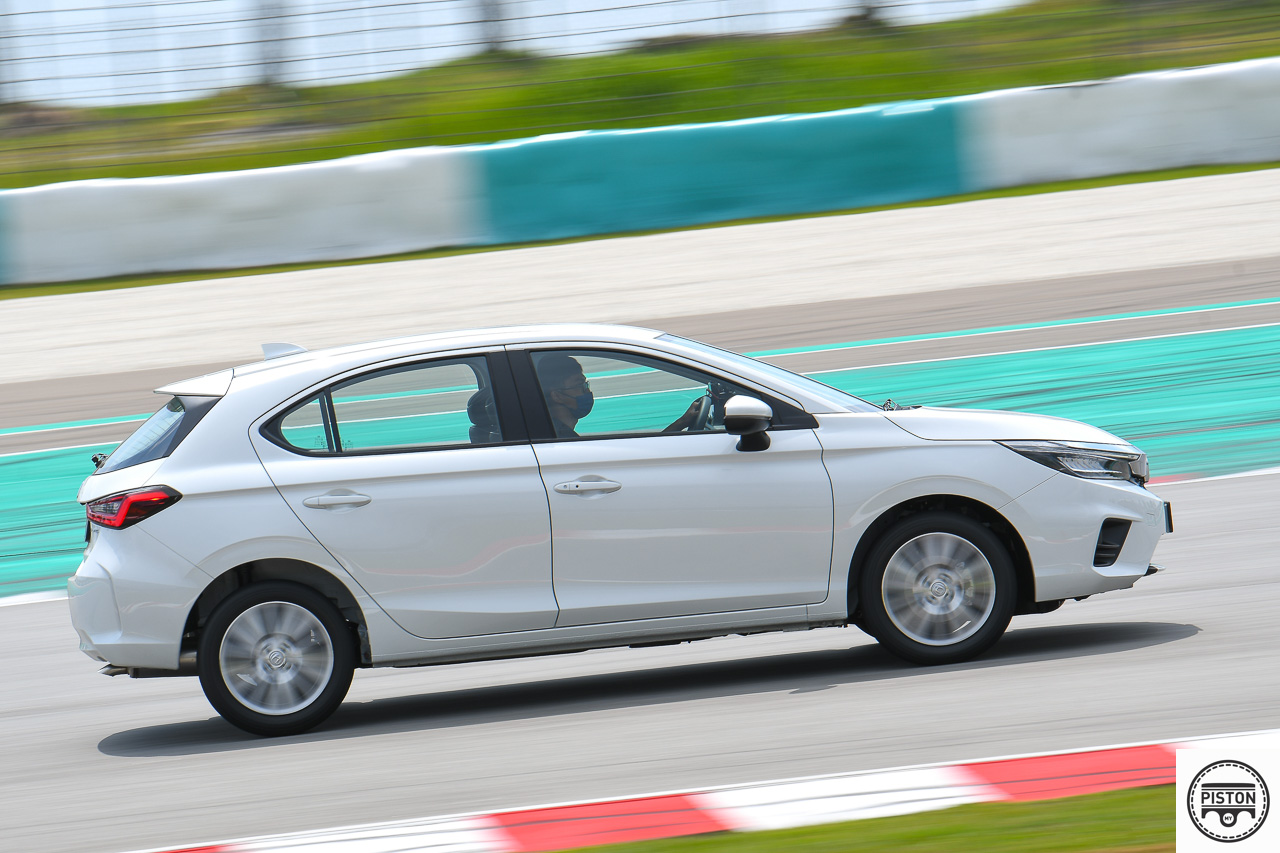
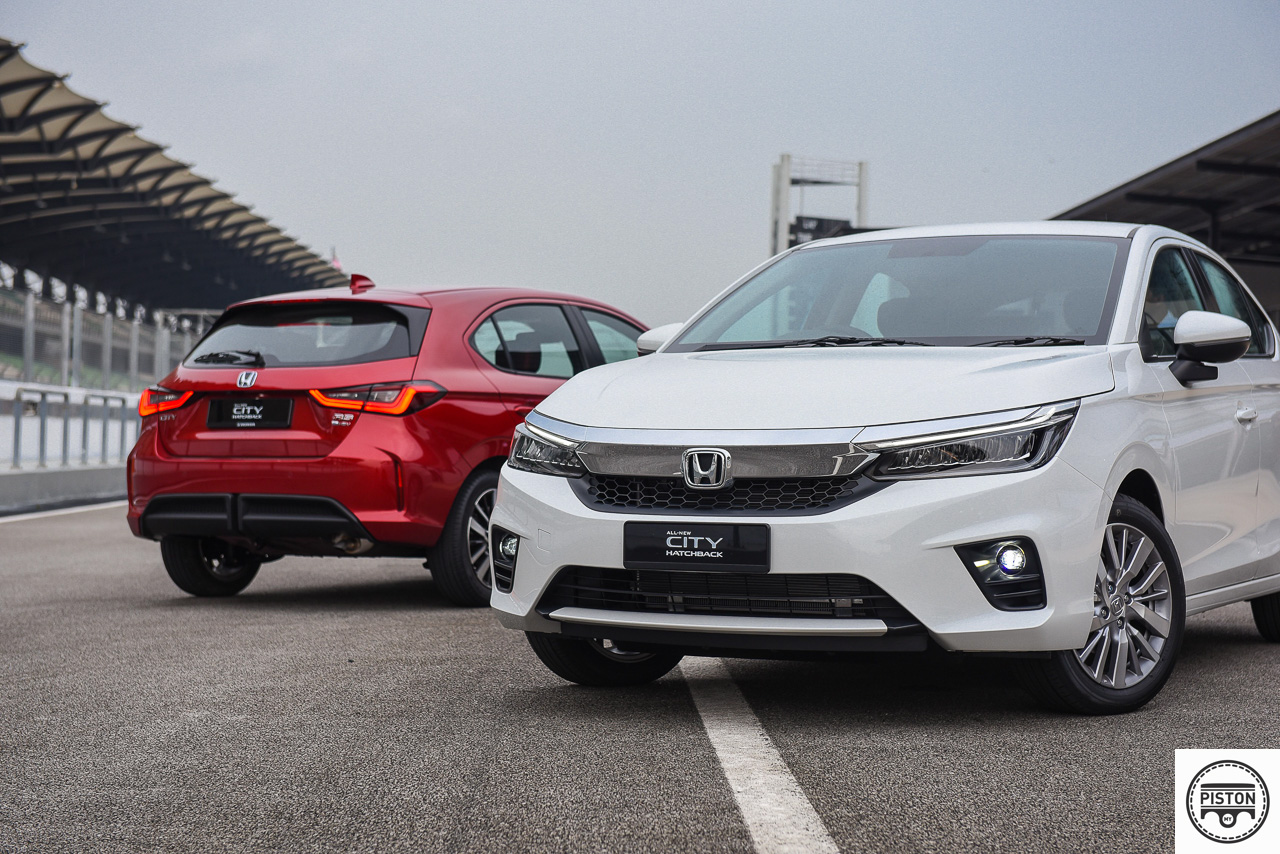
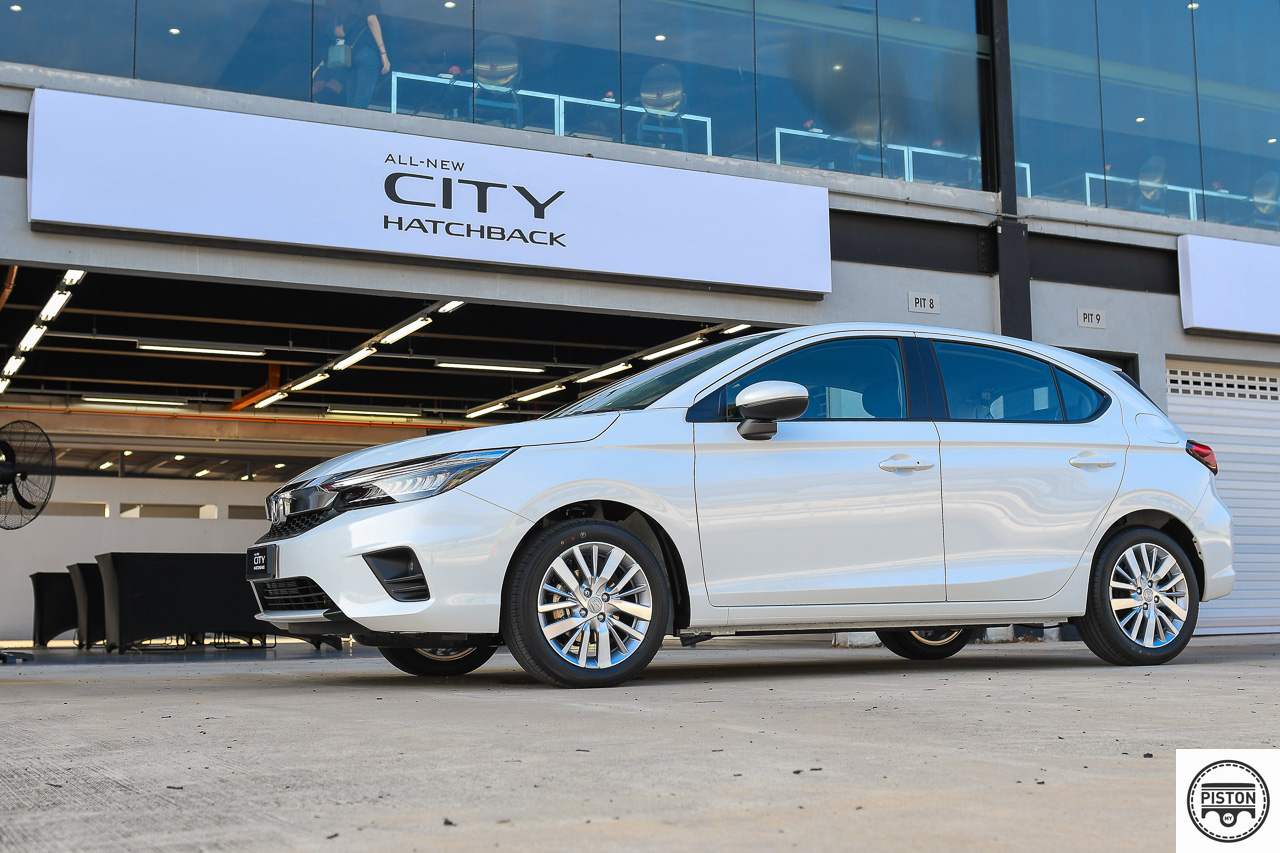
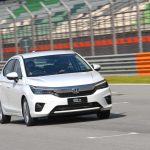
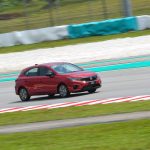
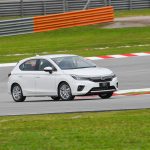
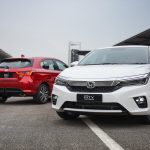
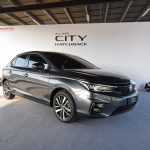
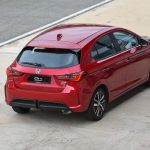
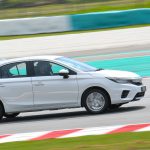
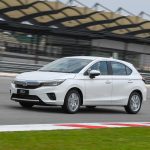
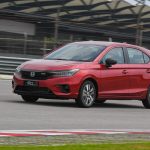
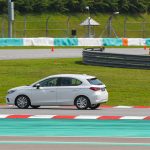
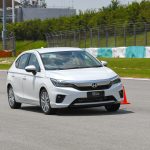
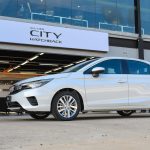
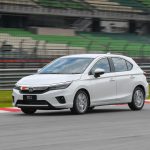
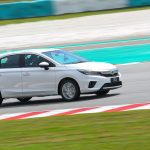
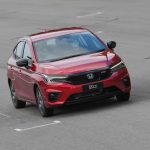
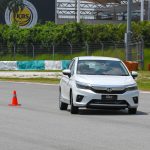
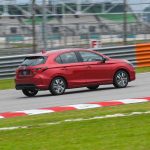
Take the newly introduced and second in line to the City throne Honda City hatchback petrol, or officially known as the V variant, for instance.

It is expected to cost as much as the sedan variant, which puts it in the eighty something thousand league. And for that kind of money, you get a car that feels as well built as an early 2000s BMW. Which is a good thing.

But what’s not a good thing though is that we can’t show you photos of the interior until after it has been officially introduced. But we can tell you that it feels great and is similar to the City sedan.

The seats are more suited to comfort and luxury than the sportier ones in the RS. And that’s not a bad thing either because the seats are fantastic.

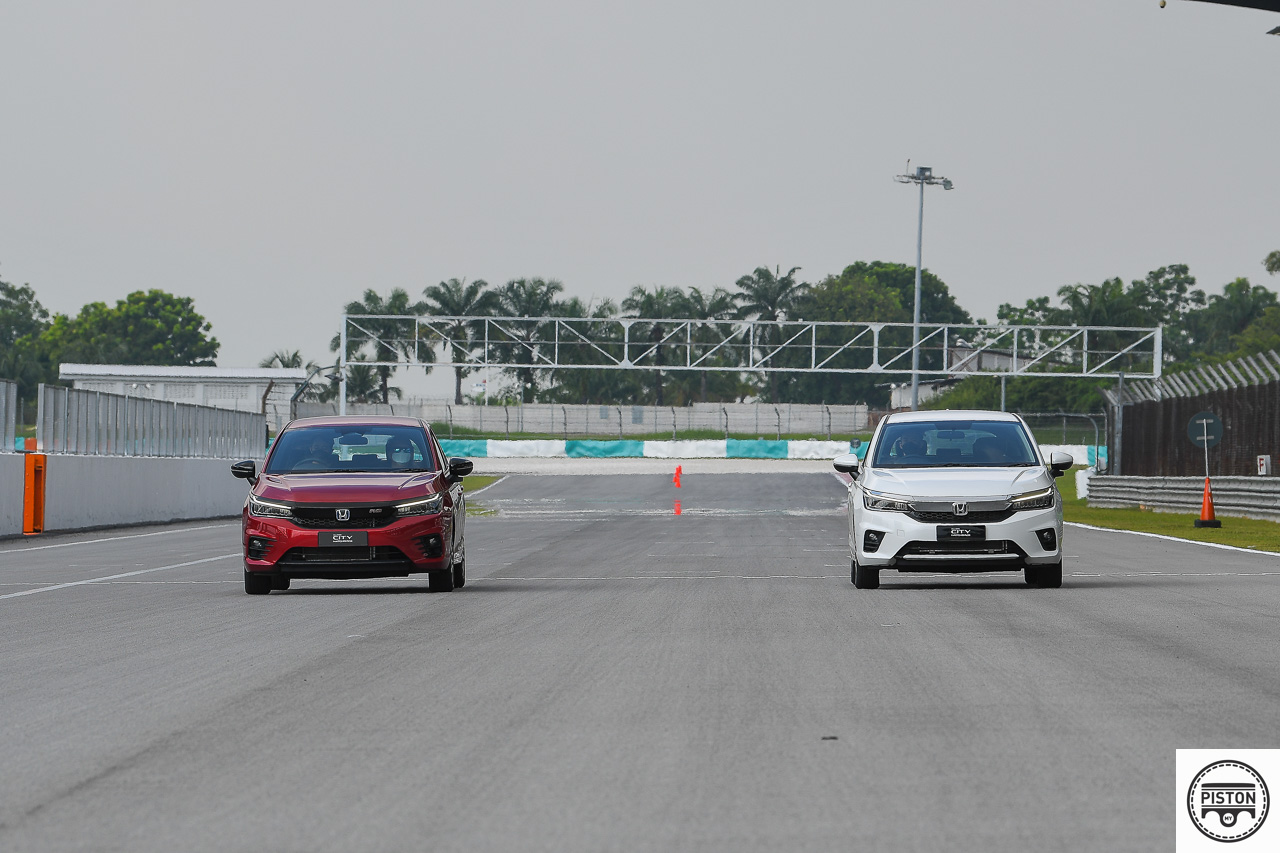
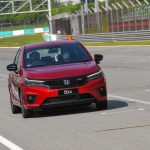
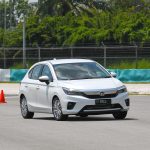
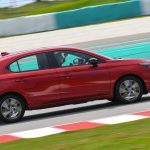
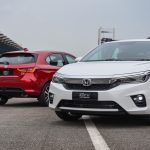
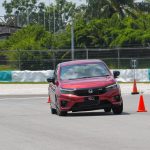
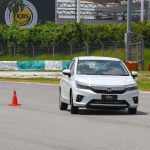
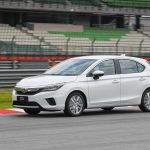
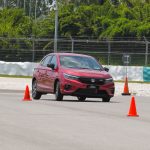
We got to drive one recently together with the Honda City RS at Sepang Circuit. You can read about how well the RS accelerates by clicking here.

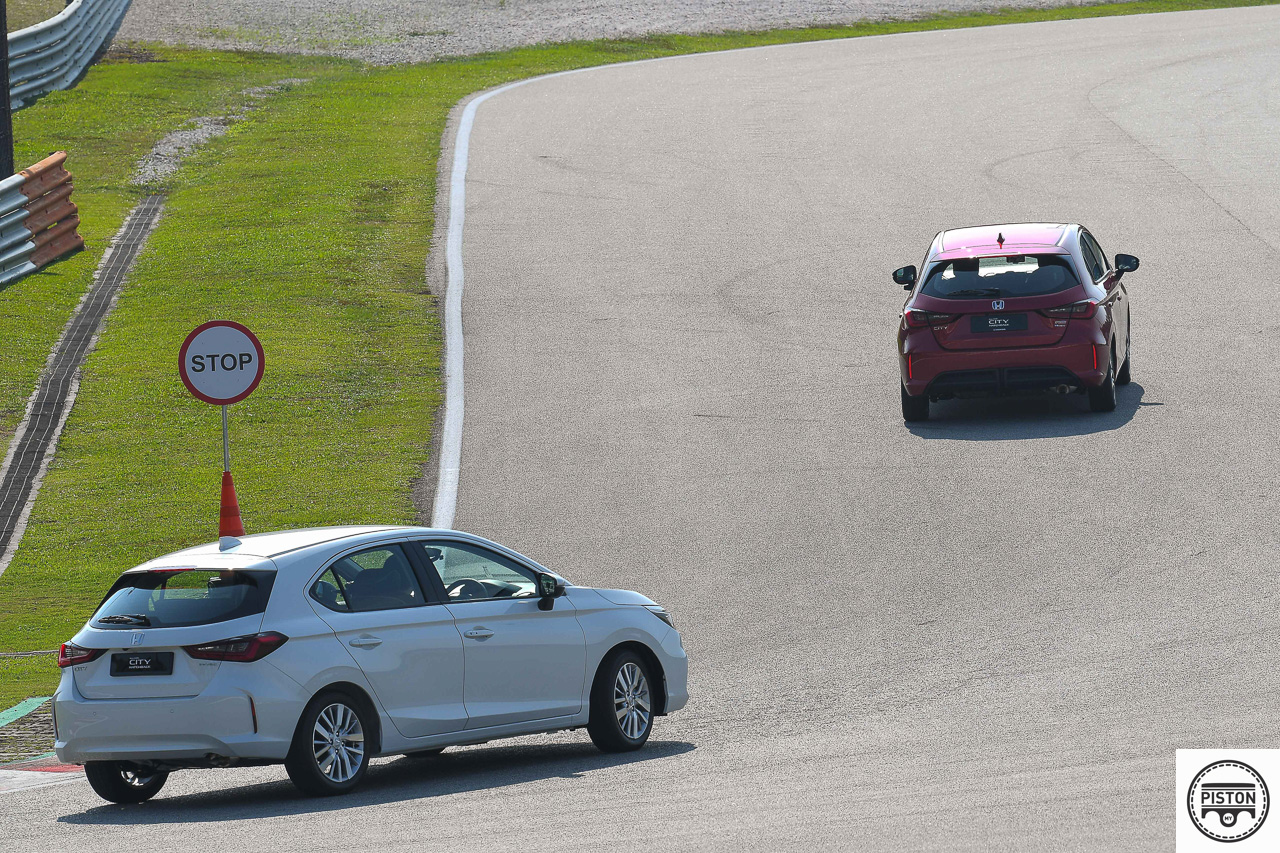
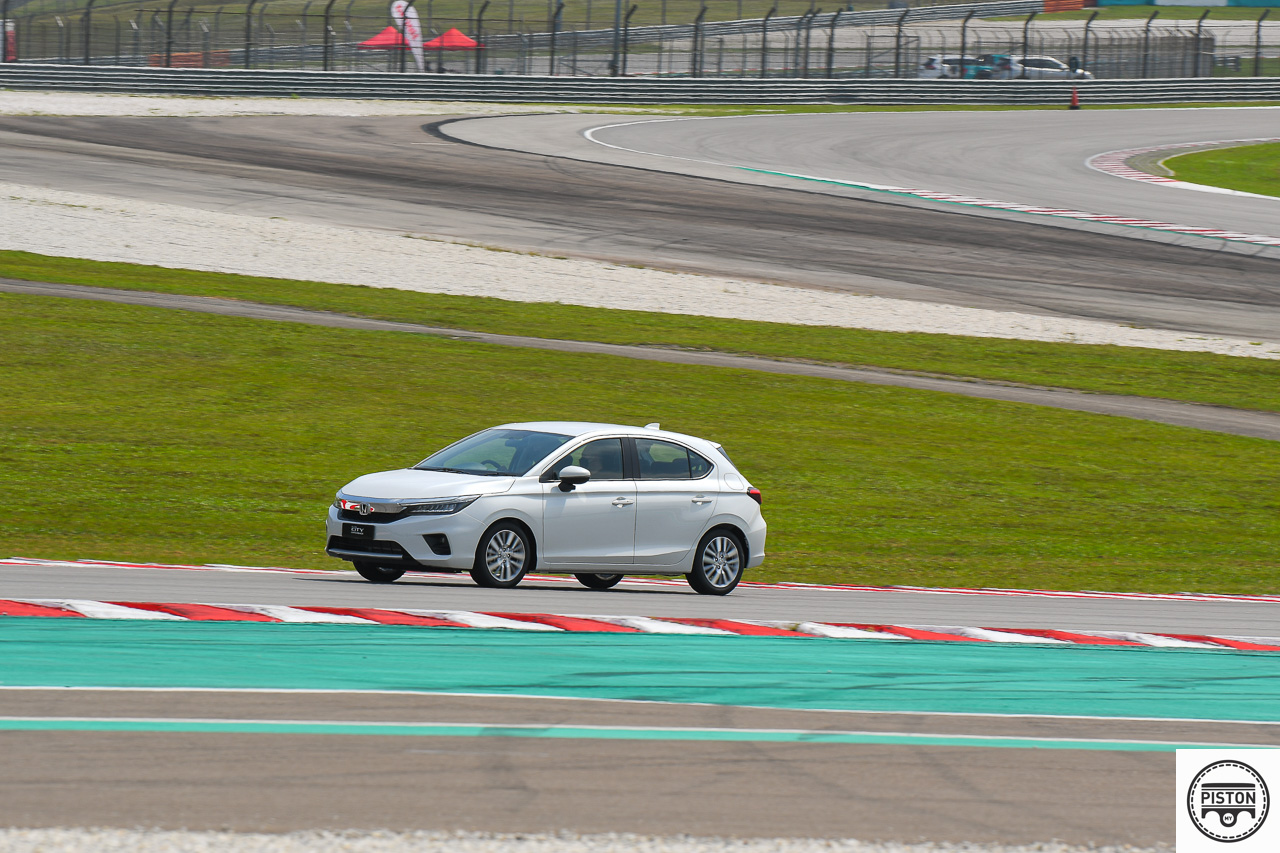
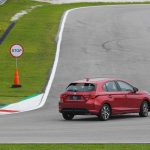
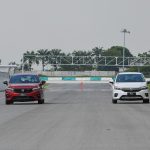
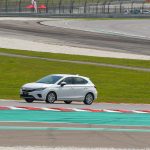
The drive took place at the Sepang International Circuit (SIC), where Honda Malaysia was keen to show off the acceleration and handling of the two top of the line variants.

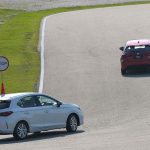
The acceleration test took place at Turn 10 of SIC – a shallow gradient uphill climb that flows into Turn 11. This was a great spot to test out the power delivery and handling of the City because Turns 12 and 13 are fast flowing corners that tend to upset the balance of a car.

No upsetting the balance of the City though. But of course we weren’t really pushing them as hard as you would on a track. We were told to keep on the slower side of 110km/h.

But just as mentioned in the previous article, handling was accurate and body movement was as minimal as an everyday car could muster.

I had jumped into the competing car before any of the new Hondas though. One that was provided to establish the baseline feel of what the competitors could do.

But you don’t bring a competitor car to your event unless you are sure you can mop the floor with it, and that’s what the petrol variant of the Honda City did.

The 1.5-litre engine that is powering the V variant produces a class leading 118hp and 145Nm of torque.

These figures are not exactly what you would call powerful, but in a lightweight car designed to move people and their belongings comfortably – it is not all that bad.

It is still capable of shoving you back into your seat, no matter how little.

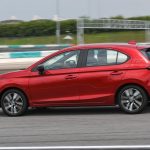
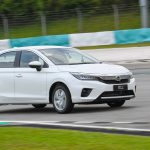
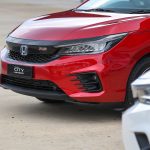
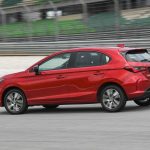
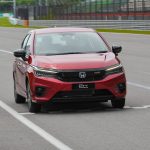
Exterior wise, the V variant may not be as exciting to look at because it doesn’t have the glass piano black front grill, the blacked out wing and black door mirrors. In place you get a chrome grill and a very subdued overall design.
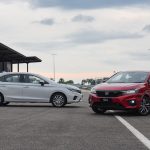
But just like the RS, the V variant too gets the all-important LED headlights with LED daytime running lights, LED fog lamps and LED rear combi lights.
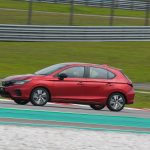
The V variant also gets 16-inch alloy wheels. Thought the wheel well looks like it could easily take on a set of 18 or 19-inch wheels. Modification ready perhaps?
Just like the RS, the V-variant also gets Honda’s famous ULTRA seats that first made its debut in the Jazz.

The ULTRA seats allow the seats to either be folded down  in what Honda calls the Utility mode, folded up (Tall mode), lay flat (long mode) and even lay the front passenger seats flat (Refresh mode) for a total flat out format that mimics a daybed. Excellent for a weekend by the beach, if you are so inclined.

But the V-variant loses out on the Honda SENSING safety suite – but expect that to trickle down the line to other models as the City hatchback goes through its product life cycle. Or perhaps there would be a City 1.5L Hatchback V SENSING, just like how there is a City 1.5L V SENSING for the sedan model.

All in all, the Honda City hatchback has made an excellent case for itself.

Fans of the Jazz were left aghast when Honda Malaysia announced that the Jazz will be replaced with the City hatchback. But after driving it, the Jazz simply doesn’t make sense anymore when the City hatchback is able to offer so much more.

Honda Malaysia has not mentioned anything about the price though, but an introduction is due to take place any day now, and expect prices to be not that far off the sedan versions.

The Honda City hatchback is now available for booking at your nearest dealer. 

Henry Ford may have forced the colour black on all his Model T customers but even he knew that there was a need to offer different bodystyles to suit different tastes and purposes. The auto industry has continued to provide customers with a wide variety of shapes and sizes for cars, with designs evolving over different periods.

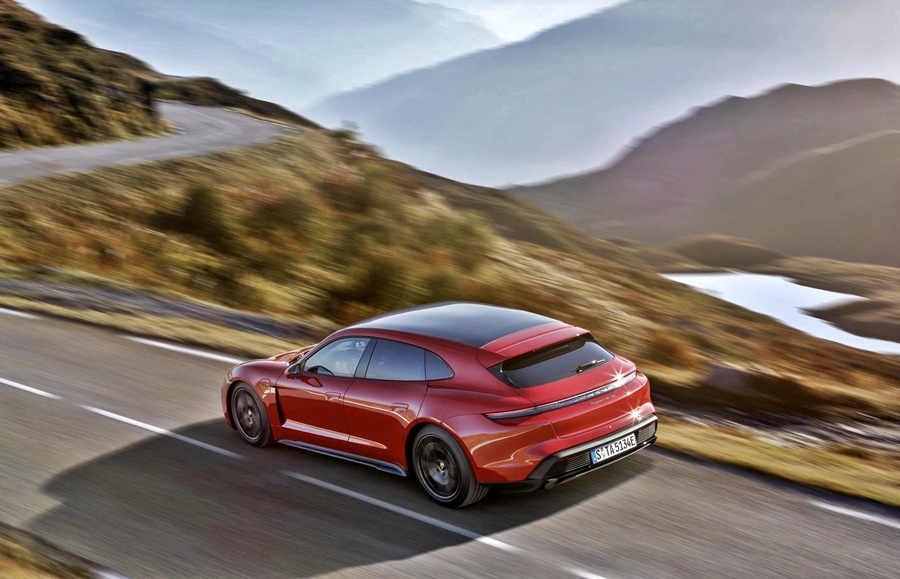
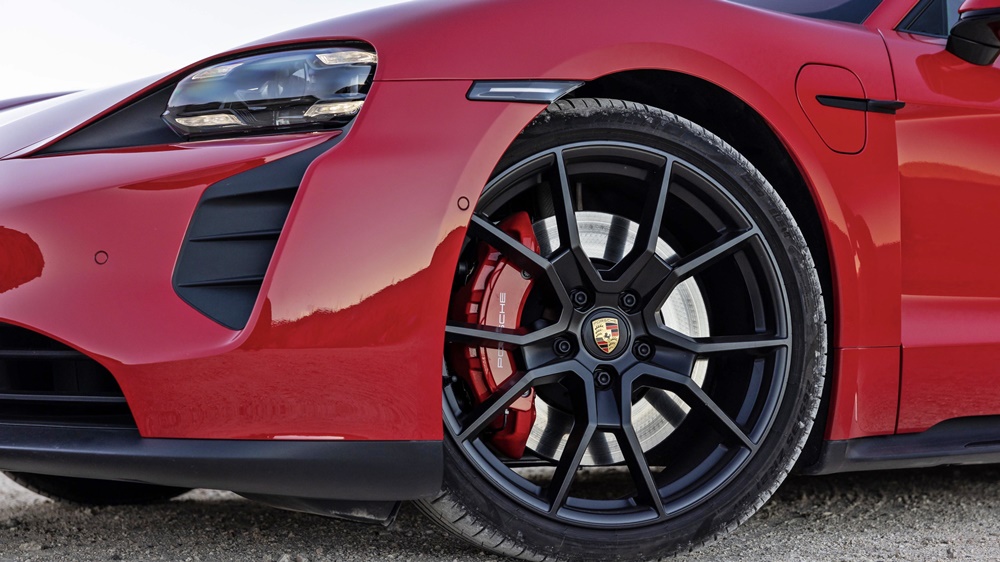
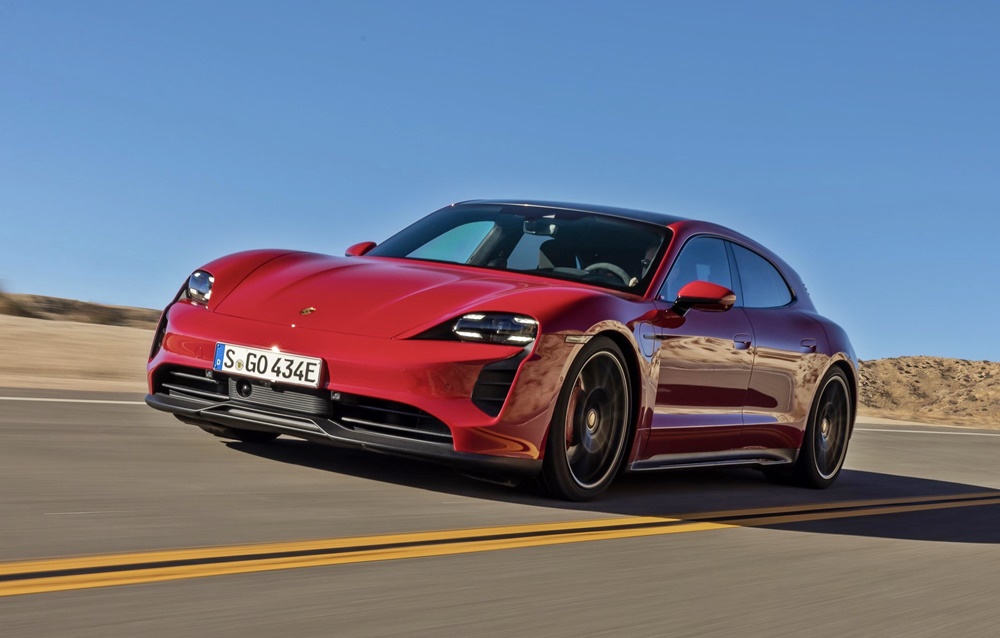
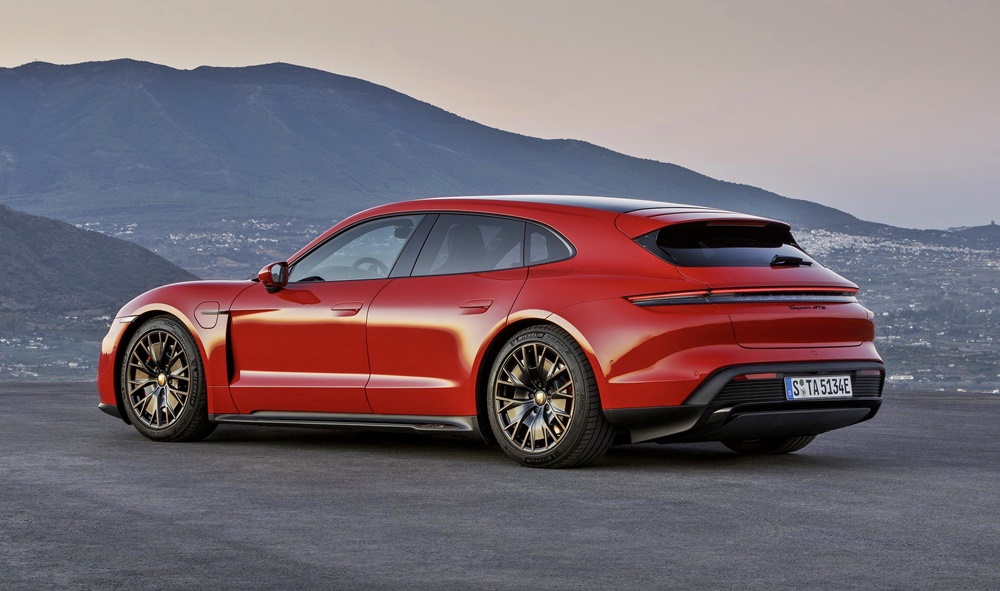
So it’s not surprising that Porsche’s all-electric Taycan family is growing with additional bodystyles. The original model was joined earlier by the Taycan Cross Turismo, and now comes a third body variant in the form of the Taycan GTS Sport Turismo.

2022 Porsche Taycan GTS Sport Turismo

“The Taycan model range has grown steadily since its world premiere in 2019. Three body variants with up to 5 engine options offer something for everyone,” said Kevin Giek, Vice-President Model Line Taycan. “I am particularly pleased that we now also have a Taycan with the legendary GTS moniker. It is positioned above the Taycan 4S and below the Taycan Turbo derivatives, so it represents a real sweet spot in the range.”

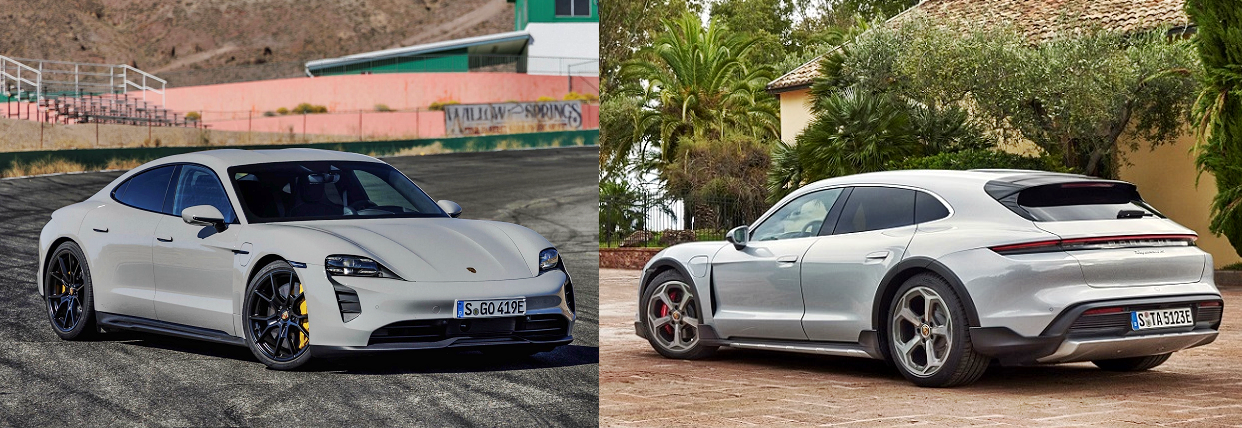
The new Taycan GTS and Taycan Cross Turismo (right).

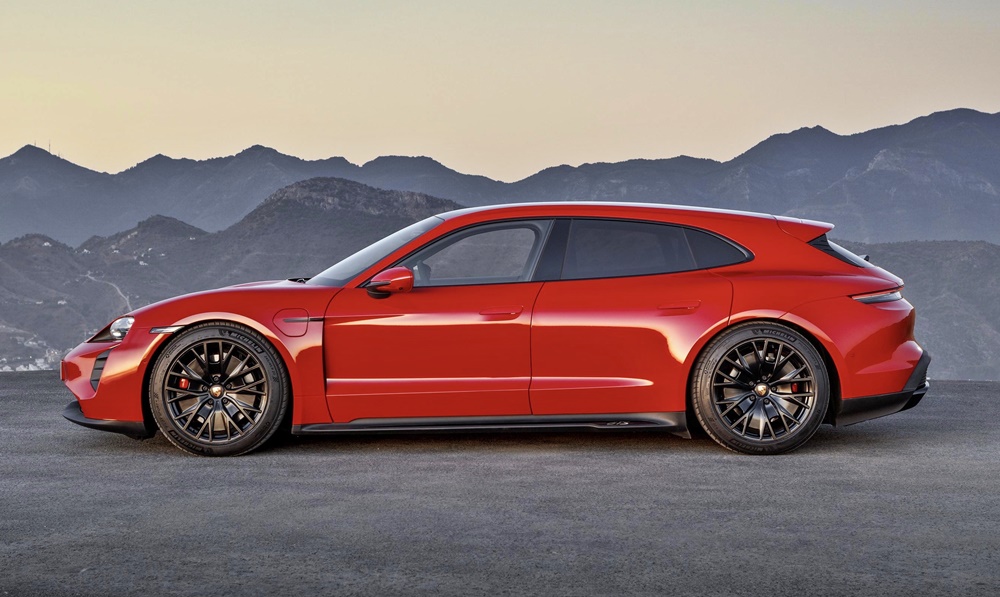
The newcomer has a similar front end as the Taycan, but the rear half of the body and the silhouette with rearward-sloping roof line are similar to the Taycan Cross Turismo. There are numerous black or dark details on the exterior, such as the front apron, the bases of the exterior mirrors, black alloy wheels, and the side window trims – as is traditional on a GTS. However, the Taycan Sport Turismo does not have off-road design elements.

2022 Porsche Taycan GTS Sport Turismo

The electric powertrain generates up to 440 kW (598 ps) which goes to all four wheels. With Launch Control, this can send car from 0 to 100 km/h in a claimed 3.7 seconds, and reach a top speed of 250 km/h. A fully charged 93.4 kWh battery pack is said to be able to provide a range of up to 625 kms in town, with a combined range of up to 504 kms. It is the first Taycan to break the 500-km mark, thanks to a new more efficient drive strategy. The richer sound pattern of the modified Porsche Electric Sport Sound also underscores the character of the new model.

The adaptive air suspension, including Porsche Active Suspension Management (PASM), is specifically adapted to the GTS, to the benefit of the lateral dynamics. A sportier set-up is available for the optional rear-axle steering.

2022 Porsche Taycan GTS Sport Turismo

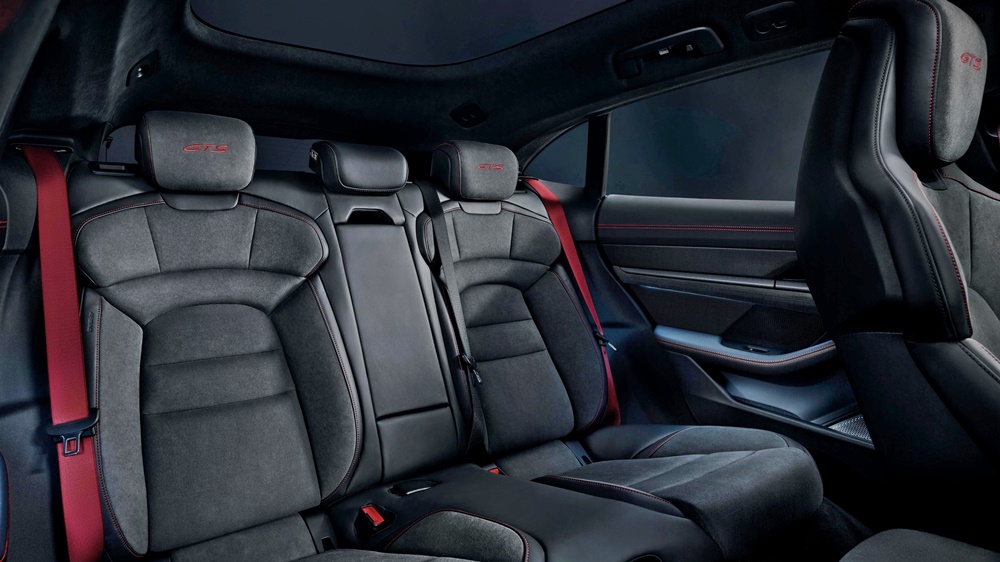
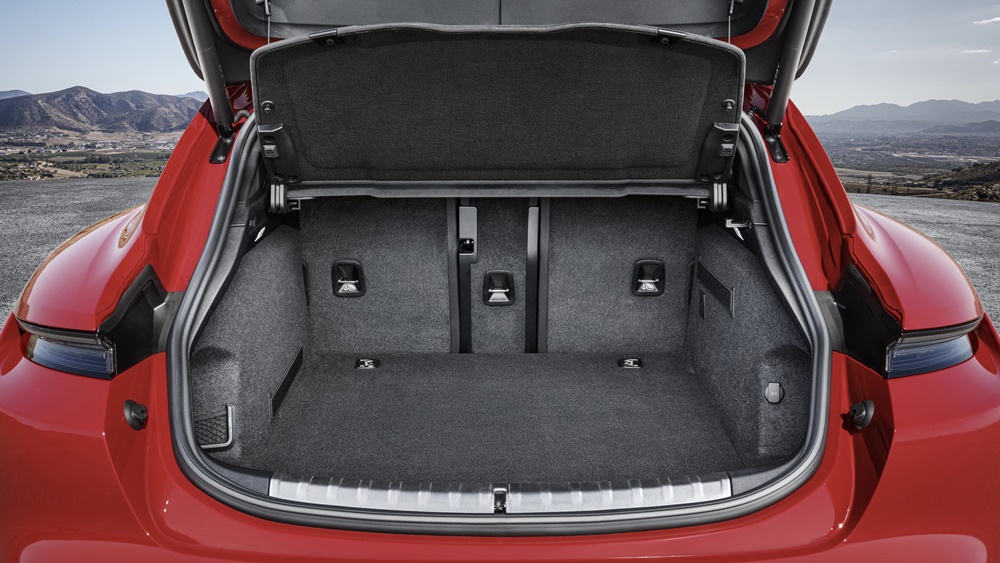
The new variant is aimed at those who want a similar level of everyday practicality as offered by the Taycan Cross Turismo, but who also want the on-road performance of the Taycan sports saloon. The headroom in the rear is more than 45 mm greater than that in the Taycan, while the cargo capacity under the large tailgate is more than 1,200 litres.

2022 Porsche Taycan GTS Sport Turismo

2022 Porsche Taycan GTS Sport Turismo

2022 Porsche Taycan GTS Sport Turismo

2022 Porsche Taycan GTS Sport Turismo

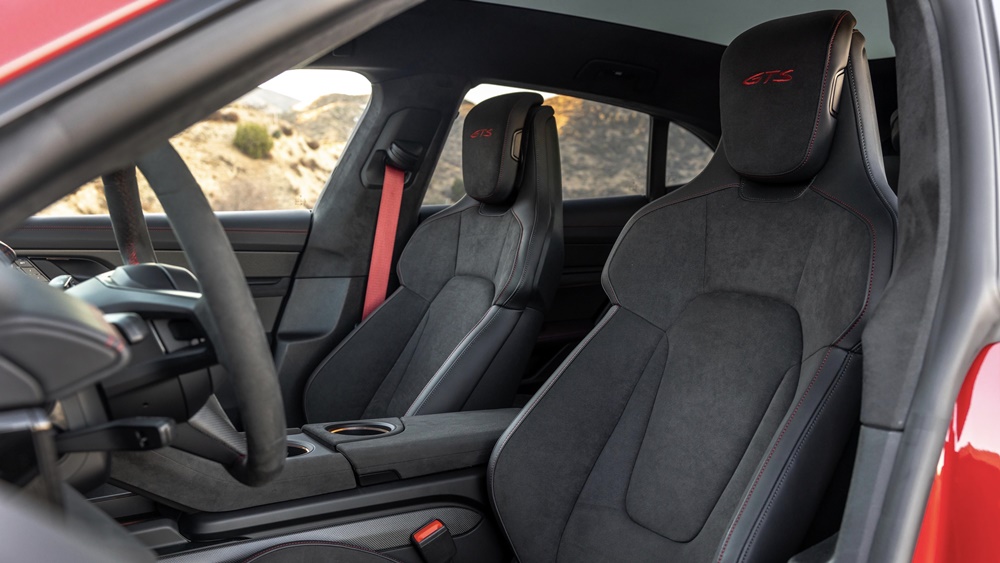
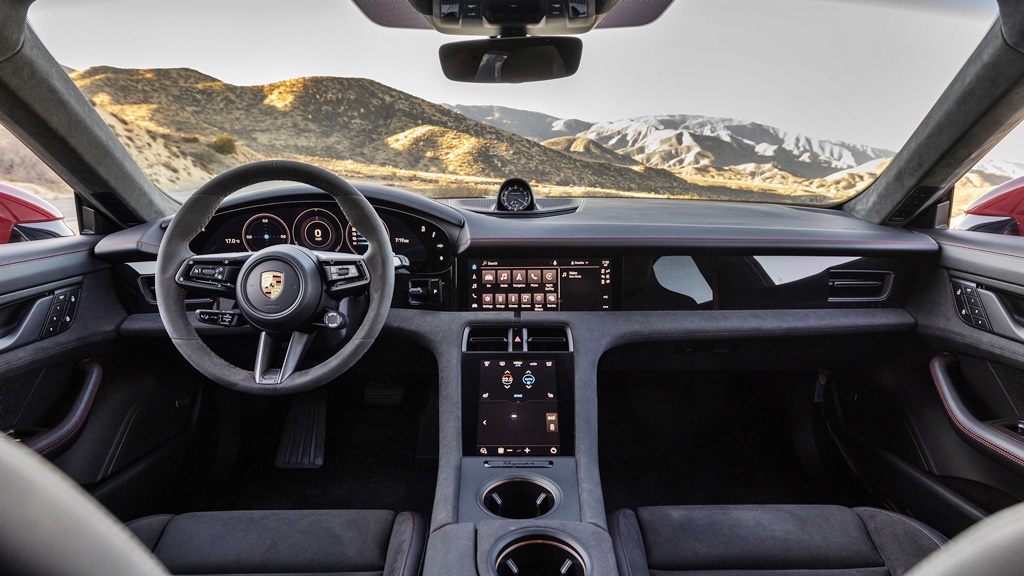
Numerous Black Race-Tex features in the interior underscore the elegant, dynamic ambience, as does the standard brushed aluminium interior package with Black anodised finish.

The first deliveries start in early 2022, with Taycan GTS Sport Turismo prices starting from 132,786 euros in Germany.

2022 Porsche Taycan GTS Sport Turismo

Track-only Porsche 718 Cayman GT4 RS Clubsport to debut at LA Auto Show


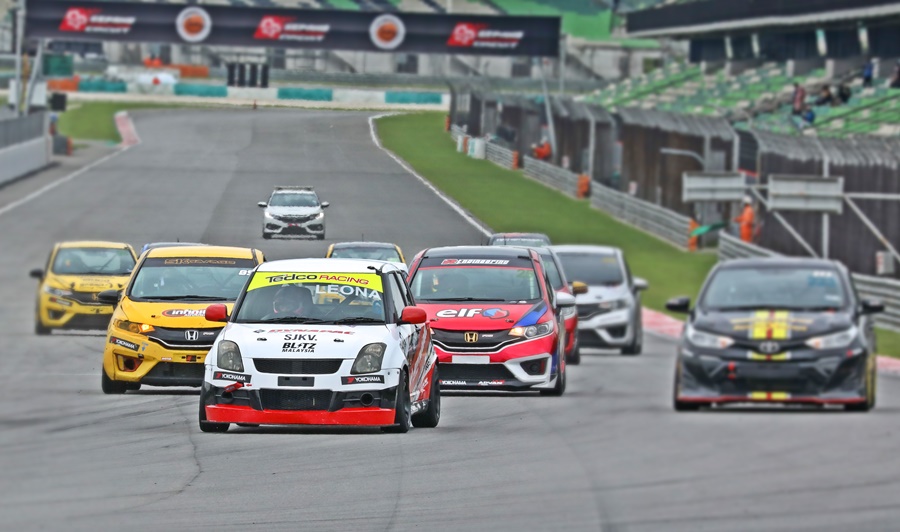
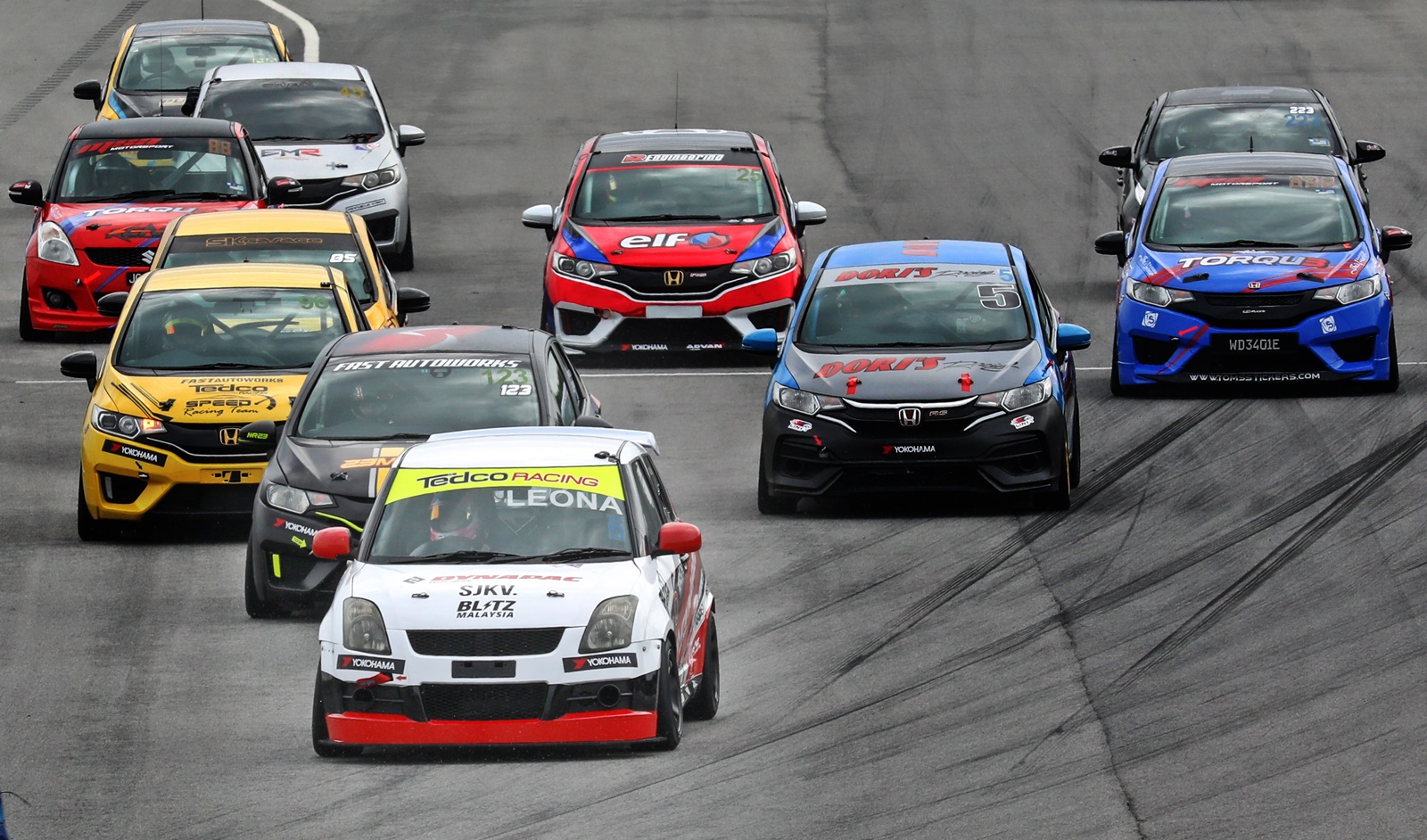
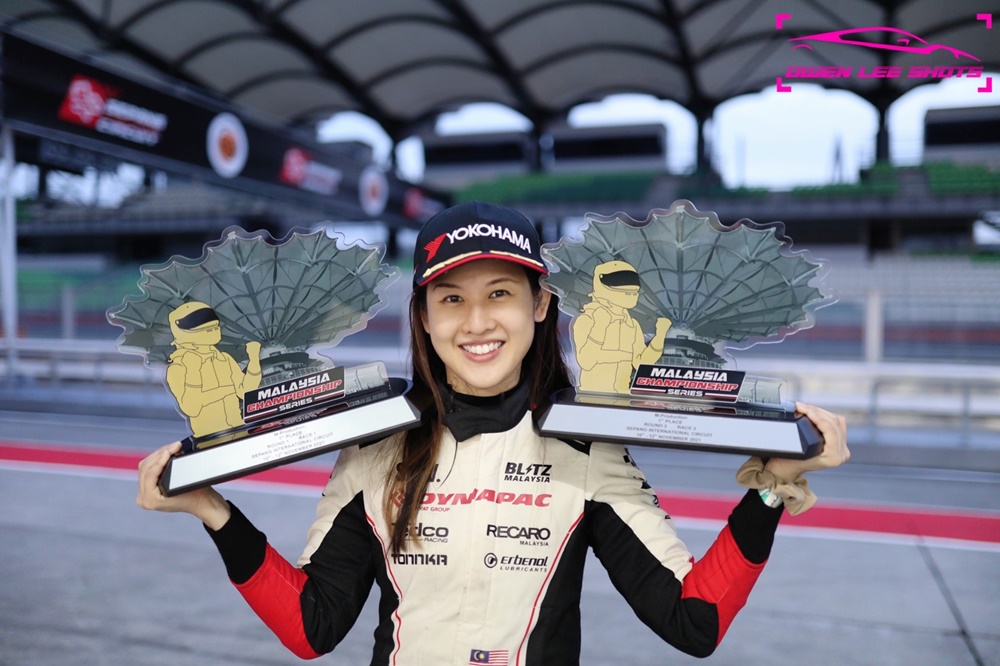
The return of the Malaysia Championship Series (MCS) gave a chance for Leona Chin to get back to 4-wheel racing after her last outing in 2019. Although these first 2 rounds did come with a roller-coaster of emotions, the whole team was able to put together a great performance which rewarded them with two class victories.

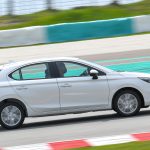
Leona is competing in the Malaysia Touring Car category in a Suzuki Swift prepped by Tedco Racing. The practice session on Wednesday gave the team the chance to fine-tune the car before heading into the qualifying session.

Starting on a high note
Going against other rivals in cars like the Honda Fit and Toyota Vios, her best time of 2:39.944 around the Sepang International Circuit positioned her in the front of the MTC class to start Race 1.

Although Leona was overtaken at the start of the race, she kept a cool head in the opening stages as every MCS race runs for 1 hour. It did not take long for her patience to be rewarded: by Lap 4, she reclaimed her position and led the MTC category. After a smooth pit stop and clean second stint, she brought the car across the finish line to claim the season’s first victory almost a minute ahead of the nearest competitor.

Being a double-header, Race 2 was only 4 hours later and already fired up with the victory, they looked forward to another possible podium finish for Round 1. The win in Race 1 had placed Leona to start from pole in class once again and she managed to clear the early stages of the race without any hitch.

Unfortunately, Race 2 did not go very well for the team as Leona was nudged at one point of the race which had sent her into the gravel. Although the impact did not seem to be very serious, there was actually damage to the oil cooler and splitter – which was enough to put her out of contention for the race.

With two more races lined up for the next day, the team had to burn the midnight oil to make sure that the car was raceworthy for the next round. Tedco Racing’s experience was put to good use and the car was prepared and ready to do battle by Friday.

Returning to the top
For Race 3, Leona started the race from P1 in class. Keen to redeem herself from the DNF earlier, she made a clean getaway as the lights turned green. Unfortunately for her, she was forced to retire from the race once again through no fault of her own. A reckless manoeuvre from one of the SP2 contenders struck her Suzuki near the right rear tyre, ending her race even before clearing Turn 1 on the opening lap. A very sad moment indeed.

This presented a whole new challenge for the team as they only had about 4 hours to fix the car before the start of Race 4. But they managed to do it all in time, and the Leona was able to participate in the final race.

The DNF in Race 3 meant that Leona had to start from the back in her class, which was not so good. However, fuelled with the determination to make up for lost ground from the previous misfortunes, she did not stay long in P5. By Turn 4 of the opening lap, she was already in second place and on Lap 3, she had moved ahead to lead the MTC field. From then on, she remained dominant and raced to the finish to take her second MTC win of the season. With 4 races done, the team is now preparing for another 2 rounds which will be held in mid-December.

What’s a Homologation Special?

The Hyundai Motor Group (HMG) has many new models in the pipeline, virtually all electrified either as battery electric (BEV) or hybrid electric vehicles (HEV). It seems that HMG – which consists of Hyundai, Kia and Genesis – can’t wait to show the world what’s coming and throughout this year, we’ve seen production models being launched as well as concept cars that preview what’s to come.

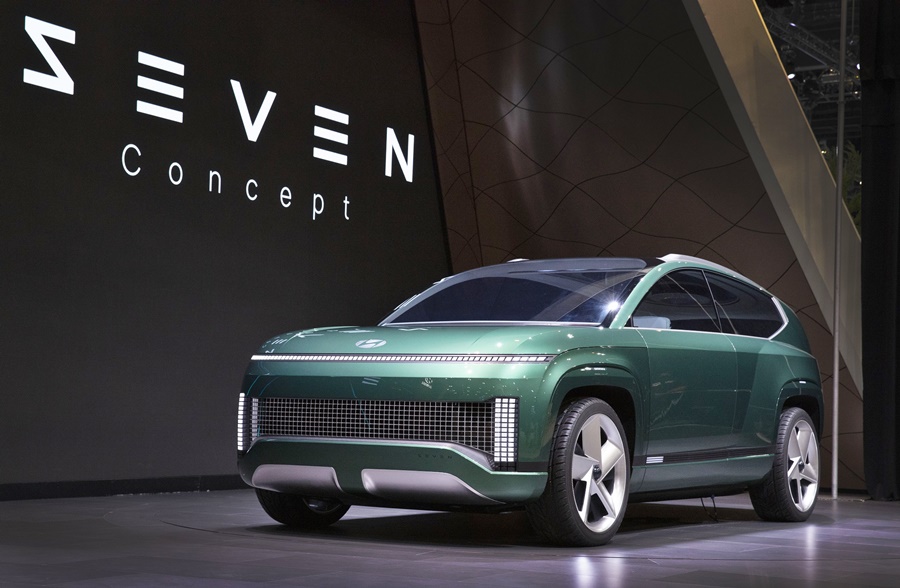
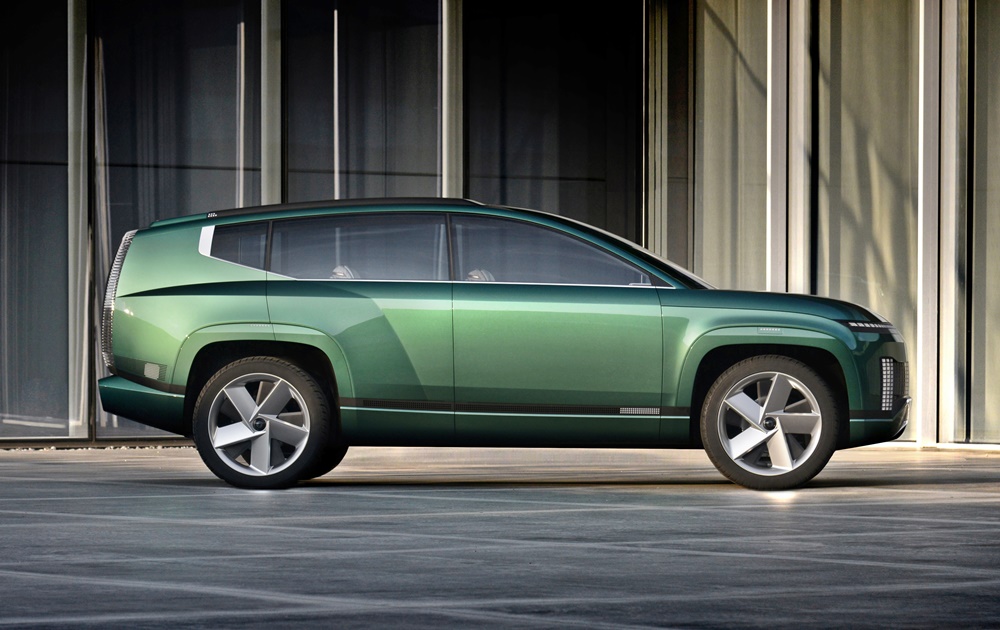
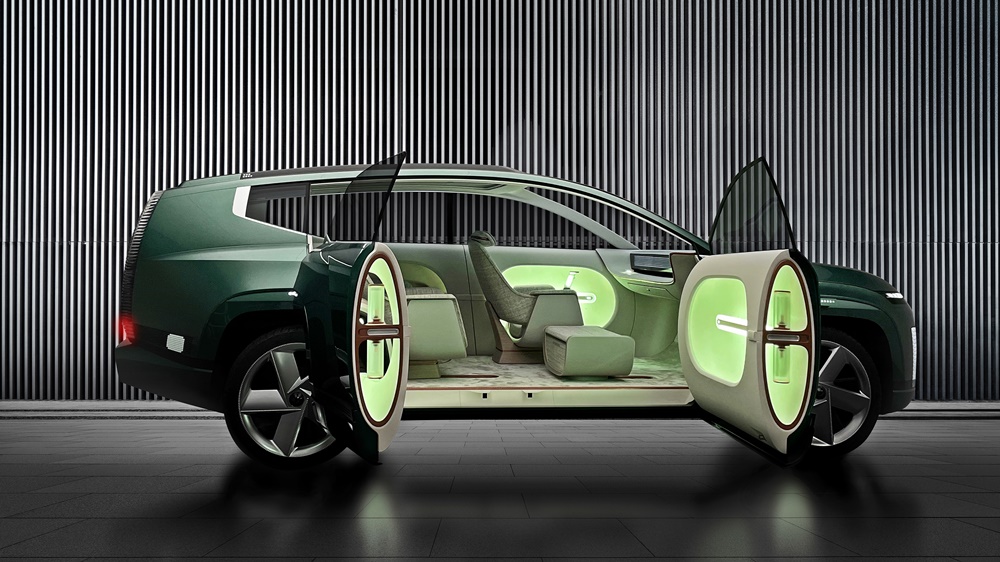
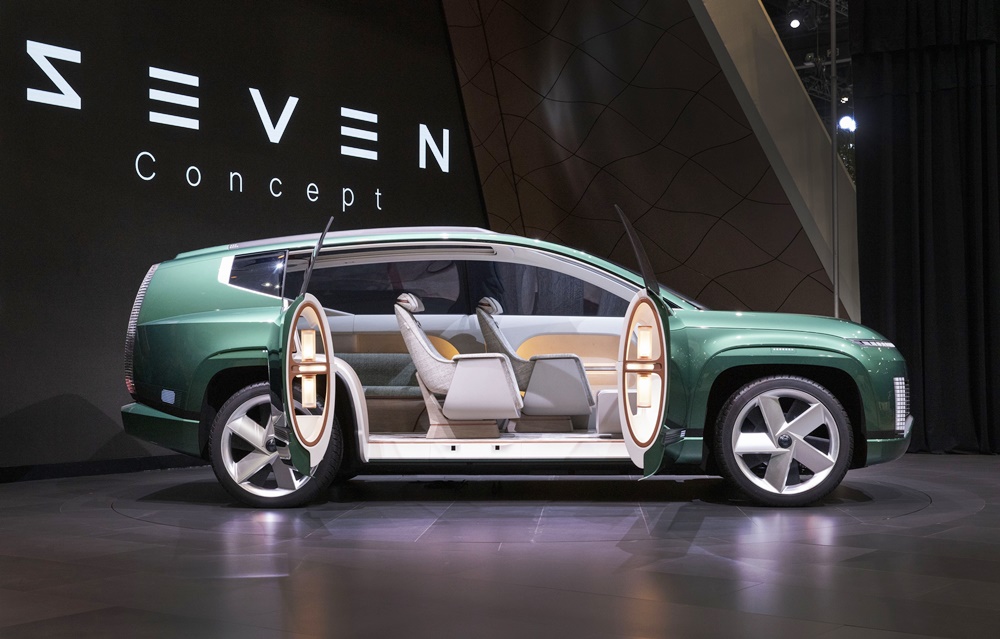
The Hyundai SEVEN is one of those that will be coming and is described as the brand’s future sport utility electric vehicle (SUEV). It is likely to be a product in the IONIQ EV sub-brand and ‘SEVEN’ suggests that it would be somewhere at the top of the range, the same way the Kia Concept 9 is likely to be a flagship model.

2021 Hyundai Motor SEVEN concept SUEV

Next-generation customer experience
HMG has developed the Electric-Global Modular Platform (E-GMP) that will be used by all three brands and is optimised for EVs. This includes the SEVEN which has interior architecture to provide greater freedom and comfort for passengers. Following the 45 concept in 2019 and the Prophecy concept in 2020, the SEVEN concept opens a new chapter for the IONIQ brand. It promises a next-generation customer experience with the most advanced technologies within a vehicle that is designed as an innovative living space on wheels.

“The SEVEN concept demonstrates Hyundai’s creative vision and advanced technological development for our electrified mobility future,” said Jose Munoz, President & CEO, Hyundai Motor North America. “Its innovative interior space, eco-friendly powertrain and cutting-edge safety and convenience technologies reveal an exciting future for Hyundai SUV customers.”

2021 Hyundai Motor SEVEN concept SUEV

Aerodynamically redefining the SUV
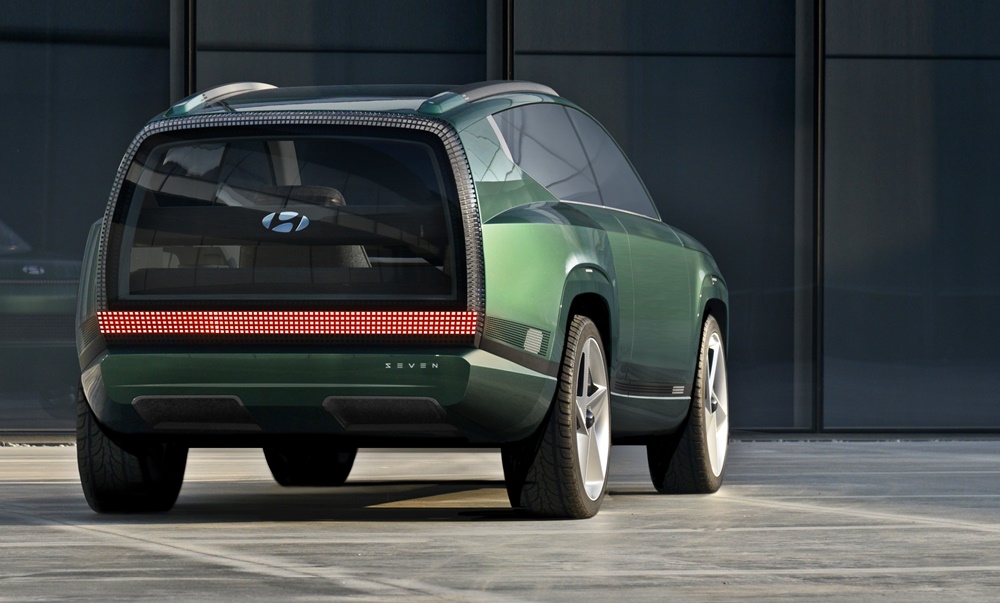
The SEVEN concept makes full use of the flexible E-GMP to have a long wheelbase and flat floor beneath its an aerodynamically pure silhouette. The low, leading edge of the bonnet, a single, streamlined roofline and elongated wheelbase communicate a clear break from traditional SUVs powered by internal combustion engines. The pure volume of SEVEN’s minimal forms contrast with the powerful stance and commanding, rugged presence.

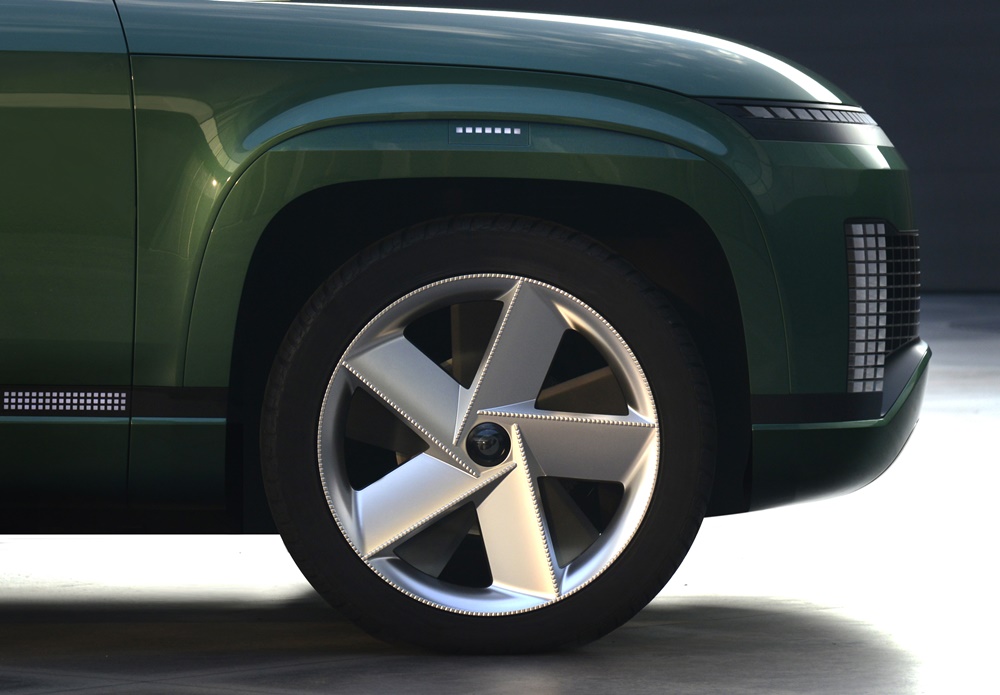
Aerodynamic efficiency and minimum wind resistance are vital for BEVs to go further, and the SEVEN is claimed to have a 480-km range. Thus every area on the bodywork is carefully shaped to allow air to flow smoothly. Even the wheels have integrated Active Air Flaps, which deploy or retract depending on brake-cooling or low-drag requirements.

2021 Hyundai Motor SEVEN concept SUEV

At night, the SEVEN is easily identified by IONIQ’s signature Parametric Pixel lights that deliver a Welcome Light Sequence on start-up. Parametric Pixels provide a common design thread, linking digital and analog styles, a reminder that its designers considered every aspect of SEVEN’s design, down to a single pixel.

Welcoming premium lounge
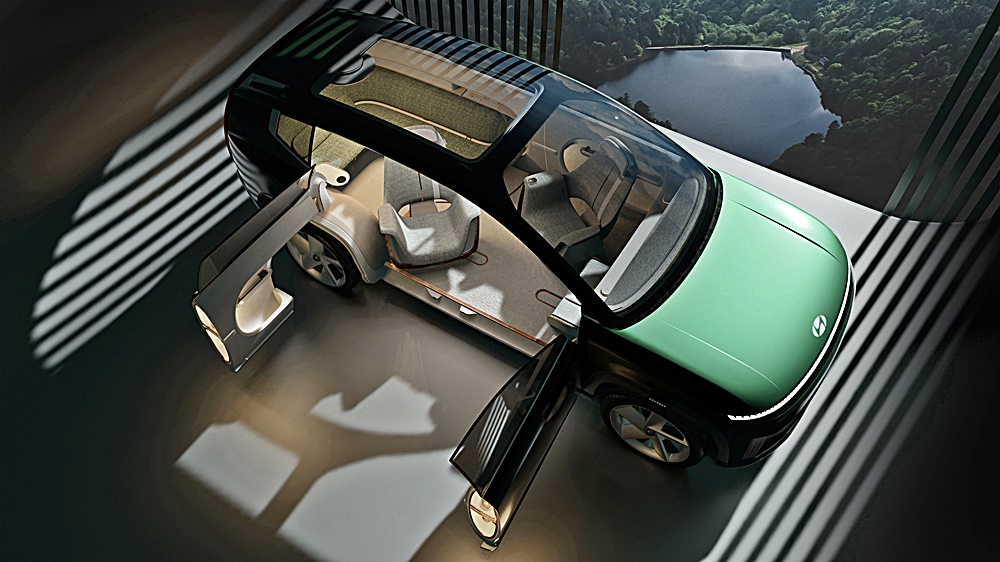
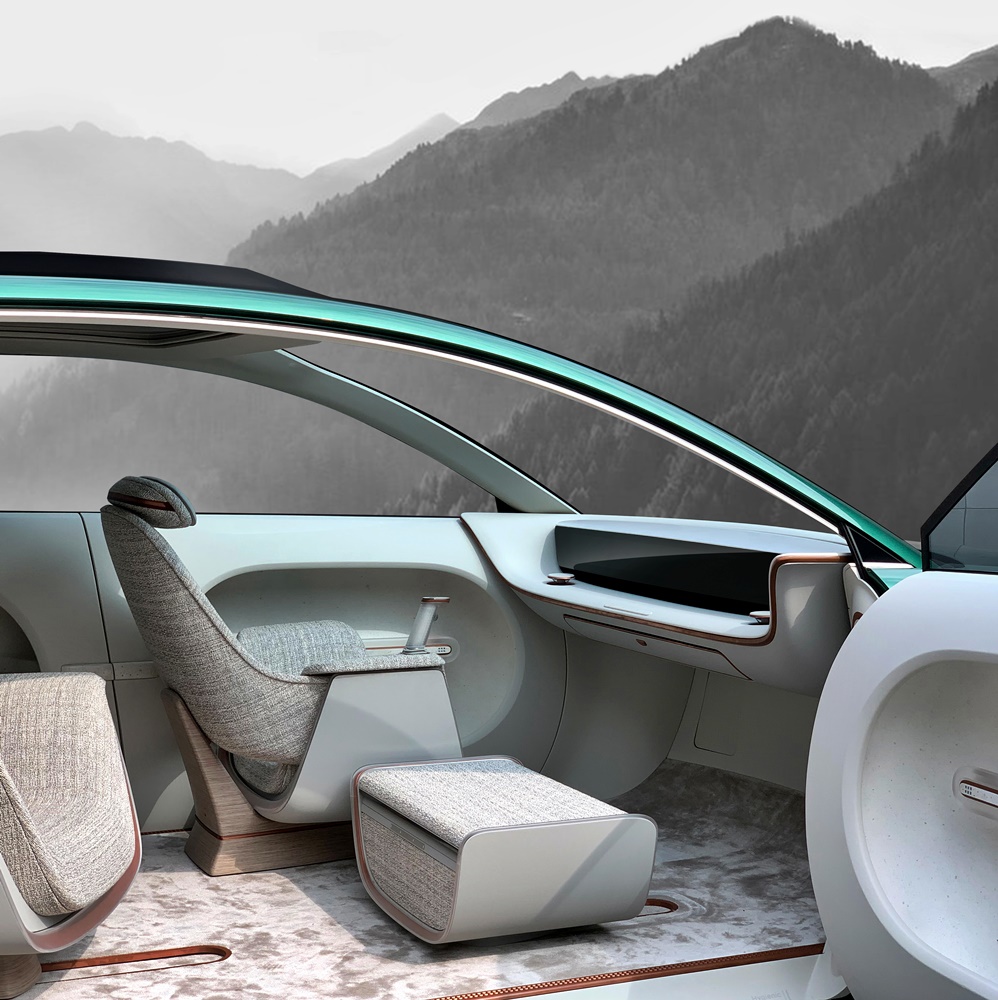
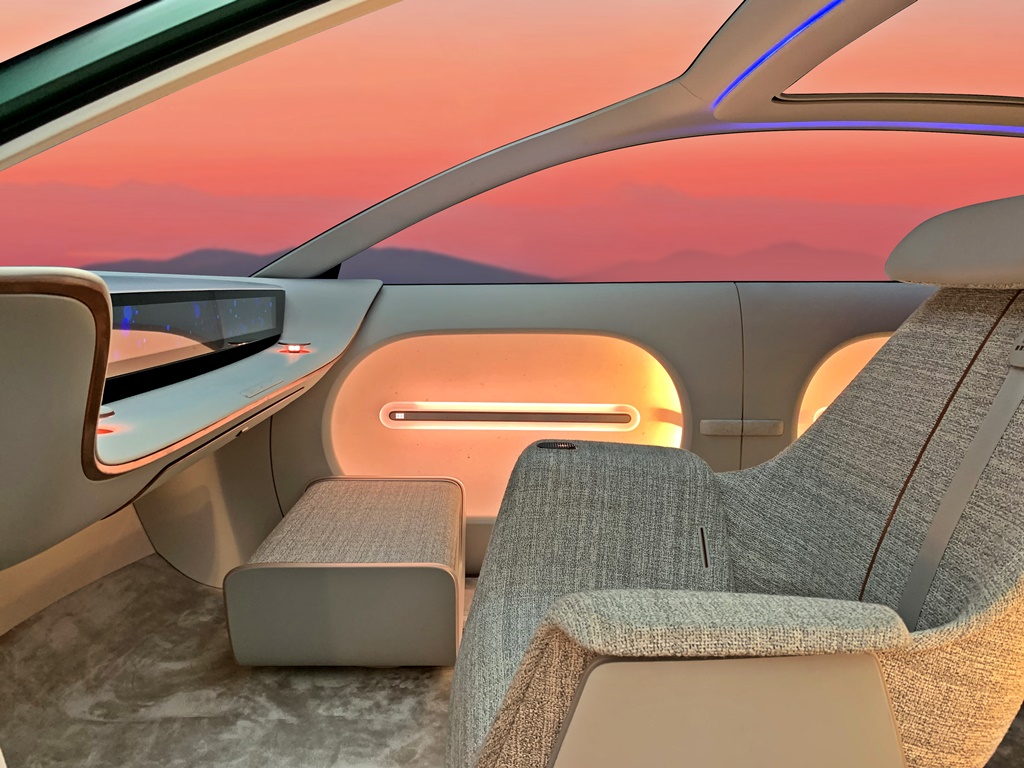
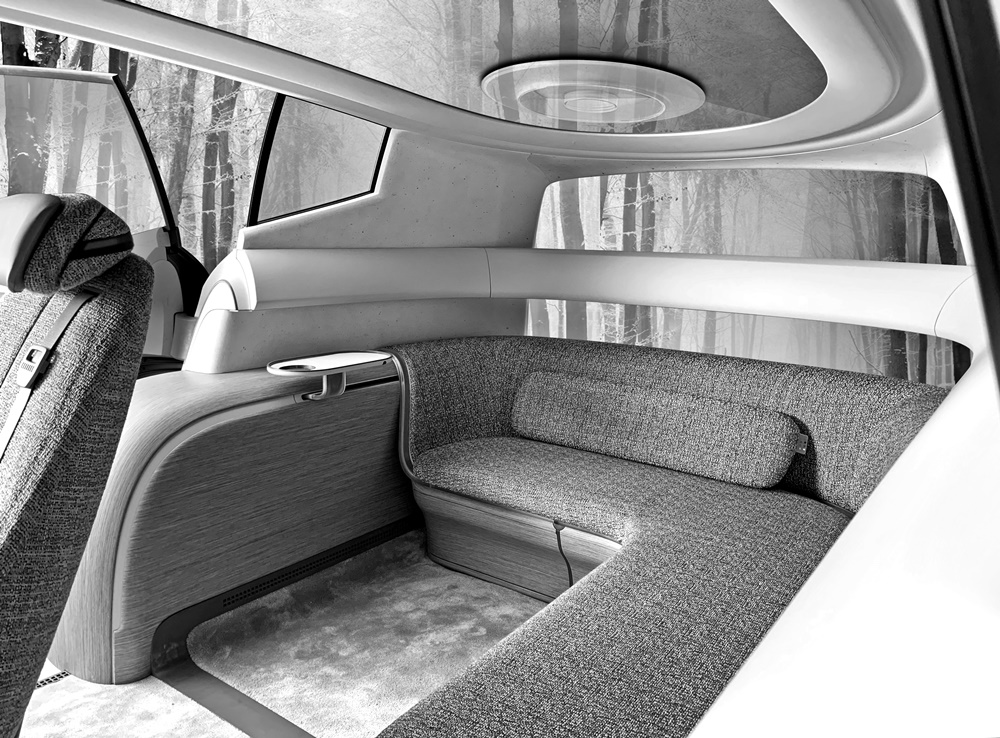
The concept SUEV’s interior design priority lies in the innovation of space and makes full use of the 3.2-metre wheelbase. With the flat floor, the designers have explored an alternative to the traditional row-based seat arrangements, creating a more fluid interior layout. The Pillarless Coach Doors offer a grand entrance to reveal a welcoming interior with a completely new dimension of space. The streamlined roofline, long wheelbase and flat floor that extends to the third row opens new opportunities to furnish the interior like a premium lounge.

2021 Hyundai Motor SEVEN concept SUEV

2021 Hyundai Motor SEVEN concept SUEV

2021 Hyundai Motor SEVEN concept SUEV

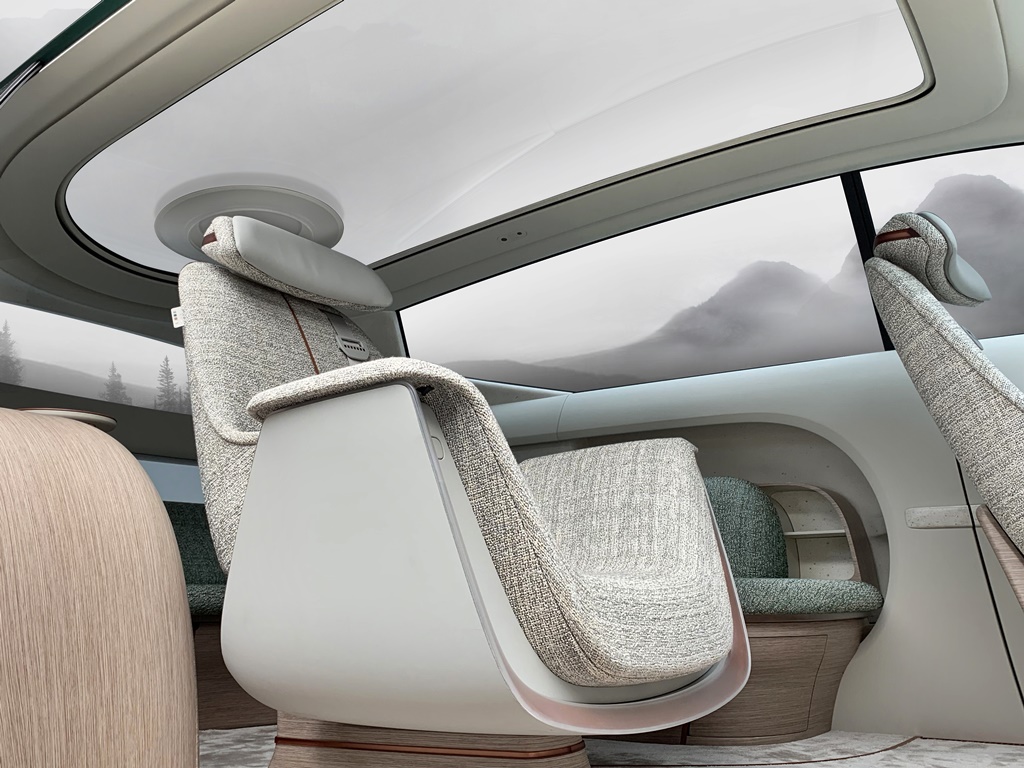
The SEVEN also embodies Hyundai’s future vision of autonomous mobility. The driver’s seat features a retractable control stick that hides away when not in use. Without the need for the usual driver’s equipment, the ultra slim cockpit and integrated screens create a lounge-like experience. The seat arrangement is unlike traditional SUVs, with swivelling lounge chairs and a curved bench seat. This seat arrangement can be customized depending on driver-controlled or autonomous driving modes.

Highlights of the vehicle are the Universal Island console, specially designed home appliances and a multi-functional Smart Hub graphic user interface. When the Smart Hub and front seats combine with the rear chaise-lounge seating, the SEVEN has an environment where the occupants can experience quality time alone or together in the glow of side-door ambient light. In transit, SEVEN’s built-in mini fridge provides chilled refreshment on the go and there are even shoe-care compartments to refresh passengers’ footwear.

2021 Hyundai Motor SEVEN concept SUEV

The vision roof features a panoramic screen that not only displays various content based on passengers’ tastes, but also changes the overall interior atmosphere to guarantee maximum relaxation and pleasure during the journey.

Eco-friendly materials
The SEVEN uses various eco-friendly materials while offering segment-leading hygienic features, such as Hygiene Airflow System and UVC Sterilization. The Hygiene Airflow System takes inspiration from the sophisticated airflow management of passenger aircraft. In its vertical mode, air is taken in through built-in air intakes in the roof rails from which the air travels inwards from above, and extracted through the exterior vent behind the rear wheels. In its horizontal mode, the air flows from the slim dashboard to the rear vents.

Most importantly, this system can activate independently whether the vehicle is in motion or not to reduce cross-contamination among passengers and isolates the airflow between front and rear occupants.

2021 Hyundai Motor SEVEN concept SUEV

2021 Hyundai Motor SEVEN concept SUEV

Bio-paint is used for the exterior and hygienically-recycled and renewable materials throughout the interior. Mineral plaster, bamboo wood and carpet, bio resin and interior paint are based on renewable sources that can reduce pollution from the production process. Extensive use of copper and hygienically treated fabric with proven antibacterial functions ensure all surfaces inside the SEVEN remain clean at all times.

UV-C Sterilization activates once the vehicle is vacated of its passengers. The control stick, first-row storage drawer and speakers pop up and then, integrated sanitizing UV-C lights help clean the living space of bacteria and viruses. In addition, there are sanitizing storage compartments in the bench and Smart Hub console for personal belongings.

“SEVEN paves the way forward for what an SUV needs to become in the EV era with a unique aerodynamic pure form that does not compromise on its rugged personality. The interior opens up a new dimension of space that cares for its passenger as a family living space,” said SangYup Lee, Senior Vice-President, Head of Hyundai Global Design.

2021 Hyundai Motor SEVEN concept SUEV

IONIQ – from model name to brand name

Archive

Follow us on Facebook

Follow us on YouTube