While most motorshows have been postponed or cancelled, events that can be held online have continued and the auto industry has in fact moved online for its launch activities. Global product launches and major announcements are now being presented using social media, which actually has a very big audience.
The Japan Car of the Year (JCOTY) event has not been a public sort of event so its schedule has not really been affected and this month, assessment of the finalists takes place with the winner to be announced on December 7.
This year’s list of nominees number 33, of which 13 are from Japanese brands and the remainder from other global manufacturers. In earlier years, the JCOTY has two categories, with one for Japanese models and the other for imported brands. However, the organisers decided to merge the two categories and the first non-Japanese brand to win the JCOTY overall award was the Volkswagen Golf Mk. 7 for the 2013-2014 event. Since then, foreign models have won two more times, both being from Volvo.
From the 33 nominees, which must be new models introduced and sold in the Japanese market from November in the previous year to October 31 of the current year (in this case, 2020), ten models are chosen as the ‘Ten Best Cars’. These are considered the finalists, from which one will become the Japan Car of the Year.
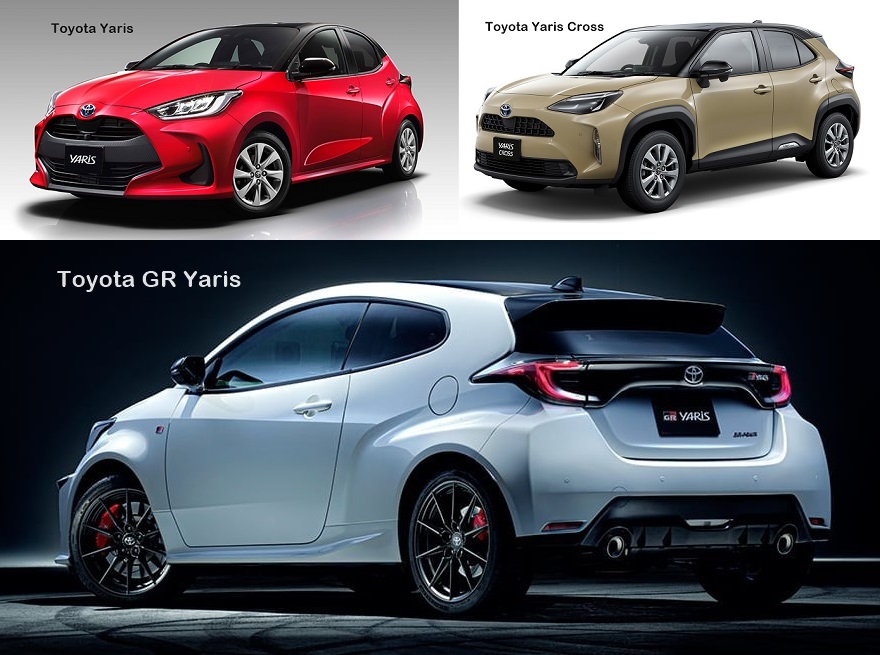
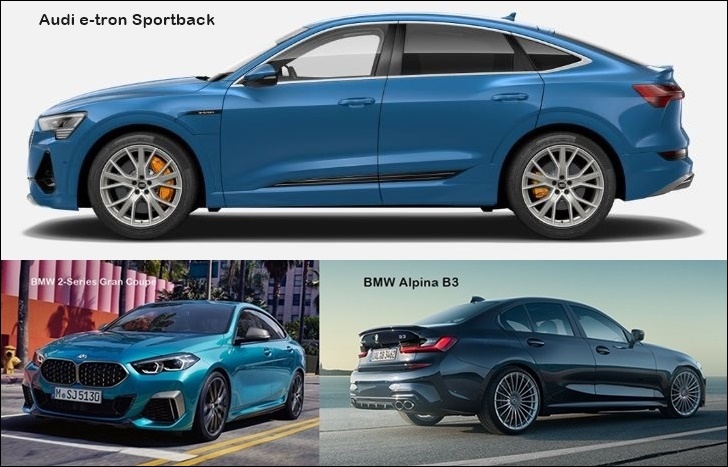
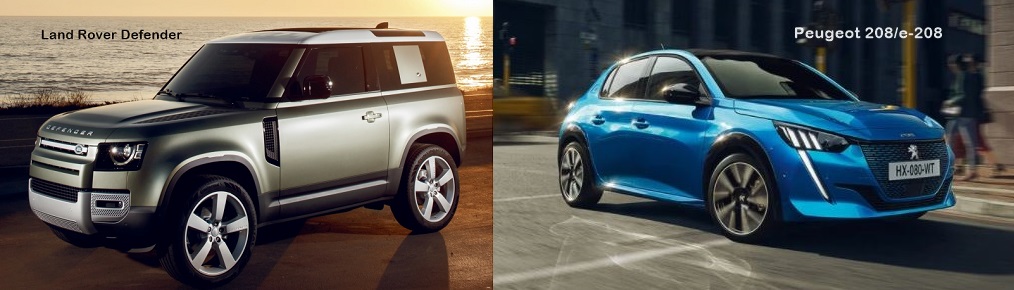
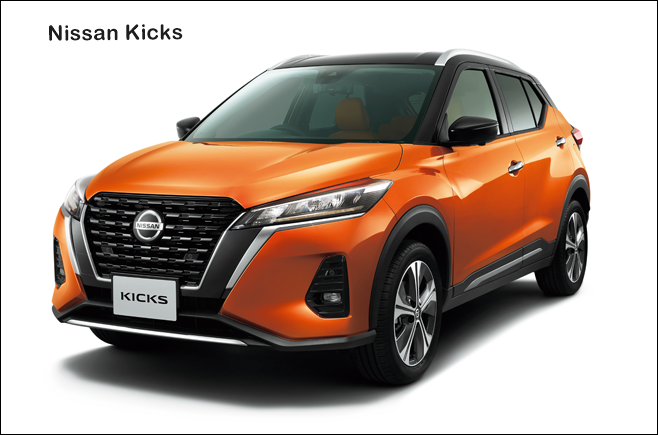
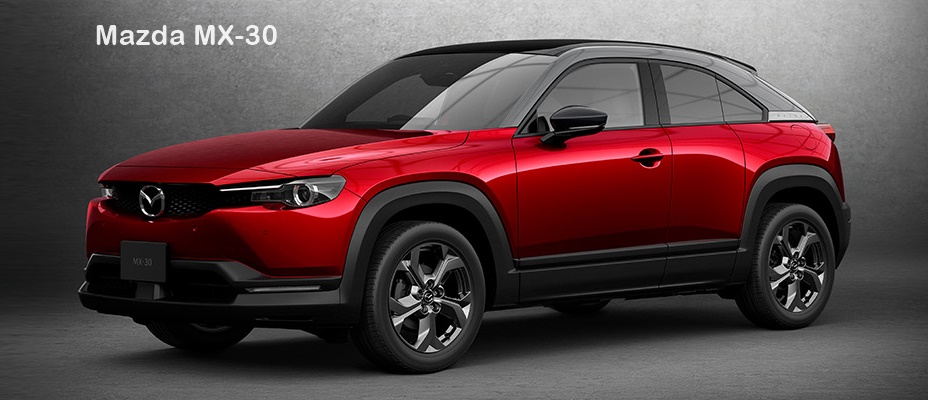
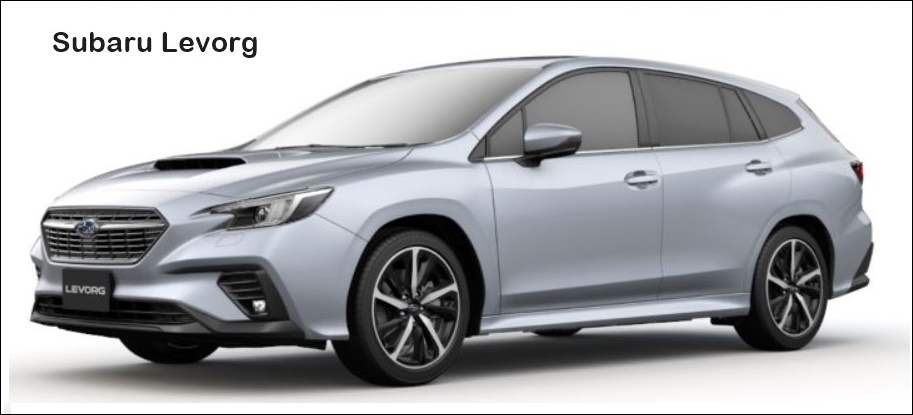
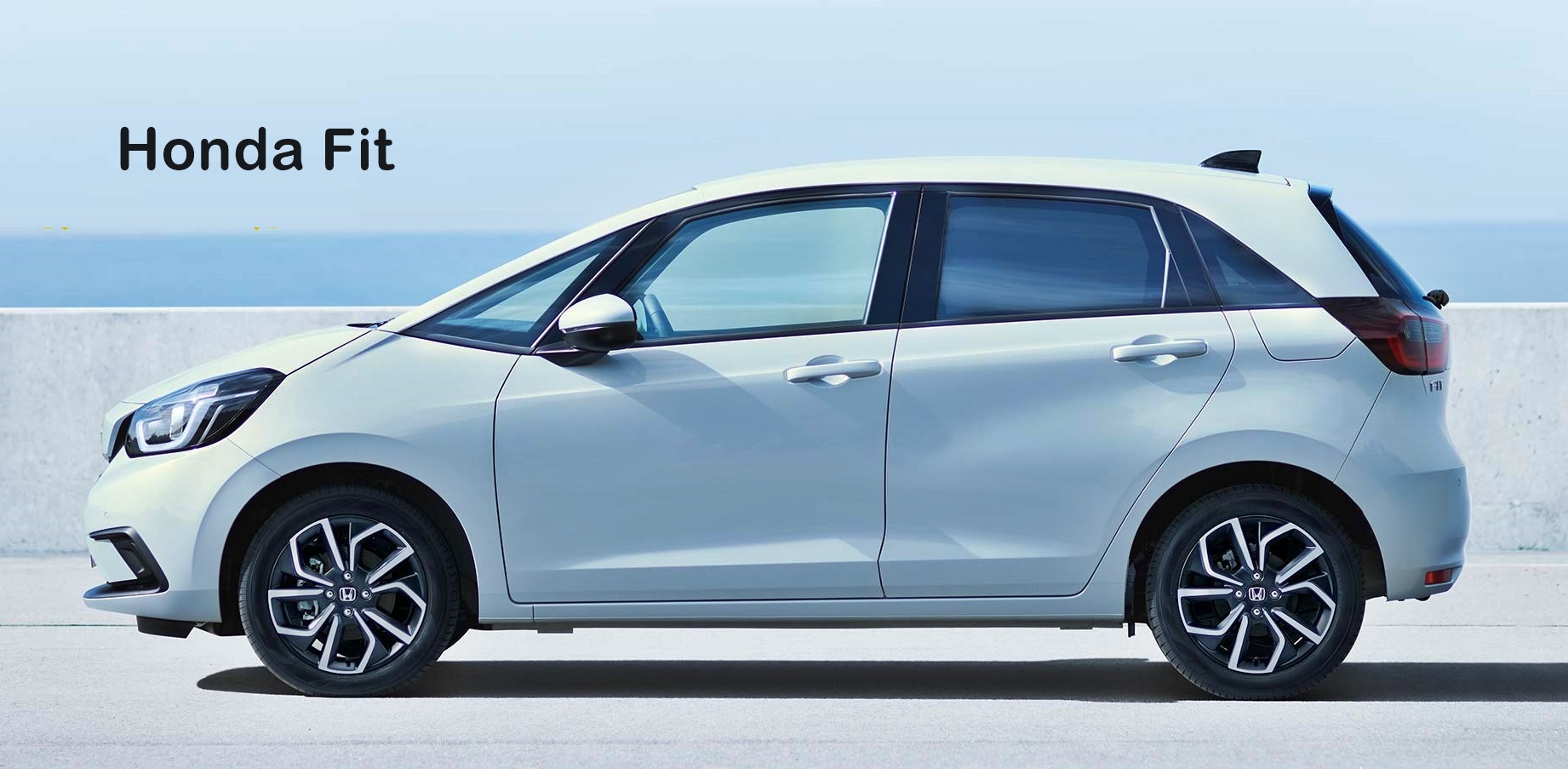
The Ten Best Cars for this year are: Audi e-tron Sportback BMW 2-Series Gran Coupe BMW Alpina B3 Honda Fit/Jazz Land Rover Defender Mazda MX-30 Nissan Kicks Peugeot 208/e-208 Subaru Levorg Toyota Yaris /Yaris Cross/ GR Yaris
Later this month, the judging panel will test the ten models at a racing circuit in the Chiba Prefecture. They will then cast their votes which will determine the JCOTY for 2020-2021.
PAST WINNERS
1980-1981: Mazda Familia (323)
1981-1982: Toyota Soarer
1982-1983: Mazda Capella (626)
1983-1984: Honda Civic
1984-1985: Toyota MR2
1985-1986: Honda Accord
1986-1987: Nissan Pulsar
1987-1988: Mitsubishi Galant
1988-1989: Nissan Silvia SX
1989-1990: Toyota Celsior (Lexus LS)
1990-1991: Mitsubishi Galant
1991-1992: Honda Civic
1992-1993: Nissan March
1993-1994: Honda Accord
1994-1995: Mitsubishi FTO
1995-1996: Honda Civic
1996-1997: Mitsubishi Galant
1997-1998: Toyota Prius
1998-1999: Toyota Altezza (Lexus IS250)
1999-2000: Toyota Vitz (Yaris)
2000-2001: Honda Civic
2001-2002: Honda Fit (Jazz)
2002-2003: Honda Accord
2003-2004: Subaru Legacy
2004-2005: Honda Legend
2005-2006: Mazda MX-5
2006-2007: Lexus LS460
2007-2008: Honda Fit (Jazz)
2008-2009: Toyota iQ
2009-2010: Toyota Prius
2010-2011: Honda CR-Z
2011-2012: Nissan LEAF
2012-2013: Mazda CX-5
2013-2014: Volkswagen Golf 7
2014-2015: Mazda2/Demio
2015-2016: Mazda MX5
2016-2017: Subaru Impreza
2017-2018: Volvo XC60
2018-2019: Volvo XC40
2019-2020: Toyota RAV4
The designs of motor vehicles are proprietary, and manufacturers typically protect them from being copied by other companies. Occasionally, there are court cases when a company introduces its model which looks rather similar and sometimes the original manufacturer wins, or might not. Of course, not all models are copied and it is those with an iconic design that some unethical companies may try to duplicate, believing that they could achieve similar success with their model.
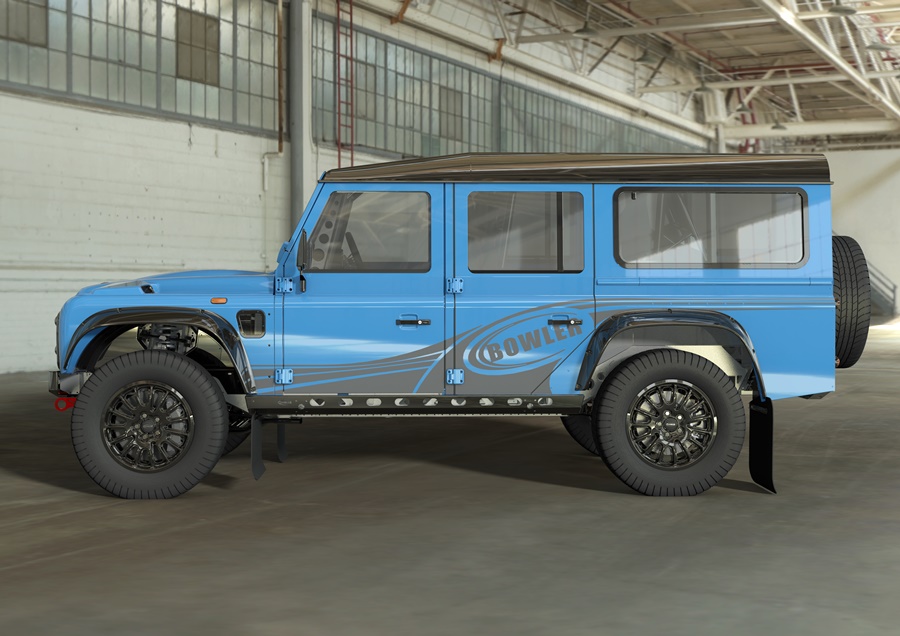
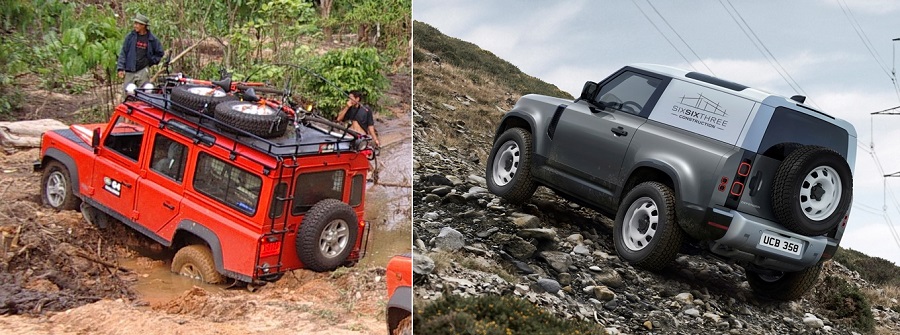
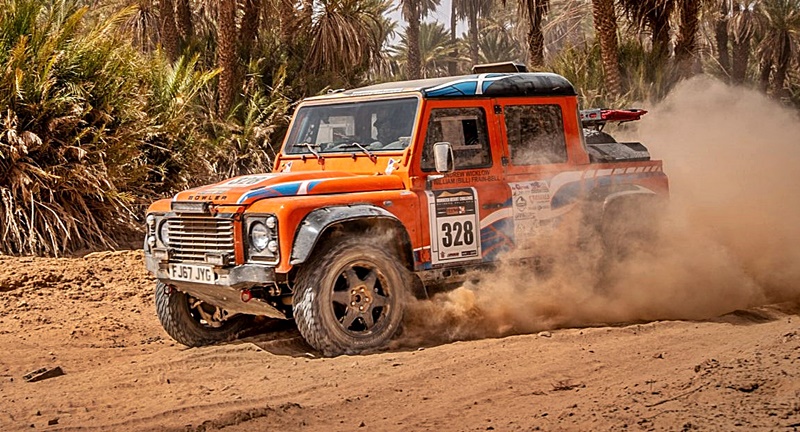
The design of the original Land Rover Defender would be such an example and though Land Rover has come out with a totally new model, the classic shape of the original still appeals to some people. Bowler, a company in England, believes there is enough demand for it to produce vehicles using the classic Defender shape and has obtained permission from Land Rover to do so.
Project CSP 575
It is the next phase of development for Bowler, which makes all-terrain performance cars and rally raid vehicles. With the agreement, the company can develop a new family of high-performance models which will supplement the ongoing motorsport developments that are the foundation of Bowler’s past, present and future plans.
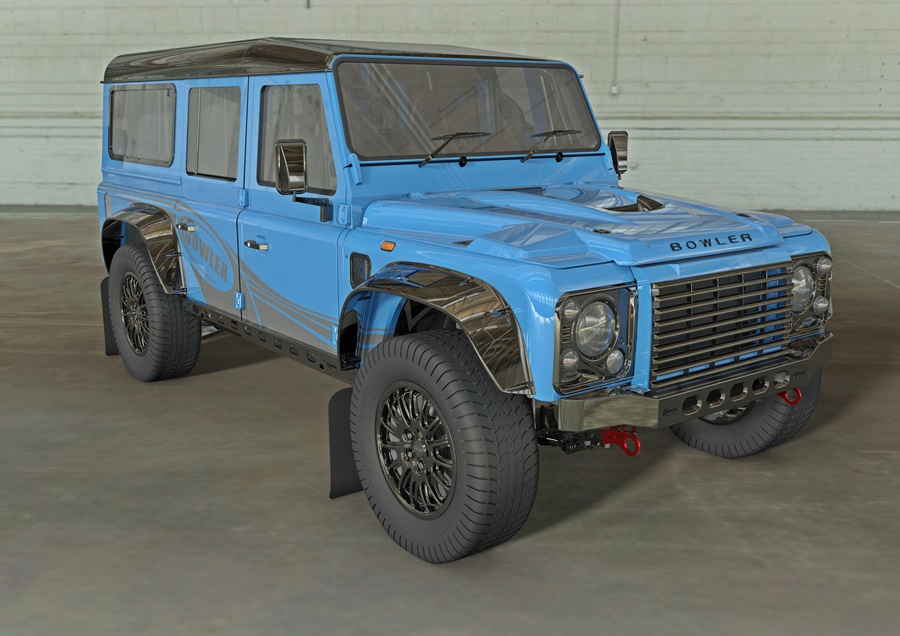
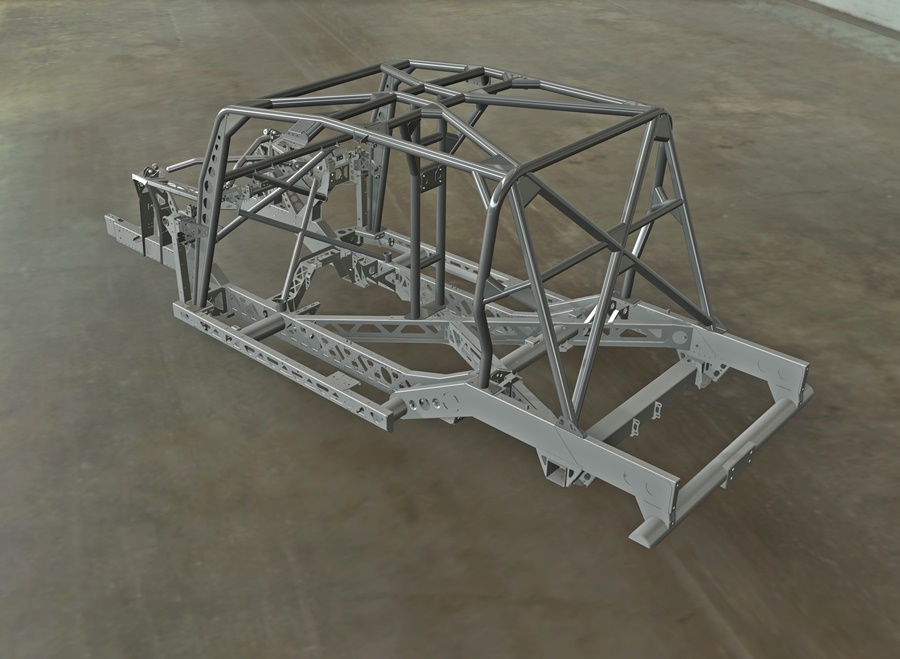
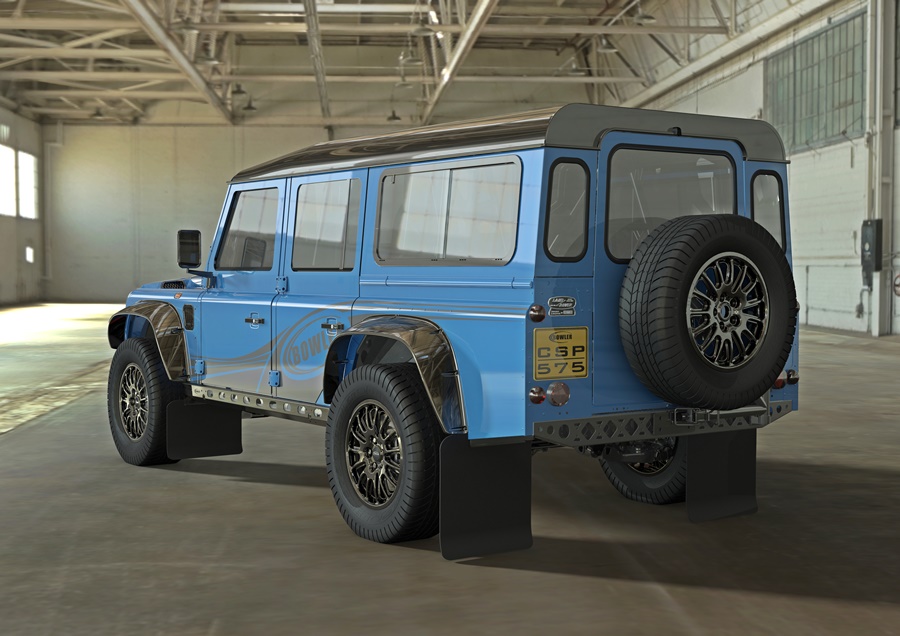
The project is codenamed ‘CSP 575’ and will see a new road-going vehicle with Bowler’s own rally-proven CSP high-strength steel chassis. Onto it will go Defender 110 Station Wagon body panels – made of aluminium alloy like the original – and Land Rover’s 575-ps supercharged V8 engine as well.
Competition-inspired
Initial renders of the planned 4×4 provide a glimpse of the rally-derived model, which will be the first new Bowler since 2016. Full details will be revealed early next year, but the competition-inspired off-roader promises to combine potent performance and motorsport-honed durability in a classic Defender 110 Station Wagon shape capable of accommodating four passengers.
Founded in 1985, Bowler pioneered the production of dedicated off-road competition cars in the UK. It became a subsidiary of Jaguar Land Rover at the end of 2019 and its expertise has been utilised in for a number of projects as part of Special Vehicle Operations.
Bowler customers are already benefitting from this relationship as Land Rover SV engineers are helping develop Bowler vehicles and using their engineering expertise to test Bowler products at Special Vehicle Operations’ world-class facilities.
The classic Defender (left) and the latest all-new model on the right.
Land Rover’s decision to issue Bowler with a licence agreement to build vehicles using the classic Defender shape is a natural progression of this relationship and the new stationwagon project represents a unique undertaking. It integrates the technology, components and engineering underpinning Land Rover’s Special Vehicle products with Bowler’s motorsports expertise and experience.
“We’re excited to announce the first major project since our acquisition of Bowler. The ‘CSP 575’ will combine Supercharged V8 performance and 4-seat practicality with Bowler’s rally raid-proven CSP platform, broadening the appeal of the brand. This high-performance road-going model will sit alongside Bowler’s evolving range of rally raid models, which continue to enjoy success in the world’s toughest motorsport events,” said Michael van der Sande, Managing Director, Jaguar Land Rover Special Vehicle Operations.
Bowler specialises in developing vehicles for off-road competition and also provides support services.
The new model will be manufactured in very small quantities at Bowler’s own facilities by the same engineers and technicians producing its competition 4x4s. Bowler will be marketing the model to customers in the UK, select European and overseas markets, with an indicative pricing to be around £200,000 (about RM1.086 million at current exchange rates).
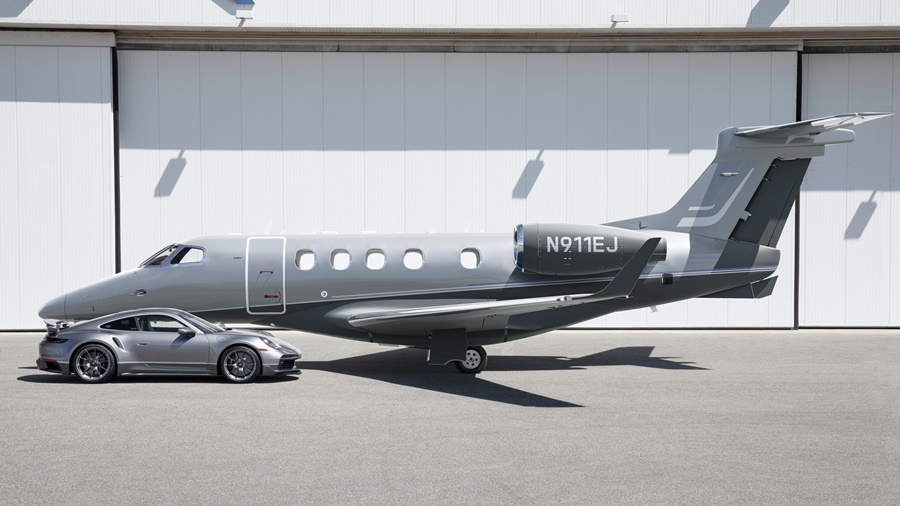
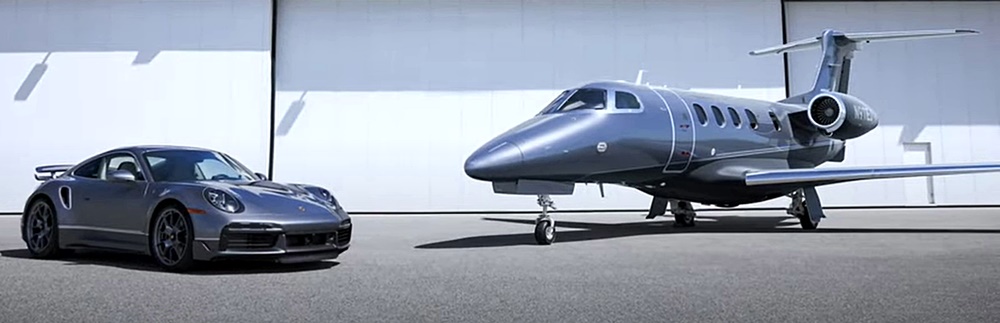
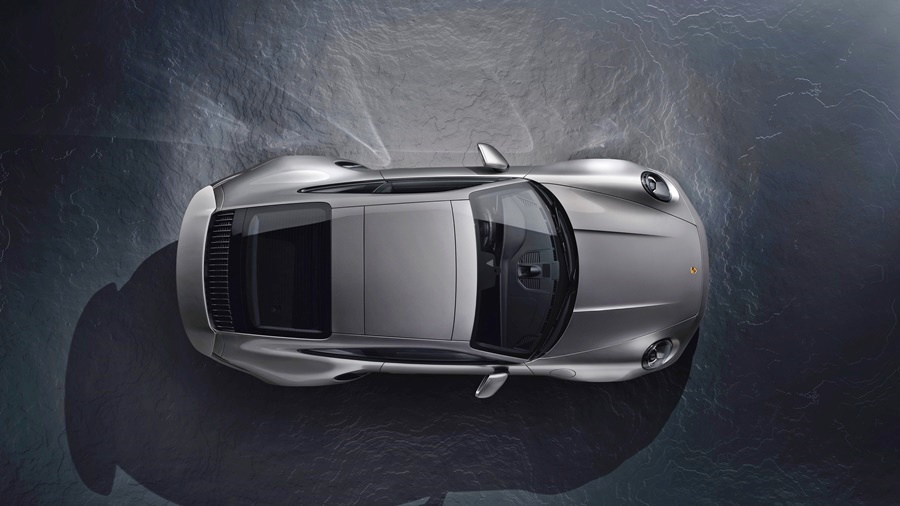
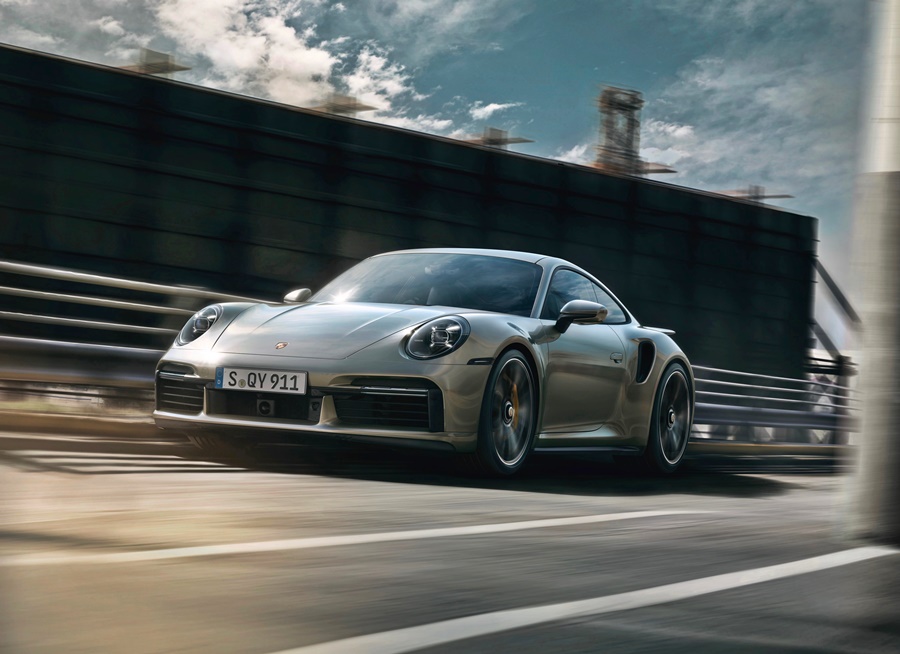
Porsche has collaborated with Embraer, the company well known for its executive jets, to create ‘Duet’, ten units of limited editions of the two sportiest and most successful products from each of their respective segments.
The objective of the collaboration is to offer customers exclusive products that can be personalised and enhanced in almost infinite ways. “As part of our cooperation, we are using the know-how of both brands to jointly develop a one-of-a-kind duo of a sportscar and jet that appeals to both customer groups,” explained Alexander Fabig, Head of Personalisation and Classic at Porsche.
The project team comprised members of Embraer’s executive jet design and marketing departments in Melbourne/Florida, the Porsche design department ‘Style Porsche’ and Porsche Exclusive Manufaktur in Germany, and Studio F.A. Porsche in Austria.
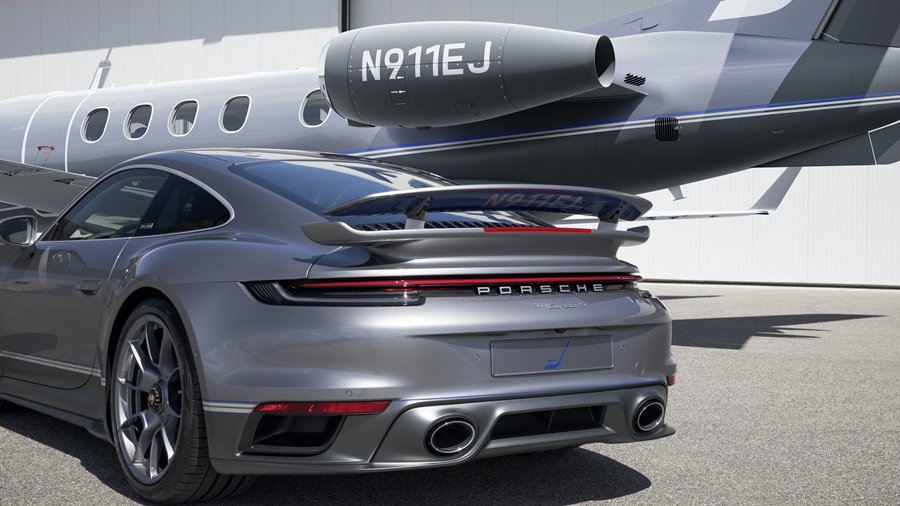
A Duet logo was specially designed for the cooperative project. It takes its cue from aerodynamics and is made up of a stylised aeroplane wing from the Phenom 300E and the rear wing of the flagship 911 with the Sport Design package. The logo is used on the exterior and in the interior of both products.
Latest 911 Turbo S
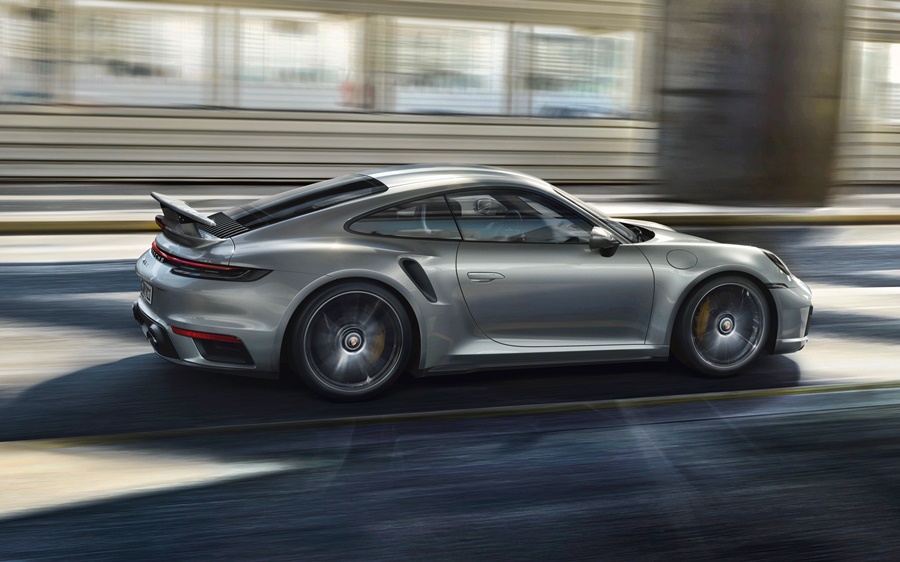
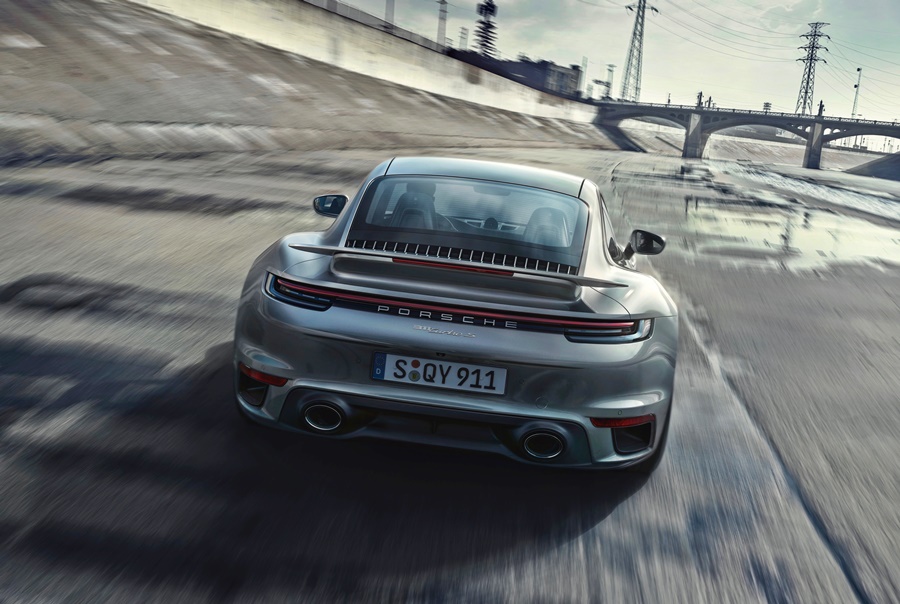
The latest generation of the 911 Turbo S that is powered by a 3.745-litre boxer engine with 650 ps output. The limited edition coupe has a combined gloss and satin-gloss paintwork for the first time. The upper part is finished in Platinum Silver Metallic, while the bottom part is in Jet Grey Metallic. A trim strip with lines in Brilliant Chrome and Speed Blue runs over the sides and doors. All the paintwork is completed by hand, like the painting process for the jet.
The alloy wheels in Exclusive design are painted in Platinum Silver Metallic and feature lines in Speed Blue on the rim flange. These are produced using laser technology. The side air intakes and side window trims are painted in Brilliant Chrome and therefore pick up a design feature of the jet’s engines.
The LED door projectors cast the Duet logo onto the ground. There is also a special emblem on the B-pillar. In addition to the Duet logo, it includes 10 small rectangular fields corresponding to the limited number of units. One of these fields is blue. Every customer can select where this field is placed, representing that the car is one of only ten. This emblem is repeated on the outside of the jet.
Features from the jet cockpit
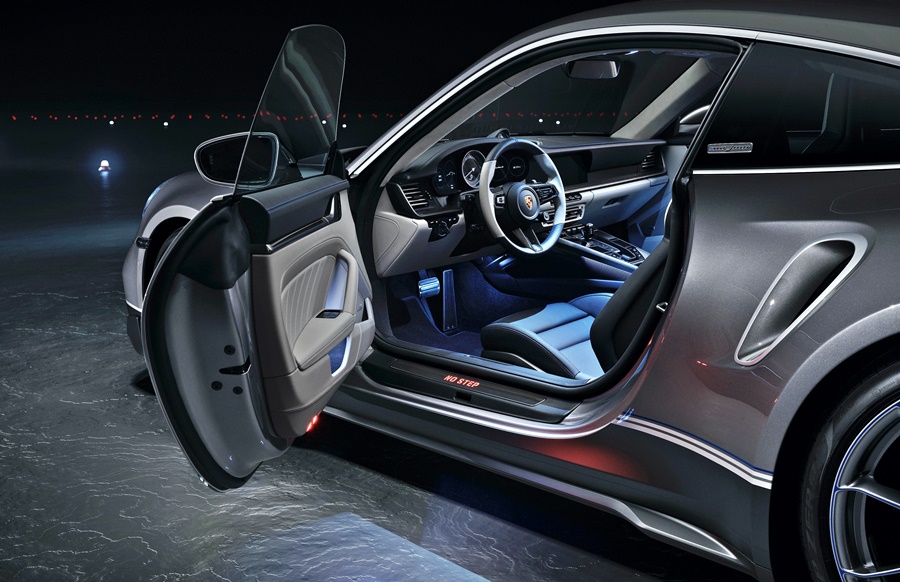
The entire car interior is hand-crafted, installed by the Porsche Exclusive Manufaktur, and is not available in this form for regular production range. Exclusivity is also the motto in the interior of the 911 Turbo S. Here, the designers have come up with a special colour scheme and combined black and chalk-coloured leather. The black leather surfaces are decorated with stitching in Speed Blue.
The steering wheel also features the two-tone leather combination, matching the jet’s yoke. The 12 o’clock marking is in Speed Blue; the Carbonfibre interior package is as standard and comes with a high-gloss finish. The roofliner is covered with chalk-coloured Alcantara, while the front seats have decorative elements made of high-gloss carbonfibre. The leather loop for folding the front seat backrests is red, matching the loops of the jet’s seats.
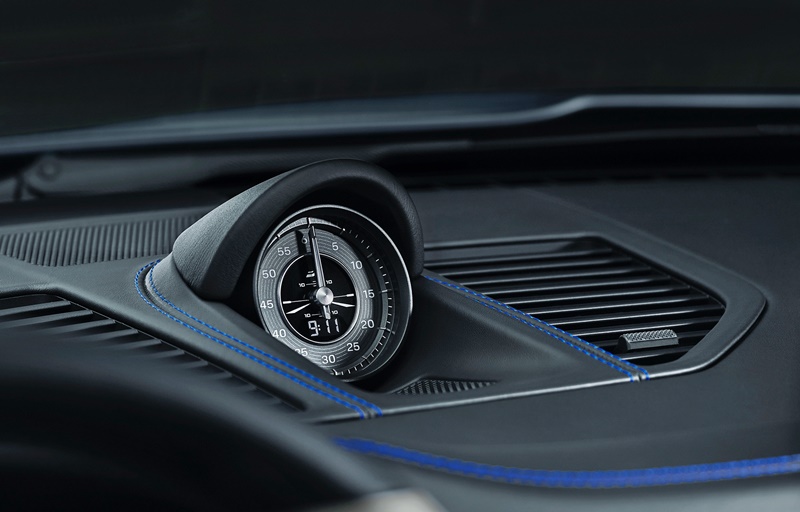
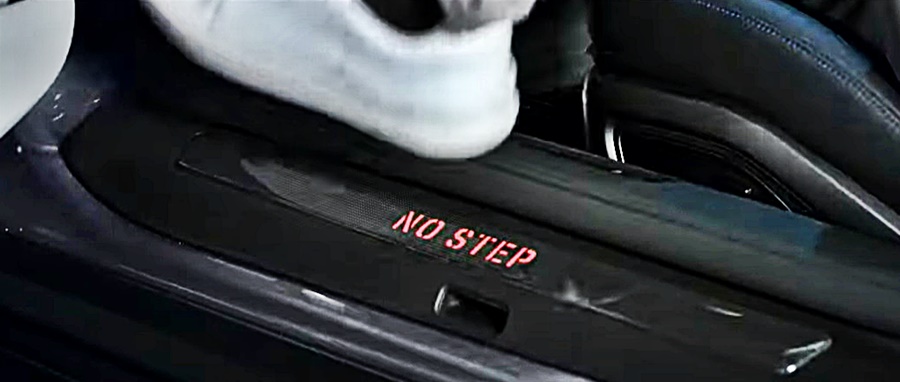
The door sill trims feature ‘NO STEP’ lettering illuminated in red – a reference to the corresponding signs on aircraft wings. The stopwatch of the Sport Chrono package also borrows from aviation. In addition to the logo, the dial also has a printed-on artificial horizon, the indicator which tells the pilot of the attitude of the aircraft.
Like many exclusive limited edition cars, the dash panel trim features a ‘One of 10’ logo. The front luggage compartment is hand-finished in black leather, with contrast stitching in Speed Blue. The sides of the car key are painted in Speed Blue and are marked with the jet registration. The logo is embossed in the leather of the key pouch and an indoor car cover with ‘REMOVE BEFORE FLIGHT’ tags is also included – again a reference to aircraft.
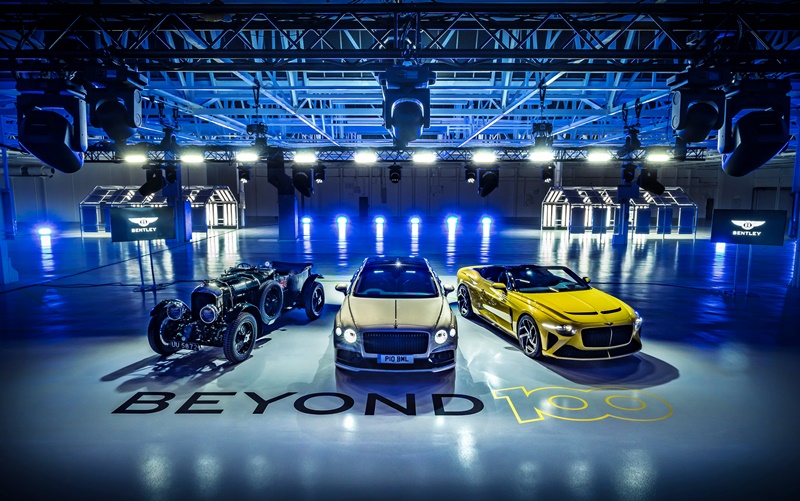
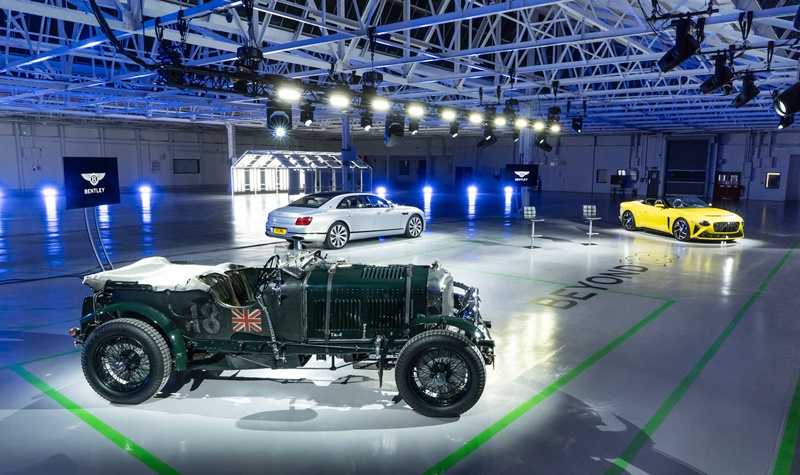
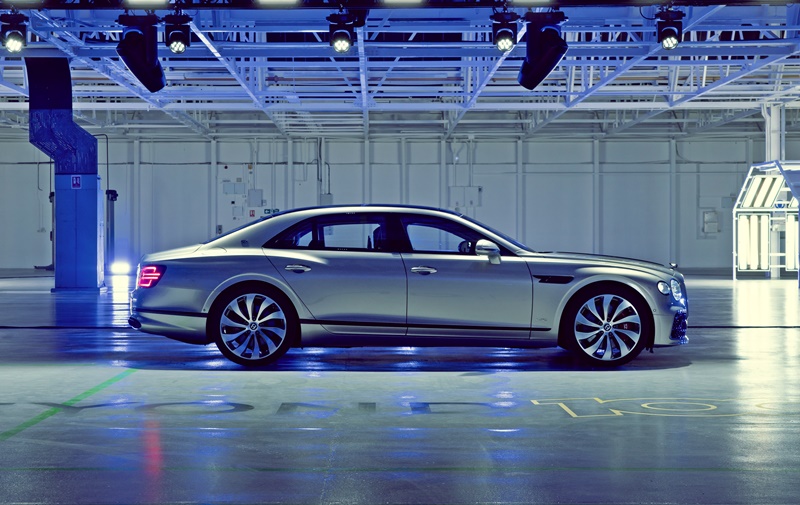
After over 100 years, the automobile industry is undergoing a major change that will see a progressive diminishing of vehicles with only internal combustion engines, leading to hybrids and eventually only electric powertrains. The global players have already begun the process of making the transition, and Bentley Motors is one of those that has revealed plans which are outlined in its Beyond100 strategy.
Aiming to offer truly sustainable luxury, the carmaker will reinvent every aspect of its business to become an end-to-end carbon neutral organisation as it embarks on its second century. The target is driven by a transformation programme across Bentley’s entire operations and products. This includes switching its model range to offer exclusively plug-in hybrid (PHEVs) or battery electric vehicles (BEVs) by 2026, and full electric vehicles (EVs) only by 2030.
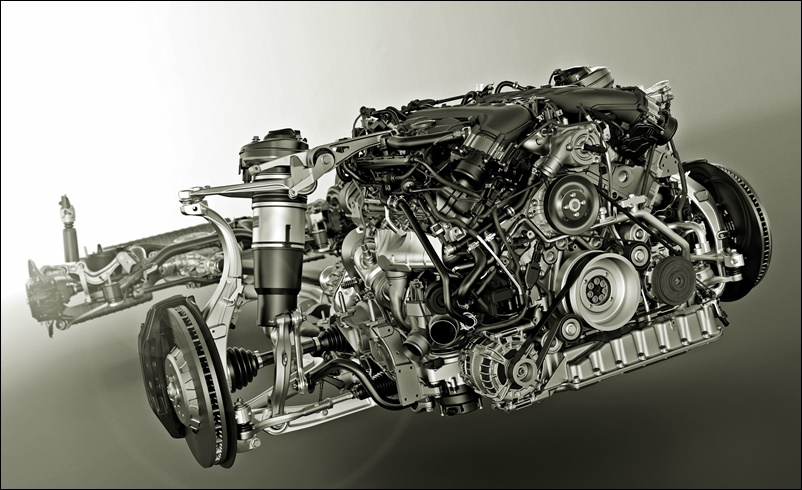
Bentley’s traditional powertrains with internal combustion engines will be phased out and replaced with hybrid and then all-electric powertrains by the end of this decade.
No more ICE by 2030
The announcement today highlights Bentley’s plans for another 100 years, evolving from the world’s largest producer of 12-cylinder petrol engines to having no internal combustion engines within a decade.
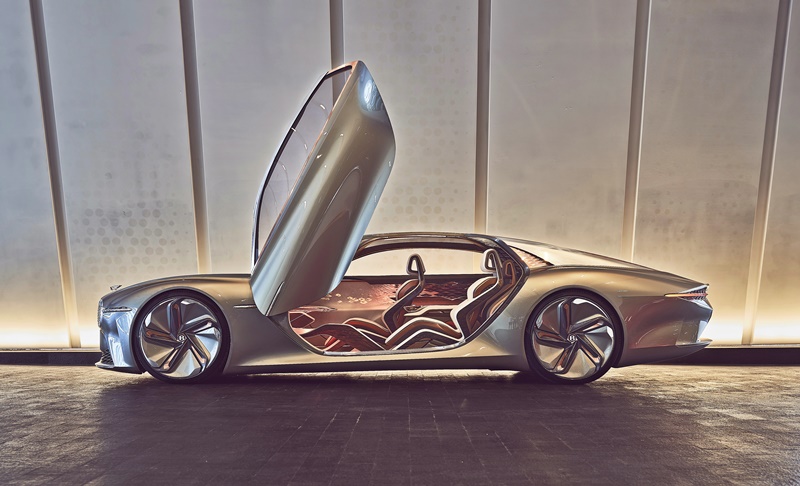
Bentley’s electrified future was actually previewed with the reveal of the all-electric EXP 100 GT concept car (pictured below) in its centenary year. That concept featured a multitude of sustainable materials. These included 5,000-year-old copper-infused Riverwood, traditionally produced wool carpets and a leather-like textile upholstery made from a by-product of wine-making. Bentley will continue to use only sustainably sourced materials throughout its current, and next generation of cars.
Carbon-neutral production
The Beyond100 strategic plan will see, among other things, the change to a carbon-neutral luxury car factory. Last year, Bentley’s production facility in England became the first luxury automotive factory in the UK to be certified carbon neutral by the Carbon Trust. This followed two decades of implementing innovative solutions, including a water recycling system in the paint shop, local tree planting, installation of a 10,000 solar panel carport, taking the total number of on-site solar panels to 30,000, and a switch to renewable-only electricity sources.
The factory will continue to improve its environmental operations. By the end of 2025, the company intends to reduce its factory environmental impact by focusing on energy consumption, carbon dioxide emissions, wastewater, use of solvents in the paint process and becoming plastic neutral. This will result in a climate positive factory by 2030, actively reducing levels of carbon in the atmosphere, while in parallel the business invests in renewable energy and forestation projects.
Sustainable luxury mobility
Bentley will also redefine its business model which is built around its accelerated journey towards electrification. Having already committed that every model line will be offered with the option of a hybrid variant by 2023, with Bentley’s first pure electric model to be launched in 2025, Bentley is making a clear move towards zero emission mobility.
Achieving sustainable luxury mobility relies heavily on a sustainable business model, and Bentley’s aim is to become the world’s benchmark luxury car business, financially resilient and recession-proof. The challenging economic situation caused by the COVID-19 pandemic resulted in Bentley undertaking its biggest change programme in a century.
This change programme was driving for consistent financial resilience through rapid productivity improvements across the business, and a fundamental restructure. The results from the comprehensive cost and investment structure has placed the business in a position to achieve a positive financial performance for the full year 2020, in spite of the extenuating external circumstances.
Bespoke continues with sustainability
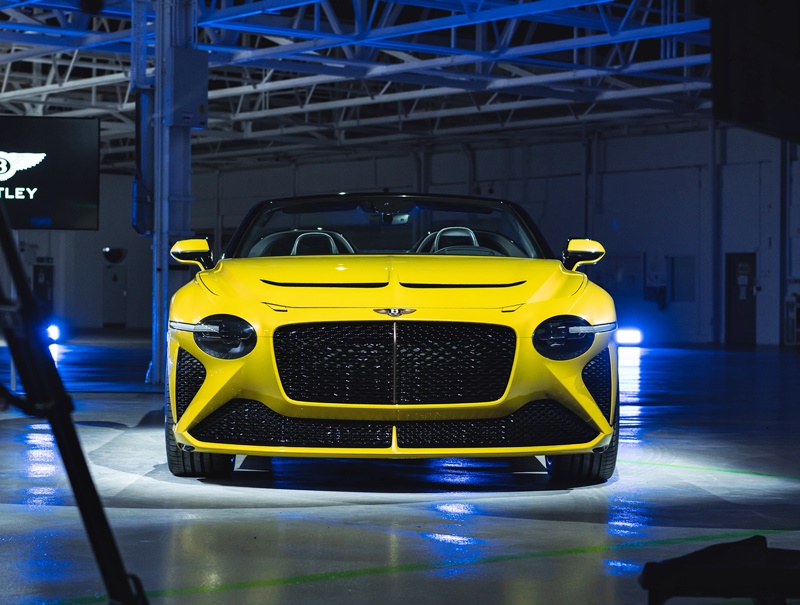
As well as accelerating the product journey towards electrification, Beyond100 opens a new era for Bentley’s bespoke division, Mulliner, which now has a three-portfolio structure comprising Mulliner Classic, Mulliner Collections and Mulliner Coachbuilt. The recently revealed Bacalar signifies the start of this new age as the first member of the Mulliner Coachbuilt family and incorporates elements of the sustainable materials showcased in EXP 100 GT.
The company is committed to handcrafting cars in Crewe for the next 100 years, whilst also preparing for a digital future, and has confirmed it will be investing in two new Research and Development buildings, a vehicle test centre and a dedicated launch quality centre.
“Since 1919, Bentley has defined luxury grand touring. Being at the forefront of progress is part of our DNA – the original Bentley boys were pioneers and leaders. Now, as we look Beyond100, we will continue to lead by reinventing the company and becoming the world’s benchmark luxury car business,” said Adrian Hallmark, Chairman & CEO of Bentley Motors.
When Rolls-Royce introduced its Cullinan, it seemed to signify the end of the journey of the SUV from being a spartan workhorse to a luxurious off-road limousine. That it has been selling in large numbers is evidence that even in the uppermost levels of the market, there is demand for SUVs.
This probably encouraged Aznom, an Italian company which started business in 2006, to produce a super luxurious SUV. Its automotive business unit has been offering customized version of production cars and manufacturing of one-off vehicles and limited editions, so a SUV was well within its capability.
Artisanal manufacturing techniques
“We have produced this vehicle choosing artisanal manufacturing techniques that are almost lost today, such as panel beating and handcrafting the body of the car, together with other technological solutions,” said Aznom’s founder Marcello Meregalli. “Our engine builders, tanners, panel beaters, designers and engineers are all heirs to a tradition that has made Italian cars famous all around the world”.
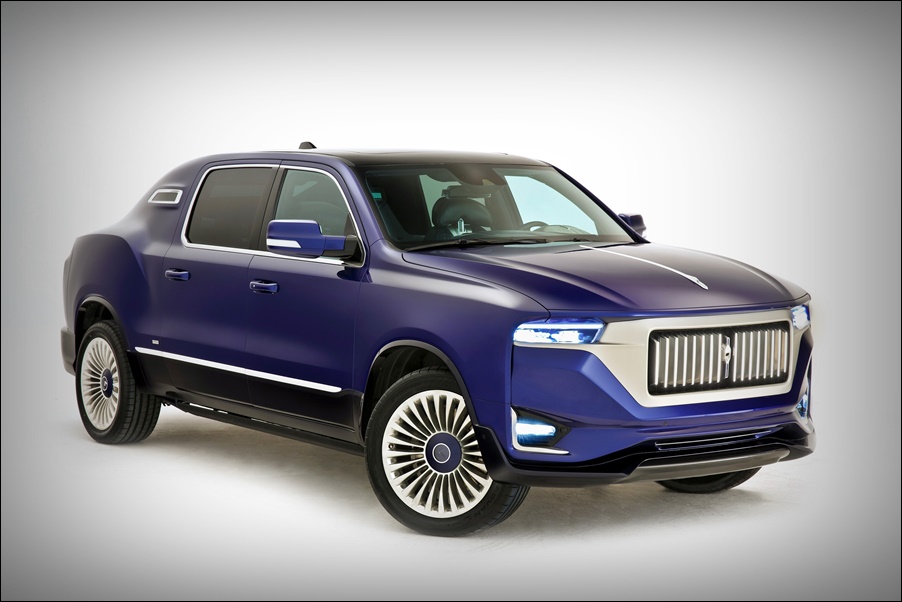
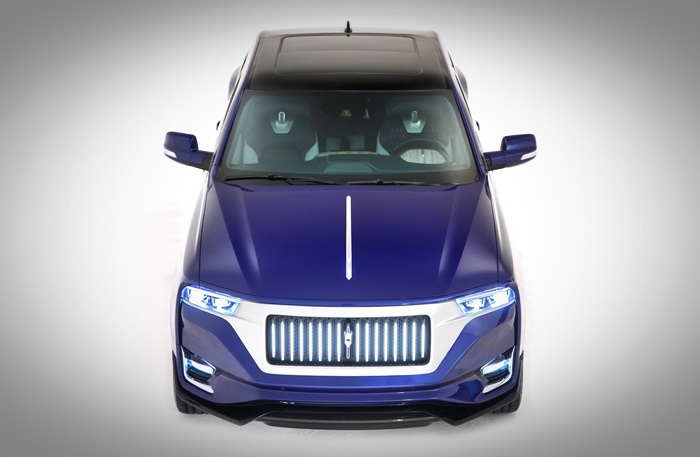
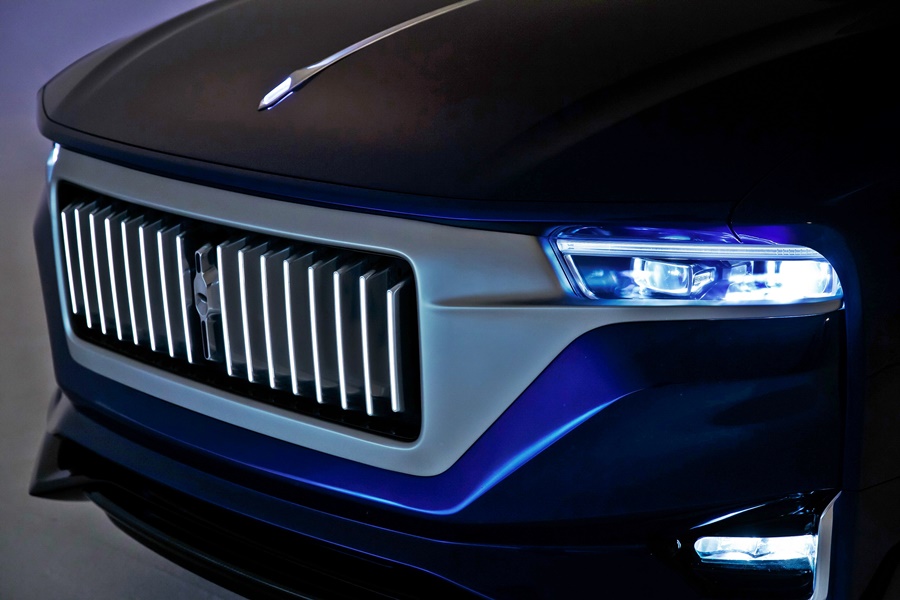
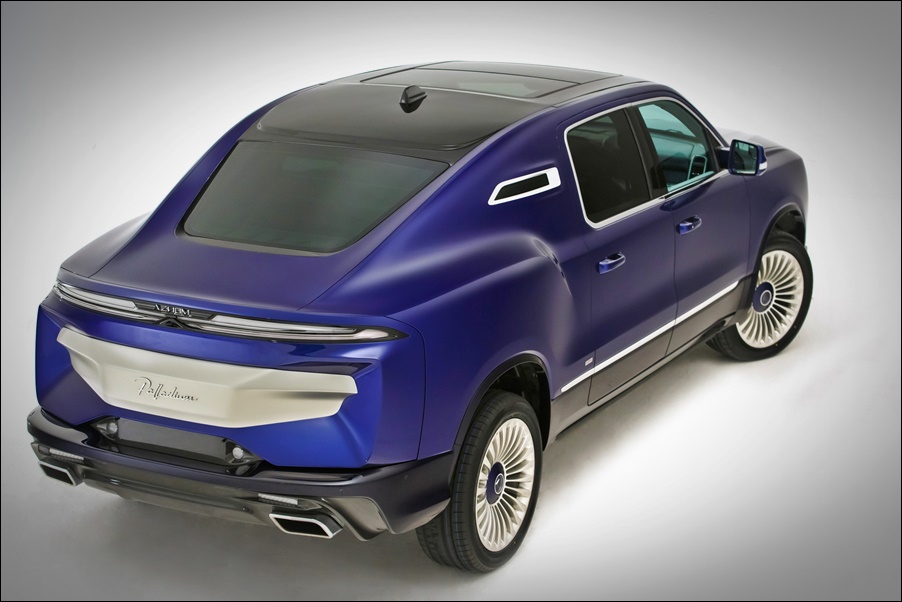
Now Aznom has created a luxurious model – the Palladium – with off-road capability to cater to an exclusive niche. Described as a ‘hyper-limousine’ that follows the traditional characteristics of great luxury sedans, it is designed and will be manufactured in Italy. The Palladium will be handmade, with only 10 units on the production schedule. These will be tailor-made for each client who has a wide range of customization options.
Inspired by RAM-based model
The Palladium is a large vehicle, measuring nearly 2 metres in height and almost 6 metres in length. It is engineered to travel over any type of terrain with an all-wheel drive system and a 5.7-litre biturbo engine capable of delivering more than 700 bhp/950 Nm (a mild hybrid powertrain can also be installed).
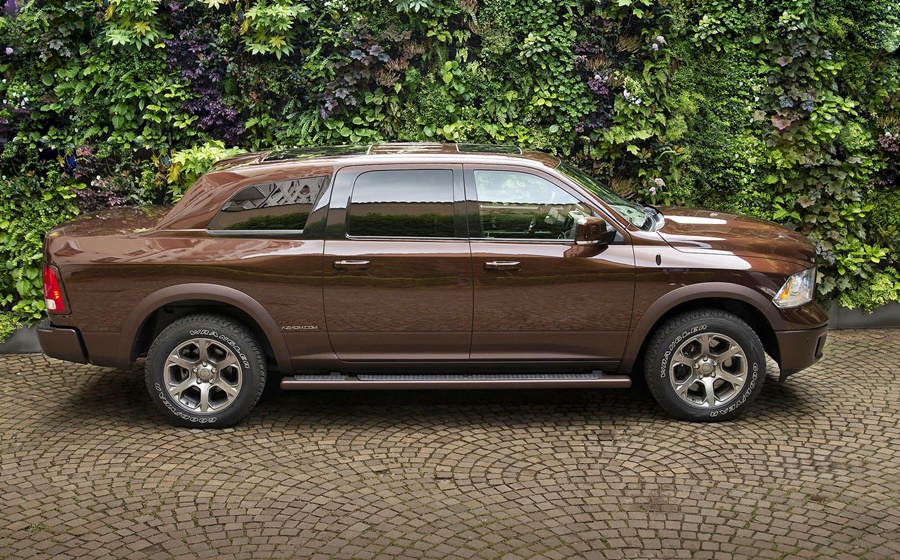
Inspiration for the Palladium goes back to the Atulux which was created in 2018. This was a luxury sedan based on the American RAM pick-up. Thought the Atulux looked like the RAM externally, it was totally different inside with high-end design and reclining seats ‘business class’ style.
The Atulux
“In truth, I’ve always been passionate about large automobiles,” said Meregalli, “Like the huge American sedans manufactured from the Thirties to the beginning of the Seventies. Or the incredible Rolls-Royce and Bentleys of those periods. I’ve always been fascinated by big vehicles; I liked the super large bonnets and the imposing stance of those cars.”
“I thought about creating something similar for a long time and I even considered a ‘resto-mod’ operation on a vintage Rolls-Royce. Then, in 2008, Cadillac unveiled the new presidential limousine for President Obama. This was not a stretched vehicle, but it had been built with different proportions. Starting from a mega-SUV, Cadillac had built a luxury sedan, big and imposing but with the proportions of a classic sedan,” he explained.
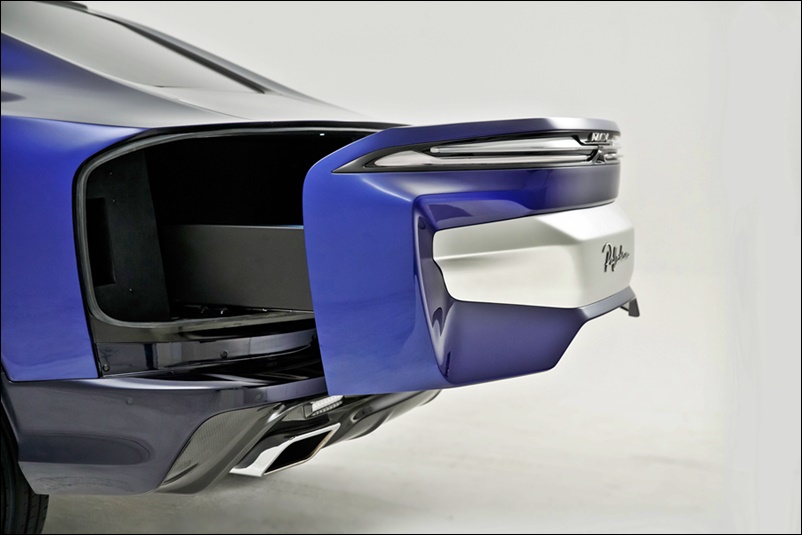
Unique design for access to rear cargo area.
That particular Cadillac gave the final push to an idea Meregalli had since even before the Atulux – of a car completely manufactured by his company, both outside and inside. “I can say today that we pushed that idea even further, conceiving a vehicle that can take its owner wherever. It is a true extra-luxurious limousine that is also able to trek the desert and this is why our Palladium is so unique!”.
Meregalli wanted to have an off-road vehicle personally too as his other business dealing with wine required him to often visit remote farms and vineyards. “In those situations, a 4×4 off-road vehicle is truly necessary. And how many times have I seen sedans stuck on the road to ski towns in the winter … the car that I had in mind had to be beautiful, luxurious, comfortable … but also unstoppable!” he said.
Limited production of 10 units
The Palladium project started two years back and as there are only 10 buyers, the company has been in the process of establishing a close relationship with those few special customers.
“With the Palladium, we have tried to bring together our entire experience of 15 years in order to create a really unique vehicle,” said Matteo Bertanelli, Project Manager Palladium. “To work on the body, we have paired handmade techniques to innovative technologies. We have used panel beating, an artisanal method that comes directly from historic coachbuilders, when men would beat the body panels by hand directly on wooden molds … but also hi-tech solutions like precision molding and working with carbonfibre.”
Most of the car’s main body is made of high resistance steel with only certain details made of aluminium to reduce weight. The bonnet and roof are carbonfibre while both forward and rear bumpers are made of composite materials. On the rear section of the chassis frame, the engineers have built a steel cage that helps improve torsional stiffness.
Extensive attention to cabin design
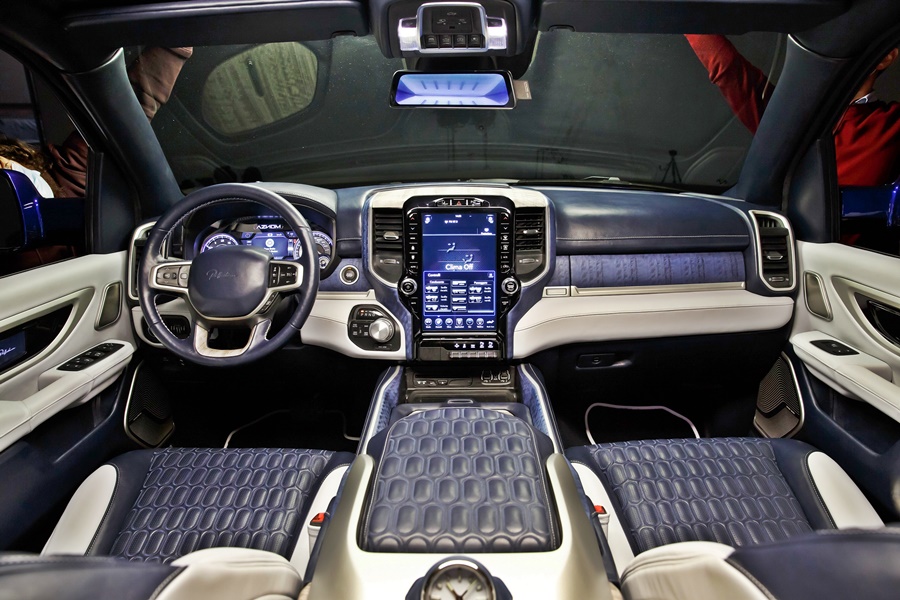
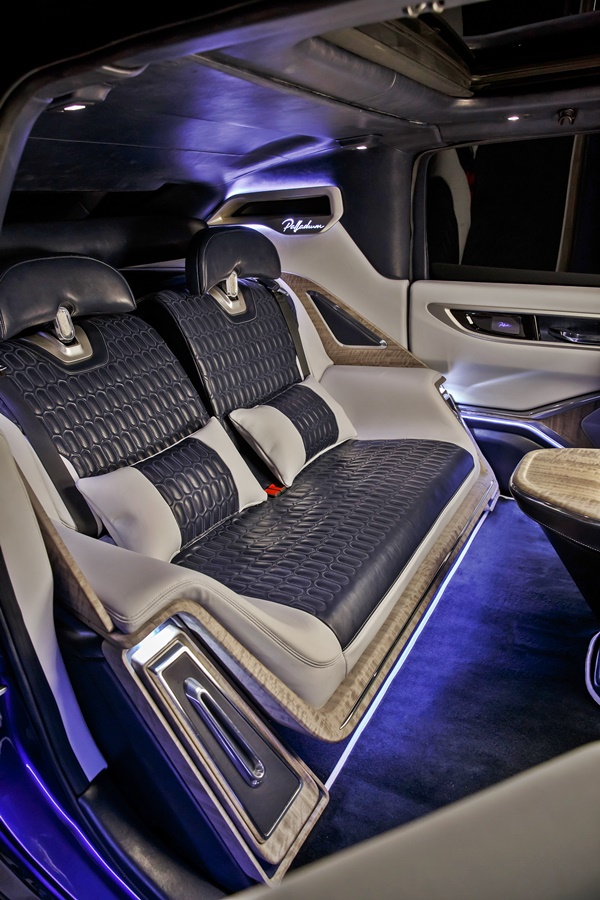
The styling responsibility was handled by Studio CAMAL in Torino, and as would be expected, the interior has received much attention to the tiniest of details. A large rear seat, not unlike a throne, gives ample comfortable space to the passengers while hidden drawers and compartments offer all sorts of amenities. The air-conditioning functions with two entirely separate and independent systems so that the back passengers can choose a completely different setting and temperature from the front.
The standard specs of the Palladium start with Foglizzo leather throughout (ceiling included). The seats, which have a custom pattern, incorporate large headrests designed with the same philosophy as the rear recliner. The door panel and the dashboard follow the pattern of materials and colours used in the upholstery, bright and dark leather spaced out by wooden parts, everything enriched by solid aluminium details.
As in the very expensive limousines, there is an exclusive clock on the dashboard. Handmade from gold and palladium, it has the Palladium logo on its face. The clock can also be removed and become an elegant piece of home furniture.
Besides the Harman/Kardon sound system, there are two Microsoft Surface X PRO and Aznom is also providing owners of the Palladium with a full set of luggage pieces, manufactured with the same leather and stitching as the limousine’s interior. A notable piece is the umbrella, signed by Francesco Maglia, historic company manufacturing umbrellas in Milan since 1854.