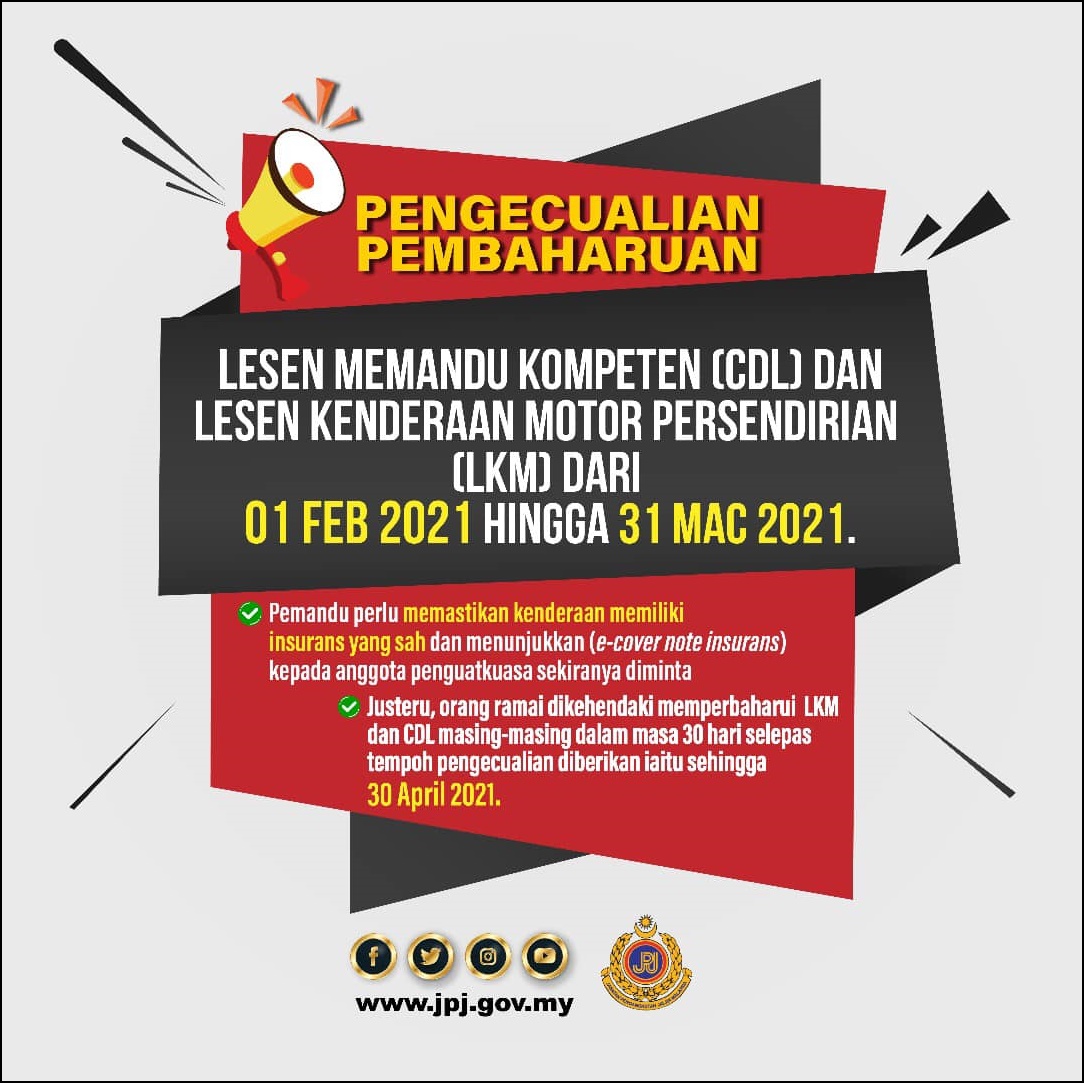
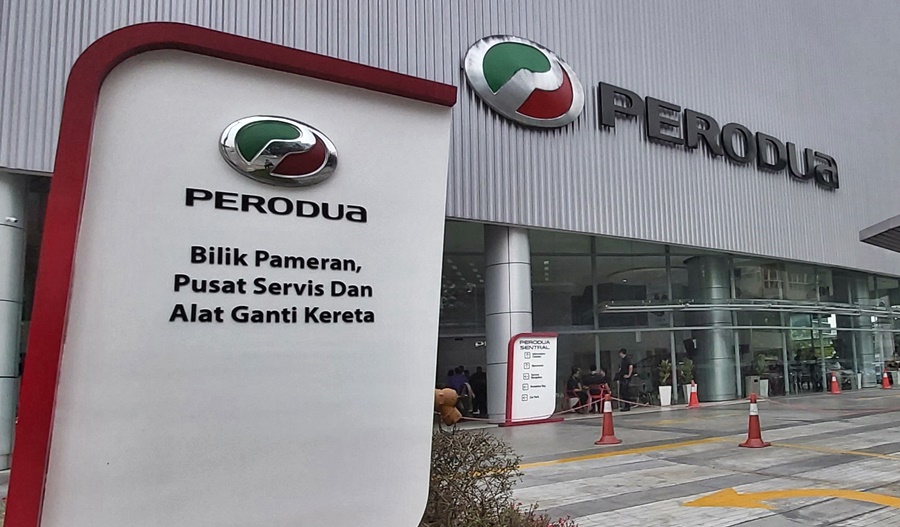
As in 2020 when the first Movement Control Order (MCO) restricted movements to the extent that even government offices had to shut down, the Ministry of Transport Malaysia has announced that renewal of driving licences need not be done if they expire between February 1 until March 31, 2021.
This is in view of the travel restrictions which presently limit people to a range of 10 kms from their homes, and also to reduce crowds at the JPJ offices. Unless another announcement is made, renewal will have to be done within 30 days from March 31, 2021.
This exemption is, however, not for those with commercial vehicle and vocational licences (GDL and PSV). They can still renew their licences as they are classified under Essential Services.
While renewal of the driving licence can be deferred, the vehicle must still have valid insurance. A copy of the insurance e-cover note must be available for inspection if requested by an authority. Valid coverage is important in the event of an accident.
Many insurance companies will be able to provide renewal services online, and companies like MyEG also handle renewals of driving licences and roadtax online. They can deliver the documents to an address provided for a small fee.
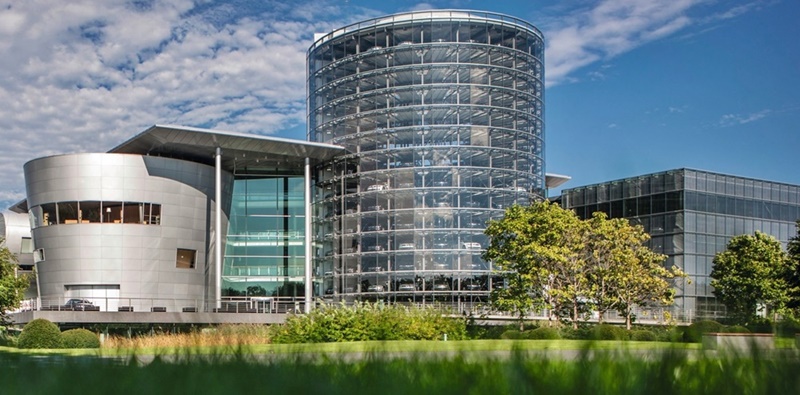
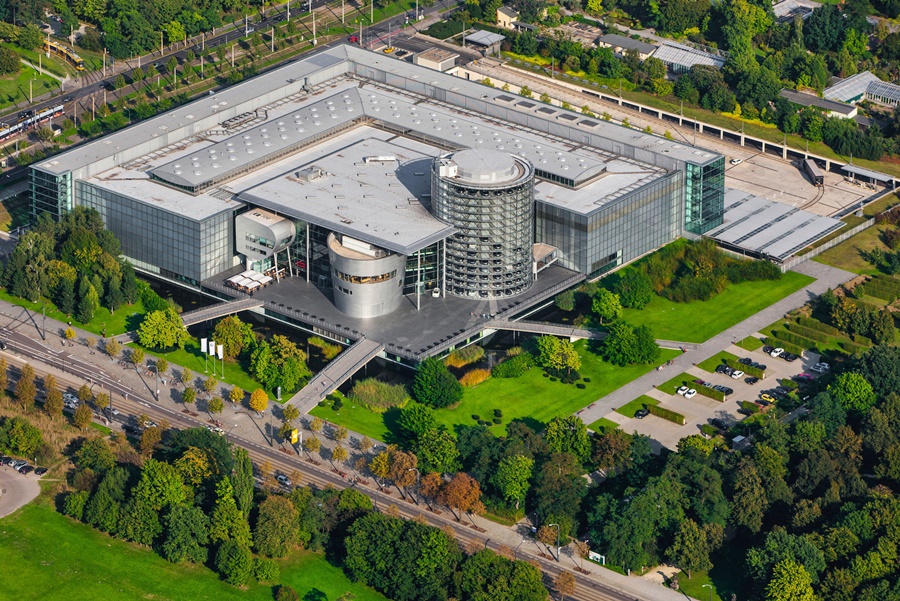
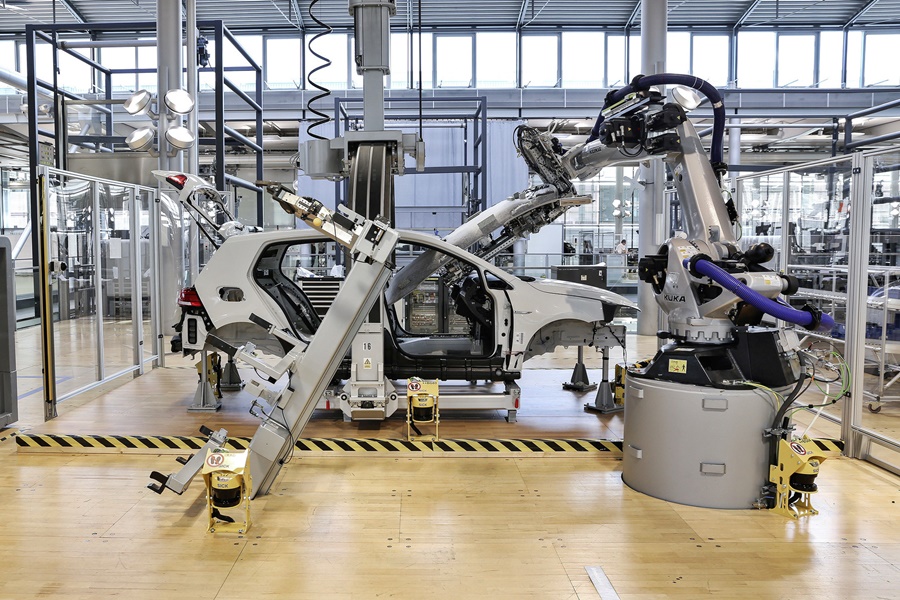
Volkswagen’s Transparent Factory, located in Dresden (which used to be in the former East Germany), began operations in 2002 making the company’s Phaeton luxury sedan. At one point, it was also used for production of the Continental Flying Spur by Bentley, which is part of the Volkswagen Group. The unique factory, with glass walls, also assembled the e-Golf.
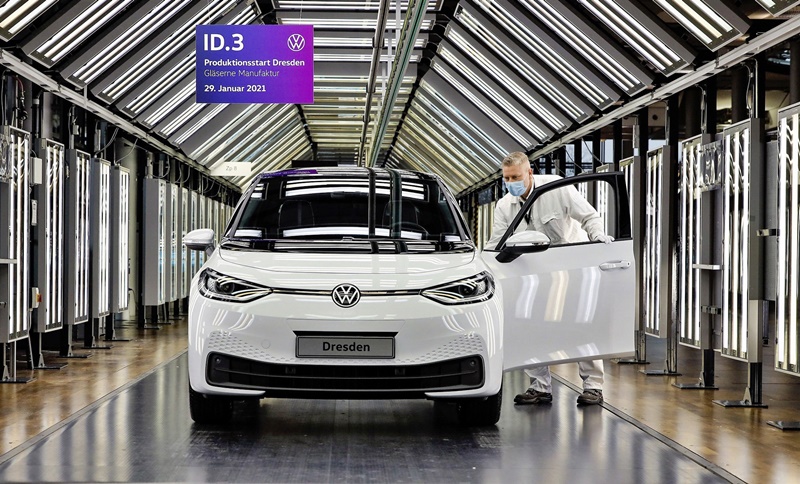
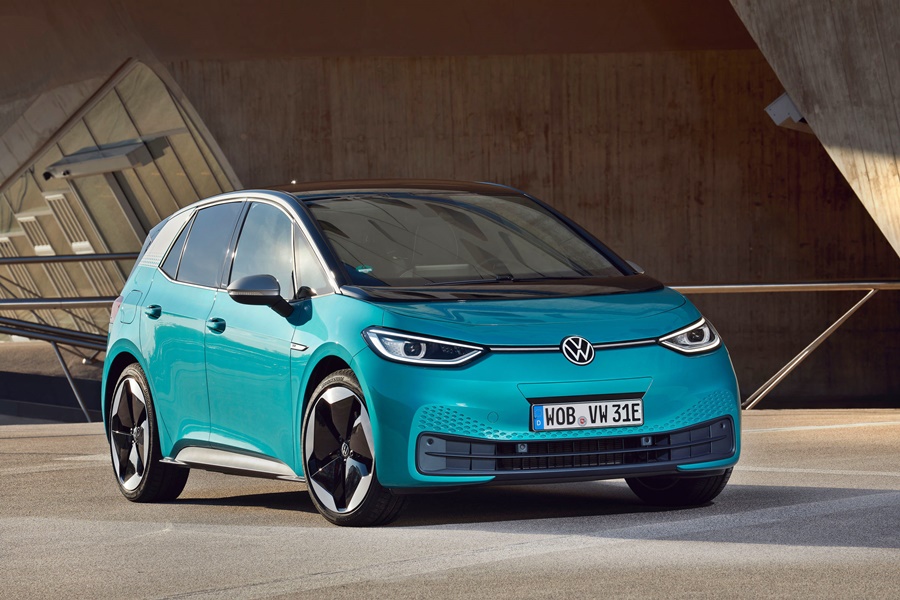
Now, it is making the ID, Volkswagen’s range of all-electric vehicles. It is the second production site for the ID.3 and already the fourth site in the world producing Volkswagen models based on the Modular Electric Drive Toolkit (MEB). Over the coming years, the former ‘Centre of Future Mobility’ will steadily transform into the ‘Home of the ID’.
Showcase for mobility of tomorrow
“The Transparent Factory plays an important role within the Volkswagen brand. Here, visitors, customers and guests come into direct contact with the mobility of tomorrow. We are a production plant, tourist attraction, event location, test lab and delivery centre – all in one. With the start of the production of the ID.3, we are giving the green light for our strategic realignment,” said Danny Auerswald, Site Manager of the Transparent Factory.
An additional focus of the strategic realignment is the development of a research and innovation site that drives innovative projects on a pilot scale for later use in large capacity sites at Volkswagen.
Holistic experience
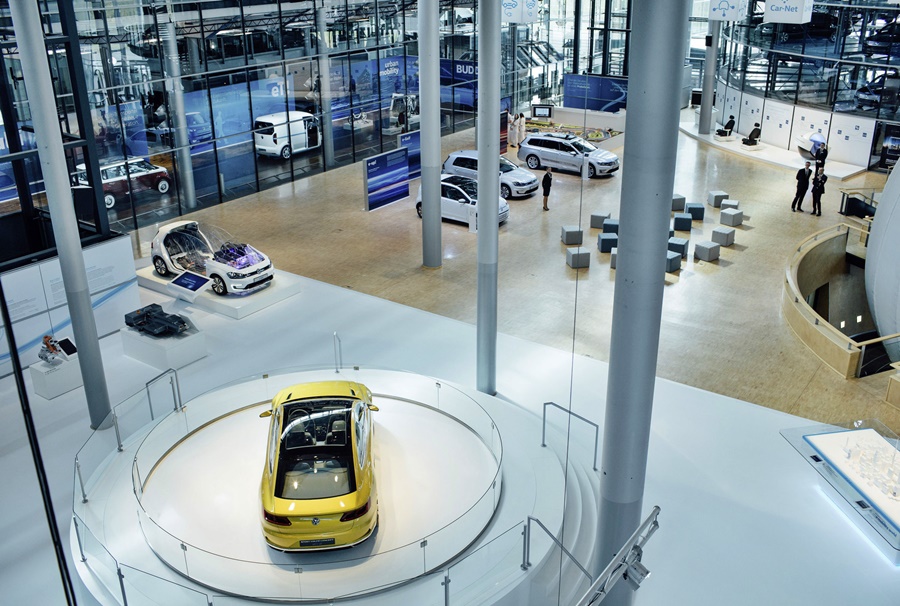
As it was before, the Transparent Factory offers customers, visitors and guests a holistic experience of the ID. family – from initial advice and test drives, to production visits, co-constructing the ID.3 and modern event formats, up to the handover of the electric vehicles.
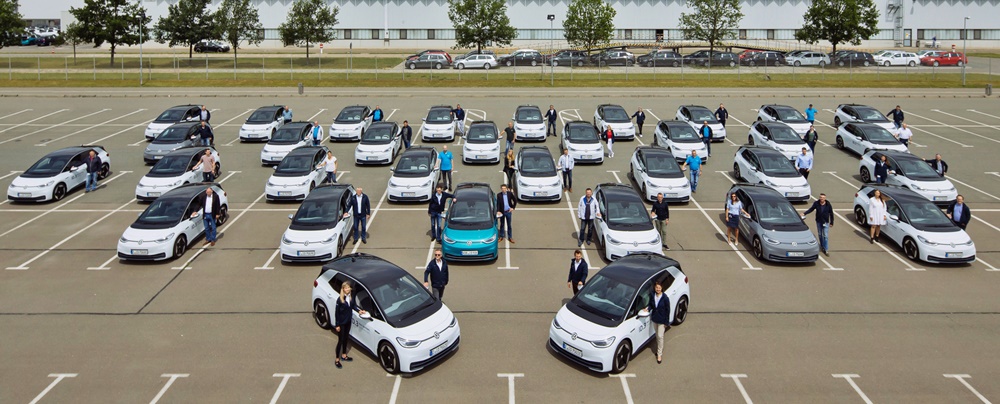
The first ID.3 rolled off the assembly line recently, and as with the start-up of the e-Golf in 2017, the production of the ID.3 will also start with one shift and 35 vehicles from Monday to Friday. Visitors can tour the factory from Mondays to Sundays.
The Transparent Factory, located in the former East Germany, also offers tours to the public and customers can collect their vehicles there as well.
In future, significantly more vehicles will be handed over to customers in the Transparent Factory. To that end, a second delivery point was recently set up in the factory – which is unique in the automobile industry. The number of vehicle handovers to customers is expected to increase from 1,301 in 2019 and 3,296 in 2020, to more than 5,000 vehicles in 2021. The goal is around 9,700 deliveries a year by 2022.
Conversion of the factory
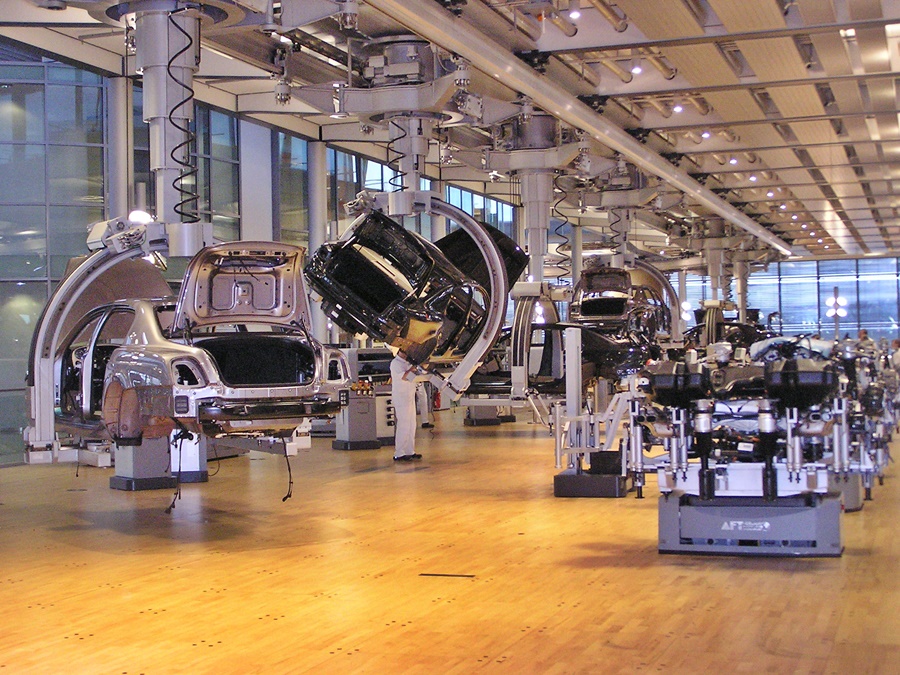
At the beginning of 2021, the production area of the Transparent Factory was converted to meet the requirements of the MEB. The first conversions for the ID.3 already took place in summer 2020. As one of seven stations, the ‘marriage’, where the body and chassis are bolted together, was adapted. The conversion measures include, for example, the installation of a system on which the panoramic roof is fitted and for the adaptation of the gripping devices for installing the cockpit and seat system.
The factory produced the Phaeton as well as Bentley Continental Flying Spur (above) and e-Golf (below).
Fourth MEB factory
The Transparent Factory is already the fourth site in the world producing Volkswagen electric cars based on the Modular Electric Drive Toolkit. At the end of 2020, the Chinese sites in Anting and Foshan also started production of MEB vehicles. Together, the two plants in Germany and two plants in China have a maximum production capacity of more than 900,000 vehicles a year. Two more sites in Germany and one in the USA are also preparing for MEB production.
The topic of Production 4.0 will also be driven forward in the Transparent Factory. The guiding principle is the automation and digitalization of complex operations within assembly and logistics. Specifically, the factory will act as a planned pilot plant in the company for the development and application of new technologies in volume production processes.
David Brown Automotive (DBA) started off in 2013 to offer exclusive cars that took the classic, timeless, elegant looks of previous decades combined with modern, state-of-the-art engineering, production methods, technology and performance. Using predominantly British-sourced premium materials and traditional artisan craftsmanship, each of the company’s vehicles is uniquely produced by hand in Great Britain.
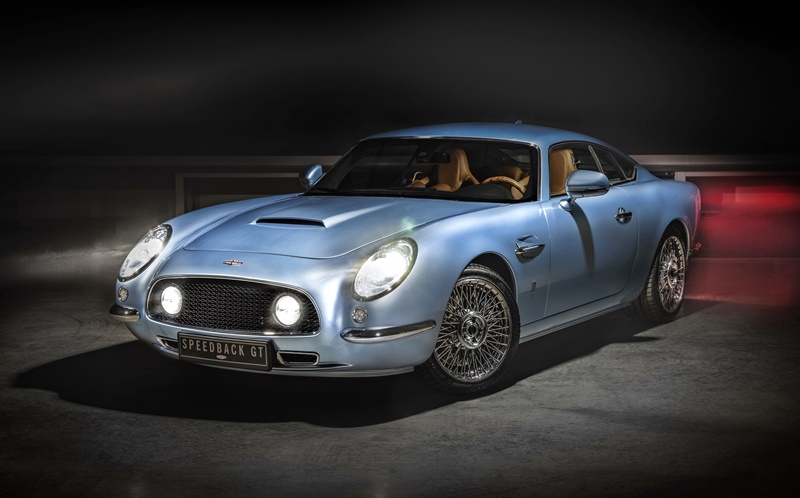
It recently completed a striking Speedback GT for a customer in Germany. Described as ‘a true example of personal expression’, the grand tourer showcases of DBA’s ability to offer bespoke solutions for any style, with this car custom-built with a number of exclusive accessories and bespoke options. Every customer obviously pays considerably more than the base price which, in the UK, is over £600,000 (about RM3.3 million).
This particular Speedback GT model has a bespoke brilliant ‘Blue Moon’ hand-painted finish. It is the mainstay of the company’s range of products and took some 8,000 hours to build. This latest Speedback GT order was entirely bespoke, with a completely unique combination of handcrafted leathers, wood veneers, bespoke brightware plating and unique picnic seat feature.
Every Speedback GT is a unique masterpiece, with this newest car distinguished not only by its blue hue but also with its bespoke build extras. A black mesh satin grille is fitted, complete with inset auxiliary LED lighting.
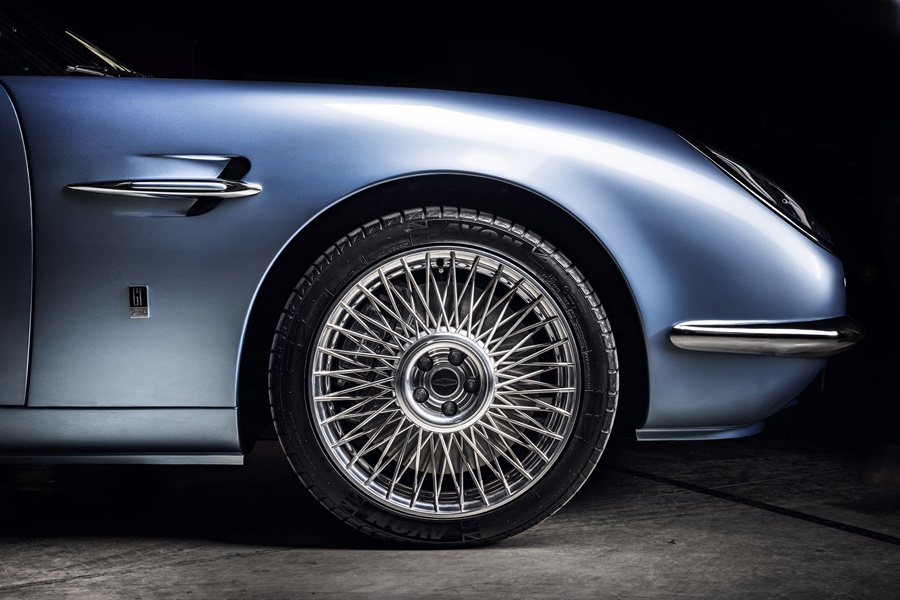
The car is fitted with 19-inch polished stainless steel wire wheels for use in the summer, surrounded by David Brown-branded tyres, developed specially for this wheel option by Avon Tyres. The owner also receives a set of bespoke Union Flag-inspired alloy wheels for the winter months.
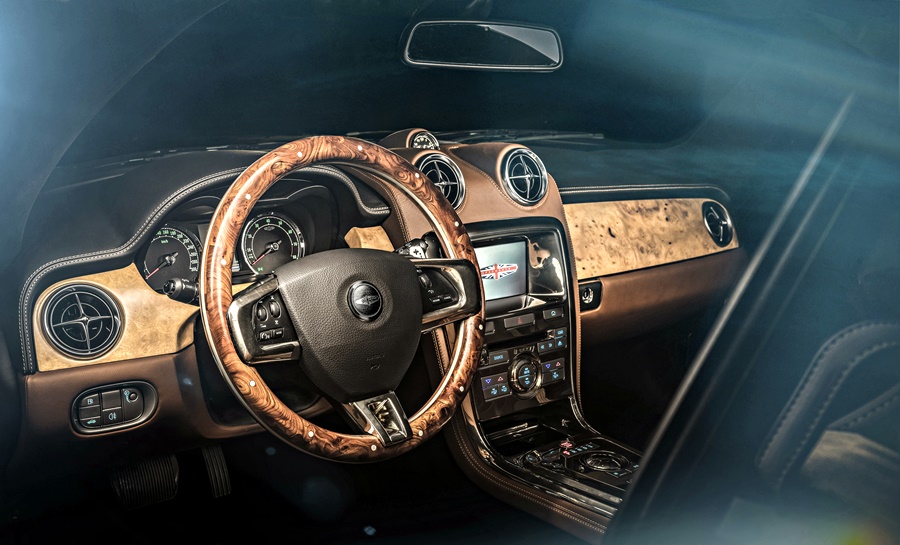
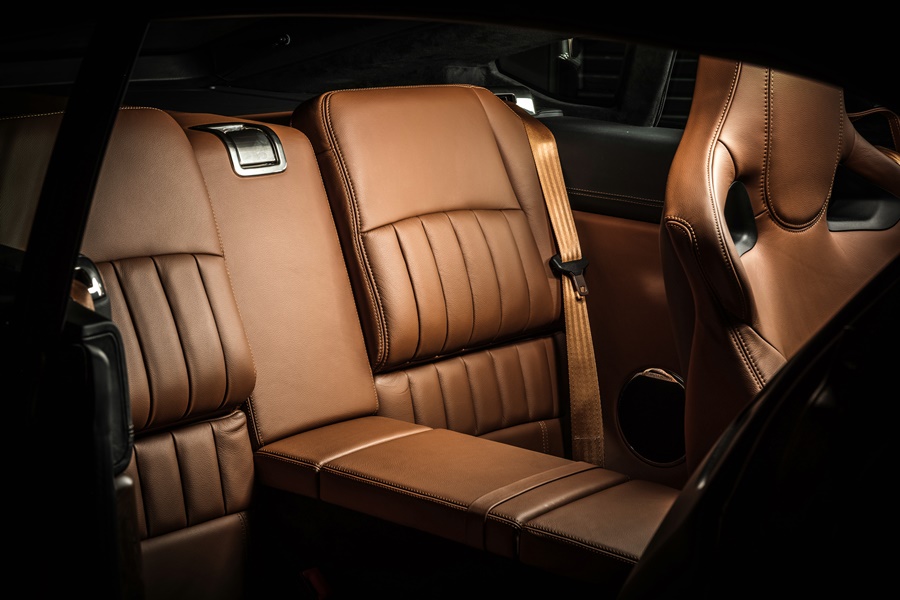
Inside the Speedback GT, the car has a one-of-a-kind look and feel with hand-crafted Elm Burr satin lacquered wood veneers and a ‘Tabak’ tan leather interior that gives light colour shades to complement the tint of the extensive wood materials used throughout. All of the brightware has been milled from solid billets of aluminium and then plated in nickel chrome to give additional warmth to the cabin.
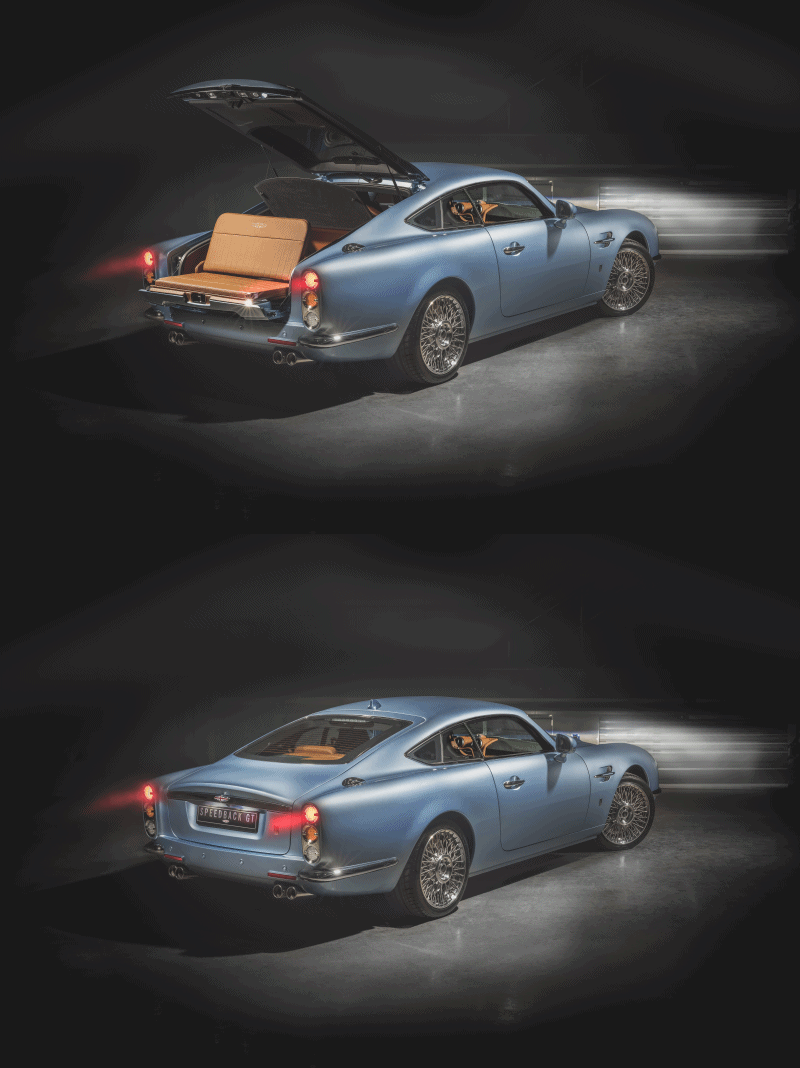
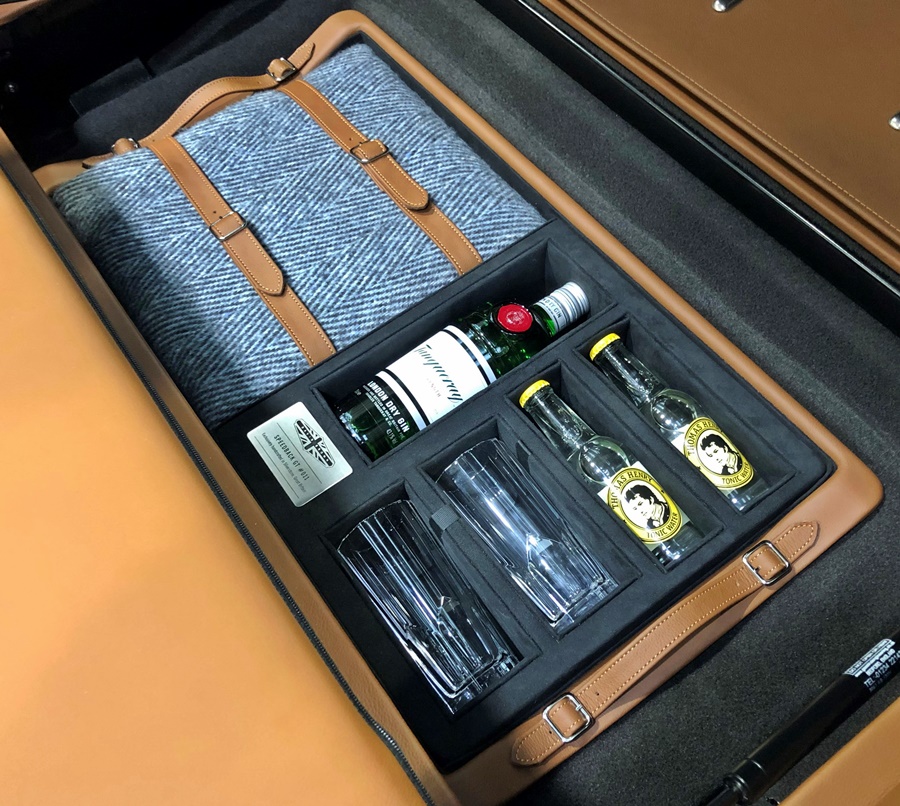
DBA is especially proud of the custom drinks set that holds the owner’s preferred gin and tonic and two crystal highball glasses, along with a bespoke woollen picnic blanket, situated underneath the picnic seat that extends out of the boot of the car, a feature made famous by Speedback GT.
This bespoke addition can be specially designed for customers who want to serve passengers drinks, or to park up for the night and enjoy a G&T. This customer spent a day at DBA’s headquarters to refine their bespoke specification, settling on the drinks set as a ‘quintessentially British’ signature of the car.
“We’re very proud of our entire product range and while much of our volume comes from Mini Remastered models, enquiries and sales of Speedback GT have remained consistent since its launch. Thanks to its timeless styling and superb build quality, the model remains a mainstay of our portfolio,” said Michelle Gay, Sales and Marketing Director at David Brown Automotive.
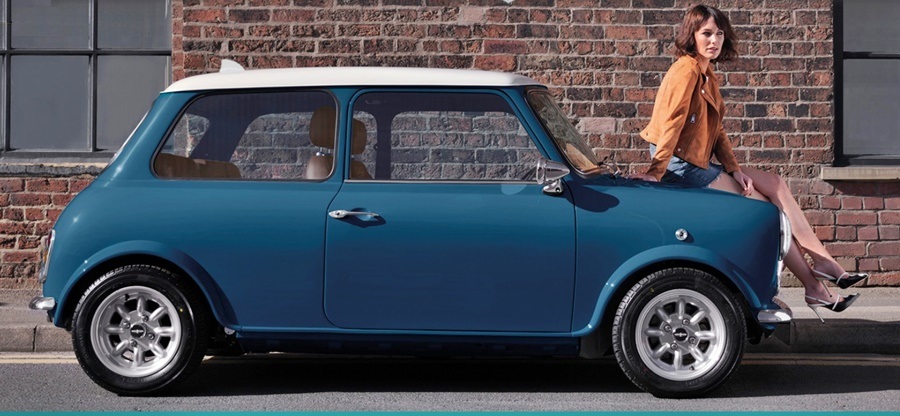
MINI REMASTERED is the other model in the David Brown Automotive range.
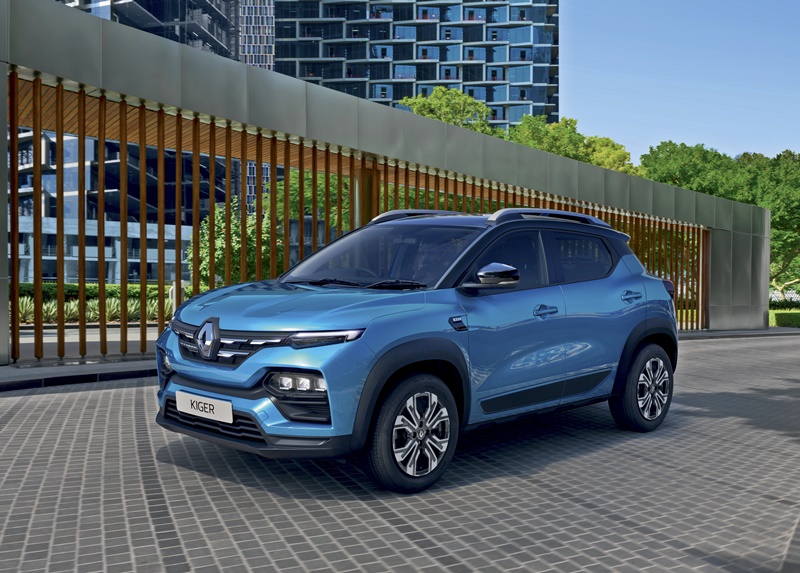
In spite of the hugely challenging conditions last year, Renault continued to improve its business in India, giving it confidence to accelerate expansion plans and double our annual sales volumes over the next couple of years. The market has remained strong in the French carmaker’s Africa-Middle-East-India-Pacific market, accounting for about 20% of sales.
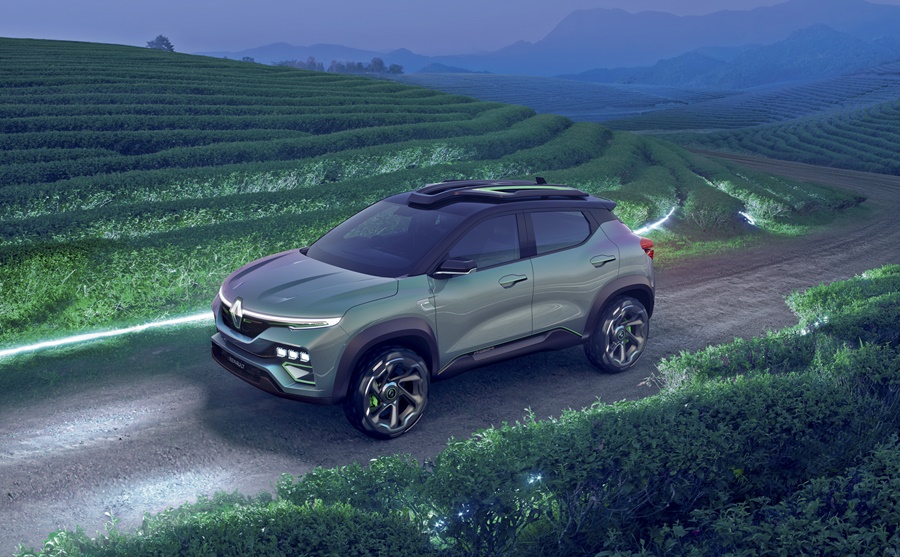
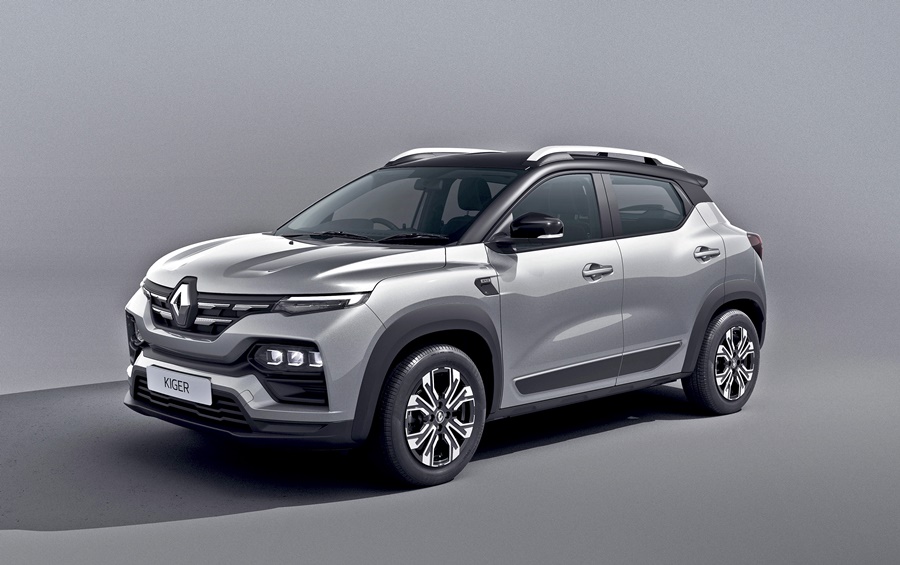
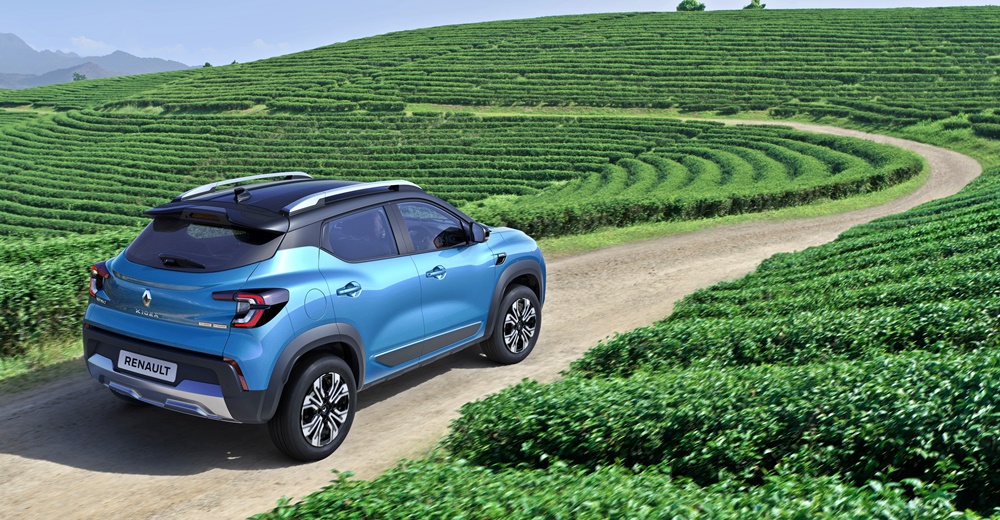
The push forward today gained an additional offering for the Renault range for the sub-continent with the unveiling of the new Kiger SUV. The concept model was shown late last year and the production version looks very similar; in fact, Renault already said that around 80% of what was in the concept would be retained in the production model.
Renault Kiger concept shown last year, and the production model (below)
Follows concept model styling
The designers have given the Kiger several features to add sportiness. The front grille’s 3D graphic finish with honeycomb-shaped chromed effects is an example, while the aluminium finish skidplate is a highlight at the rear, along with the LED double C-shaped lighting signature.
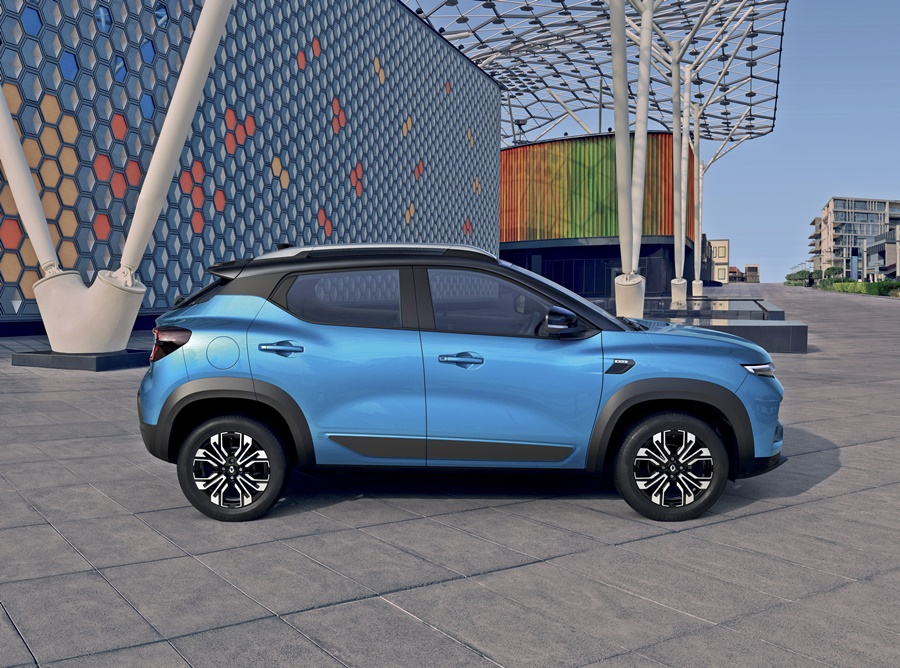
The Kiger that will be in showrooms in India has the same overall silhouette of the concept SUV. It has an overall length of 3991 mm and overall width of 1750 mm and sits on the same CMFA+ platform as the Triber and the Nissan Magnite.
Best-in-segment roominess
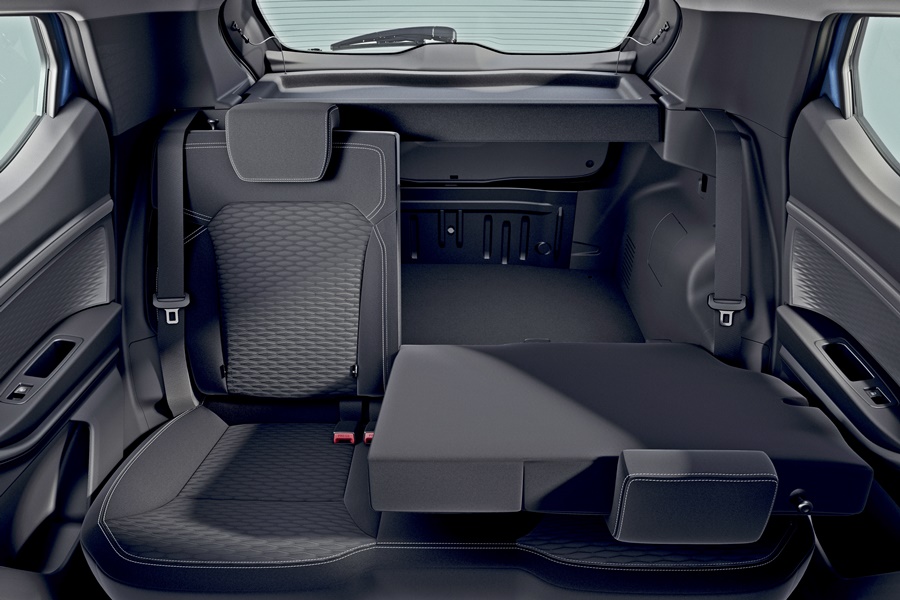
The Kiger is said to provide ‘record levels of roominess’ and a couple distance of 710 mm between the front seats – the best in its segment. At the rear, there is also claimed to be the best-in-segment second row legroom and elbow room. Cargo volume is also the biggest in class with 405 litres (expandable to 879 litres) with a floor length of up to 1565 mm.
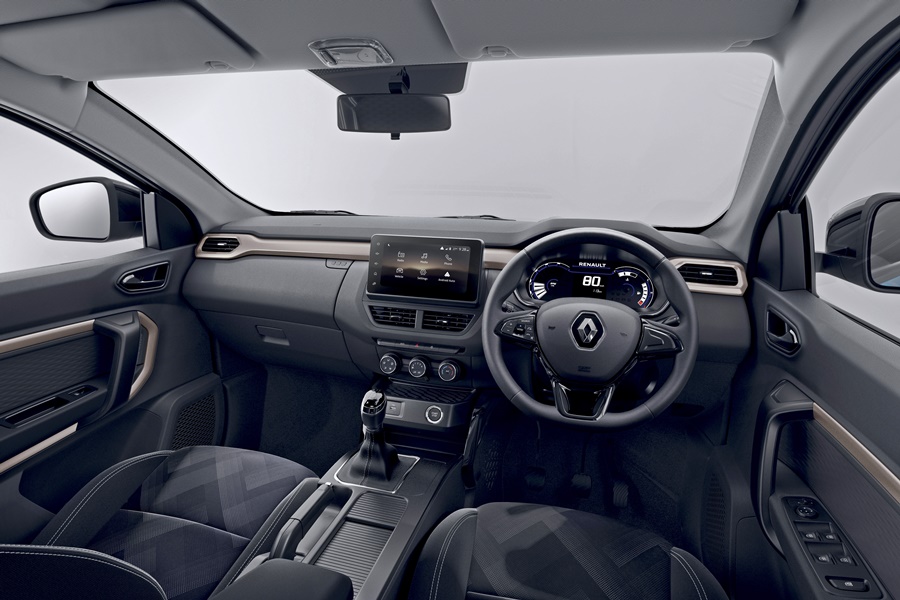
The ‘smart cockpit’ was designed to give a practical onboard experience without detracting from style. It has a high, wide dashboard centre console focused around a large 8-inch floating touchscreen that features wireless smart phone replication for Apple CarPlay and Android Auto.
1-litre engine, turbo and non-turbo
The powerplant available at launch is only a 1-litre 3-cylinder engine, with and without a turbocharging. The naturally-aspirated engine develops 72 ps/96 Nm while the turbocharged one has an output of 100 ps/160 Nm.
The more powerful engine will be available with a 5-speed manual transmission or X-TRONIC CVT. For the other variant, there is also a manual transmission or the option of an EASY-R robotised gearbox.
Pricing is expected to start from Rs 6 lakh (about RM34,000) with sales to start by the end of the first quarter of 2021.
The Continental model line has a special place in Bentley’s history, having begun in 1952 with the R-Type Continental. This was a Mulliner-bodied coupe with a top speed of just under 195 km/h. It was the fastest 4-seater car in the world during that period of the 1950s, and very quickly earned a reputation as the ultimate in high-speed luxury.
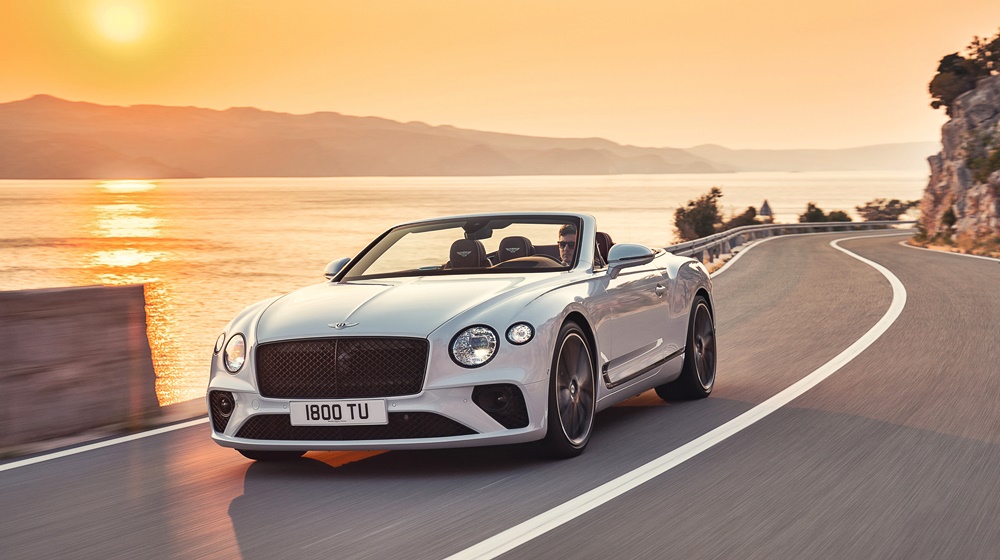
In 2003, the Continental GT was launched – the first car of the modern Bentley era. Inspired by the R-Type, the first Continental GT established an entirely new market segment – the modern luxury Grand Tourer. Ever since, an average of nearly 5,000 examples have been delivered to customers around the world each year.
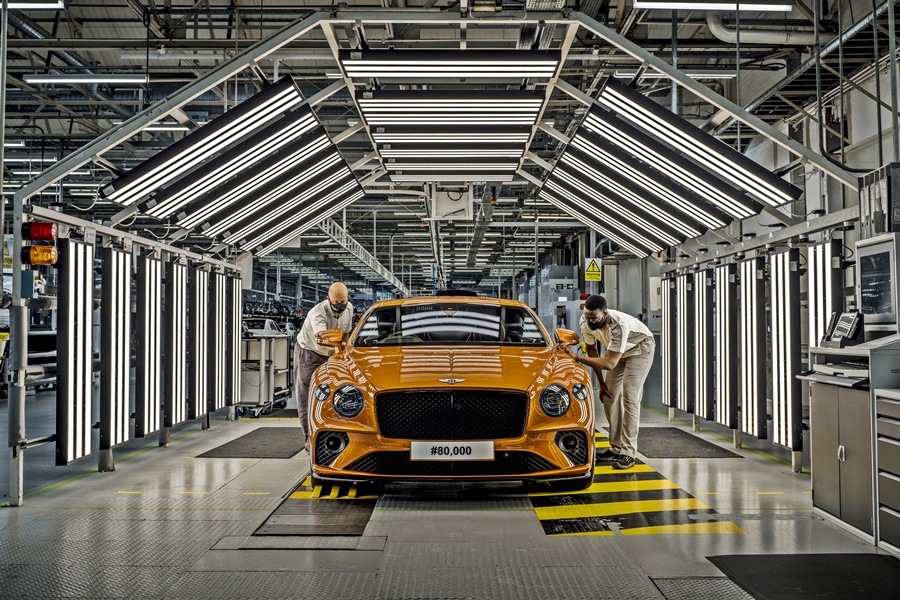
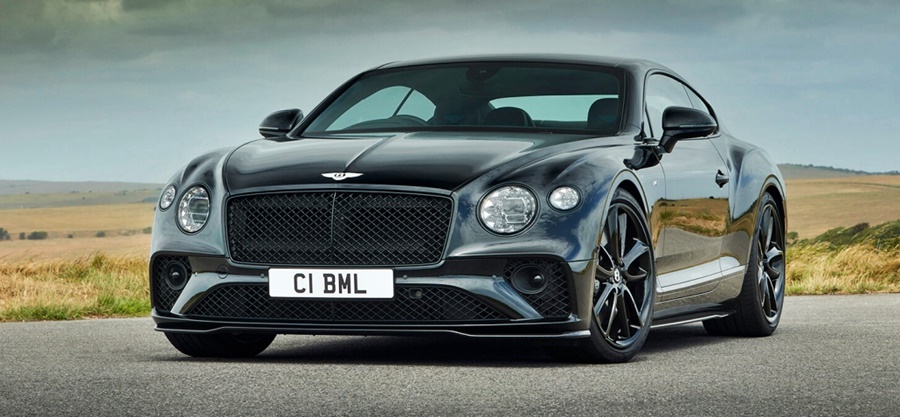
This year, after 18 years, the Bentley factory in England produced the 80,000th Continental GT. It should be noted that every Continental GT has been customised, meaning there are 80,000 very individual examples of the car. The 80,000th unit was a right-hand drive Continental GT V8 in Orange Flame and it was completed earlier this week.
“At its launch in 2003, Bentley redefined the modern grand tourer with the revolutionary Continental GT. Now in 2021, the GT continues to be the ultimate luxury grand tourer, encompassing the latest technology, performance and style. This success is a testament to the skills of our designers, engineers and craftspeople here in Crewe,” said Bentley’s Chairman & CEO, Adrian Hallmark.
Many of the skilled craftspeople will have worked on the very first example of the Continental GT (still owned by Bentley). Over this period, the style, technology and engineering beneath the car has evolved significantly, seeing an increase of up to 27% in peak power, whilst models within the range have also achieved a reduction over the original Continental GT of 48% in CO2 emissions.
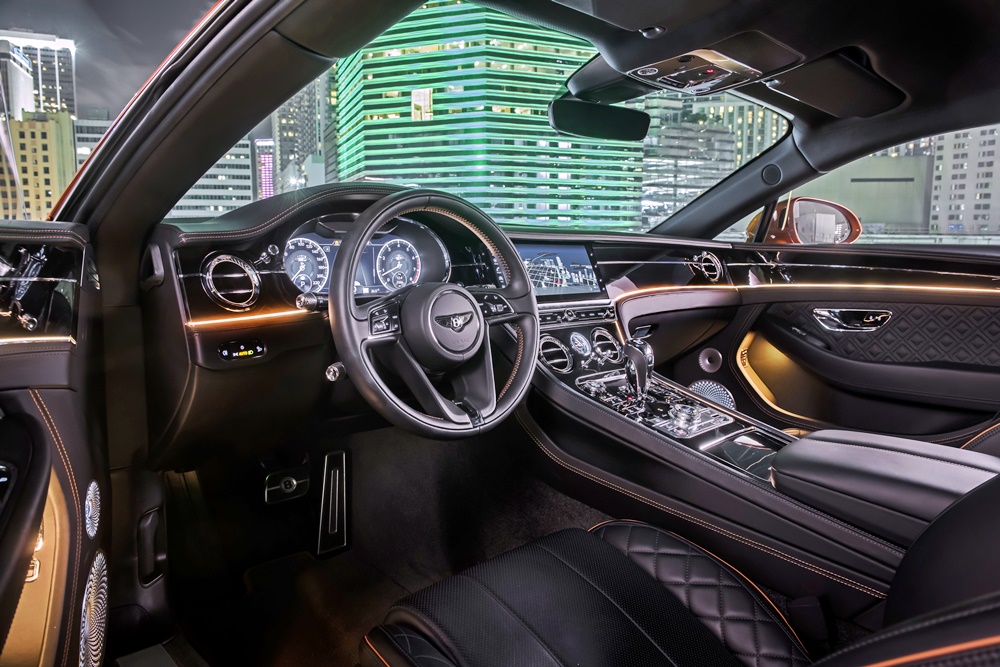
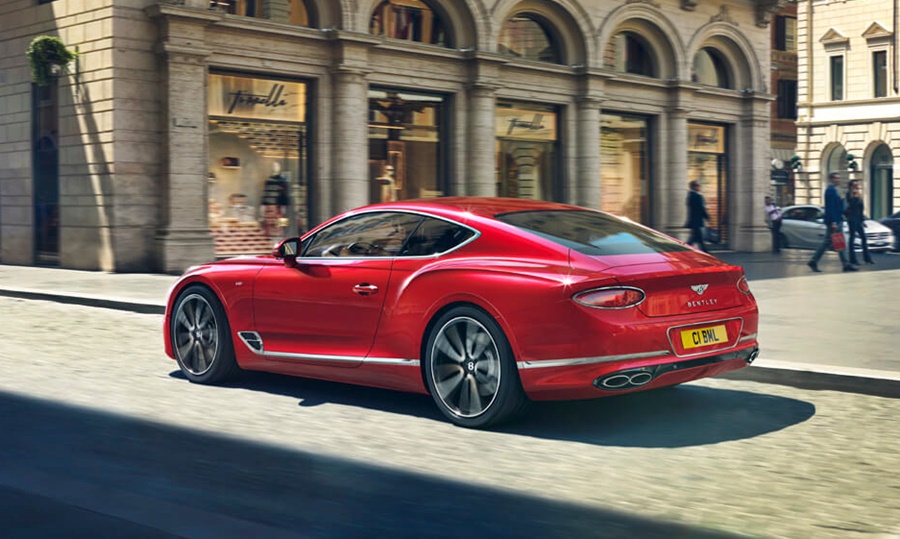
The platform beneath the car was upgraded to a Bentley design for the third generation, allowing a totally new stance, proportions and levels of dynamic ability that raised the bar again. Wrapped in a totally new bodywork design, with sharper lines and more flowing surfaces, the Continental GT remains a stylish and thoroughly contemporary grand tourer.
With a choice of powertrains, one of the most extensive colour palettes in the world and with almost limitless interior options, unique configurations can run into billions of variations. Bentley suggests that there are currently a total of 17 billion ways in which a customer can personalise his or her Continental GT.
Beyond that there are also the services of Bentley Mulliner – the company’s in-house bespoke division – which will make the requirements of each customer a reality. Apart from safety aspects, there are no limitations to what can be done for the customer.
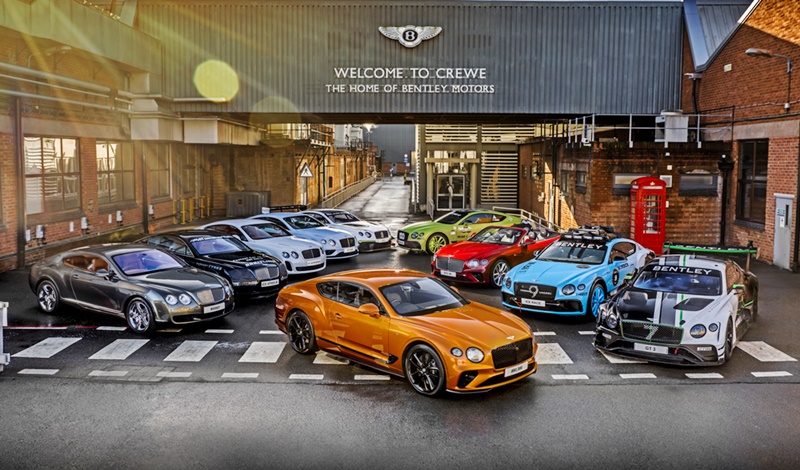
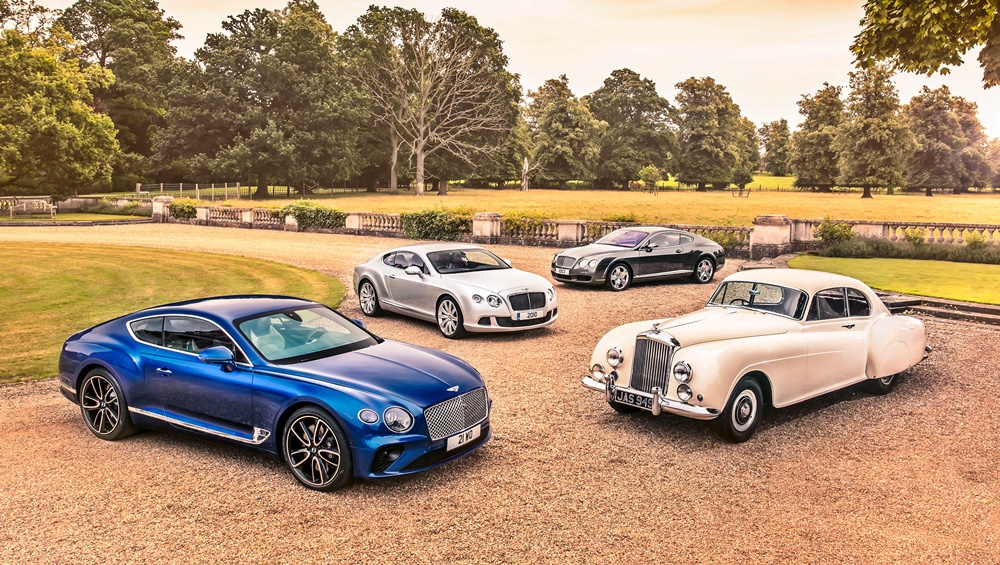
To mark the production milestone, Bentley drew on its heritage fleet to show the evolution and achievements of the Continental GT since 2003. These included the very first production unit, still a taxed-and-tested car on Bentley’s fleet, a Continental Supersports coupe, considered by many to be the pinnacle of the first-generation GT family as well as second generation Continental GT V8 S coupe, finished in Jetstream.
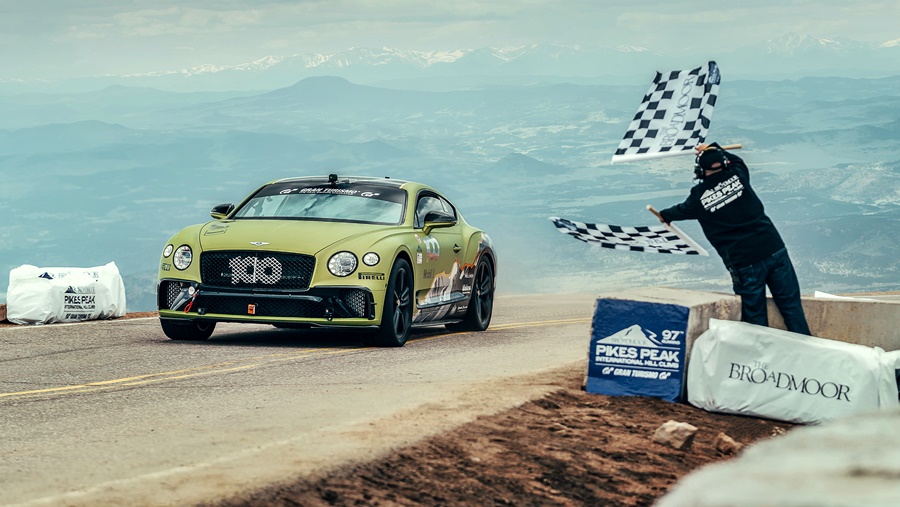
A Continental GT setting the Production Class record at the 2019 Pikes Peak International Hillclimb.
The Continental GT has also supported Bentley’s long tradition of racing and record-breaking that started in the 1920s when the Bentley Boys set the pace at European circuits. Some recent achievements: the first Ice Speed Record GT, driven by 4-times World Rally Champion Juha Kankkunen; and the 2019 Pikes Peak GT, which still holds the Production Class record at the Pikes Peak International Hill Climb.