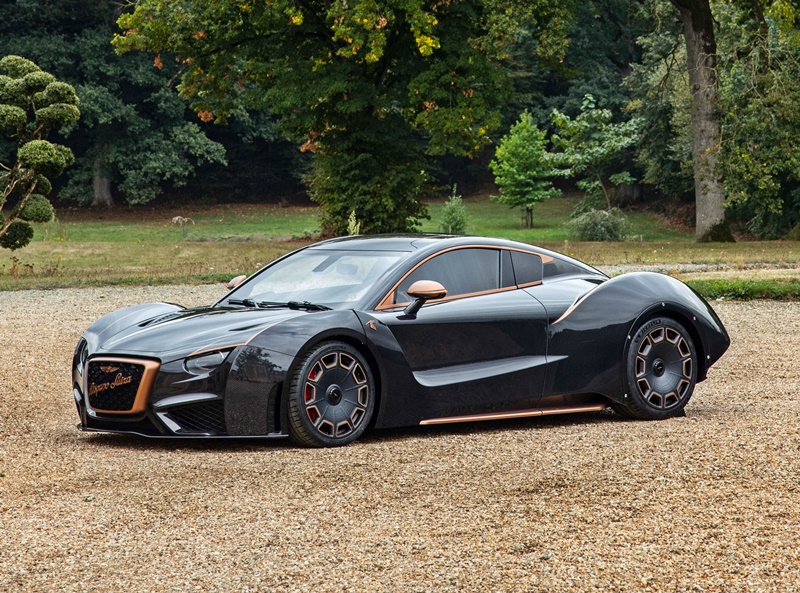
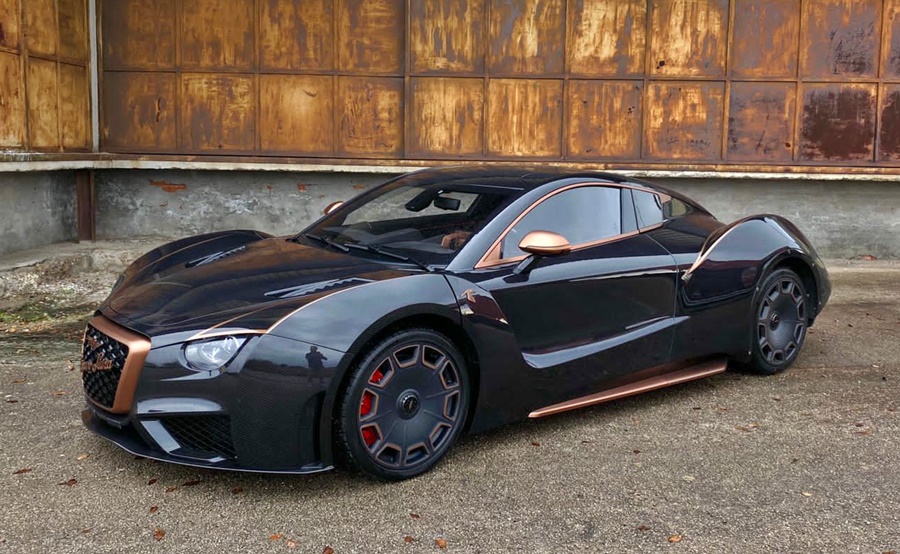
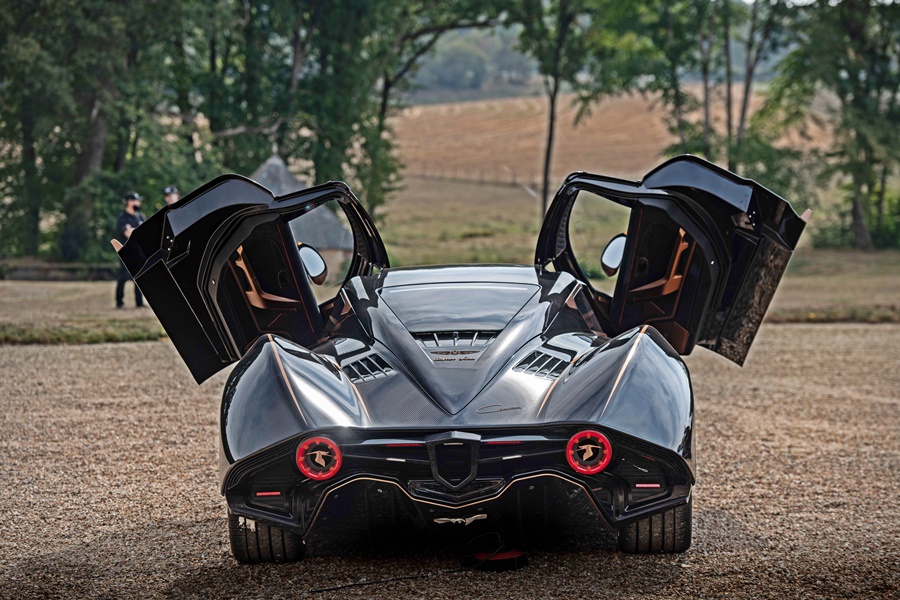
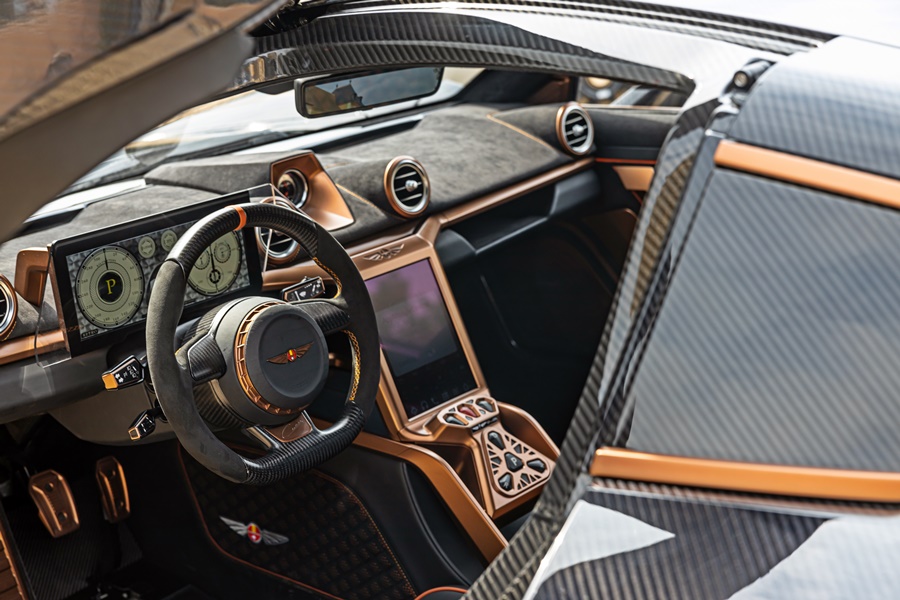
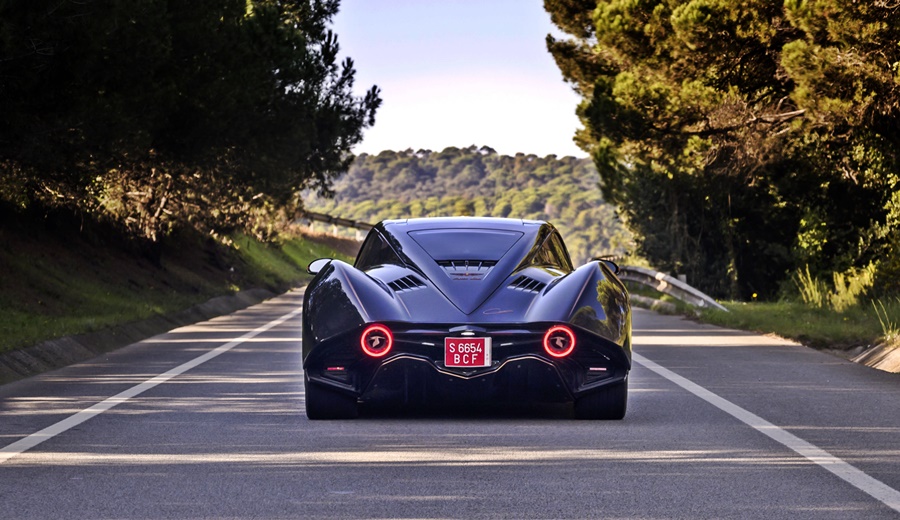
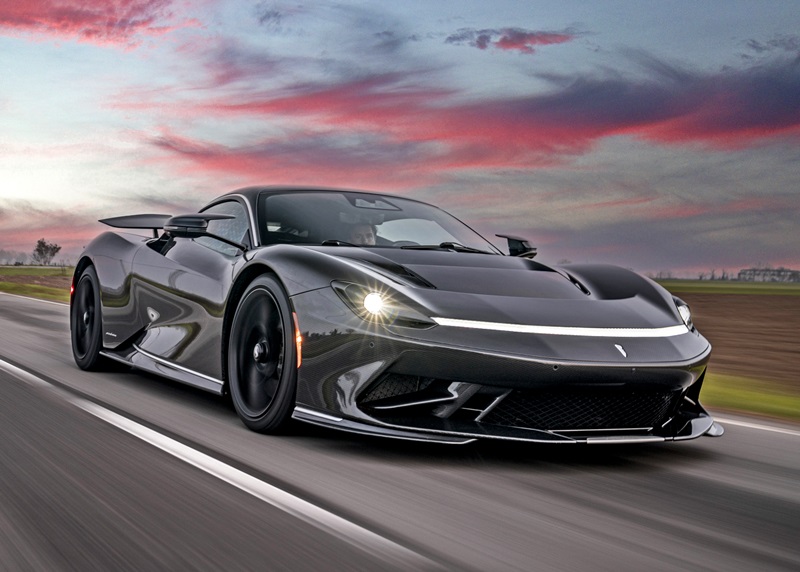
Hispano Suiza, the Spanish manufacturer with a history going back to 1904, has launched a second model as a follow-up to its Carmen all-electric hypercar which debuted last year. The new model is the Carmen Boulogne, a sportier evolution of the Carmen, and it also fully electric.
The current plan is to build only 5 units for sale, each priced from 1.65 million euros (about RM8.2 million) and take approximately 12 months to complete. 14 units of the Carmen will be available, with the first unit to be delivered in 2022.
A name from 1921
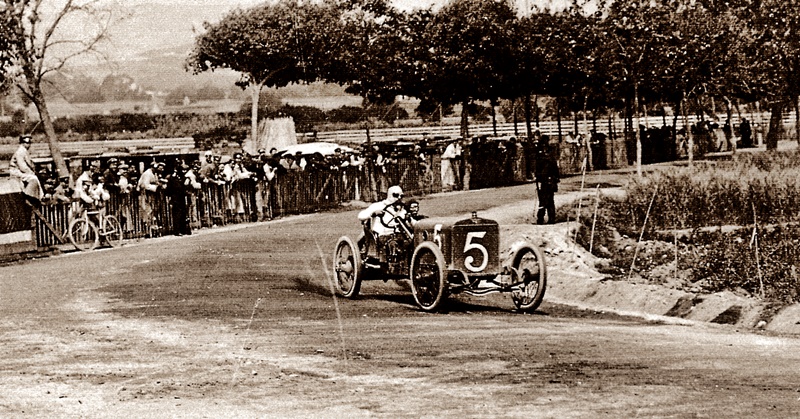
The ‘Boulogne’ name dates back to 1921, when Hispano Suiza made a racing version of its high-performance H6 Coupe and entered it in the George Boillot Cup, an endurance race lasting more than 3½ hours around the French city of Boulogne. There, Hispano Suiza achieved three consecutive victories with its H6. The Carmen Boulogne pays tribute to these historic motorsport victories
Its powertrain produces 1,114 ps – 95 ps more than the Carmen – and it can go from 0 to 100 km/h in a claimed 2.6 seconds, with a maximum speed limited to 290 km/h. Its weight of 1,630 kgs is 60kgs less than the Carmen, achieved by optimisation of structural elements such as the suspension and carbonfibre subframe. There are also new CNC parts and a carbonfibre roof, among other things.
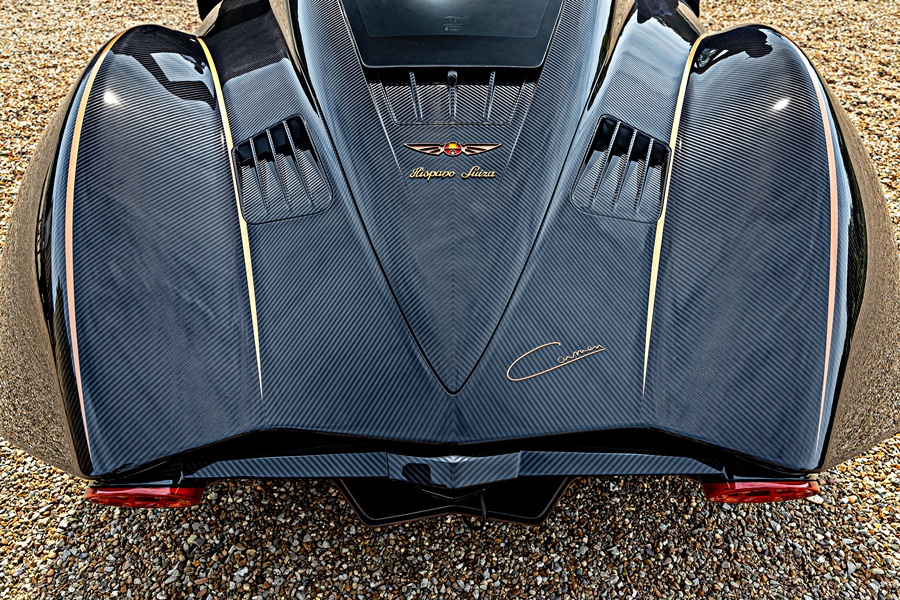
Visible carbonfibre bodyshell
The entire carbonfibre bodyshell of the Carmen Boulogne is visible under a clear varnish that emphasizes its sportiness and preserves the timeless elegance of this model. It sports the same semi-circular headlights and aggressive ‘scowl’ as the Carmen, with the difference of an imposing copper-coloured grille.
The five customers can fully customize the model with the assistance of the brand’s ‘Unique Tailormade’ department. The sleek interior features suede or black Alcantara on the bulkhead and door panels.
The Carmen Boulogne is powered by four permanent-magnet synchronous motors, two on each rear wheel. The torque of each engine is controlled through sophisticated vectoring systems developed in-house with the expertise gained in Formula E.
1,600 Nm of torque from standstill
From 0 to 6,500 rpm, the engines are capable of generating up to 1,600 Nm of torque, allowing for the sizzling acceleration. The lithium-ion polymer battery pack that provides ‘fuel’ has a capacity of 80 kWh and is claimed to enable driving range of up to 400 kms.
The batteries are designed and produced in-house, including a complete temperature control system to ensure that the cells can operate optimally. The fast-charging capability at more than 80 kW DC is said to require 30 minutes to charge 30 – 80%.
The 2021 Carmen hypercar gets its name from the founder’s daughter, with design inspiration from Hispano Suiza’s iconic 1930s design called the Dubonnet Xenia (top car).Hispano Suiza has a long history going back to the early 1900s and was a well known name in motor racing.
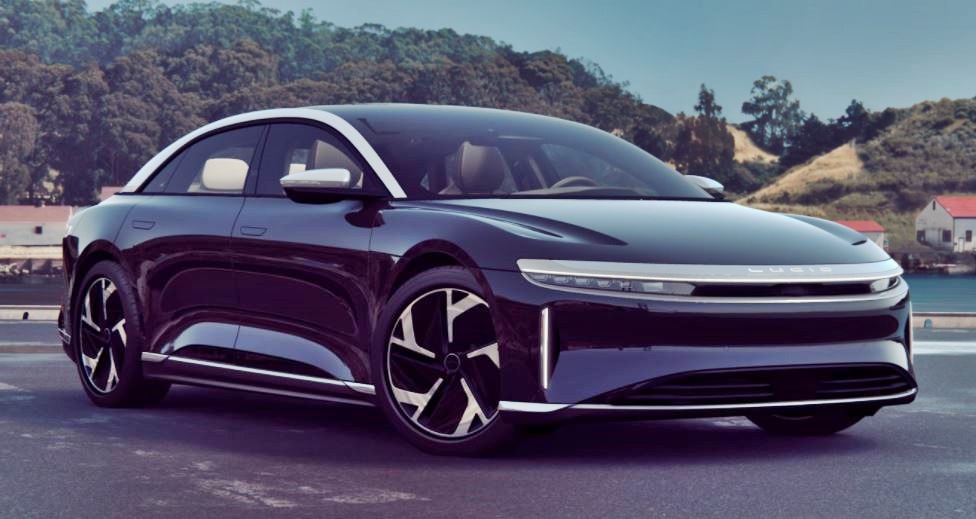
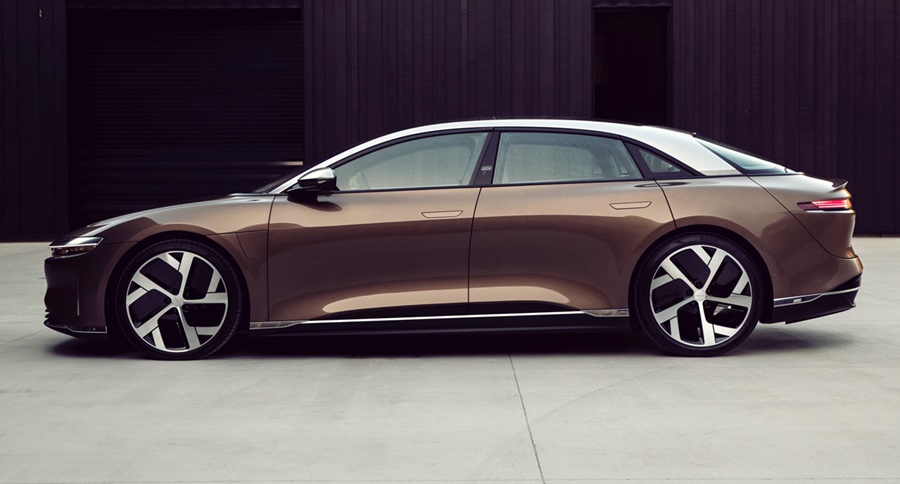
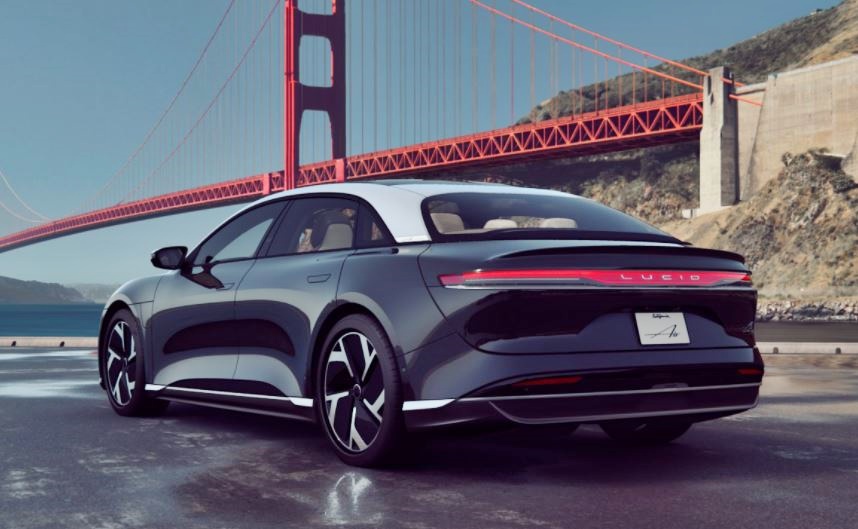
Most people would never have heard of Lucid Motors but that’s how the auto industry is these days, with many new players joining it. Lucid, originally known as Atieva and based in California, is one of those start-ups which has focussed on electric vehicles during the 13 years since its founding.
From making EV hardware (batteries and powertrains) for other companies, Lucid has developed its own technology and has embarked on developing and producing its own electric cars. Its first model will be the Lucid Air with up to 4 versions at prices expected to start from US$80,000 (about RM332,000).
“Lucid Motors is driven to make the electric car better, and by doing so, help move the entire industry forward towards accelerated adoption of sustainable mobility. The goal of this relentless approach to developing the world’s most advanced electric vehicle is to benefit all mankind with sustainable, zero emission transportation, and to also attract new customers to the world of EVs,” said Peter Rawlinson, CEO and CTO of Lucid Motors.
Using space to create the Air
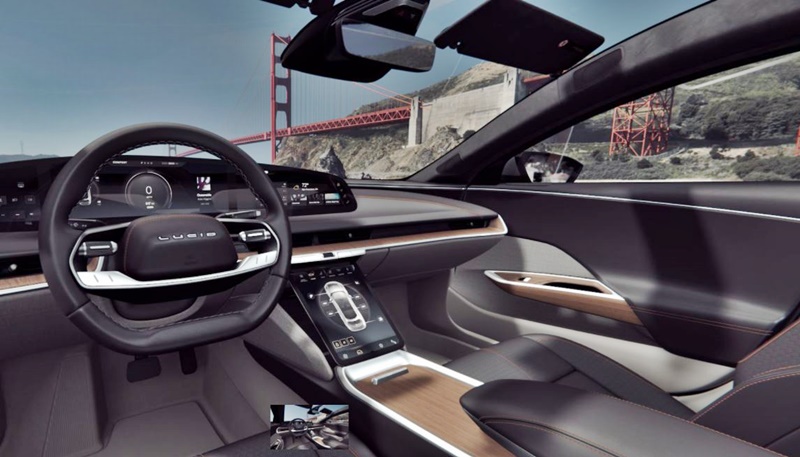
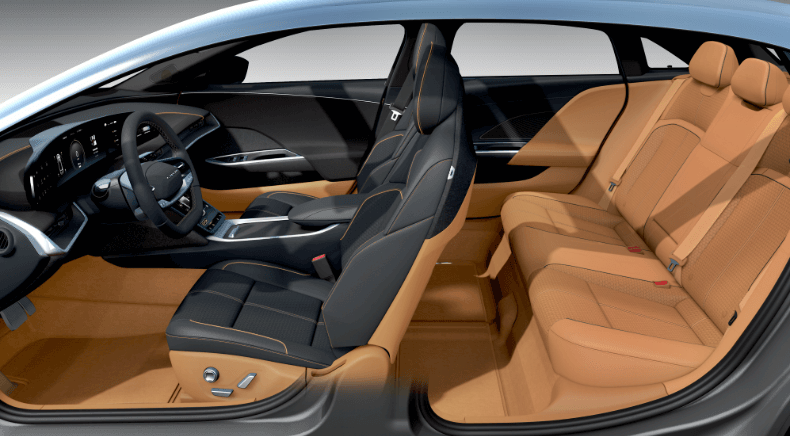
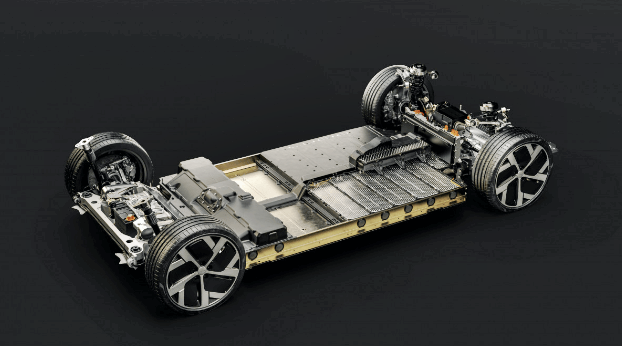
The Lucid Air is said to be the result of a revolutionary approach to automotive packaging called the Lucid Space Concept. It capitalizes upon the miniaturization of Lucid’s in-house developed EV drivetrain to optimize interior cabin space.
The concept is central to the architecture of the Lucid Electric Advanced Platform (LEAP) upon which the Lucid Air, and forthcoming Lucid vehicles, will be built. It’s a holistic, clean-sheet approach to advanced EV construction, without using existing ‘off the shelf’ solutions so often seen in EVs from legacy automakers.
By simultaneously making smaller yet more powerful electric motors and improving the packaging of the entire electric powertrain, Lucid is able to reclaim that space for passengers and their comfort. This extends the philosophy of hyper-efficiency embedded in the car, from energy to spatial efficiency, to achieve longer range, practicality, higher performance, and luxury.
The Space Concept
The Space Concept also contributes to the subtly different and modern proportions for the Lucid Air, without relying on any traditional automotive design cues, instead delivering a car that can look distinctive on the road.
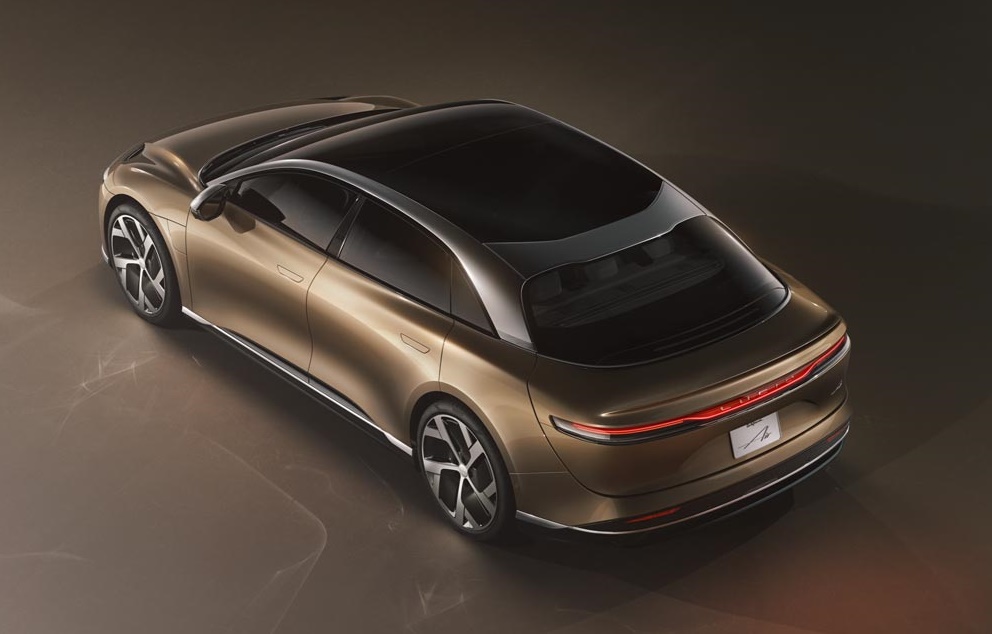
Lucid designers have also made the Air the world’s most aero-efficient luxury car. Tests in an advanced rolling-road wind tunnel have returned results of a Cd of 0.21. This aspect is particularly important for EVs as wind resistance must be kept to a minimum so as to enable motor output to be used to propel the car.
Advanced lighting
The car’s headlamps employ advanced technology with the revolutionary Micro Lens Array system. This has literally thousands of ‘light channels’ to provide the brightest, most precise and advanced lighting. Digital ‘steering’ of light direction is possible by digitally switching light channels in different directions to give the best spread and coverage.
Lucid will also create special retail and digital experiences for the brand which will be different. These are summed up in the brand tagline of ‘Dream Ahead’, which is also the company’s vision for rejecting the status quo and always pushing the boundaries in EV technology.
Record-breaking performance and range
Initial specifications claimed for the Lucid Air show output of up to 1,080 hp available in a dual-motor, all-wheel-drive architecture. It is claimed to be able to do the quarter-mile (about 400 metres) as quick as 9.9 seconds on a consistent, repeatable basis. To date, no other electric sedan has been able to do a time under 10 seconds, according to the company.
High performance can usually mean less range; at least that is how it has been with internal combustion engines. But for electric cars, advanced technologies are continuously extending the range and up to 832 kms is the claim for the Lucid Air with a full-charged battery pack. The compact 113 kWh extended-range battery pack is developed in-house.
World’s fastest charging EV
When it arrives in the market in 2021, the Lucid Air will be the fastest charging electric vehicle ever offered, with the capability to charge at rates of up to 32 kms per minute when connected to a DC Fast Charging network. For owners charging their car in real-world conditions on the road, that can translate into 480 kms of range within just 20 minutes of charging.
To enter the market sometime next year, the cars will be offered in North America, and some countries in Europe and the Middle East.
Aston Martin’s DB5 is well known as the ‘James Bond car’, having appeared as a gadget-packed sportscar in the movie ‘Goldfinger’ (as well as ‘Skyfall’). Only 1,059 units were produced and sold between 1963 and 1965, so it is a rare model. As part of its Continuation program, the company is currently making 25 units of the ‘Goldfinger’ car, complete with the array of gadgets, priced at the equivalent of RM17.7 million.
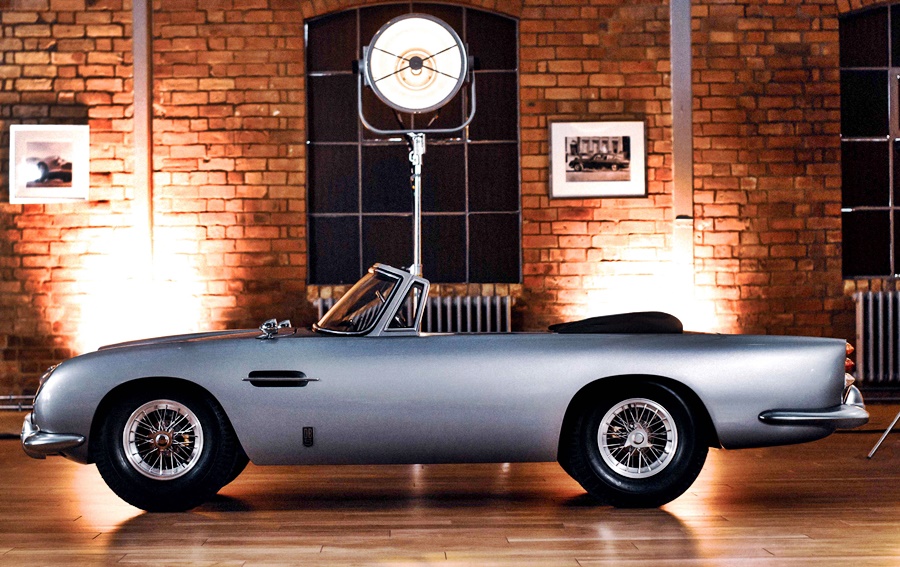
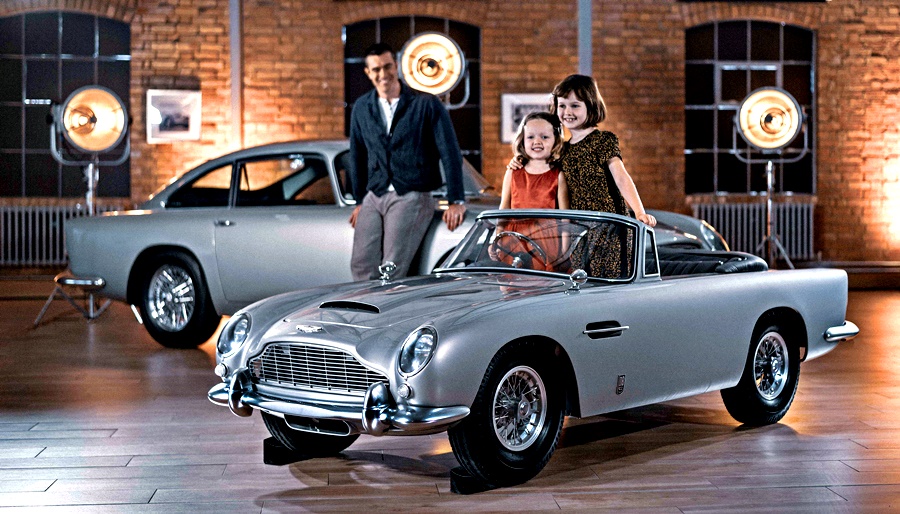
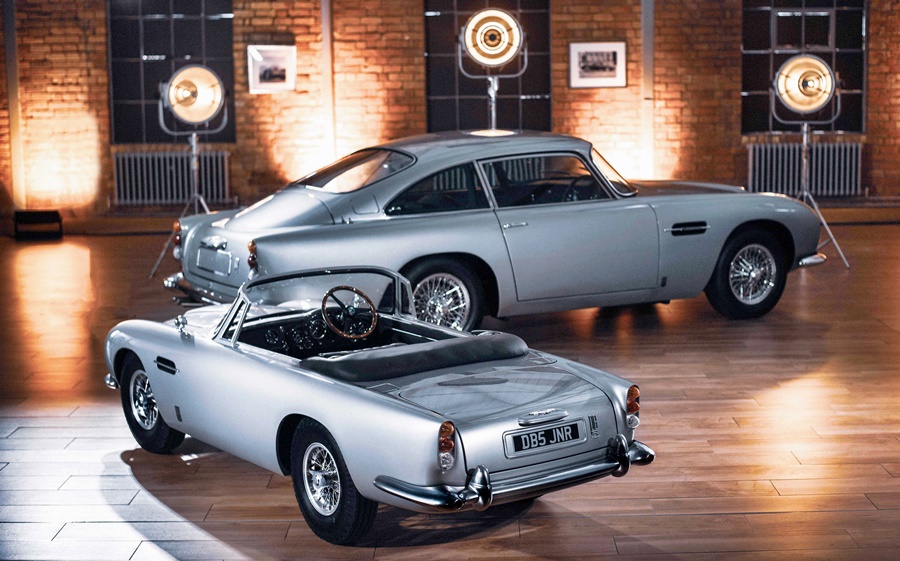
While the original DB5 is not readily available and only 25 people will get to own the Goldfinger cars, there is now the DB5 Junior, a two-thirds scale replica that runs on electric power. It is the result of a collaboration between Aston Martin and The Little Car Company and based on Aston Martin’s reference 3D scan of an original DB5 to ensure complete accuracy and authenticity.
Developed over the last 15 months as a collaboration between the two companies, the junior car is priced at £35,000 (about RM195,000). Like all Aston Martin models, customisation of the DB5 Junior is possible in almost the same manner. Only 1,059 units will be available – the same production volume as the original DB5 – on a first-come, first served basis with a refundable deposit required.
The DB5 Junior is around 3 metres long, and 1.1 metres wide. It is designed to easily accommodate an adult and a child side by side. The aluminium honeycomb chassis and composite body provide a very rigid platform whilst keeping the total weight down to around 270 kgs.
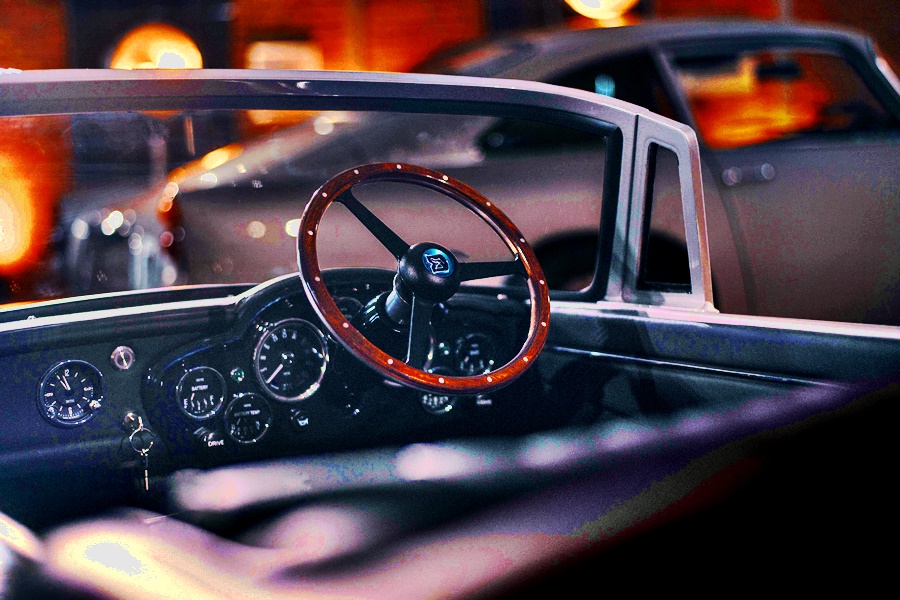
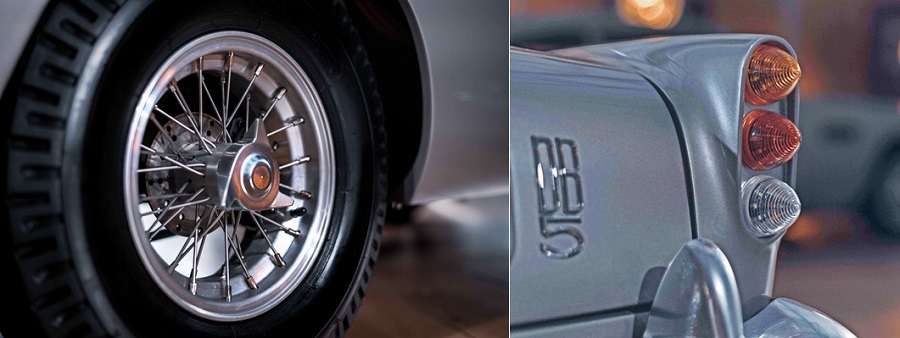
Absolute authenticity was key throughout the development of the car. For example, the DB5 Junior sports the same iconic Aston Martin ‘wings’, ‘shield’ and DB5 badges as the original 1963 model. Like its big brother, the dashboard is filled with functional Smiths instruments, which have been cleverly updated for the modern era.
The fuel gauge has been converted into a battery meter, while the oil temperature now monitors the temperature of the electric motor. Finally, the same Smiths clock as seen in the original 1960s car sits proudly in front of the passenger seat.
The perfect two-thirds scale steering wheel has a racing-style quick release to make entry and exit easier for the driver. Power is regulated by billet aluminium accelerator and brake pedals and, as would be expected, there are working headlights, brake lights, indicators and a horn. However, there are no 007 gadgets which is a pity.
In true DB5 style, the car comes in the famous Silver Birch colour as standard, with a full black leather interior and carpet set. There is even a boot at the rear for storage.
Like the real car, the DB5 Junior sits on double wishbone suspension at the front and even the roll centre and camber gain match the original geometry. At the rear, there is a live axle that is of the 1960s period, with authentic upper and lower trailing arm suspension and Panhard rod.
Behind each of the 10-inch wire wheels are ventilated disc brakes. Like modern hybrid and all-electric cars, there is regenerative braking which contributes to recharging of the battery pack.
Powered by a torquey electric powertrain delivering 5 kW (6.7 bhp) to the rear wheels, the DB5 Junior can zip to a maximum speed of almost 50 km/h. The removable battery pack under the bonnet is said to provide 16 to 32 kms driving range, depending on how the car is driven. A second battery can be added for extra range and replacement of each pack is easily done in seconds.
For safety, there are three modes to suit the skill of the driver, with the power output reduced to 1 kW (1.3 bhp) for less experienced drivers. Besides a maximum speed of around 20 km/h, this mode has a remote kill switch which will disable the car if it is further than 30 metres. The Expert mode generates maximum output available and for the ultimate driving experience, a rally-style hydraulic handbrake is included.
DB5 Vantage Junior
There is also the DB5 Vantage Junior available in the UK for £45,000 (around RM250,000) which has a powerful 10 kW (13.4 bhp) electric motor. This output is delivered to the wheels through a Limited-Slip Differential. Performance is further enhanced by the lightweight carbonfibre body and a second battery pack, doubling the range to between 32 and 64 kms.
Nissan, which can claim leadership in mass-produced electric vehicles (EVs) with its bestselling LEAF, has long experience with EVs. Though we only read about its advances in recent times, it had a running electric car called the Tama in the late 1940s which was used as a taxi. But EVs in those days had poor performance and as the technology for such vehicles was hard to develop, the manufacturers focused on internal combustion engines which became dominant up till today.
But with pressure to cut exhaust emissions drastically and reduce fuel consumption, the industry began to get serious about EVs again as the new century began. While some companies focused on hybrids, Nissan chose to focus on a pure EV and by December 2010, it launched the LEAF.
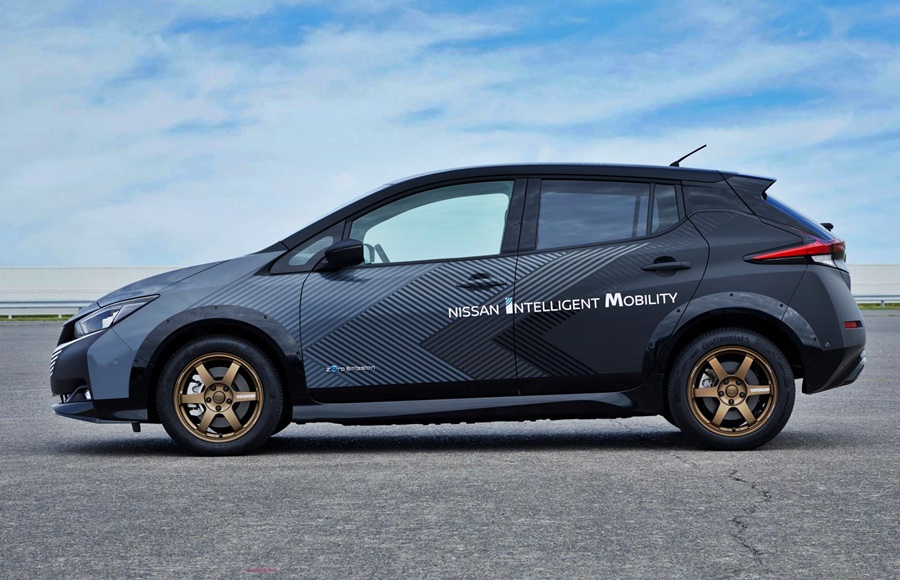
As battery and EV technology kept advancing, the performance of the LEAF kept improving and the second generation offers higher performance plus greater range. But just as with internal combustion engine cars, there is a quest to keep pushing the envelope where performance is concerned and Nissan has revealed some of the technologies that will take its next generation of EVs to a new level.
Enhanced all-wheel drive system
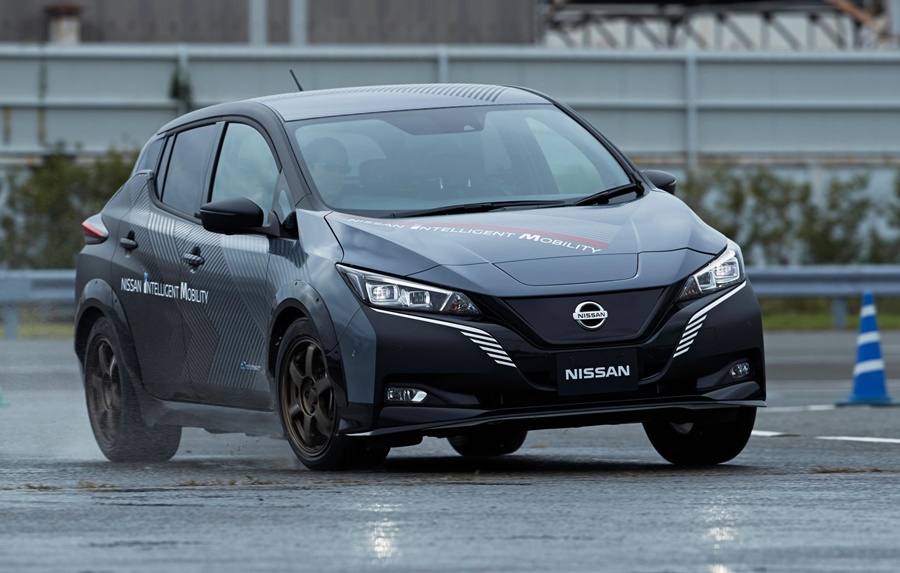
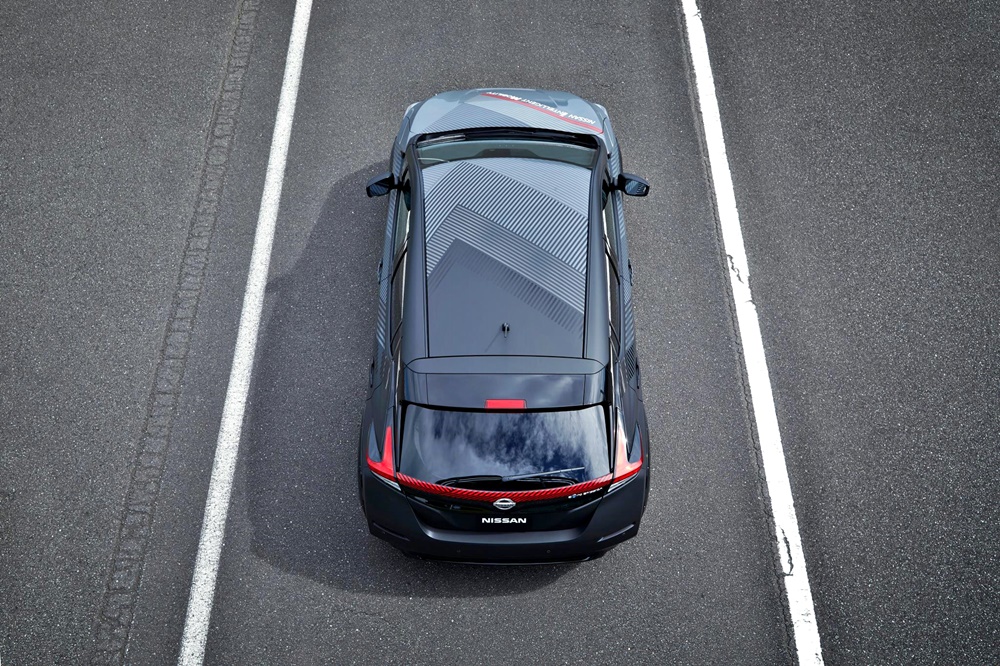
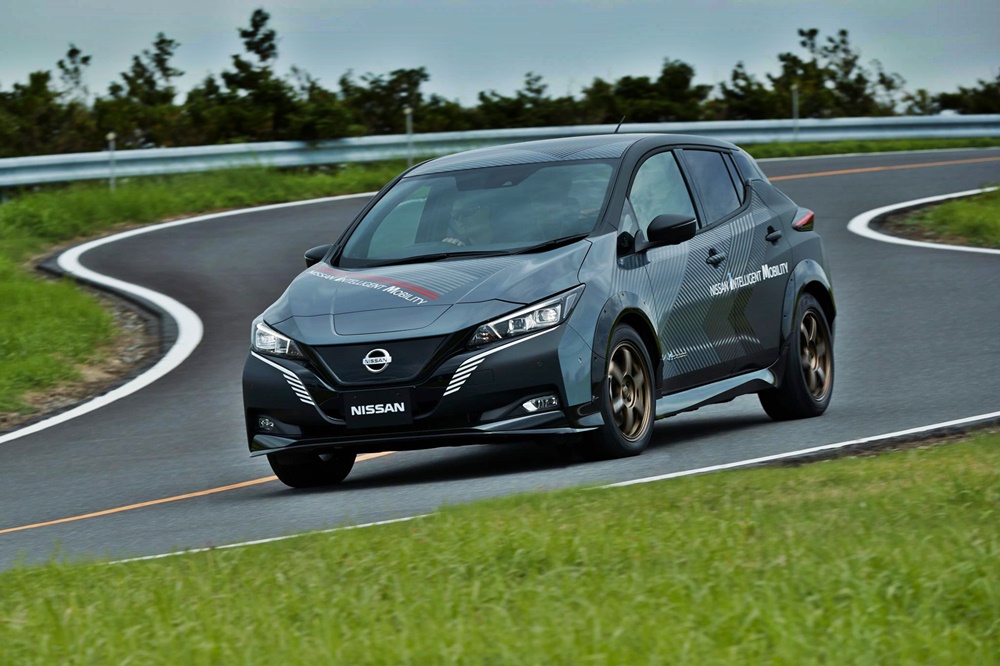
Recently, it showed the media a prototype based on the LEAF with an enhanced all-wheel drive system powered by front and rear high-power motors integrated. Nissan developed the chassis control technology in-house for the electric-drive all-wheel-control system. It’s a development that brings to mind the time when Nissan introduced its advanced ATTESA all-wheel drive technology in the 1980s.
“Soon, Nissan will launch a next-generation EV that will be a true breakthrough,” said Takao Asami, Senior Vice-President for Research and Advanced Engineering at Nissan. “The new electric-drive 4-wheel-control technology now being developed integrates Nissan’s electric propulsion and 4WD control technologies with our chassis control technology to achieve a huge leap in acceleration, cornering and braking performance, on par with the latest sportscars.”
High-output twin-motor drive
Using separate front and rear electric motors, the powertrain generates 227 kW of maximum output and 680 Nm of maximum torque. This output is complemented by the ultra-high-precision motor control which offers highly responsive, yet uncommonly smooth, acceleration. Drivers can benefit from the all-wheel-control system on nearly any road condition, heightening driving performance and confidence.
The prototype’s precision control of both motors provides unparalleled ride comfort. Pitch and dive are minimized by adding regenerative rear motor braking to the usual front motor regenerative braking. When slowing down on city streets, for example, this helps keep passengers from being shaken back and forth. This reduces the potential for motion sickness and related discomfort. Similarly, on rough, bumpy roads and when accelerating, motor control is optimized to maintain ride comfort by minimizing irregular movement.
Independent brake control
In addition to optimizing front and rear torque allocation, the system applies independent brake control at each of the four wheels to maximize the cornering force generated by each tyre. This lets drivers enjoy cornering that faithfully follows their intentions with minimal steering.
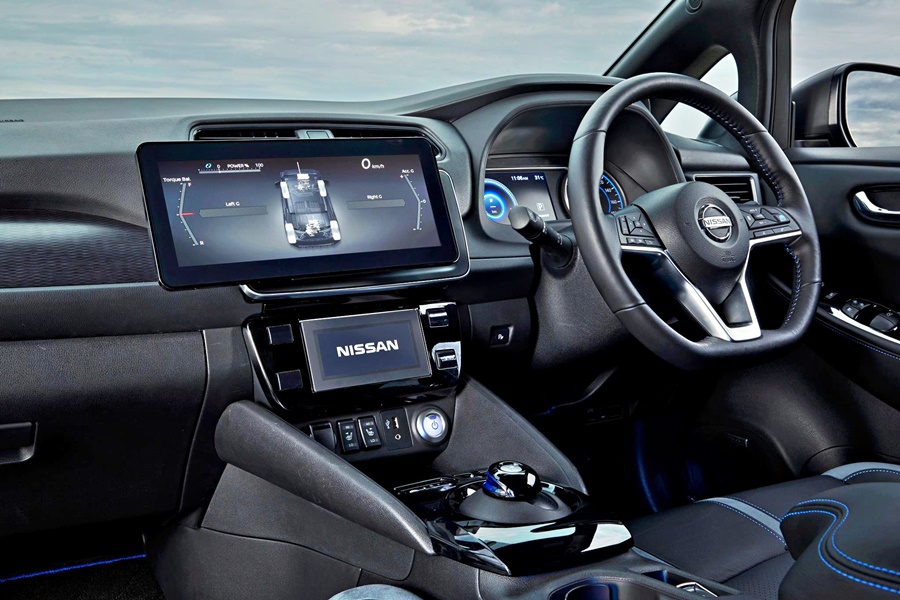
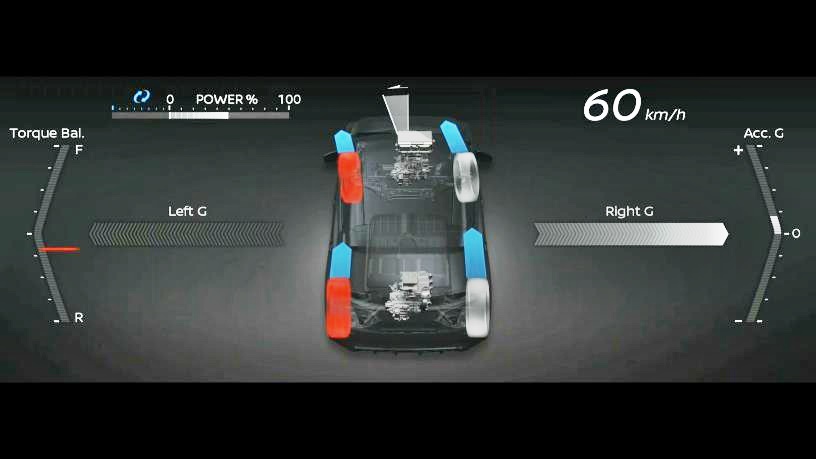
Inside, a 12.3-inch display mounted in the centre of the instrument panel reports, in real-time, information on the vehicle control technology via a polished graphic interface. With the custom display, the test driver can better understand car’s movements and judge the all-wheel-control technology’s performance at a glance.
Better tracking and control
Electric 4-wheel-control technology can increase driver confidence across a broad range of road conditions. When cornering on snow-covered roads, for example, the car can faithfully trace the driver’s intended line, thanks to ultra-high-precision motor and brake control. This would greatly enhance safety for the driver as well as other road-users.
Nissan has not said when this new technology will be installed in its models but with the pace of development being so brisk, it should be within the next few years. The thing about the Japanese is that they want to make sure their whatever systems they introduce are thoroughly tested and once in the market, customers will not be inconvenienced by flaws that were not resolved before production.
Visit www.nissan.com.my to know more about the latest LEAF EV which is available in Malaysia and where to test it.
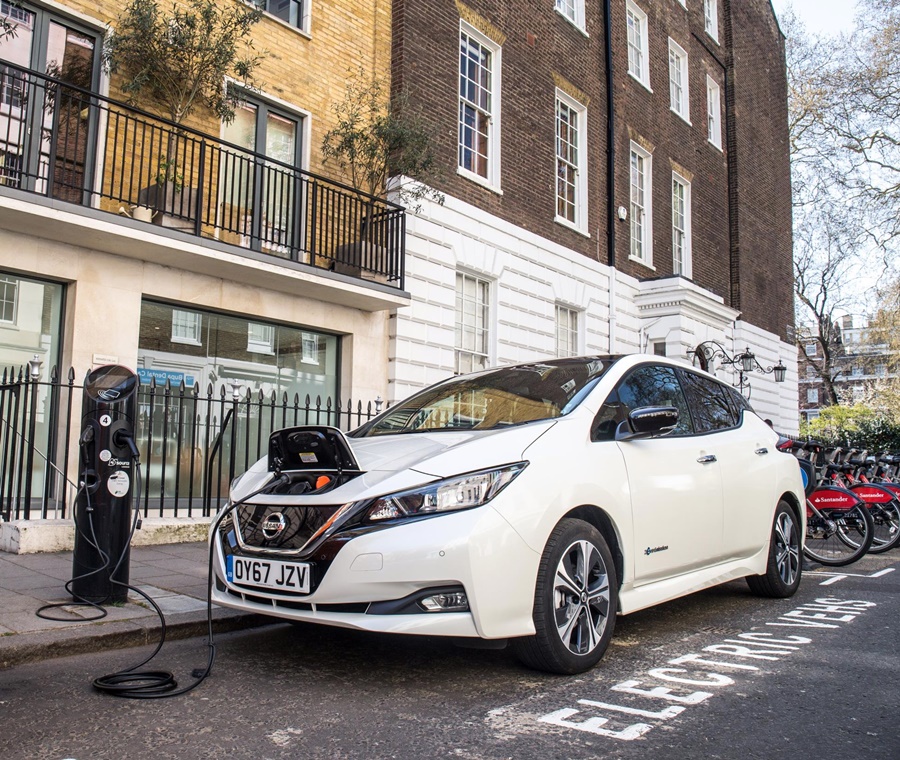
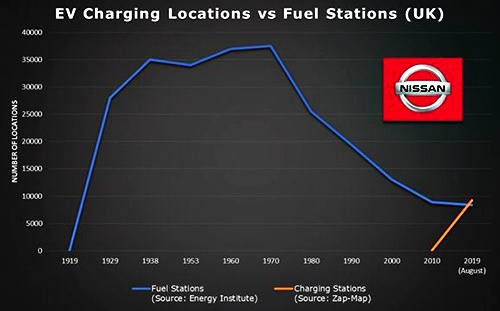
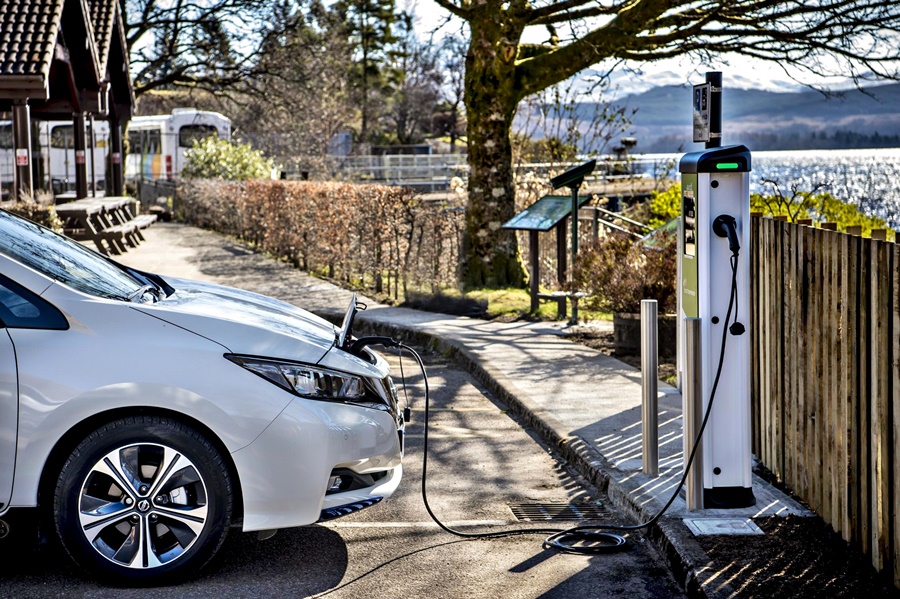
In Britain, there are now more public places to recharge electric vehicle (EVs) than station selling petrol or diesel. In fact, the difference is almost 1,000 – 9,300 EV charging locations compared to 8,400 fuel stations.
This is the finding of Nissan’s UK subsidiary, based on available data and the company says that the crossover actually happened more than a year before Nissan’s 2016 prediction of August 2020. It is believed to be the result of the accelerating adoption of EVs amongst British motorists.
Fuel stations are everywhere
The global fuel station network today is a product of some 100 years of expansion. Places where vehicles can refuel can be found even deep inside the jungles of Africa or the mountain passes of the Himalayas. In Britain, the first fuel station was opened in November 1919 and as the vehicle population grew, so too did the number of stations to meet demand.
However, since 1970, almost 80% of the stations have closed, whilst the number of EV charging locations has increased from a few hundred in 2011 (when the Nissan LEAF went on sale) to more than 9,000 in August 2019.
‘Range anxiety’ can be dismissed
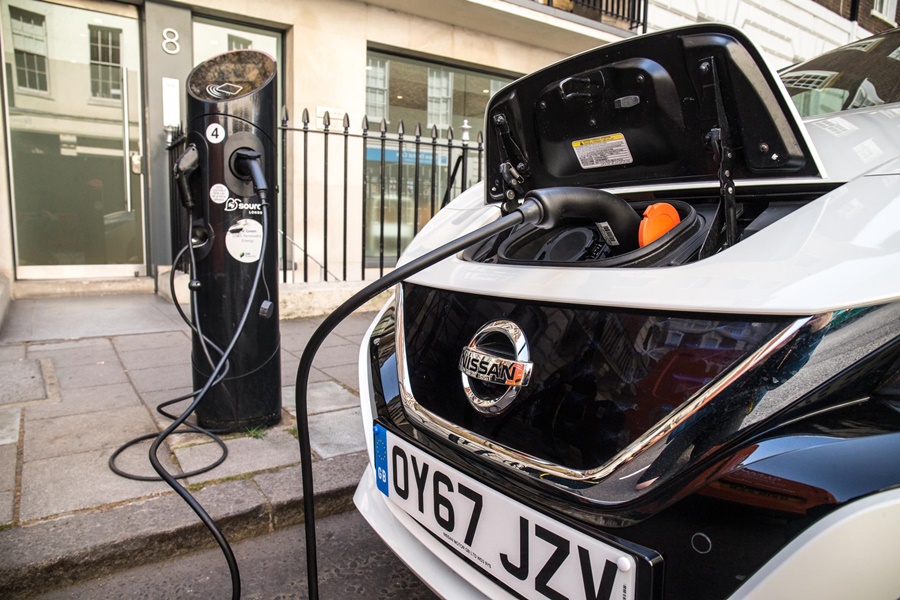
Of these locations, more than 1,600 provide ‘rapid charging’ which can recharge a typical EV battery pack to around 80% capacity in under an hour. According to Zap-Map, two new rapid charge devices came online every day in the last month. Almost all UK motorway service stations now have charging stations installed, the majority of which provide a rapid charge option. So it would be possible for owners of EVs such as the LEAF to travel around the country without ‘range anxiety’.
Transport for London has installed more than 1,000 EV charge points in the last year alone, as supply of fossil fuel within the capital city is becoming scarcer. One of the country’s oldest stations, the Bloomsbury Service Station which had been in operation since 1926, was closed in 2008.
“We’ve moved beyond the early concerns of range anxiety with EVs now exceeding the vast majority of customer’s daily driving needs. The next challenge is for charging infrastructure to keep pace with the number of EVs on the road, and that the experience of recharging is as enjoyable and effortless as that of all-electric driving,“ said Kalyana Sivagnanam, MD of Nissan Motor (GB) Ltd.
Since Nissan launched the first mass-market electric vehicle – the LEAF – in 2010, EV technology has continually improved, with the latest models both affordable and practical for the majority of new car buyers. As a result, Britain is experiencing unprecedented growth in the demand for battery-powered personal transport.
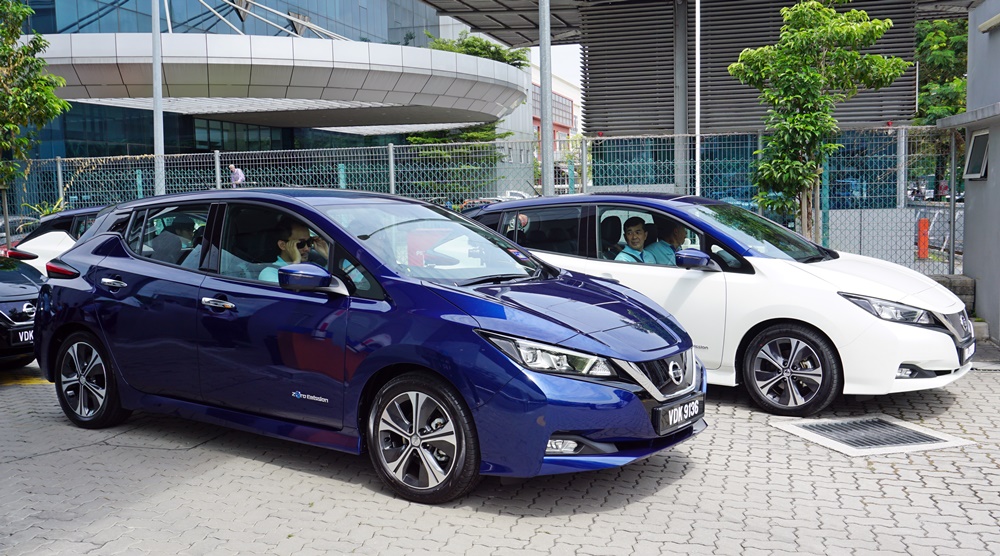
The latest LEAF is now also available in Malaysia. Find out more at www.nissan.com.my.
CONNECTIVITY. It’s a term you hear often these days in descriptions of new models. It refers to the seamless integration between advanced technologies for infotainment and the portable devices that the car’s occupants have, as well as connecting to the world outside the car.
The earliest ‘connectivity’ feature would have been the radio, receiving broadcasts of music and news from stations as the car moved along. Then with the advent of the cellular mobilephone, 2-way communications became possible. And with the internet and wireless broadband, connectivity meant being able to connect to the World Wide Web and use the same services and applications you use on your computer or tablet.
Connectivity is becoming very important and sophisticated with the coming era of autonomous cars. Not only must cars communicate with the outside world efficiently and safely but the occupants must also have the best connectivity since they will be involved in the driving less (or not at all).
Benchmark in connectivity features
Honda, like other carmakers, has already many connectivity features in its current models and is developing even more. The new Honda e EV to got on sale in Europe this year sets a new benchmark in this area with connected infotainment which helps the car to integrate with the owner’s lifestyle through sophisticated, easy-to-use technology.
As a result, the driver and passengers – whether the car is driving, parked or charging – can enjoy the same connectivity and comfort with comprehensive connected services accessed through a next-generation full-width digital dashboard.
“Our objective for the Honda e was that the simple exterior style continues inside. The overall interior atmosphere combined with exceptional comfort by using familiar materials such as wood grain and textured fabric, is reminiscent of a modern living room.” explained Kohei Hitomi, Large Project Leader for the Honda e. “In this modern, relaxing environment, occupants can effortlessly engage with advanced connected technology such as the camera mirror system and dual touchscreen display that is highly sophisticated, but incredibly easy to use.”
Full-width digital dashboard
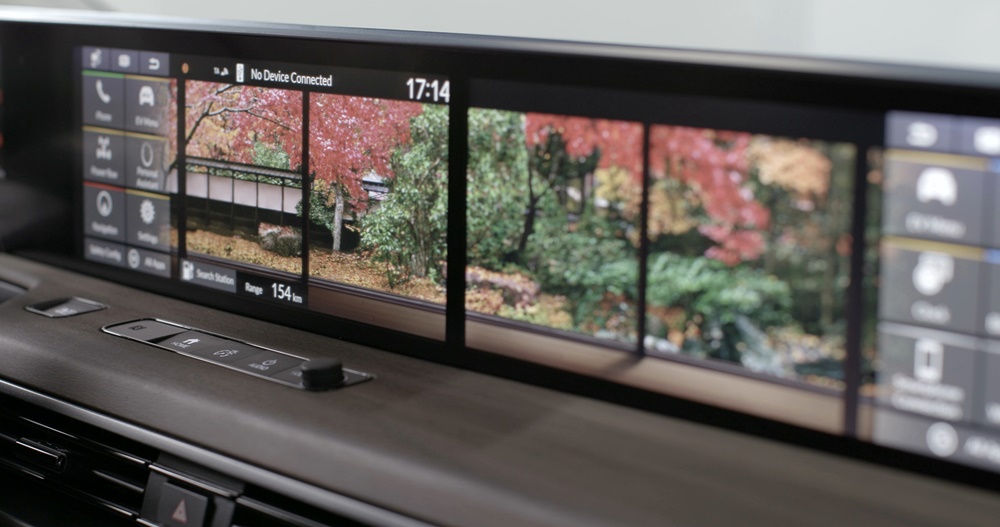
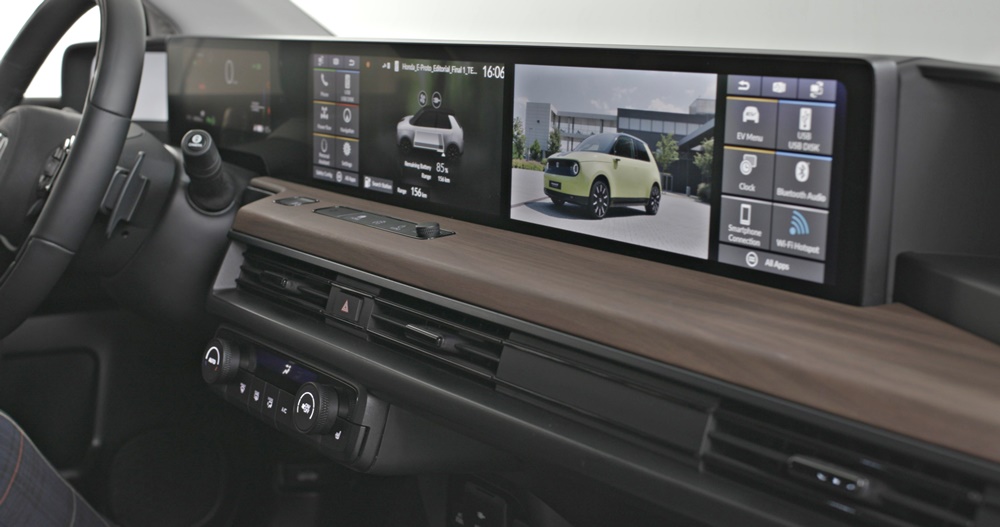
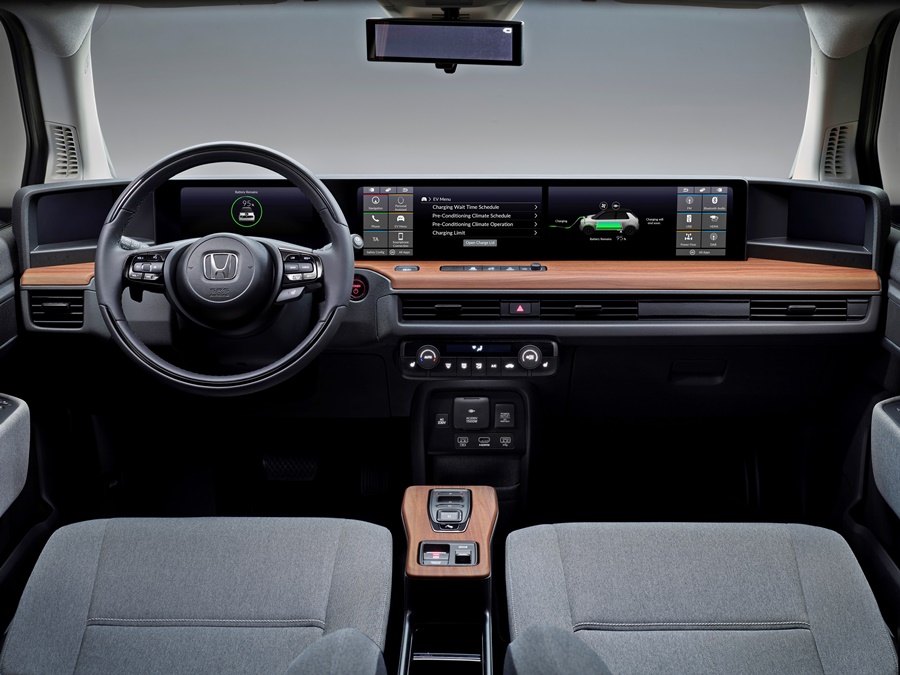
The Honda e’s full-width digital dashboard is designed for effortless usability of connected apps and services. Five integrated high-resolution colour screens together occupy the entire width of the car’s interior.
The Side Camera Mirror System screens are ergonomically placed at either end of the dashboard to ensure a natural feel and vision for the driver, while the Centre Camera Mirror System display relays the image from a central rear-facing camera, further increasing the driver’s field of vision.
An 8.8-inch TFT meter instrument display in front of the driver presents key vehicle information including power and charge status, drive mode selected and safety feature details.
Dual screens display connected services
The largest area of the full-width digital dashboard is occupied by dual 12.3-inch LCD touchscreens. These are the primary infotainment displays, presenting a range of intelligent applications and services. This sophisticated interface is highly intuitive, customisable, and has been designed for ultimate usability to elevate the car beyond being a means of transportation to become fully integrated into the owner’s modern connected life.
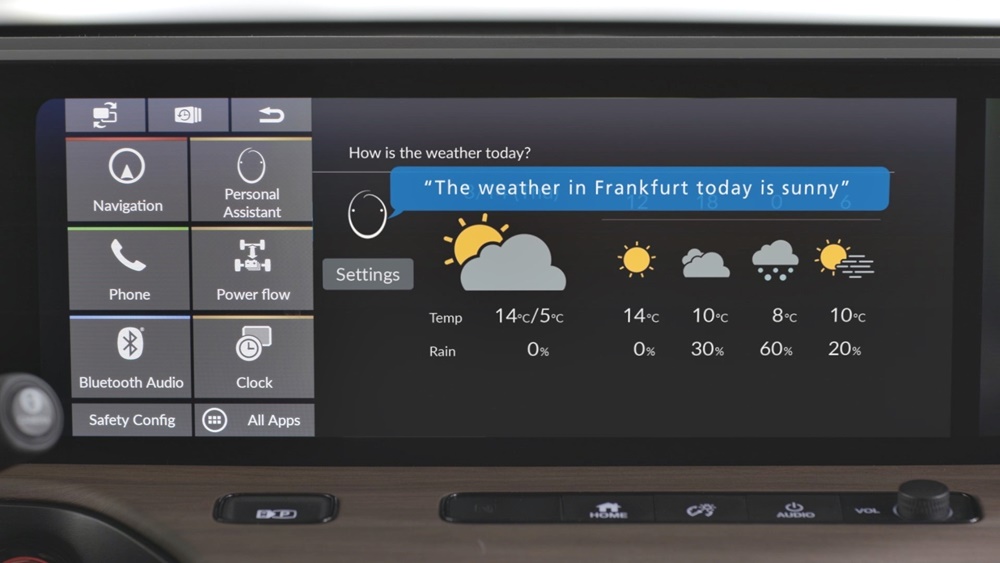
The interface features familiar smartphone-style usability, with swipe controls to browse recently used applications. Content can easily be swapped across the two screens, enabling the driver to utilise content on both screens with simplicity and ease. This function allows the passenger to swipe content such as navigation instructions into the driver’s eye line. And because the dual screen set-up allows two applications to be displayed side-by-side, the driver and front passenger can independently select and view separate apps. For example, while the driver follows navigation instructions, the front passenger can search for a music playlist.
AI-powered connectivity
Connected services and applications can also be accessed using voice commands via the Honda Personal Assistant. The intuitive Honda Personal Assistant is a smart artificial intelligence (AI) service that uses unique contextual understanding to create natural conversations and provide access to a range of online services.
The Honda Personal Assistant is activated by saying ‘OK Honda’, followed by the question or instruction. Machine learning enables the technology to develop a greater understanding of individuals’ voice over time, helping it to deliver more accurate responses.
The comprehensive suite of in-built apps can be supplemented by smartphone mirroring, via Apple CarPlay or Android Auto. These systems enable users to view social media, music and other internet services on the dual touchscreens. When the car is parked – even when charging – the occupants can also watch video content and access the internet on their own mobile devices using the built-in wifi hotspot.
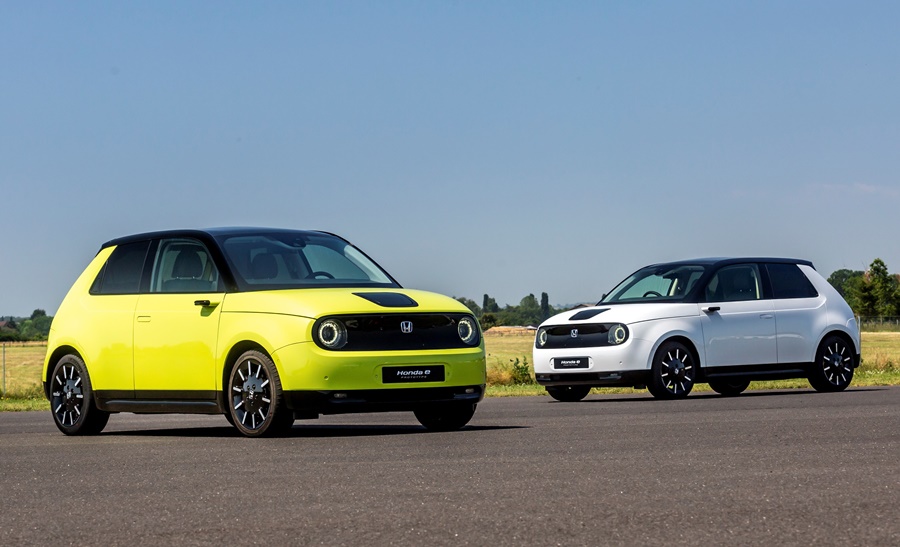
Prototypes of the all-electric Honda e to go on sale in Europe before the end of 2019
Smartphone application for remote access
Owners can still stay connected to their car remotely through a smartphone application when they step out. The service focusses on the user journey, with easy navigation to access charging functions, detailed vehicle status, climate control, security and location monitoring. Additional connectivity and EV-specific functions include battery charge control and range monitor, while charging station and navigation search results can be sent to the car from a mobile device.
The Honda e is also accessible using a digital key, allowing the car to be locked and unlocked via the app. Safety alerts can notify owners if it moved outside of a set ‘geofence’ zone.
The Honda e is initially intended for sale in European markets. Honda’s plan for the next decade is to have a substantial portion of its vehicle sales made up of battery electric vehicles. Connectivity technologies in the Honda e are likely to be adopted in new models in coming years so the next City or CR-V you buy may have some of the features you just read about.
Visit www.honda.com.my to read about models you can buy in Malaysia today.
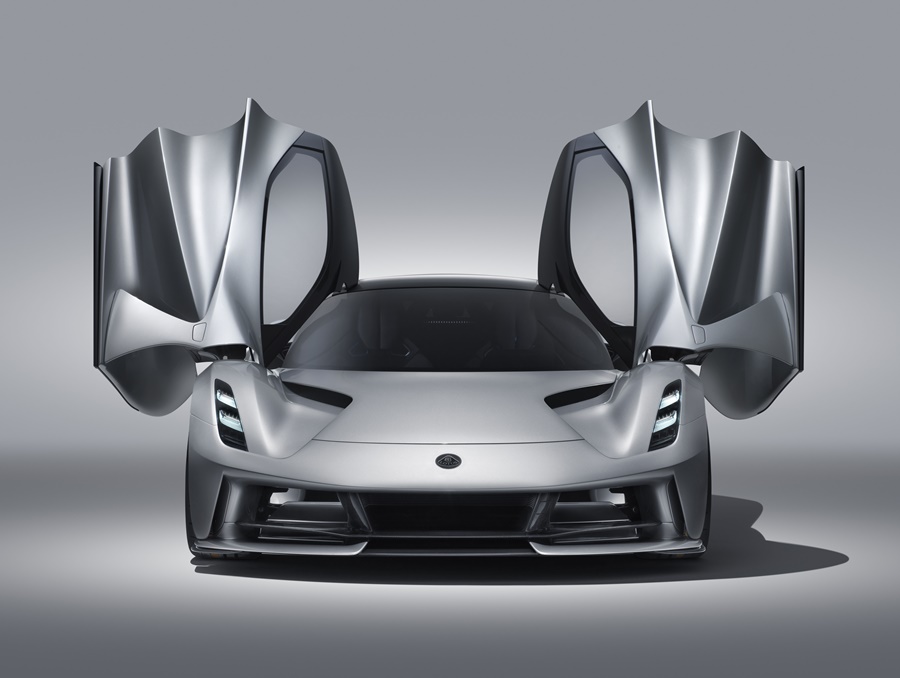
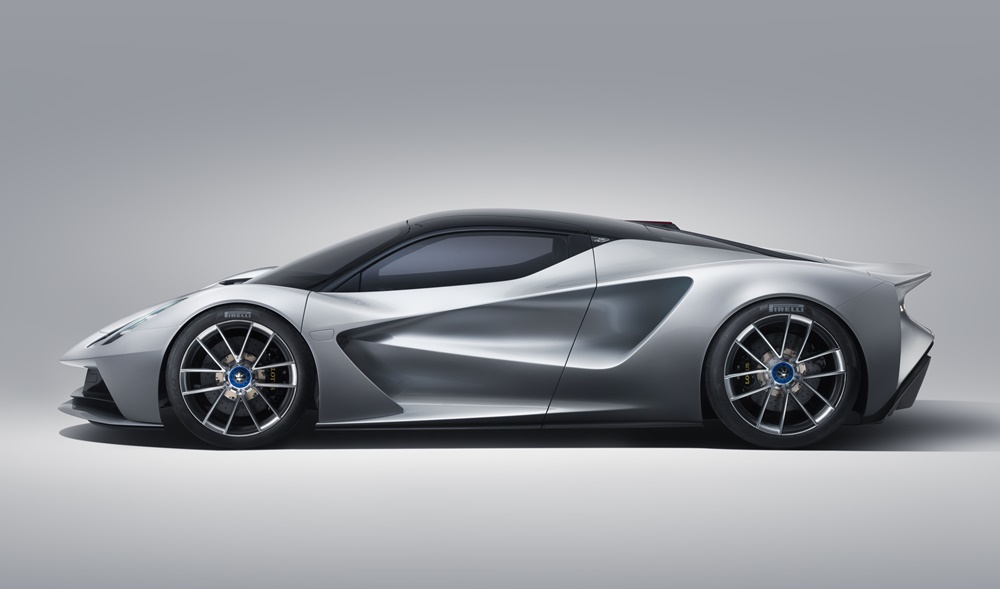
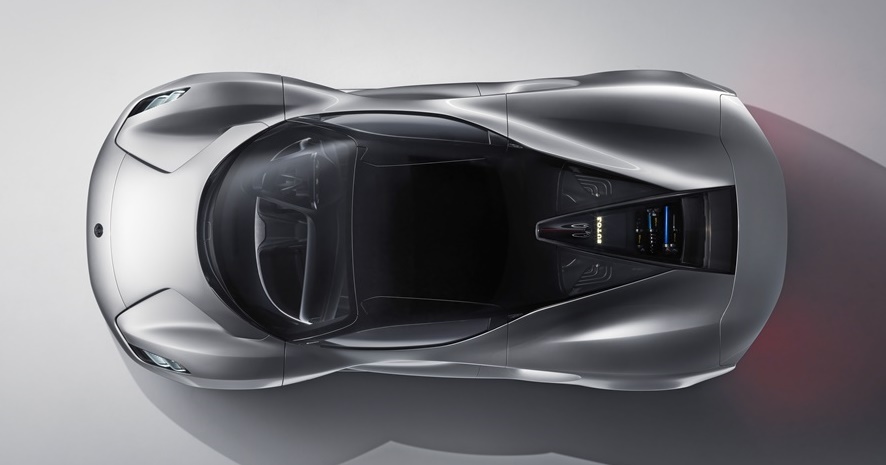
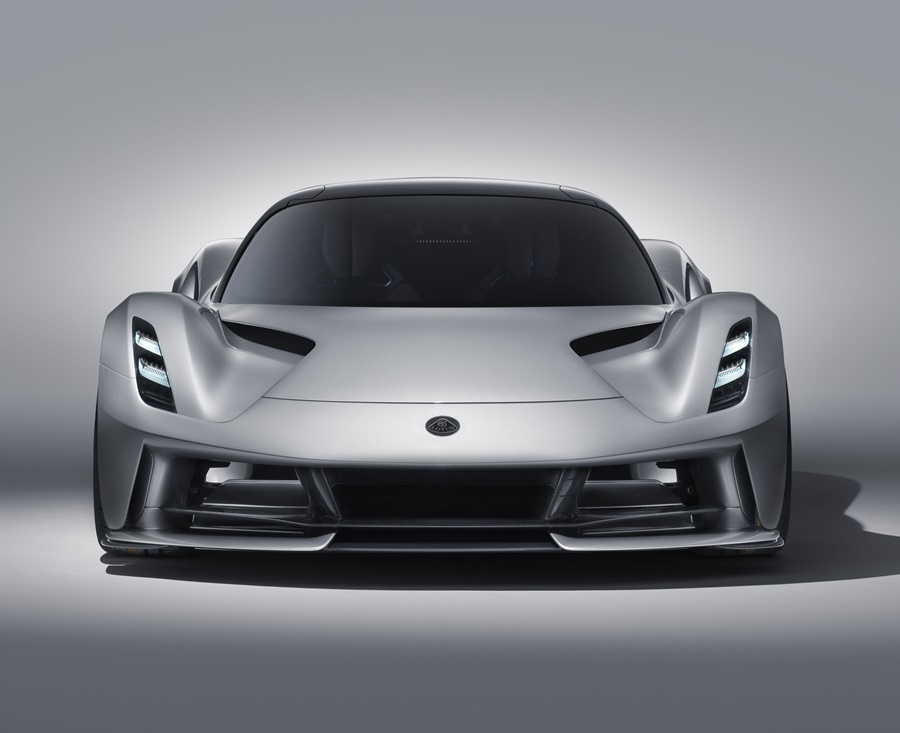
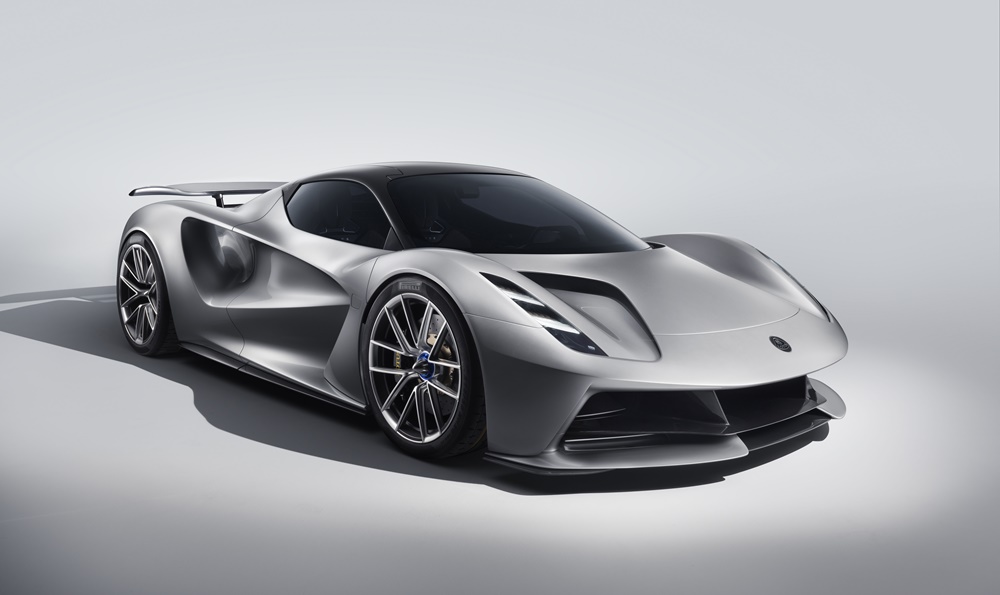
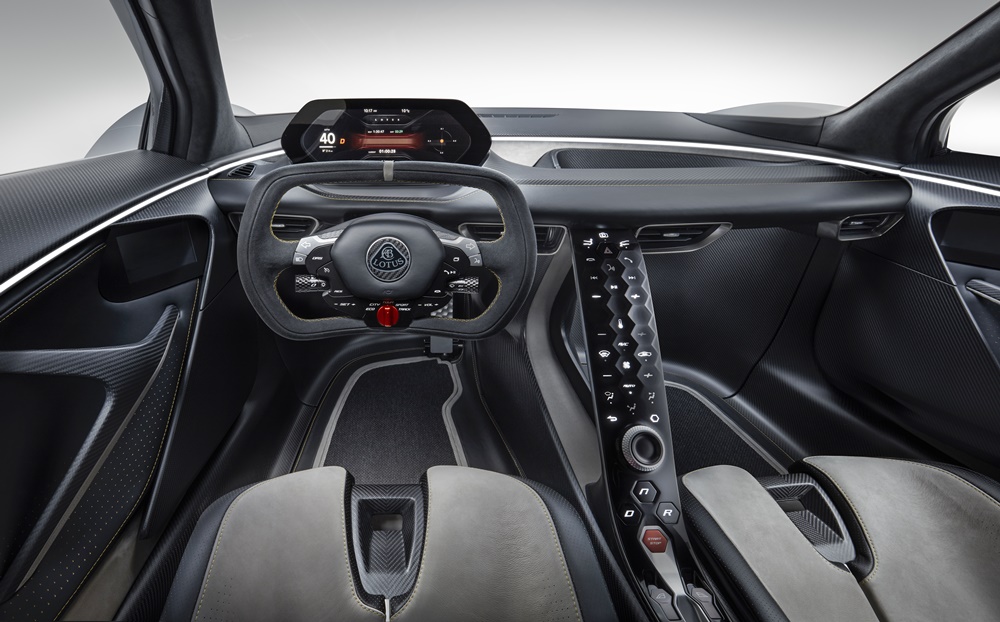
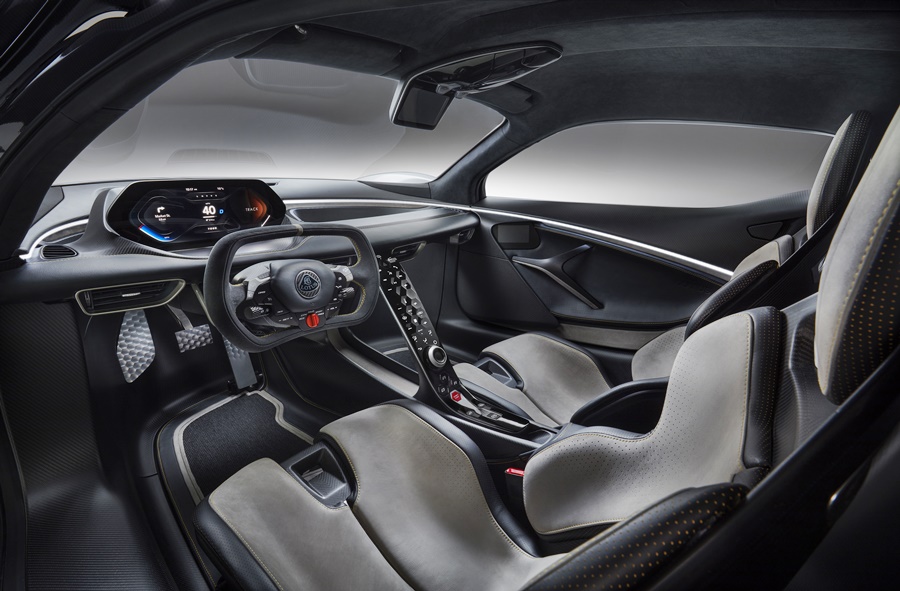
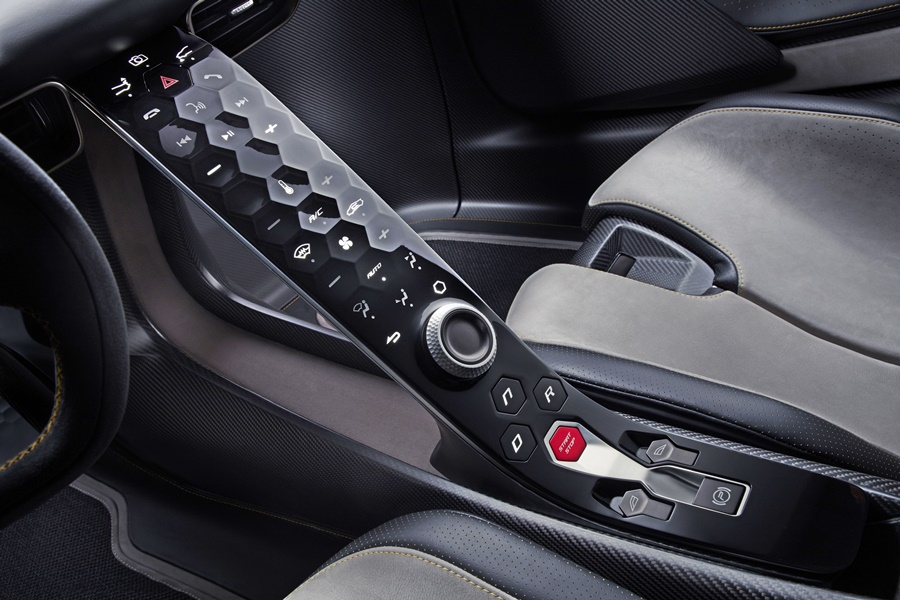
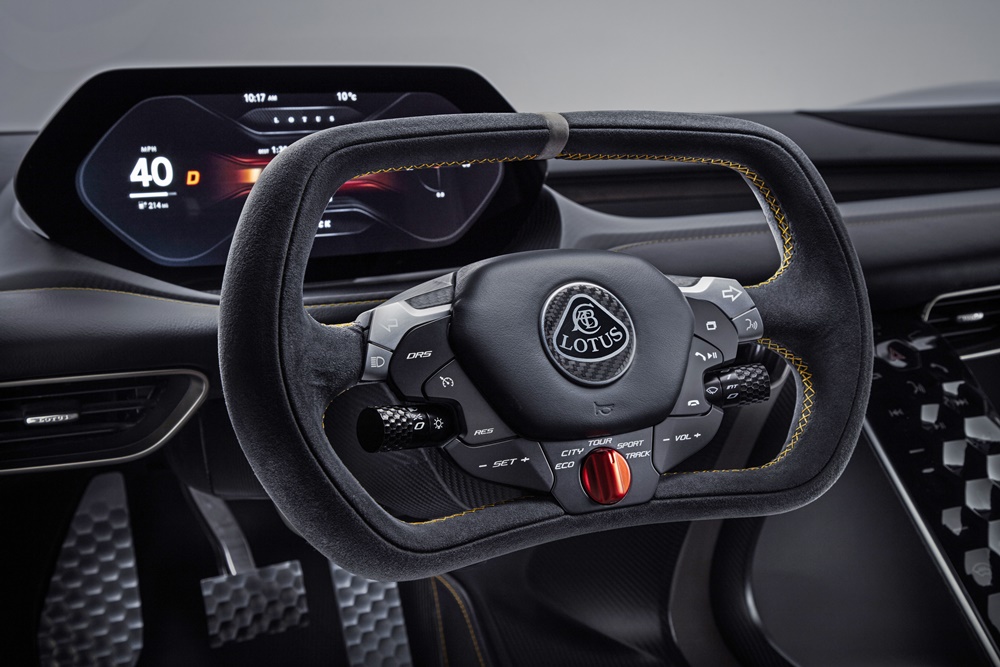
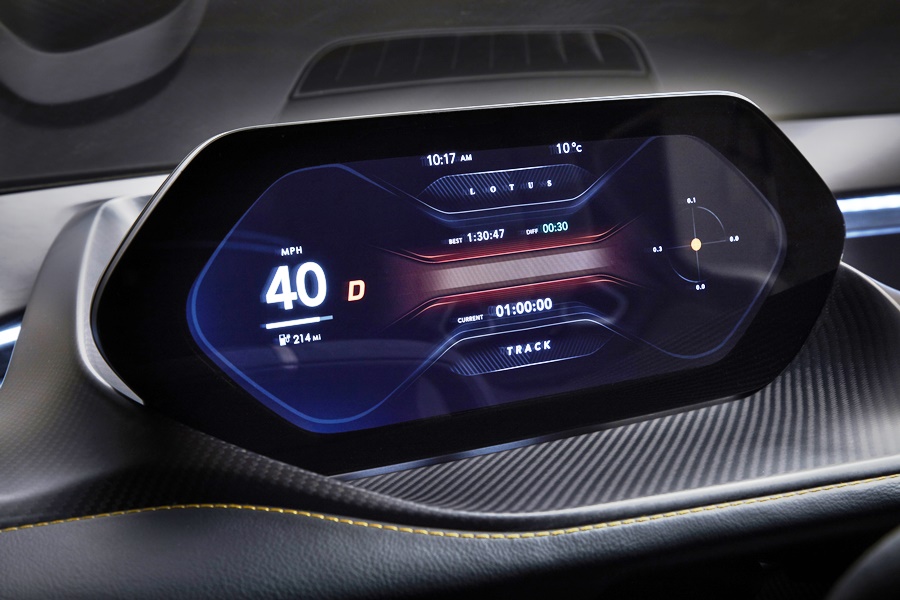
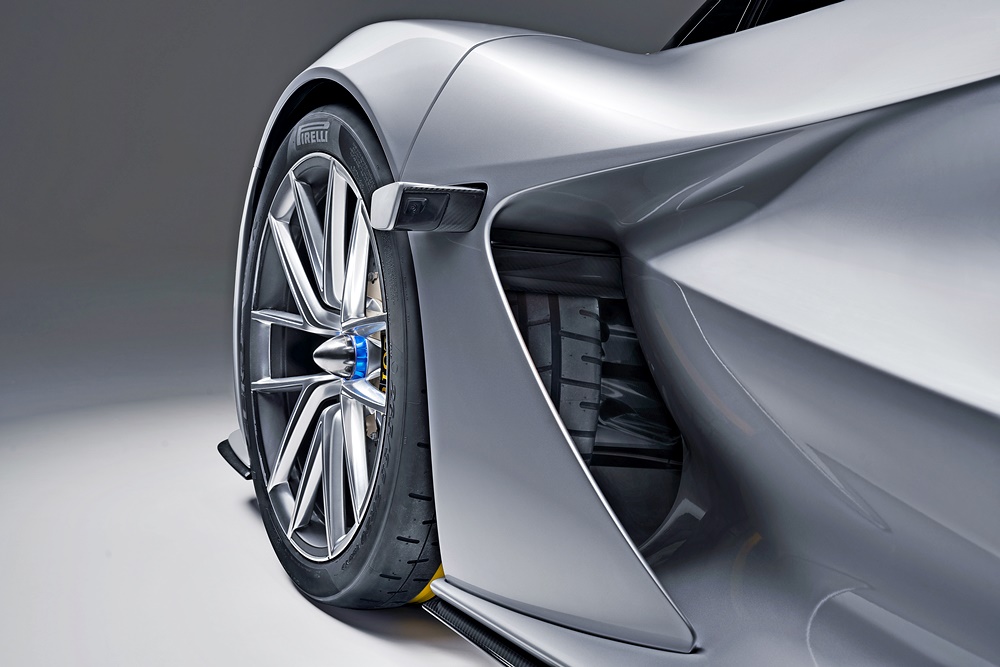
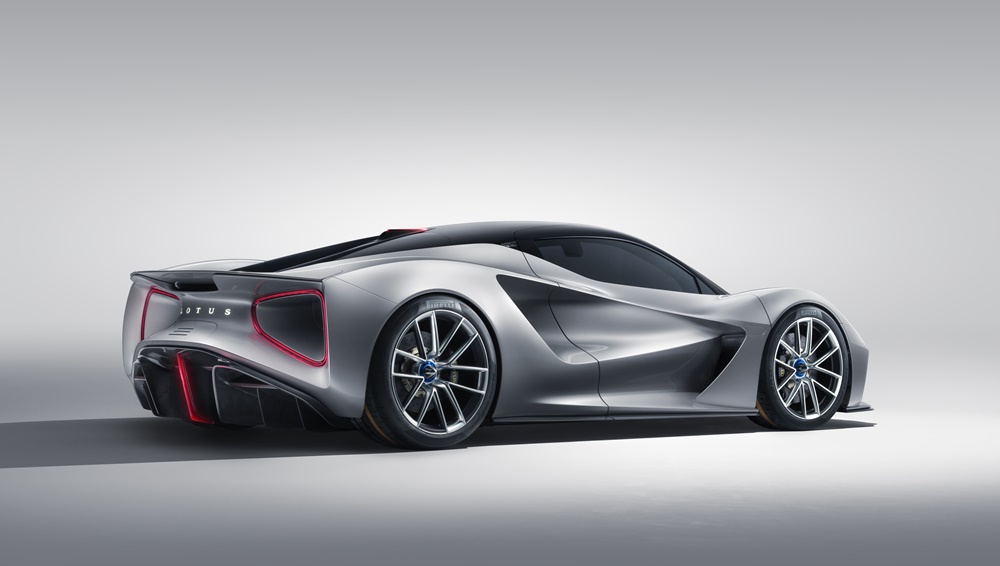
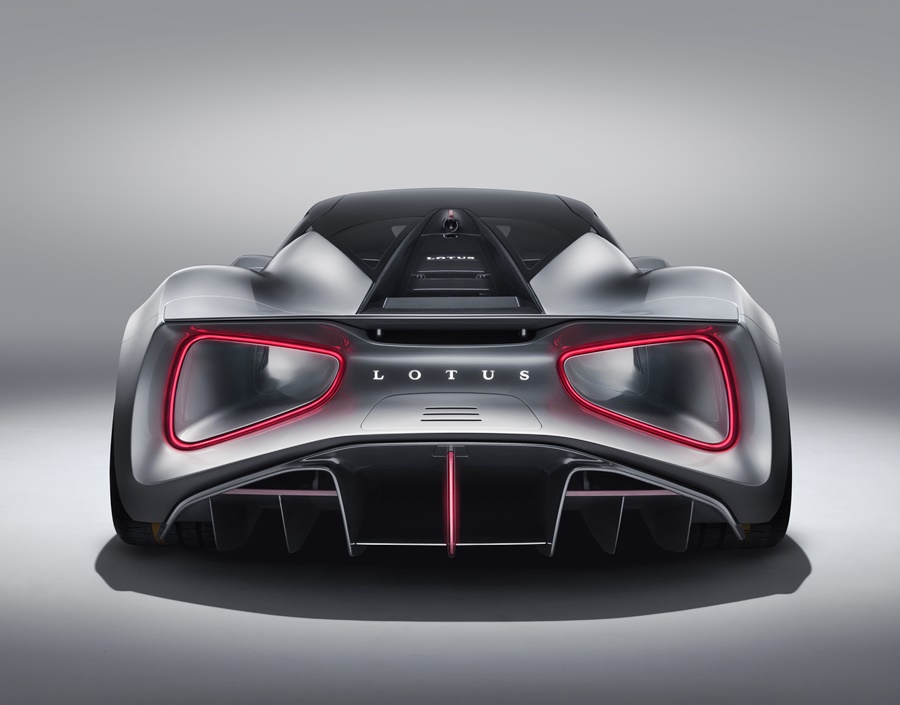
♦ The Evija (pronounced ‘E-vi-ya’) means ‘the first in existence’ or ‘the living one’. Each car will have a starting price of around £1.7 million (equivalent to about RM8.7 million in the UK). To book one, you need to pay a deposit of £250,000 (RM1.27 million).
♦ The first hypercar from Lotus and the company’s first model with an electrified powertrain. It is also the first completely new car to be launched since the 71-year old British company was acquired by the Zhejiang Geely Holding Group in June 2017.
♦ Only 130 cars will be built, beginning in 2020. The number pays tribute to the car’s project code, ‘Type 130’. Lotus road and race cars throughout the brand’s seven decades of success have been assigned a Type number, and the Evija is no exception.
♦ This is the first all-electric British hypercar and with a target power output of 2,000 ps (and maximum torque of 1,700 Nm), it lays claim to being the world’s most powerful series production road car. It has more power at each wheel than the total power of any other Lotus road car ever produced.
♦ Ultra-lightweight carbonfibre monocoque construction also makes it the world’s lightest production EV hypercar, at 1,680 kgs. This contributes to the claimed 0 to 100 km/h time of under 3 seconds and a top speed over 320 km/h.
♦ At the heart of the Evija is a 2,000 kW battery pack powering 4 electric motors. That means it’s 8 times more powerful than a Formula E race car and can generate enough electricity to boil water in more than 1,600 kettles. A fully charged battery pack is expected to last 400 kms but the range depends on driving style and conditions.
♦ Using existing charging technology – such as a 350 kW unit, which is currently the most powerful available – the Evija’s charge time will be 12 minutes to 80% and 18 mins to 100%.
♦ The Evija signals the start of a contemporary new design language for Lotus, which will evolve and reappear on future high-performance cars.
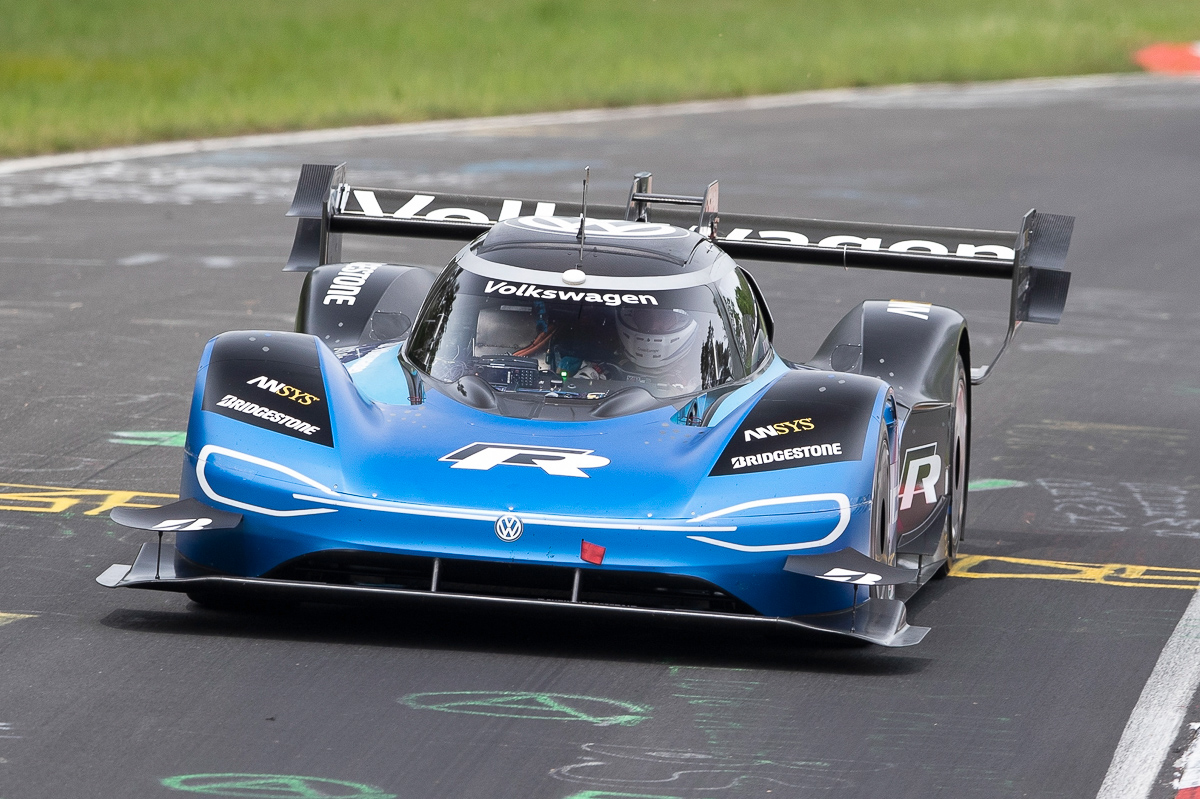
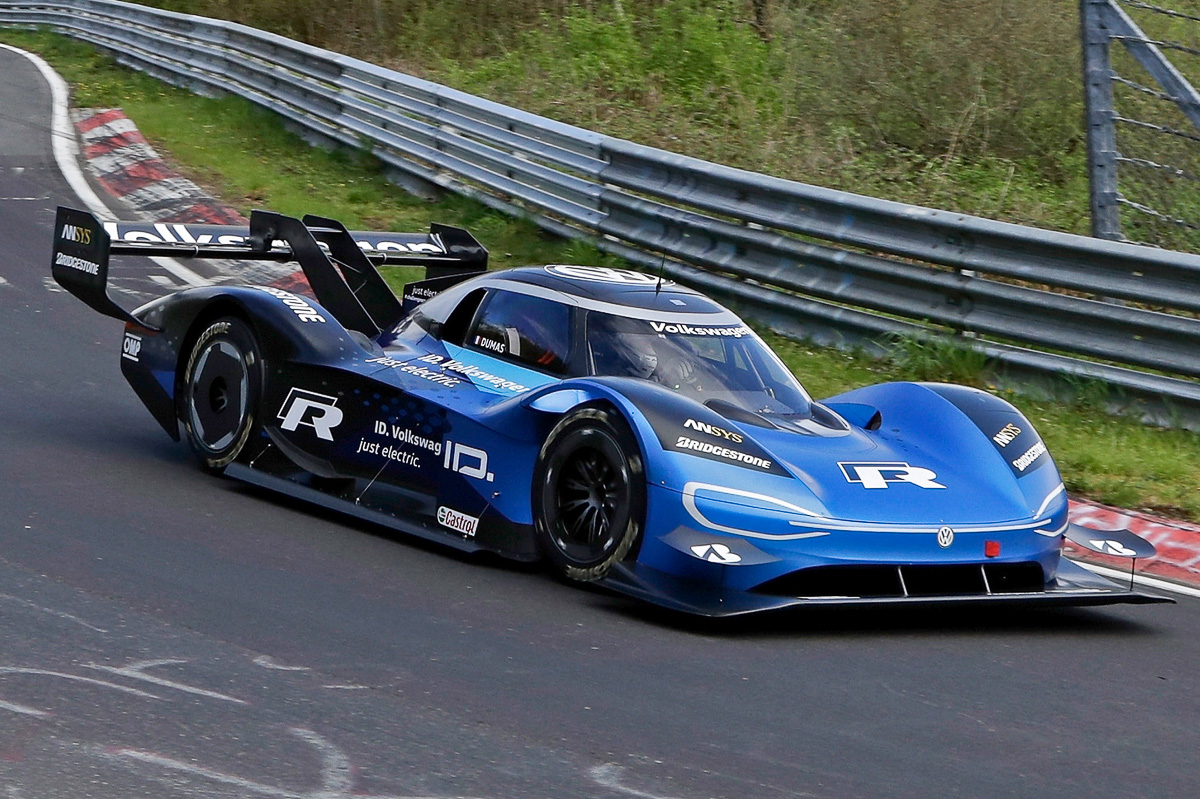
It’s been years in the making but the Volkswagen ID. R has done it, folks! The 680hp all-electric race car has broken yet another record and officially gain the title as the fastest electric car to go around the infamous Nürburgring-Nordschleife circuit aka “The Green Hell”. (more…)
It was around this time last year when the manic and eco-friendly 680hp electric beast Volkswagen ID.R set not only the fastest ever time at the Pikes Peak International Hill Climb but also smashed the record for the fastest vehicle ever in the ‘Unlimited’ category. (more…)
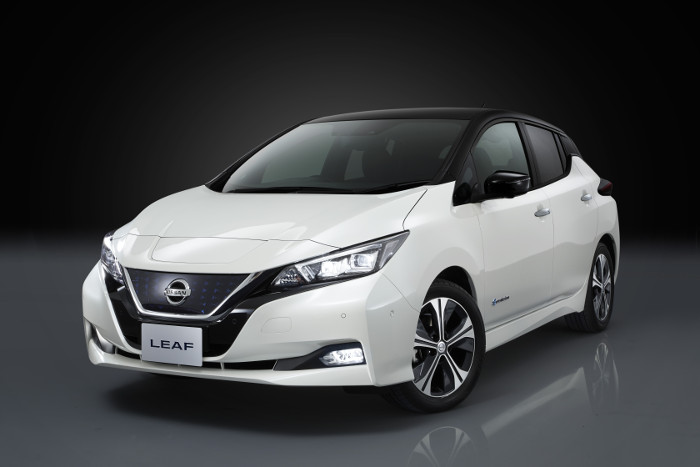
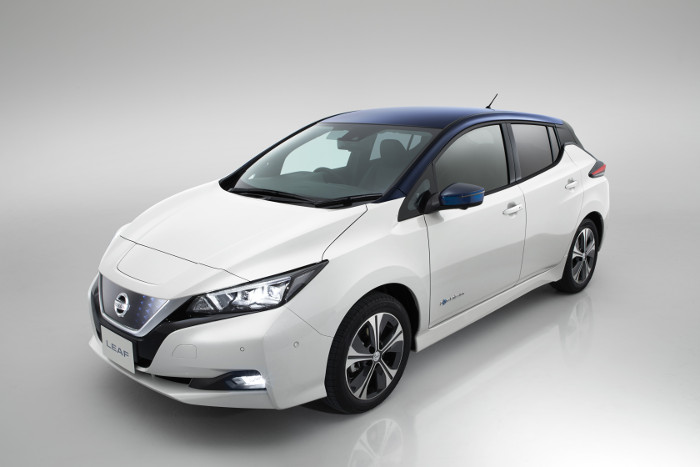
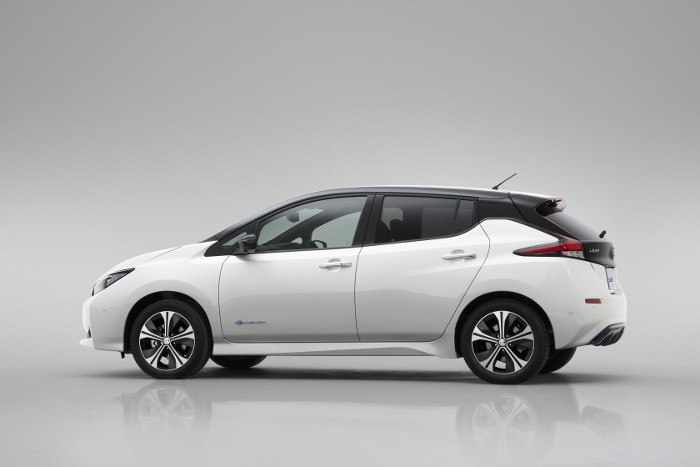
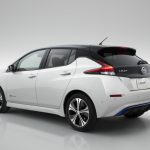
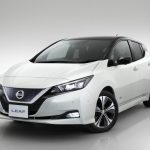
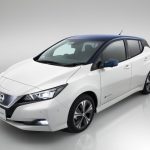
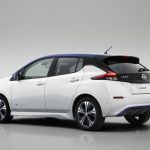
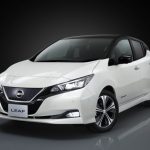
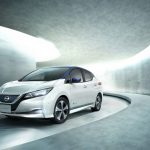
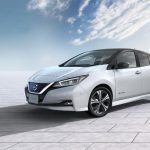
Nissan has unveiled the highly anticipated second generation EV, the Leaf. Building on the success of its predecessor that burst onto the scene in 2010, the new car aims to be the smartest electric vehicle on the market.
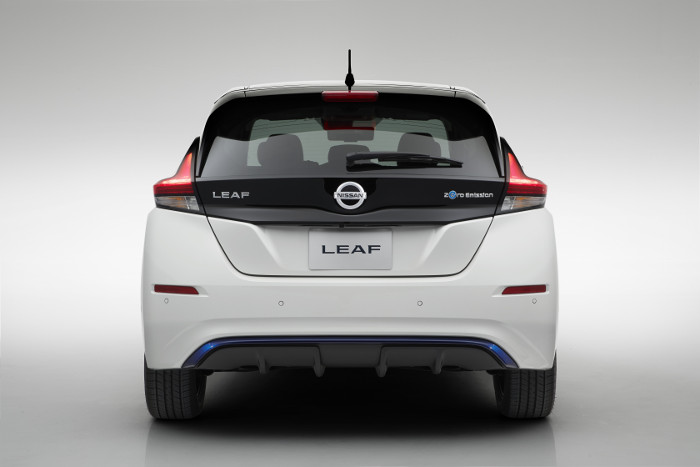
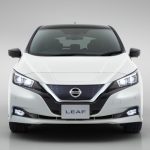
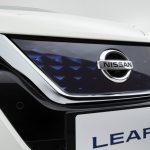
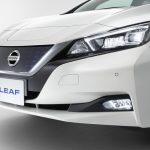
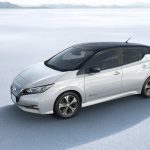
Though it features the same basic silhouette as its predecessor, the car has been given a completely new look. Gone is the fish eye-like front end and in its place, a more contemporary look with sharp projector headlights that meet the narrow yet prominent V motion chrome grille.
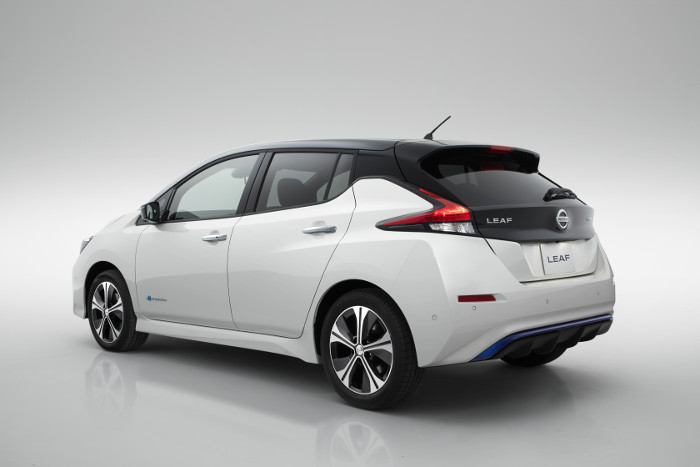
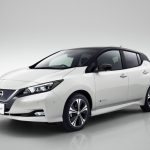
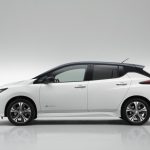
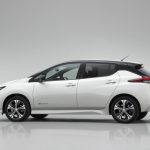
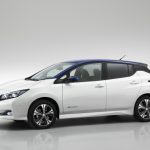
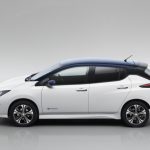
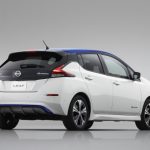
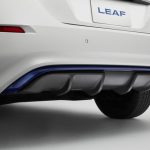
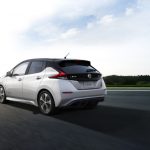
The new Leaf stills sports the swept back look of its predecessor but seems to feature a sportier side profile thanks to a pair of decent side skirts and a two-tone paint scheme. This theme is carried to the rear as well because part of the hatch has a gloss black finish.
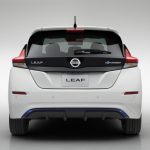
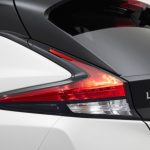
It also features more angular but less prominent rear taillights that are smaller than its predecessor. The bottom section of the rear bumper resembles that of a diffuser, but we aren’t sure whether its fully-functional or just there for vanity purposes.
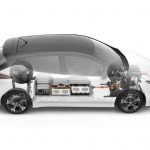
Fitted at the base of the car is a higher density battery pack that is about 40% more efficient than the one fitted to the 2010 car. As such it enables the new Leaf to cover a distance of 378km on a single charge.
Nissan is very proud of the car’s e-powertrain, which offers better efficiency and is able to deliver 148bhp and 320Nm of torque. The smart thing about the new car is that it is able to charge as and when necessary as well as when tariffs are lower.
The car can also feed power back into the power grid and power your home during the day to help reduce your electricity bill. Though these features won’t be beneficial in all global markets, it will help owners in places where sufficient infrastructure is in place to support EVs.
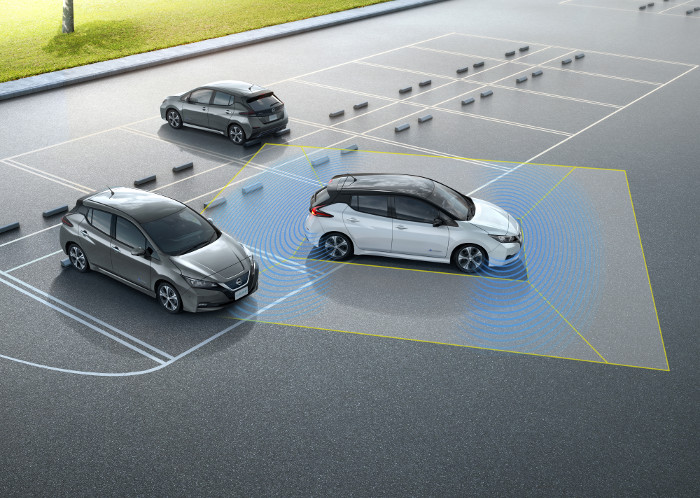
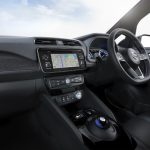
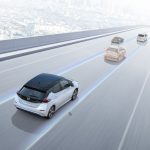
As expected, the new Leaf comes with all the latest tech which include ProPILOT, ProPILOT Park and e-Pedal. ProPILOT is an intelligent autonomous system that keeps the car in its respective lane as well as at a safe distance from the vehicle at the front. It uses mutiple ultrasound sensors to offer drivers extra security especially on long journeys.
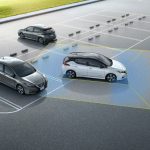
ProPILOT Park, allow the Leaf to manouver into parking spots without the need for human intervention. Though this is nothing revolutionary, it still is impressive to witness. Lastly, there’s the e-Pedal. This system will enable the car to decelerate without the driver pressing the brake pedal.
When a driver lifts his/her foot off the accelerator pedal, the regenerative braking feature kicks allowing the car to gradually come to a complete stop. It works by applying regenerative and friction brakes automatically, which even works for steep inclinations.
This new Leaf will go on sale in Japan in October of this year with deliveries for other parts of the world slated for the beginning of 2017. Nissan aims to sell this car in more than 60 markets globally, which should include Malaysia.