
Piston.my

SUV

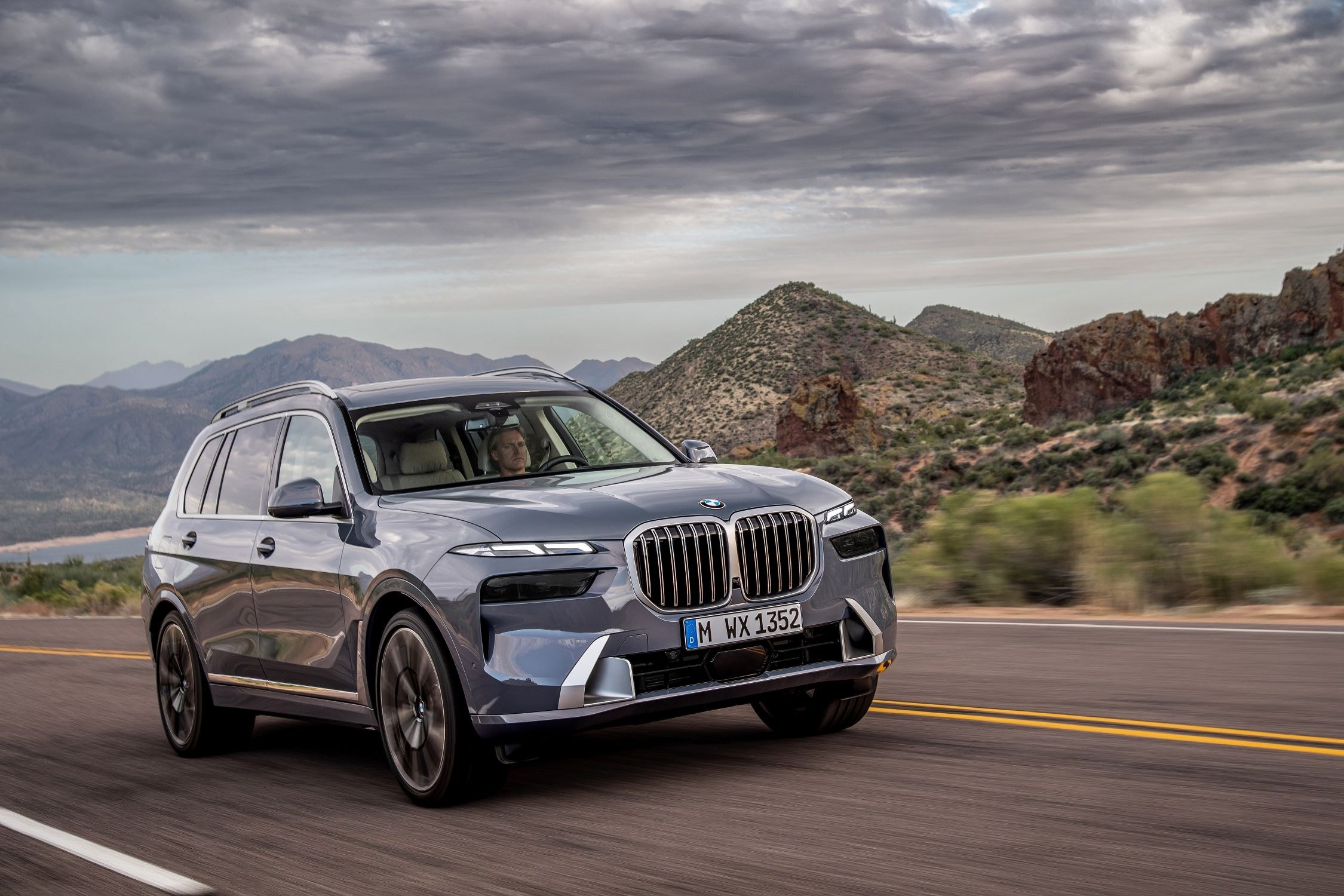
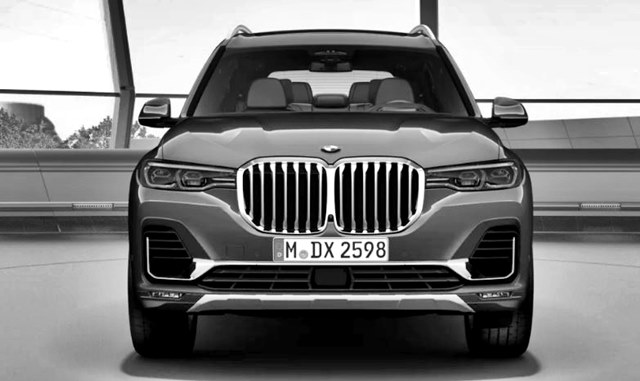
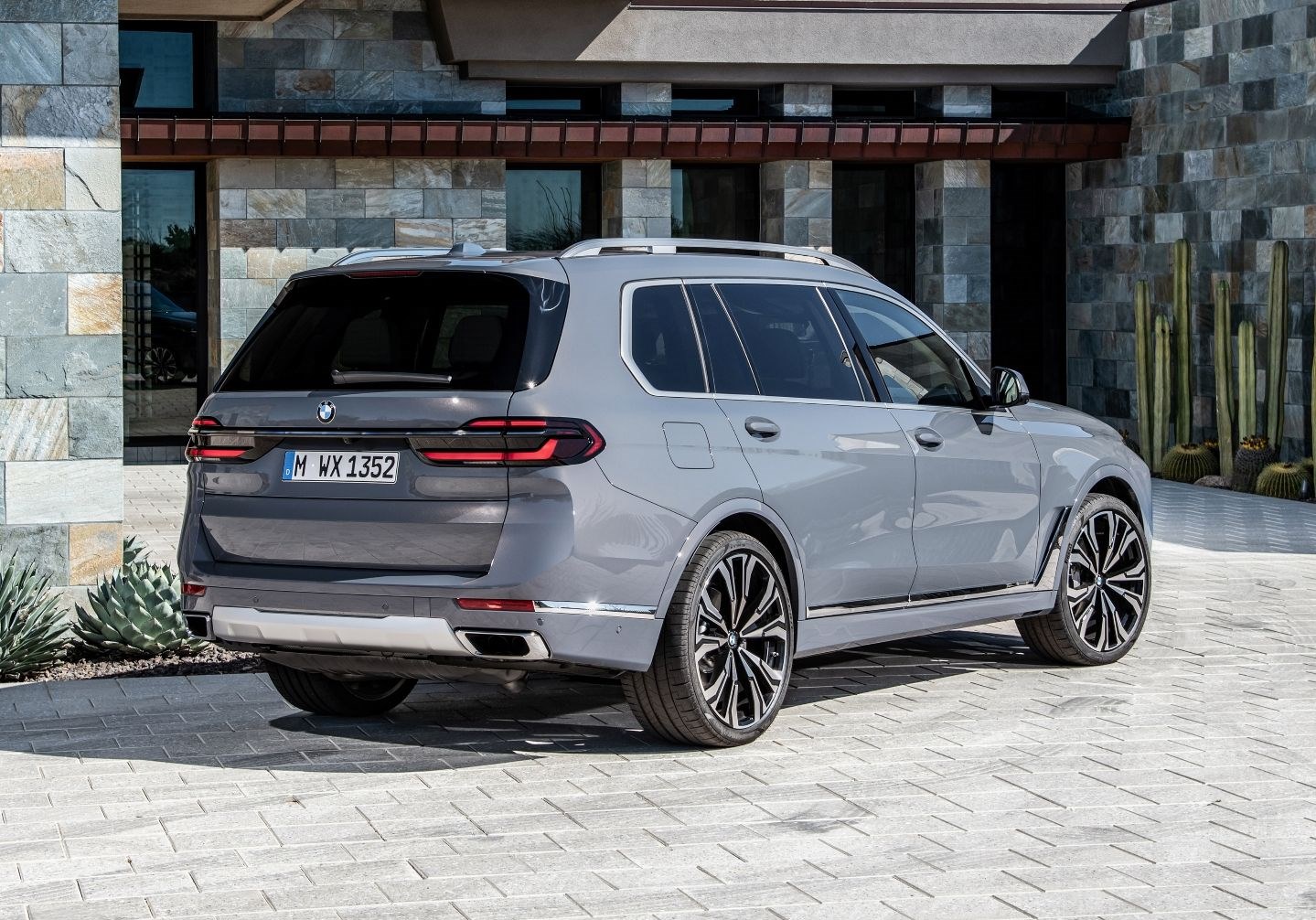
BMW’s largest SUV, the X7 (G07), has received an update after 4 years in the market (3 years in Malaysia) and it comes with a new frontal appearance that we should be seeing on the next generation of the 7-Series which will make its debut very soon.

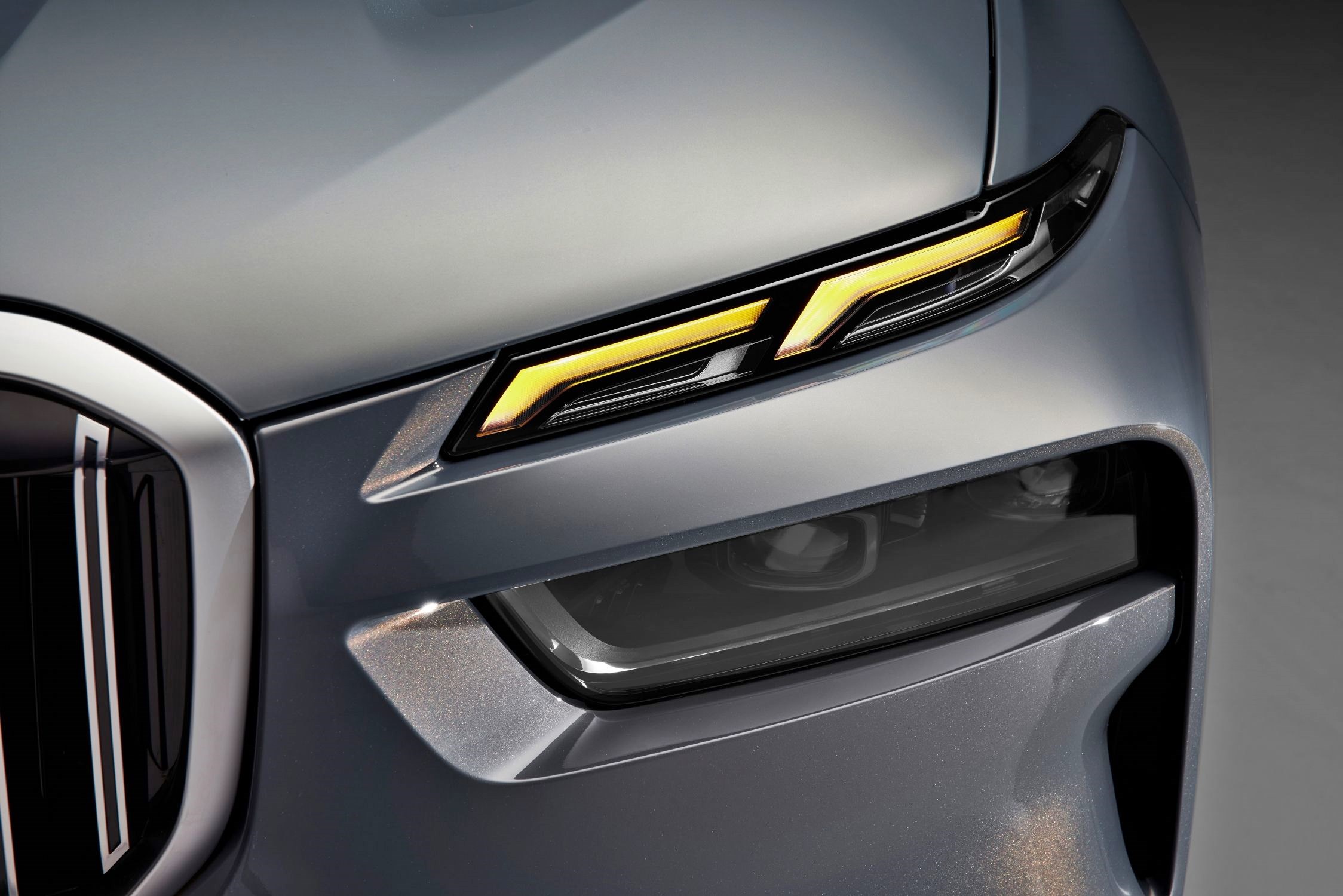
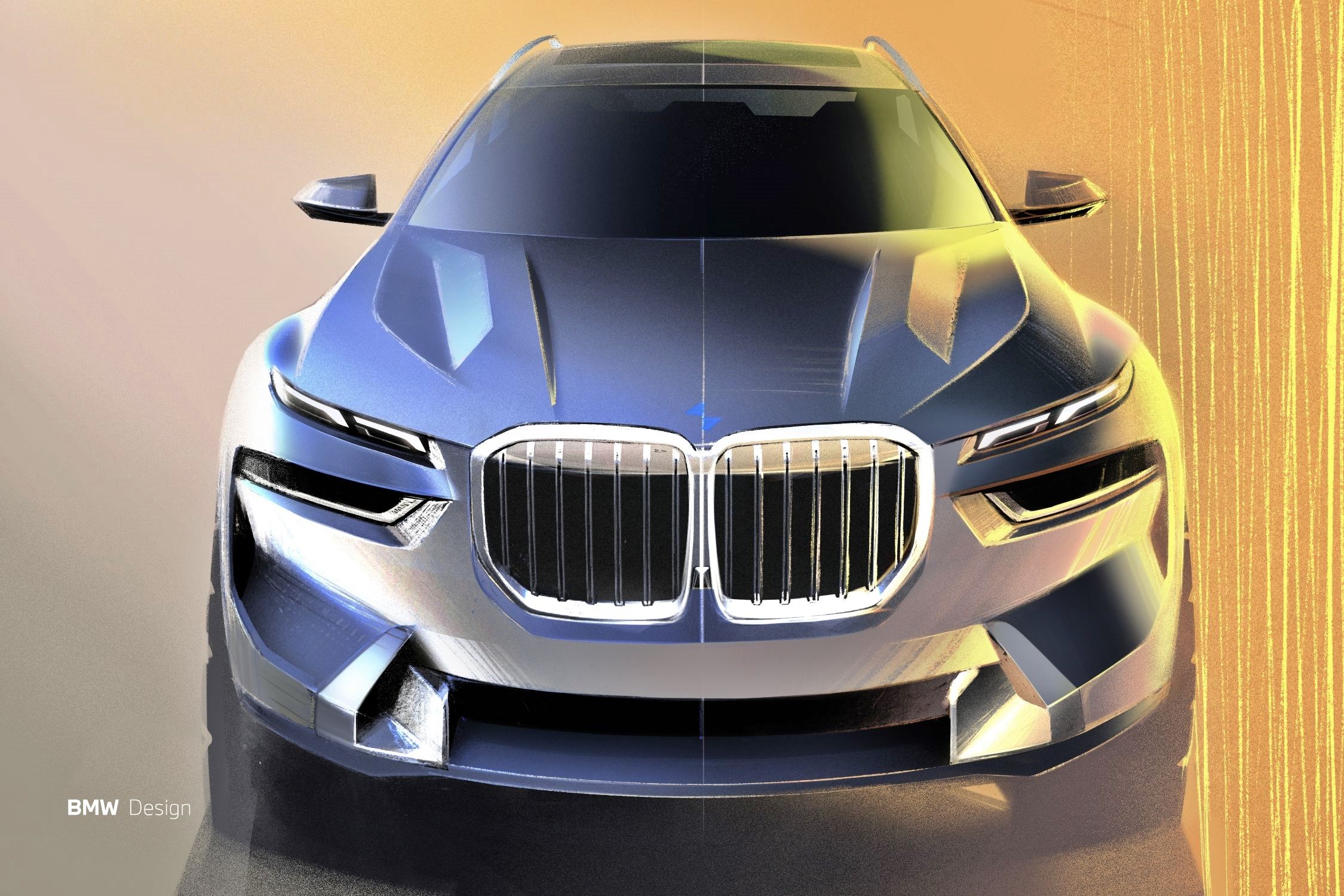
The main feature of the new look is the split headlight design that is a key element in BMW’s new design language. This is the first time that split headlight units have been employed for DRLs (which also function as turn indicators) as well  as main beams. The low-beam/high-beam headlights are separate LED units below the DRLs. The headlights have adaptive matrix capability to customise the spread of light for maximum illumination without dazzling oncoming drivers.
2022 BMW X7

Current BMW X7.

2022 BMW X7

2022 BMW X7

The updated front-end also has an ‘Iconic Glow’ kidney grille with understated cascade lighting for the two grille elements. The illumination is activated when one of the doors is opened and while on the move (but it be switched off if not desired). At the rear, the L-shaped light strips are said to generate significantly greater intensity so they can double up as brake lights and the light units can therefore be kept extremely slim.
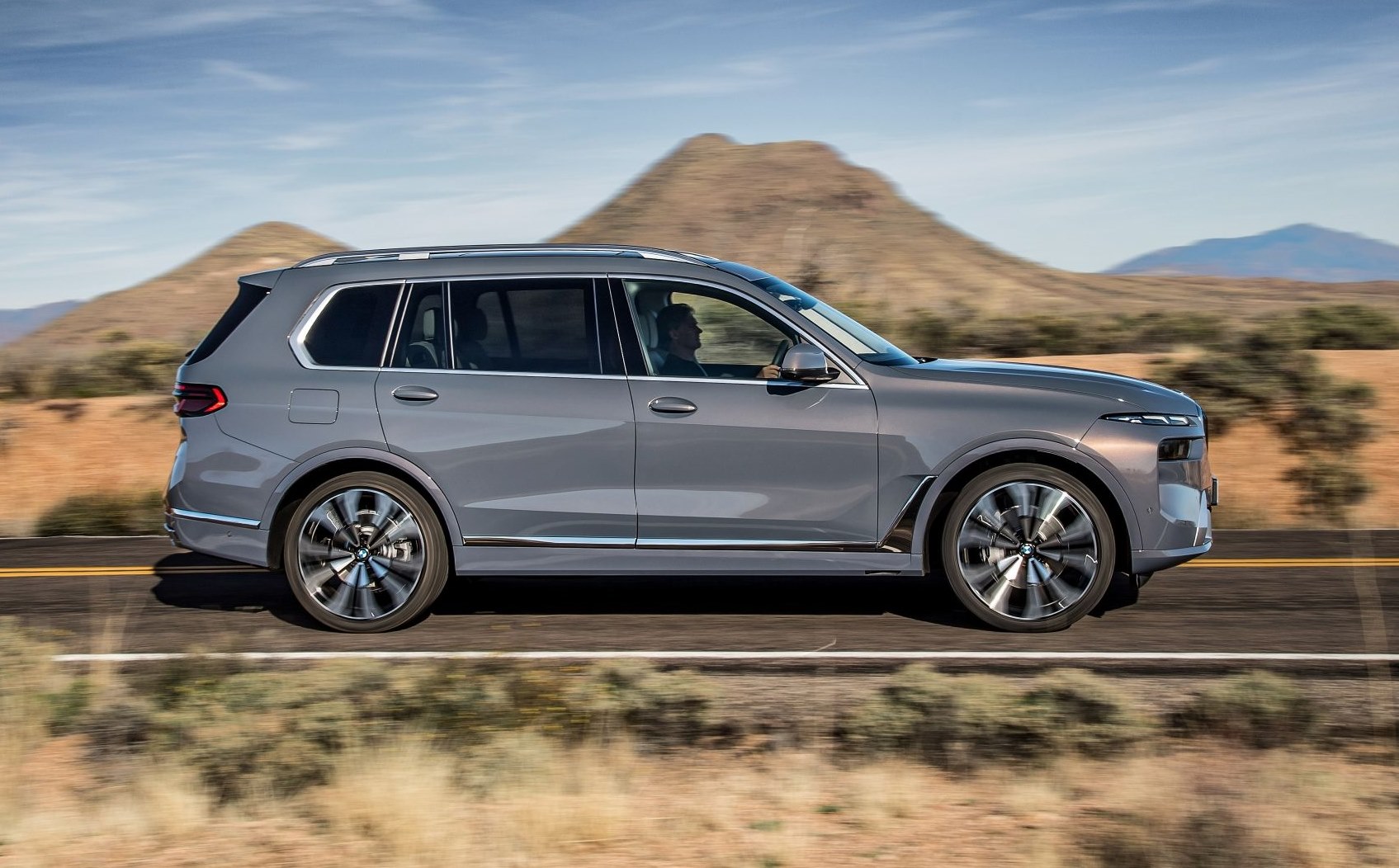
2022 BMW X7

Within the huge bodyshell of the X7, the three rows of seats have new seat surfacing and bolder  colour combinations. For most variants, there is a sport leather steering wheel with shifter paddles, 4-zone automatic climate control, ambient lighting, panoramic glass sunroof, Harman/Kardon audio, heated comfort seats for the driver and front passenger and Comfort Access.

As with some other models in this class, the dashboard is dominated by displays. In the case of the X7, the BMW Curved Display is made up of a 12.3-inch information display behind the steering wheel and a control display with a 14.9-inch screen. The two screens, which extend to two-thirds of the width. merge into one high-resolution display unit behind a single glass surface. While the panel orientation is curved towards the driver, the front passenger can also view the screen and operate the iDrive 8 system.
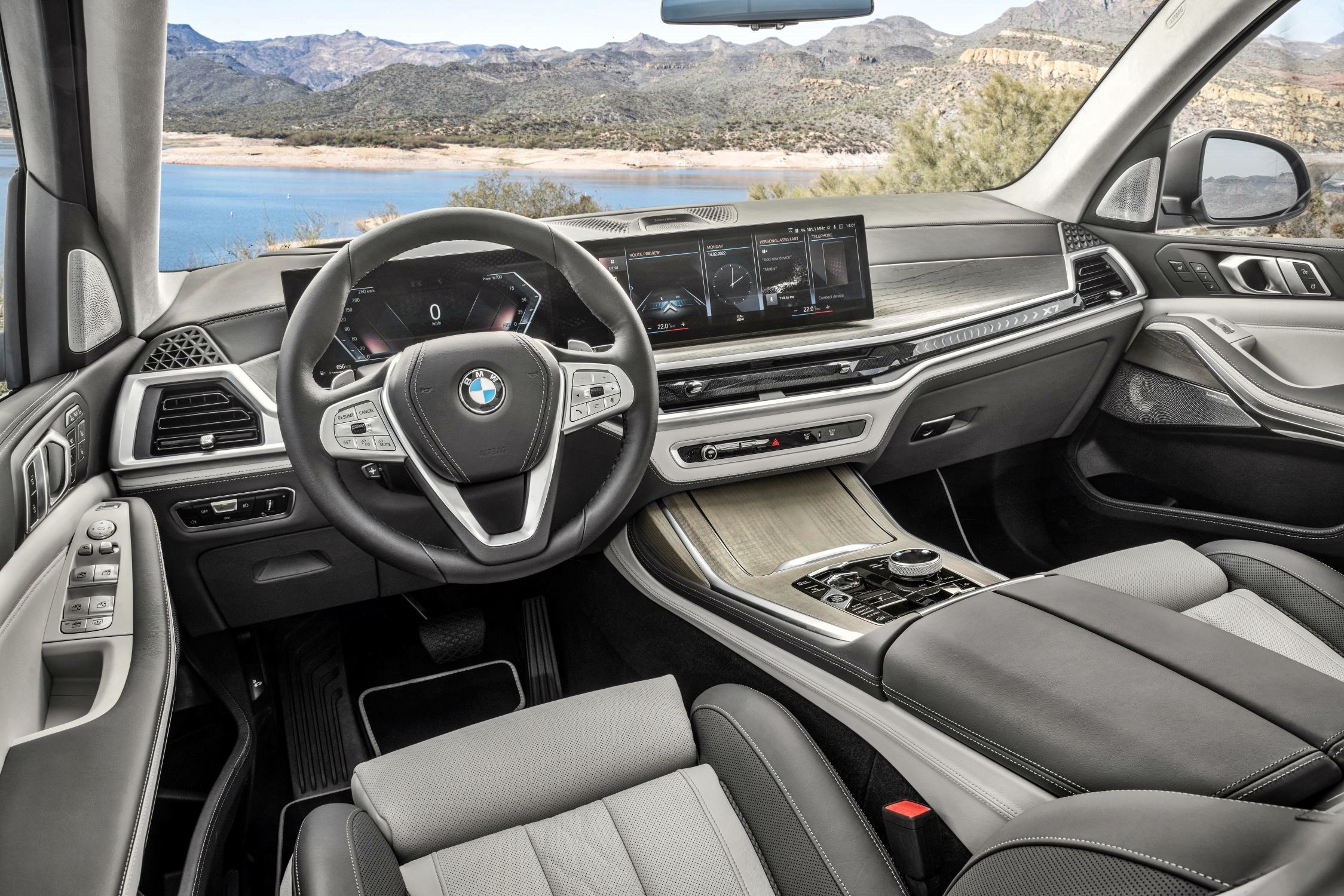
2022 BMW X7

The dashboard surface is now made from Sensafin, a high-quality, vegan surface material with leather-like properties has exclusive three-dimensional quilting and surface perforation.

The instrument panel has an extremely slim form, its horizontal structure emphasising the width of the interior. A new ambient light bar makes its debut below the interior trim strip in the front passenger area. It has a crystalline surface structure and effective backlighting with the use of LED units. The light distribution, brightness and colour for the interior illumination can be configured with a choice of 15 colours.

With all seats in use, there’s 326 litres of cargo volume and depending on whether the second and third row are folded down, the capacity can be expanded to a maximum 2,120 litres. To simplify loading, the standard air suspension can be lowered at the touch of a button. The tailgate is split, with both sections opening and closing automatically. The advantage of this 2-section tailgate is that you don’t need to always raise a large door just to put in smaller items.

The Sky Lounge sunroof is made up of 3 glass section spanning the length of the roof. All the roof elements have an electrically sliding headliner and its 15,000 graphic patterns can generate a display reminiscent of a starlit sky. This is a Starlight Headliner which first appeared in Rolls-Royce models many years ago.

2022 BMW X7

The X7 continues to use a range of engines from the new modular generation of the BMW Group Efficient Dynamics family. However, it remains as a hybrid rather than plug-in hybrid powertrain. The range is headed by a new 4.4-litre petrol V8 for the X7 M60i xDrive. Joining it are newly-developed 3-litre, 6-cylinder in-line units in the petrol X7 xDrive40i and diesel X7 xDrive40d. The current X7 assembled in Malaysia is the xDrive40i variant and it is likely that this will remain the case with the updated version.

The new 3-litre petrol engine of the xDrive40i has been improve in many areas and maximum output has been increased by 47 bhp to 380 bhp, while peak torque rises by 70 Nm to 520 Nm and can be boosted to as much 540 Nm by the 48V mild hybrid system.

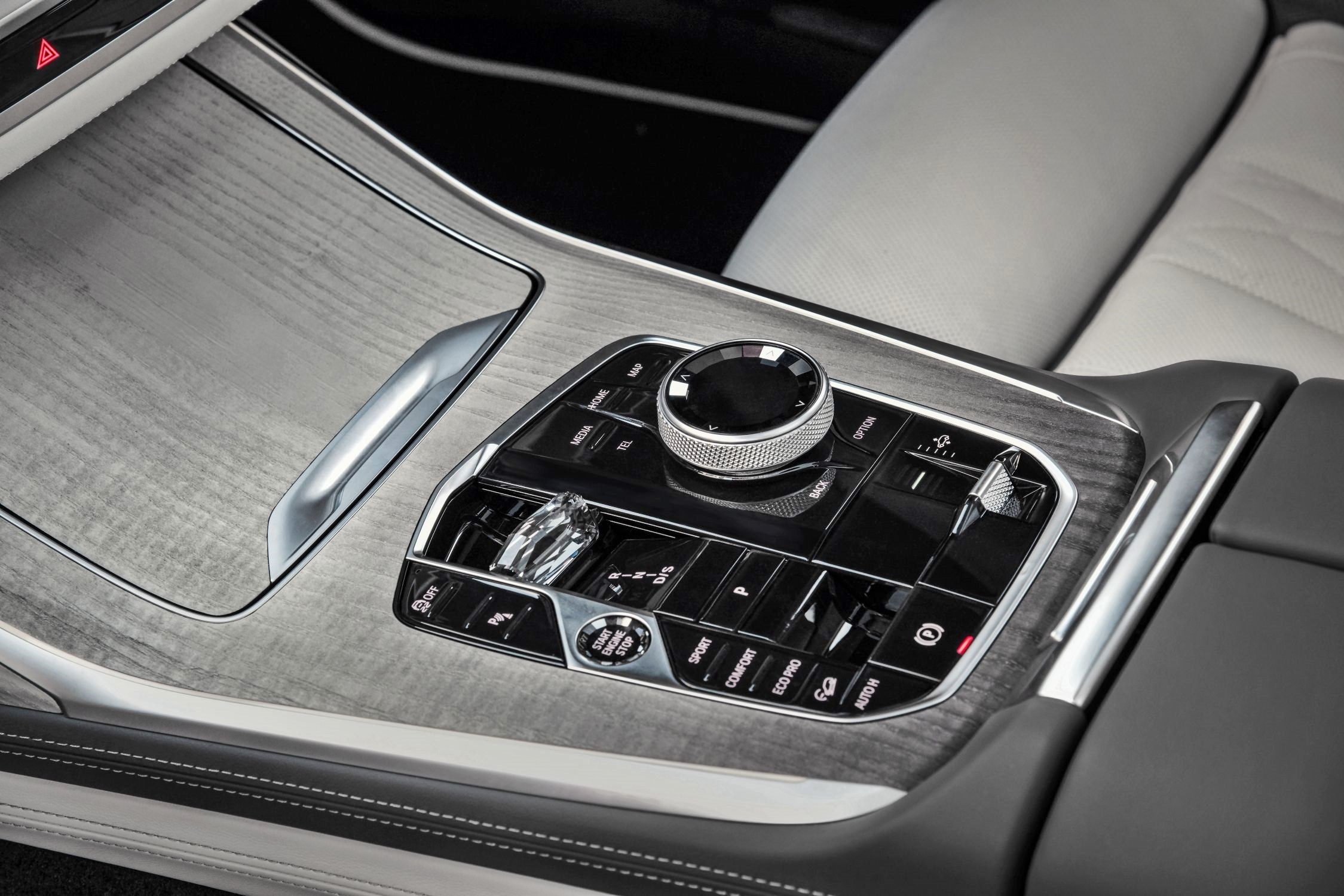
2022 BMW X7

2022 BMW X7

The 8-speed Steptronic transmission is a new unit, used for the first time in the X7. Gear transitions are quicker and there’s a Launch Control function as well as a new Sprint function when a quick burst of speed is required. With the Sprint function, the transmission automatically shifts into the lowest usable gear and the powertrain and chassis systems switch to their sportiest settings. For maximum performance, the hybrid system’s electric boost is also activated.

Power goes to all 4 wheels via the efficient and intelligent xDrive system with rear-wheel-drive bias. It uses an electronically controlled multi-plate clutch in the transfer case interlinked with the powertrain and chassis systems to distribute power between the front and rear wheels as required.
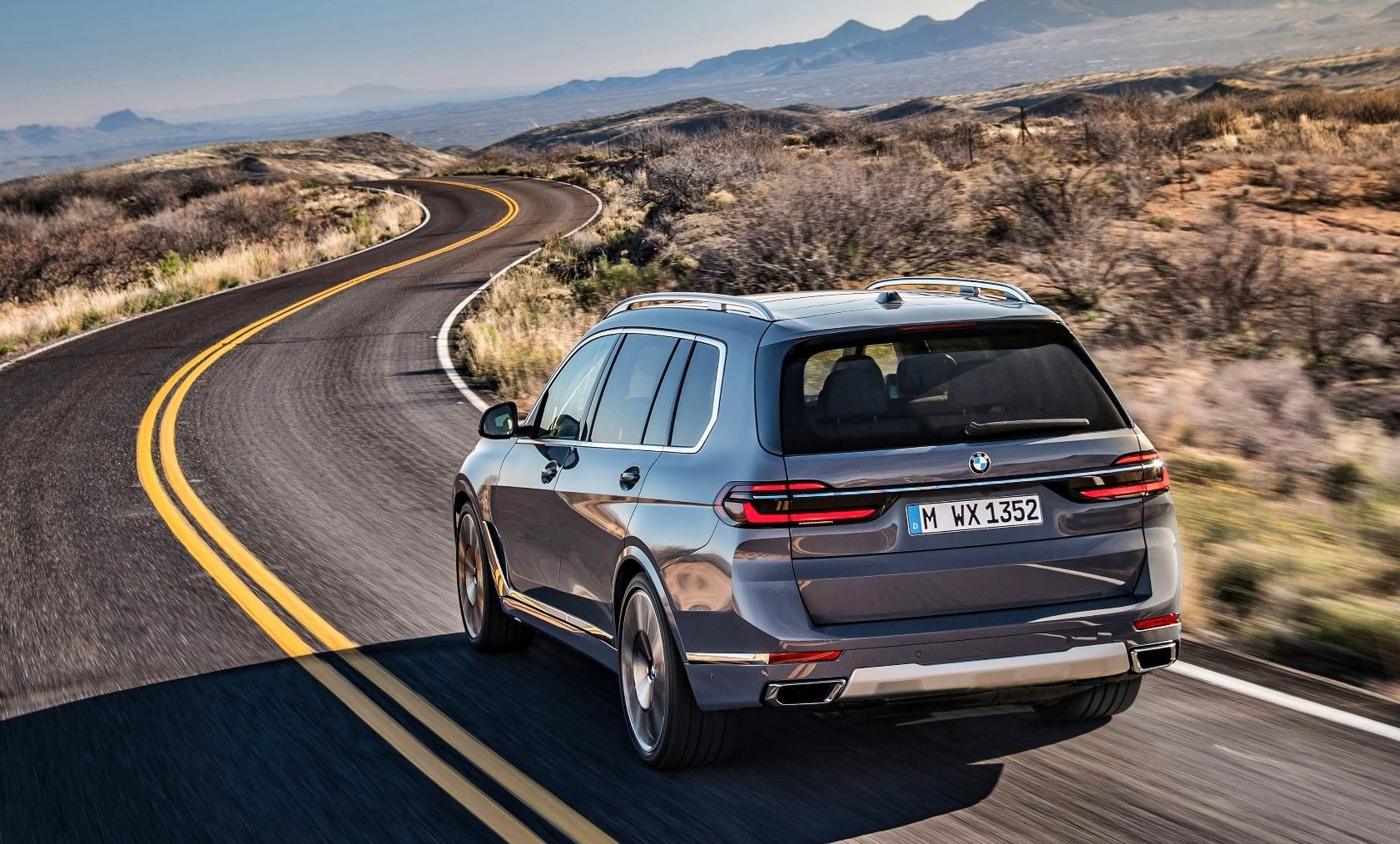
2022 BMW X7

The X7 now comes with adaptive two-axle air suspension with electronically controlled dampers as standard. The dampers respond adaptively both to road surface conditions as well as driving style. The various Driving Experience Control modes also give a more sporty or a more comfortable basic damper setting.

Thanks to the link-up with the Dynamic Stability Control (DSC) system, the vehicle load registered by the air suspension sensors can be factored into braking modulation. When the X7 exceeds 140 km/h, or the Driving Experience Control mode is set to Sport, the body is automatically lowered, increasing stability and reducing aerodynamic drag. Ride height can be lowered in 2 stages and by up to 20 mm.

2022 BMW X7

New variants for locally-assembled BMW X3 and X4

The Cullinan SUV by Rolls-Royce costs upwards of RM1.8 million and for most owners, it would probably be part of a fleet, perhaps used for occasions when some rough conditions are expected. There might be some owners who will want to make use of all the off-road capability that Rolls-Royce engineers have given it and travel far off-road.

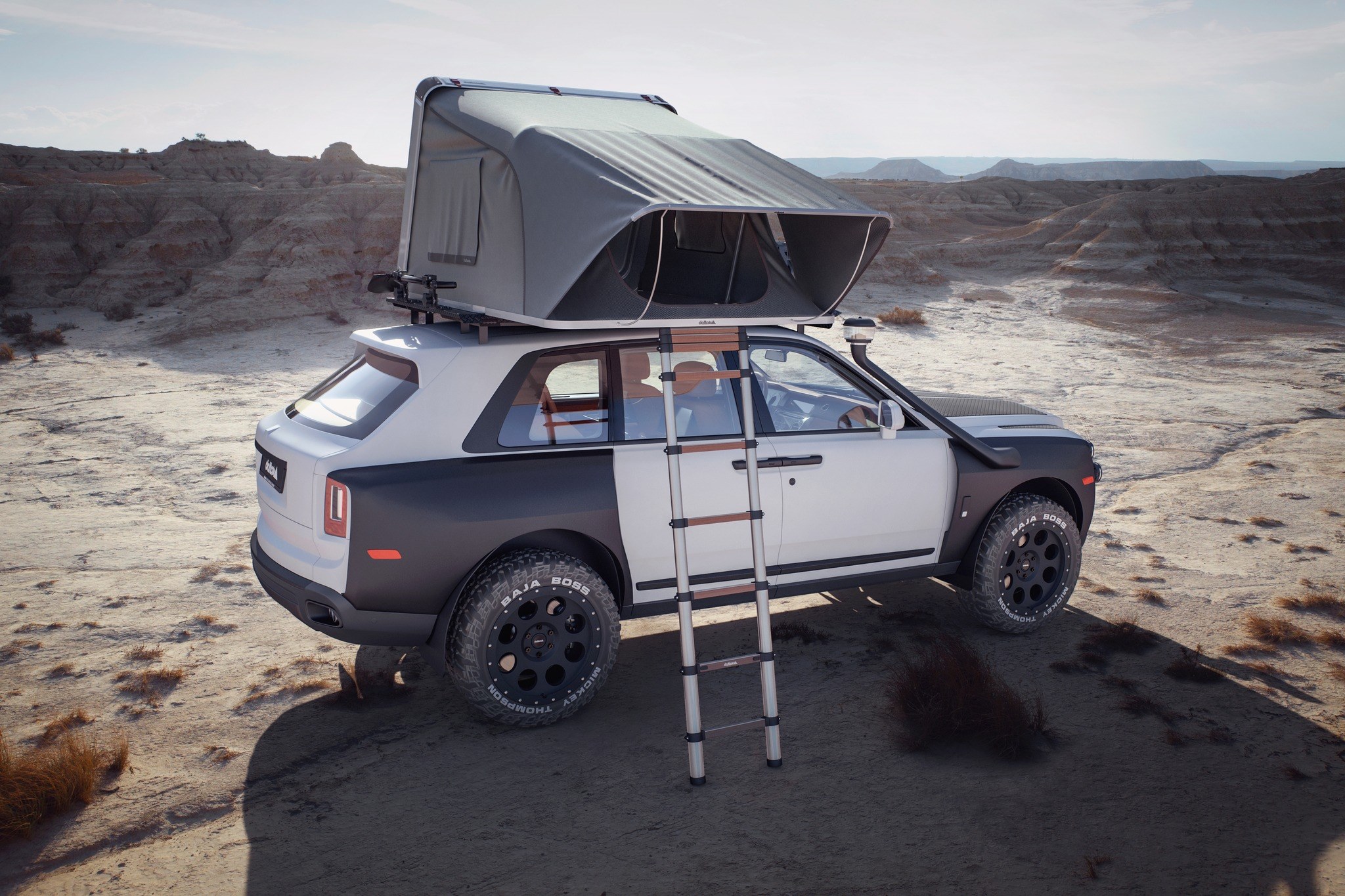
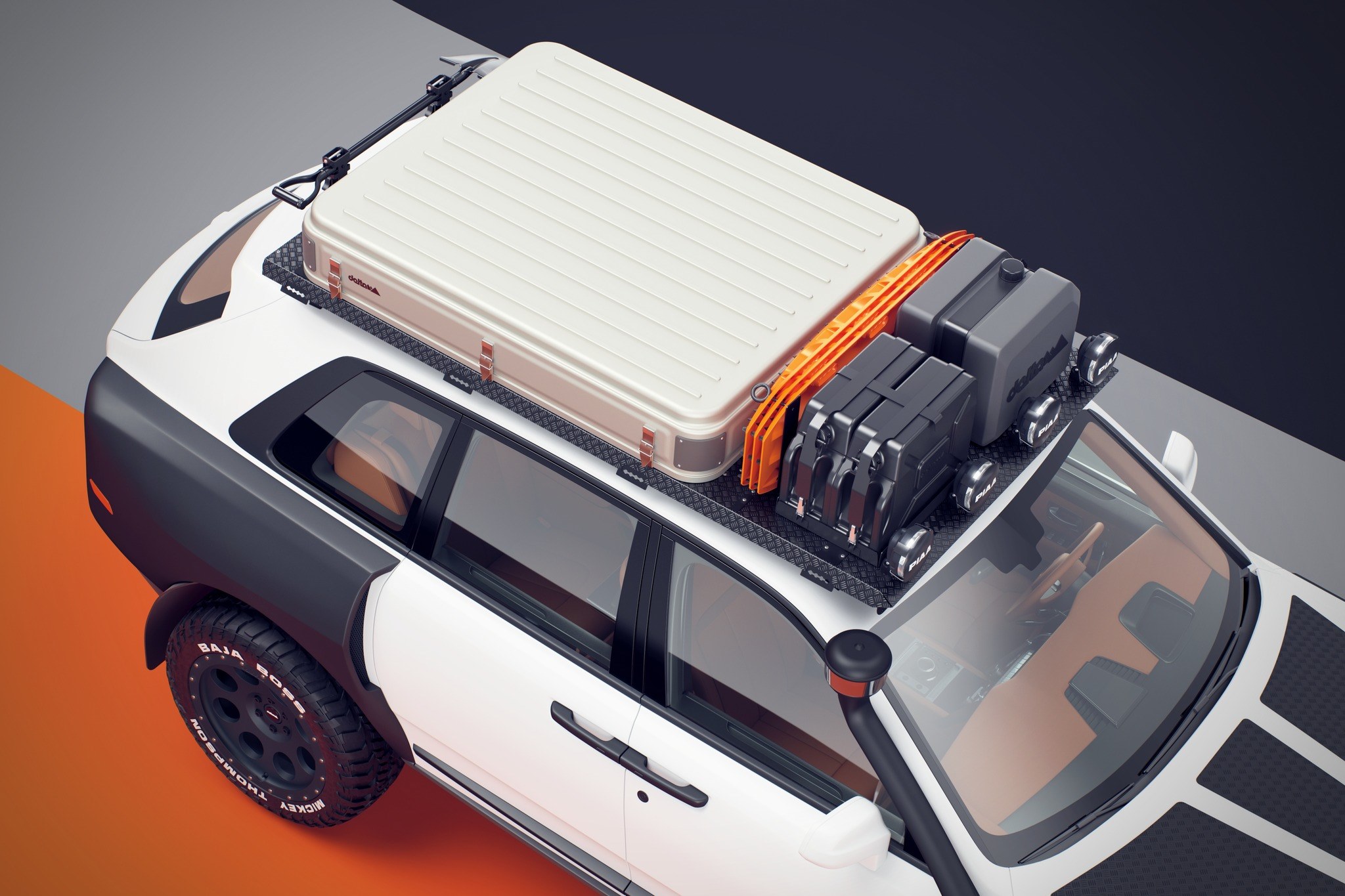
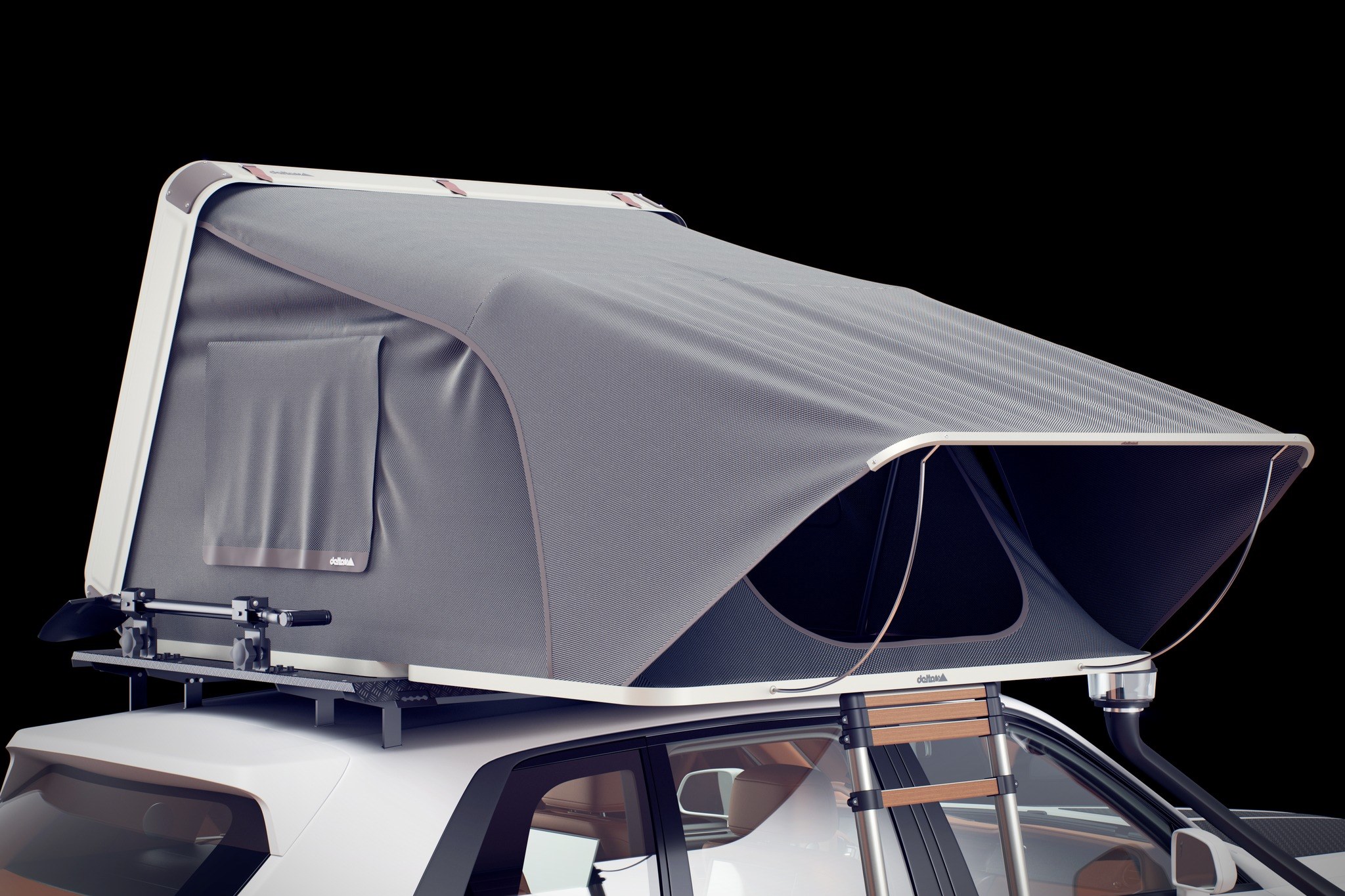
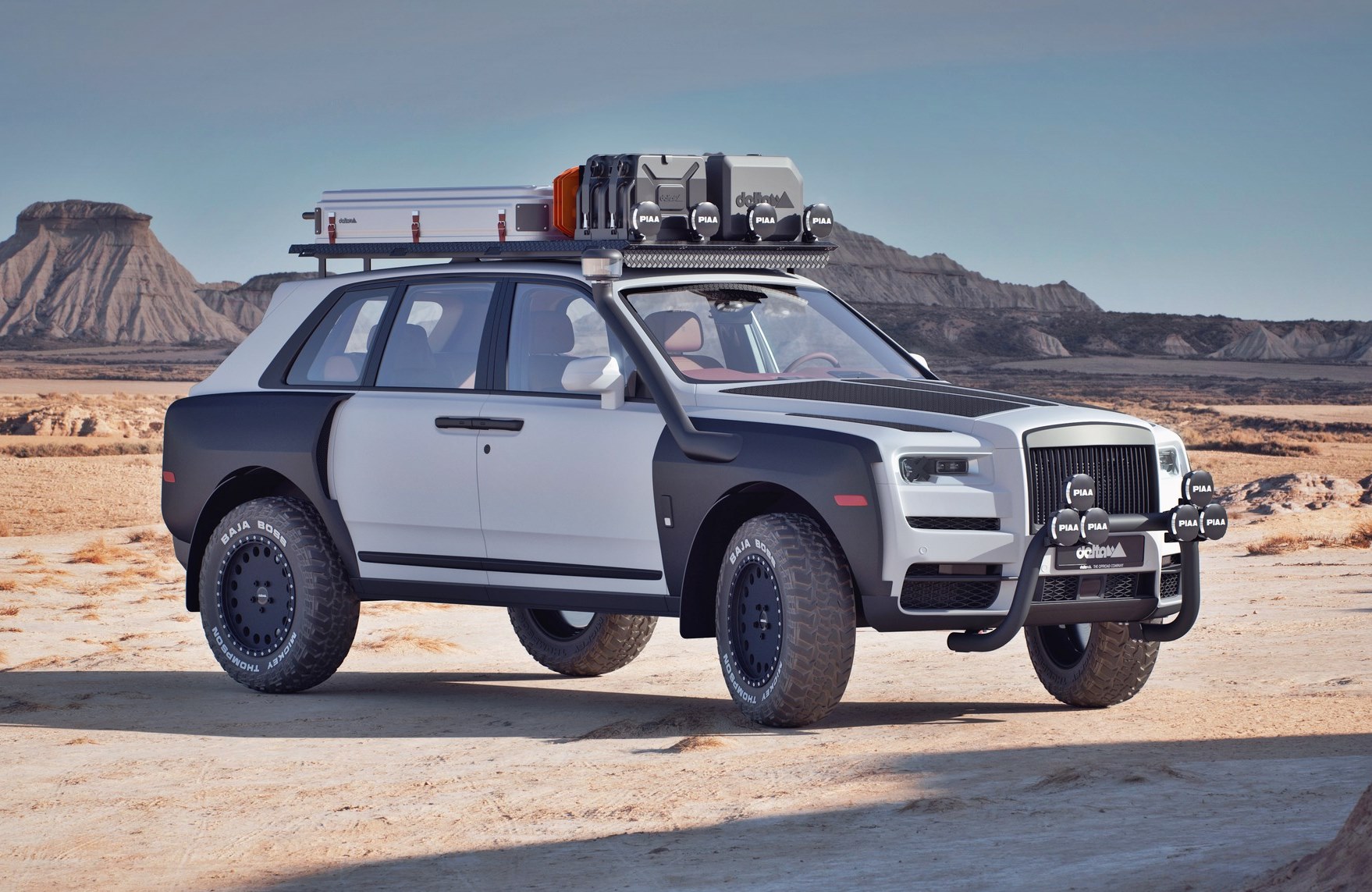
One such customer in the Arabian Peninsular seems to have such an intent and got Delta 4×4, a German tuning company, to ruggedize his Cullinan and also add some accessories for camping in comfort (probably in the desert). In total, the project would have cost the owner at least 150,000 euros (about RM690,000).

Rolls-Royce Cullinan by Delta4x4

Rolls-Royce Cullinan by Delta4x4

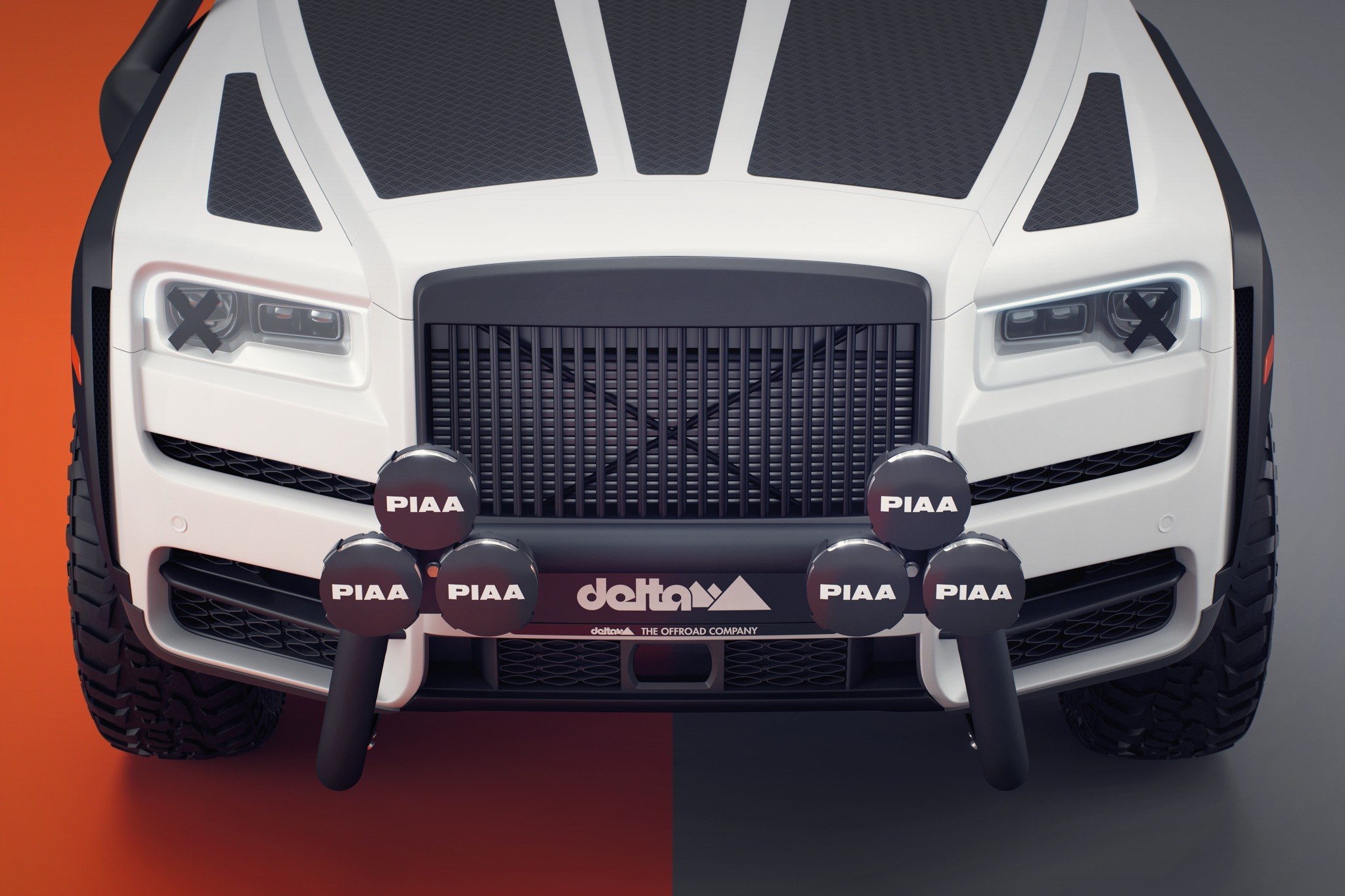
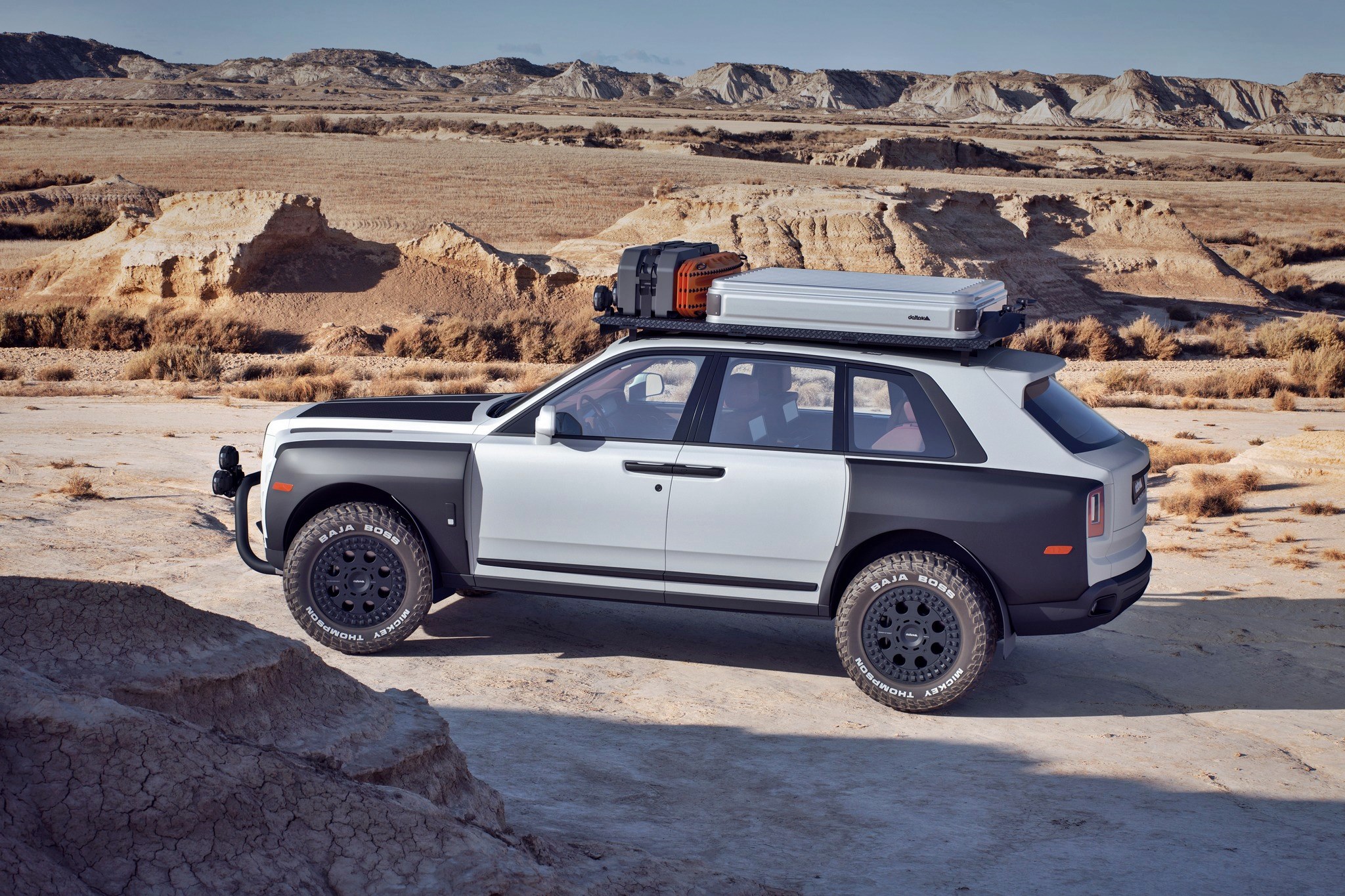
It’s the sort of assignment that Delta 4×4 has expertise in and apart from installing its own line of accessories like a brush bar, spotlights (10 PIAA units in total), skid plates, and a snorkel, it also incorporated a roof rack with a rooftop tent.

To enable it to cross rougher terrain, Delta4x4 added wider fenders over the custom bead-lock 20-inch wheels and Mickey Thompson off-road tyres. Ground clearance is extended with a 3.15-inch lift kit to add 150 mm more than a standard Cullinan.

Rolls-Royce Cullinan by Delta4x4

Rolls-Royce Cullinan by Delta4x4

The 6.75-litre twin-turbo V-12 engine under the long bonnet has plenty of power – 563 bhp with 850 Nm of torque – so no upgrading would be necessary. The exhaust system, however, is customised ‘for a nicer sound’ and improved performance. Likewise with the 8-speed automatic transmission and all-wheel drive which are also unchanged from the standard model the customer purchased originally.

While this is a one-off conversion for the Cullinan, Delta 4×4 can apply the same expertise for other models and it has done so with vehicles like the Mercedes-Benz G-Class and X-Class, Ford Ranger, Volkswagen Amaro, Mitsubishi Triton and even a Porsche 911 Carrera 4S.

Rolls-Royce Cullinan by Delta4x4

Unique features for Rolls-Royce Cullinan owners to enjoy their outdoor adventures

China’s auto industry goes back many decades but it was only in the 1980s, as the country’s economy opened up, that the industry began to expand. Numerous new car companies were established, largely with government support to help them get going, and apart from joint-ventures with foreign carmakers, there were also many that developed on their own.

In the auto industry, the name of the game is numbers – to achieve the biggest volumes possible so that economies of scale can push production costs down. To build up to the critical levels, aspects like quality and safety may not be as high a priority as producing as many vehicles as possible. It’s a normal evolutionary process in the auto industry and once the critical annual volume is reached, then attention can be given to other areas as increasing profits provide the financial resources for more R&D.

So it’s not unusual that the early cars from Chinese companies had low quality and it should be remembered that the Japanese and Koreans also went through that phase. In the 1960s, when the Japanese cars started to sell in noticeable numbers in Malaysia, they were considered fragile and thought to be ‘made from Milo tin can materials’, which was really a myth. But in time, they improved quality and moved so far ahead as to lead the industry in that aspect.

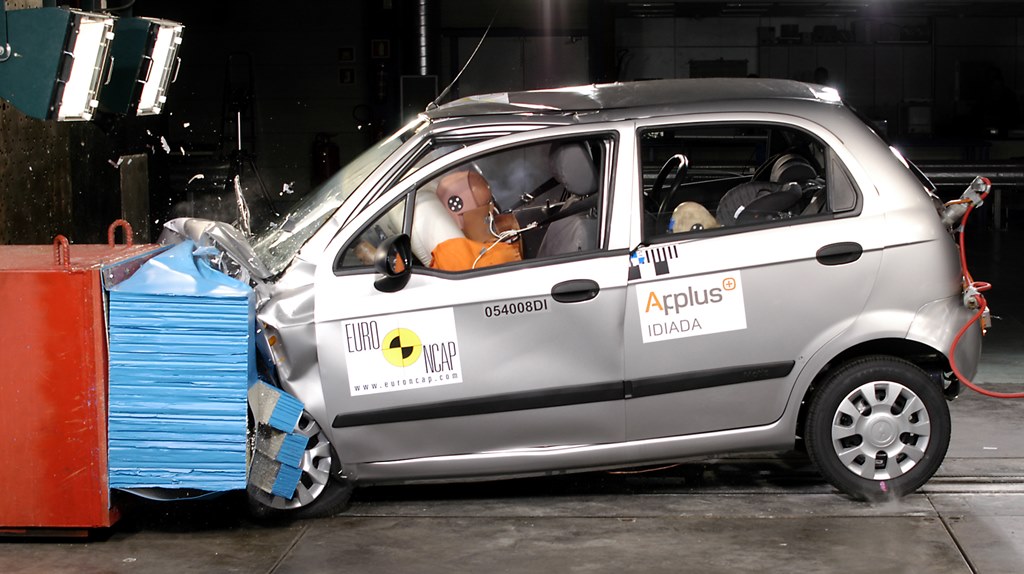
For the Chinese carmakers, the 2000s were a time of rapid growth and getting into world markets. While their vehicles were selling well in China and there was then little emphasis on safety, the same was not the case in other countries. Safety standards were well established and independent organizations like Euro NCAP and Germany’s TUV and ADAC conducted assessments on new vehicles which included crashing them.

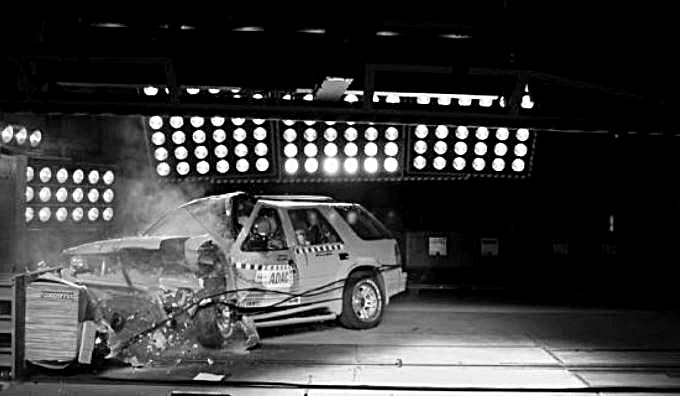
The severely damaged Landwind X6 tested by Germany’s ADAC in 2005 increased the negative perception of the passive safety of Chinese vehicles.

The early Chinese cars exported to Europe had poor ratings then, and a SUV model called the Landwind X6 showed a shocking result in Euro NCAP’s crash test in 2005 when it was so severely damaged that it got zero stars. Though testing by some other organizations suggested that it was not all that bad, the negative publicity became associated with cars from China.

The need for better engineered cars with better protection for occupants saw the establishment of safety standards by the China Automotive Technology Research Centre in 2006. This was the start of C-NCAP (China’s New Car Assessment Program) which would eventually adopt international standards typically led by Euro NCAP. There is now a Global NCAP organization which coordinates and assists national and regional organizations in this field.

NCAP tests are not required by law in any country, but their results are of interest to car-buyers who will be better informed of the level of safety a model offers. Manufacturers therefore aim to achieve the best result – 5 stars – for their new models. During development, they are made aware of the various requirements in the tests and engineer their vehicles to meet or even exceed those requirements.

Many new models nowadays can score the maximum of 5 stars but some get less either because of their design or because they may not have sufficient protective capability or features. In some cases, reduced equipment may also mean a lower score, but the vehicle will also cost less. So it is up to the buyers to decide whether they value their lives enough to pay the extra for better safety or settle for a less safe car and save money instead.

The NCAP requirements or protocols are constantly evolving and are periodically updated with tougher requirements as new technologies become available and also to push manufacturers to make their cars safer. Thus a model which may have scored well in 2003 might not achieve the same result today because the requirements have become tougher. For example, in 2008, Euro NCAP (and other NCAPs followed later) made it a requirement that Electronic Stability Control (ESC) must be present to be able to get 5 stars. If a model scored well in all areas but had no ESC, it would get only 4 stars. This basically forced the industry to make ESC a standard feature before long, providing motorists with better active safety.

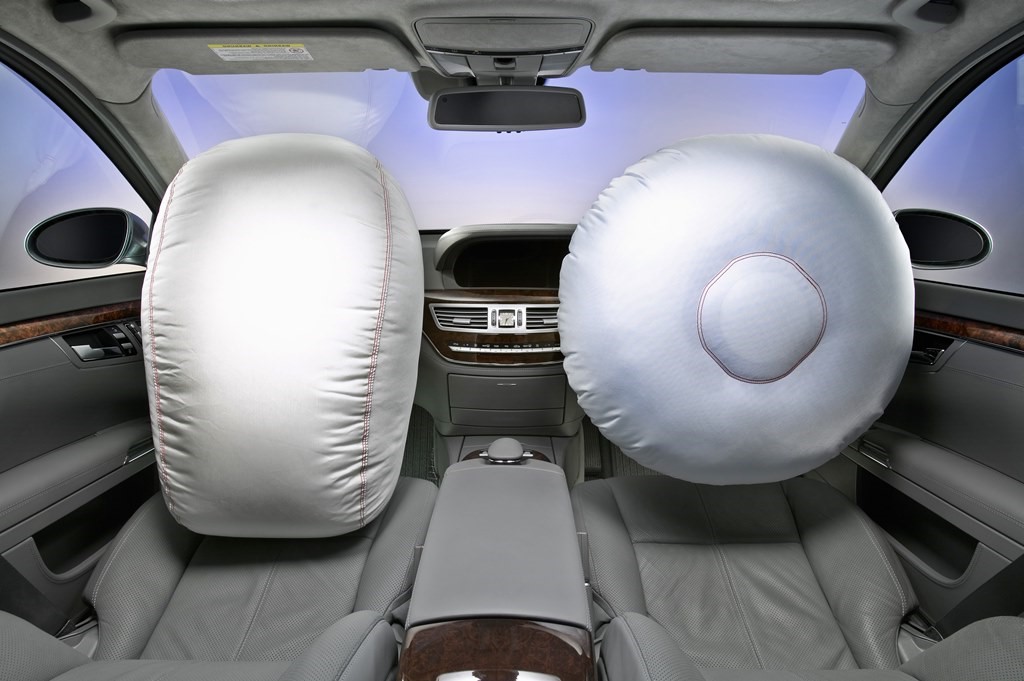
Another example is the provision of airbags for both front occupants. This was promoted by ASEAN NCAP for models sold in the region and before long, manufacturers made dual front airbags standard across the range.

The upgrading of protocols is done in discussion with the industry to ensure that sufficient time is given for carmakers to improve their engineering or further develop technologies that will make it possible to meet new tests. There is also the cost factor as imposition of new technology too fast can make cars more expensive.

In the case of China, C-NCAP (which set standards) was behind the global NCAP standards at the start. However, by 2012, the protocols were upgraded to become close to what Euro NCAP had. For example, the main frontal offset impact speed was increased from 56 km/h to 64 km/h, and there was a general increase in the thresholds for injury scores of the dummies.

By 2018, the vehicles that were made in China and also the regulations set by the authorities were comparable to those in Europe. This meant that Chinese vehicles had safety standards that could be considered as world-class, with most of the models sold globally being able to match those from other makes.

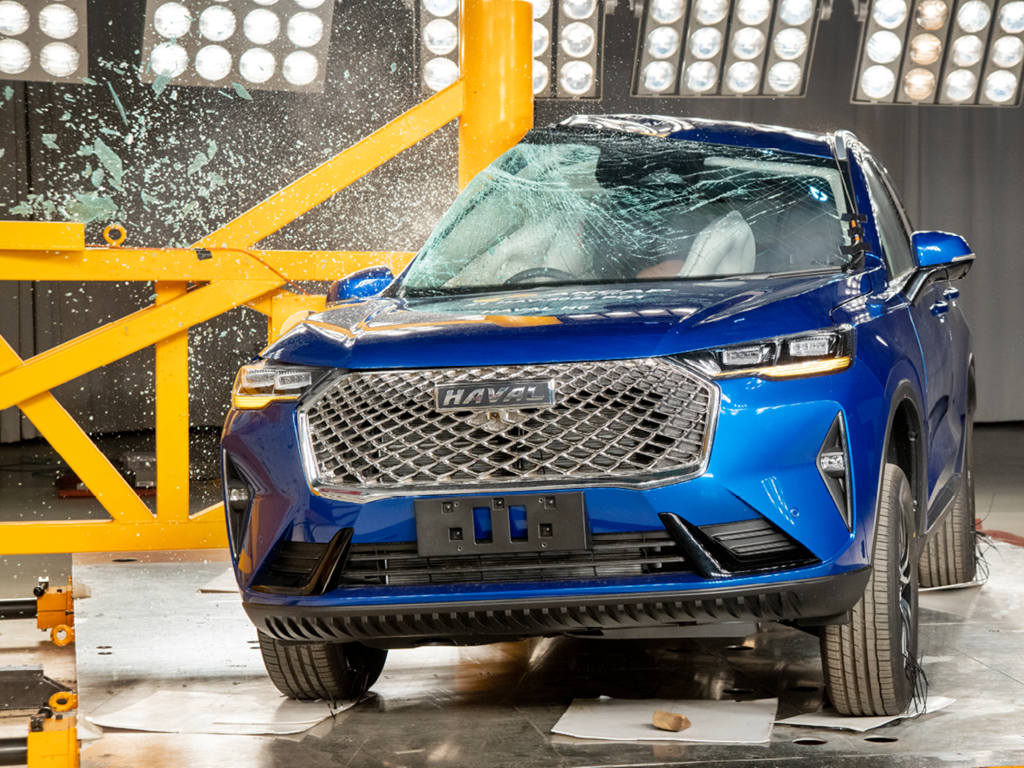
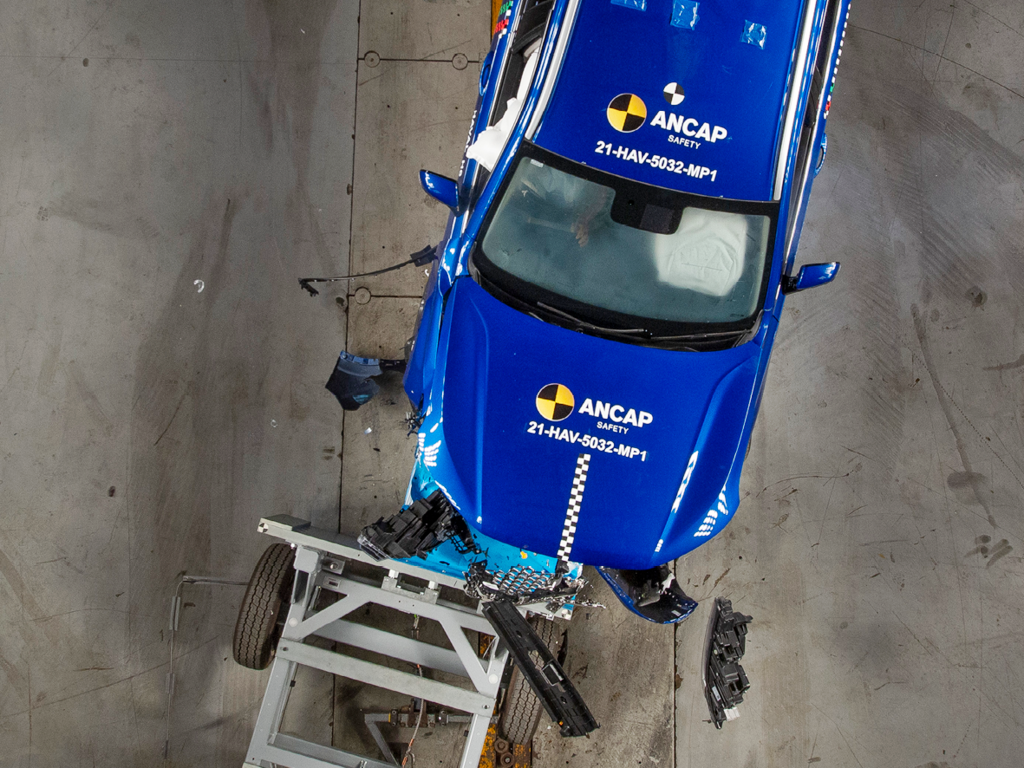
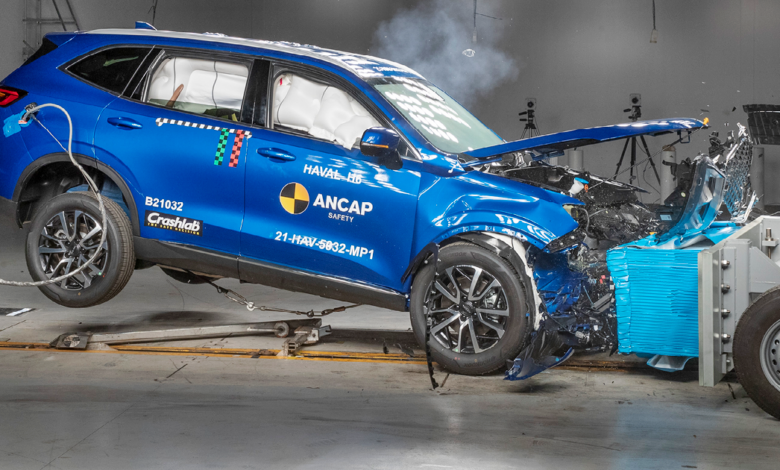
A recent example of this achievement is with the latest HAVAL H6 from GWM (Great Wall Motors). The new SUV was given a 5-star rating by ANCAP, the NCAP organization for the Australasian region. Even more impressive was that the model had met ANCAP’s latest 2022 protocols which are tougher.

“This is GWM’s first new HAVAL SUV model to the Australasian market for a number of years. Delivering a 5-star vehicle to the market – against ANCAP’s latest 2022 protocols – demonstrates the brand has kept pace with the latest ANCAP safety standards and consumer safety expectations,” said ANCAP’s CEO, Carla Hoorweg.

2022 GWM HAVAL H6 ANCAP test

The H6 achieved excellent results in 4 aspects – Adult Occupant Protection (AOP), Child Occupant Protection (COP), Safety Assist and Vulnerable Road-User Protection, with scores of 90%, 88%, 81% and 73%, respectively.

Details of the results showed that the H6 got a ‘GOOD’ grade in AOP. It has got a full score in tests such as side impact, oblique pole, whiplash protection, and rescue and extrication. In addition to the 70%+ high-strength steel vehicle frame, the vehicle is also equipped with an omnidirectional airbag that can effectively protect front and rear passengers from injury during a crash.

2022 GWM HAVAL H6 ANCAP test

In terms of COP, the H6 also did very well. It received a full score in dynamic test (side) due to the lower ISOFIX anchorages and top tether anchorages installed in the rear seat. These further strengthen the connection between the childseat and the vehicle body, thus providing better safety protection for children.

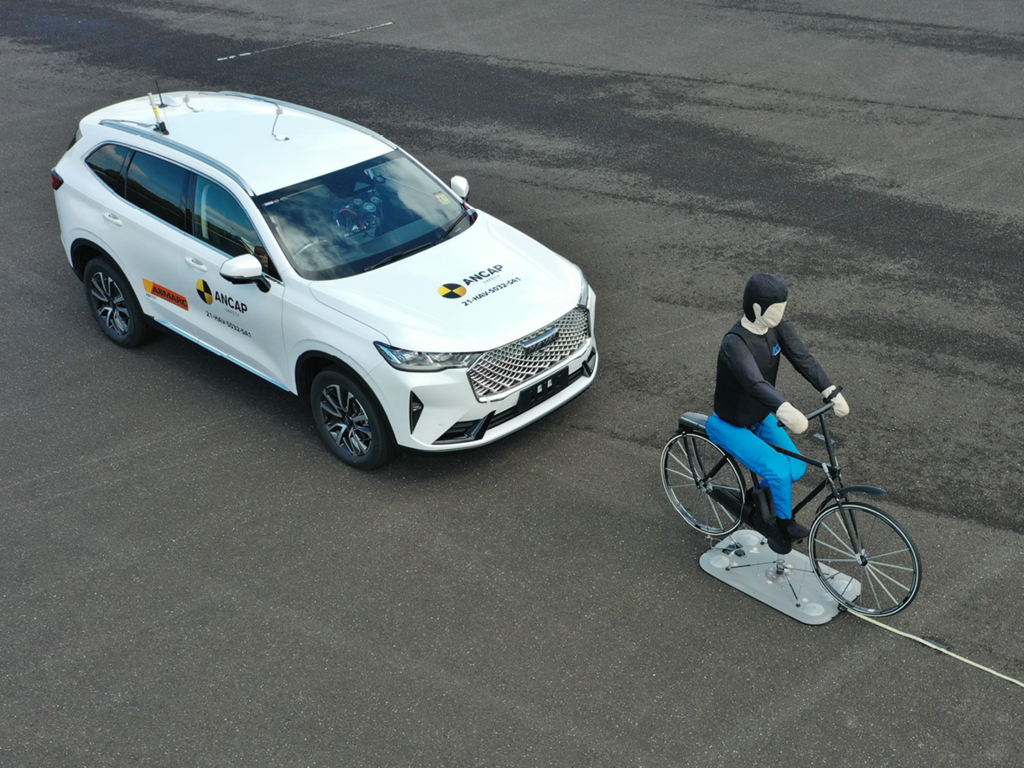
Vulnerable Road User Protection is something which GWM would have given attention to earlier because C-NCAP had already been looking into it for some years now. The China In-Depth Accident Study (CIDAS) which was developed like Germany’s GIDAS identified that around 22% of serious crashes involved pedestrians. This led C-NCAP to also evaluate vehicles to rate how well pedestrians were protected in a collision.

2022 GWM HAVAL H6 ANCAP test

The H6 also performed well in this aspect, thanks to features like an energy-absorbing space in the front bumper. Also, the Automatic Emergency Braking (AEB) system can detect pedestrians and cyclists ahead and automatically brake the car if the driver does not take action to prevent it.

There are still new cars that cannot score a single star in NCAP tests (w/video)

Though seemingly a good idea at the start in the 1990s, the original low-cost concept of Nicolas Hayek, creator of the Smart watches, never worked once Mercedes-Benz took over. The engineering costs bumped up the price and it became a niche product that had difficulty meeting ambitious sales targets.

After trying various approaches in the USA, a market it hoped would take to the little car, Mercedes-Benz ended sales there in 2019. It continued to sell the car in Europe and then Geely came into the picture to form a joint-venture and the brand gained a ‘second wind’.

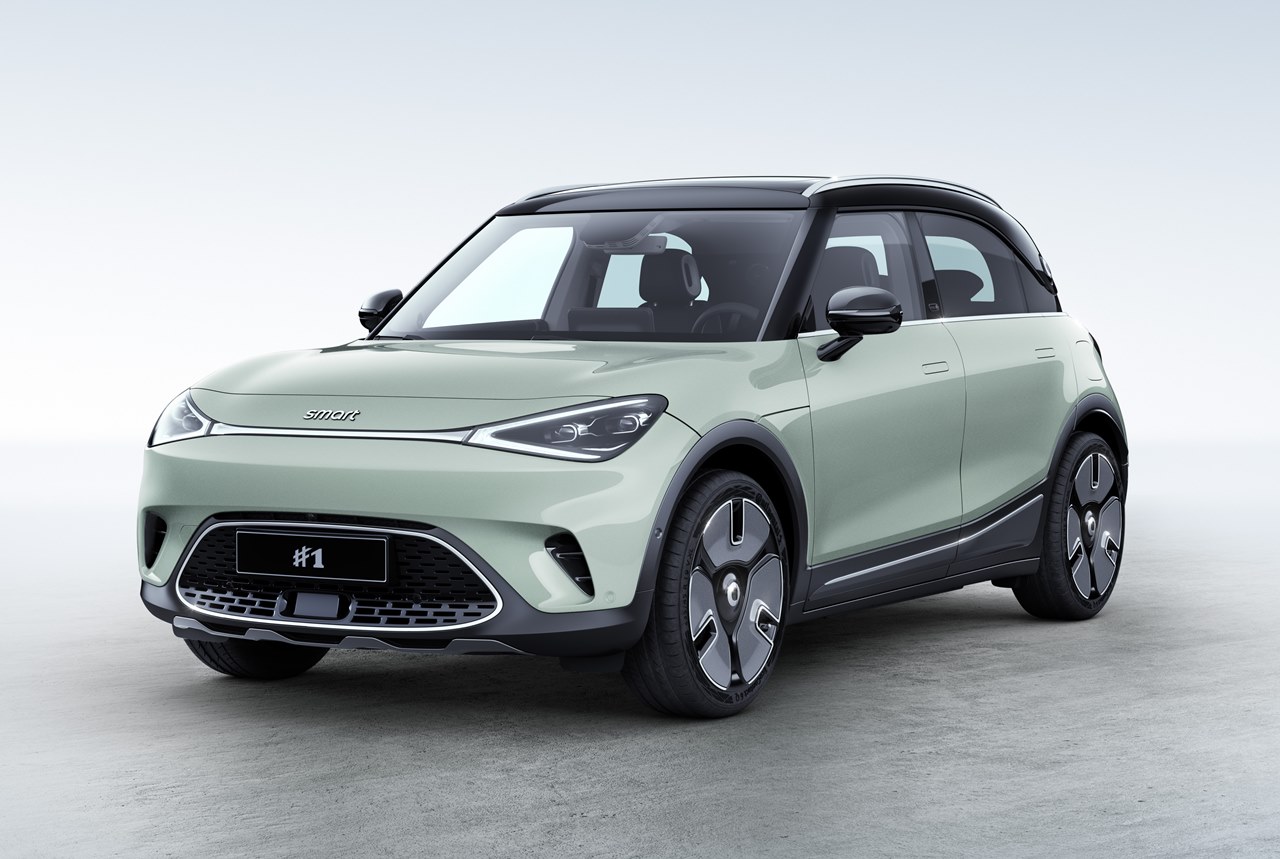
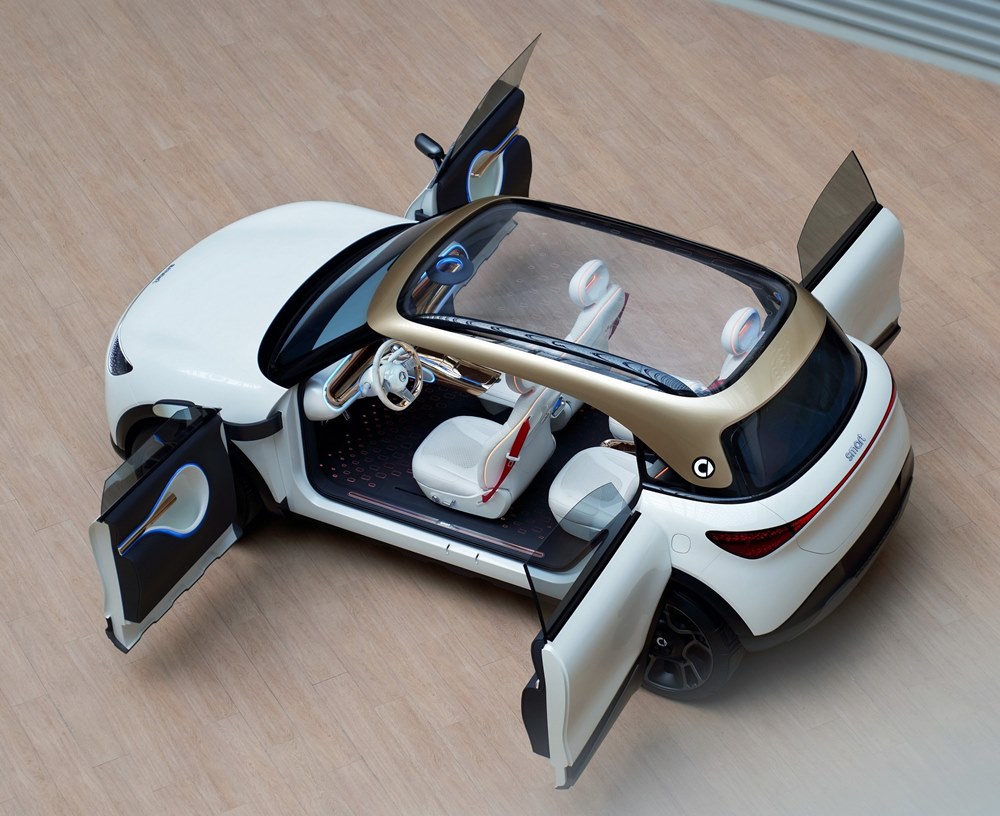
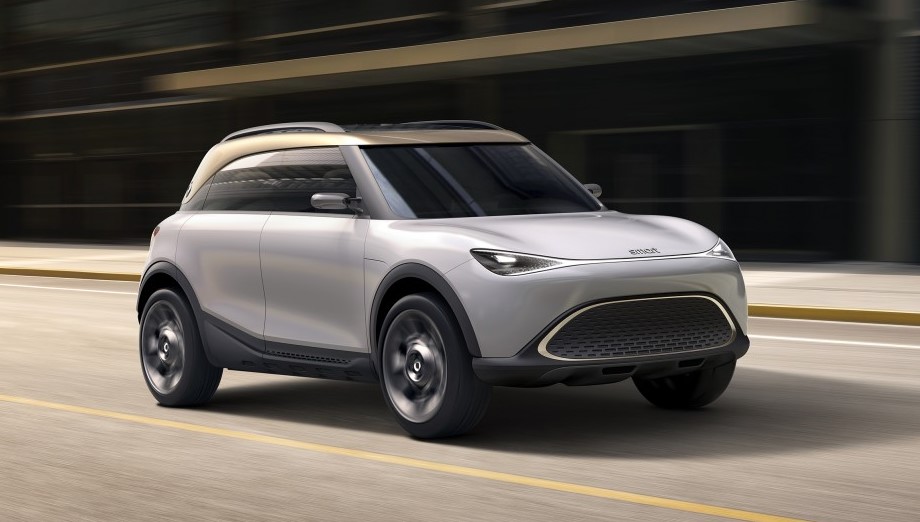
Very quickly, a brand new product was developed with the involvement of Mercedes-Benz design teams who used the Geely’s SEA architecture dedicated to electric vehicles. By 2020, a concept car called the Concept #1 was revealed and this week, the production model has been presented to the world.

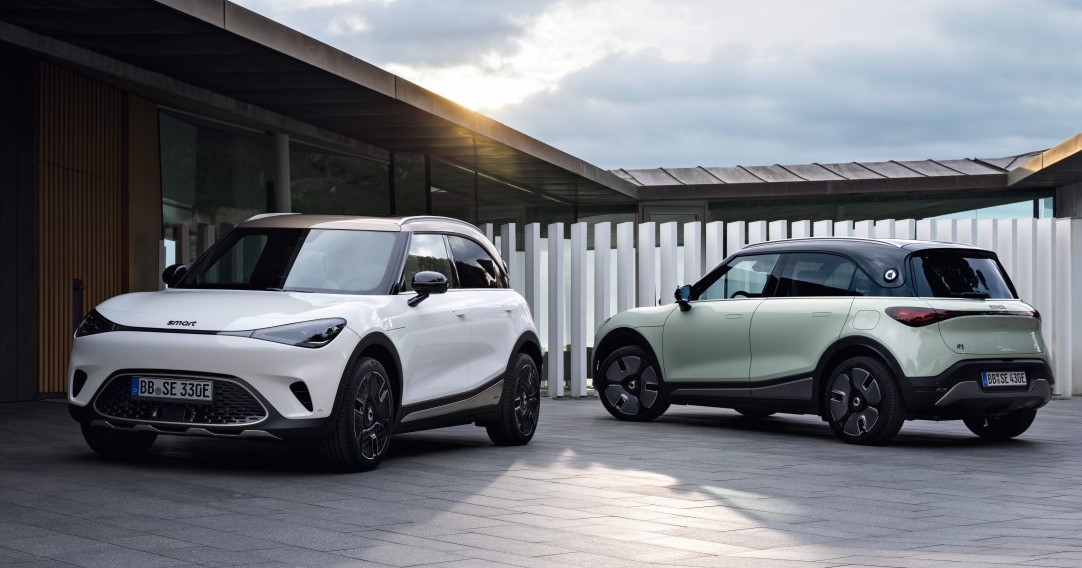
2023 smart #1

smart concept #1

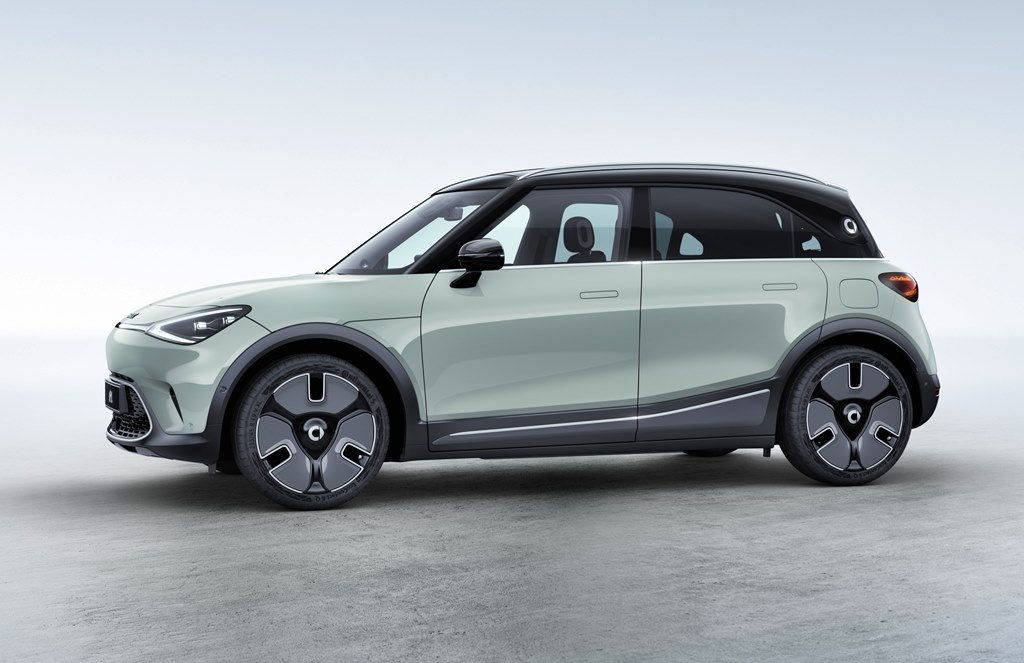
This isn’t smart’s first EV as the brand went fully electric after 2019 but it is an entirely new product, simply called smart #1. While the crossover has blurred the lines between a hatchback and SUV, the smart #1 is presented as a SUV with an overall length of 4270 mm and a width of 1822 mm with a wheelbase that is 2750 mm. That makes it larger than the Proton Iriz and almost the same length as a Saga.
Although there have been smart concept cars that proposed a SUV design, the brand has never sold one so this would be its first SUV. It is, however, considered a city car as well because of its proportions although its weight of 1,820 kgs is certainly much more than city cars of the same size.

The weight largely comes from the NCM (nickel-cobalt-manganese) battery pack which also uses lithium-ion chemistries to store electricity up to a maximum capacity of 66 kWh. The charging system can accept fast-charging up to 150 kW and if that is used, charging time can be 30 minutes (from 10% to 80%), it is claimed. With a more common 22 kW supply, the time needed would be around 3 hours.

The battery pack powers a single rear-mounted electric motor with an output of 200 kW (272 ps) and maximum torque of 343 Nm, available almost from the moment the car moves off. The top speed is claimed to be 180 km/h, pretty fast for a car in this class.

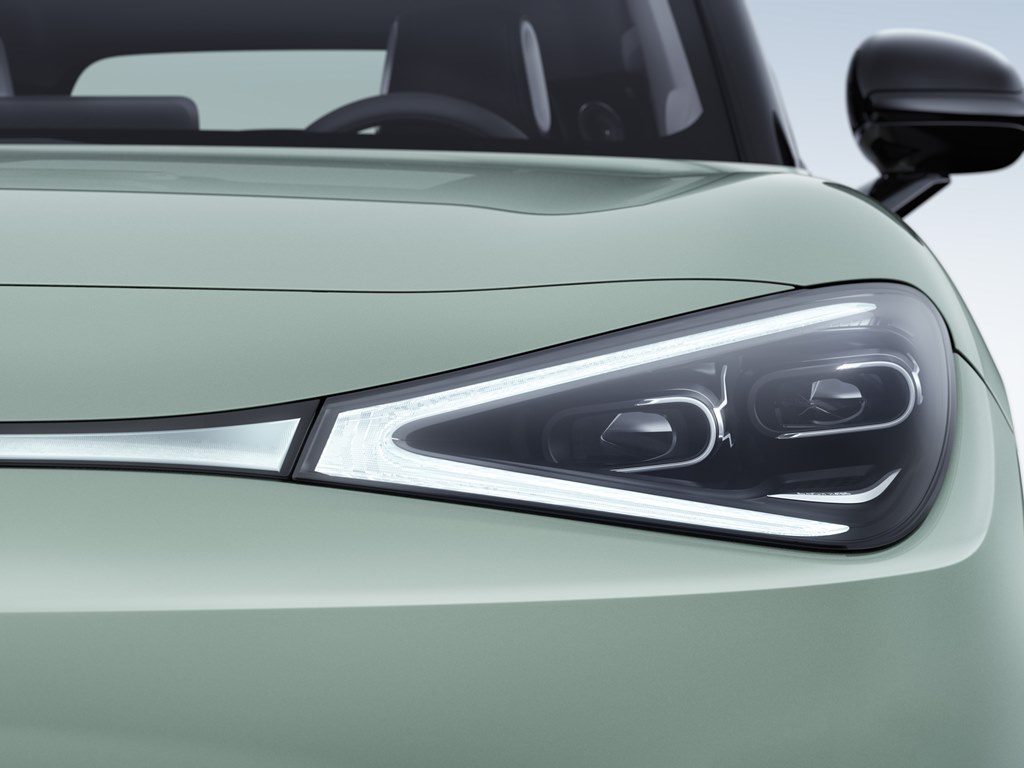
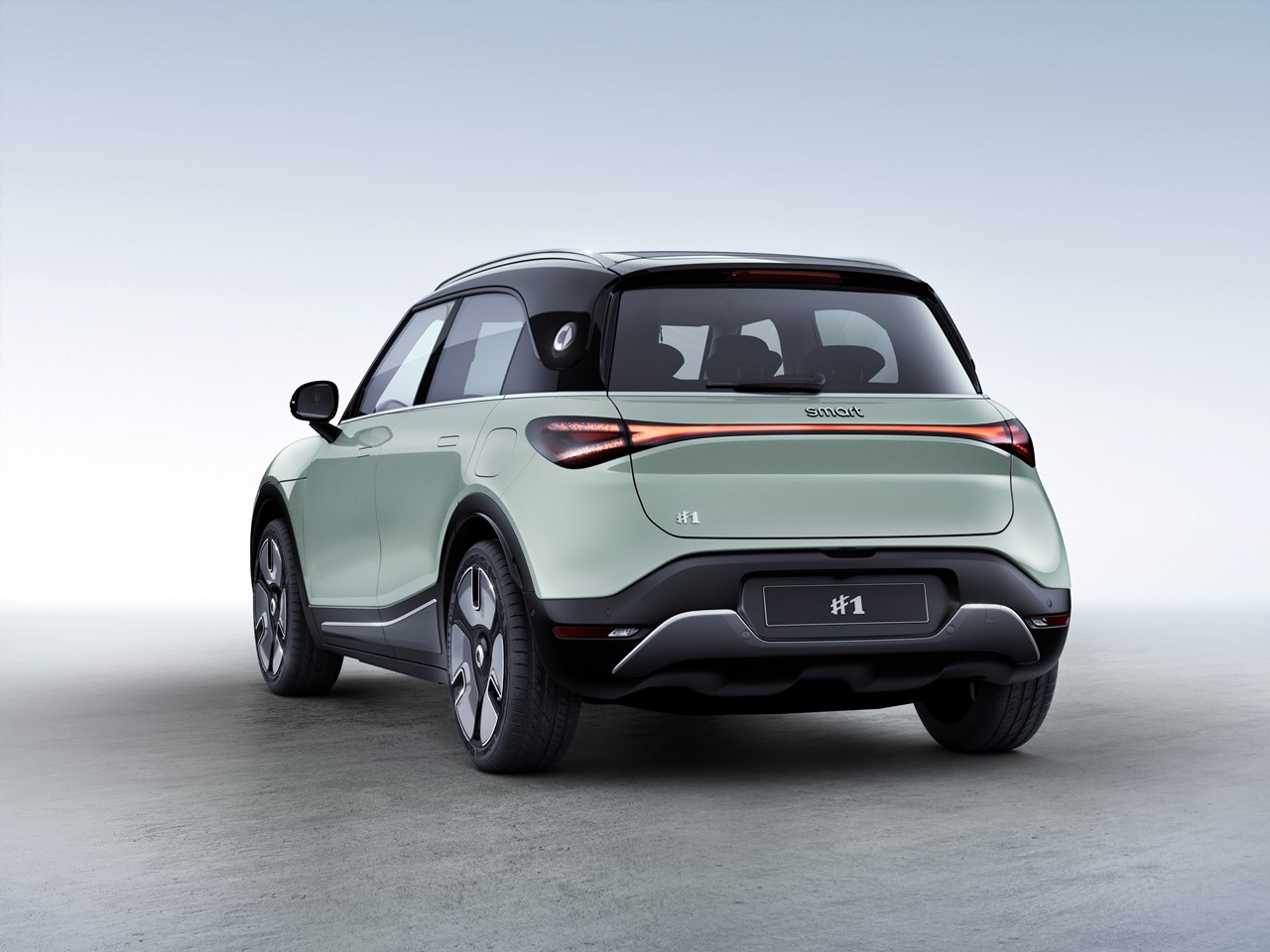
The styling of the #1 is pretty much like that of the concept car with Matrix LEDs under the triangular shapes of each headlight. The headlights form a unique visual signature at the front which stretches right across, and the same feature is also present at the back.

2023 smart #1

To remove that tiny bit of drag-inducing turbulence that door handles cause, those on the #1 are flush when the car is on the move, extending only when needed to open the doors. It’s a feature usually found in higher-end cars, reflecting the premium positioning of the #1.

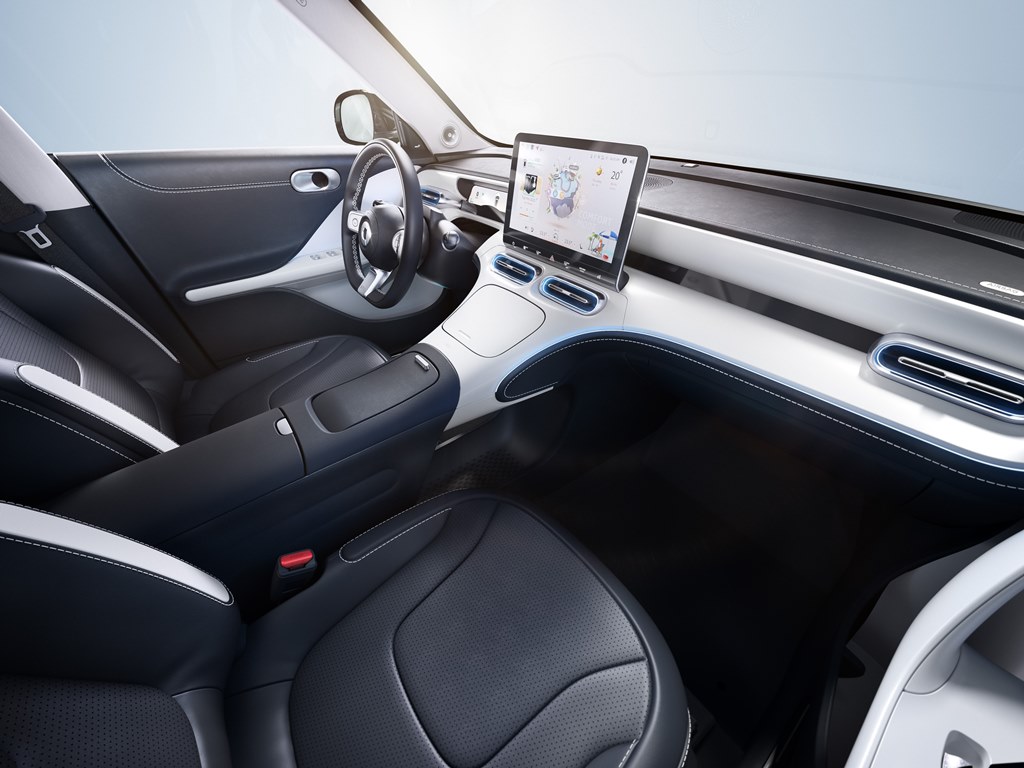
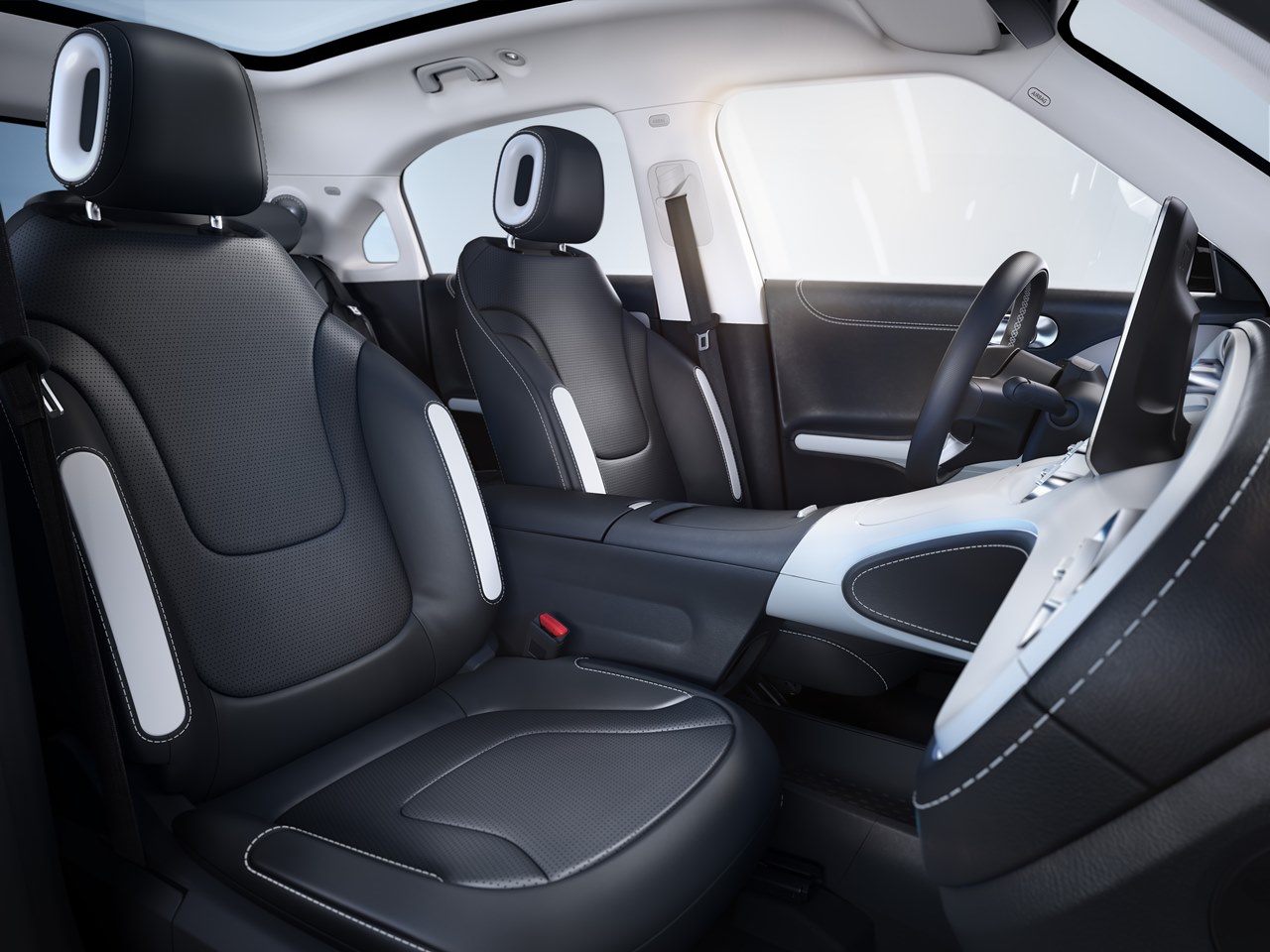
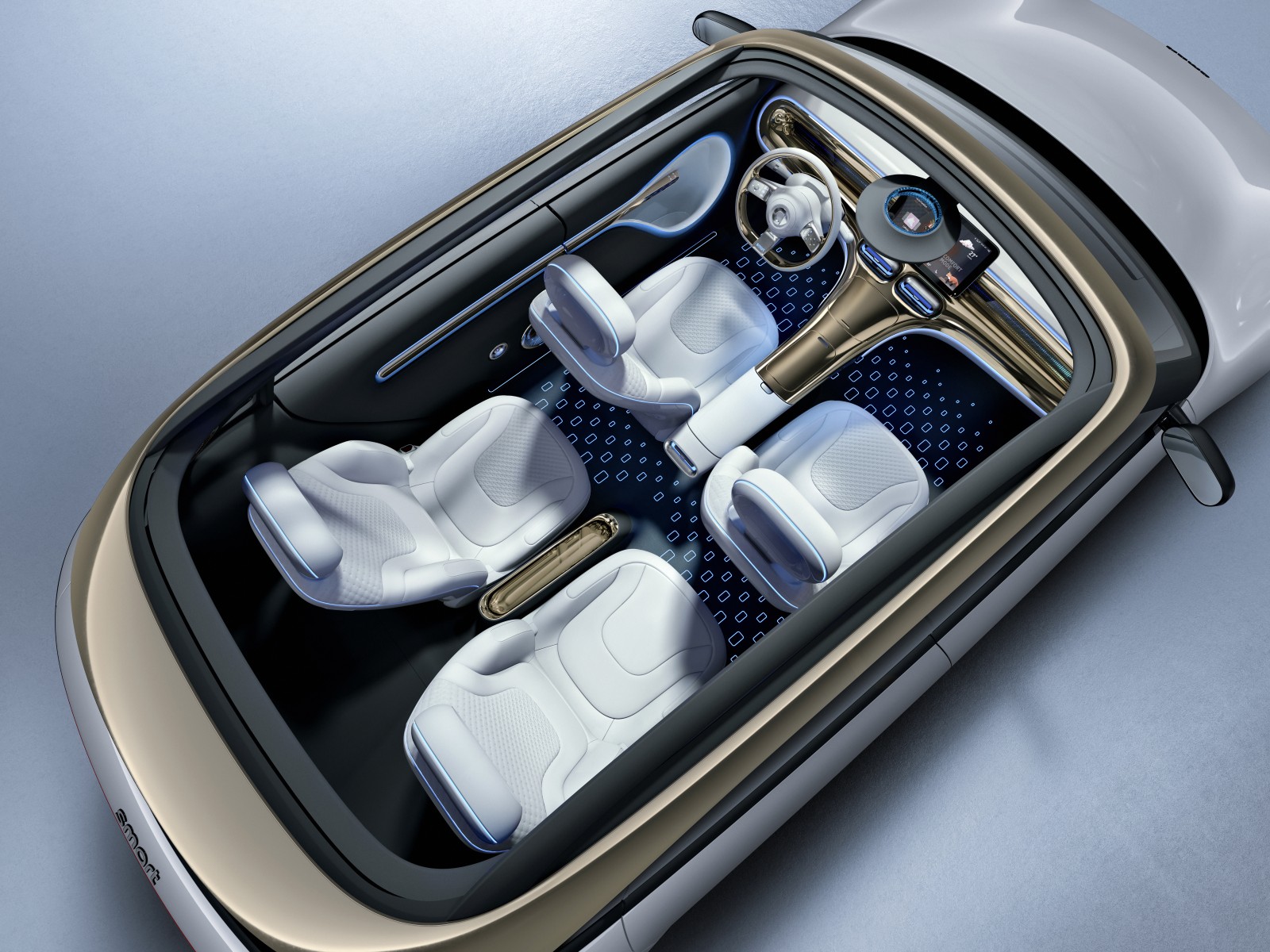
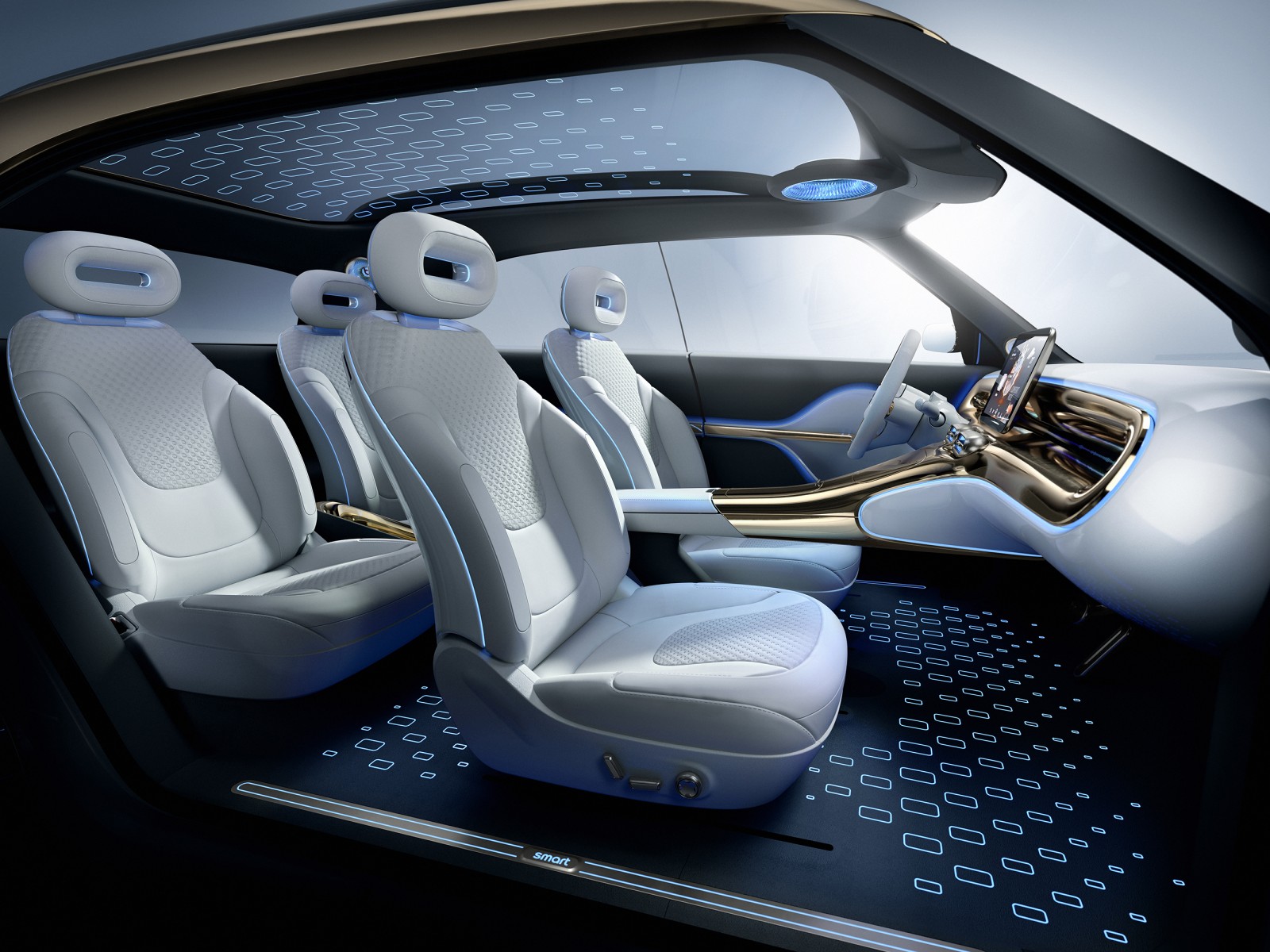
Thanks to a high footprint-to-space ratio with the long wheelbase, the interior is more spacious than would be expected with the compact exterior. The floating centre console provides better space efficiency with a reduction of elements creating a more open environment. To enhance this sense of spaciousness is a panoramic halo glass roof, one of the features on the concept car. The rear seats have a variable position over 13 cm and behind them is a variable boot space.

2023 smart #1

2023 smart #1

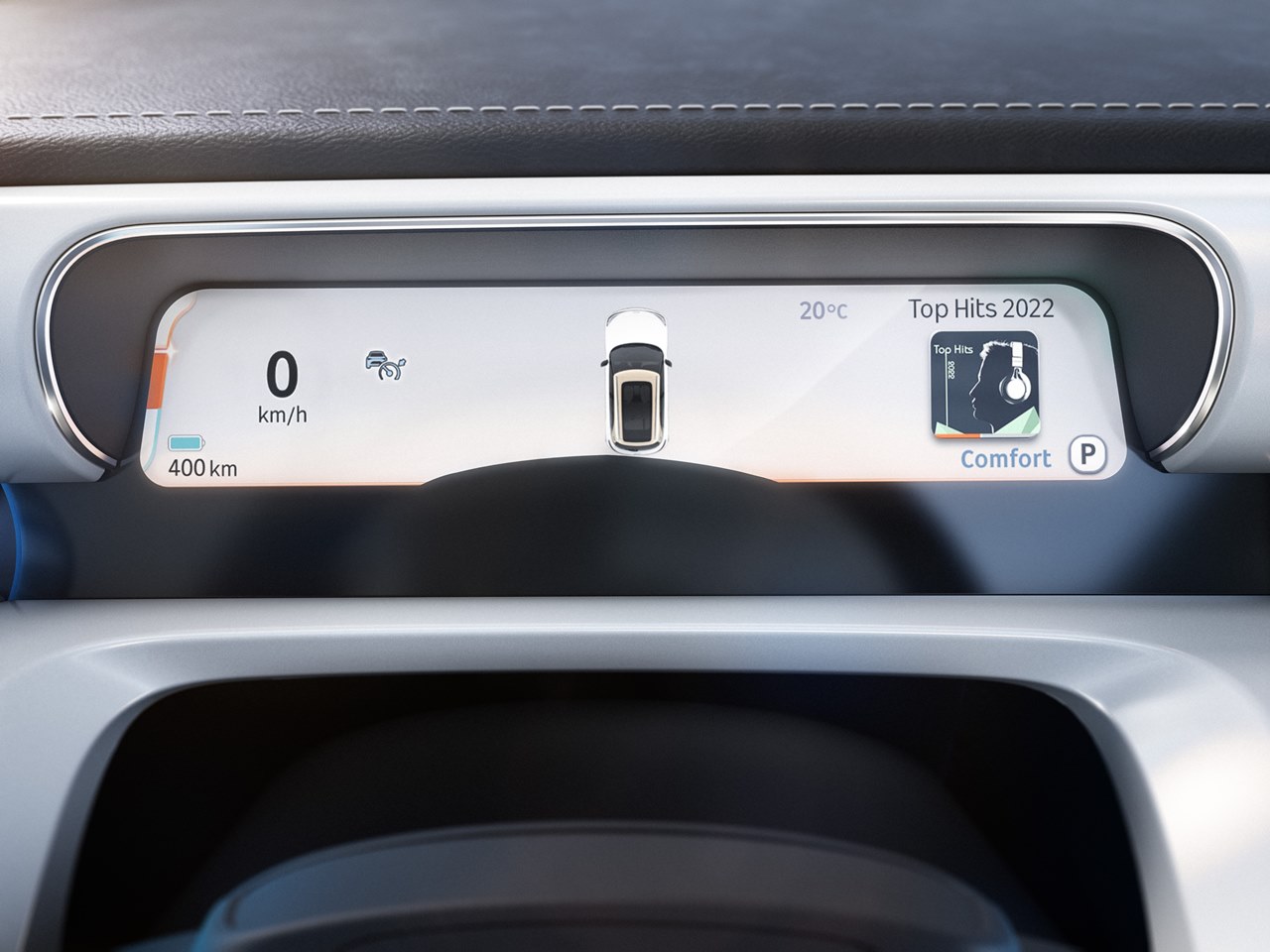
As with many of the latest cars, the displays are digi-graphic with a 9.2-inch panel in front of the driver (supplemented by a head-up display), and a 12.8-inch touchscreen on the dashboard. The ambient lighting can be customized with mix of 64 colours and 20 illumination levels, setting just the right mood for a drive.

2023 smart #1

The premium audio system has Beats high-end sound technology and consists of an amplifier module and 13 speakers (including a sub-woofer). The driver can  enable digital key sharing through the smart app which also allows for remote engine starting.

There will be a ‘Launch Edition’ of the car with exclusive trim. Production will be at a joint-venture factory in China, starting in the second half of 2022. Exports are expected to start towards the end of the year so Proton Edar, which has been appointed distributor for Malaysia and Thailand, should be launching the car in early 2023. As it is a joint development between Geely and Mercedes-Benz, it is unlikely that it will become a Proton-badged model but by selling it, Proton would gain insights and experience into EVs which it will be producing and selling towards the end of this decade.
2023 smart #1

Mercedes-Benz and Zhejiang Geely Holding Group establish new joint-venture to handle smart brand globally

SUVs makes up the largest market segment today and this is the case in every market in the world, even in India where foreign brands have been introducing new SUV models in recent years. The Indian carmakers also have their own SUVs although most are still the more ‘traditional’ type designed more for ruggedness than style.

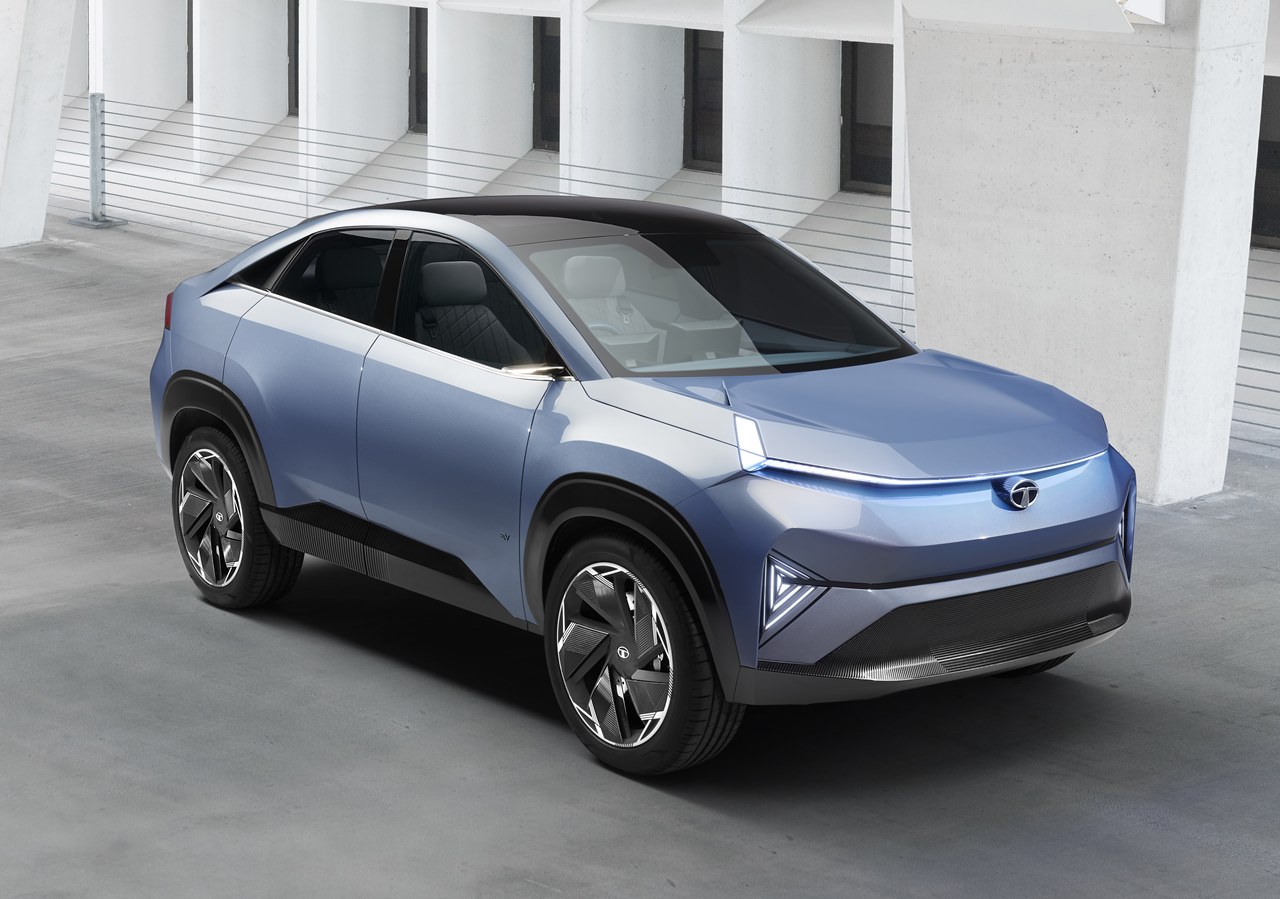
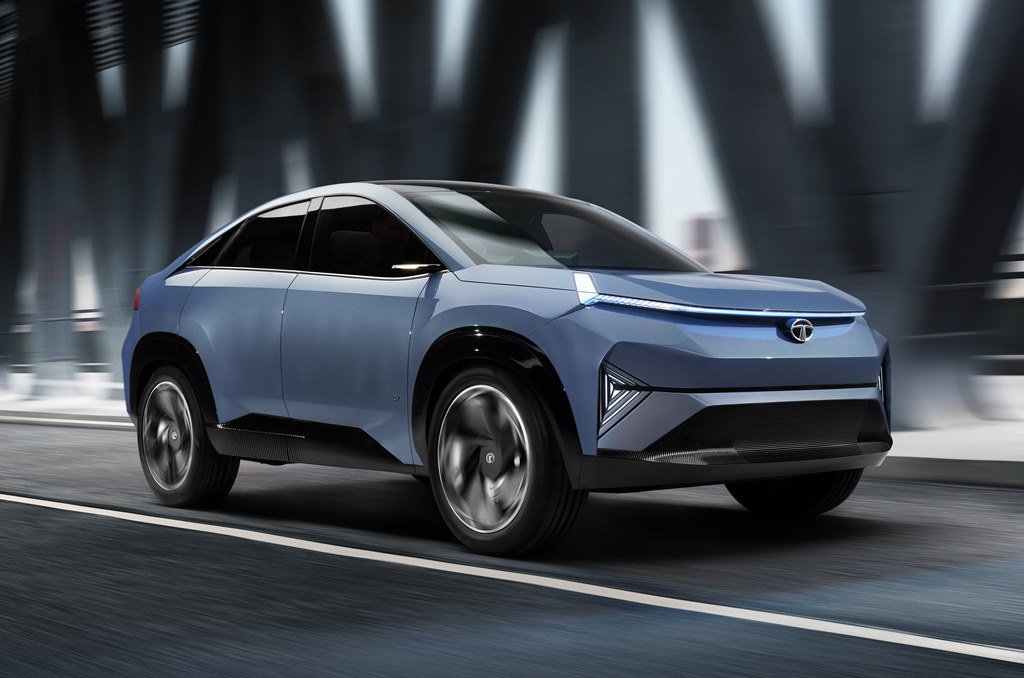
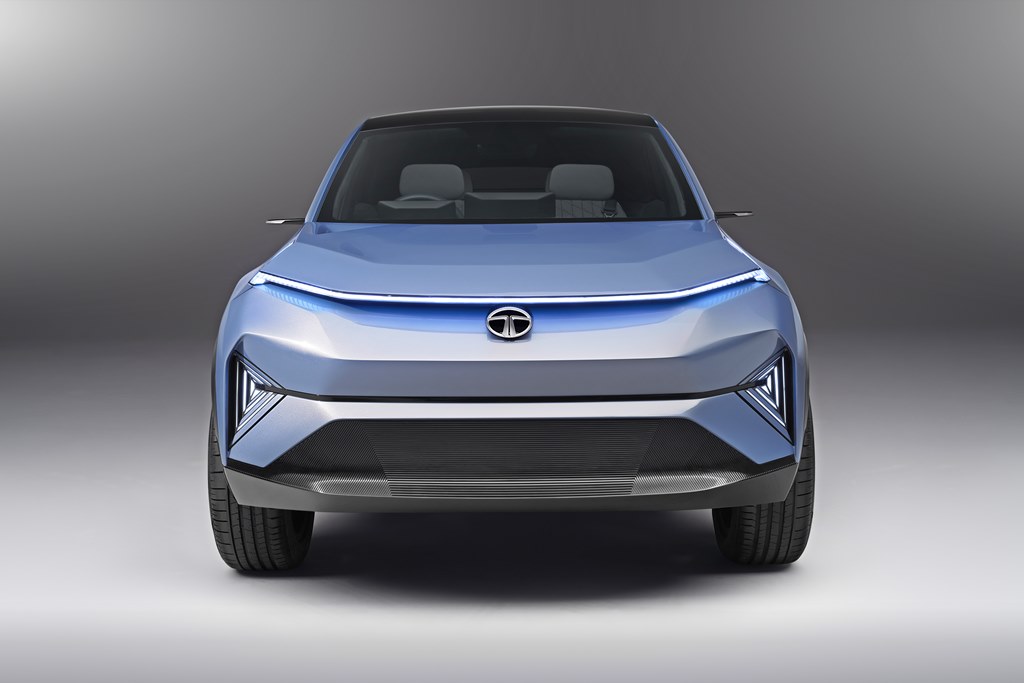
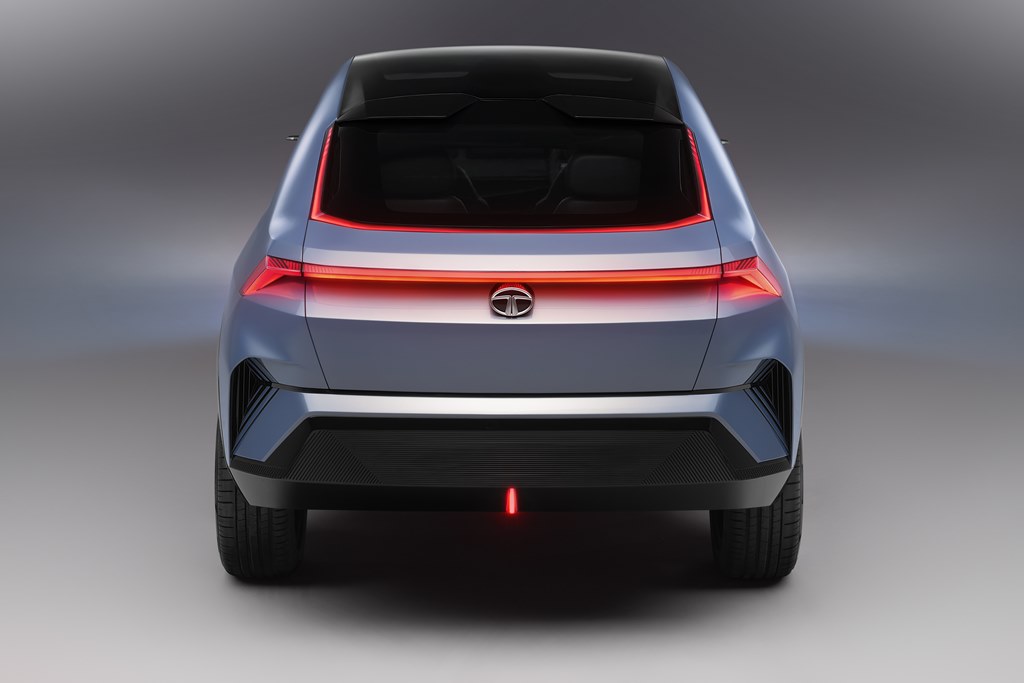
But that will soon change if a new SUV concept by Tata Motors is any indication. The concept, called CURVV, has a design more like the crossover SUVs of today. It’s an edgy sporty look with a coupe profile that is typical of modern SUV typology. Presumably, the design has been done in-house and is proposed with an electric powertrain as well as a combustion engine powertrain.

In keeping with its SUV image, there is extra ground clearance so it stands tall, with a large offset for the front and rear ends. Cladding with a grooved pattern below the sills give a a visual sense of ruggedness. At the lower front and rear, the protective panels also have a similar pattern.

The lighting concept at the front is unique and whether it will actually be in the production model remains to be seen. There is a thin line that runs across the edge of the bonnet and is illuminated with ultra slim LEDs. Together with triangular shaped headlamps, there is a visual signature for the model. The same full-width LED feature is used at the rear as well, with the LEDs illuminating in red.

Much thought has gone into aerodynamic efficiency and airflow around the pillars has been made as smooth as possible. The wheels also have ‘aeroblade’ inserts to close off the openings which can cause micro turbulence.

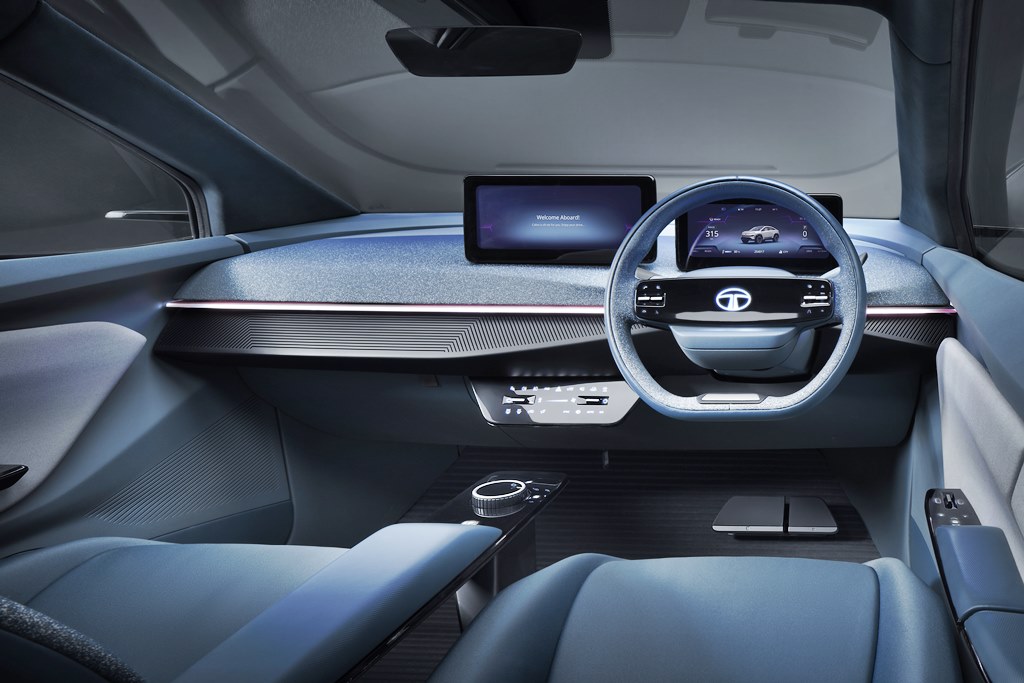
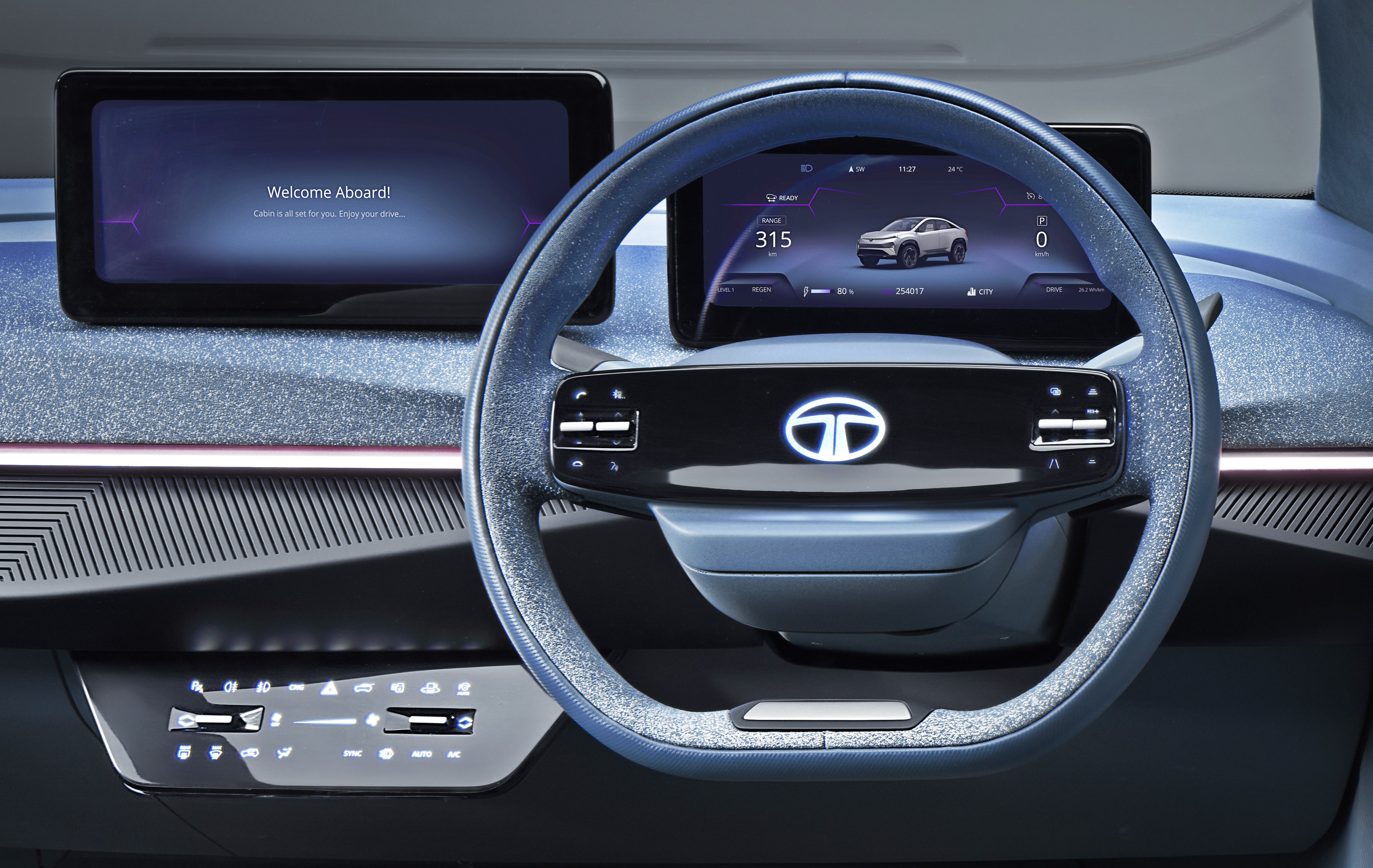
The interior has been kept simple with a clean dashboard although the production model might not be as clean when equipment like the audio system and air-conditioning is added. But what is important, according to Tata, has been the integration of new technologies and the Human-Machine Interface (HMI). Apart from more efficient interior packaging, the designers have also aimed for a more premium feel through the use of high quality materials and finishes. To brighten up the interior, there’s a panoramic sunroof which covers much of the roof.

From statements by senior Tata executives, the concept model seems very much like a preview rather than just a showcar. In fact, it is expected to become a production model within the next two years.

“With this magnificent Electric SUV Concept – CURVV, our focus has been to enable customers with a product option that is the perfect amalgamation of modern functionality and design.  With a robust SUV DNA at its core, and a plethora of new age materials, features and interfaces, we are confident that this concept will redefine mainstream SUV design,” said Shailesh Chandra, Managing Director, Tata Motors Passenger Vehicles Ltd., and Tata Passenger Electric Mobility Ltd.

“Furthermore, with the concept CURVV, we now enter the Generation 2 EV architecture which will further enhance the adoption of EVs in India by overcoming the current barriers. With this new architecture, we will strengthen the key pillars of range, performance and technology, while retaining safety and reliability,” he added.

Tata Motors to launch EV models with ZIPTRON technology developed in-house

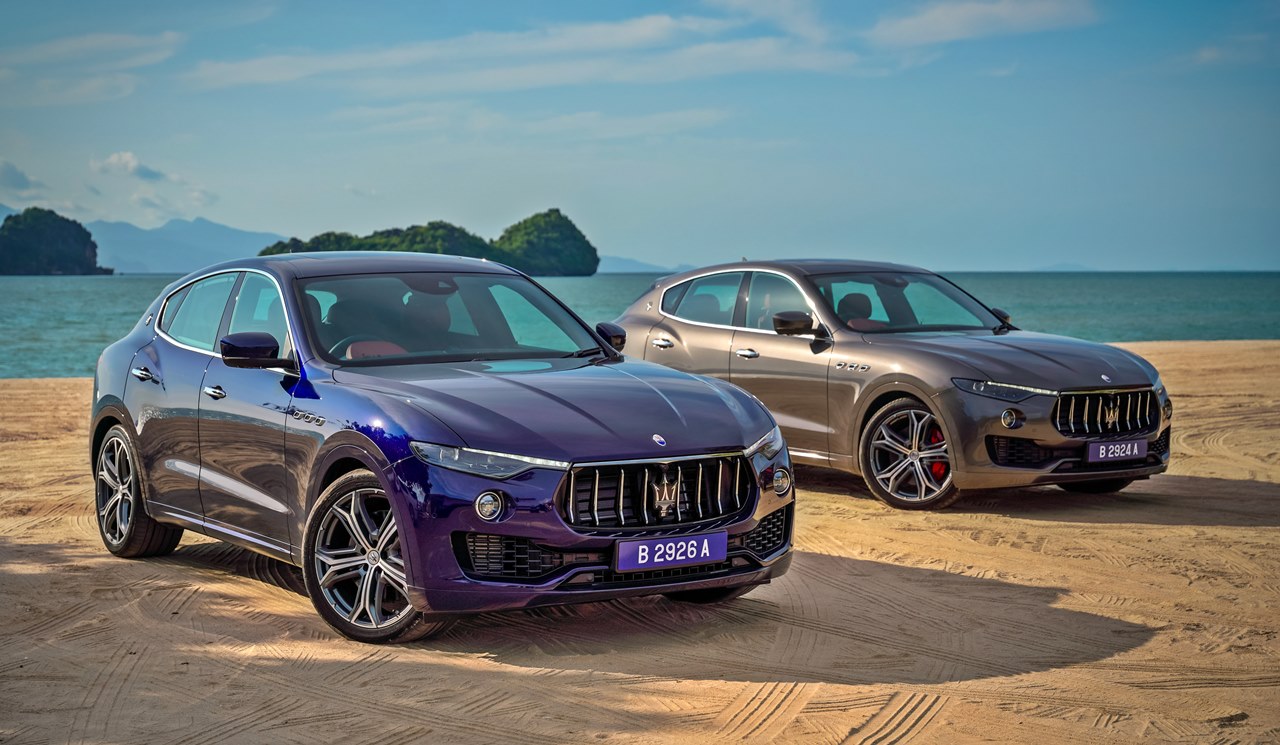
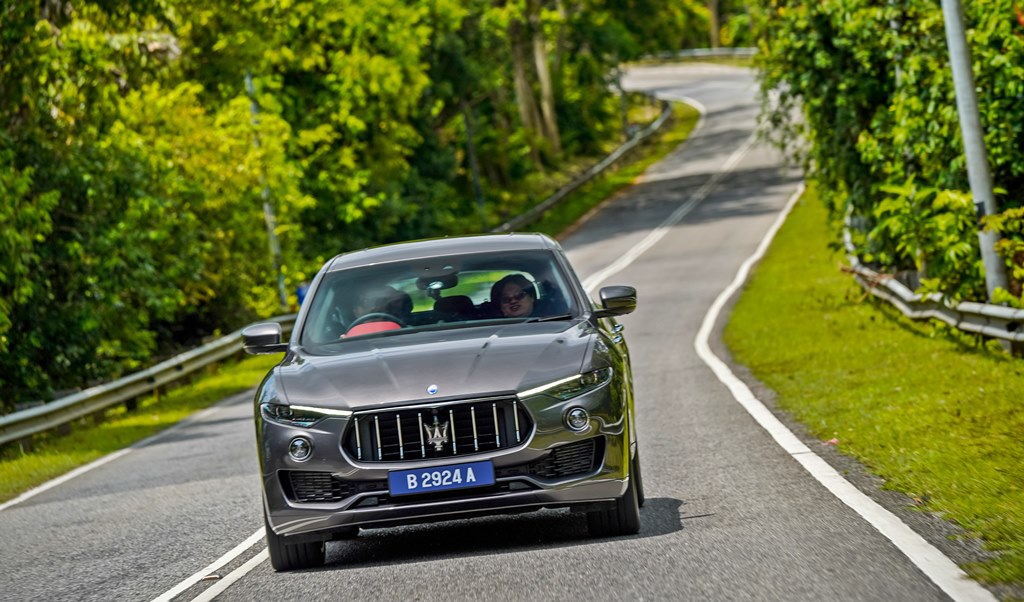
While much attention is on the new Grecale launched recently, Maserati’s first SUV – the Levante – has received updates for the 2022 model year. With the cosmetic updates, the Levante gains a more unified identity with the rest of the Italian carmaker’s range by adopting the common language for its key models.

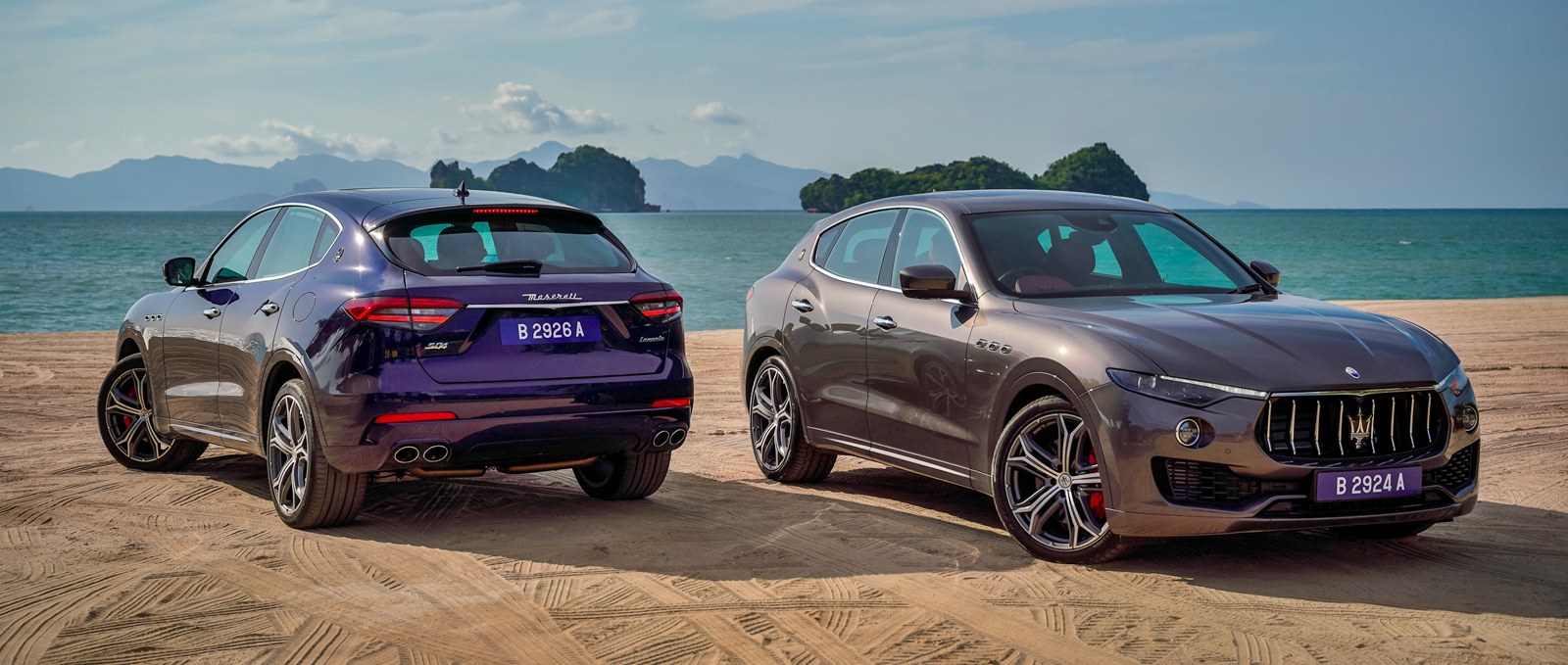
The changes can be seen in the grille and new rear light clusters which have a boomerang shape inspired by the units on the 3200 GT styled by Giugiaro. To emphasise the boomerang shape, the light clusters are produced with a state-of-the-art 3K injection moulding technology, giving the unit a 3-colour lens. They are black around the edges, red in the middle and clear in the bottom section.

Coupe profile for SUV
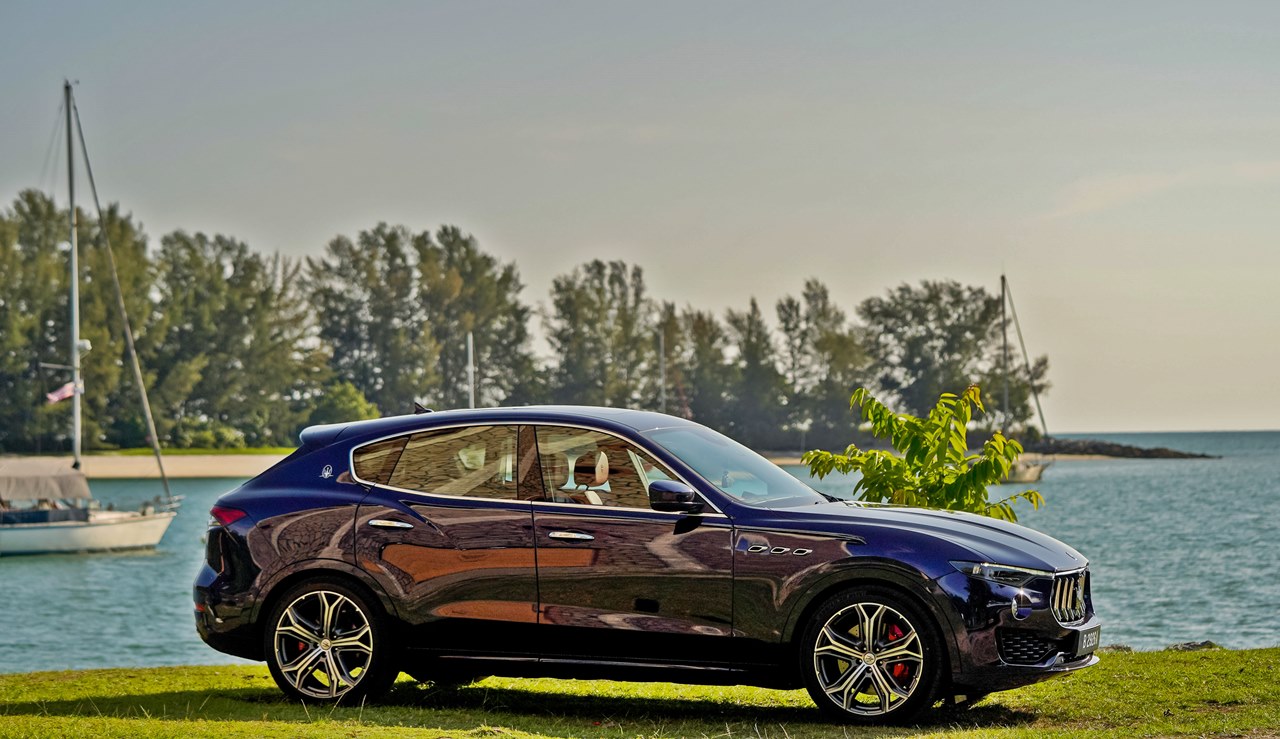
Though it is a SUV, the design concept of the Levante has a couple profile which enhances aerodynamics. The imposing grille, which was inspired by the 2014 Alfieri concept, pays homage to historic Maserati cars like the Tipo 60 Birdcage. The new front grille with the tuning fork design now comes in chrome for the GranLusso trim and Black Piano for the GranSport.

2022 Maserati Levante

The GranLusso trim is identified on the exterior by a series of elegant chrome inserts in the front fascia, chrome front/rear skid plates, body colour rear spoiler, black-painted brake callipers, 21-inch Anteo wheels and GranLusso badges on the fenders.

The wider, more muscular rear end has a sharper horizontal element and a body-colour lower extractor embracing the four exhaust tips. Alongside the sportier bumpers, the GranSport exterior is also discernible for the front and rear Black Piano inserts, the GranSport badges on the front fenders, red brake callipers and either 21-inch Helios or 21-inch Anteo wheels.

2022 Maserati Levante

2022 Maserati Levante
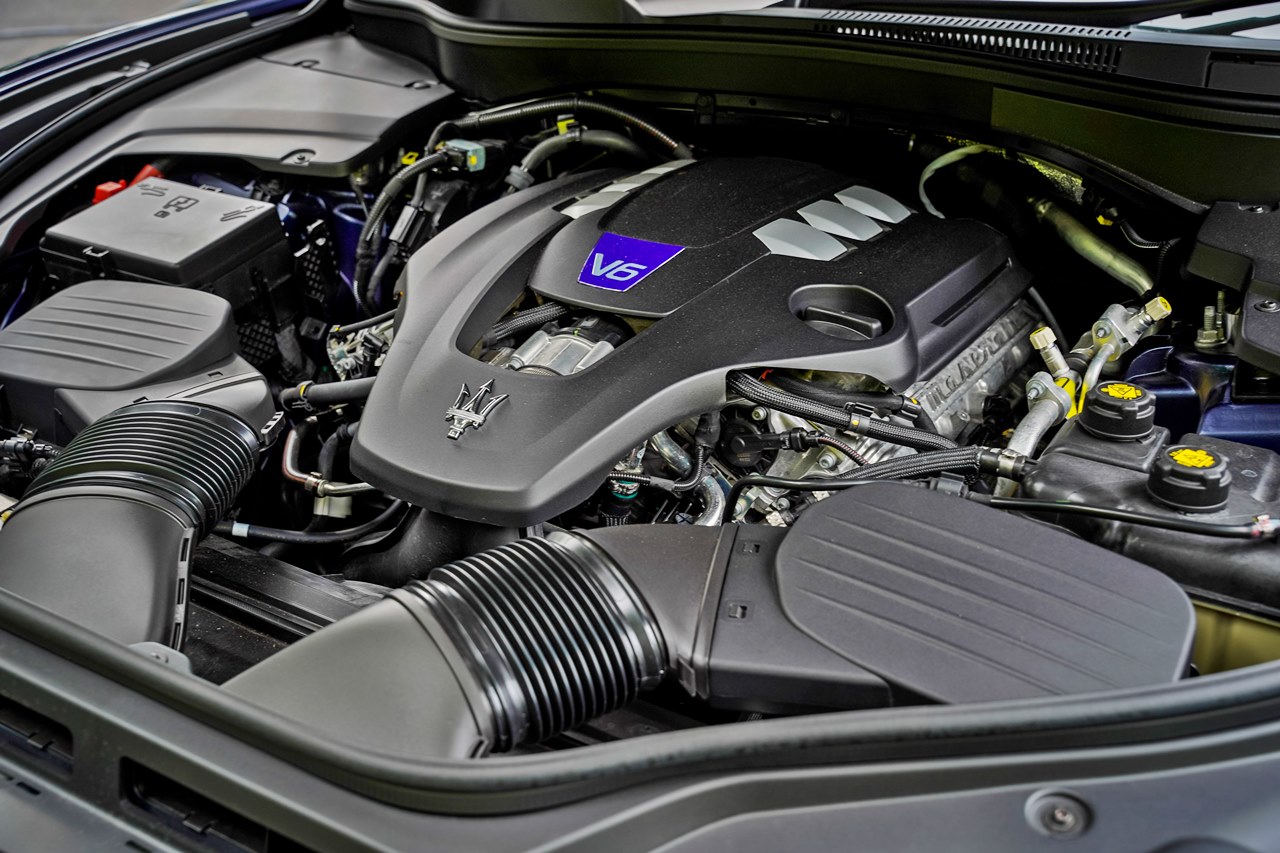
The Levante is available with V6 and V8 twin-turbo engines with 3.0-litre and 3.8-litre displacements.

The existing differences between the various trims remain unchanged. On the GranSport trim, the side air intakes in the lower fascia have a more aggressive design, defined by two aerodynamic wings that give a sense of further stability, visually ‘pushing’ the weight of the car’s nose towards the massive front wheels. The side bezel blades and the splitter are styled to improve the airflow distribution.

Updates for instrument panel
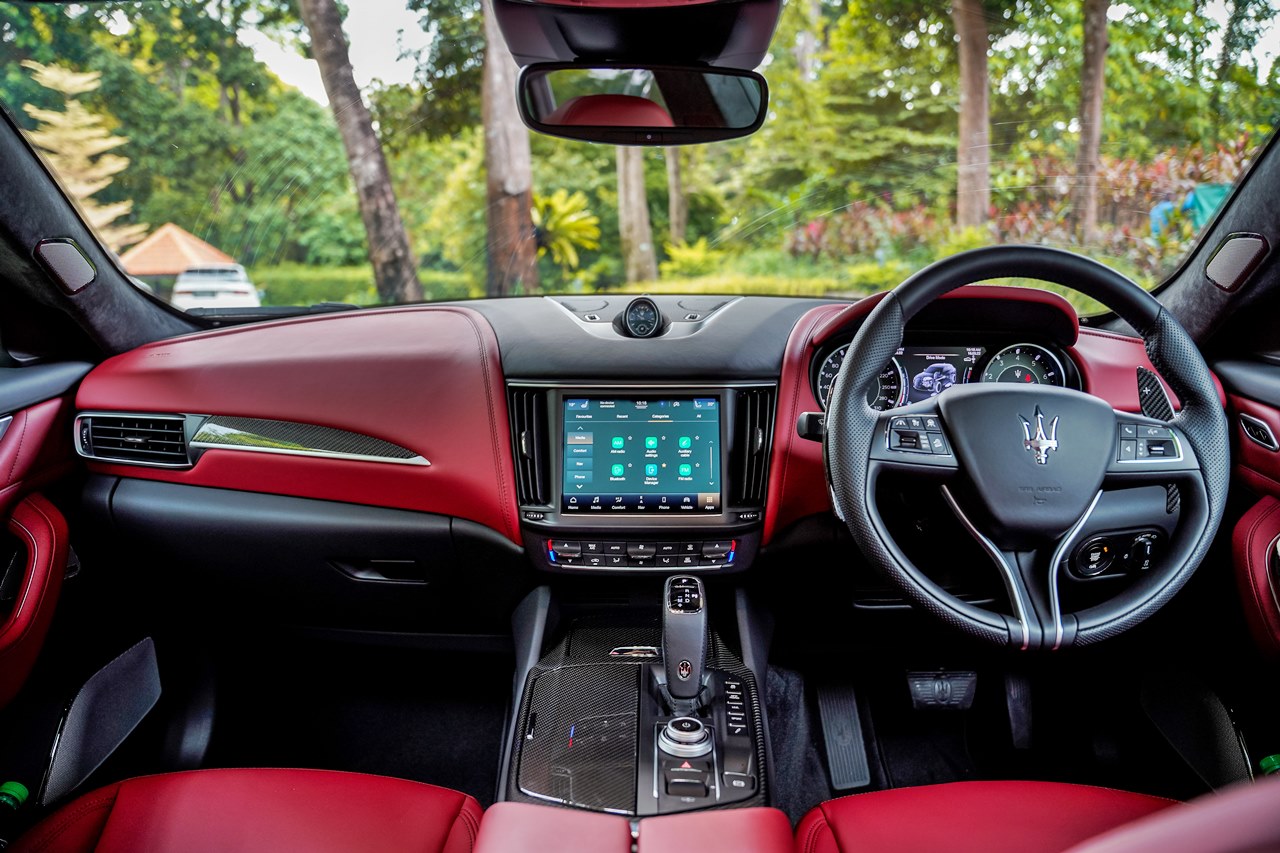
Inside, the main changes of the 2022 Levante are largely seen in the 8.4-inch central display and instrument cluster. The central screen is now frameless for a more contemporary look, with almost all the surrounding bezel removed. The improved resolution, graphics and visual effect make it look like a single curved screen with the air vents cut into it, enabling vertical reading of the whole display.

2022 Maserati Levante

2022 Maserati Levante

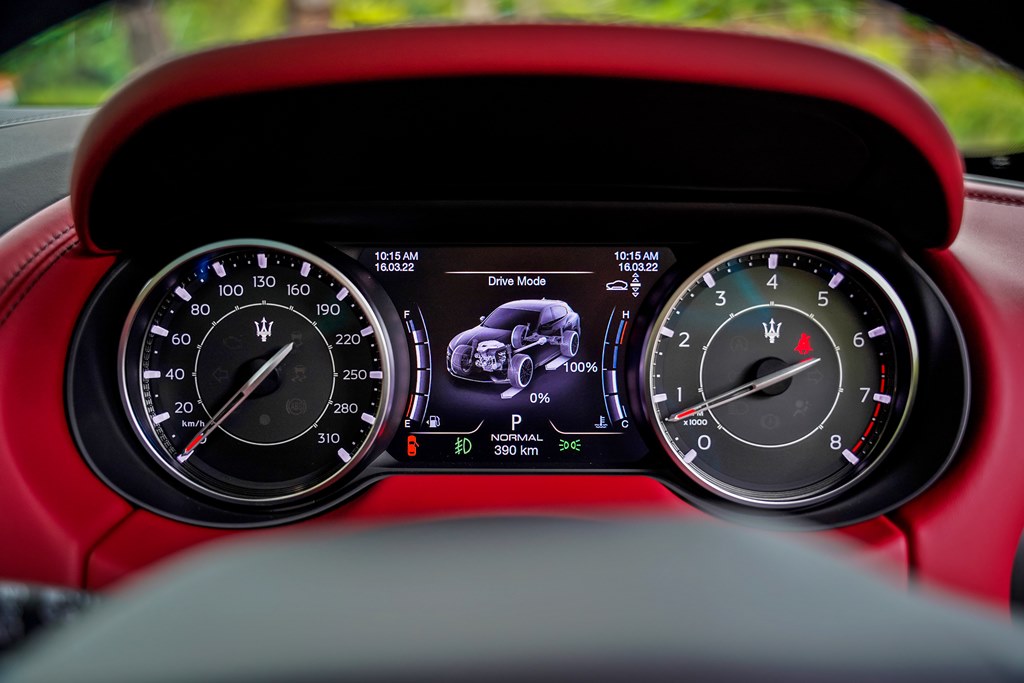
The name Maserati is screen-printed on the back of the screen at the bottom of the display for a 3-dimensional effect. There is also a subtle but very sophisticated change to the instrument cluster, which now includes a large tachometer and speedometer (still analogue but with updated graphics) on either side of a 7-inch TFT display.

Much of the plastic from the previous version is eliminated and replaced with real anti-dazzle flat glass covers over the instruments. All these changes give the instrument cluster a more high-tech look and generate a richer impression. Effects are achieved by alternating glossy and matte blacks. The perimeter ring which contains the numbers is reflective glossy black, while the central ring containing the indicator lights is matte black.

2022 Maserati Levante

Active Driving Assist
Newly added is Active Driving Assist (ADS), an evolution of Highway Assist introduced in 2018. The system works with Adaptive Cruise Control and keeps the vehicle centered in its lane. It uses a radar and forward-looking camera to scan the road ahead for other vehicles and hazards.

The latest Levante is available in Malaysia through Naza Italia and priced from RM808,800 (inclusive of taxes and duties) with full specifications and options.

Grecale, Maserati’s second SUV, makes its debut

With the renewal of its brand, product and business model, smart has entered a new era of development. The company, which has a history going back to 1994, had struggled to get a strong footing but lack of profitability hindered its development. By 2020, Daimler AG established a joint-venture with Geely which would give the brand a new lease of life.

The joint-venture company will produce the new generation of cars in China and the first of these was revealed in 2021 as a concept car referred to as Concept #1. While the pandemic has slowed down development, the production program has been able to continue between the Mercedes-Benz global design team and smart’s R&D team.

Concept #1 shown in 2021.

Concept #1
The Concept #1, painted glossy white, has smart elements but also shows that its design language will evolve for the new generation of New Energy Vehicles (NEVs). “The new sporty Concept #1 is a redefinition of the smart brand in a very cool grown-up way,” said Gorden Wagener, Chief Design Officer Daimler Group. “We have created a completely new design DNA that has the potential to establish smart as the leading design brand.”

Balanced proportions, a powerful sculpture, the usual short overhangs at the front and rear and a progressive design language characterise the concept vehicle which is in the form of a compact SUV. One of the central design features is the large panoramic glass roof with a striking ring of light. The seamless transition to the windscreen and to the window surfaces of the frameless doors makes the roof appear to float above the body – an impression further enhanced by the atmospheric roof lighting.

In  contrast to this visual lightness, striking design elements in anthracite and black in the lower body area emphasise the robustness of the sport utility vehicle. This is further accentuated by the distinctive 21-inch wheels with their unique design.

A first hint of the new dimension of digitalisation of future smart vehicles is provided by the concealed door handles, which are merely indicated by light elements. The rear doors of the smart Concept #1 are hinged at the back and open in the opposite direction from the front doors. This portal door concept makes it particularly easy to get in and out of the car. Plus, the absence of a B-pillar facilitates an unobstructed view of the generously dimensioned interior when the doors are open.

The LED headlights and taillights, with their striking signatures, make a significant contribution to the unique and emotional appearance of the smart Concept #1. At the same time, they are fundamental components of an attention-grabbing light display around the vehicle. In this sophisticated orchestration of the exterior and interior lighting in harmony with specially arranged sound elements, the front light strip divides into small triangles which flicker in rhythm. Starting from the illuminated radiator grille, light effects also move in time to the music along the sides of the vehicle to the rear diffuser.

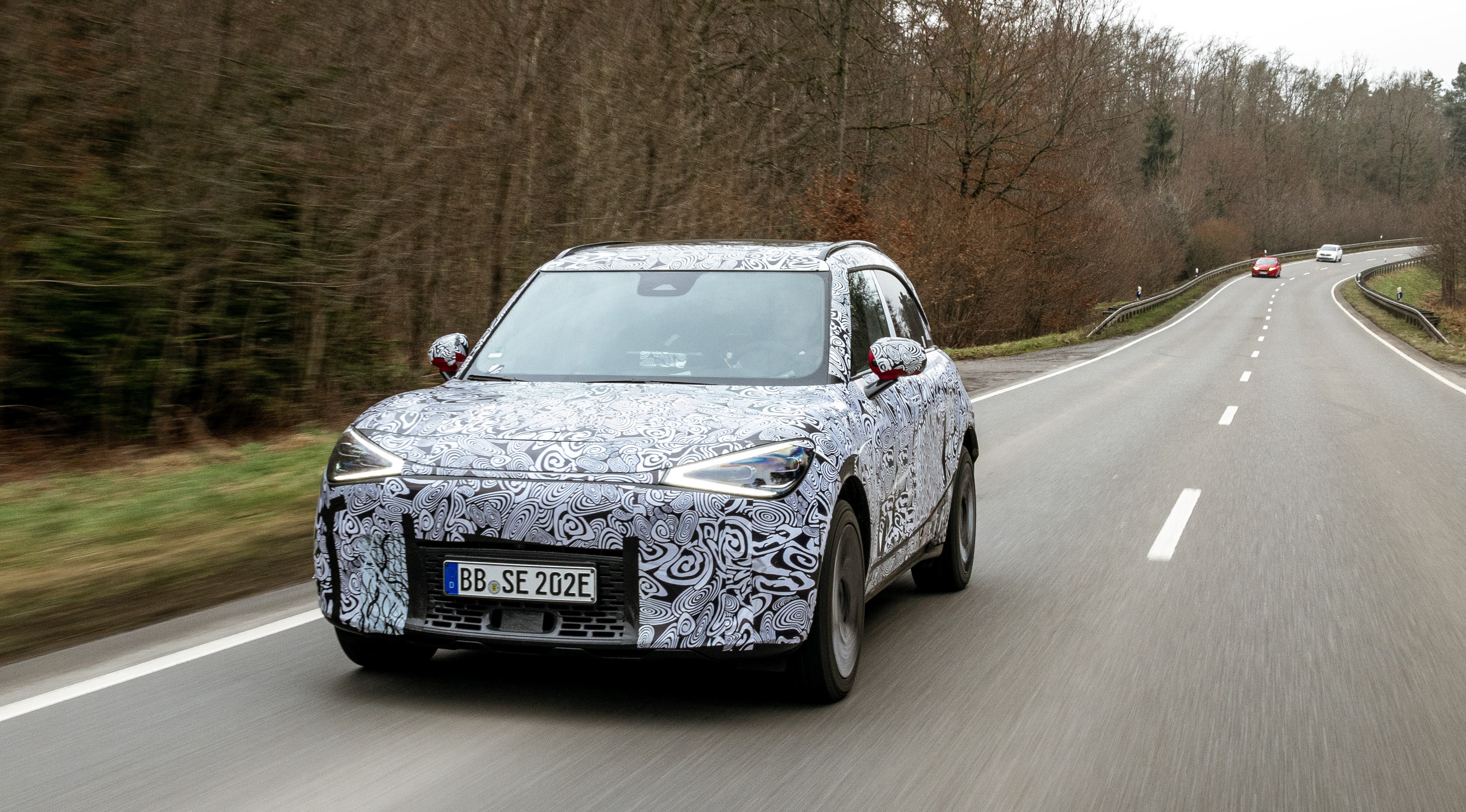
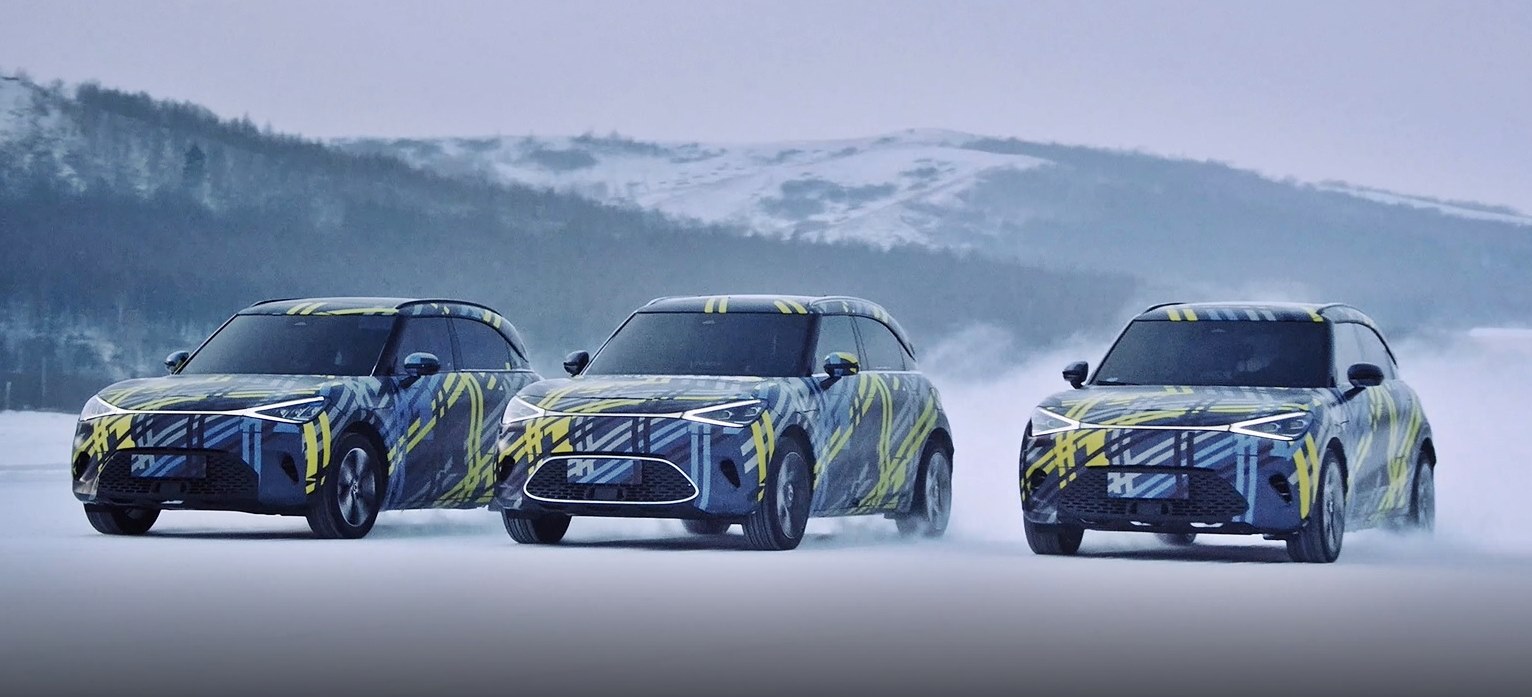
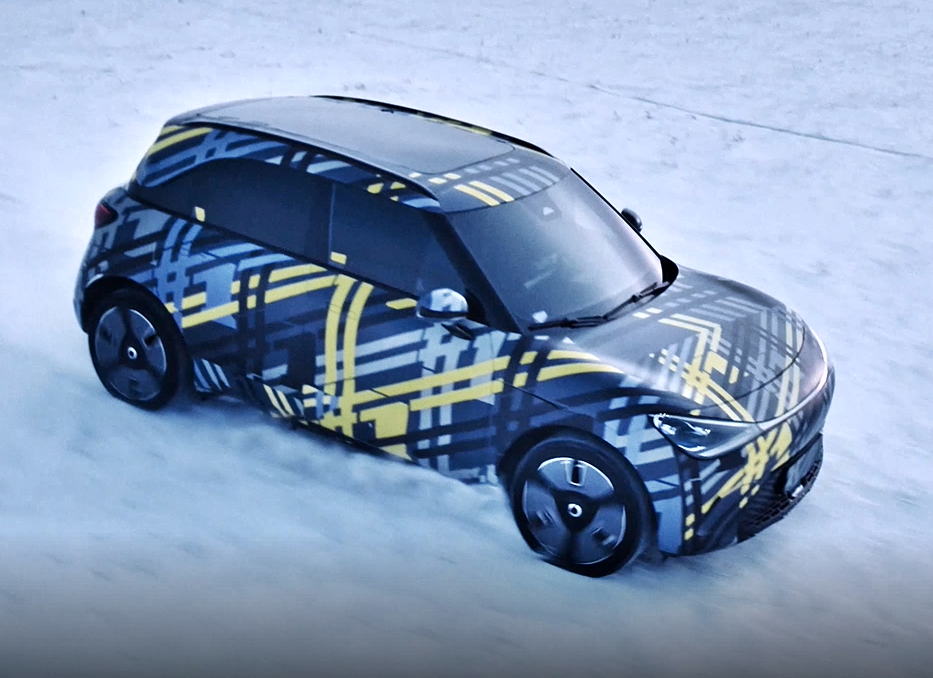
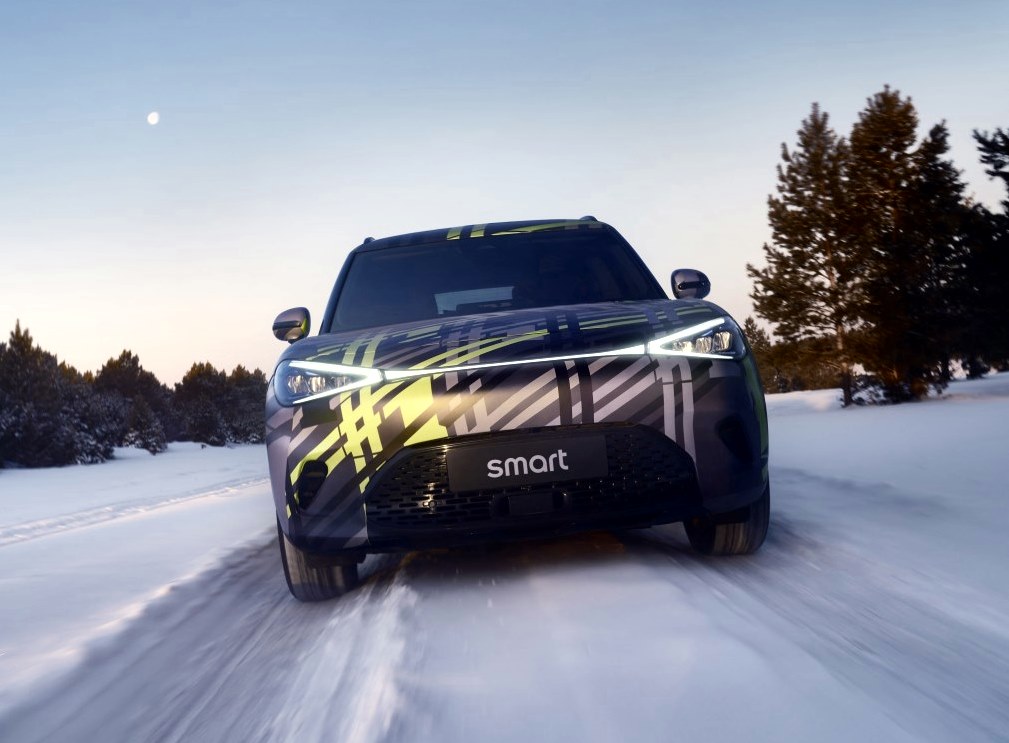
Of course, many of the features seen on the Concept #1 will not be adopted for the production car. However, recent pictures of the car, albeit camouflaged, show that the concealed door handles will be present although those ‘suicide doors’ which open in opposite directions will not. Such doors often appear in concept cars but rarely continue into production models.

Prototypes undergoing testing in winter conditions in China.

Final testing of prototypes
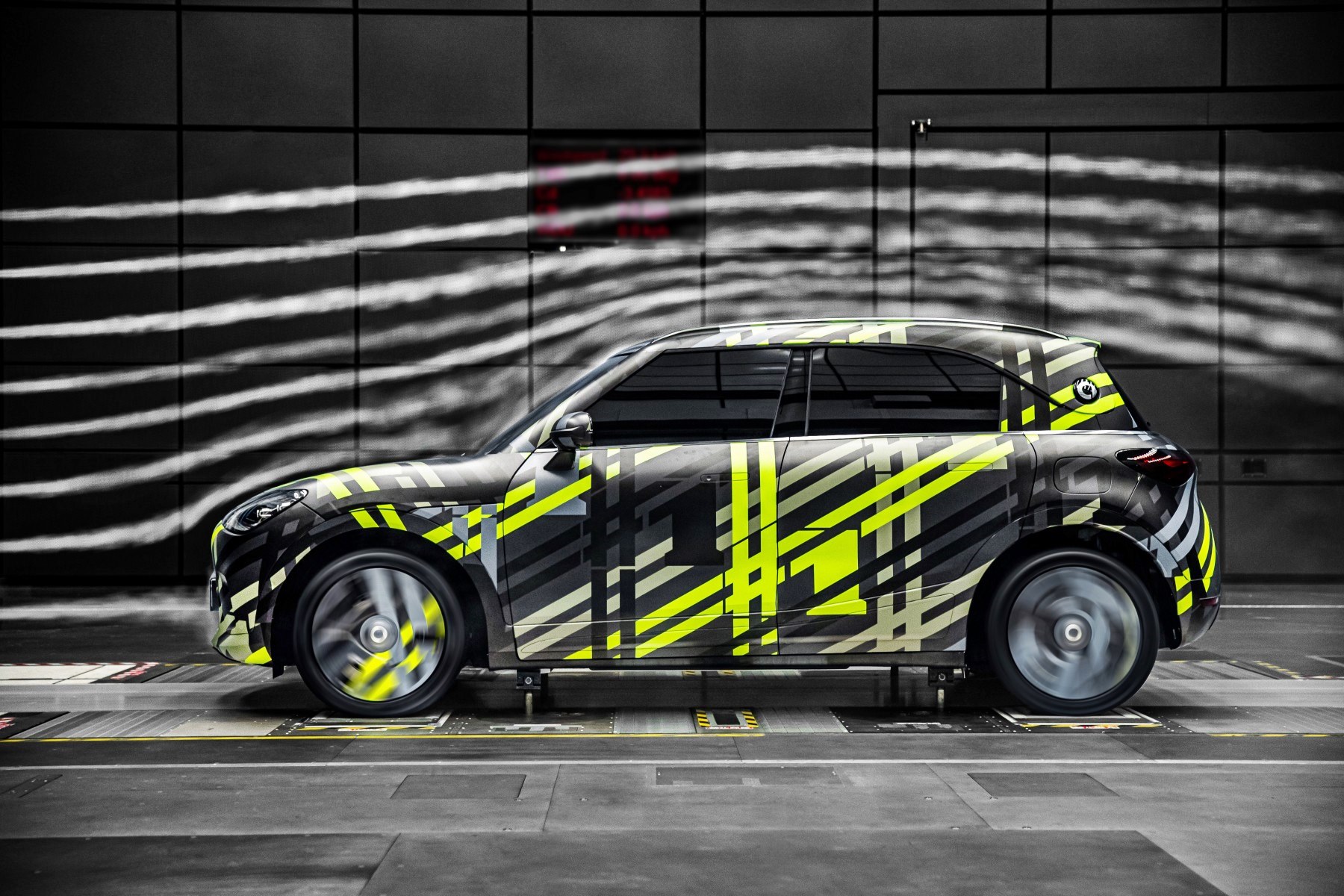
Prototypes have been undergoing endurance testing in winter conditions and aerodynamic work was done at the China Automotive Engineering Research Institute in Chongqing. Testing in the facility’s wind tunnel showed the smart #1, as the new model will be known, to have a drag coefficient performance of 0.29 Cd. This is thanks to the features like the flush door handles as well as an Active Grille Shutter (AGS) to lower wind resistance.

Win tunnel testing has shown the cd to be 0.29, important for an EV especially which needs low wind resistance to go further.

The smart #1, which will be the brand’s first all-new production car as a purely electric brand, will be unveiled on April 7, 2022 at STATION-Berlin, a historic landmark and disused train station in the German capital.

Coming to Malaysia too
Proton Edar has been appointed distributor for Malaysia and Thailand so we should be seeing the smart #1 on Malaysian roads in future. They are unlikely to be associated with the Proton brand and would be an additional business venture for the subsidiary which handles sales and marketing in the Proton Holdings Group. Proton’s own electrification program would likely start off with hybrids and then move to fully electric vehicles, perhaps towards the end of the decade.


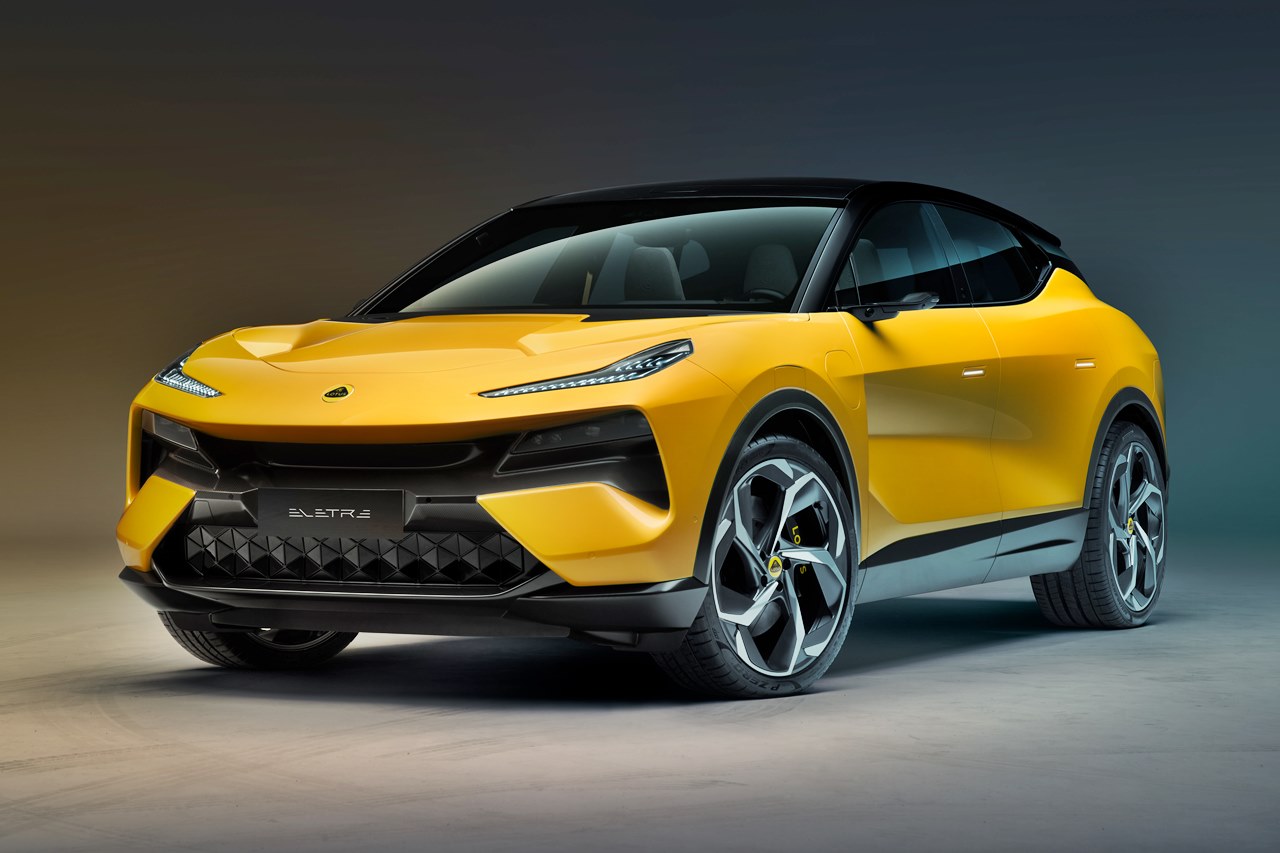
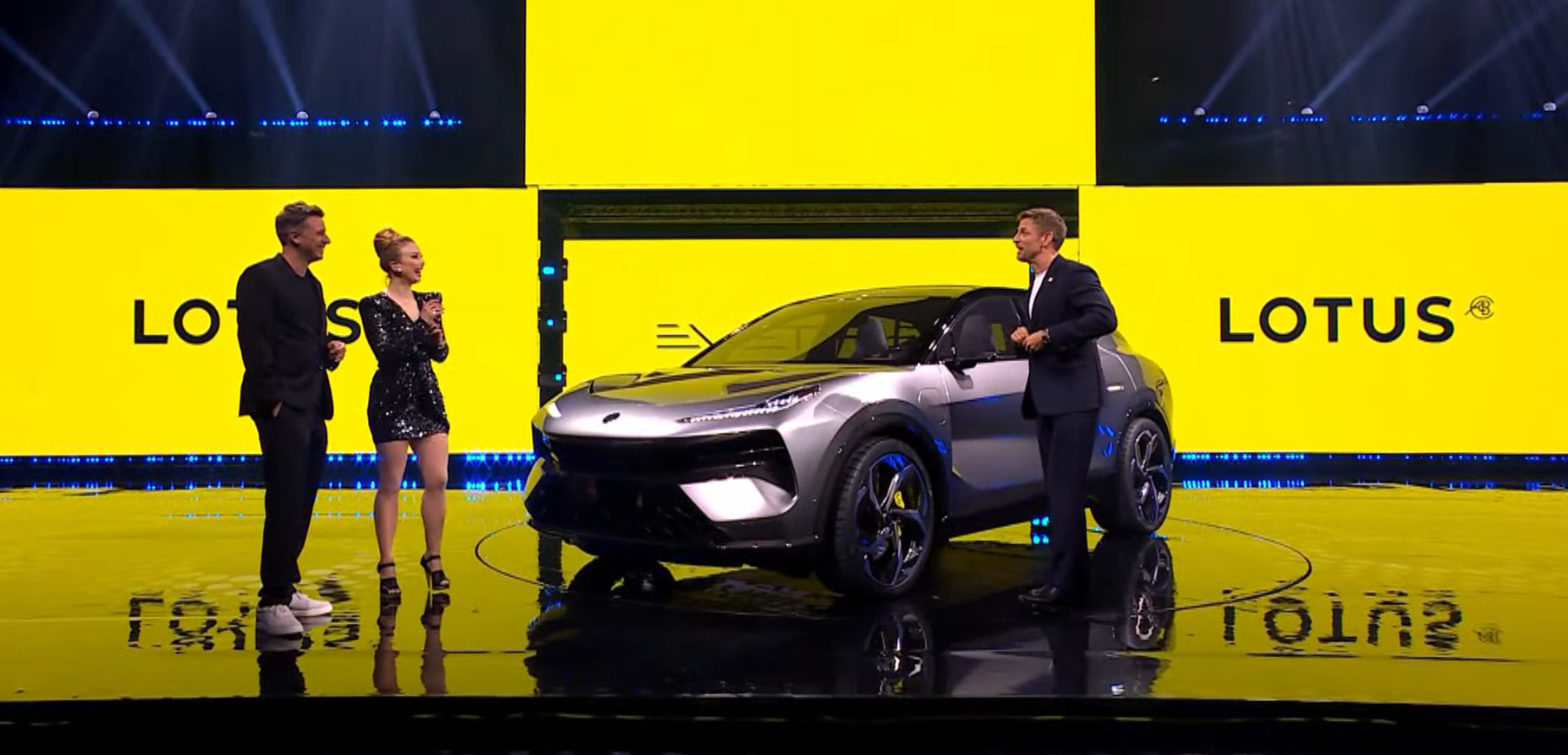
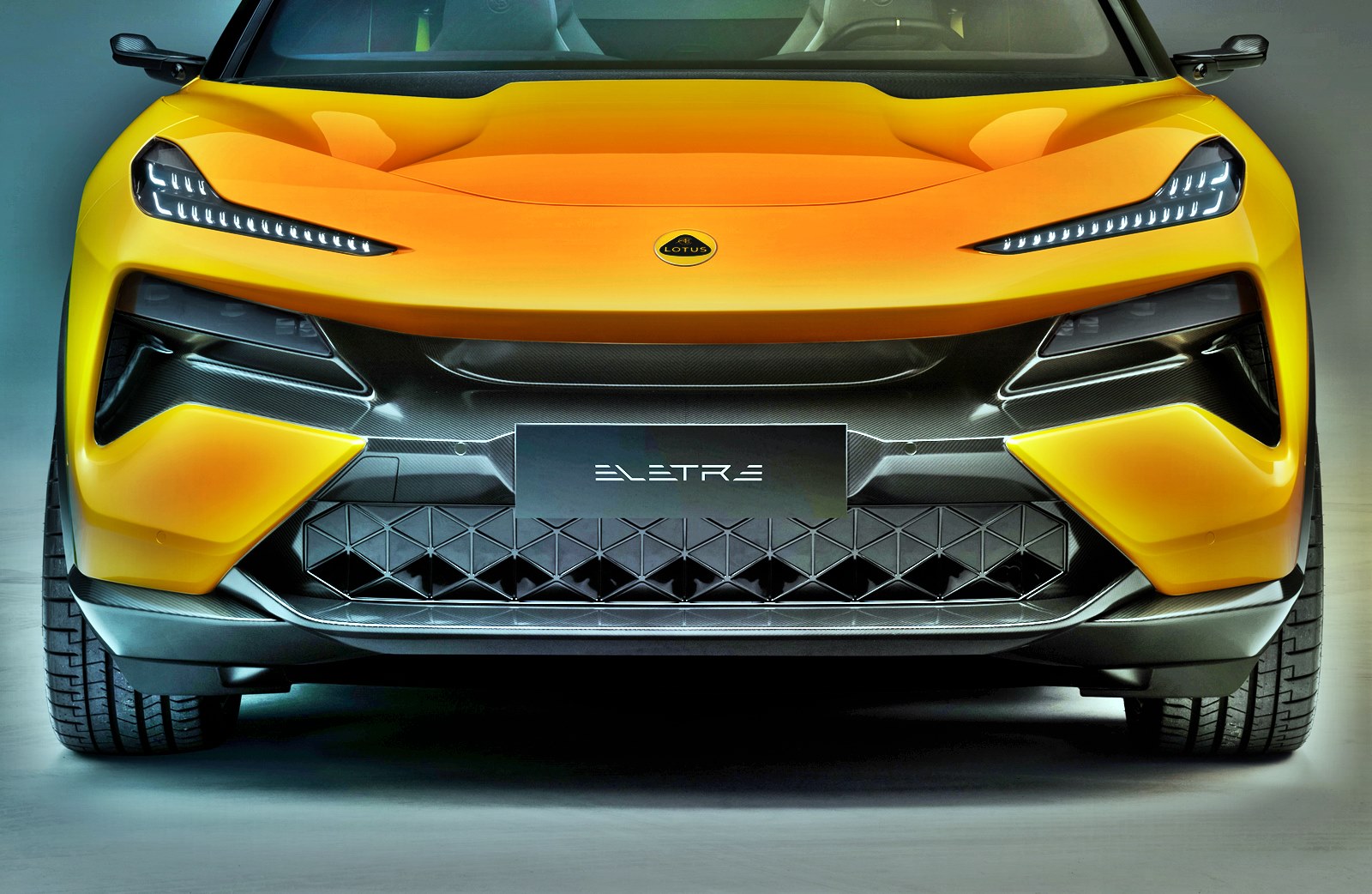
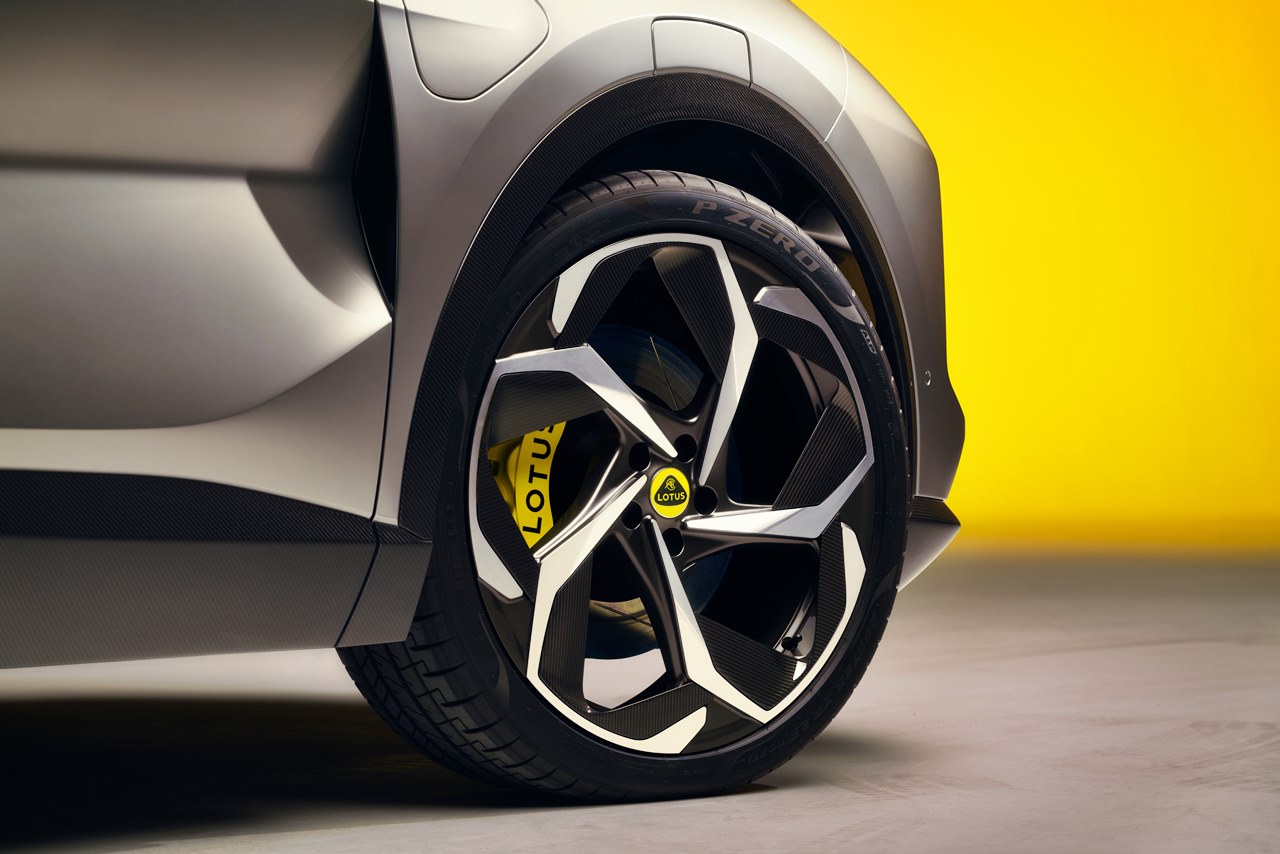
Lotus has finally joined the SUV crowd with its new Eletre (pronounced ‘El-etra’ and means ‘Coming to Life’ in some Eastern European languages) which is not only its first SUV but also the world’s first fully electric hyper SUV. Officially launched tonight at the BBC Television Centre in London, the model brings with it a significant number of firsts for the British brand – the first 5-door production model, the first model outside sportscar segments; the first lifestyle EV; and the most ‘connected’ Lotus ever.

As would be expected, advanced technologies are found throughout the car, including the most advanced active aerodynamics package claimed for any production SUV. There are also intelligent driving technologies such as the world’s first deployable Light Detection and Ranging (LiDAR) system in a production car.

2023 Lotus Eletre SUV EV

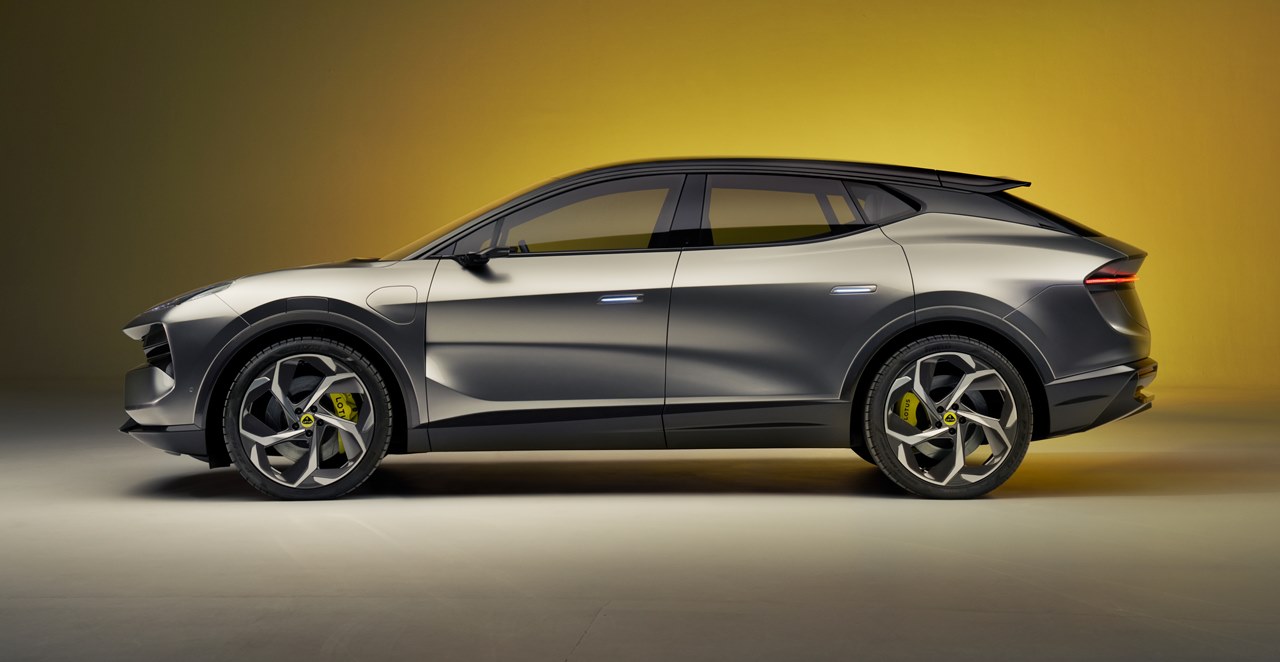
The Eletre is built on Lotus’ all-new Electric Premium Architecture (EPA). The low-to-the-ground design endows it with outstanding handling, and the EPA can easily adapt to accommodate C+ to E+ vehicle class battery sizes, motors, component layouts and intelligent driving technologies. The platform will be the basis for an all-new range of premium lifestyle performance electric vehicles from Lotus.

The Eletre has a 4WD drivetrain with 2 electric motors that provide up to 600 bhp, and uses 800V dedicated electric vehicle architecture with integrated, high-voltage power distribution system. The high-density battery pack has a capacity that’s over 100 kWh and a full charge is expected to last for up to 600 kms. A 350 kW charger will provide 400 kms of range in just 20 minutes, and it also comes with the ability as standard to accept 22 kW AC charging (if available). The hyper SUV credentials come from claimed performance numbers of less than 3 seconds for 0 to 100 km/h and a top speed of 260 km/h.

2023 Lotus Eletre SUV EV

The international design team was guided by Peter Horbury, who became Senior Vice President, Executive Advisor, Design, of Group Lotus last August. Horbury was the man who ‘threw the box out’ at Volvo when he designed the C70 and prior to moving to Lotus, he provided guidance for various brands in the Geely group which Lotus is part of.

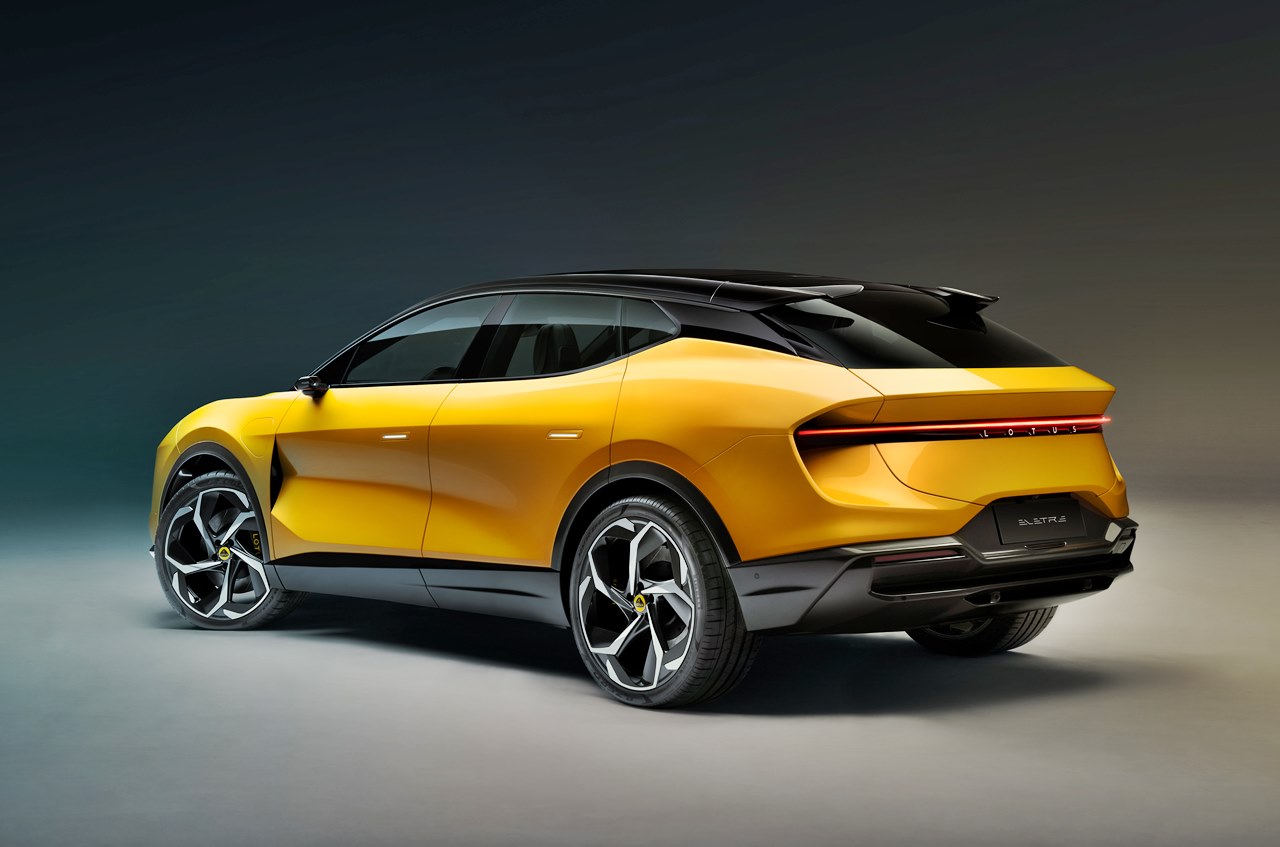
The designers created a daring and dramatic new model with a cab-forward stance, long wheelbase and very short overhangs front and rear. They had newfound creative freedom with the absence of a combustion engine under the bonnet, while the short bonnet echoes the styling cues of Lotus’ iconic mid-engined layout.

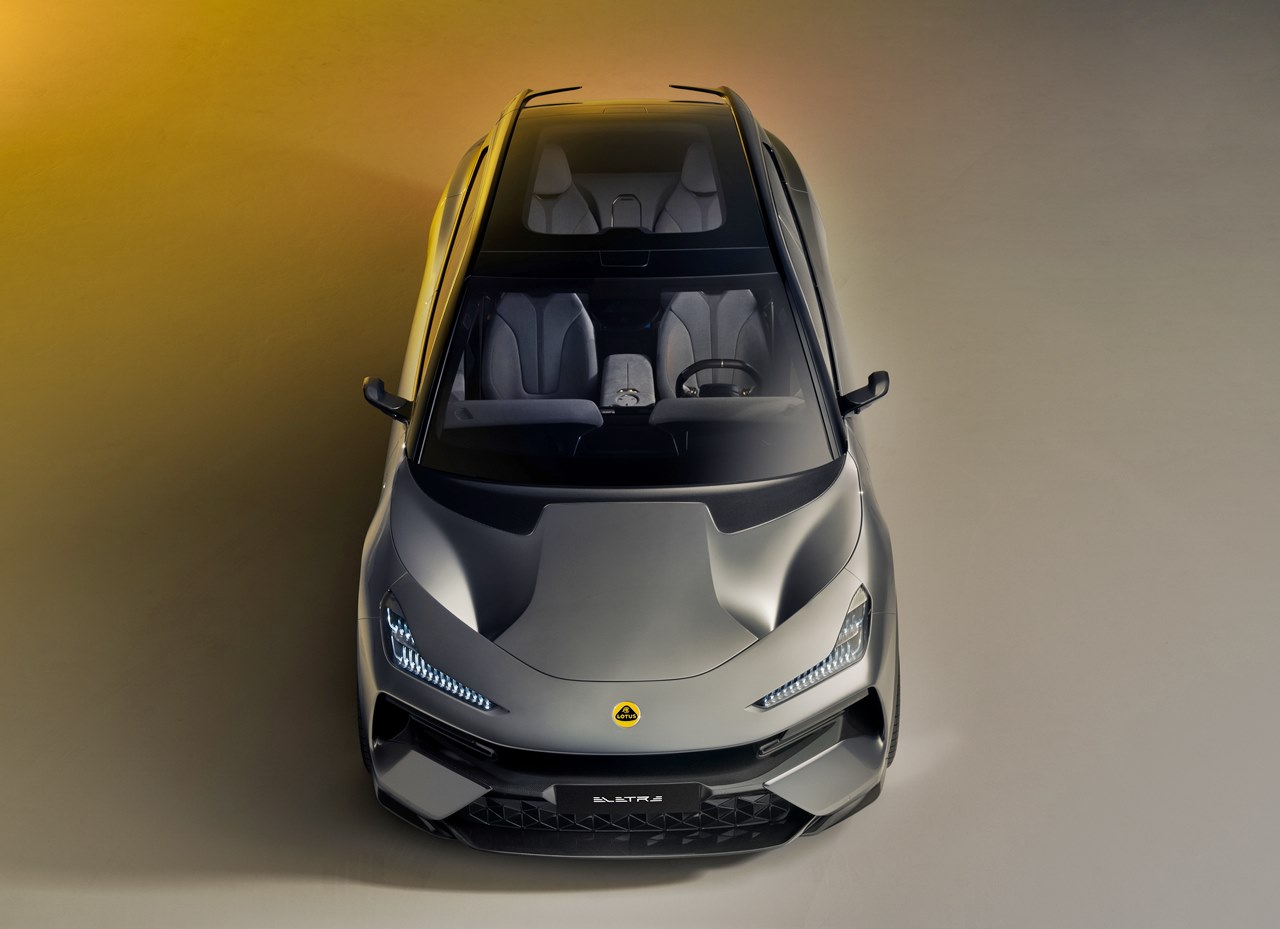
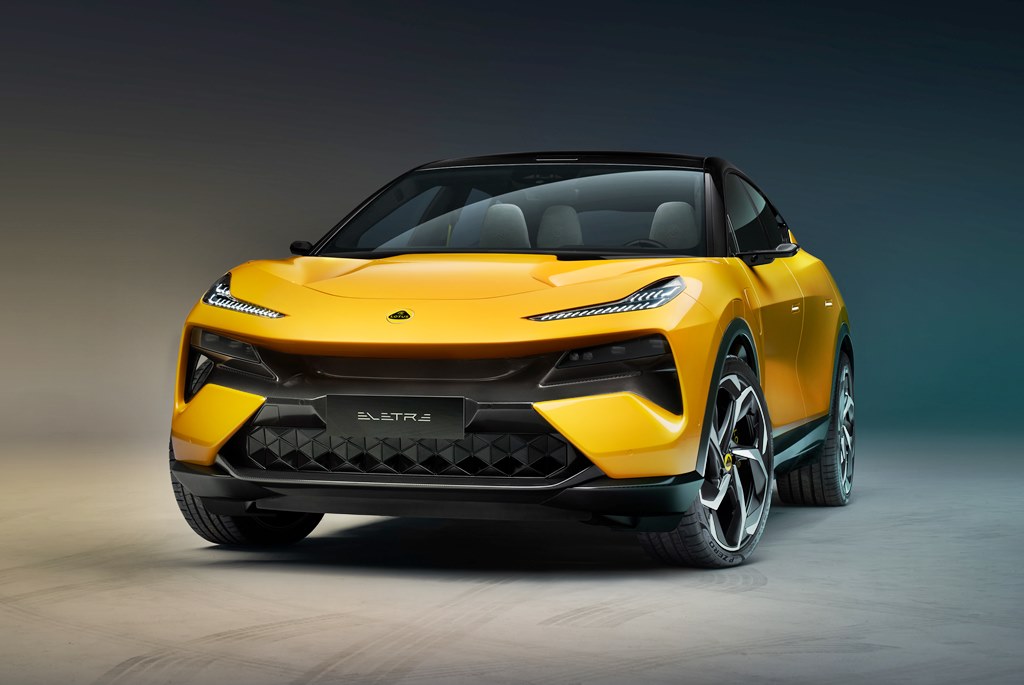
A signature element of the 5103 mm long bodywork’s design is its ‘porosity’ – the aerodynamic principle of air flowing through the car as well as under, over and around it. Porosity was at the heart of the Evija’s design, is integral to the Emira, and has provided clear inspiration for the Eletre. It is most obvious where air is channelled under the leading edge of the car, emerging through two exit vents in the bonnet above.

2023 Lotus Eletre SUV EV

2023 Lotus Eletre SUV EV

The active front grille is formed from a network of interconnecting triangular petals that dominate the central section. Intricately designed, they remain closed when the car is at rest or when there’s a need to reduce drag during driving. They open in a distinctive pattern to feed air into the radiator, allowing the Eletre to ‘breathe’ when cooling of the electric motors, battery pack and front brakes is required. All the black components are finished in carbonfibre while the body panels are aluminium.

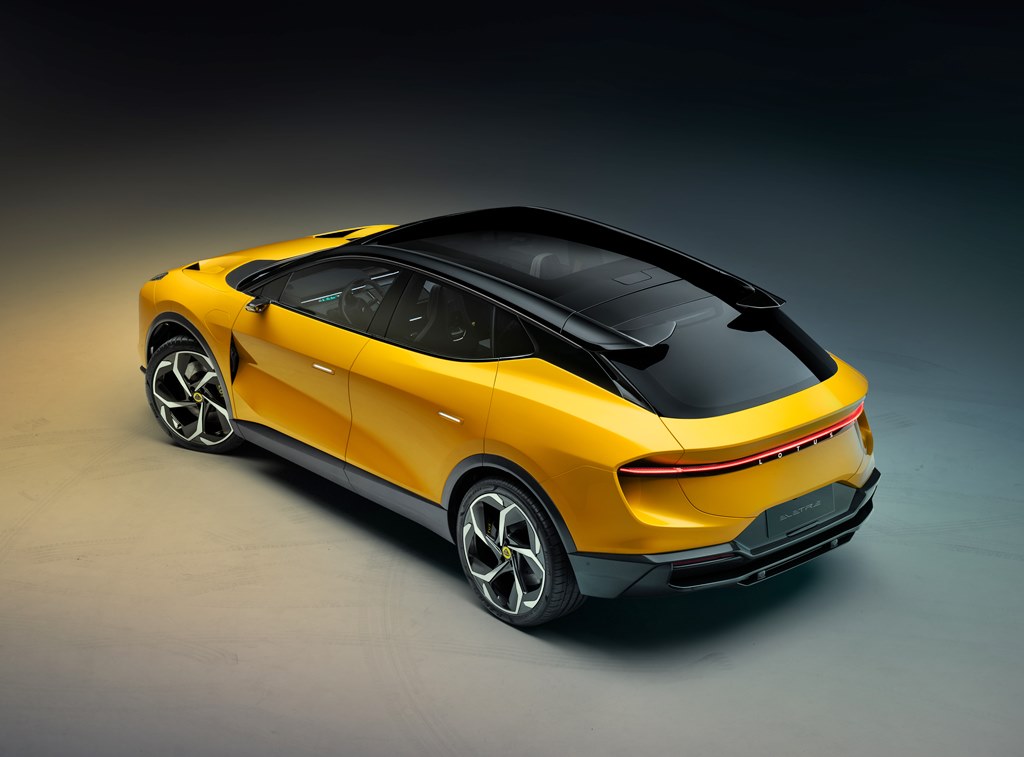
The rear is dominated by the unique cantilevered carbonfibre ‘floating’ split roof spoiler, a motorsport-inspired design feature that evokes race car winglets. With the central section removed, weight is saved – a very Lotus concept – and allows the LiDAR sensor to be integrated at the top of the glass. Optimised for exceptional aerodynamics, the roof spoiler channels airflow down the glass and into the active tailgate spoiler which is deployed automatically at speed. It has three distinct deployment angles, depending on the drive mode selected.

2023 Lotus Eletre SUV EV

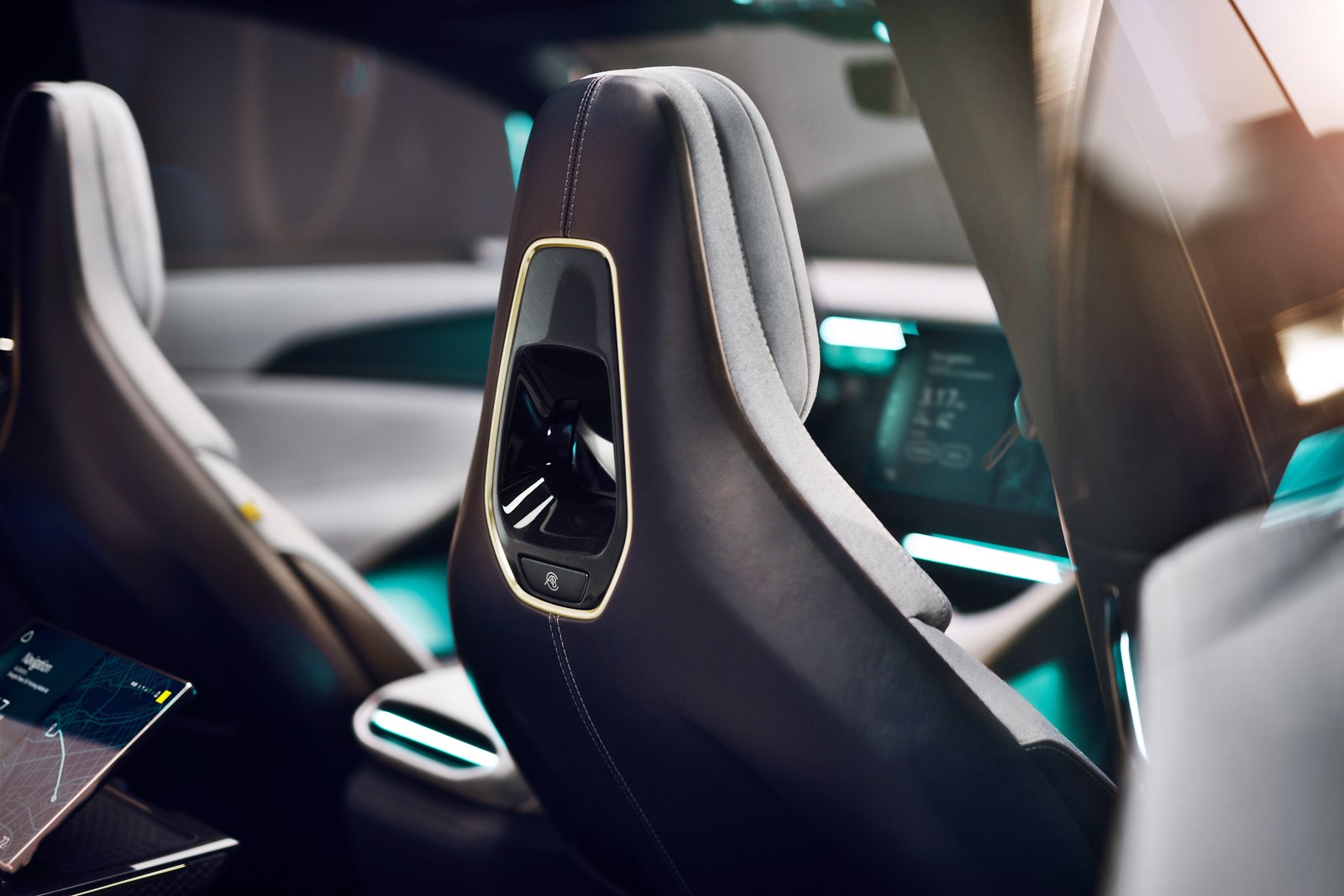
The interior has a performance-oriented and technical design which is ‘visually lightweight’ and as former F1 driver Jenson Button (who drove the car in for its debut) said, it has ultra-premium materials to offer a level of luxury that is new to Lotus. Sustainability has also been a core focus of the design team with the hard materials of carbonfibre that give a premium marble-like finish.

2023 Lotus Eletre SUV EV

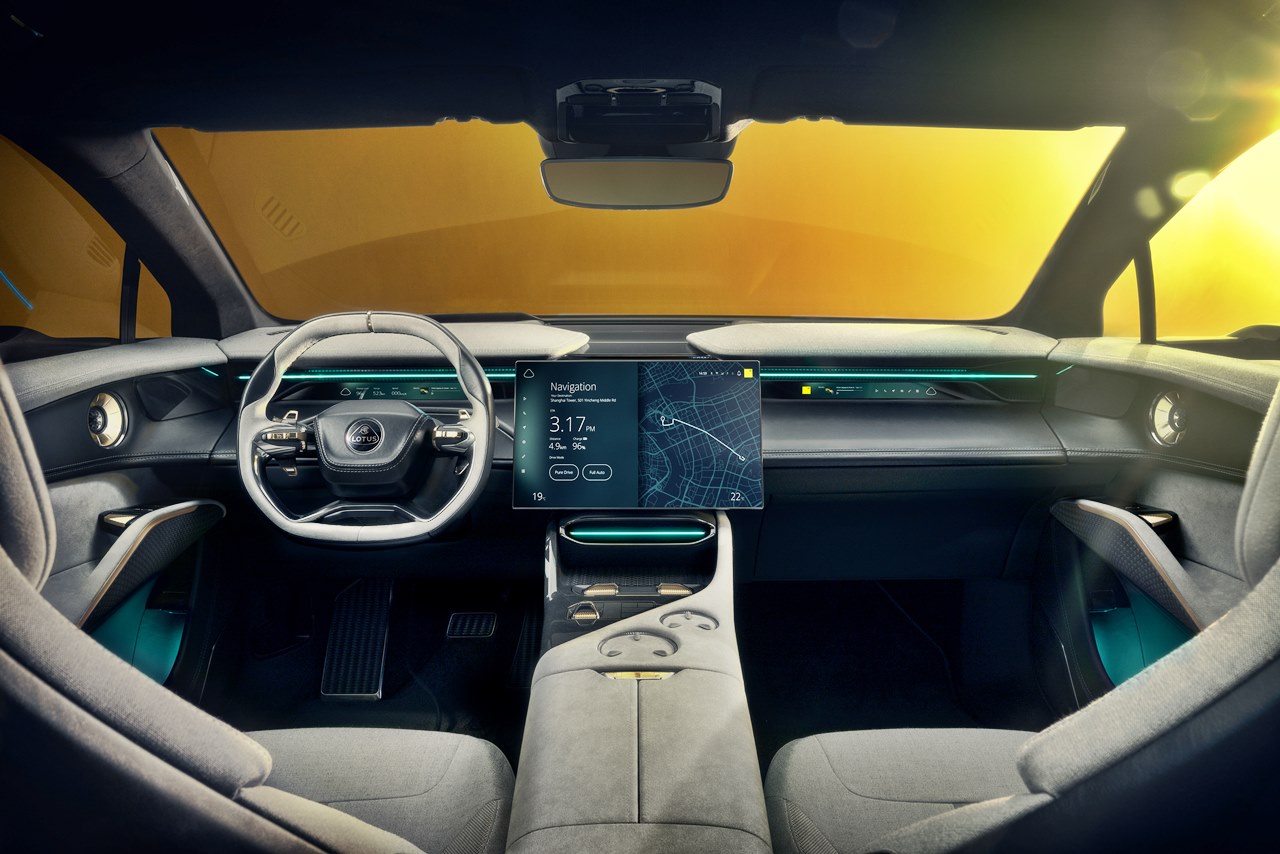
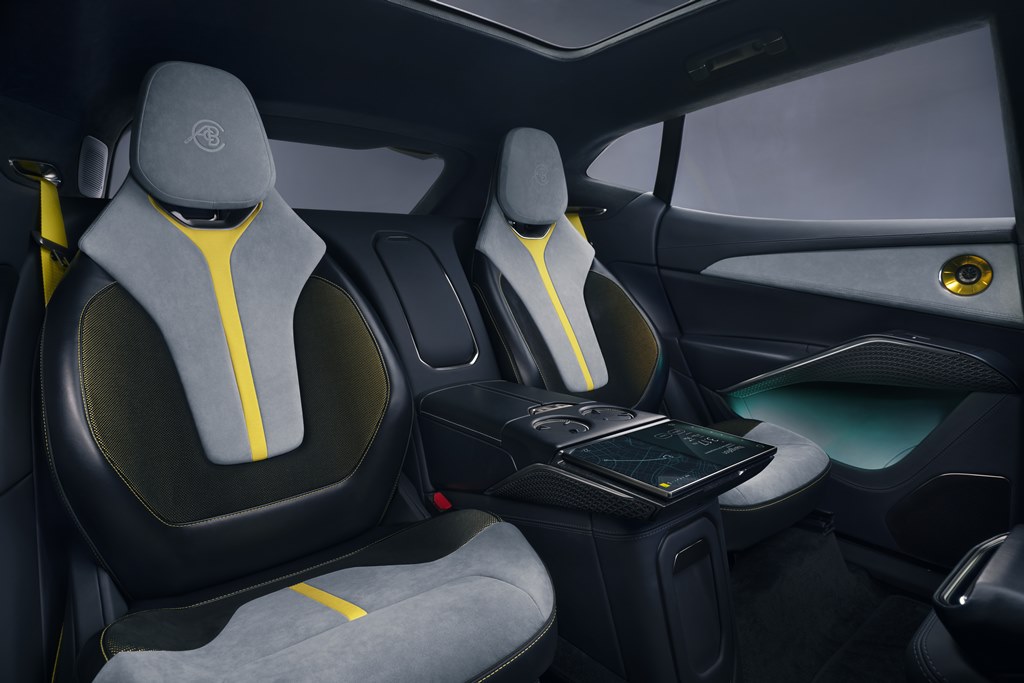
The cabin has four individual seats as standard, with customers also offered the more traditional 5-seat layout under a fixed panoramic glass sunroof. The cockpit and high centre console are inspired by the Emira and Evija with the triangular theme seen externally on the grille being replicated in multiple locations around the cabin.

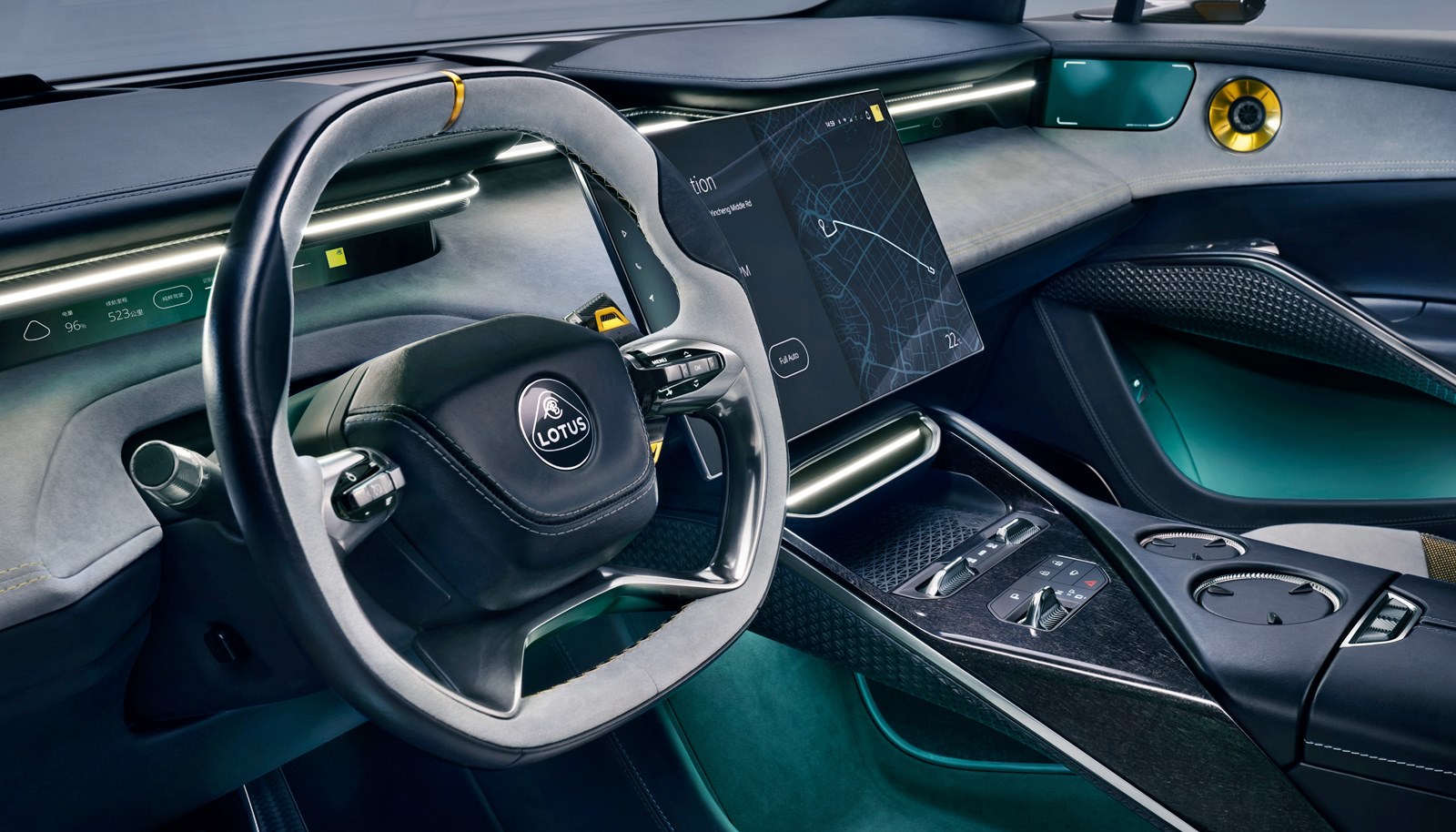
The Lotus philosophy of light-weighting – removing material if it’s not needed – is clearly illustrated in the instrument panel. The floating wing’s central section has been taken out, echoing the design of the rear spoiler. Below the instrument panel a blade of light runs across the cabin, sitting in a ribbed channel that widens at each end to create the air vents. While it appears to be floating, the light is more than decorative and forms part of the human machine interface (HMI). It changes colour to communicate with occupants, for example, if a phonecall is received; if the cabin temperature is changed; or to reflect the vehicle’s battery charge status. Information can also be displayed to the driver via a head-up display featuring augmented reality (AR) technology.

2023 Lotus Eletre SUV EV

2023 Lotus Eletre SUV EV

The infotainment experience is said to set new standards in the automotive world, with pioneering and innovative use of intelligent technologies. It is a collaboration between the design team in England and the Lotus team in China, who have huge experience in the fields of User Interface (UI) and User Experience (UX). At the core of the Eletre’s UI/UX is the Lotus attribute of simplicity, which is realised through three pillars: lightweight (for both system components and the experience); intelligence (system versatility); and immersive (for interactions that excite and engage occupants). This includes the on-screen 3-dimensional world in which the car is viewed, showcasing the Eletre as the hero and adopting user experiences from the worlds of gaming and mobile technology.

While every element of the Eletre can be controlled digitally, certain key controls are duplicated with analogue switches – evidence of the simplicity for which Lotus is famed. The technical look, compact size and premium feel of the steering wheel is intended to deliver maximum comfort, performance and usability. Visually lightweight, it houses switchgear for the adaptive cruise control and infotainment system.

2023 Lotus Eletre SUV EV

The standard audio system on the car comes from KEF and is composed of a 1,380W 15-speaker set-up with Uni-QTM and surround sound technology. Uni-Q dispenses with separated tweeter and mid-range speakers, instead combining both into an acoustically idealised single unit. It covers the entire mid and high-frequency sound spectrum from a single point in space, delivering a more coherent, hyper-realistic sound experience.

Technology is used for much more than infotainment on the Eletre. It is also at the heart of the car’s comprehensive suite of intelligent Advanced Driver Assistance Systems (ADAS), many of which are designed to be futureproof so new features can be enabled via Over The Air (OTA) updates. Several utilise the LiDAR system which supports end-to-end autonomous driving technology and is future-proofed for further development, achievable because of the hardware that’s already integrated. Further capability can be added via OTA software updates, as and when it is allowed by local market regulations.

Incidentally, each door mirror is replaced by an Electric Reverse Mirror Display (ERMD), which houses 3 different cameras – one for the rearview mirror, a second to help create a 360-degree view of the car from above to aid parking, and a third that’s part of the intelligent driving technologies which work in tandem with the LIDAR system.

2023 Lotus Eletre EV SUV

“The Eletre is a bold and revolutionary new car, delivering on our commitment to move Lotus into completely new automotive segments as we widen our global appeal and accessibility. This is a momentous point in our history and a clear signal of our ongoing desire to transform our business. It is a true Lotus, and we’re confident it will delight performance car customers and offer a distinct alternative to the segment’s established players. The Eletre has the soul of a Lotus and the usability of an SUV. Alongside the Emira sportscar, this is the perfect two-car garage from Lotus,” said Matt Windle, Managing Director of Lotus Cars.

Pricing is not announced at this time and the Eletre will be built at a new factory in Wuhan, China. First deliveries start in 2023 with the early production going to customers in China, the UK, and Europe.

Lotus Vision80 plan to transform company on journey of global expansion

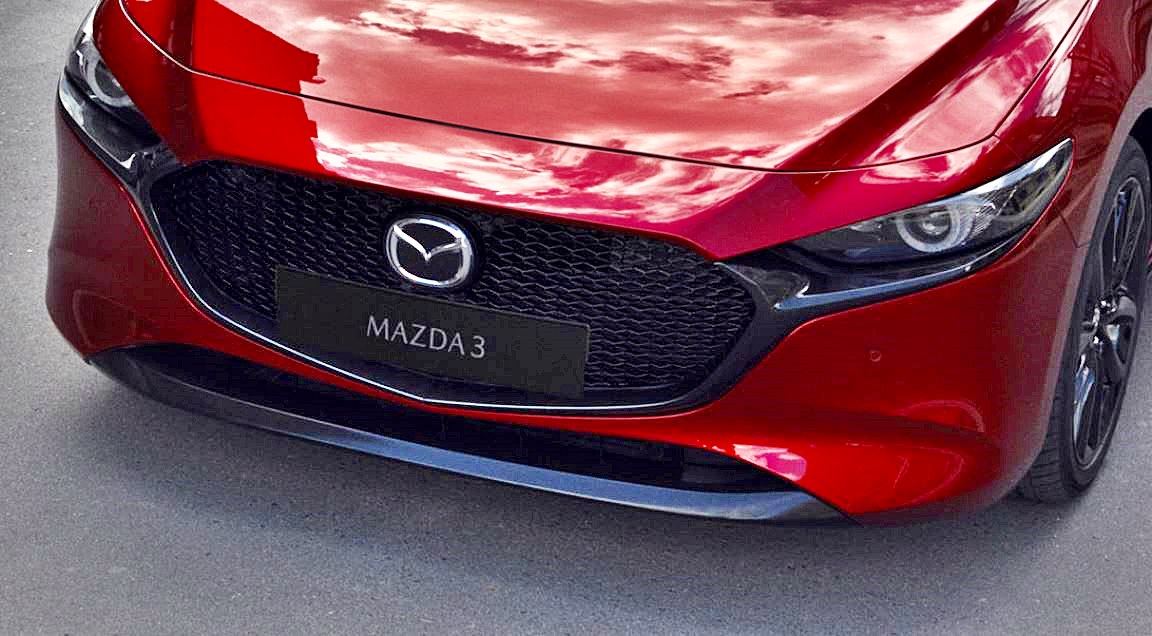
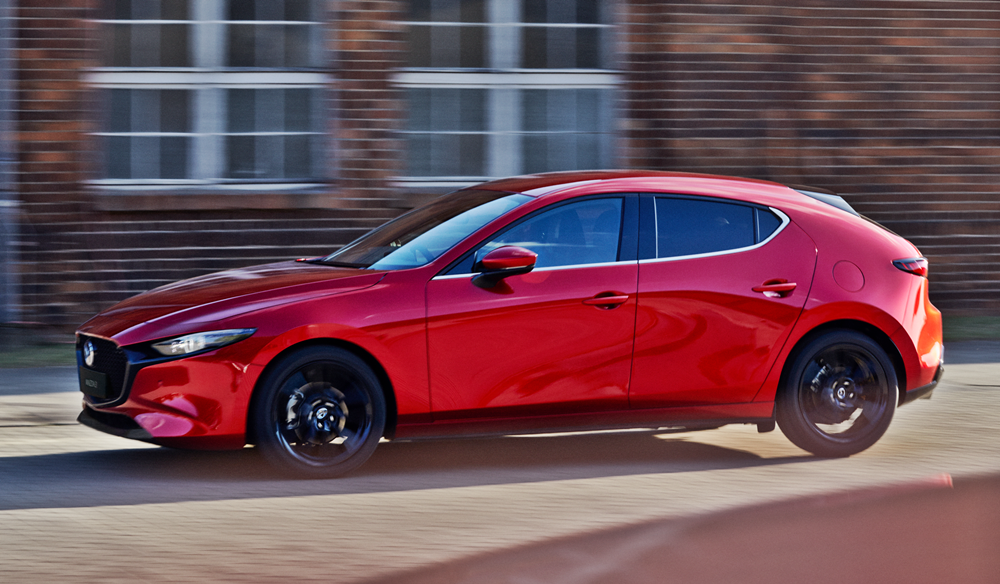
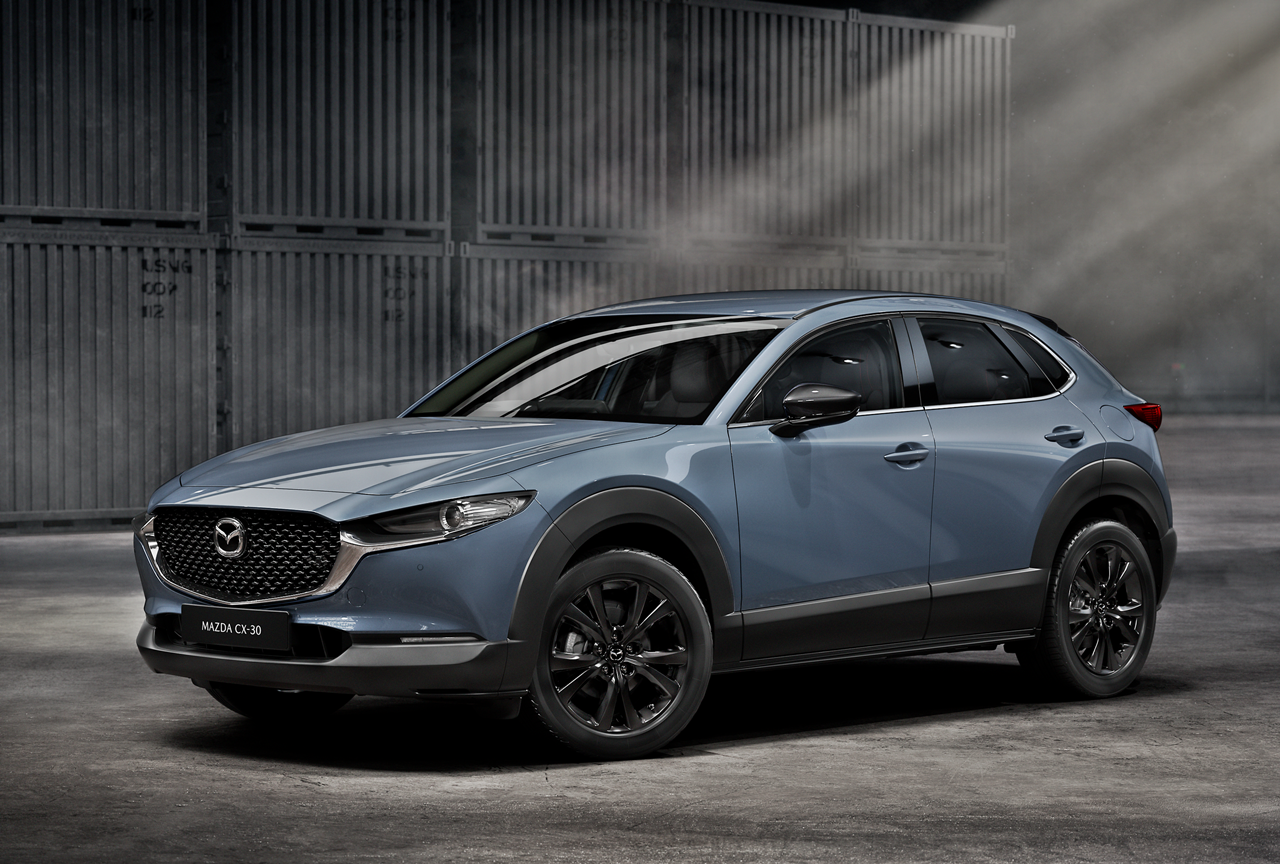
Bermaz Motor has announced that the 2022 Mazda3, CX-3 and CX-30 models are now available in Malaysia. All three are imported from Mazda factories in Japan and come with feature upgrades, with a special versions of the Mazda3 and CX-30 also being offered.

Mazda3
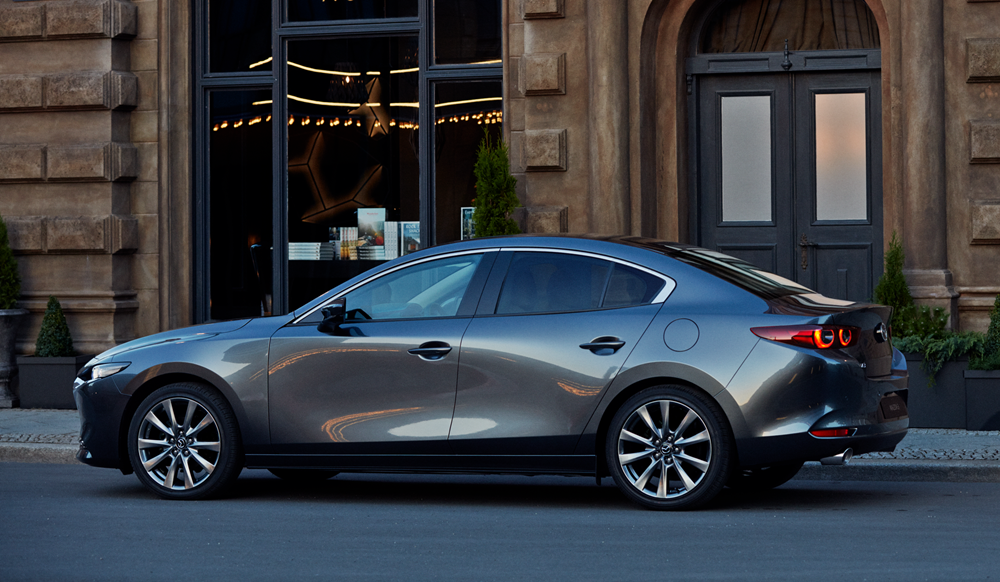
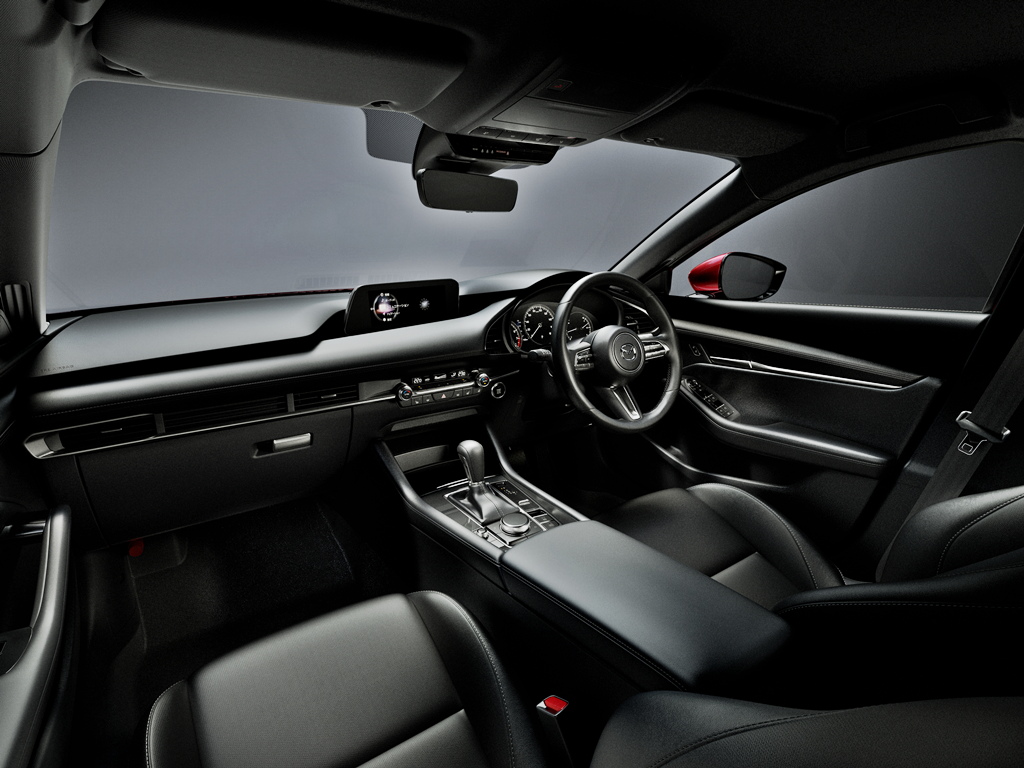
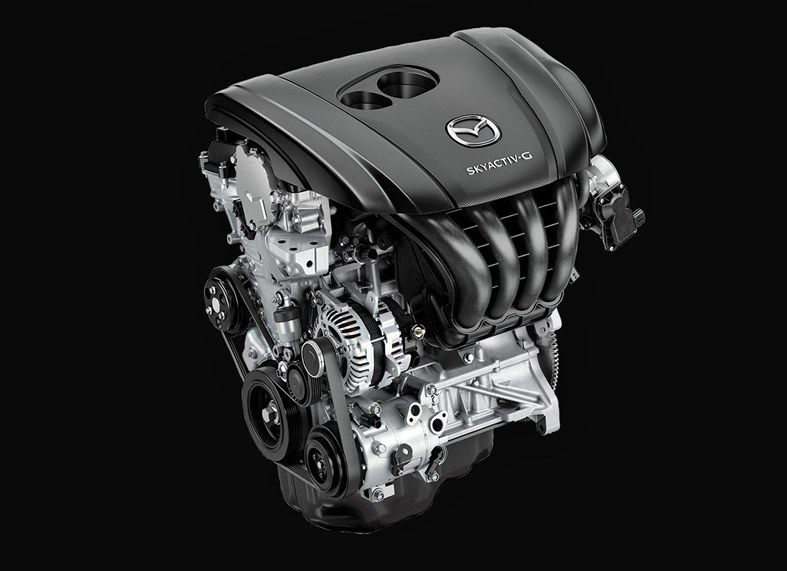
The model that was developed from the Kai concept car of 2017 is available with 1.5-litre and 2-litre SKYACTIV engines and sedan as well as liftback bodystyles. For 2022, the models get improved connectivity with Apple CarPlay and Android Auto installed. This allows favourite apps from the smartphone to be interfaced with the infotainment system which is managed by an 8.8 touchscreen on the dashboard.

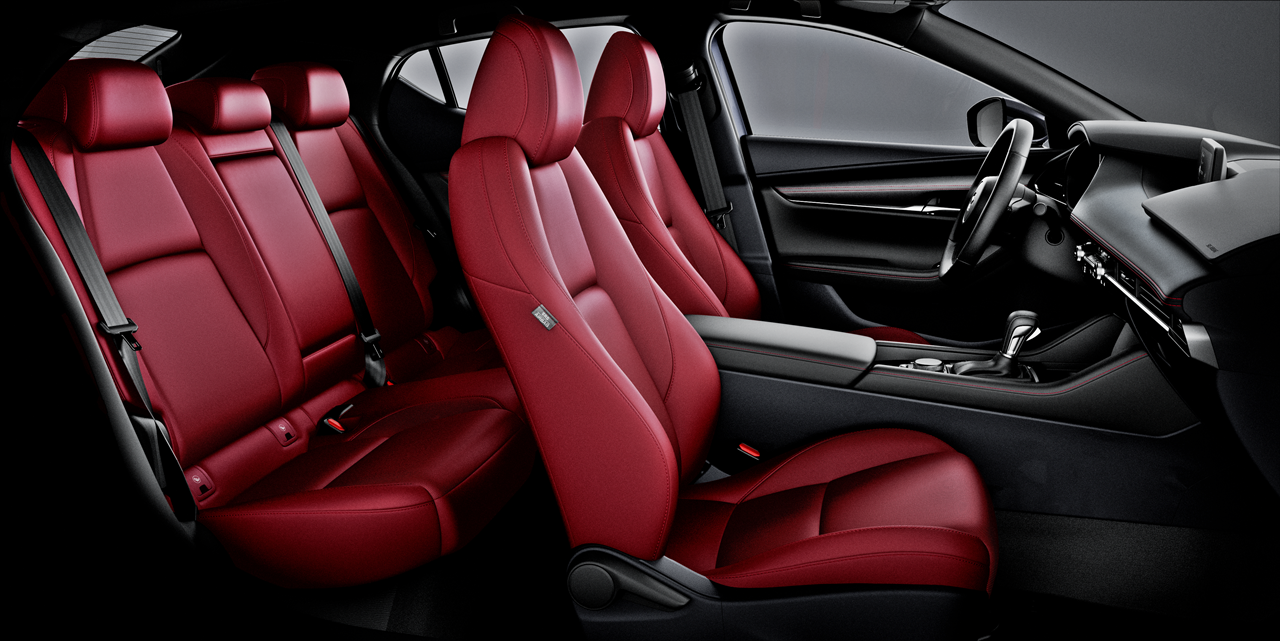
A special version known as the ‘Ignition Edition’ is also available but only for the 2-litre liftback variant. While the rest of the Mazda3 range has a choice of 7 colours, the Ignite Edition is only available in Polymetal Grey. The model also has distinctive gloss black door mirror covers and the 18-inch alloy wheels are finished in metallic black. Inside, the Ignite Edition has exclusive, burgundy-coloured leather upholstery which gives a classy touch.

The Ignite Edition comes with the latest i-Activsense active safety system with driver assistance features such as Front Cross Traffic Alert, Driver Attention Alert, and Driver Monitoring as well as Cruising & Traffic Support (CTS). For easier manoeuvring, especially in tight parking spaces, there is a 360o View Monitor to help the driver see the areas on all sides of the car.

The latest Mazda3 prices start from RM138,660 (excluding insurance) and until June 30, 2022, half of the sales tax applicable is exempted by the government.

 Mazda CX-3
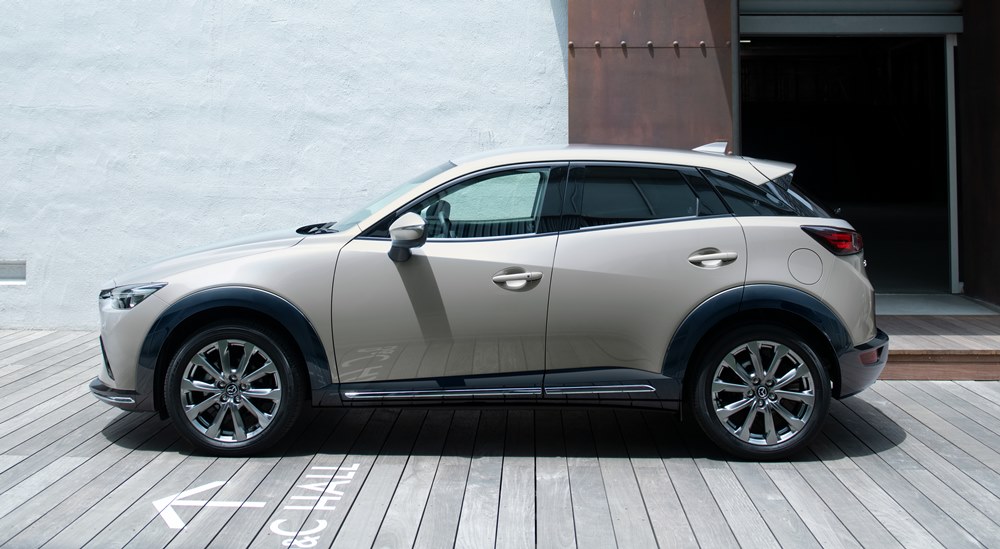
The CX3 crossover SUV retains the same compact proportions that are ideal for the urban jungle. Under the skin is the SKYACTIV-vehicle Architecture which gives the CX-3 the same jinba-ittai (the unity between ride and horse) character that every Mazda has. It is powered by a 2-litre 154 bhp/206 Nm SKYACTIV-G engine that is mated to a 6-speed SKYACTIV-DRIVE transmission sending power to the front wheels.

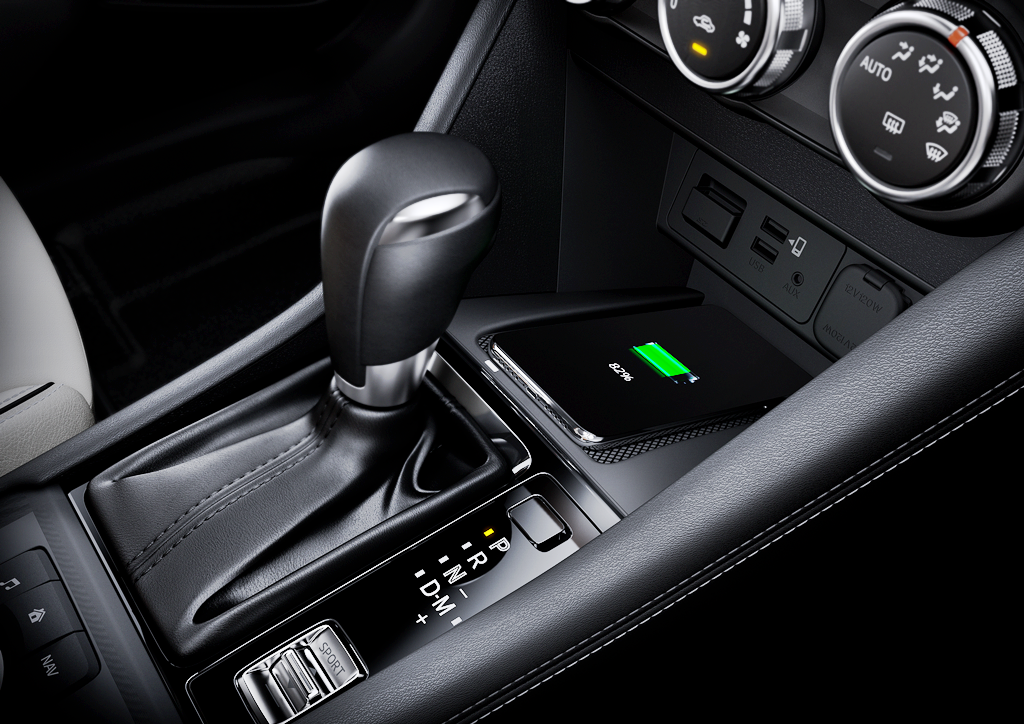
Updates for the 2022 model are wireless Apple Carplay along with Android Auto for smartphone connectivity and also a Qi Wireless Charger for compatible smartphones. The infotainment system has an 8-inch capacitive touchscreen with a bright clear display. Also added is a 360o View Monitor to give the driver a better idea of the surroundings. A seatbelt reminder is now installed for all seats, especially useful as rear passengers must also be belted up by law.

Bookings are now accepted with the price starting from RM131,929 (excluding insurance and with 50% sales tax until June 30, 2022). Customers can choose from 6 colours – Soul Red Crystal, Machine Gray, Snowflake White Pearl, Polymetal Gray, Deep Crystal Blue and the new Platinum Quartz Metallic.

Mazda CX-30
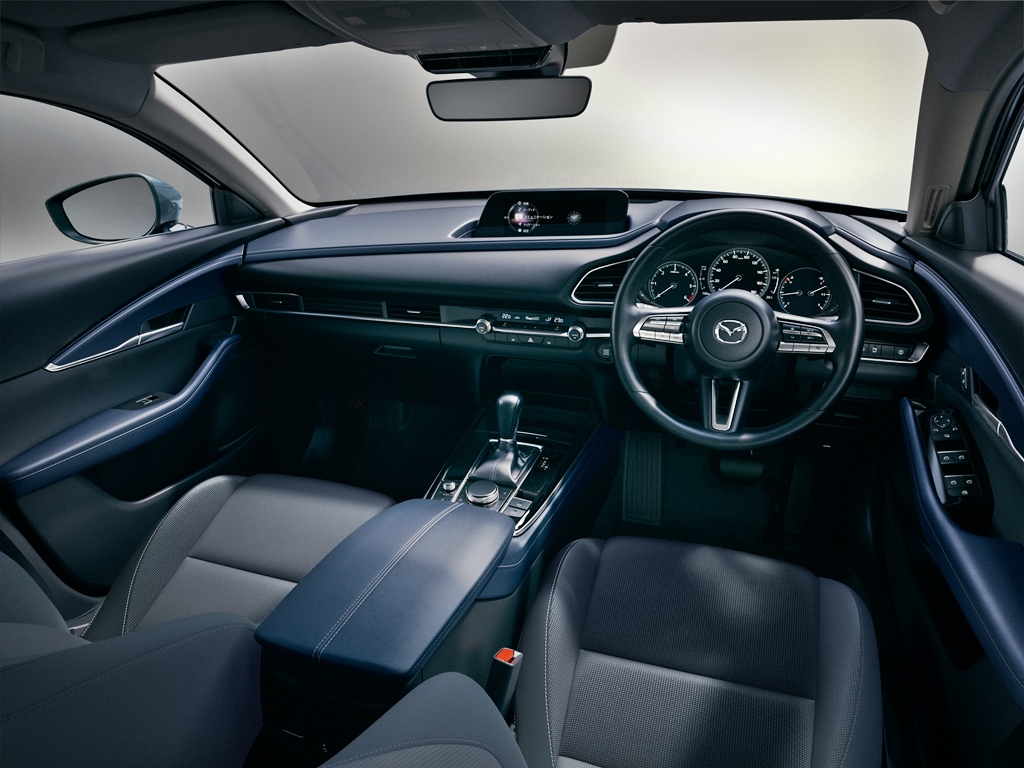
The CX-30 has received some updating with connectivity improvements that allow for smartphones to interface with the infotainment system using Apple CarPlay and Android Auto. The 8.8-inch touchscreen functions as a command centre to make various selections and adjustments.

Additionally, there are two ‘Ignite Edition’ variants added with a choice of FWD or AWD. Like the Mazda3 Ignite Edition, they come with black door mirrors (auto-folding) and black 18-inch alloy wheels. The interior has burgundy-themed upholstery on the seats with black interior trim. Also includes is a 360o View Monitor which uses the central display.

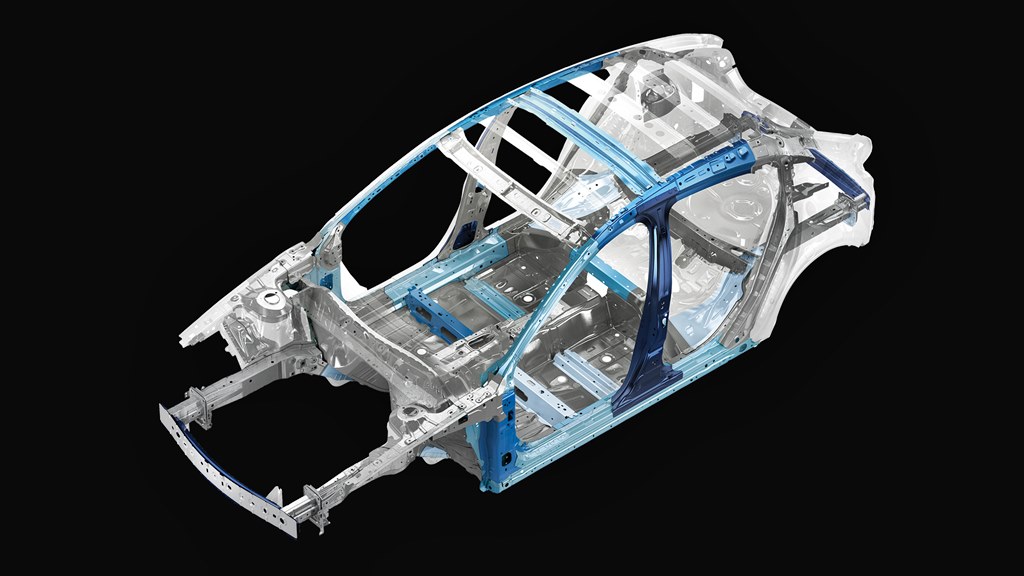
The CX-30, which has i-Activsense, has scored full marks in Euro NCAP stringent evaluations. In fact, it was one of the models to score the highest-ever rating in the Adult Occupancy Protection assessment. It also performed impressively in the other categories such as Child Occupant Protection, Vulnerable Road User (pedestrian safety) and Safety Assist.

The latest CX-30 (High Spec upwards) has a full suite of i-Activsense features and Front Cross Traffic Alert, Driver Attention Alert with Driver Monitoring and Cruising & Traffic Support are also added for the ‘Ignite Edition’.

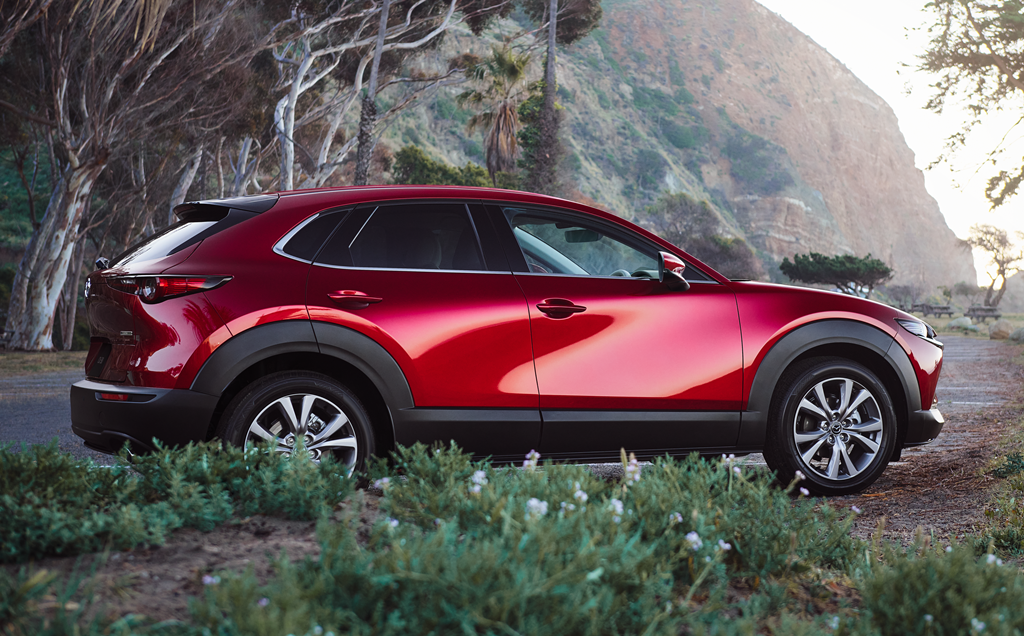
There are 7 colour choices for the CX-30 which is priced from RM145,759 (without insurance/50% sales tax until June 30, 2022).

All new Mazda vehicles (except for the BT-50 pick-up truck) come with a 5-year/100,000 km manufacturer’s warranty and during the first 5 years (or 100,000 kms) after registration, owners can enjoy free scheduled maintenance.

For more information, visit www.mazda.com.my.

How Bose has been developing premium sound for Mazdas over 30 years

In 1962, Ursula Andress came out of the sea and was greeted by the late Sean Connery acting as James Bond Agent 007 in ‘Dr. No’. Who would have imagined that the movie franchise would continue with another 24 more right up to the 21st century?

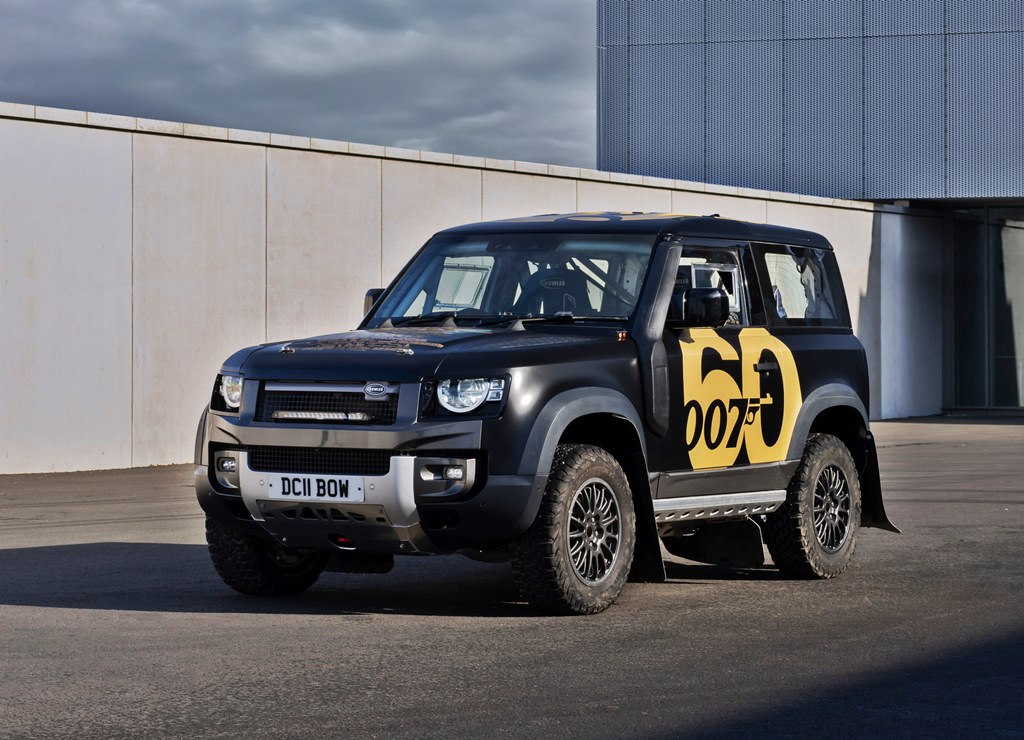
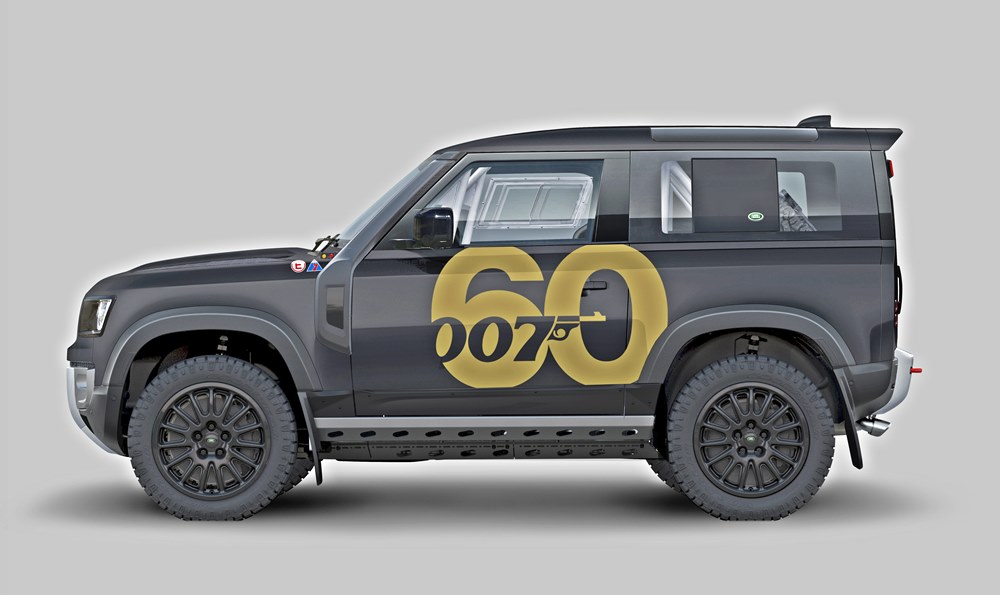
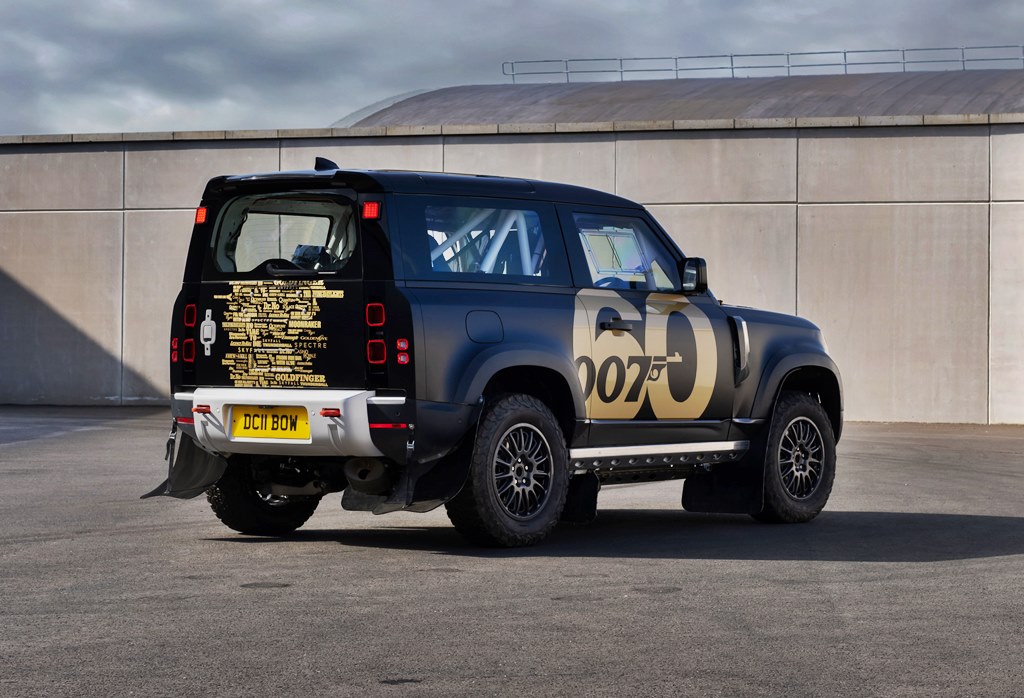
60 years for a movie franchise is certainly a long time and to celebrate the anniversary this year, Land Rover is entering a rally-prepared, liveried Defender 90 in the 2022 Bowler Defender Challenge with Mark Higgins competing in the North Wales leg this weekend.

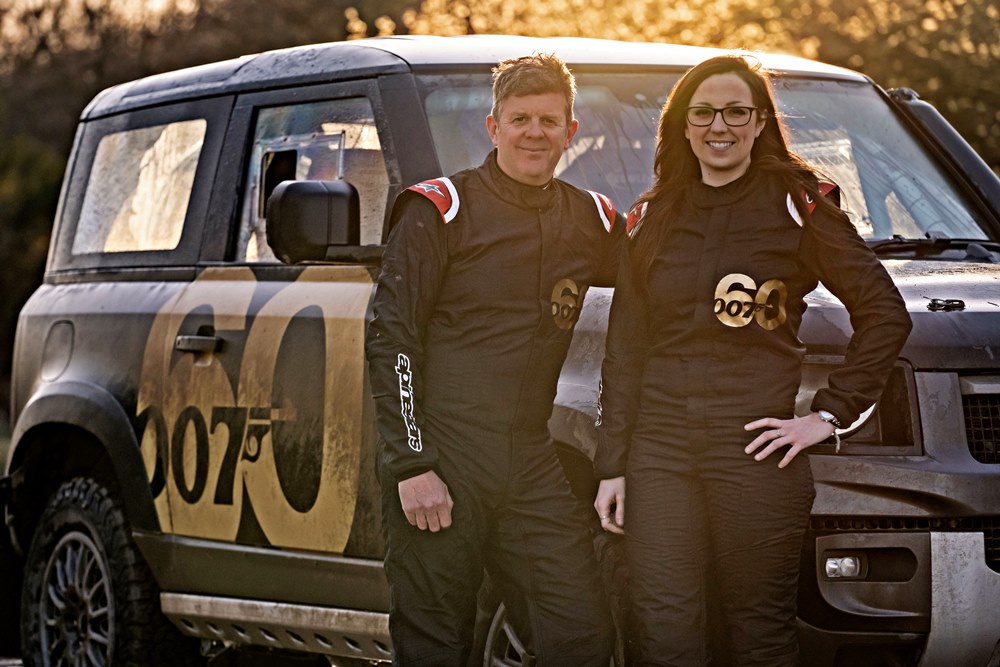
Higgins is not only a 3-time British Rally Champion but has also been a stunt driver in Bond movies. His driving skills were used in ‘Quantum of Solace’, ‘Skyfall’, ‘Spectre’ and ‘No Time to Die’. He will make his return to rallying with co-driver Claire Williams on March 26

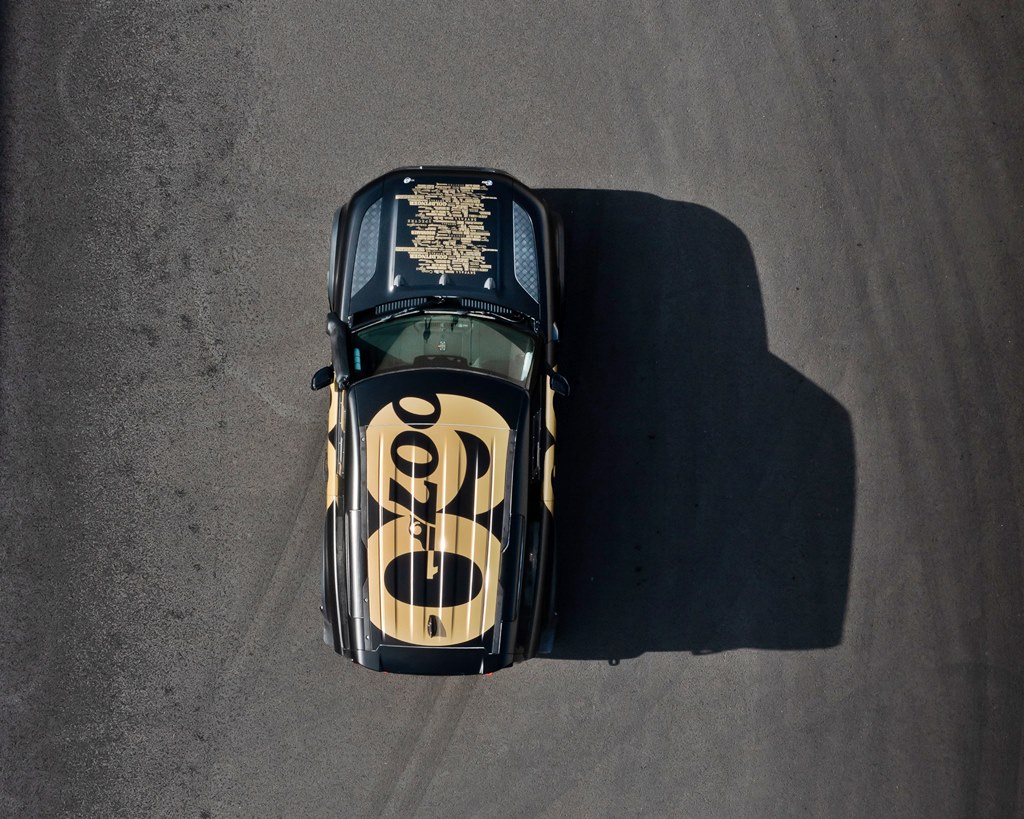
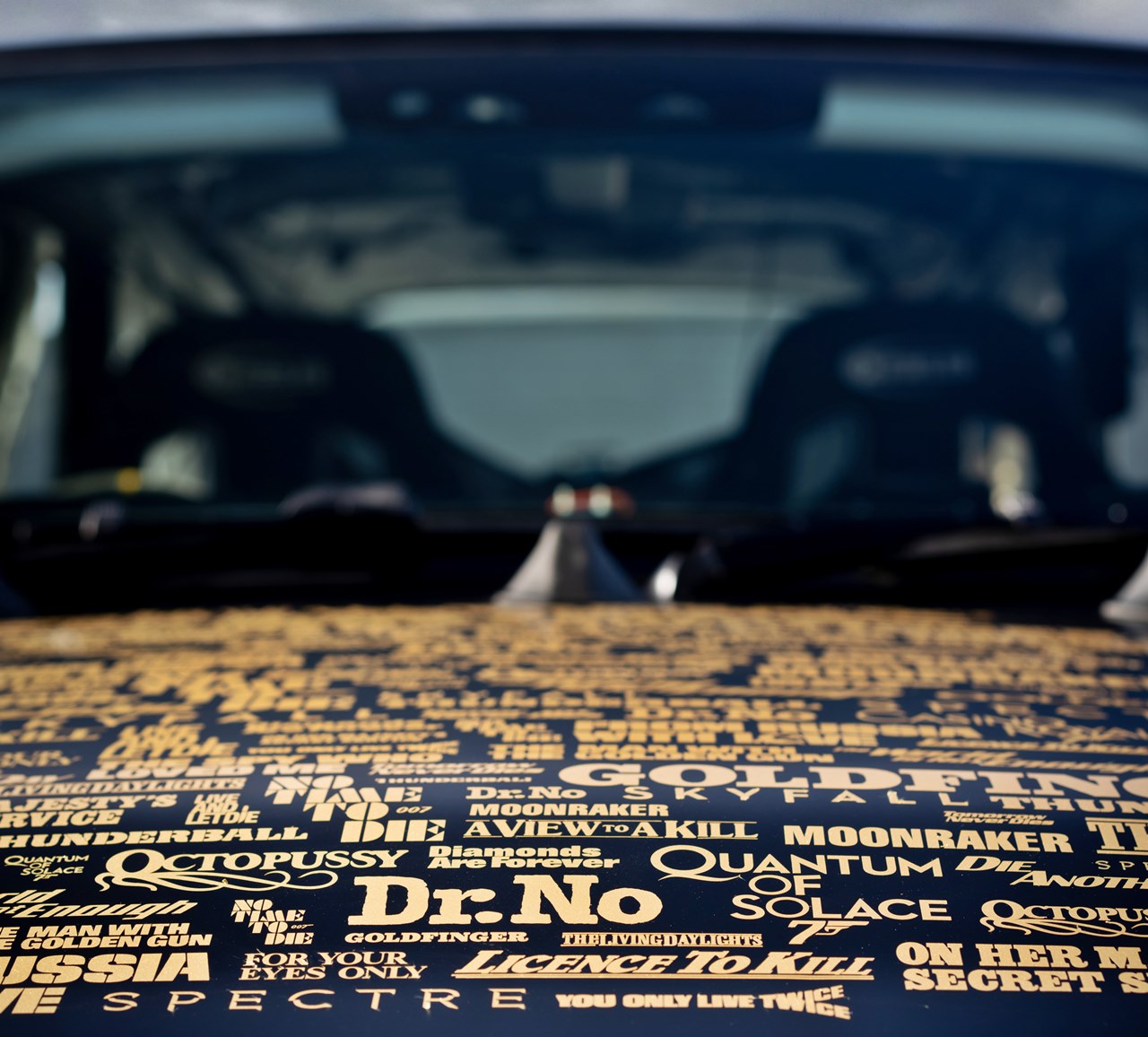
The Defender 90 the duo will use features a trademark black and gold Bond livery. The stealthy looking vehicle, like those in ‘No Time to Die’, also features a special 007 60th logo on its roof and sides.

“The New Defender is a tough and capable vehicle when it leaves the production line and I’ve seen it perform really challenging stunts while on the set of ‘No Time To Die’,” said Higgins. “With the race-ready enhancements made by the Bowler team and with Claire by my side, we are confident we can have a great result.”

The competition-ready Bond Defender is based on a current Defender 90, powered by the P300 Ingenium powertrain. It is equipped with a number of safety modifications, including a full roll-cage, enhanced cooling for the engine and transmission, a sports exhaust and new rear roof spoiler.

Other enhancements include strengthened 18-inch Bowler wheels with all-terrain tyres and a bespoke suspension design with modified subframes, new springs and unique turrets for increased stiffness.

“To celebrate Land Rover’s long-running association with the Bond franchise, our very own special agent will showcase the durability and all-terrain capability of Defender with a nod to its special appearance in ‘No Time To Die’,” said Finbar McFall, Land Rover Brand Director.

Regulated by the Motor Sports Association and operated by Bowler, the 12-team 2022 Bowler Defender Challenge is designed to act as a feeder series for global rally-raid competitions including the annual Dakar rally.

The first time a Land Rover model had a noticeable presence was in ‘Octopussy’ (1983) and it was a Ranger Rover convertible. Thereafter, various models of the 4×4 brand would appear in ‘The Living Daylights’ (Series III/Range Rover), ‘Tomorrow Never Dies’ (Range Rover), Casino Royale (Range Rover Sport), ‘Quantum of Solace’ (Range Rover/Defender 90), Skyfall (Defender), ‘Spectre’ (Defender, Range Rover and Discovery Sport).

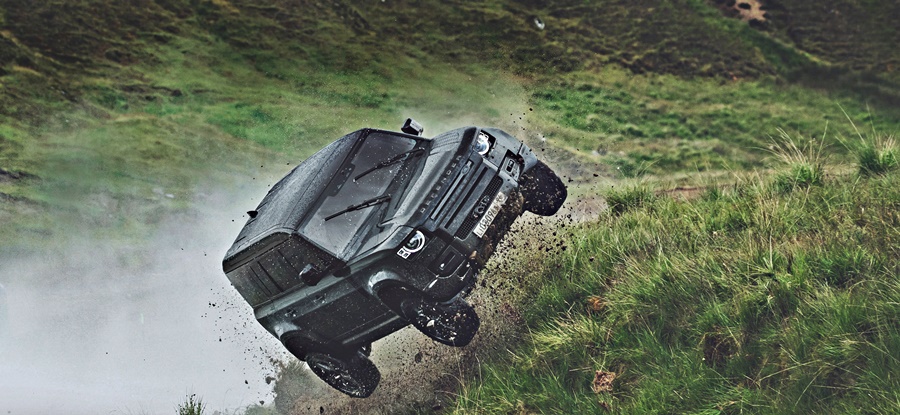
No Time to Die’, the final movie of the Daniel Craig series, saw some spectacular action with the Defenders flying through the air in pursuit of Bond. It was the first movie to have the New Defender which was launched in 2019. Based on the Defender X model in Santorini Black, with darkened skidpans, 20-inch dark finish wheels and professional off-road tyres, they were also the first Defenders to be built at Jaguar Land Rover’s new production facility in Slovakia.

Land Rover Defender in No Time to Die

The New Defender 110 has been available in Malaysia since last year and Jaguar Land Rover Malaysia recently gave a sneak preview of the Defender 90 which is the shorter version with two less doors. To know more about the Defender or to purchase one, visit www.landrover.com.my.

Land Rover’s New Defender is now available in Malaysia, priced from RM798,800

Archive

Follow us on Facebook

Follow us on YouTube