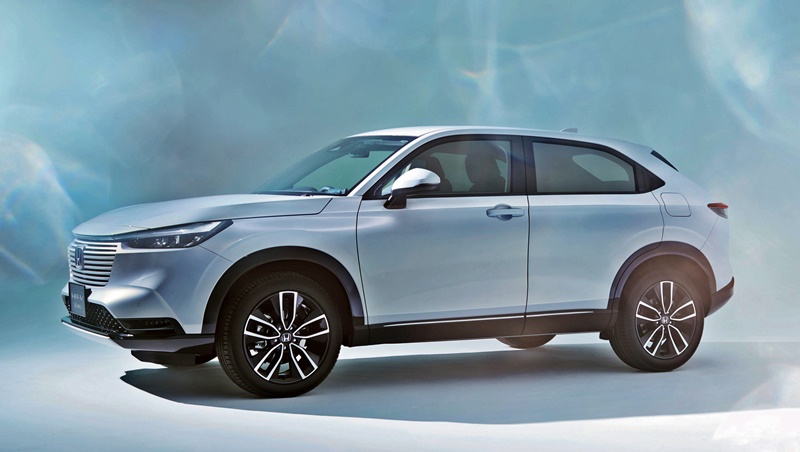
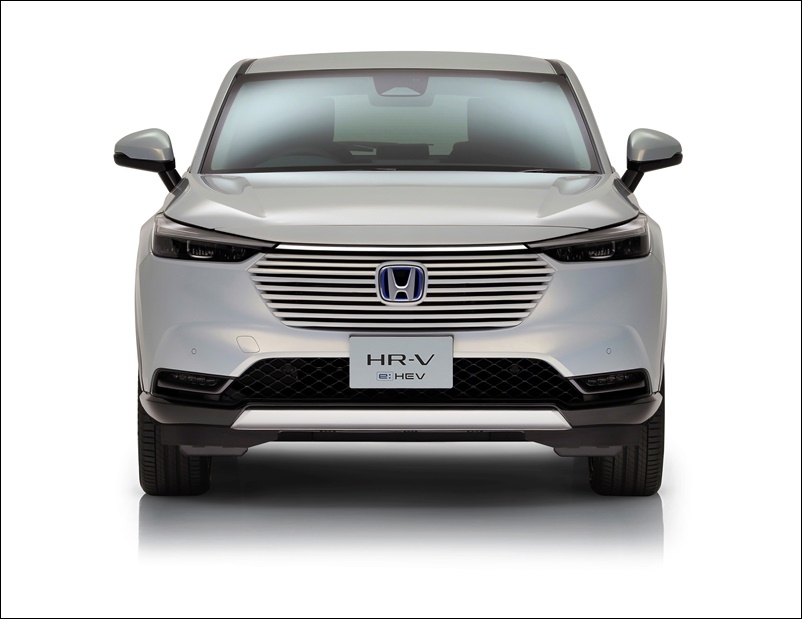
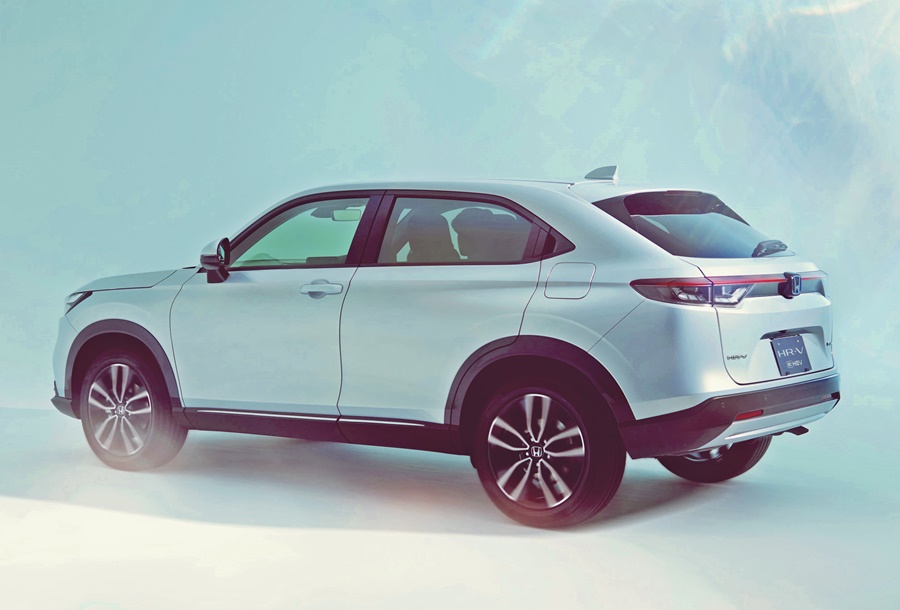
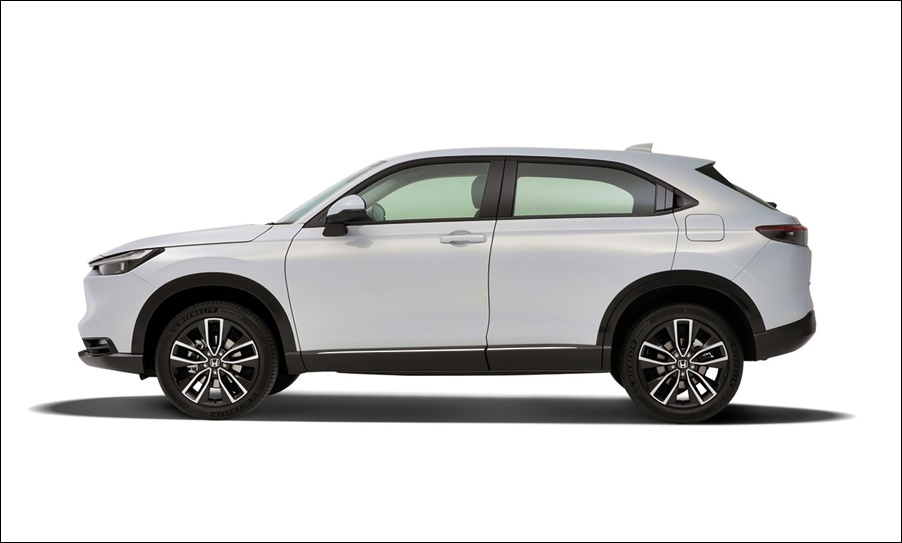
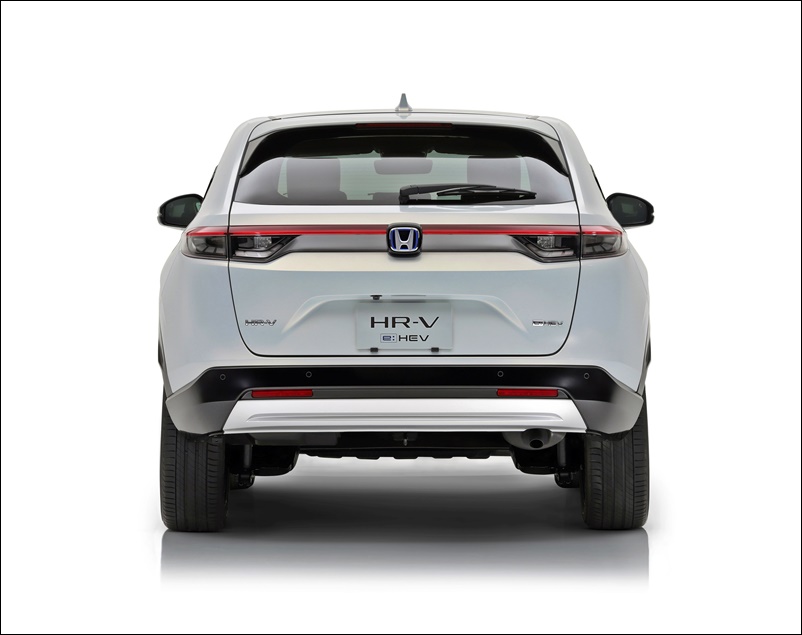
The Honda HR-V (also known as Vezel in Japan and some other markets) was a hit the moment it arrived in showrooms. As always, Honda somehow got it right first time and in just about every market it was launched – including Malaysia – waiting lists quickly built up.
But no matter how good a product is, there comes a time when competitors have new offerings which start to draw customers away. It’s then time to do a model change and that time has come for the HR-V 5 years after the first generation was launched. Actually, to some, it is considered the second generation because there was a HR-V back in the late 1990s, but that was really a different model concept.
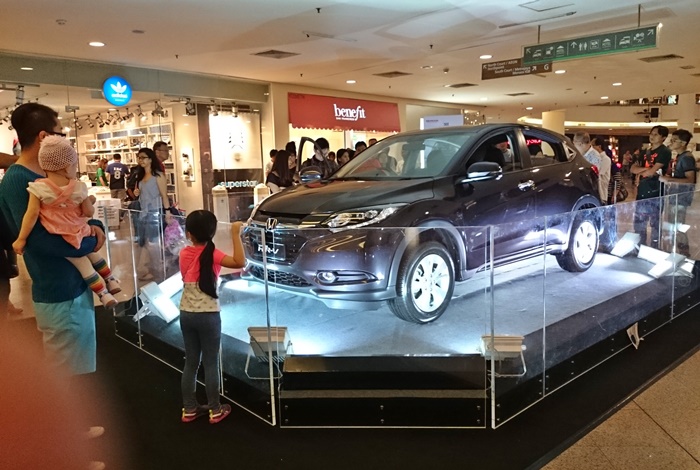
Preview of HR-V prior to its Malaysian launch in 2015 attracted a lot of attention.
Hybrid e:HEV powertrain
This time round, the new HR-V gets Honda’s advanced e:HEV hybrid powertrain as standard in most markets. This powertrain is a 2-motor hybrid powertrain which first appeared in the latest Jazz. Unlike the earlier hybrid systems Honda had, the e:HEV powertrain uses on electric motor as a generator and the other as a propulsion motor.
Specific details of the powertrain for the new HR-V are still not available. While it may be an improved version from that in the Jazz, it still has a 1.5-litre 4-cylinder engine and the system output would probably be around 200 ps.
Cleaner appearance
Honda’s designers have maintained the coupe-inspired profile for the crossover SUV. They aimed for ‘seamless, clean, modern design’ but some may find the overall appearance rather bland compared to the current model. But with car designs, time can sometimes change perceptions and as one designer (not from Honda) once said: “If the design of a new car is a great hit right away, we may have a problem as it can also age quickly”.
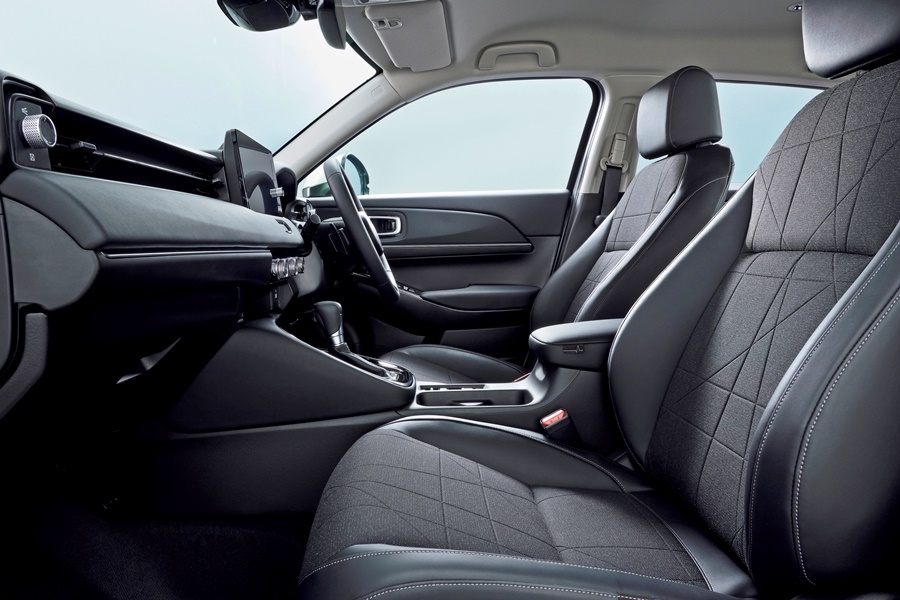
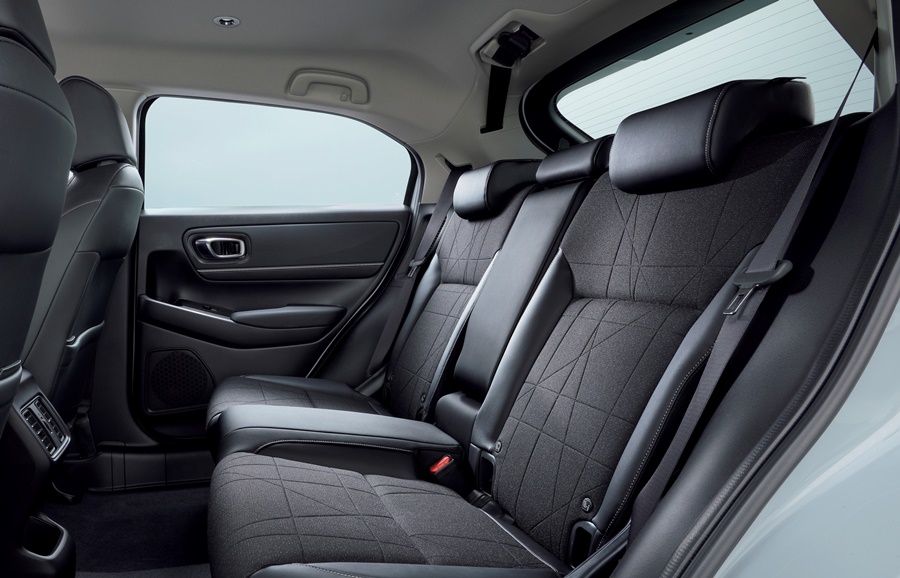
Interior space has also been a strong point of the HR-V, and with this new generation, exceptional spaciousness is claimed. Intelligent packaging of the hybrid powertrain and its components, which include the battery pack, has liberated more usable space in the cabin.
Thanks to Honda’s compact, integrated powertrain technology and centre fuel tank layout, the new HR-V also retains the Magic Seats that more versatility than conventional folding seats.
Premium SUV feel
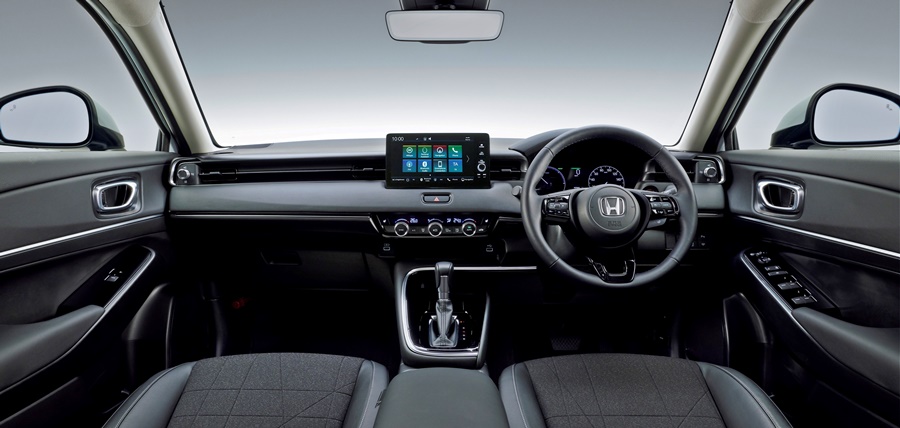
As with the exterior, the interior has a premium SUV feel, but with contemporary fabrics and soft-touch materials. The modern minimalist aesthetic, which is initiated by the horizontal sweep of the instrument panel, is the result of an uncluttered interior and dashboard, with each element carefully positioned to contribute to the sense of space.
The feeling of airiness and space is elevated by a new air diffusion system that creates a curtain of fresh air beside and above passengers, flowing from unique L-shaped vents positioned in the top corners of the dashboard.
The first market that will get the new HR-V will be Japan, from April, with export markets around Asia possibly getting it by mid-year. European markets will have the model in showrooms towards the end of the year. As for Malaysia, a year-end debut might be possible if the supply chain is not disrupted as the model is assembled locally at Honda’s own plant in Melaka.
Prefer the current HR-V? Visit www.honda.com.my to locate an authorised dealer to buy one.
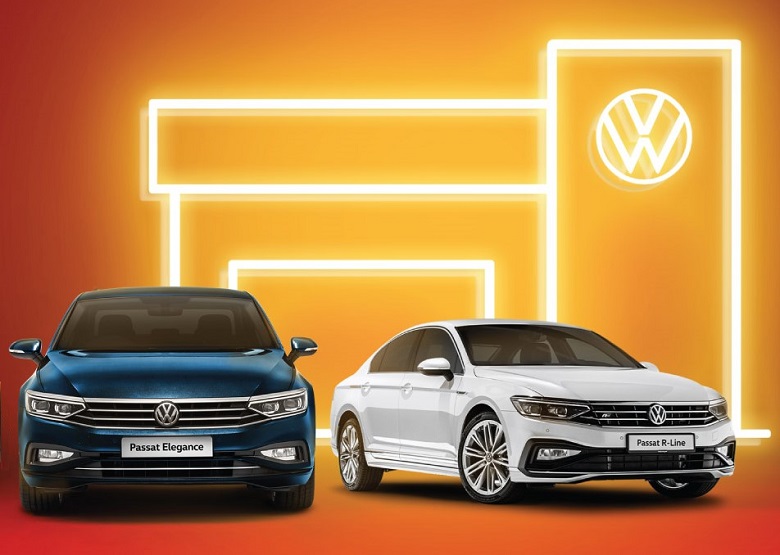
This weekend, on February 20 and 21, Volkswagen dealerships throughout Malaysia will be hosting a virtual Open House from 11 am to 5 pm. During these sessions, there will be sales and aftersales offers to celebrate the Year of the Metal Ox.
Throughout the weekend event, detailed introductions and walkthroughs of various models will be presented online. From the comfort of their homes, viewers can send in their questions and Sales Consultants and Service Advisors will respond via Facebook Live.
Those who confirm the purchase a new Volkswagen using the Volkswagen eShowroom will enjoy ang pao rebates of RM1,000 (selected models), additional 1-year insurance at no extra cost or RM5,500 savings – on top of exclusive online deals.
Passat Elegance and R-Line
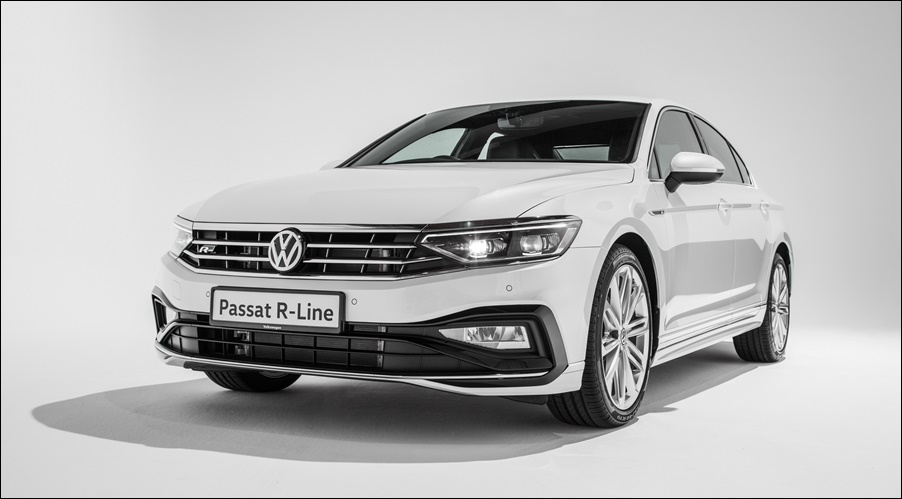
The weekend highlights include the Passat Elegance and Passat R-Line. These models come with a 2.0TSI turbocharged 109 ps/320 Nm petrol engine paired with a 7-speed wet clutch direct shift gearbox (DSG).
Additionally, the Passat R-Line also comes with Dynamic Chassis Control (DCC), with up to 15 selectable increments to suit adjust the driving dynamics to personal preference.
The Passat Elegance is priced from RM181,856 while the Passat R-Line is priced from RM203,411 (with sales tax exemption) and is available with up to RM10,000 in savings.
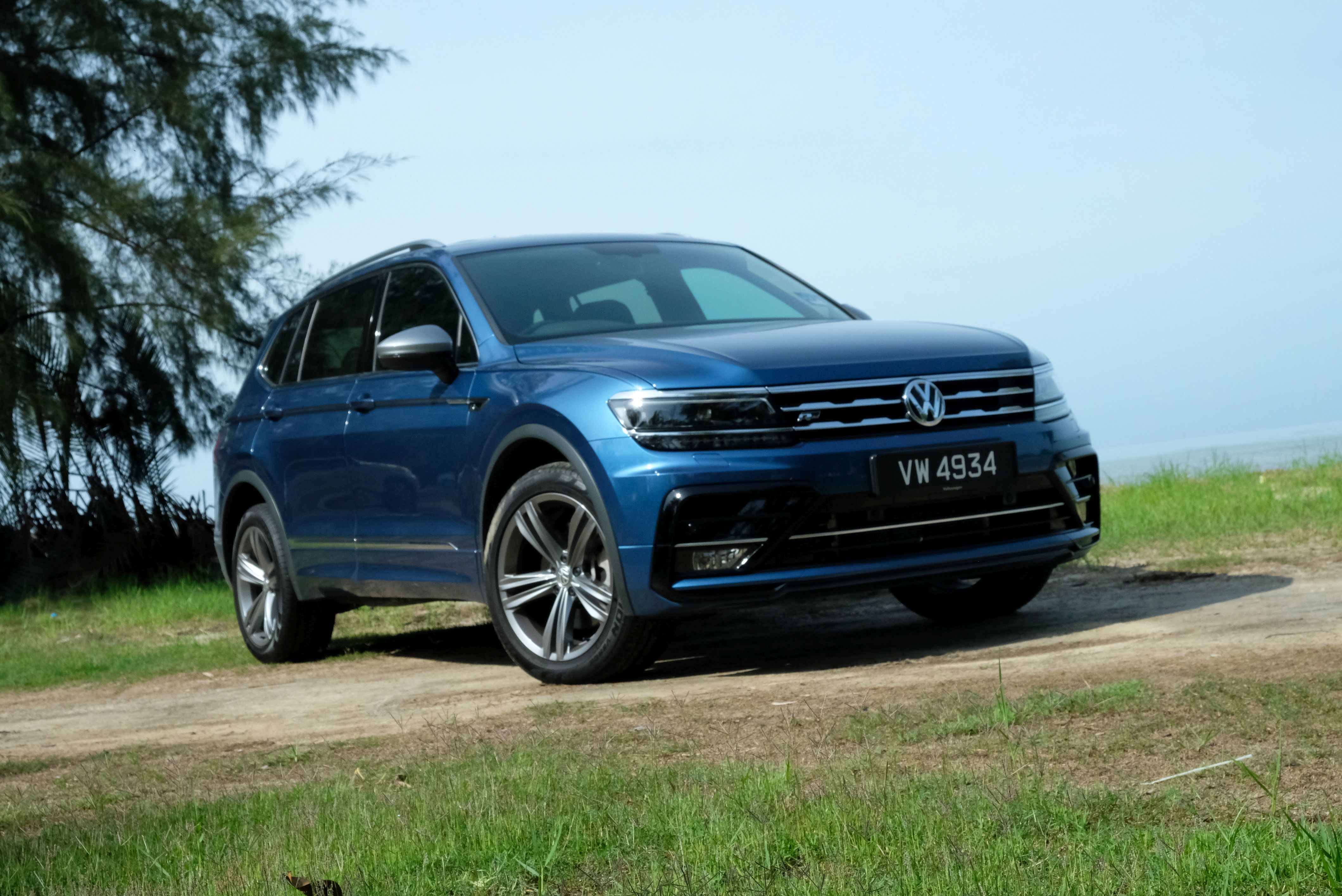
Tiguan Allspace Highline
As for the Tiguan Allspace Highline, this SUV is priced from RM164,430 with the sales tax exemption), and for the 2020 models, there are up to RM8,000 in rebates.
This model comes with a 1.4TSI turbocharged direct injection engine which may seem like a small displacement but produces an impressive 150 ps/250 Nm. The small displacement makes it more fuel efficient, with performance enhanced by a 6-speed wet clutch direct shift gearbox (DSG).
The long wheelbase provides versatility with multiple seat configurations and a massive boot space of 1,775 litres – the best in its segment. The Tiguan Allspace Highline is priced at, and with up to RM8,000 savings on 2020 models.
For owners too
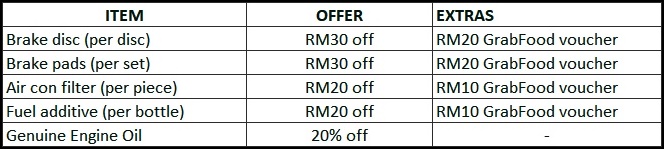
There are also aftersales specials for those who already own a Volkswagen. The following are the offers on parts replacements and genuine engine oil:
Additionally, authorised Volkswagen service centres are offering a complimentary 5-Star Service Check, and up to 20% discount on batteries and tyres. To make a service appointment, click here.
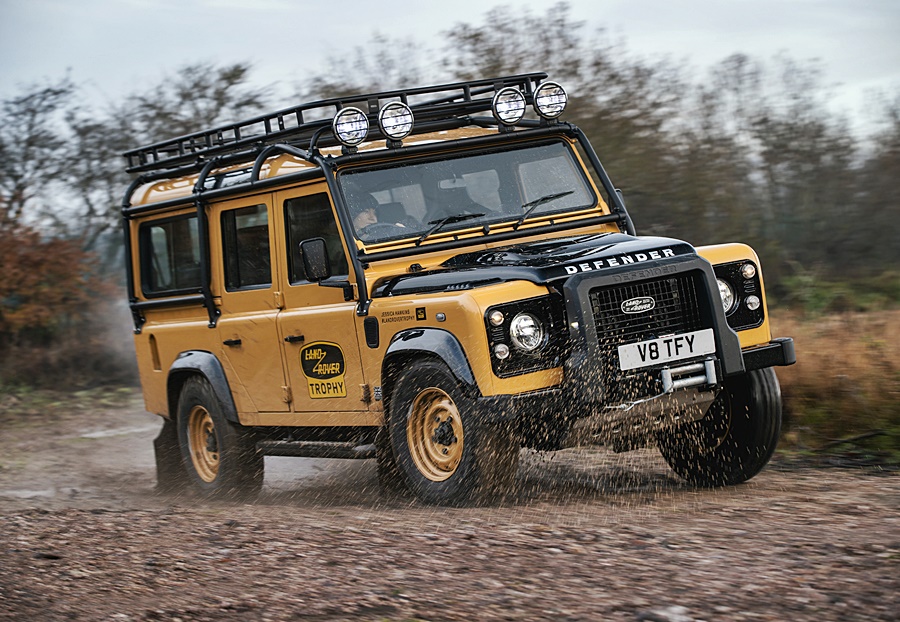
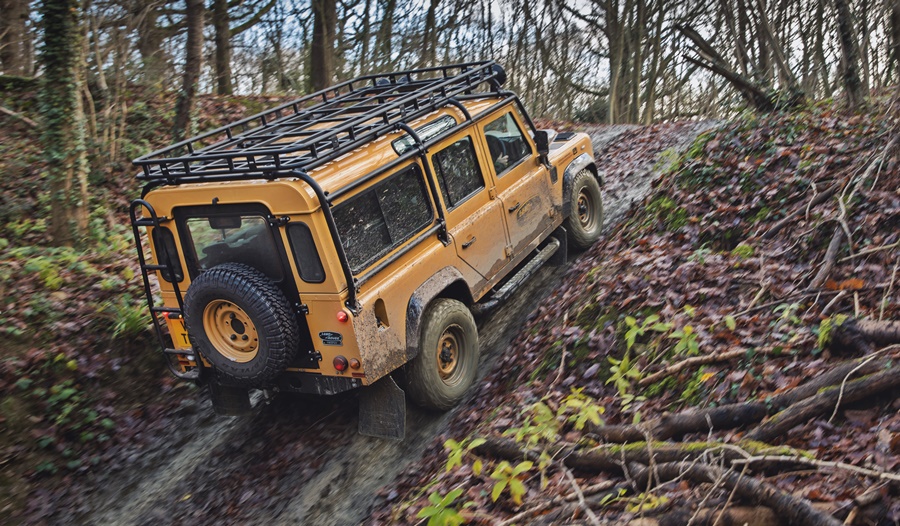
The iconic Defender may have been retired from the Land Rover line but it is not forgotten. Land Rover Classic is now building 25 Defenders for an exclusive competition later this year. The adventure-ready Defender Works V8 Trophy model to be built is a re-engineered vehicle with a 405 ps 5-litre petrol V8 engine and 8-speed ZF automatic transmission.
There will also be a comprehensively uprated suspension, steering and braking packages. Additional all-terrain kit includes a front winch, multi-point expedition cage, roof rack, underbody protection, A-bar, raised air intake, LED spotlights and mud-terrain tyres.
Two body designs with personalisation
Prices start from £195,000 (about RM1.1 million) and there’s a choice of 90 and 110 Station Wagon body designs available, finished in unique Eastnor Yellow paintwork with Narvik Black details and body-colour heavy-duty steel wheels. The purpose-built vehicles also receive LED headlamps, a Heritage front grille, unique Land Rover Trophy badging and event participation graphics personalised to each customer, including their name and country flags.
Additional all-terrain equipment includes front winch, multi-point expedition cage, roof rack, underbody protection, A-bar, raised air intake, spotlights and mud-terrain tyres
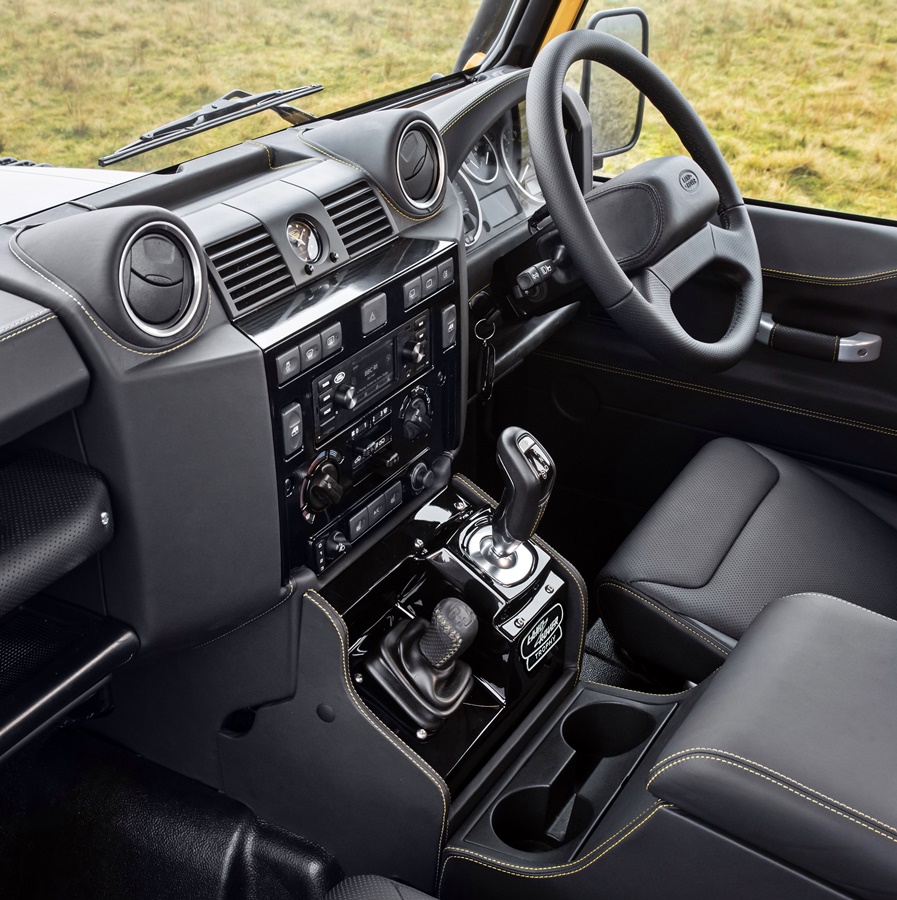
The cabin has full black Windsor leather trim with Recaro sports seats featuring contrasting yellow stitch detailing, plus Land Rover Trophy clock face by Elliot Brown. Land Rover Classic’s own Classic Infotainment System with integrated navigation and mobile device connectivity is also fitted.
Competition at spiritual testing ground of Land Rover
All customers of the limited edition model will be invited to compete in an exclusive 3-day adventure at Eastnor Castle in England. This is the spiritual home of Land Rover testing and development where its vehicles have demonstrated their superior off-road capabilities for decades. It will be the first time the customers will get to drive their vehicles.
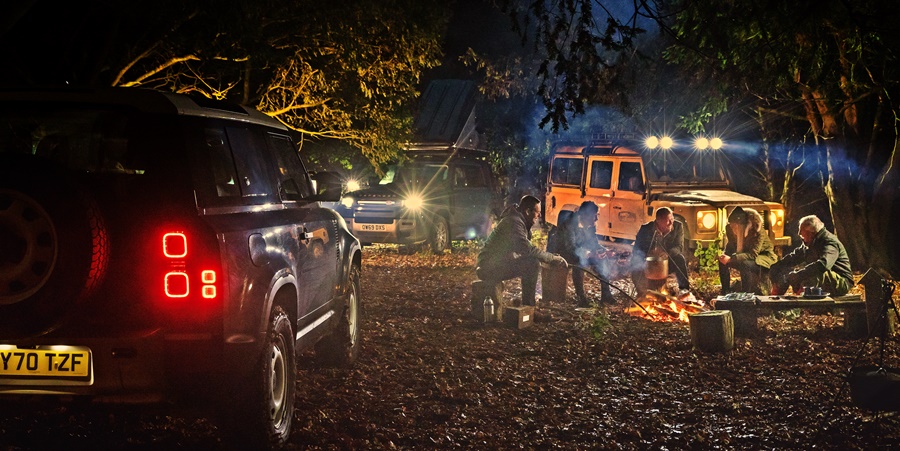
With this concept, customers can create their own stories, ‘battle scars’ and patina with their Works V8 Trophy vehicles from day one, fuelling campfire chats with like-minded enthusiasts. Expert one-to-one tuition will also be provided as part of the adventure, giving customers a unique opportunity to develop extreme driving techniques and skills in their own vehicle, before putting their training to the test. Everyone will compete for a range of prizes, including a Grand Prize for the overall winner (to be announced later in 2021).
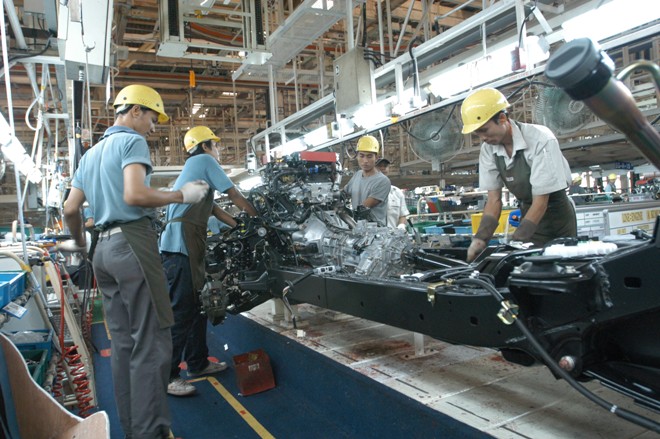
18 years ago, Toyota began a massive global project to develop the Innovative International Multi-purpose Vehicle of ‘IMV’ as it was referred to internally. The IMV project was not just about new models but more importantly, about moving production of those vehicles entirely outside Japan. It was believed to be the second most expensive project in the company’s history, after the Lexus project.
The result was the establishment of production hubs in major regions to product three models that shared platforms. They were the Hilux, Innova and Fortuner, rugged products for use on as well as off the highways of the world. While the Hilux was an established model, the Innova and Fortuner were new, targeting the MPV and SUV markets, respectively. The Fortuner, in particular, was intended to take over from the Land Cruiser which had become more sophisticated and more expensive. All three models were launched during 2004/2005 and in countries like Malaysia, they were also assembled locally.
Toyota IMV production in Indonesia.
The IMV project was a success, allowing Toyota to produce more vehicles outside Japan where labour cost structures were different, and more specific products could be developed for emerging markets.
While the longer history of the Hilux means it is already in its eighth generation now, the Innova and Fortuner are in just their second generation and with the first generation having been produced for around 10 years, it is now about halfway through the product cycle (if Toyota maintains the same length of time for the models).
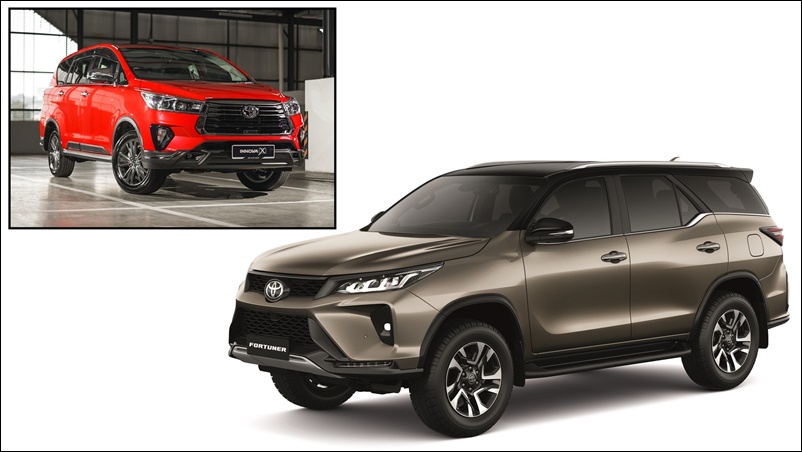
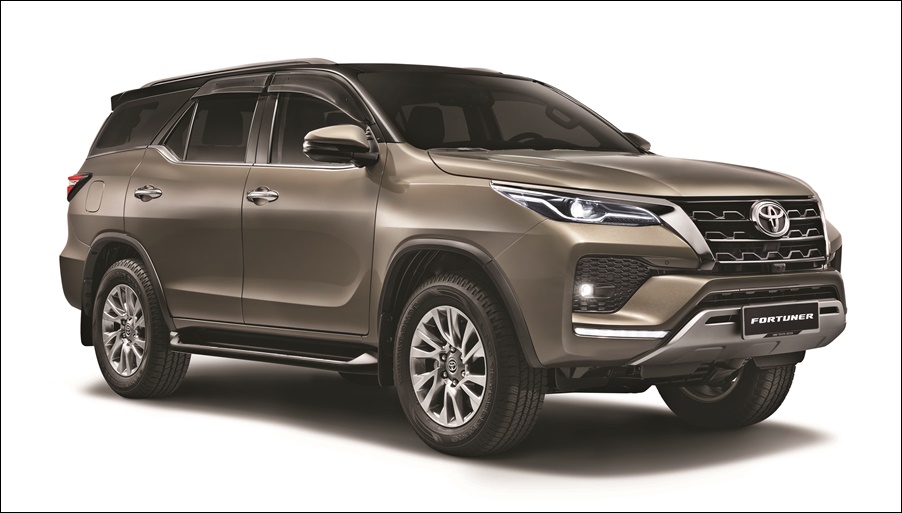
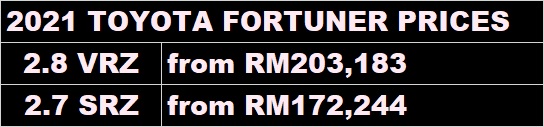
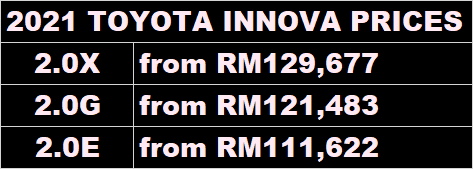
This is when the facelift and updates are made and UMW Toyota Motor has launched both the 2021 models with updates today. The Fortuner is available in two variants with turbodiesel and petrol engines and all three have automatic transmissions. The Innova is available in three variants, all with a 2-litre petrol engine and automatic transmission only. As with most of the models offered by UMW Toyota Motor, the new Innova and Fortuner come with a 5-year/unlimited mileage warranty.
2021 TOYOTA FORTUNER
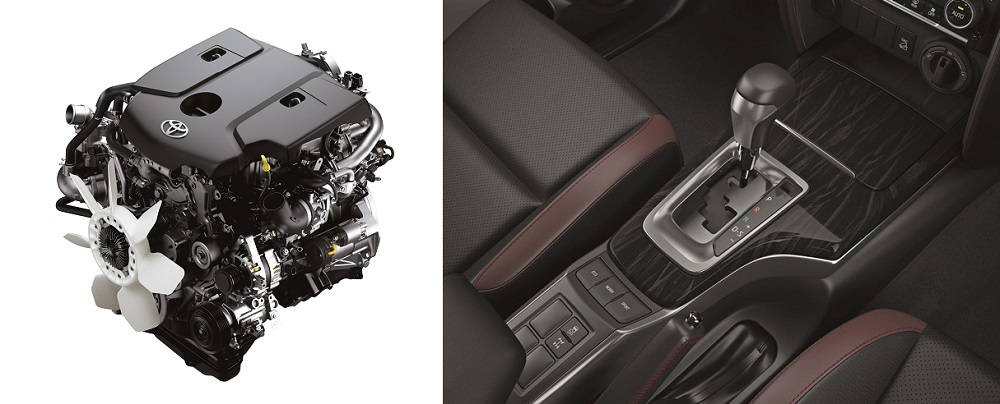
New to the Fortuner range is the Fortuner 2.8 VRZ 4×4 A/T which replaces the Fortuner 2.4 VRZ offered previously. It is powered by a 2.8-litre 4-cylinder common-rail diesel engine (1GD-FTV) which produces 204 ps/500 Nm. A balance shaft reduces vibrations and lowers noise levels while high efficiency is achieved with the electronically-controlled common rail injection system that can deliver fuel at a maximum pressure of up to 250 MPa.
The 6-speed electronic automatic transmission delivers power through a part-time 4×4 drivetrain to all 4 wheels. Like the traditional SUVs, there are High and Low ranges for more capability off-road. The ranges can be easily selected with a rotary knob, unlike the old days when a second lever had to be operated and the vehicle had also to be stopped.
For stability enhancement, the drivetrain has Active Traction Control (A-TRC). New for 2021 is an Auto Limited Slip Differential (LSD). This is very useful in the most difficult conditions and uses the traction control system to control braking when one of the rear wheels start to spin. It allows engine power to be maintained and power is directed to the wheel with better traction.
The Fortuner also comes with Variable Flow Control (VFC) Power Steering, which helps to improve fuel economy by reducing the power steering pump consumption torque. Toyota’s engineers have enhanced the steering feeling to achieve natural handling that matches the speed. For the Fortuner 2.8 VRZ, there is also a SPORT mode which enhances the power steering for responsiveness.
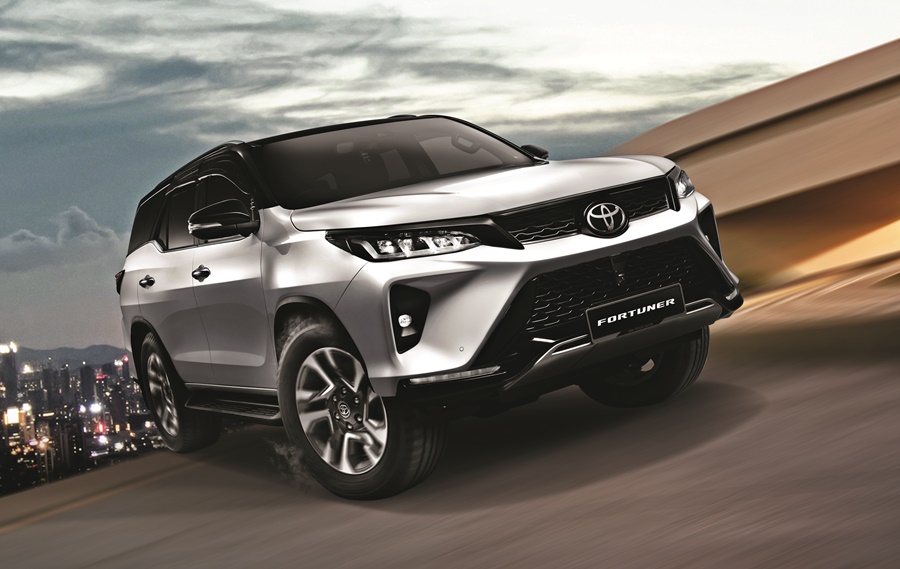
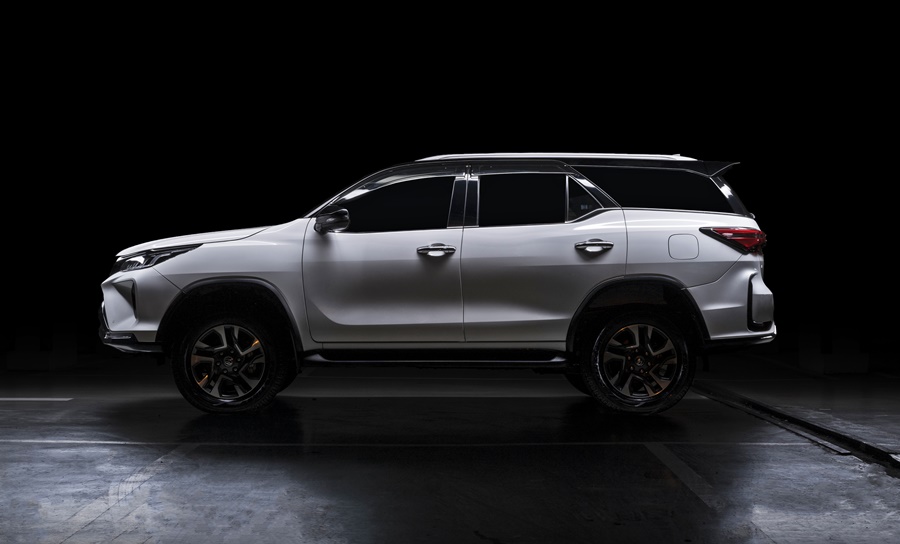
Giving the Fortuner 2.8 VRZ additional distinctiveness, the roof, A-pillars, wing mirrors and roof-mounted rear spoiler are finished in black. It comes with Quad LED headlamps that flank a mesh-type front grille. The other lighting units have also been restyled while the front and rear bumpers have a new design. The skidplate below the front end is also new, emphasizing ruggedness.
A new body colour – Bronze Mica Metallic – with a Black Roof is available exclusively for this new variant which is the flagship of the range. The Black Roof is also available with the Super White II exterior colour only for this variant.
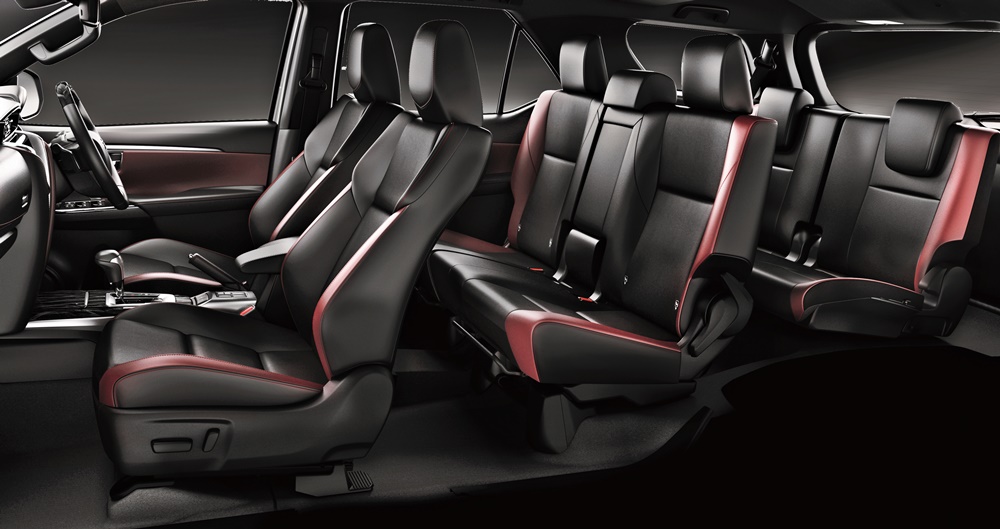
The Fortuner is a midsize SUV (large to some) and has 3 rows of seats. This generation has been made more premium in look and feel and for 2021, the interior trim has a new design and colour while the seat upholstery also has a new design.
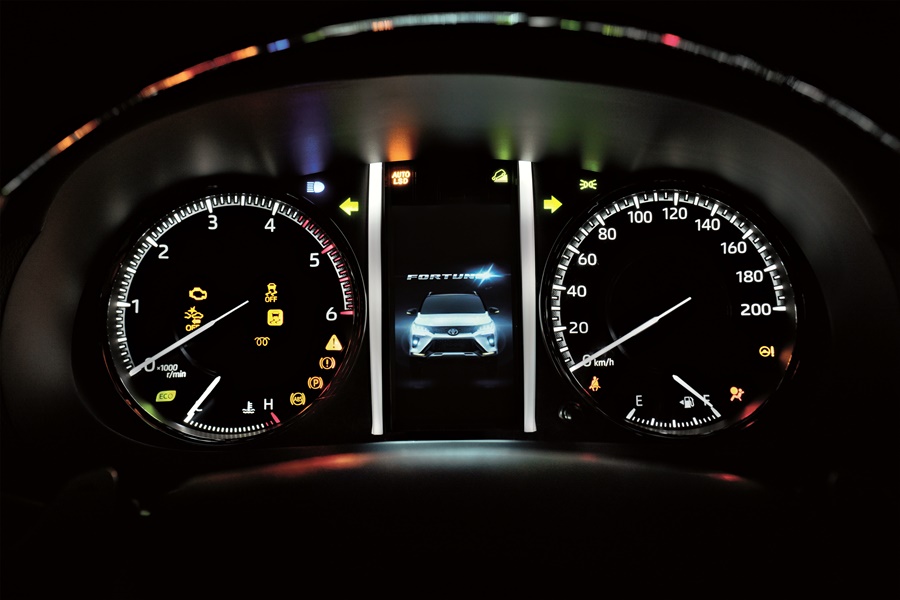
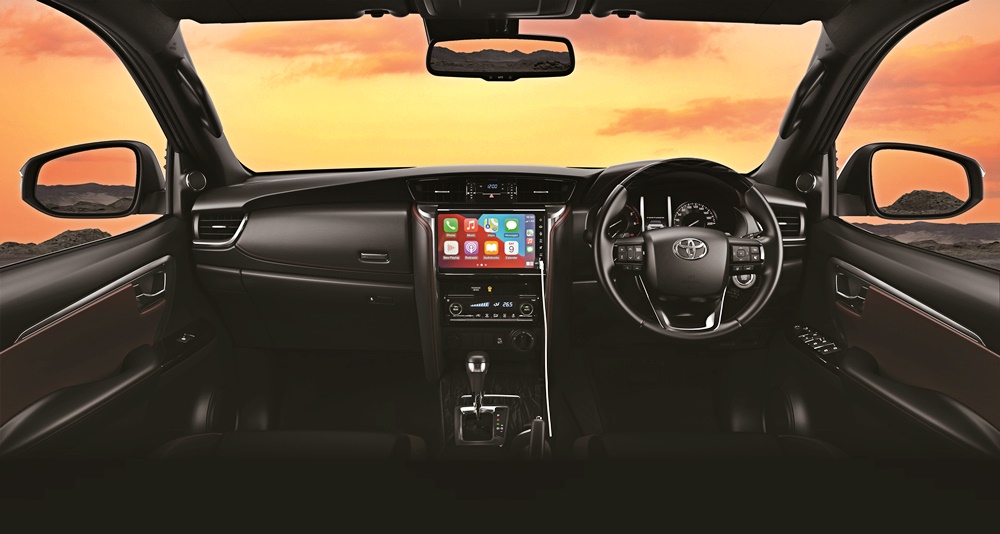
The instrument panel features a revised Multi Information Display (MID) opening animation. Ambient illumination is provided to add a touch of class at night, while the key cover has been redesigned. Convenience and comfort features include LED Interior Lamps, Electrochromic Rearview Mirror (to eliminate dazzle) and 8-way power adjustment for the front seats. USB charging ports are also available for powering or recharging personal electronic devices.
At the time of purchase, customers can also include options such as Wireless Charger (new), Kick Sensor-Powered Rear Door (new), Roof-mounted Monitor and Rear Digital Video Recorder.
In line with Toyota’s efforts to reduce road accidents, the latest model comes with Toyota Safety Sense (TSS). This is an integrated suite of active safety systems which make use of a camera and radar to monitor and detect other vehicles, and to take appropriate action to prevent an accident.
TSS, though available in many Toyota models today, has different elements and for the Fortuner, it comes with Pre collision System (PCS), Lane Departure Alert (LDA) and Dynamic Radar Cruise Control (DRCC) and Yaw Assist Function. Unlike the TSS in passenger vehicles, the system in the Fortuner (as well as Hilux) has a Yaw Assist Function. This activates when lane departure is detected, and additional braking force applied to the inner wheels to direct the vehicle back into the proper lane position. The systems are also calibrated taking into account the usage conditions.
2021 TOYOTA INNOVA
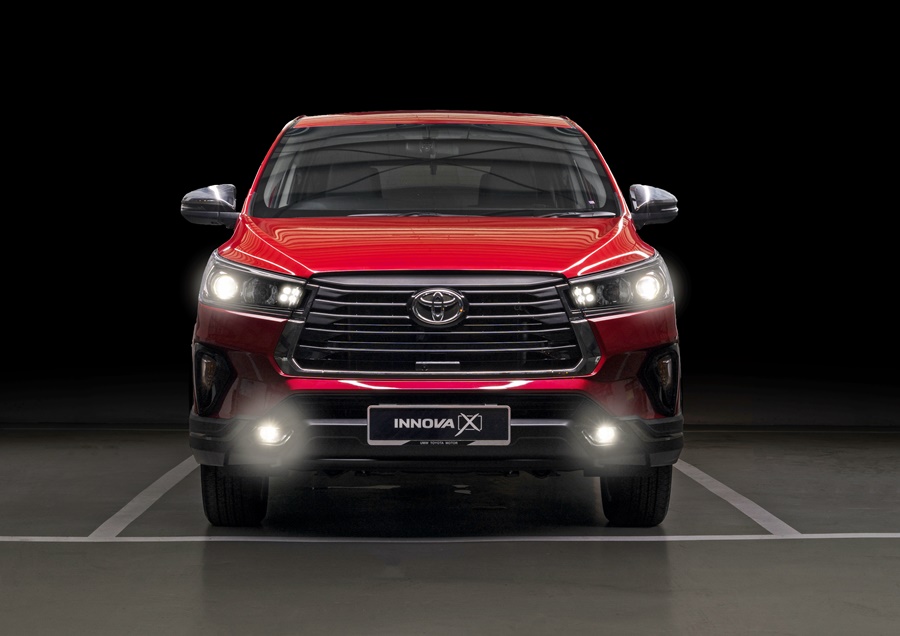
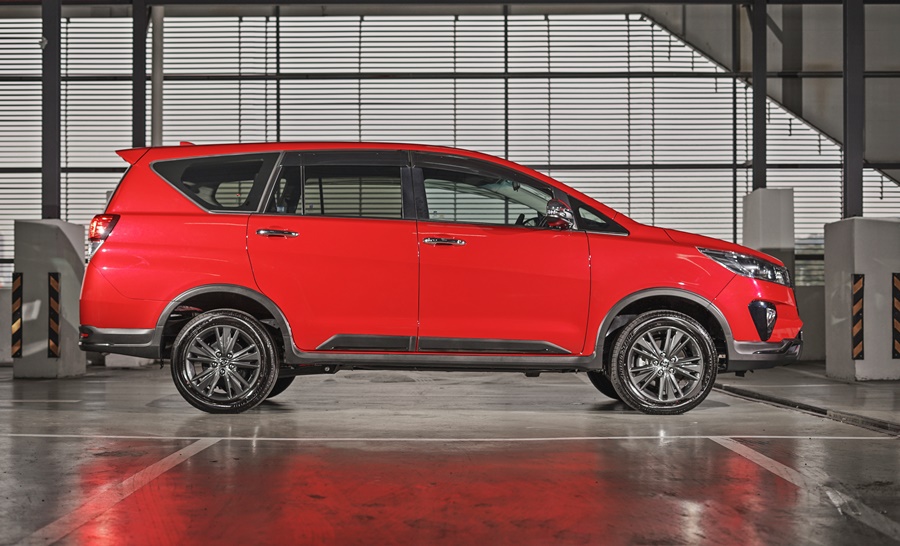
The 2021 Innova range has updated styling and features as well as additional safety systems being made standard. Subtle changes give a more refined and prestigious look for the 2021 model. The grille has a chrome and black theme while the door mirrors have chrome housings for a touch of class. The foglamps and foglamp bezels have also been redesigned and contribute to giving a bolder appearance.
At the rear, the garnish on the back door has been restyled to visually widen the vehicle, while the roof spoiler (only for the Innova 2.0X) has been slightly reprofiled for aerodynamic improvements.
An Enhancement Package is included with the flagship Innova 2.0X. This package has a new design for wheelarch mouldings for protecting the bodywork, new bodyside mouldings and redesigned side skirts that add a sporty touch.
Both the Innova 2.0X and Innova 2.0G come with Optitron meters (originally developed for Lexus models) in the instrument panel which provide bright and clear displays in all lighting conditions. Between the meters is a 4.2-inch full colour Multi Information Display (MID) that keeps the driver informed of fuel consumption and range available with the remaining fuel in the tank.
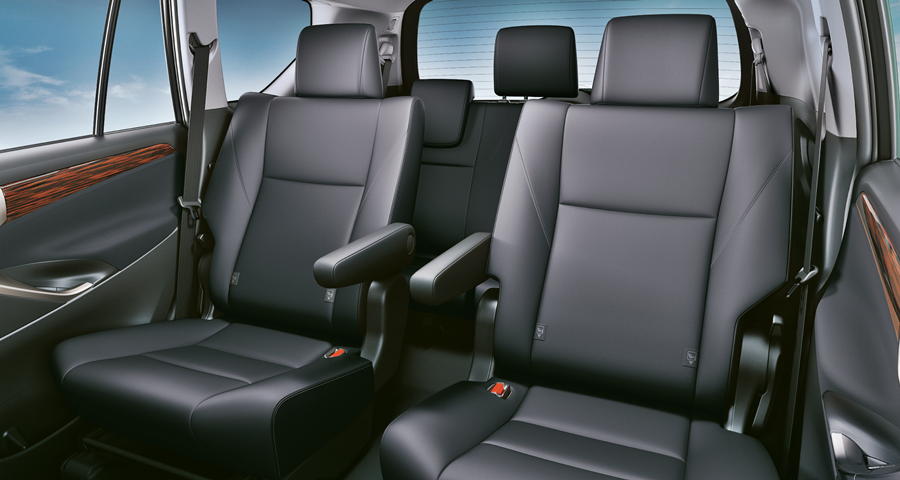
Captain’s seats available only with Innova 2.0X
Responding to customer feedback, extra charging ports have been added. The front 2 USB ports have been repositioned in the dashboard from the centre console and additional USB ports has been provided for those in the third row of seats. All the ports have Fast Charging capability for compatible smartphones and other portable devices. Additionally, a wireless charging pad in the centre console is also available as an option for all variants.
For 2021, additional features have been added to give the driver greater awareness of the surroundings to improve safety. The first is the Blind Spot Monitor with Rear Cross Traffic Alert, standard for the Innova 2.0X and 2.0G and optional for the Innova 2.0E. The systems use sensors on the body and bumpers to detect other vehicles in the blind spot or approaching from either side during reversing out of a parking bay.
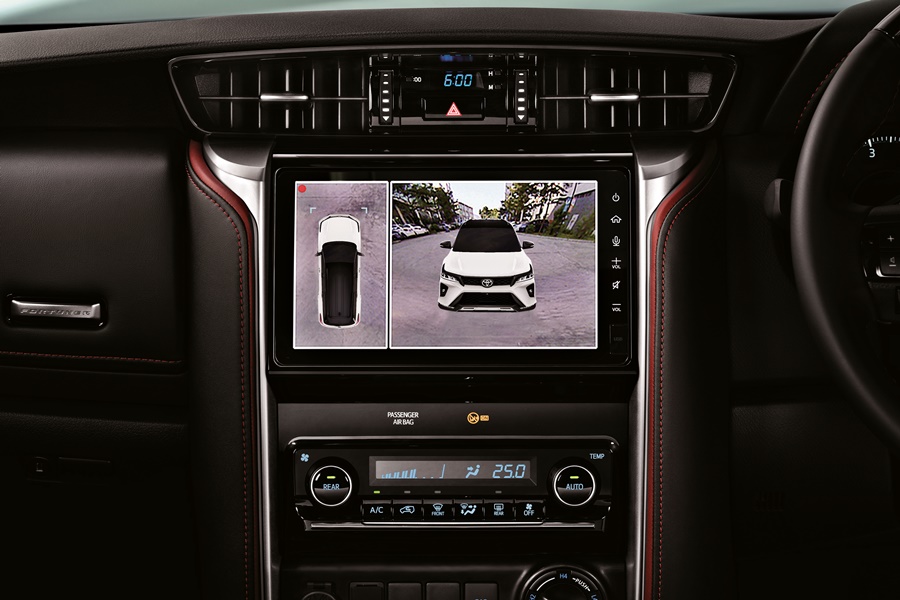
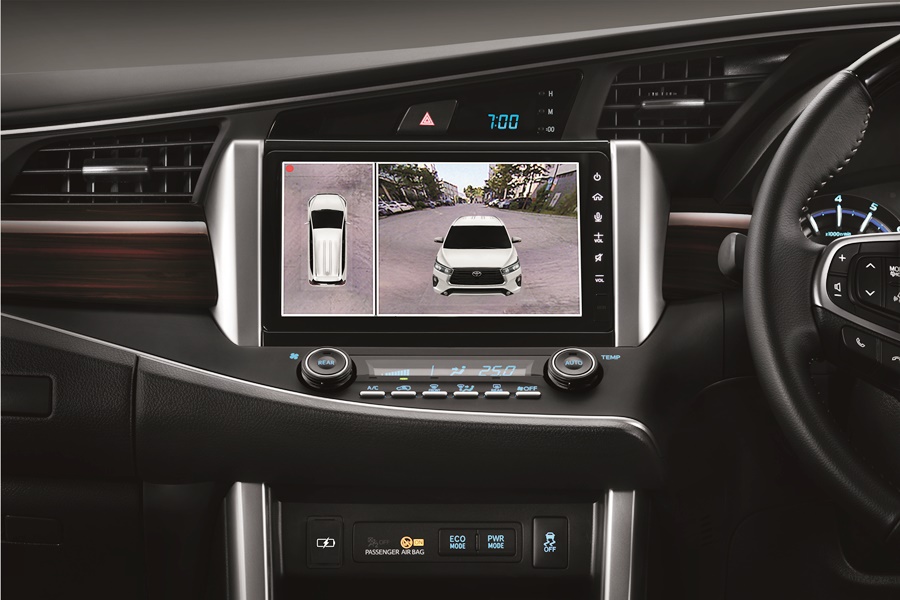
Also provided as standard for the Innova 2.0X and 2.0G is the Panoramic View Monitor. This uses cameras around the bodywork to capture a 360-degree view around the vehicle. The driver can view the surroundings (with selectable views) and spot hazards to avoid. The PVM is especially useful when parking in narrow or tight parking spaces.
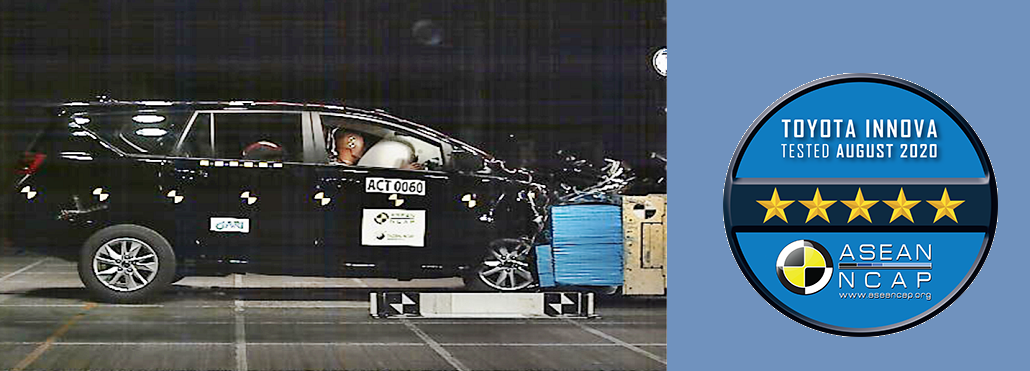
All variants are fitted with 7 SRS airbags and every one of the occupants on all three rows has a 3-point auto-retracting seatbelt. All variants also have ABS with Electronic Brakeforce Distribution and Brake Assist, as well as Vehicle Stability Control and Hill-start Assist Control. The extensive standard safety systems are provided as standard across the Innova range which has received the maximum 5-star ASEAN NCAP rating.
Besides the standard electronic security system, UMWT now installs a Toyota Vehicle Telematics System (VTS) as standard in the Innova 2.0X and 2.0G. This system can track the vehicle’s movements using GPS and GSM technology. If the vehicle is stolen, the VTS Command Centre can determine its location and inform relevant authorities to make recovery faster.
The Innova’s proven 2-litre DOHC 16-valve 4-cylinder VVT-i petrol engine produces 139 ps/183 Nm which goes through a 6-speed Super ECT electronic automatic transmission.
Visit www.toyota.com.my to locate a showroom in Malaysia to view and test-drive the latest Innova and Fortuner.
Like Renault, Skoda also sees much potential in the Indian market. The Czech carmaker has had a presence there since the 1930s and established its own subsidiary there in 2001. Currently, it has two factories and also R&D facilities.
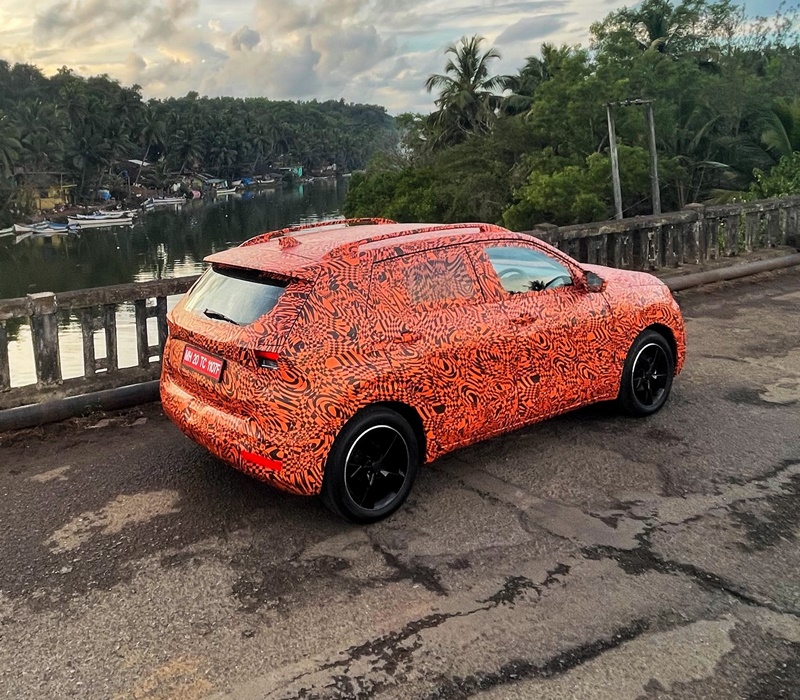
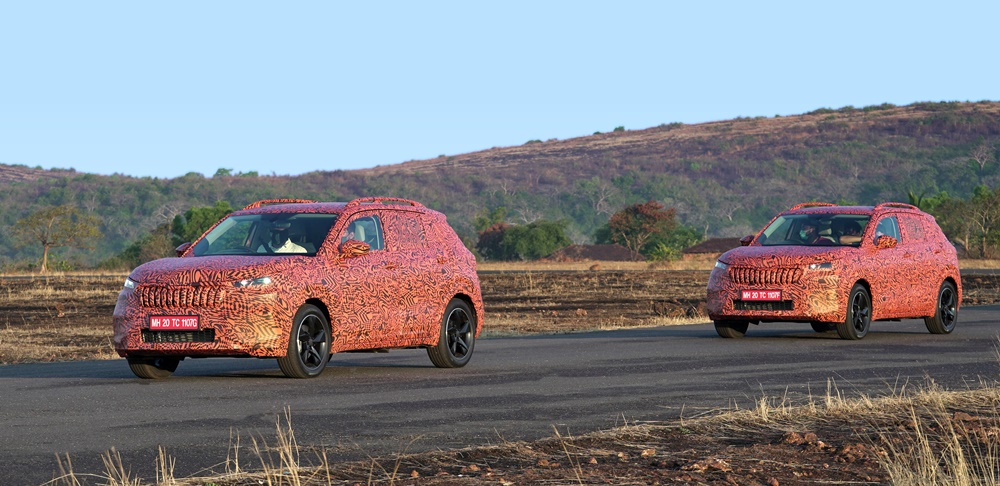
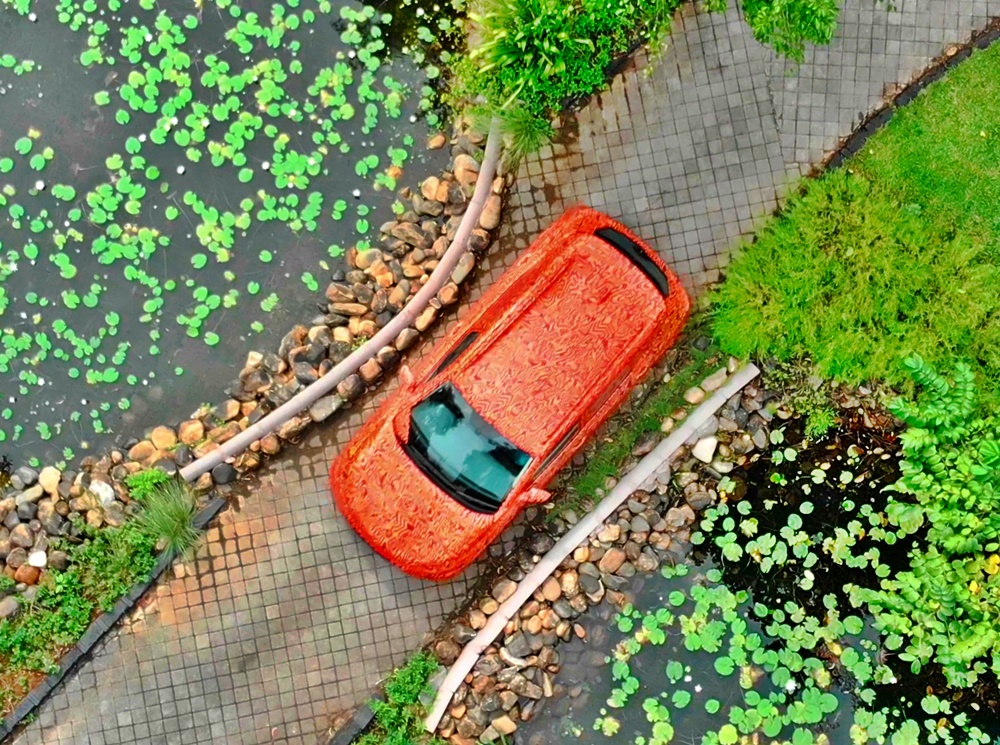
The Skoda model line, consisting of the Rapid, Octavia, Superb, Kodiaq and Karoq, covers many segments and will soon be joined by a new model, the Kushaq. Unveiled recently, the new midsize SUV is the Czech brand’s first production model that is based on the MQB-A0-IN platform. This is a variant of the MQB variant specially adapted by Skoda for India that will also be used for other Volkswagen Group models sold in the Indian market.
The MQB-A0-IN platform
The locally-developed MQB-A0-IN platform has been designed to meet the new, stricter safety and emission requirements for India. Plans call for a localization level of 95% for the new vehicles, with technical development taking place at the Pune technology centre, which opened in January 2019. A team of 250 local engineers played a major role in the development of the MQB-A0-IN platform.
According to Thomas Schafer, CEO of Skoda Auto, the Kushaq is the first of 4 new mid-size Skoda and Volkswagen models. With the launch of the Kushaq in March 2021, Skoda will enter the subcontinent’s rapidly growing midsize SUV segment for the first time. The SUV has been specially developed for India’s metropolises.
Said to have a striking design, its long wheelbase of 2651 mm offers a generous amount of space within for 5 occupants and their cargo. The elevated seating position typical of an SUV allows for excellent all-round visibility. The state-of-the-art infotainment systems come with a central touchscreen, and for pleasant interior temperature, an automatic Climatronic air-conditioning system can be specified.
Two engine choices
Customers will have a choice of two power units – 1-litre or 1.5‑litre TSI petrol engines – which power the front wheels only (all-wheel drive is not available). There will be a choice of either a 6-speed manual gearbox, 6-speed automatic transmission, or a 7-speed DSG, depending on the variant.
The Kushaq will have many active and passive safety as well as numerous driver assistance systems. Occupants will be protected by up to 6 airbags while ESC will prevent the SUV from spinning out of control. Skoda will also provide Hill-Hold Control for use on slopes and rain and light sensors which will automatically activate the wipers and headlights. A tyre pressure monitor will also be available in some variants.
“The introduction of the all-new Skoda Kushaq is the first of several launches as part of the INDIA 2.0 project. Developed in India with the sophisticated, demanding consumer requirements in mind, the forthcoming launches of models based on the India-specific MQB A0-IN platform is something we’re very proud of. The Skoda Kushaq has been built using extensive on-ground intelligence and has been localised to offer tremendous value without any compromise in our legendary quality,” said Gurpratap Boparai, MD of Skoda Auto Volkswagen India Private Limited.
In spite of the hugely challenging conditions last year, Renault continued to improve its business in India, giving it confidence to accelerate expansion plans and double our annual sales volumes over the next couple of years. The market has remained strong in the French carmaker’s Africa-Middle-East-India-Pacific market, accounting for about 20% of sales.
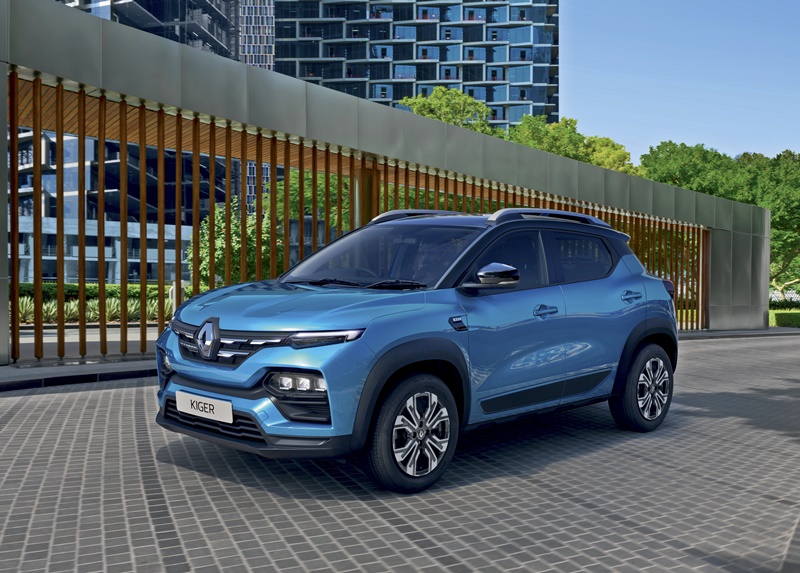
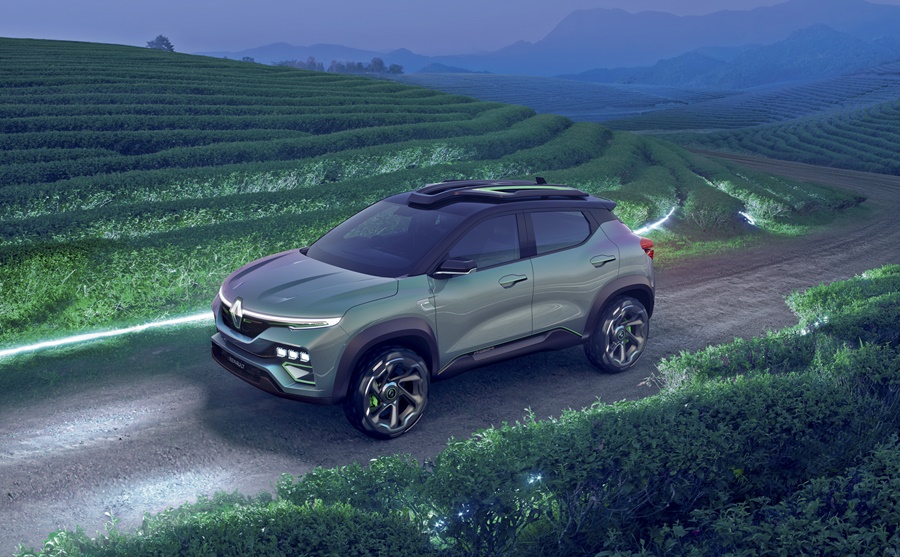
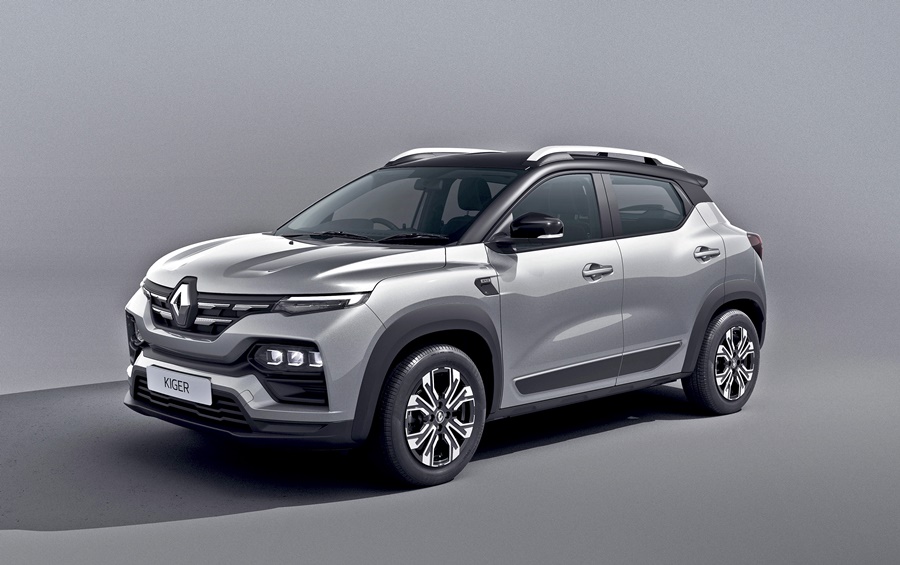
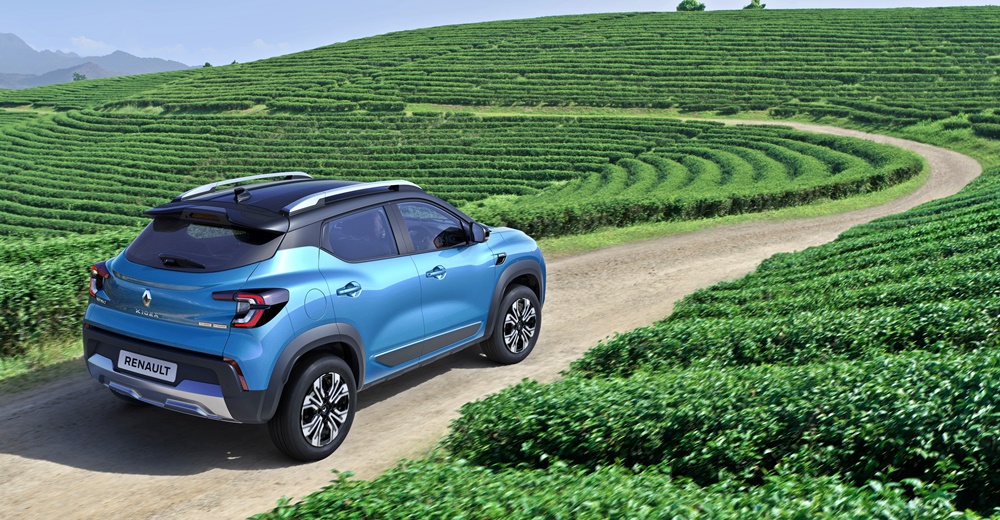
The push forward today gained an additional offering for the Renault range for the sub-continent with the unveiling of the new Kiger SUV. The concept model was shown late last year and the production version looks very similar; in fact, Renault already said that around 80% of what was in the concept would be retained in the production model.
Renault Kiger concept shown last year, and the production model (below)
Follows concept model styling
The designers have given the Kiger several features to add sportiness. The front grille’s 3D graphic finish with honeycomb-shaped chromed effects is an example, while the aluminium finish skidplate is a highlight at the rear, along with the LED double C-shaped lighting signature.
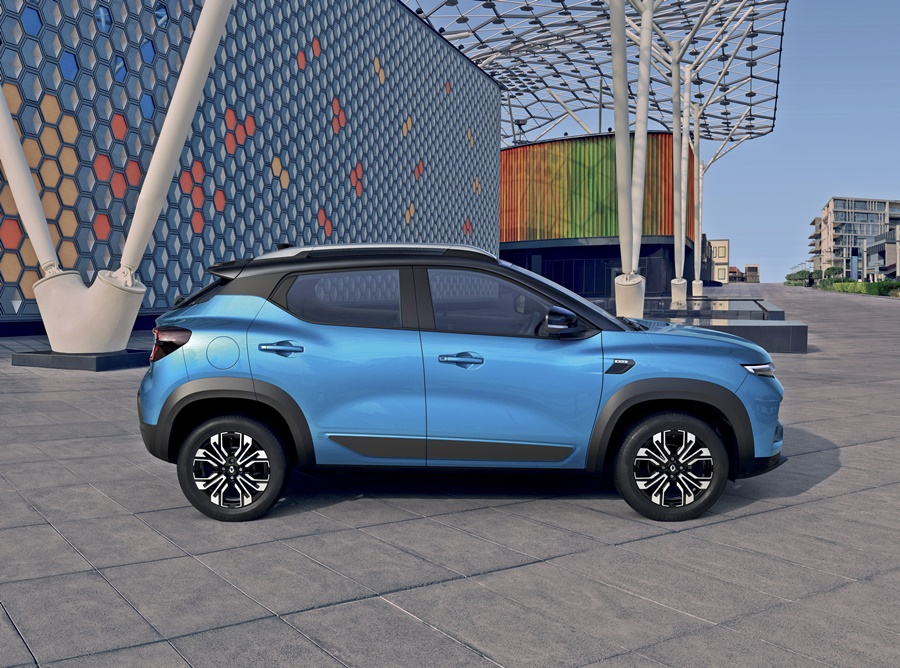
The Kiger that will be in showrooms in India has the same overall silhouette of the concept SUV. It has an overall length of 3991 mm and overall width of 1750 mm and sits on the same CMFA+ platform as the Triber and the Nissan Magnite.
Best-in-segment roominess
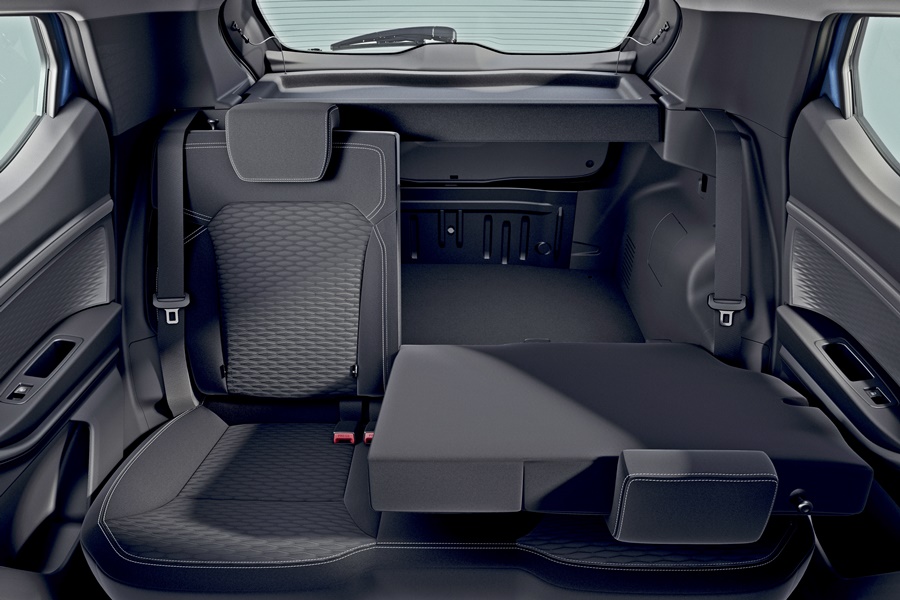
The Kiger is said to provide ‘record levels of roominess’ and a couple distance of 710 mm between the front seats – the best in its segment. At the rear, there is also claimed to be the best-in-segment second row legroom and elbow room. Cargo volume is also the biggest in class with 405 litres (expandable to 879 litres) with a floor length of up to 1565 mm.
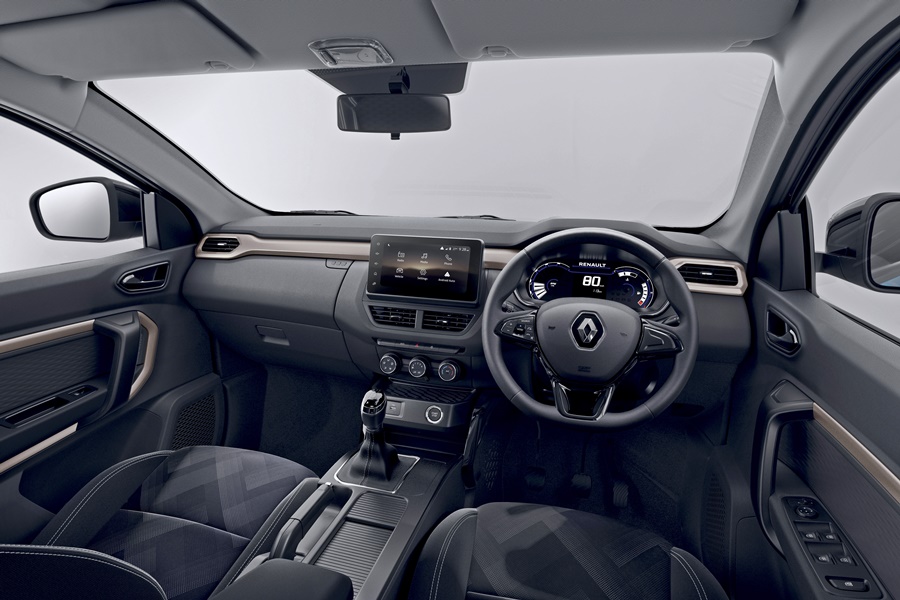
The ‘smart cockpit’ was designed to give a practical onboard experience without detracting from style. It has a high, wide dashboard centre console focused around a large 8-inch floating touchscreen that features wireless smart phone replication for Apple CarPlay and Android Auto.
1-litre engine, turbo and non-turbo
The powerplant available at launch is only a 1-litre 3-cylinder engine, with and without a turbocharging. The naturally-aspirated engine develops 72 ps/96 Nm while the turbocharged one has an output of 100 ps/160 Nm.
The more powerful engine will be available with a 5-speed manual transmission or X-TRONIC CVT. For the other variant, there is also a manual transmission or the option of an EASY-R robotised gearbox.
Pricing is expected to start from Rs 6 lakh (about RM34,000) with sales to start by the end of the first quarter of 2021.
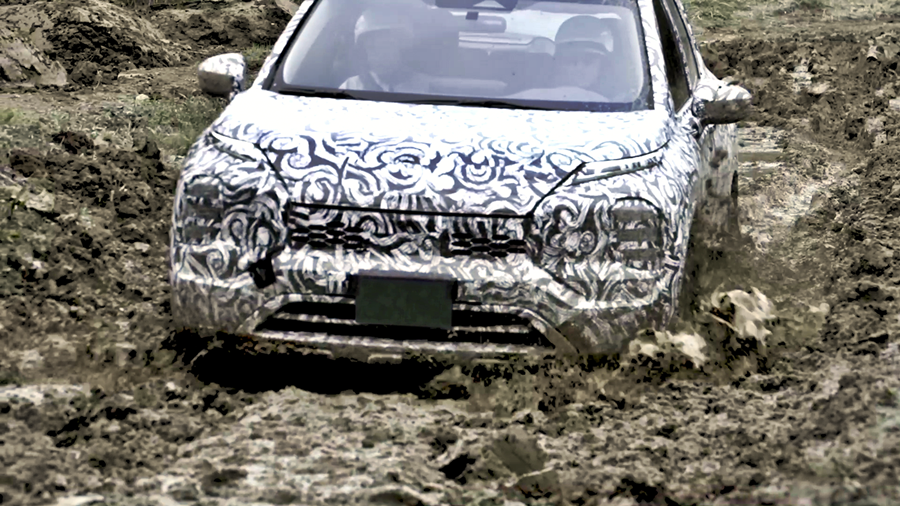
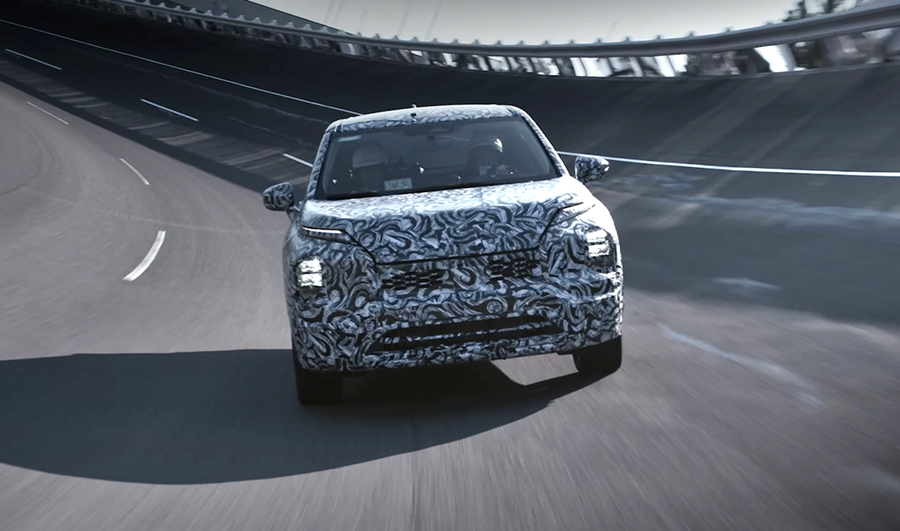
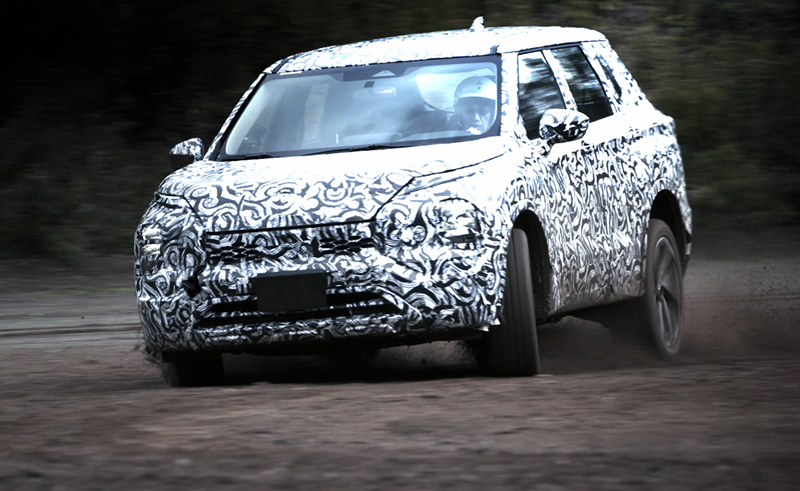
The next generation of the Mitsubishi Outlander is under final tuning and testing with its global debut to take place on February 17, 2021. Engineers at Mitsubishi Motors Corporation (MMC) are putting the SUV through its paces in severe weather and road conditions.
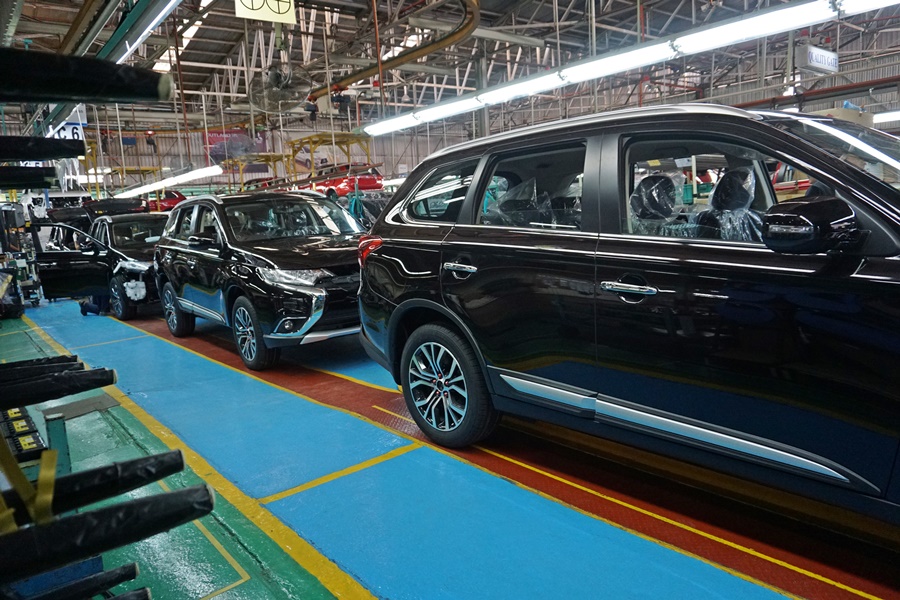
This will be the fourth generation of the Outlander, which MMC traces back to the Airtrek of 2001. While the Airtrek was sold in Malaysia earlier when USF was handling Mitsubishi SUVs, the Outlander was not and it was only with the third generation that the model was offered in the market by Mitsubishi Motors malaysia. Initially, it was imported in CBU (completely built-up) form and a year after launch, in 2017, local assembly began at the Tan Chong assembly plant in Kuala Lumpur.
Super-All Wheel Control system
With the fourth generation, MMC will introduce its latest Super-All Wheel Control system. The system advances the company’s pioneering all-wheel drive technology which has been developed with experience in years of competition in the tough Dakar rallies.
Preliminary information indicates that the new Outlander will be bigger and has been developed with the product concept of ‘I-Fu-Do-Do’, which means ‘authentic and majestic’.
The Outlander has been available with different powertrains, including a hybrid one which has been popular in Europe. With electrification being the trend in the industry, the new model should also continue with this powertrain in its line-up.
New Drive Mode
“We took everything we know about on and off-road driving from the rally experiences to apply the latest Super-All Wheel Control technology in our newly developed platform. We also specifically developed a new drive mode selector to provide confident driving at all times and in all weather conditions,” said Kentaro Honda, segment chief vehicle engineer (lead engineer) for the new SUV that will be a flagship model.
The current third generation has been assembled in Malaysia since 2017.
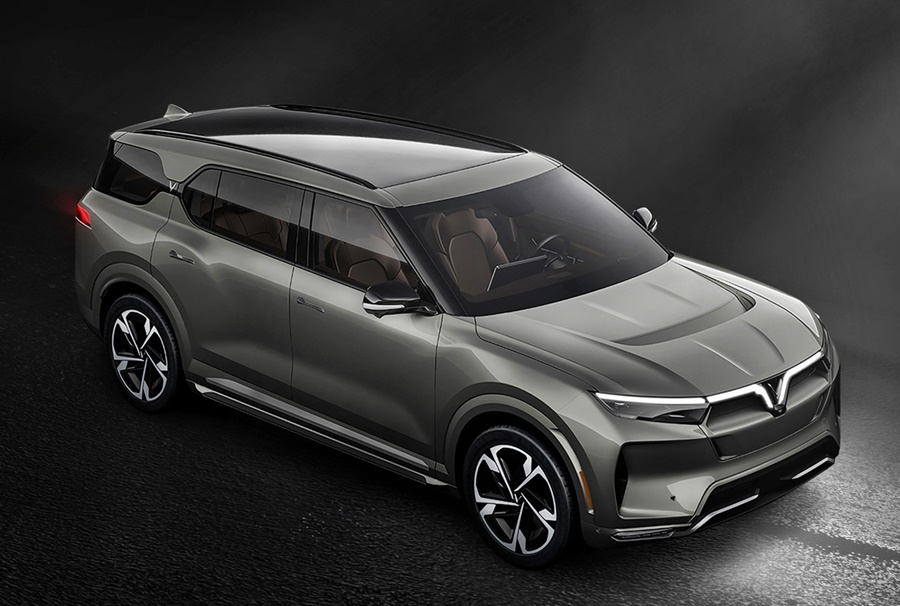
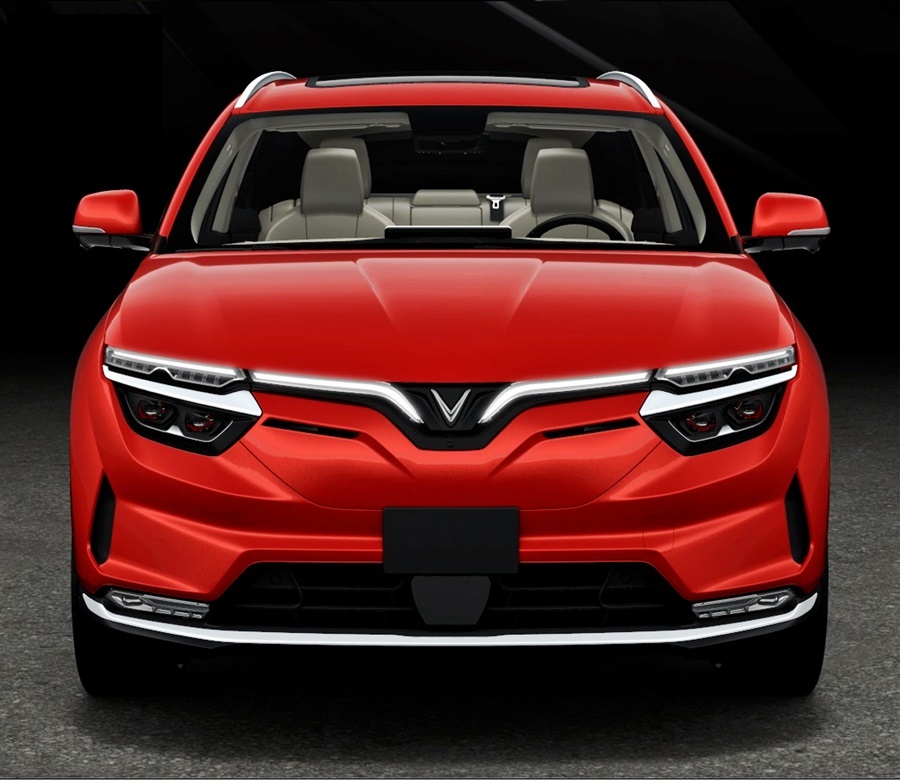
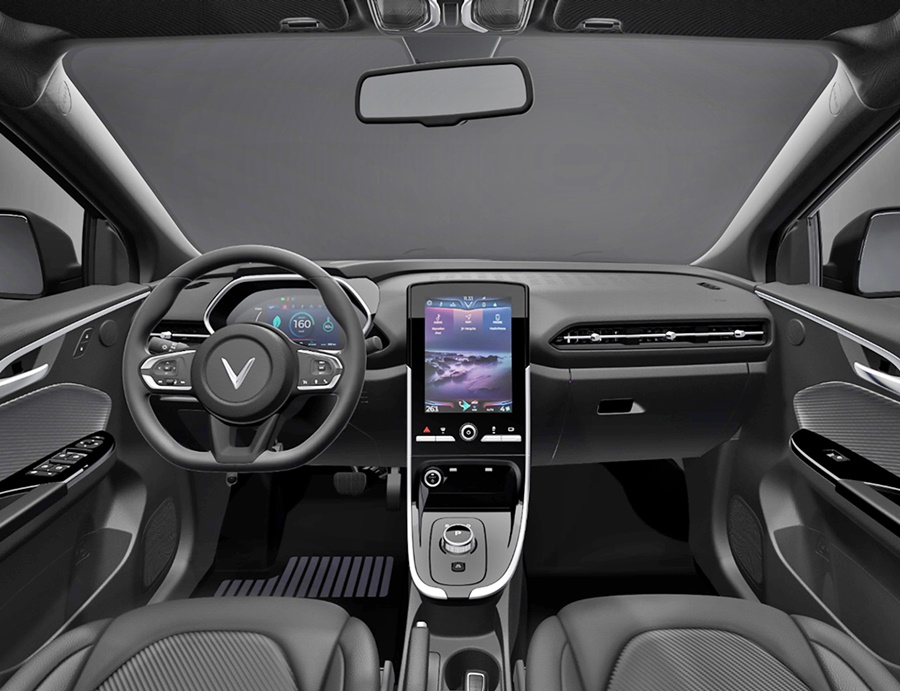
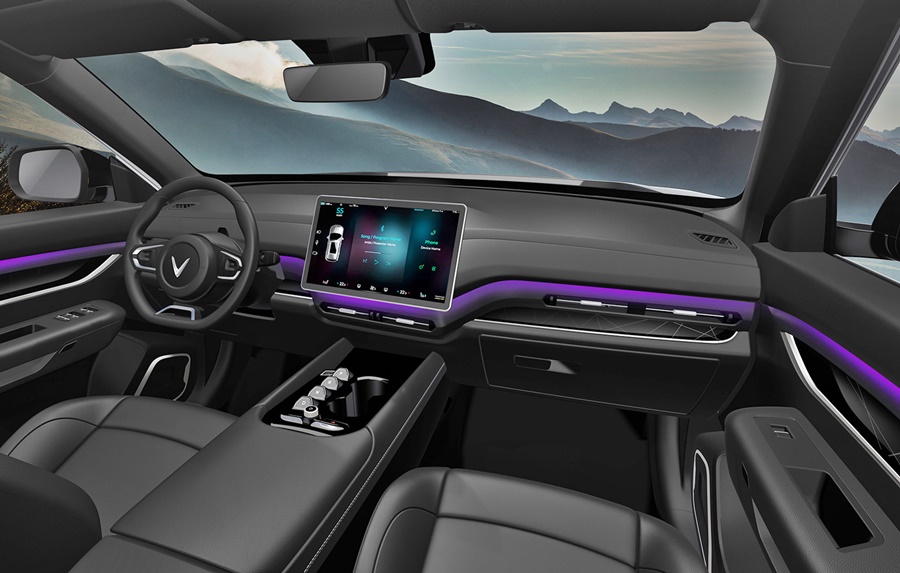
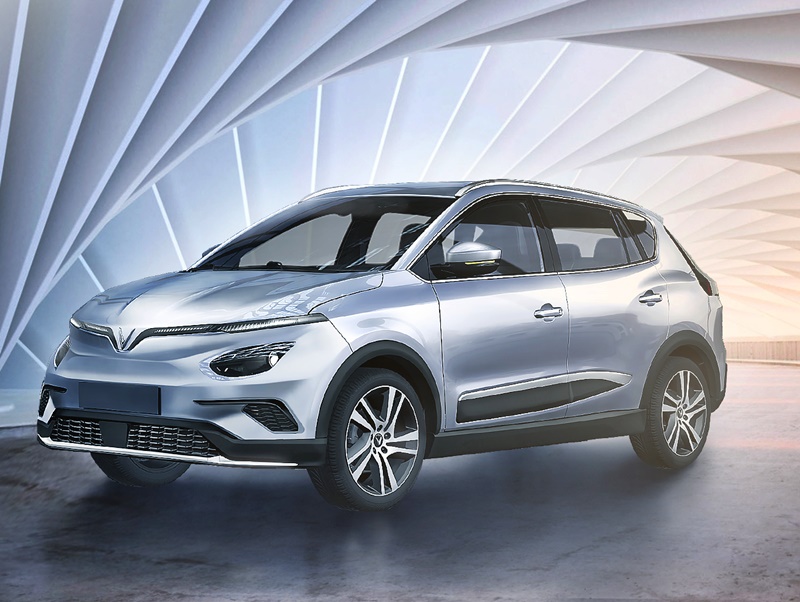
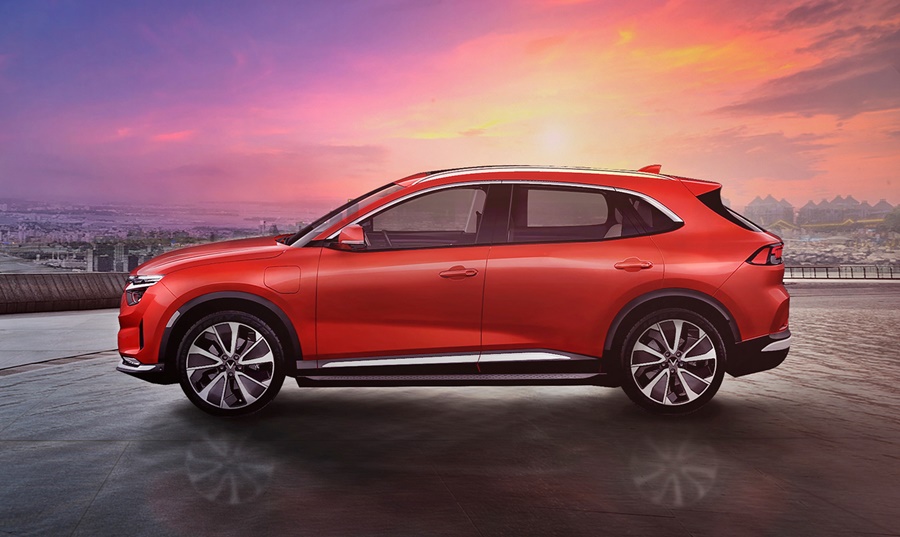
Vinfast, the Vietnamese carmaker which has been in operation for 3 years, has completed development of its first three smart cars. While the company aims to become a major global player in the EV (electric vehicle) segment, these new models are also available with 2-litre petrol engines.
The new range consists of the VF31, VF32, VF33, in which VF31 is a mid-size C-segment SUV while the VF32 will be one size up in the D-segment and the VF33 will be in the E-segment. The VF31 will be available with only an electric powertrain, while the VF32 and VF33 will each have 2 electric and petrol versions.
All 3 models have Level 2-3 autonomous features, with 30 smart features divided into 7 groups. These include intelligent driver assistance system, adaptive lane control system, cruise control system active, multi-point collision warning system, comprehensive collision mitigation system, intelligent automatic parking system and driver monitoring system.
Vinfast expects that, at launch, these will be the few SUVs in the world with many Level 3 autonomous features. For the high-end versions, high-performance sensor systems will be used. These will employ LiDAR sensors with 14 cameras capable of detecting objects up to 687 metres away. Around the vehicles will be 19 sensors to scan 360 degrees which can operate at high speeds above 100 km/h.
The self-driving system controlled by the Orin-X chip can process up to 200 GB of data per second, allowing control and navigation 8 times faster than current generations. In addition, the premium version of all 3 models is equipped with some Level 4 autonomous features such as automatic 3-dimensional map setting (market-dependent), allowing automatic parking and location, as well as summoning the vehicle.
In addition to autonomous features, Vinfast has applied a user-centric development philosophy. There are smart features in the e-cockpit virtual cockpit which makes use of artificial intelligence technology (AI), machine learning and deep learning, facial recognition, and a multilingual virtual assistant.
The objective of using advanced technologies is to provide comfort and enjoyment when travelling in the vehicle. The occupants will also have an extensive range of customization so that they can personalize the vehicle according to characteristics and usage habits.
The vehicles are engineered to meet the world’s highest safety standards and are expected to be able to score the maximum 5-star ratings in the US NHTSA and Euro NCAP assessments. Besides the usual active safety systems to assist the driver, there are also automatic detection, warning and notification systems to medical facilities in the event of an accident.
Vinfast says that the battery packs. Which can provide a range of over 500 kms, are situated under the floor of the vehicle. They are designed to high safety standards and will have the ability to update software remotely, automatically detect faults on the vehicle and automatically contact the service centre.
The first model to go into production this year will be the VF31 and orders from the domestic market will be accepted from May, with deliveries to begin from November 2021. Order-taking for the VF32 and VF33 models will start from September 2021, with first deliveries planned to start from February 2022.
Vinfast also has ambitions to export the SUVs to the US market by the middle of next year. It is not easy to get into the US market as the regulations are tough, especially for safety. Emissions should of course be no problem since it is electric, and the autonomous capabilities should put Vinfast ahead of others.
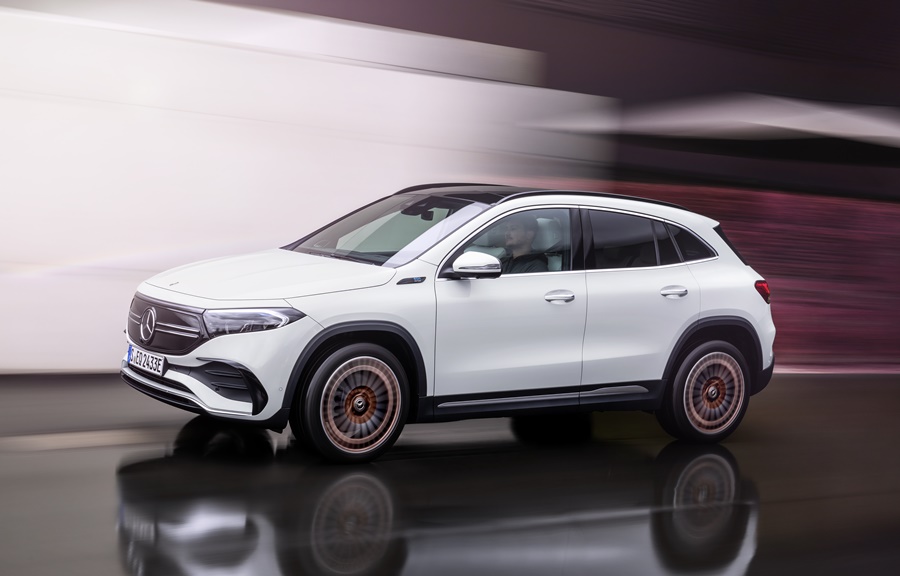
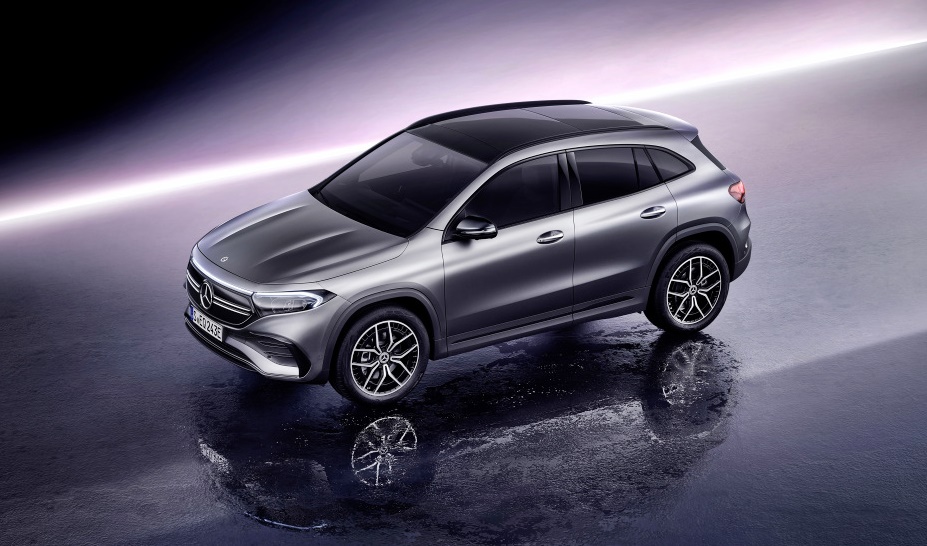
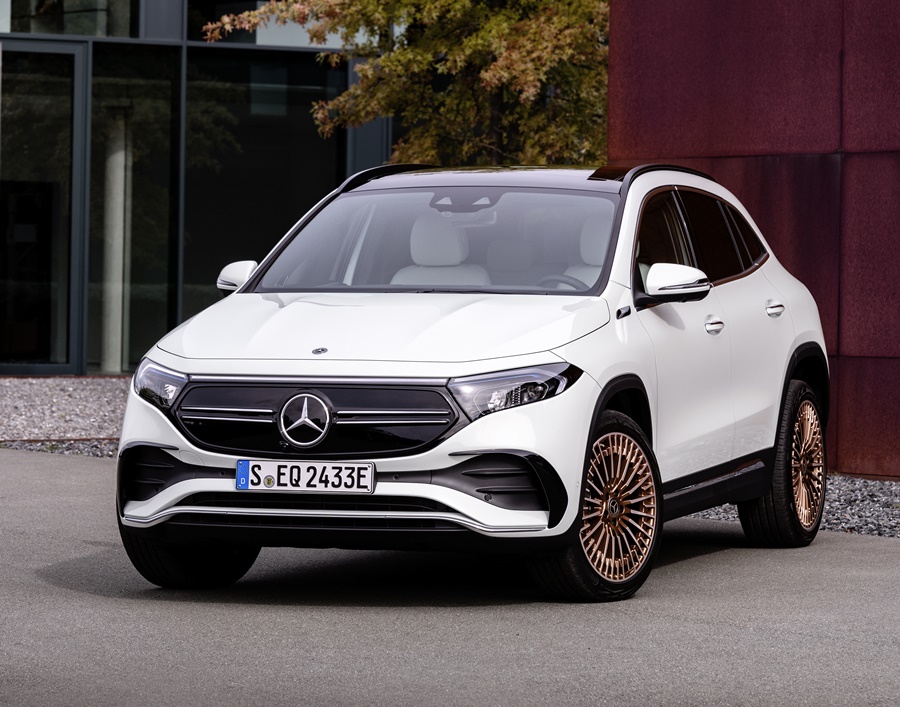
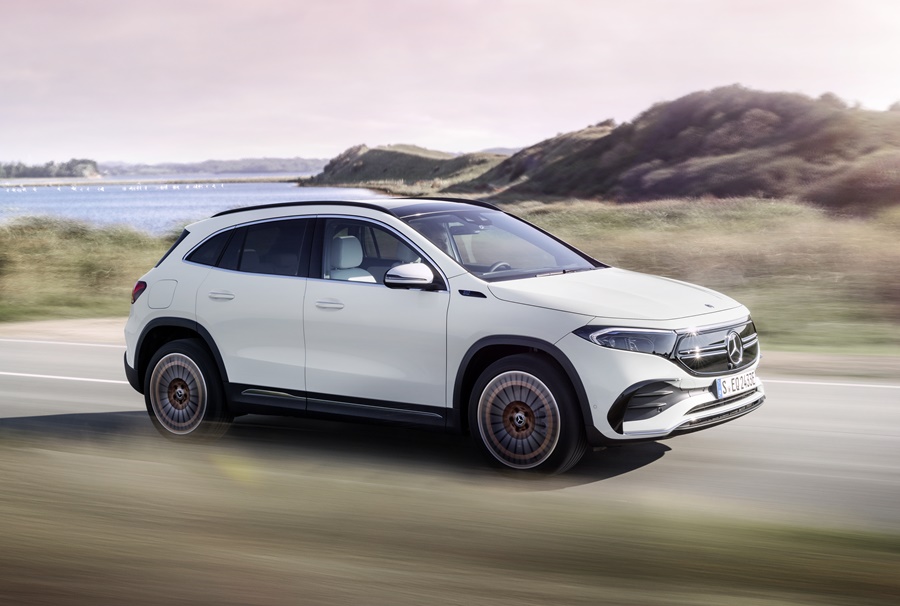
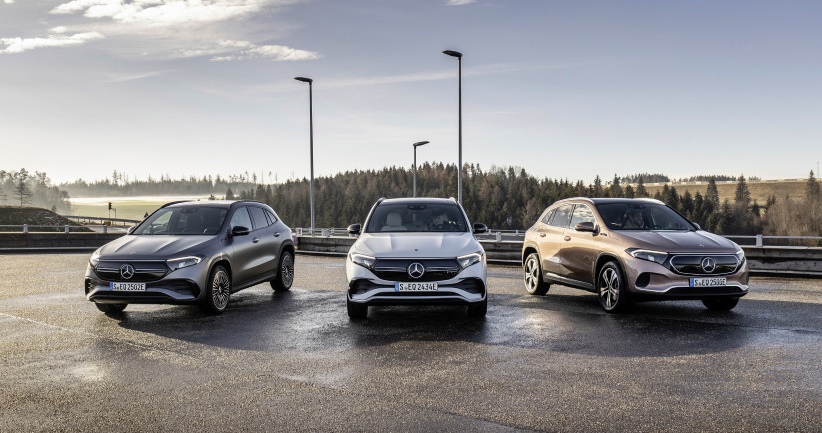
Mercedes-Benz continues its roll-out of its all-electric EQ range, which will total 10 models by 2022, with the unveiling of the EQA. The ‘A’ indicates its entry-level positioning in the big Mercedes-Benz family, and it is considered a member of the compact car line although it has a dedicated electric powertrain.
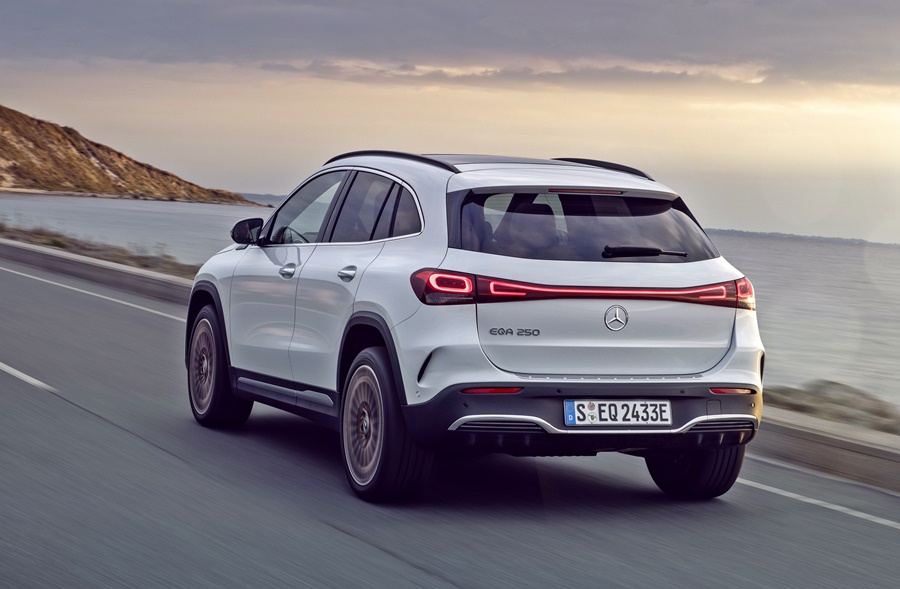
Besides being built in Germany, from which European dealerships will soon get their units, the EQA will also be built in China. The first version, the EQA 250, will be sold in Germany at prices from 47,540.50 euros (about RM233,000) with various rebates being available from the government and also the manufacturer.
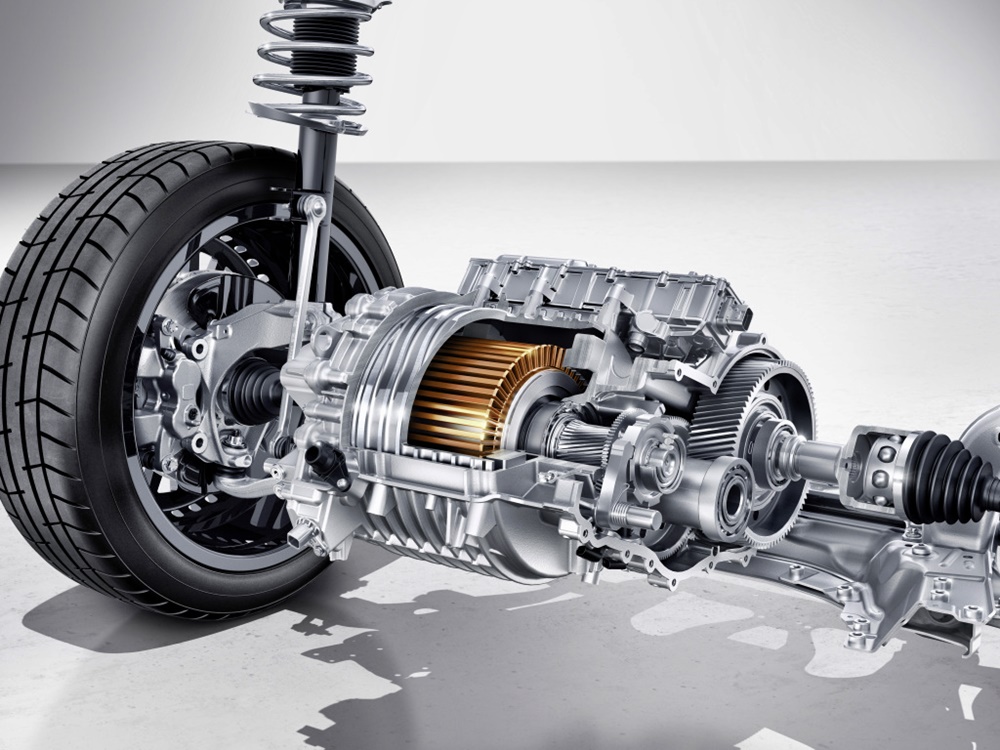
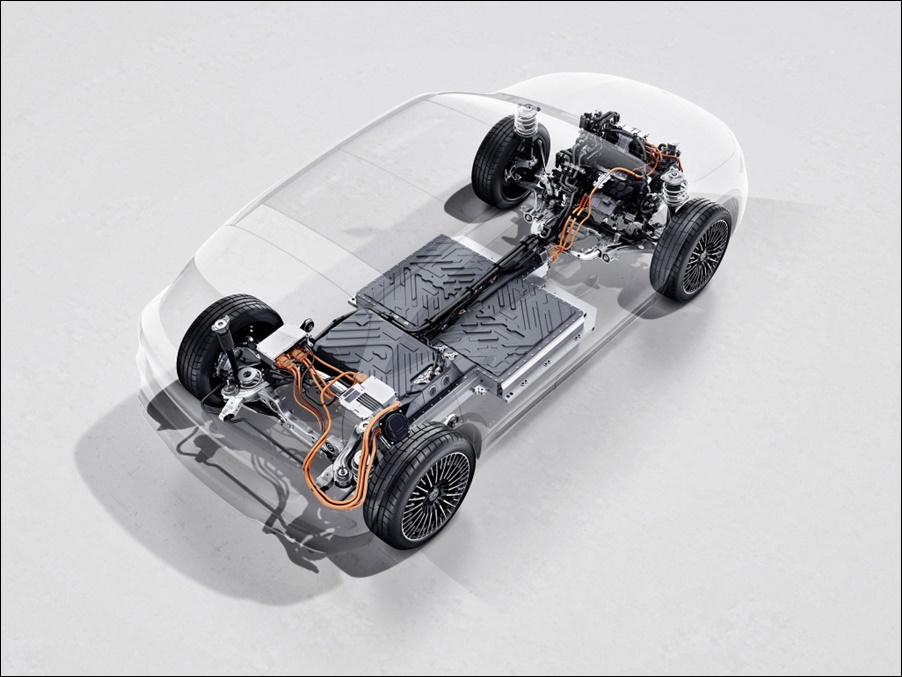
The EQA 250 has a ‘double-decker’ lithium-ion battery pack which sits as a structural element within the underbody of the vehicle. In order to meet the low levels of noise and vibration expected from the brand, complex damping measures have been taken to isolate the electric powertrain from the chassis and body.
The battery pack has an energy content of 66.5 kWh and a stated combined electric consumption of 15.7 kWh/100 kms, and a claimed range of 486 kms. Further variants to meet specific customer requirements will follow. These will include all-wheel-drive with an additional electric powertrain, and, for those wanting range, a version that will go more than 500 kms.
Charging management
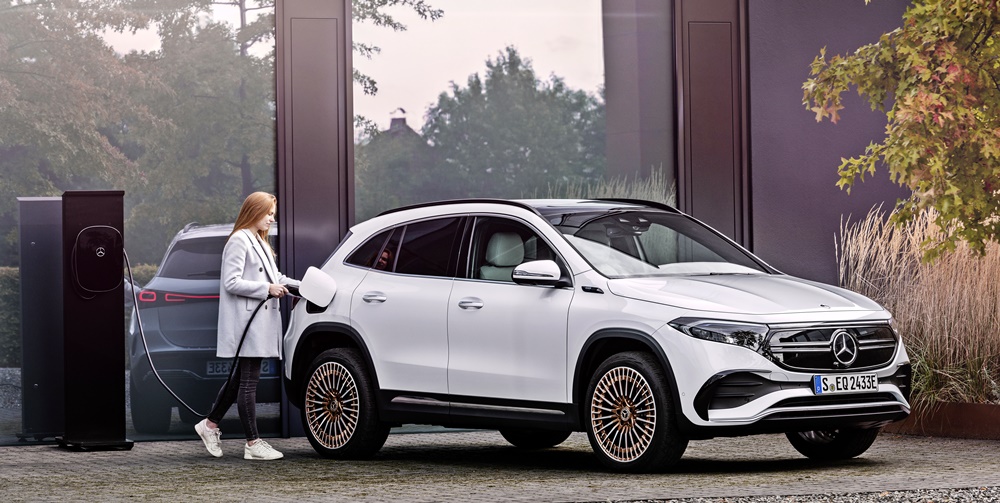
At home or at public charging points, the on-board charger provides a convenient way of charging the EQA with up to 11 kW using alternating current (AC). The charging time required for a full charge depends on the available infrastructure and the country-specific vehicle equipment. Charging at a Mercedes-Benz Wallbox would be considerably faster than at a domestic power socket. Faster speeds can be achieved at direct current (DC) rapid charging stations. Here, the EQA can be charged with a maximum output of up to 100 kW from 10% – 80% in around 30 minutes.
Electro-aesthetics
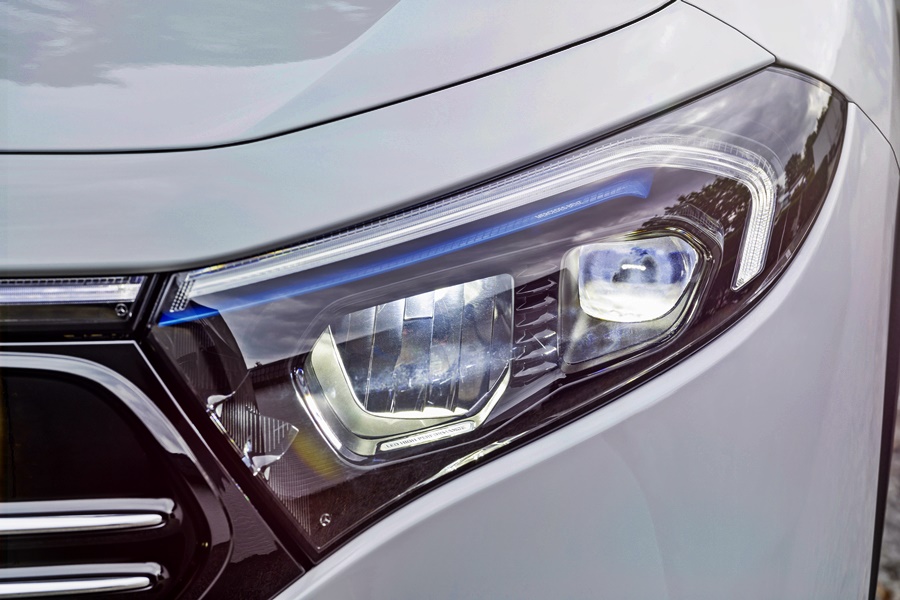
The EQA features the black panel radiator grille with the central star, which will be used for all EQ models. A further distinctive design feature of the all-electric vehicles is the continuous light strip at front and rear. A horizontal fibreoptic strip connects the daytime running lights of the full-LED headlamps, ensuring a high level of recognisability both in daylight and at night. Blue colour highlights within the headlamp reinforce the signature Mercedes-EQ appearance.
The LED tail lamps merge seamlessly into the tapered LED light strip, thus underlining the impression of width in the rear view of the EQA. The licence plate has also been relocated to the bumper. Exclusive to this model are light-alloy wheels in a bi or tri-colour design, up to 20 inches in size, in some cases with rosé gold-coloured or blue decorative trim.
Efficiency the key factor
The frontal area totals 2.47 square metres, contributing to a Cd of 0.28. Aerodynamic measures adopted include the completely closed cooling air control system in the upper section, the aerodynamically efficient front and rear aprons, a very smooth, almost completely enclosed underbody, specially optimised Aero wheels and specifically adapted front and rear wheel spoilers.
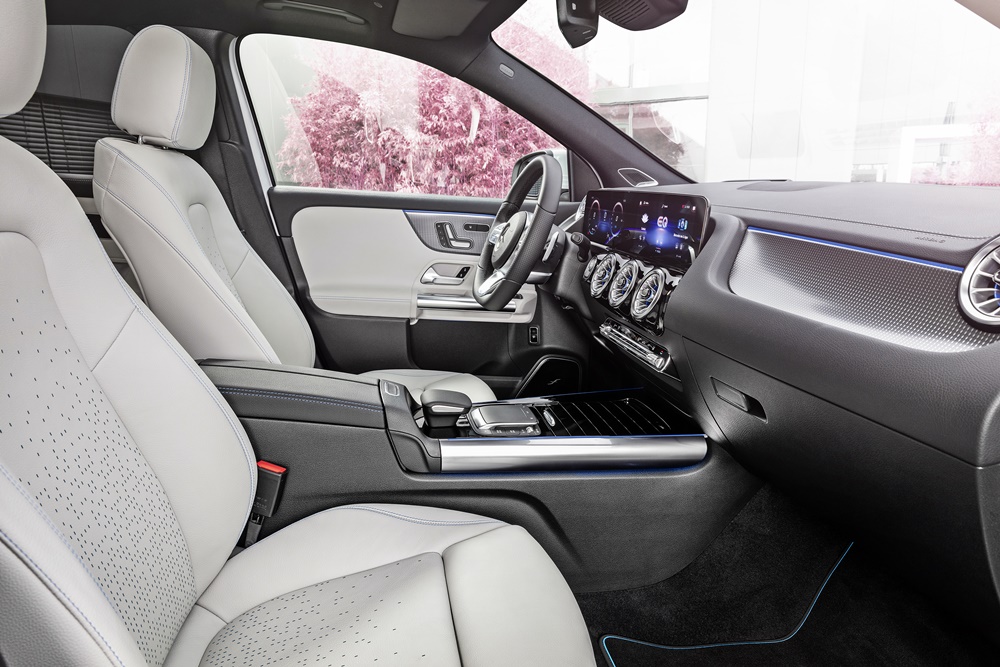
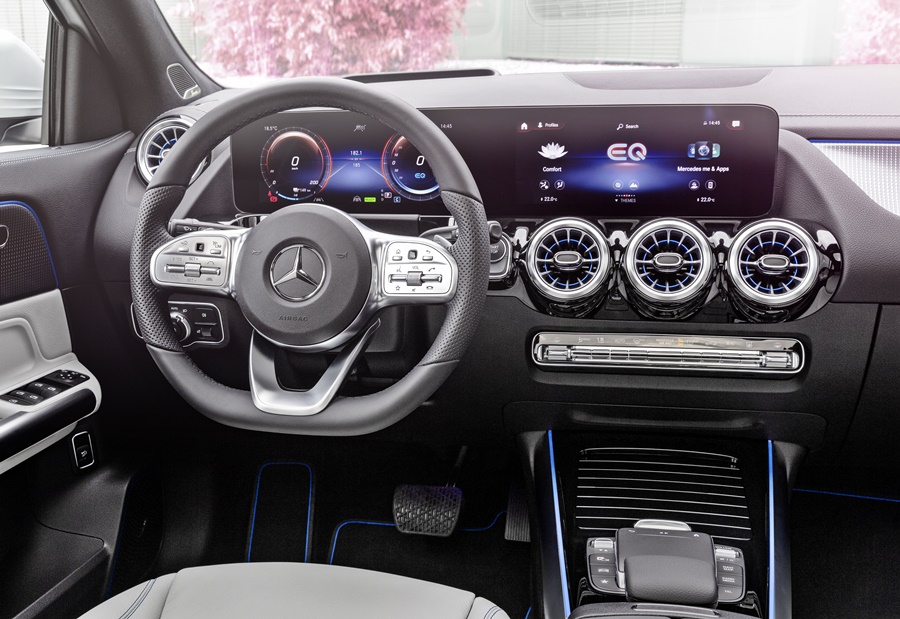
An indication of the electric character in the interior of the EQA is provided by a new-style back-lit trim element and rose gold-coloured decorative trim on the ventilation outlets, seats and the vehicle key. The Edition 1 special model additionally features perforated leather seats, through which blue fabric can be seen. The instruments, with their electric car-specific displays, pick up on the same colour scheme with rose gold-coloured and blue highlights.
The seating position is high and upright, as is typical for an SUV – making it not only comfortable for getting in and out, but also good in terms of all-round visibility. Utility value was one of the general focuses during development and as with most SUVs, the rear seat backrests are divided 40:20:40 and can fold down to vary cargo volume and floor length.
The standard heat pump forms part of the sophisticated thermal management system. With its numerous innovative details, such as the reuse of the waste heat from the electric drive system, the system is configured for exceptional efficiency and thus maximum range.
Latest MBUX with EV-specific features
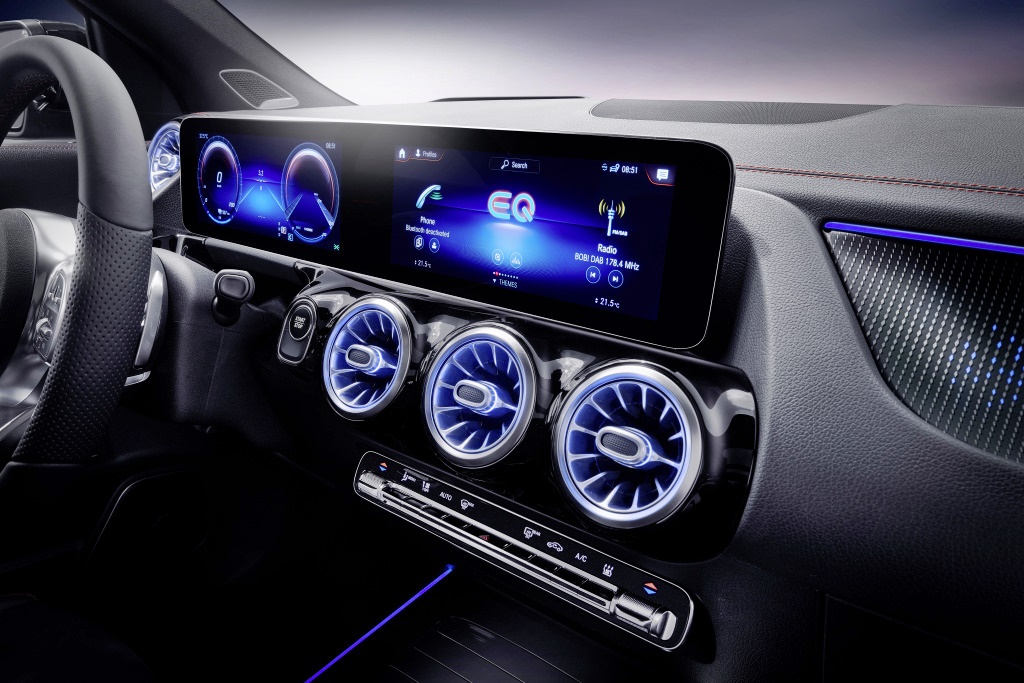
Included as standard is, of course, the intuitively operated MBUX infotainment system (Mercedes-Benz User Experience). MBUX, with a powerful computer system, can be individually configured with the help of various options. It has learning software and voice control activated by the keyword ‘Hey Mercedes’, and options such as a full-colour head-up display, navigation with augmented reality,
The Mercedes-EQ tile in the media display can be used to call up menus relating to charging options, electrical consumption and energy flow. The right-hand display within the instrument cluster is a wattmeter rather than a tachometer. The upper section shows the percentage of power used, the lower section the recuperation. The left-hand instrument can be used to show whether the destination can be reached without an interim charging stop.
The colours change according to the driving situation. During a boost process, for example, the display changes to white. Depending on mood, or to match the particular interior, the user has a choice of four different styles.
In conjunction with Mercedes me, the URBAN GUARD Vehicle Protection and URBAN GUARD Vehicle Protection Plus enable all-round monitoring of the parked vehicle, including its location. If the service is active, the driver is informed via the Mercedes me App not only if the vehicle is being removed (as in being stolen) but also the severity of parking damage and in which area of the vehicle it occurred. In the case of the latter, the vehicle sensors register when the parked and locked vehicle is bumped.
Driving assistance systems
It goes without saying that the EQA would have a comprehensive range of intelligent driving assistance systems and these have cooperative driver support. The enhanced functions of the Driving Assistance Package include a turning manoeuvre function, emergency corridor function, exit warning function (alerting the driver to approaching cyclists or vehicles), and a warning when pedestrians are detected near zebra crossings.
Included as standard on board are Active Lane Keeping Assist and Active Brake Assist. In many situations, the purpose of the latter is to prevent a collision by autonomous braking, or to mitigate its consequences. The system is also able to brake for stationary vehicles and crossing pedestrians at typical city speeds and even to prevent collisions, depending on the situation.
Partial autonomous mode
In certain situations, the EQA is able to drive in partially automated mode. To do this, it keeps a close eye on the traffic situation. Improved camera and radar systems allow it to see far ahead, adjusting the cruising speed when necessary to ensure a safe gap.
The EQA also uses map and navigation data for assistance functions. For example, Active Distance Assist DISTRONIC as part of the optional Driving Assistance Package is able to provide route-based support to the driver in numerous situations, and to predictively and conveniently adjust the speed, eg when approaching bends, junctions or roundabouts. In doing so, it interacts with ECO Assist.
“Mercedes-EQ aspires to take the lead in the field of electric drive systems and vehicle software. To this end, we have defined some ambitious product development goals and resolved to push forward with the accelerated market introduction of new technologies,” said Markus Schafer, Member of the Board of Management of Daimler AG and Mercedes-Benz AG; responsible for Daimler Group Research and Mercedes-Benz Cars COO.
“The new EQA allows us to show the way we envisage e-mobility as tailored to the needs of our customers. It proves that, by using a tried and tested architecture, it is possible to achieve an excellent compromise between performance, costs and time to market,” he said.
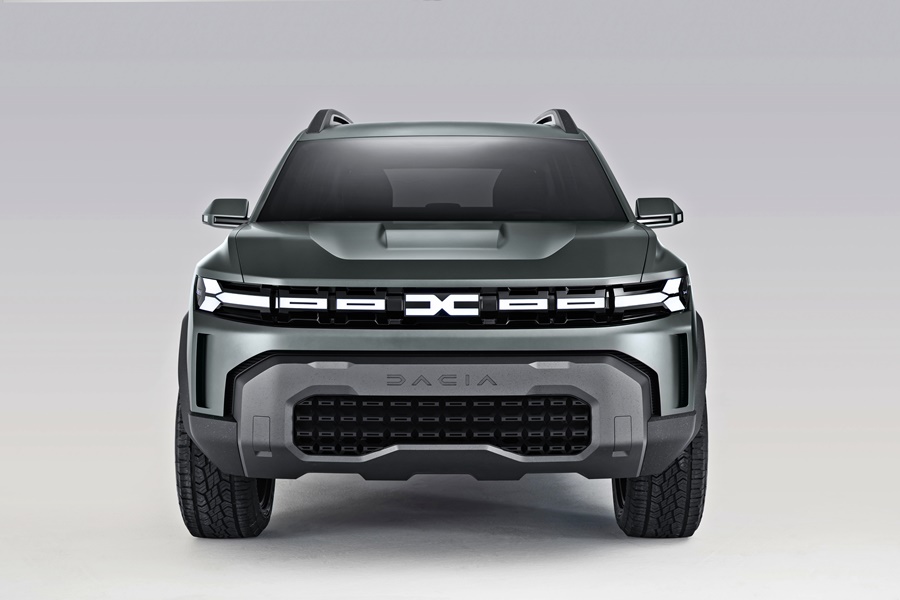
Dacia, the Romanian carmaker that is part of the Renault Group, may not have a high profile in the global auto industry but it’s been pretty good at drawing from the technical pool of the group and the Renault Nissan Mitsubishi Alliance. As a result, it has produced competitive products which enjoy a following in 44 markets.
The company is now looking at new horizons in the C-segment and has developed a concept model to gauge response. It is likely that this will be positioned as a range-topper when it goes into production by 2025.
C-segment SUV, B-segment price
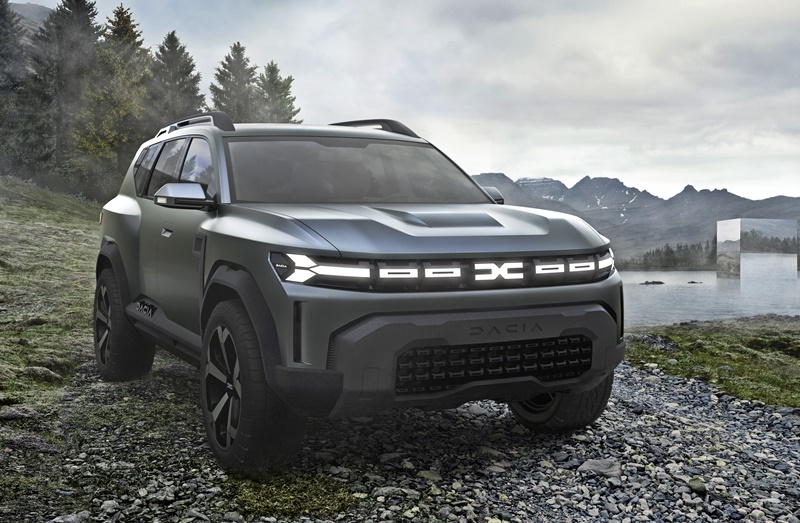
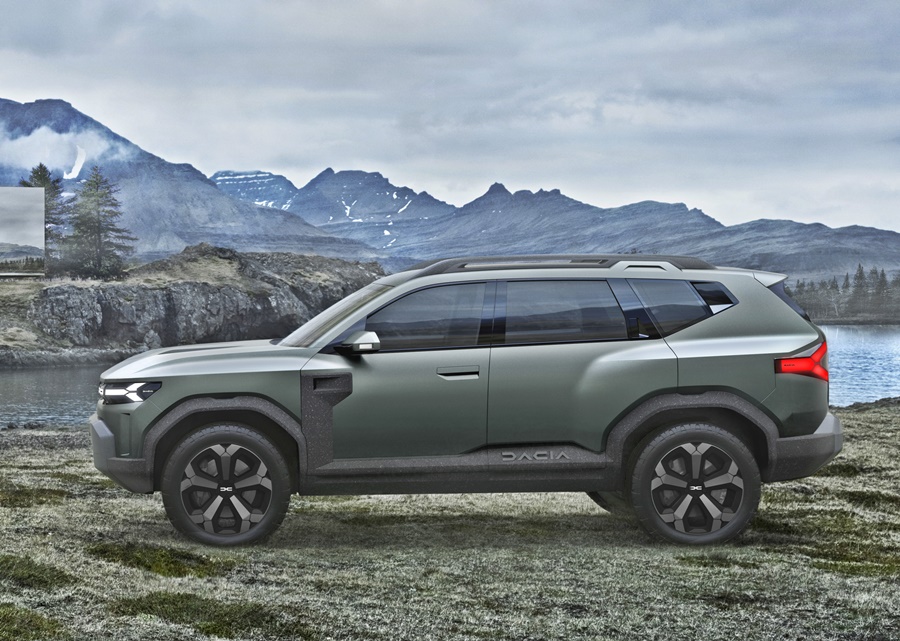
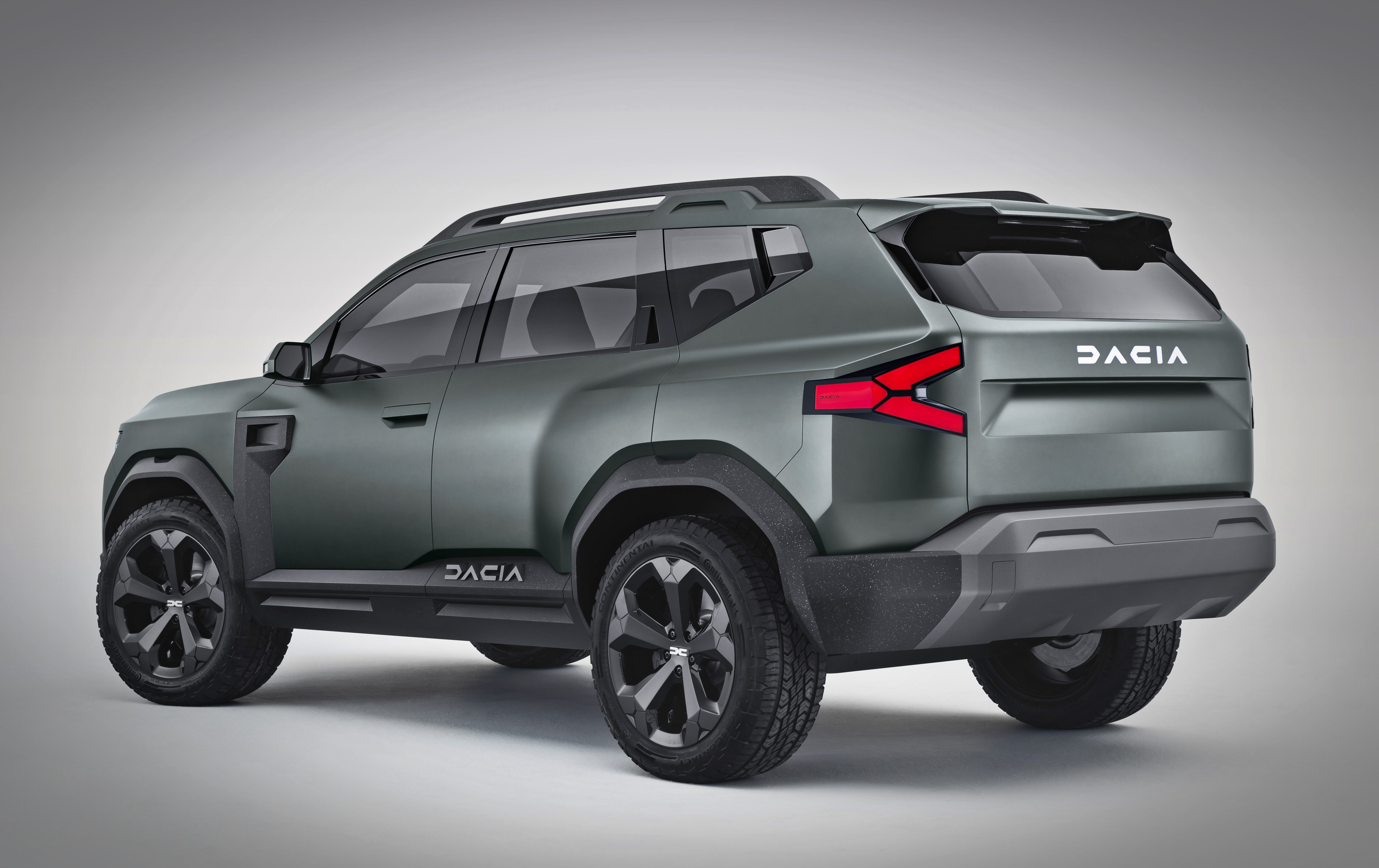
Known as the Bigster, the 4.5 metre SUV proposal is a roomy and robust vehicle with a target cost of the B-segment. It will use the modular CMF-B platform which was unveiled to the public at the 2019 Geneva International Motor Show. The platform is designed to be used for a wide range of models and embodies the Drive the Future plan, featuring electric engines, advanced driving aids approaching self-driving technology and advanced connectivity technologies.
The CMF-B platform (already used for the new Sandero) will replace the three platforms previously used by Renault and Nissan (including the Micra and Clio IV platforms) and 85% of its components are new (compared with the Clio IV platform).
New design language
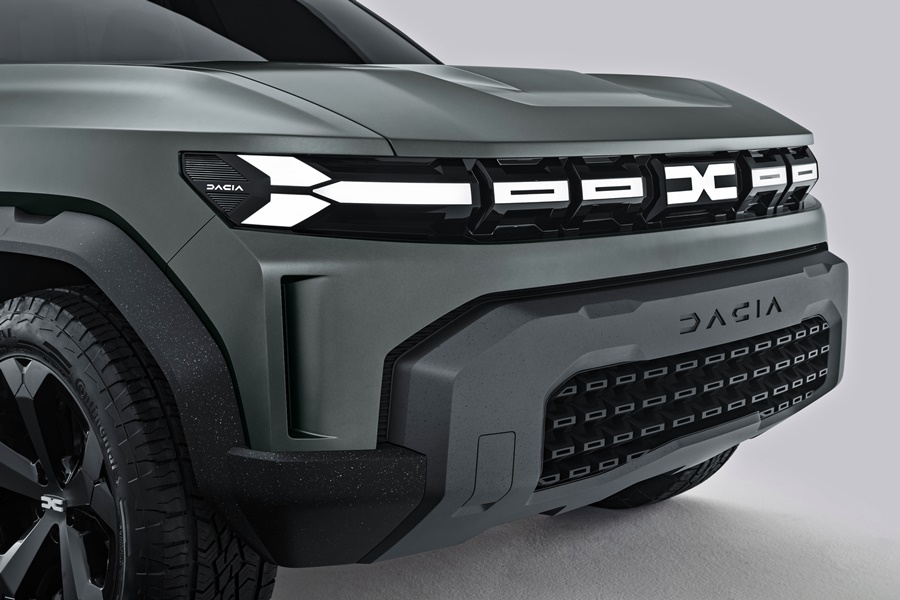
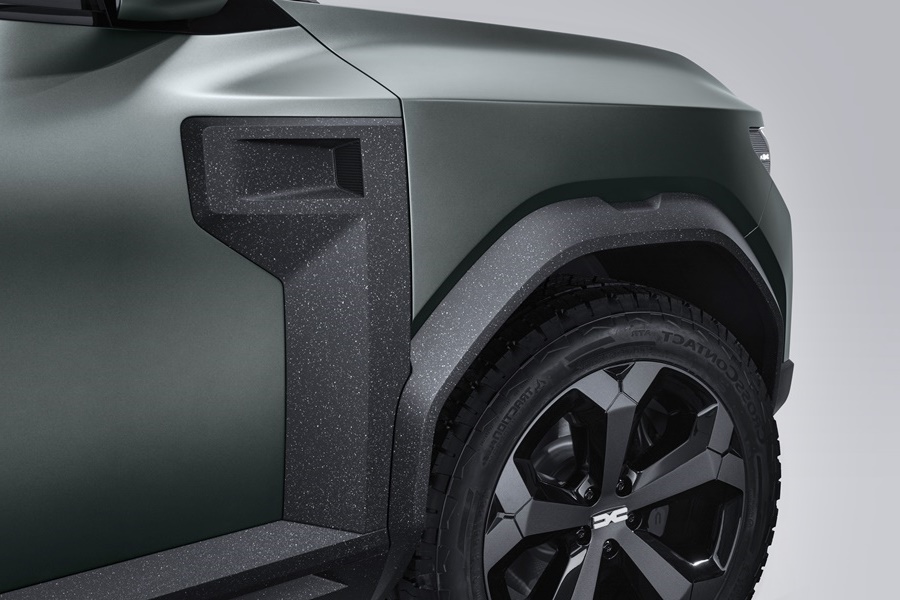
The Y-shaped lighting signature highlights the SUV’s bold and assertive style. This is an element in the brand’s new design language which appears to still be evolving. There is no chrome trim or imitation-aluminium, and the Bigster Concept uses only raw recycled plastics for all exterior protective panels.
The generous outside dimensions suggest a very spacious interior. The dark green coat underpins ‘the adventurous explorer’ within.
Powertrains for the Bigster concept will be advanced and electrified, with hybrids and what the company refers to as ‘alternative energy’ (probably pure EV).