Genesis, Hyundai Motor’s premium brand, has a brand new SUV under final stages of development. It has been announced publicly in Korea so that the R&D guys can start running real-world tests on public roads.
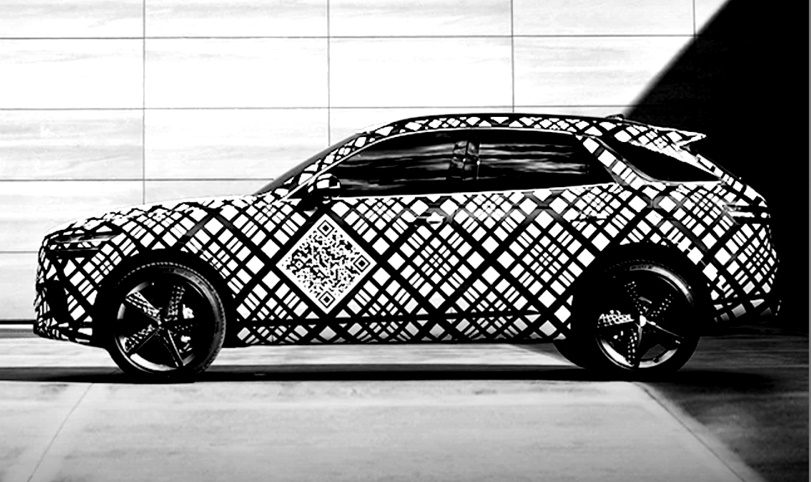
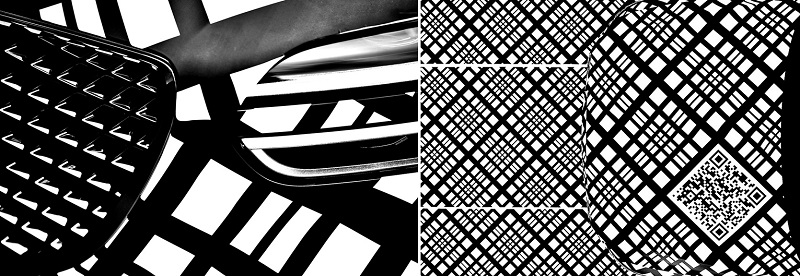
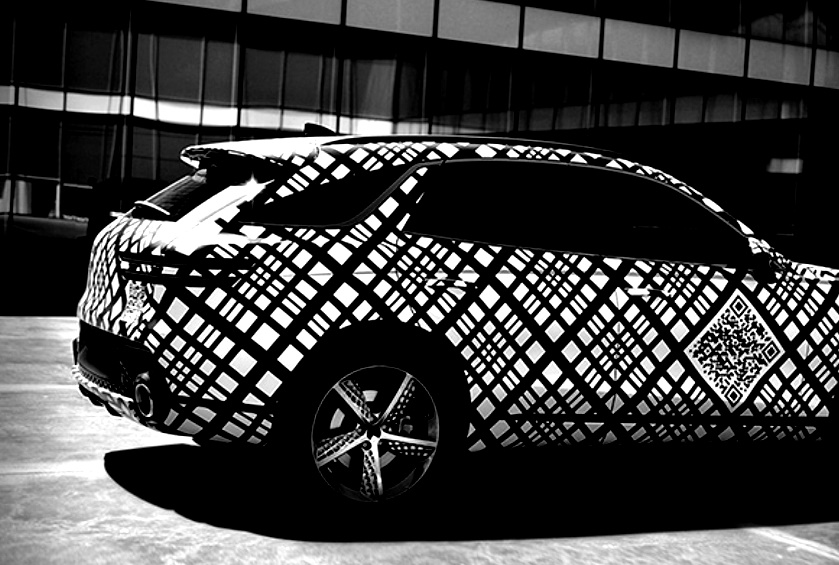
QR code on camouflage
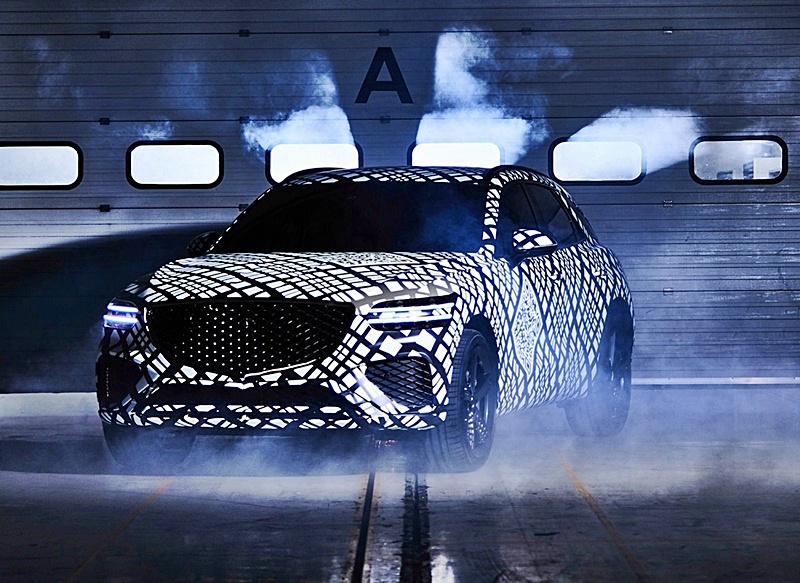
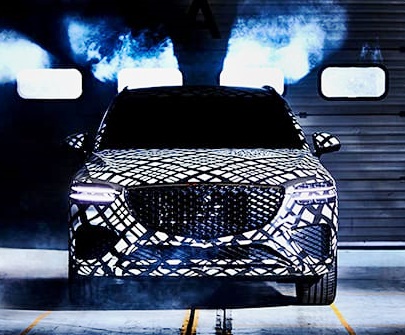
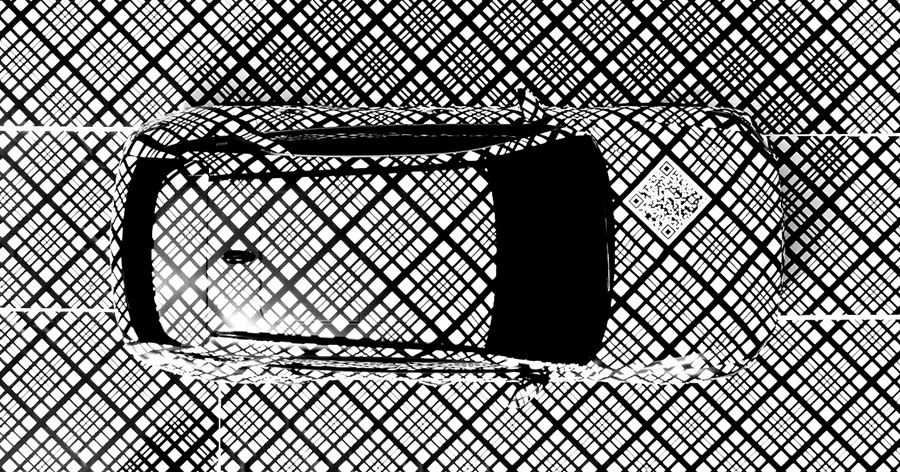
However, the vehicle, designated GV70, is camouflaged as the teaser pictures release show. To use the testing exercise to do a bit of promotion, there’s a QR code on the bodywork which leads those who scan it to a web page that explains the camouflage pattern referred to as ‘G-Matrix’.
G-Matrix is inspired by the diffused reflection of light from precision-cut diamonds and is a core part of the Genesis brand identity. Drivers can look forward to the creative application of the pattern on the GV70 in different ways, emphasizing the details that are emblematic of the Genesis brand.
Second of three SUVs
While specific details are presently hidden by the G-Matrix camouflage pattern, the continued evolution of Genesis’ signature “Athletic Elegance” design language is evident. The new midsize SUV will join the GV80 in the model line-up for 2021, after which will come a smaller model (GV60?).
“We are thrilled to share this early sneak preview of our second SUV, the Genesis GV70,” said a Genesis official. “It telegraphs an exciting new design and reinforces the core brand values that run through our line-up. We look forward to sharing full details on GV70 with everyone in the near future.”
Shared platform likely
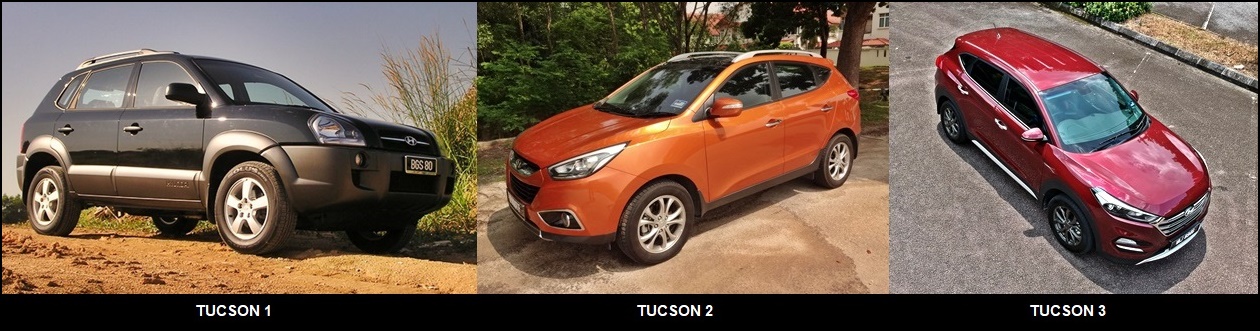
Given its size and positioning, the GV70, which will challenge SUVs like the BMW X3 and Audi Q5, is likely to share architecture with the new Hyundai Tucson. It obviously doesn’t make sense for Genesis to have its own platforms, an approach which manufacturers discarded after the 1980s when it proved more and more expensive to develop a platform. The key nowadays is how many models can be derived off a platform with minimal modifications.
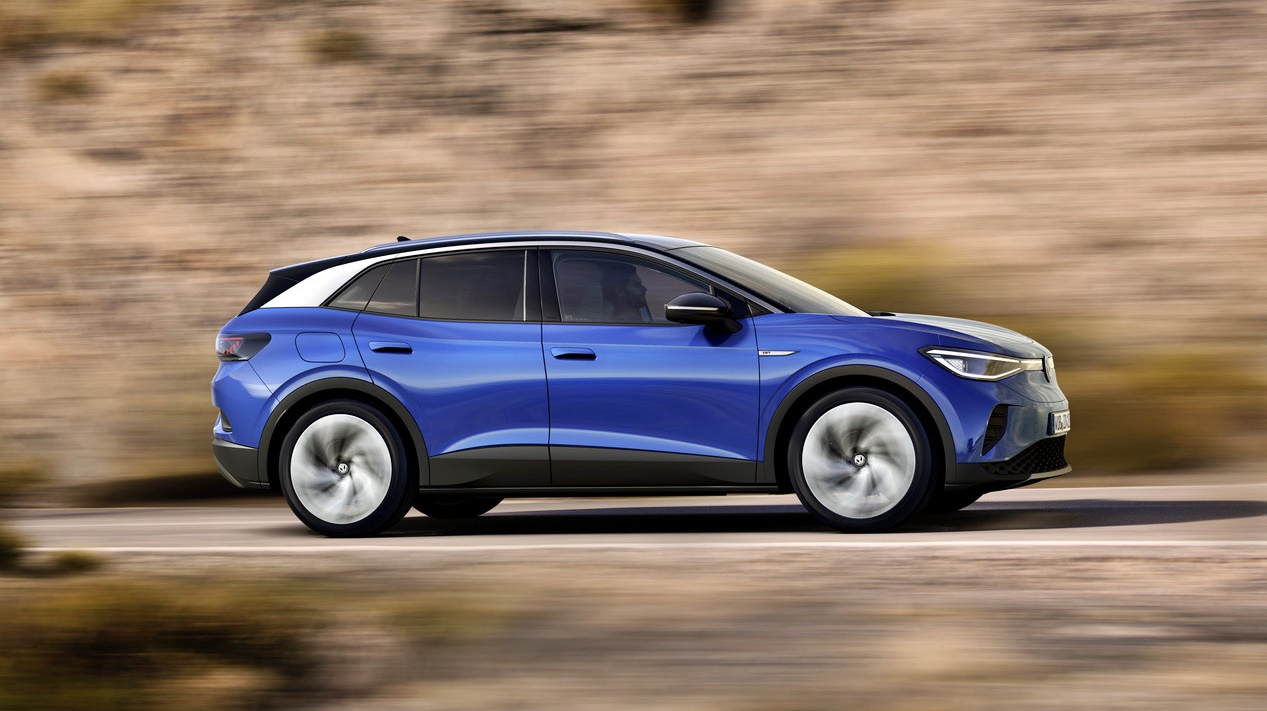
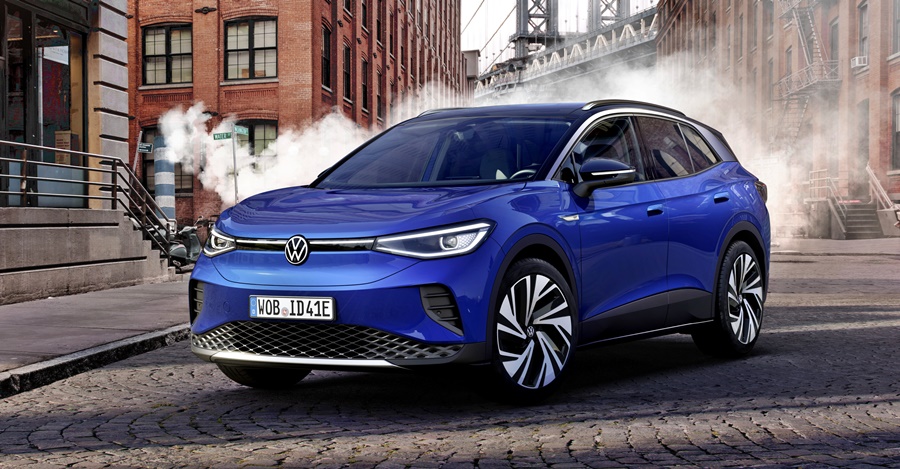
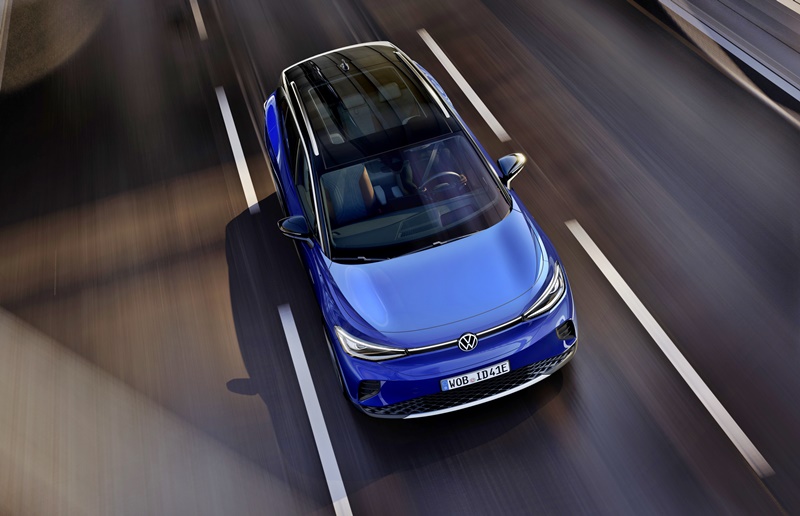
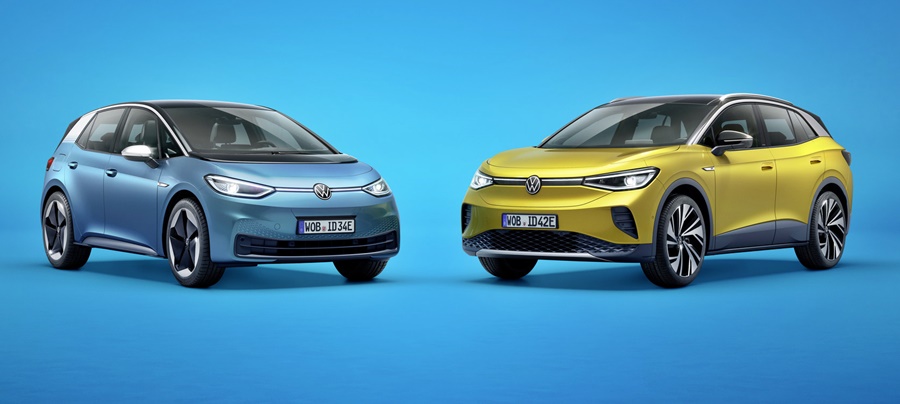
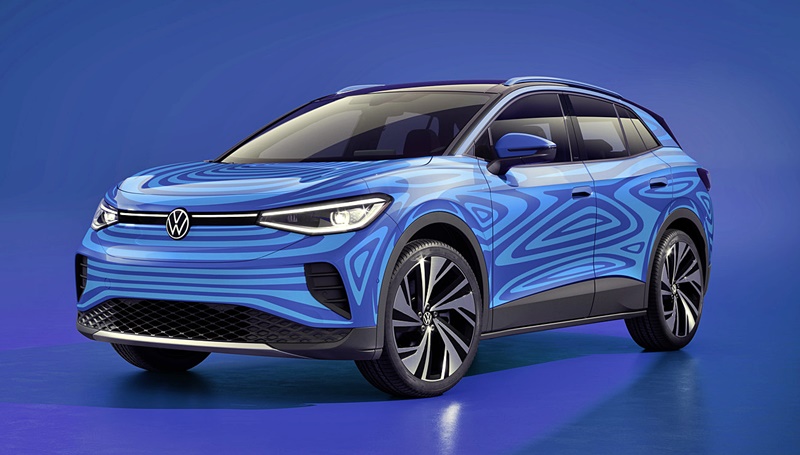
Volkswagen’s ID. family, which consists of only all-electric models, releases its second which is a SUV. The first of the ID. models was the ID.3, a hatchback launched in 2019, and this new model is designated ID.4. There are known to be at least 7 models in total, with the others currently planned to go into production within the next 3 years.
“As the first global electric car, this model will roll out our modular electric drive matrix platform that has been developed specifically for electric mobility the world over. Volkswagen is thus once again demonstrating its leading role in innovation, technology and quality on the high-volume market,” said Ralf Brandstatter, CEO for the Volkswagen brand.
The ID.4 is Volkswagen’s first fully electrically-driven SUV and has dimensions which put it within the compact SUV class. This is now a highly competitive segment, especially in Europe where SUVs were once disliked as they were considered to be not environment-friendly due to their higher consumption.
No environmental issues
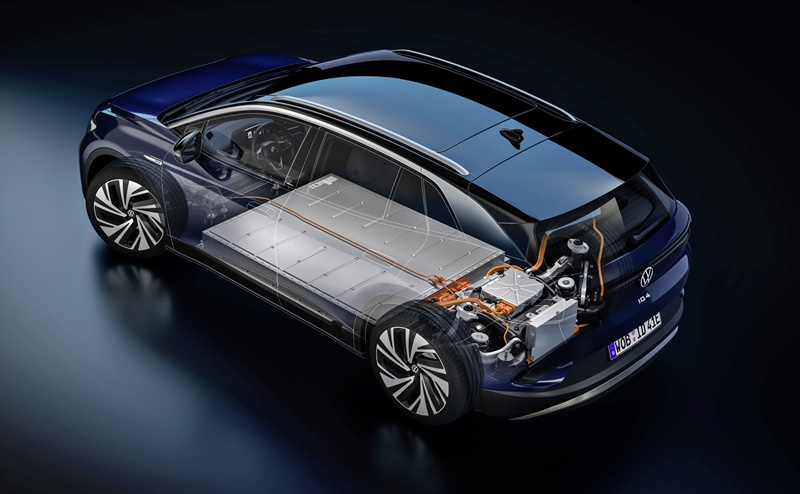
The ID.4, of course, has no such issue and is a zero emissions vehicle with the space and comfort that any buyer will appreciate. Its 77 kWh battery pack powers a 150 kW (equivalent to 204 ps) electric motor that gives a claimed 0 to 100 km/h time of 8.5 seconds and a top speed of 160 km/h.
The battery pack is installed below the passenger compartment for a low centre of gravity, while the electric drive motor is positioned at the rear axle, which also helps with grip. In the event that the driver wants to wander off the highway, there’s 21 cm of ground clearance with 21-inch wheels.
We Charge anywhere
Volkswagen is launching on the European market a complete package for convenient, connected and sustainable charging of electric cars under the name ‘We Charge’. This provides recharging at home, around town or on a long journey. The ID.4 can be recharged within 30 minutes with at a DC (direct current) quick-charging station to provide a claimed 320 kms of range. On a full battery pack, the range is claimed to be up to 520 kms.
Sleek exterior
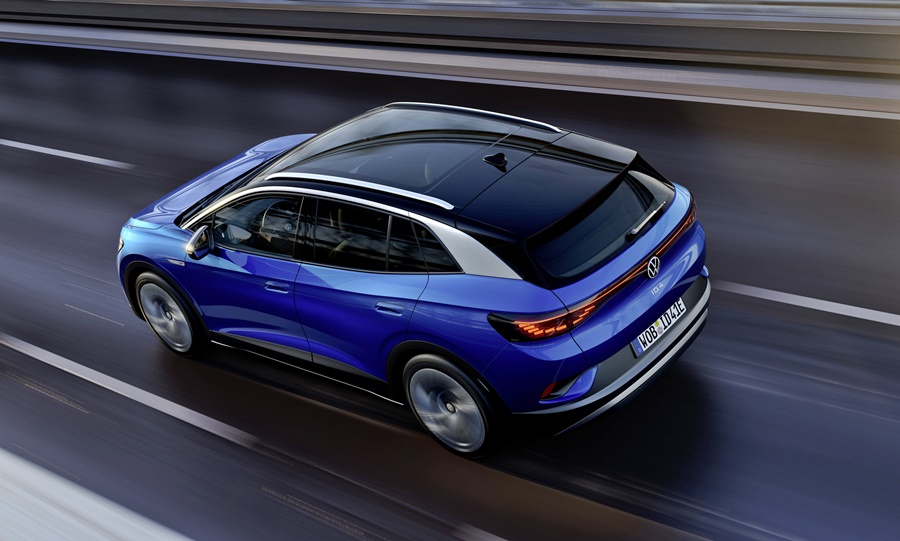
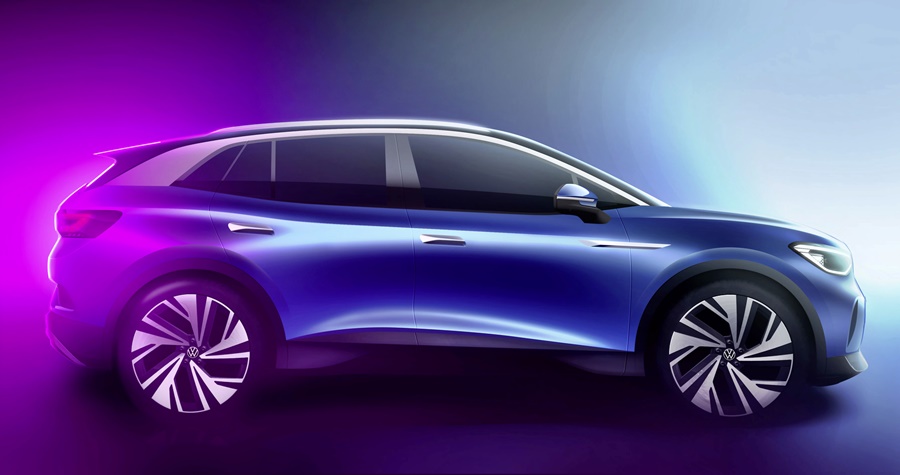
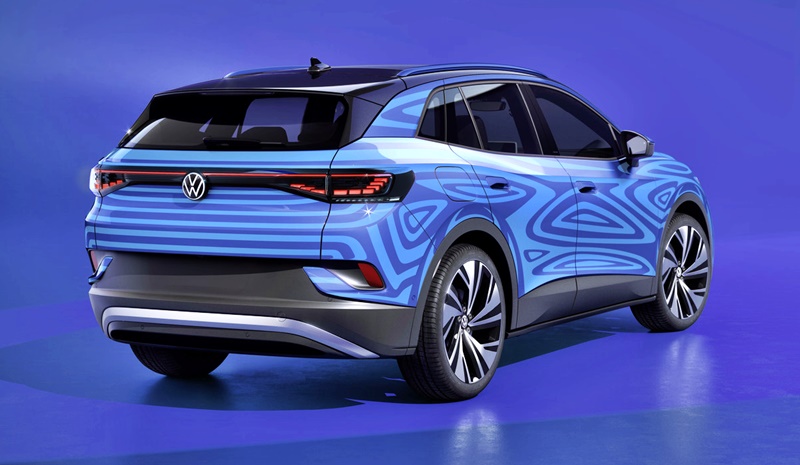
The ID.4’s exterior has a clear, flowing design inspired by nature. Aerodynamic efficiency has been tuned to a low 0.28 Cd, which will reduce the wind resistance that needs to be overcome by the electric motor.
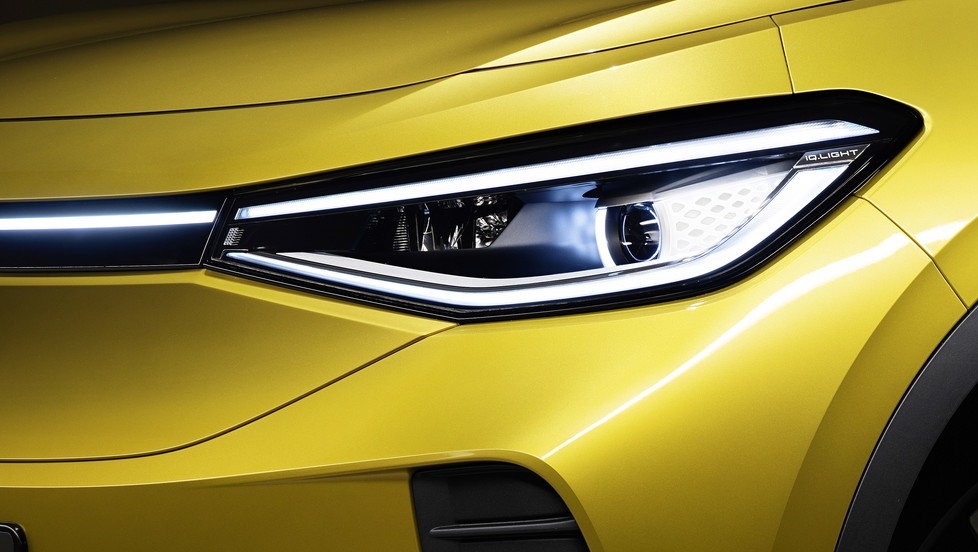
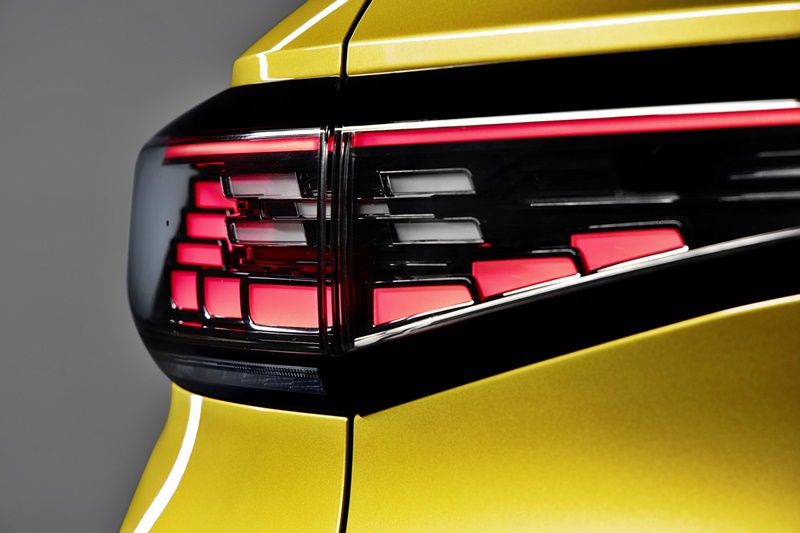
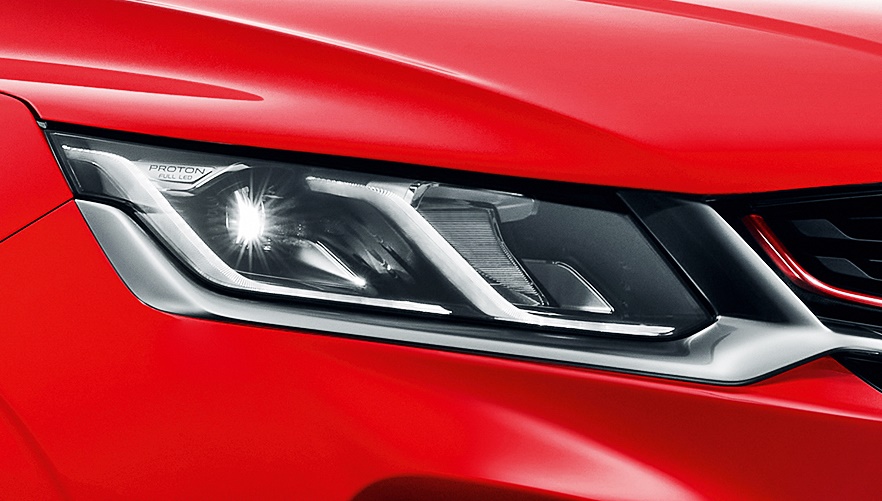
The front and rear lighting units use LEDs (partial at the front) and for the most expensive ID.4 version, there are interactive IQ.Light LED matrix headlights. These feature swivelling lens modules and generate an intelligently controlled main beam for optimised spread. At the rear are new 3D LED taillight clusters with a homogeneous appearance that fully illuminates in an intensive red.
MEB for more space
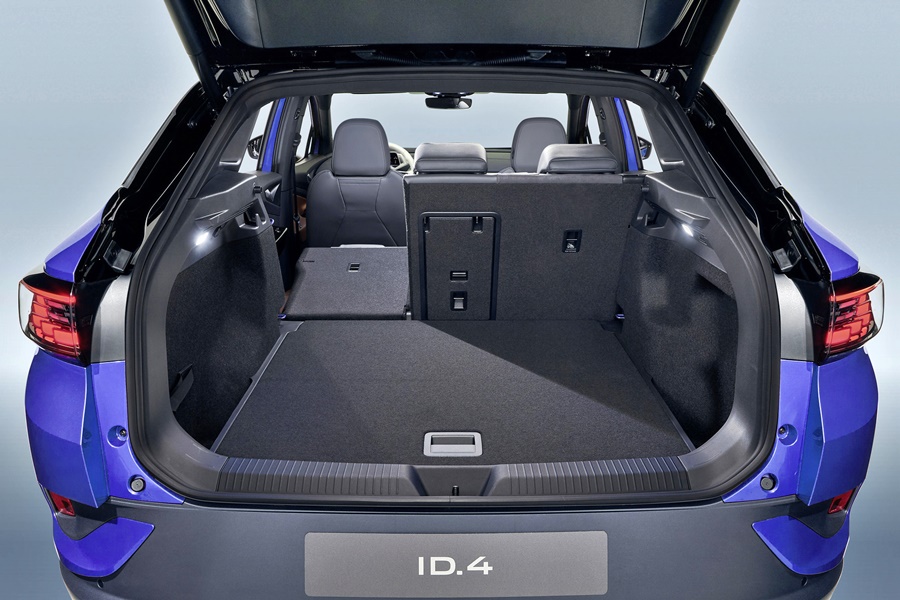
The 4.58-metre long ID.4 sits on Volkswagen’s modular electric drive matrix (MEB) architecture. It divides the space for occupants and technology in a completely new way in favour of passengers. The space available in the cabin is said to be comparable to conventional SUVs in the next category up. Depending on the rear seat backrest’s position, the luggage compartment can have a volume from 543 to 1,575 litres.
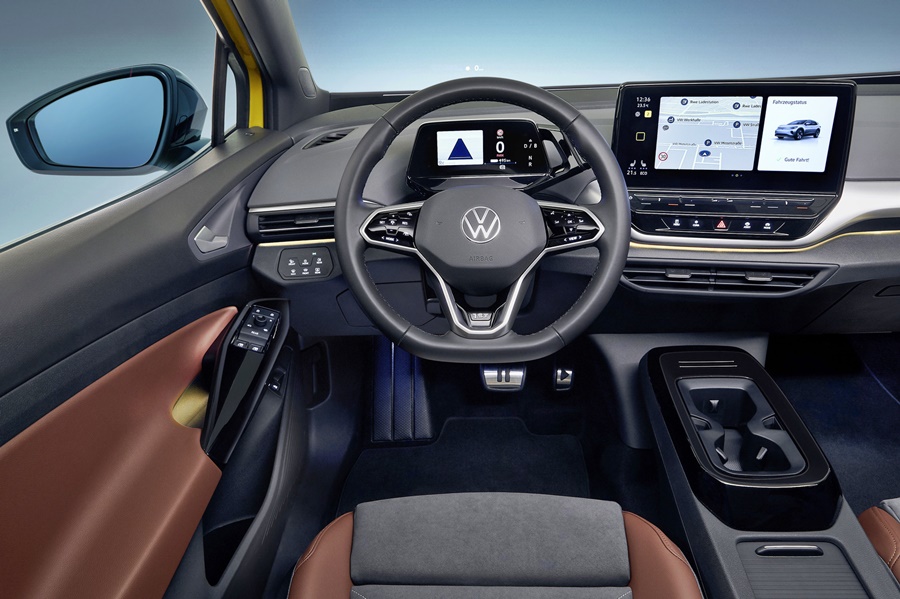
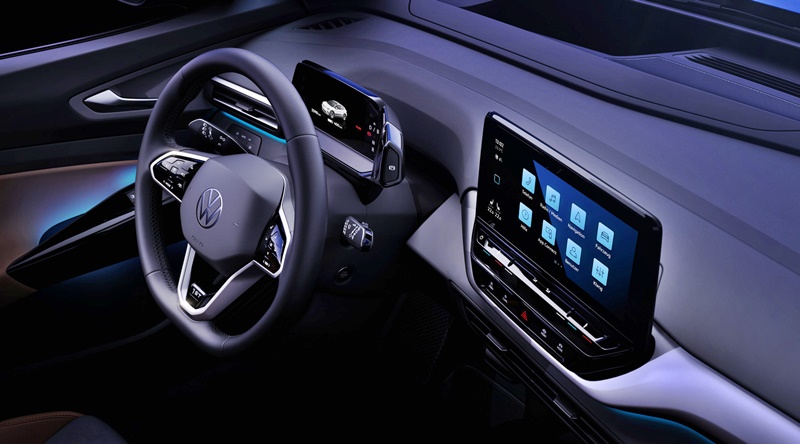
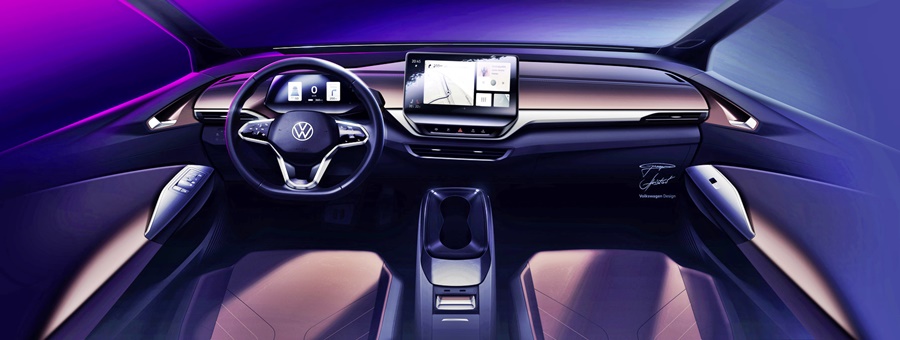
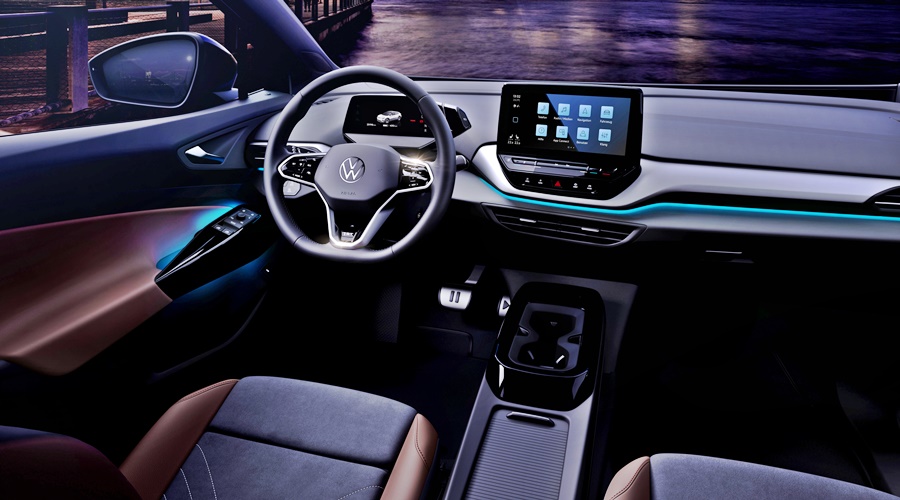
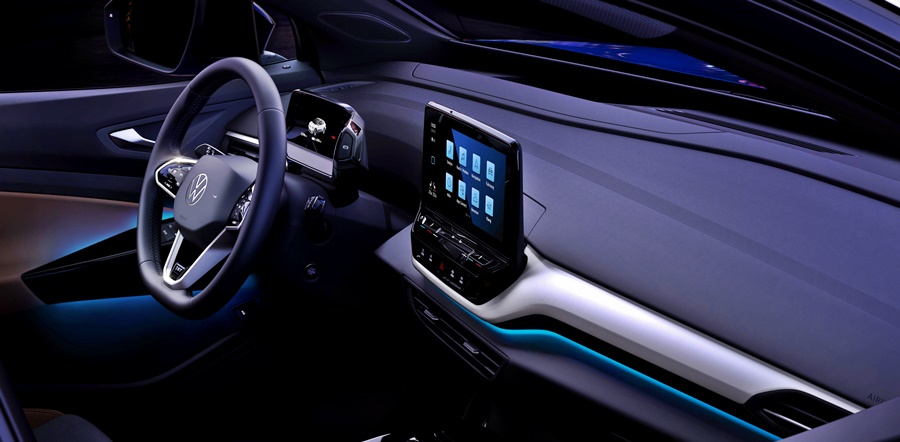
The operating concept on the dashboard of this E-SUV, as Volkswagen refers to it, does not depend on physical buttons and switches. There are two displays, one of which diagonally measures up to 12 inches and features touch functionality, as well as a ‘Hello ID’ natural voice control assistant. The new ID.Light – a narrow light strip under the windscreen – intuitively supports drivers.
An augmented reality (AR) head-up display is optionally available to blend a host of displays with reality. Navigation arrows telling drivers to turn off are projected onto the road surface in exactly the right lane. IQ.Drive assist systems help the driver to enjoy safer and more relaxed motoring, while software is part of a completely new architecture and updates can be downloaded ‘over the air’.
Plans for global sale
The ID.4 will be gradually turned into a global model; Volkswagen has plans to produce and sell the E-SUV not only in Europe but also in China and later, in the USA.
Will we see it in Malaysia? Probably not so soon as there are a number of issues which would prevent it from being sold in sufficient numbers. It would be a CBU model and that would push its price up – and it would already be high as it has brand new technology. Malaysians are still not entirely sold on fully electric cars and the recharging network is also limited. While neighbouring countries’ governments are starting to promote EVs, our government is only ‘talking’ about being a hub for ‘energy efficient vehicles’ in the region, but is not doing much to make it attractive for manufacturers to set up here.
In the past, a concept model was mostly a work of fantasy intended to wow crowds at motorshows but which the company would not be able to make for showrooms. Perhaps the excitement of seeing something futuristic has worn off and these days, manufacturers often show concept models that are close to what they will launch in a year or in a few years.
Displaying a future production model as a ‘concept’ allows the designers to get last-minute feedback from the public on certain ideas they may want to use. They may learn that people don’t appreciate a certain styling element and omit or modify it before production starts.
Future 3-row SUV
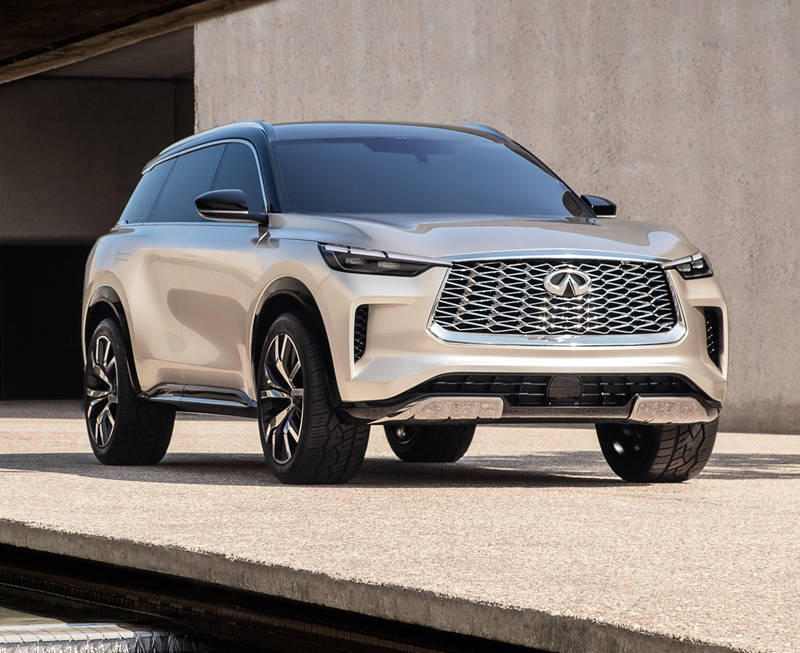
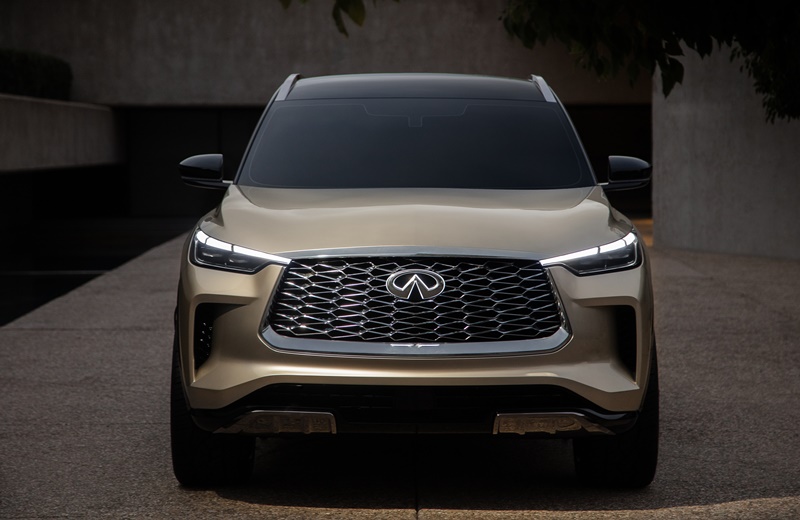
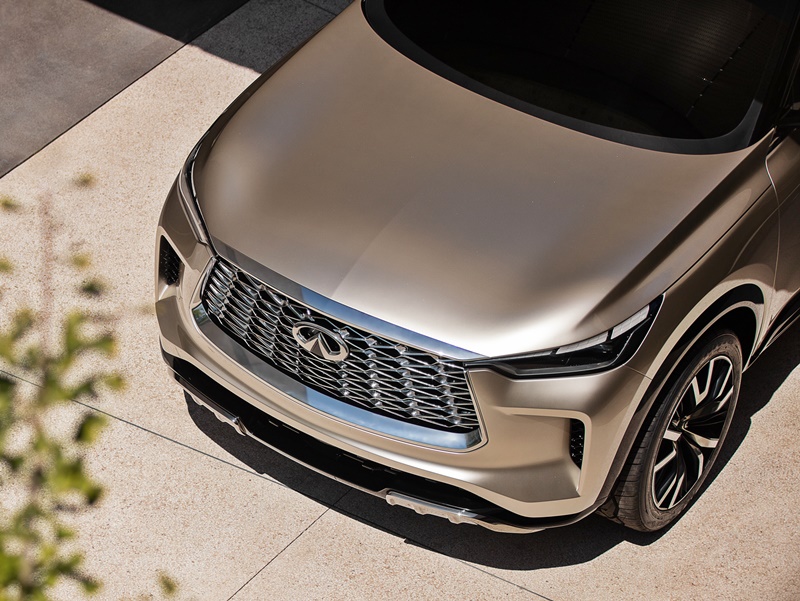
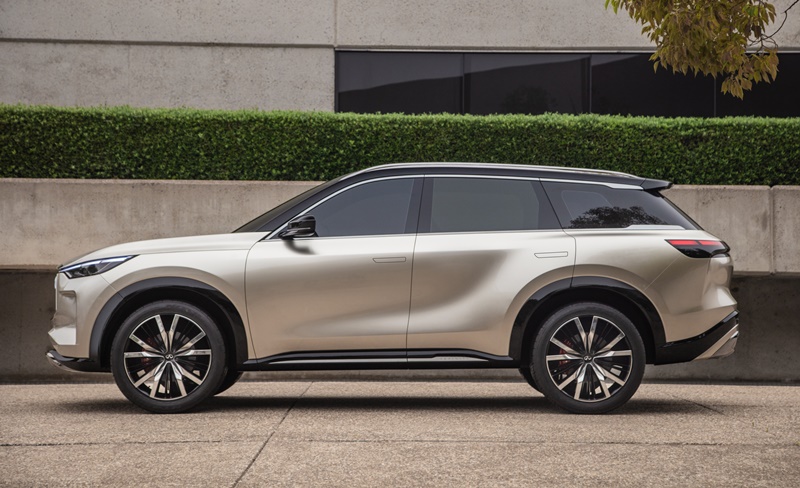
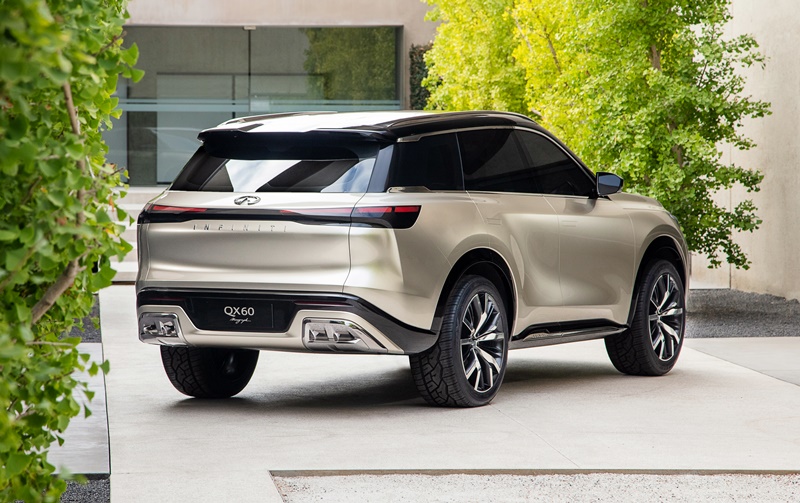
Infiniti, Nissan’s luxury brand, is displaying the QX60 Monograph this weekend at the Beijing Auto Show and it confirms that the concept model previews some of the proportions and design elements for the brand’s future three-row SUV.
“In crafting this concept, we wanted to change the tonality of the QX60 and transform the nameplate from a sculptural and architectural point of view. We raised the visual centre of gravity, giving it a strong, straight shoulderline that carries through to the bonnet, with a higher, more prominent grille, and longer-looking cabin to deliver a sense of muscularity and a commanding presence,” said Alfonso Albaisa, Senior Vice-President, Global Design at Nissan Motor.
Japanese inspirations
“The QX60 Monograph embodies the Japanese concept of ‘Ma,’ a sense of minimalism where designers seek harmony, adding just the right number of elements with very specific meaning to create something special. This is evident on the body, where at a glance it is simple, but when you get closer, you see that there are elements that are playing against each other in a sense of harmony,” Albaisa explained.
Focused solely on the exterior, the designers imagined the QX60 Monograph as a sophisticated yet functional solution for a busy, modern family. The proportions include a wide stance, sleek greenhouse, horizontal shoulder line and muscular wheel arches. The combination of which creates a commanding posture and defined SUV persona.
Advanced lighting appearance
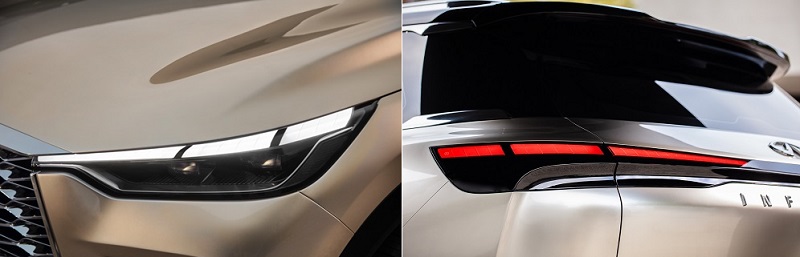
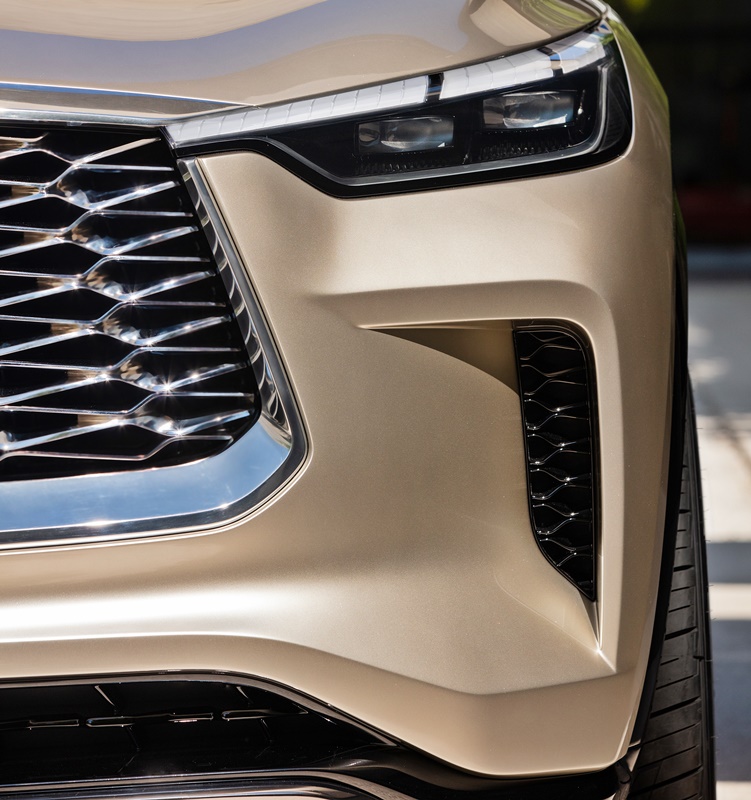
Intricate ‘Digital Piano Key’ lighting at the front and rear projects a futuristic appearance and showcases how Infiniti blends human artistry with the latest technology. The inner structure of the headlamp features a shape and pattern of lines inspired by an electrical heatsink device.
Bright white at the front, and ultra-red at the back, the QX60 Monograph’s lamps are accompanied by the glowing ‘infinite road’ brand emblem. Combined, the opening light sequence begins at the logo and fans out to the headlamps in a dynamic welcome for drivers.
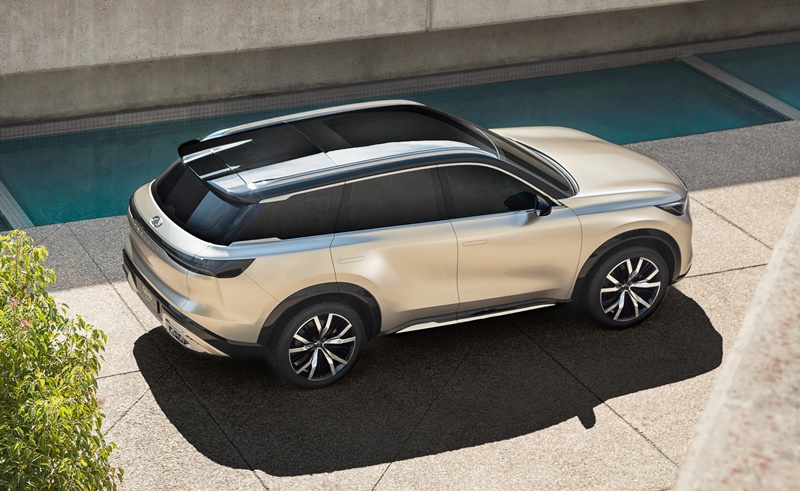
Viewed from the side, the Monograph shows off its horizontal bonnet, muscular fenders and long wheelbase. Paired with the gentle rake of the A-pillar and tapered, teardrop-like glasshouse, the result is a long sweeping, sophisticated profile. The roof flows into a subtly integrated rear roof spoiler — also in gloss black — to further enhance the car’s aerodynamic appearance.
At the rear, the wide body and track, complementing the horizontal window line give the QX60 Monograph a sense of poise and stability. Embossed with the INFINITI name, the SUV features large alloy wheels that fill the pronounced fenders and reinforce the performance-inspired aesthetic.
The rear lamps are tinted and, when turned off, appear to wrap around the back of the vehicle and into the rear flanks in one continuous shape. Illuminated, the piano key lighting shines through to form a beautiful, futuristic light signature.
Platinum paint and black roof
“The platinum paint on the QX60 Monograph projects a sense of warmth. The highly reflective nature mimics the qualities of liquid metal, allowing the surface of the body to capture the shadows and lights of the environment in which it is displayed creating a sense of dynamism,” said Taisuke Nakamura, Senior Design Director, Infiniti Global Design.
A large panoramic roof features a ‘kimono fold’ pattern. This geometric feature, a series of intricate perpendicular lines, draws inspiration from the folds of a silk kimono and the structures of Japan’s modern architecture.
He explained that the black roof creates a strong contrast to the rich body colour for a dramatic visual statement. The pillars, roof, front, side and rear glass all seamlessly connect — giving a panoramic feel to the cabin and promoting a sense of openness. Slim-line roof rails provide a practical counterpoint to the QX60 Monograph’s sleek, sporty proportions.
“We commenced the design of the Monograph knowing this was an opportune time to start a discussion about where we are planning to take the QX60 in the future and more broadly, where we are heading as a brand with our design language,” said Albaisa, adding that the production version of the next generation QX60 can be expected in 2021.
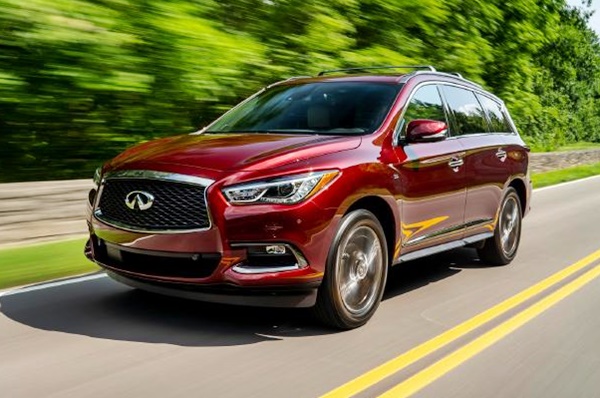
Current QX60 has been around since 2012 (known as JX35 at the start) and was Infiniti’s first 3-row SUV.
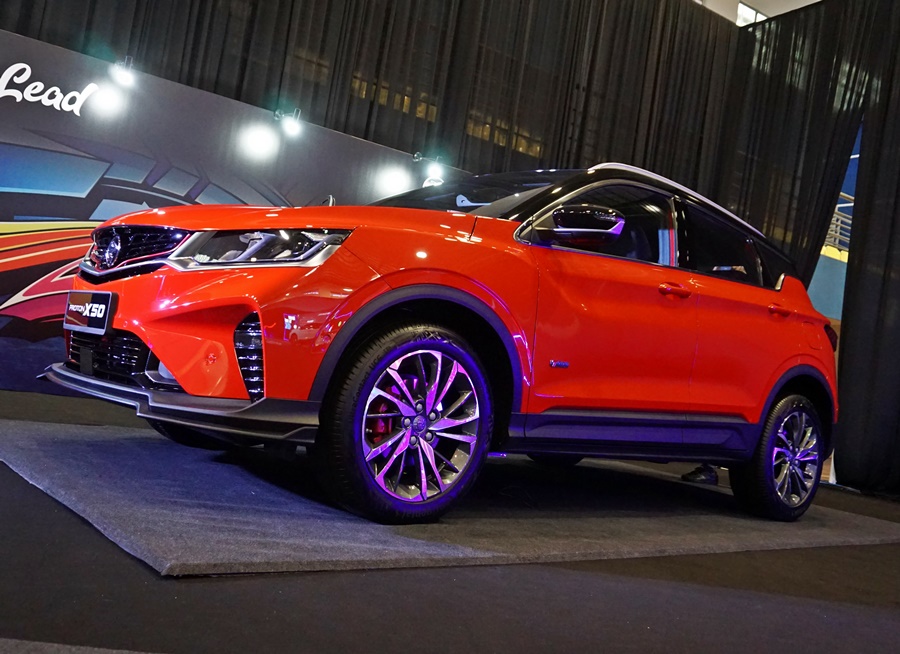
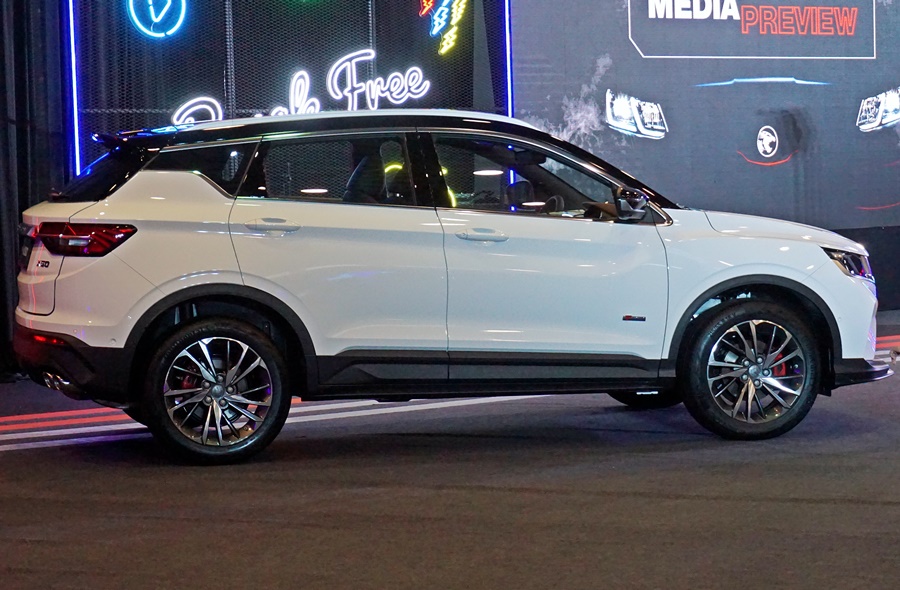
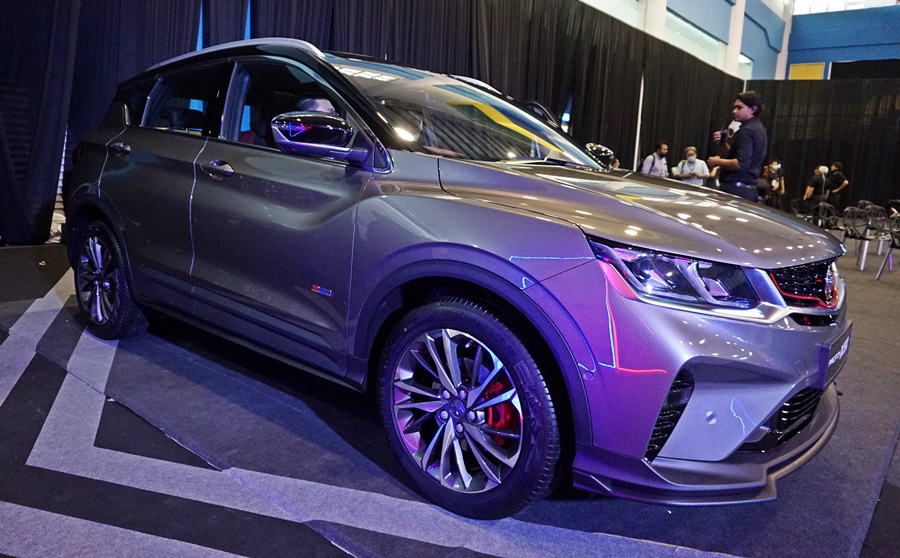
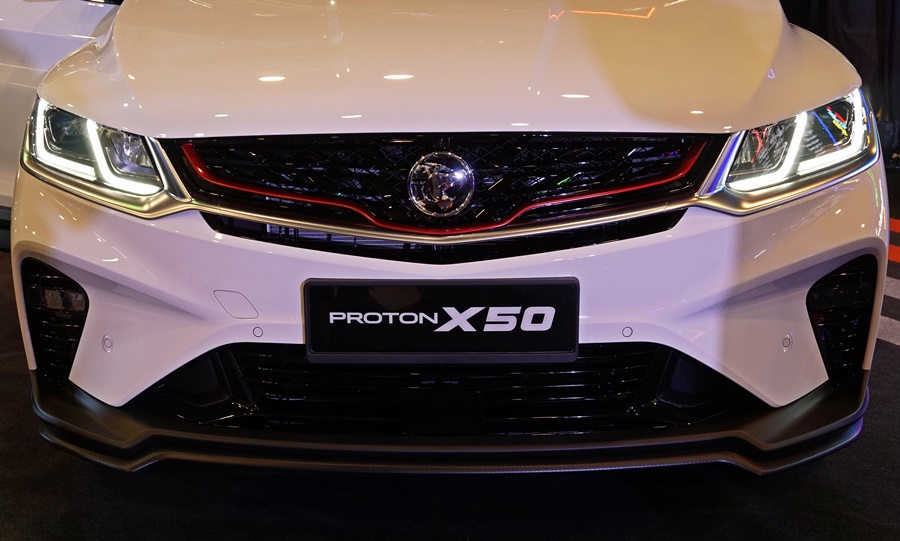
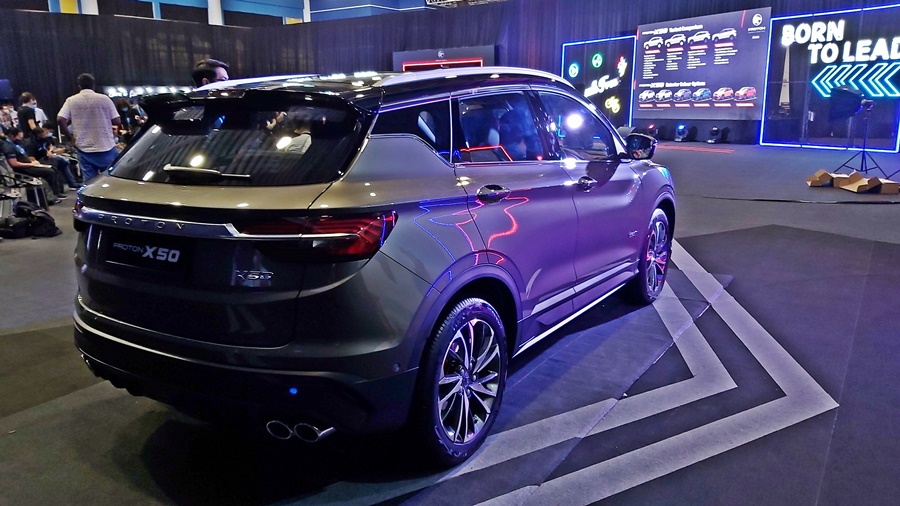
Three years after the Zhejiang Geely Holding Group (Geely) took on a 49.9% equity in Proton, the carmaker is about to launch a second brand new model – the X50. Like the X70, it is also a SUV, catering to the most active segment globally.
It is also a model adapted from one which Geely developed and launched in August 2018 – the Binyue (Coolray outside China) – like the X70, which is why Proton can get completely new models into the market in such a short time. Normally, a new model would take a few years to develop but adapting from an existing model means the main time-consuming (and expensive) engineering work has been done already.
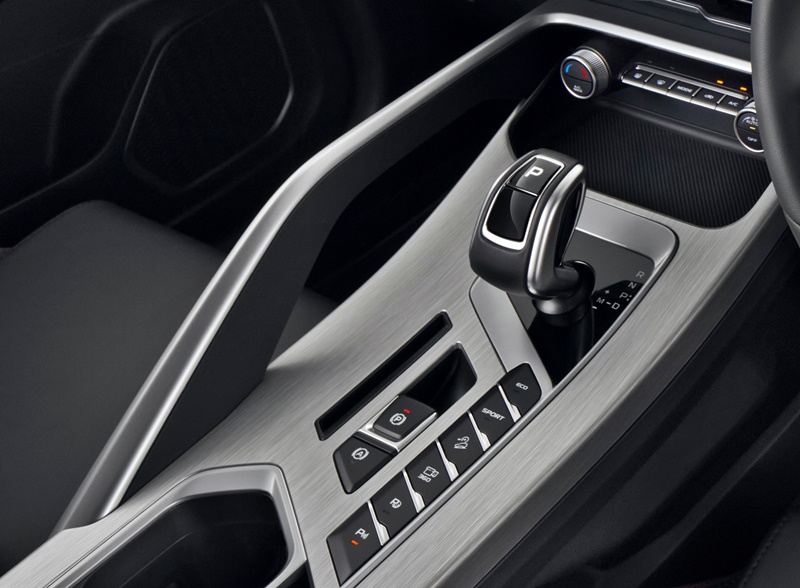
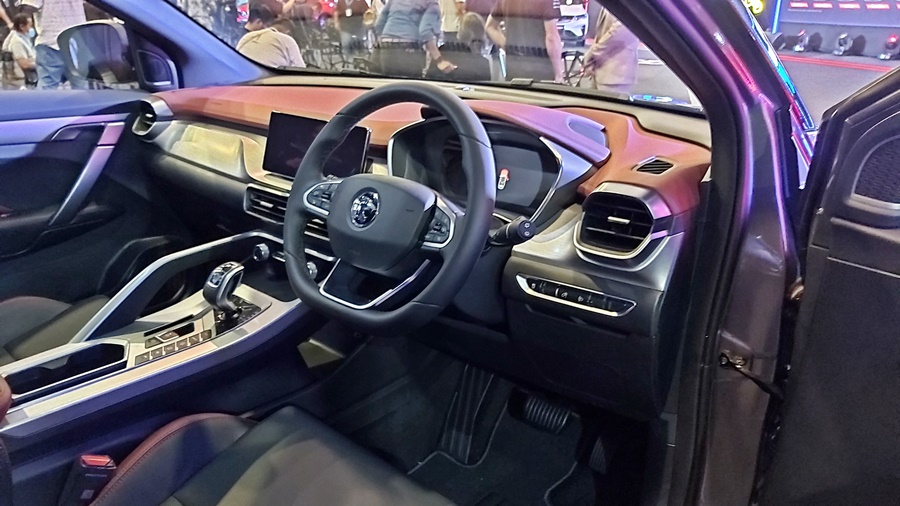
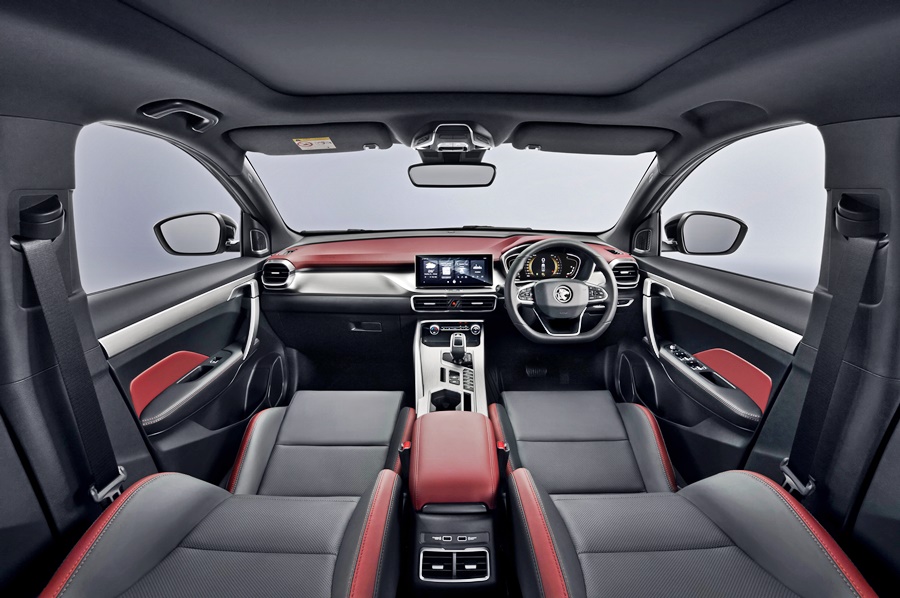
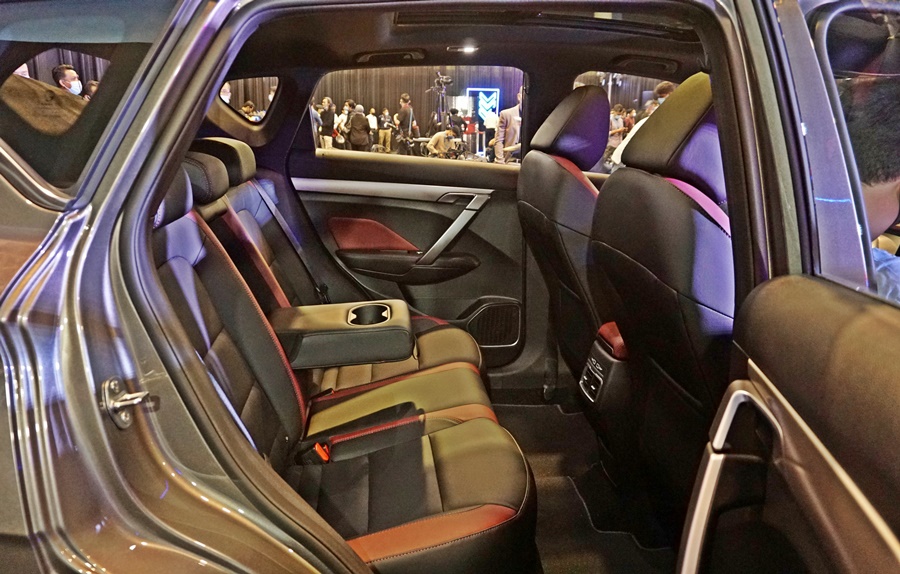
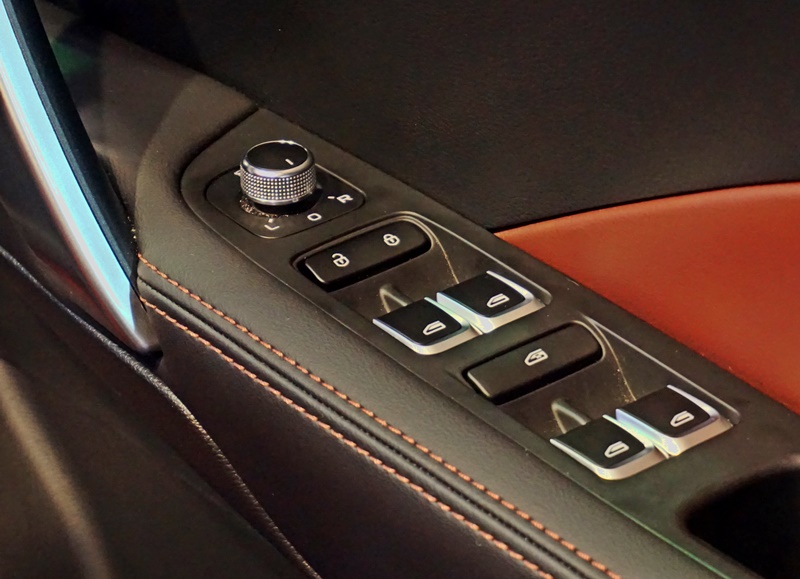
However, just as in the case of the X70 (known as the Boyue in China), a Proton version was not merely doing cosmetic changes and putting a different brand badge on. Until Proton launched the X70, there was no righthand drive version of the model anywhere in the world. And that meant additional engineering work which was more than just moving the steering wheel to the right side. Entirely new parts for righthand drive had to be made too, eg a different dashboard, power window switch panel, centre console, etc.
New X50 is adapted from the Geely Binyue/Coolray.
With the urgency to revive Proton and turn it around, the X70 was initially built in China and sent to Malaysia while the factory in Tg. Malim, which started operations almost 20 years ago, was renovated and improved. With that completed, X70 production was shifted to Malaysia and for the X50, Proton can start off right away making the model locally. And, like the X70 too, it will be the first (and for now, only) righthand drive version of the Binyue.
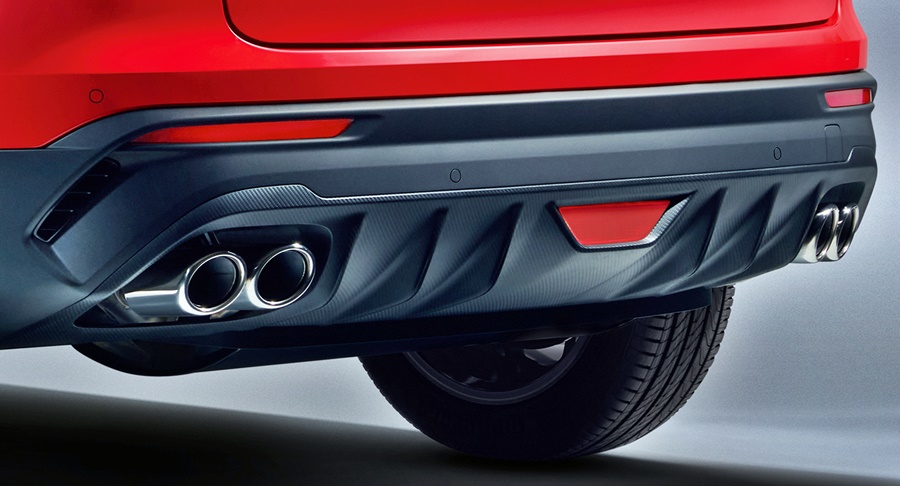
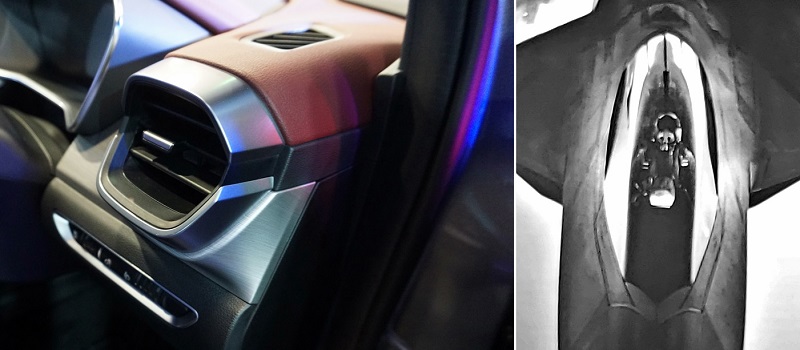
According to Proton DESIGN Head, Azlan Othman, there’s jet fighter influence in the design of the air vents! The last time we heard that was when another designer told us that he was influenced by the Stealth Fighter when he styled the Savvy.
It is only to be expected that lessons learnt from developing the X70 have made the process of developing the X50 faster. For instance, Azlan Othman and his team at Proton DESIGN had to also get used to a new working culture while rushing work on the X70. With the X50, it would be safe to say they were ‘in the groove’ and also had a chance to ‘customize’ the model a bit more.
4 variants, 2 engine outputs
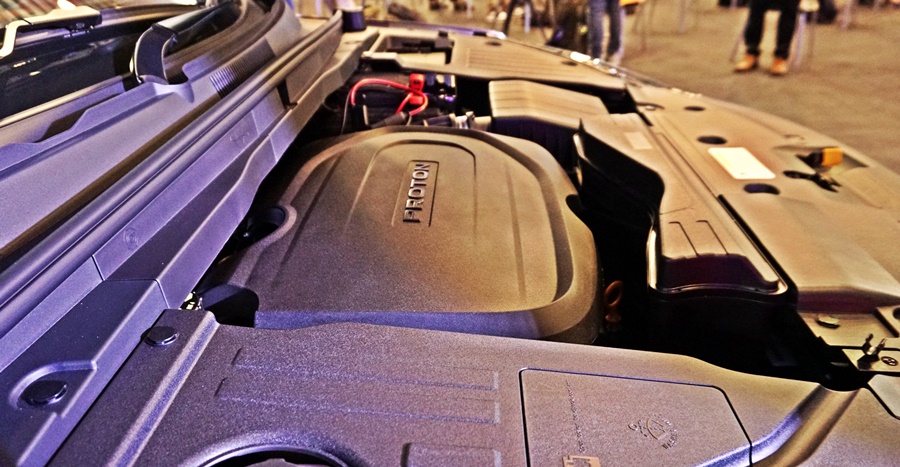
We don’t have the prices yet, but we do know that there will be 4 variants – Standard, Executive, Premium and, appropriately, Flagship. All of them will be powered by a 1.5-litre 3-cylinder petrol engine with turbocharging. However, the engine in the X50 1.5 TGDi Flagship will have a higher output of 177 ps/255 Nm as it has direct injection. The engine in the other three variants will have port injection and produce 150 ps/226 Nm.
All-wheel drive (AWD) may be nice to have but the cost-vs-benefit doesn’t work well in Malaysia and in any case, most customers don’t really care. So all X50 variants have front-wheel drive only, with a 7-speed dual-clutch transmission. For those who feel AWD gives better grip and stability in the wet, that argument is less relevant with the advanced electronic stability control and traction control systems available today.
More powerful GKUI 19
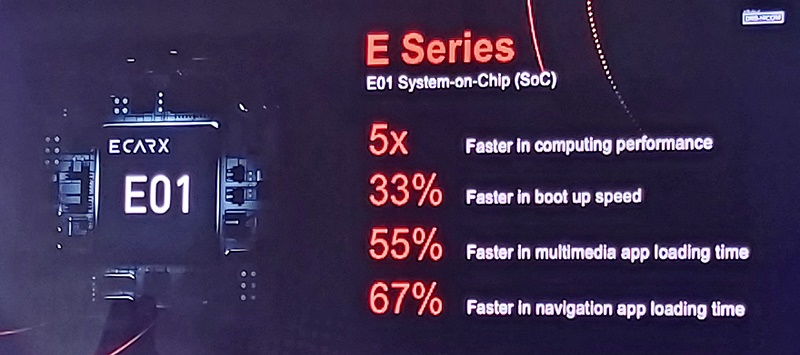
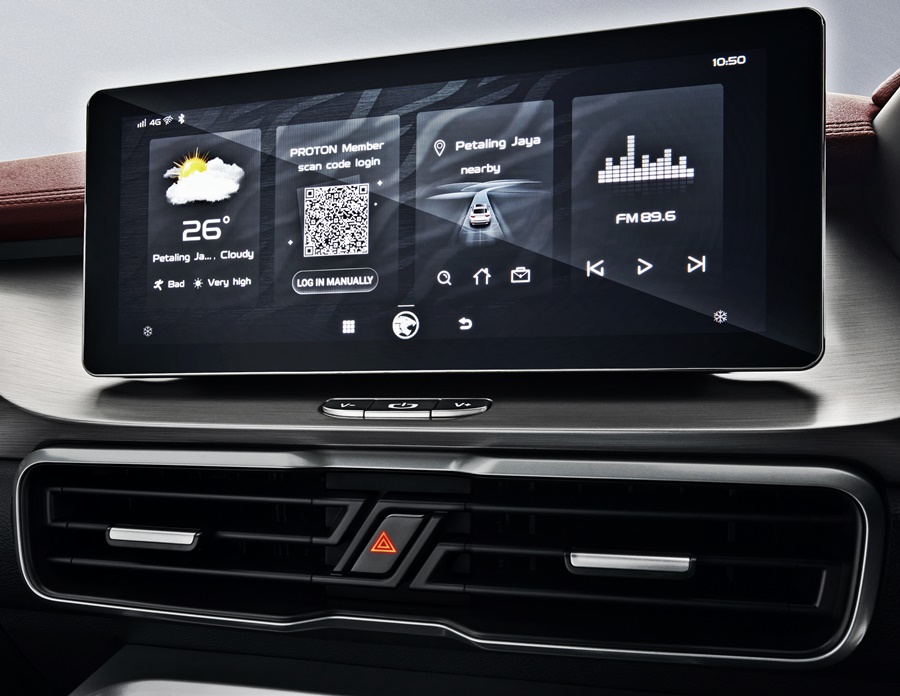
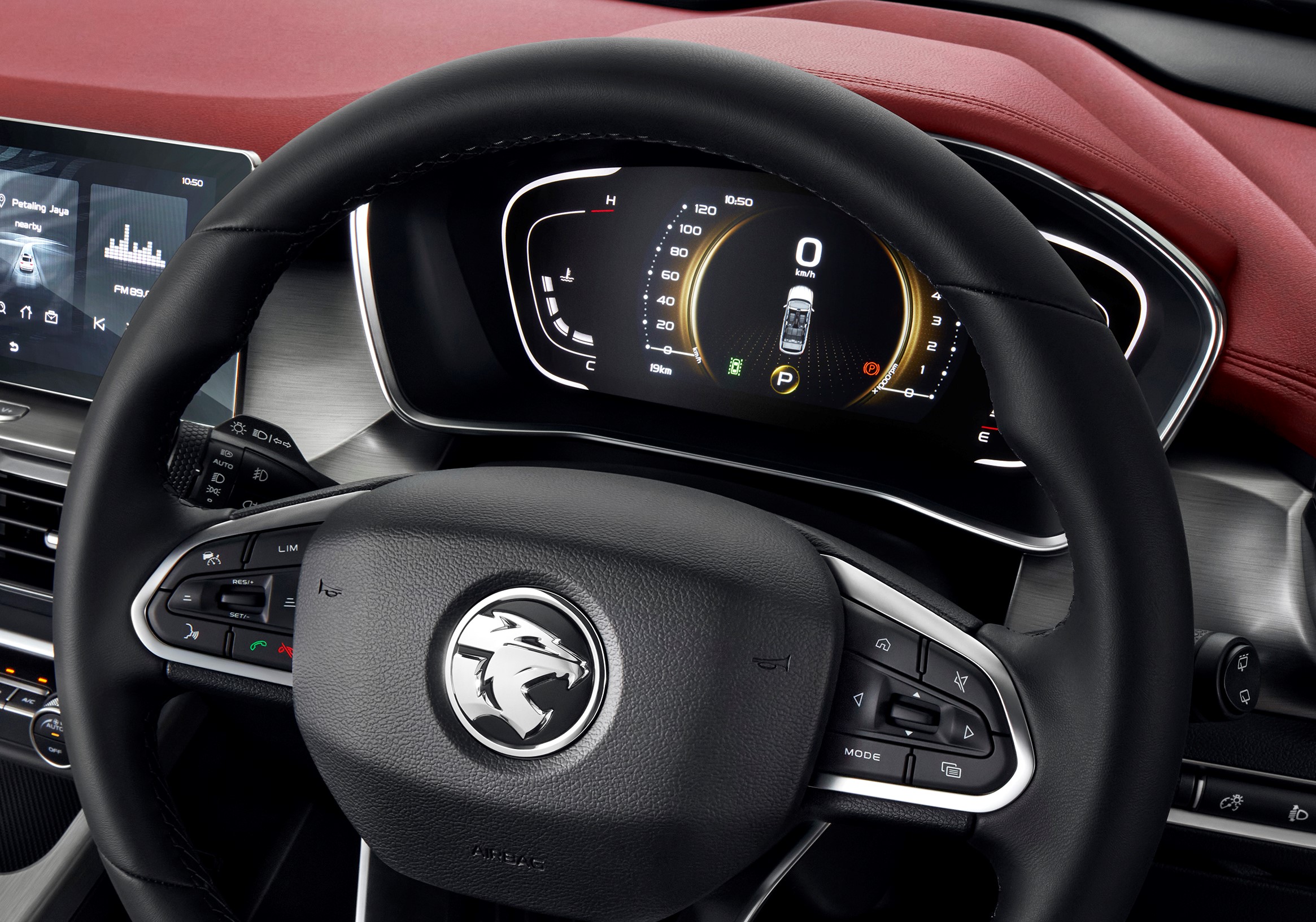
And talking of electronic systems, the X50 will have a newer generation of the Geely Key User Interface, or GKUI 19. Like computers and smartphones, the processing power of the system becomes greater over time as processors evolve. It also has a graphics processing unit (GPU) which helps in reducing demands on the main processor.
Latest generation GKUI 19 uses a more powerful quad-core processor for faster performance.
What this means to the user is more responsiveness – perhaps when ‘Hi Proton’ is said, the computer will spend less time ‘thinking’ before responding. Moving to a new generation gave the system designers a chance to revise and refine the interface, simplifying the menu structure while also offering a cleaner layout. The virtual buttons on the 10.25-inch touchscreen (8 inches for the Standard and Premium variants) are large, as they should be to make selection easier. The larger screen also has a resolution of 1920×720 px.
The navigation system in the X70 has sometimes been deficient and to partially address this, Proton has switched to a different digital mapping service. Whether it proves to be better remains to be seen when we get to test the new car. It would be good if there’s Apple CarPlay or Android Auto so smartphone apps like Waze or Google Maps can be transferred into the screen but the X50, like the X70, does not have them yet. It is, however, possible to interface using a mirroring function called QDLink.
An eSIM is provided for all variants, providing the necessary connectivity to the digital world. With the Premium and Flagship variants, it is also possible to start the engine as well as the air-conditioner without being inside the car. This is done using the Proton Link app which also allows setting the desired cooling temperature.
Idling the engine wastes petrol since the car is not going anywhere. But it is necessary if you want the luxury of having a cool cabin when you get in because the air-conditioner compressor needs to be powered. So the maximum time the engine is allowed to run is 10 minutes, after which it shuts down and so does the air-conditioner. If you do get in when the engine is running, you can also move off immediately so hopefully, the locking system is secure enough otherwise someone passing by can just get in and drive off!
Safety & ADAS
ABS with EBD and Brake Assist, Electronic Stability Control, Hill-start Assist, Hill Descent Control and Reverse Camera are standard active safety systems across the range. All variants also have a minimum of 4 airbags – front and sides – as well as ISOFIX points at the rear for compatible childseats. The Premium and Flagship variants have additional window curtain airbags and the camera system gives a 360-degree top-down view, as well as a tyre pressure monitoring system.
The X50 Flagship has an Advanced Driver Assistance System (ADAS) like the top version of the X70. However, the one in the new model is more advanced and can even operate with Level 2 autonomy. At this level, which is one of 5 levels, the brakes will activate automatically (if the driver does not act) if an accident is predicted as a vehicle or pedestrian are detected in front with the camera and radar.
The cruise control is also adaptive, adjusting the speed to maintain a safe gap and can even drop to standstill and resume moving in accordance with the vehicle ahead. Other ADAS features are keeping the car within a lane, automatically switching from high beam to low beam and a blind spot monitor.
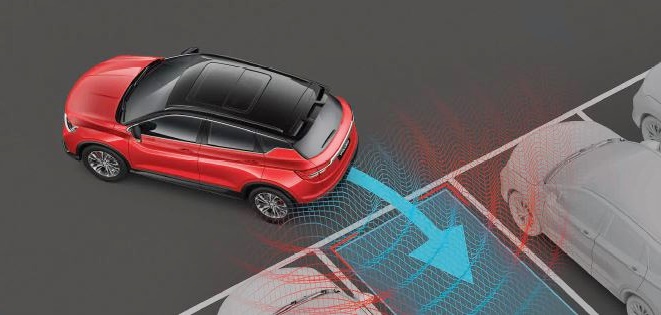
Self-parking is one of the ADAS features in the X50.
The X50 Flagship can also carry park itself, which should be welcome by those who find difficulty doing so. It’s an amazing system which uses the sensors around the body to position the car and all the driver has to do is work the accelerator pedal. Once this feature become standard in all vehicles, there won’t be a need for parking skill when taking a driving test!
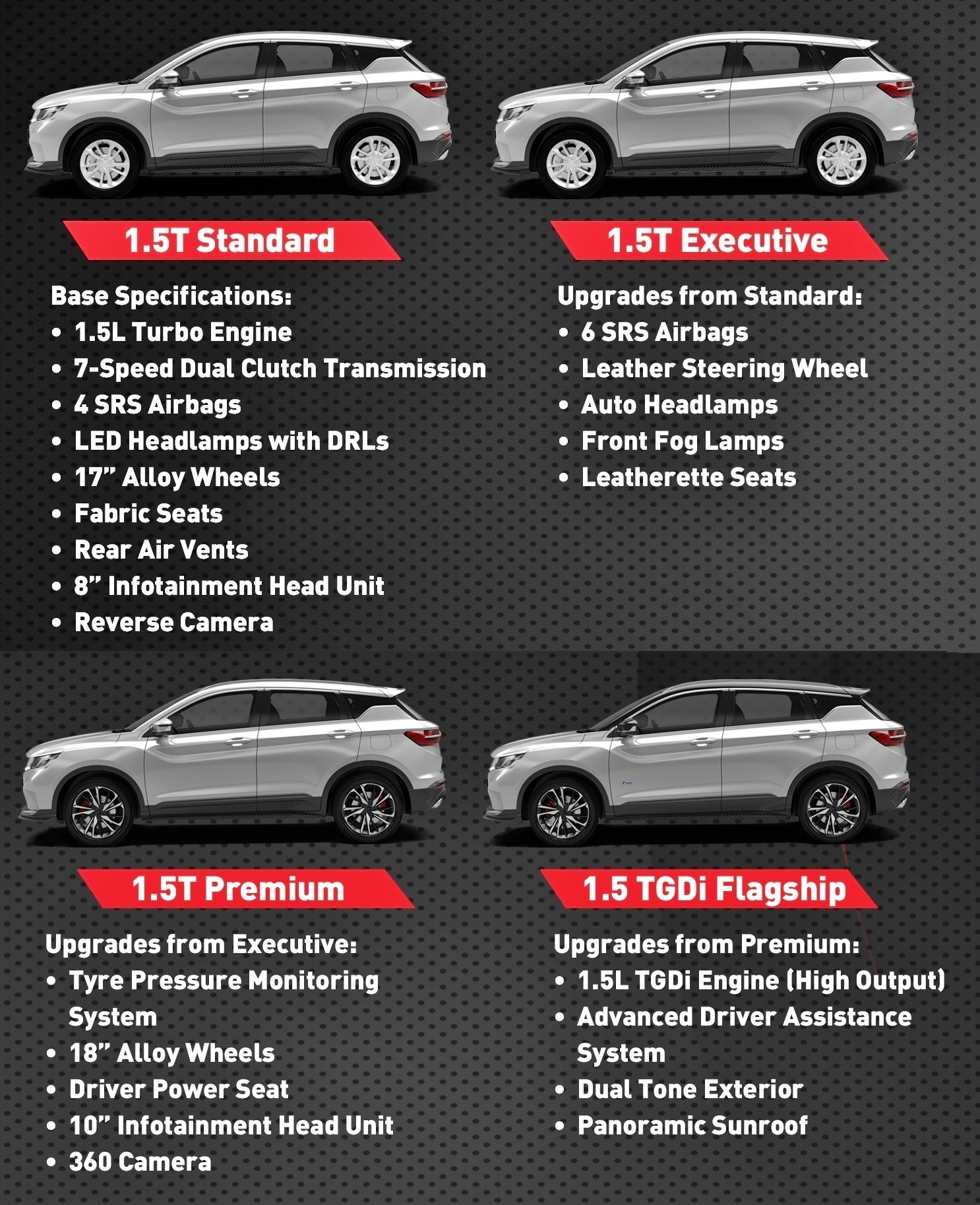
Feature differences of each variant
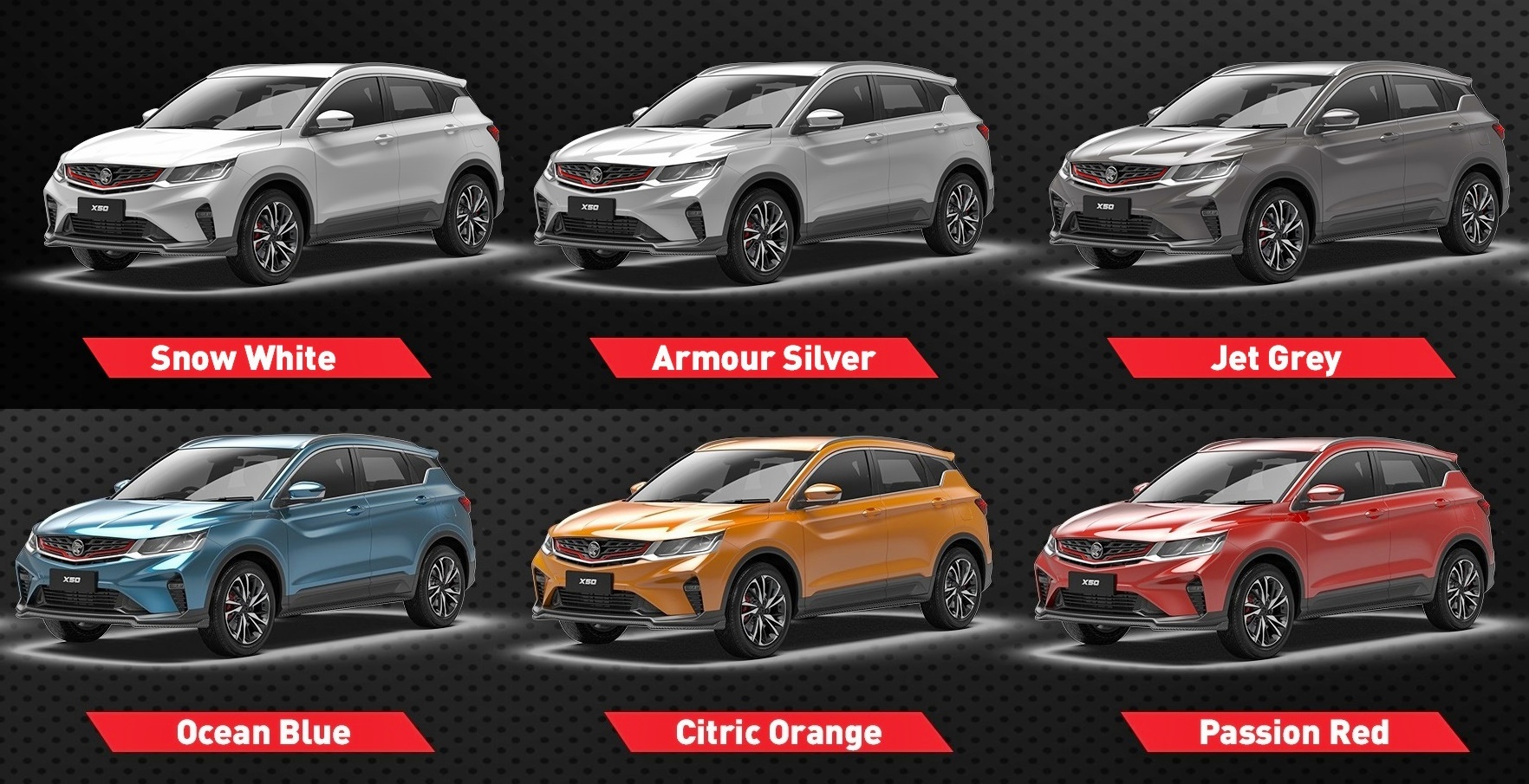
The list of main differentiating features in each variant are shown below and you get 6 body colours to choose from.
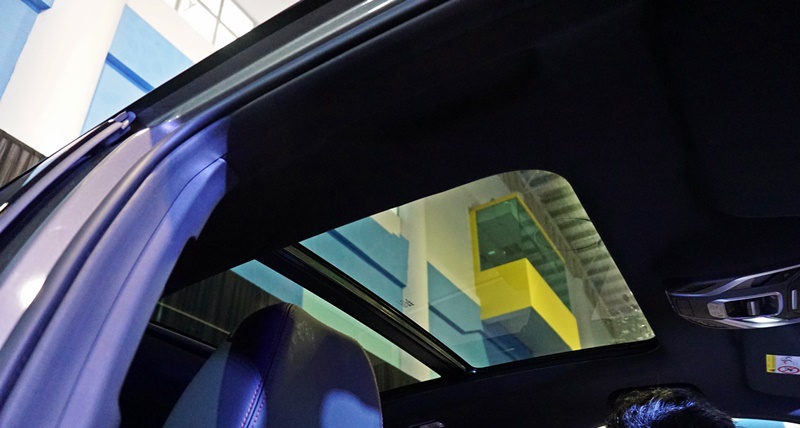
Panoramic sunroof is standard only with the X50 Flagship. ‘HiProton’ assistant can open it if you make the request to ‘see the sky’.
In the coming weeks leading to the official launch within a month’s time, we’ll be given more information on other aspects of the X50. As it will be launched within the period when the 10% sales tax is exempted, its price will differ from those registered after December 31, 2020 when the exemption incentive ends. So if you want to save money, order one quickly and it will cost you only RM500 to make a booking which will be accepted from tomorrow (September 16).
Vote for the X50 slogan
While the name has been revealed (not that it was a big secret, except that Proton never really confirmed it), the company is still undecided about the slogan to use for the new model. So, just as with the X70 when the public was invited to vote (for the model name), Proton is again inviting the public to vote for the slogan this time.
There are four slogans: Intelligence that Amazes, Intelligence that Leads, Intelligence that Exceeds, and Intelligence that Lives. We don’t see the page for voting tonight and maybe it will be open when bookings start tomorrow so visit www.proton.com to stay updated if you want to vote.
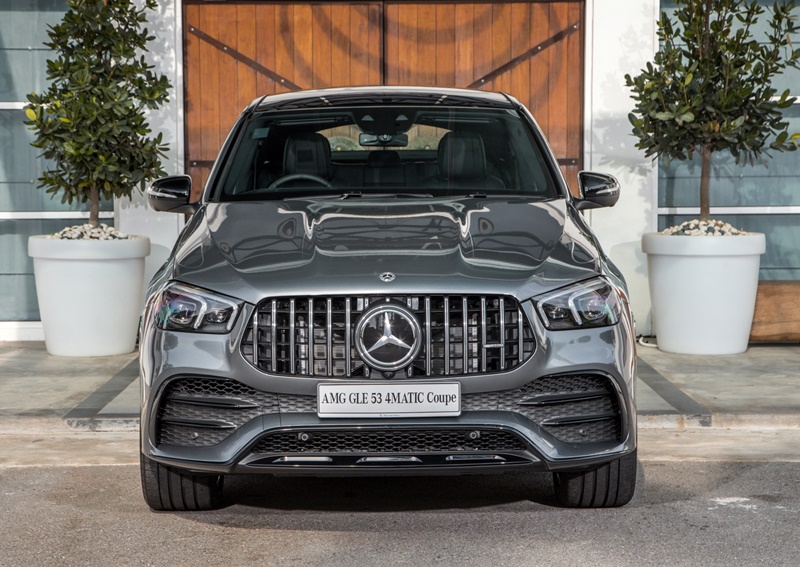
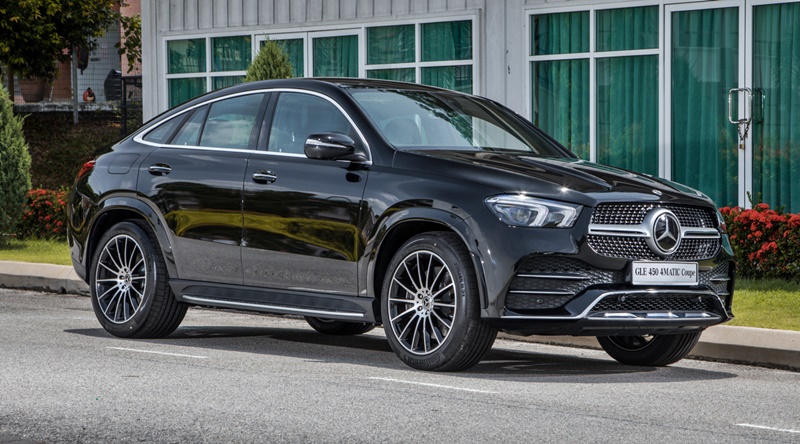
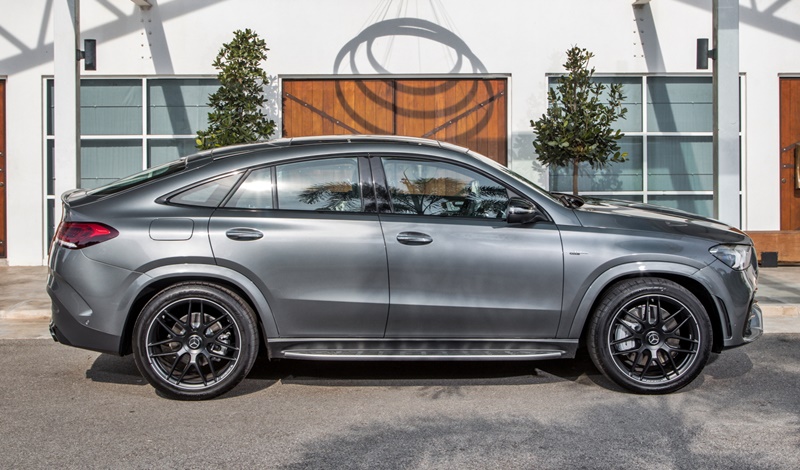
Mercedes-Benz Malaysia has introduced the latest Mercedes-Benz GLE 450 4MATIC Coupe and Mercedes-AMG GLE 53 4MATIC+ Coupe with the flagship GLS 450 4MATIC to be available in early 2021. The new models join the brand’s SUV range which includes compact GLA, GLC and G-Class.
“The new GLE Coupe seamlessly blends the unrivalled power of an SUV with the agility and elegance of a coupe. Every function and every detail aims to offer an incredibly enchanting experience in its segment,” said Michael Jopp, Vice-President, Sales & Marketing Passenger Cars, Mercedes-Benz Malaysia.
Mercedes-Benz GLE Coupe
The GLE 450 4MATIC Coupe is priced from RM661,009.42, while the GLE 53 4MATIC Coupe price starts from RM787,357.88, both prices without insurance but with relevant sales tax deducted until the end of 2020.
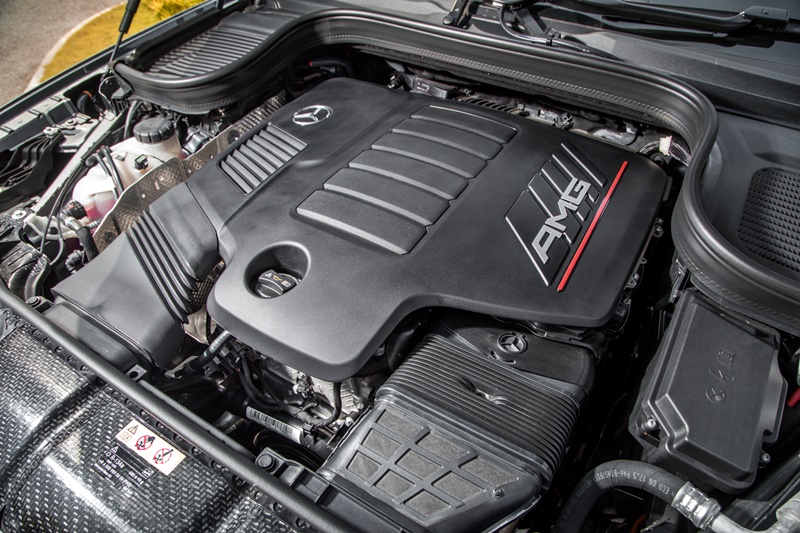
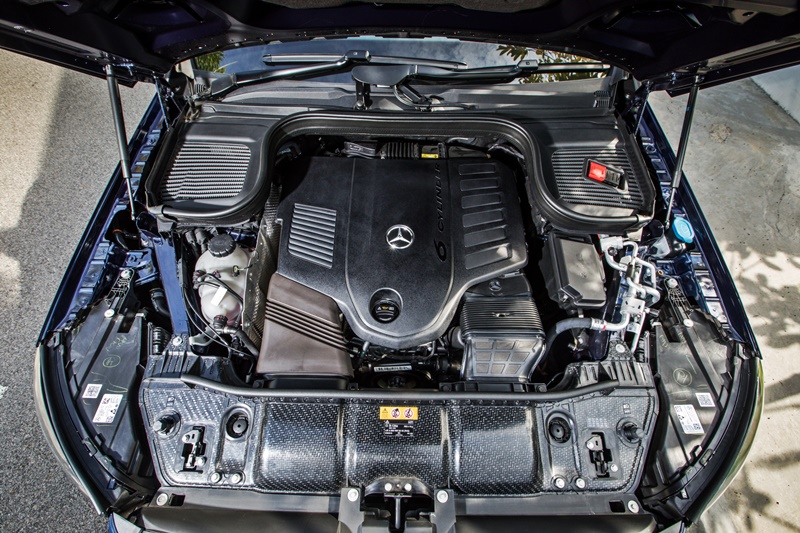
The GLE 450 Coupe is powered by the 3-litre turbocharged in-line 6-cylinder engine that produces 367 bhp/500 Nm, giving it a claimed acceleration capability of 5.7 seconds from 0 to 100 km/h. The similar engine size and type in the GLE 53 Coupe generates 435 bhp/520 Nm, which can take off another 4/10ths of a second in the 0 to 100 km/h acceleration time.
Both models ride on AIRMATIC air suspension system with adaptive adjustable damping. The system uses highly complex sensor systems and algorithms to constantly adapt damping characteristics to road and driving conditions for optimum comfort levels.
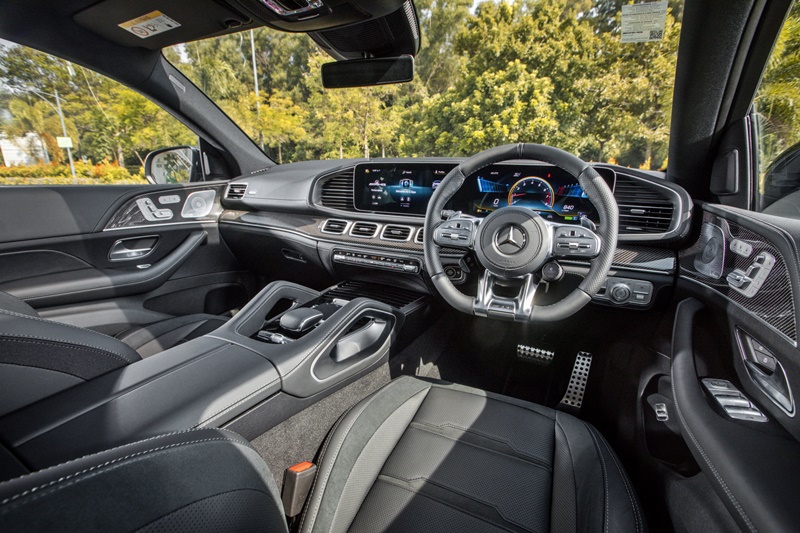
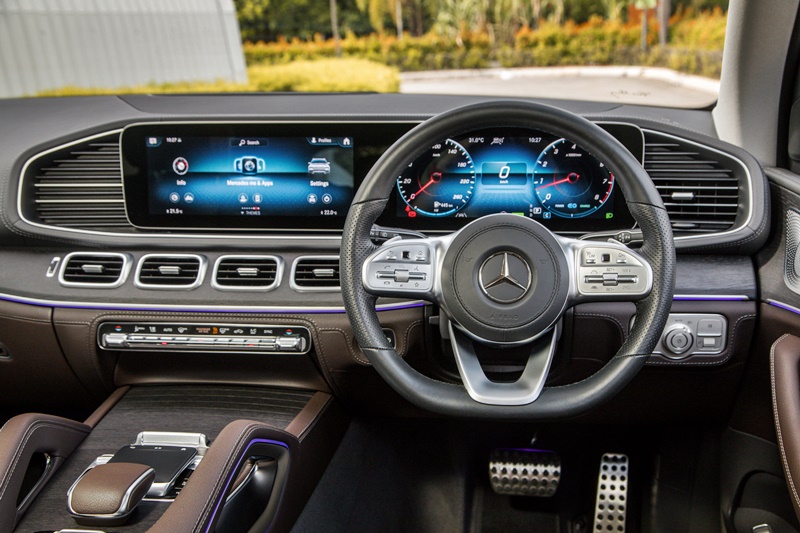
The interior of the new GLE Coupes shares many common features with the other models in the SUV range family with a clear emphasis sportiness while maintain the premium image. Large 12.3-inch screens complement the instrument panel, horizontally divided by a trim element tier, tom provide the driver with all the important information while on the move.
As with all the latest Mercedes-Benz model, the GLE Coupe comes with the MBUX (Mercedes-Benz User Experience) infotainment system. The latest generation of MBUX has a more intuitive operating structure and high visual quality.
Mercedes-Benz GLS 450 4MATIC AMG Line
The GLS 450 4MATIC AMG Line is expected to be priced from RM899,888 when it goes on sale in 2021. As it will be after the sales tax-exemption period, the indicated price includes sales tax of 10% (unless there are changes when the new Budget is announced in October).
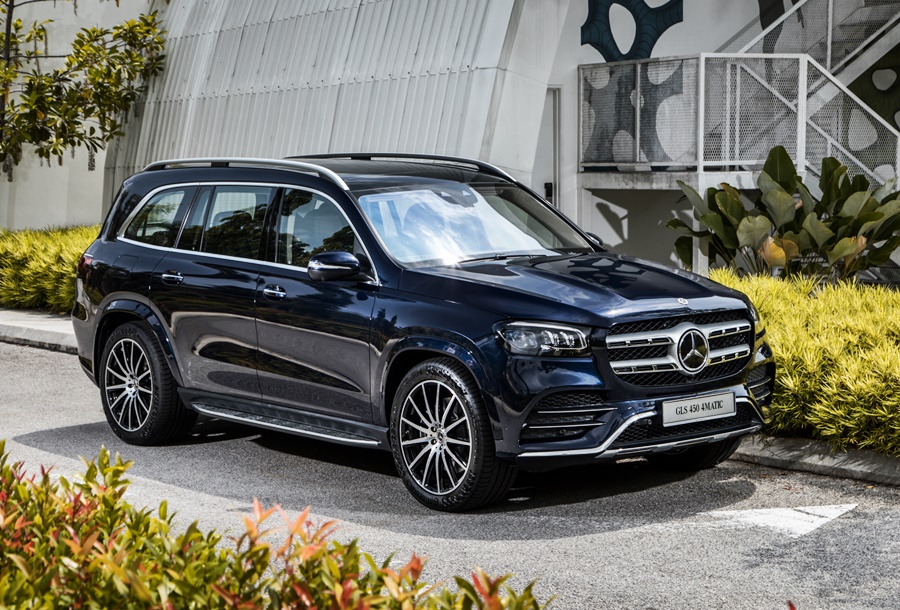
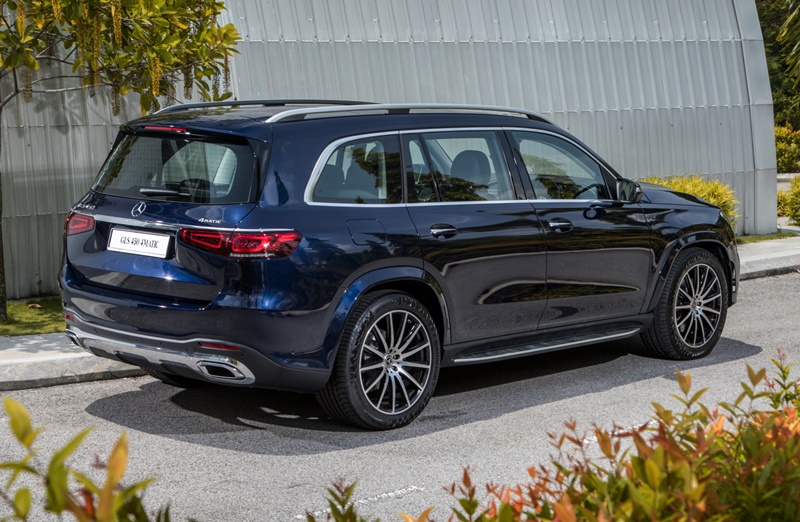
Described as the ‘S-class among Mercedes-Benz SUVs’, the latest version of the SUV will offer more of everything – space, comfort and luxury. It will come with an in-line 3-litre 6-cylinder engine with electrification by 48-volt technology. Maximum output is 367 bhp/500 Nm which is transmitted to all four wheels by the 9G-TRONIC 9-speed automatic transmission.
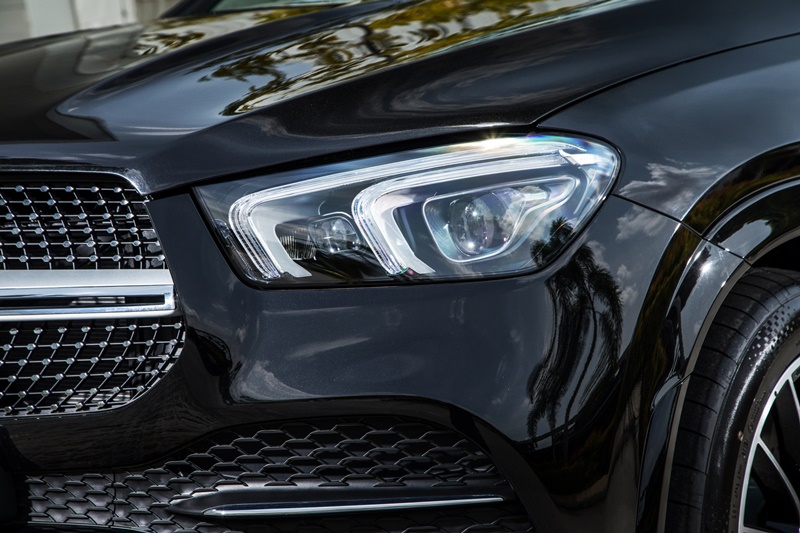
The GLS 450 features an upright radiator grille, chrome-plated underguard with the bone-shaped air inlet grille and two powerdomes on the bonnet. LED lighting technology is used front and rear for maximum illumination at night.
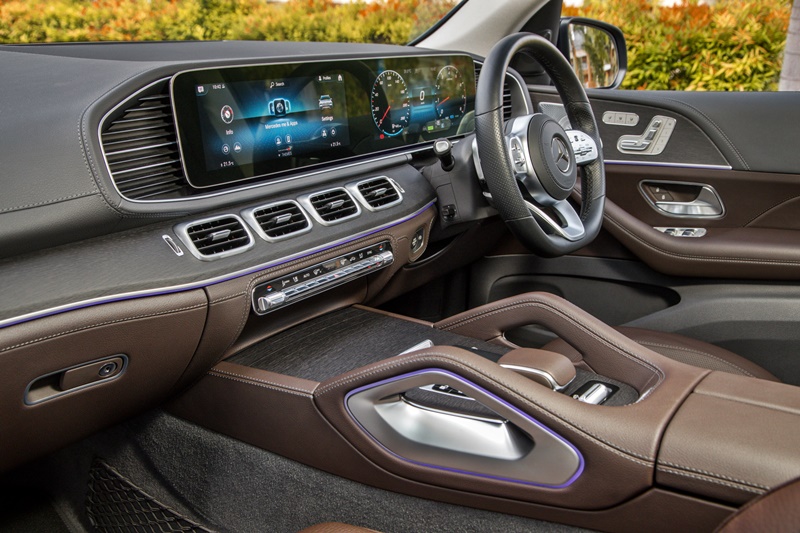
The level of luxury within is enhanced by leather appointments and high quality materials. Styling elements are unified with the dashboard support flowing into the door panels and the integral trim element likewise extending to meet the doors.
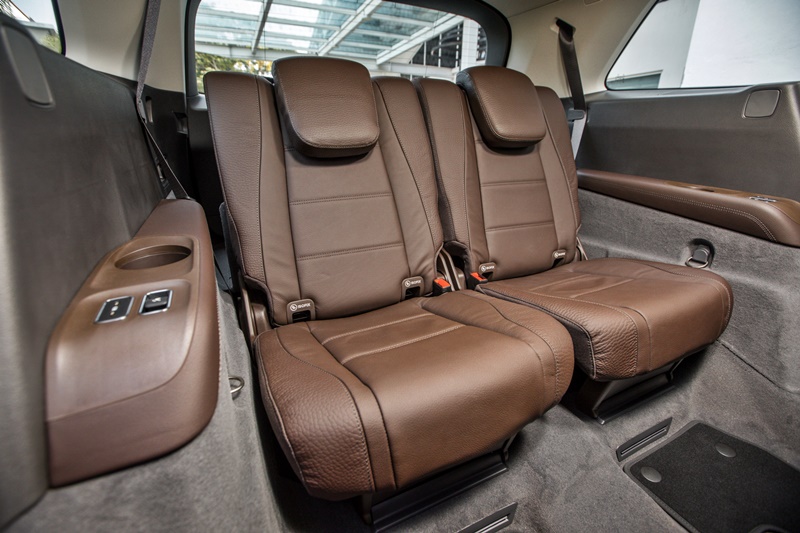
Convenience features include electrically-adjustable seats with an EASY-ENTRY system for getting to the third row. The seats in the second row can also be moved forward to give extra legroom to those sitting in the third row.
The MBUX Rear Seat Entertainment System is available for the 7-seater SUV. Like in aircraft, the content on each screen can be selected by each occupant. This personalisation extends to movies, music and the integrated web browser, with two wireless headsets that come with the vehicle.
Mercedes me connect (Mmc)
Mercedes me connect is a connectivity system for Mercedes-Benz owners to stay connected and also remotely manage some functions of their vehicles using a dedicated app. The connected service, available in all the SUV models, enables unlocking their car, starting the engine remotely, getting customer support or even checking the level in the fuel tank from inside the home. Other features are remote vehicle diagnostics, pre=entry climate control, predictive navigation, parked vehicle locator.
Mmc includes an emergency call facility (E-call) that could make the difference between life and death should an accident occur. With a dedicated button on the roof panel of the vehicle’s cabin, drivers and other occupants can make an emergency call to a dedicated emergency response centre. The vehicle’s location will already be known which will help rescuers reach the vehicle faster.
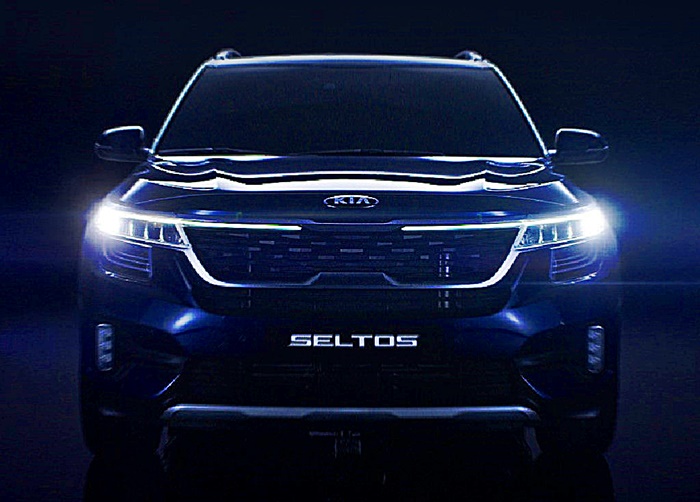
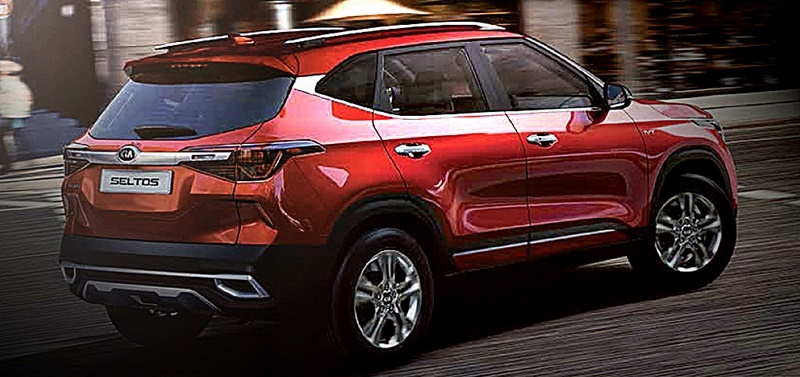
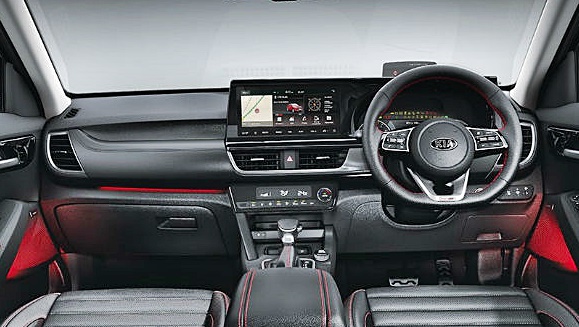
As car companies start to execute launch plans postponed by the MCO suspension of activities, we’re seeing new models coming into the market. Soon, the Kia Seltos will also be in showrooms in Malaysia and those who want to be among the first to own it can start placing their bookings at 11 selected outlets in Peninsular Malaysia.
The Seltos, which is about the same size as a Honda HR-V, is an all-new addition to the Kia range in Malaysia. It will be available in EX and GT variants. Both variants will be available in Glacier White Pearl or Gravity Grey exterior colours, with the GT trim being Intelligency Blue.
The price is not mentioned yet nor the specifications and from the 6 engines that are available for the model, a 1.4-litre turbocharged or 1.6-litre naturally-aspirated petrol engine could be offered. Most likely, a 7-speed dual-clutch transmission will be fitted.
The Seltos made its debut in mid-2019 in Korea and has been progressively launched in some markets. It is also produced in India and China (where it is sold as a KX3). Last year, about 90,000 units were sold in the 6 months following the model’s introduction.
Volkswagen’s ID family of all-electric vehicles designed from scratch consists of at least seven models, of which two are ready for the market. The first is the ID.3, a hatchback based on the original ID concept shown 4 years ago. Production is underway and order-taking began in July this year, with first deliveries starting in October 2020.
Now attention is being switched to the ID.4, which will be the brand’s first all-electric SUV, to reach the first customers before the end of this year. Like what some other carmakers have been doing, highlights are being revealed prior to the commercial launch (at the end of this month).
Following a description of the aerodynamic exterior, we are now being told about the interior. Having had the opportunity to start from a clean sheet – or perhaps a clean hard disk might be a more appropriate term – the interior designers have been able to provide plenty of space with a purist approach. This has been partly helped by the use of the new MEB platform, developed for electric vehicles.
Traditional SUV elements maintained
While there is much departure from traditional SUVs, some elements are maintained – like the large door openings, commanding all-round view and high seating position. These are what people have been buying SUVs for and would still expect even if the powertrain is entirely different.
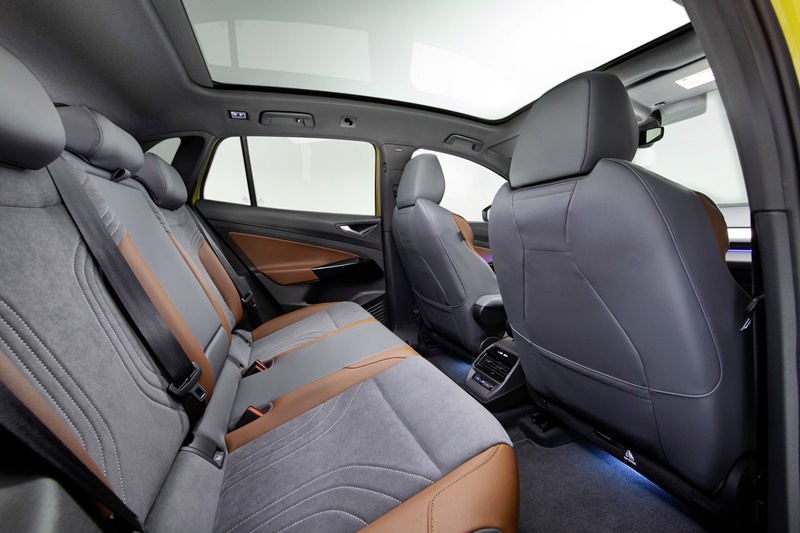
The door handles on the ID.4 lie flush with the body and come with electric unlocking. Inside, the cabin area is a generously planned space with the rear seat bench offering as much space as a conventional SUV in the next higher category. There’s also plenty of luggage space and even with the rear seats in use, the available volume is 543 litres.
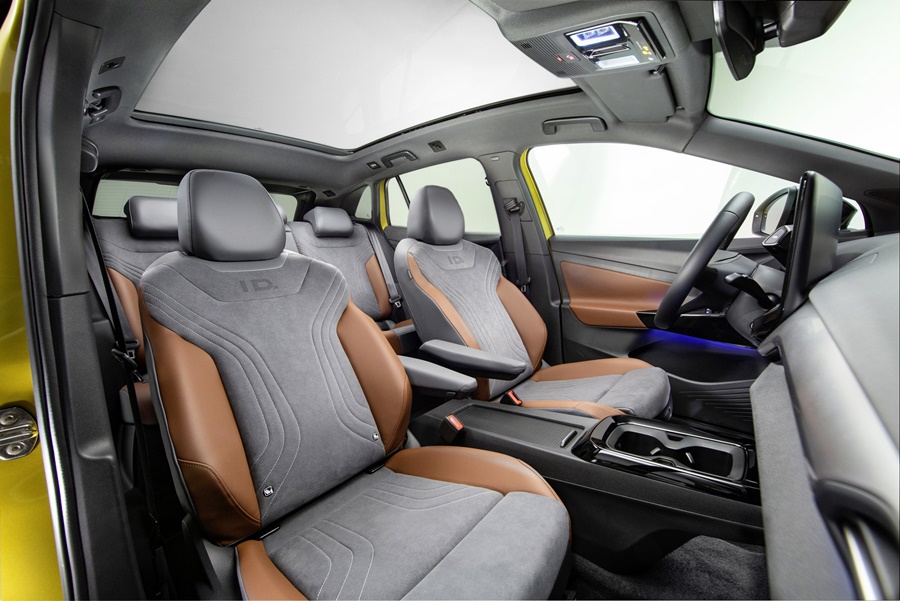
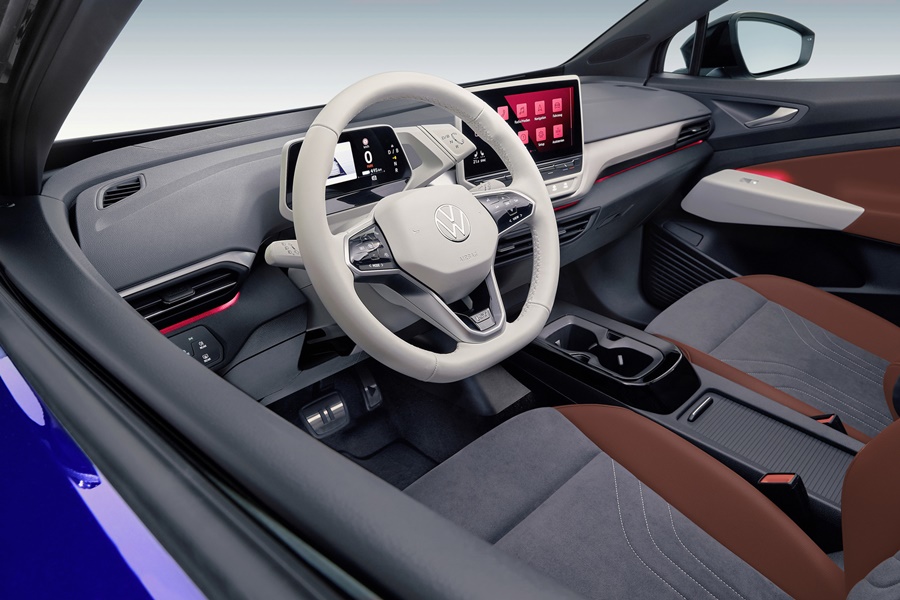
The front seats are sporty and comfortable, their design and structure bearing the seal of approval by the German Campaign for Healthier Backs. They will come with a number of electrical adjustment options, while their pneumatic lumbar supports have a built-in massage function.
The materials used underline the character of the ‘feel-good’ lounge. There will be versions with seat covers made from animal-free materials. They are constructed of a combination of leatherette and ArtVelours – a microfibre material that consists of around 20% recycled PET bottles.
Ample sense of space
The ID.4’s interior design underlines the ample sense of space. Similar to the exterior design, it appears flowing and lightweight, focussing on the essential. The dash panel seems to be floating, as it is not linked to the centre console, which has been designed as an independent component.
The steering wheel, steering column, the housings of the display and control panels in the doors come in trendy Piano Black or purist Electric White. The bright colour sets a futuristic highlight throughout the vehicle interior and underlines its clear-cut design.
A large, tilting panoramic sunroof made of glass (optional) gives unrestricted view of the sky. As darkness falls, the background lighting can be adjusted within a 30-colour spectrum to set striking highlights in the vehicle interior.
Klaus Zyciora, Head of Volkswagen Group Design, emphasises that the entire display and operating concept has been designed logically and with a straightforward character. “The intuitive operability of the ID.4 brings a new, electric ease to the crossover SUV category,” he explained.
ID.Light
ID.Light is a new feature that will be offered in all ID. models. This is a light strip below the windscreen which supports drivers in a host of situations with intuitive lighting effects in different colours.
For instance, ID.Light will signal to the driver that the vehicle’s drive system is active and that the car has been unlocked or locked. It accentuates information issued by the driver assist and navigation systems and signals braking prompts and incoming phone calls.
In conjunction with the navigation system, ID.Light helps to smoothly guide drivers through traffic. By blinking, it recommends a lane change and can also warn the driver if their ID.4 is in the wrong lane.
For sale in major regions
The ID.4 will be part of the globally booming, compact SUV segment and Volkswagen’s plans call for it to be produced and sold not only in Europe but also in China and later in the USA. For this reason, the Volkswagen brand will be investing 11 billion euros in electric mobility by 2024 as part of the Transform 2025+ strategy.
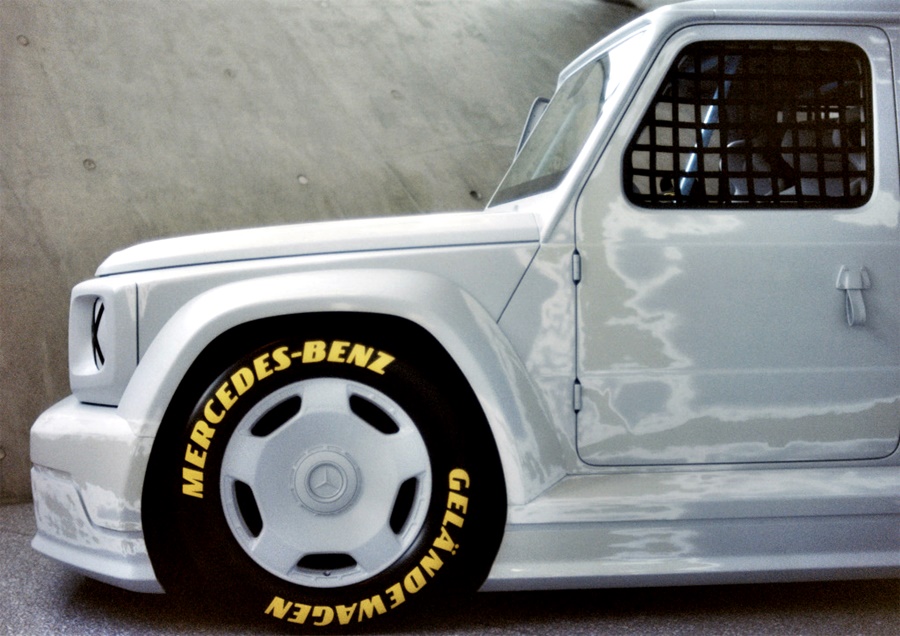
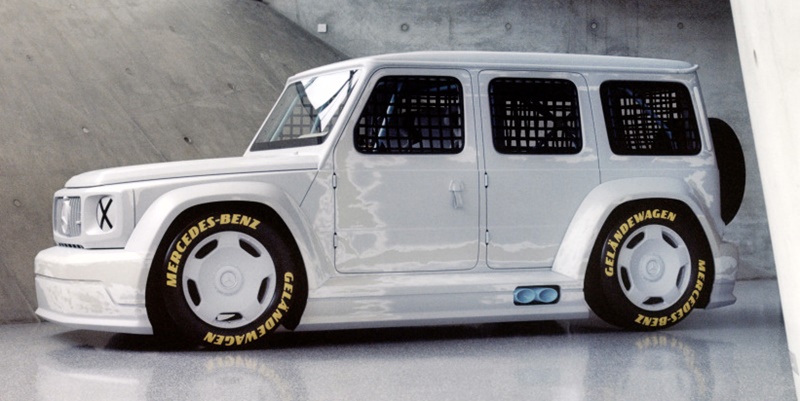
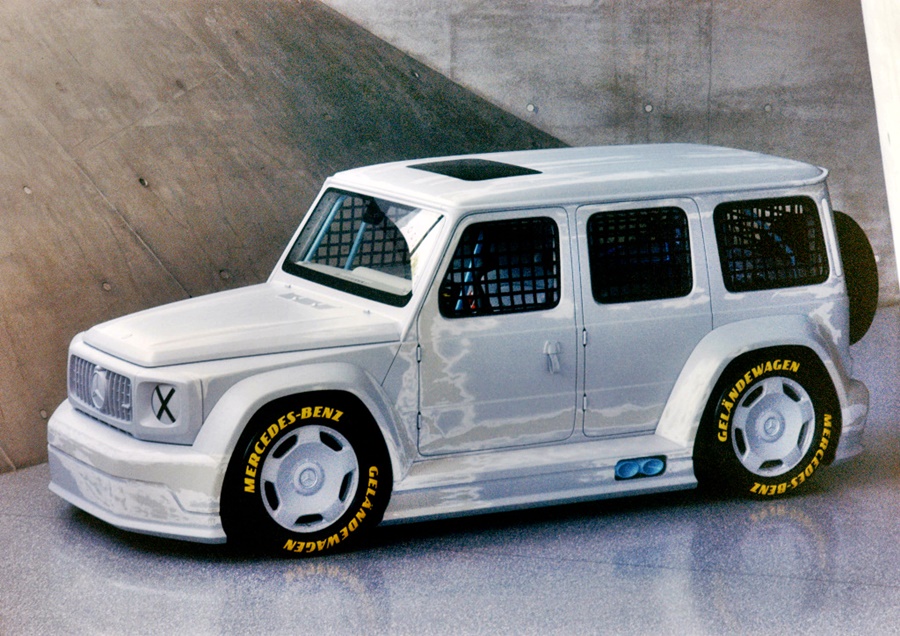
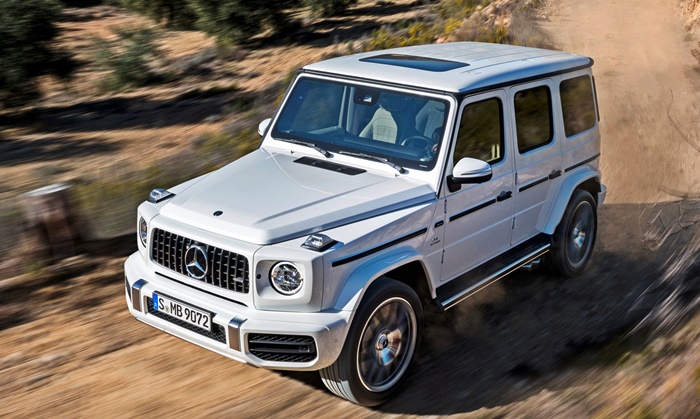
‘Gelandewagen’ (and also ‘G-Wagen’) was a reference name to the 4×4 vehicle that Mercedes-Benz launched in 1979 which would evolve into the G-Class in the 21st century. It is also the name of the first outcome of a collaboration that is a first of its kind between Mercedes-Benz and Chief Creative Director and Founder of Off-White and Men’s Artistic Director of Louis Vuitton, Virgil Abloh.
Conceptual design project
Project Gelandewagen, a conceptual design project led by Mercedes-Benz Chief Design Officer Gorden Wagener and Abloh, used the Mercedes-Benz G-Class to explore ways of disrupting future perceptions of luxury. The result is a distinctive manifestation of the SUV as never seen before.
Compelled to support the arts at a critical time, a replica of the design piece will be auctioned as part of Sotheby’s Contemporary Curated, one of the auction house’s most revered series which is defined by the unique perspective of a different influential tastemaker each year, with all proceeds going to a charity that supports international creative communities. Advance bidding will begin on September 14th, 2020.
In support of creative communities
Describing Project Gelandewagen as perfectly encapsulating Mercedes-Benz’s manifestation of contemporary luxury, pushing creativity and innovative design, Bettina Fetzer, Vice-President Marketing at Mercedes-Benz AG, said: “Culture and the arts have always played an important part in both Mercedes-Benz products and the brand, and we are proud to donate all proceeds of the replica auction to support international creative communities to continue their education in the arts.”
“With Project Gelandewagen, we create a unique artwork that showcases future interpretations of luxury and the desire for beauty and the extraordinary. The result is something between reality and future,” said Wagener. “The collaboration with Virgil has seen two distinct design philosophies unite, for a one-of-a-kind re-imagination of the G that continues to celebrate the extraordinary at its core.”
G-Class racing car
From a 4×4 to a Landaulet, the G-Class has had many incarnations to date, but never a racing car – until now. The finished design simultaneously never forgets its point of origin and captures the experience of a racing car.
The design process was inspired by Wagener and Abloh owning and experiencing the G-Class first-hand and identifying opportunities for maximizing its Mercedes-AMG attitude. Together, they considered how to make the viewer look at the brand’s designs with a fresh perspective, while driving luxury away from a polished and flawless aesthetic to something raw, natural and altogether more honest.
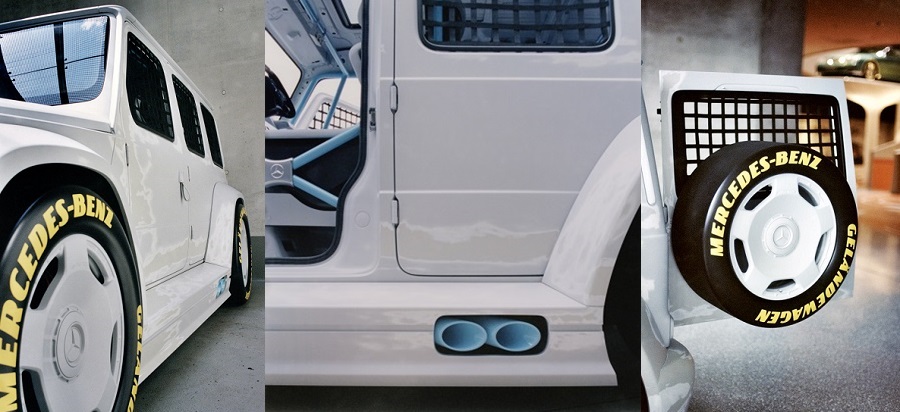
The exterior is kept as clean as possible to emphasize the iconic silhouette of the G-Class, demonstrating its monolithic character. The final design lays its construction methods bare, and celebrates the handcrafted imperfections that make it unique. The paintwork was partially sanded by hand to create a sense of timeless simplicity.
Welds are celebrated as key design motifs, as craftsmanship takes centre stage. The indicators, outside mirrors and the bumper bar have all been removed and the body of the car widened and lowered, for a sportier effect. The distinct personality of the G-wagen remains intact, with an exaggeration of the tyres and spare wheel.
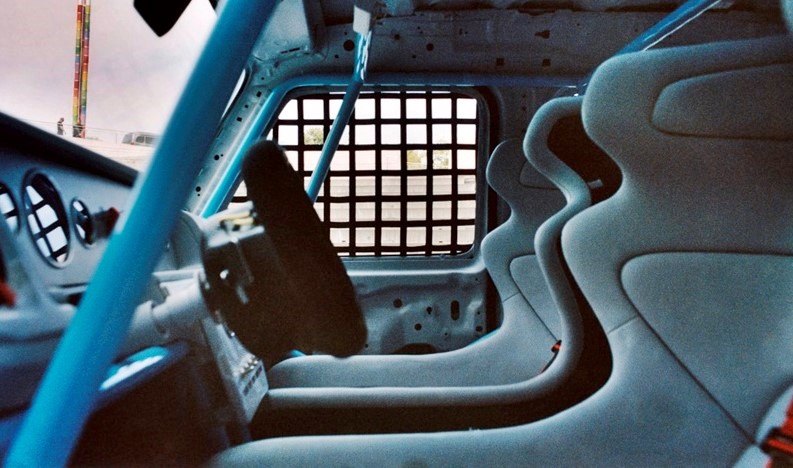
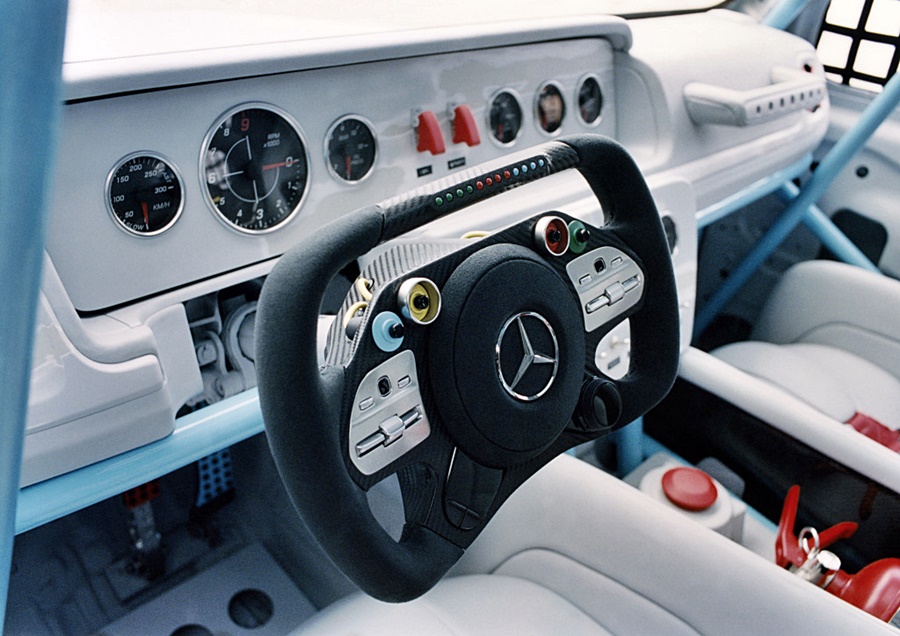
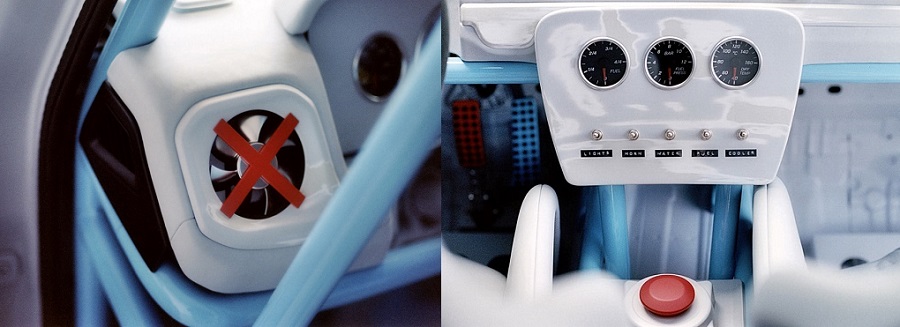
Inside the art piece, reduction reigns and the racing inspiration is clear. All interior areas have been stripped back, and the safety frame becomes a central motif. The dashboard is removed and replaced with a clean, reduced version that incorporates an analogue speedometer and fuel gauges, reminiscent of a classic car.
This contrasts with the steering wheel and seats, which are more akin to a Formula 1 racing car. Safety features and key racing elements, such as the safety frame or the 5-point seatbelts are highlighted in baby blue and bright red tones. These strong accent colours create a new kind of colour grouping, and contrast against the bare interior.
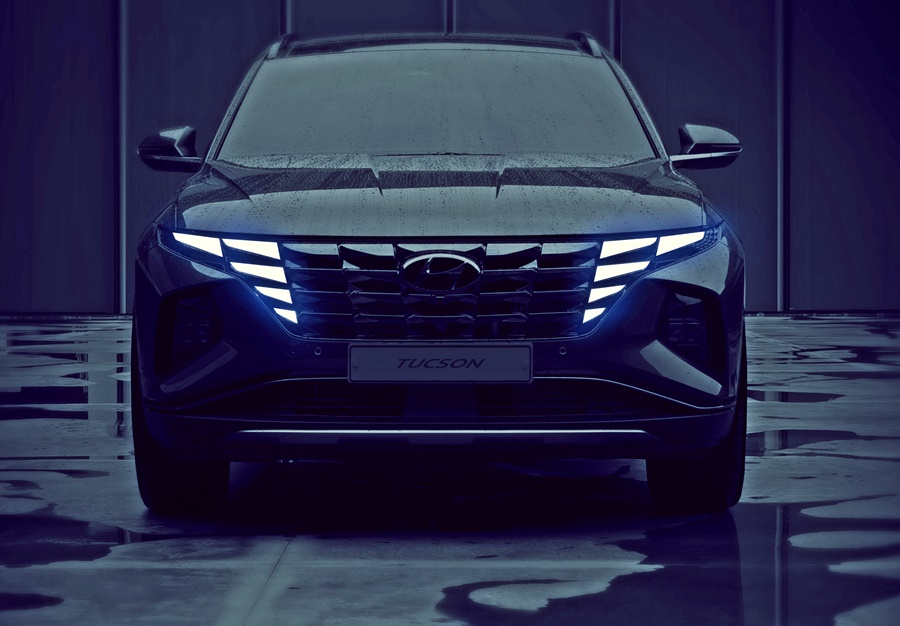
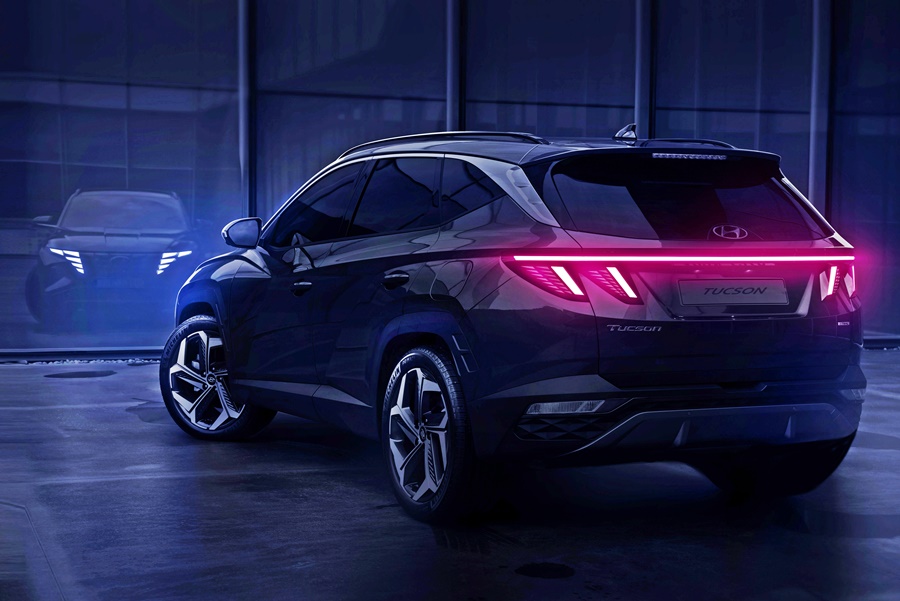
Hyundai’s Tucson will start its fourth generation when its world premiere takes place on September 15, 2020. Before then, the company is showing the first official images of its all-new SUV. For this new generation, the Korean carmaker has made major changes to the styling and it will be the first C-segment SUV to be available in two different wheelbases to suit different markets.
Overall, the new Tucson’s body is bigger and wider than before, with a long bonnet and short overhangs on a stretched wheelbase that give it a coupe-like profile. The angular body panels offer yet another interpretation of the parametric design language that Hyundai is now using.
The exterior styling expresses what Hyundai designers call ‘Parametric Dynamics’ with kinetic jewel-like surface details that will have people doing a double take. Chiseled surfaces create a striking contrast between sleek silhouette and masculine wedge, suggesting forward motion even when standing still. The taut athletic shapes merge into angular wheel arches in the typical manners of SUVs.
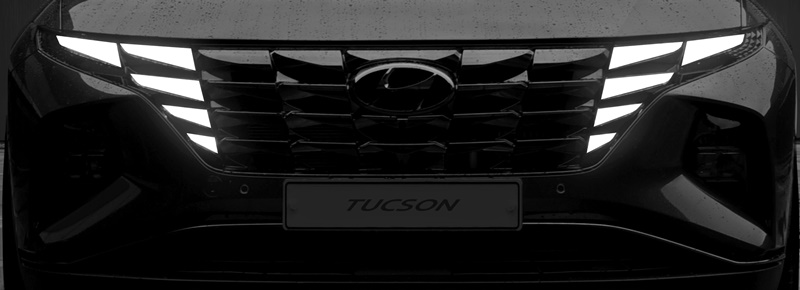
Parametric Hidden Lights
New design highlights include the latest evolution of Hyundai’s signature headlamp architecture called ‘Parametric Hidden Lights’ and a dual cockpit layout that offers personalized space with a high-tech user experience. The signature daytime running lights (DRLs) are integrated into the jewel-like grille, only revealed when turned on.
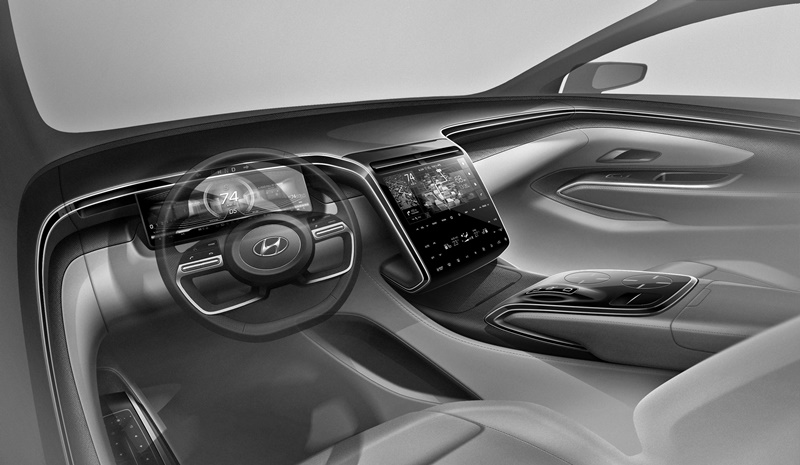
‘INTERSPACE’ with an integrated interface
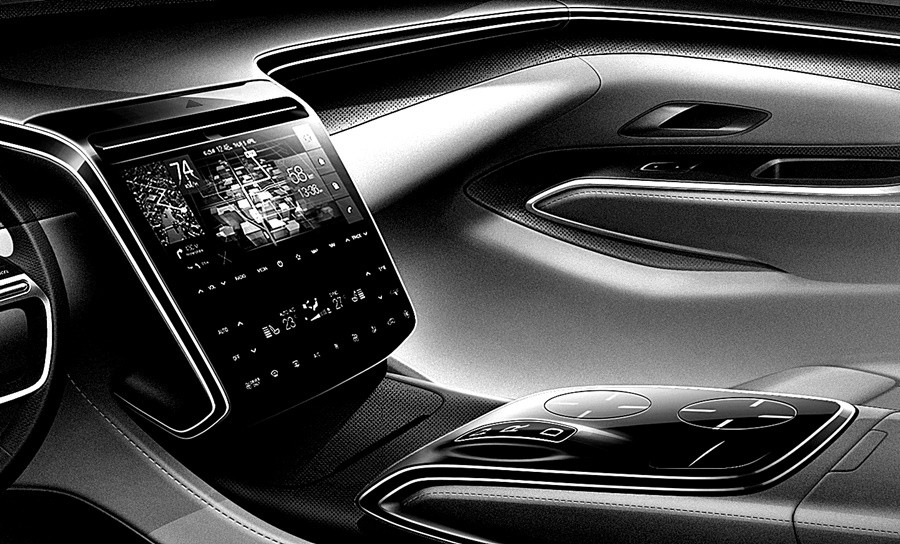
The evolution of the Tucson’s interior layout has led to a lower instrument display and removal of the gauge cluster housing for a decluttered surface. The broad ridge of the dashboard blends seamlessly with the doors, wrapping around front occupants like a deep gorge.
The vertically oriented, fully integrated centre fascia descends to the console like a mighty waterfall. Twin silver garnish lines streaming from the centre fascia to the rear doors harmonize neatly layered premium surface materials in complementary neutral tones.
“The mission of ‘Sensuous Sportiness’ is to elevate the emotional qualities of automotive design. We want our customers to feel moved. With the all-new Tucson, we are introducing its ultimate evolution and a definitive statement about Hyundai’s unstoppable forward momentum,” said SangYup Lee, Senior Vice-President and Head of Hyundai Global Design Centre.