Piston.my

English

Sales
Data source: Malaysian Automotive Association

KEY POINTS:

♦ Although the Total Industry Volume (TIV) for the month – 40,403 units – was higher (by 1.5%) than the same month in 2019, it was 5.3% or 2,249 units lower than the figure reported for the month of January 2020.

♦ The total sales of new passenger vehicles was 36,702 units (about the same as last year) while commercial vehicles, including pick-up trucks, was 3,701 units (20% higher than February 2019).

♦ The decline in sales was attributed to delays in launches of new models and consumer concerns about the COVID-19 pandemic which showed signs of worsening.

♦ The Malaysian Automotive Association, which has been compiling data since the 1960, expects that March sales will be lower as the Movement Control Order came into effect around the middle of the month.

♦ Production of new vehicles dipped 11.1% after the upswing in January. As demand could be seen to be slowing down, many companies would have cut output to avoid building up too many stocks.

♦ The total output of 40,371 units during February 2020 was 17% lower than that of the same month in 2019.

Production

 StayAtHome

PISTON.MY

The completion date of the introduction of RFID (Radio-Frequency IDentification) system for paying charges electronically at all remaining PLUS toll plazas has been postponed. Following implementation on its Open System highways in January, the concessionaire had been carrying out testing and progressive work with the aim of having the remaining 83 PLUS and 10 LPT2 (East Coast) Closed System toll plazas equipped with RFID facilities by April 1, 2020.

Open System toll plazas are for highways where a fixed rate is paid whereas the Closed System  charges by the distance travelled, eg along the North-South Expressway.

RFID

Due to the Movement Control Order (MCO) being in force since March 18 and to run until March 31, 2020, the work has been suspended. “At PLUS, we believe the MCO is an important move to protect the health, safety and well-being of not just our employees but all Malaysians from the threat of COVID-19. Based on this principle, we have decided to defer the launch of the RFID payment system on PLUS and LPT2 highways to a new date upon the lifting of the MCO,” said PLUS Managing Director, Datuk Azman Ismail.


Related: 62 highways (including Penang Bridges and 2nd Link) to accept RFID payments from January 1, 2020


PLUS also takes this opportunity to urge the public to adhere to the MCO and to remain at home in order to help flatten the spread of COVID-19 and more crucially, to protect one’s health and family’s wellbeing.

StayAtHome

Motorists using PLUS highways should also be aware that the reload facilities at all its Toll Plaza Customer Service Centres and Reload lanes at both Open and Close Toll Highway are closed during the MCO period. Reloads of the Touch’nGo cards can be done at Self-Service Kiosks available at 67 locations at selected R&R areas as well as various ATMs, petrol stations and convenience stores.
“We strongly advise all motorists to plan their journeys by reloading their Touch‘nGo card at reloading centres nationwide, as well as other reload facilities available,” PLUS said, adding that motorists are also advised to keep a 1-metre distance apart when queuing, not just at the reload machines but also in any public place.

Meanwhile the highway concessionaire has also clarified that none of its toll plazas and highways are closed. However, with the MCO in effect, the police may be filtering vehicles to ensure their occupants are authorised to travel. PLUS advises the public to contact the PDRM Hotline at 03-2266 3356 for latest updates on road diversions and inspection throughout this period.


Related: Updated List Of Toll Plazas With Restrictions


Shops at many PLUS R&R/lay-bys to remain closed till March 31

PISTON.MY

In September 2017, Nissan organised a project to enable researchers to visit Brazil’s historic archaeology sites. Known as the “Nissan Expedition: In search of Brazil’s beginnings”, its objective was to contribute to culture and scientific research by exploring the wealth of Brazil’s historic rock paintings.
The expedition was done in 5 stages and the researchers got close looks at items found in exploring the country’s rock art sites. They also came across remains of campfires of people who lived in the Piauí sierra region 50,000 years ago.

Nissan Expedition
The first Nissan Expedition which ‘went back in time’.

Discovering Brazil’s heritage
The second edition of this activity took place this year, with explorers following Brazil’s Heritage Trail. It is thus known as the ‘Nissan Expedition – Following Brazil’s Heritage Trail’ and recently concluded at Chapada dos Veadeiros, the highest plain in Central Brazil, in the state of Goias.

For 3 days, the participants in a fleet of 16 Nissan Frontiers faced trails in the region known as Cerrado, a vast tropical savannah ecoregion in Brazil. Along the way, they explored a stunning landscape listed as a UNESCO World Heritage Site while driving more than 1,000 kms in the state of Goiás and the Federal District.

Nissan Expedition Brazil

The expedition started in the city of Brasília, which is considered the world’s largest world heritage site (112.25 square kilometres) and is widely known for its modernist architecture and uniquely artistic urban planning. The adventurers also visited key historic and cultural sites, such as 308 Sul, the first superquadra (superblock) built following the Plano Piloto (the originally planned city) as well as the President JK Bridge and the Ministries Esplanade.

Visiting Brasilia, the planned capital city
The expeditioners also visited the Live Museum of Candanga Memory, which tells the story of the construction of Brasilia (named after the nickname given to the workmen who built the city) and Catetinho Museum, the first official workplace of the President of Brazil Juscelino Kubitschek, whose name is a reference to Catete, Brazil’s presidential palace before Brasília was built.

On the second day, the group learnt about the initiatives to protect the Chapada dos Veadeiros National Park and the region’s importance to the environment. They then toured the park with its outstanding scenic beauty and went around the region known as Almecegas.

Nissan Expedition

At this location is an aerial attraction: the Flight of the Hawk – an 850-metre long, 100-metre high zip line that stretches across the Almecegas Range and the Sao Bento Plantation Belvedere. By the end of the day, they were at Almecegas, one of the park’s tallest waterfalls and known for its high quartzite walls.

Nissan Frontier put to the test
On the third day of the expedition, the group had an off-roading experience through the Cerrado region. Here, the toughness of the Frontier pick-up was put to the test. Needless to say, it passed with flying colours, demonstrating its robustness and capabilities.

Nissan Expedition Brazil

After the off-roading experience at the Bellatrix reserve, the group headed for the Label waterfall, before facing more rough terrain and crossing some streams. Although swollen with the summer rains, the unbridged waters were crossed by the Frontiers that can cope with deep waters. The final stop was reached after climbing 1,200 metres to reach the Sao Joao d’Aliança range and see the expanse of the Cerrado region in Goias.

Visit www.nissan.com.my to know more about Nissan pick-up trucks in Malaysia

StayAtHome

2020 Nissan Patrol gets advanced Nissan Intelligent Mobility technologies

PISTON.MY


The Movement Control Order (March 18 – 31, 2020) does not stop you from going out – but only to buy essential food and supplies or medication. You should go to the nearest place to get the items and not drive from Penang island to the mainland to buy vegetables (as was reported by the police to The Star). And certainly, you cannot go out to eat at restaurants which, if allowed to operate, can only provide takeaway or food delivery services.

Yet there are still people who are ignoring the orders to stay at home and seem to go longer distances than necessary. It’s understandable that being confined to the home is tough but this is a very serious situation and you need to do your part.

Think of how fortunate you are to be able to be at home when there are thousands of frontliners – the nurses, doctors, hospital cleaners  and other healthcare personnel – who are risking their lives daily, fighting exhaustion and having to be away from their families and friends.

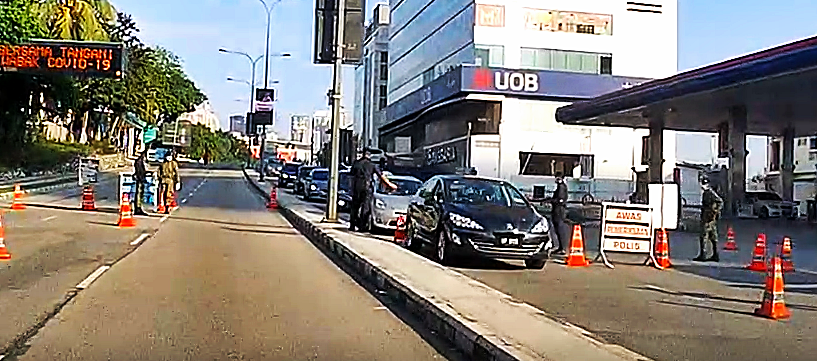
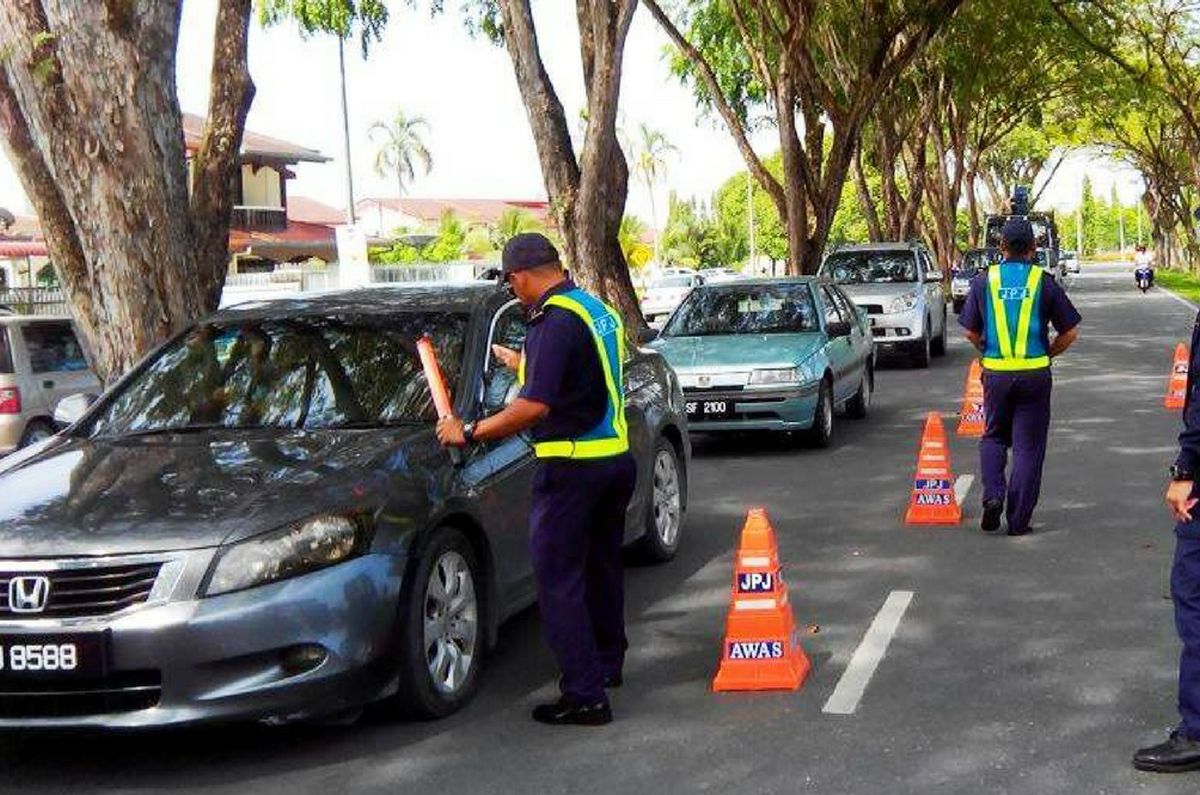
Because there are people who are stubborn and insist on doing what amounts to breaking the law, the police now have to increase restrictions on vehicle movements. Besides a restriction on interstate travel (as well as driving across the borders with Thailand, Singapore, Brunei and Indonesia), passage through many toll plazas will no longer be permitted unless the vehicle driver can give a valid reason or show a document authorising movement. If not, the police will order the vehicle to be turned around and the occupants should return home.

Jalan Duta
Image source: Infotrafik Facebook Page

The following are the PLUS toll plazas which have such restrictions at their entry lanes:

1) Jalan Duta

2) Sungei Besi

3) Skudai

4) Kuala Kangsar (Only vehicles headed north will be allowed to enter the highway. Vehicles headed south will be subject to restrictions).

5) Ayer Keroh

6) Tol Pedas Linggi

If you do not have a valid reason and are ordered to turn around, do not argue with the police. They are just doing their duty to protect us. Let’s not make things worse and force the government to extend the MCO.

StayAtHome

PISTON.MY

BHPetrol RON95 Euro4M

Now that the COVID-19 pandemic situation in China has improved, the country is able to think of helping other countries even though it still has many cases to attend to domestically. Government and private organisations have been sending medical personnel and much-needed medical supplies to a number of countries and the Zhejiang Geely Holding Group (Geely Holding), together with the Li Shufu Charity Foundation are among them.

Geely CSR

Geely Holding, which Proton is a part of, has begun shipping medical supplies to areas in Southeast Asia and Europe that are experiencing coronavirus outbreaks. The first batch of donated medical supplies was sent to Sweden and Germany for local distribution to hospitals.

For Malaysia, the Group will donate testing kits and masks to hospitals and treatment facilities in need.

StayAtHome

Earlier in January, Geely Holding and the Li Shufu Charity Foundation established a special fund totalling 200 million RMB (about RM124 million) to support the prevention and control of the coronavirus epidemic. The foundation established by Geely Holding’s founder, Li Shufu, will purchase and distribute urgently needed medical supplies including Personal Protective Equipment, test kits, masks, disinfectants, and ventilators according to the needs of the severely affected areas.

Geely CSR

As the pandemic grows around the world, Geely Holding and its global family stands united and will make full use of the Group’s synergetic strength in the fight against the virus. Geely Holding and its subsidiaries around the world are strictly following national guidelines where they operate to protect employees and prevent the spread of the virus.

On top of assistance from Geely Holding and the Li Shufu Charity Foundation, Geely subsidiary companies around the world are providing their own assistance to local communities in distress. Volvo Cars in Sweden and Geely Sweden have donated over 12,000 medical masks to local hospitals. Benelli Motorbikes has begun shipping masks from China to affected areas in Italy. Geely Auto Technical (Deutschland) near Frankfurt, Germany has been working with local authorities to distribute medical masks and gloves. London Electric Vehicle Company has started an initiative providing drivers nationwide with a 3-month finance payment holiday.

Geely CSR

“As the situation continues to normalize in China, Geely Holding has not forgotten the help it received from friends and family around the world. The fight against the coronavirus is not one that can be won alone. Together we are strong and together we will be victorious,” the company said in a statement.

Geely Auto develops cabin virus-filtering system within 20 days, to go into all its cars from next month

PISTON.MY

Five days have passed since the Movement Control Order (MCO) was introduced and the restrictions will continue to the last day of this month. The MCO aims to limit movements of the public, who are supposed to remain at home, in order to slow down if not stop the spread of the COVID-19 coronavirus in the country.

While most people have been following the directive to stay home (but can go out to purchase essentials and for valid reasons­), there are also many who ignore it. Fortunately, the police are tolerant and keep offering advice to persuade them to stay home rather than just arrest them since they are committing an offence.

It seems that there are many who still do not understand the seriousness of the situation and continue to travel for social reasons, so the police (now assisted by the army) are tightening things up. Besides more roadblocks, travel from Penang island to the mainland is not permitted unless there are valid reasons (buying vegetables is not accepted).

Jalan Duta Toll Plaza
File picture of the Jalan Duta toll plaza.

It has also been learnt that the toll plazas at Jalan Duta and Damansara on the edge of Kuala Lumpur are closed to traffic going towards the North-South Expressway. Only those who have valid reasons and permits will be allowed to pass through; all others will be told to turn around and go home. The restriction is likely to be until March 31, 2020, the last day of the MCO.

StayAtHome

Incidentally, if you are planning to use an ATM, you can only do so between 7 am and 10 pm during the period of the MCO. Outside of those hours, the ATMs will be offline. While online banking services will be available as usual, operations at banks may be limited.

“You should expect some disruption or delays in normal branch operations in line with the need to ensure effective crowd containment. Some branches may be closed and branches that are open will have limited counter services or reduced operating hours,” Bank Negara explained in its latest FAQ.

PISTON.MY

As Toyota prepares to start production of the second generation of its Mirai fuel cell electric vehicle (FCEV), one of its customers in Europe has covered over 5 million kilometres with its Mirai fleet. CleverShuttle, a ride pooling service in Germany, has set a record of sorts for having the most used Mirai fleet in the world.

During the two and a half years that the company has been running the Mira, its cars have covered a distance equivalent to six and a half times the distance from Earth to the moon and back.

Toyota Mirai FCEV

“Fuel cell electric vehicles such as Toyota Mirai became an important pillar for us, thanks to their reliability. They have allowed us to provide countless passengers with comfortable rides, emitting nothing but water vapour,” said Jan Hofmann, COO & CO-Founder of CleverShuttle

CleverShuttle acquired its first batch of Mirais in September 2017 with 20 units initially which were offered in Hamburg. The fleet was progressively expanded up to 45 cars which were distributed at several German locations.

Toyota Mirai FCEV

Reliability a strong point
Throughout this period, no repairs or parts replacements were needed, apart from regular maintenance, according to Ferry M.M. Franz, Director of Toyota Motor Europe in Berlin. “The experience of driving 5 million kilometres shows that fuel cell vehicles are already perfectly suitable for everyday use. No technical defects whatsoever and the unrestricted performance of the fuel cell, with mileage up to 180,000 kilometres per car so far, demonstrate the maturity and durability of Toyota’s fuel cell system,” he said.

2015 Toyota Mirai FCEV

The Mirai was introduced in 2014 and has been available in Europe since 2015. It is available to both private and commercial customers. The 4-seater is emission-free, requiring only hydrogen which the fuel cell converts into electrical energy to power the motors.

The combined output of the electric motors is 113 kW (154 ps) and on a full tank of hydrogen, the Mirai can travel up to 500 kms. Unlike a battery pack which requires some time to recharge, refuelling the Mirai is said to take just under 3 minutes. Of course, hydrogen stations are limited at this time and it will be a while before a widespread network is established.

Technically sophisticated with its advanced technology, the Mirai has served as a catalyst for increasing global awareness of how a future clean and sustainable hydrogen society might be achieved. Just as the Prius hybrid has been progressively improved since it was launched in the late 1990s, the next Mirai will mark a new stage for FCEV technology. Improvements in fuel cell system performance and increased hydrogen storage capacity will extend its driving range.

StayAtHome

Toyota Mirai Concept previews next generation of FCEV to be launched at the end of 2020

PISTON.MY

BHPetrol RON95 Euro4M

Seating is an important aspect of driving and especially with sportscars, properly designed seats are vital for car control and comfort as they enable the driver’s body to be positioned correctly. Porsche will soon revolutionise sporty seating with an innovative alternative to conventional bucket seat upholstery with the concept study ‘3D-printed bodyform full-bucket seat’.

With this new technology, the sportscar manufacturer is once again underlining its close ties to motorsports. In this case, the personalised sports seat follows the principles of driver-specific seat fitting customary in professional motorsports.

Porsche 3D-printed bodyform full-bucket seat

In this study, the central section of the seat – in other words, the seat and backrest cushions – is partly produced by a 3D-printer. Customers will be able to choose between three firmness levels (hard, medium, soft) for the comfort layer.

“The seat is the interface between the human and the vehicle and is thus important for precise, sporty handling. That’s why personalised seat shells customised for the driver have been standard in racing cars for a long time now,” said Michael Steiner, Member of the Executive Board for Research and Development at Porsche. “With the ‘3D-printed bodyform full-bucket seat’, we’re once again giving customers the opportunity to experience technology carried over from motor sports.”

Close-up of the 3D lattice structure
Close-up of the lattice structure

In addition to an ergonomic fit similar to that found in racing cars, this seat also delivers a unique design, lower weight, improved comfort and passive climate control. The 3D-printed bodyform full-bucket seat is based on the lightweight full-bucket seat from Porsche and features a sandwich construction.

This consists of a base support made from expanded polypropylene (EPP) is bonded to a breathable comfort layer consisting of a mixture of polyurethane-based materials made using additive manufacturing – in other words in a 3D-printer.

The outer skin of the concept seat is made from Racetex and features a specific perforation pattern for climate control. Window panels provide a view of exposed coloured components in the 3D-printed lattice structure and give the full-bucket seat a distinctive design.

Porsche 3D-printed bodyform full-bucket seat
Visible components of the comfort layer

The 3D-printed bodyform full-bucket seat will be available from Porsche Tequipment as a driver’s seat for the 911 and 718 ranges from May 2020. The range will initially be limited to 40 seat prototypes for use on racetracks in Europe in combination with a 6-point seatbelt.

Feedback from customers will be incorporated into the development process. As a next step, street-legal 3D-printed bodyform full-bucket seats in three different firmness levels and colours will be available ex-works from the Porsche Exclusive Manufaktur from mid-2021.

Porsche 718
The new seats will be available for the latest 718 (above) and 911 models.

In the long-term, the technology will also enable fully personalised solutions if sufficient customers express an interest in this. In addition to an extended range of colours, seats adapted to the individual customer’s specific body contour will then also be developed and offered.

Visit www.porsche.com.my to know more about the latest products and services available in Malaysia.

StayAtHome

90 options for the Porsche Taycan owner who wants a more personalised car

PISTON.MY

In due course, it will be possible for owners of the original Volkswagen T1 to make a conversion of the powertrain to a zero emissions electric drive system. Volkswagen Commercia Vehicles (VWCV), collaborating with eClassics, has developed a conversion package which is demonstrated in the e-BULLI all-electric concept vehicle.

VWCV engineers and designers formed a team along with drive system experts from Volkswagen Group Components and eClassics (a company which specialises in electric car conversions) to develop the e-BULLI. For the concept model, they chose a T1 Samba Bus produced in 1966 which, prior to its conversion, spent half a century on the roads of California.

2020 VW e-BULLI

New electric drive system components
The original 44 ps 4-cylinder boxer engine is replaced by a silent Volkswagen electric motor generating 61 kW (83 ps) and 212 Nm, the torque being more than double that from the engine before. The comparison of the engines’ power output alone makes it very evident that the concept vehicle will have completely new drive characteristics with performance unattainable using the original combustion engine.

Power transmission is by means of a 1-speed gearbox. The automatic transmission has 5 positions (P, R, N, D, B) and in position B, the driver can vary the degree of recuperation, ie of energy recovery when braking. The e-BULLI is claimed to have top speed of 130 km/h (electronically limited), 25 km/h more than the original T1.

1966 VW T1
The original T1 Samba Bus

Just like the powertrain of the 1966 T1, the combination of gearbox and electric motor integrated in the back of the 2020 e-BULLI drives the rear axle. A 45 kWh lithium-ion battery pack provides energy for the electric motor while a DC/DC converter provides 12V power for on-board electronics.

As in the new ID.3 and future ID.BUZZ, the battery pack is housed centrally in the vehicle floor. This layout lowers the e-BULLI’s centre of gravity and thus improves its driving characteristics.

2020 VW e-BULLI

80% recharge in 40 minutes
The battery pack is charged via a combined charging system (CCS) socket. It enables charging with AC or DC electrical supply. Thanks to the CCS charging socket, the battery pack can also be charged at DC fast-charging points with up to 50 kW of charging power. In this case, recharging up to 80% energy levels can be done within 40 minutes. The range with a fully charged battery packs is claimed to be more than 200 kms.

Redesigned chassis
Compared to the T1, riding in the e-BULLI will feel completely different. This is due to the redesigned chassis which consists of multi-link front and rear axles with adjustable shock absorbers and coil-over struts. There is also a new rack-and-pinion steering system and 4 internally-ventilated disc brakes.


Click here to know more about the Volkswagen models available in Malaysia

New looks
In parallel with the new electric drive system, an interior concept has been created for the e-BULLI that is both stylish and avant-garde. The new look and corresponding technical solutions were developed by the VCVW design centre together with a team from VWCV Vintage Vehicles and the Communications department.

The designers modernised the exterior of the iconic vehicle with great sensitivity and finesse, including giving it a two-tone paintwork finish in Energetic Orange Metallic and Golden Sand Metallic MATTE.

Details such as the new round LED headlamps with daytime running lights modernise the looks. On the outside at the rear, there are also LED charge indicators. They signal to a driver walking up to the e-BULLI how much charge the lithium-ion battery still has.

2020 VW e-BULLI

Original interior concept modernised
The 8-seat interior has a few things not expected to be in a T1. While the designers have re-imagined a lot of the interior, they did not forget the original concept and the seating is one of the new features. In keeping with the external paintwork, it is also in two colours. Solid wood looking like that of a ship’s deck is used for the floor throughout and, with the nice bright leather tones, the electrified Samba Bus takes on a maritime feel. This impression is strengthened by the large panoramic folding roof.

The new speedometer is based on the original while a two-digit display within it creates a link to the modern era. There is a small detail in the centre of the speedometer: a stylised Bulli symbol. A multitude of further information is shown via a tablet integrated into the roof console.

2020 VW e-BULLI

Music on board comes from an authentic-looking retro-style radio which is equipped with cutting edge technology such as DAB+, Bluetooth and USB. The radio is linked to a sound system with high quality components, including an active subwoofer.

2020 VW e-BULLI

The e-BULLI will be available at prices starting from 64,900 euros (about RM307,000) for the T1 conversion (complete with redesigned front and rear axles), with T2 and T3 conversions also being offered by eClassics in Europe.

StayAtHome

Volkswagen’s electric vehicles will use a 1-speed gearbox!

PISTON.MY

Skoda, the Czech carmaker has been training and developing talent for more than 90 years at its Vocational School in Mlada Boleslav. In the first year, 58 students began their training in three different specialist areas. Today, more than 900 students (13% female) are enrolled in 13 full-time courses and three postgraduate programmes at the Skoda Academy.

The quality of training will be put to the test in the seventh Skoda student concept car project. 20 students from the academy are involved in the ambitious project this year. They have decided to design and build an open-top Spider version of the new compact Scala model.

2020 Sokda Student concept car

Watching and learning from the professionals
At a workshop in the Skoda Design department, the participants met the company’s Head Designer, Oliver Stefani, and put their first ideas down on paper with him and his team. The still-unnamed project car, which the students will be constructing according to the design, will be presented to the public in early June.

During the visit, they were allowed to watch Stefani and his team in their day-to-day work and to create their own drawings. “Despite the increasing use of computers and simulations, drawing is still an essential part of automotive designers’ work. With every stroke, an idea turns into something real. A sketch is the first of many steps on the long and exciting path to a new car,” explained Stefani.

Support from engineers
Throughout this project, the up-and-coming talent will receive support from engineers and experienced employees from the areas of technical development, design and production within the company. The apprentices have expressed a wish to make the car’s clear lines and emotive shapes more prominent in the spider version to emphasize the vehicle’s overall dynamics.

2020 Sokda Student concept car

“From the beginning, all the participants showed great enthusiasm and determination. Their sketches are very impressive, I really like the concept,” said Jiri Hadascok, exterior design coordinator at Skoda, adding that the professionals were impressed with their enthusiasm and receptiveness.

Skoda Scala
The Scala model which the students’ concept car is adapted from.

Designing a concept vehicle and then building it by hand is the highlight of all apprenticeships. “We are all delighted to be part of this project. As a student, where else do you get the chance to put your own ideas and vision into designing a car and then actually build it yourself? Drawing our first sketches was lots of fun, and we learned a lot from Oliver Stefani and his team,” said one of the participants, Vojtech Spitalsky.

StayAtHome

Latest sketches of Skoda VISION IN concept reveal the design of new compact SUV for India

PISTON.MY

Archive

Follow us on Facebook

Follow us on YouTube