With the Chinese New Year coming soon, many families will be preparing to have their reunion dinners to celebrate. For some, it may have been a long time apart, given the restrictions we have had in the past year.
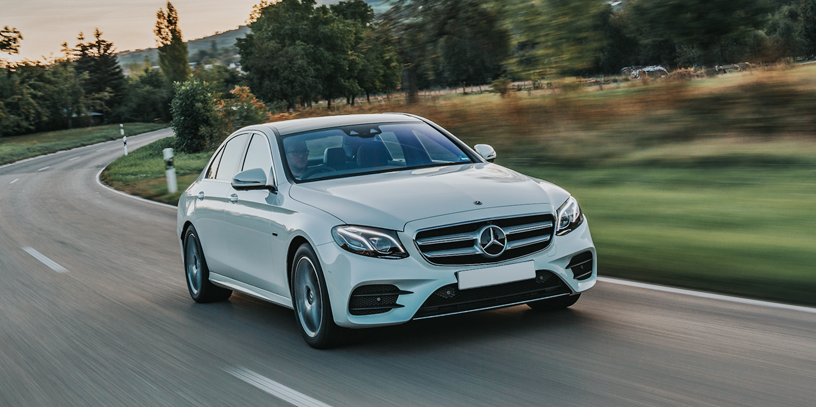
Some may travel far to hometowns around the country and it would be a good idea to ensure that their vehicles are ‘healthy’ and in a good running condition. For Mercedes-Benz owners, Cycle & Carriage has special offers to conduct safety checks at all their Autohaus service centres.
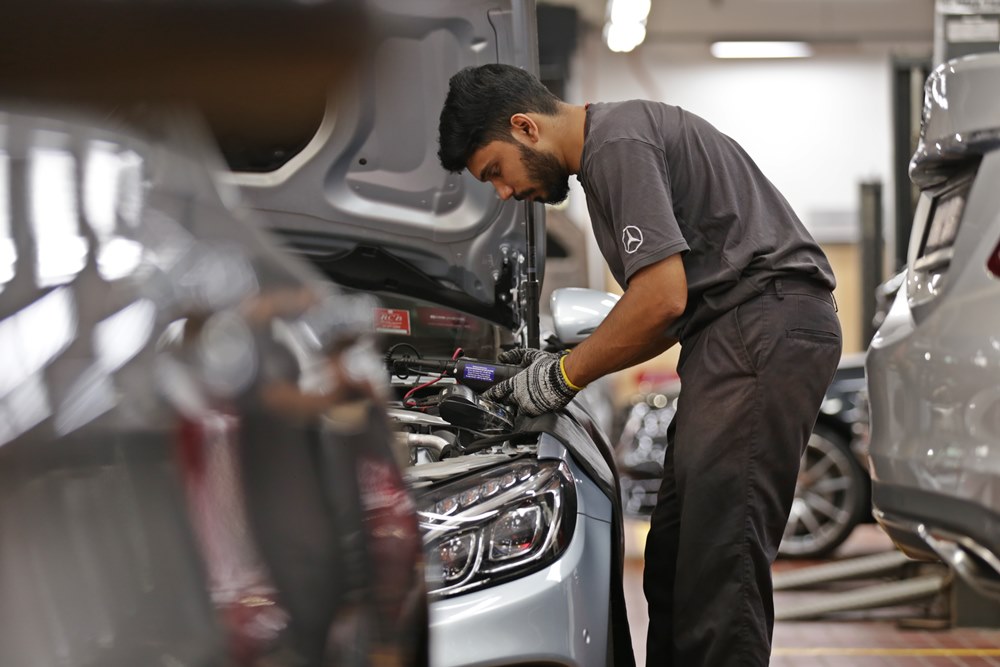
The ‘health check-up’, priced at RM88, covers 30 points that include the tyres, brakes, fluids, wiper, undercarriage, and systems check. In order words, technicians will look at all those areas which are vital to safe driving and if anything looks too worn out or could have problems, the owner will be informed. Better to know early than have a breakdown in some remote place far away from home or the destination.
As good stopping performance is vital for safety, the brakes should be tip-top condition. Should the vehicle’s brake pads or discs require replacing, Cycle & Carriage’s ‘Stop & Go promotion’ offers an 18% discount on related parts if purchased and changed at the Autohaus service centres.
It would also be customary to look good for the new year and that applies to the vehicle as well. For this, Cycle & Carriage offers to groom and prepare the vehicle to welcome the Year of the Tiger. The company’s professionals will provide grooming services such as the Vehicle Exterior Polish and Wax, Windscreen Polishing, Vehicle Interior Grooming and Wheel Detailing services so the inside and outside appear at their best.
For those who prefer a more hands-on approach with your car grooming experience, there are Mercedes-Benz Grooming products such as Car Shampoo, Wheel Cleaner, Interior Glass Cleaner and Window Cleaner Intensive available at the showroom. These can be purchased with an 18% discount during the festive season (until February 15, 2022).
It rains a lot these days, but it can also be very hot and on a long journey, having a cool cabin will make a big difference to how you feel when arriving at your destination for the reunion dinner. Therefore, it’s also a good idea to have the air-conditioning system checked. Cycle & Carriage offers two services and both have an 18% discount during the festive period. Customers can choose to have the fine-particle filters changed or retained.
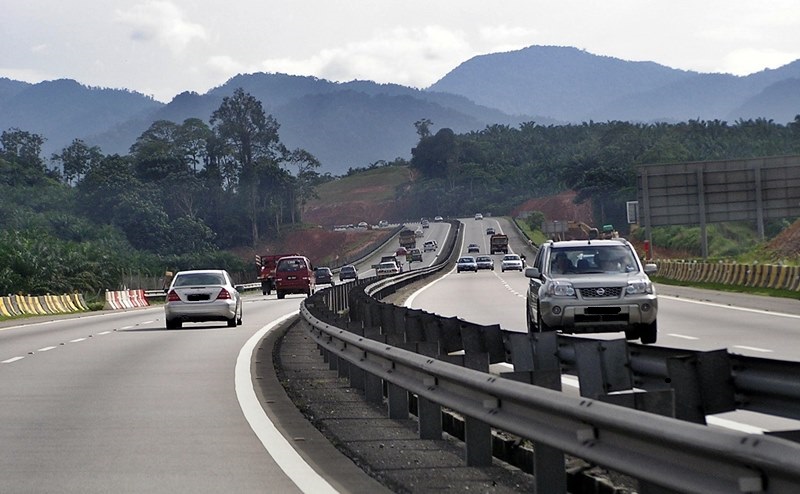
For the police to catch motorists exceeding speed limits, they need to have evidence and the most common approach in Malaysia is by using speed cameras that are installed by the side of highways, or hand-held units operated by personnel. Without the evidence provided by a reliable device to show the speed the vehicle was travelling at, it would be hard to issue a summons that can be challenged in court.
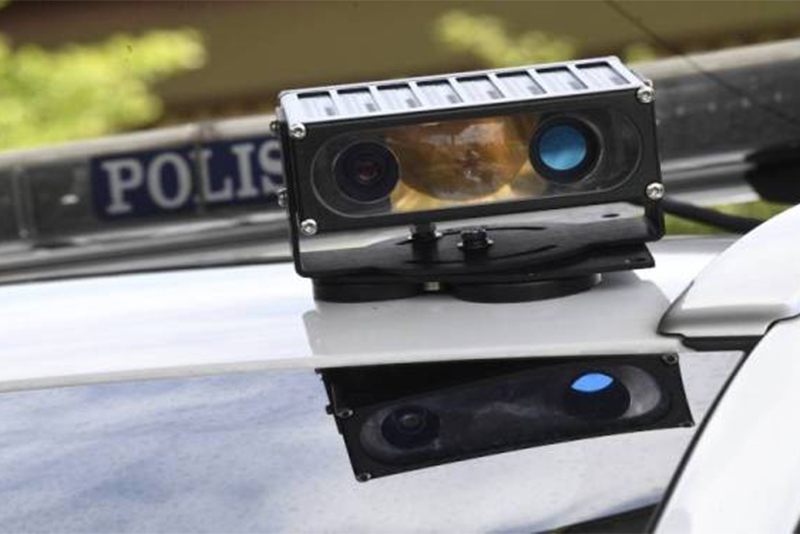
Soon, the police will use a new method of determining vehicles speeds and it will be done from patrolcars with radar devices mounted on them. These are not new but are being deployed by the police when Ops Selamat is carried out between January 28 and February 6. They devices will be installed in vehicles patrolling highways around Malaysia which are expected to have at least 1.6 million vehicles on the move during the festive season.
Using vehicles to track speeds is not need to the Malaysian police and as far back as the 1970s, before radar-based devices were used, they had a system inside patrol vehicles which measured the speed of a vehicle between two points on the road. When the car passed the first point, a timer would be started and stopped when it passed the second point, and a computer would calculate the speed.
Later, as hand-held radar ‘guns’ became available, this was an easier and more accurate way to detect speeds. Fixed radars with cameras were also used as speed-enforcement devices along some highways, the first being the original Karak highway in the 1980s where the devices used solar power.
The vehicle-based radar will make it easier for the police to record vehicles committing offences at any point on the highway, rather than just fixed locations which are often known to motorists who regularly pass them.
Additionally, besides the installation of radar devices on the patrol vehicles, there will also be increased use of the iCOPS system to more quickly identify vehicles that have outstanding summonses. Failure to settle summonses has led to the police having a huge backlog to clear, so they sometimes offer discounts as incentives for motorists to pay up. There was one instance when the police database was so clogged up that it had problems.
The iCOPS system, which has been in use since 2015, has helped the police build up a database of vehicle profiles estimated to number over 6 million to date. The system is used in conjunction with Automated Number Plate Recognition (ANPR) technology which can recognise numberplates so that they can more easily be checked against the database.
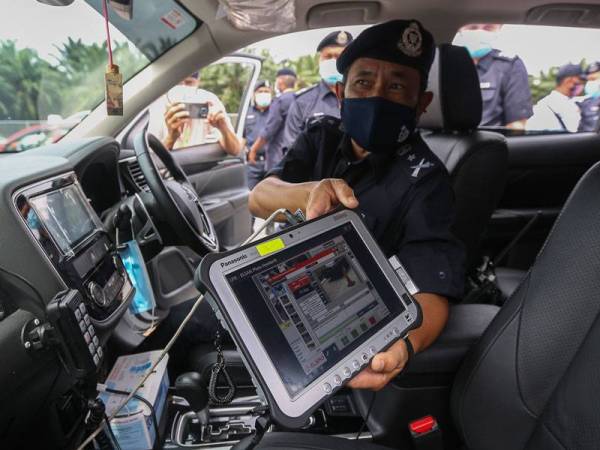
Besides identifying vehicles that have outstanding summonses, the iCOPS system can also help police to quickly know if a vehicle has been reported stolen. There is no need to even key in the number as the ANPR would determine the registration number optically and check it against the database. The iCOPS system is used with a Panasonic heavy-duty tablet in the car.
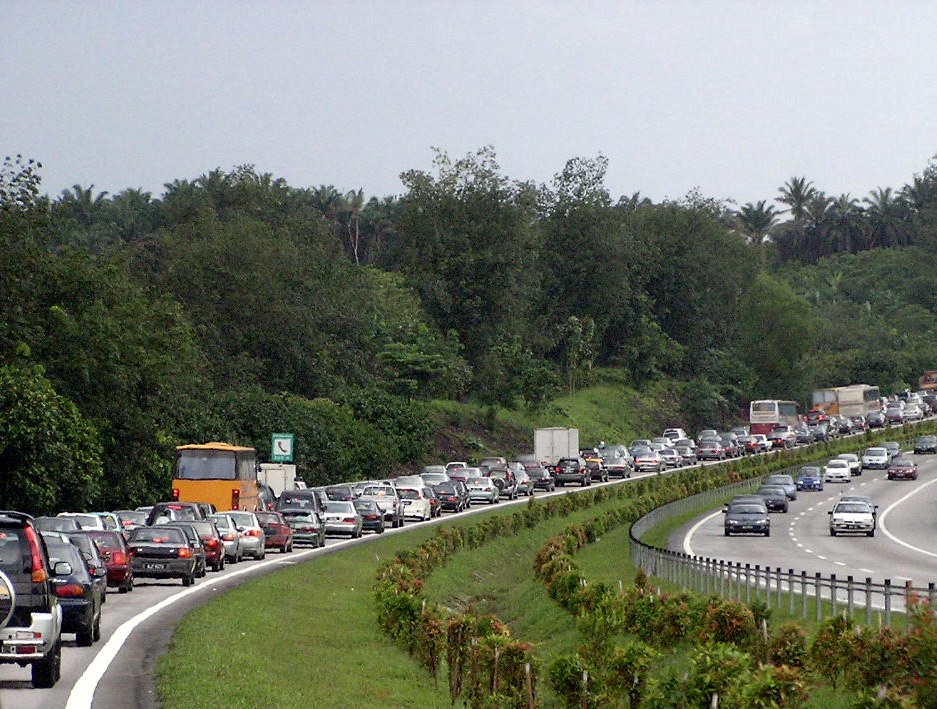
During the coming festive season, at least 1.6 million vehicles will be travelling on highways.
‘Ops Selamat’, which has been absent for two years, is aimed at minimizing road accidents during the festive season as well as prevent burglaries. The latter can occur at homes where the residents have gone off on holiday or ‘balik kampung’.
For motorists who are travelling along PLUS highways, assistance will be readily available with the PLUSRonda teams on standby. The PLUSRonda service, which has been available for over 30 years, can offer various forms of assistance and the personnel are trained with technical as well as medical skills so they can attend to breakdowns and also save lives.
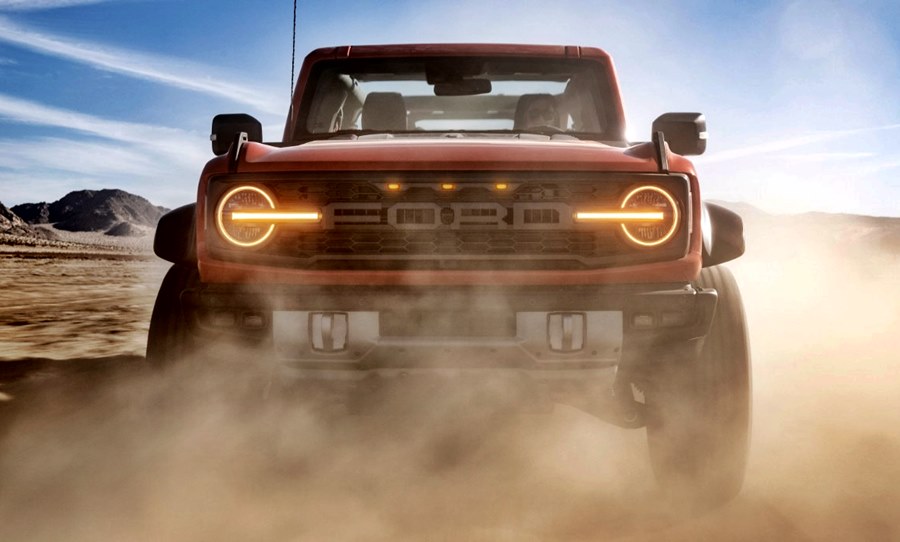
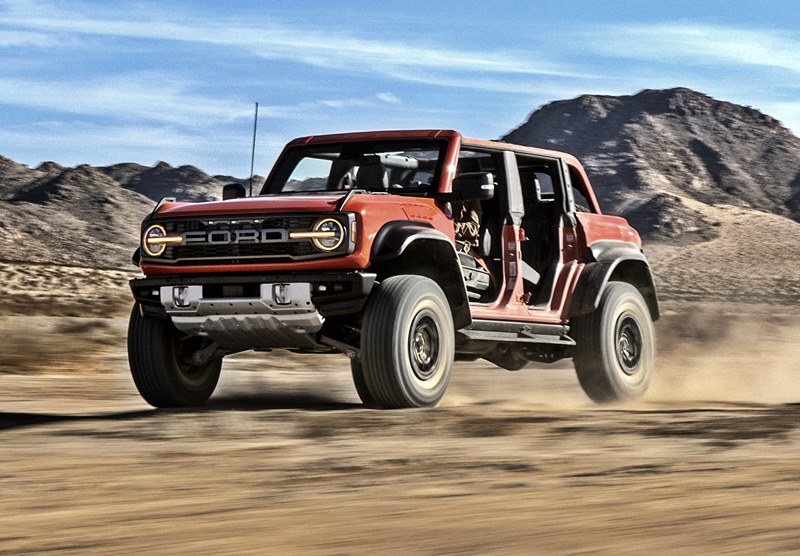
‘Raptor’ is the name Ford adds to its models when their performance is boosted to extremes. We’ve seen how Ford Performance, the carmaker’s high-performance division, has transformed models like the F-150 and Ranger to become more hardcore as Raptor versions, and now they’ve done it with the new Bronco SUV.
Ultra4 Racing-inspired
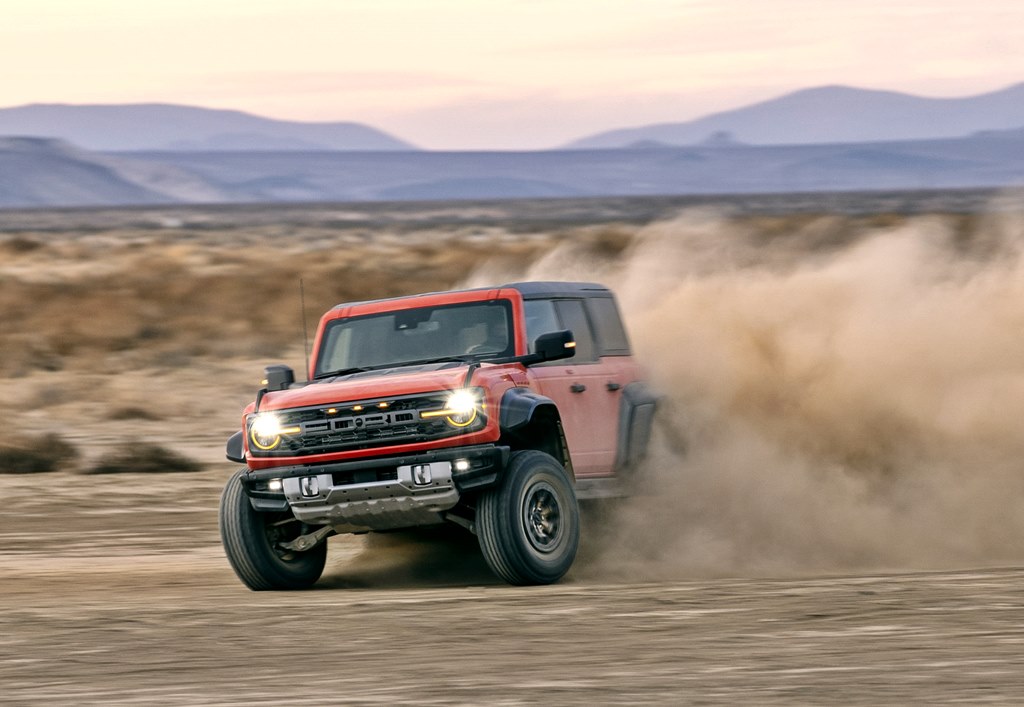
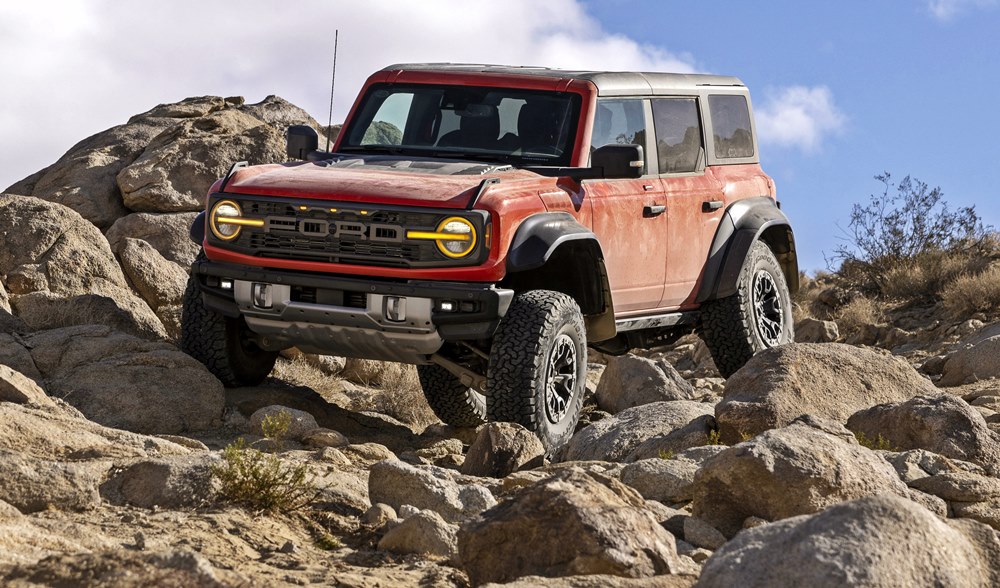
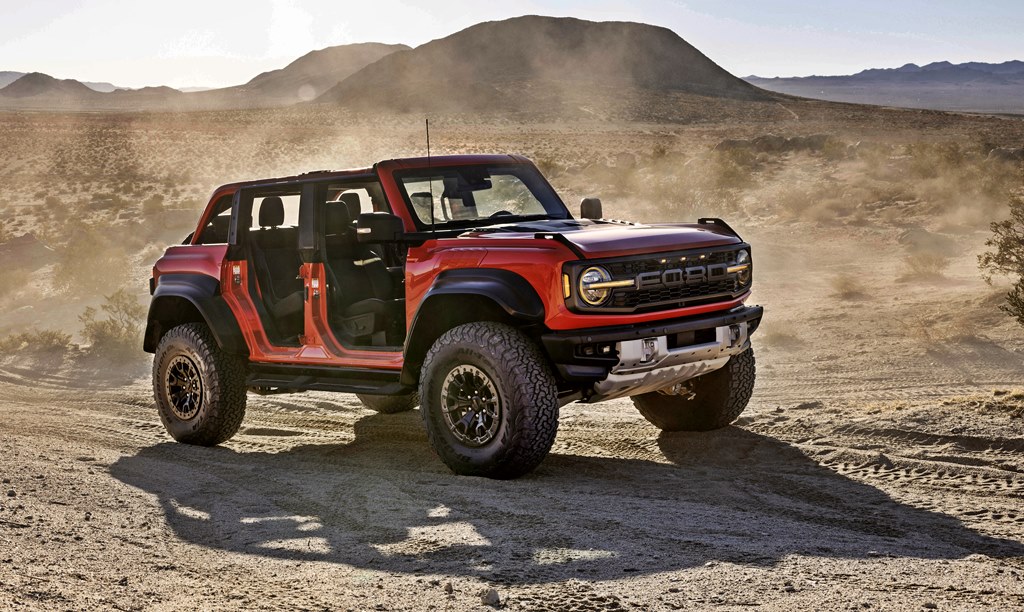
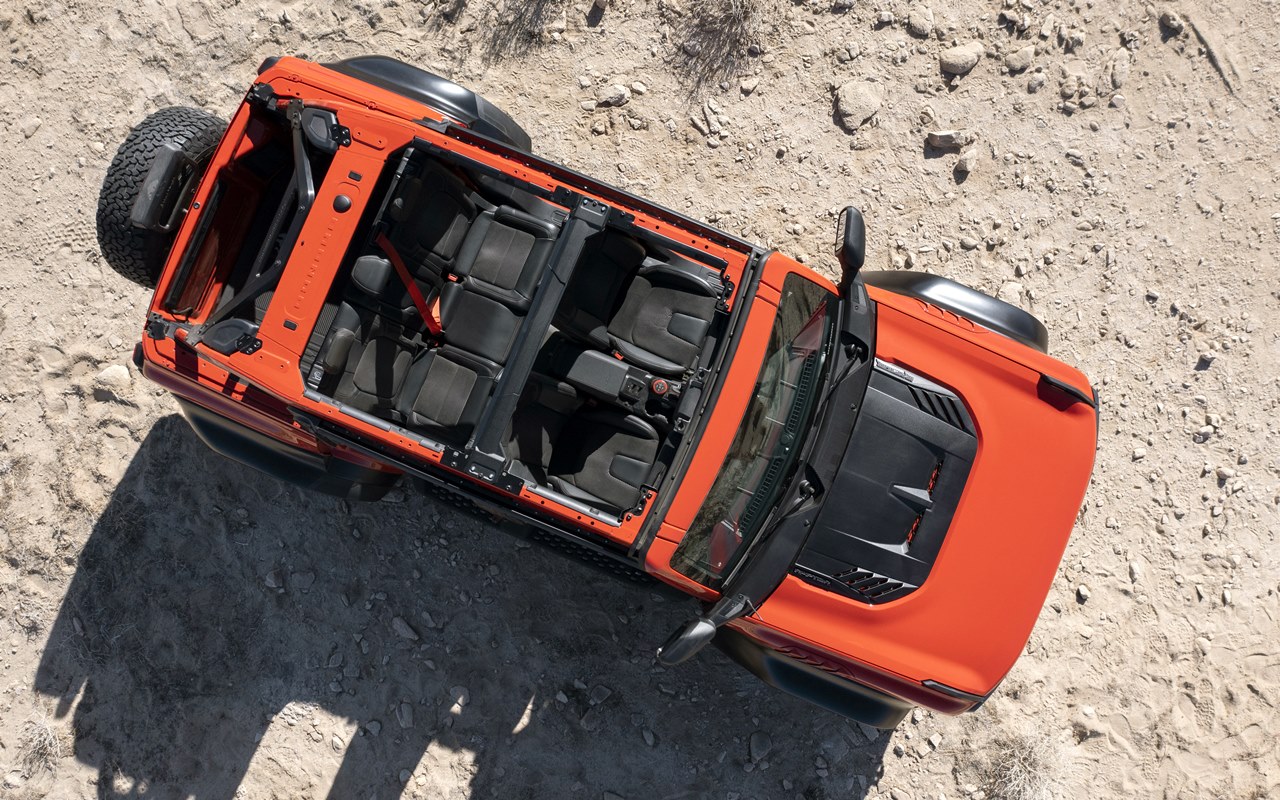
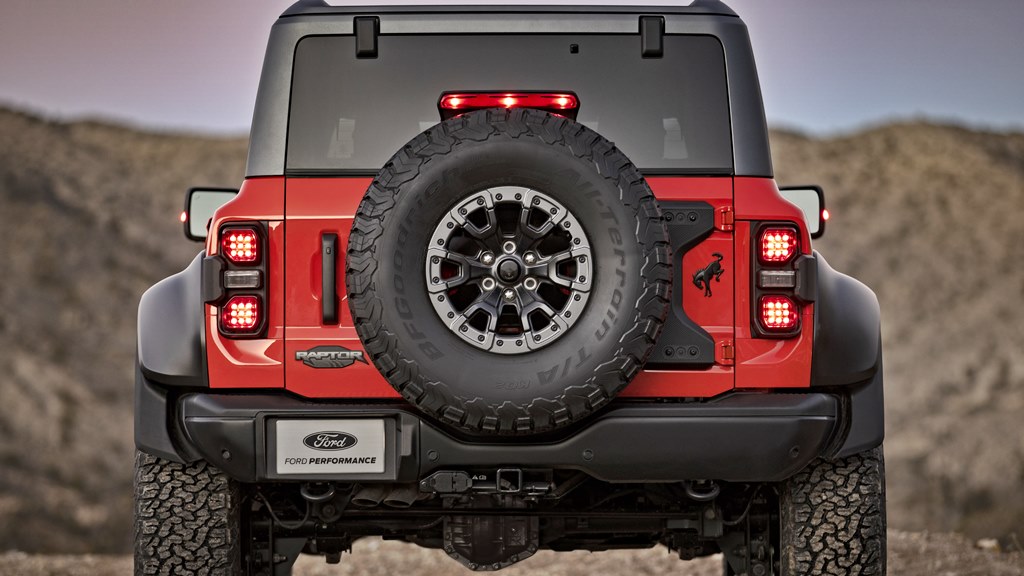
The Bronco Raptor is the newest member of the Bronco outdoor brand of Built Wild SUVs and will be the most powerful street-legal Bronco ever offered. It is also the world’s first Ultra4 Racing-inspired SUV, built for desert running and boulder crawling.
To build the world’s first Ultra4-inspired SUV, Ford Performance had to make the Bronco even faster and bring more off-road capability, agility and maneuverability. “We had to build the Bronco Raptor – it’s our ultimate vehicle for hardcore off-road enthusiasts who demand something more,” said Carl Widmann, Ford Performance chief engineer. “Like the Ultra4 desert race trucks, the ‘Raptor of SUVs’ conquers desert dunes at highway speeds and is equipped with competition-level off-road technology and hardware.”
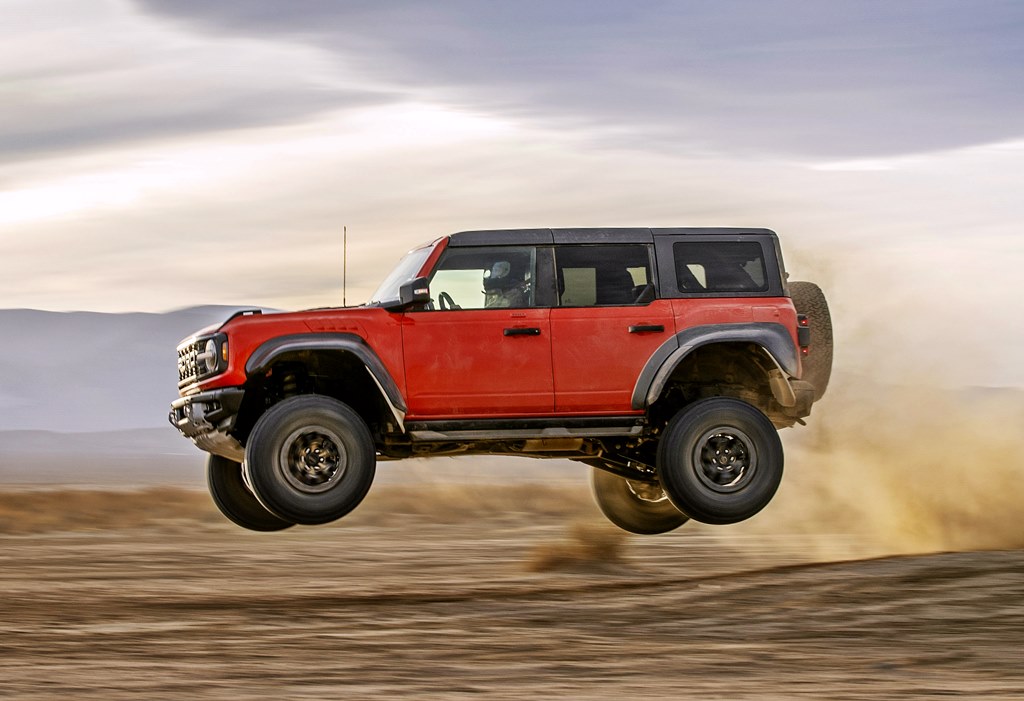
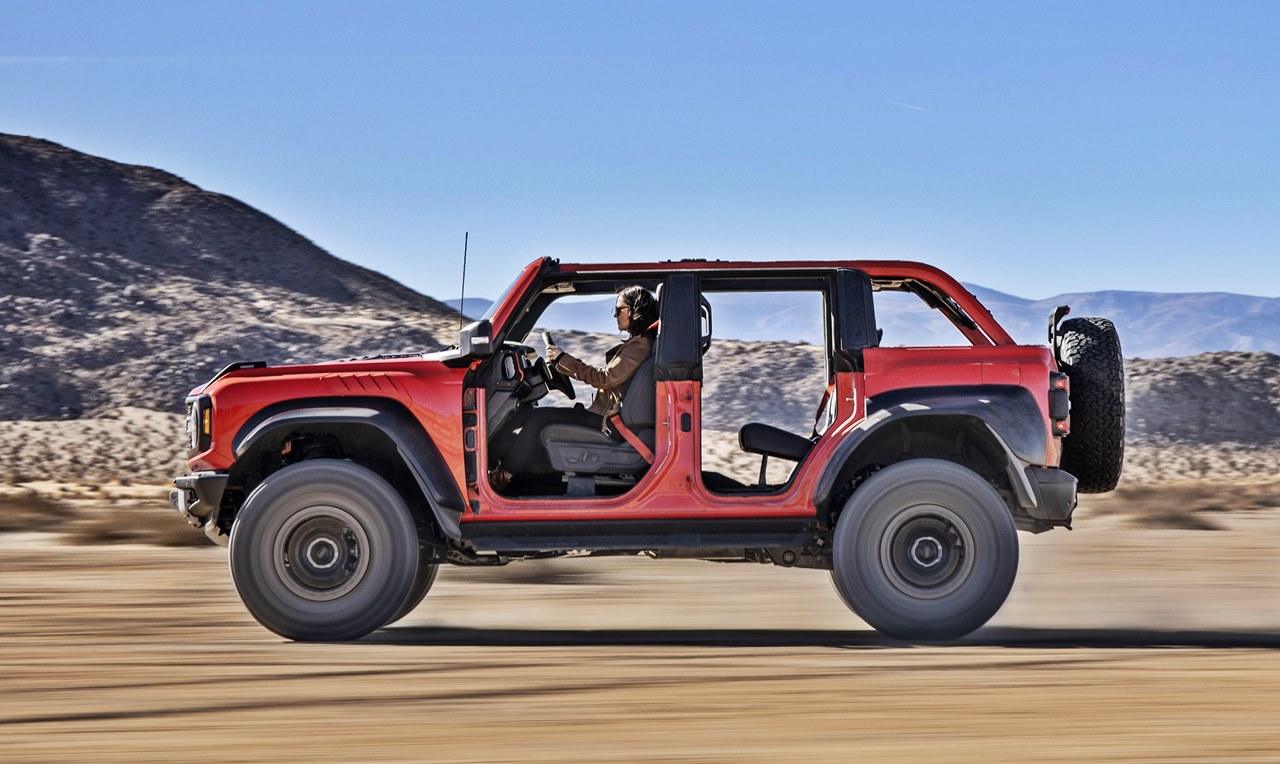
Starting with the Bronco frame as foundation, the Ford Performance team added more suspension travel and track width for handling stability during high-speed desert runs. At the Raptor core is a fully boxed, high-strength steel frame with new shock towers that increase wheel travel and off-road durability.
Heavy-duty hardware for desert events
Heavy-duty bash and skidplates provide continuous driveline coverage from the front bumper to the back of the engine, transmission and transfer case. In the upper body, B-pillar cross bar and C-pillar reinforcement help deliver a greater than 50% total body-in-prime torsional rigidity increase over a standard Bronco.
Competition-level, Ford Performance-developed axles further deliver on the Ultra4-inspiration. The solid rear axle is upgraded to a semi-float Dana 50 Heavy-Duty AdvanTEK with 235-mm ring gear, while the Dana 44 AdvanTEK front-drive unit includes upgraded half-shafts with 210-mm ring gear. These upgraded front and rear axles increase the track width, while larger front and rear driveshafts support increased wheel torque. An advanced 4×4 system with 3 modes includes a higher-capacity clutch designed to withstand the demands of high-performance desert events.
As with other Raptor variants, the Ford Performance team also installed FOX parts to upgrade the High-Performance Off-Road Stability Suspension (HOSS) system with Live Valve technology. Similar to the F-150 Raptor truck’s position-sensitive damping design, the Raptor HOSS 4.0 system features FOX 3.1 Internal Bypass Semi-Active Dampers that are uniquely tuned at the front and rear and feature integrated reservoirs up front and remote reservoirs in rear.
Suspension height sensors and other sensors at each corner monitor terrain conditions independently hundreds of times every second and adjust suspension tuning accordingly. The Bronco Raptor also runs with a minimum ground clearance of 332 mm, 122 mm more than a regular model.
More power for desert running
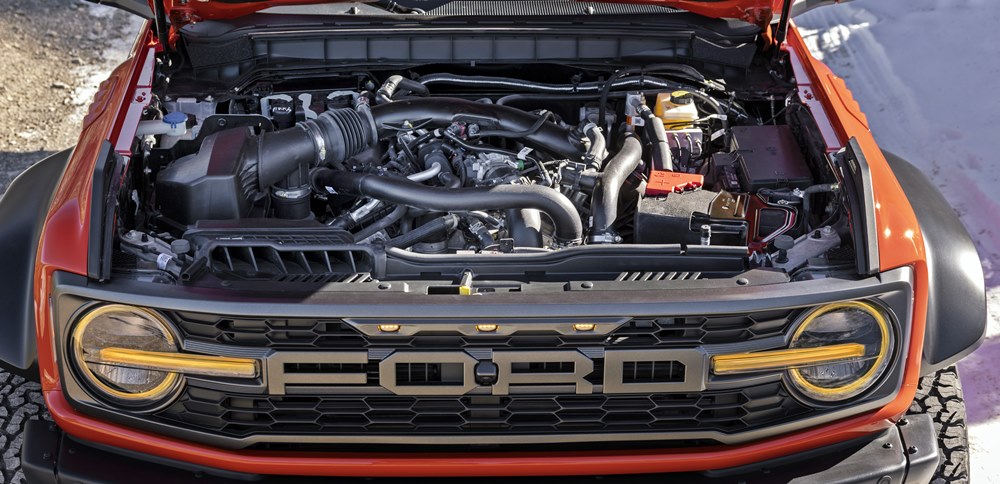
To give Bronco Raptor even more desert-running power, the powertrain team developed the proven twin-turbo 3.0-litre EcoBoost engine with specific Raptor-level tuning to meet Ford Performance standards. With a target of more than 400 bhp, this would make the Bronco Raptor the most powerful street-legal Bronco ever. Intercooling and air-induction systems ensure that higher ambient desert temperatures can be endured for long periods.
For higher-speed desert capabilities or crawling over rocks, the compacted graphite iron-block engine, which saves weight while providing strength for added durability, is paired with a 10-speed SelectShift automatic transmission tuned to meet Ford Performance standards. A true dual-exhaust system, featuring first-for-Bronco active-valve technology, uses near-equal-length pipes for an improved exhaust note. The system allows drivers to alter the sound of their Bronco Raptor with four selectable exhaust modes, including Normal, Sport, Quiet and Baja.
Extreme Built Wild design
“As the most badass Bronco yet, the Bronco Raptor design is extreme,” said Paul Wraith, the Bronco’s design chief. “It’s muscular, while maintaining an underlying simplicity with performance-focused details added only for outstanding high-speed capability.”
Familiar Ford block lettering at the front stretches across the signature two-piece rectangular grille. LED headlights with amber daytime running lamps and integrated amber marker lamps further tie in the DNA of the Raptor to provide a menacing look. A heavy-duty modular steel front bumper by Ford Performance includes tow hooks, removable bumper end caps for improved off-road clearance and rigid off-road lamps for greater illumination.
The bonnet is made of sheet-molding compound, which allowed the design team to dramatically sculpt its muscular shape. An integrated vent is molded-in-colour Carbon Black and fender vents are painted body colour.
The Bronco Raptor leverages on the Bronco’s patented off-road modular design, stripped it to its base, and replaced components with unique-to-Raptor front and rear quarter-panels, fenders, fender flares and door appliques. Sheet-molding compound is once again used to sculpt the wider front fenders and integrated bodyside heat extraction ducts, which provide additional engine cooling.
Race-focused interior
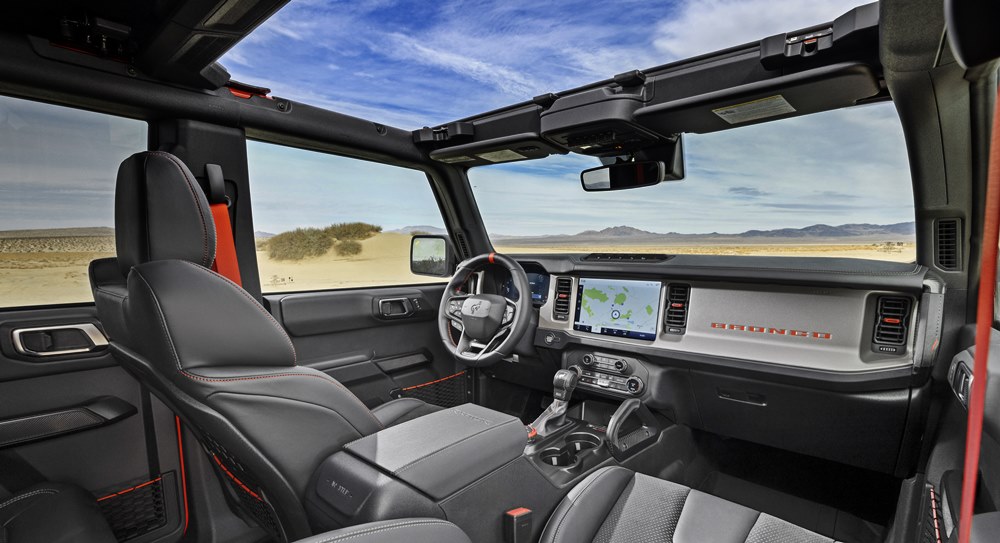
The driver gets the familiar heritage-inspired horizontal dashboard, integrating an all-digital 12-inch cluster. The cluster allows drivers to select from various views, including a Bronco Raptor-exclusive Performance View that emphasizes tachometer and gear readings and allows the customization of gauges.
“The Bronco Raptor interior was designed around what we know hardcore off-road racers want in a vehicle,” said Ryan Olsson, design manager. “From the all-new Performance View on the cluster and unique steering wheel with paddle shifters and fingertip access to Raptor-specific controls, to its race-ready, high-bolster front seats, Bronco Raptor leaves the factory ready for the starting line.”
As standard, it has SYNC4 with a 12-inch touchscreen, information on-demand panel and enhanced voice recognition. Other technology features include an exterior camera with 360-degree viewing capability. The Lux Package is available for customers looking for even more human-centered technology, such as an optional 10-speaker B&O audio system and Adaptive Cruise Control.
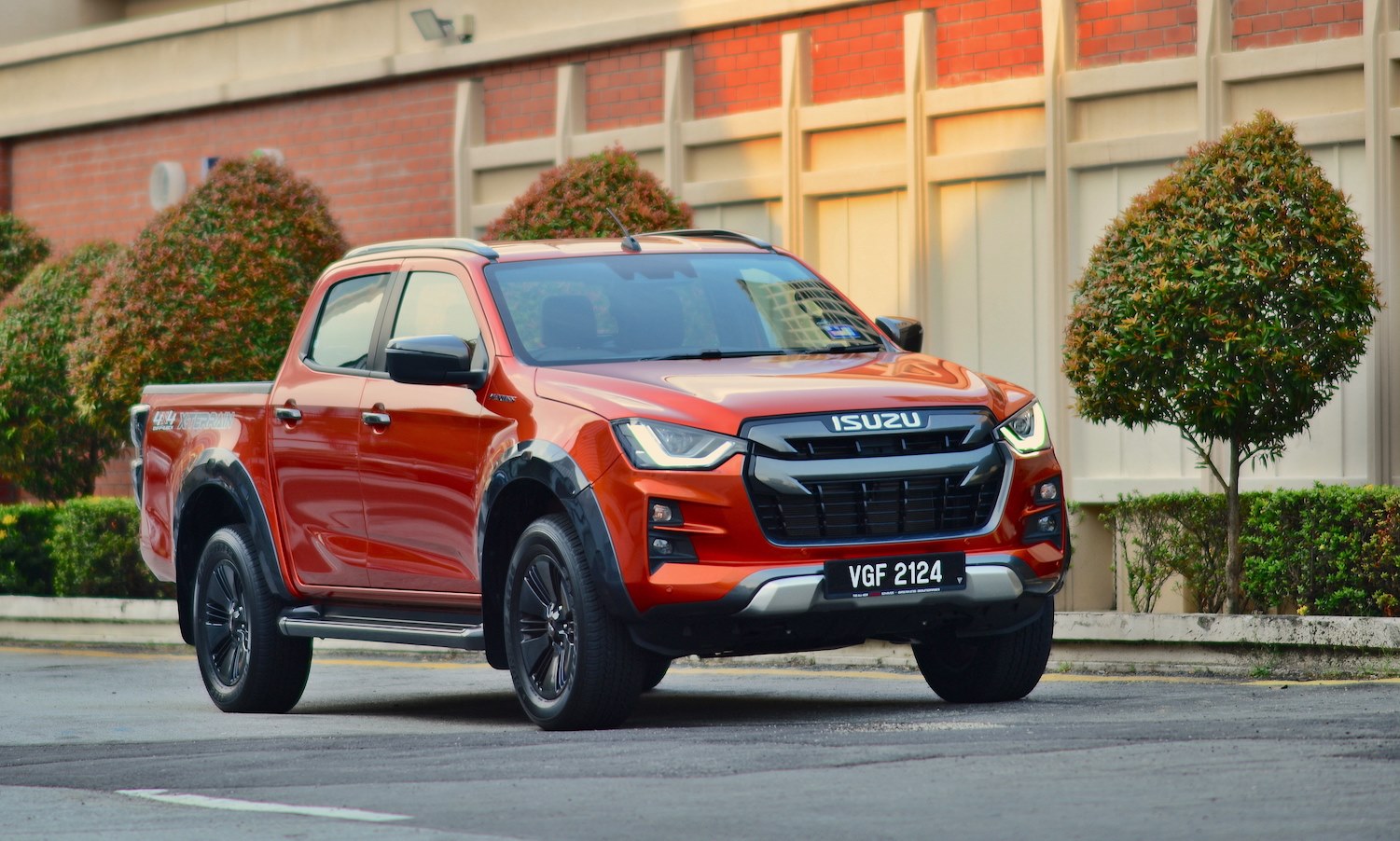
Since its global debut, the all-new third-generation Isuzu D-MAX has impressed buyers and critics alike, attracting new users who have appreciate its impressive level of sophistication, comfort and capability.
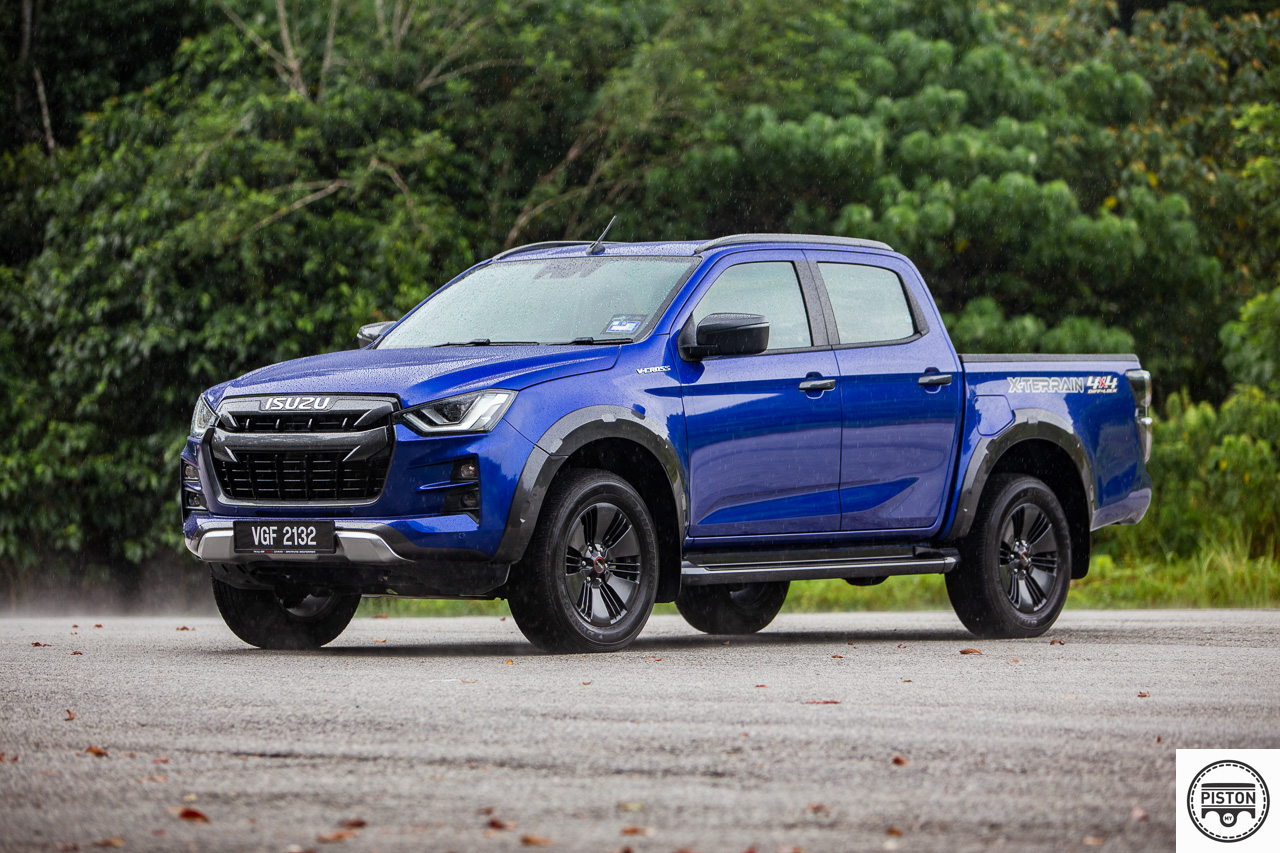
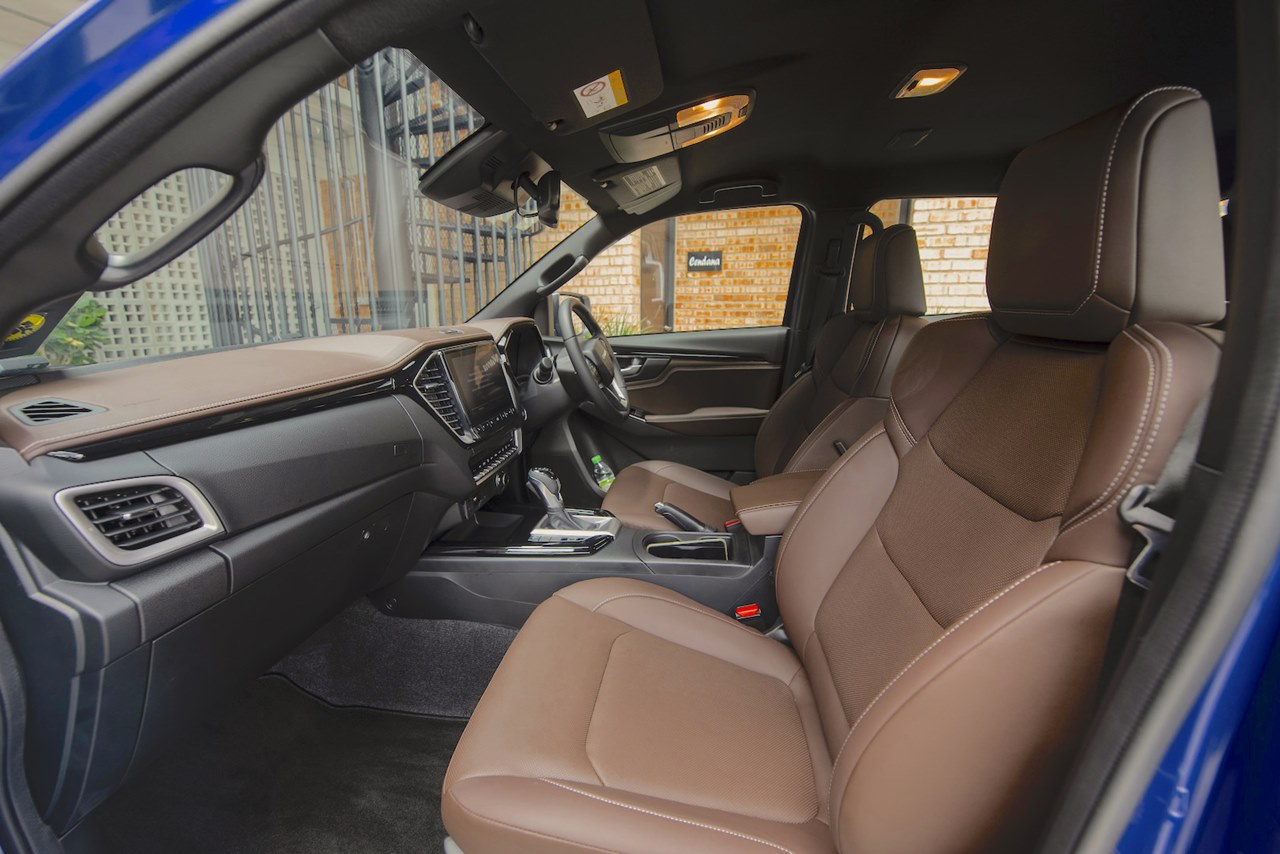
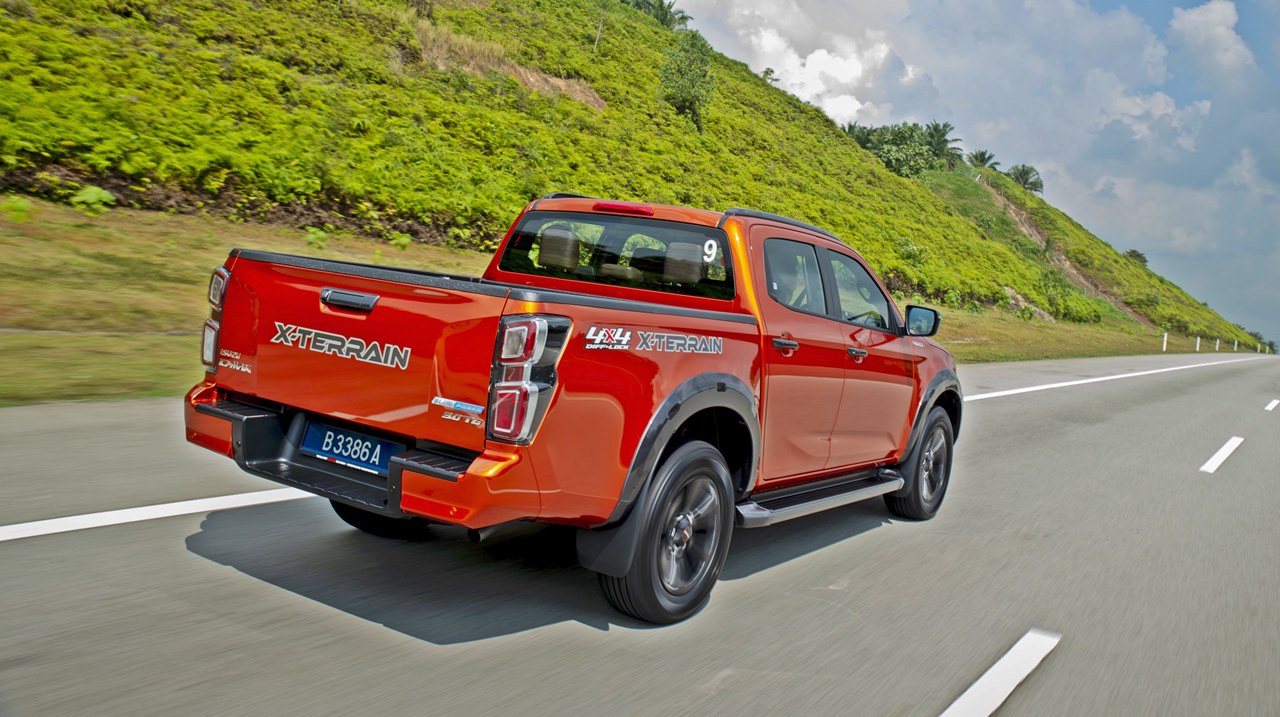
Launched in Malaysia last April, the new D-MAX has expanded the brand’s appeal and reach. “Through the strong and bold design of the new model, excellent safety features and impressive comfort and premium SUV-like refinement, the D-MAX – especially the flagship X-Terrain variant – has raised the bar to be one of the most desirable pick-up trucks on the market today,” said Isuzu Malaysia’s Chief Operating Officer, Kenkichi Sogo.
Most popular in Klang Valley/Kota Kinabalu
Despite the acute shortage of D-MAX supply due to the global semi-conductor shortage, 713 owners took delivery of their new X-Terrain, making it the 2nd-most popular model in Isuzu Malaysia’s line-up. The versatile and highly capable 1.9-litre 4×4 Premium model also found 842 customers, especially in the Klang Valley and Kota Kinabalu. In fact, these two areas took more than half of the nationwide total volume.
The new X-Terrain variant has been regarded as a revolutionary truck, having redefined the landscape of the pick-up truck industry. It introduces new and higher levels of comfort, refinement and safety. Yet there is no compromise on Isuzu’s long-established qualities of versatility and overall dependability.
5 titles in less than a year
In less than a year in the Malaysian market, the new D-Max X-Terrain has received no less than 5 ‘Pick-up Truck of the Year’ titles. These have come from media titles such as Carplus, Carlist, DSF.my, Rider ATH and Wapcar, which picked the Isuzu as the worthy title-holder for its impressive ability to bring the pick-up truck experience to a whole new level.
“There were just so many ‘wow’ factors in the new Isuzu D-MAX that it was immediately the worthy choice. During our test drive of the Isuzu, we often wondered how a tough and capable vehicle like the D-MAX was able to be transformed from a rough diamond to be a brilliantly-polished gem,” an impressed senior editor said.
8,000 units targeted for 2022
With the momentum of strong demand expected to continue through 2022, Isuzu Malaysia’s priorities will be to address the backlog of supply in order not to disappoint eager customers. “Many customers have been patiently awaiting delivery of their new vehicles. We are hoping that the supply disruptions can be alleviated soon in order for us to fulfill the demand for this new truck,” said Mr. Sogo. “We expect that once supply is regulated, we will be able to double the deliveries and achieve our target of selling 8,000 units this year.”
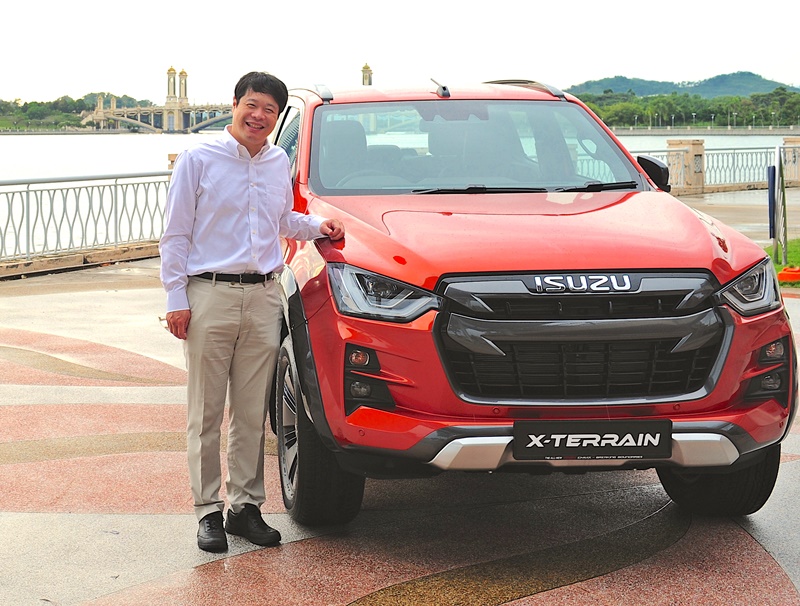
Isuzu Malaysia’s Chief Operating Officer, Kenkichi Sogo. with the latest D-MAX.
The latest D-MAX range comes in a variety of variants suited to different requirements and budgets. Those who require a durable and reliable pick-up truck for work can choose the Single Cab variants. There is a wide selection of Double Cab variants powered by the 1.9-turbodiesel litre engine or the powerful and capable 3.0-litre powerplant.
To find out more or to have a test-drive, visit any authorised Isuzu dealer in Malaysia. Locations can be found at pickuptruck.isuzu.net.my.
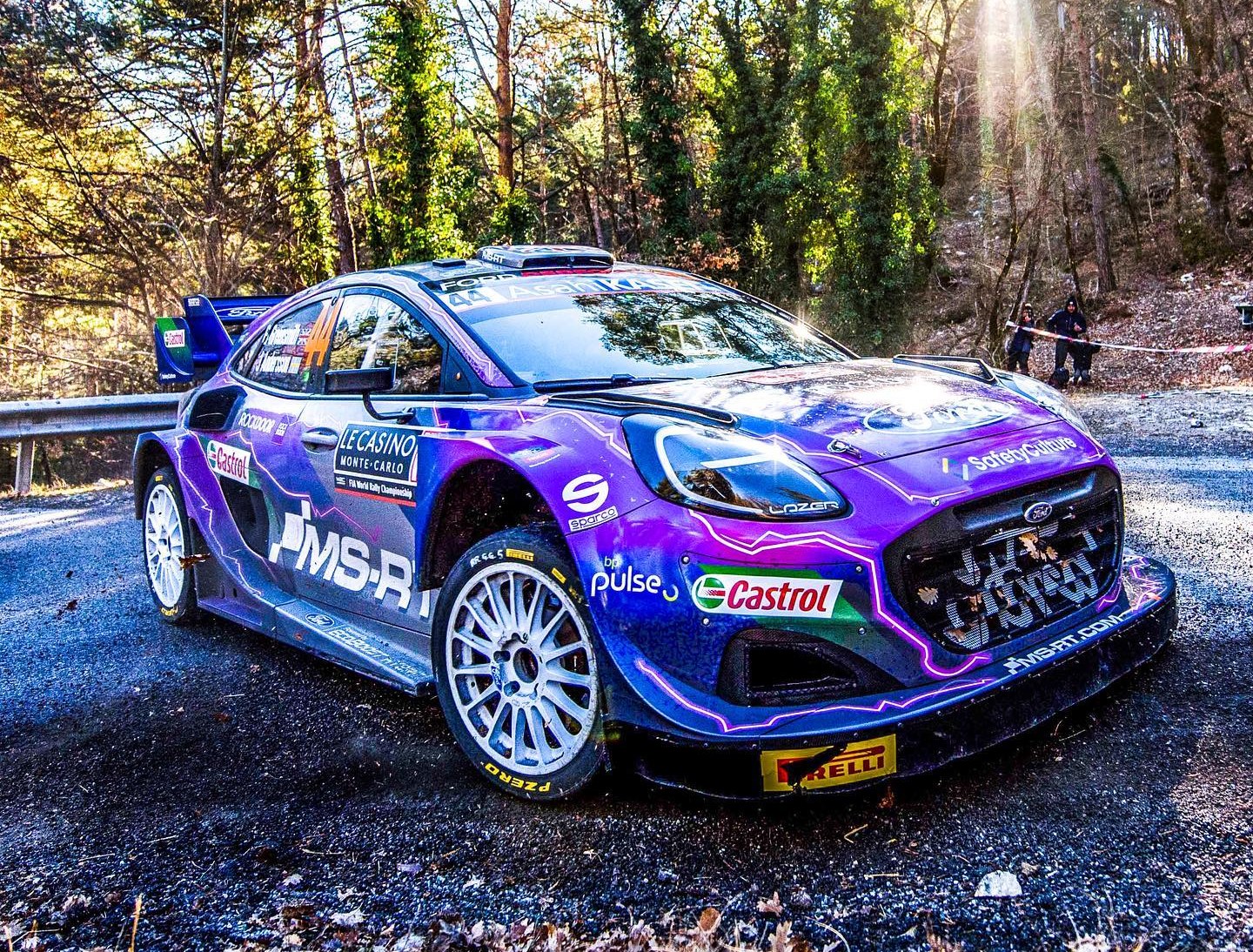
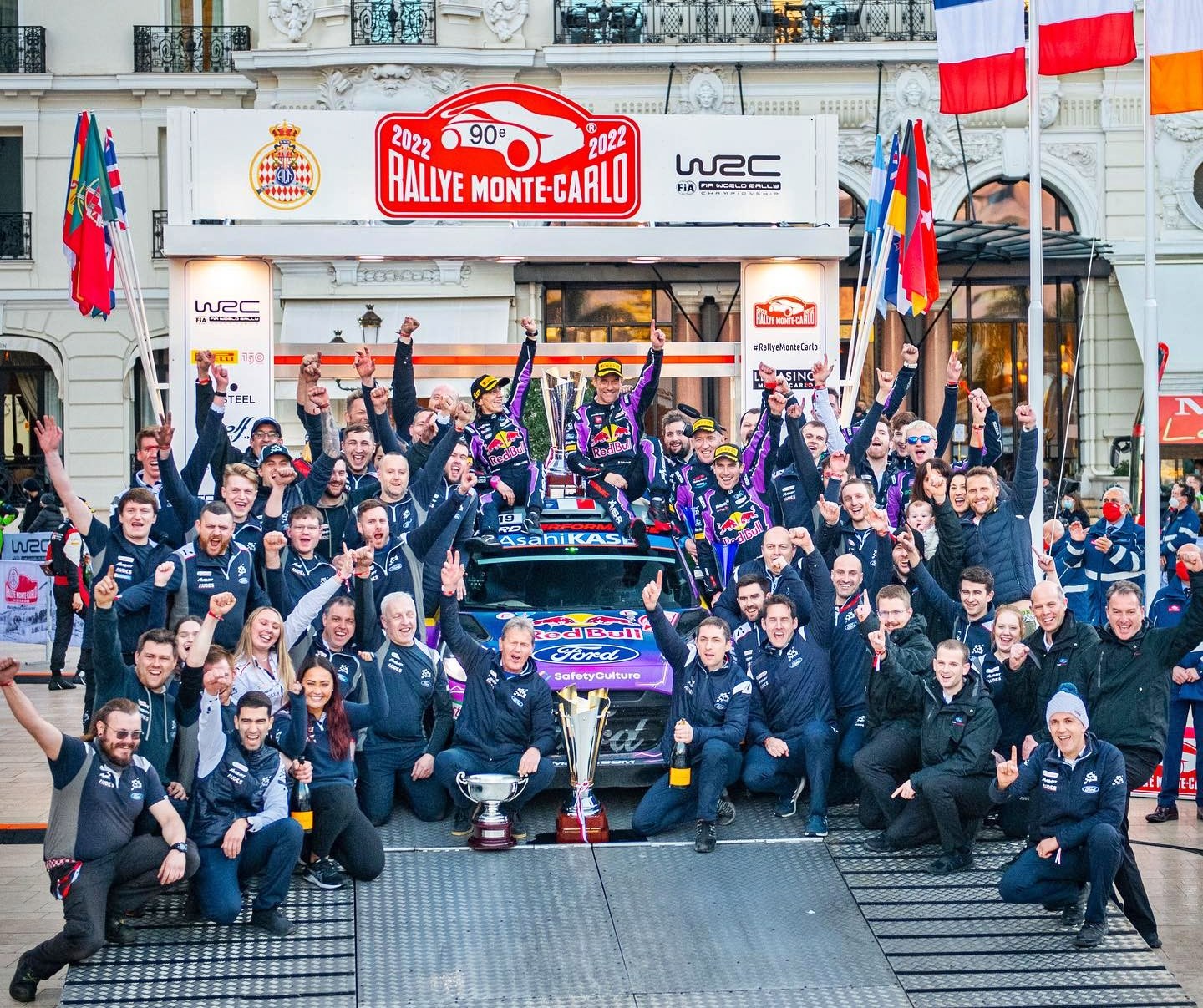
It’s been a while since Ford had a victory in the World Rally Championship (the last one was in the Rally Great Britain in 2018) and Sebastien Loeb’s win in the 2022 Monte Carlo Rally was all the more significant as it was the first one in the new hybrid era of rallying.
Loeb won using the new Ford Puma Rally1 with the British M-Sport Ford team run by Malcolm Wilson, a former rally driver as well. Aged 47, Loeb, from France, was also the oldest winner of an FIA World Rally Championship round. Loeb’s win in Monte Carlo makes it 8 for him, putting him alongside Sebastian Ogier as far as wins on the classic event are concerned.
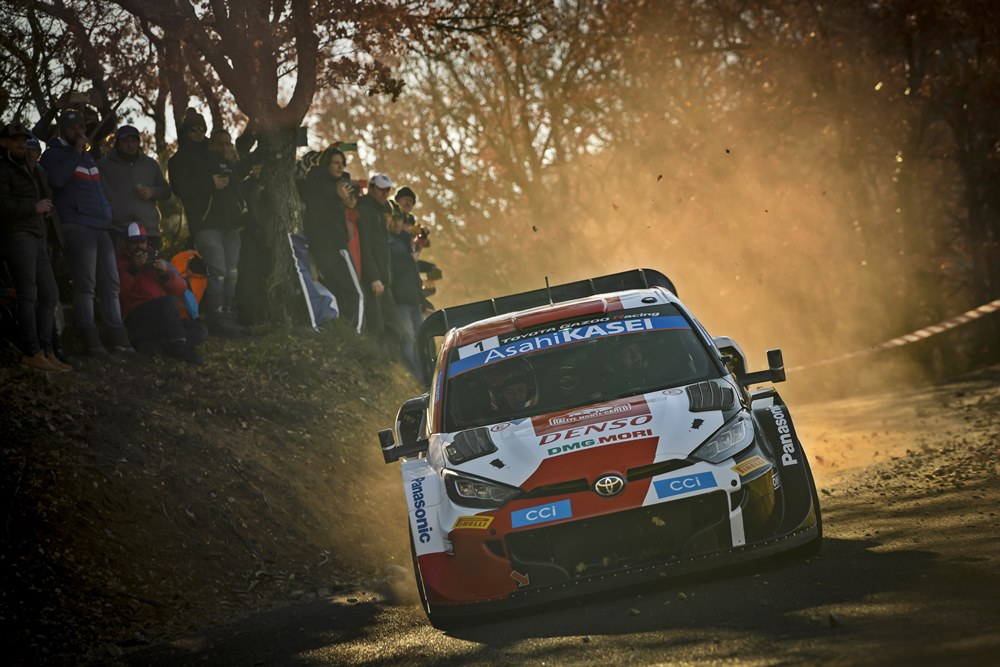
Loeb had beaten his Ogier, who was using a Toyota GAZOO Racing Yaris Rally1, on the final day when Ogier, driving a, was given a 10-second penalty for a jump-start earlier. To make things worse, a puncture on a front tyre slowed him although he made it to the finish but by then, Loeb had ended with a 10.5-second lead. Incidentally, Ogier will only enter selected events this year after stepping away from full-time competition.
Loeb, accompanied by co-driver Isabelle Galmiche (a 50-year-old teacher), had been running behind Ogier initially but then clocked 4 fastest times consecutively to move into the lead. The Toyota driver’s puncture on the penultimate stage of the rally had lost him his lead of 24.6 seconds but he fought hard and, even with the penalty, cut the deficit down to 10.5 seconds.
Another Ford Puma, driven by Craig Breen, finished in third and added to the team’s points to gain an early lead in the Manufacturers’ championship. Fourth was an impressive result for young Kalle Rovanpera and his co-driver Jonne Halttunen, who made huge strides forward in pace and confidence in their new GR Yaris Rally1.
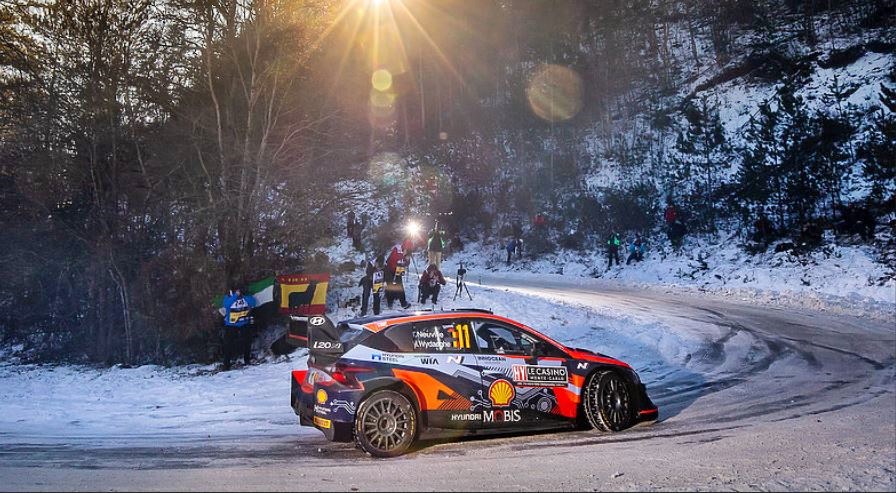
For the Hyundai Motorsport’s Ott Tanak, the opening round of the 2022 World Rally Championship was one to forget. Tanak, champion in 2019, and his team mates experienced troubles during the second last day and had only 2 of the new Hyundai i20 cars to finish the rally.
“We had a tough weekend,” said Thierry Neuville. “There has been a huge amount of work behind the scenes to prepare for this event, from me and Martijn, as well as the team, so to come away without any reward is hard to accept. We won’t give up. There are different areas we are going to work on but most important is the reliability.”
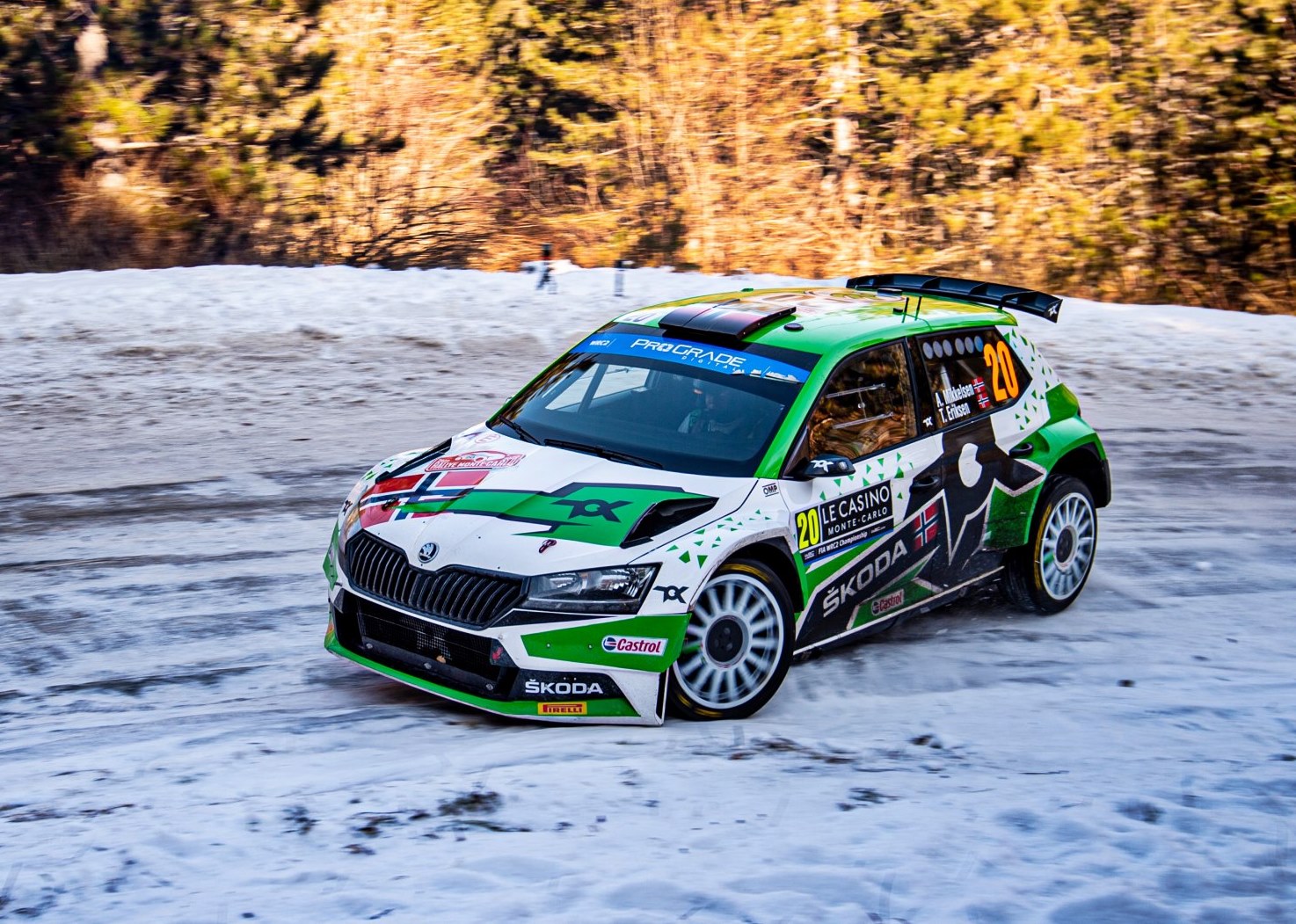
The WRC2 category was also fiercely contested, with Andreas Mikkelsen/Torstein Eriksen working hard to keep their titles again this year. Signs are good that they can, with victory in their Skoda Fabia Rally2 Evo ahead of Erik Cais who was in a Ford Fiesta, and Mikkelsen’s team mate in Toksport, Nikolay Gryazin.
Sami Pajari marked the start of the new-look FIA WRC3 category, which is now for Rally3 cars, beating Jan Cerny to the class win with a margin of just 7.6 seconds. Enrico Brazzoli rounded out the top three with all drivers competing in Ford Fiesta Rally3s.
The new era of WRC, which starts its 50th season this year, focusses on hybrid powertrains for the Rally1 cars, with 100 kW electric motors coupled to 1.6-litre turbocharged engines that generate at least 500 bhp. The new regulations are aimed at moving the championship towards a more sustainable future and include use of 100% hydrocarbon fossil-free fuel.
TOP 10 FINISHERS
1. Sebastien Loeb/Isabelle Galmiche | Ford Puma Rally1
2. Sebastien Ogier/Benjamin Veillas | Toyota GR YARIS Rally1
3. Craig Breen/Paul Nagle | Ford Puma Rally1
4. Kalle Rovanpera/Jonne Halttunen | Toyota GR YARIS Rally1
5. Gus Greensmith/Jonas Andersson | Ford Puma Rally1
6.Thierry Neuville/Martijn Wydaeghe | Hyundai i20 N Rally1
7. Andreas Mikkelsen/Torstein Eriksen | Skoda Fabia Rally2 evo
8. Takamoto Katsuta/Aaron Johnston | Toyota GR YARIS Rally1
9. Erik Cais/Petr Tesínsky | Ford Fiesta Rally2
10. Nikolay Gryazin/Konstantin Aleksandrov | Skoda Fabia Rally2 evo
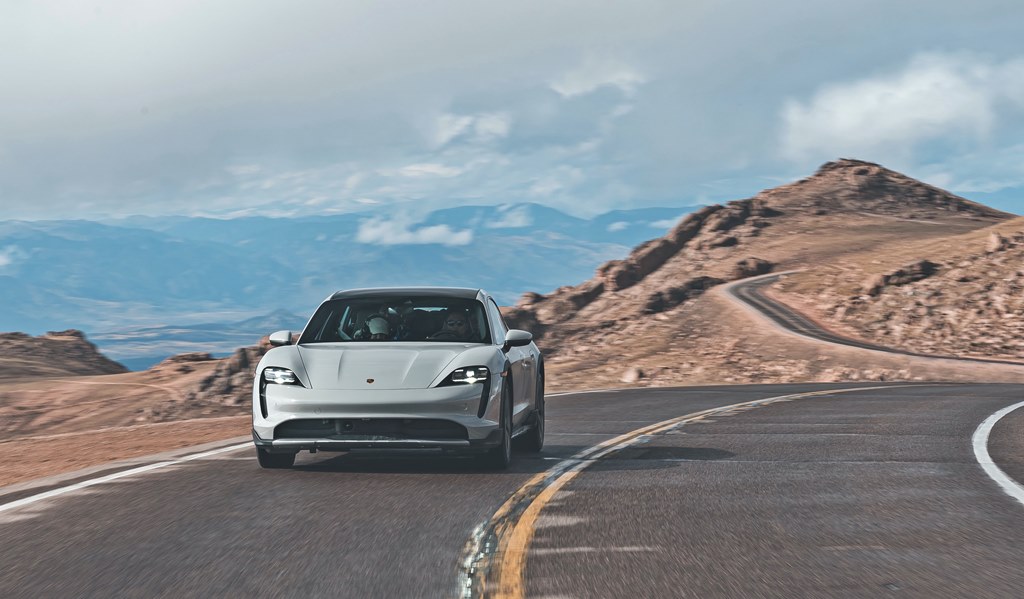
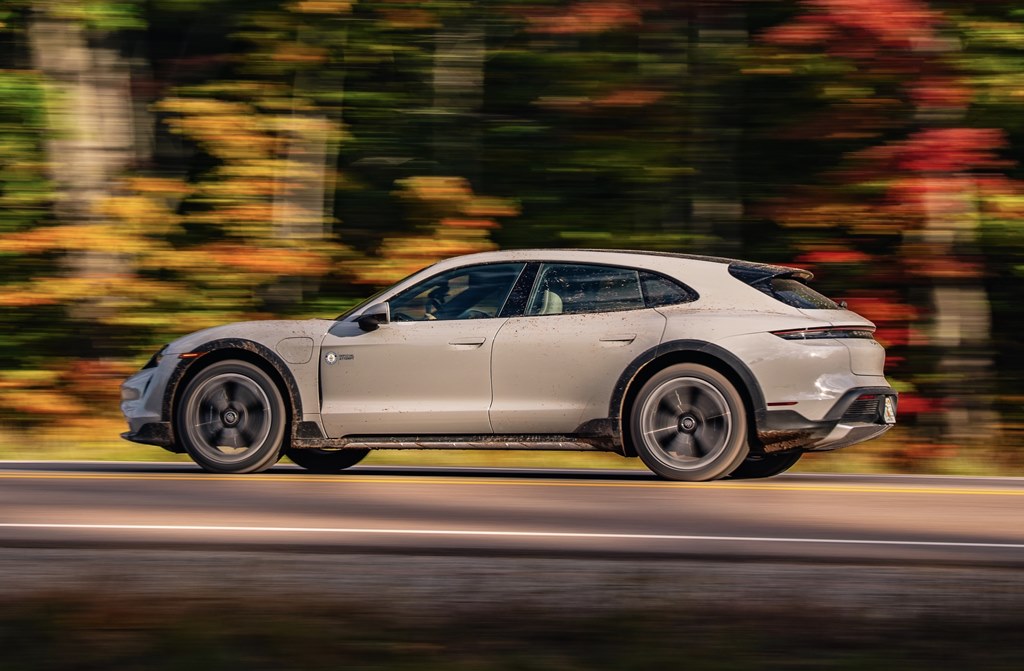
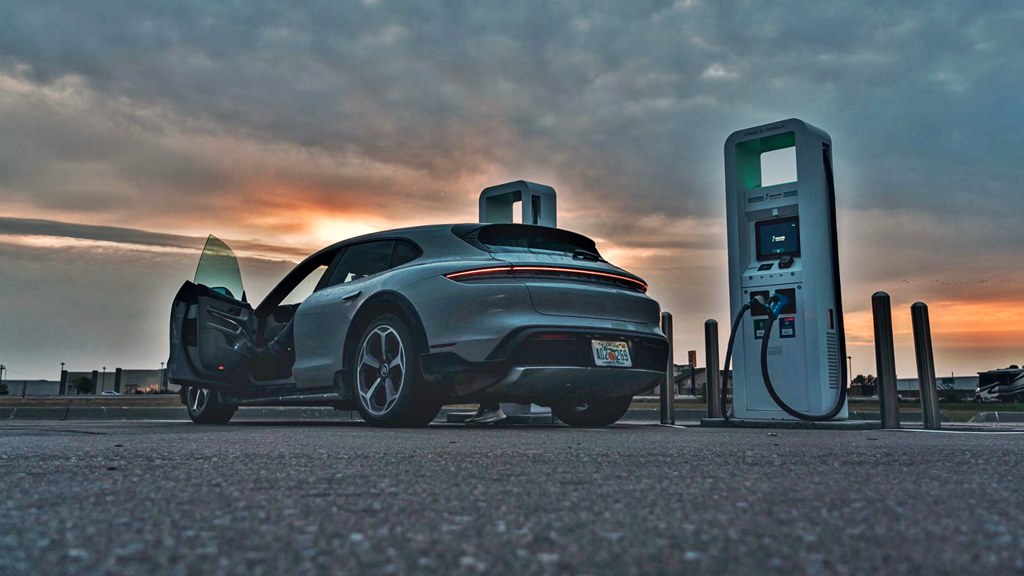
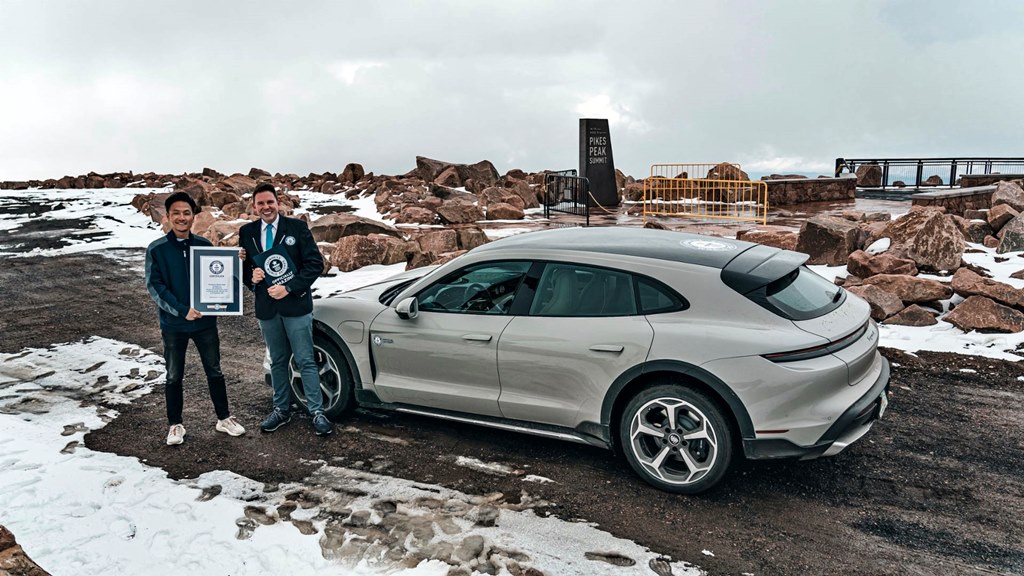
These days, it seems that the fully electric Porsche Taycan is setting a new record every few months. Many are speed-related and demonstrate the performance that would be expected of a Porsche. Recently, a Taycan Cross Turismo set another new record which has gone into the the Guinness World Record book and it’s one which sets a new benchmark.
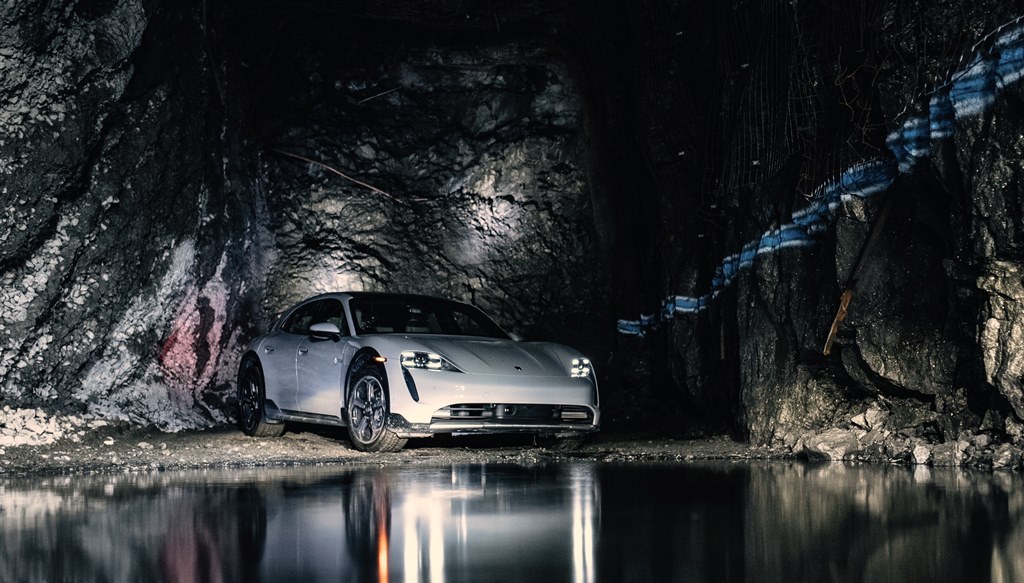
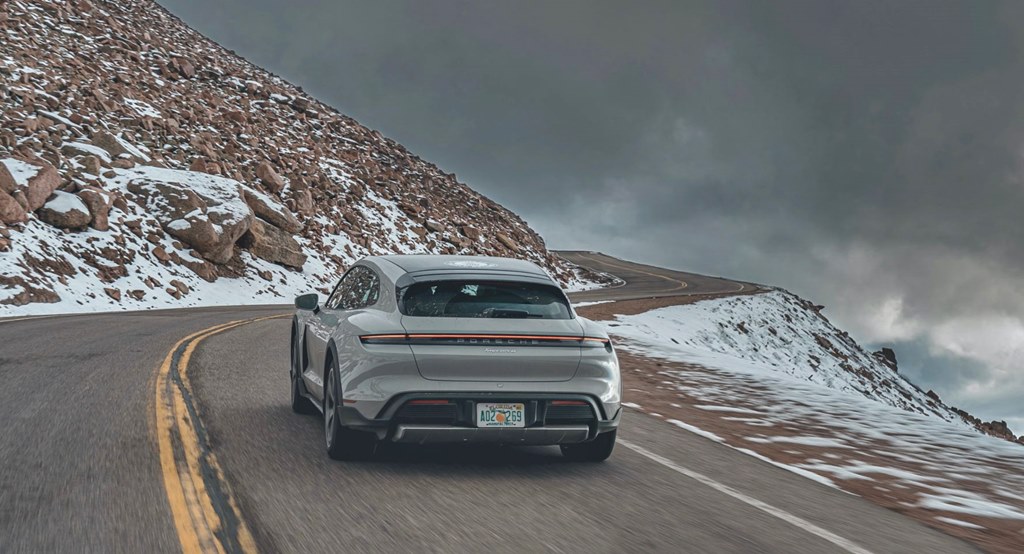
The Taycan Cross Turismo, on its journey, made the greatest altitude change ever achieved by an electric car – 4,842.967 metres – going from inside a mine to the top of the famous Pikes Peak that is at the end of an annual hillclimb event.
A ‘what if?’ project
The sportscar was driven by a J.F. Musial and his team who are usually behind the camera, creating automotive films and TV shows. Motivated by curiosity, they decided to take the Porsche from the lowest point they could access in America to one of the highest. Their journey covered more than 2,250 kms between the two points.
“It started as a ‘what if?’ – a passion project, mixing our love for cars and travel and taking it to extremes,” explained Musial. “We wanted to drive from the lowest point in America to one of the highest, Pikes Peak – where we’ve spent countless hours filming the famous hillclimb. The project relied on a lot of goodwill, and a car that’s pretty much unique in its mix of abilities.”
Going deep underground
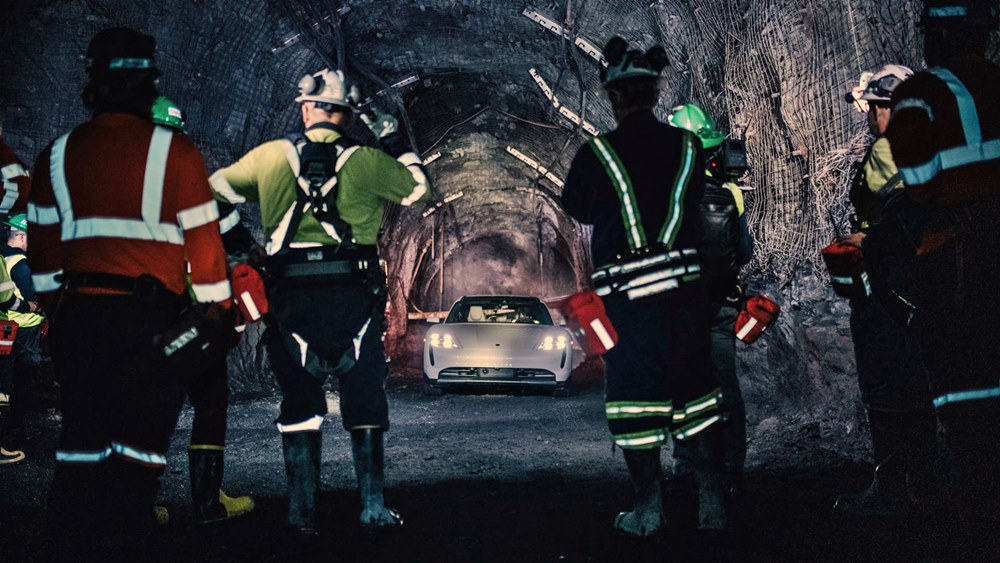
The lowest point in America is Badwater Basin in Death Valley -t 86 metres below sea level. To go any deeper, you have to go underground. And so the team did exactly that, with the cooperation of Eagle Mine in the state of Michigan. The nickel and copper mine is the only mine in America where a car can be driven to sufficient depths, down a ramp usually used by specialist mining vehicles.
Due to the Taycan Cross Turismo being a pure battery electric vehicle (BEV) as well as being capable off-road with its raised ride height and all-wheel drive, it met Eagle Mine’s criteria for being allowed to drive through the portal and into the tunnel itself and down to 540.8 metres below sea level.
The Taycan Cross Turismo was an ideal choice as it is one of very few cars in the world with the right mix of capabilities to be able to attempt the trip. It needed no modification and even used completely standard road tyres.
“It was fitting to have the Porsche Taycan drive to the bottom of our nickel and copper mine, as both elements are essential to electric vehicles. After numerous risk assessments, safety discussions, and detailed planning, our mine team was up to the challenge. We are proud to have worked with Porsche to safely execute and complete a new world record,” said Darby Stacey, Managing Director of Eagle Mine.
Climbing almost 5 kms vertically
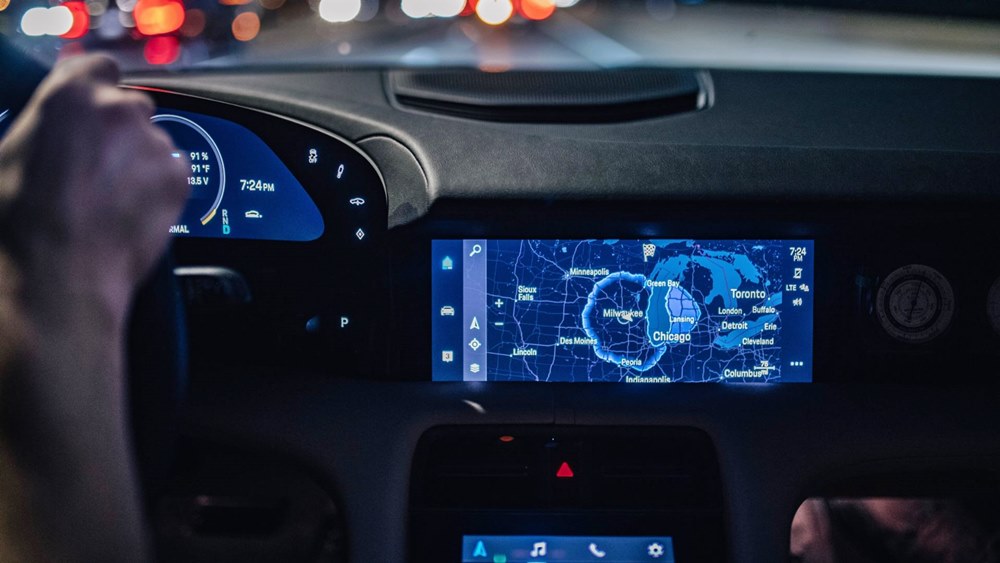
With their precise depth measured and verified by specialist surveyors, the team emerged from the mine just after dawn and began their journey to Pikes Peak in the state of Colorado. The journey was among the most demanding the car and team had ever experienced. It would take them across 6 states, and would ascend 4,842.967 metres – without ever leaving the ground.
The oxygen available to them at the start of the journey fell by 40% by the time they reached the top of the mountain. However, the electric powertrain – unlike a combustion engine – did not suffer from the effects of thinner air. Nevertheless, the varied conditions, including snow and ice, gave the Taycan Cross Turismo a strong challenge.
In total, 3 groups of drivers working in tandem took on the driving duties. They conducted the whole attempt by the book, with separate, sealed GPS devices monitoring their route and altitude throughout – along with an analogue altimeter and witness logs to satisfy the strict Guinness World Records requirements.
Fittingly it was Dai Yoshihara – class winner at the 2020 Pikes Peak International Hill Climb – behind the wheel for the final, record-breaking stage of the drive. The team of record-breakers had covered a total of nearly 5 kms straight up, and 2,274 kms along the ground, in 33 hours and 48 minutes.
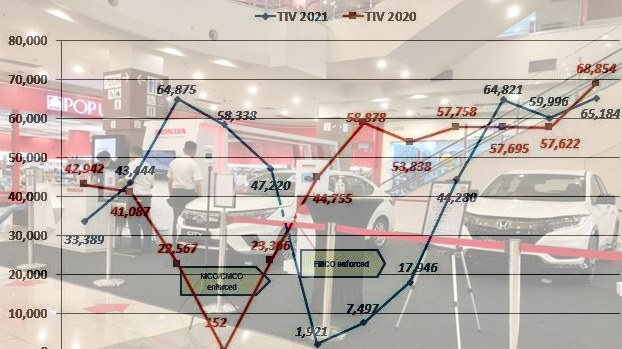
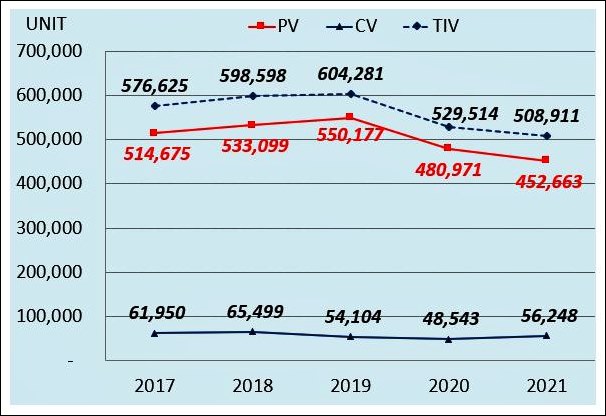
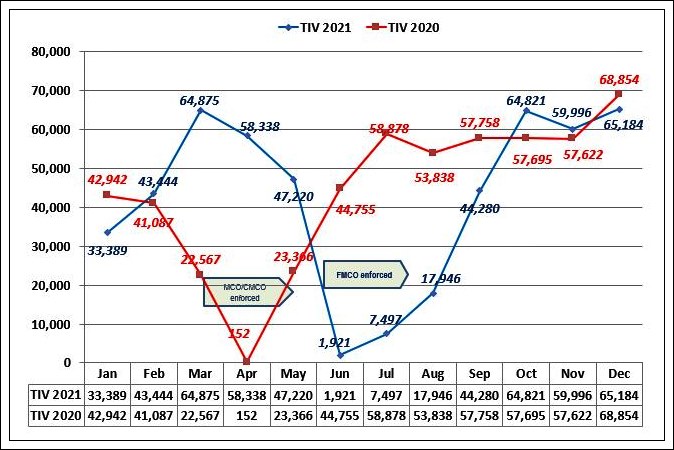
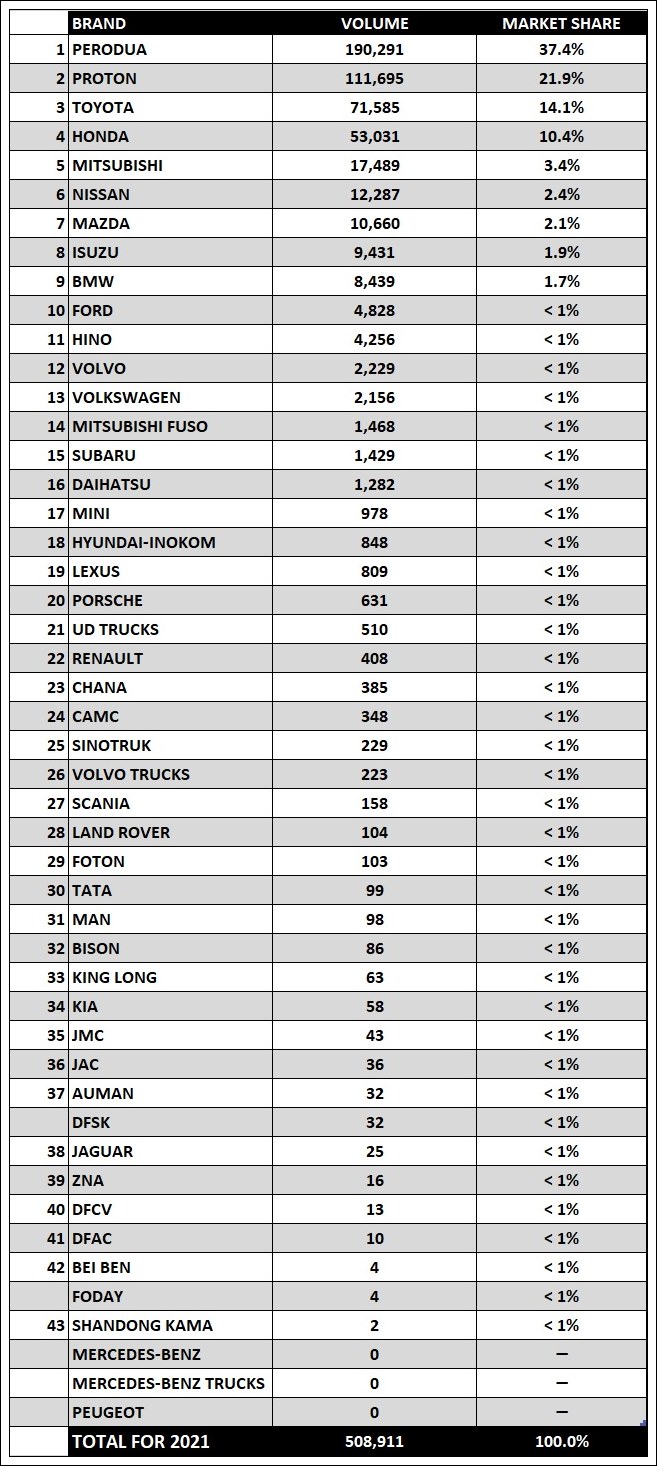
Although 2021 was the second year of the COVID-19 pandemic and the auto industry had been hoping to recover from the impact of the lockdown in 2020, the total number of new vehicles sold was actually lower. Where the Total Industry Volume (TIV) in 2020 was 529,514 units, the TIV for 2021 was 4% lower at 508,911 units.
Nevertheless, the usual final-month push by car companies saw the December having the highest sales volume of the year with 65,184 vehicles delivered nationwide. This contributed to the year’s TIV going past the 500,000-unit level that had been forecast by the Malaysian Automotive Association. While 2021, like 2020, had long periods when business activities – including motor vehicle sales and production – were suspended, the rate of recovery in 2021 was not as quick as the year before.
New vehicle sales in Malaysia from 2017 to 2021.
Commenting on the sales figures, MAA President Datuk Aishah Ahmad said that the measures taken by the government were important factors. “The much smaller TIV’s contraction recorded in 2021 [compared to 2020] can be attributed to the measures and wisdom of our government in balancing between saving lives and jobs so as not to jeopardize the domestic economy,” she said.
Owing to the relaxation of the movement control orders, many economic sectors were allowed to re-open for businesses. This helped to improve business confidence which contributed to more sales of new vehicles, including commercial vehicles which are much needed for the running of businesses. Having deferred purchases during 2020, many companies would have made their fleet purchases during 2021 to support their business activities.
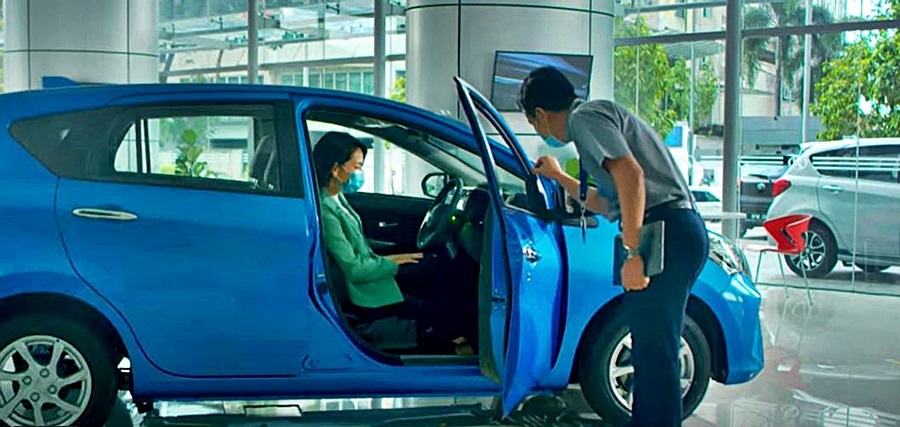
The sales exemption has helped to encourage many to buy new vehicles, contributing to the recovery of the industry.
“The extension of the sales tax exemption incentive under PEMERKASA+ package till December 31, 2021, also helped to sustain the demand for new passenger vehicles,” added Datuk Aishah. “Under the PEMERKASA+ package, the government agreed to exempt sales tax up to 100% for completely knocked down (CKD) passenger vehicles assembled in Malaysia, and 50% on passenger vehicles that were imported in completely built-up (CBU) form.
In the passenger vehicle segment, it was evident that even more buyers preferred SUVs, mirroring the global trend which has had manufacturers hurriedly launching new SUV models. In the case of Malaysia, passenger car sales declined by about 19.7% while SUVs grew by 43%. The other segments – MPVs (which used to be second to passenger cars) and window vans – also saw lower sales although not significantly different from their 2020 volumes.
Overall, passenger vehicle sales fell by 5.9% to 452,663 units but this was not entirely due to reduced demand. Some companies also experienced stock shortages due to the semiconductor microchip supply issues which affected their local production or production at overseas factories from which they import their vehicles. It only takes one part being unavailable to prevent a vehicle from being completed and leaving the factory.
The commercial vehicle segment (which includes pick-up trucks)) fared better, recording an increase of 15.9% to a volume of 56,248 units, which represented 11% of the TIV. In this segment, pick-up trucks registered the biggest increase of 20.9% to 40,736 units, account for 72% of the commercial vehicle segment.
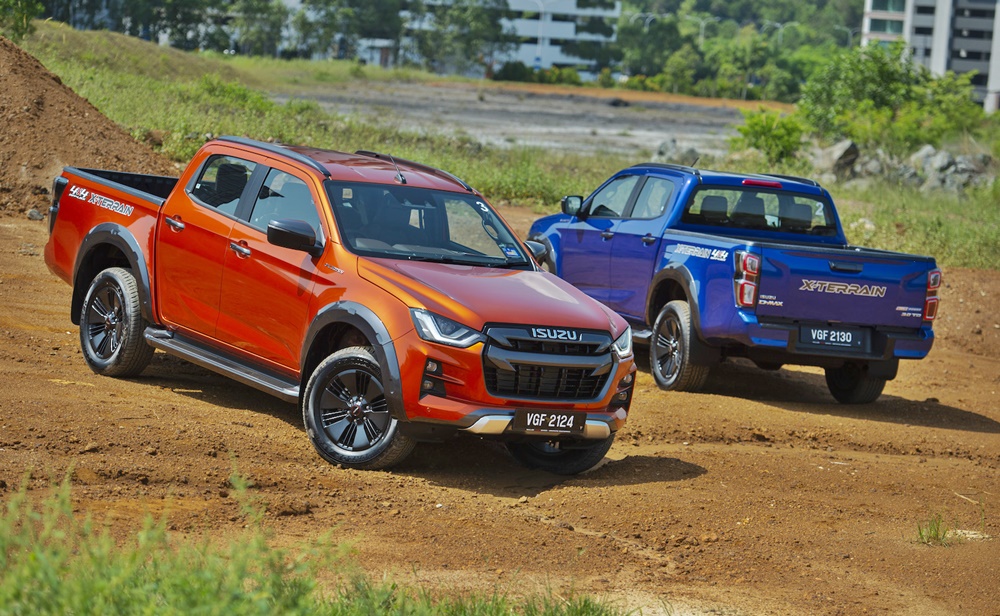
All-new 4th generation Isuzu D-MAX launched in April would have contributed to growth in pick-up sales.
The growth would have been helped by the introduction of new models like the Isuzu D-MAX during the year. The all-new generation of the popular pick-up truck was launched in April and Isuzu Malaysia reported that average monthly orders were 100% higher than the previous generation.
The bigger commercial vehicles saw lower sales; bus sales, for example, fell by almost 50% between 2020 and 2021 although this would be understandable in view of the situation. With restrictions on interstate travel for much of last year and borders with Thailand and Singapore pretty much closed, tour companies would not have wanted to get new vehicles. However, truck sales did go up by 5.3%, probably in view of increasing demand for delivery services.
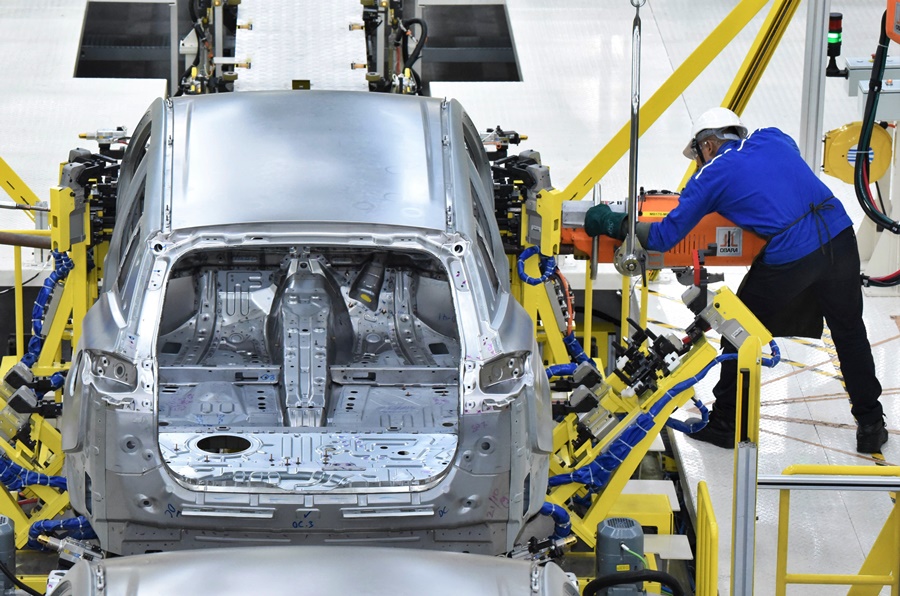
Although the factories were forced to shut down for an extended period, the drop in local production was actually minimal – 3,535 units or 0.7%, compared to 15% in 2020 when the drop from 2019 was almost 87,000 units. While passenger vehicle production declined by 11,324 units (2.5%), commercial vehicle production actually rose by 7,789 units (28.4%). Outputs rose for trucks and panel vans which, as mentioned earlier, had greater demand.
Looking ahead in 2022
Notwithstanding pandemic-related issues that can cause disruptions and supply chain issues such the global shortage of semiconductor chips, rising cost of freight, there are still some positive aspects that can boost new vehicle sales in 2022.
Continuation of the sales tax exemption for imported and locally assembled passenger vehicles till June 30, 2022 will be helpful in encouraging people to buy new vehicles. Bank Negara Malaysia’s decision at its Monetary Policy Committee (MPC) meeting in November 2021 to maintain the benchmark Overnight Policy Rate at 1.75% will provide additional policy stimulus to accelerate the pace of economic recovery. This may help to stimulate domestic spending including for high-cost items like motor vehicles, and with the economic recovery will come more consumer spending.
Therefore, the MAA is optimistic that the industry will accelerate its recovery in 2022 and is forecasting growth of 17.9% over the 2021 TIV. This would take the volume to the elusive 600,000 units that has been difficult to reach (the last time was in 2019 when the TIV was 604,281 units). The MAA expects the passenger car segment to grow by 19.3% and account for 540,000 units, with the commercial vehicle segment (which includes pick-up trucks) growing by 6.7% to 60,000 units.
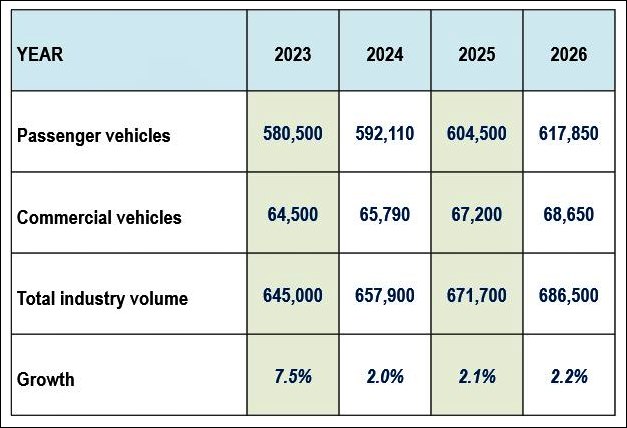
Looking further ahead, the MAA expects 2023 to be a boom year as recovery continues with rising demand after 2022. It forecasts a 7.5% increase to 645,000 units then but then the market will slow down again with average growth of around 2% annually up to 2026. Of course, much depends on how the pandemic runs its course although the government has made it clear that there will not be lockdowns again (apart from targeted ones, if really necessary).
Nissan Motor and Citizen, the watch company, both have long heritage starting from the 1930s. In the nine decades they have been in existence, they have introduced many iconic products in their respective markets.
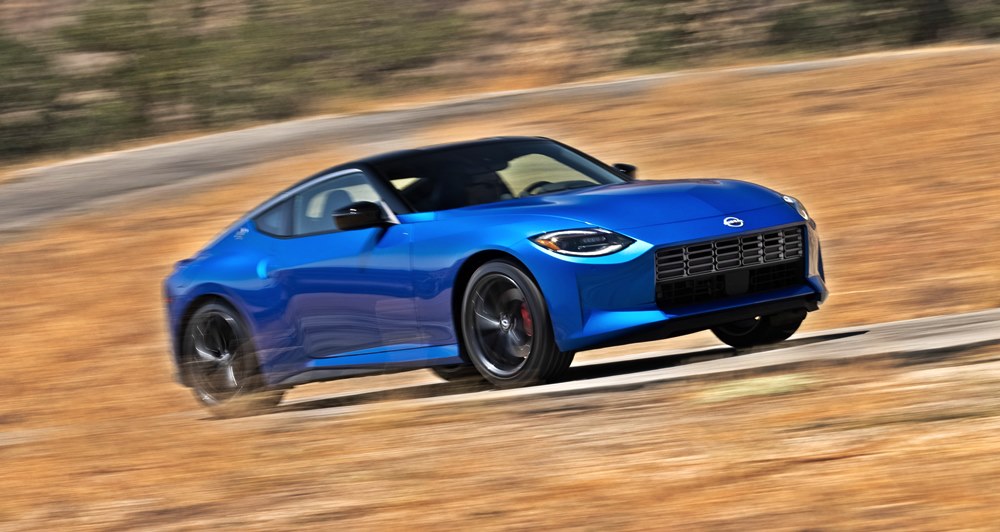
Citizen’s line of sports watches are well known with a reputation for high quality and technology. Likewise, Nissan has produced many sportscars and one of the most famous is the Z which made its debut in 1969. The original Datsun 240Z was one of the first Japanese models to show that Japan could also make sportscars and not just econocars. It certainly added another side to the Datsun brand (Nissan was not used as a brand name then) and drew enthusiasts to it.
Limited edition, 1,700 pieces
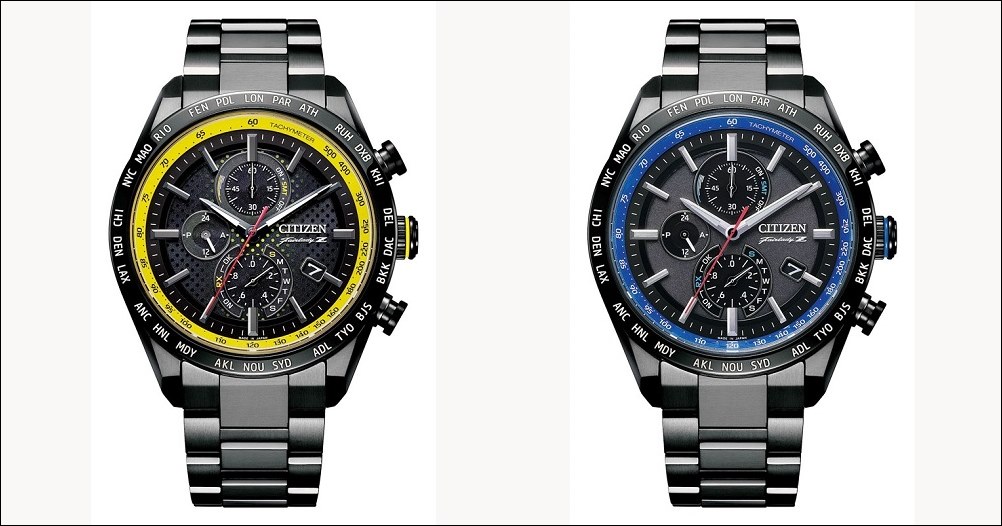
50 years later, the seventh generation of the Z has been launched and its iconic design has been modernised. To celebrate this much-anticipated return of the sportscar, Citizen has collaborated with Nissan to create a pair of limited edition watches in its Eco-Drive range. Only 1,700 watches will be available with a recommended price of US$2,495 (around RM10,400) in the US market.
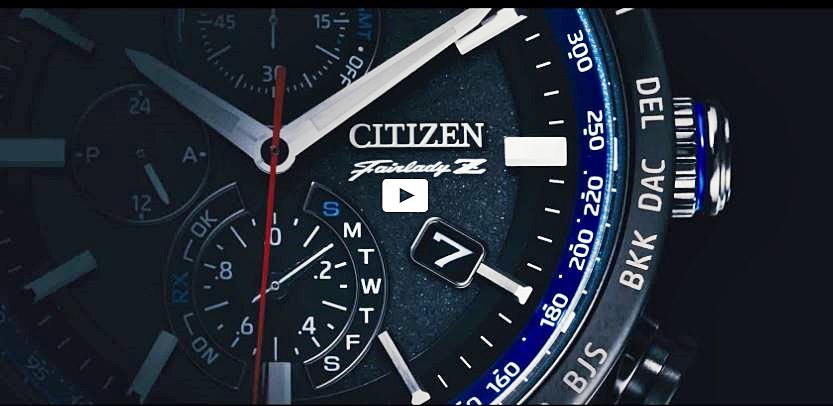
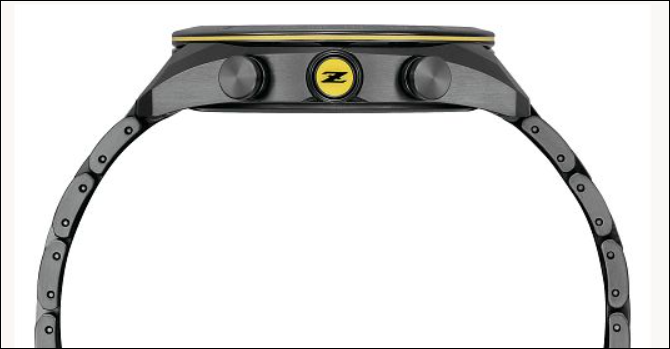
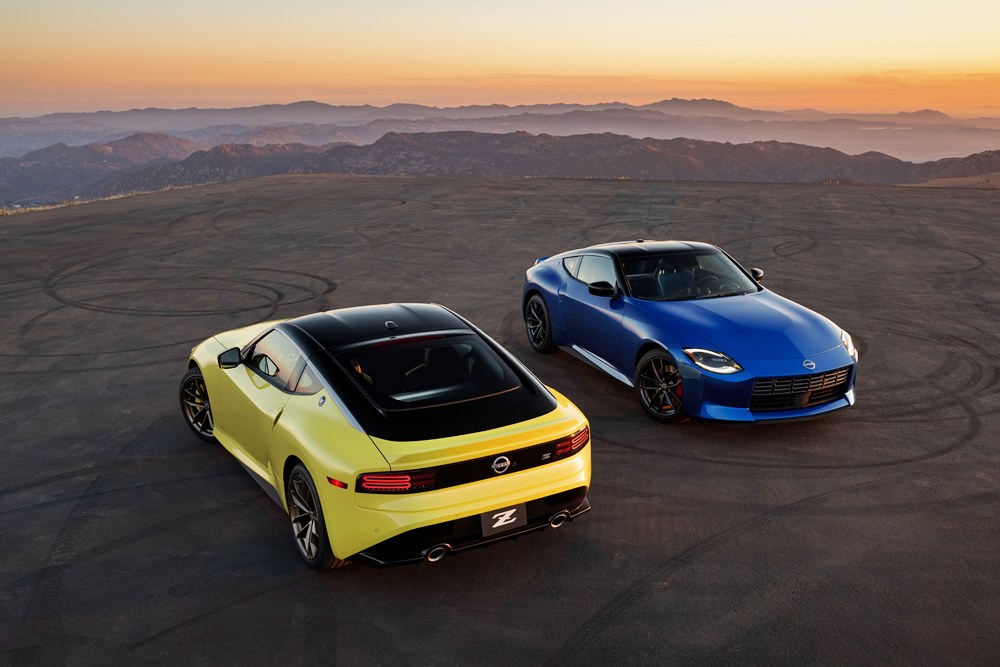
The watches feature accents in the striking new Seiran Blue or Ikazuchi Yellow, both colours available with the new Z. The colours stand in bold contrast to the matte black on the centre of the dial that evokes the sense of smooth new asphalt on a highway.
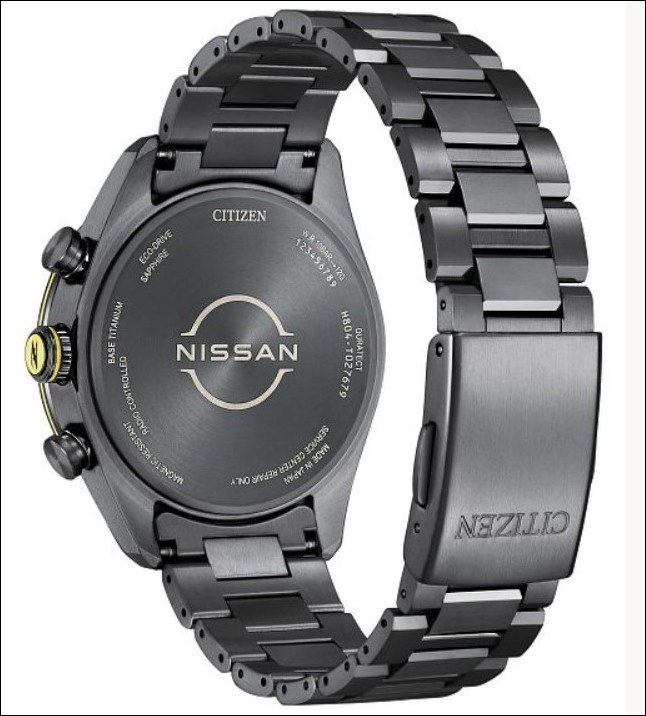
The black of the dial is accented by silver hands and indexes to create a cool, understated look, while a red second hand is inspired by the redline on a tachometer. The watches each have a ‘Z’ mark on the crown and NISSAN logo on the case back.
Super Titanium casing and bracelet
The case is made of Super Titanium as is the bracelet. The proprietary space-age material is 5 times more scratch-resistant and 40% lighter than stainless steel. Anti-Reflective Sapphire Crystal is used to offer impact and shatter resistance, with anti-reflective coating to make it easy to view in all lighting conditions.
1 second loss in 1,000 years
Like other Citizen Eco-Drive watches, there is solar-powered quartz chronograph movement. Powered by any light source, there is no need to replace watch batteries. Atomic Timekeeping Technology with Synchronized Time Adjustment is available in 26 Time Zones, and the 1/20 second Chronograph measures up to 60 minutes. It is claimed that if you use the watch for 1,000 years, you would lose 1 second at most…
Car manufacturers are constantly introducing new technology in their models, often (but not always) starting at the top end due to the high initial cost. The innovative technology may be unique to the manufacturer and is described in detail but gets lost as the model it is in may also be significant as well. But over time, the innovative technology starts to spread to other models and becomes a standard feature. Two examples would be the Mercedes-Benz MBUX and Peugeot’s i-Cockpit which can be found in every new model each manufacturer launches.
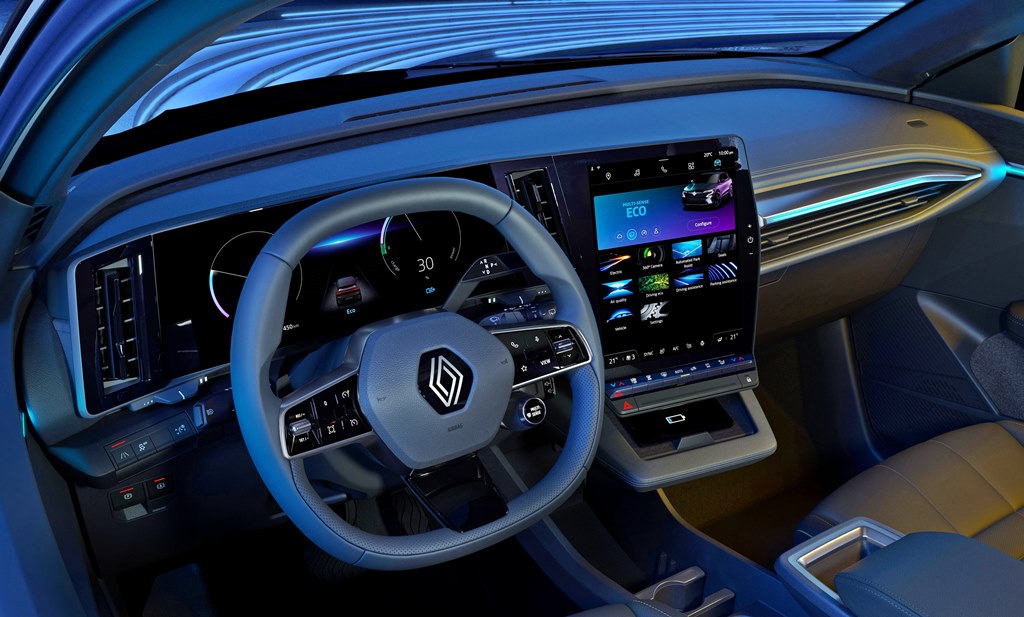
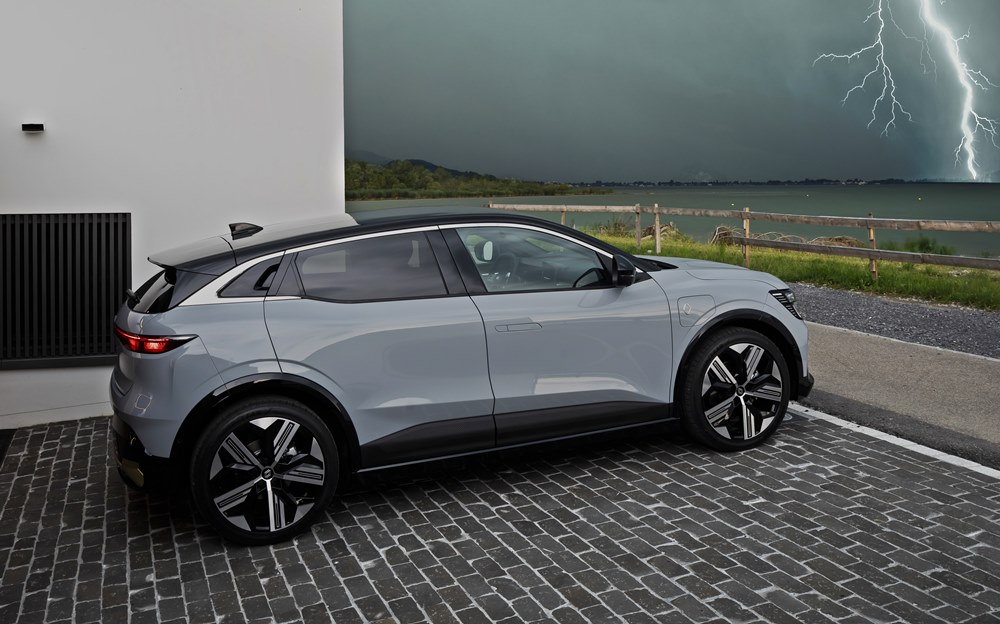
Renault too has a new breakthrough in on-board technology that it is now introducing, and it would be worthwhile remembering that it first appeared at the beginning of 2022. It’s called OpenR and takes the touchscreen to a new level. In time, it will surely start to appear in other new models to come.
Evolution of displays over 35 years
The first production car with a touchscreen was the Buick Riviera some 35 years ago. Since then, in-vehicle electronics have come a long way, with the hardware becoming more efficient, the experience smoother, and screens getting larger and having higher resolution. Navigation is now effortless and intuitive, and the applications can be easily updated ‘over the air’, so they always perform at their best.
And one thing hasn’t changed much recently: multimedia systems in vehicles are looking more and more like smartphones. The main challenge for Renault when developing its new Megane E-TECH Electric was to offer an even better interface enabling customers to find everything they need very fast and intuitively.
Totally new electronic architecture
To achieve this, an electronic architecture like nothing the market has seen before was developed. It modernises driver assistance systems and enhances viewing comfort, and the Megane E-TECH Electric is the first car to get it.
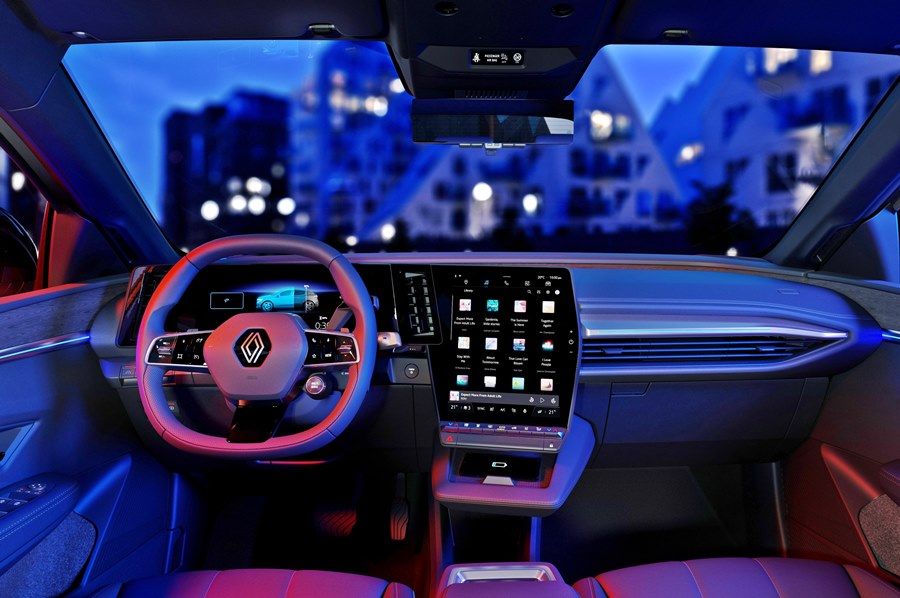
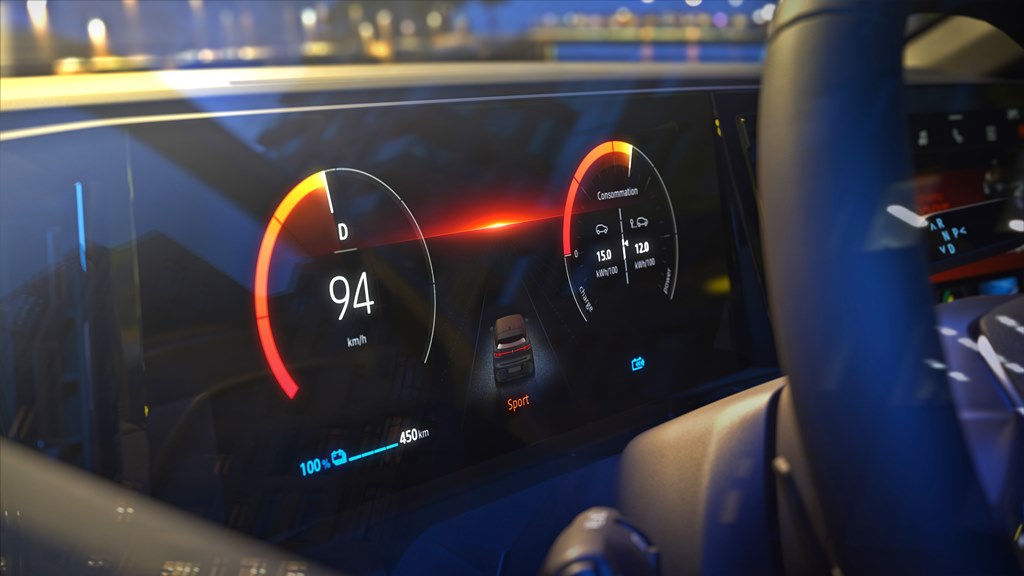
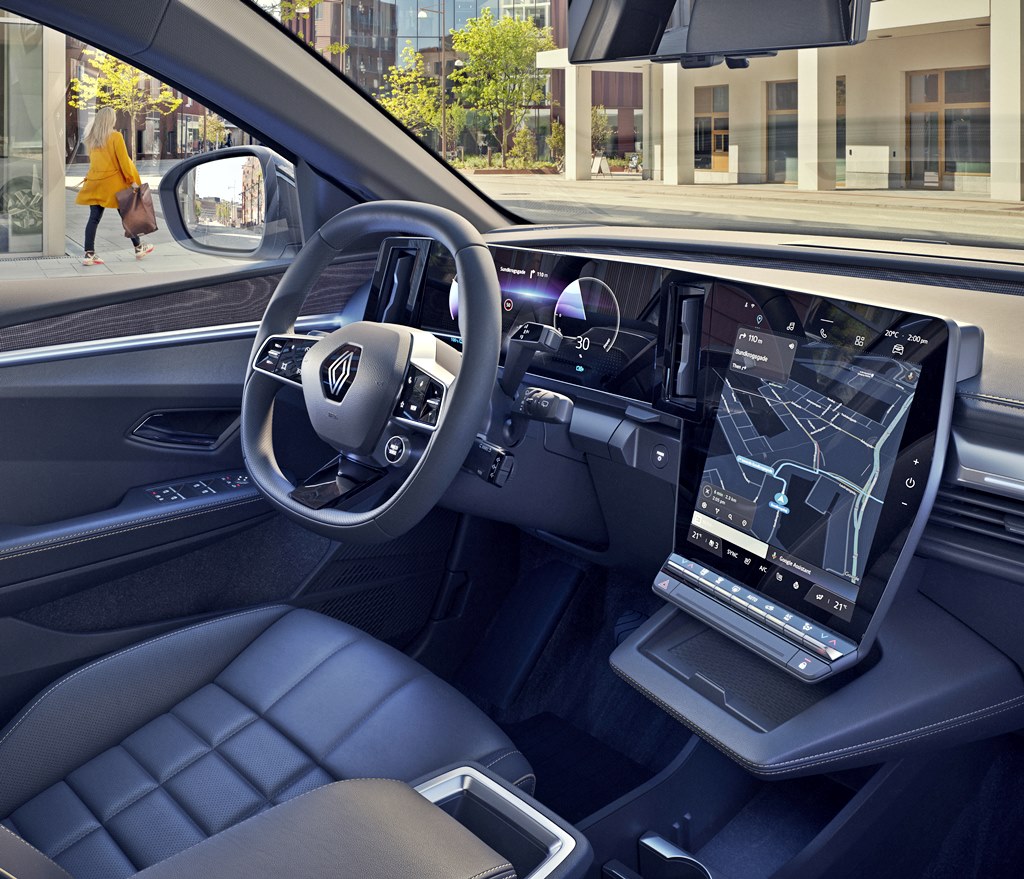
From where the driver is sitting, the striking feature of Open R is its sweeping digital display made of up two screens forming an ‘L’. The vertical 12-inch screen is on the car’s centre console, with a horizontal 12.3-inch screen is built into the dashboard, behind the steering wheel.
Together, the two screens span 774 sq. cm. and maximise the display area to provide an immersive experience. They are the biggest screens Renault has ever built into a vehicle, with the glass panels blending into the cockpit’s lines. They are in the best position for the driver to see it and operate easily, to take full advantage of the multimedia capabilities without taking their eyes off the road.
CMF-EV platform
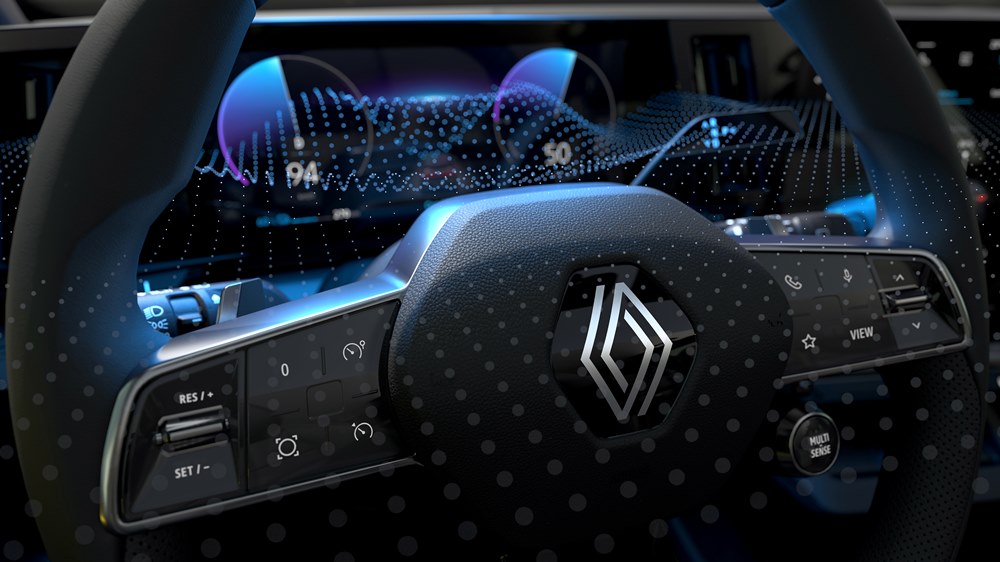
The technical feat overlaps with the arrival of the all-new CMF-EV platform for electric vehicles. Thanks to it offering new design flexibility, the engineers were able to move the air-conditioning unit into what used to be called the ‘engine bay’ (but now has only an electric motor). This freed up more space in the cockpit which, in turn, allowed the centre console to have a large and flush screen. The shifter and MULTI-SENSE interface are also transferred to the steering wheel, improving ergonomics and opening up more space in the middle of the passenger compartment and on the centre console.
While touchscreens and digital displays have allowed many functions to be placed on the screens, Renault’s designers have not been ‘excessive’ in this trend. They maintain some physical buttons – for example, to adjust the air-conditioning – in a subtle way beneath the central screen. This line of chrome-plated buttons looks natural in the cockpit and avoids the ‘fake’, unused buttons beneath the console that previous vehicle generations often had.
Like the latest smartphones, the OpenR screen (made by Continental) uses aluminosilicate-based Gorilla-type glass. It is tempered, ultra-resistant to shocks, scratch-proof and estimated to last 15 years. It comes with anti-reflective and anti-smudge coating. The ultra-fine contouring protects the screen’s edges. The HD quality of the TFT panel and finish combine to yield crystal-clear images.
The dashboard screen also has anti-reflective coating, and uses advanced micro-blinds technology (the technology that privacy screens for computers use). This means the ‘visor’ that usually shields the meters from sunlight is no longer needed – so the interior design is even sleeker. As for brightness, the panels adapt to outdoor light levels, so they are easier to read and don’t tire the eyes of the driver.
With OpenR, the user experience is said to be a lot like having a smartphone built into the car. This is a good approach since most people would be very familiar with their smartphone. That way, they don’t have to learn to use a whole new system.
Linked to Google ecosystem
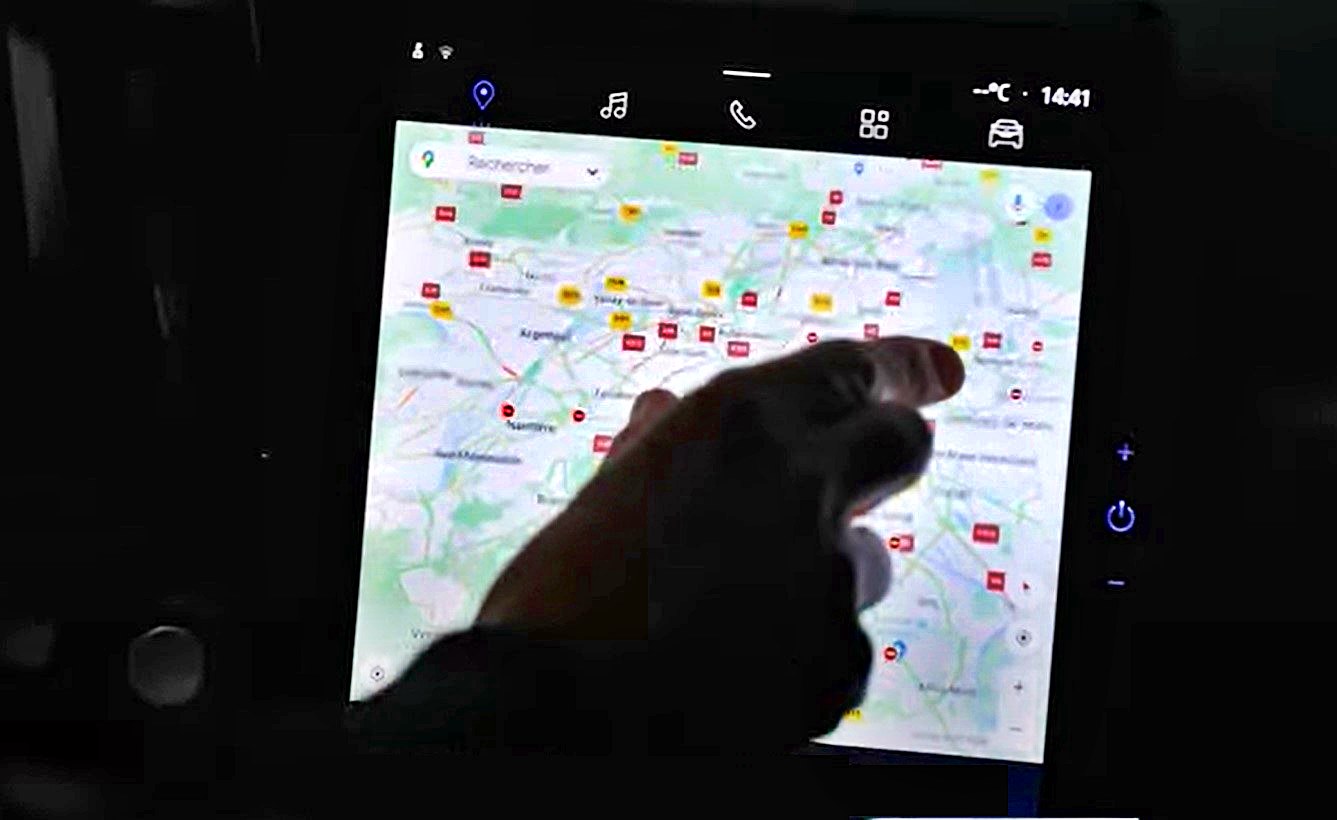
Android Auto and Apple CarPlay are available but the interface is designed to avoid having to use a phone altogether. All the features are at users’ fingertips, and the OpenR Link system runs on the Android OS, so all the familiar apps are there. Being associated with the Google ecosystem means that drivers can have all the classic and favourite apps brought into the car, and they also enjoy customisation like on their smartphone. And being plugged into Google’s ecosystem also means that the car can be part of their ‘digital life’.
These include the popular Google Maps which, on a screen that is 6 times bigger than an average smartphone screen, will give a much better user experience. Google Maps has also been optimised for electric cars and includes a route planner specifically for such zero emission vehicles. The planner can factor in real-time vehicle data, weather information and other variables to suggest a stop at a charging station, tell the driver what the battery charge level will be on arrival at that charging station, and tell them how long it will take to charge the battery. It can also estimate the battery charge level when the car reaches its destination.
As many drivers have found, using Google Maps means that they can get updated maps as millions of users help contribute and improve Google’s database. So unlike earlier on-board navigation systems where owners had to periodically obtain new digital maps (for a fee), Google Maps is constantly updated – and it’s free.
On the hardware side, Renault chose American specialist Qualcomm which has supplied its third-generation Snapdragon Automotive Cockpit platform. This is built around an ultra efficient processor that has plenty of extra capacity to handle future applications. As a result, the motion on the screen is 7 times smoother than with the previous generation. Qualcomm will also offer its expertise in connectivity, digital cockpits and visualisation, its service platform, as well as driver assistance – including autonomous driving.
However, the screens, computing power and system also require some form of ‘intelligence’ behind the human-machine interface (HMI). For that, Renault approached South Korea’s LG Electronics, which developed the software platform to pair the two screens so the driver can display the navigation maps on the display behind the steering wheel.
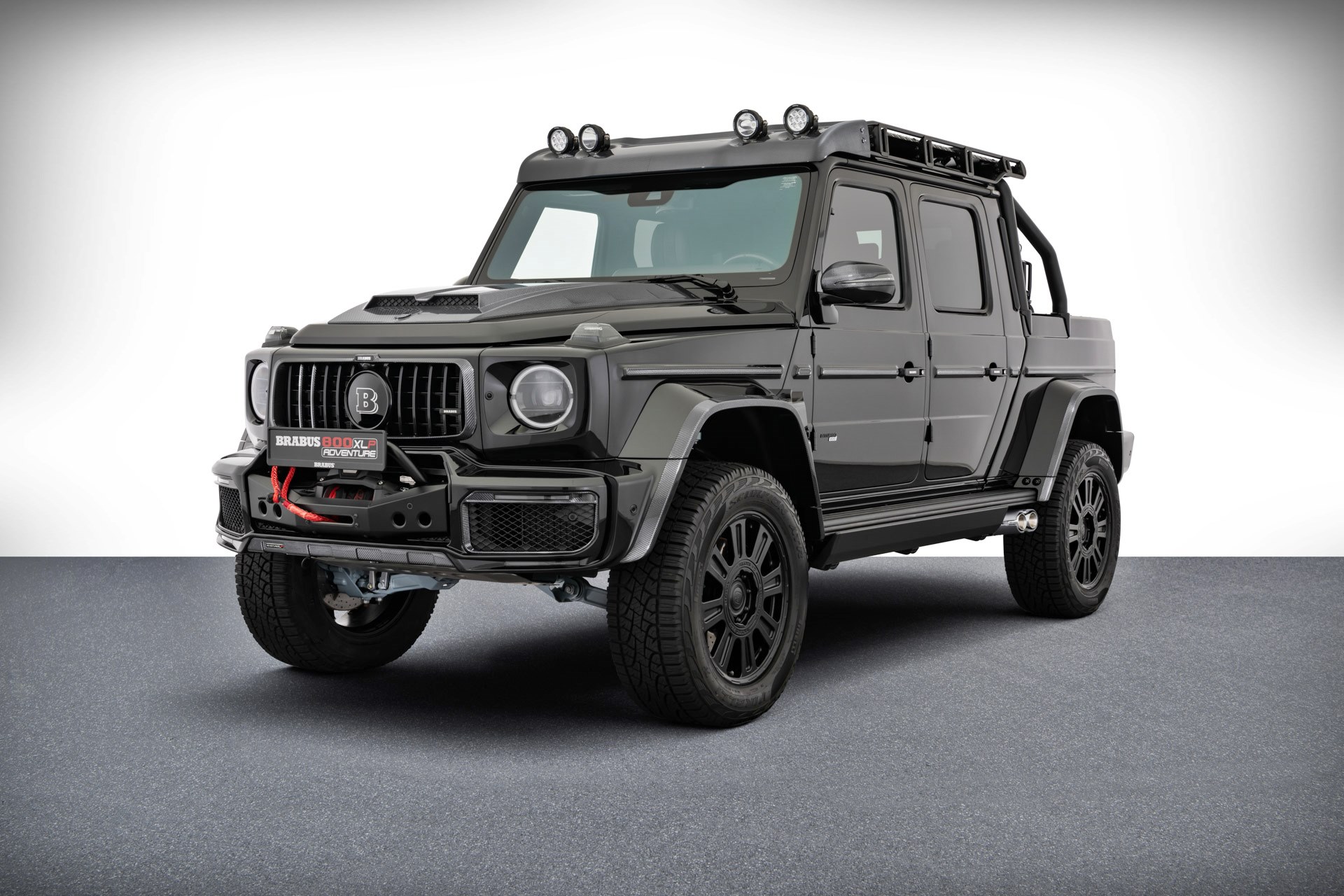
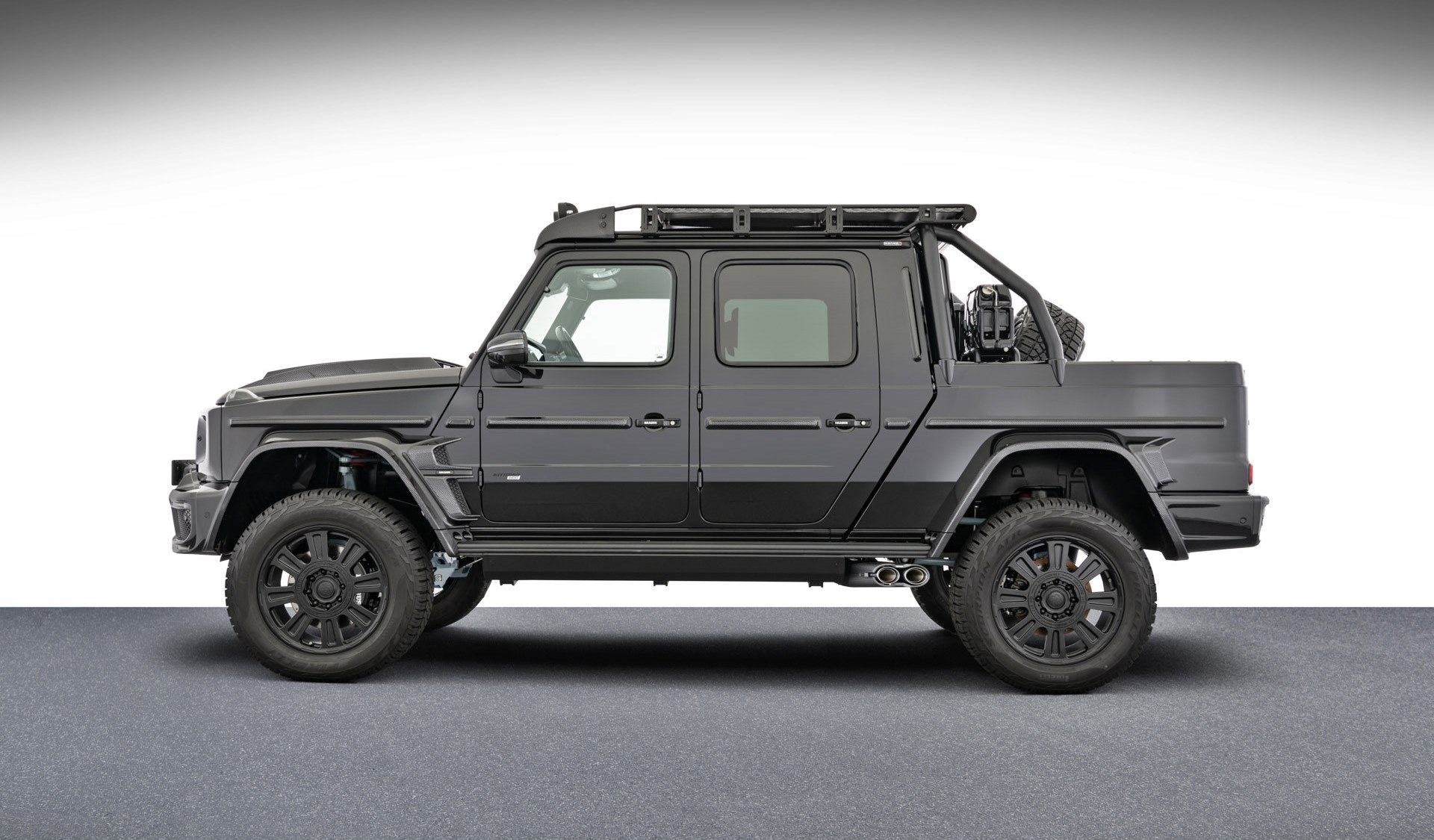
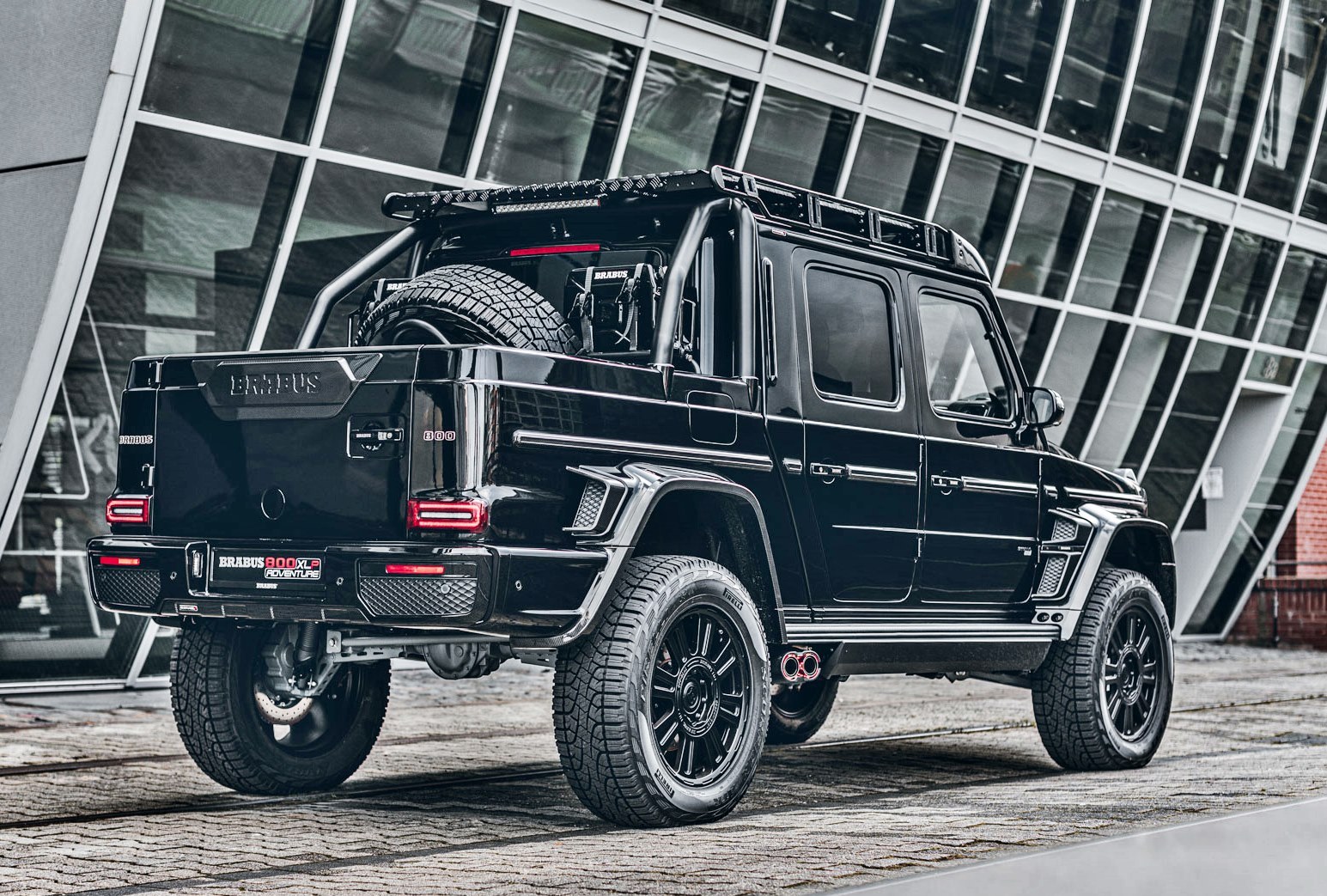
BRABUS is well known for taking Mercedes-Benz products and injecting them with an extra dose of power for those who want to stay ahead all the time. Much of its work is on engine and chassis upgrades but with the 800 Adventure XLP Superblack, they have gone further. This new model begins life as a Mercedes-AMG G63 SUV and BRABUS engineers then add 500 mm to the wheelbase to allow the overall length to be extended by 690 mm. They also add the brand’s Widestar bodykit which increases the width by 117 mm.
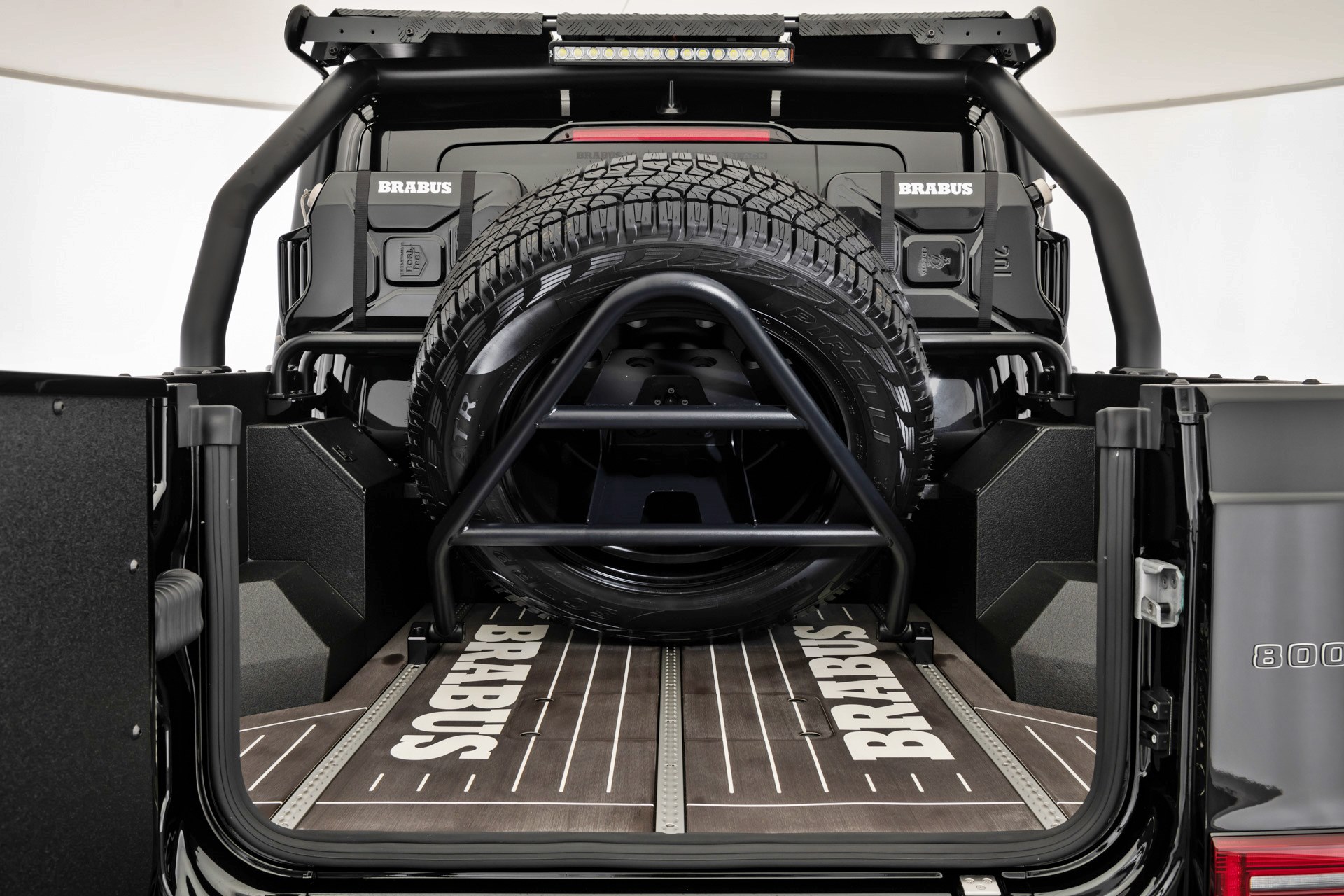
The company fabricates elements from sheet steel such as the new rear wall of the cab, the robust cargo bed and the side-opening tailgate. The bedsides are produced from carbonfibre using the complex prepreg process. The likewise black Flexiteek bedliner is a direct technology transfer from the construction of high-performance boats by BRABUS Marine.
The rear end of the 4-door cabin is shortened with the boot area becoming an open cargo bed and the spare wheel that was on the back door moved right against the cabin. And that transforms the ‘Godfather of SUVs’ into the ‘Godfather of Pickups’.
The rear view is characterized by the pickup tailgate that reveals the origin of this supercar with an exposed carbonfibre panel. The WIDESTAR rear fascia with stylized exposed carbonfibre skidplate rounds off the view from the rear.
To make getting in and out easier with the high ground clearance, BRABUS has added black-coated running boards. Adapted to the extended wheelbase, they can optionally be supplemented with power-retractable steps. LED lights in the flares, which are activated by pulling on a door handle or by the Keyless-Go signal when approaching the vehicle, ensure a safe step also in the dark. They illuminate the ground to the left and right of the vehicle as well as the running boards of the rocker panels.
‘Black on black’ theme
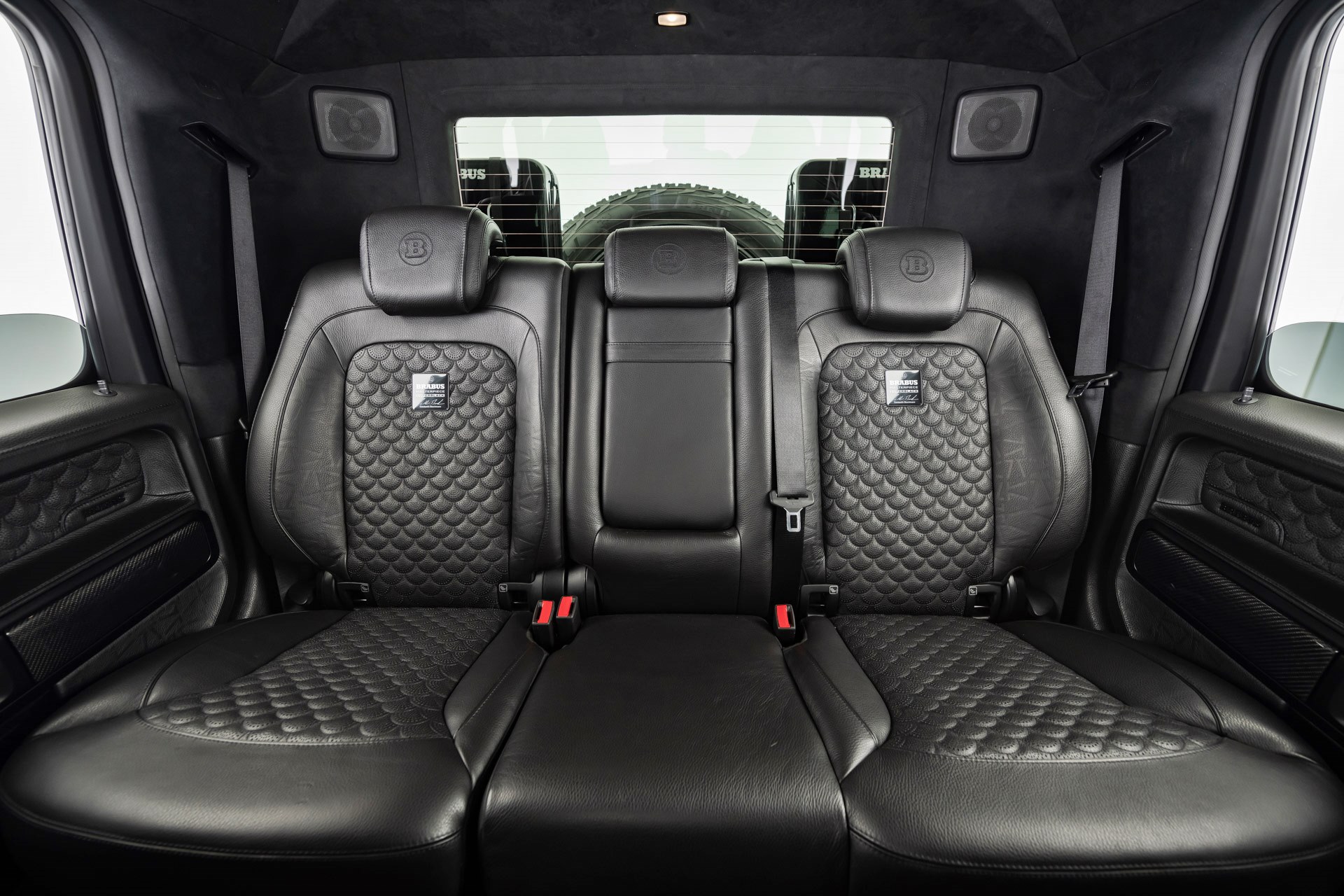
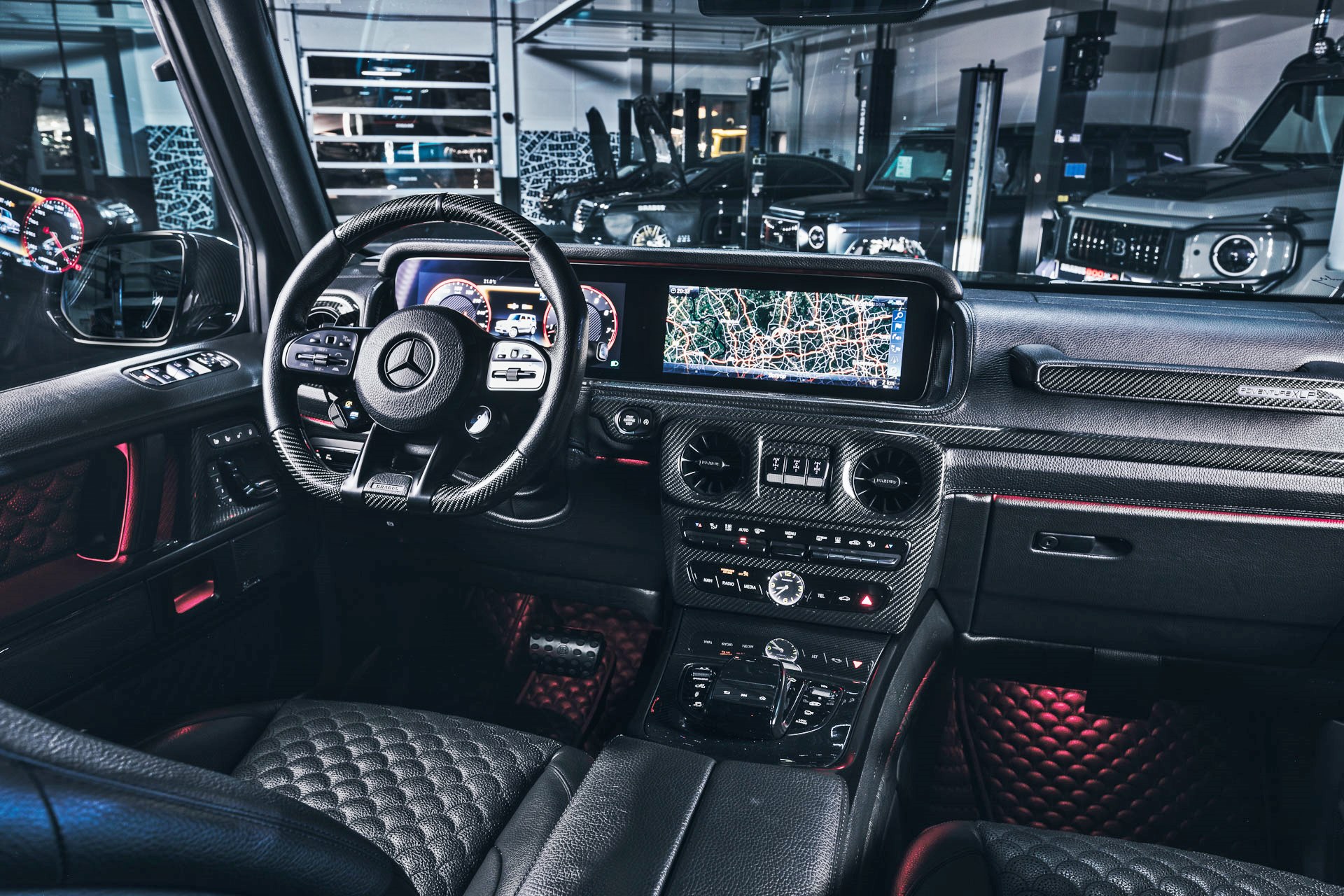
‘Black on black’ is the theme for the interior of the 800 Adventure XLP SUPERBLACK. The upholstery shop created a particularly exclusive BRABUS Masterpiece interior that has the finest black leather with sporty carbonfibre elements. Along with the headliner made from black Alcantara, high-end refinement includes covering the entire interior and the vehicle floor with the finest black leather.
The centre sections of the seats feature seashell diamond quilting and perforations applied with pinpoint precision. Many interior elements were enhanced with the ‘Heritage’ brand pattern, which pays tribute to the founding year of BRABUS with its embossed ‘77’ signets. No less than 206 cockpit elements (trim panels, handles, switches, loudspeaker covers, air vents, etc) are glazed in ‘Shadow Chrome’ to match the interior design.
Carbonfibre elements on the steering wheel, dashboard, centre console and door panels add sporty touches in the cockpit. They are complemented with aluminium for components such as the pedals, door lock pins and the BRABUS RACE paddle shifters on the steering wheel.
PowerXtra+ treatment for engine
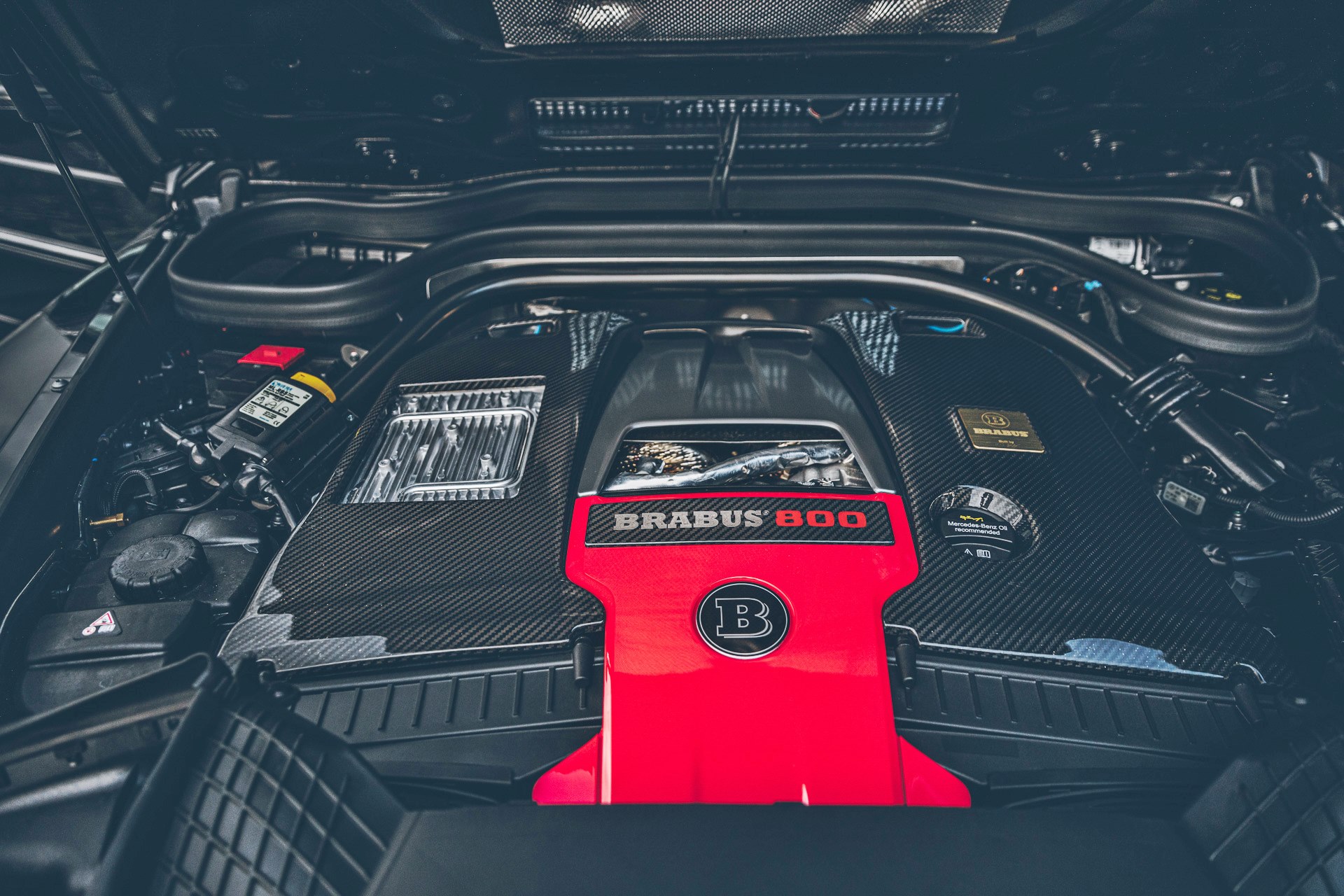
It would not be worthy of the BRABUS badge without a power boost which comes from the 800 PowerXtra+ tuning package for the G63’s twin-turbocharged, 4-litre V8. PowerXtra + treatment includes replacing the production turbos with two newly configured BRABUS high-performance turbos. In addition to a larger compressor unit, they have a modified core assembly with reinforced axial bearing and produce a maximum boost pressure of 1.6 bar. This bumps the output to 800 ps/1,000 Nm which flows to all four 22-inch Monoblock HD wheels through a 9-speed automatic transmission.
The 5.2-metre long pickup, which weighs 2,936 kgs, can reach 100 km/h in a claimed 4.8 seconds after take-off and the top speed is electronically limited to 210 km/h due to the all-terrain tyres.
If you buy one in Germany, the price of the 800 Adventure XLP SUPERBLACK starts from 725,900 euros (about RM3.44 million ringgit). Import the vehicle to Malaysia before June 30, 2022 and you can save 50% on sales tax.