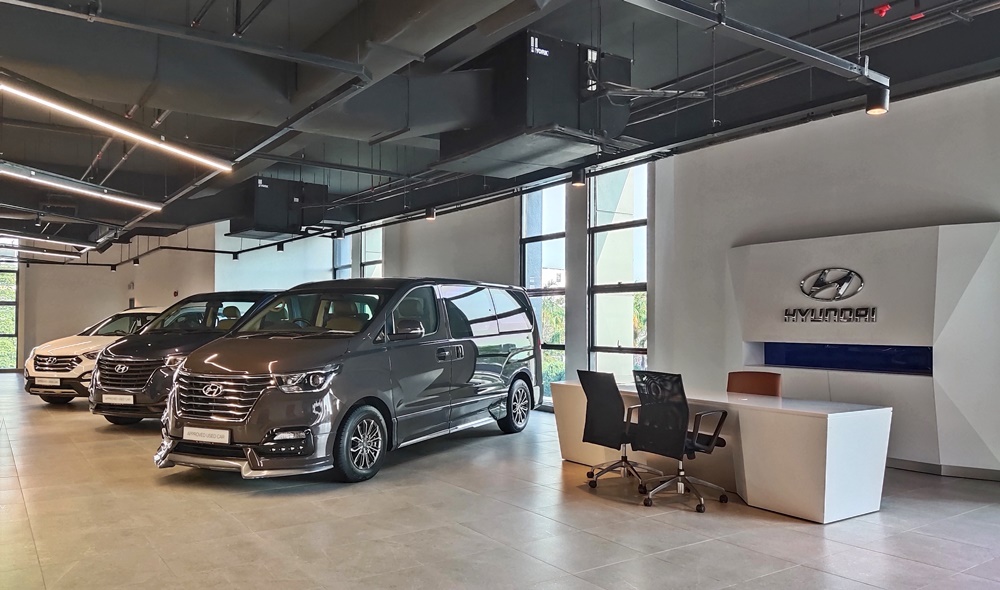
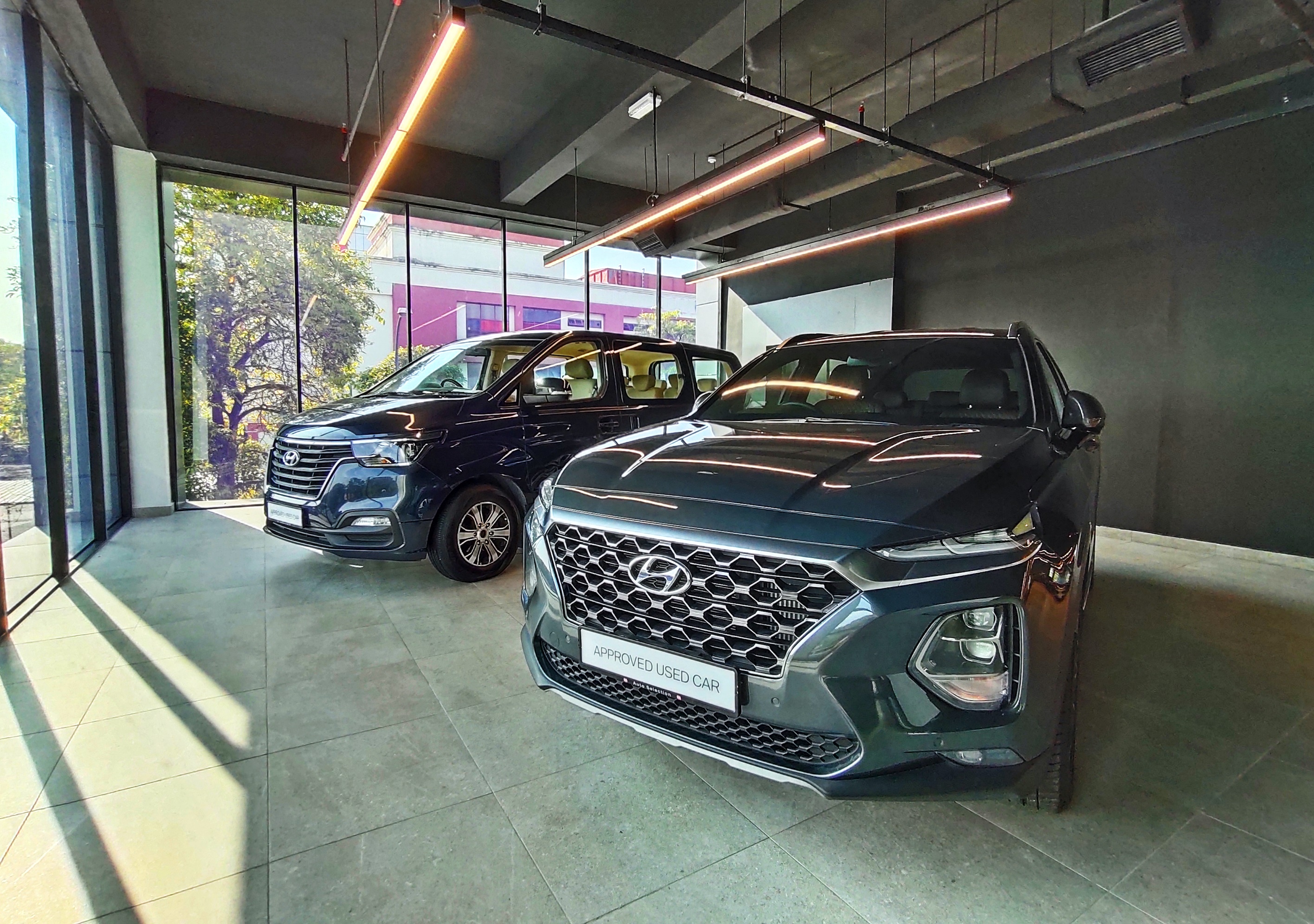
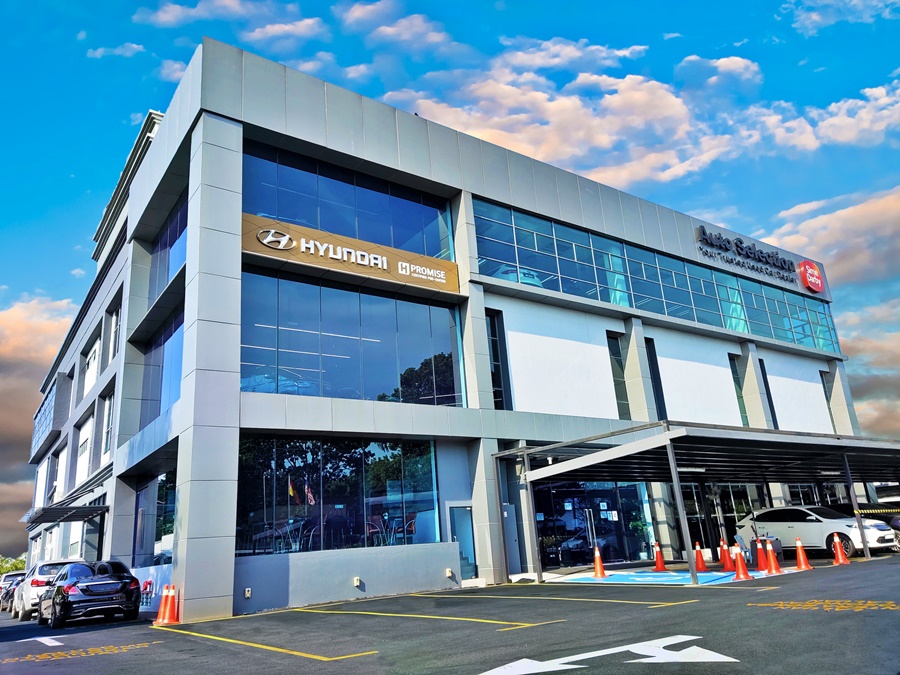
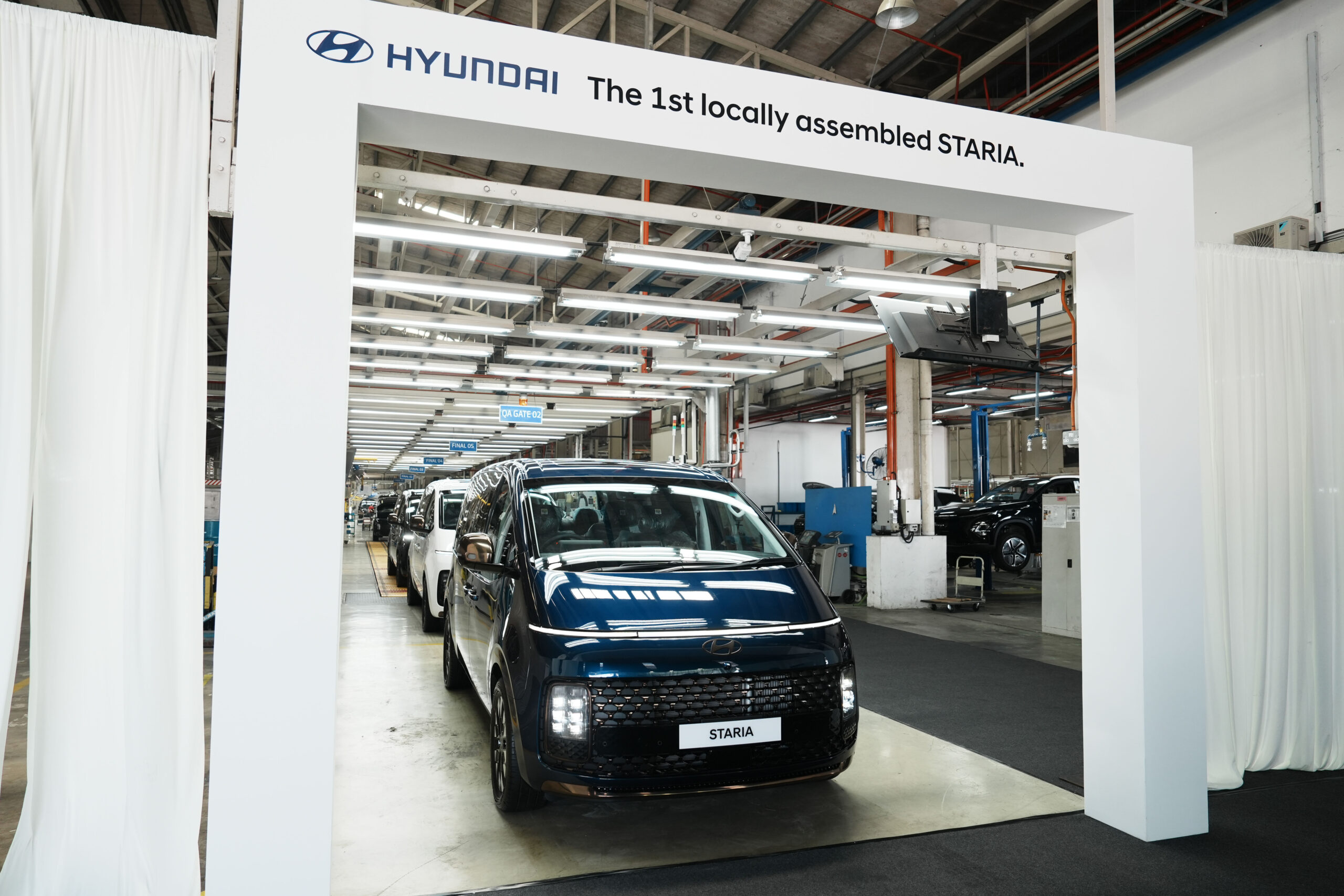
At the moment, the car industry has come to a standstill with the closure of retail outlets, so no business can be conducted. Of course, people in the car companies are still working and planning for the future. For Hyundai-Sime Darby Motors (HSDM), one of the new developments that can now be introduced is the Hyundai Promise Approved Used Car Programme, which is supported by Sime Darby Auto Selection.
For trade-ins and used vehicle sales
This new programme is for trade-in of vehicles as well as sale of pre-owned Hyundai vehicles. The pre-owned units sold through Hyundai Promise come with genuine parts and the original engine. Each vehicle has been through stringent and rigorous inspections by trained technicians to ensure that it is in optimal electrical and mechanical condition. HSDM also confirms the vehicles have not been involved in major accidents as part of the certification.
Warranty and emergency assistance service
This means that customers will have peace of mind when purchasing these vehicles. To give them more peace of mind, all Hyundai Promise approved and certified vehicles come with an extended warranty of between 2 to 5 years, depending on the age of the vehicle and the mileage since original registration. Additionally, customers can enjoy 24-hour road assistance service in case of an emergency.
“Hyundai Promise is forward-looking, offering customers a full circle of sales services, from purchasing their first new Hyundai model to trading in their vehicles for a newer model, with attractive deals. As the name of the programme suggests, we promise good quality vehicles and worry-free ownership. Customers who make their purchase from Hyundai Promise will enjoy wonderful benefits including quality assurance, financial solutions, and extended warranty,” said Low Yuan Lung, Managing Director of HSDM.
He added that Hyundai Promise is an important business segment that complements Hyundai’s existing business ecosystem. It also aims to regulate the resale value of used Hyundai vehicles in Malaysia by establishing values for the models.
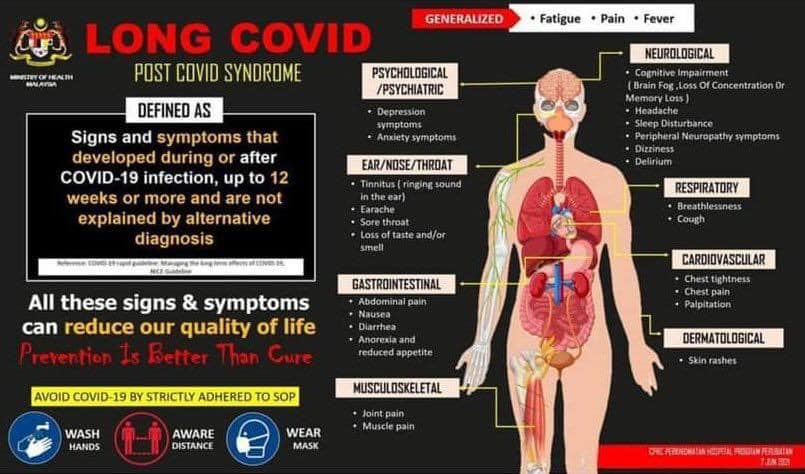
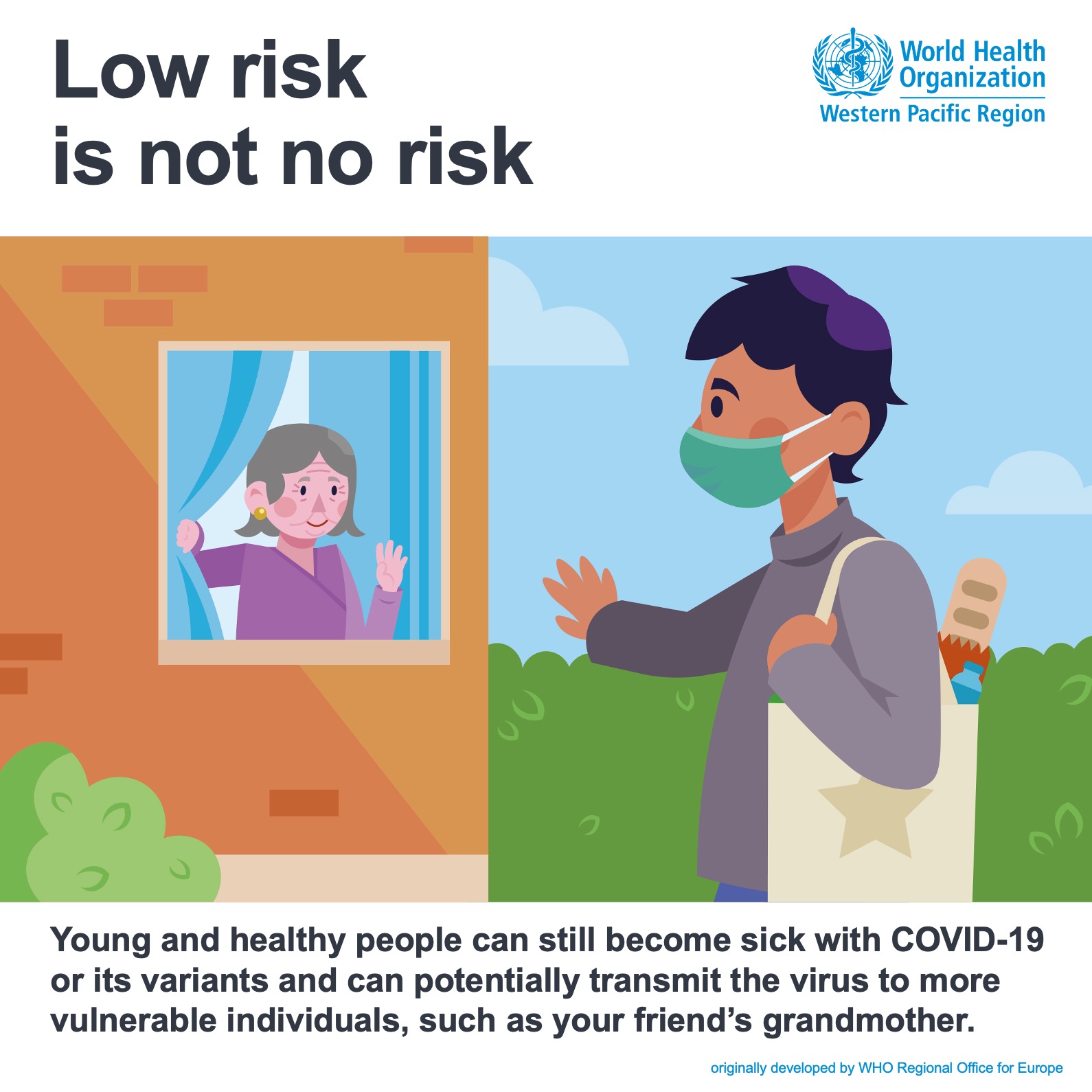
Even after you recover from COVID-19 infection, your quality of life may be affected and you may suffer for a long period after that. So do your best to avoid being infected by taking the necessary measures to protect yourself as well as others, and get vaccinated as well.
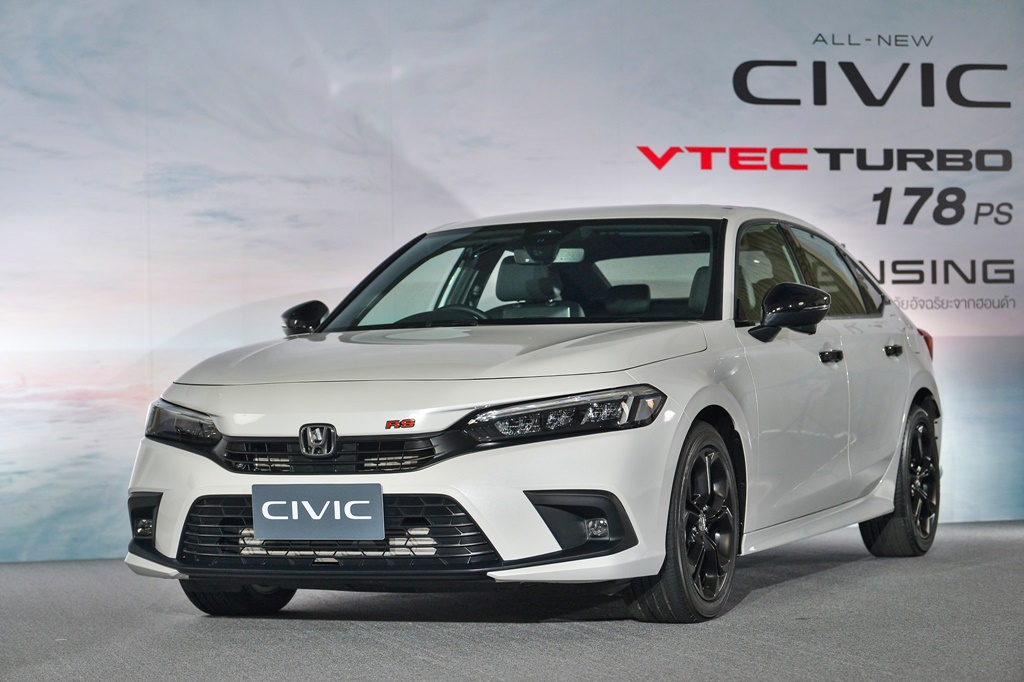
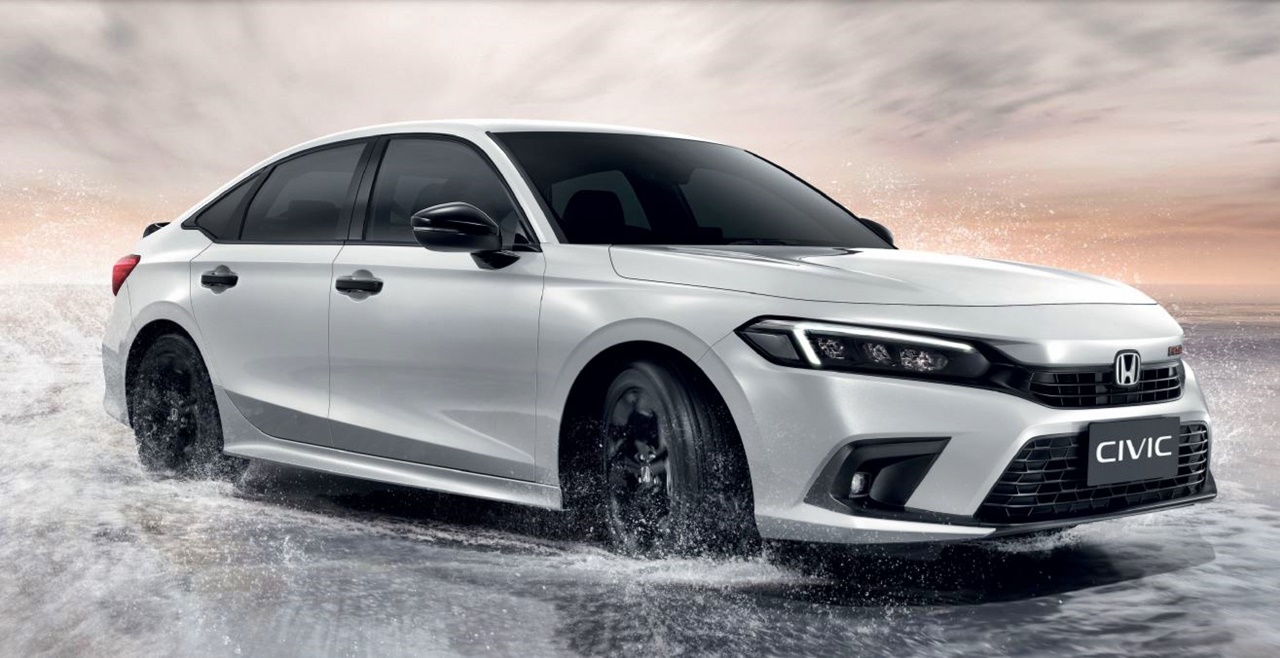
In April this year, we carried news about the all-new 11th generation of the Honda Civic making its global debut, the online launch originating in the USA. In the past, it would have taken about a year for the model to appear in the ASEAN region, usually starting with Thailand. Yet, in less than four months, the new model has been launched in Thailand. That market usually gets the models first since the ‘mother plant’ for the region is located there and so is the Asian Honda office.
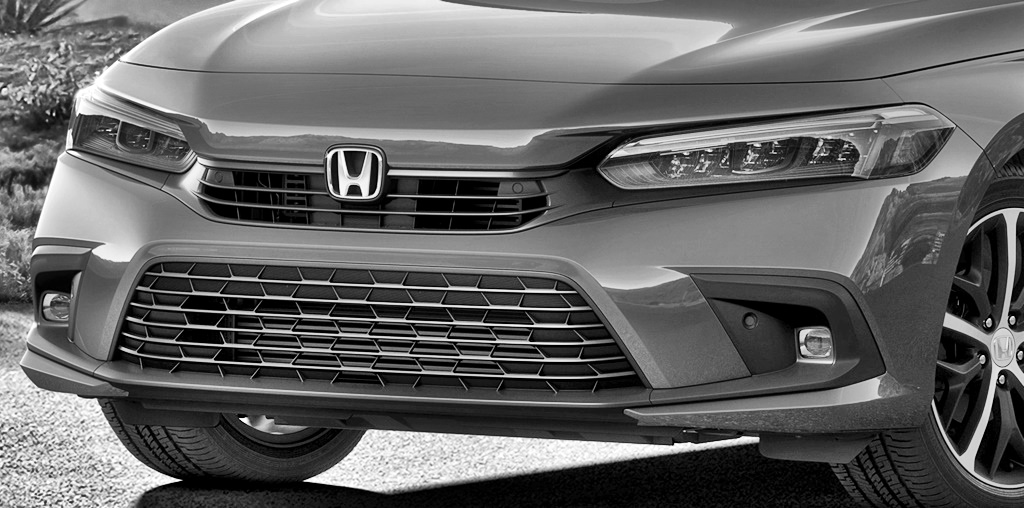
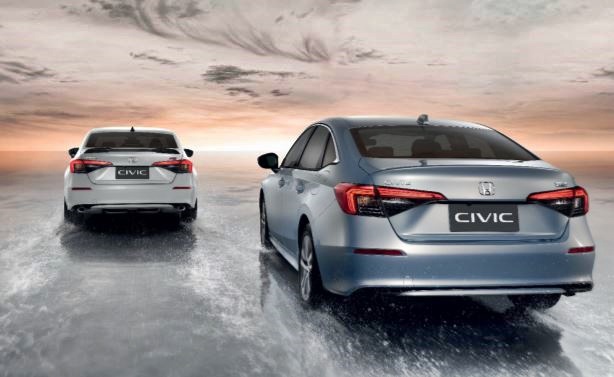
The new Civic continues with the styling theme started by the 10th generation so it is more an evolutionary change although the designers reviewed the designs of earlier generations to see if there were any good ideas could be used again. The styling of the ASEAN Civic has similarities to the North American one, with the deep front end is deep and a distinctive signature for the DRLs.
The front end of the ASEAN version of the new Civic (above) has similarities to the one launched in North America in April this year.
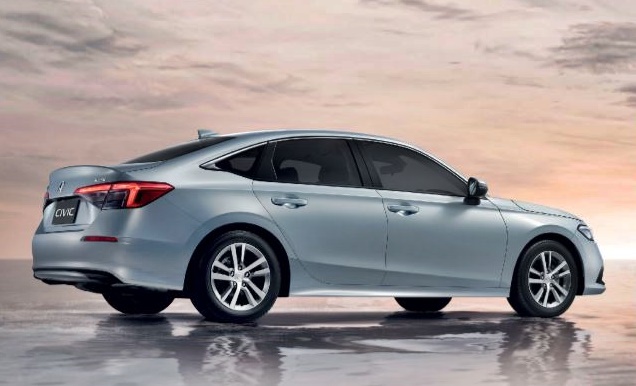
The overall size is close to the 10th generation, increasing in overall length by 30 mm with a marginally longer wheelbase as well. The latter, with a wide rear track as well, should improve legroom for the rear occupants.
The new Civic is said to have the most rigid structure in the model’s history which goes back to the 1970s. The stiffer structure improves ride and handling while also reducing transmission of road and wind noise to create a more relaxed cabin environment.
Taking advantage of the stiffer structure, the engineers have tuned the suspension for a smoother ride while improving the sporty handling. Steering feel has been improved and new bushings on the rear suspension minimize harshness while also promoting better straight-line stability and turn in. The electronic power steering has been re-tuned to provide better feedback and improved straight-line stability.
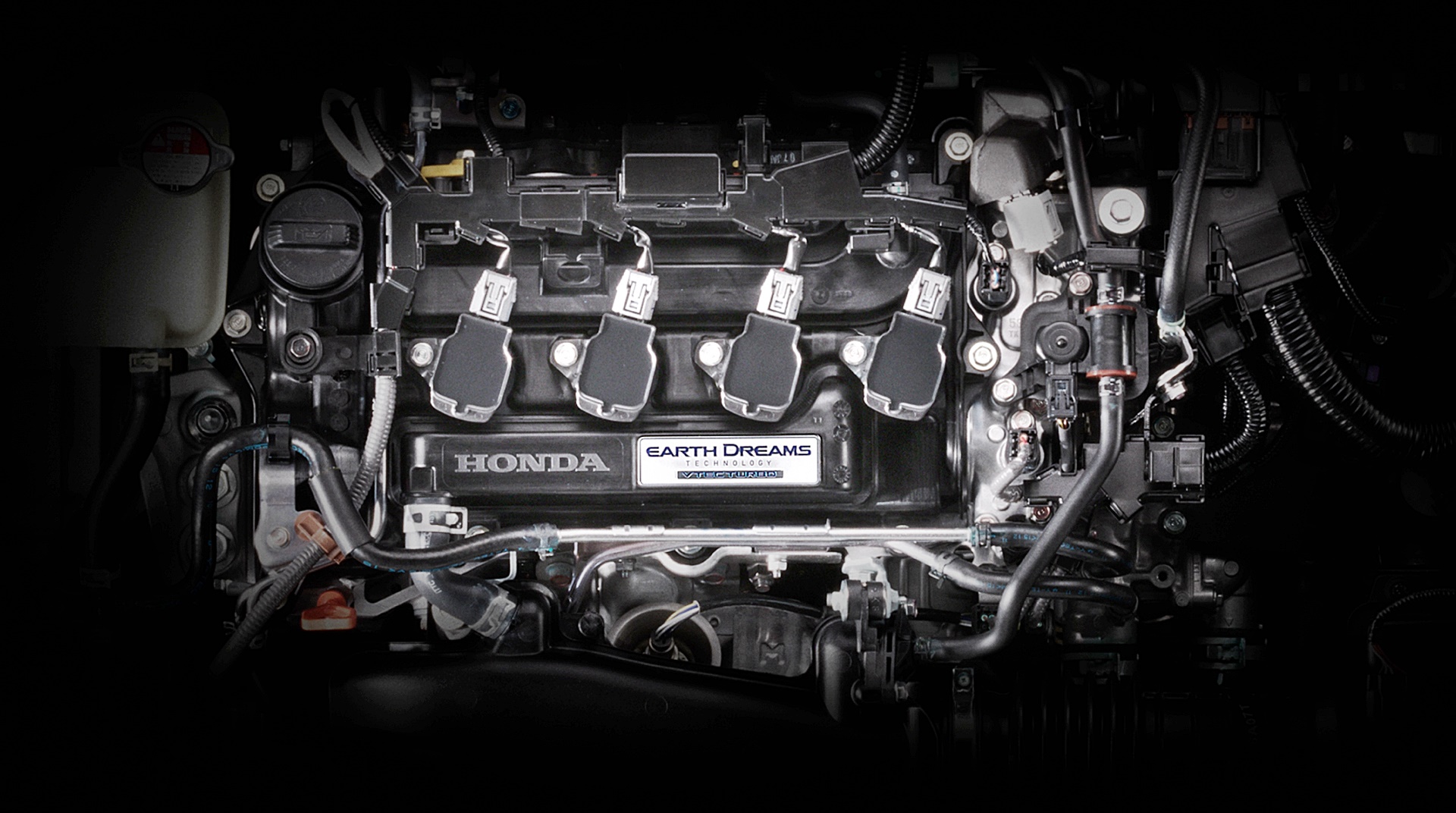
For the Thai market, there will be 3 variants and from what we can see from the specs, all three have the same EarthDreams engine. This is the familiar 1.5-litre turbocharged DOHC VTEC unit that develops 178 ps/240 Nm, with a CVT delivering power to the front wheels. The driver has a choice of the usual three drive modes – SPORT, NORMAL and ECON – to suit personal preferences.
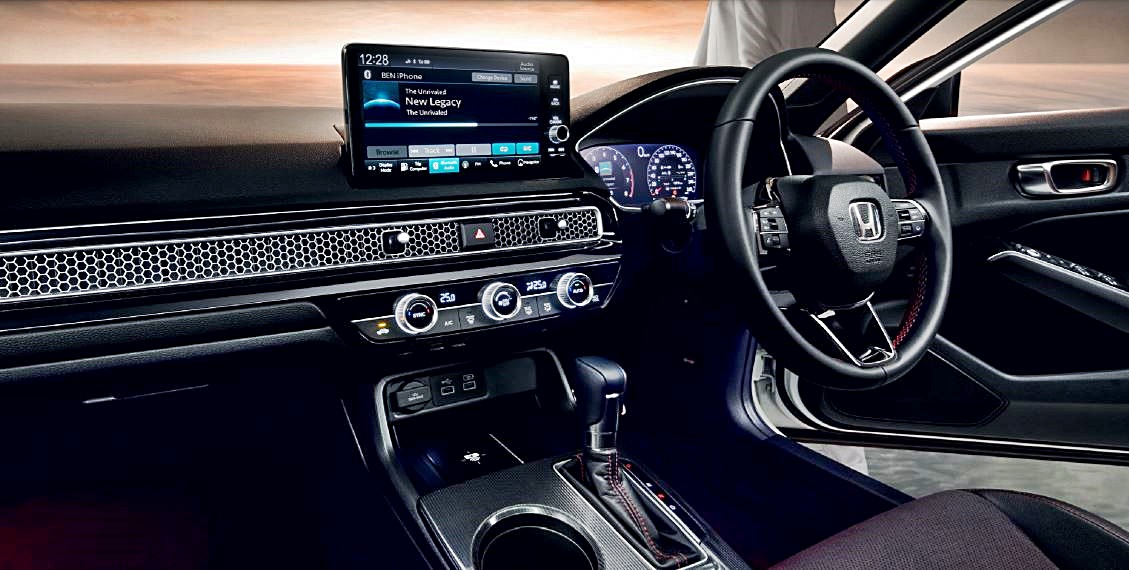
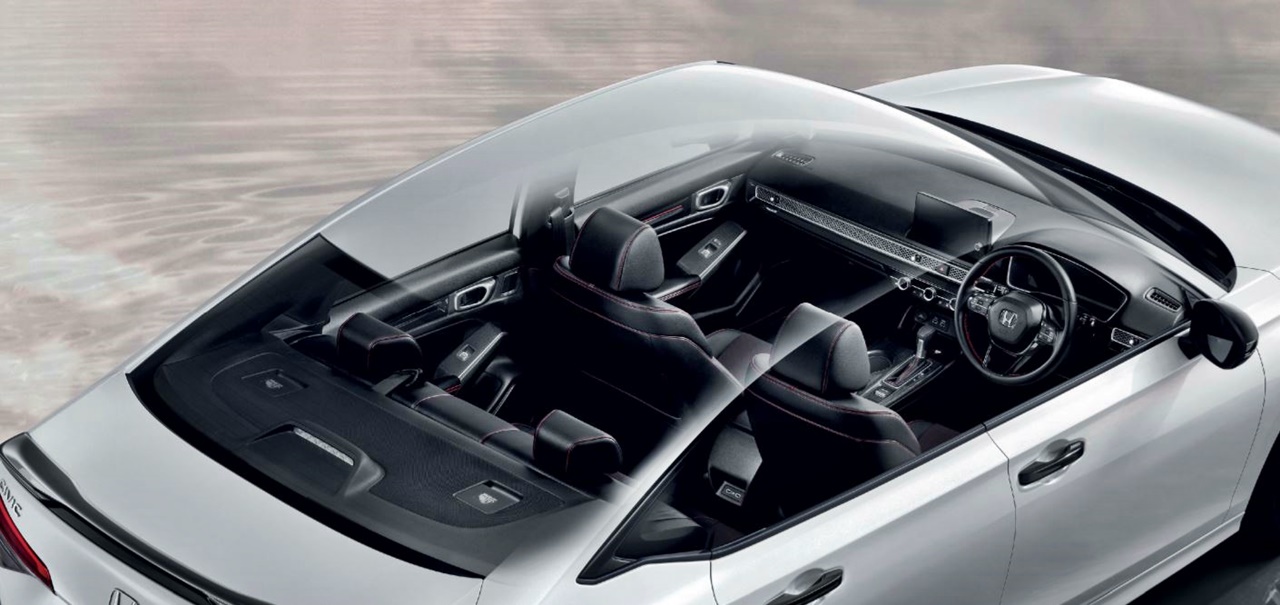
With each generation, especially the recent ones, the interior has gained a more premium look and feel as well as received more new technologies. At the same time, the original design approach of ‘Man-Maximum, Machine-Minimum’ has been maintained and this is apparent in the uncluttered layout of the dashboard – which is reminiscent of the early Civics.
The top of the instrument panel has been designed with minimum cutlines to reduce windscreen reflections and visual distractions. A metal honeycomb mesh accent stretches from door to door across the dashboard. It serves both form and function, creating a dramatic visual dividing line between the audio, information displays and climate controls, while the intricate flow-through design conceals the air vents for an uncluttered look.
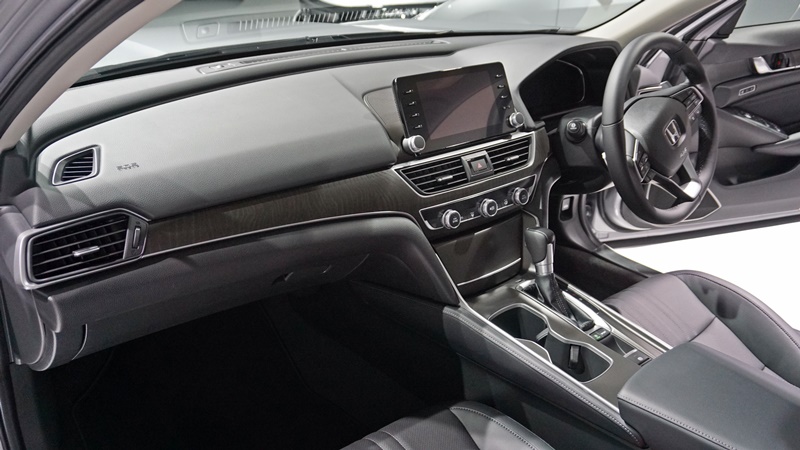
Dashboard of current 10th generation Civic.
Standing almost vertically in a slot in the middle of the dashboard is the infotainment system display, from which most of the car’s functions can be managed. The 9-inch wide colour touchscreen has large icons for ease of contact and selection while close attention has also been paid to the operation of all switchgear and controls.
As with virtually all new Honda models, the Honda SENSING suite of driver assistance systems is standard. This integrates the operation of various active safety systems to help the driver avoid an accident or automatically take action if the driver does not. A common feature is autonomous emergency braking where the on-board computer will activate the brakes if a collision is likely, but the driver does not appear to brake or decelerate. Other systems – which use a radar and camera – help to keep the car in the lane and maintain a safe gap with the car ahead when using cruise control. There’s also LaneWatch, the camera-based system that gives the driver a view of the blind spot on the left side of the car.
The pricing in Thailand ranges from 964,900 baht (RM122,100) to 1,199,900 baht (RM151,800) while the current 10th generation Civic in Malaysia is priced from RM109,326 to RM134,661. It’s hard to say how Honda Malaysia will price the new model and when it will be launched. There was a hint that it might come before the year ends but that was before the government ordered vehicle assembly plants to stop operations from June 1. So two months have already passed with no activity allowed at the plant in Melaka, and we are now into the third month. This could well alter launch planning so the roll-out might only be in early 2022.
Visit www.honda.com.my to know more about Honda models available in Malaysia
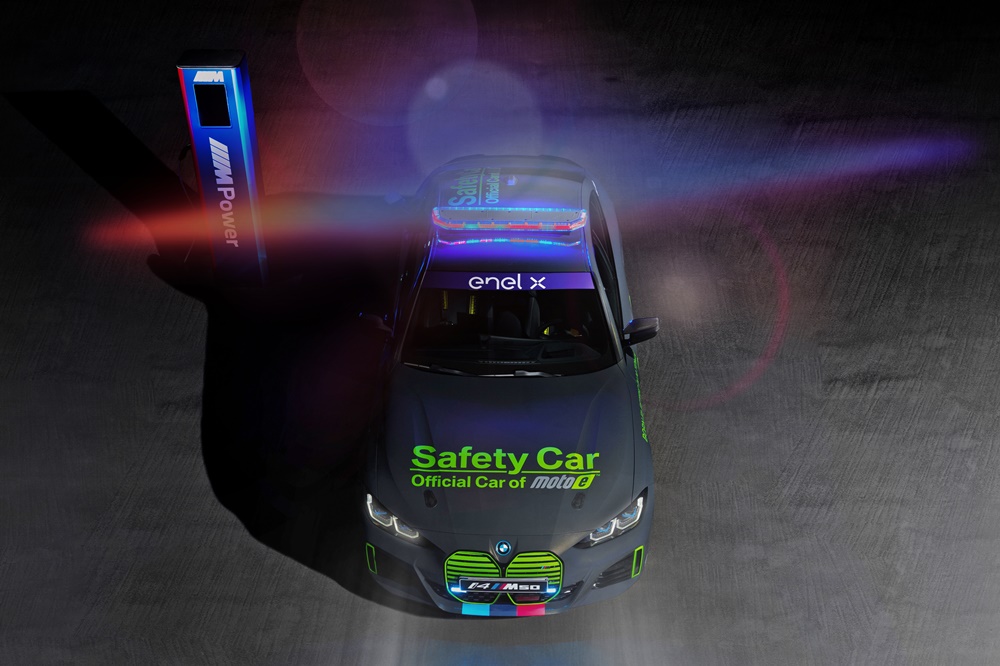
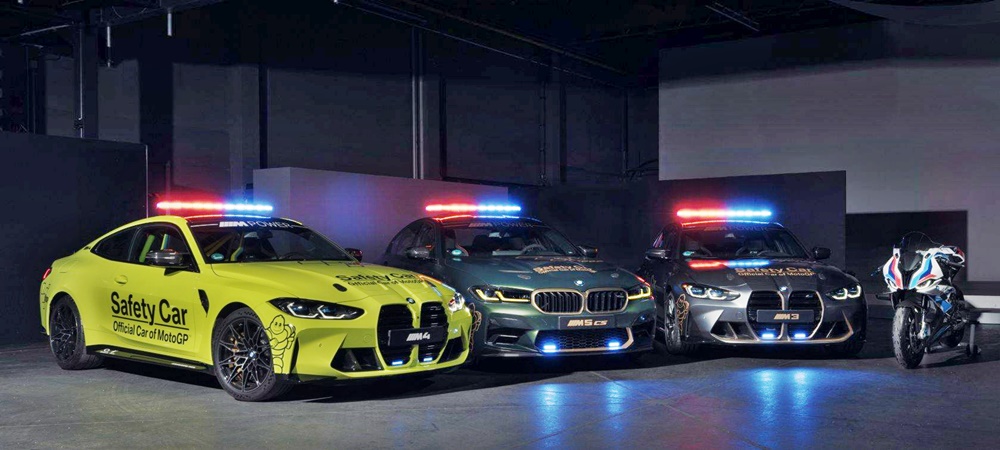
BMW M has been involved in the MotoGP since 1999 as the Official Car supplier, providing Safety Cars specifically. This year marks the first time that the high-performance subsidiary of the carmaker is providing 4 new safety vehicles, of of which is a Safety Motorcycle.
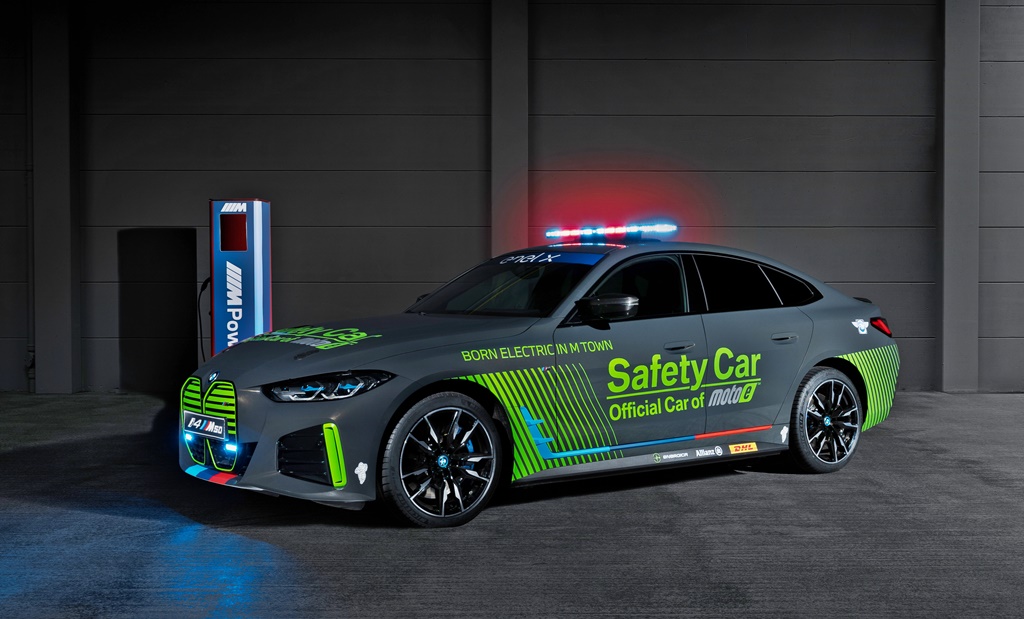
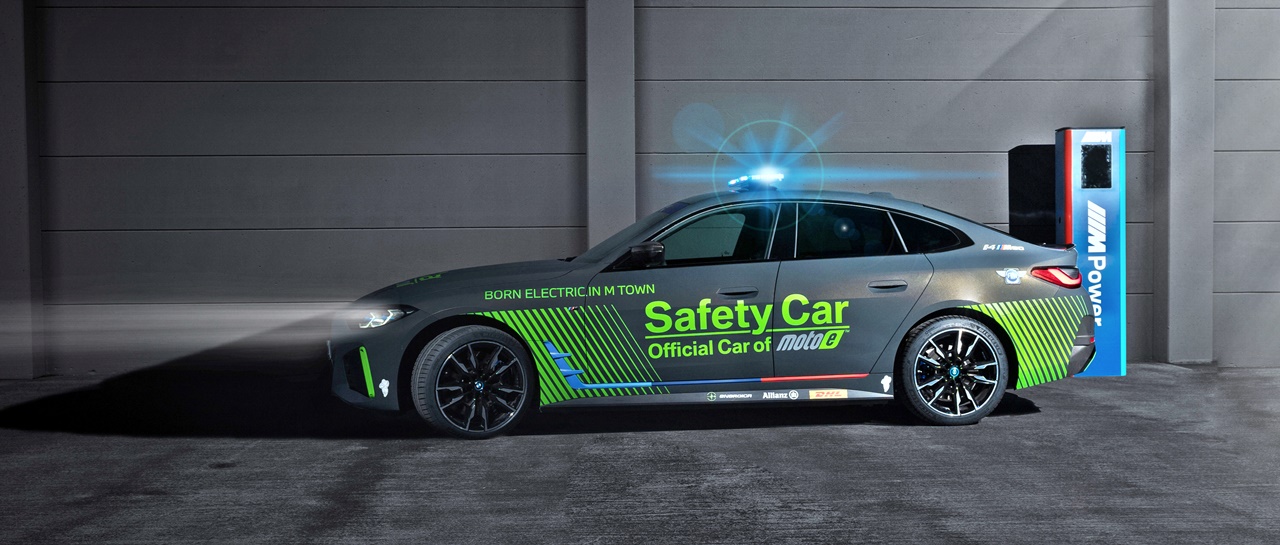
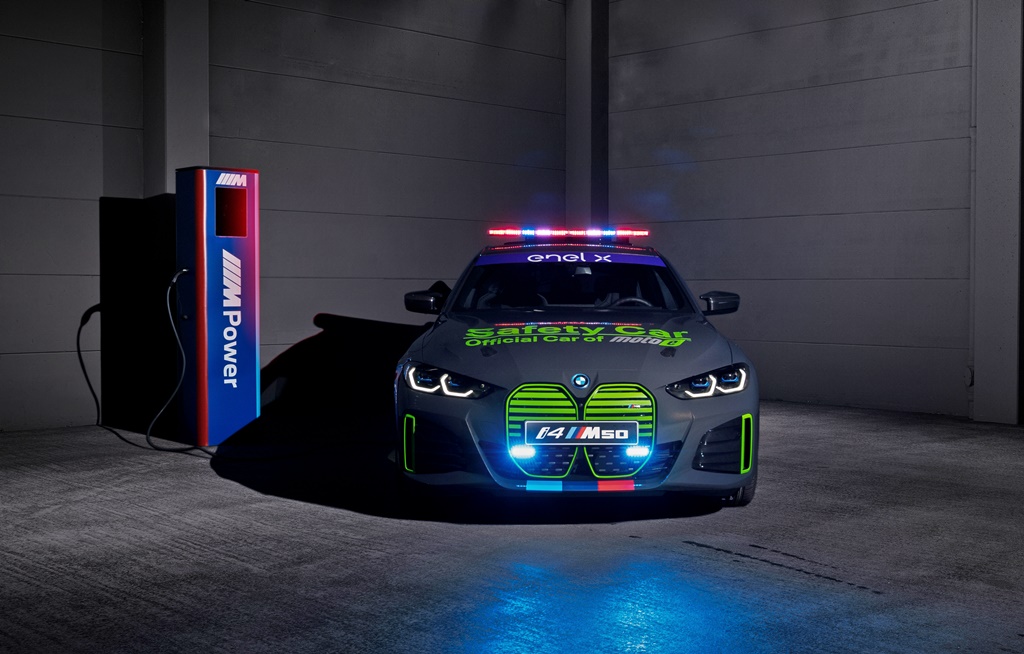
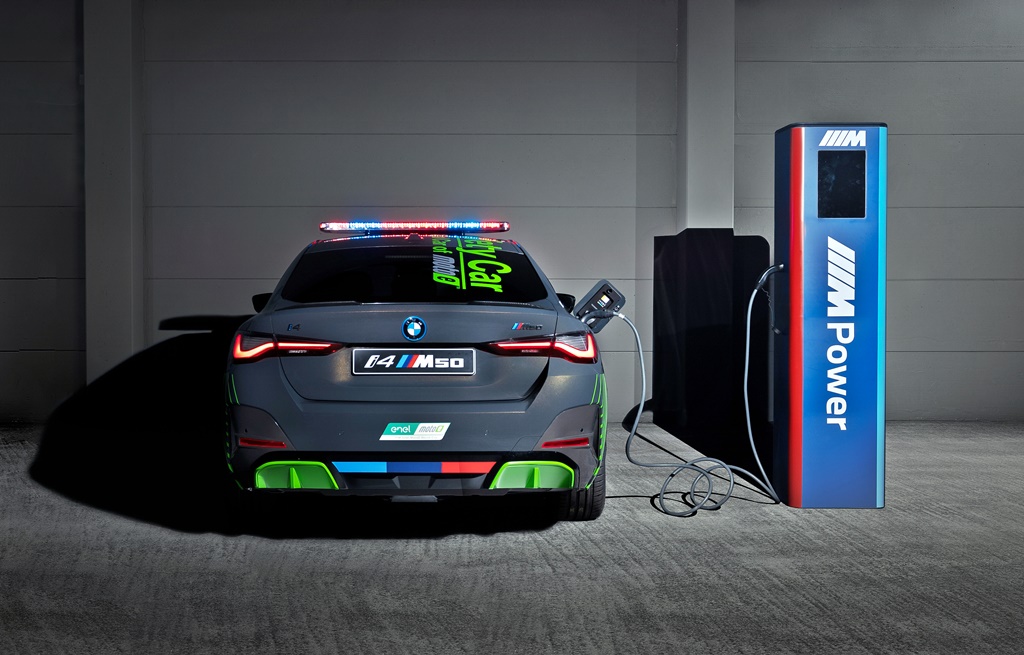
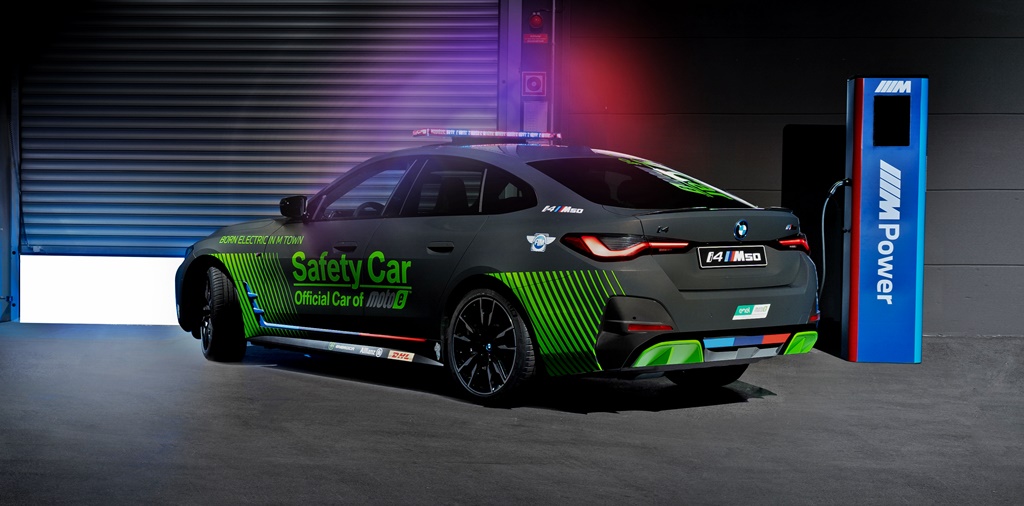
For the FIM Enel MotoE World Cup at the Motorcycle Grand Prix of Austria next week, BMW M will unveil the replacement for the i8 Safety Car which has previously led the field in the electric motorcycle series (a supporting event for the MotoGP). Its successor will be the first fully-electric Safety Car from BMW M – the i4 M50.
The new Safety Car, to be launched in November 2021, is the first fully-electric performance car from BMW M. It is powered by two electric motors – one on each axle – generating a combined system output of 544 ps. The emotional driving experience is enhanced by the drive sound, which has been developed specifically for electric BMW M cars.
“With the BMW i4 M50, we are entering a new era and presenting our first M with a fully-electric drive train,” said Markus Flasch, CEO of BMW M GmbH. “With the first M BEV (Battery Electric Vehicle), we are setting course for a future, in which the combination of extremely sporty, performance vehicles and electrification is an exciting theme. We are showing that everything people have come to value about M – the typical emotional M driving experience with sportiness, power and dynamics – is also possible in a fully-electric vehicle.”
The BMW M Safety Vehicles for the 2021 MotoGP. In terms of their sporting performance and perfect driving dynamics, the latest BMW M Safety Cars were already designed to test the limits in their production versions. So they needed little modification for use as safety vehicles in the MotoGP. The changes included light bars, flashing front lights, quick release catches for the bonnets, as well as electricity kill switches for transport overseas. In the M4 safety car, the rear seats were also removed and a rollover bar and 4-point safety harnesses fitted. In addition, the exhaust systems on the M3 and M4 Safety Cars were modified for a throatier sound.
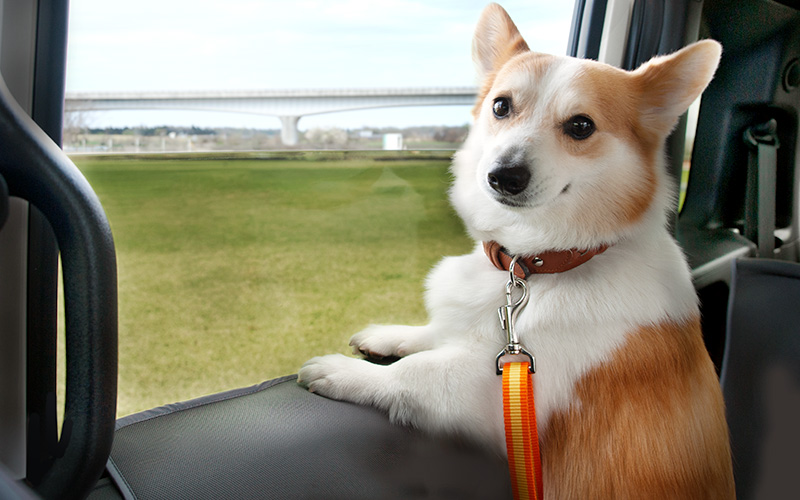
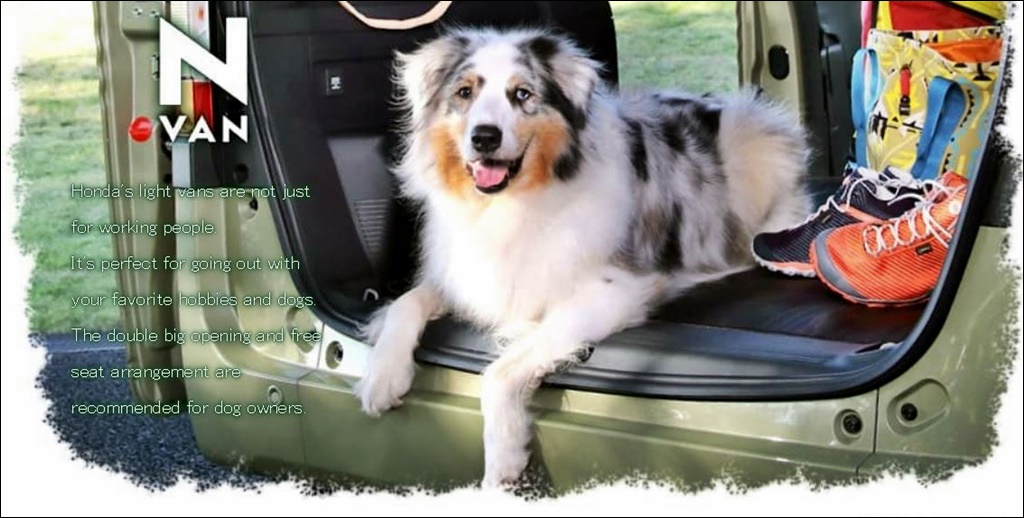
Someone in Honda must be a big dog-lover and made a good case for the company’s Japanese website to have a section dedicated to our furry friends. Of course, the company also associates Honda vehicles in various ways while offering tips and ideas on outings with dogs in the car. There are also articles for young children, advising them about safety and how to attend and care for dogs during a journey.
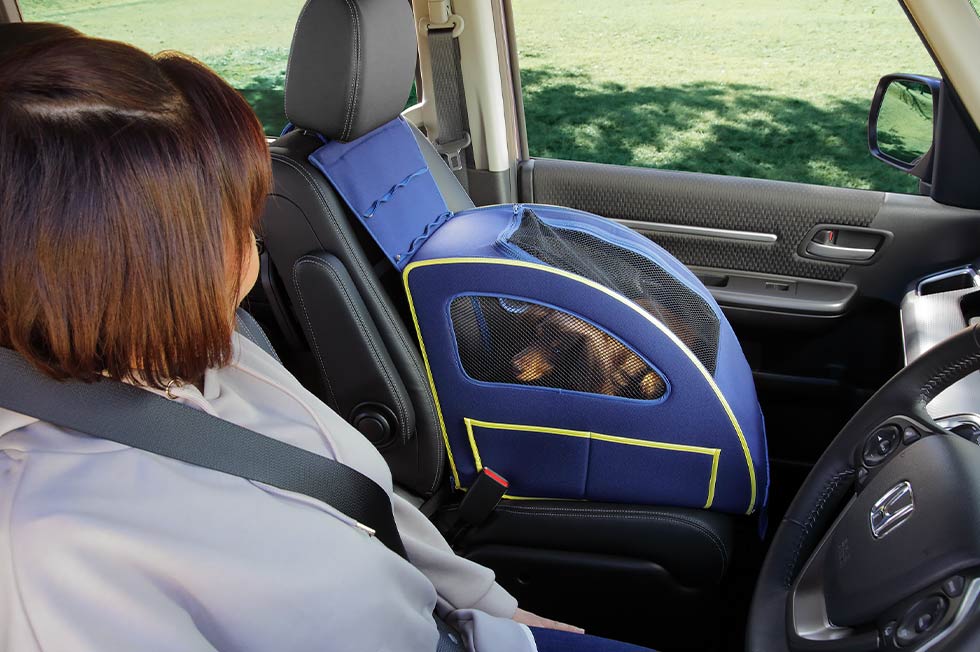
There’s even section where the ‘dog-friendliness’ of each Honda model is assessed, covering aspects such as getting in and out and the comfort levels. The assessments are done by different owners and provide insights into the useful features for those who bring along their dogs. For example, with the popular N-Box model, there are comments on the ease of attaching and positioning a specially designed doggie seat next to the driver.
Range of accessories for dogs
There’s also a range of accessories specially for dogs such as a dog seat, mat, lining cover and even straps to keep the dog inside the car. Needless to say, they are all designed to match Honda models. Paw stickers are also available as well as paw-themed covers for key fobs.
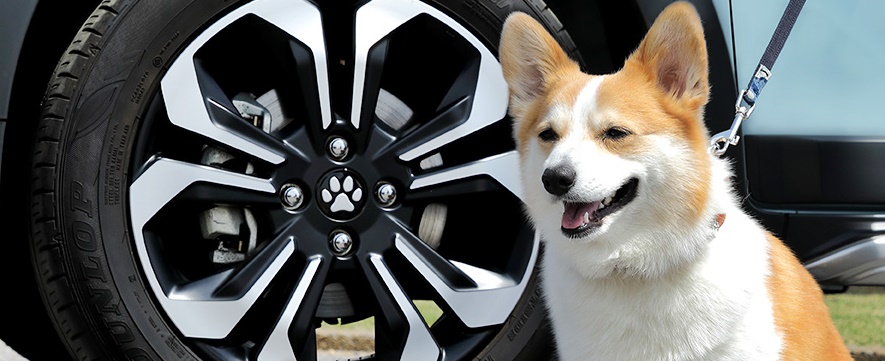
The Honda Dog accessories range recently got new additions for owners who want to show the world that their canine friends are really special. Owners can now install paw-shaped wheel caps on their vehicles. The caps are 54 mm and 63 mm in diameter and fit a wide range of original Honda wheels.
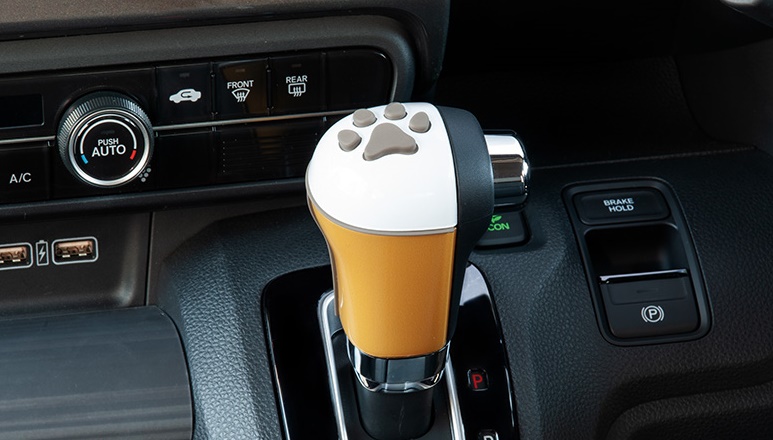
If you’re a dog owner, you probably have your furry friend putting his or her paw on your hand a lot. Now, while you’re driving, you can put your hand on a paw. Honda has a cover for the shift lever which is designed like a paw. It comes in three colours – white, black and ‘Shiba’, which is the colour scheme of the much-loved Shiba Inu of Japan.
Only for Japanese market
The Honda Dog accessories are available only for the Japanese market. Perhaps they will one day be offered in other countries as well, like the the tarik hooks (grocery hooks) which were introduced in Japan in the mid-1970s and eventually became accessories or standard items in many cars all over the world.
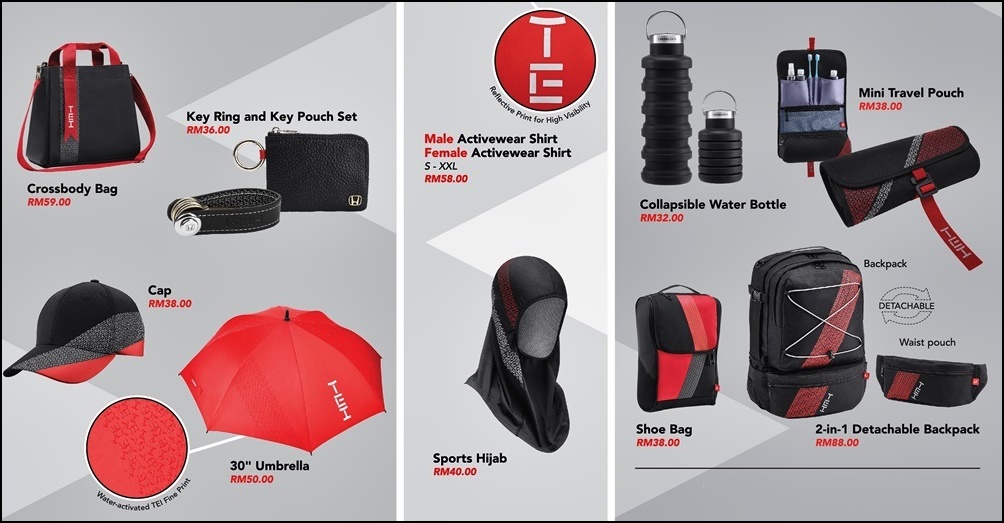
Some of the items in Honda Malaysia’s TEI merchandise range.
Honda accessories in Malaysia
For the Malaysian market, Modulo and MUGEN accessories are available for the various models, usually for inclusion at the time of purchase. There is also Honda TEI (Trust, Equality, Individuality) merchandise such as clothes, bags and even a sports hijab for women. They are available at authorized Honda dealerships nationwide or the Honda Malaysia Official Store at Shopee. For more information, visit www.honda.com.my.
Belgium will become the 35th country to host a round of the World Rally Championship (WRC) when the 2021 Ypres Rally Belgium is run. This should have happened last year but the event was cancelled due to the COVID-19 pandemic. It is the 8th round of the 2021 WRC and will take place next week (August 13 – 15).
Rally started in 1965
The Ypres Rally is not new and was in fact first run in 1965, 8 years before today’s WRC began. The event started one year after the town’s historic Market Square was chosen as a location for a time control during a Rallye Monte-Carlo concentration run. Since then, it has grown in stature, being a round of the European Rally Championship.
It is an asphalt rally and driving precision is a vital ingredient for a success. The farmland roads around Ypres are narrow and twisty, with many tight junctions. Brake too late or push too hard and a diversion into one of the many drainage ditches is often the result.
Corner ‘cutting’ is also commonplace, which results in mud and other debris being dragged onto the road. In the event of rain – a constant menace – an extremely slippery surface is created with the challenge multiplied on cobblestone sections.
New to most competitors
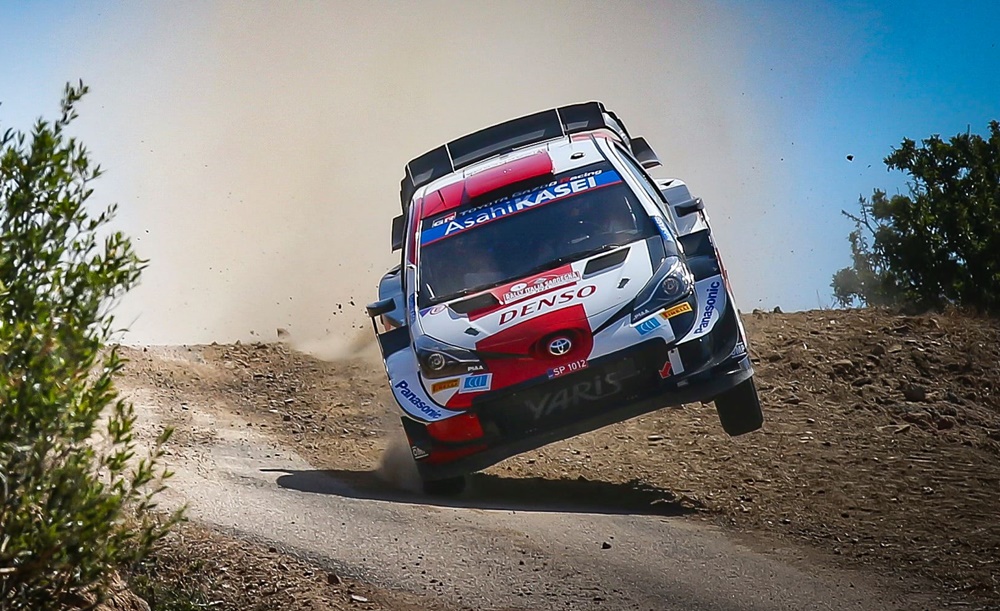
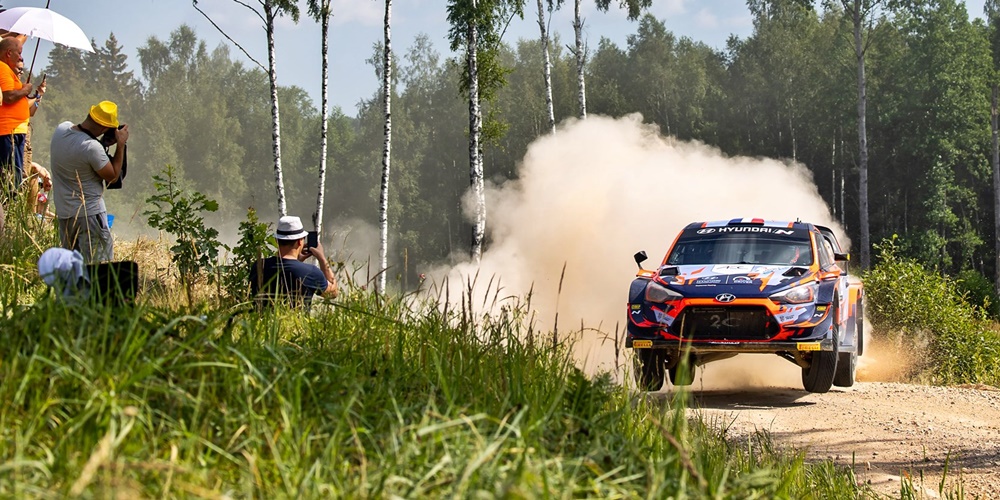
As well as being a new addition to the WRC calendar, Ypres Rally Belgium is new for many of the World Rally Car competitors. Only Thierry Neuville (who is from Belgium) and Craig Been have competed in Ypres before. Having won in 2018 and 2019 respectively, the Hyundai team-mates will be expected to set the pace when the 20-stage event begins.
“I’m really looking forward to Ypres. It hasn’t been in the WRC before but it’s a really legendary event that everybody in rallying knows about. In the test, we could already see that the conditions are tricky. Normally, the drivers are taking really big cuts and there is a lot of mud and dirt on the road, so the conditions can be really demanding and changeable,” said Kalle Rovanpera, winner of the last round in Estonia. “One of the key points going there for the first time will be to know where the grip is and to see how we can include that information in our pacenotes.”
Current WRC positions
The current positions in the WRC have TOYOTA GAZOO Racing’s Sebastien Ogier topping the chart. Having won 4 of the 7 rounds this year, the Frenchman has a 37-point over team-mate Elfyn Evans, with Neuville 15 points further back. Ogier is set to benefit from running at the front on the first pass through Friday’s sealed-surface stages, which are expected to be in a clean state.
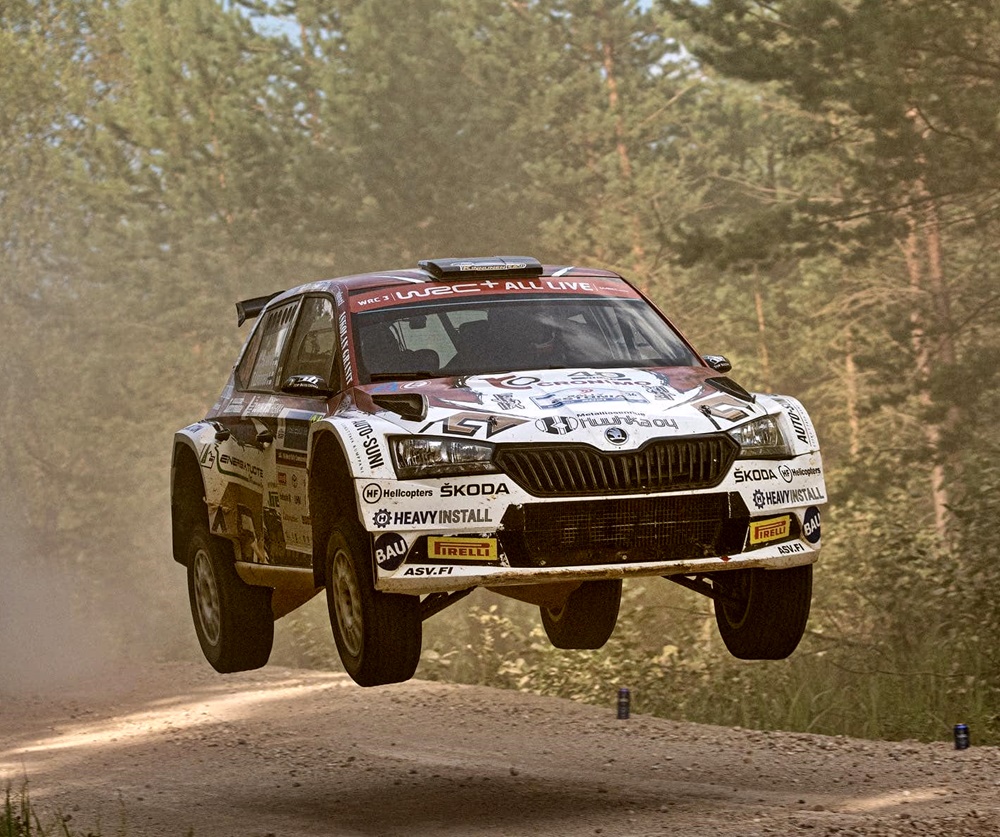
With the WRC2 championship top five either not competing in Ypres or not eligible for points, several rivals have the opportunity to make up lost ground in the title chase. They include Nikolay Gryazin, who was a competitor in the ERC Junior Championship when he made his one and only Ypres start to date in 2016, plus Jari Huttunen and Oliver Solberg. The Nordic pair will be giving the Hyundai i20 N Rally2 its competition debut.
In WRC3, which has attracted 19 entries, Frenchman Yohan Rossel will be aiming to extend his lead at the top of the standings but faces strong opposition from a number of leading local drivers, many of whom have extensive Ypres knowledge. Among them are former Ypres winner Pieter Tsjoen, whose last WRC appearance was as a co-driver in Rallye Monte-Carlo in January, Belgian champion Adrian Fernémont and current Belgian championship leader Ghislain de Mevius.
The route
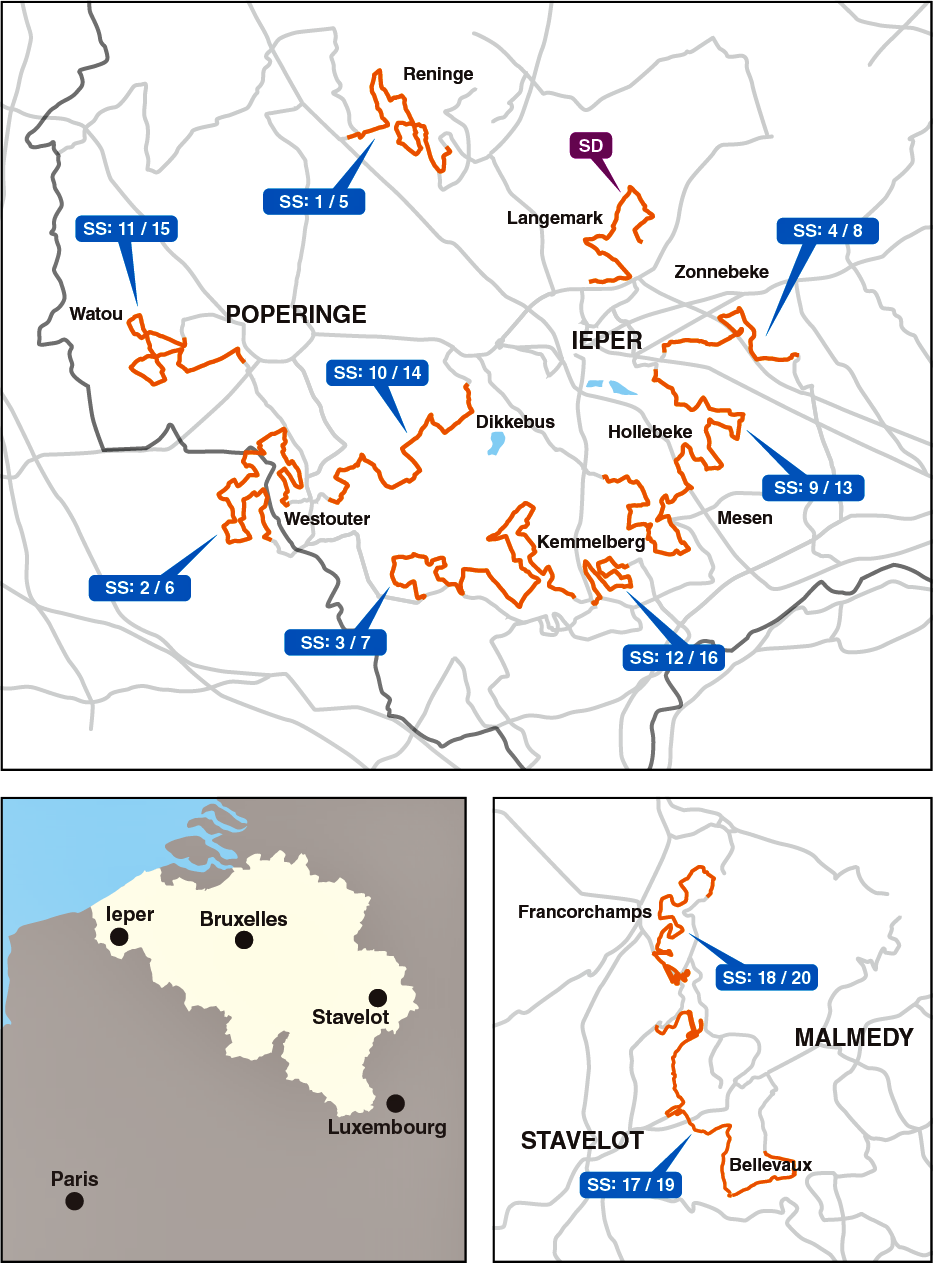
Located in the Flanders region of northwest Belgium, legs one and two follow ultra-compact routes north and south of Ypres respectively and comprise tight and twisty farmland roads lined by drainage ditches and telegraph poles. Following morning Shakedown, 8 stages – including the classic Kemmelberg complete with a cobblestone climb – are scheduled on Friday from early afternoon until late evening. Hollebeke, the rally’s longest stage at 25.86 kilometres, is run twice on Saturday August 14, while Dikkebus and Watou are among the Ypres favourites to also feature on day two.
The deciding leg on Sunday is all-new and located some 300 kms to the east with roads in and around the famous Circuit de Spa-Francorchamps, home of the Belgian F1 Grand Prix, providing the challenge. While they are more flowing in nature, they are not to be underestimated.
As far back as 1928, Daimler-Benz was already providing factory-fitted cars with special protective features against gunshots and explosives, for customers who required such protection. Later on, Mercedes-Benz also developed specially protected variants of its models and among those who ordered one was the emperor of Japan.
Many politicians and heads of state followed the emperor’s example and as demand grew, the company broadened the selection models with special protection. Though the volume was not big, it justified the establishment of the M-B GUARD division to handle the development and production of such special models, more so as a level of secrecy was also needed.
First GUARD limousine with AWD
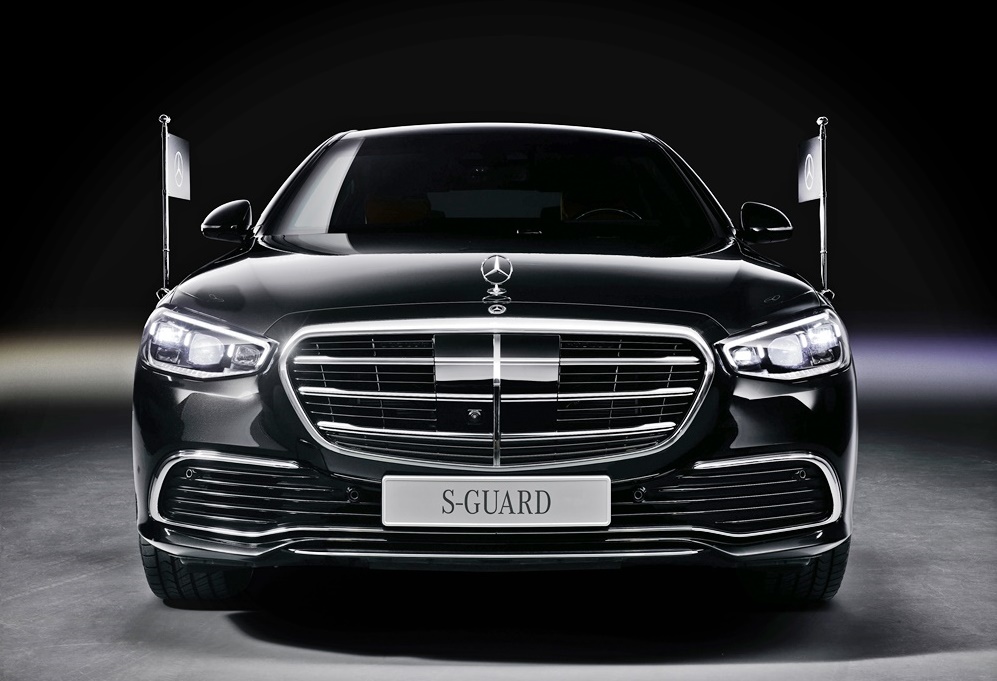
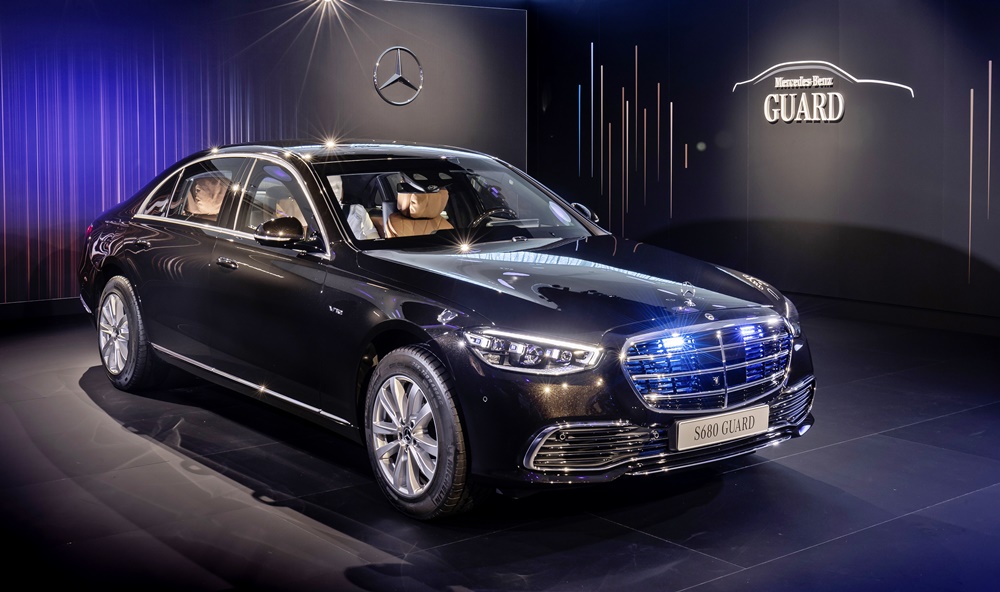
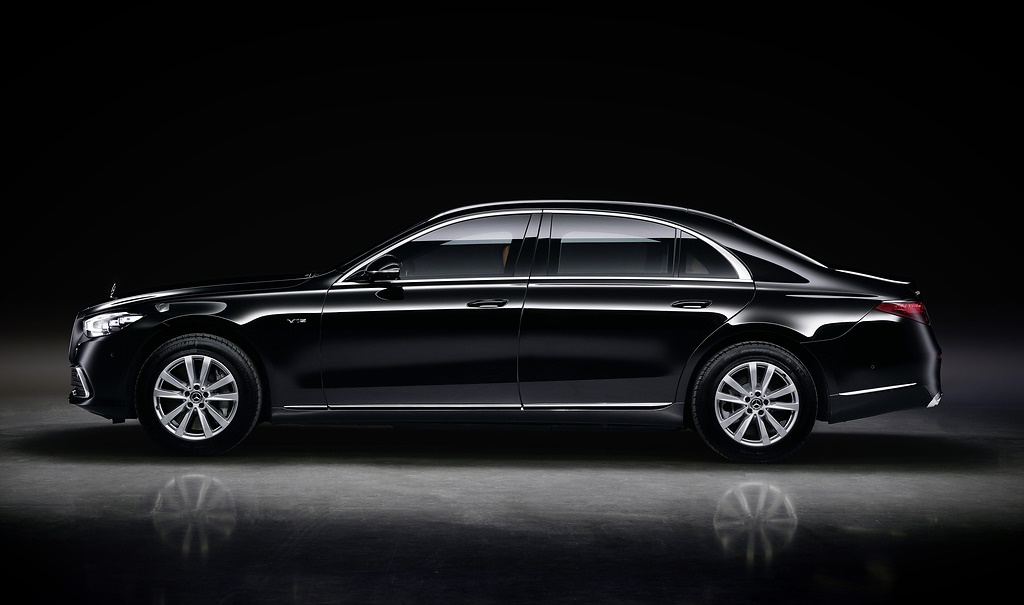
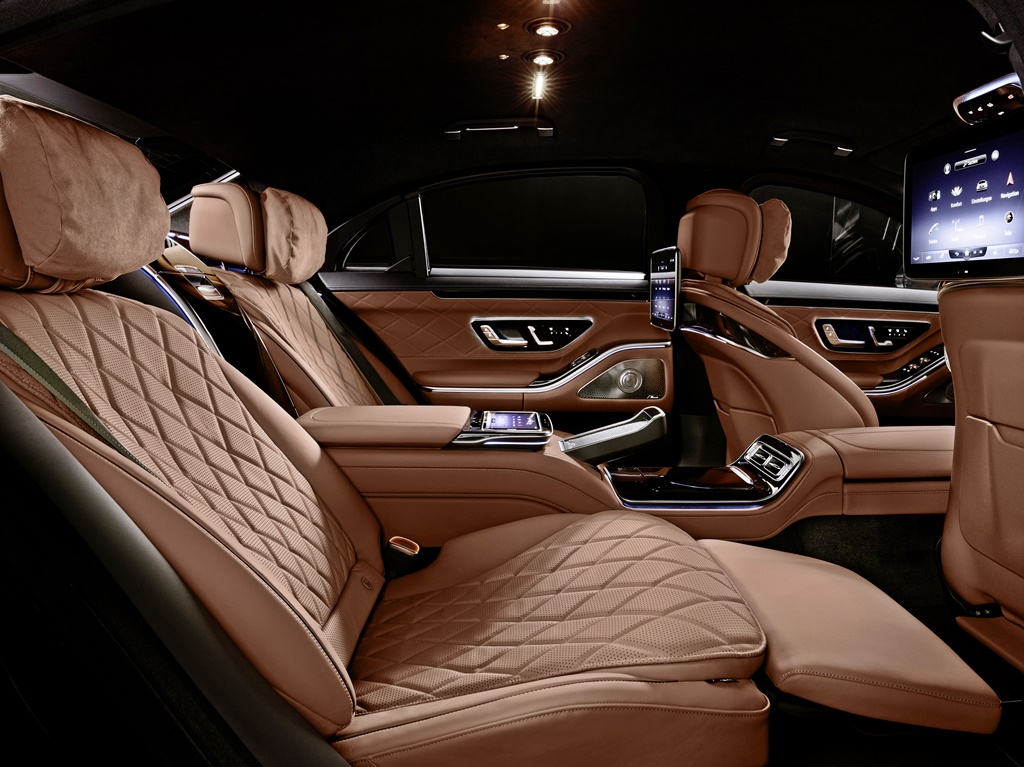
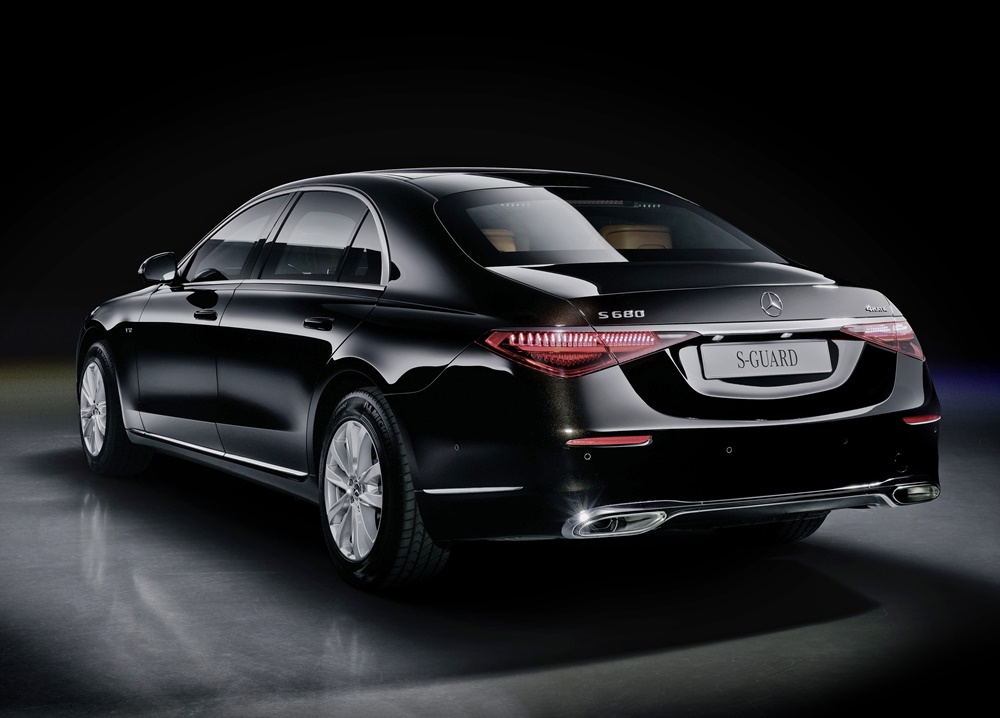
The latest model from this division is the S 680 GUARD 4MATIC, the first GUARD limousine with all-wheel drive (there are AWD SUVs in the GUARD range as well). Apart from its superlative qualities as a limousine, it meets the highest ballistic test level for civilian vehicles and is particularly resistant to explosive charges. It has been certified to meet the requirements of the highest civilian protection class and also meets the requirements of Germany’s Federal Criminal Police Office.
Advanced dummies for testing
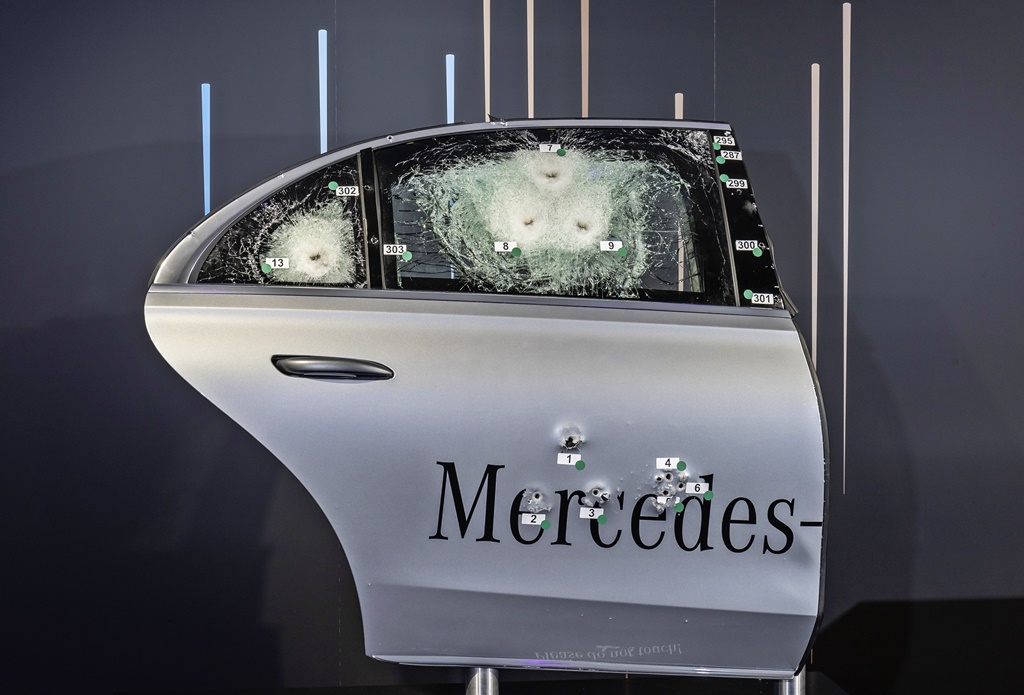
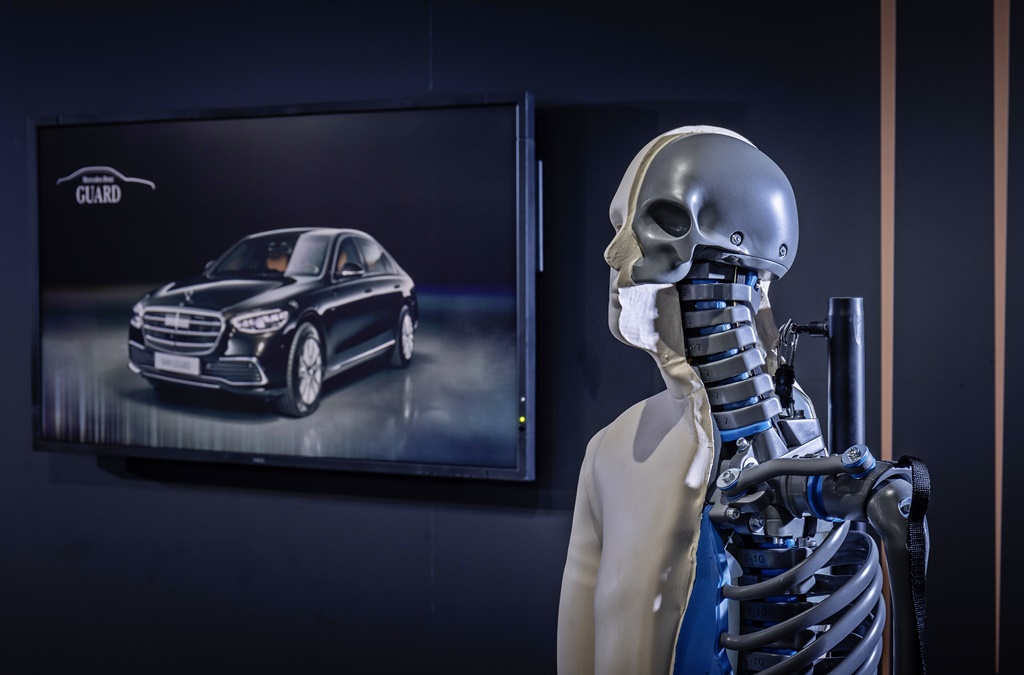
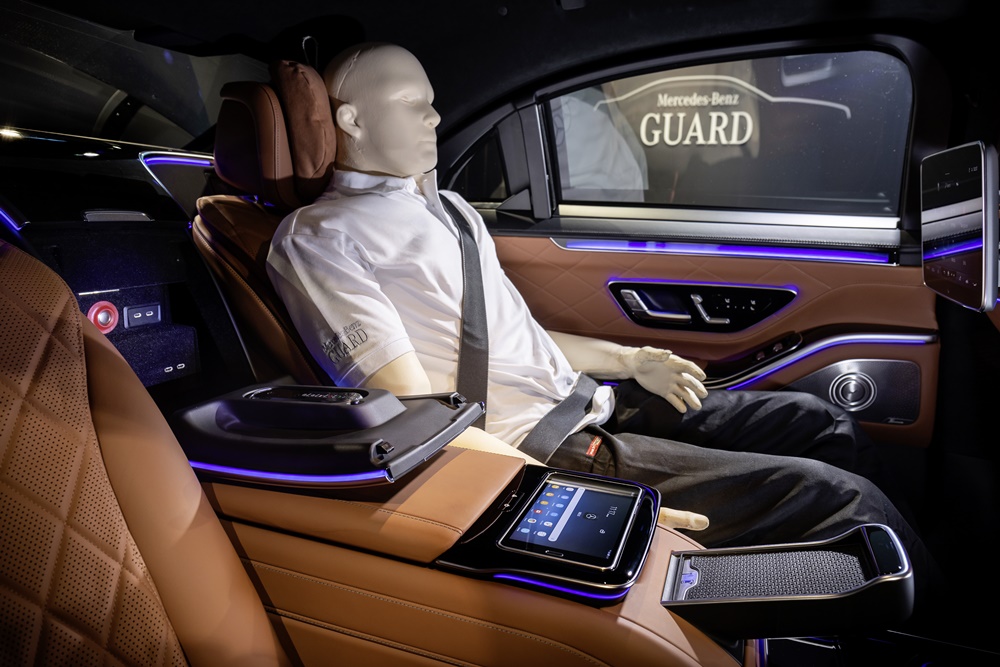
Details of testing are not released but during testing, the body and windows have been fired at by an assault rifle using armour-piercing ammunition. The S 680 GUARD 4MATIC achieved top scores in blast test on the roof, floor and sides. For the first time, the certification included tests with so-called biofidelic dummies. These are very sophisticated dummies with bone density and structure modelled on the human skeleton in every detail. Epoxy resin aluminium powder is used as a bone substitute, and webbing made of propylene is used as ligaments and tendons. The tissue and internal organs of the biofidelic dummy are made of silicone and acrylic. Thanks to the human-like structure, injuries are easily recognisable from the outside and allow more extensive evaluation.
Special equipment designed specifically for the model includes a fire extinguishing system with automatic triggering function and an emergency fresh air system that protects occupants from penetrating smoke or irritant gases and supplies fresh air. Other options include an extensive range of equipment for official authorities such as a siren, flashing lights and radios, as well as a panic alarm system. However, optional extras available for the standard car which contradict the protective purpose (such as a sliding sunroof) are not available.
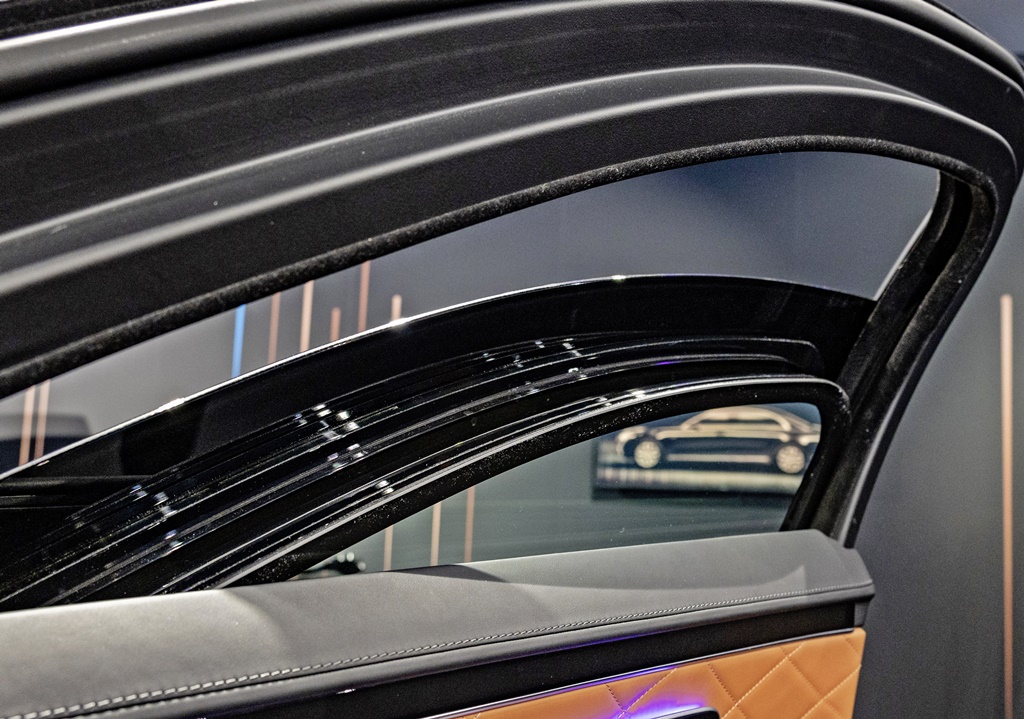
Although the doors are very heavy due to their armouring, the electro-mechanical system is designed to keep operating forces low when opening and closing. This applies not only on level ground, but also when the car is on a slope. There is also a lot of intelligence in the hydraulically (instead of electrically) operated window lifters. Even if the on-board power supply fails, emergency operation is possible, ie closing in the event of an attempted attack. In each door, there is a corresponding unit consisting of a compressor and valve block together with a pressure accumulator.
V12 engine with 612 bhp/812 Nm
As for the powertrain, the V12 biturbo engine has already been extensively revised for the new S-Class generation. It has an output of 612 bhp/830 Nm which is distributed to all four wheels. Due to the higher vehicle weight, the AWD system of the GUARD version has stronger side shafts. The Michelin PAX run-flat tyres are standard and can be used for a distance of 30 kms after losing all air pressure.
“The S 680 GUARD 4MATIC is one of the most customer-oriented products from Mercedes-Benz. That is because this special protection model focuses on people and their safety,” said Dirk Fetzer, Head of Product Management S-Class. “No other series-produced saloon fulfils the highest protection class for civilian vehicles quite as comprehensively. And, at the same time, quality and durability are at series standard, thanks to extensive development and testing activities. The new special protection version ‘protects what matters’.”