Piston.my

Latest News

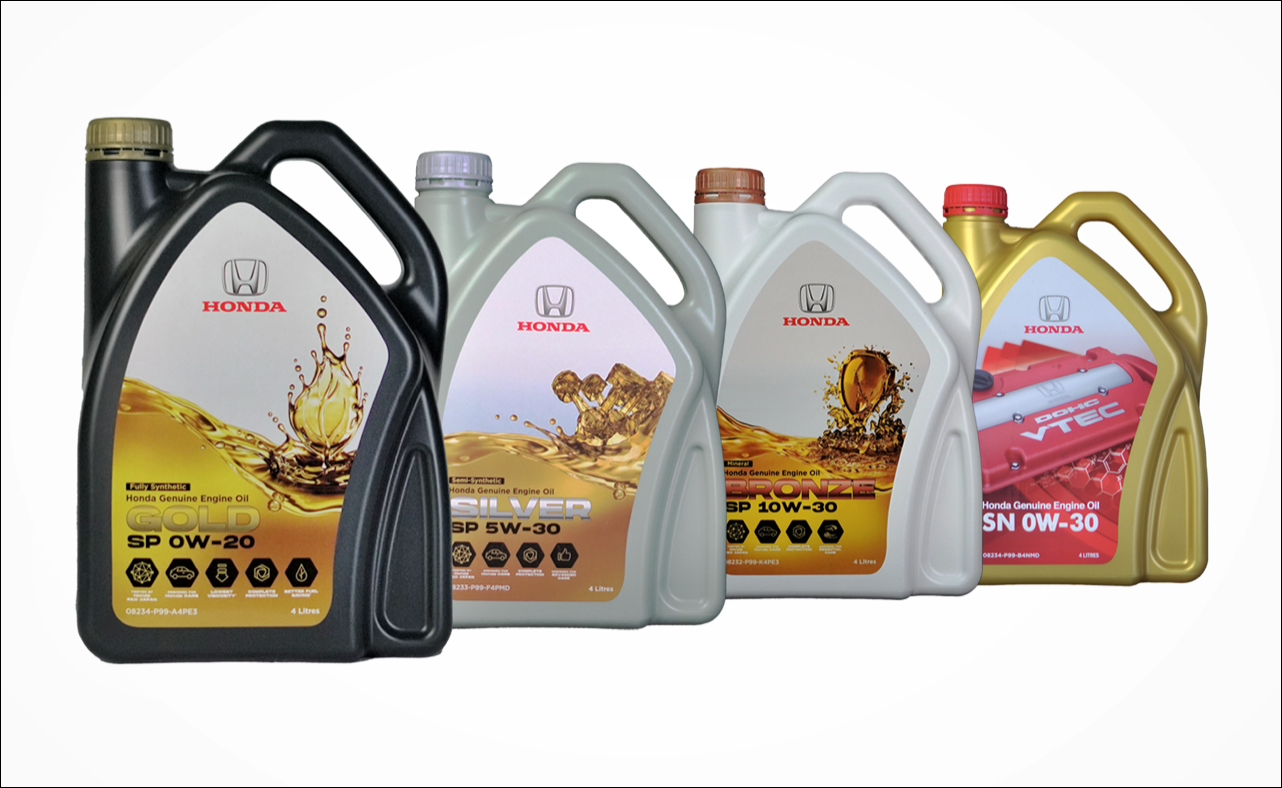
Honda Malaysia has introduced an upgraded range of Genuine Engine Oils, recommended specially for Honda vehicles, of course. The oil now has an API SP grade which provides stable performance and better fuel economy while prolonging engine lifespan as well as offers greater engine protection.

The new engine oil will replace the existing SN Grade range with mineral (Bronze), semi-synthetic (Silver) and fully synthetic (Gold) formulations. However, the SN grade 0W-30 viscosity fully-synthetic oil will still be available for cars with high performance engines such as the Civic Type R.

Suitable to be used for most petrol and turbocharged engines, the SP Grade engine oil is approved and recommended by Honda Research & Development (R&D). The new engine oil range is formulated to fulfil all operating requirements of Honda engines and also meet the latest standards issued by the American Petroleum Institute (API). It enhances protection against low-speed pre-ignition, an abnormal combustion phenomenon that can cause significant damage to the engine.

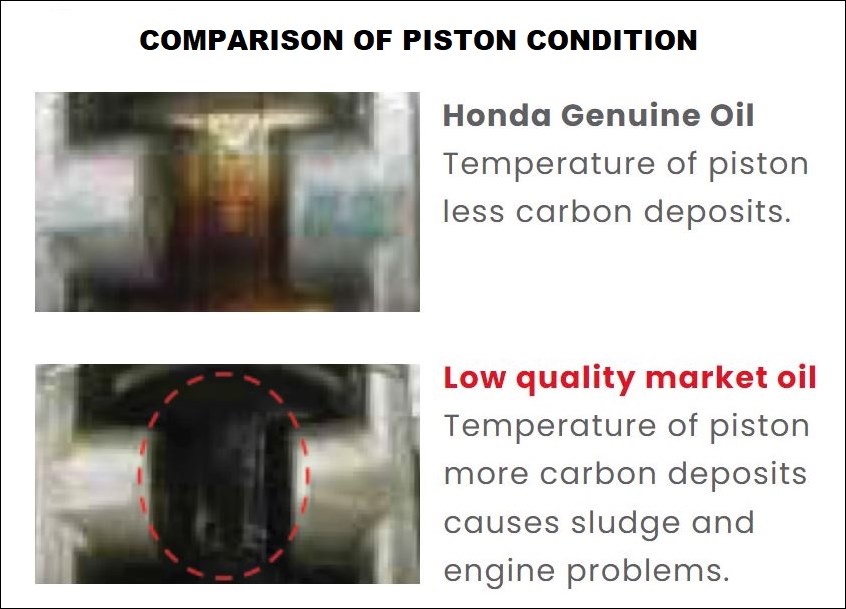
The SP Grade engine oil also comes with a timing chain wear protection to minimise timing chain elongation. In addition to improved high temperature deposit protection for pistons and turbochargers, it provides better sludge and varnish control, valve train and intake lifter wear protection, higher oxidation stability as well as emission control system protection. The lower-viscosity of 0W-20 fully-synthetic oil allows the engine to operate with maximum efficiency while very good protection for key engine components, even at extreme temperatures.

More information on the new Honda engine oil is available at any authorised Honda service centre, or at www.honda.com.my.

Why use a Genuine Oil?
There are engine oils and there are Genuine Oils but to the average motorist, it is hard to understand what can be so special about Genuine Oils sold by some car companies. It may seem like such products are created just to give the car company an extra source of revenue by using the brand name. After all, an oil is an oil, right? As long as it is from a reputable producer and meets the requirements of the carmaker (specified in the Owner’s Manual), it should be okay to use.

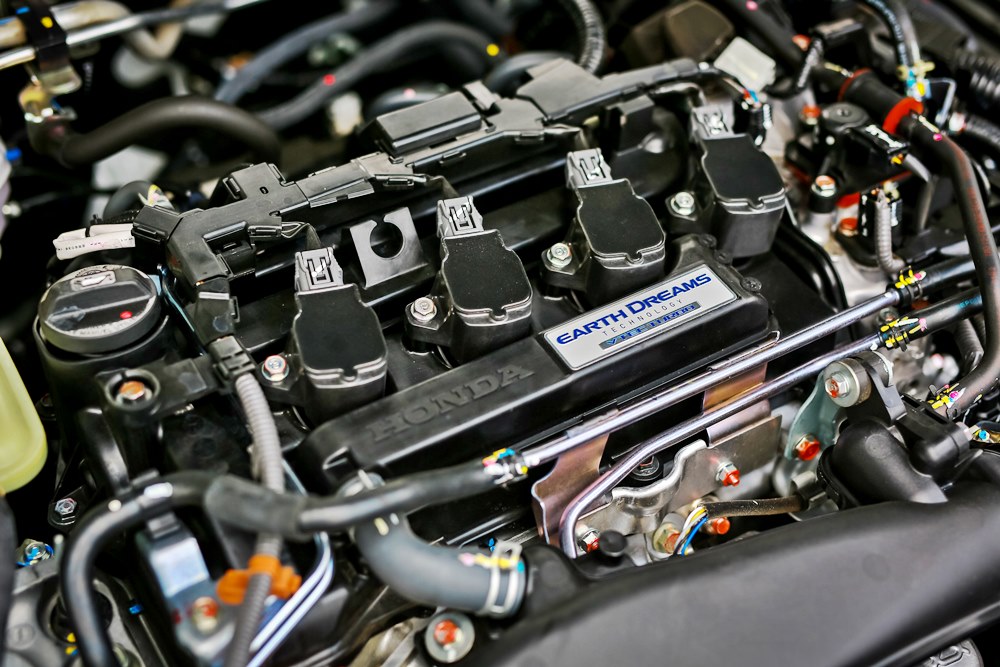
You won’t go wrong picking an oil produced by any of the reputable oil companies, but you may not get 100% lubricating performance with the engine in your vehicle. This is because each engine has its own characteristics and design features; some may have unique combustion chamber designs, more complex valvetrains or special oil passages. These are known to the engineers who design the engines but may not be understood by those in the oil companies who try to come up with an oil which ‘suits all engines’.

This is where the specifications for a Genuine Oil come in and they may have specific requirements to ensure proper lubrication in certain areas. In other words, the Genuine Oil will have a unique formulation which will work best with the engine for which it is recommended, and it will perform better than other oils [for that engine].
More customized for specific engines
The best analogy to this issue would be to think of clothes. You can go to a department store and buy a shirt with a famous brand name. You may get a choice of S/M/L/XL and one of the sizes will fit your body. Maybe you will be lucky and the sleeves will also be just the right length and the collar is not too tight. However, it is also possible that your arms may be just a wee bit longer and the sleeve length for size ‘M’ is not exactly matching for you.

Now you could also go to a tailor and made a shirt with a similar design but you would be able to have the sleeves just the right length to suit your arm and the collar will be comfortable instead of choke you each time you have to wear a tie. You feel comfortable wearing the shirt and its ‘specifications’ are exclusive to you.
That is basically the difference between a Genuine Oil and other oils: customization. While it may be that 99% of engine designs are similar, there may still be that 1% which is unique to each engine and only a Genuine Oil would be able to cover the lubrication needs of that 1% so you get optimum performance.

This is not to say you must use only Genuine Oil for your vehicle and that other oils are not good enough. As a consumer, you always have choices but as a Honda owner, if you want to give your vehicle the best at all times, then Honda Genuine Engine Oil would be the best to use.

Honda Insurance Plus owners can get up to RM1,500 allowance if their vehicle was damaged by floods


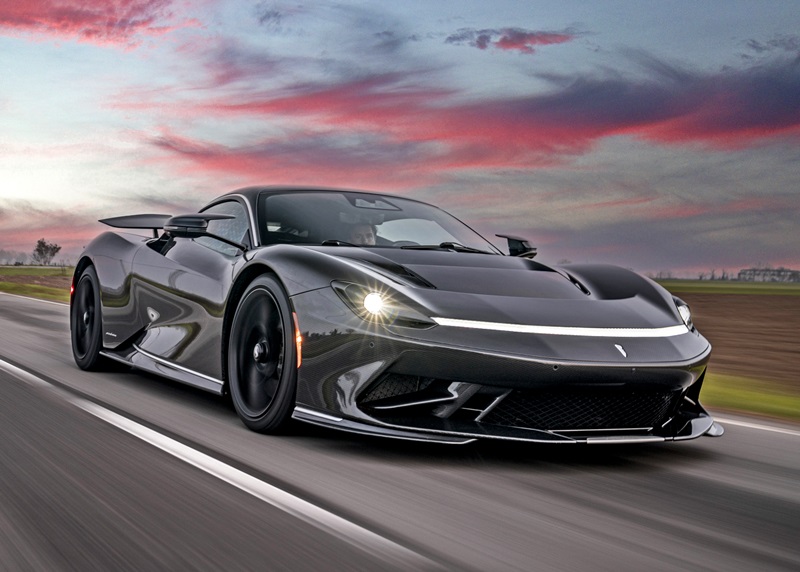
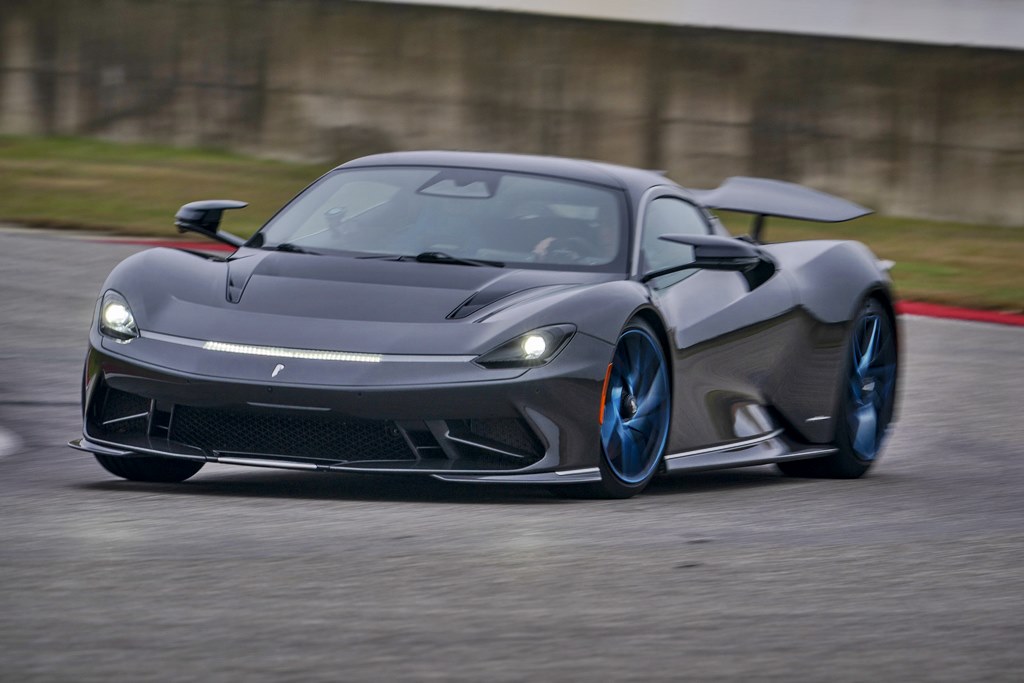
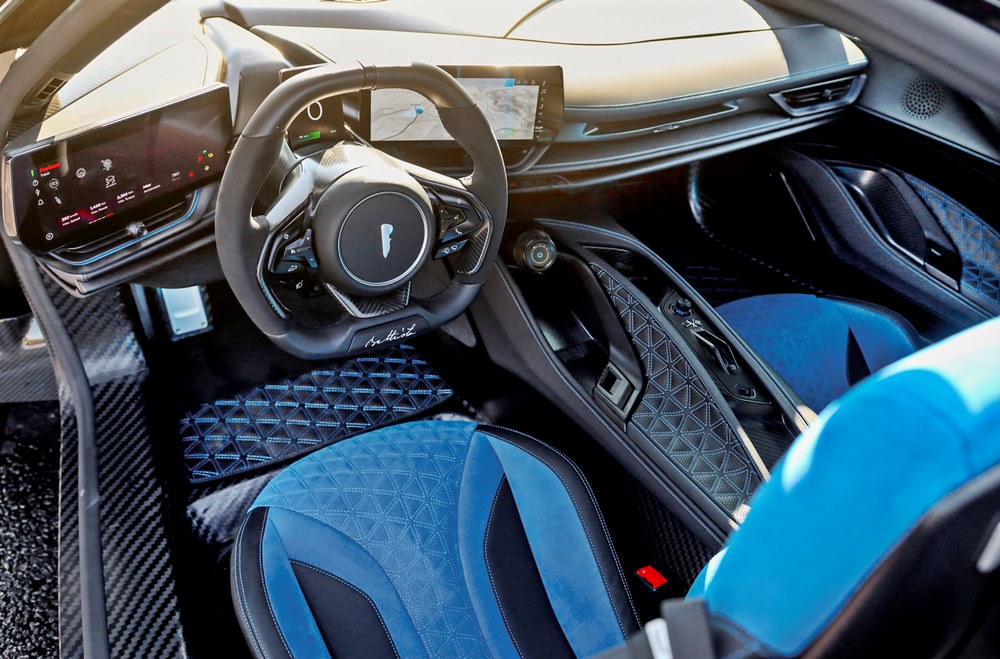
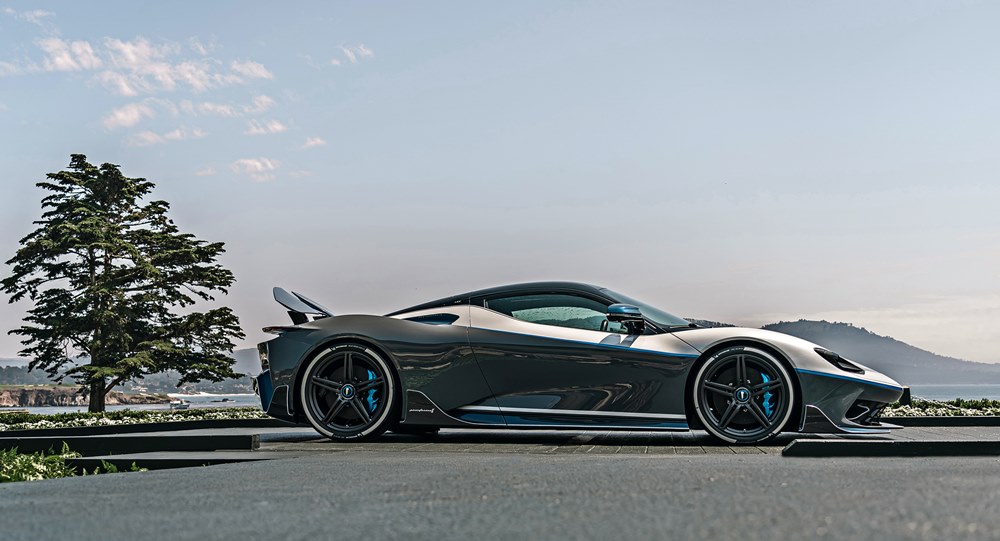
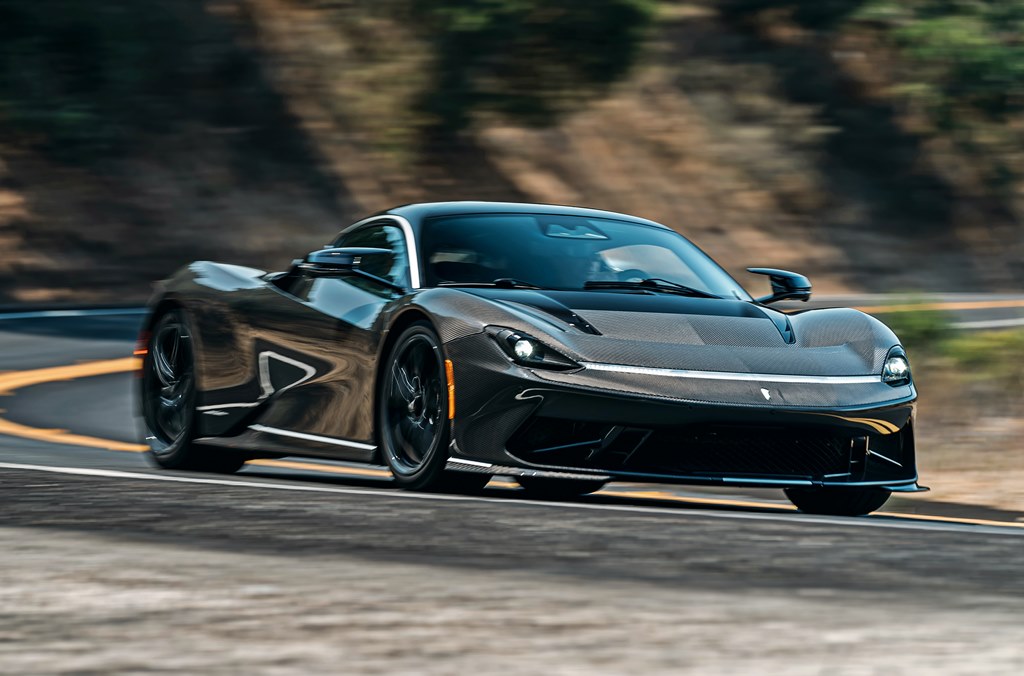
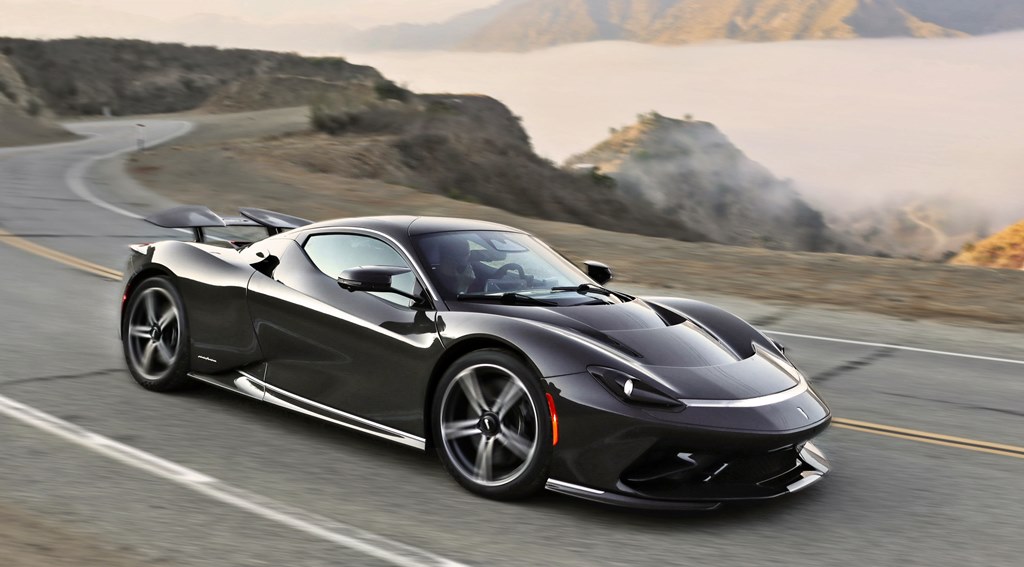
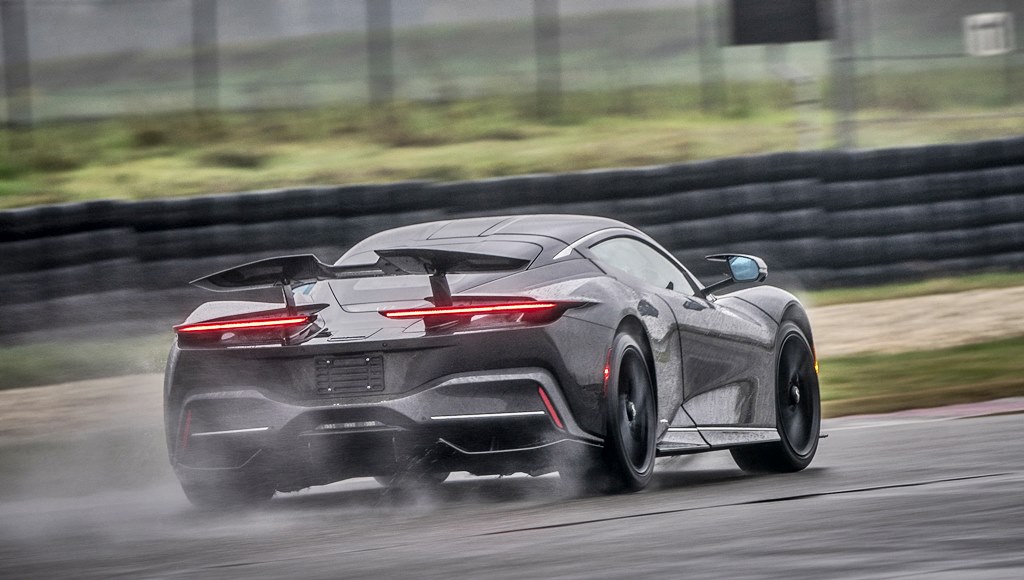
2022 looks like the year of electric hypercars as some manufacturers will either unveil their products or start deliveries. Among them is Automobili Pininfarina which has announced that its Battista hyper GT – Italy’s most powerful production car ever – will start going to customer in early 2022. Final production prototypes have been running with test-drivers completing assessments of various systems.

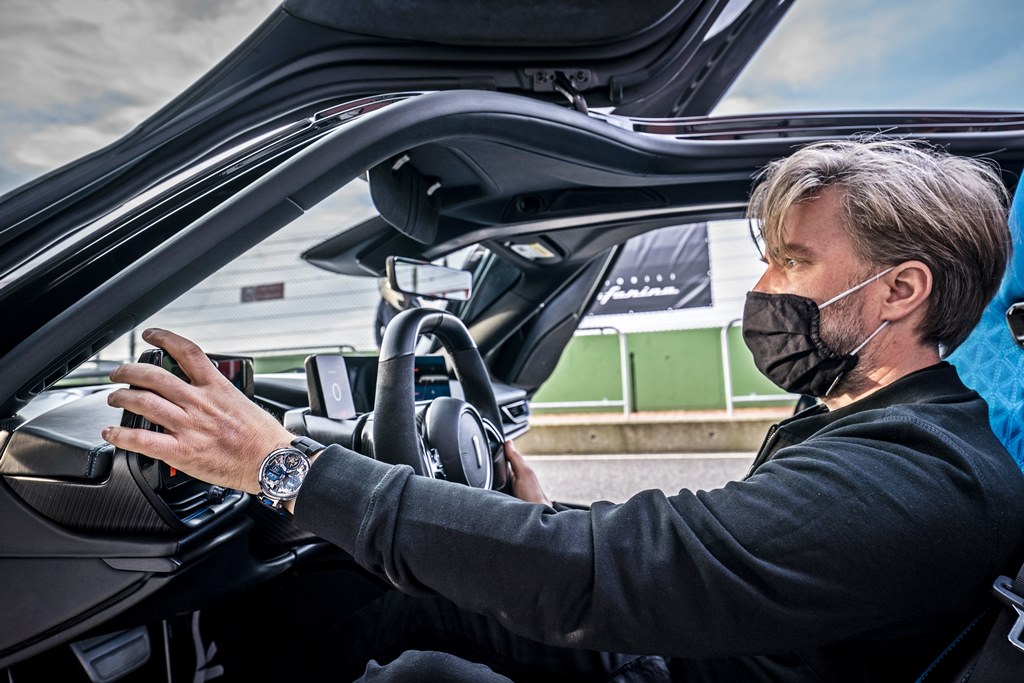
Nick Heidfeld, ex-Formula One and Formula E driver, is a Test and Development Driver for Automobili Pininfarina who has been working with the engineers for the past 2 years. “From the first time I experienced Battista’s performance in 2019 in an advanced simulator, to today on road and track, I believe the Automobili Pininfarina team has successfully developed a unique hyper GT that is enormous fun, as well as incredibly fast,” he said.

2022 Pininfarina Battista hypercar EV

2022 Pininfarina Battista hypercar EV

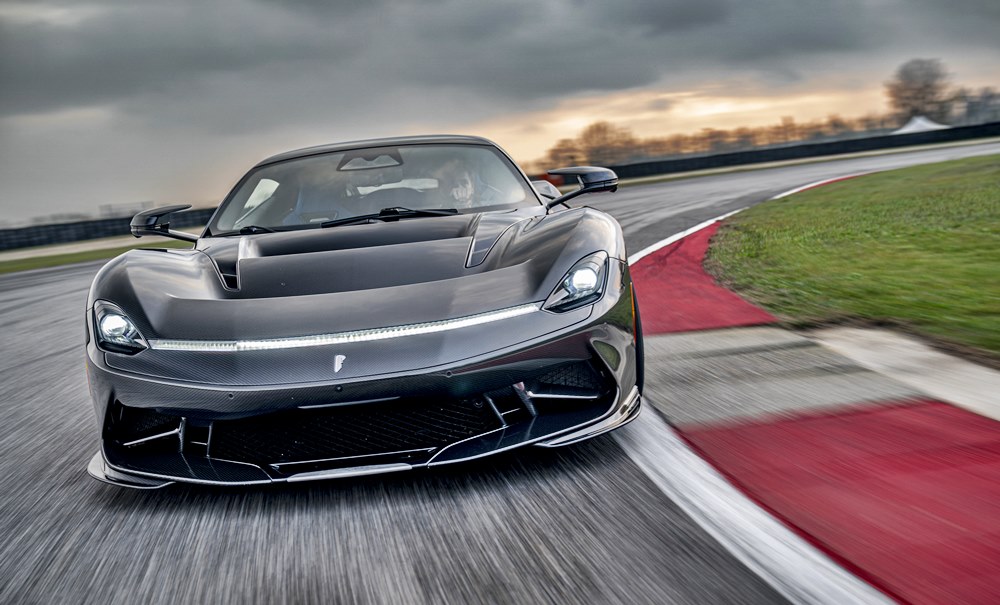
Heidfeld has experienced the Battista on the road and track in Italy in production-intent form, accompanied by its emotive soundscape for the first time. “In this test, I was able to drive Battista with full power available. The effect under acceleration is completely mind-bending – drivers will never bore of the experience, no matter how many times they feel it. This roadcar sprints faster than a Formula 1 car, and in Furiosa mode, I was left with a huge grin on my face every time. Every client that experienced Battista with me was positively overwhelmed by the experience – there is simply nothing like it!” said Heidfeld.

The Furiosa mode mentioned unleashes the full 1,900 ps, which also utilises the full torque available from the 4 independent electric motors. Originally projected to produce 2,300 Nm of torque, the Battista is now developing an increased 2,360 Nm. This comes from two 250 kW motors at the front, and two 450 kW motors at the rear, with 280 Nm of torque for each front motor and 900 Nm at each rear motor. Their combined output makes it possible to go from 0 – 100 km/h in a claimed time of less than 2 seconds and reach a top speed of 350 km/h.

2022 Pininfarina Battista hypercar EV

Besides the Furiosa mode, there are 4 others – Pura, Calma, Energica, and Carattere. Control of the driving experience is provided by a beautifully-milled rotary dial, ergonomically situated right next to the driver, allowing for quick changes in driving mode, each one lending a unique character to the Battista’s drive, perfectly adapted to a range of driving conditions.

Calibrated using thousands of kilometres of software simulation before being introduced to development cars, the driving modes allow the driver to fine-tune the driving experience and unlock both the full potential of the advanced torque vectoring system and honed characteristics of the Battista.

http://www.bhpetrol.com.my/products-services/bhpetrol-fuel/infiniti-ron95-ron-97-(2020)

2022 Pininfarina Battista hypercar EV

The system recuperates and transfers electrical energy without using the brakes – the active energy shifting takes place directly via the 4 electric motors, resulting in a much faster, more precise and efficient shift of torque compared with torque vectoring by braking.

The motors are powered by a powerful 120 kWh lithium-ion battery and, depending on driving style and other conditions, the range is claimed to be up to 500 kms.

2022 Pininfarina Battista hypercar EV

“The handling on open roads – even on unpredictable surfaces – proved Battista to be beautifully balanced. Just how a hyper GT should feel. Battista’s performance on track had already surprised and impressed me after I experienced it in Nardo earlier this year, so my expectations on this occasion were set high. This test however confirmed that the team has achieved its target of creating a new type of hyper GT which is rewarding on all surfaces. The ride quality and damping both feel excellent, and the steering feels natural and the perfect fit for what we want to achieve in Battista. I am very sensitive to steering feel as a racing driver, and the sweet spot here is for it to feel light yet connected, and direct yet smooth,” explained Heidfeld.

2022 Pininfarina Battista hypercar EV

Paolo Dellacha, Automobili Pininfarina’s Chief Product and Engineering Officer, commended Heidfeld for his input which has helped the engineers to fine-tune the car. “Nick has been a brilliant partner throughout the whole development programme, not only for his driving skills and unique experience in both Formula 1 and Formula E, but also for his ability to evaluate and improve the programme in its various stages of development by delivering the anticipated view of our customers,” he said.

The Battista in production form made its global debut at California’s Monterey Week in August this year. Potential customers had an opportunity to experience the hypercar on the scenic coastal roads and listen to its ‘tailor-made exterior soundscape’. Those who decided they must own one would have to book a unit which will cost from €1.98 million (about RM9.37 million).

2022 Pininfarina Battista hypercar EV

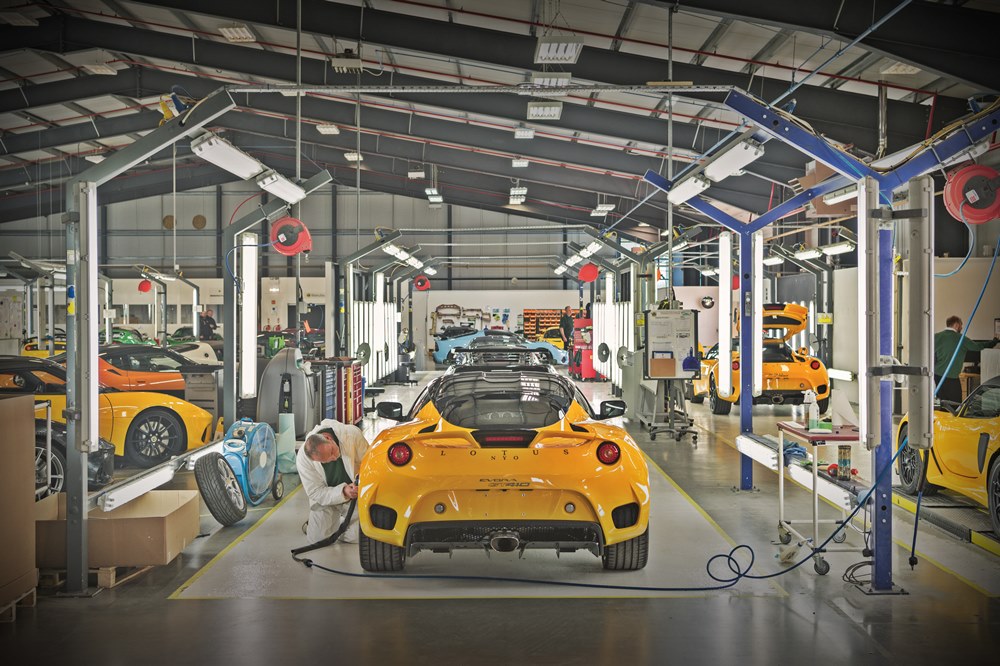
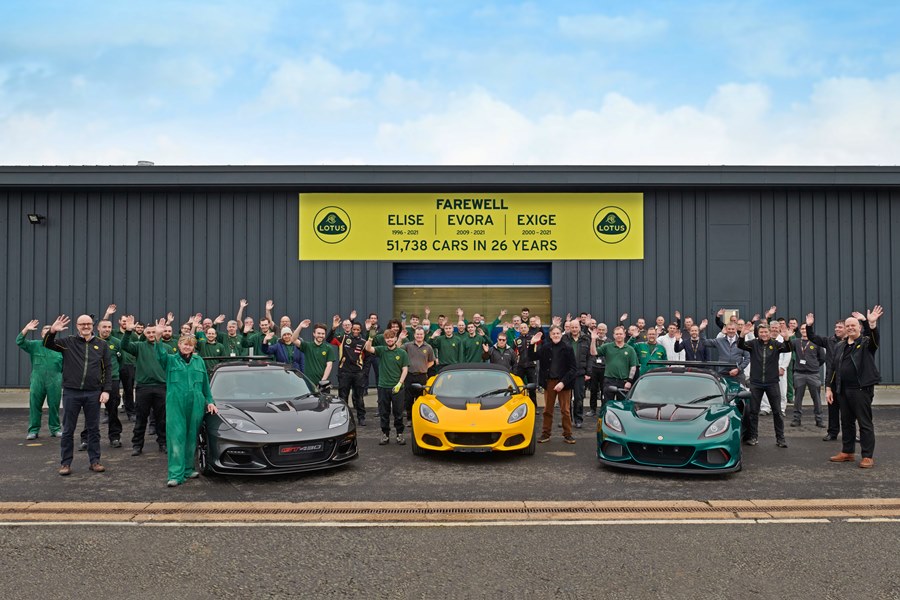
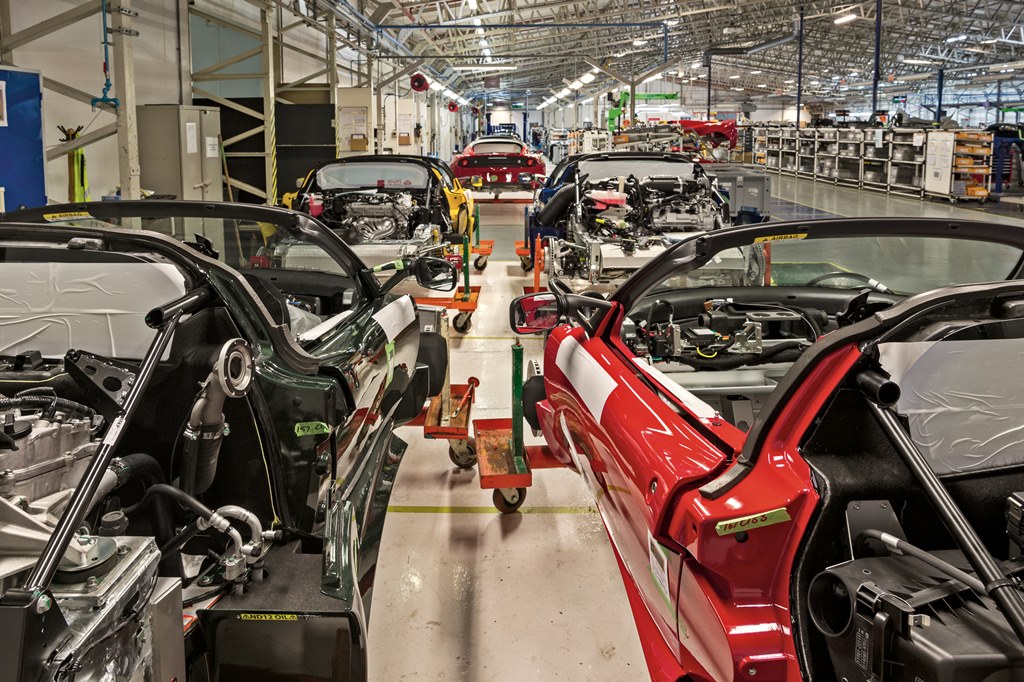
Just before Christmas, production of the Lotus Elise, Exige and Evora sportscars came to an end. Between these 3 model lines and over the course of 26 years, a total of 51,738 cars had left the factory in England. Combined, they represent almost half of the total production of Lotus in its 73-year history. In addition, 9,715 sportscars were built for Lotus’ third-party clients, including GM and Tesla.

From 1996 to 2000, the first-generation Elise and Exige were built in a small assembly hall at the factory, alongside the Lotus Esprit. The current assembly lines, which were installed in 2000, will be dismantled and replaced with all-new state-of-the-art facilities in support of the factory for the new Emira factory. Full Emira production begins in the spring, after the prototype and test phases currently underway are completed, taking Lotus production into a high-tech and semi-automated era, and increasing capacity up to 5,000 units per year on a single shift.

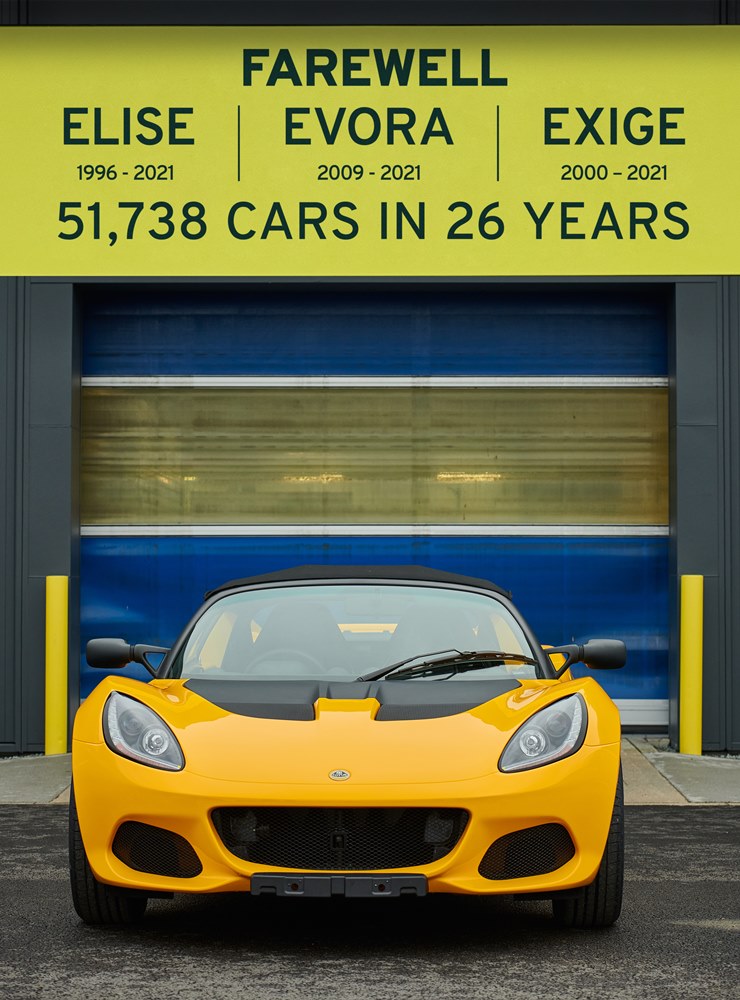
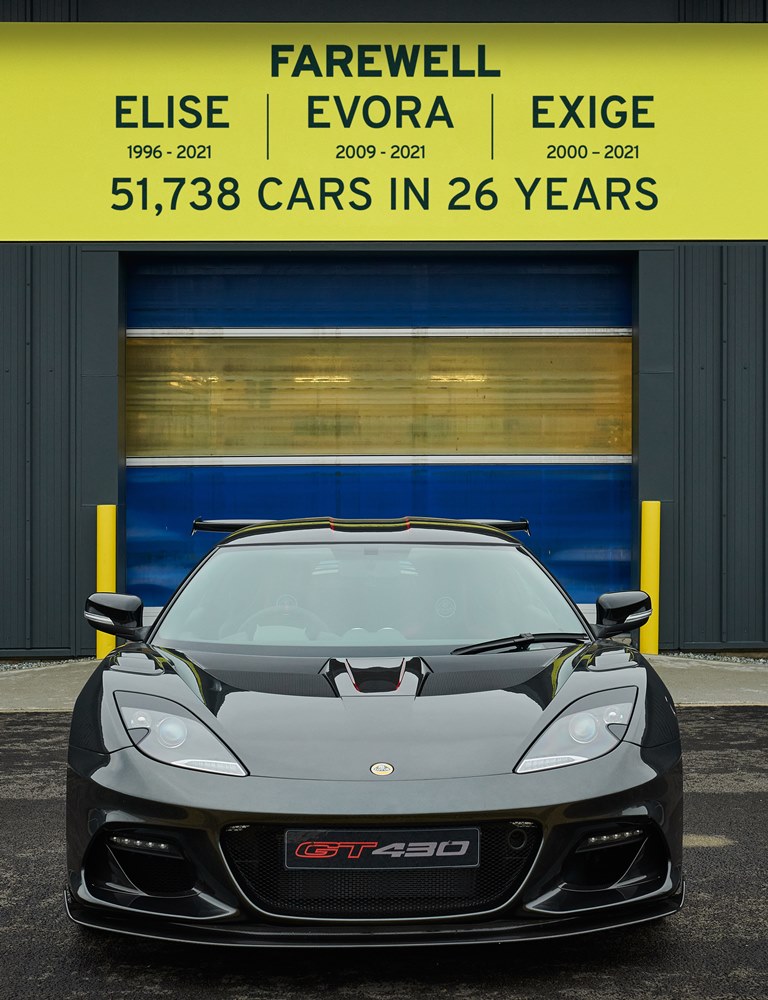
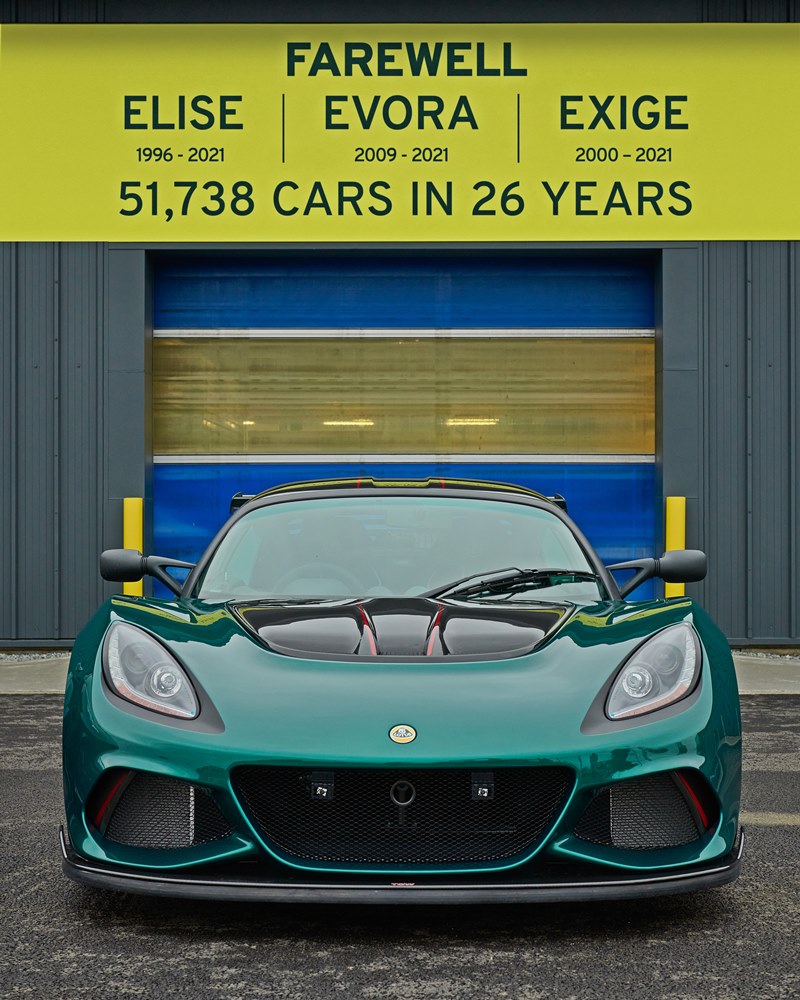
The last examples of the Elise, Exige and Evora models are reserved for Lotus’ growing heritage collection. Joining the collection will be the last Elise, a Sport 240 Final Edition finished in Yellow and the last of 35,124 cars; the last Exige, a Cup 430 Final Edition in Heritage Racing Green – number 10,497; and the last Evora – a GT430 Sport finished in Dark Metallic Grey – the last of a production run of 6,117.

“The impact of these 3 cars has been spectacular over the years, technically, structurally and dynamically. But all technologies and innovations move on and, if you had asked me of my proudest moment 4 years ago, I would have, without hesitation, said the Elise chassis. However, this has been usurped by our new Project LEVA architecture for our new range of electric sportscars, starting with the Type 135 in a few years’ time. This is now the zenith of Lotus architectures as it has moved the technology game so much further. There is a lot to look forward to,”  said Richard Rackham, Head of Vehicle Concepts, who was vehicle architect on the Elise and part of the team that pioneered extruded and bonded aluminium technology in the automotive industry.

The Elise and Exige were built around the Lotus ‘small car platform’, notable for its light weight. On the same platform, and also manufactured by Lotus were the Opel Speedster/Vauxhall VX220 (7,200 cars built between 2000 and 2005) and the Tesla Roadster (2,515 cars built between 2007 and 2012). Therefore, including the Lotus 340R, Europa, 2-Eleven and 3-Eleven cars, this brings the total Lotus small car platform production volumes to 56,618 cars.

“These iconic cars have not only played a huge role in Lotus’ 73-year history but have also been ever-present in my daily life. Together with the Lotus design team, I have lived and breathed these cars for over 26 years. We will miss them, but a bit like Christmas, once it’s over, the excitement for the next one starts to build – and that’s what’s happening now at Lotus with the Evija, Emira and forthcoming Type 132. 2022 is going to be a great year as a new Lotus generation swings into action,” said Gavan Kershaw, Director of Vehicle Attributes.

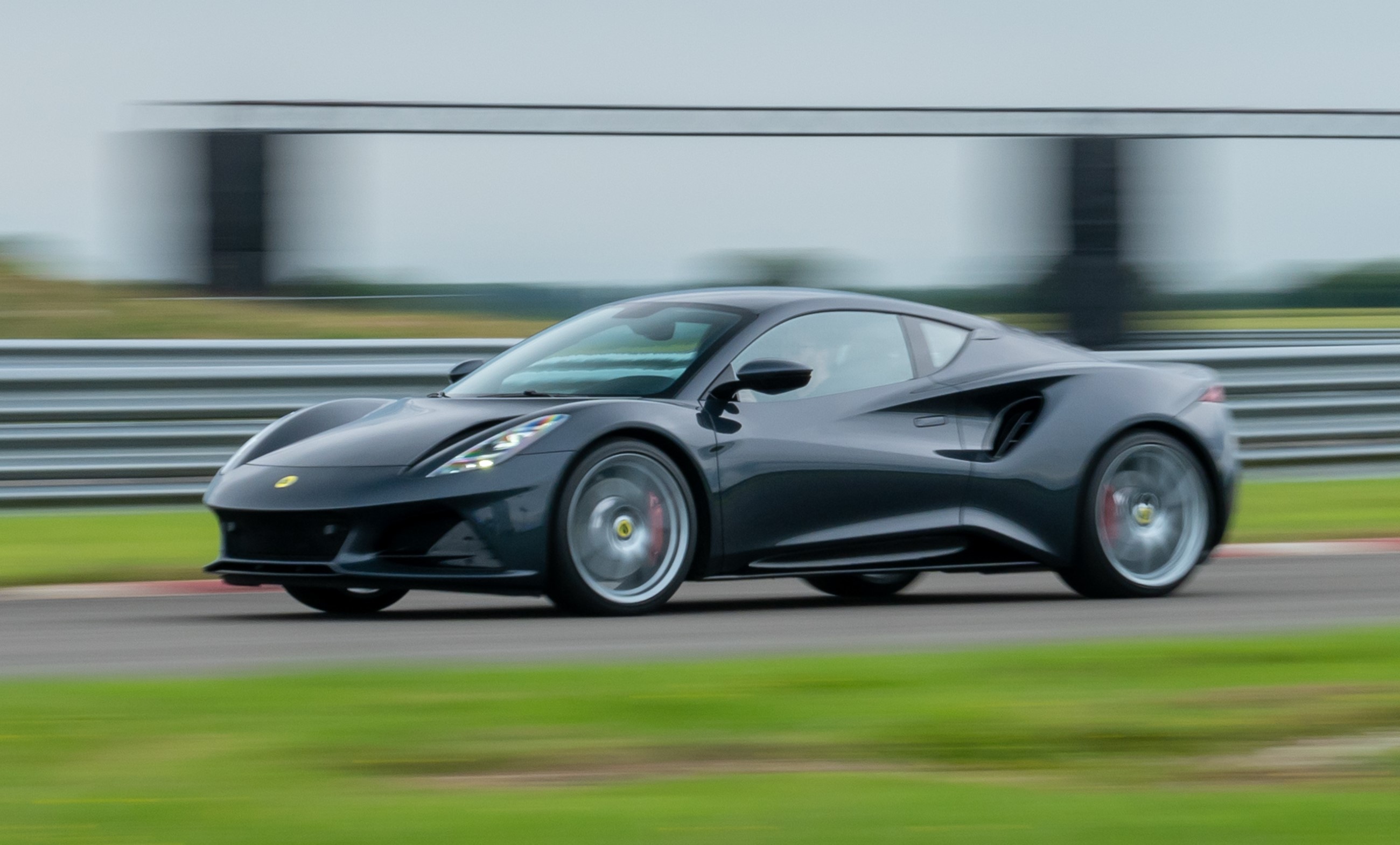
Coming in 2022 – the Emira.

Next out of the Lotus stable will be the Emira, a brand new mid-engineered sportscar. Unveiled last July and on a world tour ever since, it is confirmed to be the last petrol-powered car from the British carmaker. After the Emira will come the first electric Lotus – the Evija hypercar which will be the most powerful production car in the world – and then the all-electric Type 132, Lotus’ first SUV, which will be revealed to the world in early 2022.

Lotus Vision80 plan to transform company on journey of global expansion

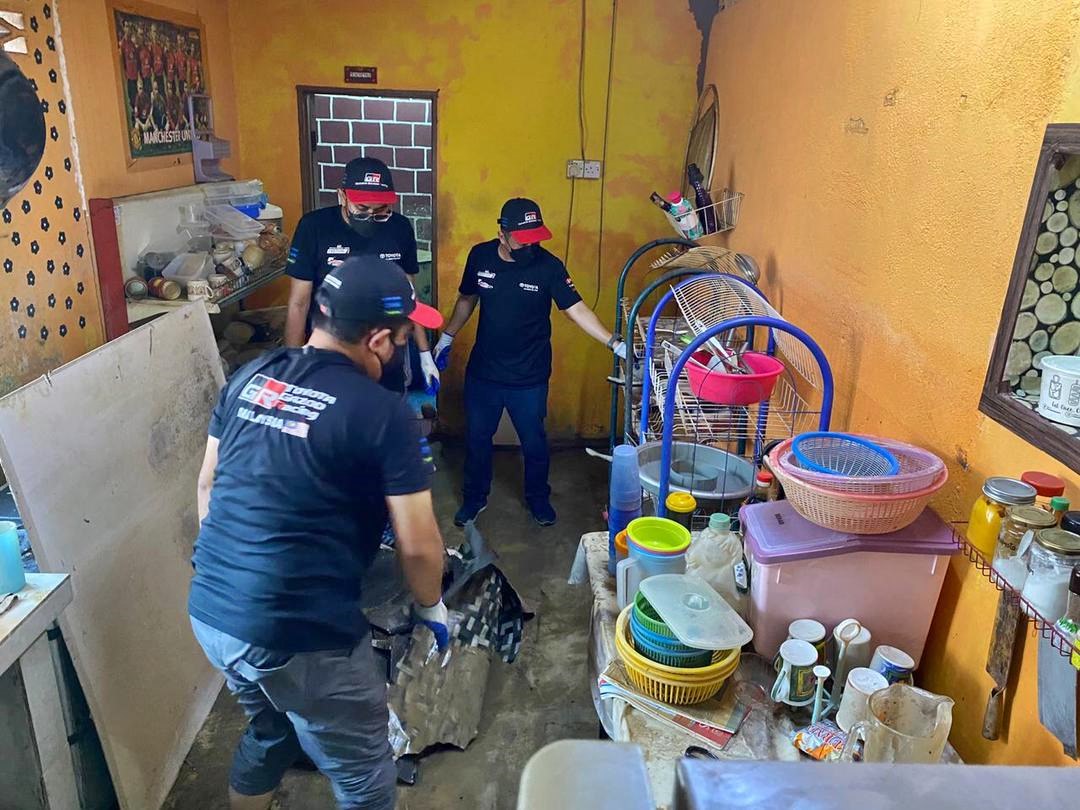
Following up on its immediate response to the floods in Selangor recently, UMW Toyota Motor is now going further with its flood relief initiatives to provide more meaningful assistance. This is being done through dispatching staff volunteers, using its Shah Alam facility as a flood ‘Command Centre’, and donating basic household necessities to victims.
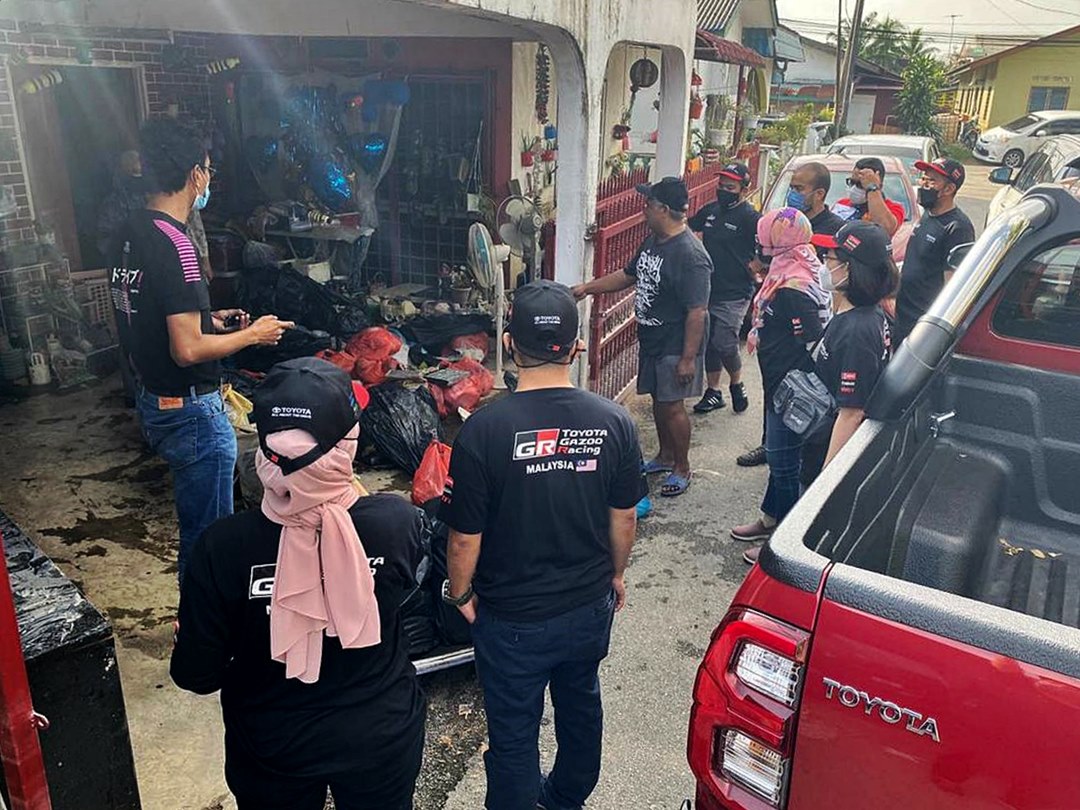
In fact, even on December 24, UMW Toyota Motor staff started going to affected areas, many of which are in the areas surrounding its head office complex and assembly plants. The volunteers helped with the cleaning of homes, among other activities.

Supported by Raja Muda of Selangor Foundation
This initiative was also supported by the Raja Muda of Selangor Foundation in providing guidance and support on the mechanics to ensure smooth management of the situation. The company said that its volunteers will continue this assistance for as long as it is needed, where and when possible.

Flood ‘Command Centre’ for future use too
The flood ‘Command Centre’ established at the UMW Toyota Motor headquarters will also function as a soup kitchen and relief distribution centre for victims in the event of a similar phenomenon in the future. Additionally, up to 100 parking spaces in the compound will be allocated in such situations for flood victims to park their vehicles safely. This will be on a first come-first served basis for any make of vehicle, and the owners will only have to sign an indemnity form.

“UMW Toyota Motor stands in solidarity with the community. Malaysians have been going through an extremely challenging period due to the flood and we want to do what we can to provide some relief. We express our sincerest sympathies to all the victims and families affected and we hope that our initiatives will be of some help,” said President of UMW Toyota Motor, Ravindran K.

“We were also inspired and moved by the compassion of the many Malaysians who have volunteered to help out their fellow countrymen, including our group of staff volunteers. We realised that response and relief efforts were slow to take place. Hence, we decided that even for future, we will immediately convert our Shah Alam facility into a flood ‘Command Centre’ to provide kind-hearted Malaysians a safe place to deliver and sort out the relief items before distributing to the surrounding temporary evacuation centres,” he added.

Besides the clean-up exercises, UMW Toyota Motor has also distributed basic household necessities including stoves, fans and kettles to affected households in hopes to alleviate some of their burden.

“We would like to take this opportunity to convey our heartfelt gratitude towards our suppliers,  namely the Toyota Suppliers Club Malaysia, DENSO Malaysia, Toyota Tsusho and Sime Kansai for stepping up and providing financial support to our endeavours. Their contributions were used to buy household appliances and other necessities to be given as aid to the flood victims,” Mr. Ravindran said.

In addition to giving aid to the local communities, UMW Toyota Motor is also providing assistance to its own workforce affected by the flood. These include repairs for personal vehicles owned by employees, financial aid as well as distribution of basic household necessities.

UMW Toyota Motor announces Toyota Flood Assist Program for owners affected by the floods
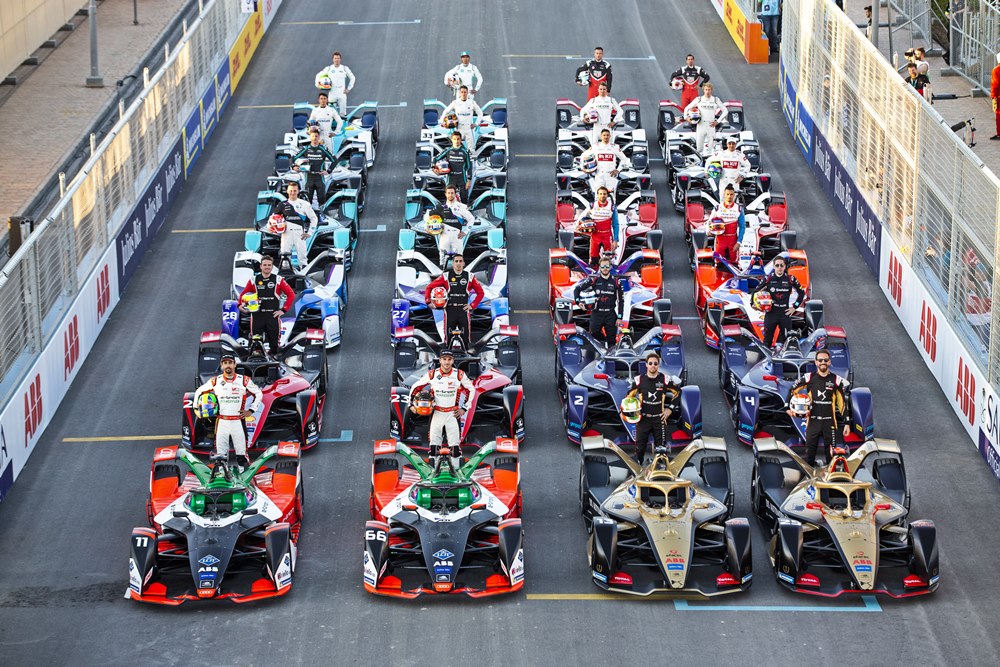
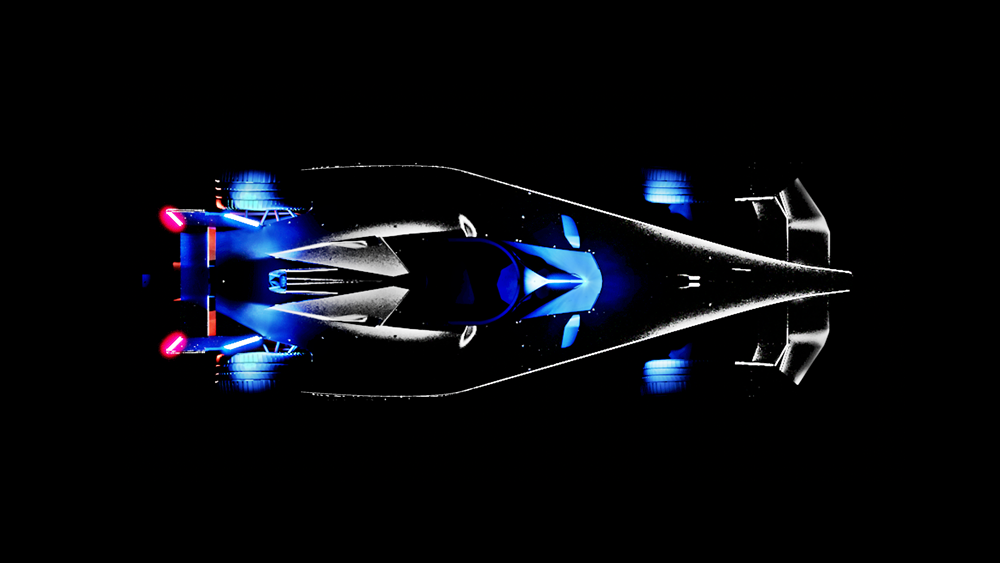
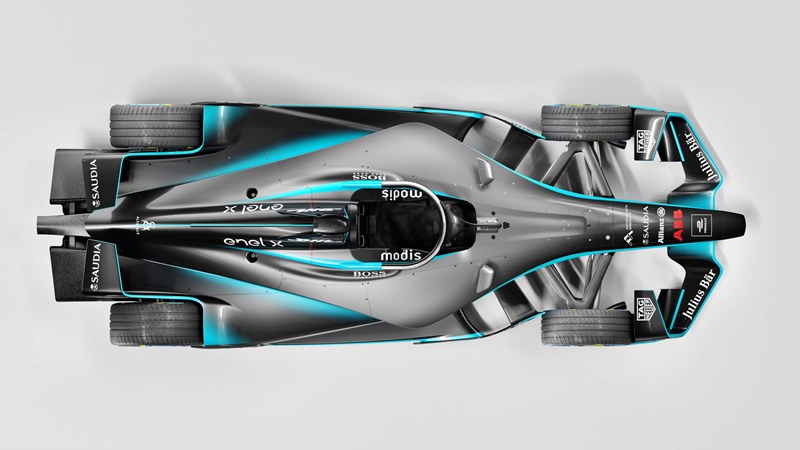
Just as Formula 1 will have a major change in technical regulations from the 2022 championship, Formula E – the all-electric single-seater championship – will also transition to an entirely new generation of racing cars in Season 9, which will be in 2023. Referred to as ‘Gen3’, the new racing car is described as ‘a machine created at the intersection of high performance, efficiency and sustainability’. Formula E manufacturers are set to take delivery of Gen3 cars in the first quarter of 2022 for further intensive development testing on and off the track, and will use the Gen2 cars for Season 8.

World’s most efficient racing car
A series of design, performance and sustainability innovations in the Gen3 car make it the world’s most efficient racing car, with at least 40% of the energy used within a race produced by regenerative braking during the race. It will be the first formula car with both front and rear powertrains: a new front powertrain adds 250 kW to the 350 kW at the rear, more than doubling the regenerative capability of the current Gen2 car to a total of 600 kW.
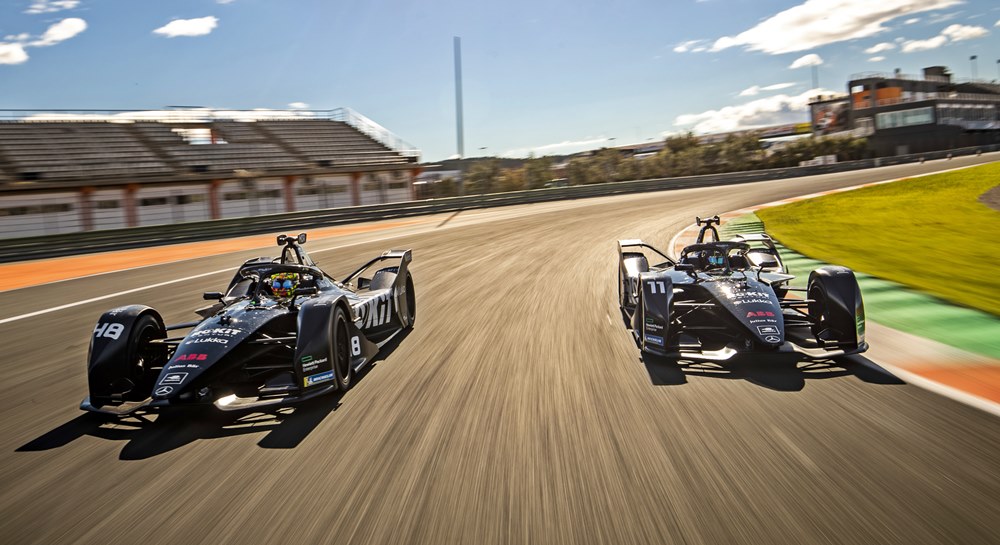
The Gen3 racing car is sleeker and its design is inspired by the aero-efficient delta wing of a fighter jet, optimised for street racing. The Gen2 EVO racer (below) will be used for the last time in 2022 during Season 8.
The new powertrain will use an electric motor delivering up to 350 kw of power (470 ps), making it capable of a top speed of 320 km/h, with a power-to-weight ratio that is twice as efficient as an equivalent 470 ps internal combustion engine.

It will also be the first formula car that will not feature rear hydraulic brakes due to the addition of the front powertrain and its regenerative capability. Being lighter and smaller than the Gen2 car, it wil enable faster, more agile wheel-to-wheel racing.

Aligned with Life Cycle Thinking
The Gen3 racing car is the first formula car aligned to Life Cycle Thinking with a clear path towards second life and end of life for all tyres, broken parts and battery cells. In addition, it will be net-zero carbon, maintaining the championship’s status as the first sport to be certified as net-zero carbon since inception.

All carbon fibre broken parts will be recycled by an innovative process from the aviation and aerospace industry into new fibres reusable for other applications. A pioneering process will deliver 26% sustainable materials into the composition of tyres.

Additionally, new financial regulations will be introduced October 1, 2022 for Season 9. There will be 2 sets of financial regulations to be introduced by the FIA to monitor and control spending levels of competitors, one for teams and one for manufacturers. This will enhance long-term financial sustainability of Formula E, supporting retention of current participants and attracting investment in the championship from new manufacturers, teams, investors and commercial partners.

ROKiT Venturi Racing fastest in testing
Meanwhile, after a combined total of more than 4,100 laps (equal to almost 14,000 kms) of pre-season testing at the Circuit Ricardo Tormo in Spain, ROKiT Venturi Racing’s Edoardo Mortara recorded the fastest time of the week during the final session as the test drew to a close.

DS TECHEETAH’s double champion Jean-Eric Vergne placed the next best time of the week, just 0.041 seconds back, while another Mercedes-EQ powertrain closed out the top three times of the week, with Vandoorne’s Silver Arrow 02 also within a tenth of-a-second.

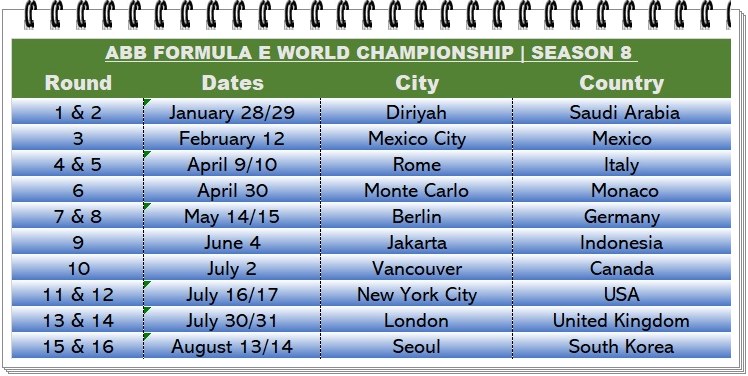
The top 17 drivers recorded times faster than Antonio Felix da Costa’s pole position qualifying lap from last season. Their first race of Season 8 will be in Diriyah, Saudi Arabia at the end of next month, followed by another 15 races in major cities of 9 countries, with the final round in South Korea in August.

The last time the teams were in Diriyah, Saudi Arabia, was in February this year for the opening round of Season 7, which was also Formula E’s first night race.
The final round of Season 8 will be held in Seoul, capital city of South Korea.

Mercedes-EQ team ends Formula E involvement with double championship win at Berlin EPrix

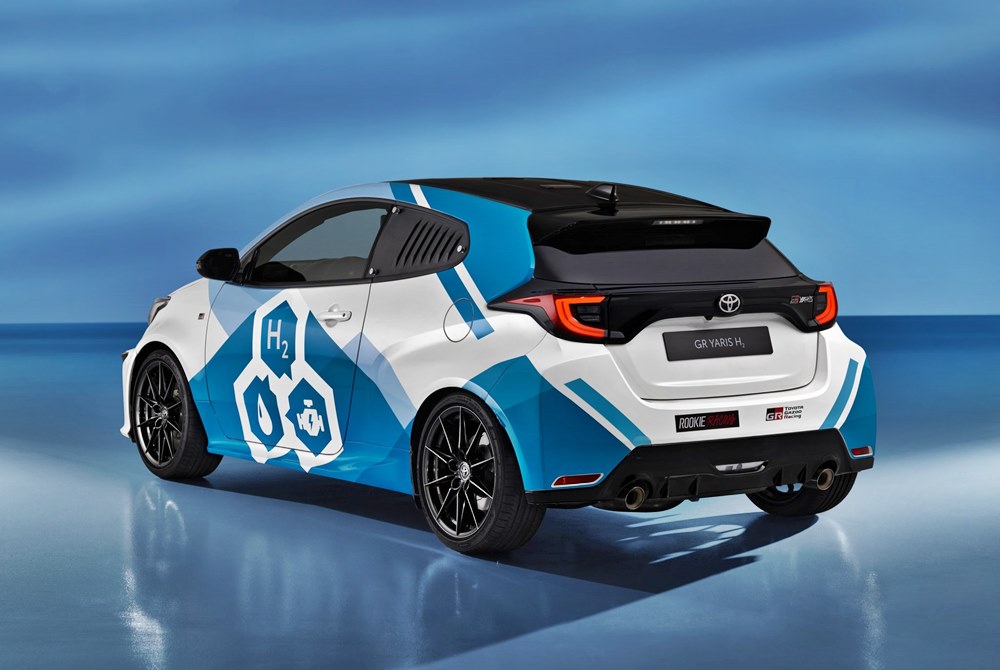
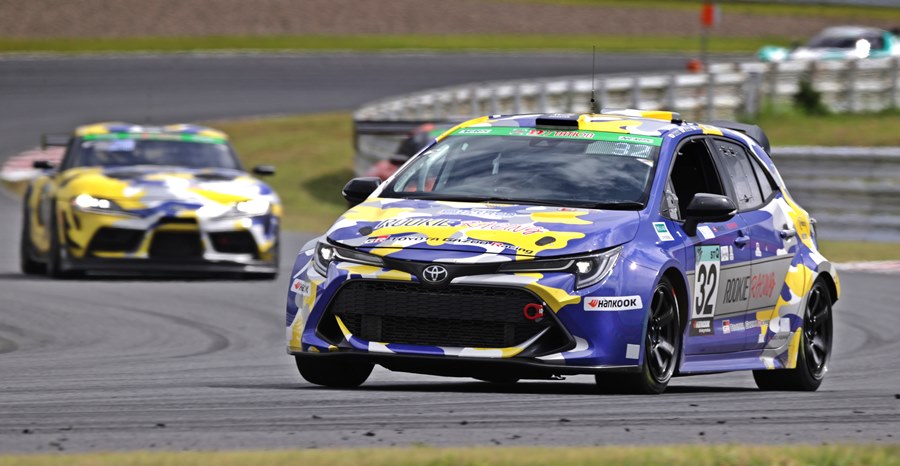
Since May this year, a special Toyota Corolla Sport run by the ROOKIE Racing arm of TOYOTA GAZOO Racing has been competing in the Super Taikyu Series 2021. Its engine doesn’t run on petrol but uniquely, on hydrogen. This is not the same as the powertrain in the Mirai EV which has its electric motors powered by a hydrogen fuel cell. For the engine in the Corolla Sport, a prototype, the combustion process uses hydrogen.

Combustion in a hydrogen-fuelled engine occurs at a faster rate than in petrol engines, resulting in a characteristic of good responsiveness. While having excellent environmental performance, hydrogen engines still have the typical character of a combustion engine, especially ‘familiar’ sounds and vibrations. Except for the combustion of minute amounts of engine oil during driving, which is also the case with petrol engines, hydrogen engines emit zero CO2 when in use.

Prototype Corolla Sport with hydrogen engine racing in Super Taikyu series in Japan.

Moving to the next steps
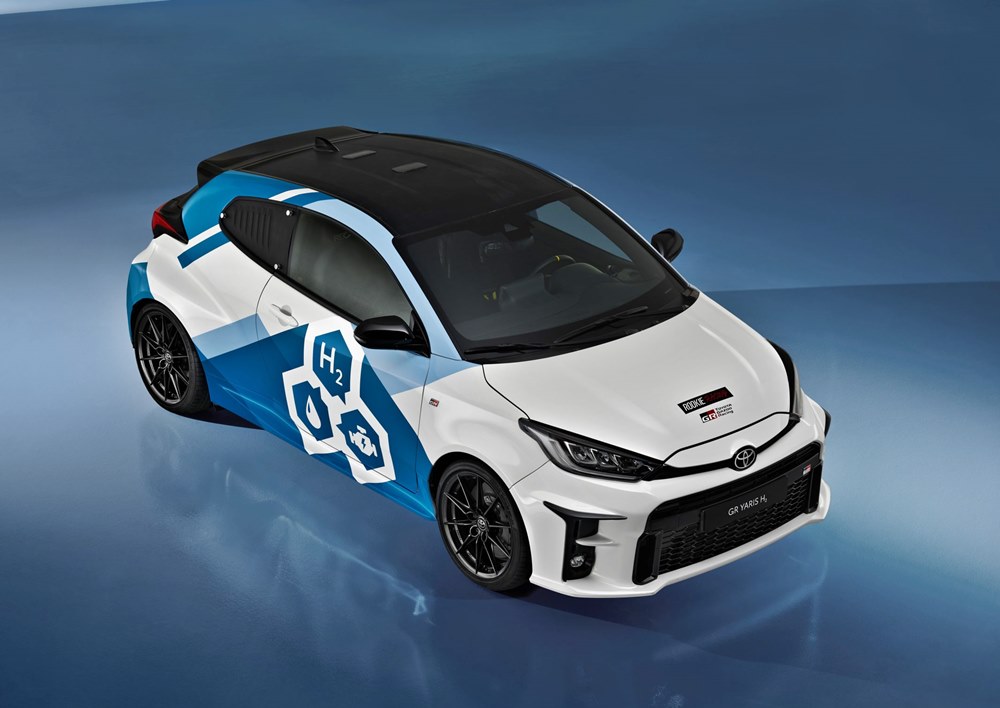
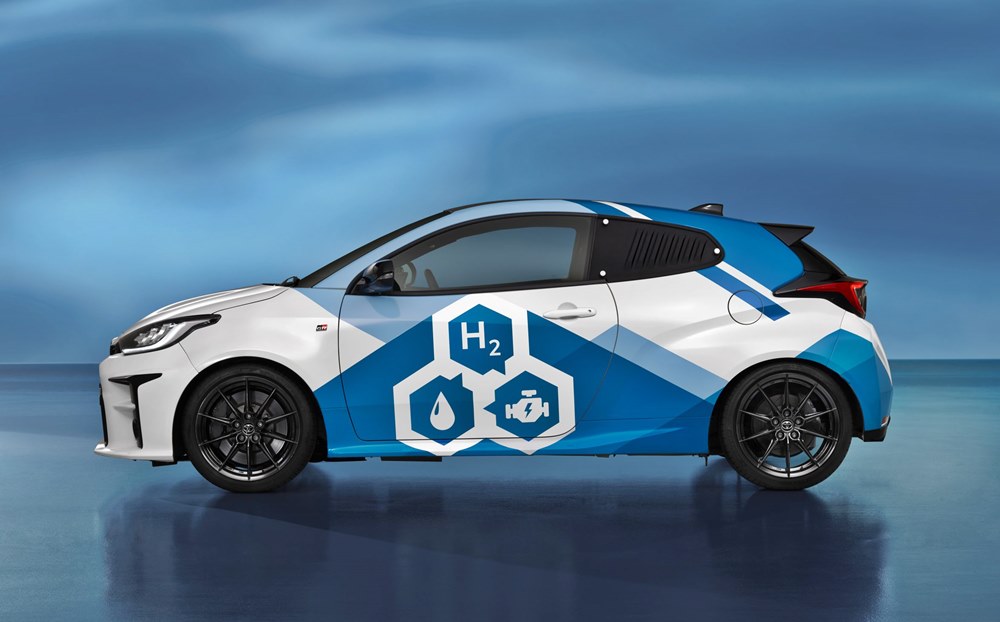
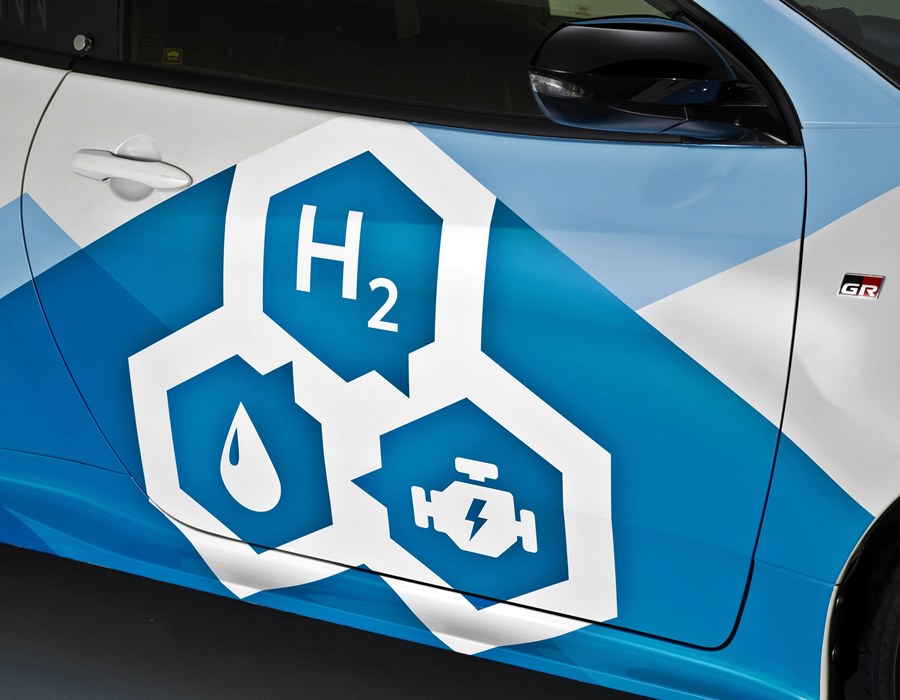
As the R&D engineers gain increasing experience and feedback from running the engine in the harsh conditions of motorsport in Japan, they are progressing towards the next steps. This is demonstrated in an experimental hydrogen-powered GR Yaris which shares same powertrain as the prototype Corolla Sport racing car.

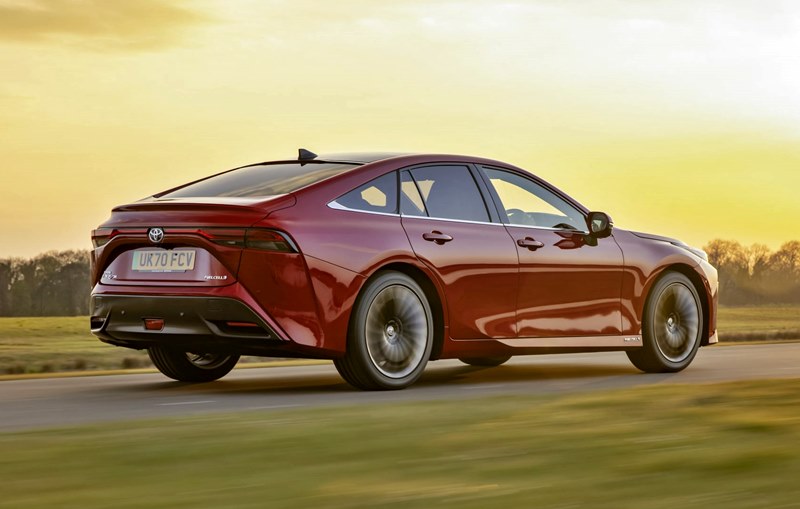
Second generation of the Mirai fuel cell electric vehicle (FCEV) which uses hydrogen in a process that generates electricity.

The car’s hydrogen fuel, fuel tanks and refuelling process are the same as those found in Mirai fuel cell electric vehicle (FCEV) which is now in its second generation. The hydrogen combustion engine technology is still in the early stages of conceptual development and experimentation, having started in 2017, and is not yet ready for commercialisation. Nonetheless, Toyota’s experimental hydrogen-powered Corolla Sport is already delivering high performance at motorsport events in Japan with almost zero tailpipe emissions.

Modified GR Yaris engine
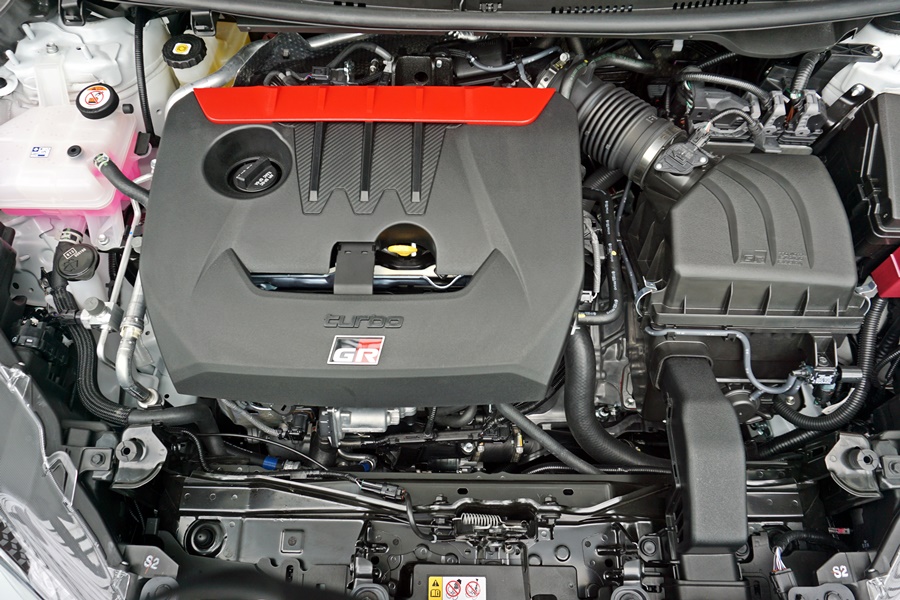
The engine modified to run on hydrogen is the G16E-GTS, 1.6-litre, in-line 3-cylinder, turbocharged unit used in production versions of the GR Yaris, but with a modified fuel supply and injection system for use with hydrogen as fuel.

GR Yaris 3-cylinder turbocharged engine (version in production model shown) has been modified to run on hydrogen.

Toyota has been strengthening its efforts towards achieving carbon neutrality, such as by aiming to promote the use of hydrogen through the popularisation of FCEVs and numerous other fuel-cell-powered products. By further refining its hydrogen engine technologies through motorsports, it intends to aim for the realisation of an even better hydrogen-based society.

Motorsport as a testing ground
The uses of motorsport as a testing ground reflects the firm belief of Kiichiro Toyoda, the founder of Toyota Motor Corporation, that sporting competition is a driver for progress. In March 1952, he said: “Japan’s auto industry must succeed in building passenger vehicles. To this end, manufacturers must participate in auto-racing to test their vehicles’ durability and performance and display their utmost performance. With competition comes progress, as well as excitement among motoring fans. The aim of racing is not just to satisfy our curiosity, but rather to enable the development of the Japanese passenger vehicle industry.”

“We’ve taken the first step to compete with and develop our hydrogen-powered engine with the mindset of taking on the challenge. I imagine things will look a little different 10 years from now, and I hope people will look back and see how we took on the challenge with positivity and enjoyed every moment of it,” added Akio Toyoda, President of Toyota Motor Corporation as well as grandson of Kiichiro.

Transitioning to electric vehicles is one approach Toyota is taking to help create a carbon-neutral society. To achieve this goal, it is developing multiple electrified technologies, including hydrogen, which it views as one of the key building blocks for CO2 reduction.

Second generation fuel cell modules
To help expand its hydrogen technology from cars to more diverse applications, it has repackaged the advanced fuel cell system used in its Mirai saloon into compact fuel cell modules. From January 2022, Toyota will start production of these second generation modules.

The new system has been packaged into modules that are more compact, lighter in weight and provide greater power density. They are available in two formats: a cube and a flat, rectangular shape, allowing greater flexibility and adaptation for different applications.

Toyota began fuel cell development in 1992 and has since continued to refine its hydrogen technology. The second generation fuel cell modules will be assembled by a manufacturing team at Toyota Motor Europe’s (TME) R&D centre in Belgium. The new facility houses a pilot assembly line combining advanced technology content with high-quality assembly techniques.

Toyota chose Europe as the location for its second generation fuel cell module assembly as it sees demand growing significantly across the region. Working with businesses interested in using Toyota’s technology in their applications, TME’s Fuel Cell Business Unit will offer the necessary engineering support for integration. Proximity to its partners and the ability to closely monitor emerging business opportunities will allow the company to scale up supply quickly.

Hydrogen clusters
The expansion of a European hydrogen economy will be a key element in achieving the Green Deal’s objective of net-zero global warming emissions by 2050. The European Union has stated that, to meet this challenge, industry will need ‘climate and resource frontrunners’ to develop the first commercial applications of breakthrough technologies in key industrial sectors by 2030. The emergence of hydrogen clusters in Europe sees different sectors uniting and bringing their skills, technologies and applications together, such as truck, bus and taxi fleets and H2 infrastructure, to create viable business opportunities. This will allow them to flourish and become the nucleus of larger-scale activities.

Toyota to use motorsports to develop hydrogen-fueled engine (w/VIDEO)

Archive

Follow us on Facebook

Follow us on YouTube