
Piston.my

SUV

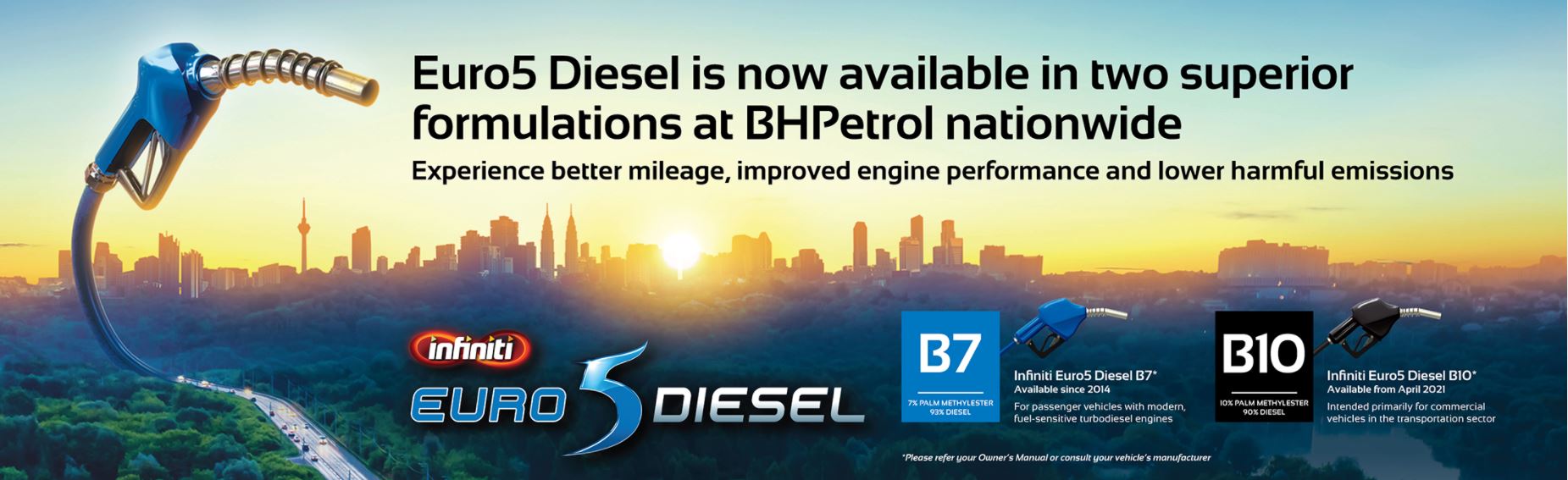
Visit www.bhpetrol.com.my for more information.

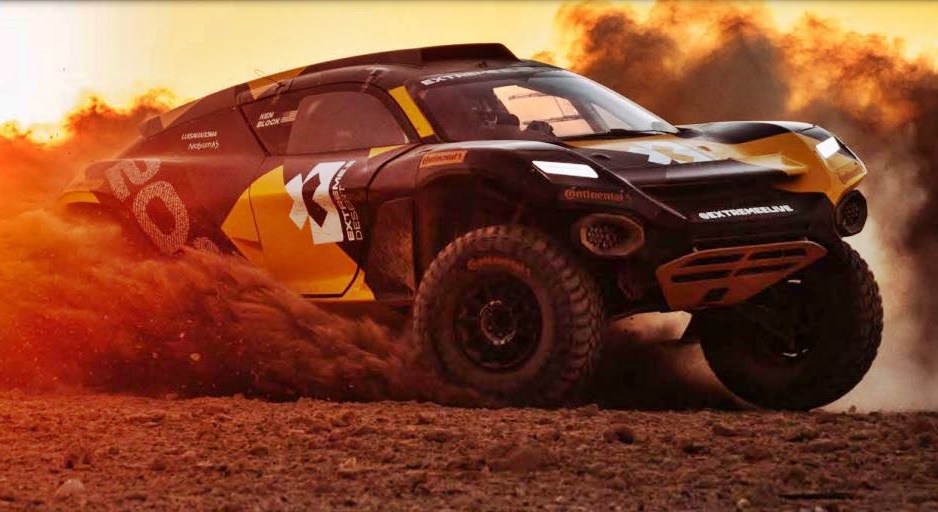
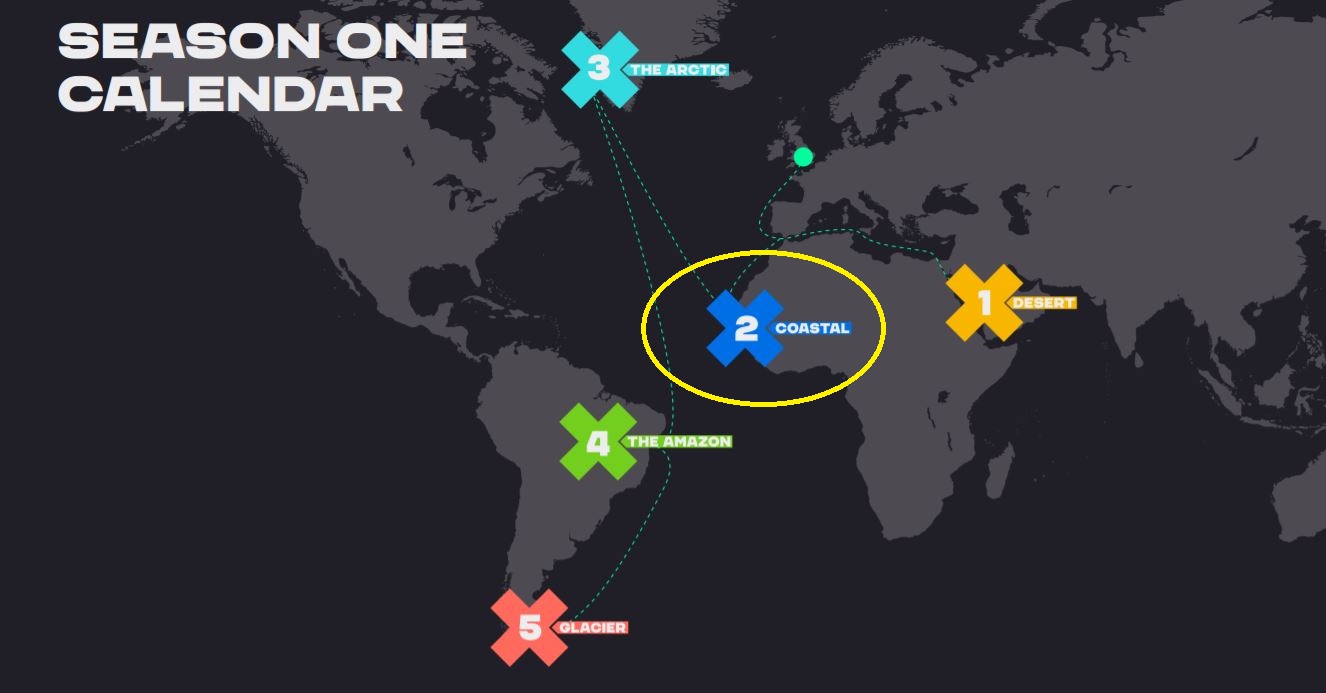
Extreme E – the unique off-road series for electric SUVs – will run its second round this weekend, this time in Lac Rose on the Senegalese coast of West Africa. Known as the Ocean X Prix, the event will be run along the shores of Lac Rose. It is situated 37 kms from the capital, Dakar, a name that was the finish of the world’s most famous cross-country rally – the Paris-Dakar – on numerous occasions between 1979 and 2007 (the Dakar Rally is still running, except that it is now in Saudi Arabia).

Out on the course, the drivers will once again face a mostly sandy terrain, though a very different challenge and location to the deserts of Saudi Arabia. Here the race will take to the existing tracks surrounding the lake, named after, and renowned for its striking pink colour, caused by algae that thrives within its highly-saline waters.
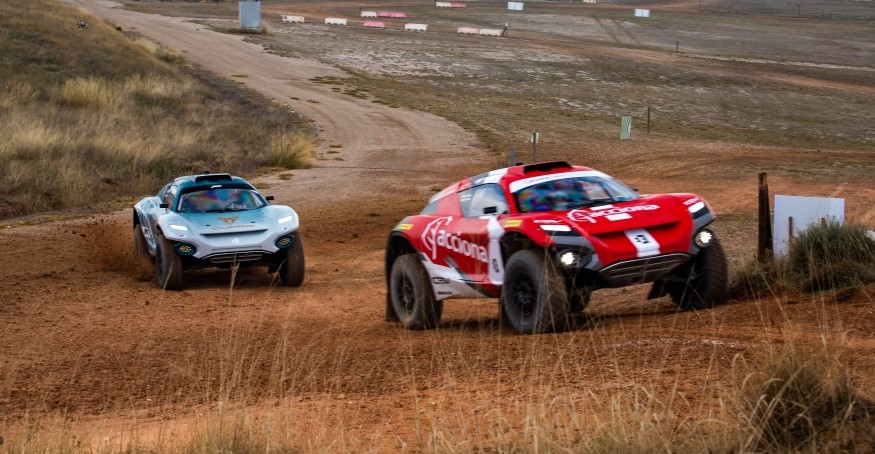
9 teams with dual-gender crews
Once again, 9 teams and 18 drivers – each comprising one male and one female – will compete but in a slight change to the Saudi Arabia race format, the Final will be a 4-car battle, with two teams from each of the two Semi-Finals progressing to the concluding race of the weekend.

Like the Desert X Prix, Qualifying consists of two rounds of time trials. The team starting order is decided by a draw for Qualifying 1 and Qualifying 2. All races feature two laps with the incorporated driver ‘Switch’ feature.
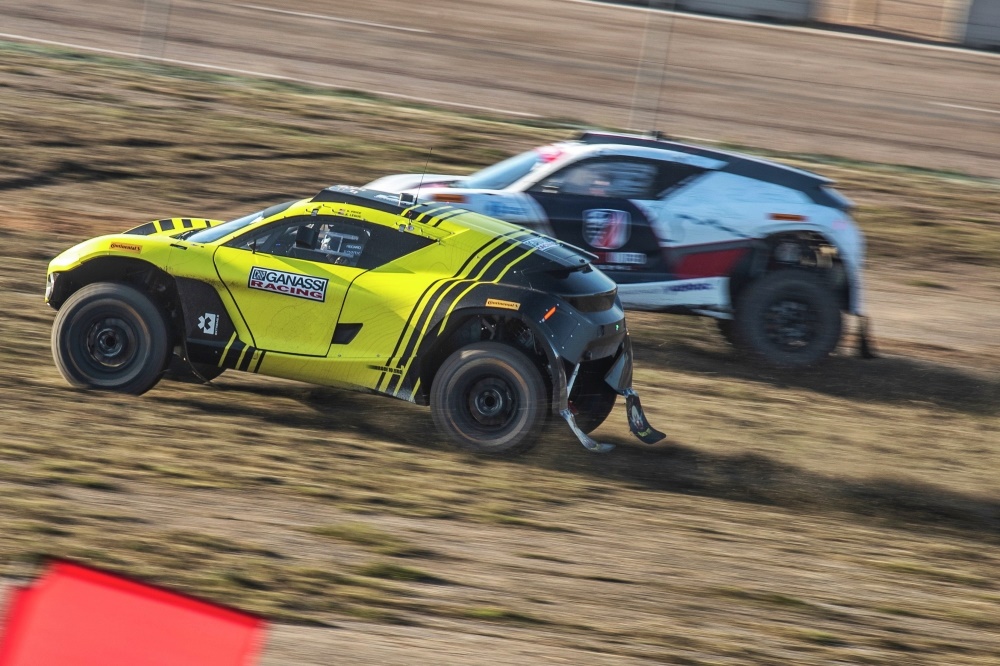
No clear leader yet
Rosberg X Racing (RXR) took victory in the inaugural X Prix last month but doesn’t have a clear lead as the top three teams are within 7 points of each other. So there should be a thrilling racing action as each team tries to score as many points as possible.

Teams can benefit from a ‘HyperDrive boost’ available to each driver on each lap of the race. Activated when the driver presses a button on the steering wheel, they will enjoy an extra push of continuous power for a few seconds.

New for the Ocean X Prix is the ‘Super Sector’ – a part of the course where the fastest driver in that section over the weekend will earn 5 points for their team. This ensures that whatever position the teams find themselves in, there is always an incentive to push to the limit as points are up for grabs.
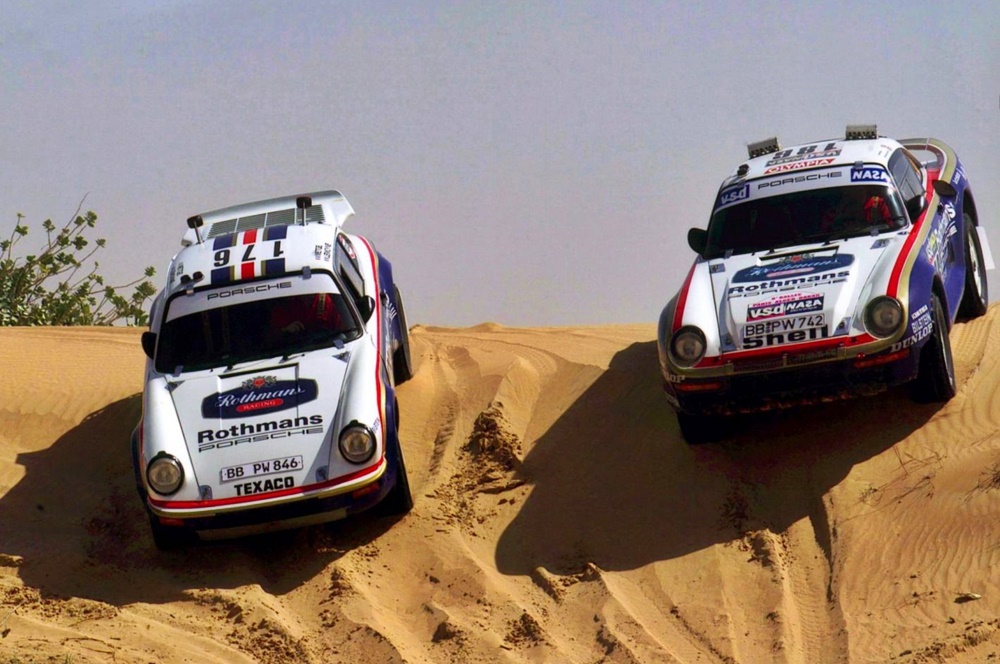
Each year, the famous Paris-Dakar Rally ended in Dakar until security concerns forced the organizers to stop travelling through the region.

“I am delighted to be back in Dakar, a place with a vast motorsport heritage, and I can’t wait to see our world-class line-up of drivers compete on this latest course we have devised. The Desert X Prix delivered some truly thrilling racing with a stunning backdrop and I’m sure Senegal will provide the same,” said Alejandro Agag, Founder and CEO of Extreme E.

“In Lac Rose, we find an area suffering at the hands of the climate crisis, which is the true reason we are here. It doesn’t take long upon arrival to see one of the biggest issues, plastic pollution, which is affecting the local community and its marine life. Through our Legacy Programmes, we are supporting the local community to make change, and I can’t wait to see it for myself and help where I can,” he added.
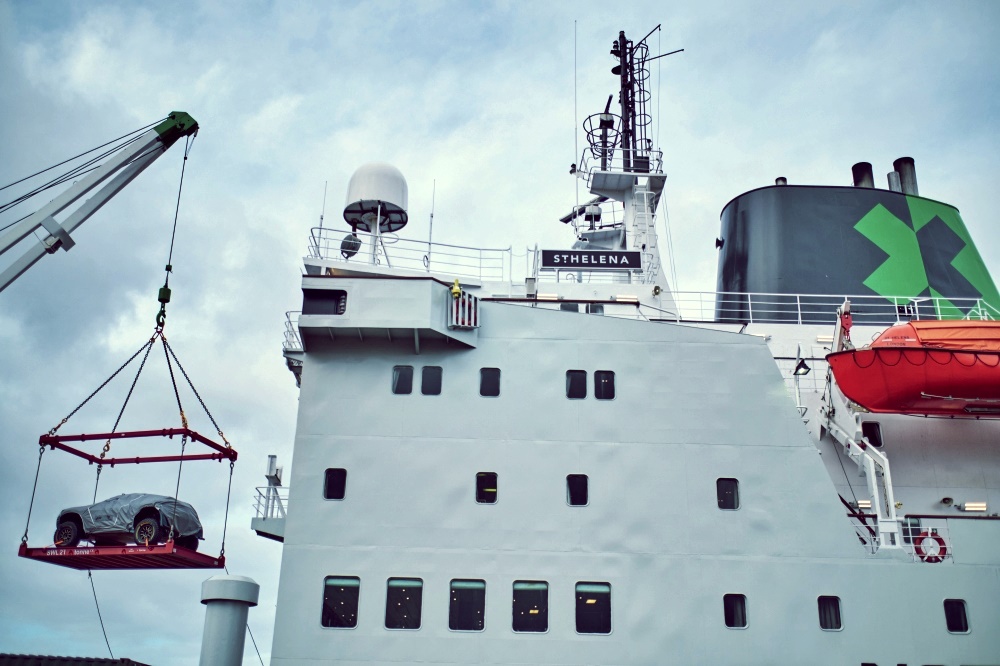
To reduce the carbon footprint of the event, a ship is used to transport the vehicles and event equipment to each location. The ship also serves as a floating laboratory for scientists.

Why Senegal?
Extreme X, while being a motorsport event, is unique in that it also uses its global coverage to create awareness of environmental issues. Senegal was chosen as one of the venues to support the fight against the climate crisis and the local communities suffering due to the many issues it brings.

In addition, plastic pollution is another major issue affecting Senegal, with the mountain of single-use plastic washing up on the shores growing day-by-day and threatening marine species and human health. This is something that not only impacts Senegal but also globally and if left unchecked, it’s estimated that 4 billion tonnes of plastic pollution will enter our land and oceans by 2050 under a ‘business-as-usual’ scenario.
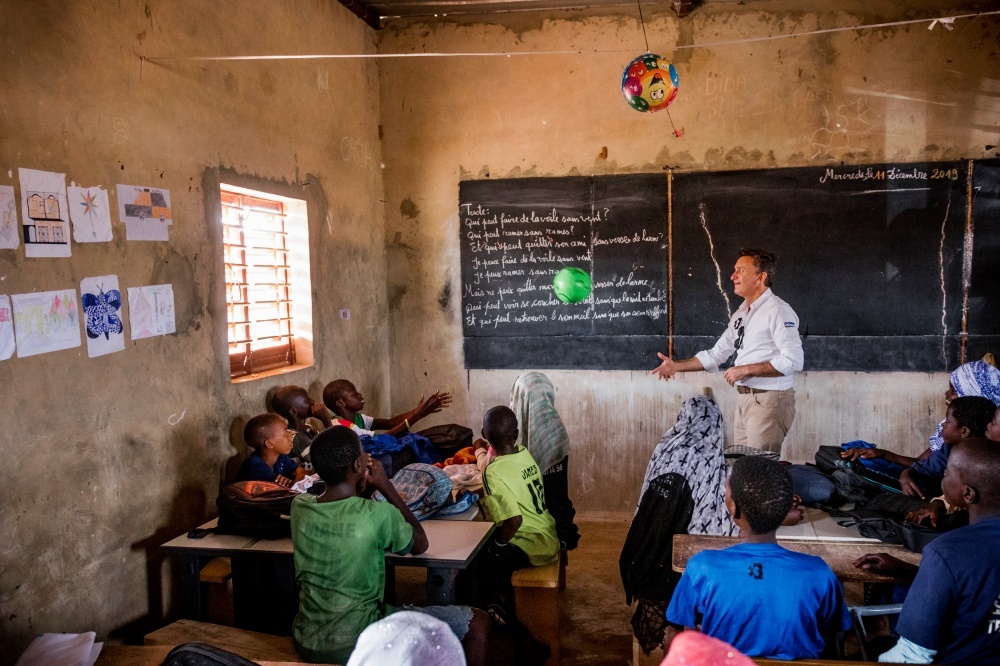
Extreme E will be supporting two projects in Senegal. For the first, the championship has teamed up with a local NGO to plant one million mangrove trees in the country across 60 hectares with the aim of reforesting mangroves, providing education to local populations and improving social cohesion.


The second project is the EcoZone Project, a living lab that addresses the Lac Rose community’s primary needs while preserving the environment through experiential learning, regenerative agriculture and a circular economy. As part of this, the EcoBrique Challenge was launched which tasked the community to create bricks for construction from plastic waste.

Shakedown and qualifications will be aired through Extreme E’s official website (www.extreme-e.com and social channels and the Finals will be shown in more than 180 countries by 75 broadcasters.
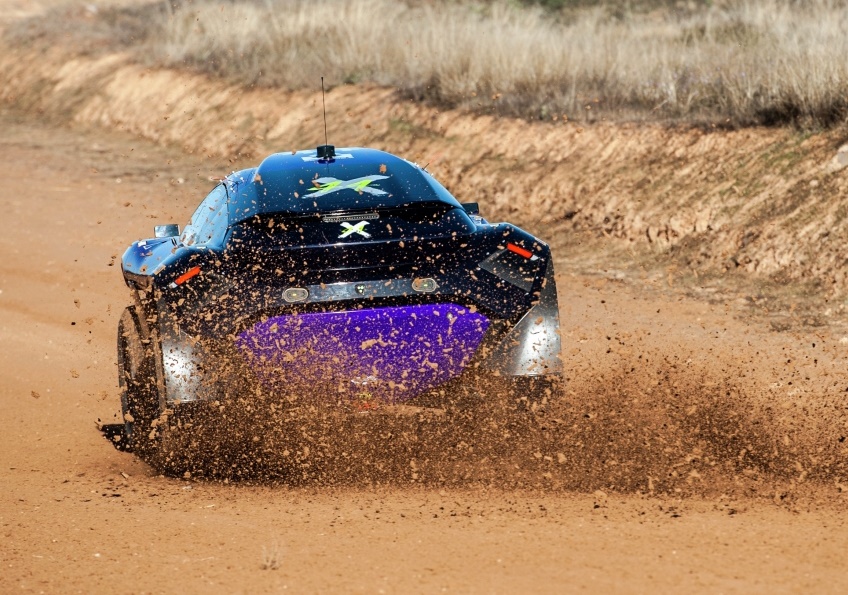
Rosberg X Racing team wins first round of the new Extreme E electric off-road series (w/VIDEO)


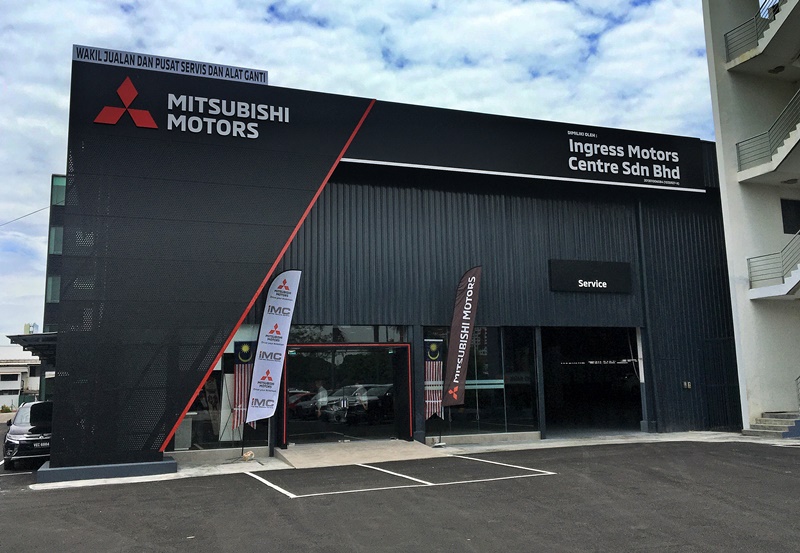
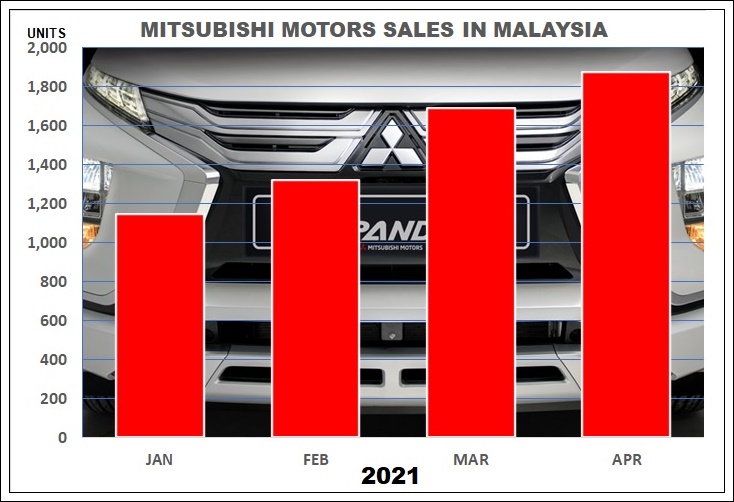
While official industry sales data for April 2021 has not been released by the Malaysia Automotive Association, Mitsubishi Motors Malaysia (MMM) believes that its strong sales performance during the month would put it among the top 3 positions in the non-national brand rankings for the fourth consecutive month.

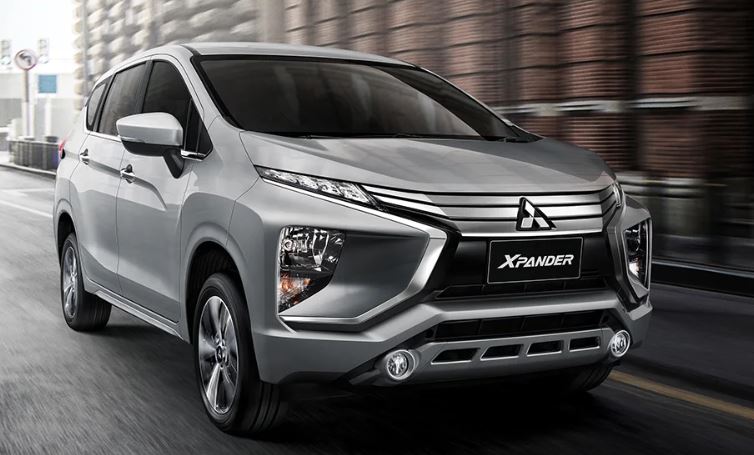
The brand’s sales have been on an upward trajectory since the year began and April saw a historical high with 1,872 vehicles sold. The major contributor was the XPANDER MPV which accounted for 52% of the total sales volume. Since being launched in the Malaysian market, MMM has collected more than 10,000 bookings for the model which is assembled in Pekan, Pahang.

Mitsubishi XPANDER

Increased XPANDER production
“We are very pleased that the Mitsubishi XPANDER sales remain healthy and its demand is ahead of the number of units supplied. Despite the challenges we are facing with the recently announced Movement Control Order (MCO) or even with the Conditional Movement Control Order (CMCO) prior to MCO, we are continuing our best efforts to meet with the strong demand for the XPANDER by increasing our production capacity while maintaining a high level of product quality,” said Tomoyuki Shinnishi, Chief Executive Officer of MMM.

Triton maintains strong position
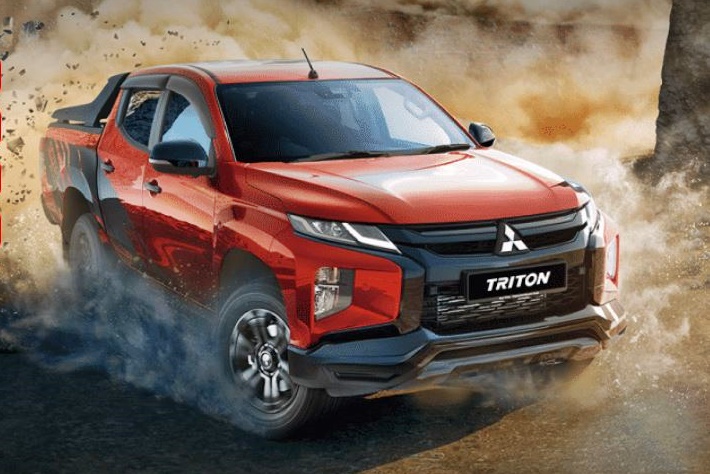
The Triton pick-up truck is the other strong seller in the range locally, maintaining a market share close to 20%. The company delivered 680 units in April. including 142 units of the new Triton Athlete.

The Triton Athlete was launched in early April as the flagship of the pick-up range, taking over from the Adventure X variant. It is powered by a 2.4-litre MIVEC turbodiesel engine which produces 181 ps/430 Nm. Priced from RM141,500 (without insurance in Peninsular Malaysia), it comes with a factory warranty of 5 years, or maximum of 200,000 kms after registration.

“Although there was a decline in many economic sectors and the environmental sentiments starts to take a toll on people caused by the COVID-19 pandemic, we are relieved to see our sales remain optimistic and constantly moving towards a positive direction. We are aware that a large number of our customers aim to purchase their cars before the SST exemption expires by end of June. Despite the challenges of supply constraints, Mitsubishi Motors is working our best to meet the expectation of our customers on the delivery preference,” Mr. Shinnishi added.

Besides the XPANDER and Triton, MMM also sells the Outlander SUV which is also assembled locally at the Tan Chong plant in Kuala Lumpur. It is available in two variants with a choice of 2-litre of 2.5-litre engines.

Visit www.mitsubishi-motors.com.my to know more about Xpander and other Mitsubishi vehicles in Malaysia.

StayAtHome

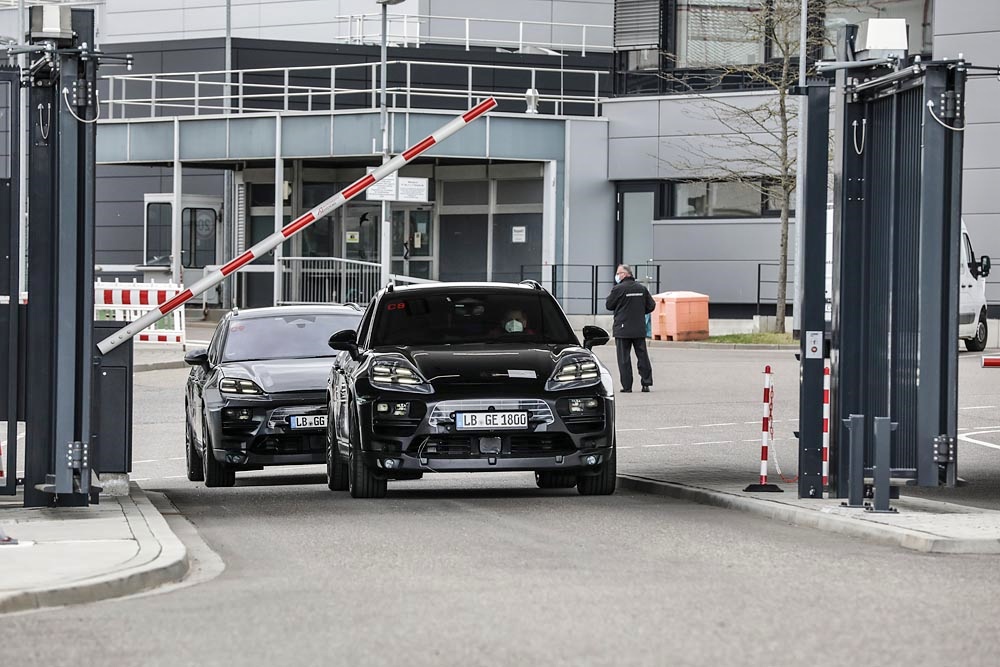
After the Taycan, the next all-electric sportscar from Porsche will be the Macan. Developed with the usual secrecy, prototypes have been running around the proving grounds of the Porsche Development Centre and the next step is to take them into the outside world for road-testing.

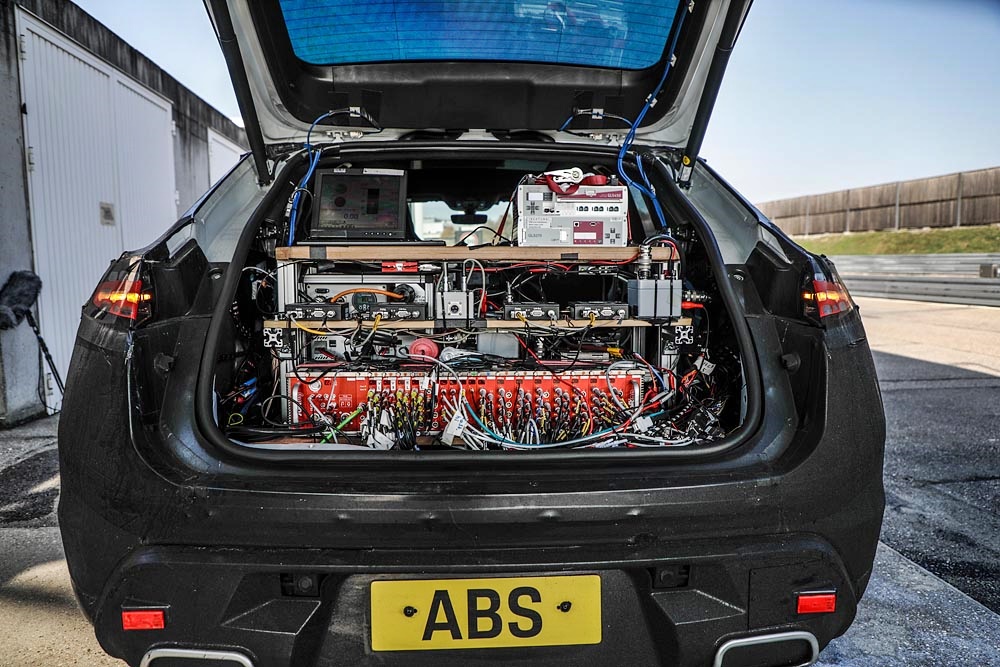
Real-world testing on public roads and in a real-life environment are important stages in the development of a new model. In the case of the electric Macan, due to be launched in 2023, the testing will cover at least 3 million kms worldwide in varying conditions. This will add on to the experience gained from countless previous test kilometres – driven in a virtual space.

Digital development preserves resources
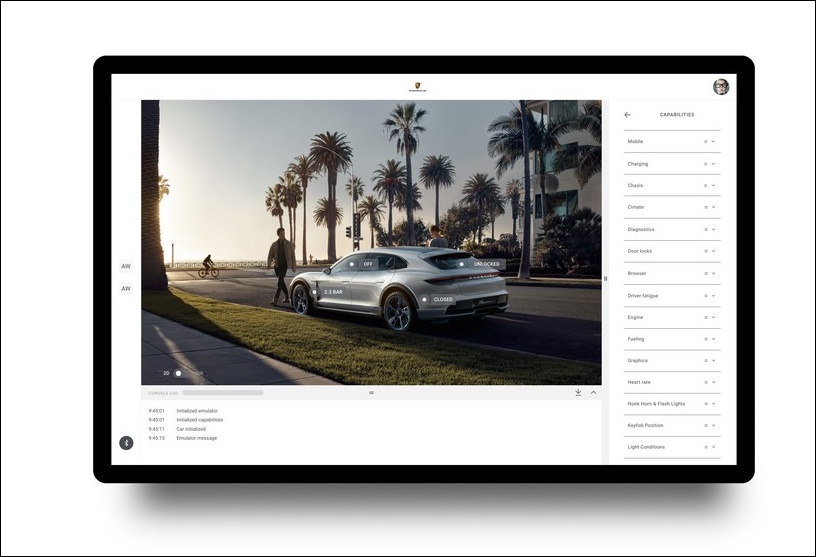
Digital development and testing not only saves time and costs but also preserves resources, so it enhances sustainability. Instead of real vehicles, the engineers use digital prototypes – computational models that replicate the properties, systems and power units of a vehicle to a high degree of accuracy.

There are 20 digital prototypes for the purpose of simulation in a number of development categories, such as aerodynamics, energy management, operation and acoustics. “We regularly collate the data from the various departments and use it to build up a complete, virtual vehicle that is as detailed as possible,” explained Andreas Huber, manager for digital prototypes at Porsche. This allows previously undiscovered design conflicts to be swiftly identified and resolved.

The aerodynamics specialists are among the first engineers to work with a digital prototype. “We started with a flow-around model when the project first started about 4 years ago,” explained Thomas Wiegand, Director of aerodynamics development.

Low aerodynamic drag is fundamental to the all-electric Macan with a view to ensuring a long range. Even minor flow enhancements can make a huge difference. The engineers are currently using simulations to fine-tune details such as the cooling air ducts. The calculations not only take into account different arrangements of the components, but they also reflect real-life temperature differences.

Advanced and powerful simulation software allows almost all aspects of a new model to be viewed and tested before physical prototypes are built, saving time and money.

Virtual testing
New methods now allow very precise simulation of both aerodynamics and thermodynamics. “The digital world is indispensable to the development of the all-electric Macan,” said Wiegand. ”The electric drive system – from the battery through to the motor – requires a completely separate cooling and temperature control concept, one that is very different from that of a conventionally powered vehicle.”

While a temperature window of 90 to 120 degrees is the target for combustion engines, the electric motor, powertrain electronics and high-voltage battery require a range of between 20 and 70 degrees, depending on the component. The critical scenarios don’t occur on the road but can occur during fast high-power charging at high outside temperatures. However, the Porsche developers are able to precisely calculate and digitally optimise position, flow and temperature.

Virtual prototypes can be combined with real-world scenarios at an early stage. The best example here is the development of a completely new display and operating concept for the next generation of Macan. Using what is known as a seat box to recreate the driver’s environment, the display and operating concept can be brought to life in an early development phase in conjunction with the digital prototype.

“Simulation allows us to assess displays, operating procedures and the changing influences during a journey from the driver’s point of view,” explained Fabian Klausmann of the Driver Experience development department. “Here, the ‘test drivers’ are not just the specialists themselves but also non-experts. This allows all interaction between driver and vehicle to be studied down to the last detail, enabling selective optimisation even before the first physical cockpit has been built.”

StayAtHome

Stay in your state

To be the sportiest model in the segment
The first physical prototypes of the electric Macan were built using data obtained from the simulations – in some cases elaborately by hand or using special tools. These are then regularly adapted based on the virtual refinement process. By the same token, the findings from road testing are fed directly into digital development.

“Endurance testing on closed-off testing facilities and public roads in real-life conditions is still indispensable to ensure that the vehicle structure, operational stability and reliability of hardware, software and all functions meet our high quality standards,” said Member of the Executive Board Michael Steiner.

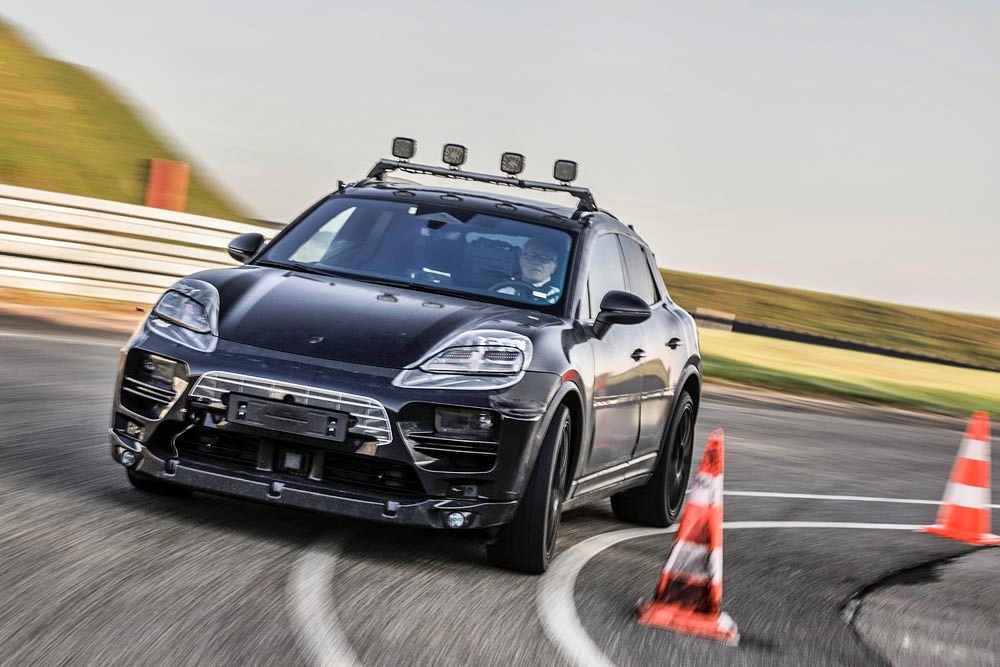
Prototype of all-electric Macan being tested at Porsche’s test track. Some cars, with camouflage over their bodies, are now being tested on public roads in different parts of the world.

The demanding test programme for the electric Macan, carried out under the extremes of climatic and topographical conditions, includes disciplines such as the charging and conditioning of the high-voltage battery, which has to meet very rigorous standards.

“Like the Taycan, the all-electric Macan, with its 800-volt architecture, will offer typical Porsche E-Performance,” promised Steiner, citing development goals such as long-distance range, high-performance fast charging and reproducible best-in-class performance figures.

Combustion engine will still be offered
While Europe is accelerating into the era of pure electromobility with all-electric vehicles, Porsche understands that the pace of change will vary considerably across the world. In some regions, there will still be demand for vehicles with conventional combustion engines. Therefore, the next Macan will continue to have a variant with a combustion engine for markets which want it.

Entry-level Porsche Taycan available from March, priced from RM605,000

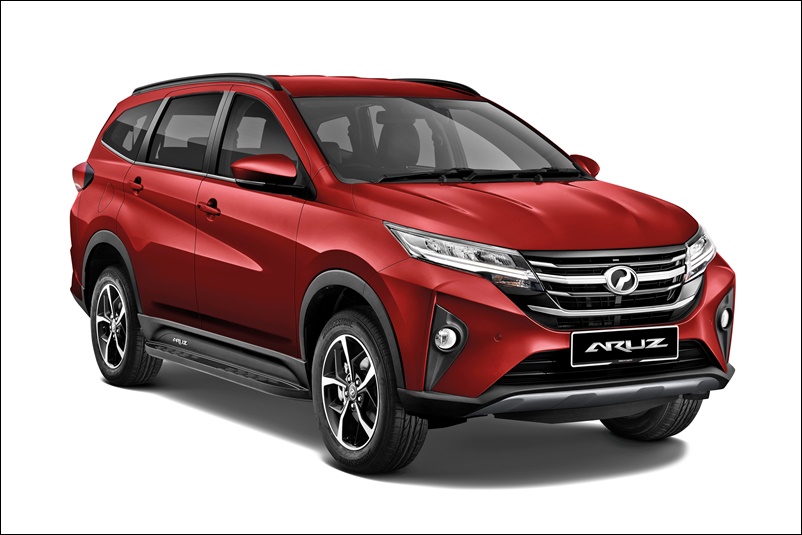
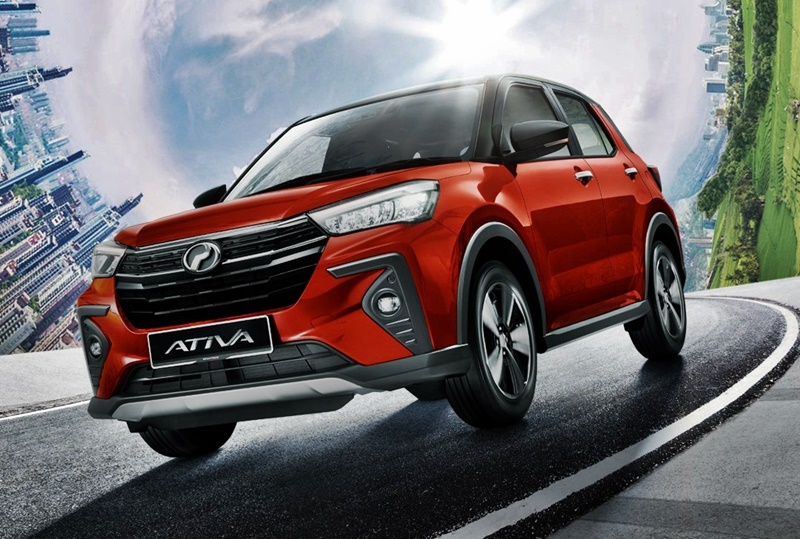
Every Perodua model is selling well, with models like the Ativa having a long waiting list of customers. The carmaker could probably get away with not making changes or improving the products and the demand would still be there. However, adhering to the Japanese philosophy of kaizen passed on from their partner, Daihatsu Motor, Perodua constantly improves its products.

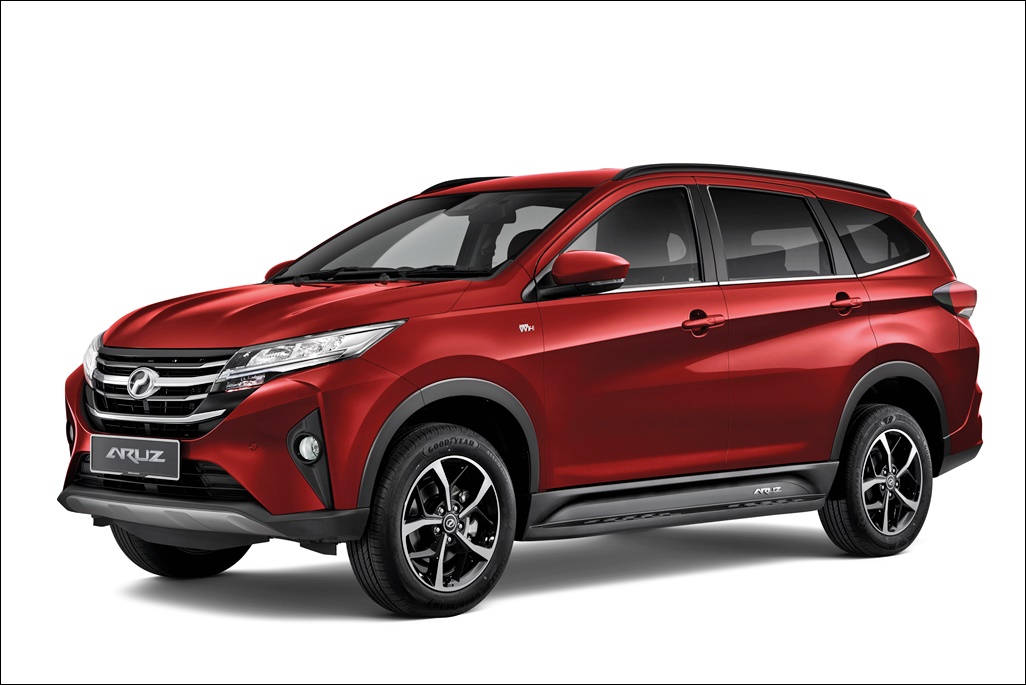
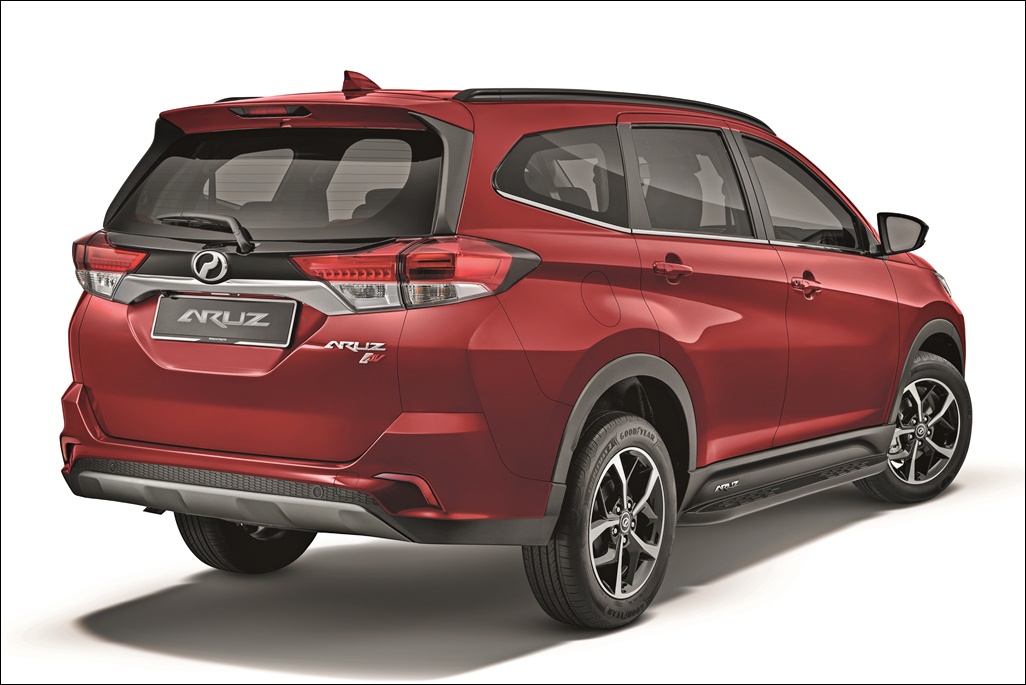
So, for the Aruz, Malaysia’s best-selling 7-seater SUV, updating has taken place – but without any price changes. The Aruz X is still RM68,526, while the Aruz AV remains at RM73,226, excluding insurance and with full sales tax exemption (until June 30, 2021).

Making products incrementally better
“With well over 60,000 units sold since its 2019 birth, the Perodua Aruz was already the nation’s best-selling SUV in 2019 and 2020, but, true to the principles of kaizen, we believe there are always ways we can make our products incrementally better,” said Dato’ Zainal Abidin Ahmad, President & CEO of Perodua.

“This incremental adaptation of the Aruz is in line with the Perodua Smart Build blueprint; another example of our symbiotic collaboration with our suppliers to customise our products to better suit Malaysian needs and wants, and through this, developing further the capabilities of our suppliers towards true self-reliance,” he said.

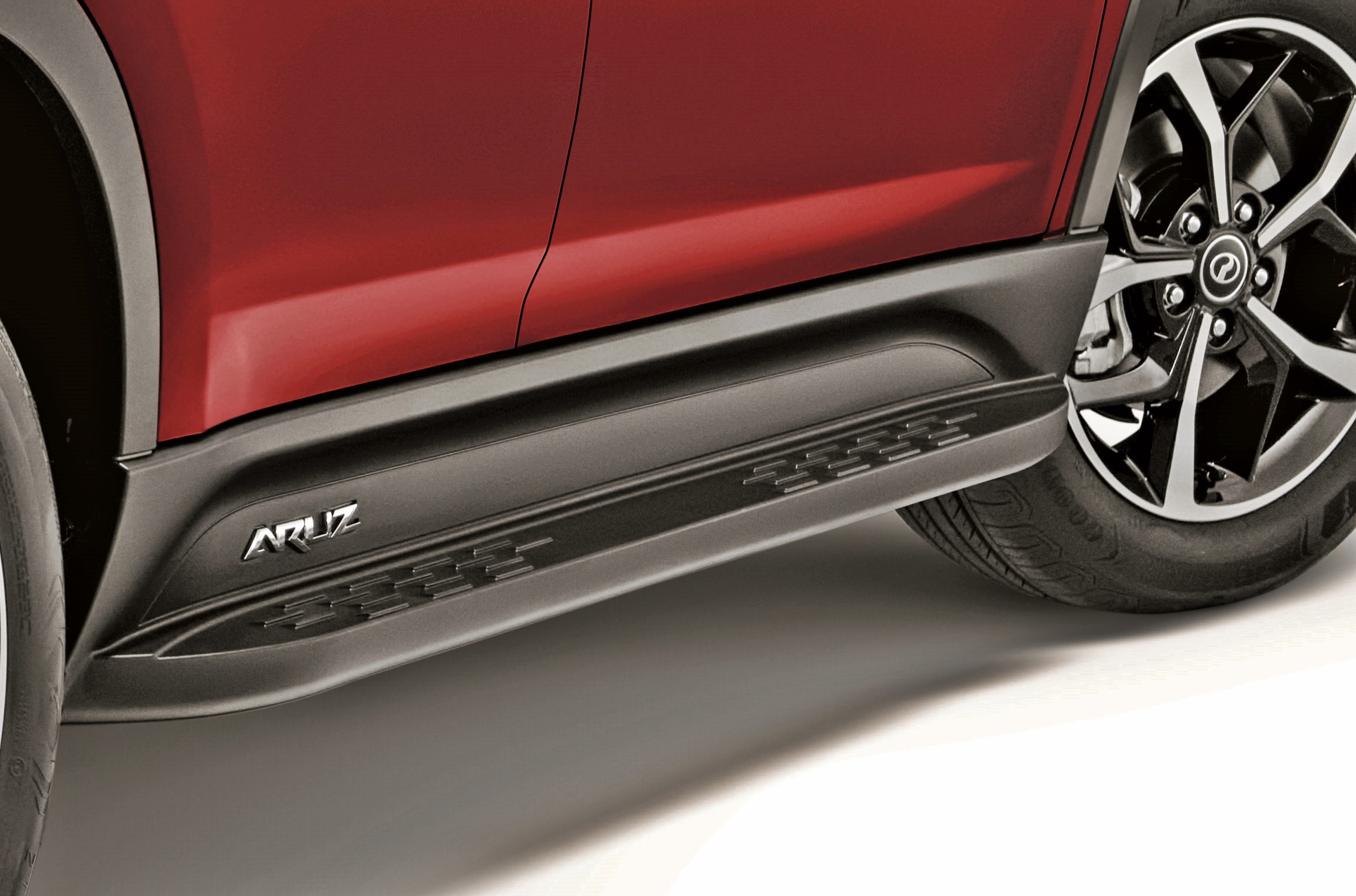
The improvements are in the form of additional features such as side steps below the door sills. With the extra ground clearance of the Aruz, the sill is a bit higher than in a passenger car so for some people, especially elderly folks or little ones, getting in and out may not be easy. The side steps will therefore help and make movement safer and more convenient.

Custom-designed side-steps have been added below the door sills. They are thoughtfully designed with no gap that could trap feet, and  two areas moulded with studs to make the surface less slippery.

Added safety feature + new colour
An added safety feature for 2021 is automatic door-locking; when the vehicle’s speed exceeds 20 km/h, the doors will lock automatically. This is a safety precaution, especially for those who may forget to do so. In the event of a severe collision that sensors will detect, the locking system will automatically unlock all doors so that the occupants can get out or rescuers can open the doors to help extract them.

Those who like red cars will be happy to know that Perodua now offers this colour, known as Passion Red, exclusively for the Aruz AV. Other colours choices are Granite Grey, Electric Blue, Glittering Silver and Ivory White.

“Perodua expresses our gratitude to all our valued customers, whose feedback helped us tweak the Aruz to better satisfy the real needs and wants of the majority of Malaysians,” added Dato’ Zainal Abidin Ahmad.

Technical specs remain the same
Other specifications and features remain the same, with the continued use of the all-aluminium 1.5-litre Dual VVT-i engine and an electronically-controlled automatic transmission. With Eco Idle activated, the fuel consumption can be as good as 15.6 kms/litre, it is claimed.

The Aruz is also tops in safety as it has the maximum 5-star ASEAN NCAP rating. Six airbags and Vehicle Stability Control are standard, and the AV variant has Advanced Safety Assist (ASA) 2.0 to help the driver avoid accidents.

To locate a showroom to check out the Aruz and other Perodua models, visit www.perodua.com.my.

Lower-priced childseat now offered by Perodua

StayAtHome

The EXTREME X series is the ‘Dakar Rally for electric vehicles’ but the small number of SUV EVs taking part are very special models, developed for the purpose of the unique competition. They are not what would be available from showrooms, just as F1 cars are not sold to the public.

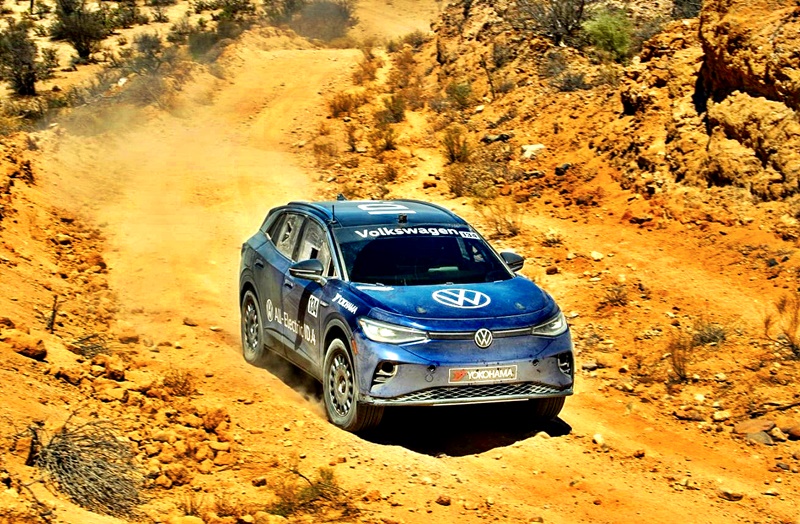
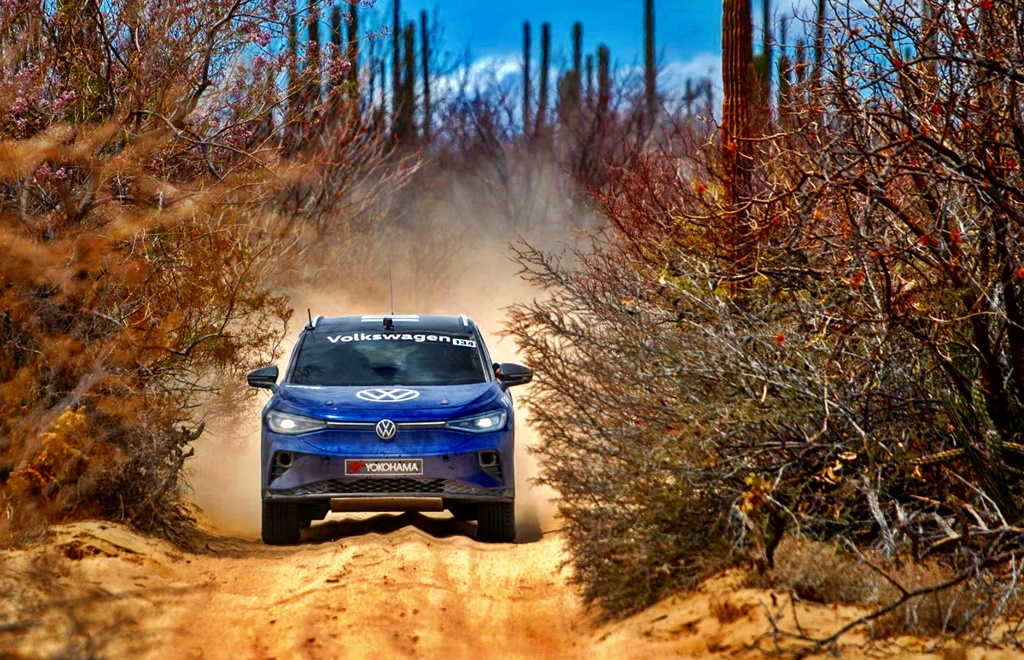
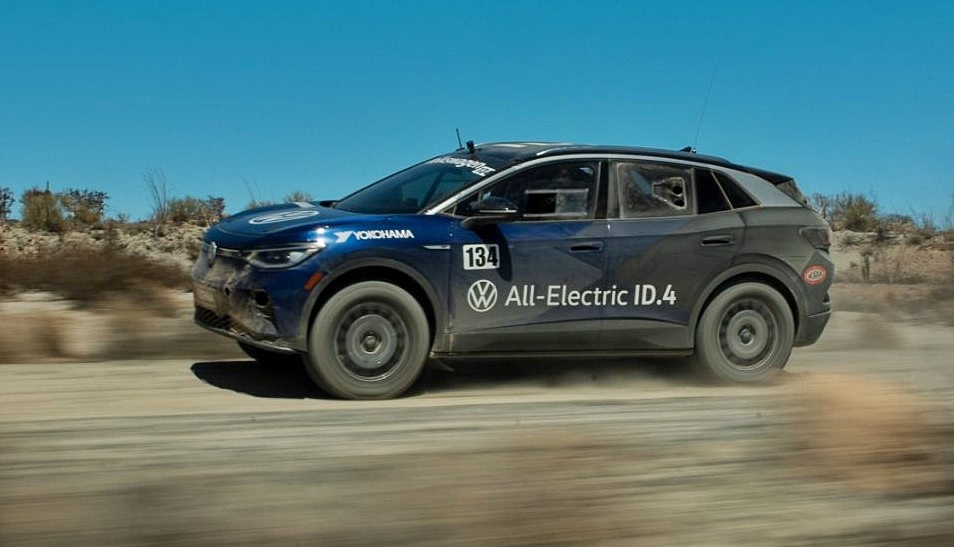
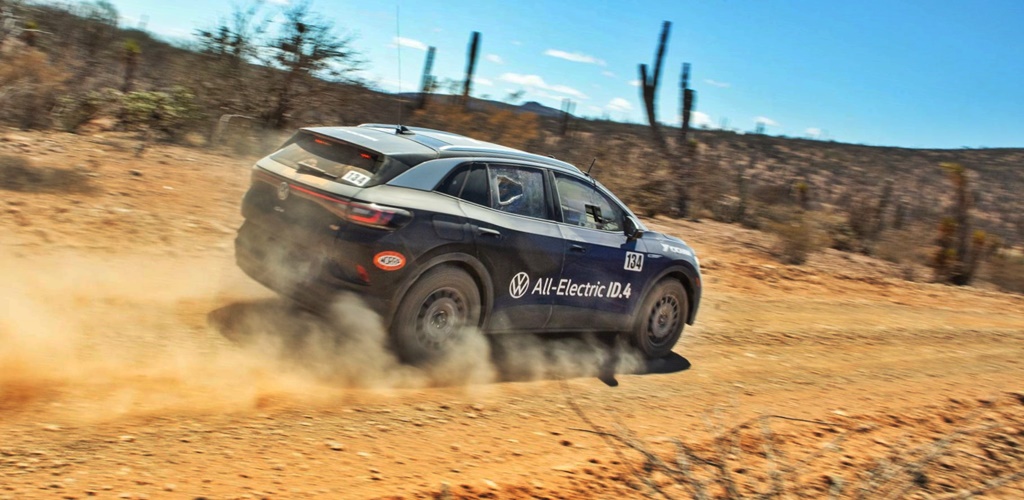
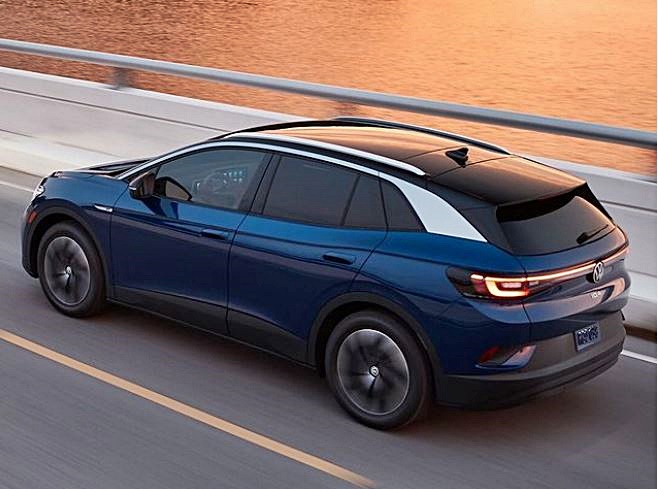
Volkswagen, however, has shown that even production EVs can take the very rough conditions of off-road racing with a specially prepared Volkswagen ID.4 electric SUV having completed the National Off-Road Racing Association (NORRA) Mexican 1000 race recently.

Volkswagen ID.4 NORRA desert race 2021

Standard electric powertrain
The ID.4 was driven by professional racer and Volkswagen brand ambassador, Tanner Foust, and Rhys Millen Racing partially modified a rear-wheel-drive version of the E-SUV model. However, it used a standard powertrain with an 82-kWh battery pack. The radiator was raised several centimetres to improve approach angles and cooling capacity, and additional skid plates of thick steel were added to the undercarriage.

To cope with the demanding conditions and terrain, the suspension was also modified with more travel and ground clearance. Rally-style coil-over struts were fitted to all four wheels along with tubular lower control arms in the front and boxed lower rear links.

Volkswagen ID.4 NORRA desert race 2021

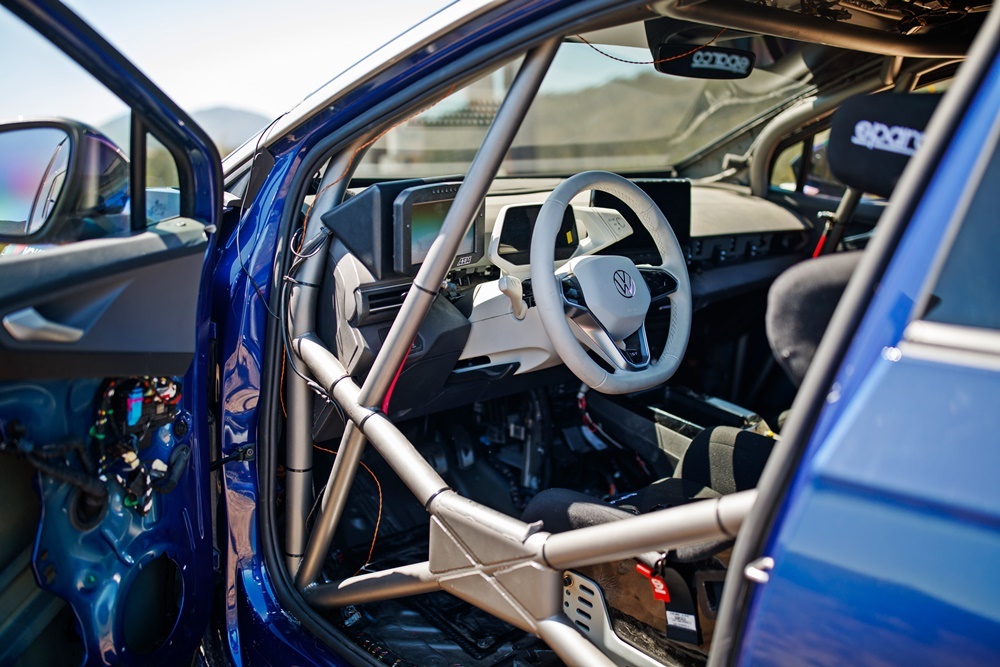
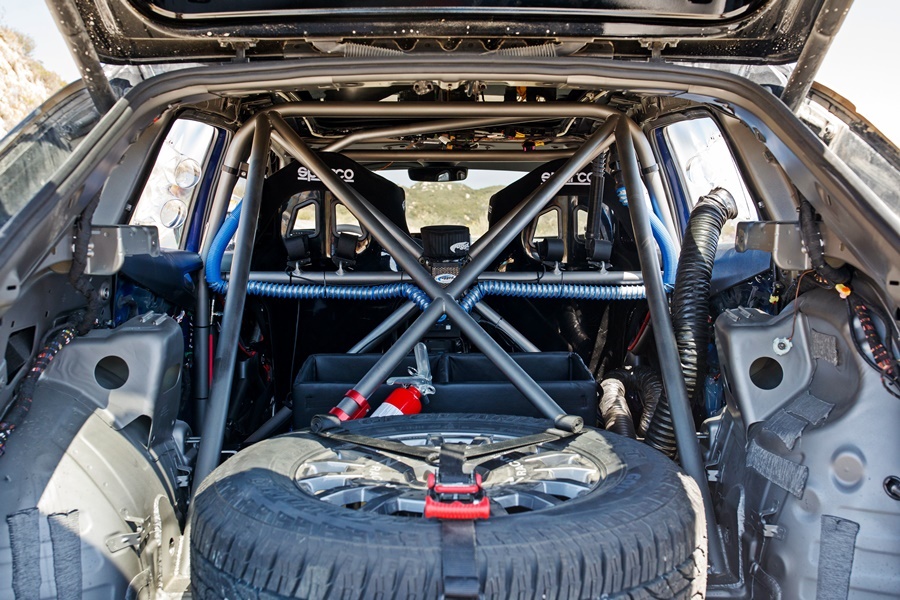
Inside the cabin was a roll cage for safety, racing seats and supplemental screens for key data like battery temperature, crucial information to know with the high desert temperatures and constant high speeds.

Biofuel-powered generator for recharging
The ID.4 was one of the 64 vehicles that finished the entirety of the NORRA 1000, out of 90 cars and trucks entered. Stages measured between 53 kms and up to 270 kms over the 1.600-km route. The ID.4 was able to recharge mostly using a portable biofuel-powered generator connected to a 50 kW flat charger. In a couple of instances where the ID.4 was scheduled to be transited to the next stage but the charger was not available, the team towed it behind a chase vehicle for a short distance, using the regenerative braking to add range.

Volkswagen ID.4 NORRA desert race 2021

Despite the brutal nature of the Baja wilderness, the only damage suffered by the e-SUV was some cosmetic injury to the rear bumper. All of the vehicle’s key power, battery and control systems performed as expected. The ID.4 was raced mostly in ‘B’ level battery regeneration mode with the standard traction control turned on.

“This was an exciting test of ID.4 technology because no other production-based EV had ever entered this event, let alone completed it,” said Scott Keogh, President & CEO of Volkswagen of America.

The ID.4 is the second model in Volkswagen’s all-electric ID range. First deliveries in Europe started at the end of 2020 and it is also being sold in North America and China. Last month, it was announced as the 2021 World Car of the Year.

Volkswagen ID.4 is the third EV to win World Car of the Year title

Visit www.bhpetrol.com.my for more information.

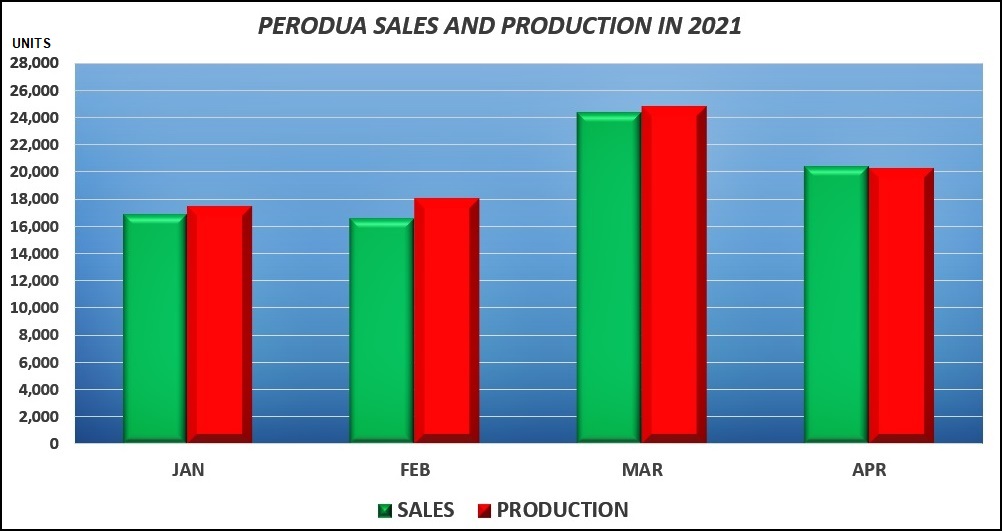
After the first four months of 2021, Perodua’s total sales volume has passed the 78,000 mark, with April contributing 20,399 units to the number. A big contributor has been the Ativa SUV which accounted for over 22% of the figure (4,624 units). Since its launch in March this year, the carmaker has delivered almost 9,000 units of the Ativa, with around 290 new customers placing bookings daily. The strong demand has stretched the waiting period for customers which, as always, Perodua tries to shorten.

2 – 4 months waiting period
“The waiting period for the Ativa is currently between 2 and 4 months, depending on the desired colour and variant. We advise our valued customers to speak to our authorised sales advisors for accurate and up-to-date delivery times of the various variant-colour combinations of the Ativa,” advised Perodua’s President & CEO, Dato’ Zainal Abidin Ahmad.

“Perodua remains committed towards timely deliveries, aided by our economies of scale. We thank our valued customers very much for their patience. We are doing all we can to deliver as many cars as possible before the expected expiry of the government’s sales tax exemption at the end of June,” he said.

Semiconductor chip shortage
On a month-to-month comparison, sales dipped by 16.5% to 20,399 units from 24,431 units, mainly due to the semiconductor chip shortage, which is affecting multiple industries globally.

“The chip shortage is our top priority at present and we are deploying all our resources to deal with it, including working closely with the government and our business partners for viable solutions,” Dato’ Zainal said.  “Despite the global semiconductor chip shortage, Perodua managed to produce 20,278 vehicles in April 2021, pushing our year-to-date production to 80,661 units,”

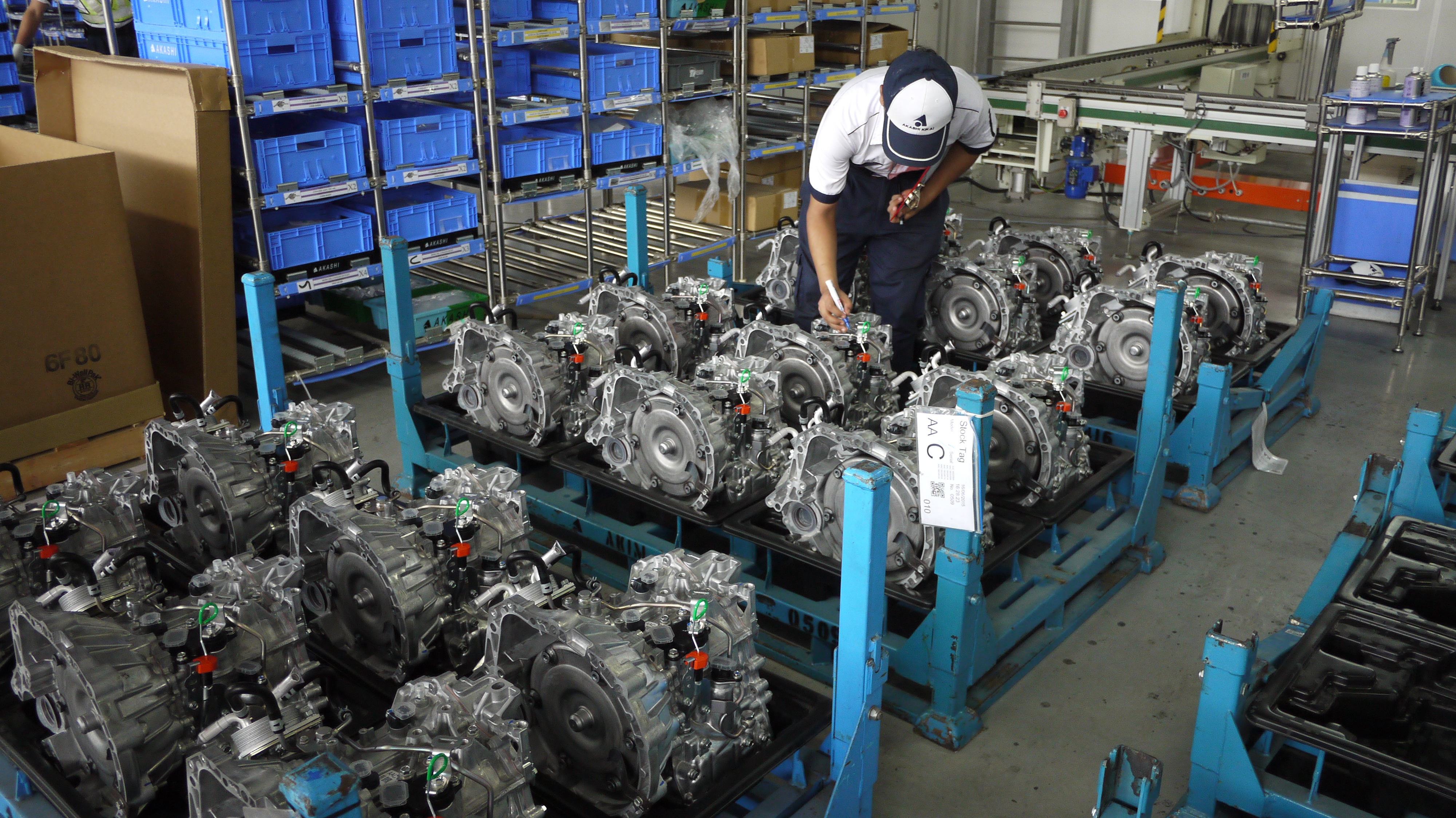
In 2021, Perodua will purchase up to RM6.5 billion worth of parts from suppliers in Malaysia. These include transmissions made at a factory in Negeri Sembilan.

Perodua is maintaining its 2021 sales target at 240,000 units for now. The target represents a 9% increase from the 220,163 units sold last year. The increased volume will also see Perodua making a record purchase of RM6.5 billion worth of locally-sourced components this year. Production is also set to be increased to 272,000 units, 23% more than the output in 2020.

Visit www.perodua.com.my to know more about the models available and where to view, test-drive or purchase them.

Perodua aims for 9% increase in sales volume to 240,000 units in 2021

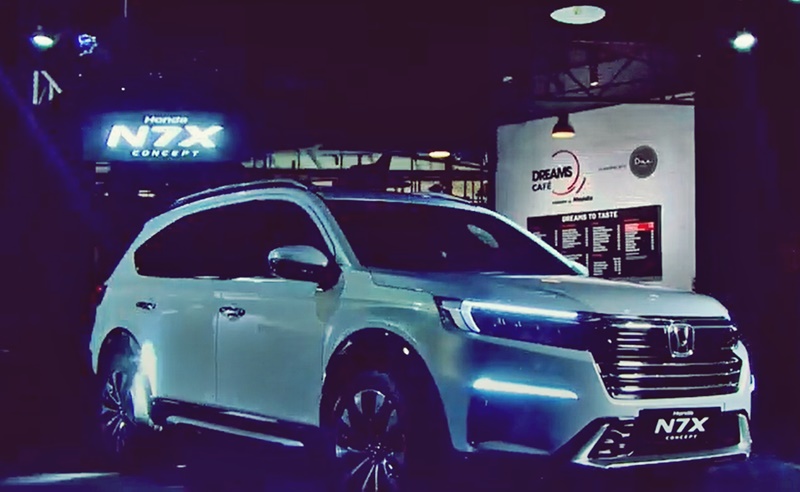
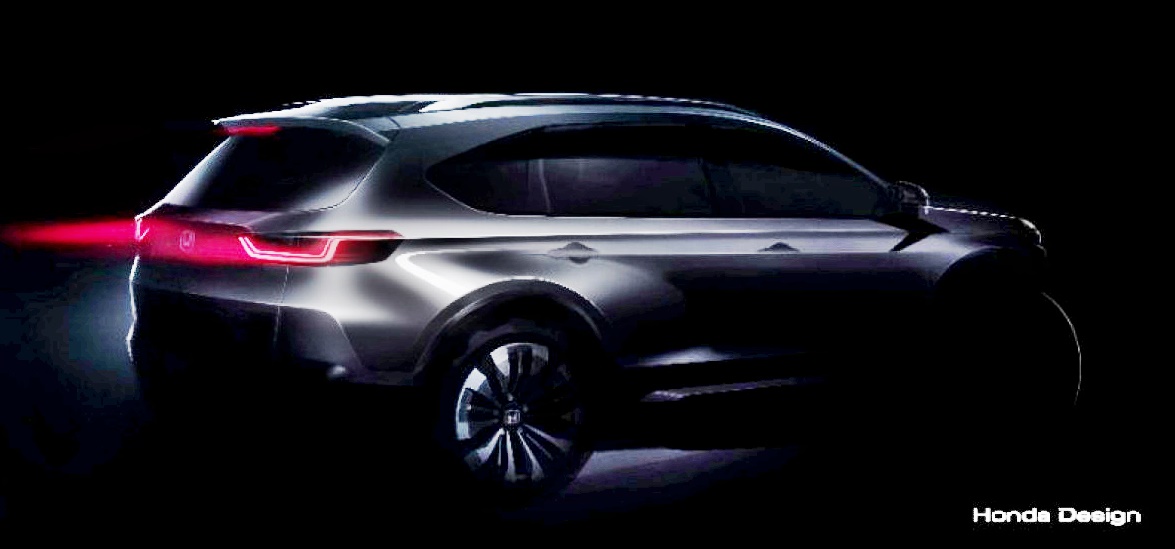
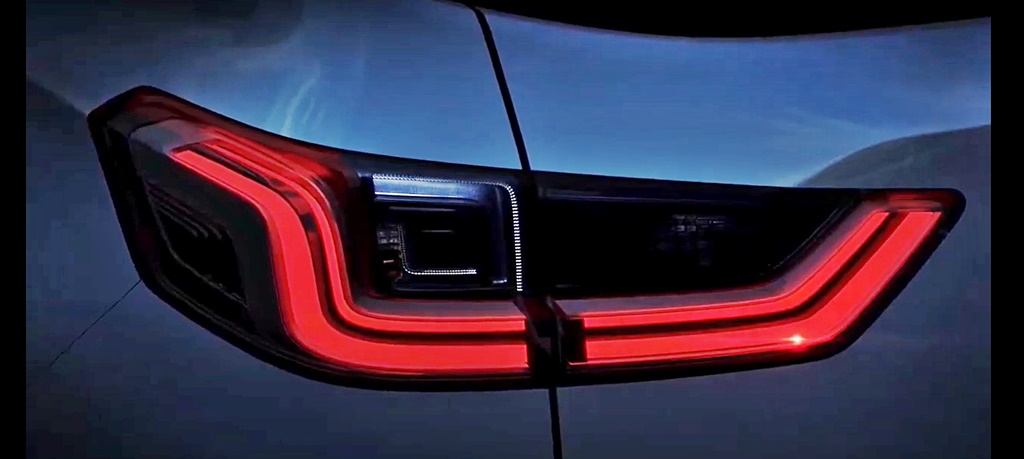
Honda today gave the world its first look at the next generation of the BR-V, presented as the N7X Concept. The original BR-V had its world debut in Indonesia in August 2015, and now, for the first time, Honda is unveiling a concept car in the country. The reason is that the BR-V is a model that was developed primarily with the Indonesia market in mind, although it is also sold in some other countries, including Malaysia.

For the second generation, the 7-seater cabin is maintained, this being an important point for customers in Indonesia. Honda understands that a car is ‘not just a car’, and considering how much time people spend in it, the vehicle is also a ‘second home’. This led the design team at Honda Asia Pacific to combine the best features of a MPV and the advantages of a SUV for the N7X Concept that will be the basis for the forthcoming new BR-V.

2021 Honda N7X Concept

2021 Honda N7X Concept

Designed with Gen X in mind
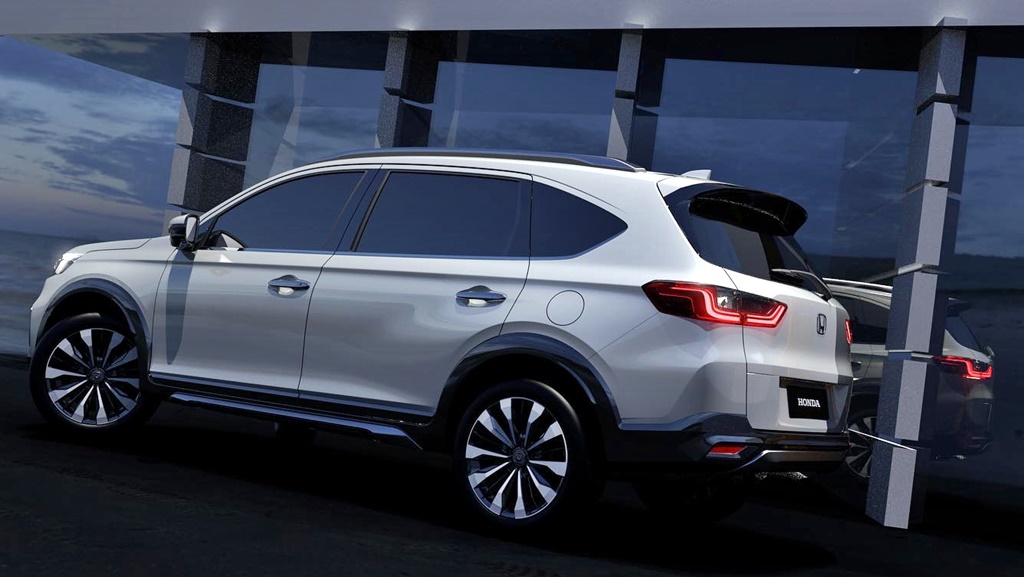
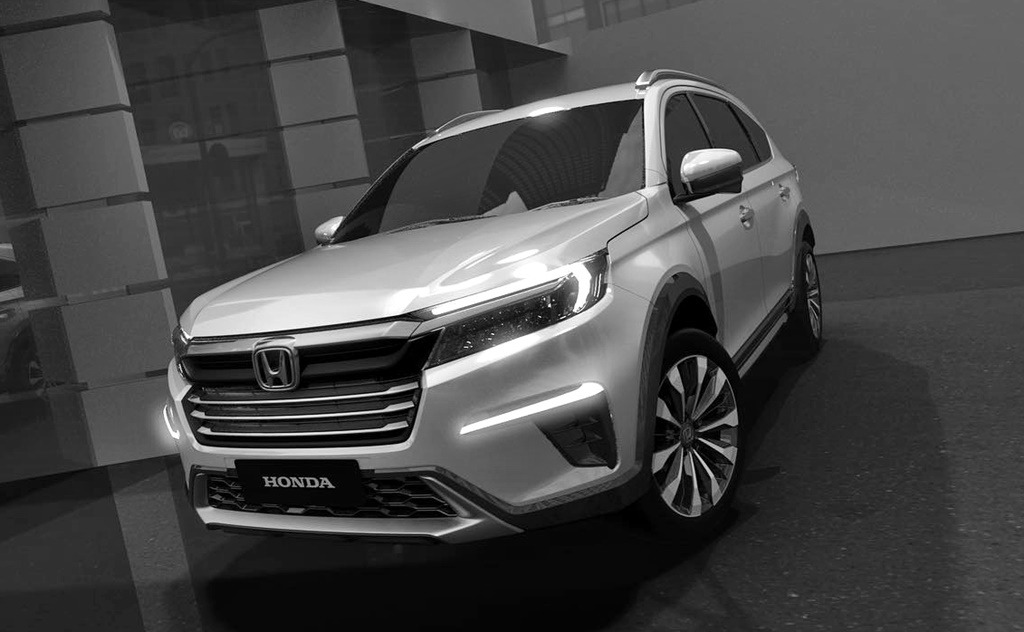
The exterior design is sleeker than the current BR-V and the overall size appears larger. There are some styling elements from other models, such as the CR-V, with the high ground clearance being a necessity in Indonesia and also other parts of ASEAN.

Honda product planners conducted extensive studies, primarily in Indonesia, to find out what customers expect and aimed to exceed the expectations. They focussed especially on the Generation X family, which has a lifestyle that is balanced between personal activities and family togetherness.

Details of the interior are not available other than from brief views during the presentation. With words like ‘premium’ being used, it is likely that Honda will offer the new BR-V with a higher quality than before, the same way that the City evolved upwards. Of course, with the emphasis on safety, we may see better safety systems installed, probably including an autonomous braking capability.

2021 Honda N7X Concept

2021 Honda N7X Concept

2021 Honda N7X Concept

Honda’s idea of a 7-seater
“The N7X is our concept of what a 7-seater car should be, which not only offers pleasant driving performance but also the serenity and comfort of a premium car for all occupants. We are very proud to make Indonesia the first in the world to introduce the N7X Concept, a concept that will redefine the categories of cars and driving pleasure,” said Takehiro Watanabe, President Director of PT Honda Prospect Motor, during the world premiere online.

The current BR-V was launched at the Indonesia International Auto Show in 2015 but given the current pandemic, the future of such public events remains uncertain. Nevertheless, Honda Indonesia is displaying the N7X Concept at a shopping mall in Jakarta this week, and will probably do an online launch of the production model sometime during the second half of this year.

2021 Honda N7X Concept
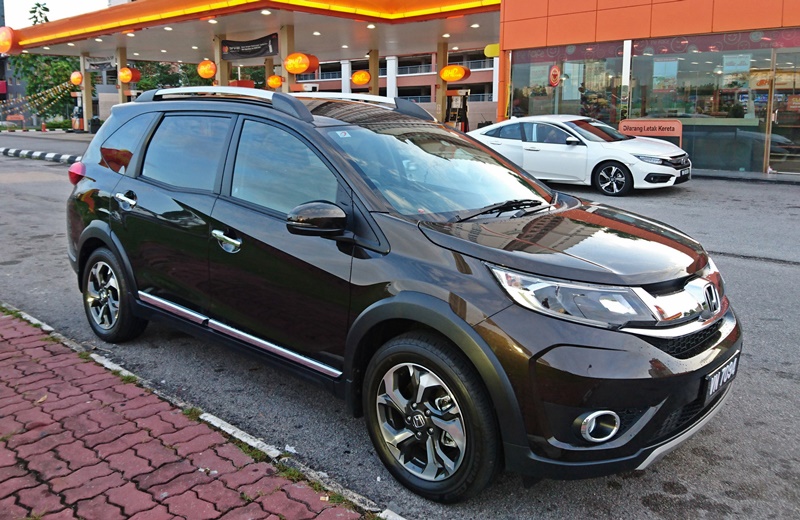
2019 BR-V (the model received some updates last year). Prices start from RM86,726.

The BR-V arrived in Malaysia about 2 years after its debut in Indonesia, though this second generation might not take as long. Anyway, if you prefer the current one and want to get one before it runs out, visit any authorized Honda dealer and their locations can be found at www.honda.com.my.

New Honda City RS e:HEV officially on sale, priced at RM105,950.45

Just as motorcars from the time of Gottlieb Daimler evolved over the decades to be varied in purpose, design and performance, electric vehicles have also a variety of types. Initially, constrained by technology, ‘performance’, as enthusiasts know it, was not highlighted much even though an electric motor provides a lot of torque right from moving off for brisk acceleration. But with EV technology pushing the edge of the envelope more and more, ‘high performance’ can also be used with electrically-powered vehicles.

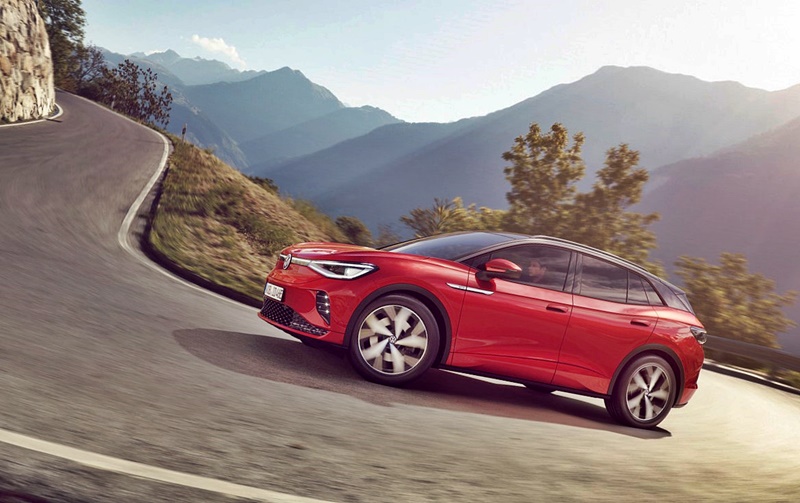
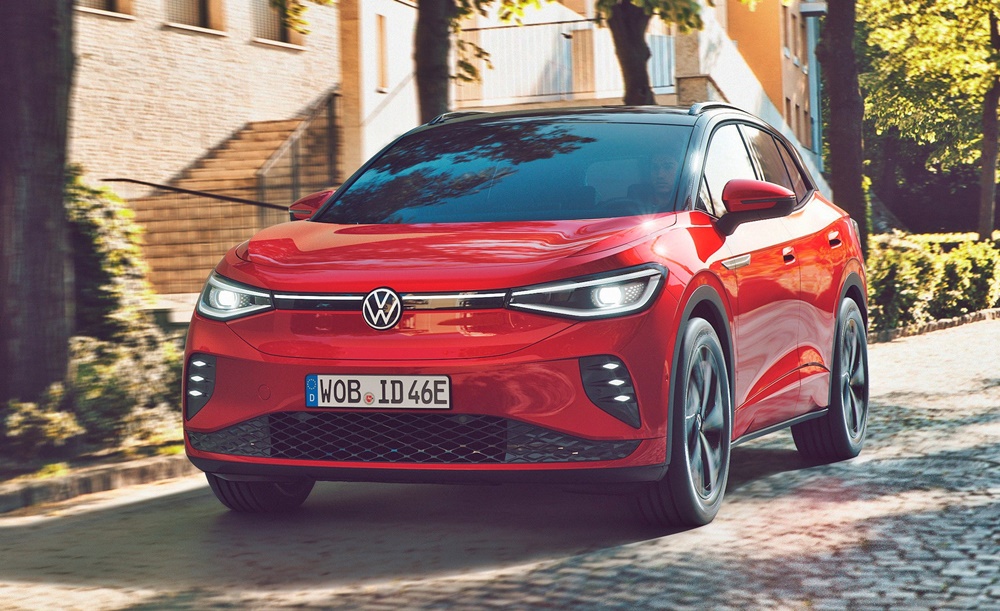
Volkswagen is now heading into the new segment with the ID.4 GTX unveiled at a digital world premier recently. A member of the brand’s electric range, it is the first fully electric high-performance model that is said to add a new dimension to sportiness and dynamics. Just as ‘GTI’ has been used to identify Volkswagen’s performance models, ‘GTX’ will do likewise with the electric vehicles.

2021 Volkswagen ID.4 GTX

“The most emotional member of the ID. family to date shows that electric mobility and top sporty performance are not mutually exclusive. The full torque of the electric powertrain is immediately available and you can feel the excellent vehicle handling in every bend,” said Thomas Ulbrich, member of the Board of Management for Development.

Two motors for all-wheel drive
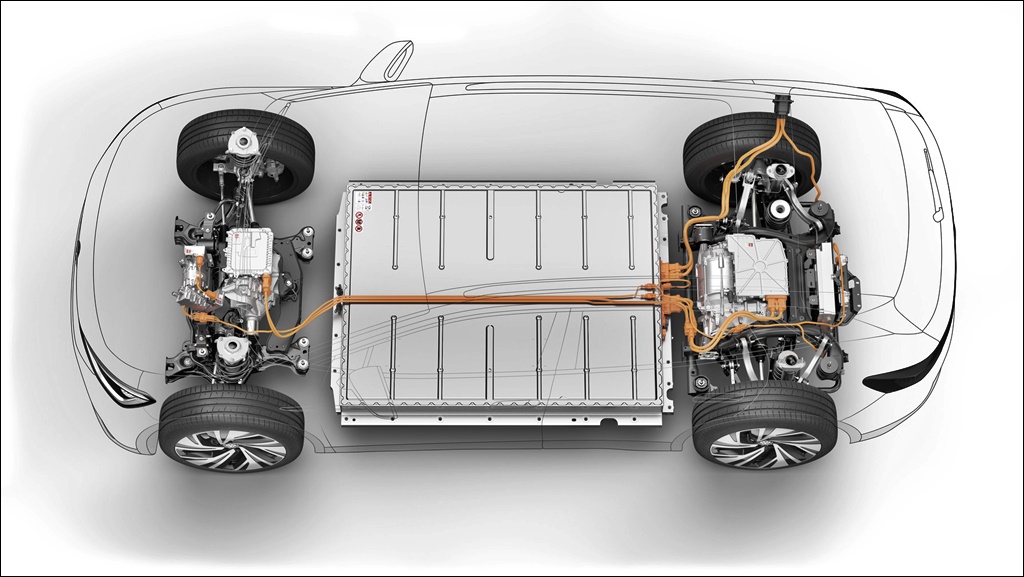
The ID.4 GTX is the first model based on the modular electric drive matrix (MEB) to feature dual-motor all-wheel drive. There is one electric motor installed on the front and the rear axle. Together, both motors can generate maximum electrical output of 220 kW (299 hp) and can work together to give all-wheel drive.

Putting one motor at the front and one at the back to get all-wheel drive is actually an idea that goes back to the 1980s. Volkswagen engineers put two 1.8-litre engines in a Golf (Mark 2) that was entered in the Pikes Peak Hillclimb event in America. The prototype completed the course in 1985 and 1986 but suspension failure prevented it from finishing in 1987 and after that, the project did not continue after that.

2021 Volkswagen ID.4 GTX

The AWD system in the ID.4 GTX operates with greater efficiency as the motors are managed by computer, so optimum output will be generated on each axle according to conditions. Volkswagen claims that acceleration from 0 to 60 km/h can be done in 3.2 seconds, with 0 to 100 km/h in 6.2 seconds. Not exceptionally quick but can be considered high performance for an e-SUV. The top speed will be limited to 180 km/h.

Sportier character emphasised
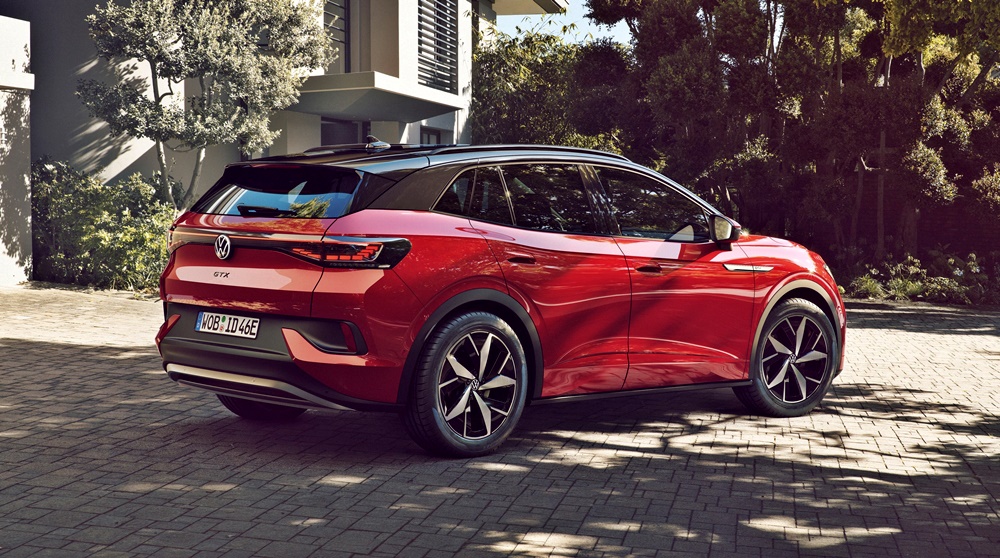
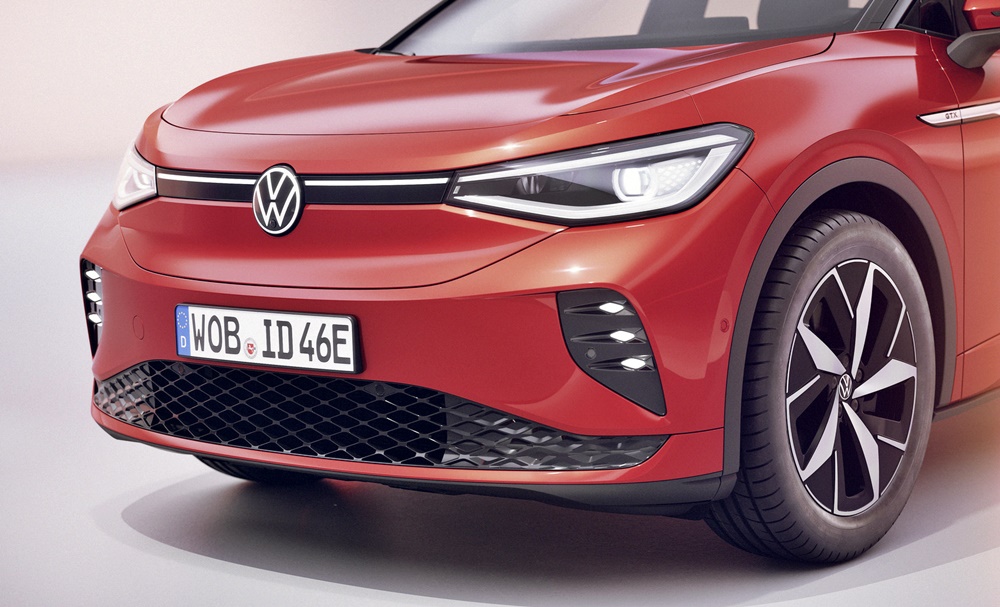
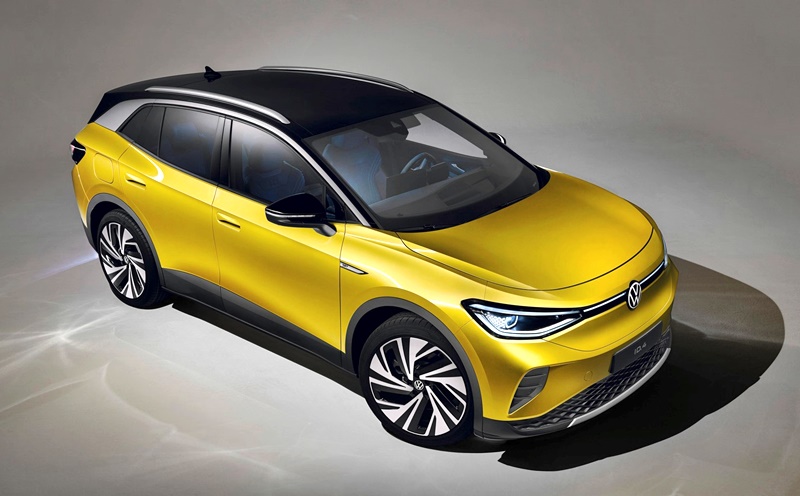
The ID.4 is the 2021 World Car of the Year and the GTX shares the overall design with the other versions but gets differentiation to emphasise its sportier character. The familiar light strip has been combined with dynamic elements, in particular, the three honeycomb elements that form the daytime running lights. Besides conveying the sporty character, this styling element establishes a connection to the Golf GTI. Alongside the different bumpers are distinctive elements at the rear include the 3D LED tail light cluster with brake lights that form an X.

2021 Volkswagen ID.4 GTX

2021 Volkswagen ID.4 GTX

Visual connection to Golf GTI 
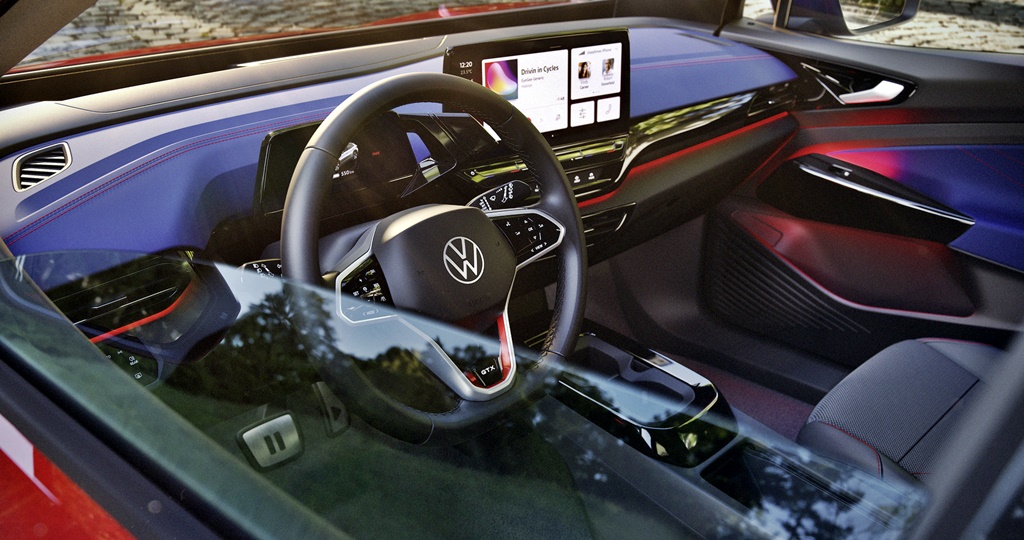
The body colour is more dominant than on rear-wheel drive versions. The roof and rear spoiler are black, while the roof frame bar is a high-gloss anthracite. The interior also has a different colour scheme with the upper section of the dashboard and leatherette inserts in the doors in a dark shade called ‘X-Blue’. Red contrasting seams – a classic symbol for sportiness and strength – add accents to the seats. The GTX logo appears on the steering wheel, sill panel trims and – in perforated form – at the top of the front seat backrests.

The ID.4 line has been available in Europe, North America and China since last year, and the GTX will go on sale in Europe after June this year. The lowest priced ID.4 GTX will be 50,415 euros (about RM249,000) but buyers can apply for an EV grant of 7,500 euros (about RM37,000) to offset the cost.

2020 Volkswagen ID.4
The standard ID.4 which is now on sales in Europe, North America and China.

Will we see such EVs in Malaysia?
As more and more EVs are launched, Malaysians must wonder if we will see them in the showrooms. In neighbouring countries, government policies are already in place to give a big push to switching to EVs but Malaysia seems to show little initiative. There is a plan which will allow 10,000 EVs to be imported tax-free but unless there are assured long-term incentives to make it worthwhile for companies, we will see the same thing happening as before when there was tax exemption for a few years for hybrids and EVs. When the exemption ended and prices went back up, sales died altogether except for a few companies that decided to include electrified models in their locally-assembled line-up.

ID.4 – first all-electric SUV from Volkswagen

In the 1970s, the ‘hot hatch’ appeared on the scene, bringing high-performance to a broader segment of customers. Now, in the 21st century where SUVs are the most popular models, Hyundai Motor has created a ‘hot SUV’ with its new Kona N, the first SUV model in its N high-performance brand line-up.

The Kona N was developed to offer customers the performance level of a hot hatch. It aims to make SUVs fun to drive, with potential for track use and not only everyday driving. “It goes beyond the limits of an ordinary SUV. Kona N can carve corners on the racetrack and bring excitement to everyday driving,” promises Albert Biermann, President & Head of R&D Division at Hyundai Motor Group.

2021 Hyundai Kona N

The standard Kona

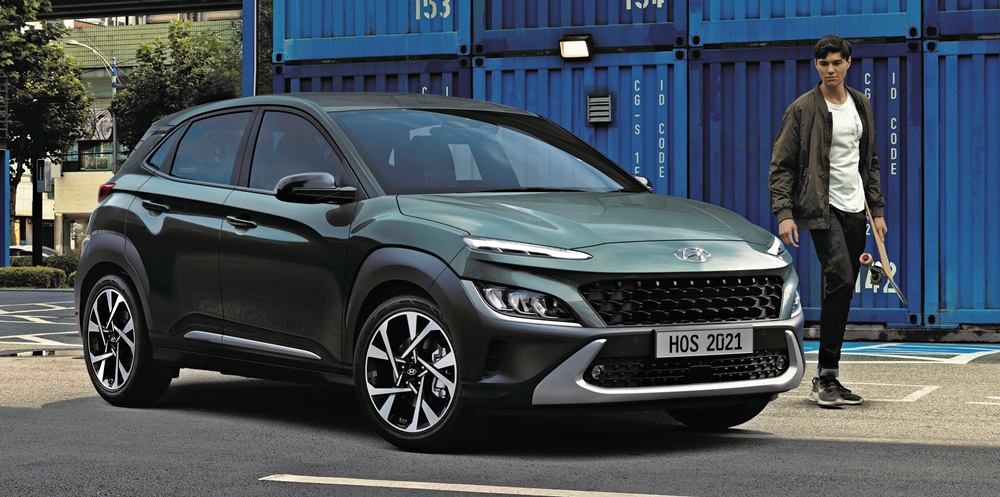
While the standard Kona already has distinctive looks, the Kona N gets even more individuality with the bold and dynamic language of N models. With a 4215 mm length, 1800 mm width, and 1565 mm height, the Kona N is 10 mm longer than the standard model and just as long as the new KONA sporty N Line trim (a different variant). The 2600 mm wheelbase is, however, the same as the standard car.

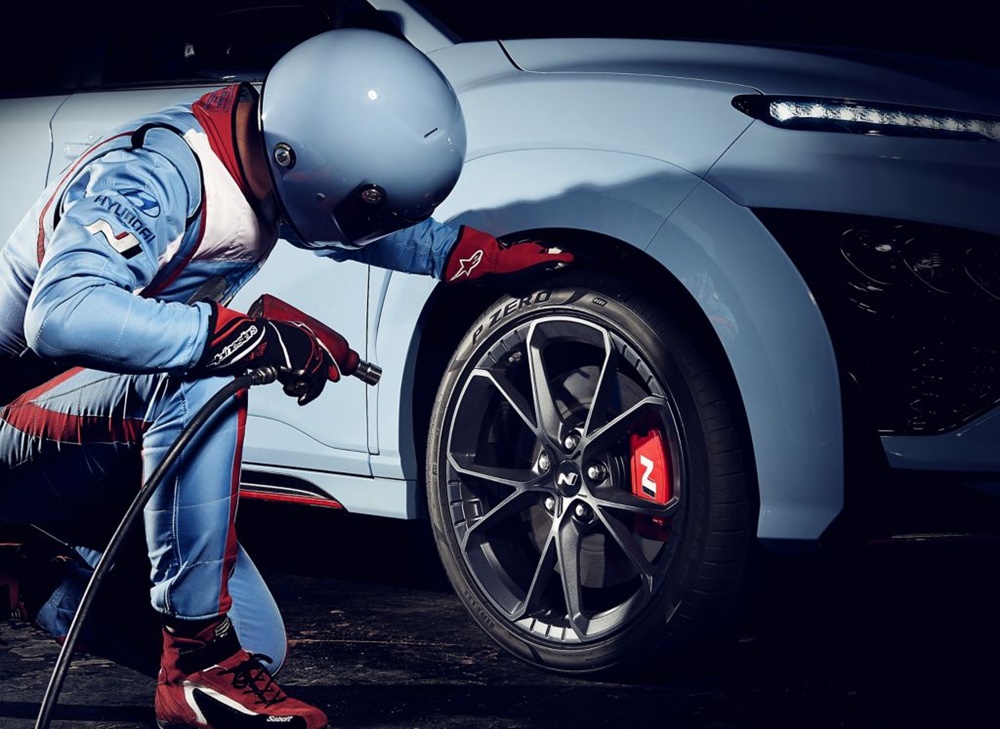
Designed with a focus on maximum weight reduction and high strength, the lightweight 19-inch forged alloy wheels add to a great stance and very sporty appearance. These are fitted with specially developed 235/40R19 Pirelli P-Zero high-performance tyres.

2021 Hyundai Kona N

The high-performance braking system has been designed for stability in changing driving conditions to enhance safety. Enlarged front and rear disc brakes take in extra air through the bigger intakes on either side of the car’s front bumper for better cooling. The application of high friction caliper material, a lower arm guide, and a heat shield maximise brake performance with more efficient cooling and high heat endurance capacity.

8-speed N-DCT
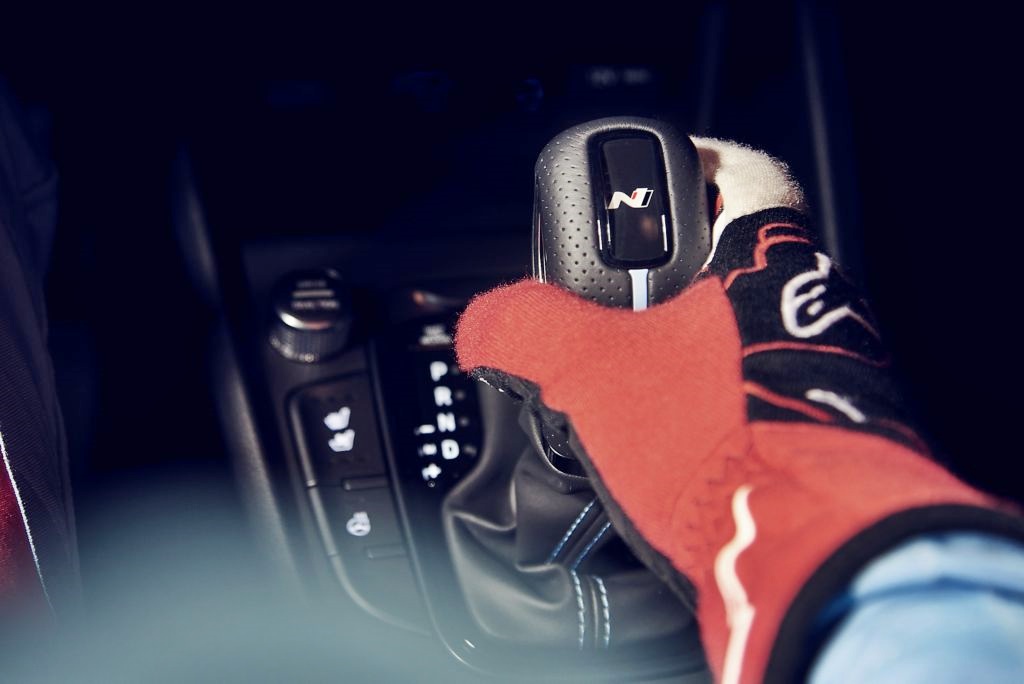
The latest member of the N brand is powered by a 4-cylinder 2.0 T-GDI 280 ps/392 Nm petrol engine, coupled to an 8-speed Dual-Clutch Transmission (N DCT). The N-DCT is said to offer the driver the engaging experience of a manual transmission with the convenience of an automatic transmission.

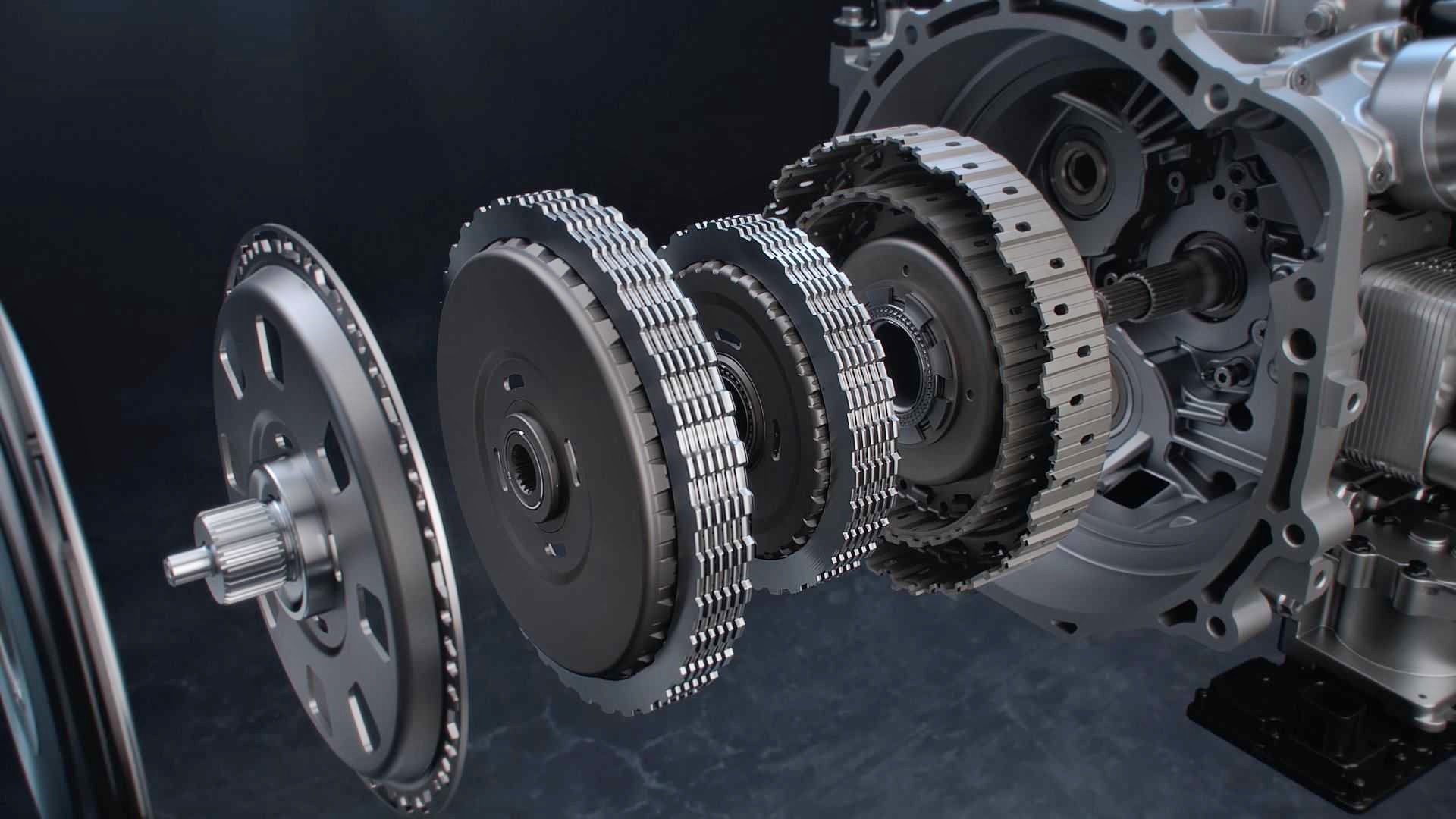
Developed by the Hyundai Motor Group, the N DCT is a wet-type transmission with two separated clutches for better acceleration and a faster upshift. The wet type clutches further provide for better cooling. N DCT technology was first offered in the Veloster N and then the i30 N as well.

It has 3 high-performance functions – N Power Shift, N Grin Shift, and N Track Sense Shift – that enhance the car’s capabilities by using dedicated shift logic management. N Power Shift, used while the Launch Control function is active, can send the Kona N from standstill to 100 km/h within a claimed 5.5 seconds.

Unlike a vehicle with a conventional automatic transmission, the car does not automatically ‘creep’ when the brake pedal is released (if transmission is in D position). The driver can choose to turn the creep off as required, for example when on the racetrack.

2021 Hyundai Kona N

To embody the N product philosophy, the Kona N comes with high-performance features such as an  Electronic Limited Slip Differential (e-LSD) and the various Electronic Stability Control modes have been optimised to improve cornering. Traction Mode ensures that traction can be established across a variety of road conditions while N Grin Control System offers 5 drive that contribute to its everyday sports car character.

Motorsport-inspired cabin
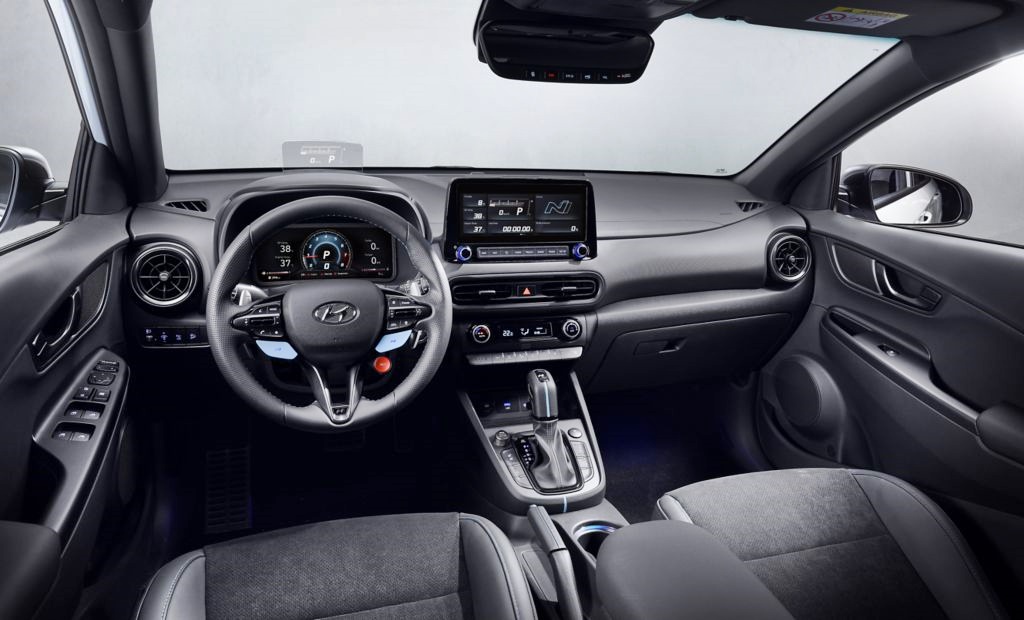
Although having the external appearance and form of a SUV, inside the car are various motorsport-inspired features that include special sports seats and an ‘emotional’ sound experience. The performance-oriented look and feel has been optimised for high-performance driving.

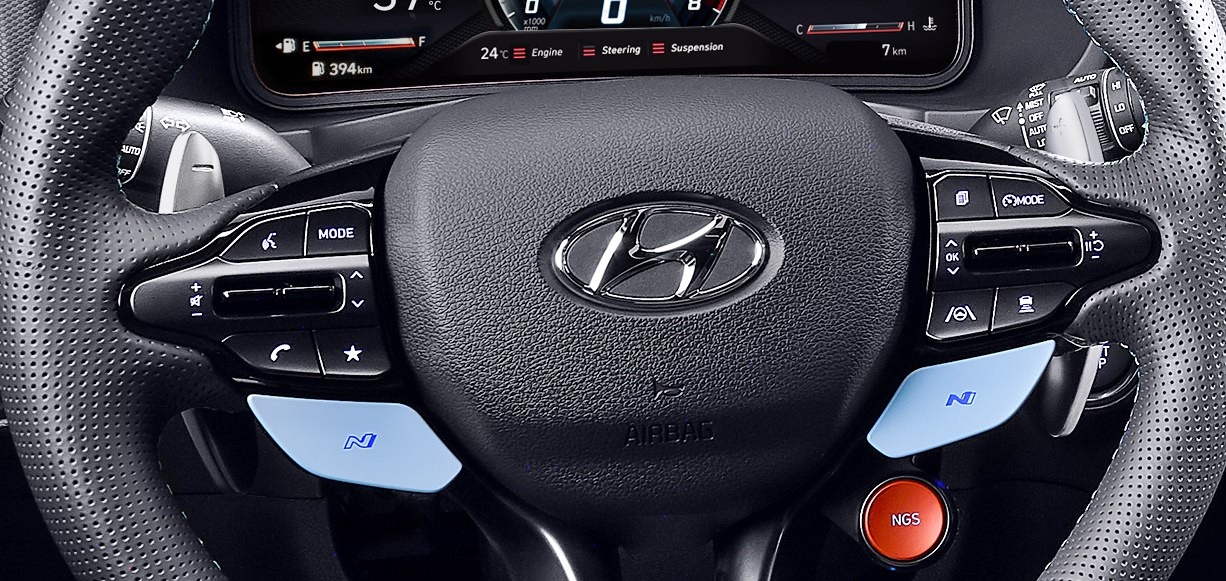
One feature that would stand out is the N-exclusive sport steering wheel, which features a design optimised for the perfect grip and button layout necessary for dynamic driving. Two customisable N buttons on the steering wheel allow for any type of pre-set to be mapped according to individual preference for even more ease of operation, and paddle shifters make it possible for the driver to switch gears without taking their hands off the wheel.

2021 Hyundai Kona N

Performance Head-Up Display
The Kona N is the first Hyundai high-performance model to be equipped with a Performance Head-Up Display. The  display shows vehicle information on a transparent screen, allowing the driver to see relevant navigation, safety, and driving information while keeping their eyes on the road.

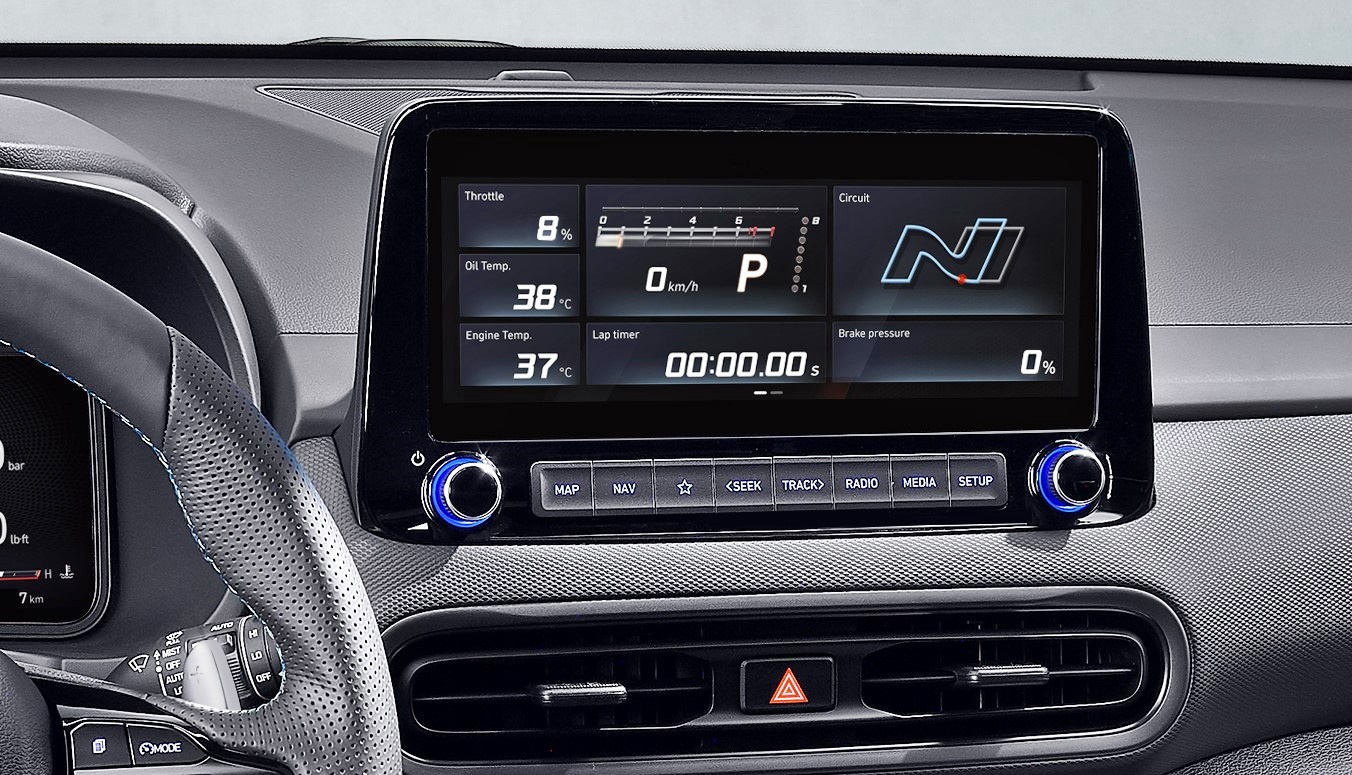
There is also a 10.25-inch digital N cluster 10.25-inch AVN touchscreen. A Performance Driving Data System monitors driving to help improve racetrack skills. The feature saves and displays driving data, such as power and torque levels, and turbo boost during racetrack driving via AVN touchscreen.

Hyundai Kona N 2021

2021 Hyundai Kona N

For a more emotional driving experience, a sporty engine sound from the exhaust and intake noise is supported by the Electronic Sound Generator in the body panel. In the cabin, at the base of the windscreen, an engine sound generator provides some extra acoustic drama to match the mood of the driver.

Making the Kona look hotter
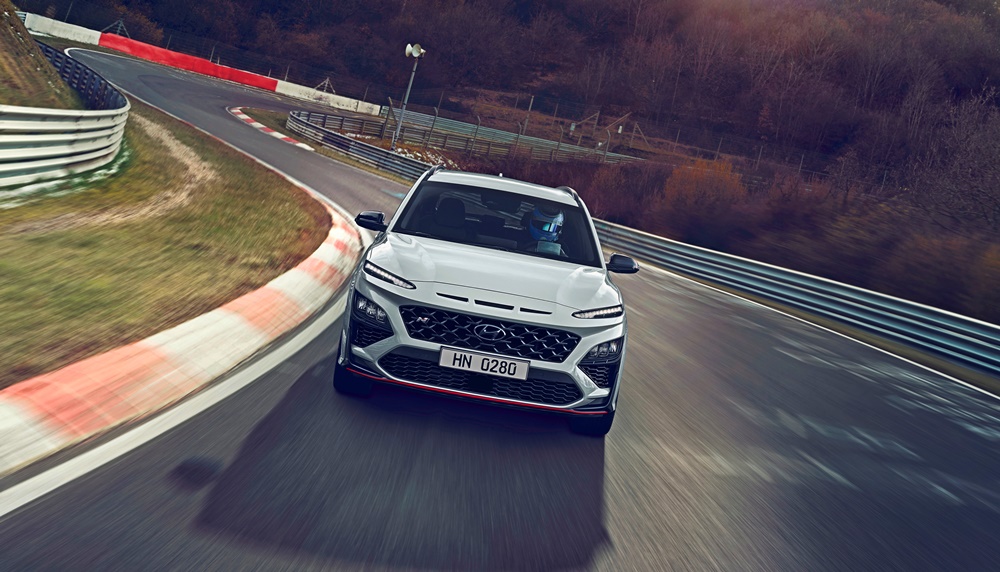
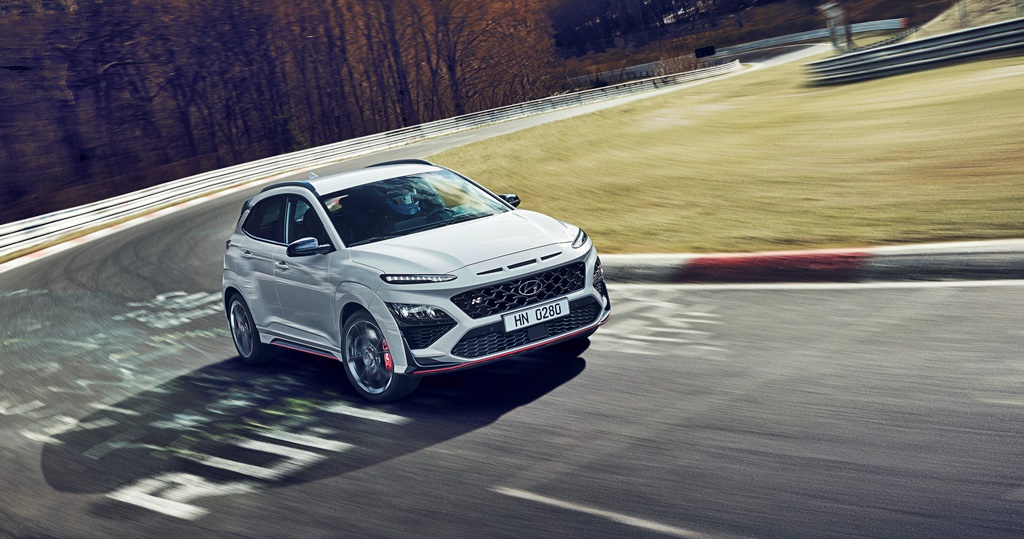
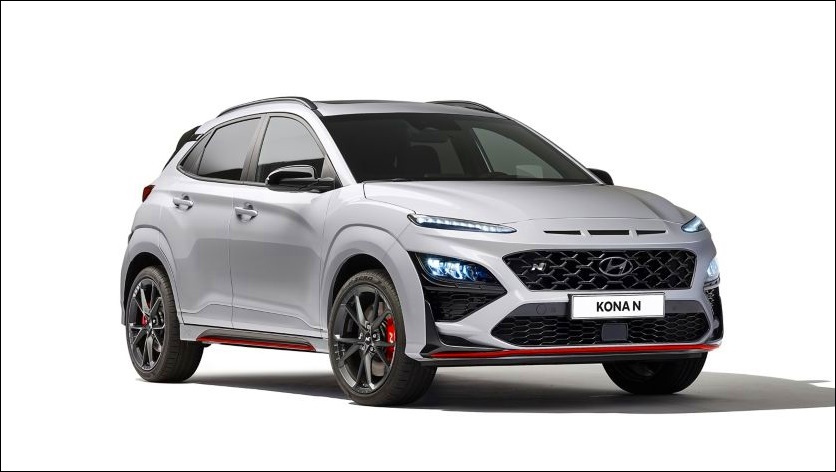
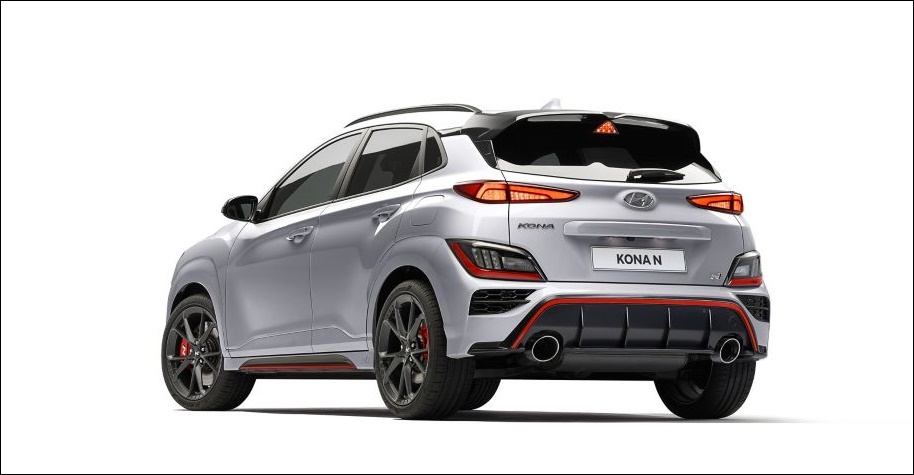
The exterior design has SUV elements with the N membership identified by red accents. An exclusive front grille design, with its dedicated mesh, an integrated N logo also identify this as being a ‘hotter’ Kona. Other design cues indicate that this is a high-performance Hyundai N model are N forged wheels with a dark satin grey finish and red calipers, an N logo on the wheel cap, and an exclusive side sill in red with an engraved N logo.

2021 Hyundai Kona N

2021 Hyundai Kona N

At the rear, the large, double-wing roof spoiler dominates the view, providing downforce to maintain stability at higher speeds. There is also the iconic triangular third brake light as well as two large exhaust mufflers.

First deliveries in Europe start after June this year, and although Hyundai has not announced the prices, it is estimated that the model will cost at least the equivalent of around RM183,000 upwards in some markets.

The Story of N – Hyundai N (w/VIDEO)
Electrification is unavoidable for carmakers as regulations tighten on exhaust emissions and even the reluctant ones have to at least go the hybrid route, if not full electric. Maserati, with its small range, has chosen the hybrid route which started with the mild hybrid Ghibli saloon last year and now extends to include its first hybrid SUV, the Levante Hybrid.

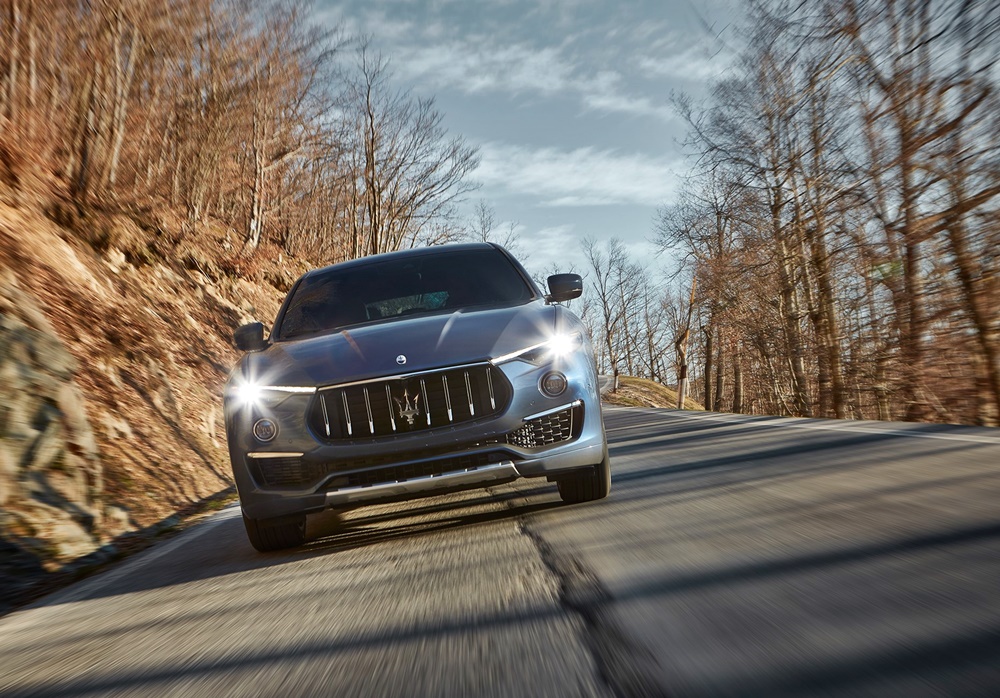
Unveiled at the Shanghai Auto Show (and online for the rest of the world) the Italian brand’s first electrified SUV offers new performance characteristics that are ‘Faster. Greener. Unique’, as its advertising tagline goes.
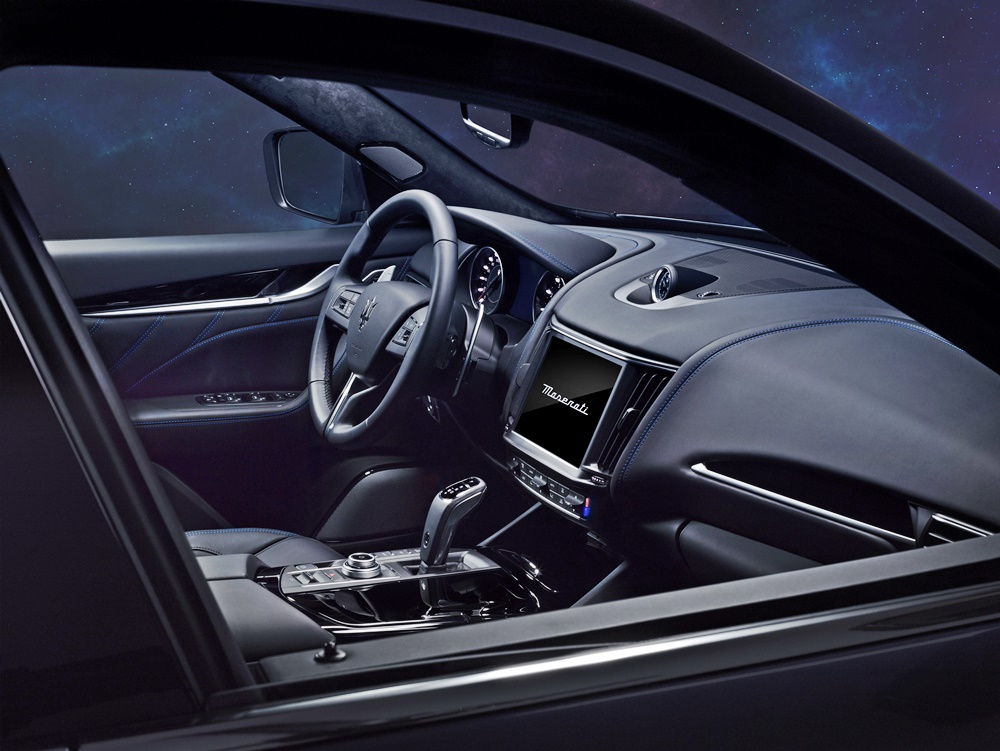
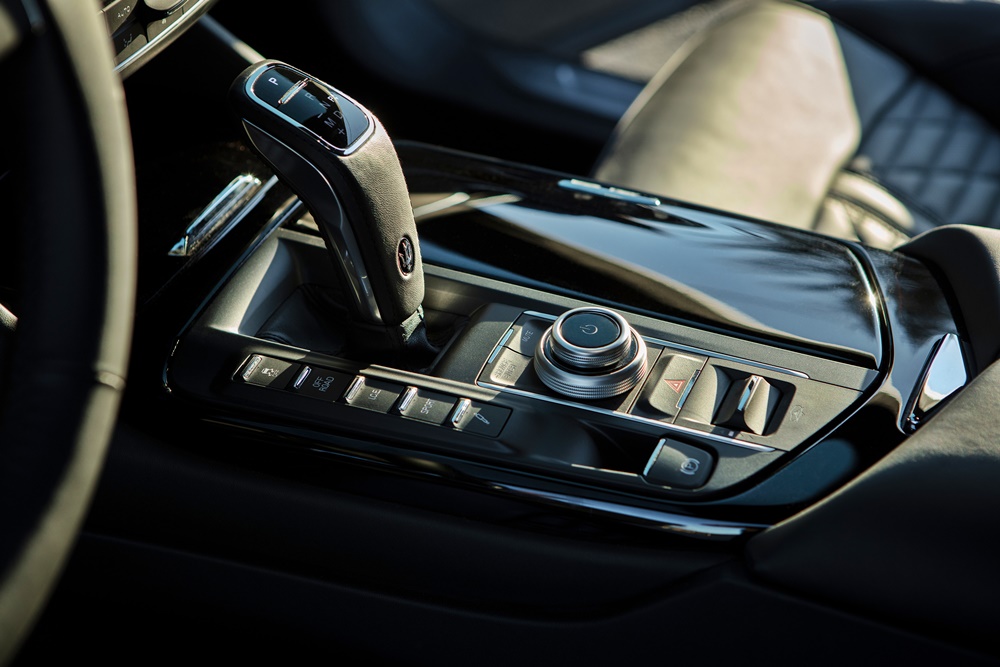
2021 Maserati Levante Hybrid

48V mild hybrid system
Like the Ghibli Hybrid, the Levante Hybrid combines the 4-cylinder, 2-litre turbocharged engine with a 48-volt hybrid system to recover energy during deceleration and braking. The SUV weighs less than the 6-cylinder engine equivalent (both diesel and petrol) and, above all, has an even better weight distribution since the heavy battery pack is placed in the rear to optimally balance the masses of the vehicle.

Maximum power output of the powertrain is 330 ps, with maximum torque of 450 Nm that is available from 2250 rpm. Factory data on the performance, which is available only with all-wheel drive, shows a top speed of 240 km/h and acceleration from 0 to 100 km/h in 6 seconds.

2021 Maserati Levante Hybrid

Blue shade for hybrids
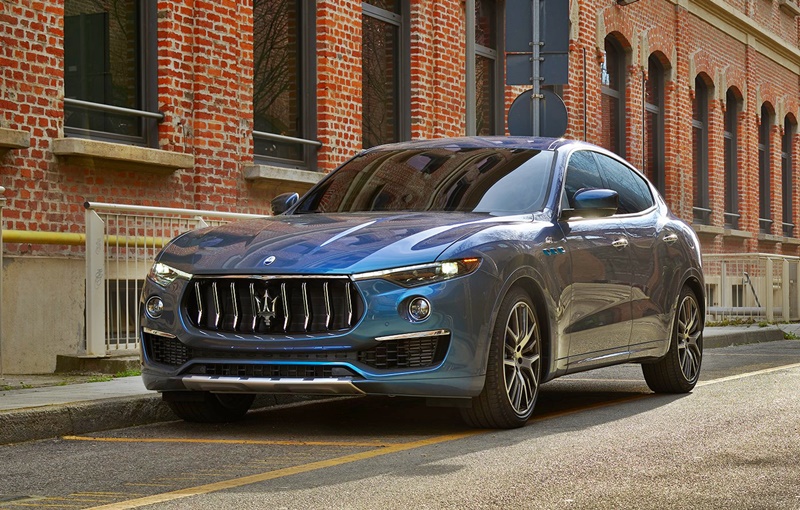
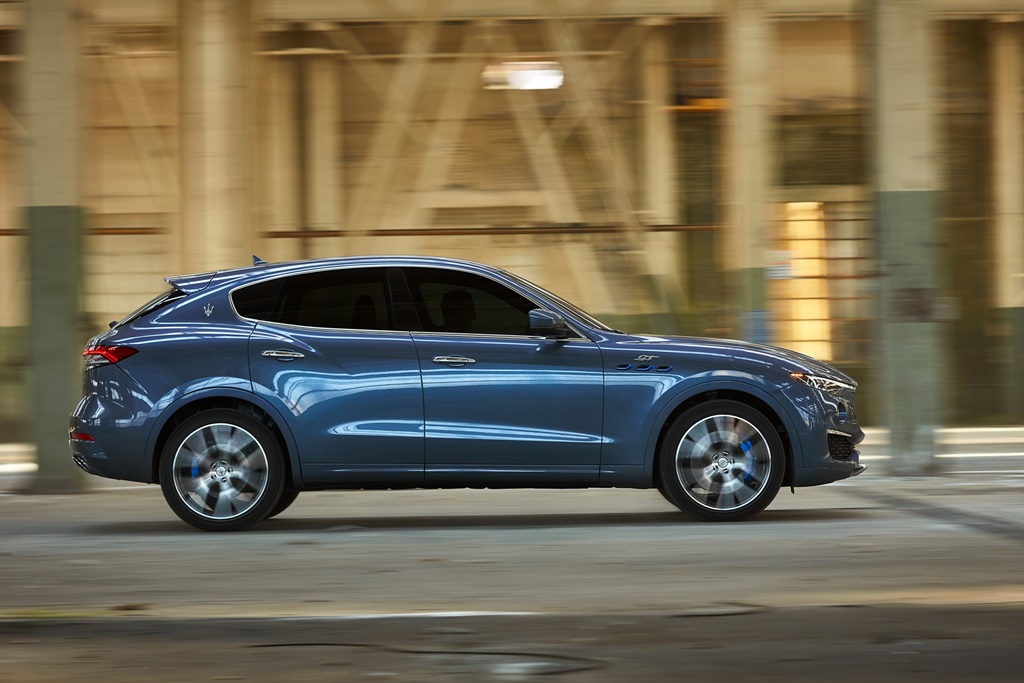
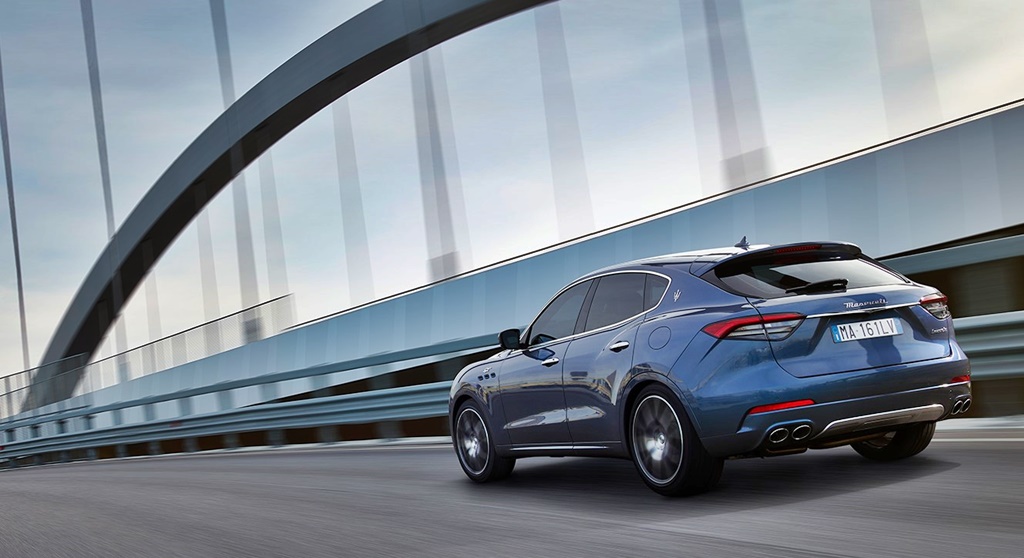
In terms of appearance, the Levante Hybrid launch version is characterised by a new metallic tri-coat colour called Azzurro Astro, available as part of the brand’s customisation programme, Maserati Fuoriserie. Other exterior and interior details contribute to this car’s immediately recognisable design; some are in blue, the shade chosen to identify hybrid cars, already used by Maserati on Ghibli Hybrid.

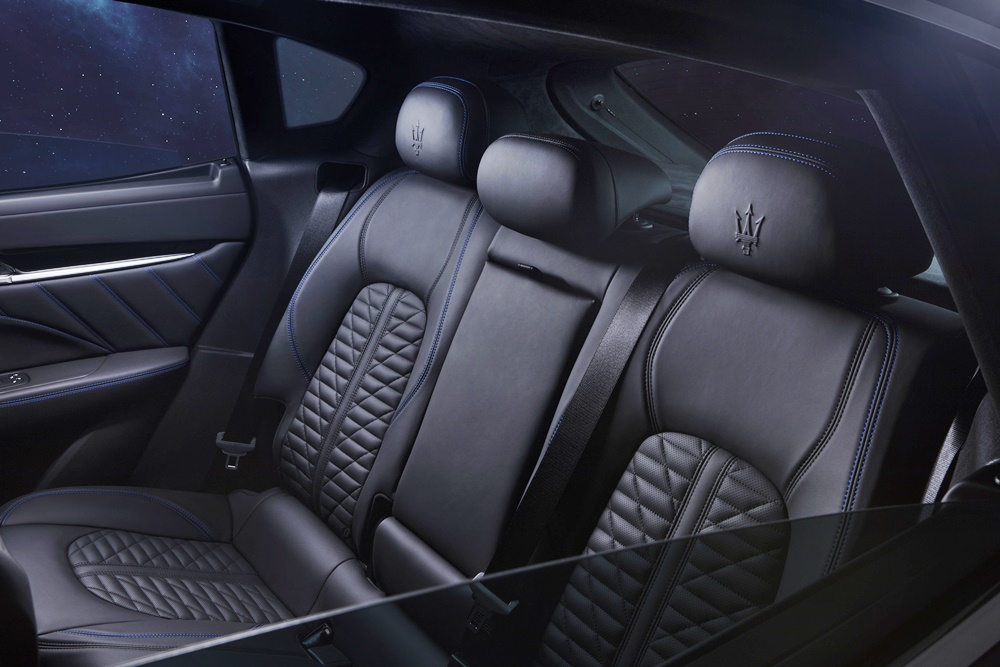
On the exterior, blue characterises the three iconic side air ducts, the brake calipers and the C-pillar logo. The same blue shade reappears inside the car, specifically on the embroidered seams of the seats.

2021 Maserati Levante Hybrid

2021 Maserati Levante Hybrid

2021 Maserati Levante Hybrid

New Maserati Connect program
The SUV remains connected at all times, enabling monitoring of the vehicle’s ‘health’. The new  Maserati Connect system will alert the driver when a scheduled service is due, adding convenience to the ownership experience. With a Smartphone or Smartwatch, the driver can stay in contact with their vehicle via the Maserati Connect App (also possible via their virtual personal assistant  with Amazon Alexa or Google Assist).

2021 Maserati Levante Hybrid

Archive

Follow us on Facebook

Follow us on YouTube