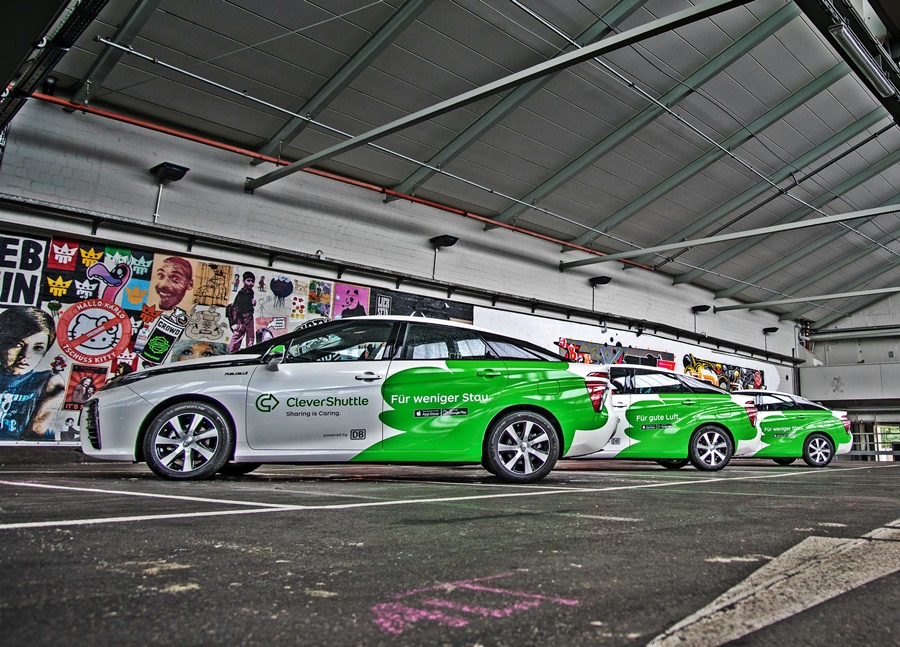
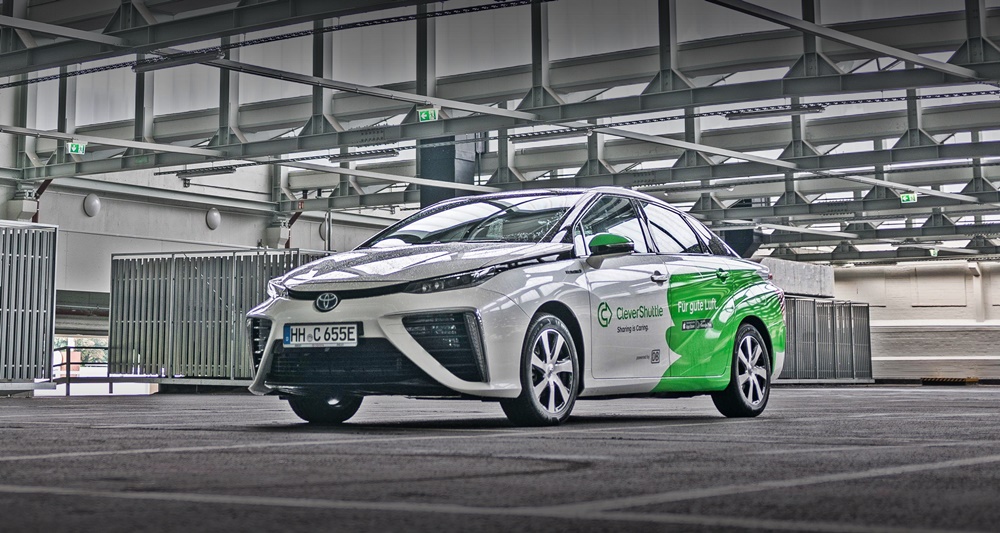
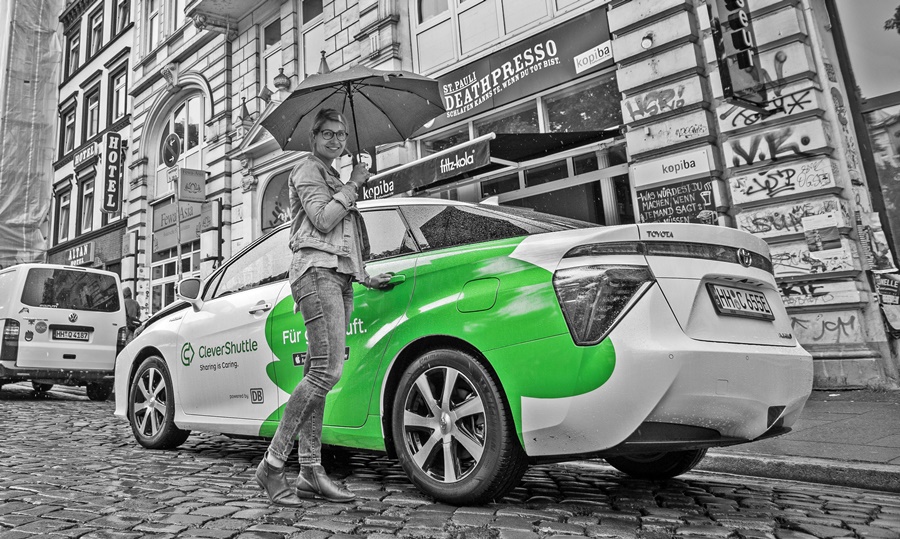
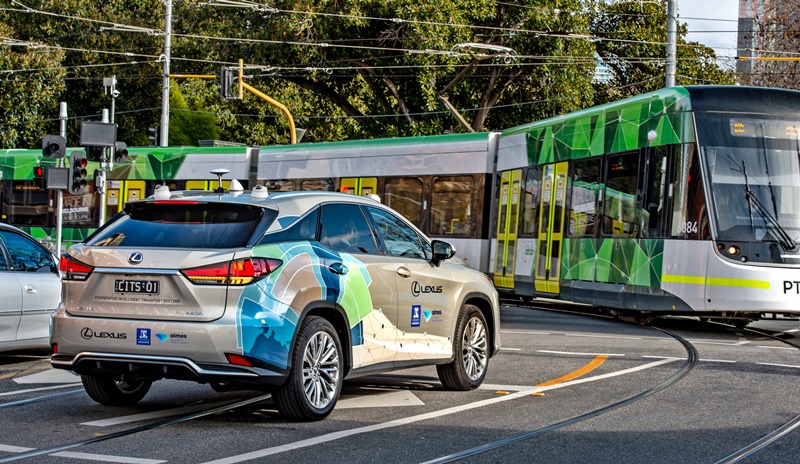
As Toyota prepares to start production of the second generation of its Mirai fuel cell electric vehicle (FCEV), one of its customers in Europe has covered over 5 million kilometres with its Mirai fleet. CleverShuttle, a ride pooling service in Germany, has set a record of sorts for having the most used Mirai fleet in the world.
During the two and a half years that the company has been running the Mira, its cars have covered a distance equivalent to six and a half times the distance from Earth to the moon and back.
“Fuel cell electric vehicles such as Toyota Mirai became an important pillar for us, thanks to their reliability. They have allowed us to provide countless passengers with comfortable rides, emitting nothing but water vapour,” said Jan Hofmann, COO & CO-Founder of CleverShuttle
CleverShuttle acquired its first batch of Mirais in September 2017 with 20 units initially which were offered in Hamburg. The fleet was progressively expanded up to 45 cars which were distributed at several German locations.
Reliability a strong point
Throughout this period, no repairs or parts replacements were needed, apart from regular maintenance, according to Ferry M.M. Franz, Director of Toyota Motor Europe in Berlin. “The experience of driving 5 million kilometres shows that fuel cell vehicles are already perfectly suitable for everyday use. No technical defects whatsoever and the unrestricted performance of the fuel cell, with mileage up to 180,000 kilometres per car so far, demonstrate the maturity and durability of Toyota’s fuel cell system,” he said.
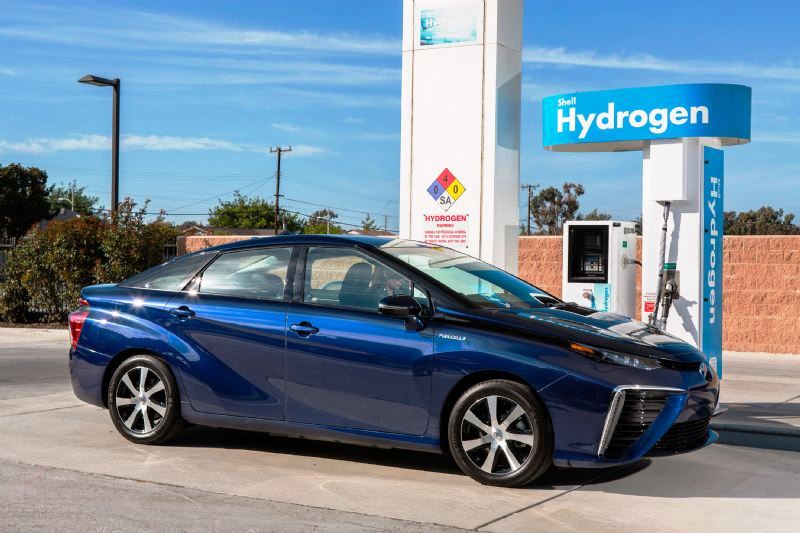
The Mirai was introduced in 2014 and has been available in Europe since 2015. It is available to both private and commercial customers. The 4-seater is emission-free, requiring only hydrogen which the fuel cell converts into electrical energy to power the motors.
The combined output of the electric motors is 113 kW (154 ps) and on a full tank of hydrogen, the Mirai can travel up to 500 kms. Unlike a battery pack which requires some time to recharge, refuelling the Mirai is said to take just under 3 minutes. Of course, hydrogen stations are limited at this time and it will be a while before a widespread network is established.
Technically sophisticated with its advanced technology, the Mirai has served as a catalyst for increasing global awareness of how a future clean and sustainable hydrogen society might be achieved. Just as the Prius hybrid has been progressively improved since it was launched in the late 1990s, the next Mirai will mark a new stage for FCEV technology. Improvements in fuel cell system performance and increased hydrogen storage capacity will extend its driving range.
Seating is an important aspect of driving and especially with sportscars, properly designed seats are vital for car control and comfort as they enable the driver’s body to be positioned correctly. Porsche will soon revolutionise sporty seating with an innovative alternative to conventional bucket seat upholstery with the concept study ‘3D-printed bodyform full-bucket seat’.
With this new technology, the sportscar manufacturer is once again underlining its close ties to motorsports. In this case, the personalised sports seat follows the principles of driver-specific seat fitting customary in professional motorsports.
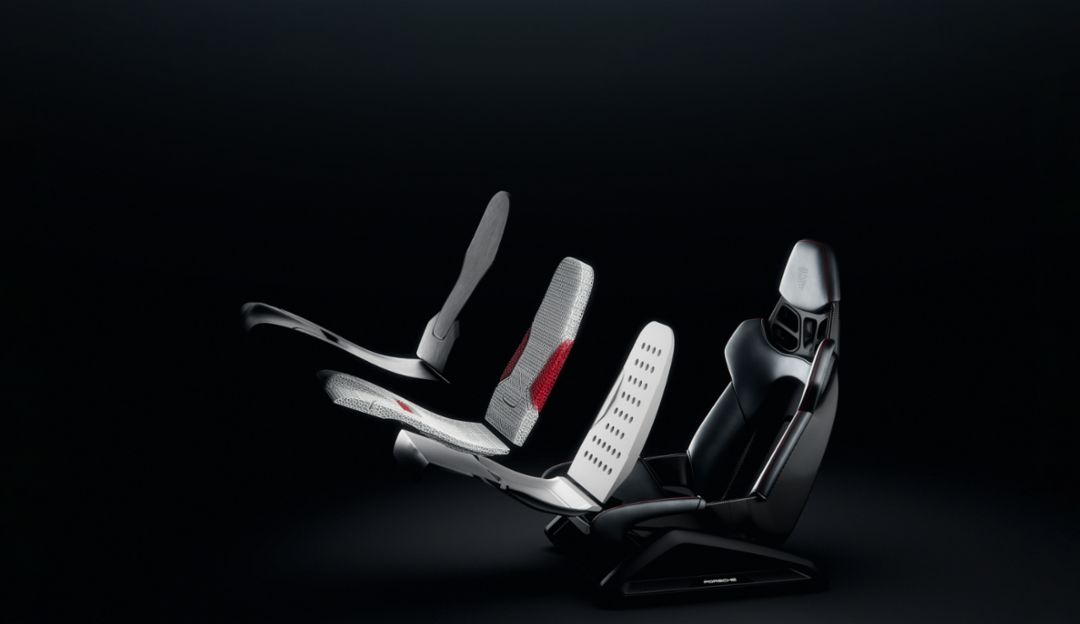
In this study, the central section of the seat – in other words, the seat and backrest cushions – is partly produced by a 3D-printer. Customers will be able to choose between three firmness levels (hard, medium, soft) for the comfort layer.
“The seat is the interface between the human and the vehicle and is thus important for precise, sporty handling. That’s why personalised seat shells customised for the driver have been standard in racing cars for a long time now,” said Michael Steiner, Member of the Executive Board for Research and Development at Porsche. “With the ‘3D-printed bodyform full-bucket seat’, we’re once again giving customers the opportunity to experience technology carried over from motor sports.”
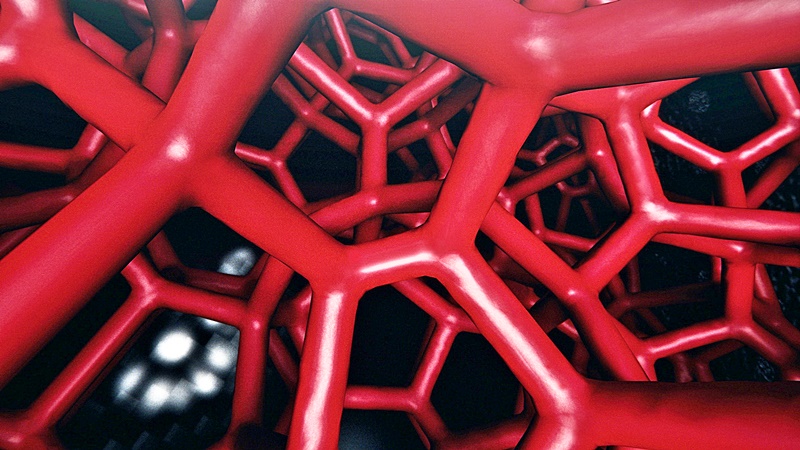
Close-up of the lattice structure
In addition to an ergonomic fit similar to that found in racing cars, this seat also delivers a unique design, lower weight, improved comfort and passive climate control. The 3D-printed bodyform full-bucket seat is based on the lightweight full-bucket seat from Porsche and features a sandwich construction.
This consists of a base support made from expanded polypropylene (EPP) is bonded to a breathable comfort layer consisting of a mixture of polyurethane-based materials made using additive manufacturing – in other words in a 3D-printer.
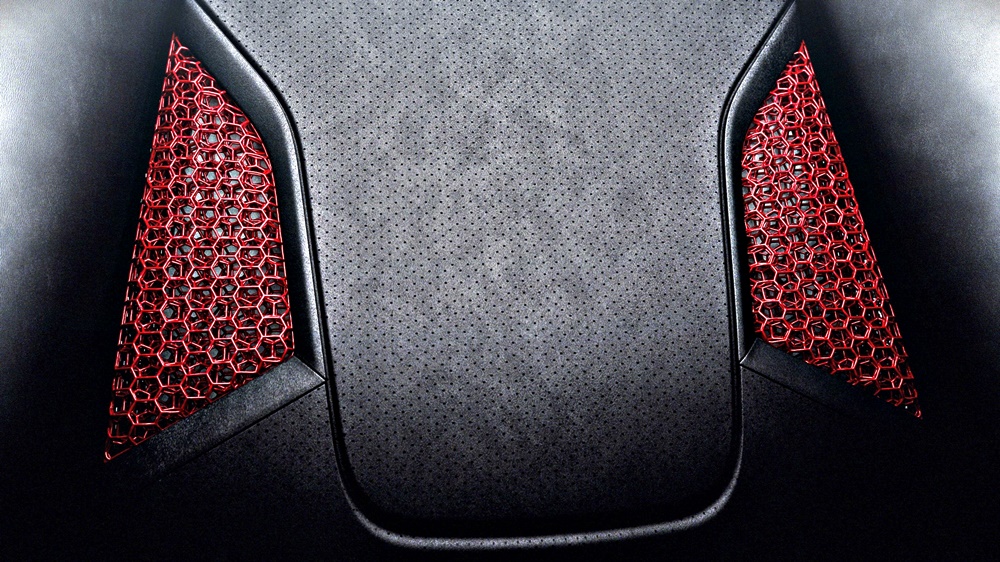
The outer skin of the concept seat is made from Racetex and features a specific perforation pattern for climate control. Window panels provide a view of exposed coloured components in the 3D-printed lattice structure and give the full-bucket seat a distinctive design.
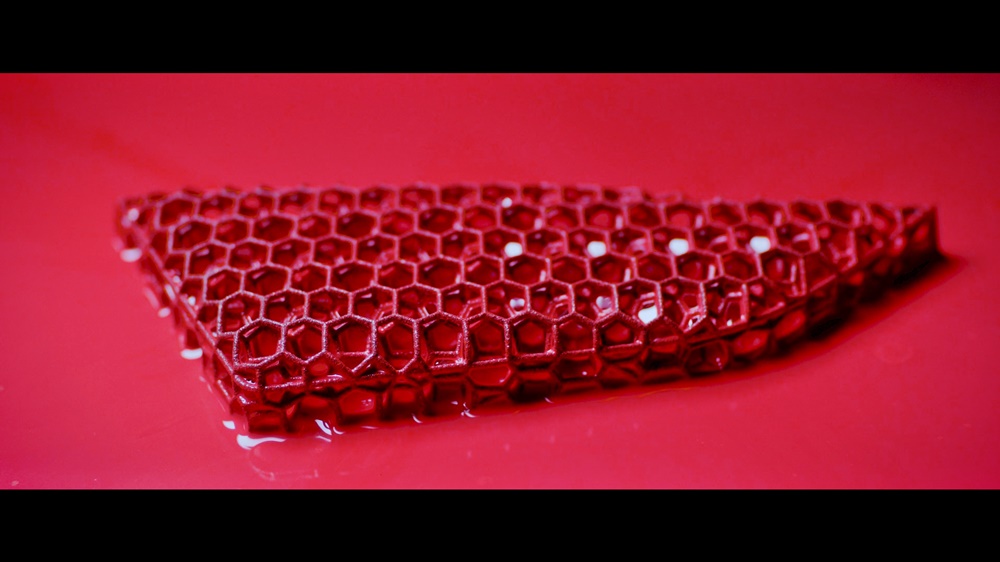
Visible components of the comfort layer
The 3D-printed bodyform full-bucket seat will be available from Porsche Tequipment as a driver’s seat for the 911 and 718 ranges from May 2020. The range will initially be limited to 40 seat prototypes for use on racetracks in Europe in combination with a 6-point seatbelt.
Feedback from customers will be incorporated into the development process. As a next step, street-legal 3D-printed bodyform full-bucket seats in three different firmness levels and colours will be available ex-works from the Porsche Exclusive Manufaktur from mid-2021.
The new seats will be available for the latest 718 (above) and 911 models.
In the long-term, the technology will also enable fully personalised solutions if sufficient customers express an interest in this. In addition to an extended range of colours, seats adapted to the individual customer’s specific body contour will then also be developed and offered.
Visit www.porsche.com.my to know more about the latest products and services available in Malaysia.
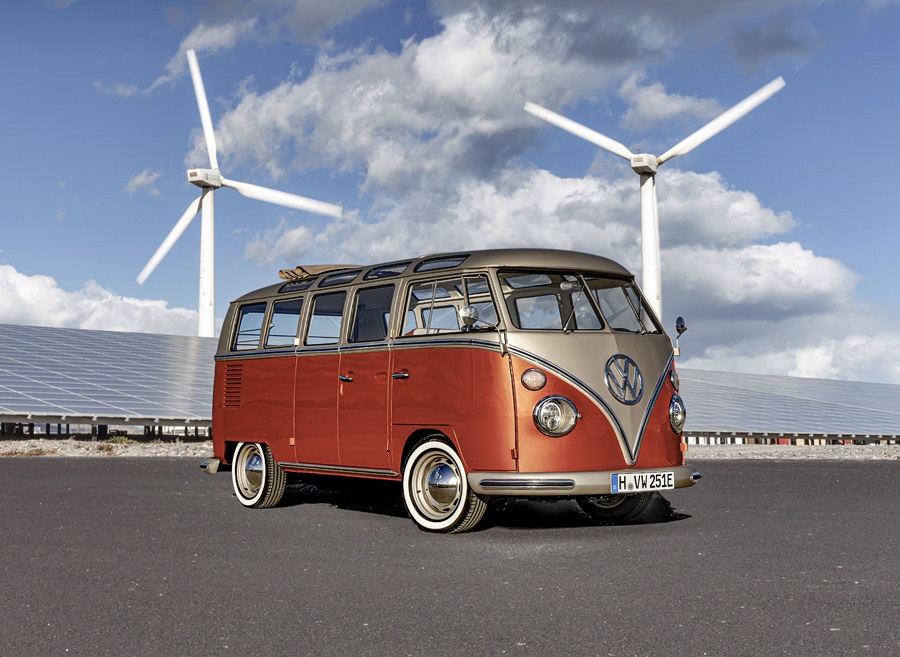
In due course, it will be possible for owners of the original Volkswagen T1 to make a conversion of the powertrain to a zero emissions electric drive system. Volkswagen Commercia Vehicles (VWCV), collaborating with eClassics, has developed a conversion package which is demonstrated in the e-BULLI all-electric concept vehicle.
VWCV engineers and designers formed a team along with drive system experts from Volkswagen Group Components and eClassics (a company which specialises in electric car conversions) to develop the e-BULLI. For the concept model, they chose a T1 Samba Bus produced in 1966 which, prior to its conversion, spent half a century on the roads of California.
New electric drive system components
The original 44 ps 4-cylinder boxer engine is replaced by a silent Volkswagen electric motor generating 61 kW (83 ps) and 212 Nm, the torque being more than double that from the engine before. The comparison of the engines’ power output alone makes it very evident that the concept vehicle will have completely new drive characteristics with performance unattainable using the original combustion engine.
Power transmission is by means of a 1-speed gearbox. The automatic transmission has 5 positions (P, R, N, D, B) and in position B, the driver can vary the degree of recuperation, ie of energy recovery when braking. The e-BULLI is claimed to have top speed of 130 km/h (electronically limited), 25 km/h more than the original T1.
The original T1 Samba Bus
Just like the powertrain of the 1966 T1, the combination of gearbox and electric motor integrated in the back of the 2020 e-BULLI drives the rear axle. A 45 kWh lithium-ion battery pack provides energy for the electric motor while a DC/DC converter provides 12V power for on-board electronics.
As in the new ID.3 and future ID.BUZZ, the battery pack is housed centrally in the vehicle floor. This layout lowers the e-BULLI’s centre of gravity and thus improves its driving characteristics.
80% recharge in 40 minutes
The battery pack is charged via a combined charging system (CCS) socket. It enables charging with AC or DC electrical supply. Thanks to the CCS charging socket, the battery pack can also be charged at DC fast-charging points with up to 50 kW of charging power. In this case, recharging up to 80% energy levels can be done within 40 minutes. The range with a fully charged battery packs is claimed to be more than 200 kms.
Redesigned chassis
Compared to the T1, riding in the e-BULLI will feel completely different. This is due to the redesigned chassis which consists of multi-link front and rear axles with adjustable shock absorbers and coil-over struts. There is also a new rack-and-pinion steering system and 4 internally-ventilated disc brakes.
New looks
In parallel with the new electric drive system, an interior concept has been created for the e-BULLI that is both stylish and avant-garde. The new look and corresponding technical solutions were developed by the VCVW design centre together with a team from VWCV Vintage Vehicles and the Communications department.
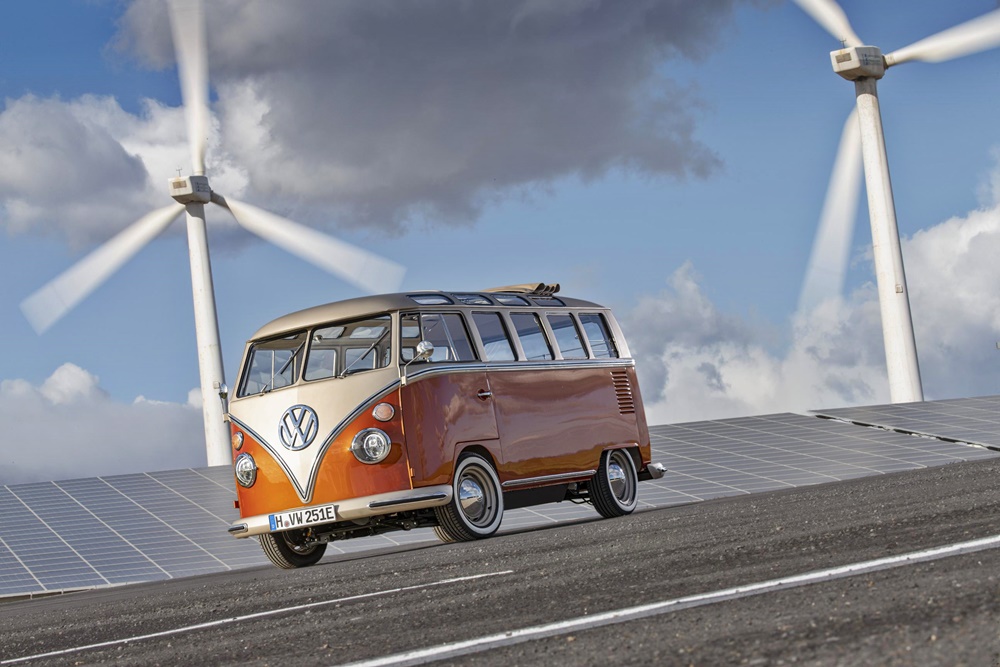
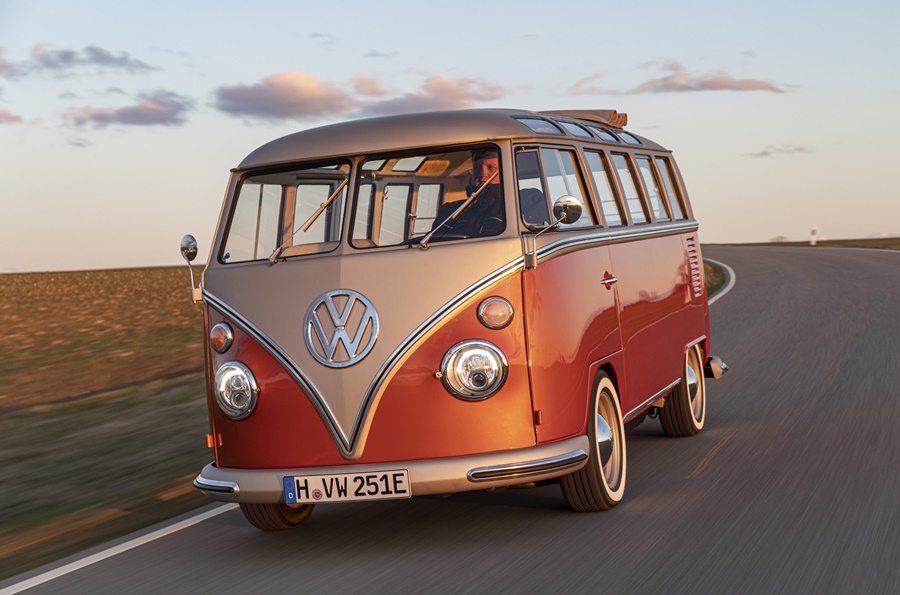
The designers modernised the exterior of the iconic vehicle with great sensitivity and finesse, including giving it a two-tone paintwork finish in Energetic Orange Metallic and Golden Sand Metallic MATTE.
Details such as the new round LED headlamps with daytime running lights modernise the looks. On the outside at the rear, there are also LED charge indicators. They signal to a driver walking up to the e-BULLI how much charge the lithium-ion battery still has.
Original interior concept modernised
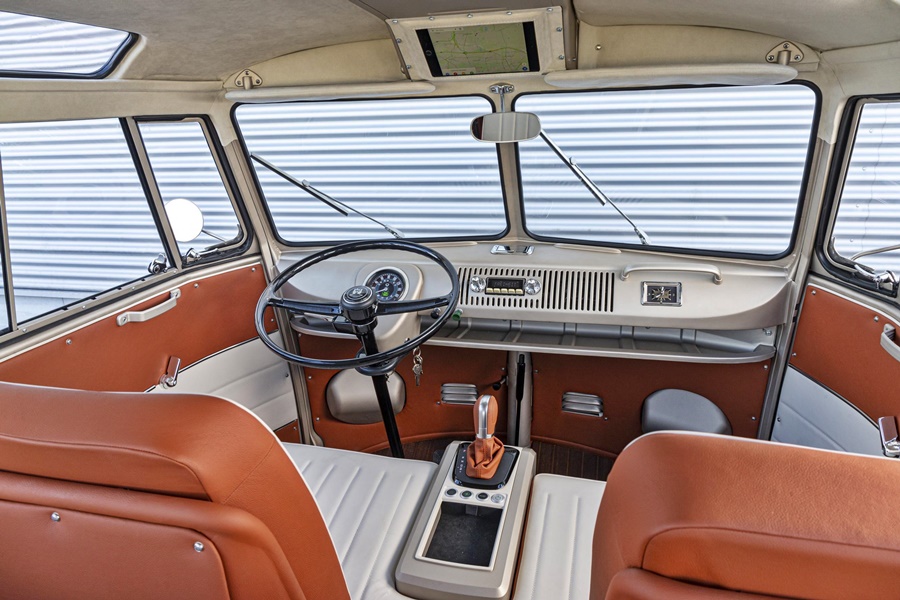
The 8-seat interior has a few things not expected to be in a T1. While the designers have re-imagined a lot of the interior, they did not forget the original concept and the seating is one of the new features. In keeping with the external paintwork, it is also in two colours. Solid wood looking like that of a ship’s deck is used for the floor throughout and, with the nice bright leather tones, the electrified Samba Bus takes on a maritime feel. This impression is strengthened by the large panoramic folding roof.
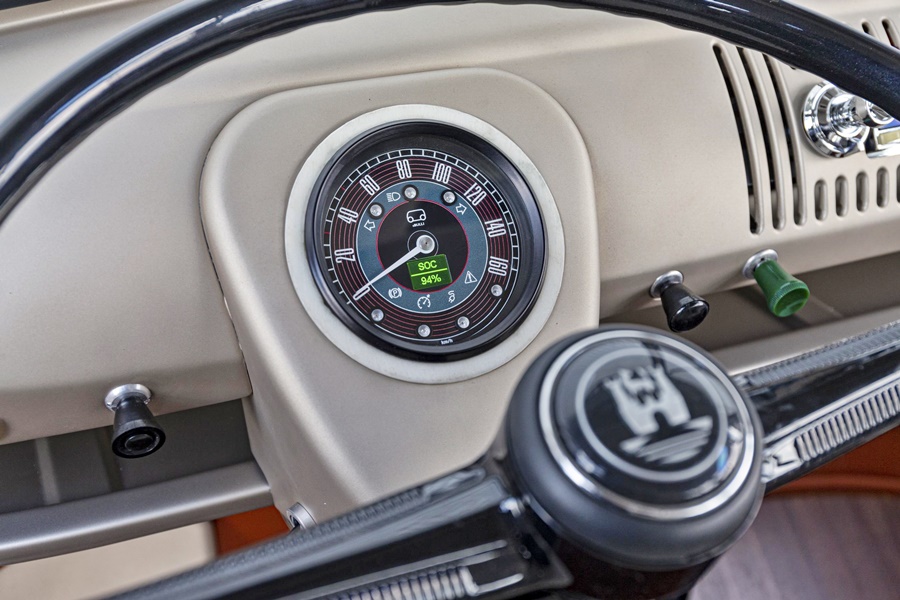
The new speedometer is based on the original while a two-digit display within it creates a link to the modern era. There is a small detail in the centre of the speedometer: a stylised Bulli symbol. A multitude of further information is shown via a tablet integrated into the roof console.
Music on board comes from an authentic-looking retro-style radio which is equipped with cutting edge technology such as DAB+, Bluetooth and USB. The radio is linked to a sound system with high quality components, including an active subwoofer.
The e-BULLI will be available at prices starting from 64,900 euros (about RM307,000) for the T1 conversion (complete with redesigned front and rear axles), with T2 and T3 conversions also being offered by eClassics in Europe.
Skoda, the Czech carmaker has been training and developing talent for more than 90 years at its Vocational School in Mlada Boleslav. In the first year, 58 students began their training in three different specialist areas. Today, more than 900 students (13% female) are enrolled in 13 full-time courses and three postgraduate programmes at the Skoda Academy.
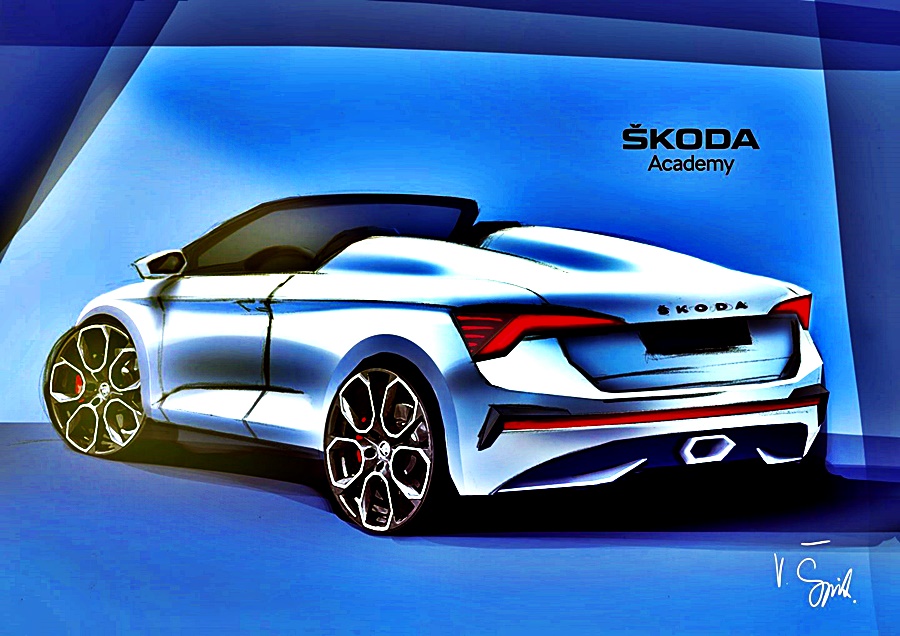
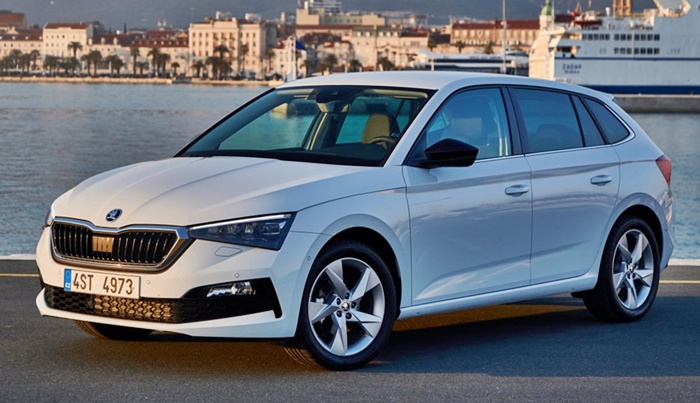
The quality of training will be put to the test in the seventh Skoda student concept car project. 20 students from the academy are involved in the ambitious project this year. They have decided to design and build an open-top Spider version of the new compact Scala model.
Watching and learning from the professionals
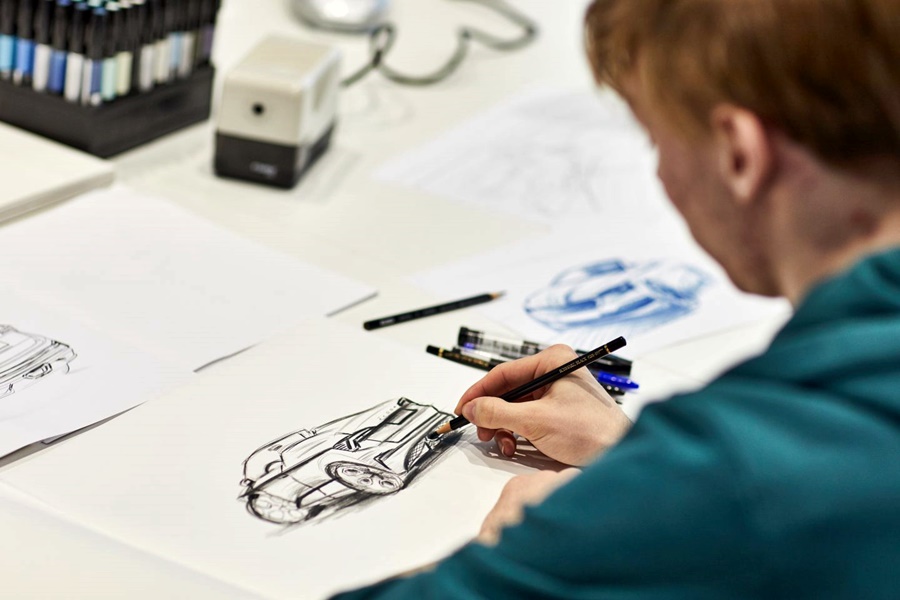
At a workshop in the Skoda Design department, the participants met the company’s Head Designer, Oliver Stefani, and put their first ideas down on paper with him and his team. The still-unnamed project car, which the students will be constructing according to the design, will be presented to the public in early June.
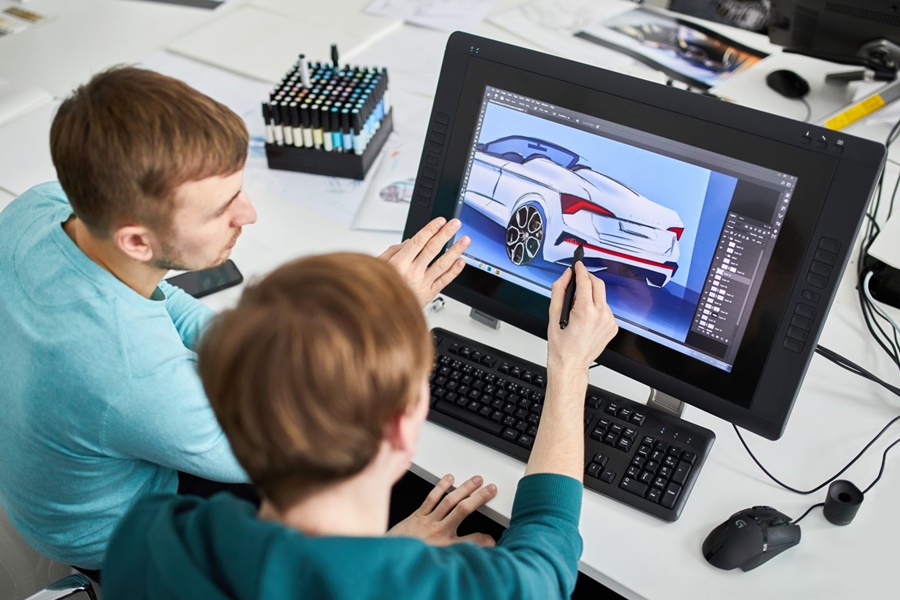
During the visit, they were allowed to watch Stefani and his team in their day-to-day work and to create their own drawings. “Despite the increasing use of computers and simulations, drawing is still an essential part of automotive designers’ work. With every stroke, an idea turns into something real. A sketch is the first of many steps on the long and exciting path to a new car,” explained Stefani.
Support from engineers
Throughout this project, the up-and-coming talent will receive support from engineers and experienced employees from the areas of technical development, design and production within the company. The apprentices have expressed a wish to make the car’s clear lines and emotive shapes more prominent in the spider version to emphasize the vehicle’s overall dynamics.
“From the beginning, all the participants showed great enthusiasm and determination. Their sketches are very impressive, I really like the concept,” said Jiri Hadascok, exterior design coordinator at Skoda, adding that the professionals were impressed with their enthusiasm and receptiveness.
The Scala model which the students’ concept car is adapted from.
Designing a concept vehicle and then building it by hand is the highlight of all apprenticeships. “We are all delighted to be part of this project. As a student, where else do you get the chance to put your own ideas and vision into designing a car and then actually build it yourself? Drawing our first sketches was lots of fun, and we learned a lot from Oliver Stefani and his team,” said one of the participants, Vojtech Spitalsky.
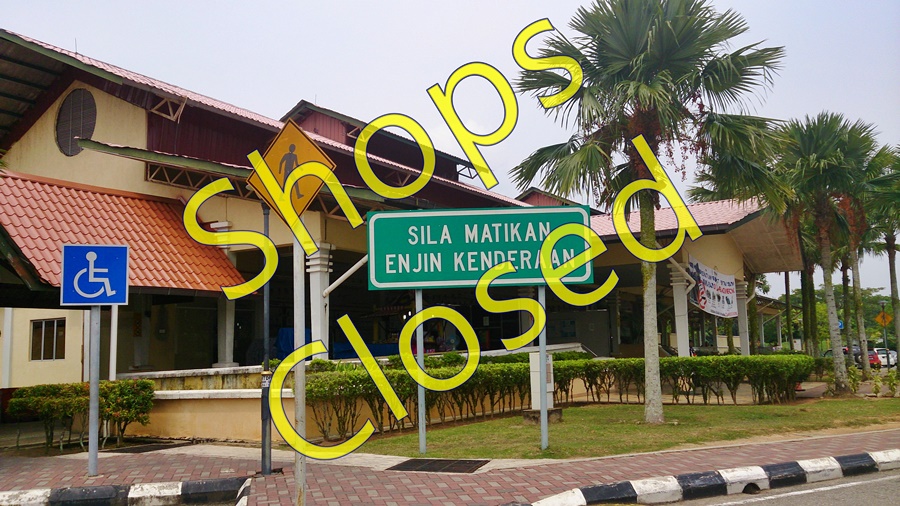
Interstate travel is not permitted during the period of the Movement Control Order (MCO). However, if you are on PLUS highways – and you should have a valid reason for travelling – and want to stop by at a R&R to pick up food or drinks, you should be aware that the shops are closed from today until March 31, 2020 when the MCO ends.
According to notices which appeared today on the PLUS Facebook pag, the closure of shops are at the following R&R locations in Peninsular Malaysia:
Gelang Patah, Machap, Ayer Keroh, Mambau, Ulu Bernam, Sg. Buloh, USJ and Penanti.
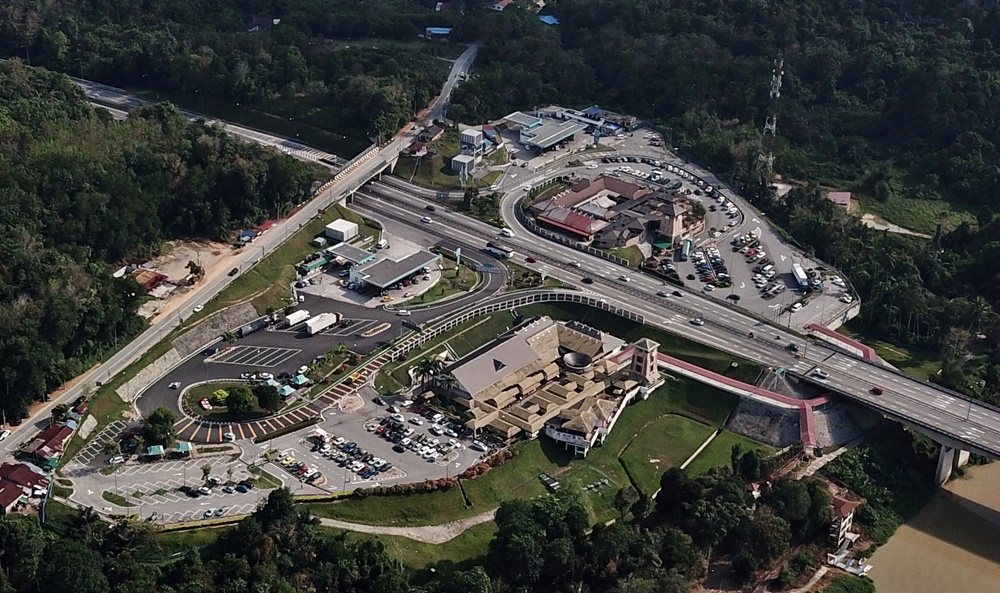
Operating hours at some R&Rs have been shortened to 6 am to 7 pm until March 31, 2020 (picture of R&R at Sg. Perak taken earlier in the year).
Additionally, at the other R&Rs, operating hours of the shops will be from 6 am to 7 pm. They are at:
Pagoh, Seremban, Dengkil, Tg. Malim, Tapah, Sg. Perak, G. Semanggol, Gurun and Rawang.
All stalls and shops at the lay-bys will also be closed from March 21 – 31, 2020.
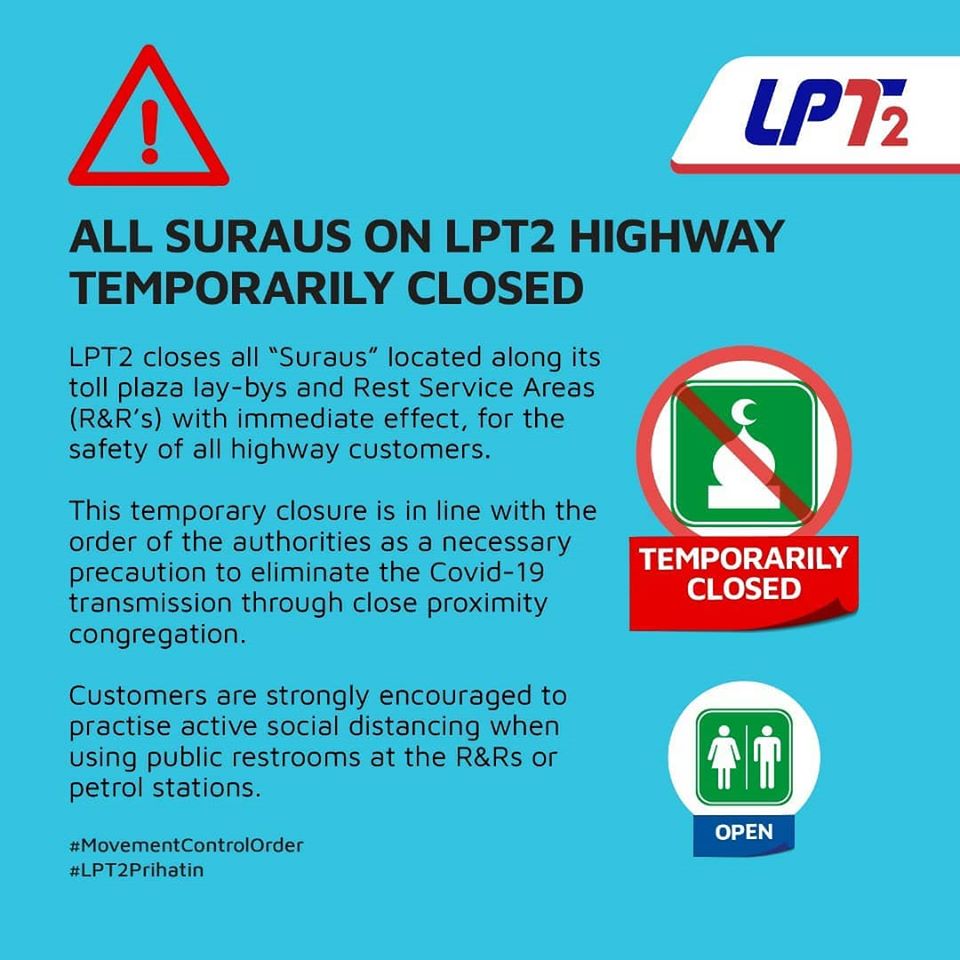
However, the toilets, parking spaces and petrol stations will still be operational as normal. All suraus at PLUS R&Rs and the LPT2 are, however, closed during the MCO period.
PLUS has also closed all its reload facilities at the Toll Plaza Customer Service Centres and Reload lanes at both its Open and Close Toll highways.
The highway concessionaire explained that these actions of closure are social distancing efforts to reduce the risk of infection and therefore limit virus transmission.
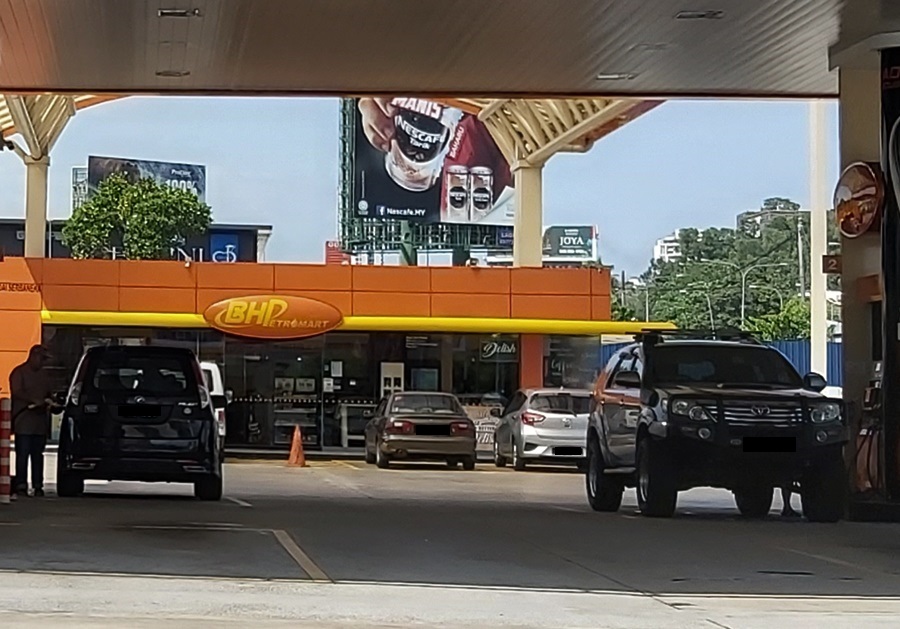
Reloading of TnG tollcards can be done at petrol station convenience stores such as BHPetrol’s Petromarts.
As such, PLUS advises motorists to plan their journey ahead by reloading their Touch‘nGo card at reload centres nationwide. The reload facilities include Self-Service Kiosks at 67 locations along selected rest and service areas, as well at ATMs of banks. Petrol stations and convenience stores can also provide reload services.
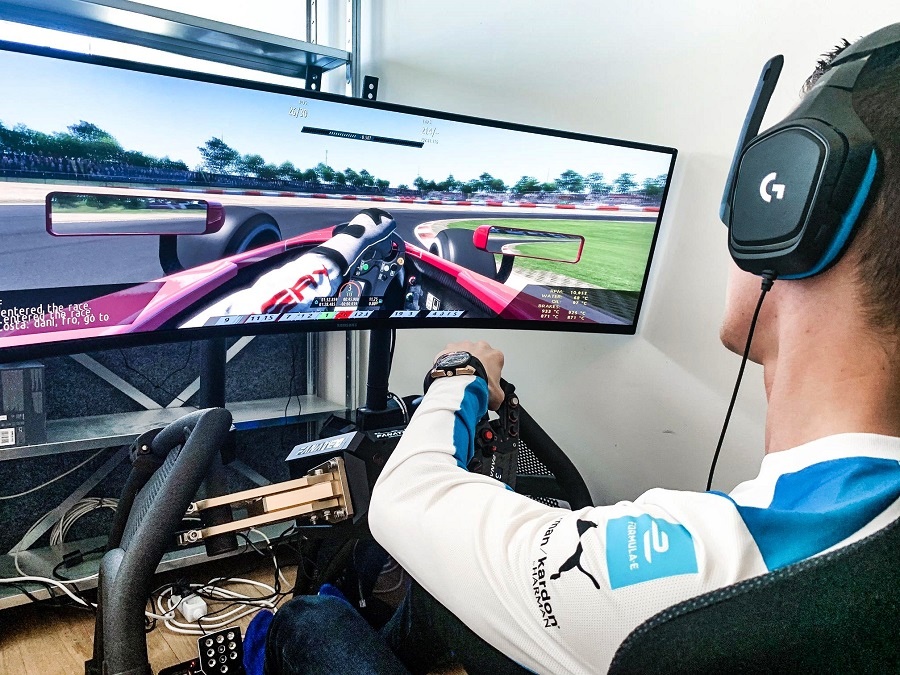
Real-world motorsports events all over the world, including world championships, have been cancelled or postponed because of the COVID-19 pandemic. But that doesn’t mean that there’s no racing going on – within the vast BMW Motorsport SIM Racing programme, no less than ten BMW drivers will fight for glory today.
The first-ever virtual round of the Nurburgring Endurance Series will start off at 1 pm European time (8 pm in Malaysia) with a 4-hour race in what is nicknamed the ‘Green Hell’. Among the more than 50 cars in the field that are split into four classes, there will be two BMW Z4 GT3s driven by BMW drivers. The race will be broadcast in livestream at www.vln.de.
“It is obviously a shame for us racing drivers to be at home instead of at the racetrack at the moment. As such, I am all the more delighted that sim racing is offering us the opportunity to still go racing,” said Martin Tomczyk, who will be in a Z4 GT3). “Personally, I am spending a lot of time in the simulator at the moment. I think holding the season-opener on the Nordschleife in a virtual environment, and in line with the original regulations, is a great idea. I am sure there will be a lot of well-known names on the grid.”
After this race, you can visit the YouTube channel of THE RACE in order to follow the second edition of the All-Star Esports Battle. Up to 60 pro racers will accept the challenge of sim racers, in order to determine the overall winner in the Grand Final from 8 pm (3 am Sunday in Malaysia). BMW i Andretti Motorsport driver Maximilian Gunther (GER) will return to this competition, after finishing second behind Max Verstappen (NED) in the very first Pro Race held last weekend.
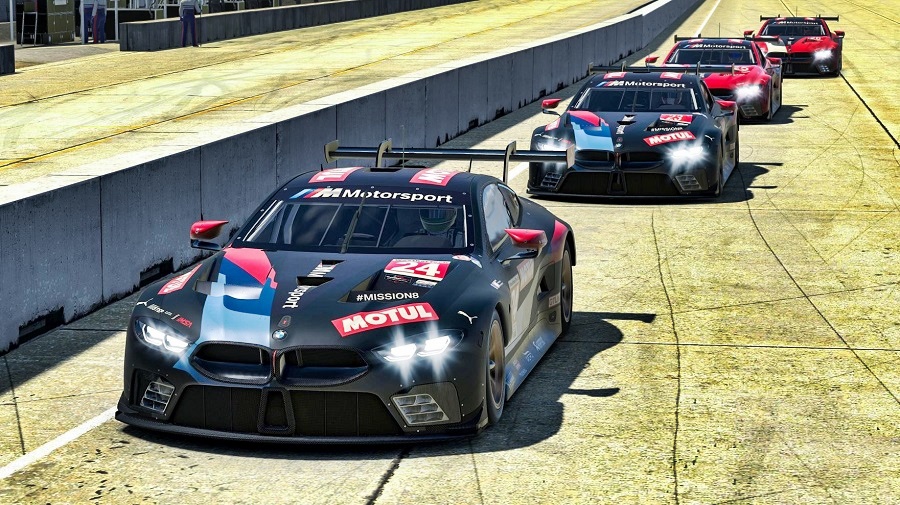
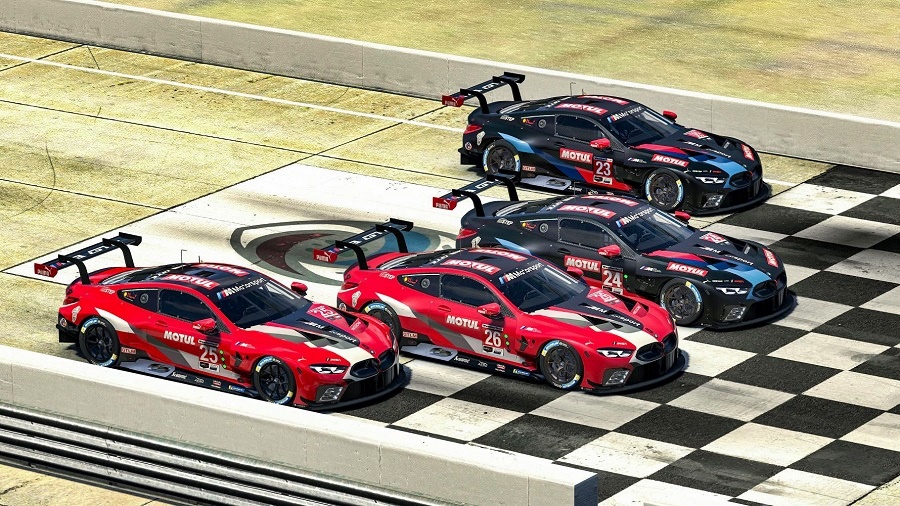
Four MOTUL BMW M8 GTE cars will line up on the grid of the 90-minute IMSA Super Sebring race. With the classic Sebring 12 Hours (USA) being postponed, IMSA fans will now be treated to GTE action on the iRacing sim platform. In total, more than M8 GTEs have registered for the race which will start at 2:30 pm in America (2:30 am Sunday in Malaysia) which will be broadcast on the iRacing eSports Network on YouTube and Twitch.
BMW DTM driver Philipp Eng, who makes his debut in THE RACE All-Star Esports Battle, said: “I am very much looking forward to taking to the virtual racetrack with so many of my fellow professional racing drivers and sim racers. At the moment, the simulator is our only opportunity to go racing. I will prepare as well as possible and hope to be up there at the front of the field.”
Officially, under the Movement Control Order (MCO), unauthorised travel outside of homes is not permitted. However, it is still permissible to travel to get food and other supplies or medicines, but the journey must only be from home to the shop and back. No wandering around and if possible, only one person should go from each household.
Interstate travel is also forbidden unless a permit is given by the police (except for Selangor and Kuala Lumpur). Individuals can be fined RM1,000 or sentenced for up to 6 months in jail for not following the MCO, under the Prevention and Control of Infectious Diseases Act 1988.
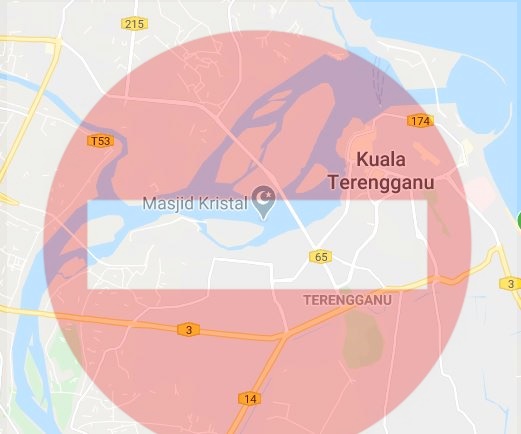
However, in some areas, the police seem to have decided to tighten enforcement in a stronger effort to stop the spread of the COVID-19 coronavirus. In the case of Kuala Terengganu, Malaysiakini reports that all main roads into the town centre have been closed off. Free flow of traffic during the MCO period until March 31 will not be permitted except for those on duty and have legitimate reasons to enter.
In Bentong, Temerloh, Kuantan, Pekan and Jerantut, petrol stations and convenience stores have been ordered to remain closed from 7 pm to 7 am although the MCO has mentioned that such places could remain open.
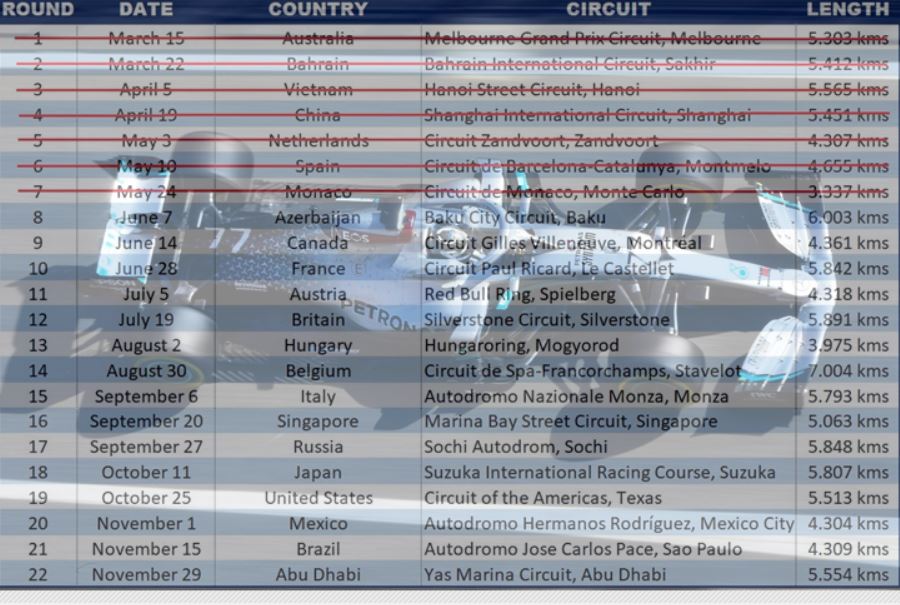
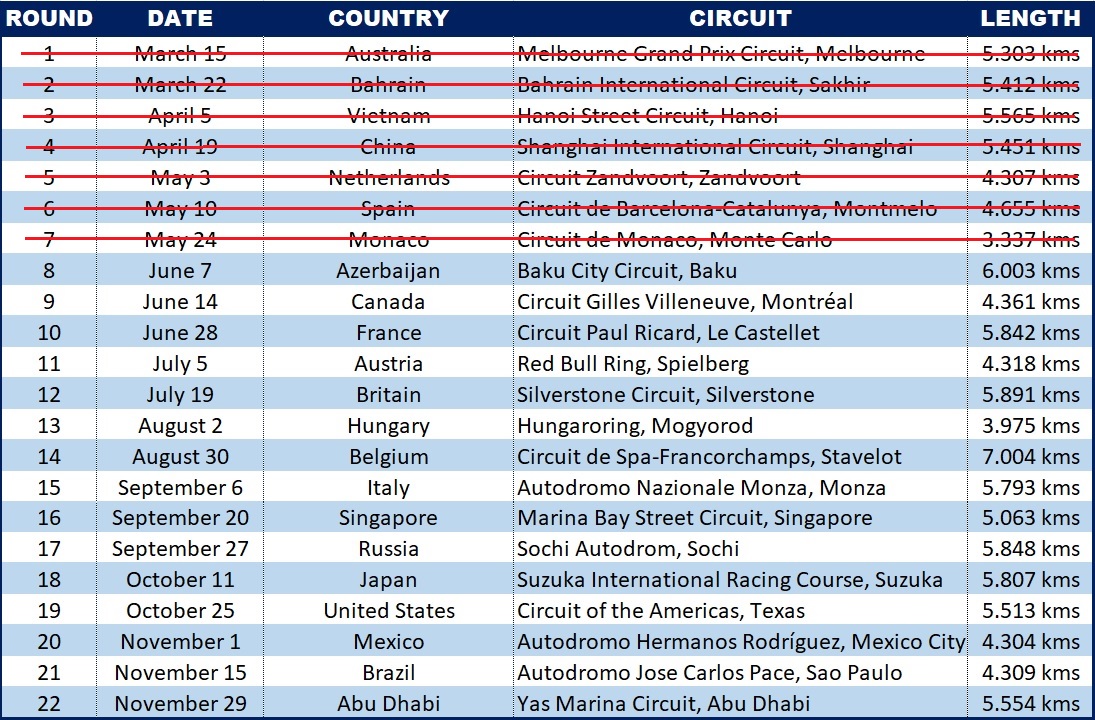
It’s beginning to look like the 2020 Formula 1 World Championship might never run. Following the sudden cancellation of the Australian GP, the opening round, the rounds in Bahrain and Vietnam were postponed. The fourth round in China had already been cancelled earlier as the COVID-19 worsened.
The FIA, which governs motorsport, had discussions with event organisers and the Formula 1 organisation as well as Liberty Media (which holds commercial rights) and decided that the championship would start in May with the European rounds. For the postponed events, there were proposals to run then sometime in the third quarter of the year.
Now, however, with the continued global spread of COVID-19 and many countries imposing strict regulations on movements as well as entry, it would be very difficult to run races. Any event which will have large crowds would not be permitted as that would enable the virus to spread.
The FIA has therefore announced that the Dutch GP, Spanish GP and Monaco GP will be postponed. The three rounds were scheduled to be run in May.
“The FIA and Formula 1 continue to work closely with affected promoters and local authorities to monitor the situation and take the appropriate amount of time to study the viability of potential alternative dates for each Grand Prix later in the year should the situation improve. The 2020 Championship season will begin as soon as it is safe to do so after May,” a statement from the AFIA said.
This week, the FIA has also announced that implementation of the Technical Regulations due to take effect from the 2021 season will be postponed until 2022. Due to the currently volatile financial situation this has created for the teams, it has been agreed that they will use their 2020 chassis for 2021, with the potential freezing of further components to be discussed in due course.
“The introduction and implementation of the Financial Regulations will go ahead as planned in 2021, and discussions remain ongoing between the FIA, Formula 1 and all teams regarding further ways to make significant cost savings,” the FIA said.
Yamaha is a well known name in the motorcycle world, especially in motorsports. And while most people know the Japanese manufacturer for its motorcycles, it actually has a history of making high-performance engines for other manufacturers. In fact, as far back as 1959, Yamaha engineers carried out basic research in automobile engine development and produced a 1.6-litre DOHC unit of exceptional power output.
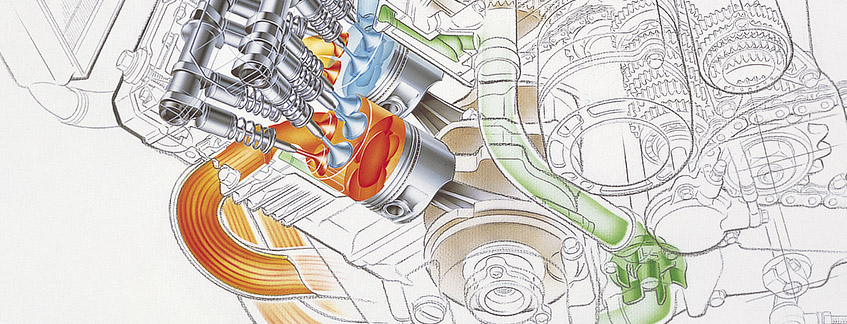
It collaborated closely with Toyota on the 2000 GT supercar as well as the development of Toyota’s engines such as the 2T-G, 3S-GTE, 1Z-GTE and many others. One of the notable features of its engines was multivalve technology which Yamaha engineers contended offered the highest potential. This is because of the increased effective intake valve surface area, the possibility of a higher compression ratio due to more compact combustion chambers, and lighter valve mass.
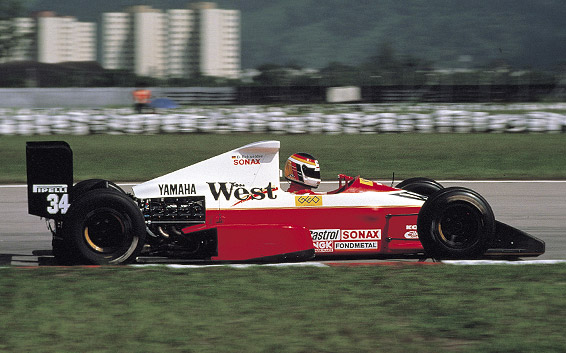
In the late 1980s, Yamaha was also involved in Formula 1, after having established a strong track record in Formula 2 and F3000. In 1988, it teamed up with Zakspeed Formula Racing, to form a Formula One racing team known as the West Zakspeed Yamaha Team. The team entered F1 events with a new car using a Yamaha-developed engine, the OX88. The engine was a 5-valve DOHC V8 that had a displacement of 3489 cc and produced over 600 bhp.
One of the teams which Yamaha provided its engines to in the 1990s.
Aguri Suzuki, who had already made the step up to Formula 1, joined the team and faced high expectations as the second ever Japanese Formula One driver following Satoru Nakajima. The team had a somewhat difficult time at first but in 1990, a compact, lightweight engine to succeed the OX88 was announced: the OX99. It was a 5-valve V-12 with a 3498 cc displacement, and its output was also over 600 bhp.
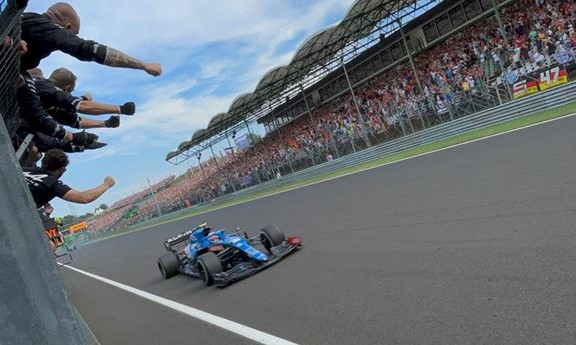
The OX99 proved to be a more competitive engine and Yamaha provided it to the Brabham, Jordan, Arrows and Tyrrell teams until 1997 when the company stopped its involvement in F1. The best result during the 8 years of taking part in F1 was a second place by Damon Hill, driving for the Arrows, at the 1997 Hungarian GP.
F1 car for road use
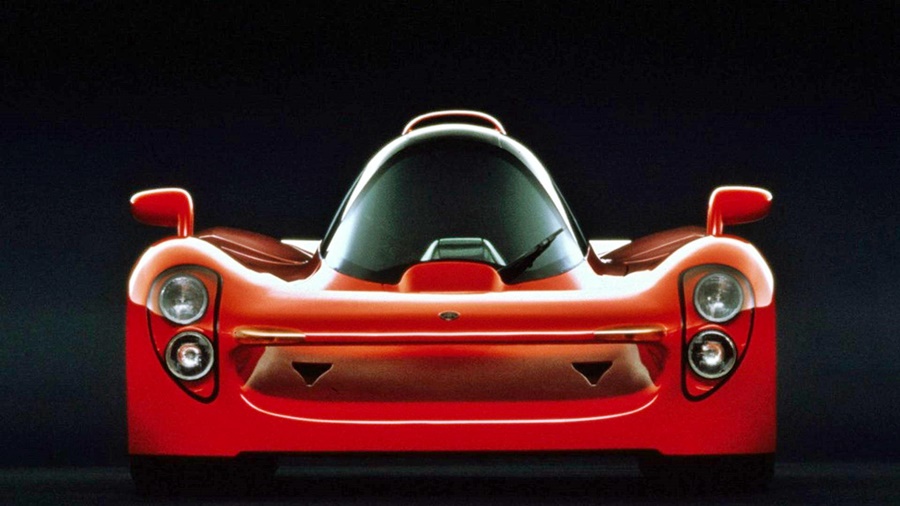
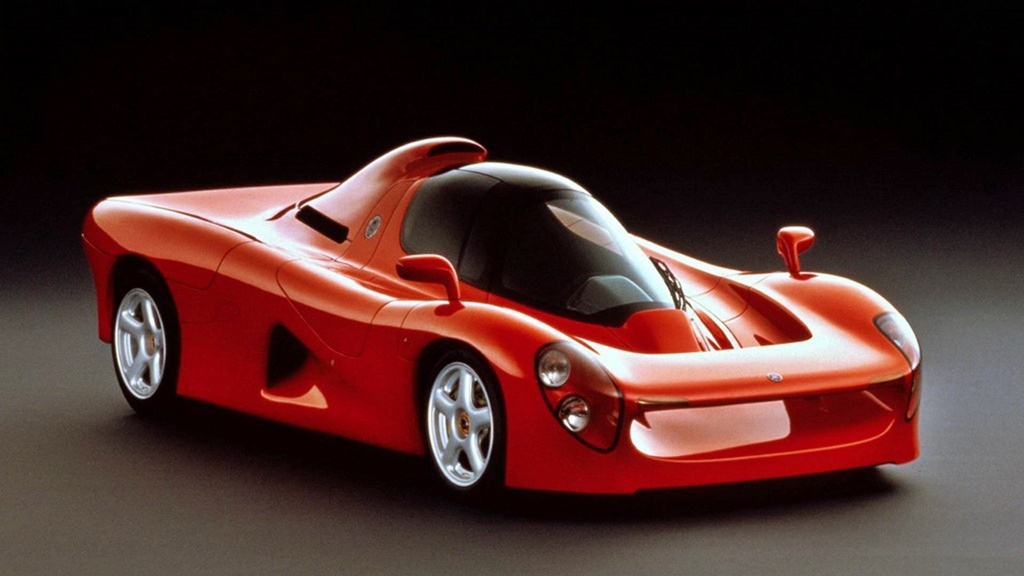
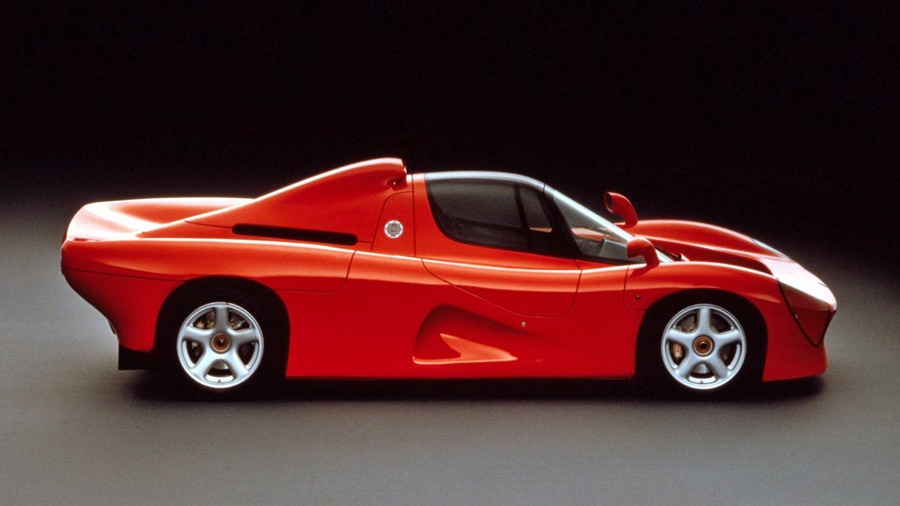
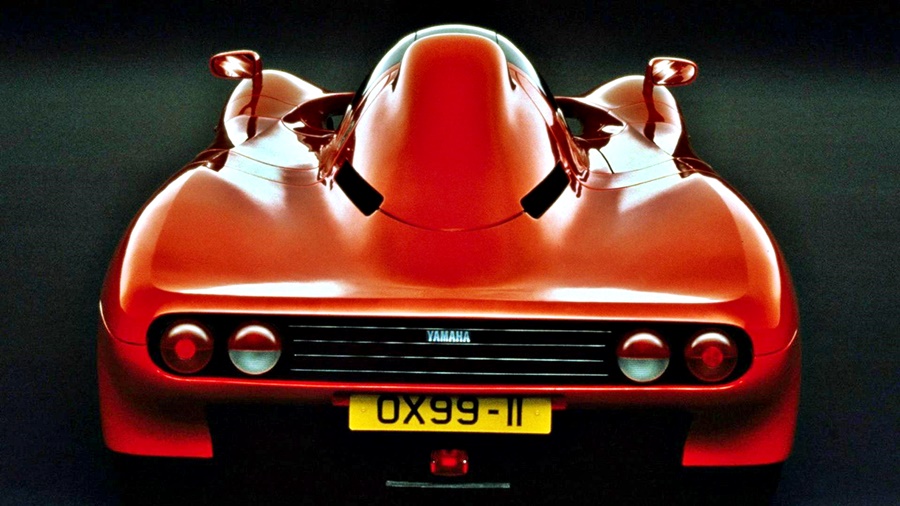
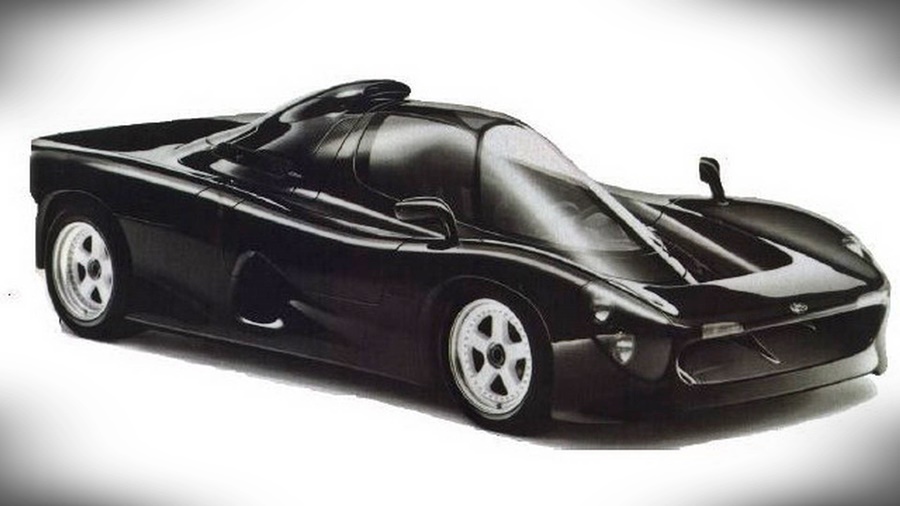
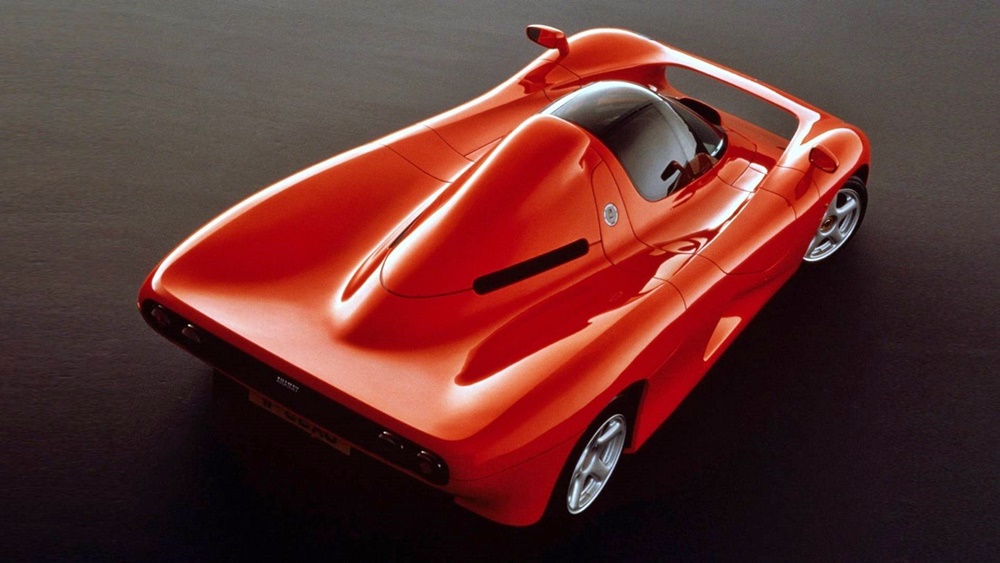
Using its experience in F1, Yamaha then started to develop a F1 car for the road which, in concept form, was known as the OX99-11. It had a seating position like a racing car – including a central steering position – but was configured to comply with legal requirements for road use. This meant having wheels enclosed within a wheel well, proper lighting units, reasonable ground clearance, and of course, low noise and emissions. The result was a car that looked like a scaled-down Group C racer.
Just as Honda (coincidentally another top motorcycle maker) made a strong technological statement with its NS-X, so too did Yamaha using the OX99-11 to demonstrate the company’s advanced capabilities in the field of automotive engineering. Yamaha planned to make up to 100 units for sale, with a launch date set in 1994.
At that time, T. Hasegawa, who was a senior Managing Director of Yamaha in 1992 and the man behind the company’s collaboration with Toyota for the 2000 GT said: “This project is part of Yamaha’s ongoing efforts to use its experience and technology to make exciting and meaningful contributions to the great tradition of motor culture. It represents our attempt to build the ultimate sportscar.”
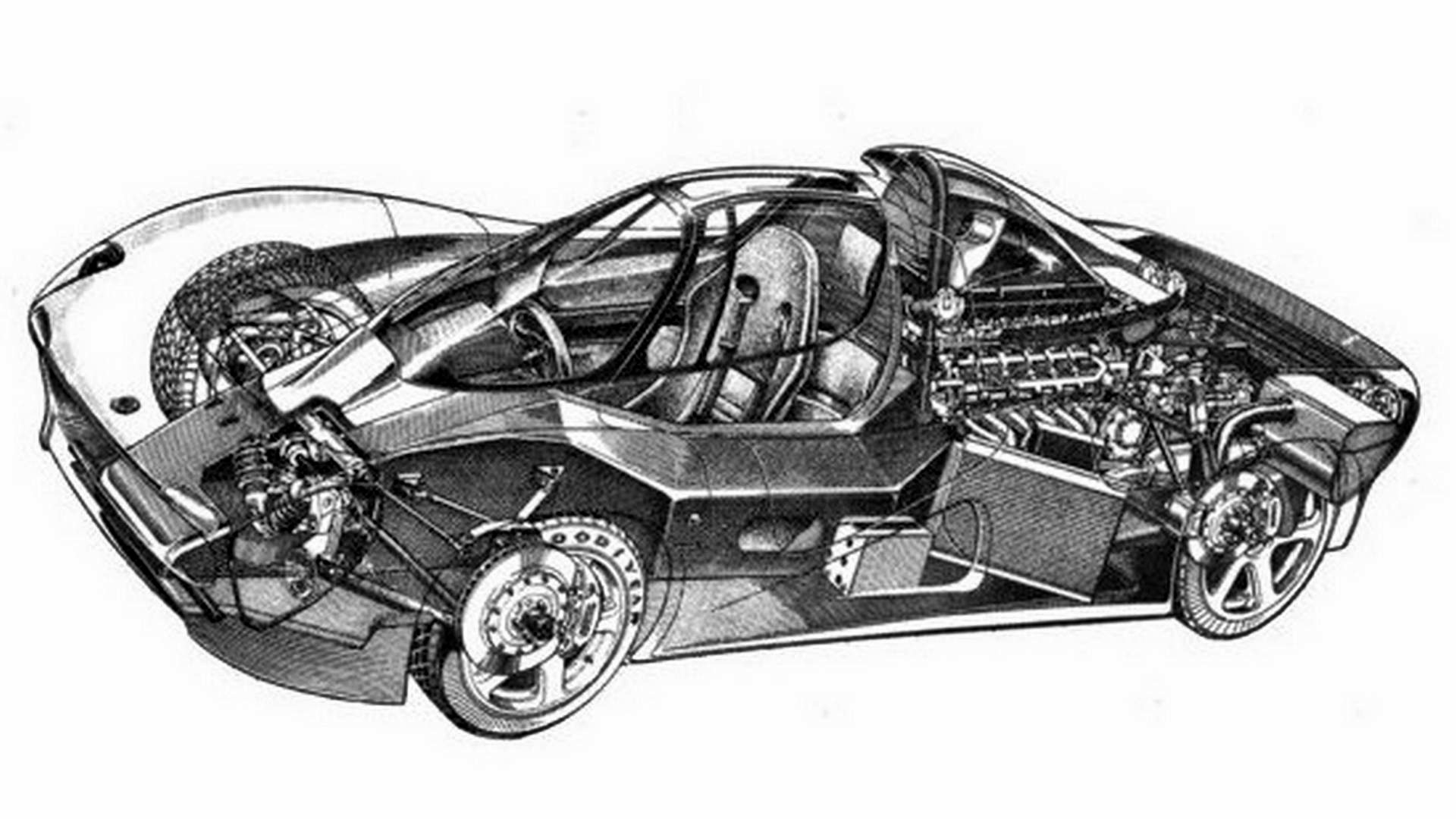
The idea to make the car had started sometime in 1982 and a prototype was built using a 4-cylinder 2-litre engine for the Japanese F2 series. In order to make it practical for road use, the mid-mounted engine was detuned by changing the cam profiles, putting in a new engine management programme, and using a slightly heavier flywheel. However, the 10-litre dry sump lubrication system was retained to avoid fuel surge problems and it also lowered centre of gravity. Intake air was drawn through a port on the roof.
But in spite of being detuned, the 3.5-litre engine could still deliver 400 bhp and spin up to 10,000 rpm. Yamaha claimed that it had superior driveability and plenty of usable power from 1,200 rpm, fully exploited by the 6-speed transmission.
Underneath the aluminium bodyshell, the structure was the same as a F1 car with the engine and transmission bolted to the rear wall of the monocoque made of carbonfibre reinforced plastic (CFRP) and sandwiched aluminium honeycomb material. A roll-cage of CFRP was also installed around and over the cabin for extra protection. The driver sat in a safety tub with a small ‘passenger space’ behind, offset to the left. Entry was by raising the glass canopy hinged on the right side.
In the cockpit
Jet pilots would have felt right at home in the OX99-11 with the way the canopy wrapping around the cockpit. The shift lever was placed on the right panel adjacent to the starter button. But back then, electrical systems were simpler and though there was the button to start the engine, a key had still to be inserted to connect the electrical circuit! Because of the compactness, the steering wheel had to be removed to get out of the car.
Although the cockpit was longer than a F1 car, its width was limited because a large portion of the 120 litres of fuel carried was stored in the box sections on either side of the driver. This further enhanced weight distribution as the main mass was kept in the middle area of the car.
F1 suspension
Much of the suspension design and materials came straight off the F1 shelf; at the front and rear were double wishbones with inboard spring/adjustable damper units operated by pushrods. The suspension arms were long and thin with an aerofoil cross-section. Ground clearance could be varied using the body height mechanism.
The tyres for the OX99-11 were from Goodyear which worked with Yamaha on the project. Specially developed unidirectional Eagle 17-inch Z-rated tyres with an asymmetric pattern were installed, the front ones having a 245/40 and the back ones 315/35. The wheels were made of magnesium alloy and were 9 inches wide in front, 12 inches at the rear.
Super downforce
As to be expected, aerodynamic efficiency was top priority and the designers applied the ‘upside-down aerofoil’ idea exploited by Colin Chapman in his Lotus F1 cars. Thus, the OX99-11 was essentially profiled like an inverted wing, the entire shape generating downforce instead of lift.
The claimed overall coefficient of lift of -63 was believed to be the lowest ever attained for any road-legal car. While not as good as a full-fledged racing car, it was still impressive considering the height of the car which allowed air to ‘leak’ under it.
Each OX99-11 was to be hand-built at Ypsilon Technology, a Yamaha subsidiary established in England in 1990 which was responsible for maintaining and supplying Yamaha racing engines. Unfortunately, Japan’s ‘economic bubble’ burst in the early 1990s and Yamaha did not think that anyone would be interested in a supercar (which might cost as much as US$800,000). In the end, only three prototypes were built before the project was terminated.
DIMENSIONS
Length: 4400 mm
Width: 2000 mm
Height: 1220 mm
Wheelbase: 2650 mm
Tracks: 1615 mm (F) | 1633 mm (R)
Min. ground clearance: 100 mm