
Piston.my

EV

BHPetrol RON95 Euro4M

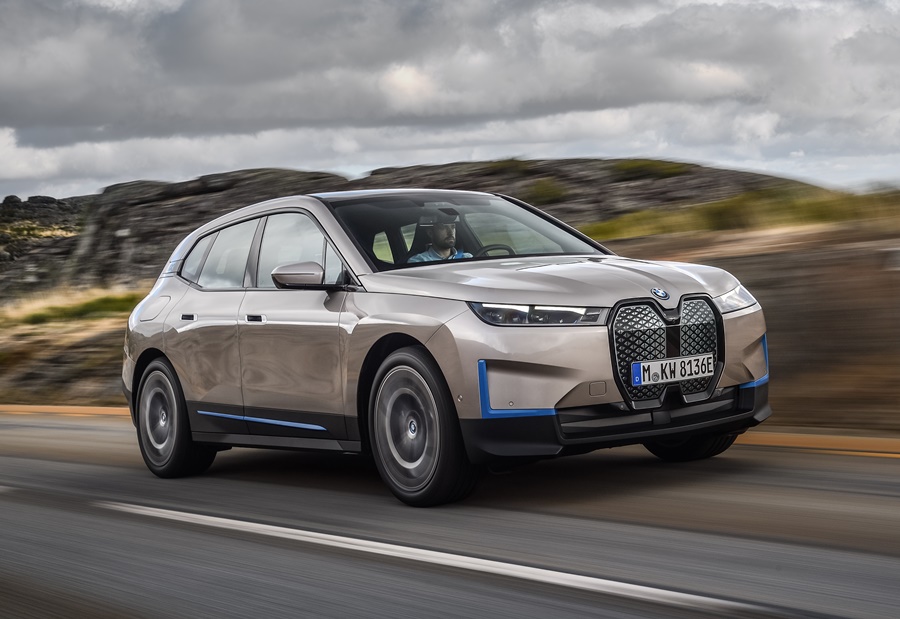
With a year still to go before its market launch at the end of 2021, the BMW Group is providing a first look ahead to the future BMW iX, the production reality of the BMW Vision iNEXT. Currently undergoing extensive development work, the iX is the first model based on a new, modular, scalable future toolkit developed by the Group.

Conceived from the outset for purely electric mobility, the iX sees BMW redefining the Sports Activity Vehicle (SAV) concept that it introduced in the late 1990s with the X5. Just as the X5 was a pioneering model for the carmaker, so too is the iX which is the first representative of what the company promises to be ‘a trailblazing generation of cars’.
2022 BMW iX

The iX harnesses the latest innovations in the fields of electrification, automated driving and connectivity to deliver a mobility experience with people at its core. To this end, its design has been developed from the inside out to provide quality of life and wellbeing for drivers and passengers.

BMW Group’s new technology flagship
The design and technology of the iX form an overall package that lays the foundations for what is in many respects a new kind of driving experience. In so doing, it comprehensively embodies the character of the BMW i brand, whose mission is to transform personal mobility. BMW i plays a central role at the BMW Group as a ‘workshop for the future’ and driver of innovation across the company.
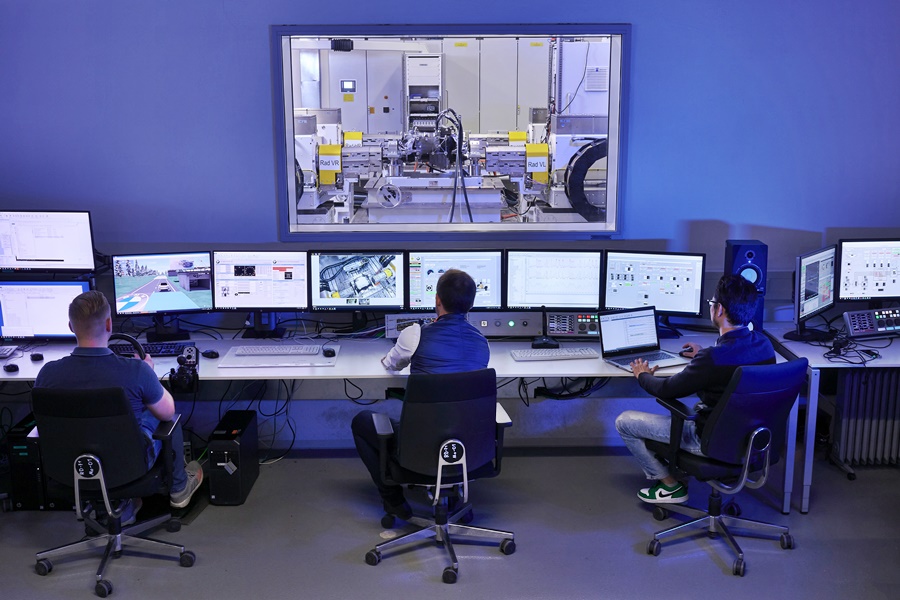
Testing the BMW eDrive systemThe iX will go into production at BMW Plant Dingolfing from the second half of 2021 as the BMW Group’s new technology flagship. It brings together the company’s latest developments in the strategic innovation fields of Design, Automated Driving, Connectivity, Electrification and Services. Added to which, the vehicle concept and design of the iX are rooted in an all-embracing approach to sustainability. This is reflected in areas of the car such as its optimised aerodynamics, intelligent lightweight design and extensive use of natural and recycled materials

Fifth-generation BMW eDrive technology
The iX will adopt the BMW eDrive technology and the fact that this technology is in the fifth generation shows how far the BMW Group has come in the field. The eDrive comprises two electric motors, the power electronics, the charging technology and the high-voltage battery – and guarantees exceptional operating and running efficiency.
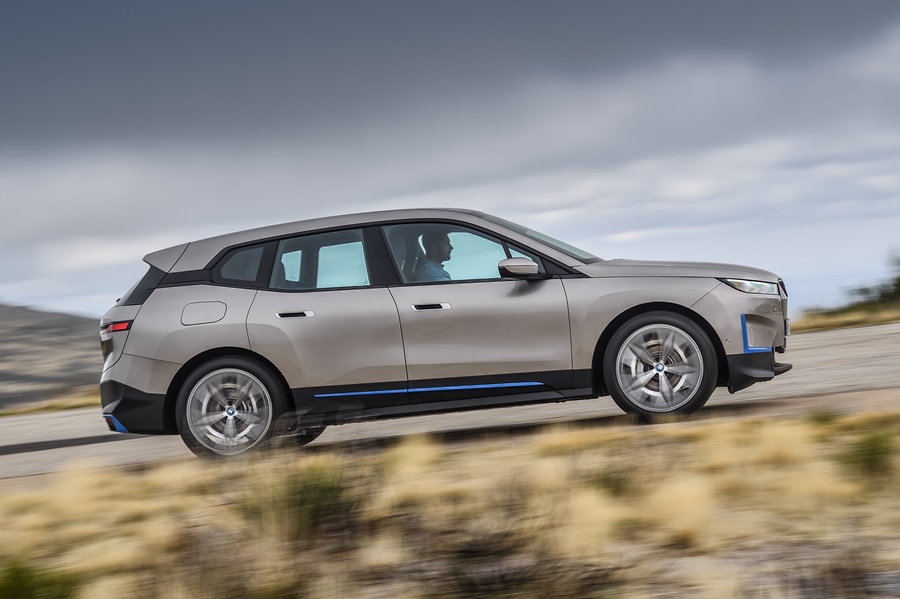
2022 BMW iX

The power unit developed by the BMW Group has been manufactured sustainably without the use of critical raw materials known as rare earths and will, by the most recent calculations, develop maximum output of more than 370 kW – equivalent to 500 hp. That will power the iX from 0 to 100 km/h in less than 5.0 seconds, it is claimed.

At the same time, the vehicle’s clear aim is to post an exceptionally low combined electric power consumption figure for its segment of less than 21 kWh per 100 kilometres in the WLTP test cycle. A gross energy content of more than 100 kWh should enable the latest-generation high-voltage battery to record a range of over 600 kms in the WLTP cycle. That equates to more than 480 kms according to the US EPA’s FTP-75 test procedure.
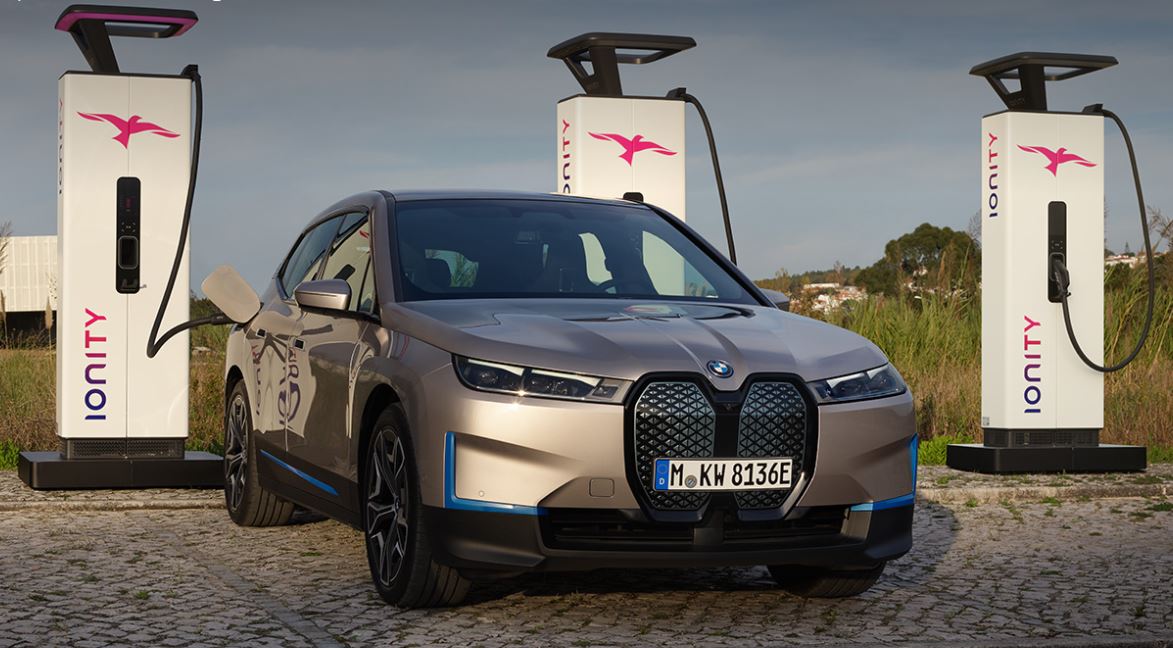
10 minutes for over 120 kms range
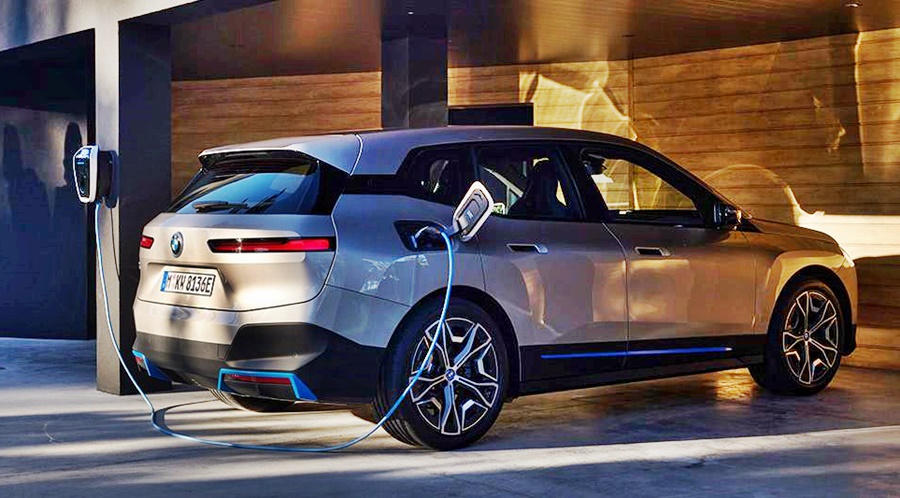
The new charging technology of the iX enables DC fast charging at up to 200 kW. In this way, the battery can be charged from 10% – 80% of its full capacity in under 40 minutes. For those who are in a hurry and cannot spend too much time on recharging, 10 minutes of recharging will provide a range of over 120 kms (this of course depends on driving conditions). It is projected to take less than 11 hours to charge the high-voltage battery from 0 to 100% at 11 kW from a Wallbox.

The battery pack fitted in the iX is designed as part of a long-term resource cycle and enable an exceptionally high recycling rate. The power used to produce the battery cells for the battery pack as a whole come exclusively from renewable sources.
New technology toolkit
The new technology toolkit making its debut in the iX also provides the platform for significant  progress in the areas of automated driving and digital services. For example, the level of computing power has been developed to process 20 times the data volume of previous models. As a result, around double the amount of data from vehicle sensors can be processed than was previously possible.

“We are setting new industry standards with the technology in the BMW iX. The iX has more computing power for data processing and more powerful sensor technology than the newest vehicles in our current line-up.  5G-capable, it will be given new and improved automated driving and parking functions and uses the high-performing fifth generation of our electric drive system,” said Frank Weber, Member of the Board of Management of BMW AG, Development.
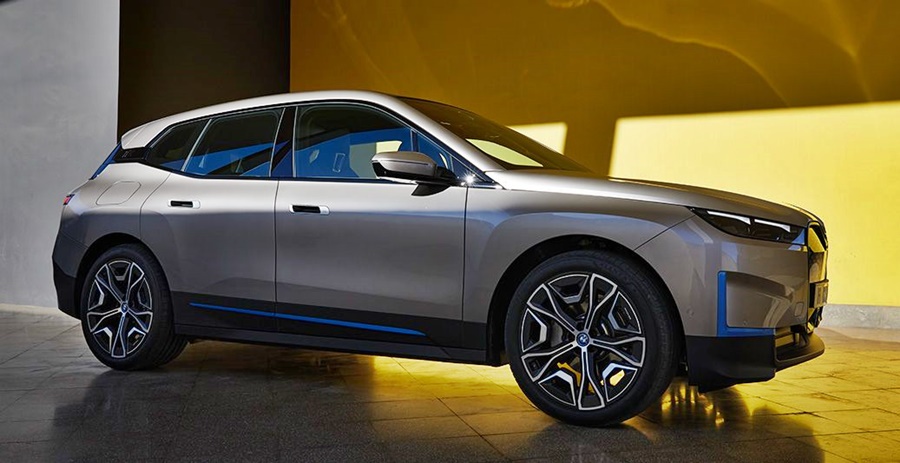
Familiar but fresh design
50 years ago, when cars of the future were displayed at motorshows, they either looked way too extreme or were small bubbles on wheels. However, the iX, while having a pioneering character, has familiarity in its design. It is not extreme, but the exterior represents a distinctive re-imagining of the proportions of a large BMW SAV.
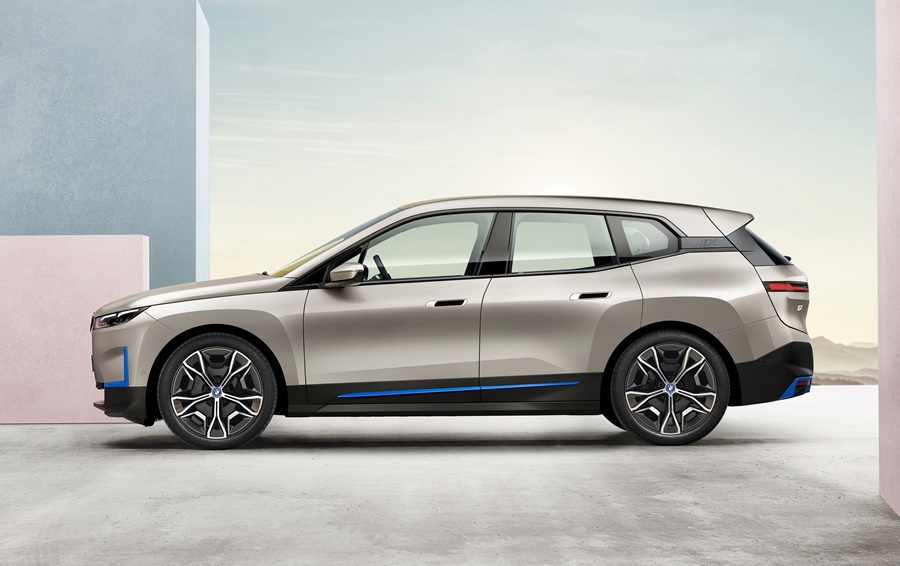
2022 BMW iX

The iX is comparable with the X5 in length and width, and is almost the same height as the X6 on account of its flowing roofline. The size of its wheels would bring to mind the larger X7. The minimalist use of character lines and generously shaped surfaces conjure an aura of supreme assurance. The crisp lines, clear structure and almost rectangular contours around the wheelarches contribute to an imposing body design with optimised aerodynamics.

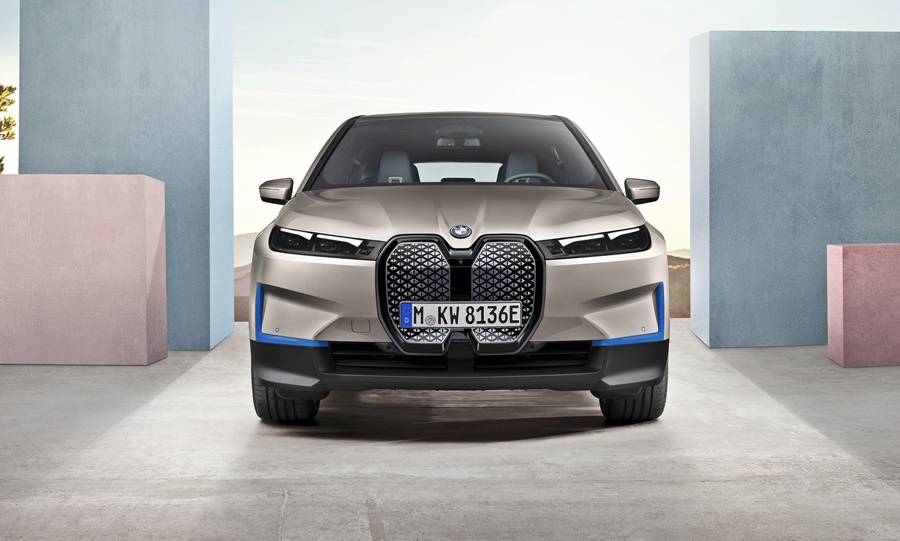
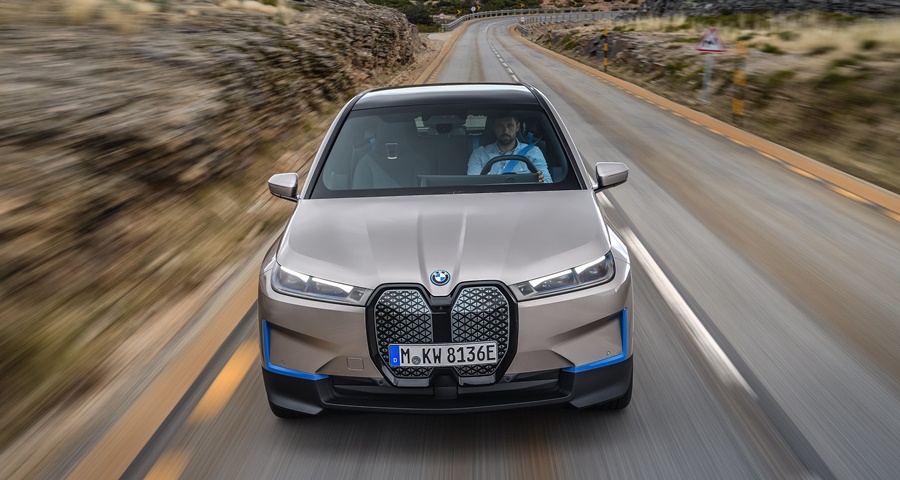
At the centre of the front end stands the prominent, vertically emphasised kidney grille. Since the electric drive system requires only a small amount of cooling air, the kidney grille is completely blanked off. Its role has duly turned digital and here it functions as an ‘intelligence panel’. Camera technology, radar functions and other sensors are integrated into the grille behind a transparent surface.
2022 BMW iX

2022 BMW iX

Developed and produced at the BMW Group’s LuTZ lightweight design and technology centre, the kidney grille for the BMW iX presents a technologically lavish advertisement for intelligent mobility. The grille has reinvented itself as an innovative and multifunctional high-tech interface for the advanced driver assistance systems with which the iX paves the way for automated driving.

Discreetly integrated technology
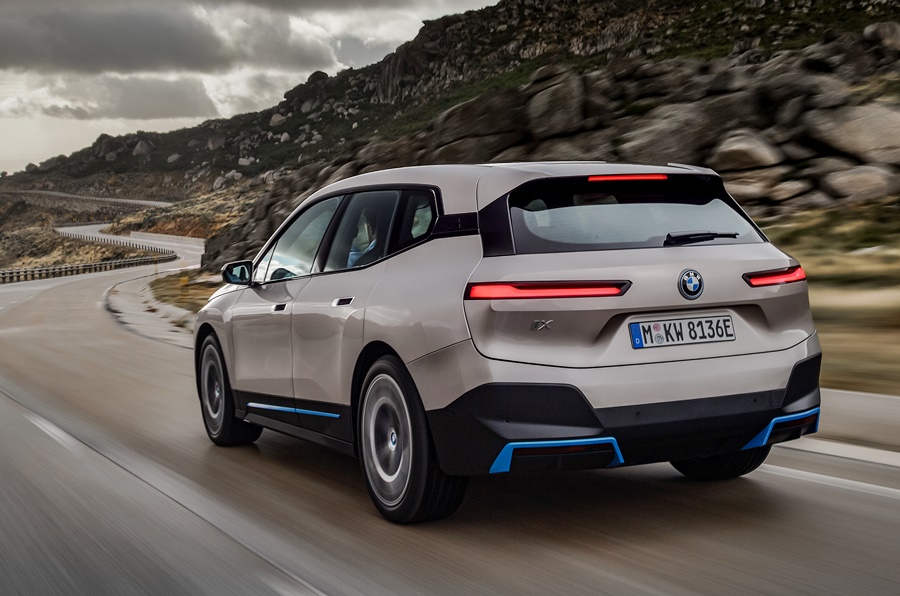
The exterior design highlights also include the slimmest headlight units ever to feature on a volume-produced model from BMW; the flush-fitted door openers (operated at the press of a button); the frameless side windows; the tailgate (which has no separation joints and extends across the whole of the rear) and the likewise extremely slim rear lights.
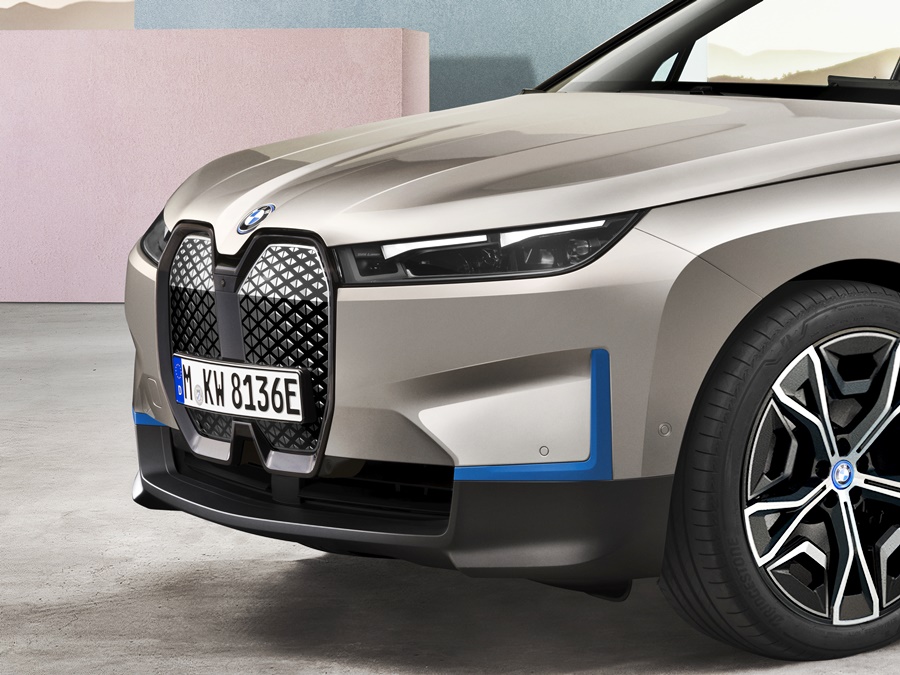
The BMW kidney grille is not the only example of how the principle of ‘shy tech’ has been integrated into the design of the BMW iX: an array of other cameras and sensors are likewise positioned discreetly, the filler neck for the windscreen washer fluid is concealed under the BMW logo on the bonnet and the rear-view camera has been integrated into the BMW logo on the tailgate. The technology stays in the background and only becomes apparent as and when the relevant functions are called into action.

“The BMW iX shows how we can give new technologies a very modern and emotionally engaging design. The car is technologically highly complex, but it feels very clear and uncomplicated,” explained Adrian van Hooydonk, Senior Vice-President BMW Group Design. “The BMW iX offers a mobile living space in which people will feel at ease and the car’s intelligence is always available without becoming obtrusive.”

Interior design: people at centre stage
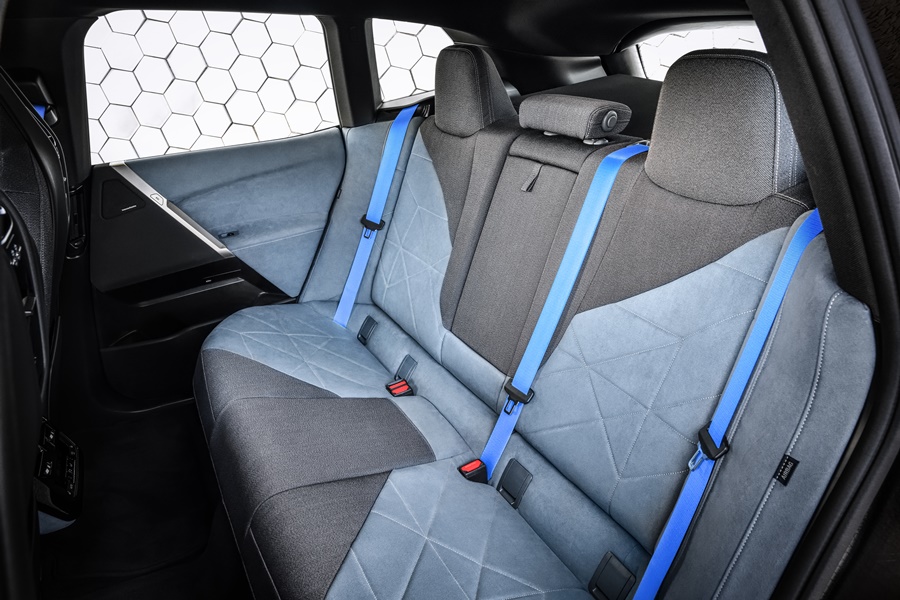
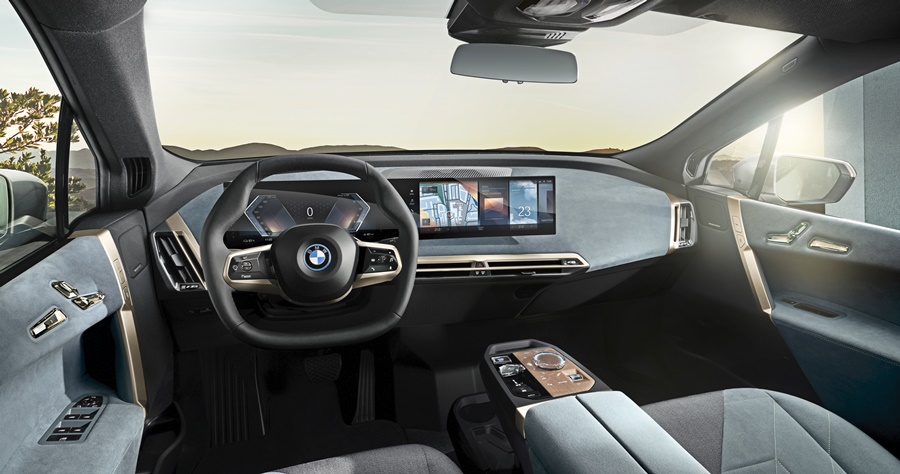
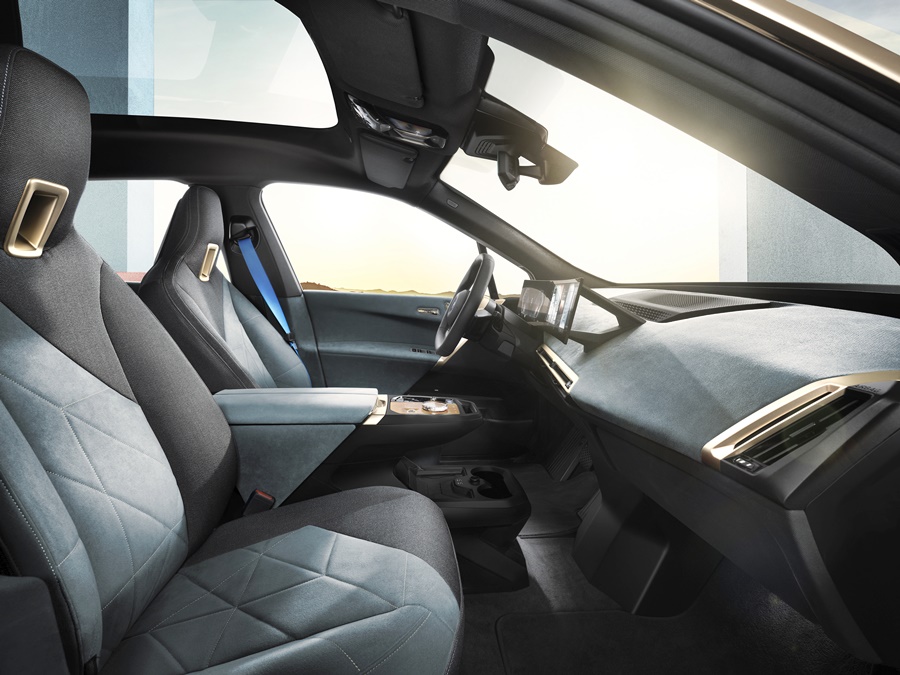
A high level of spaciousness, a mixture of high-quality materials, newly developed seats with integral head restraints and an exceptionally large panoramic glass roof immerse all 5 seats of the cabin in a luxurious, lounge-like ambience. The all-new architecture of the iX cabin underpins a perfectly clear and straightforward functionality that revolves entirely around the needs and emotions of the driver and their fellow occupants.
2022 BMW iX

2022 BMW iX

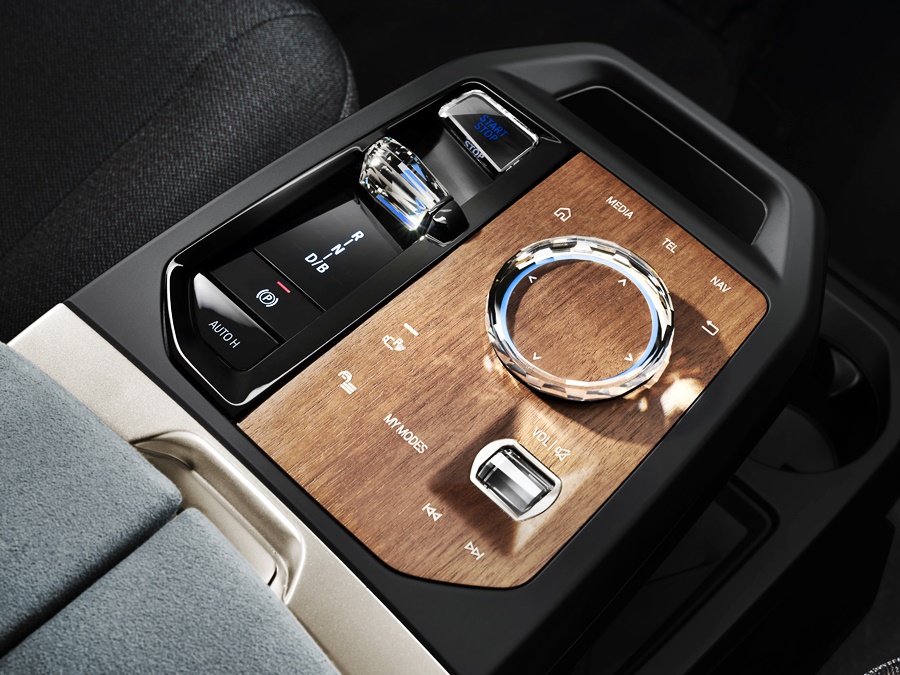
The drive concept means there is no centre tunnel, adding to the open, airy feel while also allowing extra legroom in the front and rear, sufficient space for storage facilities, and a centre console crafted to look like a high-quality piece of furniture.

The displays and controls are all stripped down to the essentials, further reinforcing the impression of an uncluttered cabin offering a place of relaxation. The technology used intelligently and only becomes visible when it is needed. This makes it intuitive to use rather than seeming overly complex.
2022 BMW iX

The Head-Up Display’s projector is discreetly recessed into the instrument panel, so it is almost invisible. The hexagonally shaped steering wheel, a rocker switch for gear selection and the BMW Curved Display – which forms part of the next-generation BMW Operating System – clearly advertise the futuristic cockpit.
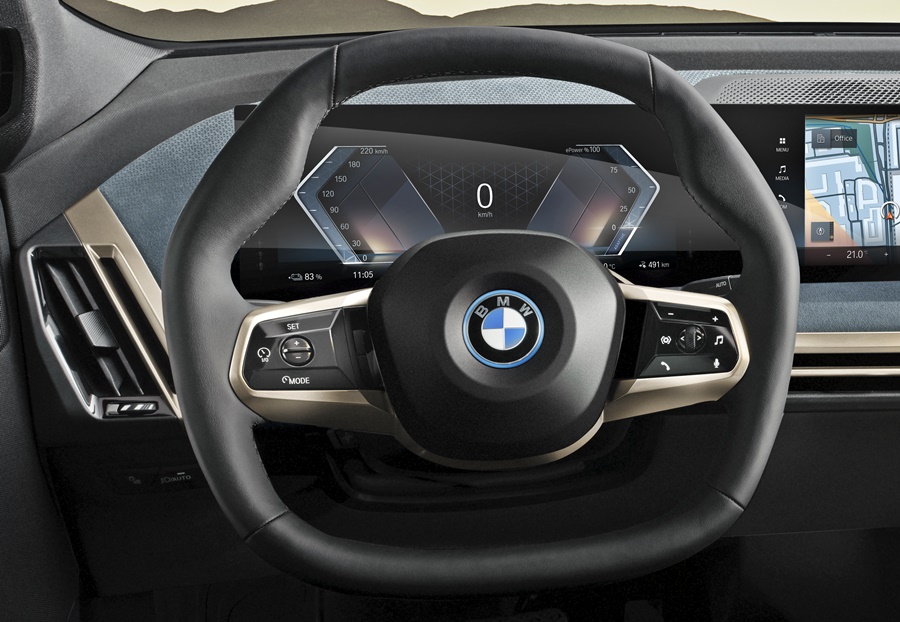
2022 BMW iX

Intelligent lightweight design
The energy and range of the iX benefit from innovative solutions in the areas of lightweight design and aerodynamics. Its body structure, featuring an aluminium spaceframe and innovative Carbon Cage, can claim extremely high torsional stiffness, which in turn enhances agility and maximises occupant protection, while minimising weight. The intelligent material mix, with a variety of materials employed exactly where their specific properties can be utilised to best effect, is unique in this segment.

Together with the superior aerodynamics (0.25 Cd), the intelligent material mix helps to endow the iX with remarkably composed, relaxed driving characteristics combined with instant, precise response to every movement of the accelerator and turn of the steering wheel.
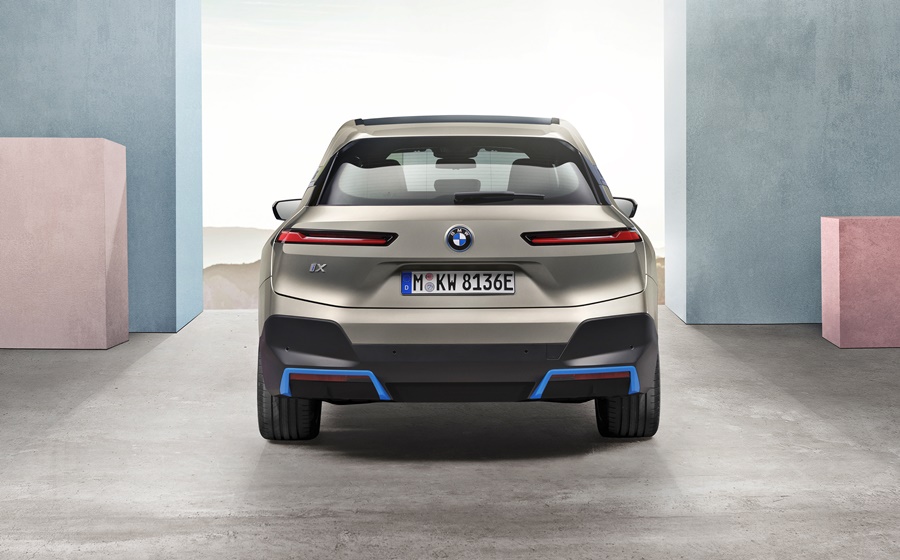
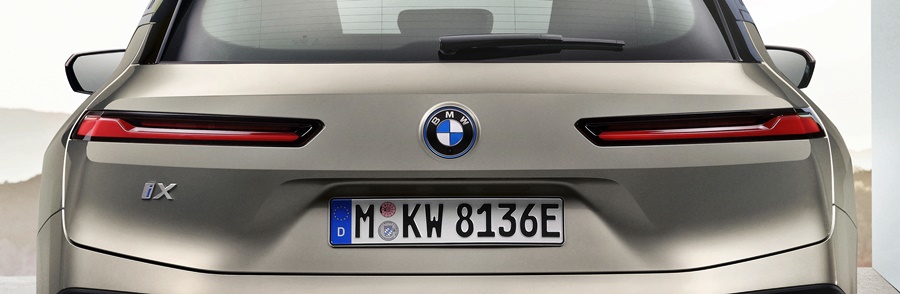
2022 BMW iX

2022 BMW iX

COVID-19

Social distance

BHPetrol RON95 Euro4M

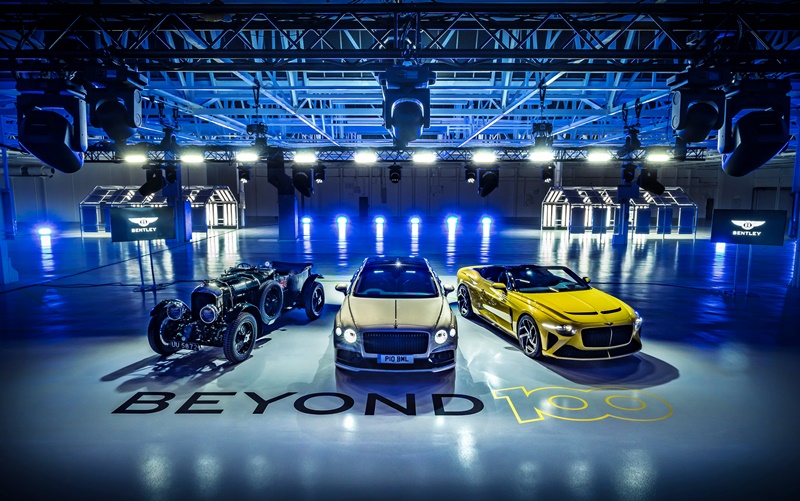
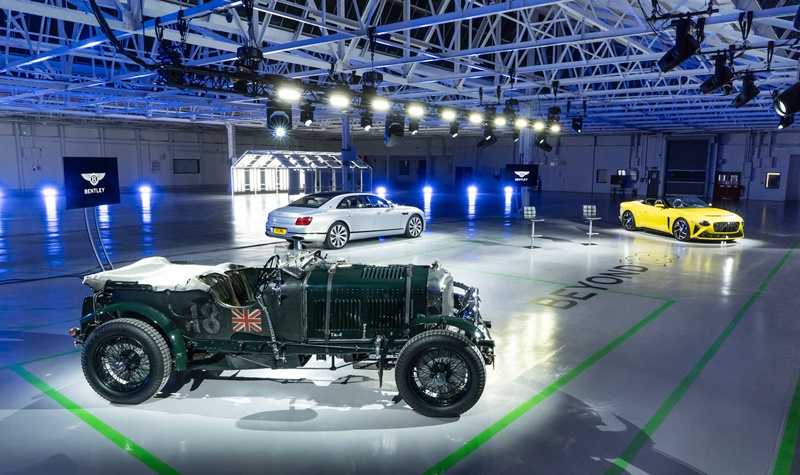
After over 100 years, the automobile industry is undergoing a major change that will see a progressive diminishing of vehicles with only internal combustion engines, leading to hybrids and eventually only electric powertrains. The global players have already begun the process of making the transition, and Bentley Motors is one of those that has revealed plans which are outlined in its Beyond100 strategy.

Aiming to offer truly sustainable luxury, the carmaker will reinvent every aspect of its business to become an end-to-end carbon neutral organisation as it embarks on its second century. The target is driven by a transformation programme across Bentley’s entire operations and products. This includes switching its model range to offer exclusively plug-in hybrid (PHEVs) or battery electric vehicles (BEVs) by 2026, and full electric vehicles (EVs) only by 2030.

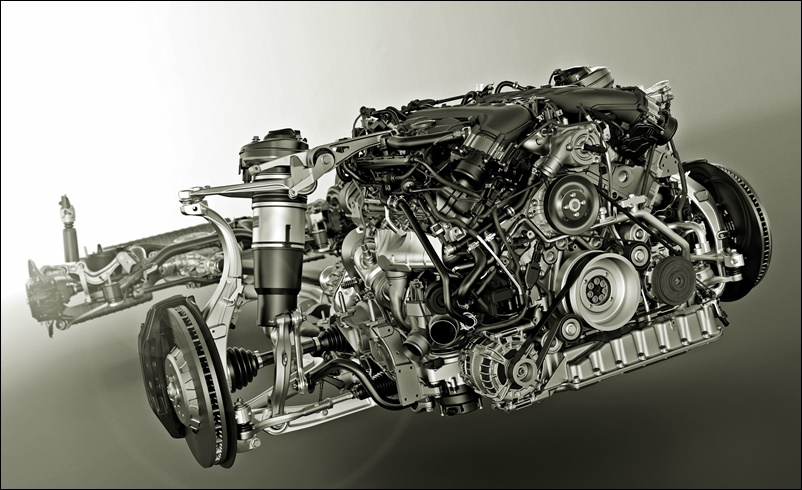
Bentley’s traditional powertrains with internal combustion engines will be phased out and replaced with hybrid and then all-electric powertrains by the end of this decade.

No more ICE by 2030
The announcement today highlights Bentley’s plans for another 100 years, evolving from the world’s largest producer of 12-cylinder petrol engines to having no internal combustion engines within a decade.

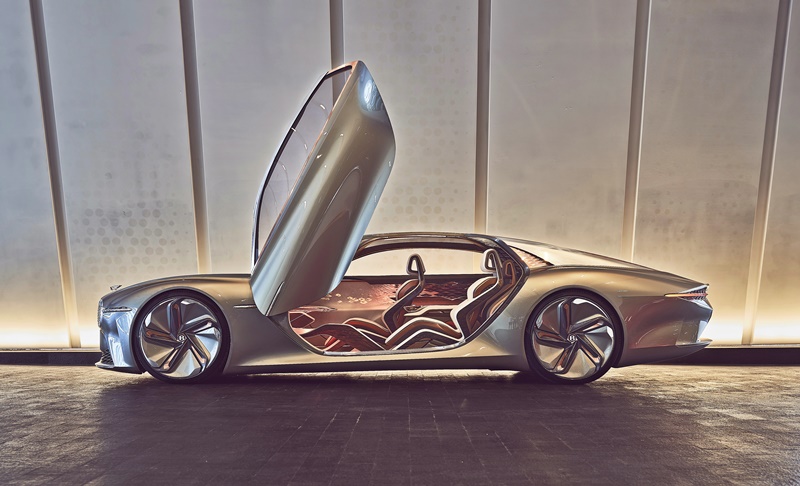
Bentley’s electrified future was actually previewed with the reveal of the all-electric EXP 100 GT concept car (pictured below) in its centenary year. That concept featured a multitude of sustainable materials. These included 5,000-year-old copper-infused Riverwood, traditionally produced wool carpets and a leather-like textile upholstery made from a by-product of wine-making. Bentley will continue to use only sustainably sourced materials throughout its current, and next generation of cars.

Carbon-neutral production
The Beyond100 strategic plan will see, among other things, the change to a carbon-neutral luxury car factory. Last year, Bentley’s production facility in England became the first luxury automotive factory in the UK to be certified carbon neutral by the Carbon Trust. This followed two decades of implementing innovative solutions, including a water recycling system in the paint shop, local tree planting, installation of a 10,000 solar panel carport, taking the total number of on-site solar panels to 30,000, and a switch to renewable-only electricity sources.

The factory will continue to improve its environmental operations. By the end of 2025, the company intends to reduce its factory environmental impact by focusing on energy consumption, carbon dioxide emissions, wastewater, use of solvents in the paint process and becoming plastic neutral. This will result in a climate positive factory by 2030, actively reducing levels of carbon in the atmosphere, while in parallel the business invests in renewable energy and forestation projects.
Sustainable luxury mobility
Bentley will also redefine its business model which is built around its accelerated journey towards electrification. Having already committed that every model line will be offered with the option of a hybrid variant by 2023, with Bentley’s first pure electric model to be launched in 2025, Bentley is making a clear move towards zero emission mobility.

Achieving sustainable luxury mobility relies heavily on a sustainable business model, and Bentley’s aim is to become the world’s benchmark luxury car business, financially resilient and recession-proof. The challenging economic situation caused by the COVID-19 pandemic resulted in Bentley undertaking its biggest change programme in a century.

This change programme was driving for consistent financial resilience through rapid productivity improvements across the business, and a fundamental restructure. The results from the comprehensive cost and investment structure has placed the business in a position to achieve a positive financial performance for the full year 2020, in spite of the extenuating external circumstances.

Bespoke continues with sustainability
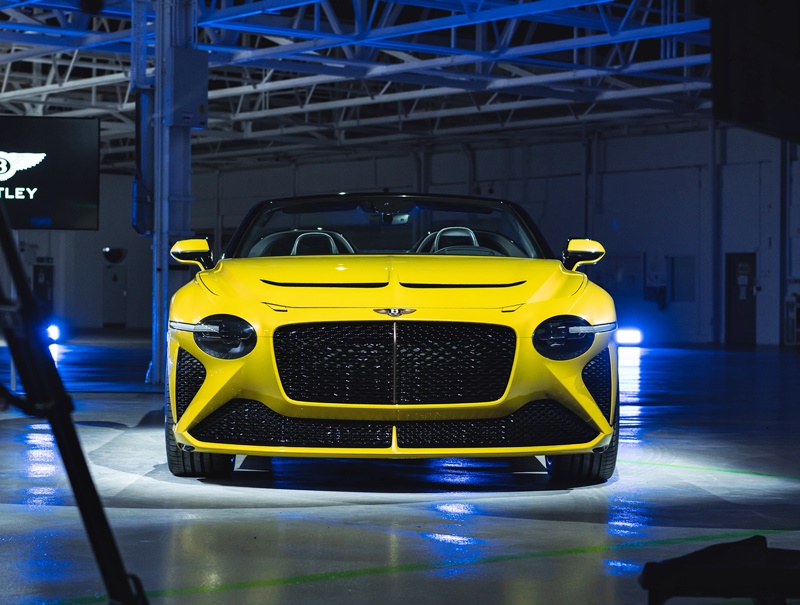
As well as accelerating the product journey towards electrification, Beyond100 opens a new era for Bentley’s bespoke division, Mulliner, which now has a three-portfolio structure comprising Mulliner Classic, Mulliner Collections and Mulliner Coachbuilt. The recently revealed Bacalar signifies the start of this new age as the first member of the Mulliner Coachbuilt family and incorporates elements of the sustainable materials showcased in EXP 100 GT.

The company is committed to handcrafting cars in Crewe for the next 100 years, whilst also preparing for a digital future, and has confirmed it will be investing in two new Research and Development buildings, a vehicle test centre and a dedicated launch quality centre.

“Since 1919, Bentley has defined luxury grand touring. Being at the forefront of progress is part of our DNA – the original Bentley boys were pioneers and leaders. Now, as we look Beyond100, we will continue to lead by reinventing the company and becoming the world’s benchmark luxury car business,” said Adrian Hallmark, Chairman & CEO of Bentley Motors.

The Mulsanne chapter in Bentley history ends

BHPetrol RON95 Euro4M

The early electric vehicles (EVs) were often small, partly because they had to be as light as possible to move on the limited electrical energy. Today, as battery and powertrain technology have advanced substantially, EVs are as big as sedans with petrol or diesel engines.

For small and young customers
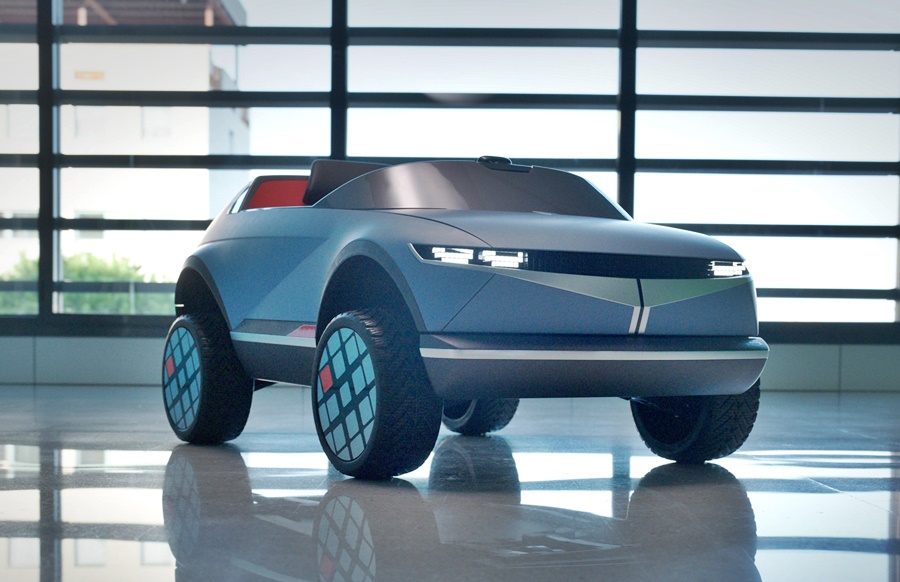
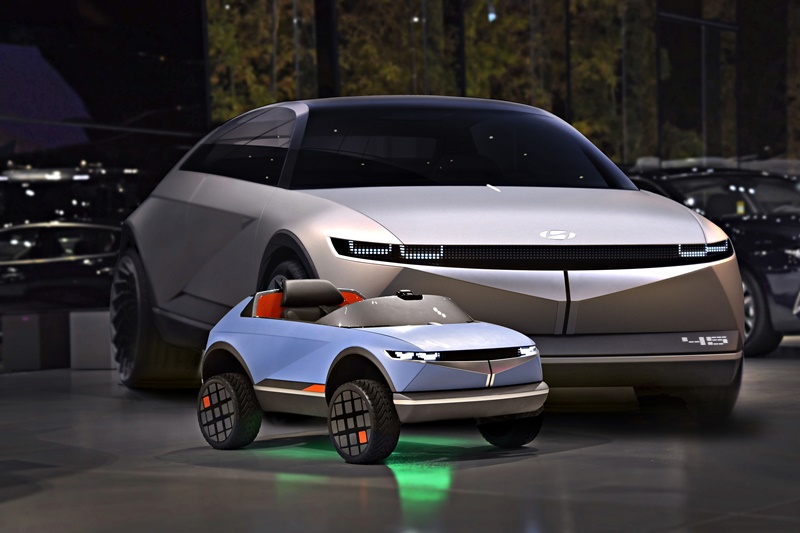
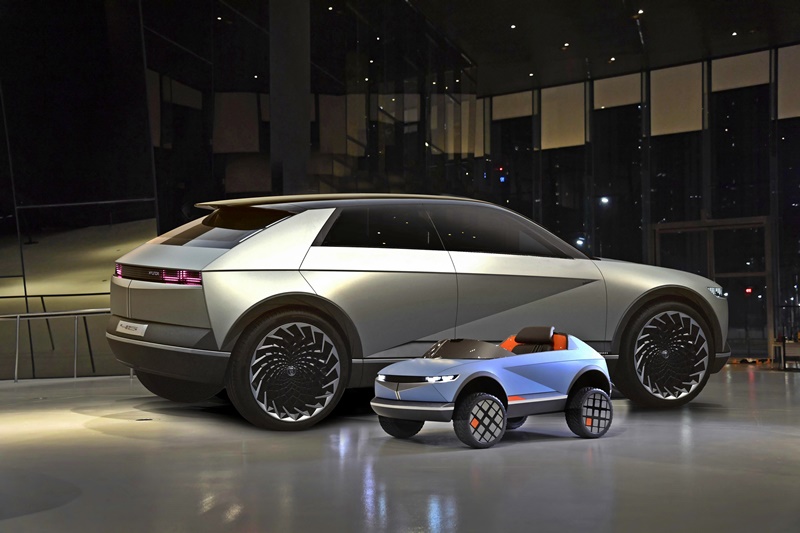
Hyundai, it seems, is going back to the ‘roots’ of EVs with a mini EV that is its smallest yet. In this first glimpse of the vehicle, it is clear that it is very small. The one-of-a-kind EV features Emotion Adaptive Vehicle Control (EAVC) technology and is something that Hyundai wants to use to offer a unique mobility experience to young (and small) customers.

Styling based on 45 EV Concept
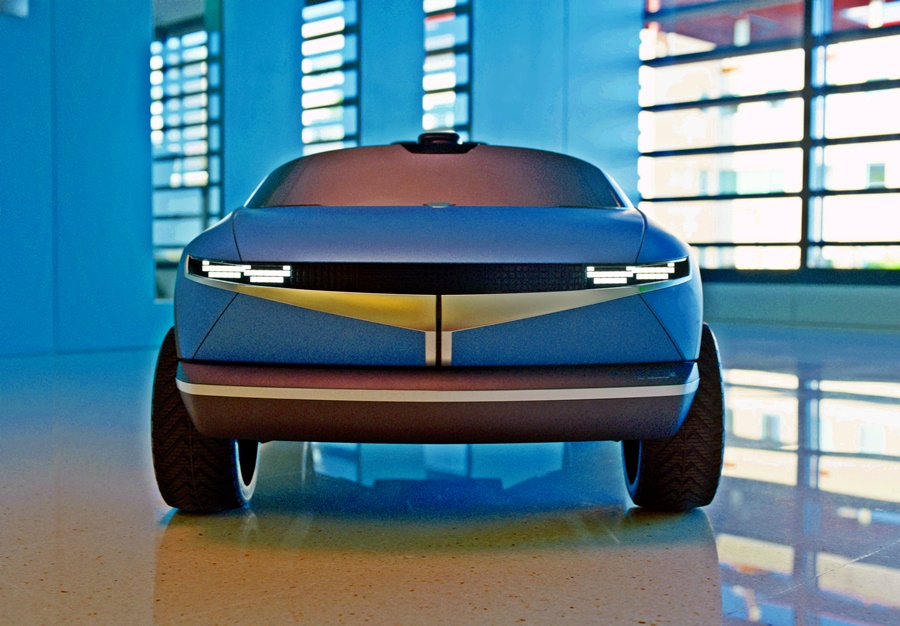
The exterior style is based on the ‘45’ EV concept that Hyundai displayed in 2019 at the Frankfurt Motorshow. The designers have adapted the signature ‘kinetic cube lamp’ design of the ‘45’ along with its angular yet smooth profile to create this yet-to-be-named EV that sports a Performance Blue exterior finish with orange accents.

This ‘little engine that could’ has two DC motors that can propel it to a top speed of 7 km/h, so it is only for the bravest souls! To boost driver confidence behind the wheel, the designers took inspiration from motorsports by placing just one seat in the middle of the 1.38-metre long car.

In keeping with the 45’s design heritage theme, Hyundai has built this unique passenger vehicle out of a traditional eco material – wood. There’s no officially rated driving range yet but the driver’s laughter is believed to be able to fuel the vehicle to travel further based on its Emotion Adaptive Vehicle Control (EAVC) technology.

It’s certainly an intriguing little vehicle that we look forward to learning more about in due course.

45 EV Concept defines Hyundai Motor’s Future through Heritage

COVID-19

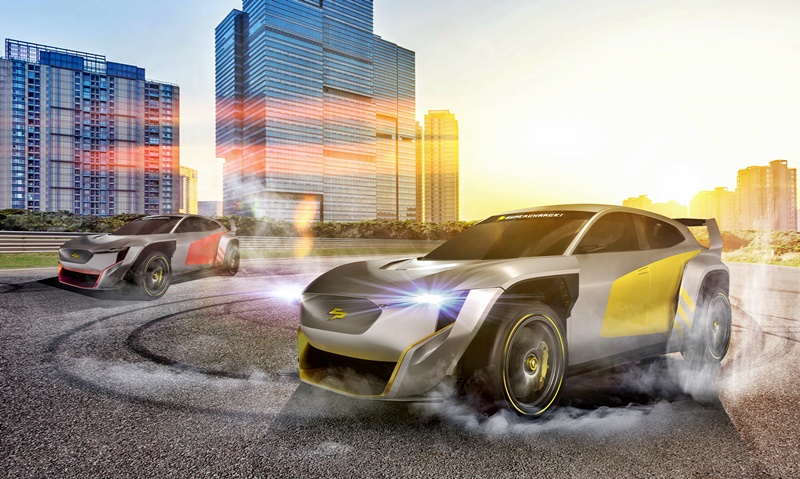
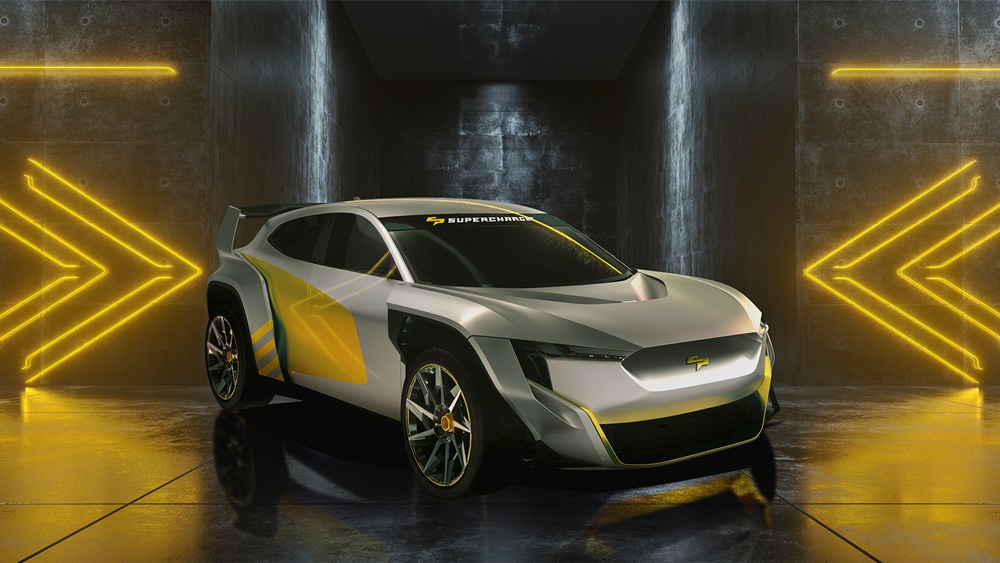
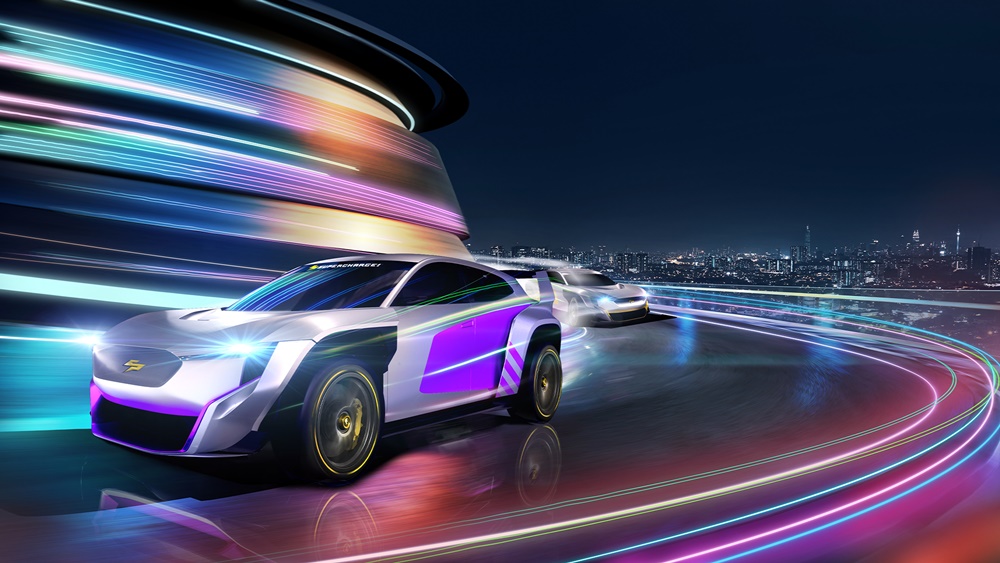
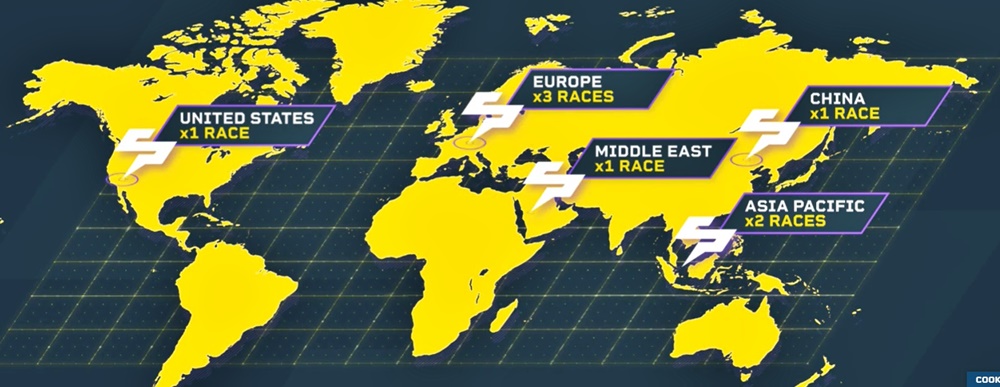
Following in the emission-free trail of single-seater Formula E and off-road Extreme E championships is SuperCharge, an all-new global motorsport series to be based on electric crossover road cars. With the aim of providing spectacular entertainment and ultimately promote electric cars, SuperCharge will start in 2022 with eight events around the world.

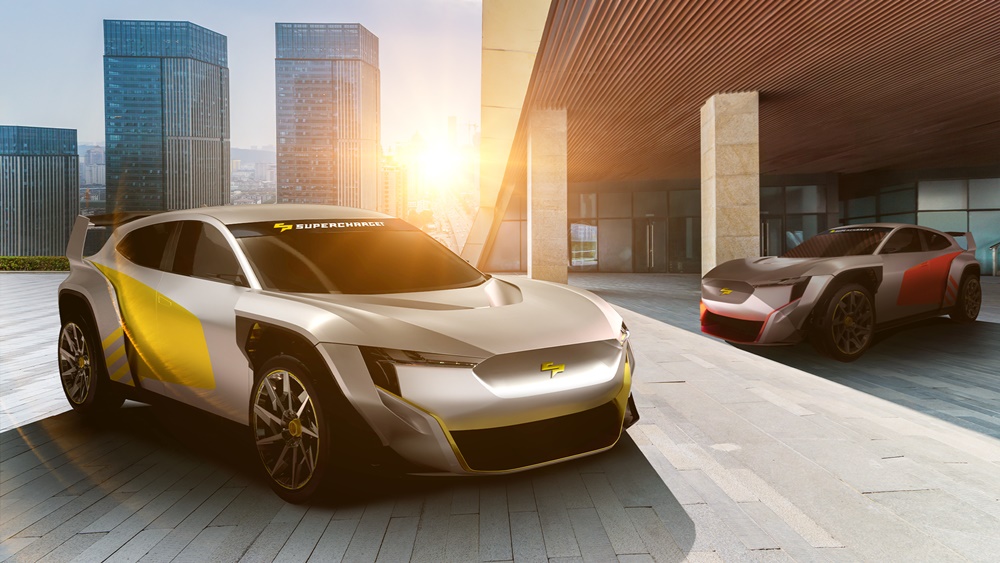
Designed to appeal to audiences of all ages, SuperCharge has been created, in consultation with some of the world’s leading car manufacturers, as a new racing concept to showcase next-generation electrically-powered road cars. These would be in the volume and growth part of the market – compact SUVs and crossovers – as well as leading-edge battery technologies.

New appeal in motorsport
Resetting the relevance, appeal and value of motorsport, the new racing series aims to be located in bustling urban environments based around an access all areas, fun, informative, festival-style atmosphere.

“Motorsport is at a crossroads,” said SuperCharge Managing Director and co-founder Rob Armstrong. “Alejandro Agag and Jean Todt have done a great job pioneering electric motorsport. With many countries and cities already announcing plans to ban internal combustion-engine cars in the coming years, the need for road car-based electric motorsport is becoming more and more compelling. We believe it is only a matter of time before there are more electric motorsport series. Given this rapidly increasing EV momentum, we believe the timing and appeal of SuperCharge is ideal and see a clear space for it as the road car-relevant motorsport series.”

“We have carefully conceived SuperCharge to take account into these societal changes and to consider the needs of car companies, fans, commercial parties and venues in order to make a truly sustainable and commercially viable new series. SuperCharge takes motorsport into a new and hugely relevant arena and we can’t wait to spark the series into life across the globe,” he said.

Informing, educating and promoting
The planning and development of SuperCharge over the past 18 months has been carefully undertaken to ensure it is fully relevant, cost-effective and incubates technological advancements. At the same time, the new series offers clear technical and commercial benefits for car manufacturers.

The concept will attract new audiences for electric vehicles as well as give manufacturers the scope to develop, test and hone electric car battery technology innovations (including smart energy management systems) and relevant software in real-world racing.

Manufacturer-focused
As a manufacturer-focused series, SuperCharge is based on cars recognisable on the outside as electric road cars which the public can, or will be able to, buy. Nevertheless, the SuperCharge race cars, codenamed SC01, will offer extreme performance with similar acceleration to a Formula 1 car. They will have electric drivetrains on the front and rear axles, generating peak power from the battery of up to 500 kW (equivalent to around 670 bhp) and rocket to 100 km/h from standstill in just 2.5 seconds.

Teams will be able to adapt the standard specification car in two ways. The first is the car’s bodywork, so the public have a clear visual link between the striking racing car on the track and the one they can enjoy on the road. The second is battery technology system development, that can in turn enhance the underlying battery performance of road-going EVs.

To reflect the full electric ecosystem on public roads, the SuperCharge race car will also be designed to use roadside fast charging systems and connectors. And to ensure racing is extremely competitive and entertaining, the technical regulations of the series mean the only ways of gaining improved on-track performance come from a combination of driver skill (driver aids including launch control, traction control, brake-by-wire are explicitly outlawed), mechanical set-up (including suspension and differential adjustment) and team development of battery technology systems.

The circuits
Each circuit will use an ‘amphitheatre’ concept which can be adapted to suit a variety of urban venue settings from parks, street circuits or existing racetracks. Extensive views of the fast-paced-action will be assured through various viewing platforms.

Every SuperCharge racetrack will feature unique characteristics. One will be a 2.5-metre ramp that could project the cars up to 10 metres on every lap. Able to accommodate two or more cars abreast, it will be an integral racing element and core circuit feature, enabling drivers to utilise different jump entry and exit tactics.

A second feature of the circuit will be low-friction zones that will allow the cars to slide, drift and touch, increasing the drama and proximity of the close-quarter racing. Every SuperTrack will also feature a water gantry, adding yet another dimension to the circuit to test driver skill by creating a dry/wet/dry surface transition.

Centre-stage in the SuperCharge paddock concept is a charging zone that adopts regular road car connectors and roadside fast charging to inform the public around the whole EV ownership experience.

Consistent with the ethos of the series, the footprint and costs of SuperCharge events have also been structured to be environmentally and financially sustainable. Among the measures being incorporated are the use of existing city racing infrastructure wherever possible, as well as sea and road freight.

SuperCharge is working closely with both the British Automobile Racing Club and Motorsport UK as it seeks to apply to become an FIA International Series. The 8 events for the inaugural series will be in cities from the Asia-Pacific, China, Europe, Middle East and the USA.

After Formula E, Extreme E will take electric cars into off-road competition

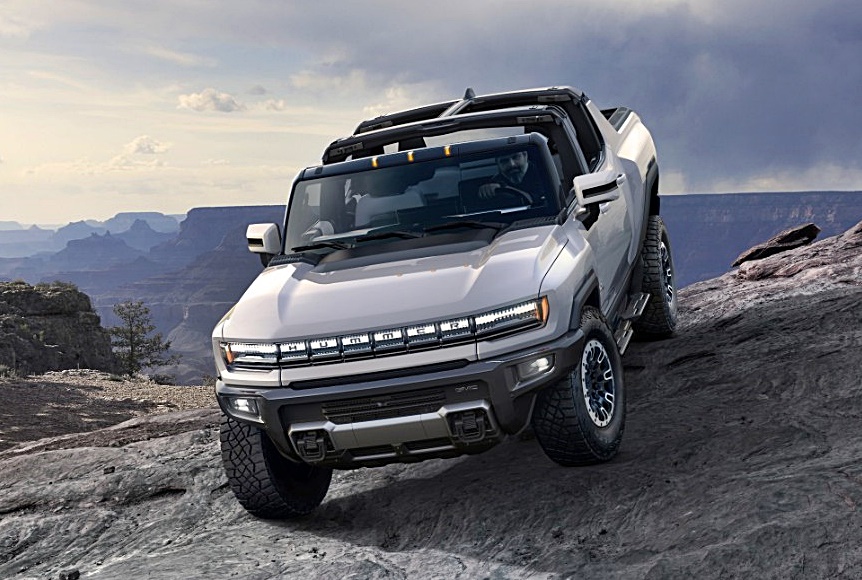
Hummer – that’s a name which immediately brings to mind a huge vehicle that served the military (mainly the American one) as well as the civilian version which had a niche of its own. ‘Hummer’ was actually the civilian name used by General Motors but the model was discontinued after 2009 when its sales diminished so much that the business was no longer viable.

Although GM tried to sell off the business, it did not succeed and just kept it in the ‘drawer’. Now, that name has been revived with a completely new model from its GMC subsidiary. However, unlike the original fuel-guzzling monster, the new Hummer not only doesn’t require conventional fuel at all but it is also a zero emissions vehicle.

The original Hummer

Electric supertruck
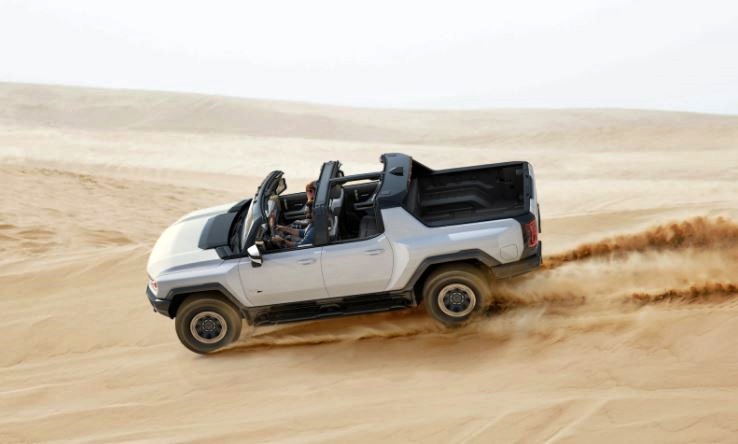
GMC engineers have developed it as an electric supertruck with the company’s Ultium Drive and batteries. An estimated best-in-class 1,000 horsepower and estimated 15,592 Nm of torque are generated by three separate motors within two Ultium drive units that provide 4WD capability. 0 to 60 mph (96 km/h) acceleration is claimed to be around 3 seconds which is pretty quick for a pick-up though that can be expected of a super EV truck.

800V DC fast-charging compatibility of up to 350 kilowatts enables nearly 160 kms of range to be available after recharging for 10 minutes. A full battery back is said to be good for up to 550 kms.

Superior off-road capabilities
Aiming to out-do other electric trucks that are also appearing lately, the Hummer has 4-Wheel Steering, Adaptive Air Suspension with 149 mm of variation, and underbody armour. The 4-Wheel Steering system has CrabWalk which allows the rear wheels and front wheels to steer at the same angle at low speeds. This enables diagonal movement of the vehicle for greater manoeuvrability on difficult terrain.

As standard, the Hummer comes with 35-inch MT tyres  and customers can specify up to 37 inches. The tyres complement the vehicle’s off-road capability which includes climbing vertical obstacles 455 mm high and driving through water more than 600 mm deep.

For crossing difficult and unknown terrain, the Hummer has UltraVision, a system of front and rear underbody cameras with live ‘virtual spotter’ views to help drivers spot obstacles and place wheels on and off the trail. There are up to 18 camera views available from the vehicle.

Prepared for autonomous motoring, the Hummer will have optional Super Cruise, a driver assistance feature that can support hands-free driving on more than 322,000 kms of enabled roads. There will also be a new automatic lane-changing feature where the system can determine when a lane change is optimal and initiate the manoeuvre, while following signalling protocols.

Minimal original design elements
GMC’s designers drawn minimally on the original model’s monolithic appearance, instead aiming for something that looks futuristic and bold with a pick-up profile. “Its design visually communicates extreme capability, which is reinforced with rugged architectural details,” said Phil Zak, Design Executive Director.

Emphasis on technology
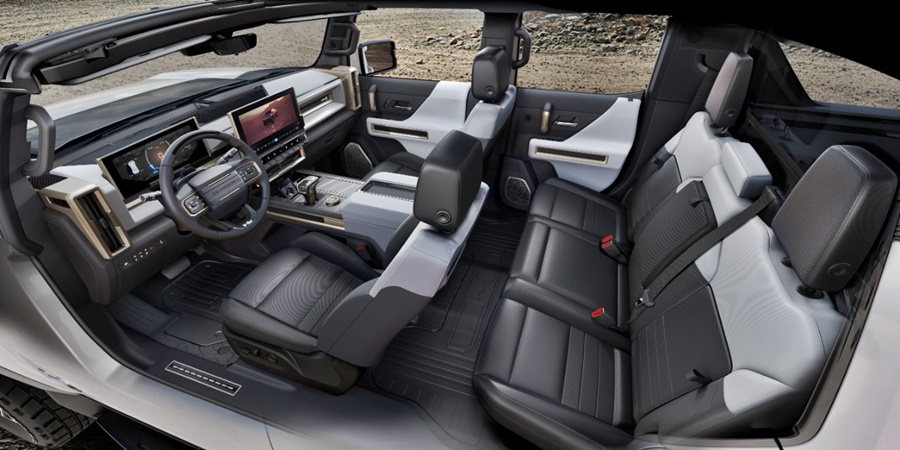
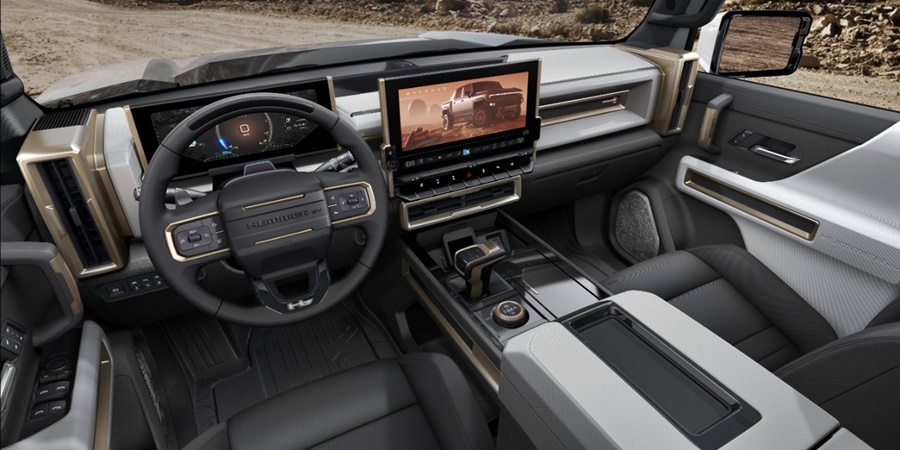
The interior is also given premium appointments and as expected, technology is emphasised. For example, off-road widgets display vehicle functions and terrain status through the infotainment and driver information screens. The driver can be informed of torque output, differential locker engagement, tyre pressures, pitch and roll angles, friction circle, torque vectoring and more.

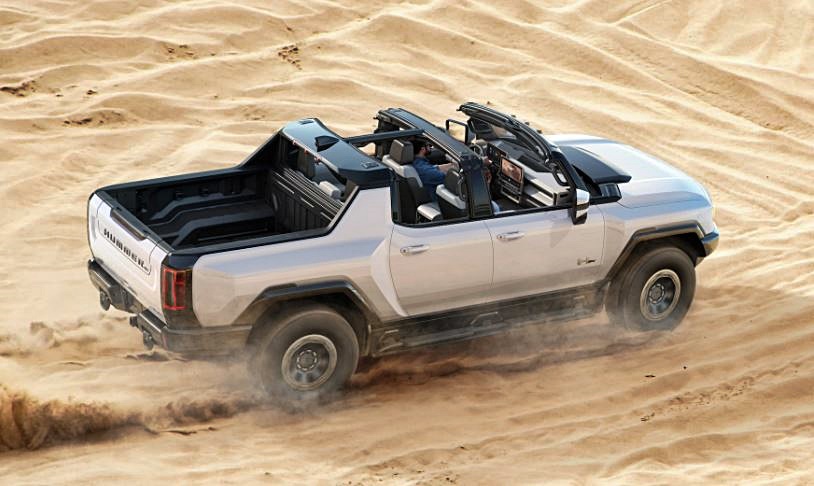
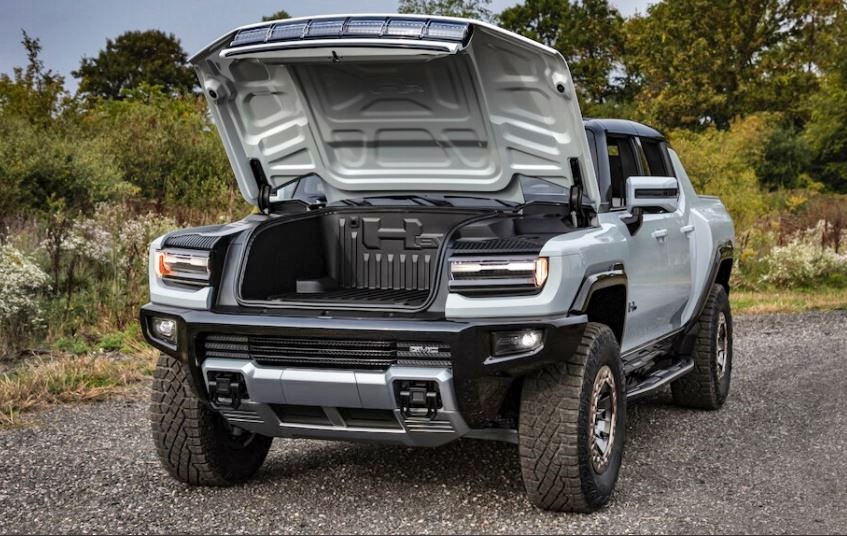
Open-air driving is an option, made possible by the Infinity Roof and removable transparent Sky Panels that can be stowed in the storage compartment at the front of the vehicle. The MultiPro Tailgate opens with 6 functional positions, while the glass panel at the rear of the cabin and the tonneau cover can be opened at the touch of a switch as both are powered.

4 versions, starting from late 2021
There will be at least 4 versions of the Hummer with the first one known as Edition 1 going on sale in the fourth quarter of 2021. This will be the most expensive version at US$112,595 (about RM467,000) and will be the only one available for at least 12 months. Another version will be launched in late 2022 which is currently projected to cost less than US$100,000 (RM414,000).

In early 2023, the third version will be available, and then a fourth version will be in showrooms a year later, in 2024. The fourth version will have two motors and be priced at under US$80,000 (RM332,000).

GM looking forward to all-electric future with Ultium batteries

With electric vehicles going to take over in coming years, will some segments disappear? Will the rugged 4×4 vehicles and pick-ups slowly fade away? Not likely if we look at what Mercedes-Benz is working on as its electrification program progresses.

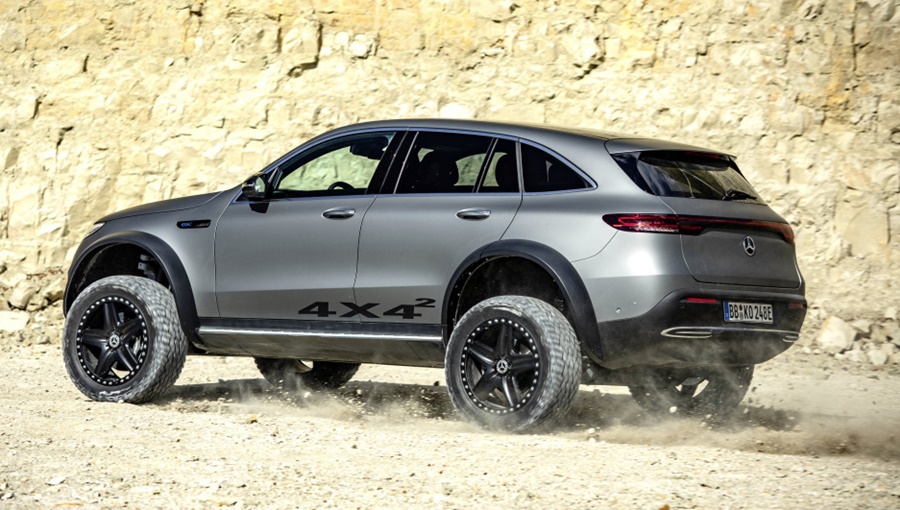
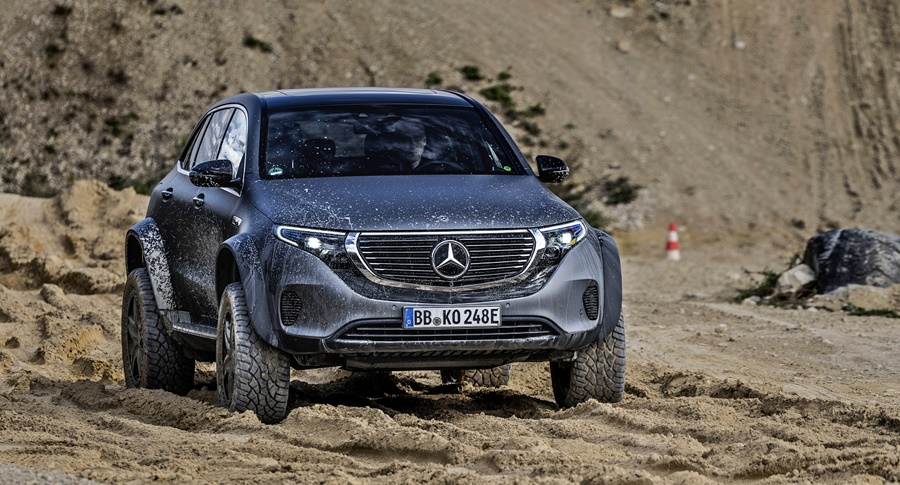
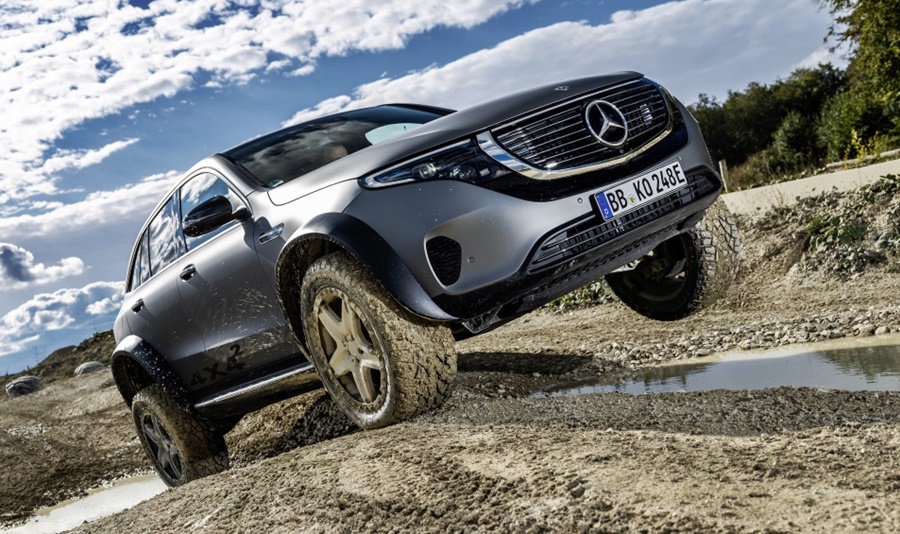
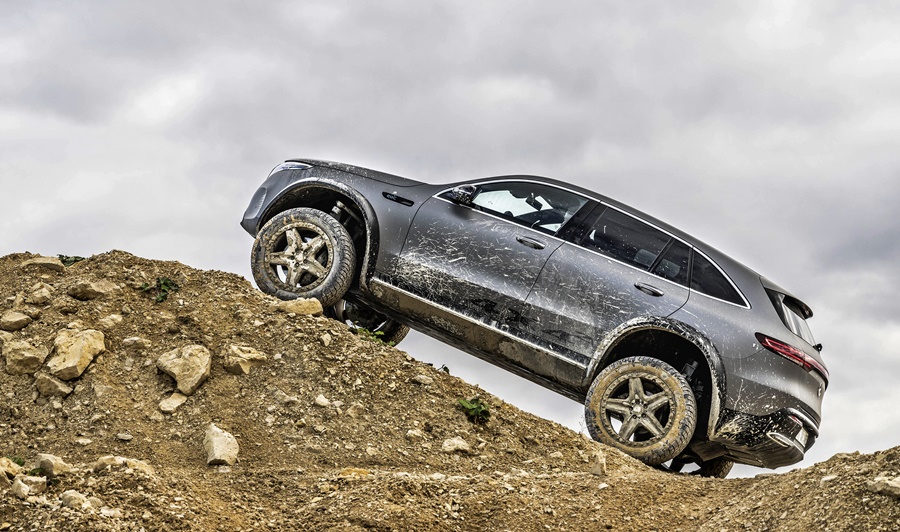
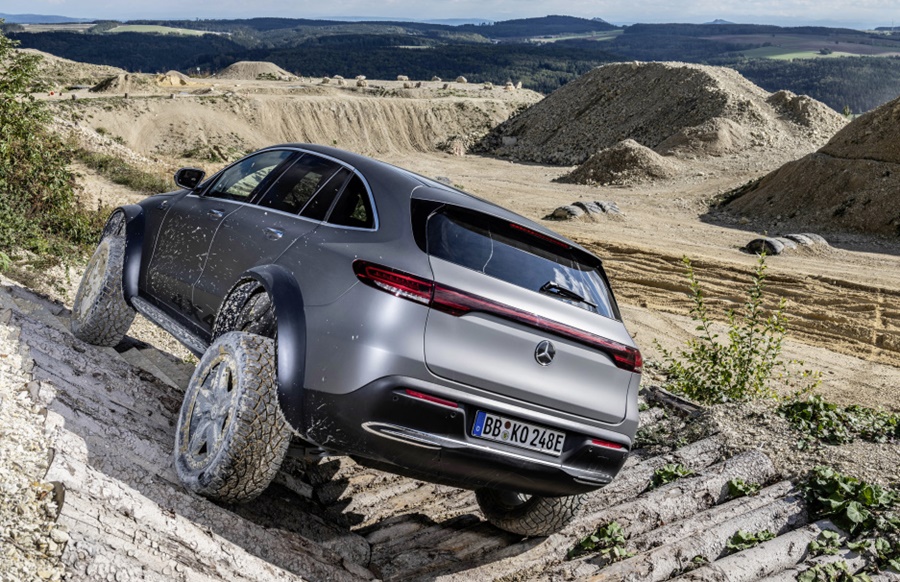
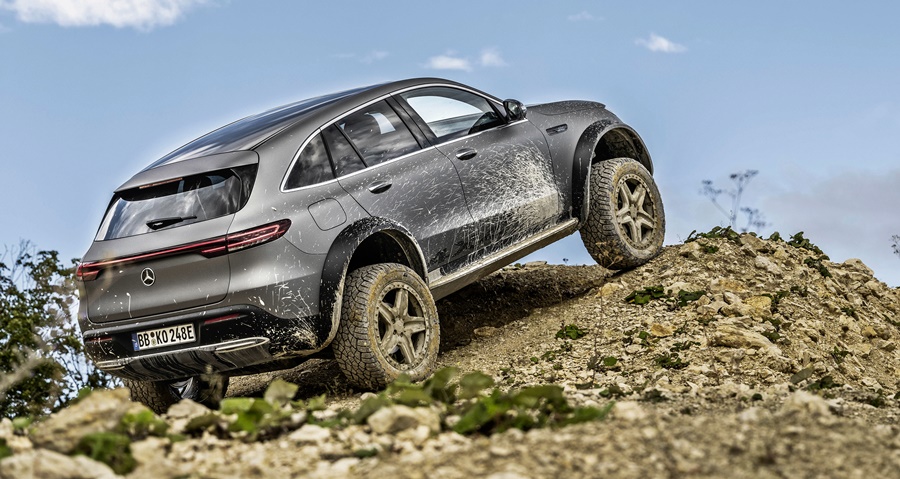
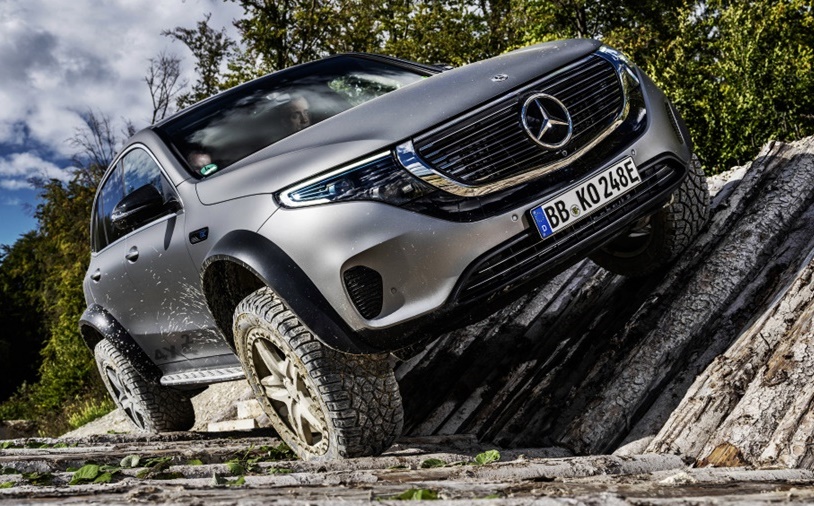
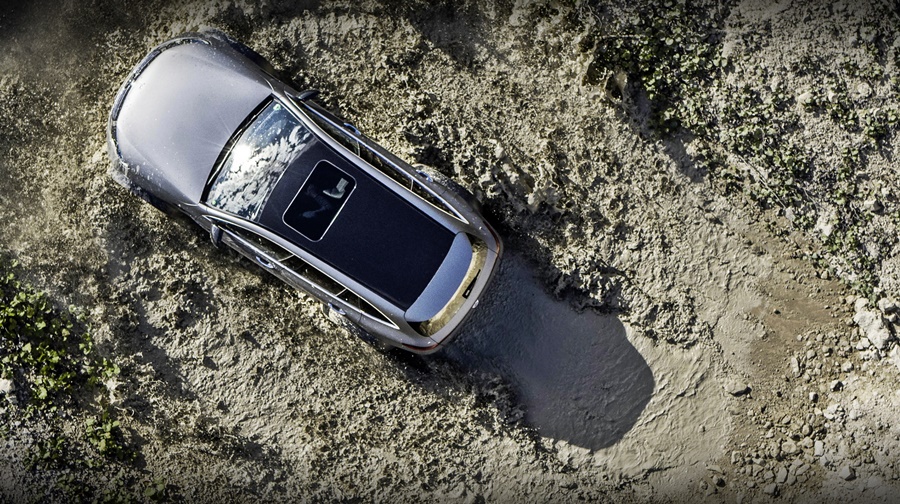
The company has revealed a prototype which uses a drivable technology platform on the basis of an EQC 400 4MATIC that is now on sale. Known as the EQC 4×4², this SUV is able to go further on rough terrain using future-oriented technology.

Mercedes-Benz EQC 4x4²

Mercedes-Benz EQC 4x4²

Technology platform
With the EQC 4×4², Mercedes-Benz engineers will test the limits of the vehicle and show that e-mobility is not just urban but also conceivable off-road. The one-off prototype was developed by a cross-departmental team as a technology platform.

“Our aim is to combine modern luxury and sustainability with emotional appeal. The EQC 4×4² shows how enjoyable sustainable mobility can be. This is where electromobility high-tech and an intriguing customer experience are transferred to the mountains, thanks to MBUX and over-the-air updates. To put it succinctly, electric, progressive luxury goes off-road,” said Markus Schafer, member of the Board of Management of Daimler AG and Mercedes-Benz AG responsible for Daimler Group Research and Mercedes-Benz Cars COO.

“This drivable study clearly shows that, alongside a passion for e-mobility, we at Mercedes-Benz lay a strong claim to leadership in this sector and will heighten the emotional appeal of this even further in the future,” he declared.

Mercedes-Benz EQC 4x4²

Mercedes-Benz EQC 4x4²

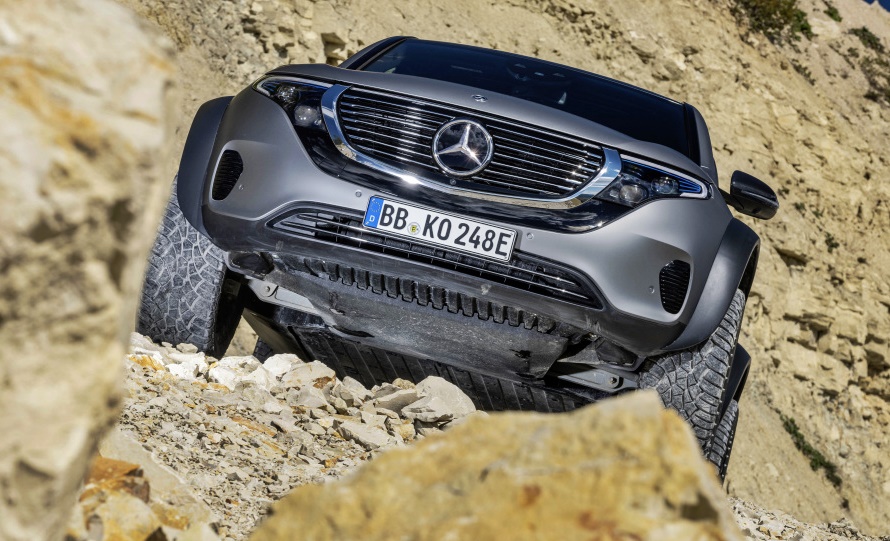
The capabilities of the EQC 4×4² include driving through sand in desert regions and on beaches, on rocky terrain and through mountain streams. As well as great reliability and corresponding comfort, the mature genes of the standard model also allow trailer operation and installation of a roof-rack. A roof-tent and inflatable dinghy allow the remotest areas to be reached.

Very generous ground clearance
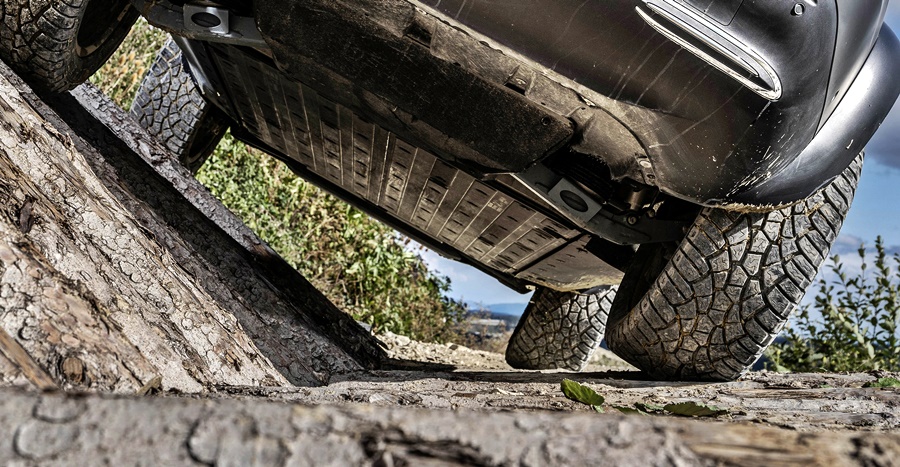
At 293 mm, the EQC 4×4² rides more than twice as high as a production EQC; even a G-Class is 58 mm lower. The fording depth is increased by 15 cm to 40 centimetres and, of course, all necessary measures are taken to protect the many electronic systems and battery pack.

Mercedes-Benz EQC 4x4²

Mercedes-Benz EQC 4x4²

The generous ground clearance is made possible by the conversion to portal axles. Unlike conventional axles, the wheels are not at the height of the axle centre but are instead situated much lower down on the axle hubs owing to the portal gears. Or conversely, the entire vehicle moves up.

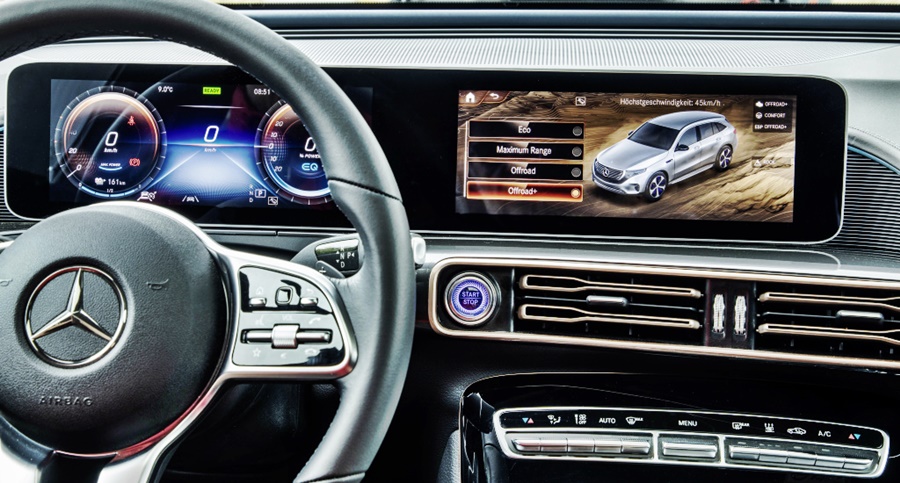
The reprogrammed Off-Road drive programs take advantage of the high-performance logic of the current GLC models. For example, using targeted brake interventions, this enables an improved torque curve when starting on loose ground. In combination with the tyres (285/50R20), this results in very good traction.

Mercedes-Benz EQC 4x4²

Mercedes-Benz EQC 4x4²

Mercedes-Benz EQC 4x4²

Soundscape gives feedback to driver
Another highlight of the EQC 4×4² is the sound experience with its own ‘soundscape’. The acoustic production comprises sounds that give the driver feedback on system availability and vehicle parking. It is influenced by various parameters such as the position of the accelerator pedal, speed or energy recovery rate.

The technology uses intelligent sound design algorithms to calculate the sounds coming from the amplifier of the sound system in real time and the interior loudspeakers to reproduce them.

Mercedes-Benz EQC 4x4²

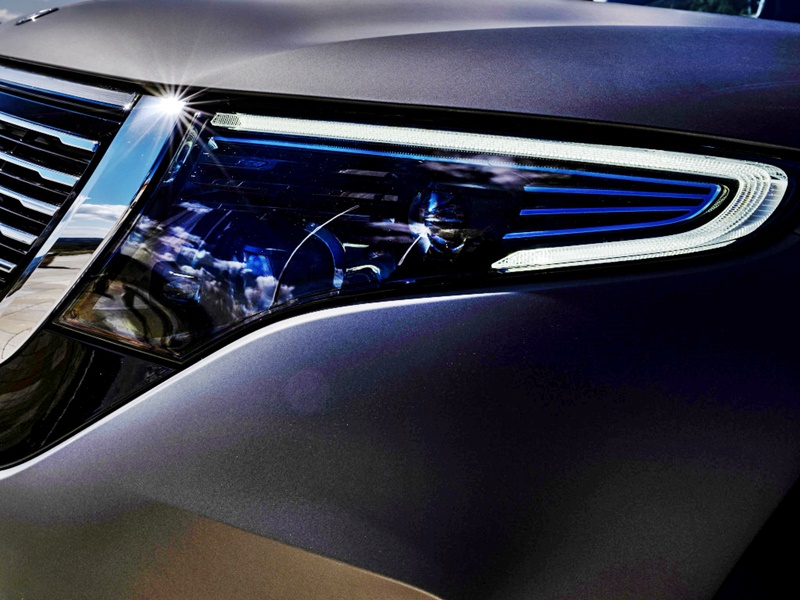
The production EQC uses the external noise generator (Acoustic Vehicle Alert System, AVAS) required by law to reproduce the sounds. The EQC 4×4² has a more powerful AVAS composed specifically for it and uses the headlamps as external speakers for this purpose. The reason for this is that the sound experts at Mercedes-Benz have made creative use of the available installation space in the headlamp housings – thus the ‘lampspeaker’ was born.

Mercedes-Benz EQC 4x4²

The EQC 4×4² is actually the third model of the 4×4² family from Mercedes-Benz. The G 500 4×4² has been around since September 2015, and in 2017, came the E 400 All-Terrain 4×4² study. For now, the EQC 4×4² remains a study, a vehicle for the engineers to test new technologies. However, if response from the public proves to be good and there is a business case, perhaps Mercedes-Benz will turn it into a production model in future.

The new Mercedes-Benz GLB-class


Covid-19
Fighting COVID-19 is our joint responsibility. Protect yourself and others: make these 6 simple precautions your new habits.

Having been among the early carmakers to start electrifying their product line and since 2010, it has sold more than 300,000 electric vehicles in Europe. Renault continues to look ahead to the future of electric vehicles and mobility.

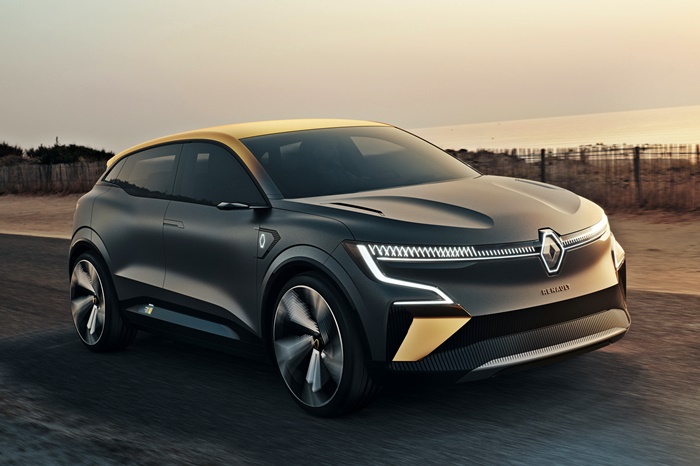
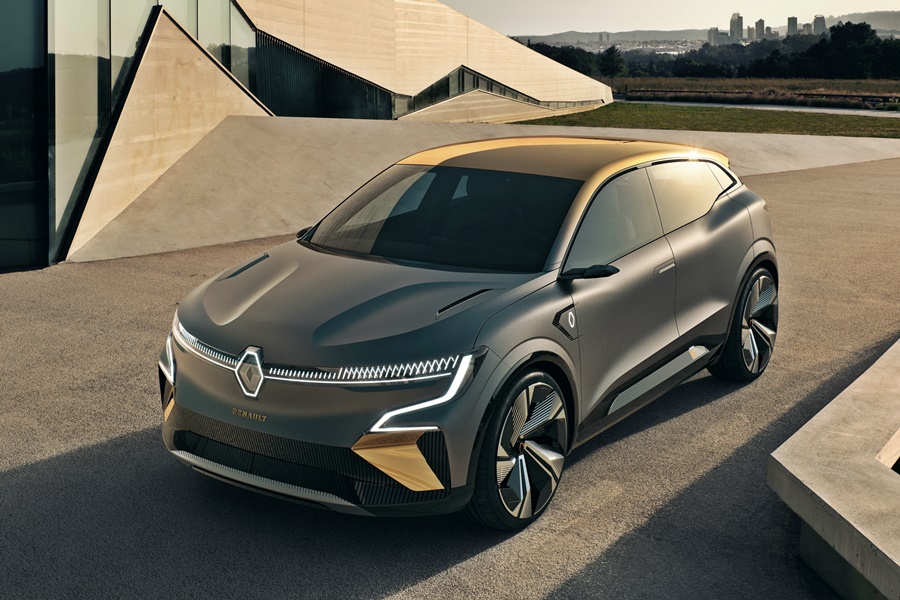
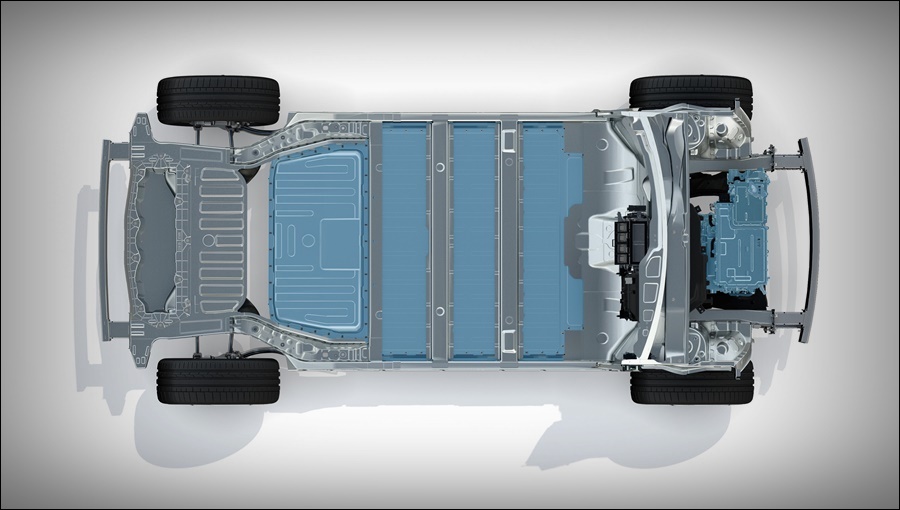
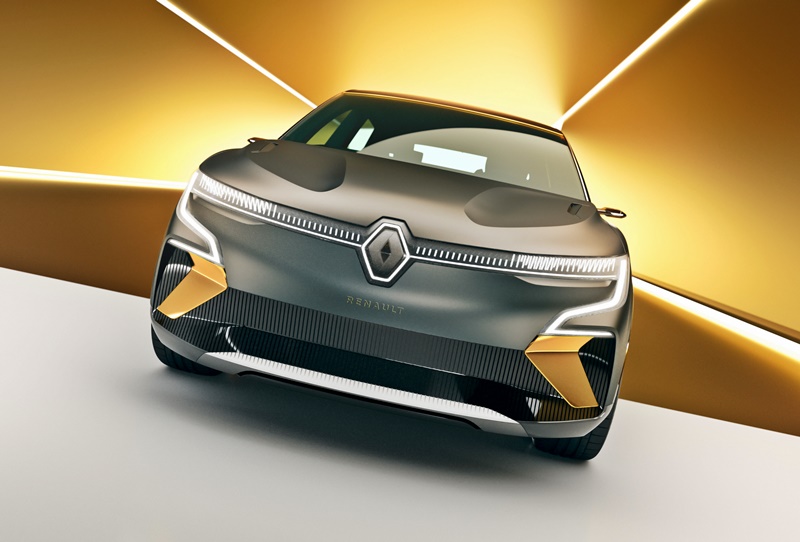
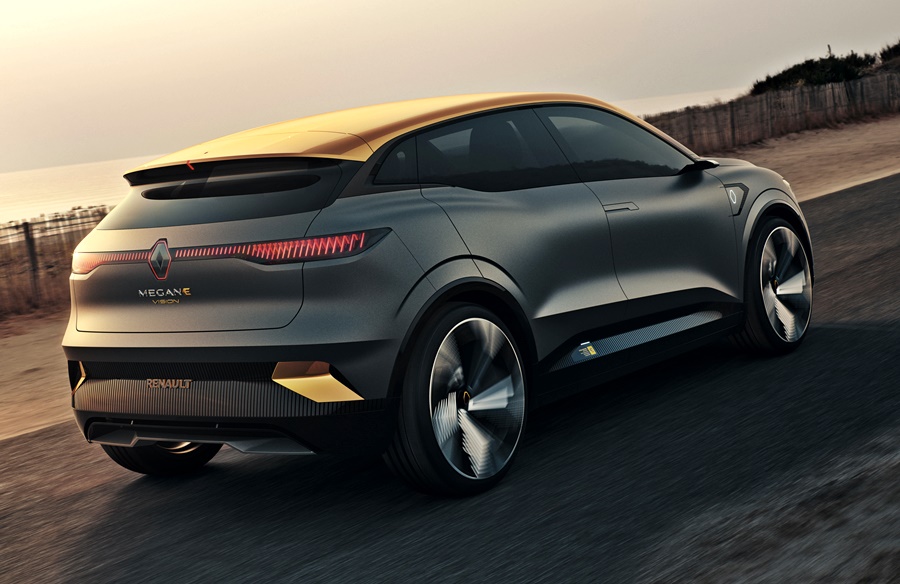
Revealing the next step in the brand’s broadening electrified vision is the Megane eVision, an innovative concept car based on the new modular CMF-EV (Common Module Family – Electric Vehicle) platform. The production version of the  Megane eVision, to go on sale in 2020, will be the first Renault vehicle to make use of the new  platform.

Highly variable platform
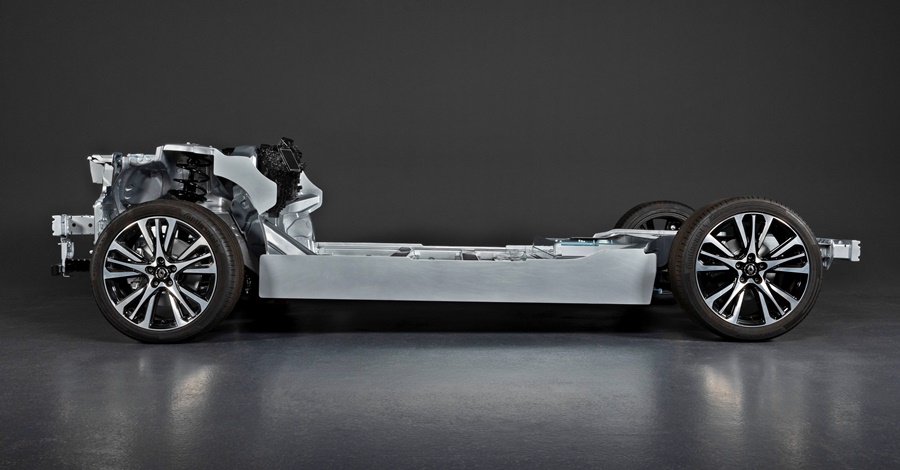
This new platform was specifically designed by the Alliance and has been rigorously tested over 3 million kilometres in France and Japan. It can accommodate a variety of vehicle bodies – from low saloons to larger SUVs – with different modular batteries can be fitted vertically and horizontally.

What will be consistent across all vehicles sitting on the CMF-EV platform is a flat floor, boosting interior practicality and modularity thanks to the lack of an exhaust system or standard transmission, making room for a more versatile cabin.

It is also modular in length with a wheelbase up to 2.77 metres available, offering engineers a vast scope for vehicles with more powerful batteries and longer driving range. The flexibility of the platform is further demonstrated by the ability to accommodate a second rear engine to provide 4-wheel drive capability.

The engine compartment is also more compact when compared with traditional combustion-engined vehicles, enabling an extended wheelbase with wheels pushed further to the edges of the vehicle. This allows a much roomier cabin environment as well as more design opportunities.

Powertrain and battery
The electric motor is one of the most powerful in the Renault range of any fuel type, delivering 160 kW of power (equivalent to 217 bhp) and 300 Nm of torque, to give a claimed acceleration time from 0 – 100 km/h in under 8 seconds.

Slimline battery packs located beneath the floor of the vehicle give a low centre of gravity. An innovative feature is that they are structural and form an integral part of the car, helping to absorb energy in the event of a side collision. They also have a higher energy density, enabling longer driving range and reduced charging times.

The 60 kWh battery pack thickness can be altered in order to best suit the car, meaning particular models can be designed to be perfectly fit for purpose. For example, a compact vehicle can be truly compact, while remaining highly efficient with increased driving range and improved energy efficiency.

Besides an advanced system for managing battery temperature and one of the thinnest batteries on the market, the Megane eVision also has a new ultra-compact powertrain. An optimised water-cooling Energy Recovery System captures the heat of the engine and battery to heat the passenger compartment without using energy from the battery. This ensures the driving range is not impacted by cold weather, maximising all available energy.

LIVINGTECH technological ecosystem
The interior showcases Renault’s LIVINGTECH technological ecosystem, an intuitive and smart interior environment that focuses on interacting with the passengers and catering to their needs and usage. The space within is comparable to a much larger vehicle in spite of the compact hatchback exterior. A slim and sleek LIVINGSCREEN instrument panel forms part of the interior design that combines design and practicality, with striking touches such as illuminated edges.

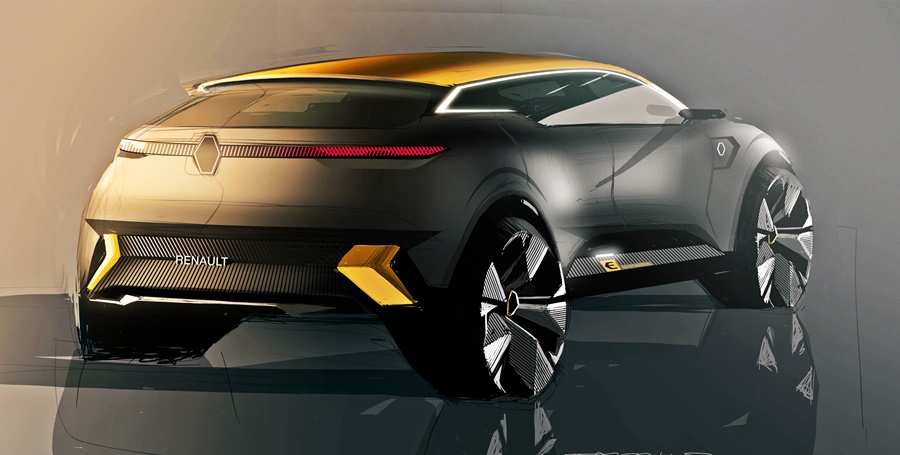
The 4.21-metre long Megane eVision has a hatchback design which is a modern interpretation and reinvention of the Megane name. It takes inspiration and details from the MORPHOZ concept car with the large wheels, body height and robust design reminiscent of an SUV.

The floating roof is finished in a unique gold colour gradient that starts from the front windscreen pillar, giving an impression of lightness, accentuating the car’s sleek profile. The highly sculpted bonnet features two air inlets, enhancing the illuminated Renault logo, while the 20-inch alloy wheels are finished in the shape of propeller blades.

Renault MORPHOZ – the car that changes shape according to needs! (w/VIDEO)

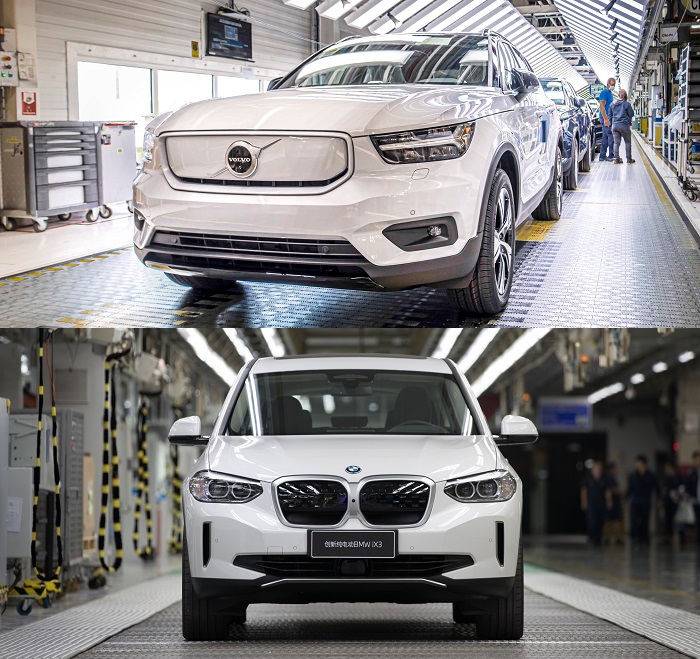
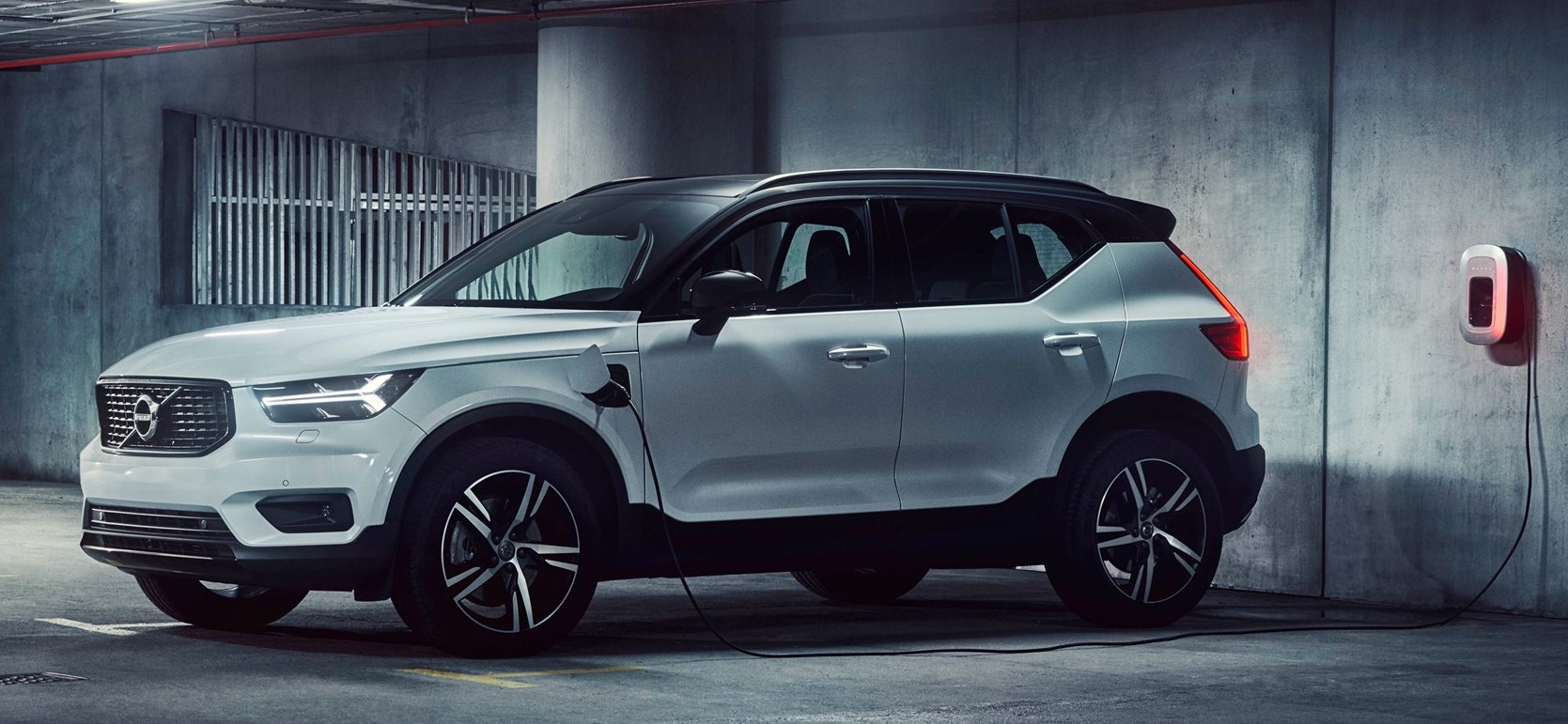
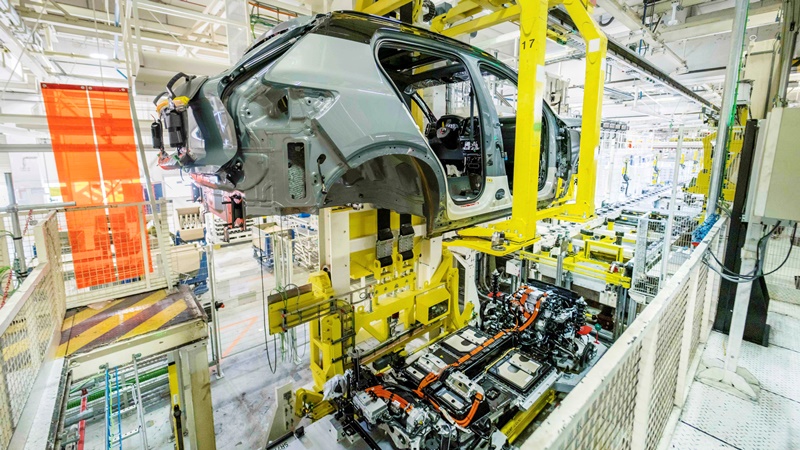
Additional choices of electrically-powered cars will be in showrooms soon with the start of production of new models from Volvo and BMW. From the Swedish carmaker’s factory in Belgium is the XC40 Recharge while BMW has begun rolling out its new iX3 at the BMW Brilliance Automotive joint venture (BBA) in China.

Volvo XC40 Recharge
The XC40 Recharge is the first of several fully electric Volvos to come. By 2025, Volvo expects 50% of its global sales to consist of fully electric cars, with the rest hybrids. Customer demand for the XC40 Recharge has been strong and at this time, every car to be built during this calendar year has already been sold. First deliveries to customers in Europe will commence later this month.

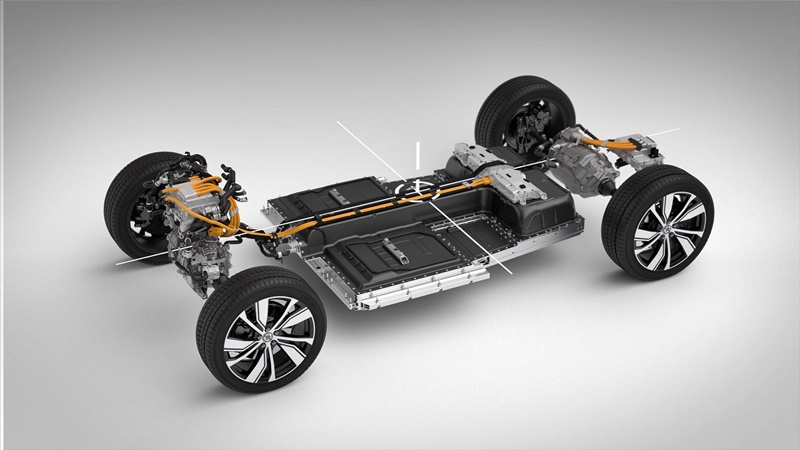
As a fully electric version of the popular XC40 SUV, the XC40 Recharge is based on the Compact Modular Architecture (CMA), an advanced vehicle platform co-developed within the Geely Group. It has a projected range of over 400 kms on a fully charged battery pack which can be charged to 80% capacity within about 40 minutes (with a fast-charger system).

The XC40 Recharge, Volvo’s first model to win the ‘European Car of the Year’ title, has the typically high safety standards the brand has been known for. However, being a EV without a conventional engine means it has a different architecture and Volvo engineers have reinforced the frontal section to address that issue.

The battery pack is protected by a safety cage embedded in the middle of the car’s body structure. Its placement in the floor of the car also lowers the centre of gravity of the car, for better protection against roll-overs.

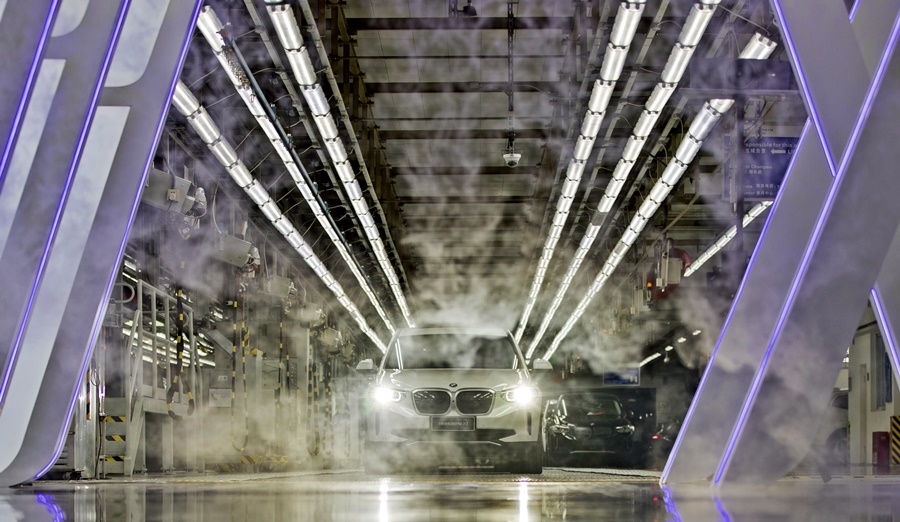
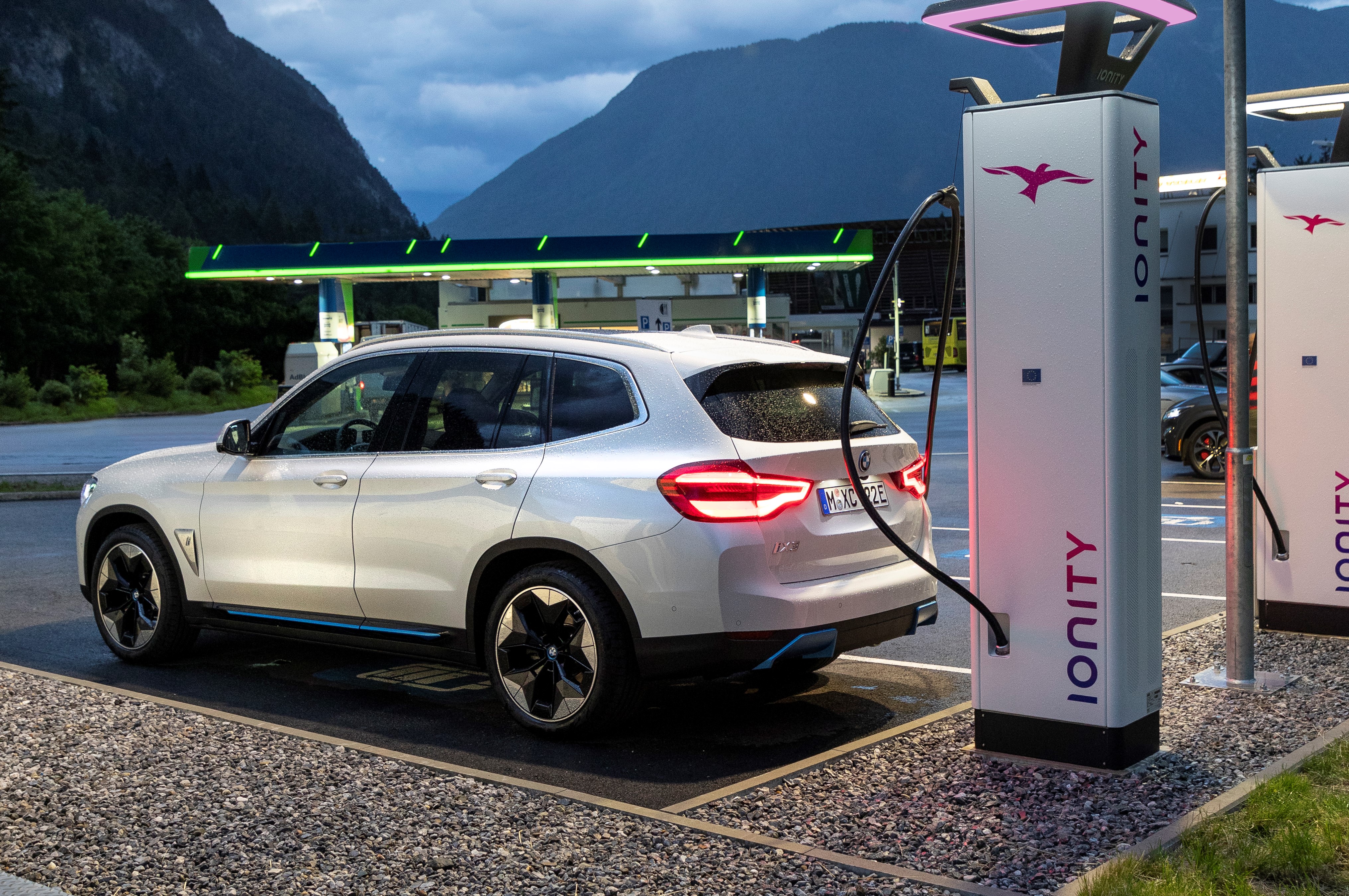
BMW iX3
The fully-electric iX3 is  the first pure electric model from the BMW brand. The iX3 has been developed under the strategic “Power of Choice” approach to cover broad spread of customer requirements and statutory regulations around the world.

It has fifth-generation BMW eDrive technology with major progress made in terms of power density, operating range, weight, installation space requirement and flexibility. Electric motor, power electronics and transmission arranged in a central housing for the first time. The claimed operating range is between 460 kms and 520 kms, depending on the test cycle used).

Power transfer is to the rear wheels from the eDrive electric motor which produces maximum output of 286 ps/400 Nm. This gives the SUV a 0 to 100 km/h acceleration time claimed to be 6.8 seconds which is close to that of the X3 30i that does the same run in 6.4 seconds.

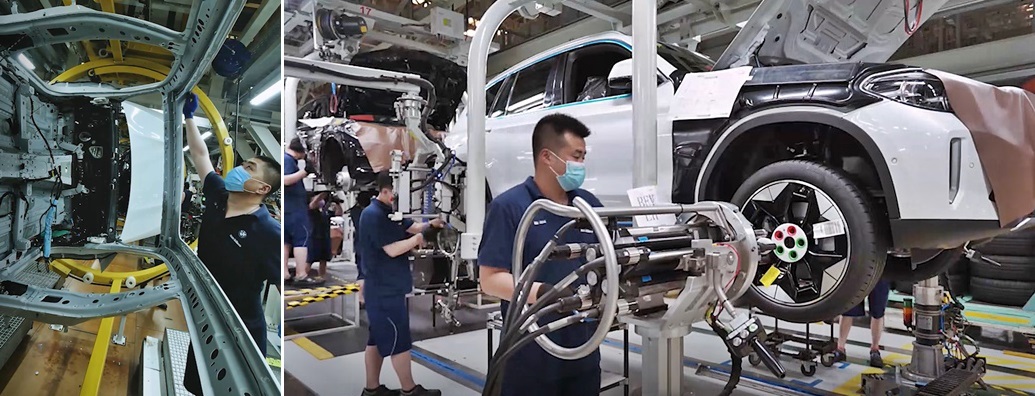
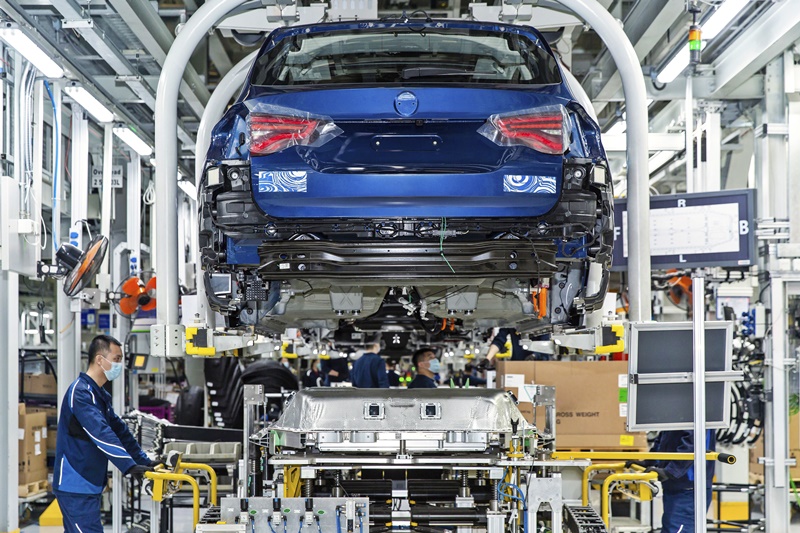
The iX3 will be the brand’s first model to also be produced for export at the joint venture factory in China. As well as intelligent manufacturing and state-of-the-art technologies, the production facility in Shenyang is also distinguished by its comprehensive quality management system.

A special ‘zero defect concept’ ensures that the globally high market requirements for electric mobility are met. There is rigorous testing of everything from the battery to the finished car to guarantee the vehicle safety. These include 128 mechanical tests and 994 software functionality tests ensure the high quality of the high-voltage battery packs throughout the entire lifecycle. Another 140 functional tests check every aspect of the vehicle during acceleration, in particular road conditions and on rocky roads.

The tyres on your car may generate electricity in future!

COVID-19 Facemask

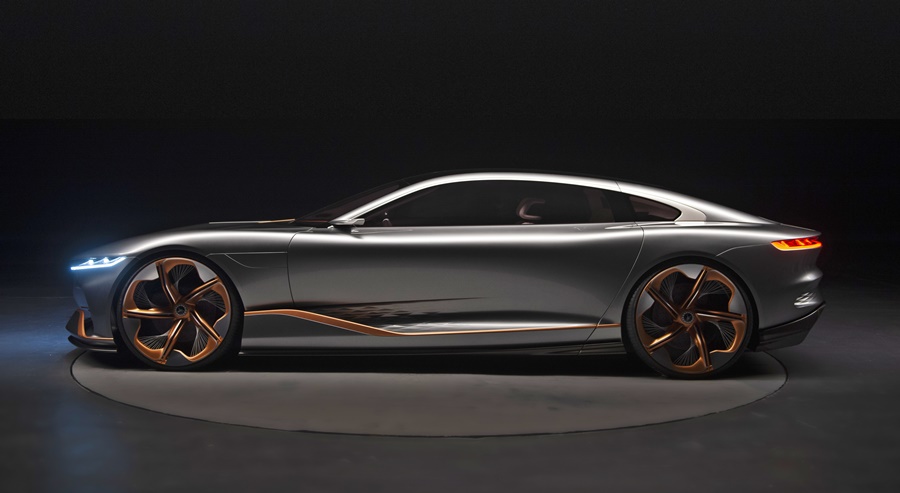
Like a number of automakers, China’s Dongfeng Motor has a constantly growing range of models and to provide more differentiation, sub-brands are created to cater for specific niches. In July this year, the company launched VOYAH, its new premium brand which is dedicated to EV products.

It aims to introduce a new model each year over the next 3 – 5 years, creating a line-up of at least 9 models in the various bodystyle segments.  The first of these is the i-LAND, a sportscar that will go on sale in July 2021.

In collaboration with ItalDesign
The i-LAND prototype was unveiled at the Beijing Auto Show recently and the project is being undertaken with Italdesign. The Italian studio has been given the responsibility to develop the interior and exterior styling as well as the on-board human-machine interface. Additionally, it is also providing engineering development services and the concept construction.

The approach taken by the designers and engineers at Italdesign for the i-LAND is to combine ergonomics and cutting-edge technology with innovative aesthetic solutions, blending form and function.

2020 Voyah i-LAND prototype

GT styling
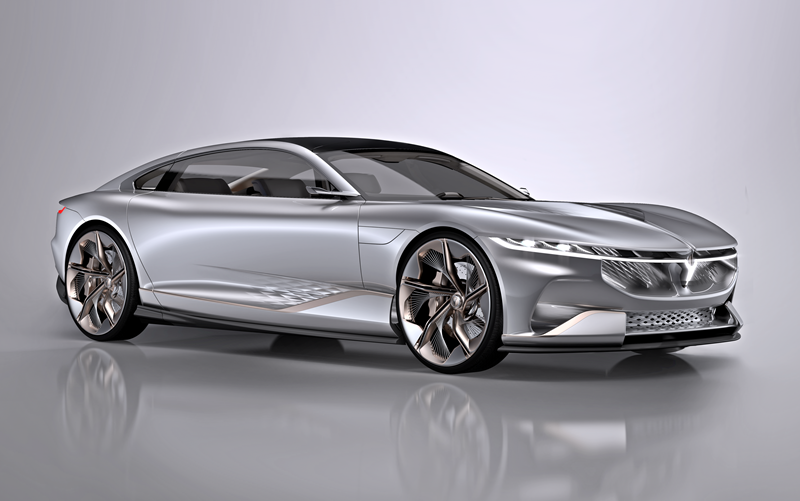
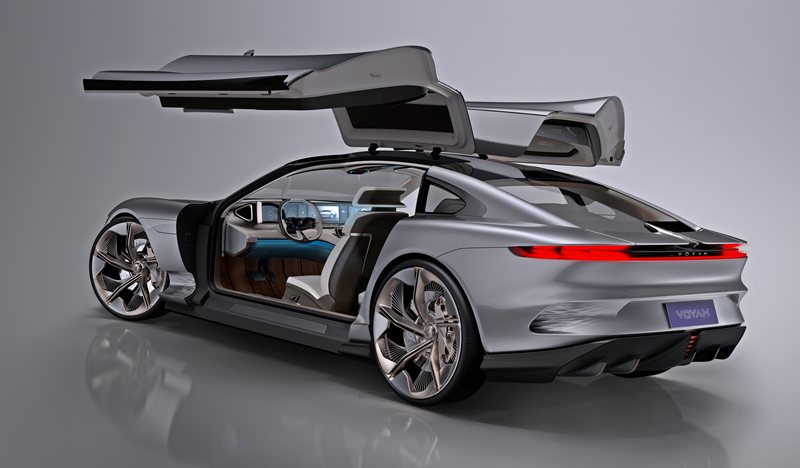
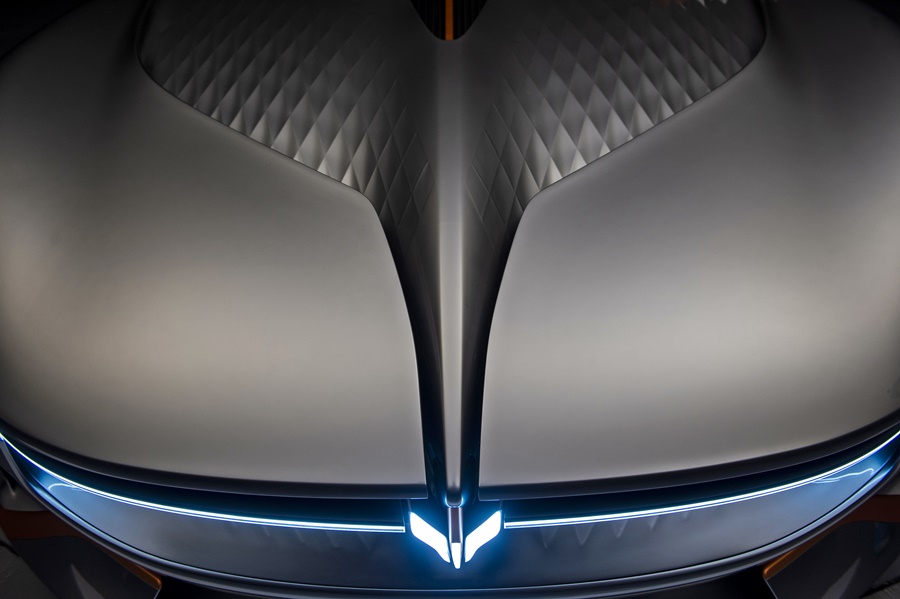
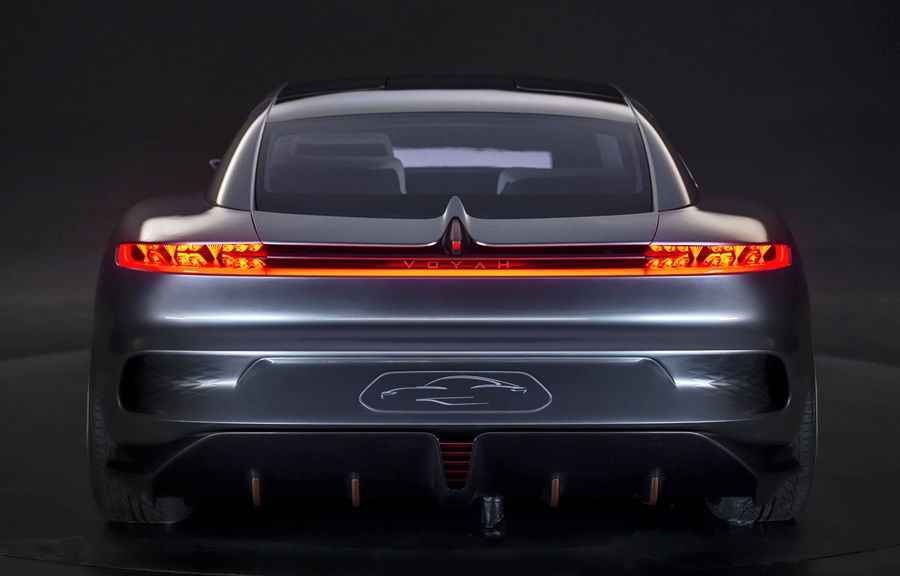
The i-LAND exterior styling follows the Italian tradition of Gran Turismo (GT) cars. For the prototype, there are typical exotic features such as large gull-wing doors with eye-catching front and rear light clusters and a LED-illuminated front grille. Viewed from above,  the sculpted form of the bonnet can be seen to be coordinated with the design of the grille.

2020 Voyah i-LAND prototype

The front lights, referred to as ‘winged headlights’, provide a characteristic signature for the i-LAND, which makes it recognizable even in the dark. It generates directly from the centre of the grille where the Voyah logo, created by ItalDesign, is embedded.

The rear of the car also has a form inspired by GT models with a classic truncated tail that combines both aesthetic elements with aerodynamic functionality.

3-seater cabin
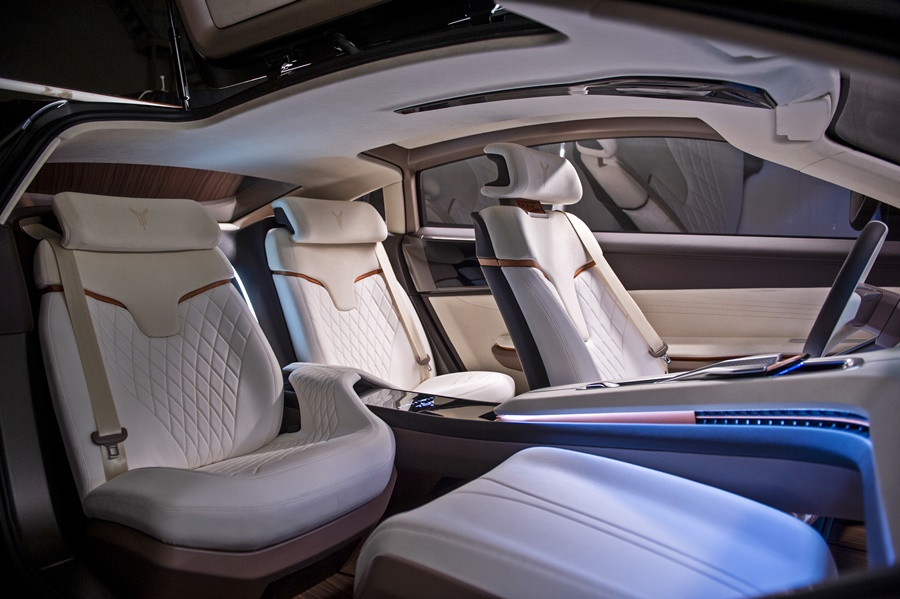
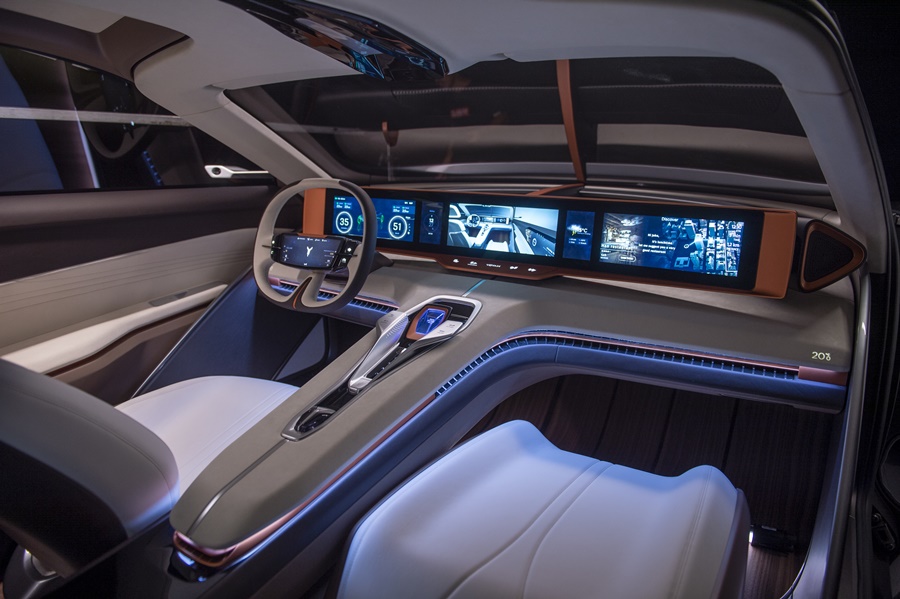
Sitting on an ESSA (Electric, Smart & Secure Architecture) electric platform developed by the company, the i-LAND has a 3-seat layout. One position at the rear right end is for relaxing or smart working, with the seat next to the driver replaced by an element that can become a table or footrest if necessary.

2020 Voyah i-LAND prototype

2020 Voyah i-LAND prototype

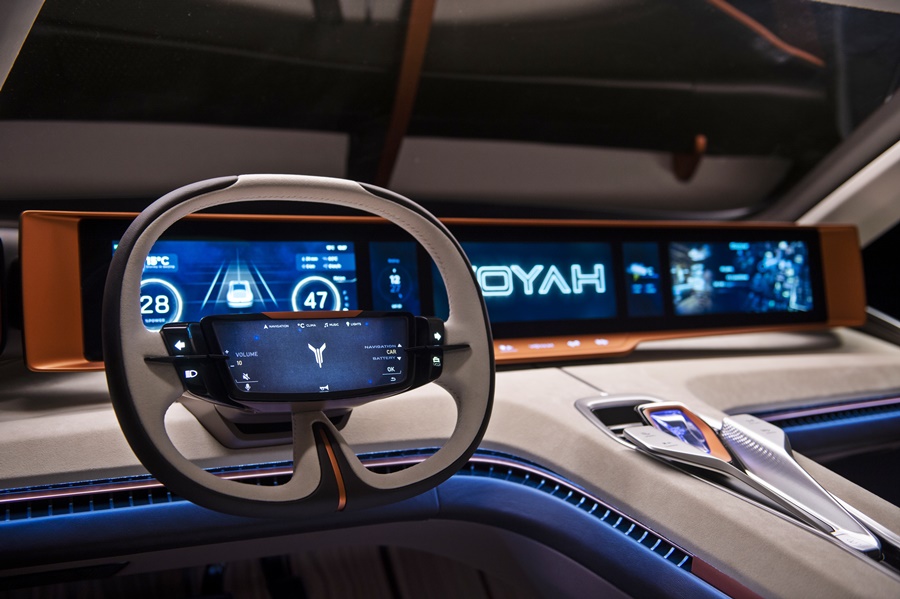
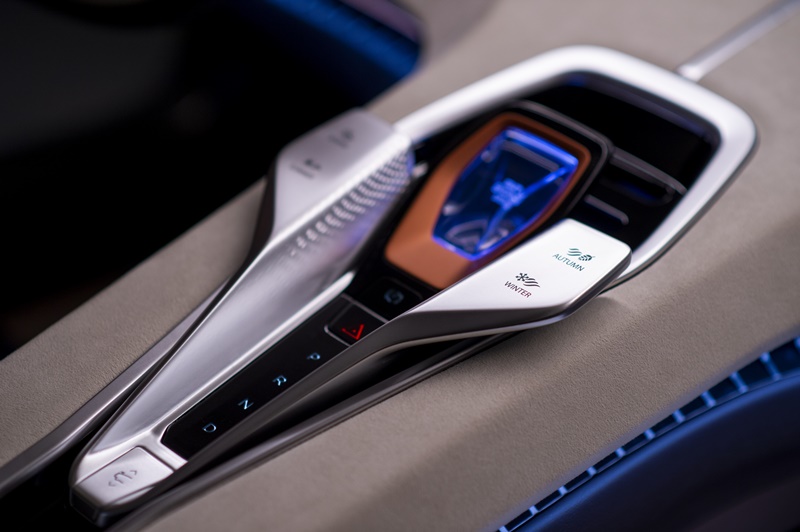
A series of floating screens provide infotainment services as well as driver assistance. Some aesthetic elements enhance the general feeling of luxury experienced within the i-LAND. Examples are the vanes positioned in the central tunnel, along with the start/stop button, gear selection and the air conditioning switches.

2020 Voyah i-LAND prototype

2020 Voyah i-LAND prototype

The platform is set on EIC technology and integrates the WindLink 4.0 intelligent network connection, L3 and higher-level intelligent driving and other core configurations. In terms of power and battery runtime, MVP (Multi-choice important power) solutions are said to be provided, according to Voyah.

2020 Voyah i-LAND prototype

Like many other carmakers, Kia Motors knows that the future is electric. Tougher regulations in Europe and America and growing demand for electric vehicles (EVs) in China are forcing manufacturers to develop and launch electrically-powered vehicles as quickly as possible.

For Kia Motors, the future direction includes a global EV business strategy that aims to put the brand in a leadership position. To achieve this, Kia will launch a diverse range of dedicated BEVs (Battery Electric Vehicles) and partner with EV charging companies worldwide.

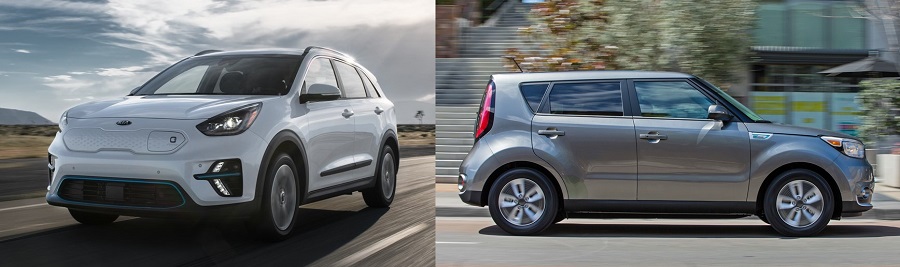
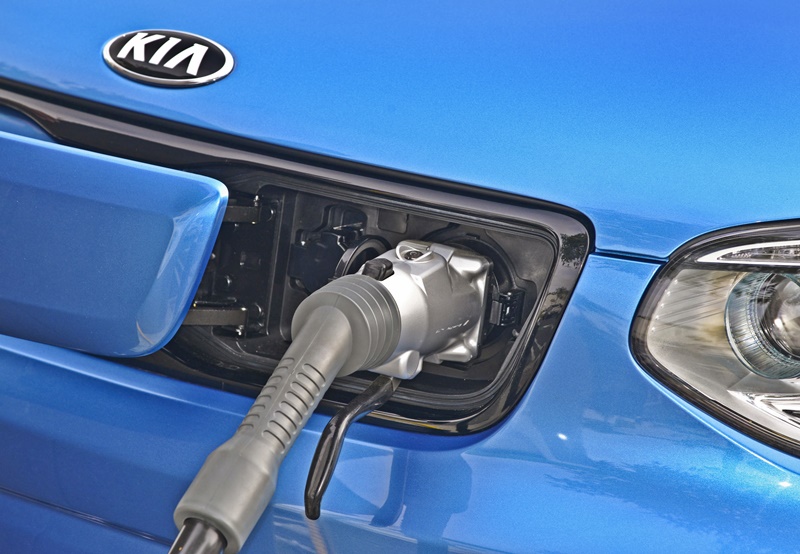
Kia is already selling all-electric models such as the Niro (left) and Soul.

100,000 BEVs already sold
“Kia has sold more than 100,000 BEVs worldwide since the introduction of our first mass-produced BEV in 2011, the Kia Ray EV, ” said Kia President & CEO Ho Sung Song. “Since then, we have started to introduce a range of new BEVs for global markets and announced plans to accelerate this process in the years ahead. By refocusing our business on electrification, we are aiming for BEVs to account for 25% of our total worldwide sales by 2029.”

Under Kia’s ‘Plan S’ strategy, announced at the start of 2020, the brand plans to expand its BEV line-up to 11 models by 2025. Over the same period, it is aiming for BEVs to account for 20% of the brand’s total vehicle sales in advanced markets such as Korea, North America and Europe.

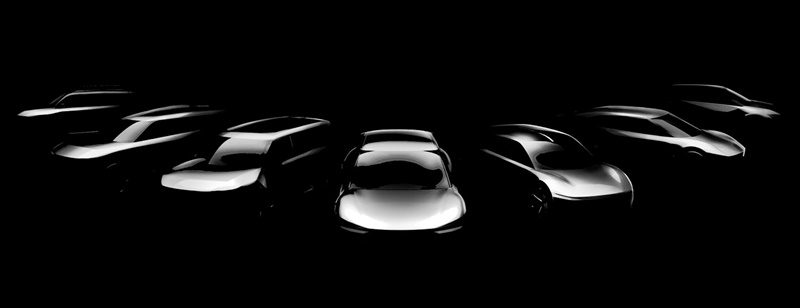
The first of seven BEVs, code-named ‘CV’, will be revealed in 2021. It will be the brand’s first dedicated BEV, destined for many regions globally.

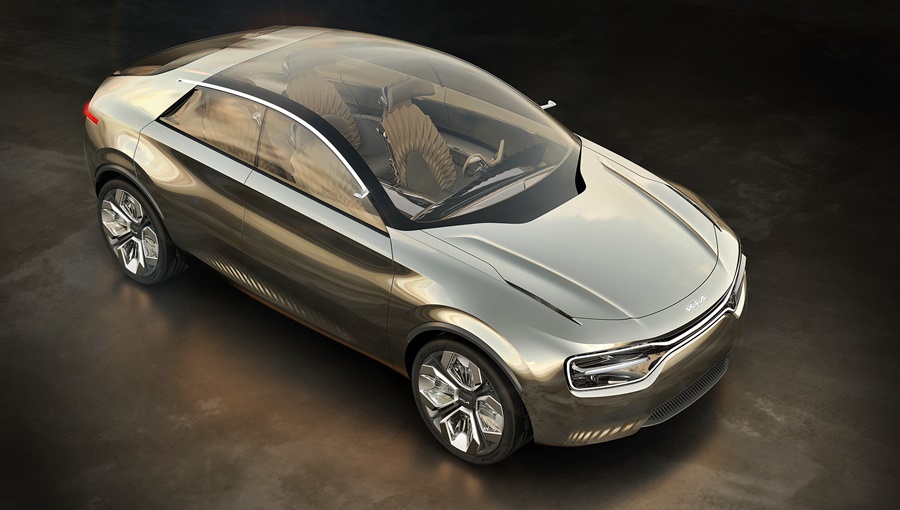
The Imagine concept by Kia is a proposal for an all-electric future sedan.

Transition to electrification
Kia Motors’ ‘Plan S’ is a mid to long-term future strategy that has a focus on BEVs and mobility solutions. It calls for a company-wide transformation which will see a new design philosophy embracing progress, diversity and a rich composition of contrasting elements.

Kia is innovating its vehicle planning, development and production to actively reflect diverse customer needs from the product planning stage. To respond to market demands, there will be diverse product types, with a range of models suitable for urban centres, long-range journeys, and performance driving. Its new Electric-Global Modular Platform (E-GMP) will enable engineers to develop vehicles with best-in-class interior spaciousness.

Aftersales services
In addition, Kia Motors plans to expand its global aftersales infrastructure for EVs. In its home country, there will be more dedicated EV work bays at service centres, ricing from 600 in 2020 to 2,000 by 2023. There are plans to develop in-house programs to train EV maintenance professionals.

Kia Motors sees the expansion of electric charging infrastructures as a pre-condition for the popularization of EVs and continues to explore activities worldwide to improve charging accessibility for drivers. In Korea, its business activities will directly lead to the construction of a charging infrastructure.

Worldwide, Kia is setting up more than 2,400 EV chargers in Europe and around 500 in North America, partnering with its dealer networks. It plans to continue to increase its charging infrastructure in line with the growing market for EVs.

VR technology enhances vehicle development processes for Hyundai and Kia

COVID-19 Facemask

Archive

Follow us on Facebook

Follow us on YouTube