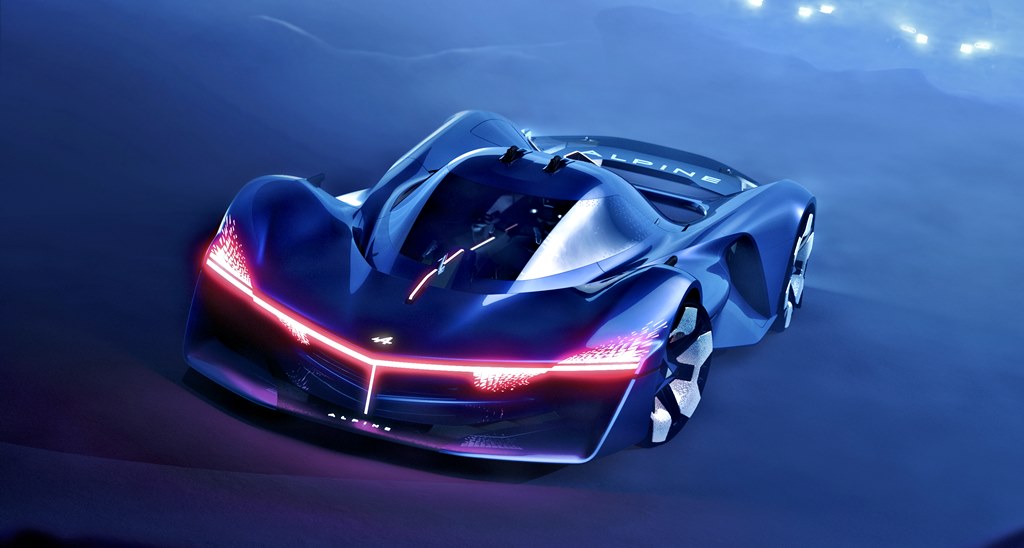
Alpine, the French company founded in 1955, has always been associated with sportscars. That part of its DNA remains intact up till today and will also be found in its roadgoing and racetrack models of tomorrow. The vision and roadmap moving forward is now encapsulated in the Alpenglow concept which will be displayed at the Paris Motorshow this month.
The Alpenglow presents the brand’s forward-looking technological direction as well as the design language that will be adopted. Like its parent company, Renault, Alpine is also heading towards full electrification and will explore the approach of using hydrogen. ‘Green’ hydrogen sustainable mobility as hydrogen is available ‘everywhere’. A hydrogen-fuelled engine releases practically nothing but steam during combustion so it is very clean.
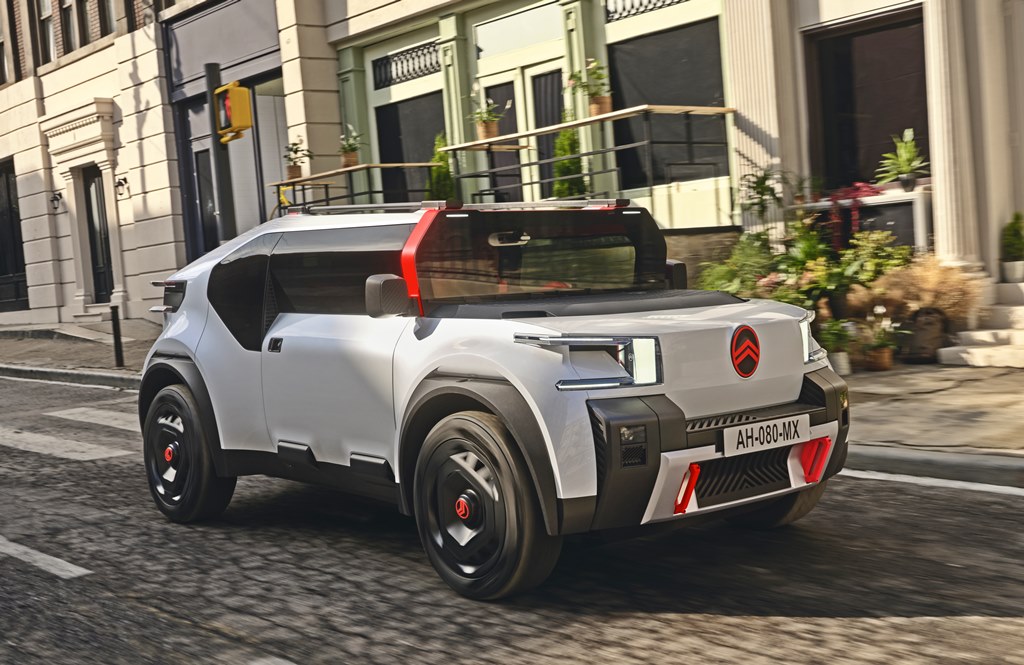
French concept cars have often been taken to extremes in trying to be avant garde, generating controversy but also spurring discussion. The latest one presented by Citroen yesterday certainly is as radical as they come, with polarizing views on whether it is an intelligent design or something outrageous as usual.
The Citroen oli concept is a vehicle intended to have multiple roles in mobility, with a major effort to make it affordable and simple. The carmaker feels that the industry is stuck with offering heavier, more complex and expensive zero emission vehicles and wants to buck that trend.
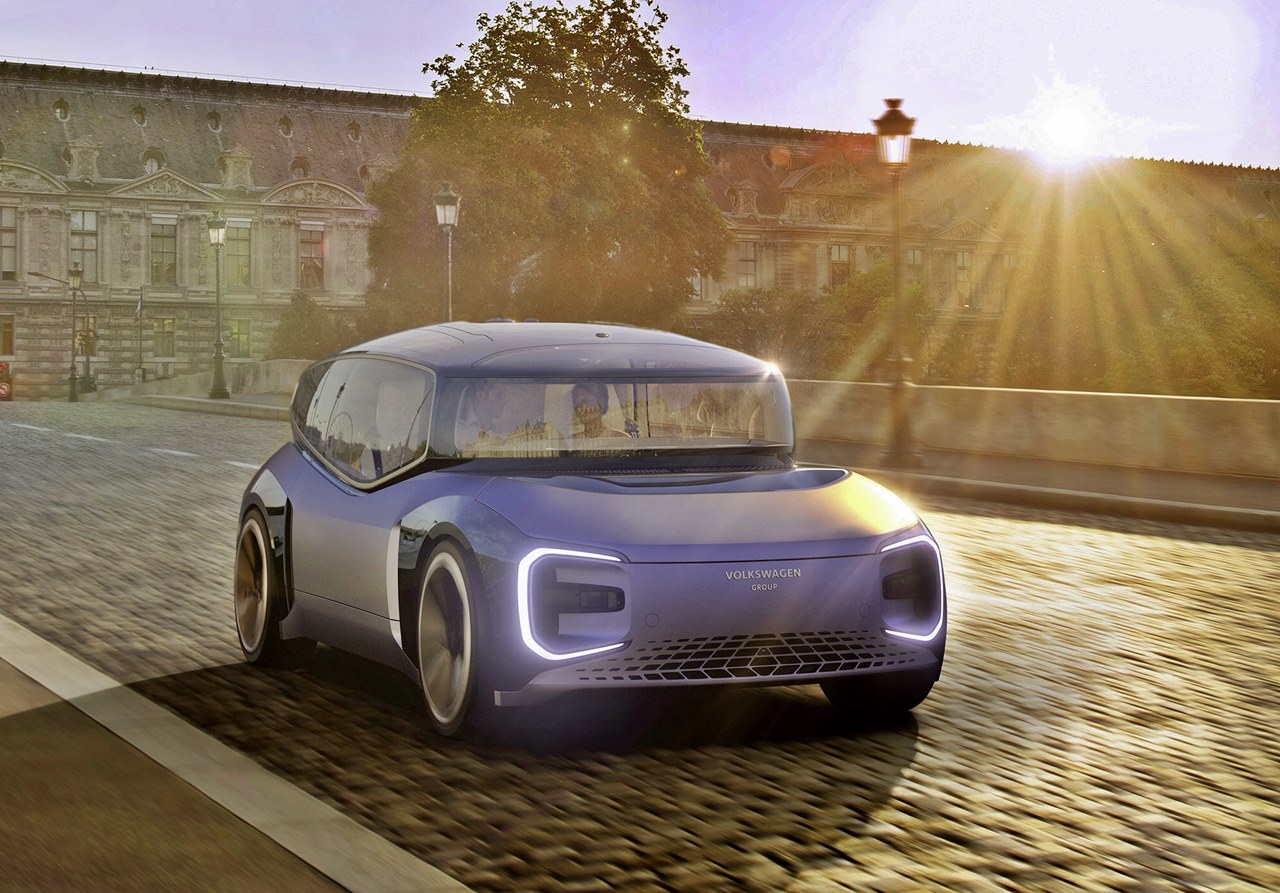
In the future (probably quite distant), people will travel in vehicles which can operate completely without human control or management. This will be when Level 5 autonomy is possible, at which time the question will be whether we can regard the vehicle as the ‘car’ we drive today.
At Chantilly Arts & Elegance event being held in France this weekend, the Volkswagen Group will present an innovative design study that will show what a Level 5 autonomous vehicle might be like, with a realistic outlook for the mobility of the coming decade.
For obtaining customer response The prototype, known as the GEN.TRAVEL, is an Innovation Experience Vehicle (IEV) to test the concept and new functionalities for customer response. Based on the study results, individual features may later be transferred to production vehicles.
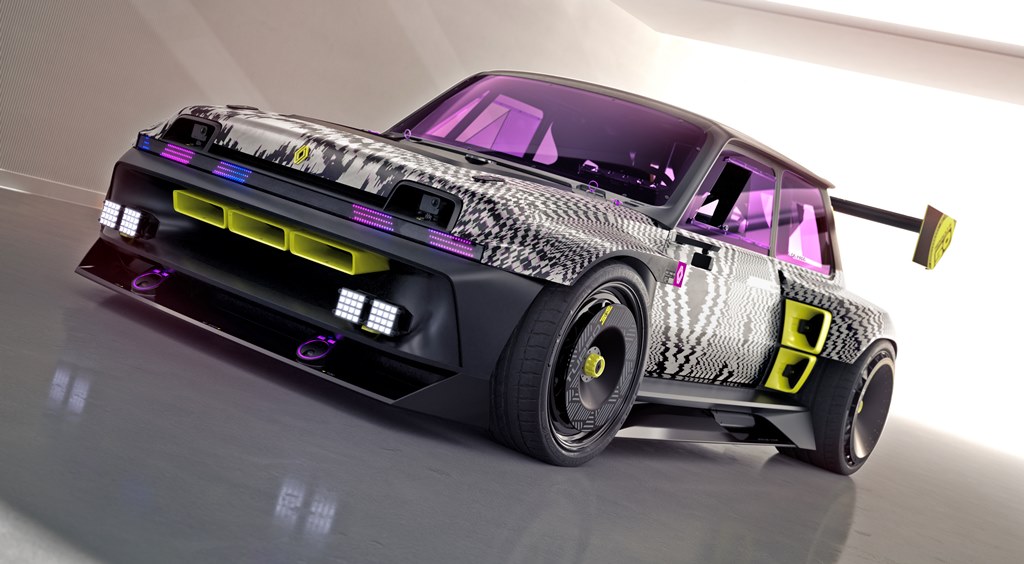
The Renault 5 might never have been born as it never started as an official project of the company. It was an idea which a designer worked on during his own free time and when top management saw it, they were impressed with its concept and wanted it put into production.
Though starting life as a humble little car, the Renault 5 would become an icon today and on the 50th anniversary of the model, Renault has created the R5 TURBO 3E as an all-electric showcar which pays tribute to the most celebrated sports versions: the Renault 5 Turbo and Turbo 2. It has logically been named R5 TURBO 3E, ‘3’ because it follows the Turbo 2, with ‘E’ being for electric.
Dacia, like Skoda, was established in 1966 as a government-owned carmaker but was sold off to Renault in 1999. Under the French carmaker, the company was able to develop further and is today the largest company (by revenue) in its home country of Romania.
Over the years, Dacia has had a firm niche at the lower end of the European market, offering cars with modern features and technology at affordable prices. Like other carmakers, Dacia is constantly looking ahead to see how its products can evolve as customer needs and social expectations change.
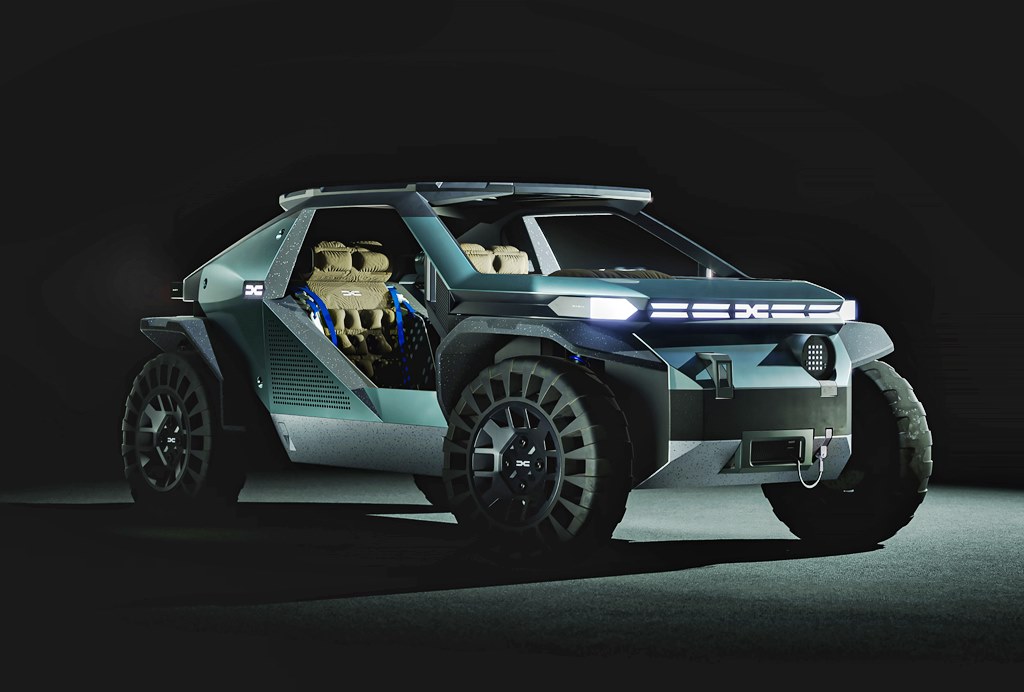
Its ‘rolling lab’ is the Manifesto, a concept car which contains new ideas and innovations that could be available in future models – though the company says its design is not necessarily related to any upcoming model.
With the ID.4 GTX that Volkswagen launched in May last year, the company showed that ‘performance’ can also be associated with battery electric vehicles (BEVs), just as combustion engine models have performance variants. A member of the brand’s BEV range, it is the first fully electric high-performance model that is said to add a new dimension to sportiness and dynamics. Just as ‘GTI’ has been used to identify Volkswagen’s performance models, ‘GTX’ will do likewise with the electric vehicles.
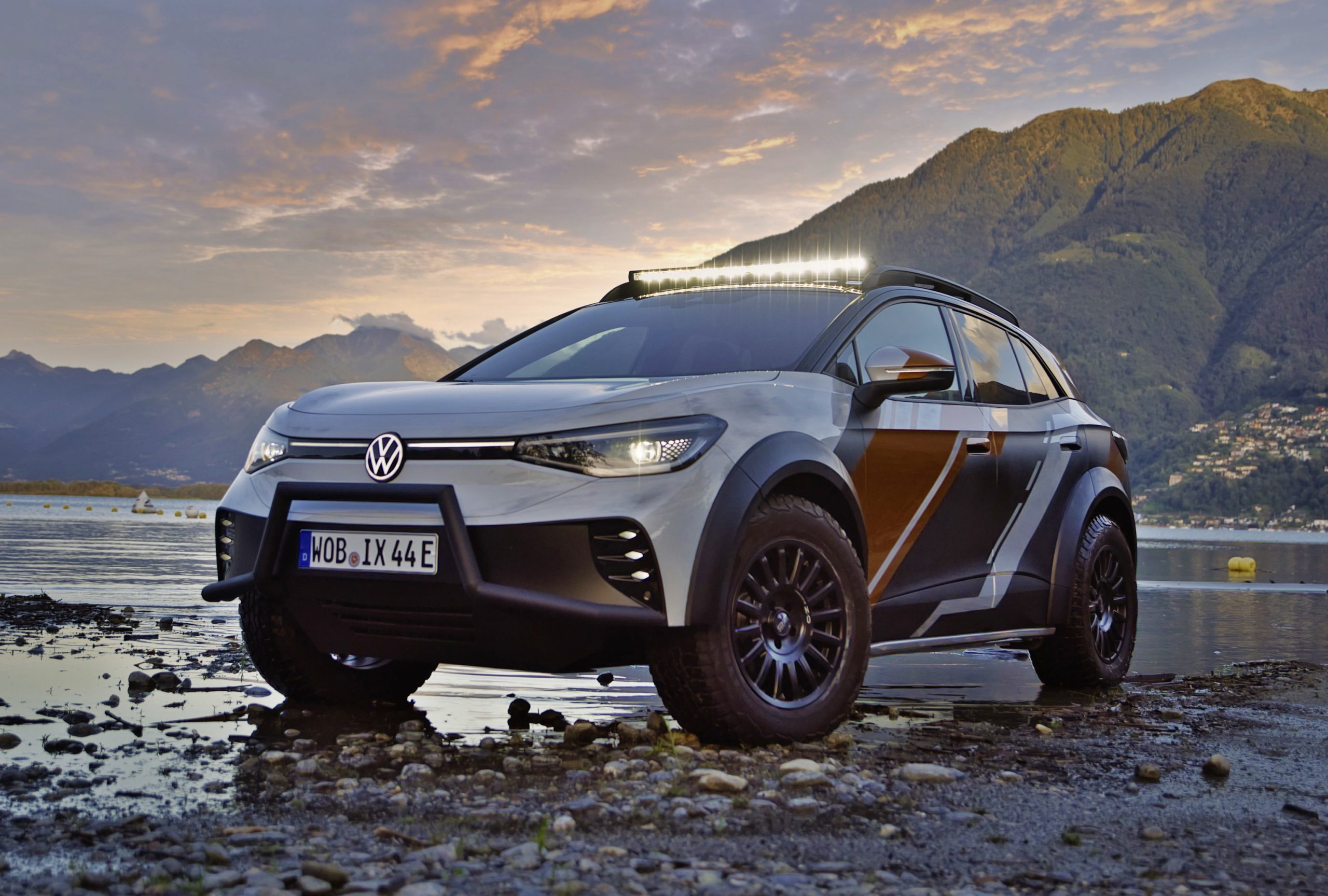
To show that there is still much potential to extend the performance envelope, Volkswagen has come out with the ID. XTREME concept car based on the ID.4 GTX. This is the most powerful ID model yet revealed and shows the performance potential and versatility of the modular electric drive matrix (MEB).
Equipped with all-wheel drive, the ID. XTREME combines the strengths of a modern SUV with the sense of adventure embodied by a rugged off-road vehicle. It was created by the team of Andreas Reckewerth (Head of overall vehicle) in the Volkswagen Development department.
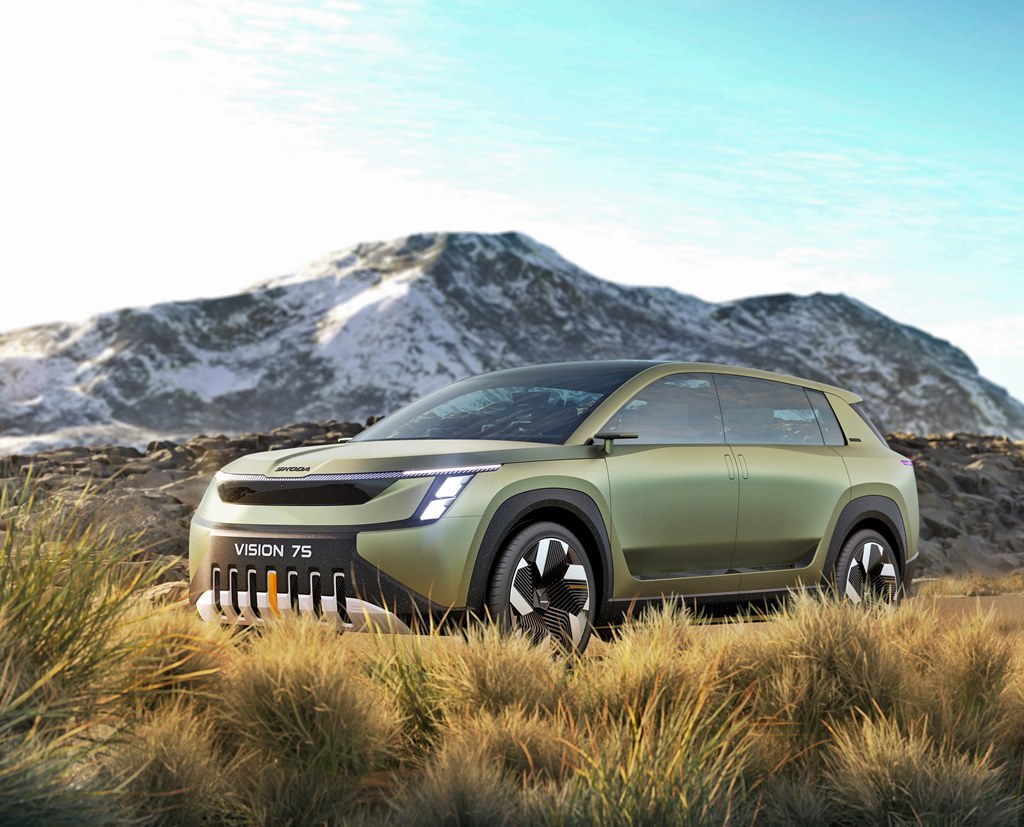
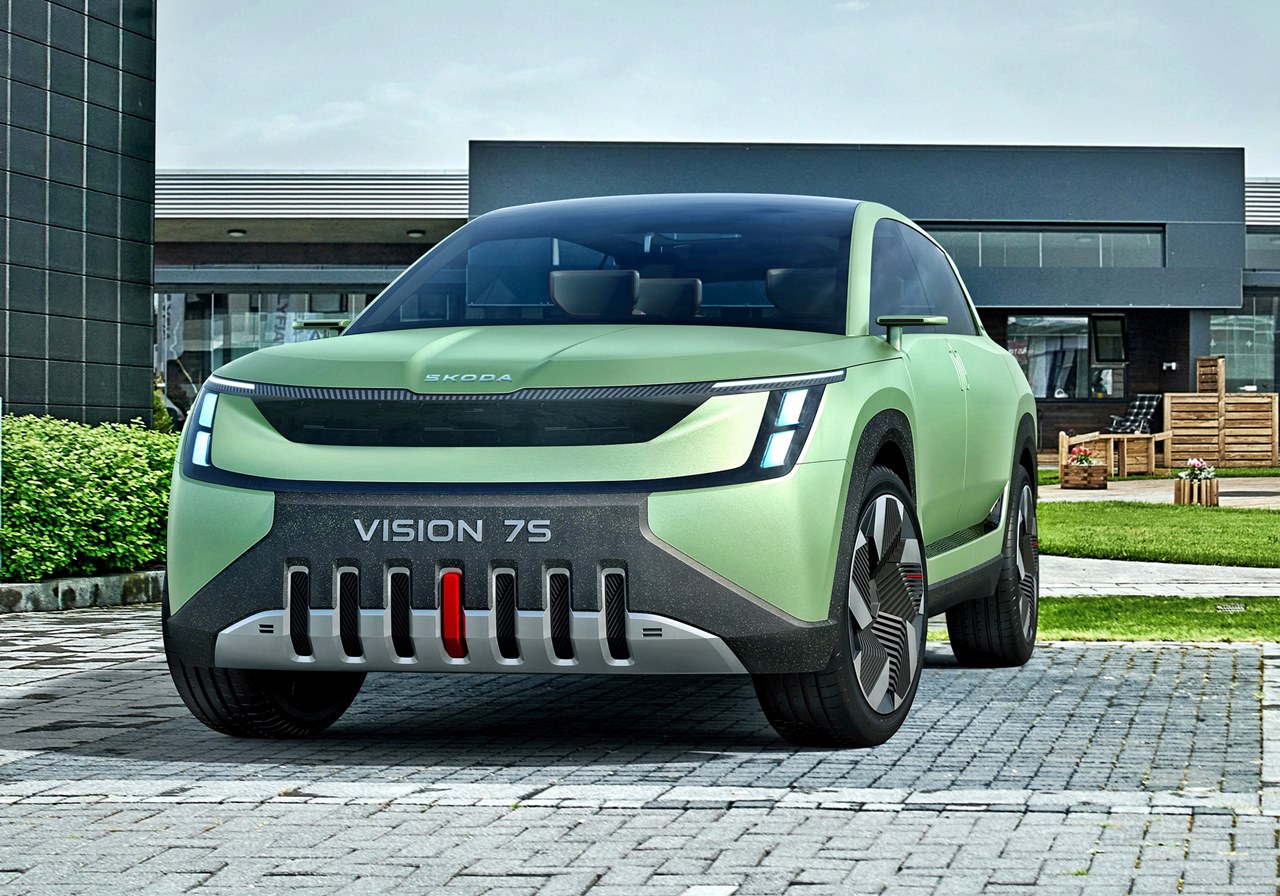
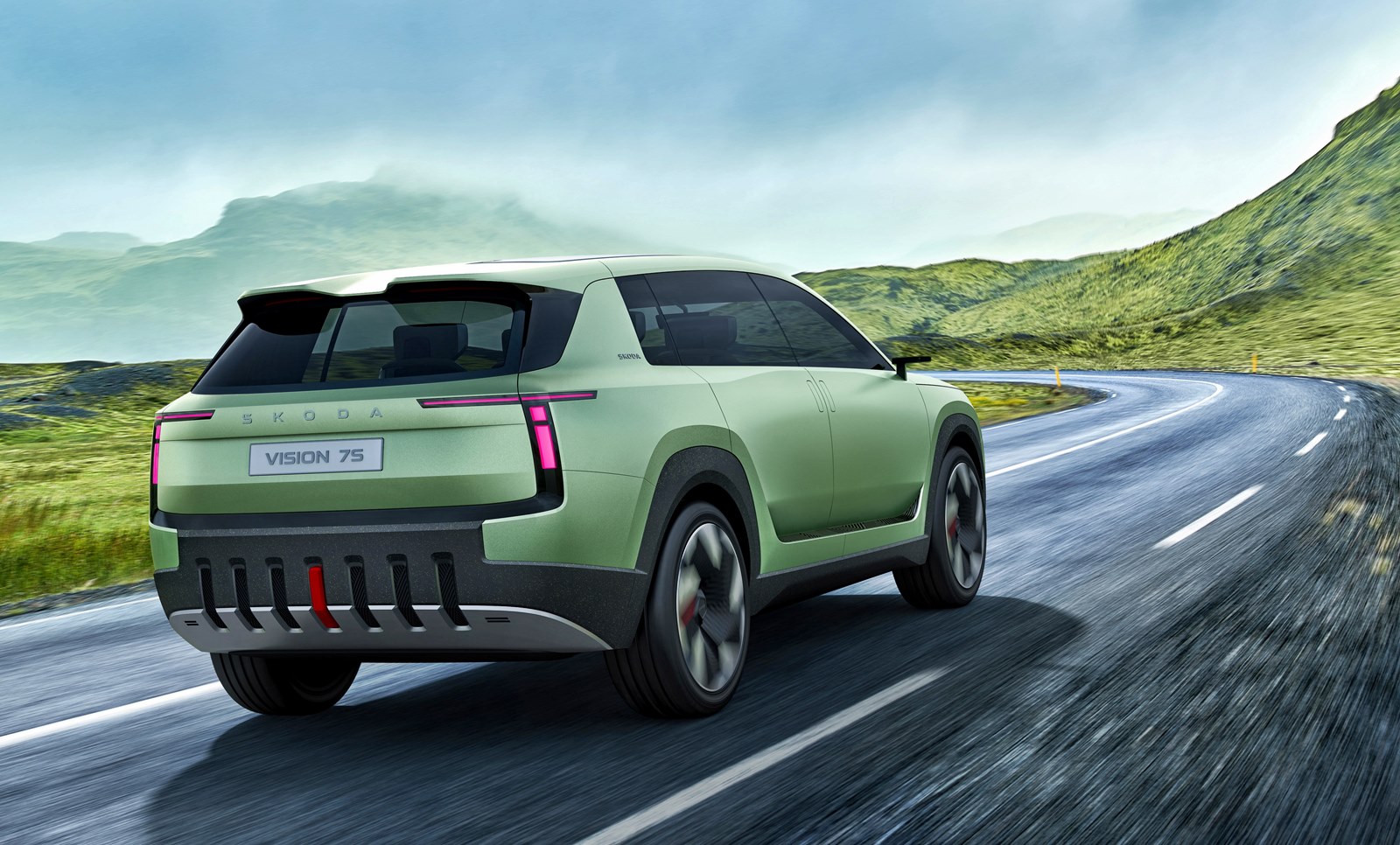
With the VISION 7S concept, Skoda is providing a preview of an all-new battery electric SUV as well as the Czech brand’s new design language. There is also a new brand logo which no longer uses sculptural 3D graphics, a response to a growing shift in marketing activities from print to online.
The 7-seater VISION 7S SUV, which is 3 to 4 years from appearing in Skoda showrooms, sits on the Volkswagen Group’s Modular Electrification Kit (MEB). Proposed with an 89 kWh battery pack, it has a projected range of over 600 kms.
With the new design language comes the ‘Tech-Deck Face’ at the front end with a a solid underbody and aerodynamic roof lines. The Tech Deck Face embodies a modern reinterpretation of the familiar Skoda grille. Though it has similar lines, the appearance is significantly flatter and wider than the previous styling. The ribs have been replaced by dark glass that conceals the vehicle’s sensors.
The redesigned SKODA wordmark replaces the brand’s picturemark and is complemented by a new ambient light strip. This extends across the entire width of the vehicle at the upper edge of the front section and features illuminated graphics.
The robust bumpers are made of durable, recycled tyres. This material is also used for the wheelarch linings and adds a rugged visual highlight. Seven vertical air intakes are integrated into the front, through which air is directed to the cooling systems and brakes, and another nine vertical air outlets are in the rear bumper.
A control element in bright Flashy Orange is located in the centre of both the front and rear. These can be pulled out to serve as hooks. In addition, they can be used to safely cut off the vehicle’s high-voltage current from the outside, if required.
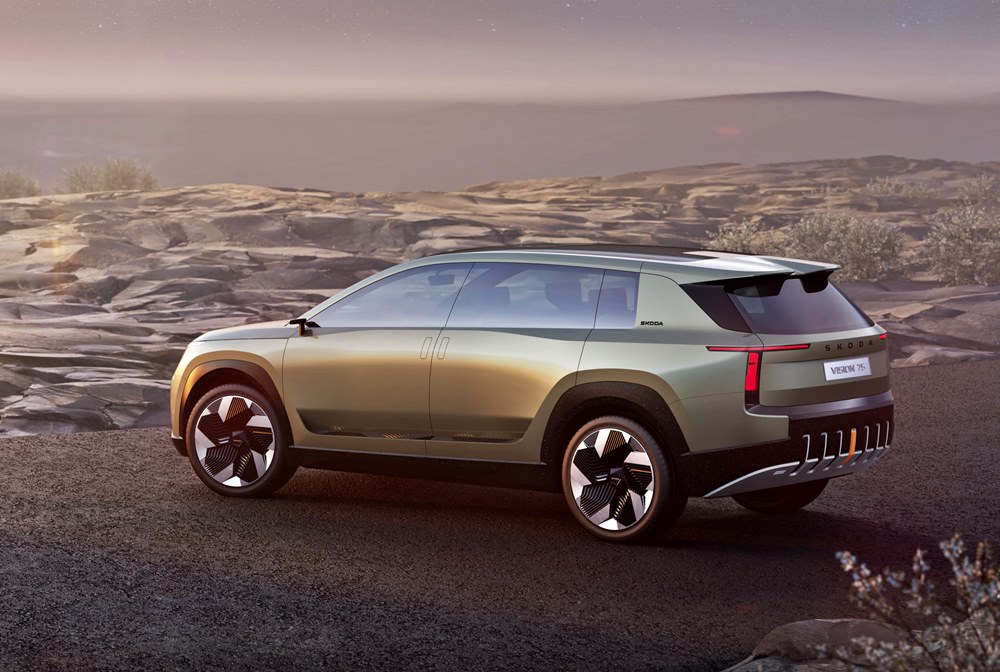
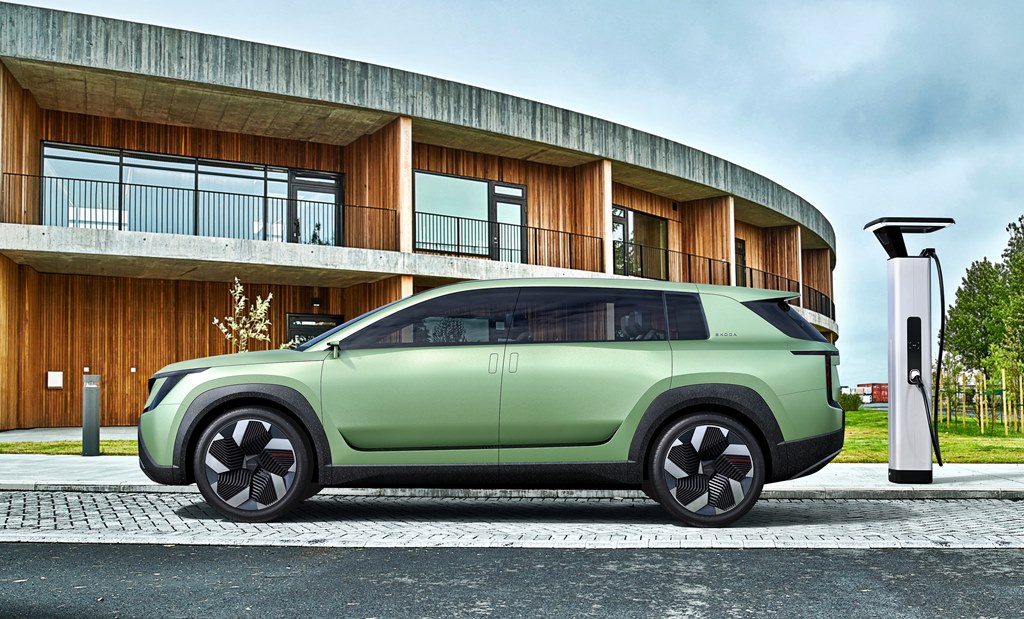
A high tornado line separates the solid underbody from the side windows and emphasises the powerful shoulder sections through its curve. The squared-off wheel arches beneath it are prominent and clearly recessed. Within them, the wheels are aerodynamically optimized rims and almost completely closed.
Additional air outlets are positioned between the wheel arches and above the side skirts. These act as running boards for the portal doors that swing up in opposite directions and also have cover grilles. These grilles channel the warm air generated from cooling the high-voltage battery pack to the outside.
The flat roofline gently slopes to the rear and merges with a pronounced roof spoiler for high aerodynamic efficiency. The triangular D-pillar extending to the rear features a bold design; at the bottom, it bears the new SKODA wordmark, which also appears on the tailgate and is lit up in the same way as at the front of the vehicle.
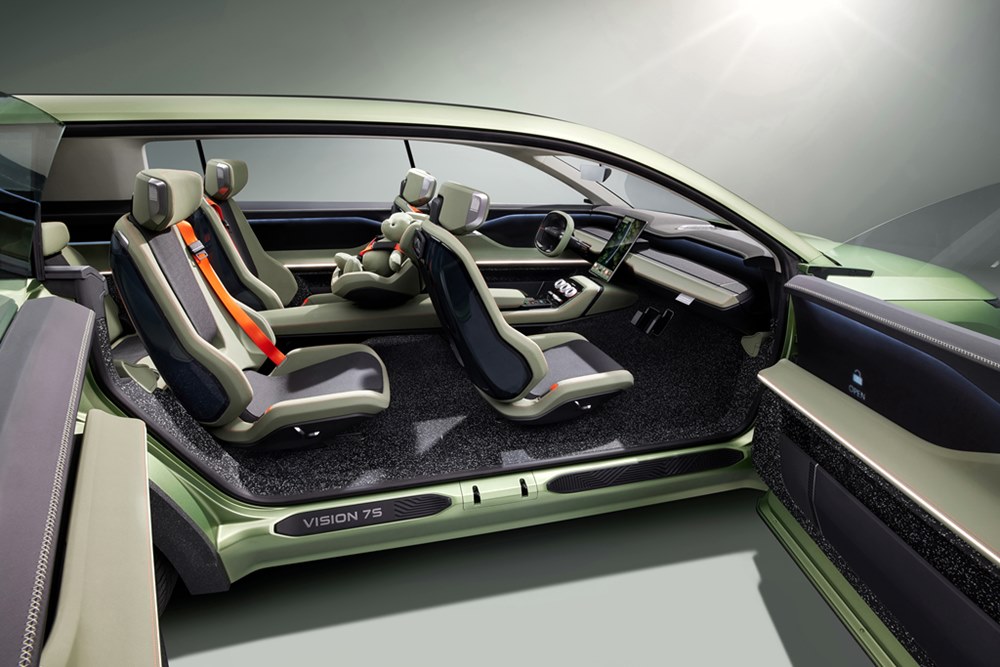
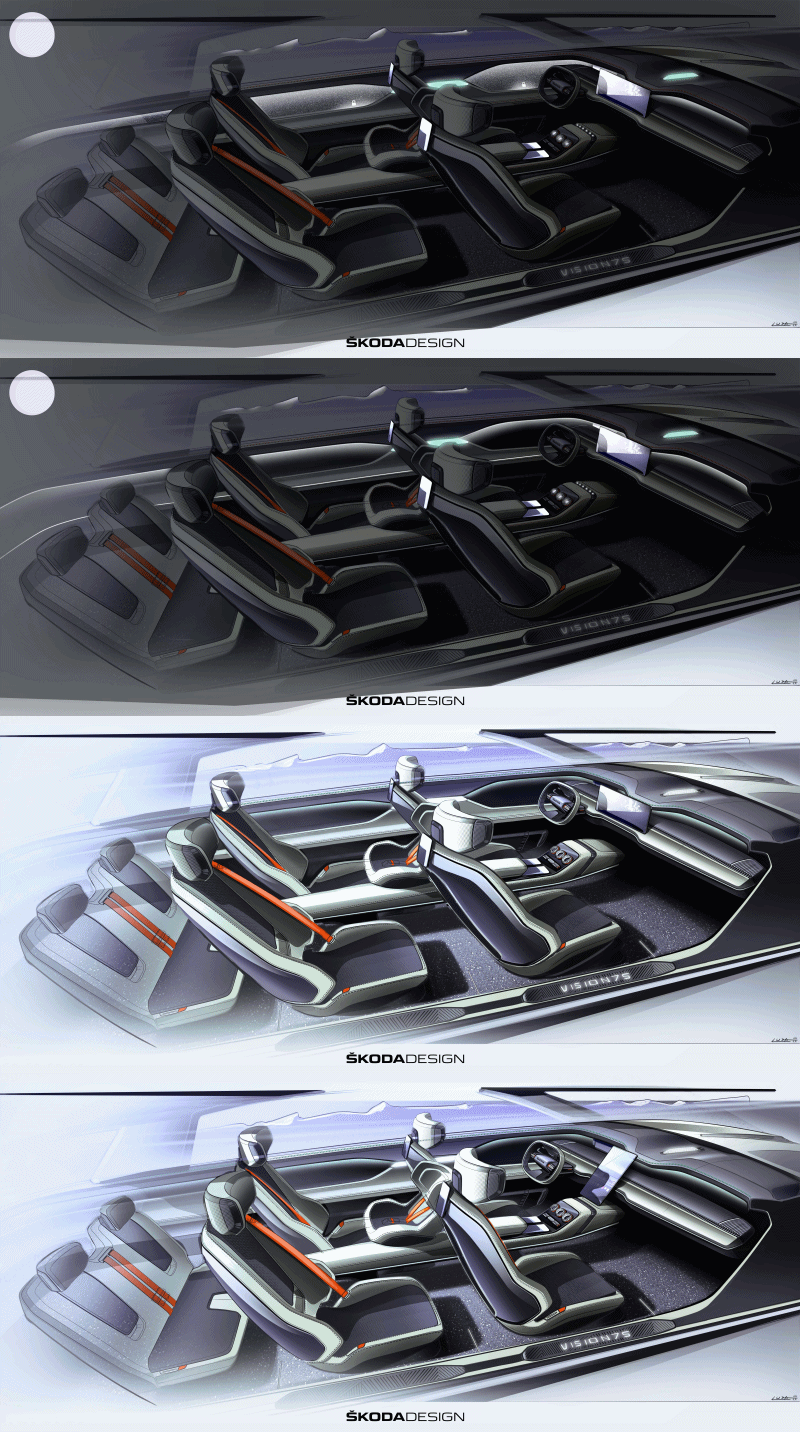
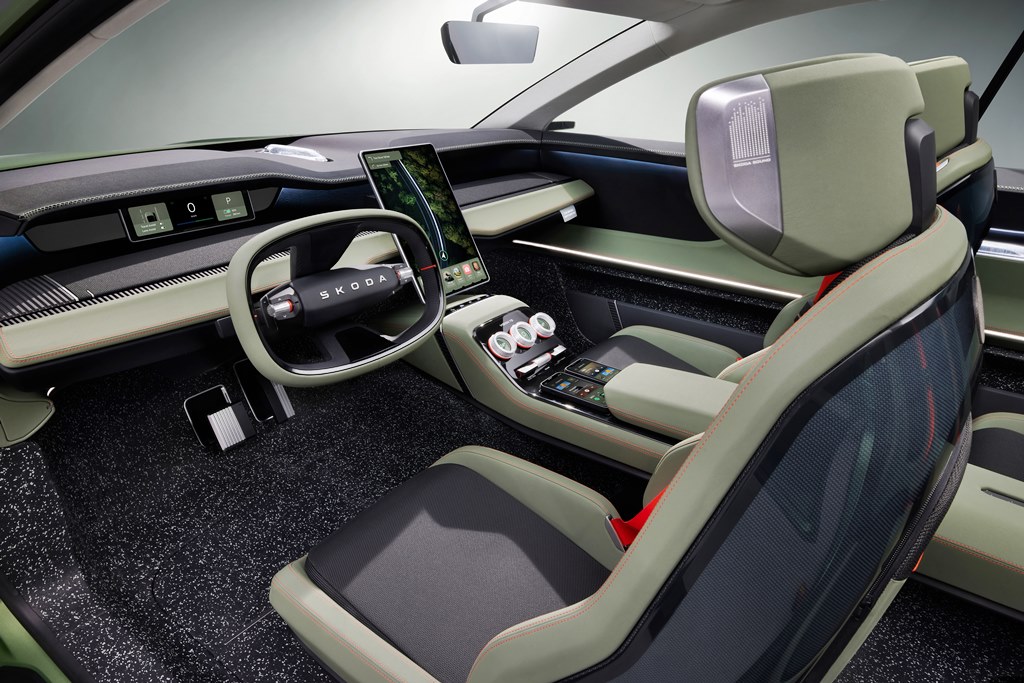
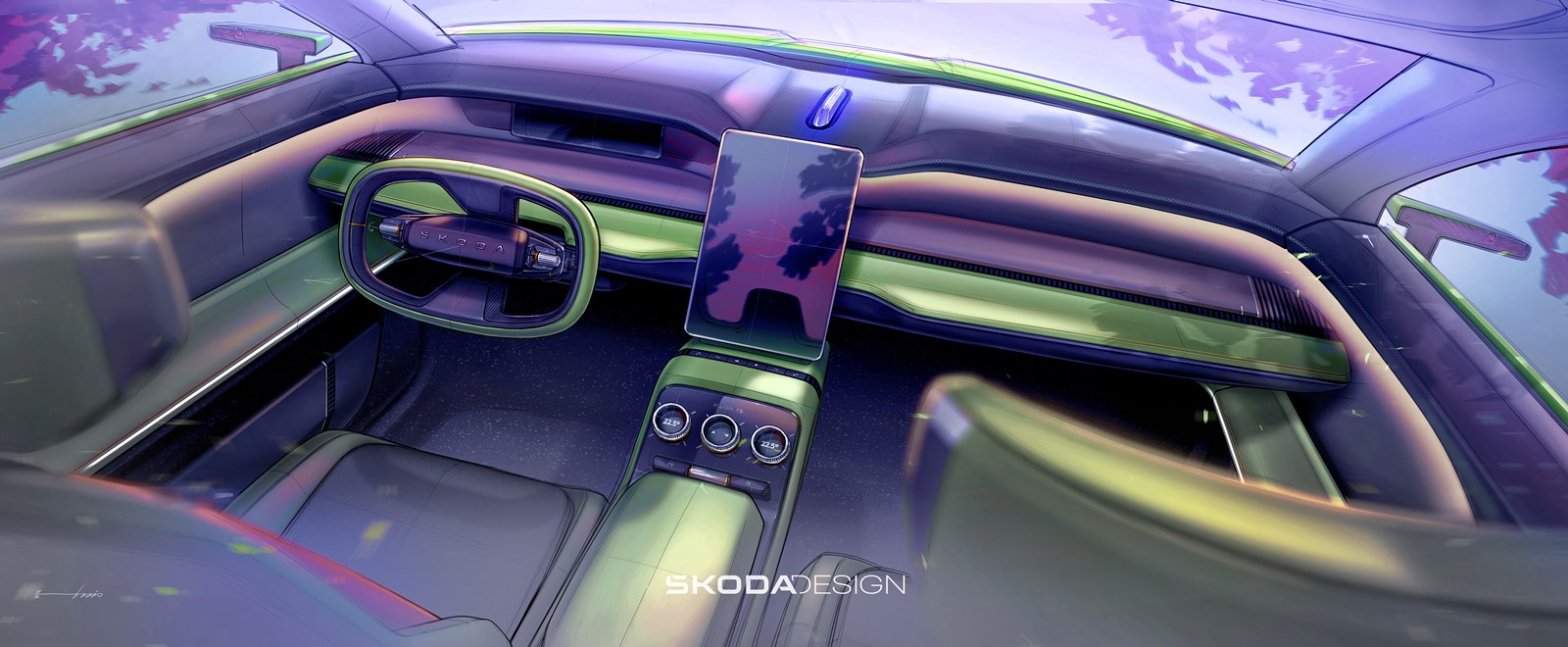
The minimalistic interior is as spacious as the exterior proportions of the Skoda concept suggest. The sense of security further enhanced by the combination of dark and light materials. These are leather-free (mostly from sustainable sources) and are extremely durable, thanks to some smart material combinations.
One example is the floor, which is also made from recycled tyres. The interior trim is also sustainable and coated with a fine, matt metallic layer, thus conserving valuable resources. The fabrics are made of 100% recycled polyester yarns.
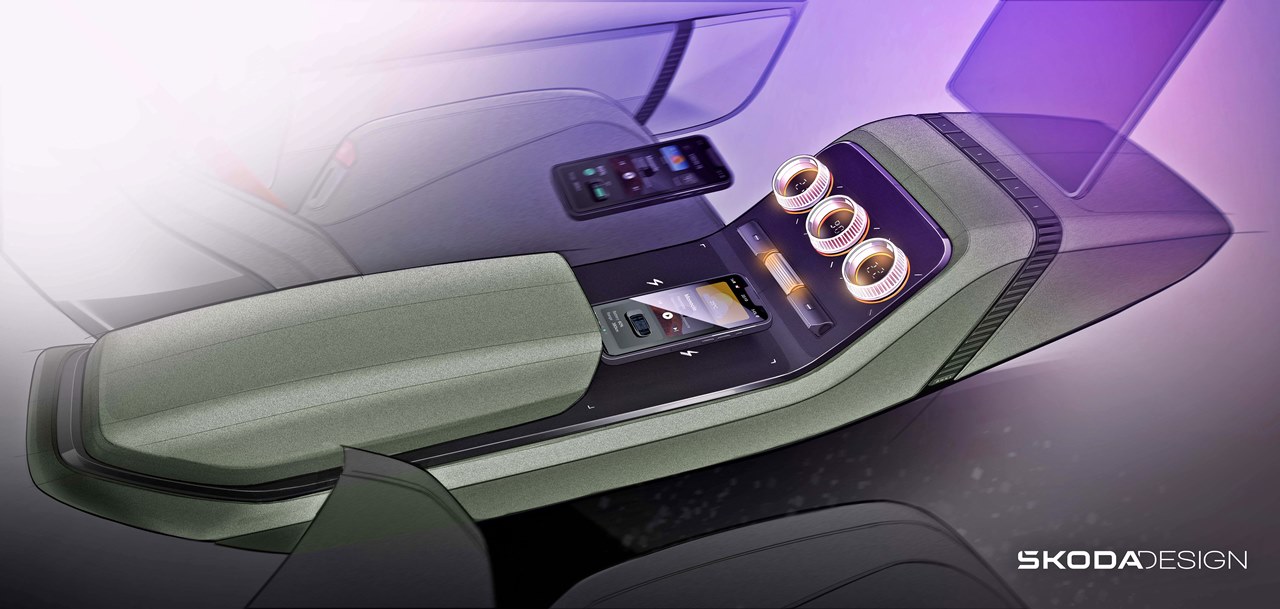
Great emphasis was placed on further optimising usability. In addition, the vehicle’s menu structure and infotainment functions have been streamlined, and the controls on the central, free-standing touchscreen, as well as haptic keys for important or frequently used functions, are particularly intuitive.
In front of the central screen on the instrument cluster is a large crystal that indicates the battery and charging status using different colours. This can be seen easily from outside the Skoda SUV.
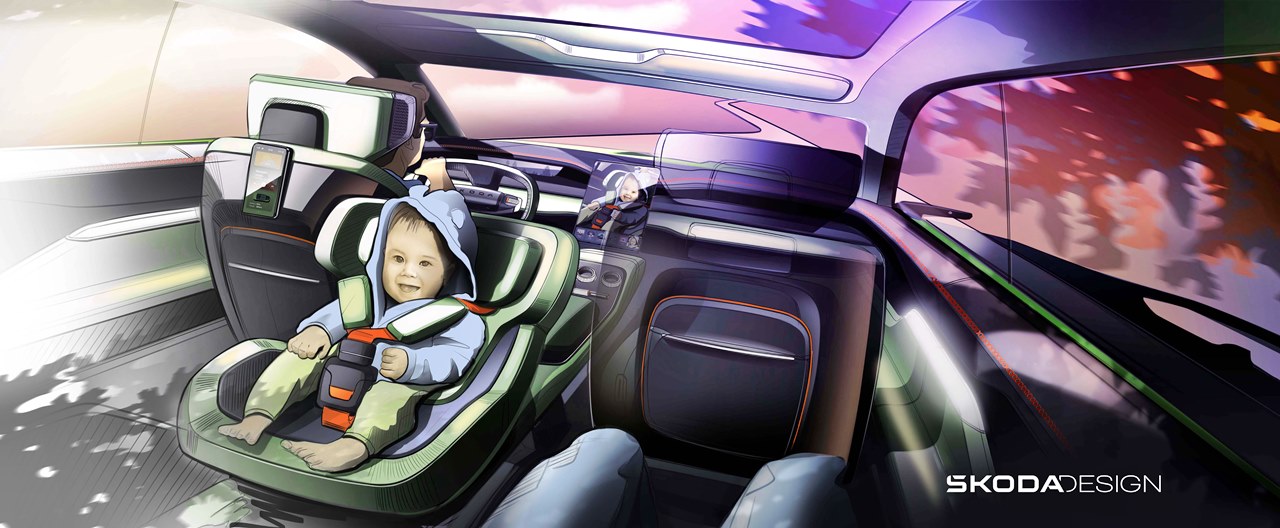
The position of the childseat may seem unsuitable from the safety point of view but it is actually in the safest place in the vehicle. It is integrated into the centre console, which extends to the second row of seats, opposite to the direction of travel. This means the child is optimally protected, and the passengers in the second row can always keep an eye on him or her.
An optional interior camera in the rear roof area can also transmit a video of the child to the central infotainment display. This makes it possible for the driver and front passenger to see the little ones on board at all times.
The VISION 7S also introduces a new series of ‘Simply Clever’ features, well known in Skodas. For example, the air vents on the dashboard work in a discreet, diffuse mode until more direct ventilation is needed. Passengers will also find magnetic surfaces under the floating centre console, where metal Skoda drink bottles or a first-aid kit can be securely attached. There are also backpacks that are magnetically attached to the seat backrests, easily taken off when leaving the vehicle for a hike.
“The VISION 7S is the forerunner of our new design language that we’ll be rolling out across the entire product portfolio over the coming years. We’ll also be using it to sharpen our customer appeal; with the new styling, we are taking the brand to the next level and aligning it to our customers’ new needs and expectations, particularly regarding UX (user experience), connectivity and the entire customer journey,” said Martin Jahn, Skoda Auto Board Member for Sales and Marketing.
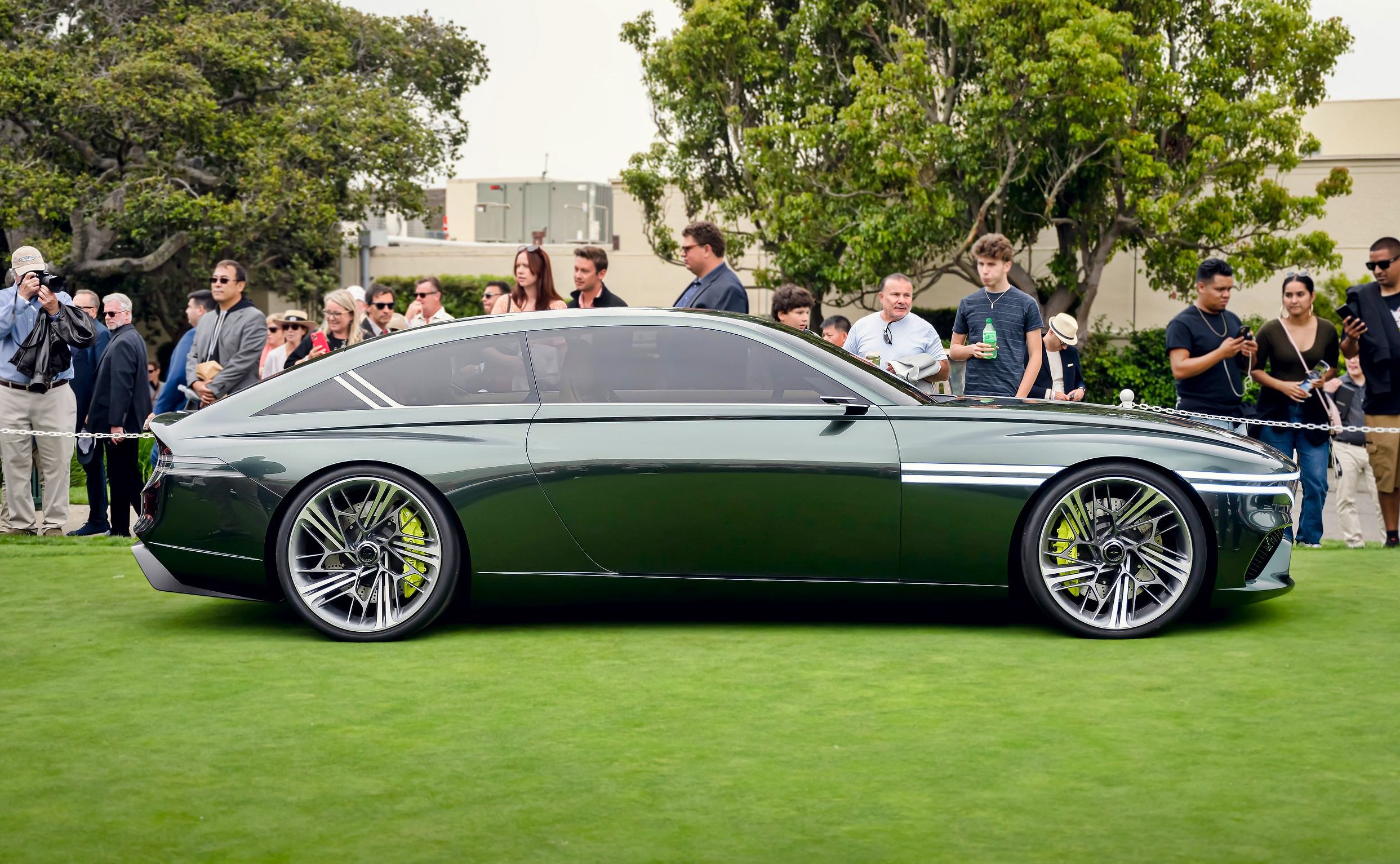
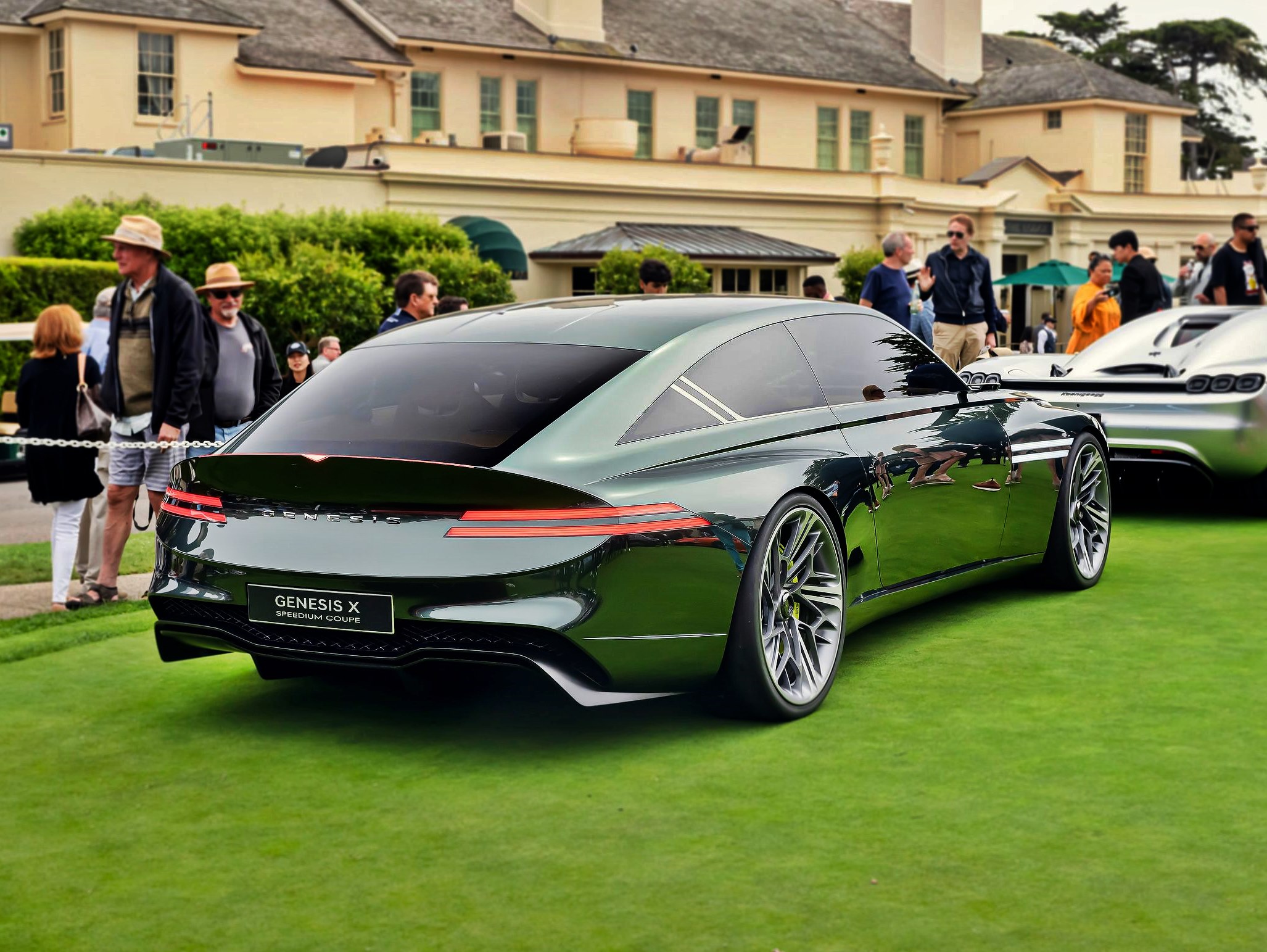
In April this year, Genesis – the third brand in the Hyundai Motor Group – unveiled the X Speedium Coupe to give a preview of what the luxury brand’s next wave of electric vehicles will be like. At that time, it showed only the exterior of the concept car inherits the brand’s design philosophy of ‘Athletic Elegance’.
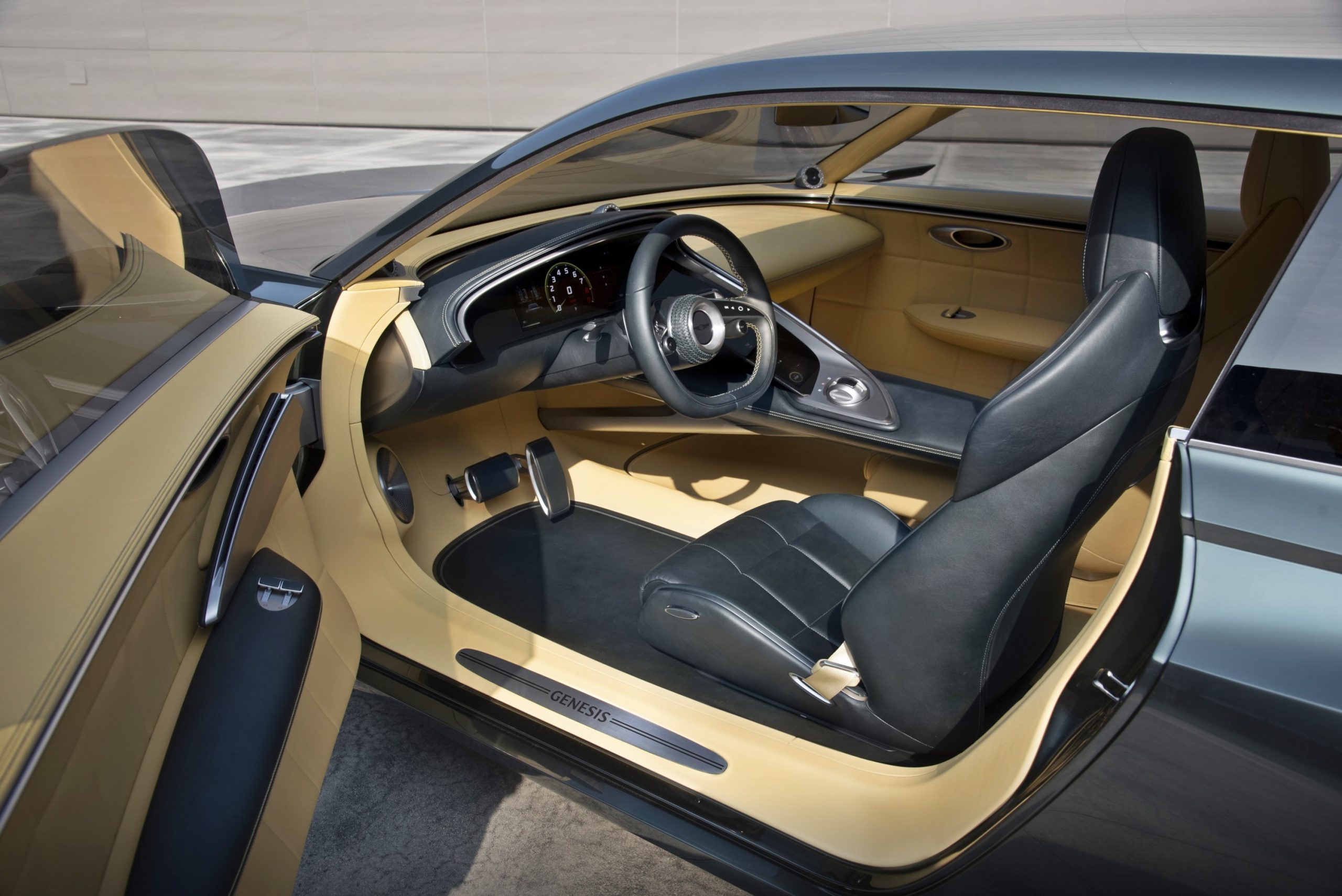
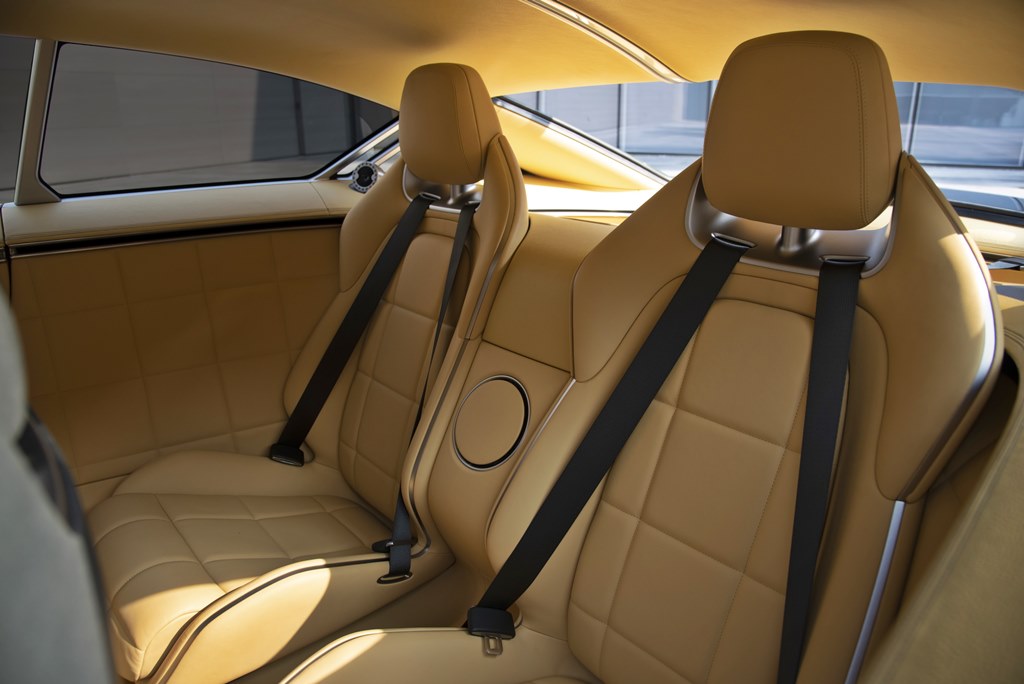
Now, we get to see the inside of the X Speedium Coupe which, like the exterior, embarks on a design evolution of the Grand Tourer concept in the coming age of electrification. Over the 5 months since it was first revealed, the interior design was developed by the Genesis design group which adopted a ‘freestyle’ design exercise.
“The X Speedium Coupe was conceived as an internal design exercise that we later decided to reveal publicly. It was nothing more than a hard model built on our Athletic Elegance design identity,” said Genesis Chief Creative Officer, Luc Donckerwolke. “Given the positive reception it received at the event, we chose to complete the concept and present it to discerning attendees at the Pebble Beach Concours. The interior captures the Genesis brand’s ‘Beauty of White Space’ design ethos, which suits various luxury lifestyles and adds to the appeal of the dynamic GT.”
Driver-oriented layout and UI concept The interior of the X Speedium Coupe leverages a classic Korean design principle known as ‘the Beauty of White Space’. Inspired by Korean architecture, this aligns closely with the ideology of reductive design and is expressed through a minimalist and pure form language punctuated by strong design elements.
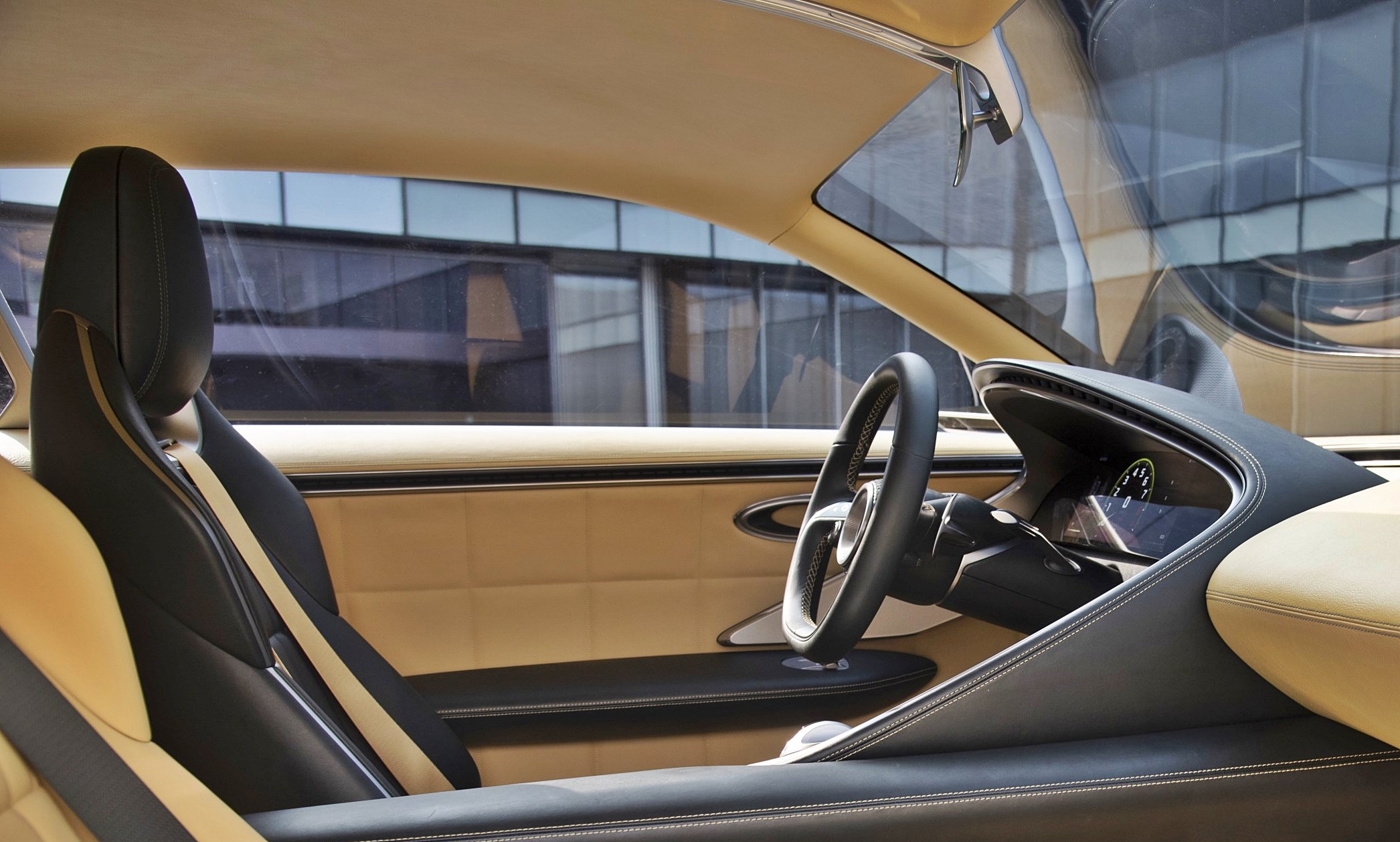
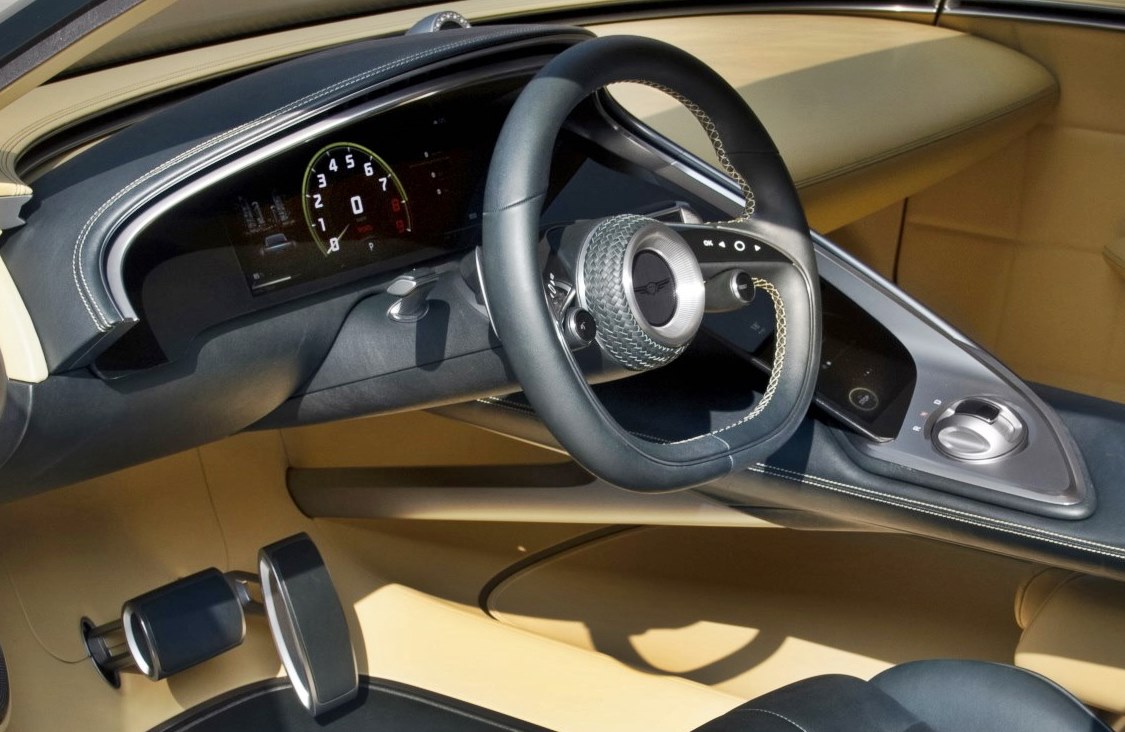
The asymmetric, driver-oriented layout is a continuation of the theme found on Genesis’ more recent concept cars, in which all the control systems and displays surround the driver. The instrument panel and floating centre console wrap around the driver cockpit, amplifying the driving experience.
This effect is further accentuated by the interior’s contrasting colour palette, which clearly distinguishes the driver’s area from the passenger space. The driver’s seating area is set in Pinegrove Green, a complement to the Inje Green exterior.
The contrasting Monterey Gold around the driver’s seat—a colour inspired by the scenery along the Northern California coast—alludes to the yellow flowers and golden sand found in the region.
New sound architecture In addition, Genesis is exploring the future of audio experiences through a new sound architecture. This blends technology and art while highlighting the brand’s attention to detail. In collaboration with sound mater Guk-il Yu, the head of Metal Sound Design (a company that specializes in high-performance speakers), the X Speedium Coupe features strategically-placed speakers to fill the interior with rich sound.
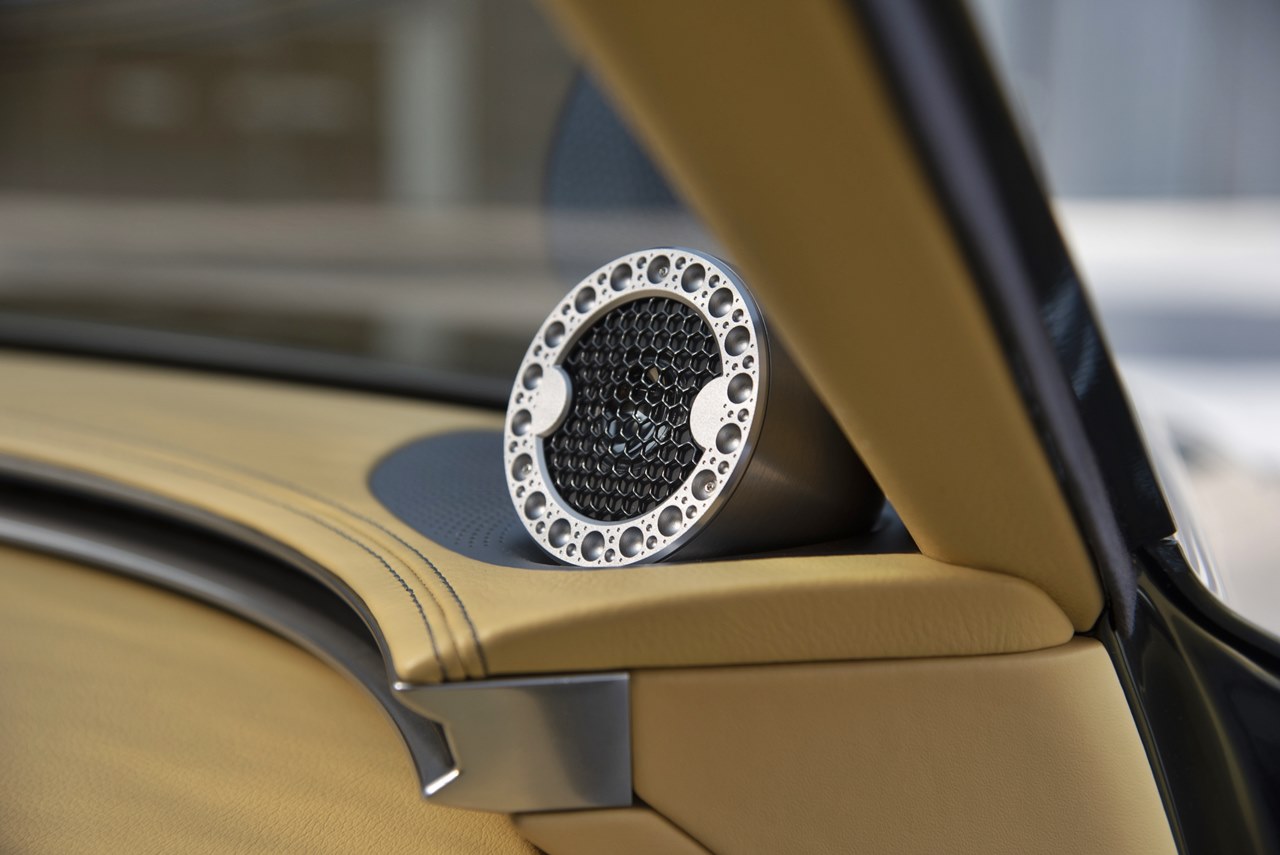
Tweeters, mid-range speakers, woofers and sub-woofer are strategically positioned to provide the finest staging sound experience. The aluminium tweeters, which emit high-pitched sounds, were flawlessly crafted with a precision milling method to optimize acoustic performance.
Driver-focused cockpit The driver-focused cockpit has a curved OLED display that visualizes the heritage of high-performance cars. The cluster’s GUI includes a centre-mounted motor output indicator designed in a ‘newtro’ (new+retro) style – a stark contrast to the RPM gauges found in cars with combustion engines.
The vertical display on the right side of the driver’s seat features an integrated touch display with an optimized UI design. The display includes the start button as well as the multimedia and vehicle control functions.
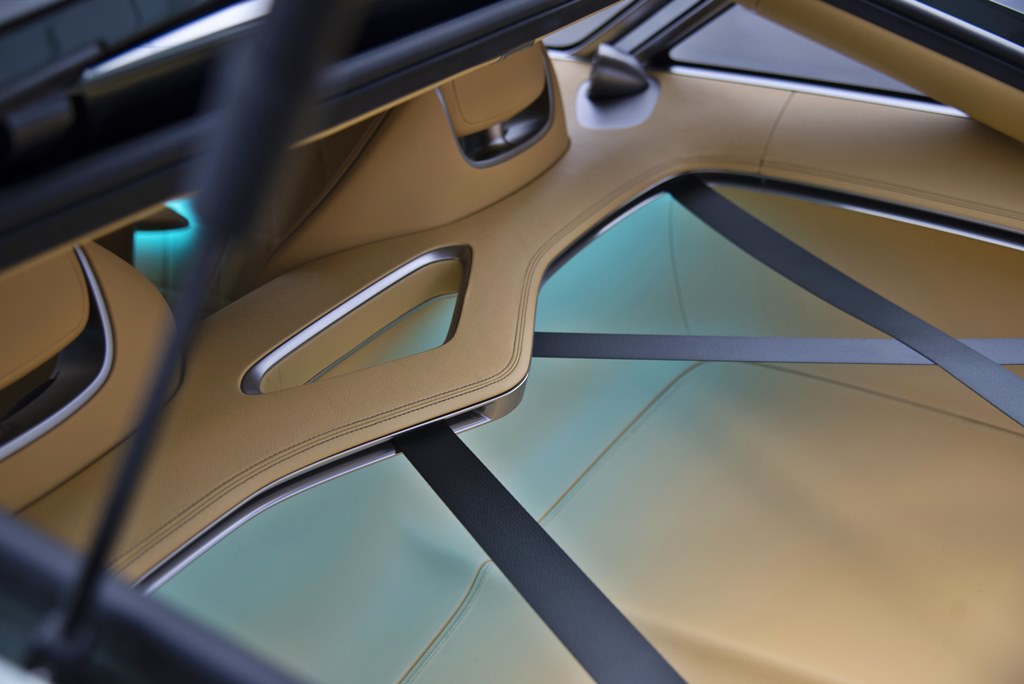
Craftsmanship in the details The X Speedium Coupe’s cargo area has X straps on top of the loading space, a detail inspired by the brand’s unique G-Matrix Pattern, a design feature derived from the Genesis Mint Concept.
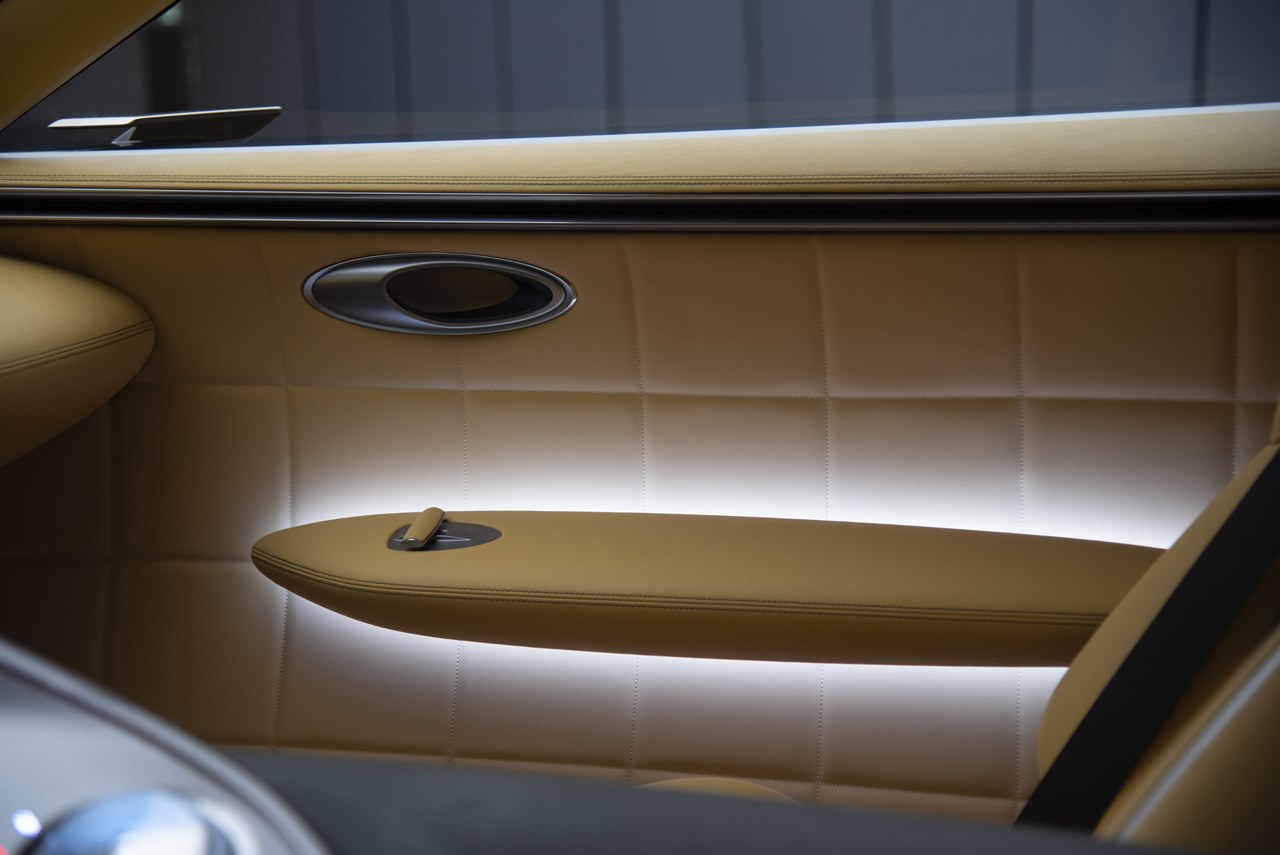
Another noteworthy detail is the leather; the material itself as well as its application. The quilted pattern on the leather seats and the door trim gives the impression of a classic sportscar. Meanwhile, the steering wheel features cut-off leather that were salvaged from re-purposed car seat materials and woven together.
Eco-friendly leather Two types of leather were used in the interior: vegetable-tanned leather and an innovative new breathable grain leather. The vegetable-tanned leather is treated with plant-derived substances – such as citrus fruits and mimosa – and processed without chromium.
Compared to ordinary leather, the breathable grain leather used in the upper part of the cabin requires less water and lower levels of chemicals to manufacture. The threads used in the finishing process are made from repurposed plastic, adding to the material’s durability and water resistance factors.
According to Donckerwolke, the X Speedium Coupe challenges the status quo of a defined car type. “This car is an open-door moment in Genesis’ journey towards our future EV design. This is not a showcar… it’s a look into our design processes as we explore ideas for the next wave of EVs, one that incorporates Genesis’ DNA,” he said but clarified that it is also not a conventional concept car that previews plans for the production line-up.
Dodge, an American brand in the Stellantis Group, knows that going electric is not an option but something which has to happen. Over its 122 years of existence, Dodge has had a wide variety of vehicles although in the 21st century, its line-up has shrunk and it is better known for its musclecars especially the Dodge Charger, which Torreto (Vin Diesel) used in various Fast & Furious movies.
Moving into the electric age, Dodge wants to maintain its performance image so unlike other manufacturers which have been giving previews of sleek, efficient EVs with a focus on range, the carmaker has been working on an electric musclecar.
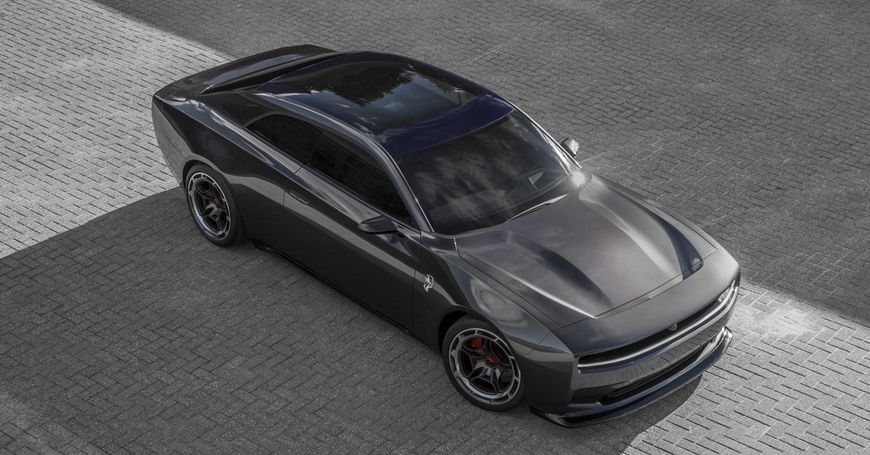
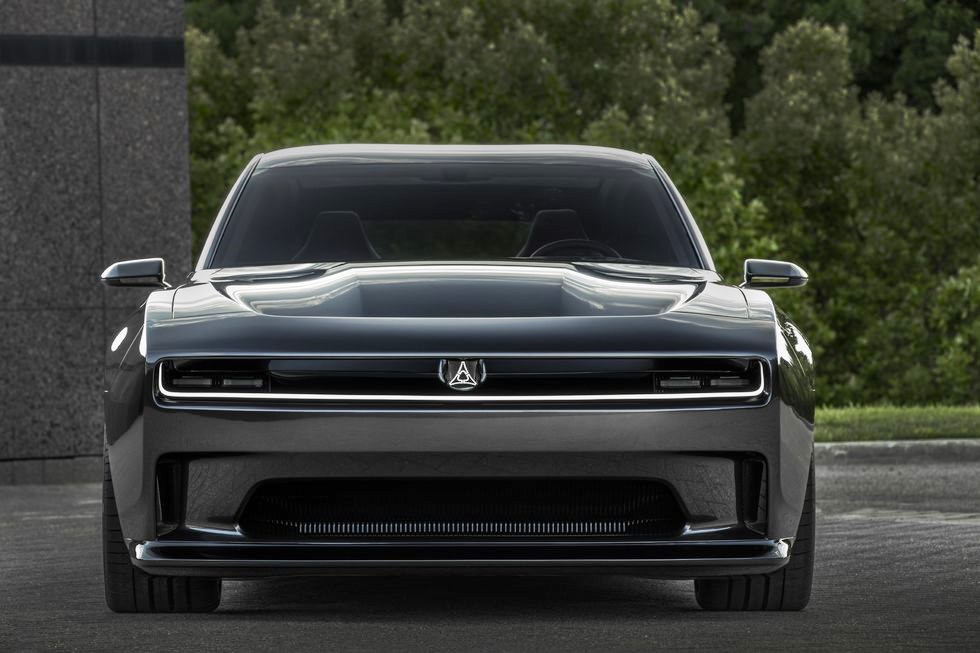
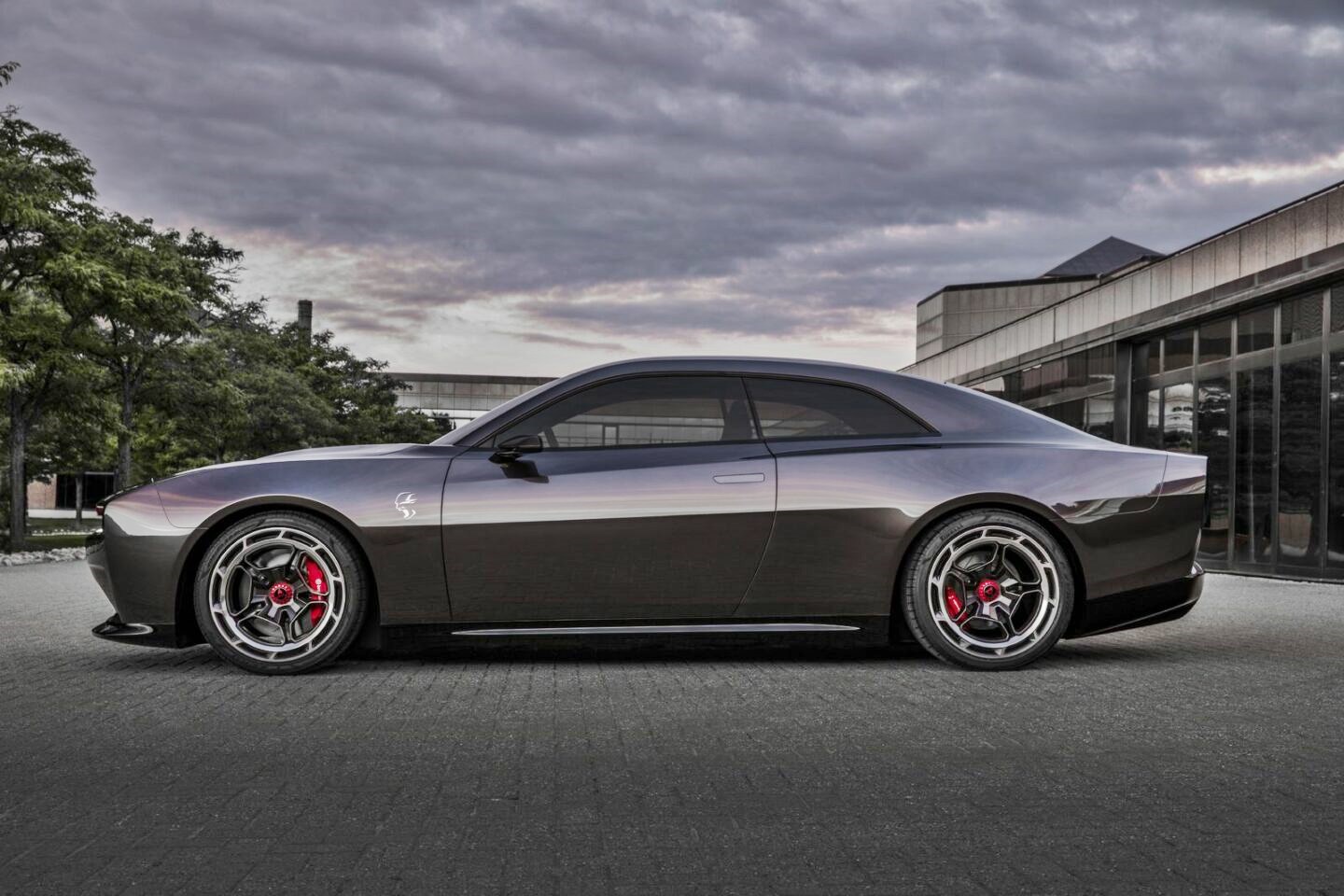
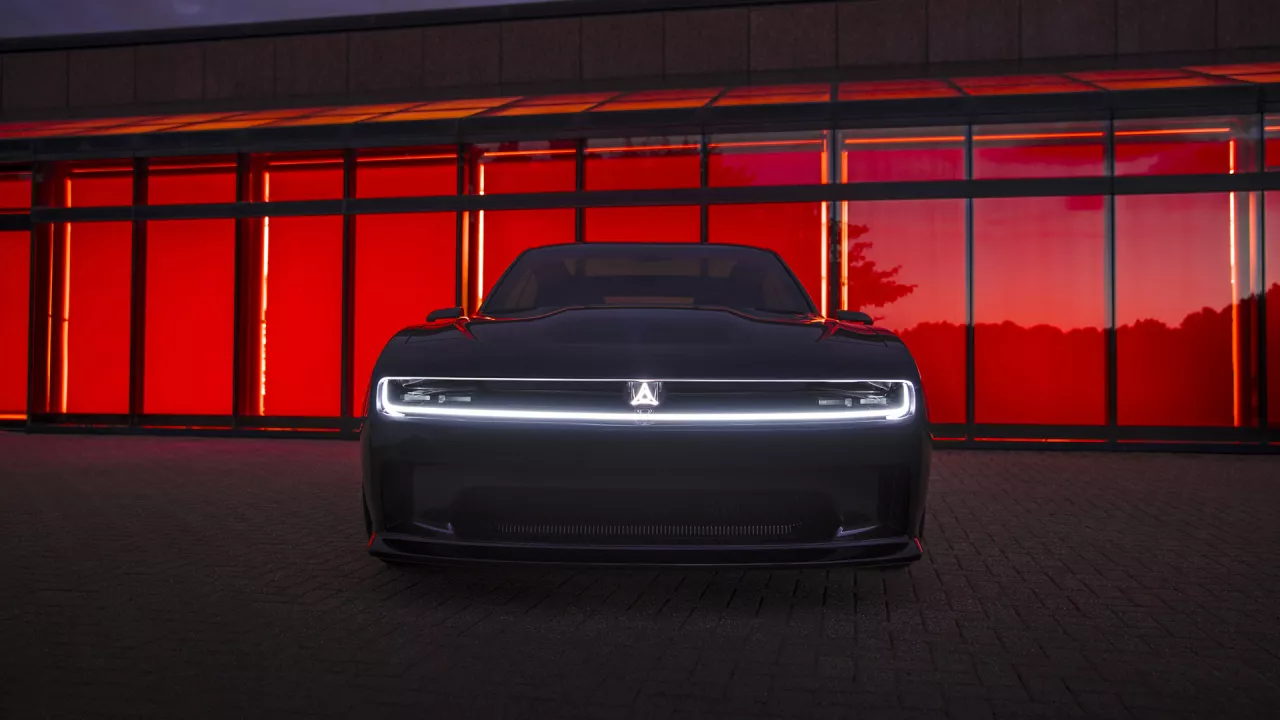
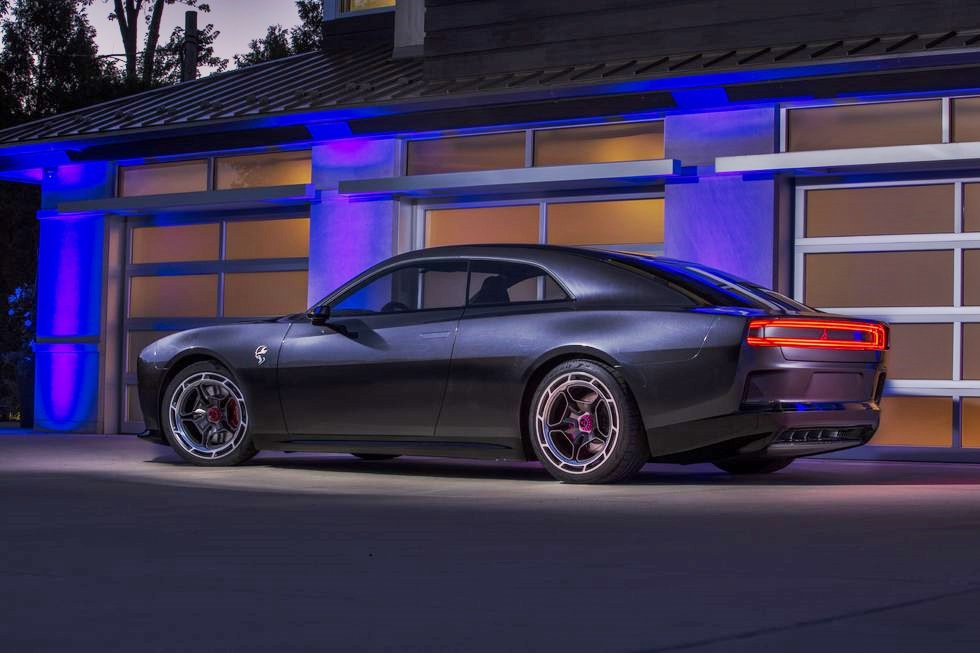
The Charger Daytona SRT Concept shows how the company will shape its future musclecar. It retains the sporty styling cues of Dodge musclecars and is said to also go like one, but it runs on electricity instead of high-octane petrol.
The 2-door concept’s exterior styling incorporates subtle Dodge heritage cues that are reminiscent of the iconic 1968 Charger, with the vertical grille details adding texture. The patent-pending R-Wing redefines the typical Dodge front end, maintaining the characteristically blunt Dodge profile while developing a more aerodynamic vehicle.
The R-Wing, which pays homage to the original Charger Daytona, allows air to flow through the front opening, enhancing downforce. Incorporated into this functional performance bonnet, the R-Wing delivers an aerodynamically improved pass-through design. Carbonfibre intakes tucked into both sides of the front and rear lower fascias provide an air curtain to assist in exceeding aerodynamic performance targets.
Giving the concept the ‘Daytona SRT’ name carries with it great performance expectations because it recalls the famed Charger Daytona model that was the first vehicle to break 320 km/h on a NASCAR track in 1970.
This performance will be delivered by a new propulsion system that Dodge calls ‘Banshee’. Its 800V system will give performance levels faster than the Hellcat. Unlike typical EVs, the eRupt multi-speed transmission for the concept car has electro-mechanical shifting with distinctive shift points. All-wheel drive provides stability and grip as well as all-weather capability.
The Charger Daytona SRT Concept also boasts a PowerShot push-to-pass feature. Activated by the push of a button on the steering wheel, this feature creates a boosted output (figures are not given) that quickens acceleration for brief periods.
While quietness is used as a selling point of EVs, Dodge has given this electric musclecar the sort of sound that will be missed in future. It’s 126 dB roar comparable to that of the SRT Hellcat, generated through a new, patent-pending Fratzonic Chambered Exhaust system (yes, an exhaust on an EV).
The industry-first Fratzonic Chambered Exhaust works by generating sound through an amplifier and tuning chamber located at the rear of the vehicle. So far, enthusiasts have had mixed feelings about this special feature, some finding it weird as they know it is artificially created. Torreto would probably not appreciate it, even if the performance is as strong as his Charger.
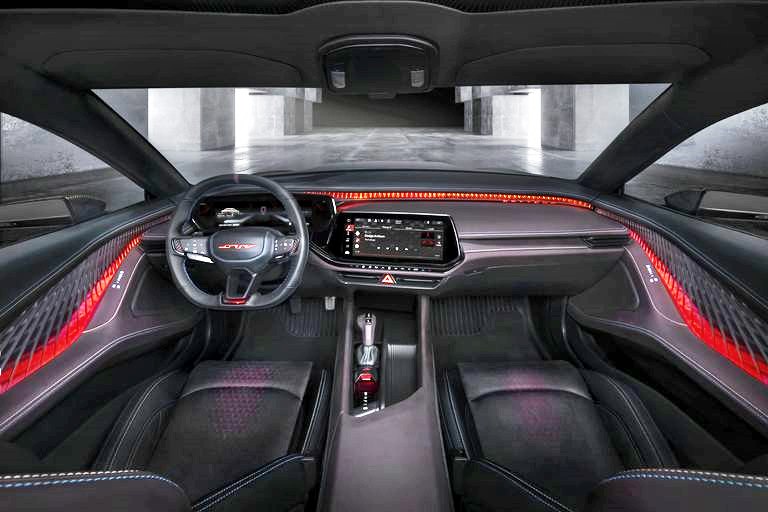
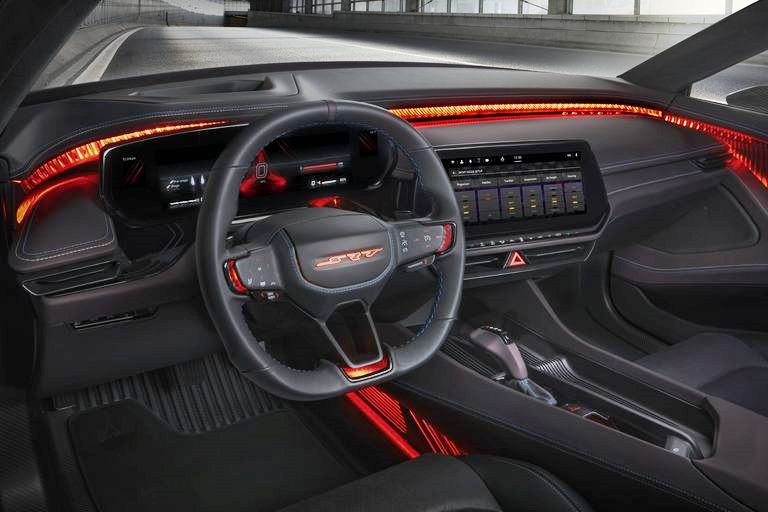
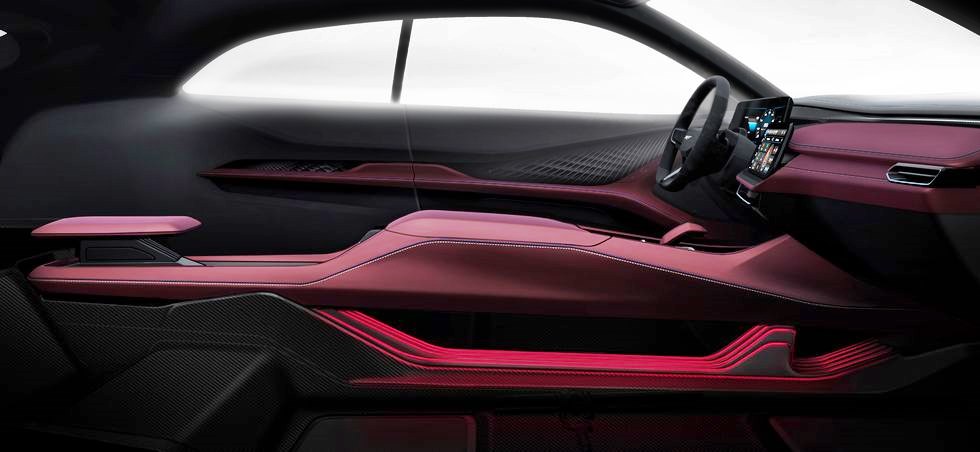
The interior is modern, lightweight and athletic, providing a driver-centric cockpit with all essentials cohesively packaged. The 12.3-inch centre screen is the largest ever fitted in a Dodge vehicle, complemented by a 16-inch curved instrument. An 8×3-inch H ead-up Display puts additional information ahead of the driver on the windscreen.
The slim, instrument panel (IP) and mid-bolster in Ultraviolet colour with blue and silver accent stitching feature a ‘waterline’ that extends cross-car. The upper IP is a step higher, an elevation change that creates a sculptural surface floating above the cluster. The Ultraviolet colour also touches multiple interior surfaces, such as the console, doors and seats, creating a halo that works with the Attitude Adjustment Lighting to enhance shadows and highlights.
A parametric texture unites the interior and provides a connection to the exterior by continuing the inspiration of the 1968 Charger grille detail on the inside. The parametric pattern adds fluidity and sculpture, spanning from the IP to door appliques, beneath the console and continuing to the rear armrests and rear console.
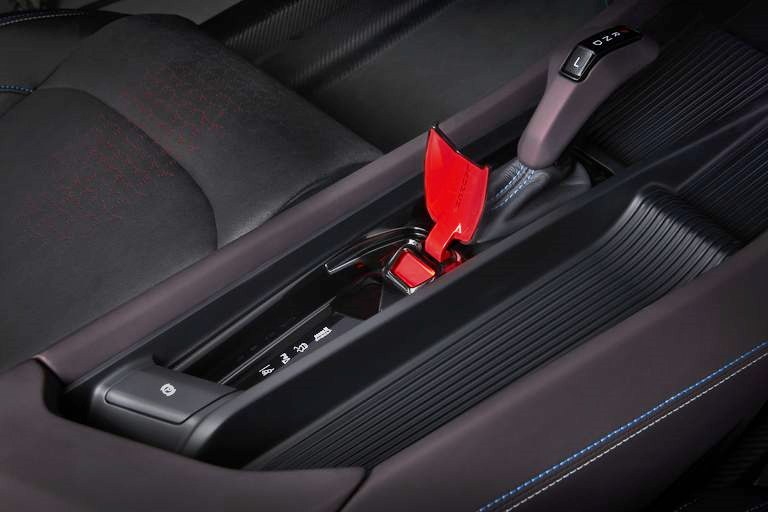
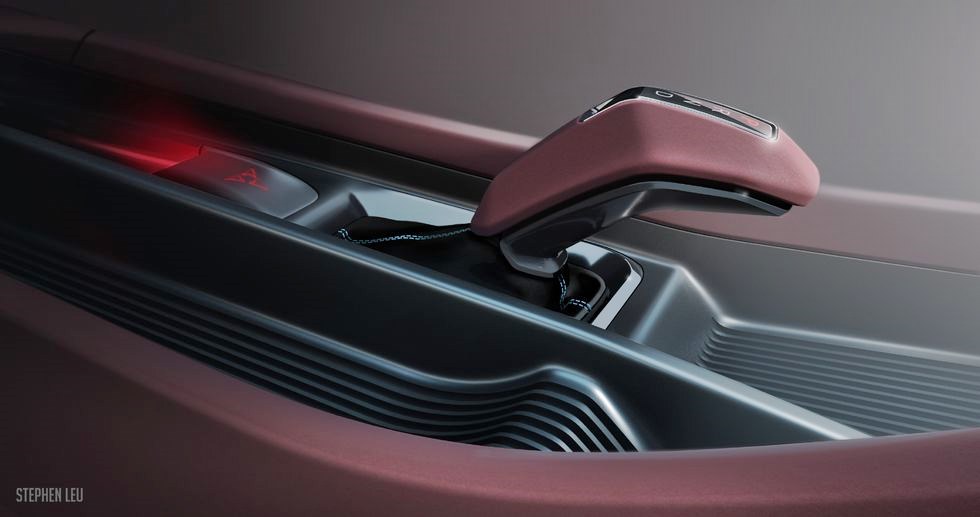
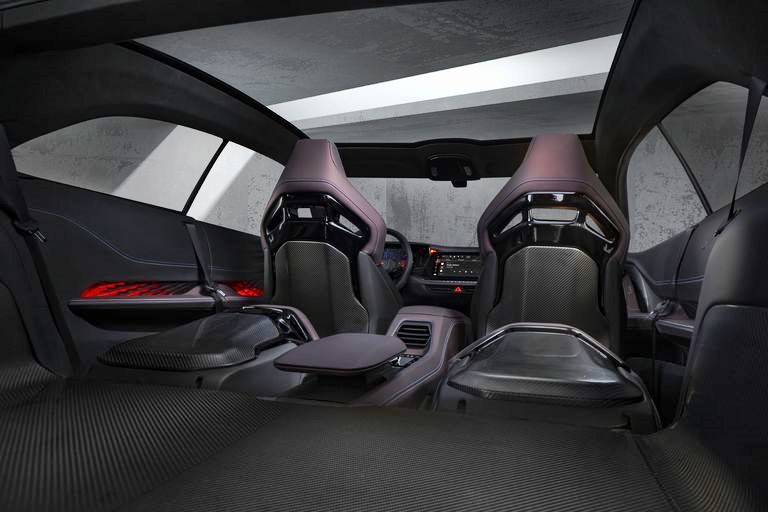
Circuit-like graphics originate on the carbonfibre floor and are strategically placed to surround occupants, flowing under the seats, moving to the centre console and dashboard, and coming back to the driver, a subtle detail that acts as a circuit board, connecting one to another The.centre console includes a unique jet-fighter-inspired cap that flips up to allow engagement of the start button and a pistol-grip shifter design inspired by the past,
The concept seats are lightweight, race-inspired and slim in design, with an insert that features an abstract, perforated pattern of the Fratzog logo. The unique pattern fades out as it travels down the seat and reappears as it flows toward the centre of the seatbacks. The upper seatbacks feature openings and seat bolsters that provide an airy, race-oriented feel, while holding occupants.
“The Dodge Charger Daytona SRT Concept exists because performance made us do it,” said Tim Kuniskis, Dodge brand CEO – Stellantis. “Dodge is about muscle, attitude and performance, and the brand carries that chip on its shoulder and into the EV segment through a concept loaded with patents, innovations, and performance features that embody the electrified muscle of tomorrow.”
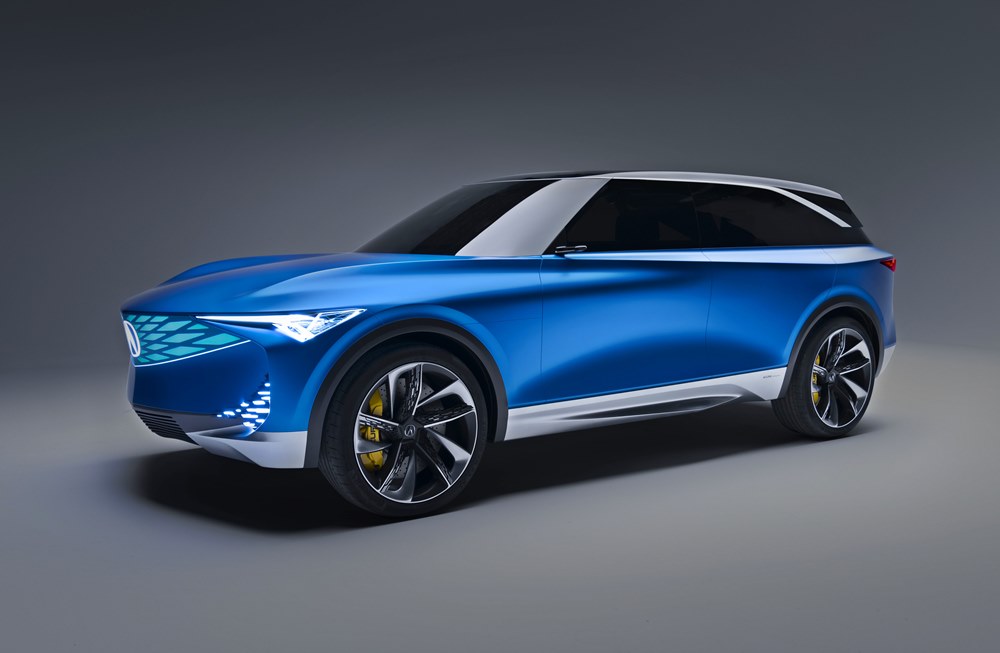
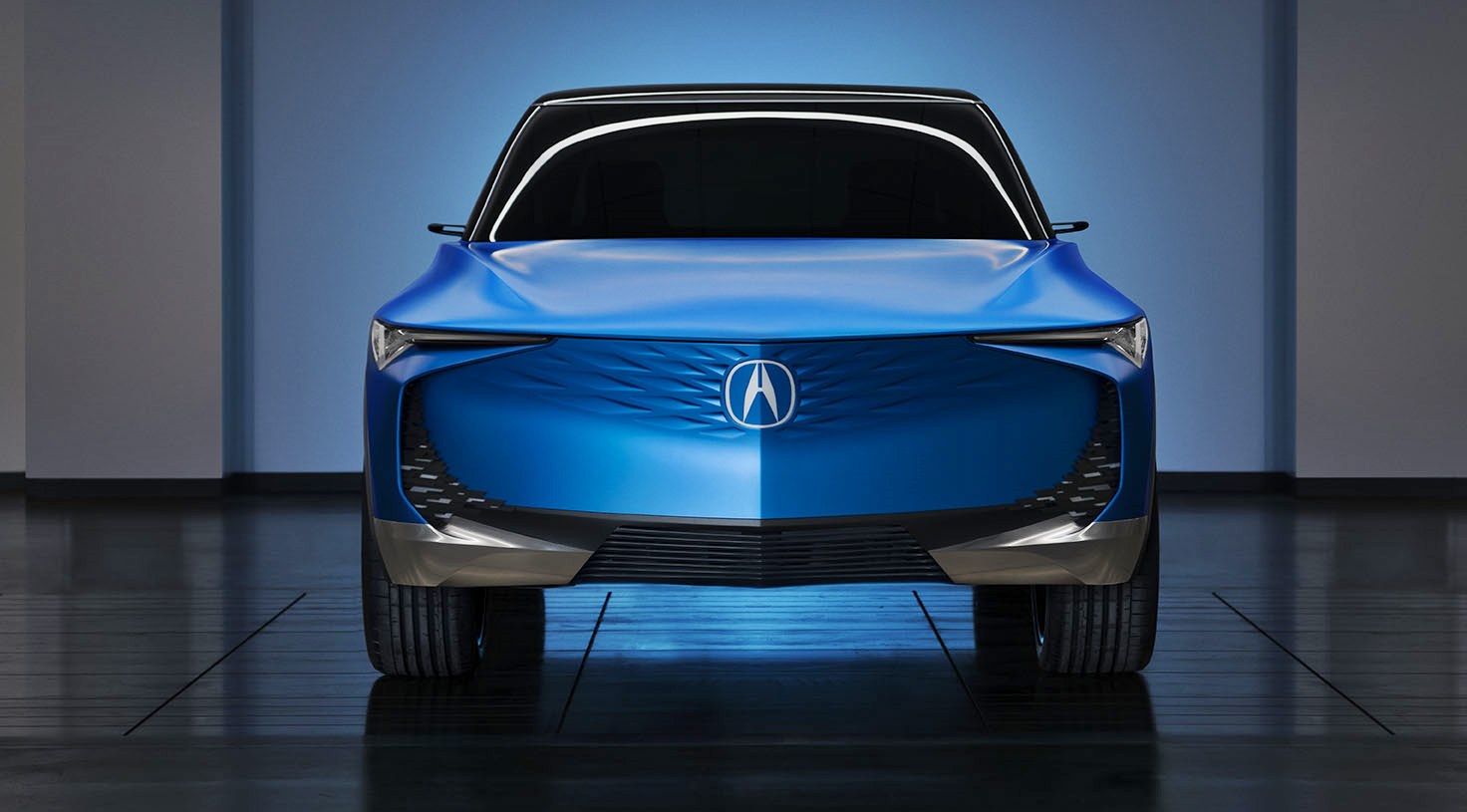
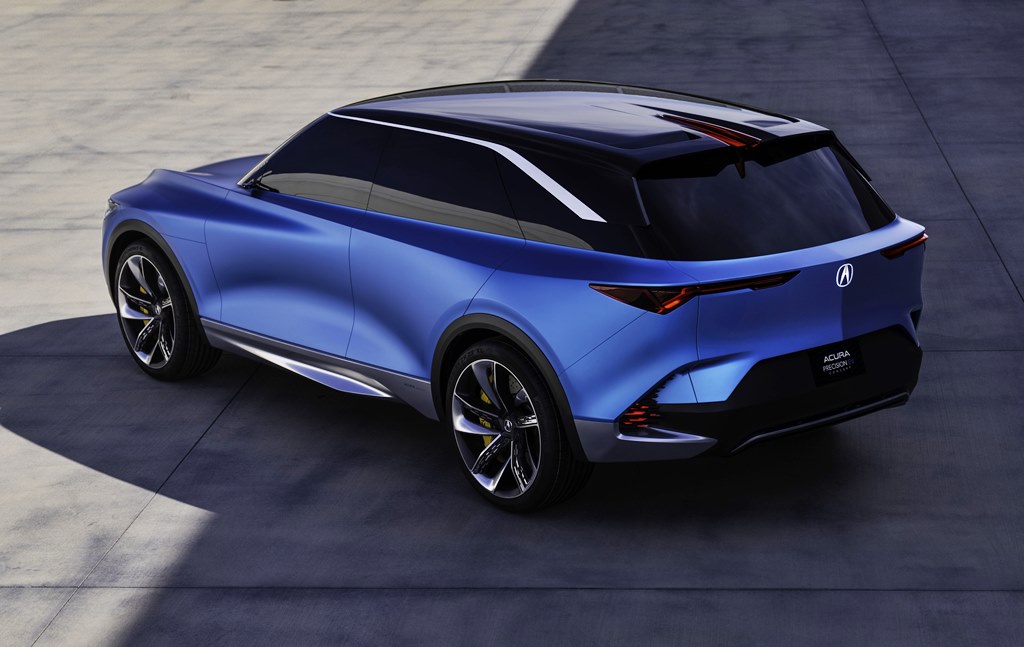
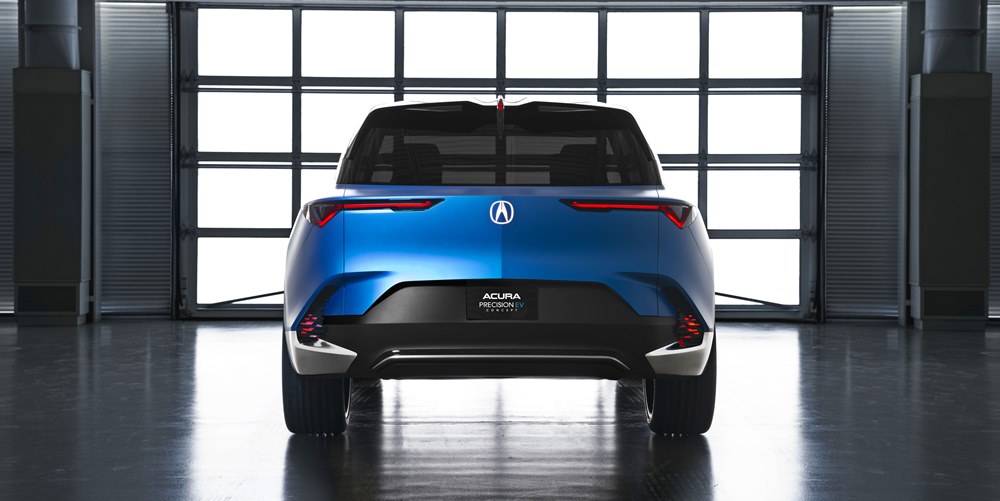
Acura, Honda’s brand of premium models mainly sold in North America, is transitioning to a new design language and a preview of this is given in the Precision EV Concept unveiled in California this week. This is the brand’s third design concept since 2016.
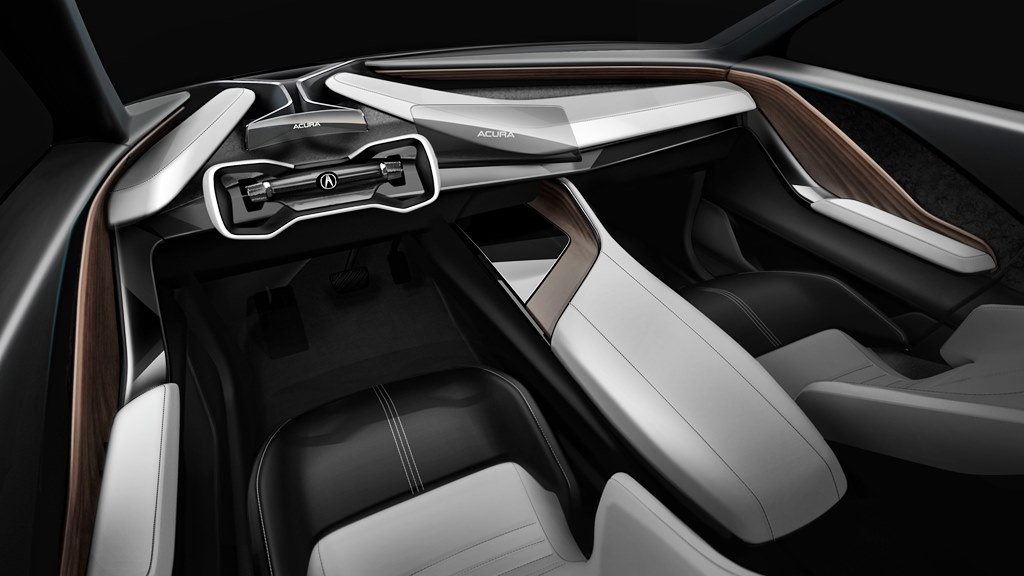
Created by the Acura Design Studio in Los Angeles, the SUV concept model showcases a future vision of electrified vehicles with distinct manual and full driving automation experiences. Its design focuses on performance through design, with inspiration drawn from luxury Italian powerboats.
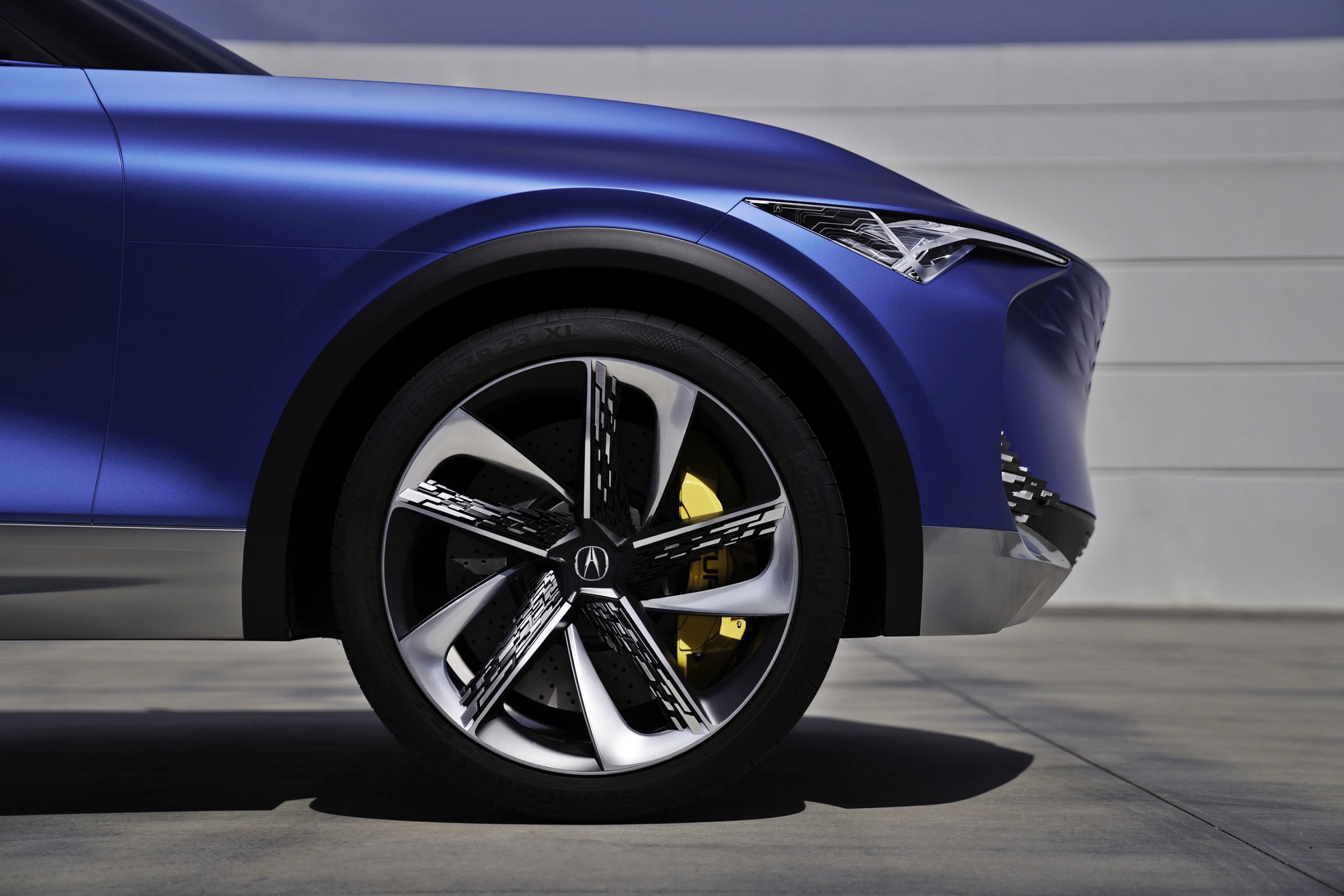
A special feature is the theatrical lighting approach that previews an electrified powertrain through a dramatic illuminated evolution of Acura’s Diamond Pentagon grille, Chicane DRL signature and new ‘Particle Glitch’ lighting on the front and rear facias.
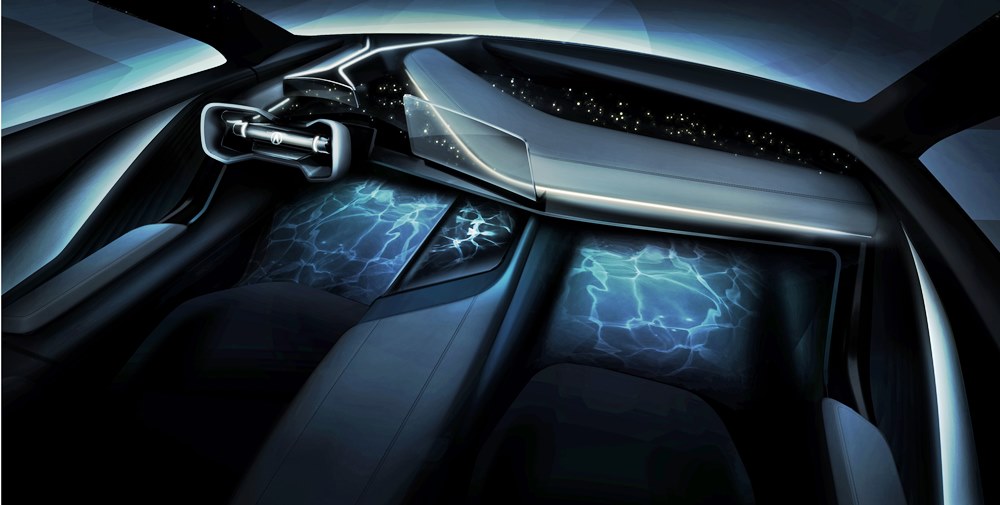
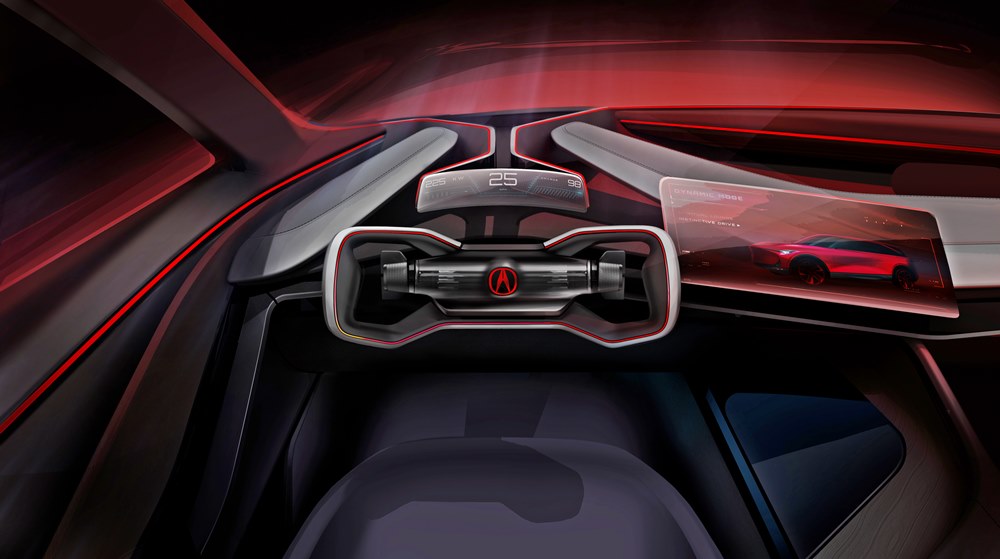
Dual driving modes Inspired by the cockpit of a Formula 1 racing car are the low-slung driving position, high-performance driver sightlines and a 2-grip yoke-style steering wheel. The interior space of the Precision EV concept features dual experiences – an Instinctive Drive mode for the performance experience and a calming Spiritual Lounge mode during autonomous operation.
The Instinctive Drive mode elevates the dynamic connection with the car with racing-style digital instrumentation and invigorating red ambient and pipe lighting. In Spiritual Lounge mode, the steering wheel retracts and as it does so, the cabin transforms into a warm, calming experience with soothing scents and restful ‘underwater’ animated projection so the driver and occupants can relax and recharge.
The SUV cabin is crafted with sustainable, environmentally-responsible materials creating premium, unique finishes including marbled recycled plastic trim and 100% biomass leather. All the aluminium used, as well as the dimensional green cast acrylic that forms the steering wheel secondary controls, were made from recycled materials. Milled FSC certified wood, harvested from responsibly managed forests that provide environmental, social and economic benefits, adds warmth and a connection to nature.
Next-generation HMI The Precision EV Concept also previews the next generation of Acura HMI (Human-Machine Interface) with an intuitive and easy to use hyper-wide, curved transparent display and haptic touch response. ‘Particle Glitch’ boot-up graphics mirror the signature exterior detail, visually harmonizing the experience.
“As the definition of premium and performance evolves to include the application of sustainable materials, we are looking at new and innovative material technologies to inspire our customers while both reducing our carbon footprint and enabling the Acura brand to reshape the perception of quality,” said Gypsy Modina, Principal Designer – colour, materials and finish..
“The Precision EV Concept is a look into our future direction and continues the Acura Precision Crafted Performance design language with a modern expression of performance” said Dave Marek, Acura Executive Creative Director. “The Acura Precision EV Concept will be our ‘North Star’ as we move into an exciting electrified future, and you will see these design cues translate over to future production models.”