Piston.my

Lexus

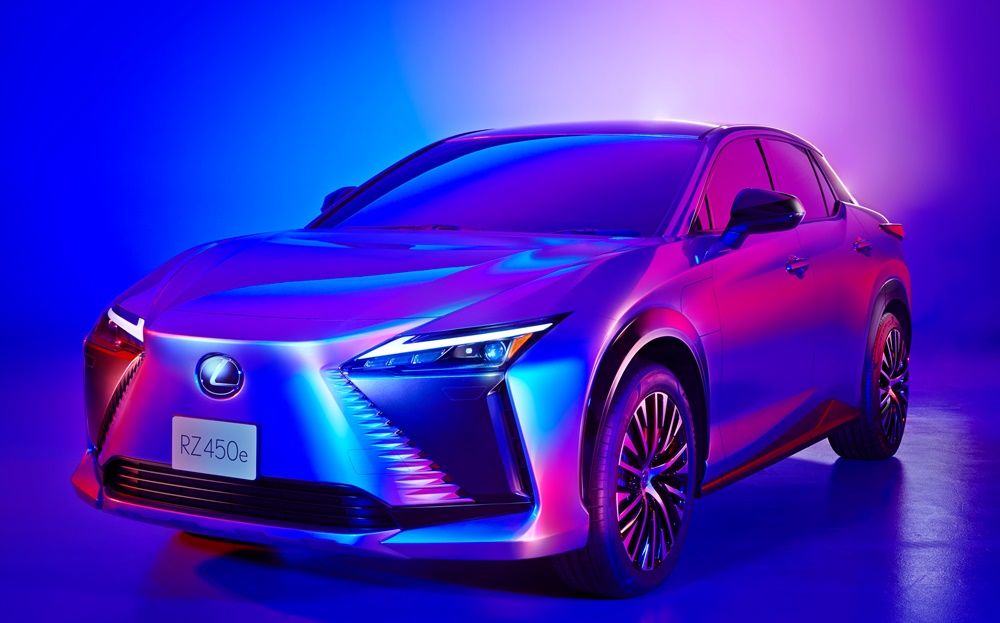
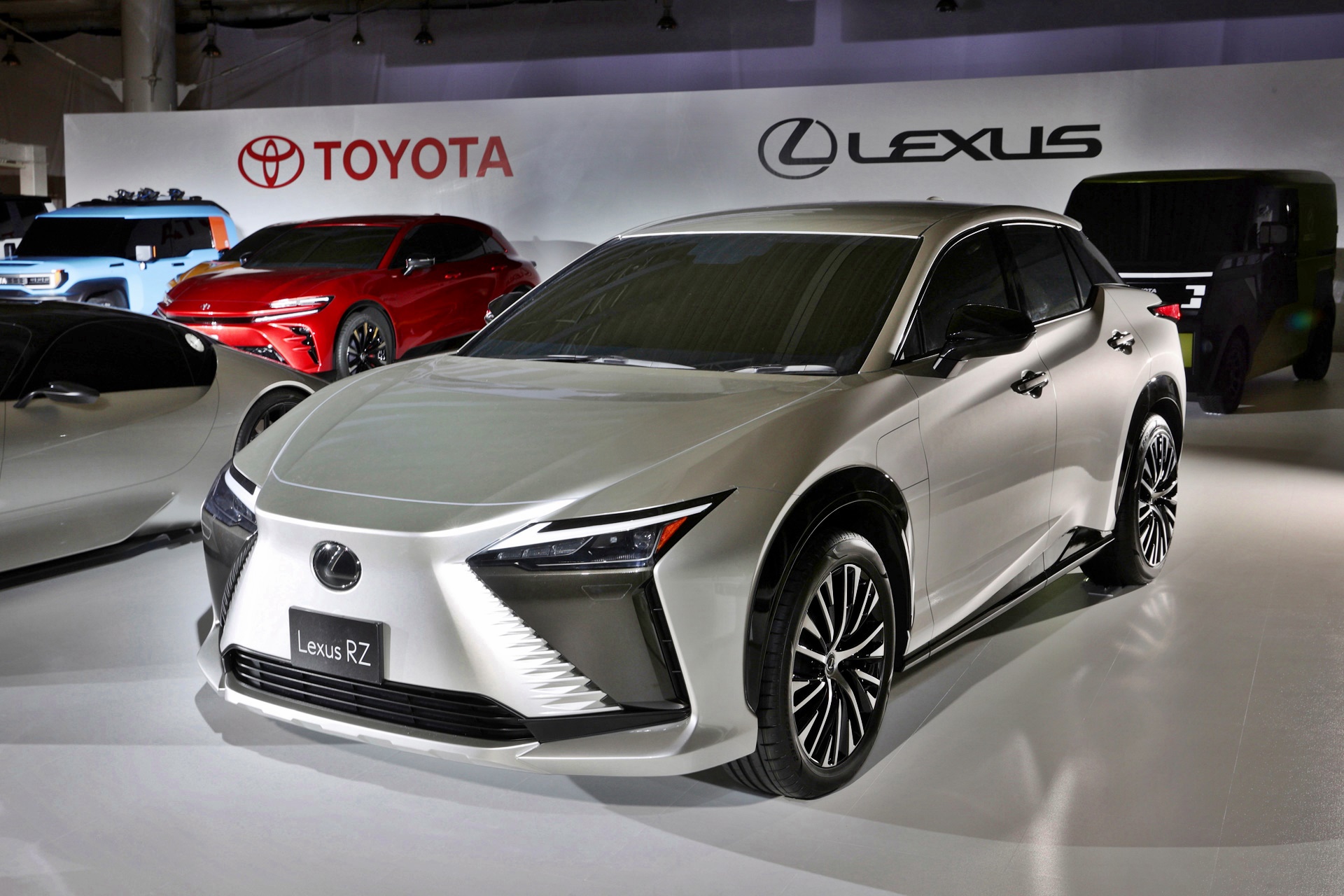
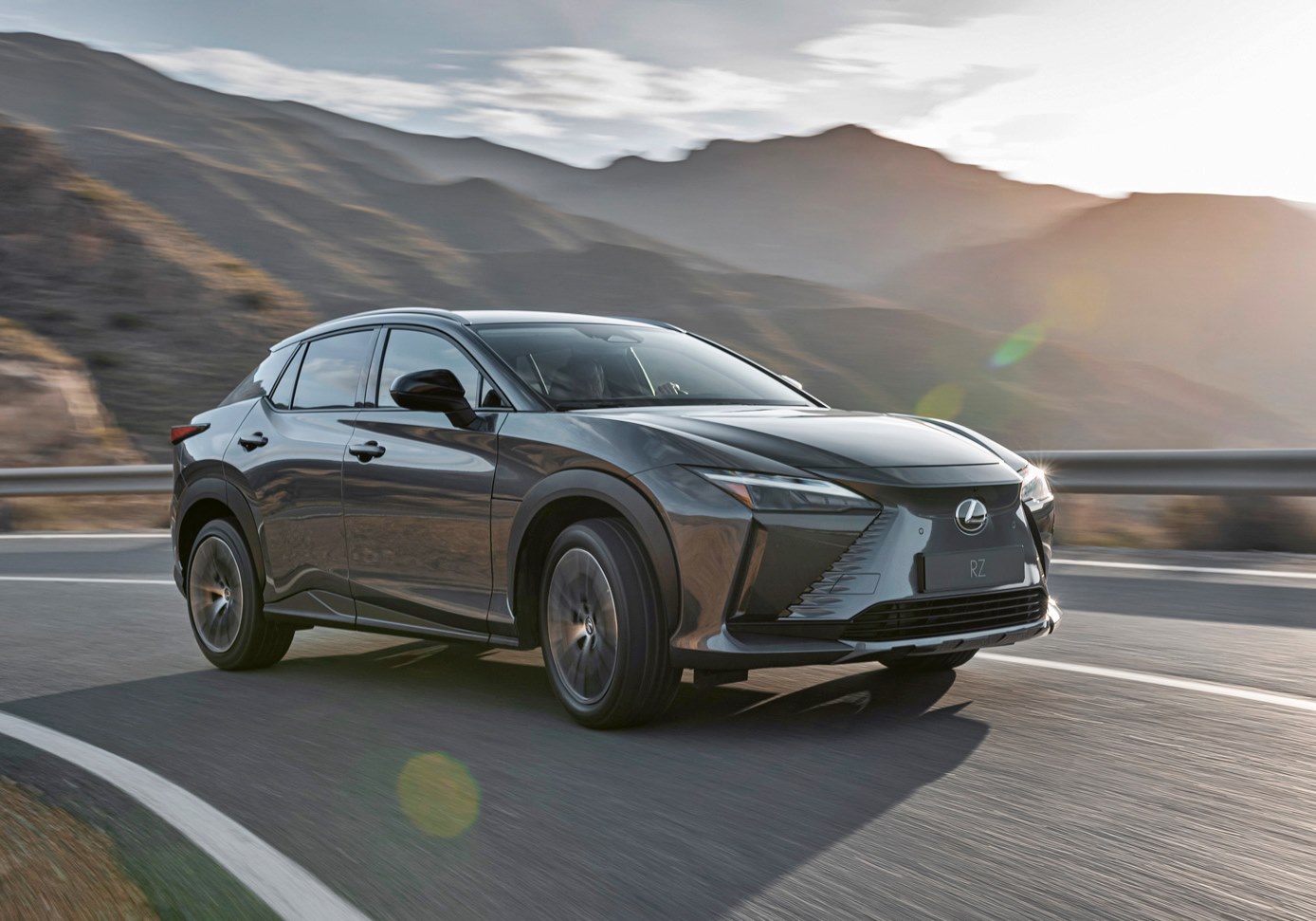
Lexus began its electrification journey back in 2005 with the RX400h hybrid, followed by hybrid variants of other models as well as the CT-200h, which was only available with a hybrid powertrain. Today, with the world premiere of the new RZ 450e, Toyota’s luxury brand begins a new era of battery-electric vehicles (BEVs) and the Lexus Electrified vision.

As the brand’s first BEV built on a dedicated platform, the RZ heralds the transition of Lexus into a BEV-centred brand. Besides a brand new design, it also offers advanced electrification technologies developed over many years of hybrid vehicle development.
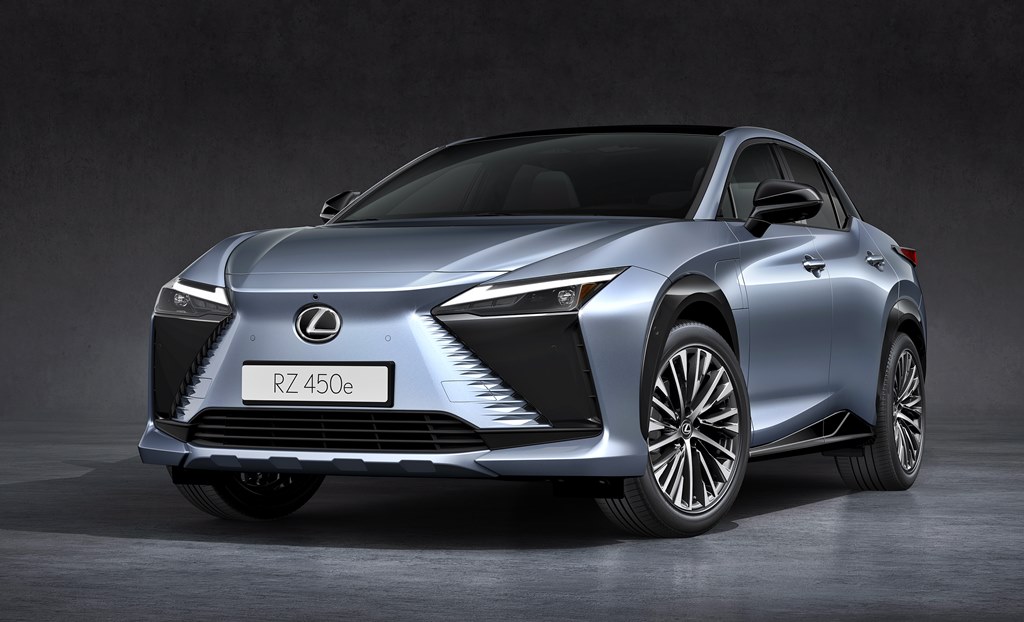
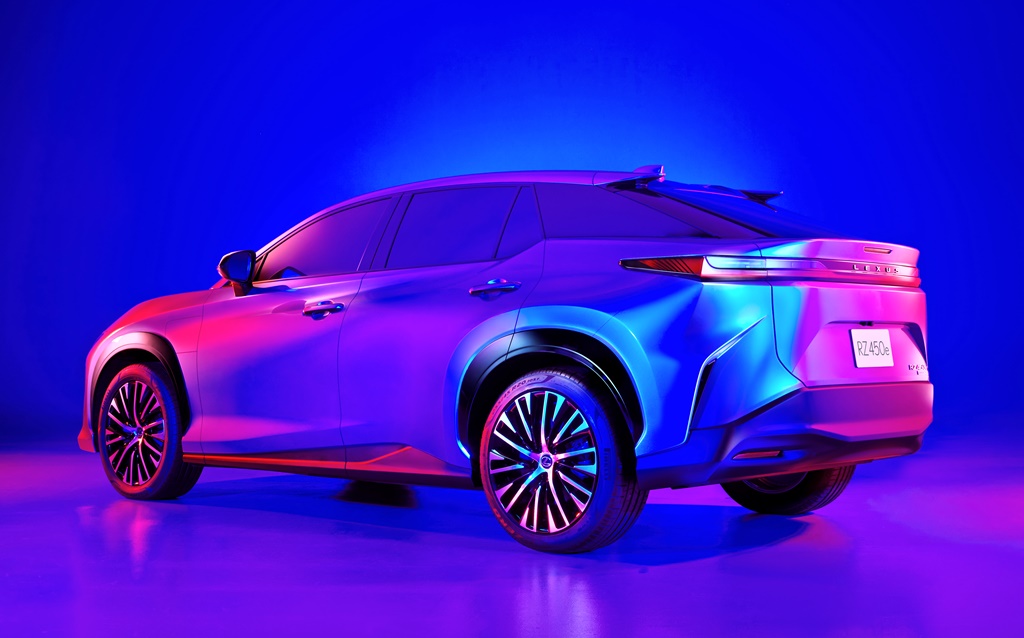
2023 Lexus RZ 450e EV

New visual identity for BEVs
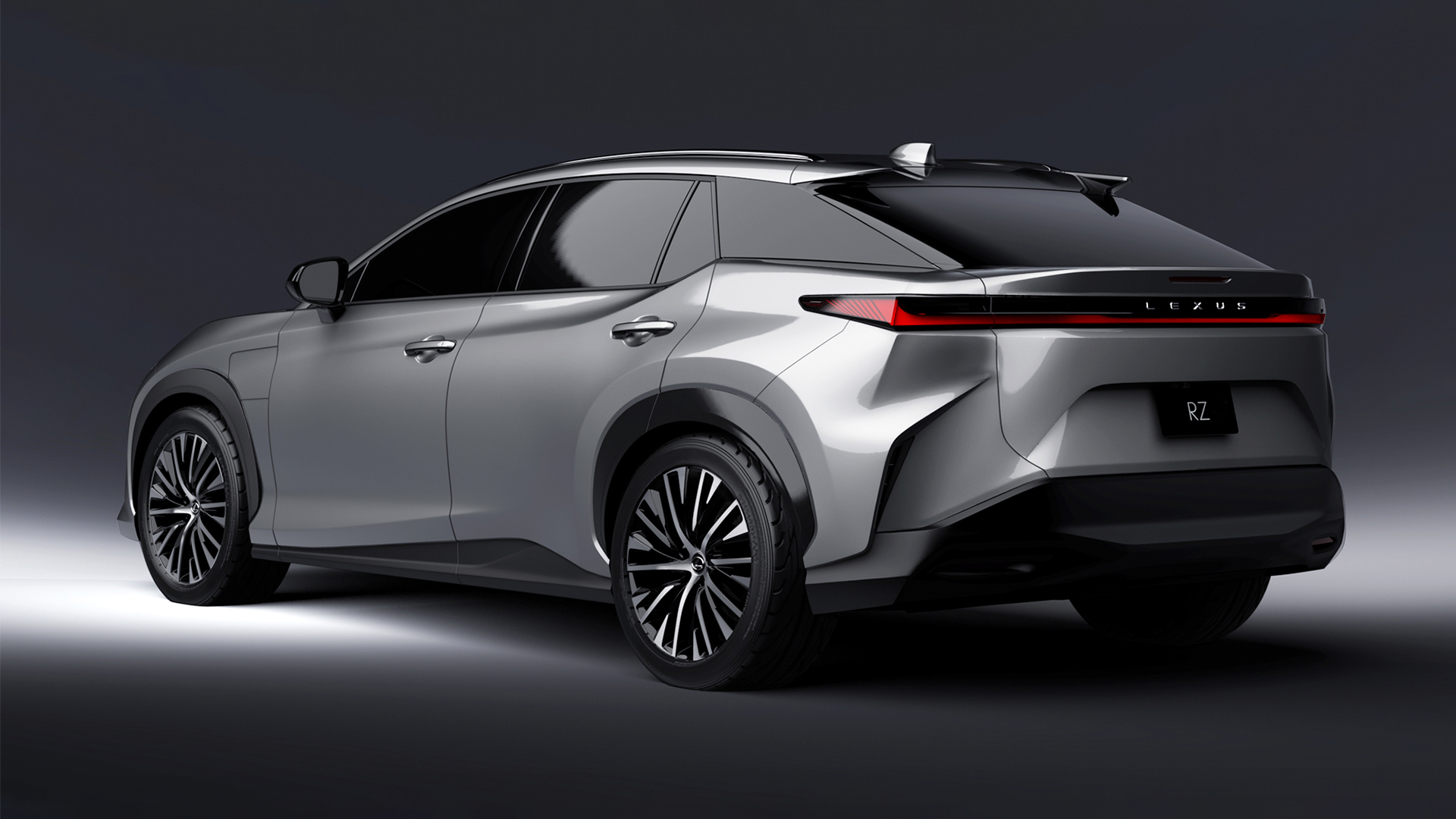
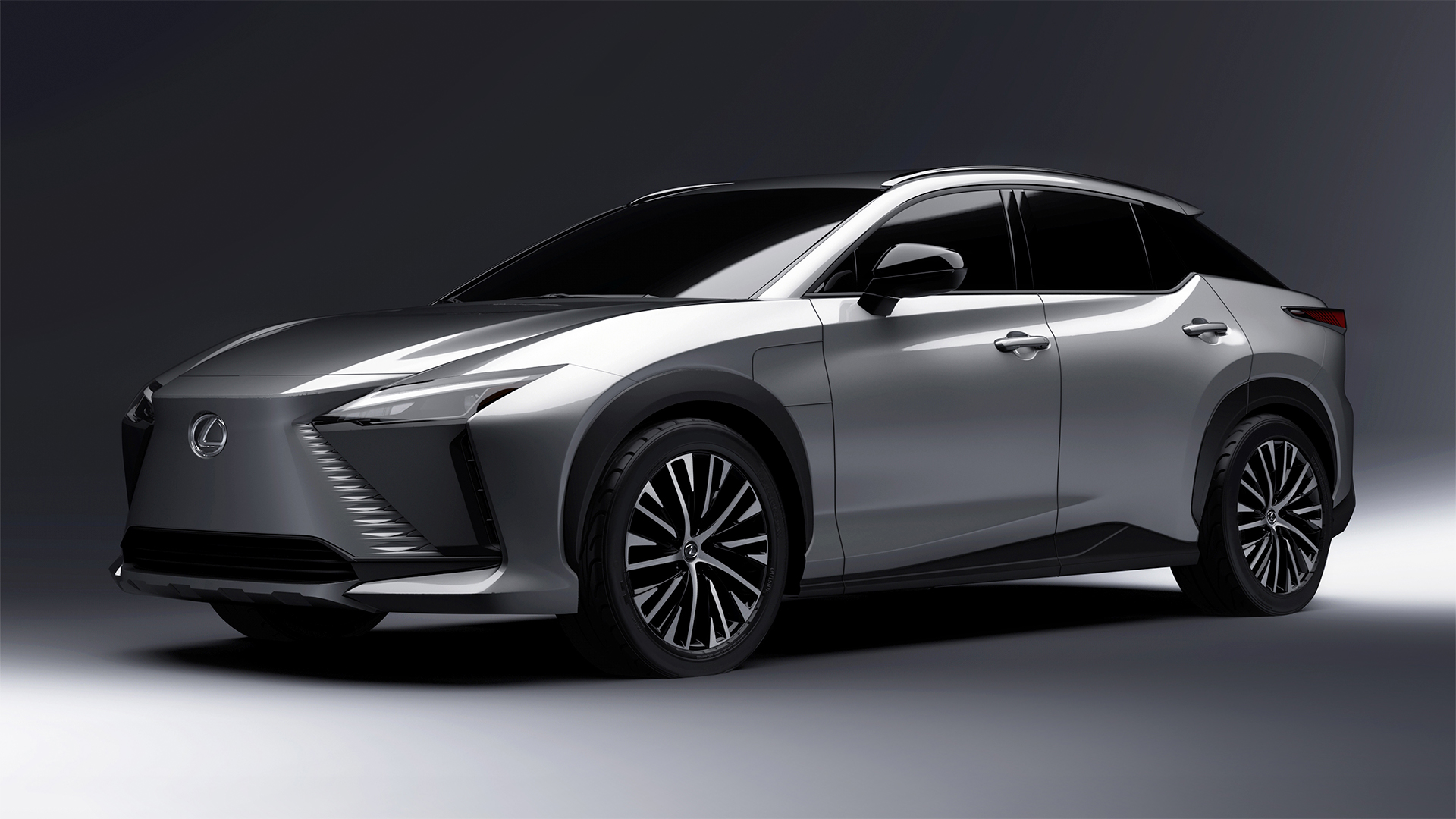
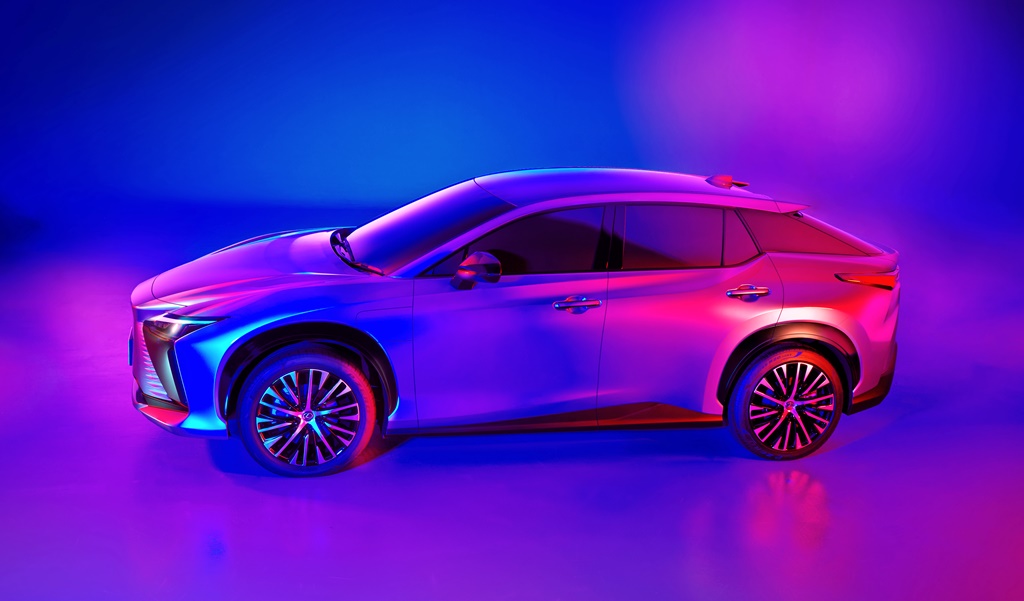
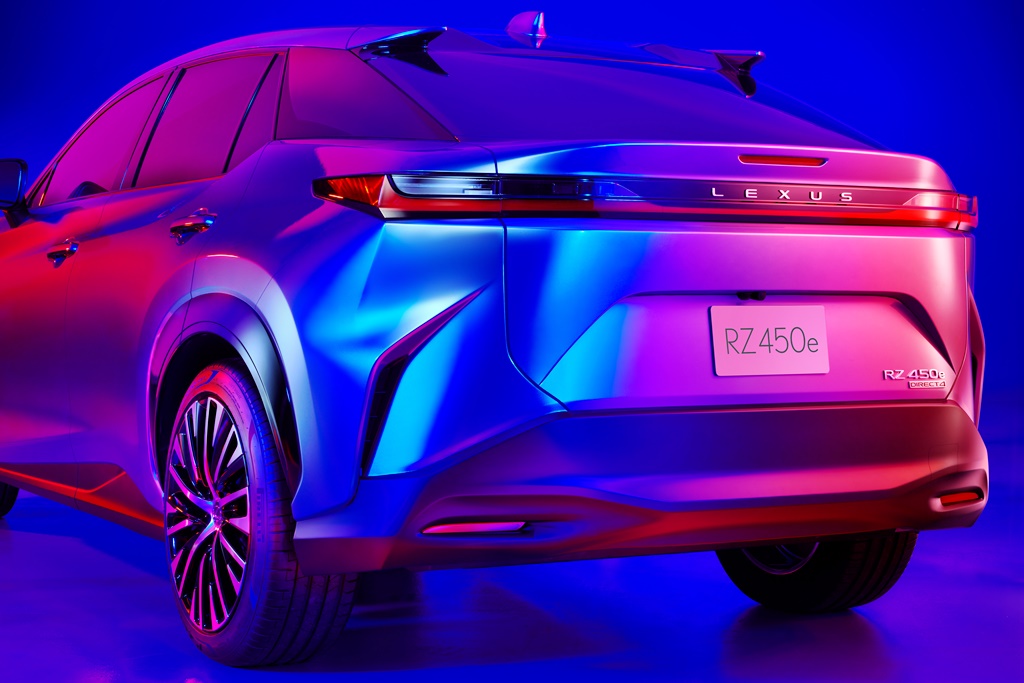
The exterior design presents a new visual identity as the familiar spindle grille is replaced by a minimalist BEV Spindle Body which focuses on aerodynamic efficiencies, optimized proportions, and style, versus serving the cooling and exhaust needs of an internal combustion engine. The rear features the spelled-out LEXUS logo as part of a clean and simple horizontal design that highlights the wider rear track while above is a distinct roof spoiler.
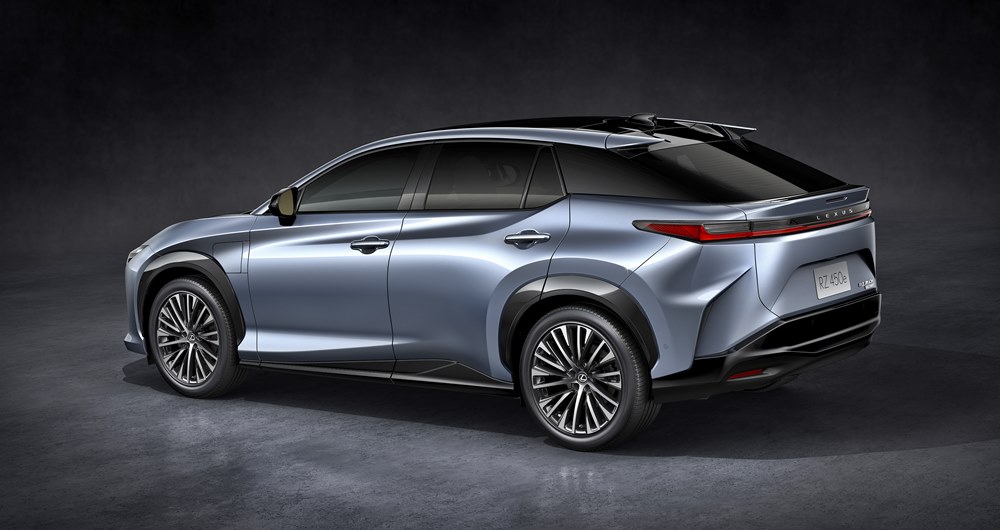
2023 Lexus RZ 450e EV

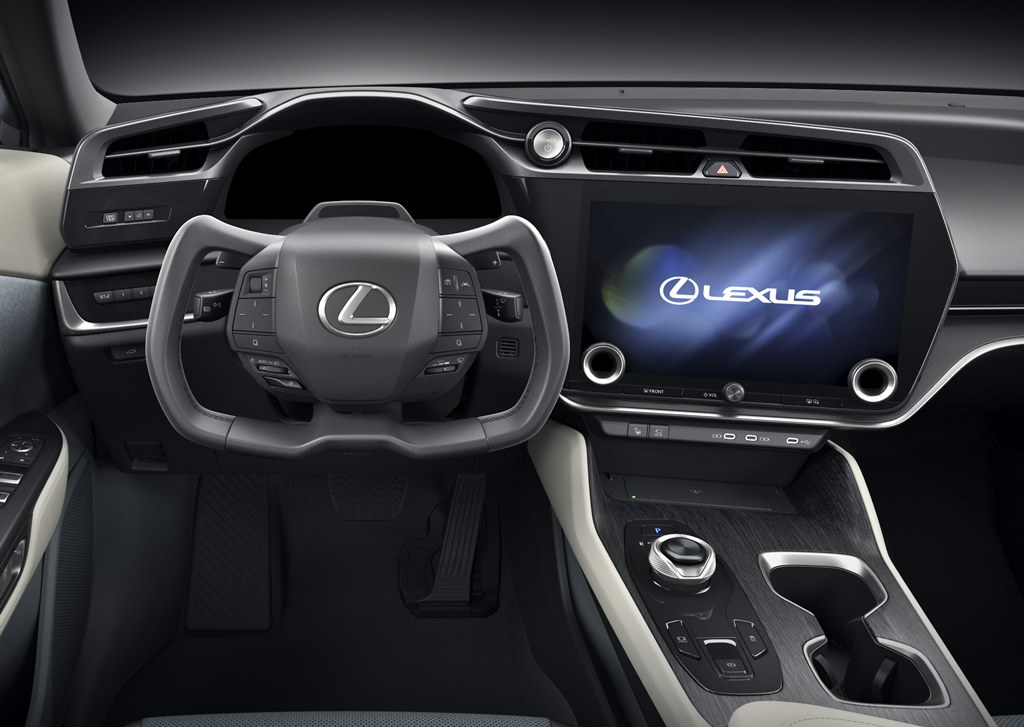
The interior is likewise minimalist, with an airy and luxurious environment that Lexus has long been known for, along with high-quality craftsmanship. Based on the tazuna concept, the cabin advances the human-centred philosophy of Lexus by welcoming occupants with intuitive controls oriented around the driver, ensuring maximum concentration on driving.
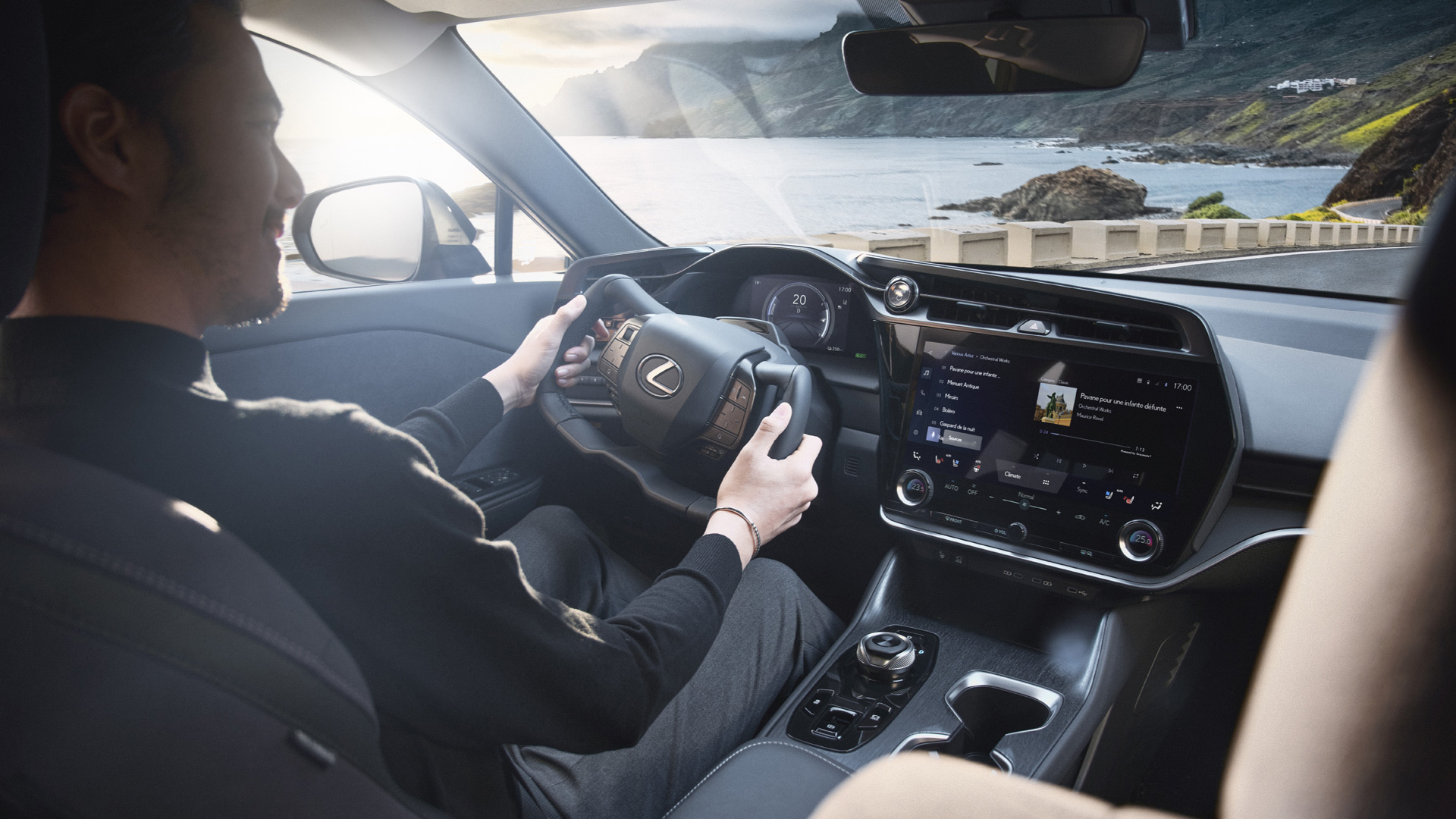
2023 Lexus RZ 450e EV

2023 Lexus RZ 450e EV

New steering wheel design
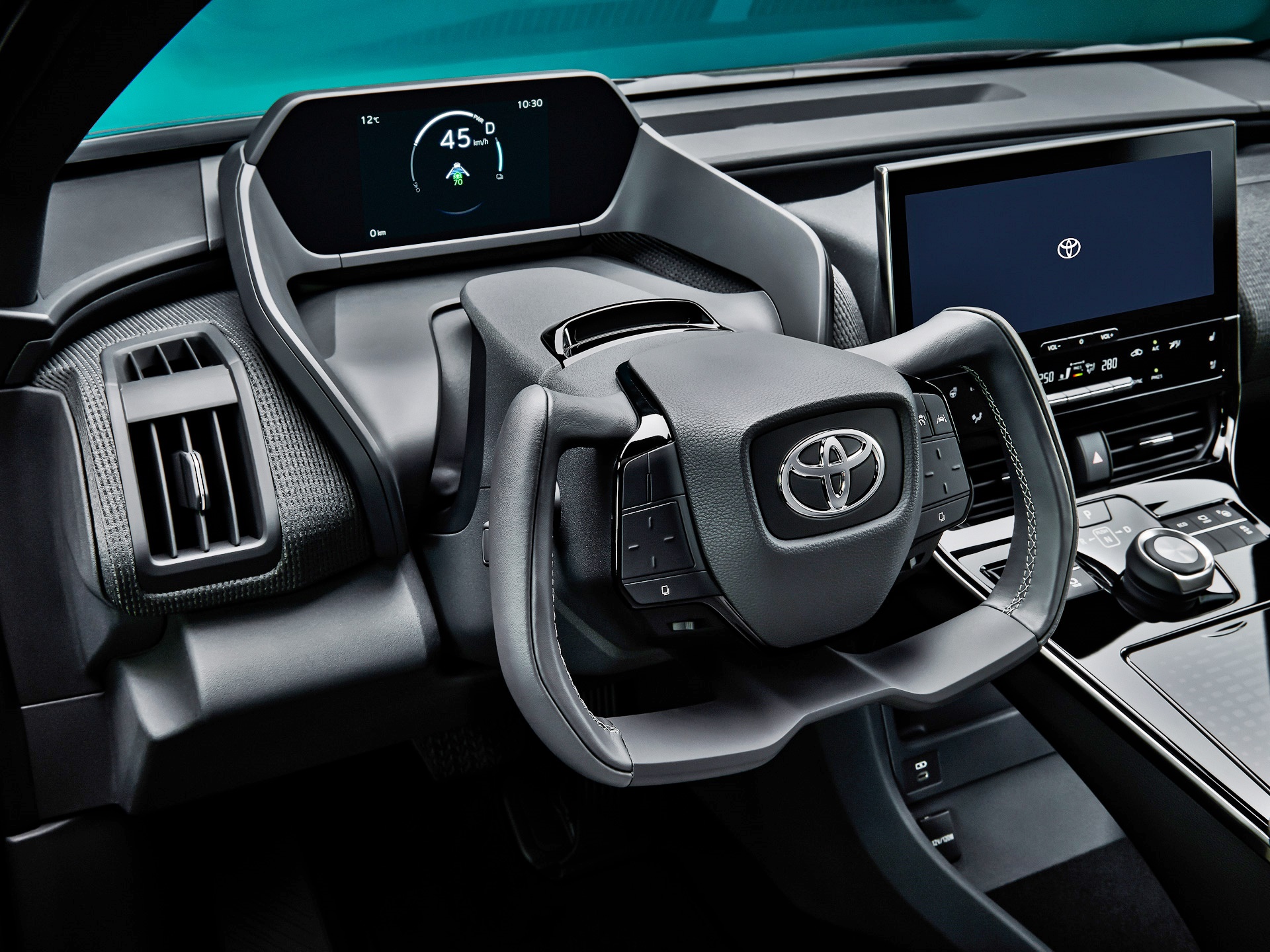
The application of shift-by-wire has resulted in a Lexus-first dial shift knob mounted on the centre console. More eye-catching will be the compact yoke-like steering wheel which is said to greatly reduce the driver’s workload by eliminating the need for hand-over-hand operation (eg in u-turns and parking). It also enabled the designers to lower placement of the instrument panel for better forward vision.

The RZ’s long wheelbase of 2850 mm within an overall body length of 4805 mm provides spacious rear-seat accommodation. An electronic ‘e-latch’ system is used to operate the doors while highly efficient Lexus-first electric radiant heaters, combined with a heat-pump system, ensure passenger ambient comfort. Three types of seat materials are used, including Ultrasuede, a refined material that uses 30% bio-based sustainable materials.
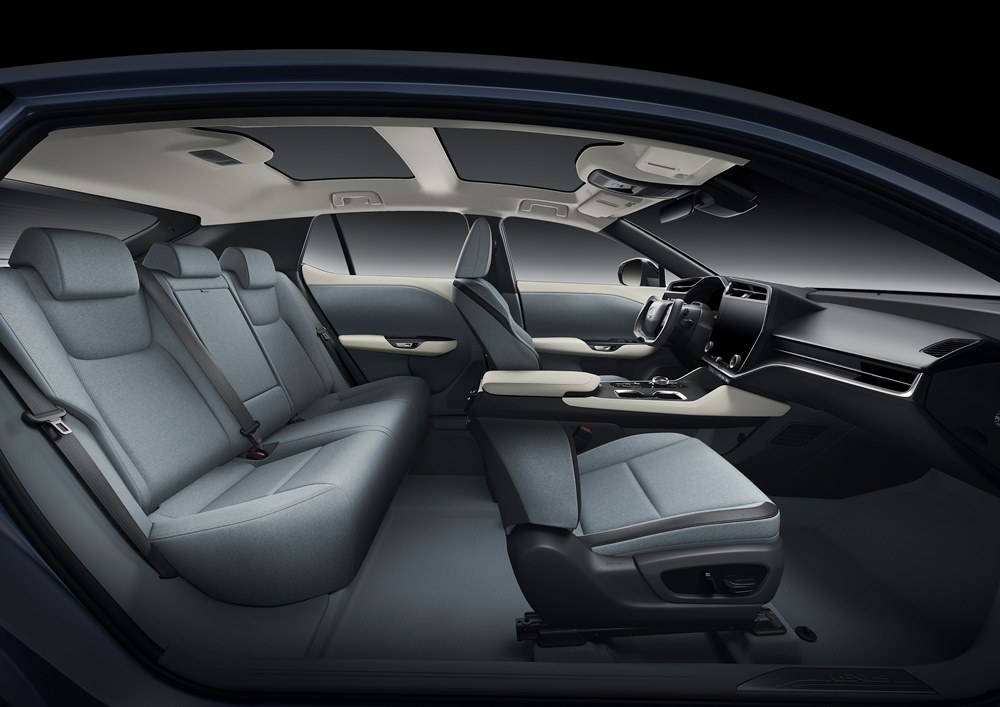
2023 Lexus RZ 450e EV

2023 Lexus RZ 450e EV

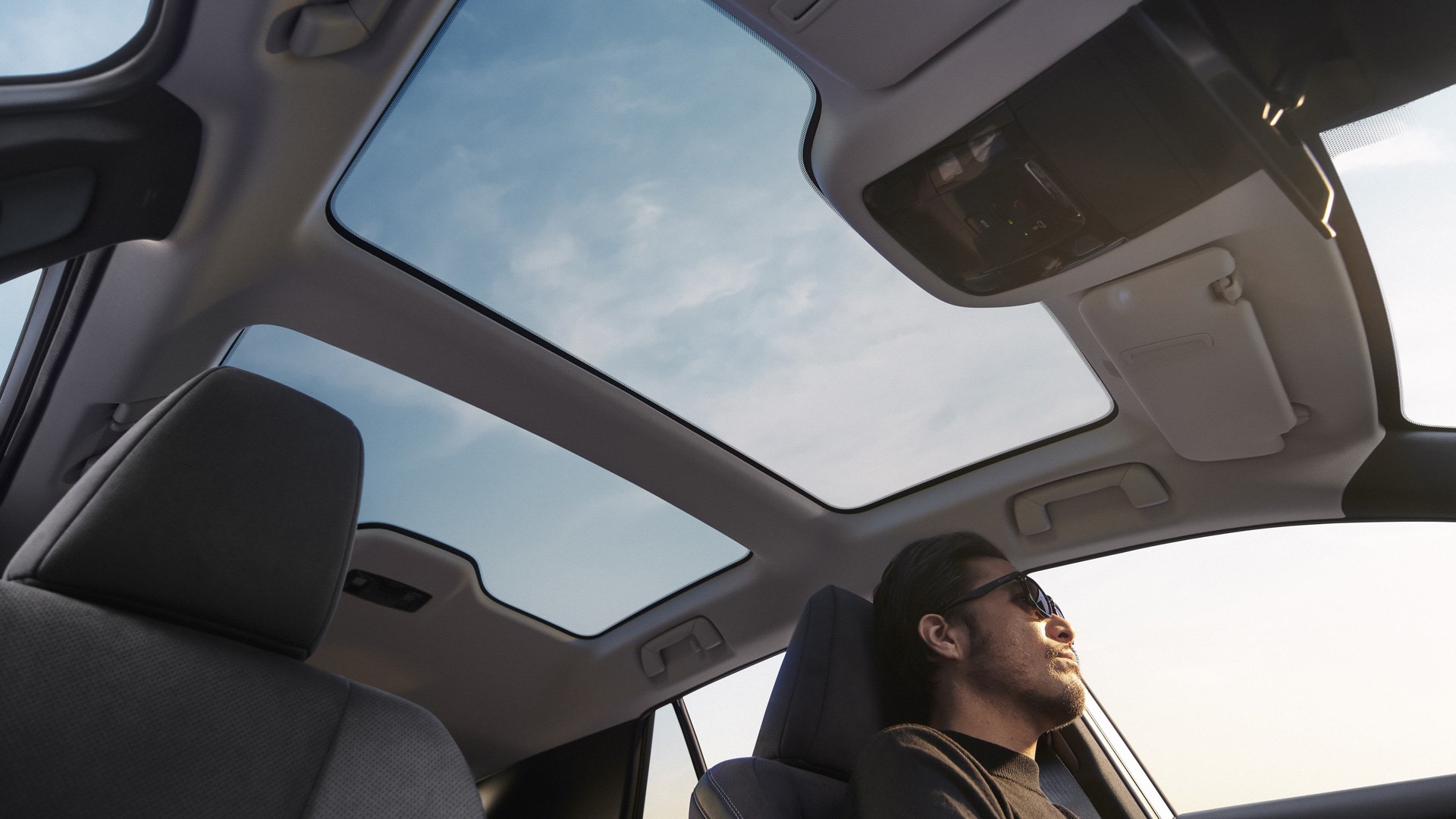
Overhead, some variants have a panoramic roof which is designed with heat shielding, thermal insulation and 99% UV protection. The glass also has a Lexus-first dimming function which, without a physical curtain, can instantly block light according to the needs of the occupants.

Different challenges for quietness
Quietness has been a hallmark of Lexus models since the very first one and besides generous use of high quality insulation, the engineers have also looked for the sources of noise and eliminated them. With the RZ powered by electric motors, new challenges were presented to the engineers who had to create a balance between sound generation and a very quiet interior space.

The underfloor battery functions as a sound barrier, the bonnet perimeter is sealed to eliminate noise caused by turbulent airflow. and acoustic glass suppresses other unwanted sounds. Additionally, the engineers have tuned sound frequencies to the vehicle’s speed and sound levels during dynamic actions such as acceleration.
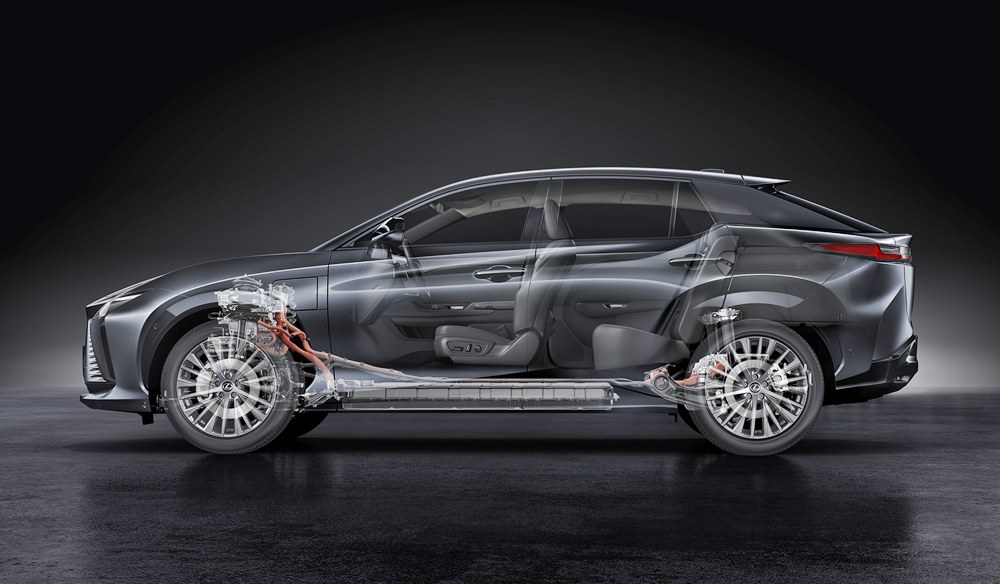
2023 Lexus RZ 450e EV
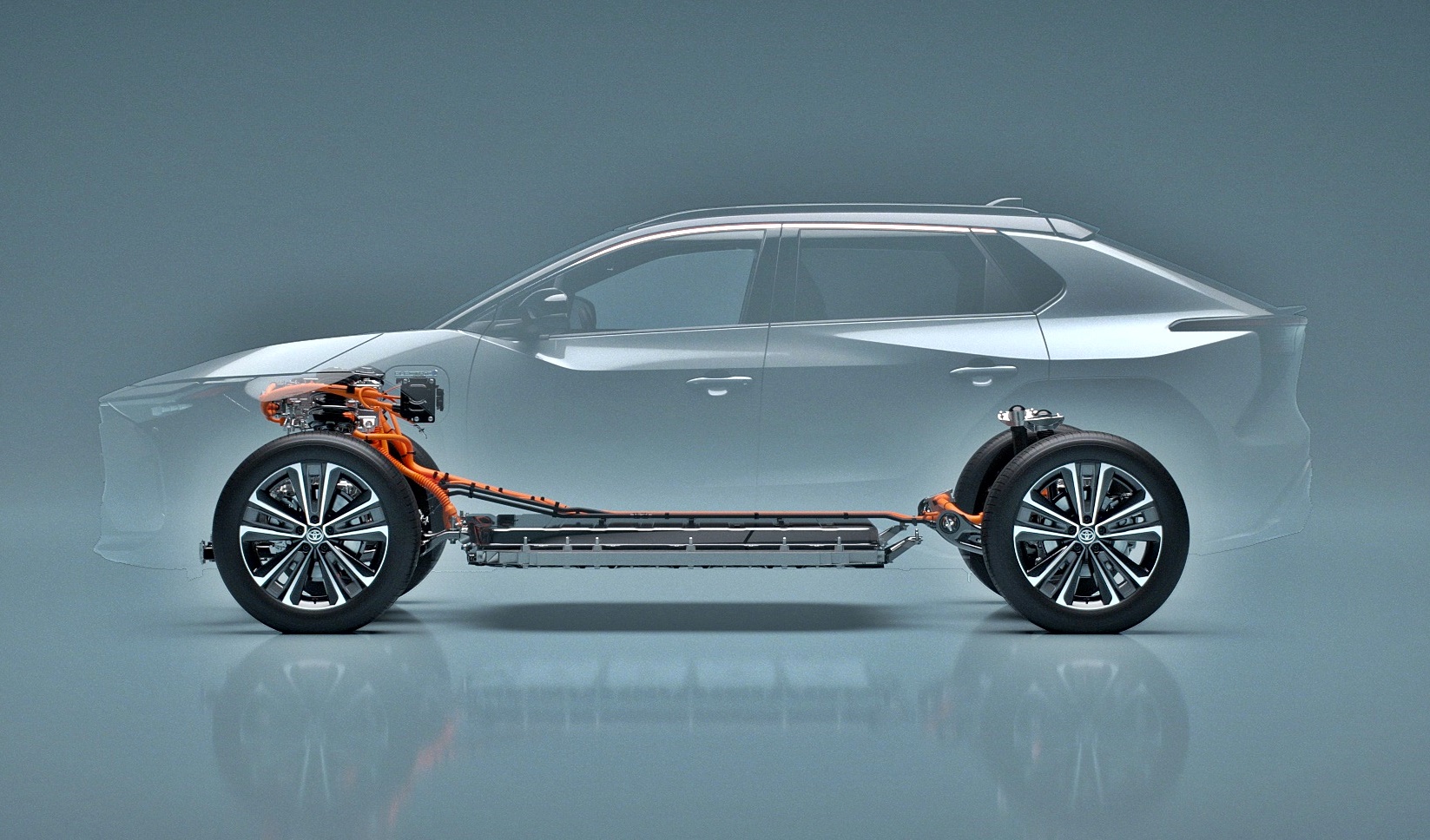
New RZ 450e uses the e-TNGA platform specifically developed for BEVs.

Lexus Driving Signature
Regardless of the type of powertrain, the Lexus Driving Signature of impressive fundamental acceleration, steering and braking performance must be present. The electric powertrain system uses a front and rear e-axle, each equipped with a high-torque electric motor, transaxle and inverter in a compact unit. As each motor (front: 150 kW, rear: 80 kW) is directly connected to the wheels by a single driveshaft, power transmission is instantaneous.

The new DIRECT4 system takes the Lexus Driving Signature to an even higher level. It uses acceleration, cornering-speed and steering-angle information to automatically adjust front-rear torque delivery and braking force to all four wheels. The system uses a front-to-rear drive-force ratio between 60:40 and 40:60 for minimum vehicle pitch.
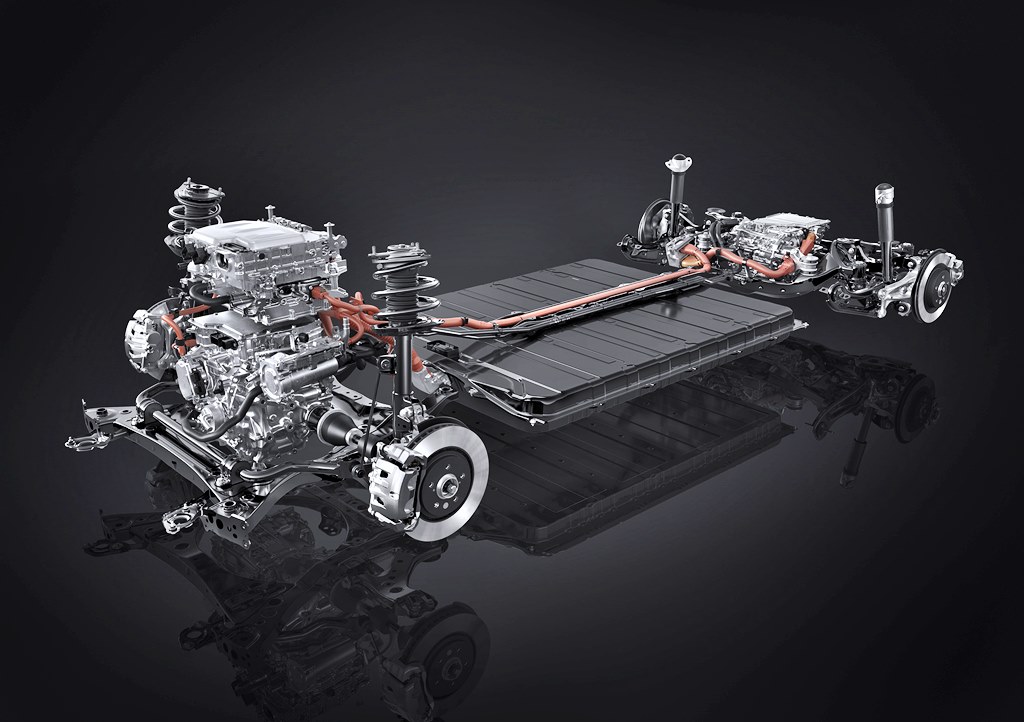
2023 Lexus RZ 450e EV

When the steering wheel is turned, drive force is biased to the front wheels between 50 and 75% for nimble response and excellent steering feel. When exiting a corner, torque distribution to the rear wheels is increased to between 50 and 80%, ensuring ample traction while controlling vehicle pitch.

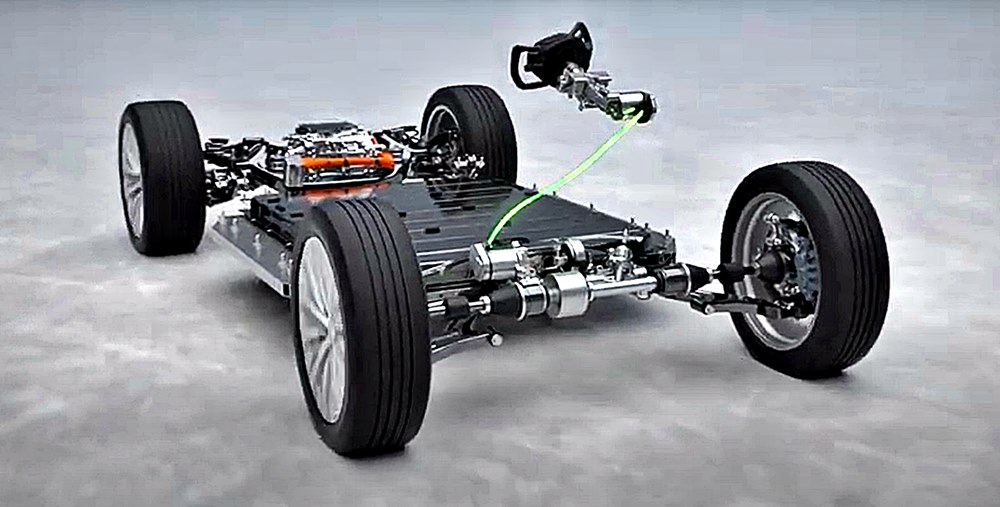
Steer-by-wire
A Lexus-first steer-by-wire system contributes to enhanced vehicle manoeuvrability while blocking out unnecessary vibrations from the tyres and brakes. Optimum steering-gear ratios provide nimble and agile performance on winding roads and high-speed stability on highways.
Long experience in battery technology
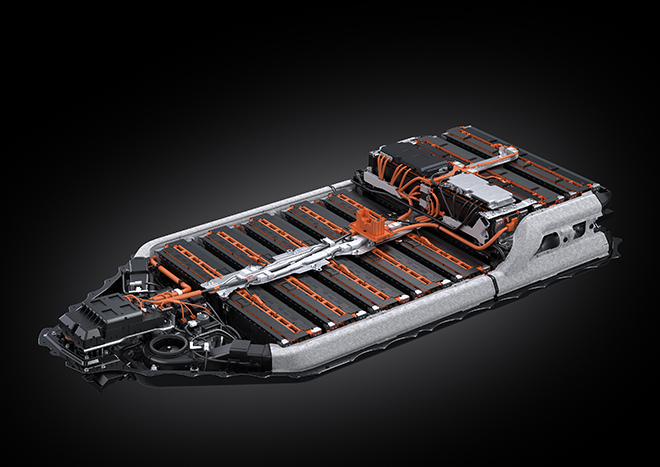
Toyota’s experience in developing ever better hybrid electric technology has also included advancing battery technology. Some of the advanced technologies are the high-capacity 71.4 kWh lithium-ion battery packs, Lexus-first silicon carbide elements in the inverters and the incorporation of low-loss technologies to deliver an estimated single-charge cruising range of 450 kms.
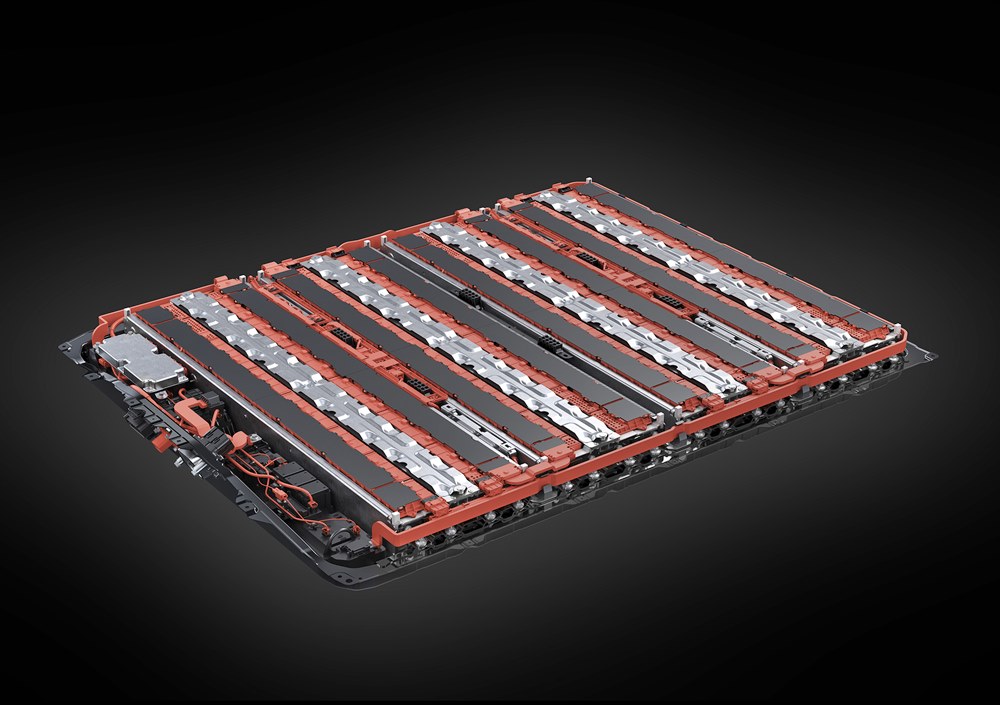
2023 Lexus RZ 450e EV

Battery-control technology ensures a world-class battery capacity retention rate claimed to be at least 90% after 10 years. Contributing to the long life with even higher battery capacity is a timer charging function that avoids over-charging.

100% BEVs globally by 2035
Pricing has not been announced yet but exports of the RZ 450e, which will be made in Japan, will begin during the fourth quarter of 2022. In the years following till the end of the decade, Lexus will introduce entirely new BEVs covering every segment. By 2035, the brand expects to be selling only BEVs globally and fully contribute to the Toyota Group’s objective of carbon neutrality.
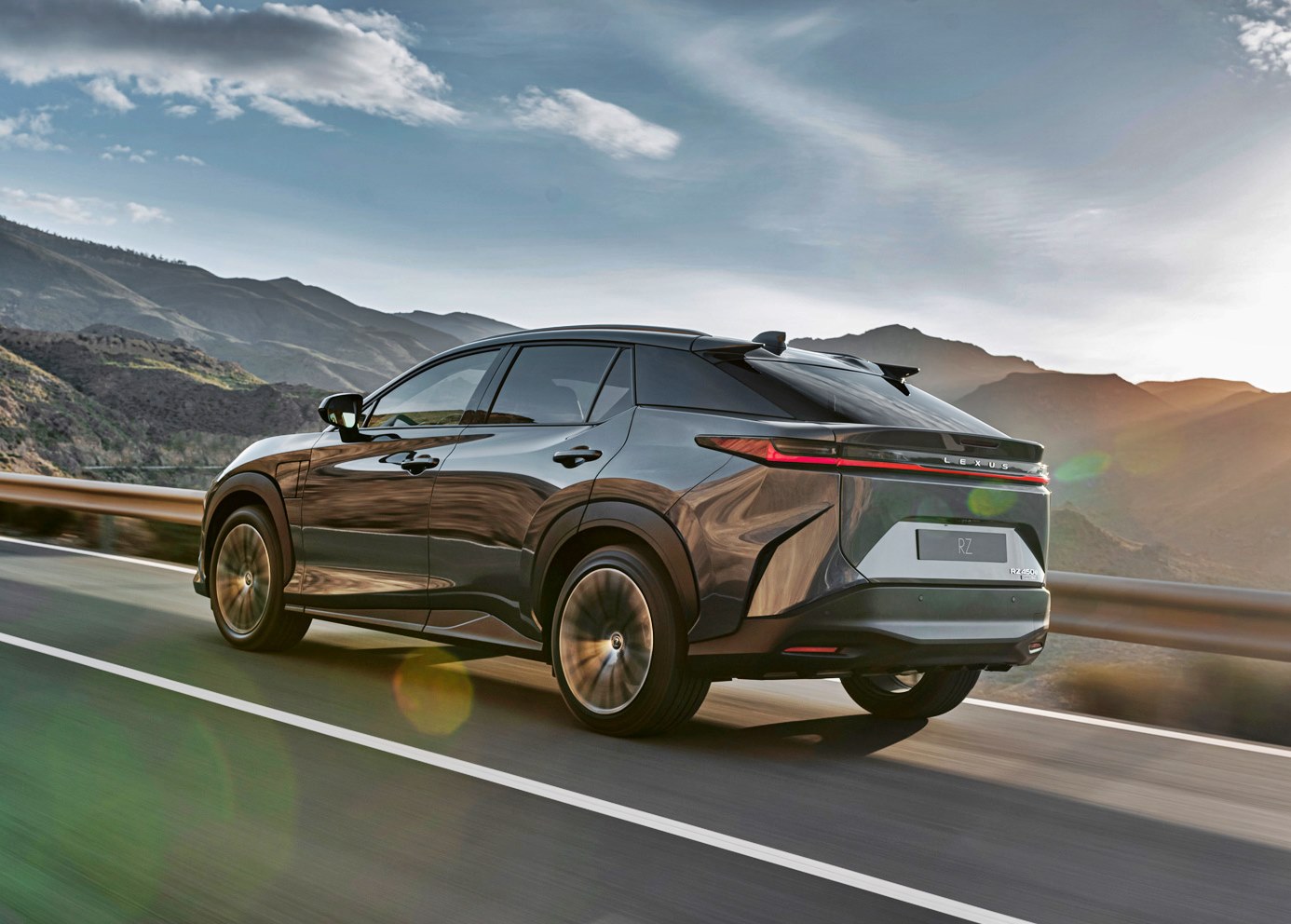

2023 Lexus RZ 450e EV

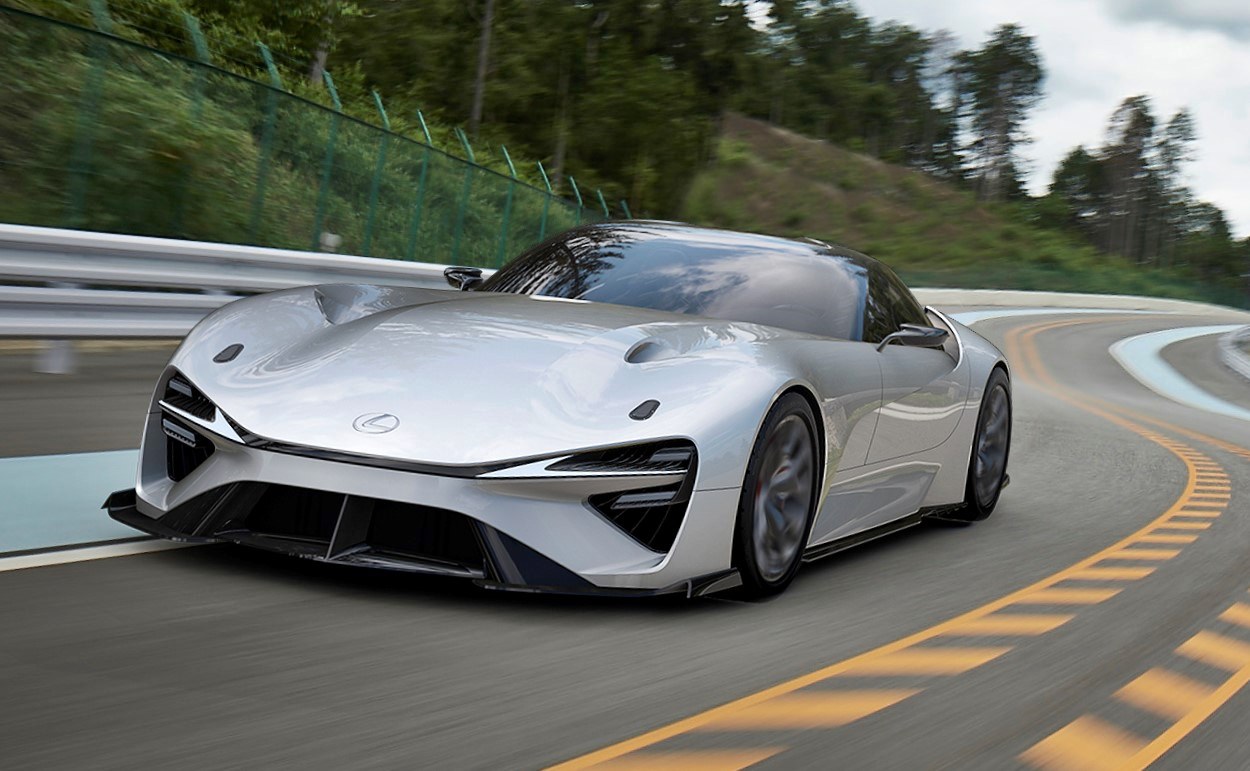
Lexus releases pictures of electric sportscar on the track as well as other future BEV models (w/video)

UMW Toyota Motor (UMWT) had a significant jump of 32% in its March sales volume with 8,487 units reported, compared to 6,432 units the month before. The improvement in sales is attributed to promotions during the month which offered value-added benefits worth RM4,000 for popular models such as the Vios and Yaris.

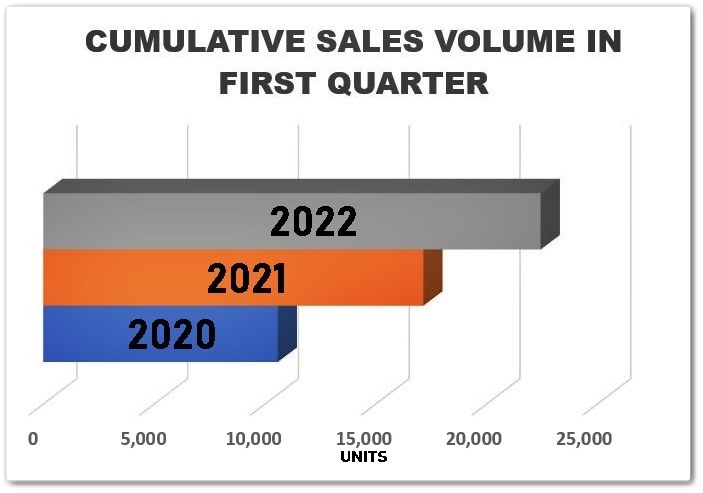
Although conditions were challenging with the floods in Selangor causing some parts suppliers to temporarily stop operations, UMWT’s first quarter cumulative sales volume total of 22,447 units was 31% greater than for the same period in 2021 when 17,151 vehicles were sold.

The positive trend is expected to continue through the second quarter, with a boost expected when new and improved models make their appearance later in the year

Circumventing the global challenges on parts supply shortage, Ravindran K., President of UMW  Toyota Motor, said: “We are constantly reviewing and adapting to the changing circumstances and  uncertainties. Toyota has always been known for our proficiency in supply chain management and  risk mitigation measures. Leveraging on these experiences, we are working closely with our  suppliers and monitoring the developments closely to ensure minimal impact to our production  and our customers.”

“As Malaysia transitions towards the endemic phase, UMW Toyota Motor is appreciative of the  support we have received from our customers throughout these unprecedented times. We remain  committed towards achieving continuous growth for the Toyota brand as well as for the local  automotive industry through our cutting-edge innovative product and solution offerings. As we  transform towards sustainable mobility, Toyota aims to leave no one behind as we continue to be  at the forefront in offering value for money innovations equipped with technological  advancements and state-of-the-art safety features across all our products,” he added.

Promotions for Hari Raya festive season
Until May 1, 2022, UMWT will be running the ‘Pandu Uji dan Menang Duit Raya’ contest at showrooms nationwide. During this period, those who test drive any Toyota model could collect ‘duit raya’. Each test drive will entitle the customer to a contest entry to win ‘duit  raya’ worth RM100. Those who take the test drive and complete a vehicle purchase can win RM200  ‘duit raya’. A total of 30 winners will be selected every week.

In addition, all Toyota showrooms will continue their ‘Bersama Lebih Bermakna’ celebrations with the Ramadan Weekender on April 16 and 17. Customers can visit the showrooms to find out more about ‘Bulan Puasa’ deals and value-added offers as well as receive exclusive gifts (while stocks last) when they test drive any of the Toyota vehicles available.

New 3S centre in Cyberjaya
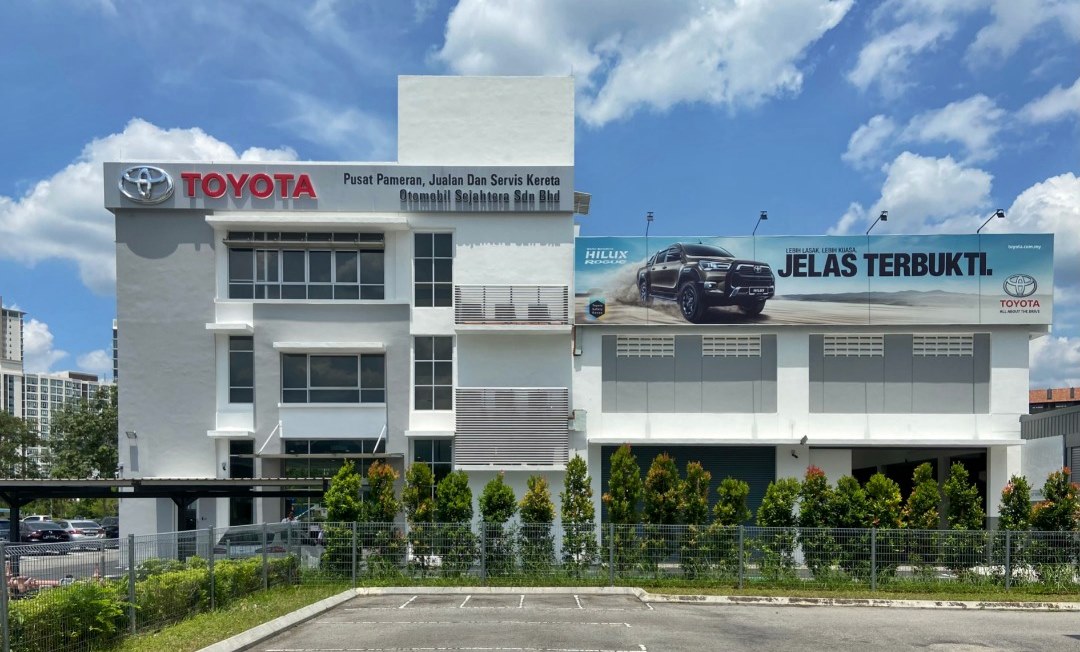
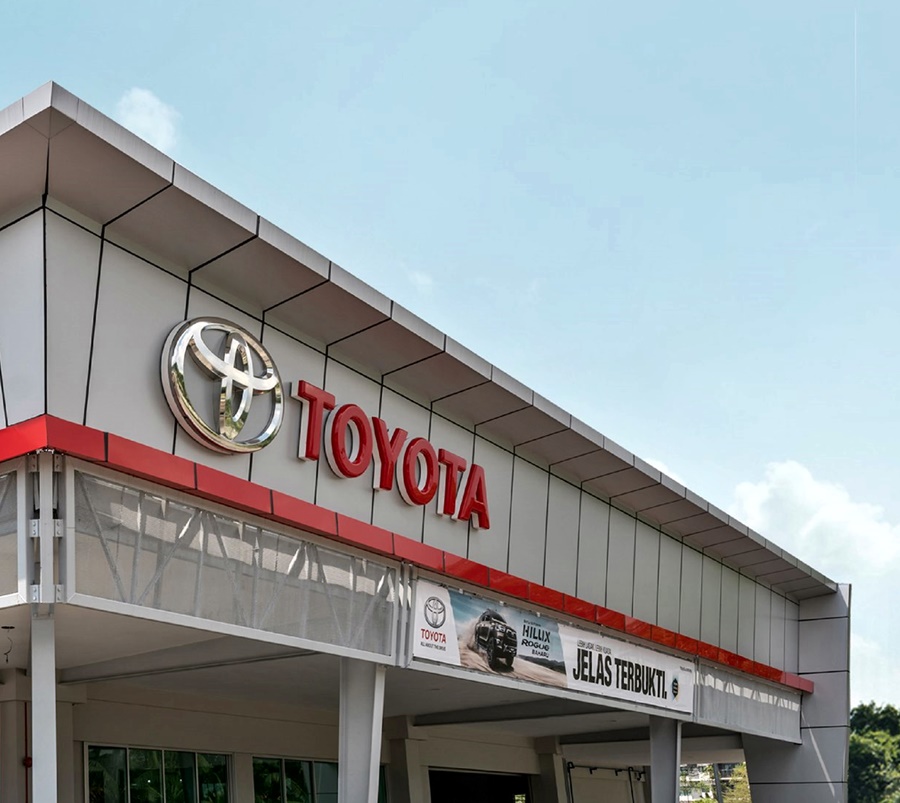
Toyota owners in Cyberjaya now have an authorised service centre close to them. Operated by Otomobil Sejahtera Sdn Bhd, the new facility is a 3S centre offering sales, service and spare parts as well as Body and Paint services for repairs or repainting vehicles.

“From the point of purchase, to aftersales service, and on to their next repurchase, it is important that customers feel the Toyota touch at every step. This new 3S service centre is just our way of bringing our brand closer to our customers, wherever they may be, while ensuring they have seamless access to our services whenever they need them,” Mr. Ravindran said.

For more information about Toyota vehicles or to locate an authorised dealership in Malaysia, visit www.toyota.com.my.

2022 Toyota Camry 2.5V – more than just a mid-cycle refresh with a brand new engine

UMW Toyota Motor continues to post strong sales with the month of February having seen deliveries of 6,366 Toyota vehicles and 66 Lexus vehicles for a total of 6,432 units. As in January, the number was higher than for the same month in 2021, with a jump of 27% in total sales volume.

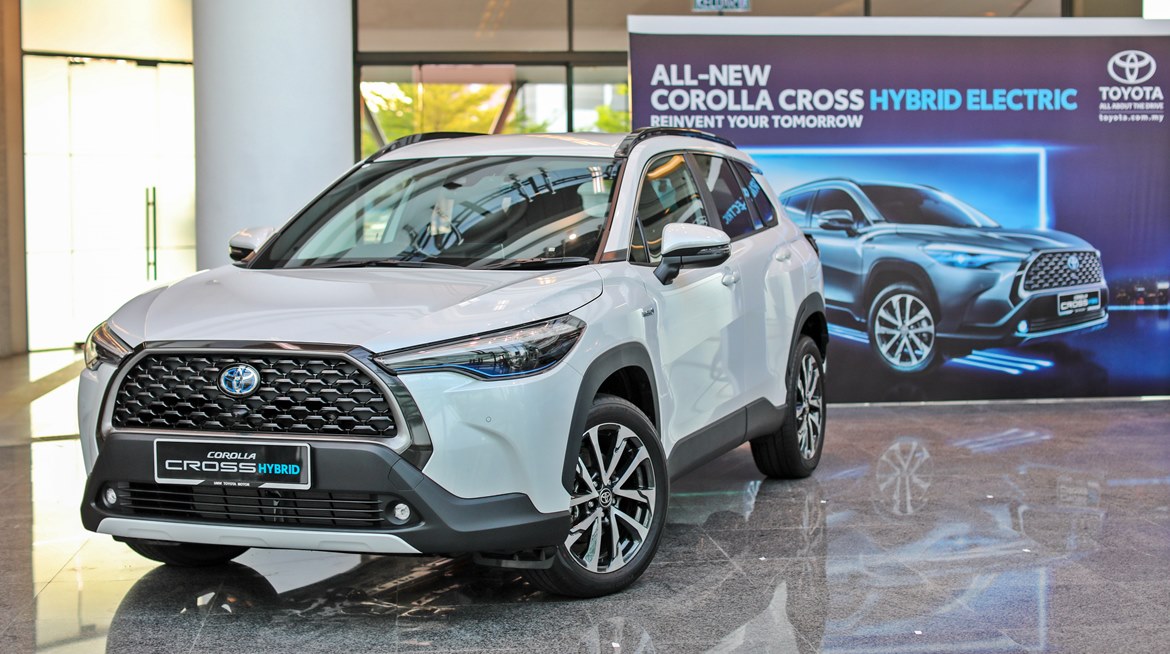
The company is optimistic about its 2022 performance being able to keep it in the top position of the non-national sector. It has already launched an updated Camry model which has a new engine and is counting on its hybrid electric vehicle technology in the Corolla Cross Hybrid to gain greater popularity among Malaysians.

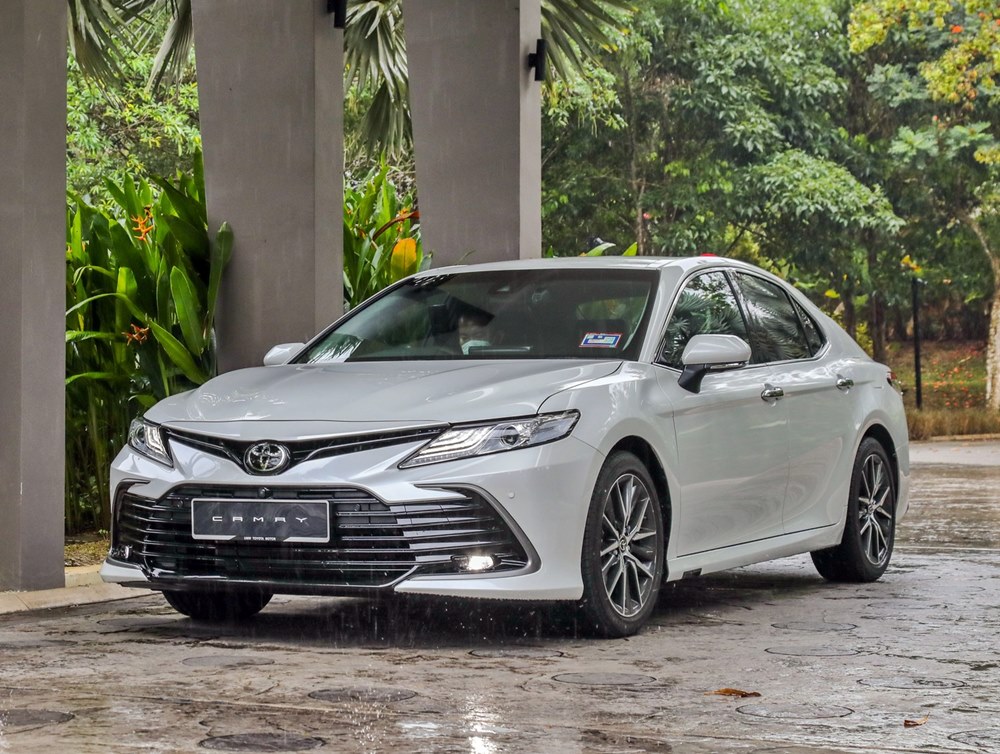
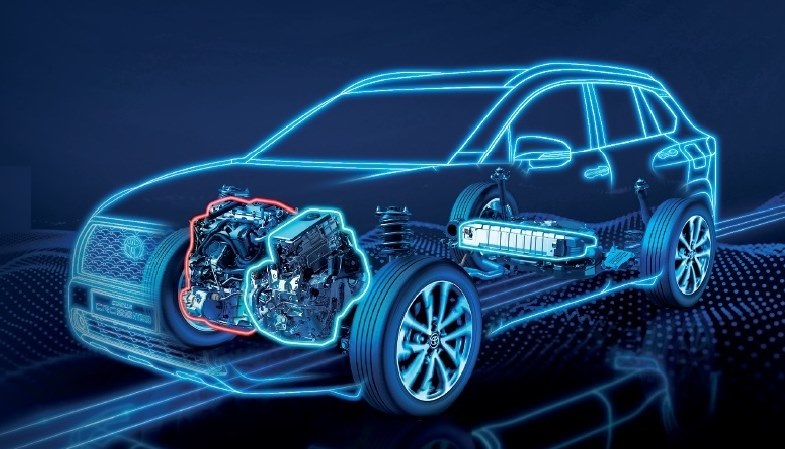
Latest Camry 2.5V with the new Dynamic Force engine (above) and the hybrid powertrain in the Corolla Cross Hybrid (below).

For the month of March, there’s a special promotion for the Yaris and Vios models (E & G variants) which has value-added benefits worth RM4,000. Additionally, with all models (except the Hilux), there are still savings on sales tax which is expected until June 30, 2022. As both the Yaris and Vios are assembled locally, the exemption is 100% and the savings amount to more than RM2,000.

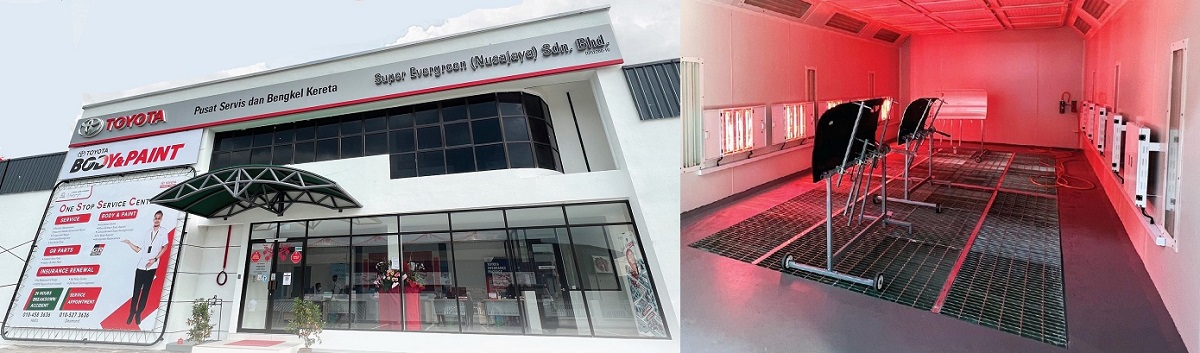
Besides new models planned for launch in later months, the company also continues to develop and grow its sales and aftersales network. Recently, it opened a new 2S outlet with Body & Paint services in Skudai, Johor to serve the growing number of customers in the southern state. The outlet is operated in partnership with Super Evergreen (Nusajaya) Sdn Bhd and joins UMW Toyota Motor’s extensive network of authorised facilities around the country.

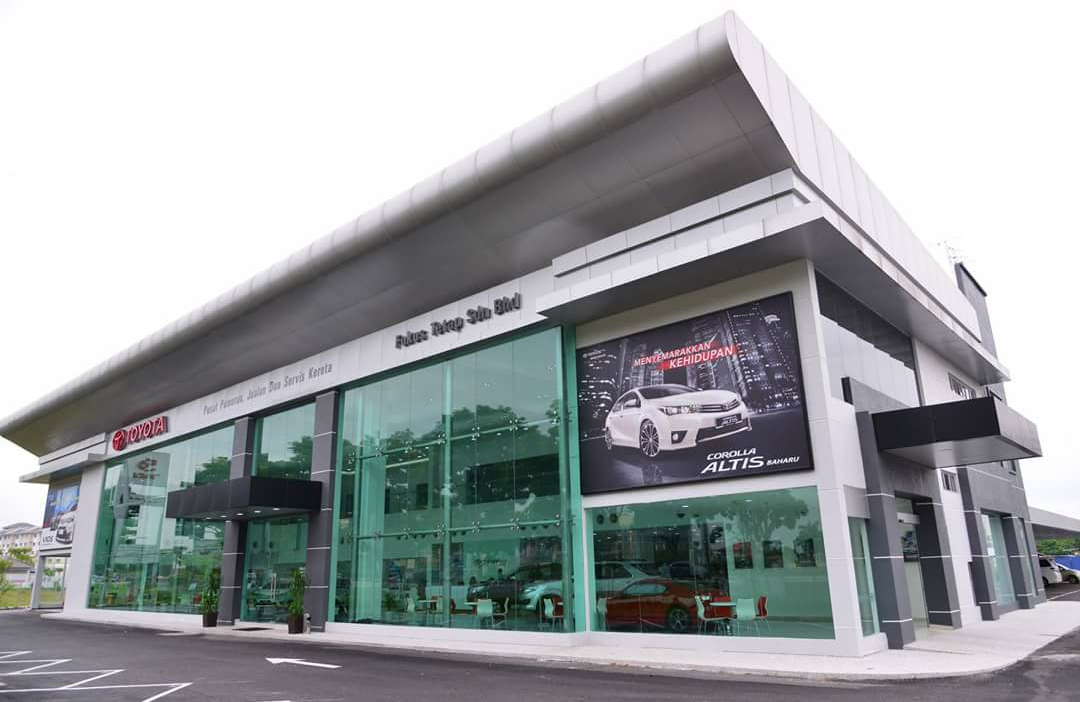
A new Toyota dealership has opened in Johor to provide Body & Paint aftersales services, including accident repairs and painting.

“We truly appreciate the support our customers have given towards the Toyota brand and are optimistic about the continuous growth of the Malaysian automotive sector. As we continue to innovate and bring mobility products offering the absolute best technology and safety that enhances lifestyles, we trust that Malaysians will continue to choose Toyota as their preferred road companion,” said Ravindran K, President of UMW Toyota Motor.

While busy with sales, UMW Toyota Motor also carried out other activities last month. An initiative to give back to the community saw the contribution of RM140,000 to the National Cancer Society Malaysia which will help with the purchase of a new Digital Doppler Ultrasound Machine to provide better treatment to cancer patients.

The company also picked winners of the 15th Toyota Dream Car Art Contest who will travel to Japan and represent Malaysia in the World Contest. The contest, which has been running since 2004, draws entrants from many countries and invites them to show their idea of the future of mobility by drawing their dream car.

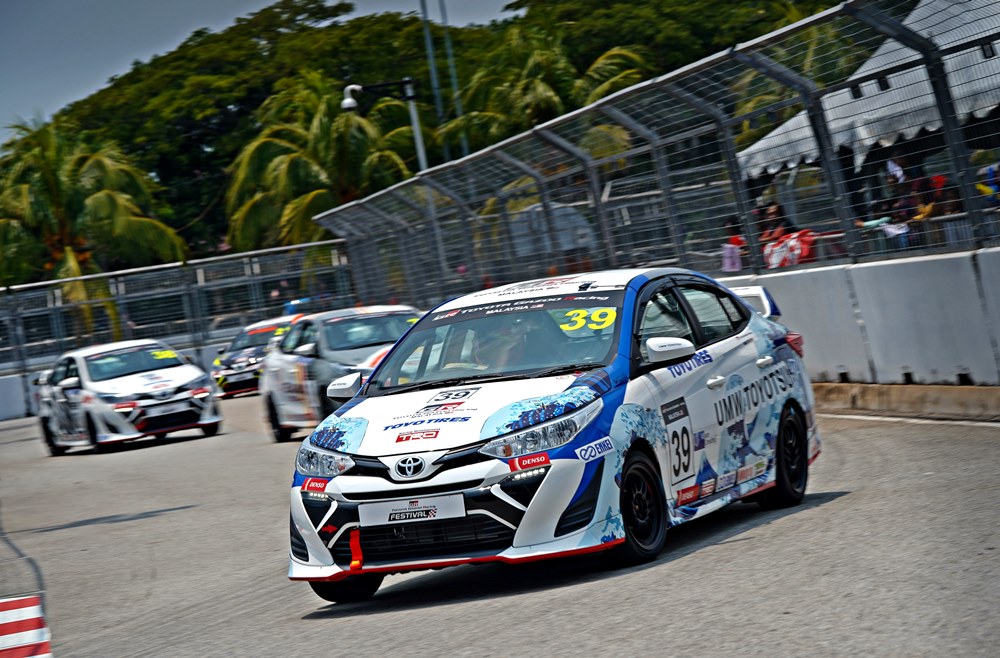
The Vios Challenge one-make series will have its fifth season with a total of 6 races during the year.

There’s also a full motorsports program planned for this year, starting with the first round of the Vios Challenge/TGR Festival on March 18 at the Sepang International Circuit. This will be the fifth season of the popular one-make series and will consist of a total of 6 races. Additionally, there will also be the online equivalent – the GR Velocity E-sports championship – also in its fifth season. It is billed as one of the most lucrative local online racing series in the country, attracting close to 1,000 participants with more than 1 million online spectators.

Toyota recognised for winning the most 5-Star awards from ASEAN NCAP

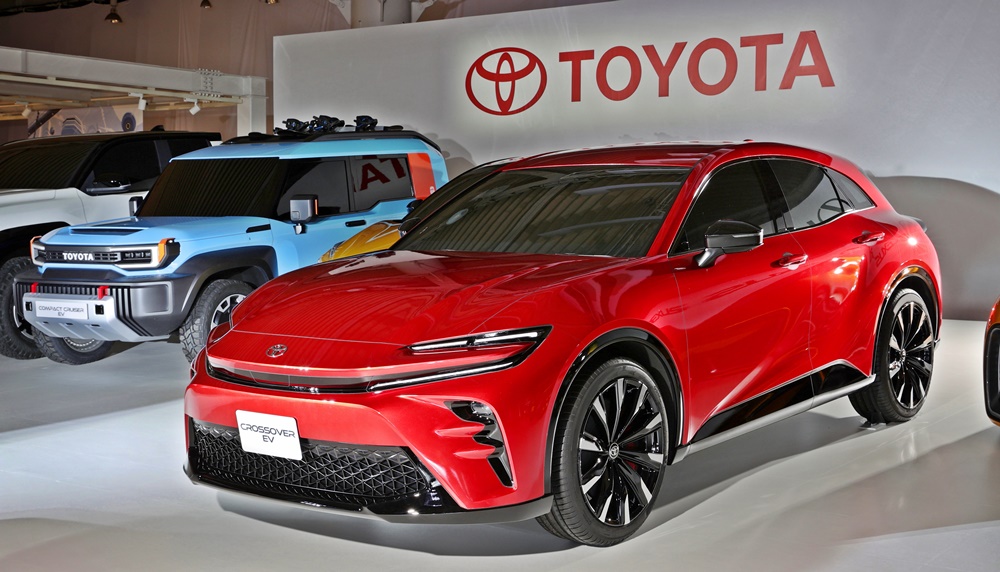
In 2020, Toyota (or more specifically, its President, Akio Toyoda) expressed reluctance to make a bigger push towards fully electric vehicles (battery electric vehicles or BEVs) and even felt that it was not the right move in pursuit of carbon neutrality. While the other major carmakers were outlining their EV plans and even previewing models to come, it seemed that Toyota was not going to join the crowd if it meant leaving some customers behind. And being the world’s largest carmaker, that certainly has implications.

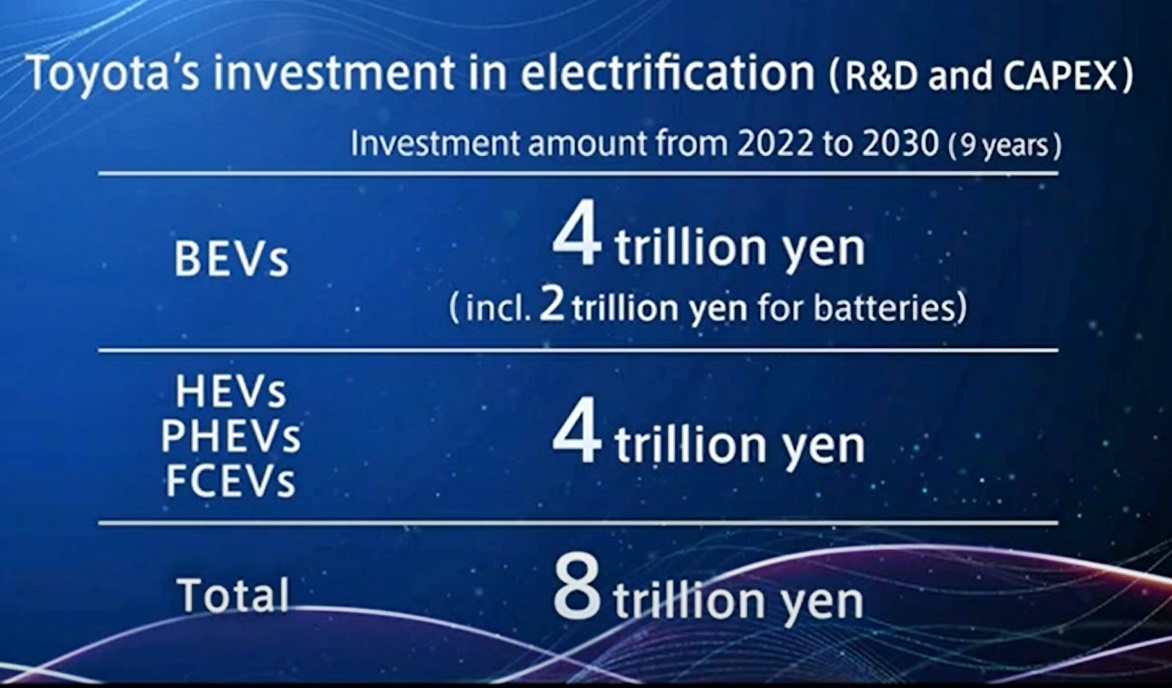
However, just a year later, the Toyota President went in front of the cameras and announced to the world that the company would be spending a total of 8 trillion yen (1 trillion yen = around RM37.2 billion) over a period of 9 years from 2022. Of this gigantic amount, 50% would be for the development of BEVs (inclusive of battery development).

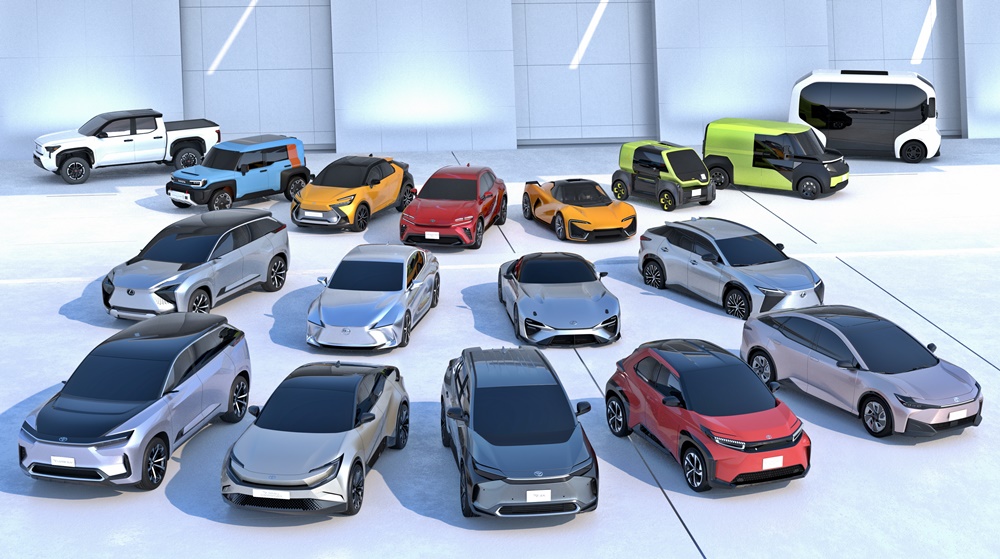
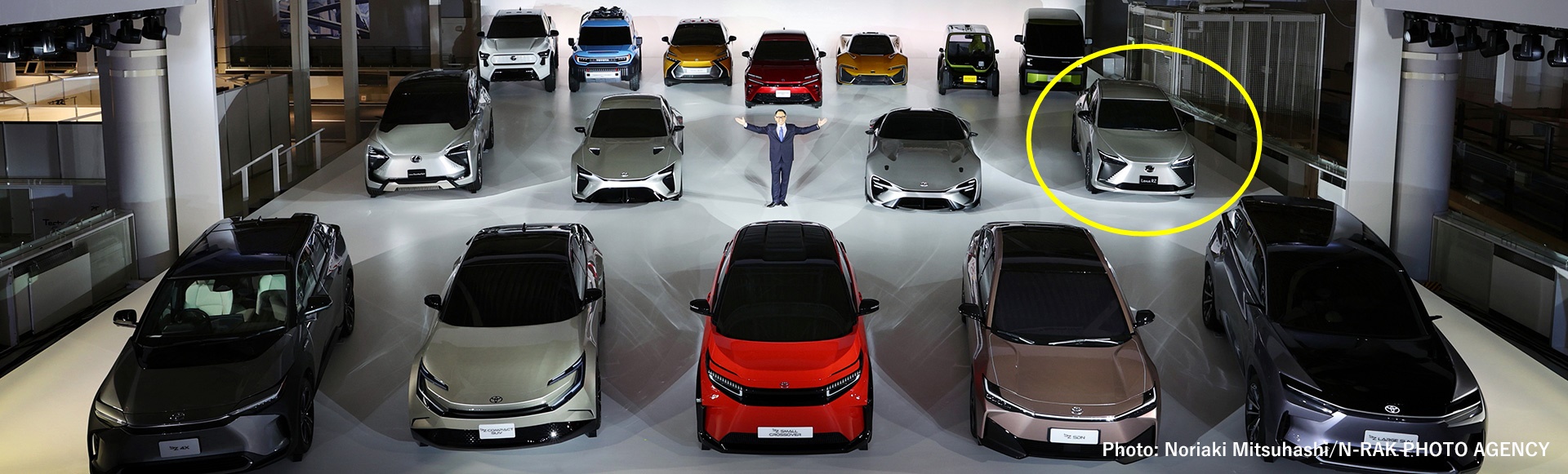
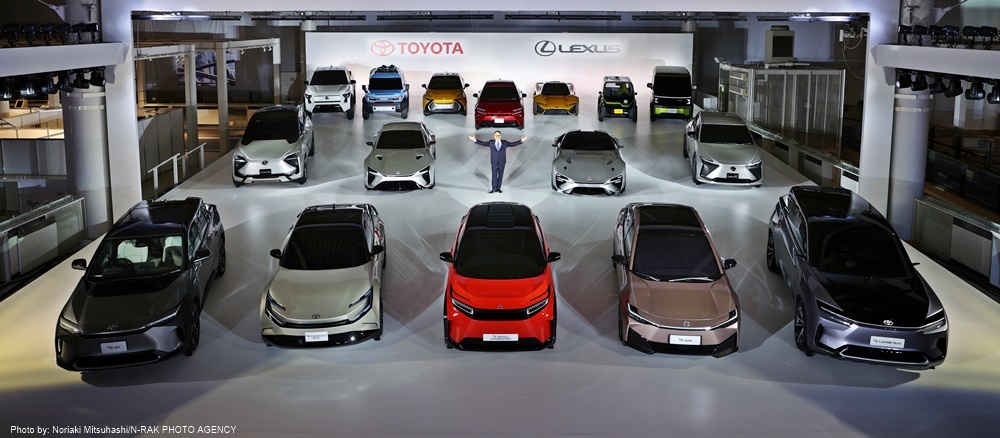
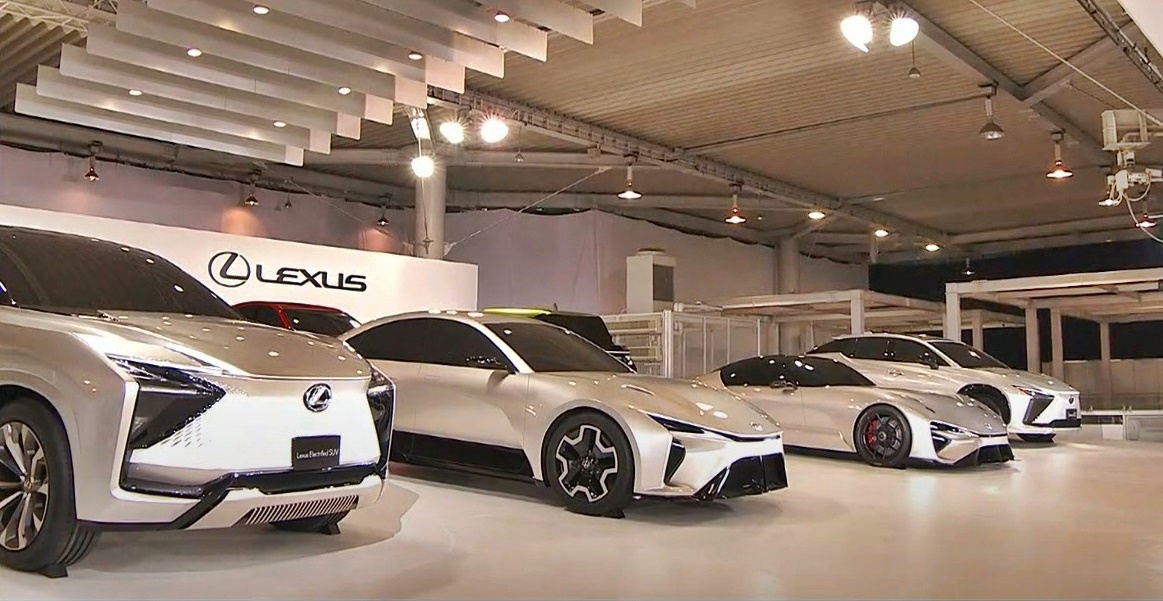
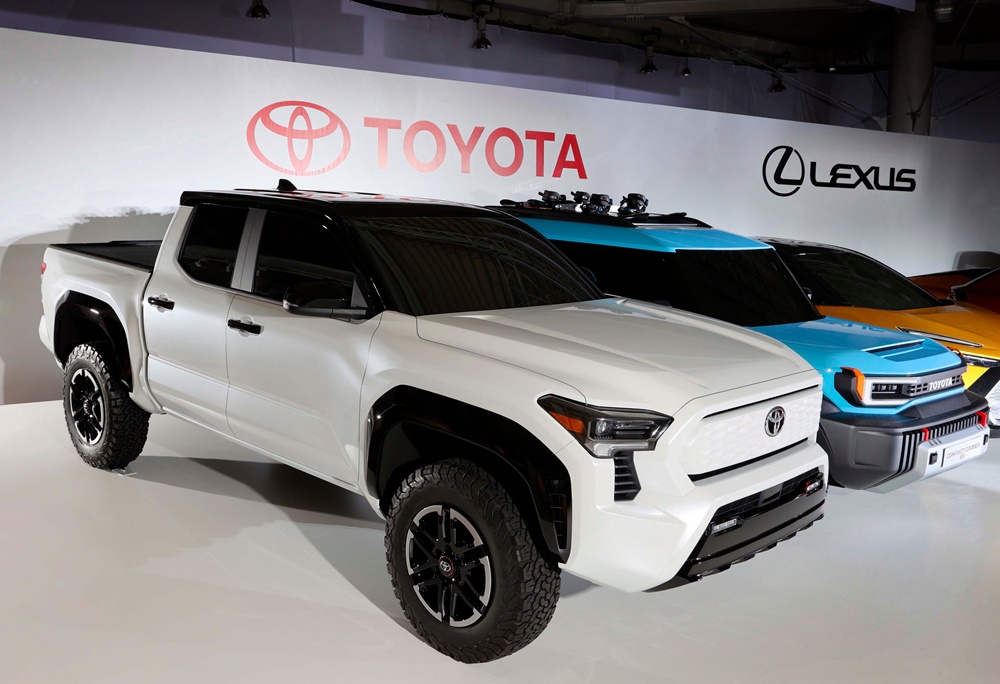
And while other carmakers might show a handful of prototype models that will be in showrooms in coming years, Toyoda had no less than 17 models of the Toyota and Lexus brands assembled in the hall. They represented virtually all the segments that the two brands are in, including pick-ups, a segment that the American manufacturers already have fully electric models about the enter the market. And as long as Akio Toyoda is still the boss, we will certainly also get sportscars, even if they no longer run on combustion engines.

The BEVs to come
Only a couple of models among the 17 shown last December are to go on sale this year or in 2023 and, presumably, the others are just having the development programmes started. From Lexus, the closest one to production is the SUV known as the RZ450e but there was also interest in some of the other models that were visible, including a sportscar.

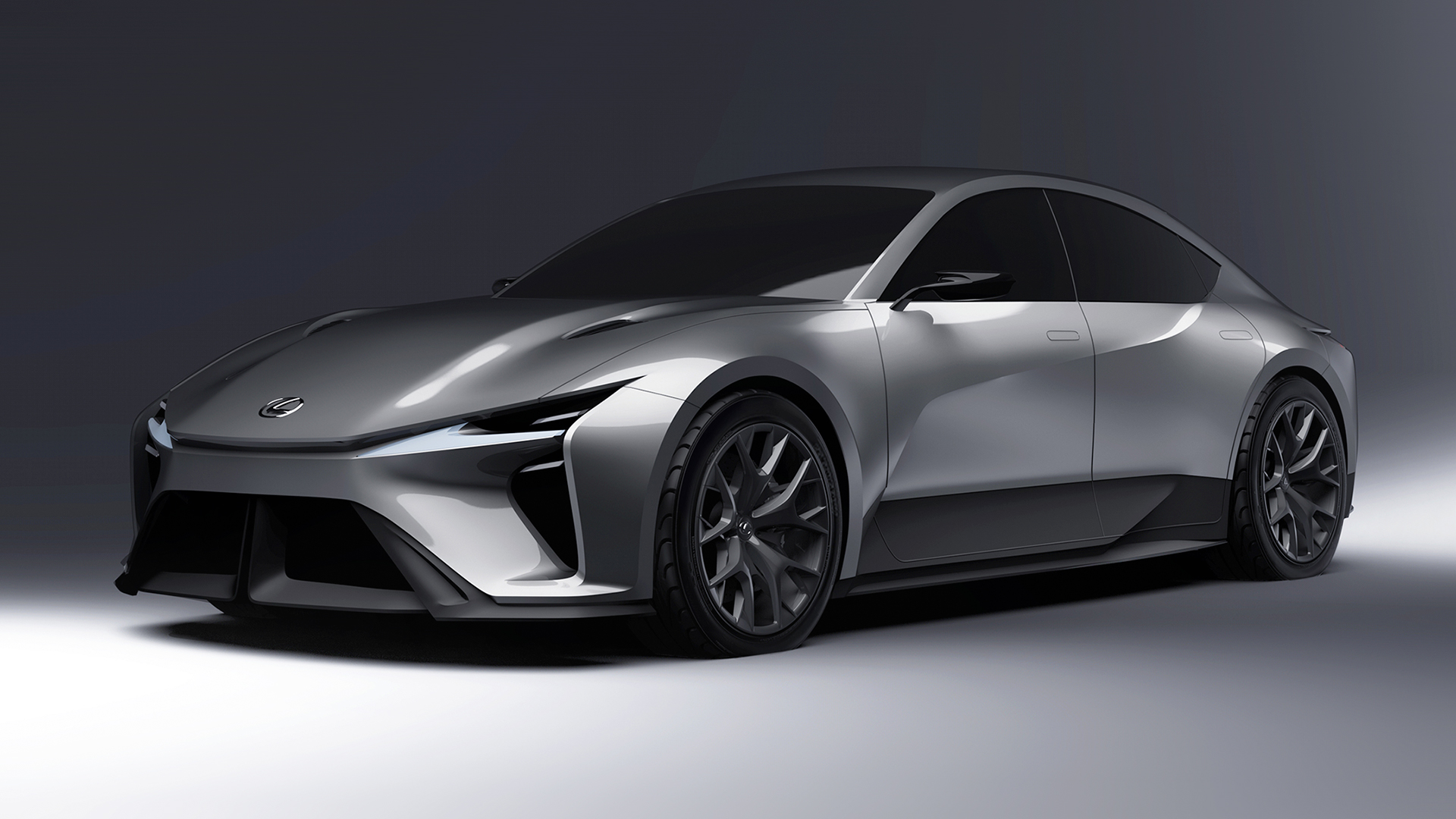
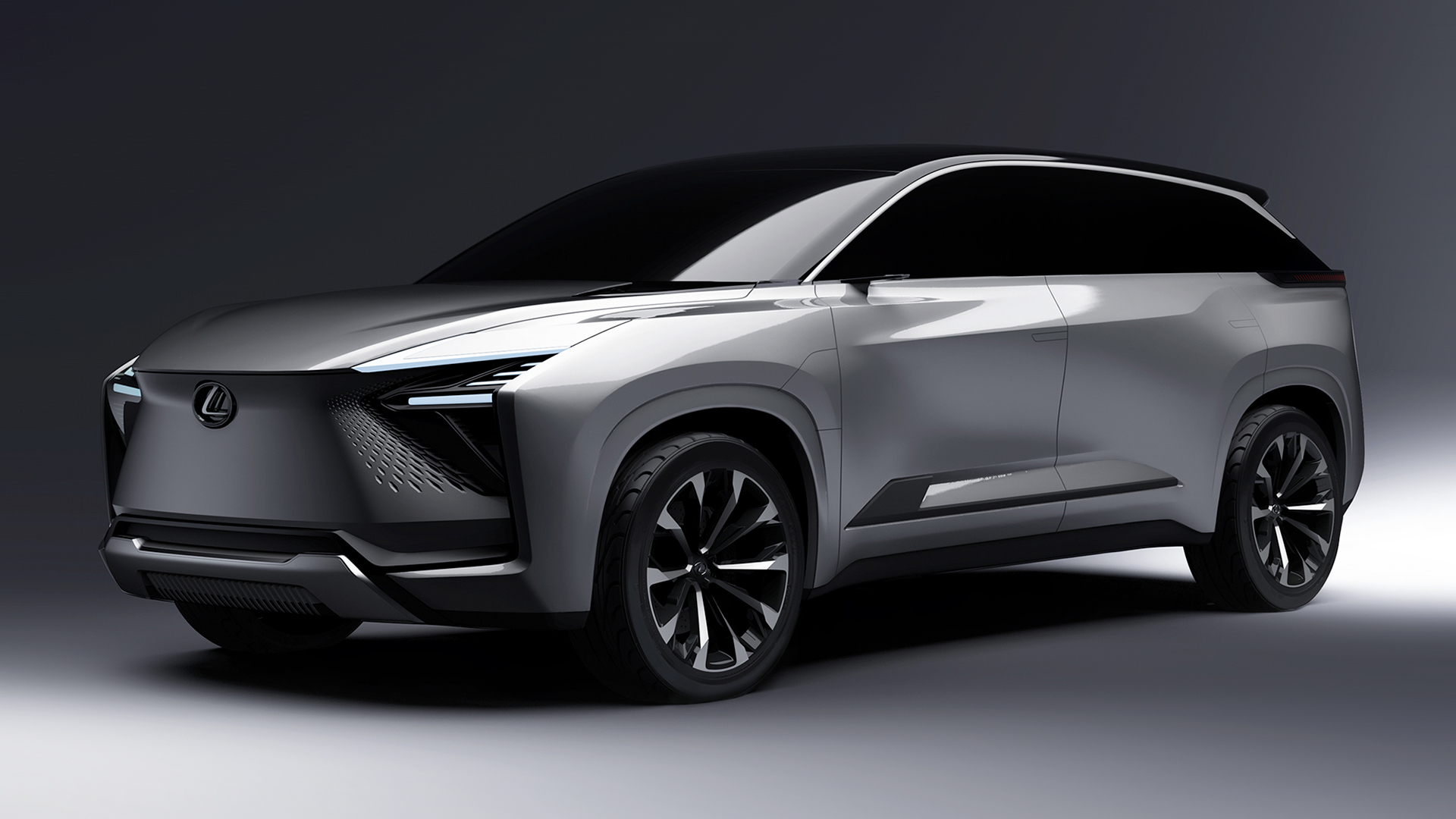
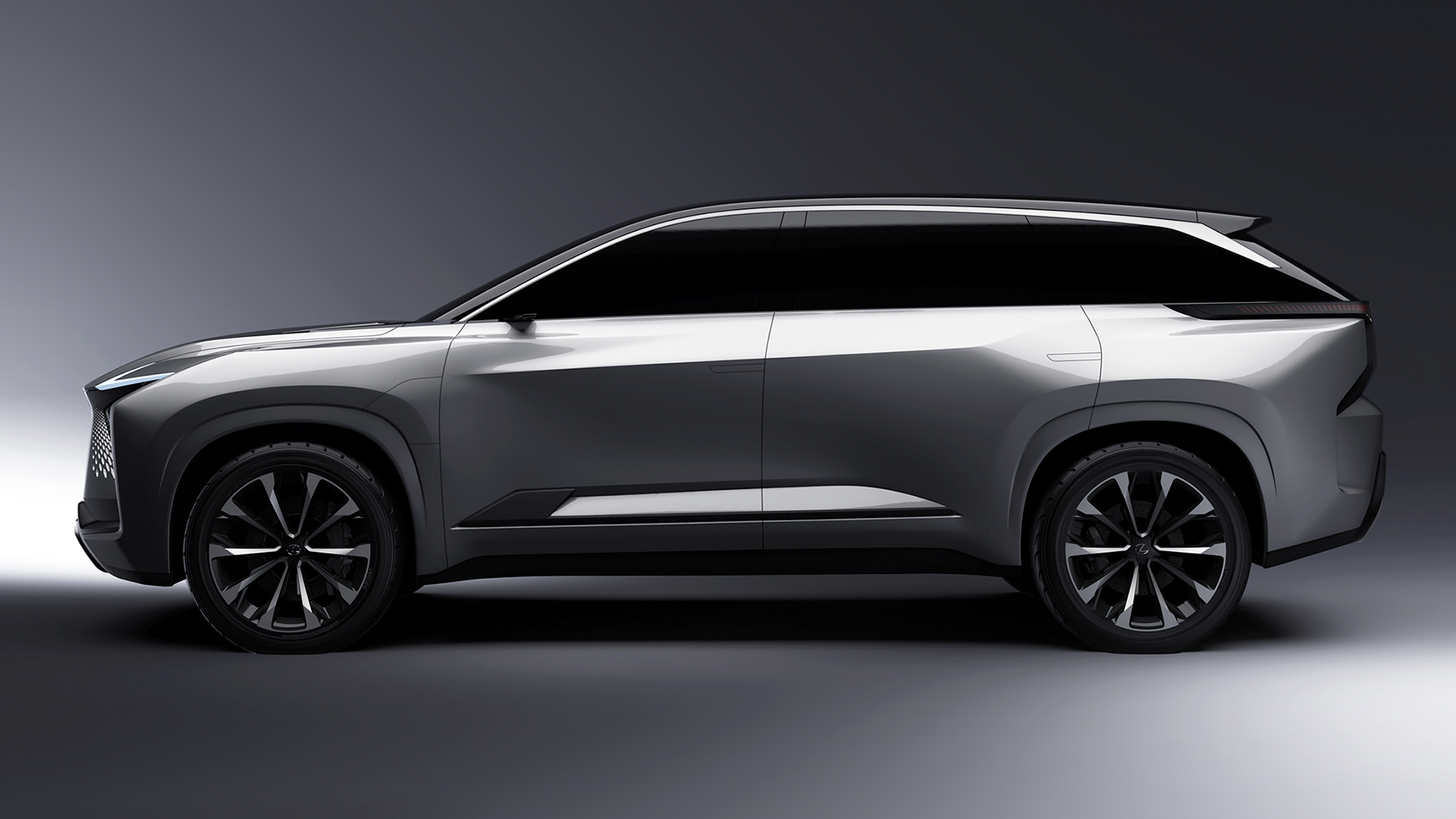
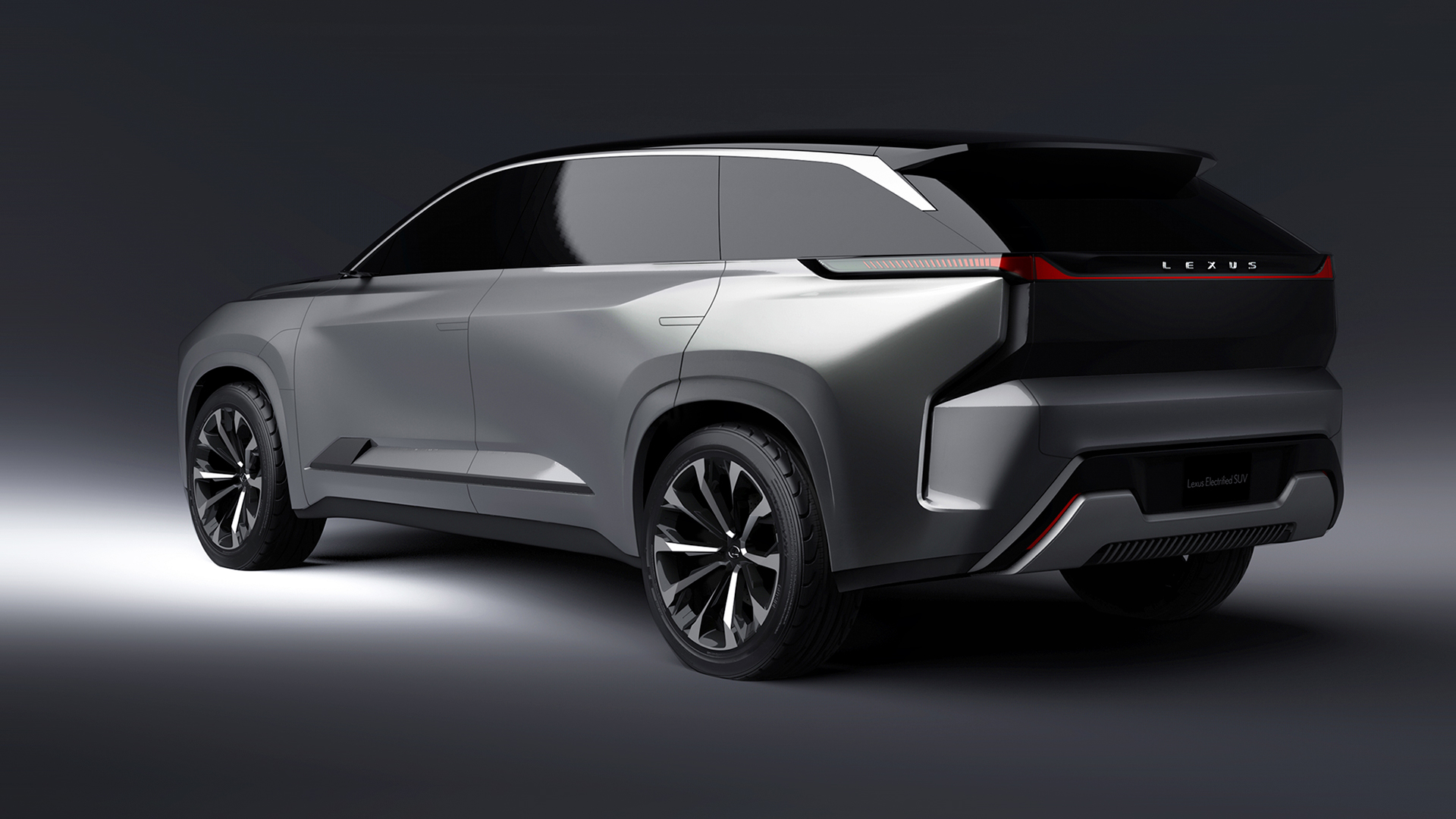
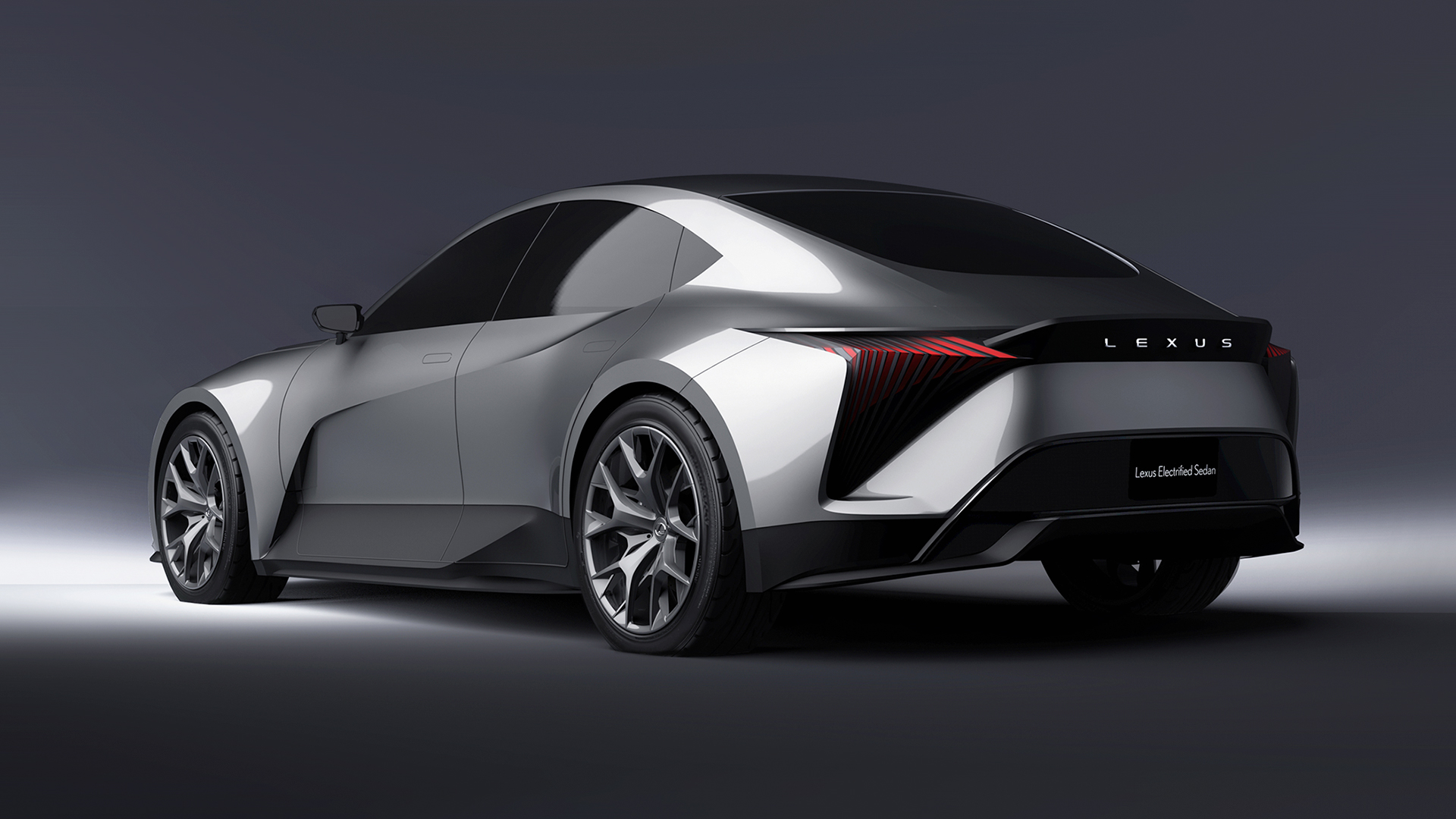
It is likely that top management has signed off on the designs and Lexus can now give a preview of the 3 BEVs that will follow the RZ450e. The three will slot into the segments the brand is now in – sedan, SUV and sportscar – and are associated collectively as the ‘Lexus Electrified’ vision. The brand aims to accelerate sales of electrified models from 2025.

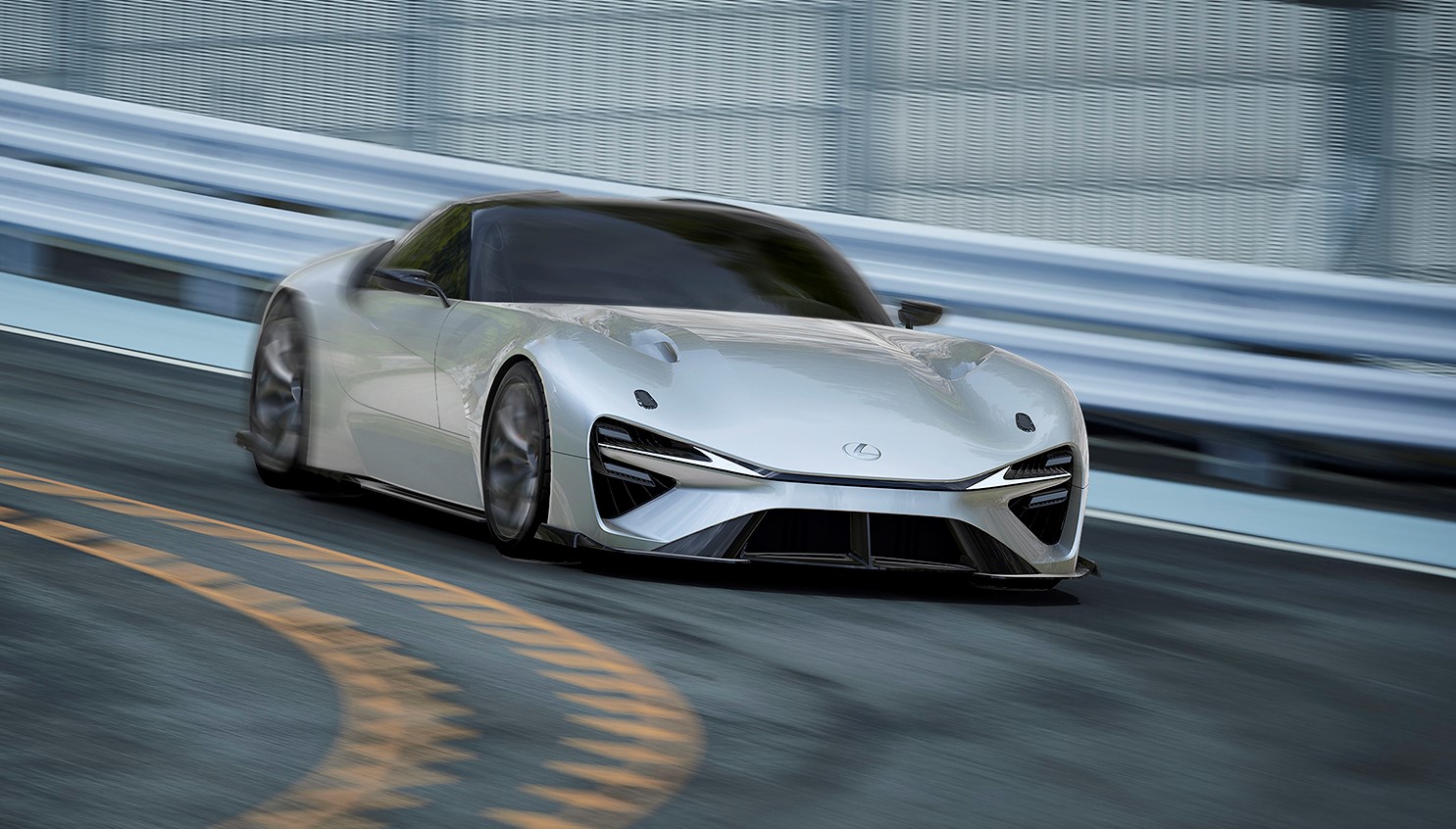
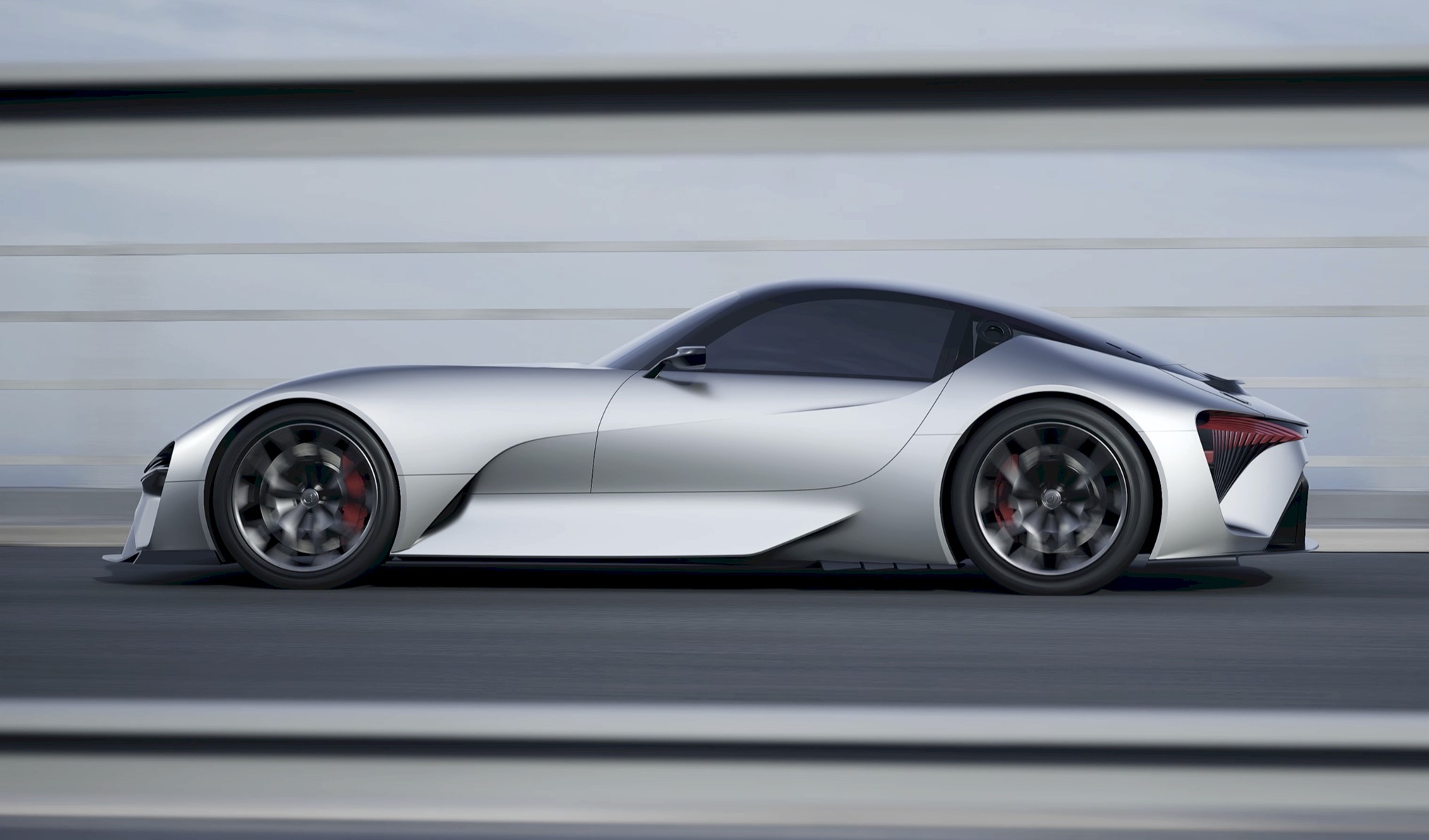
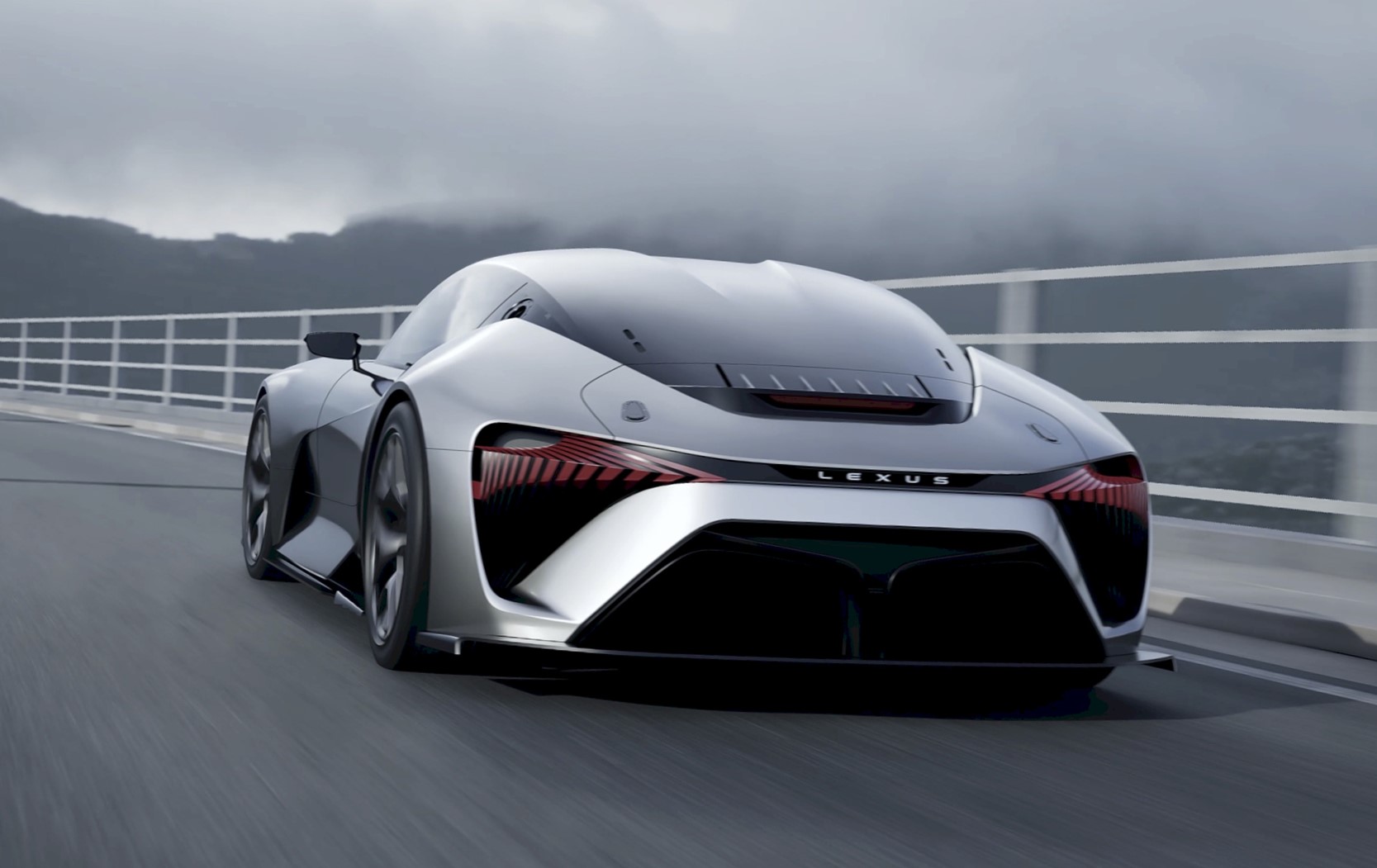
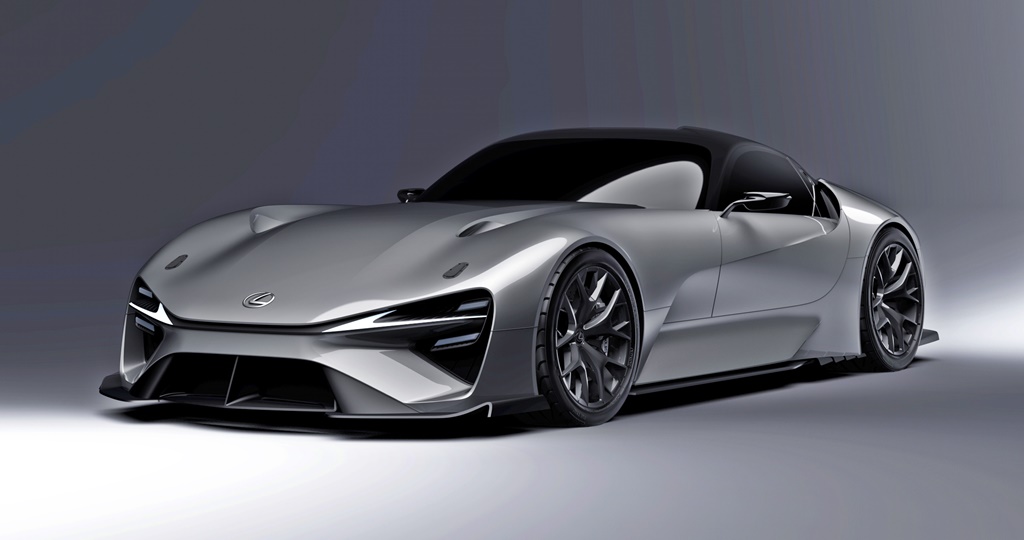
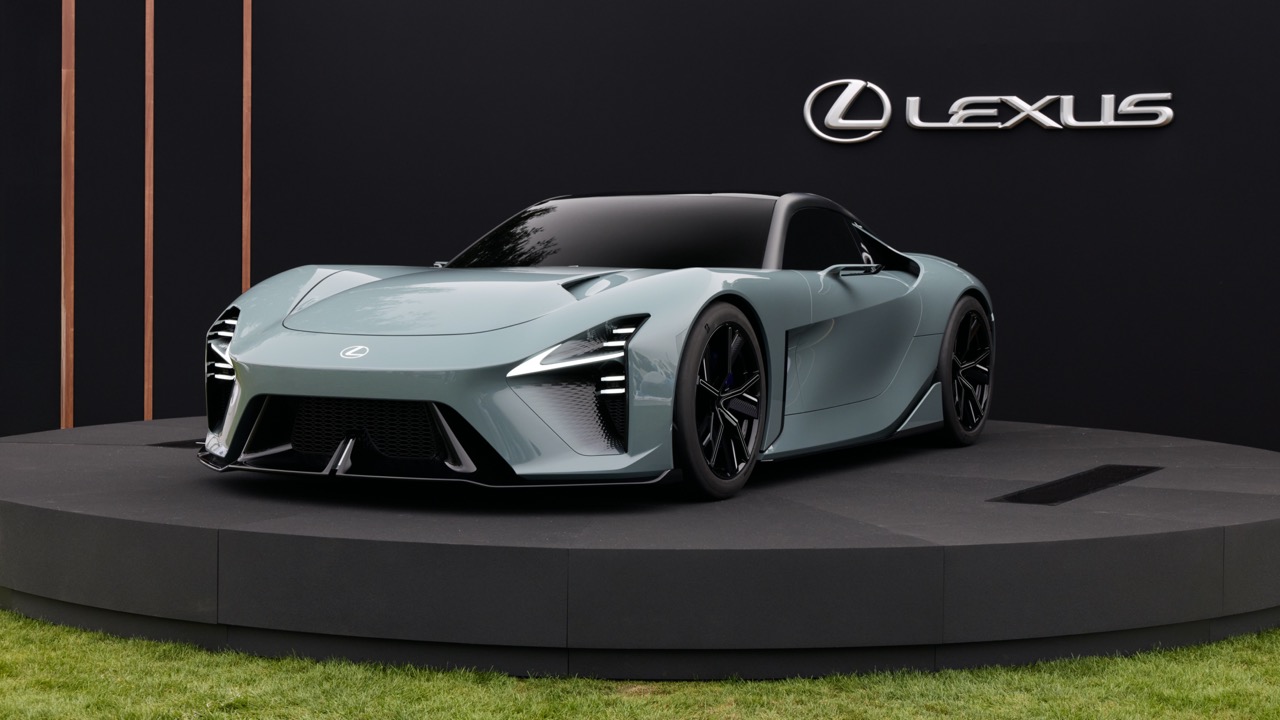
Of the three, Lexus has provided three bits of information about the sportscar which it says revives the spirit of the LFA. Its targets are a 0 to 60 mph (96 km/h) time in the low 2-second range, a cruising distance of over 700 kms, and it will possibly use solid-state batteries.

Charging stations for all
On the issue of charging stations for BEV owners, Toyoda said that this is an area where different parties must collaborate and cooperate. Some of the companies may establish the infrastructure on their own, but that infrastructure should be accessible to all other customers who drive vehicles of other brands.

“Toyota would like to urge related parties to realize that. When it comes to infrastructure, there’s a limit to what each OEM (company) can do to realize the sufficient convenience for customers. Of course, we will try to do what we can do. Regarding the regions where Lexus aims to achieve 100% BEV sales, in North America, there are 1,800 dealers, 2,900 in Europe, 1,700 in China, and 5,000 in Japan. I believe it is important to utilize these locations, and make such infrastructure open and available to non-Toyota [and non-Lexus] owners,” he said during the press conference last year.

Lexus RZ 450e 2023
Lexus RZ450e

Lexus RZ 450e 2023

Lexus RZ 450e 2023


Lexus BEV Sedan 202x
202x Lexus BEV Sedan

Lexus BEV Sedan 202x

Lexus BEV Sedan 202x


Lexus BEV Sedan 202x
202x Lexus BEV SUV

Lexus BEV Sedan 202xLexus BEV Sedan 202x


202x Lexus BEV Sport

202x Lexus BEV Sport

202x Lexus BEV Sport

Toyota to step up investment and development of fully electric vehicles during this decade

Car designers have long turned to the aeronautical industry for ideas that have led to innovations. In particular, the shapes of car bodies have been heavily influenced by aircraft because of the pursuit of airflow efficiency. Features today like spoilers and rear wings have their origins in aircraft design although with ‘reversed’ effects where instead of lift, the objective is to gain downforce.

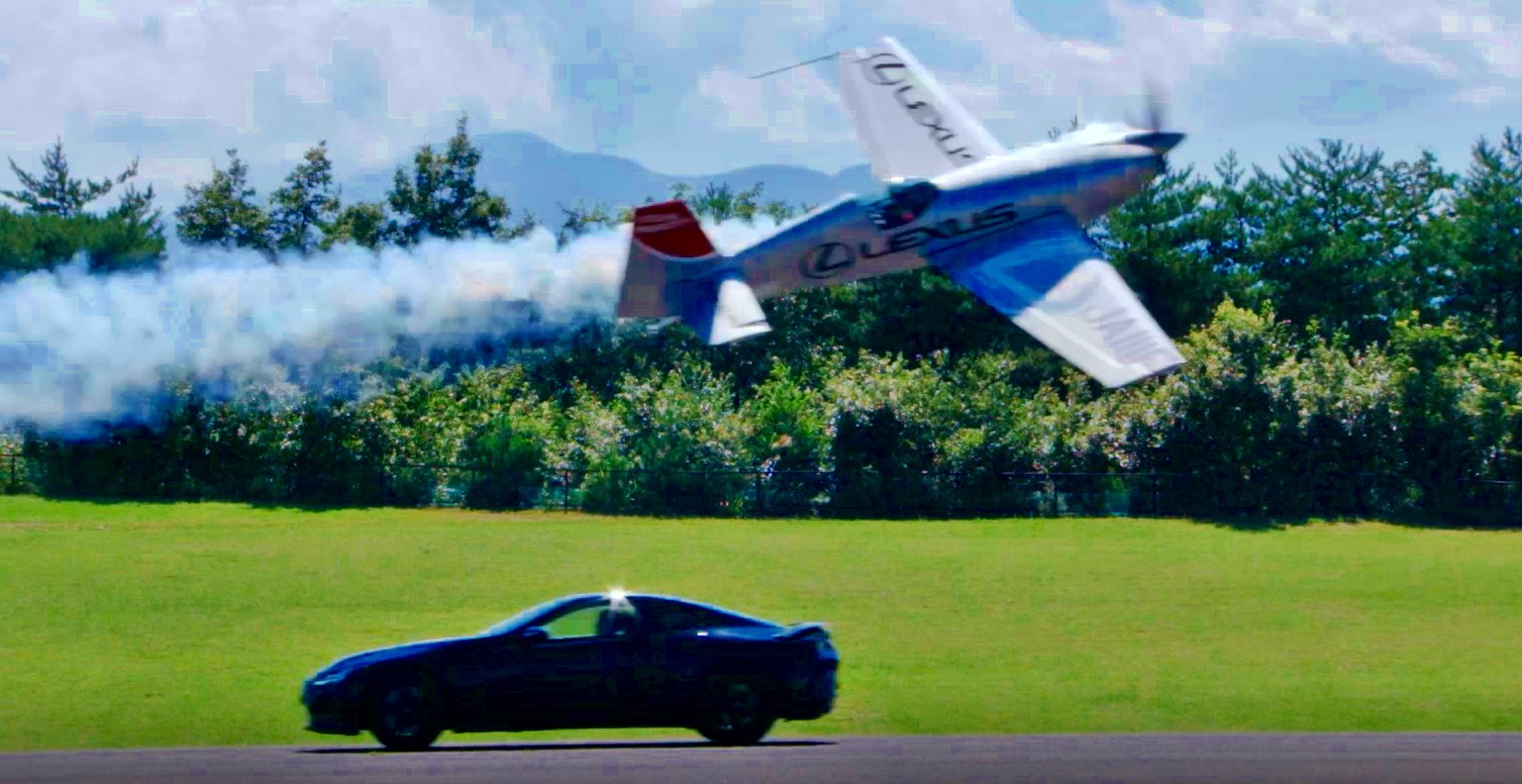
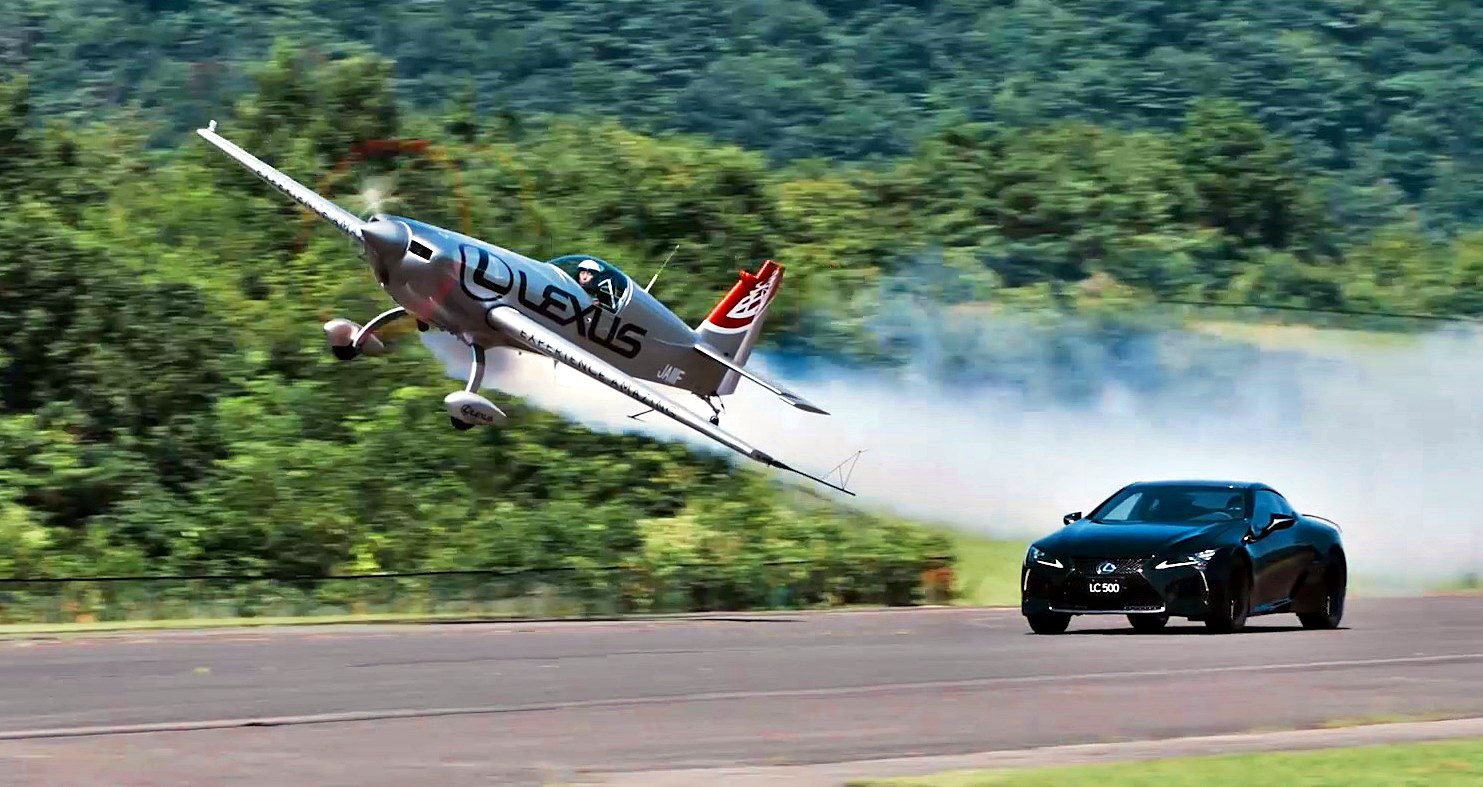
For high-performance sportscars, downforce is important to keep the car as stable as possible at high speeds. This has seen all types of rear wings being installed, some very ‘distinctive’ though with questionable benefits. However, for a new rear carbonfibre wing that was developed for the Lexus LC Coupe, the company formed a long-term collaboration with world champion air race pilot Yoshihide ‘Yoshi’ Muroya to gain advances in aerodynamics that would enable them to design the rear wing.

Long and unique collaboration 
Since 2016, Lexus has been reaching for the skies in a unique collaboration with Muroya, winner in 2017 of the Red Bull Air Race World Championship series. In this rare cross-industry partnership, the carmaker benefits from aeronautic technology while the air race pilot leverages Lexus’ automotive breakthroughs.

With the principal aim of winning air races, Lexus and Muroya worked together to develop championship-winning aircraft using the technology, craftsmanship and experience from Lexus. The Lexus design and engineering team has helped develop flight technologies in areas such as aerodynamics, cooling and ergonomics.

The collaboration has produced notable innovations, including a control column grip for Muroya’s cockpit that incorporates Lexus’ sensitivity technologies and a new turning manoeuvre for the aircraft based on aerodynamic data from Lexus.

The new rear wing
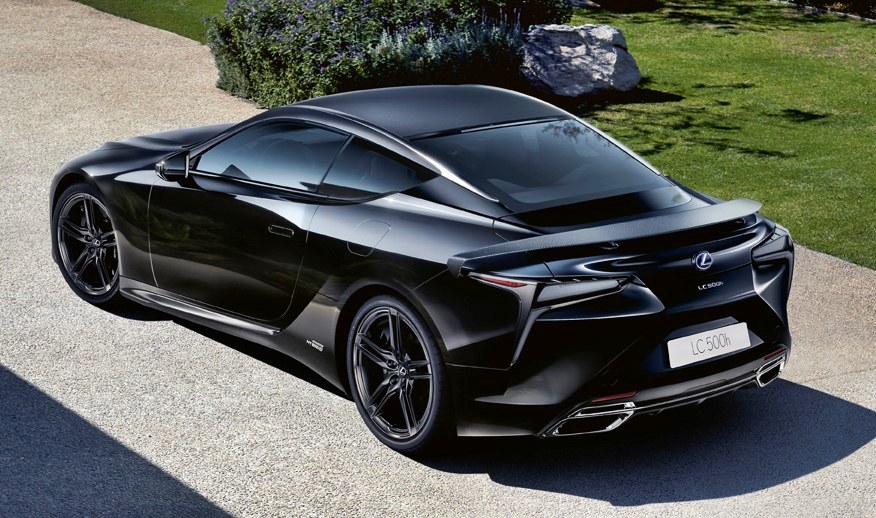
For 2022, the Lexus LC will sport a new carbonfibre reinforced plastic rear wing developed together with Muroya. This lightweight, highly rigid and sleek wing maximises aerodynamic performance and makes for more agile driving.

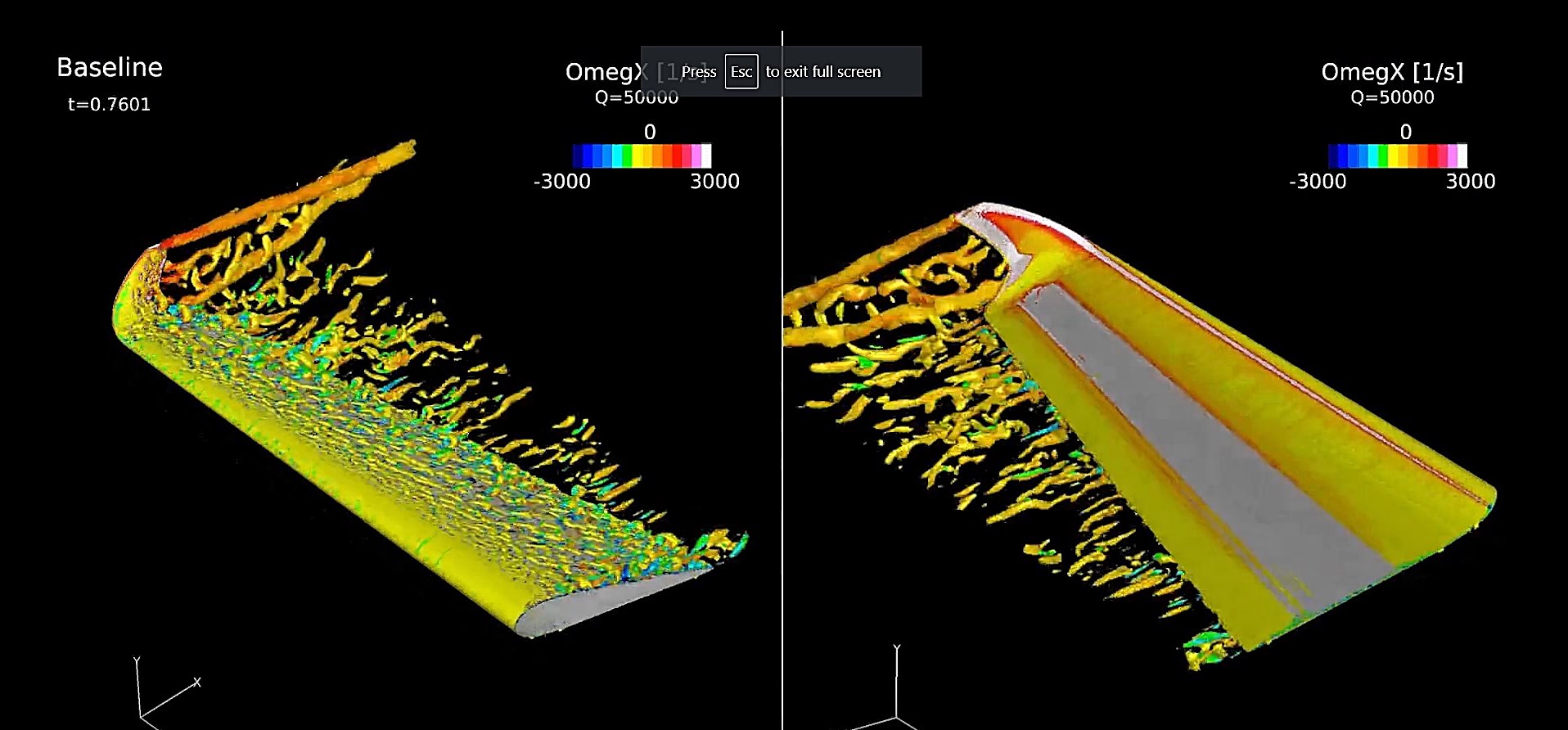
The design draws its inspiration from the wing-tip vortices that influence the design of winglets on jet aircraft. During demanding test flights with Yoshihide Muroya, Lexus engineers analysed his plane’s drag-reducing winglets and the associated vortices that are normally problematic. In the Lexus wind tunnel, engineers found that vehicle dynamics on the ground could be improved by turning the wing upside down and adding winglets.

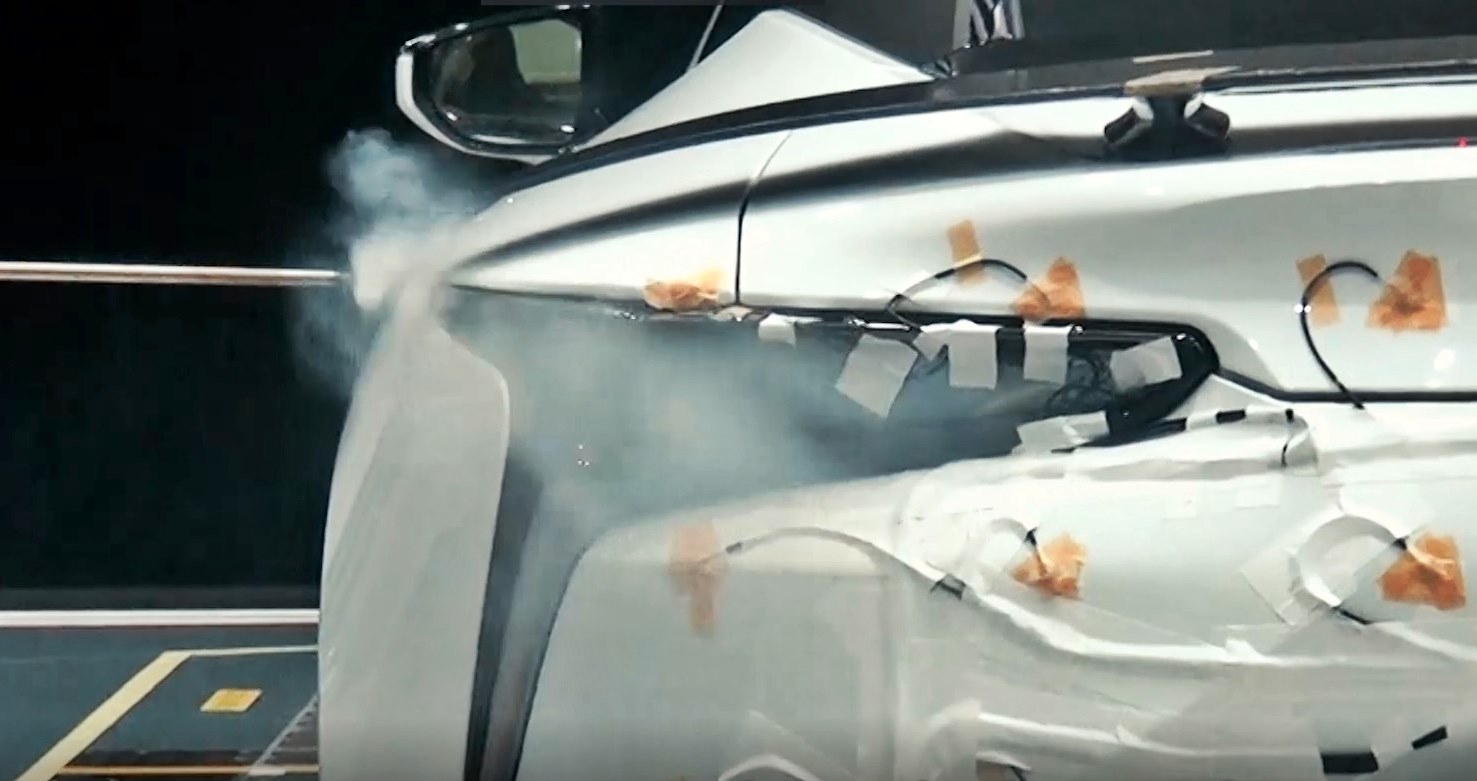
The upside-down wing was thoroughly tested and analysed in computer simulations as well as wind tunnel studies (below).

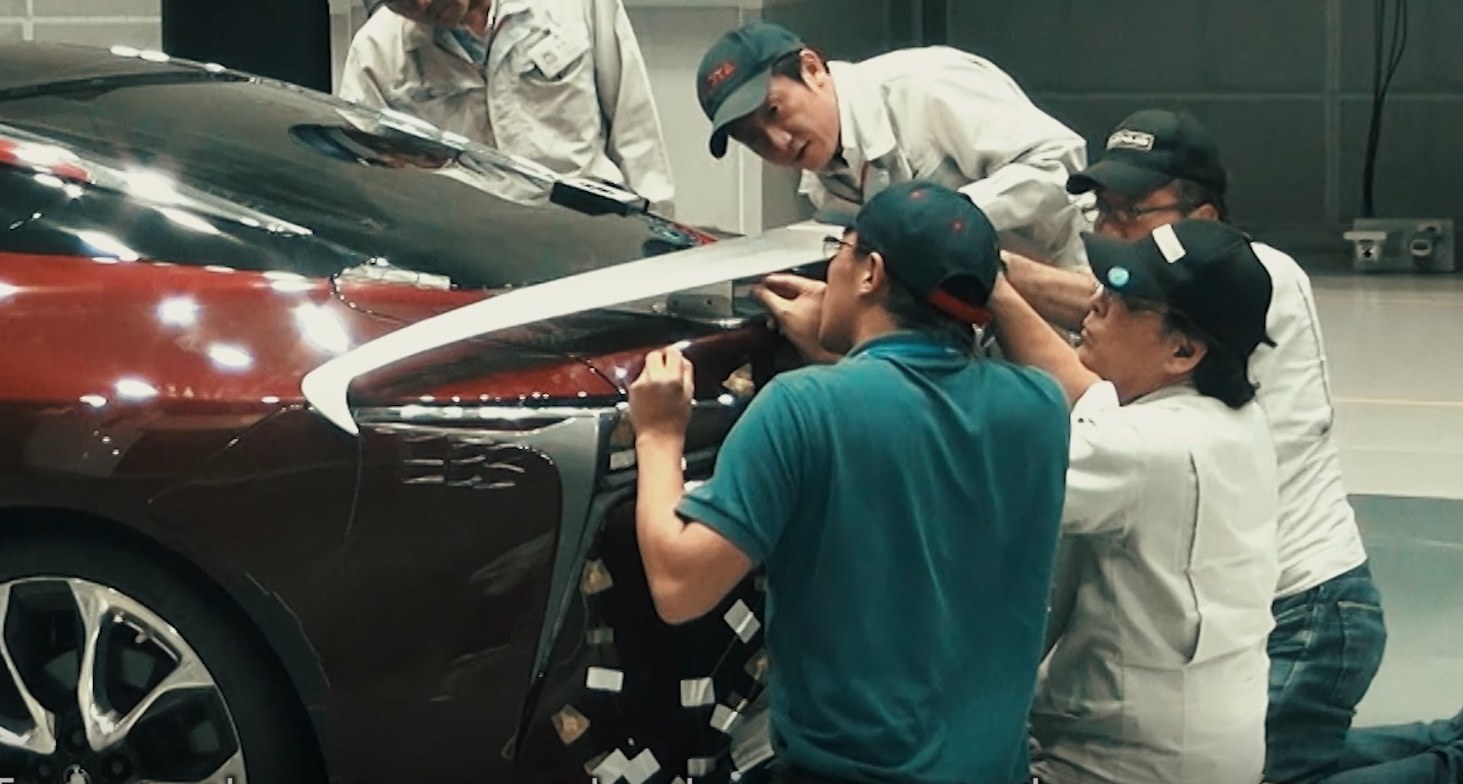
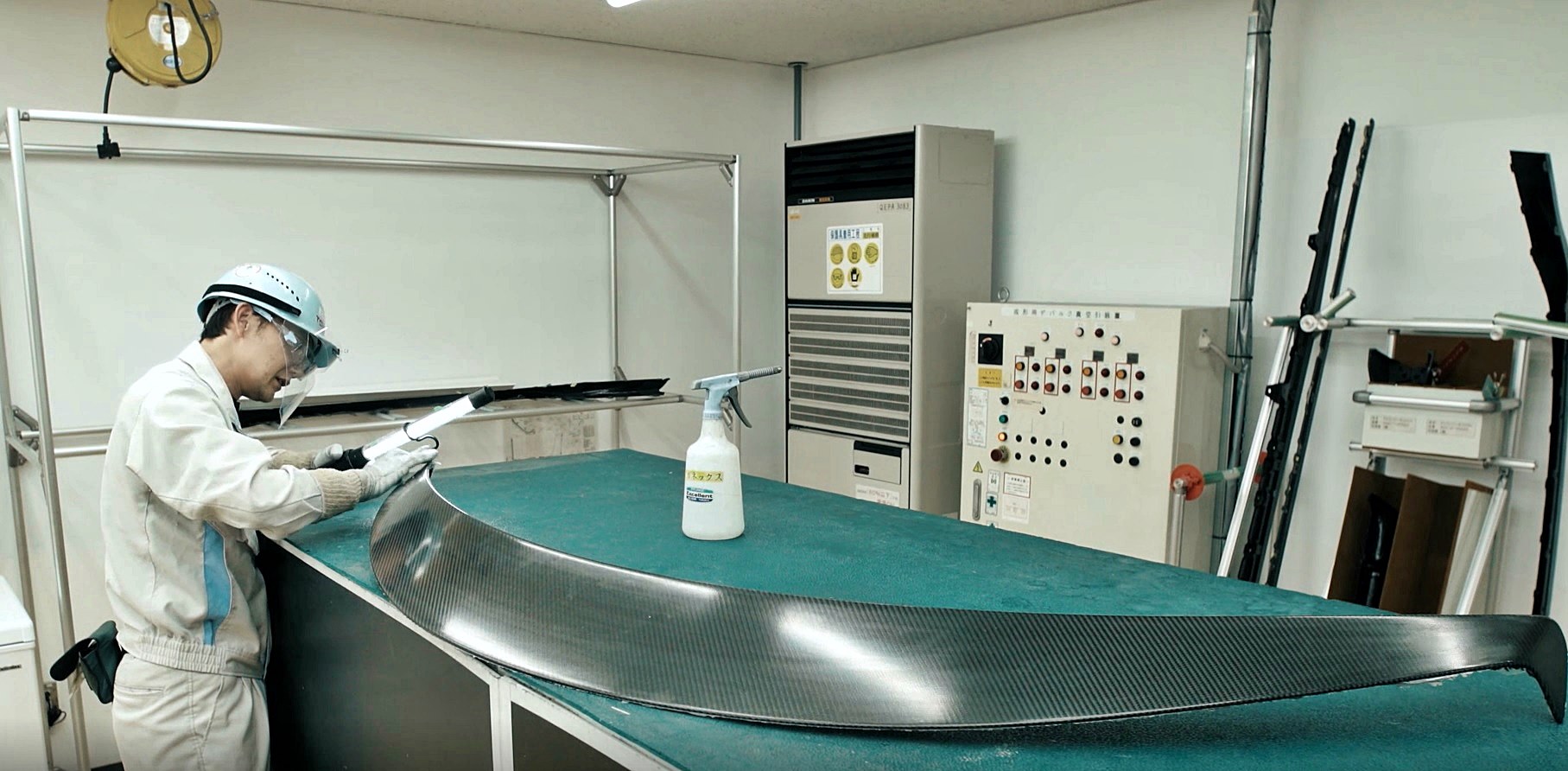
Once computer and wind tunnel tests were completed, Lexus’ elite team of designers, engineers and Takumi artisans set to work milling an aluminium prototype. Like Muroya’s race plane wings, it was later produced in carbonfibre reinforced plastic (CFRC). Laminated in carbonfibre and epoxy resin with a hollow core, after baking in an autoclave, the woven texture is visible through the lacquered finish.

Downforce without performance loss
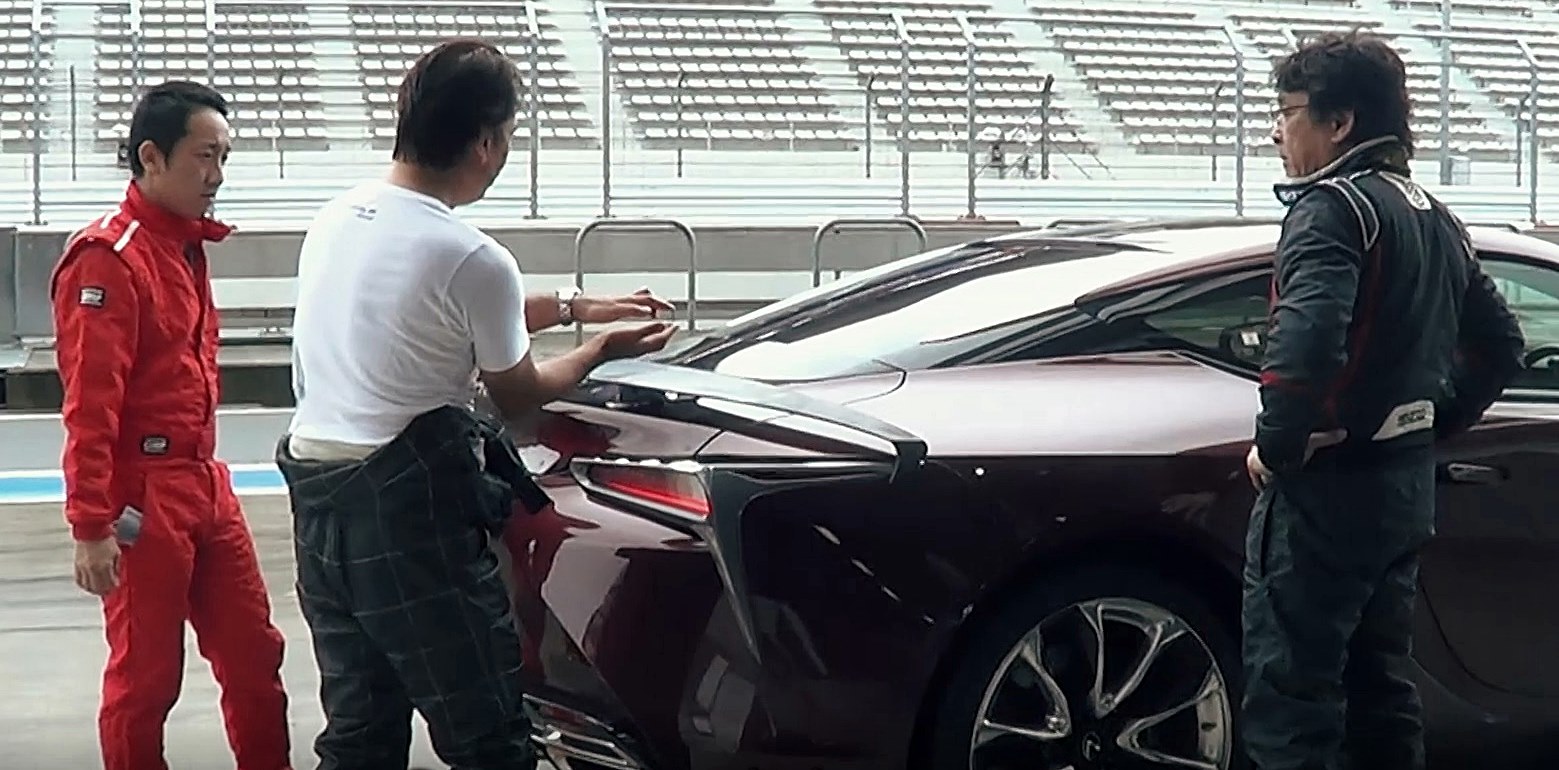
Long and lean, the LC’s new wing is nearly 2 metres wide, yet very durable and warp resistant. According to Lexus Takumi master driver, Yoshiaki Ito, the winglets sharpened the LC’s handling, but without using drag-creating downforce, resulting in better performance without sacrifices. The Lexus team called the car the LC Special Edition Aviation, to highlight the background to the development of the rear wing.

The carbonfibre rear wing spoiler is available (in limited numbers) exclusively with the new Lexus Bespoke Build programme. This is a special personalisation programme for customers buying a LC or LC Convertible. The vehicle will be built by an elite team of ‘Takumi’ master craftspeople at the and such units will be distinguished with a personalised interior badge installed on the centre console.

At the recent press conference where Toyota’s President, Akio Toyoda, gave a broad overview of the company’s electrification strategies during this decade, 16 fully electric – also known as BEVs or battery electric vehicles – were shown on stage. Most are probably just 3-dimensional models of future products but they certainly attracted a lot of speculation and attention, especially the electric Hilux and a SUV that has styling reminiscent of the FJ Cruiser.

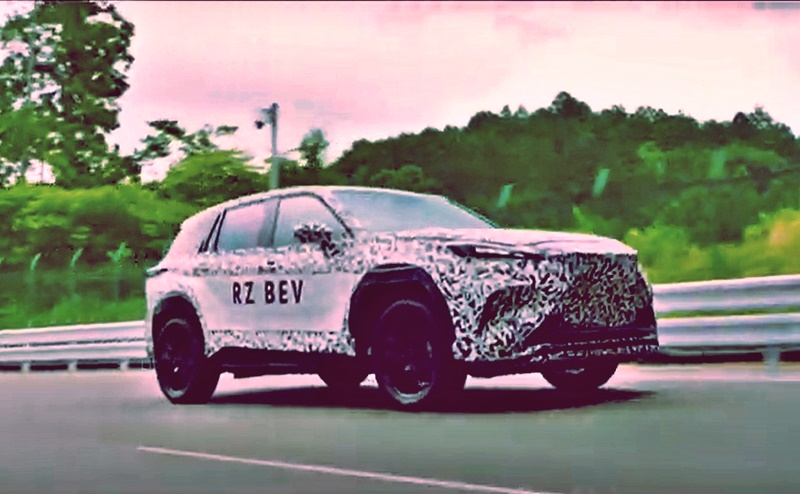
To date, Toyota has launched one BEV model which will go on sale in 2022. This is the bZ4X, which is said to have been developed with involvement of Subaru, which will sell a similar model it calls the Solterra. Mr. Toyoda also showed a video of himself and Koji Sato, President & Chief Branding Officer of Lexus International, testing a Lexus BEV prototype around a test course. It’s typical of the Toyota President who, being a racing driver himself, also gets involved in product development.

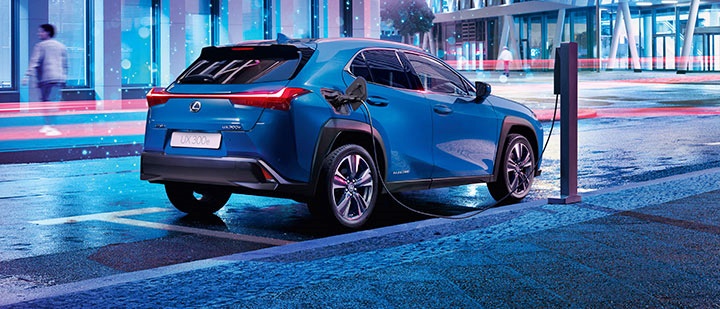
An uncamouflaged model of that BEV appeared to be in the group of Lexus prototypes also displayed. The BEV will go into production in 2022 and while details have not been released, Lexus has shown more uncamouflaged pictures of the car. The BEV prototype will be the new RZ, a SUV crossover that will be the first of range of Lexus vehicles that have been designed from the start to be BEVs. Apart from having sold hybrids for many years, this will not be the first fully-electric Lexus model as the all-electric UX 300e has been available for about 2 years now. However, that model was not developed only as a BEV.

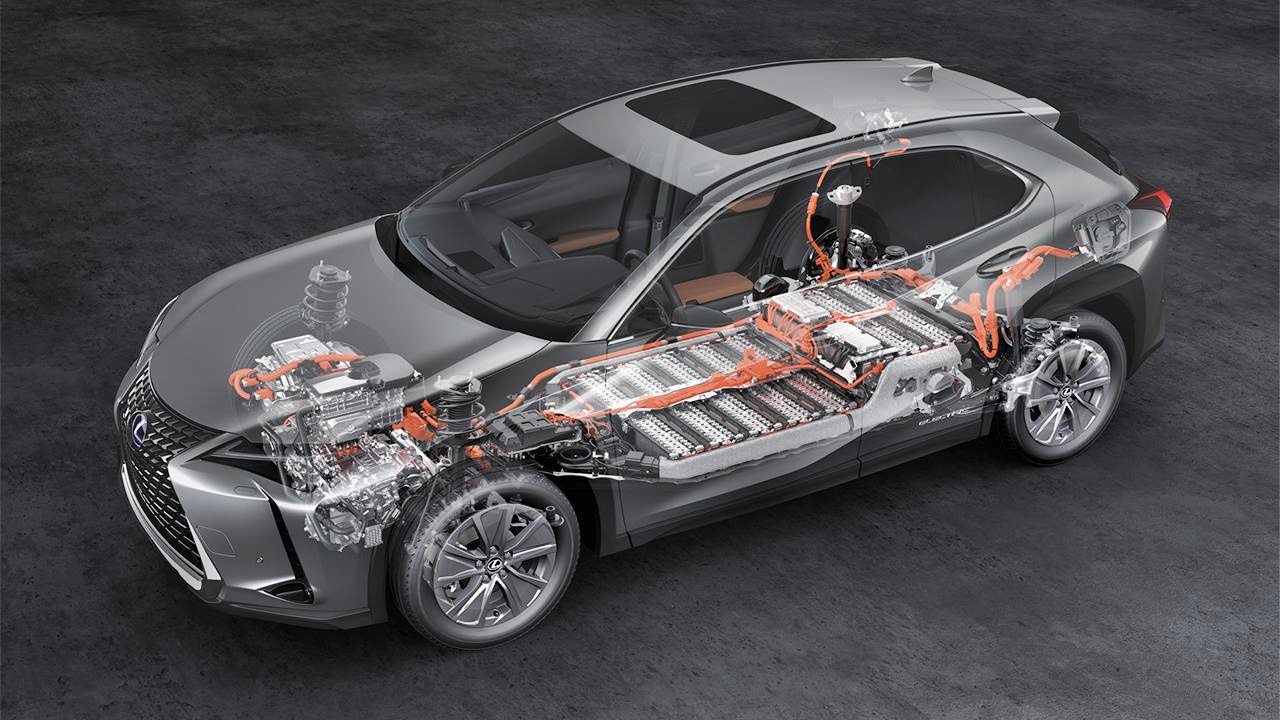
UX 300e is the fully electric version of the UX compact crossover.

e-TNGA
With the RZ, which will start with a 450e variant, the vehicle is built on a completely new dedicated platform called e-TNGA, a version of the TNGA (Toyota New Generation Architecture) that has been used for all recent new models. While the bz4X is RAV4-sized, the RZ 450e looks like a RX-sized model with similar styling themes but a closed front end typical of EVs.

All-wheel drive with  DIRECT4
Not many details are available at this time though it can be expected that the powertrain will be something similar to what is in the bZ4X, with higher output and a bigger battery pack. The all-wheel drive system will be an exclusive control system called DIRECT4 which dynamically controls the drive force to the wheels constantly optimizing the power delivery. It can be fully front wheel drive or rear wheel drive or varying combinations of front and rear drive as conditions require.

The new RZ will also be available with a steer-by-wire system. This is said to eliminate the traditional hand-over-hand action for lower speed driving or parking. It would be possible to do a full U-turn with a simple rotation of the steering wheel.

Steering wheel in the Toyota bZ4X which will initially be offered in SUVs for the China market.

Lexus says there will be a ‘comfortable and unique shape’ which provides a clear view to all relevant information from the instrument panel to the heads-up windshield display. This suggests that the RZ may also have that steering column with a wing-shape. In the bz4X, it will initially be offered in China and then progressively appear in other markets.

Battery warranty up to 10 years
As a measure of the brand’s confidence in its BEV technology, Lexus is offering (in some markets) a 10-year (or up to 1,000,000 kms) extended care on all functional defects of the vehicle’s main battery pack and capacity degradation below 70%, provided that the regular health checks foreseen in the maintenance program are followed. This is a separate warranty from the vehicle warranty which covers the powertrain.

The new RZ range will begin the Lexus offensive to have BEVs in every segment, and account for 100% of the brand’s total sales in Europe, North America, and China by 2030.

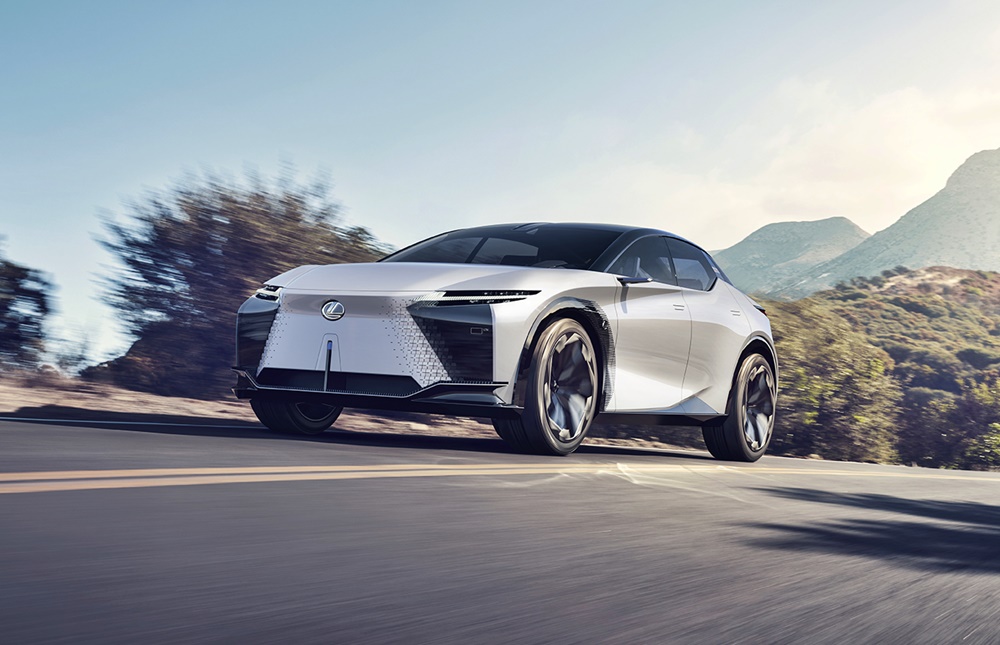
LF-Z Electrified concept shows design direction for future BEVs from the brand.

External designers create Virtual Interiors for Lexus LF-Z Electrified concept

While Toyota has expressed a view that suggests it will not stop producing internal combustion engines so quickly – to provide customers with greater choice and not leave any customer behind – it is no less committed to electrification of its products in the quest to achieve carbon neutrality. As a pioneer in hybrid electric vehicle (HEV) technology, having introduced the first mass-produced car with a hybrid powertrain in the late 1990s, the carmaker has naturally been promoting the technology which also contributes to reducing toxic exhaust emissions and fuel consumption.
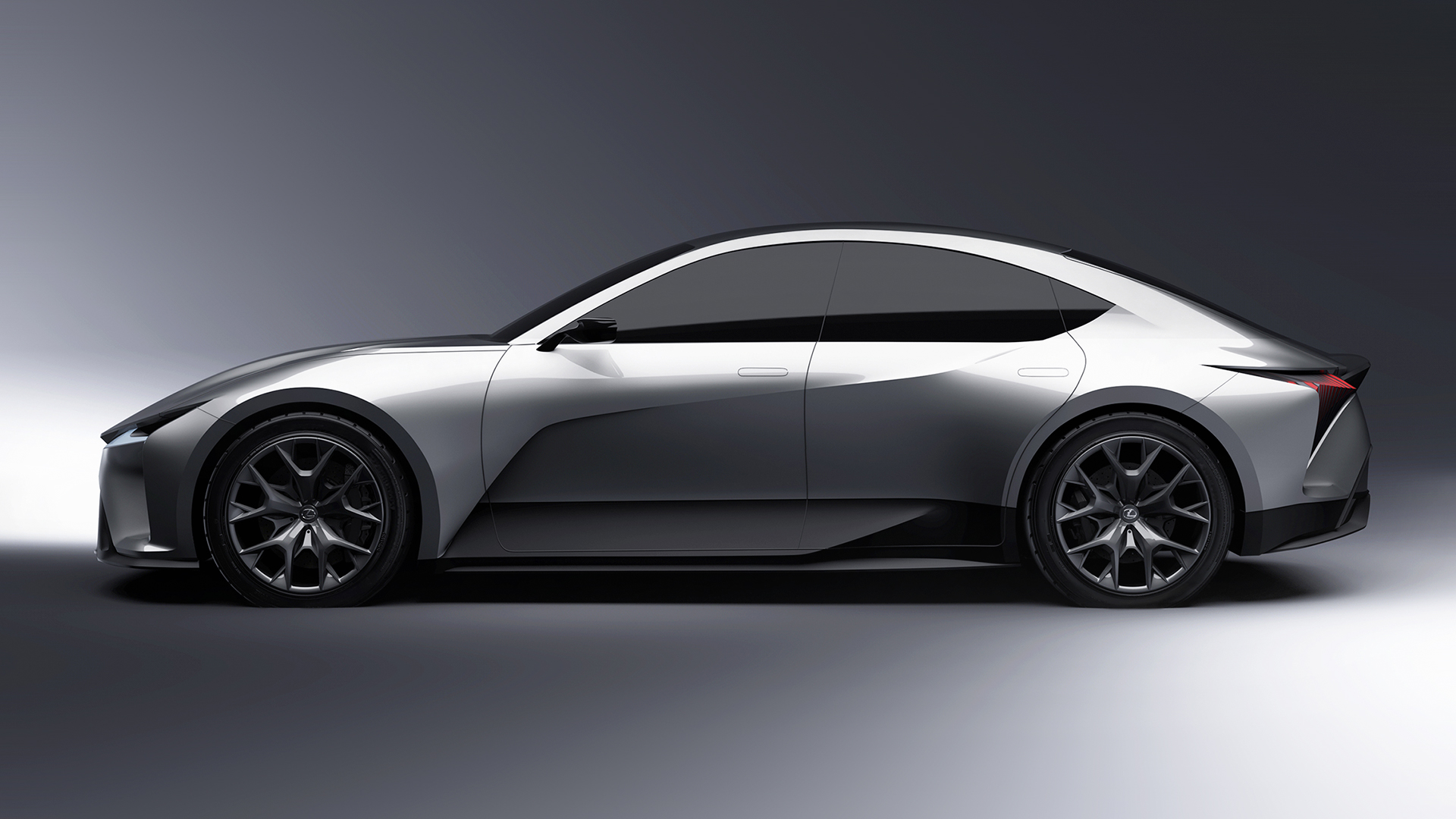
Long history of EV developments
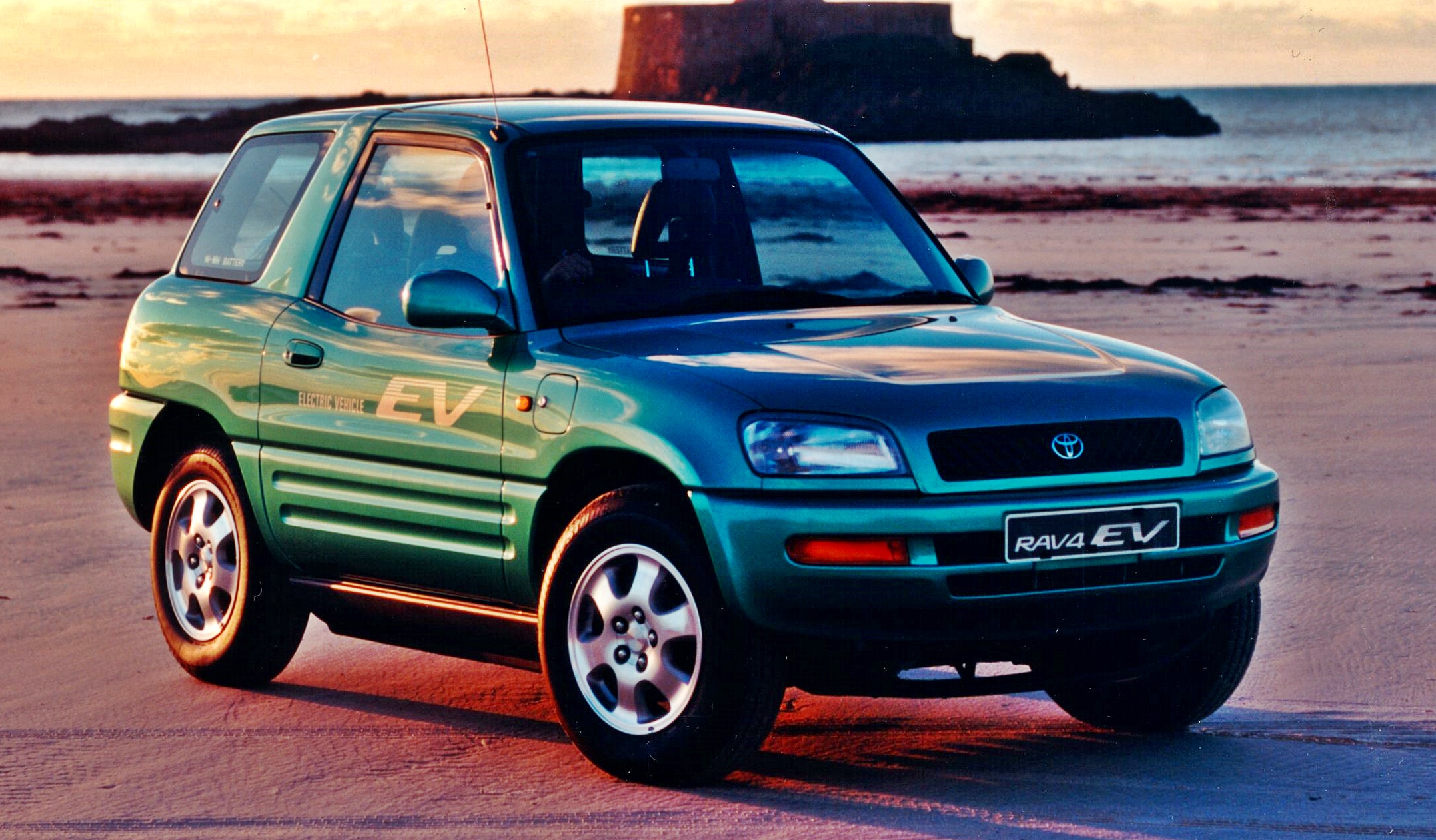
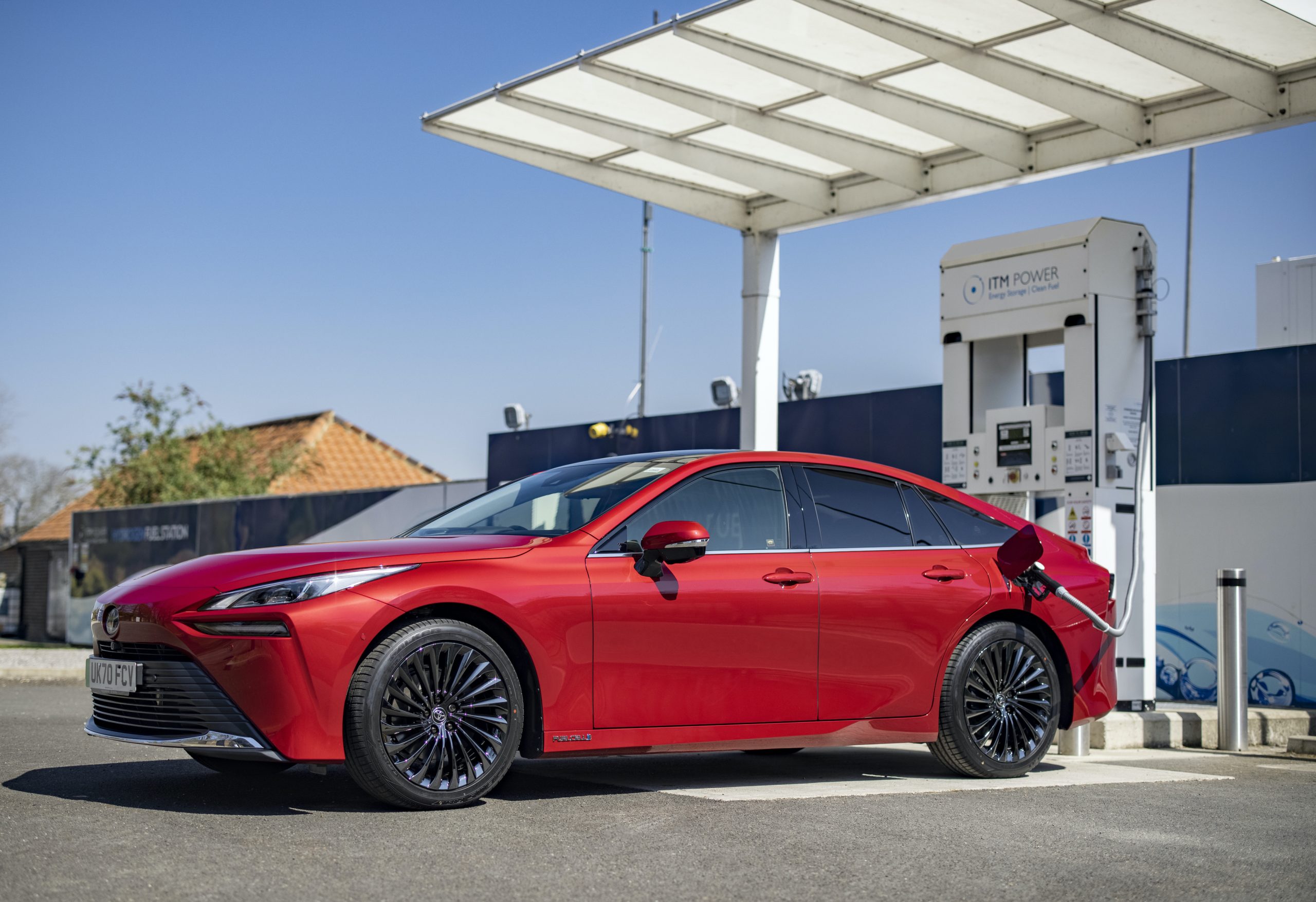
However, in the longer term, fully electric vehicles are going to become mainstream products, beginning with battery electric vehicles (BEVs) and progressing to fuel cell electric vehicles (FCEVs). In fact, the company has an EV development division since 1992 and an early production EV that went on sale in 1996 was the RAV4 EV, Today, besides a wide range of HEVs, Toyota already offers BEVs and even FCEVs, the latter now in the second generation with the Mirai.

Toyota sold (in limited numbers) a fully electric model – the RAV4 EV – in 1996 and today, it has even begun selling electric vehicles powered by hydrogen fuel cells like the Mirai (below).

The crucial technology
Battery technology is obviously crucial for every carmaker and Toyota will invest greatly in R&D for this area as well as in the supply system. The carmaker has had a subsidiary fully involved in battery development and manufacturing and has aimed to bring about cost reduction of at least 50% per vehicle during this decade. At the same time, safety, longer service life and high quality will be advanced.

Battery technology is a crucial area for electric vehicles and Toyota will be spending heavily to develop more advanced technologies as well as push battery cost down.

“Over the past 26 years, we have invested nearly 1 trillion yen and produced more than 19 million batteries. We believe that our accumulated experience is an asset that gives us a competitive edge. Going forward, we will increase our new investment in batteries from the 1.5 trillion yen announced in September to 2 trillion yen, aiming to realize even more-advanced, high-quality, and affordable batteries,” said Akio Toyoda, President of Toyota Motor Corporation, at a press conference in Tokyo this afternoon.

1 trillion yen = approximately RM37.2 billion
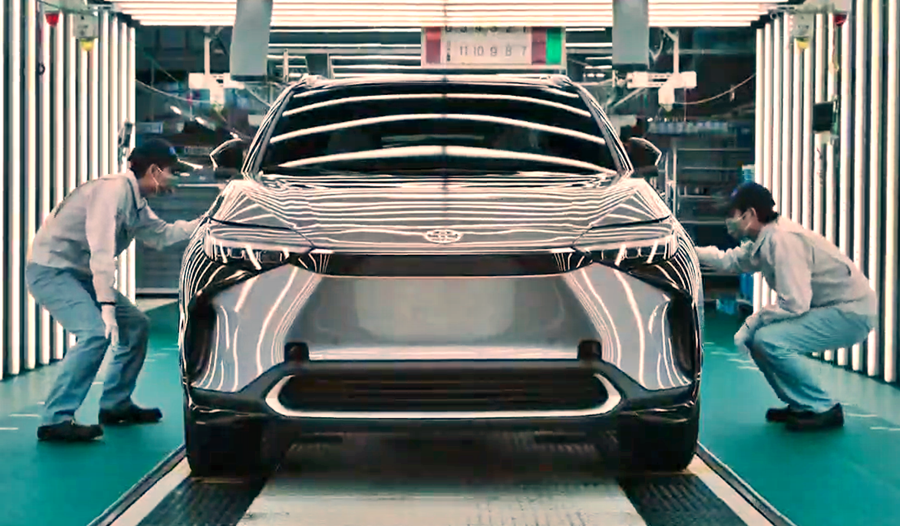
The bZ4x is the first of the new range of BEVs and production is now underway with sales set to begin in 2022.
Toyota’s range of BEVs by the end of the decade will look something like this.
As long as Akio Toyoda is leading Toyota, we will still get sportscars – even if they run on electricity instead of petrol (although the company is now exploring use of hydrogen as a fuel in combustion engines).

Sales volume of BEVs raised
Besides outlining the company’s BEV strategies, Mr. Toyoda also revealed 16 Toyota and Lexus BEV models that it is readying for market launch, starting with the Toyota bZ4X which has already had been shown in production form and will begin sales in 2022. By 2030, the company is going to roll out 30 BEV models and is anticipating sales of 3.5 million BEVs globally. This is an increase of 75% on the previous annual sales projection of 2 million BEVs mentioned in May this year. The Lexus brand aims to have BEVs, which will be in every segment, account for 100% of the total sales in Europe, North America, and China by 2030.

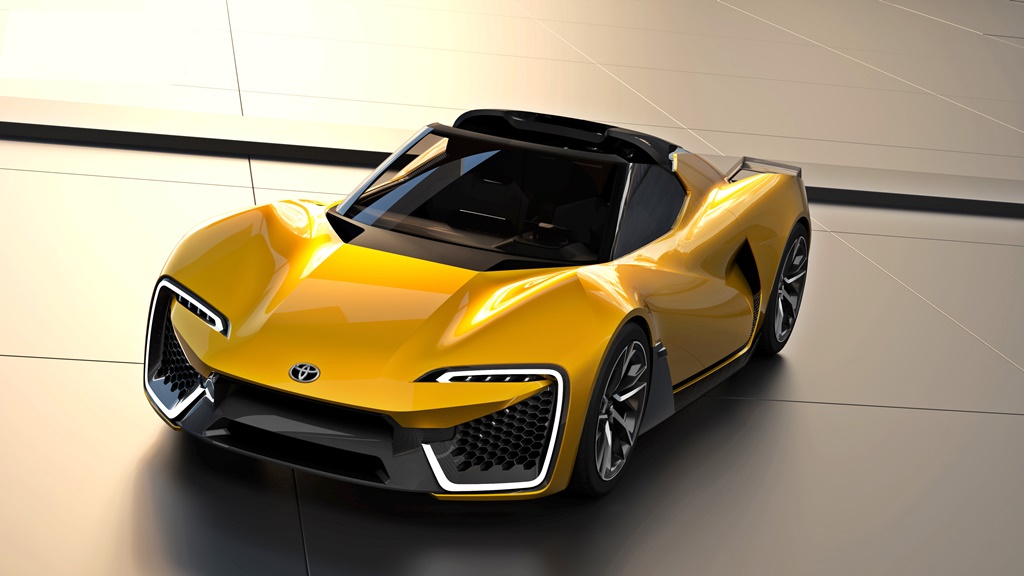
Lexus will develop a full range of electrically-powered models, including sportscars that may look like the one below.

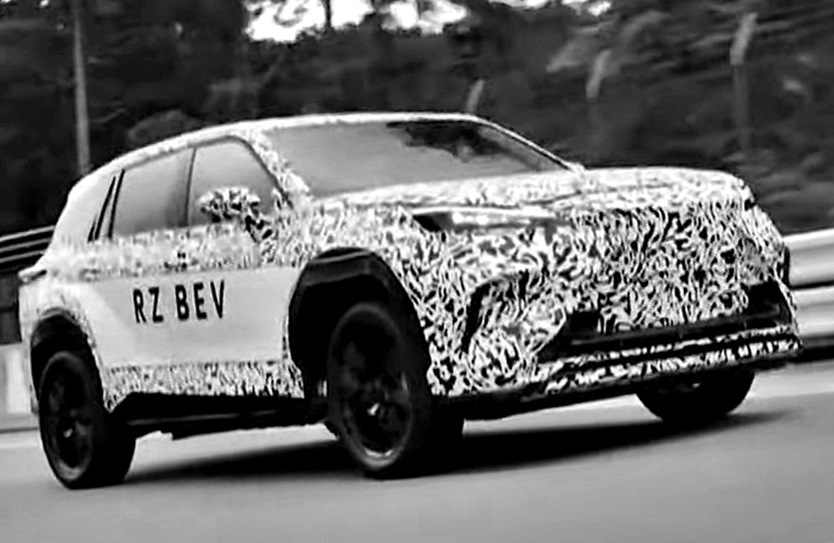
Lexus RZ BEV prototype during development testing. First teaser image of production model shown below. It will go on sale in 2022.

In this diversified and uncharted era, it is important to flexibly change the type and quantity of products produced while keeping an eye on market trends. At the same time, energy plays a critical role in achieving carbon neutrality. For this reason, Toyota wants to provide a diversified range of carbon-neutral options to meet whatever might be the needs and situations in every country and region.
Toyota Hilux BEV of the future?
Just like today, Toyota will have something for every segment of the market to suit different requirements and conditions.

Markets and customers decide
“It is not us but local markets and our customers who decide which options to choose. As for why we try to keep so many options, in terms of business management, one might think it would be more efficient to focus on fewer choices. However, we believe that quickly adapting to changes in the future is more important than trying to predict the future, which is uncertain. That is why we want to keep options available for our customers until the right path is clear,” said Mr. Toyoda.

Toyota: “No customer is left behind” in quest for carbon neutrality

Toyota and Lexus sales in Malaysia mirrored the Total Industry Volume (TIV) of November, which is expected to be less than the October TIV. However, demand for the two brands distributed by UMW Toyota Motor remains strong and the difference was only 14 units compared to the total volume for October when the total number sold nationwide was 8,500 units.

The total sales volume for November is 8486 units consisted of 6,620 passenger cars and 1,866 commercial vehicles (including pick-ups). For the period from January to November 2021, total sales for the Toyota and Lexus brands have reached 63,105 units, 26% higher than the same period in 2020 when a total of 50,074 units had been sold.

Toyota Vios and Hilux bestsellers
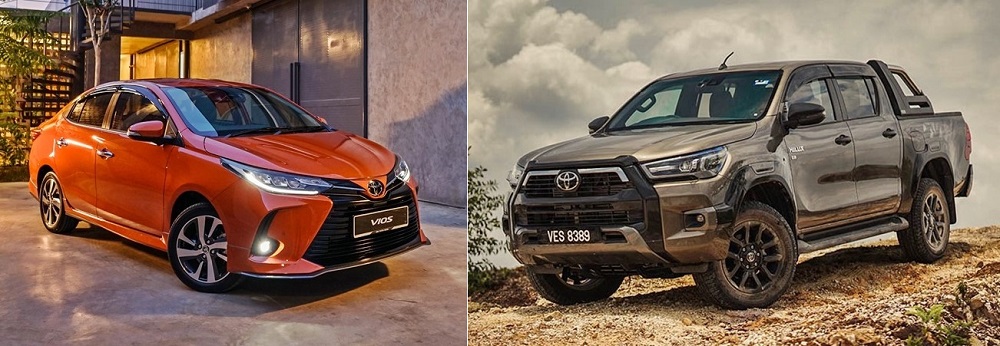
Among the passenger car models, the Vios continued to be the bestselling Toyota model, accounting for 33% of sales, while the Hilux continued to be the bestselling pick-up truck in Malaysia, a position it has held since 2005.

Toyota’s bestselling models in Malaysia – the Vios and Hilux.

“The continued growth of the market is a sign that we are steadily progressing towards recovery. The New Normal means that some things have to be done differently and we have to be conscious of SOPs, and at Toyota, we have adapted our processes accordingly. Customers can visit our showrooms or send their vehicles to authorized service centres with peace of mind that they are protected health-wise,” said UMW Toyota Motor President, Ravindran K.

“During the final month of the year, we will have great deals and with our ‘Now Is The Time’ promotion, there are savings of up to RM5,500 on selected models. Additionally, the government’s exemption of sales tax is ongoing which means additional savings,” he said.

Countdown to hybrid launch
Preparations are being finalized for the launch of the first locally-assembled Toyota hybrid electric vehicle in the near future. This will be the new Toyota Corolla Cross Hybrid which is now undergoing pre-production activities at ASSB, UMW Toyota Motor’s assembly plant in Bukit Raja, Selangor.

“Since we opened for bookings for the new Corolla Cross Hybrid, response has been good and we are happy to see that many Malaysians are keen to switch to Hybrid Electric Vehicle Technology. Toyota has been producing hybrid electric vehicles since the late 1990s and has constantly improved and advanced the technology so Malaysians will benefit from this long experience,” said Akio Takeyama, Deputy Chairman of UMW Toyota Motor.

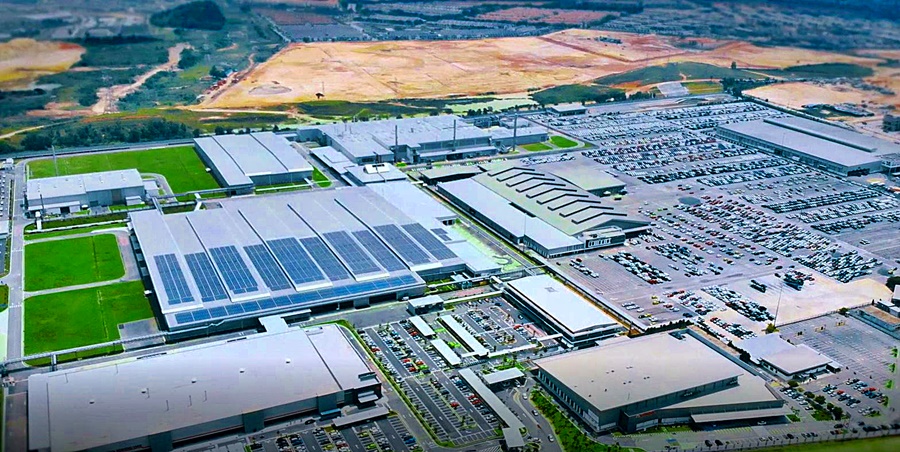
ASSB Bukit Raja, Selangor
The ASSB plant in Bukit Raja, Selangor is now assembling the first Toyota hybrid model in Malaysia, alongside the Vios and Yaris.

“We are aware that many customers are eager to receive their Corolla Cross Hybrid and we ask for your patience. There are many quality processes which ASSB must complete to ensure that the cars delivered are of the highest standard in every respect. And I would also add that once the car is delivered, the new owners will also be assured of an ownership experience of the highest standard,” Mr. Takeyama added.

The new Corolla Cross Hybrid has an estimated price starting from RM137,000 (without insurance) and comes with a 5-year/unlimited mileage factory warranty. Additionally, for peace of mind, there is a separate 8-year/unlimited mileage warranty covering the hybrid battery pack, inverter and Power Management Control Unit. Customers can also extend their warranty for a further 2 years to make it a total of 10 years, the first such warranty in the local industry.

Toyota Corolla Cross Hybrid nearing launch as orders are accepted; pricing from RM137,000

Lexus started off with just sedans – the ES and LS models – and it was only about 7 years after the brand began life that it had its first SUV (the LX). In 1997, it introduced the RX, which started the rest of the premium brands towards offering SUVs as well. And in recent years, Lexus also offers a luxury MPV in some markets as well.

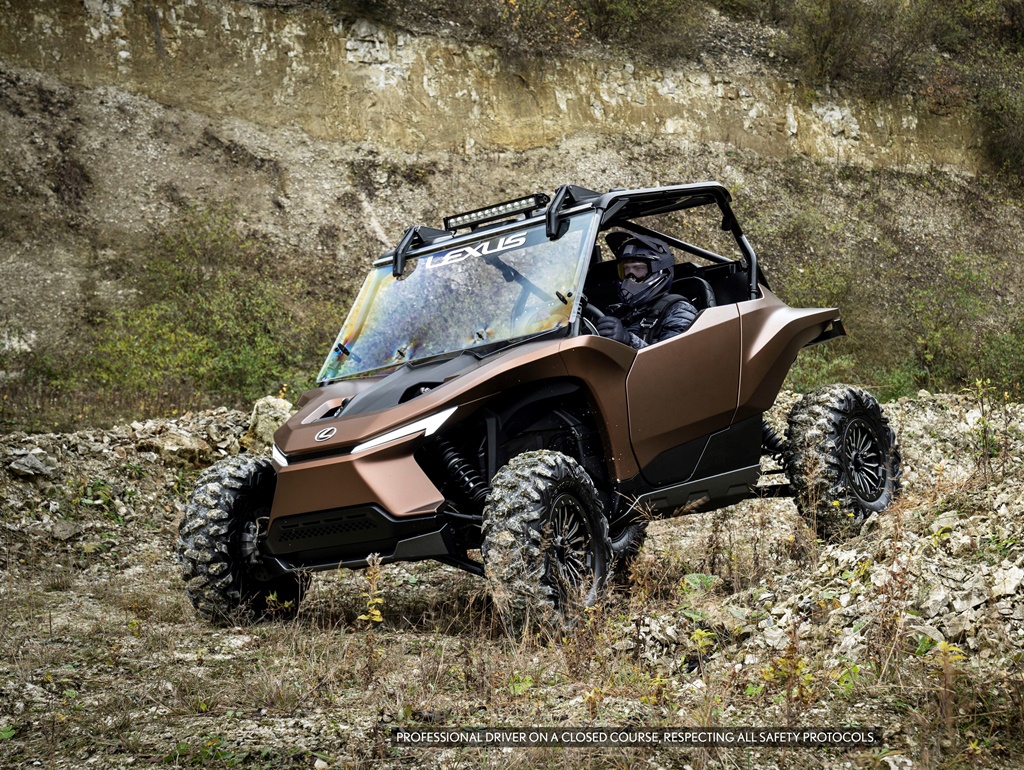
The brand has yet to offer a pick-up and you can’t rule that out since some brands are starting to try luxury versions of such vehicles and see how response is. But the designers obviously look at all kinds of vehicles and one idea they have is a Recreational Off-highway Vehicle, like a luxury ATV.

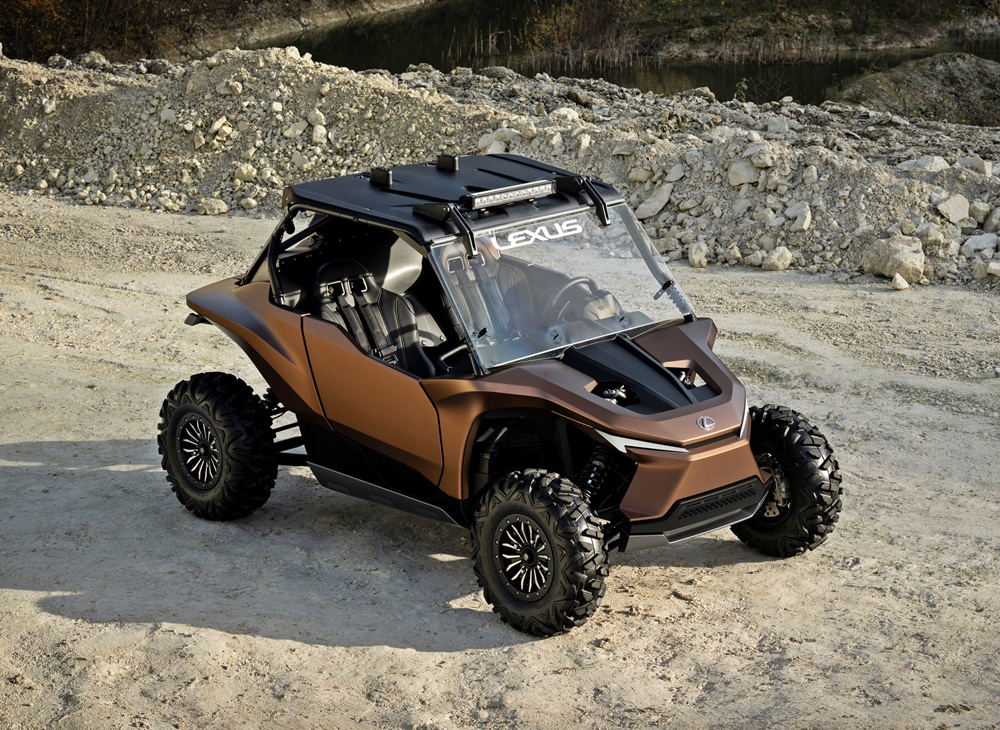
2021 Lexus ROV concept

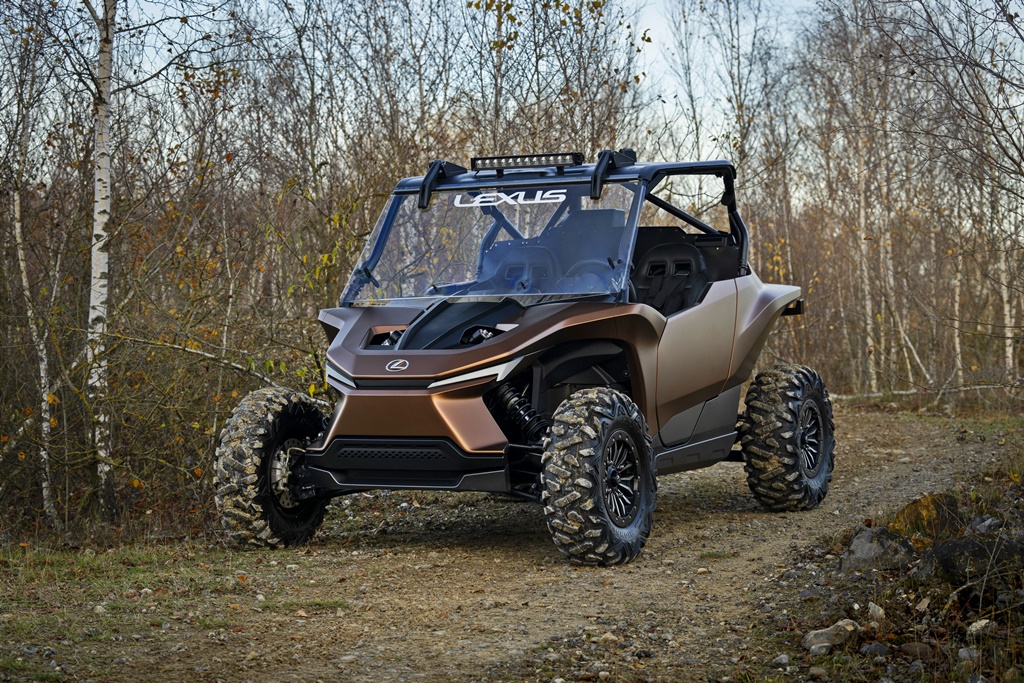
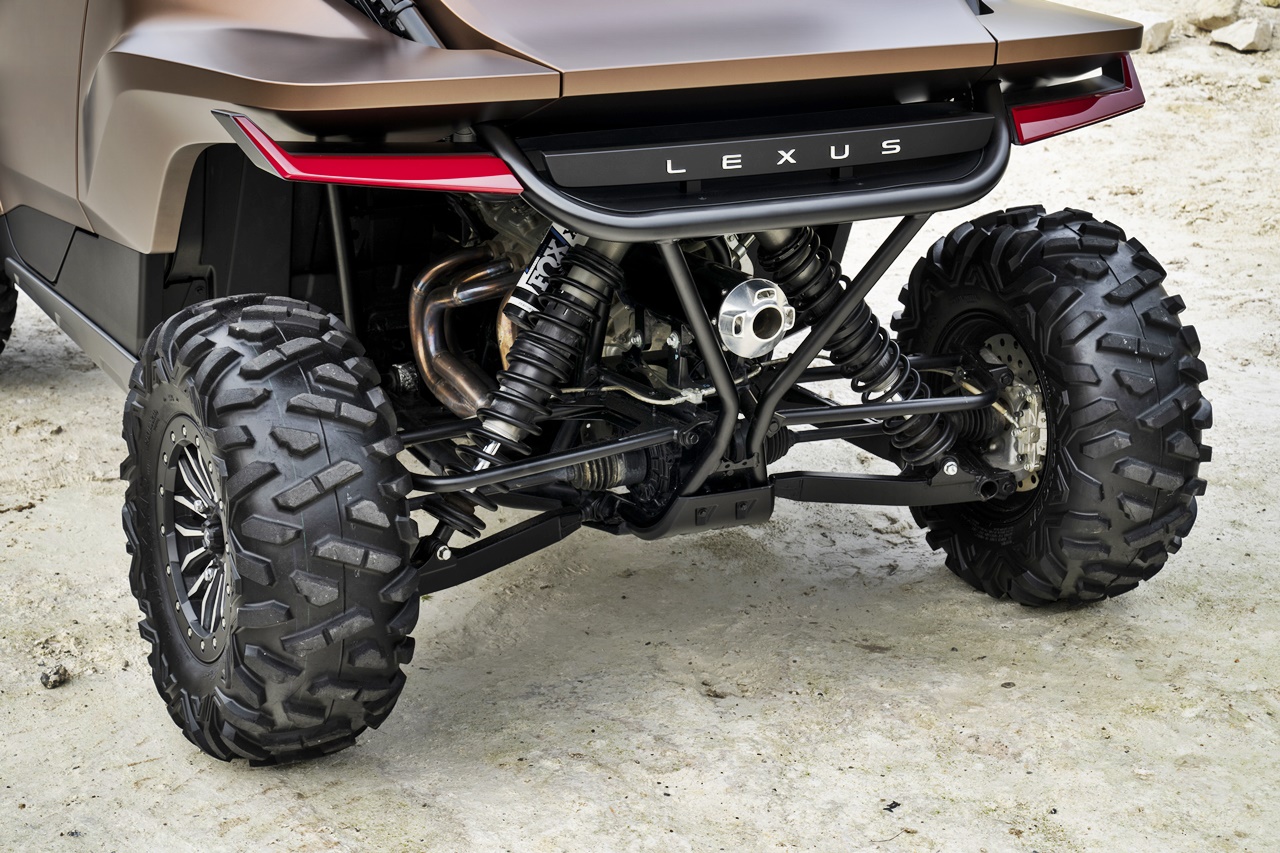
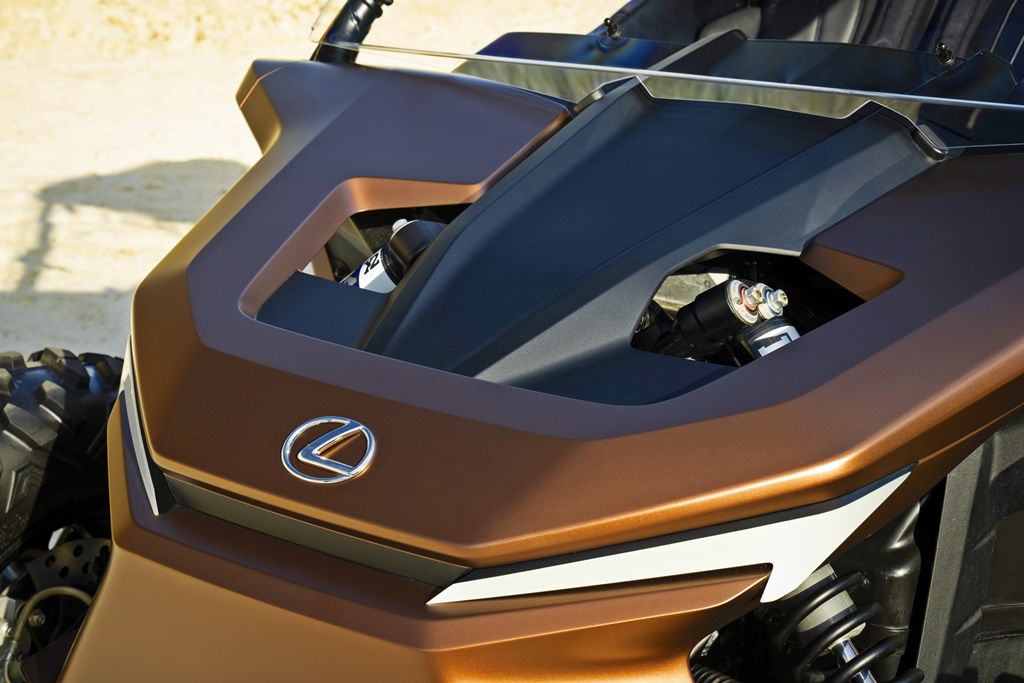
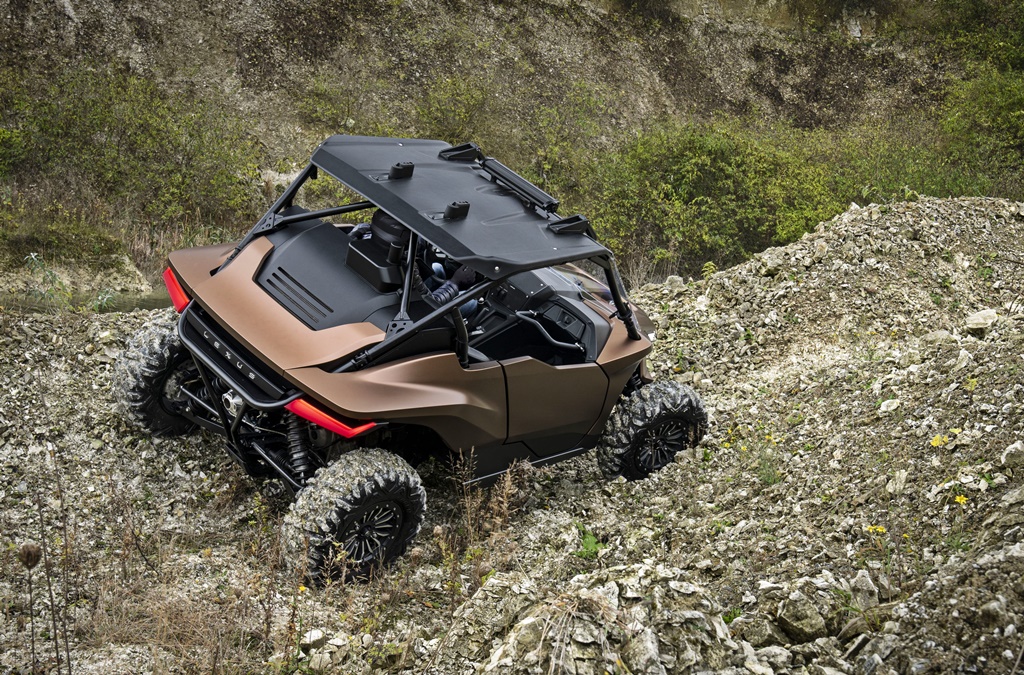
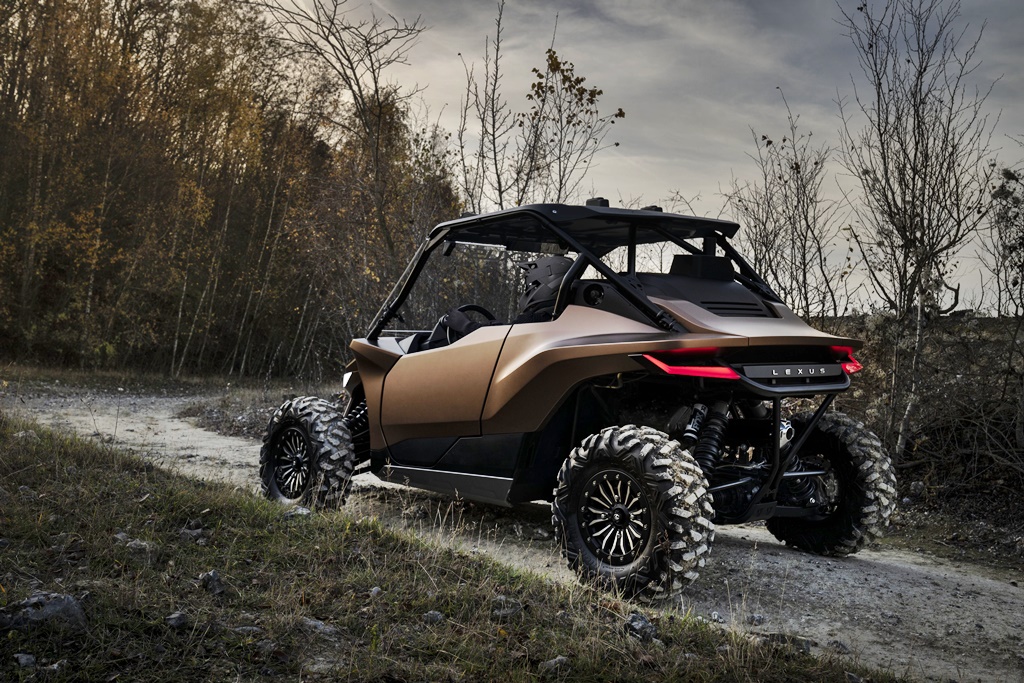
Referred to a ROV concept, it is intended to provide a luxury lifestyle experience to those wishing to discover the wilderness. The design team developed a vehicle that has Lexus design elements as well as the features of a genuine off-road vehicle – like exposed suspension, protective cage and chunky off-road tyres. The dimensions are 3120 mm in length), 1725 mm in width) and 1800 mm high.

2021 Lexus ROV concept

The dark bronze paint is carefully crafted along with a lightweight body that has an interpretation of the iconic Lexus grille. The suspension cover protects functional parts as well as conveying the sense of durability and though a rugged machine, it still has the much-admired Lexus craftsmanship.

2021 Lexus ROV concept

2021 Lexus ROV concept

2021 Lexus ROV concept

An interesting aspect of the ROV concept is that its engine runs on hydrogen, not petrol. Toyota is exploring hydrogen engines as another approach towards carbon-neutrality without giving up on internal combustion engines. Besides the sound of a combustion engine, there is also the responsive rise in torque that comes from the fast combustion speed of hydrogen.

The displacement of the engine is 1 litre and it works just like a petrol engine. There is a high-pressure tank for compressed hydrogen which is delivered precisely by a direct hydrogen injector. Of note is that the hydrogen engine produces close to zero emissions, with a negligible amount of engine oil burned during driving.

2021 Lexus ROV concept

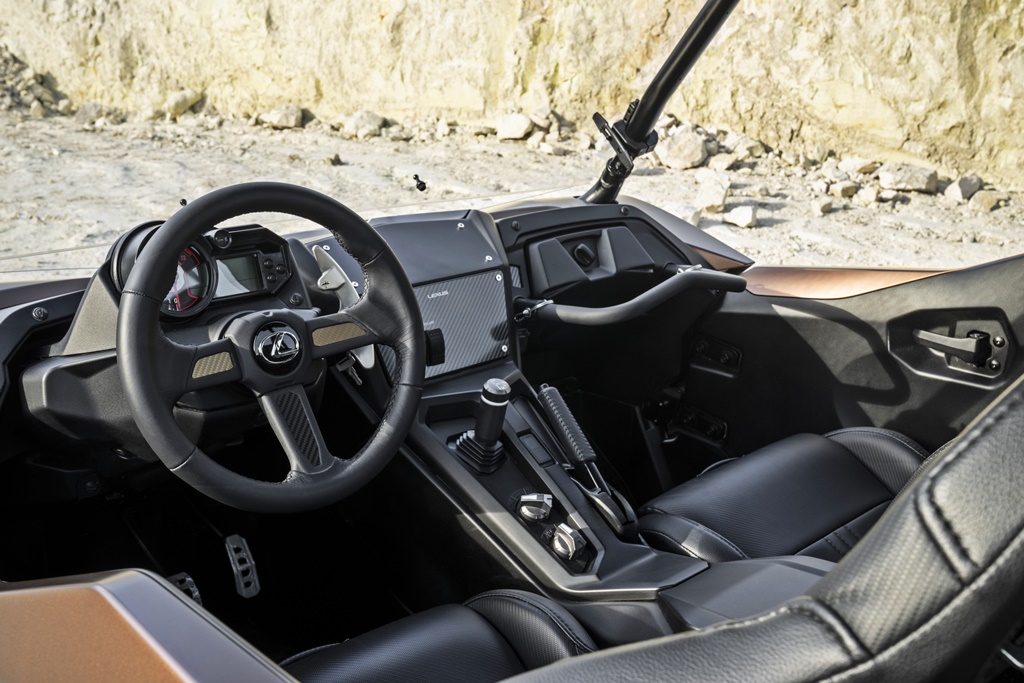
Inside, based on the Tazuna interior concept, it has a simple meter that instantly reads the information the driver needs while the driver concentrates on driving. Luxury details include a leather steering wheel and a sculpted shift knob. feature suspension elements that smooth bumps out of the ride. The seats are also upholstered in hard-wearing synthetic leather.

2021 Lexus ROV concept

Sneakers inspired by new Lexus IS F SPORT (w/VIDEO)

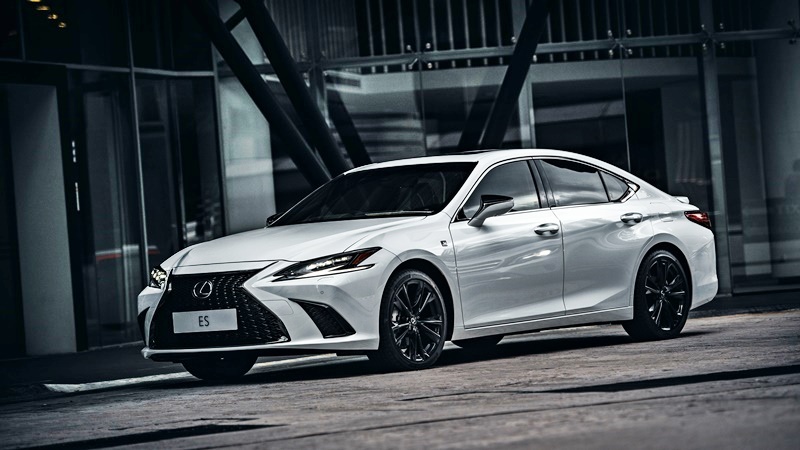
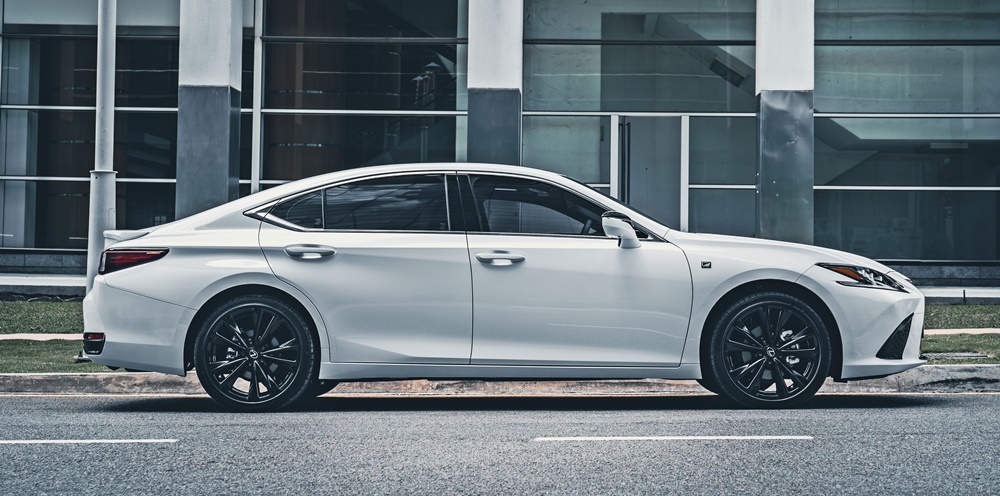
Since it first appeared, the Lexus ES has been among the most popular models in the brand’s range. In fact, it was one of the first two models the luxury brand offered when it started in 1989, the other being the LS flagship. The current generation, launched in 2018, is the seventh one and as is normal practice, updates are now due. Key enhancements for the latest model include cosmetic changes that refresh the appearance, with improved comfort as well.

For the Malaysian market, Lexus Malaysia is importing the ES 250 in three variants – Premium, Luxury and F-SPORT. The prices (without insurance) are RM295,663.50, RM329,910.50 and RM345,134.00, respectively. If purchased and registered before the end of 2021, half of the sales tax will be exempted.

2021 Lexus ES 250

“As one of the most accomplished executive sedans on the road, the Lexus ES 250 elicits admiration for its impeccable engineering and styling that satisfies any discerning taste. Combined with the Lexus attention to detail and constant quest for excellence, the improvements to the updated model will invariably retain the Lexus ES 250 as the choice sedan to arrive in,” said President of Lexus Malaysia, Ravindran K.

Revised grille design
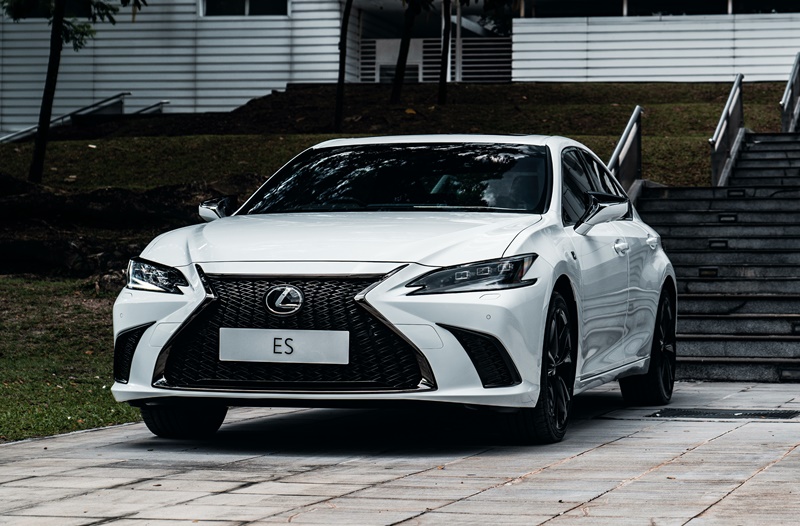
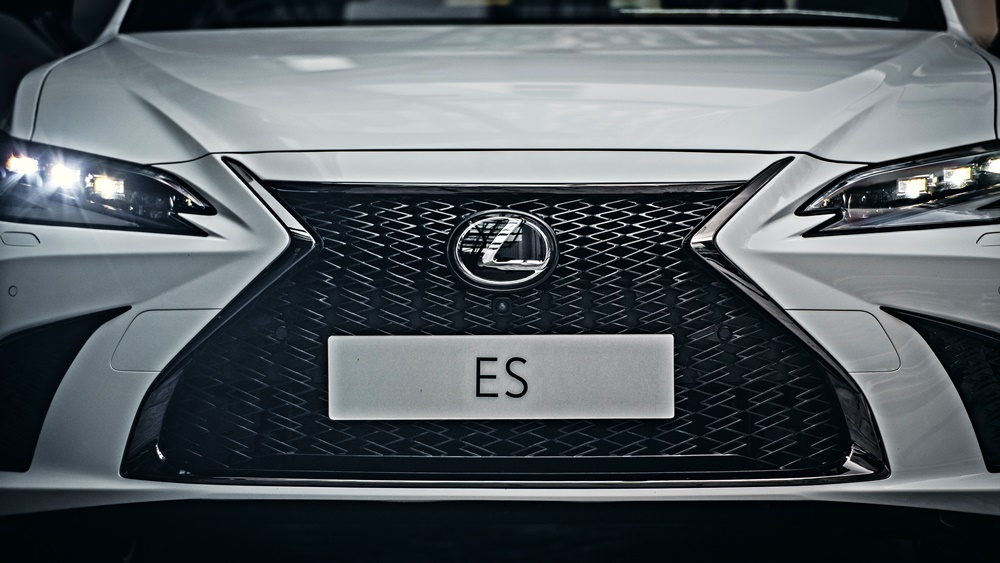
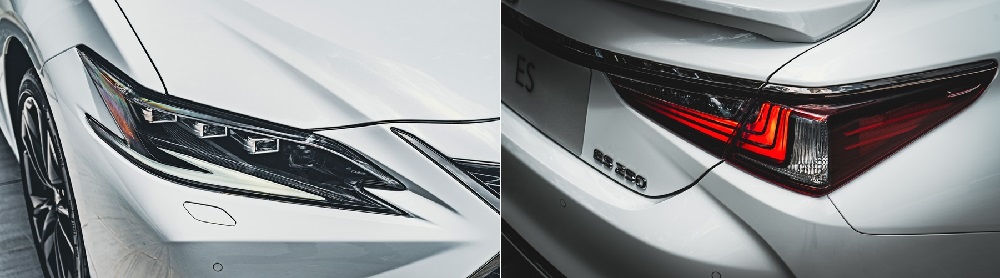
The ES is recognisable by its sleek coupe-style silhouette with the imposing spindle grille that identifies every member of the Lexus family. For the latest model, the signature grille fewer vertical bars and L-shaped patterns that emphasize lateral flow. It’s something that might not be noticed at a glance but will be apparent when you look at it long enough.

2021 Lexus ES 250

For the sportier F-SPORT version, the grille is different as well and has a mesh pattern composed of interlocking L elements with a dark metallic finish. Cut-outs at each corner of the front fascia also contain the black finish mesh with wider openings than the other two versions.

To complement the revised front grille, the headlamps have also received some restyling. For Premium version has Bi-LED Projector units with new inner bezel design. The Luxury and F-SPORT have ultra-compact 3-beam LED projector units with a distinctive Daytime Running Light design.

Besides exclusive exterior fittings that include a rear spoiler, the F SPORT also has its own set of 19-inch alloy wheels with a Dark Premium Metallic finish.

Enhancements within
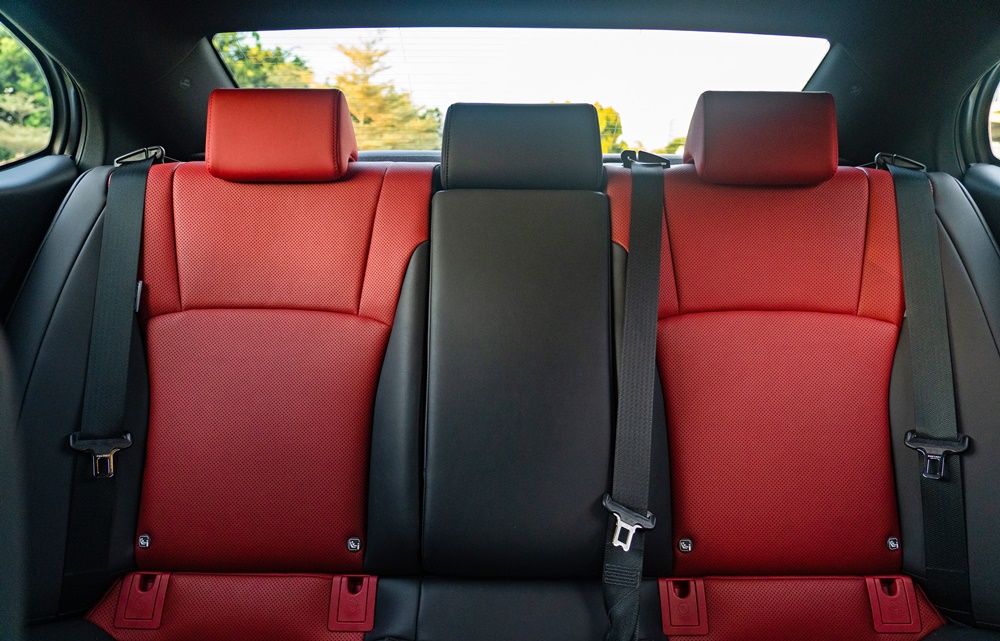
The ES interior has been noted for spaciousness and comfort, especially for the rear passengers. Thanks to the intelligent interior packaging and a generous wheelbase, the level of spaciousness is comparable to larger models.

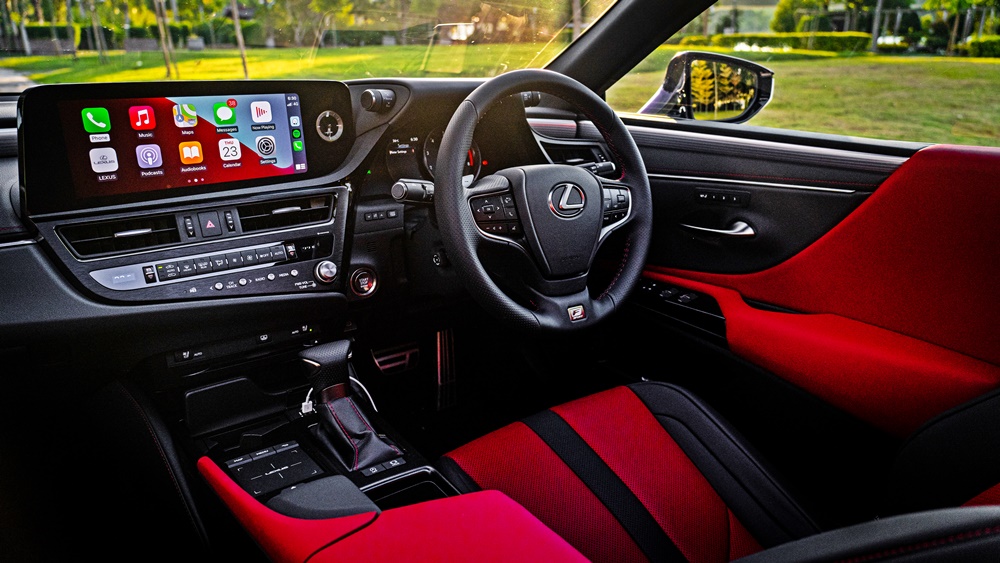
The dashboard has been updated with a new multimedia display for improved operability. The full colour 12.3-inch touchscreen (8 inches in the Lexus ES 250 Premium) has been repositioned closer to the occupants and turned 5 degrees towards the driver. As before, the multimedia system includes Navigation services for the Lexus ES 250 Luxury and also the new F SPORT.
2021 Lexus ES 250

2021 Lexus ES 250

With more portable electronic devices having the newer USB Type-C connector, the ports on the new ES are upgraded to Type-C providing easier connection without the need for adapters. The new models also now come with a Nanoe-X negative ion generator that improves cabin air quality – the first Lexus model to introduce this feature as standard.

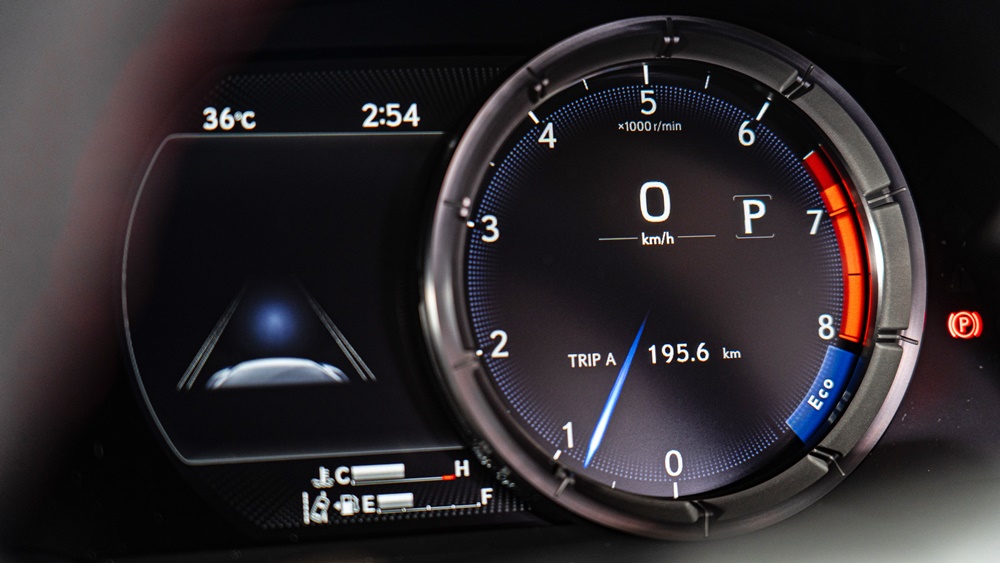
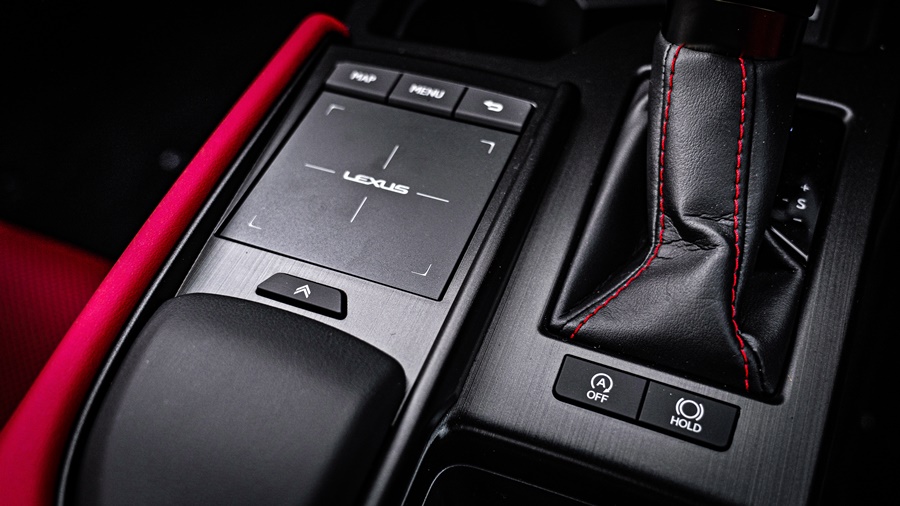
For the F-SPORT, exclusive features are the light-emitting analogue clock with its own unique graphics, while the meter has an electric movable metal ring with a 3-D effect. The idea was first used in the Lexus LFA supercar and is found in other F SPORT variants too. The F-SPORT package includes a leather-covered 3-spoke steering wheel, dimpled leather-trimmed shift knob and sporty aluminium pedals and footrest

Proven powertrain
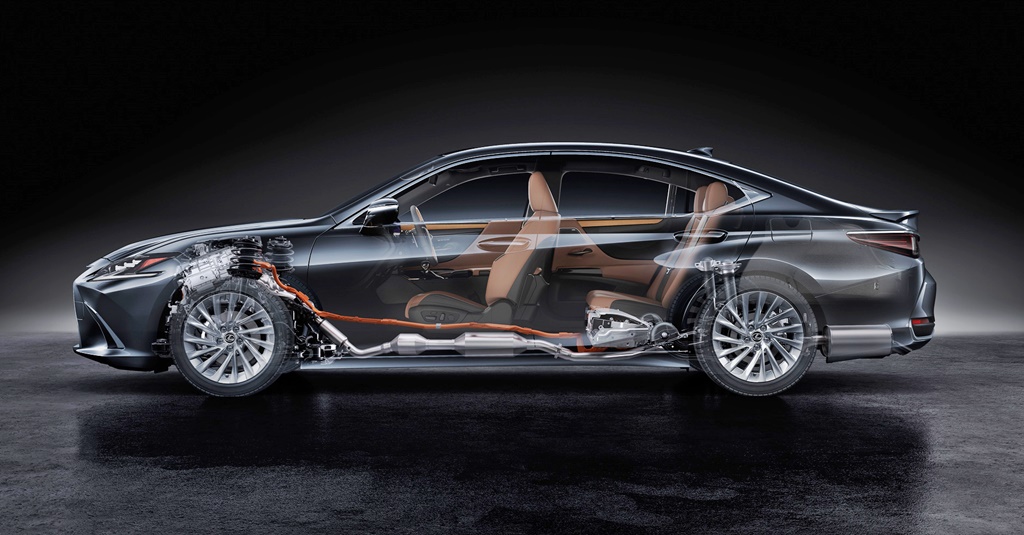
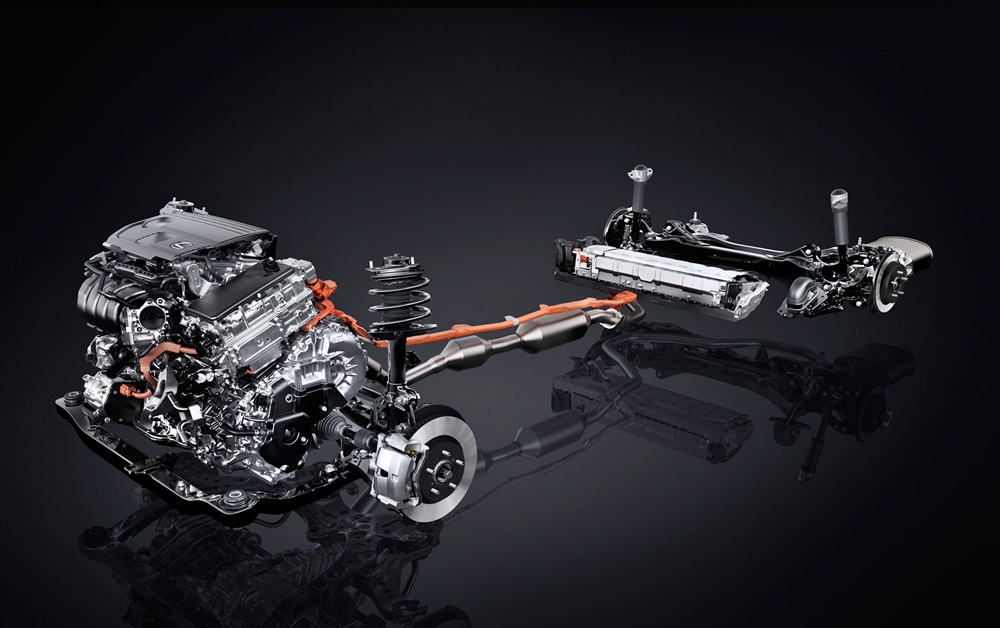
All three versions use the same 2.5-litre DOHC petrol engine (A25A-FKS), a proven unit with an output of 204 ps/247 Nm. Since the first generation, the ES has had front-wheel drive and continues with it, with power delivered to the wheels via a Direct Shift 8-speed automatic transmission. For more efficient transmission performance, there is a Direct Connected Downshift feature which allows the transmission to skip gears when large throttle openings are detected (eg, when overtaking on the highway).

While the MacPherson strut front suspension and trailing-arm double-wishbone rear suspension are retained, the ride comfort and handling have been improved by increasing the rigidity (through adding a brace) of the rear suspension. Performance dampers are installed in the Luxury and F SPORT and these chassis-mounted dampers absorb even the smallest instances of frame compression and/or flex to keep them from generating any resonances that might generate interior cabin noise.

Improvements in Lexus Safety System+
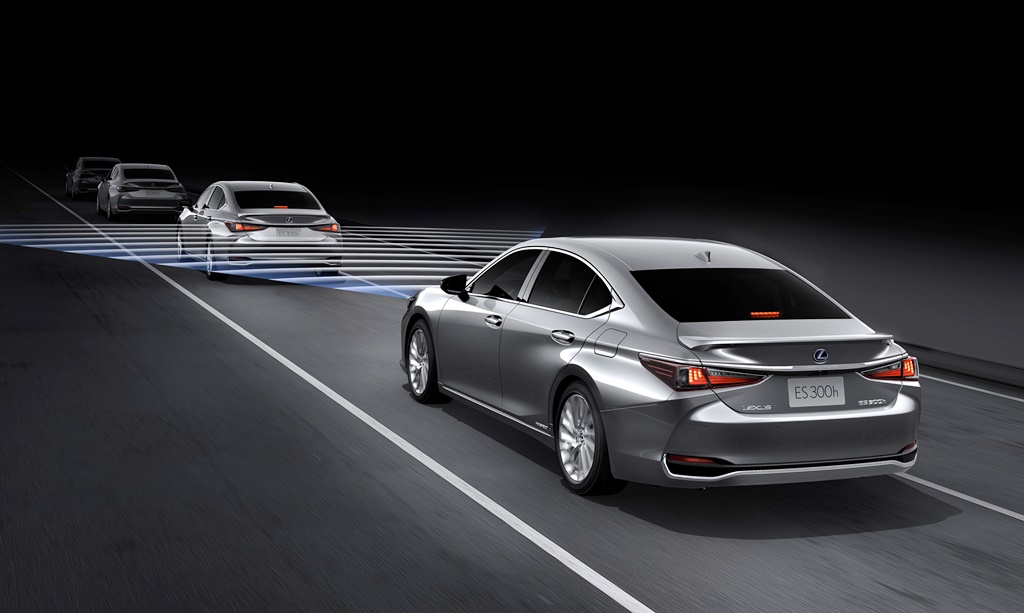
One element of the Lexus ES 250 that hasn’t been radically transformed is its dedication to safety. All versions feature Lexus Safety System+ (LSS+) as standard and for the latest model, the Pre-Collision System (PCS) has been enhanced daytime bicyclist detection by both a millimetre-wave radar and a monocular camera sensor. Pedestrian identification in certain low-light situations is also improved by increasing the camera’s sensitivity and dynamic range.
The other elements of LSS+ are Dynamic Radar Cruise Control with Stop & Go Function; Lane Keeping Assist; Lane Tracing Assist and Lane Departure Alert; and Adaptive High-beam System (AHS) which uses advanced BladeScan technology.
To know more about the new ES 250 range, visit www.lexus.com.my.
KINTO ONE offers a different way to own a new Toyota or Lexus

Archive

Follow us on Facebook

Follow us on YouTube