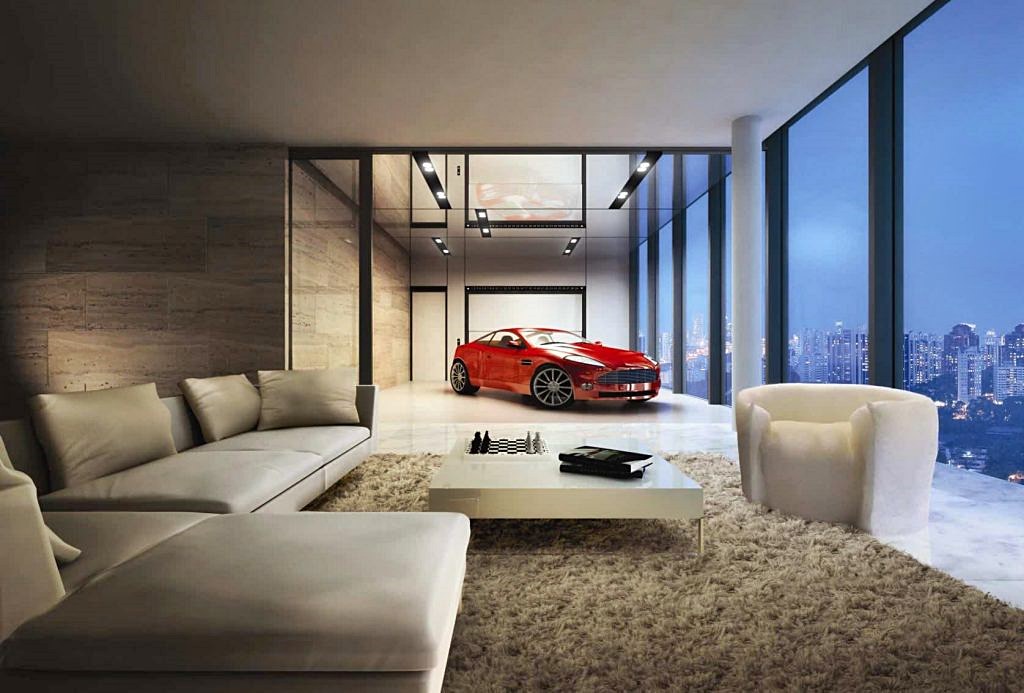
One thing about living in a high-rise apartment is that your car has to be parked some distance away. If you are very rich and live in a place like the Hamilton Scotts condo near Newton Circus in Singapore, then your car can be parked adjacent to your apartment unit as there is a ‘Sky Garage’ where the car is brought up by a lift.
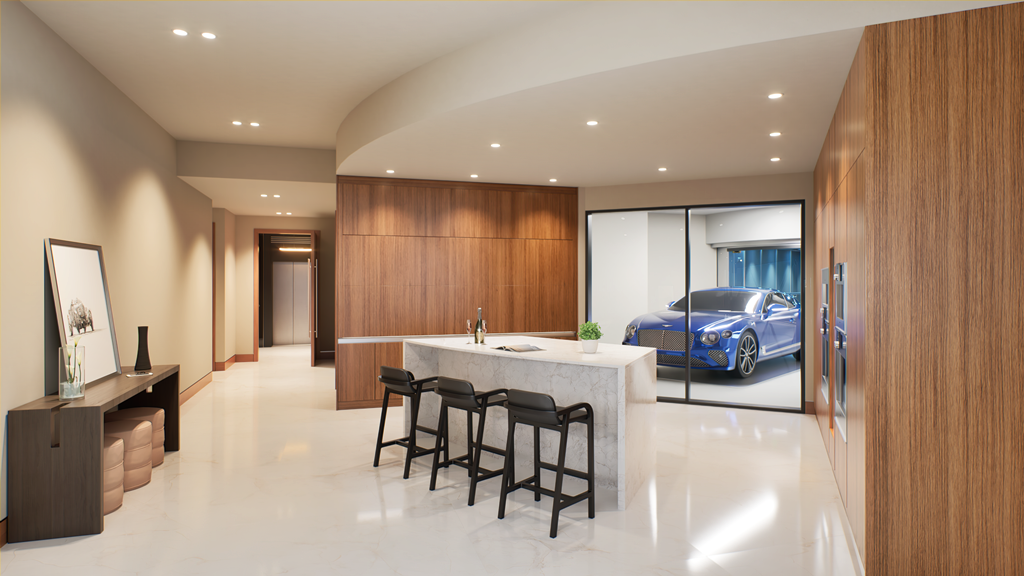
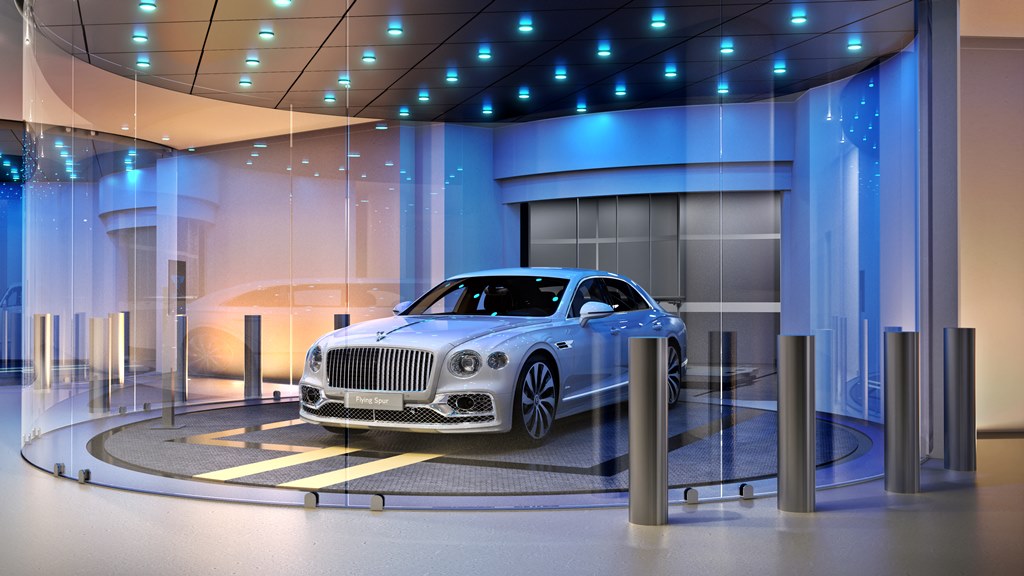
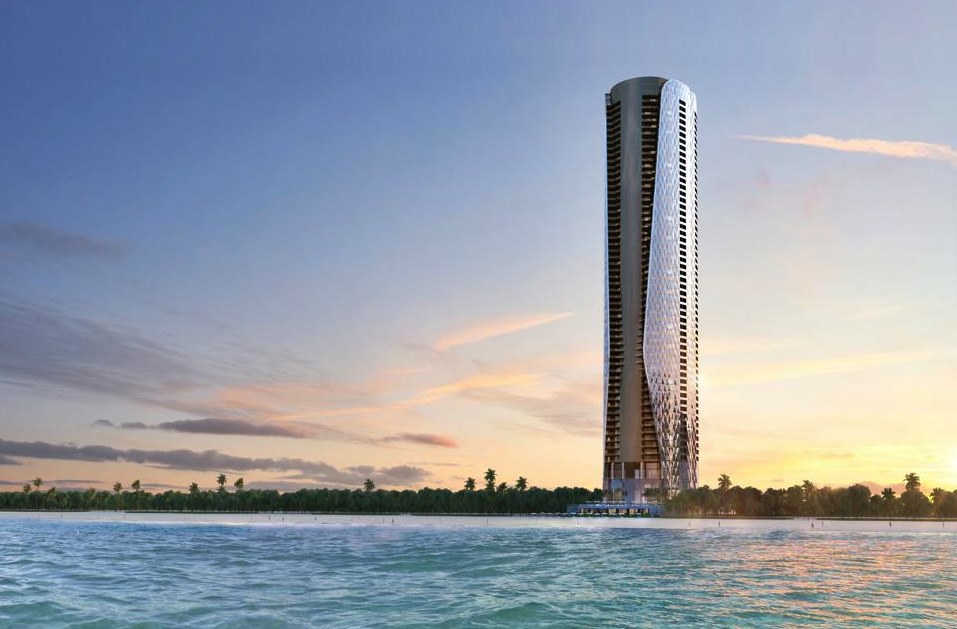
Bentley Residences in Miami, USA, also has a similar idea and offers its residents a 4-car garage at whatever level their apartment is on. The ‘Dezervator’ lift, named after the development partner Dezer Development, will transport the car and passengers from road level to apartment.
There will be four ‘Dezervators’ which have a unique elevator design, conceived by Bentley’s partners. Each lift has a hydraulic system which pinches a car by its tyres to pull it on top of a robotic shuttle system which, in turn, transports a car up or down to the desired level.
The passengers need not get out and use a separate lift and can remain inside as it goes up to the apartment. On the way up, they will have a unique experience with the lower floors of the elevator shaft enclosed by glass offering a full panoramic view of the various areas of the building.
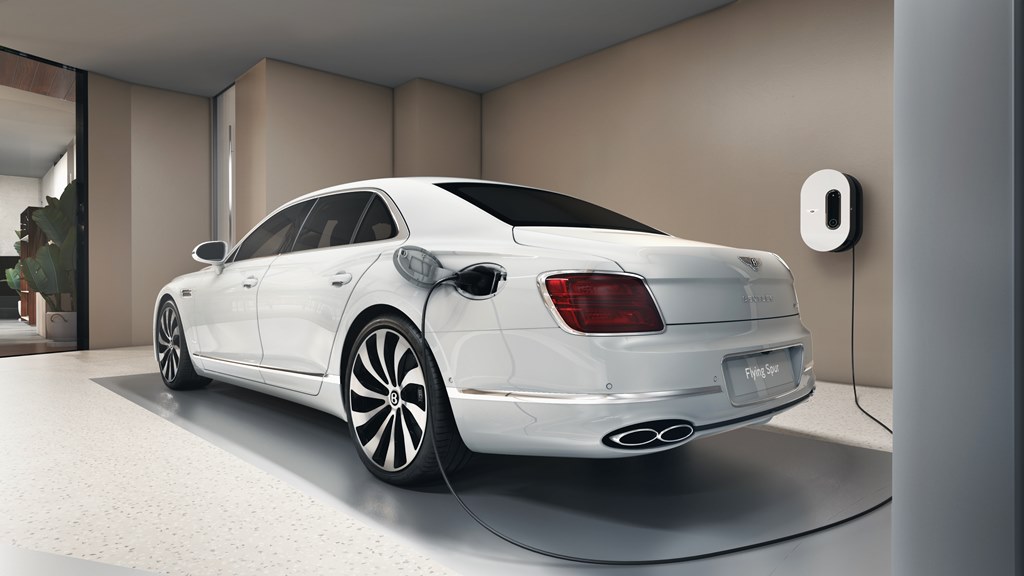
Each resident, right up to the 61st floor, will have a personal 3 or 4-car garage within their apartment offering private, convenient and secure storage for their car collections. RFID tags on each car will identify the vehicle and once verified, a sophisticated lighting system will guide the driver to the correct Dezervator to reach their own floor. The garages will also have a wallbox for charging electric vehicles.
Bentley Motors and Dezer Development announced their partnership in 2021, detailing plans for the first ever Bentley-branded residences, which will be 61 storeys high and offer bay and ocean views from each luxury apartment. There will be 216 apartments in total with prices ranging from US$6.35 million to US$12.95 million.
Bentley Residences in Miami, USA, will be completed by 2026.
Visitors to the Bentley Residences will be able to make use of the additional parking facilities beneath the building. The garage will also include fast-charging stations for EVs and plug-in hybrids.
The Bentley design team collaborated with Dezer on the exterior and interior of the building, translating Bentley’s luxury design to the residential experience. The design of the Bentley Residences offers unique ocean and bayside views, thanks to the building’s cylindrical form and floor-to-ceiling windows. The tower is designed to inspire new ways to embrace space and connect to the stunning surrounding environment.
Hamilton Scotts condominium in Singapore, opened in 2012, also has car elevators which takes owners’ cars up to their ‘Sky Garage’ in the apartment.
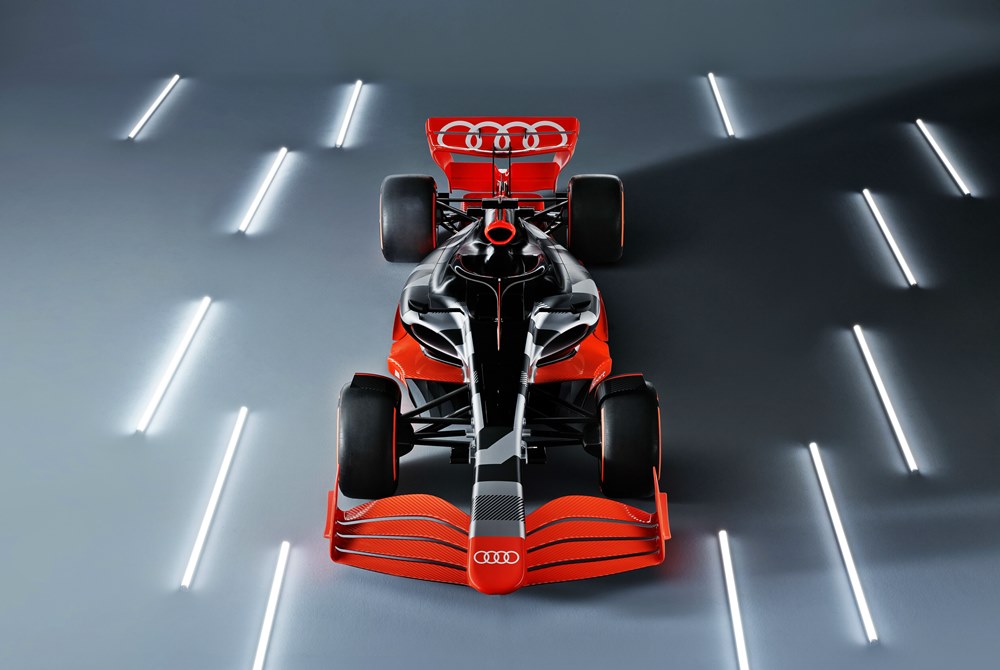
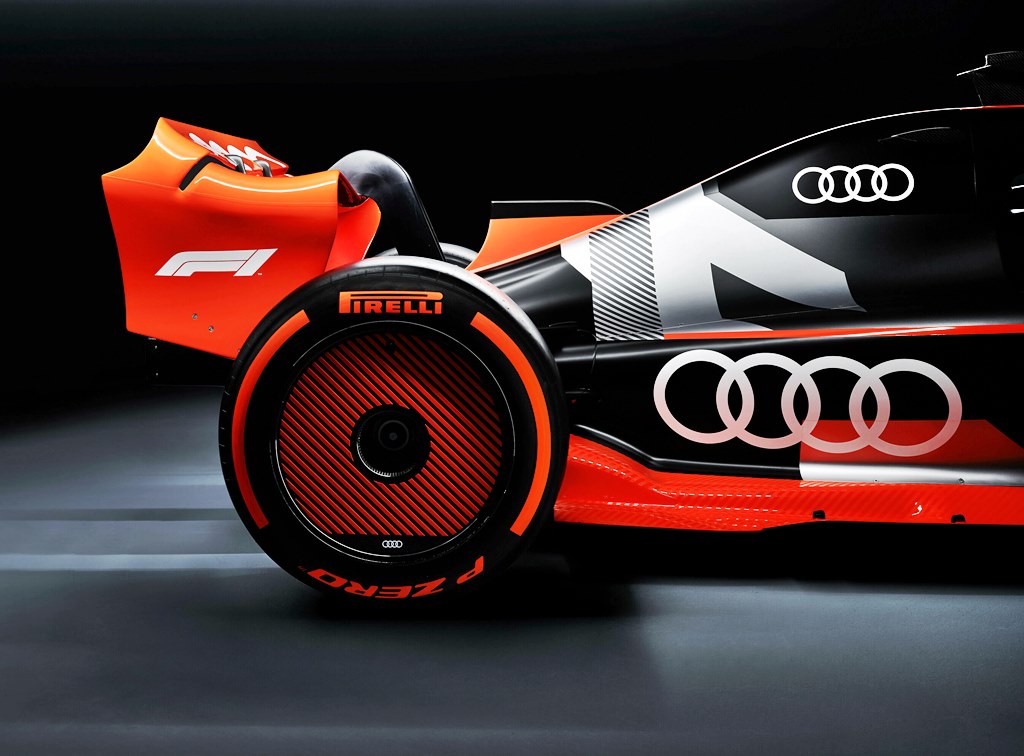
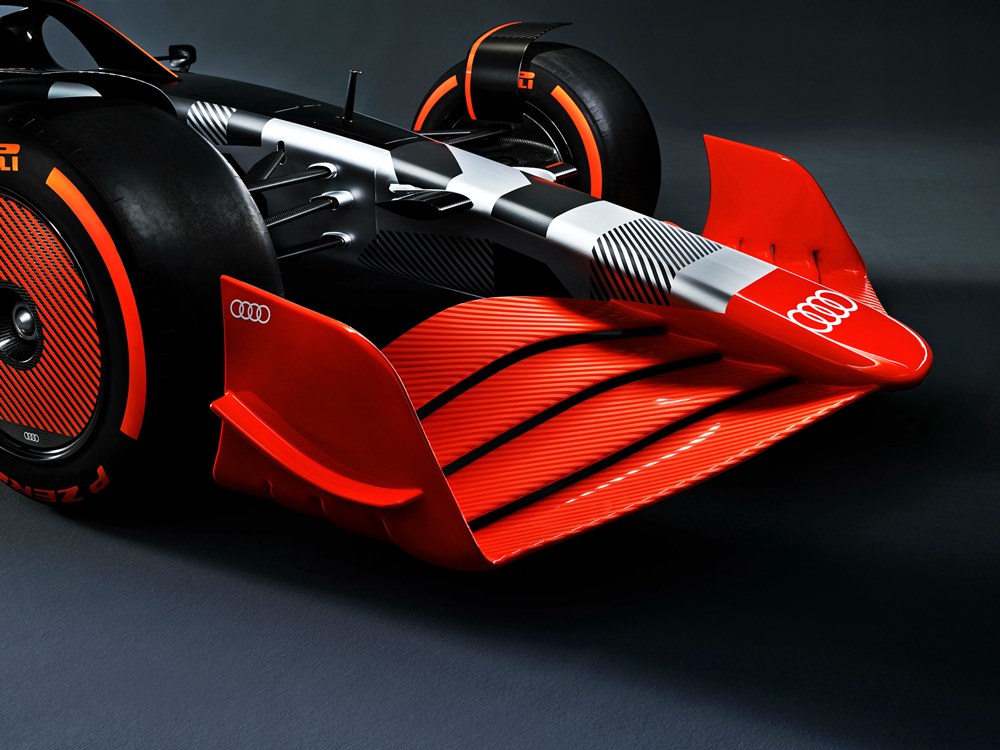
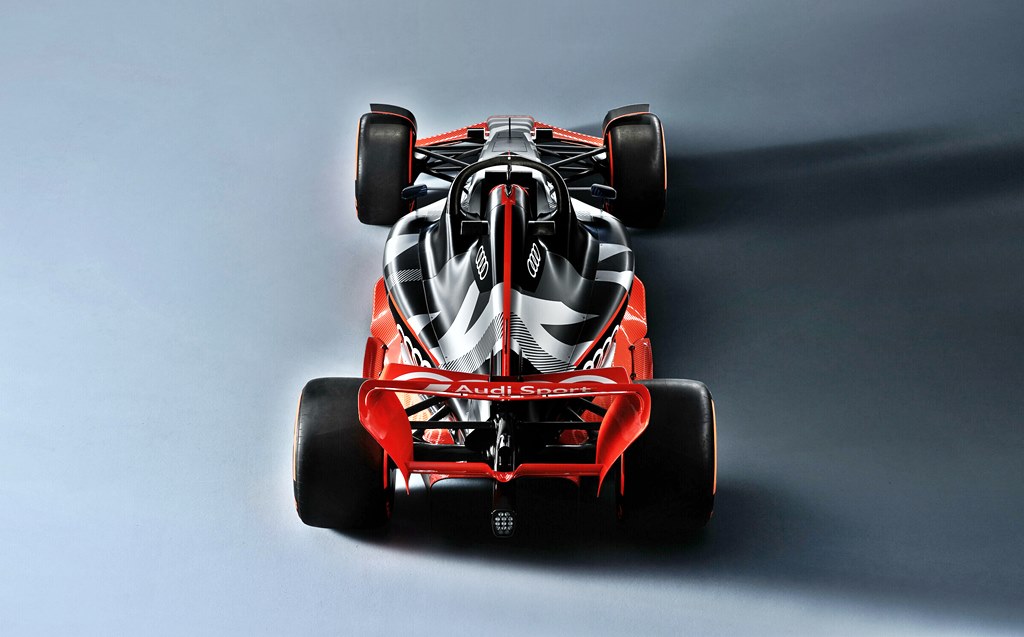
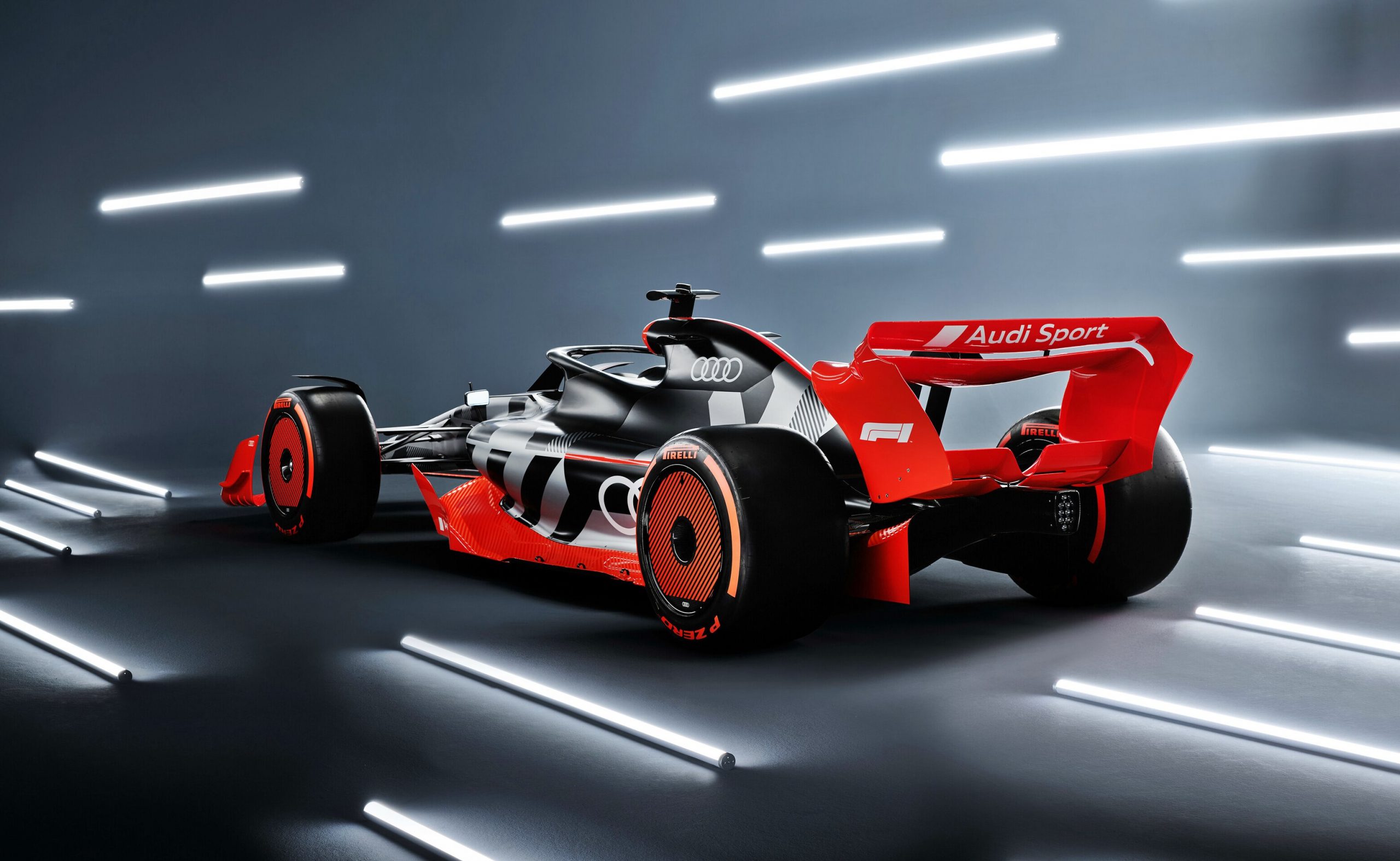
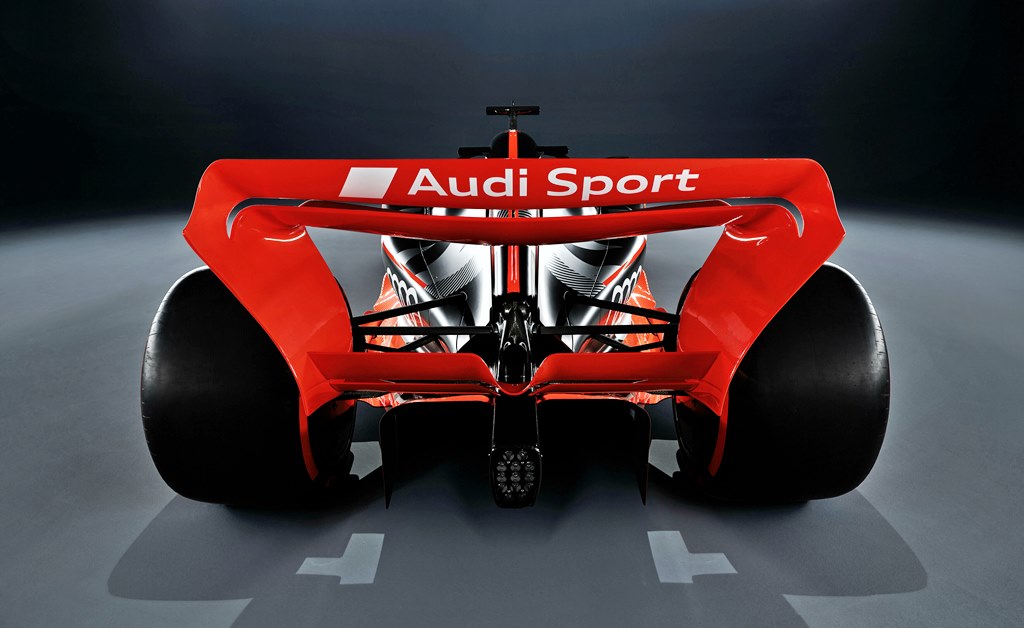
Audi has confirmed that it will race in the Formula 1 World Championship from the 2026 season, with Audi Sport being responsible for the activity. As a consequence, the high-performance division is discontinuing its LMDh project for endurance racing but will continue with the RS-Q e-tron project for the Dakar Rally. It will announce the team partner by the end of this year.
Audi recognizes Formula 1’s high popularity in its key markets as well as with young target groups. It has particular interest in the sport because it is seen as ‘a spectacular platform for the most demanding electrified racing cars in the world ‘and the brand will be able to show its ‘Vorsprung durch Technik’ in this highly competitive environment.
Formula 1 is watched globally and one of the sporting events with the highest reach in the world. In 2021, more than 1.5 billion TV viewers watched the races. On social media, Formula 1 is now experiencing the highest growth rates among the world’s most popular sports.
“Motorsport is an integral part of Audi’s DNA,” said Markus Duesmann, Chairman of the Board of Management of Audi AG. “Formula 1 is both a global stage for our brand and a highly challenging development laboratory. The combination of high performance and competition is always a driver of innovation and technology transfer in our industry. With the new rules, now is the right time for us to get involved. After all, Formula 1 and Audi both pursue clear sustainability goals.”
The key to getting involved is the world’s most popular racing series is the clear plan to become more sustainable and cost-efficient. The new technical rules, which will apply from 2026, focus on greater electrification and advanced sustainable fuel, areas which Audi has been active in developing.
In addition to the existing cap on costs for teams, a cost cap for power unit manufacturers will be introduced in 2023. Formula 1 has also set itself the ambitious goal of being a carbon-neutral racing series by 2030.
“In view of these major technological leaps that the series is making towards sustainability in 2026, we can speak of a new Formula 1. Formula 1 is transforming, and Audi wants to actively support this journey. A close link between our Formula 1 project and AUDI AG’s Technical Development department will enable synergies,” said Oliver Hoffmann, Member of the Board for Technical Development.
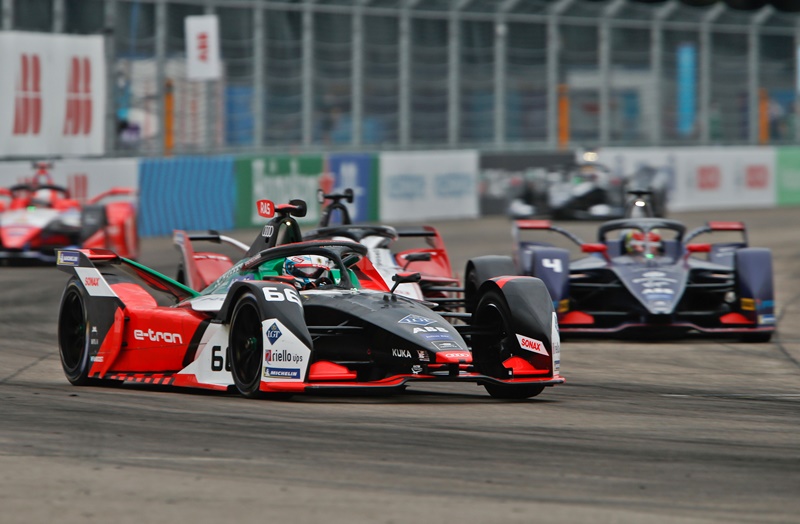
For 7 years (until 2021), Audi Sport was involved in the Formula E series with the ABT Schaeffler team. The team was the most successful in the all-electric single-seater series with 14 victories out of 84 races.
From 2026, the electric power output for the power units, consisting of an electric motor, battery, control electronics, and a combustion engine, will increase sharply compared to today’s Formula 1 drive systems. The electric motor will then be nearly as powerful as the combustion engine, which has an output of about 544 bhp. The highly efficient 1.6-litre turbocharged engines run on advanced sustainable fuel – also a prerequisite for Audi’s entry into the series.
Audi Sport to develop power unit
The hybrid power unit will be built at Audi Sport’s Competence Centre Motorsport in Neuburg an der Donau, not far from Audi’s headquarters in Ingolstadt, Germany. “For the development and manufacture of the Formula 1 powertrain, we will build on the valuable expertise of our motorsport employees, continue to invest in our motorsports center, and also recruit highly specialized professionals,” said Audi Sport Managing Director Julius Seebacht.
The facility already has test benches for F1 engine testing as well as for electric motor and battery testing. Additional necessary preparations are currently being made in terms of personnel, buildings, and technical infrastructure, with everything essential to be in place by the end of the year. A separate company was recently established for the power unit project as a wholly owned subsidiary of Audi Sport.
Buses in Malaysia used to have an image that was not environment-friendly with black smoke often coming from their exhausts. Over the years, as stricter regulations were introduced to reduce exhaust emissions, this changed significantly and these public transport vehicles today run much cleaner than before.
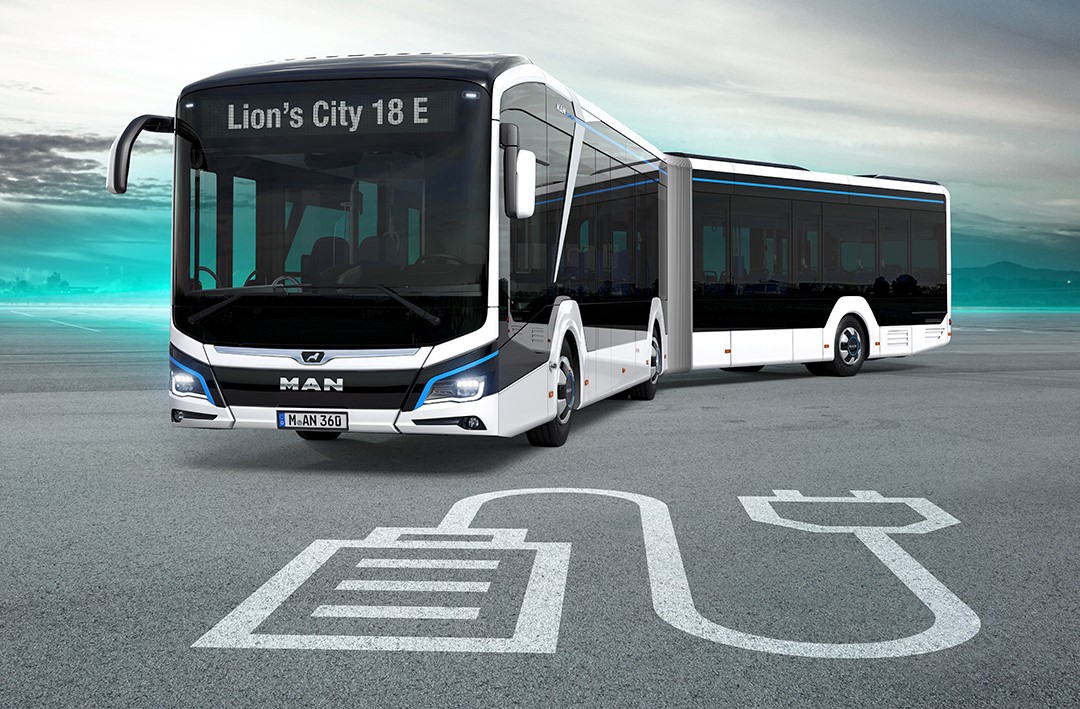
MAN Truck & Bus (M) Sdn Bhd (MAN Malaysia), which has helped to put more environment-friendly buses on our roads, hopes to go further by offering its electric bus. The company hopes to start taking orders for the MAN e-chassis as soon as possible.
The zero-emission electric MAN Lion’s City E.
MAN, which has its headquarters in Germany, has been successful in developing electro-mobility solutions for the public transport sector such as the MAN Lion’s City E. Already in actual inner-city service in several European cities, the Lion’s City E has proven that it can be used for long-distance transport too.
In the Electrifying Europe Tour from April 29 to May 8, 2022, MAN’s electric bus covered some 2,500 kms from Munich in Germany to Limerick in Ireland, an impressive demonstration of its capabilities and reliability.
Challenges to electrification However, MAN Malaysia Managing Director, Andrew O’Brooks, said the introduction of the e-chassis is also dependent on the development of the EV-charging infrastructure. Formidable challenges need to be overcome before the new e-chassis could become a viable offering in the Malaysian market. We hope this will be the primary focus of the Malaysian authorities,” he said.
Explaining the challenges, he said that in Malaysia, a petroleum-producing country with relatively low prices at the pumps, there are few incentives to go electric on a major scale. Secondly, despite the Malaysian government’s commitment to achieve carbon-neutral status by 2050 at the earliest, the actual steps and implementation process remain unclear with few incentives for consumers to invest in electric public service vehicles (PSVs).
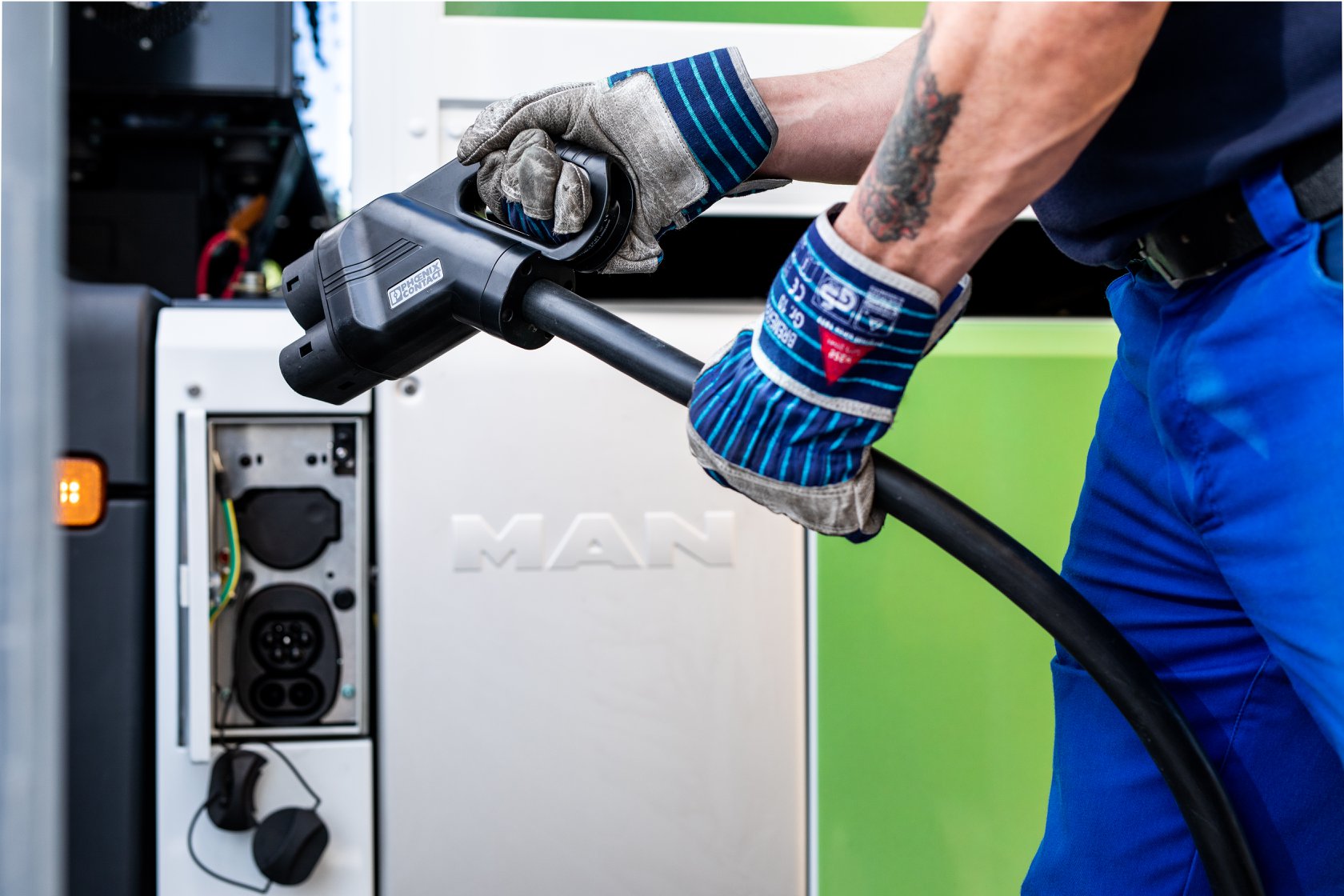
He also noted that the investment and development of charging stations and relevant infrastructure are perhaps the biggest obstacles to bringing the e-chassis or import e-buses in completely built-up (CBU) form into Malaysia.
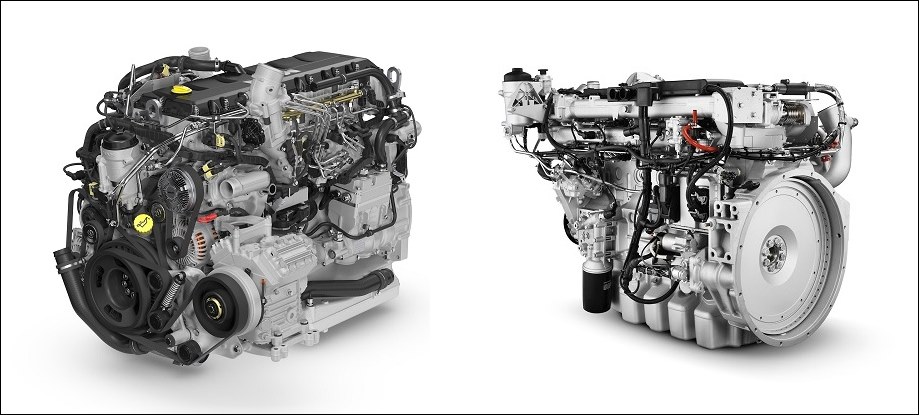
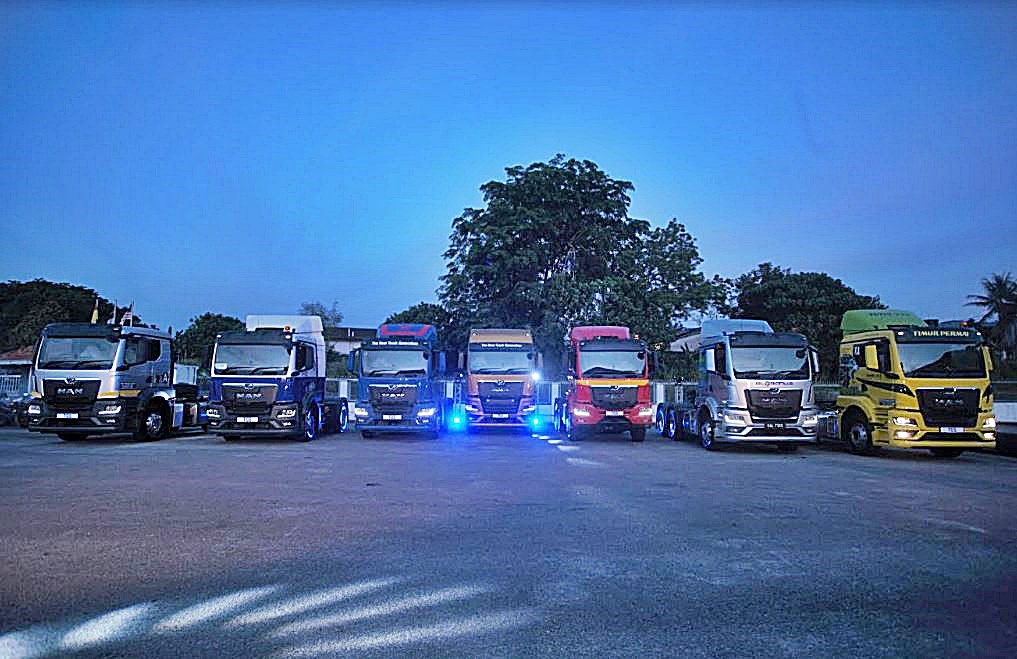
Euro 5 engines standard for full range MAN Malaysia is among the companies that has helped to put more environment-friendly buses on our roads. It is the first vehicle manufacturer in Malaysia to offer Euro 5 turbodiesel engines as standard across its entire truck range, meaning that the engines run on fuel with exceptionally low sulphur content. [Click here to read more about Euro 5 diesel]
Speaking at MAN BAGUS, an annual gathering for key players from the bus industry at its Serendah local assembly plant, MAN Malaysia Managing Director, Andrew O’Brooks, announced that the company plans to introduce a low-emission Euro 5 engine as an option in 2023 to help bus operators reduce their carbon footprint.
Mr. O’Brooks expressed confidence that bus operators in Malaysia would have the foresight to join the sustainability journey like many of their counterparts in the transport and logistics sector that did not hesitate to add the New MAN Truck Generation with Euro 5 engines as standard to their fleet.
“I believe that many will see the benefits of investing in a more sustainable, fuel efficient and low-emission vehicle for their fleets. With road transportation being a major contributor of emissions, all of us must do our part in helping reduce the industry’s carbon footprint if Malaysia if it is to achieve carbon neutral status by 2050,” he said.
“These are ground-breaking moves by MAN Malaysia as we continue to offer environment-friendly options to the transport industry as we lead the drive towards carbon neutral status for Malaysia by 2050. The introduction of Euro 5 engines and e-chassis will certainly differentiate MAN Bus offerings, which are already renowned for their quality, reliability, versatility and flexibility,” he added.
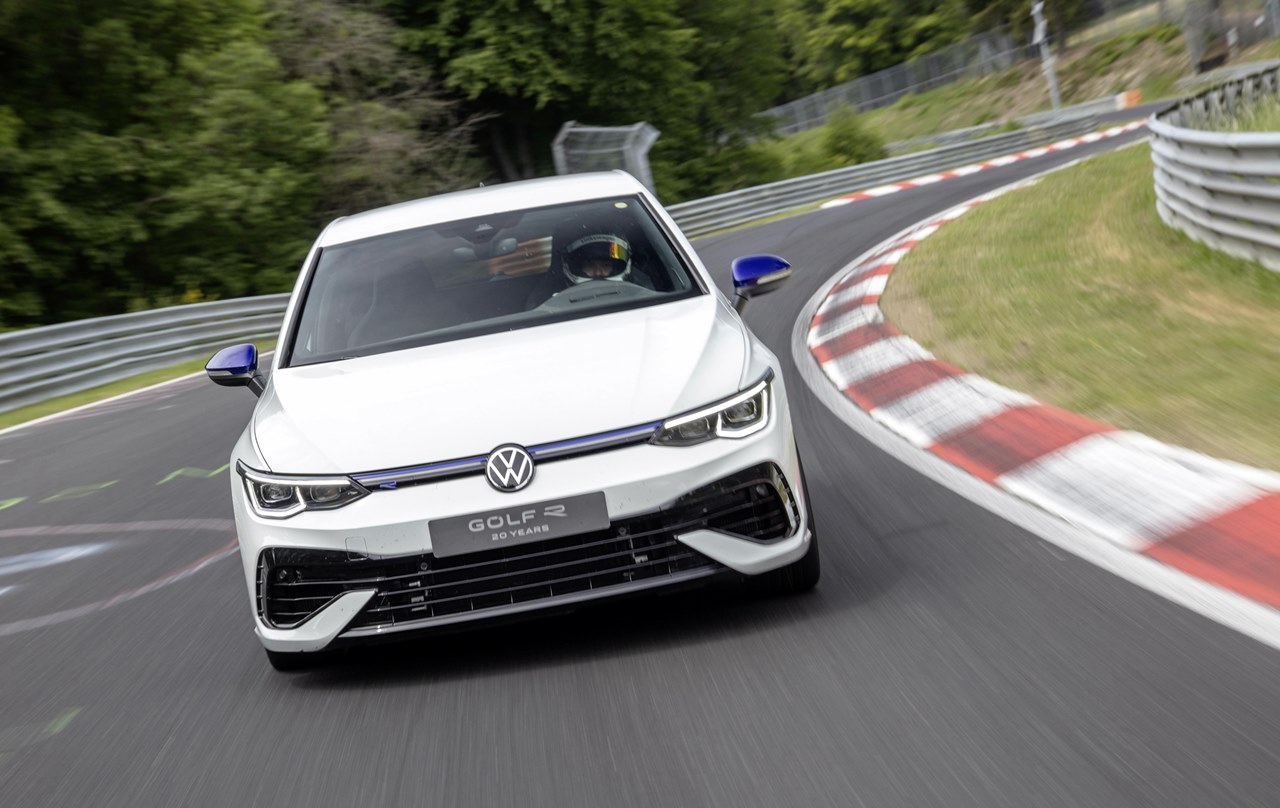
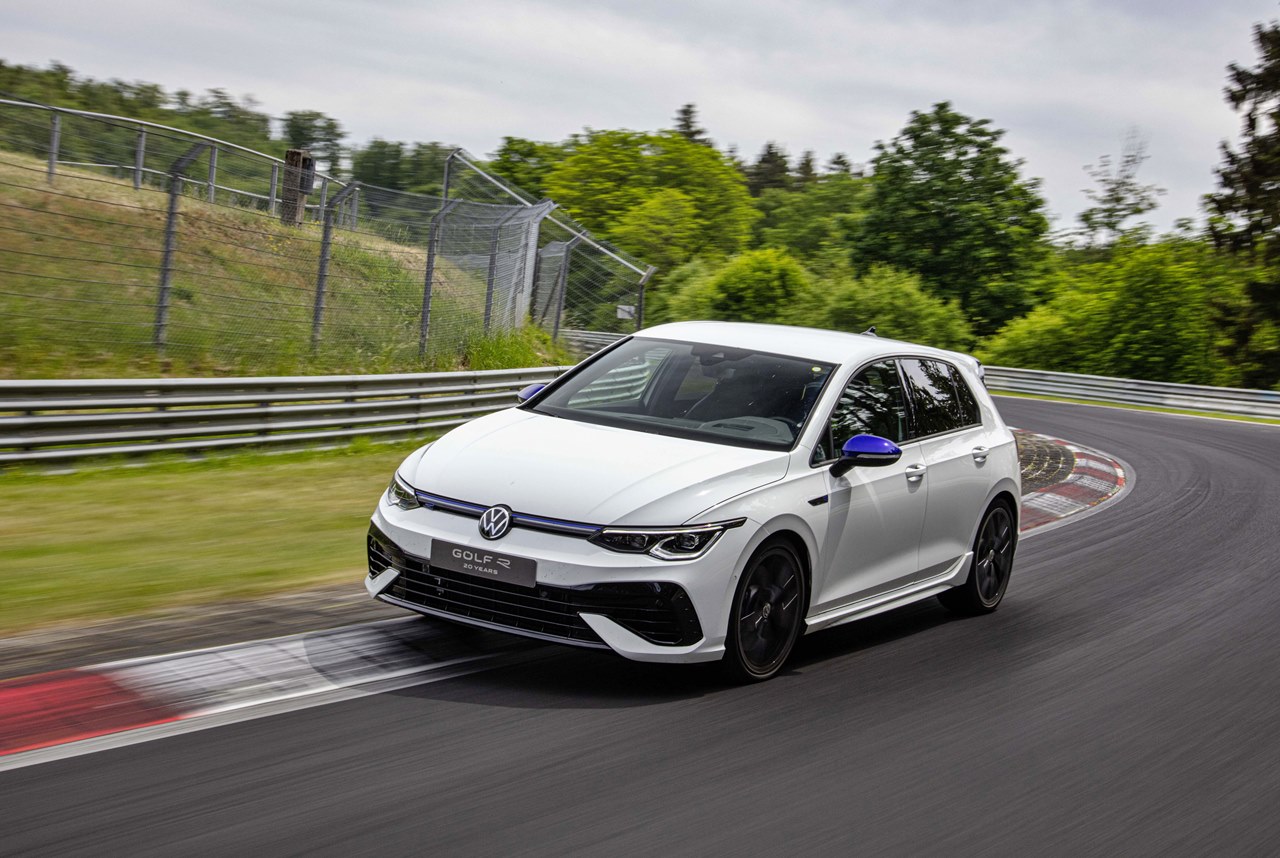
The Volkswagen Golf R celebrates its 20th anniversary this year and to mark this milestone, a Golf R “20 Years” became the fastest R model of all time on the famous Nurburgring-Nordschleife racetrack in Germany. The anniversary model bettered the previous lap record of a Golf R on the 20.832-km long course more by 4 seconds with its official lap time of 7:47.31 minutes.
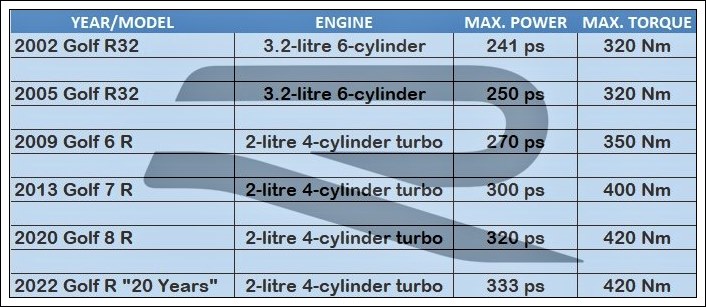
From 241 ps to 333 ps The achievement reflects how the Golf R’s performance – particularly engine output – has risen from the first model in 2002 which had 241 ps/320 Nm. It was known as the Golf R32 then and used a 3.2-litre 6-cylinder engine.
The Golf R “20 Years” delivers 333 ps/420 Nm from its 2-litre 4-cylinder turbocharged engine, 13.6 ps more than the latest Golf R. With this increase output, the Golf R “20 Years” is claimed to accelerate from 0 to 100 km/h in 4.6 seconds and can go faster than 270 km/h but is electronically limited to that top speed.
But it is not just the power of the turbocharged engine that makes the special-edition model the most dynamic Volkswagen R of all time on the Nordschleife. The clear increase in performance is also the result of the extensive standard equipment with technical highlights such as the R-Performance package, Driving Dynamics Manager and R-Performance Torque Vectoring.
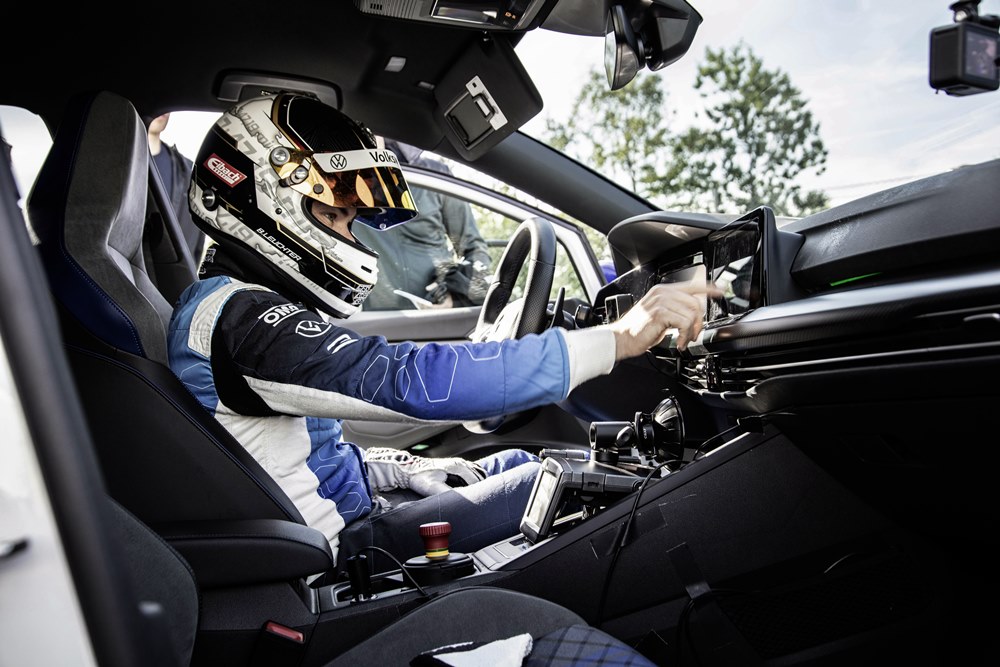
The record was set by touring car racing driver and Volkswagen R development driver, Benjamin Leuchter, who actively involved in the development of the R-Performance package for the Golf R “20 Years”.
Custom driving profile Alongside the regular ‘Comfort’, ‘Sport’ and ‘Race’ driving profiles, the special-edition model also comes as standard with the additional ‘Special’ and ‘Drift’ profiles. For racing around the Nordschleife, the driver chose the ‘Special’ profile which was developed specially for the track.
This profile gives the Golf R a set-up that meets the unique requirements of what is probably the most demanding racetrack in the world. This includes adjusting the shock absorbers to a more soft and comfortable setting due to the enormous loads at the maximum performance level when driving on such tracks.
As one of the 15 possible settings of the controlled shock absorbers, this guarantees optimum road contact on tracks with a large number of bumps, just like the Nurburgring. Together with the adapted steering wheel and drive settings, this makes it possible to take the large number of fast and medium-fast bends on the Nordschleife in an ideal way.
The modified shift characteristics of the 7-speed gearbox allow gear changes with more intensive. The optimised exhaust system sound in the low engine speed range and the rougher engine sound in the cabin underlined the car’s increased dynamic performance.
Enhanced engine tuning The step forward in development compared with the predecessor model is also shown by the enhanced engine tuning of the Volkswagen Golf R anniversary vehicle. The preloaded turbocharger is also kept at a constant speed in overrun mode so that the engine can develop its power more quickly in subsequent acceleration. This process is supported by the continuously open throttle valve. When the driver takes his foot off the accelerator and then accelerates again, this allows faster build-up of the torque and noticeably improves the engine’s responsiveness.
“With this car, I can drive here on the Nurburgring and the next stop is then the baker’s shop or the DIY store. The car is really an all-rounder that can do everything,” said a visibly impressed Leuchter. That’s exactly the concept pursued by Volkswagen R which has developed models as Volkswagen’s premium performance brand since 2002.
After conducting more than 5,000 interviews and dozens of customer workshops around the planet, Ford designers had a good idea of what was required and expected from the next-gen Ranger. Customers and owners told them that they wanted a flexible, modern cockpit that would cater to both work and family duties, with smart and connected features and a high level of well-integrated technology.
The result is the smartest Ranger ever, with an enhanced user experience that means owners can transition seamlessly from home or work to their vehicle. With customer focussed technology, the next-gen Ranger pushes the boundaries of what a smart pick-up should be.
Key Technology Features
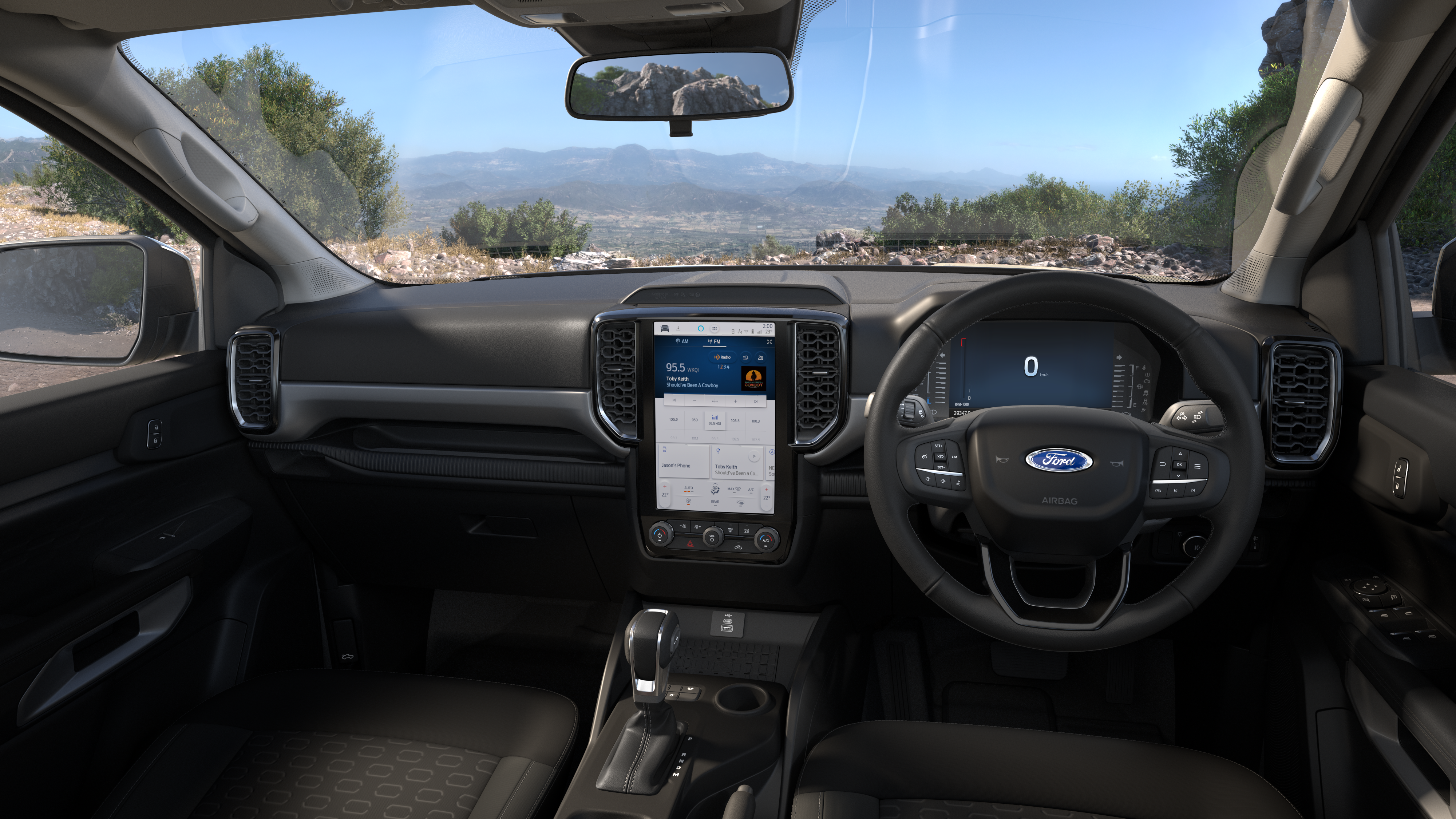
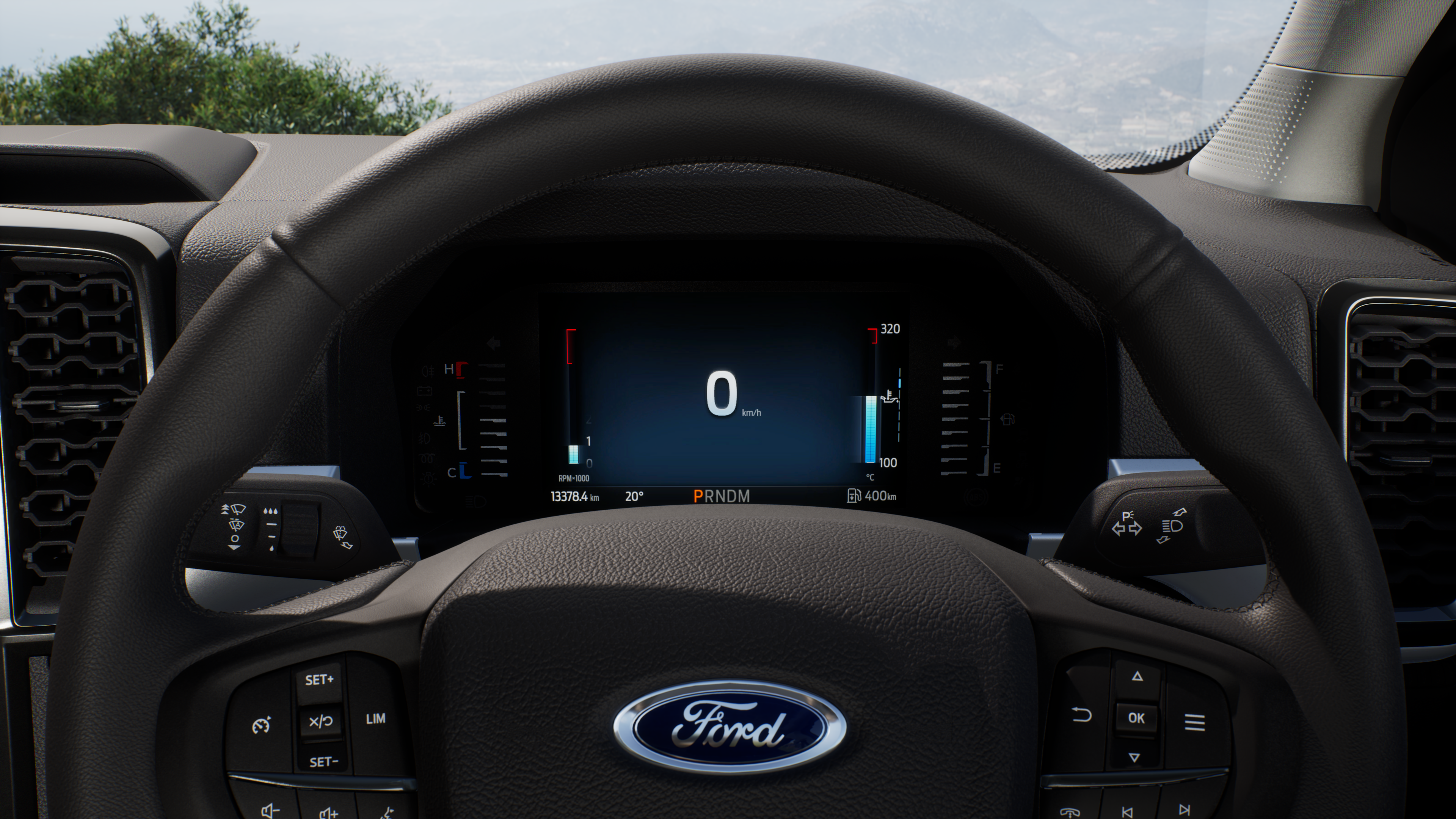
Digital Display The physical instrument panel that used to house things like the speedometer and tachometer was always limiting in the amount of information it could provide the driver. With the next-gen Ranger, that’s replaced by an 8-inch digital instrument panel that can be customised.
These displays show a start-up and farewell animation and a digital speedometer and tachometer, while the graphics feature realistic body-style avatars. Depending on the variant, the driver can switch between layouts to show additional information like the driver-assist technologies. And for those times when he or she wants to focus on driving, there’s also a ‘calm view’ which minimises the information shown to the minimum necessary for safety.
The panel is also matched to the various on-road and off-road driving models, showing a different theme so the driver knows at a glance what’s been selected. The mode changes also have animations as the driver scrolls from one to the other.
Smarter, Intuitive Connectivity At the heart of the next-gen Ranger’s technology story is the SYNC 4A communications and entertainment system. SYNC 4 brings new levels of connectivity and voice recognition seamless for a personalized driving experience while delivering easy smartphone integration. Wireless Apple CarPlay and Android Auto enables favourite apps (eg Waze and Spotify) from compatible smartphones to be transferred onto the display where they can be used.
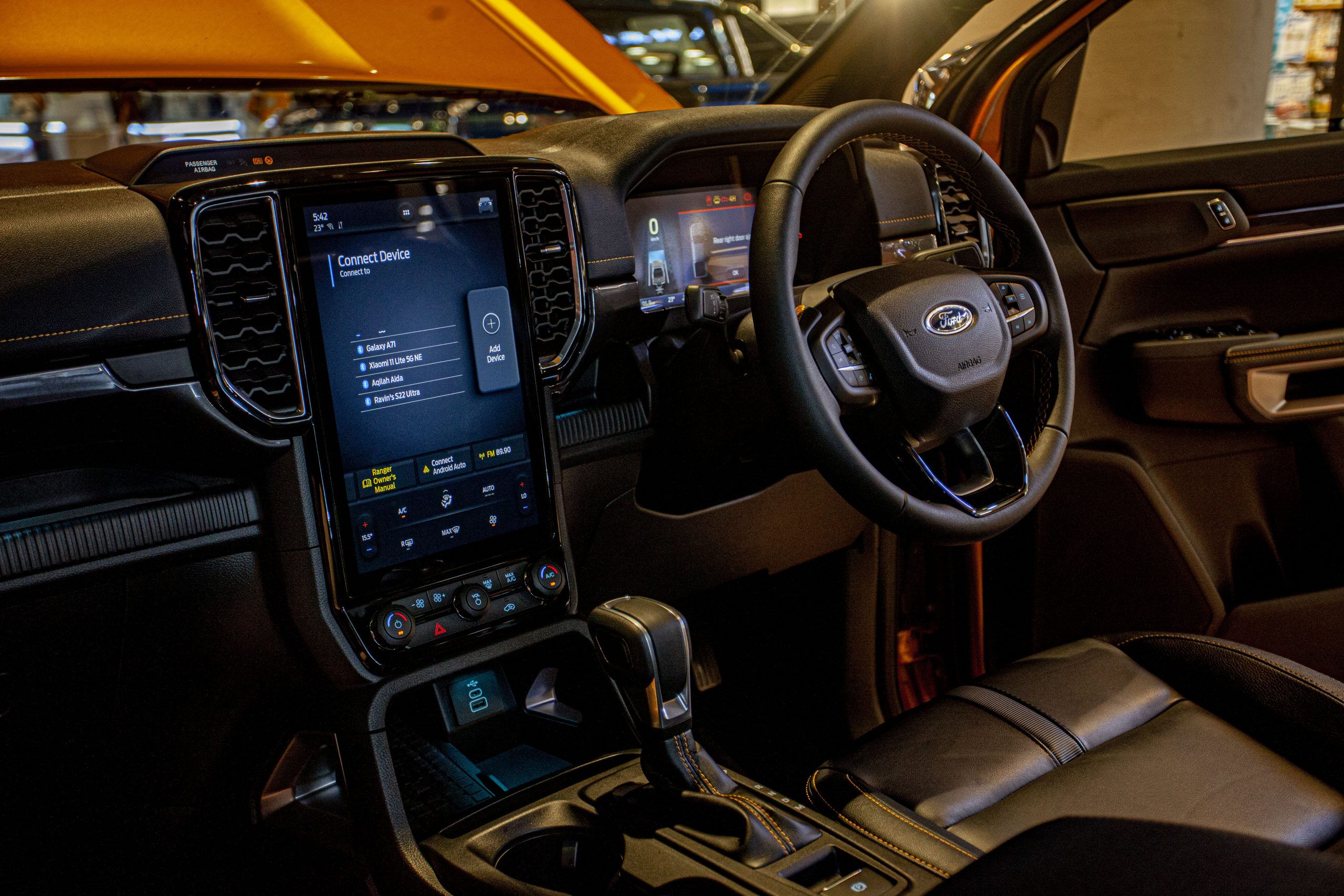
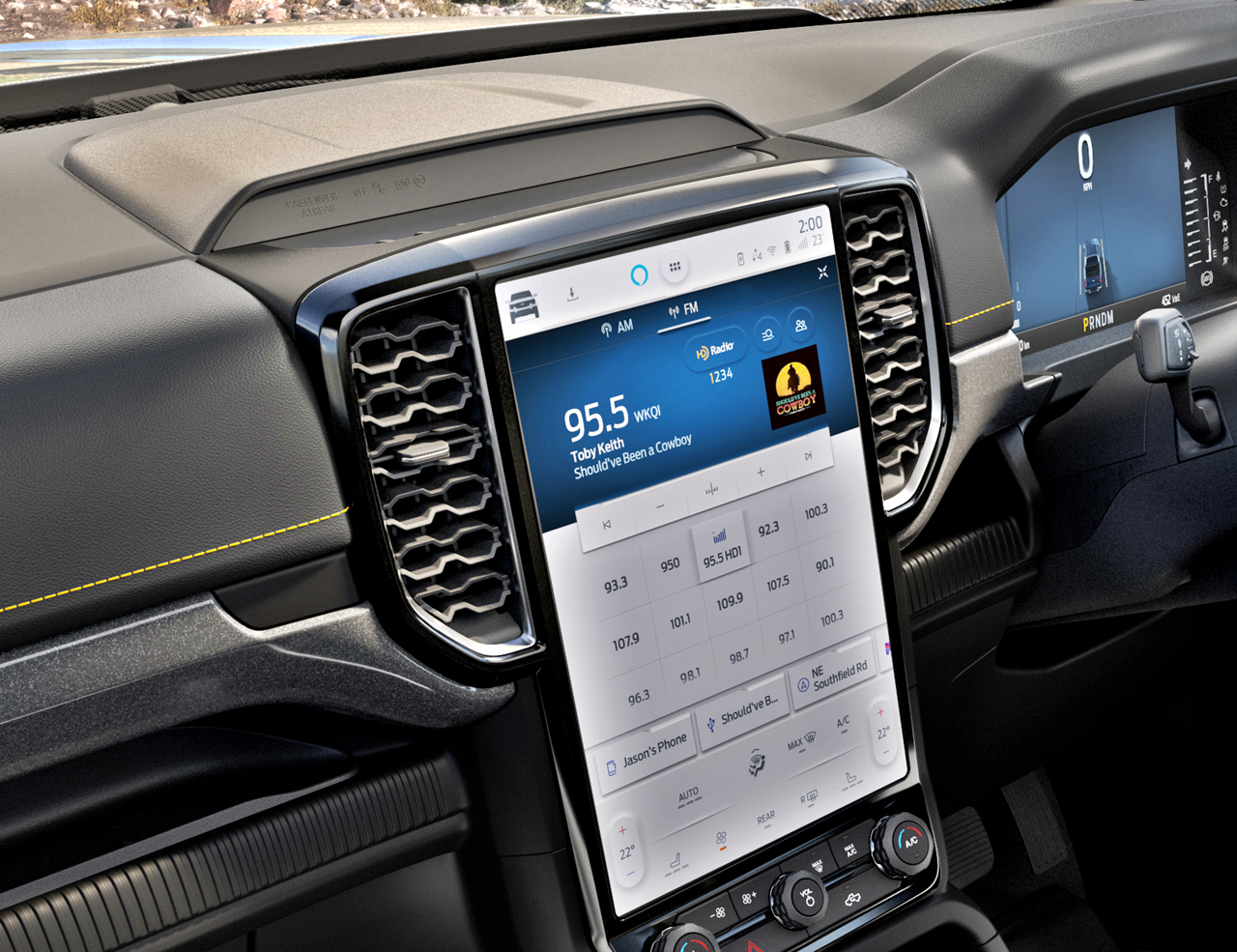
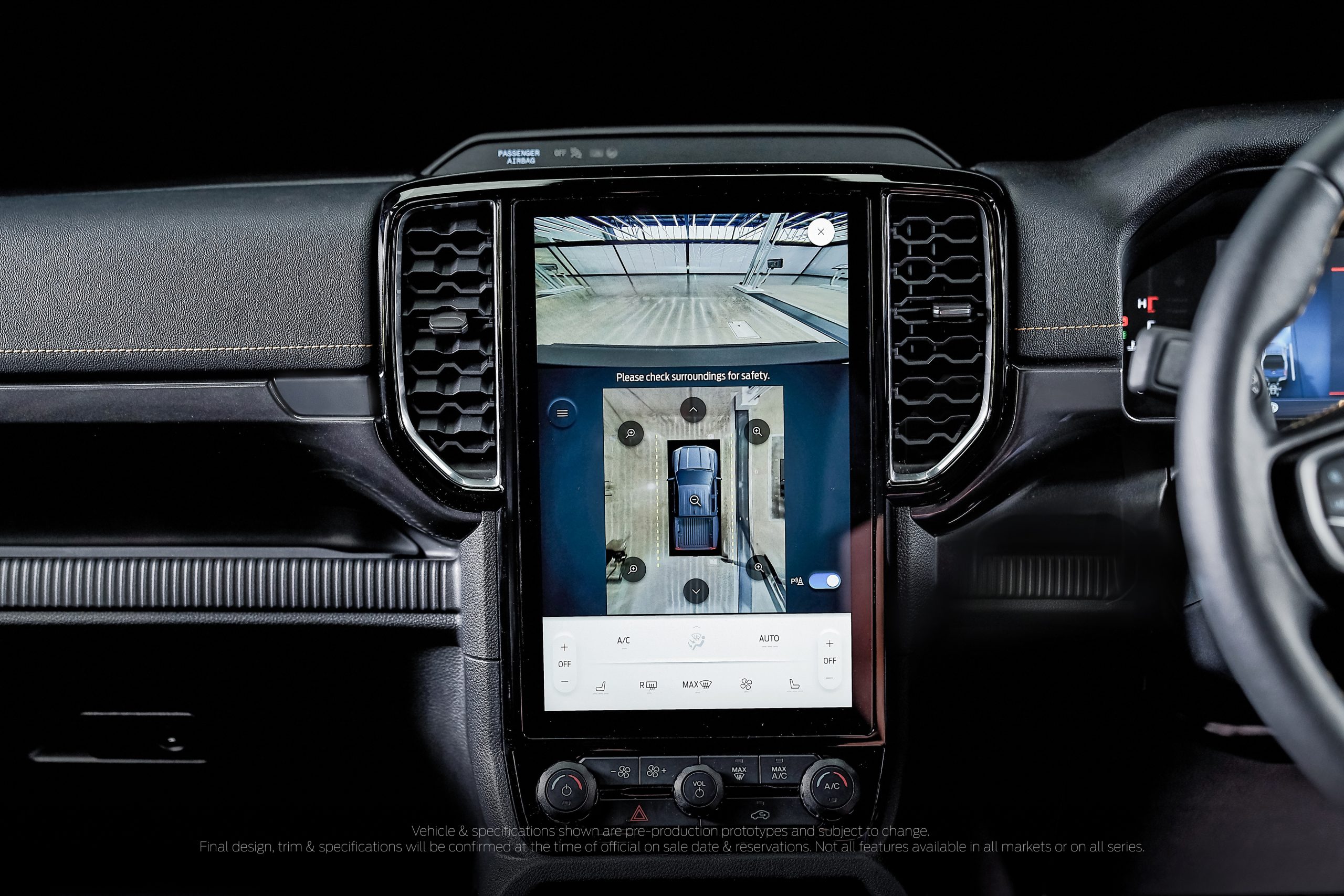
Big Screen The centrally located infotainment screen is mounted portrait style, with a 10.1-inch or a best-in-class 12-inch size (depending on the variant). The design team chose a large-format tablet screen because it allowed for a good depiction of navigation with room to spare lower down.
Its extra height allows a customisable split-screen set-up with an information-on-demand panel always visible at the bottom of the screen. This displays key information, the user’s connected smartphone and more.
Fewer Buttons, More Capability In line with the digital instrument panel, many of the traditional driving mode controls have been moved from the dashboard and centre console to a dedicated display on the SYNC screen. Depending on the variant, for example, with one button press, the driver can go to Ranger’s dedicated off-road screen where he can monitor the driveline, steering angle, vehicle pitch, roll angles and other controls.
The cabin temperature and ventilation as well as entertainment can be controlled via the SYNC screen too. Additional physical controls mounted just below the screen allow for quick and easy adjustments.
Look All Around The next-gen Ranger is long and large but that’s no issue as a 360-degree camera allows the driver to see all round and even from above with a simulated view. This makes parking easy in tight spots or even when moving over tricky terrain while travelling off-road.
Electric Parking Brake Along with other mechanical elements, the traditional handbrake lever is also gone in the next-gen Ranger Wildtrak. In its place is a first-in-class electric parking brake for a more high-tech feel. Not only does it free up space on the centre console but it also requires very little effort to use (just one finger).
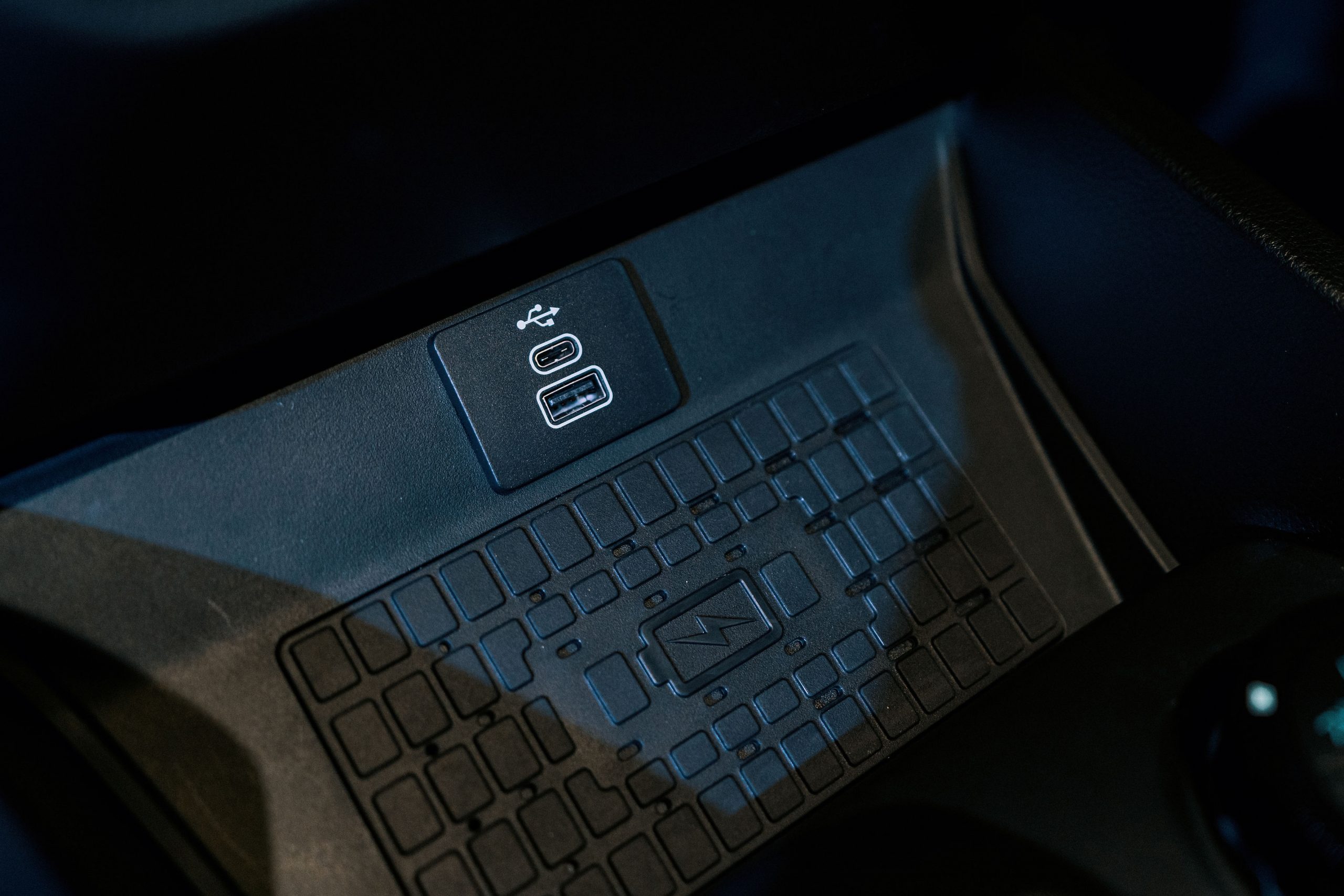
Charged And Ready Always The next-gen Ranger comes with power sockets to charge or supply electricity to many different devices. Compatible smartphones with wireless charging capability can be placed on a charging pad at the base of the centre console, or connected via a cable to a USB port. There are also 12V/240V sockets and a 150W inverter to provide power for laptops and other devices. Depending on the variant, located at the side of the cargo deck, there are 400W and 12V sockets to power camping gear.
With more and more drivers using dashcams to keep a record of their journeys, the designers thoughtfully installed a USB port at the top of the windscreen. It’s located adjacent to the rearview mirror so there’s no cable dangling down. This Type-A USB outlet converts 12V power into 5V USB output suitable for an external GPS or dash camera. It also can be used to charge a smartphone (but isn’t connected to the SYNC 4A system).
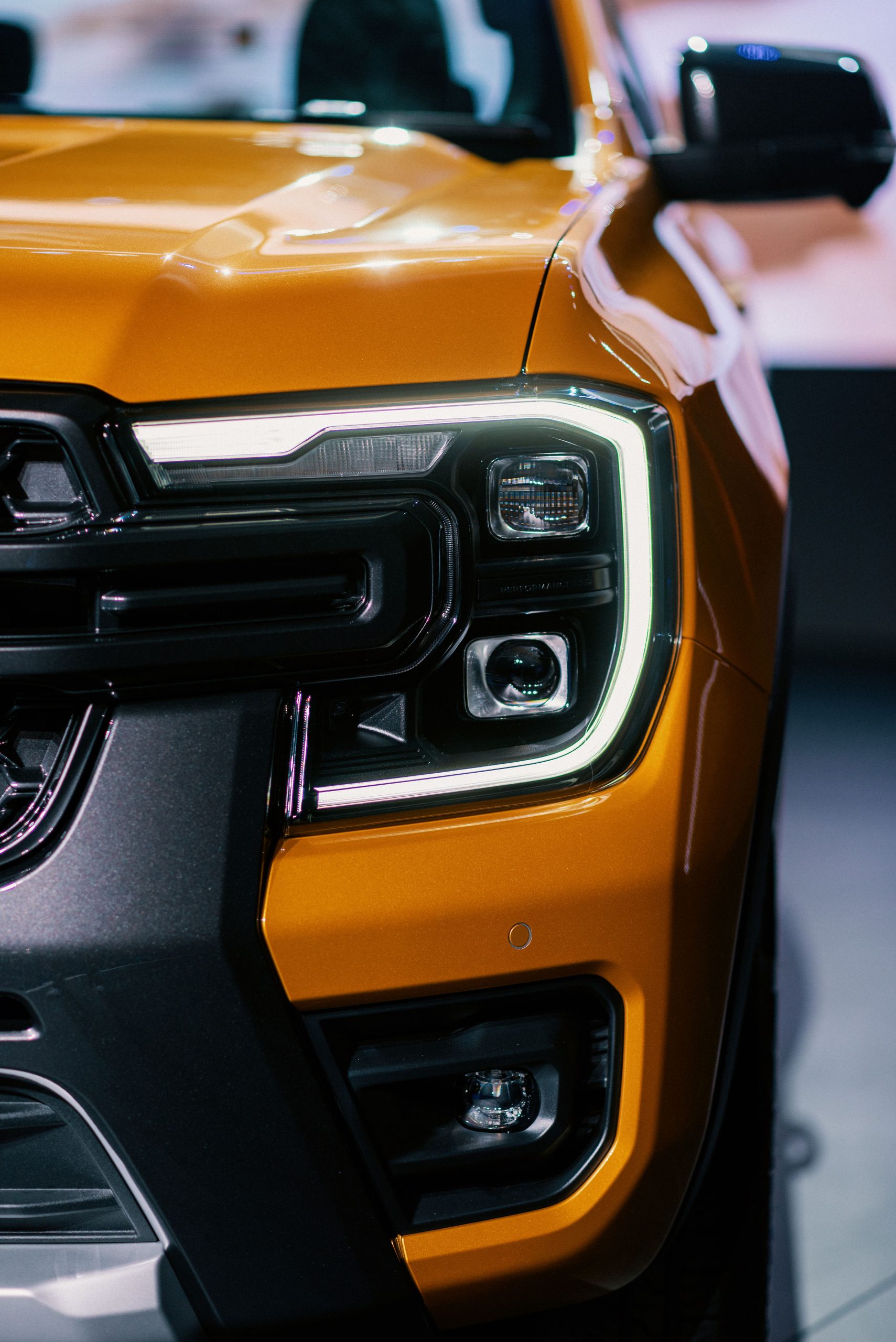
Let There Be Light The segment-first Matrix LED headlights (on the Ranger Wildtrak) not only have the high-tech look but also many clever features. These include auto dynamic levelling and speed-dependent lighting that can adjust the intensity of the beam in front of the vehicle depending on the speed at which you’re travelling.
The headlights also offer both static and dynamic bending capability as well as glare-free high-beams, which help block light that could otherwise temporarily blind other drivers and cyclists. That means maximum illumination is provided whenever it is possible without disturbing other road-users.
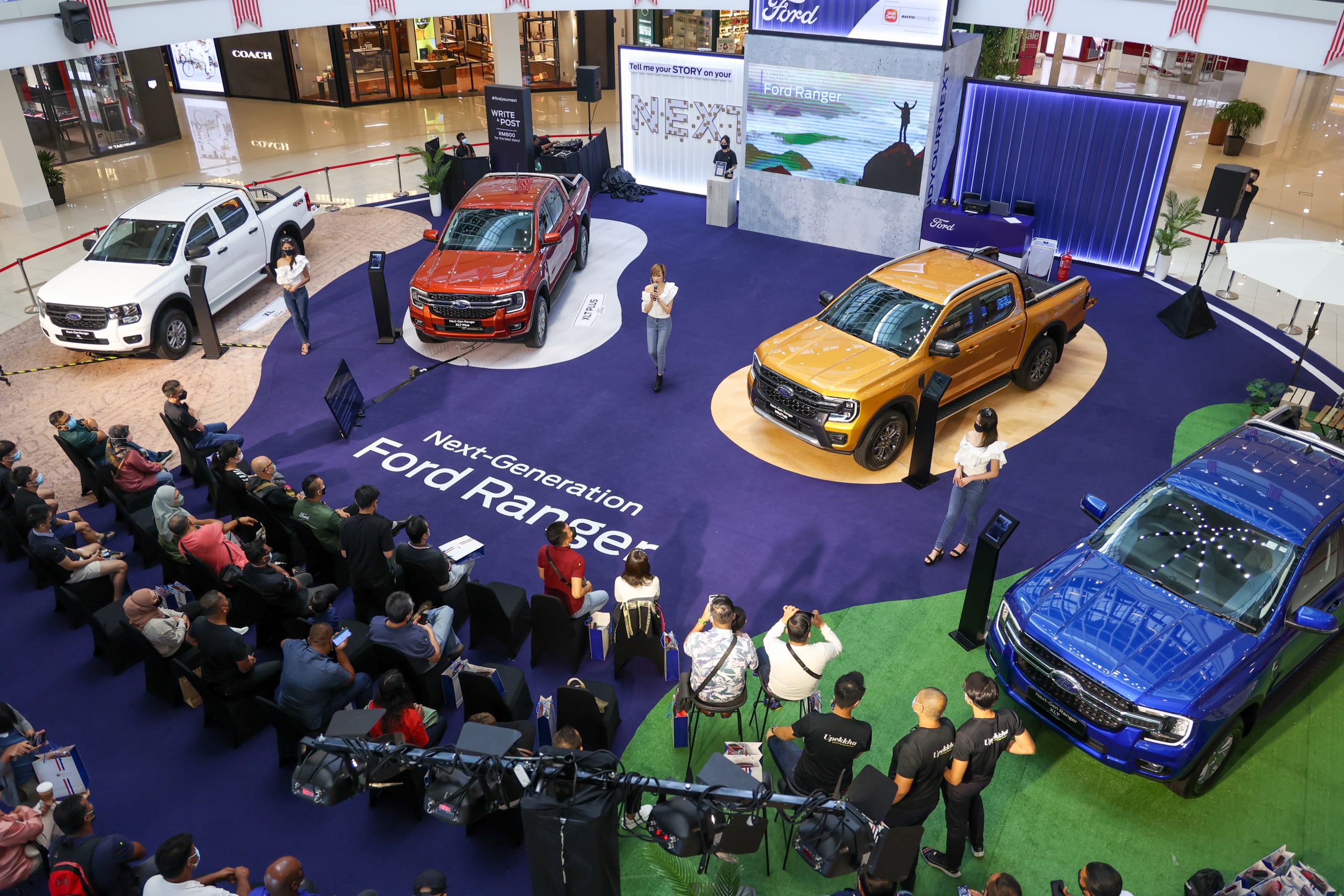
Join the Debut Tour The next-generation Ranger has been making a debut tour since its first public appearance last month. Sime Darby Auto ConneXion (SDAC), the sole distributor for Ford in Malaysia, is offering previews at a series of events around the country over 5 weekends. These include events in Kuching on September 7 -11 at Vivacity Megamall, and at the Suria Sabah Shopping Centre, Kota Kinabalu on October 5 – 9.
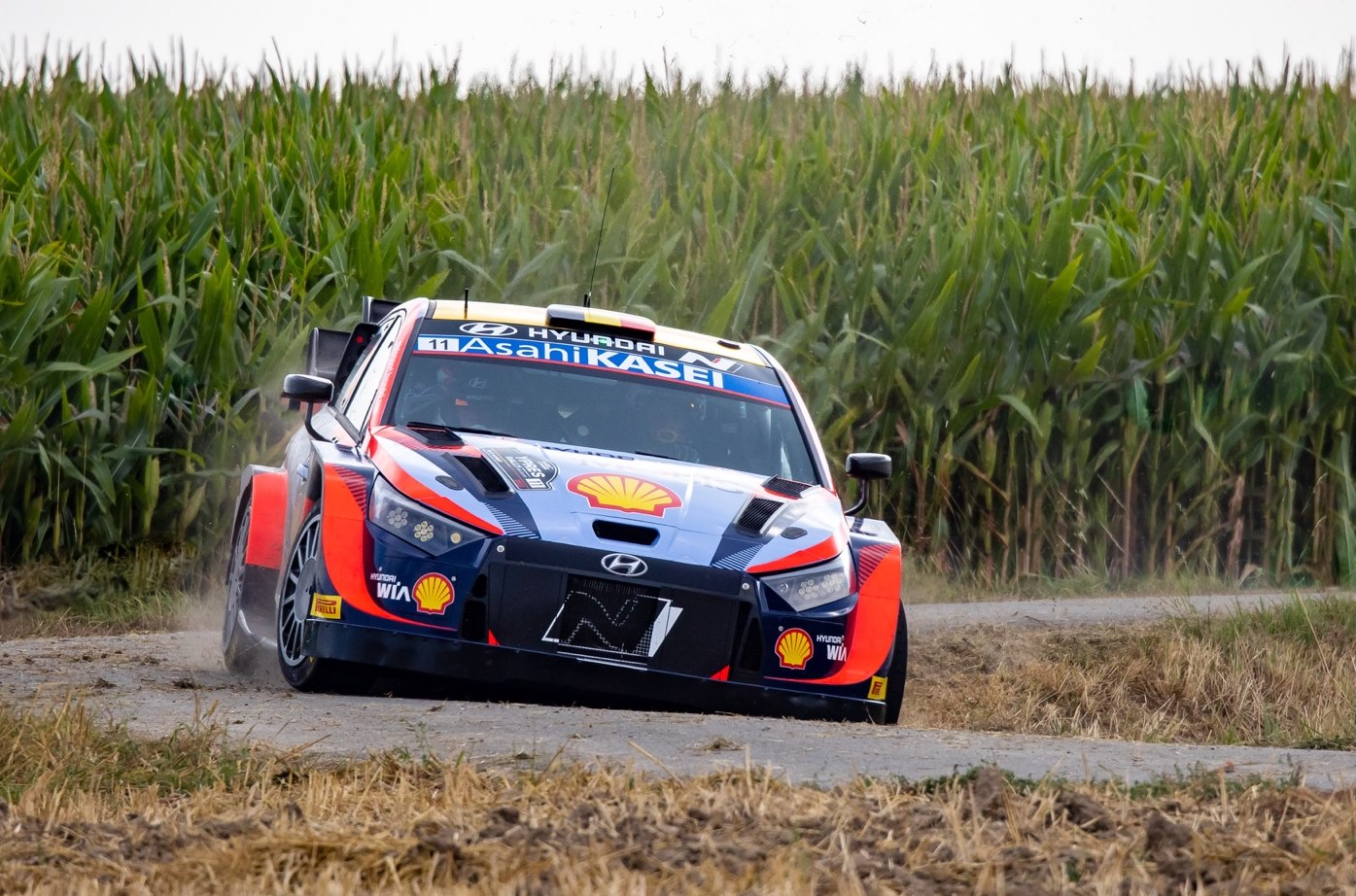
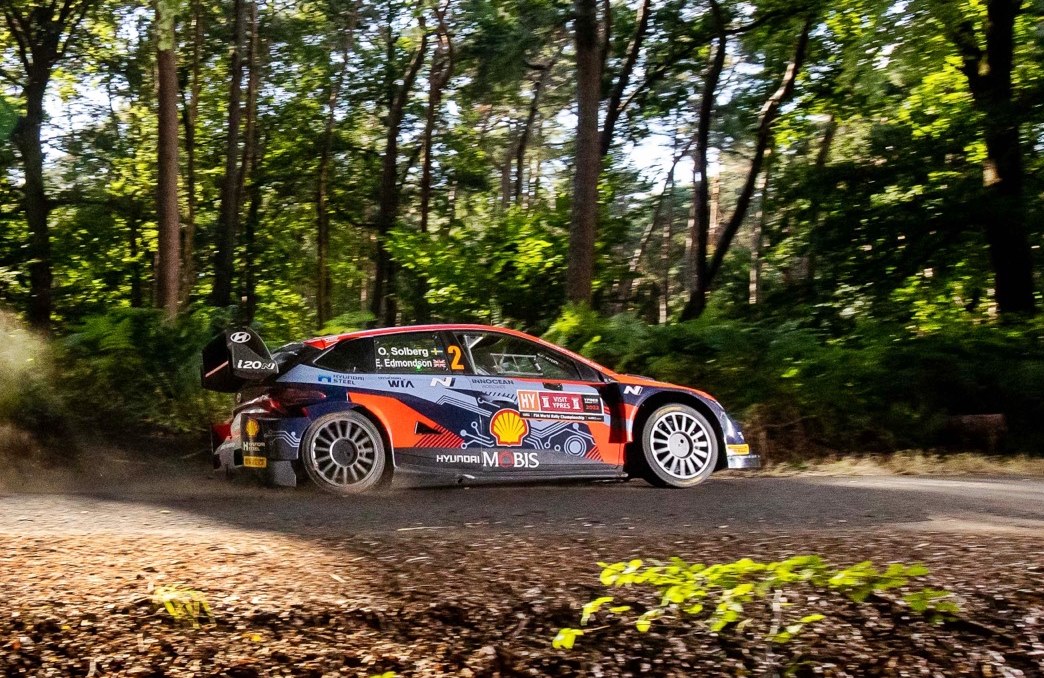
The Hyundai Motorsport team scored another WRC victory at the Ypres Rally Belgium as Ott Tanak took his Hyundai i20N Rally1 to win with a 5-second margin. The Estonian driver, co-driven by compatriot Martin Jarveoja, inherited the top spot late on the penultimate day when his team-mate and long-time leader Thierry Neuville understeered off the road and into a ditch, shattering the Belgian’s hopes of a repeat home win.
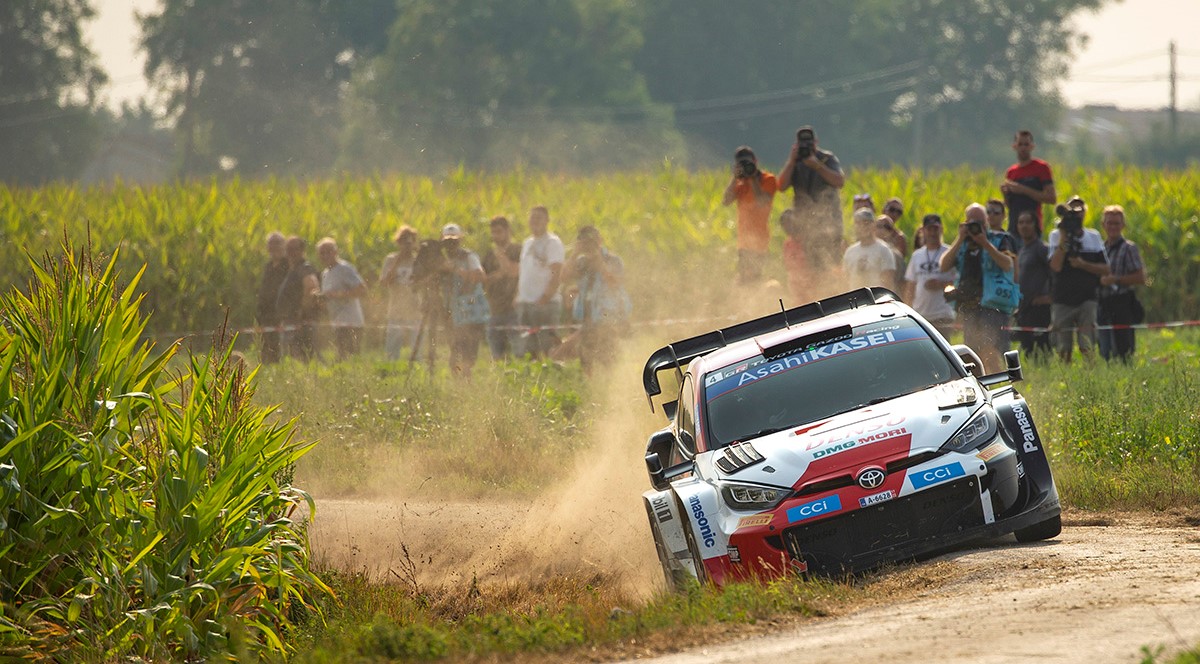
Tanak, who had also won the last round in Finland earlier this month, carried an 8.2-second buffer over Elfyn Evans (Toyota GR Yaris Rally1) into Sunday’s final leg, which comprised 4 short and sharp asphalt stages in the Flanders region. Although Evans did not make things easy for the leader, with two fastest time times on the opening stages, he was still unable to close the gap.
Tanak’s success reduces the gap with championship leader Kalle Rovanpera. The Toyota GAZOO Racing driver got nothing from this rally as he rolled his hybrid rallycar out of contention on Friday morning. The 21-year-old Finn was, however, able to collect 5 Wolf Power Stage bonus points and, with 72 points, remains on track to become the youngest WRC champion in history.
The two Hyundai wins have not managed to take the team any higher and the Manufacturers’ championship situation remains unchanged. The Hyundai Shell Mobis World Rally Team remains behind Toyota GAZOO Racing WRT with an 88-point gap. In third is the M-SPORT Ford World Rally Team, 191 points behind the leader.
“To win here is a big surprise for us – more or less the same as it was in Finland,” said Tanak. “We didn’t expect it from anywhere basically, but somehow we were able to pull it together during the rally. It’s great to see that some WRC results are coming, but there is so much we can improve and we could still be a lot stronger, so there is still some work to do.”
For Evans, it was a case of what could have been. He gave away valuable seconds on Friday when a slow puncture forced him to run a wet weather tyre in dry conditions. He was also lumbered with a 10-second time penalty for arriving late to SS8. Without that, the outcome could have been different.
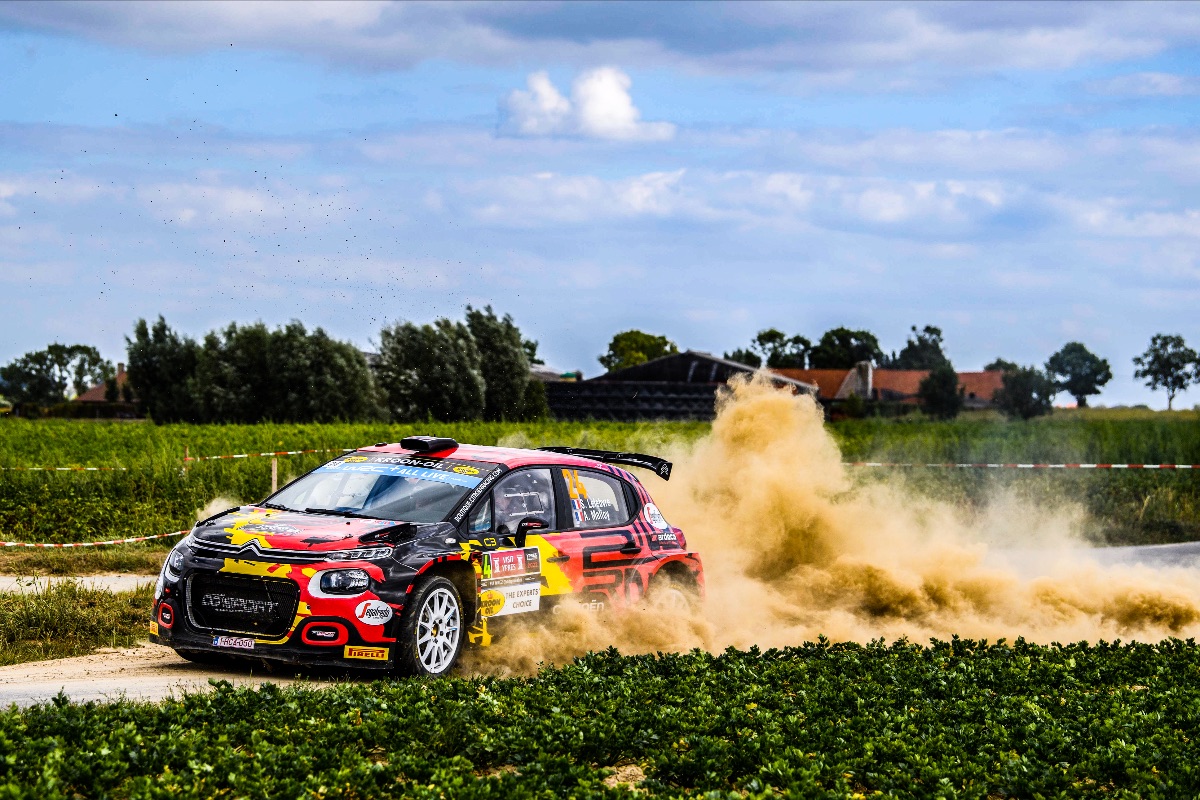
Rally2 & Rally3 WRC Rally2 cars also finished within the top 10, with FIA WRC2 victor Stephane Lefebvre leading the charge in a DG Sport Citroen C3 Rally2 ahead of Andreas Mikkelsen (Toksport WRT Skoda Fabia Rally2 Evo, Yohan Rossel (PH Sport Citroen) and Chris Ingram (Toksport Skoda), who won the WRC2 Junior division. Armin Kremer took WRC2 Masters glory, while Jan Cerny topped WRC3 in a Ford Fiesta Rally3.
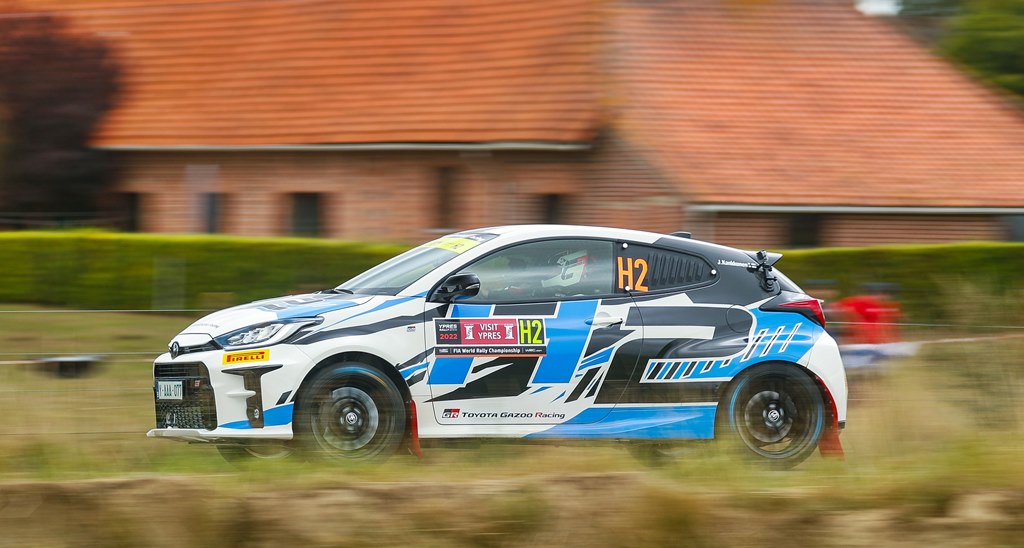
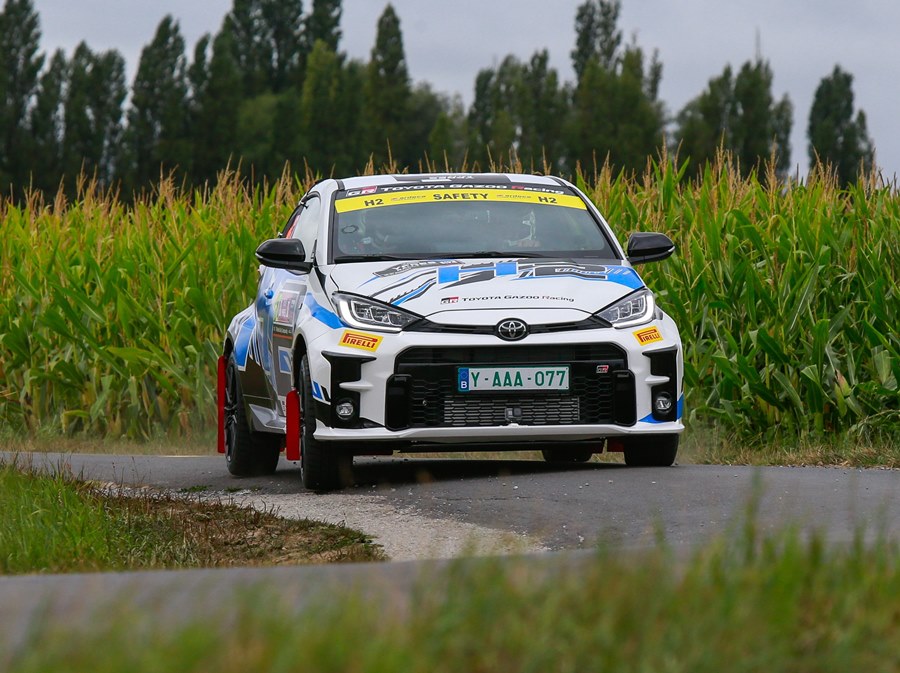
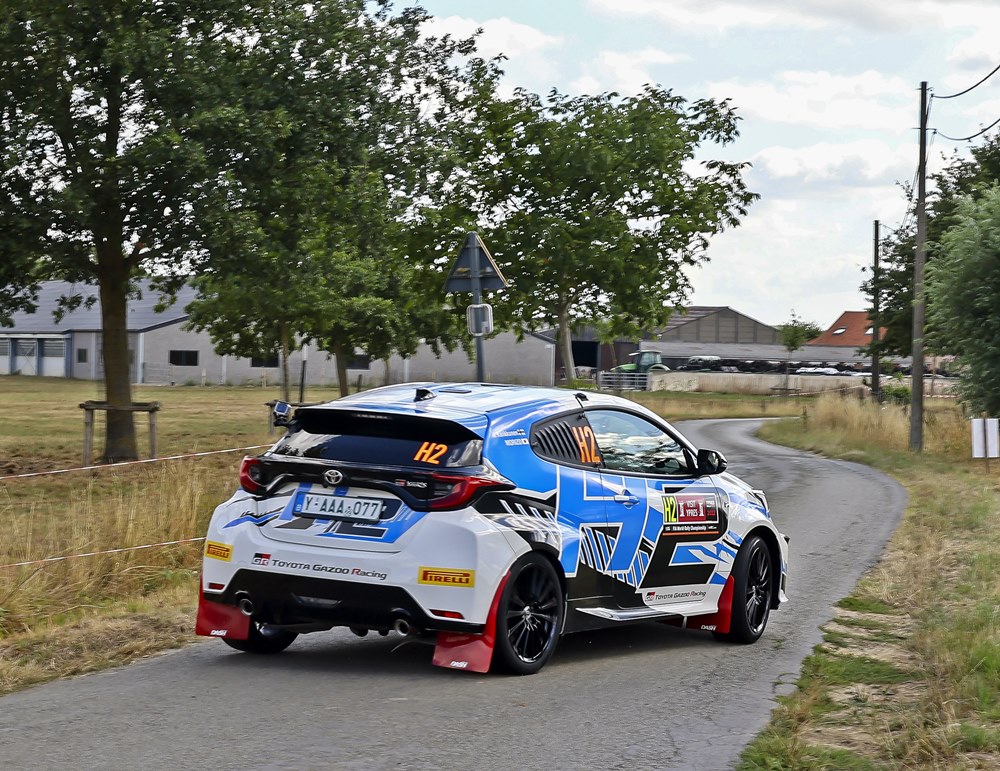
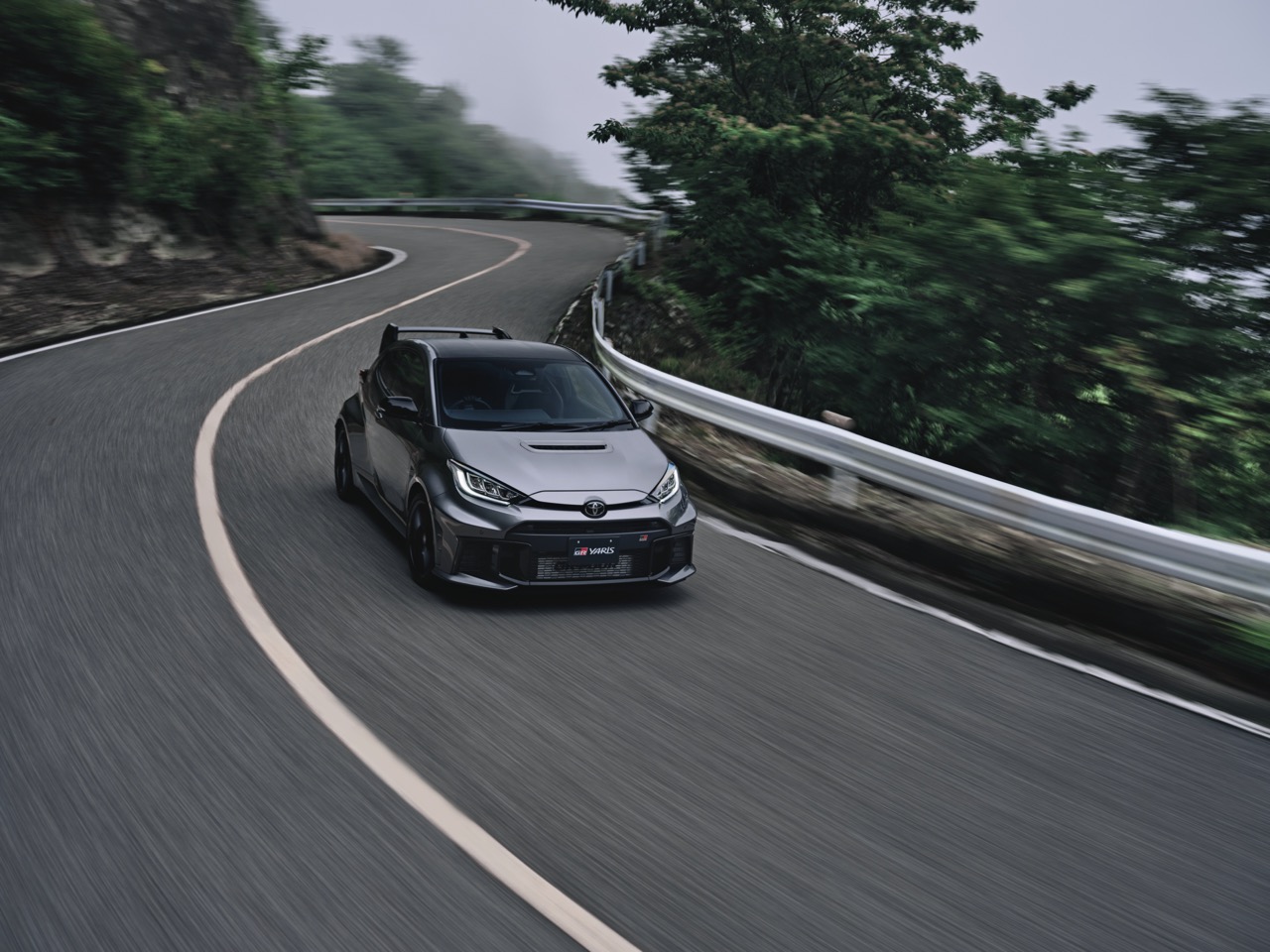
Public debut of hydrogen-fuelled Yaris The public debut of the Toyota GR Yaris H2 concept took place on the stages in Belgium, and was completed by Toyota rally legend Juha Kankkunen driving the Power Stage ahead of the competitive field in the hydrogen-fuelled car.
The rally was the first time for Toyota to drive an under-development hydrogen-engine vehicle on public roads outside Japan. The GR Yaris H2 served as a testcar and ran ahead of a Safety Car that confirms safe conditions before the start. After driving the GR Yaris H2 himself on Saturday, Team Founder Akio Toyoda had the chance to ride alongside Kankkunen.
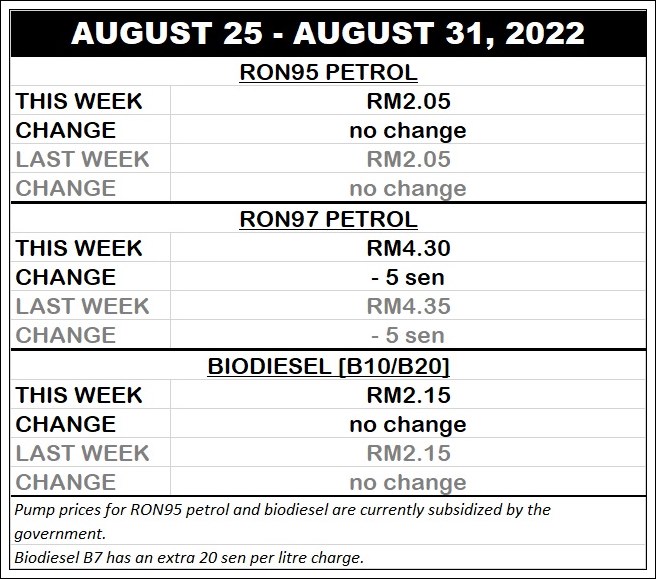
Fuel price updates for coming 7 days – another 5 sen drop in the pump price of RON97 petrol to bring the price per litre to RM4.30. Other grades unchanged. New fuel price effective after midnight today.
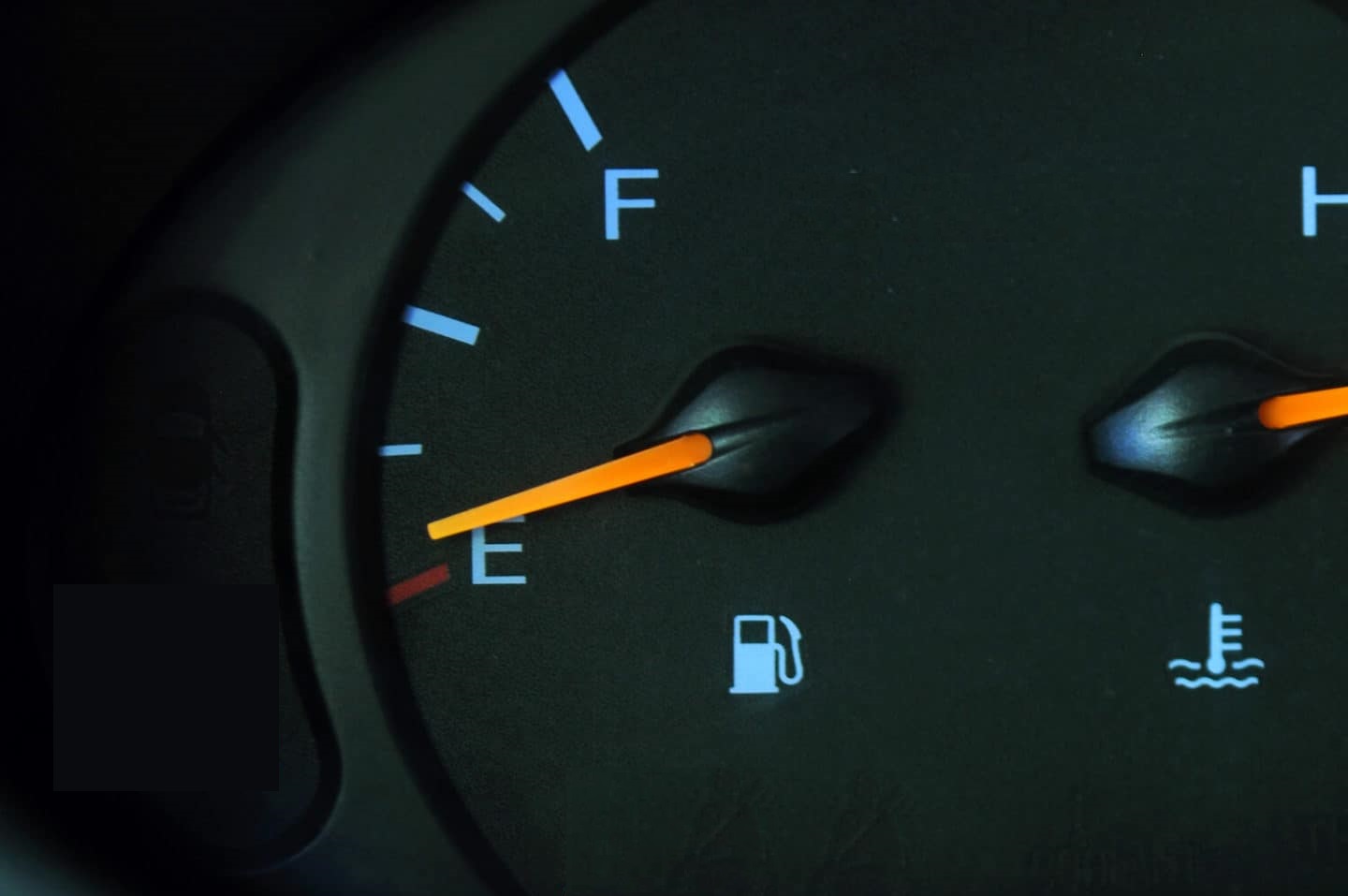
Right tyre pressures: Under-inflated tyres will cause more rolling resistance (not to mention faster wear) which will worsen fuel consumption. Be sure they are inflated to the minimum recommended by the manufacturer and a bit more might also be better.
Service the engine regularly: Engine parts wear out or get dirty over time and reduce the operating efficiency of the engine. Regular servicing ensures that adjustments are set correctly and periodically, parts like filters or sparkplugs need to be replaced.
Slow and steady: You don’t have to drive at a crawl to save fuel but if you just drive more frequently at 80/90 km/h instead of 100/110 km/h, you could save 10 to 15% in fuel. Keeping a steady speed rather than ‘pumping‘ the pedal will also save on fuel.
Plan trips: If you have different places to go on a single journey, spend a few minutes to think about the route so that you avoid congested areas. You may have to travel a few extra kilometres using a less congested route but you will actually use less fuel because the car won’t be stuck in a jam burning fuel going nowhere. Plus you will probably be less stressed out when you reach your destination.
Switch off the engine more: Many motorists do not fully realize that the engine is burning fuel every second it is running. They will keep the engine running for long periods while waiting for someone to buy things or waiting for their children to come out from school. This is very wasteful and running the air-conditioner at the same time wastes more fuel. Switch off the engine when you are going to be stationary for more than 5 minutes and you’ll find your fuel consumption improving.
Don’t carry unnecessary weight: The less weight your car has to move, the less hard the engine has to work. So whatever you do not need to keep in the boot should be taken out. This includes those golfbags.
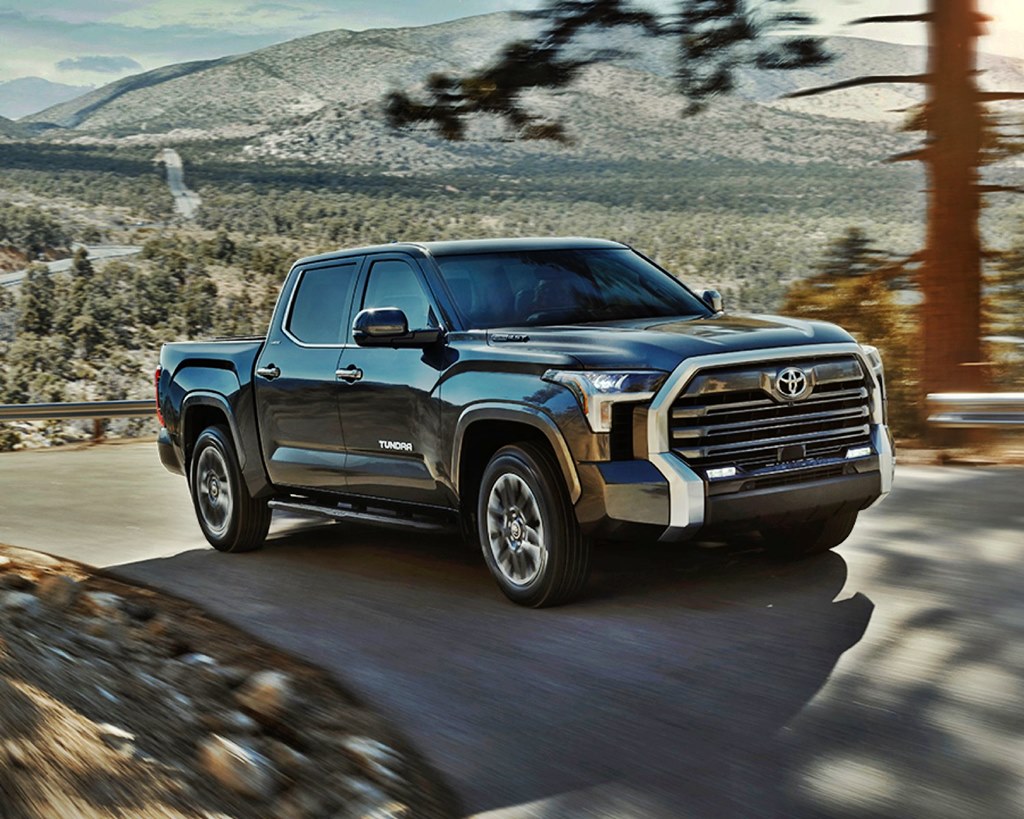
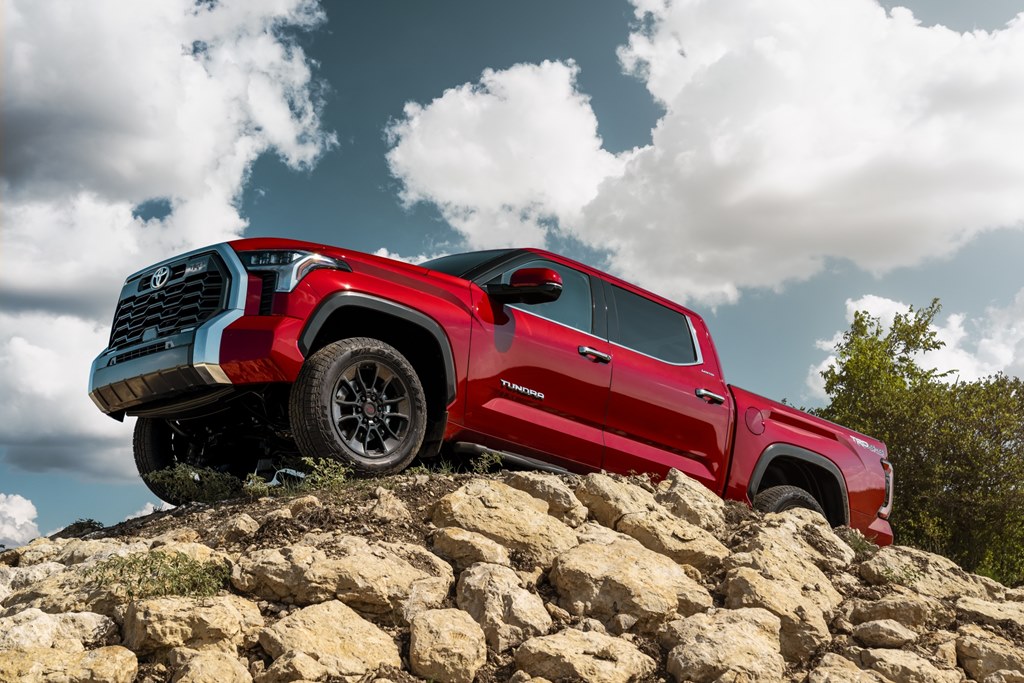
The Tundra is a pick-up model Toyota developed specially for the North American market and also manufactures it there. As a full-size truck, it is Toyota’s challenger in the world’s largest pick-up truck market. However, because it has been sold almost entirely in North America since being introduced in 1999, it has remained as a lefthand drive (LHD) model, limiting export potential in some ways.
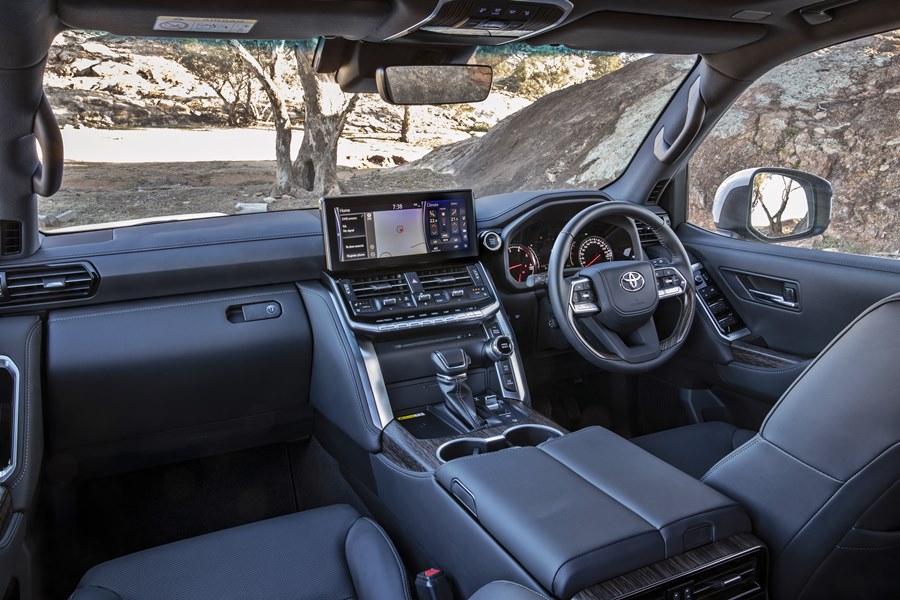
Now Toyota has decided that it will also offer a Tundra with righthand drive (RHD), which means it can become a global model. A RHD variant is not merely a case of moving the driver’s seat and steering wheel to the right side and requires an engineering program that is extensive. It might not be as extensive as developing a brand new model as much of the basic architecture has been done but it is also not as simple as it may seem.
It won’t be the first time that Toyota has converted a LHD model into a RHD one as it also did the same with the Chevrolet Cavalier in the late 1990s. Back then, as a favour to General Motors, Toyota agreed to take the Cavalier and sell it in Japan as a Toyota Cavalier. To do so meant re-engineering it to be RHD, a task which the engineers found challenging. Besides moving the steering wheel to the right side, there were also little details that needed to be altered to conform to Japanese regulations.
This time round, for the Tundra, Toyota is working Walkinshaw Automotive Group and has assigned Toyota Australia to lead the project. Since ending manufacturing activities in Australia in 2017, Toyota has given its Australian operations a role as one of its global R&D centres. With the wide open spaces and varied local terrain, it is an ideal region for testing prototypes.
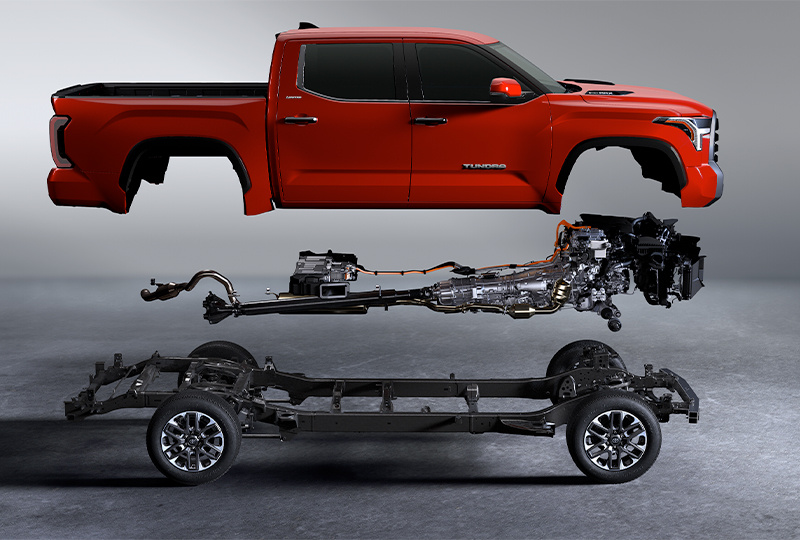
The RHD Tundra will use components from the Land Cruiser 300.
Parts from Land Cruiser 300 The program with the Walkinshaw Automotive Group is expected to set a new benchmark in Australia for the re-engineering of a full-sized pick-up truck from LHD to RHD. It will include the adoption of key components from Toyota’s comprehensive global parts catalogue, including the steering column and rack, accelerator, brake pedals and shift lever from the Land Cruiser 300 platform, with which the Tundrsa shares the same TNGA platform.
The vehicles will be equipped with a new inline hybrid system that has a twin-turbo 3.5-litre petrol V6 engine.
After significant development in-house, prototype testing on public roads will begin in September 2022. Starting from October next year, approximately 300 vehicles will be deployed all around Australia as part of the final stage of the re-engineering program. These vehicles will not be for sale but will involve monitoring under real-world usage conditions in Australia.
Launch date not confirmed yet At this time, Toyota is not saying when the Tundra will go on sale, but Australia will be the first market. Due to the brand’s strong demands for quality, durability and reliability, there will be a thorough approval process until all aspects meet the high standards.
The Tundra, now in its third generation, is a huge truck that fits right into the American landscape. It is much larger than a Hilux with a wheelbase that is 1 metre longer. Since the first generation, over 2 million units have been sold and annual sales have never been less than 100,000 units.
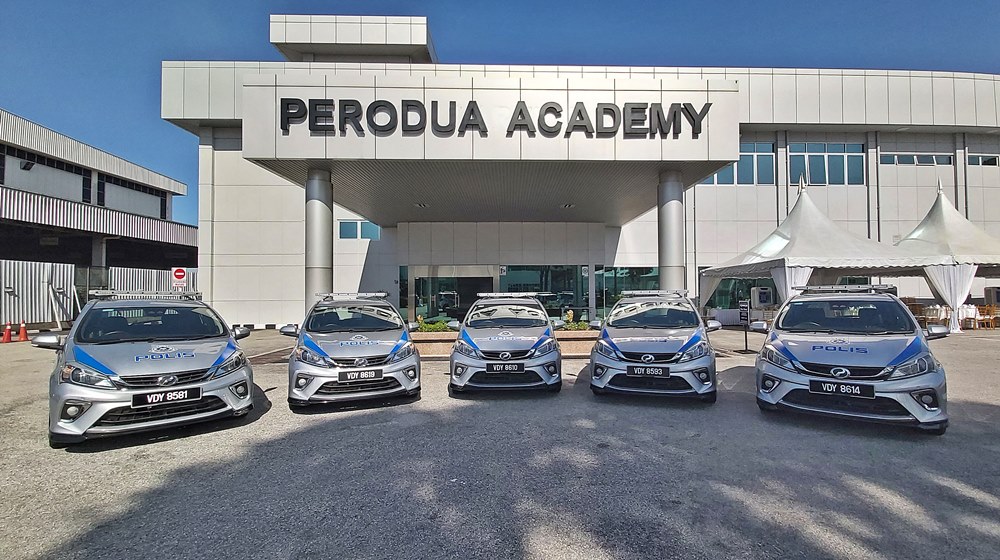
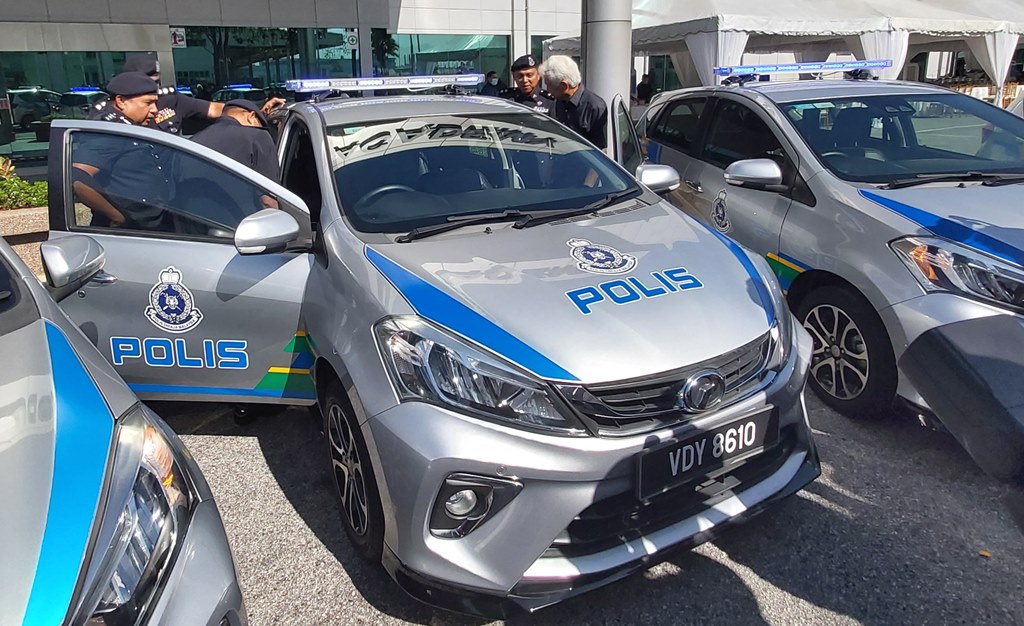
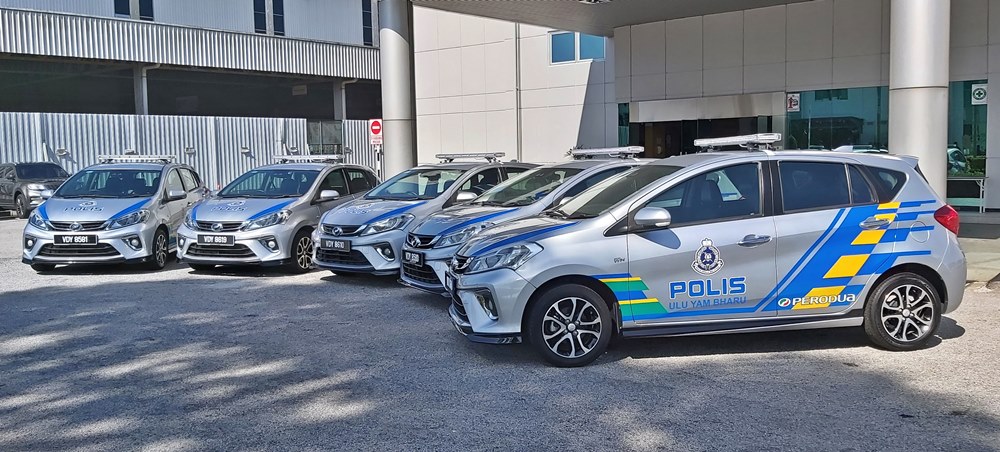
Perodua today handed over another 5 units of the Myvi to the Selangor Police Contingent as a service to the public and country. The donation is part of the Malaysian carmaker’s ongoing activities relating to Corporate Social Responsibility which has seen other cars also being donated to the police earlier.
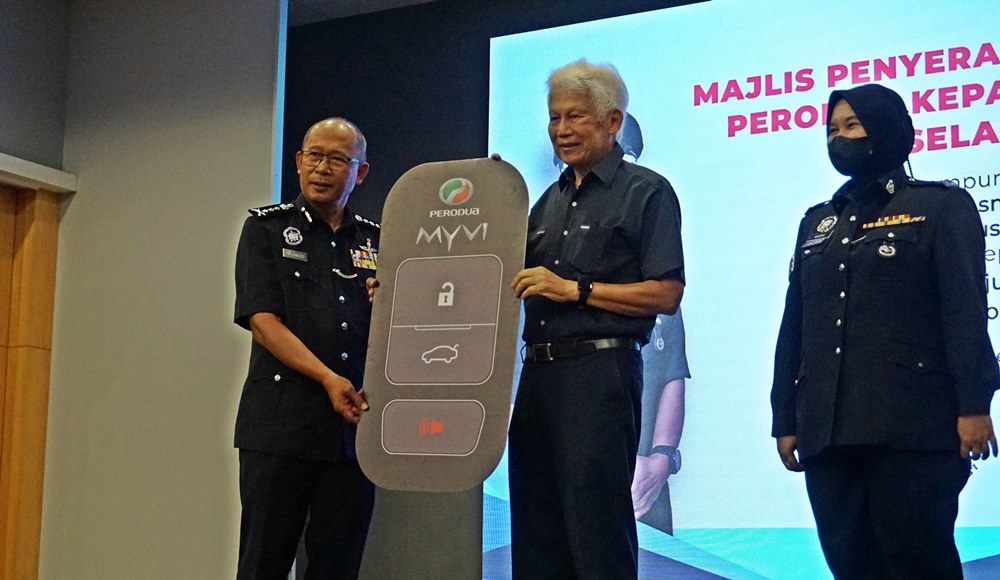
The 5 Myvis were handed over by Tan Sri Asmat Kamaludin (right), Perodua’s Chairman, to Dato’ Arjunaidi Mohamed (left), the Police Chief of the PDRM Selangor contingent.
The Myvis will be assigned to police stations in the Hulu Langat and Gombak districts and used for various purposes. The value of the donation is RM400,000 and this includes 2 years of free scheduled maintenance and required parts for each car. The car is, of course, also covered by the 5-year factory warranty that all Myvis come with.
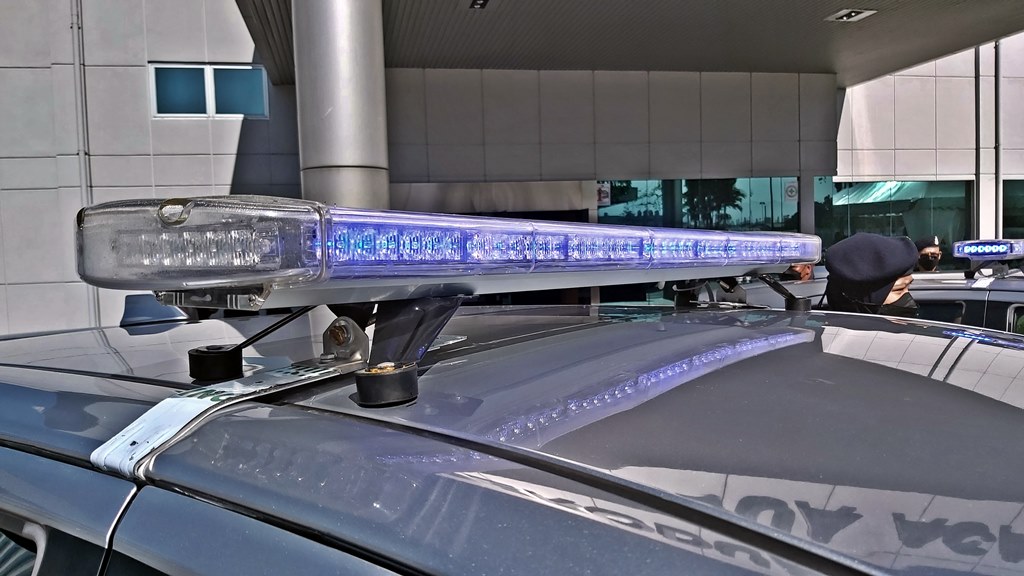
The units provided are the Myvi AV version which comes with Perodua Smart Drive Assist that comprises Advanced Safety Assist (A.S.A.), Driving Assist, Parking Assist and Headlamp Assist. Apart from the PDRM blue/yellow livery on the bodywork and a light bar on the roof, the cars are pretty standard as they are not intended to be used for pursuit.
Senior police officers inspecting the new cars for their fleet.
Of course, if necessary, the Myvi’s ‘hidden’ capabilities can be drawn upon. As we have seen in many incidents, the Myvi (which has come to be nicknamed ‘King’) seems invincible as it can crash into shops, fly through the air and even tip over other cars it rams!
But while these have gained it fame in a notorious way, there’s no denying that the Myvi is a much-loved car by Malaysians as it occupies the top spot in sales year after year. This year, the Myvi accounted for almost 30% of the 127,543 vehicles delivered by Perodua.
There are 5 versions of the Myvi available with prices ranging from RM46,500 to RM59,900 (excluding insurance). 1.3-litre and 1.5-litre engines are available, but all versions use a CVT and manual transmission is no longer available with this generation.
To know more about the Myvi or to locate a showroom to test one, visit www.perodua.com.my.
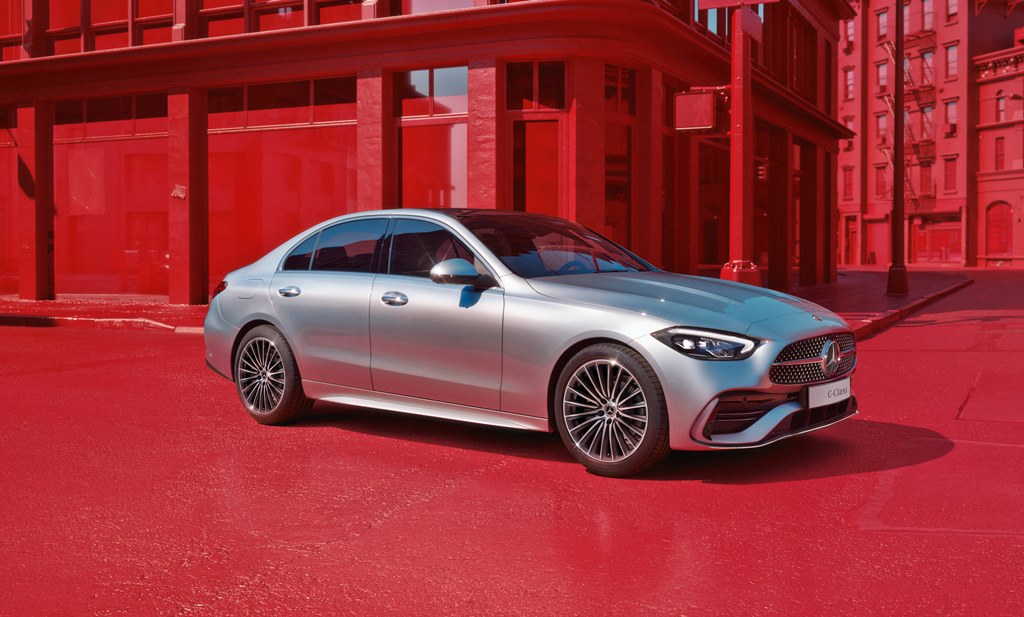
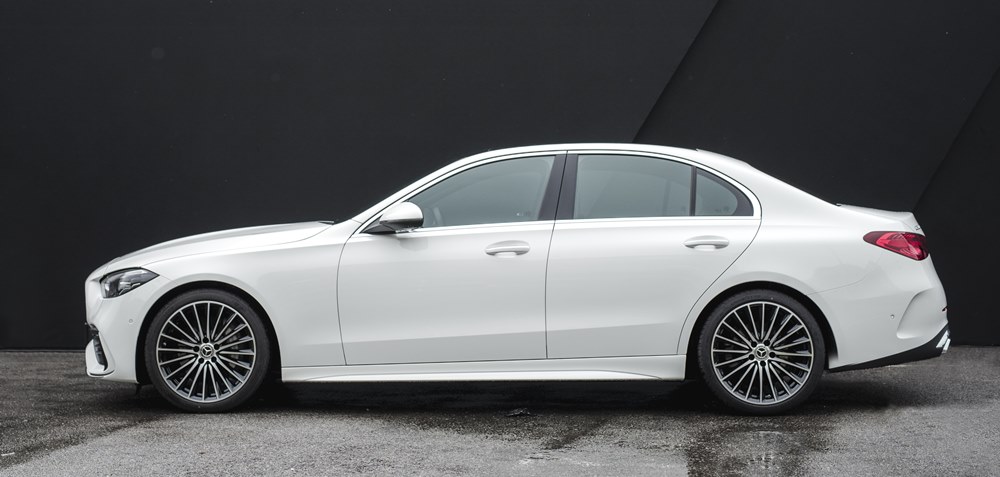
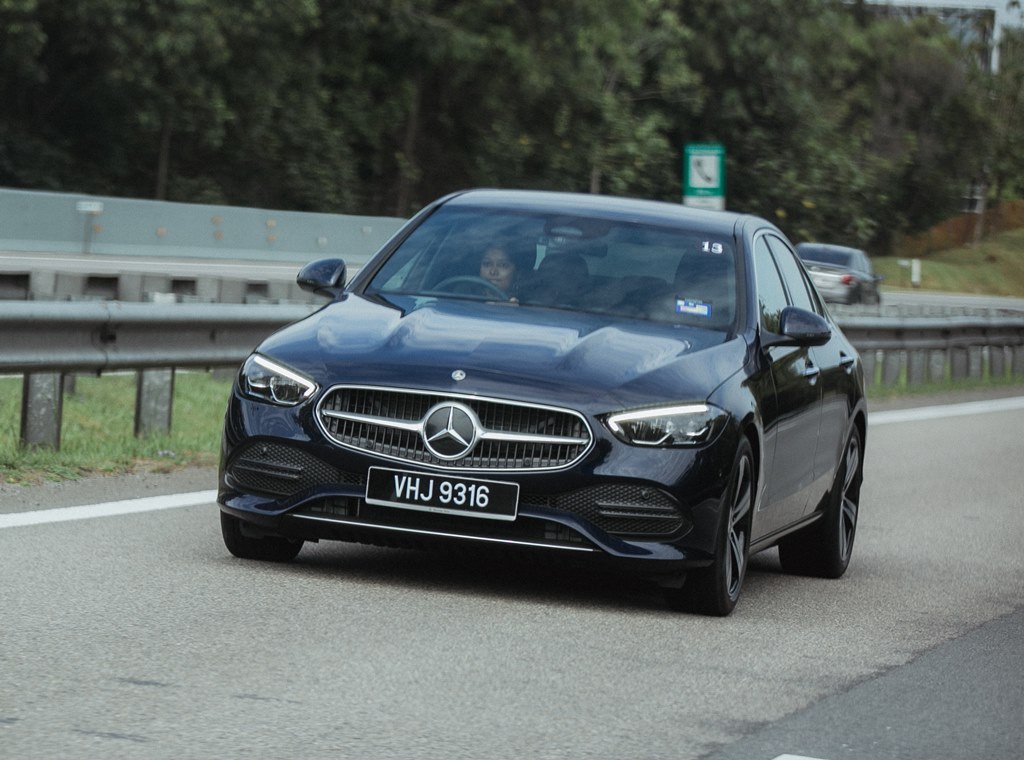
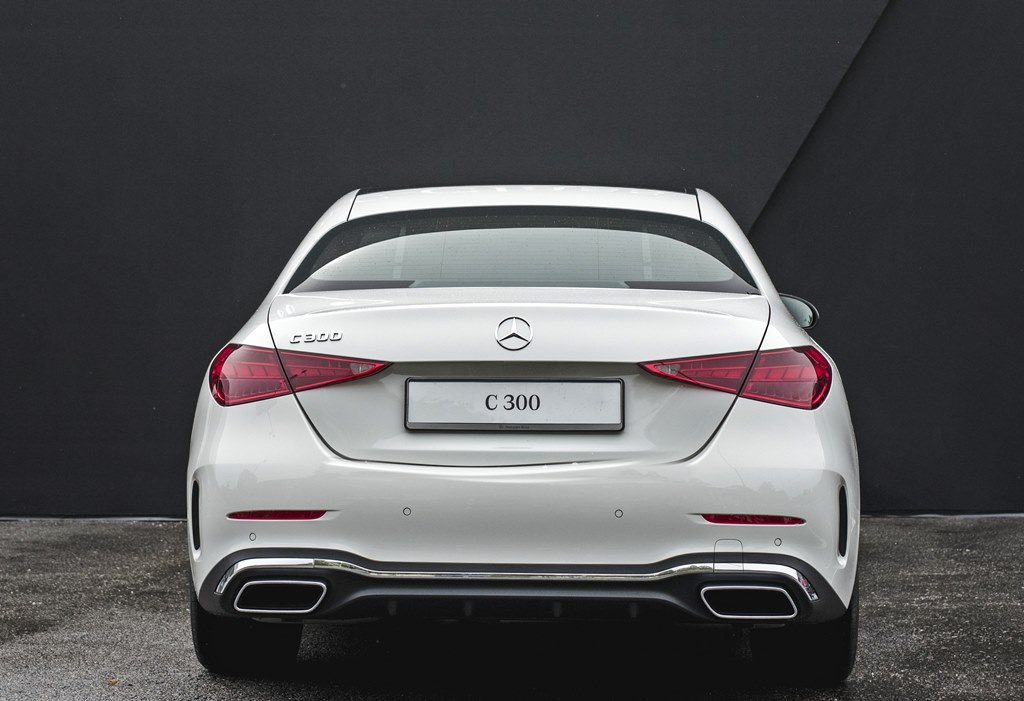
Six months after introducing the latest generation of the Mercedes-Benz C-Class (W206), Mercedes-Benz Malaysia (MBM) has launched the locally-assembled version. As with other models assembled in Malaysia, the new C-Class comes from the brand’s facility in Pekan, Pahang.
Two versions of the sedan are offered – the C200 Avantgarde priced from RM287,888 (excluding insurance) and the C300 AMG Line from RM327,888 (without insurance). Local assembly naturally saves money and unlike some cases, there doesn’t seem to be any significant difference in the features and equipment compared to the CBU versions we saw earlier.
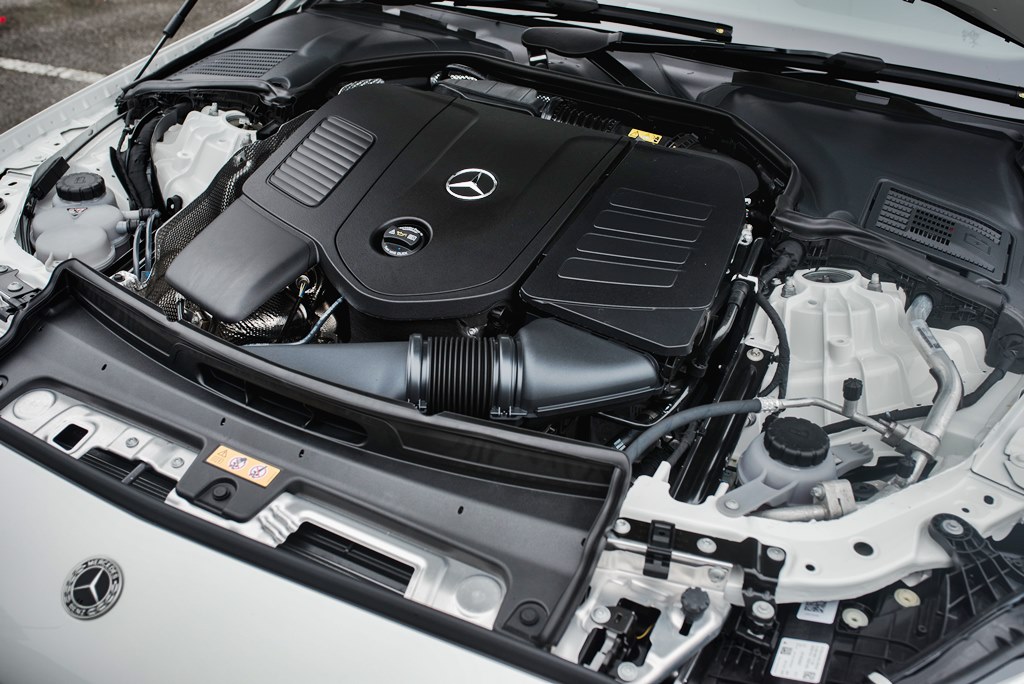
Both models are powered by 4-cylinder turbocharged engines, the C200 having a 1.5-litre displacement and an output of 204 ps/300 Nm, while the C300’s 2-litre engine produces 258 ps/400 Nm. Both engines get additional assistance with the integrated starter generator which can add 15 kW (equivalent to 20 ps) and 200 Nm to the output for brief periods. The same 9G-TRONIC automatic transmission with 9 speeds is used to deliver power to the rear wheels.
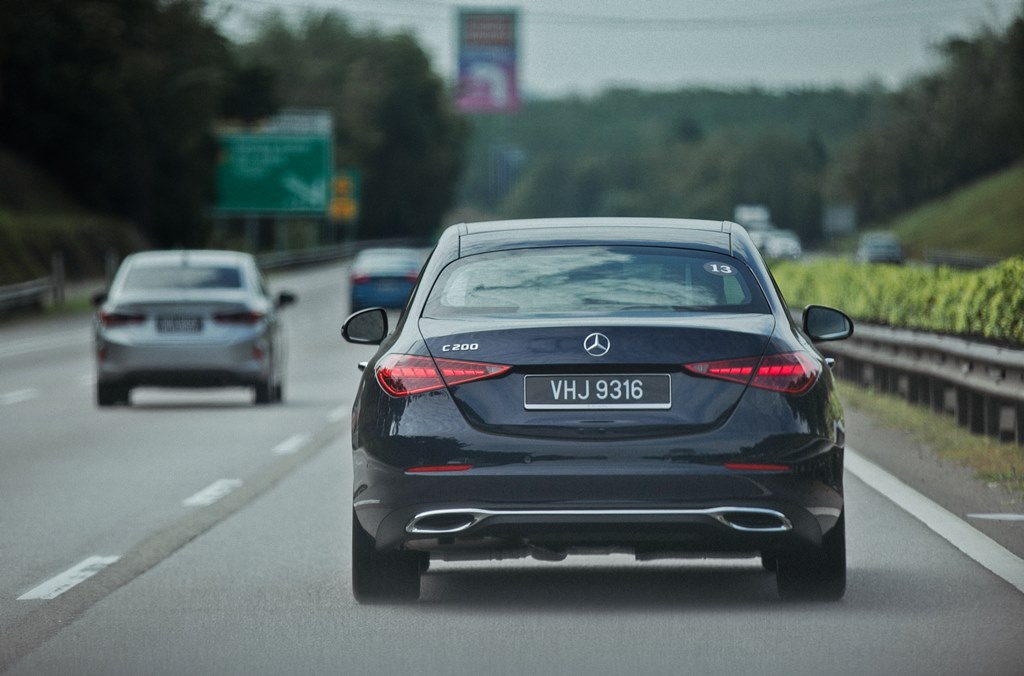
The classic sedan form that has characterised the C-Class is maintained with a more modernised appearance that has sporty elements. The C200’s Avantgarde line features include the radiator grille design with central Mercedes star as well as elegant trim strips in high-sheen aluminium and chrome with 18-inch 5-spoke wheels.
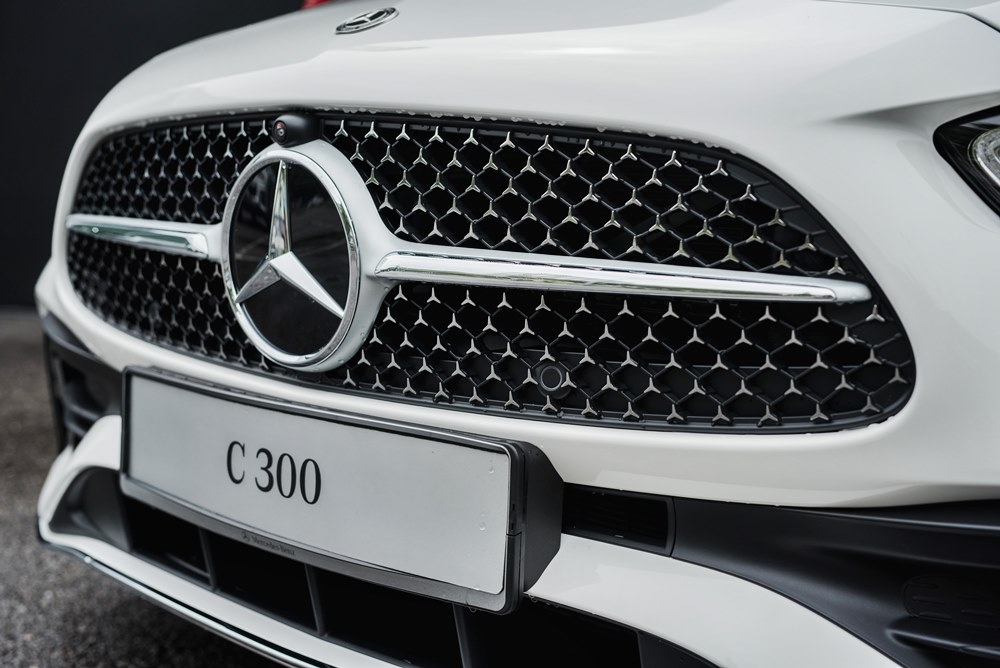
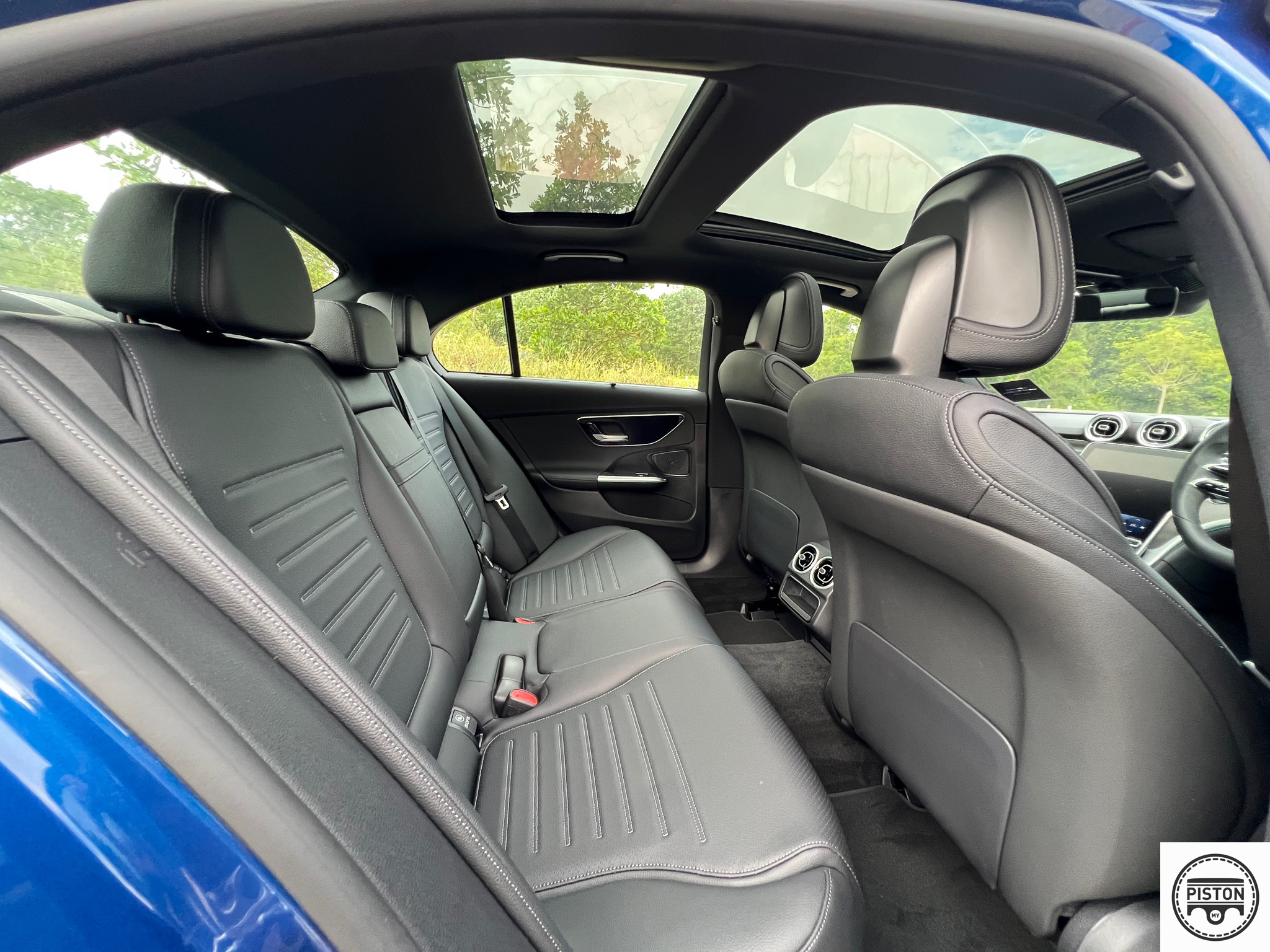
For the C300 with AMG Line, the grille incorporates the star design in chrome. To distinguish this version are LED High Performance headlamps with Adaptive High Beam Assist, 19-inch AMG multi spoke wheels and a panoramic sunroof is standard.
The rear ends of both models are similar, but this generation has had more attention given to the tail lamp units. For the first time in a C-Class, they have a 2-piece design, with the light functions divided between the side wall and bootlid lamps.
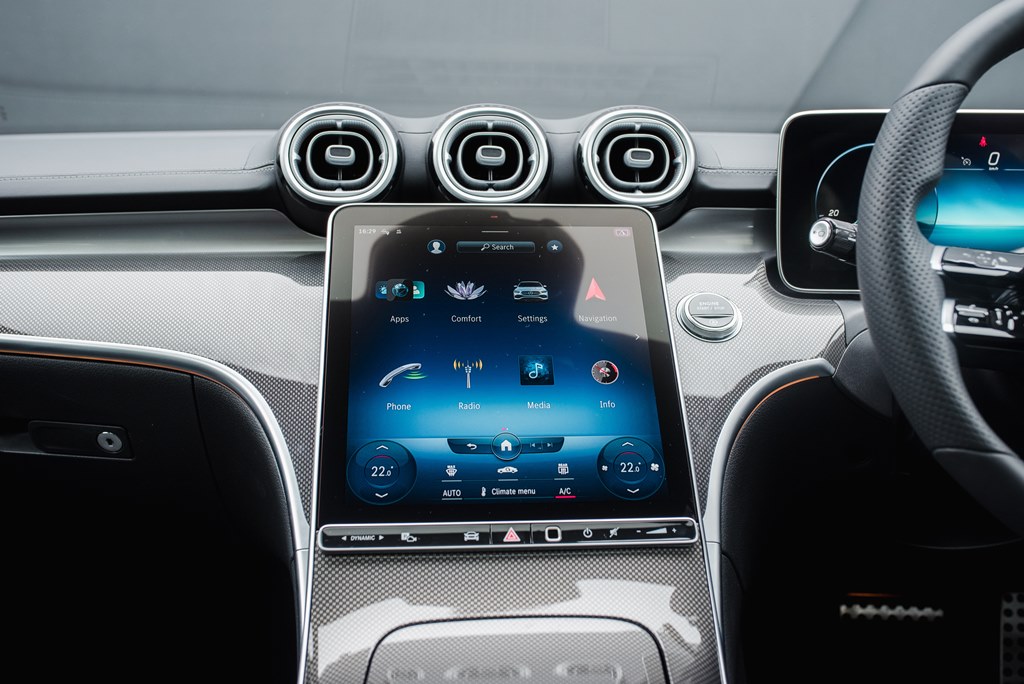
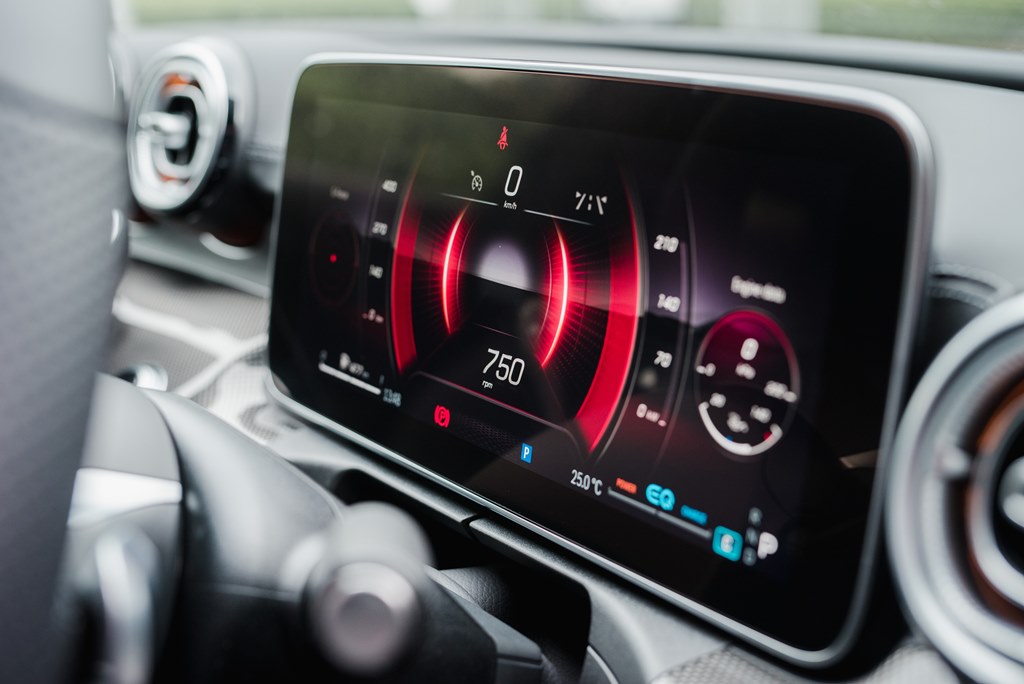
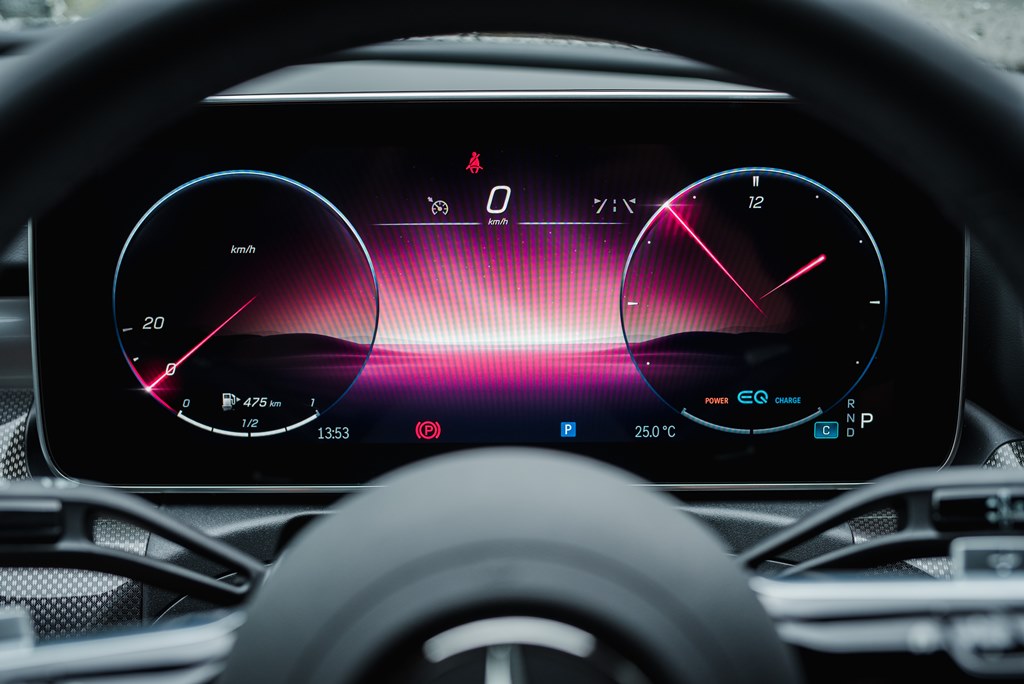
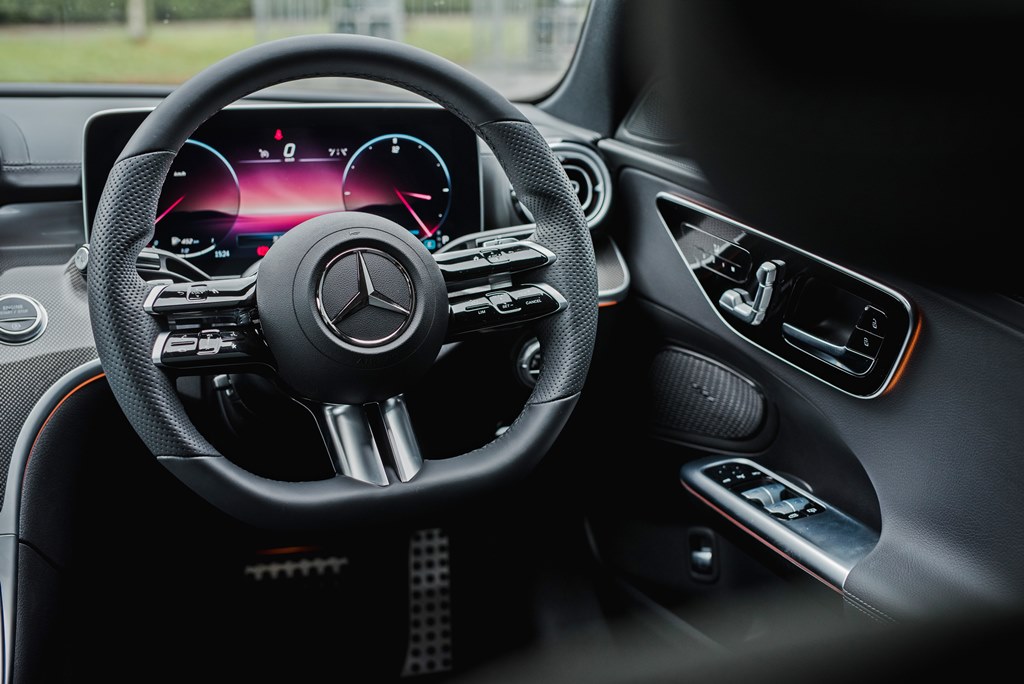
For this new generation, the interior has influences from the latest S-Class so its image is elevated. Notable features in the cabin are the high-resolution 12.3-inch free-standing display, which makes a difference from traditional cockpits with the classic round meters. The touchscreen appears to float above the expanse of trim and is slightly tilted towards the driver for easier viewing.
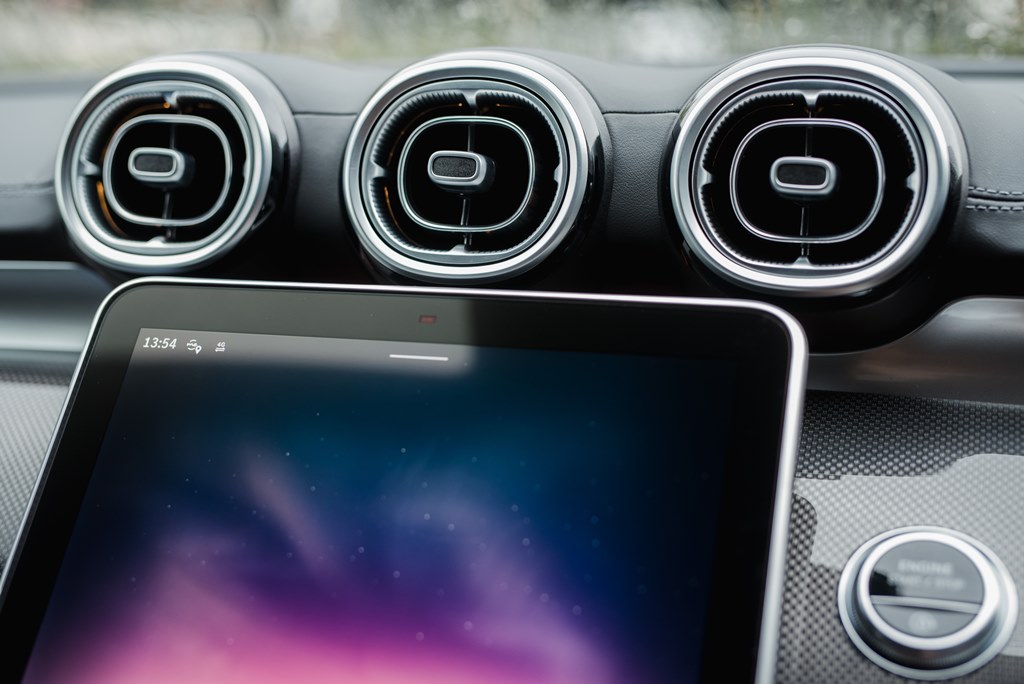
The dashboard is divided into an upper and a lower section. Above the wing-like section are a trio of flattened round vents reminiscent of aircraft engine nacelles. The tablet-like central display flows down to the centre console which has a rear padded section for the armrest and a front section in lustrous jet black, divided by a chrome insert.
As with every new Mercedes-Benz in recent times, the new C-Class comes with MBUX and includes MBUX Navigation Premium. The MBUX multimedia system has extended functions and comes with a LTE module to connect to Mercedes me, the app that allows the owner to interact with his car. Apple CarPlay and Android Auto make it possible to transfer favourite apps like Spotify or Waze onto the display screen and use them from there.
The system also has a fingerprint scanner but this is not used for security. Instead, it is used to retrieve stored profiles of different occupants (usually the driver) with regards to their personal preferences such as seat and steering adjustments, air-conditioning settings and even the ambient lighting levels.
Besides the advanced driver assistance systems to help the driver’s awareness and intervention when action is not taken to avoid an accident, there is also an emergency call (e-call) system. This will send a message to a control centre to notify of a possible accident when sensors detect a severe impact and deployment of the airbags. This could bring rescuers faster and make a difference in saving a life.
Each new C-Class comes with the URBAN GUARD vehicle protection package which is a security system for the car that can be helpful on recovering it if stolen. This makes use of the Mercedes me app and besides the usual security systems, it is also possible to deactivate the car keys preventing their use to start the engine. There is also visualisation with camera images to identify possible cause of parking damage.
For those interested in buying the new C-Class, Mercedes-Benz Financial has various financing plans starting from RM2,388 per month (for the C200). Additionally, there’s a MobilityPlus programme with a guaranteed temporary Mercedes-Benz replacement car if the car is retained by the service centre for 48 hours or more.