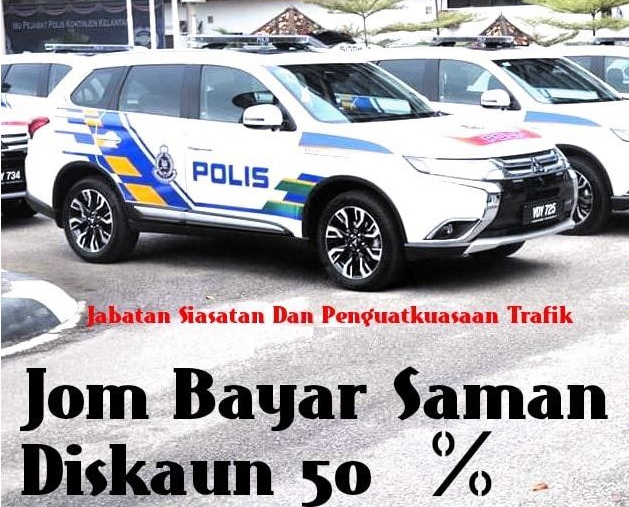
It’s discount time again from Malaysia’s traffic police department. Following the incentive offered during Christmas, the police will be offering a 50% discount on compoundable fines for certain summonses. As always, the discount is expected to encourage motorists to settle their summonses, and if they still don’t do so, they will be subject to blacklisting and a warrant of arrest could be issued.
The period that the discount will be offered is from January 18 to February 1, 2020. During the Christmas campaign, motorists had to go to the police station to make the payment and at the Traffic Police headquarters in Jalan Tun HS Lee, the queues were very long.
To reduce such inconvenience, the PDRM will accept e-payments via MyEG and Rilek.com.my. This approach benefits both sides – motorists don’t have to queue up for a long time and processing can be done by the police electronically. To use both MyEG and Rilek.com.my will first require registration (no charge) and then the various services can be accessed. Both portals have a service charge of RM2 for each transaction made.
For MyEG, the PDRM-related services available are enquiries about outstanding summonses (you may discover some you never realized you had!), purchase of accident documents and payment of summonses. You can also register with MyEG for a service which alerts you if a summons has been issued for your vehicle.
Rilek.com.my, like MyEG, provides an easy facility for the public to check whether they have any outstanding summons and then make payments, if the offence is compoundable. Generally, offences for illegal parking or exceeding the speed limit have compoundable fines up to RM300. However, the ones relating to serious offences like accidents and which will be subject to court cases may not be compoundable.
With domestic market sales on the upswing, Proton is now giving attention to exports, which will be crucial for its future. Its products have been well accepted in neighbouring countries and can be exported duty-free under the provision of the AFTA agreement.
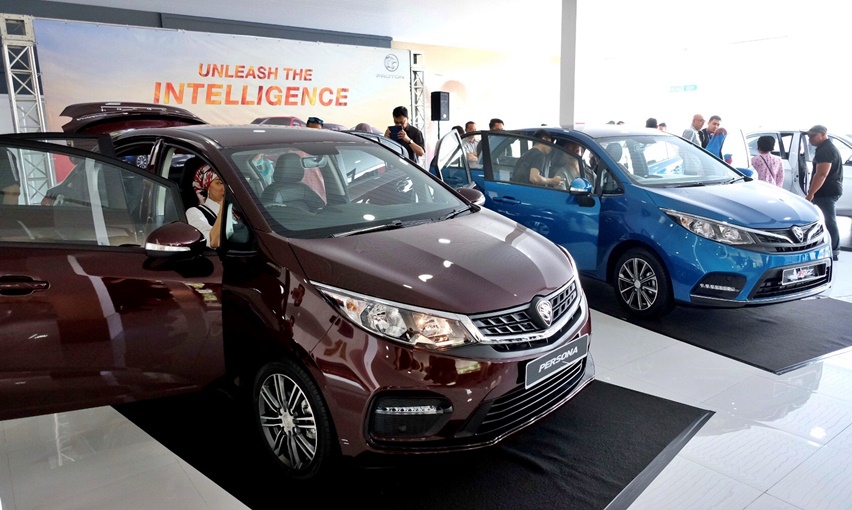
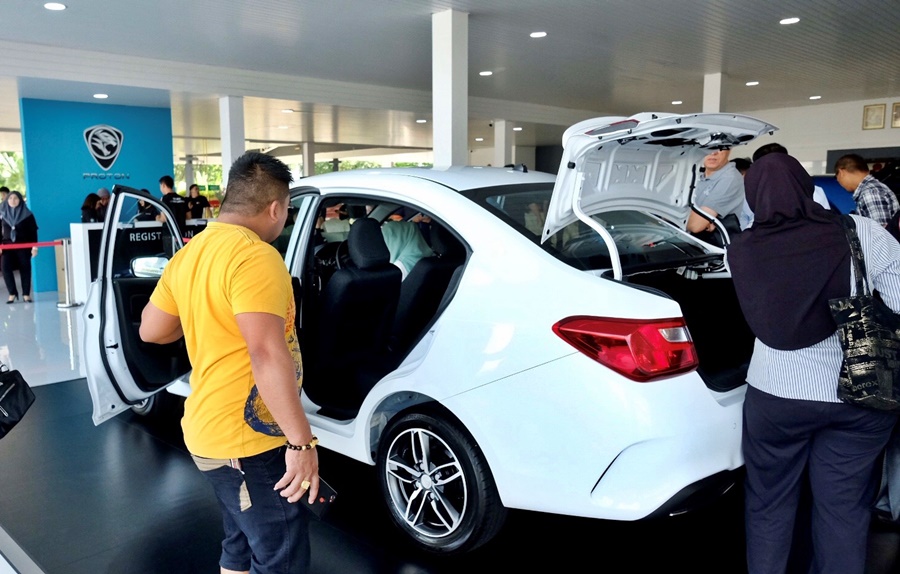
Following the launch of the Proton X70 in July last year, Pad Motors Sdn Bhd, the distributor for Proton in Brunei has received its first shipment of the updated Iriz, Saga and Persona models. Brunei is the first market outside Malaysia to begin selling these models and the distributor will be introducing them more actively with a roadshow starting on January 28.
Focus on growing export volume
After a successful 2019 saw the total sales volume grow by 55.7% – which Proton expects will place it in second overall position – the Malaysian carmaker is now looking to improve its performance in 2020 in export volumes.
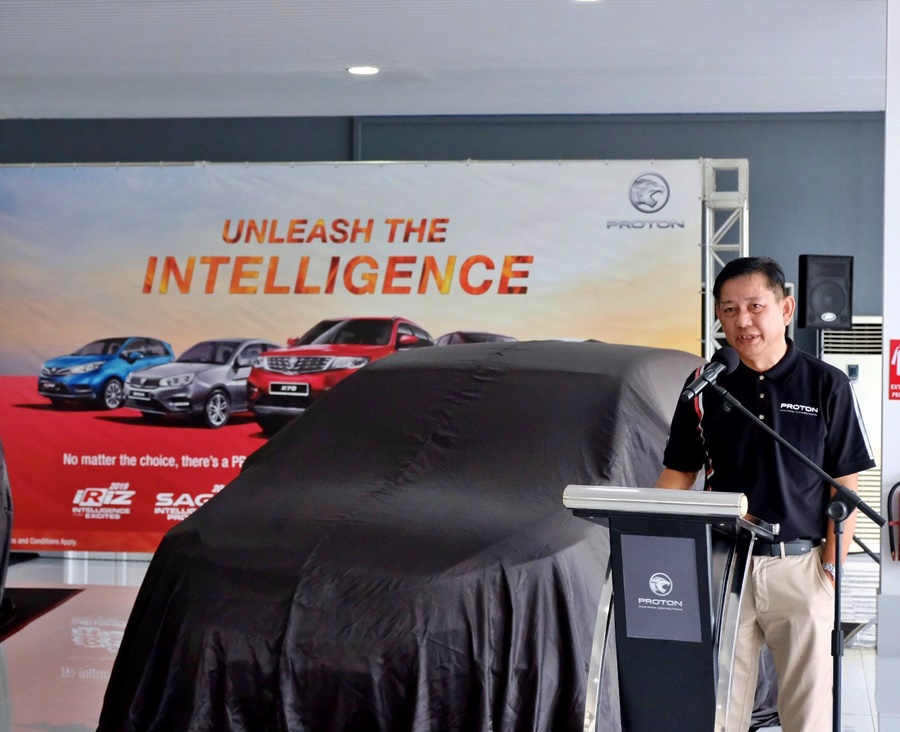
“The export market will play an increasingly important role in growing Proton’s annual sales. When we updated the Proton Iriz, Persona, Exora and Saga last year, we did so while taking in to account the needs of markets outside of Malaysia and today, three of those cars are now available in Brunei. It’s a good start to 2020 but as the year progresses, we will be looking to export our cars to more countries,” said Dr. Li Chunrong, Proton’s CEO.
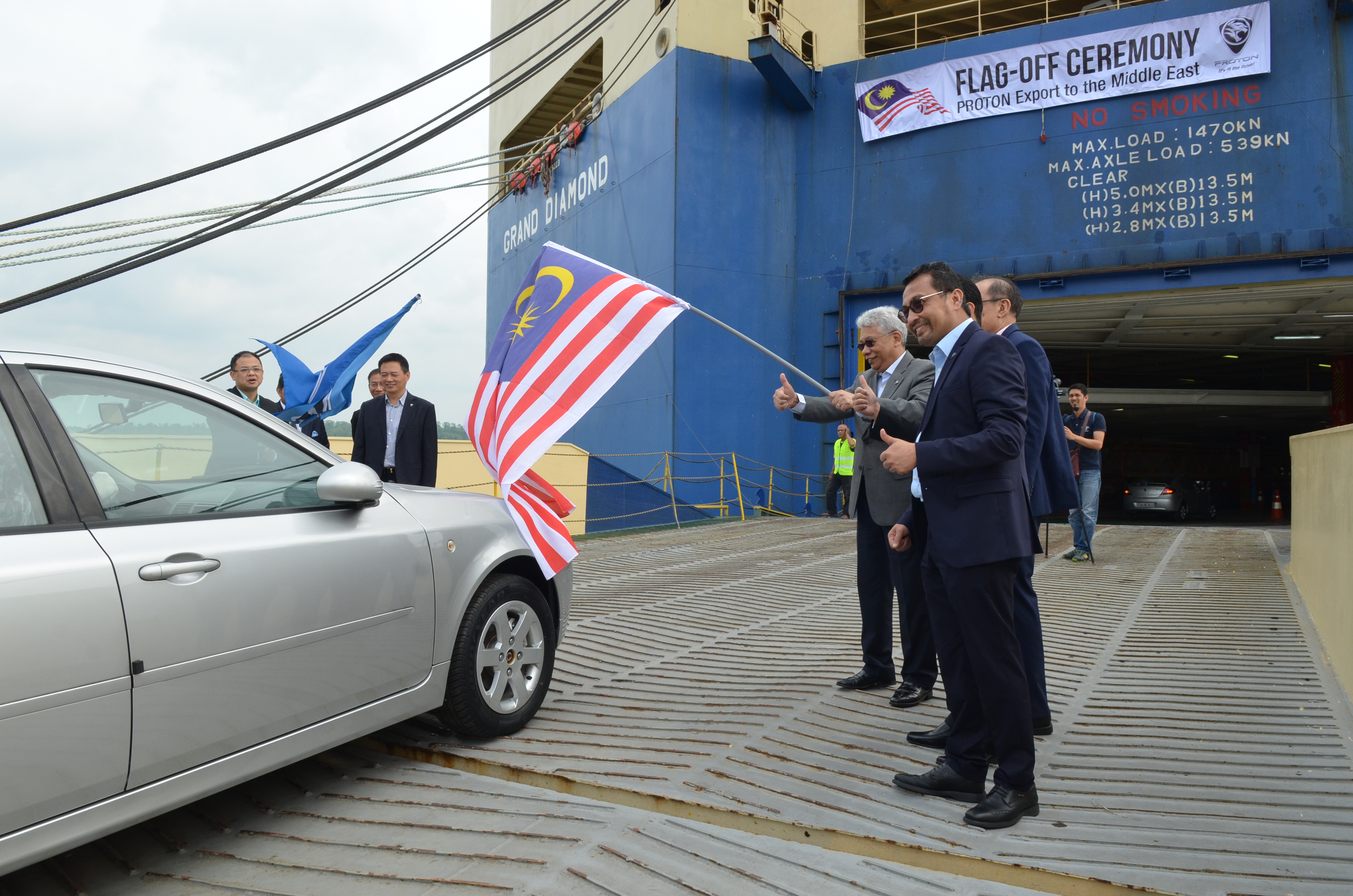
The Middle East is one of the regions where Proton is already exporting to.
Aiming for No.3 in ASEAN
Dr. Li added that Proton’s long-term intention is to be the best-selling brand in Malaysia and Number 3 in ASEAN by 2027. In order to meet the ASEAN target, export volumes will need to be boosted in coming years.
Aside from its updated models, Proton will also be looking to grow sales of the X70. With 2020 versions already leaving the production line at the Tanjung Malim (which has a new RM1.2 billion extension), the carmaker now has the option of expanding the footprint for its SUV which recently won the 18th Malaysia Cars of the Year overall award.
With an additional investment of RM1.2 billion for an extension at the Tg. Malim factory in Perak, Proton can now plan for bigger export volumes in coming years.
“Exporting the Proton X70 will be critical for Proton’s future sales growth, especially in neighbouring ASEAN countries. It will spearhead the introduction of the next generation of Proton models currently being jointly developed with Geely and will lay the groundwork for the brand with customers in these markets,” added Dr Li Chunrong.
Visit www.proton.com.my to know more about the X70 and other models in the Proton range.
When Soichiro Honda began making motorcycles, the logo which he chose as a brand mark had wings, and this was inspired by a sculpture of the goddess Nike (the ancient Greece goddess of Victory) which he saw. Over the years, from the 1950s onwards, the Honda Wings would evolve while maintaining the same side view.
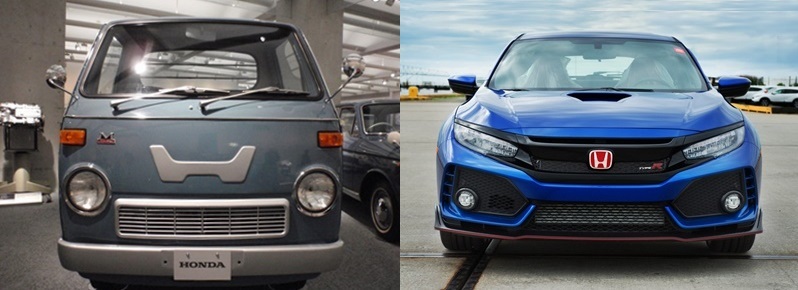
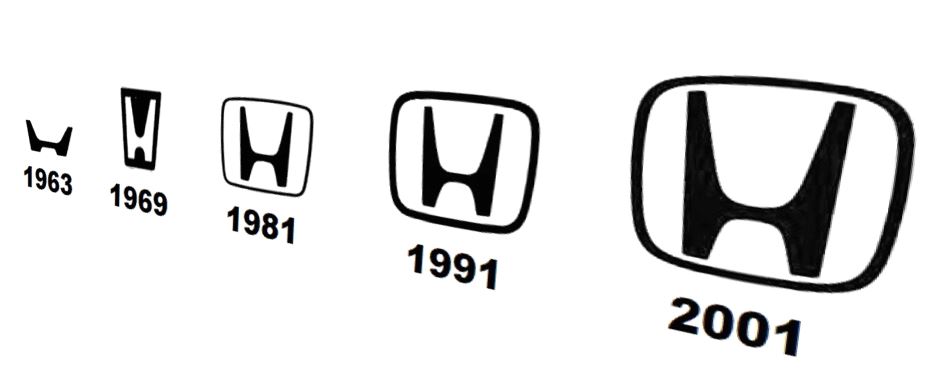
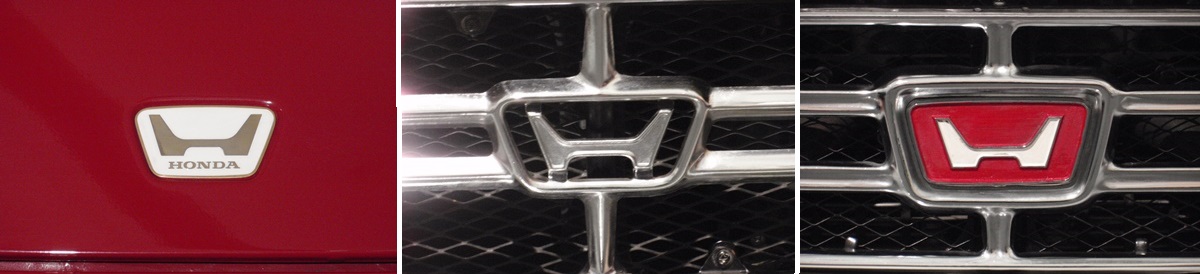
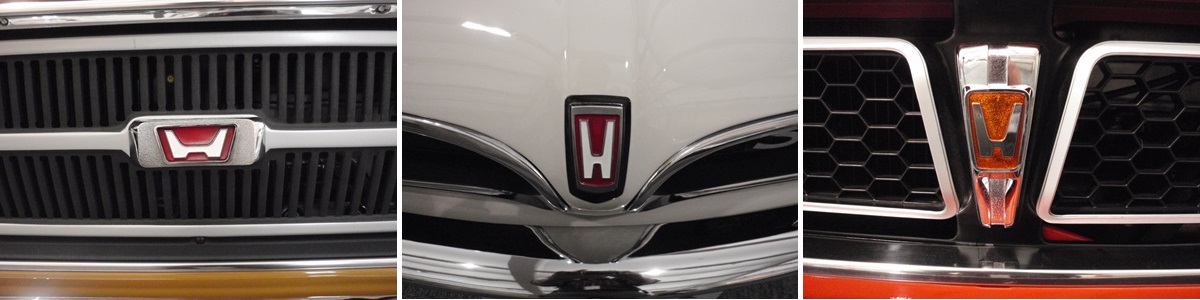
For automobiles, which began in 1963, the brand logo did not use the wings as a basis but a simple ‘H’. This was prominently placed on the front of the T360 mini truck, Honda’s first automobile. The shape of the ‘H’ was trapezoid with the top wider than the bottom. It is believed that this was intended to look like ‘reaching for the sky’ – well known of Honda, the ambitious founder.
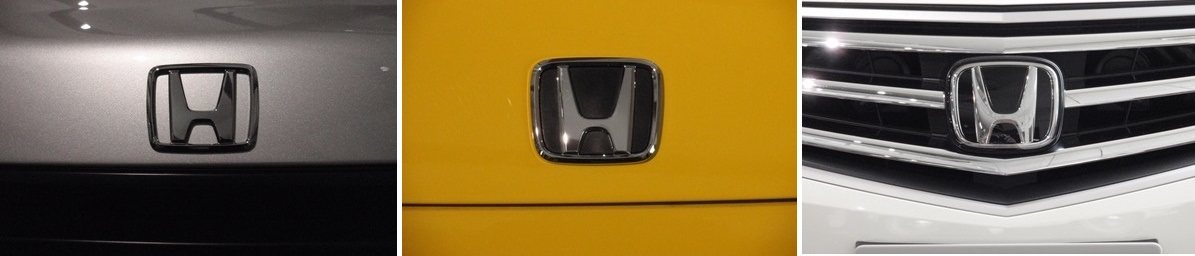
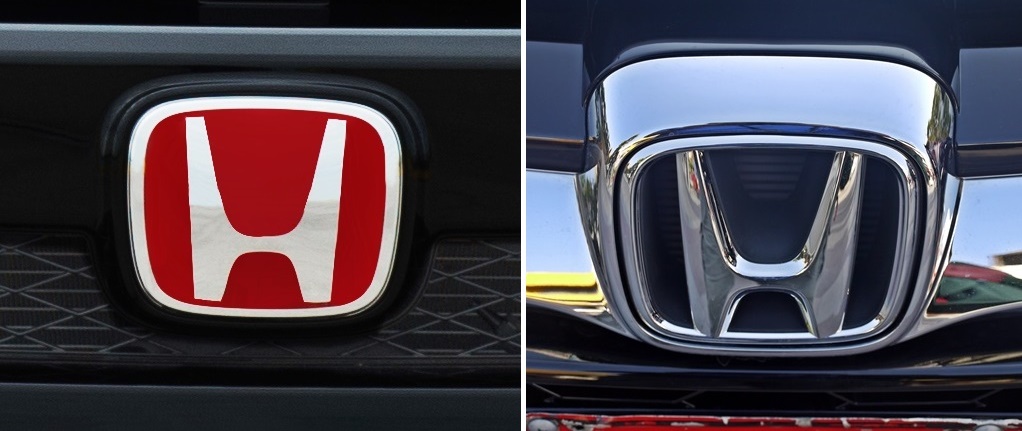
Apart from a few variations in size, the logo design has remained unchanged for over 50 years. It has been finished in silver (or grey), black on some models and for the Type R versions, the background has been in red. In earlier years, when the brand was still young, the HONDA name was inserted below or within the ‘H’ but over time, this became unnecessary as Honda became well known all over the world.
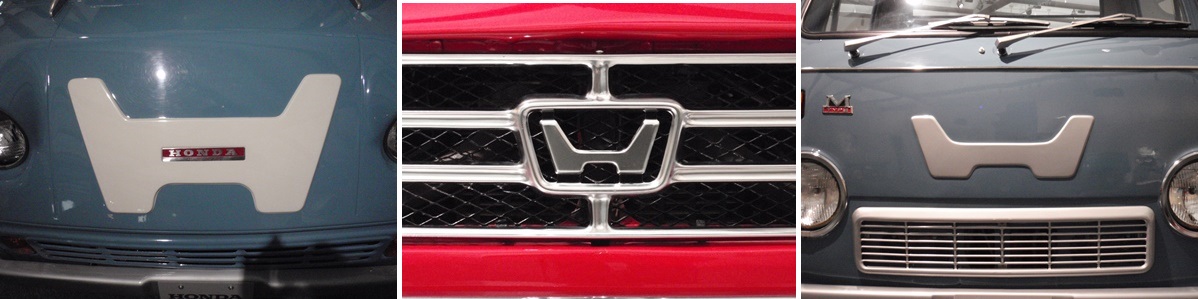
Here’s a collection of the different badges on grilles over the years, starting from the first one on the T360 in 1963. They are not in chronological order but show the way the ‘H’ has changed from its broad presentation to a tall and slim one today.
After 57 years, the Honda badge maintains the same design, with high-performance Type R versions having a red background.
Visit www.honda.com.my to know more about Honda models available in Malaysia.
Some manufacturers believe that when a car has a small engine, say below 1.2 litres, fuel efficiency is already very good and there is no need for the added cost of a hybrid powertrain, not to mention extra weight. However, if fuel consumption can be improved further by adding an electric motor, why not?
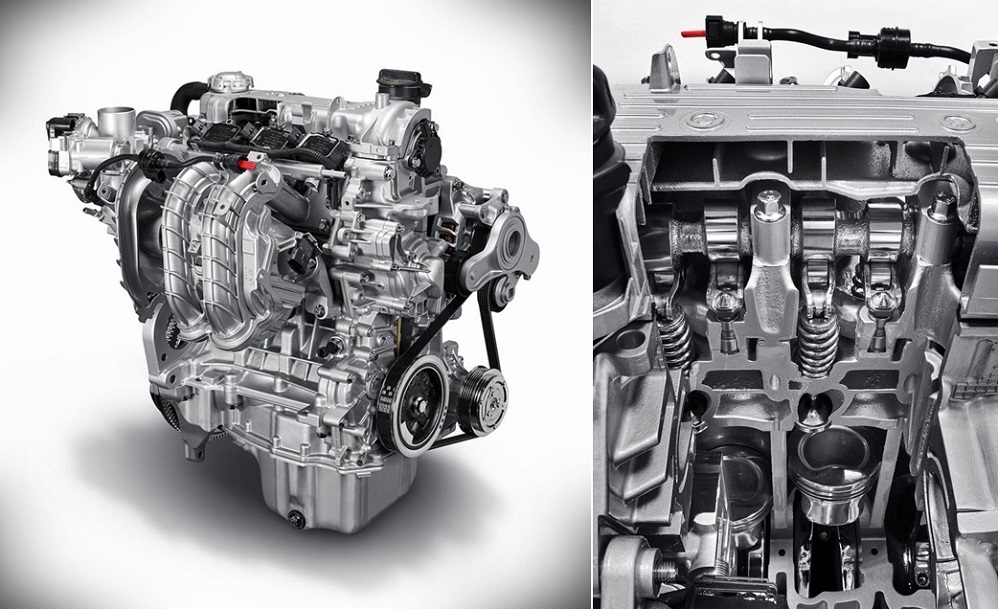
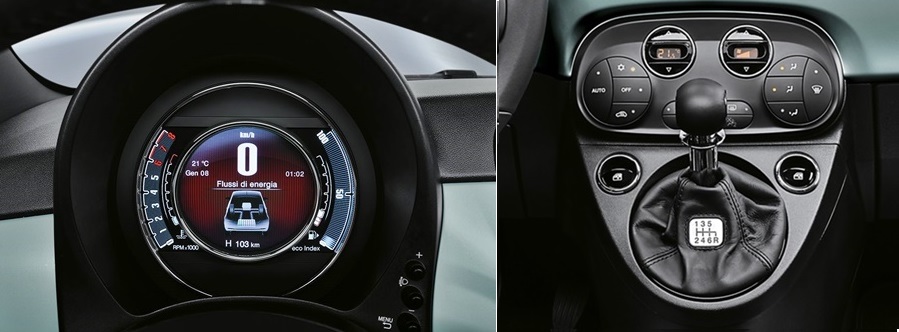
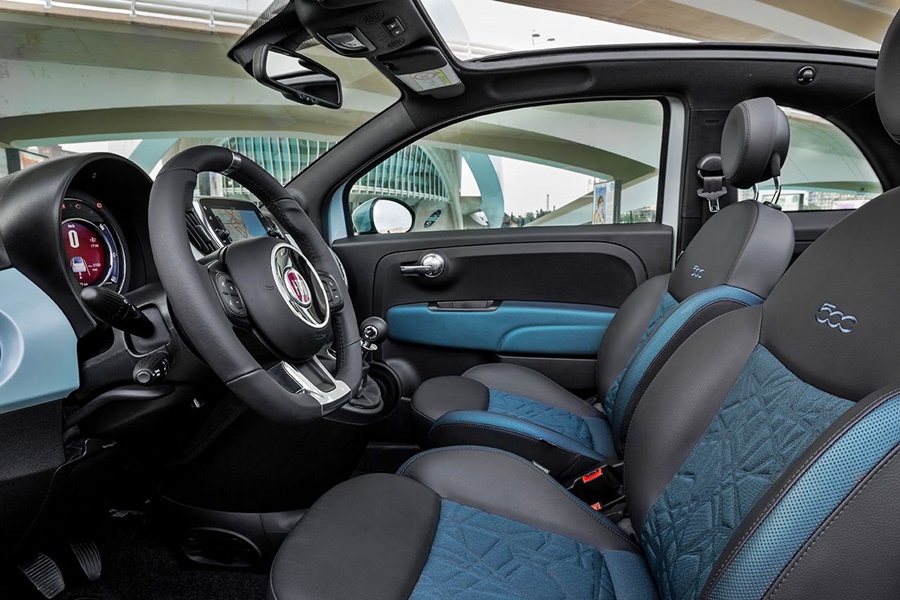
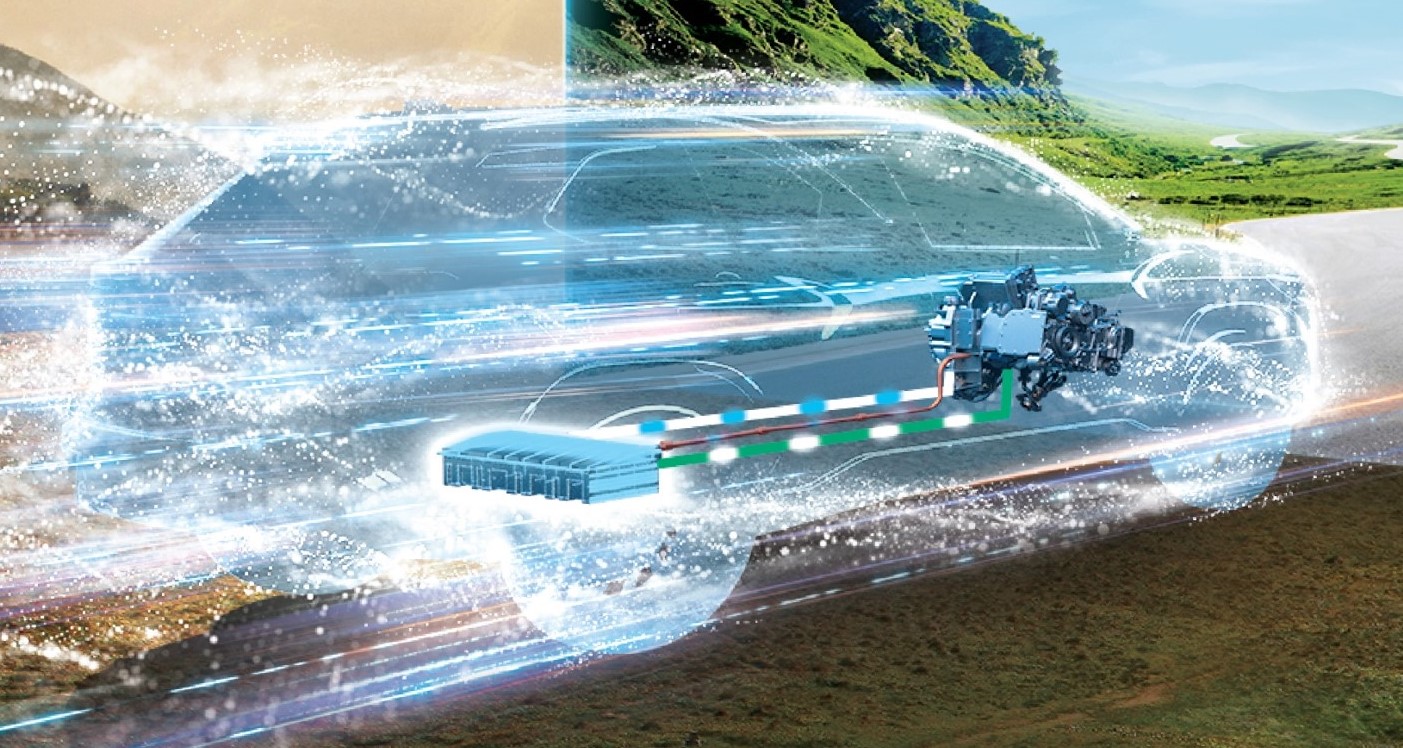
This is how engineers at Fiat Chrysler Automobiles (FCA) see it and part of the reason why they developed FCA’s first city cars with new petrol Mild Hybrid technology. The technology combines the latest 3-cylinder FireFly 1-litre 70 bhp/92 Nm engine family with a 12-volt BSG (Belt-integrated Starter Generator) electric motor and a lithium battery pack.
Compared to the 1.2-litre 69 bhp Fire, the 77-kg Mild Hybrid version improves fuel efficiency, thus reducing carbon dioxide emissions by 30% on average, without sacrificing performance. The BSG system, allows for quiet, vibration-free restarting of the petrol engine in Stop&Start mode.
The BSG system is mounted directly on the engine and is operated by the belt that also drives the auxiliaries. The system recovers energy during braking and deceleration, stores it in the battery pack which has a capacity of 11 Ah. It can then use this energy, at a peak power of 3.6 kW, to restart the engine in Stop&Start mode and to assist it during acceleration.
Customers also benefit from all the advantages of going hybrid (the car is Euro 6D Final-compliant, for instance), which, depending on local regulations, include freedom of access and movement in European city centres, cheaper parking in town centres and tax breaks.
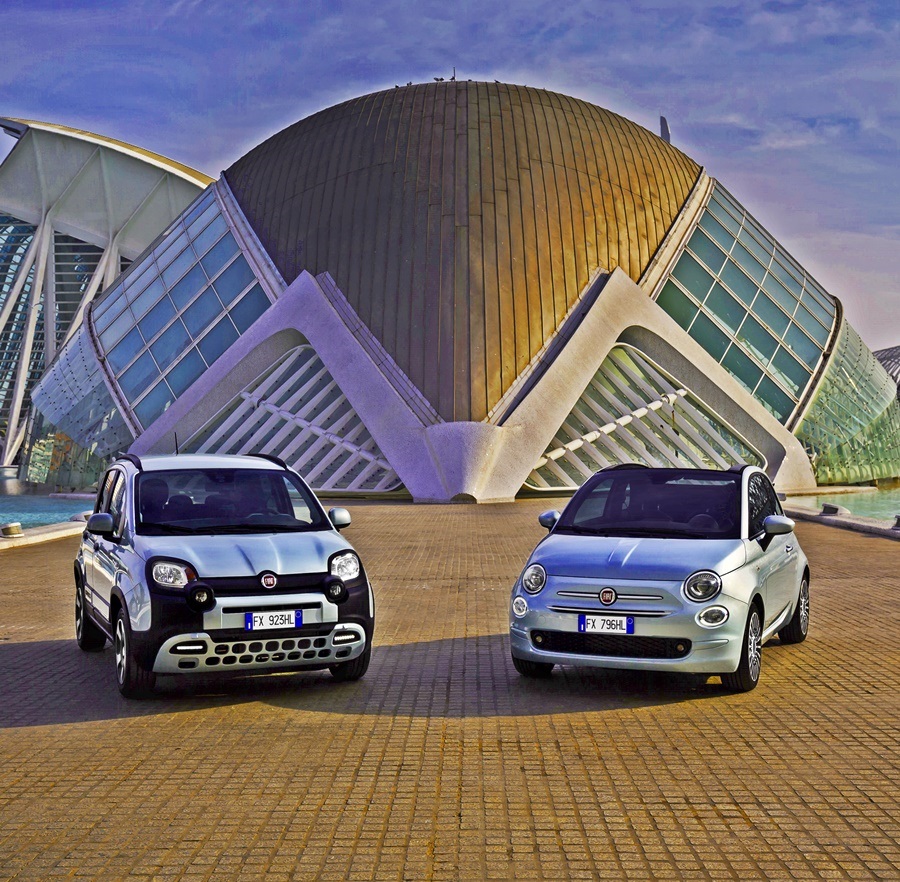
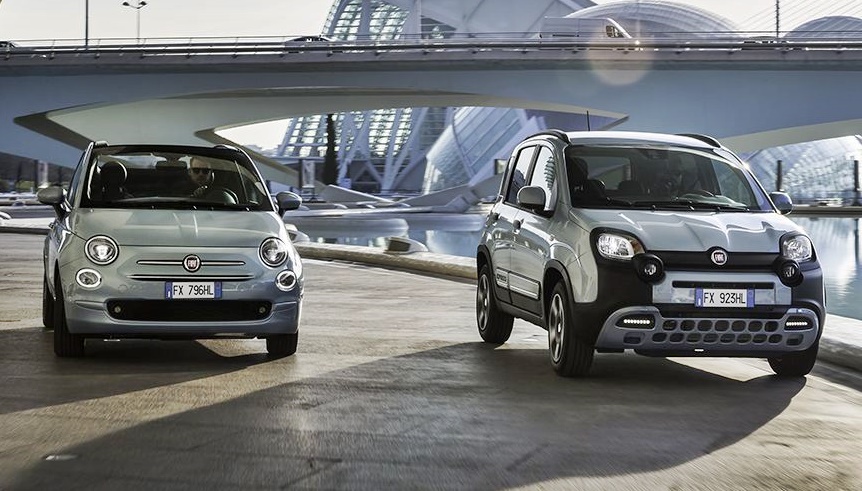
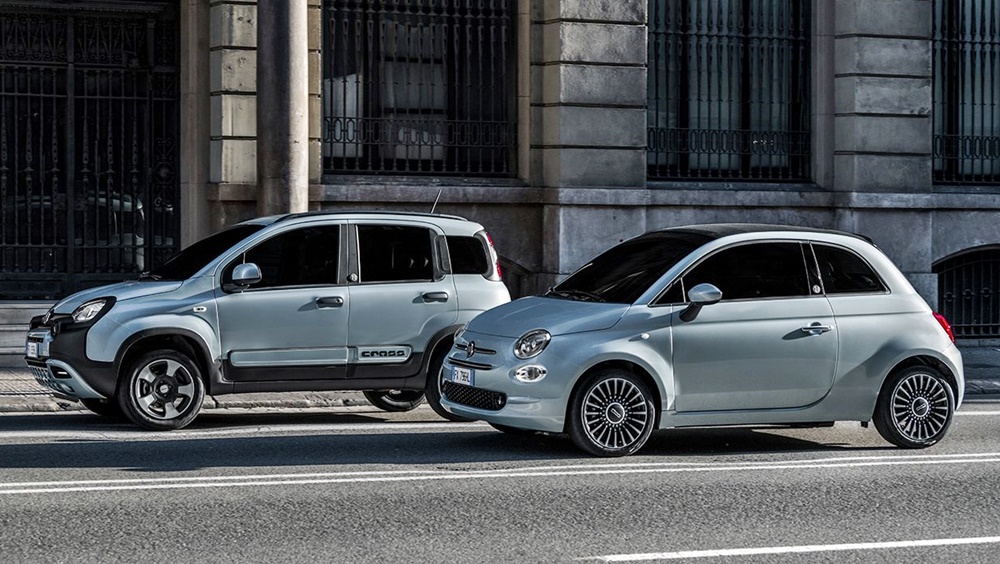
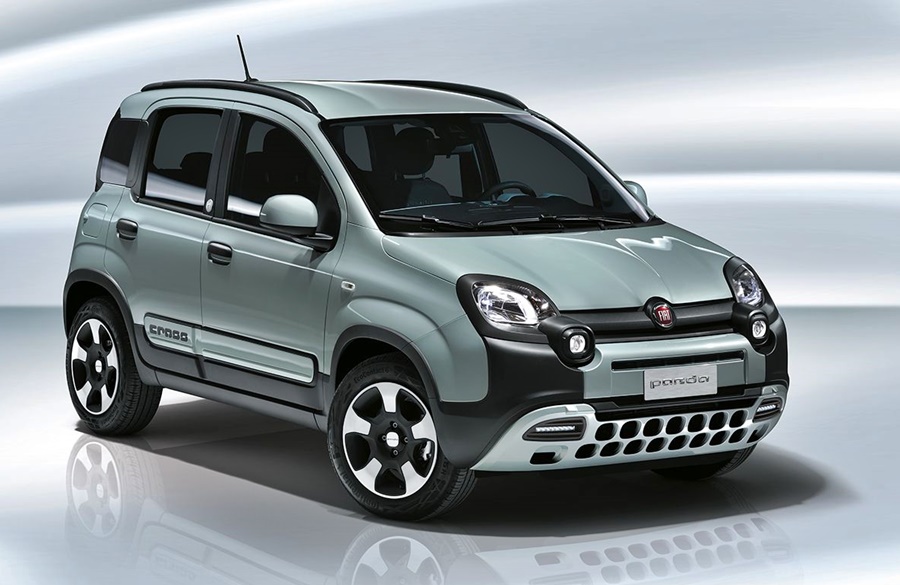
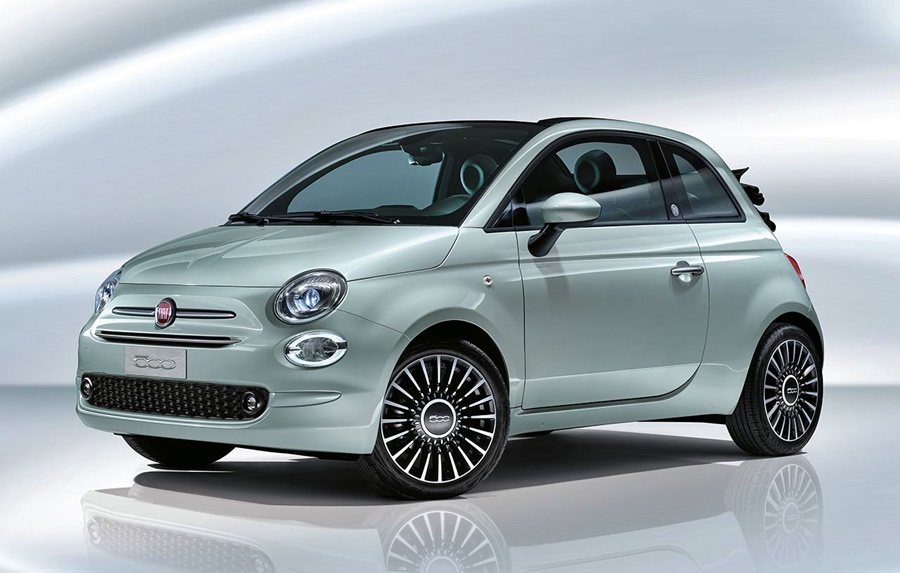
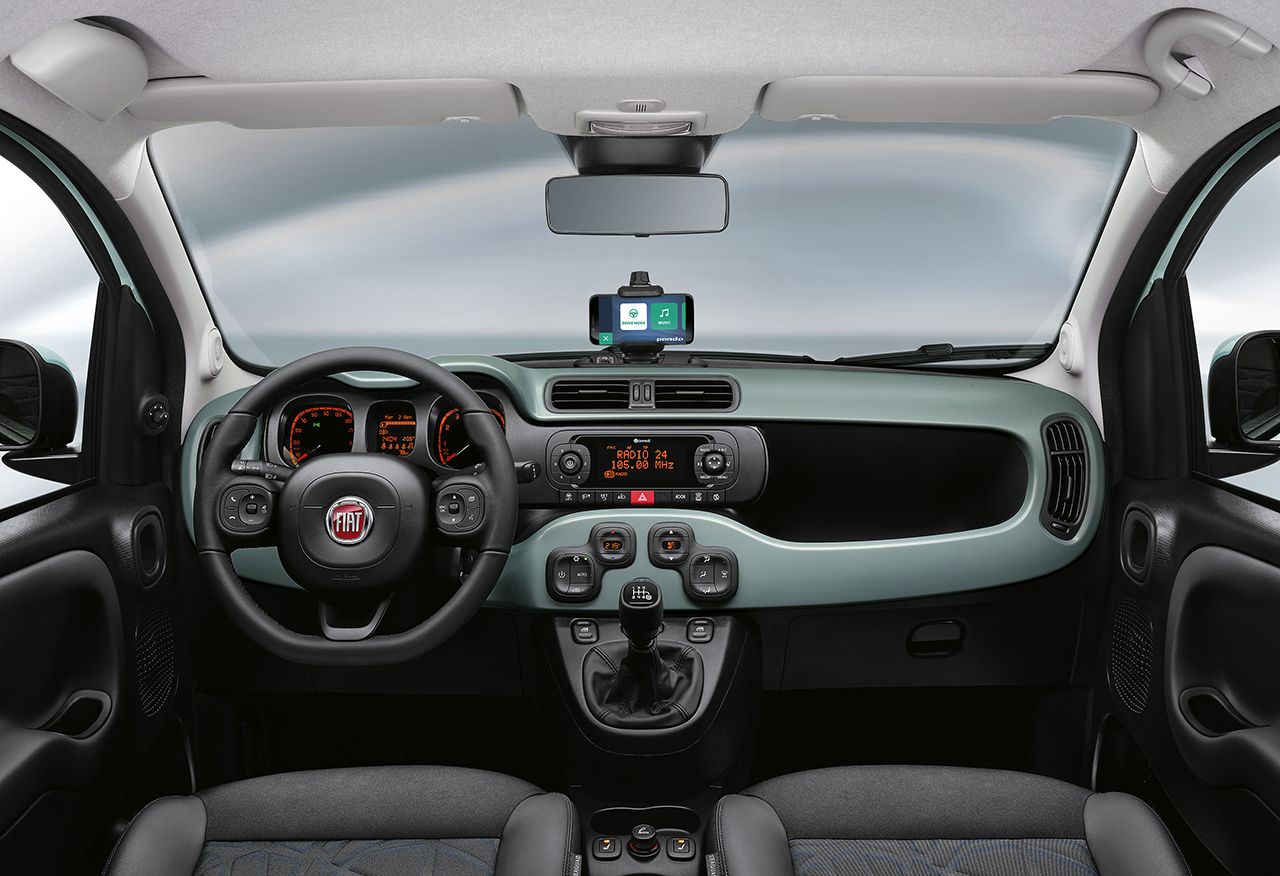
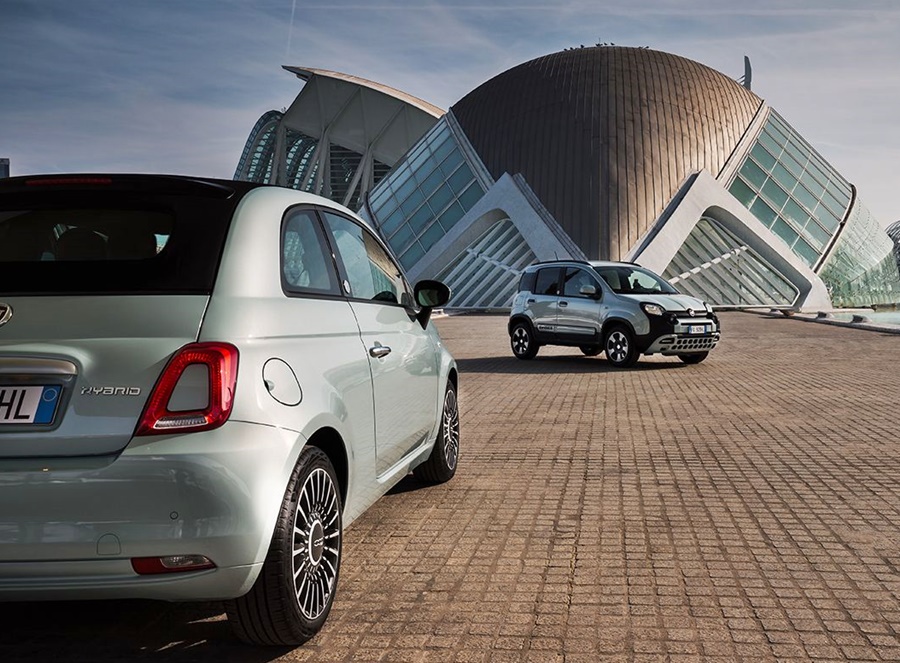
The first models to get the Mild Hybrid technology are the Fiat 500 and Fiat Panda, the two ‘souls’ of the Fiat brand for decades. The first, the more emotional one, is the pop, fashion and design icon. The second, the more functional, trendy one, with 5 doors. Sales will commence from February and March 2020, respectively.
Launch Editions for the first time
Furthermore, for the first time in the history of the two iconic and complementary Fiat brand models, the 500 and the Panda will be available in a special unique series: the exclusive ‘Launch Edition’. The special series can be recognized by the ‘Hybrid’ badge on the rear and the exclusive ‘H’ logo, formed by two dew drops, on the centre panel.
Dew – the symbol of the light of dawn and therefore of the beginning of a new era – has been used as inspiration for the new and exclusive ‘Dewdrop Green’ exterior finish that fits both cars like a bespoke suit, in perfect harmony with the themes of nature and innovation.
Pursuing a sustainable philosophy
On the inside, the seat upholstery is faithful to the sustainable philosophy of the entire project. The Launch Edition seats are the first in the automotive sector to be partly made with SEAQUAL YARN, the weaving of which produces a special material derived from recycled plastic. SEAQUAL YARN is produced by transforming plastics collected from the sea into flakes of polyethylene terephthalate. These flakes are then used in the yarn from which the fabrics are made.
Fiat is collaborating with SEAQUAL INITIATIVE to support ocean clean-ups to act against marine litter. The two Launch Edition models will therefore satisfy the customer who is just as attentive to aesthetics as to environmental issues, in terms of consumption and emissions.
Electrification of the brand
2020 also marks the new milestone in the history of the Fiat brand. With the launch of the new hybrid versions of the 500 and Panda, the electrification of the brand will begin, and will continue with the start of production in Turin of the new 500. This model will be 100% electric and therefore play a key role in the e-Mobility by FCA strategy.
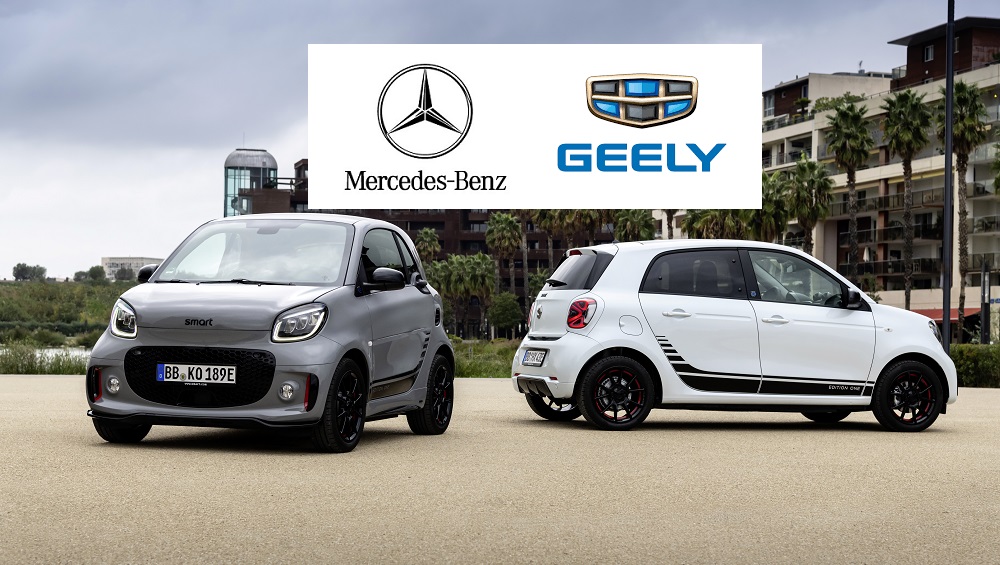
Mercedes-Benz AG and China’s Zhejiang Geely Holding Group have formally established a global joint venture company to handle the German carmaker’s smart brand. Pending regulatory approvals, the company will have its global headquarters in Hangzhou Bay, Ningbo with operational sales functions in both China and Germany.
The total registered capital of the joint venture will be 5.4 billion RMB (about RM3.18 billion) to transform smart into a leading player in premium-and intelligent electrified vehicles. Both parties will equally contribute equally, with the share of Mercedes-Benz mainly covered by the contribution of the smart brand.
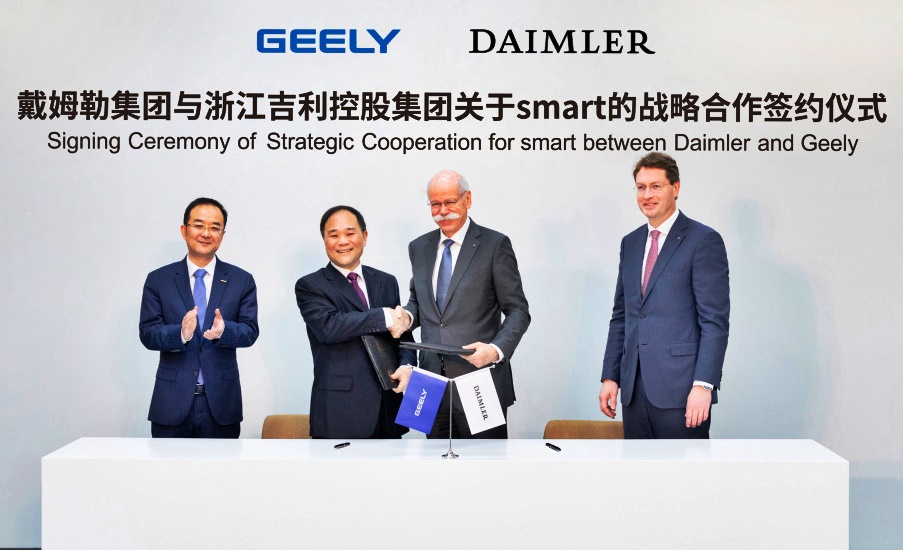
A signing ceremony in March 2019 marked the beginning of establishing the joint venture to produce and market smart cars.
New EV model to be produced in China
A new generation of smart electric models will be assembled at a new purpose-built factory in China with global sales due to begin in 2022. The new generation will be designed by the worldwide Mercedes-Benz Design network and developed by the Geely global engineering network. As part of the vehicle-development program, the smart product portfolio will be extended into the fast-growing B-segment that are in line with smart’s brand positioning with a focus on pure premium electric and connected vehicles.
“The joint venture will bring the next generation of zero-emission smart electric cars to the Chinese and global markets. We look forward to continue our collaboration to bring desirable products and services to customers around the world,” said Ola Kallenius, Chairman of the Board of Management of Daimler AG and Mercedes-Benz AG.
Boardroom composition
The board of directors of the new joint venture will be made up of 6 executives with equal representation from both parties. On the German side, representatives will be from Daimler AG and Mercedes-Benz AG. Geely board representatives will include Geely Holding Chairman Li Shufu, Geely Holding President, Geely Auto Group President & CEO An Conghui, Geely Holding Executive Vice President & CFO Daniel Donghui Li.
Tong Xiangbei has been appointed the new global CEO of the smart joint venture and will oversee all operations relating to the brand including sales, marketing, R&D, production and after sales. Tong has more than 2 decades of experience in the automotive industry. Before joining the smart joint venture, he has worked for global automotive companies in the USA and in China.
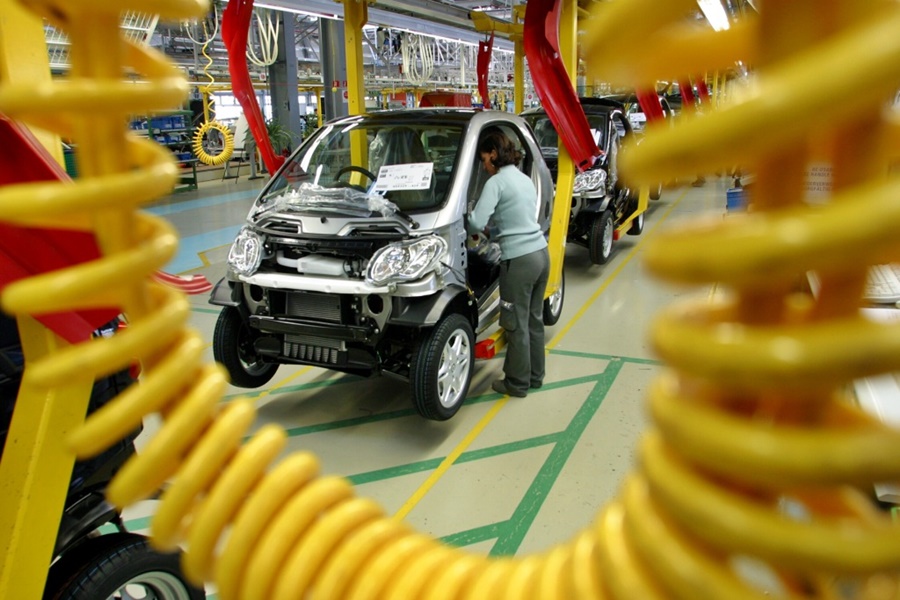
Production line at the smart factory in France.
“The smart brand has a unique value and global influence; it has grown to be a leader in urban mobility. Geely Holding will fully support the smart brand with its full advantages in R&D, manufacturing, supply chain and other fields into the joint venture and support its development in China and globally. We will work together with Mercedes-Benz to transform the smart brand into a leading player in urban premium, electric and connected vehicles to successfully develop the brand’s global potential,” said Li Shufu.
History of smart
The story of smart cars goes back to the early 1980s when Nicolas Hayek, the CEO of the company making Swatch watches, had an idea to apply the same concept of personalisation to making and retailing cars as what was done for the watches. Initially, Volkswagen was involved in the project but Hayek later tied up with Mercedes-Benz. By 1996, the German carmaker took control of the company making smart cars and embarked on a more aggressive growth plan.
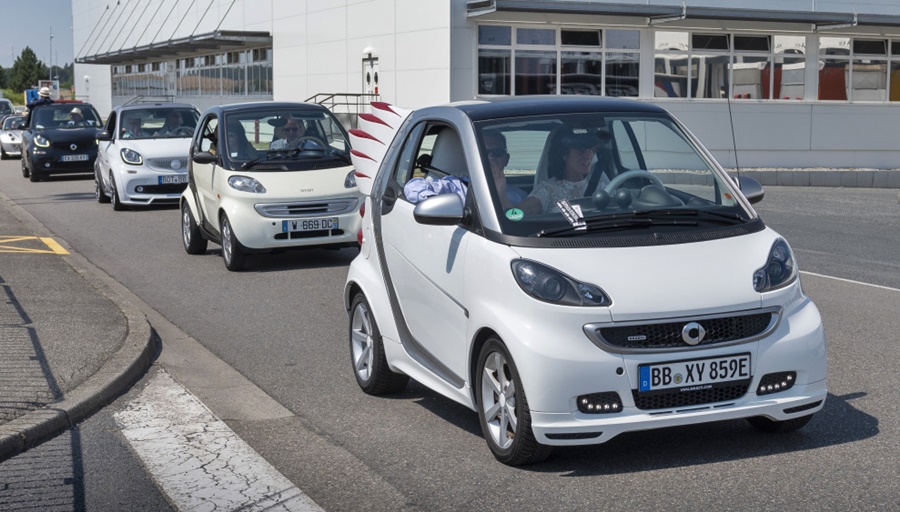
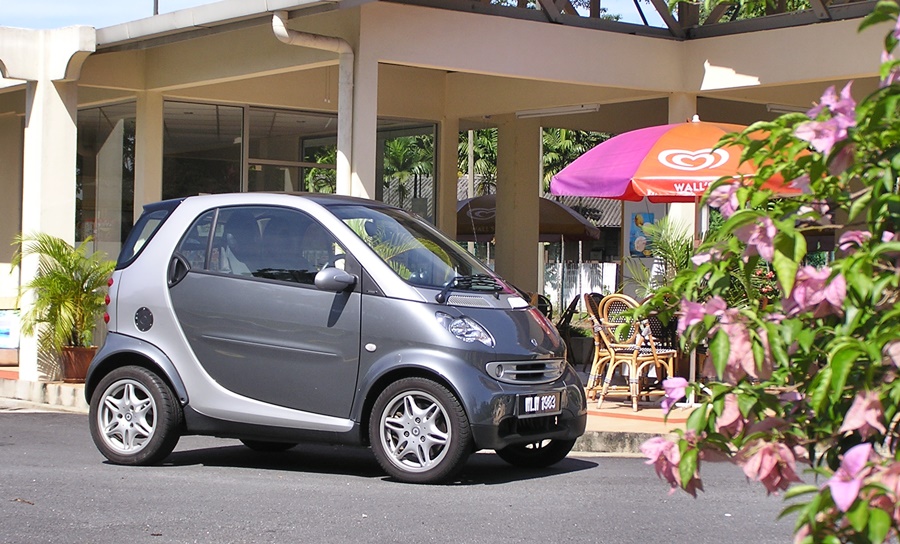
First generation of the smart fortwo was sold in Malaysia for a while.
The little smart cars found a niche as city cars but due to having to meet the demanding and high standards of Mercedes-Benz in the safety, they were not cheap. The brand also did not contribute profits and in fact, lost a huge amount of money.
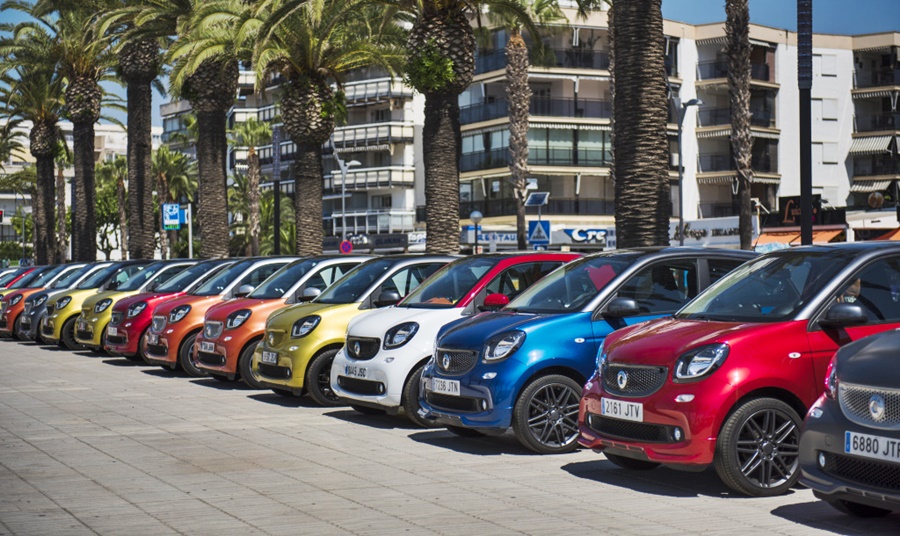
However, Mercedes-Benz didn’t give up and modernised the factory in France to be more productive and cost-efficient. The third generation started rolling out in 2015 and is sold in over 40 markets worldwide. To date, 2.2 million cars have been sold since 1998.
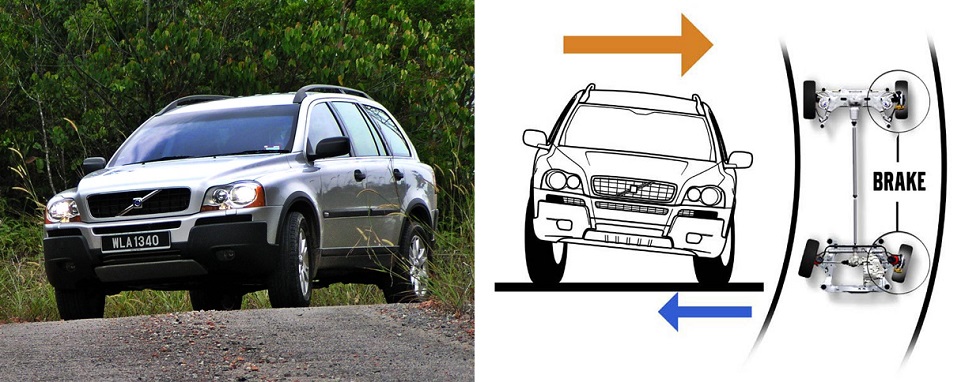
Volvo Cars was rather late in adding a SUV to its range, with its first model – the XC90 – launched only in 2002. The reason given for the delay was that it wanted to offer a SUV only when it could address known safety issues (like the effect on a tall body on handling) and resolve them. It had a strong reputation for safety, on which the brand’s strength grew, and it was not going to lose that. The XC90 certainly proved to be a SUV with innovative safety features like Roll-Over Protection which worked to counteract the risk of tipping over during hard cornering.
Volvo’s first SUV – the XC90 – was launched in 2002 after the carmaker addressed safety issues with innovations like Roll-Over Protection that reduced the risk of the tall SUV tipping over during hard cornering.
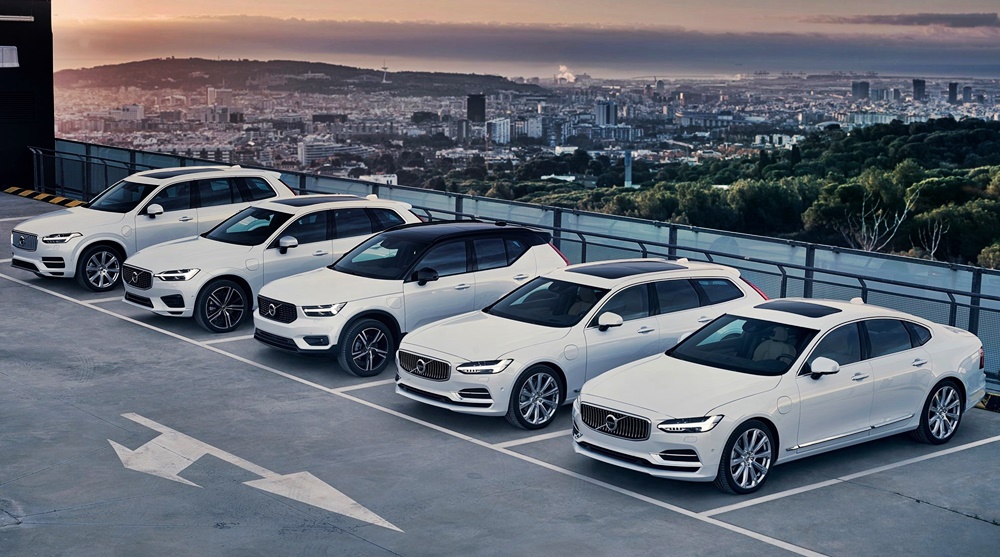
Like the other carmakers, Volvo Cars gave increasing attention to SUVs, expanding its range as the segment grew. 17 years later, its SUVs have helped the company gain market share in China, the USA and Europe amid stagnating car markets.
More significantly, in 2019, the Swedish carmaker set a new, sixth consecutive global sales record, breaking the 700,000-unit level for the first time in its 93-year history. 705,452 Volvo vehicles were delivered worldwide last year, an increase of 9.8% compared to 2018, solidly outgrowing the overall market across all regions.
During the past few years, Volvo has also been moving towards electrification of its range. It aims for plug-in hybrid models to make up 20% of total sales this year. Overall, Volvo sold 45,933 plug-in hybrid vehicles in 2019, an increase of 22.9% compared to 2018 and more than double the number in 2017.
Illustrating the strength of its portfolio and its sales performance in 2019, Volvo surpassed the previous full-year sales record of 642,253 cars, set in 2018, nearly a full month before the end of the year. December was the company’s best ever sales month, with a 23.4% year-on-year increase to 74,239 cars sold.
Sales by markets
In China, home of Volvo’s parent company, the brand sold 154,961 cars in 2019, an increase of 18.7% compared to 2018 and comfortably outperforming the overall market. The result was an all-time record for Volvo in China and the highest sales number it has ever reached in a single market.
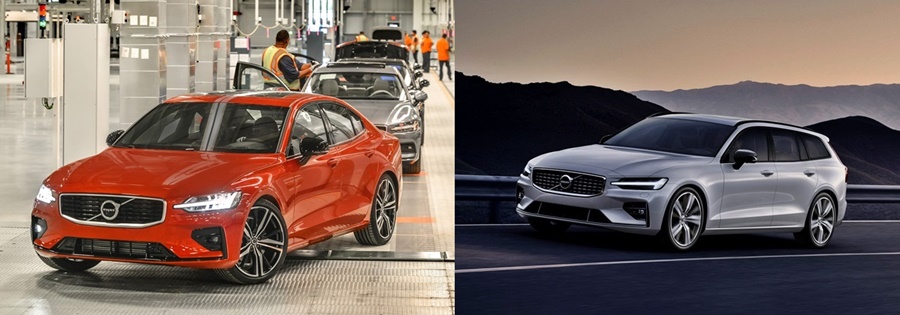
Volvo Cars manufacturing plant in China
In the USA, a market that has usually been Volvo’s strongest customer, the 100,000-unit threshold was crossed for the first time since 2007 when 108,234 vehicles were registered by December 31. Compared to 2018, the sales increase was 10.1%.
European sales were particularly strong in Germany, where the company sold more than 50,000 vehicles for the first time in its history, while it achieved its best sales result since 1990 in the UK. Other markets that recorded their best ever sales performance in the company’s history included Australia, Belgium, Brazil, the Czech Republic, Hungary, Korea, Poland and Portugal.
Sales by models
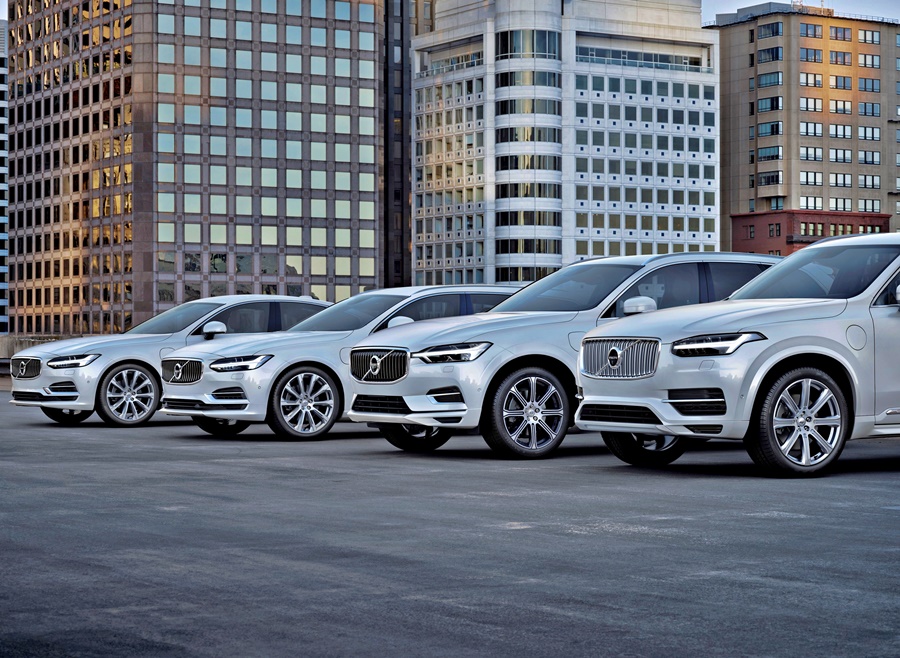
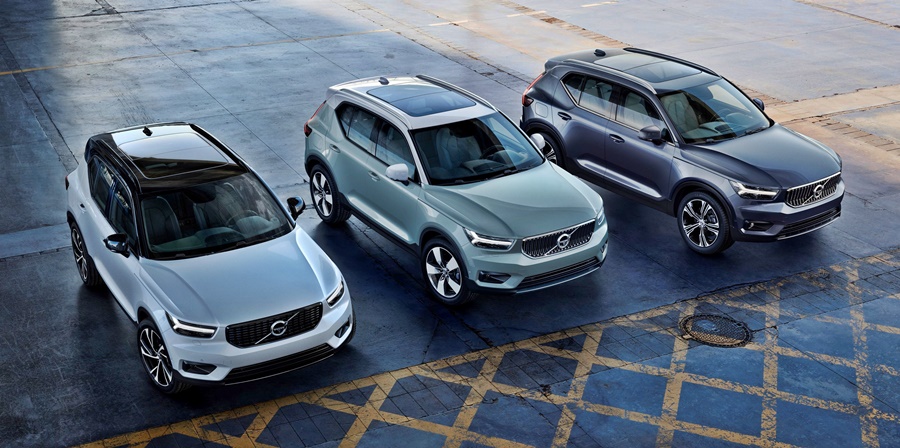
The XC60 SUV continued to be the best-selling model for the company globally, followed by the XC40 and XC90 SUVs. Sedans and stationwagons remained popular, adding to volume growth in China and Europe, respectively.
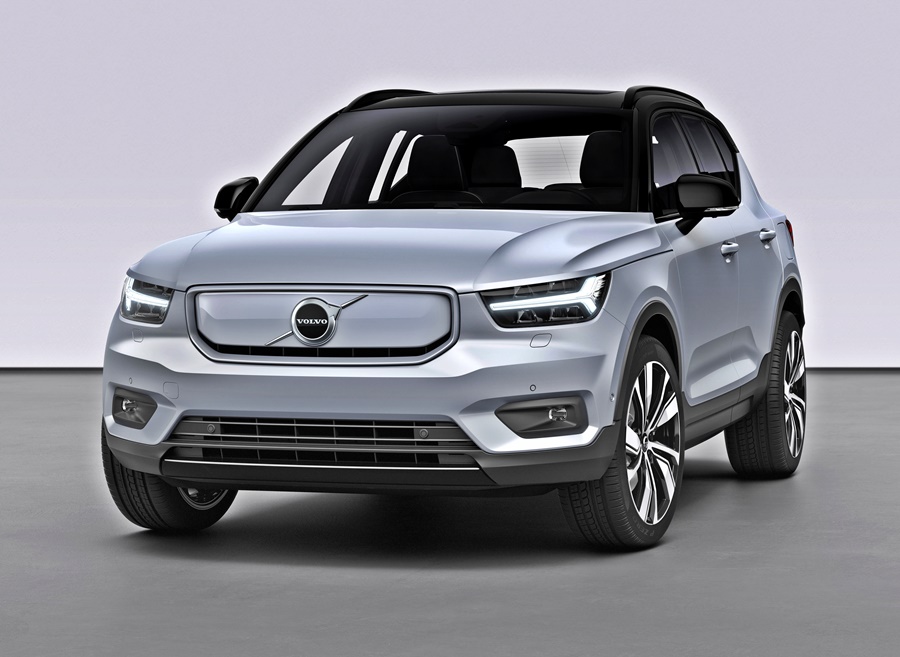
The first Recharge model shares styling with the XC40 but is powered only by an electric motor.
The company will introduce its Recharge line-up in markets around the globe. Recharge will be the umbrella name for all chargeable Volvos with a fully electric and plug-in hybrid powertrain. The Recharge car line aims to further boost sales of Volvo Cars’ chargeable cars and encourage plug-in hybrid drivers via incentives to use Pure mode as much as possible.
Every Volvo model already includes a Recharge option, from the XC40 SUV via the 60-Series cars to the large XC90 SUV flagship. Volvo is the only carmaker to offer a plug-in variant on every model in its line-up, with a fully-electric model – the XC40 Recharge P8 – to appear in showrooms in due course.