Piston.my

hatchback

A few car companies have CEOs or Presidents who are ‘car guys’ and who even go racing sometimes but none probably is as passionate about motorsports as Akio Toyoda, President of Toyota Motor Corporation. Since becoming President in 2009, the grandson of the company’s founder has been transforming the world’s leading automaker to meet the challenges of the 21st century.

Perhaps having started driving in the era of the Japanese auto industry when there were affordable sportscars, Toyoda also came to be a car enthusiast, notwithstanding the fact that his family owned the No.1 carmaker in Japan. And being of the younger generation, he had greater exposure out of Japan where he also had a chance to go racing (although he wanted to be a taxi driver at one time), which he enjoyed greatly to the extent that he created a nickname to use when racing – ‘Morizo Kinoshita’ – in the 2009 Nurburgring 24 -Hour race. Perhaps he wanted to avoid undue attention, being who he is, or maybe he didn’t want his parents to know…
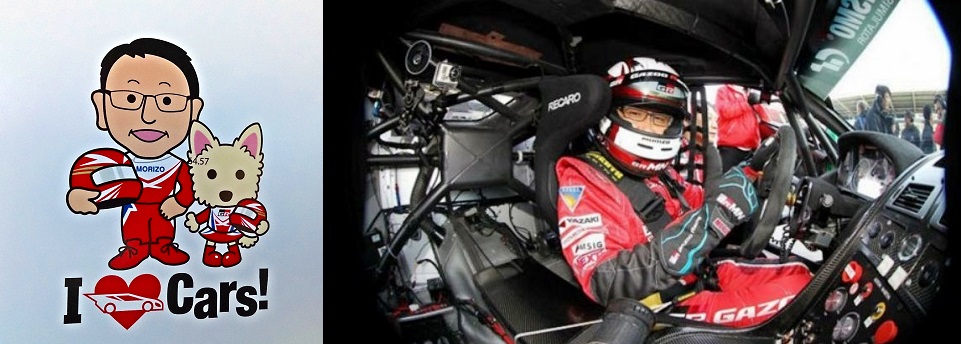
Besides racing and being directly involved in product development, especially of the high-performance GR models, Akio Toyoda has also tried to attract more of the younger generation to have an interest in cars.

When he became President, Toyoda started off promising that Toyota would make cars ‘Fun to Drive, Again’, reviving a tagline used in the 1980s. He gave TOYOTA GAZOO Racing (TGR) greater responsibility to not only manage Toyota and Lexus motorsports activities but also to develop products for the new GR high-performance brand.
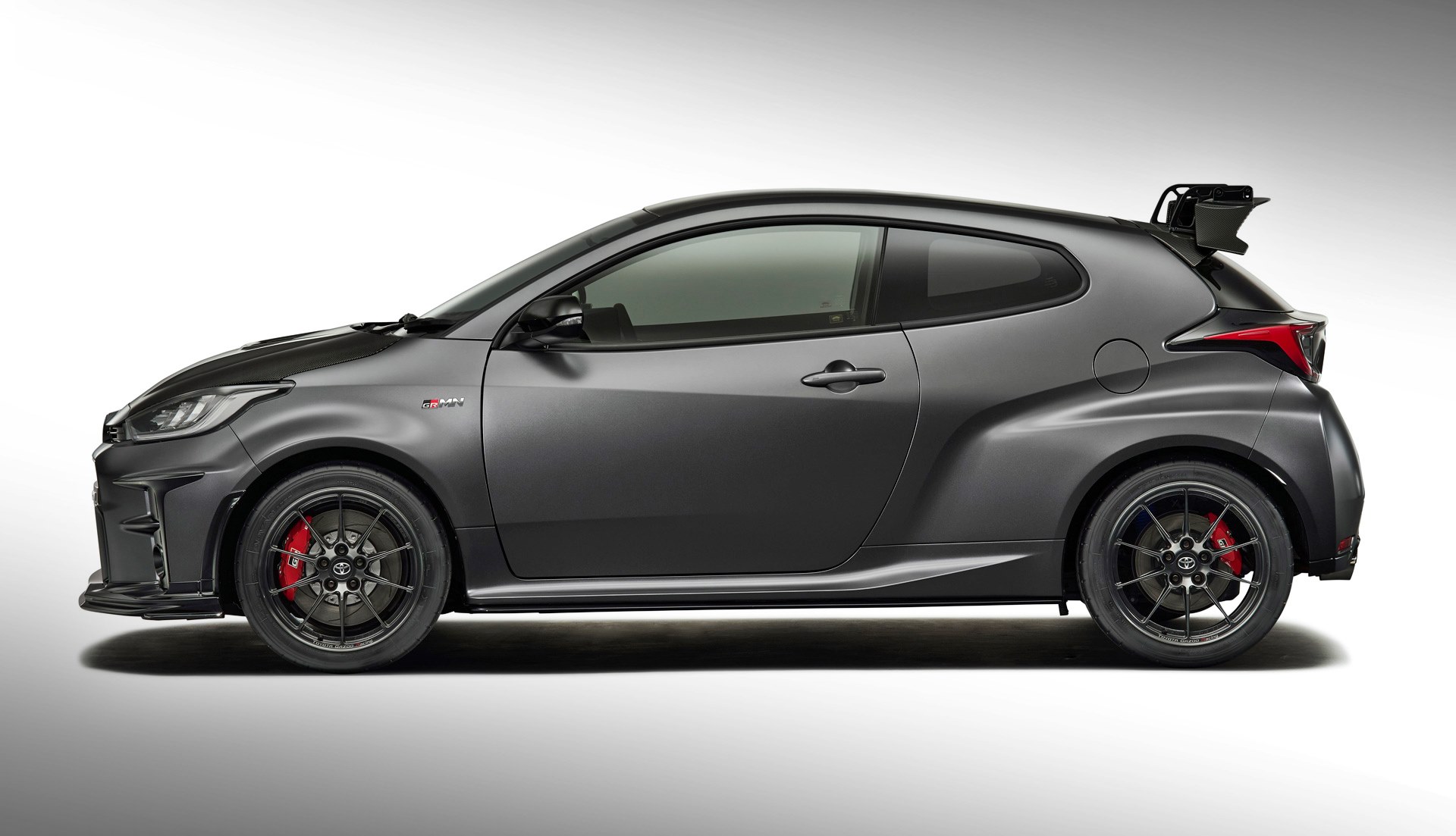
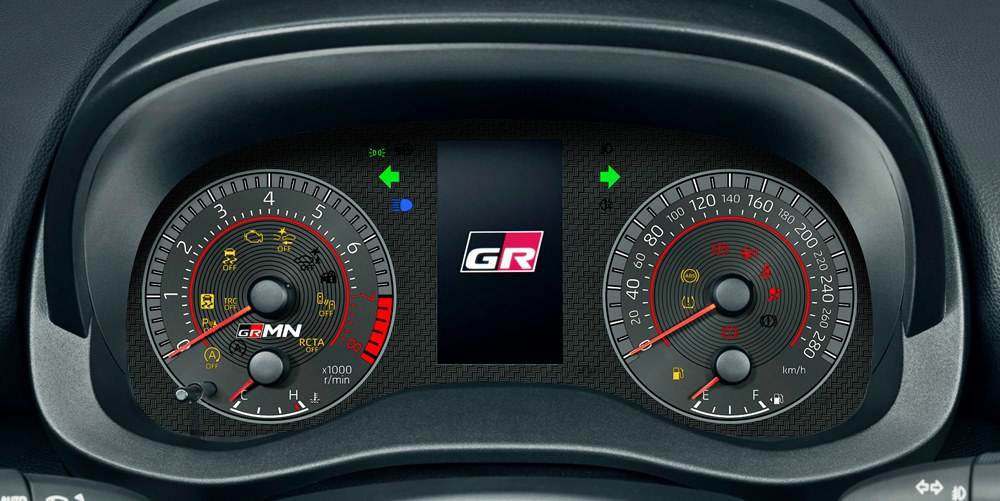
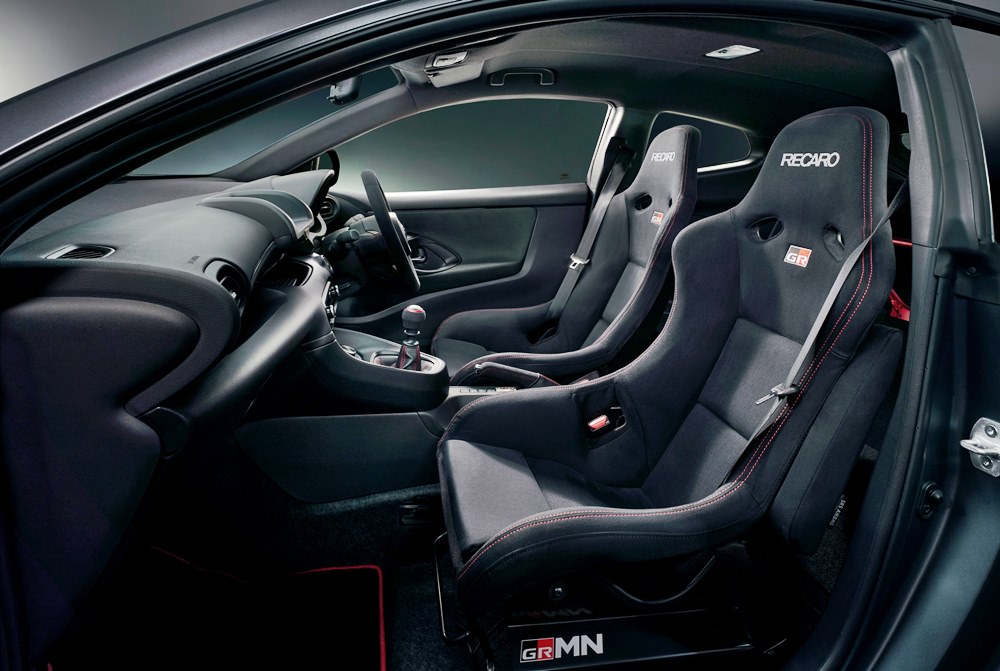
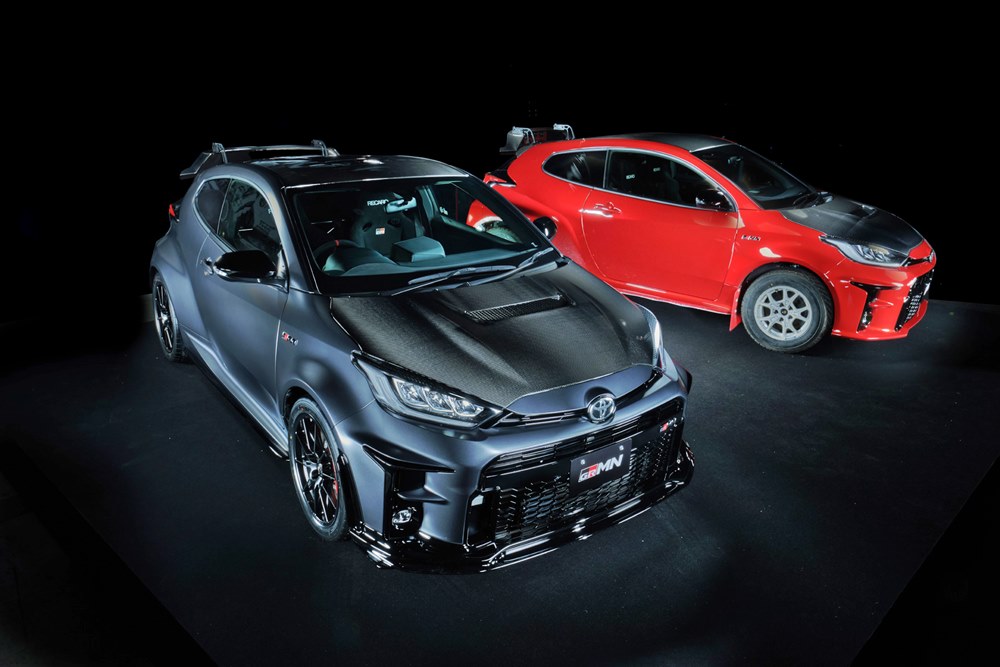
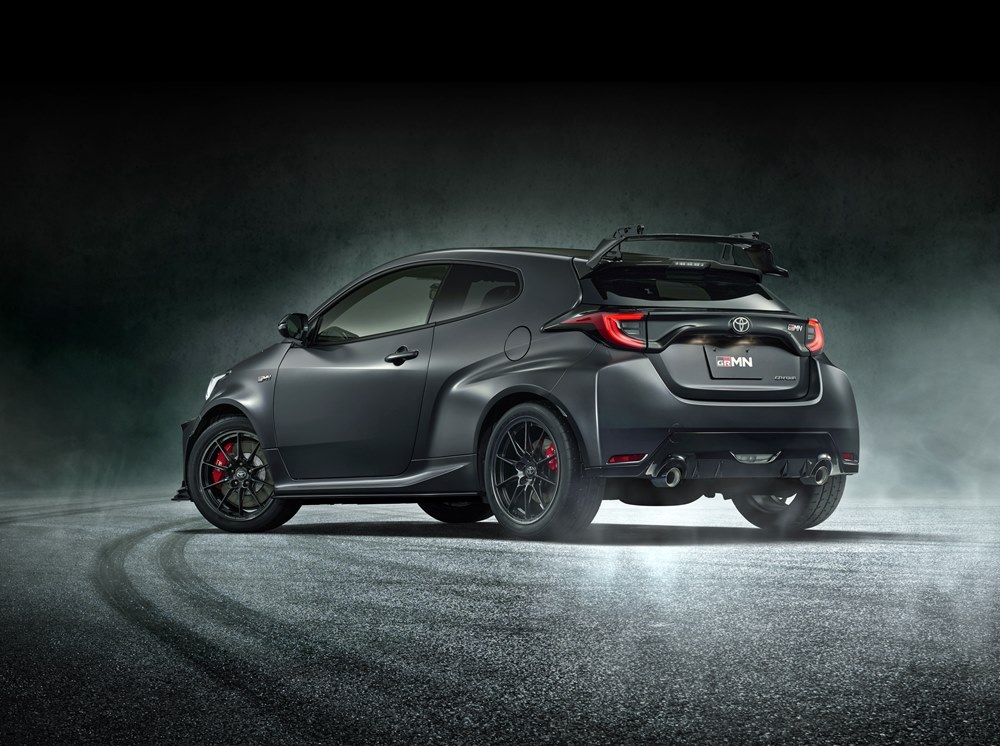
2022 Toyota GRMN Yaris

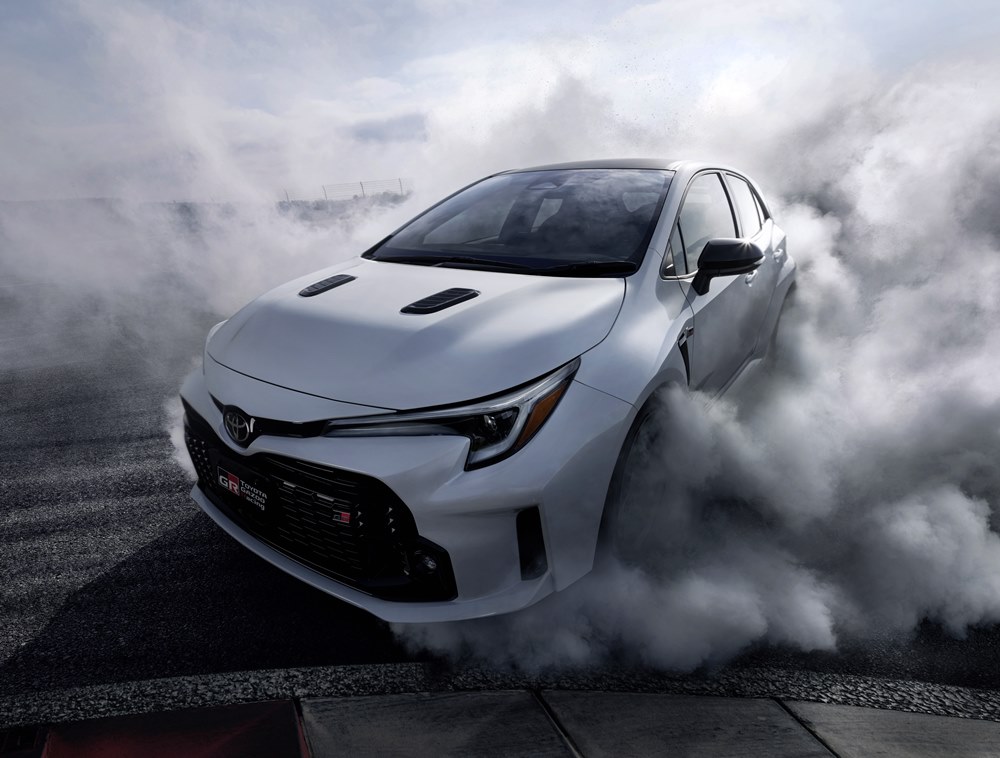
Since then, enthusiasts around the world have been treated to a number of impressive sportscars and TOYOTA GAZOO Racing itself has also risen in prominence. Notable models like the GR Supra and GR Yaris have made big news wherever they have been launched and today, at the at Tokyo Auto Salon 2022, TGR has unveiled another mouth-watering hot hatch – the GRMN Yaris.
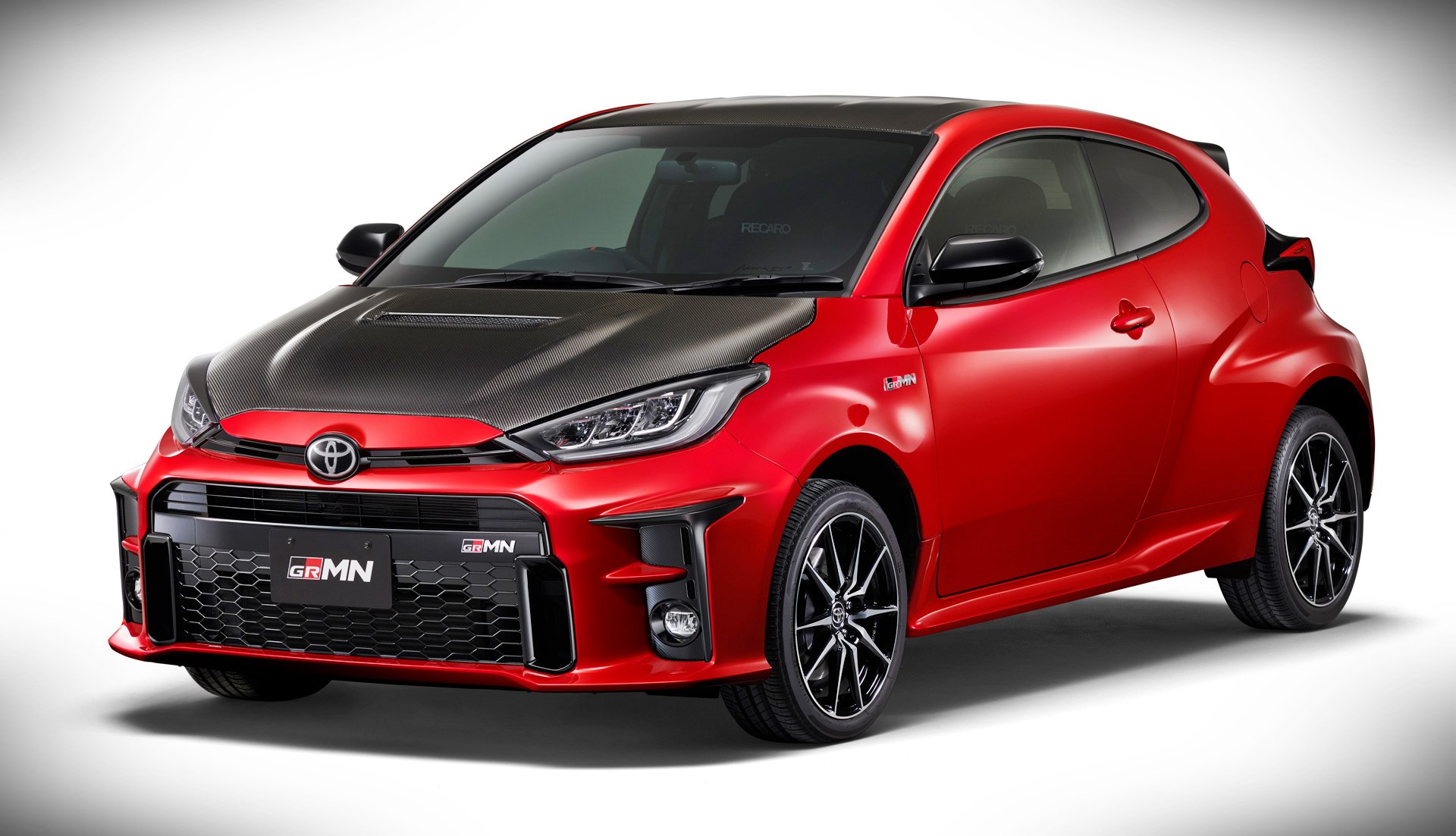
2022 Toyota GRMN Yaris

The ‘MN’ in ‘GRMN’ stands for ‘Meister of Nurburgring’, which is a way of paying tribute to TGR’s test drivers who have developed the products on the legendary German circuit. These would include Hiromu Naruse, the company’s chief test driver and head of GAZOO Racing who died in a crash in Germany in 2010. Naruse was Toyoda’s mentor in racing and whom Toyoda was asked to replace as ‘Master Driver’ of Toyota and Lexus.
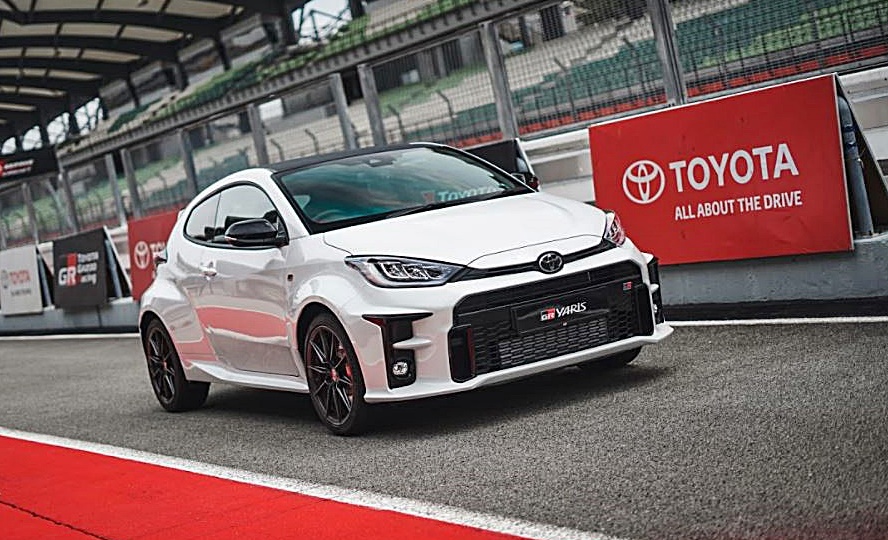
2020 Toyota GR Yaris
The GR Yaris has been sold in Malaysia as well and like in other countries, the limited number of units found customers very quickly.

Since its launch in September 2020, the GR Yaris has been involved in various motorsports such as the Super Taikyu Series where the Toyota President himself (65 years old this year) got behind the wheel as Morizo and participated with ROOKIE Racing, and the Japanese Rally Championship, where it won the season championship.

Having been closely involved in the development of the GR Yaris, Toyoda wanted to ‘deliver cars to customers that evolve quickly and can be tailored to individuals in the field of motorsports’. Using lessons learned from motorsports activities, the body rigidity of the GR Yaris has been enhanced. The number of spot welds has increased compared to the GR Yaris, and body rigidity has been further enhanced by applying longer structural adhesive.
2022 Toyota GRMN Yaris

2022 Toyota GRMN Yaris

2022 Toyota GRMN Yaris

2022 Toyota GRMN Yaris

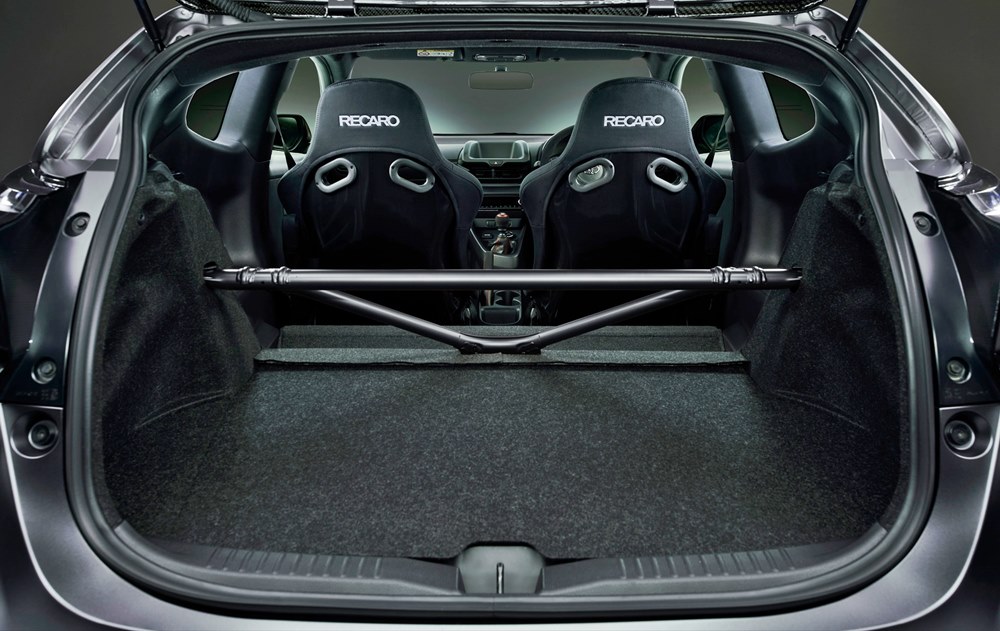
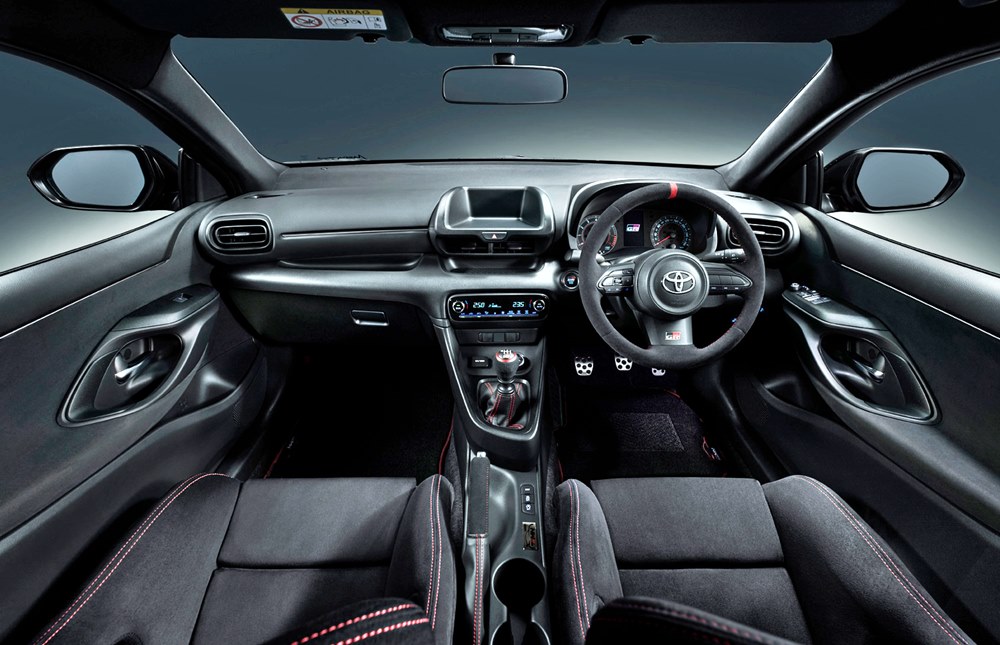
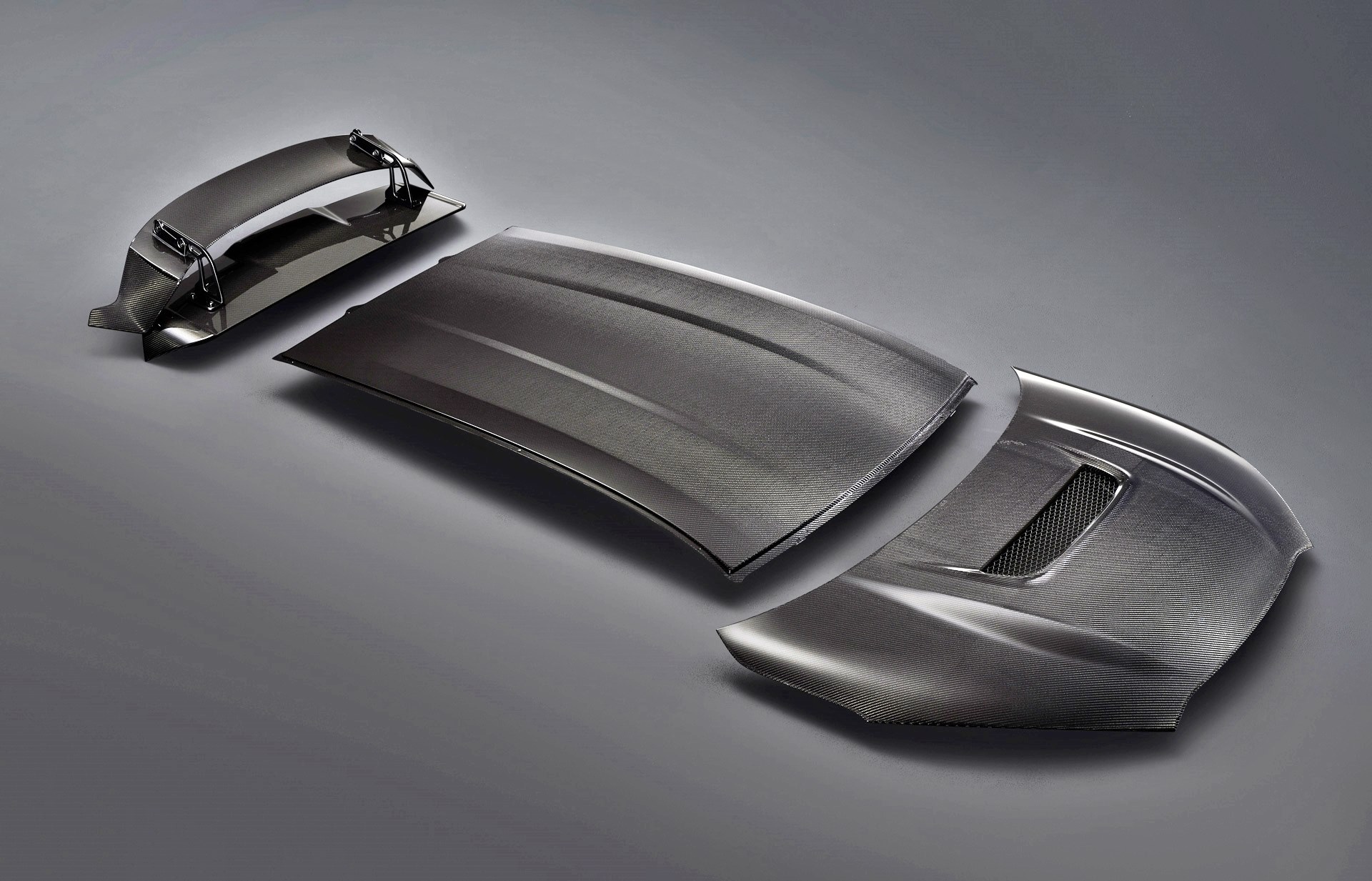
The GRMN Yaris is also wider by 10 mm, this increase said to be for improving aerodynamics, while the height has been lowered by 10 mm for a lower centre of gravity. In addition to the lightweight high-rigidity carbonfibre (twill weave CFRP) used for the bonnet, roof, and rear spoiler, removing the rear seats to make it a two-person car has achieved weight reduction of approximately 20 kgs.
2022 Toyota GRMN Yaris

The engineers also installed a mechanical LSD, a close-ratio gear transmission, and a low final gear set, which has been improved through repeated ‘breaking and fixing’. Issues under extreme use conditions were identified through driver feedback and quickly resolved. Thus the GR Yaris has evolved into a car that can be driven faster, with improved braking force, grip, cornering and following performance to give the driver more confidence pushing it hard.
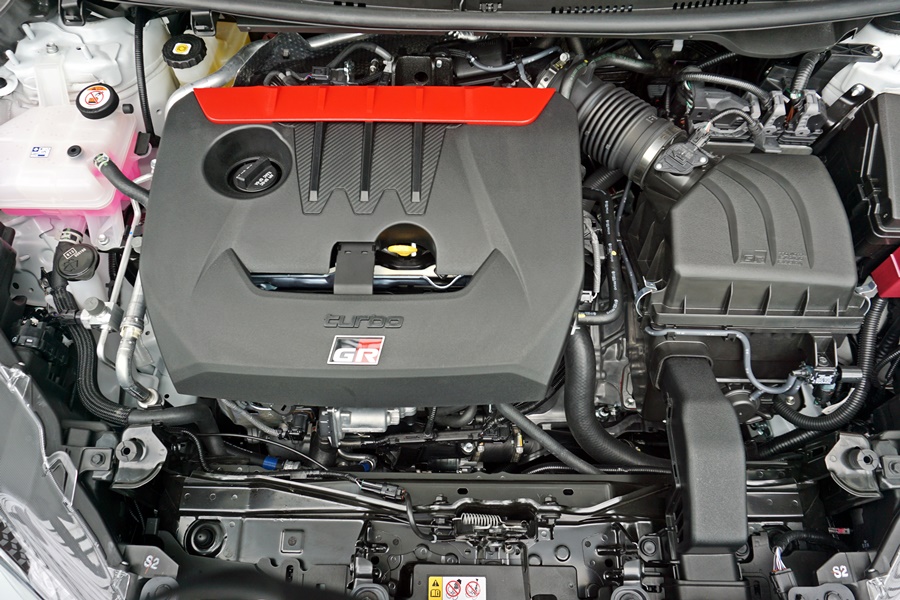
Power to all 4 wheels will still come from the 1.6-litre turbocharged 3-cylinder unit already used in the GR Yaris but with higher output. As it is, the G16E-GTS engine produces 261 bhp/360 Nm, making it the world’s most powerful 3-cylinder engine and the lightest and smallest 1.6-litre turbo unit currently in production.

Only 500 units of the GRMN Yaris will be available with sales in mid-2022, only at GR Garages around Japan. Customers will be able to specify a Circuit or Rally package to suit their requirements. Each customer will get a Personalisation program that provides individually tailored customization conducted by analyzing driving data. Steering control, engine control, and drive distribution, hardware including shock absorber damping force, spring rate and aerodynamic components will then be optimized for the best performance with the specific driver.

Expecting the 500 units to be snapped up quickly, TGR is having a lottery for those who are interesting in booking the GRMN Yaris. The basic GRMN Yaris will cost 7,317,000 yen (about RM269,000) while the Circuit package will add another 1,150,000 yen (about RM42,300) and the Rally package will cost an extra 1,061,764 yen (about RM39,000).
2022 Toyota GRMN Yaris

The story behind TOYOTA GAZOO Racing and why it was created

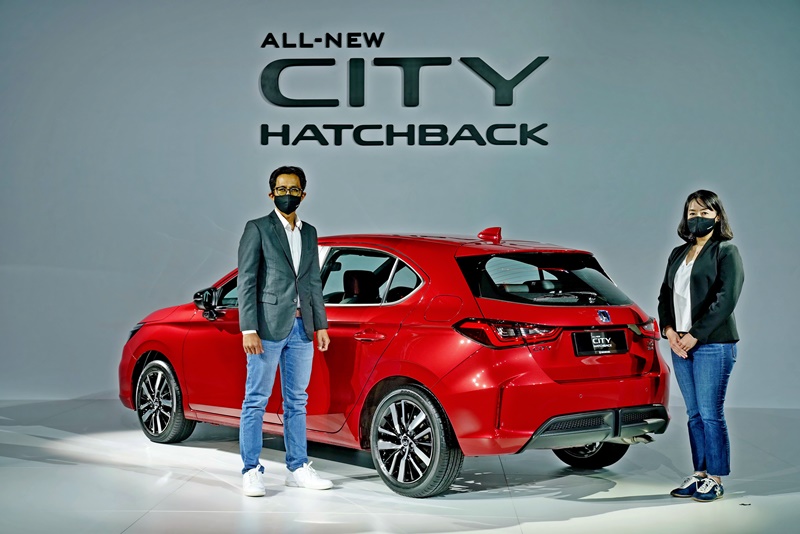
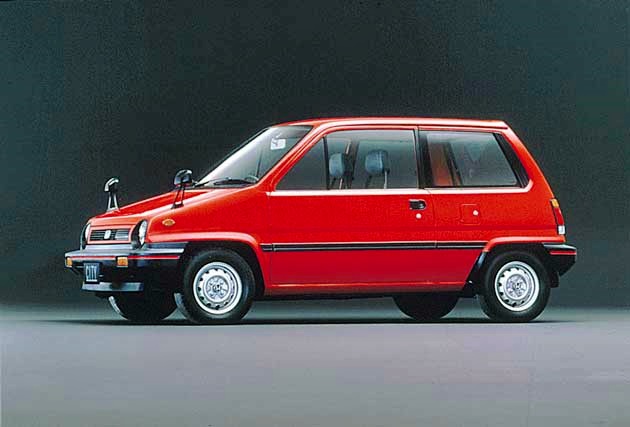
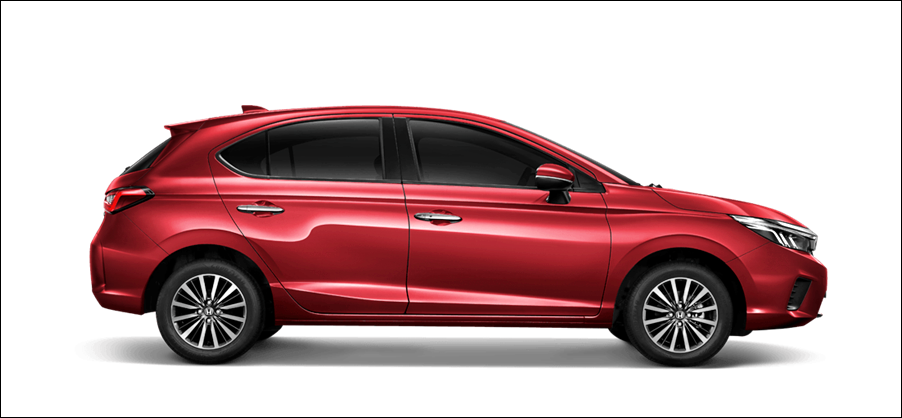
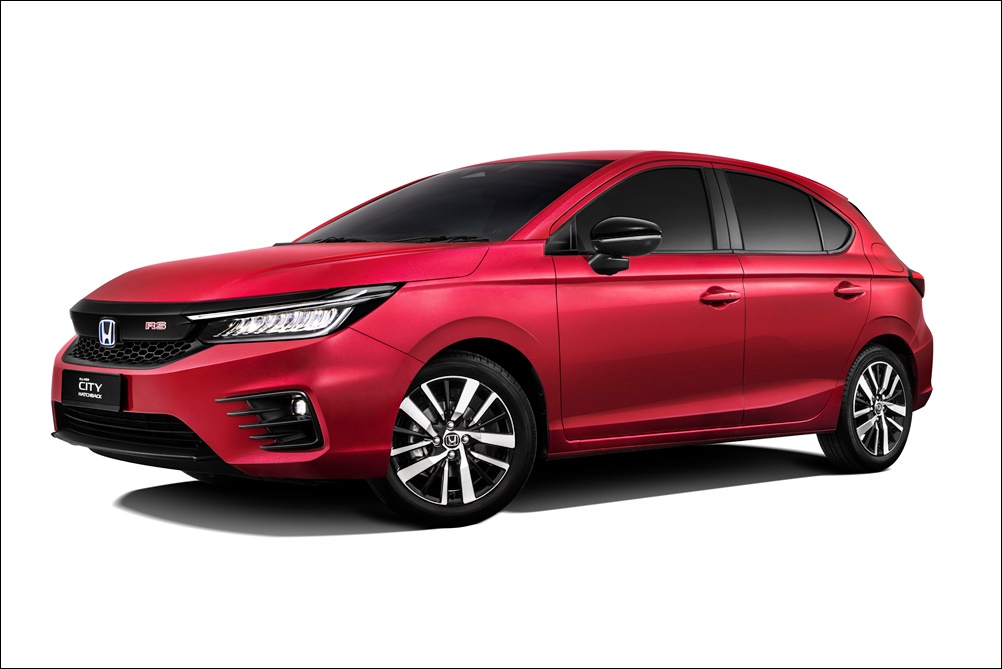
Not everyone may know that the City name did not begin with the model that is known today which was born in the mid-1990s. There was another Honda City – a small car mainly sold in Japan which was called the City as well. That model was interesting in the interior packaging that made it even possible to include a tiny scooter called the MotoCompo in the boot. And it was a hatchback. So it is interesting that while the original City was not mentioned before as a predecessor of today’s City – which is a sedan – it was mentioned with the launch of the new City Hatchback.

The original City was a small hatchback produced between 1981 and 1986. It was only around 3.8 metres long with a wheelbase of 2.2 metres – while the modern City Hatchback is 4.3 metres long and sits on a wheelbase of 2.6 metres.

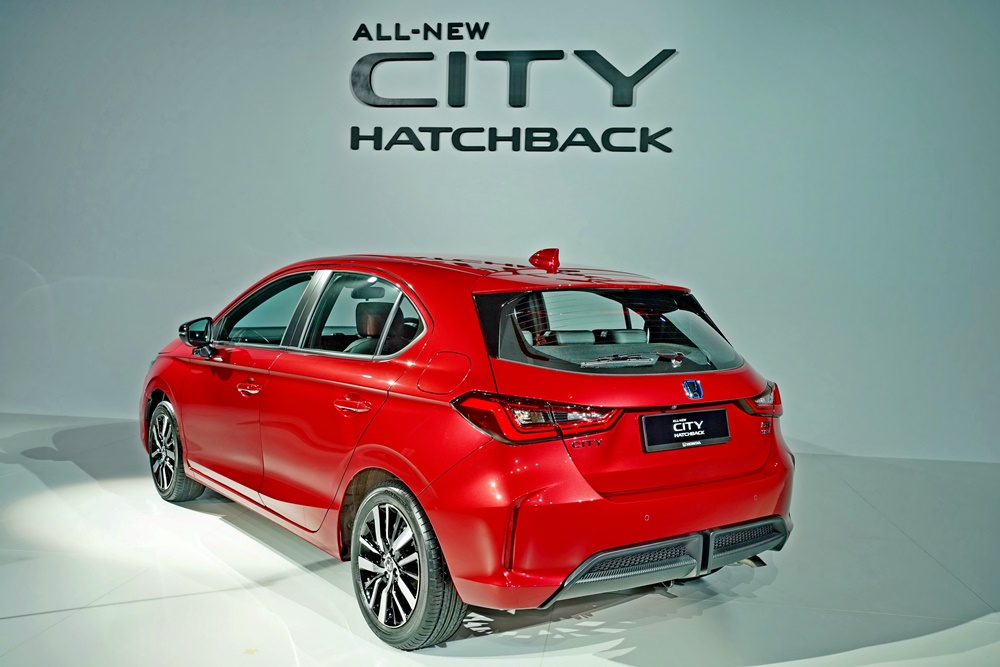
The City Hatchback takes the place of the Jazz which will no longer be offered in Malaysia but will still be sold elsewhere outside the region. Some may ask why it is necessary to drop the Jazz. It has been a successful product since being launched in 2001 and was the first model to beat the Toyota Corolla in the domestic Japanese market in overall sales. Like the Civic, which began as a low-priced hatchback, the Jazz evolved and perhaps became more sophisticated and more expensive to build.

It could be for this reason that Honda decided to develop a hatchback on the City platform which was originally conceived as a ‘Asian Car’. It was created at a time when the Civic began to cost more and could no longer be an entry-level model so a new lower-cost approach was needed to offer a new model at the entry level.

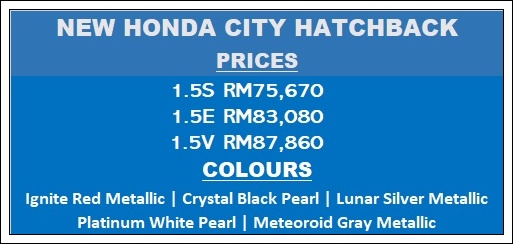
Prices shown above do not include insurance and sales tax. For private registration in Peninsular Malaysia.

The City Hatchback was planned and developed at the same time as the current 5th generation City Sedan but its introduction was delayed due to the pandemic. While the Jazz will be sold in other regions, this model is intended mainly for the Asia-Oceania market. The factory in Thailand is the hub for producing the City in both variants and markets like Malaysia also have it assembled locally.

Four variants, two powertrains
For the Malaysian market, there are four variants being assembled at the Melaka plant, essentially like what is offered for the sedan. And like the sedan too, one of them (the RS variant) has a more advanced i-MMD e-HEV powertrain. This is a hybrid powertrain which is greatly improved from the first Integrated Motor Assist (IMA) hybrid system Honda used over 20 years ago. It uses a 1.5-litre petrol engine working with dual electric motors and can generate up to 253 Nm of torque – which is a figure normally seen from bigger engines. The City Hatchback RS will not, however, be immediately available (which was the same case with the City RS), so we won’t get into too much detail at this time.

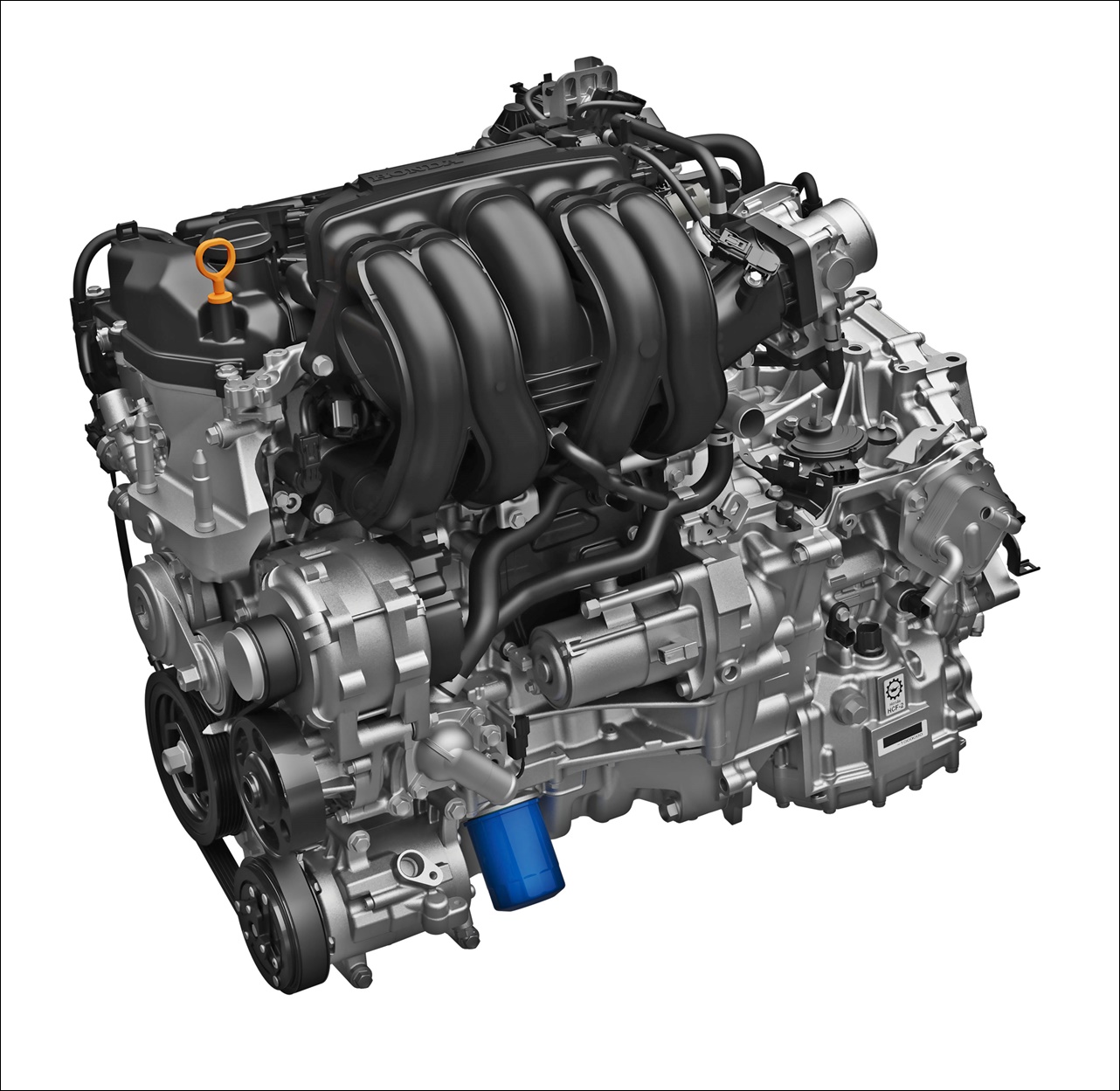
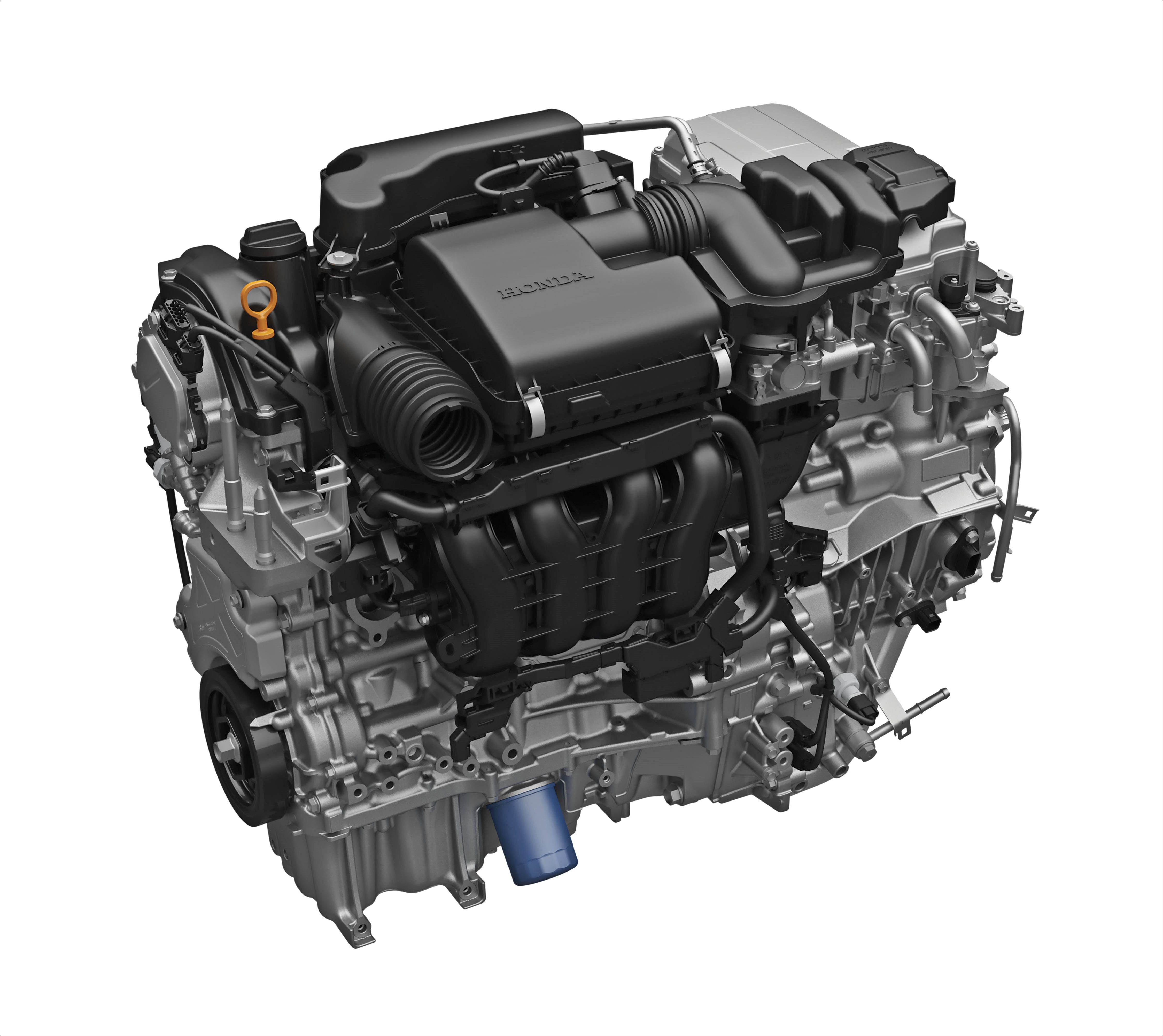
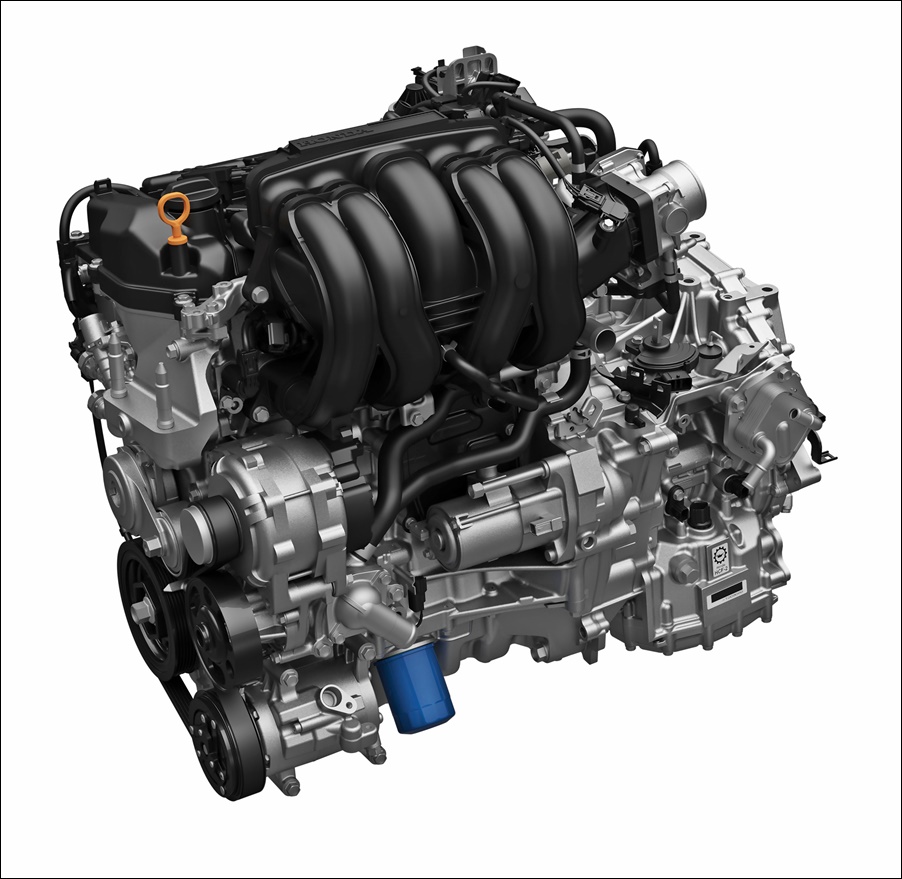
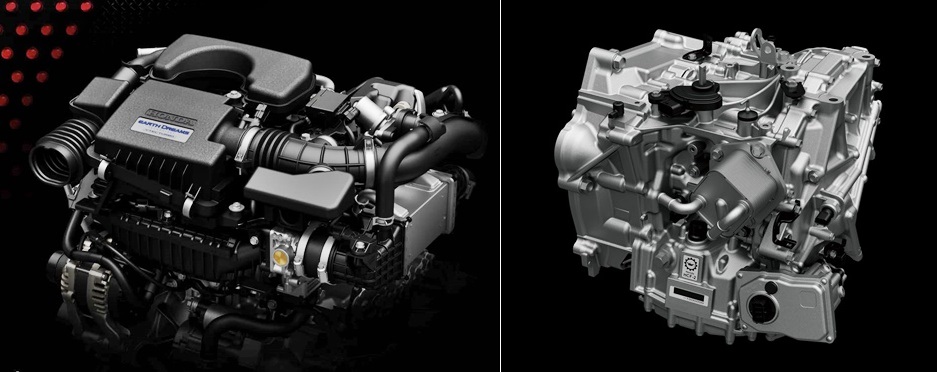
As for the other three variants (S, E and V), these all share the same 1.5-litre i-VTEC engine with a DOHC cylinder head. This engine (also used in the sedan) produces 121 ps/145 Nm which is the highest in its class and the power gets to the front wheels through a CVT. These three variants are expected to account for 95% of the sales, the same proportion as for the City Sedan.

Shorter but heavier
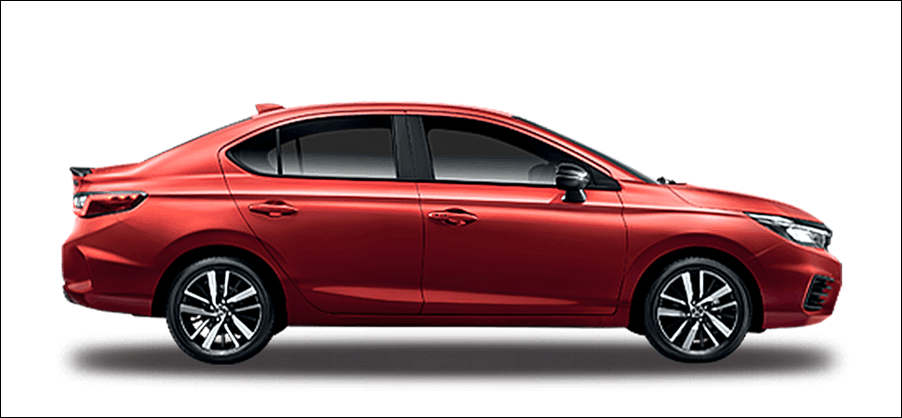
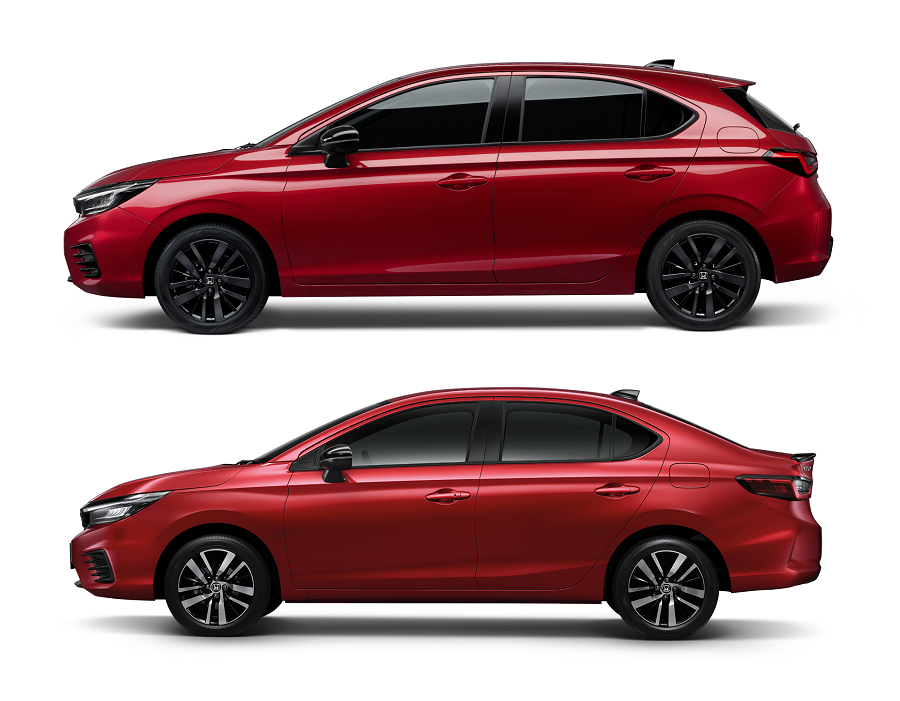
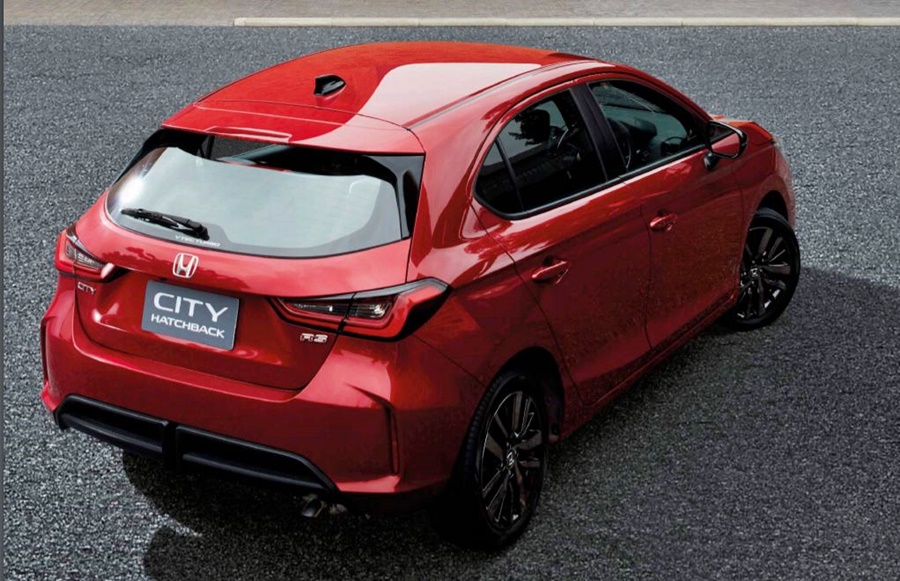
While the sedan and hatchback have similar mechanical items and parts, the bodywork is obviously different at the rear with the absence of the ‘third box’ for the boot. The rear side doors appear similar, probably retaining the same hard points but further back, the rear end is shorter. The difference in overall length is about 206 mm but the wheelbase is identical at 2600 mm as is the 1748 mm width. The hatchback is a bit heavier even though it is shorter and that’s likely to be because it has a larger piece of glass at the back.

The versatility of a hatchback
When hatchbacks started to appear in the 1970s, the selling point was their versatility. SUVs as we know them today were not in existence yet so to have a car that could provide comfortable transport and yet carry more stuff than a sedan, the hatchback with its large rear opening was a practical approach.

While one can say that when folding rear seats were also available in sedans, the extended load capacity also became possible, along with a longer floor. But what a hatchback offers is more vertical space so more items can be stacked or taller items can be accommodated (keeping in mind the rear view, of course).
The ULTRA Seat
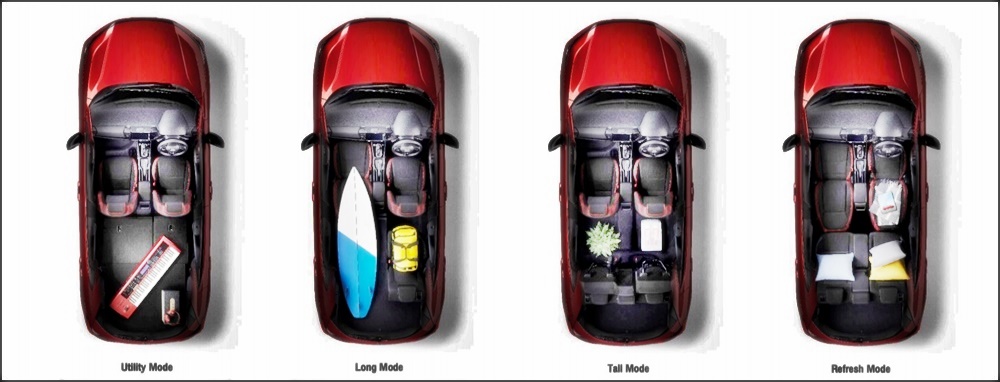
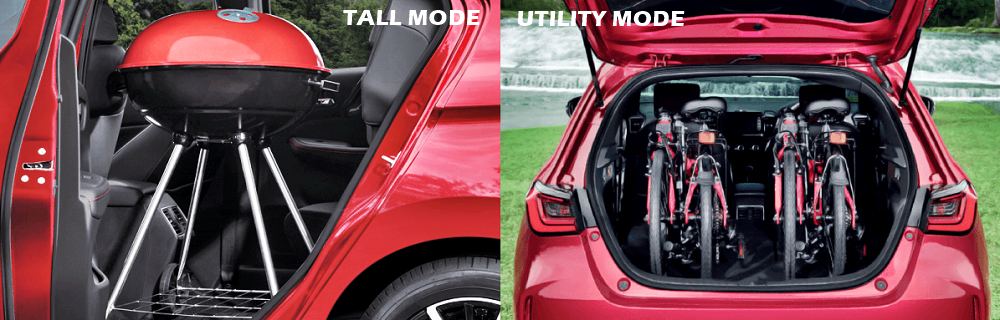
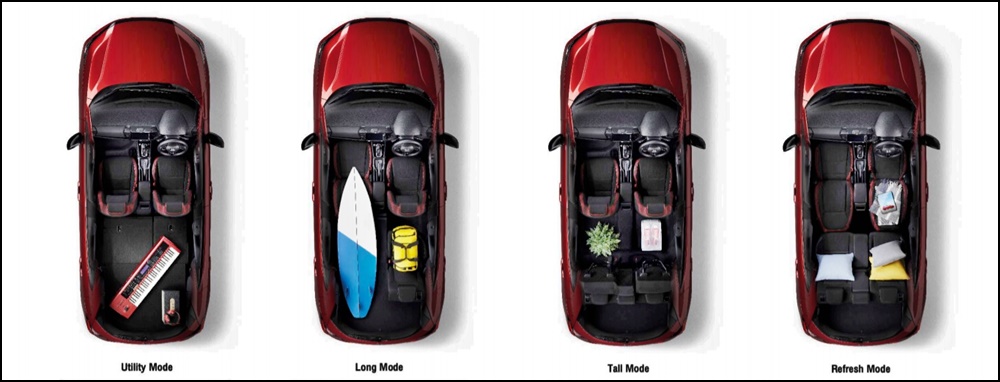
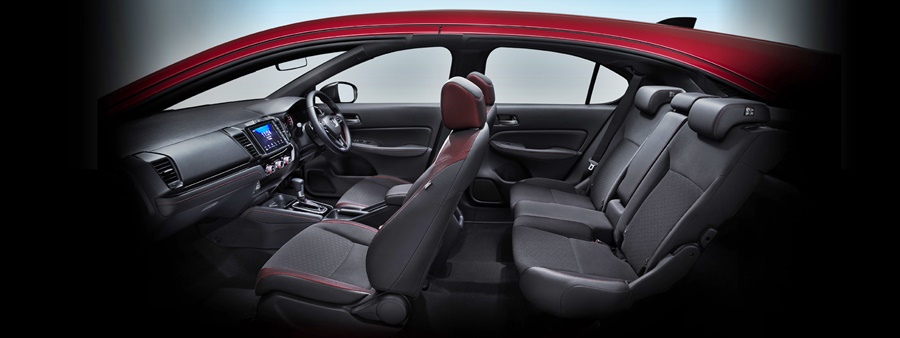
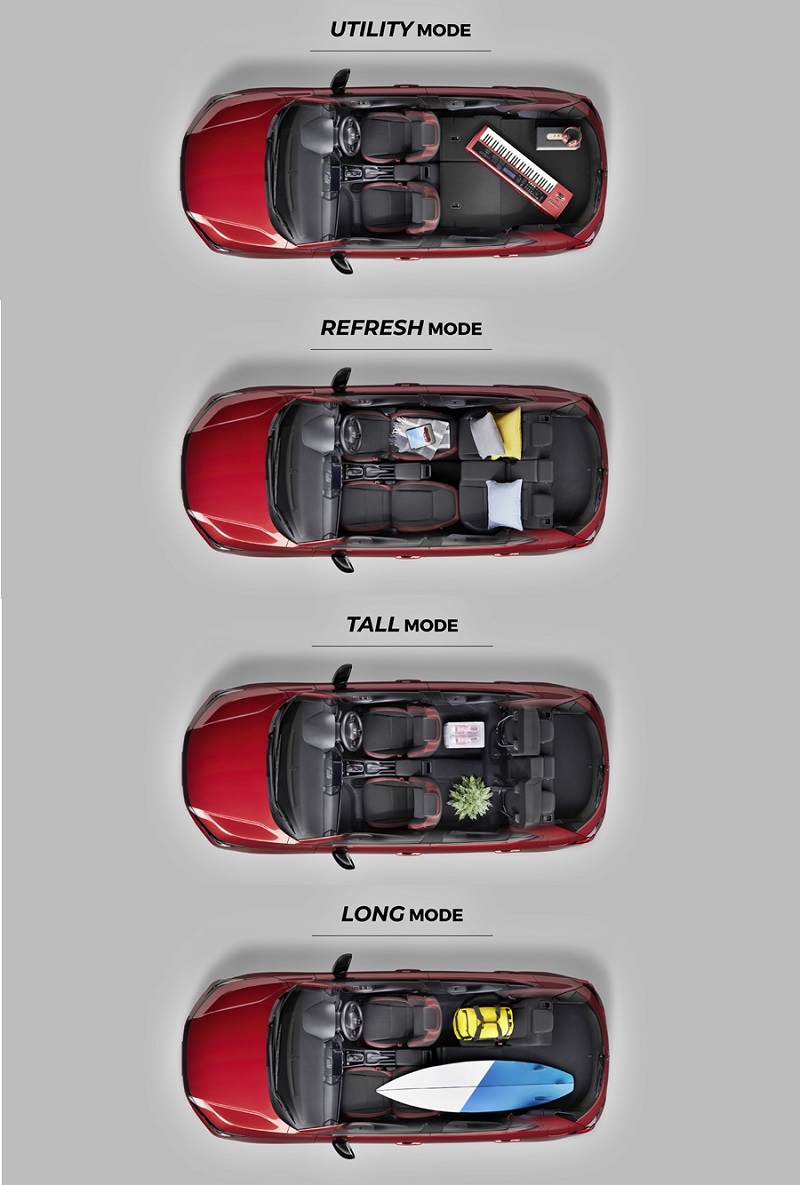
Honda’s designers went one step further in making the cabin of a hatchback versatile by adding the ULTRA seat. This innovation was developed after hours of watching people at supermarkets and shopping centres. They took note of the sort of items loaded and saw that there were items that were tall (like plants) and could not readily fit. This led them to design the rear seat to fold upwards against the backrest and create a generous vertical space from the floor to the ceiling.
The ULTRA seat was introduced in the first generation of the Jazz in the early 2000s. It was then offered in the second generation of the City, giving it a unique selling point. However, it was not consistently offered and then disappeared.

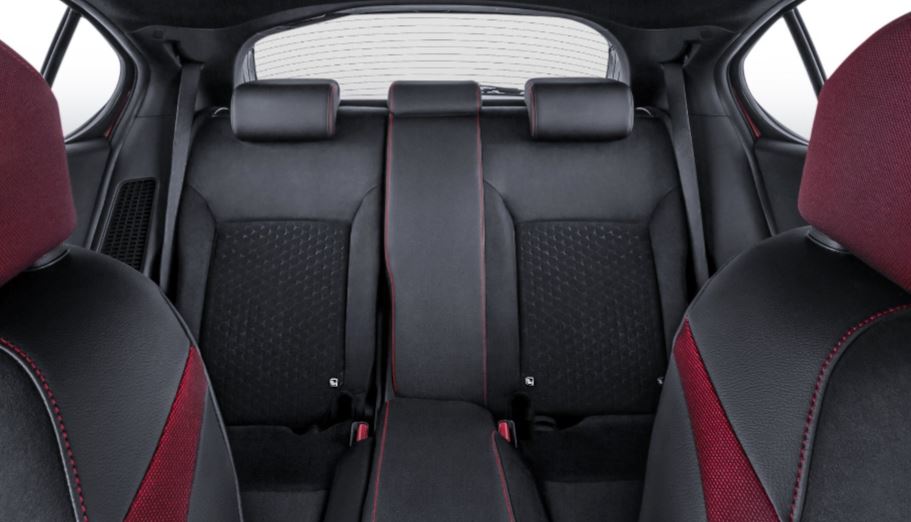
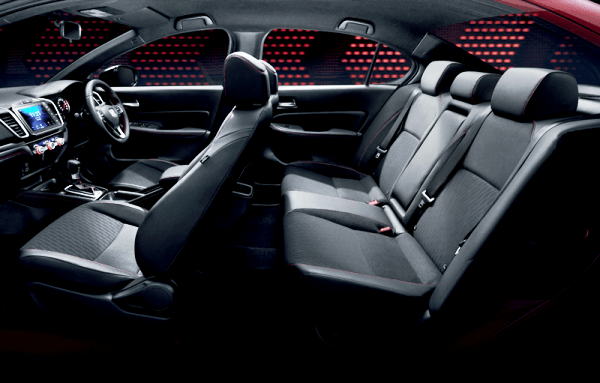
Now the ULTRA seat is back in the City Hatchback which extends its versatility. Instead of being bolted to the floor and fixed in place, the seats have a hinge under the backrest and are supported on U-shaped tubular bars. They can be flipped up against the backrests, or the backrests flipped down flat to get more floor length.

While they are similar in concept to the original ULTRA seats, they no longer have a hard plastic panel underneath. In the early version, the panel was moulded and included circular teh tarik hooks which were useful if you had some plastic bags to hang.

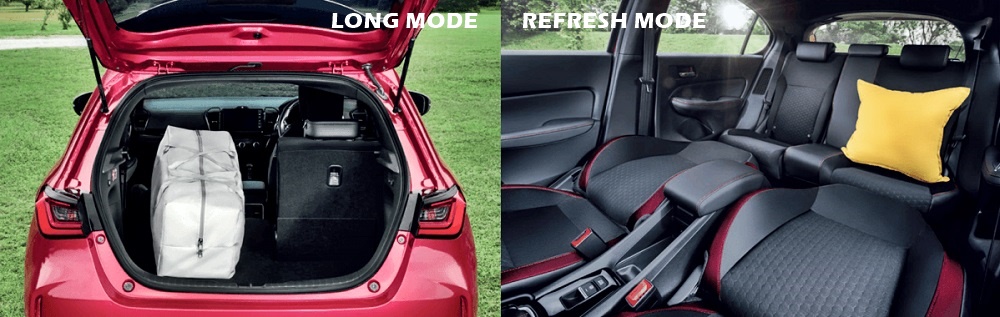
As before, the ULTRA seats have four ‘modes’ – UTILITY, LONG, TALL or REFRESH. For the LONG and REFRESH modes, the front passenger’s seat can also be folded flat so there is an open space from the back door all the way to the dashboard to carry a really long item or just to stretch out. For those who frequent IKEA, this would definitely be the sort of car to own.

Similar design and features as sedan
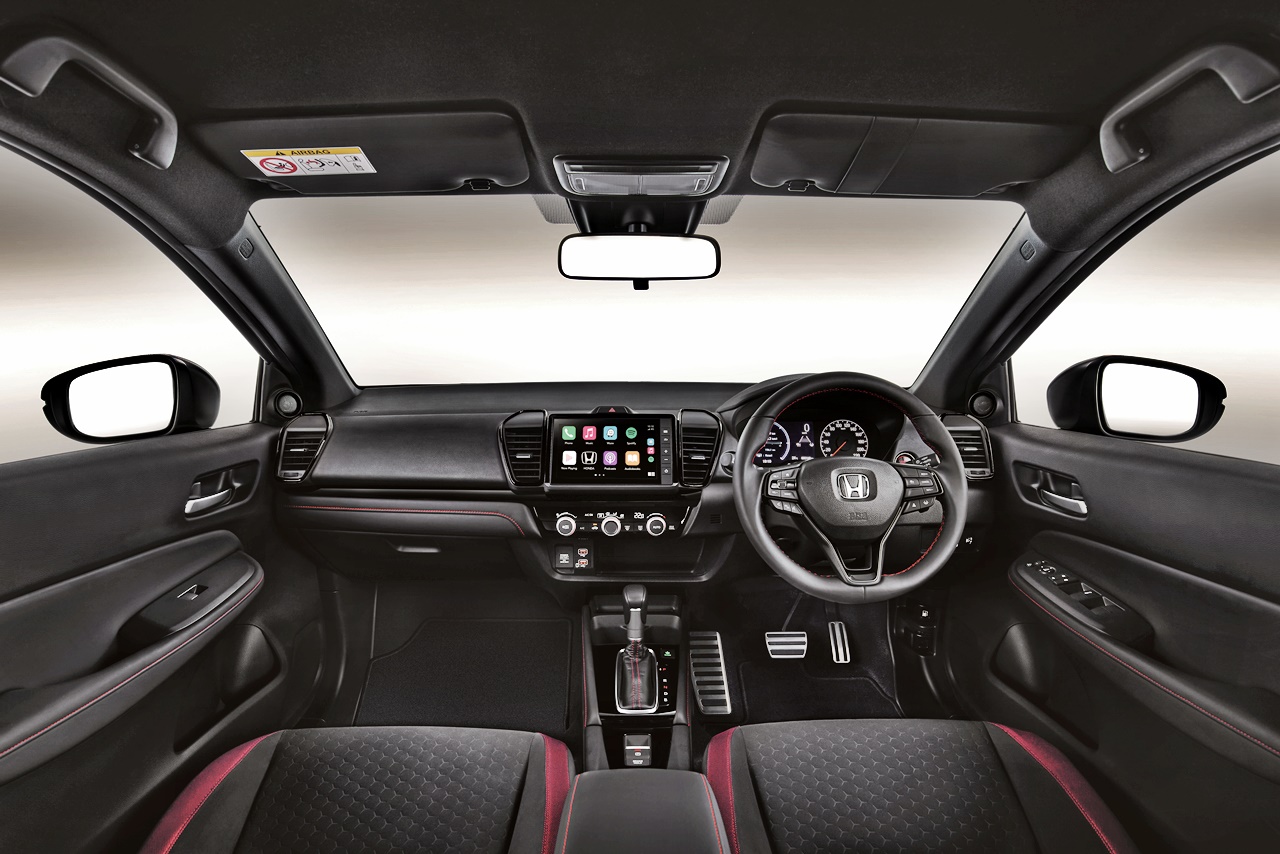
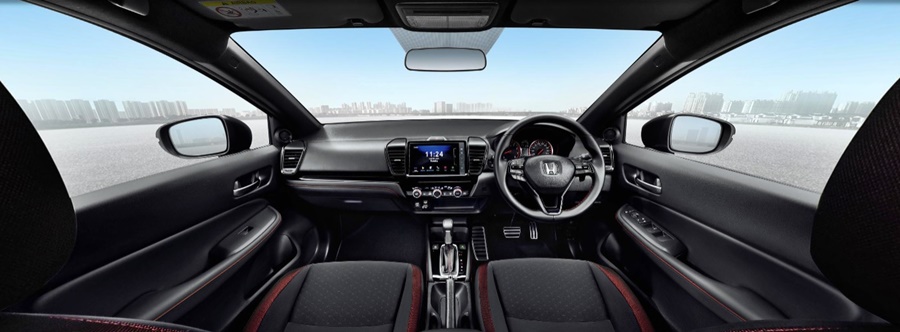
The cabin layout is the same as the sedan’s and the equipment levels are also similar. The best-equipped version is the top RS e:HEV which has Honda SENSING and Honda CONNECT. However, this version would cost more than the RM87,860 that the top version (1.5V) of the petrol-engined variants is priced at. For the sedan, Honda Malaysia introduced an additional version which brings Honda SENSING to the 1.5V version and they might do the same for the City Hatchback later on.

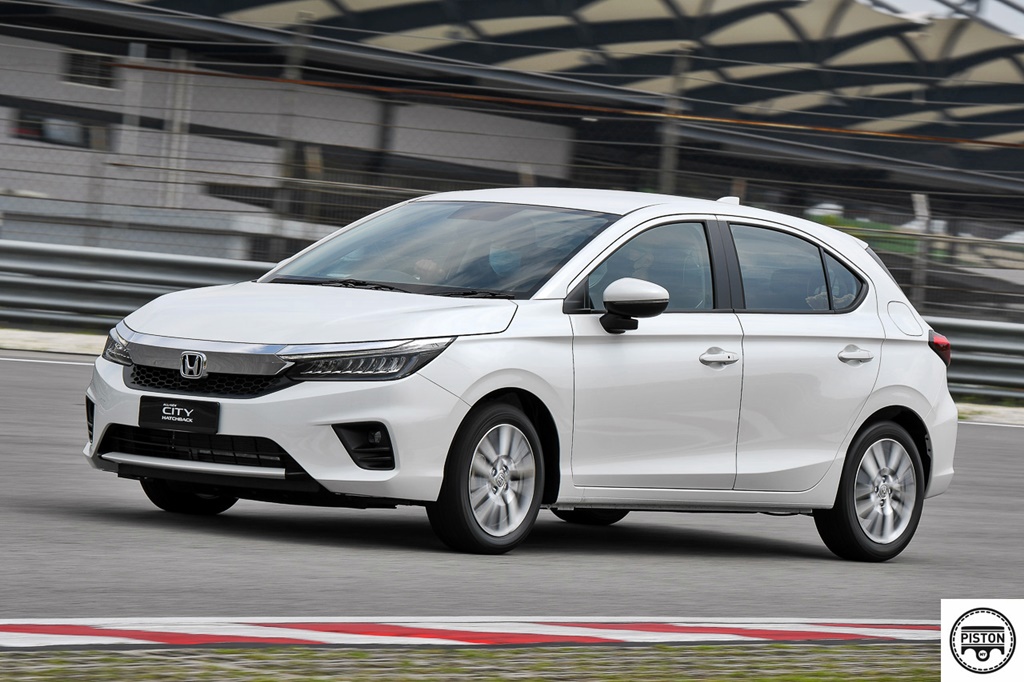
In any case, the City Hatchback 1.5V is still pretty well equipped and good value for money. It has standard features like Auto LED headlights (high beam automatically switches to low beam when necessary), LED front foglights, 16-inch alloy wheels, Honda LaneWatch and 6 airbags.

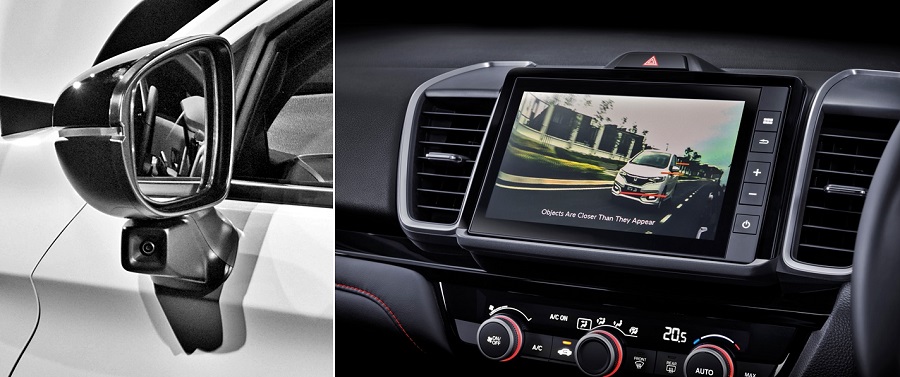
Honda LaneWatch

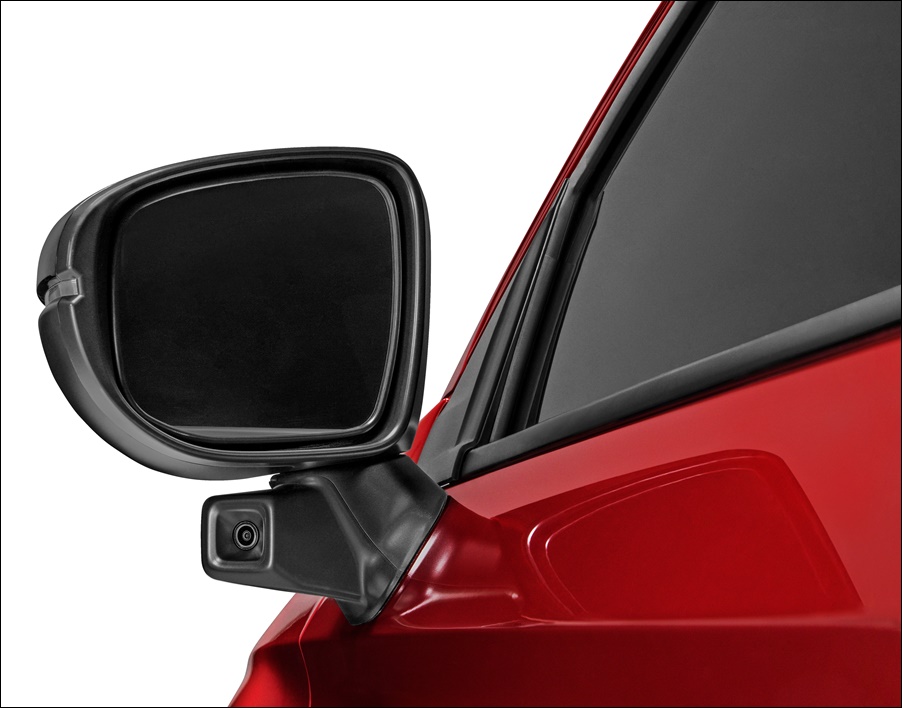
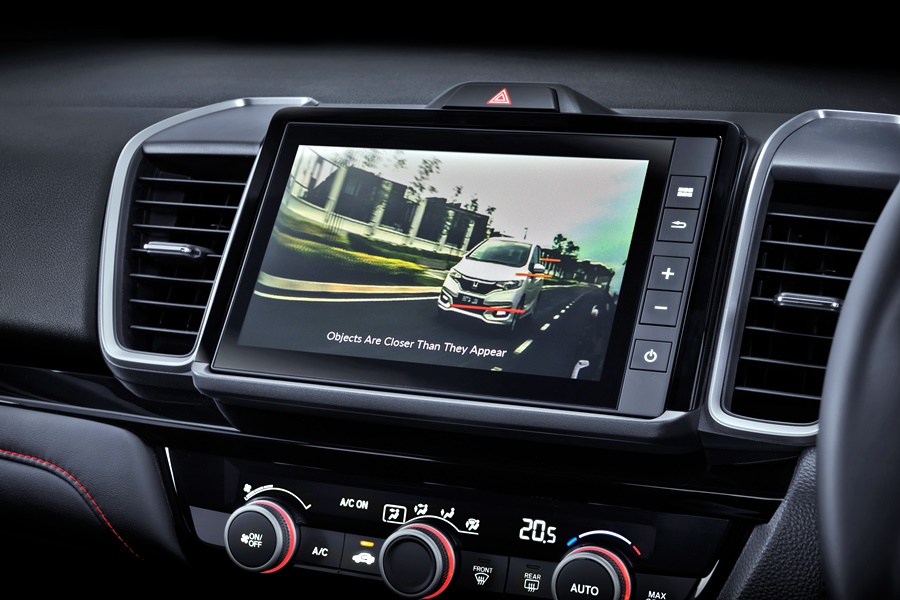
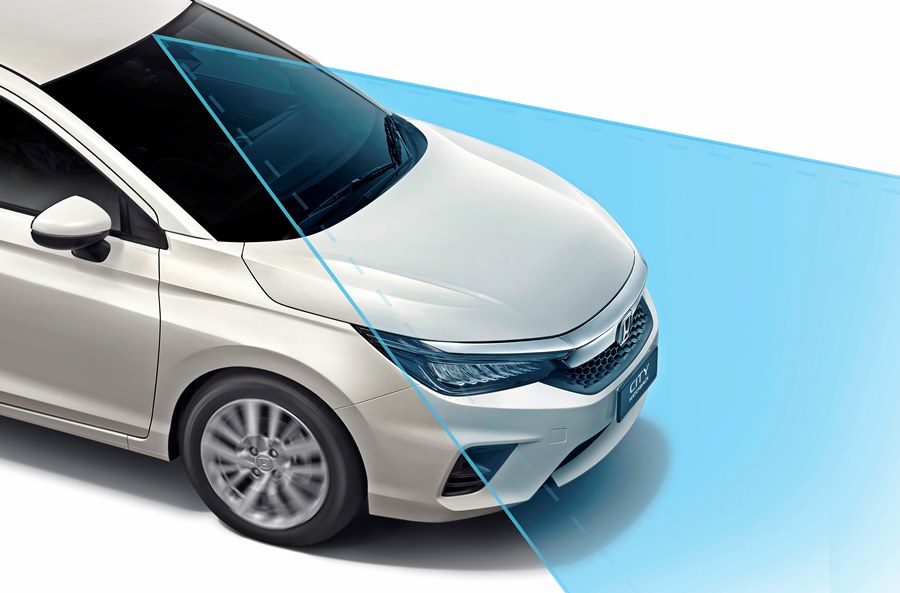
Honda Lanewatch is another innovative feature which provides the driver with a view of the blind spot on the left side of the car by using a small camera mounted on the door mirror. The real-time image is displayed on the 8-inch panel in the middle of the dashboard so the driver doesn’t have to turn the head all the way to the left to see the mirror. The camera is only on when the left signal is activated.

Other notable features are Remote Engine Start, paddle shifters, cruise control, automatic air-conditioning a reverse camera (these items are also standard for the 1.5E). For those with compatible smartphones, there’s added connectivity with Apple CarPlay and Android Auto.

Comprehensive safety systems
While the Honda SENSING package is available only for the very top RS variant, the safety systems that come standard with the City Hatchback are also pretty comprehensive and can help to reduce accidents. These include ABS with Brake Assist, Vehicle Stability Control, Electronic Brakeforce Distribution, and Hillstart Assist.

There’s also an Emergency Stop Signal system which will keep the brake lights illuminated and activate the hazard lights automatically if the braking action is sudden and heard (indicating emergency braking). This can alert drivers behind so that they will respond earlier and possibly avoid a rearend collision.

As childseats are now required by law, there is an ISOFIX point for compatible childseats to be installed easily and securely. The Seatbelt Reminder is also wired to include the rear seatbelts so that the driver will be aware when someone is not belted up (an offence).

For those who don’t like SUVs
The Jazz may be missed by some but if it is versatility that you are looking for, then the City Hatchback would be just as practical. This extra capability is available without compromising on space and comfort and can be considered something like a stationwagon too. And for those who want the versatility of a SUV but don’t like the tallness, the City Hatchback could also be a great alternative as it sits as low as the sedan.

First Impressions Of The All-New Honda City Hatchback V-Variant

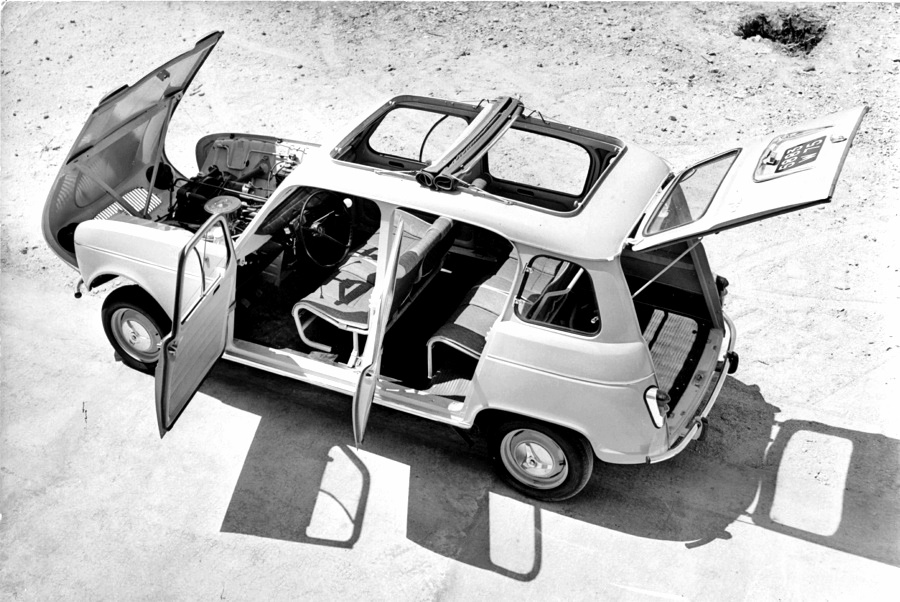
The Renault 4 was unveiled right at the start of the 1960s, a time when people in France were beginning to leave their country lives behind them and move closer to urban areas. However, public transport links left much to be desired, particularly on the outskirts of towns and cities. People began to feel the need for a car suitable for rural and urban areas alike, a car they could drive to the shops or to work. It was also a time when increasing numbers of women were in employment and households’ purchasing power began to expand.

Against that backdrop, the car that would soon come to be known as the ‘4L’ provided a 24/7 solution for both urban and rural living – all thanks to the humble hatch at the back. The fifth door – which is in cars we call ‘hatchbacks‘ – meant that the new Renault 4 quickly became a ‘social phenomenon’.

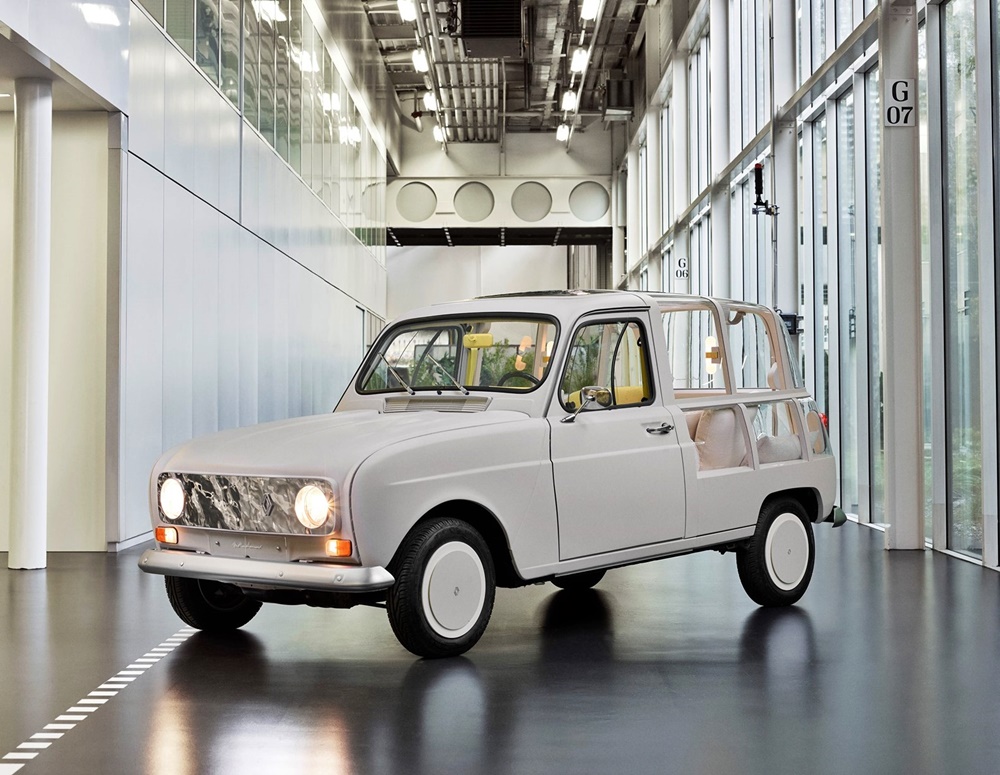
The Renault 4L launched in 1961 and (below), a 21st century version of the car that started the hatchback bodystyle.

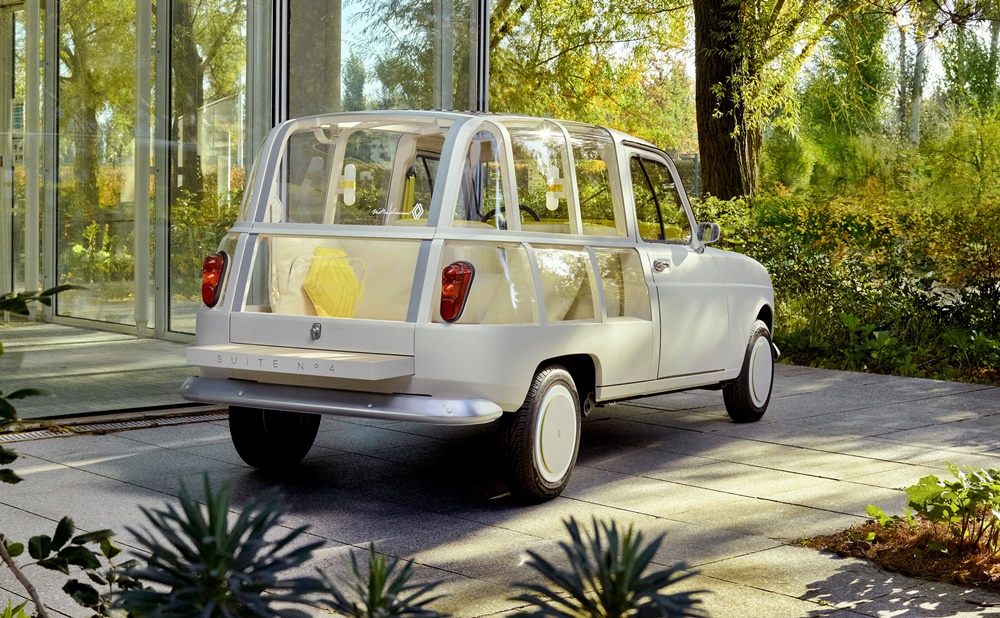
Renault SUITE N°4 concept 2021

The man behind the project, Pierre Dreyfus, CEO of Renault from 1955 to 1975, explained to his teams that he wanted to see ‘a high loading volume’ for a ‘blue jean’ car – meaning a car that would suit people of all ages and social classes around the world. Over 8 million units would be sold in more than 100 countries during a period spanning more than 30 years, so it is safe to say his wish was granted.

“The hatch on the 4L gave rise to a new car model and a new car feature,” said Hugues Portron, Managing Director of Renault Classic. “This wonderful invention resulted in a vehicle that was a saloon car, an estate car and a utility car in one. Hatchbacks revolutionised the automotive industry by offering greater interior modularity.”

Renault SUITE N°4 concept 2021

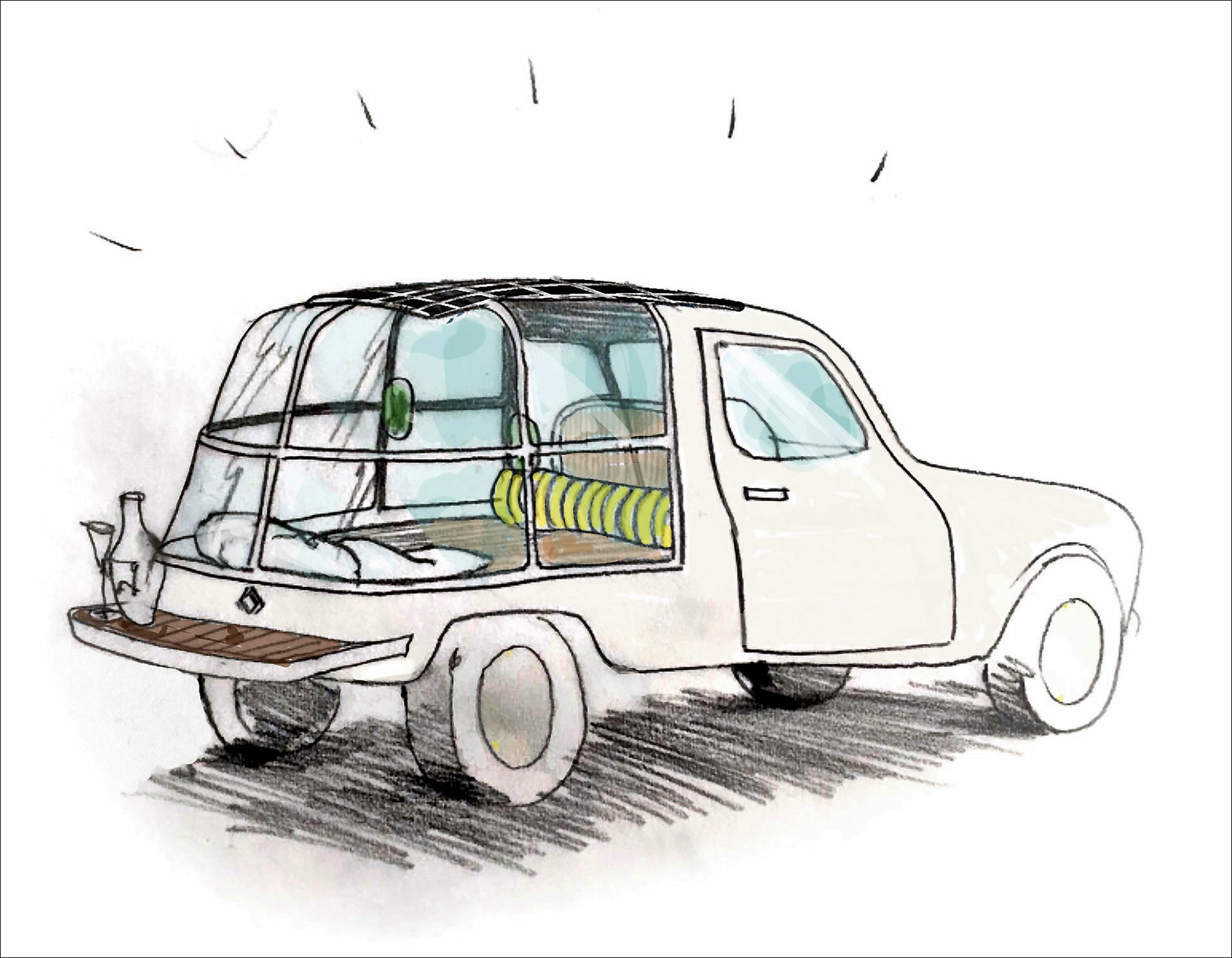
To celebrate the 60th anniversary of the Renault 4, the French brand decided to reinvent the model to show what it would be like as a 21st century product. The company teamed up with designer Mathieu Lehanneur to create the SUITE N°4, an original concept car inspired by a nomad hotel suite.

“The collaboration with Lehanneur was a natural fit,” said Arnaud Belloni, Renault Brand Global Marketing Director. “We asked him to come up with a concept car showcasing his vision for the 4L. The finished product is extraordinary. A car which really encapsulates everything the brand has set out to achieve through the Renaulution strategic plan: create modern and innovative cars that provoke emotions.”

Renault SUITE N°4 concept 2021

Lehanneur’s vision was fuelled by the parallel worlds of automobile and architecture. SUITE N°4 is a tribute to the 4L, channelling the same pure, understated and simple spirit while prioritising efficiency and spontaneity. On top, this concept car projects the model into the designer’s contemporary aspirations.

SUITE N°4 suggests a new mobility and travel experience. “I wanted to merge the worlds of cars and architecture to create an open-air hotel room. Even better than the finest palatial suite, the car is exactly where you want it to be, whether that’s by the sea, in the middle of a field or driving around the city you’ve always dreamed of,” Lehanneur explained.

Renault SUITE N°4 concept 2021

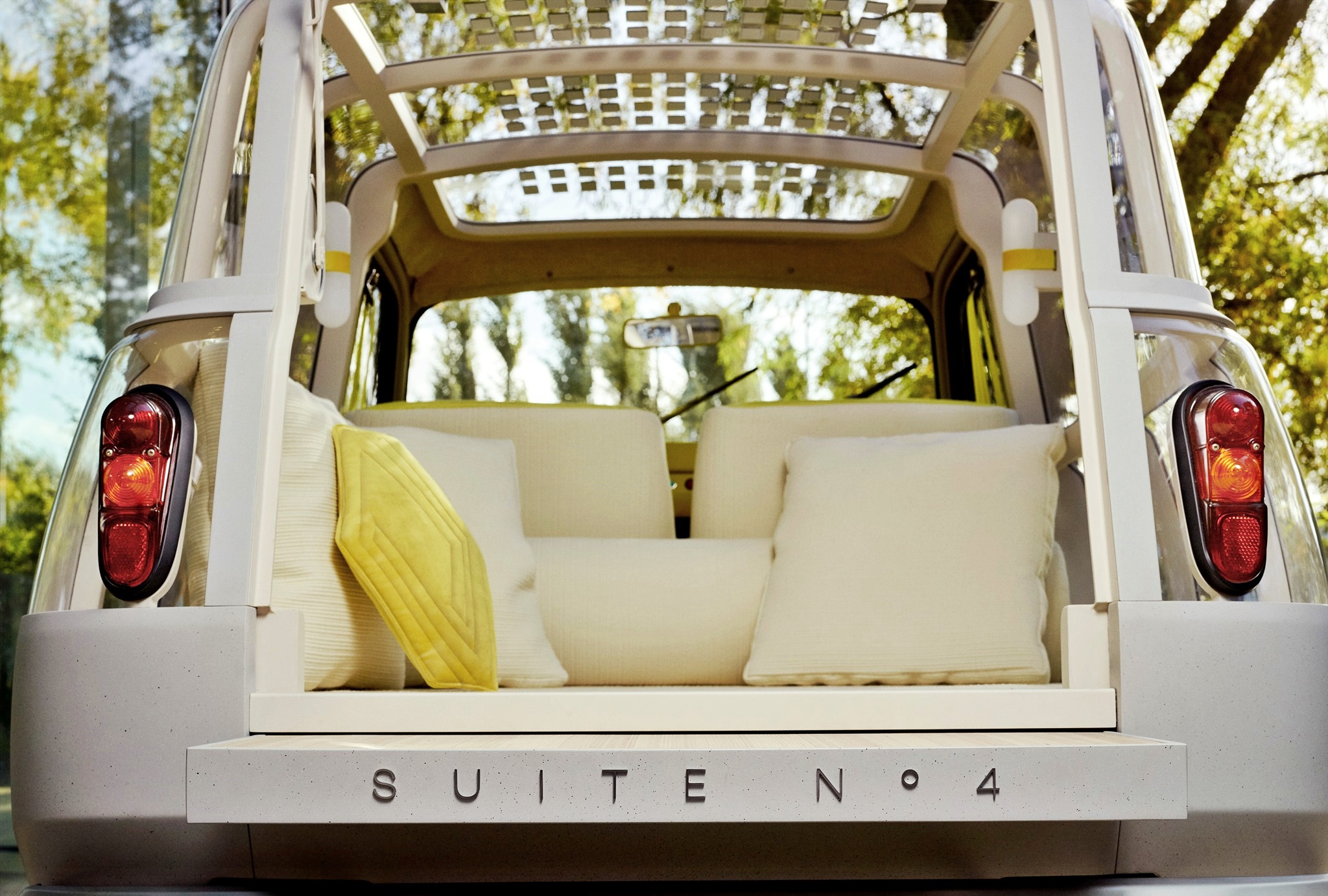
The concept car maintains the same exterior dimensions (about 3.65 metres long, 1.5 metres wide) and lines as the iconic model but comes with a radical twist. The rear section and the hatch have been replaced with polycarbonate windows that provide transparency and lighting on a par with that of architectural glass. The transparent solar panels on the roof let light through while helping to charge the battery of the car as it is fully electric and emission-free.

Renault SUITE N°4 concept 2021

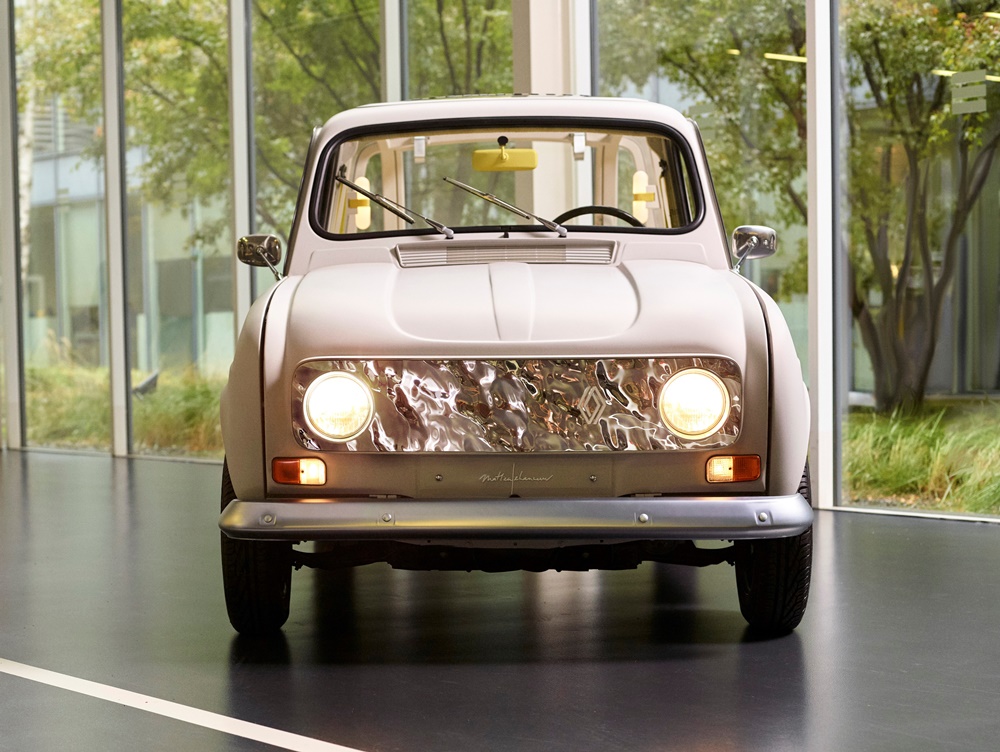
The front of the car sports the same iconic lights, lines and silhouette as the original. The front grille in polished aluminium is both the designer’s signature and an ode to evasion. It creates waves and gives the car an effect of fluidity, dynamism and movement. The architectural inspiration can also be found on the body of the car, which is coated with three layers of paint that give it the mineral aspect of cement.

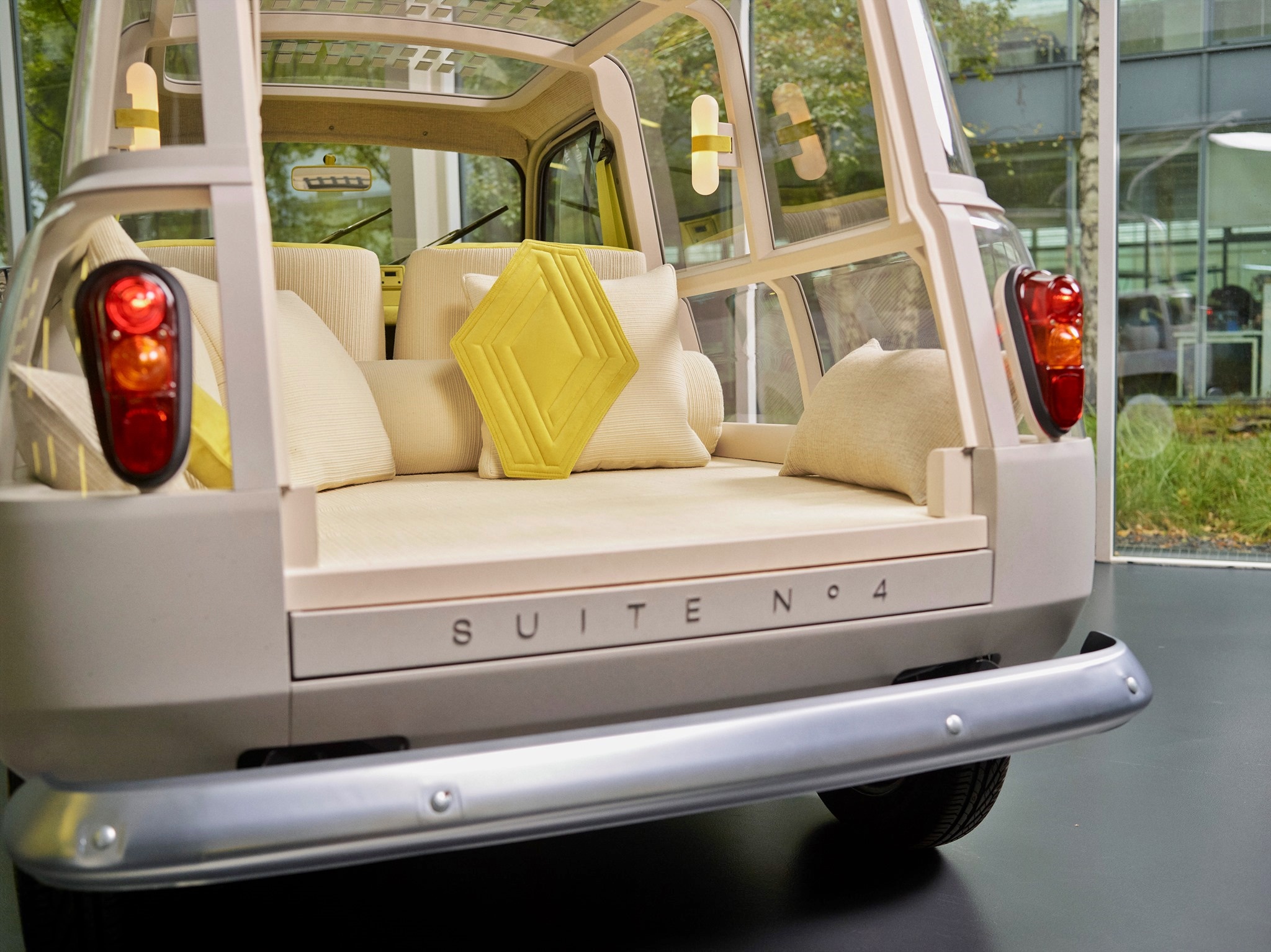
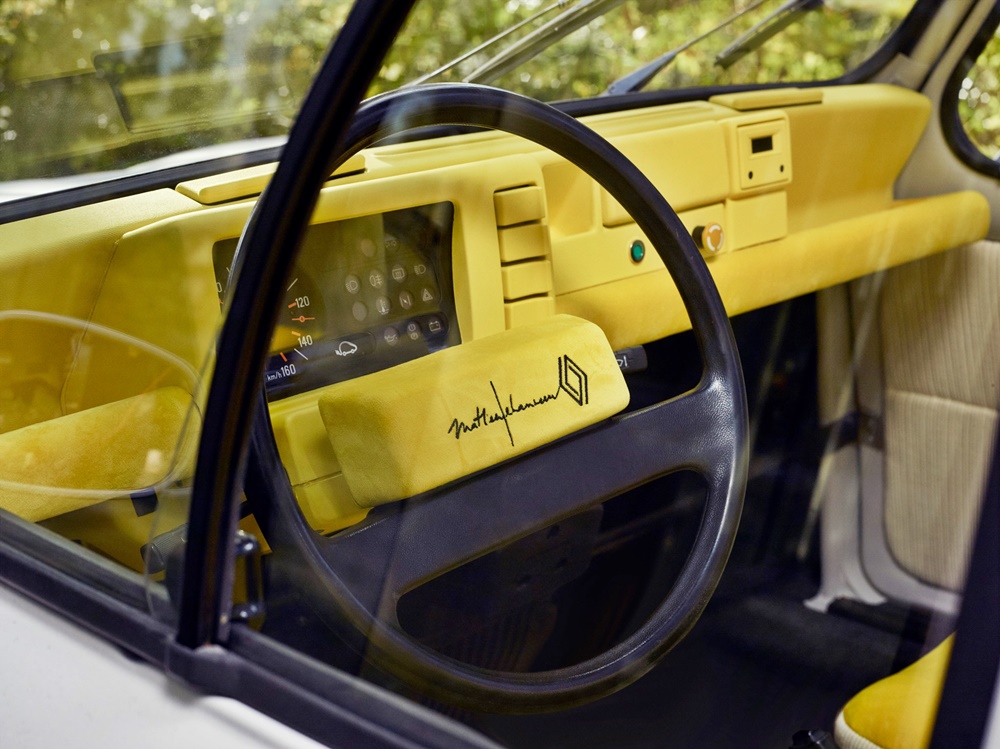
Inside, Lehanneur decided to let in the ambience and materials typical of residences, and combine the automobile technical requirements and the sophistication of the French art de vivre. The seats and the dashboard are upholstered with an energetic yellow velvet. In contrast, the space on the back is finished with a thick, ribbed chenille fabric and accessorised with two laps, for a robust look.

Renault SUITE N°4 concept 2021

Bolsters and pillows complete the boot, transformed in a moving room. The experience is finalised by a wooden bench which slides like a drawer and can be extracted to provide sheltered seating when the hatch is open. Like for the original 4L, all of the materials are ‘Made in France’ and supplied by Paris-based artisans.

The 4L’s anniversary is to be a year-long celebration with different initiatives. These include a global social media campaign, posting a variety of content each month. International media have had the opportunity to take a ride in different historic Renault 4L models, some of which have been retrofitted with an electric powertrain. A collection of 30 different editions of the iconic French model is also on display at the Atelier Renault in Paris.

2021 Renault 5 Prototype

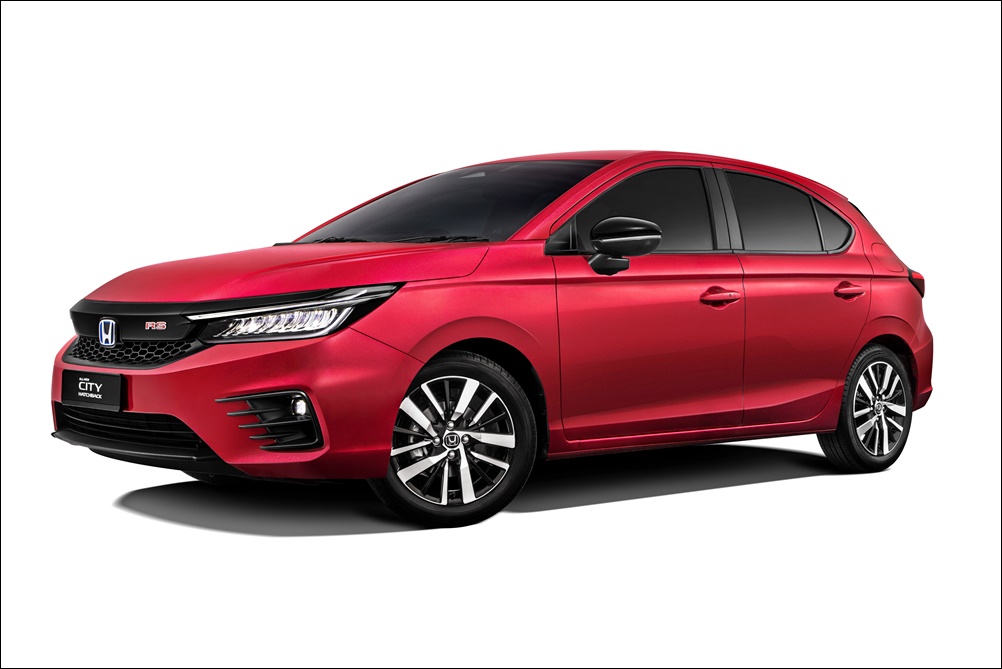
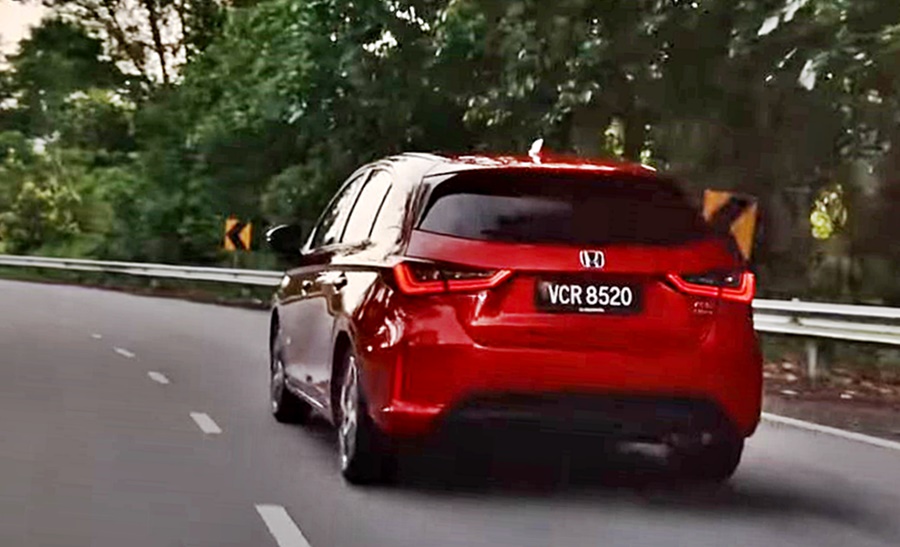
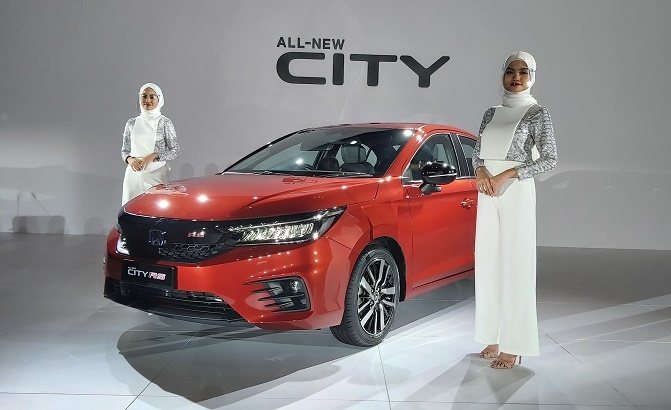
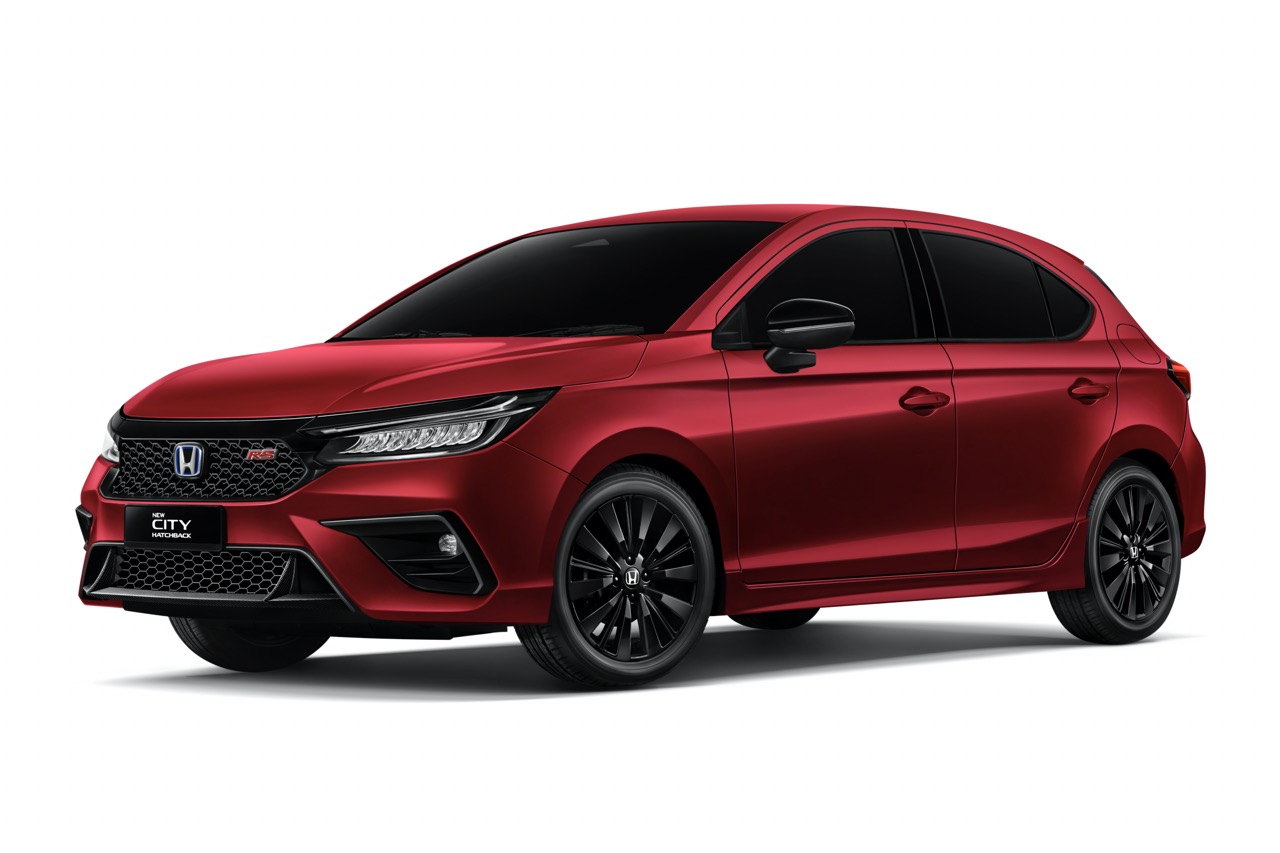
The all-new Honda City Hatchback is nearing launch in Malaysia and as bookings can now be placed at authorised dealers nationwide, Honda Malaysia has provided an overview of the features available. While silent on the prices, the company has confirmed that the new model will be launched before the end of this year. It is unlikely that the prices will be far different from the latest City Sedan (RM74,191 – RM105,950) as it is also assembled locally at the plant in Melaka.

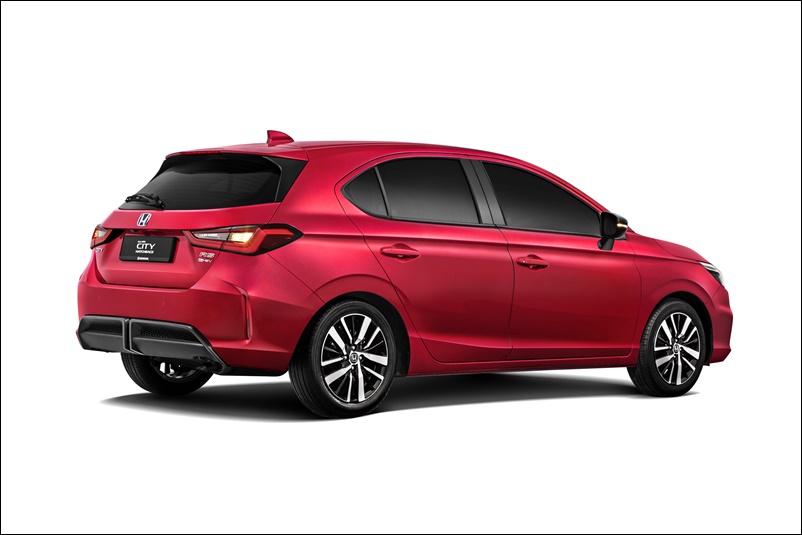
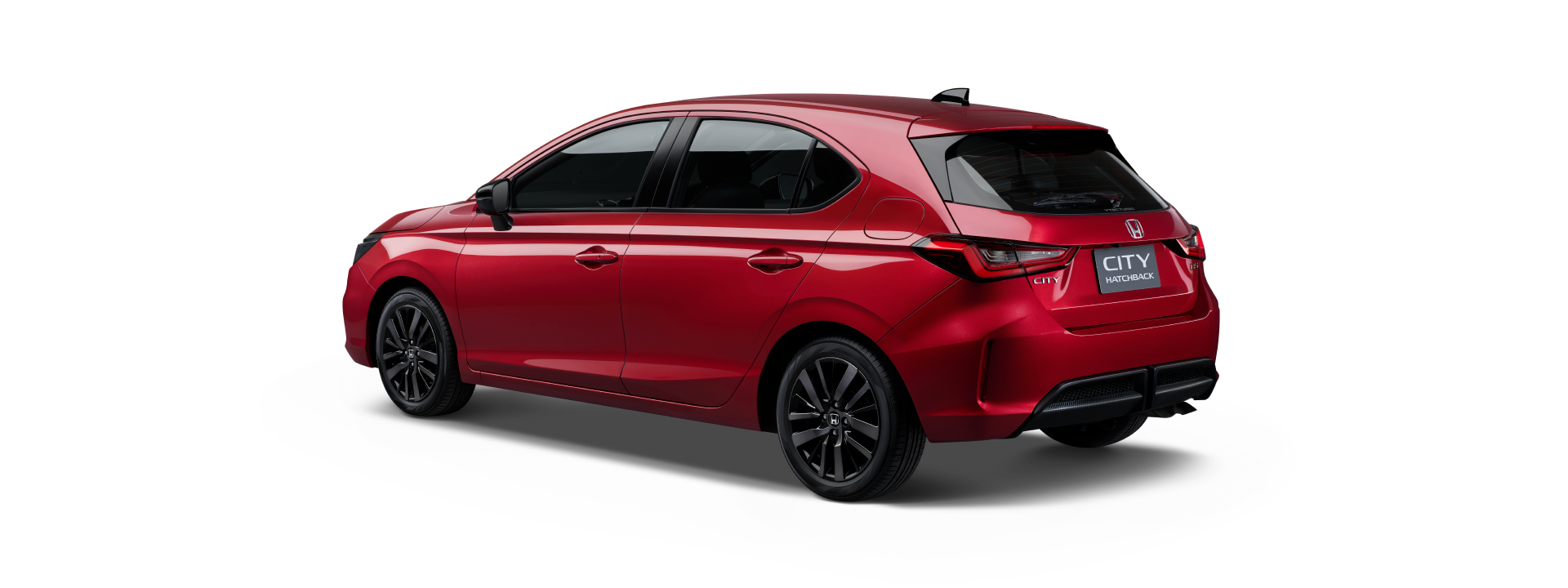
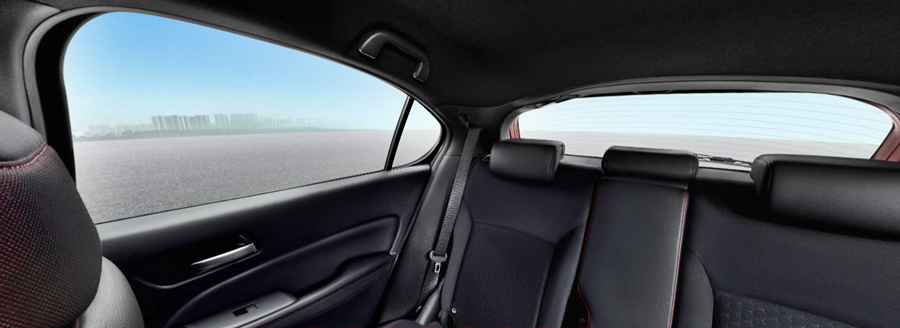
The City Hatchback, which shares the same platform as the City Sedan, replaces the Jazz which has been in the market since 2003. Based on the Thai-spec model, it is around 390 mm longer than the Jazz and 54 mm wider, but 36 mm lower. With the wheelbase at 2589 mm, there is 59 mm extra length between the front and rear wheels, which suggests that the interior should also be a bit more spacious (although the packaging in the Jazz has always been pretty good too).

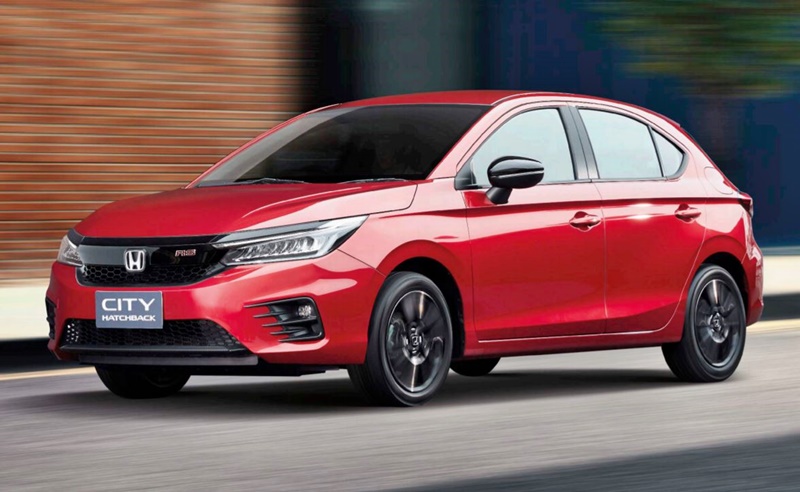
2021 Honda City Hatchback

Hybrid or petrol engine choices
As with the City Sedan, customers can choose the advanced hybrid electric system (e:HEV) or the conventional and proven 1.5-litre DOHC i-VTEC petrol engine with 121 ps (highest in class) and maximum torque of 145 Nm. The e:HEV powertrain has Intelligent Multi-Mode Drive (i-MMD) with 2 electric motors working with a 1.5-litre petrol engine. Besides good fuel efficiency, the performance is also strong, thanks to the 253 Nm of torque which is comparable to a D-segment car with a conventional powertrain.

Incidentally, the City Hatchback assembled in Malaysia differs from the one sold in Thailand as the powertrain offered there is only a 1-litre DOHC 3-cylinder turbocharged VTEC unit. That engine produces 122 ps/173 Nm.

ULTRA Seat
The features and equipment follow those of the sedan in general, but the City Hatchback also as the added versatility of the 4-Mode ULTRA Seat in the rear. This is a variable seating arrangement which was introduced with the first generation of the Jazz in the 2003 (and also the City in the same year). The practical and innovative idea was developed by interior designers after long periods of watching people at supermarkets loading various items. They saw that there was a need for more vertical space for tall items like plants, and made it possible for the entire seat to be flipped up so that the height available would be from ceiling to the floor. This is known as the Tall Mode, which is complemented by Utility, Long, and Refresh modes for different needs.

Honda Malaysia will also offer Remote Engine Start which allows the engine to be started from outside the car, enabling the air-conditioner to be switched on to cool down the cabin before entering. Passengers at the rear will also have added comfort with cool air being brought to them via the dedicated vents.

Honda SENSING and LaneWatch
As would be expected, the City Hatchback (RS only) will have Honda SENSING, the driver assistance suite of systems. This uses front wide-angle view camera (at the top of the windscreen) to scan the road ahead of lane marking as well as other vehicles. Besides automatic emergency braking and forward collision warning, it also has adaptive cruise control and control the car from moving out of its lane unintentionally. Auto High Beam is also provided to keep maximum illumination available but automatically dipping the headlights if there is approaching traffic.

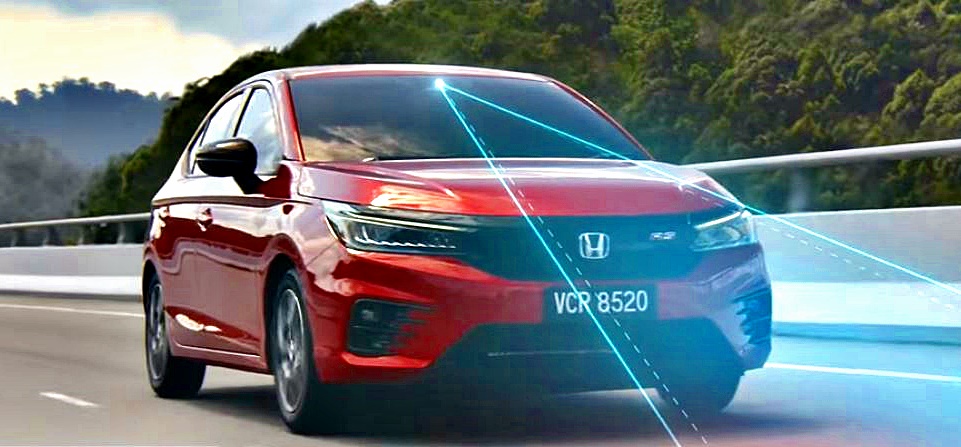
Also installed as standard in the City Hatchback (RS and V versions) is Honda LaneWatch. This innovative blindspot monitoring system uses a small camera mounted on the left door mirror to capture real-time images of the area along the side of the car. The image is displayed on the centre screen whenever the left turn signal is activated and the driver can see if there is any approaching vehicle. The advantage of this approach is that the driver’s head turns left less and the image shown is also easier to see than on the door mirror which is some distance away.

Honda LaneWatch

“Honda is not new to the hatchback segment in Malaysia as the popular Jazz which was introduced back in 2003 has sold more than 122,000 units to date. The Jazz is well-known for its practicality and versatility, and is highly popular as one of Malaysians’ favourite urban cars. We believe, with the introduction of the All-New City Hatchback, this model will raise the benchmark to be another game-changer in the market and soon also become Malaysians’ most favourite hatchback car,” said Honda Malaysia’s Managing Director & CEO, Madoka Chujo.

For more information or to place a booking for the City Hatchback, visit any authorised Honda dealership in Malaysia. To locate a showroom, visit www.honda.com.my.

Honda Malaysia offers two extra benefits for new vehicle purchasers until the end of 2021


Japanese carmakers built their reputation on reliable, economical and affordable small cars and for most of the world (with the exception of America), they captured big market shares. However, in Europe, while their small cars were successful and popular, they faced a big challenge in the supermini A-segment. This was where European carmakers had popular products and were pretty well entrenched.

Prior to the 1990s, some European countries like France, Spain, Portugal and Italy had formal and informal quotas on imports of Japanese cars to limit their threat. As in America, the Japanese carmakers began to build factories in Europe as a way to get behind the barriers. Eventually, as the World Trade Organisation forced upon countries the requirement to drop barriers, the issue of quotas became less pursued.

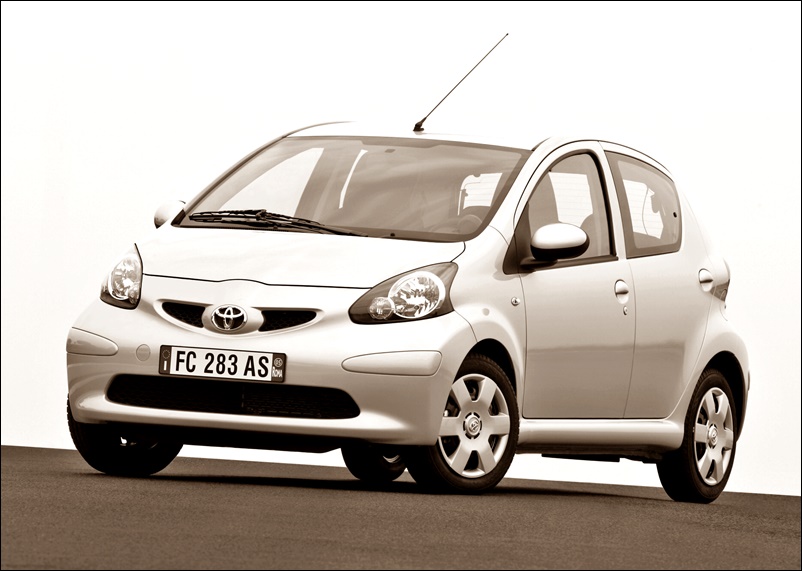
First generation of the Aygo

But the market had also changed by the beginning of the 21st century and collaboration was necessary as it was very costly to develop a model and then to have sufficient volumes to justify the investments. Even Toyota, which had often chosen to control its destiny alone, found it pragmatic to cooperate with other carmakers.

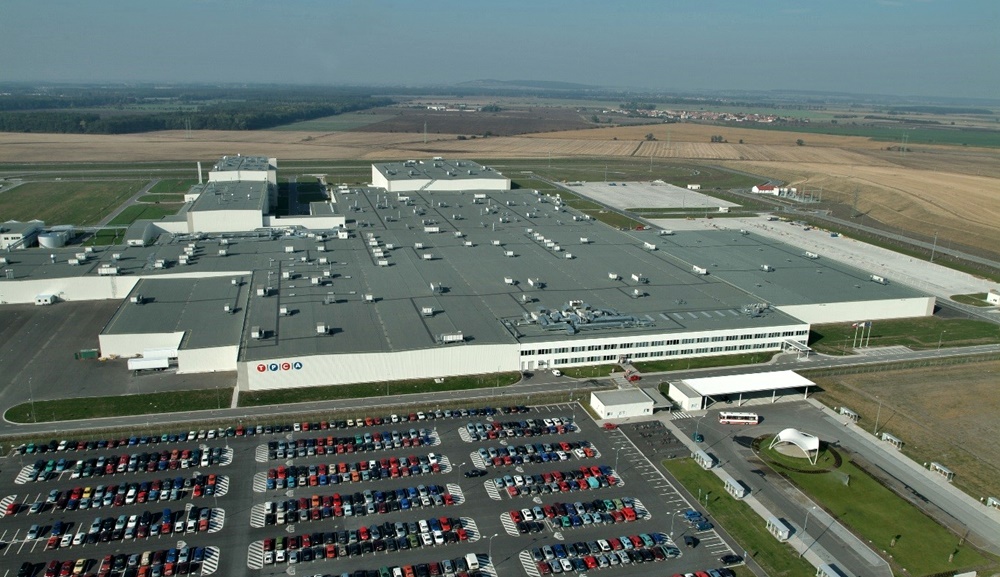
One of these joint ventures was with Groupe PSA, the parent company of Peugeot and Citroen, which saw the opening of a factory in the Czech Republic. Established in 2002, the factory, owned 50:50, was known as Toyota Peugeot Citroen Automobile Czech (TPCA) and was used to produce a supermini that would be marketed by Peugeot, Toyota and also Citroen. The model, jointly developed, was known as the Aygo and Peugeot called theirs the 107 while Citroen’s was badged as the C1.

The factory in the Czech Republic, which started as Toyota Peugeot Citroen Automobile Czech but is now Toyota Motor Manufacturing Czech Republic after the Japanese carmaker took over Groupe PSA’s 50% share in January this year.

The combined sales volume of the three models reached a peak of almost 340,000 units in 2009 and it sold well enough that a second generation was introduced in 2014. However, this will be the last generation of the common model as Groupe PSA (which is now in the Stellantis Group) has decided to cease the collaboration. At the same time, TPCA was also taken over entirely by Toyota in January this year.

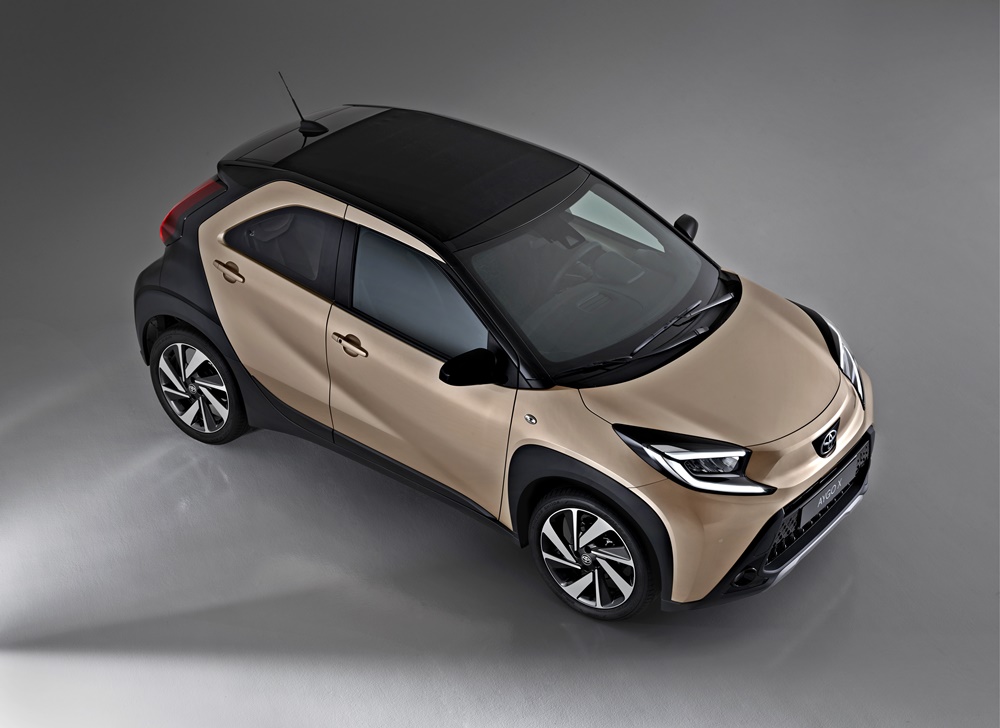
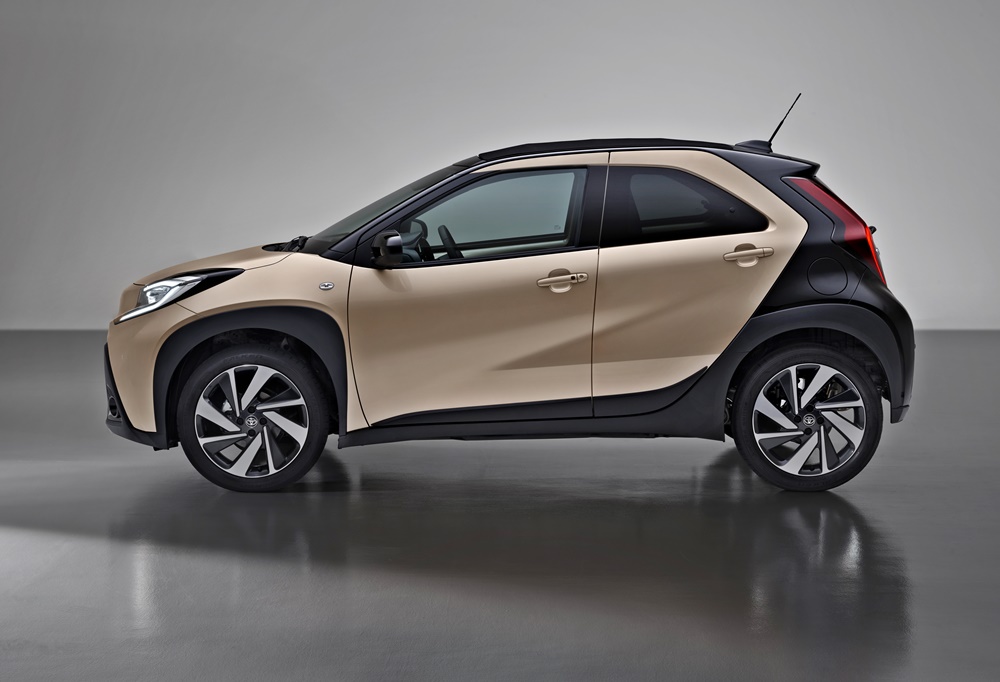
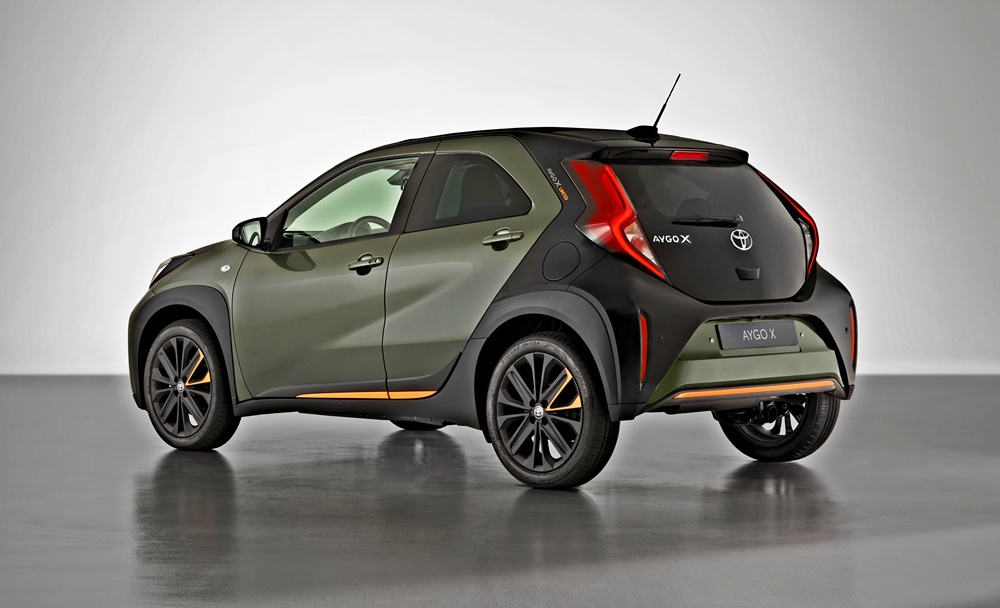
2022 Toyota Aygo X

Having been in the market for 7 years now, the Aygo might seem like it’s reaching the end of its generation cycle but that has not stopped Toyota from coming out with a brand new variant. This is the Aygo X launched this week and it is a response to the continuing demand for crossovers.

Designed mainly in Europe, it’s still a city car but has additional versatility. As with many of the latest Toyota models, it also uses TNGA – Toyota Global New Architecture – and specifically the GA-B platform first introduced with the latest European Yaris and more recently, the Yaris Cross.

2022 Toyota Aygo X

“Since the Aygo first arrived in the market in 2005, not only has it been Toyota’s most accessible car in Europe, it also delighted customers with its youthful and fun character. Not only has it brought many new customers to Toyota. It also fulfils our mission to provide everyone with the right mobility solution,” said Andrea Carlucci, Vice-President, Product & Marketing, Toyota Motor Europe, adding that the A-segment is very important to the company.

The Aygo X is the production version of the Aygo X prologue shown in March this year. The concept car was developed at Toyota’s European Design and Development (ED2) in France. Feedback on the concept car helped the designers at Toyota Motor Europe’s styling division in Belgium to fine-tune the product and take it from concept to reality.

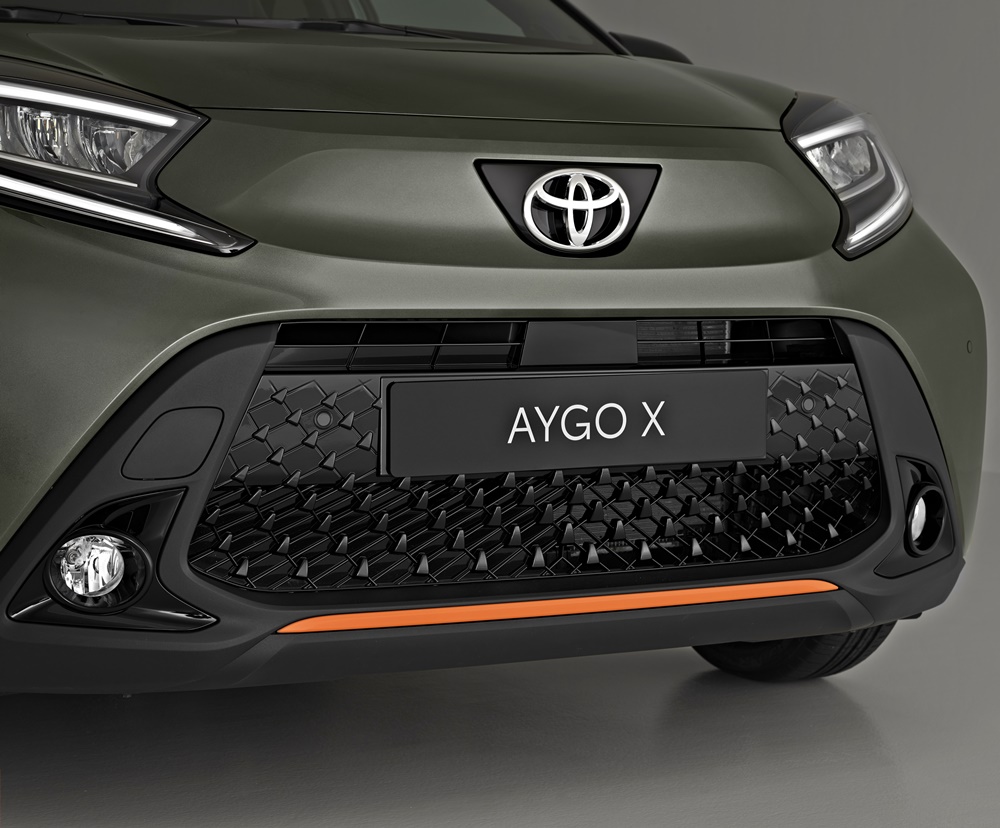
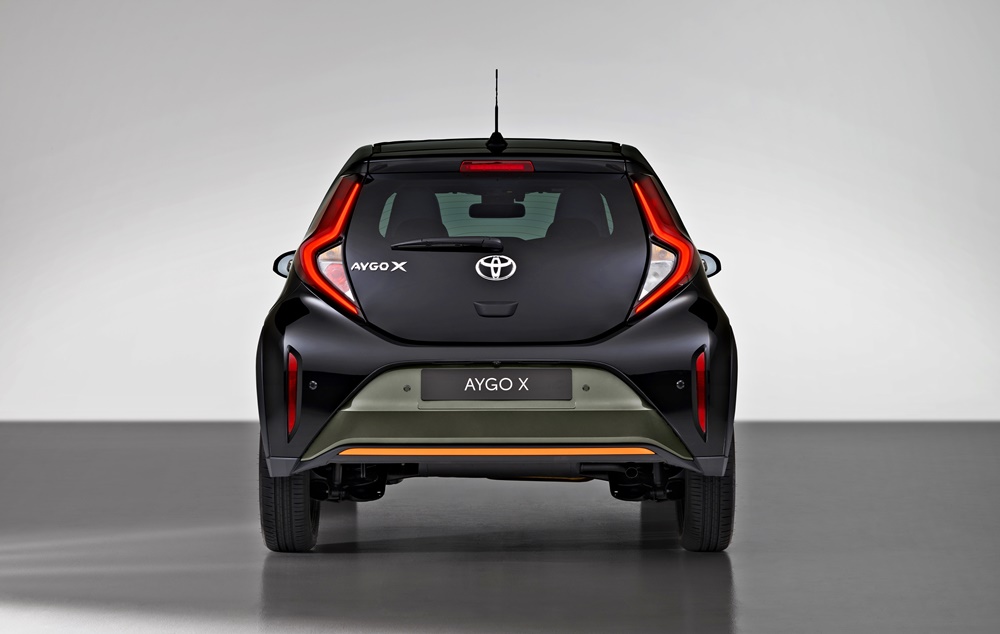
The Aygo X uses the dramatic spice colour concept of the prototype with a bi-tone black roof to create a unique graphic profile. A wedged roofline also increases the dynamic feeling for a sportier image. In the front, high-tech lamps hug the upper bonnet to form a wing-like shape, while lower to the ground, the large grille, foglamps and skidplate all build on the double trapezoid theme that is part of Aygo’s identity.

“The bi-tone of the Aygo X immediately grabs people’s attention. It’s clearly not just a detail. It’s an integral part of the design,” explained Anastasiia Stoliarova, Aygo X Product Planner.

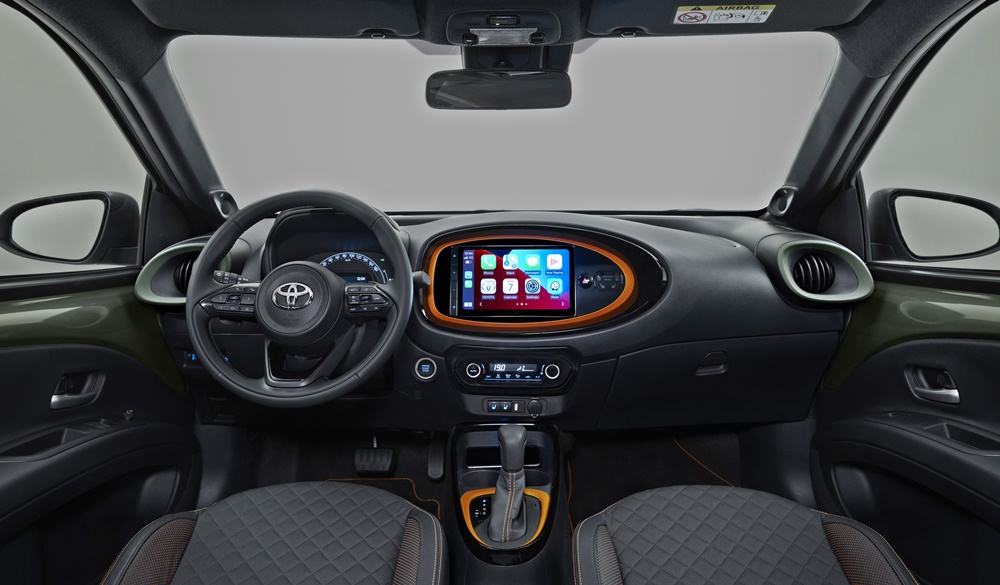
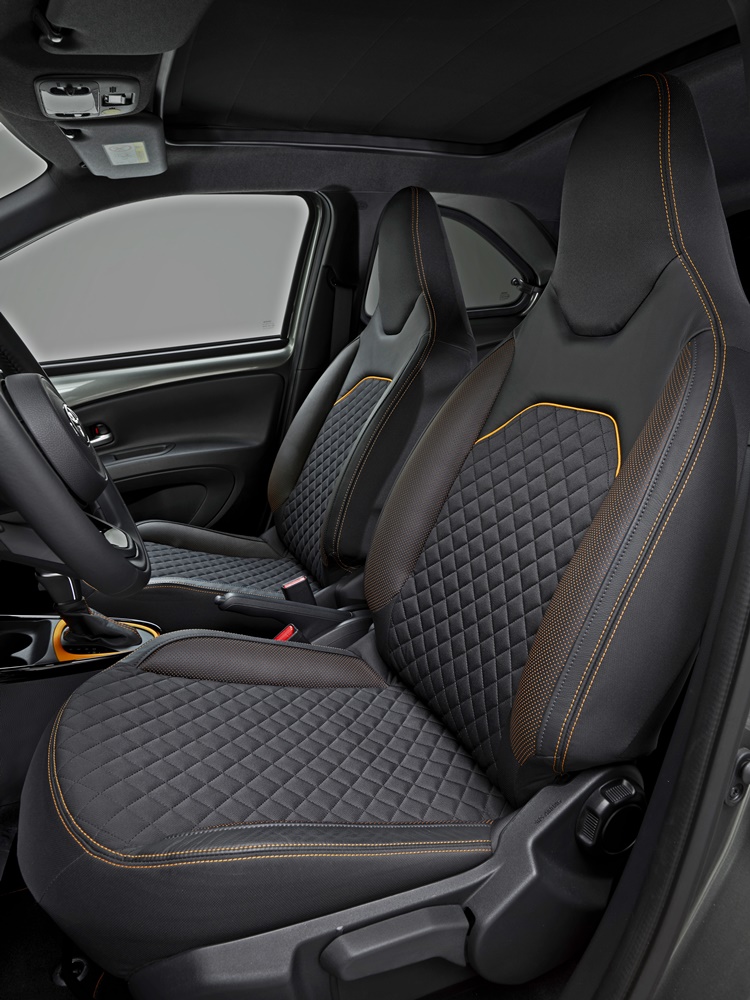
The spice theme is not just on the exterior as interior highlights match the bodywork’s spice colours to give a distinctive design to the cockpit, including the dashboard and centre consoles. On the seats can be seen an ‘X’ symbol discreetly stitched right into the fabric. The Aygo X model name is also subtly echoed in the keen look headlamps to provide a strong and coherent identity.

Toyota isn’t offering an ‘Edition 1’ (as some carmakers do) but, for the first 6 months after going on sale in 2022, there will be a ‘spicier’ limited edition Aygo X in Cardamom. This features additional matte Mandarina accents in orange throughout the car with accent stripes on the exterior and on the bespoke 18-inch matte black alloy wheels. The Mandarina theme is also carried through the interior panels and seat fabric design.

As with other Aygo models, the Aygo X is powered by a 1-litre, 3-cylinder engine. Coupled to a new S-CVT transmission, it is claimed to be able to do 21.3 kms/litre.

2022 Toyota Aygo X

In adapting the GA-B platform for the Aygo X, the A-segment contender has evolved into a credible  crossover product. It has a modified and downsized rear chassis section with reduced front and rear overhangs. The 3700 mm long Aygo X has less front overhang than the Yaris, and has an exceptionally small turning circle of 4.7 metres.

The total body width is 125 mm more than an Aygo, which has allowed the front seats to be moved 20 mm further apart and increasing shoulder space. Luggage space is claimed to be segment-leading with 125 mm more floor length and a smart space design behind the rear seats. Up to 231 litres of cargo volume is available.

2022 Toyota Aygo X

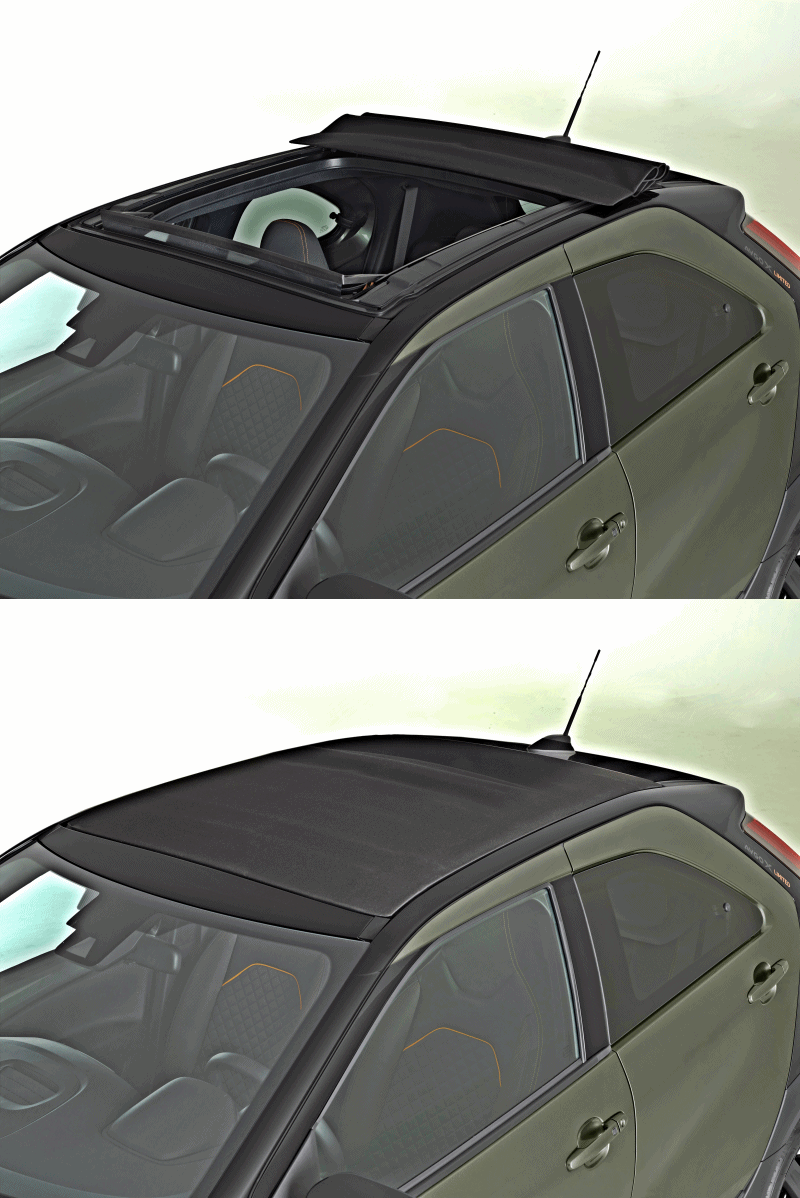
The ‘Pagoda’ roof design maintains compact overall dimensions, while providing comfortable, spacious cabin for driver and passengers. And the sky’s the limit, so to speak, with the optional retractable canvas top, a first for an A-segment crossover. The canvas top, of high quality materials,  offers improved water and dust protection and has a wind deflector structure.

BHPetrol RON95 Euro4M

During the 1960s and up till the Japanese economic ‘bubble’ burst in the early 1990s, the Japanese carmakers offered a much wider range of model variants than today. Each model would have a number of bodystyle variants – typically sedan (2-door and 4-door), hatchback, coupe, hardtop and stationwagon. But after the economic bubble burst, numbers became very important and small numbers meant that the variant and even model could no longer be justified.

The decline in sales of coupes, for example, saw the popular sports models like the Toyota Celica and AE86 Levin, Nissan Silvia and Honda Prelude being retired while resources were focused on the big number models and mainly sedans. When SUVs started to become hotsellers, that segment got a lot of focus and product developers got a lot of money.

It’s still a ‘big numbers’ game today and when a sizable niche is identified, then dedicating a variant to it may become justified. This would seem to be the case with the Honda City which has been a sedan all along since being introduced as an ‘Asian Car’ in the mid-1990s (disregarding the fact that the original City was a small hatchback in the 1980s). It’s done very well, especially in the ASEAN region, and has reached the seventh generation.

City Hatchback takes place of Jazz/Fit
Now, exactly a year after the latest generation was launched in Bangkok, Honda has introduced a hatchback variant for the first time. Where the Jazz/Fit used to have a relationship with the City, it appears that Honda has now decided that the City can have its own hatchback, allowing the Jazz to be developed along other lines (perhaps towards full electrification).

As the Fit, the hatchback did very well and reflected the different tastes of new Japanese consumers when it was first introduced in the early 2000s and became the first model to beat the Toyota Corolla to become the bestselling car in the domestic market. However, in recent years, it seems that the appeal of the model has dropped in some markets, notably the USA where it will no longer be on sale after this year. This could well be due to the HR-V having higher appeal with its SUV image.

The declining numbers of the Jazz may even see further development stopped or as mentioned earlier, it will become a full EV model. Meanwhile, there are still people who would like a hatchback instead of a sedan and the move to provide such a bodystyle as a variant of the City would appear to be a clever move. Certainly, it will be a direct rival to the Toyota Yaris, a relation of the Vios.

Traditional conversion from sedan to hatchback
The development of the City Hatchback looks like quite a straightforward job, not unlike the variants of the 1980s where the front half was common to virtually all variants, with the rear half being styled differently. In this case, the third ‘box’ of the 3-box sedan bodystyle has been removed and the roofline slopes downwards to the rear. A very traditional sort of hatchback, one might say.

Hatchbacks are usually shorter than their sedan brothers and a comparison with the latest City shows a difference of 208 mm as the overall length is 4345 mm. However, the wheelbase is similar, as is the width, but the top of the roof is 21 mm higher from the road.

2020 Honda City Hatchback

While the Jazz has more ‘extroverted’ styling, the City Hatchback styling seems to take the safe route to appeal to a broader range of buyers, including those who might normally only like a sedan. Those who like a hatchback often see it as a practical car with more variability in accommodating people and cargo.

Honda ULTRA seat concept in City Hatchback.

Versatile interior layout with ULTRA seats
The Ultra Seat concept is adopted, this having first appeared in the first Jazz. It’s a simple but very clever idea with the rear seats able to be raised so as to provide a tall space to carry things like plants. Like other hatchbacks, the backrests can also be folded to lengthen the cargo compartment for longer items.

From what can be seen in the pictures, the cabin is pretty much the same as the latest City. This obviously allows Honda to save money by sharing many items, a skill that the Japanese developed to gain an advantage in reducing production costs.

2020 Honda City Hatchback

2020 Honda City Hatchback

1-litre turbo powertrain with CVT
Only one powertrain with a CVT is offered for the City Hatchback – the 1-litre turbocharged 3-cylinder VTEC engine which produces 122 ps/173 Nm. Similar to what is offered in the sedan, the small engine size is okay for Thai buyers but still a question mark for Malaysians, hence the Malaysian City having a 1.5-litre unit. Edaran Tan Chong Motor has made a bold decision (not that it really had a choice) to offer a 1-litre turbocharged engine in its all-new Nissan Almera so we’ll see if that helps change perceptions.

Honda 1-litre 3-cylinder turbocharged VTEC engine

City Hatchback or New Jazz for Malaysia
It would make sense for Honda Malaysia to offer the City Hatchback but whether a variant has been developed with a 1.5-litre powertrain is not known. Jazz sales have been okay in Malaysia and there is a new generation already on sale in Japan but it may save money to assemble a variant of the City rather than invest in jigs for a new Jazz generation.

2020 Honda City Hatchback

Another possibility is that Honda could use the City Hatchback to gauge response to the 1-litre engine. It has seen a successful transition in downsizing the engines of the Civic and CR-V to 1.5 litres and times could well have changed that Malaysians no longer ask ‘can go up Genting or not?’ when they see a 1-litre engine.

2021 Honda City RS V
Click here to read more about the Honda City RS V e:HEV, available in January 2021.

COVID-19

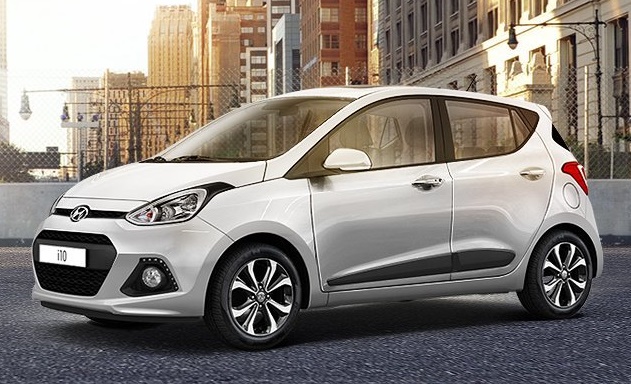
With the 2019 Frankfurt Motorshow nearing, a number of carmakers are building up interest in their brands by releasing teaser images of new models that will debut at the event. The latest to do so is Hyundai Motor which will be unveiling the all-new i10 hatchback, besides a few other models.

The i10, a popular model in developing countries, joined the Hyundai range in 2007 and this new generation will be the third one, internally designated ‘LA’. The single sketch released shows a more dynamic design with a contrast between soft surfaces and sharp lines.

Gen 2 Hyundai i10
The second generation of the i10

Energetic, agile look for A-segment
The proportions for the all-new model have also been redefined, it appears, in width, height and wheel size, resulting in an energetic and agile look. This new design is expected to stand out in the A-segment.

The wide front grille expresses a sporty character and incorporates Daytime Running Lights, thus continuing this feature of the i10’s heritage. The triangular air curtains accentuate the width and stance of the car, as well as improving aerodynamics. The X-shaped C-pillar, visible from far away, clearly identifies the car and draws the eye to the pillar-mounted logo. Unique triangular volumes visually emphasise the width of the car and highlight the position of the wheels at the four corners.

Aiming to be recognised as a leader in its segment, the new i10 will feature a range of new Connected Car and safety features. Blue Link, Apple Car Play, Android Auto, wireless smartphone charging and a rearview camera are a few of them.

Extensive list of safety features
Depending on the market, the new i10 could have one of the most full-featured safety packages in its class. This will include Forward Collision-Avoidance Assist using a front radar sensor to detect not just cars but also pedestrians ahead. The car will also have Driver Attention Warning and Lane Keep Assist System as standard while High Beam Assist will be an optional feature.

Inokom i10
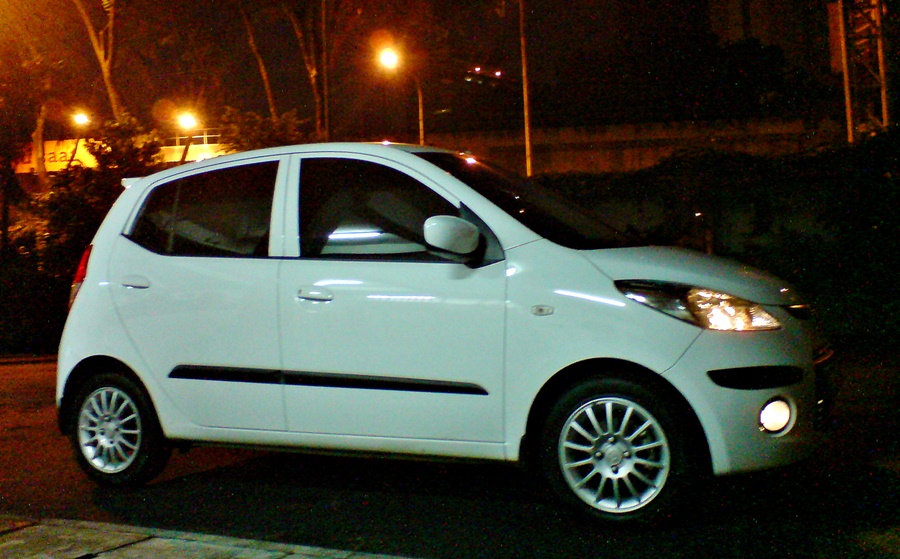
Inokom i10 assembled in Malaysia from 2008 till 2016.

The i10 was one of the first passenger car models to be assembled at the Inokom factory in Kedah. It was sold under the Inokom brand from 2008 and production continued until 2016.

Click here for other news and articles about Hyundai on PISTON.MY.

PISTON.MY

Same cheerful hatchback, but at a more afforable price

Volkswagen Cars Malaysia has seen it fit to drop the price of their stalwart hatchback to an acceptable RM69,888 for a limited time. Owners only need to pay RM737 as their monthly loan repayment, however, it’s best to visit your nearest VW dealer to know exactly how the repayment scheme actually works.

What you are getting for your money, is the same cheerful Polo we see zipping around our city streets. It’s powered by the same 1.6-litre 16-valve Multi Point Injection (MPI) engine that puts out 103bhp and 153Nm of torque. This powerplant is paired with a 6-speed automatic transmission with Tiptronic. VW say that when driven sensibly, the Polo should be able to to achieve a fuel consumption figure of just 6.3 litres per 100km.

Despite the reduced price, VW didn’t skimp on equipment, the Polo is fitted the the new RCD 330G head unit that offers a number of connectiviy options well as the multimedia ones which include a CD player (WMA/MP3), USB and iPod connectivity, AUX-IN support, SD card slot and Bluetooth with MirrorLink connectivity.

If you are interested to know more about the Polo, visit the VW Malaysia website at www.volkswagen.com.my or visit your nearest VW dealership.

It’s an A-Class that looks and feels a little more special than its siblings

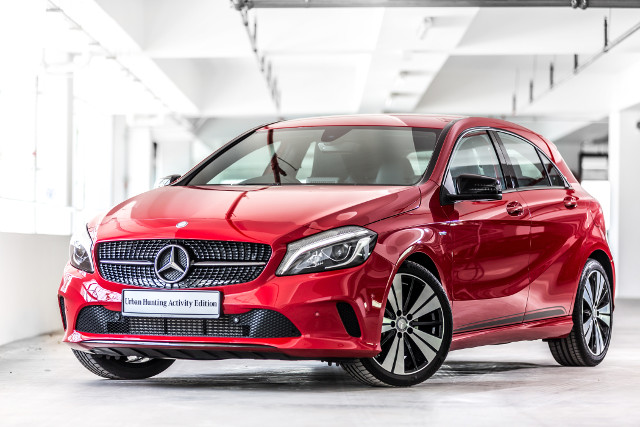
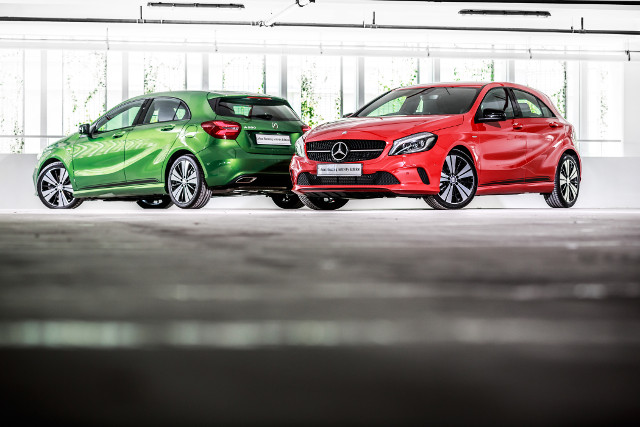
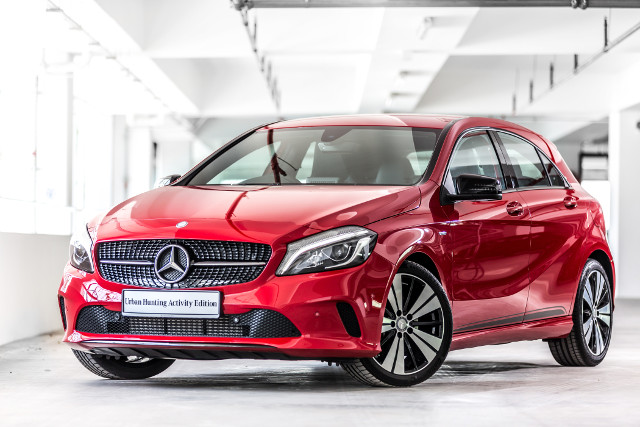
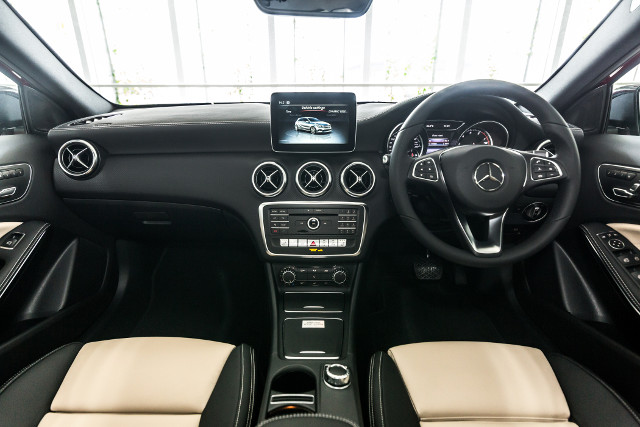
Not content with the diversity of the current A-Class line up, Mercedes-Benz Malaysia has has introduced a variant that is aimed at those wanting an A-200 with added visual to complement their urban lifestyle.


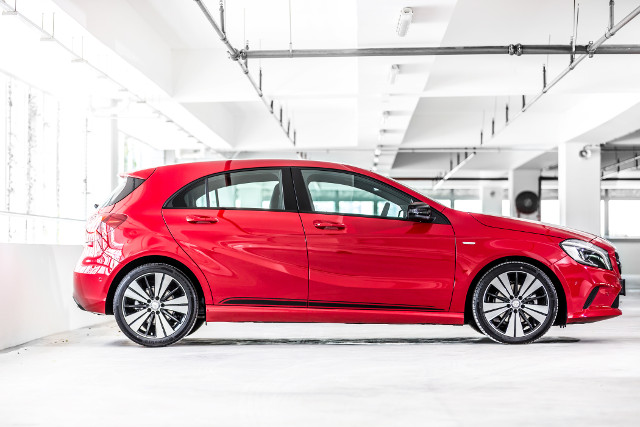
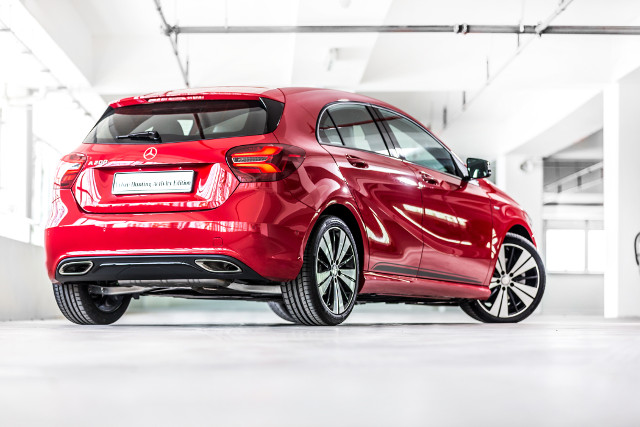
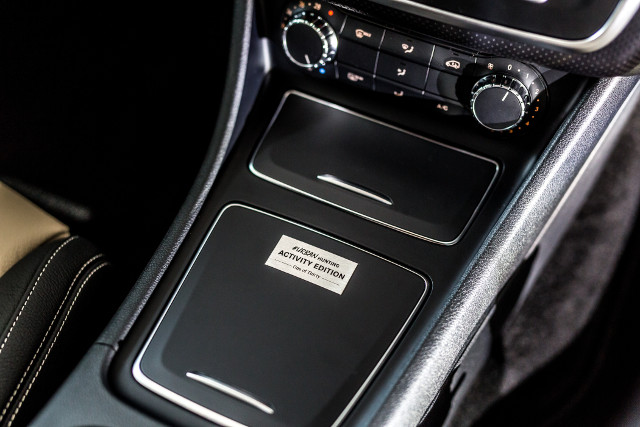
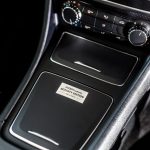
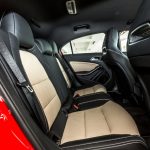
Limited to just 30 units, the A-Class Urban Hunting Activity Edition is equipped with a number of extras which includes 18-inch 10-spoke lightweight alloy rims which are black in colour. Matt black decals adorn the vehicles sides and to ensure that you don’t mistake the car for its siblings, a wing badge with the words Activity Edition slapped on and another such badge on the centre console.


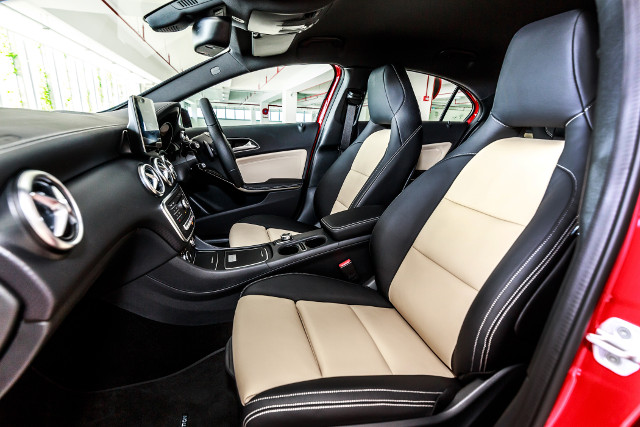
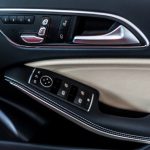
The Night Package offers a few more special bits such as selected black accents to the wheels, exterior mirrors and the belt line trim strip. On the inside, the dasboard, door centre panels and sports seats are covered with Artico man-made leather which add to the premium look and feel that’s synonymous with the brand.


Other features like the contrasting top stitching and chrome accents are a little more subtle than the others. The instrument cluster with its tubed-shaped round dials feature a checkered flag look contrasting with the red needles.

Available in five different colours which are Cirrus White, Jupiter Red, Polar Silver, Elbaite Green and Cavansite Blue, the A-200 Urban Hunting Activity Edition is priced at RM205,888 on the road without insurance.


Those who find the pricing a bit steep, can rest a little easy because Merc’s Financing plans help reduce the montly payments. Opting fot the 3-year Agility Financing agreement, buyers should only expect to pay RM3,441 per month. Not only that, with this agreement, owners have the option of either returing the car, paying off the residual value amount or refinacing the residual value amount.

If this intrigues you, head on over to your nearest Mercedes-Benz dealership to know more.

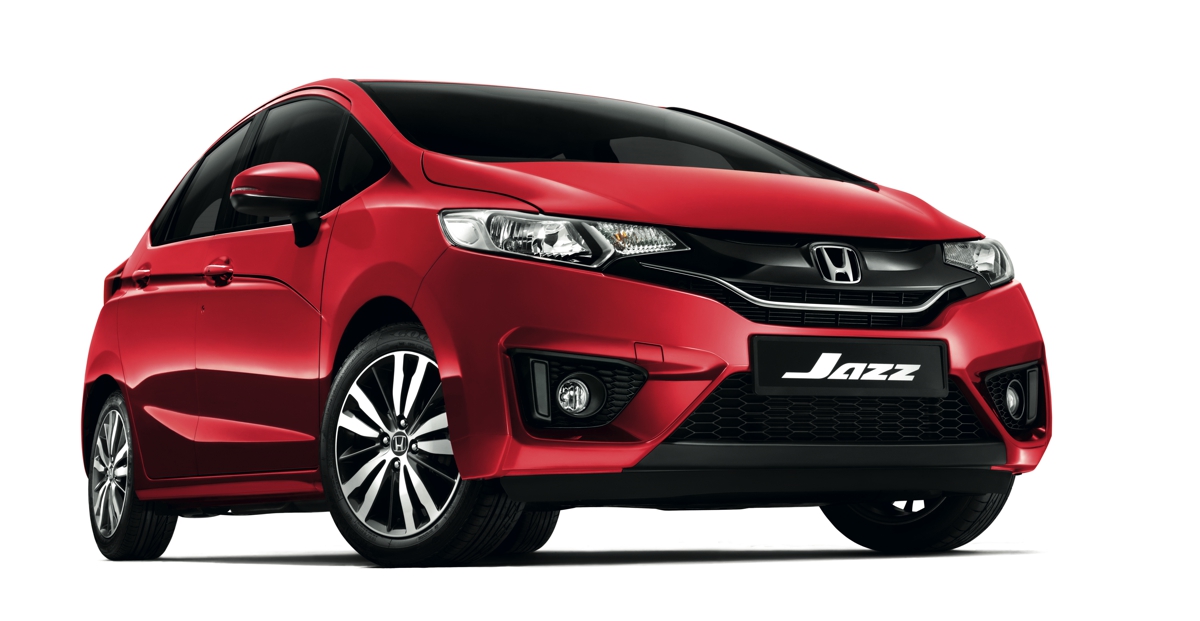
Third generation Honda Jazz now available in new red paint option with lightly updated features list as well. (more…)

Archive

Follow us on Facebook

Follow us on YouTube