
Piston.my

EV

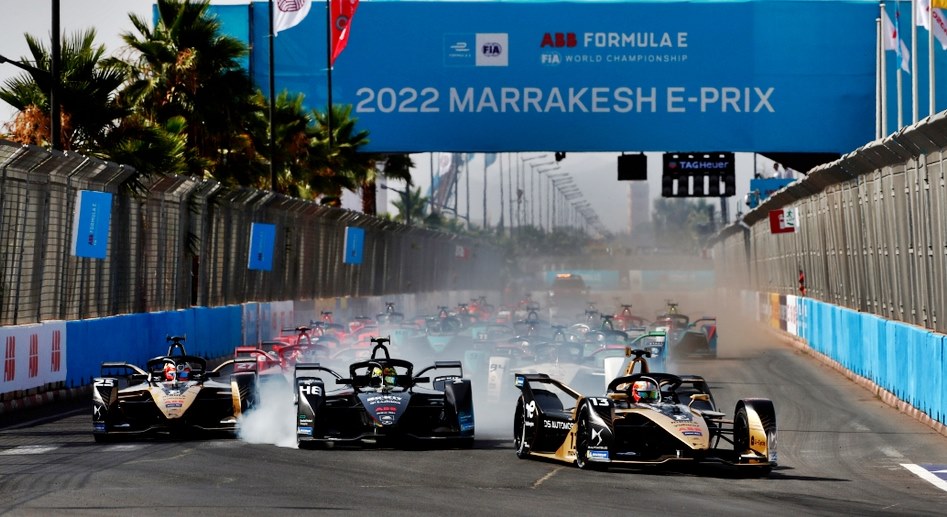
The Atlas mountains of Morocco have always provided a stunning backdrop for Formula E’s event in the North African country, with the first Marrakesh E-Prix held in 2016. The track follows the Circuit International Automobile Moulay El Hassan – named after the Crown Prince of Morocco – before spilling out onto the streets of Marrakesh’s hotel district.
2022 Formula E Morocco

Going into this year’s Marrakesh E-Prix, Mercedes-EQ’s Stoffel Vandoorne was in the lead for the Drivers’ World Championship with a 5-point advantage over nearest challenger and double champion Jean-Eric Vergne (DS TECHEETAH). Edoardo Mortara (ROKiT Venturi Racing) was just 2 points back in third place while Mitch Evans (Jaguar TCS Racing), who won last time out in Jakarta, sat fourth. With a maximum of 29 points on offer in Marrakesh, any one of those 4 drivers could lead the championship after the race.

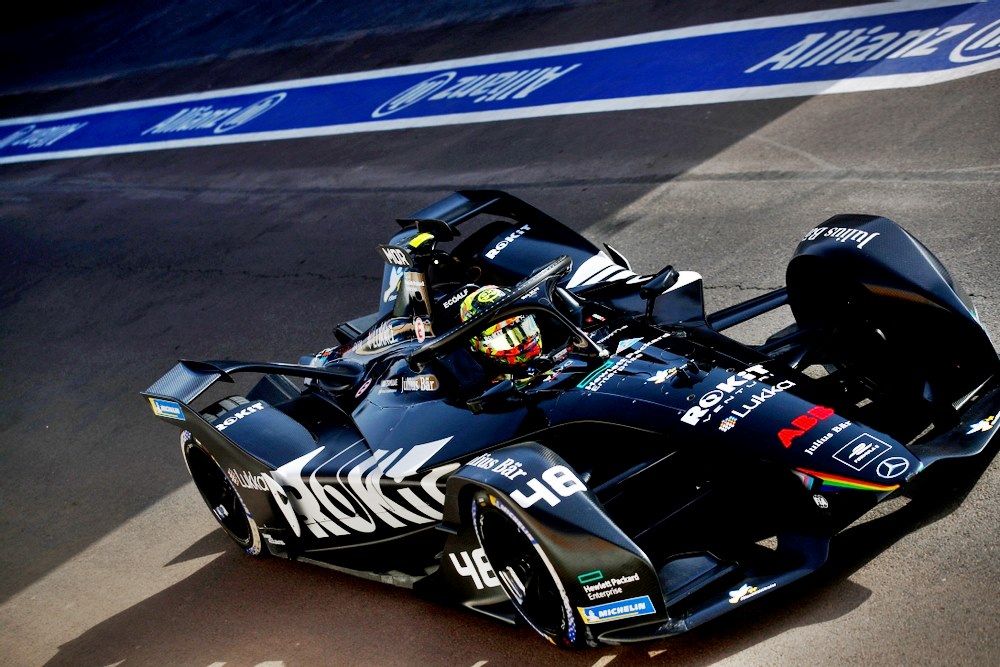
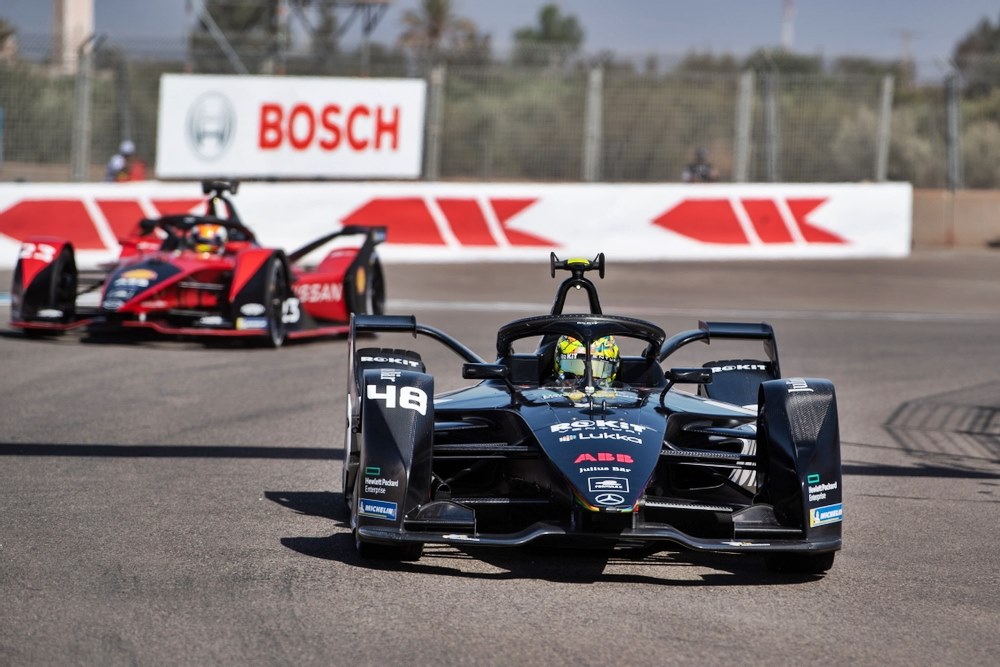
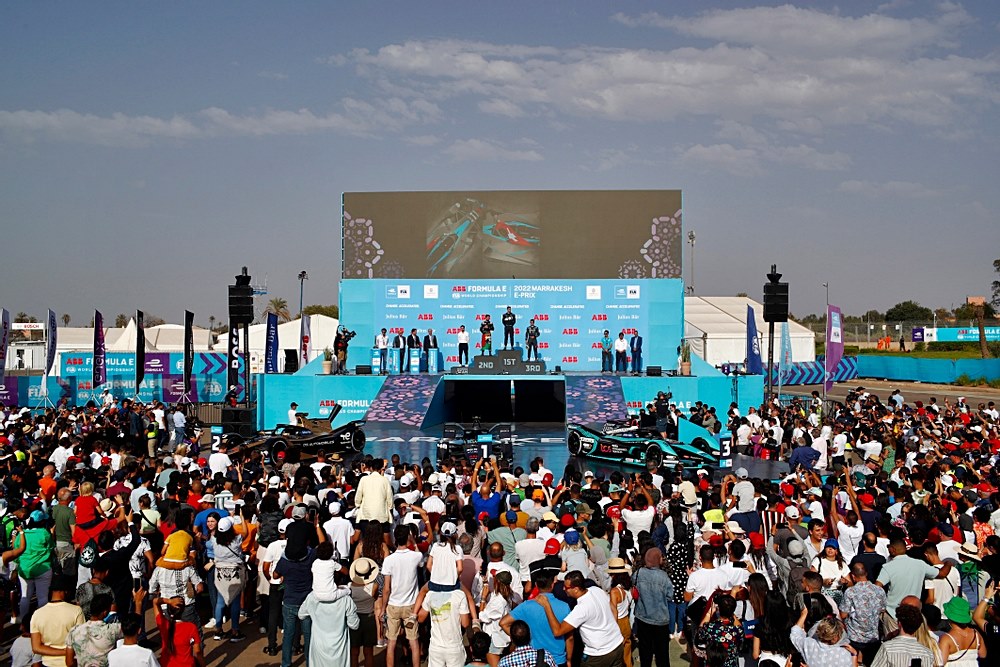
And it was Mortara who moved to the top of the championship with a win as the ROKiT Venturi Racing driver fended off severe pressure from DS TECHEETAH teammates Antonio Felix da Costa and Vergne throughout. Da Costa had started from pole position and, after falling behind Mortara during the early duo of ATTACK MODE activations, he clung to the back of the Swiss’ car as the race reached its climax. But the Season 6 champion couldn’t make it past the ROKiT Venturi Racing driver who looked utterly unflustered throughout the race, collecting his third win of the season, as well as the standings lead.
2022 Formula E Morocco

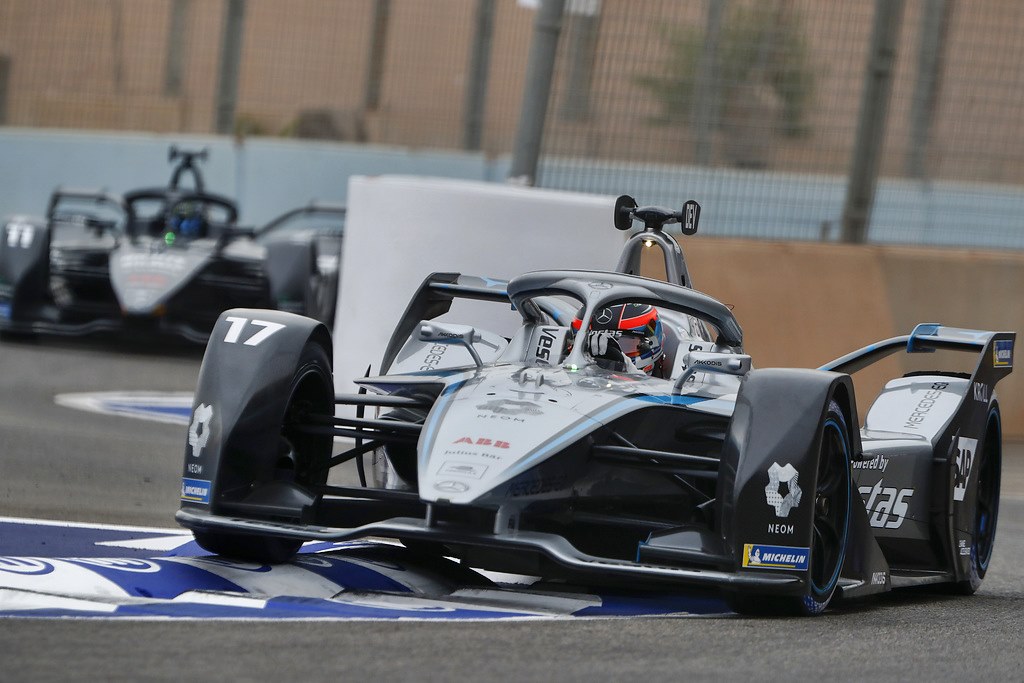
Vandoorne meanwhile found it hard to hold on to his lead as a braking issue in qualifying left him down in 20th on the grid. He recovered to finish eighth but with just 4 points on the day, his lead was lost to Mortara.

Vergne had found himself in second heading into the closing stages with 2% of usable energy available before he slipped back behind da Costa to an eventual fourth position. Fellow title challenger Evans fought from sixth on the grid to the podium with a final lap lunge on Vergne for silverware and a handful of extra, crucial World Championship points for himself and Jaguar TCS Racing.
2022 Formula E Morocco

The 2.971-km circuit with 12 turns, three straights and a series of bends is known to be an energy-zapping circuit. In the searing 33-degree heat, drivers and engineers elected to jump early for their two mandatory ATTACK MODE boosts. This was based on the school of thought that it would be more efficient and effective in the long run to draw that extra 30 kW through the batteries and powertrain.
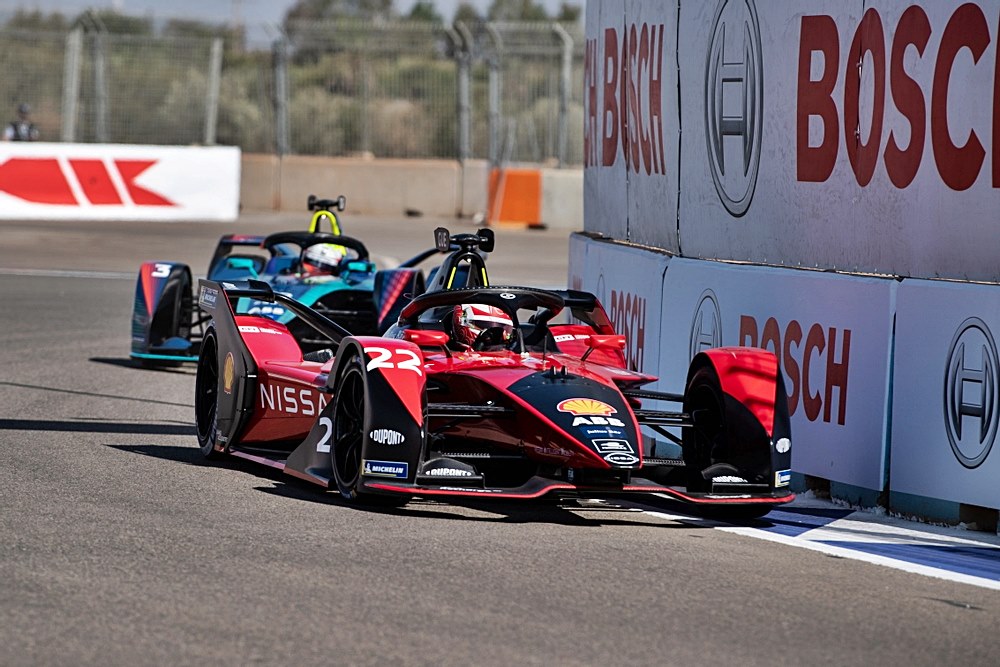
In the mix was Lucas di Grassi (ROKiT Venturi Racing), who battled to fifth and vital points for the Monegasque team, who now lead the Teams’ World Championship. Reigning World Champion Nyck de Vries (Mercedes-EQ) secured sixth and Jake Dennis (Avalanche Andretti) had to settle for seventh. Vandoorne did make up an impressive 12 spots to finish eighth in the end after his qualifying disappointment. Sam Bird wound up ninth for Jaguar TCS Racing, and Oliver Rowland – who ran as high as second spot early on – rounded out the points-paying positions in 10th.
2022 Formula E Morocco

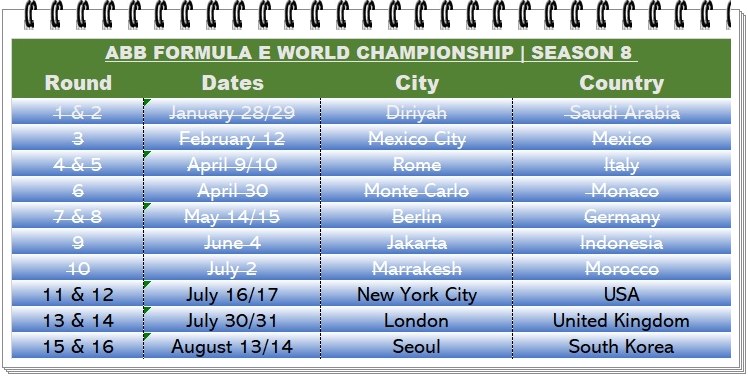
The next round will be in New York City July 16/17 for Rounds 11/12 of the ABB FIA Formula E World Championship. The much-anticipated double-header takes place on the streets of the Red Hook district of Brooklyn against the spectacular backdrop of the Manhattan skyline. This will be followed by a double-headers  at the London E-Prix at the end of July. The Season 8 championship then climaxes in Korea where the Seoul E-Prix will be held for the first time on August 13/14.
McLaren Racing to take over Mercedes-EQ Formula E Team for 2023 entry

The IONIQ name began as a model name in Hyundai Motor’s range. And it also had an interesting approach as Hyundai offered a choice of three types of powertrains in the same body – combustion engine, hybrid or battery electric. In 2020, however, the company decided to make ‘IONIQ’ (a combination of ‘ion’ and ‘unique’) a sub-brand that would be used for purely electric models.

The IONIQ brand started off with the IONIQ 5 in 2021, a C-segment SUV that was based on the 45 EV concept shown in 2019. The IONIQ 5, the first model built on Hyundai Electric Global Modular Platform (E-GMP), has been very well received and even chosen as the 2022 World Car of the Year.

2022 Hyundai IONIQ 6 EV

2022 Hyundai IONIQ 6 EV

Second of three models
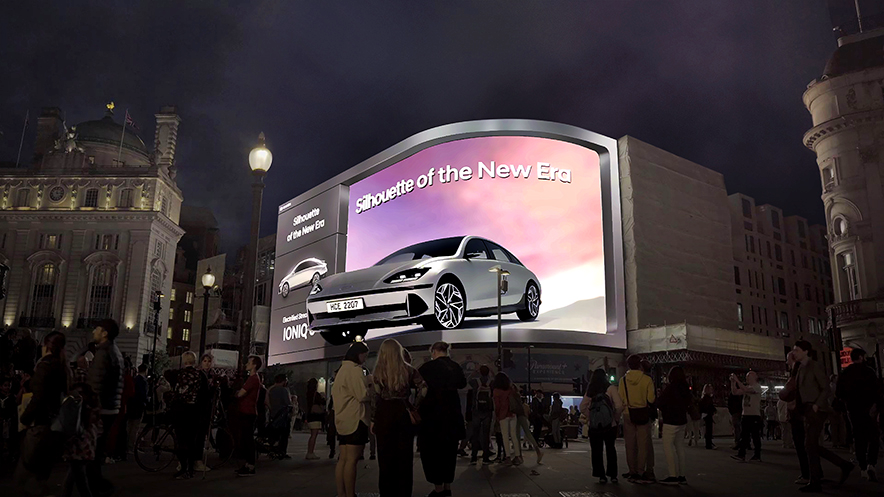
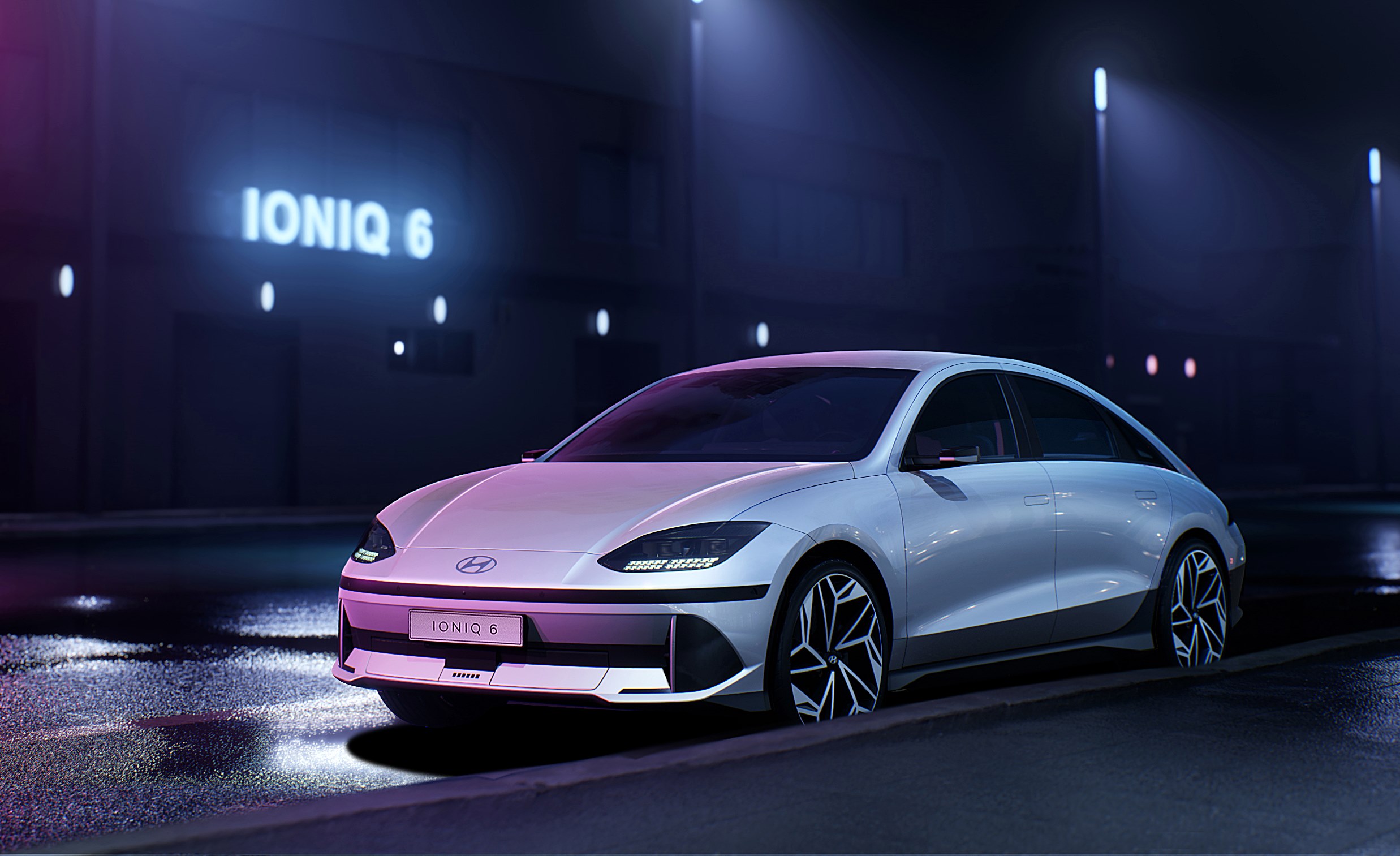
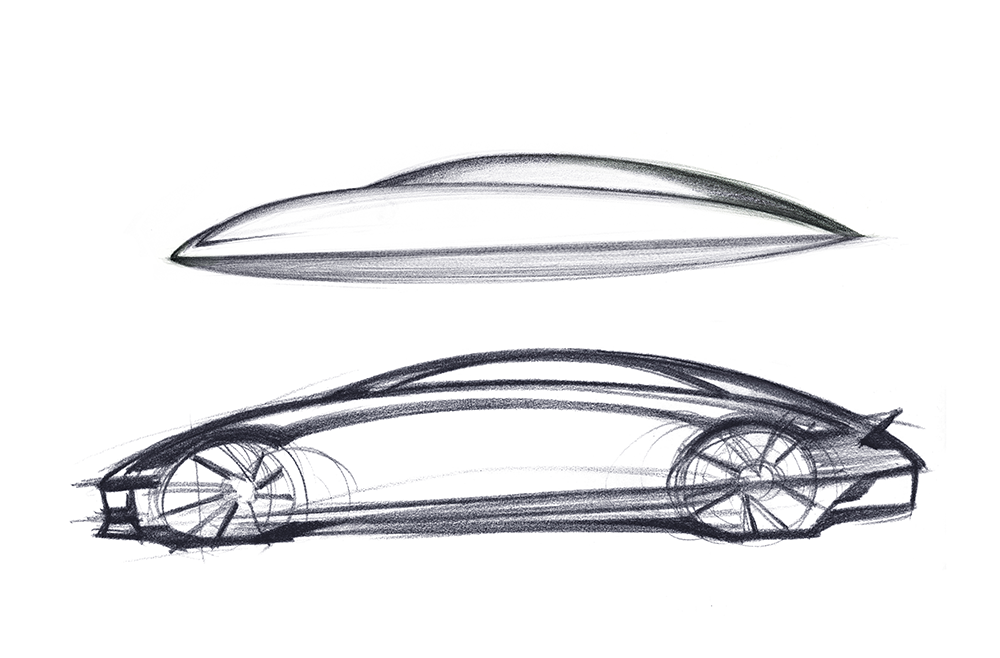
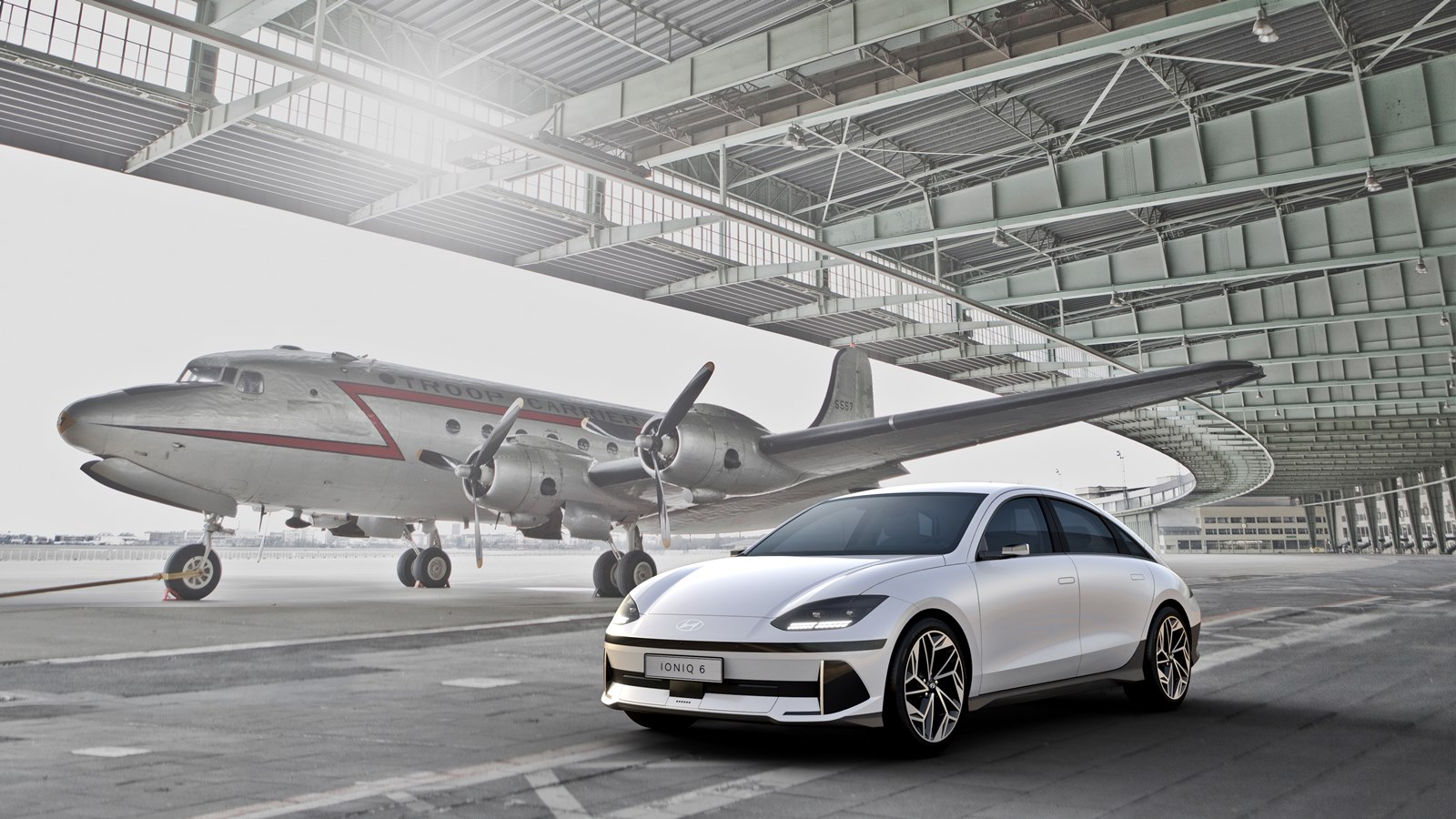
When Hyundai announced the creation of the sub-brand in 2020, it said that it would come out with three new models and now, after the IONIQ 5, comes the IONIQ 6. It is adapted from the Prophecy concept car and is described as an ‘Electrified Streamliner’ with its aerodynamically sculpted form.

The clean, simple lines and a pure aerodynamic form present ‘Emotional Efficiency’ and the streamliner typology and mindful cocoon-like interior embody a silhouette for the new era of electric mobility. The unique design language has been used to pursue energy efficiency and sustainable material usage.

2022 Hyundai IONIQ 6 EV

2022 Hyundai IONIQ 6 EV

“IONIQ 6 connects an emotional convergence of functionality with aesthetics,” said SangYup Lee, Executive Vice-President and Head of Hyundai Design Centre. “The distinctive streamlined design is the result of close cooperation between engineers and designers, with obsessive attention to detail and customer-centric values at the core. We have created the IONIQ 6 as a mindful cocoon that offers personalized places for all.”

Human-centric design
As with most cars, the human-centric basis was set from the start, with the interior space developed simultaneously with the exterior form. Efforts were made to maximize and optimize the interior space, stretching it at the front and rear, resulting in a unique streamliner silhouette and spacious interior.

2022 Hyundai IONIQ 6 EV

Like the IONIQ 5, this new model uses the Hyundai Look design strategy that gives each model a unique appearance, like chess pieces. By taking a customer-centric direction, Hyundai designs with diverse lifestyles in mind rather than with a one-style-fits-all approach.

Sleek and functional aesthetics
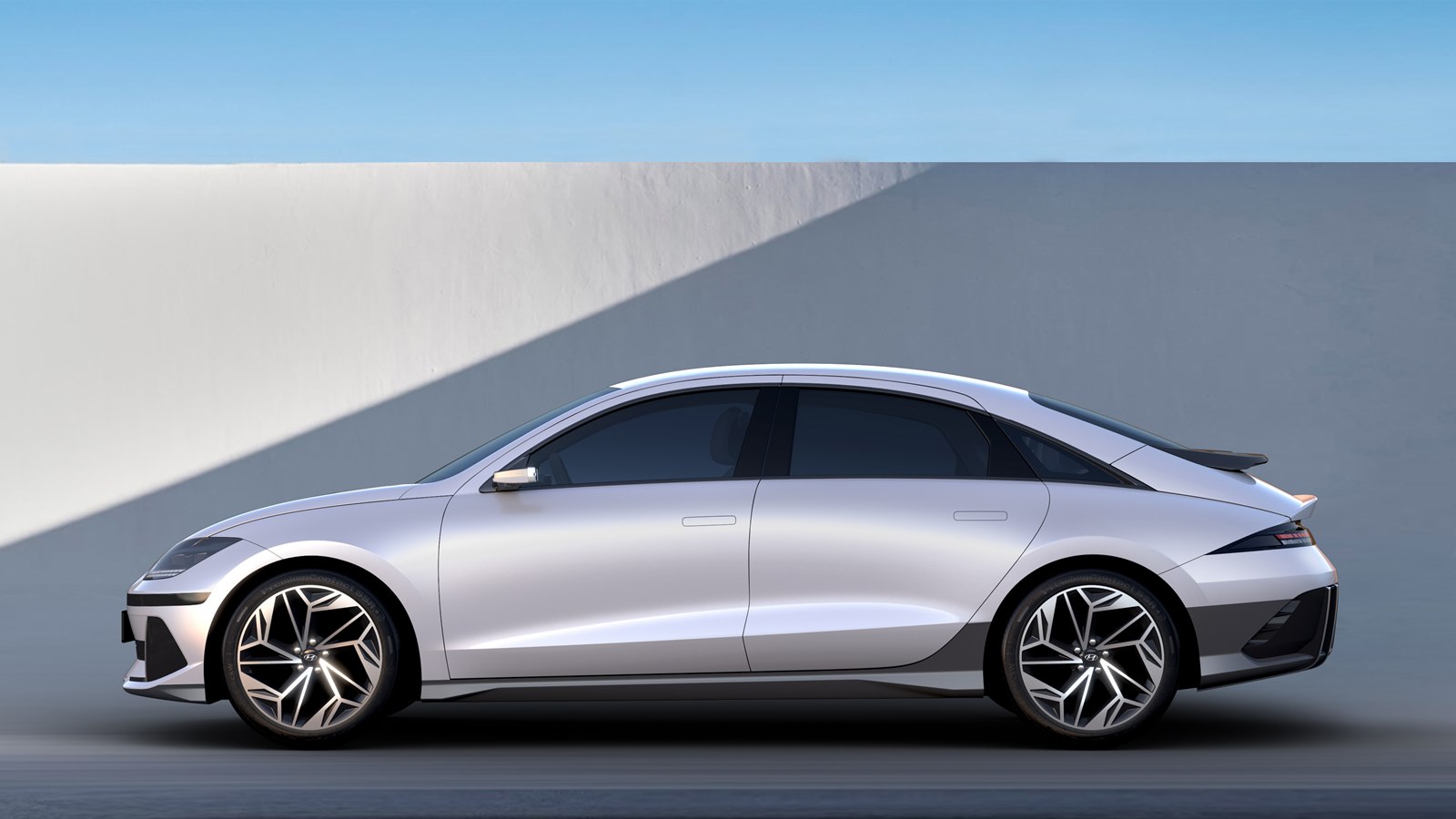
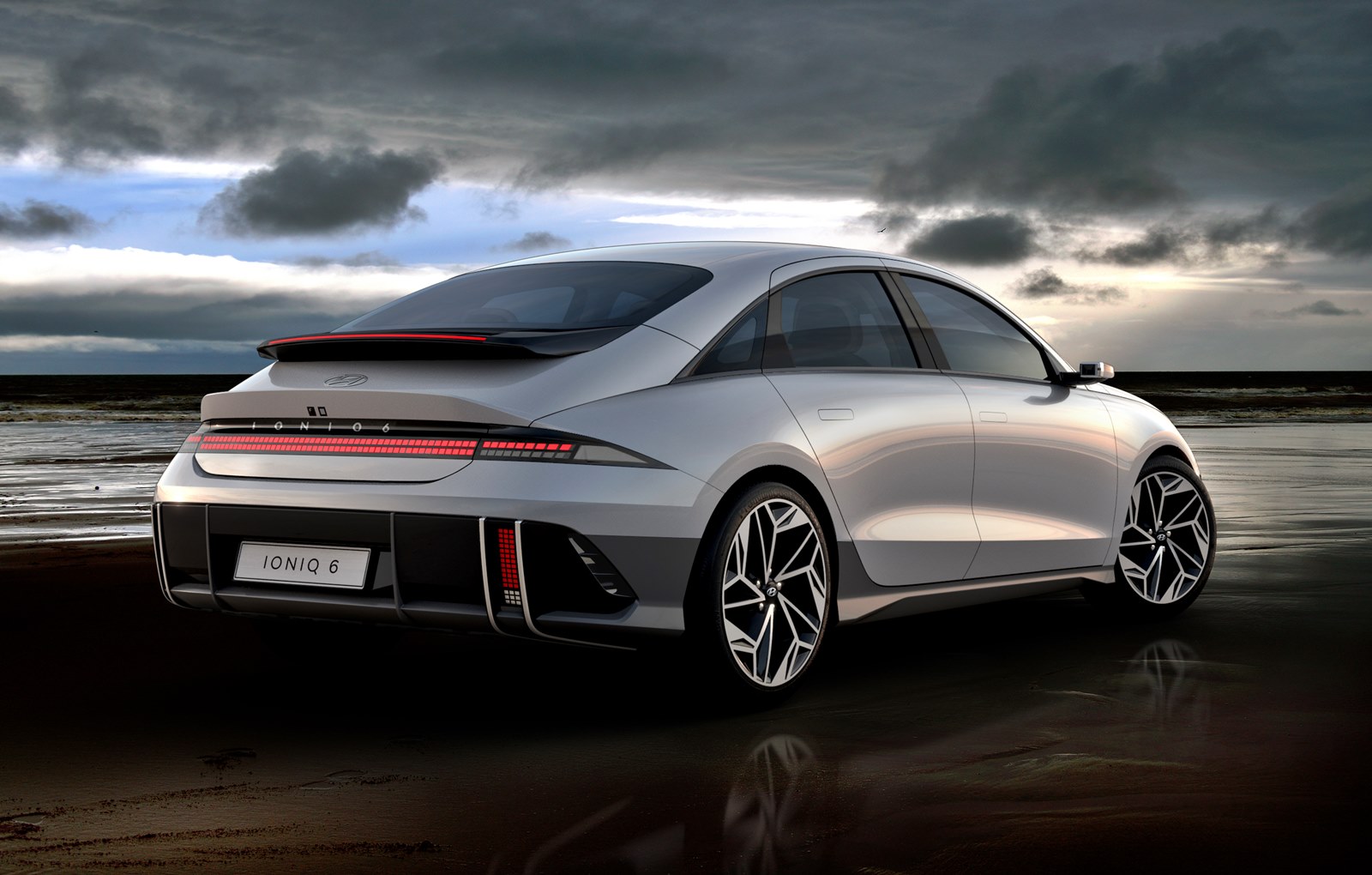
The IONIQ 6’s form has an impressively low drag coefficient of just 0.21 Cd. This is achieved by  assisted by its low nose, active air flaps at the front, wheel gap reducers, and slim digital side mirrors.

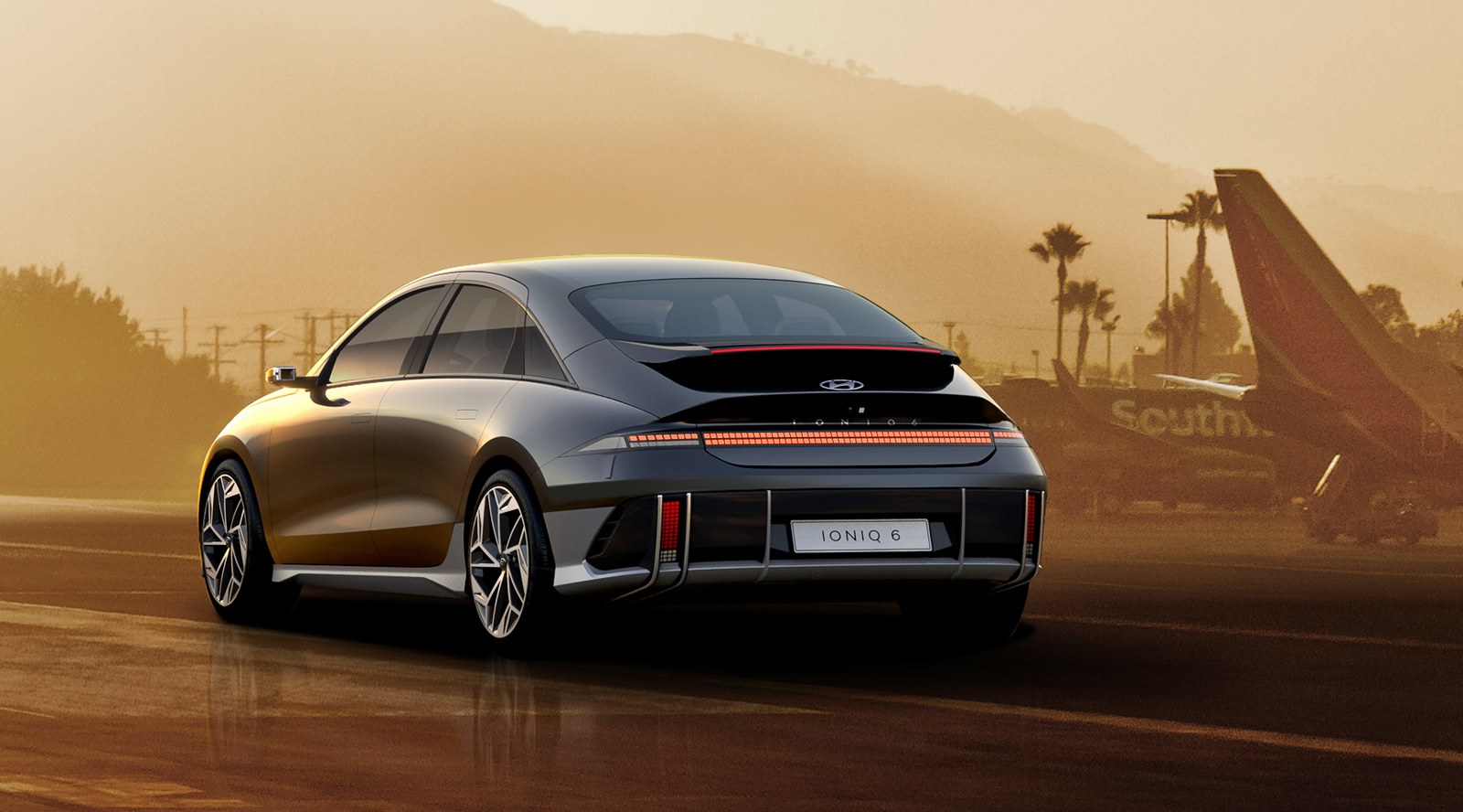
Also contributing to reduced resistance is its elliptical wing-inspired spoiler with winglet, slight boat-tail structure, and separation traps on both sides of the rear bumper. On the underside of the car, a flat surface is evident with a full cover, optimized deflectors and reduced wheel-arch gap.

2022 Hyundai IONIQ 6 EV

Parametric Pixels are the IONIQ brand’s identity and there are over 700 of them in various places on the bodywork as well as within. These include the headlamps, rear lamps, front lower sensors, air vent garnishes and centre console indicator.

The rear wing’s Parametric Pixel High-Mounted Stop Lamp (aka third brake light) has an eye-catching light execution when the brakes are applied. To further highlight the IONIQ 6’s uniqueness, a newly designed Hyundai ‘H’ badge is applied on the front and rear of the vehicle.

2022 Hyundai IONIQ 6 EV

Personal space on wheels
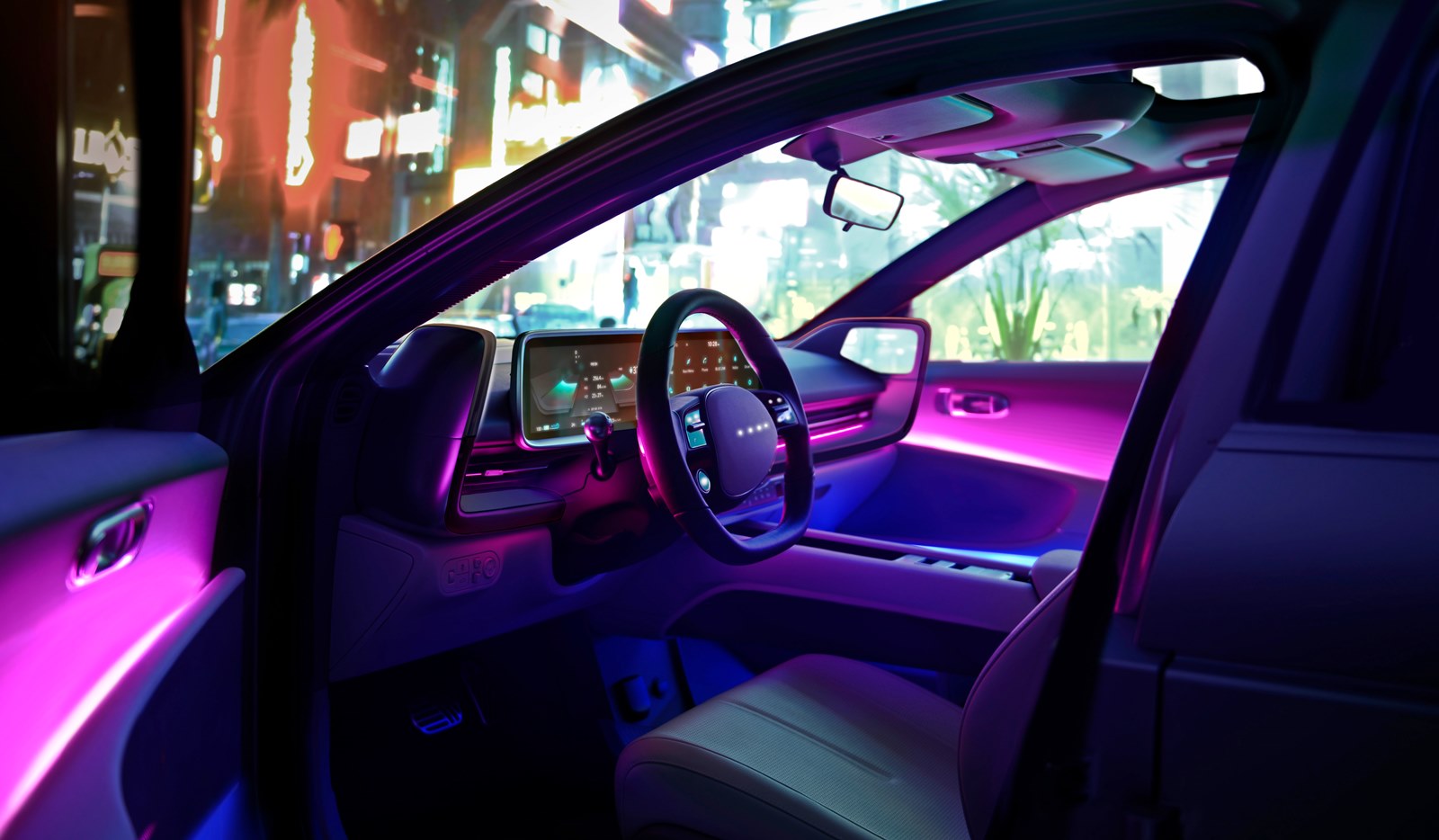
The cocoon-shaped interior serves as both a comfortable hideaway and personal space, replete with practical features and sustainable materials to facilitate a mindful, eco-friendly mobility experience and lifestyle.

2022 Hyundai IONIQ 6 EV

The Electric Global Modular Platform, optimised for electric vehicles, enabled the designers to stretch the interior, front and rear. This maximises legroom and spaciousness, with a completely flat floor giving expansive feeling.

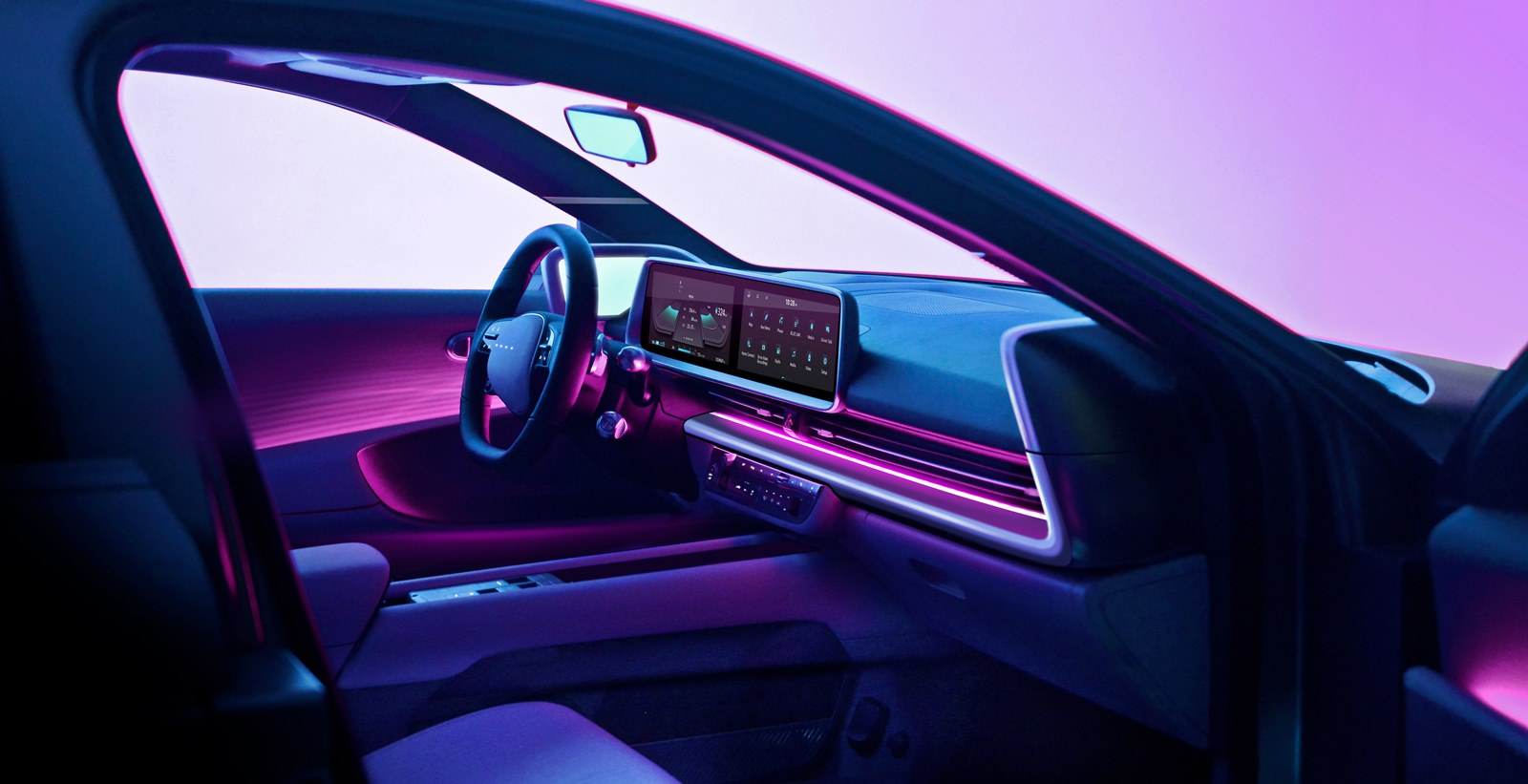
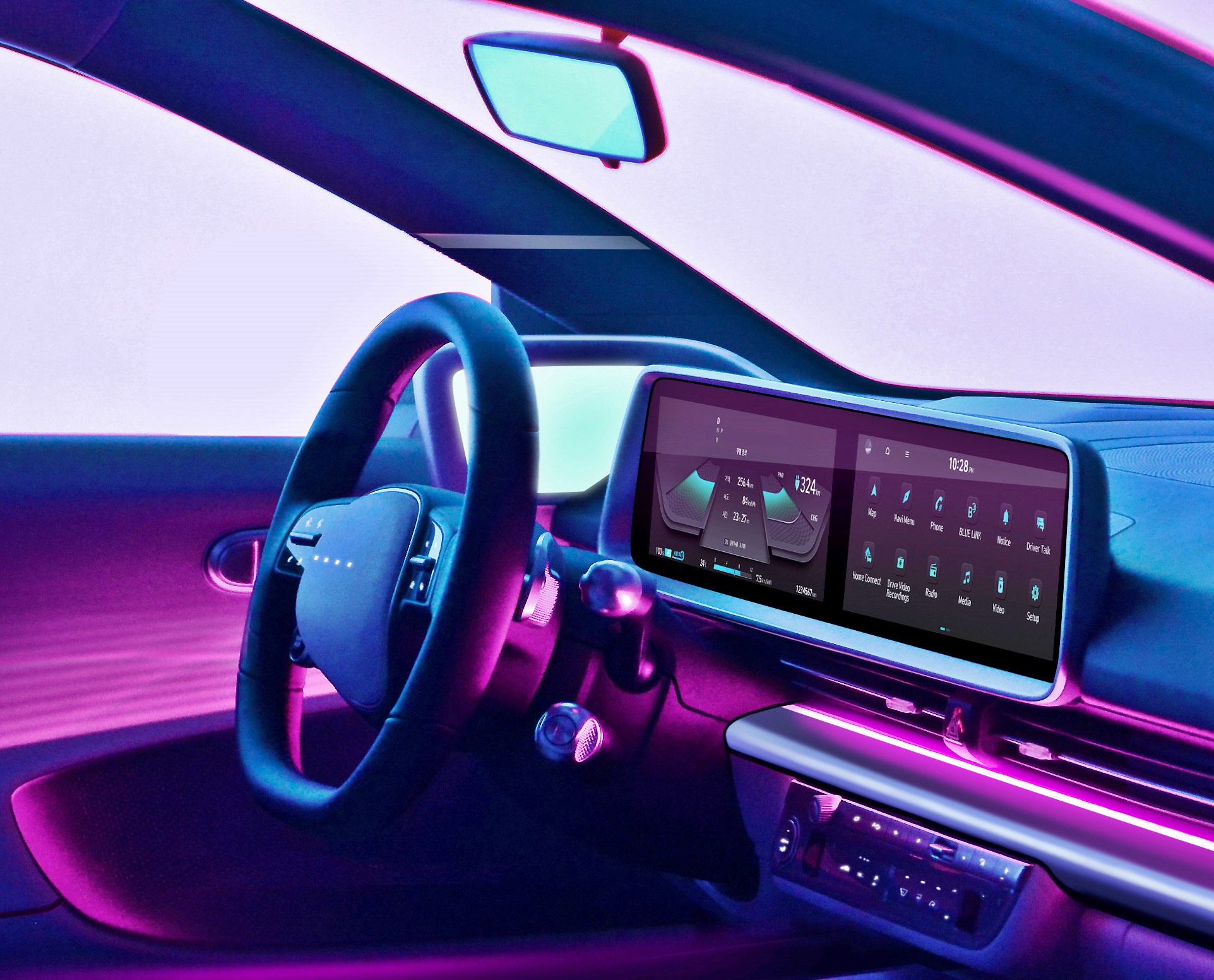
The user-centric interior architecture is exemplified by an ergonomically designed control unit that is centrally located to reduce distraction and support safe, intuitive driving. The modular touchscreen dashboard integrates a 12-inch full-touch infotainment display and 12-inch digital cluster. A bridge-type centre console provides convenient and generous in-car storage.

2022 Hyundai IONIQ 6 EV

Dual Colour Ambient Lighting provides overall illumination for IONIQ 6 interior. Users can choose from a spectrum of 64 colours and 6 dual colour themes developed by experts to help drivers and passengers feel relaxed and comfortable. The 4-dot Interactive Pixel Lights on the steering wheel enable easy communication between the driver and vehicle.

The removal of buttons from the front doors provides extra elbow space as well as adds storage capacity. Transparent accents on the crash pad garnish, door map pocket and console lower cover further accentuate the sense of spaciousness and uniqueness.

Eco-friendly materials
In line with the IONIQ 6’s Ethical Uniqueness theme and inspired by today’s eco-conscious consumers, the designers applied sustainable materials to the exterior, including recycled pigment paint from end-of-life tyres to the cladding and bamboo charcoal pigment paint to the body.

The interior is also trimmed in sustainable materials and colours. These include eco-process leather (seats), recycled PET fabric (seats), bio TPO skin (dashboard), bio PET fabric (headliner), bio paint derived from vegetable oils (doors), and recycled fishing net carpet — the latter a first for the IONIQ brand.

2022 Hyundai IONIQ 6 EV

Technical details have not been released yet as the midsize model, likely to take over the place of the Sonata in future, will be officially launched later this month. The IONIQ 7 will likely be a larger crossover and make its debut in 2024.

Hyundai to use new Integrated Modular Architecture for all future BEV models

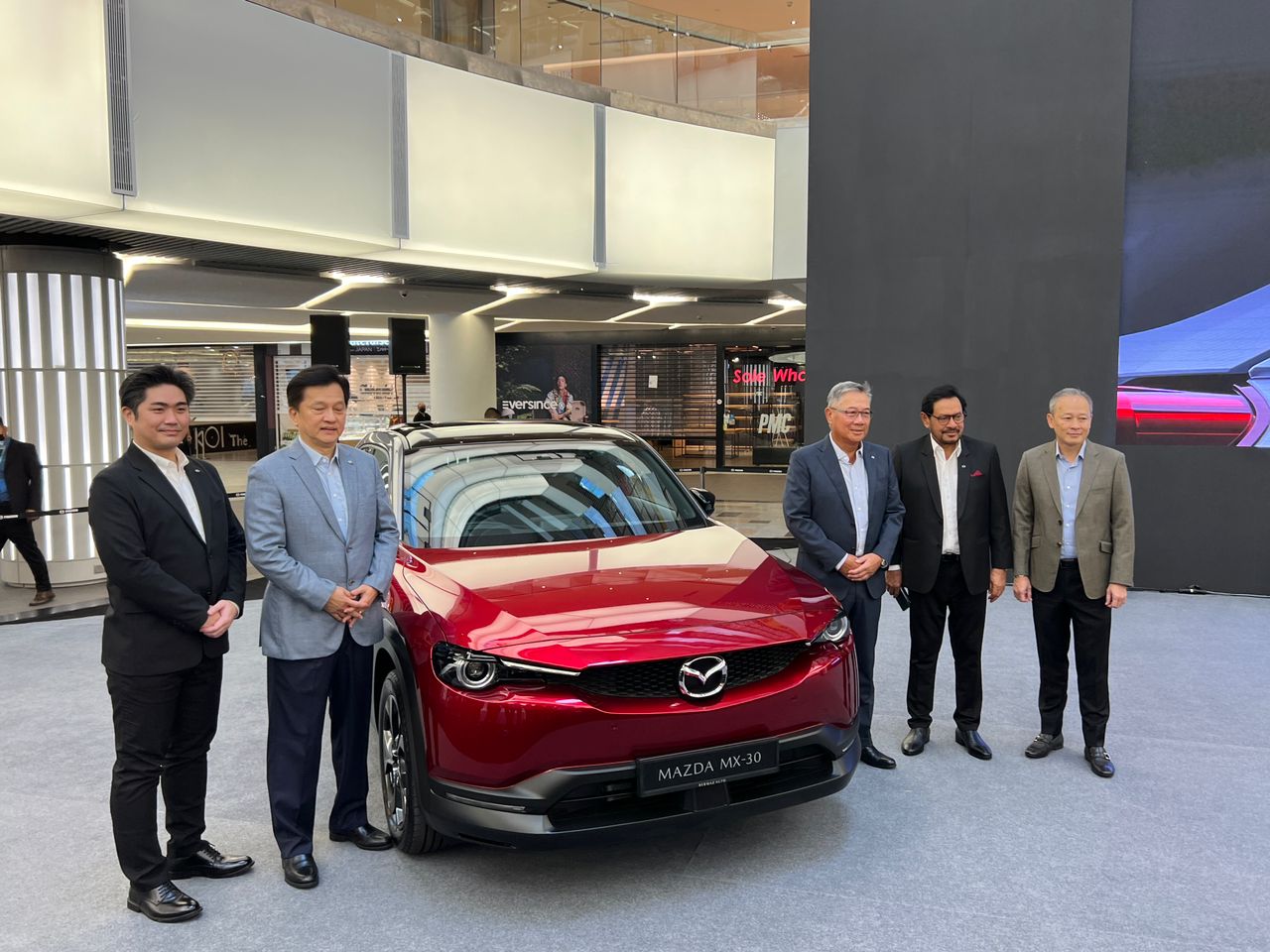
After giving the Malaysia media a preview in April, Bermaz Motor Trading is now introducing the new Mazda MX-30 to the Malaysian public. The model, Mazda’s first battery-electric vehicle (BEV), is priced from RM198,780 and bookings are accepted at the Mazda Flagship showroom in Glenmarie, Selangor.

The development of the MX-30 is part of the company’s Sustainable Zoom-Zoom 2030 vision of achieving carbon neutrality. The carmaker has also taken a different approach with performance (acceleration, top speed, range) not being the main focus but practicality and urban usage. This approach has helped to manage the costs which are still high for BEVs. (more…)

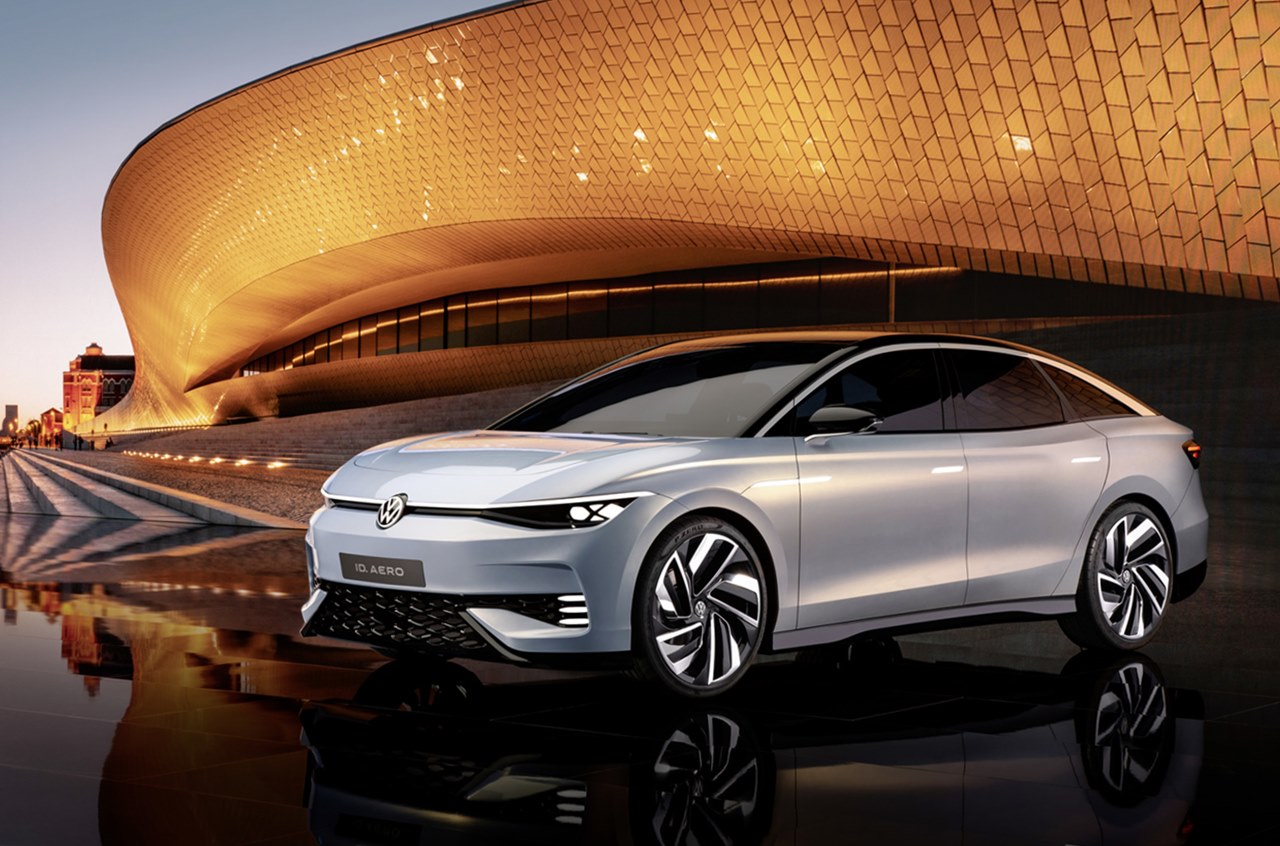
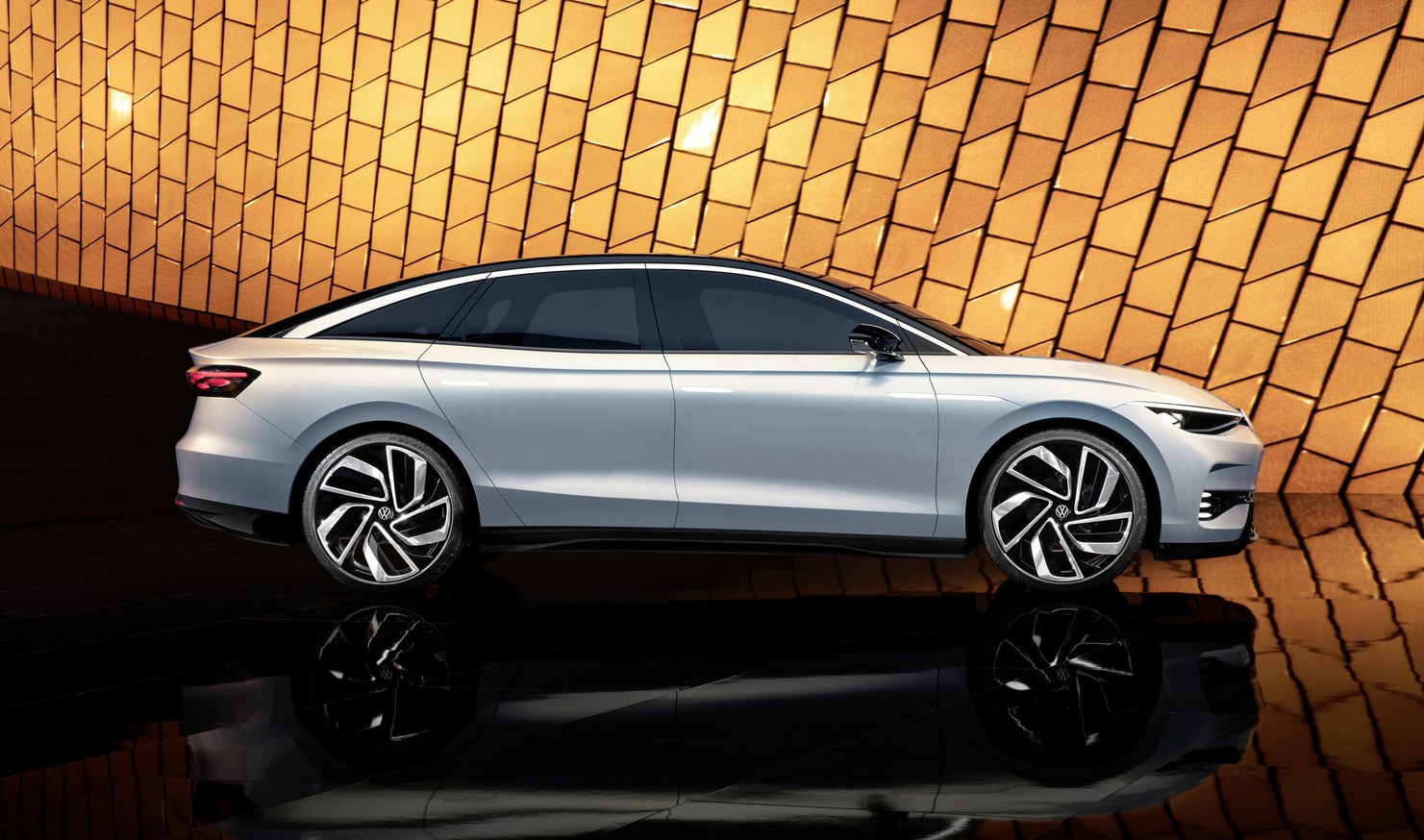
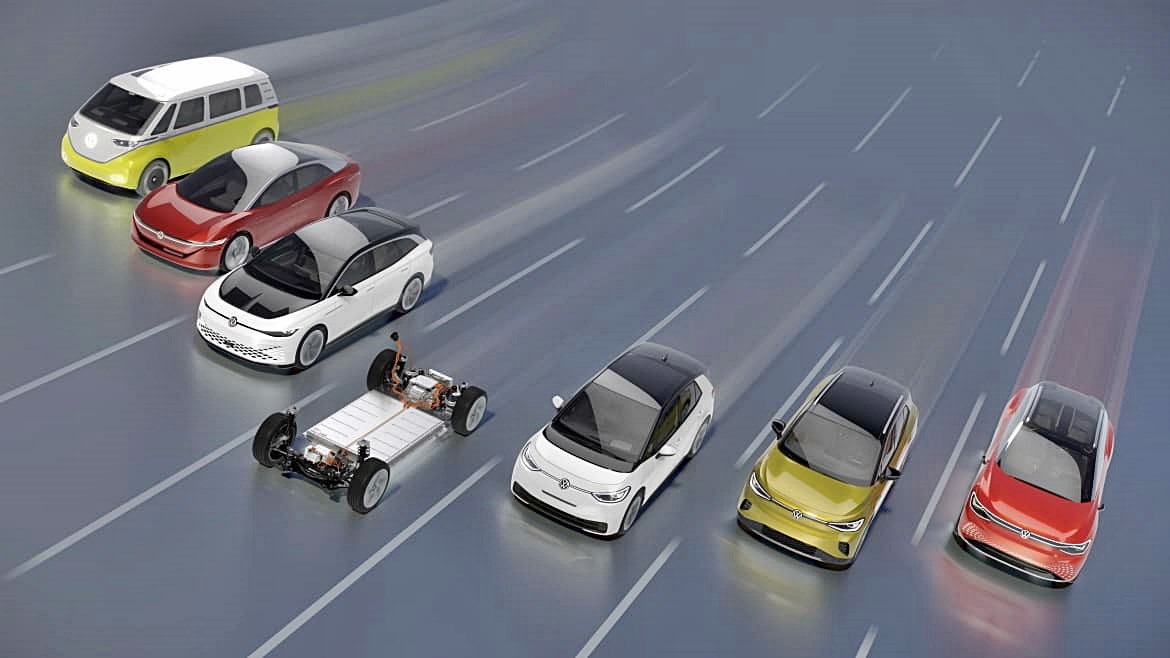
After releasing sketches of a new model in its BEV (battery electric vehicle) ID. range, Volkswagen has now issued the first pictures of the concept car that will be the basis of the flagship of the range. To be known as the ID. AERO, it will be the sixth member of the ID. family, after the ID.3, ID.4, ID.5 and ID.6 as well as the iconic ID. Buzz.

The future model will be positioned in the premium midsize sedan segment and offered worldwide as the brand’s first global BEV sedan. the production version for China, a very important market for  Volkswagen, is expected to go on sale in the second half of 2023. The European and global version will be made in Germany from 2023.

2022 Volkswagen ID.AERO concept BEV

Electric offensive in China
With the ID. AERO, Volkswagen is stepping up its electric offensive in China as part of its ACCELERATE strategy. Following the ID.3, ID.4 and ID.6, the production version of the ID. AERO will become the fourth fully-electric model series in China when it goes on sale in the second half of 2023.

Two versions are planned for the world’s largest car market – one for each Volkswagen joint venture. Based on its regional strategy, Volkswagen is aiming to become the leading supplier of sustainable vehicles in China. As early as 2030, it is planned that at least every second vehicle sold in China will be an electric vehicle.

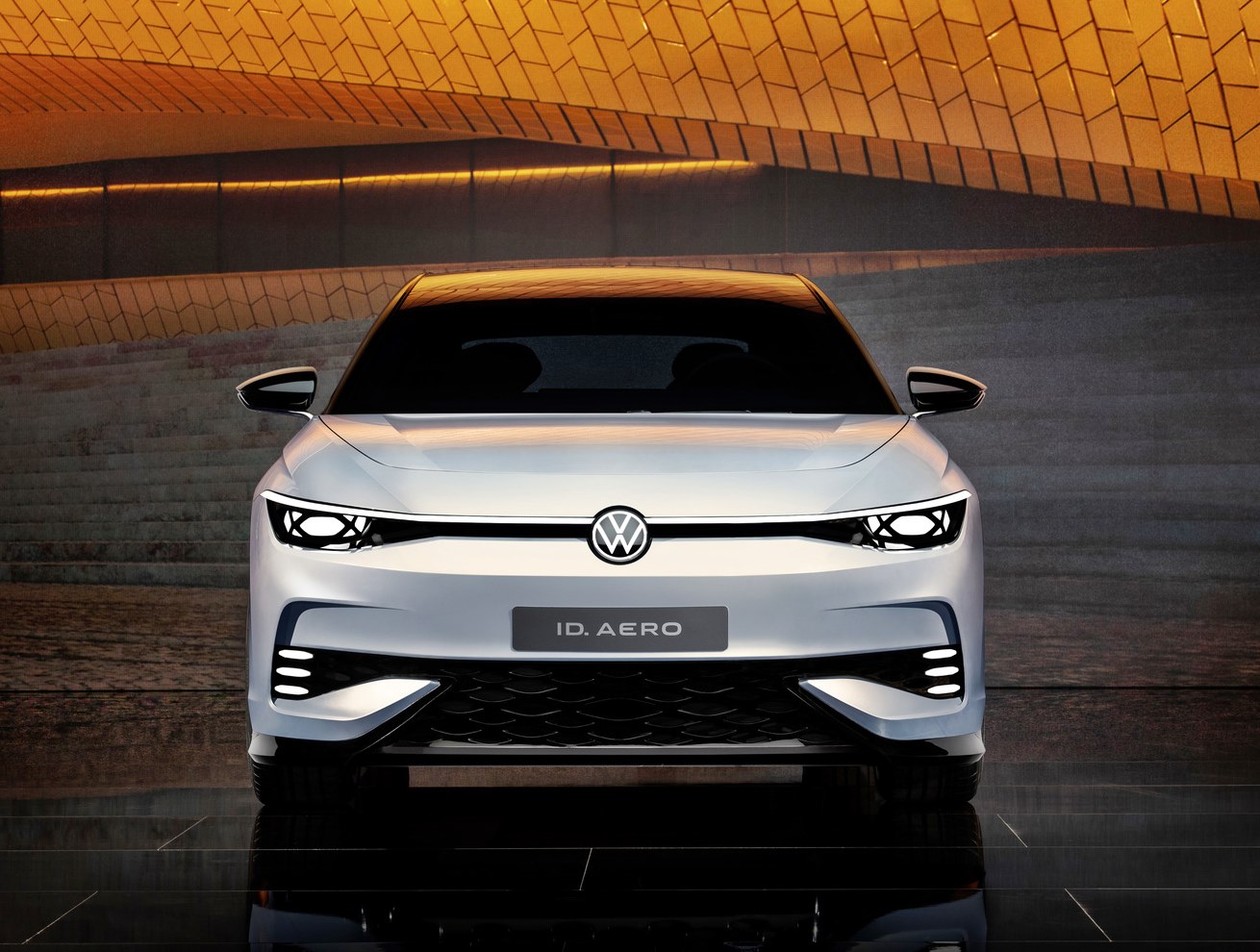
2022 Volkswagen ID.AERO concept BEV

Elegant design characterised by aerodynamics
The concept car is almost 5 metres long and its design is greatly influenced by aerodynamic principles. The roof slopes elegantly to the rear in coupe style and contributes to achieving a very low drag coefficient of 0.23 Cd.

Stylistically, the ID. AERO transfers the design of the ID. family to a sedan in the premium midsize segment for the first time. The aerodynamically designed front end and roof ensure that air flows optimally over the vehicle. The airflow is calmed by the slightly drawn-in rear end with a separation edge.

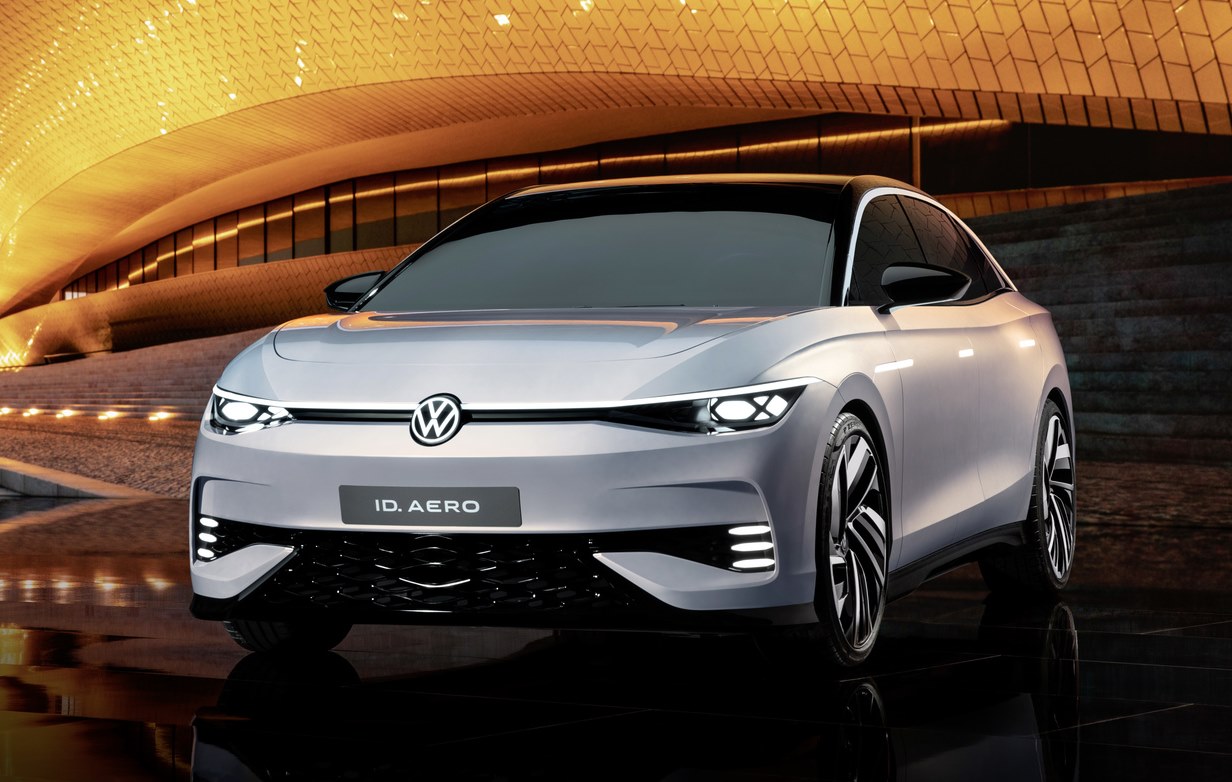
2022 Volkswagen ID.AERO concept BEV

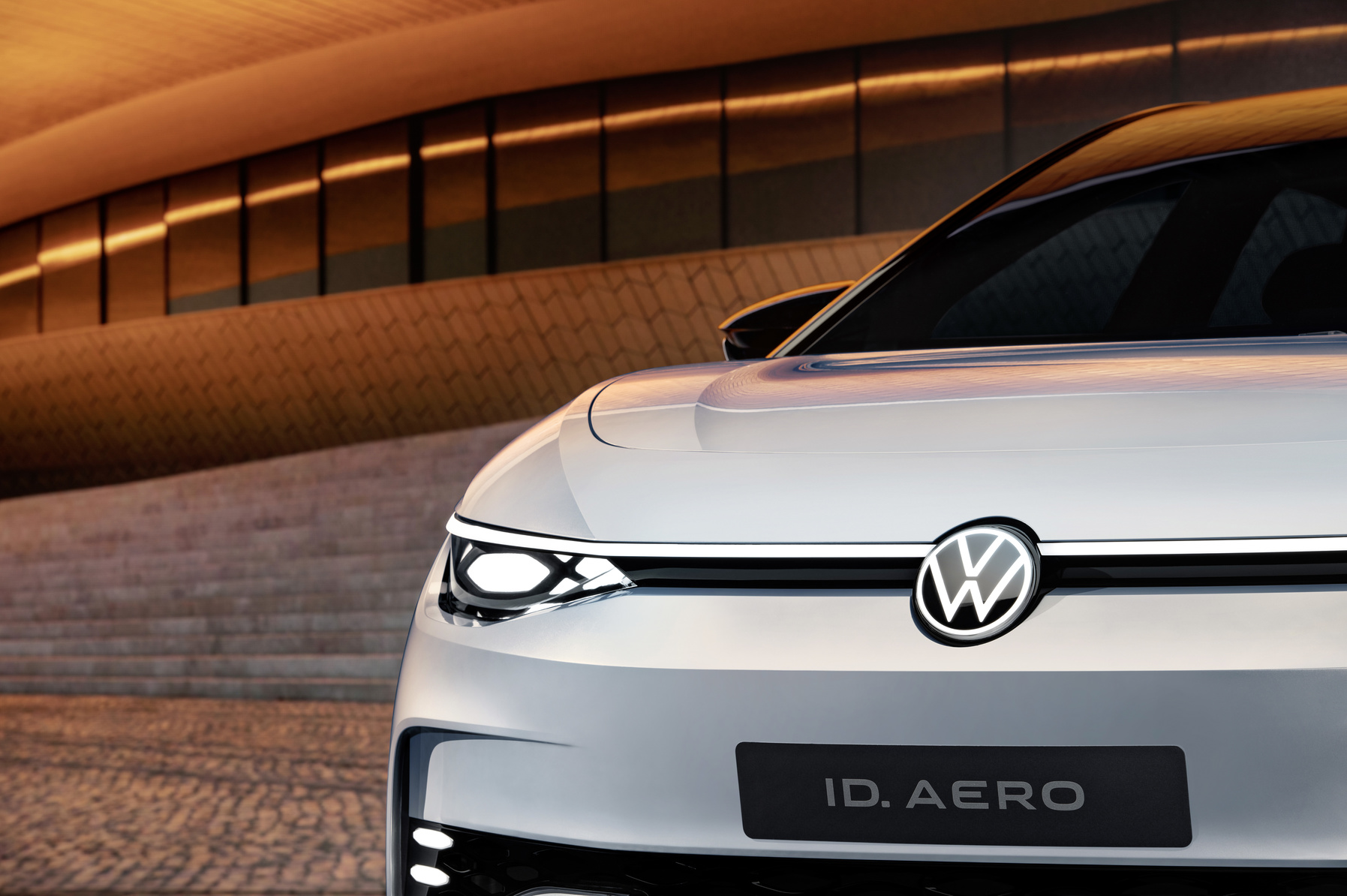
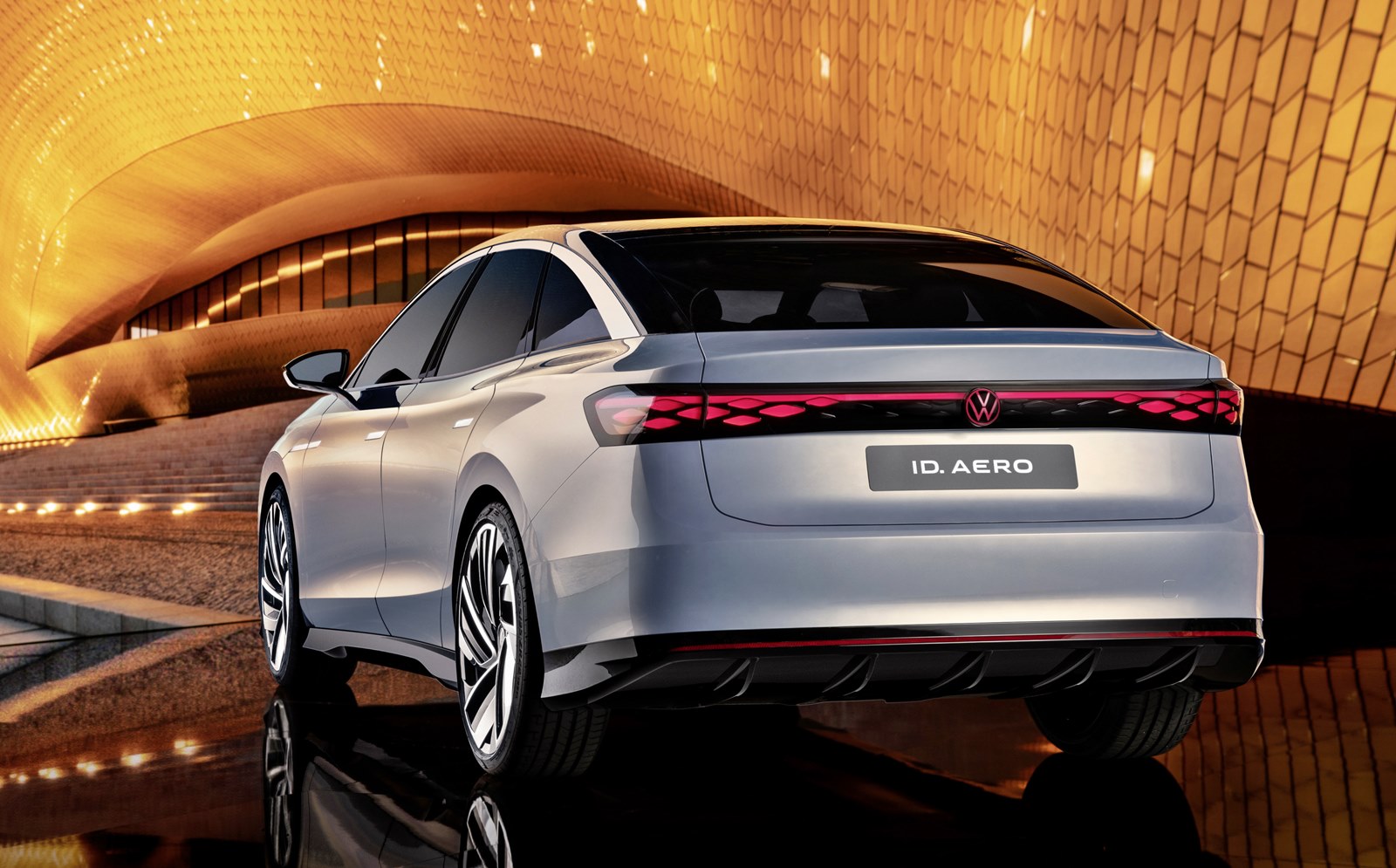
The front end is characterised by the ID. honeycombs typical for the ID. family. The front is horizontally split into two in the bumper and is a defining style element for the ID. AERO design. As another distinctive feature that makes the ID. AERO stand out in the crowd, a narrow light strip extends horizontally across the front out to the left and right of the illuminated Volkswagen badge and above the IQ.LIGHT LED matrix headlights, wrapping into the wings and side panels.

This light strip is continued visually to the rear end with a few interruptions. The dominant rear end features a striking dark light strip and LED taillight clusters with honeycomb structure that create an exclusive look.

2022 Volkswagen ID.AERO concept BEV

The sporty 22-inch two-tone wheels are designed in the style of a turbine and are integrated flush into the wheel housings. Classic door handles are replaced by illuminated touch surfaces, which reduce the drag even further.

At the top of the silhouette, the bold tornado line and downward sloping roof line shape the design. The powerful shoulder section of the ID. AERO is located above the tornado line. The contour lines make the electric sedan appear flatter and give it a dynamic look.

Modular Electric Drive Matrix (MEB)
Volkswagen’s modular electric drive matrix (MEB) permits short overhangs, a long wheelbase and an exceptionally spacious vehicle interior. The ID. AERO will have a powerful lithium-ion battery with a net energy content of 77 kWh. Thanks to the interaction of the efficient drive system and the excellent aerodynamic properties, the carmaker claims that ranges of up to 620 kms will be possible.

2022 Volkswagen ID.AERO concept BEV

“With the ID. AERO showcar, we are revealing a preview of the next member of the ID. family. A car with an emotional and at the same time extremely aerodynamic design, a range of over 600 kms, an extraordinary amount of space and a premium interior,” said Ralf Brandstatter, CEO of Volkswagen Passenger Cars. “With our ACCELERATE strategy, we are intensively driving forward the electrification of our model range. Following the ID.4, this model will be our next global car for Europe, China and the USA. ”

The ID. family is Volkswagen’s range of the future with all battery-electric models using the MEB platform.

VW’s ID. SPACE VIZZION shows the stationwagon will continue to exist in the electric age

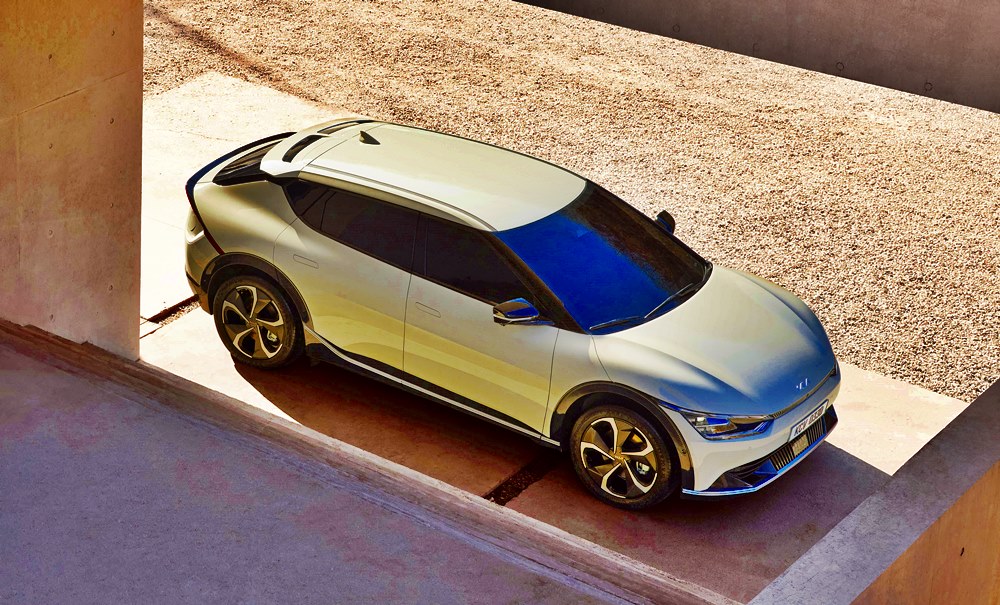
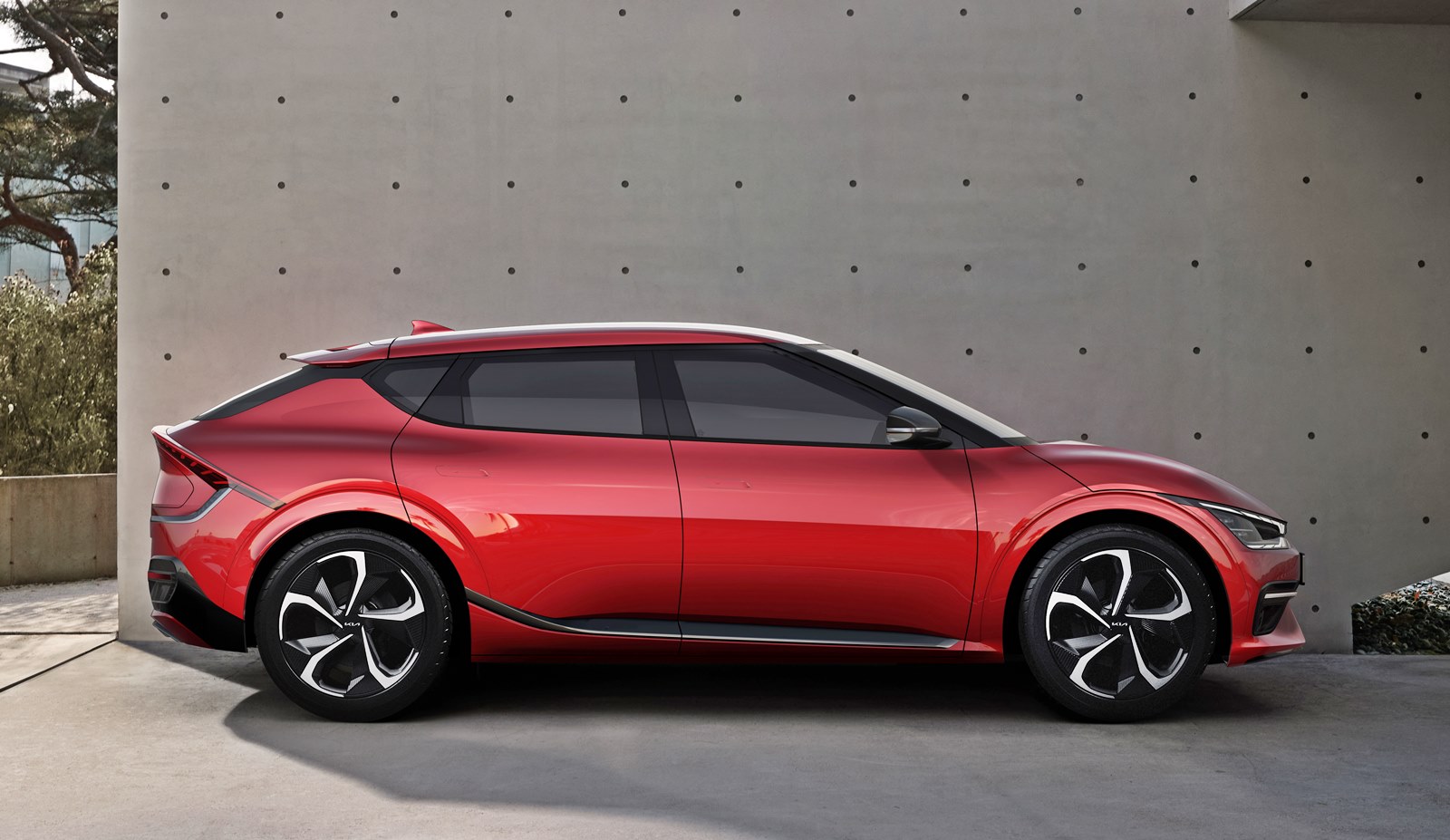
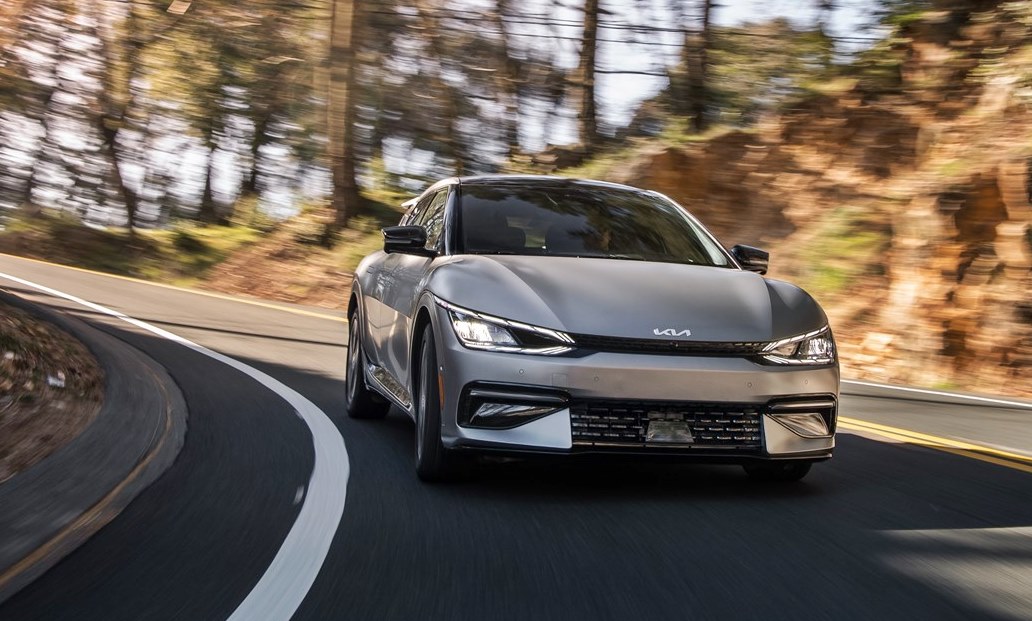
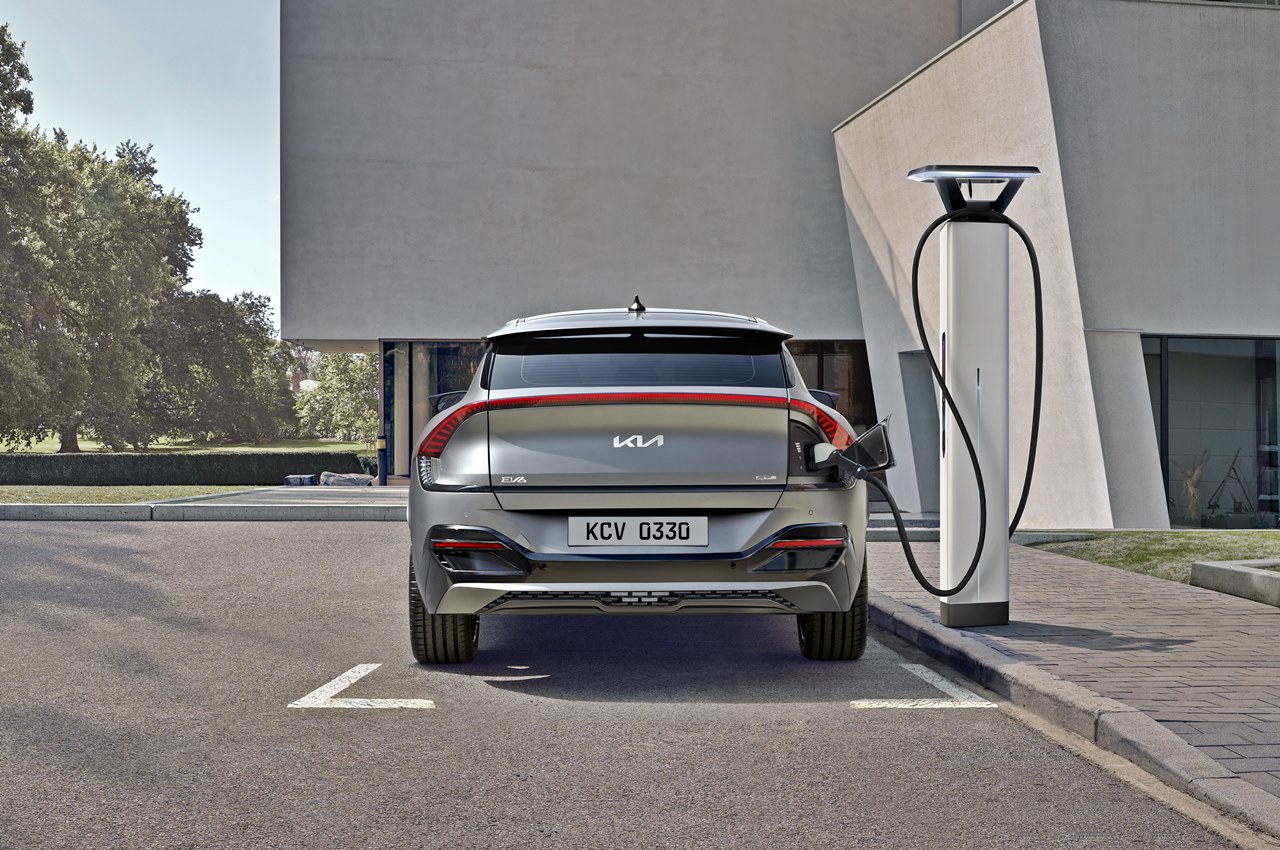
Since it was launched in March 2021, the Kia EV6 has impressed the automotive world and received a number of awards, including the 2022 European Car of the Year award. The first of the Korean carmaker’s next-generation battery-electric vehicles (BEVs), the EV6 embodies Kia’s shifting focus towards electrification. As part of the Hyundai Motor Group, Kia is also very much into electrifying its range with the aim of achieving carbon-neutrality.

The EV6 has progressively made its appearance in many markets around the world and now it is also being offered in Malaysia, although only bookings are being taken for now. The model is distributed through Dinamikjaya Motors Sdn Bhd (DMSB), which took over representation of Kia from the Naza Group in April 2021. A subsidiary of BAuto (Bermaz Auto), DMSB is the sole distributor while another company – Kia Malaysia Sdn Bhd – has also been formed to manage the assembly of Kia vehicles locally and Kia Motors has majority share in this company.

Dedicated BEV platform
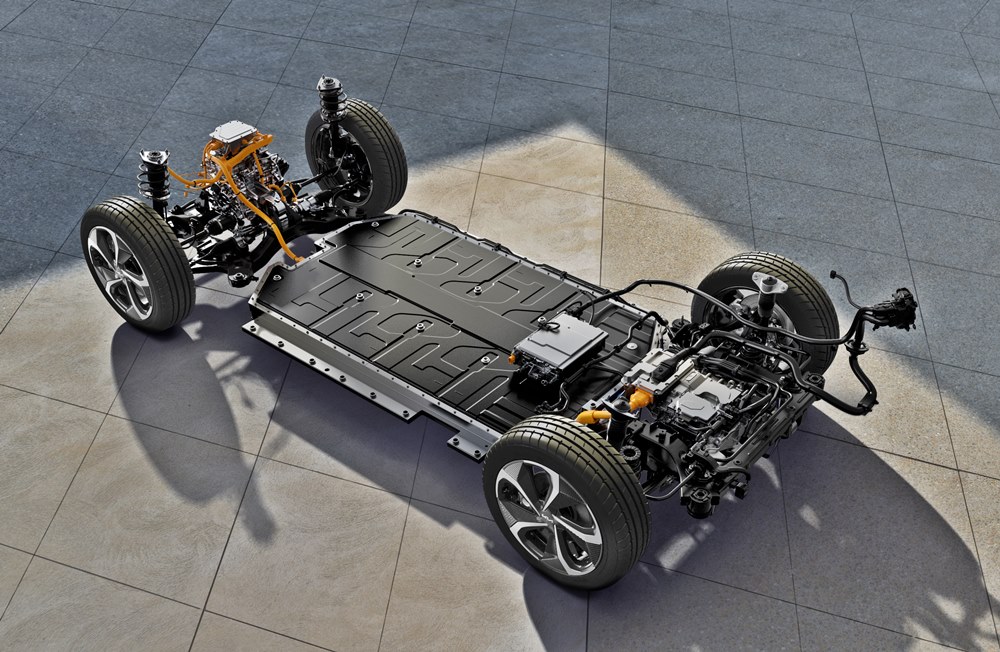
Priced from RM300,668 (click here for the pricelist)for the GT-line version, the EV6 is Kia’s first dedicated BEV produced with the all-new Electric-Global Modular Platform (E-GMP) of the Hyundai Motor Group. By having a dedicated platform, it means that the architecture of the vehicle can be fully optimised for an electric powertrain. Earlier, carmakers developed BEVs using platforms that were still used for conventional combustion engines, resulting in less than optimum engineering when it came to a BEV.

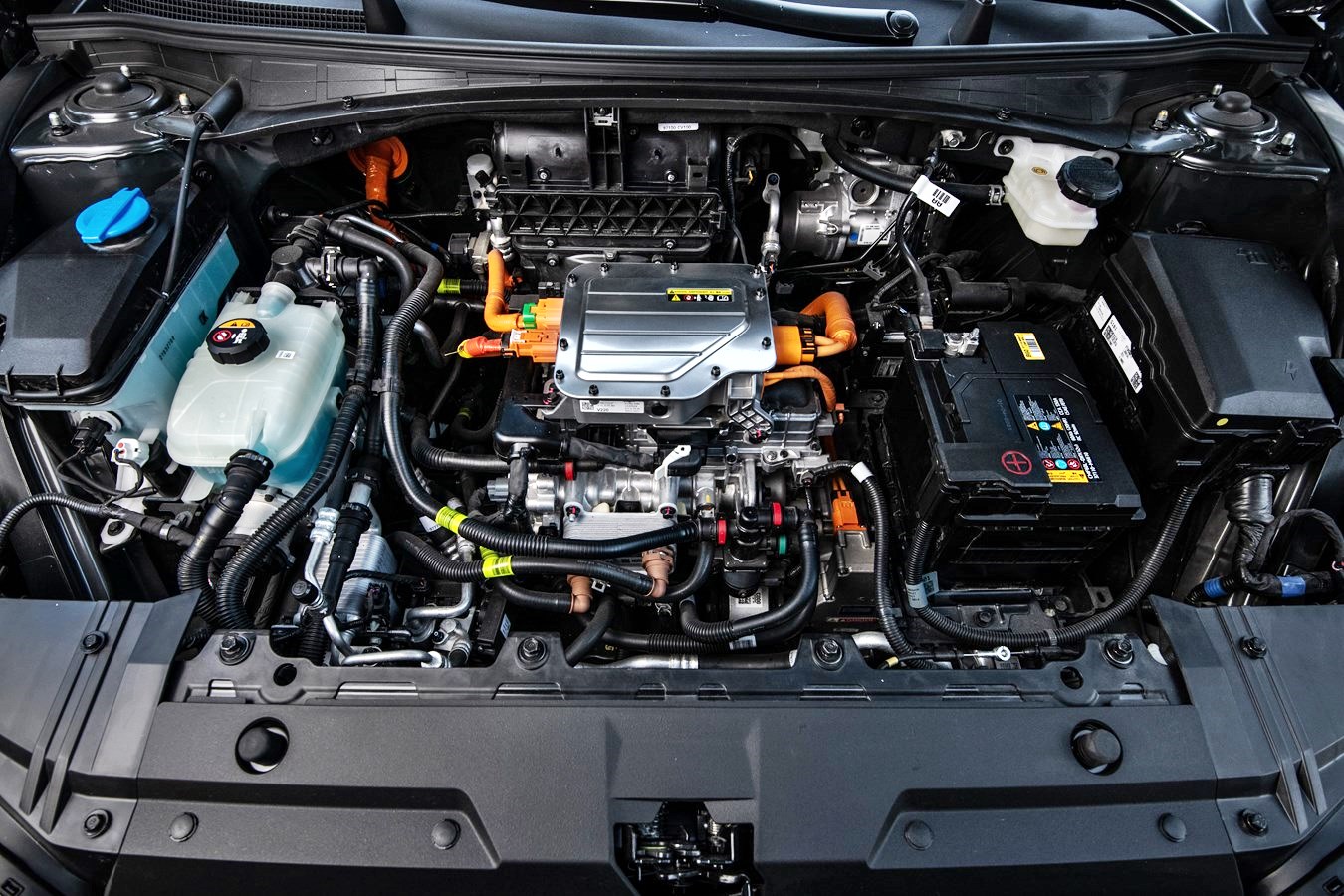
The EV6 has all-wheel drive with two electric motors generating a total of 605 Nm, and a 77.4 kWh battery pack powering them. Claimed performance figures are 0 to 100 km/h in 5.2 seconds and a top speed of 185 km/h. The claimed range on a fully charged battery pack is 506 kms but just as with combustion engines, this figure depends on driving conditions and driving style.

In addition, the flexibility of its Integrated Charging Control Unit (ICCU) charging system enables the vehicle-to-load (V2L) function, which is capable of discharging energy from the vehicle battery. The V2L function can supply up to 3.6 kWh of power and is capable of operating lifestyle electronic accessories, so the EV6 can serve as a mobile power station.

Digital Tiger Face
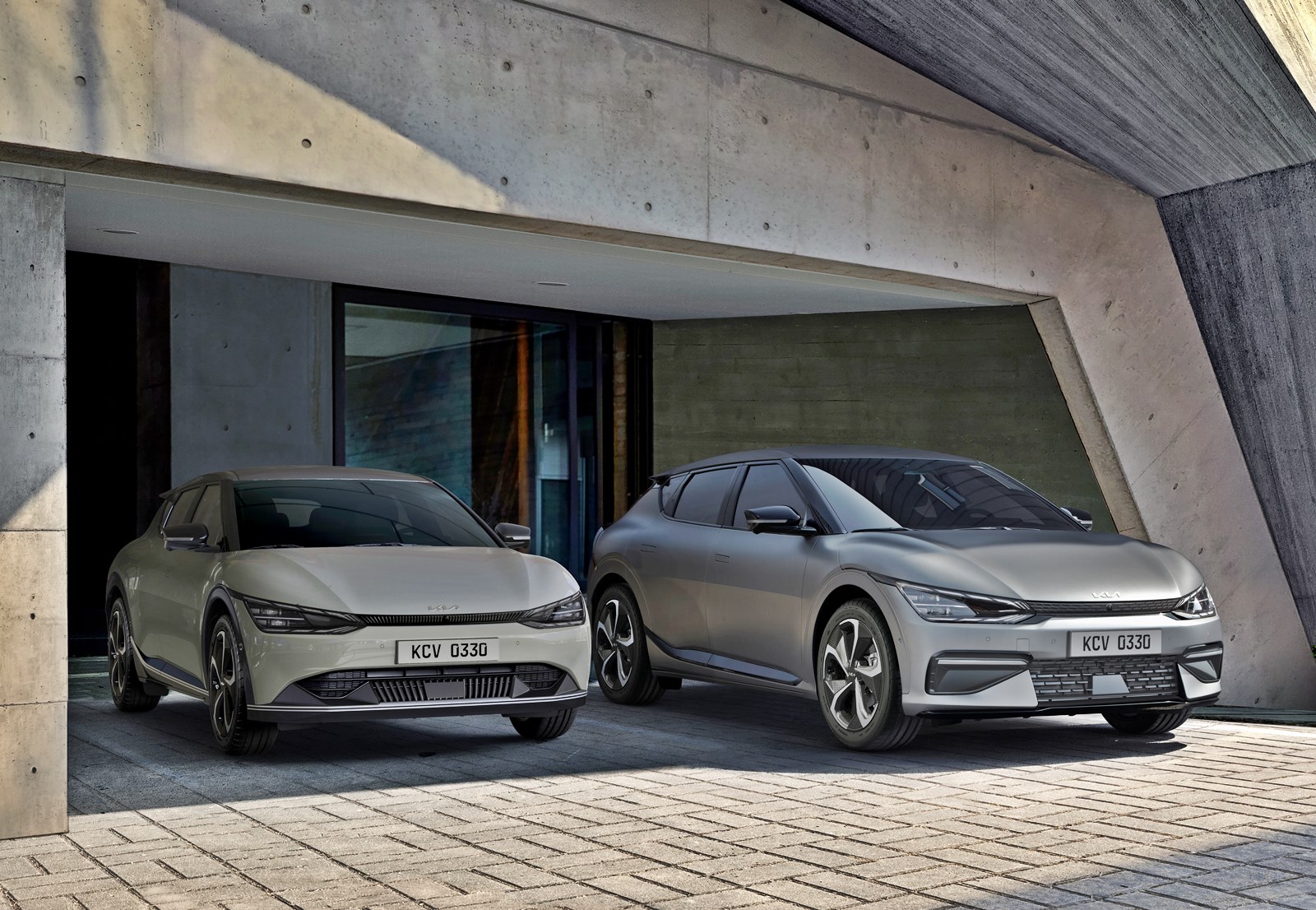
The tiger face which was created by Peter Schreyer in 2007 and became a brand signature is still present, but it is now described as a ‘Digital Tiger Face. A sleek, modern appearance of the daytime running lights and a sequential dynamic light pattern evokes the original ‘Tiger Nose Grille’, taking the brand into the era of electrification.

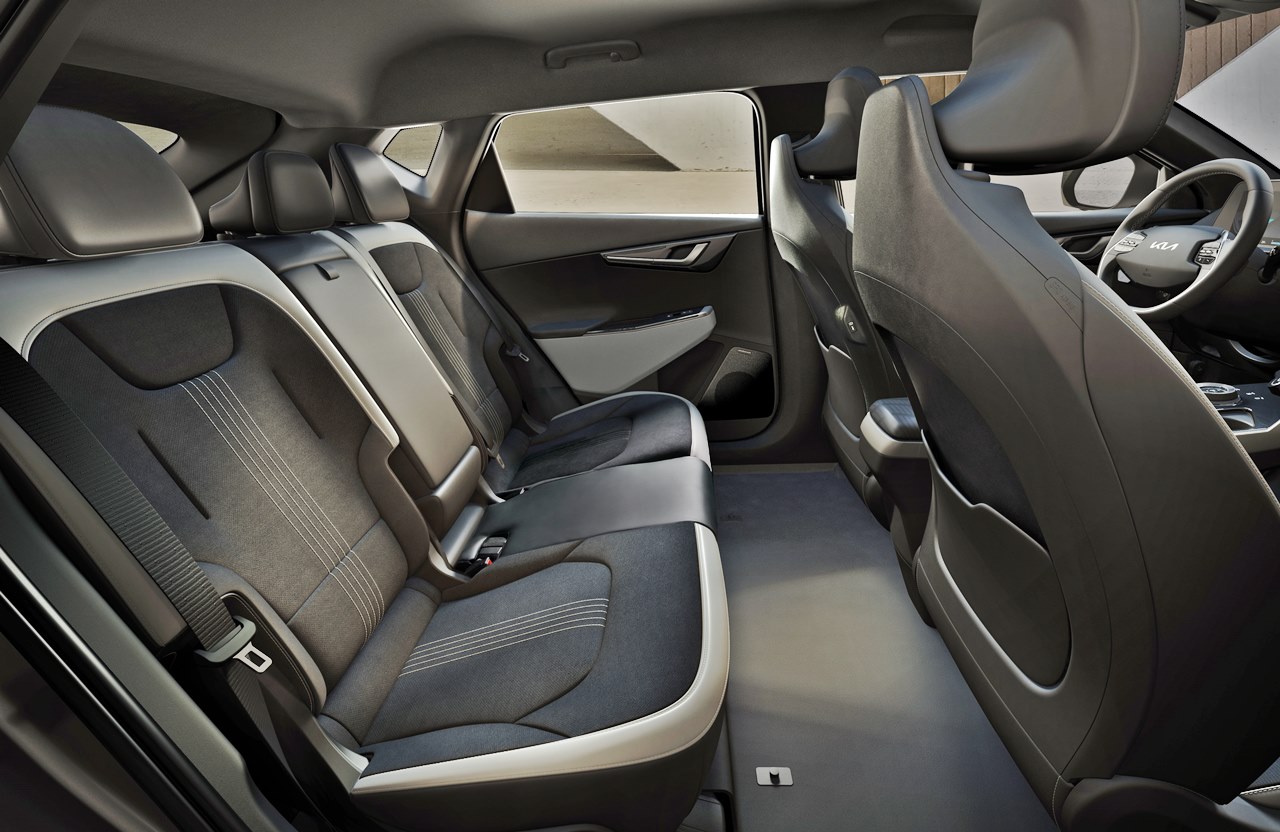
With the E-GMP, the designers have had new freedom to efficiently package the interior with innovative use of space. Though the exterior dimensions are compact, the generous 2900 mm wheelbase allows a cabin space similar to many mid-size SUVs.

High-tech interior
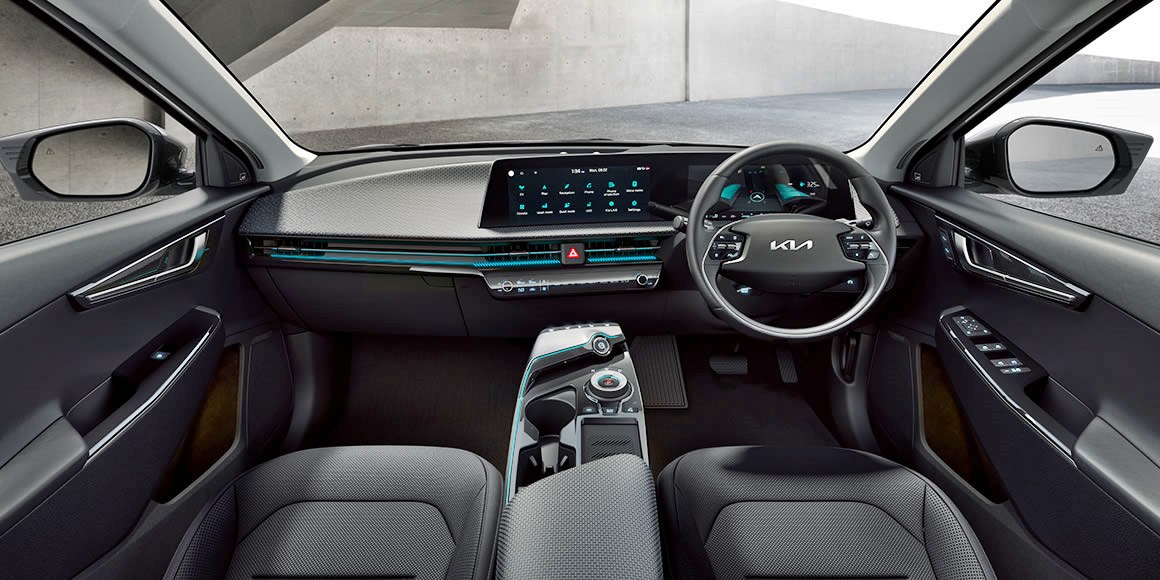
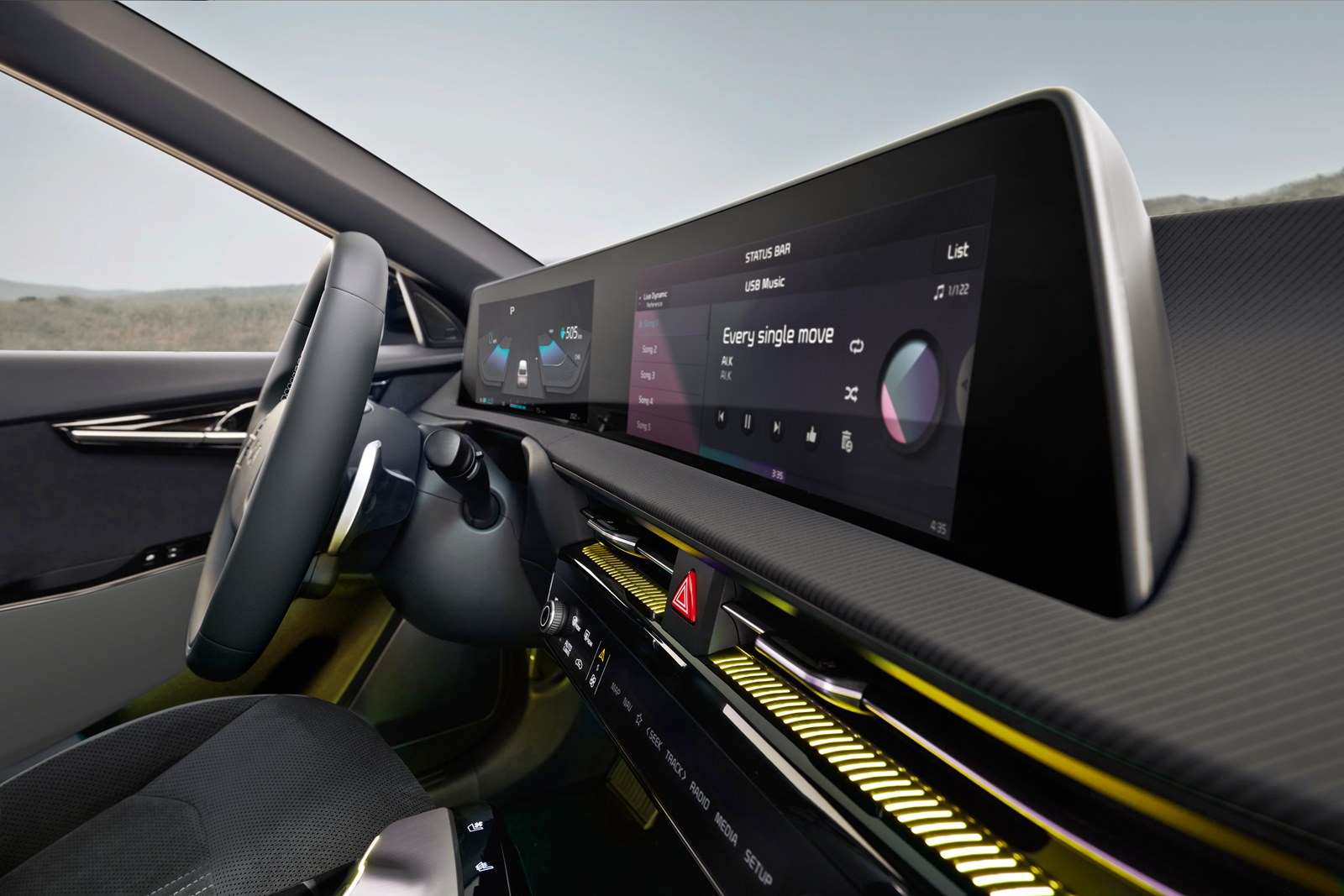
Being a vehicle that points towards the future, the EV6 is equipped with technological that enhance  safety, connectivity and infotainment. There’s a 12.3-inch infotainment system with Apple CarPlay and Android Auto connectivity, as well as wireless smartphone charging. The curved infotainment screen has a simple form language which gives the interior an open feel.

The EV6, which has received the maximum score of 5 stars from Euro NCAP, comes with an extensive list of standard safety features and systems. These included advanced systems like High Beam Assist, Blind-Spot Collision-Avoidance Assist, and Rear Cross-Traffic Collision Assist. In addition, there is also a Blind-Spot View Monitor, Lane Keeping Assist, Driver Attention Warning,  and Forward Collision-Avoidance Assist with Junction Turning. Lane Following Assist and Smart Cruise Control are also included for reducing driver load on long journeys.

Each new EV6 comes with a 5-year manufacturer warranty (or first 150,000 kms). In addition, the battery pack warranty coverage is up to 7 years or maximum of 150,000 kms.

Kia Malaysia reveals 5-year plan with 61% of local production to be exported

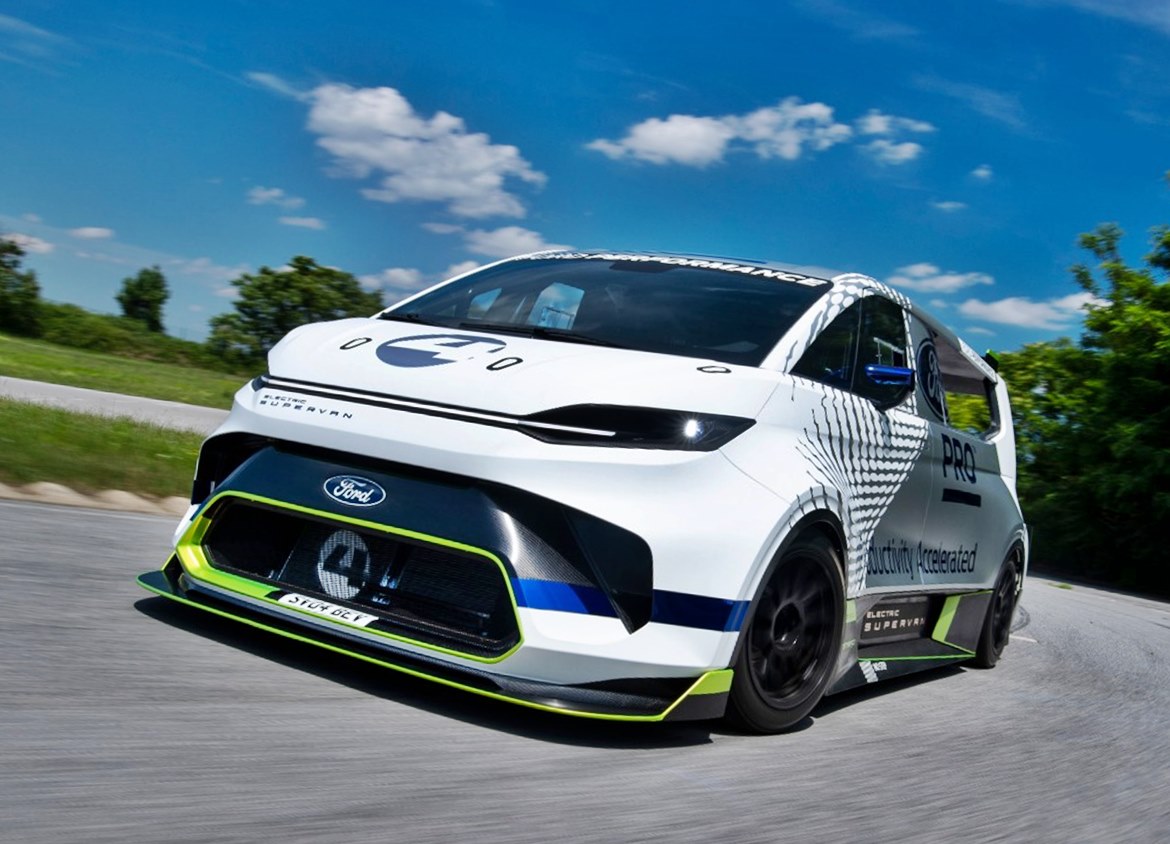
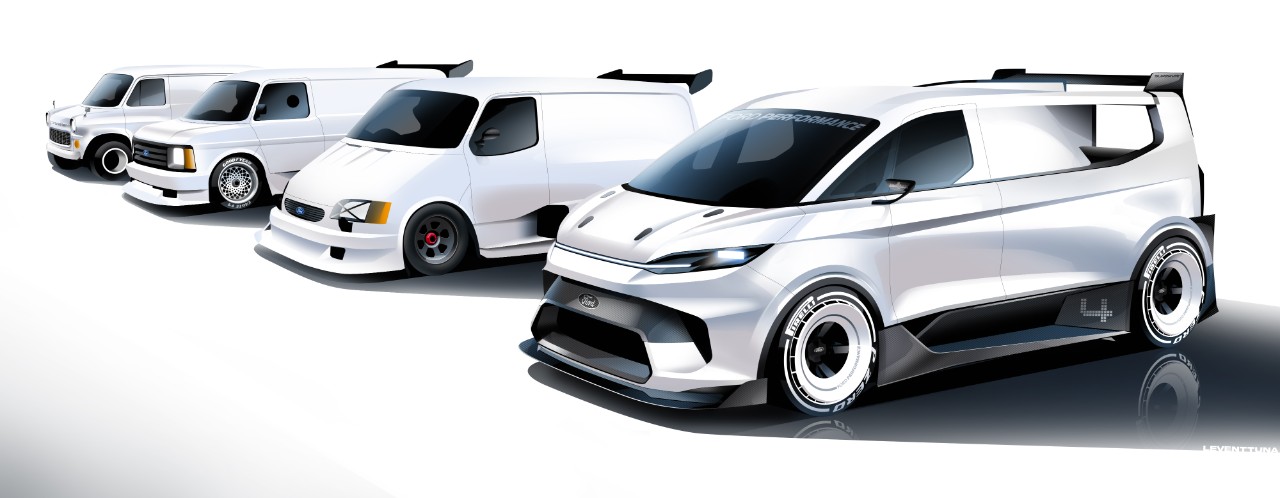
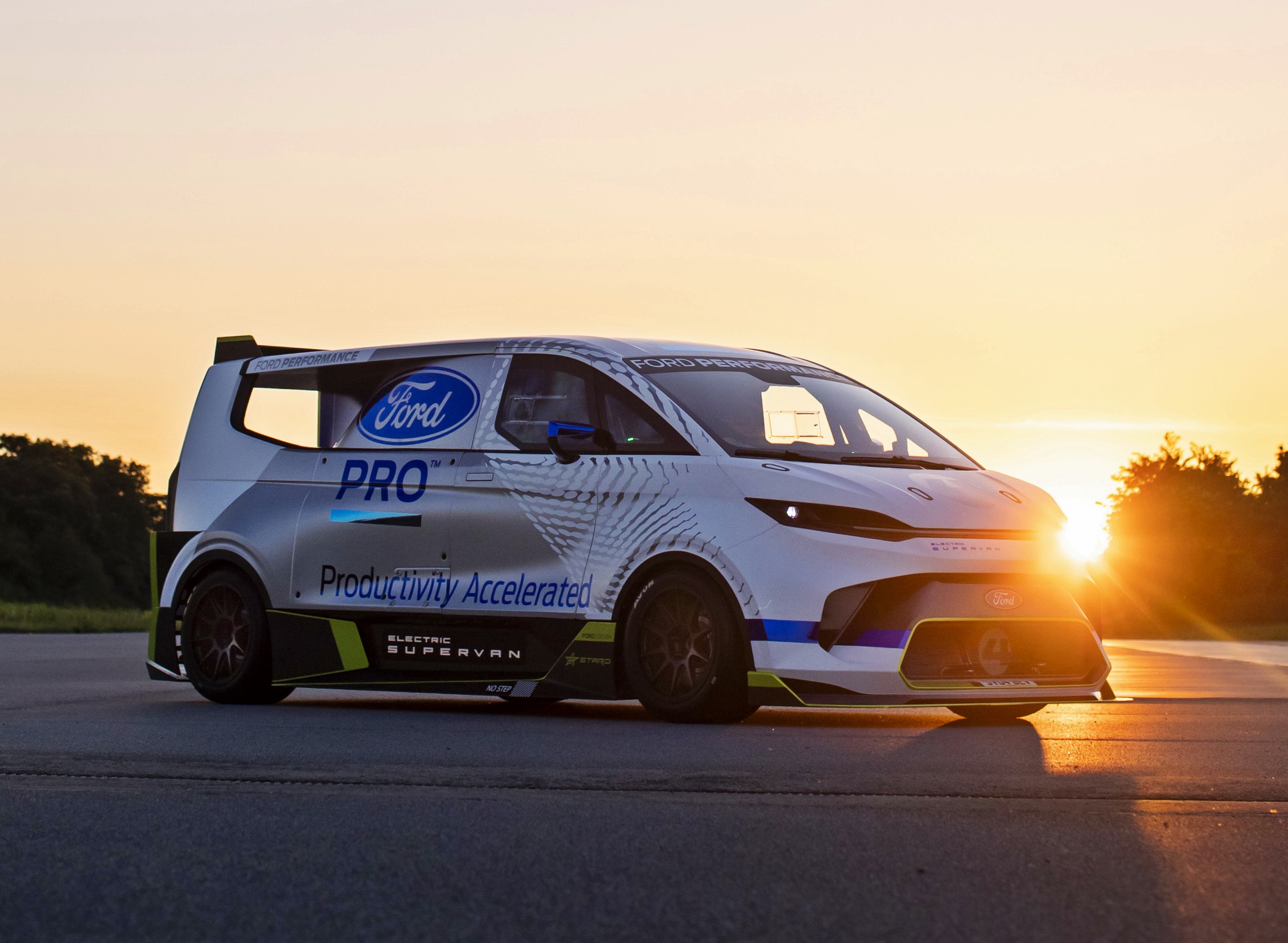
Ford’s SuperVan series in Europe began in 1971, and since then, there have been three other SuperVans. This week, at the Goodwood Festival of Speed in England, Ford showed off the fourth Supervan and not surprisingly, it opens the first electrified chapter in the legendary series. The Ford Pro Electric SuperVan uses no petrol and fully utilises the potential of electric performance and enhanced connectivity to achieve the highest performance of any Ford van ever.

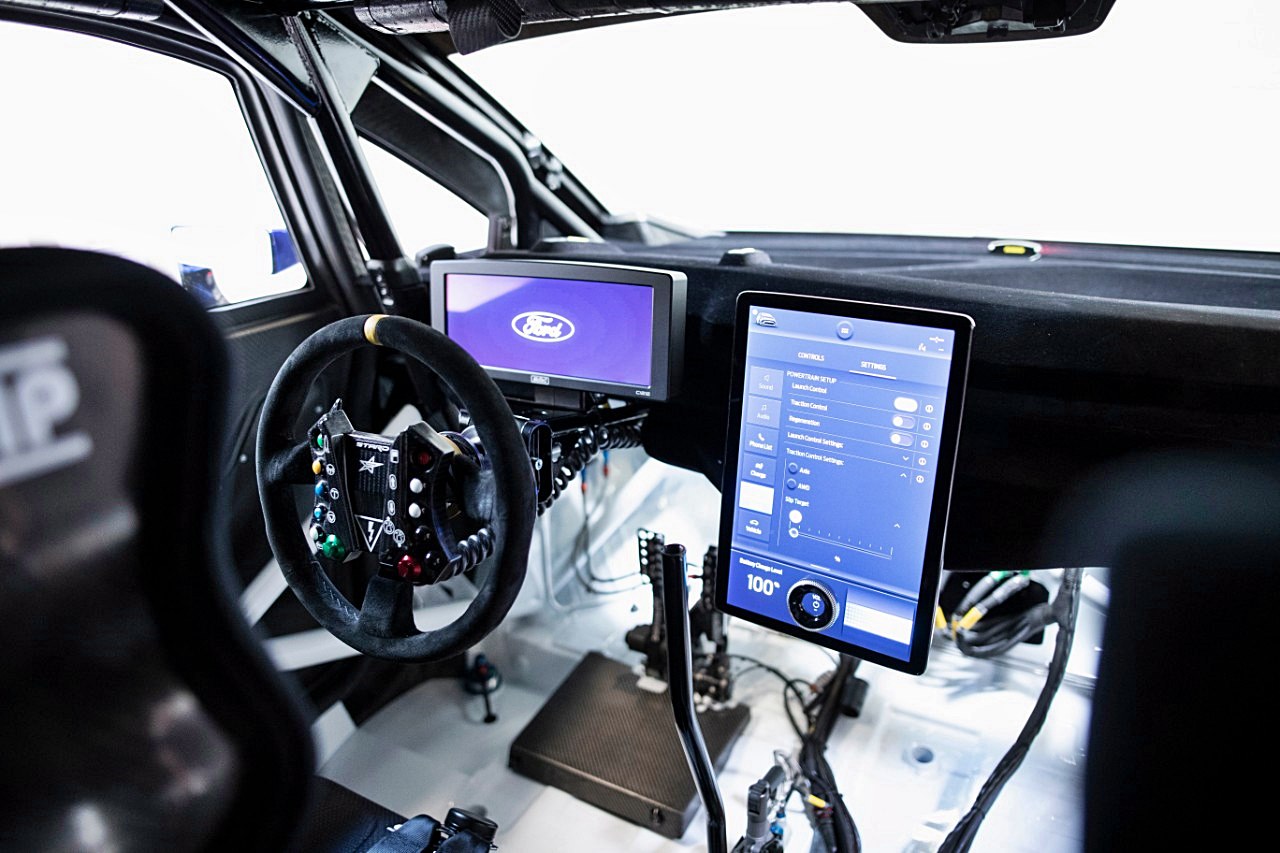
Four electric motors, a 50 kWh liquid-cooled battery pack, and a bespoke control system produce approximately 2,000 ps for sub 2-second 0 – 100 km/h acceleration time. Performance from a purpose-built, track-ready chassis including components from the recently unveiled E-Transit Custom 1 – the first fully electric version of Europe’s best-selling van – is complemented by Ford’s SYNC in-cab touchscreen technology 4 from road-going Ford models, as well as additional functionality to control the Electric SuperVan’s unique capabilities.

The enhanced connectivity keeps the driver informed and enables real-time data transmission for remote vehicle management and optimised performance, just like the integrated services that can accelerate the productivity of over 125,000 Ford Pro customers across Europe. Selectable drive modes and regenerative braking technologies similar to those on Ford production electric vehicles also feature.

The striking, all-electric demonstrator vehicle was developed in secret by Ford Performance and electrified rally and racing specialists STARD in Austria, with exterior design work was done by the Ford Design team in Germany.

“We’re bringing SuperVan into the 21st century with 2,000 ps of all-electric power for unmatched excitement and unmistakeable styling inspired by the new E-Transit Custom. But performance isn’t all about horsepower – the Electric SuperVan’s processing power means engineers can use real-time vehicle data to optimise its performance, just like on a top-level racing car,” said Mark Rushbrook, Global Director, Ford Performance Motorsports.

“Ford Pro is all about accelerating productivity for our customers – so why not create a new Electric SuperVan that proves the power of electrification and connectivity?” said Hans Schep, general manager, Ford Pro, Europe. “This incredible demonstrator vehicle takes E-Transit Custom’s advanced engineering and distinctive look to a whole new level, and is high-speed proof of the power of Ford Pro’s connected services ecosystem.”

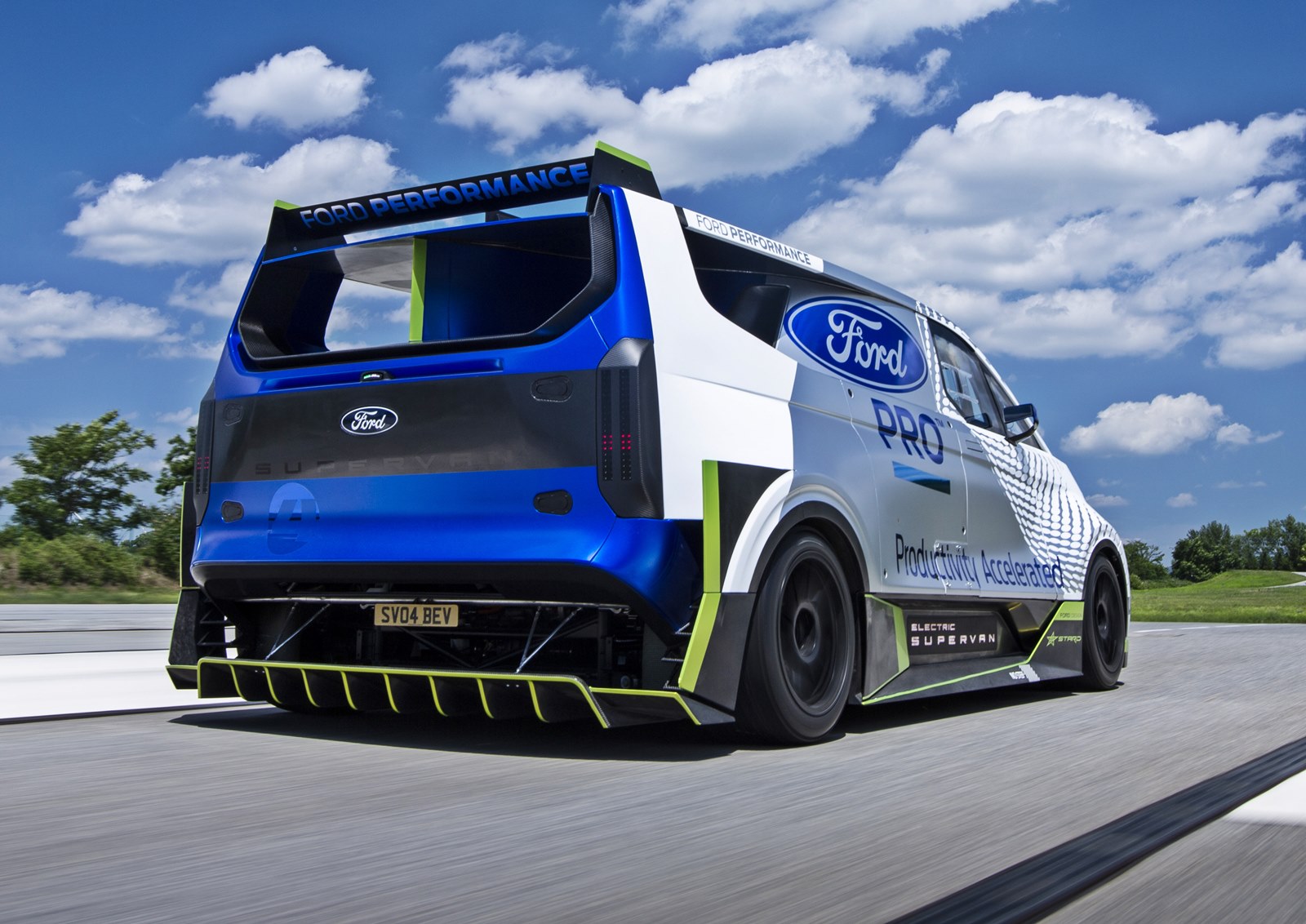
The Ford Pro Electric SuperVan is a one-off demonstrator, which gave  the Ford Design team a lot of freedom to create a wild-looking vehicle that reflects extreme performance capability. The outlandish wheel arches, muscular style and one-off livery are the most extreme expression of Transit design. Meanwhile, the fully-electric powertrain offered the development team lots of freedom with fewer of the packaging and cooling restrictions that come with a combustion engine.

“The fourth chapter of the SuperVan story is designed to be the fastest, most extreme yet while keeping the Transit DNA. The proportions are a more dramatic version of what we developed for the E-Transit Custom and the front light bar creates a futuristic expression, making the Electric SuperVan the absolute pinnacle of Transit design language. The chance to be part of the iconic SuperVan story and reimagine what it could be in the 21st century was a dream opportunity,” said Amko Leenarts, Director, Design, Ford of Europe.

The vehicle’s motorsport-spec construction marries the E-Transit Custom floorpan with a steel spaceframe and lightweight composite body panels. A bespoke 50 kWh liquid-cooled battery pack is mounted for optimum weight distribution and a low centre of gravity and can be fully recharged in approximately 45 minutes using a standard electric vehicle fast-charger.

A suite of onboard cameras can immerse audiences around the world in the action during SuperVan’s impressive high-performance runs. As on the Ford E‑Transit, the driver can pull camera feeds onto the in-cab screen and switch between them to help position the vehicle.

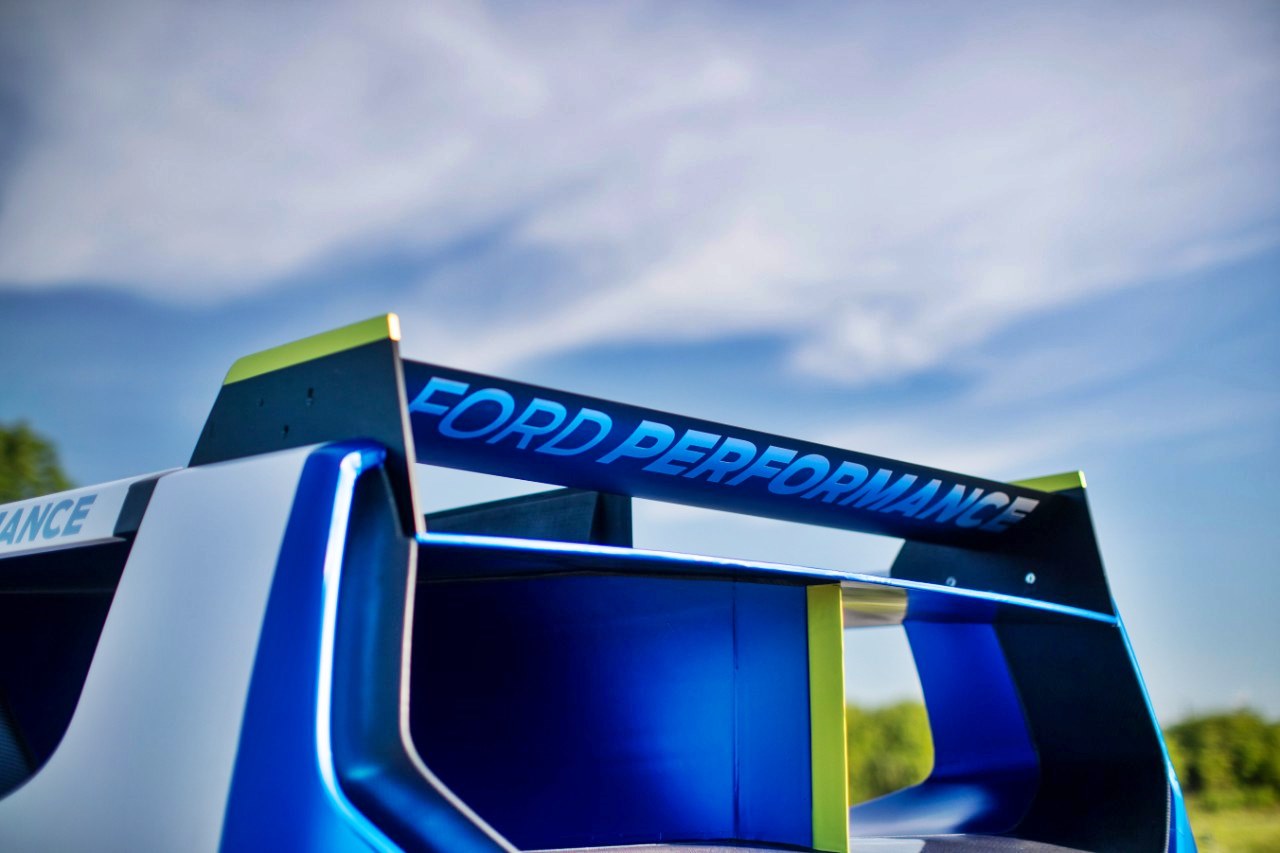
Ford Performance and STARD’s motorsport input is immediately obvious; the dramatically sculpted body’s front splitter, side skirts and rear diffuser would be at home on a racing car, while the radical rear design’s cutaways and dorsal fin flow into the rear wing to generate downforce and push the SuperVan into the track for as much grip as possible.

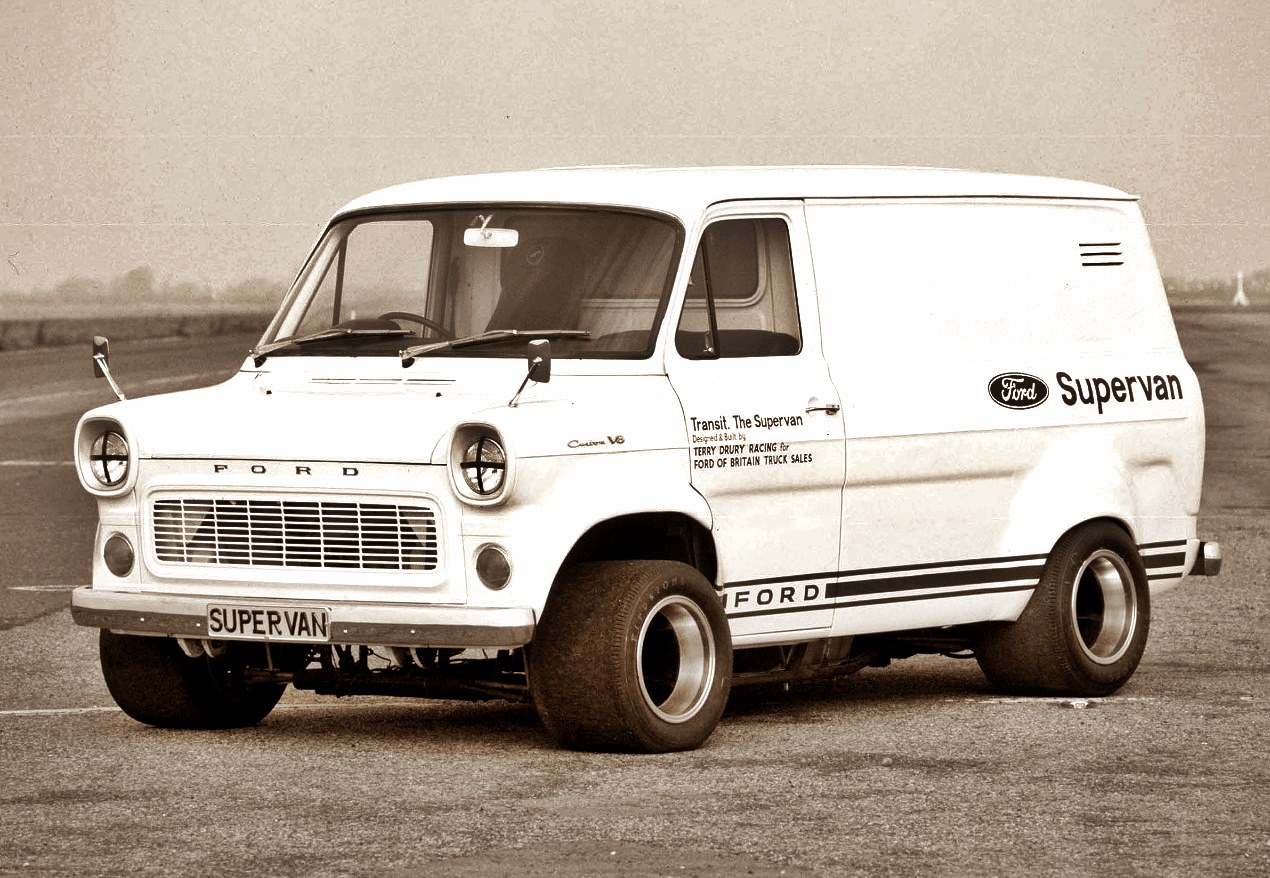
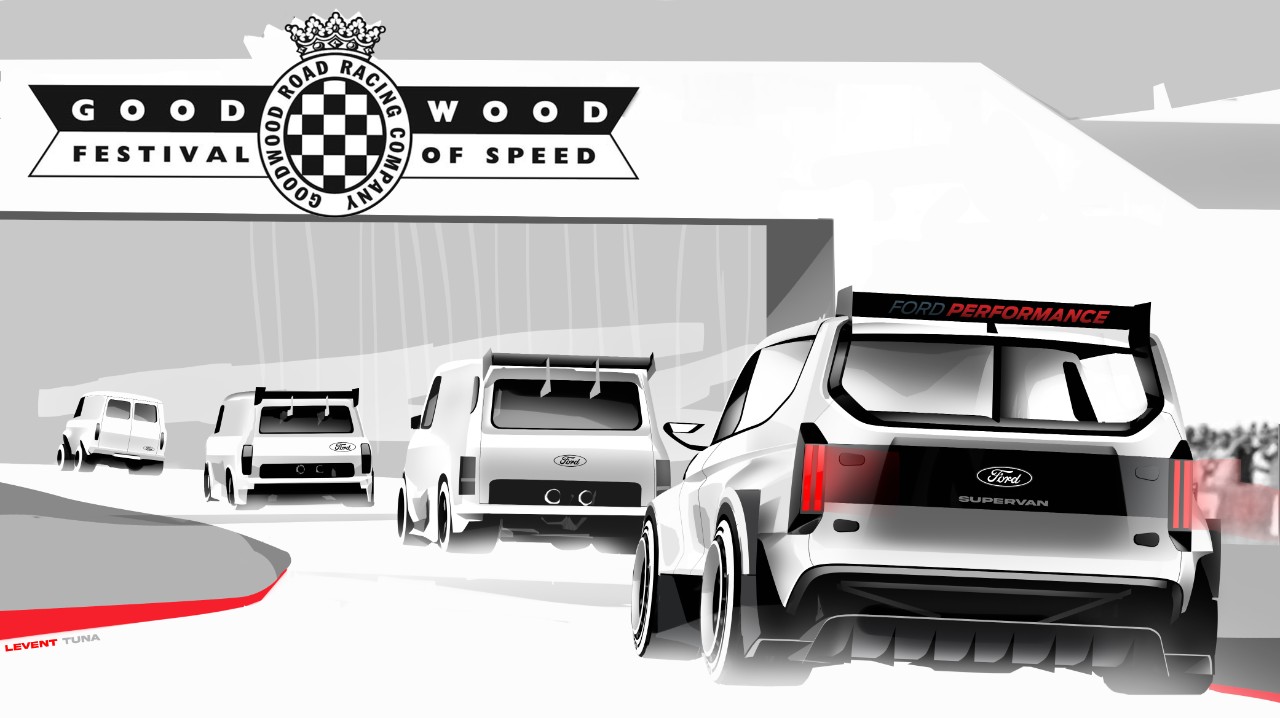
The latest Supervan continues the tradition started by the first one 51 years ago. That van has a mid-mounted engine taken from the Le Mans-winning Ford GT40. The next Supervan continued with the formula was taken further for SuperVan 2 with a lightened Transit Mk. 2 body draped over the monocoque. It had the 590 ps Cosworth V8 of Ford’s C100 racing car. The Supervan 3 was a facelifted Transit Mk. 3 lookalike, powered by the 650 ps Cosworth HB engine used in Formula 1 cars then.

Evolution of Ford SuperVans

Beyond demonstrating Ford’s advanced electric vehicle and connectivity know-how, the Electric SuperVan is also a high-speed science experiment. Its demanding driving scenarios and unrestricted design concept allow Ford to push the boundaries of electric vehicle engineering and connectivity to improve its future race cars and road-going vehicles, software and services.

Ford creates another unit for autonomous vehicle development after forming Ford Blue and Ford Model e

There was a while when it seemed that if you owned an electric vehicle (EV), you were free of having to buy petrol (or diesel) and all you had to do was plug in to a charging point and get the battery pack recharged. While electricity, wherever it is supplied, still costs something, it didn’t seem that way as no one really asked for money – at that time.

You can still charge ‘for nothing’ if you can install a charging station at your own home but with charging facilities now commercialised as the number of EVs goes up, getting the battery pack recharged will just be like buying liquid fuel – you have to pay for it.

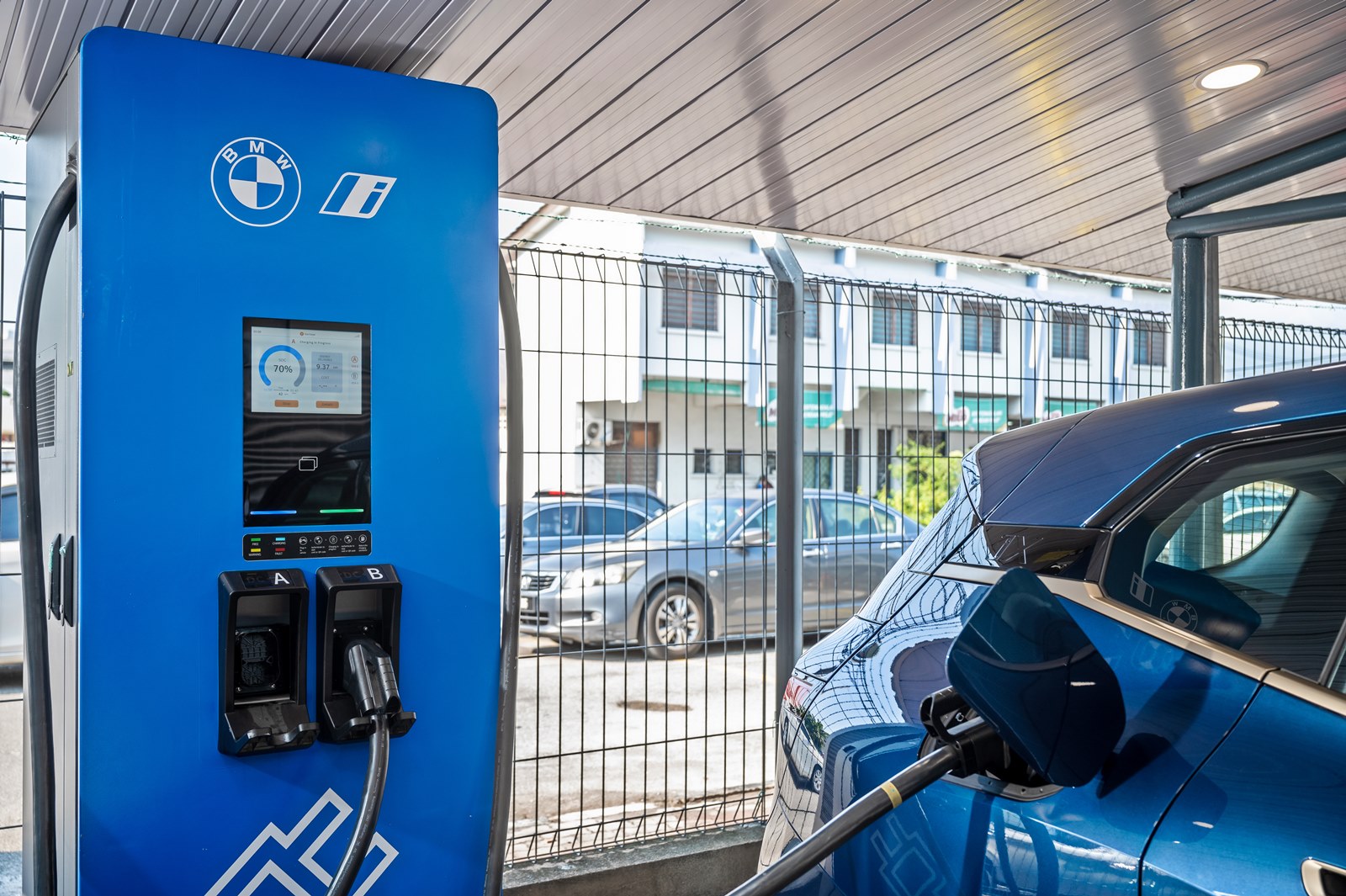
As public usage of charging stations keeps growing, the charges will be adjusted according to demand. DC Fast Chargers, which shorten charging time (if the EV is able to accept such charging), are expensive to set up so the charges for using them will be higher.

Standardised prices
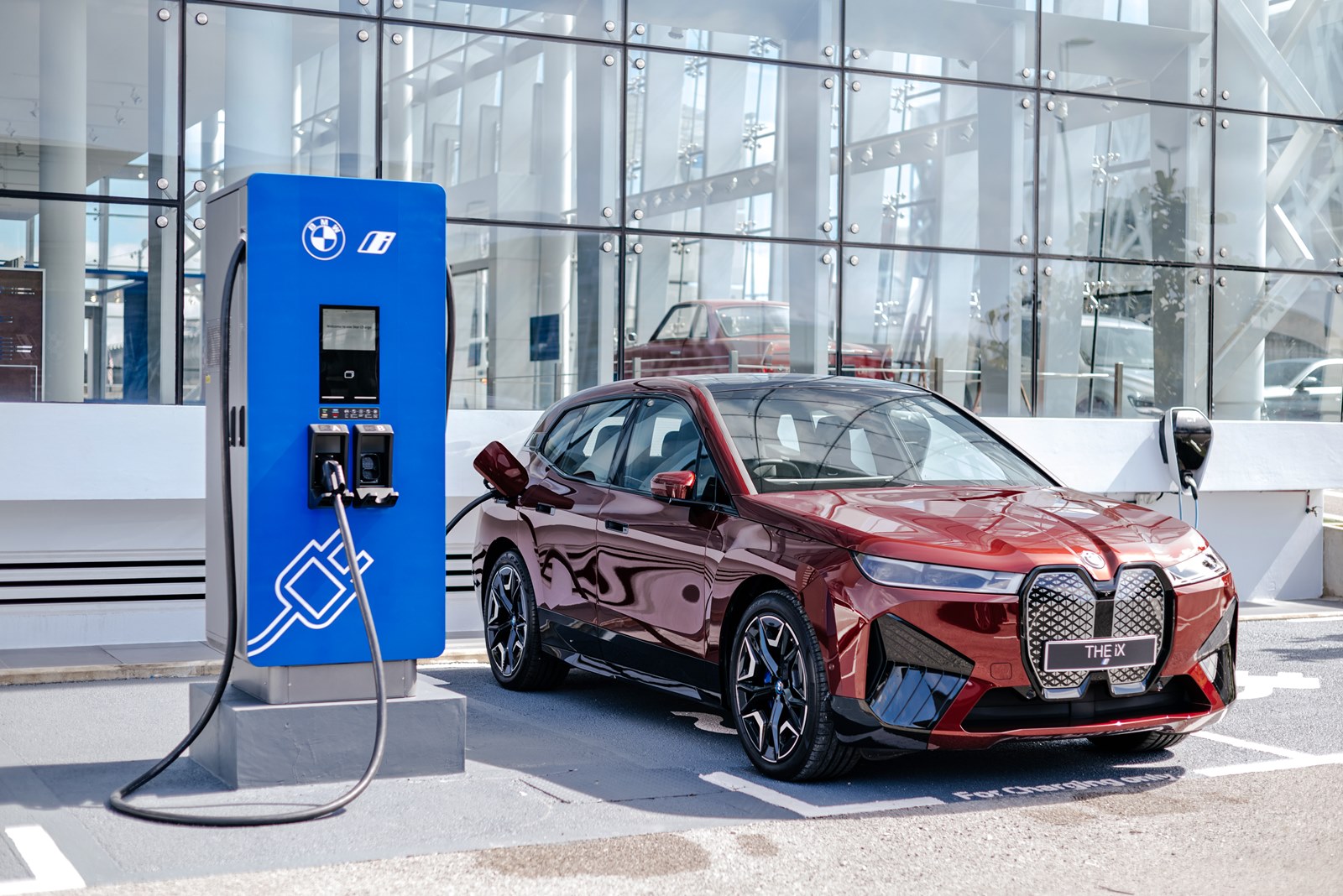
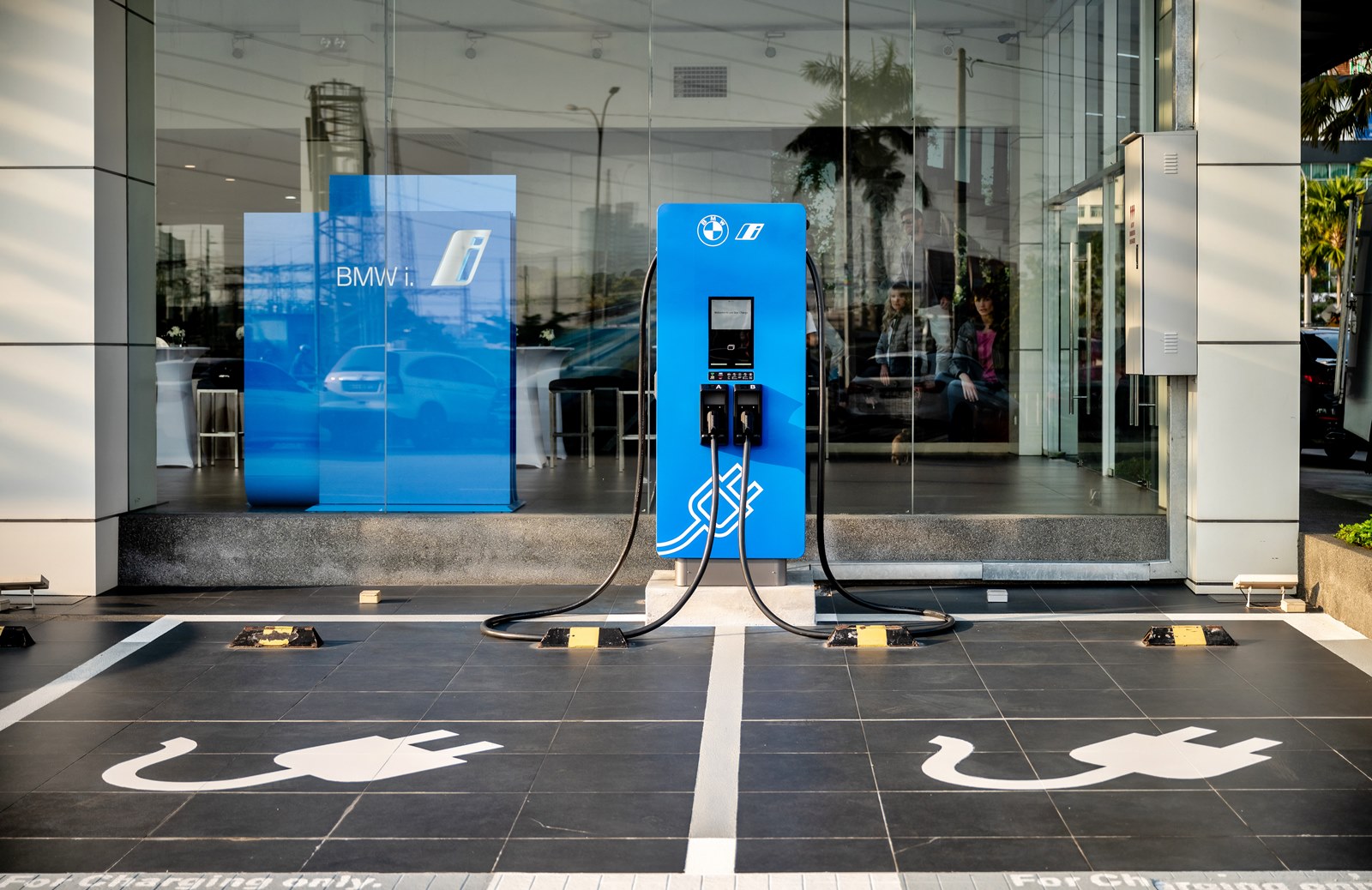
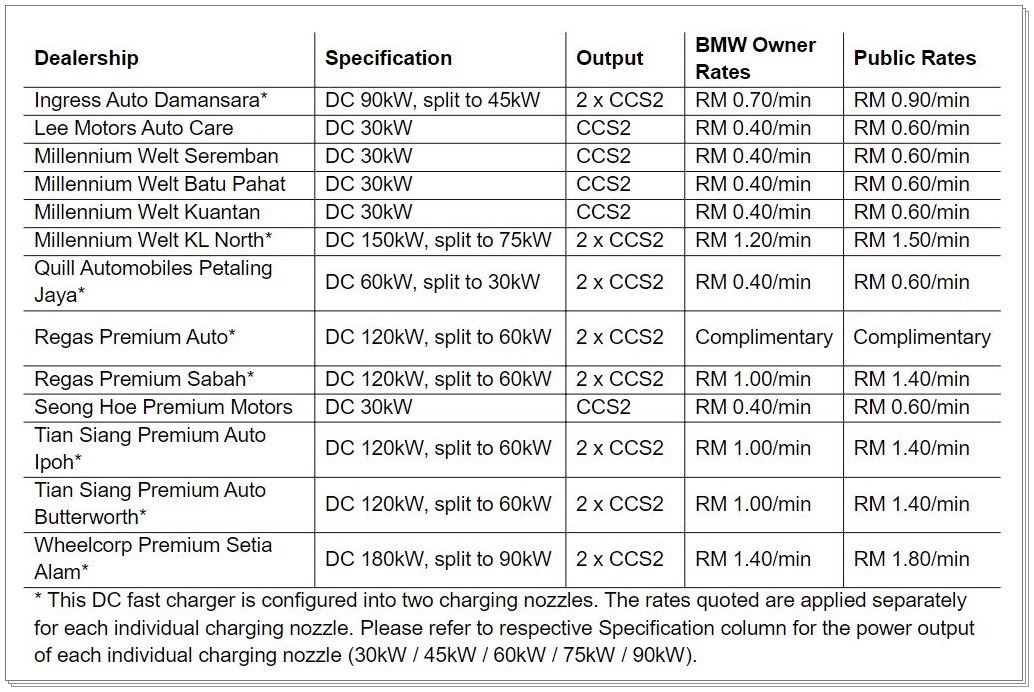
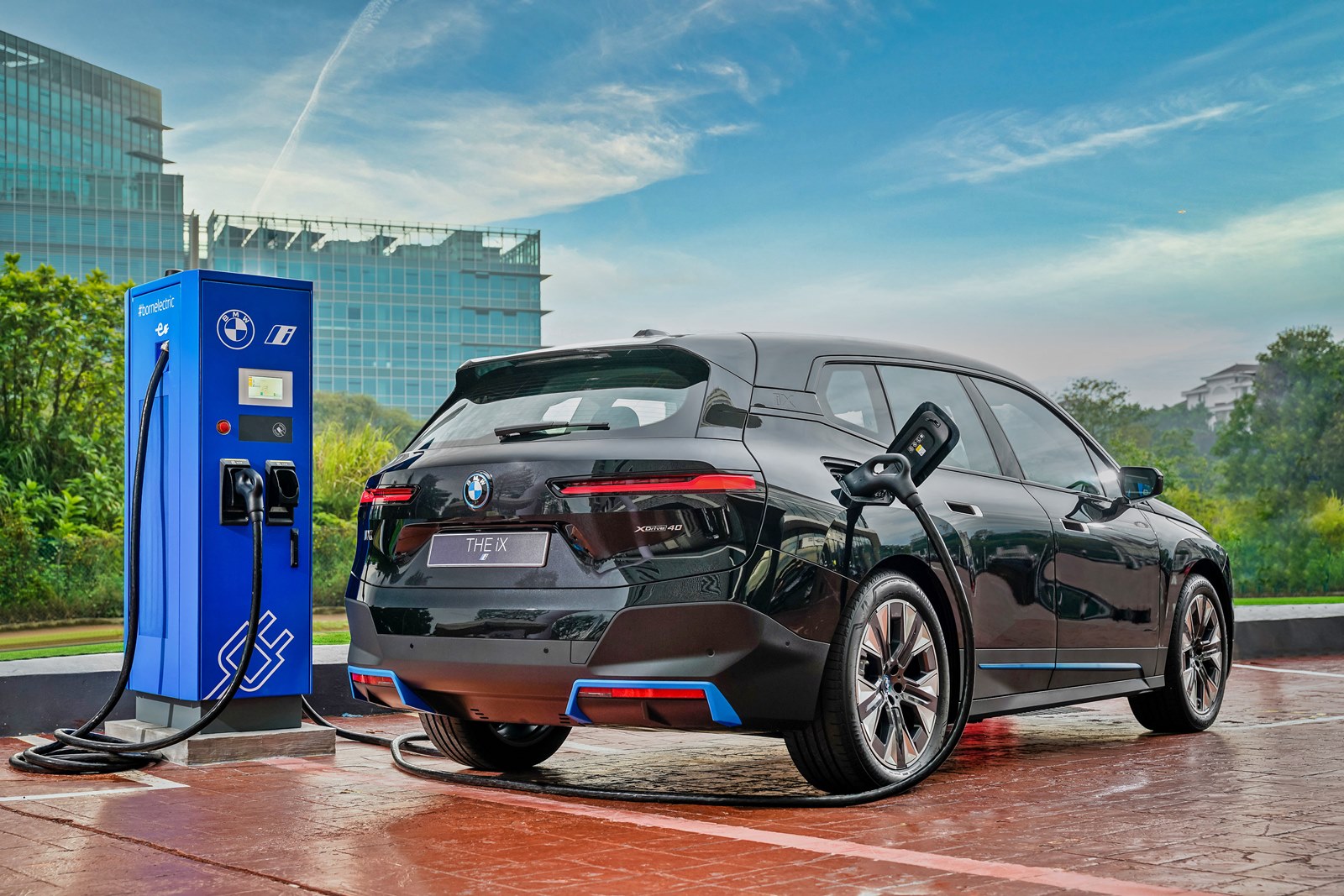
To ensure a fair and standardised experience for all EV owners in Malaysia, BMW Group Malaysia has released an official pricing structure for BMW i Charging facilities across the country. The Pay-Per-Use pricing structure for charging at any authorised BMW dealership listed below is as follows:

BMW Group Malaysia charging pricelist

BMW and MINI EV owners can also expect greater accessibility to charging facilities across the country as BMW Group Malaysia partners with multiple key EV charging providers such as JomCharge and Tenaga Nasional Berhad, in addition to chargEV. This strategy will ensure that owners of our BMW electrified vehicles will have access to the widest range of charging facilities no matter where they are in Malaysia. Customers and members of the public can therefore expect to see many more BMW i Charging facilities located in key areas.
Over 400 charging stations
In partnership with chargEV, BMW Group Malaysia has successfully provided access to a comprehensive network of over 400 charging facilities across Peninsular Malaysia, as well as in Sabah and Sarawak. The infrastructure network comprises of AC Chargers located strategically to enable peace-of-mind when travelling, whether intercity or out of state.

BMW EV owners who use chargEV-powered BMW i Charging facilities can register as a member at RM240 per annum to enjoy preferential Pay-Per-Use charging rates, as well as complimentary usage of all their AC Chargers nationwide. With the chargEV mobile application, users can also locate charging facilities at over 250 locations nationwide and are also able to reserve chargers, start and stop charging remotely, as well as view their vehicle’s charging status in real time.

Removing the worry of EV owners
“Our vision for an Electric Future spans beyond just the expansion of our EV portfolio and infrastructure here at BMW Group Malaysia. We have long been working on fostering a viable ecosystem that is future-ready and one that electrified mobility can thrive in, knowing that the main roadblock to EV adoption remains to be range anxiety and a worry that there may not be enough charging facilities in place across the country. Through our many partnerships with local tech and EV industry leaders over the past few years, we have been able to continuously grow our network of charging facilities where the needs are highest,” said Hans de Visser, Managing Director of BMW Group Malaysia.

“With an official pricing structure in place, we are taking the next step in the ever-maturing EV ecosystem in Malaysia, by endeavouring to provide fair and adequate access to these facilities for all EV users in Malaysia – regardless of make and model, as electrification remains a shared responsibility amongst automakers in solving climate change,” he added.

Malaysians understand merits of EVs but misconceptions remain, BMW survey finds

The Hyundai Motor Group (HMG) aims to capture a 7% share of the electric vehicle (EV) market by 2030, by which time it expects to be selling 1.87 million vehicles annually. To achieve this goal, the Korean carmaker will invest around 19.4 trillion won (US$16.10 billion) in EV-related businesses.

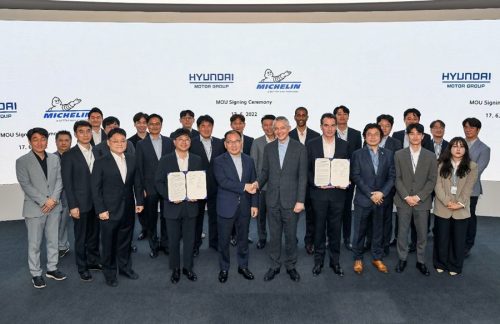
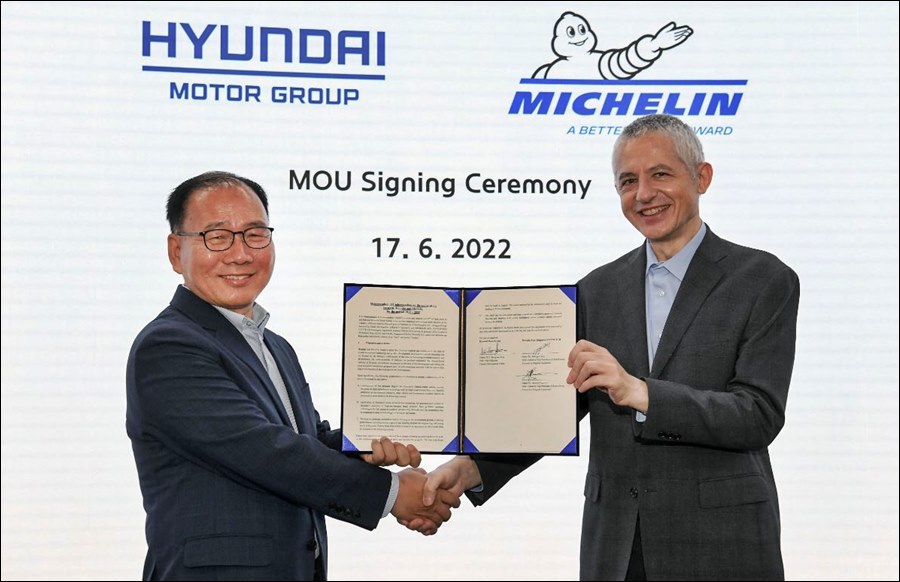
Besides its own investments, it will also work with other parties in various fields of expertise and one of them is Michelin. A MoU (Memorandum of Understanding) was signed recently for collaboration on R&D for innovative tyre technologies over the next 3 years. These technologies will be used in the development of next-generation tyres optimized for premium EVs.

The MoU is the second one between the two companies, following the successful completion of their first partnership. This collaboration will lead to a new journey towards developing next-generation tyres to be equipped with the Group’s clean, smart and sustainable mobility solutions.

“This partnership with Michelin will result in real innovations in tire technology, solidifying Hyundai Motor Group’s position as a leader in the smart mobility industry,” said Bong-soo Kim, Vice-President and the Head of Chassis Development Centre at the Hyundai Motor Group. “By fully leveraging our mobility technology and Michelin’s tyre expertise, we are confident in our ability to achieve ground-breaking innovations in tire performance enhancement and create synergies in this organic collaboration.”

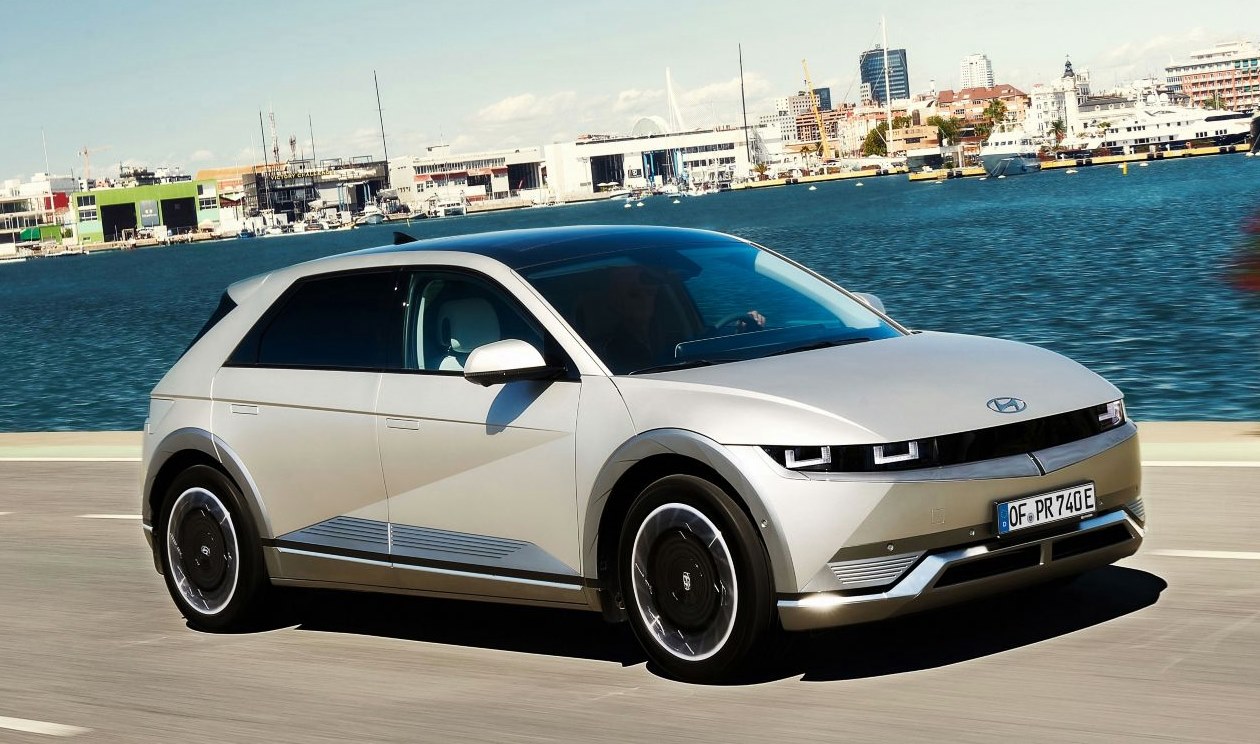
In the previous 5-year partnership that began in November 2017, the companies jointly developed an exclusive tyre for the IONIQ 5 EV. There were also joint experiments and analysis methods carried out  which were related to tyres as well as technology exchange.

Over the next 3 years, HMG and Michelin will jointly develop the following innovations: eco-friendly tyres with increased use of eco-friendly materials; tyres optimized for next-generation EVs; and a real-time tyre monitoring system which will help advance autonomous driving technology.

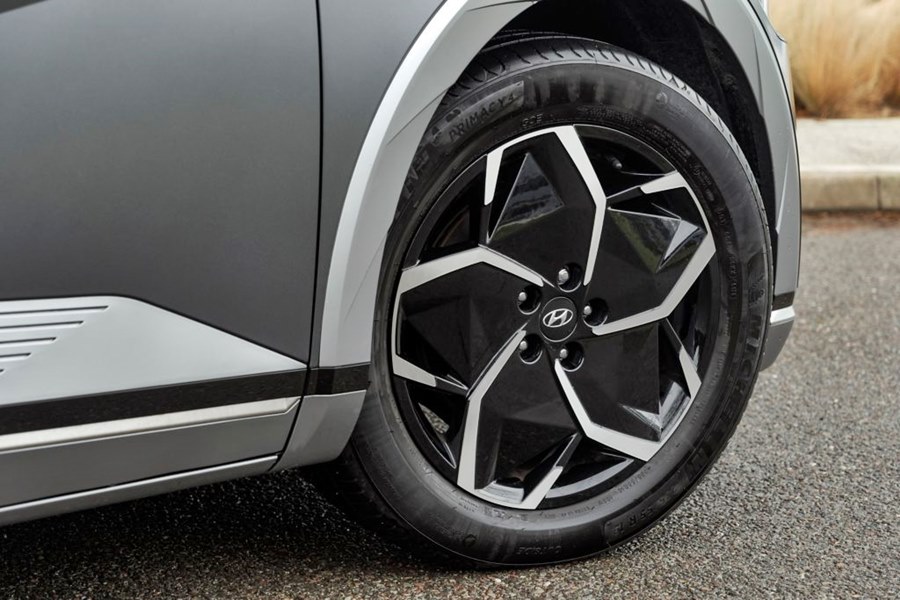
The tyres for the IONIQ 5 EV were jointly developed by Hyundai and  Michelin.

“The collaboration between Hyundai Motor Group and Michelin over the past 5 years contributed to the successful launch of the Hyundai IONIQ 5,” said Georges Levy, Executive Vice-President of Automotive Original Equipment at Michelin. “We are pleased to announce that the relationship has been extended for 3 more years to continue our work together on new technologies in favour of safer, cleaner mobility. The association between Hyundai Motor Group and Michelin is founded on the same vision and on a shared passion for excellence, performance and innovation that have become increasingly essential factors as we rise to the mobility-related challenges we all face today.”

The next-generation tyres will be installed on future premium EV models of HMG. The new tyre technology is critical to meet the durability requirements of tyres, as well as driving performance and electric efficiency under high load as the driving range of EVs continues to increase.

There will also be joint research to analyse tyre wear, tyre load and road friction beyond the current standards of tyre temperature and air pressure. The new tyres are also expected to significantly improve  ride comfort by reducing vibration and noise generated by EVs at high speeds.

Additionally, there will be research into ways to increase the use of eco-friendly materials in tyres to about 50% of the total tyre weight from 20% currently.

Hyundai Sime Darby Motors launches second EV – the Hyundai IONIQ 5, priced from RM199,888

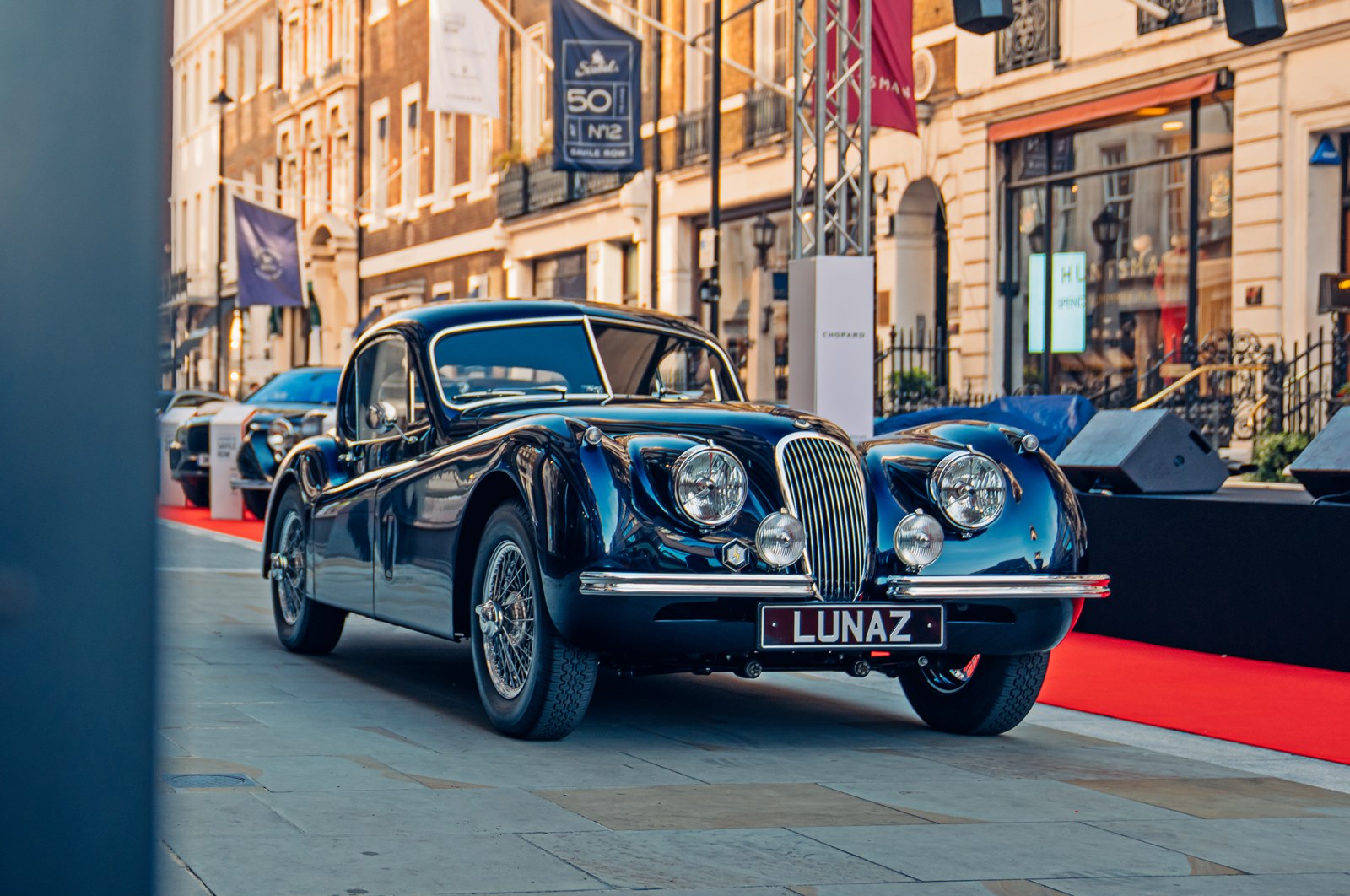
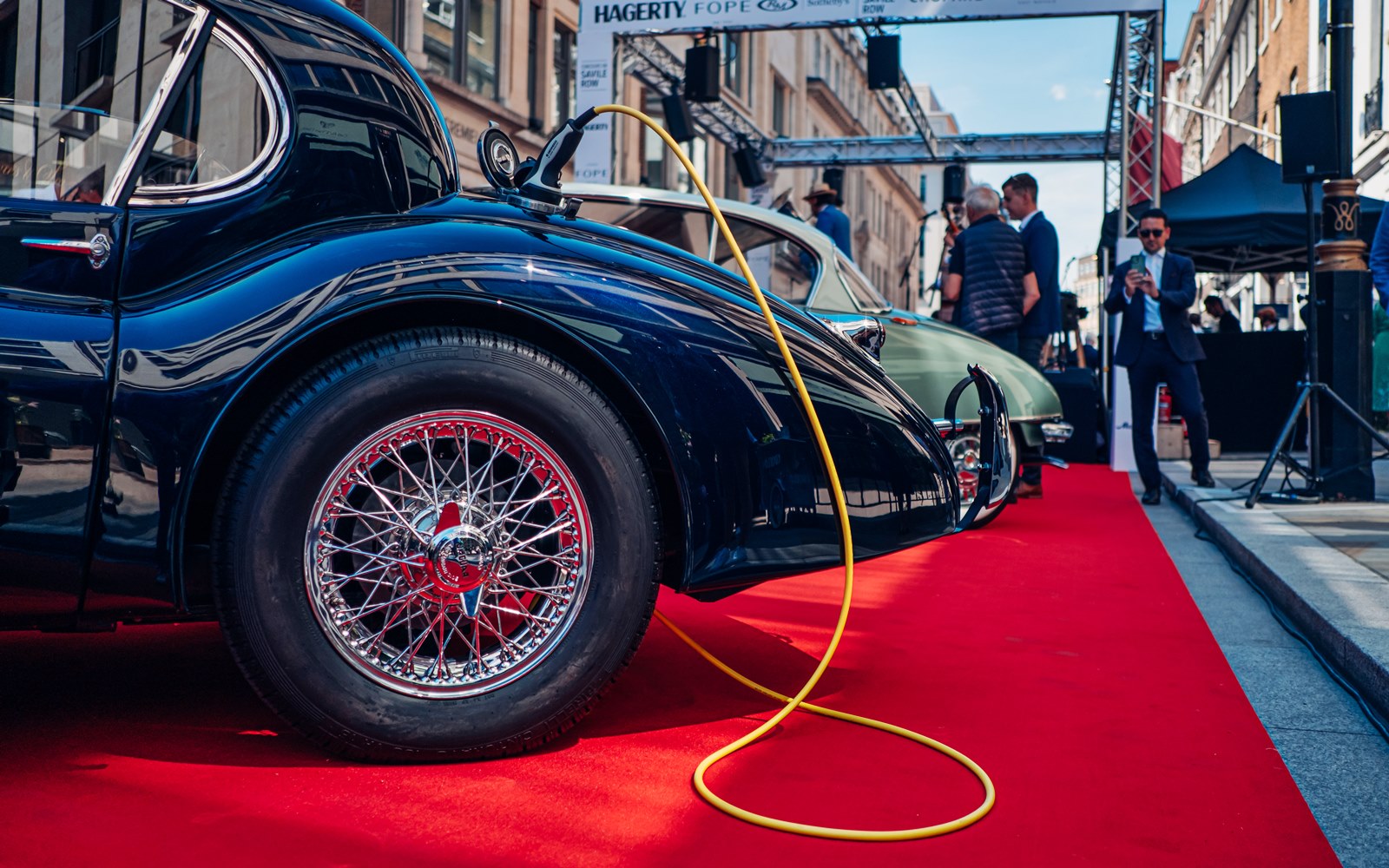
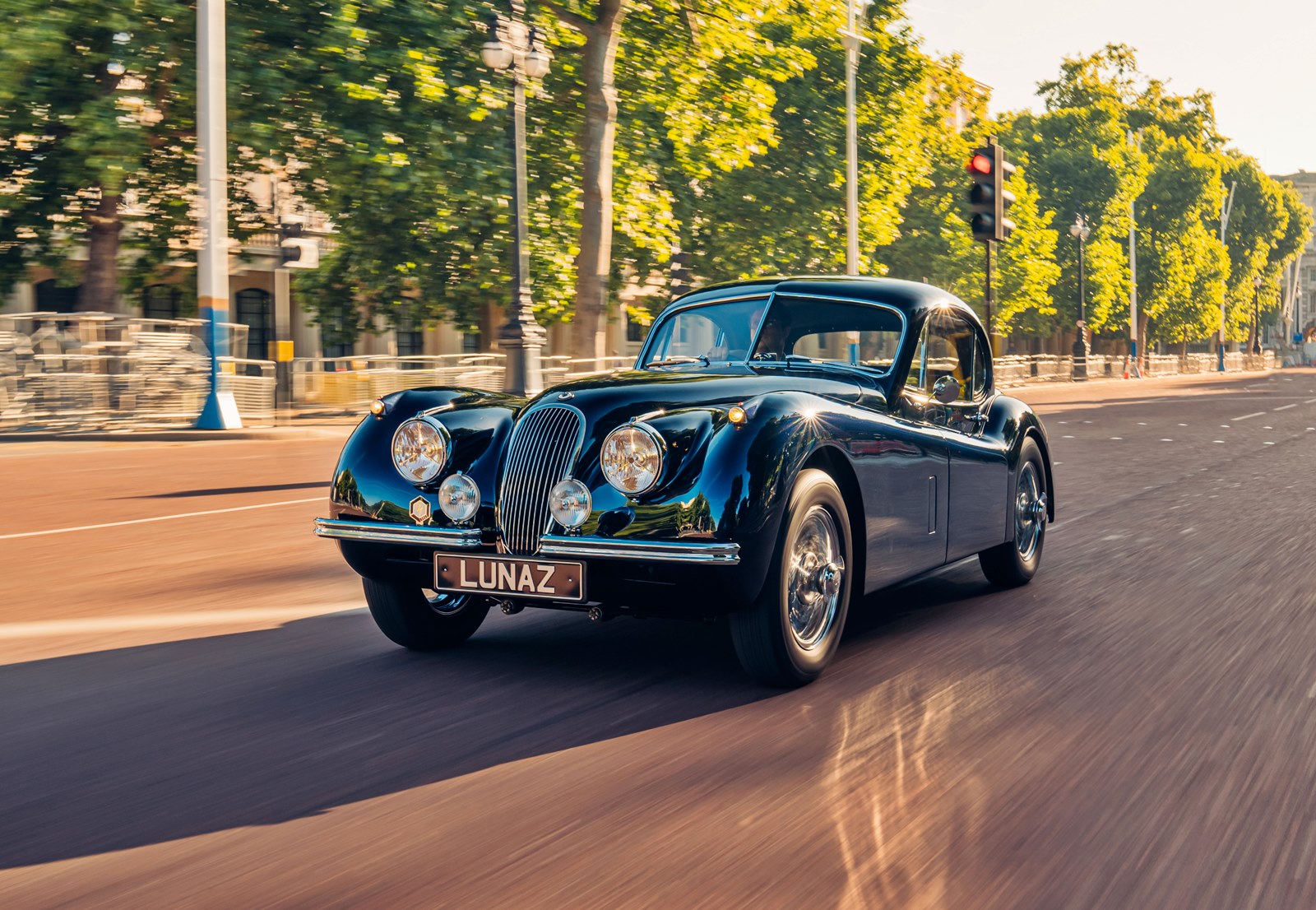
Lunaz is a young (in existence since 2018) British company which remanufactures and electrifies vehicles, and it claims to be the world’s leading creator of upcycled, restored and electrified classic cars. Models which it has electrified include the Jaguar XK120, 140 and 150, Rolls-Royce Silver Cloud and Rolls-Royce Phantom V, Bentley Continental, and Range Rover Classic.

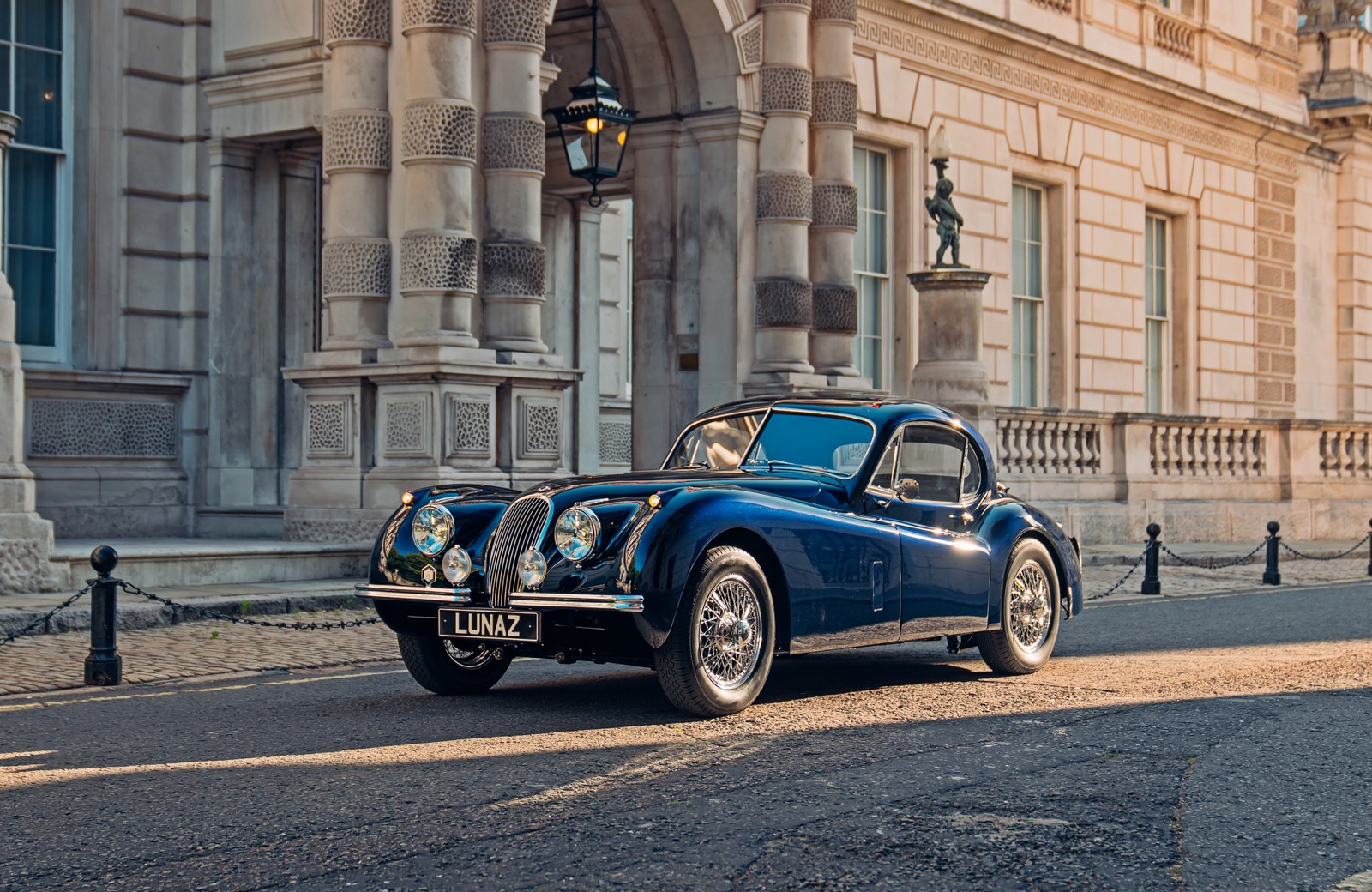
The company typically does work on commission, and it has three divisions providing all the necessary services that further the legacies of the most celebrated cars in the world. Its most recent project which has been completed is a 1952 Jaguar XK120.
2022 Lunaz XK120 EV

The car presented a world-first for a project of this type – a leather-free interior that utilises ocean clean-up materials. This includes carpets that are woven from reclaimed nylon sea-fishing nets. Additionally, the backing of these carpets is upcycled from marine plastic pollution such as plastic bottles.

The process of reclaiming waste materials from the ocean is already being successfully utilised in the worlds of fashion, fine furniture making and high-end watch manufacturing. Global demand for these kinds of sustainable materials is driving significant positive environmental impact: for every tonne of the raw material produced to make the materials that make Lunaz’ carpets, 7 barrels of crude oil can be saved and nearly 7 tonnes of carbon will not be emitted.
2022 Lunaz XK120 EV

In handing over this beautiful electrified and upcycled Jaguar XK120, we conclude a project that has empowered our designers to re-imagine the traditional classic car material palette. We are proud to take materials and create processes that significantly reduce the global impact of enjoying these cars by unlocking the power of upcycling,” said David Lorenz, Founder & CEO of Lunaz (which has David Beckham among its investors).

While such a car is already exclusive, Lunaz’ customers would expect to be able to personalise their cars further and this is handled by an in-house design department. The team works in close collaboration with customers to understand their aesthetic and personal sensibilities. In the case of this very special build, the customer visited Lunaz throughout the commissioning and specification process to understand the way that alternatives to leather and innovative upcycled materials perform from a visual and comfort perspective.

2022 Lunaz XK120 EV

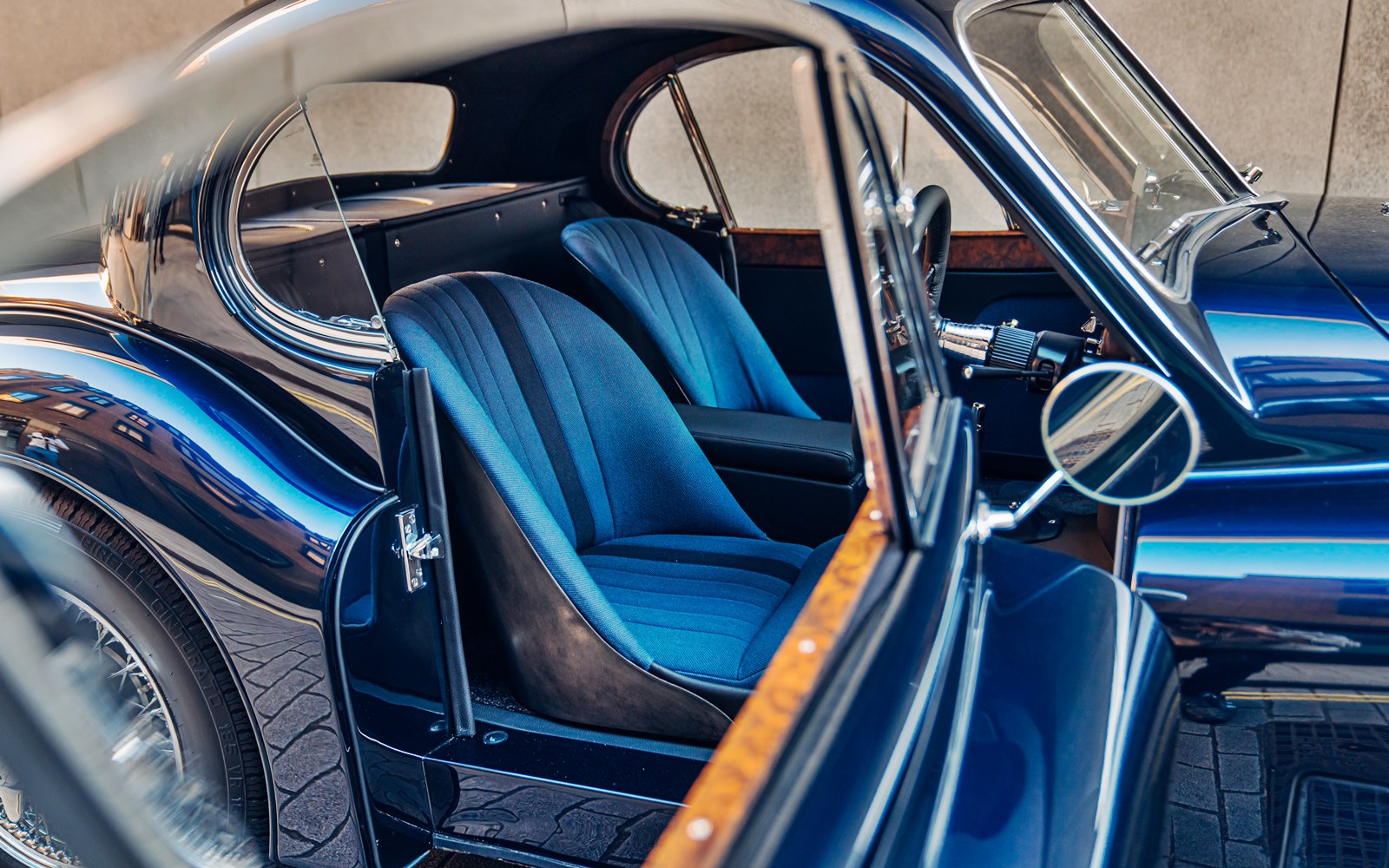
This led to a decision (by the customer) to create an entirely leather-free interior specified to complement the bespoke Obsidian Blue exterior colour scheme. This was painted in-house at Lunaz’ home in Silverstone, UK and is one of the limitless palettes of colours available to every Lunaz customer.

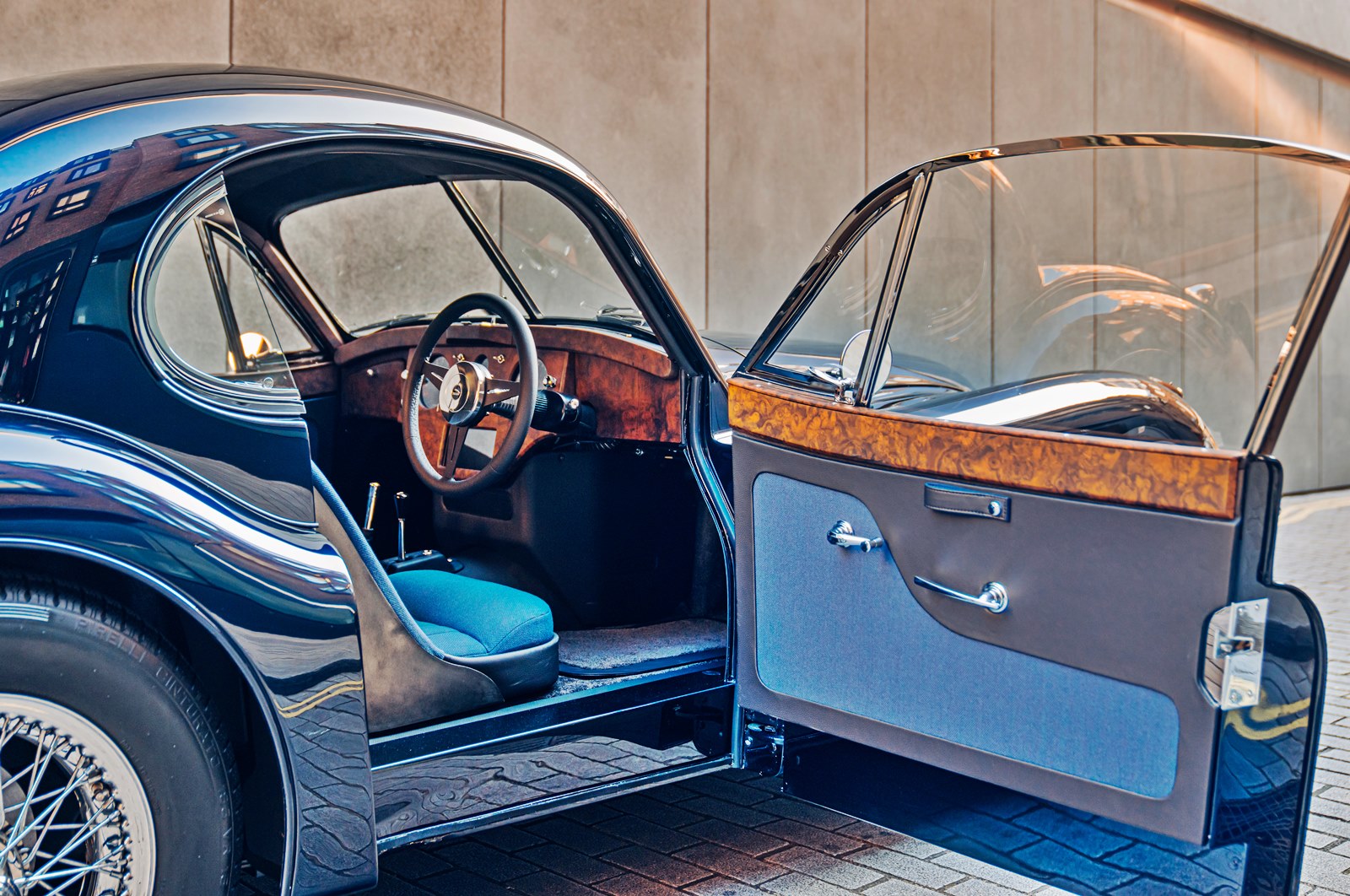
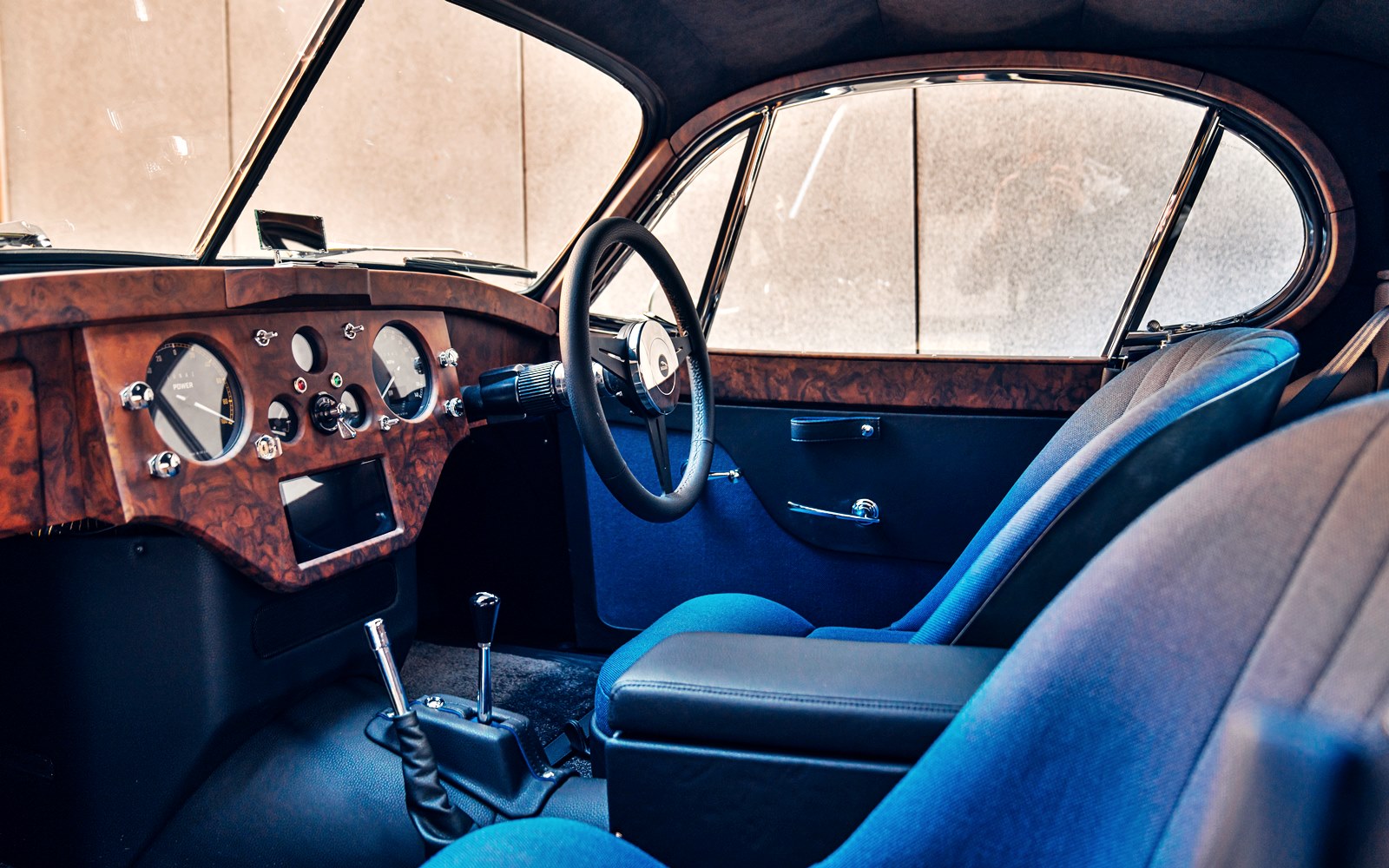
This very close collaboration yielded an interior finished in an innovative blend of textiles, traditional woods and upcycled materials. For example, the seat frame is constructed from recyclable aluminium. This offers both a contemporary aesthetic and an alternative to traditional classic material palettes while delivering the functional requirements of the seat.

2022 Lunaz XK120 EV

The seats are finished in a super-high-quality fabric material. Subtle reference to the driver-focus of this particular car is made through the addition of a black stripe to the driver’s seat.

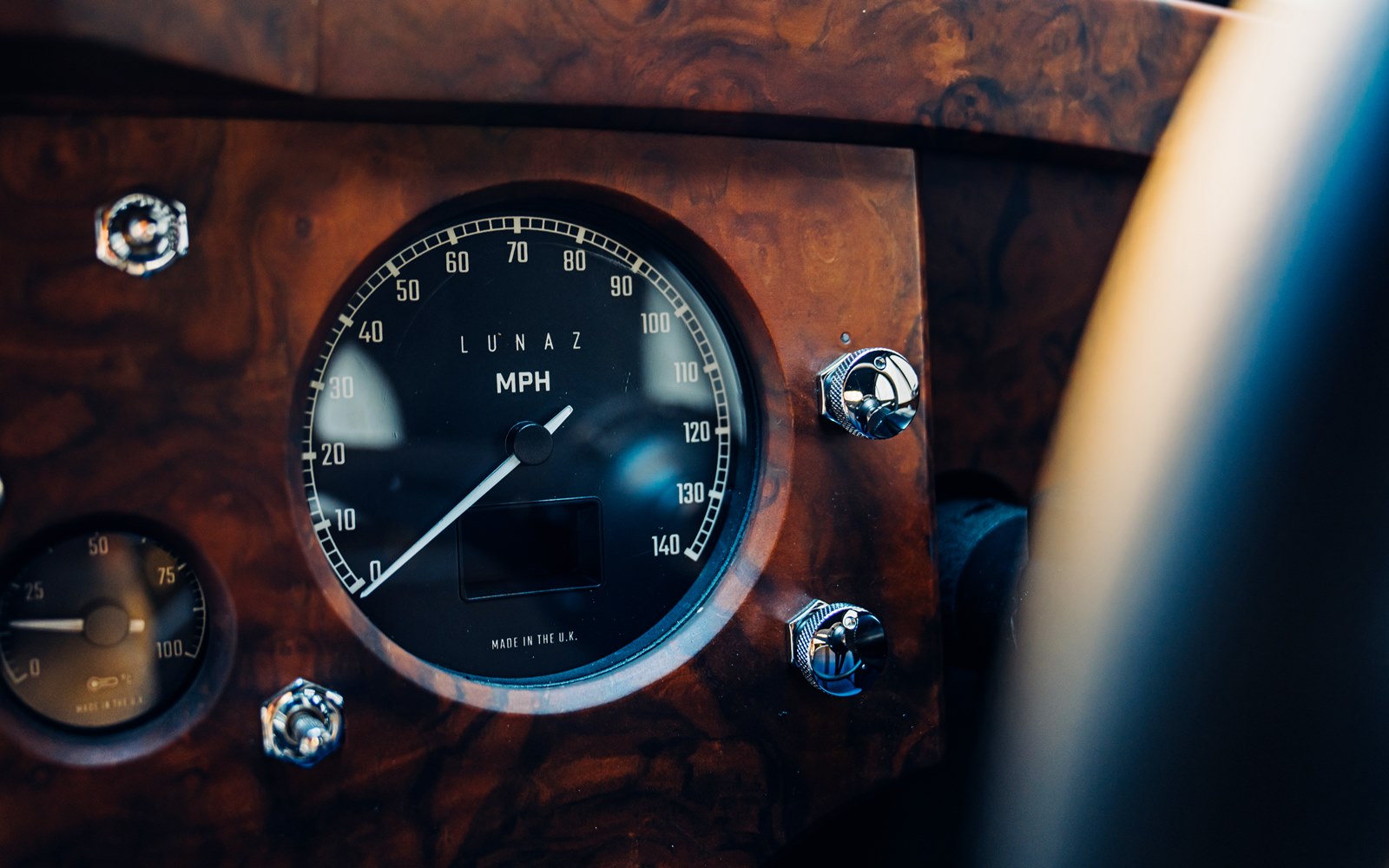
The Burr Walnut veneer wood has a contemporary aesthetic through a satin lacquer. Wherever possible, material from the 70-year old car was painstakingly restored to minimise the requirement to create new materials. This extended to the substrates which were then re-veneered in sustainably sourced timber.

2022 Lunaz XK120 EV

2022 Lunaz XK120 EV

Lunaz’ team of engineers subtly integrated the latest infotainment and audio technology into the car. This includes the discreet placement of a screen installed with Apple CarPlay to operate the customer’s preferred navigation and music streaming apps.

The Lunaz modular powertrain used in the Jaguar was developed by a team of engineers drawn from some of the leading names in automotive design and technology and under the leadership of Jon Hilton, former Technical Director of Renault Formula 1.

2022 Lunaz XK120 EV

Lunaz’ proposition has created unprecedented global demand from both new classic car owners and existing collectors seeking to rebalance their collections in line with shifting global sensibilities. An independent environmental audit found that once a Lunaz vehicle undergoes the brand’s process of re-engineering and electrification, it reclaims more than 80% of the embedded carbon of the original car’s manufacture.

Therefore, this approach represents a sustainable means to keep the most celebrated cars in history on the road while addressing the other key barriers to classic car ownership, usability and reliability.

Lunaz turns 1960s Aston Martin DB6 into electric sportscar for more than US$1 million


In the 1950s, when Sir Alec Issigonis began to think of a small city car that would become the legendary Mini, styling was probably of a low priority compared to the design. How it looked would largely follow what was required of it –  form follows function. And he certainly followed that design principle which could be traced back to the 19th century.

Form follows function
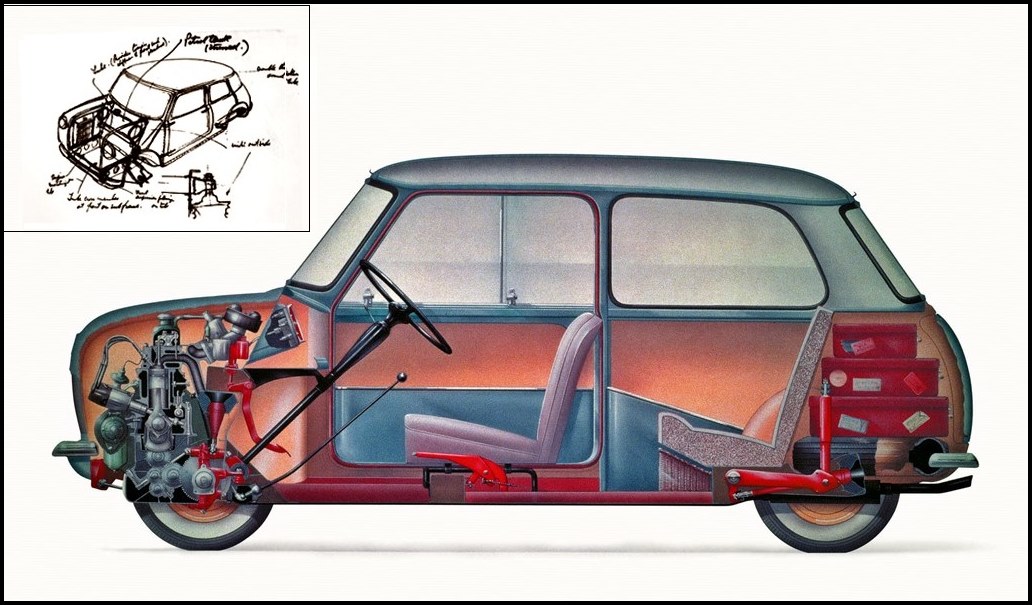
Quite simply, he wanted to create a small car which had the largest possible interior on the smallest possible footprint. Applying ‘form follows function’ strictly to automotive construction, he came up with a car that would be revolutionary. The spatial concept of the Mini was unique, and transversely mounting its engine made significant waves in the motoring industry at the time.

The brilliant design of the original Mini which strictly adhered to the ‘form follows function’ principle. Inset shows the actual sketch that its designer, Sir Alec Issigonis, drew on a napkin in 1956.

When the BMW Group continued the Mini story, it fully respected not just the history but also the design language that would provide guidance for the 21st century version. The original design philosophy was revised in keeping with the times, while simultaneously preserving the essential Mini character. While form continues to follow function, innovative technical solutions allow this principle to be applied to a greater degree.

Evolution continuation
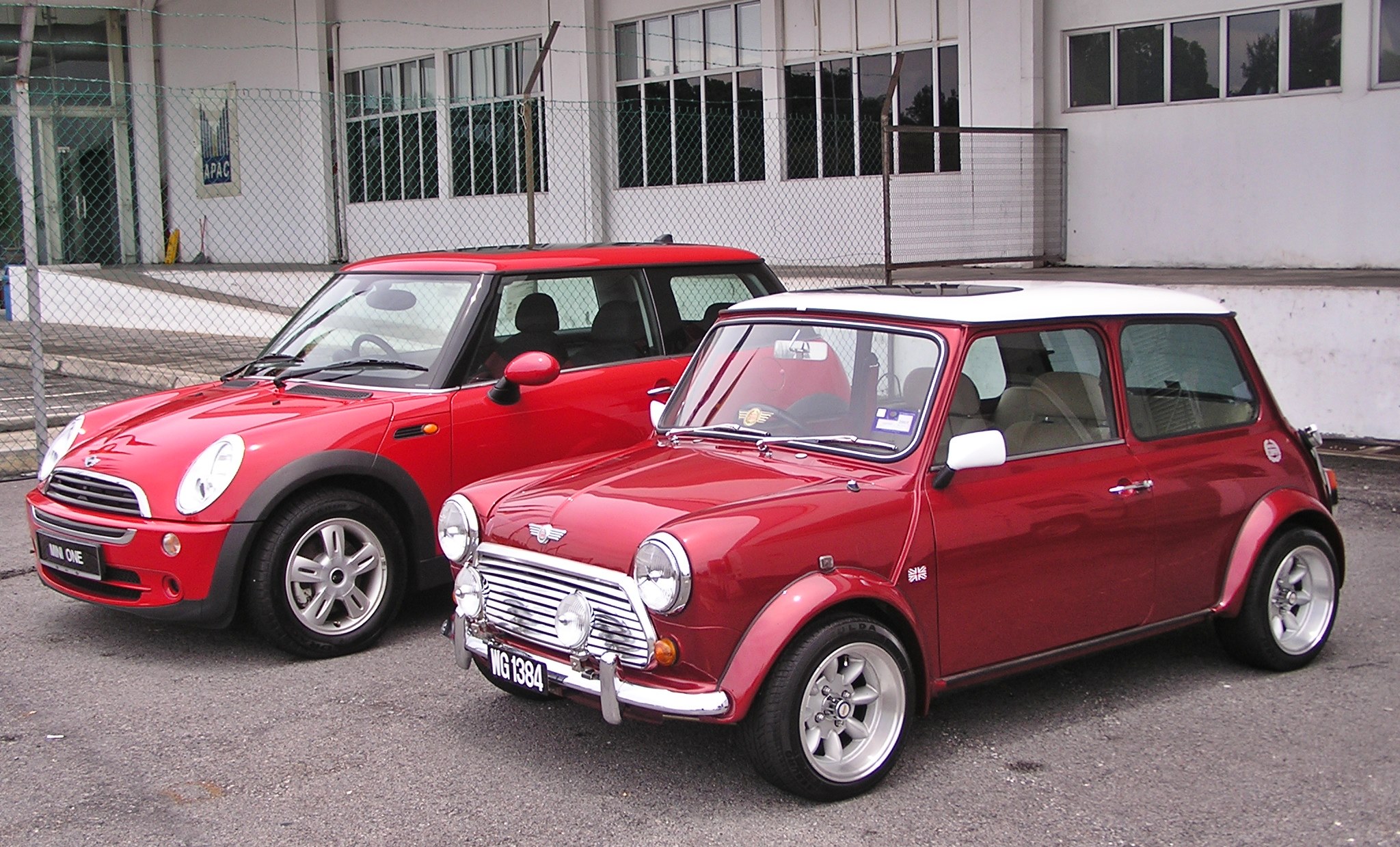
The modern MINI appeared in 2001 and has undergone evolutionary continuation of the legendary formal language that defined the original Mini. The systematic expansion of the model family also show how new life has been introduced to the brand’s fundamental values and, building on this, to open up authentic and intriguing perspectives for the future of the brand.

The modern MINI and the original classic Mini in 2007.

Digital and electric influences
Now the MINI team is again looking ahead at the next generation of models and this time, there are strong electric and digital influences. The MINI models of the future will bring together a modern and purist exterior and an interior design that focuses on the essentials, just as it always has.

The new design language also exploits the opportunity of electrifying the powertrain to generate the driving pleasure you expect from MINI entirely without local emissions. “Purely electrically powered models from MINI give us a unique opportunity to rethink our design. At the same time, we retain the attention to detail, sense of tradition and passion for innovation that MINI is renowned for,” said  Oliver Heilmer, Head of MINI Design.

2022 MINI Countryman concept

The architecture for the new MINI model generation has been developed for purely electric mobility from the outset. This differs from previous generations where the electrified version used a platform that was developed to also be able to take combustion engines. As such, every centimetre of the available installation space is used even more efficiently. This means that it will be possible to continue to offer the ideal combination of a small footprint and available interior space in the future.

Concept model to be shown in July
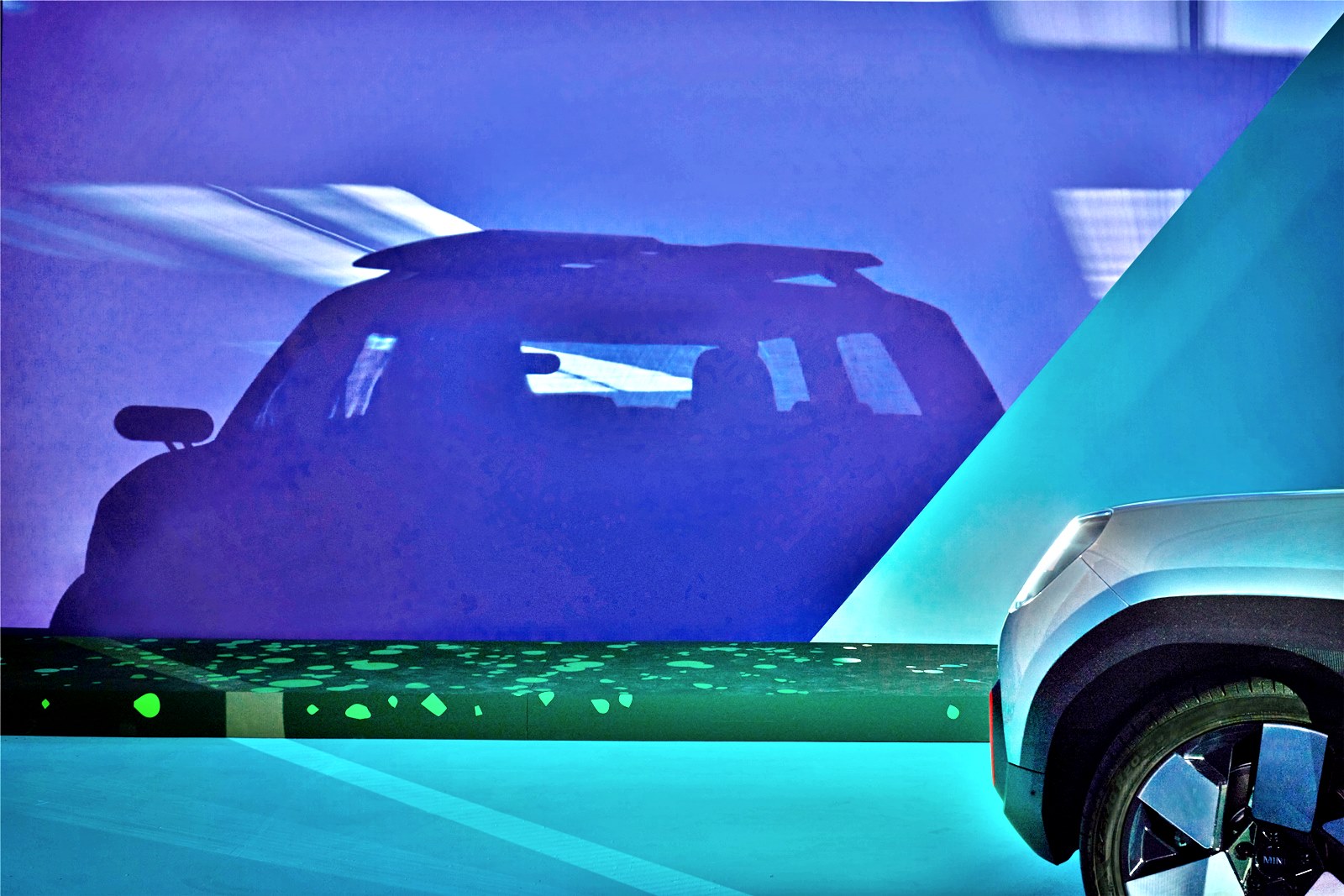
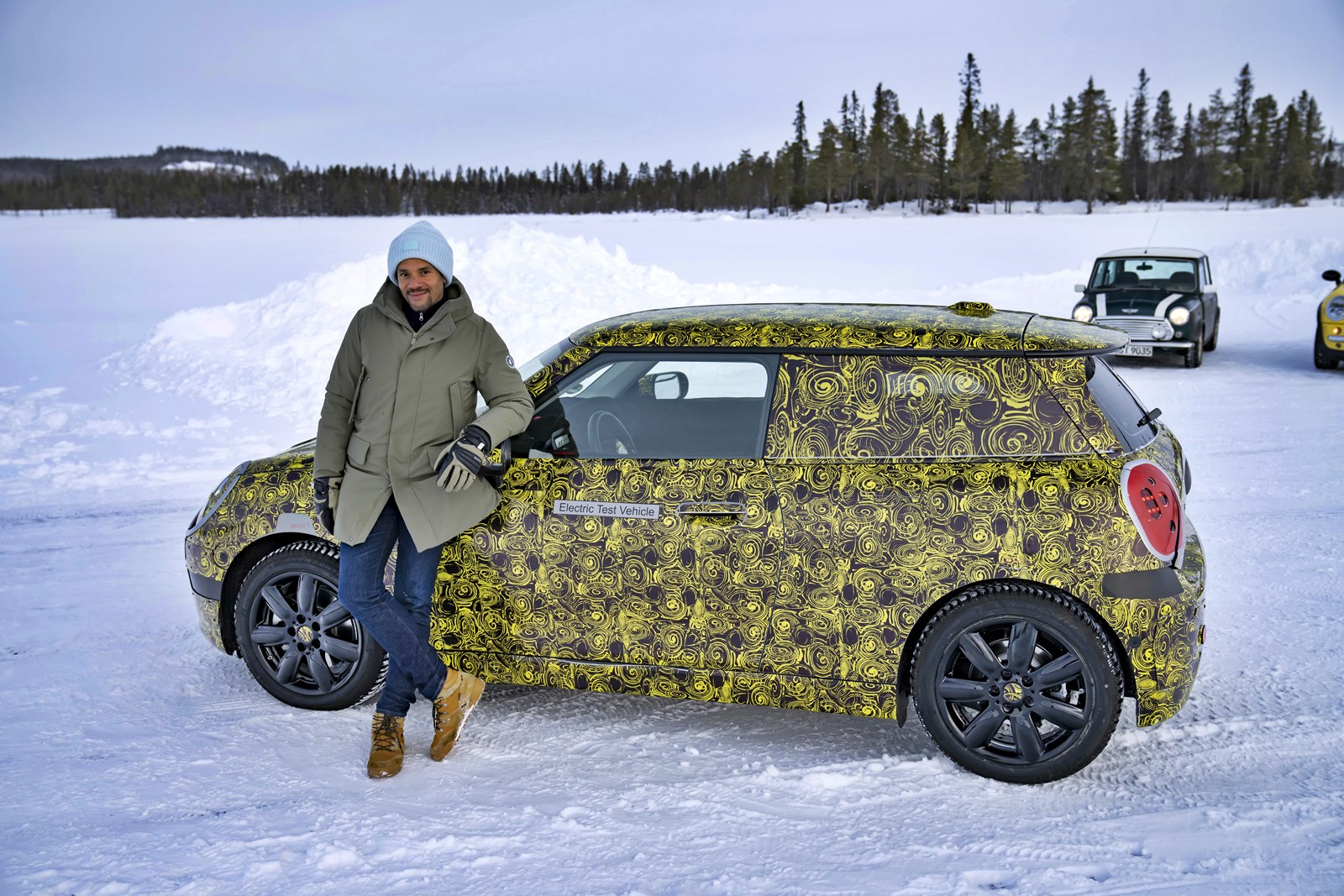
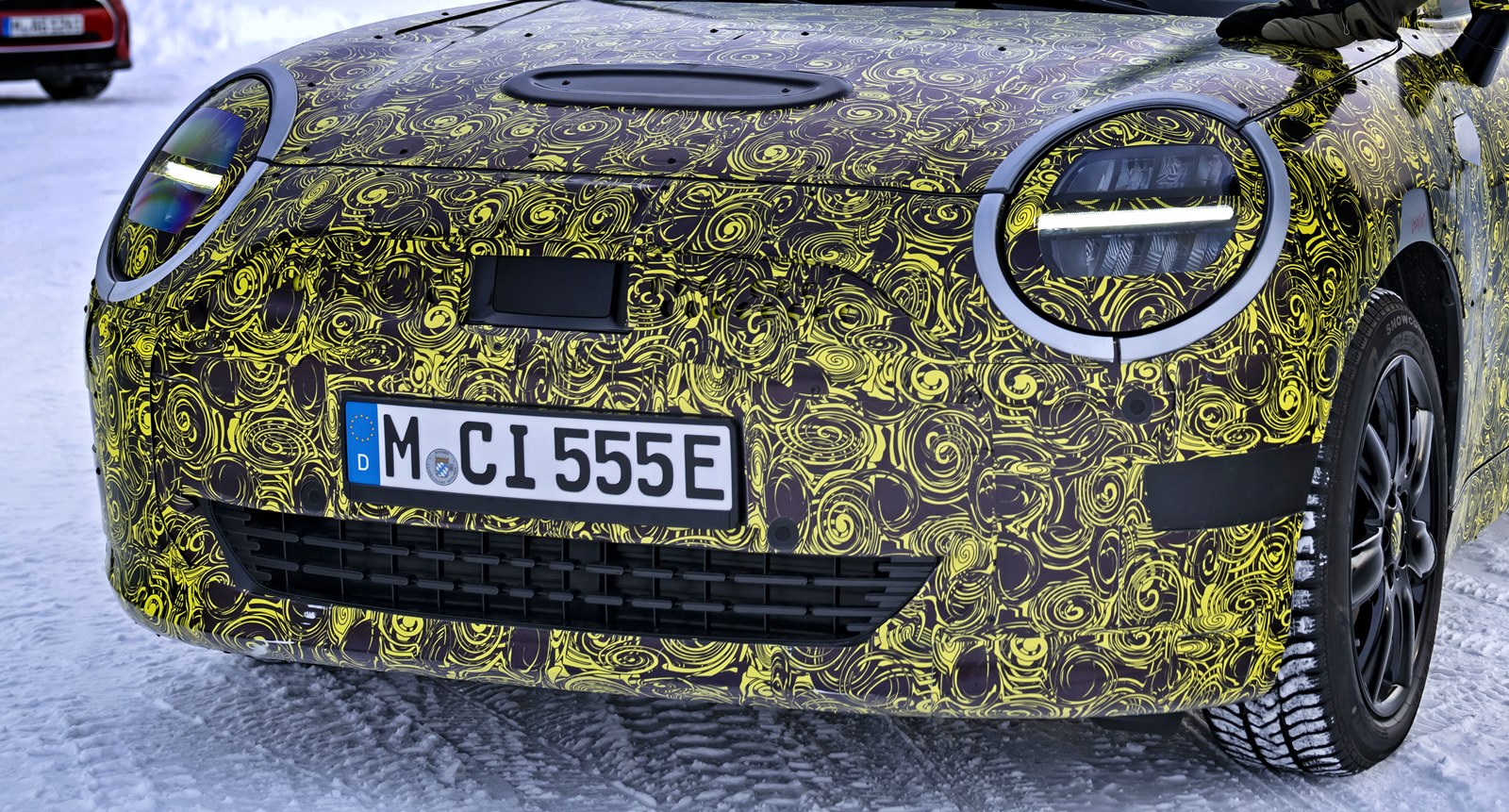
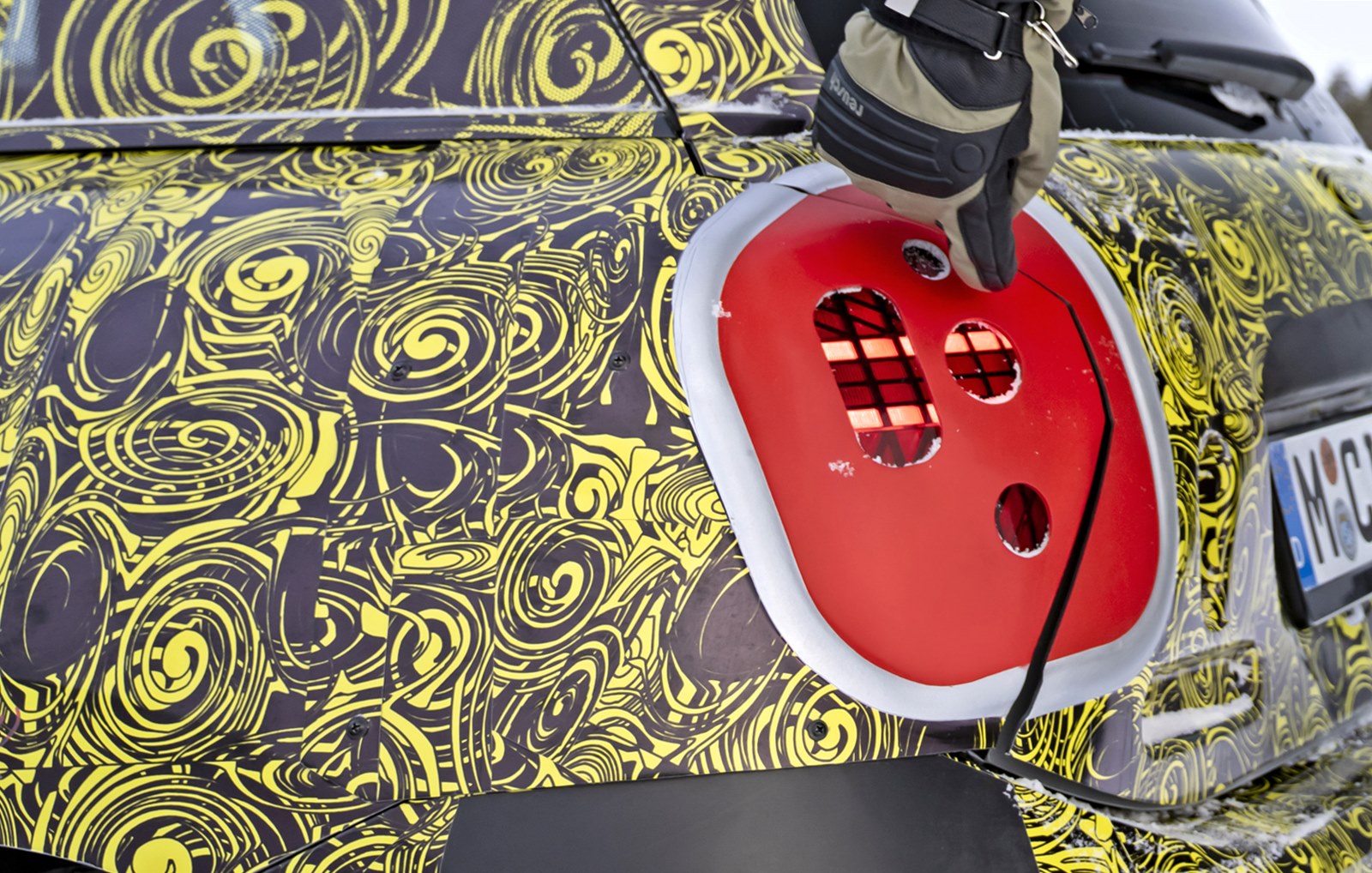
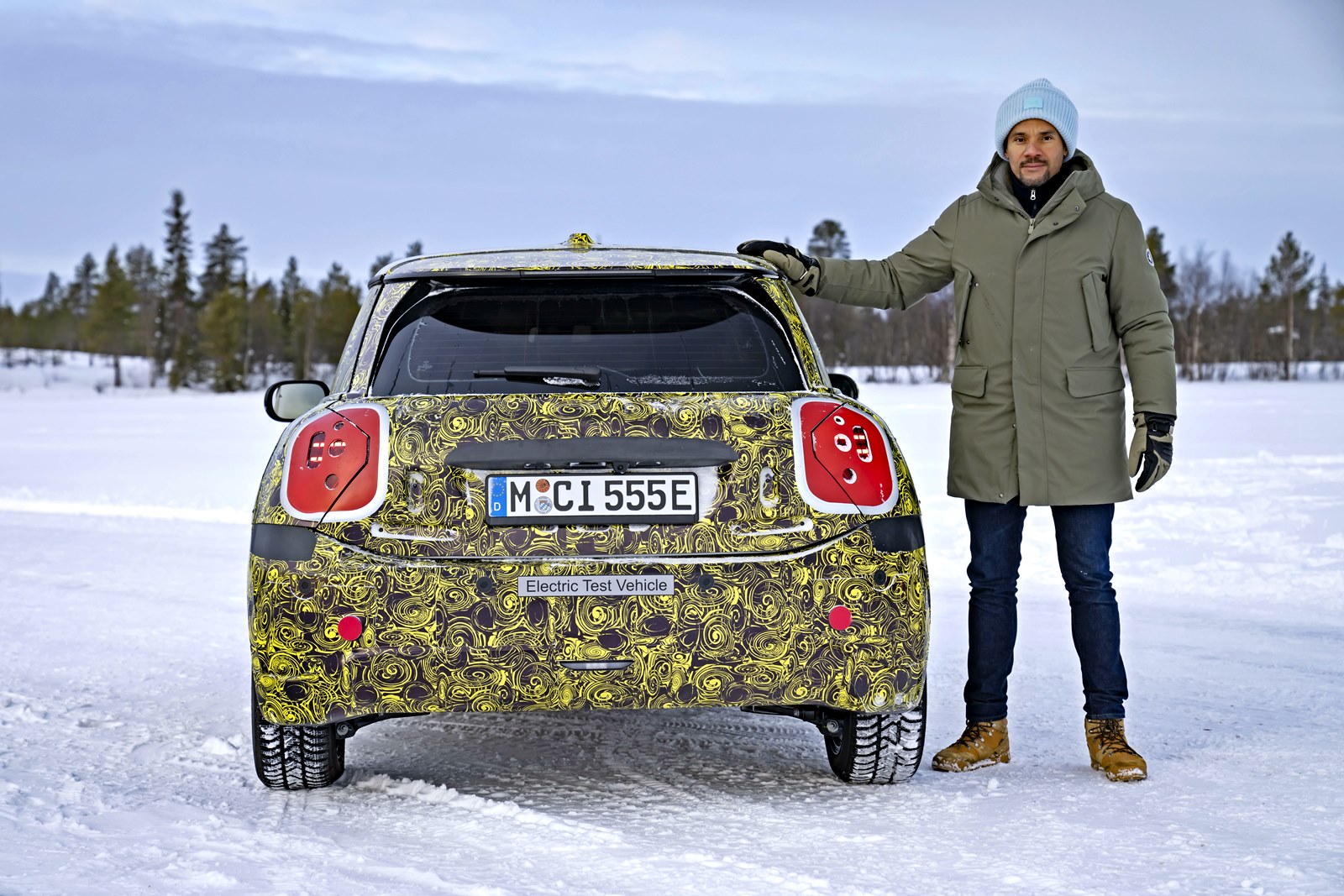
The core of the brand will also be embedded in the future model generation of the MINI 3-door – purely electric and consistently geared towards urban driving pleasure. The successor to the current Countryman will also have purely electric drive and a concept model (shown camouflaged in this pictures) of this will be shown at the end of July.

2022 MINI Countryman concept

“The MINI Design DNA will clearly come through in every model of this new generation, leaving its brand affiliation in no doubt whatsoever,” declared Heilmer. “At the same time, the MINI design team has successfully created strong product features with individual accents that more than ever before underscore a sense of independence.”

‘Charismatic Simplicity’
Creation of independent vehicle personalities is one of the central features of the new design language. ‘Charismatic Simplicity’ gives each member of the future MINI model family its own individual charisma that is unmistakably based on the brand’s core, reinterpreting it confidently and in its own way. The authentic reference to the essential values of MINI is expressed in a very modern design language featuring clearly and cleanly modelled surfaces.

Charismatic Simplicity reduces the number of components and concentrates on essential elements, helping the design of future MINI models achieve an emotional, intuitively perceptible identity. “We combine the core of the MINI DNA with innovative, aesthetic and technological inspiration in our new design language,” explained Heilmer. “For example, innovative LED technology gives the typical Union Jack design of the MINI combination rear lamps a variety of forms, creating an individual light signature for each model.”

2022 MINI Countryman concept

Combining tradition and progress
The combination of tradition and progress will be evident in the interiors of future models. The key to this is both in advanced digitalisation in operation and connectivity, and in a clearly designed interior with intuitive functionality.

In the cockpit of future models, ‘reduction’ does not mean having to do without. For example, the OLED technology for the fully digital display and control unit (shown in the MINI Vision Urbanaut concept) means significantly more functions can be combined in a single control unit. This is presented in the archetypal circular central instrument in the middle of the dashboard.

MINI is the world’s first car manufacturer to offer a touch display with a fully usable round surface. The innovative display technology paves the way for a new user interface design. At the same time, the design retains analogue control units such as the toggle switches below the central interface. These embody the attention to detail and distinctive design features that transform intuitive functionality into an emotional experience.

2022 MINI Countryman concept

“The future of MINI design is based on the courage and determination to shape change and stamp a distinctive and inimitable profile on the brand,” said Heilmer. This also includes a range of materials with a focus on sustainability. The new model generation will move completely away from leather surfaces and also reduce its use of chrome components to almost zero. A minimal ecological footprint is deeply anchored in the brand’s tradition and is incorporated more comprehensively than ever by MINI Design into the new model generation.

MINI STRIP – showing a sustainable approach to automotive design and manufacturing

Archive

Follow us on Facebook

Follow us on YouTube