
Piston.my

supercar

Yamaha is a well known name in the motorcycle world, especially in motorsports. And while most people know the Japanese manufacturer for its motorcycles, it actually has a history of making high-performance engines for other manufacturers. In fact, as far back as 1959, Yamaha engineers carried out basic research in automobile engine development and produced a 1.6-litre DOHC unit of exceptional power output.

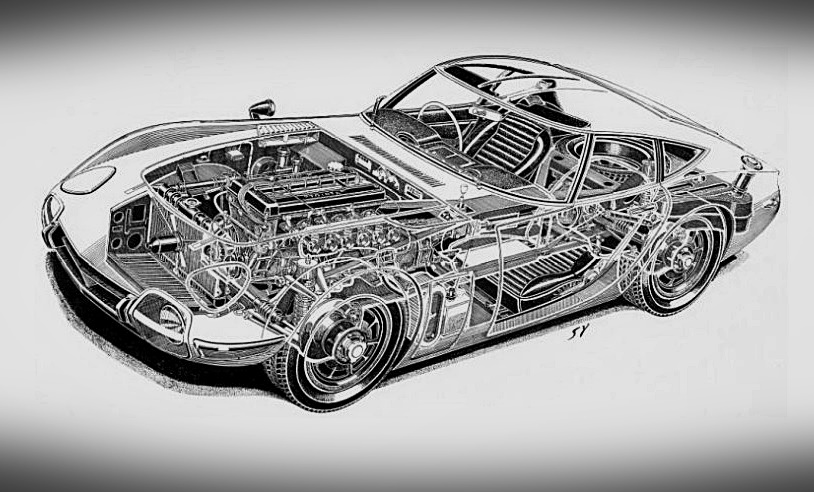
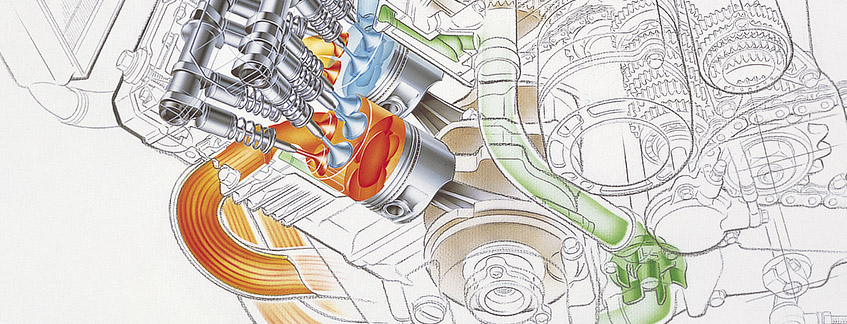
It collaborated closely with Toyota on the 2000 GT supercar as well as the development of Toyota’s engines such as the 2T-G, 3S-GTE, 1Z-GTE and many others. One of the notable features of its engines was multivalve technology which Yamaha engineers contended offered the highest potential. This is because of the increased effective intake valve surface area, the possibility of a higher compression ratio due to more compact combustion chambers, and lighter valve mass.
Yamaha

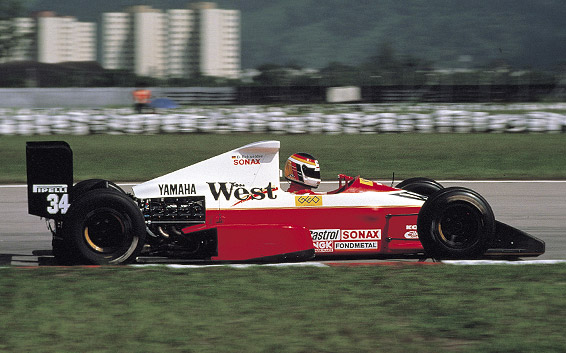
In the late 1980s, Yamaha was also involved in Formula 1, after having established a strong track record in Formula 2 and F3000. In 1988, it teamed up with Zakspeed Formula Racing, to form a Formula One racing team known as the West Zakspeed Yamaha Team. The team entered F1 events with a new car using a Yamaha-developed engine, the OX88. The engine was a 5-valve DOHC V8 that had a displacement of 3489 cc and produced over 600 bhp.
Yamaha in F1
One of the teams which Yamaha provided its engines to in the 1990s.

Aguri Suzuki, who had already made the step up to Formula 1, joined the team and faced high expectations as the second ever Japanese Formula One driver following Satoru Nakajima. The team had a somewhat difficult time at first but in 1990, a compact, lightweight engine to succeed the OX88 was announced: the OX99. It was a 5-valve V-12 with a 3498 cc displacement, and its output was also over 600 bhp.

The OX99 proved to be a more competitive engine and Yamaha provided it to the Brabham, Jordan, Arrows and Tyrrell teams until 1997 when the company stopped its involvement in F1. The best result during the 8 years of taking part in F1 was a second place by Damon Hill, driving for the Arrows, at the 1997 Hungarian GP.

#StayAtHome

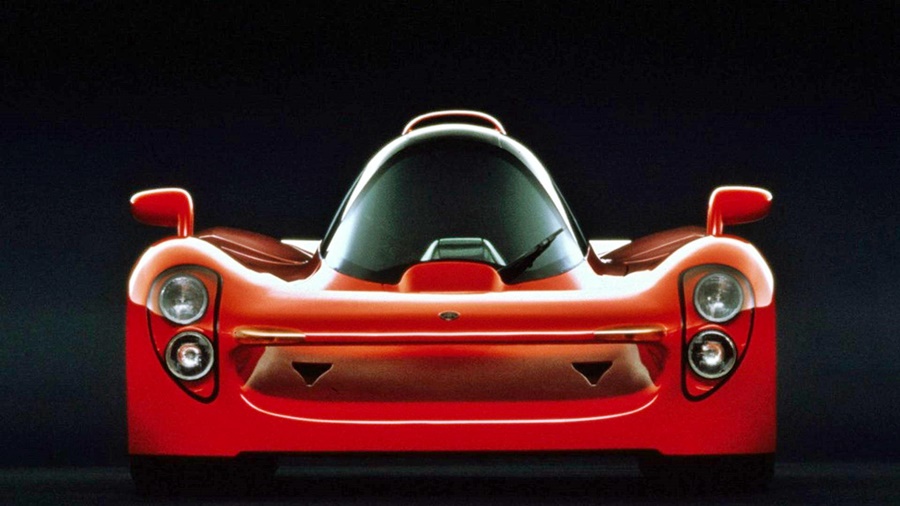
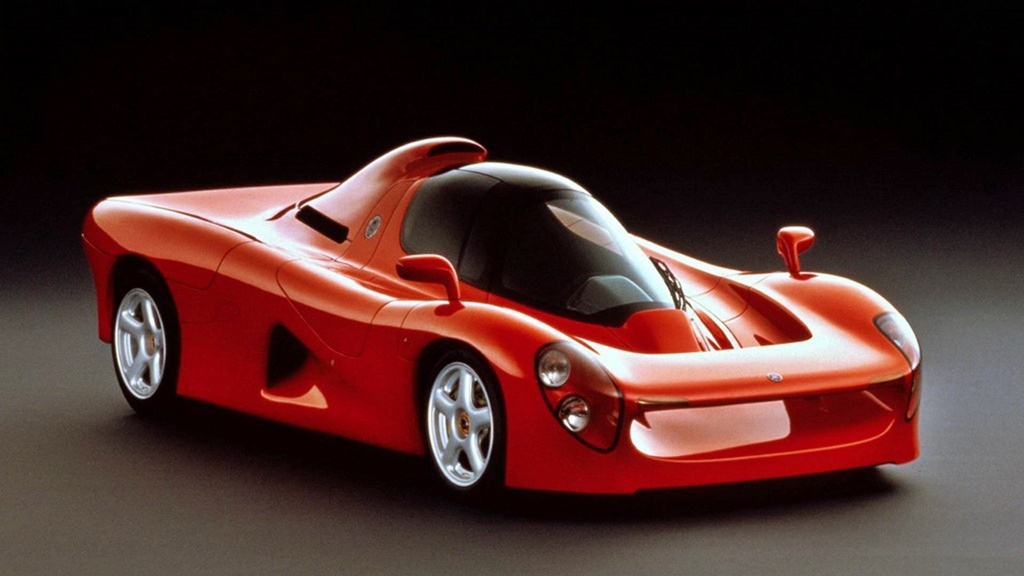
1992 Yamaha OX99-11

F1 car for road use
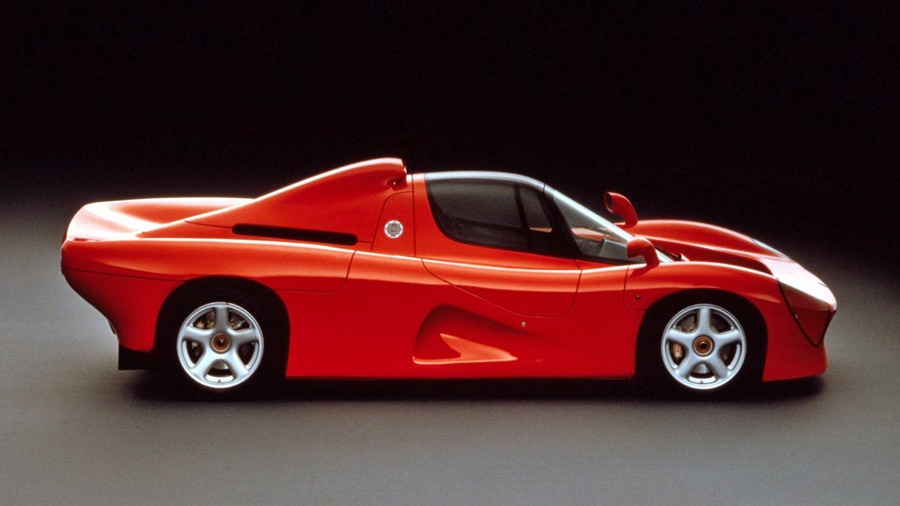
Using its experience in F1, Yamaha then started to develop a F1 car for the road which, in concept form, was known as the OX99-11. It had a seating position like a racing car – including a central steering position – but was configured to comply with legal requirements for road use. This meant having wheels enclosed within a wheel well, proper lighting units, reasonable ground clearance, and of course, low noise and emissions. The result was a car that looked like a scaled-down Group C racer.

Just as Honda (coincidentally another top motorcycle maker) made a strong technological statement with its NS-X, so too did Yamaha using the OX99-11 to demonstrate the company’s advanced capabilities in the field of automotive engineering. Yamaha planned to make up to 100 units for sale, with a launch date set in 1994.
Yamaha in F1

At that time, T. Hasegawa, who was a senior Managing Director of Yamaha in 1992 and the man behind the company’s collaboration with Toyota for the 2000 GT  said: “This project is part of Yamaha’s ongoing efforts to use its experience and technology to make exciting and meaningful contributions to the great tradition of motor culture. It represents our attempt to build the ultimate sportscar.”

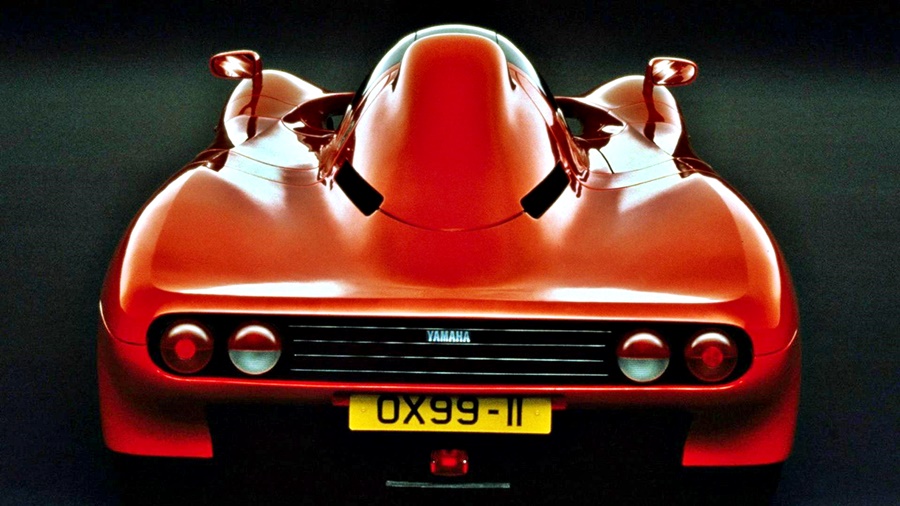
The idea to make the car had started sometime in 1982 and a prototype was built using a 4-cylinder 2-litre engine for the Japanese F2 series. In order to make it practical for road use, the mid-mounted engine was detuned by changing the cam profiles, putting in a new engine management programme, and using a slightly heavier flywheel. However, the 10-litre dry sump lubrication system was retained to avoid fuel surge problems and it also lowered centre of gravity. Intake air was drawn through a port on the roof.
1992 Yamaha OX99-11

But in spite of being detuned, the 3.5-litre engine could still deliver 400 bhp and spin up to 10,000 rpm. Yamaha claimed that it had superior driveability and plenty of usable power from 1,200 rpm, fully exploited by the 6-speed transmission.

Underneath the aluminium bodyshell, the structure was the same as a F1 car with the engine and transmission bolted to the rear wall of the monocoque made of carbonfibre reinforced plastic (CFRP) and sandwiched aluminium honeycomb material. A roll-cage of CFRP was also installed around and over the cabin for extra protection. The driver sat in a safety tub with a small ‘passenger space’ behind, offset to the left. Entry was by raising the glass canopy hinged on the right side.
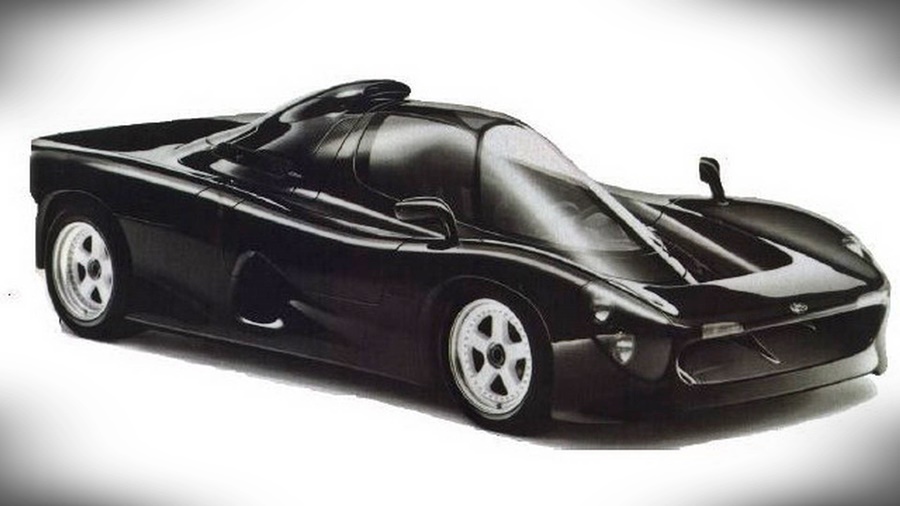
1992 Yamaha OX99-11

In the cockpit
Jet pilots would have felt right at home in the OX99-11 with the way the canopy wrapping around the cockpit. The shift lever was placed on the right panel adjacent to the starter button. But back then, electrical systems were simpler and though there was the button to start the engine, a key had still to be inserted to connect the electrical circuit! Because of the compactness, the steering wheel had to be removed to get out of the car.

Although the cockpit was longer than a F1 car, its width was limited because a large portion of the 120 litres of fuel carried was stored in the box sections on either side of the driver. This further enhanced weight distribution as the main mass was kept in the middle area of the car.

F1 suspension
Much of the suspension design and materials came straight off the F1 shelf; at the front and rear were double wishbones with inboard spring/adjustable damper units operated by pushrods. The suspension arms were long and thin with an aerofoil cross-section. Ground clearance could be varied using the body height mechanism.
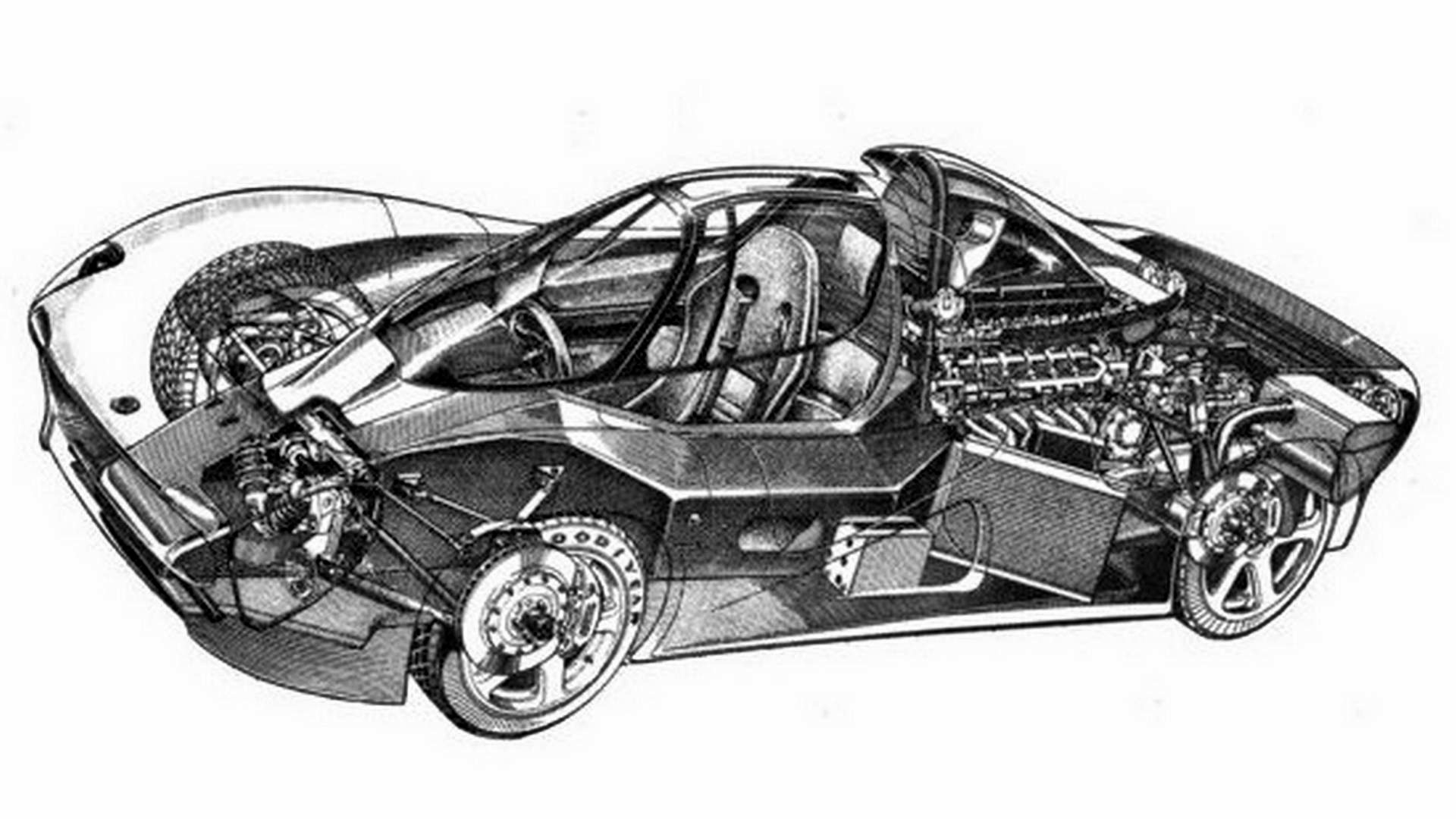
Yamaha in F1

The tyres for the OX99-11 were from Goodyear which worked with Yamaha on the project. Specially developed unidirectional Eagle 17-inch Z-rated tyres with an asymmetric pattern were installed, the front ones having a 245/40 and the back ones 315/35. The wheels were made of magnesium alloy and were 9 inches wide in front, 12 inches at the rear.

Super downforce
As to be expected, aerodynamic efficiency was top priority and the designers applied the ‘upside-down aerofoil’ idea exploited by Colin Chapman in his Lotus F1 cars. Thus, the OX99-11 was essentially profiled like an inverted wing, the entire shape generating downforce instead of lift.

The claimed overall coefficient of lift of -63 was believed to be the lowest ever attained for any road-legal car. While not as good as a full-fledged racing car, it was still impressive considering the height of the car which allowed air to ‘leak’ under it.
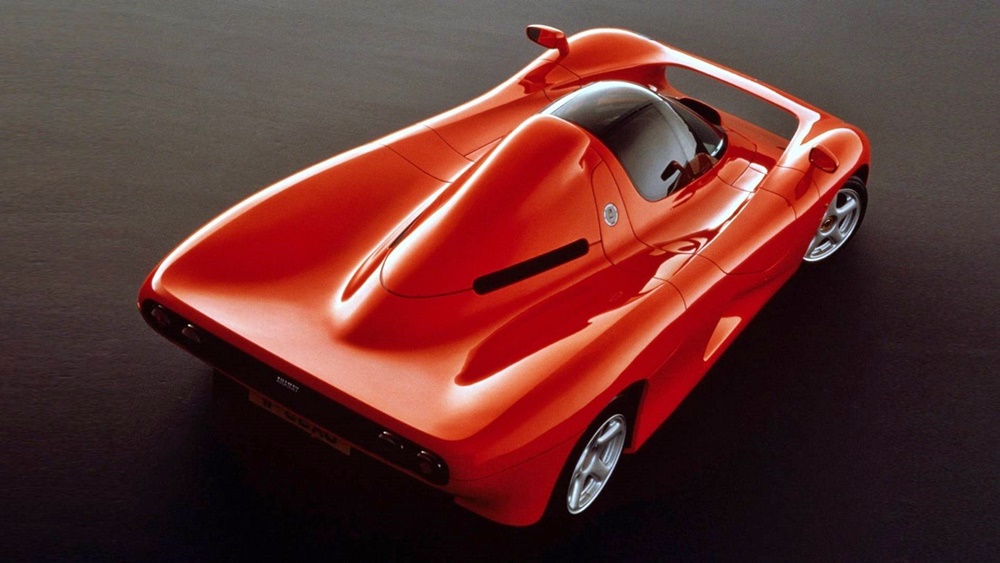
Yamaha in F1

Each OX99-11 was to be hand-built at Ypsilon Technology, a Yamaha subsidiary established in England in 1990 which was responsible for maintaining and supplying Yamaha racing engines. Unfortunately, Japan’s ‘economic bubble’ burst in the early 1990s and Yamaha did not think that anyone would be interested in a supercar (which might cost as much as US$800,000). In the end, only three prototypes were built before the project was terminated.

DIMENSIONS
Length: 4400 mm
Width: 2000 mm
Height: 1220 mm
Wheelbase: 2650 mm
Tracks: 1615 mm (F) | 1633 mm (R)
Min. ground clearance: 100 mm

PISTON.MY


BHPetrol RON95 Euro4M

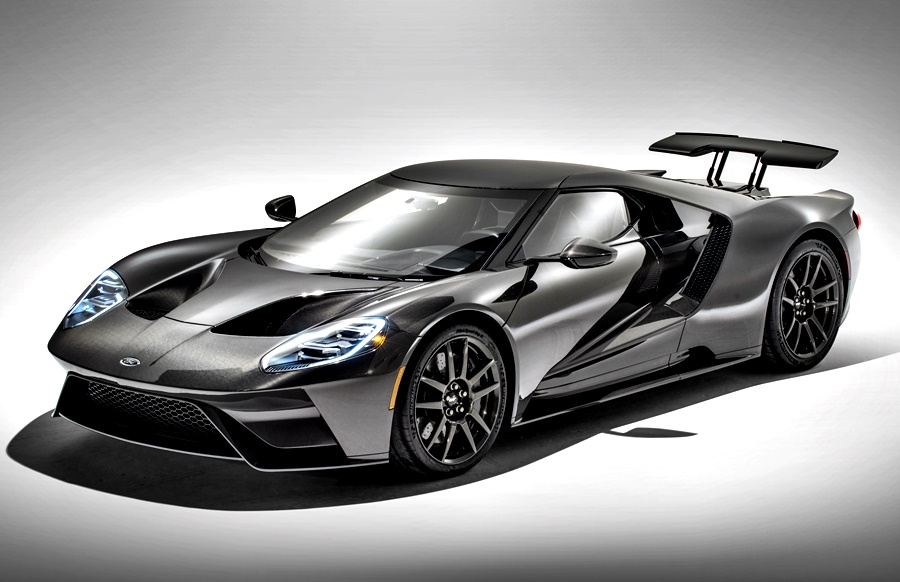
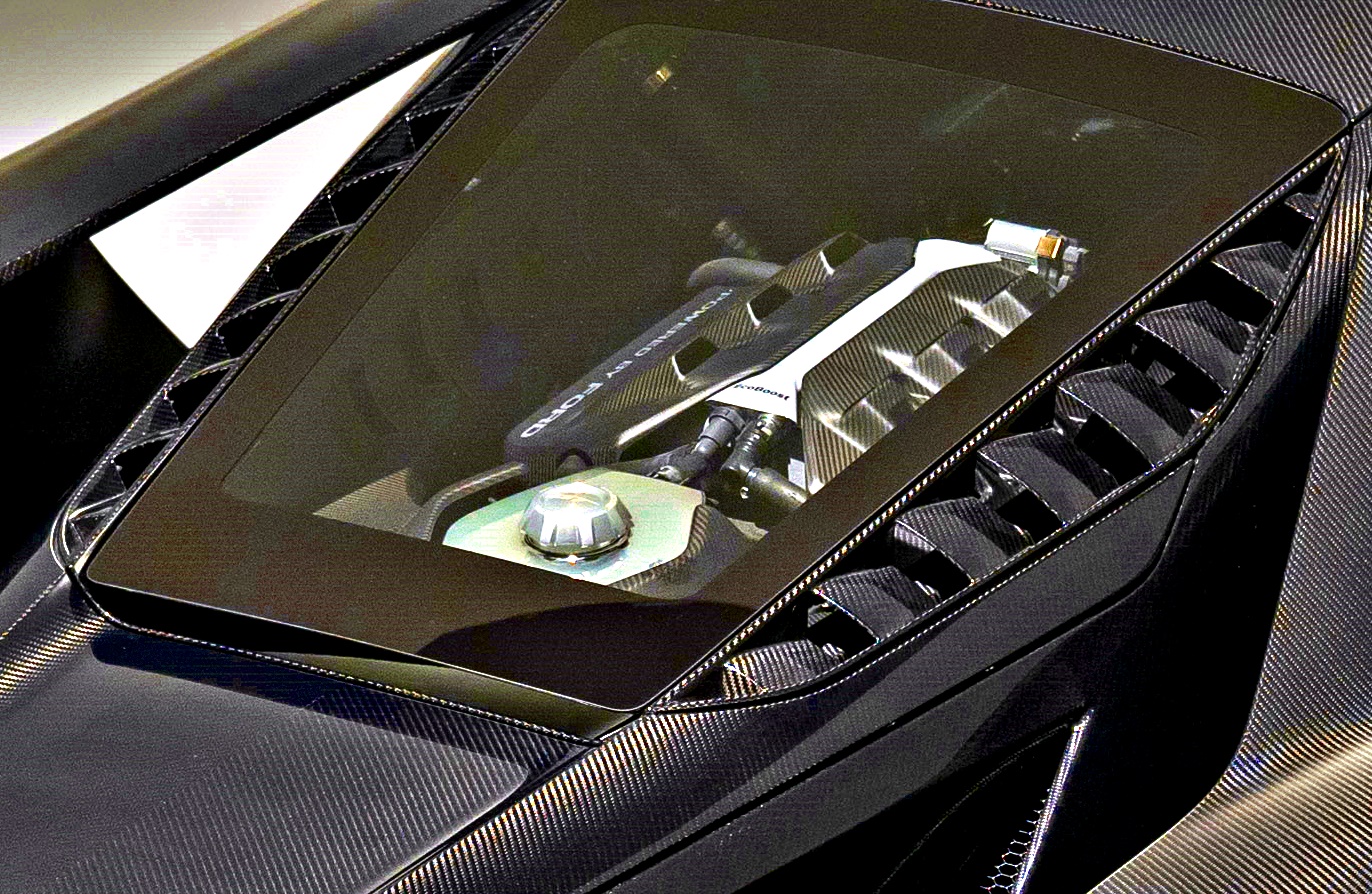
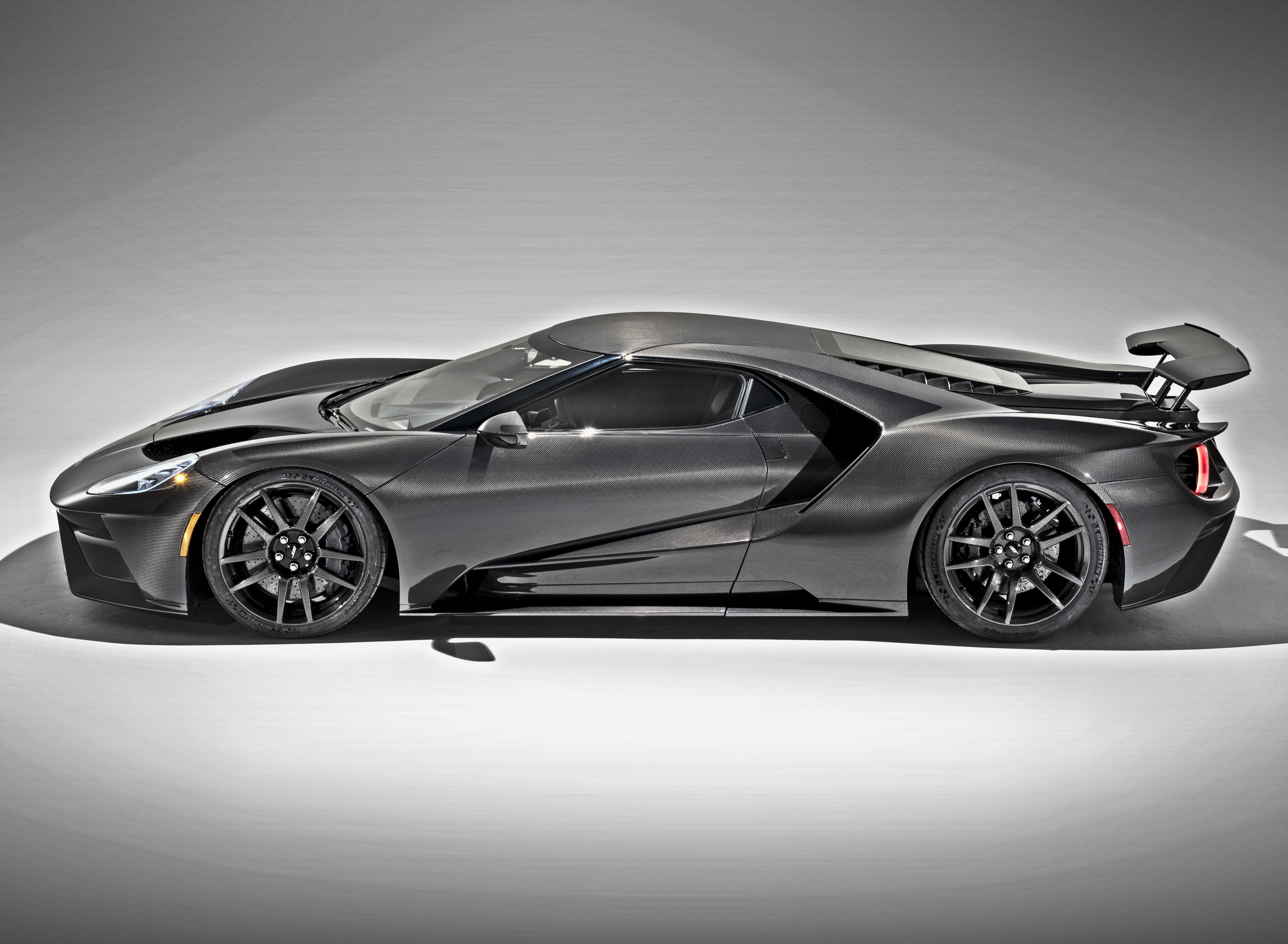
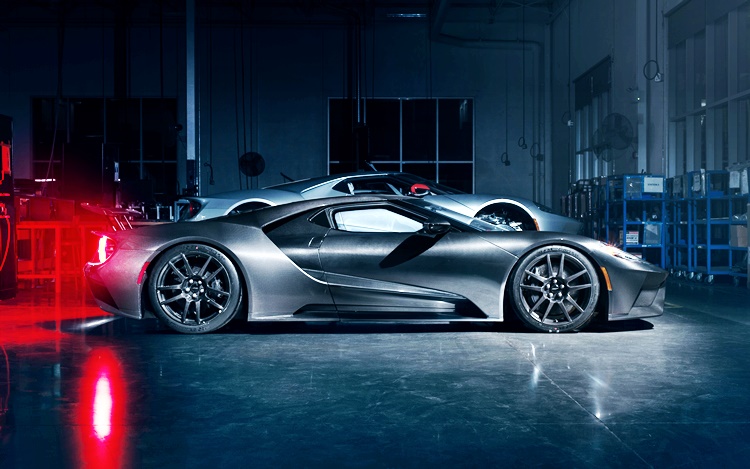
There are still another two years of production to go for the Ford GT supercar and the engineers at Ford Performance haven’t stopped trying to make it better. For 2020, upgrades include increased power of 660 bhp with improved cooling for the 3.5-litre EcoBoost twin-turbo V6 engine.

“Ford GT continues to be the pinnacle of Ford performance,” said Ed Krenz, Ford Performance Chief Program Engineer. “GT is always the ultimate expression of Ford racing innovation, and as we know from the 1966 Le Mans through today, that means constantly raising our game for our customers as well as earning the checkered flag.”

2020 Ford GT

Continuous EcoBoost Innovation
Beyond producing 13 more bhp than the EcoBoost engine in the 2017 – 2019 GT, the 2020 GT’s engine has a broader torque band and revised engine calibration. There are also mechanical upgrades that include gallery-cooled pistons and higher-energy ignition coils, thanks to lessons learned from the limited-edition, track-only GT Mk II.

2020 Ford GT

Additional engine cooling and airflow updates includes new buttress air ducts designed to increase airflow by 50% while larger intercoolers keep charge air temperatures cooler, preserving peak power for the most strenuous, high-temperature sessions at the track.

Suspension damping is increased in track mode to further enhance handling and body control, particularly for those high-speed transient sections of closed-course circuits.

2020 Ford GT

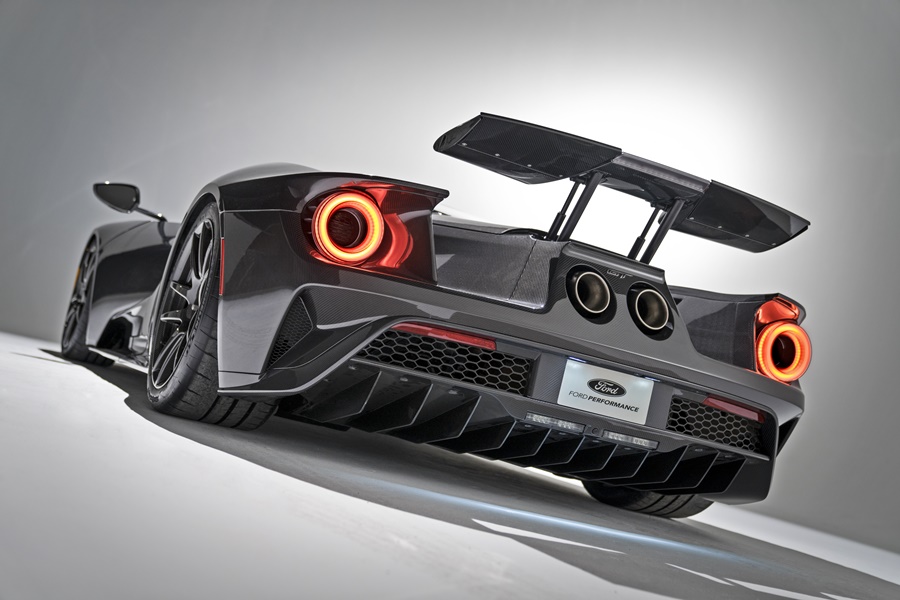
New standard Akrapovic titanium exhaust
Ford Performance is also introducing the premium Akrapovic titanium exhaust as standard equipment for GT. Boasting the signature craftsmanship of these renowned race experts, this exhaust provides a 4-kg savings in weight over the previous system while delivering that deeply resonant, unmistakable sound emanating from the more powerful EcoBoost engine.

2020 Ford GT

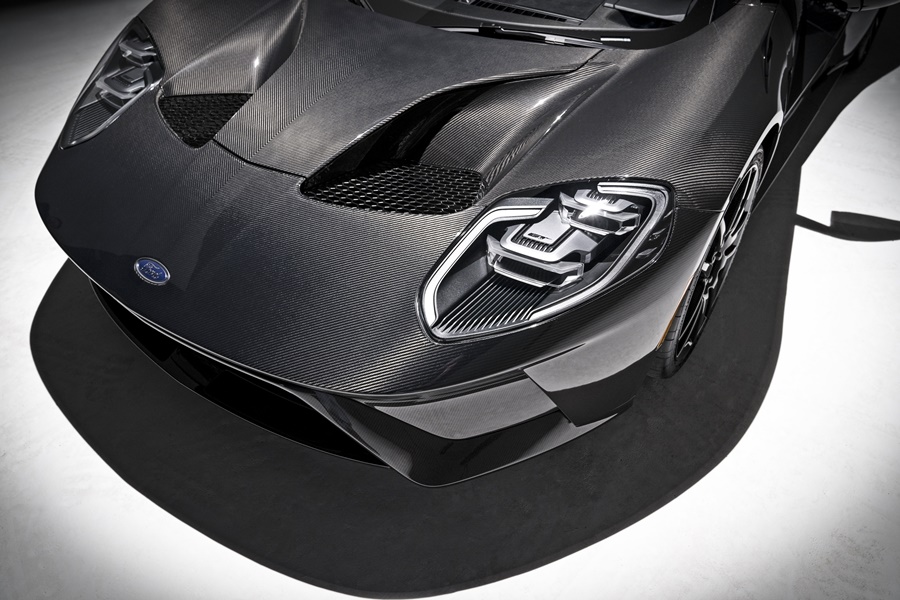
Liquid Carbon
Newly available Ford GT Liquid Carbon places an emphasis on GT’s lightweight sculpted carbonfibre body completely free of paint colour. A special clearcoat punctuates each GT’s unique carbonfibre weave in this limited-edition appearance option.

2020 Ford GT

“This next chapter in the Ford GT story allows us to fully demonstrate our mastery in both the art and science of carbonfibre craftsmanship and finishing,” said Angus Smith, General Manager of Multimatic Niche Vehicles, North America. “The results of this ongoing partnership between Multimatic and Ford Performance speak for themselves, as each visually stunning and unique Liquid Carbon GT is a manufacturing marvel, showcasing the characteristics and nuances inherent in carbonfibre composites.”

Ford GT Liquid Carbon features carbonfibre wheels as standard equipment. Owners can choose titanium lugnuts, 6-point racing harness anchors, 5 interior options and 5 caliper colours. Further personalization is available through two over-the-top stripe options – the dual centre stripes offered on the standard Ford GT or the single stripe found on the Carbon Series, as well as optional painted mirror caps.

2020 Ford GT

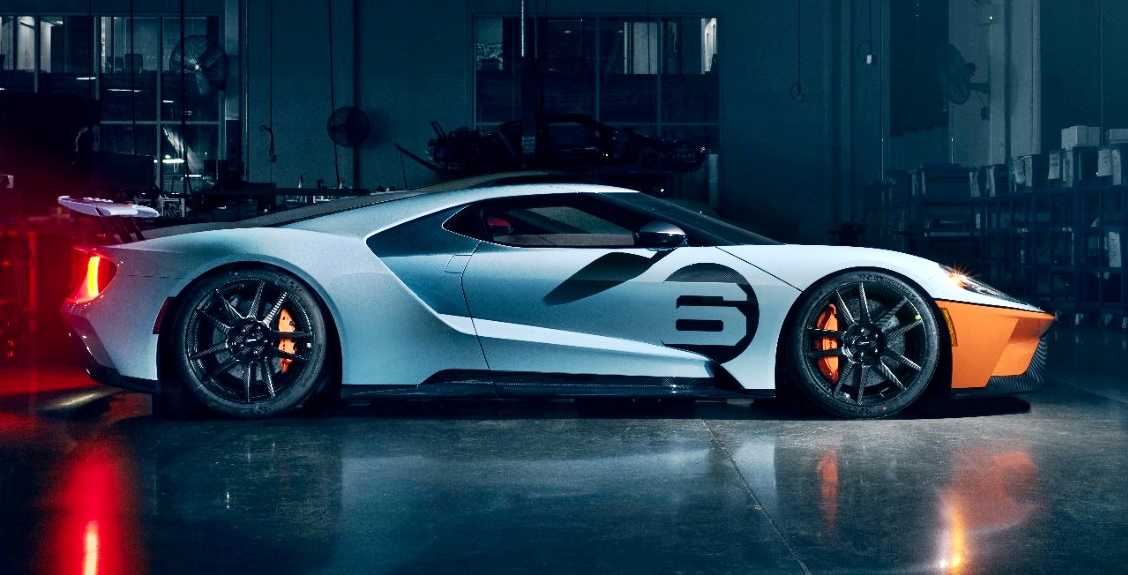
Updated Gulf Racing Heritage Livery
Ford Performance is also updating the GT’s iconic heritage livery with a new design (shown above) that includes a black pinstripe to divide the distinct blue and orange colours, recalling the 1968-69 Le Mans-winning GT40. The optional carbonfibre number switches from 9 on the 2019 model to 6 for 2020, matching that of the historic back-to-back winning car, chassis No. 1075. For the first time on a heritage model, carbonfibre wheels are available in place of aluminium alloy.

Pushing the performance envelope with the Ford GT Mk II [w/VIDEO]

PISTON.MY

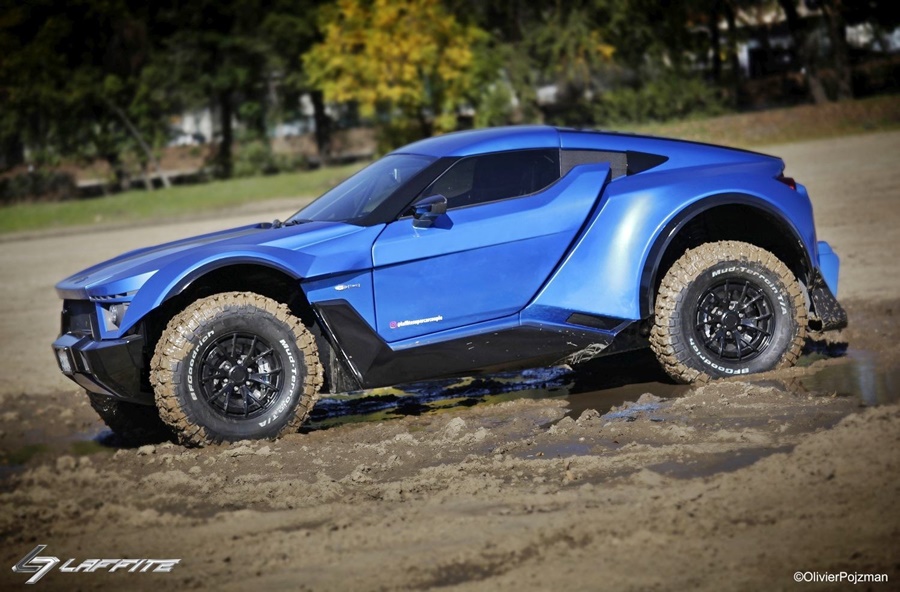
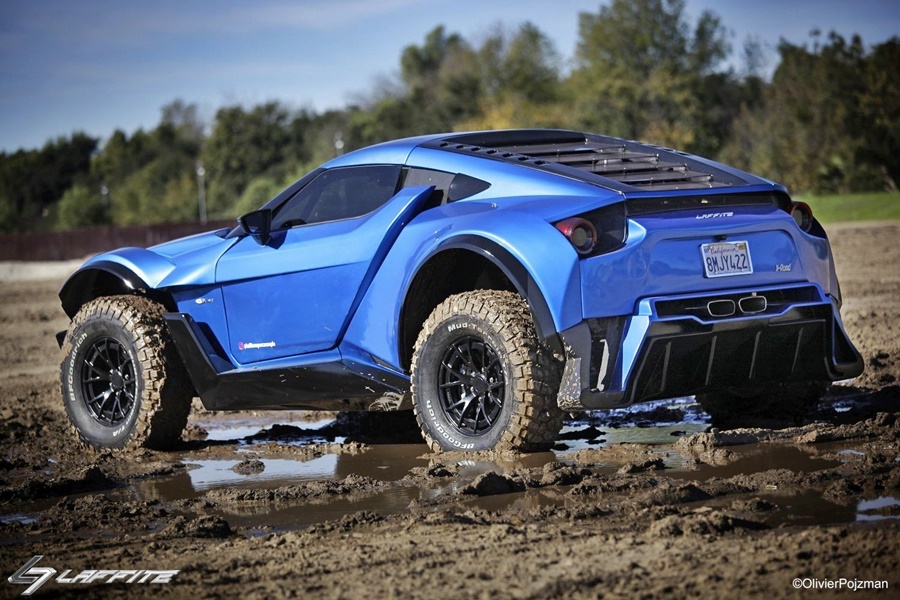
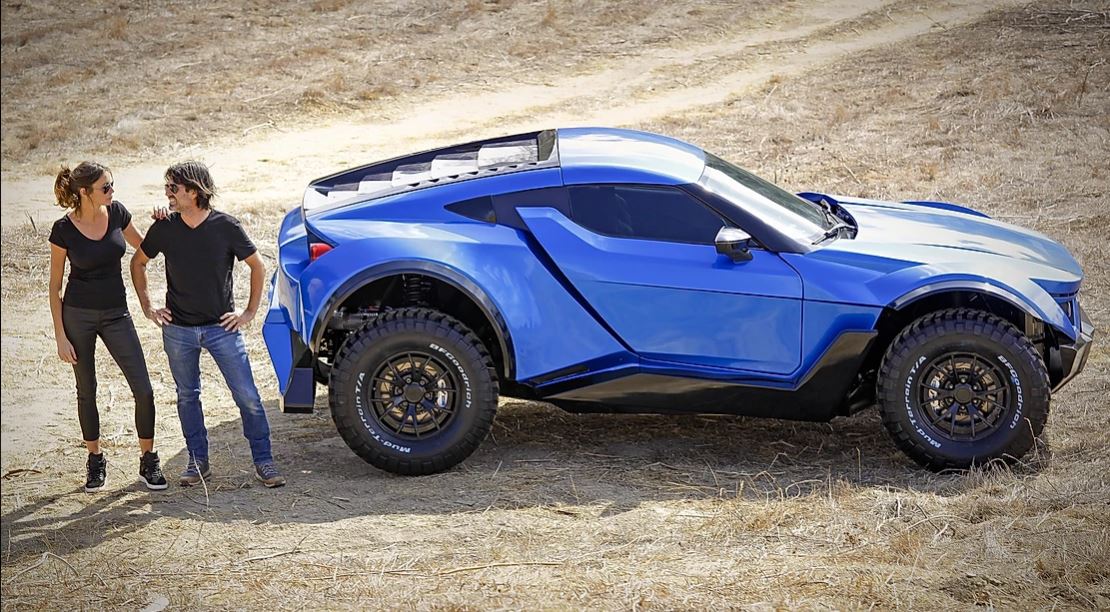
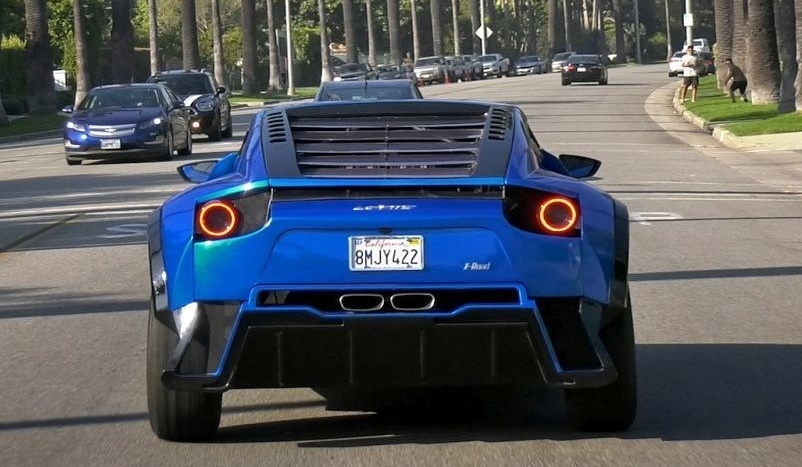
With up to 720 bhp and weighing just 1,300 kgs for a power-to-weight ratio of a supercar to achieve a top speed of 230 km/h, the Laffite G-Tec X-Road is claimed to be the first all-terrain street-legal supercar.

It has been developed Laffite Supercars, a multi-national company (based in Valencia, Spain as well as Los Angeles and Miami in the USA) which specialises in automotive design. Racing engineer Philippe Gautheron engineered the chromium molybdenum steel rolling chassis while the Team Virage Group tested and fine-tuned it for several years.

Laffite G-Tec X-Road

Laffite G-Tec X-Road

GM V8 powertrain with electric option
The G-Tec X-Road is powered by a 6.2-litre V8 from General Motors which is mated to a 5-speed sequential or 6-speed automatic transmission, depending on customer requirements. The drivetrain is only rear-wheel drive but the company is willing to develop an electric powertrain for customers who are more eco-conscious.

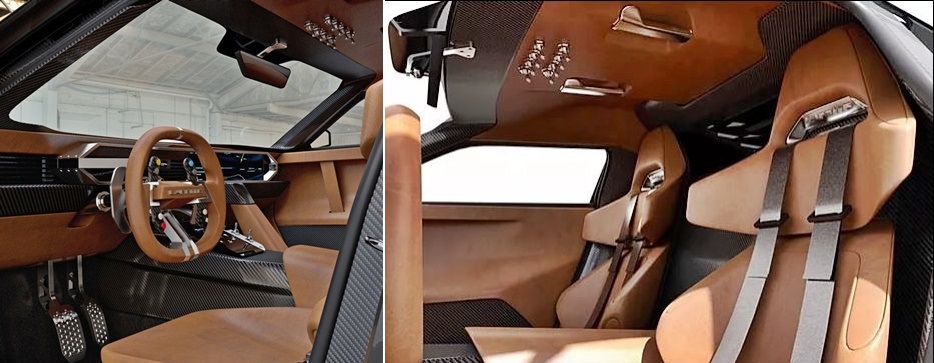
17-inch suspension travel will allow drivers to jump and fly the 4.3-metre long car like a Dakar rally racer in the desert or navigate the freeway and local streets in comfort. Interior appointments can be customised to personal preference with high quality materials and high-tech accessories.

Laffite G-Tec X-Road

Only 30 units available
Final assembly of the 30 units to be available will be done in Los Angeles and the car can be registered for road use in California. Being able to conform to vehicle regulations in California would enable it to meet regulations in other markets.

Customers will get their cars towards the end of 2020 after paying retail prices that start from US$465,000 (about RM1.9 million) with the electric version costing at least US$545,000 (about RM2.21 million).

Laffite G-Tec X-Road
Laetitia and Bruno Laffite, owners of Laffite Supercars

About Laffite Supercars
The company creates concept cars and road-ready vehicles in limited runs, and also works on confidential projects for customers wishing to acquire unique and exceptional road-ready supercars.

The owners are Bruno and Laetitia Laffite and Bruno is the nephew of 6-time winner Formula One racing driver, Jacques Laffite, and competed for more than 15 years in numerous racing events in the 1990s. Laetitia has driven and tested many sportscars, spent 15 years in the art industry and is also as an exclusive art dealer in the prestigious Monaco Yacht Club.

Laffite G-Tec X-Road

PISTON.MY

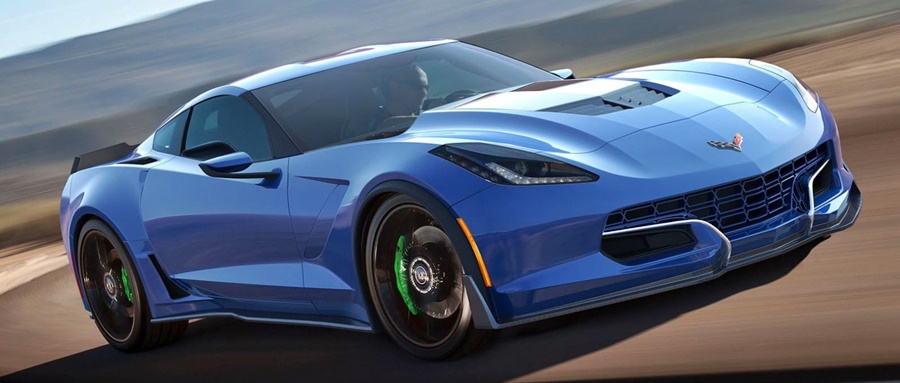
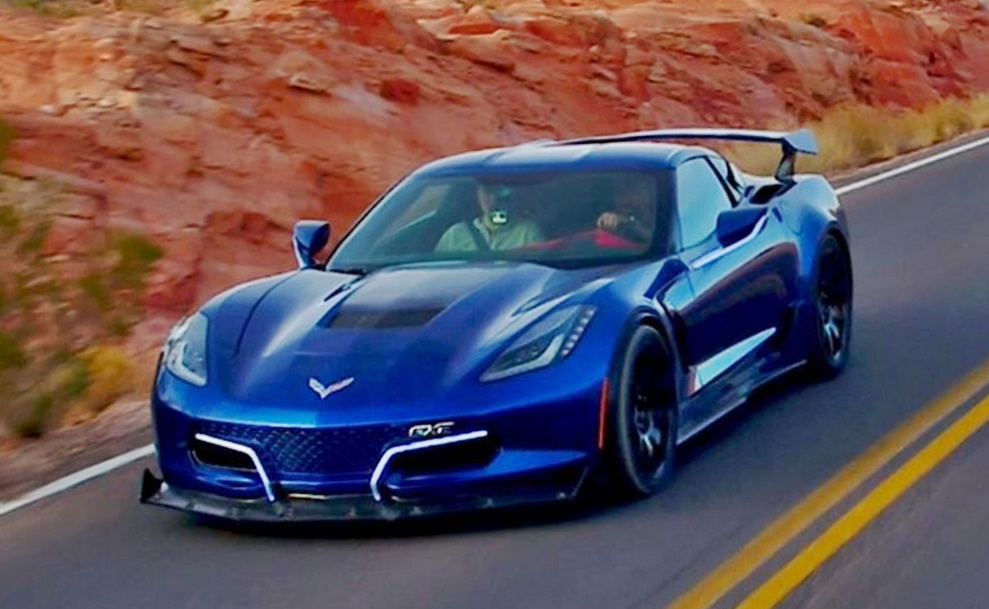
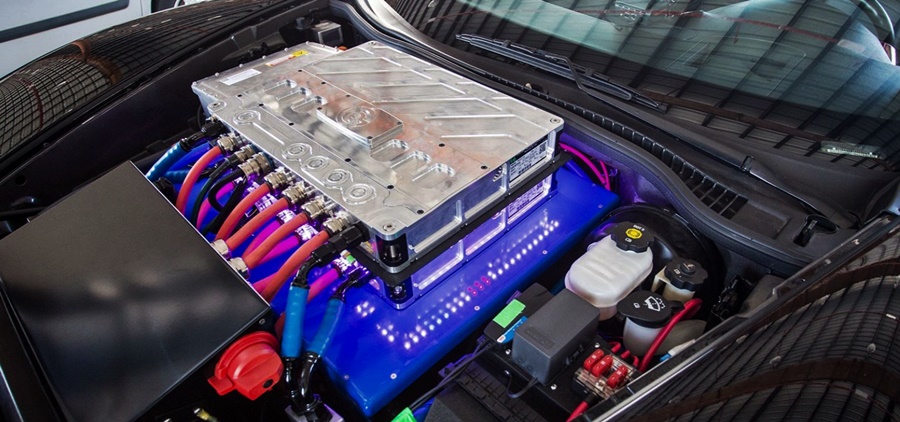
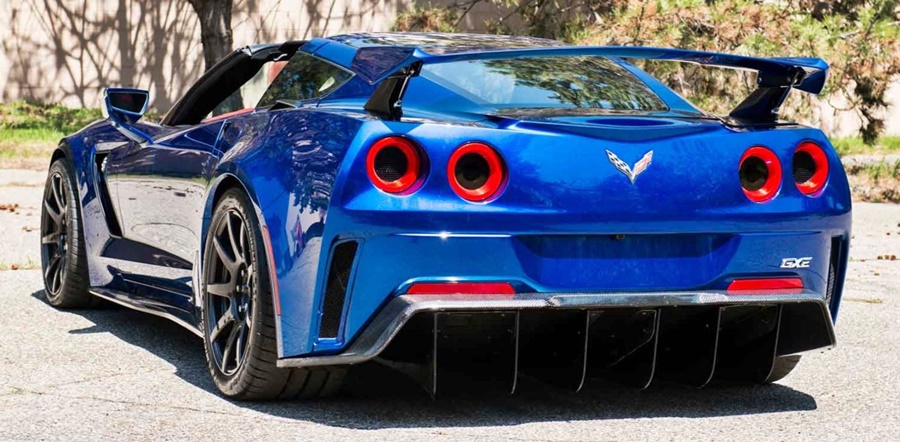
When US-based Genovation Cars talked about developing an all-electric supercar model which would be adapted from the Chevy Corvette Z06 and be powered by two electric motors instead of a 7-litre V8, it set ambitious goals: 700 bhp with 815 Nm of torque and a range of 240 kms.

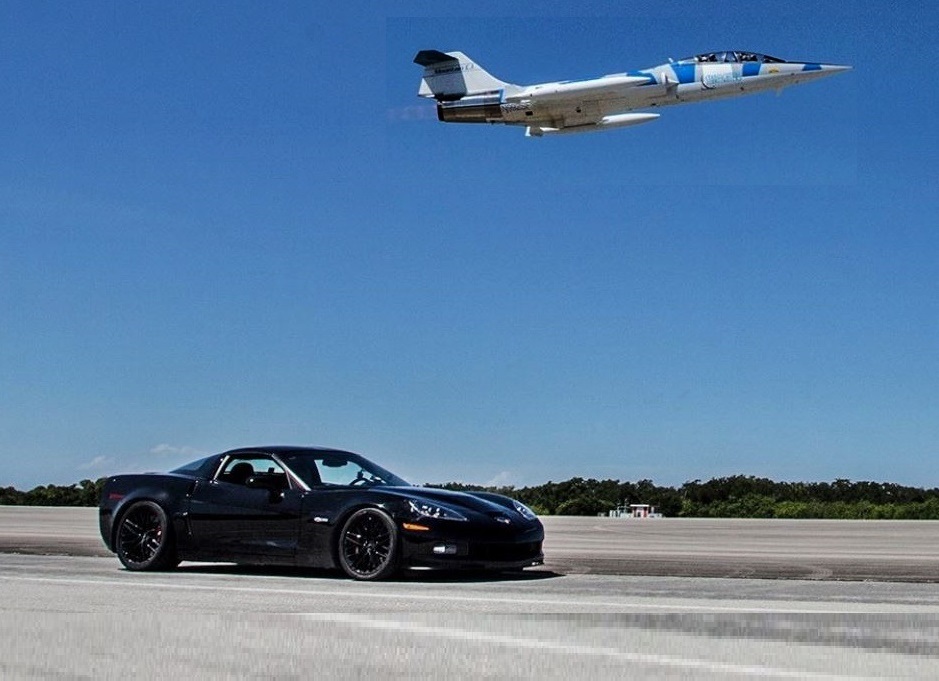
Since rolling out the first prototype known as the Genovation Extreme Electric (or GXE for short), the company has been setting new records with the car which actually manages to deliver up to 800 bhp and a range of 280 kms. Some are significant world records, including an entry in the Guinness Book of World Records for a street-legal electric car with a speed of 190.48 mph (306.7 km/h) for the standing mile.

New speed record
The performance continues to improve and this month, the GXE broke its previous top speed record set in September 2019. The new world record of 211.8 mph (341 km/h), witnessed and certified by the International Mile Racing Association (IMRA) was achieved during Straight Line Aerodynamic Testing at the Johnny Bohmer Proving Grounds at the Kennedy Space Centre in Florida.

2019 Genovation GXE

“During this December test, we broke our previous speed record that was set in September of this same year. That earlier record run was hampered by strong crosswinds, so we were confident that under better weather conditions, we could improve upon that result,” said Andrew Saul, CEO of Genovation Cars, Inc.

“We are thrilled to be the only electric car manufacturer to not only test our vehicle’s record-breaking capabilities, but to validate and achieve this milestone not once, not twice, but three times. Based on the early analysis of the data generated from the new record, we’re confident that we can gain efficiencies which will result in further top-end speeds,” Saul said, adding that the GXE continues to be the fastest street-legal all-electric supercar in the world.

2019 Genovation GXE

Although the exterior is adapted from a Corvette, the rest of the GXE was designed from the ground up to have a low centre of gravity and near 50/50 weight distribution, making it a true driver’s car.

Customers can order the supercar with either a 7-speed manual – an all-electric supercar category exclusive – or an 8-speed paddle-shift automatic transmission.

Genovation GXE

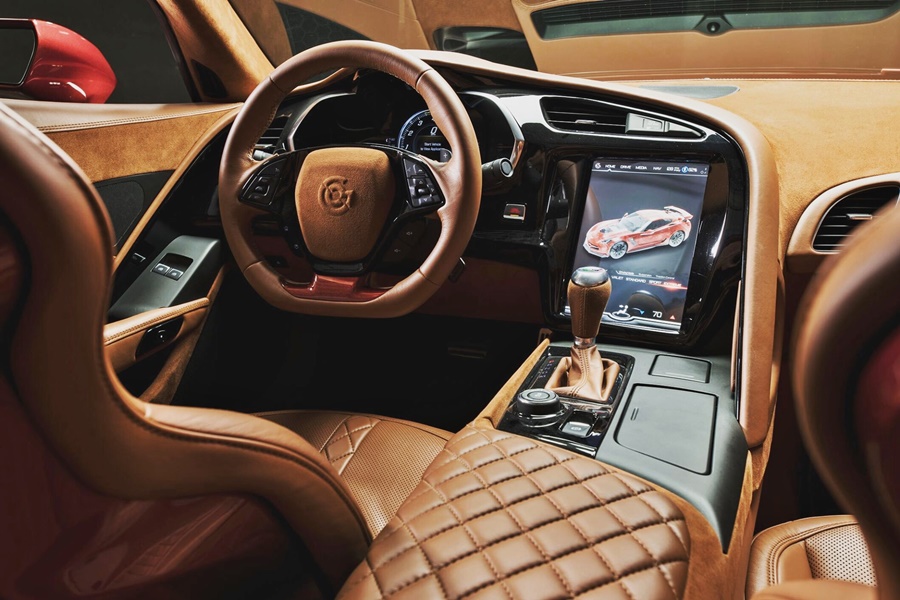
The GXE also comes equipped with a programmable active suspension, carbon ceramic Brembo brakes, state-of-the-art carbonfibre wheels, an ultra-high fidelity 10-speaker JBL stereo, a 10.4-inch custom high definition centre console touchscreen and bespoke exterior and interior.

2019 Genovation GXE

Philosophy of sustainability
“One of our primary objectives is to reduce the use of petrochemicals and energy used to make our cars. Some of the sustainable parts we intend to use are commercially available off the shelf. These include seats made with soy-based foam. Where traditional tyres usually require up to 19 litres of oil for production, we plan to utilize tyres made from natural rubber infused with small amounts of orange peel oil, a by-product of the beverage industry,” said Saul.

“The batteries we plan to use have the most stable lithium-battery chemistry on the market and are 100% non-toxic. They can be reused for stationary back-up power before eventually being recycled,” he added.

2019 Genovation GXE

Other areas where Genovation is exploring sustainability are more experimental. Testing on some materials has already been conducted and all potential options will be explored in a carefully conducted and scientific manner.

“We are studying the possibility of using composite materials made from natural, non-toxic and renewable products, such as soy-based resins rather than petrochemical resins and natural fibres made from basalt (derived from volcanic rock), jute, bamboo and burlap for trim pieces and body panels. Customers will have the option to order seat fabric made from wool,” Saul explained.

2019 Genovation GXE

The GXE will be produced in a limited-edition run of 75 units, with initial customer deliveries scheduled in 2020. Although the price mentioned early during the development was US$330,000, the company is now setting a pricetag of US$750,000 (equivalent to RM3.095 million).

PISTON.MY

BHPetrol

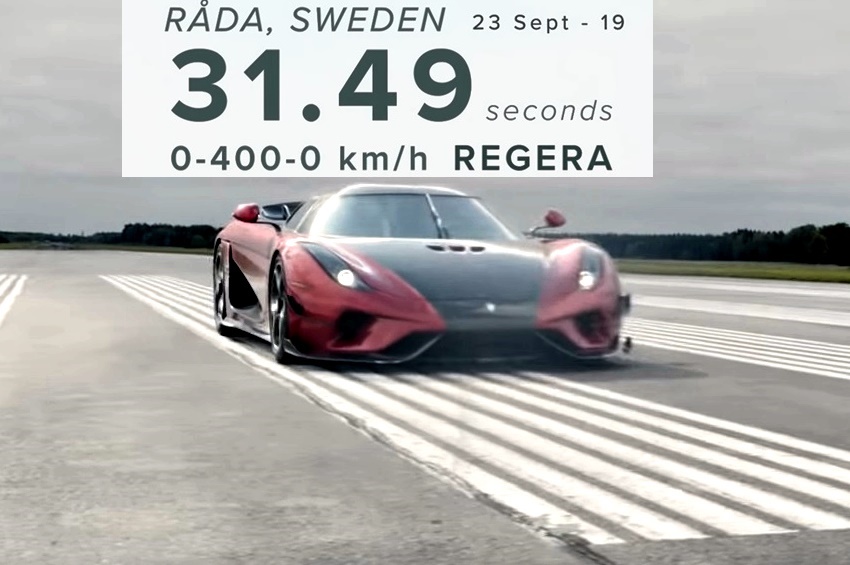
With summer having receded and the cooler autumn season started, car companies are probably trying to finish off their test runs before it gets too cold. At the Rada military airfield deep in the forests of Sweden, Koenigsegg recently put a Regera to a 0 – 400 – 0 km/h run that took 31.49 seconds and set a new world record.

The time was 1.8 seconds faster than Koenigsegg’s previously unbeaten record, set by the Agera RS in 2017. CEO and founder Christian von Koenigsegg believes that the car can perform even better under the right conditions.

Actually, the conditions were perfect – sunny with almost no wind. The 2,000-metre long track was a disused military airfield at 70 metres above seas level. To have enough runway, a stretch of taxiway was used as the starting area in order to gain an extra length of around 300 metres to make the run long and safe enough.

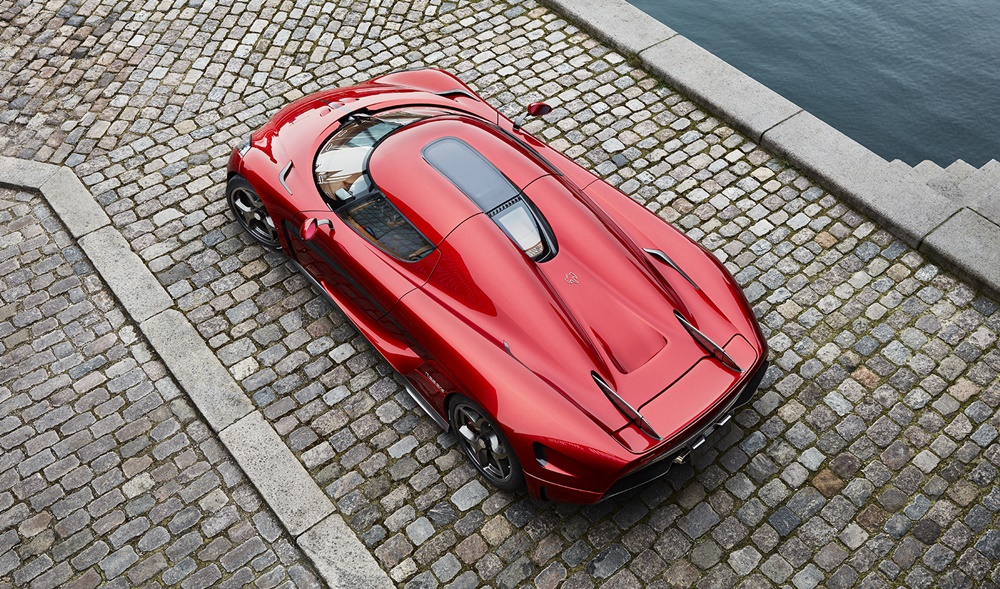
Koenigsegg Regera
CEO and founder Christian von Koenigsegg (left) with factory driver Sonny Persson who set the new record.

More ideal times possible
The total distance used for 0 – 400 – 0 km/h was 2048.46 metres. In better conditions, a total length of under an unbelievable 2000 metres should be fully achievable with the Regera.

However, as the runway has been unused and dormant, the surface was not great for traction. Furthermore, it was not possible to drive in a straight line as some bumps had to be avoided. Low grip level, swerving around bumps and general unevenness therefore took away some milliseconds and better acceleration.

One-of-a-kind Direct Drive transmission
“This was a good opportunity to showcase the true capability of the Regera’s one-of-a-kind Direct Drive transmission. As the Regera only has one gear, we had to make use of it from standstill to the record top speed of 403 km/h limited by rpm,” he said, adding that the car was driven by Koenigsegg factory driver Sonny Persson.

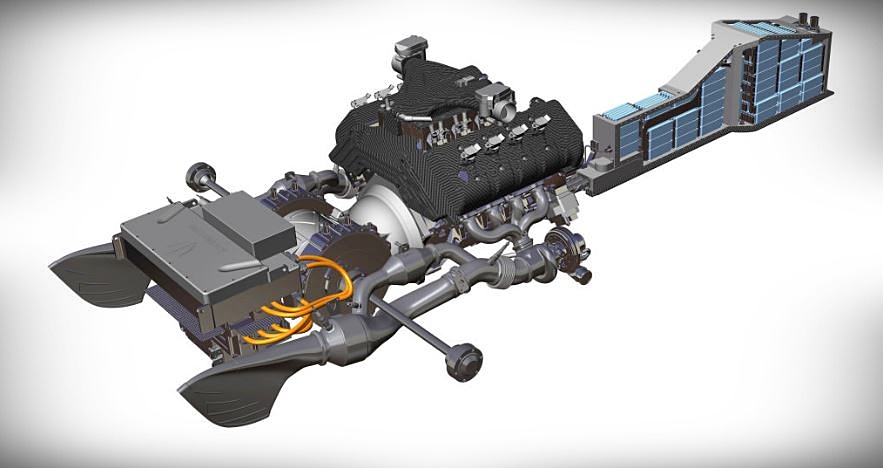
Koenigsegg Regera powertrain
Regera powertrain

“Priority has been given to acceleration and drivability between 0 – 400 km/h – no more, no less. At any given time, the Regera can and will accelerate harder in that speed range than any other production car known to us,” von Koenigsegg said.

“What was really impressive was how incredible the Regera brakes – 8.62 seconds from 400 km/h to 0 km/h is just unheard of. It is a testament to the Regera’s balance, suspension, aerodynamics and of course its in-house design and built Koenigsegg brake calipers. The proven numbers now show the greatness of the Regera. Having said that, we know we can improve these already impressive numbers on a track with better conditions,” he said.

The car used for the run was a fully homologated production car with its luxurious fittings and seats still intact. The only modifications were a roll cage and a 4-point harness for driver safety.

“The car reaches its top speed like there is no tomorrow, but then there are no more gears. This actually suits the philosophy behind the Regera, which is ‘whoever gets to 400 km/h first wins.”

Christian von Koenigsegg

Twin turbo V8 with 3 motors
The Regera combines a powerful twin-turbo V8 combustion engine with three electric motors and cutting-edge battery power in a patent-pending powertrain technology called Koenigsegg Direct Drive. This revolutionary technology removes the traditional gearbox, making the Regera lighter, more efficient and more fun to drive than more normal hybrid solutions.

Almost two years ago, Koenigsegg set a new 0 – 400 – 0 km/h record using a production Agera RS in the US state of Nevada. That record was a fantastic 33.29 seconds and this time around, the Regera got to show what it is made of.

Koenigsegg Regera

PISTON.MY

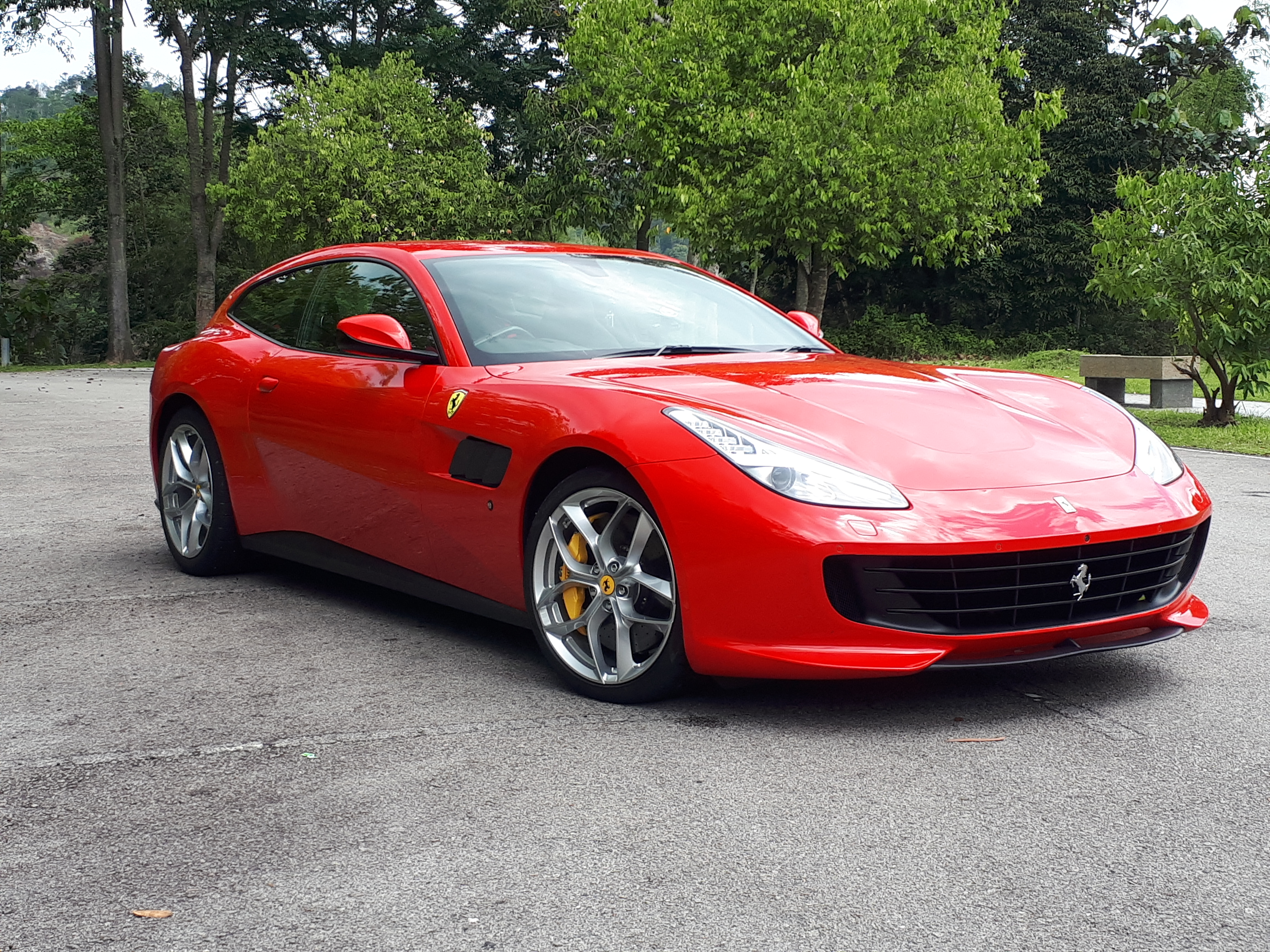
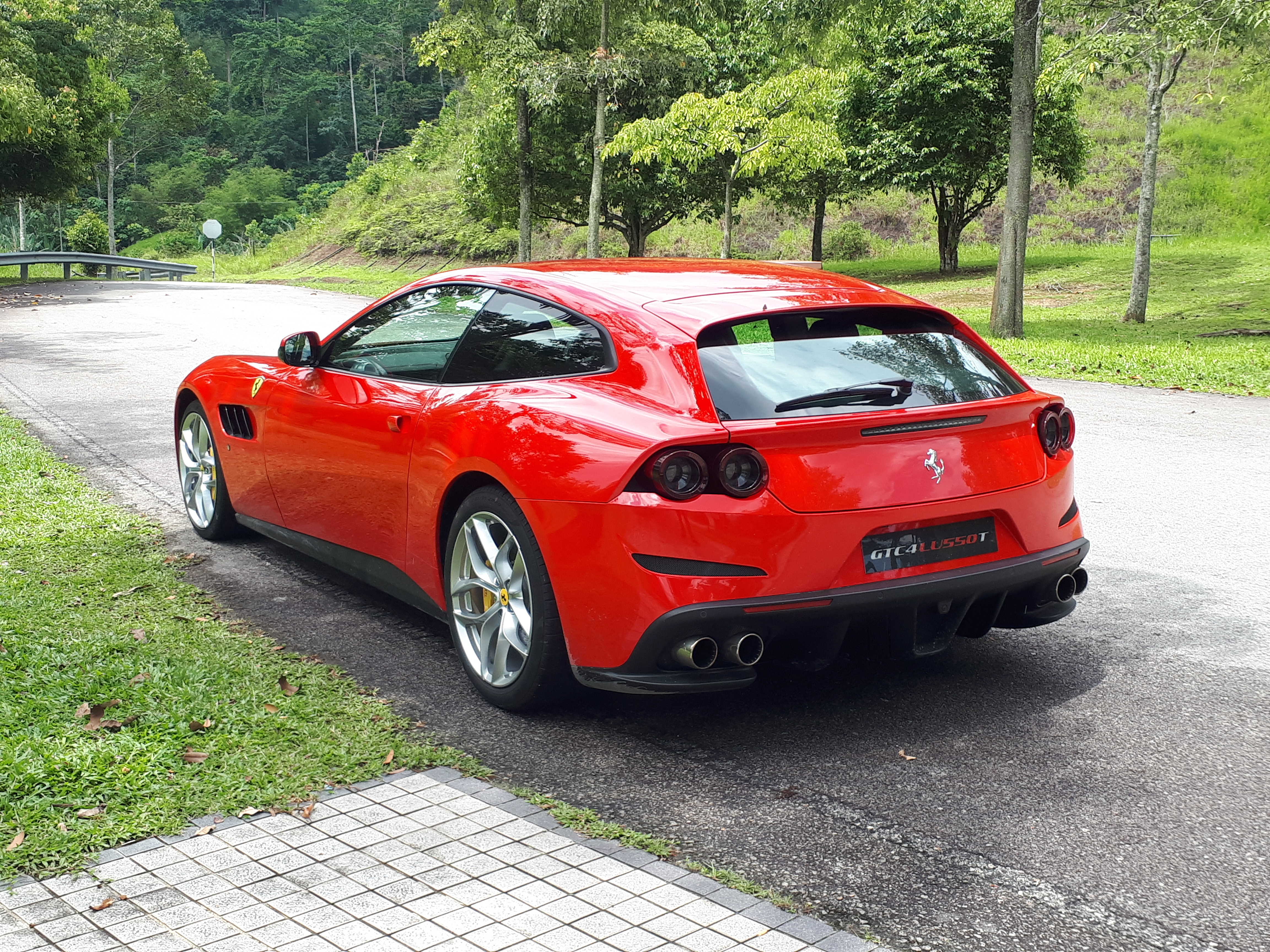
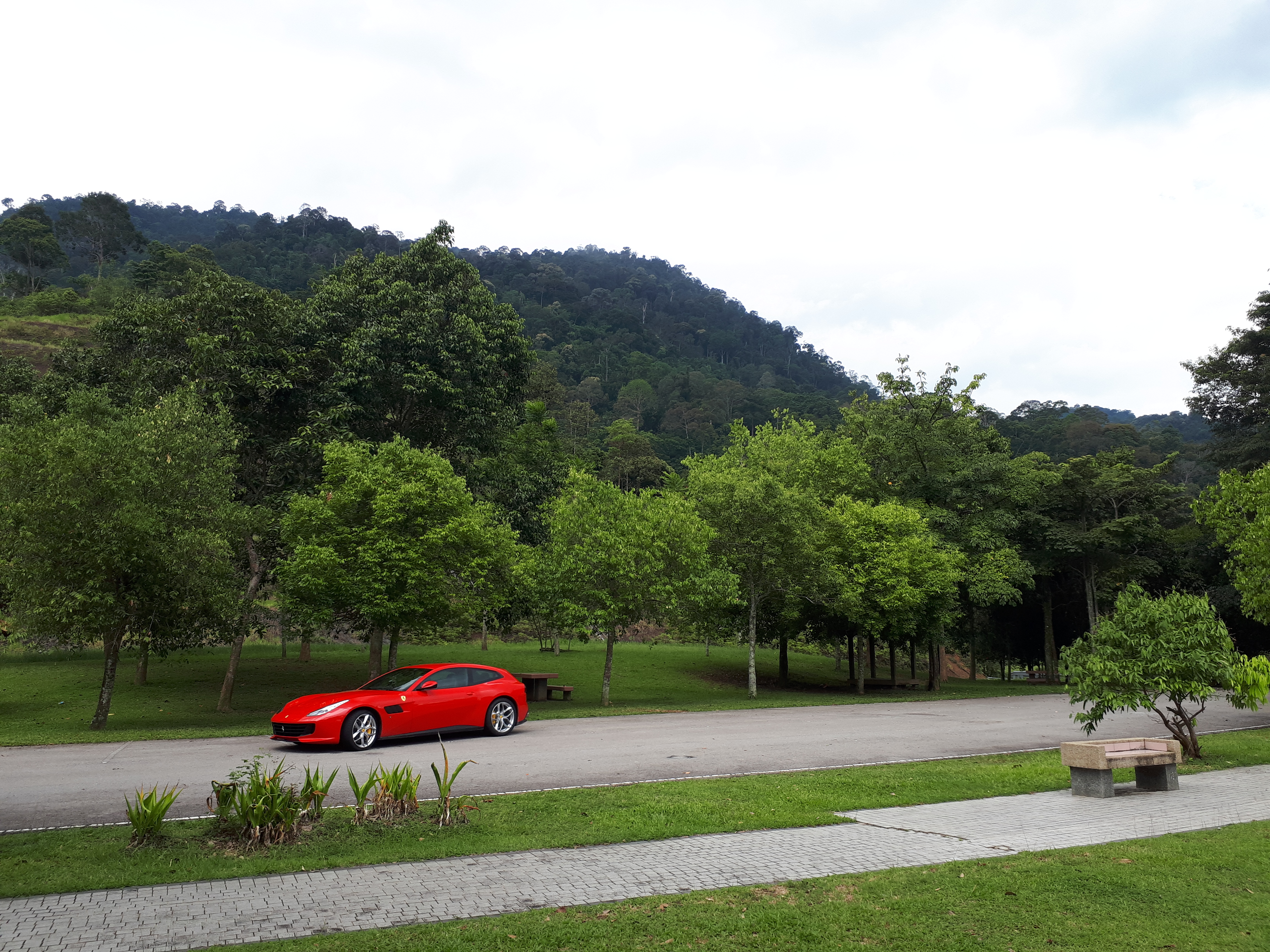
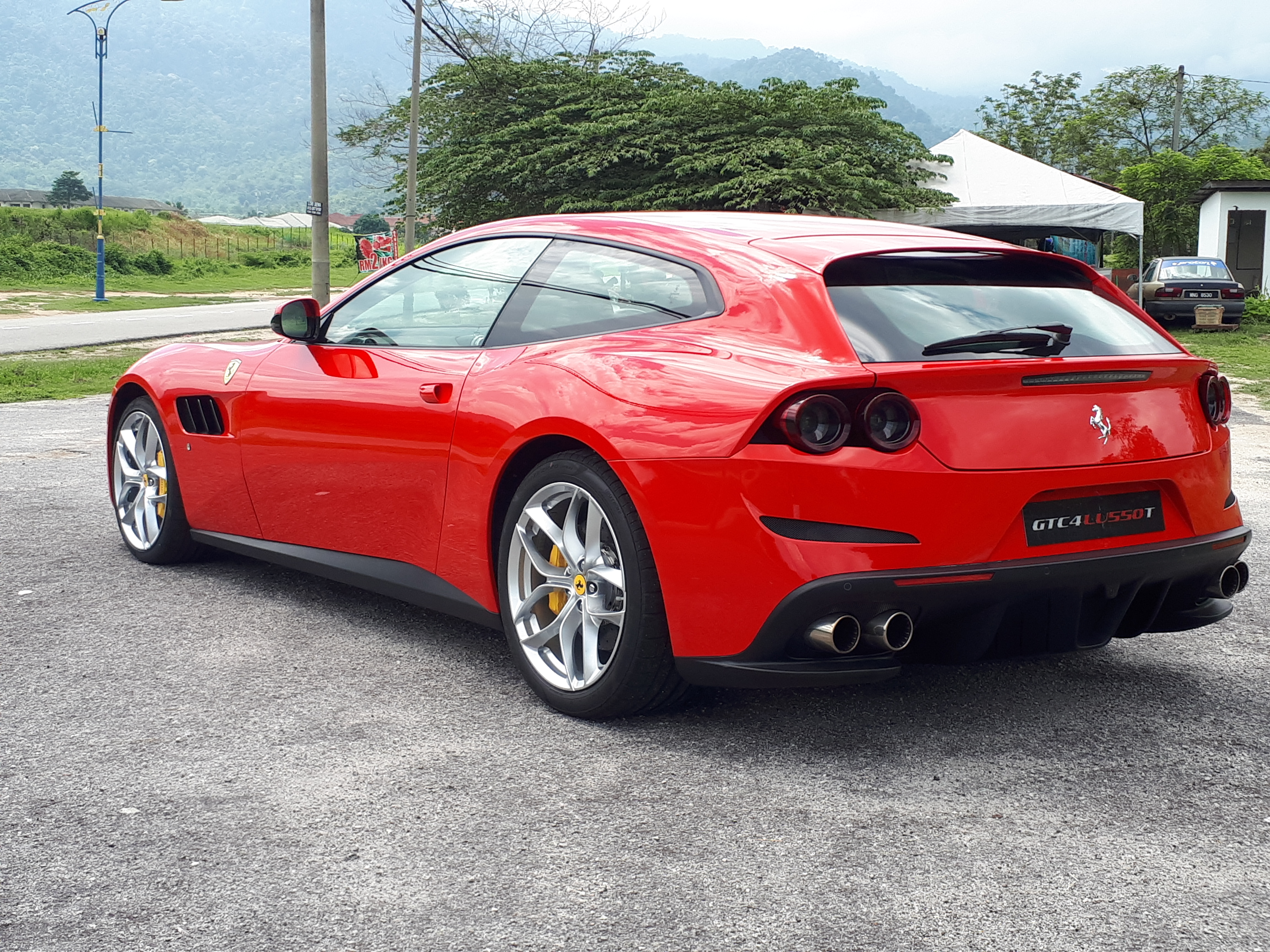
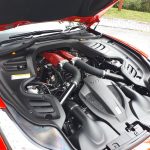
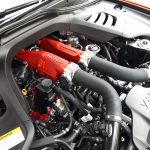
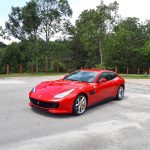
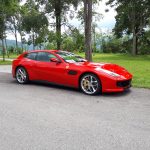
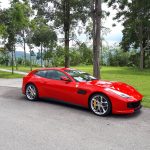
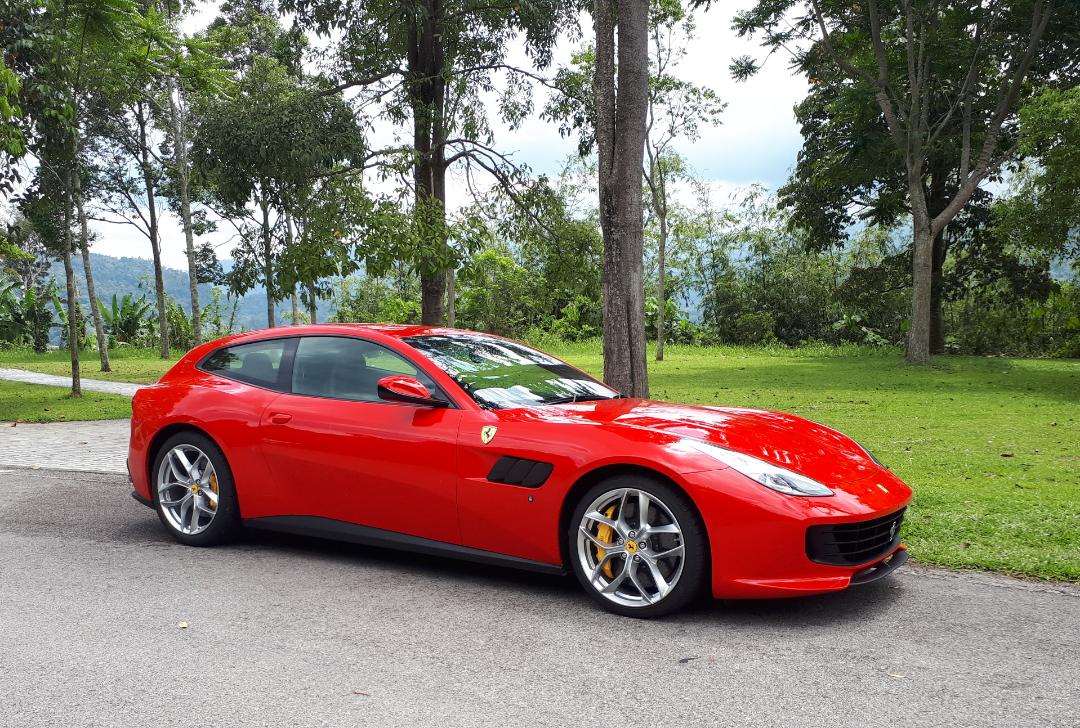
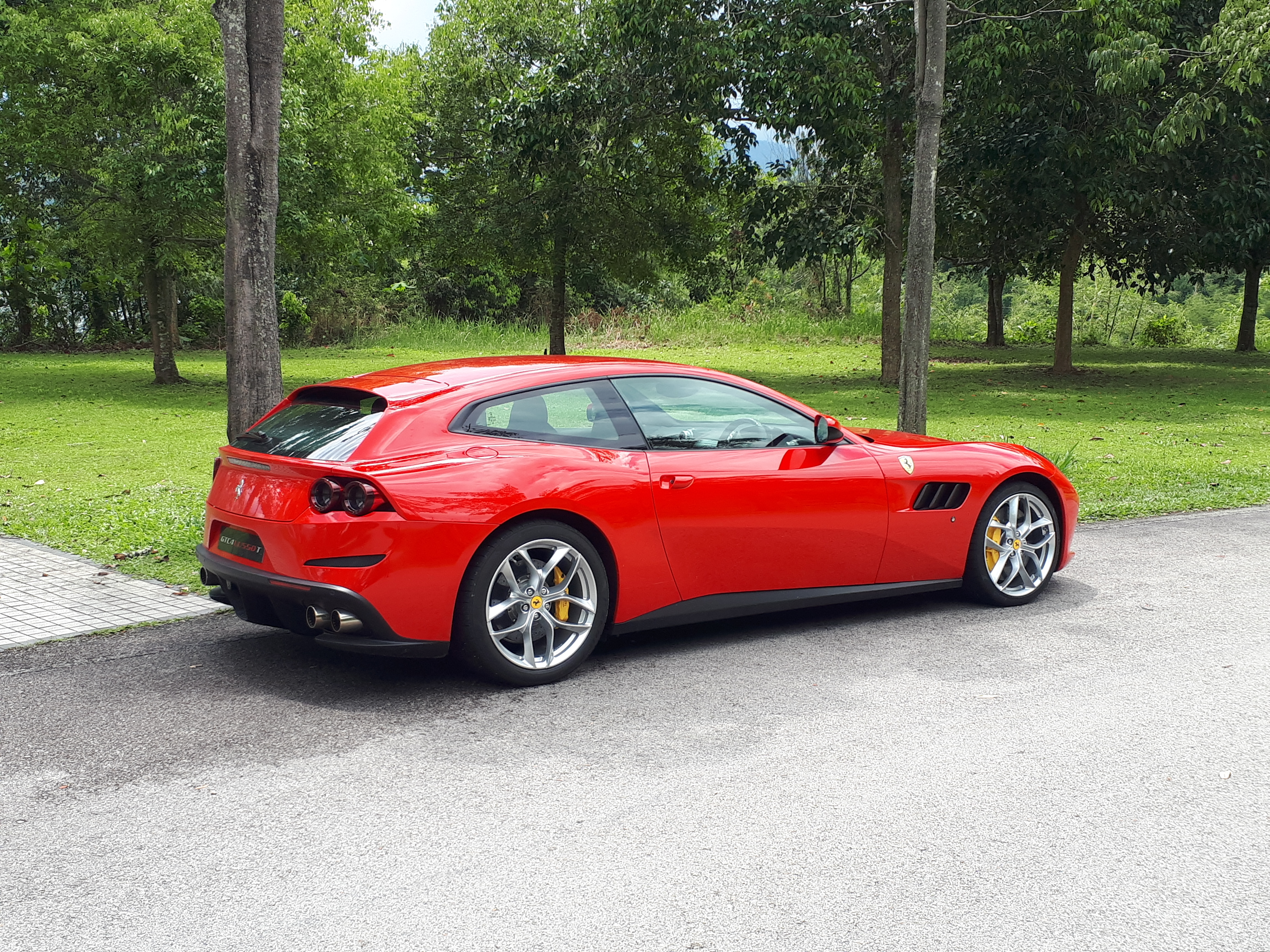
I’ve not slept very well since this drive. I’m still rather perplexed as to how it was possible to create something with so much power and yet dial in so much user-friendliness as well. I’m referring of course to the Ferrari GTC4 Lusso T, which Piston.my reviewed recently. Here’s the day we’d not soon forget…

https://www.facebook.com/piston.my/videos/1105343836305123/

The Facts & Figures…

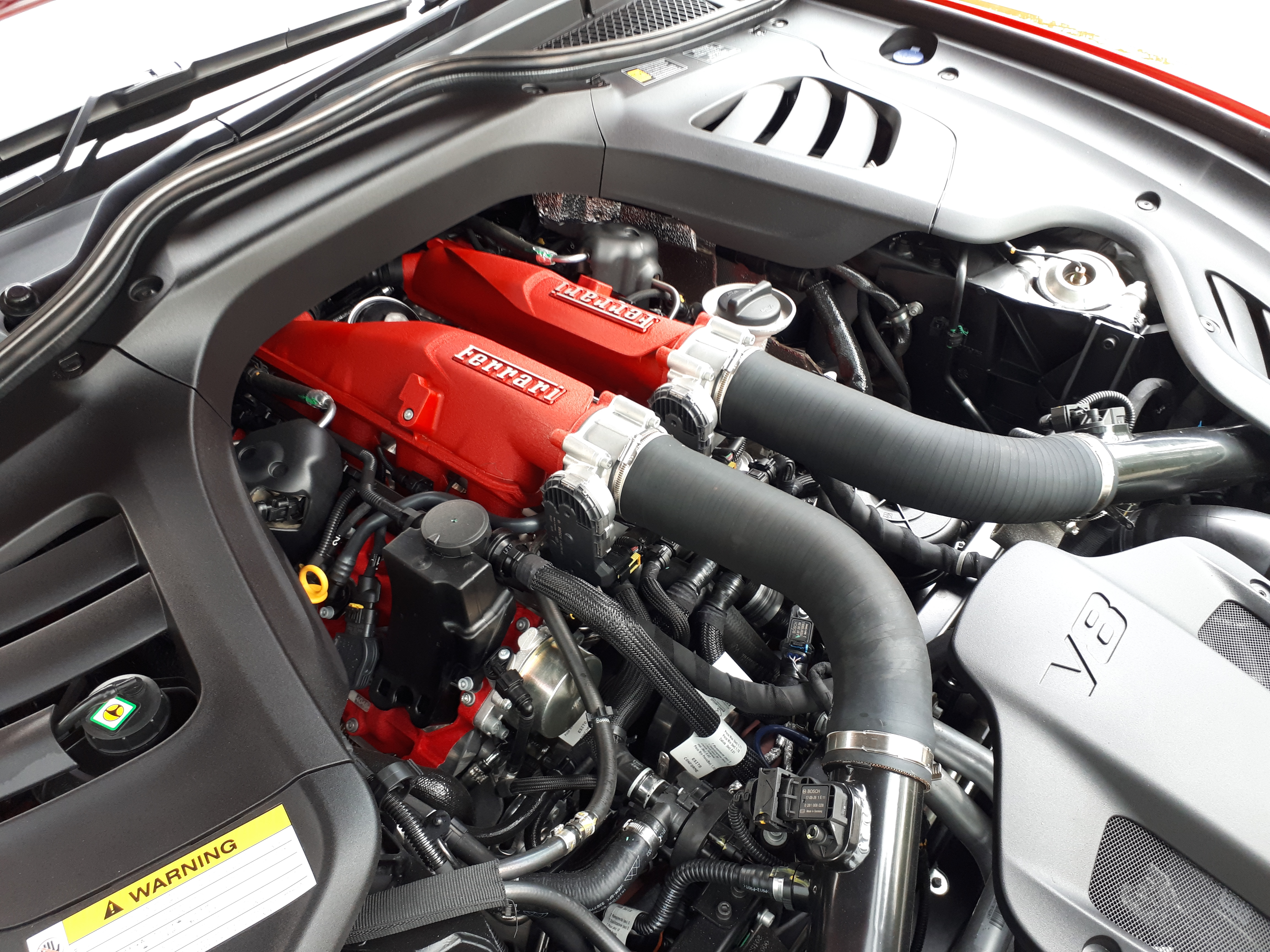
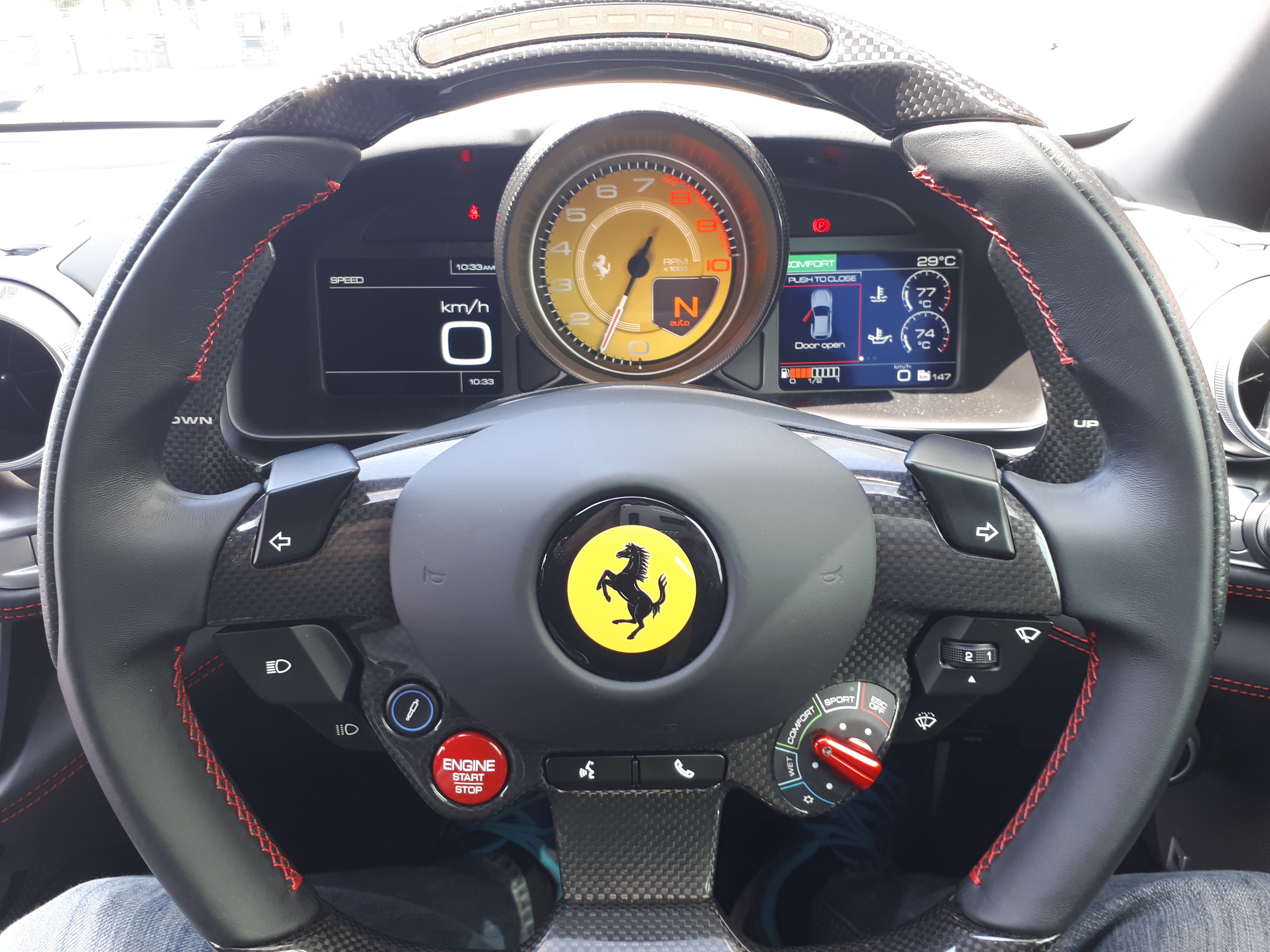
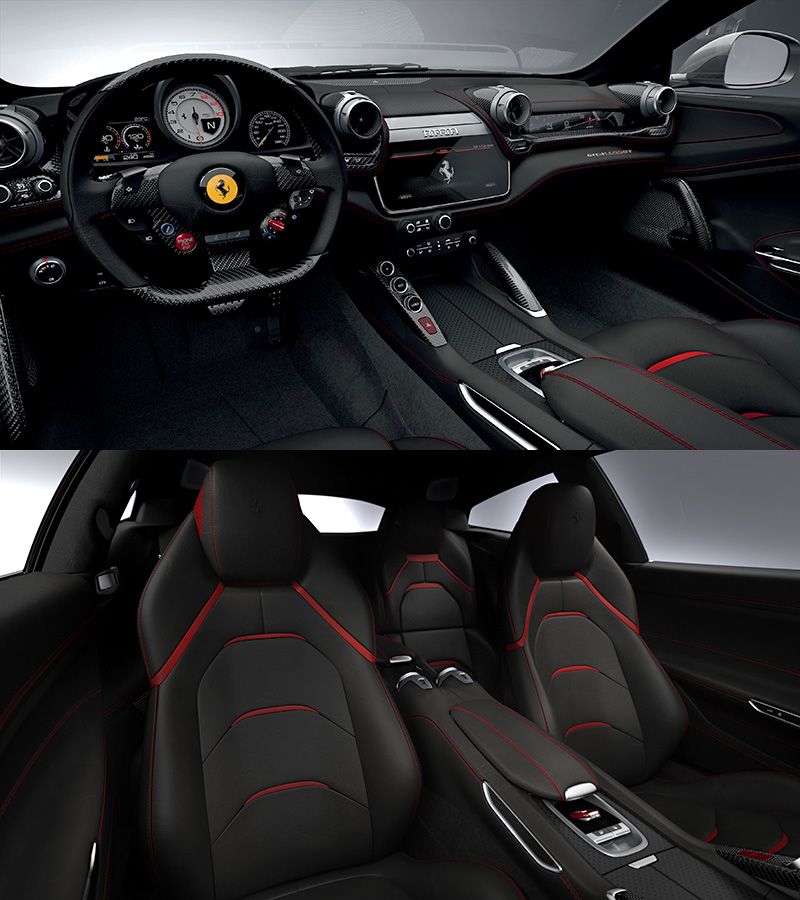
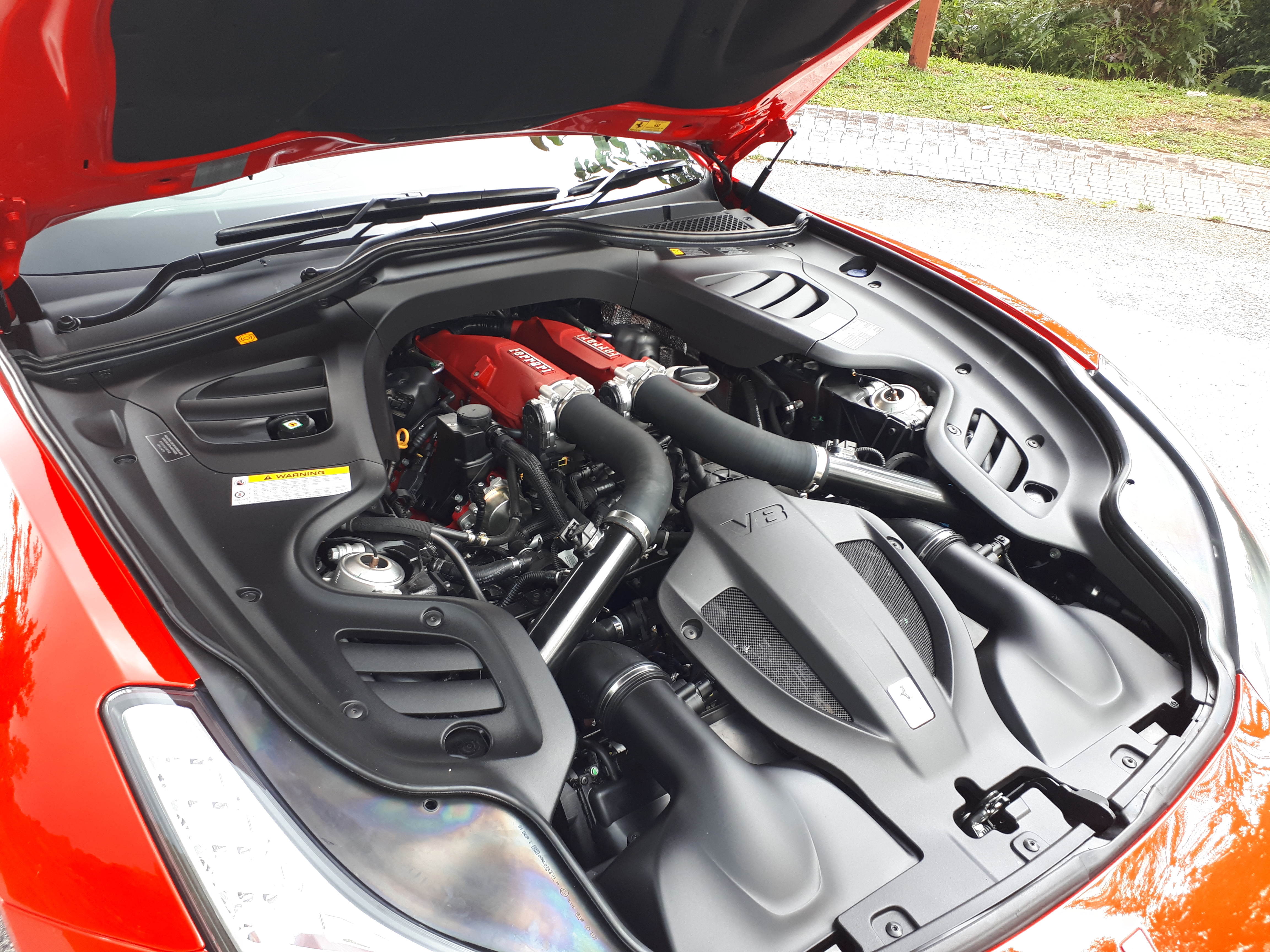
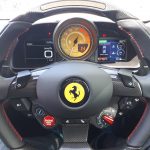
Boasting 448kW (610bhp) and 760Nm from a twin-turbocharged 3.9-litre V8 mated to a 7-Speed F1-DCT gearbox, the GTC4 Lusso T also benefits from 4-wheel steering and an E-Diff. All this culminates to enable the GTC4 Lusso T to accelerate from 0 to 100kmh in less time than it took you to read this sentence; 3.5sec to be exact. Drive modes are of course selectable via the manettino on the super-mega-multi-function-steering-wheel, which also houses the turn-signal buttons, starter button, suspension settings and even the friggin’ wipers.

Pedal to the floor, and with enough road, in 11-seconds from zero it’ll hit 200kmh, and it will see the bright side of 320kmh flat-out before giving up the ghost, while a slew of active safety systems constantly monitor every rotation of the wheel to ensure the intended path of travel remains exactly that. You can find more of the GTC4 Lusso T’s specifications here.

The Indescribables….

So now you need to forget all that techno babble above, because I really do believe that that’s not what the GTC4 Lusso T is all about. Sure it may look, feel and even sound like a super-sports car, and from most of the reviews I’ve read emanating from the USA and Europe, many of my counterparts there seem to think it is, but I don’t. Dare I say it? The GTC4 Lusso T is not really a supercar, it’s a gentleman’s super-cruiser.

Before the pitchforks and lit torches arrive en masse, accompanied by the Tifosi braying for blood though, let me explain. First-off, it’s a Ferrari, so it’s a given that it has – absolutely has – to be fireballs-out-the-flanks type powerful, and don’t get me wrong, it is. It’s just that in the GTC4 Lusso T – and this despite all the aforementioned figures I regurgitated on you three paragraphs up – is exceptionally, and I mean exceptionally, easy to drive.

It came to a point (when I was alone in the car) where I intentionally tried to get it to kill me and it outright refused. Perhaps it was able to cotton-on to my juvenile nefariousness, and decided to show me just who was smarter of the two. It won. As weird as it sounds, I was actually a bit disappointed that the car didn’t try to kill me; my own cars try to ‘suicide’ my ass all the time…

No, the GTC4 LT is actually docile; fast as hell, but docile. One giveaway could very well be the fact that it has two rear seats. Yes, it’s now possible to ferry 3 of your friends around in a Ferrari, and not just 1. However, now that that’s possible, one must take into consideration that those ‘friends’ may very well be – and will likely be – replaced by ‘family’ at some point or other.

Image from http://www.topcarrating.com/

That’s a whole new ball-game isn’t it? Rhetorical question. Of course it is. If you’re ferrying your wife in front and your 2 kids at the back, it’s 100% guaranteed that you will not be driving the same way as you would be with friends. Think about it; where’s the fun in a family-drive if half the time you’re going to have to stop to clean puke off the floorboards, seats and the back of your neck? Sorry, I needlessly over-emphasized that. My articles should come with a warning sometimes, graphic imagery ahead…

So, has Ferrari created the world’s first family station-wagon supercar? Okay, okay, shooting-brake. Happy? Tomatoes, tomatoes. Sure everyone knows they made a one-off Ferrari 456GT Wagon for the Sultan of Brunei a while back, so have they made one for the masses now? I use that ‘masses’ term lightly of course, seeing as how the GTC4 Lusso T costs more than most bungalows in really nice neighbourhoods. Well, I think they have.

Don’t get me wrong, it’s still every bit a Ferrari from fore to aft, top to toe, inside and out. It still imparts an extremely rewarding and spirited drive when (WARNING: Graphic Imagery Ahead!) you’re alone and unconcerned about copious amounts of semi-digested sustenance unexpectedly adorning the interior of your car courtesy of passengers. Attack any road, and it’s guaranteed that the GTC4 Lusso T will be able to handle anything you throw its way, with the kind of ease and panache that almost seems to taunt you to push harder. If cars could talk, this one would be saying “Is that all ya got?”…. a lot.

If you really feel the need to know more about the 20-inch alloys, 46:54 F&R weight distribution and CS brake discs that are bigger than most cars’ wheels and tyres combined, feel free to click here. But, come on, does it really matter? I didn’t think so. – Chris Wee.

Ferrari GTC4 Lusso T Photo Gallery…

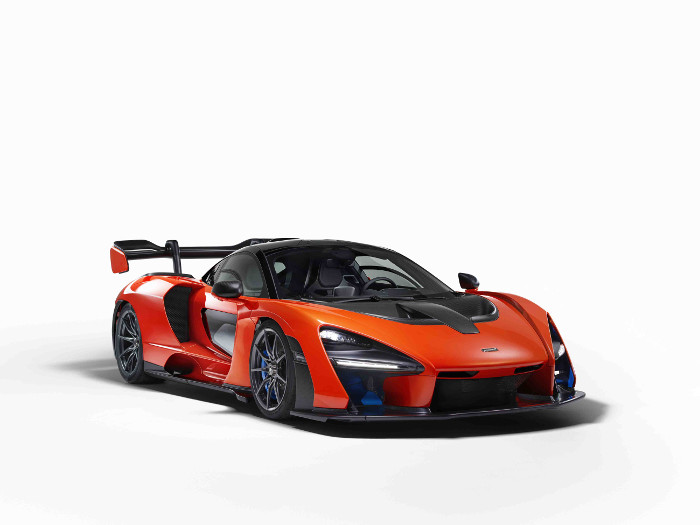
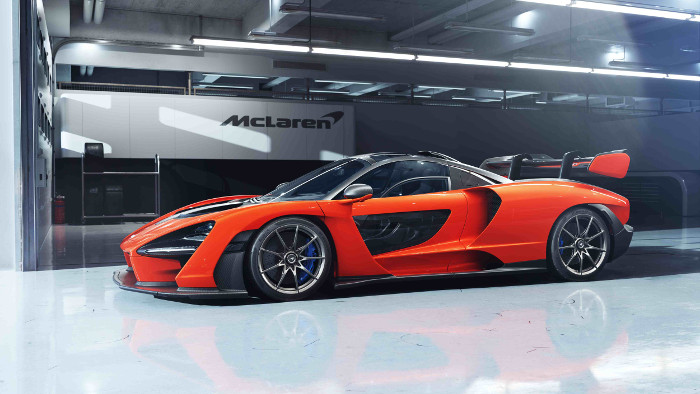
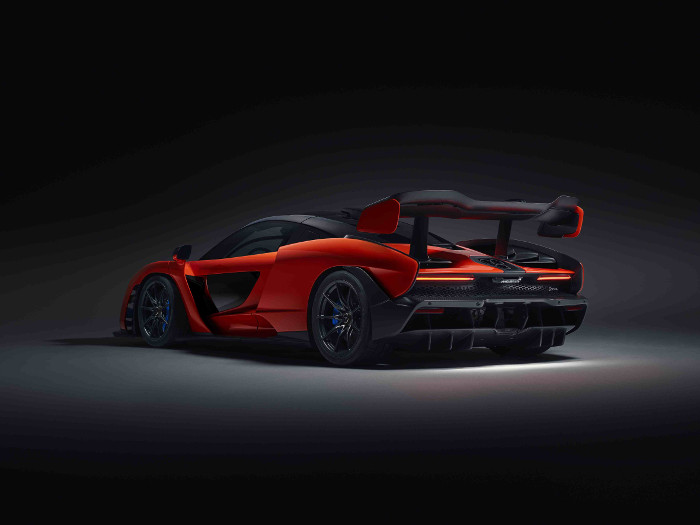
McLaren has unveiled a new supercar that’s part of its Ultimate Series collection. Called the Senna, this particular machine pays homage to former McLaren F1 Driver and legend Aryton Senna, in more than one way. Unlike the usual crop of cars we are used to seeing from the Woking based automaker, this one has minimal tech and luxuries.

It is built with the company’s carbon fibre Monocage III chassis, the very same one that underpins the McLaren 720S, and is said to be the strongest one that it has ever built. The car sports similar looks to the base 720S but comes with heavily modified bodywork, rear wing and diffusers for aerodynamic efficiency.

This rear-wheel-drive McLaren forgoes the practicality and luxuries of other cars in the stable for a race-focused setup and overall weight of just 1,198kg. In fact, it happens to be the lightest production car that the company has produced since the iconic F1. Downforce is magnified through the use of active aerodynamics for the front and rear.

“The McLaren Senna delivers true performance, all the way to the limit of a driver’s ability. With a truly astonishing power-to-weight ratio, this car is about performance that is accessible and attainable, yet at the same time exciting and challenging for the very best drivers in the world – and with an intense, sensory experience to match, “ Andy Palmer, Vehicle Line Director, McLaren Ultimate Series.

Powering the car is a mid-mounted 4.0-litre twin-turbocharged V8 engine that produces 789bhp and 800Nm of torque. Codenamed M840TR, the company’s engineers from the beginning, set out to build a powerplant that provides the intended visceral feel and experience. And it is mated to a dual clutch 7-speed gearbox that has manual and auto mode.

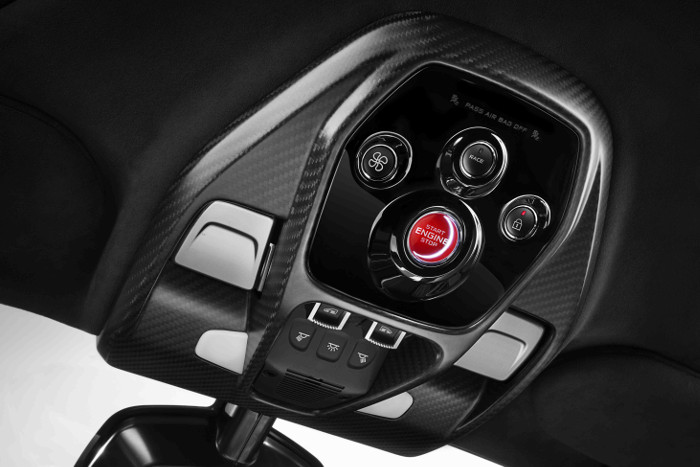
Output from the drivetrain can be altered via the Active Dynamics Panel, that sets the throttle response based on the selected setting of Comfort Sport or Track. The ambiance is is improved by several added features that include a roof mounted snorkel air intake, as well as engine acoustics transferred to the cabin via the mounts and body panels.

McLaren has fitted the car with the RaceActive Chassis Control II (RCC II), a hydraulic suspension setup works with the active aerodynamics and race tuned chassis to create a truly track-focused experience. The automaker says that the car, though road-legal, isn’t meant for regular runs to the supermarket. It’s a razor-sharp track car that can be used on the road, occasionally.

The Sena’s adaptive dampers are connected to each other hydraulically. Each has two valves independently adjustable for compression and rebound. The car’s stiffness is separately controlled via a kinetic roll system, or K-damper. As for braking power, the Senna has the most advanced system fitted to a McLaren road car. It features carbon ceramic discs that offer exceptional performance.

Production of the car is limited to 500 units, which will be hand-assembled  at the McLaren Production Centre in Woking, Surrey, England from Q3 2018. Like its siblings, all 500 will probably be snapped up in no time at all.

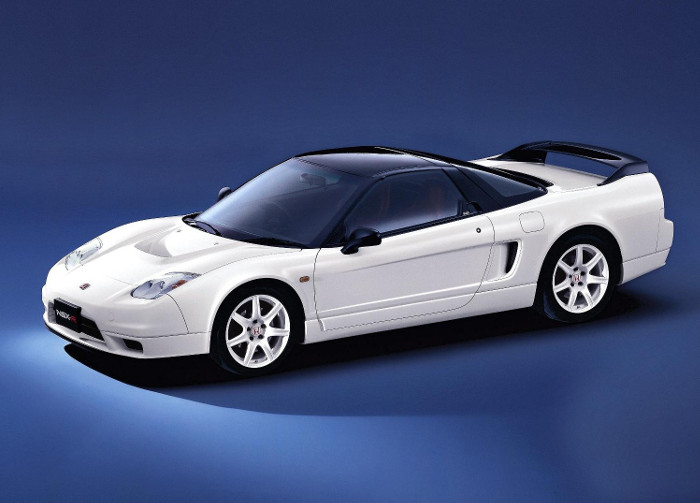
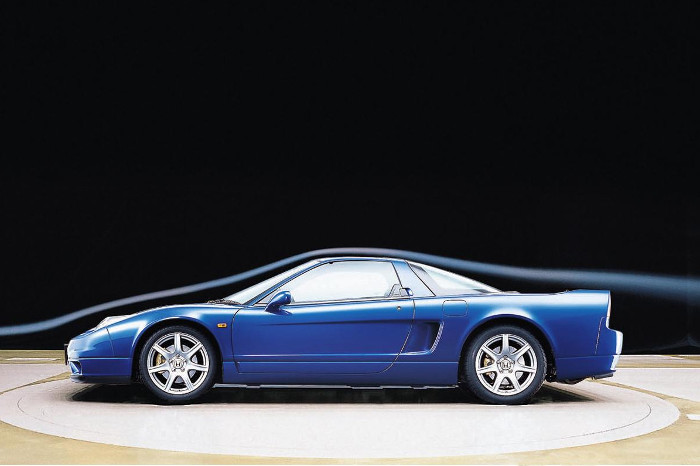
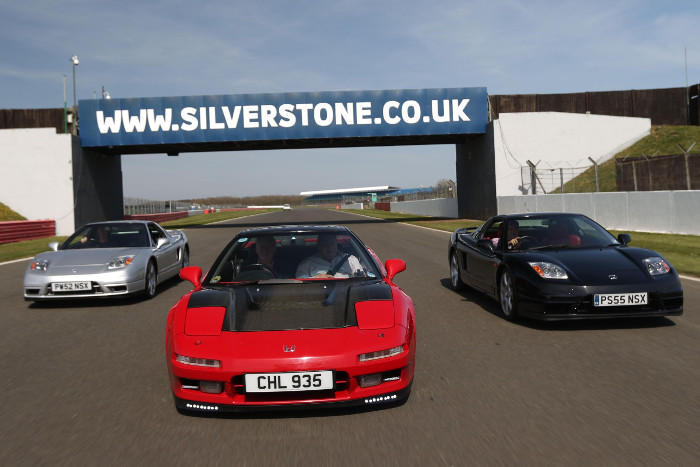
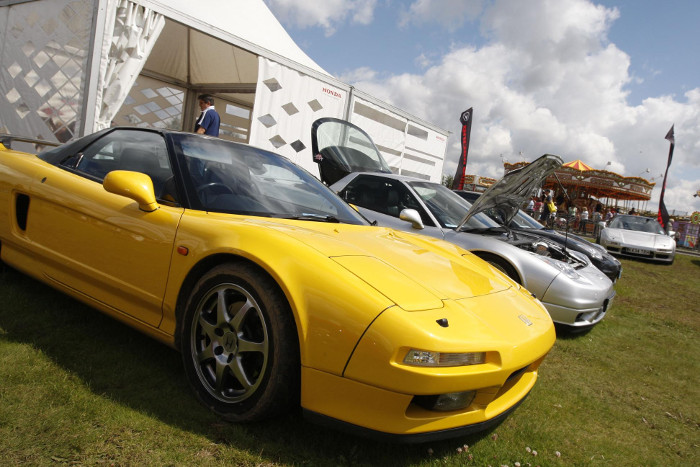
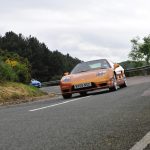
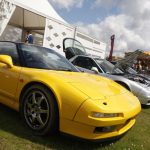
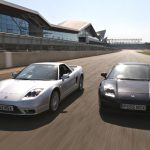
Honda’s original NSX was an amazing amalgamation of the automaker’s F1 technical know-how and experience in producing well-built machines. It was an evolution of the HP-X Concept car that was designed in collaboration with Pininfarina. It featured cutting-edge tech and styling inspired by the F-16 fighter jet.

The intention of building the car, was to show that the company was well able to challenge status quo, and prove that a supercar can offer mounds of driving enjoyment yet be reliable for everyday use. Conceived in the 1980s, Honda’s plan of building a sports car came to fruition in the early 1990s.

Built from an all-aluminum body, the NSX, which was an acronym for New Sportscar eXperimental, was powered by a naturally aspirated 3.0-litre V6 engine. Later iterations featured a slightly larger 3.2-litre variant. It was either mated to a 5-speed manual or 4-speed automatic transmission.

Granted, it didn’t offer the same visceral feel as a V8 powered Ferrari, but the car more than made up for that with nimble handling characteristics, reliable mechanicals and decent power delivery. That, packaged into a slender and lightweight 1990s body, caused a bit of a stir during its debut.

What helped the car gain its cult status was that F1 legend Aryton Senna, was involved in its development. His input helped shape the NSX’s driving characteristics, which is especially evident when the car is taken to its limits.

A video published by Petrolicious on its Youtube channel, depicts the love affair between Sean Lee and his NSX. Lee was smitten with the car from an early age. At a later stage in his life, he managed to acquire the car and enjoy it to its fullest. Check out the video and let us know what you think of it and whether it deserves to be revered.

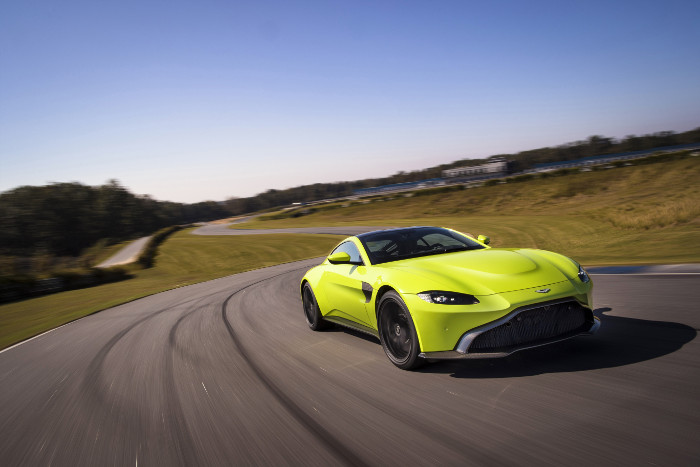
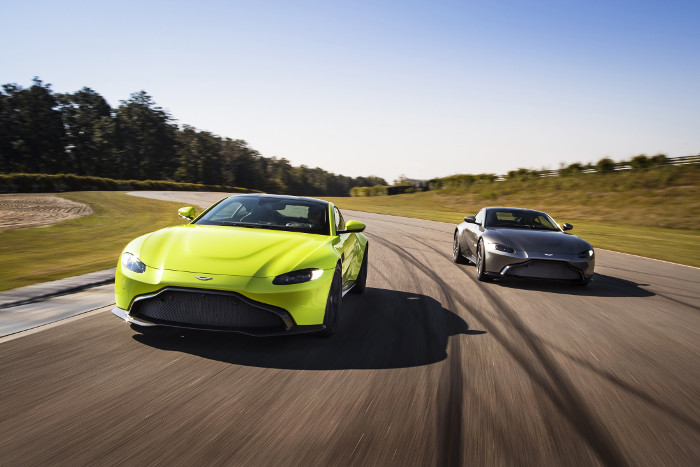
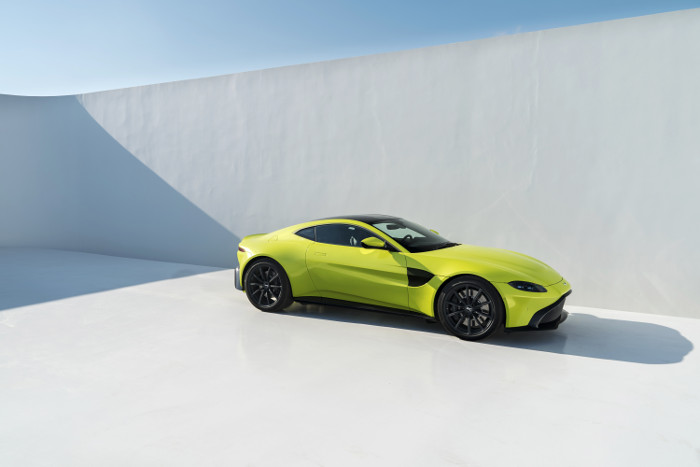
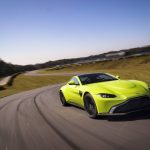
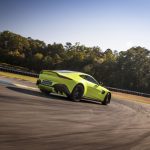
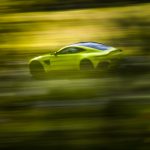
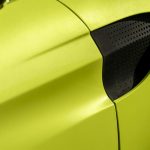
Aston Martin has finally revealed the newest member of its family, the latest Vantage. This sleek two seater picks up where its predecessor left off, offering a sleek silhouette and a healthy helping of power. Its design however, is a major departure from the automaker’s current design language. At 4465mm, the Vantage is 284mm shorter than the DB11, and is 34mm shorter than a Porsche 911.
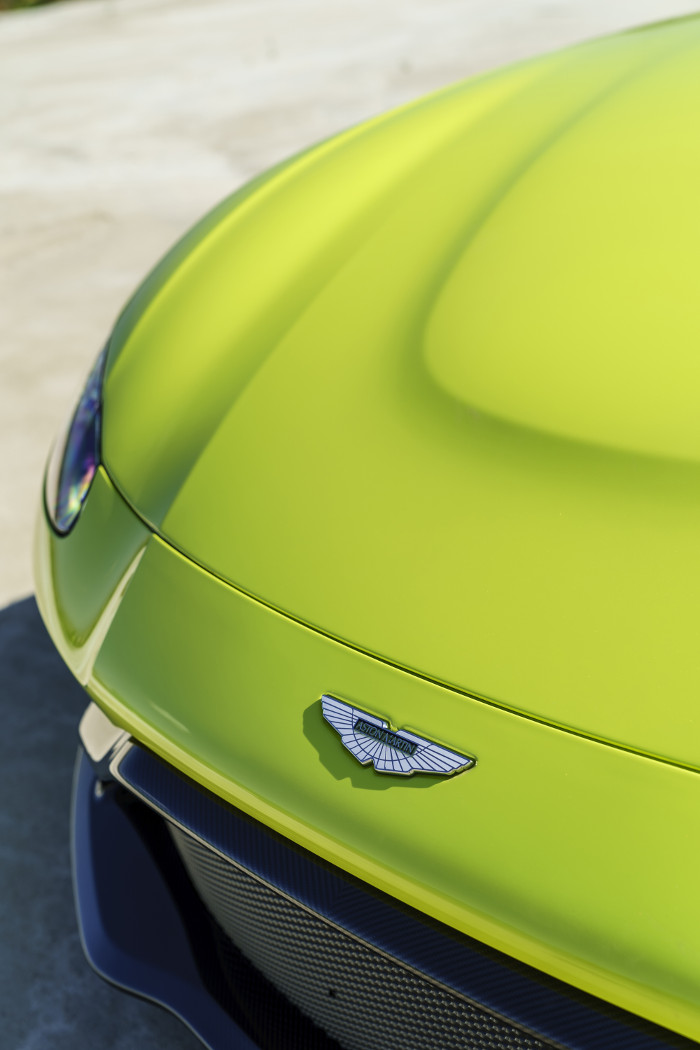
The signature front grille receives far more real estate than before, it’s placed lower and has been integrated with the lower lip assembly. Gone are the familiar headlights and in its place, narrower ones that blend with the lines of the front fascia. Most prominent of the lot has to be the large swooping bonnet that looks like it stretches for miles.

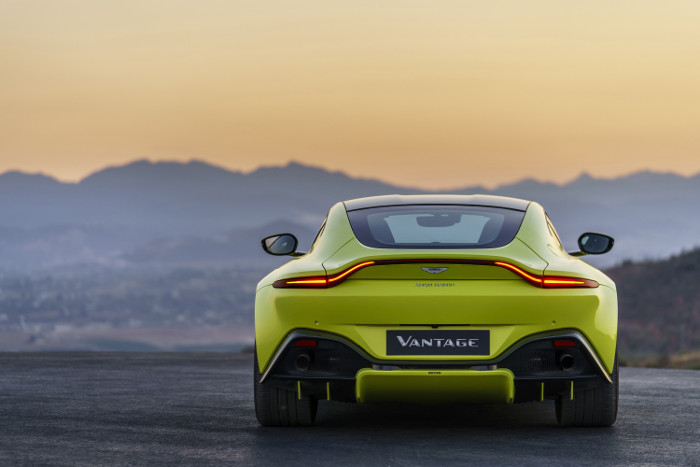
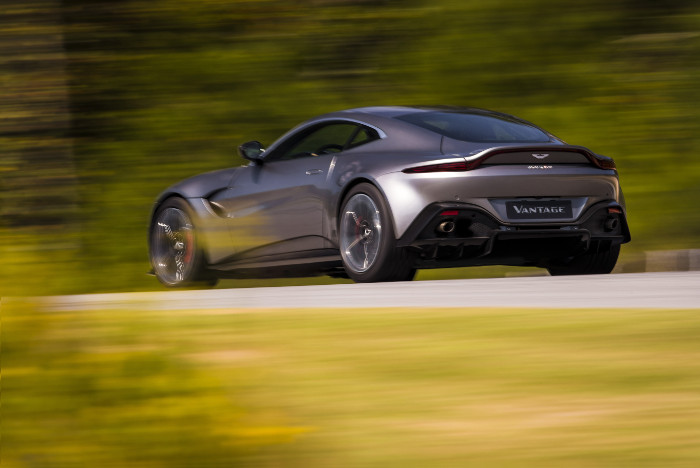
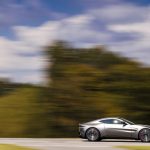
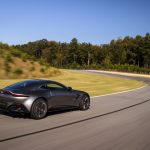
From the side however, the shape isn’t that dissimilar from its predecessor, but the lower roof line and angular contours do add to the design’s depth. As far as the rear is concerned, you would be forgiven for mistaking the new Vantage for a Porsche, at first glance. The rear haunches, wedged shaped upper section and elongated LED taillights bear more than a passing resemblance to the 911.

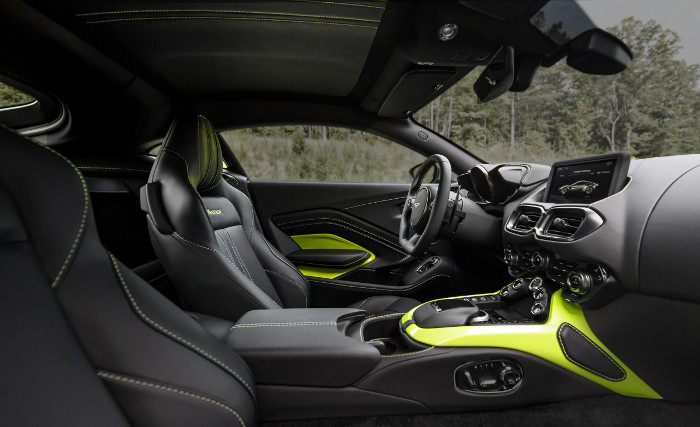
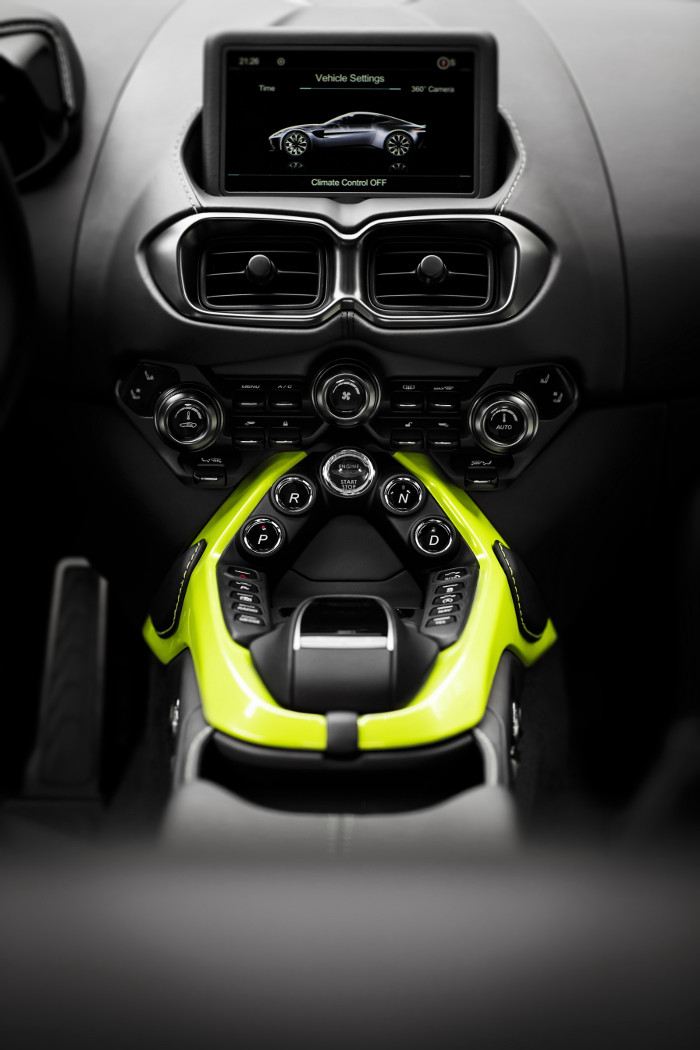
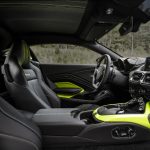
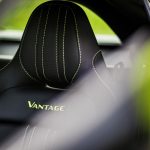
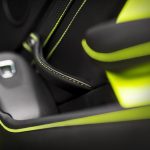
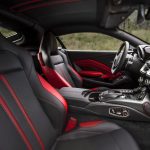
On the inside, there’s a whole new interior, which is a breath of fresh air considering Aston rarely likes change. The car’s switchgear consoles are huddled together under the twin chrome-outlined air vents.The 8-inch LCD screen is responsible for controlling the audio, phone mirroring and navigation. A nice addition is the body-colour matching lower centre console, it and the leather inner door handle housing add to the car’s exclusive feel.

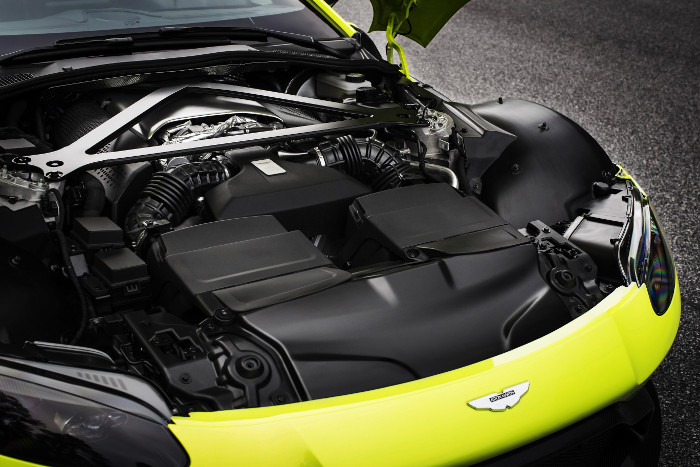
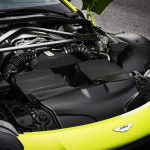
Under the bonnet is a 4.0-litre V8 twin turbo engine that develops close to 510bhp and 685Nm of torque. It’s a Mercedes-AMG unit that has been reworked by Aston Martin engineers to ensure that it delivers the same character and feel of engines that preceded it. Both its induction and exhaust systems have been reworked to produce the same visceral feel of the normally aspirated V8 in its predecessor.

The Merc sourced powerplant is mated to a ZF 8-speed automatic transmission that is rear mounted to help with weight distribution. It has specially developed software that allows for shorter and crispier gear changes as well as the refinement and practicality, which is beyond that of dual clutch gearboxes. As such, the Vantage is able to sprint from 0-100km/h in about 3.5 seconds and reach a top speed of 314km/h.

Aston Martin’s Chief Technical Officer, Max Szwaj, said, “As an automotive engineer the challenge is always the same: to achieve greater efficiency in every area of the car. With an unashamed sports car such as an all-new Aston Martin Vantage you have another challenge – the relentless pursuit of greater emotion and excitement. Not only have we massively improved the hardware of this new Vantage, we’ve invested it with true heart and soul.”

The suspension features a forged double wishbone arrangement at the front and a multi-link one at the rear. Thanks to adaptive damping, the car is able to understand and compensate for the driving conditions and driver needs through the use of several sensors. Four driver modes, Sport, Sport Plus and Track, alter the powertrain, transmission, suspension and steering systems to deliver the required output.

And for the first time on an Aston Martin, the Vantage is fitted with an electronic differential or E-Diff. Linked with the car’s electronic stability control, it is able to understand the car’s behaviour and shift power to the wheel that needs it most. Unlike conventional Limited Slip Differentials or LSDs, it can react in a matter of milliseconds. This improves the car’s cornering and handling capabilities.

Stopping power comes courtesy of ventilated two-piece 400mm cast-iron discs at the front, with ventilated 360mm discs at the rear, gripped by 6-piston front and 4-piston rear calipers. They offer decent stopping power for the 20-inch lightweight rims that are wrapped in Pirelli P Zero tyres.


The new Vantage is on sale now in the UK, Germany and the USA. Deliveries are scheduled to begin during the second quarter of 2018. The car comes equipped with the latest tech and is bound to be a top seller.

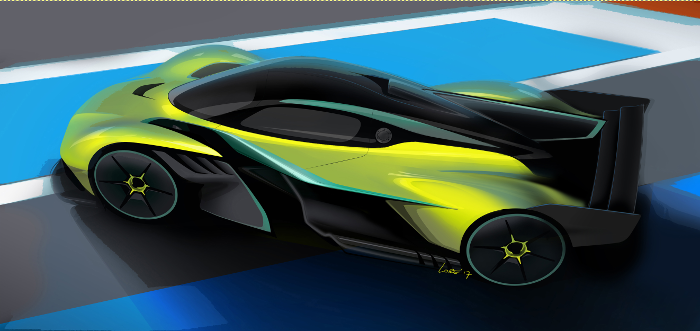
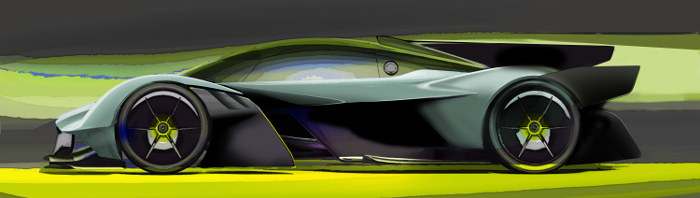
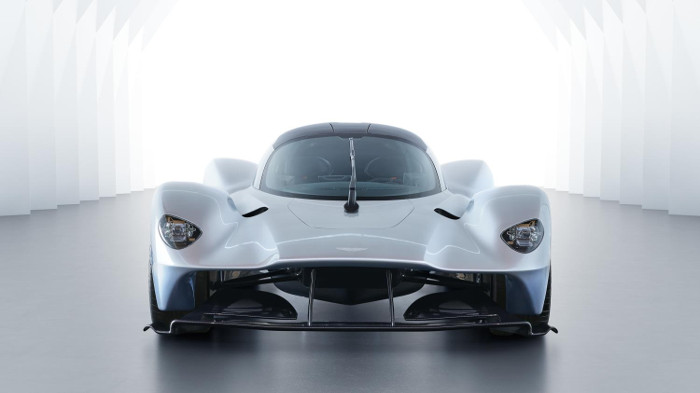
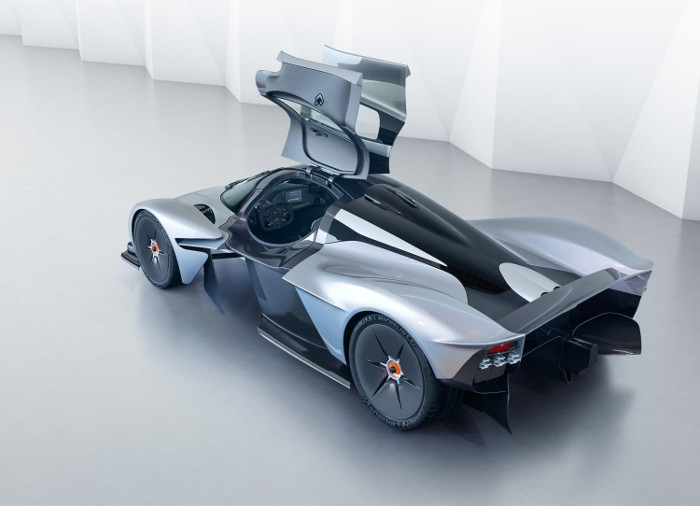
Aston Martin has announced a new track focused racer called the Valkyrie AMR Pro, which was designed and developed alongside the roadcar of its namesake. But unlike the roadcar, the AMR Pro doesn’t need to comply with the same regulations and requirements. As such, designers were given free reign to create the most efficient model possible.

And the result, is a car that features a more fluidic design, canards protruding from the door sections, lower and wider double decked rear wing and other aerodynamic upgrades. The windshield is made from polycarbonate to save weight and its tyres are smaller than the road car at 18-inches – to fit the required Michelin rubber.

The automaker gutted the car in the name of reducing weight and as such, the car forgoes the heater/de-mister blower and infotainment screens. Even the bodywork has been constructed out of carbon-fibre that’s lighter than the standard Valkyrie. Other such measures include new suspension uprights, carbon-fibre wishbones, molded race seats.

Stopping power comes from F1 inspired race-spec carbon-carbon brakes that is best suited for track use. Powering the car is the same 6.5-litre Cosworth-built V12 engine, but it develops more power and torque. This coupled with extremely aerodynamic bodywork enables the AMR Pro to hit a predicted top speed of 402km/h and possess exceptionally good cornering abilities.

According to the automaker, the car is expected to be such an amazing performance car, that its lap times should be able to rival that of current generation F1 or LMP1 cars. This feat which was once considered impossible for vehicles that weren’t professional race cars, has now been realised by incorporating revolutionary techniques.

The use of ultra lightweight components, removal of unnecessary electrics and luxury items as well as altering the overall silhouette for maximum efficiency have made the AMR Pro far superior to the standard Valkyrie. Like the road car, the AMR Pro’s Rimac Energy Recovery System remains unchanged, but its control systems will be re-programmed.

Dr Andy Palmer, Aston Martin President and Chief Executive Officer, said, “Valkyrie has always been about pushing the limits and redefining the possible. The road car will set new benchmarks for performance, engineering and technology – a hypercar in the truest sense – and with the track-only Valkyrie AMR Pro those limits will be pushed further still.”

The Valkyrie AMR Pro is the culmination of effort from Aston Martin, Red Bull Advanced Technologies and project partner AF Racing. The brainchild of Adrian Newey, only 25 of these cars will be produced in 2020, however, all of them are already spoken for.

Archive

Follow us on Facebook

Follow us on YouTube