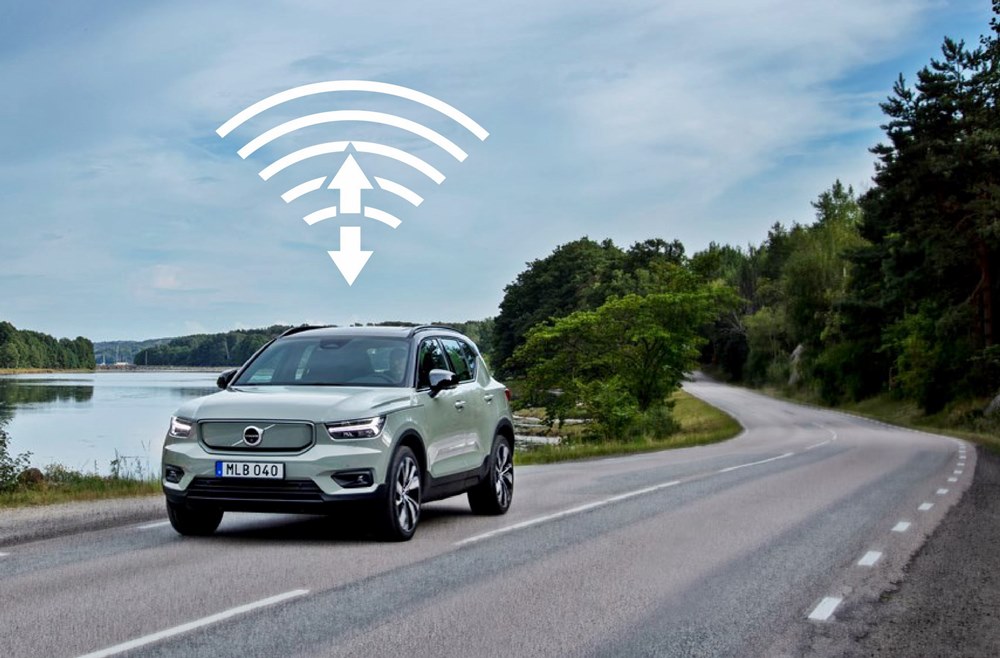
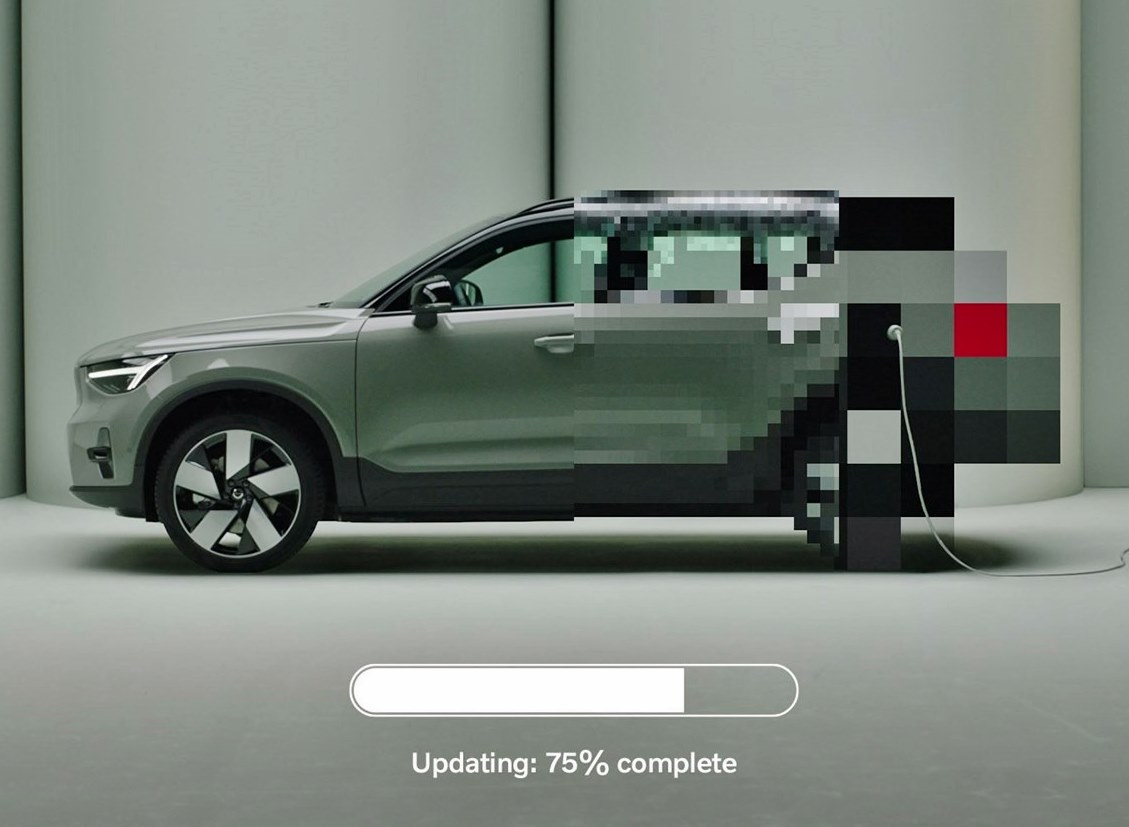
Over-the-air (OTA) updates are a convenience we’ve been enjoying with smartphone systems and apps for years, as well as on our computer systems. Periodically, you’ll be informed that an update for an app is available and just a click to allow it to come to your phone is all it takes, and you get an improved app (or a bug is fixed).
It’s something that the auto industry has also been using for at least 10 years now, making it unnecessary for owners to send the vehicles to a service centre to update software for the many systems that today’s cars have. The ability to have the update carried out not only saves time for the aftersales providers but also keeps the vehicle’s systems up to date and running optimally. Through in-house development of software and OTA updates, the carmakers continuously adds new features and improves existing functionalities.
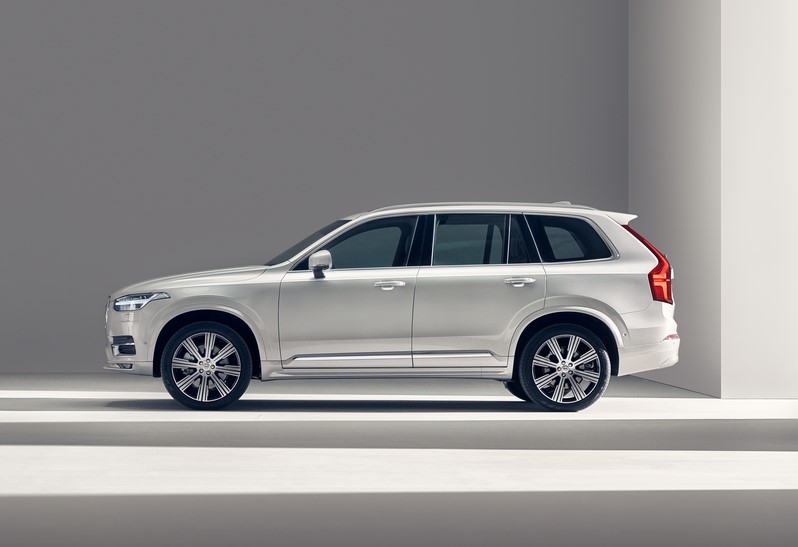
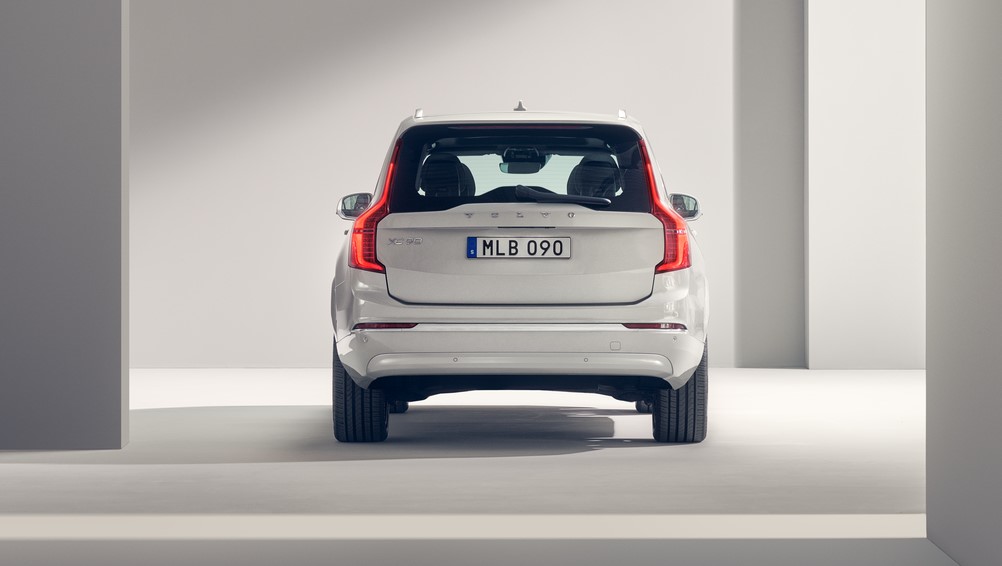
Volvo Cars initiated its first OTA update in 2015 for the XC90 and with effect from model year 2023, all new models from the Swedish carmaker will have OTA update capability. The OTA updates – free of charge, of course – can bring feature improvements, ranging from better energy management through improved climate timers and updates to mobile app functionality and in-car applications. Energy management improvements are of particular importance to the electrified models, helping to maintain appropriate battery levels during both cold and warm days to maximise driving range. The company believes that OTA updates will make a Volvo better over time.
A recent OTA update, the company’s eighth complete car update, reached more than 190,000 Volvo vehicles across the planet. Volvo owners enjoy an upgraded infotainment system with the latest version of Android Automotive OS, Android 11. They will also get access to new app categories on the Google Play, including navigation, charging and parking, while video streaming is expected to be added later in the year.
XC90 was the first Volvo model to receive OTA updates for its infotainment system in 2015, and the XC40 Recharge was the first Volvo fully electric model to receive an OTA update in February 2021.The OTA update for the XC40 Recharge provided new features, bug fixes and stability improvements.
The company also said today that it will offer its infotainment system with Google apps and services such as Google Assistant and Google Maps built-in across all new models, continuing the rollout of one of the best in-car infotainment platforms on the market. The Volvo Cars’ infotainment system is jointly developed with Google and brings to owners a user-friendly interface with access to well-known apps and services.
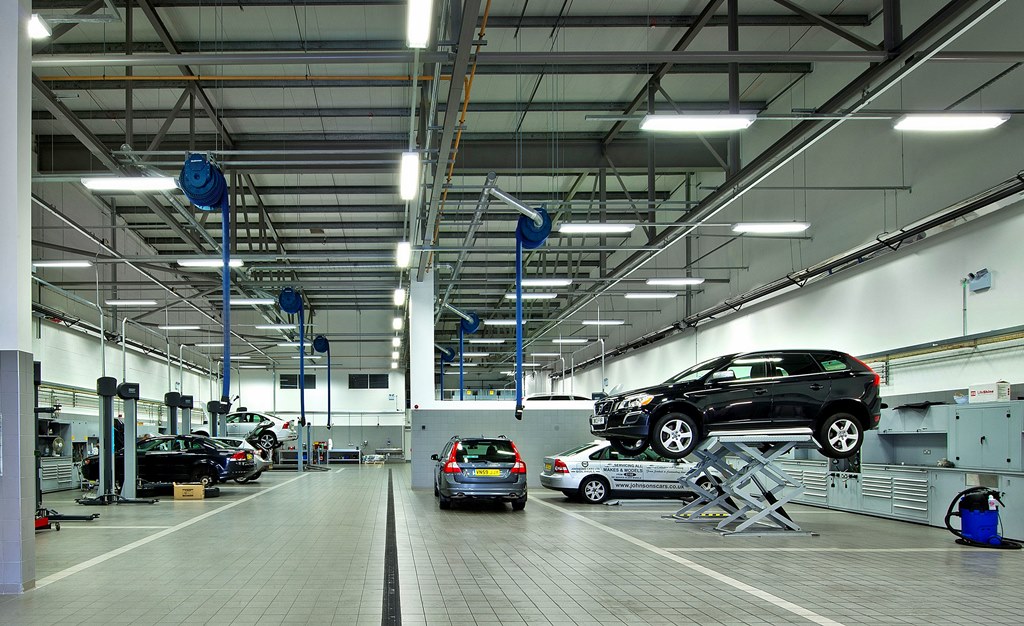
OTA updating removes the need for owners to bring their vehicles to the service centre just to perform updates as the new software can be sent ‘over the air’ to wherever their vehicle is, virtually anywhere in the world.
“The benefits of over-the-air updates are obvious,” said Henrik Green, Chief Product Officer at Volvo Cars. “Yesterday you still had to drive to the workshop in order to get the latest updates to your car. Today you simply click OK and your Volvo takes care of the rest. It couldn’t be easier.”
“By making all Volvo models able to receive over-the-air updates, we make important progress towards our ambition of making our customers’ cars better every day,” he added. “This is a significant milestone: we’re now updating cars of all models in a majority of our markets, bringing the benefits of remote continuous updates to an ever increasing number of customers.”
While OTA updates are useful, the industry is still With OTA updates provided periodically, the vehicle’s systems can perform optimally, even better than when the vehicle first left the factory.cautious about the type of updates they send over the air. For now, most OTA updates are confined to infotainment and navigation systems, and those systems which are not safety-related or involving changes to the powertrain. With a total of over 100 million lines of code in a vehicle’s systems, critical updates must be very carefully prepared and installed safely and securely.
Nevertheless, the use of OTA updates can also help reduce background recalls for software updating. According to the US National Highway Traffic Safety Administration (NHTSA), 62% of vehicle owners in America respond to recall notices so OTA updates can ensure at least 100% of the vehicles affected get the relevant updates without their owners having to go to a service centre.
The year 2022 is a special year for Volvo Malaysia because it marks the 55th anniversary for the Swedish marque’s presence in Malaysia.
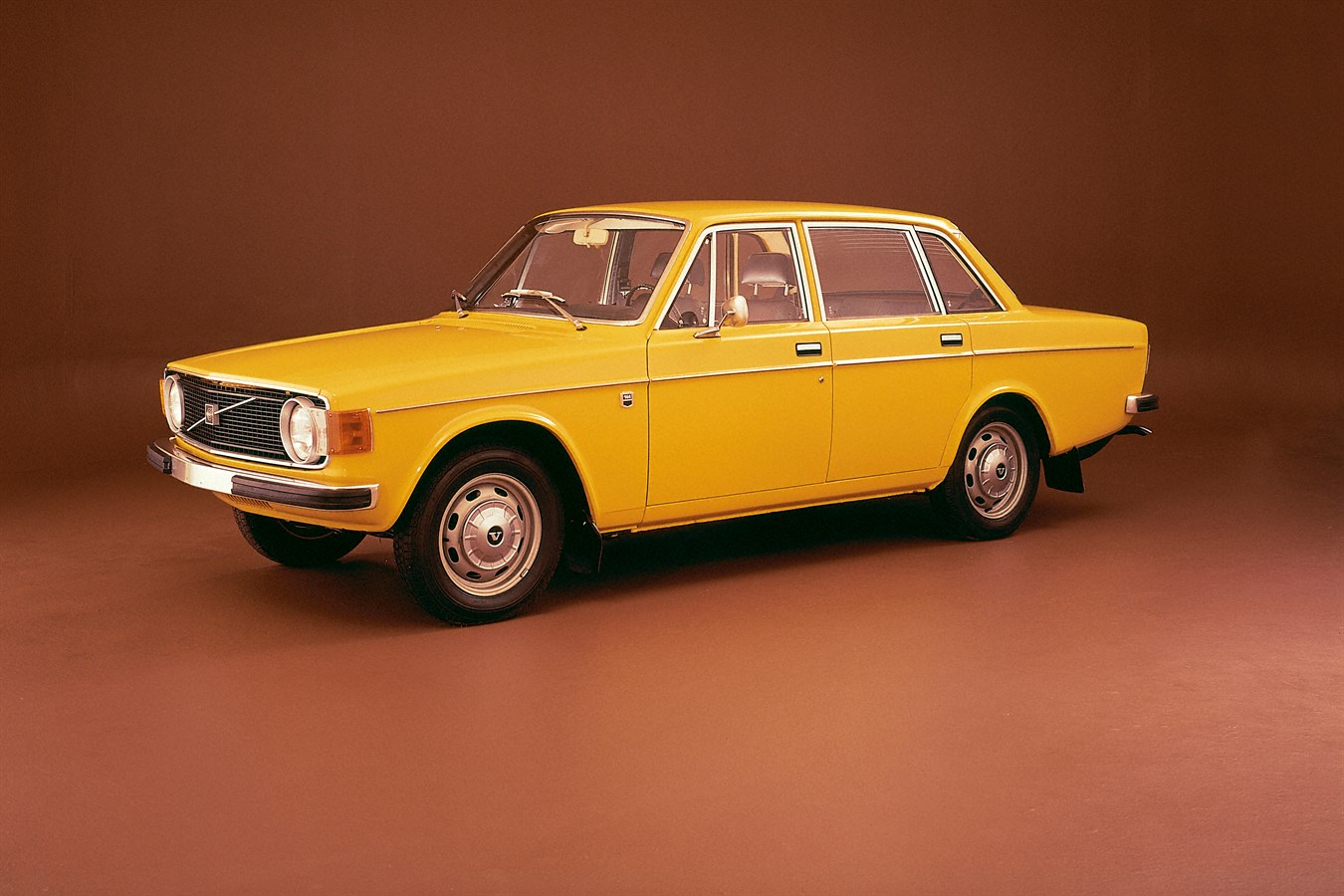
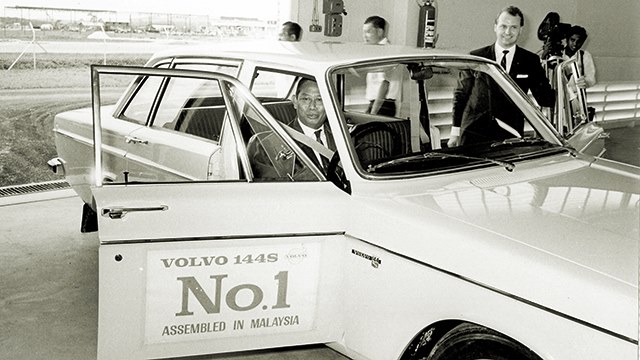
Not only that but it also marks 55 years since the first ever locally assembled Volvo first rolled off the assembly line, which was the Volvo 144 (pictured below).
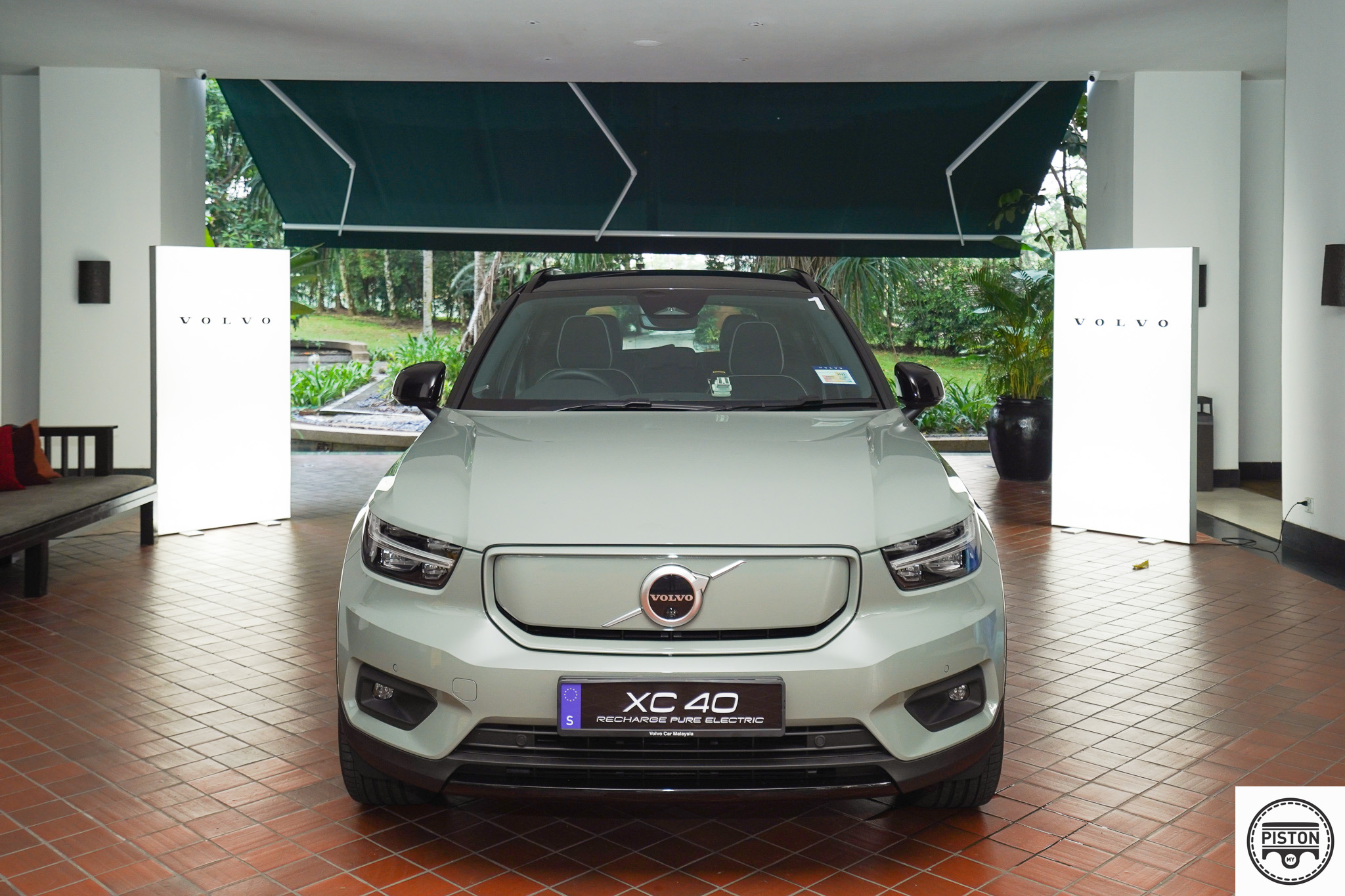
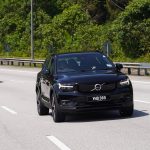
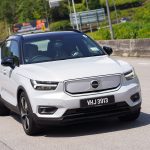
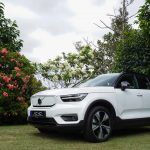
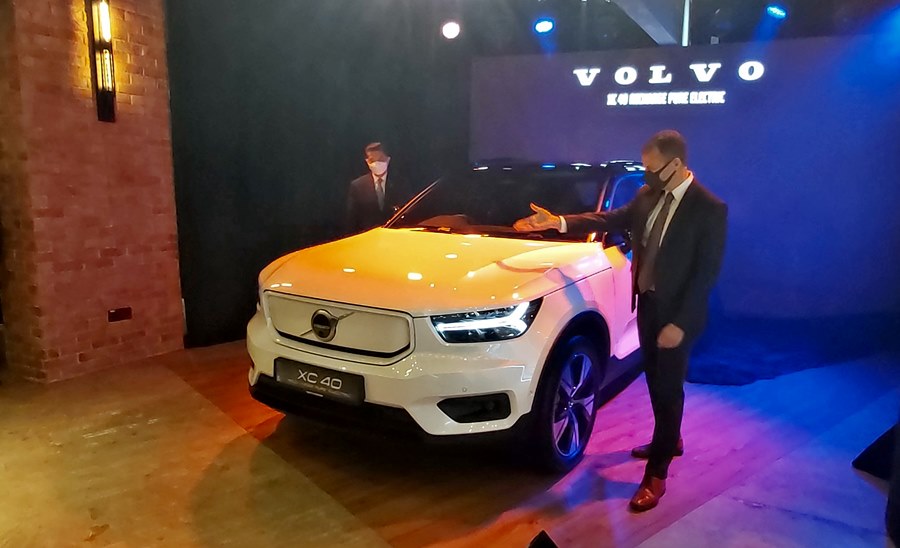
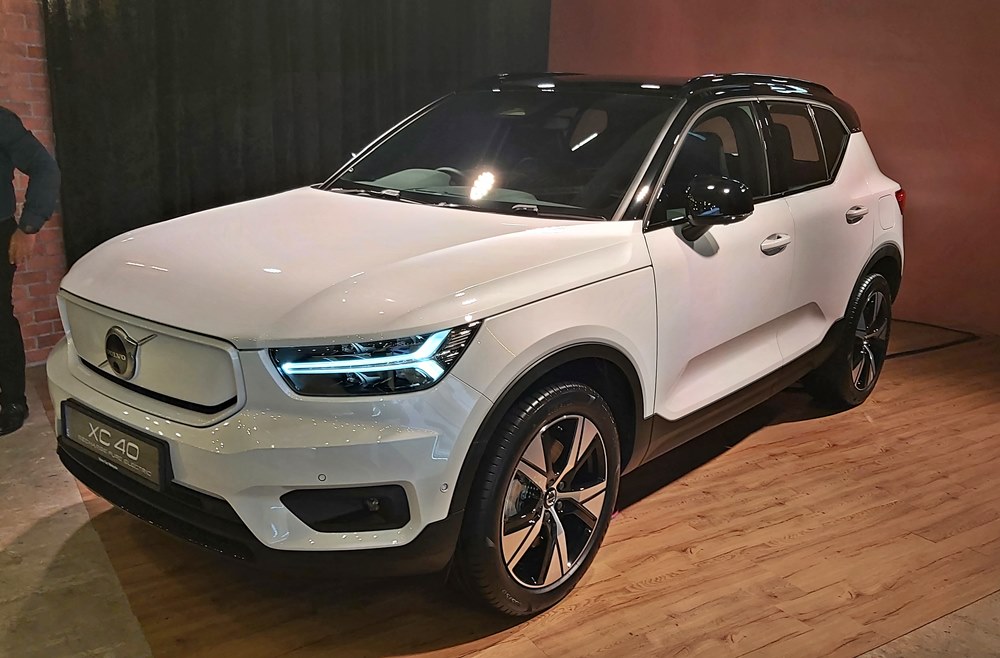
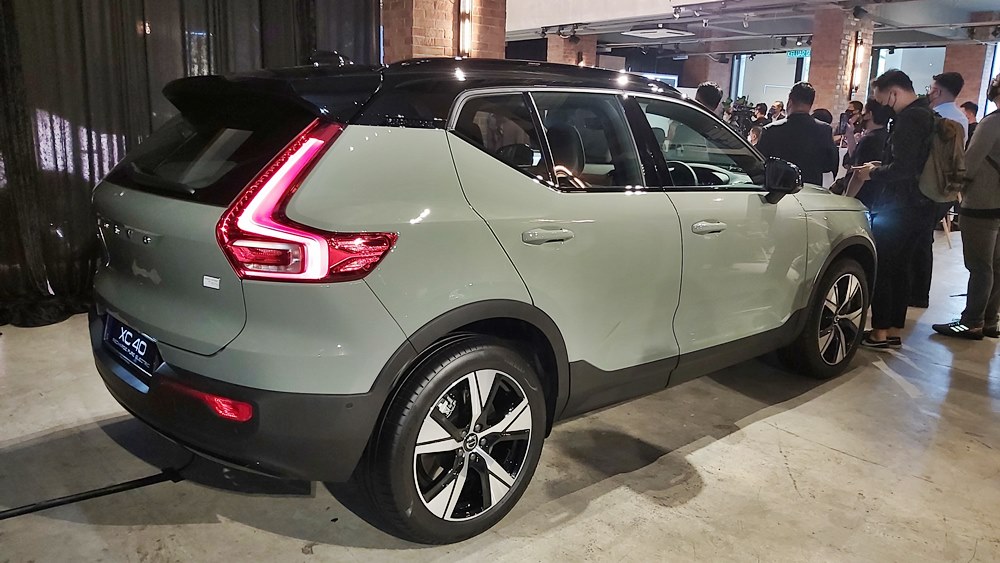
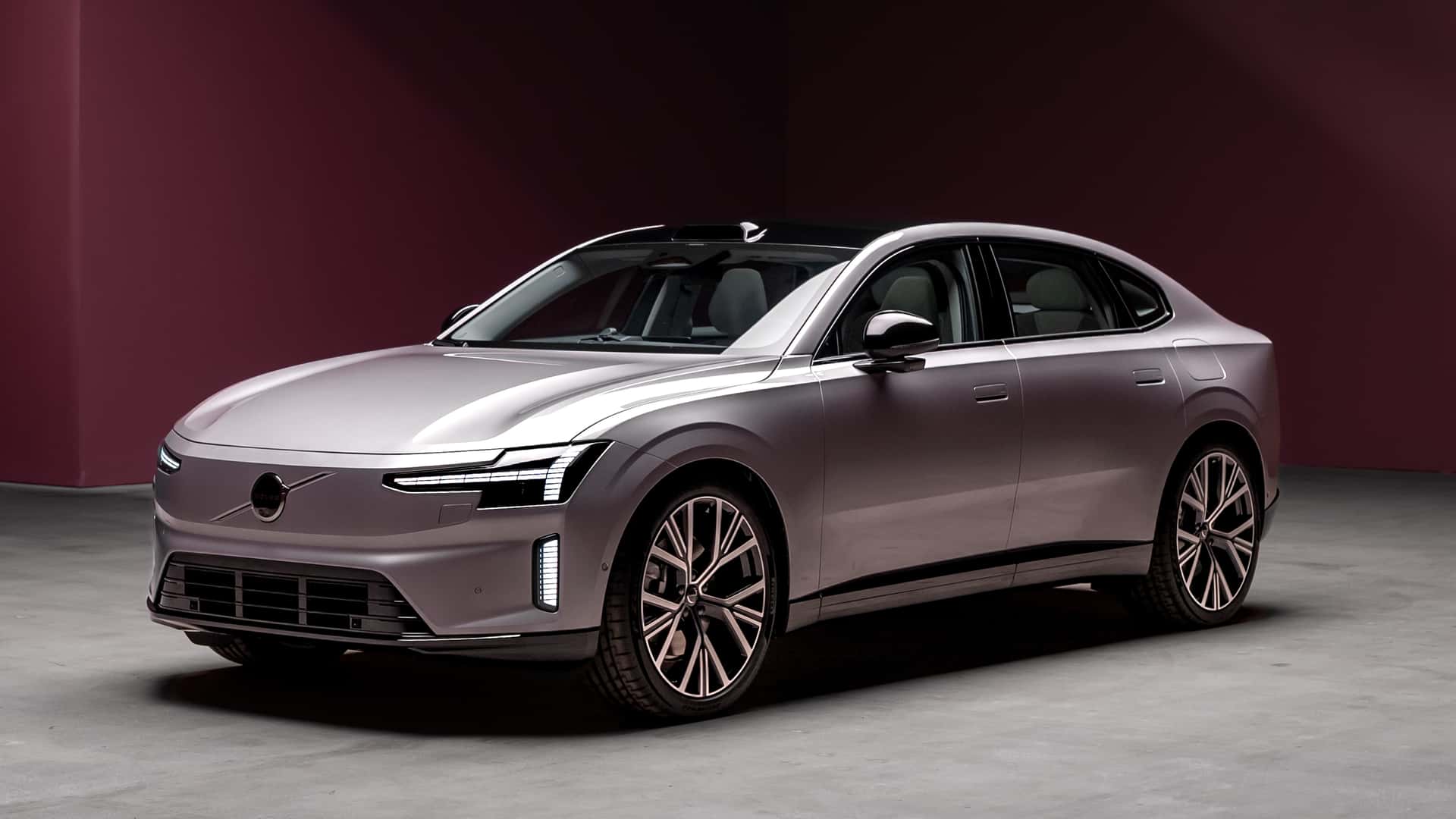
And 55 years later, Volvo Malaysia has once again made history by introducing the first ever locally assembled all-electric car – the Volvo XC40 Recharge Pure Electric.
The name of the car is painfully long, so for the sake of this article, let’s just call it the Volvo XC40 RPE, or RPE.
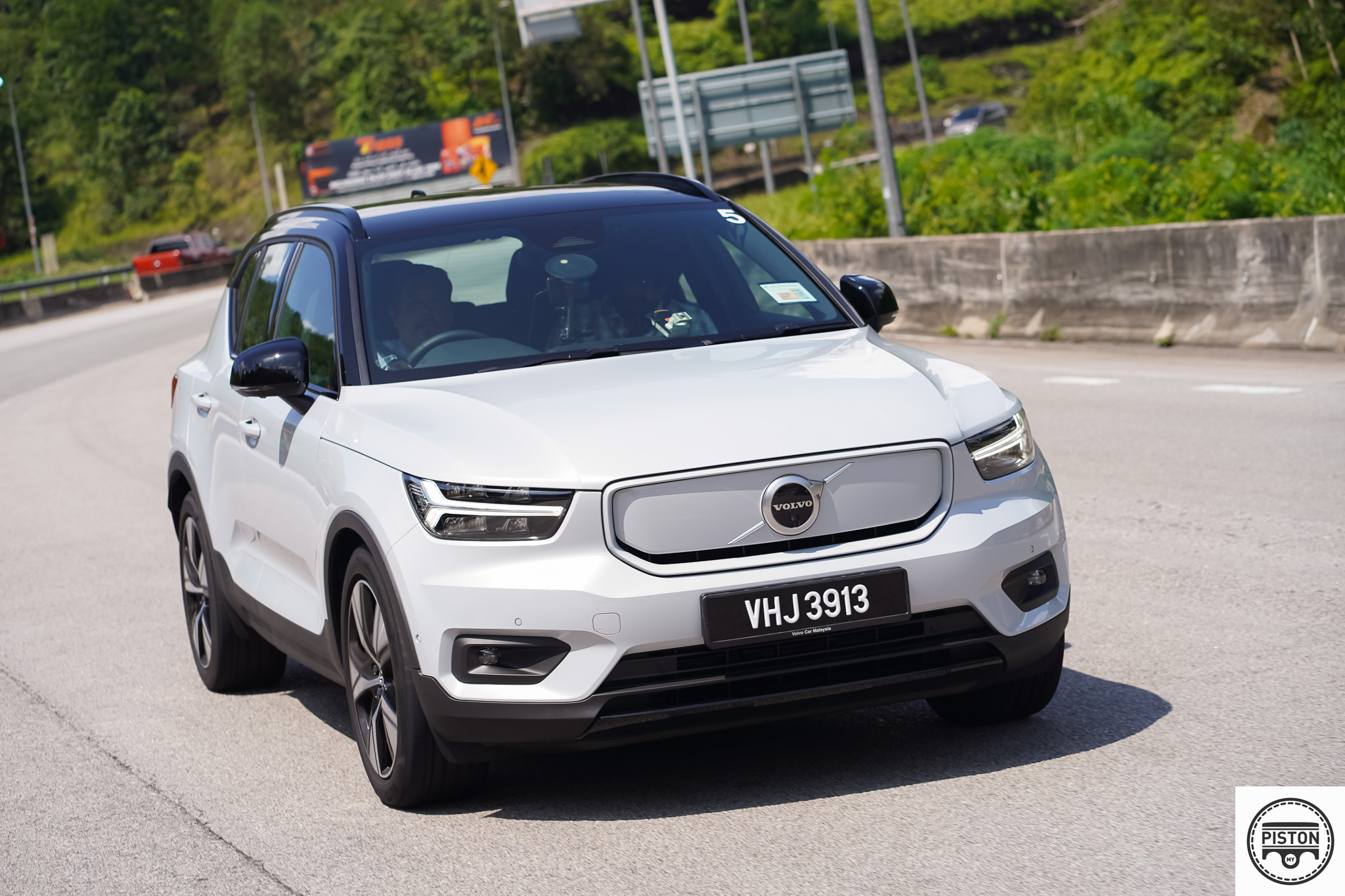
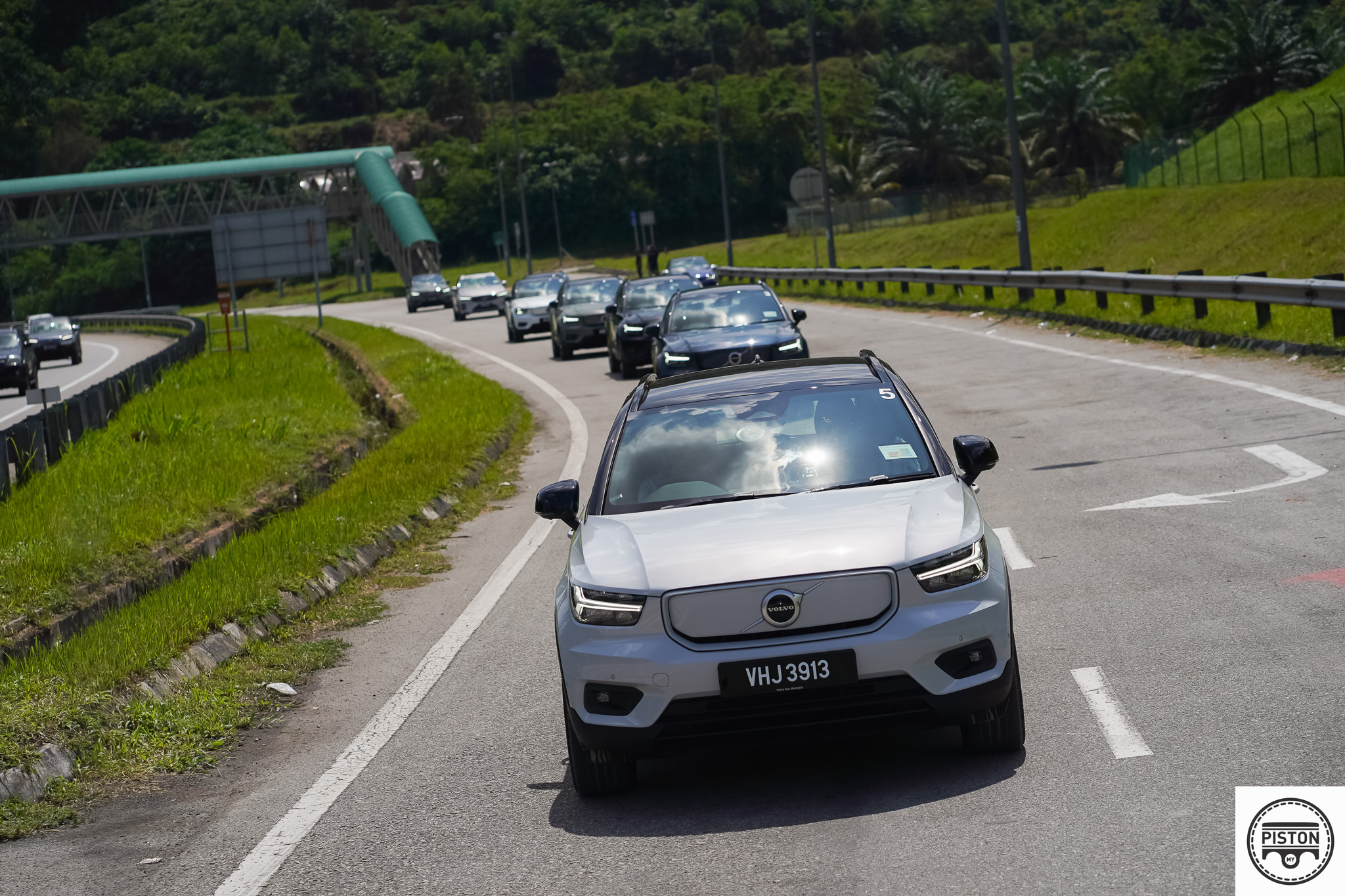
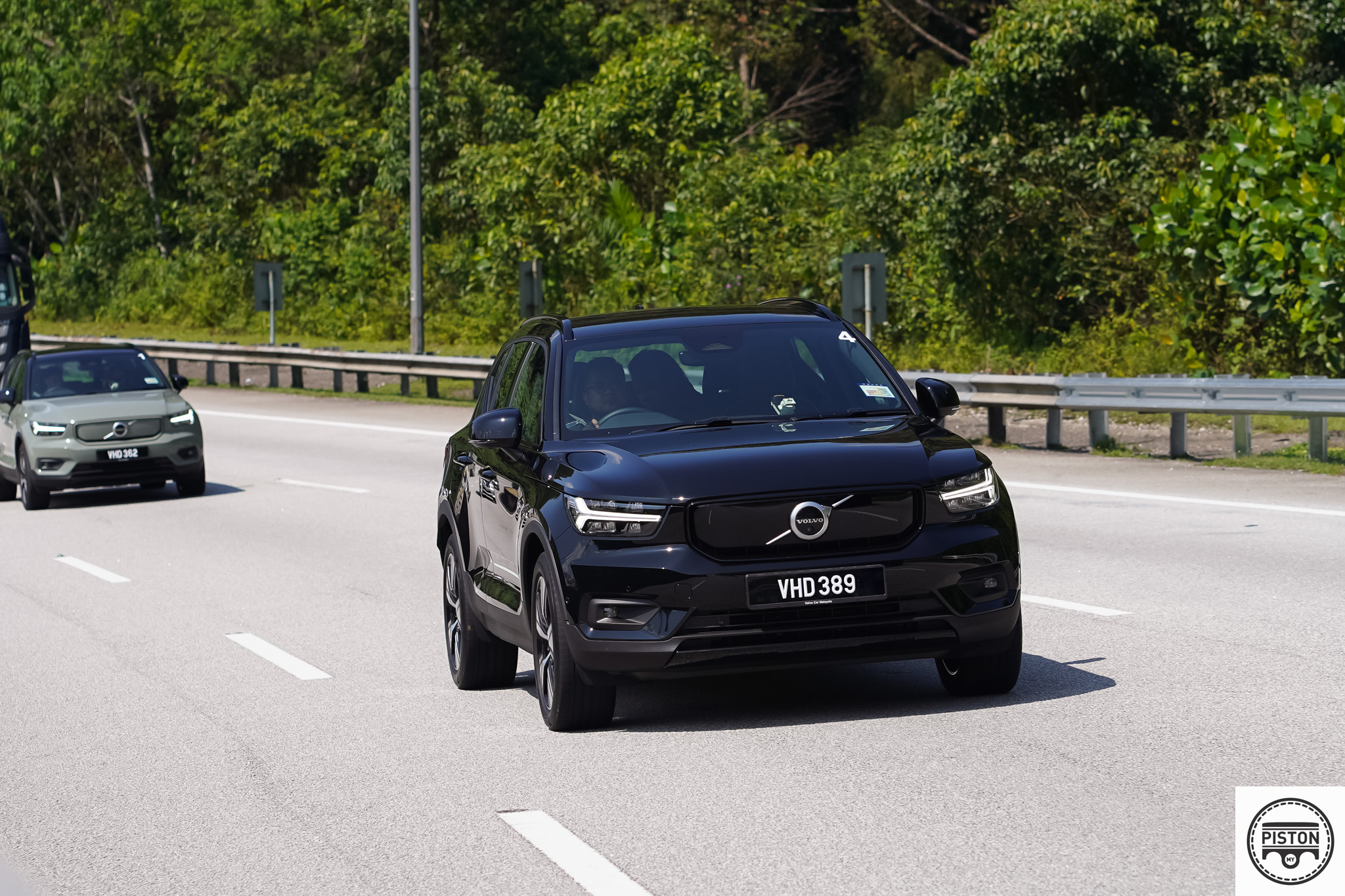
We recently test drove the car during a Volvo organised drive to Janda Baik and back, which gave us plenty of drive time to sample its electric capabilities, range and overall look and feel.
Let’s first begin with its design.
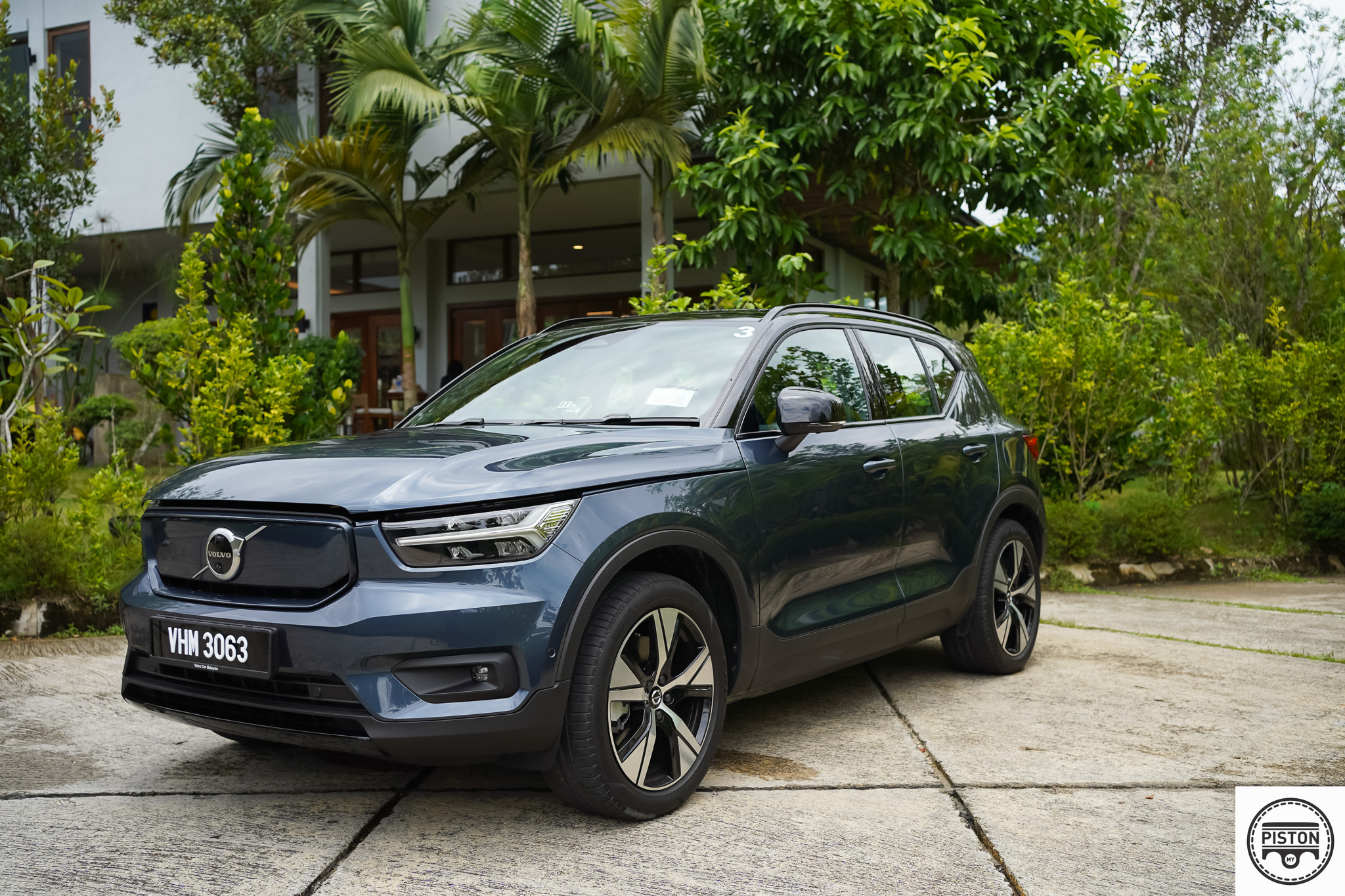
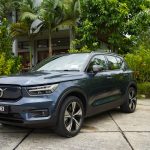
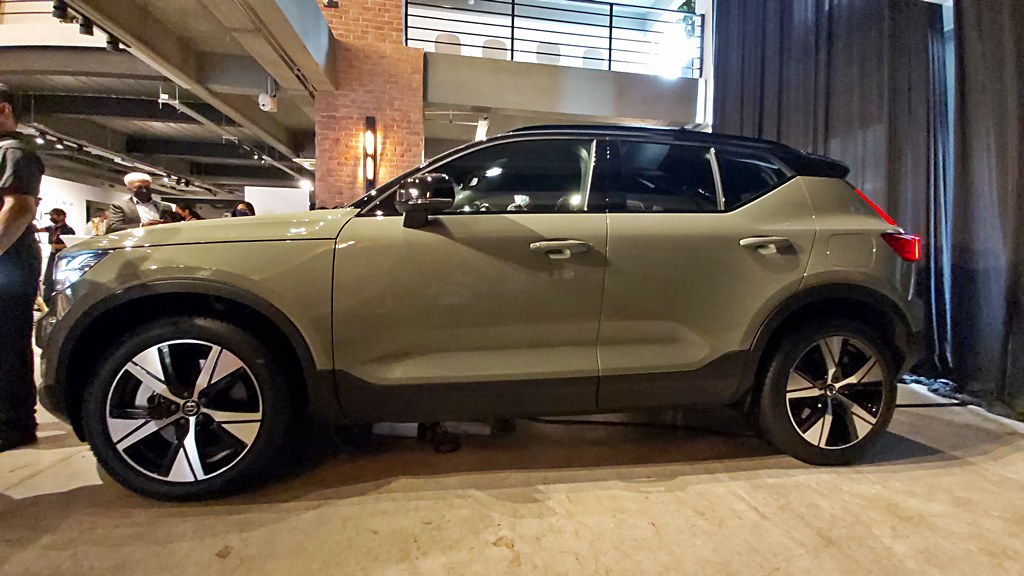
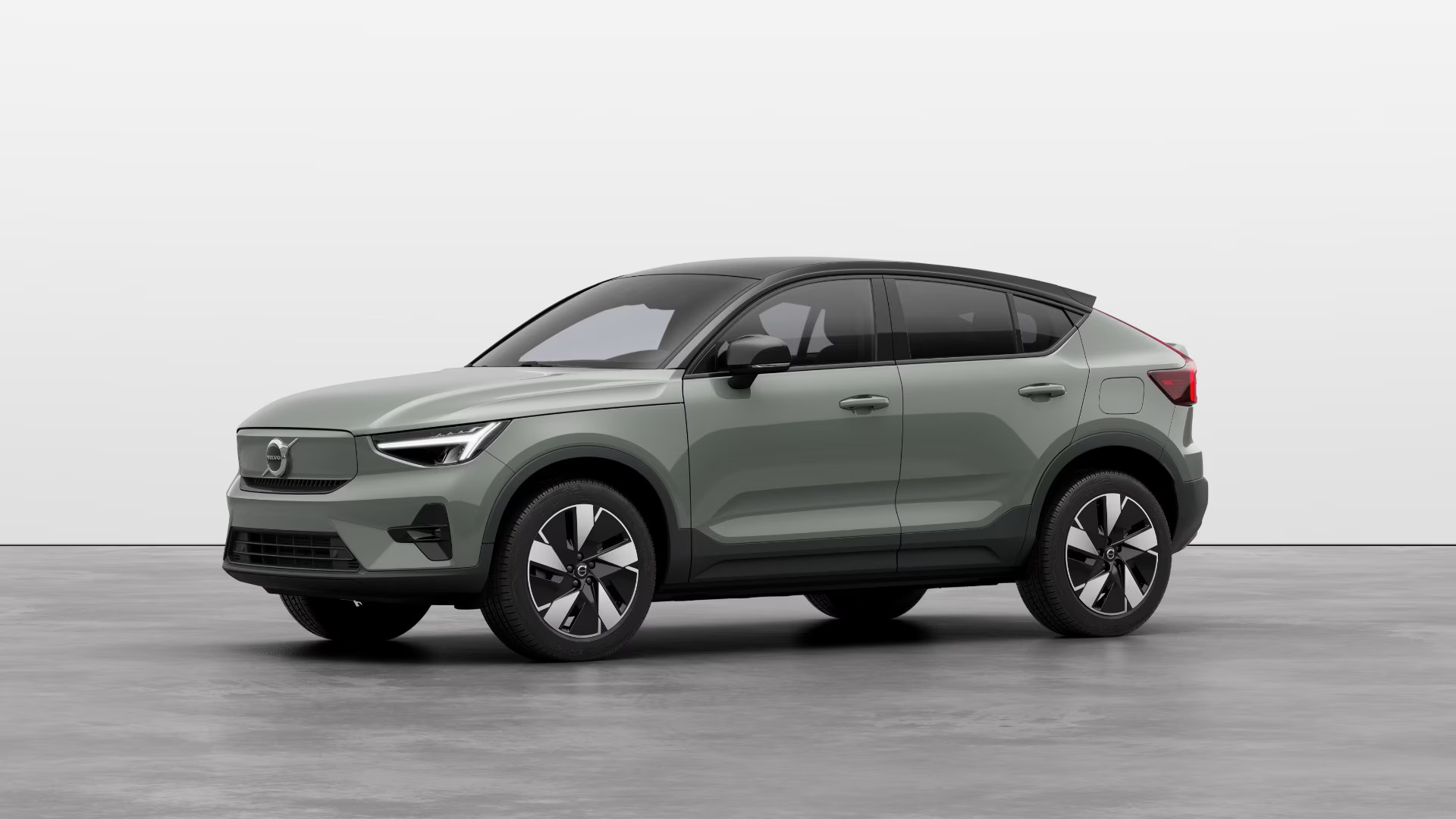
Current XC40 Recharge owners will recognise the overall silhouette, but there are some key differences.
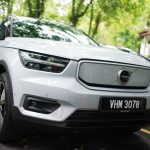
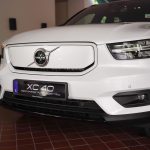
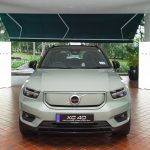
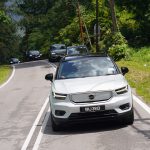
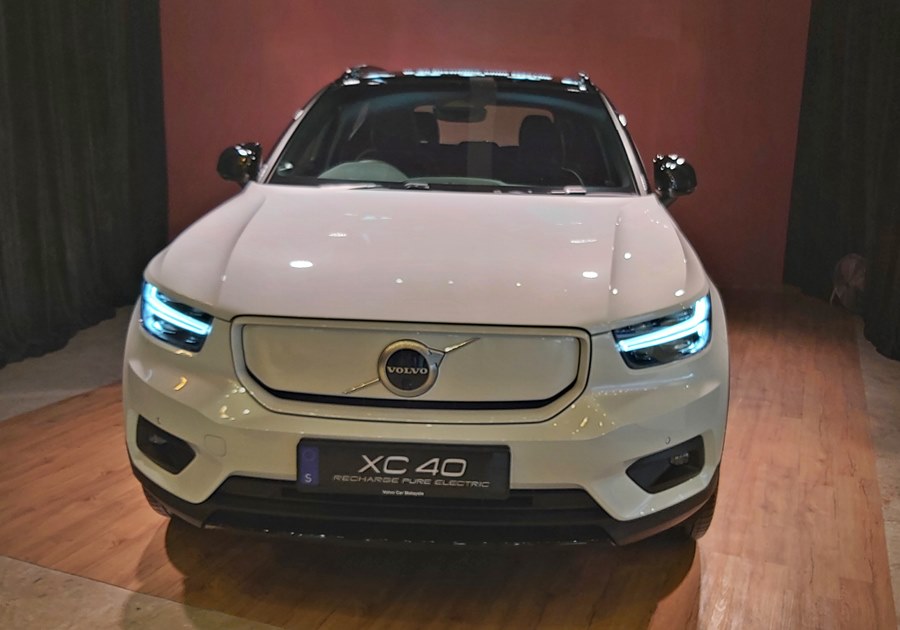
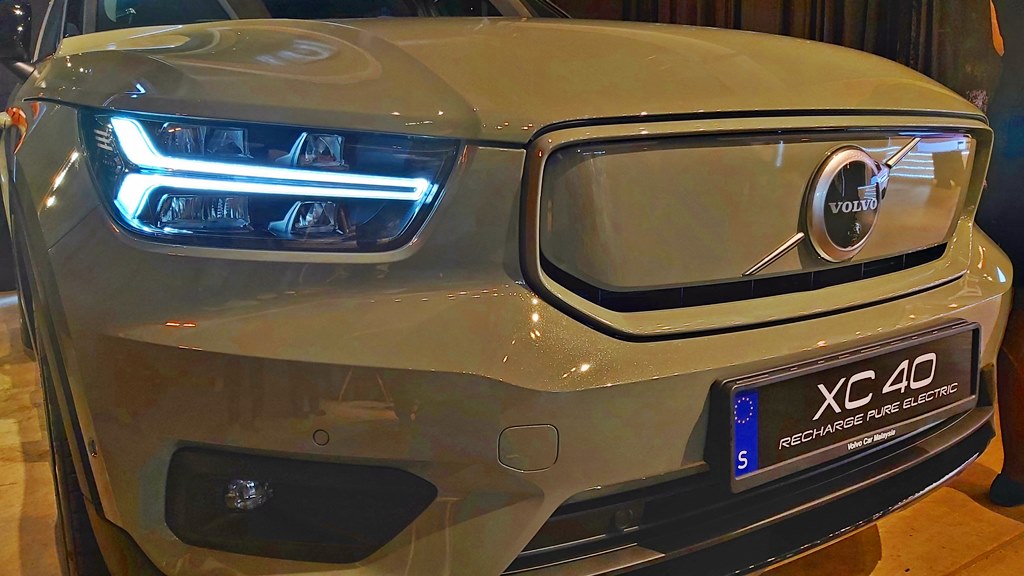
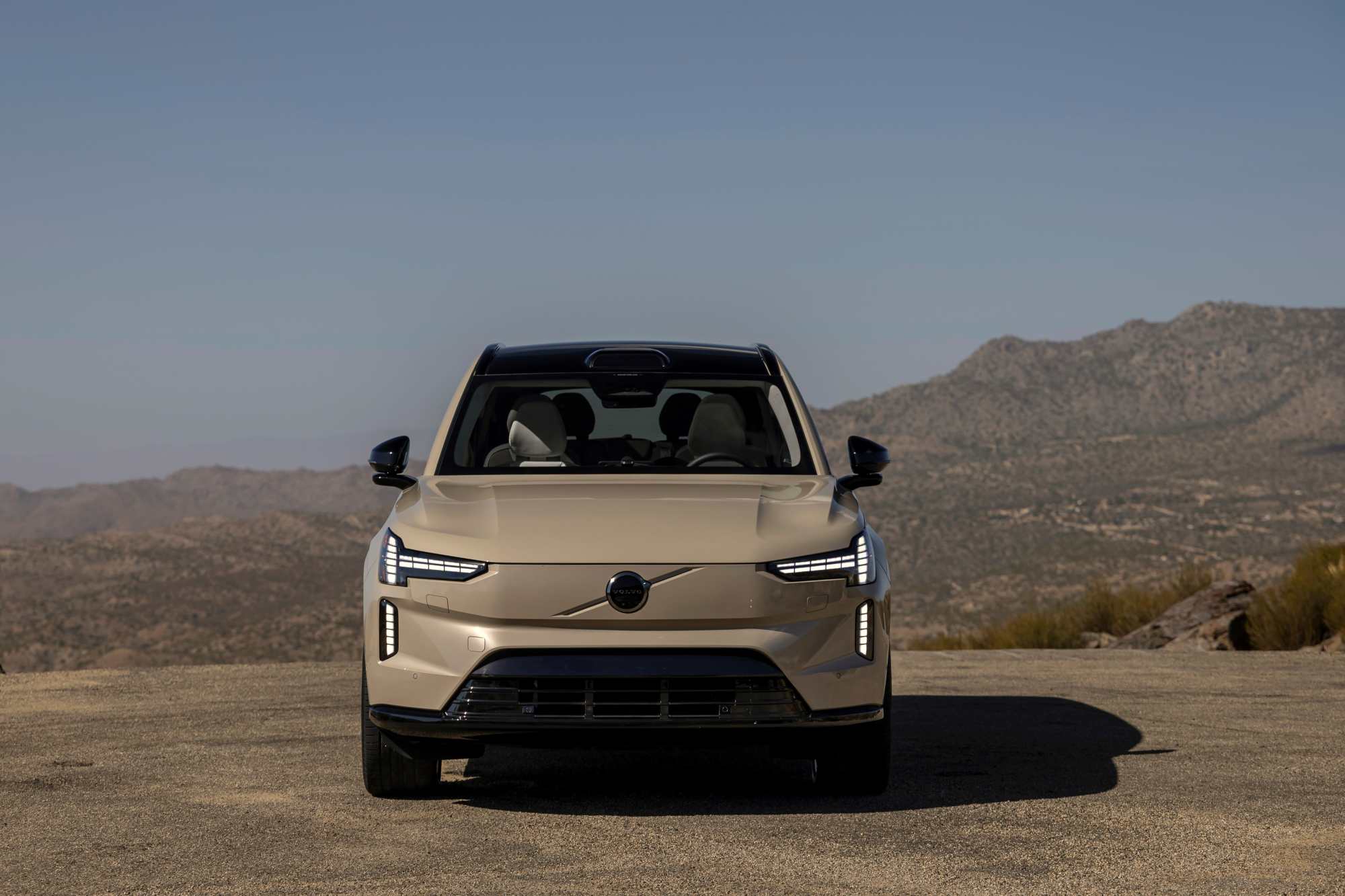
There is no need for a grille anymore since there is no engine to cool, so in its place a plastic panel that is thoughtfully painted in the same colour as the body, giving it a very unique touch and immediately identifying it as the all-electric sibling of the XC40 line-up.
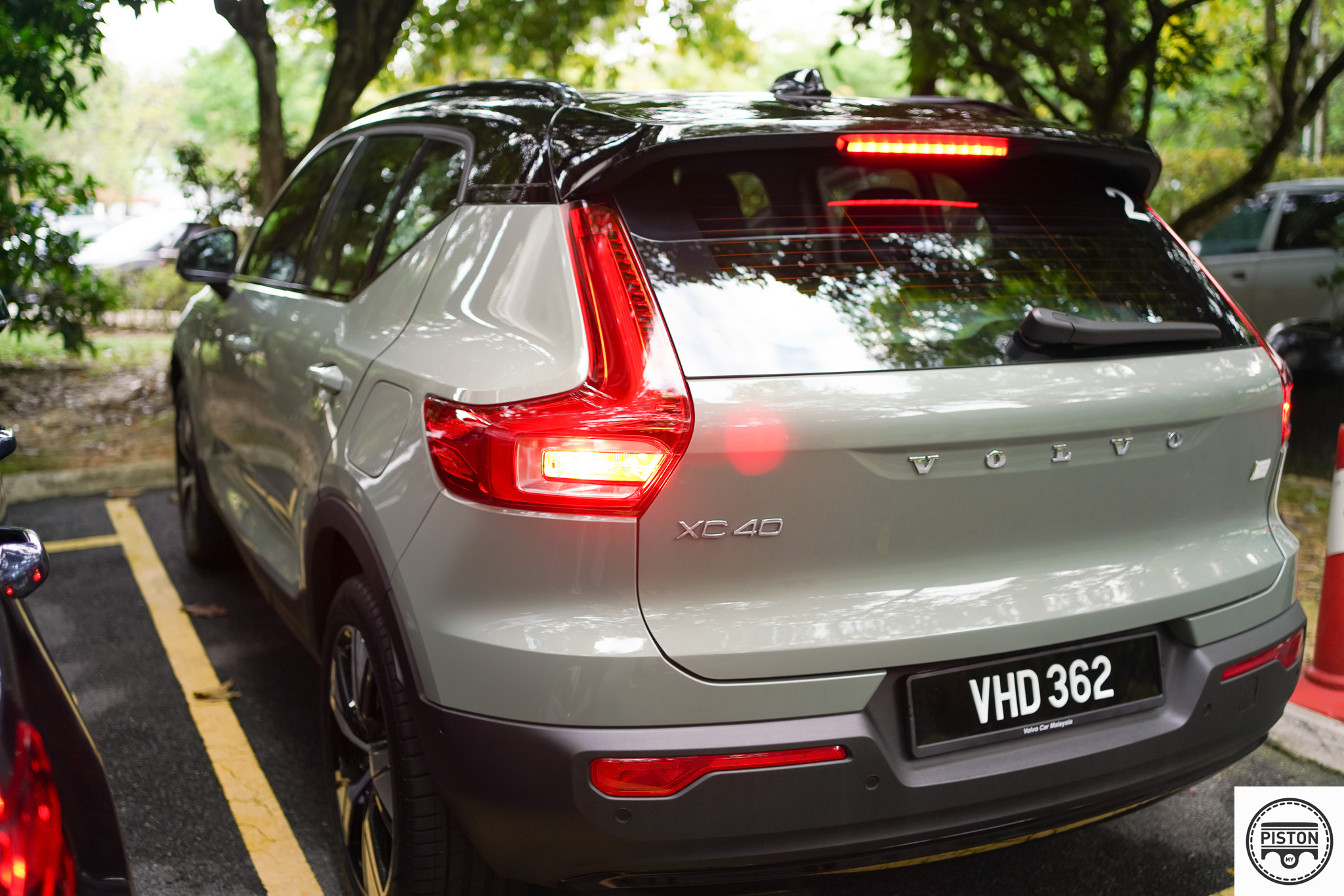
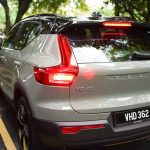
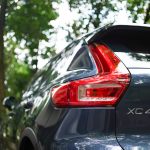
And then there is the obvious omission of the tail pipes, giving the rear of the car a tidy look when compared to its fuel guzzling sibling.
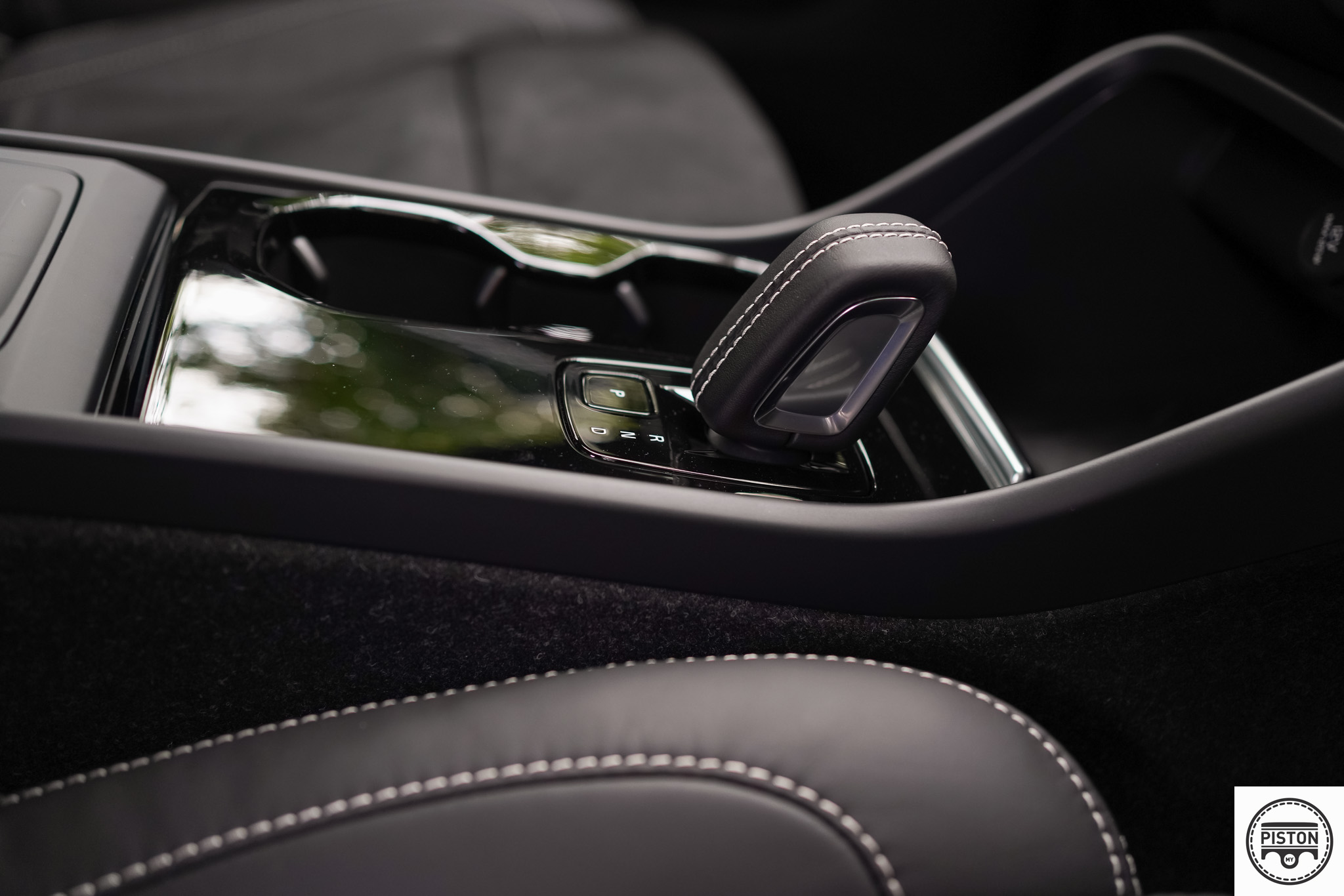
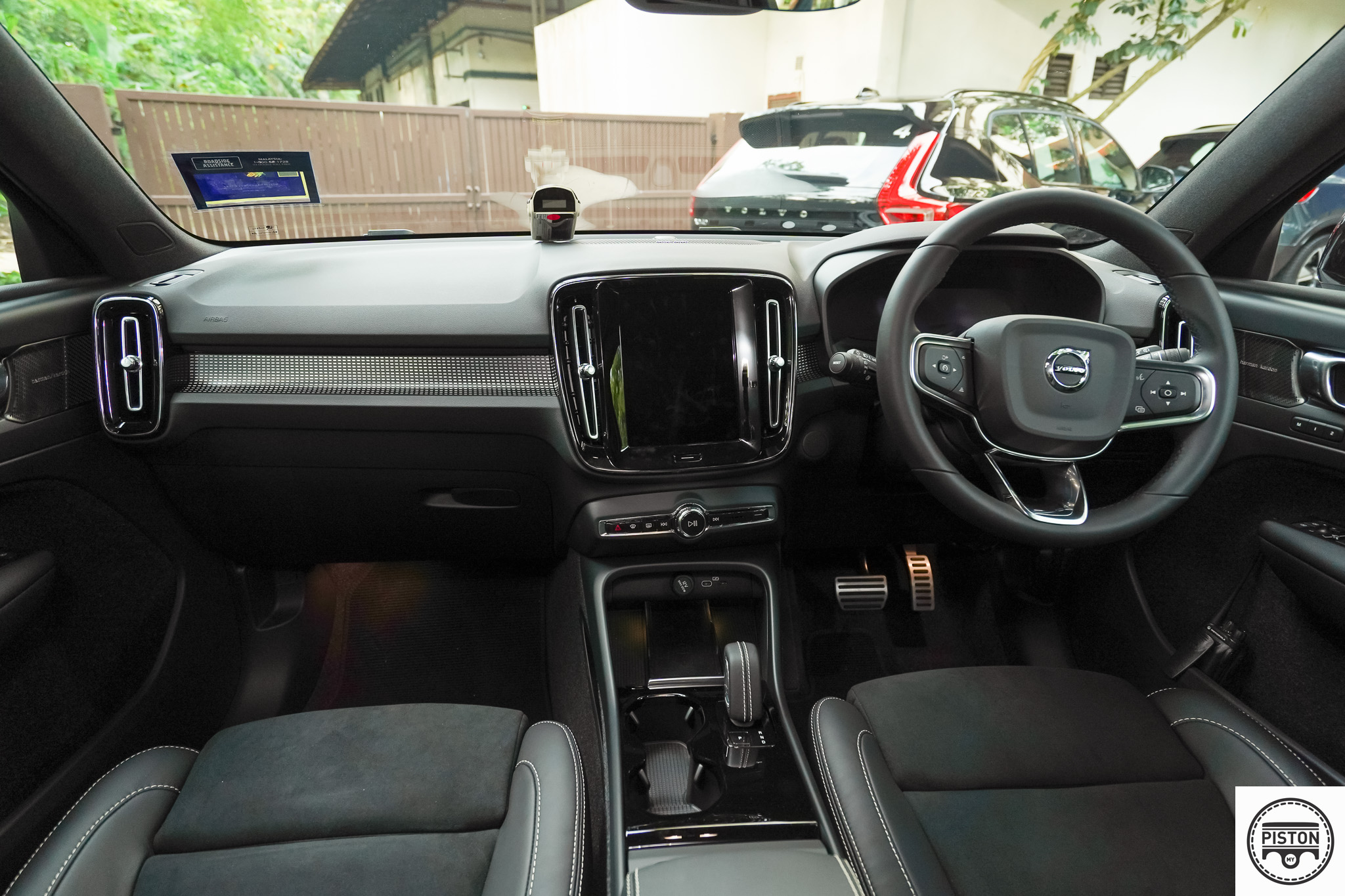
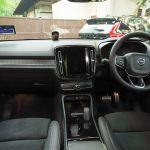
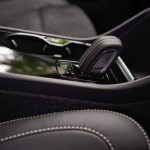
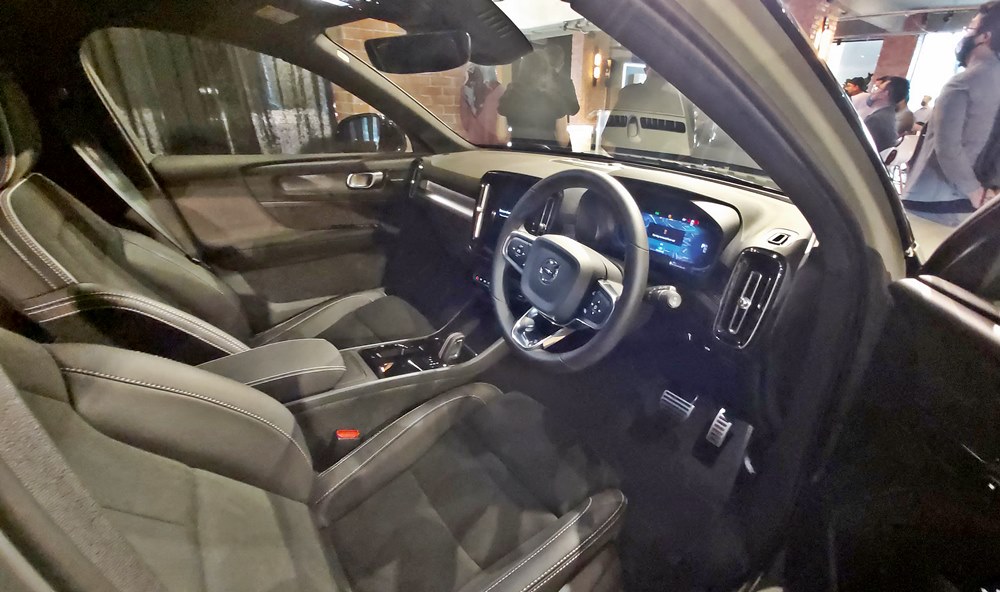
Step inside and it’s business as usual for a Volvo. Except that it’s not. Because in the XC40 RPE you don’t have to start it to drive it. There’s no button to push or key to twist, there’s a simple press of the brake pedal, a gentle push of the gear lever to either D or R, and you’re off.
That’s an easy solution but one that we need to get used to, but after some time, it had me wondering why no one else had ever thought of that.
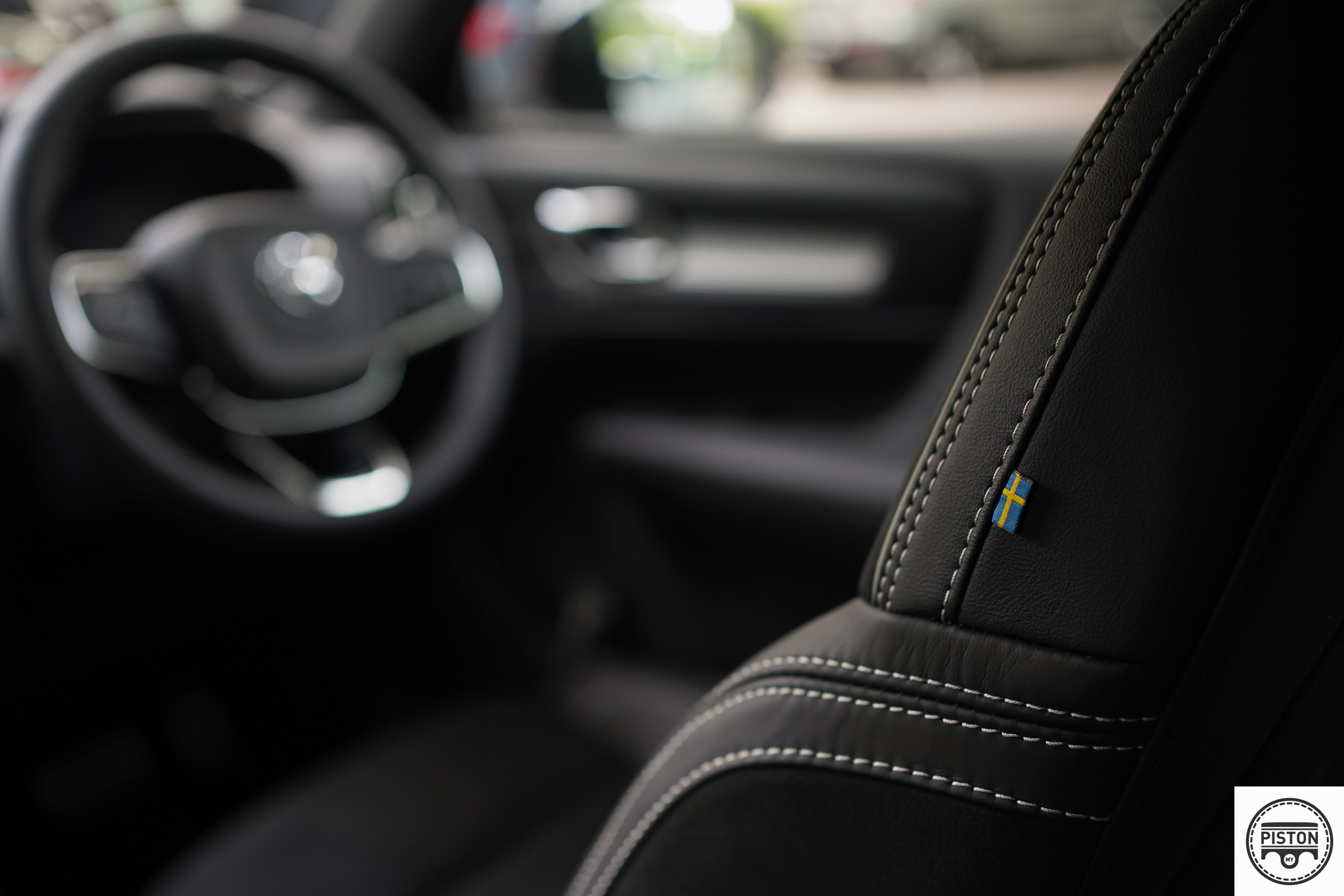
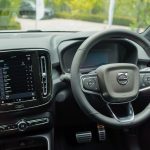
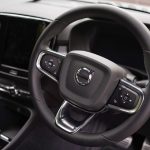
The first thing that catches your eye as you sit inside is the steering wheel and how basic it looks. The buttons are minimalistic and one could argue that it looks cheap, but it looks the way it does so as not to distract the driver.
Just behind the steering wheel is a gigantic 12-inch display that takes over meter panel duties. It displays the usual info such as speed and range and charge levels, but because it is one giant screen, it can also switch to becoming a giant navigation screen with the aforementioned data neatly tucked away but within reach of the eye.
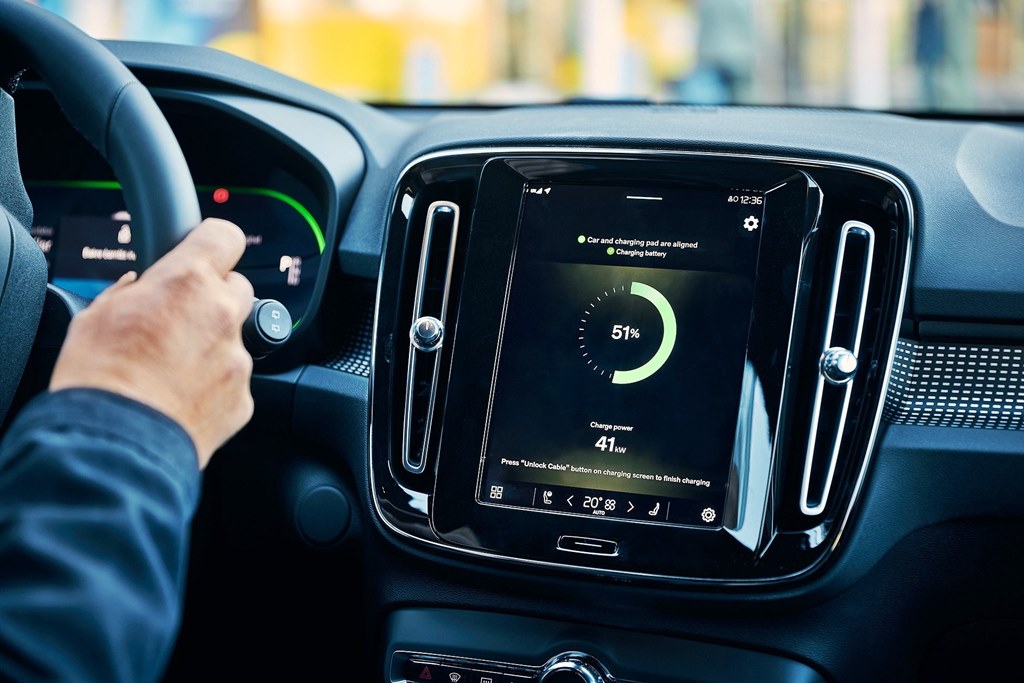
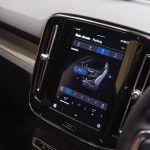
To the left of the steering wheel is a 9-inch vertical centre display (Volvo calls it portrait format) that houses everything you need while in the car – navigation, entertainment, air-conditioning controls and car settings.
The XC40 RPE also offers Google Assistant which lets you ask for directions, play music and make calls and even ask for the closest restaurants, all by saying “Hey Google” to get started.
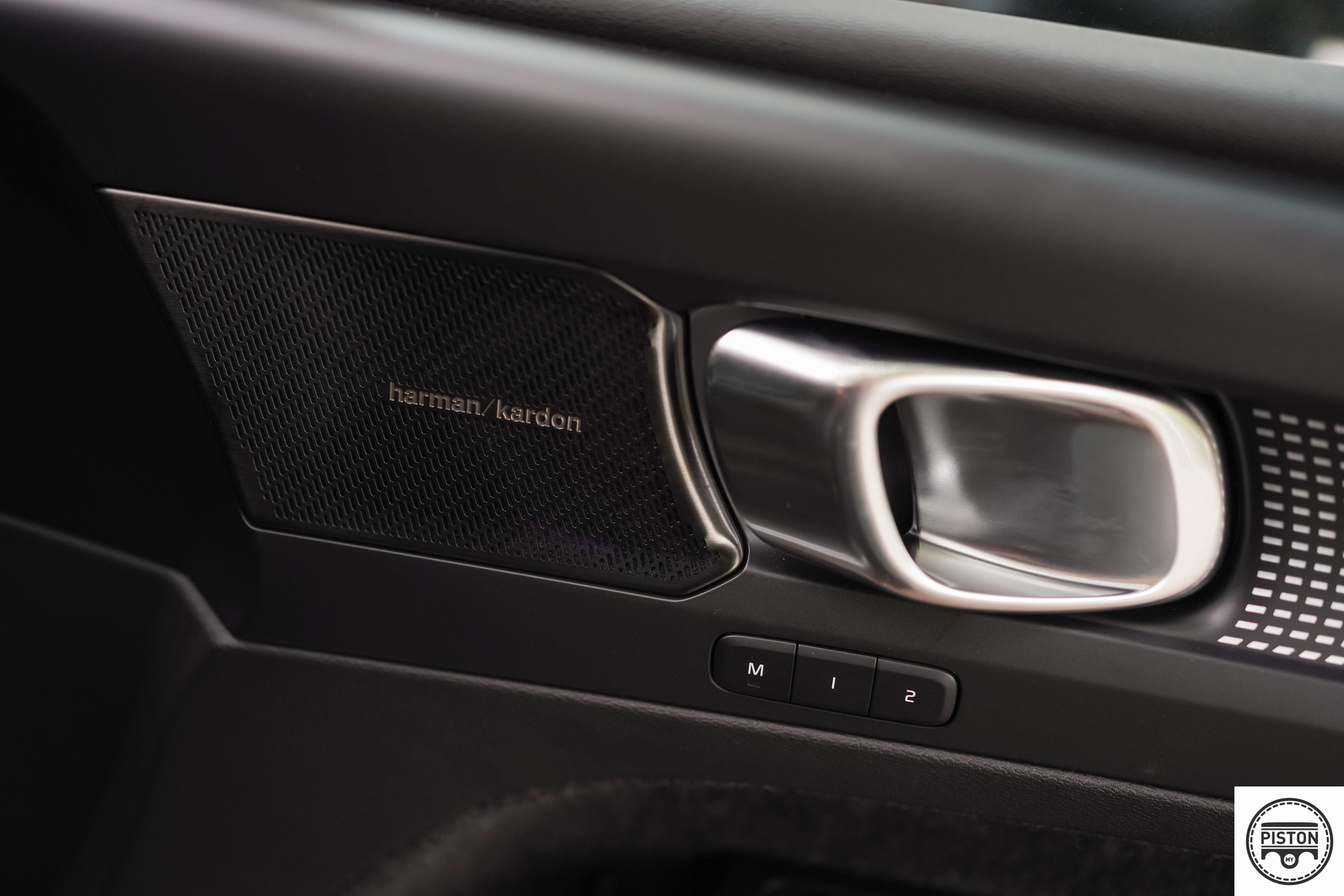
The overall look and feel of the interior of the XC40 RPE is rather minimalistic. I particularly loved the 13-speaker Harmon Kardon premium sound system which comes standard and gives your music depth and rich bass.
The carpets are made of recycled materials while overall quality is fantastic, as it should be of a Volvo.
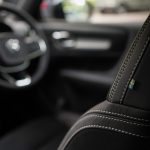
The seats may look thinly padded but offer decent support and come with memory function.
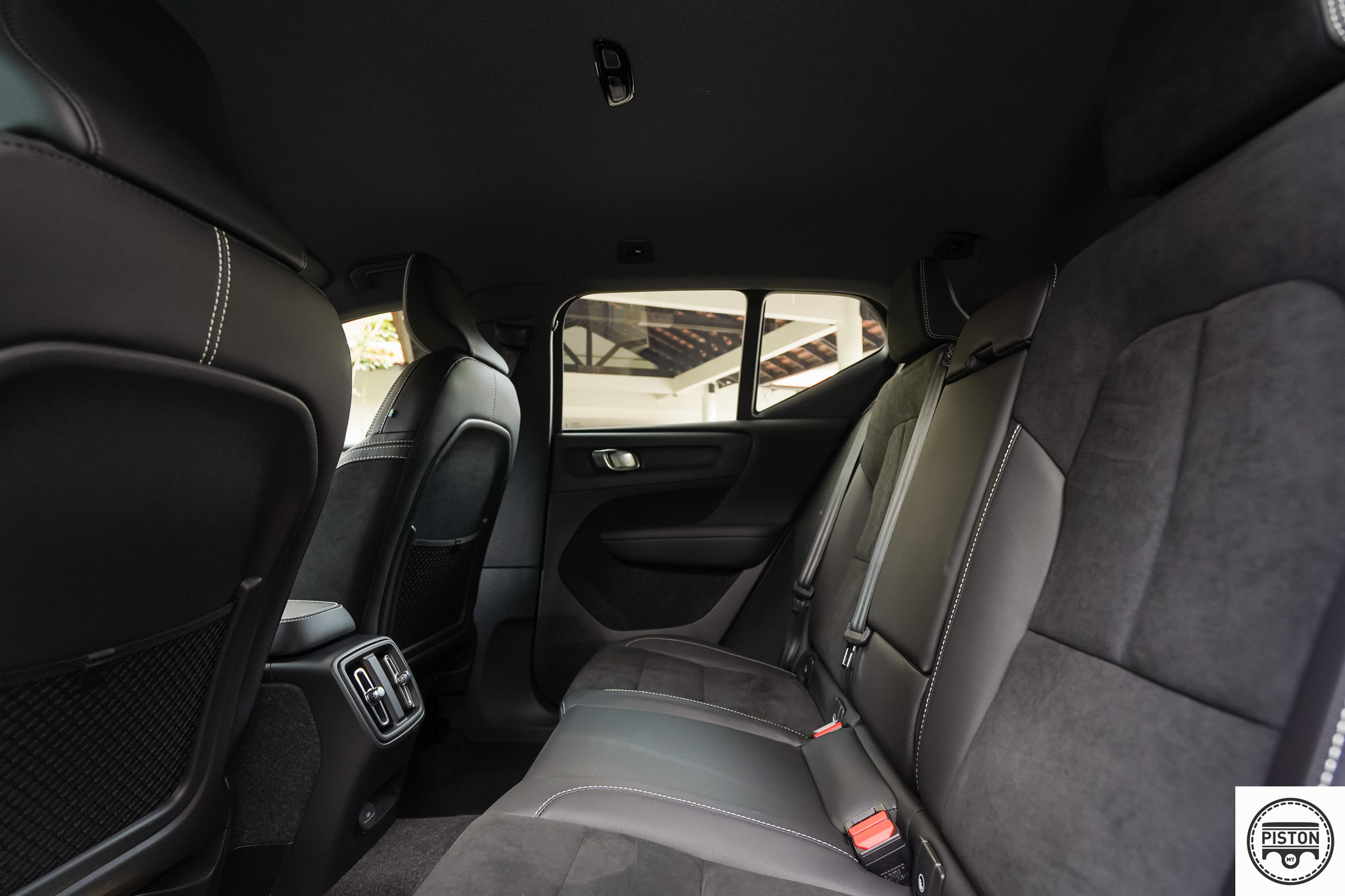
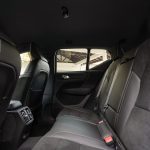
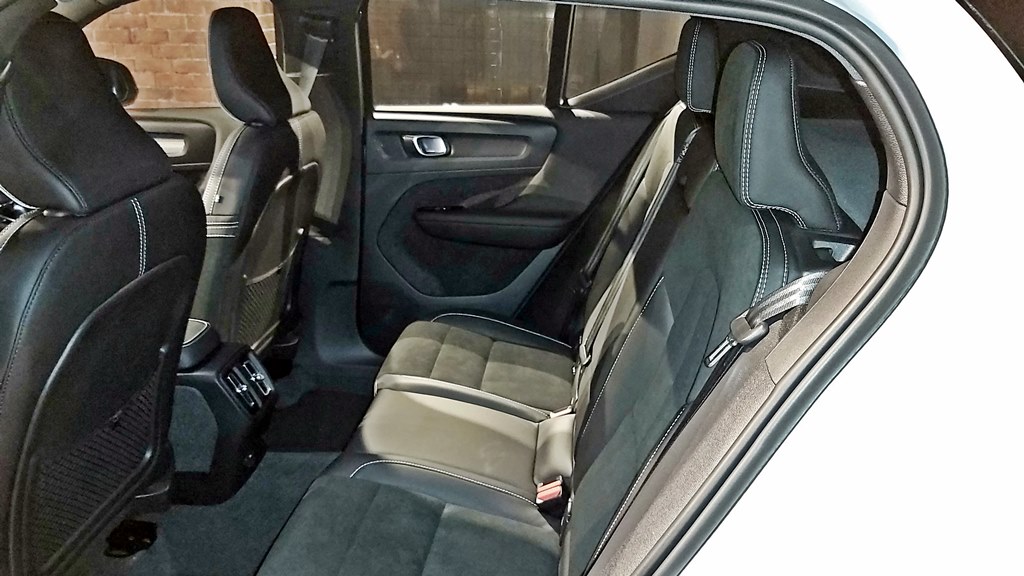
I personally found that rear seats to be cramped and the back rests too upright to get decently comfortable, but this is a small Volvo after all.
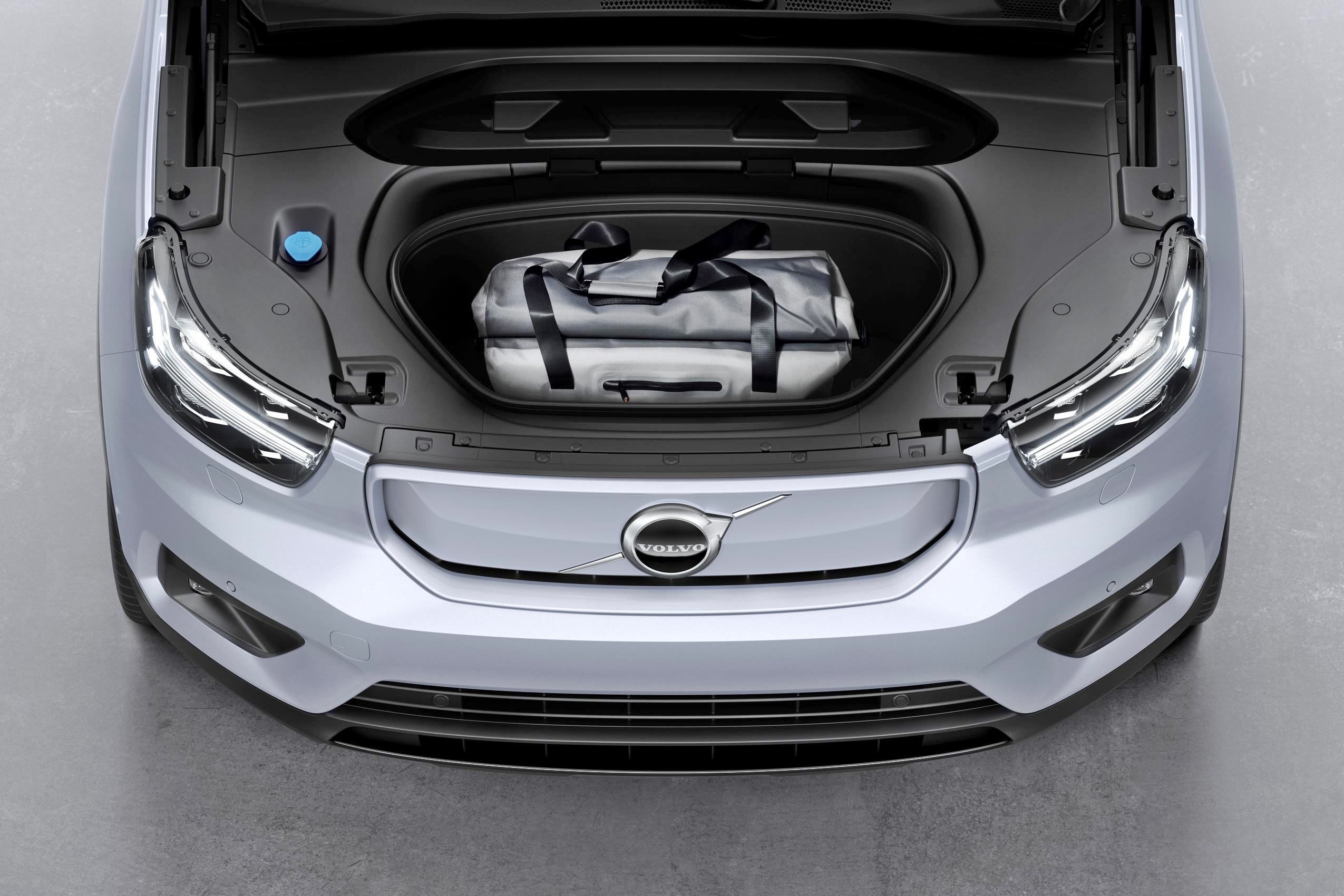
But a small Volvo doesn’t mean that it is devoid of space. Under what would usually be the bonnet is a small storage area consisting of two sections – the top section is perfect to store the charging cable and a small gym bag (the Mercedes EQA could learn a thing or two about storage from the XC40 RPE) while the boot offers 419 litres of storage space. That can expand to 1,295 litres with the rear seats folded down.
So how does it drive?
Fantastic to put it lightly.
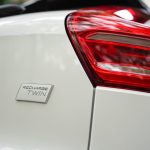
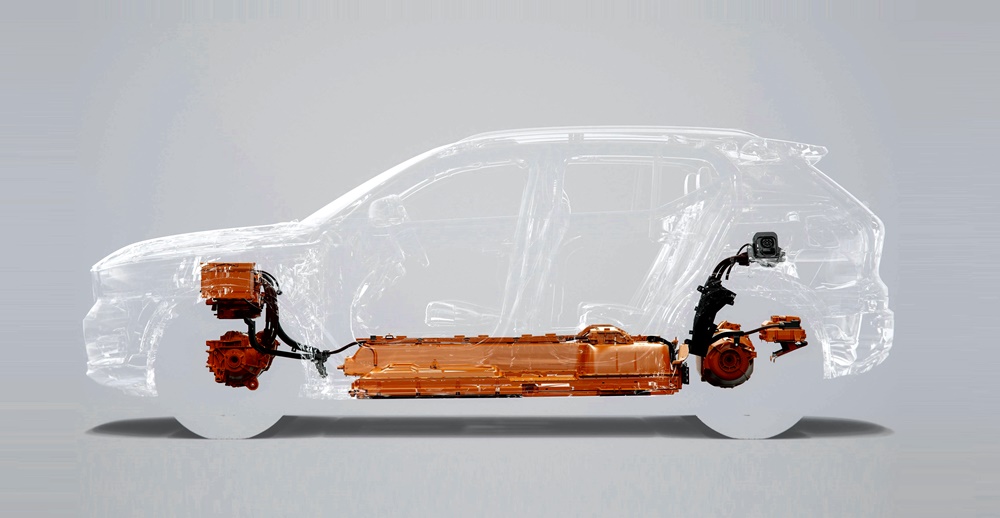
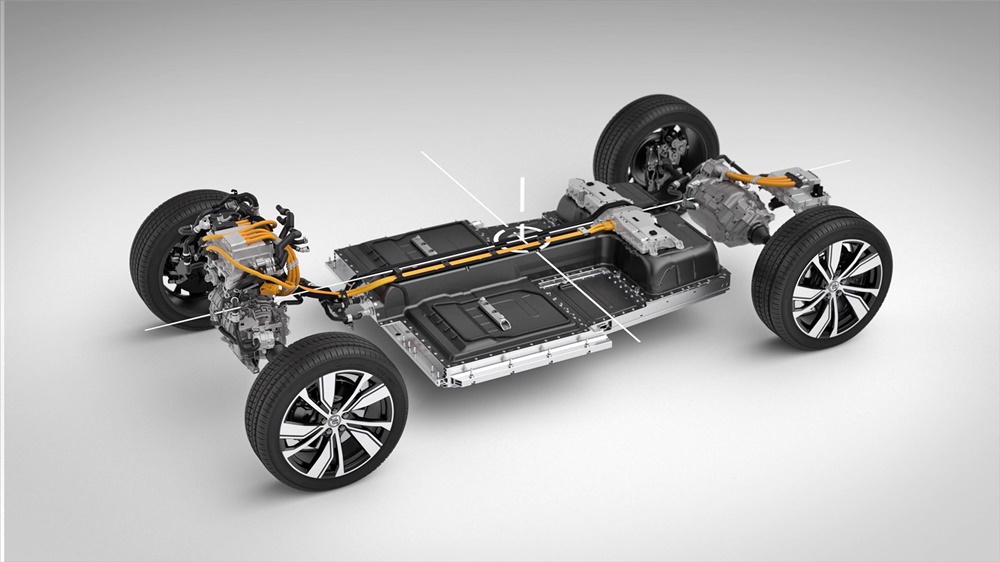
Lets get the facts and figures out of the way first. The XC40 RPE available in Malaysia comes in Twin Motor format, which means there are two electric motors placed in the front and rear axle.
These motors give the XC40 RPE an AWD format and gives the car a phenomenal 408hp and 660Nm of torque. The sprint to 100km/h is seen off in just 4.9 seconds. A decade ago, these figures would have given this Volvo supercar status.
But it is still a car tuned for comfort so the suspension is on the softish side and you feel the body roll if you dive into corners at high speed. So you still have to watch your right foot and need to keep your inner child at bay when driving the RPE.
The brakes are more than capable of keeping up with all that power, but being regenerative they lack feel and that all important initial bite. So that can be scary when your brakes feel like they are not responding at first. Dig deeper and the brakes respond and the batteries get recharged.
But the Volvo XC40 RPE has a party trick up its sleeve and it is called the ‘One Pedal Drive’. What this does is that it lets you accelerate and brake using the accelerator pedal alone.
Accelerate as you normally would, and when you need to slow down, simply lift off and the brakes will be applied. The quicker you lift, the quicker and harder the brakes will be applied.
Of course you can still use the brake pedal as you normally would too, and driving using the One Pedal Drive tech takes some getting used to, but after some time you realise that it makes complete sense, especially in traffic. This tech also makes managing traffic a lot easier too because you don’t have to keep rotating your ankle between the brake and accelerator.
So, the power figures of the XC40 RPE suggest that you could have some serious fun, but the suspension and brakes don’t feel like they are up for it. And for good reason too, this is still a car designed for urban and some sub-urban use.
It is meant to keep you cuddled in subtle luxury and comfortable with the suspension disconnecting you from the horrors of Malaysian roads. It does not brilliantly though.
And now comes the big question – are we ready for electric cars and recharging our cars as we would our phones?
The XC40 RPE has a range of 417km on a full charge. Volvo says that if you stick to city driving, you will get a range of 420km while a combination of city and highway and mountainous driving will take that range down to 300km. Highway driving will only give you a range of 300km.
When we first started out our drive from Saujana Hotel in Subang, we were quite close to full charge, and when we returned the cars, there was still a range of 37km left.
We surely didn’t drive anywhere close to 400km that day. A quick dash to Janda Baik and back with a quick swing by Gohtong Jaya, we drove 270km at best. So Volvo is not exactly bluffing about its range.
But we were driving fast and the uphill climbs required more power anyway. And that’s the thing about electric cars, it all depends on where you are going and how that will affect power usage.
Driving at a constant speed on a flat highway will not consume much power, so driving interstate along the North South highway should be fine.
And power companies such as Petronas and Shell are fast catching up and are offering recharging stations along the entire stretch of the north south highway too, so recharging and range anxiety will soon be a thing of the past.
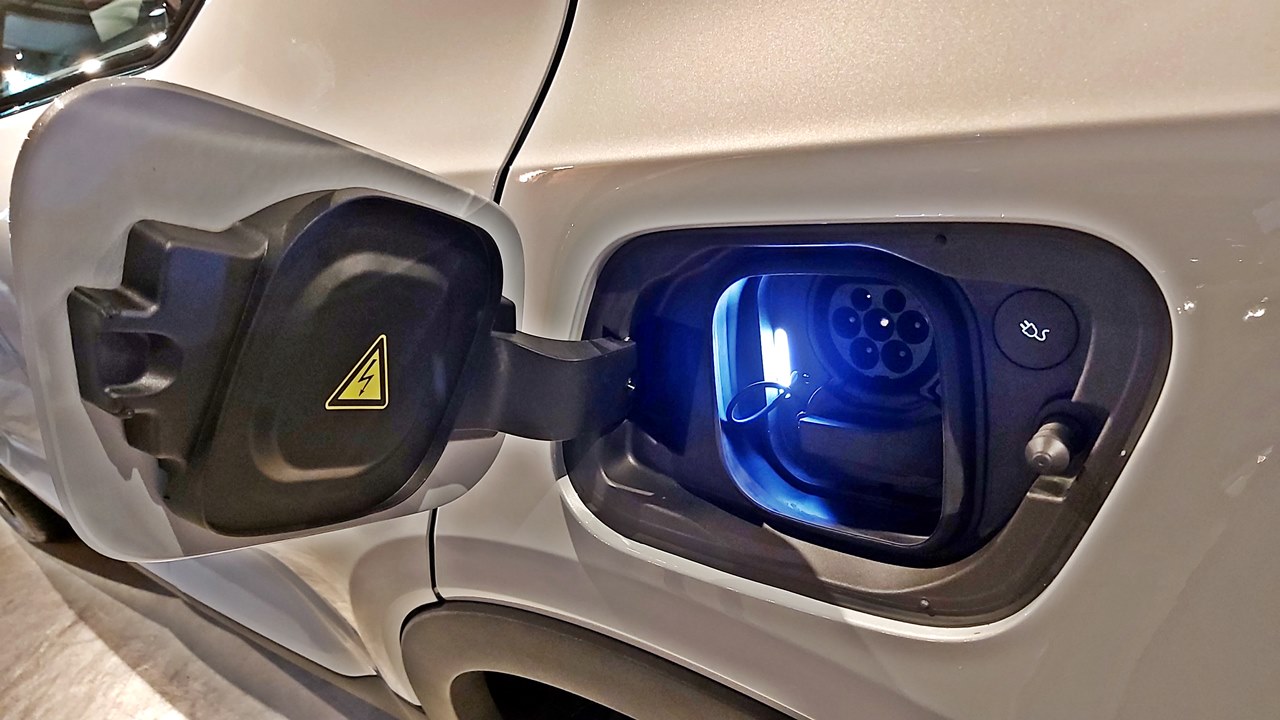
On the point of recharging, the RPE needs just 37 minutes to reach 80 per cent charge with a 150kW DC fast charger. While a regular 11kW AC socket such as the ones found in our homes will require 8 hours to reach 100 per cent charge.
So there’s still plenty of waiting around that is required to recharge your car, but that is fine if you are going to drive the car around town, unless you live in a condominium and have limited access to a charging port, then an electric car, no matter what type, is really not for you.
And so, all in all, the Volvo XC 40 Recharge Pure Electric checks all the boxes and is a fun little thing to drive and go about your daily business without burning a hole in your pocket.
Volvo Malaysia has not announced a price for it as yet but there’s speculation that it will be in the RM250,000 range.
Volvo looks like they may just have a winner in their hands, but the only thing that could hurt the XC40 RPE is the Hyundai Ioniq 5 Max.
Volvo was the first company to assemble its cars in Malaysia in 1967 when the government began its localisation policy to accelerate industrialisation. 55 years later, the Swedish carmaker (part of China’s Zhejiang Geely Holding Group like Proton) is again a pioneer by being the first company to assemble a pure electric vehicle or battery electric vehicle (BEV) in Malaysia at the same plant in Shah Alam, Selangor.
The first car assembled in Malaysia in 1967 was a Volvo (above), and 55 years later, the first electric vehicle assembled in the country is also a Volvo (below).
Although it may seem like this move has come about because the government is allowing duty-free import and sale of BEVs now (and for the next few years), it is not the case. To plan for local assembly takes many years and it’s not as if Volvo Car Malaysia could send a message to Sweden to ask for CKD (completely knocked down) kits for assembly in 2022 when they can be imported duty-free. Furthermore, the plant would also have to be set up, especially with safety measures to handle the high-voltage systems of BEVs. Of course, Volvo Cars Manufacturing Malaysia (originally known as Swedish Motor Assemblies) already has experience with electrified vehicles since it has been assembling plug-in hybrid (PHEV) models for some time.
Regional production hub
In line with Volvo’s plan to have 50% of its global sales volume to be made up of BEVs by 2025, it has been quickly switching focus to BEVs around the world. Malaysia, being its production hub in ASEAN, is naturally a part of this plan which will see the brand being fully electric by 2030. From the plant in Selangor, BEVs will be exported to other countries in the region and because they are assembled in Malaysia, they can also be imported duty-free (provided they have a minimum of 40% ASEAN-sourced content) as part of the provisions of the ASEAN Free Trade Area (AFTA) agreement.
The first model, which will be officially launched on April 4, is the XC40 Recharge which was also the first Volvo BEV when it made its debut in 2019. Recharge is the umbrella name given to models which are electrified and in the coming 5 years, Volvo Car Malaysia will be launching one new BEV each year.
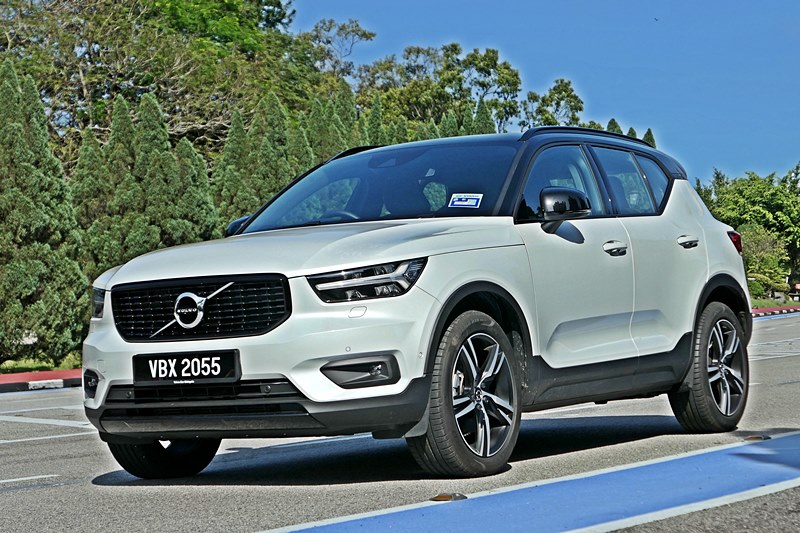
The XC40 Recharge has a similar appearance as the XC40 with a combustion engine (below) but the grille is different. With no need for radiator cooling, the space can be closed off.
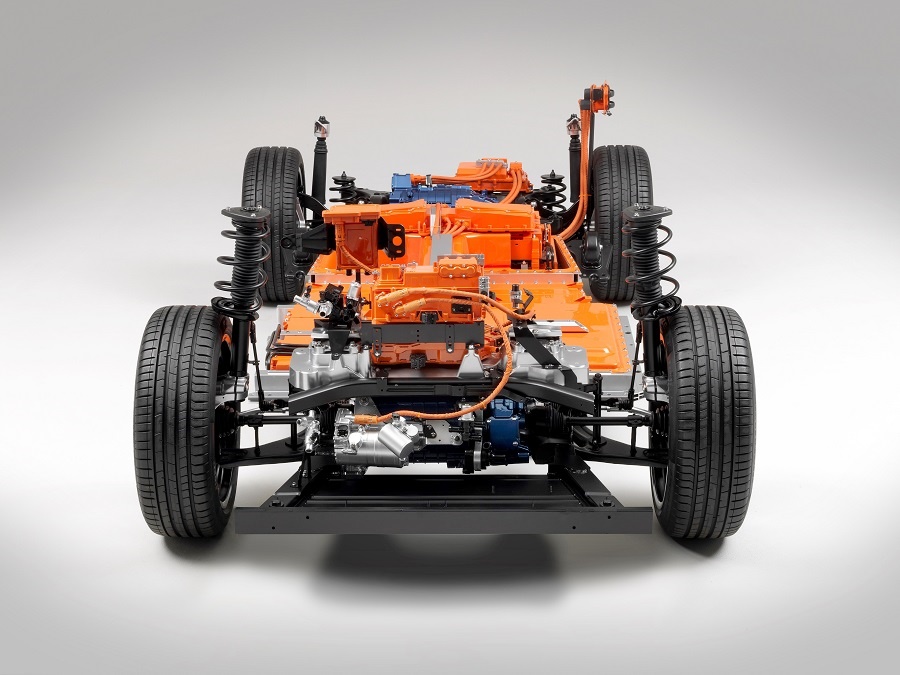
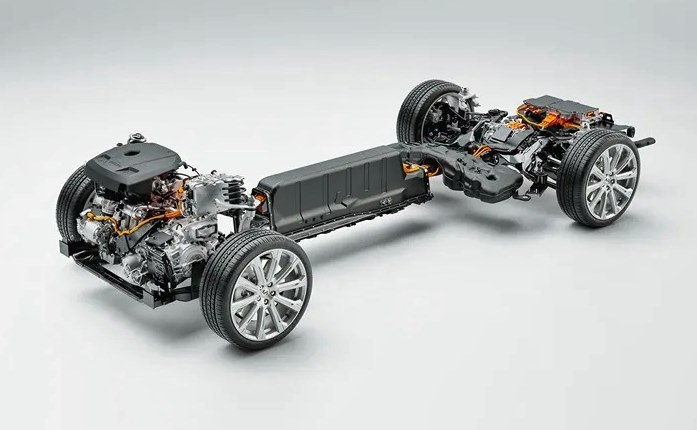
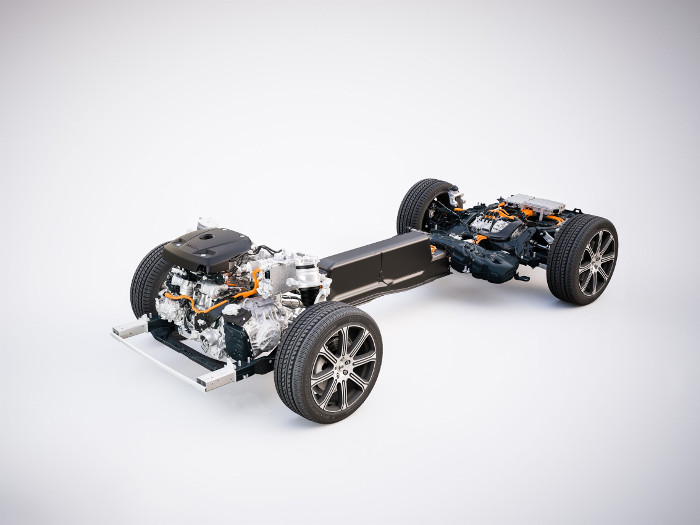
While the price has not been announced yet, the technical details are already known since it would be the same model as sold elsewhere. It has two electric motors that draw power from a 75 kWh lithium-ion battery pack positioned between the front and rear axles. The system output is 300 kW (equivalent to 408 ps) with 660 Nm of torque, which gives a claimed 0 to 100 km/h capability of 4.9 seconds and a top speed of 180 km/h. A maximum range of 418 kms is claimed for a fully charged battery pack.
As with other BEVs, the XC40 Recharge can be recharged in various ways although DC fast-charging would have the shortest time. From one report we have read, the battery pack can be recharged to 80% of its capacity within 33 minutes when a fast-charger is used. Of course, this assumes that the level is very low and in practice, it may be that people recharge whenever they can and ‘top up’ so the time spent charging might not be as long.
Similar appearance to XC40
The external appearance of the XC40 Recharge is similar to that of the XC40 SUV but you can immediately tell that the model is the BEV version from the front end. With no need to cool a radiator, there is no real need for the traditional grille so that space is closed off. That’s better for aerodynamics too, which need to be as efficient as possible to minimise wind resistance.
The equipment for the locally-assembled model may differ a bit from those sold in other countries but would still be high as Volvo wants to position itself as a premium luxury brand. With the emphasis on sustainability and recycling, a large percentage of materials would also be eco-friendly.
Android-powered?
The Volvo Car Group is the first company to team up with Google on integrating an infotainment system powered by Android so it is likely that this will be available. The infotainment system is fully integrated with Volvo On Call, the company’s digital connected services platform, and includes Google Assistant, Google Maps and the Google Play Store built-in. The new system also offers full integration of Android Automotive OS, Google’s open-source Android platform, with real-time updates to services and automotive apps created by the global developer community.
New Advanced Driver Assistance Systems
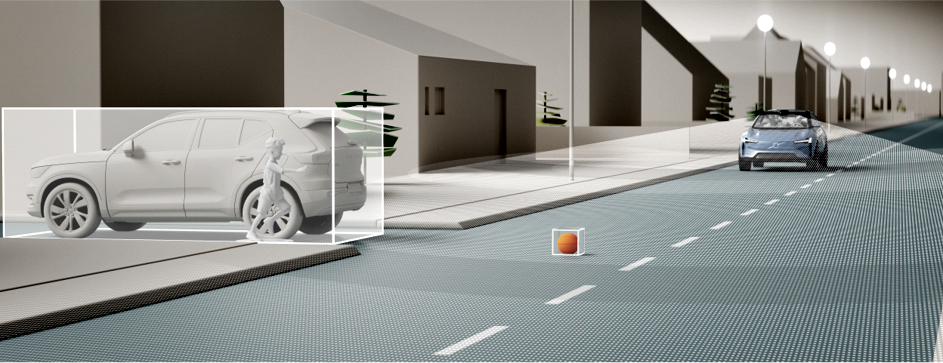
This being a Volvo, it does without saying that safety has a very high priority in every area. In terms of active safety systems, the XC40 Recharge has an Advanced Driver Assistance System (ADAS) platform with an array of radar, cameras and ultrasonic sensors. This gives it a broad range of capabilities to scan its surroundings and identify potential hazards, enabling a degree of autonomous motoring.
To help keep passengers safe and the battery intact in the event of a collision, there is a new and unique safety structure for passengers and battery alike in the XC40 Recharge. The battery is protected by a safety cage which consists of a frame of extruded aluminium and is embedded in the middle of the car’s body structure, creating a built-in crumple zone around the battery. The battery’s placement in the floor of the car also has the benefit of lowering the centre of gravity of the car, for better protection against roll-overs.
Additionally, the car’s body structure has not just been reinforced in the front but also at the rear. Here, the electric powertrain has been integrated in the body structure for better distribution of collision forces away from the cabin and reduce the strain on people inside the car.
First deliveries will start towards the end of April and buyers will get a charging cable, service package, 5-year/unlimited mileage vehicle warranty, 8-year battery pack warranty and 5 years of complimentary Roadside assistance.
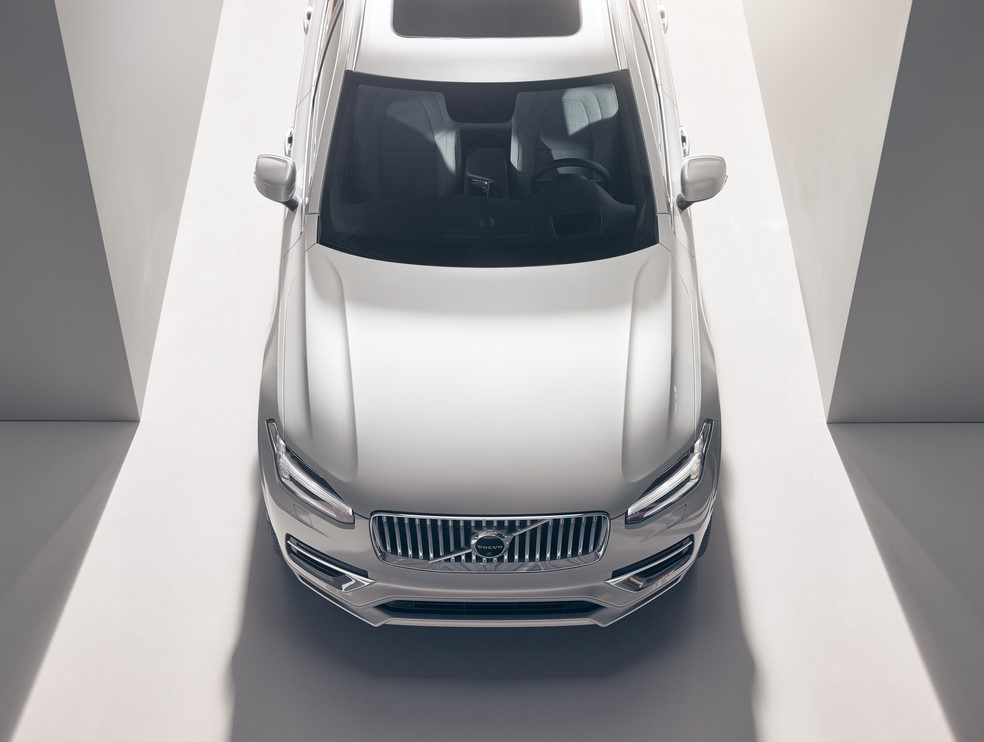
Volvo’s flagship range in Malaysia has gained an additional variant – the XC90 B5 Inscription Plus, a mild hybrid under the B badge line. The B badge is used to signify the presence of a mild hybrid powertrain which is expected to help the carmaker move closer to its goal of having all its models electrified by the middle of the next decade.
The new 7-seater SUV variant, which joins the XC90 Recharge T8 Inscription Plus, has an integrated electrified powertrain (similar to the one in the latest XC60). This combines an advanced kinetic energy recovery braking system with the petrol engine to reduce fuel consumption and emissions.
The 4-cylinder turbocharged petrol engine is coupled to an 8-speed Geartronic automatic transmission. Together with an electric motor, it produces up to 249 ps/350 Nm which goes to all the wheels.
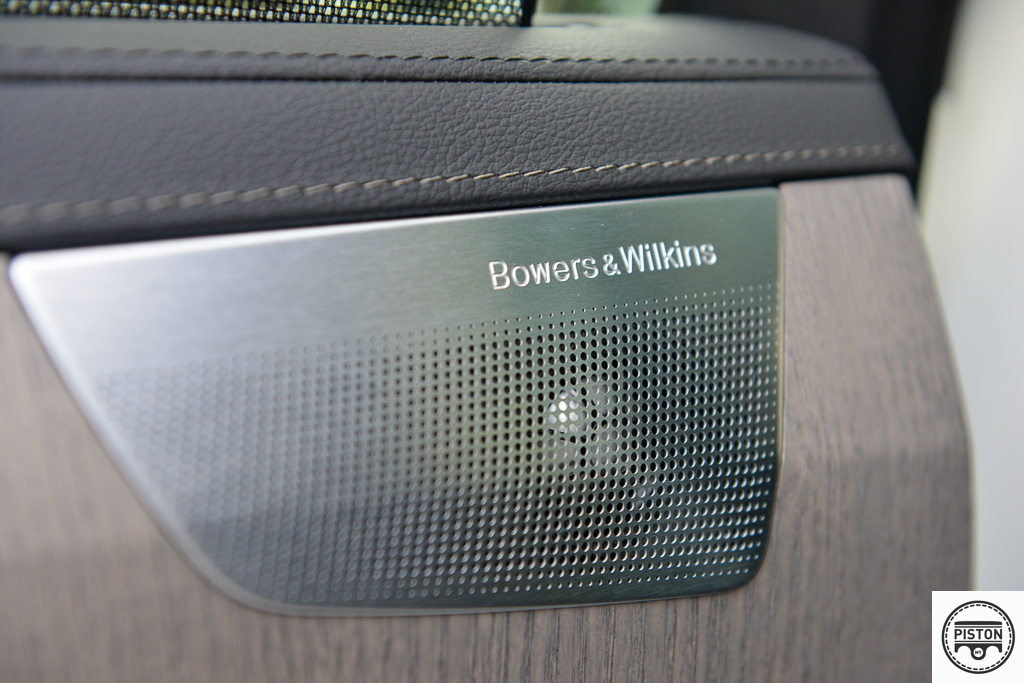
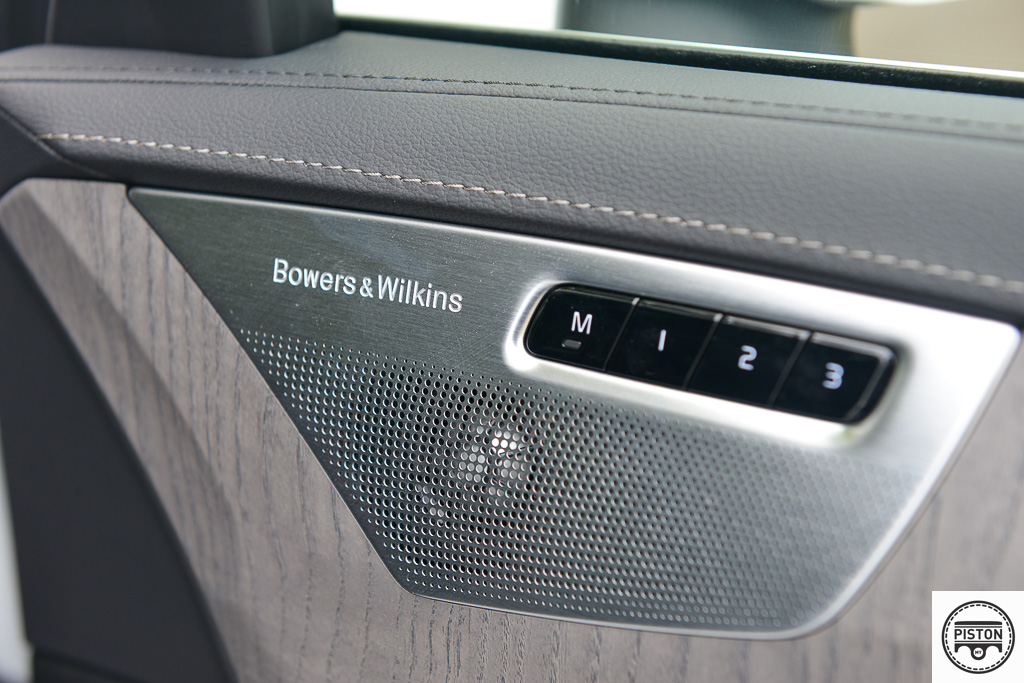
Standard equipment includes a Bowers & Wilkins Premium Sound audio system, while for active safety, there is a 360° surround view camera and IntelliSafe systems such as City Safety with Autobrake, Lane Keeping Aid, and Cross Traffic Alert.
Excluding insurance and sales tax, the XC90 B5 Inscription Plus is priced from RM386,842.12. Customers can choose from 4 exterior colours (Crystal White, Onyx Black, Denim Blue and Pebble Grey) and enjoy a full 5-year warranty as there is no limit on mileage after registration.
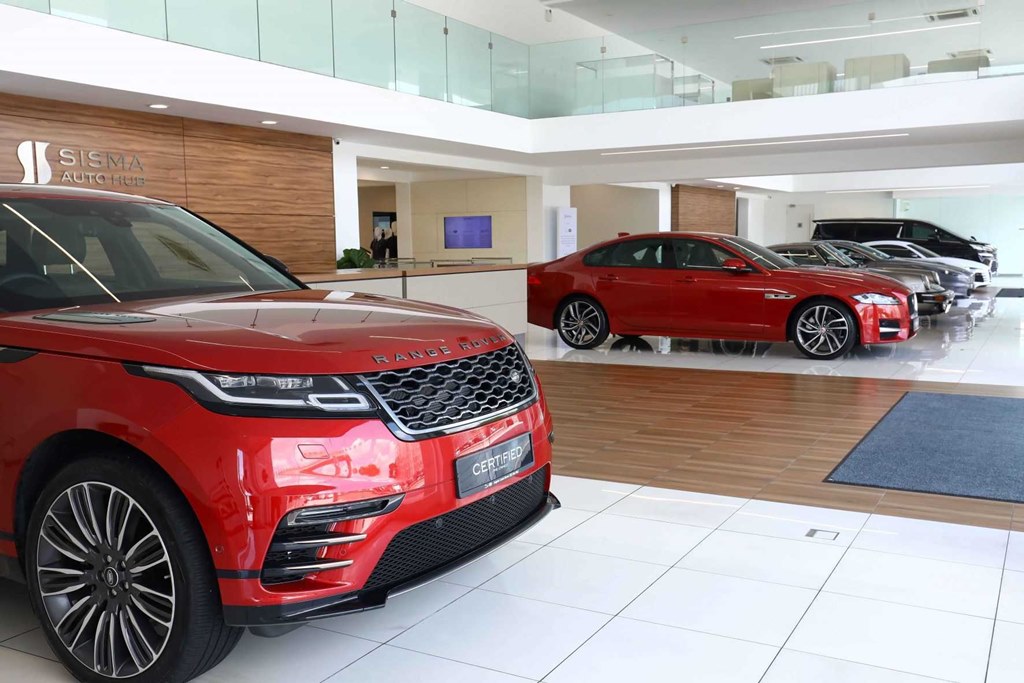
Following the move by Jaguar Land Rover (Malaysia) Sdn Bhd (JLRM), a joint venture between SISMA Auto and Sime Darby, to consolidate its retail operations in Malaysia, SISMA Auto has announced the opening of SISMA Auto Hub, a new premium multi-brand 3S centre to buy, sell or service any brand of luxury car.
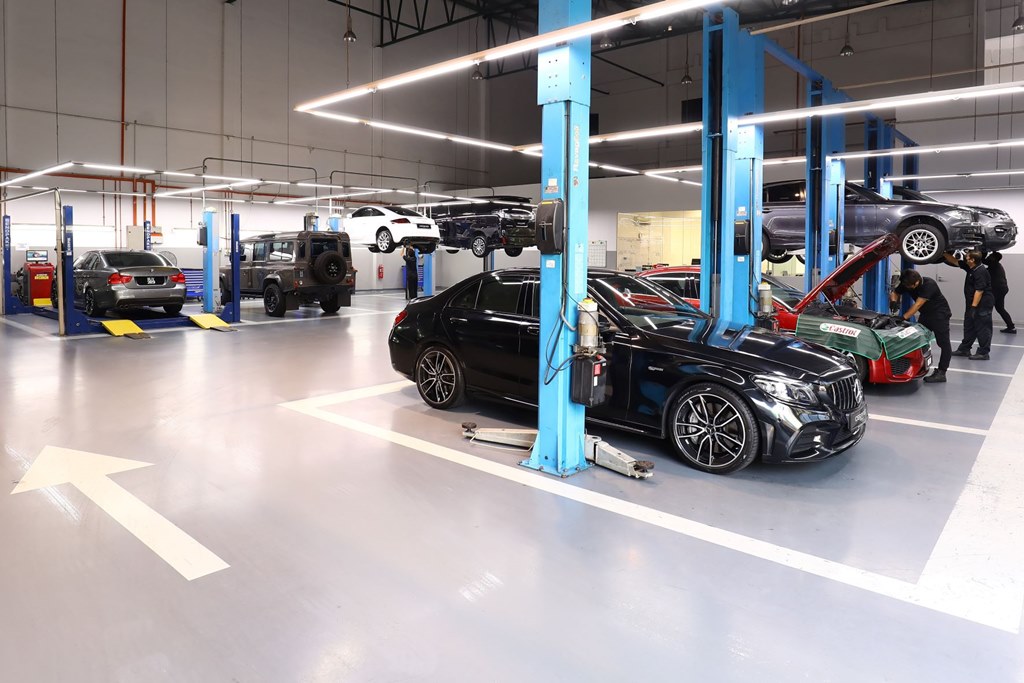
Located at the former Jaguar Land Rover 3S centre in Glenmarie, Shah Alam, Selangor, the new SISMA Auto Hub Glenmarie has a 14-car showroom and a 16-workbay service centre.
While SISMA Auto still retains significant interest in the Jaguar Land Rover business as a joint venture partner in JLRM, it now plans to leverage its more than 25 years as a franchise dealer for Jaguar, Land Rover and Volvo to offer the same premium 3S experience for any brand of luxury car.
Continuing to grow
The company aims to continue to grow with the Volvo Cars brand in Malaysia and has started construction of its flagship Volvo 3S facility in Sungai Besi, Kuala Lumpur. The 50,000 square foot facility spread over 4 floors, represents a significant expansion of SISMA Auto’s Volvo business. It is expected to commence operations by the end of 2022.
Aside from Jaguar Land Rover (Malaysia) and SISMA Auto Hub, the company currently operates two Volvo outlets – a sales showcase atBukit Bintang and Service and Selekt Centre in a Glenmarie, next to the SISMA Auto Hub.
“We believe that a premium 3S experience should be available to all luxury car owners. At SISMA Auto Hub, our highly trained team will provide the same level of exceptional service that you have come to expect from SISMA Auto,” said Syed Khalil bin Syed Ibrahim, Managing Director of SISMA Auto.
Today, Volvo has six SUV models in its range (including electrified variants), all of which are selling well around the world. However, the company was actually late into this segment which began its rapid growth in the 1980s. Mitsubishi Motors and Isuzu had made 4×4 workhorse vehicles into more comfortable dual-purpose vehicles that could be used as alternatives to cars, and then Toyota and Honda lit the ‘SUV mania’ in the mid-1980s with their small SUVs.
Very quickly, other manufacturers began to come out with SUVs, with even the German premium brands including Porsche offering at least one model. But Volvo seemed slow to have a SUV in its range and on occasions when the Swedish executives would be asked, their response would be that they were working on a model but it had to meet the high safety standards of Volvo before they could offer it to the public.
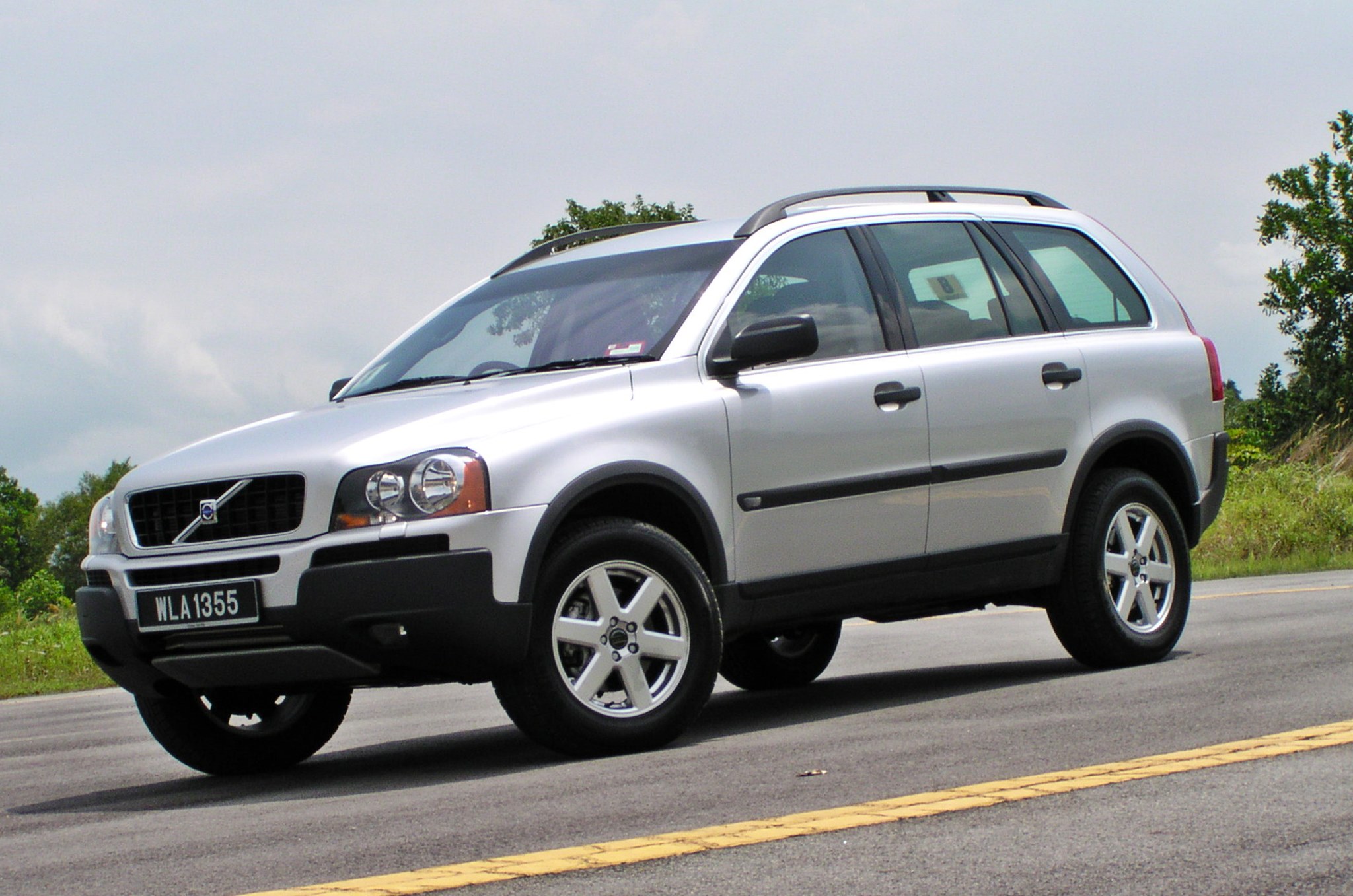
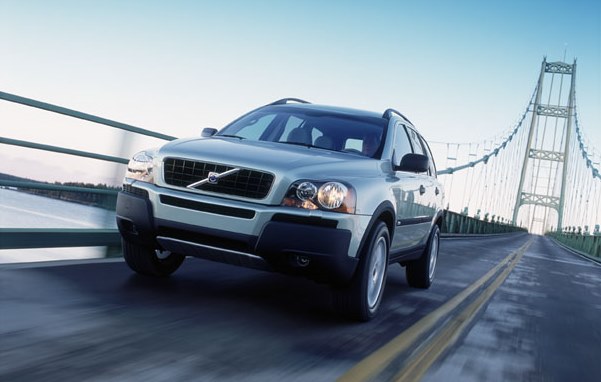
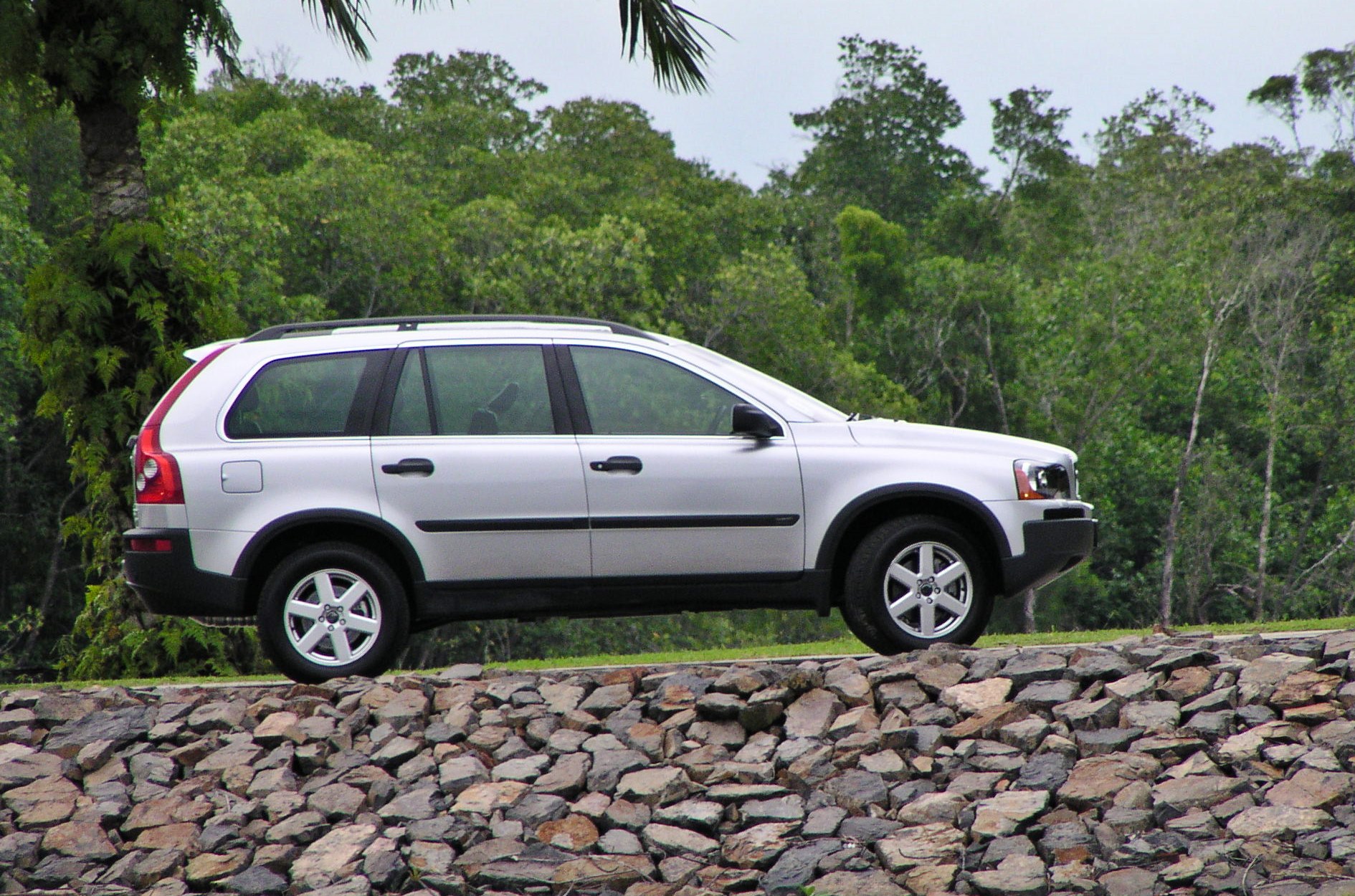
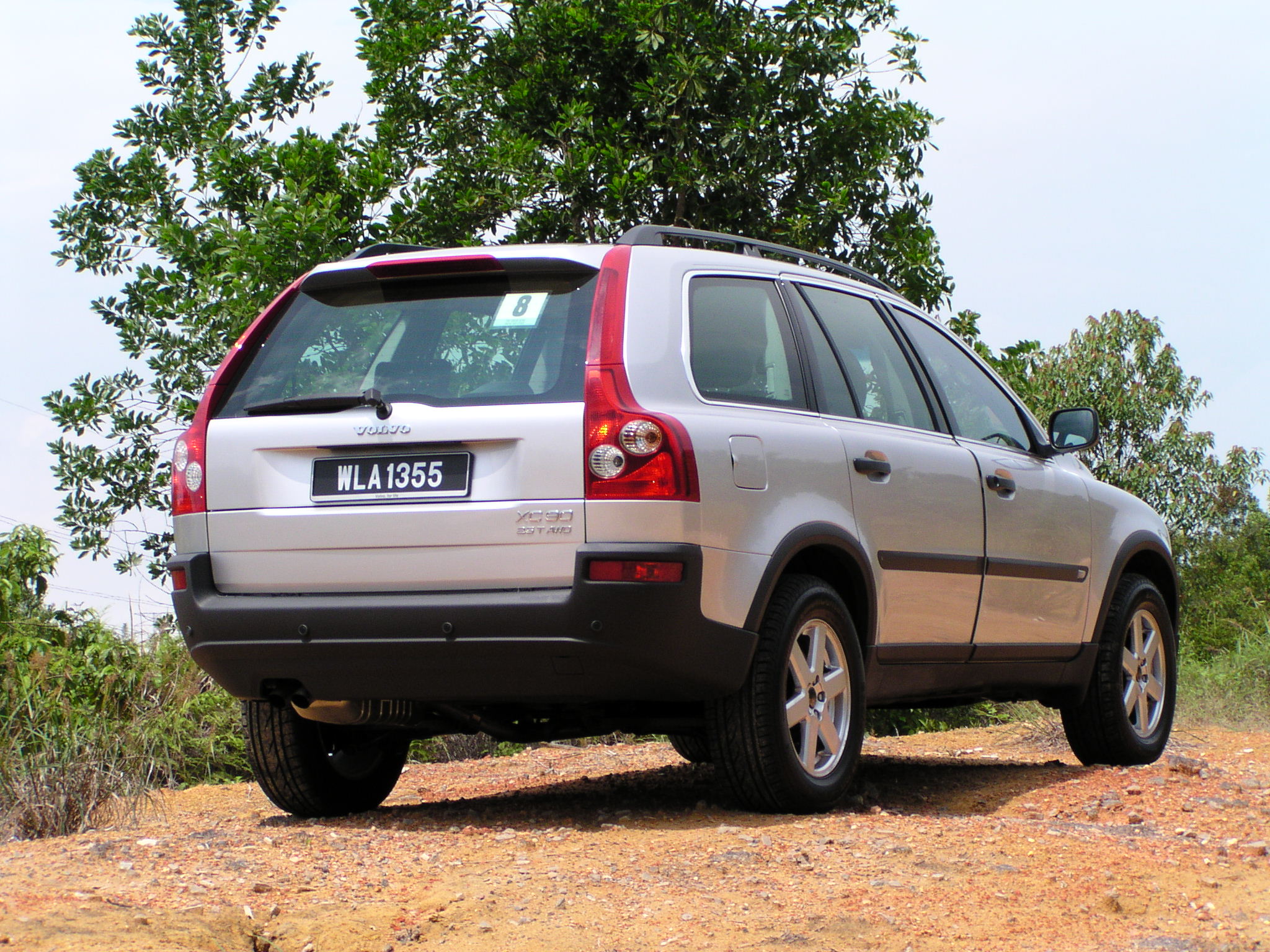
Finally, in January 2002, at the North American International Auto Show, Volvo finally introduced its first SUV – the XC90. Some thought that the carmaker had joined the SUV segment too late although it was true that Volvo was preoccupied with the safety aspects of SUVs, which delayed its new model.
Volvo’s concerns were in part related to the truck-like driving properties which contributed to making them significant roll-over accident statistics. Such vehicles, with extra ground clearance, are taller than passenger cars and so the centre of gravity is higher up, making it easier for the vehicle to tip over in certain cornering situations.
Hans Wikman, Project Director of the XC90, recalls his feelings when the management team inspected the three design alternatives under the burning desert sun at the Arizona Proving Ground in America in May 1999. “We in the project team were a bit tense. The SUV program had been canned twice before. Now we kept our fingers crossed that our favorite design was so good that the executives would approve it without hesitation. And that’s exactly what happened,” he said.
Solving inherent safety issues
But they had to solve the safety issues and were determined to do so when the XC90 was cleared to proceed towards production by Volvo’s top management. And Wikman and his team were able to come up with ingenious approaches to addressing the known issues of SUVs. At that time, Volvo was part of Ford so there resources were shared in doing research on the issues. Ford too wanted active systems that could make its SUVs safer.
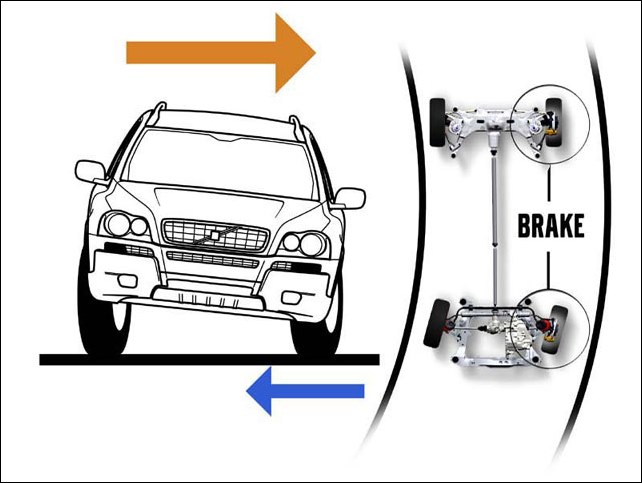
The solution was a system called Roll Stability Control (RSC), which was an automotive world-first when it was introduced in the XC90. Using a gyro-sensor, RSC measures the degree and rate at which the vehicle’s body is leaning and if it senses a rollover is about to occur, the system is activated. The electronic stability control system engages, engine torque is reduced and one or more wheels are braked until the car has regained its stability.
How Roll Stability Control in the XC90 worked.
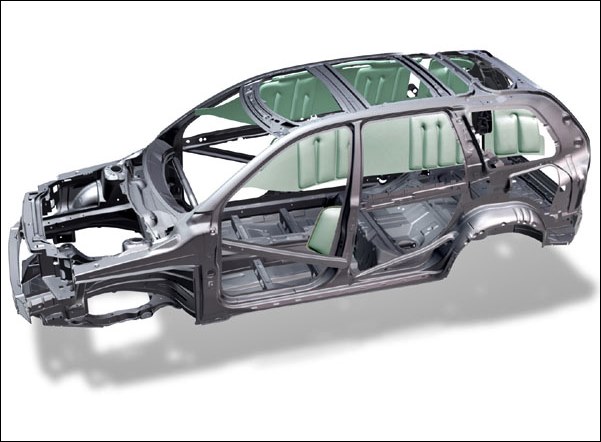
Cooperation between the reinforced roof structure, seat belt pre-tensioners and inflatable side curtains helped create superb roll-over protection for all 7 occupants. This world-class safety level was demonstrated in an unusually tangible way when the Volvo invited the world press to watch a violent roll-over test with the XC90 outside the state-of-the-art Safety Centre in Gothenburg, Sweden.
Demonstration in front of media
The video from the 2002 event, still available on YouTube, shows how the XC90 rolls over three times before ending up on its right side. “The roof structure was more or less intact after the car finished rolling. The spontaneous applause from the media representatives confirms that we made a real impression with this unique demonstration,” said Wikman.
The strength of the XC90’s structure was demonstrated in front of international media when the SUV was rolled sideways a few times, and the cabin area remained intact.
The safety level is also emphasized in the Volvo Car Corporation’s research. The accident investigation files include remarkably few accidents where XC90 occupants have been killed or sustained severe injuries.
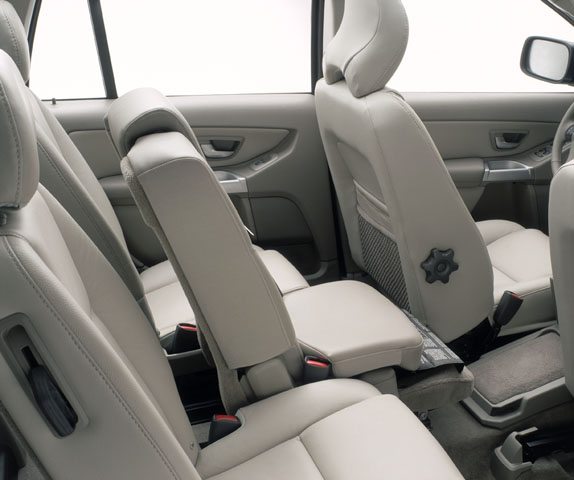
Besides the RSC system, the other world-firsts in the new SUV were inflatable side curtains for all three rows of seats, an integrated sliding centre booster seat for children in the second row and seatbelts with pre-tensioners for all seats. The pre-tensioners, now common in cars, remove slack from the seatbelt when there is a collision and the airbags are about to deploy. By doing so, the restraint is more effective and can help to reduce injuries in some cases.
Female feedback for the design
Doug Frasher, working at the Volvo Cars Monitoring and Concept Center (VMCC) in California, was the proud father of the winning design that became the production XC90. And just like the first Ford Escape, the model benefitted from having a female group provide feedback on the design and features. The multi-background reference group, including Swedish Hollywood actress Maud Adams, inspired the shape of the XC90 by asking for masculinity instead of the traditional ‘macho look’ of most SUV’s,
“The model we showed to the management was almost identical to the production XC90 we revealed in Detroit. We had done our homework well, much thanks to our female reference group. A majority of SUVs were driven by women and our ladies gave us great input,” said Frasher.
“I remember one of the ladies making a sweeping gesture that almost sketched the sleek shape of the bonnet flowing up on the A-pillar. We put a lot of effort into creating a design that felt strong and protective without the impression of sheer size. The XC90 was muscular, but not aggressive,” he recalled.
A success story for Volvo
Volvo’s original target for the first XC90 was 50,000 units per year worldwide. However, the model became so popular that the figures grew rapidly until they peaked at 86,000 units in 2005. The US market imported up to 38,800 units in one year. That made it Sweden’s most valuable export product, with total yearly export value over US$6.2 billion in the peak years.
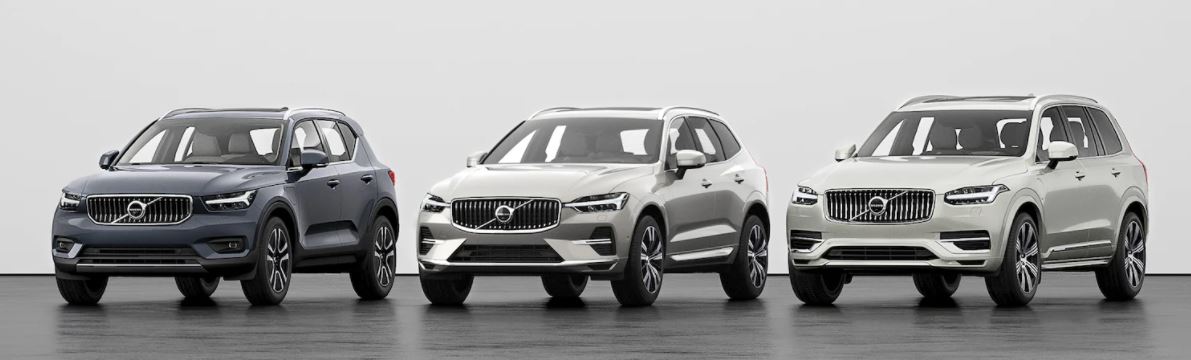
Volvo’s SUVs range 20 years after the first SUV model was introduced. The three models are also available with electrified powertrains.
Ever since the radio could be installed in a car, entertainment while motoring has been constantly evolving in tandem with the technologies of different decades. What used to be audio systems before are now called infotainment systems – providing a combination of information and entertainment of different kinds.
In the old days, a radio in the car was the only form of entertainment on a long journey.
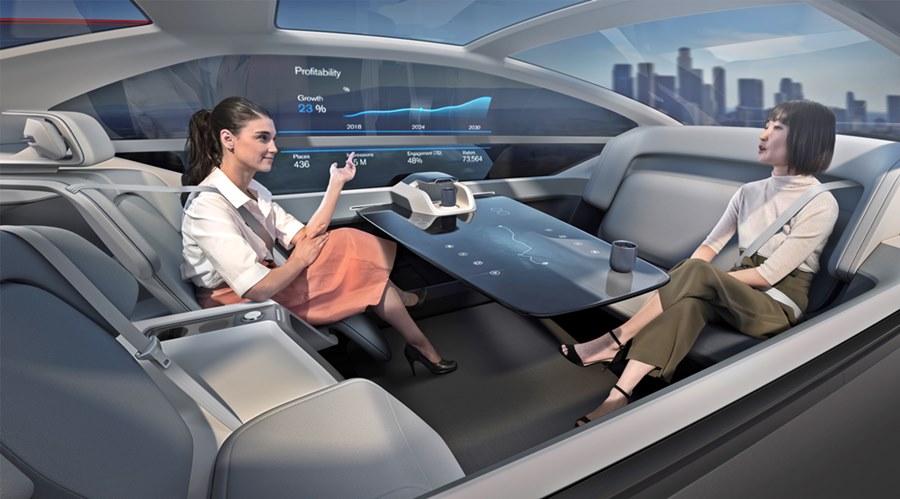
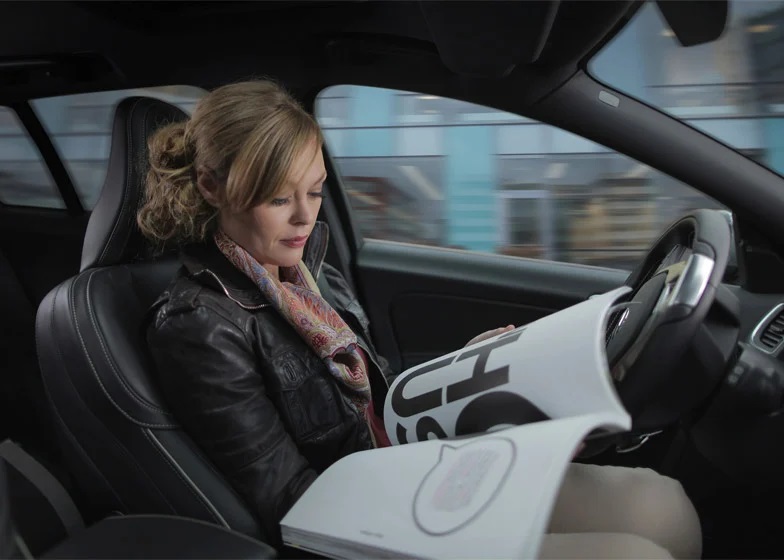
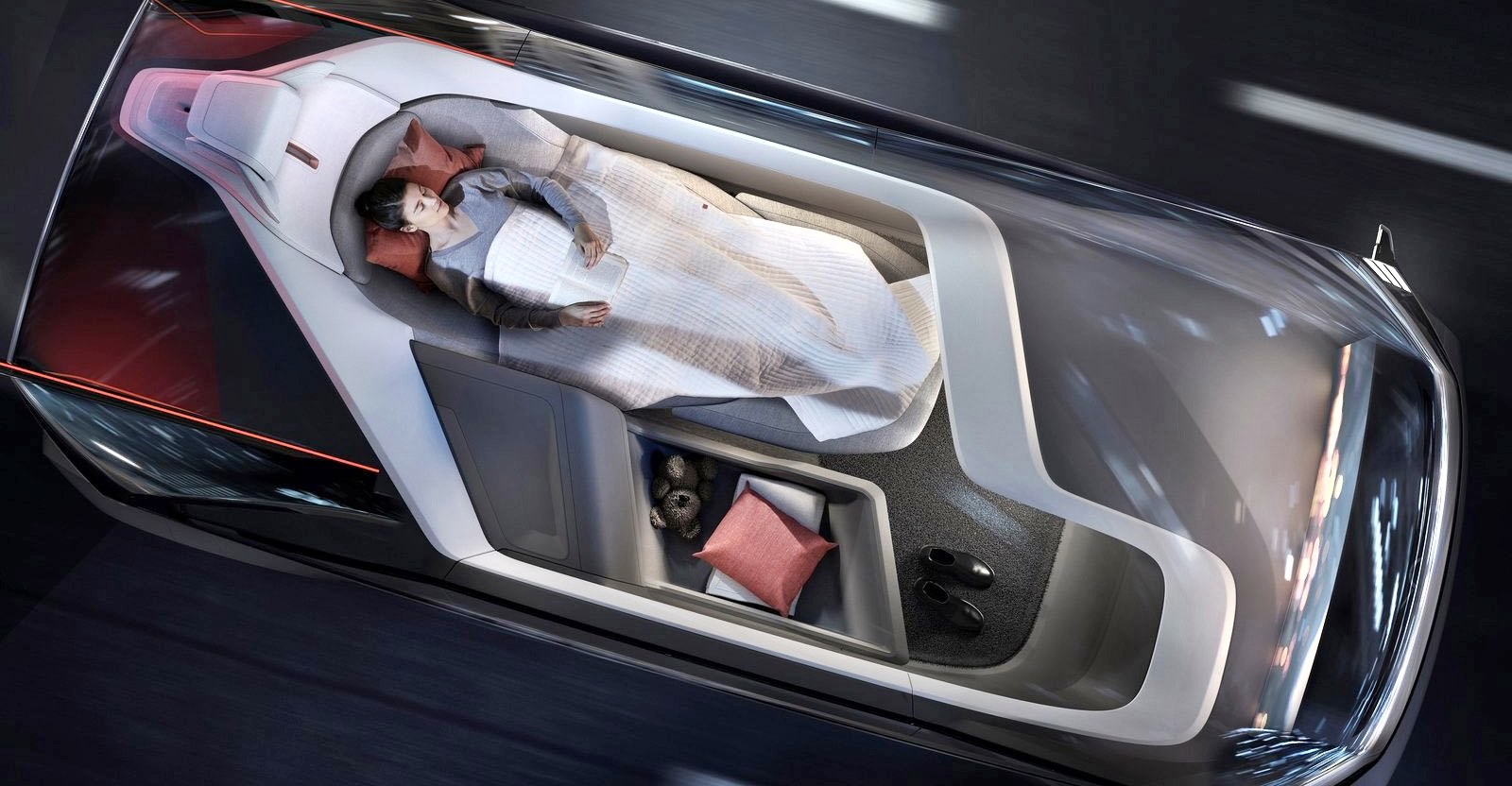
In time, we’ll be travelling in cars that can operate on their own, driving safely to wherever we want to go. Without the need to control the car or even pay attention to the road ahead, the driver will have more time to do other things – read a book, watch a movie, listen to music or even play videogames. Such a scenario means that infotainment systems in cars will have to change and provide even more features and capabilities.
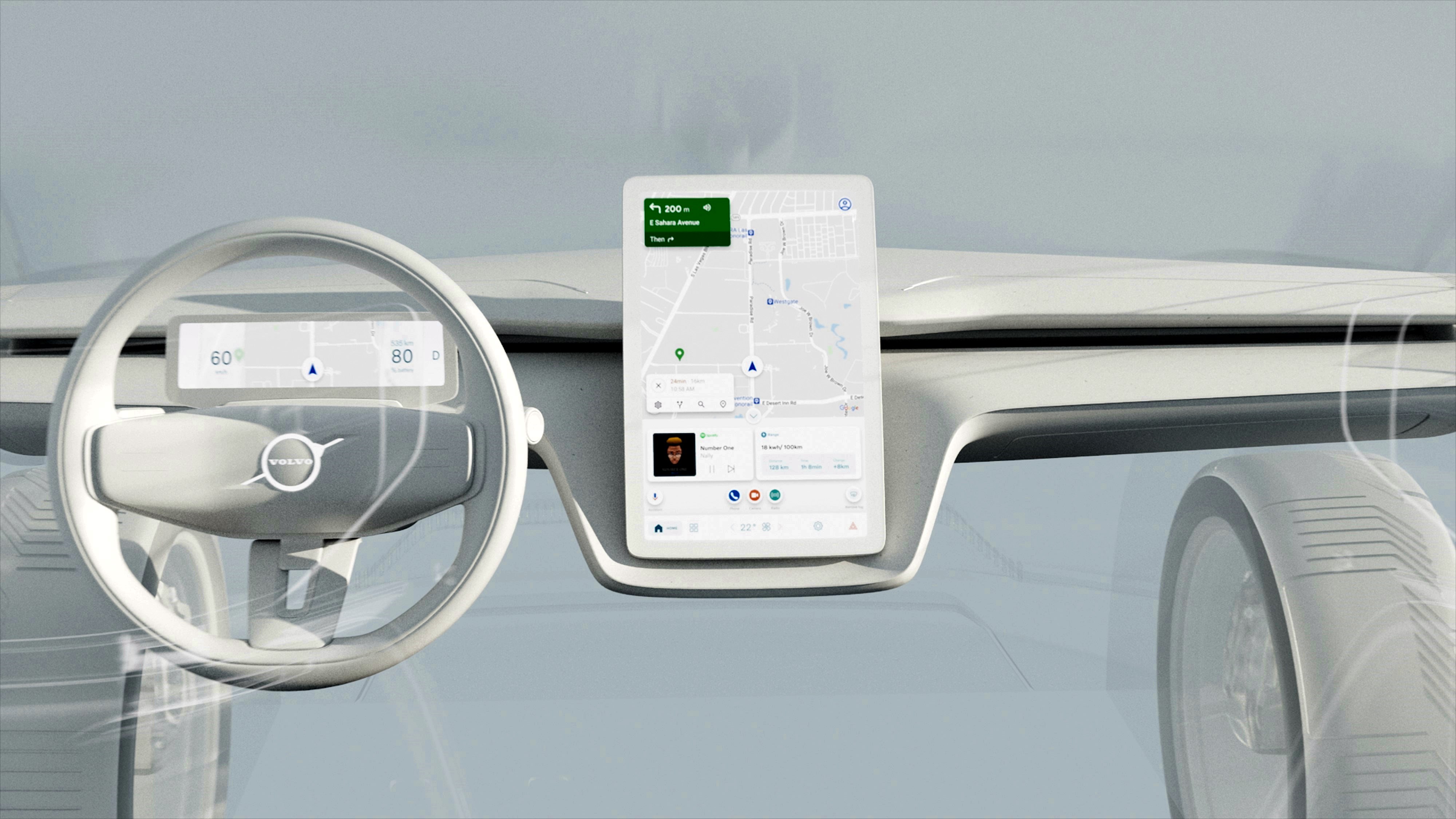
Volvo is already starting on this evolution and is developing next-generation infotainment systems that can be offered in the near future. For example, using Qualcomm Technologies’ Snapdragon Cockpit Platforms takes the carmaker’s Google Android Automotive-based infotainment system to the next level. By leveraging Volvo Cars’ and technology firm Qualcomm’s in-house R&D competence, the companies will improve the overall capability of Volvos powered by Google Android to become faster and more responsive.
Qualcomm’s Snapdragon Cockpit Platforms is designed to be a central hub for high-performance computing. It is capable of fulfilling highly demanding graphics, audio and artificial intelligence requirements in the forthcoming Polestar 3 SUV and Volvo Cars’ upcoming fully electric SUV, all while having a very low power consumption. Using the latest Snapdragon Automotive Platforms, the next generation infotainment system will be more than twice as fast, while graphics generation will be up to 10 times faster.
The continued partnership between Volvo Cars and Google will also see Volvo being the first carmaker to directly integrate its cars with Google Assistant-enabled devices. This integration basically turns cars into smart devices.
This planned direct integration allows for a seamless connection between Google Assistant and cars to date, letting Volvo drivers control functions in their car by issuing voice commands to Google Assistant-enabled home and mobile devices. By pairing their car with their Google account, drivers can directly talk to Google in their car and remotely control a variety of functionalities, such as cooling it down on a hot day or just locking the doors in case they forgot to do so.
“Volvo Car Group was first to introduce Google technology and services in our cars and we are now looking to be the first to integrate fully with Google Assistant-enabled devices – it is a natural next step in our partnership with Google,” said Henrik Green, Chief Product Officer at Volvo Cars. “This integration allows us to improve the customer experience immensely, as it gives customers the possibility to easily and securely manage their car while at home or on the go, through any personal device that has Google Assistant.”
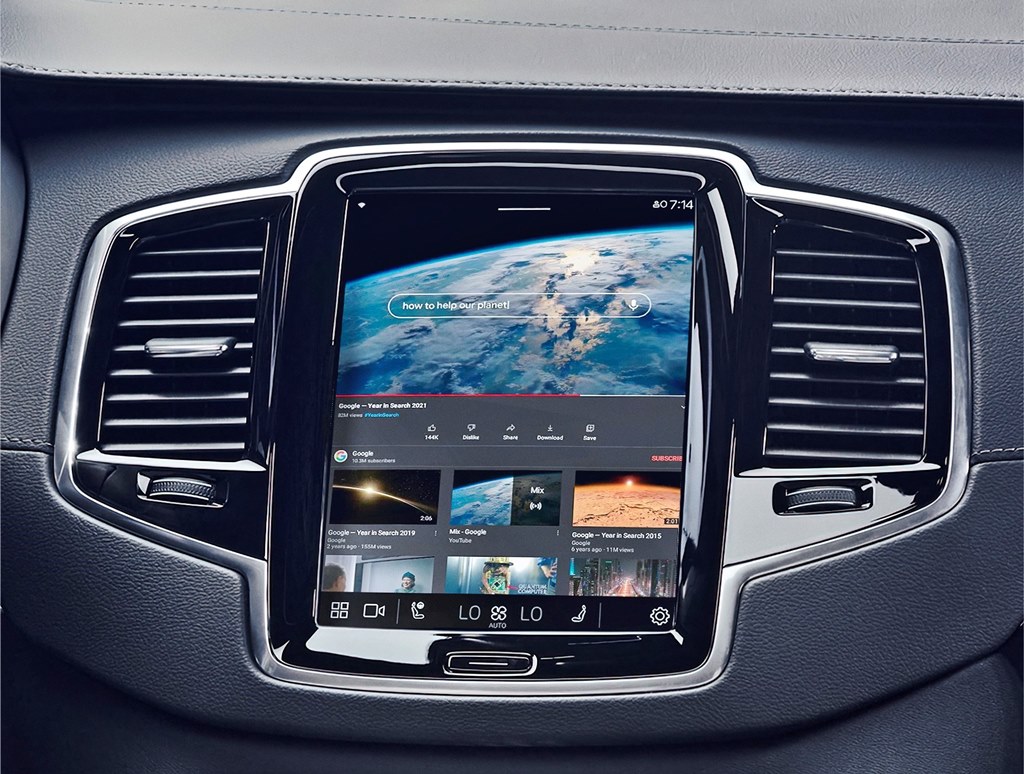
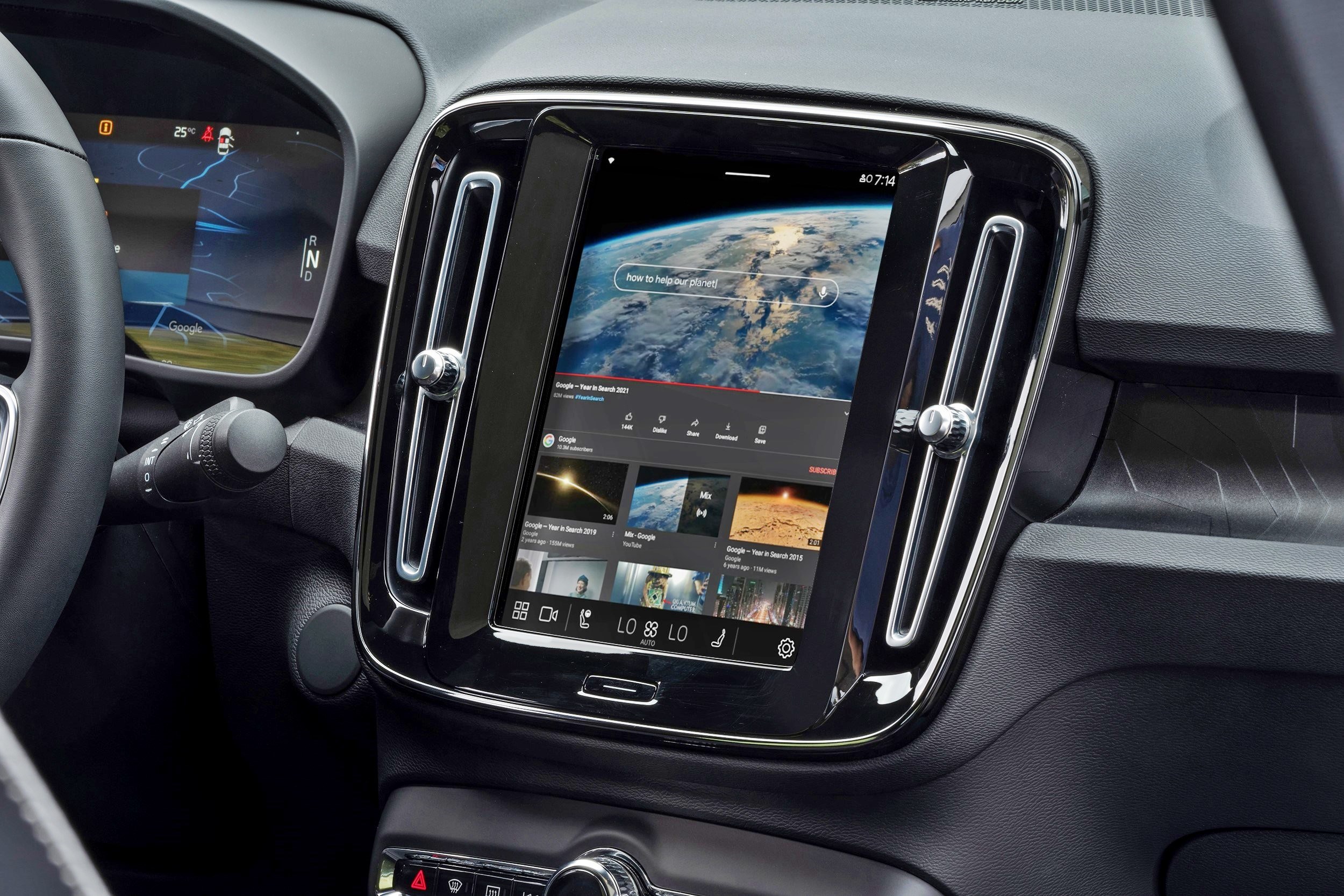
Finally, YouTube video playback will also come to all Volvo cars with Google built-in. YouTube will be the first video platform to be featured and available for download in Volvo cars on Google Play. This is the beginning of enabling video streaming in cars. Volvo is providing YouTube video as an enjoyable way to pass the time during stop with an EV to recharge. However, mindful of safety, videos will be allowed to be played only when the car is fully stationary.
“Allowing our customers to watch videos while charging or when waiting to pick up their children from school is part of our promise to make their lives better and more enjoyable,” said Green. “With YouTube and other major streaming services coming soon, our customers can enjoy their charging break instead of seeing it as just a hassle – making electric car ownership that bit easier.”
“The car is a great venue for enjoying video and audio, so I would not be surprised if this means that people spend more time in their Volvos, even when they are not going anywhere!” added Green.
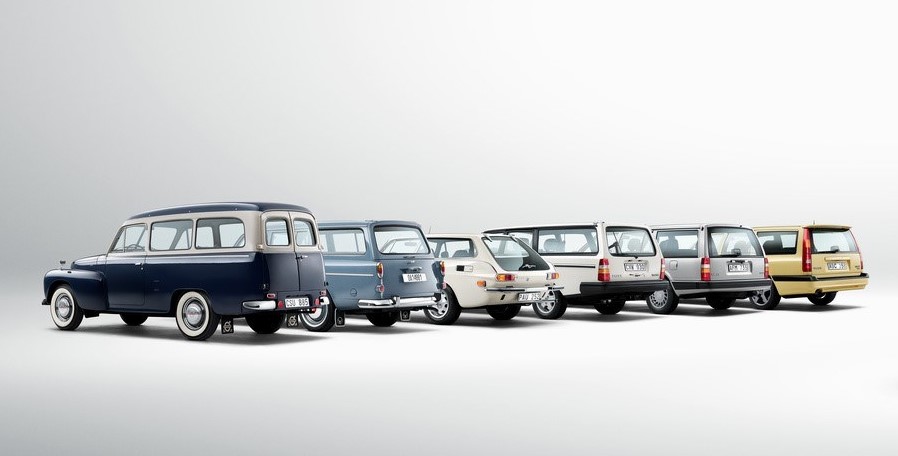
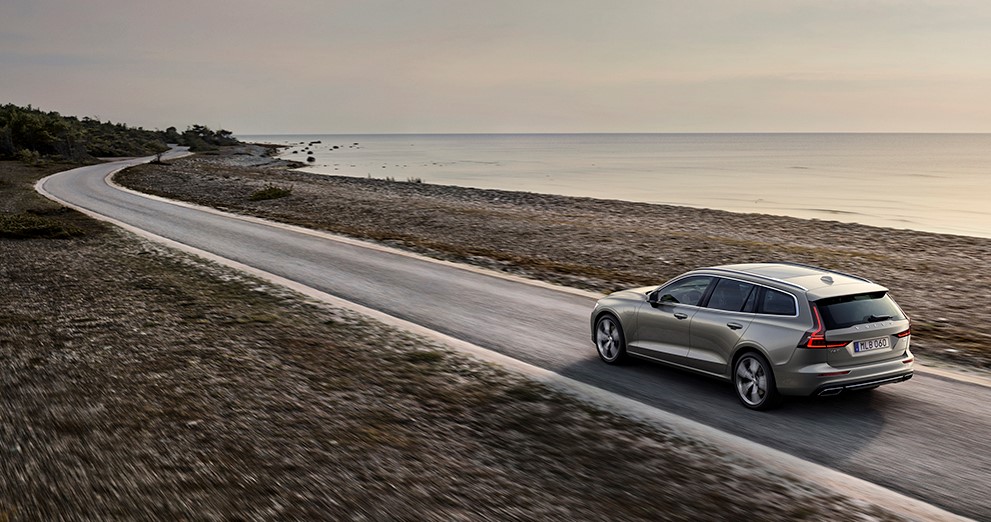
Before SUVs appeared, the stationwagon was the ideal multi-purpose vehicle to haul a lot of stuff. Sedan-like but stretched a bit to have a big boot space, it was as low as a sedan and just as comfortable. Volvo, which had been making stationwagons since 1953 when it introduced the Duett, became a leader in the stationwagon segment in the 1980s, especially in Europe where its models were popular.
The Duett had been conceived as a vehicle which could be used for work as well as for family use, so it was the original dual-purpose vehicle (a term which came into use in the early 1980s when the first 4x4s like the Mitsubishi Pajero and Isuzu Trooper were introduced). The success of the Duett encouraged the Swedish carmaker to continue making such cars and in the years that followed, it would always have a stationwagon variant of the prevailing model series. Malaysian motorists will remember the police using Volvo stationwagons in the 1970s and then the 850 stationwagon in the 1990s for highway patrol work.
And although in the 21st century, it has been selling more SUVs than sedans and stationwagons, the company has assured stationwagon fans that it will continue to offer such models in future. These will be alternatives to the SUV and crossover ranges and will eventually be fully electric. They are currently designated as S and V models although these may change as the future models will have more aerodynamic forms. Volvo had originally wanted to designate its stationwagons as ‘F’ – for ‘Family’ – when it launched the first V40. However, Ferrari sent a note of protest and said that a ‘F40’ would mislead people into thinking of the sportscar made by the Italian carmaker which had the designation. So Volvo switched to ‘V’, which it said meant ‘Versatility’.
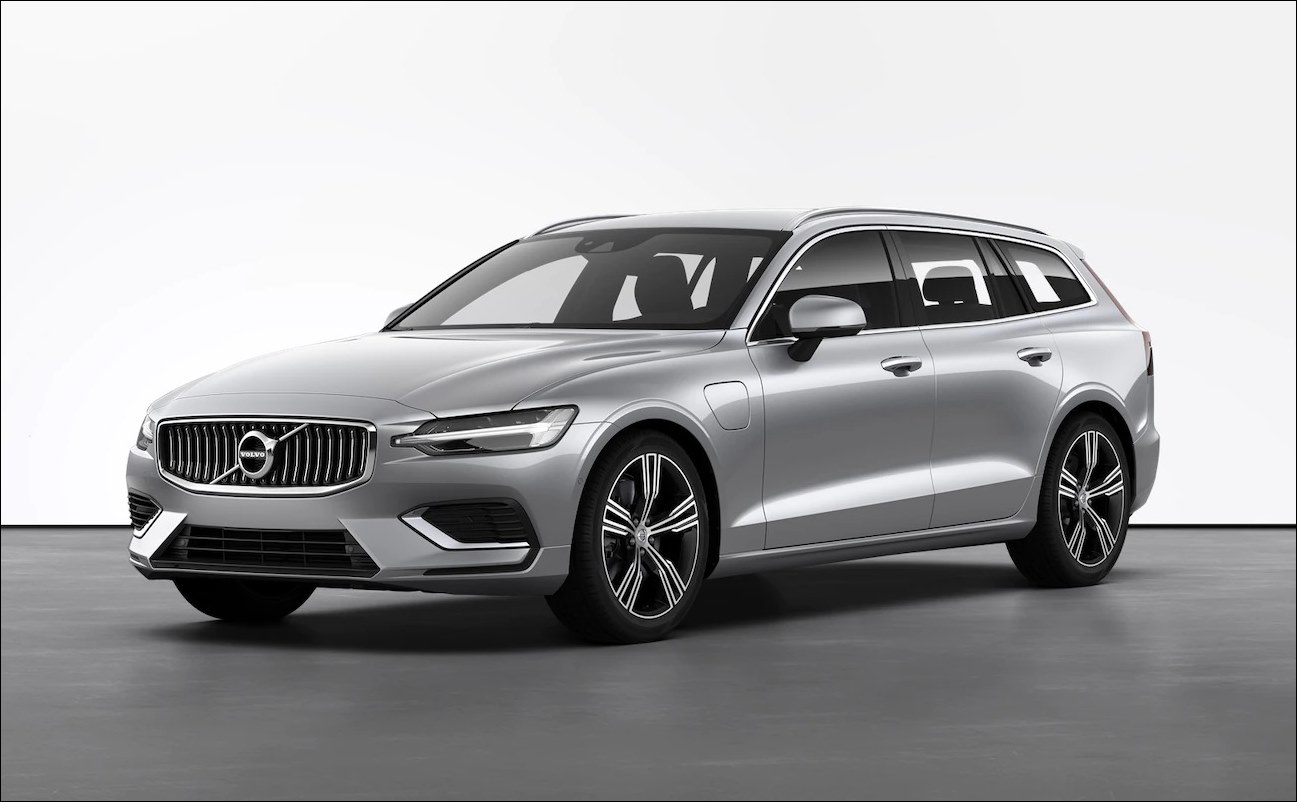
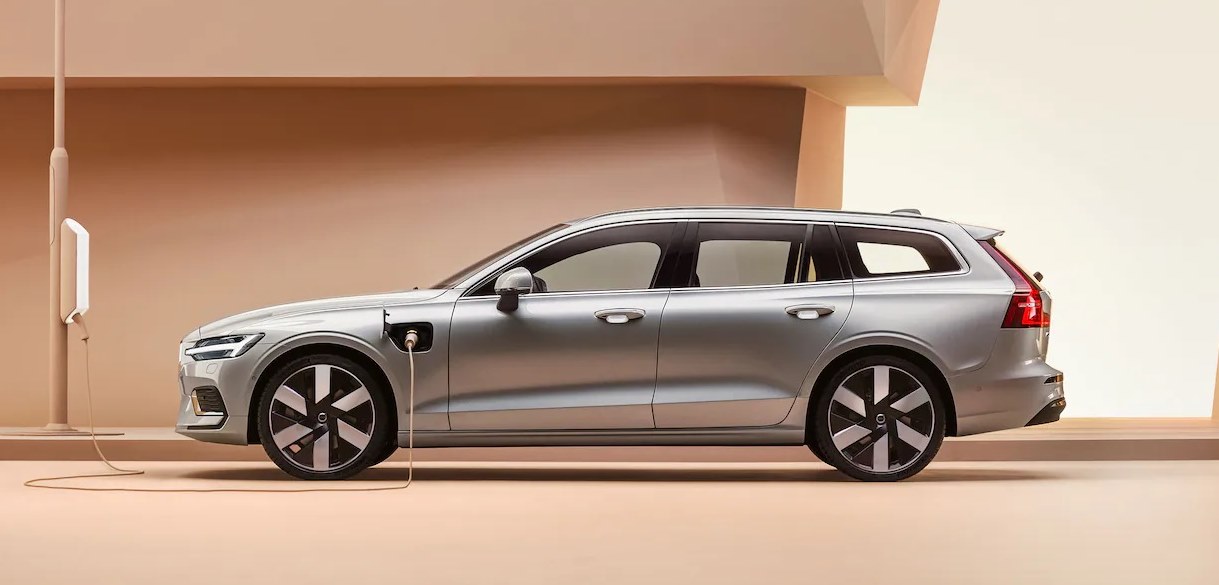
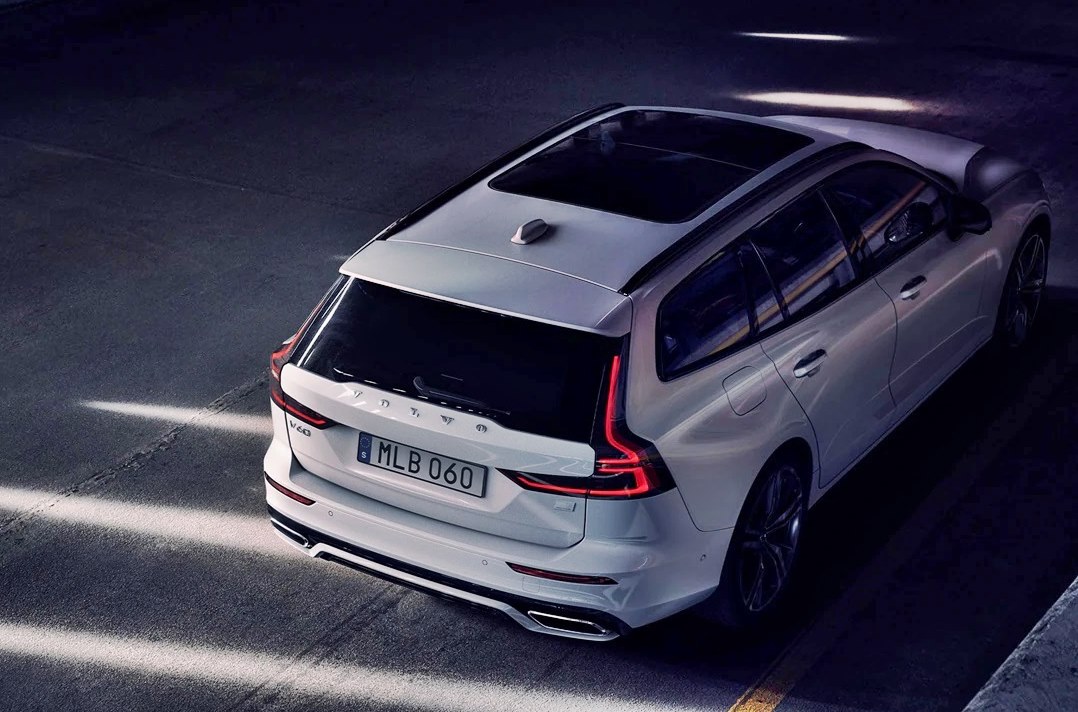
In the US market, which has been a huge consumer of Volvo stationwagons for decades, some of the models are no longer being sold (which led to the rumour of Volvo stopping stationwagons altogether). However, the company will still sell some versions of the current models and in Malaysia, the latest V60 Recharge T8 has just gone on sale with a price of RM287,474 for the Inscription version (the only one available).
This is an electrified PHEV model with a plug-in hybrid Drive-E powertrain. There is a turbocharger and supercharger which boost output to 320 bhp/400 Nm, to which is added the output of an electric motor that can generate up to 407 ps/640 Nm. A lot of power to all 4 wheels which provides effortless cruising even when the 519-litre boot is fully loaded.
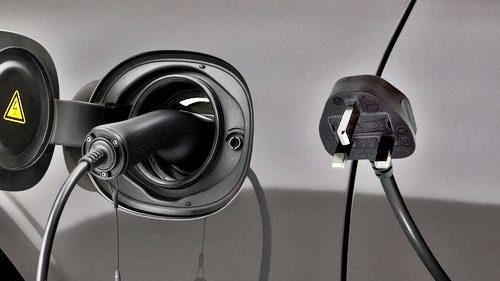
As a PHEV, the V60 Recharge T8’s battery pack can be recharged from an external power source rather than just being recharged while on the move. The time for recharging varies depending on the type of charging used. If from a normal household power socket, each hour of charging can provide 7 to 14 kms but if using DC fast-charging 150 kW station, then in 10 minutes, the battery pack can ‘fill up’ for up to 100 kms of range at a 150 kW station. Shell recently started operations of a DC fast-charging station at its station near Tangkak in Johor and will establish a network of 12 stations along the North-South Expressway.
With a fully charged battery pack, it can travel a claimed 49 kms on just electric power but in normal driving, the system will be continuously varying the use of the two power sources for optimum efficiency. Unlike a fully electric powertrain which will come to a standstill if the battery pack is empty, a PHEV like the V60 Recharge T8 will still be able to run using its petrol engine.
As for the design, the V60 Recharge T8 maintains the sleek form which has been around since the days when Peter Horbury, the company’s former design head, declared that ‘we kept the toys and threw out the box’ as he introduced the C70 coupe in 1996. Thereafter, Volvo stationwagons no longer looked like boxes on wheels and had a streamlined profile that added elegance.
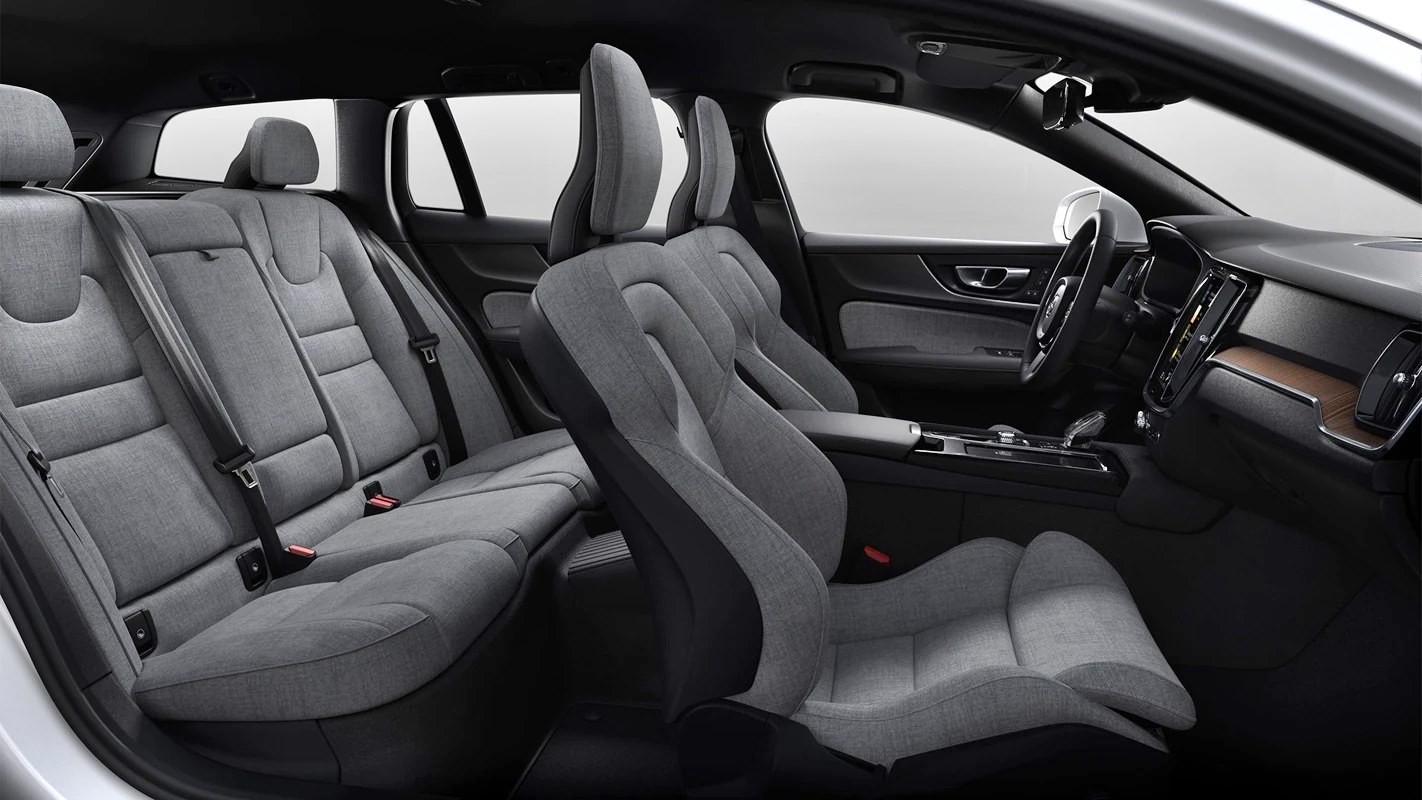
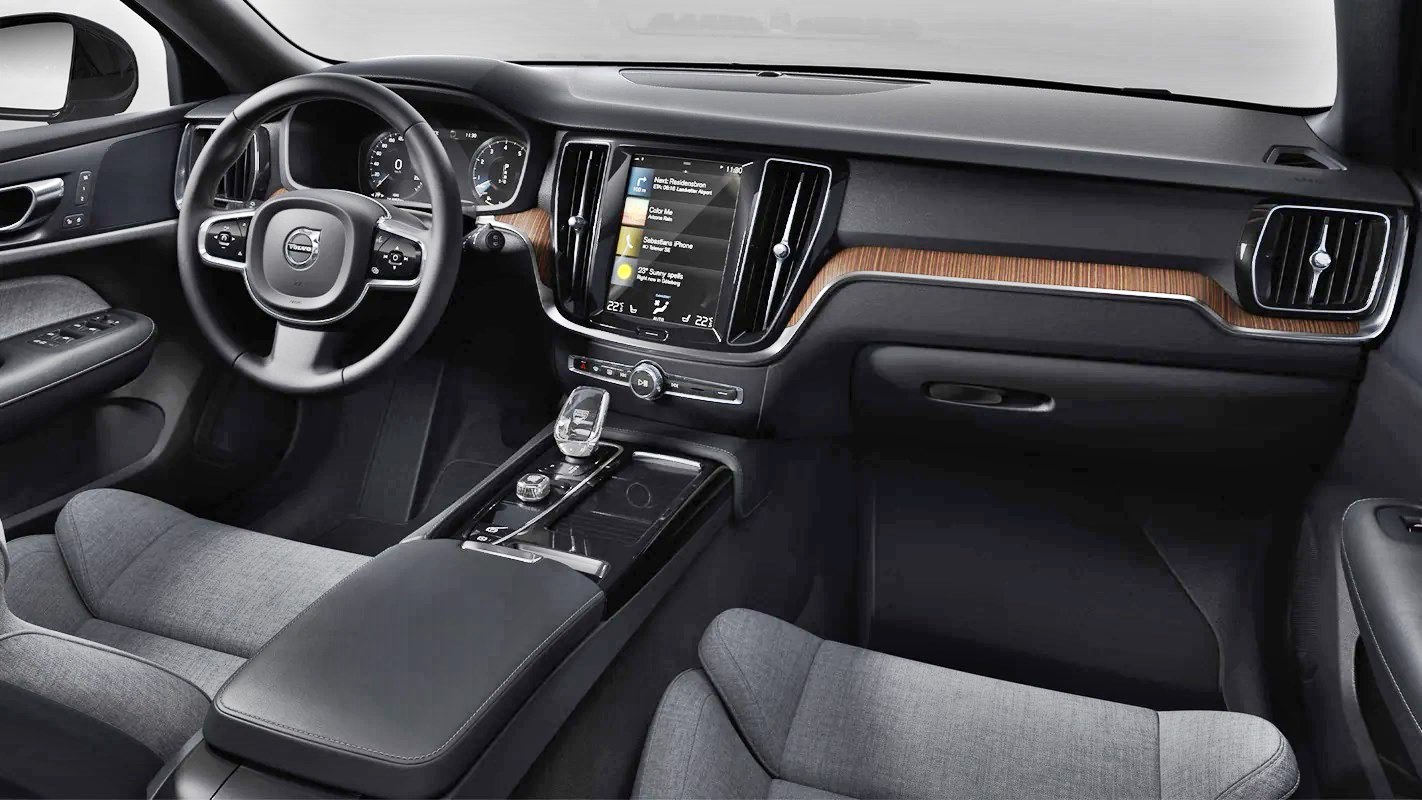
The interior too is what you would expect of a Volvo with their Scandinavian ambience and focus on functionality. These days, the emphasis is on using sustainable materials and ensuring that the cabin air is as clean as possible. And although the environment is like that of a premium sedan, there is still the versatility of a SUV with rear seats that fold down and extend the length of the boot.
“The addition of the Volvo V60 Recharge T8 as a PHEV brings Volvo another step forward in our electrification strategy. We are one step closer to realising our aspirations in having a fully electric line-up by 2030 as we move further into a more sustainable future,” said Charles Frump, Managing Director of Volvo Car Malaysia.
Carmakers wanting to enter the US market have often found that the west coast state of California is a good place to start. It seems that consumers there are receptive to new trends and new cars, so Volvo Cars will introduce its unsupervised autonomous driving feature, Ride Pilot, to customers in the state of California first.
‘Unsupervised’ would mean that Ride Pilot offers the highest level of autonomous motoring where humans do not have to be involved at all. It’s the stuff of science fiction movies and will free up more time for the occupants to do other things. Whether we can call it ‘driving’ any longer is something that will need to be debated.
In tandem with the introduction of Ride Pilot, the company is also setting a new standard for safety, with over-the-air (OTA) software updates in combination with a state-of-the-art sensor set-up. The software is developed by autonomous driving software company Zenseact, together with Volvo Cars’ in-house team of developers, and developers from Luminar, one of its technology partners.
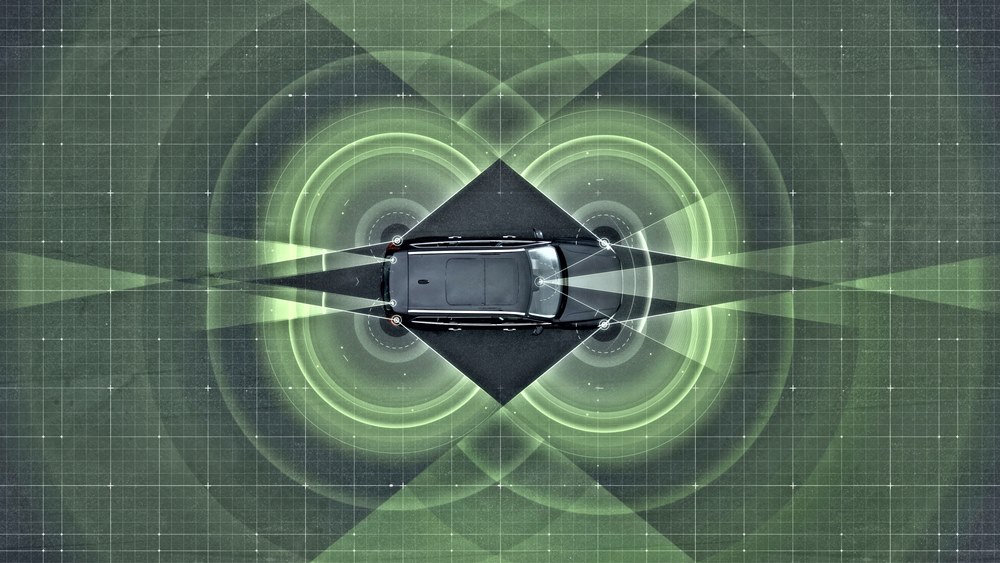
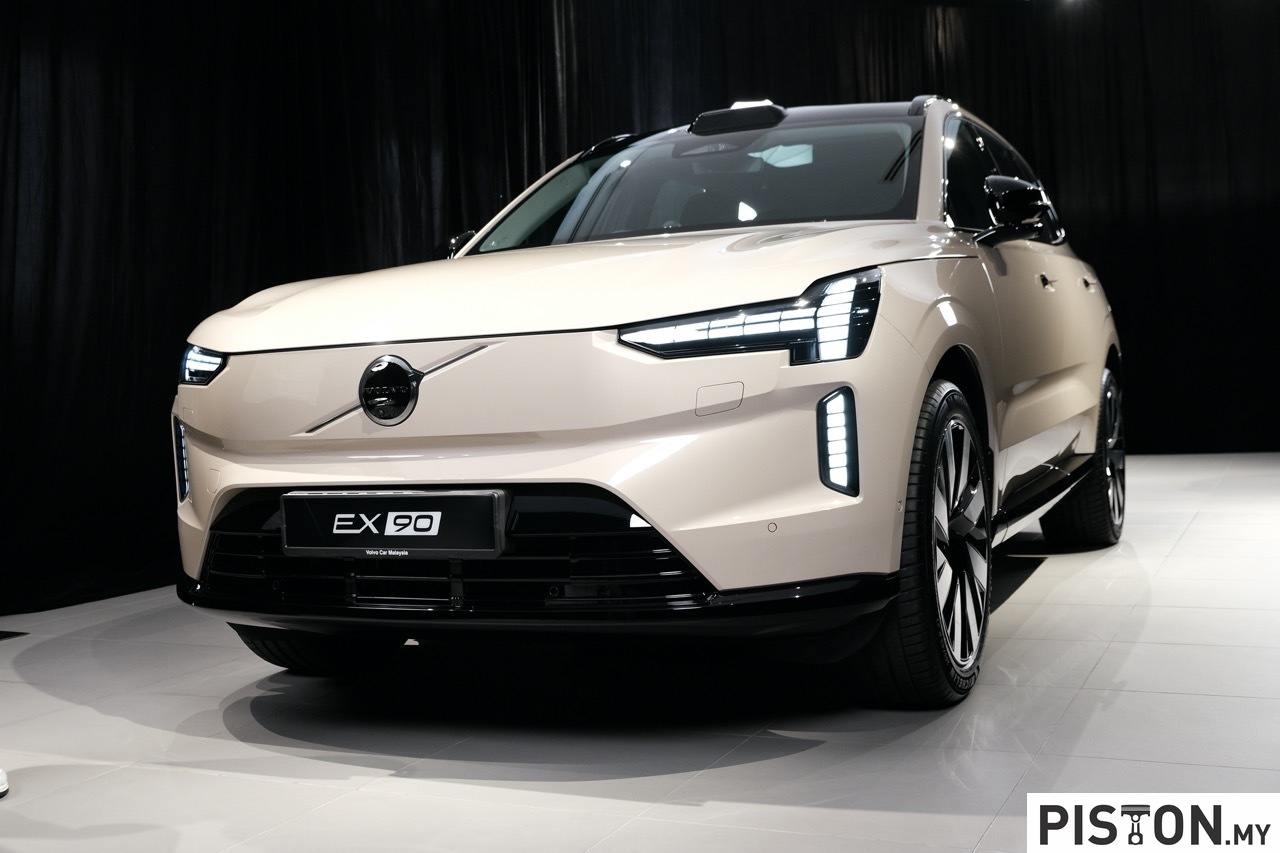
The sensor set-up consists of more than 2 dozen sensors, including Luminar’s cutting-edge Iris LiDAR sensor, which will be tightly integrated with the developed software. Luminar’s LiDAR sensor will complement 5 radars, 8 cameras and 16 ultrasonic sensors in Volvo Cars’ upcoming fully electric SUV. This standard sensor set-up provides excellent vision and perception reliability. Together with continuous, over-the-air software rollouts, the system will ensure full redundancy and enable Volvo Cars to achieve safe autonomous driving with Ride Pilot.
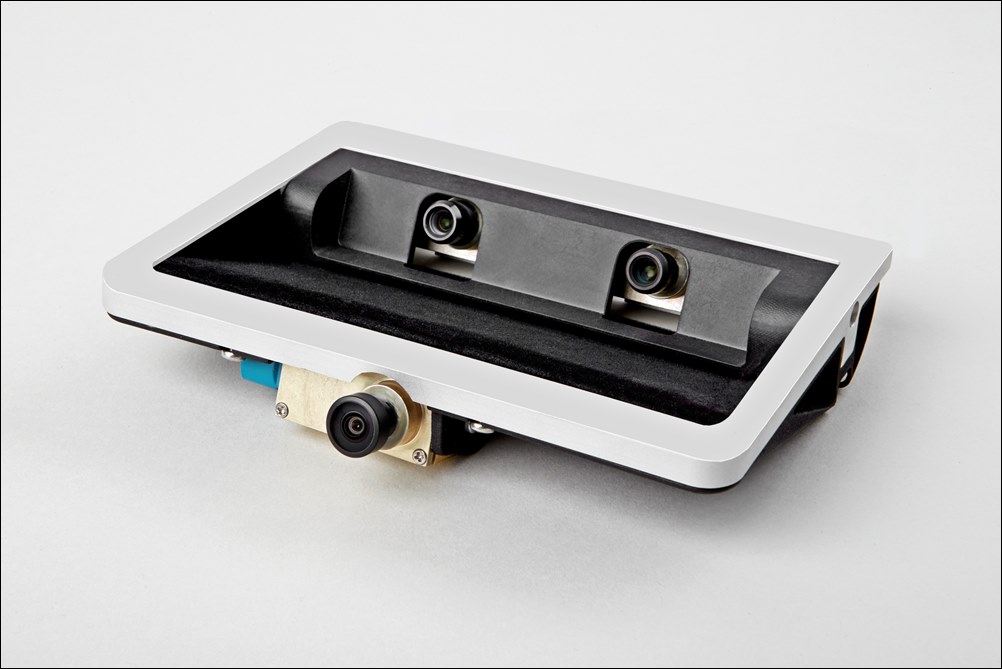
For autonomous motoring to be safe with no supervision by humans, the vehicle will have to be able to scan all round with various sensors to detect other vehicles and hazards. The sensors will include cameras mounted in the windscreen like the ones shown below.
Rigorous testing and verification
While this software-sensor combination, and the safety it enables, will be standard, available from day one on the new SUV and improved over time, Ride Pilot will be made available to customers only once it has gone through Volvo Cars’ rigorous verification and testing protocol. This includes validation of the technology as safe for use on highways in a number of varying conditions. This new flagship for the company will be revealed later this year.
As part of this verification process, Volvo Cars is already testing autonomous driving functionalities on roads in Sweden together with Zenseact, and collecting data across Europe and the USA. By the middle of this year, the company intends to begin testing on roads in California (pending approvals from relevant authorities), where the climate, traffic conditions and regulatory framework provide a favourable environment for the introduction of autonomous driving.
But where and how far autonomous driving will be permitted is not known yet. In some countries where autonomous vehicles are permitted to operate, only limited sections of public roads can be used. On such roads, the surrounding environment is properly prepared to ensure that the imagery systems can correctly function to detect and identify road hazards and signage.
More free time on a journey
The name ‘Ride Pilot’ implies what the driver can expect: when the car is driving on its own, Volvo Cars takes responsibility for the driving, offering the driver comfort and peace of mind. By using Ride Pilot, drivers will be able to free up time while driving, and spend it on secondary activities such as reading, writing, working or socialising. The feature can also help drivers arrive at their destination rested and recharged, by reducing the mental strain that may come with driving, especially in traffic jams or heavy traffic.
Without the need to supervise what the car is doing, the driver will be able to do other things like read or even talk on a phone without breaking any law. Perhaps the occupants could even sleep on the journey – but can it be called ‘driving’ then?
“We are proud to announce the planned US launch of our first truly unsupervised autonomous driving feature, as we look to set a new industry standard for autonomy without compromising safety,” said Mats Moberg, Head of Research and Development at Volvo Cars. “Having Zenseact’s brand-new AD software and Luminar’s LiDAR standard in our new fully electric SUV is a game-changer for Volvo Cars, as well as for automotive safety and autonomous driving.”
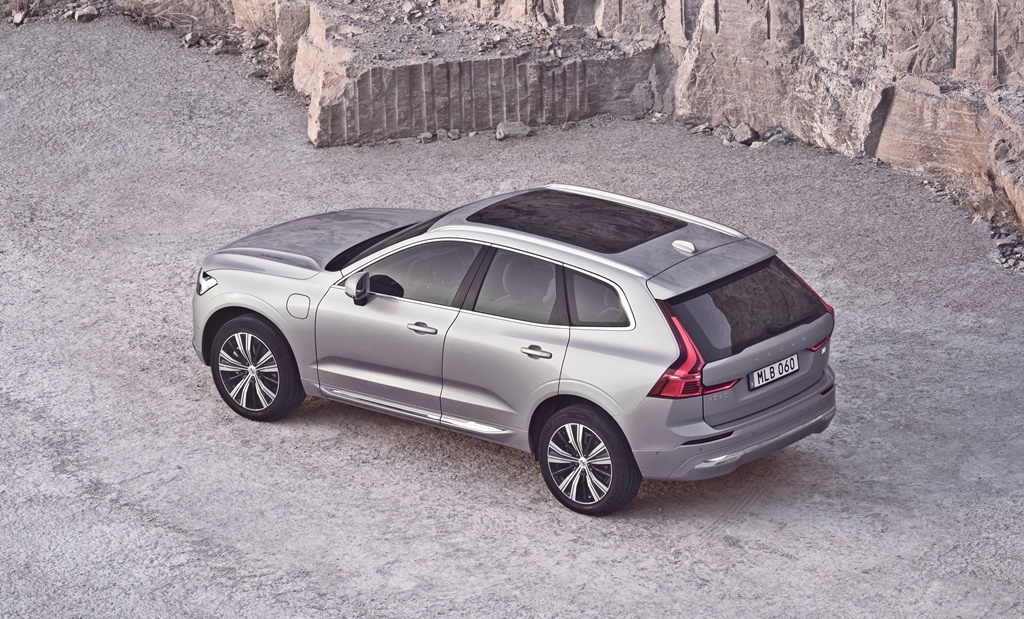
Volvo Car Malaysia has updated its XC60 and apart from cosmetic changes and added safety features, the significant new feature is integration with Google Services. This is the outcome of the partnership between the Swedish carmaker and Google which sees a first-of-its-kind built-in infotainment system complete with a host of Google Services.
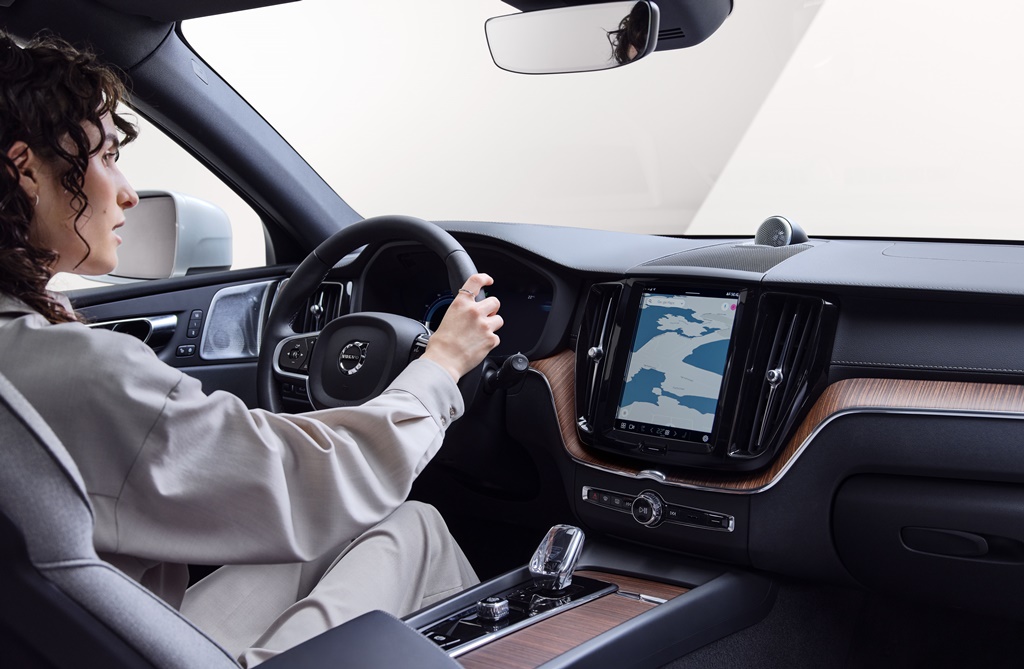
Volvo Cars is the first company to team up with Google to integrate an infotainment system powered by Android with Google apps and services such as Google Assistant built in. This means that Volvo drivers can get the same sort of apps that they have on an Android smartphone integrated with their infotainment system and use voice commands to manage and operate them.
Of course, there is now also Android Auto which can mirror apps from a compatible smartphone onto infotainment systems but having the apps and services as part of the system is even better.
Additionally, with the Volvo Car App and Connected Services, the driver can be easily connected to the XC60 using a mobile device. This enables convenient remote control of several functions, eg cooling down the cabin by starting the air-conditioner, checking vehicle status, locking/unlocking the doors, etc.
Referring to the latest model as ‘The Smarter XC60’, Charles Frump, Managing Director of Volvo Car Malaysia, said that with Google Services, customers can get the most intuitive infotainment experience in the automotive industry. “It fully delivers on our brand promise to provide the freedom to move in a personal, sustainable and safe way,” he said.
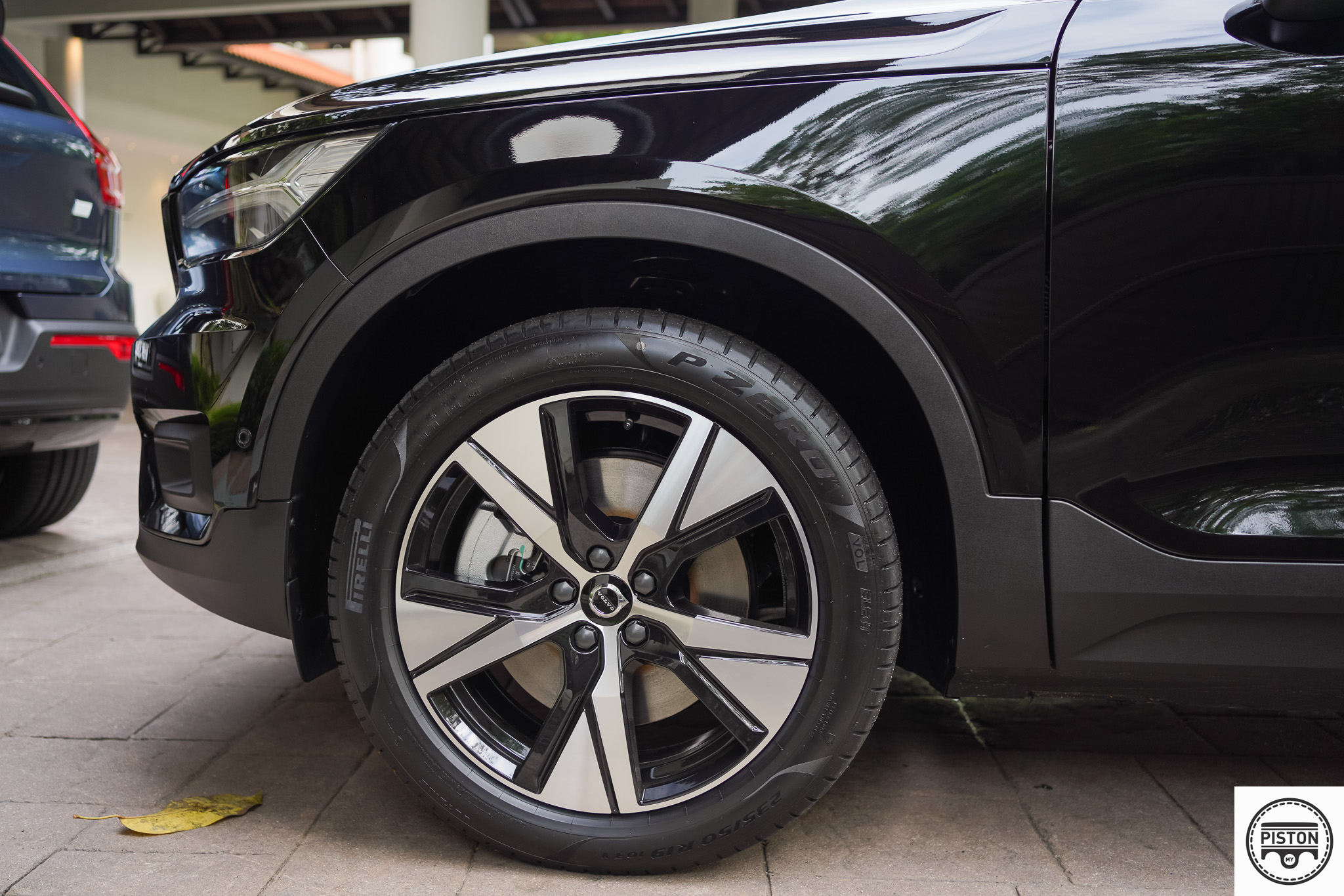
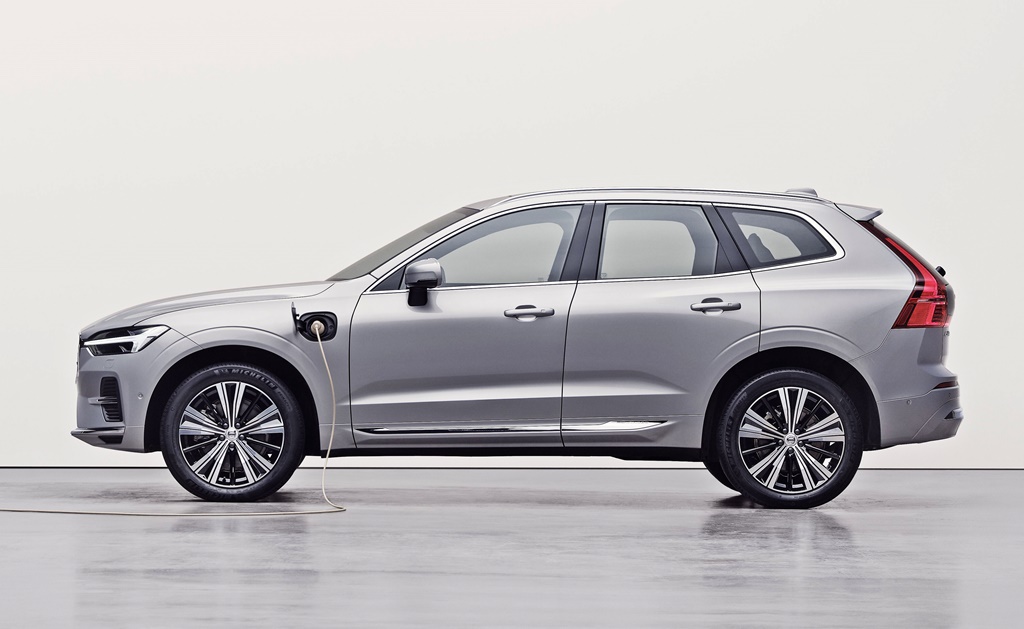
The latest XC60, priced from RM325,449 (without insurance and sales tax), has a new grille, new front bumpers and a new exterior colour. For the Recharge T8 version, there are also new 19-inch 6-multispoke black diamond-cut alloy wheel design and a Bowers and Wilkins sound system as standard.
As an electrified model, the XC60 uses hybrid technology with its 2-litre 4-cylinder petrol engine that has a supercharger as well as a turbocharger. The combustion engine output is 407 bhp/640 Nm with the electric motor contributing 87 bhp/240 Nm. All that power goes through an 8-speed Geartronic automatic transmission and propels the car from 0 to 100 km/h in a claimed 5.3 seconds.
In the past, that sort of performance would mean high consumption but the XC60 is said to be able to do up to 45 kms/litre. This is because the powertrain does not run on the petrol engine all the time and depending on conditions, it use the electric motor which means no fuel is consumed. There is even a mode that can ‘lock’ the powertrain in pure electric mode but only for a limited distance as it will be constantly drawing on power from the lithium-ion battery pack.
Volvo built much of its reputation on safety and the XC60 ensures that is maintained. While the early Volvos had impressive passive safety (which protects occupants when an accident occurs), today’s models have more advanced Active Safety systems. These Advanced Driver Assistance Systems (ADAS) can help to avoid collisions, keep the car in its lane and even stop the car at a junction if another vehicle is approaching from either side (but the driver is unaware). Small cameras provide a simulated image of the area around the vehicle so the driver can spot hazards and also park more precisely.